


Welcome to iGrow News, Your Source for the World of Indoor Vertical Farming

Start-Up Develops Hydroponic Garden For Your Living Room
20th November 2018, London
Home growing kit supposedly allows for crops to be grown faster, with greater yield and less water required than for a conventional garden
The Hope Eden Garden
Photo: Hope Innovations
A Canandian start-up is looking for donors so it can launch a “plug-and-play” indoor garden allowing consumers to grow their own fresh produce hydroponically at home all year round.
Designed by Hope Innovations in Edson, Canada, the Hope Eden Garden uses a simple hydroponics system and aims to make growing convenient, affordable and environmentally friendly for home gardeners.
The company, which is trying to raise CA$10,000 on Kickstarter to fund the project, claims that compared to conventional gardening methods, the system allows for crops to be grown 40 percent faster, with three times the yield and 20 times less water required.
Users place seeds in a ‘growth cup’, add water and nutrients, plug in the lighting strips provided (or rely on natural light), and watch their plants grow.
Hydoponic production (growing directly in water) uses less space than a conventional garden and is up to 40 per cent more efficient than growing in soil, according to the company, which claims the growing kit will pay for itself in less than a year through the money saved on buying groceries.
The company is also keen to stress the flexibility of its product, claiming that it works with any kind of nutrient and any type of seed.
According to Hope, a range of fresh produce grows faster than would be possible in a conventional garden, including kale, spinach, tomato, lettuce and basil.

Australia’s Largest Ever Agricultural Innovation Trade Fair Gets Underway


Australia’s biggest agricultural innovation trade fair, GFIA In Focus Australia is off to a flying start, with almost 2,000 registered visitors to attend the event.
Aimed at helping Australian farmers and agribusinesses improve the sustainability and sophistication of food production, a number of high-profile delegates from across Asia Pacific were also present on the first day of the Brisbane-based conference, which is intended to open up new business opportunities for Australian ag-tech suppliers and investors.
Kicking off the day’s events was guest speaker The Honourable Mark Furner MP, Minister for Agricultural Industry Development and Fisheries, Queensland, who welcomed attendees during the opening ceremony.
In his speech, Mr Furner acknowledged the importance of the event incorporating an impressive line-up of exhibitors showcasing innovative agricultural products and services, and high-profile speakers covering a range of topics. Mr Furner was pleased to open the event and said the Queensland Government will continue to work with innovators to grow the agricultural industry.
Amongst the day’s highlights, Pete Lewis, former ABC landline producer facilitated a conference on Controlled Environments & Protected Cropping, covering topics like Automation and controlled systems – while a panel of speakers debated whether indoor and controlled environments can help feed the world, and QAAFI hosted a fascinating ‘Future farming and food’ workshop.
A Precision Agriculture & Smart Farming conference looked at Precision Agriculture for livestock and farm asset management, which also debated whether a lack of visibility could be costing businesses. And in some of the most exciting highlights of the day, leading-edge agtech suppliers, entrepreneurs and scientists took to the stage to present their latest innovations – including Ceres Tag’s live demonstration of their Smart Ear Tags, which live-streamed the location, health and behavior of 100 cattle located some 1,000km away in northern QLD.
Andrew Logan, CEO of OneCrop also presented on the magic of microclimates and revealed how to create explosive yield increases using existing water and sunlight.
The day also saw the launch of AgKnowledge, the country’s first agricultural startup company investor pitch platform, which brought together universities, vocational education organisations and colleges, private and public research institutions, professional services organisations, centers of agri-learning / capacity enhancement, agri-tech startup companies and agribusiness sector investors.
Sales Director at One CMG Group David Stradling, the company behind GFIA In Focus Australia spoke of his reaction to the day’s events. “This is the first GFIA event in Australia, and day one has already surpassed everybody’s expectations – not only from the organiser’s perspective, but also from the attendees. This exhibition and conference has shown Brisbane to be a fantastic venue for farmers, growers and agribusinesses across the country to learn more about the latest innovations in agriculture. We’re looking forward to seeing what the second day has in store for the event’s many delegates and attendees.”
To find out more about GFIA In Focus Australia, visit www.gfiaaustralia.com
About GFIA
The Global Forum for Innovations in Agriculture has emerged as a global authority on sustainable food production, driving innovation through exhibitions and conferences across the globe. GFIA exhibitions have welcomed more than 25,000 visitors, and worked with over 50 international partners to showcase innovative products with a proven benefit to the agricultural industry. Their conferences offer stakeholders pioneering forums and marketplaces to foster meaningful dialogue, collaboration, recognition and action between regional food producers, buyers, innovators, policy makers and investors.
Event details:
GFIA In Focus Australia
27 November 2018: 09.00 – 18.00
28 November 2018: 09.00 – 16.00
Brisbane Convention and Exhibition Centre
Media Enquiries: C7EVEN Communications
Adam Arndell
(02) 6766 4513 / 0403 372 889
adam.arndell@c7even.com.au
Kate Munsie
(02) 6766 4513 / 0421 935 843
kate.munsie@c7even.com.au
Photo captions:
The Honourable Mark Furner MP, Minister for Agricultural Industry Development and Fisheries, Queensland (close up)
The Honourable Mark Furner MP, Minister for Agricultural Industry Development and Fisheries, Queensland
David Stradling, Sales Director at One CMG Group and Honourable Mark Furner MP, Minister for Agricultural Industry Development and Fisheries, Queensland
Rooftop And Vertical Farms In Cities, The Most Advanced Projects Around The World
Some of the best rooftop and vertical farms in cities around the world. Where farm-to-table agriculture is becoming a key component of urban growth.
The phenomenon of urban farms took root after the Second World War to feed a population that was exhausted by years of poverty. In the last few years it has been growing exponentially, so much so that “locally sourced” no longer refers to products that come from the surrounding countryside, but in the very place where urban consumers live. The element of verticality was added to the equation, the opportunity and necessity to grow crops on rooftops and inside tall building allows for an efficient use of the limited space found in cities.
In some cases initiatives sprout from local communities, in others, prestigious architecture firms design innovative projects that use technology to incentivise local self-sufficiency from a nutritional standpoint as well as reduce the impact of urban demands on rural areas. Growing crops on terraces and rooftops is convenient not only because of greater solar exposure, but also because particulate matter tends to deposit at lower levels. Here are some of the most advanced rooftop and vertical farms from around the world.
The Sunqiao agricultural district in Shanghai
Whilst large-scale hydroponic cultivation systems and urban farms are still struggling to catch on in the United States, they represent a solution to the problem of a growing population and the consequent need to increase food production in China. Nearly 24 million people live in Shanghai alone and the business capital’s rapid economic growth is threatening an agricultural system that is more limited in scale compared to the Western model, just like in other Chinese metropolises.
Leggi anche: Urban forests, cities’ answer to climate change (and much more)
Sunqiao represents a new urban approach to agriculture pioneered by international architecture firm Sasaki. The objective is to show that urban agriculture can grow vertically, just like skyscrapers. The plan for this district (whose construction began at the end of 2017) focuses on integrating vertical farms and research. Over half (56 per cent) of the diet of Shanghai’s inhabitants consists of leaf vegetables, making hydroponic and aquaponic systems particularly appropriate to satisfy their needs. Spinach, lettuce, kale and watercress don’t require specific care, they grow quickly and weigh very little, making them a cheap and efficient option.
The Sunqiao district in Shanghai is a perfect example of the union between architecture and sustainability © Sasaki
The district features floating greenhouses, green walls and vertical facades for seed collection. This is an even more sustainable approach towards supporting the local food network, which perfectly fits the plan adopted by Shanghai that aims to safeguard food and farmers by taking control of local production and distribution whilst maintaining cultivations within the city.
Gotham Greens, in the United States
Gotham Greens is a New York-based farming company that has been supplying the inhabitants of New York and Chicago with fruits and vegetables grown without using pesticides and with an irrigation system based on reusing water. It manages various rooftop farms on a number buildings (some of which are decommissioned, like a former wood warehouse in Brooklyn). The company was the first to design a commercial hydroponic urban farm in the country.

Gotham Greens, a farming company that brings urban farming to Chicago and New York, grows crops on the roofs of buildings © Gotham Greens
The largest and most advanced greenhouse as well as the most productive rooftop farm were opened in Chicago in 2015. Gotham Greens’ model incentivises local production, therefore sustainable development, whilst also cutting transport costs and using renewable energy for production. The founder of Gotham Greens, Viraj Puri, was invited as a speaker the Seeds and Chips summit in Milan in 2017, one of the most important food innovation events in the world.
DakAkker, Rotterdam
DakAkker is the largest rooftop farm in Europe, in the centre of the Dutch city Rotterdam. It was created by Binder Groenprojecten in 2012 and the project was undertaken by ZUS society, in collaboration with the Rotterdam Environmental Centre. The building is fitted with a smartroof that works as a sensor with a water storage capacity that is superior to that of a typical rooftop garden, supplying all the water needed for growing crops.
DakAkker crops seen from above, together with the pedestrian bridge constructed thanks to a neighbourhood fundraiser and built to comfortably cross over the railway tracks © Ossip van Duivenbode
DakAkker is also an area used to experiment new vertical farming methods in the city, not only by growing fruits and vegetables, but also by safeguarding urban biodiversity thanks to the presence of a botanical garden where various aromatic herbs are grown. Furthermore, considering the great importance of bees to the ecosystem (approximately 30 per cent of food derives from the pollination carried out by these insects), six beehives are present on the rooftop.

Vertical Farming Robot Wins Design Challenge
The winners of the 2018 Valtra Design Challenge were announced at the EIMA Show in Bologna, Italy. The competition which started in April and ended on September 23rd was targeted globally to designers, academic design students, design studios and automotive suppliers. This year’s challenge was to design the multi-purpose vehicle of the future: a machine that can handle multiple tasks to meet future needs and that is more efficient than today’s highly specialized machines.
The first place of the competition was awarded to the work “VERTICAL” by Austrian design team Benjamin Miller, Jack Morris, and Alireza Saeedi. The jury praised the concept as being a very creative interpretation of the challenge theme. “At first glance it looks very specialized, but if you judge the complete system instead of only the tractor, a versatile and holistic concept for the future emerges. The concept takes care of everything from seeding to distribution of food”, comments member of the jury Hans Philip Zachau.
“Valtra has been widely recognized for ground-breaking and visionary industrial design. We started the Design Challenge in order to raise awareness of future challenges in the agricultural community and society at large. It is also a platform for designers to showcase their innovations.” comments head of the jury and industrial design & user experience manager at Valtra, Kimmo Wihinen. “The Valtra Design Challenge is the world´s largest design contest in agricultural machinery and one of the biggest in the off-road vehicle industry. The high number of innovative and high-class entries shows us that there is a demand for this type of competition, and we are already working on the theme for the next edition”, he adds.
The Valtra Design Challenge 2018 Jury members were Kimmo Wihinen from Valtra, Brandon Montgomery and Sam Freesmeyer from AGCO, Hans Philip Zachau from Lighthouse Industrial Design and Paolo Grazioli Frozen Design Tokyo.
The Valtra Design Challenge was organised for the second time in 2018. This year the competition has received 107 entries from 32 different countries and six continents. The first prize of the Valtra Design Challenge is a €10,000 cheque.
For more information:
www.valtra.com/designchallenge

UK: London's Underground Farm Opens Doors To The Public
To View Video, Please Click Here
Ever wondered what’s going on beneath your feet under the streets of London? Well, now is your chance to enter another world by visiting Growing Underground. This urban farm is situated 33 meters underneath the streets of Clapham, London in a World War II air raid shelter.
For the first time ever and for a limited time, these tunnels will open to give you a tour of the depths of the underground farm, on November 27.
Naza Plantation Signs MoU With Taiwan-based YesHealth To Set Up Vertical Farming
KUALA LUMPUR
22nd November 2018
Naza Plantation Services Sdn Bhd, the agricultural business unit of the Naza Corporation Holdings Sdn Bhd, today signed an MoU with YesHealth Agri-Technology Co Ltd. to signify a new joint venture to establish a leading vertical farming company in Malaysia and South East Asia.
The MoU signing took place at MAEPS, Serdang in conjunction with the Malaysia Agriculture, Horticulture & Agrotourism Show (MAHA 2018).
This joint venture agreement will be the first between Naza Plantation Services and the Taiwan-based company. The establishment of this joint venture agreement will see an investment of RM35 million for the development of a technologically-advanced vertical farming business in the country.
“We are proud to partner with YesHealth Agri-Technology Co Ltd., a renowned fully-integrated vertical farming company on this new joint venture that will contribute significantly to national food security. This collaboration is yet another milestone of Naza Agro’s business plans to expand and evolve its agro business in Malaysia and for its export markets to other Asian countries,” said SM Nasarudin SM Nasimuddin, Group Executive Chairman & CEO, Naza Corporation Holdings Sdn Bhd.
“Vertical farming is the way forward to ensure global food supply is met with current demands. Latest agricultural technologies from YesHealth have enabled the production of vegetables in an environmentally friendly way at a more cost-effective and space-saving solution. This revolutionary method of farming ensures the produce is healthier, chemical-free with no use of pesticides and guarantees crop yields all year long,” added SM Nasarudin.
Currently the world’s largest hydroponic vertical farming company by production volume, YesHealth will contribute significantly to the joint venture through its proprietary technologies and expertise in environmentally responsible agricultural practices in vertical farming that creates higher yields compared to traditional field farms. The produce from the indoor vertical farms are completely free from pesticide and heavy metal with very low nitrate level and bacteria load. As a result, consumers of the this day and age would be able to enjoy a much greater selection of fresh, safe and highly nutritious vegetables.
The Taiwanese company will be responsible for the structural design of the vertical farms, and operational support, providing its related know-how and training of local operators. Meanwhile, Naza Plantation will construct the facilities and run the management, sales and distribution aspects for the products.
Naza Agro, a Biotechnology Transformation Programme (BTP) status company, was established in 1995 as the agro business arm of the Naza Group, is involved in the production of tropical fruits and vegetables using high technology agro systems with cutting-edge biotechnology, green house fertigation system, vertical farming, biofertilisers and commercial farming methods. Naza Agro now owns and manages 3,118 acres of sprawling plantations located in Pahang, Perak, Perlis, Pulau Pinang and Negeri Sembilan, producing premium MD2 pineapples under their trademark Tropicale brand for local distribution and export. Naza Agro also manages a tropical fruits distribution and certified export centre in Serdang, Selangor and processing factory in Pekan Nanas, Johor.
Naza Agro’s long-term vision is to establish a strong presence in the China market and continue to explore other export markets such as Japan, Korea and the Middle East. Plans are also in the pipeline to expand their tropical fruits plantation land bank by another 2,000 acres which includes planting of pineapple, melon and durian for export market within five years’ time.
With this new joint venture with YesHealth Agri-Technology Co Ltd., Naza Agro hopes to supply fresh vegetables for the domestic market and in the near future supply to export markets in Asia.
-END-
About Naza Plantation Services Sdn Bhd:
Formed in 1995, Naza Plantation Services Sdn Bhd, a Biotechnology Transformation Programme (BTP) status company, is the agro business arm of the Naza Group with over 20 years of experience in the agriculture sector. Under the Naza Agro pillar, Naza Plantation Services is involved in the production of tropical fruits and vegetables using high technology agro systems with cutting-edge biotechnology, green house fertigation system, vertical farming, biofertilisers and commercial farming methods.
Naza Agro now owns and manages 3,118 acres of sprawling plantations located in Pahang, Perak, Perlis, Pulau Pinang and Negeri Sembilan, producing premium MD2 pineapples under their trademark Tropicale brand for local distribution and export. Naza Agro also manages a 14,334 sq ft of tropical fruits distribution and export centre in Serdang, Selangor and processing factory in Pekan Nanas, Johor.
“Tropicale” is a registered Trademark in Malaysia and Singapore.
About Naza Group of Companies:
The Naza Group of Companies began operations in 1975 as an importer of used cars by the late Tan Sri SM Nasimuddin SM Amin. Fast forward to today, the Naza Group’s automotive business has expanded extensively to provide comprehensive end-to-end services with more than 100 points of sales. The Naza Group now represents 10 international automotive brands as the importer and distributor for numerous international four-wheel and two-wheel marques including Ferrari, Maserati, Mercedes-Benz, Peugeot, Citroën, DS, Kia, Ducati, Indian Motorcycle and Vespa in Malaysia.
The Naza Automotive Manufacturing (NAM) plant, set up by the Naza Group in 2004, is now the regional manufacturing hub for Groupe PSA for the ASEAN market. The Group also established the Naza Automall as Malaysia’s ‘Largest Automotive Showroom’ – certified by the Malaysia Book of Records – displaying a wide variety of cars and motorbikes as the country’s premier ‘one-stop-centre’ lifestyle auto mall.
The property development arm of the Naza Group, Naza TTDI Sdn Bhd, is on course to becoming a formidable property developer in Malaysia, committed to delivering quality lifestyle concepts and products with customer service excellence. Today, Naza TTDI is the developer for several high-impact property projects namely KL Metropolis, Malaysia International Trade and Exhibition Centre (MITEC) and Platinum Park in Kuala Lumpur.
Over a span of 40 years, the Naza Group’s portfolio has diversified to encompass automotive franchises, property development, engineering & construction, manufacturing, asset management, telecommunications, agriculture, education, F&B, finance and insurance and transportation sectors.
For more information on the Naza Group of Companies, please visit www.naza.com.my.


Wageningen University Announces Course On Lighting In Greenhouses And Vertical Farms
By: urbanagnews -
October 30, 2018
In 2019, the Horticulture & Product Physiology group, together with Wageningen Plant Research, again will organize a course on lighting in greenhouses and vertical farms. In this course WageningenUR scientists share their unique knowledge with international students, researchers, and horticultural and light experts.
The course is held in Wageningen, The Netherlands.
Registration for the course in February 2019 is now possible.
The course consists of a mixture of interactive classroom lectures, group discussions, demonstrations, and an excursion day.
The lectures will be given by a team of experts of Wageningen University & Research. Lecturers include Prof. Leo Marcelis, Dr. Cecilia Stanghellini, Dr. Ep Heuvelink, Dr. Anja Dieleman, and Prof. Ernst Woltering.
This excellent and intensive course is meant for professionals in lighting, greenhouse production and vertical farms as well as MSc and PhD students, post-docs and junior scientists from all over the world.
For more detailed information on the course content, please visit the corresponding web page: Course Lighting 2019
Crop One Holdings Reaffirms the Superior Cleanliness and Safety of FreshBox Farms’ Leafy Greens
Controlled Environment Agriculture Farming Method ensures FreshBox Farms’ Romaine Lettuce Remains Safe for All to Eat
November 21, 2018
Source: Crop One Holdings, Inc.
SAN MATEO, Calif. and MILLIS, Mass., Nov. 21, 2018 (GLOBE NEWSWIRE) --
Crop One Holdings (“Crop One” or “the Company”), the world’s largest vertical farm operator through its FreshBox Farms brand, would like to inform all of its customers – including individuals, wholesalers, and retail distributors – that it is voluntarily complying with the CDC’s Food Safety Alert, even though Crop One believes that the CDC warning regarding potential E. coli contamination of romaine lettuce does not apply to FreshBox Farms’ romaine lettuce and other leafy greens grown using the Company’s unique controlled indoor farming systems. Crop One appreciates that the CDC uses these types of broad and general alerts when it knows the cause of contamination, but cannot identify the specific source, and understands that traceability of leafy greens is very limited or not possible for many farmers.
FreshBox Farms abides by the strictest health and safety standards, using operating procedures certified by the USDA Good Agricultural Practices and Good Handling Practices programs. The traceability of the farm’s leaves goes back to the 2’ x 4’ shelf in which it was grown. FreshBox Farms also relies on a stringent data collection system, using layers of digital sensors and controls to gather substantial amounts of information on each plant – from seed to harvest.
Using a variety of controlled environment agriculture technologies, FreshBox Farms grows its leafy greens in soilless, modular enclosures further protected from potential outdoor contaminants by being inside a sealed warehouse. Unlike other vertical farmers or greenhouses, FreshBox Farms’ dual ‘box within a box’ system provides multiple layers of hygiene protection and control. In addition to being insulated from outdoor pollutants and diseases, plants are grown with highly purified water produced by an on-site water treatment system.
Unlike “ready-to-eat” packaged greens, FreshBox Farms does not expose its leafy greens to potentially contaminated water through triple washing, and even its waste water is potable. FreshBox Farms’ leafy greens are so clean that Crop One is the only Kosher-certified vertical farmer in the United States. Products leave FreshBox Farms with 1/600th the bacteria of field grown, triple washed products.
“Yesterday’s warning by the CDC is a wise precaution and certainly in the best interest of the public,” said Dr. Deane Falcone, Chief Scientific Officer of Crop One Holdings. “That said, we feel FreshBox Farms’ customers should know that our produce is grown in controlled, tightly-sealed environments with filtered air and water, and our plants are never touched by more than three gloved and gowned individuals. This distinctive indoor production method protects our produce from potential pathogens found in water, soil, or fecal matter, which are the typical causes of E. coli outbreaks.”
Inside Soilless Modular Enclosure
Sonia Lo, Chief Executive Officer of Crop One Holdings, added to Dr. Falcone’s comments, “As a result of our commitment to innovation and accountability, as well our responsibility to the health of our consumers and the planet, FreshBox Farms continues to grow the cleanest, freshest and best-tasting produce possible for our customers. Our wish this holiday season is to support our customers as best as we can, and ensure them that they can continue to rely on FreshBox Farms to provide safe, healthy, delicious leafy greens this Thanksgiving. We have reached out to our local FDA offices to continue this dialogue on food traceability and cleanliness, practices at Crop One which surpass other greenhouse and vertical farming methods.”
About Crop One Holdings
San Mateo, California-based Crop One Holdings is a vertical farming holding company for two subsidiaries – FreshBox Farms, Millis, Mass., and a joint venture with Emirates Flight Catering, Dubai South, United Emirates. Crop One has been in continuous commercial production longer than any other major vertical farmer in the U.S. It produces the highest crop yield per square foot, at 25% of the capital cost of any vertical farm, due to its unique combination of proprietary technology platform and best-in-class plant science.
For more information on Crop One or vertical farming, please visit the Company website at croponeholdings.com or follow FreshBox Farms on Facebook, LinkedIn and Instagram for the latest company news.

Local Company's Indoor Growing System Could Be Solution To Safer Romaine And Other Lettuce
by Amanda Becker, FOX 11 News
Sunday, November 25th 2018
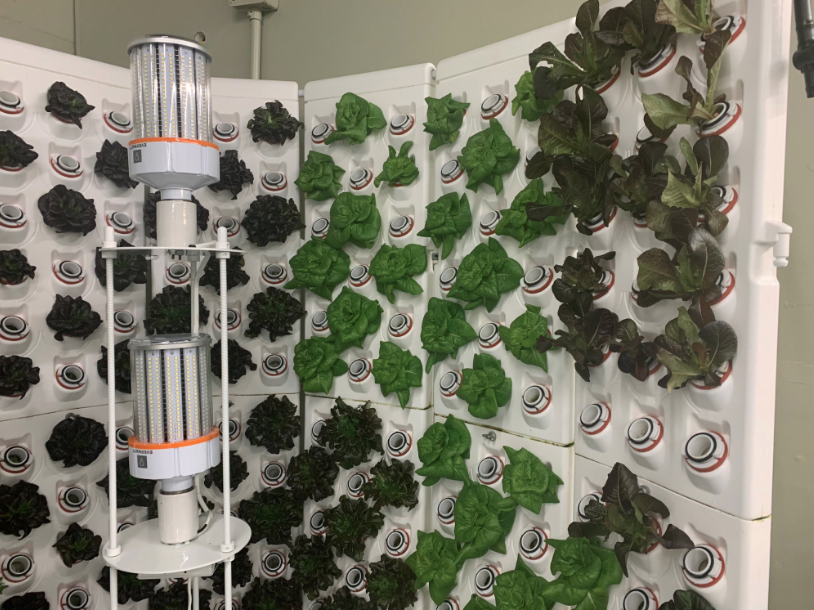
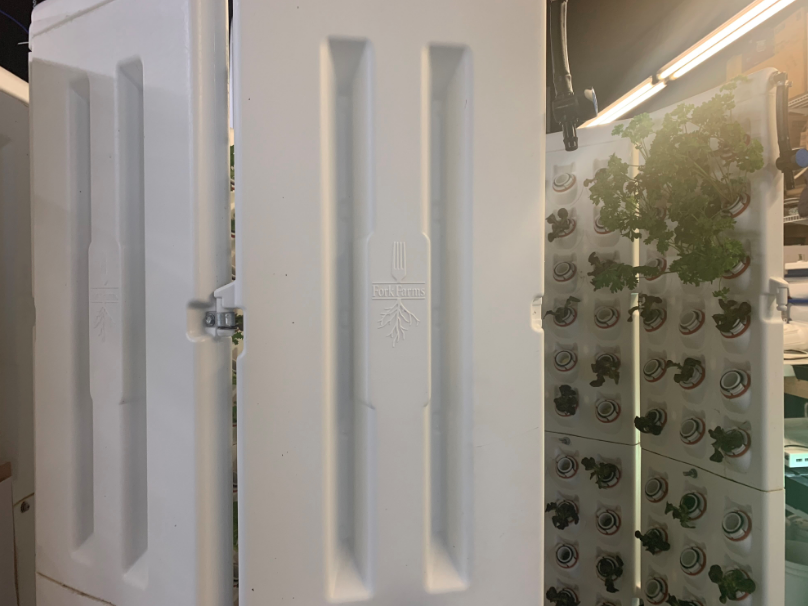
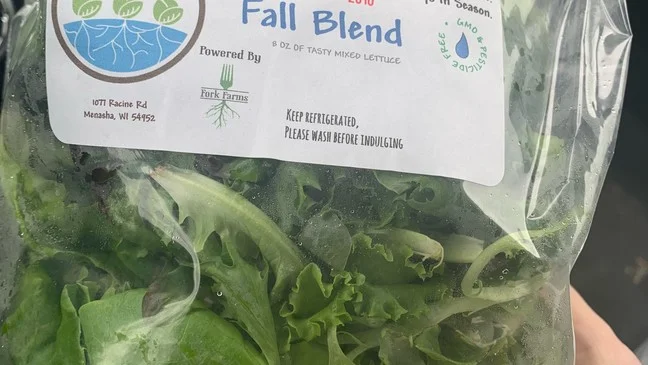
Local company's indoor growing system could be solution to safer Romaine and other lettuce. (WLUK/Amanda Becker)
FOX CROSSING (WLUK) -- The FDA and Center for Disease Control warned people this past week not to eat romaine lettuce due to a dangerous strain of E. Coli.
The CDC estimates that E.Coli, also referred to as STEC, causes 3,600 hospitalizations and 30 deaths in the US each year.
This past summer an outbreak caused 5 deaths.
The CDC has reported outbreaks of E. Coli, in various leafy green vegetables alone, 7 out of the last 12 years.
The latest scare came just before Thanksgiving and the busiest day of the year for many grocers.
While many businesses were clearing their shelves of romaine lettuce, it was the customers clearing the shelves here at the Free Market in Appleton.
“People snatched it all up. They've been saying this is the only place they can find it,” said Kyra Evers, a Free Market associate.
Sunday just one bag of mixed greens remained, but they don’t have far to go for more. The produce travels just two miles from the Fox Valley Hydro Farm to here. It's not your conventional farm, instead a vertical hydroponic system indoors.
“If we had an acre of these systems we could grow roughly 100 acres of conventional farming,” said Steve Main, the owner of Fox Valley Hydro Farm.
He grows and distributes, leafy greens to local businesses and at Farmers Markets- mainly lettuce.
Local company's indoor growing system could be solution to safer Romaine and other lettuce. (WLUK/ Amanda Becker){p}{/p}
Fork Farms is the Appleton tech company that designs and builds the system.
”We are able to control the environment here so not only can we control the growth rates and the success of the plant but we can also control the food safety really carefully,” said Alex Tyink president of Fork Farms.
Safety is what’s on the mind of shoppers when buying lettuce these days.
“The E. coli outbreak is really scary,” said Tyink.
Tyink says growing indoors, and locally, lowers the chances of bacterial growth.
“Those crops are coming from very large-scale farms usually in Arizona and California and it’s where we get majority of our produce right now in the United States,” said Tyink. “Farms like that they grow outdoors primarily.”
He lists things like human contact, travel time, well water and environmental conditions to all have negative effects on crops.
“That product being at such a large scale has to go through a lot of different steps in the supply chain in order to get here- and every one of those steps is an opportunity for pathogens to get into the food,” he said.
Steps that he says are eliminated with this hydroponic process.
“Some of those unknowns, we can really tightly control here,” he said.
From 'indoor farm' to table.

Walmart To Install Solar Panels On 19 Of Its Stores In Illinois
Walmart has reached an agreement with a California company to install solar systems at two distribution centers and 19 stores, including those in Belleville, O’Fallon, Sparta and Litchfield.
This Walmart video shows rooftop and ground-mounted solar panels at some of its stores and distribution centers in the United States. The company recently announced plans to expand its solar program to 21 sites in Illinois.By Teri Maddox
BY TERI MADDOX
November 16, 2018
The nation’s largest retailer is joining the solar boom in Illinois next year.
Walmart has reached an agreement with a California company to install solar systems at two distribution centers and 19 stores, including those in Belleville, O’Fallon, Sparta and Litchfield. It’s billed as a way to save money on electricity and help the environment by reducing carbon emissions.
The move was prompted by the state’s new Adjustable Block Program, which provides incentives for commercial and residential rooftop solar projects, as well as community solar farms.
“We can meet or beat our current cost of energy (under the agreement),” said Katherine Canoy, Walmart’s senior manager for renewable energy, speaking by phone from Bentonville, Arkansas. “From a business perspective, it makes sense for us on a lot of levels.”
The company already has solar systems at about 350 of its 5,000 sites in the United States, including Walmart and Sam’s Club stores. Canoy said installations don’t have a direct effect on prices, but the company’s increasing use of renewable wind and solar energy will help keep them low in the long run.
For Walmart’s first 21 solar projects in Illinois, the retailer is partnering with SunPower, a company based in San Jose, California. It designs, installs and maintains commercial solar systems all over the country, often combining rooftop and ground-mounted solar panels.
Most customers are able to generate 40 to 75 percent of their electricity with solar, said Robert Rogan, SunPower’s senior director of strategy. Walmart generates 5 to 70 percent at its existing solar sites.
“It really varies from store to store, depending on how much of the roof space we can utilize and also how much energy that store is using,” Rogan said.
Some Walmart stores have skylights and air-conditioning units on their roofs, and climate can affect how much electricity is needed to heat and cool buildings.
This photo shows a commercial solar system installed by SunPower, a company based in San Jose, California. It’s designing systems for 19 Walmart stores and two distribution centers in Illinois.

Technology Distilled To Grow The Hydroponics Industry
By Chad Campbell
November 16, 2018
When Horticulture Assistant Professor Krishna Nemali joined Purdue in July 2016, he immediately began to develop a program as new to the school as he was. Nemali studied agriculture in India before earning his Ph.D. from the University of Georgia and spending nine years as a scientist in controlled environment crop physiology at Monsanto. All these experiences combined to provide him with the range of experience necessary in his current position coordinating research and Purdue Extension activities in Controlled Environment Agriculture (CEA).
CEA harnesses technology to grow plants like vegetables and ornamentals in conditions maximizing the efficient use of water, light, labor and space. Hydroponics, the method most commonly associated with CEA, minimizes water, nutrient and labor requirements to grow plants. It can also reduce other needs, such as pesticides. Researchers like Nemali work to discover the perfect combinations of water, light, nutrients, temperature and additional factors to make sure there is no wasted energy or potential. Nemali’s goal is to answer the question,
“How do you make that technology easily accessible to everybody?”
Nemali is working to harness the potential of smartphones, specifically new apps and add-on devices, to provide growers access to these processes. “There are companies and some apps already there that just take a picture and show some data. That’s not what we’re trying to get at. We have these expensive imaging stations and we are developing technologies that match that high-quality data.” A combination of research, calibration and algorithms takes place behind the scenes to provide farmers with valuable, yet easy-to-understand information, everything using their smartphones.
One app Nemali is creating will use background processing to measure plant growth. The plant’s size is calculated through pictures the user takes and algorithms designed by Nemali. With daily use, the app generates growth curves. “It’s like when you take your kids to a doctor, and they take a weight and height measurement.They put the numbers on a standard chart. 90th percentile height, 70th percentile weight. You can create standard curves for different species and plot this data under the standards.”
Nitrogen is essential in plant processes, including photosynthesis, yet the equipment needed to measure nitrogen levels in plants is cost-prohibitive. Nemali’s lab is currently creating a similar device for smartphones, available for less than $150. Nemali hopes to create widely adopted and applied technology to reach independent growers.
Through Purdue Extension, Nemali also works with Indiana farmers to capitalize on the untapped potential hydroponics provides. The industry is small, but rapidly growing at 3.5% annually in the US. For example, Nemali sees a wealth of opportunity in leaf lettuce production. The USDA estimates people eat about 11 pounds of leaf lettuce per year. With 6.7 million Hoosiers and a $1.00 wholesale valuation on each pound of lettuce, that’s over $70 million.
Indiana imports nearly all its leaf lettuce from places like Arizona and California. “We want that money to stay within Indiana," Nemali shared. We want our growers capitalizing on this. There is a demand there. Grow lettuce locally, sell lettuce locally, keep the money local. That money spread out among the 300 lettuce growers in Indiana, that’s going to improve their livelihood. That’s what sustainability, in my opinion, is.” He organizes workshops that provide both classroom style training and experiential learning to farmers.
The methods and technology Nemali creates produce a level of precision that can set hydroponic farmers apart. Even small adjustments to the levels of red, green and blue artificial light provided to grow plants can have significant effects on the growth, color and nutritional value of plants. Nemali tells his growers, “Don’t say simply that your lettuce is crisp and fresh. Everybody says that. How do you find a niche? Use technology to grow lettuce that has more nutritional value, antioxidants, and less nitrates. Show the value. Health. That’s what attracts millennials.” The results of this research are integrated into Nemali’s apps to bolster the intelligence of the technology.
Nemali also uses hydroponics and vertical farming techniques to address problems like childhood obesity. A few years ago, Nemali’s son participated in a multi-week summer camp where the children planted and harvested their own vegetables, making salads and soups.
“For the next couple of months,” says Nemali, “he was all about eating healthy. That told me something. Give kids that exposure to plants: how you seed them, sow them, you see them grow, you harvest them and clean them. That may change their attitudes and behaviors from a less favorable attitude towards eating healthy, and that’s what we’re trying to do.” He collaborates with schools to setup small indoor growing facilities for children using hydroponics.
As the benefits of hydroponics become increasingly apparent, nations around the world are studying, researching and building hydroponic facilities of their own. Scarcities of land and water are critical issues in many countries. Hydroponics are incredibly efficient in both respects. Vertical farming is a common practice in hydroponic facilities. Warehouses may accommodate 15 to 20 levels of plants. It is reasonable to expect five to ten times more production in such spaces.
Hydroponics brings researchers across the globe together to work toward a common goal. Nemali embraces the spirit of hydroponics by making the most of current resources and rapidly producing new resources to grow the industry.
Want to try hydroponics at home?
Create your own simple hobby garden.
Category: Agricultural & Biological Engineering, Agricultural Economics, Agronomy, Botany & Plant Pathology, Extension, Food Science, Forestry & Natural Resources, Giant Leaps, International Programs in Agriculture, Office of Multicultural Programs, Research, Teaching, Uncategorized

"Exempt Indoor Grown Lettuce From Romaine Recall"
With the romaine being pulled out of the shops and the product receiving some very bad publicity due to the recent E.coli contamination, greenhouse growers throughout the US and Canada are opening up to show the public what solution they can bring to food safety.
Yesterday we've shown you already how Gotham Greens responded, today there's more.
Food safety in mind
“We started from the beginning with food safety in mind, and this is the safest way,” said Jay Johnson with Revol Greens to CBS Local. “That’s why it’s difficult to be grouped in with the broad romaine alert.”
It’s also why Revol is working with the industry’s lobby to ask federal regulators to exempt indoor grown lettuce from the recall. Arguing that unlike field-raised crops, their romaine lettuce is never exposed to possible contamination sources from birds or animals.
Amongst customers, the story has landed for sure - the phone at Revol has been ringing non stop. "We can of course supply clients with mixes or products without Romaine, but we currently also have people asking specifically for our Romaine lettuce, since they know our produce is safe."
The demand from the food service is very high. Since Revol is operating local and can adjust easily, they try to help as many customers out - especially since Thanksgiving puts pressure on the hospitality and food service industry.
BrightFarms
Also BrightFarms, growing in Virginia, Ohio and Pennsylvania, made a statement, showing how indoor farming can benefit the industry. "All of BrightFarms' products, including our romaine lettuce, are safe to eat and are NOT associated with the CDC's investigation into an unfortunate outbreak of illness."
"Our salad greens and herbs are grown inside of local greenhouse farms, a controlled indoor environment, which allows for clean, safe, and pesticide free produce. We're proud that our model allows for complete traceability to a local farm (and farmer!) in your community."
"Safe to eat"
lēf Farms from Loudon shows the public a video of their farm on social media. "Rest assured, our lettuce is safe to eat because our hands-free operation delivers nothing but clean and tasty greens grown right here in NH. So, in this season of thankfulness, you can be thankful for a local grower who cares about your health. And we, in turn, can be thankful for the ongoing support from customers like you."
Then there's Go Green Agriculture. After Tuesday's email, many buyers told him not to send any romaine lettuce and “trucks should be turned around immediately; everything’s being dumped and destroyed on site.” He explains to 10News why the indoor farming technologies “pretty much guarantees that everything is 100 percent safe."
"Clean means clean"
Also the Alberta-based company Inspired Greens is responding to the situation. "Our A$60 million investment into the world’s most innovative greenhouse technology was based on a fundamental premise: clean means clean", they explain. The company offers greenhouse-grown lettuce varieties grown with triple-filtrated water in a closed, environmentally safe and secure environment.
“Retailers and consumers have a heightened awareness of food safety, quality and taste,” said David Karwacki, Chief Executive Officer of The Star Group of Companies, which built the Inspired Greens greenhouses. “We invested this cutting-edge clean technology to ensure we can unequivocally deliver clean, fresh, healthy lettuce with no concerns about contamination.”
The Inspired Greens greenhouses opened in Coaldale, AB, in June 2017 and can produce up to 12 million heads annually. It is the first North American greenhouse to use this advanced technology, with plants untouched by human hands from seed to harvest. In April 2018, Inspired Greens announced plans to double its production capacity based on strong industry and consumer demand.
Optimum traceability
Crop One Holdings, known for its FreshBox Farms brand, also informs its customers their food is safe. However, they are voluntarily complying with the CDC’s Food Safety Alert. "Even though we believe that the CDC warning regarding potential E. coli contamination of romaine lettuce does not apply to FreshBox Farms’ romaine lettuce and other leafy greens grown using our unique controlled indoor farming systems."
“Yesterday’s warning by the CDC is a wise precaution and certainly in the best interest of the public,” said Dr. Deane Falcone, Chief Scientific Officer of Crop One Holdings. “That said, we feel FreshBox Farms’ customers should know that our produce is grown in controlled, tightly-sealed environments with filtered air and water, and our plants are never touched by more than three gloved and gowned individuals. This distinctive indoor production method protects our produce from potential pathogens found in water, soil, or fecal matter, which are the typical causes of E. coli outbreaks.”
In case you’re wondering, our #Romaine is not part of the recent recall. We will continue to bring fresh products to our markets this weekend and you do not have to throw our #Romaine out of your fridge🙂 #knowyourfarmerpic.twitter.com/J58kIdoOTF
— Doef's Greenhouses (@doefs) November 22, 2018
Publication date : 11/23/2018
Author: Arlette Sijmonsma
© FreshPlaza.com
US: Cannabis Takes Root On California’s Central Coast
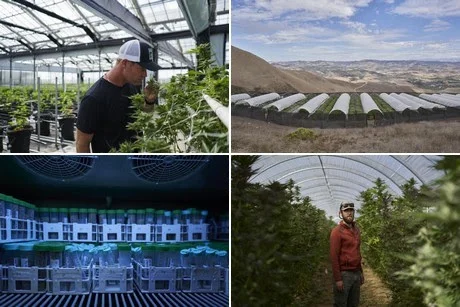
It is the fall harvest here in this fertile stretch of oaks and hills that produces some of the country’s best wine. This season, though, workers also are plucking the sticky, fragrant flowers of a new crop.
Marijuana is emerging among the vineyards, not as a rival to the valley’s grapes but as a high-value commodity that could help reinvigorate a fading agricultural tradition along the state’s Central Coast. Brushed by ocean breeze, cannabis has taken root, offering promise and prompting the age-old question of whether there can be too much of a good thing.
Cannabis has been fully legal in California for less than a year, and no place is generating more interest in it than the stretch of coast from Monterey to here in Santa Barbara County, where farmers now hold more marijuana cultivation licenses than in any other county.
The shift in legal cultivation patterns is coming at the expense of the remote Emerald Triangle, the trio of far-northern California counties where an illegal marijuana industry has thrived for decades. The Central Coast is not growing more marijuana than the Emerald Triangle, but it could be on track to grow more legally, if trends hold.
“We’re nearly right in between Los Angeles and San Francisco, the two big consumer hubs,” said John De Friel, whose 17-acre Raw Garden Farm and seed lab sits among cabbage patches and wineries. “We really didn’t foresee how advantageous that would turn out to be.”

Publication date : 11/16/2018

Vigilance The Watchword For Pot Users, Investors, Executives At Canada-U.S. Border
Vigilance The Watchword For Pot Users, Investors, Executives At Canada-U.S. Border
CTV News Channel: Breaking down border, pot woes
Immigration lawyer Len Saunders says the U.S. has only recently begun enforcing immigration laws against Canadians involved with marijuana.
CTV National News: Canadian investors in U.S.
Canadian investors who want to cash-in on legalized marijuana may run into roadblocks when travelling to the U.S. Glen McGregor reports.
B.C. man banned from U.S. over pot investments
A B.C. venture capitalist says he was denied entry to the U.S. because of his investments in legal pot companies.
James McCarten, The Canadian Press
November 20, 2018
WASHINGTON
American officials can't yet say for sure if there's been any change in the number of people being turned away at the Canada-U.S. border for using marijuana or working or investing in the legal cannabis industry.
But Customs and Border Protection spokeswoman Stephanie Malin says anecdotally, there has been no significant change in the numbers or in the agency's operations in screening people seeking to enter the United States.
Marin says the agency expects to be able to release more detailed statistics early next month.
Related Stories
Pot industry players weigh benefits of cross-border travel after latest U.S. statement
Buying cannabis with a credit card? Why you should think about privacy
Early data suggests no spike in pot-impaired driving after legalization: police
Don't take pot on international flights, transport minister warns
Immigration lawyers on both sides of the border, however, are already dealing with cases of people facing a lifetime ban from the U.S. and say the problem is only going to get worse without a change in American federal law.
With cannabis legal in Canada and more U.S. states easing their own restrictions -- notably Michigan, home to the busiest northern border crossing on the continent -- they warn that a U.S. federal prohibition on pot means Canadians face an escalating risk of problems at the border.
U.S. border authorities say anyone who admits to having used marijuana prior to Oct. 17, the day it became legal in Canada, could be barred from the country, as well as investors and industry employees who try to cross for cannabis-related reasons.
"The bigger issue is people thinking the slate has been wiped clean," said Henry Chang, a Toronto-based immigration lawyer who has spent the last several months warning Canadians about the dangers.
Dasi Menakadasi holds a handful of dried marijuana flowers on the day recreational cannabis became legal, in Vancouver, on Wednesday October 17, 2018. THE CANADIAN PRESS/Darryl Dyck
"I think we're going to start seeing more people getting banned, not because of them smoking marijuana after Oct. 17, but just because they think they have nothing to hide and they blurt out that they smoked marijuana when they were 18."
Even in the case of legal cannabis use, U.S. law can still keep out anyone deemed to be a drug abuser or addict, or who is diagnosed with a mental disorder with a history of related harmful behaviour -- including alcoholism or consuming pot, said Chang.
Customs and Border Protection initially warned that any Canadian who gave off a whiff of pot involvement -- from using the drug to working or investing in the industry --risked being banned or denied entry. The agency later softened that stance, saying industry workers would generally be deemed admissible so long as they were travelling for reasons unrelated to their work.
At least one would-be traveller was intercepted last week in Vancouver and is now barred from the U.S., because he wanted to tour a Vegas-based cannabis production facility in which he'd recently become an investor, said Len Saunders, a Canadian lawyer based in Blaine, Wash., who specializes in U.S. immigration law.
"He's kind of shellshocked right now," Saunders said in an interview. "He said, 'I didn't know anything about this.' I said, 'Haven't you been reading the news?"'
The investor's visit, part of a tour arranged by his financial adviser, happened to coincide with MJBizCon, a major cannabis industry conference that took place last week in Las Vegas. A number of travellers who were bound for that conference found themselves pulled aside for secondary screening.
The man told border officials that he has never used marijuana, was merely an investor and never would have tried to travel had he known the risk, Saunders said. Border authorities had been notified about the Vegas conference and told to be on the lookout, the lawyer added.
Saunders said he has been helping Canadians navigate the border ever since the state of Washington legalized cannabis in 2012, a policy change that touched off a flood of cross-border shoppers that continues to this day, based on the number of B.C. licence plates he sees in the parking lot of U.S. marijuana shops on his way to work.
"Despite all the warnings I've been giving for months and months and years and years and years, it's still happening and this will continue to happen until there is a harmonization of federal and state laws in this country," he said. "Otherwise, you're going to see it happening forever -- and the only one who benefits is me."
Chang has some common-sense advice for anyone who might have reason to be anxious entering the U.S.
"Don't dress like a hippie, don't smell like marijuana, because then the questions get asked," he said.
"If you are asked the question, your only option is to refuse to answer, say it's irrelevant, you refuse to answer. You'll get into trouble, they'll detain you, you'll get sent back to Canada, but at least you don't have anything on the record saying you engaged in controlled-substance use."

Welcome To The Future of Farming In Australia
Just Days To Go Before The Start of Australia’s Largest Ever Agricultural Innovation Trade Fair
Australia’s largest ever agricultural innovation trade fair, GFIA In Focus Australia is set to kick off in Brisbane next Tuesday – and with some of the country’s top food producers in attendance, it’s a prime opportunity for farmers, growers and agribusinesses to learn more about the latest innovations in agriculture.
Part of a global series of exhibition and conferences driving sustainable food production and innovation, GFIA In Focus Australia takes place at Brisbane’s Convention & Exhibition Center from 27-28 November. Leading producers Mort & Co National Feedlot, Mighty Green and Sundrop Farms are just some of the featured guests, and for Cy Kovacich, owner/manager of Mighty Green, the event is a chance to share his experiences diversifying his sugarcane operation:
“The sugar cane industry is traditionally a monoculture – but with margins closing up through soil stress and other issues, my focus is on optimising soil health and finding production gains and economic savings through diversification, by growing other crops like rice, beans and soy. I’m honored to be involved, and to have the chance to hopefully inspire others through discussing my own experiences.”
Amongst the many innovative exhibitors showcasing the latest game-changing innovations and technology is Ceres Tag, who have announced they will be doing a live demonstration at the event, in what will be a world first for the GFIA. In the days leading up to the event, Ceres Tags will be tagging over 100 cattle in Townsville with their Smart Ear Tags, before live streaming their location, health and behaviour 1,000 kms away at the conference.
Guest speaker at the opening ceremony on the 27th November will be The Honourable Mark Furner MP, Minister for Agricultural Industry Development and Fisheries, Queensland. Mark describes the event as “a brilliant opportunity for farmers, growers and agribusinesses across the country to understand more about some of the latest innovations that can better support Australia’s agricultural industry.”
Tim Gentle, Founder, Digital Crusader and Educator of Think Digital will be the second guest speaker at the opening ceremony. He’ll be talking about the some of the immersive new technologies available for agriculture, including the most exciting advancement to date in the world of Virtual Reality – a VR Platform for Agriculture. “If you thought Virtual Reality is just for gamers, and Augmented Reality is to catch Pokemon Go’s, then think again,” he says. “In agriculture, immersive technologies will increase productivity, improve safety, enhance training and help you to communicate more effectively than ever before, and I’m excited to be able to unveil the details of this new technology at the conference.”
For Sales Director at One CMG Group David Stradling, the company behind GFIA In Focus Australia, the event looks set to be a game-changer for those involved. “We anticipate that this event will deliver huge business opportunities for ag-tech suppliers in markets expected to experience significant growth over the next few years,” he says.
The GFIA are giving away 2,000 free tickets – but with only a small number left, farmers and agribusinesses are encouraged not to miss out on the chance to attend this unique mix of exhibitions, conferences, innovation sessions and educational workshops.
To register your place at GFIA In Focus Australia before it begins, visit www.gfiaaustralia.com

Seven-Eleven To Set Up Veggie Factory For Salads And Sandwiches
LED-equipped indoor farm to produce lettuce for Tokyo-area stores
TAKUYA IMAI, Nikkei staff writer | November 21, 2018
Seven-Eleven Japan plans to sell salads made with lettuce grown at the new facility in Tokyo-area stores. (Photo by Takuya Imai)
TOKYO -- Seven-Eleven Japan will turn to an indoor farm to grow vegetables for salads and sandwiches sold at its convenience stores, aiming to reduce weather-related supply risks.
The roughly 6 billion yen ($53.3 million) plant factory will be built on a Sagamihara site in Kanagawa Prefecture run by Prima Meat Packers subsidiary Prime Delica, which makes such items as boxed meals for 7-Eleven stores. Featuring a light-emitting-diode lighting system, the facility will be able to churn out enough lettuce for 70,000 salads per day.
The facility is slated to begin operating in January. Seven-Eleven will use the vegetables in products for sale in stores in Tokyo and neighboring Kanagawa Prefecture. It will consider growing spinach and other vegetables as well.
This foray into indoor farming by the country's largest convenience store operator could encourage the model to spread. Seven-Eleven, a unit of Seven & i Holdings, plans to build more indoor farms alongside supplier production sites across Japan.
The company usually purchases vegetables from outside sources including farmers, but this arrangement leaves it at the mercy of the weather. Poor conditions can cause prices to surge to as much as double normal levels.
Growing food in indoor farms is somewhat more expensive, but ensures stability in terms of both price and quality. And after taking into account the lower amounts of waste involved, Seven-Eleven estimates plant factories will actually reduce average production costs.
Japan changed its tax system this month to provide the same tax breaks for plant factories built on former farms as for actual farmland, hoping to encourage productive use of idle land.

Aquaponics Farm Puts Fresh Fish And Greens On Plates Of Calgary Restaurants
Reid Henuset and Paul Shumlich of Deepwater Farms in Calgary's first commercial aquaponics farm on Tuesday, Nov. 20, 2018. Al Charest/Postmedia
AMANDA STEPHENSON, CALGARY HERALD
November 20, 2018
It looks like any non-descript industrial park warehouse, but the new Deepwater Farms facility in southeast Calgary produces fresh, local food daily using technology that some believe could be the future of agriculture.
It looks like any nondescript industrial park warehouse, but the new Deepwater Farms facility in southeast Calgary produces fresh, local food daily using technology that some believe could be the future of agriculture.
This urban farm, located in a 10,000-square-foot building, is the city’s first commercial-scale aquaponics facility — meaning it combines hydroponics and aquaculture to raise both leafy greens and fish. Giant tanks house as many as 10,000 fish of varying ages and sizes (currently, Deepwater is raising sea bass), and the waste from the fish is then broken down into nitrates that are used to fertilize the racks upon racks of lettuce, herbs and other greens growing under giant LED lights.
The unconventional technology has given Deepwater the capacity to harvest about 450 kilograms a week of organic, locally grown produce. The company expects to triple that output once it is fully ramped up in late 2019. It can also harvest about 900 kilograms of fish a month — fresh, sustainable seafood that can go straight to the plates of landlocked Calgarians.
“I literally just stumbled across the concept of aquaponics one day on the internet,” said company founder Paul Shumlich. “It was the closed-loop aspect that really spoke to me, because we could take a waste product and turn it into a valuable input in another process. It was a symbiotic system between the fish and the plants, and it was organic.”
Reid Henuset and Paul Shumlich of Deepwater Farms in Calgary’s first commercial aquaponics farm. Al Charest/Postmedia
The 28-year-old Shumlich, who studied entrepreneurship at Mount Royal University, has been working on Deepwater Farms for close to five years, testing the technology in various garages and greenhouses, and building his customer base. Convinced there was a market for consistent, reliable produce that doesn’t need to be shipped from California or Mexico in the dead of winter, Shumlich started out by cold calling some of the city’s top restaurants.
He now has a 30-strong client list, and his produce appears in menu items at establishments including Model Milk, Ten Foot Henry, the Hyatt and the Teatro Group. Japanese restaurant Shokunin is the first restaurant to put Deepwater Farms’ fish on the menu, and the company, which now has 10 employees, expects more customers soon.
“In the city, we see the potential to grow 10 times our current size within the next three years,” Shumlich said.
While Deepwater is the largest farm of its type in commercial operation in Alberta, there is growing interest in aquaponics in the province. According to its website, Earthis Inc. is working on a design for a commercially viable vertical aquaponics greenhouse and already has a proof of concept up and running in Okotoks. And Current Prairie Fisherman Corp., which began farming tilapia and barramundi in Nobleford in 2008, recently built a large greenhouse to provide their restaurant clients with specialty vegetables as well, using fish waste as plant fertilizer.
Aquaponics is appealing from an environmental perspective and an economic perspective (plants grown through this type of system can grow three times as fast as conventionally grown produce), but it is more complex than other types of farming. Every part of the system must work in harmony and must be constantly monitored to ensure the health of both the plants and the fish. Still, Deepwater’s leaders say there is a future for aquaponics even in jurisdictions where indoor growing isn’t a necessity.
“Even though California and Florida have the weather to grow this stuff year-round, they still can’t control everything. They’re going to get rainy days, they’re going to get dry weather,” said acting president Reid Henuset. “If we can get our systems down to the point where we know how every little detail of it works, there’s no reason we couldn’t take it worldwide. Because, with this system, you can control everything.”
Deepwater has launched a crowdfunding campaign to raise money for expansion.
Shumlich said he believes aquaponics technology could have applications in cannabis production, greenhouses of all types and even industrial agriculture through the production of natural fertilizers.
“Vine crops I don’t think it makes sense to grow indoors, you’re not going to grow Prairie wheat and barley indoors,” Shumlich said. “But I think for things that are being transported out of southern California, like leafy greens, it’s definitely the future. And I think in general, smart agriculture is the future of all food production.”
Twitter.com/AmandaMsteph

Samsung Electronics Expands Horticulture LED Lineups To Advance Greenhouse And Vertical Farming
Samsung Newsroom 11.20.18
New horticulture LEDs are designed to promote healthier plant growth and enhance farming conditions for indoor growers
SEOUL, Korea – Nov. 21, 2018 – Samsung Electronics Co., Ltd., a world leader in advanced digital component solutions, today announced new horticulture LED lineups, including full-spectrum packages and modules as well as color (monochromatic) LEDs. Optimized for lighting in greenhouses and vertical farming*, the new LEDs provide a broader spectrum of light for healthier plant growth, enhanced farming environments and reduced lighting system costs.
Full-spectrum light encompasses a continuous range of wavelengths from blue and green to red, creating a light blend suitable for horticultural uses. Compared to narrow spectrum lighting, Samsung’s full-spectrum-based LEDs encourage healthier and more balanced plant growth by stimulating photosynthesis, enhancing plant immunity and increasing nutritional value. Additionally, the LEDs can help to improve the overall farming environment by enabling growers to observe plant conditions more easily and spot diseases, like damping-off, at an earlier stage under bright white lighting. As high-efficiency and cost-effective alternatives to higher-priced red LEDs, full-spectrum LEDs can help lower the costs of a grower’s entire lighting system.
“Samsung’s full-spectrum-based horticulture LEDs present a new way of using LED lighting to improve plant cultivation at reduced system costs,” said Un Soo Kim, senior vice president of LED Business Team at Samsung Electronics. “We plan to further expand our horticulture offerings by integrating the latest in smart LED lighting technology, including Samsung’s leading sensor and connectivity solutions.”
In addition to its full-spectrum white LEDs, Samsung has added blue, red and far-red LEDs to its horticulture family to offer an extensive variety of wavelength combinations and meet the different design needs of horticulture lighting manufacturers.
Built on Samsung’s market-proven LED technologies, the new full spectrum and color LED lineups feature a high degree of reliability, making them well-suited to withstand high temperatures and humidity levels as well as agricultural chemicals used in greenhouses and vertical farming.
Samsung’s horticulture LED packages are now in mass production for lighting manufacturers and growers worldwide. The modules will become available in the first quarter of 2019.
* Vertical farming is the practice of growing crops in vertically stacked layers and usually takes place in controlled, indoor environments.
** PPF (photosynthetic photon flux) indicates the total amount of photons in the photosynthetically active radiation (PAR) range – a spectral range between 400 and 700nm – that can enhance plant photosynthesis and is measured in micromoles per second (μmol/s).
*** PE (photon efficacy) indicates the light efficacy level for photosynthesis in plants and is measured in micromoles per joule (μmol/J).

FDA Looks At Labeling Standard, Plans To Allow Romaine Return
“We’re working with growers and distributors on labeling produce for location and harvest date and possibly other ways of informing consumers that the product is ‘post-purge,’”
Chris Koger November 23, 2018
In a trio of tweets Nov. 23, Food and Drug Administration Commissioner Scott Gottlieb referred to plans to allow romaine to return to the market, and a possible new labeling standard to aid in tracing products in future outbreaks.
Following Thanksgiving Day tweets that the FDA believes the E. coli-tainted romaine that led to a nationwide ban on the leafy green originated from California, Gottlieb said “the goal now is to withdraw the product that’s at risk of being contaminated from the market, and then re-stock the market.”
The Centers for Disease Control and Prevention and FDA announced the outbreak on Nov. 20, asking all levels of the supply chain to remove romaine from the market, and any that had been harvested but not shipped. Thirty-two people in the U.S. and 18 people in Canada became ill with E. coli from mid-October to early November.
In a Nov. 23 tweet, Gottlieb noted that romaine from different growing regions — Arizona and Florida — will soon be harvested.
“We’re working with growers and distributors on labeling produce for location and harvest date and possibly other ways of informing consumers that the product is ‘post-purge,’” he tweeted.
“We want to help unaffected growers get back into production and enable stores and consumers to re-stock,” Gottlieb tweeted. “One goal we’re seeking is to make this type of labeling the new standard rather than a short-term fix; as a way to improve identification and traceability in the system.”
On Thanksgiving, Gottlieb used Twitter to explain the decision to call for all romaine to be removed from the commerce stream.
“Some lettuce packing is labeled in a way that doesn’t make it clear where the product was grown,” he tweeted. “If you look at a package of lettuce, it’s most likely going to have the address of the company on the back; not the location of the growing fields.”
The United Fresh Produce Association on Nov. 20 advised companies to quickly comply and urged anyone contacted by regulatory agencies investigating the origin to help and make shipping records available. But it had also requested federal agencies to consider narrowing down the regions where romaine had been harvesting from when illnesses were reported, roughly mid- to late October.
“This is an extremely broad warning to consumers to not eat any type of romaine from any growing region,” according to a member alert from United Fresh. “Despite our urging that industry could clearly identify some sources of romaine coming onto the market as not related to the outbreak, CDC and FDA are also requesting the voluntarily withdrawal of romaine lettuce before it enters commerce.”
According to United Fresh, Yuma, Ariz., romaine had not commenced when the first illnesses were reported in mid-October.
Western Growers also asked regulators to use harvest and illness onset dates to target the possible growing region.
“ … It is important to acknowledge that a number of regions in current production were not harvesting or shipping romaine at the onset of the outbreak and, consequently, could not be the source of the specific E. coli strain identified in the illnesses,” according to a Western Growers statement on Nov. 21. “In light of this evidence, we urge the government’s health agencies to work with stakeholders to quickly narrow the scope of the investigation, and to remove these regions from the comprehensive advisory as soon as the safety of the public can be ensured.”
Related Topics: Outbreak E. coli Romaine United Fresh Western Growers