

Welcome to iGrow News, Your Source for the World of Indoor Vertical Farming

Polygreens Podcast Episode: 17 - Nicola Kerslake - Contain Inc.
Nicola Kerslake founded Contain Inc, a fintech platform for indoor agriculture, that aids indoor farmers in finding lease funding for their projects
Nicola Kerslake founded Contain Inc, a fintech platform for indoor agriculture, that aids indoor farmers in finding lease funding for their projects. They're backed by Techstars' Farm to Fork program, funded by Cargill and Ecolab.
Latest Episode


GrowGroup IFS Introduces Their Own Grow Container Systems GCS 40HQ
The GCS 40HQ is available in different models. All models are in a 40ft container and includes LED technology, climate computers with remote control, and extensive control on water, temperature, humidity, CO2, and lighting
March 12, 2021
GrowGroup IFS Introduces Their Own Grow Container Systems GCS 40HQ
GrowGroup IFS introduces the GrowGroup Grow Container Systems “GCS 40HQ” for small container cluster farms, research & development, schools & universities, and pilots for new indoor farms. With this new solution now GrowGroup IFS can support also small farms in an accessible way with their unique and full approach including support with the operation through their partners GaaS Wageningen and Hoogendoorn Growth Management.
Grow Container Systems “GCS 40HQ”
The GCS 40HQ is available in different models. All models are in a 40ft container and includes LED technology, climate computers with remote control, and extensive control on water, temperature, humidity, CO2, and lighting. The basic model has a very low entry-level and is upgradeable on different levels. The client can choose for example for an upgrade to the highest quality of climate computers of partner Hoogendoorn Growth Management or the highest quality of LED technology of Signify. The client can even choose for the support with the operation through partner GaaS Wageningen.
“We support the bigger farmers with our unique and full approach on indoor farming for some time already but noticed also that smaller farmers, in particular, have a great need for this. That’s why we launch our own GCS solution right now, so all farmers can use the newest technology of indoor farming for year-round cultivation all over the world”, John Breedveld, CEO GrowGroup IFS.
GaaS Wageningen
Partner GaaS Wageningen from the Netherlands has access to a pool of more than 200 agricultural specialists. Its core business is supporting the operation of high-tech indoor farms from the small ones as the container farms up to the large ones as the big indoor factories. They have high knowledge of indoor farming and sharing their knowledge with the farmers by supporting and training them but also with schools and universities.
GrowGroup IFS
GrowGroup IFS (Innovative Farming Solutions), founded by CEO John Breedveld in Barendrecht in the Netherlands, is specialized in developing indoor farming based on the most advanced Dutch innovative farming solutions, especially in regions where normal cultivation is restricted by extreme climate and or limited space.

Aquaponics AI Releases New Video Series ‘People of Aquaponics’ Connecting With The Movers and Shakers of The Aquaponic and Aquaculture Industry.
The People of Aquaponics series is highlighting the movers and shakers in the industry
Aquaponics AI is a social-impact aquaponic technology company powering the heroes of next-gen aquaponic food production. Their recently released video series, People of Aquaponics, aims to validate the rapidly growing aquaponic community by connecting with awesome people, doing amazing things globally with aquaponics and aquaculture.
“I’m personally inspired by the aquaponic community. You are a unique group of people with an underlying vibe for social impact and caring for people and the planet. Of course, aquaponics is an impactful avenue, but the people behind all of this, that’s who I’m excited to connect with and share with the community through this series “said Daniel Robards, co-founder, and CBDO.
The People of Aquaponics series is highlighting such movers and shakers in the industry. Some interviews so far include a professor who was trialing aquaponics 40 years ago, a researcher discussing her work with microorganisms and bacterial communities, as well as a business training persons with disabilities within their, grow space; that happens to be hosted in a brewery.


Jump in and watch the series on Aquaponics AI’s Youtube page!
About Aquaponics AI
Aquaponics AI is the leading provider of cloud-based aquaponics software. A data and intelligence-driven approach to growing with Aquaponics enable small and large farms to simplify data, understand their system and become better growers. With Aquaponics AI, growers can leverage key data insights to increase overall success and impact. For more information visit aquaponics.ai or email connect@aquaponics.ai.

Fruitbox 56 - Daniel Kats, InFarm
Despite its name, InFarm’s roots are very much in the market. In February 2021, the Berlin-based urban farming startup announced the creation of new growing centres to supply fresh produce to the likes of Edeka, Lidl and Kaufland

5th March 2021
The Urban Farming Startup's Head of Sales
Tells Fruitnet About The Next Stage of its Impressive Expansion
Despite its name, InFarm’s roots are very much in the market. In February 2021, the Berlin-based urban farming startup announced the creation of new growing centres to supply fresh produce to the likes of Edeka, Lidl, and Kaufland.
Starting in Germany and extending very soon to the UK, Netherlands, France, Switzerland, US, and Canada, the move represents a step-change in its operations, scaling up a business model that until now has focused on smaller, plug-and-grow units within retail stores themselves.
Now, as demand for locally grown produce continues to rise, the company is preparing go beyond the 1,500 in-store farms already installed and ramp up production wherever the market demands it.
And with total venture capital funding of more than US$400m to date, it’s certainly shaping up to be one of the world’s most hotly tipped vertical growing startups.
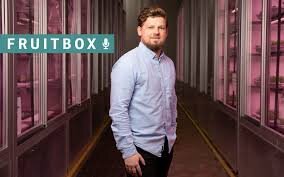
“We are not building farms,” explains InFarm’s vice-president of corporate sales Daniel Kats, speaking on the latest episode of Fruitbox. “We’re taking facilities and deploying models inside. Those automated towers can then grow by demand. If the retailer has more demand, we just add one or two or ten more towers.”
Why now? “The population is growing, the demand keeps growing, and a lot of food production is needed in many large cities,” says Kats. “Therefore we are pushing the button now and starting to grow.”
Now operating in ten countries, and set to launch in Japan this year, the company is also venturing into new products. As a result, it’s ready to become a major supplier in its own right, rather than simply enabling retailers to grow a limited number of items in stores.
“We are growing much more variety and assortment,” Kats adds. “We started with a lot of leafy greens, herbs, lettuces, mixed salads, microgreens, and now we’re doing the first steps into tomatoes, mushrooms, chillies, strawberries in the future, which require naturally much bigger spaces to grow centrally and distribute to the supermarkets.”
Hosted by Chris White in London, Fruitbox now attracts a big audience across the global fruit and vegetable business that tunes in every week to hear exclusive interviews and expert analysis. Produced by Fruitnet Media International, the show is essential listening for everyone in the fresh produce industry.
All previous episodes of Fruitbox can be found on any of the following podcast services:
Apple · Spotify · Anchor · Google · Overcast · Soundcloud · Stitcher · Pocket Casts
Produced by Fruitnet Media International, the show is essential listening for everyone in the fresh produce industry.
To find out how you can tell your story on Fruitbox, email: chris@fruitnet.com
To learn about sponsorship and advertising opportunities, email: advertising@fruitnet.com
Enjoyed this free article from Eurofruit Magazine and its team of editors? Don't miss out on even more in-depth analysis, plus all the latest news from the fresh produce business. Subscribe now to Eurofruit Magazine.

Alabama Indoor Vertical Farm Finds Delaware Soulmate
Lee Harrison and his wife, LeeAnn, are the founders of Gardens on Air, an indoor vertical farm located in Rainbow City, Alabama. Operating in 3,000 sq. ft. of a 20,000 sq. ft. former grocery store, Gardens on Air grows chemical-free produce and herbs harvested and sold locally

Lee Harrison, co-founder of Gardens on Air
Lee Harrison and his wife, LeeAnn, are the founders of Gardens on Air, an indoor vertical farm located in Rainbow City, Alabama. Operating in 3,000 sq. ft. of a 20,000 sq. ft. former grocery store, Gardens on Air grows chemical-free produce and herbs harvested and sold locally. They are a Certified Woman-Owned, Certified Natural Grown, Vegan Certified, and a Non-GMO Project business.
The parents of 13-year-old twins, the Harrisons are driven by a mission to improve people’s lives by ensuring the abundance of healthy food choices and offering second chances by providing employment opportunities to disadvantaged individuals. So strong is their belief in what they’re doing to make a positive difference that when a devastating turn of events threatened them with financial ruin, they took risks, made sacrifices, and fought the odds to not just survive, but triumph. They could hardly give up they are surrounded by friends and mentors whose encouragement and influence kept them forging ahead.
Lee traveled up to Delaware from Alabama on February 28 to see Second Chances Farm’s operations firsthand. A retired Alabama State police officer and a man of faith, Lee was particularly interested in our innovative approach to ending recidivism by providing employment, mentorship and entrepreneurial opportunity to previously incarcerated individuals. He knows the value of giving second chances to people and has seen firsthand how returning citizens are ostracized by society once they’re released from prison. He’s also witnessed many success stories of how good people can rebuild their lives if given the opportunity, trust, and respect.
Lee learned a lot of hard lessons about the importance of respect in his rookie years as a cop. He admits to having been a strictly “by the book” cop, stone-faced and uncompromising, until one day when someone literally knocked some perspective into him.
“I was so gung ho about enforcing the law that I had complaints on me,” says Lee. “I never lied. I've never done anything that would be considered unethical treatment of anybody. I just didn't have the capacity to see past the written law.”
All that changed the day Lee went to arrest a black man named Bruce Lee, (a.k.a. “Big Guy,”) who had just been released from prison and was visiting his family.
“We had felony warrants on him mostly drug-related. He had done nothing but work out during his last stretch behind bars, so he was what we called, ‘jail-house built.’ Massive. I was 150 pounds soaking wet, and my partner, Terry, was even smaller. Terry wanted us to wait for backup. But I said, ‘No! If we let him out of our sight, he might get away.’ That’s how I thought.
“I walked right up to him and said, ‘Hey, we got a warrant for you.’ He leaned into me and whispered, ‘Look man, please don’t do this in front of my family. Let me finish, and I’ll gladly let you put me in the car.’”
Lee wasn’t hearing any of it. The third time he told Big Guy he was taking him to jail, he grabbed his arm. The next few minutes, he says, are a blur.
“I remember it in slow motion,” Lee says. “His arm was like a tree trunk. I felt as though I had grabbed the back end of a car as it was taking off, and I knew I was about to get really hurt. To say he mopped the floor with Terry and me is an injustice. All I had left afterward was my gun belt, half my shirt, and half my pants. I was a bleeding mess.”
Lee managed to pull out his gun and he pointed it at Big Guy’s two friends, both of whom were even bigger, and demanded they put the cuffs on him, which they did.
“When we got to the jail, Big Guy wasn’t even winded,” Lee says. “He just calmly says to me, ‘If you had done things differently, I guarantee this wouldn’t have happened.’”
Big Guy was, at one time, a prominent gang leader. His world was violent, but regardless, he knew how to lead people and get them to do what he wanted. He knew how to run a successful if illegal, business.
“I can tell you what your problem is” he said. ‘You need to treat people with respect. Don’t raise your voice. Be polite. There will be people who don't do what you say regardless. It don't matter. There's those people, you just got to do what you gotta do with those people. But if you would’ve just taken the time… if you’d just stood there and let me finish talking to my mom who I haven’t seen for years and is bad off we wouldn’t have had a problem.”
The Harrison Family
This made Lee’s heart leap. He realized he hadn’t been respecting people’s dignity or humanity, and he also didn’t know that the man’s mother was suffering. “And I said, okay, I'll take your advice. And I did, and my complaints went down to zero. I rarely had to fight anyone anymore. Everything changed for me at that point. In 1999, I was Officer of the Year for the State of Alabama.”
At that moment, Lee shed his “no emotion, strictly business” police persona and let his real, compassionate self shine through. He could often be found shooting hoops on the basketball courts in crime-ridden neighborhoods as a trusted friend and role model. Partnering with Second Chances Farm to create a presence in Alabama to help former inmates reenter society will be a dream come true.
Ten years ago, when job-related injuries forced him into retirement, Lee’s brother came across research from NASA about aeroponic and hydroponic farming. Lee was intrigued about growing crops without pesticides and other harmful chemicals.
“My father had cancer and was having issues with his medication, so we were looking for healthy foods that we could grow. We didn’t trust the purity of so-called ‘organic’ foods we had learned that even if soil-based crops are grown without harmful chemicals, they are still vulnerable to the risk of chemical run-off from the non-organic fields.”
The Harrisons started small with an aeroponic system and later moved to hydroponic methods. “We grew for other people who had cancer, too. “ We decided to expand because we were doing a lot of good and really enjoying it. After years of having to prove ourselves to the USDA, we were able to be certified as Organic. Since research has shown the positive effects of wheat and barley grass juice on muscle growth, we have been growing that for cancer patients, too.”
It hasn’t been an easy ride. In Alabama, agriculture is hard-wired into the culture. It’s the primary way of life.
“I don't know how many times we've been told we wouldn’t make it. ‘It won't work.’ ‘There's no way to do it.’ ‘It won't happen.’ ‘You can't do that.’ ‘How can you grow a plant without dirt?’ ‘You're an idiot.’ And yet, today, indoor vertical farming has become a multi-million dollar industry garnering millions of investment dollars. People are starting to accept that they are dependent on huge amounts of produce that comes into our state from California and Arizona and that we are much better off protecting our people by growing our own produce locally, 365 days a year.”
Lee believes that the mentality and the mission of Second Chances Farm and Gardens on Air interlock flawlessly. We are honored to have met Lee Harrison, a truly honorable, compassionate, and inspiring man.
Lee has invited Ajit Mathew George, founder of Second Chances Farm to visit Lee’s existing 20,000 sq. ft. facility in Alabama between March 30 and April 2 to see how it might be integrated into “Second Chances Farm Rainbow City, Alabama.”
Stay tuned for more details!


USA - NEW YORK STATE - Ellicottville Greens’ Investors Discuss Why They Backed The Company
Ellicottville Greens crossed a major hurdle facing many growth-oriented startups recently when it pulled in a $1 million round of Series A funding from local angel investors

By Dan Miner – Reporter, Buffalo Business First
March 10, 2021

Andrea Vossler, partner at Lippes Mathias Wexler Friedman LLP | JOED VIERA
Ellicottville Greens crossed a major hurdle facing many growth-oriented startups recently when it pulled in a $1 million round of Series A funding from local angel investors.
How did co-founders Gabe Bialkowski and Sal LaTorre convince angels to move cash into their bank account in exchange for an ownership percentage of the business?
The answer lies somewhere at the intersection of familiarity, talent, and foresight, according to Scott Friedman, chairman of Lippes Mathias Wexler Friedman law firm, and Andrea Vossler, a partner at that firm.
The duo, who invest through Varia Ventures, were the lead funders in Ellicottville Greens’ round.
Bialkowski is a computer science graduate from the Rochester Institute of Technology who has been in and out of several startups in the last decade, including a startup in Los Angeles that successfully raised seed capital.
“We worked with Gabe in the past and we find him to be bright, entrepreneurial, and collaborative,” Friedman said. “To build a great company requires real teamwork and Gabe is open to building a great team.”

Scott Friedman, chairman of Lippes Mathias Wexler Friedman LLP | JOED VIERA
The “bet the jockeys” mantra is a common beat among angel investors, who know that even the best ideas will face challenges requiring human ingenuity to overcome.
The model itself was also at the right place for an angel investment round, Vossler said. Ellicottville Greens builds organic vertical farms in shipping containers – making them cost-effective and mobile. It already has four such units in operation, allowing the team to show real-world evidence of its theoretical premise.
The company positions itself at the cutting-edge of a hot consumer trend, which is the ability to offer fresh and locally sourced produce. Its mobile units can be placed directly on a customers’ premises – an idea with major potential in the grocery space.

Ellicottville Greens' Container Farms | ELLICOTTVILLE GREENS

And finally, it uses technology to support production and operations and uses established e-commerce channels such as Produce Peddlers and Off the Muck.
“It’s an ag-tech startup in a massive market that’s continuing to grow,” Vossler said. “Gabe is taking a fairly straightforward business model and wrapping it with technology, utilizing the shipping containers to push down costs and creating significant efficiencies around the delivery of the product.”
Ellicottville Greens completed a $250,000 seed round of funding last year from Launch NY and other local angels. Bialkowski aired his company’s progress at a Jan. 27 web presentation in front of the Western New York Venture Association.
He surpassed many of his own growth and financial milestones for the year in the first quarter.
The mix of attractive leadership, market, and rapid growth was how Ellicottville Greens crossed the finish line on its Series A round. The idea, of course, is that the real race has just begun.
“As he continues to build his team and get traction, we don’t think there is any limit to the potential for this company,” Friedman said.
IN THIS ARTICLE Andrea Vossler Person Banking & Financial

Kosher Certification & Controlled Environment Agriculture
Kosher Certification Evolves With The Continuous Technological Changes in Food Production
February 25, 2021
Kosher Certification Evolves
With The Continuous Technological
Changes In Food Production
Since the OU’s first product certification of Heinz vegetarian baked beans in 1923, the OU’s processes for certification evolved with food production technology. A deep understanding of food production, technology, and science have made it possible to meet our customers where they are. The Controlled Environment Agriculture (CEA) Industry, an industry sector at the leading edge of agriculture has seen tremendous growth recently. It shows promise in the production of bug-free food vegetables which are in high demand by kosher consumers.
As background, most of us are familiar with pigs as not being Kosher as this is expressly forbidden for Kosher consumption in the Torah (bible). However, it is stated many more times that insects are forbidden to be eaten as well. As a result, the Kosher Consumer has to be very careful when preparing fresh produce because of the potential presence of insects such as Thrips and Aphids. This entails the consumer’s washing the produce at home, checking and, if clean (otherwise would have to restart the process) dry before consumption. Needless to say, this can be an arduous task when preparing any meal.
The Unique Nature of the Kosher Vegetable Market
This is where the Kosher Vegetable market is unique because kosher certified produce provides a critical convenience factor (often translating into higher premiums) for the consumer who is careful about not eating insects. Interestingly enough, consumers who do not keep the dietary restrictions of Kosher will nonetheless prefer kosher-certified produce because of the fear/perceived disgust of eating insects. A well-known resort was recently sued for serving lettuce wraps that contained Aphids by non-kosher consumers.
With many farms now going indoors, to allow control of humidity, lighting, and nutrients for the plants, there is a greater potential of being insect-free with the benefits of minimal to no pesticide use. This is in addition to the freshness of the product as many of these farms are more local since they are not bound by outdoor constraints. Some companies can deliver their produce within 24 hours of harvest. Due to this technology, the consumer can now have access to a greater variety of produce that can be insect-free and never has to be washed, a process that reduces the product’s quality.
This does not mean that indoor farms are automatically clean as it has been our experience that there are plenty of farms that have an insect infestation. Also, since many farms want to advertise that they are pesticide-free, this will translate into an Integrated Pest Management that requires the release of beneficial insects to consume the more detrimental ones.
The kosher certification of insect-prone vegetables is carefully supervised and navigated by the OU. Standard OU procedure will require an assessment of the facility. In addition, substantial samples of vegetables or final product are checked for insects prior to granting certification. The dynamic of OU certification of vegetables is undoubtedly highly involved but the OU has created a system of supervision to certify vegetables prone to insect infestation.
Through meeting many demands and developing an excellent working partnership with companies, the OU always strives to provide its certified companies with an unparalleled level of supervision.
Have any questions, comments, or want to explore Kosher Certification?
Please contact Rabbi Daniel Sharratt at: sharrattd@ou.org
Rabbi Daniel Sharratt
Rabbi Sharratt comes to the OU with experience working with many agencies across various industry sectors within the Food & Beverage Industry. Receiving a BS in Mechanical Engineering from the University of Notre Dame with a concentration in Industrial Design and receiving Rabbinic Ordination from Mesivta Torah Vodaath, he has become a valuable asset to the OU. As a Rabbinic Coordinator, he ensures that the Rabbis in the field are able to conduct their inspections, review formulas, manufacturing processes, and acts as the Accounts Executive. He currently specializes in Beverages and Produce (with a keen interest in Controlled Environment Agriculture). Rabbi Sharratt at one point even owned and operated a Kosher Fresh Vegetable company, developing a unique perspective into the Kosher Vegetable market. He is actively involved with ASK OU, where he provides classes for consumers on how to wash and check vegetables at home for kosher consumption. In addition, he works with many companies in Latin America due to his ability to speak Spanish.
This article originally appeared on OUkosher.org

![Vertical Farms vs Greenhouses: Energy and LED Costs And Differences [Part 2 of 5]](https://images.squarespace-cdn.com/content/v1/57c8695d5016e11e71be1d83/1615337195881-9949W7G4WYZHR08W8UW3/Screen+Shot+2021-03-10+at+1.40.08+AM.png)
Vertical Farms vs Greenhouses: Energy and LED Costs And Differences [Part 2 of 5]
Lighting is one of the biggest expenses for a vertical farm, for obvious reasons – each layer in the farm needs its own LED “suns.” Agritecture Designer, a consulting software created by Gordon-Smith’s company, estimates the need at roughly 10 LEDs per square meter
Part 2 of 5] This is the second post in a 5-part series on the differences between vertical farms and greenhouses, and the considerations that will help farming entrepreneurs decide which is right for their situation.
Last week, in the first article of this series, we discussed the basic differences between vertical farms and greenhouses, including why location is such an important factor in the decision. In short: The location of a farm governs how much space will be available for it, and the source of the energy it will use.
That last part is what you might call “the elephant in the room” when it comes to indoor farming: Energy demand, and the main reason we care about it – carbon emissions. So let’s talk about that today.
Carbon Footprint Factors: Electricity (But Not Only)
One of the leading critiques of vertical farming is that replacing natural sunlight and open-air with LED bulbs and climate control requires electricity – lots of it.
“If the source of the energy is not renewable,” points out Henry Gordon-Smith, the CEO of Agritecture, an independent consultancy that helps clients decide between vertical farms and greenhouses, “Then vertical farms have enormously more carbon footprint than greenhouses.”
But the opposite is also true – where renewables are available, vertical farming can greatly reduce the carbon footprint of foods that are normally trucked long distances, or flown in from overseas.
For example, “Norway could be huge for vertical farming, because they just have so much cheap, renewable energy,” Gordon-Smith suggested.
When you tally the emissions reductions from shorter transport distances, the reduction in fertilizer use (fertilizer production is highly carbon-intense, and Controlled Environment Agriculture uses it much more efficiently than outdoor farms), plus the reduction in food waste, it’s clear that artificial light and conditioned air inside vertical farms are not the only carbon footprint factors to consider.
Bringing the Sun Indoors: Changing Electricity Costs for Farms
Lighting is one of the biggest expenses for a vertical farm, for obvious reasons – each layer in the farm needs its own LED “suns.” Agritecture Designer, a consulting software created by Gordon-Smith’s company, estimates the need at roughly 10 LEDs per square meter.
That’s a useful figure to get started, but given the variability between types of LEDs, a more precise estimate would be about 100 watts of LED power per square meter, according to Gus van der Feltz, another CEA industry expert. Van der Feltz is a co-founder and Board Member of Farmtech Society in Belgium, and project leader for Fieldlab Vertical Farming in the Netherlands.
With these lamps operating 12 to 18 hours a day in most vertical farms, the power usage from LEDs accounts for 50 to 65% of the electricity bill.
The exact amount depends on several factors: The relative efficiency of the LEDs used, compared with the efficiency of other systems in the farm (such as climate control), as well as the light requirements of each individual crop. (For example, the total electricity required for growing light-loving strawberries in an iFarm, for example, is about 117 kWh per month for each square meter of growing space, while arugula needs only about 52 kWh.)
But whether you opt for a greenhouse or a vertical farm, you’ll be growing local produce, which means your farm may be eligible for subsidies or another form of reduced electricity rate. Be sure to check with your local government and electricity providers.
It’s also important to note that greenhouses increasingly rely on LEDs as well, especially during winter in northern climates.
This may be only supplemental light, and it will vary with the location, seasonality, and how much light each crop requires – but greenhouses are still not as energy-intensive as vertical farms.
“It takes a lot of energy to produce food (with vertical farms),” says Ramin Ebrahimnejad, vice-chair of the Association for Vertical Farming, and an expert on multiple types of urban farming.
“But,” he adds, “most vertical farms in the developed world already use renewable energy. In the long term, that’s not going to be a challenge for the industry”.
As our electricity sources become more renewable (and as LED technology improves, as we’ll discuss below) energy-intense vertical farming will become both more sustainable – less carbon-intense – and more affordable.
And we can see this evolution happening in real-time: In 2020, Europe produced more electricity from renewables than from fossil fuels for the first time.
The Cost of LEDs for Vertical Farms vs Greenhouses
LEDs themselves are another major OpEx factor in vertical farming. And even though the cost per bulb varies widely, along with the efficiency, the LEDs in a vertical farm generally have to be replaced every five to 10 years, according to the Agritecture Designer software.
However, just as the cost and carbon footprint of electricity are becoming less of a hurdle for indoor farms, the LED situation is also evolving quickly.
An idea that’s become a modern certainty is that technology gets cheaper over time. As the environmental economist William Nordhaus studied in the 1990s, the declining cost of light over the centuries – from candles, to oil lamps, to ever-more-efficient light bulbs – has been changing the world and fueling innovation for millennia.
Something similar is happening with LEDs – up to a point. Moore’s Law famously predicted computing power doubling every year, and Haitz’s Law now forecasts that the cost per lumen for LED light will fall by a factor of 10 each decade, while the light produced increases 20-fold.
However, as Van der Feltz points out, this cannot continue forever and is more limited by the laws of physics than Moore’s Law. Currently, a well-designed horticultural LED system can be up to about 55% efficient – meaning 55% of the energy put in becomes photons, which plants use to grow, and 45% becomes heat. Fifty-five percent efficiency is already impressive when compared with incandescent light bulbs, for example, where energy input produces 5% light and 95% heat.
But still, for the purpose of CEA and especially in vertical farms, the remaining 45% of the energy that becomes heat is often – though not always – useless.
“In greenhouses,” Van der Feltz explains, “the additional heat is typically not all bad. Especially since auxiliary greenhouse lighting is mostly used in the darker and cooler winter months, and there are usually plenty of options for ventilation in case it gets too warm.”
But vertical farms heat up quickly, and as closed systems where opening a window is not an option, any extra heat from LEDs must be balanced with air conditioning or creatively repurposed. Van der Feltz says some indoor farms have been designed to divert excess heat to warm an adjacent building, for example.
So LED performance can still improve marginally, but not exponentially. Van der Feltz says experts estimate that another 25% efficiency improvement is possible, but LEDs will never be able to produce light energy out of thin air.
Whatever the limits of Haitz’s Law, it’s still true that while electricity and LED light bulbs are the most expensive part of a vertical farm today, they’re also the area where improvement is most imminent. (Innovation, and the laws of supply and demand, are constantly bringing down the costs of both, regardless of how much efficiency improvement is still technologically possible.) So operating a vertical farm should still become increasingly affordable over time.
Improved technology and reduced costs for LEDs are especially good news for the potential to grow even more crops in vertical farms, as different plants use different parts of the light spectrum.
iFarm is already a leader in the industry when it comes to research and development for expanding the crop selection available to vertical farmers. As LED technology improves, we’ll be able to take those efforts even further.
Other Energy Costs: Climate Control Needs in Vertical Farms vs. Greenhouses
The high energy costs of lighting a vertical farm are obvious, but the demands of climate control are often not as clear.
Since vertical farms are closed systems, with little to no air exchanged with the outside, they must be constantly cooled and dehumidified. About 20% of the electricity used on a vertical farm is for air conditioning, while dehumidifiers account for 10%.
The need for both of these increases with each layer added to a vertical farm, in order to counter the effects of plants transpiring and increasing the heat and humidity of the system.
In temperate regions, greenhouses can save energy by using natural ventilation, as the Agritecture Designer program explains: Sidewalls can roll up to allow cool air in, while hot air escapes through vents at the top of the greenhouse. Greenhouses can also opt for an evaporative cooling system, which is still more energy efficient than a fully climate-controlled system but does add humidity – another element to be controlled.
But it’s also important to remember that greenhouses are more sensitive to outside temperatures, and therefore, the operational expenses of climate control and/or the time needed for crops to mature will vary more than they will with vertical farms – especially in cold, Northern climates.
Next, in Part 3, we’ll discuss additional cost considerations for vertical farms and greenhouses, beyond electricity.
To learn more about starting a profitable vertical farming business, reach out to our friendly team at iFarm today!
Learn more
09.03.2021

NIGERIA: Fresh Direct Makes Landless Farming Possible And Appealing For City Dwellers
With about 200 million people to feed, Nigeria is battling with food security and is yet unable to produce all the food it needs
March 9, 2021
With about 200 million people to feed, Nigeria is battling with food security and is yet unable to produce all the food it needs. Coupled with that, farmers still lose a significant percentage of produce from post-harvest losses because of poor roads, lack of storage systems among others.
Most farms are located in rural areas because that is where the land is. The markets, however, are in the urban areas, and in taking the food from where it is harvested to where it is needed, a lot of damages happen to the produce. Studies carried out on post-harvest losses in some Nigerian communities show that as much as 20 – 30% of total grain production, 30 – 50% of root and tuber and a usually high percentage of fruits and vegetables are lost after harvest.
Nigeria produces about 1.5 million tons of tomatoes a year, but over 900,000 tons is lost to rot.
What if farms were located closer to the urban markets and farmers could cut down post-harvest losses by selling to the farm as soon as the produce is ready?
Agritech startup, Fresh Direct, is making this possible through its combination of hydroponics and vertical farming. The company was founded by Angel Adelaja in 2014.
Fresh Direct’s different approach to agriculture
Hydroponics is a soilless technique used to grow crops in nutrient solutions instead of in the soil. Fresh Direct grows different crops in vertical stackable containers and develops its own hydroponic system using technology and locally-sourced materials. This includes the use of metres and sensors to monitor the conditions of the plants in the stacked farm.
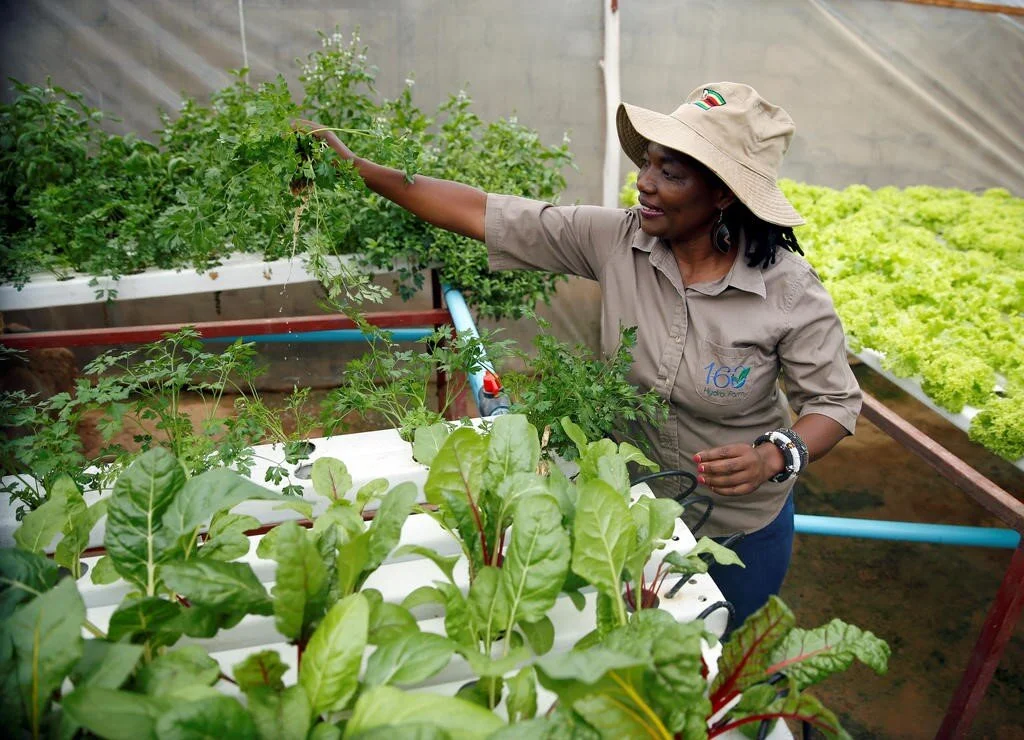
Farming with hydroponics
The container farms allow people in urban areas as well as people who have never farmed before to grow agricultural produce directly in places that are closer to the market. By using stackable shipping containers, the volume of crops that can be cultivated on a piece of land is increased exponentially. This allows the farmer to get as much as 10 times more yield using only 7 percent of the land that would be required if traditional farming methods are used.
“It has a lower barrier of entry because you do not need to go find land to start. You do not need a green house. You can start in your kitchen, closet, balcony or backyard.”
Angel Adelaja
Since the planting does not require soil, this system of farming is more appealing to youths because the back-breaking work that characterizes agriculture is absent. However, what this mode of farming removes in stress, it adds in creative thinking.
Suggested Read: From Farmcrowdy to Releaf, Here are the 5 Most Outstanding Agritech Startups of 2020
According to Adelaja, “What you avoid in back-breaking work you face in advanced thinking. It’s a higher level of thinking needed to calculate nutrients needed or design a system”.
The startup does not provide educational materials for city farmers, instead, it organizes periodic training to help farmers and intending-farmers get their footing.
Source: FoundersAfrica
Fresh Direct is gaining traction by involving more youths
Fresh Direct plans to get 10,000 youths interested in its Agritech model of farming. Already, the startup has urban farms in Abuja as well as mini-campuses in Osun State.
Also Read: Kenyan Insurtech Pula Closes $6M Series A to Boost Profits for Small-scale Farmers Across Africa
It teaches people who want to learn about urban farming as well as set up their own vertical farming containers. These teachings are provided in the form of periodic training that are organized by the startup. A training costs between N10,000 and N30,000 depending on how extensive the trainees want to go in urban farming.

After the training, Fresh Direct helps the trainees to get financing for the container farm with a collateral-free micro-loan that is obtained from banks. The problem of access to the market is also removed through the startup’s network of ready off-takers. After the produce is harvested, the city farmer can sell directly to Fresh Direct’s market.
Fresh Direct has raised N3 million in a pre-seed round
Since it started in 2014, Fresh Direct has raised funds from one disclosed round. It raised N1 million naira from Chivas Venture in 2016 in a pre-seed round. It raised an additional N2 million from She Leads Africa.
While players like Farmcrowdy are helping to make funds available for farmers in the country, more lucrative ways of farming like the vertical method and hydroponics can help farmers maximize their production and get more urban dwellers into the agriculture sector.

While Everything Is Falling Apart, It Could Be Easy To Miss The Incredible Opportunities That Are Coming Together Right Now
Check out the awesome opportunities growing on with access to the CEA census provided by Agritecture Autogrow and global market reports by Forward Fooding and United Nations

Take a look at the state of agriculture renaissance, with thousands of companies, and millions of people working toward food system transformation designed to sustainably feed 10B people, with 70% living in cities, using less energy, water, and waste, and reversing climate change.
Check out the awesome opportunities growing on with access to the CEA census provided by Agritecture Autogrow and global market reports by Forward Fooding and the United Nations
Some of the Numbers:
5.3k+ companies
$65B invested since 2010
$17B 2020 (up from $15B 2019) 42% CAGR
21% of funding went into AgTech and CEAs
5% went to digital services
48% to food delivery
Impact is being divided into five sustainable food action tracks - 10% Access, 35% Consumption, 40% Production, 5% Equity, and 15% Resilience aimed at innovative disruption.
Out of 300+ CEAs
40% were founded in the last two years
36% got funding from family and friends
35% from angel investors
80% were operating in indoor vertical farming
49% had no agriculture experience
46% were between ages 21-30
28% prefer using Coco Coir as a soilless growing medium
Largest crops microgreens, salad greens, leafy greens and herbs.
Indoor Ag-Con Heads To Orlando In October 2021
With safety in mind, the Indoor Ag-Con management team has pushed the dates for its previously announced May 2021 agriculture trade show and conference for the indoor and vertical farming industry to October 4-5, 2021
Premier Trade Show & Conference for
Indoor Vertical Farming Industry To Host In-Person Edition
October 4-5, 2021 at Hilton Orlando in Florida
(MARCH 11, 2021) -- With safety in mind, the Indoor Ag-Con management team has pushed the dates for its previously announced May 2021 agriculture trade show and conference for the indoor and vertical farming industry to October 4-5, 2021. In addition to the date shift, Indoor Ag-Con will also move from its former Las Vegas location to the Hilton Orlando in Florida for 2021, with plans to return to Las Vegas and co-locate with the National Grocers Association | NGA Show in 2022.
“By moving our event to October, we feel we’re better aligned with the expanding Covid-19 vaccine rollout and growing confidence levels in travel and attendance at live events," says Brian Sullivan, co-owner, Indoor Ag-Con. "With safety of our audience as priority one, we also wanted to find a new location and venue that offered easy accessibility, cost-effective accommodations, as well as area activities – both indoor farming as well as entertainment-related. Orlando checked all the boxes.”
“Our 2021 move to the East Coast, coupled with Orlando’s appeal and convenience, also gives us the opportunity to expand our reach and attract new audiences of growers and start-ups from the region, too,” adds Nancy Hallberg, co-owner, Indoor Ag-Con.
Registration for the 2021 edition will open in May. All attendees will be required to adhere to safety protocols and the Indoor Ag-Con team will be closely following the government guidelines issued by the CDC , state and local officials for the 2021 edition in Orlando.
Indoor Ag-Con, launched in 2013, provides exhibitors and attendees with the latest technology and business strategies for growing crops in indoor systems, using hydroponic, aeroponic and aquaponic techniques, bringing together growers, investors, chefs, produce buyers, academics, policymakers, industry suppliers and advocates.
The 2021 edition will feature an expanded exhibit floor, new networking opportunities and some of the industry’s top innovators and business leaders presenting keynote addresses and participating in a range of panel discussions.
Centrally located to all major theme parks and attractions and just minutes from the eclectic dining scene and entertainment of International Drive, the Hilton Orlando resort sits on over 26 acres of lush landscaping and tropical inspirations making it a true destination of its own. Guests are immediately welcomed with an upscale feel enhanced with resort-style accommodations and amenities.
In development now, more information on the 2021 edition’s educational offerings, exhibits and networking events can be found at www.indoor.ag
For 2022, Indoor Ag-Con and The NGA Show will co-locate at Caesars Forum Convention Center in Las Vegas, February 27 – March 1, 2022.
About Indoor Ag-Con
Founded in 2013, Indoor Ag-Con has emerged as the premier trade event for vertical farming | indoor agriculture, the practice of growing crops in indoor systems, using hydroponic, aquaponic, and aeroponic techniques. Its events are crop-agnostic and touch all sectors of the business, covering produce, legal cannabis |hemp, alternate protein, and non-food crops. In December 2018, three event industry professionals – Nancy Hallberg, Kris Sieradzki, and Brian Sullivan – acquired Indoor Ag-Con LLC, setting the stage for further expansion of the events globally. More information is at https://indoor.ag.
###
Indoor Ag-Con, 950 Scales Road, Building #200, Suwanee, GA 30024, United States

Orlando Ag-Tech Firm Kalera Lands Investment For More Growth
The Orlando-based firm on Feb. 24 completed a private placement, a sale of shares to pre-selected investors and firms, that raised the company $31 million, according to financial documents


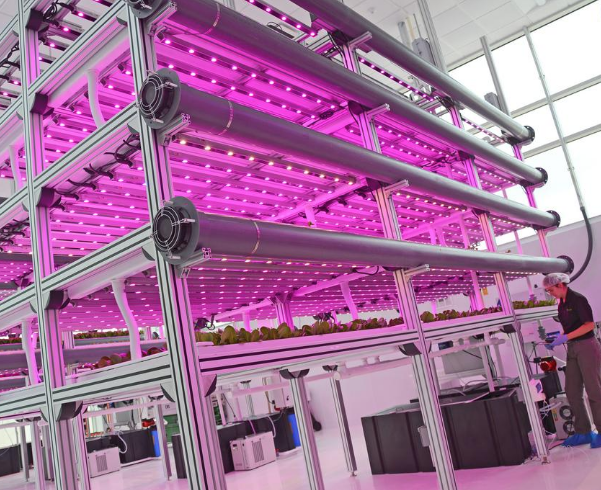


One of the newest investors fueling growth at indoor farming company Kalera Inc. once was the U.S. agriculture industry's top government official.
The Orlando-based firm on Feb. 24 completed a private placement, a sale of shares to pre-selected investors and firms, that raised the company $31 million, according to financial documents. Among Kalera's latest investors is Sonny Perdue, U.S. secretary of agriculture from 2017-2021 and governor of Georgia from 2003-2011, who will join the firm's board of directors.
This is another big investment round for Kalera, which last year raised $150 million in capital. These funds help the company as it rapidly opens indoor produce growing facilities across the U.S. and eyes international expansion.
Acquisition, expansion
The investment funds Kalera's purchase of vertical farm seed developer Vindara Inc., according to documents. The seeds made by the Durham, North Carolina-based firm will increase output, improve energy efficiency and expand the product pipeline at Kalera, the company announced Feb. 24.
To see inside Kalera's HyCube in Orlando, check out the slideshow above.
Meanwhile, Kalera is expanding to six new cities in 2021 and will add employees to its corporate headquarters in Orlando this year, CEO Daniel Malechuk previously told OBJ. The company has eight open Orlando jobs listed on its website.
The company employs about 75 people, mostly in Central Florida, and will grow its workforce to more than 300 companywide by the end of 2021, Malechuk added.
Daniel Malechuk | JIM CARCHIDI
'Leading the pack'
The purchase of Vindara was the latest step in Kalera’s rapid expansion since it was founded in 2010. Kalera’s vertical agriculture facilities grow quality-controlled produce year-round. The company operates two facilities in Orlando, and this year will open growing facilities in Atlanta, Denver, Houston, Honolulu, Seattle, and Columbus, Ohio.
The global vertical farming industry has big potential, and it’s expected to be worth nearly $12.8 billion by 2026, according to industry analysis site Report Buyer. Kalera stands out within the lucrative industry, Perdue said in a prepared statement.
“Kalera is leading the pack in a booming vertical farming industry ... Through my travels, I’ve had the opportunity to experience many intriguing ideas in food and agricultural innovation and technology. In my opinion, Kalera captures the intersection of technology and sustainable food production better than anything I have seen."
Sonny Perdue | BYRON E. SMALL
VIDEO: Plenty Expands In Safeway Stores Across Northern California
Vertical Farming Leader Debuts Text-a-Farmer Feature at Point-of-Sale, Allowing Shoppers to Ask a Plenty Farmer Direct Questions
March 9, 2021

Vertical Farming Leader Debuts Text-a-Farmer Feature at Point-of-Sale, Allowing Shoppers to Ask a Plenty Farmer Direct Questions
SOUTH SAN FRANCISCO, Calif., March 9, 2021 – Plenty, the flavor-first vertical farming company with a mission to improve the lives of people, plants, and the planet, today announced an expansion to 17 new Safeway stores across Northern California, bringing the total number of stores carrying Plenty produce in the region to 53.
The additional Albertsons-owned stores, which include Safeway and Vons, are part of the multi-year agreement between the two companies to expand Plenty produce into over 430 Albertsons-owned stores across the state of California.
The new store locations are primarily in smaller communities, making Plenty the first indoor, vertically farmed produce available to these shoppers.
Plenty is also employing a first-of-its-kind Text-a-Farmer feature, on display next to its greens in-store. Text-a-Farmer lets shoppers text questions while shopping and receive an answer directly from a Plenty farmer.
Questions can cover anything related to Plenty and its produce, including “do you use pesticides on your leafy greens,” “is your packaging recyclable,” or “how do I keep my greens fresh for longer?”
In the age of COVID when human contact has been limited, and in-person sampling is restricted, Plenty is working to connect with shoppers directly to answer questions and share information.
“At Plenty, we’re proud of the fresh, flavorful greens we grow in our farm, and of our transparent growing process, which lets us track a plant from seed to kitchen,” said Nate Storey, co-founder and chief science officer at Plenty. “The Text-a-Farmer program is one way we can directly connect with customers and hear their personal questions and experiences. We’re always excited to engage with shoppers and help them learn more about our company and the delicious produce we grow.”
Plenty’s sustainable farm delivers produce year-round that tastes like it was picked fresh from the garden. Using data analytics, machine learning and customized lighting, Plenty is able to coax the natural flavors and nutrients from the plants, creating a superior taste experience from leafy greens.
Operating on vertical towers, the farm grows hundreds of acres in a space the size of a big box store, using a fraction of the land and water used in outdoor growing.
All store locations carry four of Plenty’s flavor-first products:
• Baby Arugula – A bold baby arugula with seductive spice and subtle hints of summer citrus and black pepper
• Baby Kale – A velvety-soft baby kale highlighted by bright notes and a smooth finish
• Crispy Lettuce – A crispy leaf delivering the fresh, clean crunch you crave and versatility deserving of your most creative ideas
• Mizuna Mix – A crunchy, colorful mix of tatsoi and mizuna that brings a mustardy heat to the table
A full list of Plenty stores across the Bay area can be found here.
About Plenty
Plenty is an American farming technology company that frees agriculture from the constraints of land, weather, seasons, time, distance, pests, natural disasters, and climate. The company’s plant scientists, engineers, and farmers have developed its indoor vertical farming technology to grow nutrient-rich and pesticide-free plants with extraordinary flavor. The Plenty platform is designed to grow multiple crops in a building the size of a retail box store, yielding hundreds of acres using a fraction of the water and other precious resources. Plenty’s flagship farm and headquarters are located in South San Francisco, and the company operates the largest of its kind Research and Development farm in Laramie, Wyoming. Plenty is currently building the world’s highest-output, a vertical indoor farm in Compton, California.
Tagged greenhouse, plenty
Related Posts
AmplifiedAg offers indoor farm platform, eyes rapid expansion March 4, 2021 Press Release
Gotham Greens expansion hits West Coast March 4, 2021 Press Release

Vertical Indoor Farming Equipment Online Auction
GALLIVAN is pleased to offer the sale of Indoor Vertical Farming Equipment. The company is relocating and liquidating surplus inventory
AUCTION DATES:
BID ONLINE WEDNESDAY, MARCH 17TH
THROUGH TUESDAY, MARCH 23RD
LOT ONE ENDS AT 12 PM CST WITH A
45-SECOND STAGGER BETWEEN LOT CLOSINGS
GALLIVAN IS PLEASED TO OFFER THE SALE OF INDOOR VERTICAL FARMING EQUIPMENT. THE COMPANY IS RELOCATING AND LIQUIDATING SURPLUS INVENTORY. A WONDERFUL ASSORTMENT OF LED LIGHTS, RACKING TUBS, CLIMATE CONTROL SYSTEMS, SCISSOR LIFTS, ORDER PICKER, HIGH-PRESSURE PUMPS, PALLET RACKING, SHIPPING SUPPLIES, AND MORE! ASSETS ARE LOCATED IN PORTAGE, INDIANA.
HYDROPONIC GROWING EQUIPMENT
OZONE WATER TREATMENT, ADVANCED TREATMENT TECHNOLOGIES, HORTIPUR+, 03 GEN, 02 CONC, CLEARWATER TECH OZONE GENERATOR CD1500P, 150 PSIG, EVERFLO REF# 1020000
PALLET RACKING, POWDER COATED, 8’X36” X24’ W/ WIRE GRID
2 - HIGH-PRESSURE PUMPS, TECO NESTING HOUSE, 3 PHASE, 230/460V, RPM 1765, AMPS 35.1/17.5 300 CASES - COCO COIR GROW PUCKS, 105 CELL PLUG TRAYS, 17 TRAYS PER CASE
3,240 TRAYS - GROWING TRAYS, 105 CELL, 11"X22"
1,000 TRAYS - GROWING TRAYS, 8 CELL, 11” X22”
300 - GROW TUBS, ABS PLASTIC, 4X8, RIDGED DIRECTIONAL WATER FLOW
98 - CUSTOM GROW TUBS, WHITE, 1" DEPTH, 4X8, EBB FLOW
10,000 - MESH CUPS, 1” DIAMETER
COCONUT COIR BLOCKS, 10 LBS.
LIFTS
ORDER PICKER, RAYMOND, MDL 520-0PC30TT, 2006, 41 HRS, W/ CHARGER
SCISSOR LIFT, GENIE, MDL GS-1930, 479 HRS, 24V, MAX HEIGHT 19FT, MAX WEIGHT 599.7 LBS
SCISSOR LIFT, GENIE, MDL GS-1930, 428 HRS, 24V, MAX HEIGHT 19FT, MAX WEIGHT 599.7 LBS
WALK BEHIND FLOOR CLEANER, BULLDOG SCRUBBERS, MDL E26ECOQPG-FC, SER# 13110136, 26"
LIGHTS
3,000+ - LED GROW LIGHTS, PHILLIPS, HORTICULTURAL, 4', 120V, 35A 35W 60-60HZ PFK
300+ - LED LIGHT CONNECTORS, TE QUICK CONNECTORS, 24 CONNECTORS PER STRAND
MISCELLANEOUS EQUIPMENT
INSULATED WALL SYSTEM, THERMAL PANELS, (88) 24' X 4' X 4", (60) 15' x 4' x 4", (30) 5' 6" X 4' X 4", (44) 12' X 4' X 4", (2) 12' X 4' 6" X 4", (18) 8' 8" x 4' x 4", (15) PARTIAL, (3) CRASH DOORS, 96" x 36" x 3/4" W/ WINDOW 11" x 22", FREEZER DOOR, REMOVAL OF THIS LOT MUST BE SCHEDULED
2 - CONDENSER, CARRIER, MDL 38AUZA25A0A6A0A0A0, 20 TON, 2 PHASE
2 - REMOTE CONDENSER, LUVATA, MDL LCS5213-099-4C, 3 PHASE, 6.5 MCA
2 - AIR CONDITIONER/ DEHUMIDIFIER, VERTICAL AIRE, MDL QV25P4E68372B, SER# 4915E23687, 7500 CFM, R-410A CONDENSING UNIT, COPELAND, MDL FTAH-A35Z-TFD020, 3 PHASE, 60 HZ
2 - AIR ROTATION UNIT, ARIZON, JOHNSON AIR ROTATION, MDL AR55XX-10-DX45
7 - POLY TANK, DURACAST, 1,000 GAL, 3" DRAIN, 72"X66"
1 - POLY TANK, NATIONAL TANK, 1550 GAL
2 - WATER TROUGH, GALVANIZED STEEL, 71"X24"X24", PLUMBED, W/ CASTERS
2 - HEAVY DUTY SAFETY SWITCH, SQUARE D, 400 AMP, 600 VAC
HEAVY DUTY SAFETY SWITCH, SQUARE D, 200 AMP, 600 VAC
4 - BREAKER PANEL, SQUARE D, CAT# 12336791120010001, 250 AMP MAX, 208Y/120 VAC
TRANSFORMER, SQUARE D, CAT# EE150T3H, 150 KVA
TRANSFORMER, SQUARE D, CAT# EE112T3H, 112.5 KVA
TRANSFORMER, SQUARE D, CAT# EE150T3H, 150 KVA
FIRE ALARM CONTROL SYSTEM, TYCO SAFETY SYSTEMS, SIMPLEX, MDL 4006
MOTOR CONTROL PANEL, SIEMENS, D46264-1 REF B
MOTOR CONTROL PANEL, SIEMENS, 14NL
SINGLE USE SHIPPING
12 - SKID OF PRODUCE BOXES, 17.5"X12.5" X9.5", 250 BOXES PER PALLET, HANDLES, AND VENT HOLES
150 - STANDARD CARDBOARD BOXES, 22"X12"12", 25 PER BUNDLE
525 - STANDARD CARDBOARD BOXES, 9"X9" X 5", 25 PER BUNDLE
575 - STANDARD CARDBOARD BOXES, 10"X8" X8", 25 PER BUNDLE
200 - STANDARD CARDBOARD BOXES, 22” X14” X16”, 25 PER BUNDLE
15 - CASE OF LETTUCE CLAM SHELLS, 750 PER CASE

Terms of Sale: An 18% Buyer’s Premium will apply to all buyers. Payment for all purchases must be made in full within 24 hours of the sale. Accepted forms of payment are Wire Transfer and Credit Card. We accept VISA, MasterCard, Discover, American Express, and Wire Transfers. Follow procedures when you register as a bidder. If you are the winning bidder, and your purchases total $3,000.00 or less, your credit card will be automatically charged in full at the close of the auction. Note: Purchases over $10,000 must be made by wire transfer. See full terms of sale on our website.
View Full Details On Our Website
Gallivan Auctioneers and Appraisers
7230 Arbuckle Commons, Suite 181, Brownsburg, IN 46112
Matthew Gallivan AU10500124, Norman Gallilvan AU09100059
Norman J. Gallivan, Inc. AC32000003

"Horticulture Is An Interesting Sector For Hackers"
Digital espionage from the East, a Dutch newspaper headlined last month. Ransomware attacks pose a risk to Dutch companies, according to various cybersecurity companies
Suddenly it does get very hot in the greenhouse. The grow pipe appears to be heating up at maximum and the windows are closed. The screen system does not seem to respond to the sun and the irrigation is set to zero. The climate computer no longer responds to adjustments, instead giving an unknown message. Hostage. Pay up, or you won't regain control of your greenhouse.
This scenario may seem far-fetched, but at the same time it is not unimaginable. Horticulture is at the forefront of using modern technologies and that simultaneously makes the sector a target for hackers. The information and knowledge of suppliers, growers and breeders also attract the attention of malicious parties. Marco van Loosen and Patrick Dankers of Priva explain what is going on and how it is possible that the horticultural industry is simultaneously the most modern in the world, but also somewhat naive when it comes to cyber security.
Digital espionage from the East, a Dutch newspaper headlined last month. Ransomware attacks pose a risk to Dutch companies, according to various cybersecurity companies. Last week Dutch science organization NWO was in the news: it was extorted by hackers. Their network was taken hostage and because they did not pay a ransom, confidential information was revealed on the dark web. According to Marco van Loosen, these are threats that the horticultural sector must also be aware of. He started working as Information Security Lead at Priva last year. His colleague Patrick Dankers (Portfolio Manager Horticulture) explains that there are various ways in which hacking in horticulture can be a risk. Theft, for example, of technology.
Cloud solutions
"We expect the use of cloud solutions in horticulture to take off in the next five years. Then you can think of autonomous cultivation, harvesting robots, harvest predictions and the associated algorithms, but also the knowledge of, for example, the breeding companies. All technology that can be interesting for outsiders" says Patrick.
"On the other hand, you don't have much use for this data without knowing how it is used in practice," adds Marco. "That also makes the process data from the greenhouses themselves a target. The combination between technology and the process data gives the opportunity to be able to apply the knowledge elsewhere, or at least to be able to catch up technologically in horticulture."
A second threat that horticulture may face is cybercriminals penetrating the greenhouse. "By adjusting parameters or settings or taking over users' accounts, you can obviously cause a lot of damage. Then there may be hostage-taking and asking for ransom, but sometimes they are also just out to do damage."
"Previous DDOS attacks on the government were also found to have been carried out by an adolescent," Patrick gives as an example. "But whoever is behind it, the fact remains that disruption of services is a risk that comes into play, both locally and in the cloud."
Secure and modern
The fact that Priva, of all companies, has come forward with this may seem surprising. The company offers various services that make it possible to control and optimize a crop via the cloud. Priva is happy to share information on how these solutions contribute to, for example, an autonomous greenhouse or scaling up in the sector. "It's a shaky balance: we don't want to paint doomsday scenarios or spread fear, yet this is a topic that concerns the entire sector. At the moment there is a lot of focus on the great opportunities and not on the risks. As Priva, we want to take the lead in making the sector aware of the opportunities that cloud technology offers, but only if you use that beautiful technology properly and safely. By being alert and aware, we at Priva and our users can contribute to this," says Patrick.
Within Priva itself, information security is a high priority. Last year, Marco was recruited, who is working non-stop with a special security team. When developing products and services, we work on the basis of known security principles, and security is also given sufficient attention in new releases. In addition, penetration tests are performed by ethical hackers. "We let them loose on our services and see where we can make improvements. First, they are allowed to try and penetrate our systems from the outside, and at a later stage we give them access so that they can also identify any security weaknesses from the customer's point of view. Findings are assessed and resolved. This kind of double testing keeps us on our toes and allows us to continuously increase the security level of our systems. "
Password on a post-it
There is also work to be done at a much more basic level, at the companies themselves. "There is a large group of customers who are serious about cybersecurity, but we also recognize the sector as one in which security is handled somewhat naively. That really starts with the cliché cases: companies where the password is attached to a computer screen with a post-it, where the Wi-Fi network for guests has had the same password for years or is not separated from the other networks. It might end up with a grower who can control the greenhouse with his iPhone through Priva Operator, but doesn't think about how to handle the security of his phone."
"As Priva, we do everything we can with our cloud platform to protect that knowledge and process data: the data remains with the customer and it is only under Priva's control. To continue doing that safely, we are now turning on two-stage security by default for new users of our cloud services," Marco continued. "In doing so, we help companies make the right choices in this regard. We also ensure that existing company accounts can be used to access our platform so that rights can be easily assigned and removed, for example when employees leave the company. And we also ask companies to think about the security of their systems themselves. Is there someone responsible for IT? Is there someone who regularly checks and monitors everything?"
Learning money paid
"From a historical perspective, hacking is obviously not an important topic for this sector, because it is relatively new. We now see that big players are more engaged in it - perhaps also because learning money has already been paid," Patrick continues. Marco adds: "we are therefore working with the security teams of these big players to fine-tune the security requirements. But companies that do not employ specialists themselves can also choose to outsource part of their IT security."
For growers, it is usually really not necessary to set up a complete security team themselves as well. "But growers sometimes wonder what they have to hide, or what can go wrong. If someone unnoticed is in your system and has access to process data, for example. But also, growers have their own way of growing a tomato, cucumber or rose in the best possible way. Their own knowledge is all in the system and that has been developed and refined over the years. You don't want a hacker to get hold of this, but neither do you want your neighbor or competitor to have access to it. At the same time, of course, you want to take advantage of the new possibilities of this technology, which is certainly possible if we as a sector give security sufficient priority."
For more information:
Priva
www.priva.com
www.priva-international.com
contact.priva@priva.nl

3 Mar 2021
Author: Arlette Sijmonsma
© HortiDaily.com

EU: According To Marcell Kovacs "Hydroponics Should Be Labeled As Organic"
“We’re living in a time where environmentally-conscious decisions are imperative,” says Marcell
Earlier this year, many vertical farms, especially hydroponic farms and their investors received a cold shower after an EU decision. Although hydroponic farming offers high-quality, pesticide-free, green, nutrition products it hasn’t been acknowledged by the European Parlament’s Committee on Agriculture and Rural Development (AGRI) as “organic”.
Losing many benefits
“Agriculture technology progressed at a break-neck speed in the last 3 to 5 years, and we are only at the beginning of the trend,” says Marcell Kovacs, founder, and CEO at Maxellco an innovation agency. “The next EU budget will unleash millions of euros for the agriculture sector in the form of grants or investments for a more sustainable and greener sector. This is the time and place to witness the revolution for the next 5 to 7 years.”
The technology in novel growing solutions, such as automated vertical farms, hydroponics, and aquaponics, often fitted with Private Equity and Venture Capital investments, resulted that these products hit the market at scale. However, production at high-tech facilities is expensive as labor, electricity, and heating are major cost factors that need to be managed. Due to high CapEx and OpEx it is crucial for the sector to sell products at a premium price to keep the business afloat.
According to Marcell, one solution could be to classify indoor farming products as officially ‘organic’, using the approved logo set by the EU across all 27 countries.
The organic logo (Source: European Commission)
It appears that the labeling, such as ‘bio’, ‘organic’, ‘eco’ or ‘locally produced’ are crucial to justify a higher price for produce. The organic label has become an immediately recognizable statement for quality. “We track retail prices in several regions in the EU and we can clearly demonstrate a 30% or even in some cases a 50% price premium for organic labeled products, fruits, vegetables and greens,” Marcell says. “Therefore, the label is clearly a powerful designation and producers have a strong incentive to be included under the organic umbrella,” he adds.
Why rejected?
“It was unrealistic to assume that the Parliament would approve hydroponics as organic at one go says Marcell. He says that the European agriculture sector is one of the most heavily regulated and subsidized sectors. Only a handful of experts understand the entire Common Agricultural Policy (CAP) to its full extent. It took years of negotiation, industrial influence and compromise to develop the organic label followed by a decade of heavy marketing so the brand could easily be recognized by (potential) customers. It is a sacred protection tool to prevent European citizens from buying low-quality and unhealthy food from sources other than inside the EU,” Marcel affirms.
“Technology always progressed faster, whereas legislation and regulation followed the progress five to 10 years later to catch up with trends. The new agriculture is surely disruptive, but this is not a get-rich-quick scheme,” Marcell warns. “Farmers should embrace themselves for years of continuous investment in technology and marketing.” In order to pursue these classification goals, the AgTech sector must unite and push for legislative change together, or try to develop a new label as a standard for hydroponic and indoor farming production. Even with the best efforts, the process might take years, and maybe even decades for it to pass. So why not spend this effort in customer education instead?” Marcell suggests.
Photo 17690284 © Panpote | Dreamstime.com
Customer engagement
“We’re living in a time where environmentally-conscious decisions are imperative,” says Marcell. The change is not only a peak of the political centrum, but it’s present in industries, companies and customers. Customer's habits are now changing as many are becoming more environmentally conscious and are set to pursue a healthy diet. They prefer high-quality products as they’re able to afford it. Marcell says that the green aspect is part of the customer’s decisions as they want to become part of the story and have an emotional attachment to the food. Questions will arise such as, Where did come from? How was it produced? What is the environmental impact of this one?”
Marcell states that customers have the power to decide the future of the planet and the agriculture sector. On the other hand, producers have the chance to engage with customers across the supply chain, to better inform, educate and assist them to maintain their choice of lifestyle. Companies and producers should explore this field to begin developing a long-term customer relationship.
“An armada of digital tools are available for companies to take advantage and lead the changing customer habits. Think of QR codes to track down the source of vegetables (from Farm-to-Fork), or mobile apps to track eating habits or gamified waste collection. These are all easy to go answers and an important piece of this extremely complex situation.”
For more information:
Maxellco
Marcell Kovacs, Founder, and CEO
marcell.kovacs@maxellco.com
www.maxellco.com
Publication date: Fri 5 Mar 2021
Author: Rebekka Boekhout
© VerticalFarmDaily.com

Sustainable Agriculture Technology Can Help Egypt’s Water Crisis
Suweilem said hydroponics is an ideal way to deal with water scarcity and climate change, stressing the need for Arab countries that suffer from a shortage of agricultural lands due to their desert nature, including Egypt, to rely on this type of agriculture
The project of an Egyptian student consisting of using the Sinai environment for sustainable agriculture with the use of less water may be a solution to Egypt’s water scarcity problem.
A picture shows the UAE's al-Badia Farms in Dubai, an indoor vertical farm using innovative hydroponic technology to grow fruits and vegetables all year round, on August 4, 2020. - Badia Farms is the Middle East's Based in downtown Dubai, the farms ground-breaking methods sustainably grow crops without sunlight, soil or pesticides. The farm uses 90% less water compared to open field farming. The companys vision is to revolutionise the agricultural industry in Middle East to provide a solution for the regions food security. Photo by KARIM SAHIB/AFP via Getty Images.

March 6, 2021
Egyptian student Nada Ayman's project dubbed the Cultural Desert Gravity Center uses the Sinai environment as its main agricultural tool. It also won the 36th Cycle at the 2020 World Architecture Festival.
The project — designed to be built as a cultural center in Wadi el-Weshwash in the town of Nuweiba in south Sinai — uses the surrounding environment, including the mountains, to build an integrated center providing organic nutritional products and natural herbs used in manufacturing medicines and fragrance products. A tourist and entertainment complex offering various educational and entertainment activities is also on the horizon, said Ayman.
Ayman, a student at the Faculty of Applied Arts at Zagazig University, told Al-Monitor via phone she chose the project based on the spiritual meaning of mountains.
She noted, “I was nominated by my professors to participate in the architecture competition. The World Architecture Festival has been in place since 2006, and it has a section dedicated to interior design.”
Ayman said the project consists of a hydroponic farm, which is a system to grow crops without soil. The roots of the plants grow in a liquid nutrient solution that is recycled and reused repeatedly through plants. The hydroponic farm produces medicinal plants, used in the manufacture of medicine, and crops that bear fruit to be served with meals in the farm’s restaurant.
Ayman added, “This type of agriculture uses 70% less water than regular agriculture to produce 100% organic products without using soil or fertilizers. Edible products are served at the restaurant of the farm, while herbal and fragrance products are used to manufacture therapeutic oil for the therapeutic center.”
She chose Wadi el-Weshwash because it is located next to a region of rich valleys whose water and minerals can be utilized in organic agriculture.
The design of the complex features a library, a restaurant and an art studio, Ayman said, noting that the design reached the final stage of the competition and was chosen among five others.
Atef Suweilem, a professor of agricultural engineering at Zagazig University, said the hydroponic agricultural method consists of either growing the seeds of plants or herbs in a nutritive water solution containing the main 12 to 16 nutrients plants need — or growing the plants in an inert solid material so they do not interact with the nutritive solution. Using this method does not require the use of chemical fertilizers, the surplus of which usually seeps into the soil in traditional agriculture, according to Suweilem.
Hydroponic agriculture also protects the plants from pests that live in the soil, as is the case in traditional agriculture, he said, adding that ancient Egyptians were the first to know hydroponics, and perhaps the papyrus plant is the most prominent example of this type of agriculture.
Suweilem said hydroponics is an ideal way to deal with water scarcity and climate change, stressing the need for Arab countries that suffer from a shortage of agricultural lands due to their desert nature, including Egypt, to rely on this type of agriculture.
Yasser Ahmed, an expert in agriculture and a former professor at the Egyptian Agricultural Research Center, stressed the need for Egypt to turn to hydroponics in the near future, as it helps save water and energy and increases productivity. Ahmed said hydroponic agriculture uses 95% less water compared to traditional agriculture. Leaf crops consume about 30% less water than traditional agriculture, and if the cultivation of these crops is expanded on the hydroponic farm, that method can be used widely, he said.
“This is the future of agriculture. We do not want to depend on imports. We hope we will have local production throughout the year, regardless of climate change, weather, rain or drought,” Ahmed said.
Of all sectors in Egypt, the agricultural sector consumes the largest share of water — meaning it consumes roughly more than 85% of the country’s share of irrigation water. Although Egypt has lost some of its fertile lands due to urban sprawl, there is an attempt to balance this through the expansion of agricultural areas in the desert. The total cultivated land was estimated at 9.3 million acres — 3.2 million acres of which are in lands recently reclaimed by the state and 6.9 million acres in other lands, according to the latest 2019 statistics of the Central Agency for Public Mobilization and Statistics.
Agriculture is essential to the Egyptian economy, as its added-value represents about 14.5% of the gross domestic product. In 2016, agricultural income reached 256.9 billion Egyptian pounds ($16.3 billion). The sector also employs 29.6% of the working population and represents 11% of all exports. Because of the water shortage, the government issued measures in January 2018 to limit the cultivation of water-intensive crops such as rice.
Rasha Mahmoud
@R_ma7moud200
TOPICS COVERED Agriculture and farming Water Issues Sinai
Read more: https://www.al-monitor.com/pulse/originals/2021/03/egypt-project-agriculture-sinai-water-scarcity-crisis.html#ixzz6oQLQrjPl

Providing An Affordable And Efficient Way To Grow Vertically Anywhere
A farming system that works just as well in a greenhouse in Africa or in an indoor environment in Sweden might sound too good to be true, but GROWPIPES farming system has been designed to do exactly that
A farming system that works just as well in a greenhouse in Africa or in an indoor environment in Sweden might sound too good to be true, but GROWPIPES farming system has been designed to do exactly that. “Our system works in all countries, whether in the North with less sunlight or in the South where there is a water shortage,” says Christer Tilk with GROWPIPES.
It all started four years ago in Gothenburg, Sweden. When setting up their first test facility they wanted their vertical farm to be as efficient as possible, but all available systems came with a high price tag. “Besides, they were hard to handle, as either the pipes were not easy to clean after harvest or they had an uneven water flow, drowning some of the plants while others dried out. Via an LED supplier, we came into contact with Christaan Delport a South African farmer with a long experience in hydroponics and we decided to join forces.”
(f.l.t.r.) Christiaan Delport and Christer Tilk
Christiaan: “I started off with growing animal nutriment, but I encountered some struggles with drought and property buying. This made me decide to do something on a small scale that could scale up easily. We started testing our pipes that are 15 cm tall to grow vegetables and leafy greens. Farming on small areas is what we are looking at, as space is one of the biggest limitations that farmers face.”
Christiaan emphasizes that although farming is a risky industry, growing indoors takes away most of the risks. “Last year we had heavy rains, which hindered the harvest greatly. We also face droughts, and water is short in South Africa anyway. We have plenty of sun so we do not need LED here, but being able to control water and temperature makes farming a lot less risky here.
GROWPIPES setup
Contrary to field farming, indoor farming hardly wastes any water.” Growing indoor also extends the growth season, which in some African countries is short. “On a normal farm, you might plant only a few crops per square meter. But once you have bought the property, the space above it is free. Our main objective is to help people make good use of that.”
GROWPIPES system is in line with recent urbanization trends. “As people are moving from the farms to the cities, cities need more fresh produce. We provide them local produce and many jobs on the sides. But also in villages jobs are needed, and our system can bring in foreign currencies.”
Lettuce harvest
“The whole idea is to provide an affordable alternative for vertical farmers,” Christer adds. “There are many systems, but they are often high priced and will take a lot of time to pay off. We have designed a LEGO-sort of structure of 15 cm, so it is adjustable to any height. We tested it meticulously, without any leakage. That is important, as we aim to address water scarcity as well.” Christiaan explains: “We are looking at the needs of different target groups, and aim to find solutions for them.”
As GROWPIPES is a very adjustable system it can easily be designed to make use of any space. A project that they are working on includes hanging the system in a conveyor system allowing harvesting and growing in different spaces. “With the right set up, it will be able to reach 50.000 plants per 100m2. It is like a library of greens, and easy to handle. More importantly: it can be scaled up without too much effort,” says Christer.
Growpipes in a greenhouses
Christiaan adds: “Vertical farms need a lot of initial capital and investors have to wait long for their pay-back. With our system, you can start as small as you want and scale up whenever you feel like. Still, GROWPIPES biggest benefit is that we need 2ha to produce the same as conventional farming that uses 50ha.”
For more information:
GROWPIPES
Christer Tilk, CEO
christer@growpipes.com
+46 707 208 810
Christiaan Delport, Farmer
africa@growpipes.com
+27 764 737 894
www.growpipes.com
Publication date: Thu 4 Mar 2021
Author: Rebekka Boekhout
© VerticalFarmDaily.com

BRITISH COLUMBIA: Tomorrow: 2021 BC Economic Summit
Join us tomorrow for a panel discussion with guests from our projects across B.C.! You'll have the opportunity to hear their experiences and discover how you can also take steps forward in food sovereignty with indoor growing
Join us tomorrow for a panel discussion with guests from our projects across B.C.! You'll have the opportunity to hear their experiences and discover how you can also take steps forward in food sovereignty with indoor growing.
REGISTER

US: NEW YORK - Well-Known Investors Water Ellicottville Greens With $1M In Growth Funding
The Series A round of funding will support construction of mobile vertical farming facilities, built inside reused shipping containers, along with the acquisition of Vertical Fresh Farms, an established indoor farming operation in Buffalo.

By Dan Miner
Reporter, Buffalo Business First
March 8, 2021
Ellicottville Greens continues to push forward on its ambition with $1 million in new funding, led by well-known local investors.
The Series A round of funding will support construction of mobile vertical farming facilities, built inside reused shipping containers, along with the acquisition of Vertical Fresh Farms, an established indoor farming operation in Buffalo.

It is a natural progression for the company, which was founded in 2018 by Sal LaTorre and Gabe Bialkowski and seeks to take advantage of the national consumer drift toward locally grown, organic produce.
“We decided to go after a new round of funding because we have a lot more demand coming in than we have capacity to grow right now,” Bialkowski said. “We are focusing on growing the product and sales and that will help define everything else.”
The round was led by Scott Friedman, chairman of Lippes Mathias Wexler Friedman law firm, and Andrea Vossler, a partner at that firm. The duo run Varia Ventures, an investment vehicle and management consultancy aimed at startups in Buffalo. A group of angel investors based in Buffalo participated as well.
Ellicottville Greens raised $250,000 in seed funding last year from Launch NY and other local investors.
Ellicottville Greens has thus far established four shipping containers: three at its Ellicottville home base and one on the Eastern Hills Mall property in Clarence. It sells its products to homes and restaurants through web-based marketplaces that include Produce Peddlers and Off the Muck.
Produce Peddlers is itself a local startup founded by Gary and Gina Wieczorek.
In the long-term, Bialkowski says Ellicottville Greens has a repeatable business model that could be attractive to supermarkets since the company could set up shop nearby and deliver produce at the peak of possible freshness.
He said the firm is set up at the intersection of nationwide consumer shifts in how people consume food.
“People want to buy healthy local products,” Bialkowski says. “They’re getting more health-conscious and they want to know where their food comes from.”
Ellicottville Greens is the third local startup to announce a growth-oriented round of private funding this year. The others include Torch Labs ($25 million) and Circuit Clinical ($7.5 million).
Lead photo: Ellicottville Greens' storage containers
IN THIS ARTICLE