

Welcome to iGrow News, Your Source for the World of Indoor Vertical Farming

Towards Greater Profitability And Scale In CEA And Vertical Farming
The virtual Indoor AgTech Innovation Summit on June 24-25 will gather the world’s leading farm operators, retailers, food companies, investors, seed companies, and technology providers to meet, network, and cultivate new commercial partnerships
The virtual Indoor AgTech Innovation Summit on June 24-25 will gather the world’s leading farm operators, retailers, food companies, investors, seed companies, and technology providers to meet, network, and cultivate new commercial partnerships.
350+ attendees from the US, Europe, the Middle East, and Asia will participate in live-stream sessions, join roundtable discussion groups and connect directly through 1-1 video meetings and group chats.
By sharing best practices from around the globe, and facilitating new connections and collaborations, the summit offers an invaluable platform to develop new business and accelerate projects across the Indoor AgTech ecosystem.
2021 Key Themes
· Hands-Free Cultivation: Latest developments in robotics, automation and AI
· New Crops: Mapping a pathway to mass production
· Retail Insights: Understanding the drivers behind consumer demand
· Seed Optimization: Breeding a competitive advantage
· Financial Models: The investment models scaling the industry
· Advanced Growing Environments: Blurring lines between lighting and genetics
· Profitability at Scale: The technology driving down OPEX
· Food Systems: Bringing food into urban planning
· Direct to Consumer Business Models: Scaling beyond a city
· Energy Efficiency: Driving down the costs of optimum operations
All participants can schedule video 1-1 meetings with potential partners and clients throughout the summit, and for an extended period before and after the sessions.
By sharing best practices from around the globe, and facilitating new connections and collaborations, the summit offers an invaluable platform to develop new business and accelerate projects across the Indoor AgTech ecosystem.
Summit website: https://indooragtechnyc.com/
Registration:
One Summit Pass: Indoor AgTech Innovation Summit (June 24-25, 2021)
Super Early Bird Price: $195
Register before April 2
Early Bird Price: $295
Register before May 7
Standard Price: $395
Two Summit Pass: Indoor AgTech (June 24-25, 2021) and Future Food-Tech Alternative Proteins (June 22-23, 2021)
Super Early Bird Price: $445
Register before April 2
Early Bird Price: $595
Register before May 7
Standard Price: $695
https://indooragtechnyc.com/register/

To Be or Not To Be? Vertical Farm Standards or Best Practices?
There is a lot of talk these days about standardizing the design of indoor vertical farms. One of the beauties of the vertical farming industry is the lack of regulation that has allowed innovation to flourish
Robert Colangelo, Founding Farmer, Green Sense Farms Holdings, Inc.
There is a lot of talk these days about standardizing the design of indoor vertical farms. One of the beauties of the vertical farming industry is the lack of regulation that has allowed innovation to flourish. Green Sense Farms has been an early adopter building our first vertical farm in 2012. Since that time, we have seen the indoor vertical farm supply chain proliferate with some amazing innovation.
When we built our first indoor farm, we had to make many farm components on our own such as, grow tubs, nutrient fill and drain valves, LED light hangers, air circulation systems, data collection software … Now there is a rapidly developing network of suppliers that make excellent components that can be integrated into a custom farm system to meet the needs of each crop.
I’m a big believer in free-market systems. Standardization is a way to control the market and promote mediocrity. Once a standard is created most organizations will do the minimum amount of work to meet the standard, stifling innovation.
What the industry needs now is collaboration. I propose that we create “Best Practices” for indoor vertical farm design and operation. A Best Practice can be a living document that evolves with technology as the CEA industry matures.
Let me know your thought, please send to Robert@greensensefarms.com
1. Advocate for developing indoor vertical farm standards
2. Advocate for developing best practices 3. Advocate for status quo (do nothing)
Urban Agriculture Giant Infarm To Reap $250m From Next Fundraising
The company, which has a partnership with Marks & Spencer, is working with Goldman Sachs, Sky News learns
The Company, Which Has A Partnership
With Marks & Spencer,
Is Working With Goldman Sachs, Sky News Learns

Infarm says it is the fastest-growing urban farming firm with interests including 'cloud-connected growing centres'.
Infarm, one of the world’s fastest-growing vertical farming companies, has picked bankers to line up a mammoth fundraising that will underline burgeoning investor interest in the sector.
Sky News has learnt that Infarm has hired Goldman Sachs to oversee its biggest funding round to date, just five months after raising $170m from a syndicate of blue-chip backers.
Sources said the latest financing was likely to kick off in the coming weeks and would be completed later this year.

Infarm has a partnership with M&S
It is expected to crystallize the so-called 'unicorn' status for Infarm - meaning it would join the crop of European technology companies worth at least $1bn.
Infarm, which is based in Germany, is targeting a vertical farming network of 5m square feet by 2025, it said in a statement last year.
The company is one of a breed of start-ups attempting to address food supply problems, some of which have become particularly intense during the coronavirus pandemic.
Unlike its rivals, Infarm installs modular 'mini-farms which are located within supermarkets and restaurants.


Women In CEA
Are you a woman in CEA, or do you know someone who is? Let us know, we love learning about growers who are working to bring fresh, local produce to their communities!

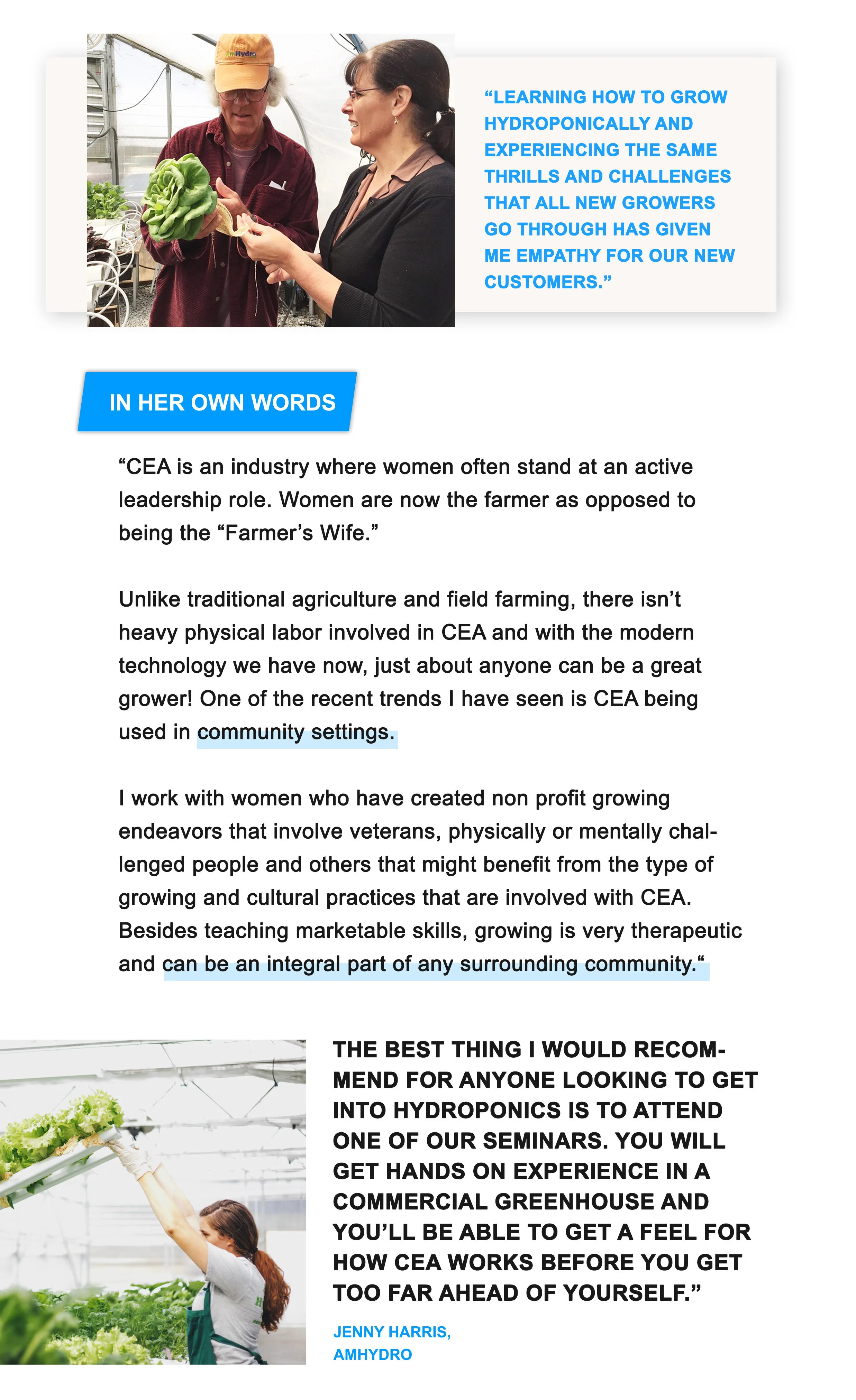
Are you a woman in CEA, or do you know someone who is?
Let us know, we love learning about growers who are working to bring fresh, local produce to their communities!

You can reach us by email at info@amhydro.com,
or by phone at 1.800.458.6543
Find AmHydro Online, on Facebook, and on Instagram!

SweGreen Becomes Partner In Viable Cities
Viable Cities is an innovation program for smart and sustainable cities. The aim is to accelerate the transition to inclusive and climate-neutral cities by 2030 with digitalization and citizen engagement as enablers
03-03-2021 | Swegreen
SWEDEN- Farming as a Service becomes a new tool in the fight against climate change as the FoodTech enterprise SweGreens joins the Swedish Strategic Innovation Program, Viable Cities.
Viable Cities is an innovation program for smart and sustainable cities. The aim is to accelerate the transition to inclusive and climate-neutral cities by 2030 with digitalization and citizen engagement as enablers.
SweGreen is an innovation company based in Stockholm focused on futuristic, smart, and circular solutions for controlled-environment urban farming. SweGreen own technologies which enables integration of smart vertical farming solutions into real-estate properties. Recently SweGreen has introduced a service for urban production of leafy greens, called Farming as a Service (FaaS), which allows clients to produce greens under their license and close to the city population.
Sweden inspires many other nations and has a leading position in the transition of urbanization context and fighting the climate change through smart and sustainable solutions that could be implemented in cities, says Sepehr Mousavi, member representative, and Chief Sustainability Officer at SweGreen.
Smart urban farming in infrastructure-integrated settings and by harnessing urban resources could be an exponential factor in localizing the food chains in Sweden and cutting back the carbon footprint associated with our food production and supply, he continues.
Viable Cities is growing steadily and new members like SweGreen are joining the current member pool, the likes of Swedish municipalities, Swedish universities and research institutes and other leading innovation companies. Running from 2017 to 2030, the program gathers partners from industry, academia, public and civil society organizations, and jointly funded by the Swedish Innovation Agency (Vinnova), the Swedish Energy Agency and Formas with a total investment of 1 billion SEK (about 100 million EUR).
Viable Cities is coordinated by KTH Royal Institute of Technology.
Together with our member organizations and other stakeholders, we aim to accelerate the transition to climate-neutral cities by 2030 with a good life for all within planetary boundaries, says Olga Kordas, Program Director of Viable Cities and a researcher at KTH Royal Institute of Technology.
Transforming our food systems are one of the key challenges, Olga Kordas continues, and we are happy to be joined by SweGreen to co-create solutions for the future.
Andreas Dahlin, CEO of SweGreen, highlights:
We are honored to be part of such a committed and influential strategic program and partner pool as Viable Cities’. We hope to contribute with innovations around the concept of Farming as a Service, which really could impact food production today and in the future. The ability to produce fresh and nutrient food close to the consumer will be one of the big missions for the food industry in the upcoming decades.
For more information:
Sepehr Mousavi, CSO SweGreen, sepehr.mousavi@swegreen.se +46(0)73-3140043
Andreas Dahlin, CEO SweGreen, andreas.dahlin@swegreen.se +46(0)70-9240032
Åsa Minoz, Head of Communications, Viable Cities, asa.minoz@viablecities.se +46(0)722108826
SweGreen is a Swedish GreenTech company that offers digital, efficient, and circular solutions for urban cultivation in a closed and controlled environment. By combining computer science, advanced technology, and plant sciences, SweGreen contributes to the development of urban sustainable food production. The company was established in 2019 and provides consumer products such as various leafy greens and herbs under the brand of Stadsbondens. www.www.swegreen.com
Source and Photo Courtesy of Swegreen

Advanced Container Technologies, Inc. Joins Clean Food Initiative
Through the use of the company’s GrowPods, ACTX can provide farmers, community groups, investors, and non-profit agencies with a turnkey system to grow ultra-clean and nutritious food that can not only benefit the ecology of the planet and bolster community food security but can also provide new jobs and economic opportunities
March 03, 2021 | Source: Advanced Container Technologies Inc.
Company joins movement toward sustainable alternatives to traditional food production.
CORONA, Calif., March 03, 2021 (GLOBE NEWSWIRE) -- Advanced Container Technologies, Inc. (Ticker: OTC:ACTX) stated it is joining the Clean Food Initiative and intends to become a leading force in the drive toward sustainable agriculture.
The Clean Food Initiative is focused on bringing clean, fresh, healthy food to children throughout the world, that is free from pesticides, herbicides, or harmful chemicals. Along with the practice of implementing Sustainable Agriculture Systems (SAS), the aim is to develop a global food system that uses half the water and half the soil as it does today – yet produces twice as much food.
Through the use of the company’s GrowPods, ACTX can provide farmers, community groups, investors, and non-profit agencies with a turnkey system to grow ultra-clean and nutritious food that can not only benefit the ecology of the planet and bolster community food security but can also provide new jobs and economic opportunities.
GrowPods are automated indoor micro-farms that can provide a sustainable supply of affordable safe, clean, nutritious food, while also providing jobs at a local level by promoting the growth of a skilled agricultural workforce in non-traditional settings.
Doug Heldoorn, CEO of Advanced Container Technologies, Inc., said the company’s objectives are to make agriculture sustainable, investable, manageable, scalable, and transparent.
“There is a substantial difference between meeting basic food requirements and meeting optimum nutrition requirements,” he said. “People need access to high quality foods that are rich in nutritional value. Future generations deserve access to a healthy and sustainable food supply, not a diet filled with preservatives, pesticides or chemicals.”
SAS and the Clean Food Initiative represents one of the greatest challenges of the 21st century, as well as a tangible investment opportunity with sound business growth prospects and consistent annual income generation.
“There are few problems facing mankind that are as massive as our need to change our methods of food production and distribution,” Mr. Heldoorn stated. “Fortunately, there are innovative solutions to these challenges, and we are extremely proud to be a vital participant in this agricultural and social evolution.”
For more information, call (951) 381-2555 or visit: www.advancedcontainertechnologies.com.
About Advanced Container Technologies, Inc.
Advanced Container Technologies, Inc. is in the businesses of selling and distributing hydroponic containers called GrowPods; and designing, branding, and selling proprietary medical-grade containers that can store pharmaceuticals, herbs, teas, and other solids or liquids, and can grind and shred herbs; as well as selling other products and accessories, such as humidity control inserts, odor-proof bags, lighters, and plastic lighter holders; and provides private labeling and branding for purchasers of the Company’s containers and the other products. For more information visit: www.advancedcontainertechnologies.com.
Forward-Looking Statements
This release includes predictions or information considered "forward-looking" within securities laws. These statements represent Company's current judgments but are subject to uncertainties that could cause results to differ. Readers are cautioned to not place undue reliance on these statements, which reflect management's opinions only as of the date of this release. The Company is not obligated to revise any statements in light of new information or events.
Company Contact:
(951) 381-2555
info@advancedcontainertechnologies.com
Investor Relations:
Stuart Smith
SmallCapVoice.Com, Inc.
512-267-2430
ssmith@smallcapvoice.com
Related Articles
More articles issued by Advanced Container Technologies Inc.
More articles related to: Product / Services Announcement Food

A Fully Automated Three-Dimensional Vertical Farm Comes Into Operation
Eponic Agriculture Co. Ltd is a supplier of indoor farming equipment. Alice, the company's director, introduced the recently fully automated production system of a stereochemical vertical farm
Eponic Agriculture Co. Ltd is a supplier of indoor farming equipment. Alice, the company's director, introduced the recently fully automated production system of a stereochemical vertical farm.
"The current three-dimensional indoor farms on the market are based on semi-automated workflow, with some links requiring additional equipment configuration and no continuity in the whole planting system. In order to solve this problem, we developed and designed a complete automated planting system, including the processes from sowing to planting, full-spectrum planting light control, fertilization, harvesting, and cleaning. Which are all done by automated equipment. Whereas all procedures can be controlled by intelligent software with real-time monitoring, data collection, and many other functions."
Benefits of an automated farm
When talking about the advantages of the automated equipment, Alice said, "Take our recently built 20-layer vertical farm as an example. First of all, the mechanical sowing time is 10 times-30 times faster than manual sowing. And on top of that, the use of automated equipment can realize precise planting and efficient communication of multi-layer planting surfaces. The 20-layer vegetable trays are automatically transferred to the ground for uniform watering, harvesting, and cleaning. This greatly improves productivity.

Secondly, the use of lift trucks is required when handling high-level crops. There are certain safety hazards in using lift trucks in a small space. While operating the automated equipment, only a tablet computer is needed to control the whole planting process, which is much safer and more convenient."
Although automated vertical farm systems have many advantages, their application in China is not yet popular. "In terms of production design, we have gone through countless experiments to design the most suitable software program. As well as hardware equipment for practical planting applications. Luckily after a long period of research, we finally chose the most cost-effective and suitable materials. The R&D investment is large and time-consuming.”
From a cost point of view, according to Alice, a fully automatic system is 2-3 times higher in costs than the semi-automatic system which is currently used more often. Most traditional agricultural companies find it difficult to accept such high initial costs. Thirdly, the automated system requires high technical requirements for farm managers. Managers need to have an understanding of both planting technology and software. Alice adds: “It is for these three reasons that the application of fully automated stereoscopic systems is not very common in China and other countries."
Automated planting
"Although the application is not yet widespread, I think fully automated stereoscopic planting is a trend. Urbanization has led to a reduction in arable land and soil pollution has triggered problems with pests and pesticide residues in fruits and vegetables, and the development of three-dimensional agriculture is the only way to maximize and optimize output in a limited area. Currently, stereoscopic planting plants still require a lot of manual labor to operate. As labor costs rise and planting techniques require more precision, the use of automated equipment will be a future trend," Alice notes.

"Automated systems are a trend, not only in China but also globally. Urbanization has been moving forward, in the face of soil pollution, pesticides and pests, etc. The planting area is gradually reduced and three-dimensional agriculture must be developed in order to quantify planting. Three-dimensional agriculture can be located near the city, and reduce the transport distance, people can eat the freshest vegetables, to achieve local supply. Therefore it is necessary to promote automated, intelligent planting systems in order to achieve efficient planting and sustainable development." Alice said.
Industry experience
Eponic Agriculture Co. Ltd's head office, Dahua Intelligent Electronics, has a twenty-five-year history division. The team has been focusing on the development and production of intelligent control systems and industrial lighting. Alice said that based on years of technical foundation, we developed full-spectrum LED planting lights which have been approved and applied by the USDA. Over the years, we have received technical support and affirmation from several agricultural doctors from Europe and the United States, focusing on the development and production of automated stereoscopic planting equipment.
According to Alice, the company has laboratories and showrooms in the US, Australia and Africa. This year, the company is planning on opening new showrooms and laboratories in Europe. “We are expanding our global reach and continue to optimize our growing systems to be a better supplier of fully automated growing equipment."

For more information:
Eponic Agriculture Co. Ltd
Alice Ou, Director
aliceou@eponicagriculture.com
www.eponicagriculture.com
Author: Rebekka Boekhout
© VerticalFarmDaily.com

US: TELEVISION - Today Show Will Feature Vertical Harvest Co-Founders For International Women’s Day
The segment will air on March 8 during the third hour of the show, which is 9 a.m. in most time zones. “We are so proud of our women-led team and hope you will tune into NBC and virtually watch with us!” Vertical Harvest reps said in a press release

March 6, 2021
Vertical Harvest employee Michele Dennis deposits sweet mix in Vertical Harvest’s revolving planters in May of 2019. The co-founders of the business, Nona Yehia and Caroline Croft Estay, will be part of a Today Show segment celebrating International Women's Day on March 8.
BRADLY J. BONER/ / NEWS&GUIDE
The Today Show will be celebrating International Women’s Day with a feature on Vertical Harvest’s two female co-founders, Nona Yehia and Caroline Croft Estay, and a few of their employees. The segment will air on March 8 during the third hour of the show, which is 9 a.m. in most time zones.
“We are so proud of our women-led team and hope you will tune into NBC and virtually watch with us!” Vertical Harvest reps said in a press release.
Vertical Harvest, which opened its doors in 2016, is the first vertical hydroponic greenhouse in the United States. It stands three stories high on the side of Jackson’s parking garage, using minimal space to grow produce for the community. In a year, the greenhouse grows as many vegetables as 10 acres of regular farming would produce.
Vertical farming may hold the key to the future of food supply, according to the organization’s website.
“The increasing frequency of natural disasters and the rising global temperature are putting outdoor agricultural productivity at risk,” the organization wrote on its website. “Vertical farming can contribute to reducing hunger in the future by ensuring a stable and constant supply of food that is not weather-dependent.”
Yehia, who grew up with a brother with developmental disabilities, also seeks to employ people with developmental disabilities in the greenhouse. Vertical Harvest strives to help “those who struggle to find meaningful work and upwardly mobile career opportunities” find purposeful work within the greenhouse.
All in all, Vertical Harvest is a testament to Yehia’s dedication to building a better world.
“Vertical Harvest Farms has been an opportunity to explore a new type of civic building, one that can address food, job and now housing insecurity, rooted in community resiliency,” Yehia wrote in a LinkedIn post two weeks ago.
Contact Victoria Lee at 732-5901 or vlee@jhnewsandguide.com.
Tags The Today Show Nbc Harvest Opportunity Greenhouse Agriculture Co-founder Farming Work Today Show

BONAFIDE Will Continue To Develop It's Concept On Decentralized Agriculture And Food Supply Systems
The trend for decentralization is growing all the time and we trust that agricultural policies will follow suit to support local farmers and a new generation of young entrepreneurs that find their ideology in creating new markets
Over the last 6 years, we have seen technology advance to facilitate urban vertical farming embracing entrepreneurial opportunities, the supply of fresh food daily, and secure cultural kitchens requirements for raw materials anytime anywhere.
At the same time conflicts, natural resource competition, and climate change have had adverse effects on food security that local production using new technology can alleviate.
The trend for decentralization is growing all the time and we trust that agricultural policies will follow suit to support local farmers and a new generation of young entrepreneurs that find their ideology in creating new markets.
thomas.tapio@gmail.com
Thomas Tapio (LION) • Consultant (retired)
Strasbourg 27th February 2021, 🇫🇷🇪🇺

INTERACTIVE WORKSHOP: How To Make Your Network Part of Your Net “Worth”
It doesn’t matter the industry, the gold coin of success is making your network “worth” something towards your career goals
Join Us Monday To Hear From
The Leaders of Ag In Europe
Register TODAY
It doesn’t matter the industry, the gold coin of success is making your network “worth” something towards your career goals. Discovering job opportunities, bridging industries, gaining product knowledge, climbing the ladder – they all can be pushed to new heights through strategically managing your connections.

How do you do this? It’s as easy as 1-2-3!
1. First, register for the interactive workshop How to Make Your Network Part of Your Net “Worth" on 8 March 2021 that is part of the annual Women in Agribusiness (WIA) Summit Europe.
2. Second, tune in (virtually, so this is very easy to do) to every word that accomplished speaker, Dorothy Dalton, CEO of 3Plus International Ltd., will share with you during the session.
3. Third, stay and attend the entire WIA Summit Europe (8-10 March) and put your new networking skills to practice by mingling with dozens of attendees from several countries!
Your net “worth” is in your hands.
Get strategic with your networking and achieve your career goals!
Learn More And Register Here

VIDEO: Signify Celebrates Five Years Anniversary of GrowWise Research Center
Over the past five years, we have helped hundreds of entrepreneurs and pioneers all over the world discover how they can feed tomorrow’s cities and grow plants faster, in a more sustainable way."
Five Years of Feeding Tomorrow’s Cities
Ellis Janssen, Director city farming at Signify explains: “At the GrowWise Center, we believe in vertical farming. Over the past five years, we have helped hundreds of entrepreneurs and pioneers all over the world discover how they can feed tomorrow’s cities and grow plants faster, in a more sustainable way."

Jarno Mooren, Signify's plant specialist vertical farming with tomato crops cultivated at the GrowWise Center
"We work closely with our customers and partners, looking at all aspects of the business case: whatever a grower’s needs are, we can translate them into a dedicated recipe for growth. To achieve this, our team of plant specialists, application engineers and key account managers look at the most important aspects that determine the set-up of a farm so they can give the grower dedicated advice in making the best decisions," Ellis states.
Ellis Jansen, director of city farming at Signify
She adds, "We have learned a lot over the past five years, and as we are evolving our customers are evolving as well. They want the best solutions for their specific needs. At the GrowWise Center, we support them wherever we can. The world continues to change, and we will change along with it. Through this all, and by combining the latest technology, business insights and plant expertise, we can help growers make their business successful and future-proof."

Jarno in between strawberry crops
"At the GrowWise Center, we are proud of all that has been accomplished in vertical farming over the past five years, and we are excited to see where we can take the dreams and ambitions in vertical farming in the future," Ellis notes.
Global Marcom Manager Horticulture at Signify
Daniela Damoiseaux
Tel: +31 6 31 65 29 69
E-mail: daniela.damoiseaux@signify.com
About Signify
Signify (Euronext: LIGHT) is the world leader in lighting for professionals and consumers and lighting for the Internet of Things. Our Philips products, Interact connected lighting systems and data-enabled services, deliver business value and transform life in homes, buildings, and public spaces. With 2020 sales of EUR 6.5 billion, we have approximately 38,000 employees and are present in over 70 countries. We unlock the extraordinary potential of light for brighter lives and a better world. We achieved carbon neutrality in 2020, have been in the Dow Jones Sustainability World Index since our IPO for four consecutive years and were named Industry Leader in 2017, 2018, and 2019. News from Signify is located at the Newsroom, Twitter, Linked In, and Instagram. Information for investors can be found on the Investor Relations page.

Urban Farming In New Zealand
Urban farming is pretty much what it says on the can. Growing or producing food in a heavily populated area. One doesn’t have to be a business owner growing a product to sell to be an urban farmer. Anyone with a bit of area and a Kiwi can-do attitude can be an urban farmer
While New Zealand is renowned the world over for its farming systems, with world-class food and fibre being exported daily, it’s a little-known fact that Urban farming is starting to take off as well.
Urban farming is pretty much what it says on the can. Growing or producing food in a heavily populated area. One doesn’t have to be a business owner growing a product to sell to be an urban farmer. Anyone with a bit of area and a Kiwi can-do attitude can be an urban farmer.
Now more than ever, consumers are wanting to know where their food comes from, the story behind its provenance, and the story of the people producing it. Food security (especially in the future) and climate change are other big factors in our communities today. This poses significant opportunities (and equal challenges) for traditional farmers and growers who farm on large scales; but it also poses some opportunities for urbanites.
While the term urban farming and community garden tend to be used interchangeably in NZ, the essence is still the same; producing food in your own backyard. NZ is home to a number of urban farming groups like the Urban Farmers Alliance ( a national group), Farm Next Door (Taranaki region) to name a few.
While each have their own set of values and purpose, they all have the same key messages. Building local and national food security, using regenerative farming practices and the bringing together of communities. Climate change resilience is a key motivator for all, which is why many urban farms work on regenerative and organic principles.
In partnership with Massey University, Farm Next Door was awarded a $100,000 grant to fund research into the benefits and barriers to ‘hyperlocal community agriculture’. Many involved in urban farming in NZ say that urban farming could provide part of the solution for the vulnerabilities that exist within NZ’s current food system, including the reduction of productive land to residential areas. The idea of urban farms being dotted throughout the country complete with roadside honesty boxes is the goal for many, making food available to entire communities for affordable prices.
Regenerative approach
For many urban farmers, the regenerative approach is key to the whole system. Working with regenerative agriculture principles within an urban context. While there is still a lot of debate on a national level about the details of regenerative farming, with a lot of people calling for more research to be done on the claimed efficiencies of the system, in a general sense, the principles are simple, and mimic natural ecosystems. Working with the environment. Sun, water, soil, biodiversity and social make up the five key principles of regenerative agriculture. Soil in particular plays a large role in carbon holding and nutrient cycling, a growing topic of importance in traditional agriculture in NZ.
So it makes sense that those interested in urban farming would follow the regenerative route. After all the values align almost perfectly.
Community and people-centered model
This model increases food resilience by introducing more diversity into the system. Many stress that urban farms aren’t a replacement for larger scale producers, quite the opposite. By expanding and strengthening the local ‘food ecosystem’ will only support the nation’s export markets and add to their marketing story.
Telling their story aside, urban farms are also a unique way of educating locals about food production and passing on growing knowledge to the next generation. Increasingly people are becoming aware of the big separation we have between paddock and plate. This issue is why there are numerous initiatives in the traditional agriculture industry to get people out on farms. Open Farms NZ is one such initiative which invites farms from across the country, be them dairy, horticulture, beef or so on, to open up their farm gates for a day for locals to visit, learn and get back to their grass roots. Urban farming, in a way, is doing that, but on a smaller scale.
NZ is working on putting its own data together around the influence of urban farms on employment rates, but it’s thought that the data from the US (which suggests that urban farms focusing on local and regional markets employ four times as many FTE staff than farms not engaged in local markets), could hold somewhat true, if not to quite the same extent.
Kiwi’s are renowned for supporting independent and local brands which further supports the urban farming model.
Education
A key component of many of the urban farming groups is collaborative learning and education. Unlike many industries, each urban farm isn’t necessarily viewed as a competitor, rather an ally to work with. The more the merrier – so they say.
With a variety of educational resources on carbon, soil, regenerative practices, organic practices, composting, data collection, and more, wanna-be urban farmers have a plethora of tools available.
Organic Market Garden – Auckland
OMG is a collaboration between a number of local businesses which was first set up to show the huge potential of underutilized inner-city spaces to the benefit of the local community.
Locals can purchase a three-month subscription for fresh produce or volunteer in the garden. While being a productive garden that feeds the community, OMG is also about educating people and ‘creating a regenerative food system for Auckland’. Working off a community supported agriculture (CSA) model, they thrive off being part of the community and are working at getting market gardens all across Auckland city.
Freeman Farms – Taranaki
Situated in urban Taranaki, the Freeman family grows over 25 types of fruit and vegetables plus honey and eggs. The farm is part of Farm Next Door and Urban Farmers Alliance and makes a decent living off of the farm.
Kaicycle – Wellington
First established in 2015 Kaicycle is an urban farming and community composting project. It was first started to provide produce to a local smoothie business but has grown to selling to local restaurants. They are also trialing a CSA model.
It runs an ‘ebike-powered food waste collection and composting service’ which services 125 households and businesses. That compost then goes onto the farm to help build soil quality creating a nutrient cycle.
https://www.instagram.com/p/CLJUWMPsS7p/
Cultivate- Christchurch
This urban farm functions in conjunction with a local youth programme. Over 25 young people so far have been supported into more positive outcomes (with education, employment and housing) through Cultivate with the aim of helping 12 young people every year. The farm supplies local hospitality businesses.
The above are just a sampling of the urban farms dotted around the country, with interest growing all the time. With NZ’s recent Climate Change Commission report out, it’s likely that more and more urbanites will follow the path of veteran urban farmers in a bid to do their part. Plus, growing food is good for the mind, body and soul.
Vertical farming in NZ – growing up, not out.
Vertical farming, along with urban farming, has become a popular reply to the question of land loss to urban development and population growth.
Vertical farms have popped up in a number of major urban centers. In high rises, derelict buildings and abandoned warehouses, this form of growing crops is reportedly helping to reduce carbon emissions and maximising unused spaces in cities. While similar to urban farms, vertical farms take it one step further. It’s a win win for many cities around the world, like China, that have a high monopoly on space and land use.
Under the system, layer after layer of crops are grown in trays, with mostly everything used being recycled for the next round of growing. The practice often incorporates controlled-environment agriculture to maximise crop yields. The aim of vertical farming in general is to conserve land area, control climatic conditions and maximise unused space. Some overseas believe its a great way of navigating the adverse effects of weather.
But in NZ, with their large focus on outdoor, pastoral farming, is there a need for it? Some say yes, others say no. NZ has some unique features to it, including high levels of sunshine hours and generally good growing conditions.
While it could be a great way for inner-city dwellers to get their green thumb, industry bodies like Horticulture NZ say it wouldn’t work. The problem is more that of current land-use vs land-use suitability. Not to mention the investment needed for start-up costs and urban development issues. Of the few vertical farms around, it’s suggested that all have been started up with investors or government funding, with it taking many years for the business to stand on its own legs.
Over the last 20 years, the amount of land available to grow fruit and vegetables in NZ has decreased, while the demand has gone up, and this gap is forecast to get larger. This change in supply and demand prompted many to suggest that vertical farming could offer a solution.
Vertical farming requires the replacement of natural, solar energy to be replaced with artificial lighting, most commonly LED lights, which are cool to the touch and are easier to control or hydroponic lamps. This alone led to the conclusion that the cost of lighting and temperature control would be too expensive, making it an unviable economic option. The limited number of crops able to be grown vertically (mainly leafy greens and herbs) wouldn’t fill the gap that’s required by the industry – that is, things like potatoes, rice and corn that are staples for millions.
While it perhaps wouldn’t fit the bill for supporting export demands, there is still the possibility, if economically viable, it could help fill local demand.
There aren’t many vertical farms around in NZ, but the ones that are around are trying to provide proof of concept.
Shoots microgreens
NZ’s very first vertical farm had humble beginnings housed in a former nightclub. The company started its journey in 2018 growing tiny crops mainly for restaurants with some sold through large supermarket chains. Microgreens are intense flavoured first shoots and leaves and are a popular garnish for meals and cocktails.
It’s thought that microgreens can contain up to 100 times more nutrients than fully-grown plants.
The company got investment to install special LED grow lights which conserve around 45% in electricity over hydroponic lamps. The lights are customistables and can be adjusted to optimise the growth of specific varieties of microgreens. They don’t produce heat so vertical layers can be done with no fear of heat damaging plants.
In 2020 the business kicked off a first-of-its-kind system by launching an in-store growing stand complete with automated LED lighting and watering technology in a supermarket. The system allows customers to see the growing of the produce in real time and purchase.
The idea behind the system was to ensure people were taking home produce that was fresh as possible. The business hopes more supermarkets will get on board with the system.
The supporters of vertical farming say that, like urban farms, the idea is not to replace existing horticultural systems, but create new opportunities in the form of retails and tourist experiences, add value, enhance education and provide hyperlocal plant production for affordable prices.
In major cities like Auckland, it can take hours to get out to farms to pick your own produce from the paddock. As the nation’s housing crisis seems to keep increasing, much of the country’s most productive horticultural and agricultural land is being snapped up and subdivided for residential and lifestyle block builds.
Aside from bringing food production closer to home, the social aspect of vertical farming, and urban farming for that matter, is that it offers opportunities to develop new careers in agriculture. Vertical farming in particular requires a complex knit of disciplines like computers, agronomy, economics, biosecurity, design, marketing – the works.
So, is there a future for vertical farming in NZ? Depends who you talk to. With the success of businesses like Microgreens, there’s a very strong argument for yes. However the economics of it, as they currently stand, might delay others in getting onboard the vertical train.
Categories: Urban Farming
Tagged: new zealand, urban farming
PODCAST: What Do Saltwater Vertical Farming And Sustainable Coastlines Have In Common?
In the podcast, Heron Farms, a sea beans cultivator, is featured. Heron Farms uses its vertical farm and is also restoring marshland from their home base in Charleston, South Carolina
A podcast by Evolve.ag
Recently Evolve.ag held a podcast on 'What do saltwater vertical farming and sustainable coastlines have in common?'. Their series focuses on what's trending in food and food tech.
In the podcast, Heron Farms, a sea beans cultivator, is featured. Heron Farms uses its vertical farm and is also restoring marshland from their home base in Charleston, South Carolina.
In this episode, Wendy Yared, a food anthropologist, speaks with Sam Norton, the founder of Heron Farms. Inspired by the marsh he grew up playing in, he started the first saltwater vertical farm in the US. Heron Farms grows a type of Salicornia, also known as a sea bean. This plant provides high levels of nutrients like vitamin A, vitamin C, and, not surprisingly, sodium chloride. Chefs sometimes use it as a replacement for salt on fish dishes, like Crudo or ceviche. Beyond the farm, they're also using Salicornia to remediate salt marshes.
They talk about the ecological benefits of Salicornia and how marshland restoration can help turn seawater into a resource instead of a concern for people living in coastal areas. During the podcast, they also dive into the challenges of starting a vertical farm. And how important it is to balance the negative aspects of controlled environment agriculture, like expensive lighting and plastic, with activities that support the ecosystem.
Click here to access the podcast.
For more information:
Wendy Yared, food anthropologist
26 Feb 2021

Jersey City Housing Authority To Host Vertical Farms
The partnership aims to provide more access to healthy food
Partnership Aims To Provide
More Access To Healthy Food
February 25, 2021
AeroFarms will construct and maintain 10 farming sites, the first of which will be built at the Curries Woods Community Resource Center as part of a new agreement between the city, AeroFarms, and the Jersey City Housing Authority.
Vertical farms will provide free nutritious food to residents in need now that the Jersey City Council has adopted a resolution approving an agreement between AeroFarms, the city, and the Housing Authority.
The new agreement means that vertical farms will be opened at Curries Woods and Marion Gardens.
The public housing farms, which will be funded by the city, will increase healthy food access where needed most and encourage residents to live healthier lifestyles.
The Jersey City Department of Health and Human Services (HHS), AeroFarms, and Jersey City Housing Authority will collaborate with the Boys & Girls Club and Head Start Early Childhood Learning programs to support produce distribution and healthy eating education.
“We’ve worked hard to keep the Vertical Farming Program a priority despite the impacts from this pandemic, which have disproportionately affected the more economically challenged areas and exacerbated societal issues such as healthy food access,” said Mayor Steven Fulop.
“We’re taking an innovative approach to a systemic issue that has plagued urban areas for far too long by taking matters into our own hands to provide thousands of pounds of locally-grown, nutritious foods that will help close the hunger gap and will have an immeasurable impact on the overall health of our community for years to come.”
City farming
AeroFarms will construct and maintain the farming sites. The first will be built at the Curries Woods Community Resource Center. The Boys & Girls Club and Head Start will integrate the vertical farm as a learning tool for youth within their educational programming.
Head Start, operated by Greater Bergen Community Action, plans to integrate greens into its early childhood meals.
AeroFarms indoor vertical farming technology uses up to 95 percent less water and no pesticides versus traditional field farming.
According to the city, the JCHA-Aerofarms Advisory Committee will be formed to provide strategic oversight and guidance throughout the program.
The steering committee will include Jersey City residents and stakeholders from the Boys & Girls Club and Head Start.
The city’s Vertical Farming Program will consist of eight additional vertical farms throughout Jersey City in senior centers, schools, public housing complexes, and municipal buildings.
The 10 sites will grow 19,000 pounds of vegetables annually using water mist and minimal electricity, according to the city.
The food is free to residents if they participate in five healthy eating workshops, and they will have the option of participating in a quarterly health screening.
“As a Certified B Corporation, we applaud Mayor Fulop’s leadership and advocacy to bring healthier food options closer to the community, and we are excited to launch together the nation’s first municipal vertical farming program that will have a far-lasting positive impact for multiple generations to come,” said Co-Founder and CEO of AeroFarms David Rosenberg.
The city’s Health and Human Service Department will run the program with a health-monitoring component to track participants’ progress under a greener diet, monitoring their blood pressure, cholesterol, diabetes, and obesity.
Crops will be integrated with other Healthy Food Access initiatives, including senior meal programs, according to the city.
“Access to healthy food and proper nutrition is directly linked to a person’s mental and physical health, and can decrease risks of chronic diseases while increasing life expectancy,” said Stacey Flanagan, director of Health and Human Service for Jersey City. “This past year has shed light on the health disparities that exist in urban areas nationwide, which is why we’ve remained focused on closing gaps where healthy food access is most needed, specifically for our low-income, youth, and senior populations.”
Healthy food initiatives
The Vertical Farming Program is part of the broader initiative from the World Economic Forum (WEF) toward partnerships with cities.
Jersey City is the first in the world to be selected by WEF to launch the Healthy City 2030 initiative, which aims to catalyze new ecosystems that will enable socially vibrant and health-centric cities and communities.
The vertical farming initiative is the latest and broadest effort Jersey City has launched around food access, including more than 5,000 food market tours for seniors to educate them on healthy eating, and the “Healthy Corner Store” initiative.
According to a 2018 city report, much of Jersey City could be described as a “food desert.”
The USDA defines a food desert as “a low-income census tract where either a substantial number or share of residents has low access to a supermarket or large grocery store.”
This means at least 500 people or 33 percent of the population live more than a mile from a supermarket or large grocery store.
According to the city, these deserts have led to an increased rate of diabetes, heart disease, obesity, and other diet-related illnesses in the more marginalized communities of Jersey City.
“We are thrilled that the vertical farms that will be installed at JCHA sites to enable some of our most vulnerable residents, including low-income households, children, and seniors, to have access to fresh, green produce that is nutritious, delicious, and easy to prepare,” said Vivian Brady-Phillips, director of the JCHA.
For updates on this and other stories check www.hudsonreporter.com and follow us on Twitter @hudson_reporter. Marilyn Baer can be reached at Marilynb@hudsonreporter.com.

Swegreen’s New In-Store Farming Service Will Be Scandinavia’s Biggest
Swegreen's innovative in-store service will make the Ica Maxi megamarket in Linköping, located in Mid-Sweden, the first of all Sweden’s megamarkets to offer fresh herbs and salad grown from seed to finished plant inside the store
March 01, 2021
Swegreen’s board member Pierre Mohlin meets up with Milleriine Axelsson who will be responsible for the in-store growing unit from Ica Maxi’s side.
Swegreen launches ‘NextGen’ of super-efficient in-store vertical farming service when Ica Maxi megastore in Linköping puts the company’s Farming-as-a-Service growing unit for leafy greens right at the entrance of the store. The new vertical farm will be Scandinavia’s largest in-store cultivation.
Swegreen's innovative in-store service will make the Ica Maxi megamarket in Linköping, located in Mid-Sweden, the first of all Sweden’s megamarkets to offer fresh herbs and salad grown from seed to finished plant inside the store. Every day, several hundred fresh leafy vegetables can be harvested for the store's customers.
- It won’t get more locally produced than this, says Ica Maxi Linköping's CEO Tomas Lundvall.
The actual cultivation facility, which takes place in the middle of the store entrance, will have glass walls from floor to ceiling. This, together with an eye-catching light from the plants' LED system, will leave a clear mark on the entrance to the store when the installation is ready later this spring.
- We have chosen a central place for cultivation to really clarify our commitment to a greener and more climate-smart food production. The cultivation will be a destination in itself for our customers, and once they get the opportunity to taste these crops, many will understand what fantastic quality such a cultivation system offers, says Tomas Lundvall CEO and owner of the megamarket.
- Our salad and our herbs will simply be the smartest greens in town, he adds.
The new in-store plant is based on hydroponic cultivation technology. Nutrition comes directly from the water, which can be recycled. The system can also recover energy, carbon dioxide and nutrients. Behind the innovation is the all-Swedish technology company Swegreen, which has developed both the cultivation room itself and the AI-based control system which, via a cloud service, controls and optimizes the environment in the cultivation.
- We are very proud to work with the team for Ica Maxi in Linköping for this installation, their commitment to hyper-local and climate-smart produced food shows that this is a megastore at the forefront, says Swegreen's CEO Andreas Dahlin.
- Ordinary vegetables sold in Swedish supermarkets have traveled an average of 3,000 kilometers, while these crops have not been transported at all. Of course, it gives better taste, better consistency and durability - and also better nutritional value, he continues.
The new in-store service will start delivering leafy greens in May, and it will then be able to supply the megastore with different kinds of herbs such as coriander, dill, and parsley, and also lettuce and cabbage. The crops will also be used for in-house production in the store's own kitchen, and in future, there will be the possibility of more types of vegetables.
Swegreen is an all-Swedish ESG AgTech company combining advanced technology with data and plant science to efficient produce high quality and climate smart leafy greens in urban environment. Swegreen offers a prescription based growing service called Farming-as-a-Service (FaaS). With it, any supermarket or restaurant owner can supply their customers with fresh, nutritious, well-tasting and hyper-locally produced leafy greens all year. See more at www.swegreen.com
ICA Maxi Stormarknad Linköping was established in 1993 as one of the ICA Groups first Maxi megamarkets in Sweden. It’s the largest of its kind in the region and one of the largest ICA-stores all categories. The total sales area is 8,000 sqm and it employs around 300 persons. See more at: www.ica.se/butiker/maxi/linkoping/maxi-ica-stormarknad-linkoping-8900/start/

LEDs Light the Way to Efficient Urban Farming
The global pandemic has turned the world upside down, bringing unprecedented change to the way we live, work and play. But the crisis has also paved the way for important new innovations
By Mike Martens, Senior Manager, Illumination Marketing at Osram Opto Semiconductors, North America
The global pandemic has turned the world upside down, bringing unprecedented change to the way we live, work and play. But the crisis has also paved the way for important new innovations. For instance, massive disruption to the global supply chain is now compelling many nations to ramp up their indoor and urban farming efforts to secure their food supply and feed their people.
Take the desert nation of the United Arab Emirates. Amid the ongoing pandemic, the country is experiencing something of a food crisis. That’s why it recently announced a $100 million investment in cutting-edge indoor farming facilities that can help feed its population. The effort will include the creation of the world’s largest vertical farm to help solve the challenge of local food production.
A key component of vertical farming is LED technology. In places across the globe where farmland is limited, innovative LED lighting solutions offer a major advantage because they can provide the exact light composition that various plants need for ideal growth or to develop certain characteristics. Plants can also be grown in a very space-saving manner and with considerably higher yields thanks to these lighting solutions.
LEDs are more efficient
For decades, traditional high-pressure sodium (HPS) lamps were commonly used for greenhouses and other horticultural purposes but they bring with them many challenges. They have a short lifespan and are often only suitable for top lighting in greenhouses due to their high heat output.
This is a big problem for greenhouse owners because efficient energy use is essential to economic production. In traditional greenhouse and urban farming setups, HPS lights are often inefficient. They do provide light for plants, but it is often not the most efficient wavelength range because the lamps cannot be customized to provide ideal growing conditions for different types of plants.
HPS lights often generate a lot of heat , causing considerable evaporation and ultimately limiting crop yield. What’s more, due to this heat production, HPS fixtures often cannot be placed very close to plant canopy, preventing more efficient vertical-farm setups. After all, you don’t want to singe your produce.
The good news is that innovative LED technologies can alleviate many of these concerns. For starters, LEDs produce almost no radiated heat, allowing for the light fixtures to be placed closer to plants and for plants to be stacked much higher, enabling farmers to grow more produce in smaller spaces while simultaneously reducing water costs.
LED lights also offer customizable wavelengths for different plants’ needs, allowing greenhouse operators and urban farmers to grow specific plants in their optimal conditions. For instance, LEDs can be tailored to supply light with a higher amount of red or blue content, generating exactly the wavelengths the plant, such as iceberg lettuce, tomatoes and basil need for optimal growth.
Urban farming is not a new phenomenon, but LEDs have the power to take it to the next level and more efficiently feed the world. In terms of sheer numbers, LEDs have an average lifespan of 50,000 hours compared to 8,000 hours for HPS lamps, making LEDS much more economical (and better for the environment). Indeed, vertical farms that leverage LED technology can achieve 40% energy savings compared to traditional lighting methods like HPS lamps. And due to the optimized light spectrum at 450, 660 and 730 nanometers, LEDs can provide the perfect lighting for all types of plants, allowing growers to adjust the lighting exactly to the needs of various crops.
LEDs grow healthier produce
LED are the most efficient lighting technologies to date for growing produce. They not only help produce fresh food in smaller spaces without the use of pesticides, they also make it easier for consumers in urban areas to obtain fresh and healthy food quickly, a must, considering the planet’s ever-growing population and ever-decreasing farmland.
Consumers in urban areas often rely on produce grown in faraway places that is brought to them on trucks using fossil fuels. This produce is often grown with pesticides to keep insects away, as well as fertilizers, so plants can be grown throughout the year, even in suboptimal conditions. All of these factors contribute to climate change and more polluted water sources. With horticultural LEDs, these issues can be mitigated.
LEDs also provide optimal growing conditions in any environment with minimal water waste, while reducing the need for pesticides in indoor growing environments. Communities then have the ability to grow produce closer to home, which allows consumers to learn more easily what exactly goes into their food and greatly reduces the fossil fuel usage to get produce from the (urban) farm to their tables. Urban farming has great potential to make positive impacts on local environments and communities. It’s more sustainable and decreases communities’ reliance on foods shipped in at great cost from around the globe.
LEDs light the way
As we grapple with the many concerns facing our modern society, it is imperative to invest in efficient and time-saving technology of all types. LEDs are one of these technologies. Indeed, they light the way to the farms of the future. They will have an enormously beneficial impact on agriculture by dramatically increasing crop production and putting food on every table more efficiently.

Elevate Farms To Expand In New Zealand And New Jersey By Late 2021
Other than building high-tech production facilities and growing leafy greens, Elevate is also in the business of proving its detractors wrong as the company is on track to produce 1 million pounds of leafy greens in one of its 5,000-square foot facilities in Niagara, Ontario
Producing 1 million lbs of Leafy Greens Per Year
Other than building high-tech production facilities and growing leafy greens, Elevate is also in the business of proving its detractors wrong as the company is on track to produce 1 million pounds of leafy greens in one of its 5,000-square foot facilities in Niagara, Ontario.
Elevate is a vertical farming company located in Toronto, Ontario and
producing leafy greens in state-of-the-art facilities. With its Niagara facility spanning 20,000 square feet with a cultivation area spanning 5,000 square feet, it can produce as much food as 100 acres of land-based agriculture. This, according to chief strategy officer Travis Kanellos, is critical to people’s understanding of vertical agriculture and its benefits over other conservation agriculture methods. While organic agriculture strives to improve soil health and conserve biodiversity, the global agricultural land base still cannot support the growing population.
Travis Kanellos, Chief Strategy Officer
Further, organic certifications do not necessarily prohibit the use of any and all chemicals, but instead, greatly restrict the list of certified agrochemicals. Organic agriculture is thus only part of a global agricultural solution, while vertical farming should also play an increasingly important role as it does not use any agrochemicals and demonstrates unparalleled planting density.
Elevate primarily produces leafy greens but has also successfully grown tomatoes, strawberries, beans, and various plant proteins during research trials. With many vertical farms producing crops with low caloric value, such as microgreens and herbs, Elevate is eager to broaden this range and include higher value, higher calorie crops. Nevertheless, Elevate has had significant success producing leafy greens and is reportedly one of few profitable vertical farming facilities that is actually delivering its forecasted yields, which Kanellos attributes to the company’s diligent approach and scientific partnerships.
“Typically we’ve seen the industry of indoor farming; secure funding, build the farms and expect everything to come to them. But building it then trying to figure it out is backwards to us. We’ve spent years of research and commercialized production with intellectual property. When you build a company through 15 years of R&D, along with our core team’s execution track record and all of the experience from our academic partners, we feel that is a pretty good recipe for success.”
The company’s most important partnership is with Intravision, a Norwegian agtech company with additional offices in Toronto and Shanghai. The company’s products include controlled environment systems, LED lighting, and research tools. However, Intravision does not limit itself to simply supplying products; the company also develops partnerships to continuously research and improve production methods in indoor agriculture. So while Intravision does supply much of the hardware for Elevate farms, the two companies have a strong partnership and collaborate throughout project implementation, crop production and aligned business interests.
Looking ahead, Elevate aims to have its pilot facility operating at 100% capacity in the coming months. Also, the company plans to build and begin operating facilities in New Zealand and New Jersey by late 2021.
“Our pilot facility in Toronto allowed us to reach out and develop global relationships. What started in Canada with the 1,000 square foot pilot facility in Toronto has led to agreements across Canada and New Zealand for the construction of more than 10 facilities, with each slated to produce 1 million pounds of produce annually,” says Kanellos.
Elevate is currently deeply entrenched in implementing artificial intelligence to optimize its production systems as well as vision systems to generate actual predictive outcomes. Kanellos is keen on Elevates future stating “we believe the next step for Elevate, aside from global scale, is to deepen the ability for our facilities to become autonomous. Our field-grown yields, profitability at wholesale market prices are great first steps but true AI and facility optimization sets the groundwork for years to come.”
Lead photo: Panoramic view of the pilot facility
For more information:
Elevate Farm
Travis Kanellos, Chief Strategy Officer
+1 905-580-2388
Tkanellos@elevate.farm
www.elevate.farm
For more information:
Intravision Canada
www.intravisiongroup.com
Publication date: Fri 26 Feb 2021
Author: Rebekka Boekhout
© VerticalFarmDaily.com

Would You Like To Host A Strategic HQ In Decentralized Agriculture And Food Supply Systems
Our vision is to strengthen community resiliency and reduce food insecurity on a global scale over time
We would appreciate a city location in Central Europe in order to facilitate our EU-labelled strategy.
Our vision is to strengthen community resiliency and reduce food insecurity on a global scale over time.
For questions and tentative interest please contact:
thomas.tapio@gmail.com
Strasbourg 27th February, 2021 🇫🇷🇪🇺
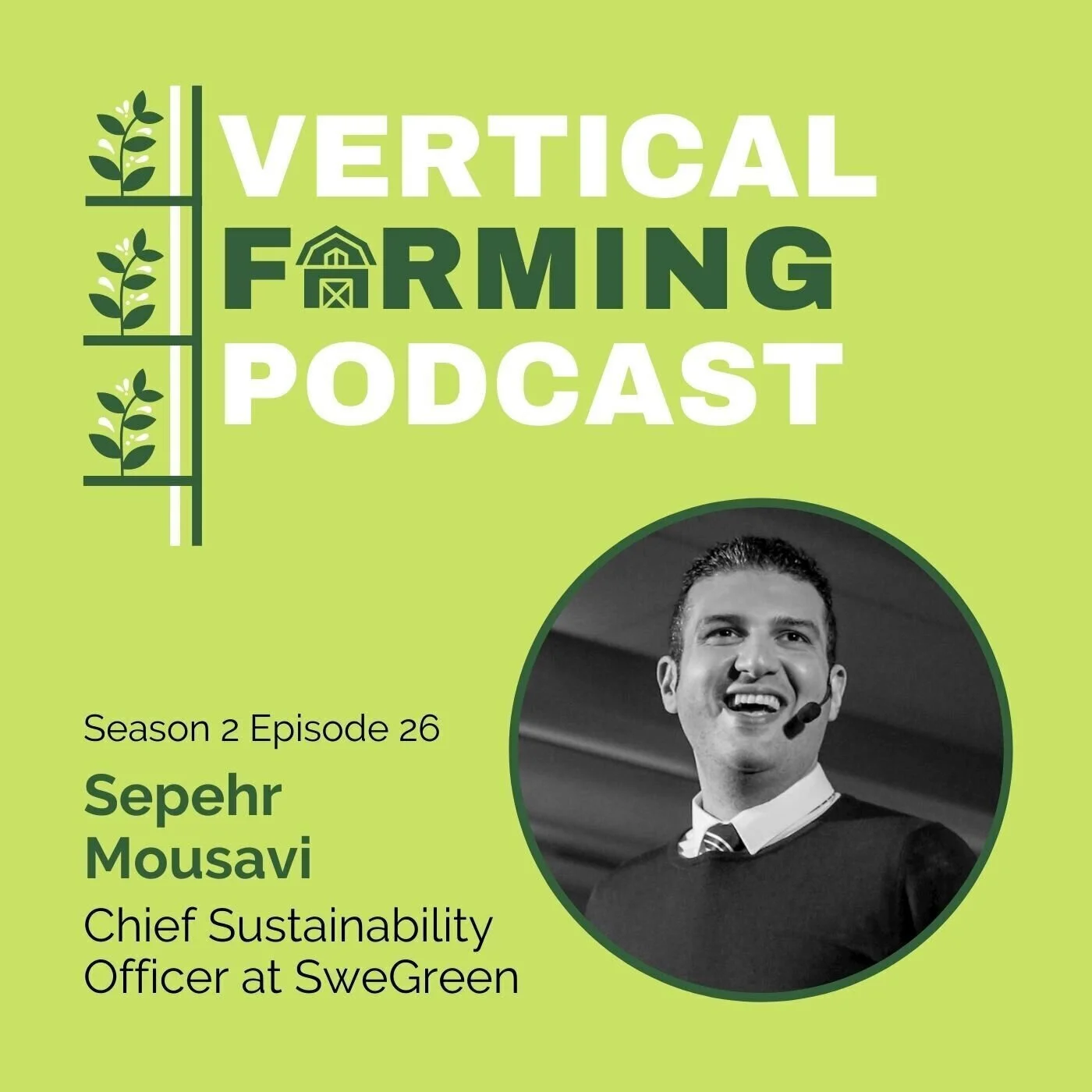
PODCAST: Join Harry Duran, host of Vertical Farming Podcast, as he welcomes to the show speaker, futurist, and Chief Sustainability Officer at SweGreen, Sepehr Mousavi
Season 2 Episode 26
Join Harry Duran, host of Vertical Farming Podcast, as he welcomes to the show speaker, futurist, and Chief Sustainability Officer at SweGreen, Sepehr Mousavi. Sepehr is a sustainability strategist, innovation catalyst, and a passionate futurist with an international and multicultural background. His organization, SweGreen, is the number one AgTech company in Sweden and is revolutionizing the vertical farming industry by providing futuristic, smart, and circular solutions for controlled-environment growing systems.
In this episode, Harry and Sepehr discuss Sepehr’s unique background and vertical farming origin story. They delve deep into the concepts of symbiosis, smart real estate solutions, and the importance of Research and Development. Finally, Sepehr speaks to the importance of educating the world on vertical farming and what excites him the most about the future of SweGreen and the AgTech industry.
VERTICAL FARMING PODCAST
Listen & Subscribe

Creating A Connected, Community Centered Urban Farm Environment
Street Farm’s micro-vertical farm works with a hydroponic growth system and is designed to be reused again and again. The designs vary in size from 8’ wide x 8’ high x 12’ long to 16’ high to 32’ long
“NYC streets are ripe with potential to start producing their own food," says Julian Lwin with Street Farm. Full and built up through the city might be, lack of space is no excuse for anyone, as Street farms’ vertical farm can be fit also in small public spaces. “We now can claim street space for sustainably grown urban greens the same way we claimed the streets for outdoor dining during COVID.”
COVID forced many countries to rethink their food system, as logistics suddenly got complicated. Also Julian became acutely aware of the need for new retail environments, finding a safer way to interact with food, and purchasing fresh produce. Via an automated dispensing think vending machines & dedicated StreetFarm app.
In this period he saw people taking their activities outside, exercising or even eating out on the streets whereas they would normally do this indoors. With that in mind, he found (conceived) Street Farm, intending to find a solution for growing fresh produce right there in the streets of NYC. “We will fabricate the farms right here in New York’s Brooklyn Navy Yard, to keep the transport emissions to an absolute minimum.” This model can be set up in any city metropolis around the globe where freshly grown produce is missing from the urban environment
Street Farm’s micro-vertical farm works with a hydroponic growth system and is designed to be reused again and again. The designs vary in size from 8’ wide x 8’ high x 12’ long to 16’ high to 32’ long. The smaller ones can be placed in gardens, allowing the larger-scale growing to be done in empty storefronts, city lots, etcetera. Julian dreams of the microfarms to be placed even in schools, libraries, and train stations to show people that food can be grown literally anywhere.

Urban “element" vertical farm
Combining the latest technologies in the field of AI and robotics for monitoring the growth and yield, the New York streets will produce lots of fresh produce for the local population. “With Street Farms we can transform New York from a food desert to a paradise of nutritious, healthy vegetables.” The plan is for the system to monitor the plant growth itself, but for the harvest to be done by employees, thus creating more jobs in the city. “We want these farms to create a connected, community-centered urban farm environment, connecting people to each other and to the food they eat.”
Julian finds it vitally important that people see tangible agriculture grown in public places, rather than hiding vertical farms in post-industrial spaces and rooftops. “Street Farms will connect the community with the products we eat. We aim for a paradigm shift in our relationship to the food we eat and our city landscape.”
Lead photo: The micro modular urban vertical farm satellite
For more information:
Lwindesign
Julian Lwin, Founder
julian@lwindesign.com
www.lwindesign.com

Publication date: Thu 25 Feb 2021
Author: Rebekka Boekhout
© VerticalFarmDaily.com