

Welcome to iGrow News, Your Source for the World of Indoor Vertical Farming

Who Will Win In Indoor Agriculture?
According to Allison Kopf, CEO of Artemis, there are five ways big players will enter indoor agriculture. "The indoor agriculture (both greenhouse and vertical farming) market is one of the fastest-growing industries
According to Allison Kopf, CEO of Artemis, there are five ways big players will enter indoor agriculture. "The indoor agriculture (both greenhouse and vertical farming) market is one of the fastest-growing industries. Big companies in agriculture and technology are trying to figure out ways to capitalize on the rapid growth of the industry."
"Artemis, the leading software infrastructure company in the industry, which allows us to have a front-row view of how the industry is growing and what the industry needs," says Allison. "Our market has historically been fragmented, where legacy companies have been growing for decades and new players have emerged more recently with innovative models to stake their ground as market leaders. Most of the growers are trying to displace traditional field-grown commodities and increase domestic (i.e. in their local country) production of fresh produce; and we’re seeing this shift, as well."
Allison says that in the 1990s in the United States, the number of tomatoes consumed grown in greenhouses was negligible. Now, only 20 years later, close to 40% are grown indoors. This shift isn’t just happening with tomatoes, it’s happening with crops best suited for indoor growth, such as lettuce, herbs, cucumbers, peppers, and increasingly berries.
"In this industry, unlike more traditional commodity markets, we have no dominant suppliers (inputs, chemicals, finance, technology) yet. Bigger companies have largely left the market open for smaller specialized companies and startups. But this is about to change. The indoor market has shown it’s a lasting and major component of our agricultural supply chain and someone will enter this market with a goal of winning. So, who will it be?"
"I believe the winner will own one or more of the areas below," says Allison.
Data
Companies who understand grower workflow, farm financials, operational data, and biological data will have a distinct advantage in the battle for the market. This creates an opportunity for folks like lighting, breeding, climate control, greenhouse manufacturers, lenders, and others.
According to Allison this isn’t just about getting closer to the farmer, it’s also an opportunity to develop technologies faster and to have commercial R&D capacity at your fingertips. "Lighting, for example, is one of the most impactful components for growing indoors. Yet, lighting companies have no access to yield information or quality information from the growers."
With access to on-farm information, lighting can become proactive and intelligent, rather than the PLC technology of the past. Signify and Osram are already leaders in horticultural lighting and are likely in a strong position to start offering intelligent lighting solutions. "Watch out for breeding companies here too. Unfold recently launched with $30m in funding from Bayer to breed indoor crops. I would expect others like Syngenta and Rijk Zwaan to follow with similar initiatives," Allison affirms.
Finance
There is an estimated $20 billion gap in project finance over the next 3-5 years for greenhouse and vertical farm construction in the United States alone. Agricultural companies who have lending capabilities, like ADM, Bunge, Cargill, Dreyfus, and others will find indoor agriculture opportunities less risky from a growing standpoint than traditional commodity investments. Lenders will need to get comfortable with the relationship-heavy buying market and the lack of offtake contracts in produce but should be able to underwrite with growers who sell to known retailers, like Costco, Walmart, and Target.
"Many growers also have a need for an operating line of credit, often needing to buy in bulk for consumables like seeds, growing media, and chemicals to obtain better pricing. With some buyers, growers face long receivables periods, which also hurt operating cash flow," says Allison.
Ultimately, legacy agriculture companies who lend to agricultural producers will win by creating financial products for the indoor agricultural space and by partnering with the technology producers who can help de-risk the investment. This opportunity will open up billions of dollars in new revenue for someone on a relatively short timeframe.
Traceability
Product recalls and supply chain blind spots hurt everyone in the ecosystem. Bigger agricultural companies have started adding traceability to their strategic plans. Many are testing out blockchain-based technologies. Allison says that others are focused on digital workflow platforms. For the most part, companies haven’t yet figured out how to stretch all the way back to the farmer and this is where the most opportunity lies with indoor agriculture, in particular.
Because indoor agriculture is more predictable, companies who can track product from input to crop to finished good and all the way through the supply chain will have a critical advantage over others. Retailers like Walmart and Target are making this a priority and have the potential to disrupt their supply chains dramatically with indoor agriculture.
"Let’s say Walmart partnered with indoor producers for 100% of their salad greens, tomatoes, cucumbers, peppers and berries. While implementing this, they set traceability standards for producers and required compliance with those standards. This would not just ensure safe products that are normally high-risk for consumers, it would also enable stable year-round supply of products (with accurate forecasting) for Walmart and would lay the groundwork to move the needle dramatically on sustainability. This means less food waste, more efficient production, stable year-round products, safer, and more sustainable production," says Allison.
It’s not just retailers who can set the bar when it comes to traceability. Large technology companies like Schneider Electric who have their technology in the hands of all the components of the supply chain, from grower to retailer, are also in a unique position to offer end-to-end traceability products.
Consumables
Consumables are another exciting opportunity for more traditional players entering the indoor agriculture market. Today, growers buy products from many individual suppliers. This drives the price up and makes reliability difficult. If one supplier is out of a product, growers are forced to buy new untested products or find another supplier on short notice.
Large greenhouse growers are often importing products from other countries and buying in bulk just to try to reduce price. And there’s a severe lack of transparency for both pricing and performance. Because the industry is moving so quickly, growers are left to buy based more on marketing claims than on actual performance.
Allison adds: "Indoor growers spend a lot of money on inputs each year and are willing to do so because quality has a direct impact on pricing. This is a drastically different approach from traditional commodity markets where yield is the prime, if not only, driver for financial performance. Because of this, growers tend to pay a premium for inputs to impact not just yield but quality as well."
Farmer’s Business Network has created a marketplace to solve for exactly this type of challenge in the inputs space. This market is ripe for an offering like this. Large chemical companies like OCP and ICL should also be paying attention to this market as specialty products will likely emerge as one of the largest product categories over the next few years.
Digital workflow
Companies like Trimble, John Deere, Syngenta, and Corteva have started making inroads in digital workflow products. None of the products designed for workflow in the field cover the workflow of indoor agricultures.
"In indoor agriculture, you need to couple the traditional cultivation processes and biology of growing with a manufacturing mindset. In indoor agriculture, the growth times are dramatically shorter than in field, so the challenges are more aligned with a factory. You’re thinking about how to manage space, time, and throughput on a continuous basis. It’s just-in-time inventory management," Allison states.
Understanding this workflow is critical to all of the other items listed above. This is what drives proper data collection, ensures traceability, and enables models like financing or a consumables marketplace. Companies who have a deep understanding of inventory management, like NetSuite, Sage, SAP, and Microsoft might do well capitalizing on this new industry. Other agricultural companies who also work in the construction and manufacturing space, like Trimble, might also win here.
For more information:
Artemis
Nathalia Delima
ndelima@artemisag.com
www.artemisag.com
Publication date: Mon 4 Jan 2021
Author: Rebekka Boekhout
© VerticalFarmDaily.com

Future of Agriculture Grows Under Seoul’s Subway Stations
The Seoul Metropolitan Government, Seoul Metro, and the agriculture company Farm8 have come together for this project
Experts introduce the facility during the opening showcase of Metro Farm at Sangdo Station in September 2019. (Farm8)
Walking down the stairs from exit No. 2 of Sangdo Station in southwestern Seoul, its not easy to miss a white and green signboard that reads “METRO Farm.”
A method of what‘s known as “smart farming,” Metro Farms can create nature-friendly environments while being located inside urban subway stations, using AI and Internet of Things (IoT) technologies.
Sangdo Station’s exit No. 2 was originally left unattended, merely serving its purpose as a meet-up plaza. Since September 2019, the space is now a farm full of sprouts and herbs.
The 394-square-meter cultivation facility is a complex space consisting of an “Auto-Farm,“ where robots manage basic sowing and harvesting, a “Farm Cafe,” which sells fresh salad and juice, made from crops harvested on the same day, and “FarmX,” a zone where visitors can learn about the future of agriculture.
The Seoul Metropolitan Government, Seoul Metro, and the agriculture company Farm8 have come together for this project. In 2004, Farm8 started out as a firm that produced and distributed vegetable salads. Over time, the company shifted gears to conduct research on indoor farming as a method of sustainable agriculture that can operate regardless of weather conditions and has succeeded in developing high-tech distribution centers.
The three organizations worked together to enhance the ecological sensitivity of Seoul as a city, and allow young people living in urban districts to experience agriculture with their own eyes.
Children line up in front of a Metro Farm to experience and learn about agriculture in January 2020.(Farm8)
“We tried our best to make Metro Farms a lively experience, where visitors can get a grasp of its possibilities and to be recognized a place where technology meets nature,” senior manager of Farm8 Yeo Chan-dong told The Korea Herald.
Since the very first showcase of Metro Farm at Dapsimni Station in eastern Seoul in May 2019, Yeo explained that they have made progress in creating urban agricultural jobs and expanded Metro Farms across the city.
An average of 7.5 million people take the subway each day in Seoul, according to Seoul Metro. This means that passersby will naturally encounter Metro Farms on their way to work, home or to meet family and friends.
“Our assignment for the new year is to make Metro Farms more popular and sustainable,” Yeo spoke with confidence, “In other words, not only presenting the experience but eventually making a system for the crops grown to be made a competitive quality to suit the needs of the public.”
By Kim Hae-yeon (hykim@heraldcorp.com)

VIDEO: Havecon Introduces Havelettuce Projects: Standardized Turn-Key Lettuce Greenhouses Make Entering Greenhouse Industry Easier
Havelettuce will not only take on the build of a greenhouse but the complete project realization, offering a plug and play concept for starting a lettuce greenhouse enterprise. With this new initiative, the door into the horticultural industry will open more easily, CEO Henk Verbakel explains
Havecon has been known as a turnkey greenhouse supplier for many years now, but as of now they'll take turnkey to a new level under the name of “Havelettuce Projects”. Havelettuce will not only take on the build of a greenhouse but the complete project realization, offering a plug and play concept for starting a lettuce greenhouse enterprise. With this new initiative, the door into the horticultural industry will open more easily, CEO Henk Verbakel explains.
Reduce food miles
"Growing hydroponic vegetables closer to consumers will reduce food miles and help reverse the trend of foreign produce imports. Together with our partners and suppliers we bring over 100 years of combined experience in developing large-scale hydroponic greenhouses for several kinds of fruit, vegetables and medicinal cannabis. With Havelettuce Projects, we're using this knowledge to offer 1-2 and 2-4 hectare standardized, turn-key hydroponic lettuce greenhouses," says Henk.
With this new concept, they're answering to the growing demand for local food production and helping investors and other newcomers to the industry find an easy entrance. "We'll manage the entire project from start to finish. This means you only deal with one company," says Jon Adams, Vice President North America. "Furthermore, we provide project anonymity to our customers to provide a competitive edge by being the face of the project until it goes live."
Investors
The horticultural industry has become of interest for many investors and according to the Havelettuce team, it's not difficult to see why. "It is a proven method of growing plants in a soilless environment by relying on a nutrient-rich water solution," Jon explains. "Hydroponics can rapidly help serve unmet demands for fresh vegetables by being grown close to their markets. And it's a sound investment: with investment sizes of 20-50 million dollars for a 1- 4 ha projects we can show a 10-year average EBIDTA of 30 – 45%."
Hydroponic advantages
He adds how growing produce in a hydroponic greenhouse has many advantages. "Greenhouse temperatures and inputs can be precisely controlled, allowing plants to grow faster and face fewer diseases than their outside soil counterparts. Furthermore, a closed-loop irrigation system results in major water savings and uses less fertilizers. This prevents pollutants from entering soil and groundwater as seen with open-field production."
And it's not just the existing industry players anymore that see these opportunities. Many new people are entering the industry. To make it easy for them to do so and to avoid reinventing the wheel, Havelettuce has been created. "Our team has built over 400 greenhouse facilities throughout the world from project as small as 0.1 to over 100 hectares. And now we combine our expertise in hydroponic farming with that of our partners. With the standards we created, Havelettuce Projects makes lettuce cultivation in greenhouses possible for everyone in any climate," he shows.
This means that location, climate, utility load studies, feasibility studies, and all other things you can think of like the community outreach and education, the permitting and incentive procurement will be taken on by our team and by doing so relieve the investors, just as of course the engineering and constructing, project management, crop and harvest advice, and grower consulting and training. "We will provide all of the necessary tools needed to succeed in this industry."
For more information:
Havelettuce
info@havelettuce.com
www.havelettuce.com
Linkedin
Twitter
Publication date: Mon 4 Jan 2021
Author: Arlette Sijmonsma
© FreshPlaza.com
PODCAST: Harry Duran - 2020 Year End Review
A 2020 wrap up by podcast
Be Sure To Check Out
Harry Duran's
Year-End Review Here!
VERTICAL FARMING PODCAST
Listen & Subscribe

Pilot Project To Recycle Crypto Mining Farm Energy Waste Into Energy For Greenhouses
The pilot project's objective is to address concerns about the excess energy waste generated by crypto mining facilities while also supporting the government's objective to become more self-sufficient in food production, rather than relying on imports
Genesis Mining has announced the launch of a new pilot project that will focus on recycling excess energy waste from crypto mining facilities into sustainable heat and energy to power greenhouses.
The pilot project's objective is to address concerns about the excess energy waste generated by crypto mining facilities while also supporting the government's objective to become more self-sufficient in food production, rather than relying on imports.
Commenting on this potential, Mattias Vesterlund, Senior Researcher at RISE (Research Institutes of Sweden), said, "A 1 MW data center would have the ability to strengthen the local self-sufficiency up to 8% with products that are competitive on the market."
The project is a private-public partnership between Systemair, Lulea Technical University, RISE (Research Institutes of Sweden), Boden Business Agency, the local Boden municipality, and Genesis Mining's philanthropic arm, Hashpower For Science. It's located in Boden, Sweden, and has been in development for over one year.
Boden Business Agency's Nils Lindh, said, "This project is exciting because there is an opportunity to contribute in scaling up the food industry and at the same time meet the national energy efficiency targets. It's the first of many projects within the Energy Symbiosis, and hopefully, the results will show that it's very possible to scale up into large commercial production."
For the initial pilot project, one of Genesis Mining's custom-built crypto mining storage containers will be placed near the greenhouse. The greenhouse and container are connected via a custom-built air duct system that carries the excess energy directly from the crypto mining storage container into the greenhouse.
Andreas Johansson, a Senior Lecturer from Lulea Technical University, who is making the calculations for designing the system for air flow from the datacenter to the greenhouse, said, "For the cold climate in the north of Sweden, our calculations show that a 300 m2 greenhouse can easily be heated with a 550 kW container, even with outdoor temperatures reaching almost -30℃. But the potential is much bigger than that. The temperature difference over the greenhouse is in this calculation only 10 degrees since we assume a DC output temp of 35℃ and a GH temp of 25℃. If the DC output is increased to 55℃, then the GH area can be tripled to 900 m2."
Genesis Mining's CEO and co-founder Marco Streng said, "Crypto mining is the backbone that makes decentralized cryptocurrencies and applications possible, and we strongly believe the benefits of this decentralization will transform the world, but all those benefits can't come at the cost of the environment."
As one of the world's largest crypto mining companies with over a dozen data centers spread across the globe, Genesis Mining's R&D team has been actively working on different solutions and collaborations to enable more sustainable crypto mining facilities.
"Genesis Mining has always preferred locations that offered 100% renewable energy sources, that's why we've focused so much on the Nordics. But as the industry leader, we view it as our moral and ethical responsibility to push the industry forward, and finding a way to convert our excess energy has been a major priority. We look forward to scaling this project and bringing it to not only more of our own datacenters — but to others as well."


Vertical Field Has Signed A ‘Multi-Million Dollar’ Deal With Rami Levy Supermarkets To Offer Customers Fresh Produce Picked From Vertical Farms
The startup creates unique vertical plant installations made up of separate blocks of plants that can be rearranged at will
You’ve got kale: Grocery chain to sell salad leaves, herbs grown on ‘green wall’
12-13-20
Israeli startup Vertical Field has signed an accord with one of Israel’s largest supermarket chains to provide its stores with vertical farm installations, enabling customers to buy freshly grown produce such as lettuce and parsley.
Vertical Field, formerly called GreenWall Israel, said on Sunday that the “multi-million dollar agreement” with Rami Levy Hashikma Marketing 2006, a low-cost supermarket chain, will see the vertical farms installed at locations over the course of five years. The deal will enable the chain to sell produce grown locally, in Vertical Field’s proprietary soil-based container technology.
The startup creates unique vertical plant installations made up of separate blocks of plants that can be rearranged at will. This green wall of vegetation is suitable for growing vegetables in stores, offices and apartment buildings, or anywhere in urban areas, which have little space but many walls.
Produce grows vertically on the container’s walls, and according to the firm, minimizes both water consumption and use of soil. The plants are initially grown on tabletops and then planted into walls, where the soil is held via a special method.
The produce sold is grown in a sterile indoor environment without chemical pesticides or fertilizers, the statement said, and in controlled conditions, ensuring product consistency and yield throughout the year with no seasonality or weather effects.
An example of a vertical garden at the Vertical Field (formerly called GreenWall) greenhouse during a tour on March 23, 2016. (Melanie Lidman/Times of Israel)
Vertical gardens are part of a worldwide trend looking for ways to marry technology and agriculture in an attempt to feed an ever-expanding global population.
The deal with Rami Levy was signed after a successful pilot was held with the supermarket chain, the company said in a statement on Sunday.
The crops, which include lettuce, basil, parsley, kale, and mint, will be sold daily, directly to clients after harvest, “at competitive prices,” the statement added.
The walls will be in containers stationed outdoors, on the premises of the supermarkets. Customers will be able to buy the produce on the spot from a seller who will pick the produce from the container and hand it over, with payment happening on the spot.
Customers will also have the option of purchasing the produce with the soil bedding that it was grown in, “allowing the customers to enjoy all the nutritional benefits of a freshly harvested crop and a longer shelf life,” the statement said.
Lettuce and parsley grown by Vertical Field (Courtesy)
The containers are already stationed at Rami Levy stores in Bnei Brak, Ashdod, and Modiin, a spokeswoman for Vertical Field said.
The “vertical farm” was developed at the company’s research headquarters in Ra’anana, Israel.
“The portable urban farm that we have developed is designed to be located in indoor and outdoor spaces at supermarkets, restaurants, shopping malls, rooftops, and other on-premise locations,” said Guy Elitzur, the CEO of Vertical Field. “Over the past year, we conducted a number of successful pilot projects, and installed vertical farms adjacent to supermarkets and restaurants in the United States and Israel.”
This is the first supermarket chain that with the startup has reached an agreement, a spokeswoman said.
“Our customers bought Vertical Field’s produce during the pilot, and returned to purchase more,” said Yafit Attias Levy, VP Marketing at Rami Levy, said in a statement. “Therefore, we have decided to expand the partnership with Vertical Field to additional branches of the supermarket, and to offer fresh, high-quality, and pesticide-free produce in a way that increases shelf-life for our customers.”
Vertical Field was founded by Guy Barness in 2006.
Lead photo: A Vertical Field container stationed at the Tel Aviv port (Courtesy)

Agtech Attracts Celebrities
Food and farming are attracting celebrity investment including from Meghan Markle, Oprah, and Katy Perry to name a few
January 3, 2021
Amy Wu Contributor
I report and write about food, farms, and farm tech.
Food and farming are attracting celebrity investment including from Meghan Markle, Oprah, and Katy Perry to name a few.
While food and farming are increasingly in the limelight in part driven by the pandemic. COVID-19 has catapulted food and farming to the forefront of the minds of ordinary folks who have had first-hand experiences related to food shortage, food supply, and food safety surfaced.
Now the sector has piqued the interest of investors too including celebrities.
In 2020 there was a steady stream of investments in a sector that has traditionally struggled to attract investors especially venture capitalists who seek fast returns.
Agtech has seen robust investment in recent years. Growers are increasingly seeking solutions for challenges including a severe labor shortage and water and land management issues, and open to adopting innovations that increase yield and efficiency.
A growing number of investors are also banking on companies that support sustainability and promote conservation. In 2020, venture capitalists invested $4 billion in startups in the agtech space, according to Crunchbase a research company. This is up significantly from the $2.8 billion that venture capital investors placed in agtech startups across the globe in 2019.
Little surprise that public figures are jumping on the bandwagon too.
“Celebrities have access to tech thought leaders and see what they are excited about and want to be in on the new trend,” says Jaleh Daie an entrepreneur and seed investor with a focus on agtech. Daie observes that the agrifood tech sector is climbing and has yet to see its peak.
Pam Marrone, the founder of Marrone Bio Innovations and investor in agtech start-ups, notes: “More than ever, consumers care about how their food is produced and processed. Celebrities are tuned into this trend and see that they can help shift us along to a more transparent and sustainable food system that reduces food waste and improves people’s health.”
Below are a few high profile investments by household personalities in 2020:
Meghan Markle invested in Clevr Brands a Santa Barbara, California-based company that specializes in instant oat milk latte. The company, led by CEO and founder Hannah Mendoza, asserts that its products are green-friendly and ethically sourced.
Meghan Markle (Photo by Max Mumby/Indigo/Getty Images)
Oprah Winfrey and Katy Perry invested in Apeel Sciences a California-based foodtech company that produces coasting for fruit that is edible. Among her various properties, Winfrey also owns and lives on a farm.
Perry, Serena Williams, and Jay-Z invested in Impossible Foods a company in Redwood City, California that develops plant-based substitutes in lieu of meat.
Finally, tech magnates Bill Gates the founder of Microsoft, and Eric Schmidt the former CEO of Google have been expanding their investment in agtech. In 2020 Microsoft announced that it had launched Azure, a suite of tch tools and resources to help agtech start-ups in India. The Schmidt Family Foundation made food and agriculture one of the four areas of investment.
A visitor takes a picture of vegetables growing under artificial light on a Grow Stack vertical farm at the 2019 RHS Chelsea Flower Show in London on May 20, 2019. (Photo by Daniel Leal-Olivas/AFP via Getty Images)
Coming in 2021
Marrone forecasts that agtech and food tech will continue gaining momentum in 2021 when it comes to interest and investment. Consumers are becoming more focused on eating healthier and interested in where their food comes from. On a global scale, there is a growing interest in food supply chain transparency through blockchain technology.
Vertical farms and indoor agriculture, plant-based protein substitutes, and companies tackling food waste attract significant attention.
“There is a burgeoning startup ecosystem of B2B agbio and agtech companies getting funded that are focusing on tackling the problems and inefficiencies of chemical fertilizers and pesticides,” Marrone says.
I am award-winning writer and documentary filmmaker for the women’s ag and agtech movement, and previously covered agriculture for The Californian in Salinas, Calif. I am also the founder of From Farms to Incubators, an online platform that profiles minority women entrepreneurs in agtech and includes an award-winning documentary that has screened at SXSW and Techonomy. I have over 24 years of experience working as an investigative journalist including at Time magazine, the USA Today Network, and The Deal. I earned my master’s degree in journalism from Columbia University.
Lead photo: FUJI CITY, JAPAN - A worker inspects lettuce plants at the hi-tech Innovatus farm. Sensors collect information on all the factors that affect the development of plants. (Photo by Jonas Gratzer/LightRocket via Getty Images)

Terramera Deploys New Industry-Leading Technology To Speed Discovery of Sustainable Crop Solutions For Farmers
New customized growth chambers and liquid handling robot already delivering better, faster research results
December 3, 2020
New customized growth chambers and liquid handling robot already delivering better, faster research results
Where many crop protection products fail in the field because testing doesn’t accurately replicate on-farm conditions, Terramera’s new growth chambers are customized to simulate wide-ranging weather as climate change leads to even more extreme conditions for farmers
Fully automated and uniquely retrofitted for experimental use, Terramera’s growth chambers will reduce the trial time from weeks to days while strengthening the connection between the lab and the farm and paving the way for the future of food
New liquid handling robot, “Enzing,” is a best-in-class design that is rapidly screening active ingredients with Terramera’s Actigate™ technology
VANCOUVER, BC – December 3, 2020 – Terramera, the global agtech leader fusing science, nature, and artificial intelligence to transform how food is grown and the economics of agriculture, today announced the launch of six custom, state-of-the-art plant growth chambers, showcasing Terramera’s industry-leading technological capabilities and redefining indoor agriculture’s contribution to field-based production.
Many crop protection products fail in the field because labs and greenhouses do not accurately replicate real-world conditions. Each chamber offers precise control over temperature (ranging from 5 to 40 degrees Celsius), humidity, and light to simulate many possible field conditions, from cool nights and morning mists to desert and subtropical conditions, and will be outfitted with a Terramera-built automation system for end-to-end integration. Automation will enable experiments to run entirely without human intervention including watering, spraying, nutrient dosing, and imaging of the plants throughout their lifecycle, dramatically accelerating data collection for product performance and increasing accuracy with Terramera’s industry-leading Artificial Intelligence (AI) and Machine Learning (ML) platform.
“Customized growth chambers allow us to simulate weather to study disease and insect infestations with integrated treatment and imaging systems in one automated system -- replicated six times for parallel studies,” said Annett Rozek, Terramera Chief Scientific Officer. “This is as close as we can get to real-world conditions in a research environment and will deliver solutions as rapidly and efficiently as possible.”
The new growth chambers bring Terramera’s total to 12 and are part of a larger technological scale-up for the company, which also brought a new best-in-class liquid handling robot on board. Terramera’s own machine learning (ML) model named the robot, “Enzing,” which is integrated into Terramera’s fully automated in-vitro screening and data analysis pipeline. The robot has already enabled Terramera’s largest in-vitro screening project yet, testing the company’s Actigate™ library against numerous plant disease pathogens.
“This marks an exciting milestone for Terramera and a step-change in the industry by adding a new, essential capacity,” said Karn Manhas, Terramera Founder, and CEO. “Simulated environment studies are the missing link between controlled environments like the lab or greenhouse and field trials since many products fail because lab and greenhouse conditions are too different from the outside world on a farm. This technology increases our throughput, allowing us to predict outcomes more accurately, allowing us to quickly scale our knowledge and technologies to make farming healthier, more sustainable and productive while turning back the clock on climate change.”
About Terramera
Terramera is a global agtech leader fusing science, nature, and artificial intelligence to transform how food is grown and the economics of agriculture in the next decade. With its revolutionary Actigate™ technology platform, which was recognized by Fast Company as a 2020 World Changing Idea, Terramera is committed to reducing the global synthetic pesticide load 80% by 2030 to protect plant and human health and ensure an earth that thrives and provides for everyone. The privately held, venture-backed company was founded in 2010 and has grown to include a world-class bench of engineers, scientists, advisors, and investors. Terramera is headquartered in Vancouver, British Columbia, with integrated operations in Canada, the US and India that include research labs, a greenhouse and farm, and more than 240 patents in its global IP portfolio.
For more information, please visit Terramera.com
Media Contact
Valerie Martin
VP Strategic Communications – Terramera
612-743-4013
PODCAST: An Interview With Henry Sztul - Chief Science Officer At Bowery Farming
In this episode, Harry and Henry discuss the promise that vertical farming provides to the world and why it resonated so soundly with Henry
Season 2 Episode 18
Join Harry Duran, host of Vertical Farming Podcast, as he welcomes to the show physicist, entrepreneur, and self-proclaimed tinkerer, Henry Sztul. Henry is the Chief Science Officer at Bowery Farming, a modern farming company on an ambitious mission to transform the future of food and change the face of agriculture.
In this episode, Harry and Henry discuss the promise that vertical farming provides to the world and why it resonated so soundly with Henry. Henry shares his personal career journey, his thoughts on the current state of agriculture, and what excites him most about the future of hydroponics and the AgTech industry in general.
Listen & Subscribe

US: 17 Things You'll See In Every Grocery Store in 2021, According To Experts
2020 rocked the grocery store scene as we know it. Here are the new changes you can expect to stick around
2020 rocked the grocery store scene as we know it. Here are the new changes you can expect to stick around.
JANUARY 1, 2021
FACT CHECKED BY FAYE BRENNAN
Although we wish things in the grocery store like empty shelves, plexiglass shields, and capacity limits could stay behind in 2020 as we begin the new year, the coronavirus and its effects are still ravaging how we shop for food. Masks will still be required for a while, and senior shopping hours, Clorox disinfecting wipe shortages, and even social distancing are here to stay.
There are some intriguing supermarket changes to look forward to, though, says the Supermarket Guru, Phil Lempert. For over 25 years, he has been an author, speaker, and analyst on grocery store consumer behavior, marketing trends, new products, and more. We spoke with him and gathered other data to prepare you for what grocery stores will look like in 2021. (And before your next trip, check out the 100 Easiest Recipes You Can Make so you can add the ingredients to your list.)
VIDEO: Click Here: Grocery Store Tricks of the Trade
1 - Less Delivery Options
Courtesy of Walmart
Grocery delivery saw a huge increase in popularity this year because it is safer than shopping in-store. Chains updated their websites, apps, and click and collect services (like pickup lockers!). Some grocers even added pickup for the very first time.
Lempert believes this trend is temporary because some people simply prefer picking their own items, even if going inside the grocery store is considered to be more dangerous. With that said, the various types of grocery delivery options may be reduced.
For more on how to stay safe should you decide to go to your local supermarket, here are 10 Grocery Store Safety Tips From a Health Expert.
2 - More Robots
Shutterstock
Meatpacking plants saw the number of coronavirus cases among workers skyrocket in 2020. Over 10,000 Tyson employees tested positive between March and July. Smithfield was fined thousands of dollars for outbreaks at its meatpacking plants, and other companies like Hormel, Cargill, National Beef, and more also saw employees get sick. Lempert believes this will pave the way for robots to have larger jobs in these types of facilities. But, you may also potentially see more robots working inside your local grocery store.
3 - Reservation Slots For Shopping Times
Expect to approach grocery shopping like going to a restaurant: You'll go to a reservation making website, then pick your preferred time to shop. Next, Lempert predicts that you'll be asked to select any non-produce grocery store items ("the stove-top stuffing, the Heinz ketchup," Lempert says) that you'll need during your trip so that those can be retrieved, bagged, and ready for you once you arrive for your reservation. At that point, you can peruse the produce aisles, then checkout.
All of this, of course, will be in an effort to reduce crowding and encourage social distancing. (Related: The Worst Grocery Stores of 2020.)
4 - New Grocery Store Sites
Shutterstock
Because of the previous prediction, Lempert says grocery store websites are going to be significantly more detailed than they are now. "The data that's on most retailer's websites is horrible and outdated," he says. "The ingredients are typically wrong. The nutritional information is wrong. The product gets updated probably about once every nine months. That's not right."
One way some grocery chains are already using their platforms to help inspire change is by highlighting minority-owned food brands inside their stores.
5 - Less Space
Shutterstock
Another huge change you can expect? A new layout! "The size of your grocery store will likely be cut in half, Lempert says. "The back half of the store will be fully robotic, and those robots will now be picking the items that you ordered online."
The front of the store will be all the fresh items you can shop for yourself, as well as the baker, butcher, and produce sales associates whom you can still ask for help. But this way, "You're going to be able to pick all those fresh foods that you want, and you're going to have a much better shopping experience," Lempert says.
6 - Less Time In-Store
Shutterstock
Because of his new prediction about the way we will shop, customers will spend a lot less time inside shopping, Lempert says. One trip will consist of about 10 minutes picking out fresh produce and deli items, grabbing the bags of items from the center of the store that the robots packed up for you, and simply checking out.
Before 2020, Lempert thought it would take about three to five years for this change to happen, but because of the coronavirus pandemic, he says it will only take six or seven months.
In the meantime, know that More Grocery Shoppers are Making These Dangerous Mistakes, Survey Finds.
7 - More Comfort Foods
Shutterstock
Kroger also released its predictions for what's in store for 2021, and one trend is the continued rise of comfort foods. Things like quick-cook risotto, white cheddar macaroni and cheese, and even brown butter truffle ice cream will be on shelves for you and your family. This trend dominated 2020, too. But as you shop, keep in mind The Shocking Side Effect of Eating Comfort Food.
8 - More Fresh And Prepared Foods
Shutterstock
Convenience is key, especially during—and after—a pandemic. "We're buying frozen foods and more convenient offerings," Lempert says. "And if you look at the prepared foods offerings in the supermarket—the freshly prepared ones—they're going through the roof because people just want to microwave or put food in the oven."
That said, here are 12 Frozen Dinners to Always Leave on Grocery Store Shelves.
9 - Fewer Items To Choose From
Shutterstock
Some of your favorite companies have downsized this year. Coca-Cola announced it's discontinuing 200 drink brands, Kraft-Heinz is cutting 20% of its products, and quite a few more are cutting down. Even if products return ever so slightly to normal production, the way factories are built now doesn't quite allow for safety measures to be implemented (that Lempert believes are here to stay).
For more, here are All of the Beloved Grocery Items That Are Secretly Being Discontinued.
10 - More Sustainable Products And Transparency
Shutterstock
For the products that do make it to grocery store shelves in 2021, transparency about their ingredients and where they were grown or made will be important. Lempert says companies want to keep sustainability in mind with their products, and that will be reflected because, now, "we really don't have a choice" about whether or not to care about the environment. For more on this prediction, here are 20 Ways to Be More Sustainable When It Comes to Food.
11 - More Immune-Supporting Foods
Debra Millet/Shutterstock
Thanks to the influx of safety rules and regulations COVID-19 gave us, the experts at Kroger believe foods that help keep us healthy and support the immune and digestive system will see more popularity in 2021. On your next trip to one of the grocery store chain's almost 3,000 stores, look out for products like almond butter, organic sparkling kefir water, caffeinated water, and even elderberry gummies. (Related: The 7 Healthiest Foods to Eat Right Now.)
12 - More Self-Driving Trucks
Walmart started to test driverless trucks in Arkansas in 2019, and so far, those vehicles have driven more than 70,000 miles on their own (but with a safety driver inside), the grocery store chain says. Now, the initiative is moving to Louisiana.
Lempert believes this trend will expand next year because of the increased importance of sustainability, the cost, and much more. But, it's not just driverless grocery chain trucks you may see out and about: Walmart is also testing drone delivery.
13 - Fewer CBD Food Products
All the CBD items you saw sprouting up in your local supermarket this year may not have the same luck in 2021, Lempert says. This is because these products aren't regulated, so the amount of CBD in them ranges based on the manufacturer. Lempert does believe they will come back, though, once the government gets involved and forces companies to show the total CBD percentage and other information on labels. (Related: What Happens to Your Body on CBD.)
14 - Cleaner Ingredients In Alternative Meats
Shutterstock
The number of meat alternative products that entered the market in 2020 has given shoppers tons of options. But, new options will contain a few other things besides just plant-based protein. "What we're really seeing is flexitarianism will be much more important," Lempert says. "It's not about extremes; being all-vegan or an omnivore."
This means you may see blended meat options, featuring both mushrooms and beef or cauliflower and pork. Until then, here are 33 Easy Plant-Based Recipes Even Carnivores Will Love.
15 - More ItemsFrom Restaurant Chains
Shutterstock
"I think we're going to see a lot more restaurant-supermarket partnerships," Lempert says of grocery stores in 2021. "Prepackaged foods made fresh from the restaurant and delivered to the supermarket on a daily basis."
This is a win-win for both—especially as the restaurant industry continues to struggle because of the pandemic.
16 - A Bigger Emphasis On Health
Shutterstock
Right now, the most super of supermarkets, aka Walmart, is starting to healthcare workers in New Mexico, with plans distribute one of the FDA-approved COVID-19 vaccines to supply it at over 5,000 stores and pharmacies across the country. The Supermarket Guru says Walmart will continue to promote and grow the health clinics in their stores.
(Related: 8 Ways to Shop Safely at Walmart Right Now.)
17 - More Indoor And Verticle Farming
Shutterstock
You may not see these in your local grocery store, but they may be popping up just down the street thanks to now-empty office buildings that can be converted into indoor farms. "That's the perfect place to put in vertical farms because you can serve the population closer," says Lempert. "Produce also grows three times faster because it's in a controlled environment. Right now, most indoor farming is either tomatoes or leafy greens. But that's about to change."
VIDEO: IRELAND: Could Vertical Farming Help Avoid Brexit Supply Issues?
Ireland's network of disused mushroom houses could be the ideal infrastructure to develop a hydroponic farm system which could in turn reduce our dependence on imports of herbs, salads and small greens
11 Dec 2020
Agriculture & Consumer Affairs Correspondent
Ireland's network of disused mushroom houses could be the ideal infrastructure to develop a hydroponic farm system which could, in turn, reduce our dependence on imports of herbs, salads, and small greens.
Hydroponic farming uses water rather than soil to grow plants.
It uses much less water than conventional growing, a tiny amount of space, and is immune from adverse weather conditions because it is indoors.
One farm in Tipperary has started the transition. Near Ballyporeen, one of eight mushroom tunnels is now converted into a vertical farm.
Brian O’Reilly had been growing mushrooms for almost two decades, but tight margins and anxiety over the potential impact of Brexit made him change course.
"The risks were too high so we decided to step back. Tighter margins were number one and Brexit was the number two reason, and labour was a problem too," he said.
Now, he has turned to basil. His first crop will be harvested in the coming days and will be sold into the catering industry.
Mr. O'Reilly said the process of growing herbs and small greens is similar to mushrooms. There is a cycle and within 32 days from planting a seed, the basil is finished.
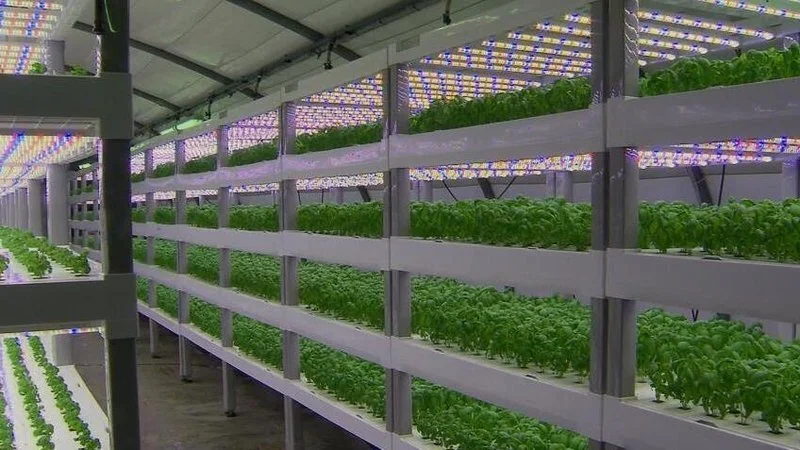
It is grown in tiny pods on shelves with the roots stretching down to nutrient-rich water. Bright LED lights encourage the growth, as does hot air blowing into the tunnel.
A wind turbine nearby generates the electricity and a hot humid house means the plant thrives. But the lights are also powered down for hours in order to let the plants sleep.
It looks a million miles from any conventional farm. The tunnel is filled with rows of white plastic shelves, with tiny holes through which the plants appear. Water is circulating under the shelves and overhead there are strips of lighting; white, red, and blue.
It is bright and humid with the constant hum of air being pumped in and there is a gentle trickle of water flowing through the system.
Farmony, an Irish technology company, has developed the technology being used in Ballyporeen.
It has built farms in several countries and said the system could make Ireland self-sufficient in herbs and small greens within a few years.
Farmony's John Paul Prior said the range of plants that can be grown is vast and goes way beyond herbs.
He said: "In Ireland, we grow between May and September/October. Imagine if you could recreate that perfect summer's day all-year-round.
"That is what we are doing with controlled environment farming, so we could come close to self-sufficient with all your leafy greens, all your microgreens, and all your herbs."
Ireland imports the vast bulk of those products and the development offers a huge opportunity to expand the horticulture sector in Ireland.
It is environmentally positive too. If mushroom houses are used, it is utilizing something that has limited suitability for anything else. Farmony claims that the system uses 90% less water than conventional farming methods and is pesticide-free too.
The tunnel in Ballyporeen is part-funded by the Department of Agriculture as a pilot project and Mr O'Reilly is already testing crops other than basil.
"We are growing microgreens, peashoots and coriander at the moment. We are experimenting with them, we can change our model at any time and grow to what the customer wants," he said.
"When you think of it, this basil which we are growing would normally be imported, sometimes from thousands of miles away, from Morocco, Kenya, Israel, Spain or the UK. We are replacing that. The food miles are being dramatically reduced and we can do it without worrying about the weather outside."
Abandoned mushroom farms are dotted all over the country. There were more than 400 growers at one point, now there are just a few dozen. It is a tight margin business, which is dominated by a few companies and is almost entirely export-dependent.
Last year, Ireland exported €102m worth of mushrooms. Up to September this year, we exported more than €82m worth of mushrooms.
Any delays at ports after Brexit could have a huge impact on delivering fresh product to supermarkets in the UK. The possible imposition of tariffs is also an issue.
The Government wants to expand Ireland's horticultural offering. It is lower-emitting than sectors such as beef and dairy and there is huge scope for expansion.
Often, our climate is an issue. We have a shorter growing season than other countries and they can also offer scale and a cheaper cost base.
There are some areas of Ireland that grow high-quality vegetables, but it is a sector in decline over recent years.
The dominance of the big multiples as the primary buyers has tightened margins and many growers complain that the sector is controlled by too few buyers. Up to September this year, Ireland imported €146m worth of vegetables alone.
Its dependence on UK imports of potatoes and other vegetables could be a problem after Brexit, but it is something which the sector is aware of.
Farmony hopes that developing a network of vertical farms could dramatically reduce our food miles, reduce reliance on imports, and also create jobs and revitalize a declining sector.
Lead photo: Hydroponic farming uses water rather than soil to grow plants

The Salad Days of AI
Many courses in computer science are heavy on theory, so having a course grounded by growing plants makes it more interesting and relatable, he said
Nidhi Jain has never had much luck growing plants. "I've tried to work with plants, but they didn't want to work with me," said the senior computer science major from California. "So I've stuck to succulents."
Green thumb or no, Jain and her classmates in the School of Computer Science's "Autonomous Agents" course this fall-applied their knowledge of artificial intelligence, including machine learning and computer vision, to grow lettuces and radishes in small, automated greenhouses. Without ever seeing or touching their plants in person, they worked in groups of three to nurture their sprouts, writing programs that made all of the decisions on adjusting light, humidity, and soil moisture based on sensor data.
Reid Simmons, who teaches the course with Stephanie Rosenthal, said using AI to grow vegetables is a good way for students to put the knowledge of AI-based autonomous agents that they learned in class into practice. Agents have applications in many areas, such as self-driving cars, intelligent factories and smart homes. Another — automated greenhouses — proved a good match to the need for a course exercise.
The autonomous farm
"We wanted something that was physical, that would have to interact with the environment," explained Simmons, a research professor in the Robotics Institute and Computer Science Department (CSD) who directs SCS's undergraduate AI degree program. And they wanted these agents to run for two weeks at a time. "Most of the alternatives were robots and the likelihood that a robot would work for two weeks was very low."
Plants grow — and die — slowly, so they don't provide the immediate, dramatic feedback of, say, a robot running into a wall. But students said they nevertheless learned a lot about the pitfalls of autonomous agents during the two growing periods during the semester.
"Deployment isn't as easy as you think," said Vicky Zeng, a senior artificial intelligence major from Singapore. The autonomous agents receive input from temperature, humidity, soil moisture, and light sensors, which they interpret to make adjustments on light, watering, and fan operation. Faulty soil moisture sensors, however, plagued all of the teams, resulting in plants going without needed water. "Even if your agent is running fine, it can end up making poor decisions if it's getting bad sensor data," she said.
"Some of what they're learning is that relying only on your sensor values can be problematic," said Rosenthal, an assistant teaching professor in CSD. During the second growing period, she noted, moisture sensors showed there was plenty of water in the soil despite most teams never having watered, "but after a week we know the plants probably need water." In that case, the students were allowed to make a one-time adjustment to prevent all their plants from dying.
Autonomous agents thus must be designed to cope with errors, Zeng said. More than that, "we can't be waiting to see errors; we have to have methods for predicting errors. Sometimes things are out of your control but you try to prevent them from getting into that state." One solution: setting a maximum number of days that the plants can go without watering.
The harvest
Arthur Dzieniszewski, a senior computer science major from New Jersey, comes from a family of gardeners and was immediately intrigued by the "Autonomous Agents" course when he heard about it. Many courses in computer science are heavy on theory, so having a course grounded by growing plants makes it more interesting and relatable, he said.
Overall, the teams had great success in the two growing periods. Though they were graded based on the first two weeks of growth, Simmons and Rosenthal allowed the plants to grow an extra two weeks so they had a chance to grow big enough for harvesting.
The vegetable-growing exercise proved popular with the students, Rosenthal said, and several chose to take the course, in part, because of it. Dzieniszewski has even created his own automated greenhouse that is functionally equivalent to what the class used. Though he doesn't have any plants growing yet, he can control the greenhouse remotely and use an autonomous agent to run it.
After each growing period, the teams would make presentations to the class, summarizing their experiences and lessons learned. Jain said this was one of her favorite parts of the class. Another highlight, she said, was when Simmons harvested some of the vegetables from the first growing period and ate the radishes during class.
"This was really exciting because I was finally able to have some success at growing some plants," Jain added.
For more information:
Carnegie Mellon University
www.cmu.edu
21 Dec 2020
Polygreens Podcast Episode: 007 - Jim Pantaleo
In mid-2014, Jim made a move away from a 20-year career in technology to indoor vertical farming for food and non-traditional crop production
POLYGREENS PODCAST EPISODE 007
JIM PANTALEO
In mid-2014, Jim made a move away from a 20-year career in technology to indoor vertical farming for food and non-traditional crop production.
Indoor farming (growing plants for food consumption in totally enclosed environments using only LED lights for photosynthesis) plays a part in directly addressing water, land, population, and natural ecosystem challenges borne from current, large-scale (unsustainable and harmful) agricultural practices.
In order to move from tech to indoor farming, He took a full year to immerse himself in the subject, learning as much as he possibly could while directly engaging with the industry's credible difference-makers and organizations.
Over the past six years, he has been a large-scale, commercial operator/indoor farmer, speaker, writer, business developer, investigative C-level start-up team member, plant science nerd, and conference organizer/MC. Jim seeks to create positive change, shift the paradigm of sustainable indoor plant production, and disrupt (and enhance) supply chains to meet the challenges of modern, large-scale agriculture.
Listen

Horticultural Glass Price Doubles From Growth In Solar Market
Since September, the price of horticultural glass has changed dramatically. “The glass price has been almost stable for ten years, it only drops a little bit year after year. Yet a couple of months ago, the price almost doubled,” says Michael Lee with Planti
Since September, the price of horticultural glass has changed dramatically. “The glass price has been almost stable for ten years, it only drops a little bit year after year. Yet a couple of months ago, the price almost doubled,” says Michael Lee with Planti. “It’s bad news for everybody, not in the least for growers and builders.” The cause for the price change is the high demand for low-iron glass from the solar industry.
Low-iron glass is a type of glass with – the name might give it away – very low amounts of iron, meaning that it is much clearer than glass with a high iron rate. This type of glass is highly in demand for greenhouses and is also being used in the solar industry.
“This summer the solar business in China developed a lot. It’s a very volatile market usually, but since this summer it has been a strong market, meaning that solar manufacturers are buying a lot of glass for their future business. Many factories like ours, have seen orders from solar panel buyers. The demand for the raw goods is high, and so is the pressure on the factories,” Michael explains. Planii solely serves the horticultural market and does not focus on the solar business. “But since solar panels come in a fixed size and are much easier and quicker to produce, suppliers can make more profit by delivering glass for them, instead of growers. There’s a big shortage of glass in the market.”
The higher price has an effect on greenhouse builders and on growers, depending on whether the price is enclosed in their services or whether they made a fixed price. “Then also we used to deliver glass within a month when we had an order, but due to the pressure on the market the delivery time is higher now: two months or even more.” And it’s not the end of the story. Also, the price of shipping has increased. “Shipping costs from China to Ontario have been stable for many years, yet on top of everything also these costs are higher than before. With a 50% increase, it’s a big issue with great effect on the project prices.”
It’s another unexpected trend that Planti, a relatively young company, is dealing with. Starting in 2017 with HPS and LED lights and expanding rapidly in horticultural glass, the company has seen fast growth. Although they started with the lights as their core business, the horticultural glass now is the majority of the business. “Although last year we delivered more than 10,000 sets of HPS lights in Middle Asia – another reason for the growth we’re enduring,” Michael says. “Yet the demand for horticultural glass rises even faster.”
“We see that diffused glass is being used on every market. Before mainly America and Europe opted for it, nowadays we also send it to Saudi Arabia. Growers all over the world are buying diffused glass instead of clear glass. Then also more growers opt for high haze instead of low haze,” Michael says.
In Europe, most growers buy medium haze, but in the rest of the world, they go for 70% haze, which is a high haze. “Once they’ve made up their mind about the benefits of diffused glass, they want the high diffusion and the higher the haze, the more the light is diffused. This is good for the crops, for the plants to grow in a uniform way – both in flowers and vegetables.”
2020 has of course been challenging for the company as well – both in terms of production and in terms of logistics, yet fortunately, the delays caused by COVID were overcome over the summer. In order to help more growers, the company has decided to keep their focus solely on the horticultural industry, not supplying glass to the solar business. “It’s a stable business. Of course, this market provides challenges, but that’s why we work hard – to deal with these challenges”, Michael says. “We’re working hard to develop the market and believe this is possible since we have more orders every year.”
Yet despite their dedication to the greenhouse industry, they are still dealing with the higher prices for raw materials and pressure on the market. “Horticultural glass is difficult to make, whereas solar glass is easier since it’s a fixed size. Robots can be used to produce glass for solar panels, so nowadays many glass factories are expanding their production. It will take two to three months to start a new line and another two before it runs smoothly, meaning that the prices will stay high until summer next year.”
For more information:
Planti
info@plantiinc.com
www.plantiinc.com
Publication date: Wed 23 Dec 2020
Author: Arlette Sijmonsma
© HortiDaily.com
Things To Think About Before Purchasing A Freight Farm
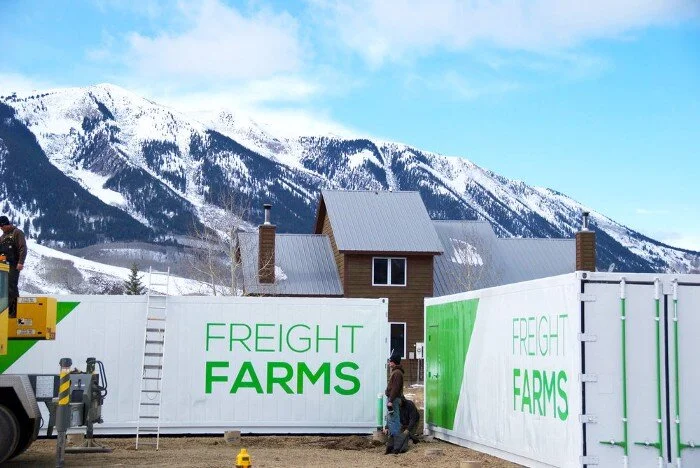
In this article, I will detail all the steps, hurdles, and bureaucracy I endured trying to start and bring a Freight Farm into my local community in Canada

Connor McGoran
In this article, I will detail all the steps, hurdles, and bureaucracy I endured trying to start and bring a Freight Farm into my local community in Canada. While this may not be the same experience for everybody, I will share what I learned and how I failed at starting a Freight Farming business. This process took me approximately three months to go through. The goal of this article is not to dissuade anyone from trying to start a Freight Farm business but to learn from my shortcomings so that the next individual who embarks on this journey will succeed and know what to expect.
Background
I had just finished my degree in Technology Management from NAIT and the early phase of COVID-19 hit which caused community lockdowns across Canada. During the lockdown, I stumbled upon an article from the MIT Technology Review about a unique way to grow roughly 1.5 acres of food in a retrofitted sea-can using LEDs, hydroponics, and specialized HVAC. My curiosity got the best of me and I asked myself if there was a feasible business case for this type of innovation in my home town. This to me seemed like a well-timed idea due to the broken food supply chain across North America due to COVID-19. With further research, I even found that Elon Musk’s younger brother Kimbal used multiple Freight Farm’s to grow his produce for his restaurants. This led me to read more to see if this magic box would be feasible from an economics and business perspective.
Step 1 : Research
The first thing I did was reach out to Freight Farms in Boston where I had a wonderful experience dealing with the Freight Farm Team. They gave me all the documentation I would need to get started detailing the cost of a brand new unit to be 115,000 USD. I also reached out to another company called FarmBoxFoods to see how their technology differed and what their price was set at 125,000 USD. Due to the high cost and the poor CAD-USD currency conversion (1.4), I looked at purchasing a used Freight Farm from the iGrow Group which re-sells used units online.
LGM Freight Farm Operating Costs
Step 2: Business Spreadsheet
I then created my own spreadsheet-based upon the numbers provided to me by the Freight Farm team and my own research to see if it would be feasible from a business perspective. There are some numbers included in this spreadsheet which I will talk about later in the article.
LGM Calculator Tab 1
LGM Calculator Tab 2
LGM Calculator Tab 3
After building my spreadsheet, I determined that the only way for me to make money and pay off any debt in Canada with the CAD-USD conversion rate was to purchase a used unit through the iGrow Group. Different brands of hydroponic growing sea-cans and units ranged from 55,000 USD to 150,000 USD depending on the model and year.
Step 3: Business Plan
After creating my spreadsheet I called other Freight Farmers within Canada to ask about their experience running a company. The expertise of people who already operated their own Freight Farms was extremely insightful because they were able to share their difficulties, what they learned, and what I should anticipate. This helped me write a modified version of the business plan below. I decided to call my company KLC Greens.
KLC Greens Business Plan
KLC Greens is a hydronic farming company that would provide the highest quality local produce to the local industry in Canada 365 days a year! It has the capability to turn around over 1000 heads of lettuce or other leafy greens after a 6-week initial phase.
Demand for local produce is booming and KLC Greens would be perfectly positioned to increase the availability of “hyper local” foods for our customers. By utilizing the very best hydroponic farming technology, Freight Farms’ Leafy Green Machine would grow high value cash crops year-round with consistent high quality that is not possible with outdoor farming in the local community.
Marketing Strategy:
KLC Greens marketing strategy would focus on selling their produce to wholesale grocery stores, a retail CSA program, and local restaurants that want the best produce available year-round. KLC Greens has been in contact with different local grocery stores that have shown interest to our product.
Company Description
KLC Greens is a hydroponic farming company that would provide fresh produce to the local vegetable industry in Canada. We will grow different lettuce varieties for restaurants, wholesalers, and retail through CSA that would aim to support the growing local food movement in Canada.
Our world is changing. More people than ever are now living in tightly populated, urban areas, and there’s an increasing demand for locally grown and sustainably produced food. People want to know the story behind the meal on their plates. And even city dwellers want their food to be fresh and full of nutrients, not pre-packaged and shipped from thousands of miles away.
Our climate is also continuing to evolve. Extreme weather conditions are becoming more common, and land and water are becoming scarcer. Large-scale food production and distribution has had a significant impact on the earth’s ecosystem, and it’s continuing to affect our water levels and biodiversity.
Transparency is key to understanding where and how food is produced and KLC Greens is committed to improving transparency in the produce industry by growing ‘hyper-local’ produce in one of the most innovative hydroponic system available, Freight Farms’ Leafy Green Machine. Growing in the Leafy Green Machine enables us to provide unparalleled transparency in all operations from seed to harvest and provides our customers with the certainty that they are eating, receiving, buying Okanagan produce grown via the best agricultural practices available.
Our Product
We will initially grow different lettuce varieties and sell it to wholesalers and restaurants at an expected price of 2$ per head of lettuce. This type of cash crop takes 6 weeks to reach maturity and we estimate harvesting 4044 heads per month. For details on harvest volumes, see Appendix A for revenue calculation data and assumptions.
Our lettuce is hyper-local, meaning that our lettuce is grown in the community where it will be consumed, and is thus considered a premium and differentiated product by the market, commanding a higher price point than even organic foods. This differentiation is what enables us to command the higher price of 2$ as opposed to the general wholesale price of 1.50–1.75$.
Market Breakdown
KLC Greens will specifically target high-end restaurants in the Canada area. Our target customers are chefs and restaurant owners in the farm-to-table movement who already provide information to customers about their sourcing policies and chefs and restaurant
owners in the ethnic cuisine space who require specific fresh greens for their dishes that are not available year-round through traditional farming.
Our competitors in the restaurant industry include direct competition from other local farmers, and wholesalers who source exclusively from local farms but are constrained by seasonality, and indirect competition from larger wholesalers who bring in low cost produce from around the world and in all seasons. KLC Greens will compete by providing “hyper local” produce to the restaurant industry regardless of season.
KLC Greens plans to sell its lettuce into the wholesale market in Canada. We will target smaller wholesale companies who specialize in local produce as opposed to working with the larger, national companies where we will struggle to meet sufficient volumes to be a relevant partner.
Our competitors for local wholesale are other local farmers growing vegetables and different varieties of vegetables (traditionally or hydroponically). During the summer months, traditional farmers will be KLC Greens greatest competition as the supply of local Lettuce is significantly increased and the price is driven down. During the non-summer months, regional, large-scale hydroponics producers are the greatest competitors for KLC Greens. In both instances, KLC Greens will rely on its freshness and consistent availability to appeal to our wholesale partners.
KLC Greens will sell its produce in farmers markets in the Canada area. We will target markets in middle to upper-middle class areas in order to gain access to consumers who are dedicated to eating fresh, local produce and have the disposable income to purchase our premium Lettuce.
Our competitors fall into two categories, direct competitors from the farmers market community and indirect competitors from outside the farmers market. To date, KLC Greens does not know of another hydroponic farmer participating in farmers markers in the Canada area, meaning that our primary direct competitors will be local farmers growing Lettuce in the traditional way. Outside of the farmers market, our competitors are traditional food retailers who may or may not stock local Lettuce. In both instances, KLC Greens has an advantage as we can differentiate on freshness and availability all year.
KLC Greens will also target middle to upper-middle class customers who already participate in CSA programs and demonstrate a commitment to eating local produce.
While most of KLC Greens competitors are not “hyper local” producers, it is worth briefly discussing the different methods of urban farming that may eventually enter the market as direct competitors. The four main competitors to KLC Greens Leafy Green Machine growing method in the urban farming space are indoor warehouses farms, urban greenhouses, rooftop farms, and small plots of land transformed into farms. Each have their benefits, however KLC Greens firmly believes that the Leafy Green Machine provides the best combination of protection from natural elements, cost effective production, and reliable crop yields that will make urban farming a profitable venture now and into the future.
Competitive Advantage
KLC Greens main competitive advantages are the farming technology we will use to produce our lettuce and the support of a network of small business hydroponic farmers.
We are in the process of purchasing a Leafy Green Machine from Freight Farms to use as our primary farming tool. A Leafy Green Machine is a turnkey hydroponic farm built inside of an insulated shipping container, enabling it to produce fresh vegetables in any climate for a full 365 days per year. To help ensure success, the Leafy Green Machine is equipped with sophisticated environmental controls which allow KLC Greens to easily grow consistently high-quality lettuce while simultaneously eliminating the guesswork inherent in traditional farming. The Leafy Green Machine only requires 20 hours a week to operate.
In addition to the benefits of the Leafy Green Machine itself, our purchase of a Leafy Green Machine provides us with access to the many resources Freight Farms offers to its extensive and ever-growing network of small business farmers. Freight Farms’ commitment to KLC Greens success includes:
· Comprehensive in-farm and online training
· A resident plant expert who is available to all beginning farmers
· Monthly shipments of customized nutrients and seeds
· Software designed to optimize harvest yields and allow remote monitoring of crops and control of the Greenery
· And most importantly, access to Freight Farms’ very active network of small business farmers who are available for assistance and advice
The strength of the Freight Farms network cannot be overstated. Each small business farmer has faced similar business challenges to those that KLC Greens will inevitably face. By leveraging the solutions of fellow Greenery farmers, KLC Greens can significantly reduce the risk associated with a new venture and move through challenges quickly and successfully.
Marketing and Sales Plan
KLC Greens sales plan is to target Restaurants, Retail (CSA) and wholesalers. Our company will target chefs and owners of high-end farm-to-table restaurants who have already demonstrated a desire to provide customers with transparency in food sourcing. Our Retail CSA program will target middle to upper-middle class customers who already participate in CSA programs and demonstrate a commitment to eating local produce. KLC Greens will also target wholesalers who are looking for consistent quality produce that can be supplied year-round.
KLC Greens has discussed our hyper-local lettuce with Natures Fare, Sysco, and Valley Green Foods and they are very excited about the possibility of buying year-round, local lettuce.
In order to obtain customers KLC Greens will implement the following marketing strategies of utilizing digital marketing tools, word of mouth, social media campaigns, and attending local regional industry events. KLC Greens will use a combination of digital marketing, via add words and a company website, and networking at industry events to identify and network with farm to-table restauranteurs, grocery chains and wholesalers. We will operate a booth at local conferences to better spread the word about our hyper-local lettuce, give potential customers the opportunity to try the lettuce for themselves, and direct further inquiries to our website for more information about the benefits of hydroponic produce.
KLC Greens will have a variety of different packaging for products depending on industry or consumer needs. If wholesalers require clam shell or hard plastic containers for packaging, our business will source that out. KLC Greens will package its lettuce in grams or kg in either rectangular clamshell packages or hard plastic containers for it’s wholesale partners.
Management Team
Key Partners:
· Accounting/Tax Partner: TBD
· Legal Advisor: TBD
· Insurance Provider: TBD
Use of Funds
KLC Greens is requesting $150,000 CAD for the purchase, transportation, and installation of a Greenery and for the cash flow necessary to get started. In addition to the requested loan amount, Farm Credit Canada has granted KLC Greens 80% of the funds to purchase the Leafy Green Machine. The 80% of the funds provided by Farm Credit Canada would be paid back to the loan.
A detailed breakdown of our planned use of funds is below:
· Greenery Purchase: $88,000
· Greenery Transportation: $9000
· Customs Tax (5%): $4375
· Greenery Installation: $3000
o Leveling: $1000
o Electric: $1000
o Plumbing: $1000
· Training: $4000
o Cost of training: $2500
o (if applicable) Cost of flight to Boston: $1000
o (if applicable) Cost of hotel in Boston: $500
· Business Materials Purchase: $1000
Financial Projections
KLC Greens financial projections are derived from the proven operations and profit models of fellow Leafy Green Machine small business farmers. Based on their experiences, collected, and consolidated by Freight Farms, we have constructed the following financial projections forecasting our first five years of operations.
Key Assumptions of Projected Financial Statements
· One month is 31 days (the Leafy Green Machine operates every day) or four weeks
· Year 1 begins on the day of Leafy Green Machine purchase
· Tax payments are not included in our calculations
· KLC Greens is a cash-based business so we will not offer terms to our customers and pay our bills upon receipt, therefore we have not calculated for Accounts Receivable or Accounts Payable
· We have elected to exclude inventory from our asset calculations however, there will be a nominal amount of work-in-progress and materials inventory at any given time
Step 5: Finding a Freight Farm
After creating my business plan I was ready to try and find a used unit that would fit within my budget through the iGrow Group. The team at iGrow was also super helpful and narrowed down the best unit that was close to where I lived to reduce shipping costs and help pair me with another business owner. I had to WhatsApp call the seller multiple times to ask questions and to inspect the unit due to COVID-19 as I was unable to cross the border. I was able to put a down payment on the unit until I secured further funding.
Step 6: Finding Capital (Funding)
In order to fund my business venture, I had to try and find different avenues for funding which led me on a rabbit trail for approximately two months. At the time of trying to obtain funding I was 22 and had no assets in my name but actually had little difficulty in getting approved funding. The only problem that occurred was that no bank in Canada would give me a bridge loan to bring the used Freight Farm into Canada. I called every single bank over the span of two months that I could possibly think of and tried to brainstorm creative ways to bypass the process. My seller was growing impatient so this led the seller to agree to send the unit across the border on the condition I would pay the remaining 90% and provide letters from the different financial institutions that I was approved for funding. I was able to obtain funding three different financial institutions called Farm Credit Canada, Community Futures, and RBC. Farm Credit Canada is a farm lender that is subsidized by the government which has a special young farmers loan for ages under 40 that can approve loans of up to a million dollars. Community Futures is a community-based organization that helps aspiring entrepreneurs within the Okanagan and RBC is a bank within Canada.
I reached an agreement with Farm Credit Canada after dealing with their business analyst’s and scrutinizing my business plan they would grant me 80% funding for the Freight Farm once it crossed the border, Community Futures would provide the operating expenses and other equity, and RBC would provide me a business account with an operating line of credit. Once I obtained the letters from all three financial institutions I was able to bring the Freight Farm across Canada.
Step 7: Logistics, Logistics, Logistics
Growing up in the Okanagan Valley in Canada which has an abundance of agriculture land and plenty of farming, I did not think I would have such a difficult time finding a place to put the Freight Farm. I reached out to numerous farmers, tried my contacts, and tried door knocking to try and find some land. What I found was that majority of old farmers did not want the hassle of having this on their property, did not understand the technology or it was not worth their time for the money. Being on a budget and knowing where I wanted my profit margins it was proving to be quite difficult. The Leafy Green Machine I was purchasing also required a certain power supply, access to water and it has to be leveled. If the land did not have these pre-requisites I would have to pay to have a sub-meter installed, the piping for water, and a contractor to have the unit leveled.
I ended up using a service called Young Agrarians which is a farmer educational resource network for new and young ecological, organic, and regenerative farmers in Canada. They had a local representative that assisted me with their land matching program and helped guide me through making a lease agreement. I ended up finding a landowner by door knocking who would allow me to put my Freight Farm on his land for a reasonable price and had the Young Agrarian Organization help build the lease agreement.
Step 8: Incorporation and Accounting
Due to my limited expertise and from the wisdom of other mentors I thought it would be best to get the advice from an accountant and lawyer to help me best set up my business. I know from other experiences that the CRA is not the most forgiving and can cause major headaches if you do not submit the proper paperwork. I consulted my local accountant where he advised me on the pros and cons of doing a sole proprietorship or incorporating and helped draft me a letter to my lawyer. I chose to incorporate and then sent the letter to my lawyer who set up the business to best suit my companies needs. A few weeks later KLC Greens was approved and incorporated.
Step 9: Website and Logos
While I was trying to find suitable land and was waiting for my business to be incorporated I decided to design my company logo and build a website. I utilized Fiverr as a platform to build my logo as it cost 60 CAD and was created within 48 hours. These were some of the designs created within 48 hours.





To build my website I decided to go through Wix. I used Wix because it was the most reasonably priced 25 USD and it had the best functionality for what I needed. I was able to create this website.
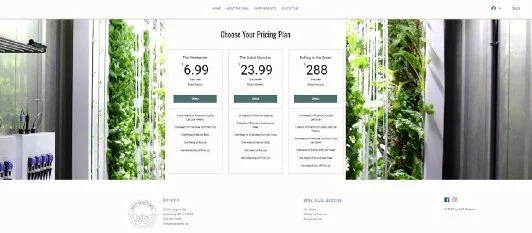
Step 10: Apply for a City Business License
Applying for a city license was an easy process as there was an online portal where I had to describe my business and what I was planning on selling. The estimated time to obtain a response was approximately 48 hours. I contacted my local city a few months prior to ask if there would be any concerns with having a Freight Farm within the city limits. So I expected my business license to be approved without any obstacles.
Step 11: Customs Broker/Shipping/Crane
While completing the last few steps I had to find a customs broker that would deal with the transaction so that the Freight Farm would come across the border without any difficulty. I also contacted numerous shipping companies with the IGrow Group to find the best deal. Once this was secured I could then schedule the crane companies in the seller's city and my home town. Now that everything was set, my Freight Farm was scheduled to come in three weeks' time.
Step 12: Bureaucracy
My assumption that obtaining a city business license was going to be easy proved to be wrong due to my city’s bylaws and bureaucracy. My application was forwarded to the agriculture department, the city planner, and the building inspector where I was met with the following response. I had numerous conversations about if there was any variance that could happen and how someone at the city three months ago told me they did not see anything wrong with my Freight Farming idea.
Hi Connor,
I was forwarded your email to help answer. The Planning Department and ALC both allow hydroponics to be grown on site (A1/ALR), however, the sea-can is not permitted. We only allow sea-cans/shipping containers on a permitted basis if they meet BC Building Code, which will require an engineer or an architect to make the sea-can structural sound. Sea-can’s are not permitted structures and won’t be given a Building Permit unless they are altered to meet the BC Building Code.
Please let me know if you have any other questions, I’m happy to help.
This was my response to the email above
To whom it may convern,
I talked with an associate at the city of Canada about three months ago about my business plan and any concerns I should foresee in the future, this associate saw no problems with my business and freight farm being in Canada. When I went to apply for a business license a week ago I ran into a few hurdles with the City about the freight farm meeting the BC Building Code and certain bylaws and obtaining a building permit. My understanding was that this container would be deemed a temporary unit on ALR land and should not need a building permit.I have reached an agreement with the business license team at the City and planners that this will be deemed a temporary structure for 6 months (as it can be moved readily at any time).
My container will be delivered in the next two weeks and I did not foresee these hurdles and I am looking for guidance on what to do next. I am a young entrepreneur and have taken a loan to start this business and would love to reach an agreement with the City and make the necessary legal changes to make my business work. I really appreciate how supportive the City has been and the amazing staff I have dealt with.
I have attached a pdf describing the leafy green machine, as well as the bylaw pdf on steel containers.
Here was the city’s reply;
Hi Connor,
I see from the web site link that you provided that this product comes from a USA based manufacturer. Do you have any support documentation from the supplier/manufacturer that references a Canadian standard for the electrical system, water system and building standard(s) that these are built to? We will require this information as part of a Building Permit & Plumbing Permit application along with a site plan showing where this container will be installed on the property
The bulletin that you have copied and referenced as allowable under exception, clearly identifies the exception for the use of the container as storage and not as an occupied/semi occupied building for the production of plants with a dedicated water system and electrical system. The British Columbia Building Code (2018 edition) is the Provincial standard that needs to be meet once the structure is being used as a building, which is what you are proposing. The A277 standard in BCBC 2018 is for factory built units, similar to modular homes that are factory inspected for compliance during construction and certified as compliant. The storage container can be stored on the site if approved by City of planning staff for 6 months, but would not be allowed connection to city water or electrical without meeting the minimum standard set by BC BC 2018. I would suggest that you reach out to the modular factory representatives to see if they can have a factory inspector come to do an on-site evaluation of the container unit to certify it or help provide information to cross reference Canadian to the USA based standards, so that you can apply for a building permit. https://www.kelowna.ca/homes-building/agricultural-land/dwellings is the link to the requirements for Building Permit application. A plumber will be required to apply for a plumbing permit if/when the building permit is issued and a proper back flow preventor will be required to protect the city water source.
This process may seem overwhelming but is no different than importing a USA built car into the Canadian market. The car would need to meet the standards set in Canada for the car to be registered and used in Canada. If the USA company has built these containers to meet or exceed Canadian standards and can prove this with valid documentation, the application process should be straight forward. An application for building permit can be made at 2nd floor city hall and the permit would be for an accessory building on farm land.
This response led me on another rabbit trail of trying to figure out if the Freight Farm I was purchasing would meet any of the building standards in Canada and so forth. At this point in time, my container was two weeks away, I had already purchased all my supplies for the Freight Farm and was going to sign my lease agreement. Freight Farm’s provided me with the following information below through an email and was able to confirm their shipping containers were ISO certified.
All LGMs are upcycled reefer containers. What this means is that they were previously used to ship produce to and from other countries. Once the refrigeration unit no longer worked, they were decommissioned. We would remove that unit, and retrofit our equipment. I bring this up, because the container itself will likely have some dents and marks from its usage as a freight container. This does not impact the structural integrity of the container at all. We have frequently had these container re-certified to be seaworthy, and safe for use from a structural standpoint. Additionally, the company that would have manufactured the farm has a number of certifications (CE, UL, etc.) that would apply to the actual assembly.
With this information, I called a few inspection agencies about what it would cost to bring the Freight Farm up to the BC Building Code or CSA standards where I got numerous replies saying it would cost thousands of dollars and be a very time-consuming process. On top of this, I would then have to be certified by the local building inspector and make sure the Freight Farm was conforming to any local bylaws.
Where it all went wrong
Just as I was confident about my business and thought I had everything prepared, I was hit with the bombshell from the city about bringing the container up to the BC Building Code and the numerous inspections I would have to go through. Also last minute the landowner of the farmland I was going to lease decided he did not want me on his land anymore or to sign a lease. This led me to call off the shipment 10 days before my container was supposed to arrive which caused me to call of the shipment. From my further conversations with the BC Building Inspectors and other consultants who specialized in shipping container homes, they said that any other Freight Farms located in BC that were not CSA approved or up to the BC Building code were illegal. They further elaborated that the only reason they were operating was that the local city or bylaw was turning a blind eye. This was the turning point where I had to decide if the current risks were worth taking with the knowledge that it would cost much more than expected to get the Freight Farm certified and if I didn’t it could be shut down by the city. I went back to crunch the numbers and realized I could not financially risk having the Freight Farm nonoperational for a few months due to the loans payments from the bank. I could not wait to have my container certified by the proper governing bodies and inspections to take place. This led me to painfully decide to not pursue my business plan anymore. I had to contact my seller and the IGrow Group about my situation and unfortunately, three months' progress was now void.
Where I Failed
I did not properly do my due diligence in contacting all the necessary channels in my local city to ask about the local bylaws. I trusted one individual's opinion at the city who did not have the proper knowledge to give me the advice that I relied on.
I did not think of the construction standards of the Freight Farm at the early phase of my business plan. This led to more hurdles when I was asked for information by the city.
I put a 10% down payment on the container before I had secured funding from other financial institutions. This caused the process to take longer than expected and caused my seller to wait over two months to get my finances in order only to have to cancel last minute.
Due to my limited assets, I had to borrow from numerous financial institutions to obtain the financial capital to purchase the Freight Farm. In the last two weeks, before my Freight Farm was expected to arrive, RBC called to inform me that there was too much conflict between the financial agreements between Farm Credit Canada, Community Futures, and RBC. This caused me to have to re-negotiate all my letters with my lenders delaying the purchase further.
I did not sign a lease agreement before arranging the shipment of the container causing the landowner to back out the last minute.
I purchased supplies for the container before it arrives.
I rushed the entire process in three months, leaving little time to carefully think out everything.
What I learned
Before starting the process make sure you know what your city’s bylaws are and talk to a few local representatives to make sure the information you are being told is true.
Read the bylaws to ensure your Freight Farm is up to local standards.
Obtain financing early on before contacting a seller if you have limited assets or can only afford a small down payment.
Make sure that if you borrow from numerous financial institutions there is no conflict of interest between them if they require equity of your Freight Farm until the loan is paid off.
Sign a lease agreement from a landowner, do not go off of their word.
If you want to disregard the city bylaws the best scenario would be to know someone who has land or own it yourself. That way you can hide the Freight Farm and won’t have any complaints, thus reducing the risk of your business being shut down in British Columbia.
Have more certainty of your business before purchasing supplies, creating logos, or a website.
Leave more time to think through each step, because once you are in the chaos it is harder to take a bird’s eye view of your business
Do not be dissuaded by hurdles that come out of nowhere, this is a natural occurrence in business. Learn how to navigate them and reflect on how to make sure they do not happen again. I went through what seemed hundreds of hurdles and learned how to navigate them. Even though I had to decide to give up in the end it was due to huge financial risk and my limited access to capital. The risk of not running my business for four months while making bank payments and the uncertainty of the financial amount to bring the Freight Farm up to BC building code were my deciding factors.
You learn 110% more when you stick your neck out and go through the process. Going into business is not easy and requires a certain mental fortitude and resilience.
Know when to give up and know when to keep on persevering. At certain times you may feel like giving up but that is also where the most learning can be achieved and later on you’ll laugh at the thought that you almost gave up. The flip side is don’t let your ego cause you to make bad business decisions, use logic, and periodically review your business plan and current state of affairs.
Even though I failed to start my company the amount of learning I went through the last three months was invaluable.
Conclusion
My hope is that this article will help the next entrepreneurs who embark on purchasing a Freight Farm and help them build off of my experience. I still believe there is a strong business case for a Freight Farm within my community but currently, I lack the financial capital and political power to cut through the bureaucracy. I hope my three months of trials and tribulations will save you time or help you in your journey.

WRITTEN BY
Connor McGoran
Edumacated Writer, Aspiring Blogger
Technology Farming Hydroponics Farming Startup Entrepreneurship
"Leading The Next Frontier of Farming And This Investment Further Accelerates Our Momentum"
“The addition of our new farm to the network is a critical next chapter in our growth,” said Irving Fain, founder, and CEO of Bowery Farming
“The addition of our new farm to the network is a critical next chapter in our growth,” said Irving Fain, founder, and CEO of Bowery Farming. “It will expand our reach and ability to be a reliable source of local produce for more communities. We’re leading the next frontier of farming, and this investment further accelerates our momentum.”
Bowery Farming is building its newest commercial farm in Bethlehem, Pennsylvania. Joining its network of farms in Kearny, New Jersey, and Nottingham, Maryland, Bowery’s new Bethlehem farm will be its largest, most technologically-advanced commercial farm yet.
Driven by explosive demand for safer, traceable pesticide-free produce, and propelled by the BoweryOS- which integrates software, hardware, sensors, computer vision systems, machine learning models and robotics to orchestrate and automate the entirety of operations - the strategic location of Bowery’s Bethlehem commercial farm will expand the company’s reach in the region.
This farm will feature a number of developments that build on previous Bowery technology, further automating the growing process from seed to store, and enhancing the efficiency of Bowery’s network such as, Water Conservation: A state-of-the-art, comprehensive water transpiration system will recapture almost all water used throughout Bowery’s growing process, with the goal of reclaiming and repurposing nearly all of the water in the farm.
The facility will also focus on more efficient LED Lighting amplifying Bowery’s holistic approach to sustainability and features industry-leading environmental improvements like energy-reducing LED lighting throughout.
"It's the smartest farm yet, powered by the BoweryOS, this farm will leverage billions of data points collected from Bowery’s network of farms to grow a reliable supply of consistently delicious produce year-round. Laying the groundwork for the next chapter in smart, scalable indoor farming, the Bethlehem farm will feature next-level technological capabilities unlike any Bowery farm to date, deepening the integration of the BoweryOS across all aspects of the business."
Furthermore, it offers restoration to the community. Bowery is working with the Commonwealth of Pennsylvania to transform the Bethlehem location from a non-arable industrial site into productive, modern farmland—stimulating economic revitalization that will provide year-round sustainable farming jobs for the community.
Since the beginning of 2020, Bowery has experienced more than 600% brick and mortar sales growth, and more than doubled sales with e-commerce partners, including Amazon. Bowery’s produce is harvested year-round at peak freshness and delivered to stores within a few days of harvest — a stark contrast to the 90% of leafy greens grown in the U.S., which are transported over 3,000 miles to consumers on the East Coast.
With this new farm, Bowery’s Protected Produce will be available to the 49 million people living within the farm’s 200-mile radius, advancing the company’s goal of expanding access to local, traceable, pesticide-free food to people in every major city in the U.S. and around the world.

For more information:
Bowery Farming
Shelby Farahan, Communications
sfarahan@boweryfarming.com
www.boweryfarming.com
Publication date: Fri 18 Dec 2020
Author: Rebekka Boekhout
© VerticalFarmDaily.com

Ready For The Green Revolution? Agrilution Brings The Herb Garden Into The House With The "Plantcube"
The “Plantcube” from Agrilution promises always spring in the kitchen - a fully automated grow cabinet that enables vertical farming even on a small scale
December 20, 2020
The “Plantcube” from Agrilution promises always spring in the kitchen - a fully automated grow cabinet that enables vertical farming even on a small scale. AD spoke with Maximilian Lössl, Co-Founder and CEO, about the first experiments in his parents' cellar, the new features of the 2nd generation “Plantcube” - and about why the basil must never run out in his personal mini-farm.
With your high-tech herb garden in the design closet, you create a closed ecosystem in which it is always spring. What does such a mini vertical farm bring us at home?
As the closed ecosystem mimics the perfect spring conditions every day, herbs, salads and micro-greens grow with a density of up to 30 percent higher nutrients; without any transport routes, cooling chains or plastic waste. The harvest also lands directly on the plate and thus retains the secondary plant substances, vitamins, and minerals that are so important. Thanks to the special light frequency, the controlled climate, and the hydroponic irrigation, optimal ripening conditions exist throughout the year - and without pesticides or seasonal dependencies! Technology and nature go hand in hand.
In 2013, Maximilian Lössl (right) and Philipp Wagner founded “Agrilution” together. (Photo: Agrilution)
You started with the farm-to-table experiments in your parents' basement. How did the idea come about?
The initial spark, the enthusiasm for vertical farming, came from a book by Dr. Dickson Despommier. On the recommendation of the author, I actually went to Den Bosch in the Netherlands to study. But the theory wasn't enough for me, I became impatient and wanted to act. So I took the concept of vertical farming further; the idea of a "mini vertical farm" for your own home was born. Philipp Wagner then came in for the technical implementation. Our friendship goes back to school days, when we played basketball together in a club. We started the experiments in my parents' garage and founded Agrilution together in 2013.
Which salads and herbs exactly grow in the “Plantcube”?
Our portfolio currently includes over 30 different plants - from common kitchen herbs to tatsoi, leaf salads, and mixtures for pesto or stir fry to more unusual microgreens such as bronze fennel and blood sorrel. The selection is based on the needs of the market, but we also want to offer something extraordinary that is not available in the supermarket or organic market. In addition, the speed of growth is decisive so that our customers don't have to wait too long. The harvest time is generally between one and four weeks.
And what needs is the device designed for?
Assuming daily consumption, the capacity ranges from a single person to a small family - depending on how they are planted and planned. Our app provides insight into growth, information about harvesting or maintenance and also enables online orders for new seedbars that carry the seeds.
The target group includes residents of metropolitan areas who still want to harvest fresh, healthy produce. (Photo: The Subdivision)
Doesn't that mean losing some of the feelings of looking after your plants in the field, in the garden or on the balcony?
We do not see ourselves as competition to people who garden on a large scale and want to grow their own plants. We tend to address big city dwellers who do not have a balcony or garden in metropolitan areas, are seasonally restricted due to their location or who simply lack the green thumb. Of course, we are currently focusing on vegetarians, vegans, and flexitarians, but also culinary connoisseurs who are looking for that special aroma. And technology-savvy early adopters who want to equip their smart homes well!
You recently launched the second edition of the “Plantcube”. What exactly has been changed, improved here?
What is new about the optimized “Plantcube”, in addition to its elegant black design, is the revised drawer system, which can now be equipped with nine seed bars on two levels. This offers a much greater variety for the planting, and the new, portion-appropriate seedbars are even more geared towards daily needs, the daily harvest. We have also expanded our plant portfolio and divided it into three categories so that our customers can get a particularly quick overview: Dailies, Essentials, and Chefs. In addition, the substrate of the seed bars is now 100 percent biodegradable thanks to the use of natural materials.
In the living room, the “Plantcube” can also be set to quiet and dark for up to two hours. (Photo: The Subdivision)
There is also a so-called "cinema mode". What can we imagine by that?
The cinema mode is also one of the most recent adjustments - it was created through valuable customer feedback and enables the greenhouse to be set to quiet and dark for up to two hours. Some users position the “Plantcube” as a design statement directly in the living room. Its light can be perceived as annoying when watching a film, for example, which is why we added this option.
Surely you live with a “Plantcube” yourself. What do you like to harvest from there and why?
The “Plantcube” in our private apartment is always well planted. We eat our greens every day. Since I love Asian cuisine, there is always fresh coriander for salads or as a topping for avocado bread. Our regular range also includes Tatsoi and Wasabina leaf mustard - nice and spicy! And don't forget basil! My girlfriend is Italian.
Good harvest! The greens from the new “Chefs Line” from “Agrilution” are beautiful (and) delicious. (Photo: Agrilution)
Are there any cooking recipes specially made with plants from the Plantcube?
We are constantly developing recipes with the greens from the “Plantcube”. Our website provides inspiration, as does the app. We also regularly cook together in our office, which is currently only possible to a limited extent. Otherwise, recommendable creations are always created. We also cooperate with KptnCook and chefs who use the “Plantcube” themselves. My favorite dish is “Asian Pak Choi Stir Fry”, which I modify according to my mood.
How does the lockdown affect interest in your Plantcubes? Fresh green from your own four walls sounds like a tempting option right now!
The paragraph has actually made a leap; because you always have something fresh and healthy in the house, and probably because it is becoming very clear to all of us for the first time that local cultivation cannot always meet the demand for natural products and that we sometimes find ourselves in front of empty vegetable shelves. And otherwise, a more conscious, healthier life is moving more and more into focus.
Over 30 different types of plants can be grown in the “Plantcube”. (Photo: The Subdivision)

Could AI-Controlled Vertical Farms Be The Answer To Feeding The Growing Population?
Vertical farms are becoming a trend these past few years in various countries, like in the US, the UK, and Dubai. Vertical farming makes farming possible even with a scarce land area because it is producing food on vertically inclined surfaces instead of a field or greenhouse

Erika P.
Dec 31, 2020
Scientists said that the Earth had lost one-third of its arable lands in the last 40 years. That means, lesser land to grow crops that will provide food for humanity. But these days, vertical farms have slowly become a trend in cities, growing leafy vegetables inside a controlled room.
In the next 30 years, it is estimated that the world's population will grow to 9.7 billion people, which poses many challenges, such as producing food for everyone. Agricultural lands are slowly vanishing in some countries due to industrial development and urbanization that turn rural areas into cities.
Vertical Farming
Vertical farms are becoming a trend these past few years in various countries, like in the US, the UK, and Dubai. Vertical farming makes farming possible even with a scarce land area because it is producing food on vertically inclined surfaces instead of a field or greenhouse.
In vertical farming, produce is vertically stacked in layers commonly integrated into the other structures, such as a skyscraper, shipping container, and repurposed warehouse or night clubs.
This modern idea of indoor farming uses the Controlled Environment Agriculture technology that controls the room's temperature, light, humidity, and gases. Vertical farming is somewhat similar to greenhouses that use metal reflectors and artificial lighting to augment natural sunlight.
Ultimately, vertical farming's primary goal is maximizing crops in a limited space and providing more food for the whole population.
ALSO READ: Dubai's Green Revolution Starts at Its Vertical Farms in the Middle of the Desert
AI-Controlled Vertical Farms Promise A Revolution in Food Production
Nate Storey, who co-founded the San Francisco agricultural-technical startup called Plenty, uses vertical farming to answer the increasing food demands of the growing population.
His company has constructed climate-controlled vertical farms that have drawn over $400 million funding from Soft Bank, Amazon's Jeff Bezos, and former Google Chairman Eric Schmidt, TechXplore reported.
His vertical farms only use about two acres, yet it can produce 720 acres worth of fruit and vegetables. He uses AI-controlled robots to control the lighting, temperature, and watering. Meanwhile, LED panels to serve as the sunlight, which means that food is grown 24/7 inside his vertical farms, and water is recycled because the evaporated water is recaptured so that there is no waste.
Plenty's vertical farms are so efficient that it uses 99% less land and 95% less water than conventional farming practices. Also, the rows of hanging plants produce 400 times more food per acre. Indeed, a revolution in food production.
The AI-controlled robots monitor the plant growth and constantly adjust the environmental factors to ensure more efficient and economic output.
Vertical farming looks more promising, especially in times like the pandemic when food production is disrupted. In Dubai, their food supply was not affected so much during the pandemic's early days because of their vertical farms. The San Francisco-based company's approach to farming also plays a similar role in the stability of the food chain.
"Free agriculture from the constraints of weather, seasons, time, distance, pests, natural disasters, and climate," Plenty's website reads.
READ MORE: Hydroponics Farming Is the Next-Gen Food Production Technology

Agrify Seeks $25 Million IPO For Indoor Agriculture Growth Plan
The firm develops products and related services for the indoor agriculture market
Written by: Donovan Jones Marketplace
Author of IPO Edge.
Dec. 28, 2020
Summary
Agrify has filed to raise $25 million in an IPO.
The firm sells proprietary products and software to the indoor vertical farming market.
AGFY has grown quickly from a very small revenue base and the industry has promising growth prospects.
Quick Take
Agrify (AGFY) has filed to raise $25 million in an IPO of its common stock, according to an S-1 registration statement.
The firm develops products and related services for the indoor agriculture market.
AGFY is a still tiny firm growing topline revenue quickly while operating in a promising industry.
I’ll provide an update when we learn more about the IPO from management.
Company & Technology
Burlington, Massachusetts-based Agrify was founded to provide proprietary hardware and software to enhance the efficiency of indoor agriculture operations.
Management is headed by CEO Raymond Change, who has been with the firm since 2019 and was previously the founder of GigaMedia (GIGM).
Below is a brief overview video of a vertical farming operation:
To read the full article, please click here.
Note: This report is intended for educational purposes only and is not financial, legal or investment advice. The information referenced or contained herein may change, be in error, become outdated and irrelevant, or removed at any time without notice. You should perform your own research before making any decisions. IPO investing carries significant volatility and risk of loss.
Editor's Note: This article covers one or more microcap stocks. Please be aware of the risks associated with these stocks.
Disclosure: I/we have no positions in any stocks mentioned, and no plans to initiate any positions within the next 72 hours. I wrote this article myself, and it expresses my own opinions. I am not receiving compensation for it (other than from Seeking Alpha). I have no business relationship with any company whose stock is mentioned in this article.
VIDEO: Agroz Aims To Build Malaysia’s Largest Indoor Vertical Farms
Agroz Group Sdn Bhd has announced that it’s building 100,000 square feet of indoor vertical farms in Malaysia throughout 2021, making it the largest of its kind in the country. When completed, the vertical farms can produce 3 tons of clean and fresh vegetables daily
30 DECEMBER 2020
Agroz Group Sdn Bhd has announced that it’s building 100,000 square feet of indoor vertical farms in Malaysia throughout 2021, making it the largest of its kind in the country. When completed, the vertical farms can produce 3 tons of clean and fresh vegetables daily.
The Malaysian-based agriculture technology (agritech) company was founded by serial technopreneuer, Gerard Lim Kim Meng, who has experience in the Malaysian technology and digital industry. The group aims to address the issue of Food Safety, Food Security, and Sustainability in Malaysia with its commercial large scale and industrial-grade indoor vertical farms.
Vertical farms are an efficient way of producing fresh vegetables as it uses less space and water compared to traditional farming on open land. The environment can be controlled accurately which include temperature, humidity and lighting. Since the vegetables are farmed in a well-controlled environment, it also eliminates the need for pesticides and additional chemicals.
According to the press statement from Agroz, it claims that most fresh vegetables including organic ones are several days or weeks old and are preserved “fresh” with large amounts of chemicals and preservatives.
It added that these vertical farms can be built within the community so that they are placed closer to where it’s consumed for a “farm to fork” supply chain. As a result, consumers will be able to enjoy clean, fresh, chemical-free and high quality food within hours.
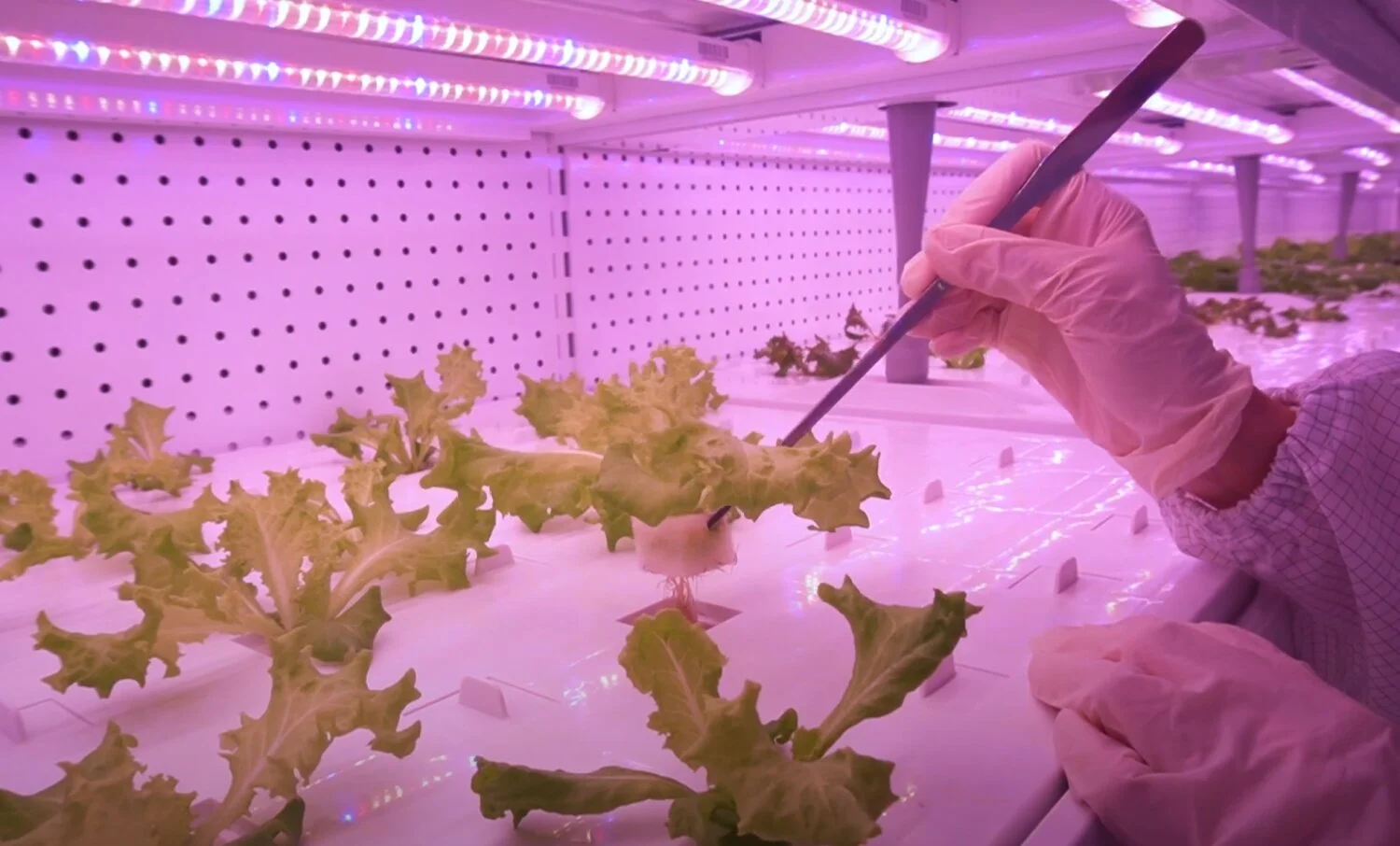
Agroz will be using a myriad of advanced technologies to ensure that its farming process is repeatable, scalable, and traceable. This would include IoT, big data analytics, artificial and augmented intelligence, machine learning, blockchain, and in the future, 5G, to create a sustainable approach to modern precision agriculture through indoor vertical farming.
The group is seeking to raise RM100 million through issuance of Redeemable Convertible Preference Shares (RCPS), with exit plans in 5 years through a proposed initial public offering (IPO) or via a trade sale to a Special Purpose Acquisition Company (SPAC), if applicable.
According to its founder and CEO, Gerard Lim, they currently have over RM5 million worth of contracts in its order books with millions of dollars more in the pipeline to design, build, operate and manage various indoor vertical farms. He shared that they are currently growing 200kg per month and will soon have the capacity to grow 1 ton per day from their various farms that are already committed.
Gerard added that the indoor vertical farms will create hundreds of new high valued jobs and generate income for local communities in the post-COVID-19 era.
Those who are interested, may drop an email to gerard@agrozgroup.com or visit their official website.