


Welcome to iGrow News, Your Source for the World of Indoor Vertical Farming

4 Young Visionaries Built A Thriving Business
Recently, in one of our most popular webinars of all time, Wihelmsson fired us up with Ljusgårda’s amazing story – building a thriving modern farm in what was once a factory, by “replacing the tractor with lights and the shovel with an iPad.”
17-12-2020
It all began in 2017 when three friends, Magnus Crommert, Cristoffer Barath and Erik Lundgren decided to try modern indoor farming. Our own Plant & Light Expert, Ida Fällström, remembers when Magnus visited our Göteborg office, introduced us to his team’s vision of modern farming, and left with an ELIXIA LED grow light under his arm. With that LED grow light, he started to conduct tests in his garage while the rest of the business took form, including bringing on a young business visionary, Andreas Wihelmsson, as partner and CEO. Fast forward to today, and their operation has grown to become Ljusgårda AB, a successful and sustainable climate certified farm in Tibro, Sweden.
Recently, in one of our most popular webinars of all time, Wihelmsson fired us up with Ljusgårda’s amazing story – building a thriving modern farm in what was once a factory, by “replacing the tractor with lights and the shovel with an iPad.” An enthusiastic evangelist for modern vertical farming, Wihelmsson explained, “We took the concept of farming outdoors and brought it indoors, creating a controlled ecosystem where we can grow under optimal conditions year-round. We have a facility here of 7,000 square meters. A year from now, we will have outgrown this facility and we will begin building the next one.” He continued, “If someone would have told me years ago that I would be growing salad for a living, I would have thought they were joking. Yet today thousands of families are eating our salad every week.”
What are the secrets to Ljusgårda’s overwhelming success? Here are 5 key things we learned in our webinar about starting a successful vertical farm:
5 Habits of a Highly Successful Vertical Farm
1. Quality Comes First
Wihelmsson commented that “More than 70% of all the fruits and vegetables Sweden eats are imported from other countries.” This leads not only to higher emissions but it also negatively affects plant quality and nutrients due to the transportation time. Because indoor vertical farming enables Ljusgårda to grow locally, they always get their products to store within 24 hours of harvest to retain quality and nutrition.
2. Give Your Customers What They Really Want (Not What You Think They Want)
Ljusgårda produces salad greens, including lettuce and arugula, for Swedish tables year-round. Wihelmsson noted, “When it comes to making a produce buying decision in Sweden, 7 out of 10 people say that one of the most important factors is that it's Swedish. Sustainability and price are also very important. We provide a great tasting Swedish product that is sustainable, and we sell it at roughly the same price as imported products.”
When it comes to giving customers what they want on an individual crop level, Ljusgårda is able to use LED grow lighting and intelligent controls to influence every phase of plant growth, from biomass development to finish and flavour. Wihelmsson commented, “One very interesting experience we had was with our rocket salad, the first product we launched. I remember our initial tryouts and it tasted terrible.” He laughed, “We were by far growing the worst tasting rocket salad in the world, but we became better. We developed a good product with a robust peppery flavour, and we went to grocery stores for people to try it. Their polite reactions were that it was okay, so we knew that we had it dead wrong. We progressed by altering our rocket salad’s flavour through lighting control and conducting countless in-house and in-store taste tests.”
Wihelmsson continued, “We realized that Swedes didn’t want a traditional strong rocket salad. They wanted a mild one. We have a term in Sweden, Lagom, which relates to balance – not too little, not too much. We ended up producing a milder rocket and outsold all other products in that store.” He concluded, “You don't always know what the customer actually wants until you test in person and can see their reaction. If in the future customers demand a spicier rocket salad, we can achieve that with our flexible LED lighting. We have the ability to control taste, nutrition, quality, colour, biomass, almost everything – because light has a huge effect on the plants. You just first need to figure out what your customer wants in their food.”
3. Control Your Light to Optimize Your Production
An intelligent LED lighting strategy can help you achieve your crop goals. We have worked with Ljusgårda to accelerate their production of arugula and reduce their production time by 19%, by making adjustments to their lighting strategies. Wihelmsson commented, “For us, light control is very important to our production. If we look at our collaboration with Heliospectra, we chose to go with ELIXIA LEDs because we needed maximum flexibility. The other reason was their positive effect on reducing power consumption.”
Ljusgårda has also found that flexible LEDs can help them control risk and even save crops. Wihelmsson noted, “Now that we have been running this farm for a few years, we’ve come to see that our flexible lights can actually be used to compensate for human errors, or things like the water tank failing or other issues. In such cases we have been able to change the spectrum to recovery lighting. Our LED lighting has meant a lot to us and the flexibility has been extremely important.”
4. Automate Step by Step (and Plan Several Steps Ahead)
Wihelmsson talked about the company’s approach to automation, “We had to redesign the system to be able to get it automated step by step and growing-wise it's been working. For us most steps in production will be semi-automated, leveraging a machine but with human beings still involved, while other steps will be fully automated.”
He cautioned, “You need to do the math and see where automation makes economic sense for you. Our approach is to look at what takes up the most labour, what is most costly in the whole economic calculation, and address it. We also run the numbers to plan ahead. For example, we are preparing some processes for automation, but we won't automate them until production volumes hit certain critical numbers. Overall, it’s best to take it one step at a time, starting with a semi-automated approach.”
5. Keep it Simple and Learn from Others
Rather than focusing on the high-tech aspects of their operation, Ljusgårda found that their consumers responded better to a simpler, more straightforward message. Wihelmsson commented, “We know that our consumers want local produce, and so it says three times on the bag that our salad is from Sweden. We keep our messaging and packaging simple, ensuring people know that we are passionate about growing great tasting, nutritious, and sustainable food that they can eat in good conscience year-round. This simple, positive message has helped put our bag salad in the top three in each and every store, and it’s even number one in several of them.”
If you are interested in starting your own vertical farming operation or taking your farm to the next level, Wihelmsson suggested that you try to learn from others who have succeeded. He commented, “We have something we like to call common farmer sense. It's a direct translation from Swedish, and it basically consists of us questioning all the solutions that are out there and always telling ourselves not to reinvent the wheel. See if any industry or any other grower has already taken an approach you want to try. Take a look at it, learn from it, and then start growing from there.”
Watch the entire webinar here.
Source and Photo Courtesy of Agritech Tomorrow
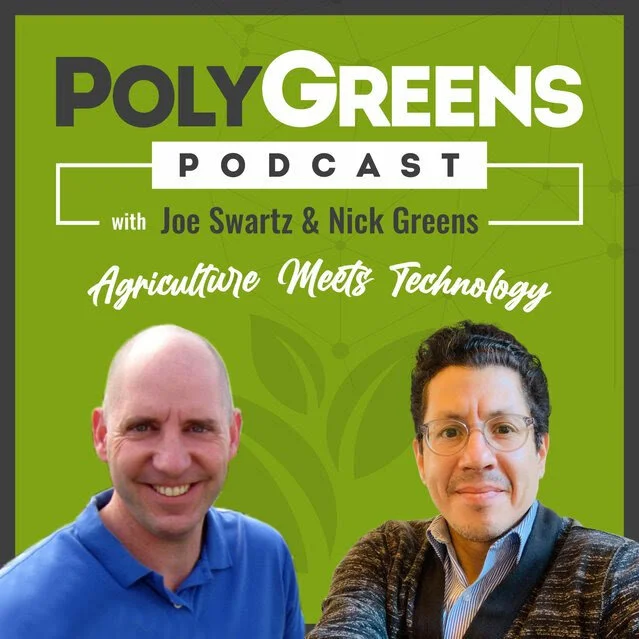
PODCAST: Charlie McKenzie - CropWalk
He is the Director of Partnership and Co-founder of CropWalk, a pest, disease, and production insights provider
Joe Swartz & Nick Greens | 12/18/2020
Charlie is a father of two, husband, horticulturist, biocontrol advisor, friend, and Georgia Bulldawg.
He is the Director of Partnership and Co-founder of CropWalk, a pest, disease, and production insights provider.

E. coli Strikes Again
On November 10th, the CDC issued a statement alerting us that E.coli has struck again, this time in a pre-packaged single-head romaine after several people became ill from eating E. coli contaminated lettuce
The World Is Scary Enough Without Our Lettuce Trying To Kill Us.
On November 10th, the CDC issued a statement alerting us that E.coli has struck again, this time in a pre-packaged single-head romaine after several people became ill from eating E. coli contaminated lettuce.
This calls us back to the past two Novembers where salad mix and commercial romaine were mass-recalled surrounding the most popular eating holiday in the US: Thanksgiving.
You might remember, the shelves all looked like this:
No lettuce as far as the eye can see. Photo: Washington State University
Lucky for us, the food system is slowly changing (too slowly), so that when E.coli strikes some lucky consumers can turn to small-scale indoor farmers in their area for salad greens that are not only safe, but also very tasty.
We know E. coli is bad... but what, exactly, is it?
E. coli is a bacteria found in the intestines of humans and animals.
That’s right...it’s inside of us.
Before you freak out, most strains of the bacteria are completely harmless. Unfortunately, the bad one that makes you sick (E. coli 0157:H7) is the one that’s currently in our lettuce. Womp-womp.
E. coli makes its way into the outside world… through poop. If the poop makes contact with food, you’ve got an E. coli contamination. If the poop makes contact with a lot of food, it becomes a full-on outbreak.
This isn’t just gross, it's dangerous. E. coli 0157:H7 causes intestinal infections (read: diarrhea, abdominal pain, nausea, vomiting, fever, and fatigue). In severe cases it can cause bloody diarrhea (*silent scream*), dehydration, kidney failure… even death.
This is awful. How the heck did it get on our lettuce?
The best explanation we have is animal or human poop infected the soil or water source at a big romaine farm. The scary thing is, this is only an educated guess. Since people might not start getting sick until several weeks after harvest, it’s hard to go back and try to figure out what actually happened at Ground Zero (or even where Ground Zero is).
Feel like you’re having deja-vu?
That’s because this happened literally the past two years! In 2018 we had three E. coli outbreaks in romaine alone, the worst of which was in the spring: There were reported outbreaks in 36 states with 210 infected, 96 hospitalized and 5 dead. Only months later, another outbreak struck 12 states with 43 infected and 19 hospitalized just after Thanksgiving. Since then, romaine-related Ecoli has been popping up all over the place. The most frustrating part is that it usually takes the CDC months to investigate, meaning we don’t even hear about these outbreaks until well after the dangerous food is long-forgotten.
By now you’re probably thinking…
Before you denounce all salad, forever, we may have a solution.
The problem is with the system as a whole.
The reason that E. coli outbreaks are so widespread is because we source 95 percent of our leafy greens from a few farms in California and Arizona. Those greens (romaine included), get harvested and amassed at big distribution points before making their way cross-country to stores and restaurants. This means zero transparency into where the E. coli originated, making it difficult to eradicate. Not to mention, a lack of regulations prevents any actual accountability. The result? We keep eating the nasty stuff, and more people get sick.
One solution is surprisingly simple… decentralization.
This problem wouldn’t exist if we moved away from a centralized food system to a distributed one with small indoor farms. Here's why:
(1) Small, indoor farms create total environmental control with all types of fancy filters and regular water tests. Plus, this prevents exposure to two common sources of E. coli: contaminated soil and animal waste.
(2) Decentralization = transparency. Lettuce from small farmers isn’t changing hands, like, a million times. In the event of an outbreak, we can easily trace it back to its source to confirm that it’s safe to eat. With a shorter supply chain, this process take days, not months.
(3) While chances of contamination in a small indoor farm are much, much, much smaller… it is theoretically possible. Distributed production means, even if you do have one contaminated small farm, the exposure is contained, so it’s still safe to eat lettuces from other local farms.
Cultivar Boston | Massachusetts, @chefmarydumont @cultivarboston
These are all things we know a lot of our farmers' customers appreciate about the Leafy Green Machine. Throughout this whole ordeal, they've had access to safe greens in their neighborhoods.
It’s always rattling to see how fragile our food system can be, and we hope this whole hoopla motivates policymakers, wholesalers, and shoppers to think more about how we source our food.
Want to be the change you want to see in the world?
Become a farmer
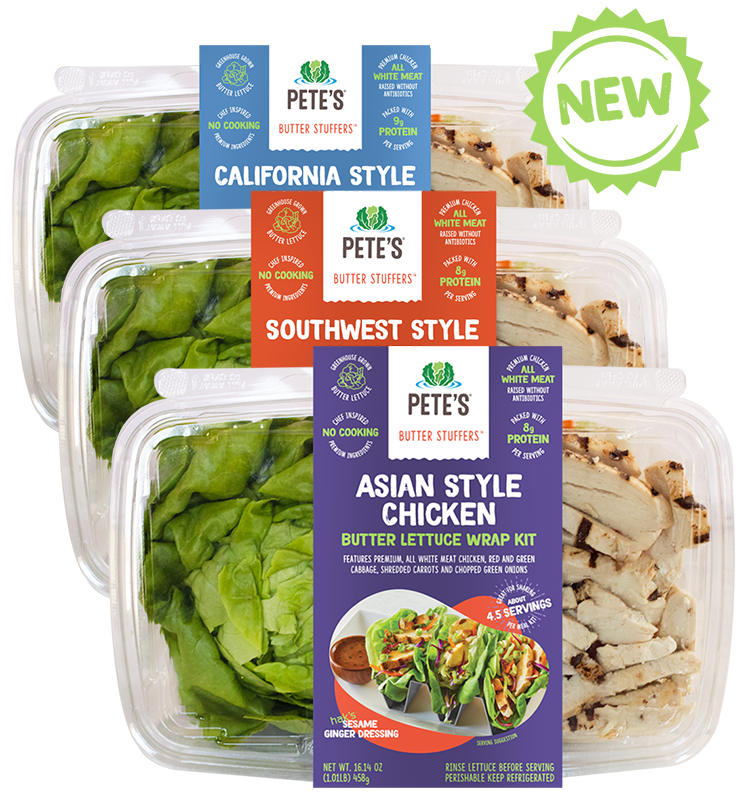
VIDEO: Pete's Introduces Hydroponically Greenhouse Grown Packaged Salad Varieties
Available in four varieties — Benevolent Butter, Hydro Spring Mix, Indoor Romaine and Nice & Crunchy — Pete’s Greenhouse Fresh offers environmentally-conscious consumers a range of fresh and sustainable packaged salad varieties that use 90 percent less land and water compared to field grown product
December 17, 2020
Pete’s, the California-based produce company specializing in hydroponically grown living lettuce and cress varieties in addition to butter lettuce wrap kits, will debut an innovative and sustainable new line of packaged salad varieties, Greenhouse Fresh, in retail locations in and around the West Coast in early January.
Available in four varieties — Benevolent Butter, Hydro Spring Mix, Indoor Romaine and Nice & Crunchy — Pete’s Greenhouse Fresh offers environmentally-conscious consumers a range of fresh and sustainable packaged salad varieties that use 90 percent less land and water compared to field grown product.
These indoor-grown lettuce varieties are also protected from outside elements and do not use triple washing post-harvest the same way many traditionally grown greens do, resulting in less water used during the harvesting process.
In addition, Greenhouse Fresh packaging containers are made from 100-percent post-consumer recycled material, are 100-percent recyclable, and their flexible, resealable closures use less plastic and emit less CO2 than rigid plastic closures.
Pete’s is also partnering with 1 percent For The Planet, pledging 1 percent of Greenhouse Fresh sales to The Recycling Partnership in an effort to help improve the recycling system.
“We are honored Pete’s chose to expand its dedication to sustainability by joining The Recycling Partnership, and by nominating The Partnership to receive funds through its 1 percent For the Planet commitment, ” said Beth Schmitt, senior vice president of corporate engagement at The Recycling Partnership. “Pete’s investment helps us further our goals of assisting every household to recycle more, recycle better, and to catalyze a circular economy.”
Pete’s is an employee-owned and operated company, and all team members play a key role in the company’s short and long-term sustainability efforts.
“All of us at Pete’s are thrilled to introduce a line of packaged salad varieties, that as we like to say, are as green as greens can get,” said Brian Cook, chief executive officer of Pete’s. “At Pete’s, we work as a team and everything we do, we do for the greater good of people, of the planet and of course our leafy greens. Greenhouse Fresh is a perfect example of how our new products ladder back to our broader company mission, vision and values.”
Pete’s Greenhouse Fresh will be available at West Coast area retailers beginning in January and can be found in the Produce Department.

Indoor Ag-Con Announces Inaugural Advisory Board
Committee of Industry Leaders From Indoor Agriculture, Grocery, Specialty Food, Commercial Real Estate, Hemp, Other Sectors To Provide Guidance, Insights To Help Shape 2021 Exposition & Conference
INDOOR AG-CON ANNOUNCES FORMATION OF
INAUGURAL ADVISORY BOARD
Committee of Industry Leaders From Indoor Agriculture, Grocery, Specialty Food, Commercial Real Estate, Hemp, Other Sectors To Provide Guidance, Insights To Help Shape 2021 Exposition & Conference
LAS VEGAS (December 15, 2020) – Indoor Ag-Con, the premier trade show for the indoor agriculture | vertical farming industry, announces the formation of its inaugural advisory board. Bringing together industry leaders from across the agriculture supply chain – from indoor farming to grocers to commercial real estate – the new board will advise and help shape the educational conference and exhibition floor offerings of the May 16-18, 2021 edition of Indoor Ag-Con and other new initiatives planned for the coming year.
"As we look at the challenges and opportunities the Covid-19 crisis has brought to live events and indoor agriculture, it’s more important than ever that we work with a group of recognized thought leaders in the industry to act as our Advisory Board to guide us in the right direction as we plan our 2021 event,” said Nancy Hallberg, co-owner, Indoor Ag-Con.
“Taking this a step further, we wanted our board to include leaders from key industry sectors that drive and intersect with indoor agriculture, like grocery business, commercial real estate, alternative crops and others,” adds Brian Sullivan, co-owner, Indoor Ag-Con. “For 2021, successful indoor agriculture business development strategies will be the primary focus for our event. The insights and intelligence we’ll gather from these successful leaders of indoor agriculture, as well as a number of the sectors our attendees and exhibitors hope to do business with, will go a long way in shaping meaningful content, networking and exhibition opportunities.”
2021 Indoor Ag-Con Advisory Board Members Include
Samuel Bertram, CEO | Co-Founder, OnePointOne, Inc.
Julie Emmett, Senior Director, Retail Partnerships Plant Based Foods Association
Greg Ferrara, President & CEO, National Grocers Association
Henry Gordon Smith, CEO & Managing Director, Agritecture
Marni Karlin, Executive Director, CEA Food Safety Coalition
Tracy Lee, Division Lead, CEA Department, Sakata Seed Company
Jody McGinness, Executive Director, Hemp Industries Association
Tim McGuinness, Sterling Advisory Group & Former SVP, International Council of Shopping Centers (ICSC)
Chris Nemchek, President, Coach Global Solutions & Former SVP, Specialty Food Association
Matt Roy, Vice President of Business Development Controlled Environment Agriculture (CEA), Tanimura & Antle
E. Austin Webb, CEO & Co-Founder, Fifth Season, Powered By Robotany
Nona Yehia, CEO | Co-Founder ,Vertical Harvest
For 2021, Indoor Ag-Con will co-locate with The National Grocers Association (NGA) Show, the leading trade show and conference for independent grocers. The combined event will be held at the new Caesars Forum Convention Center in Las Vegas from May 16-18, 2021. The NGA Show and Indoor Ag-Con visitors will have access to all exhibits, and discounts will be available for cross-over educational event attendance.
ABOUT INDOOR AG-CON
Founded in 2013, Indoor Ag-Con has emerged as the premier trade event for vertical farming | indoor agriculture, the practice of growing crops in indoor systems, using hydroponic, aquaponic and aeroponic techniques. Its events are crop-agnostic and touch all sectors of the business, covering produce, legal cannabis |hemp, alternate protein and non-food crops. In December 2018, three event industry professionals – Nancy Hallberg, Kris Sieradzki and Brian Sullivan – acquired Indoor Ag-Con LLC , so setting the stage for further expansion of the events globally. More information: https://indoor.ag
###
Indoor Ag-Con, 950 Scales Road, Building #200, Suwanee, GA 30024, United States

This Modular Hydroponics System Will Give You Fresh Vegetables Year-Round
If you want to enjoy fresh home-grown produce while also adding some greenery to your home, then consider the hydroponics system made by Rise Gardens
Rise Gardens Makes Growing Food
Easy With Its simple Setup And Handy App.
December 18, 2020
Hank Adams (Rise Gardens)
If you want to enjoy fresh home-grown produce while also adding some greenery to your home, then consider the hydroponics system made by Rise Gardens. This clever system grows more than 60 types of vegetables and herbs, including beets, eggplant, peas, green beans, celery, cucumbers, different variations of peppers and tomatoes, as well as rooted plants and microgreens. These can be grown anywhere in a home, thanks to built-in LED lights.
This is the only modular system on the market, which means you can buy whatever size you want and keep adding to it if you need more room to grow food. It can be built up to three tiers high, and those tiers can be set at different heights to accommodate plants of different sizes. A smaller countertop-sized Personal Garden is available for those who don't want to take up floor space with the Family Gardens.
Each of the levels holds a lot of plants. A company representative told Treehugger, "The single unit can hold up to 36 plants, and the largest unit can hold up to 108 (compared to competitors that can only hold a maximum of 30 plants). The Personal Garden can even hold up to 12 plants on its own."
Hydroponics may be a fancy-sounding word, but Rise Gardens has made the process incredibly simple. It takes only 45 minutes to assemble your garden (which is made of coated wood, not plastic, and makes for a much nicer aesthetic in the home), then you use the WiFi-enabled function to connect to an app on your smartphone that will tell you exactly what your plants need. (This step is optional.) Plant the seed pods provided by Rise Gardens by putting them into holes in the tray, then add water and plug in the system. Eventually, you'll add liquid nutrients, as well.
Hank Adams (Rise Gardens)
Rise Gardens assures that the plants will flourish in water. Through hydroponics, plants can grow larger than in soil because "they don’t have to work as hard to obtain nutrients. The plant doesn’t require an extensive root system, allowing more growth above ground." They also grow 25-30% faster, thanks to that direct contact with nutrients, and they require less water due to reduced evaporation and runoff.
While Rise Gardens does admit that soil-grown produce is more nutritious ("There is no way to compete with the power of sunlight and good soil, it's just the best"), keep in mind that the produce you buy at a store is usually picked unripe and transported from far away, which causes it to lose nutrients anyway. It could also be sprayed with pesticides, so you are still ahead by growing your own hydroponically. Plus, it's beautiful and convenient to have these vegetables flourishing in your own home.
Hank Adams (Rise Gardens)
The app is an interesting added feature, telling you exactly what your plants need at any given moment – whether they're low on water, how far along their growth is, if you should tweak their nutrient plan, etc. It also lets you set a schedule for the lights.
Rise Gardens is worth checking out for anyone interested in gardening. It's too late now for Christmas ordering, but units will deliver in early January – a little something to brighten a long, dark winter and add a satisfying crunch to your salad plate.
Gotham Greens Raises $87m Series D Funding To Decentralize Food Production
The round brings Gotham Greens’ total funding to $130 million. Although the Covid-19 pandemic made for a more complicated fundraising process, there was a silver lining, according to the startup’s CEO Viraj Puri. “It revealed opportunities in the food supply chain, which is really the core of what our mission is – to transform how and where fresh produce is grown,” he told AFN
December 9, 2020
Image credit: Gotham Greens
The indoor ag space is on fire this year and Gotham Greens is stoking the coals. The New York-based startup just raised an $87 million equity and debt round led by Colorado VC Manna Tree with participation from Florida real estate and private equity investor The Silverman Group and others.
The round brings Gotham Greens’ total funding to $130 million.
Although the Covid-19 pandemic made for a more complicated fundraising process, there was a silver lining, according to the startup’s CEO Viraj Puri.
“It revealed opportunities in the food supply chain, which is really the core of what our mission is – to transform how and where fresh produce is grown,” he told AFN.
“Supermarket retailers were facing a lot of voids on the shelf and it really provided an opportunity for us to fill some of those voids and be nimble. It was relatively easy for us to move from foodservice customers to food retail customers.”
Invest with Impact. Click here.
Founded in 2009, Gotham Greens operates a network of leafy greens-producing greenhouses across North America. It claims to use 100% renewable energy to power its greenhouses, which use 95% less water and 97% less land than conventional open-field farming.
Greenhouses vs vertical farms
There is quite a bit of tech under the greenhouse hood, as well. Gotham Greens has been ramping up its use of automation and data science in its climate-controlled greenhouses.
When it comes to tech, Puri sees a key differentiator between greenhouse operations and vertical farming businesses.
“We believe that the benefits of greenhouse farming currently outweigh those of vertical farming, which is an exciting extension of modern greenhouse farming. There are still some open questions around the technology and the financial sustainability primarily because fully indoor growing environments rely on artificial light,” he explained.
“Even though they can theoretically offer much higher yields and levels of climate control compared to modern greenhouses, those benefits will come with significantly higher capital and operating costs.”
Gotham Greens sells branded salad greens, herbs, salad dressings, and sauces. It claims to have doubled its revenue over the past year, selling its leafy greens in more than 40 US states and across 2,000 retail stores including Whole Foods, Albertsons, Meijer, Target, and Sprouts. It has doubled its capacity in the past 12 months by opening new greenhouse operations in Chicago, Providence, Baltimore, and Denver.
The new round of funding will be used to fund expansion into new channels and geographic markets, increase capacity, and development of new products. It has recently launched new products including grab-and-go salad bowls, packaged salads, and cooking sauces.
Although one may wonder how many products a startup can derive from a few core crops, Puri said there is plenty of whitespace left to explore.
“There’s channel diversification, there’s pack size diversification. There are just different ways to grow even within that category,” he said.
Can greenhouse startups keep up the pace?
There have been a slew of indoor ag fundings in 2020 despite the pandemic. Kentucky-based greenhouse tomato grower AppHarvest raised $28 million, added Martha Stewart and Impossible Foods’ chief financial officer to its board, and later went public at a $1 billion valuation. New York hydroponic greenhouse startup BrightFarms raised a $100 million Series E while Plenty scooped up a $140 million Series D to research strawberry cultivation with new investor Driscoll’s.
One cannot help but wonder whether consumers or investors will soon have had their fill of leafy greens and micro-herbs, or whether this space has some serious leg room left.
“On balance, I think the momentum is a good thing. I think we still play such a small role in the total addressable market,” Puri said. “If you look at leafy greens alone, it’s estimated to be about a $15 billion category in the US and Canada. Current indoor production is around 1% of that. I think there is a lot of room for growth and multiple winners.”
AUSTRALIA: Can Urban Areas Become A Powerhouse For Horticultural Production?
Hort Innovation, a grower-owned research corporation, is working with a consortium led by agricultural consultancy RMCG in partnership with the University of Technology Sydney (UTS) and urban agriculture consultancy Agritecture to assess the potential of emerging production technology and its application in urban Australia
DECEMBER 18, 2020
Australia is looking to become more engaged with the global swing to high-technology horticulture in urban areas.
High-tech urban hort is being implemented across the world using vertical farm systems, hydroponics and aquaponic systems and nearly fully automated production as well as rooftop, underground and floating farms.
Hort Innovation, a grower-owned research corporation, is working with a consortium led by agricultural consultancy RMCG in partnership with the University of Technology Sydney (UTS) and urban agriculture consultancy Agritecture to assess the potential of emerging production technology and its application in urban Australia.
They are looking at the potential benefits for growers and Australia through the wider use of technology such as vertical farm systems and hydroponics in food production and delivery systems.
Hort Innovation CEO Matt Brand said bringing such technology to Australia would attract capital and new entrants to the sector with new ideas, approaches and mindsets.
NO URBAN MYTH: CEO of Hort Innovation Matt Brand said the research and development corporation was keen to explore the potential for increased horticultural production in urban areas.
"It gives us the opportunity to grow more from less and to keep demonstrating the good work that Australian growers do, day in day out, providing food to families both here and overseas.
"Urban in this context also captures regional areas and hubs. Growers will use the technology as part of the overall production mix. It's another production system that will be part of the diversity and variety that is Aussie horticulture," he said.
"High technology horticulture may have the potential to play a significant role in increasing Australia's horticulture sector value and help achieve Australia's target of a $100 billion industry by 2030."
The feasibility study aims to identify the opportunities and challenges for high technology horticulture in urban Australia.
The outcomes of the study will identify future priorities for research, development and extension activities and investment into Australian high technology horticulture in urban areas.
The study is being guided by an industry-led reference group including growers and emerging commercial leaders engaged in urban high technology horticulture in Brisbane and Sydney, members of local city councils, and subject-matter experts in protected cropping.
Greenhouse and hydroponic consultant Graeme Smith said these new systems were the modern face of horticulture that should complement the current supply chain in a key range of nutritious and delicious produce.
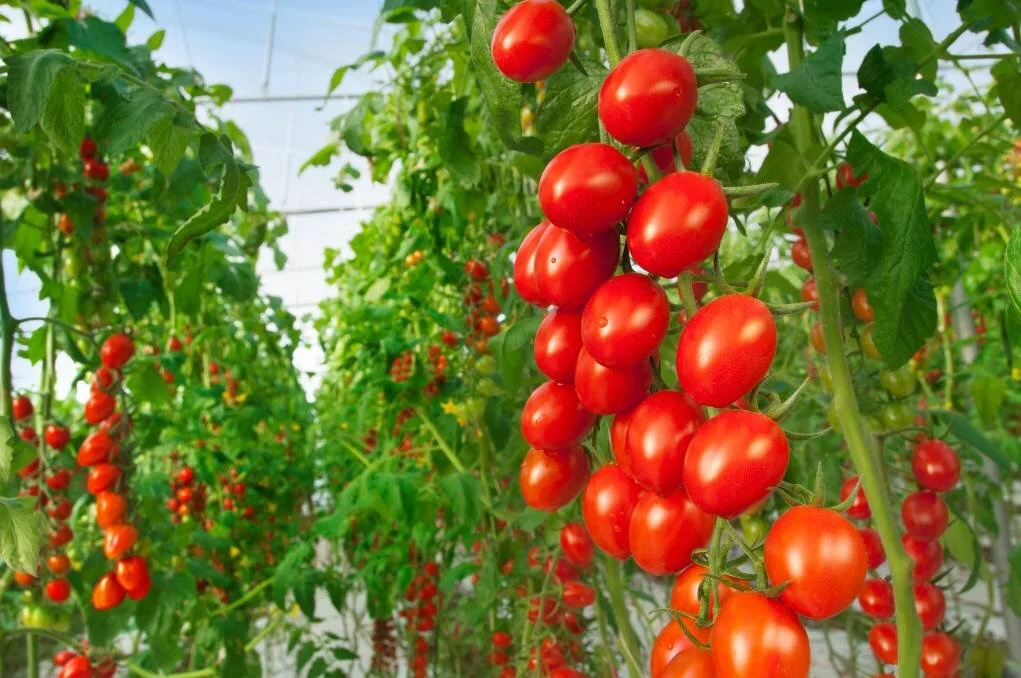
Lead photo: PERFECTLY RED: Hydroponics has enabled the intensive production of premium quality tomatoes and other horticultural staples in protected environments.
This story Can urban areas become a powerhouse for horticultural production? first appeared on Farm Online.

VIDEO: ‘It’s Wonderful’: C.O. Veterans Ranch-Grown Lettuce A Restaurant Hit
The restaurant is using the romaine lettuce on their wraps and salads, which co-owner Menoula Stanitsas said has been a hit with customers
By Blake Allen
BEND, Ore. (KTVZ) -- At the Central Oregon Veterans Ranch north of Bend, vets have been using horticulture for the past few months as a way of healing.
Orion Carriger runs the ranch greenhouse where he, alongside a team of veterans, have begun growing lettuce.
He said Sunday that in the beginning of the project, the team donated all of their lettuce, as they didn't yet have a buyer.
However, in recent months, the veterans' lettuce caught the eye of a Bend Mediterranean restaurant, Kefi.
The restaurant is using the romaine lettuce on their wraps and salads, which co-owner Menoula Stanitsas said has been a hit with customers.
"We've been very happy with the lettuce," she said. "It's so much softer than your regular romaine. It's basically baby lettuce -- it's wonderful."
That's a win for Carriger and the ranch, as proceeds from lettuce sales go back into the program.
"I think there's a real sense of pride for people to have a product in the market like that," he said.
For veterans like Marine Bryan Senner, it feels good to know where the product he's been working on is going.
"There's not many places you can go and spend your day working with people who have had similar experiences to you, and then go home at the end of the day and with a positive experience, and knowing you've accomplished something good for the community," Senner said.
The ranch is currently in the midst of a fundraising campaign to expand their program.

VIDEO: Things Are Still Blossoming On Fifth Avenue
David Litvin, Crop specialist at 80 Acres Farms, hasn't stopped growing cherry tomatoes since the pandemic. Earlier this year, the container farm was installed outside the Guggenheim museum, as a part of the 'Countryside' exposition
It's quiet and silent in the City, like never before. There are no people to be seen on the streets. Restaurants, bars, and shops are closed. The grimness has replaced the former liveliness. Walking around the corner at Fifth, something's glowing in the darkness. When approaching nearer, there are many blossoming cherry tomatoes to be found.
David Litvin, Crop specialist at 80 Acres Farms, hasn't stopped growing cherry tomatoes since the pandemic. Earlier this year, the container farm was installed outside the Guggenheim museum, as a part of the 'Countryside' exposition. The exhibition aimed to emphasize the importance of the countryside and show possible solutions that are decisive for the future of our planet.
Have a look at the video below to see what David's daily visit to the farm looks like.
For more information:
80 Acres Farms
www.80acresfarms.com
Publication date: Mon 14 Dec 2020
Author: Rebekka Boekhout
© VerticalFarmDaily.com

Hort Innovation To Explore High-Tech Solutions
In a release, Hort Innovation said the use of technology, such as vertical farm systems and hydroponics, in food production and delivery systems have the potential to redefine horticulture by optimising yield, quality, and supply

17th December 2020, Melbourne
Six-month project to assess potential of emerging production technology and its uses in Australian urban landscape
A modular farm in Brisbane using high-tech horticulture.
Hort Innovation has announced it has teamed up with a consortium led by agricultural consultancy RMCG in partnership with University of Technology Sydney (UTS) and global urban agriculture consultancy Agritecture, to assess the potential of emerging production technology and its application in the Australian urban landscape as part of a six-month project.
In a release, Hort Innovation said the use of technology, such as vertical farm systems and hydroponics, in food production and delivery systems have the potential to redefine horticulture by optimising yield, quality, and supply.
“High-technology horticulture is being implemented in urban areas across the globe using vertical farm systems, hydroponics and aquaponic systems and nearly fully automated production as well as rooftop, underground and floating farms,” it said in a statement.
Hort Innovation chief executive Matt Brand said bringing the technology to Australia would help attract capital as well as new investment to the sector with new ideas, approaches and mindsets.
“It gives us the opportunity to grow more from less and to keep demonstrating the good work that Australian growers do, day in day out, providing food to families both here and overseas,” explained Brand.
“Urban also means regional areas and hubs. Growers will use the technology as part of the overall production mix. It’s another production system that will be part of the diversity and variety that is Aussie horticulture.
“High technology horticulture may have the potential to play a significant role in increasing Australia’s horticulture sector value and help achieve Australia’s target of a A$30bn industry by 2030,” he added.
The feasibility study aims to identify opportunities and challenges for high technology horticulture in urban Australia. It will identify a range of high technology systems and assess their suitability to urban Australia by considering four key areas.
This includes how the technology fits within current regulations and planning requirements, farm input and waste, supply chain logistics and social, environmental and economic requirements.
Hort Innovation said the project will include a high-level literature review, modelling of the social, economic and environmental impacts and detailed analysis of how the economics of high technology urban systems compare to traditional farming systems.
The outcomes of the study will identify future priorities for research, development and extension activities and investment into Australian high technology horticulture in urban areas.
The study is being guided by an industry-led reference group including growers and emerging commercial leaders engaged in urban high technology horticulture in Brisbane and Sydney, members of local city councils, and subject-matter experts in protected cropping.
Enjoyed this free article from Produce Plus Magazine and its team of editors? Don't miss out on even more in-depth analysis, plus all the latest news from the fresh produce business. Subscribe now to Produce Plus Magazine.

HortiPower Helps You Make Your HPS Lights Smarter
Several greenhouses are choosing hybrid lighting in which they combine LED lights and HPS lights. An issue with hybrid lighting however is that HPS lights are often not individually controllable, but rather by the whole row or group
A commonly used connector in horticulture is the Wieland rst20i3. Both HPS lights and LED grow lights are using this in the greenhouse and vertical farm.
Several greenhouses are choosing hybrid lighting in which they combine LED lights and HPS lights. An issue with hybrid lighting however is that HPS lights are often not individually controllable, but rather by the whole row or group.
With the HortiPower timer, growers are now able to turn the individual HPS lights on and off. The timer has a wifi-chip on board and supports max. 16 amp which means up to 6 grow lights of 600W with 230V.
The timer is controllable with MQTT protocol through the Amazon Web Services (AWS). Power measurement is possible as well.
The timer gives growers the ability to really choose which lights should turn on or off. Growers may use sensors and climate computers to make that decision for them and automation is possible through an API.
Watch a short intro here.
HortiPower | Right Light. Better Growth
HortiPower makes plant-centric lighting solutions for tissue culture, vertical farms and greenhouses.
For more information:
HortiPower
Indoor Agriculture Company Gotham Greens Raises $87 Million In Equity And Debt Capital
Gotham Greens operates one of the largest and most advanced networks of hydroponic leafy greens-producing greenhouses in North America where the demand for indoor-grown produce is rapidly increasing
By Annie Baker ● December 15, 2020
Gotham Greens — a pioneer in indoor agriculture operating high-tech greenhouses located across the United States — announced it has raised $87 million in new equity and debt capital, bringing the company’s total financing to $130 million. And the capital raise includes Gotham Greens’ recent Series D round led by Manna Tree and joined by The Silverman Group and other existing investors. Gotham Greens is known for operating one of the largest and most advanced networks of hydroponic leafy greens-producing greenhouses in North America, where the demand for indoor-grown produce is rapidly increasing.
And Gotham Greens grows and sells long-lasting leafy greens and herbs along with a line of fresh salad dressings and sauces. The brand recently launched several new fresh, plant-forward products, including new packaged salads, cooking sauces, and grab-and-go salad bowls featuring fresh Gotham Greens lettuce, Gotham Greens salad dressing and protein-packed toppings.
Gotham Greens operates one of the largest and most advanced networks of hydroponic leafy greens-producing greenhouses in North America where the demand for indoor-grown produce is rapidly increasing. And Gotham Greens grows and sells long-lasting, delicious leafy greens, and herbs along with a line of fresh salad dressings and sauces. The brand recently launched several new fresh plant-forward products, including new packaged salads, cooking sauces, and grab-and-go salad bowls featuring fresh Gotham Greens lettuce, Gotham Greens salad dressing, and protein-packed toppings.
And Gotham Greens has doubled its revenue in the past year, bringing its fresh produce and food products to retailers in more than 40 U.S. states through its network of high-tech, climate-controlled greenhouses. And the company’s expansion has driven 80% growth in retail unit sales year over year.
Gotham Greens has doubled capacity in the past year by opening new greenhouses in Chicago, Providence, R.I., Baltimore and Denver. And these facilities have expanded distribution of Gotham Greens’ salad greens, herbs, salad dressings and sauces to new regions, including the New England, Mid-Atlantic, Southeast and Mountain regions. Plus Gotham Greens products are available in more than 2,000 retail stores, including Whole Foods Market, Albertsons Companies (Safeway, Jewel-Osco and Shaw’s), Meijer, Target, King Soopers, Harris Teeter, ShopRite and Sprouts. The company’s items also are available for purchase through grocery ecommerce sites, including AmazonFresh, FreshDirect and Peapod.
KEY QUOTES:
“Given increasing challenges facing centralized food supply chains, combined with rapidly shifting consumer preferences, Gotham Greens is focused on expanding its regional growing operations and distribution capabilities at one of the most critical periods for America. We’re dedicated to changing how people think, feel and interact with their food while decreasing the environmental footprint of the traditional produce supply chain.”
— Viraj Puri, Co-Founder and CEO of Gotham Greens
“Manna Tree brings a global network of investors and shares our mission and commitment to expand access to healthy, sustainably-grown fresh produce. Our industry-leading crop yields and capital efficiency in building and operating indoor farms continues to attract strong support from both new and existing investors and underscores Gotham Greens’ value proposition and category leadership position.”
— Eric Haley, Co-Founder and CFO of Gotham Greens
“Gotham Greens is the fastest-growing indoor farming company in the United States today with a track-record of profitable, commercial-scale production. The pandemic has revealed flaws in America’s food supply chain system, particularly in the produce category, and new leaders and innovators need to emerge to ensure a stable food supply for the future. We believe Gotham Greens’ brand, highly scalable business model and leadership team position the company to be the market leader in the rapidly growing and changing landscape.”
— Brent Drever, Co-Founder and President of Manna Tree
Pure Flavor® Launches Live Deliciously® Magazine For Holiday Season
“The new Live Deliciously® Magazine is just one part of our strategy to create great content that we can share across all our channels to encourage people to eat more fresh fruit & vegetables”, said Veillon
Leamington, ON (December 16th, 2020) – To inspire families to get back in the kitchen this holiday season, Pure Flavor® recently launched their first edition of the Live Deliciously® Magazine, a 20-page digital magazine that features flavors for every style and appetite.
“Without any in-person sampling opportunities like trade shows or community events over the last 9 months, we encouraged our various brand partners to create even more content that could be shared digitally in key regions where we have strong retail relationships”, said Chris Veillon, Chief Marketing Officer.
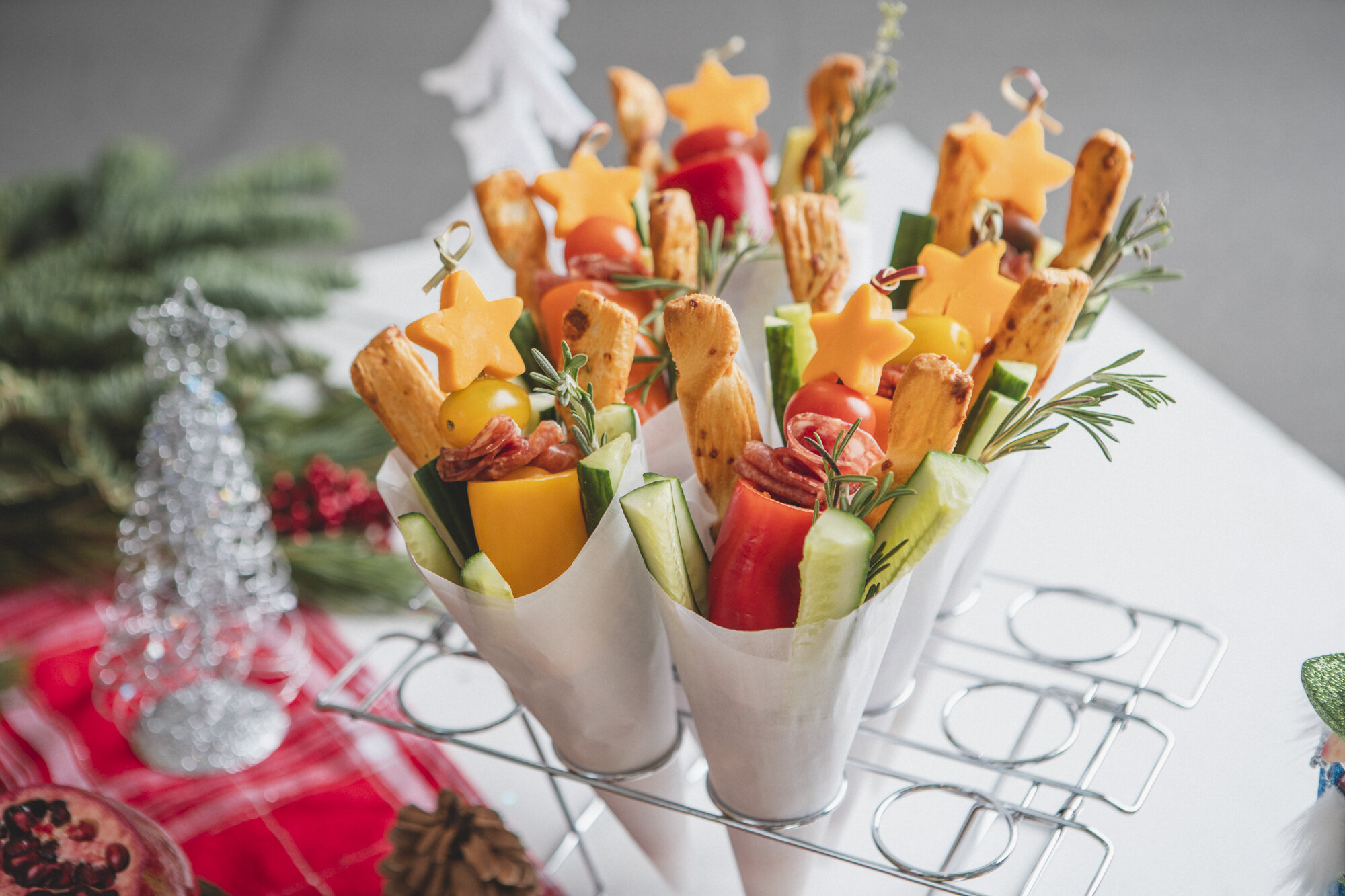

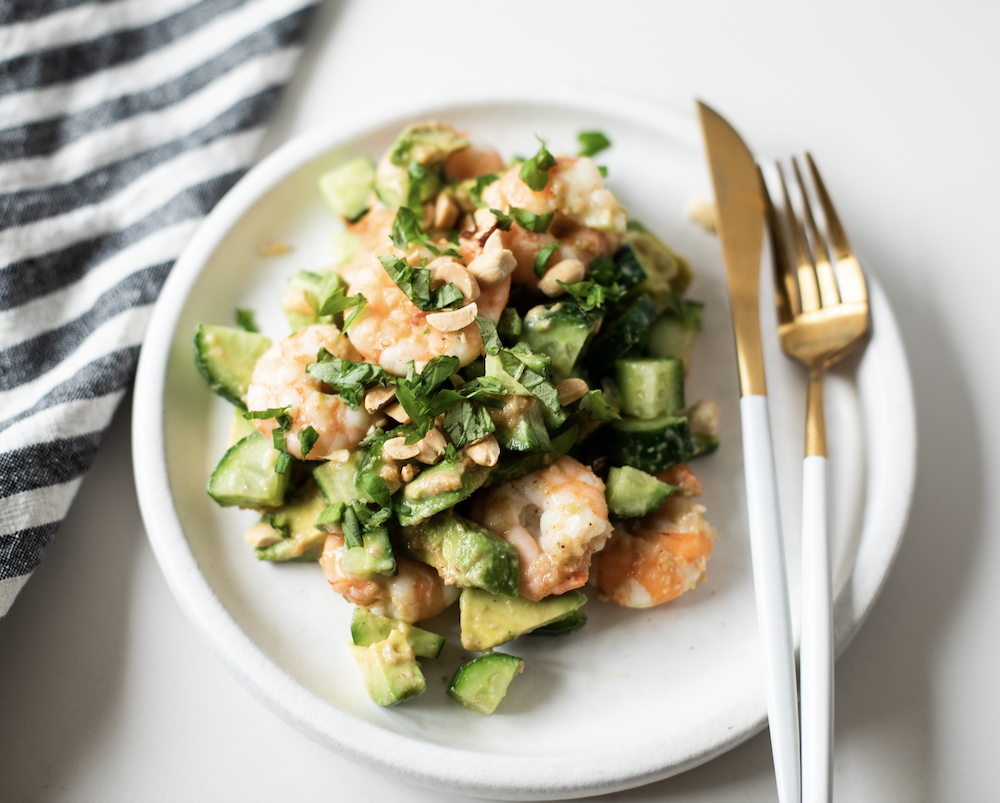


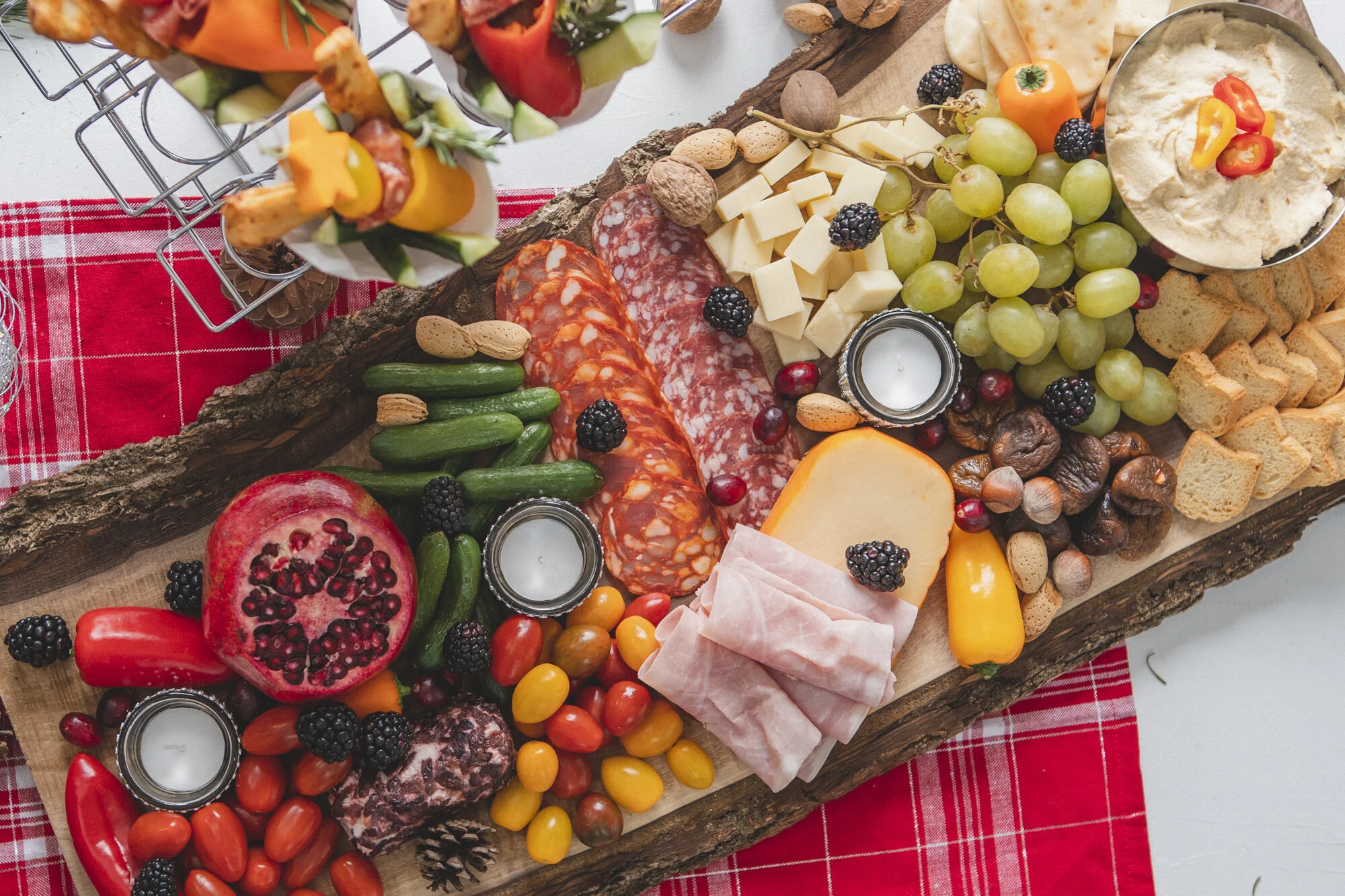
The first edition of the digital magazine, called the “Holiday Flavors Guide”, features 18 mouth-watering dishes from various social influencers from around North America. From D-I-Y Charcuturie Boards to Vegan inspired dishes to a variety of snacks, apps, and tasty main courses, all featured recipes include a wide variety of Pure Flavor®’s greenhouse grown vegetables that are available year-round.
Pure Flavor® has seen significant spikes in website traffic as well as double digit growth this year across its social channels. The brands digital content strategy is to create an I-C-E based approach to consumer engagement:
I = Inform
Raising awareness for the brand of products
C = Connect
Explain how product fits the lifestyle; serve up content that creates a connection; emotional purchases, types of use
E = Educate
Product characteristics: FAB’s (features & benefits), how to use in the kitchen; pairings, ‘Goes Well With…’
“The new Live Deliciously® Magazine is just one part of our strategy to create great content that we can share across all our channels to encourage people to eat more fresh fruit & vegetables”, said Veillon.
To view the first edition of the Live Deliciously® Magazine, please visit https://www.pure-flavor.com/holiday-flavors-guide
-30-
About Pure Flavor® -
Pure Flavor® is a family of greenhouse vegetable growers who share a commitment to bringing A Life of Pure Flavor™ to communities everywhere. Our passion for sustainable greenhouse growing, strong support for our retail & foodservice customers, and focus on engaging consumers is built on a foundation drawn from generations of growing expertise.
We are the next generation of vegetable growers, inspired to put quality, flavor, and customers first by providing greenhouse-grown vegetables from our farms that are strategically located throughout North America.
SOURCE: Chris Veillon | chris@pure-flavor.com
Chief Marketing Officer | Pure Flavor®
T: 519 326 8444
First Tapkit In The USA (Texas) Helps Out With Local Food Production
With a background of more than 30 installations in Israel, South Korea, Mauritius and the Philippines, the TAPKIT hydroponic systems is now celebrating the first installation in Houston Texas. The TAPKIT is a 500 m2 hydroponic unit, which can produce 6-12 tons of leafy vegetables and fresh herbs per year. It includes a growing system, packing station and plant nursery
With a background of more than 30 installations in Israel, South Korea, Mauritius and the Philippines, the TAPKIT hydroponic systems is now celebrating the first installation in Houston Texas. The TAPKIT is a 500 m2 hydroponic unit, which can produce 6-12 tons of leafy vegetables and fresh herbs per year. It includes a growing system, packing station and plant nursery.
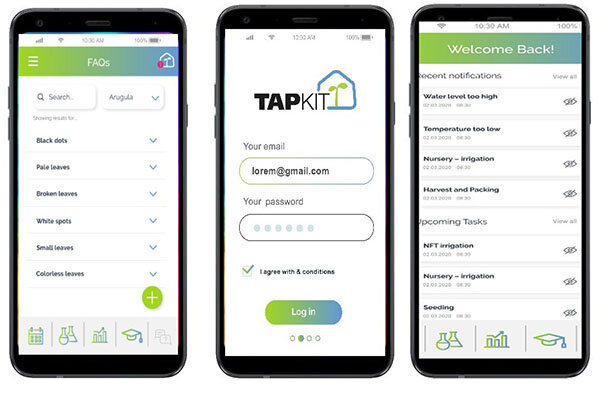
Due to the COVID-19, all the installation process and the operation training, was done remotely. The day to day operation is supported by i-Droponix. This mobile app contains all the information needed, including crop advice on specific climate conditions, water quality and hundreds of FAQs
"As the TAPKIT offers affordable solution for the "farm to table" trend in the USA, we see great potential for it all around the state," says Avner Shohet, CEO of TAPKIT.
Over the last couple of years, 4 models of TAPKIT were created. "For different types of climate areas," Avner explains: "Sub-tropic, Tropic, desert and cold areas."
"With small adoptions to each climate, we are looking for the most ecological way to grow, by using the sun-light, recycling the water , and minimizing any effect on the environment."
For more information:
Teshuva Agricultural Projects
60 Nof Harim St., Olesh, 42855 Israel
+972-9-8940507
+972-50-7922579
+1-201-5803003
avner@taprojects.com
15 Dec 2020

CANADA: Sustainable Agriculture With LED Lighting
GoodLeaf opened it’s fully commercialized, a state-of-the-art vertical farm in Guelph in 2018. This after many years of research at its pilot farm that opened in Truro, Nova Scotia in 2015
11-12-2020 | Philips Lighting
CANADA, Ontario, Guelph- GoodLeaf opened it’s fully commercialized, a state-of-the-art vertical farm in Guelph in 2018. This after many years of research at its pilot farm that opened in Truro, Nova Scotia in 2015.
We wanted a partner that could help us scale the business. ''
-Jeff McKinnon, Chief Financial Officer and Vice President | Photo Courtesy of Philips Lighting
The Challenge
For GoodLeaf it’s all about sustainability. The facility incorporated innovations to enable the use of sustainable farming practices to execute on expectional product quality. With lighting being a primary component, GoodLeaf had specific needs they expected from a lighting solution and provider. The envisioned lighting solution needed to provide scalability whilst being energy efficient. GoodLeaf was looking for a true partner.
The LED lighting solution
“We’ve been using the Philips products since Generation one back in 2013; we did a lot of testing against the T5 light bulb. The Production Module Gen 1 performed well, they held up over time compared to competitors, using them ever since”, says Jeff McKinnon, CFO and VP at GoodLeaf. Over time GoodLeaf worked with 12 different providers of LED lights but in Signify found the partner they were looking for to move forward and to scale their business.
For their 45000 SQF multilayer growing facility in Guelph, Goodleaf installed Philips GeenPower LED production modules. The light recipe was designed in collaboration with the Truleaf design team and engineers together with the plant specialists of Signify. The installed lighting system delivers optimal lighting uniformity.
Benefits
As a branded producer, GoodLeaf Farms produces and packs fresh, nutritious, and pesticide-free micro and baby greens year-round for Canadian consumers. They expect to grow and harvest approximately 1 million pounds of fresh produce per year at their automated growing facility in Guelph. Plant specialists of GoodLeaf and Signify meet monthly to discuss optimizing their crop growth recipe. As part of the partnership, GoodLeaf has greatly improved the predictability of its fresh produce. In addition, Signify and GoodLeaf worked together to obtain a sizable utility rebate from the company’s hydro provider in Ontario. McKinnon said, “The partnership with Signify has been very advantageous to GoodLeaf. We will work with them on a go-forward basis and very much look forward to that”.
GreenPower LED Production Module Static Grow Light
A static module for multilayer applications with the ideal light recipe for higher yield, better quality, higher propagation success rates, and year-round production. Suitable for multilayer, indoor cultivation of leafy greens, microgreens, and herbs.
Source: Philips Lighting
Header photo: Screenshot from GoodLeaf Farm video on youtube
PODCAST: Pest Control
In this Podcast, we’re going to discuss using biological pest control or using none at all
Joe Swartz & Nick Greens | 12/11/2020
In this Podcast, we’re going to discuss using biological pest control or using none at all

This Belgian Start-Up Allows Anyone To Become An Urban Farmer
A Belgian start-up is helping people in major cities turn their hand to urban farming. Peas&Love is the brainchild of Jean-Patrick Scheepers, co-founder of Belgium’s biggest cooking school. After the failure of a sustainable farming project near Brussels, he moved into the city itself and started farming on rooftops and in gardens
14 Dec 2020
Senior Writer, Formative Content
A new approach pioneered in Belgium allows anyone to become an urban farmer.
Start-up Peas&Love rents out allotments on rooftops and in unused urban spaces.
The company does all the gardening but members get to harvest the fresh produce.
An app alerts them when crops are ready to pick.
Members share produce and garden space with the community.
A Belgian start-up is helping people in major cities turn their hand to urban farming.
Peas&Love is the brainchild of Jean-Patrick Scheepers, co-founder of Belgium’s biggest cooking school. After the failure of a sustainable farming project near Brussels, he moved into the city itself and started farming on rooftops and in gardens.
“For 20 years, I tried to grow fruit and vegetables in my garden or on my terrace and each year I failed,” he told the audience at the Change Now summit in 2017, the year Peas&Love was launched. “I didn’t have the time and I didn’t have the knowledge.
“My idea was that, if I could have my own personal source of vegetables and fruits that are local, that are seasonal, that are good, that are full of quality, that would exactly fit the description of a potager in French, or a kitchen garden in English, and that would be great.”
Garden of plenty: Crops ready to pick at a Peas&Love urban farm near Paris. Image: Peas&Love
Scheepers started Peas&Love after using vertical growing techniques to overcome his earlier gardening setbacks. It now has three urban farms in Brussels and five in Paris where anyone can rent an allotment for about $40 a month.
All of the farming work is taken care of by the company, and members are alerted by an app when it’s time to harvest the produce. Each 4m square vegetable garden is divided into two halves: one for the sole use of the subscriber and the other to grow crops that will be shared by all members.
Made for sharing: half the allotment is private, the other half is shared.
Community based on sharing
“The motivation of the people who are part of the concept is mainly to renew contact with nature but they don't have the time or the knowledge,” Scheepers says. “You come every week to harvest your own allotment but you don't have to do the work to get it.”
It’s all about creating a community of people who help each other and share values as well as food, he says. It’s a “new approach in urban farming” which has 200 active urban farmers at its first location in Woluwe-Saint-Lambert, in Brussels.
Rooftop agriculture: Peas&Love’s first Brussels urban farm. Image: Peas&Love
The company’s “Peas for all” programme makes 5% of the space on its farms available to educational projects and local associations to help more people reconnect to nature.
Scheepers recently set up the European Urban and Vertical Agriculture Federation to promote the concept and provide a forum to represent urban farmers at a European level, and he has launched an Urban Farm Lab in Istanbul.
Lead photo: Urban farms are becoming common all cross the world. REUTERS/Philippe Wojazer

Global CEA Census Report Shows Continued Positivity Despite COVID-19
Data captured over an 8-week period show 95% of growers have an optimistic outlook for the next 12 months with all types of operations including greenhouses, shipping containers, tunnel and vertical farms showing profitability
1 DECEMBER 2020
Autogrow and Agritecture Consulting have released the 2nd Annual CEA Census Report highlighting positive signs of growth despite the global pandemic.
Data captured over an 8-week period show 95% of growers have an optimistic outlook for the next 12 months with all types of operations including greenhouses, shipping containers, tunnel and vertical farms showing profitability.
“The optimism reflects what we have seen across many areas of the industry including increased technology adoption and increased consumer expenditure on fresh produce. And despite the challenges we’re seeing an overwhelming number of new entrants into the market,” says Autogrow CEO Darryn Keiller.
“What has not changed is the high percentage of new growers, almost 50%, that have no experience in agriculture before starting their business. That lack of experience has an impact on new technology solutions created and the need for more education to be available to support them. It also shows a real desire to make a difference considering their willingness to start during a pandemic.”
Respondents from 58 countries shared their views on their farming practices, financials, and the impact of COVID-19. The report also gave insight on three key growth regions around the world – India, the UK, and MENA (Middle East & North Africa).
"The results of the 2020 Census confirmed our hypothesis that the UK, India, and MENA regions are the emerging hotspots for CEA, albeit for different reasons. In the UK, Brexit is driving investment towards CEA to combat supply chain risks, while in India rising population and increased premium consumer demand for clean food are driving CEA. In the MENA region, government responses to COVID-19 have accelerated policies and incentives for developing scalable CEA solutions,” explains Agritecture Consulting Founder Henry Gordon-Smith.
“All of these regions present great opportunities for the CEA industry to grow and make a meaningful impact on their respective local conditions.”
Other takeaways from the Census:
· CEA businesses showing optimism and resilience despite the COVID hurdles
· 88% of growers surveyed are below age 50
· 29% of respondents receive funding from multiple sources
RECEIVE THE FREE REPORT!
MEDIA QUERIES
Kylie Horomia, Head of Brand & Communications
(e) Kylie.horomia@autogrow.com
(m) +6421 733 025
(w) www.farmroad.io www.autogrow.com
Sales queries – info@farmroad.io
Briana Zagami, Agritecture Media Strategist
(e) briana@agritecture.com
About Autogrow
Autogrow leverages the power of technology, data science, and plant biology to provide indoor growers affordable, accessible, and easy-to-use innovation – 24/7, anywhere in the world.
Our solutions support growers and resellers in over 40 countries producing over 100 different crop types.
We are the experts in Controlled Environment Agriculture (CEA) and continue to stay ahead of a rapidly evolving landscape.
About Agritecture Consulting
Agritecture Consulting provides a comprehensive approach to CEA project development.
In operation since 2014, Agritecture has helped more than eighty organizations determine the feasibility of their ideas, validate their business strategies, recruit talent for their projects, and manage operational challenges.
Our job is to jumpstart your knowledge of CEA, help you navigate barriers to entry, make industry connections, and mitigate risk. Our consulting services are backed by several years of operations data and a team of experienced growers, engineers, and sustainability managers.
FURTHER READING:
AUTOGROW AND AGRITECTURE RELEASE FIRST-EVER GLOBAL CEA CENSUS REPORT
GLOBAL CEA CENSUS LAUNCHED TO HELP DRIVE AGRICULTURE INDUSTRY FORWARD

5 Benefits of Corporate Wellness Programs
“Food has a direct impact on our cognitive performance,” according to Harvard Business Review author, Ron Friedman
11-12-2020 Babylon Microfarms
Your company wouldn't be functioning without the hard work and dedication of your staff. Day in and day out, they serve your business and help further its future. To retain happy, healthy employees for years to come, consider implementing an employee wellness program..
Show employees how much you genuinely care about their well-being in and outside the workplace
Learn the benefits of corporate wellness programs for both your company and employees.
1. Healthy Employees Are More Productive
Every employer wants to boost their employees’ level of productivity, but how?
Did you know that health and nutritional wellness link to cognitive wellness? Your brain needs fuel, but not just any fuel – high-quality foods that provide long-lasting energy.
“Food has a direct impact on our cognitive performance,” according to Harvard Business Review author, Ron Friedman.
In other words, people who eat healthier at work tend to focus and retain information better than those with an unhealthy lifestyle.
Have you ever heard of “brain food?” Several foods are associated with boosting brain power such as berries, walnuts, leafy vegetables, and fatty fish. However, your employees probably aren’t showing up to work with a bag of fresh produce.
Partnering with a company like Babylon-Micro Farms can help you empower healthy employees in the workplace.
Babylon-Micro Farms can quickly install a smart, indoor farming system with a seed bank delivered right to your door. The team of gardening experts will remotely manage your farm for an optimal harvest. Plus, you can monitor your garden through an app, giving your office fresh, healthy vegetables within arms reach.
2. Reduce Employee Health Risks
The traditional American diet exceeds the recommended consumption levels and limits of calories from solid fats and added sugars, refined grains, sodium, and saturated fat. The general unhealth of an average American explains these daunting statistics on health and wellness:
14% of adults aged 18 and older smoke cigarettes.
72% of adults aged 20 and older are obese or overweight.
80% of adults don’t exercise enough.
If you can help employees form healthy habits in the office, you’re supporting their wellness outside of the office. Employer wellness programs give employees access to professional medical help when they need it and take preventative measures when appropriate.
As it currently stands, studies show that diseases such as diabetes are likely to increase by more than 50% by 2030.
Employee wellness programs give employees health on a silver platter, which they might not have otherwise. Help employees defeat the odds and reduce their health risks with a wellness program that promotes healthier nutrition and effective behavior changes.
3. Reduce Employee Wellness Program Costs
If you're wondering how employee wellness programs benefit employers, here’s the answer: Employee wellness programs save employers money.
As Rucker notes, “The notion that workplace wellness can reduce an organization’s costs is not a new concept” (International Journal of Workplace Health Management). Unfortunately, some companies don’t take advantage of the benefits, and their employees pay for it.
Why have a wellness program? You can help prevent employees from becoming part of the statistics above, and, as a result, save money on employee healthcare costs.
A Rand study reviewed a decade of data from Fortune 100 employer’s wellness programs, and the cost savings amounted to $136 per member and a 30% reduction in hospital admissions.
The benefits of promotion of health and wellness in the workplace are equally helpful to employers and employees. Be the change in your company and promote wellness.
4. Help Employees Pursue Personal Wellness Goals
Many of your employees may think about getting healthier, but they haven't taken actionable steps to make it a reality. One of the benefits of corporate wellness programs that you can’t quantify is inspiring your staff to pursue a healthier version of themselves.
As the saying goes: the first step is always the hardest. You can help employees start a life-changing health journey by providing the information and resources they need.
For example, integrate a step-counting competition at work. What started as healthy workplace competition may turn into an employee’s passion for running!
Start Meatless Monday to encourage plant-based eating to promote employee health and support the environment. You may find that some employees enjoy a vegetarian day of the week and pursue an entirely plant-based lifestyle.
Giving your employees the initial push and introduction to health and wellness that they needed won't go unnoticed. Start pursuing health in small ways to create a ripple effect in your business.
5. Lessen Stress in Your Workplace
Do you want to reduce the amount of stress in your workplace? Stress doesn’t just happen at work, but it follows everyone – employees and employers – home.
A MediKeeper survey found that nationwide, people with access to an employee wellness program are less stressed about work and less stressed overall than the general population.
Employee wellness programs shouldn't merely be focused on promoting constant workouts and a healthy diet. Be sure to motivate employees to prioritize their mental health as well.
You can do this by integrating mental health days off, encouraging conversation about mental illness, and providing resources for those who need professional help.
Consider implementing mental wellness activities such as yoga, meditation, and daily walks to help your employees reduce their stress levels during the workday.
Bring Employee Wellness Into The Workplace
Now that you've seen several benefits associated with employee wellness programs, it's time to start one today.
Begin a lifelong journey of wellness in the workplace by installing micro-farms. Indoor farming is the wave of the future, and your company can lead the way.
Compact, indoor micro-farms can be a great way to show your dedication to employee wellness by providing fresh, healthy, pesticide-free food at their fingertips. Go above and beyond for your staff to promote the importance of employee health to your company.
Contact Babylon Micro-Farms to get started, ask questions, or get more information on using indoor farms to support your employees’ wellness.
Source and Photo Courtesy of Babylon Microfarms