


Welcome to iGrow News, Your Source for the World of Indoor Vertical Farming
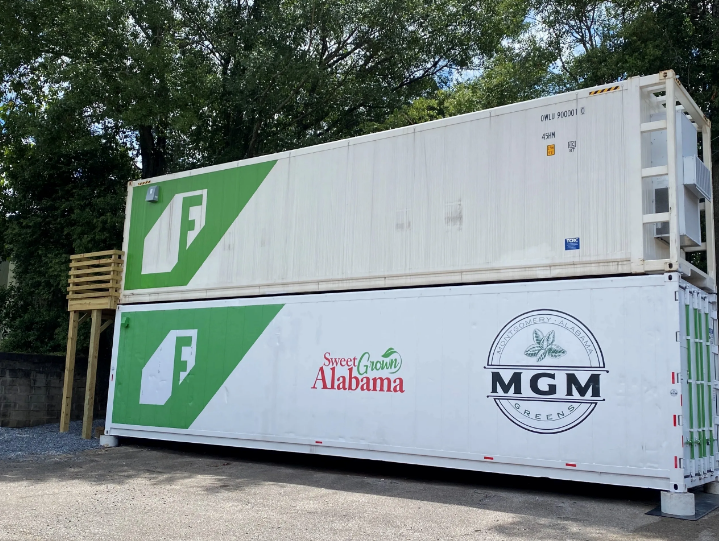
Vintage Hospitality Group Expands Its State of The Art Hydroponic Farm
This addition lets MGM Greens work within multiple environments to grow additional produce allowing a diverse crop yield for its restaurants, Vintage Cafe and Vintage Year, both 50 feet away. With the Greenery expansion, the group is selling retail and also plans to host its own local neighborhood farmers market on a monthly basis
October 21, 2020
In partnership with Alabama Power, Vintage Hospitality Group recently expanded MGM Greens by adding Freight Farm’s Greenery, a fully climate-controlled hydroponic farm built inside of a compact 320 sq. ft. container.
This smart farm is self-contained, growing vertically and hydroponically without soil, getting its nutrition from water and light energy from powerful LEDs. Through these climate-controlled components, plants can thrive inside the containers offering the capability to harvest fresh produce multiple times a week and grow 365 days a year.
This addition lets MGM Greens work within multiple environments to grow additional produce allowing a diverse crop yield for its restaurants, Vintage Cafe and Vintage Year, both 50 feet away. With the Greenery expansion, the group is selling retail and also plans to host its own local neighborhood farmers market on a monthly basis.
“Purchasing the second Greenery has allowed us to now be able to curate our menu based on new successful crops,” said Vintage Hospitality Group’s Executive Chef Eric Rivera. “It will further be maximizing growing potential as it also offers the capability for multiple test crops for upcoming menus at our new restaurant, Ravello.”
While Vintage Hospitality Group’s flagship restaurant Vintage Year is a fine dining establishment, Vintage Café is a coffee shop, daytime eatery, and retail store. As the group also owns MGM Greens, it will be opening City Fed and Ravello restaurant in 2021.
Vintage Hospitality Group’s national press accolades include receiving mentions in the New York Times, U.S. News & World Report, Forbes, and Newsweek Magazines. In addition to being named a Smart Catch Leader, Executive Chef Eric Rivera has been recognized by the James Beard Foundation as a winner of its Blended Burger competition. Chef Eric has also led Vintage Year to be named one of OpenTable’s 100 Most Romantic Restaurants in America and a Traveler’s Choice winner by Trip Advisor.
Vintage Hospitality Group is dedicated to providing guests with the finest culinary selections, premium coffees, specialty teas, outstanding wines, and spirits along with unparalleled customer service.
For more information about Vintage Hospitality Group, visit www.vintagehospitalitygroup.com.

October Indoor Science Cafe - Recording Is Now Available!
Learning Critical Control Point For Hydroponic Food Safety "Hydroponic Crops -- How Can You Produce Safe Vegetables?"
Indoor Ag Science Cafe October Recording
Learning Critical Control Point
For Hydroponic Food Safety
"Hydroponic Crops --
How Can You Produce Safe Vegetables?"
by
Dr. Sanja Ilic (The Ohio State University)
This presentation 'Hydroponic Crops: How Can You Produce Safe Vegetables?' was given by Dr. Sanja Ilic (The Ohio State University) during our 23rd cafe forum on October 20th, 2020.

US - WISCONSIN - VIDEO - Appleton International Airport Starts Growing Its Own Greens In Hydroponic Garden
According to Pat Tracey with Appleton International Airport, “We want to provide travelers with a safe and healthy traveling experience and we’re just always looking for how can we make the airport a safer and healthier place.”
Oct. 23, 2020
GREENVILLE, Wis. (WBAY) - As part of renovations in the terminal, Appleton International Airport teamed up with ThedaCare to promote healthier travel. Even before the pandemic, the airport added hand sanitizing stations, healthier food options for on-the-go-travelers, as well as other upgrades. Now, some of the airport’s food will now be fresher than fresh.
Whether travelers are coming or going, at Appleton International Airport, they’re all greeted by a live plant wall. It’s not only aesthetically pleasing, but it also adds fresh air to the building. The restaurant menu has been upgraded to include more nutritious meals as well. It’s all part of ATW’s “Healthy Connection” partnership with ThedaCare.
According to Pat Tracey with Appleton International Airport, “We want to provide travelers with a safe and healthy traveling experience and we’re just always looking for how can we make the airport a safer and healthier place.”
It doesn’t get much healthier than farm to table.
“People are so sick and tired of getting food that’s traveled over 1500 miles, that only has a day or two of shelf life if any, and has lost a bunch of nutritional quality along the way. On top of all of the salmonella outbreaks with Romaine lettuces and things like that. We’re really getting tired of not having really fresh, high quality, affordable stuff,” says Alex Tyink with Fork Farms.
A recently-installed hydroponic garden, from Green Bay based Fork Farms, sits only about 15 feet away from the restaurant inside the airport terminal. The garden will produce 300 hundred pounds of fresh greens a year, food that will be harvested here and simply walked to the restaurant by its staff and incorporated in what they serve.
Tyink says, “These plants are only about a week old, just from planting the seed and so they have another two to three weeks left to go until they’ll be a nice big full head of lettuce and the staff here is going to put them into the sandwiches.”
While the hydroponics farm will produce enough leafy greens for sandwiches and burgers, the airport does hope to eventually expand the program,
Pat Tracey adds, “For business travelers who travel a lot on the road, the hardest thing is to eat healthy and so we’re trying to do our part and give people a good healthy option when they’re here in Appleton.”

New Smart Urban Farm Takes Root
Using New Tech, it Can Grow Up to 100 Tonnes
or About 1% of Leafy Vegetables Grown Here
October 23, 2020
An urban farm that aims to produce high-yield greens without sacrificing any flavour by leveraging Internet of Things technology was officially launched yesterday.
Commonwealth Greens took root in Jurong in May. The forest-like farm consists of over 6,200 pillars, each of them 2.4m tall, that are reminiscent of the foliage of trees.
Positioned in six different rooms the size of Housing Board flats, the pillars in each room support one type of leafy green: lettuce, kale, chard or herbs. Hydroponics is used to grow the plants.
The farm can grow up to 100 tonnes of vegetables a year, which is close to 1 per cent of leafy vegetables grown locally.
Minister for Sustainability and the Environment Grace Fu (centre) viewing Just Harvest, the latest farm to table solution which will be announced soon for potential clients such as hotels, restaurants and cafes. ST PHOTO: TIMOTHY DAVID
During the launch yesterday, Minister for Sustainability and the Environment Grace Fu visited the farm as well as Archisen, the agri-tech firm that set up and manages Commonwealth Greens.
Archisen's co-founder and chief technology officer Sven Yeo said Commonwealth Greens is one of the highest-yielding indoor farms in Singapore and that it will support and contribute to the country's goal to self-produce 30 per cent of its nutritional needs by 2030.
The farm's leafy greens are currently sold on online supermarkets such as RedMart and PandaMart, under the brand Just Produce. Each 100g salad mix that costs between $4 and $4.50 comprises a variety of lettuce and kale, along with either mustard greens, sorrel or mizuna.
From the middle of next month, the farm will start selling speciality herbs - mustard greens, ice plant and sorrel - in 20g boxes which will cost between $4 and $5.
Archisen has also developed a mini version of its farming system.
Shorter pillars brimming with full-grown veggies are stored in a glass cabinet and can be sent to restaurants for direct harvesting. From next month, the company will deploy those cabinets to five hotels, restaurants and food service companies.
Walls of edible greens: This forest-like area is one of six grow rooms in a new urban farm called Commonwealth Greens. Leafy greens such as lettuce, kale, chard and sorrel are grown hydroponically along each 2.4m white pillar. ST PHOTO: TIMOTHY DAVID
It is not just its aesthetic that makes Commonwealth Greens unique.
To ensure optimal yield, fast growth and highly nutritious and flavourful greens, the vertical systems are powered by a smart cockpit that heavily leverages Internet of Things technology, data analytics and sensors.Culinary uses for speciality herbs
ICE PLANT
The edible succulent is coated with tiny, crystal-like beads that give the unique vegetable a frosty, magical appearance.It typically grows in saline environments and its beads trap salt - hence its salty taste.
Archisen grew different sets of ice plant using nutrient solutions filled with either table salt, sea salt or Himalayan pink salt. It was discovered that table and sea salt made the taste too sharp for comfort but Himalayan pink salt was easier on the palate. The mildly salty succulent has a crunchy texture, and is juicy and refreshing.
MUSTARD GREENS
The dainty-looking leaf with the frilly edges can be a healthier substitute for wasabi.
The fierce wasabi heat hits you immediately, spreading down the throat and up the nose. You may tear up a little too.R&D was used to intensify the wasabi flavour.
RED-VEINED SORREL
The leaves can replace lemon juice or dressing in salads. On second bite, the citrusy flavour explodes, giving a sour surprise.Data is continually stored in the cloud, in real time, for the scientists to analyse and to drive automation. For example, if the pH of the nutrient for lettuce reaches unhealthy levels, sensors will alert a device to automatically restore the acidity level."
As we have more growth cycles over time, our data sets increase, and that enables us to construct mathematical models to predict the outcome of how we grow," said Mr Yeo.
Tenders awarded to turn 9 HDB carpark rooftops into urban farming sitesWild teen to urban farmer: He wants to make Singapore a more sustainable and liveable city
Archisen's office, which is one level above Commonwealth Greens, also houses a research lab for conducting experiments and testing new solutions.In the near future, the company plans to build indoor fruit orchards or vineyards.
Parliament: Encourage growth of urban farming to secure Singapore's food supplies, says Ang Wei NengFeeding cities of the future
Scientists in the lab are now growing black, red and green grapes in a controlled environment. In 10 months, the vines have started to bear clusters of grapes, each fruit about the size of a chickpea. Through traditional farming, it takes about three years to fully grow grapes.Although immature and smaller grapes tend to be sour, the black grapes from the lab taste sweet.
A version of this article appeared in the print edition of The Straits Times on October 23, 2020, with the headline 'New smart urban farm takes root'.
Lead photo: Archisen co-founder and chief executive Vincent Wei (left) and chief technology officer and fellow co-founder Sven Yeo seen here with full-grown veggies from the mini version of its farming system, which will be deployed to restaurants and hotels.ST PHOTO: TIMOTHY DAVID

BrightFarms Secures $100 Million Series E Round of Funding
“Our goal over the next five years is to make quality, locally-grown greens a staple on grocery shelves and in refrigerators nationwide,” said Steve Platt, CEO of BrightFarms
Cox Enterprises assumes majority ownership
BrightFarms has secured more than $100 million in debt and new equity capital to support its expansion plans. The Series E round of funding was led by Cox Enterprises, which now owns a majority stake in the company, and includes a follow-on investment from growth equity firm Catalyst Investors. BrightFarms will use the funds to invest in its current farms and retail programs and expand its network of regional indoor farms across the U.S.
BrightFarms has raised more than $200 million in funding to date to build the nation’s first brand of locally grown produce and has established close partnerships with retailers such as Ahold Delhaize, Kroger, and Walmart. BrightFarms currently distributes its products to more than 2,000 stores in the U.S. and expects to expand its distribution to more than 15,000 stores by 2025. The company has indoor farming operations in Illinois, Ohio, Pennsylvania, and Virginia, with three new farms currently under development in North Carolina, Massachusetts, and Texas.
“Our goal over the next five years is to make quality, locally-grown greens a staple on grocery shelves and in refrigerators nationwide,” said Steve Platt, CEO of BrightFarms. “We are thrilled to have the strong financial backing of Cox Enterprises, an organization that closely aligns with our mission to build a healthier and more sustainable future and to have the additional support of our long-term partners at Catalyst Investors. Together we are ready to scale our model for local indoor farming in every major market in the U.S.”
“Cox Cleantech’s goal is to build meaningful businesses that solve fundamental problems facing society and our environment,” said Steve Bradley, vice president of cleantech for Cox Enterprises. “BrightFarms provides this opportunity through its sustainable model of growing food in the same communities where it’s consumed, resulting in food that’s fresher, safer, better tasting, and better for the environment.”
For more information:
www.brightfarms.com
coxenterprises.com/cleantech
www.catalyst.com
21 Oct 2020

UAE: Smart Acres: Heights of Sustainability
Smart Acres, the latest in UAE's hydroponic vertical farming industry, is now producing a line of the freshest, most nutrient-dense greens for UAE residents and businesses
Rohma Sadaqat
October 19, 2020
Smart Acres, the latest in UAE's hydroponic vertical farming industry, is now producing a line of the freshest, most nutrient-dense greens for UAE residents and businesses.
A growing focus on healthy food farmed sustainably and locally has meant that vertical hydroponic farms are finding a home in the UAE. The last few years have seen a marked increase in the number of companies that have launched their vertical farming facilities in the country, providing hotels, cafes, restaurants, and households across the emirates access to a growing portfolio of fresh greens.
Smart Acres, the latest addition to the UAE's hydroponic vertical farming industry, is now producing a line of the freshest, most nutrient-dense greens for UAE residents and businesses. The company has launched in collaboration with n.thing, a Korean-based technology company that designed the farm modules using an award-winning Internet of Things (IoT) based technology system to grow and monitor their greens - a system that not only consumes less resources but generates ultra-high quality crops.
Abdulla Al Kaabi, Founder and CEO of Smart Acres, revealed that vertical farming is a relatively new modern farming concept that was first proposed in the late 1990s. The main advantage of vertical farming technology, he explained, is that you can achieve a huge output in a limited space.
"Our container farms have a crop yield that is 20 times greater than traditional farming methods," he explained. "We currently harvest approximately 10,000kg a year from 120sqm of land, but to achieve the same output in traditional farming methods, you would require over 2,500 sqm of land."
Al Kaabi also explained that the hydroponics method has been around since the 1700s. With the advancement of modern-day technology, companies are now able to use this farming method to cultivate crops commercially. The biggest advantage of hydroponics comes from the decrease in water usage. Smart Acres' method uses up to 10 times less water than traditional farms to grow lettuce.
"We've lost over a third of our arable land on this planet in the past 40 years, and with the increase in population, we will face a great shortage of arable farmland to grow enough food for the world's population by traditional means," Al Kaabi said.
"Freshwater scarcity is also a serious issue that we face as a civilization, and it was listed as the largest global risk by the World Economic Forum in 2019. These two problems are a severe challenge in the UAE. In 2019, the UAE was ranked 10th out of 164 in a global rank of nations where water supplies are most stretched."
Looking ahead, he said that he believed that the future of farming will be a mix of different technologies. "Different crops require different farming methods and there is no one size fits all. For lettuce variety, we strongly believe that we have achieved great efficiency and commercial viability with the mix of vertical farming and hydroponics technology along with the advancement of IoT. The UAE's Food Security Strategy is multi-faceted with the core goals of identifying and diversifying food sources. Local production is a vital component, but it also needs to be supplemented with global imports. Even for local production, optimum farming methods for different crops may vary for rice, strawberry, lettuce, tomatoes, etc."
Currently, Smart Acres grows five different varieties of lettuce on their farm. They take six weeks to grow from seeding to harvest. The first step is to plant the seed in the growth medium which is placed in the germination room. After the seeds have been successfully germinated, they are transplanted into the growth area where light, temperature, airflow, and humidity are all micro-controlled to provide the most optimum environment for the plants to grow.
"We are currently testing many different varieties of lettuces in the UAE," Al Kaabi said. "At the same time, our research team is collaborating with other researchers around the world to develop the most optimum environment for some of the other crops. Our goal is to be able to introduce a new crop every year for the next five years and there is a very good chance that strawberries will be one of the five crops that we may cultivate in the next five years."
Asked about the response that the concept has received, Al Kaabi said that there has been a lot of support and interest from the restaurant and café industry in the region. Chefs have been using vertically farmed produce for a few years now, but the scope has only been limited to micro-greens because growing large lettuce heads at a consistent weight can be challenging.
"Sustainable farming practices are very much on the minds of most chefs here in the UAE," he said. "The industry is becoming more aware of how sustainable practices are vital to the safety of the environment and for our survival. We have received a lot of inquiries from restaurants and hotels across the emirates for our crops, which was the result of managing to successfully grow large and premium-quality lettuce heads with consistency. Currently, we have not focused on providing our produce to many outlets as we have set our sights on developing our R&D facility that will spur long-term growth for UAE food security."
- rohma@khaleejtimes.com

Purdue Study Addresses Environmental, Economic Impacts of Hydroponic, Aquaponics Systems
Hydroponics and aquaponics offer promise for growing produce and raising fish. But some may be wary of entering the industries because of perceptions about high capital and operational costs and environmental impacts
October 22, 2020
Story by Brian Wallheimer
Hydroponics and aquaponics offer promise for growing produce and raising fish. But some may be wary of entering the industries because of perceptions about high capital and operational costs and environmental impacts.
Purdue University scientists compared the environmental performances of both systems and calculated their economic efficiencies in Indiana. Their findings, published in the Journal of Cleaner Production, inform those interested in entering hydroponic or aquaponic industries on how to get the most for their investment with the least environmental footprint.
Hydroponics and aquaponics are soilless systems. Hydroponic plants are grown in water containing chemical fertilizers as nutrients. Aquaponics adds the raising of fish and uses fish waste to replace chemical fertilizers. These indoor operations come with upfront capital costs and require use of significant amounts of energy for lighting, heating and water pumping, as well as fish feed and fertilizers.
For one month, graduate students Peng Chen and Gaotian Zhu raised six vegetables in a hydroponic system and those same vegetables with tilapia in an aquaponic system. Experiments were conducted in the lab of Hye-Ji Kim, a Purdue assistant professor of horticulture and landscape architecture, and in collaboration with Paul Brown, a Purdue professor of forestry and natural resources. Jen-Yi Huang, a Purdue assistant professor of food science and the leader of the project, worked with the students to conduct a life cycle assessment using the data they collected.
Purdue University researchers conducted a life cycle assessment of hydroponic and aquaponic growing systems in Indiana to measure their environmental and economic impacts. (Photo provided by Peng Chen)
The researchers found that the aquaponic system led to 45 percent less environmental impact when considering fossil fuel use, global warming, water acidification and eutrophication created by resources used as well as waste and emissions released. Twice as much food is grown in the aquaponic systems with little added environmental cost.
“The aquaponic system is more environmentally friendly when you look at the total environmental footprint per US dollar of economic value of the products,” Huang said. “But that is based on using Indiana’s current energy mix. If we consider using more renewable energy sources, things start to change.”
Indiana currently gets almost 60 percent of its energy from coal-fired power plants, according to the U.S. Energy Information Administration, with about one-third coming from natural gas. The less electricity hydroponic and aquaponic growers source from fossil fuels, the more environmentally friendly their operations become.
Chen said that changing the mix and getting one-third of power from coal, natural gas and wind would reduce the environmental impacts of hydroponics by up to 48 percent. If an operation sourced its electricity solely from wind energy, hydroponic operations would be considered slightly more environmentally friendly than aquaponics.
“By using wind energy, which is largely produced in Indiana, farmers can reduce their environmental footprint enough to make these two systems essentially equal in terms of the economic output gained for the environmental cost,” Chen said. “By choosing more plant-based fish feed, the environmental impacts can be further reduced in aquaponic systems.”

5 Microgreen Types Packed With Nutrients You Should Be Eating
Microgreens are known for their nutrient-packed health benefits. But which microgreen types are the most nutritious and healthy to add to our diets? We are going to cover the top nutritious microgreen types and why you should add them to your eating habits now.

Microgreens are known for their nutrient-packed health benefits. But which microgreen types are the most nutritious and healthy to add to our diets? We are going to cover the top nutritious microgreen types and why you should add them to your eating habits now.
Arugula
In microgreen form, arugula has a nutty, peppery, wasabi-like taste. Arugula is one of the microgreen types that is nutrient-dense. It contains high amounts of vitamin C, copper, and iron, which help prevent illnesses like anemia. The phytochemicals also produce glutathione, which is an antioxidant. The combination of these health benefits help prevent and fight off toxins in the body.
Basil
The basil microgreen is a healthy addition to any salad since it has a crisp, citrus-like taste. This microgreen type has polyphenols that reduce oxidation and inflammation to promote gut health. It is high in vitamins such as A, B6, C, E, and it contains calcium, phosphorus, iron, zinc, copper, magnesium, and potassium. Basil is one of the microgreen types that are rich and nutrient-dense and can be a beneficial additive to your diet.
Pea Shoots
Pea shoots are one of the microgreen types that can be eaten raw or cooked. Add them to your salad or cook them in a stir fry to add nutrient-packed vegetables to your food. These microgreens have a plethora of vitamins such as vitamin A and C and folic acid.
Radish
Radish microgreens are known for their spicy flavor profile. You can top off your dishes with the raw radish sprouts to add some heat to any dish. These microgreens are rich in vitamins such as vitamins A, B, C, E, and K. They also contain high amounts of calcium, iron, magnesium, phosphorus, potassium, and zinc. Radish sprouts contain amino acids and chlorophyll, which helps fight illnesses such as cancer.
Broccoli
Broccoli microgreens is another one of the microgreen types that are delicious and nutrient-packed. These popular microgreens contain a high amount of vitamin C, which helps our immune system fight off sickness. They also contain antioxidants and cancer-fighting compounds.
Want to learn more?
Do you want to learn how to grow microgreens from the comfort of your home? We at the Nick Greens Grow Team use our in-depth knowledge to teach our subscribers how to grow microgreens at home!
Sign up for our microgreens class that takes place every Friday at 4:30 pm CST, and become a member of our FaceBook group to connect with others who are learning just like you. If you don’t want to take a class, subscribe to our blog and Youtube channel for weekly updates about growing microgreens and other farming related news!
#microgreentypes #microgreenstypes #microgreentype #microgreenstype #bestmicrogreenstogrow #bestmicrogreens #microgreenvarieties #microgreensvarieties #microgreenvariety #microgreensvariety #growingmicrogreen #growingmicrogreens #microgreen #microgreens

Gardyn Aims To Make At-Home Vertical Farming Small, Simple, and Stylish
Thanks to disruptions in the food supply chain, panic-buying sprees, and the general uncertainty of the times, growing food at home seems like a pretty good idea of late

Thanks to disruptions in the food supply chain, panic-buying sprees, and the general uncertainty of the times, growing food at home seems like a pretty good idea of late. Trouble is, many consumers don’t have the know-how to cultivate their own leafy greens and other produce in the backyard. Even those who do often lack adequate space.
A company called Gardyn is addressing both of those issues with an at-home vertical farming system that requires minimal input from the user and can easily fit inside a small apartment if need be. The idea, as Gardyn founder and CEO FX Rouxel explained to me over the phone last week, is to make growing food in one’s own home as simple and straightforward as possible. To do that, the company has built a farm that relies on AI to do much of the heavy lifting in terms of monitoring and maintaining an edible crop of food. Or as Rouxel said, “The system is managing everything for you.”
Gardyn’s system is made up of two parts: a compact vertical tower, which can grow as many as 30 plants, and an accompanying app powered by an AI assistant named “Kelby.” Users only have to order seeds and “plug” the seedpods into the vertical towers. The system automatically circulates water and nutrients to the plants, while Kelby monitors plant growth and sends reminders when it’s time to add water to the garden or harvest the plants.
Right now, available crops from Gardyn’s site include mostly leafy greens and herbs, some flowers, cherry tomatoes, and jalapeños. Customers can also use their own seeds if preferred.
The system uses what Rouxel calls “a hybrid of different hydroponic technologies,” including the deepwater method and aeroponics. (The company brands its approach as “hybriponics.”) By themselves, these different methods have certain limitations in the at-home setting. Deep water, where plant roots are fully submerged in nutrient-enriched water, requires a lot of space. Aeroponics is a great setup for outdoors, but once indoors it requires lighting, which gets expensive very quickly. Gardyn pulled elements from both to create a system that takes up only two square feet of space and doesn’t require any extra hardware. “Within just two square feet, you can produce a lot of food,” says Rouxel, adding that Gardyn’s units have produced “over 25,000 pounds of produce” during the last few months.
That quest to grow a lot of leafy greens in a small amount of space is an area with plenty of competition these days. Farmshelf recently unveiled its first-ever farm for the home, and companies like Rise Gardens and Agrilution (the latter recently bought by Miele) also offer promising solutions for the consumer space.
And while historically, investment in vertical farming has mainly gone towards the industrial-scale indoor farms (think AeroFarms), at-home farms are fast becoming a lucrative area. Investors, Rouxel explained to me, see traditional agriculture as a risky business that’s less insurable because its success is in part dependent on the weather outside. With climate change triggering more extreme weather, investors will look more and more to alternative solutions in controlled-environment agriculture.
“I am absolutely convinced we are going to see in the coming two years a total disruption in the way we grow things,” he says. Chiefly, that will be growing the food in much closer proximity to consumers, whether through at-home systems like Gardyn’s, in-store farms at grocery retailers, rooftop gardens, and high-tech greenhouses. “In future, we’re going to have a spectrum of solutions,” Rouxel noted.
Getting these vertical farms closer to consumers and in their own homes will require bringing the price of the machines down. At the moment, Gardyn’s system is roughly on par pricewise with other systems out there that can realistically feed a family of four: $799 for the base model all the way up to $1485 for the “Plus” model.
Rouxel is aware that the cost is still too high for many consumers. “We don’t want this to be only for well-off people,” he told me. “It’s important that we find ways that anyone can afford this.”
Many companies, including Gardyn, offer financing options on their farms now. And more investment dollars going into the space in the future could mean companies have the time and space to innovate on ways to make their system cheaper for the average consumer.
While pricing remains a question, one thing that’s certain is that at-home vertical farming is on the path to becoming a regular part of the kitchen, rather than just a trend. “What we want is to develop solutions that will quickly change the way people access food,” said Rouxel. “We won’t solve everything, that’s for sure, but we want to be part of the solution for how we shape food.”
FILED UNDER: AG TECH BUSINESS OF FOOD EDUCATION & DISCOVERY FEATURED FOODTECH
INDIA: Grounded Mumbai Pilots Use Hydroponics to Grow & Deliver Toxin-Free Veggies
The duo decided to grow a range of vegetables like Pak Choi, Lettuce, Red Basil, Italian Basil, Kale, Iceberg, Baby Spinach, and rocket arugula. To provide nutrients for the plants, the water runs across the UPVC pipes for 10 minutes with nutrients like magnesium, calcium, and potassium dissolved – every two minutes
Mumbai based pilots Harsh Parekh and Ishan Modi
launched the hydroponics startup FarmJet
to provide fresh toxin-free exotic vegetables
AUTHOR: HIMANSHU NITNAWARE
OCTOBER 20, 2020
What would you do if you’re cruising at 30,000 feet in the air daily and are suddenly grounded for months? Well, these pilots started a hydroponics business on their terrace. A long-held ‘project’ in the mind of Mumbai-based domestic airline pilot Harsh Parekh, the Covid-19 lockdown paved the way to bring this idea into reality.
In 2017, Harsh witnessed a lady harvesting coriander leaves opposite the Kurla local train station in Mumbai.
“The coriander and other greens were being picked up along the railway lines of the station. The visuals lingered in my mind making me think about where our food comes from,” says Harsh Parekh, a pilot.
When he learned about Hydroponics, the idea intrigued him. Hydroponics is a method of growing plants without soil. The nutrients are mainly introduced with the water, while the plant is rooted in coco peat, vermiculture, or rock wool. Harsh then started researching on the topic and accessing all the details required to be such a farmer.
From pilot to farmer
Hydroponics are grown in pipes where water flows through them
But it was only during the Covid-19 lockdown around March when he shared the idea with his friend, also a captain with another private airline, Ishan Modi.
“I discussed the idea with my wife Garima, and after feeling confident, shared the same with Ishan. He along with his wife Soumya agreed to come on board,” Harsh said.
The pilot said the duo worked for the entire month of April to plan and set up the startup. Living in Matunga, Harsh agreed to take the operational tasks under him, while Ishan from Borivali took up the responsibility of accounts and packaging.
“We did not have space and had to hunt one down. Luckily, a childhood friend in Chembur offered his terrace for setting up the farm,” Harsh said.
The pilot added they purposefully chose to take up outdoor farming. With the foundation in place and around Rs 10 lakh invested, the startup FarmJet officially opened in May.
“There are many indoor hydroponic farms, but that requires air conditioning and LED lights. We wanted to cut down on our carbon footprint and grow plants in a natural environment,” Harsh said, adding the farm got installed with A-structured UPVC pipes. The PVC pipes have lead in them, thus harmful to their health.
The duo decided to grow a range of vegetables like Pak Choi, Lettuce, Red Basil, Italian Basil, Kale, Iceberg, Baby Spinach, and rocket arugula.
To provide nutrients for the plants, the water runs across the UPVC pipes for 10 minutes with nutrients like magnesium, calcium, and potassium dissolved – every two minutes.
Freshness is the key
Hydroponics facility set up at a friend’s house at Chembur.
Ishan says the only selling point of the company is guaranteed freshness. “We harvest the vegetables ordered in the morning and deliver it by noon. There are no harvests without orders and storing of the vegetables,” he adds.
The hydroponics grown do not get sprayed with insecticide or pesticides. “As the greens grow without soil, the need for such products does not arise. They are completely natural through the process,” he adds.
Ishan said the freshness is guaranteed at all times. “We often send videos of the harvest to the customers. One customer even did a litmus test on our produce for chemicals which turned out negative,” he adds.
The co-founder said the initial days were quite challenging for the duo. “We started around monsoon when the sunlight is not adequate at all times. The plants could grow better in other seasons,” Ishan said.
Speaking to The Better India, Ishan added that with no workforce permitted due to Covid-19 lockdown, the entire responsibility of setting up, maintaining, and cleaning the facility was upon them.
“Moreover, the market is not so open to exotic vegetables. It is only in recent times that people are aware of such vegetables and want to try them. The taste buds are yet to develop for a majority of the people,” Ishan says.
More potential to tap
Hydroponics are grown in a germination tray before they are placed in hydroponic pots
Almost six months since its inception, the company is attending about 25-30 customers a week. “Our followers are growing by 200 a week and customers by 25 percent. However, we are still in a nascent stage to take commercial produce and build capacity,” Harsh says adding the company is catering to orders based in Mumbai for now.
However, with the resuming of flights the pilots are back in the skies. Ishan said that with their wives as stakeholders of the company, they ensure that operations do not get affected.
“We plan the operations to see that at least one of the four members are present for the operations,” Ishan added.
Harsh adds the duo wants to expand in Navi Mumbai and Thane soon. “We are also open to assisting residential societies in setting up a facility on their terrace. The terrace only gets used on New Year parties and remains vacant for the other 364 days of the year,” he said.
When asked if they plan to quit their airline job, Harsh says, “We might think it in the future, but surely not for now.”
Harsh, however, adds, “The prospect is good and gives joy. The thought that the lettuce in my burger is grown in a toxin-free environment and harvested by me has an entirely different kind of satisfaction.”
Reciprocating the thoughts, Ishan says soon they plan for customers to visit the farm, harvest their produce and experience, and enjoy a fresh green salad beside the farm.
FarmJet accepts orders at +91 9867677779.
(Edited by Vinayak Hegde)

INDIA: Aquaponics Unit Gets Off The Ground In Ludhiana Vet Varsity
The system was established by Centre for Development of Advanced Computing (C-DAC), Mohali, under the collaborative project funded by the ministry of electronics and information technology (MEITY), GOI
Was Inaugurated by Sanjay Dhotre,
Union Minister of State For Education,
Communication And Electronics And IT
CHANDIGARH
Oct 14, 2020, HT Correspondent
Hindustan Times, Ludhiana
The aquaponics unit in Ludhiana. (HT photo)
Sanjay Dhotre Union minister of state for education, communication and electronics and IT, on Wednesday virtually inaugurated an ‘Aquaponics vertical farming system’ developed at Guru Angad Dev Veterinary and Animal Sciences University (GADVASU).
The system was established by Centre for Development of Advanced Computing (C-DAC), Mohali, under the collaborative project funded by the ministry of electronics and information technology (MEITY), GOI.
Dhotre emphasized on the need to modernize food production sectors to double farmers’ income and enhance climate change resilience among the farming community.
He said that aquaponics is a promising technology for organic farming and there is a need to publicize such technologies for the wellbeing of the environment and humans.
Inderjeet Singh, the vice-chancellor of GADVASU, said that aquaponics involves a synergistic combination of aquaculture and hydroponics to promote vertical farming with enhanced nutrient utilization efficiency through recycling of water between the two components to produce fish and vegetables together.
He added that it offers potential future solutions to global warming, with only 10-12% water and land requirement compared to traditional fish and vegetable farming systems, fulfilling the concept of ‘More crop per drop’.The V-C said that the facility will help GADVASU take up required R&D for its optimized utilization under climatic conditions of the state, especially for stakeholders with small landholdings.
In the keynote address, Hemant Darbari, DG, C-DAC, said that the automated aquaponics system will serve as an excellent R&D and demonstration provision for skill development in aspiring stakeholders of the region to produce more food from less land.
Jyoti Arora, special secretary, MEITY, spoke on making the facility sustainable through innovative techniques to attract more youth into the technology-driven agriculture sector.
The project in charge, Jaspal Singh, joint director, C-DAC, and his team implemented the project at GADVASU with Meera D Ansal, dean, college of fisheries, and Kulbir Singh, principle olericulturist, PAU, under the leadership of JPS Gill, director research, GADVASU.

How Hydroponics & Vertical Farming Can Improve Food Safety
Viraj Puri, co-founder, and CEO of a hydroponic vertical farm told Food Safety News that the hydroponic vegetable industry has a built-in food safety advantage over open-field farming. He believes that this advantage comes from its “physical infrastructure and higher levels of environmental controls.”
Our greenhouse team member utilizing food safety best practices at our R&D facility.
The United States Department of Agriculture sometimes refers to vertical farming as “controlled-environment agriculture” and there’s a good reason for this moniker.
Viraj Puri, co-founder, and CEO of a hydroponic vertical farm told Food Safety News that the hydroponic vegetable industry has a built-in food safety advantage over open-field farming. He believes that this advantage comes from its “physical infrastructure and higher levels of environmental controls.”
In recent years, the safety of our food supply has been called into question. Numerous food recalls are a regular part of news broadcasts across the country. Recently, it was found that fruit and vegetables failed import safety checks at a rate of 12.5%. At the same time, other categories such as meat, fish, and eggs, achieved compliance rates over 95%.
National producers of fruit and vegetables have also had problems. The recent outbreak related to contaminated romaine lettuce originated in California. This year’s recalls of onions and peaches also originated domestically.
Vertical farms using hydroponic technologies could usher in a revolution in food safety. Hydroponic growing has a plethora of food safety benefits. Year after year, pathogens are found in traditionally-grown (or soil-grown) crops. This is because the soil itself contains naturally-occurring pathogens, and traditional farms are open to contamination from outside sources such as animal droppings and tainted run-off. Hydroponic farming has the potential to drastically reduce the number of people who get sick via foodborne illness every year by eliminating these pathogens from the growing process.
Foodborne illnesses have originated from traditionally grown crops over and over, and the problem is growing. It’s important to understand the dangers of these foodborne illnesses, as well as what “food safety” is and how every individual along the food supply chain has a role to play. Fortunately, recent food safety news gives us hope that hydroponics can improve food safety.
Why We Need A Culture of Food Safety: The Dangers of Foodborne Illnesses
The Centers for Disease Control and Prevention estimates that 48 million people get sick (1 in 6), 128,000 are hospitalized, and 3,000 die from foodborne illnesses each year in the U.S. Food can be contaminated by many different disease-causing germs. There are many different types of foodborne illnesses (sometimes described as food poisoning or foodborne disease). Over 250 types of foodborne illnesses have so far been identified. The majority are infections caused by bacteria, parasites, and viruses. Food can also be contaminated with harmful toxins and chemicals.
Food may become contaminated during any stage of the food supply chain; from production, distribution, processing, preparation, to storage. Germs can spread to food from unclean utensils, surfaces, or equipment. And it’s not uncommon for these contaminated foods to make it to market and into kitchens and restaurants before anyone knows there is a problem.
What is Food Safety?
“Food safety” describes all operations and practices that are utilized to keep food safe. Keeping food safe is a joint effort involving everyone in the food supply chain. All along the food supply chain—from producers and farmers to wholesalers and retailers— there are standardized regulations and controls in place to reduce the risk of food contamination.
Part of food safety practices involves growing, handling, preparing, packaging, and storing food in a way that best reduces the risk of people getting ill from foodborne diseases. Food safety is a concern all over the world and one that we should take great care to address.
The fundamental principles of food safety focus on preventing food from becoming contaminated and causing food poisoning. This is achieved through several different methods, some of which include:
Understanding food allergies, food intolerance, and food poisoning
Keeping up high standards of personal hygiene (i.e hand-washing) when handling food at any step in the food supply chain
Storing, heating, and cooling food properly with regard to temperature, environment, and equipment
Using effective and adequate pest control measures
Cleaning and sanitizing all surfaces, utensils, and equipment
How Hydroponics Can Improve Food Safety
Unlike in traditional farming, wildlife and livestock can’t contaminate produce grown in a vertical farm’s greenhouses. It’s almost impossible to prevent such contamination in traditional agriculture where wide open fields are susceptible to bird droppings and animal encroachment.
Although there aren’t industry-wide food safety standards for hydroponic growers, the vast majority of companies have rigorous processes in place. Joel Cuello, Vice-Chair at the Association for Vertical Farming, said “vertical farms are, in fact, generally and significantly safer than conventional agriculture”. He believes that the reason many vertical farms don’t have internationally recognized food safety certifications is because their stellar food safety reputation is proof enough.
Since vertical farms use a hydroponic system for watering, there’s very little chance that contamination from water will infect the produce. Hydroponic systems add nutrients to tested or purified water and then apply that water directly to the plants’ roots. The system completely bypasses the use of soil, which is a possible contaminant with a lengthy history of getting people very sick. Hydroponic technology also avoids the problem of runoff from nearby sources of toxic chemicals or biological waste.
Food Safety News: Soil and E. coli
In recent food safety news, the major E. coli outbreak that started in September of 2019 and related to romaine lettuce seems to be over. Epidemiologic, laboratory, and traceback evidence conclusively showed where the contaminated romaine lettuce came from. The produce that made people sick in September of last year is no longer available for sale. However, it was grown in soil and harvested in the Salinas Valley growing region.
A total of 167 individuals from across 27 states were infected with the outbreak strain of E. coli O157:H7. Eighty-five people were hospitalized due to this outbreak, including 15 who developed hemolytic uremic syndrome—a kind of kidney failure. Luckily, no deaths were reported.
Some think E. coli results in little more than an upset stomach, but outbreaks can be very serious affairs and in some cases have caused death. At best, it causes vomiting, diarrhea, and stomach cramps; let alone an long-term aversion to lettuce after getting sick.
Hydroponic Greenhouses Are Safer Than Soil-Based Farming
The Centers for Disease Control, the Food and Drug Administration, and public health officials investigated the most recent E. coli outbreak in the United States. Their recommendation said that hydroponic-grown lettuce was not related to the current outbreak. In their words, “there is no recommendation for consumers to avoid using romaine harvested from these other sources.”
Hydroponic Growing Offers Many Food Safety Benefits
Hydroponic growing does not require high levels of pesticides and uses less water, land, and fertilizers than conventional farming.
Vertical farms also use a soilless medium for growing their plants. This means that food products are not infected by pathogens that can sometimes contaminate soil and be passed to traditionally grown crops.
Greenhouse vertical farms are highly controlled environments in which the light intensity, temperature, and humidity are closely monitored and controlled and the growing solution is strictly regulated. With so many levels of checks and controls, it is far less likely that pathogens and toxins could be introduced into these closed environments.
Eden Green Technology offers hydroponic systems that can help create a healthier food supply. Learn more about how to safely grow delicious produce here.
Can Vertical Farming Grow Beyond Herbs And Leaves?
Vertical farming divorces crops from the land entirely, which is in many cases more sustainable than traditional farming and allows previously dead areas to be repurposed for growing food
20 OCTOBER 2020
In the early 20th century German-Jewish scientist Fritz Haber and his colleague Carl Bosch worked out a way to synthesise ammonia, making it possible to create industrial amounts of fertiliser for the first time. It’s said that two out of five humans on the planet today owe their existence to the discovery, which led to an explosion in the amount of food the world could produce.
Today there is a new revolution going on in agriculture.
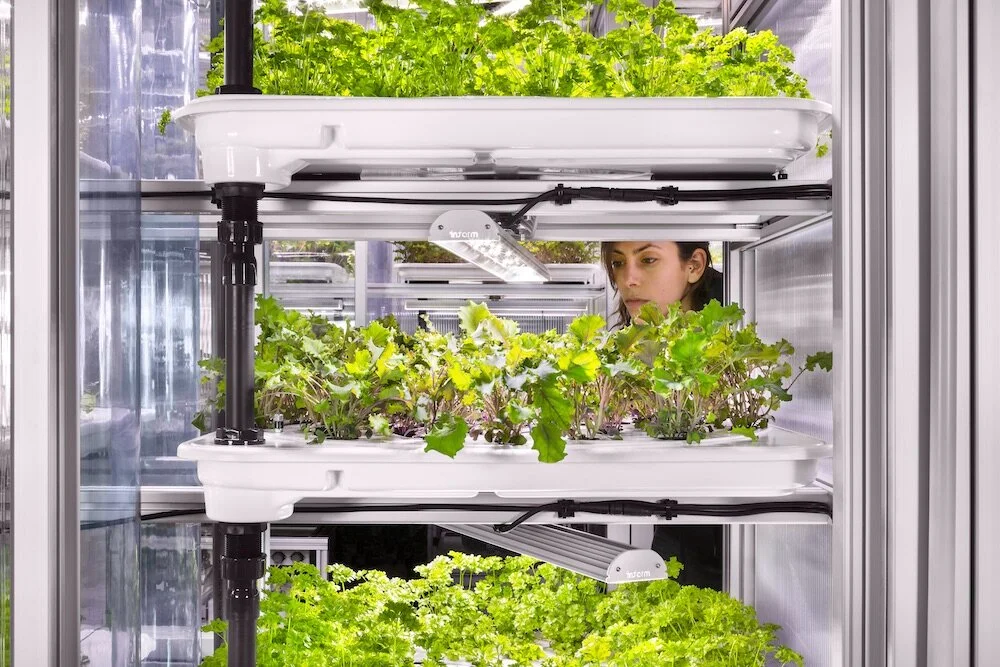
Vertical farming divorces crops from the land entirely, which is in many cases more sustainable than traditional farming and allows previously dead areas to be repurposed for growing food. All across the world, disused underground bunkers and empty shipping containers are being jazzed up with high-tech equipment — like flashy pink LEDs and environmental control sensors — to grow a new style of crop on stacked trays indoors.
This alternative process has gained a lot of attention — and money — in recent years. The global vertical farming market is expected to reach a promising $12.77bn by 2026, up from $2.23bn in 2018. Prominent European VC investors like Atomico and in the US the Footprint Coalition (Robert Downey Jr’s sustainability initiative) have jumped on the vertical farming train.
Many European startups are leading the way. Berlin-based Infarm, which builds and installs vertical farming systems for crops in supermarkets, raised $170m last month. Earlier this year, Finnish startup iFarm, which has developed a vertical farming SaaS solution, bagged a $4m funding round.
Retailers also seem enthusiastic, with online grocery supermarket Ocado recently increasing its stake in the UK vertical farming startup Jones Food Company.
There is just one problem with the vertical farming “revolution”, however. Unlike the Haber-Bosch process of fixing nitrogen to allow all crops to grow bigger and faster, vertical farming at the moment only really makes sense for a small number of expensive crops (like basil and parsley) — and that’s hardly going to feed the world.
So the battle is now on to expand what vertical farming can do. Can the vertical farming pioneers pull it off? And what is getting in their way?
Why do people like vertical farming at all?
A vertical farm uses high-tech LEDs as an alternative light source to grow crops. Credit: diephotodesigner.de
Consumer demand for organic produce has shot up in recent years, with total retail sales hitting €40.7bn in 2018, up from €26.3bn four years before. The idea of vertical farming is appealing for many who have become increasingly conscious about buying products that are sustainably produced.
So far, the usage of water, pesticides, fertilisers and herbicides have been drastically reduced in vertical farming.
Professor Leo Marcelis, the head of horticulture and product physiology at Wageningen University, and an expert in vertical farming, points out the vast water reduction capabilities of the system. “When growing tomatoes in the Mediterranean climate, you would do a very good job using 60 litres of water per kilogram of tomatoes. In the Netherlands, a regular greenhouse grower would use around 15-17 litres of water and in a vertical farm around 2-4 litres,” he tells Sifted. The European agriculture sector alone accounts for more than 50% of Europe’s total water usage.
What’s more, European startups operating vertical farms are drastically reducing resource usage. Guy Galonska, cofounder of Infarm says: “Compared to outdoor agriculture, our water usage is 90-95% more efficient, we use 70-75% less fertiliser and no pesticides, fungicides or herbicides at all.”
“This is not a VC trend. “[Vertical farming] is going to have an actual impact.”
On top of resource savings, vertical farming has also been recognised as a way to simplify the global food supply chain, by growing crops in urban settings. This allows products to travel a considerably shorter distance to reach supermarkets, restaurants, distribution centres and people’s homes, increasing freshness and reducing transport emissions.
And while it’s been a hotspot for investors in recent years, Galonska believes that it’s more than that: “This is not a VC trend. “[Vertical farming] is going to have an actual impact,” he tells Sifted.
The future of vertical farming seems pleasant, but there’s a catch. Some elements — like cost and energy — are weighing down the sector and threatening its chance to scale further.
Grown with expensive taste
The problem is that, to date, the majority of vertical farms have cracked how to make money off growing and selling a range of herbs and leaves like basil and parsley, rosemary and thyme, and… well, that’s about it.
Marcelis points out that it’s not because growing other crops like potatoes and carrots is tricky. Instead, the high operational costs of running a vertical farm forces a lot of cheaper crops to become unprofitable. “Technically, we can grow any crop very well in a vertical farm. The question is how can we do it in an economically feasible way?” he says.
“[Vertical farming startups] are invariably forced into growing only high-margin, niche products to survive.”
Jamie Burrows, chief executive of London-based vertical farming startup Vertical Future says that a common factor blocking startups from optimising their vertical farms is a lack of capital access. “Ultimately, the key for the future of vertical farming will come through full automation, data, fair pricing and a focus on the lifetime performance of the project. One reason some vertical farms fail is that they have inadequate capital to build an installation that will allow this. They are invariably forced into growing only high-margin, niche products to survive,” he says.
Galonska says Infarm plans to roll out more products, such as chillies and tomatoes, soon. “[At Infarm], we’re investing a lot in innovation and growing new crops and root vegetables. We are going to release some of those products very soon, first in Berlin and then scaling out to other locations.”
The idea is to grow — and price — products that ‘normal’ people can afford. “We are aiming for it to be accessible to average consumers. We don’t want it to be elite,” says Galonska.
Marcelis, on the other hand, thinks that it’s imperative that operational costs drop before cheaper products can be grown and sold at prices for the everyday consumer. “I don’t expect that cheaper products that can be easily stored will be grown in vertical farms… it will be for herbs and leafy products, for strawberries and perhaps cucumbers and tomatoes,” he says.
A huge factor causing these mammoth operating costs comes from the vicious energy usage that comes from technology powering the farms — like LEDs and climate control technology — but there are some vertical farming startups with a few tricks up their sleeves in an effort to tackle this problem.
Going greener
Jamie Burrows, chief executive and founder of Vertical Future
Vertical Future claims that it’s up to 60% more energy efficient compared to other vertical farms, which make its economics more attractive as well.
Burrows says that this is made possible by its unique approach to LED lighting, which he tells Sifted is tackled “through geometry and some very clever engineering. Also, our growing patterns allow for a flatter distribution of energy across any given day and fewer peaks.”
Climatisation control technology, which monitors a vast array of elements in vertical farms to optimise the growth of crops — such as CO2 emissions and temperature — is also proving to be a good option. &ever, a German startup which has a vertical farm running in Kuwait, says that its methods allow up to 40% more energy efficiency in comparison to its counterparts, due to its unique approach to climate cells (the stacked trays in which the crops grow).
Its farms are highly automated with little manual labour involved, meaning that the vertical farms are smaller, allowing more control and concentration for crops. But what does this do for energy efficiency? “Due to &ever’s high level of automation, there are no walkways needed at all and climatisation [heating, venting, air conditioning] takes place in the grow space only,” the startup’s chief executive Henner Schwarz tells Sifted.
Galonska also mentions that Infarm is working on strategies to improve the energy problem in vertical farming. “We are investing a lot into making farms more efficient, both on a hardware level with things like LEDs and on a software level with growing recipes by optimising quality and yield while looking at exactly how much light each plant needs,” he says. Currently, 90% of its network is powered by renewables.
Room for improvement
Despite vertical farming’s challenges, there’s still a lot of enthusiasm around improving the sector. But what needs to be done for it to reach the next level?
“The real question is how can we scale cheap clean renewable energy? That’s what the industry needs,” says Galonska. A potential game changer, according to the cofounder, that could be cheaper and more efficient is solar energy. “If you look at the demand and supply curve of solar panels, they supply energy in the day, but energy demand is in the night. That’s a place where vertical farming could go quite nicely.”
“LEDs will become more efficient in converting electricity into light.”
Marcelis agrees that improved efficiency with LED lights is needed and he predicts that “LEDs will become more efficient in converting electricity into light.”
There are big bets on data being a vital component to steer the sector down the right path in the future. Marcelis, Burrows and Galonska believe that data collected from the AI sensors monitoring and controlling the treatment of plants in vertical farms will help provide valuable information on how to improve the system dramatically in the future. “This data is going to be useful in building AI and machine learning models that can predict growth, quality, and in turn can be also used to optimise other crops,” Galonska tells Sifted.
Looking decades into the future, if vertical farming can break through these barriers, supply chains might look much smaller and automated, thinks Marcelis. “It’s hard to predict what the sector will become in the next few decades, but I think that chains will get smaller due to systems like vertical farming where production becomes increasingly localised.”
“Computers will control farms globally, and manual labour will be reduced, mainly to monitor and maintain these farms remotely from control rooms,” he adds.
Progress is being made to push the sector to new heights while improving elements like cost, energy, technology and sustainability, but startups will have to get through quite a few growing pains to get there first.
Connor Bilboe is Sifted’s editorial assistant. He tweets from @connorbilboe

CANADA: Automated Guelph Vertical Farm Supplies Retailers With Local, Leafy Greens
An automated vertical farm in south Guelph is now fully operational. GoodLeaf Farms has the capacity to produce 800,000 units of locally grown leafy greens for Ontario retailers — including Loblaw banners, Longo’s, and Whole Foods — 12 months of the year
By Lilian Schaer
October 14, 2020
The Newly Opened Farm Grows Crops
40 to 50 Percent Faster Than Traditional Crops
There are 50 workers employed at the GoodLeaf Farms facility in Guelph. Photo: Lilian Schaer
An automated vertical farm in south Guelph is now fully operational. GoodLeaf Farms has the capacity to produce 800,000 units of locally grown leafy greens for Ontario retailers — including Loblaw banners, Longo’s, and Whole Foods — 12 months of the year.
“It’s really unique for Canada that we can grow 365 days of the year, and we can fill a gap in the market without going up against traditional farming,” said account manager Jacquie Needham during a tour of the facility on Sept. 15.
Why it matters:
The pandemic has heightened demand for locally grown foods less dependent on sometimes fragile global supply chains.
GoodLeaf’s crops include baby arugula and baby kale, along with four types of microgreens: pea shoots, Asian blend, spicy mustard medley, and arugula. While consumers are familiar with “baby” leafy greens, they’re less comfortable with what to do with microgreens, admits Needham.
“Micros are a learning curve for consumers, but they can be used to add nutritional elements to meals as garnishes, in salads or sandwiches, or as something you add to a smoothie,” she said.
“People are cooking more at home right now and experimenting more.”Vertical farming is an innovative process that naturally grows plants with hydroponics under specialized LED lights designed to maximize photosynthesis. In the GoodLeaf facility, carbon dioxide, water, nutrition, and light are carefully programmed and monitored for each specific crop.
Jacquie Needham, of GoodLeaf Farms, talked about the company’s products during a recent tour at the facility.’ photo: Lilian Schaer
According to Needham, that makes their growth cycles an estimated 40 to 50 percent shorter than traditional crops. From seed to store takes about 12 days for the microgreens and about 22 days for the baby leafy greens. That includes testing every crop for contaminants before shipping to ensure they’re safe — important at a time when North American produce recalls make headlines and can have far-reaching economic and health consequences.
Needham also pointed to the sustainability of vertical farming production. The GoodLeaf facility uses 95 percent less water than a traditional farm, doesn’t use pesticides, herbicides, or fungicides, and has no run-off issues that could impact local water supplies. The production is not organic, however.
“We are not certified organic because our production does not use soil, but we feel we have a cleaner product than organic because, in addition to being pesticide-free, it’s not exposed to wind or rain, for example,” she said. “It’s an education piece for consumers.”
GoodLeaf Farms was founded in 2011 in Nova Scotia by Gregg Curwin. That original Nova Scotia farm has now been converted into a research and development centre for the company.
The new Guelph facility employs about 50 people who work seven days a week and it’s the city’s research expertise and proximity to the Greater Toronto Area that brought GoodLeaf to the region.
The GoodLeaf building is located in an industrial area in south Guelph. photo: Lilian Schaer
“Ontario is a big hub for consumers, retail and foodservice, so we were looking for a place close to the market so we can get product to people as quickly as possible,” said Executive Director of Operations Juanita Moore. “And the University of Guelph has been a great help with research.”
Research conducted in controlled environments
GoodLeaf is working with university researchers on a number of horticulture and food safety projects, including studies on controlled environments and light spectrums. The company received $4.4 million in start-up innovation funding from Agriculture and Agri-Food Canada’s AgriInnovation Program.
“I’ve been the mayor (of Guelph) for six years now and this is one of my “wow” moments,” said Guelph Mayor Cam Guthrie following the tour. “Guelph is embracing the circular food economy and we are seeing it in action here. It’s a testament to what Guelph has to offer.”
Guelph MP Lloyd Longfield, who was also on the tour, pointed to vertical farming’s potential to help address climate change and food security issues in both urban and northern or Indigenous communities.
“This type of agriculture is consistent and gives predictability to the producers and it would be interesting to see if it could be used more widely,” he said.

CombaGroup SA Reveals Rebrand With New Name, Logo, and Products
Last year, the company realized it was time to leverage its unique position in the field of mobile aeroponic growing solutions. This year, they've rebranded to solidify their stance, offering, and direction within the industry
Molondin, Switzerland – 21 October 2020 : CombaGroup SA announced today the company's complete rebranding and launch of its new website.
Last year, the company realized it was time to leverage its unique position in the field of mobile aeroponic growing solutions. This year, they've rebranded to solidify their stance, offering, and direction within the industry.
The new name, CleanGreens, is synonymous with powering clean, sustainable solutions in the agrotech space. It also reflects the company's mission to represent more directly what they are bringing to the table: fresh, healthy, premium quality yields of their customers’ favorite crops.
The rebranding is a response to accelerated company growth and a renewal of its corporate vision, subtly captured by its new logo with the notion of interaction and connectedness. These are core to the capabilities of scalable mobile aeroponic technology platforms that are a priority for both CleanGreens and its clients and partners.
With six years of R&D and technology breakthroughs in mobile irrigation and agronomy expertise, CleanGreens is proud to offer CleanGreens Pro, a system designed to be as simple as A-B-C, with immediate support and maintenance as well as a technical hotline available in addition to the built-in resources.
As a platform, CleanGreens is expanding to welcome new communities of users and has gone even further in solidifying its global position going forward. It has released new product packages and features that allow its clients to build, manage, and deploy custom applications quickly with its own intuitive, integrated, cloud-based operating application, GURU by CleanGreens. The platform gives clients the ability to grow exactly what they want with the support they require whenever they need it.
Based on the experiences and feedback from CleanGreens’ agronomist team and customers, this new app assists in key tasks like sowing, harvesting, and preventive maintenance and also features built-in reminders, alerts, and real-time records. It’s like having your own personal CleanGreens agro-expert assistant at your fingertips.
Currently, there are seven cultivation lines in operation in three locations: Molondin and Geneva in Switzerland, and Châteauneuf-sur-Loire in France. More are in the pipeline for the future. The new improvements have allowed CleanGreens to meet elevated customer demands for more of its innovative products and technologies.
"Our complete solution is different from any system in the market and our re-branding is largely driven by our effort to reflect this for our products, mission, vision, and of course, our customers and consumers,” says Serge Gander, CEO.
He adds: ”We've taken a clean, modern approach to the name, the website's design and the user experience in our new look and rebrand. We purposefully set out to challenge the status quo in all aspects of our business and this redesign reflects that."
Please visit the revamped website www.cleangreens.ch to explore the new website and learn more about the products and services offered.
About CleanGreens
CleanGreens is a Swiss agro-technology company that provides farmers and industrialists with innovative mobile aeroponic farming solutions for growing fresh, environmentally-friendly, nutrient-rich vegetables. A certified B Corp company CleanGreens’ patented technology significantly reduces water consumption and contamination risks while offering maximum productivity per square meter and minimizing environmental impact. Automated irrigation and mechanized spacing system produce clean, quality, pesticide-free salads, aromatic herbs, and medicinal plants all year round, thus providing consumers with healthy, responsible products.
For more information
+41 21 545 99 25

Indoor Ag-Con And The COE Hosting, "Building Sustainable Triple Bottom Line Farms" Oct 29, 2020
Center of Excellence Members
Indoor Ag-Con Webinar
Webinar Topic
The Center of Excellence for Indoor Agriculture presents:
"Building Sustainable Triple Bottom Line Farms"
October 29, 2:00 pm EDT
Description: During this insightful and inspiring 60-minute session, our moderator and panelists will discuss:
• The concept of the Triple Bottom Line: People, Planet and Profits
• The B-Certification process and reporting
• The contributions indoor farms can make according to the Triple Bottom Line
• Lessons learned from sustainable indoor farms that apply to all forms of indoor farming
• And more!
Moderator: Eric W. Stein, Ph.D., Executive Director of the Center of Excellence for Indoor Agriculture and Associate Professor of Business at Penn State
Panelists:
• Dave Nichols, Director of Strategy, AppHarvest
• Alexander Rudnicki, Senior Project Manager/Plant Manager, Aerofarms
• Grant Vandenbussche, Chief Category Officer, Fifth Season
By registering, you submit your information to Indoor Ag-Con, who will use it to communicate with you regarding this event and our other services. See Indoor Ag-Con Privacy Policy --https://indoor.ag/privacy-policy-2/
Time
Oct 29, 2020 02:00 PM in Eastern Time (US and Canada)
About the Series
Indoor Ag-Con LLC, producers of the premier event for the indoor|vertical farming industry, offers a free monthly webinar series to share content originally planned for its in-person annual conference that was postponed due to the Covid-19 pandemic.
Indoor Ag-Conversation webinars are free to industry members. To register, visit www.indoor.ag/webinar
Register Now
About Indoor Ag-Con
Indoor Ag-Con is a showplace for robotics, automation, AI, breaking technology trends and product innovation – offering educational programming, exhibit floor space and a networking forum for idea exchange, investment opportunities and profitable partnerships.
Become a Member of the Center of Excellence for Indoor Ag
Know an organization or an individual who would like to join the Center? Please forward this email.
Anyone can sign up for our mailing list or a free or paid membership by going to:
https://indooragcenter.org
We are dedicated to providing unbiased
insights on indoor and vertical farming

VIDEO: Vertical Farming To Prevent Food Loss In A Disaster
Matt Barnard, co-founder, and chief executive officer of Plenty, Inc. discusses the company's series D funding round on "Bloomberg Technology."
October 17th, 2020
Indoor vertical farming startup Plenty Inc. is working to deliver year-round produce from its controlled, resilient farms to avoid food loss during disastrous flooding, droughts, or fires.
Matt Barnard, co-founder, and chief executive officer of Plenty, Inc. discusses the company's series D funding round on "Bloomberg Technology." (Source: Bloomberg)

Tech-Magnate Jack Ma Visits Dezhou Greenhouse
Jack Ma congratulated China on its achievements in the development of smart agriculture and said: At present, the modern agricultural industry, is similar to the Internet at the beginning of the 21st century, is undergoing tremendous changes, and there is still much room for future development
The Chinese horticultural industry might get ready to rumble as two major business magnates found their way into the greenhouse. Last week Jack Ma (Ma Yun), founder and CEO of Alibaba, and Sun Hongbin, CEO of Sunac, visited the Kaisheng Haofeng Facility. This is the largest greenhouse in the Shandong Province in the Lingcheng District, Dezhou City. They were joined by representatives of the Dezhou Financial Investment Group, Qingdao Haofeng Food Group, and Kaisheng Haofeng (Dezhou) Intelligent Agriculture.
Photograph source: Kaisheng Haofeng (Dezhou) Intelligent Agriculture Co., Ltd.
Technology in the greenhouse
With Alibaba Jack Ma has created one of the biggest technology multinationals in the world, specializing in e-commerce, retail, internet, and technology. Now he took a peek at the "high-quality" scientific and technological content behind a small tomato.
The committee members of the Dezhou Financial Investment Group and vice-CEO Yu Ruihua introduced the modern greenhouse, in what the control over temperature, light, water, carbon dioxide, and fertilizer is integrated via the automatic environmental-control system. The process, including seed selection, seedling raising, planting, pest control, irrigation, picking, packaging, etc., is designed based on the growth requirements of the tomato plants. Besides, standardized management is strictly implemented. The greenhouse uses an automatic screening line with the spectral system, the automatic weighting and screening can be carried out according to the color, weight, and defect degree of tomatoes, ensuring uniform product quality and uniform gram weight.
"The tomatoes planted in this way are not only high in value but also good in taste full of seeds, juice, and rich vitamins", the team explained. After that, the technical operation team reported in detail the variety selection, research, development, plant model construction, digital management, and standardization system of the smart greenhouse.
Second season
The smart greenhouse's second planting season has just finished. The intelligent farm is buzzing with energy and the plants flourish. Jack Ma paid close attention to the growing conditions of the tomato plants, including the coconut coir growth medium, drip irrigation, liquid fertilizer, and other innovative plantation technologies. The bumblebee pollination attracted particular attention. During the period when the tomato plants blossom, the farmers use bumblebees to pollinate the flowers. They do not add hormones, but improve fruit ratio naturally. The tomatoes are juicy and plump, and the flavor is excellent.
Photograph source: Kaisheng Haofeng (Dezhou) Intelligent Agriculture Co., Ltd.
The inspection tour was followed by a conference where the technical operation team provided a detailed report on the development and selection of product varieties in the smart greenhouse, plantation installations, digital management, and standardized systems.
Jack Ma congratulated China on its achievements in the development of smart agriculture and said: At present, the modern agricultural industry, is similar to the Internet at the beginning of the 21st century, is undergoing tremendous changes, and there is still much room for future development. The development of agriculture should pay attention to the input of talents and technology. He hopes to discuss more development possibilities about agriculture with everyone and jointly promote the progress of farmers, industries, and the whole society.
19 Oct 2020

We Control The Entire Growing Process From "Seed To Store"
The company's proprietary farming management software system monitors plants 24/7 along with all supply chain variables to optimize growth, traceability, and food miles
Edible Garden Advances Sustainable Produce Category
With Patented Greenhouse Technology
Edible Garden, an agriculture-technology company that operates advanced environmentally controlled greenhouses and indoor hydroponic farms under stringent food safety protocols, announces its commitment to a sustainable future of next-generation farming with Zero-Waste Inspired innovation. The company's proprietary farming management software system monitors plants 24/7 along with all supply chain variables to optimize growth, traceability, and food miles.
"Our expansive indoor facilities are interconnected nationwide to reduce the company's carbon footprint and plastic waste while maximizing access to our USDA-Certified Organic salad greens and culinary herbs," said Jim Kras, CEO of Edible Garden. "Since we control the entire growing process from 'seed to store,' our farms exceed produce category profitability with minimal product loss."
An aerial view of Edible Garden headquarters. The company operates thousands of acres of sustainable greenhouses and hydroponic farms.
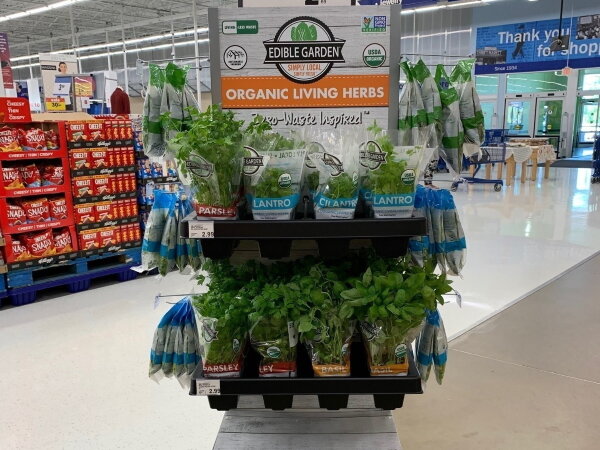
Zero-Waste Inspired innovations feature recyclable micro-perforated bags with micro-cap laser packaging that optimize atmosphere transfer rates within the bag and keep it free of contaminants. Edible Garden's patented self-watering in-store displays, designed to extend the life of the plant, are available exclusively at Meijer stores.
Edible Garden's advanced agriculture technology and environmentally controlled crops ensure food safety and quality.
Headquartered in Belvidere, New Jersey, Edible Garden operates additional farms nationwide through cooperative farming efforts that transcend the company's social mission to bring fresh produce and jobs to local areas. Edible Garden is a key contributor to Project Gigaton, a Walmart initiative to avoid one billion metric tons (a gigaton) of greenhouse gases from the global value chain by 2030.
Edible Garden produce includes USDA-Certified Organic Premium Fresh Cut Herbs, Hydro Fresh Basil, Organic 4" Living Herbs, and Premium Organic Living Lettuces that are currently available at major and local retailers including Meijer, Walmart, Wakefern/ShopRite, Hannaford, Target, Sweetgreen, among many others.
Lead photo: Edible Garden's patented self-watering in-store displays extend plant life for a better product and minimal loss.
For more information:
Edible Garden
283 County Road 519
Belvidere, NJ 07823
(844) 344-3727
www.ediblegarden.com
Publication date: Thu 8 Oct 2020

Farm.One Launches Latest NYC Vertical Mini-Farm At Whole Foods Market, Manhattan West
Farm.One custom-designed the farm for the Manhattan West store and maintains the on-site mini-farm to supply the in-store prepared food and beverages with freshly grown and harvested Blue Spice Basil
Blog, News from Fluence by monique
Establishes A New Distributed Urban Agriculture Model To Support
Onsite Farms For Grocers, Restaurants,
And Other Businesses In The Greater
New York City Area
NEW YORK (September 9, 2020) — Farm.One, Manhattan’s only vertical farm, launched its latest mini-farm at the newly opened Whole Foods Market Manhattan West. Farm.One custom-designed the farm for the Manhattan West store and maintains the on-site mini-farm to supply the in-store prepared food and beverages with freshly grown and harvested Blue Spice Basil. The basil is used as an ingredient for a variety of delicious menu items, including freshly made pizza and the Whole Foods Mule, a specialty cocktail.
With a mission to surprise and delight with fresh, local, specialty ingredients grown at innovative farms in city centers, Farm.One’s mini-farm represents a major shift in urban food production and supply chains. With mini-farms, businesses have continual access to the highest quality, most flavorful, and consistent professional-grade ingredients. Further, the distance between production and consumption is now mere footsteps, eliminating any carbon emissions associated with the delivery of the produce.
“Every kitchen knows the difference that freshness and quality of ingredients can make to the food they serve,” said Rob Laing, founder and CEO of Farm.One. “When we started in 2016, it wasn’t financially feasible to build and operate small farms profitably in cities like New York. We’ve now been able to decrease the cost of building a farm and have developed a model where a larger farm, like our TriBeCa flagship, can support small farms for grocery stores, restaurants and the hospitality industry all over the greater New York City area. This marks a real inflection point for what people can expect in their meals and the economy of urban food production.”
Farm.One’s mini-farm at Whole Foods Market Manhattan West takes up just thirty two square feet and features a hundred and fifty plant sites on three growing levels. The hydroponic system was designed and built by Farm.One’s engineering and technology team to optimize crop productivity, minimize intrusiveness to the store experience, and require minimal maintenance. The facade of the mini-farm was customized to match the familiar brushed stainless steel aesthetic of Whole Foods Market. The mini-farm is capable of supplying at least 8 pounds of basil every month, including harvesting the fragrant basil flowers for use in the Whole Foods Mule.
“The first thing our customers notice when they enter the prepared food section of the store is the incredible fragrance of the basil,,” said Chris Manca, local forager, Whole Foods Market Northeast Region. “As soon as our chefs, and even our mixologist, had access to the basil they were inspired to create menu items that highlight the freshness and flavor of Farm.One’s blue spice basil. This collaboration with Farm.One has really impacted the way we think about fresh ingredients in our kitchens and we can’t wait for customers to come by and experience it.”
Farm.One’s Distributed Agriculture Model
Farm.One has taken a distributed approach to scaling indoor farming in cities, an alternative to the large, expensive warehouse farming models. By establishing a Farm.One flagship as a hub in a city, the company is able to centralize farming and business operations, engineering, training, and support, to build and maintain on-site ‘spoke’ farms throughout a city for its customers. This results in lower investment requirements, a faster path to profitability, and the flexibility to grow a diverse range of crops that meet a variety of customer needs.
“Our hub-and-spoke model of distributed agriculture proves that indoor agriculture doesn’t need tens or hundreds of millions of dollars to be viable and achieve scale,” added Laing. “Also, by putting farms in visible places around the city we’re ensuring openness and transparency never before achieved in the industry. Whether you visit a Farm.One flagship for a tour or class, when it’s safe to do so, or experience a mini-farm in the middle of a grocery store, you’ll see and learn about how your food is grown.”
The company has plans to build flagships and mini-farms in major cities around the United States and globally over the next twenty four months.
Farm costs are further reduced through its relationship with leading LED lighting company Fluence by OSRAM. The cost of lighting and electricity remains one of the highest cost centers for building and operating indoor farms. By collaborating with Fluence, Farm.One is leveraging innovative LED technology to ensure its growing environments are optimized by crop type and for operational efficiency.
“In a vertical farming environment, efficiency isn’t a perk, it is paramount to the farm’s success,” said David Cohen, CEO of Fluence. “Farm.One is tapping into the world’s most advanced cultivation technology to deliver beautiful, delectable plants in the heart of one of the busiest metropolitan areas in the world. Their ability to localize high-quality crop production illustrates how exploring the interaction between light and life will yield a healthier and more sustainable world.”
The mini-farm at Whole Foods Market Manhattan West adds to several mini-farms Farm.One has built out of its flagship farm in TriBeCa, including at OCTOBER, a restaurant in Nolita which features a 100% plant-based menu, Eataly NYC Flatiron, and at the Institute of Culinary Education (ICE), the site of Farm.One’s original prototype farm. Farm.One also maintains a farm at Project Farmhouse at Union Square.
For more information about purchasing a Farm.One mini-farm for restaurants, grocery stores, and other businesses in the greater New York City area, visit: https://www.farm.one/vertical-farms/custom-units.
For more information about bringing a Farm.One flagship to a city, visit https://www.farm.one/vertical-farms/flagship-farm.
Farm.One Press Inquiries:
Rob Laing
rob@farm.one