


Welcome to iGrow News, Your Source for the World of Indoor Vertical Farming

Crops Can Now 'Tell' Growers When They Are Stressed
All plants use internal electrical, mechanical, and chemical signaling networks to coordinate growth, reproduction, and defense – and Vivent is the first company in the world to launch a commercial crop health diagnostic system based on plant electrophysiology
Vivent, the Swiss biosignals analysis specialist, has closed a multi-million Euro Series A funding round. This first external investment from Astanor Ventures, will be used to expand sales of a unique plant electrophysiology system that diagnoses crop stress in real-time.
All plants use internal electrical, mechanical, and chemical signaling networks to coordinate growth, reproduction, and defense – and Vivent is the first company in the world to launch a commercial crop health diagnostic system based on plant electrophysiology.
Electrical signals are some of the fastest to transmit information throughout a plant – from roots to shoots. Vivent’s crop diagnostics system, called ‘PhytlSigns’, uses AI to interpret signals linked to plant stress and diagnoses pathogens and pests prior to the appearance of any visible symptoms. Early diagnosis increases yields, improves crop protection effectiveness, and encourages the adoption of environmentally preferable protection solutions.
“Growers are using PhytlSigns to monitor their crops in real-time. This additional information is improving their decision-making on climate control, irrigation, and crop protection,” explains Carrol Plummer, founder, and CEO.
“Thanks to low-cost powerful machine learning, we can give growers real-time information that results in safer, higher-quality, and tastier food with less reliance on preventive spraying and more focus on environmentally preferable crop protection. We are very excited to be working with Astanor, a top deep-tech venture fund, with ambitions to enhance food quality, security, and sustainability.”
Christina Ulardic, Partner at Astanor Ventures and new Vivent board member, explains that “Vivent is pioneering a new relationship with the crops we grow. It is remarkable to be able to see precisely how plants are responding to stressors in the environment and to learn how we can use these signals to provide treatments which improve plant husbandry.”
Vivent is already working with top global crop protection companies and growers in several countries to improve yields and product quality. Customers value early diagnosis of plant diseases, particularly those in roots, which are hard to identify using other methods.
For more information:
Vivent
www.phytlsigns.com
Publication date: Mon 28 Sep 2020
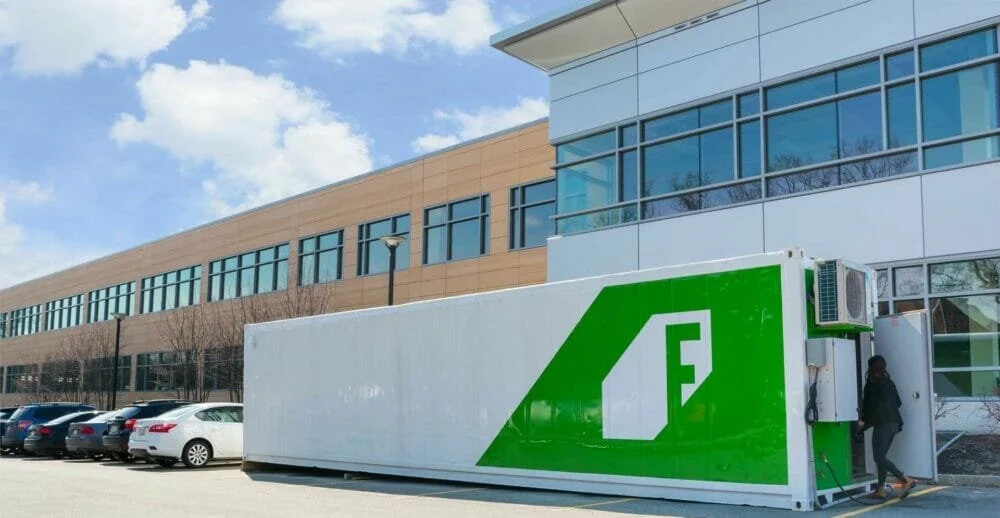
Sodexo Partners With Container Farming Startup Freight Farms To Bring Indoor Ag To College Campuses
The goal of the partnership is to bring fresh, traceable produce to college foodservice year-round that’s pesticide- and insecticide-free with low food miles
January 29, 2020
When a major foodservice player like Sodexo calls up your relatively young startup to ask whether you’d be interested in providing indoor ag services for their university clients, it’s safe to say you’ve arrived.
“Their partnership team reached out to us and said this is a huge problem we are trying to solve and we have been watching you guys from corporate headquarters and we saw you have proven adoption on all these different university campuses,” Brad McNamara, Freight Farms CEO, told AFN. “It’s a surreal moment when the 800-pound gorilla calls you and says we’ve been talking about you internally for six months. Can we work with you?”
The Boston-based container farming company announced today a new partnership to bring Freight Farms’ Greenery container farm setups to the campuses that Sodexo services throughout the US. The goal of the partnership is to bring fresh, traceable produce to college foodservice year-round that’s pesticide- and insecticide-free with low food miles. Sodexo is engaging the company as part of its Better Tomorrow Commitments, developed according to the UN Sustainable Development Goals.
Sodexo is one of the world’s largest multinational corporations serving 80 countries with nearly $17 billion in annual revenue, which means the partnership could go a long way towards demonstrating whether indoor ag systems can provide fresh produce at large-scale. The first Greenery system will be deployed at a college campus this Spring, according to McNamara.
As part of the deal, Sodexo’s campus clients will come under Freight Farms’ ‘farming-as-a-service’ program like any other Greenery user. Freight Farms provides turnkey farming software, training, monitoring, refillables, and support. The number of Greenery machines deployed to each campus will depend on the goal that the university has, which could involve providing as much produce as possible to its foodservice outlets. McNamara describes the units as being able to operate on a commercial scale and to scale up or down quickly depending on the ultimate need.
Invest with Impact. Click here.
More than local lettuce
In 2012, Freight Farms launched a farming system built inside a shipping container dubbed the Leafy Green Machine. Last year, it launched a new model, Greenery, in the same 320-square foot space but with 70% more growing space. It also packs new IoT-driven technology to improve yield, efficiency, and automation, according to the startup.
Today, it claims to have the largest network of connected farms in the world with customers in 25 countries and 44 US states that range from small business farmers to corporate, hospitality, retail, and education entities. So far, 35 educational and corporate campuses are using Freight Farms’ Greenery machine and technology to grow food onsight. The University of Georgia has already purchased two Greenery containers. A group called WhyNot Farm also made a purchase.
What Freight Farms is really trying to achieve is more than just growing lettuce in a shipping container, however. Last time we interviewed the outfit, the goal was to achieve a distributed food system that addresses many of the issues that the conventional produce industry has created: food waste, ugly produce being discarded, and a focus solely on yield maximization to the detriment of ecosystems.
“Schools are a good fit because of the value add that is placed on food and the variety and the quality of food served in cafeterias. There’s not just one customer that schools have to attract. They’re also selling to parents. They have to really be able to give comfort to mom and dad that the student has access to high-quality food and food programming,” McNamara explains.
Students are also hungry for this type of offering, as consumers at large search for ways to get closer to the roots of the food that they consume any way they can. At McNamara’s alma mater, Northeastern, for example, one of its educational programs includes a food co-op where students can work on real-world applications of local food systems.
The indoor ag space is seeing some renewed attention recently, with three of AFN’s top 10 best-read stories in 2019 focusing on the sector.
“I think what’s really exciting now versus just a few years ago is the recognition that this opportunity a lot of us have been talking about is, in fact, big and that there are various markets for us to go after,” McNamara says.
With a freshly inked Sodexo partnership under his belt, it’s hard to say he’s wrong.
Technology Quarterly, The Future of Agriculture
If agriculture is to continue to feed the world, it needs to become more like manufacturing, says Geoffrey Carr. Fortunately, that is already beginning to happen
Factory Fresh
If agriculture is to continue to feed the world, it needs to become more like manufacturing, says Geoffrey Carr. Fortunately, that is already beginning to happen
TOM ROGERS is an almond farmer in Madera County, in California’s Central Valley. Almonds are delicious and nutritious. They are also lucrative. Californian farmers, who between them grow 80% of the world’s supply of these nuts, earn $11 billion from doing so. But almonds are thirsty. A calculation by a pair of Dutch researchers six years ago suggested that growing a single one of them consumes around a gallon of water. This is merely an American gallon of 3.8 litres, not an imperial one of 4.5 litres, but it is still a tidy amount of H2O. And water has to be paid for.
Technology, however, has come to Mr. Rogers’s aid. His farm is wired up like a lab rat. Or, to be more accurate, it is wirelessed up. Moisture sensors planted throughout the nut groves keep track of what is going on in the soil. They send their results to a computer in the cloud (the network of servers that does an increasing amount of the world’s heavy-duty computing) to be crunched. The results are passed back to the farm’s irrigation system—a grid of drip tapes (hoses with holes punched in them) that are filled by pumps.
The system resembles the hydroponics used to grow vegetables in greenhouses. Every half-hour a carefully calibrated pulse of water based on the cloud’s calculations, and mixed with an appropriate dose of fertilizer if scheduled, is pushed through the tapes, delivering a precise sprinkling to each tree. The pulses alternate between one side of the tree trunk and the other, which experience has shown encourages water uptake. Before this system was in place, Mr. Rogers would have irrigated his farm about once a week. With the new little-but-often technique, he uses 20% less water than he used to. That both saves money and brings kudos, for California has suffered a four-year-long drought and there is social and political, as well as financial, pressure to conserve water.
Mr. Rogers’s farm, and similar ones that grow other high-value but thirsty crops like pistachios, walnuts, and grapes, are at the leading edge of this type of precision agriculture, known as “smart farming”. But it is not only fruit and nut farmers who benefit from being precise. So-called row crops—the maize and soyabeans that cover much of America’s Midwest—are being teched up, too. Sowing, watering, fertilizing and harvesting are all computer-controlled. Even the soil they grow in is monitored to within an inch of its life.
People will want to eat better than they do now
Farms, then, are becoming more like factories: tightly controlled operations for turning out reliable products, immune as far as possible from the vagaries of nature. Thanks to better understanding of DNA, the plants and animals raised on a farm are also tightly controlled. Precise genetic manipulation, known as “genome editing”, makes it possible to change a crop or stock animal’s genome down to the level of a single genetic “letter”. This technology, it is hoped, will be more acceptable to consumers than the shifting of whole genes between species that underpinned early genetic engineering, because it simply imitates the process of mutation on which crop breeding has always depended, but in a far more controllable way.
Understanding a crop’s DNA sequence also means that breeding itself can be made more precise. You do not need to grow a plant to maturity to find out whether it will have the characteristics you want. A quick look at its genome beforehand will tell you.
Such technological changes, in hardware, software, and “liveware”, are reaching beyond field, orchard, and byre. Fish farming will also get a boost from them. And indoor horticulture, already the most controlled and precise type of agriculture, is about to become yet more so.
In the short run, these improvements will boost farmers’ profits, by cutting costs and increasing yields, and should also benefit consumers (meaning everyone who eats food) in the form of lower prices. In the longer run, though, they may help provide the answer to an increasingly urgent question: how can the world be fed in future without putting irreparable strain on the Earth’s soils and oceans? Between now and 2050 the planet’s population is likely to rise to 9.7 billion, from 7.3 billion now. Those people will not only need to eat, they will want to eat better than people do now, because by then most are likely to have middling incomes, and many will be well off.
The Food and Agriculture Organisation, the United Nations’ agency charged with thinking about such matters, published a report in 2009 which suggested that by 2050 agricultural production will have to rise by 70% to meet projected demand. Since most land suitable for farming is already farmed, this growth must come from higher yields. Agriculture has undergone yield-enhancing shifts in the past, including mechanization before the second world war and the introduction of new crop varieties and agricultural chemicals in the green revolution of the 1950s and 1960s. Yet yields of important crops such as rice and wheat have now stopped rising in some intensively farmed parts of the world, a phenomenon called yield plateauing. The spread of existing best practice can no doubt bring yields elsewhere up to these plateaus. But to go beyond them will require improved technology.
This will be a challenge. Farmers are famously and sensibly skeptical of change since the cost of getting things wrong (messing up an entire season’s harvest) is so high. Yet if precision farming and genomics play out as many hope they will, another such change is in the offing.
Smart farms: Silicon Valley meets Central Valley
In various guises, information technology is taking over agriculture
ONE way to view farming is as a branch of matrix algebra. A farmer must constantly juggle a set of variables, such as the weather, his soil’s moisture levels and nutrient content, competition to his crops from weeds, threats to their health from pests and diseases, and the costs of taking action to deal with these things. If he does the algebra correctly, or if it is done on his behalf, he will optimize his yield and maximize his profit.
The job of smart farming, then, is twofold. One is to measure the variables going into the matrix as accurately as is cost-effective. The other is to relieve the farmer of as much of the burden of processing the matrix as he is comfortable with ceding to a machine.
An early example of cost-effective precision in farming was the decision made in 2001 by John Deere, the world’s largest manufacturer of agricultural equipment, to fit its tractors and other mobile machines with global-positioning-system (GPS) sensors, so that they could be located to within a few centimeters anywhere on Earth. This made it possible to stop them either covering the same ground twice or missing out patches as they shuttled up and down fields, which had been a frequent problem. Dealing with this both reduced fuel bills (by as much as 40% in some cases) and improved the uniformity and effectiveness of things like fertilizer, herbicide and pesticide spraying.
Bugs in the system
Bacteria and fungi can help crops and soil
MICROBES, though they have a bad press as agents of disease, also play a beneficial role in agriculture. For example, they fix nitrogen from the air into soluble nitrates that act as natural fertiliser. Understanding and exploiting such organisms for farming is a rapidly developing part of agricultural biotechnology.
At the moment, the lead is being taken by a collaboration between Monsanto and Novozymes, a Danish firm.
This consortium, called BioAg, began in 2013 and has a dozen microbe-based products on the market. These include fungicides, insecticides and bugs that liberate nitrogen, phosphorous and potassium compounds from the soil, making them soluble and thus easier for crops to take up. Last year, researchers at the two firms tested a further 2,000 microbes, looking for species that would increase maize and soyabean yields. The top-performing strains delivered a boost of about 3% for both crops.
In November 2015 Syngenta and DSM, a Dutch company, formed a similar partnership. And earlier that year, in April, DuPont bought Taxon Biosciences, a Californian microbes firm. And hopeful start-ups abound. One such is Indigo, in Boston. Its researchers are conducting field tests of some of its library of 40,000 microbes to see if they can alleviate the stress on cotton, maize, soyabeans and wheat induced by drought and salinity. Another is Adaptive Symbiotic Technologies, of Seattle. The scientists who formed this firm study fungi that live symbiotically within plants. They believe they have found one, whose natural partner is panic grass, a coastal species, which confers salinity-resistance when transferred to crops such as rice.
The big prize, however, would be to persuade the roots of crops such as wheat to form partnerships with nitrogen-fixing soil bacteria. These would be similar to the natural partnerships formed with nitrogen-fixing bacteria by legumes such as soyabeans. In legumes, the plants’ roots grow special nodules that become homes for the bacteria in question. If wheat rhizomes could be persuaded, by genomic breeding or genome editing, to behave likewise, everyone except fertilizer companies would reap enormous benefits.
Since then, other techniques have been added. High-density soil sampling, carried out every few years to track properties such as mineral content and porosity, can predict the fertility of different parts of a field. Accurate contour mapping helps indicate how water moves around. And detectors planted in the soil can monitor moisture levels at multiple depths. Some detectors are also able to indicate nutrient content and how it changes in response to the application of fertilizer.
All of this permits variable-rate seeding, meaning the density of plants grown can be tailored to local conditions. And that density itself is under precise control. John Deere’s equipment can plant individual seeds to within an accuracy of 3cm. Moreover, when a crop is harvested, the rate at which grains or beans flow into the harvester’s tank can be measured from moment to moment. That information, when combined with GPS data, creates a yield map that shows which bits of land were more or less productive—and thus how accurate the soil and sensor-based predictions were. This information can then be fed into the following season’s planting pattern.
Farmers also gather information by flying planes over their land. Airborne instruments are able to measure the amount of plant cover and to distinguish between crops and weeds. Using a technique called multispectral analysis, which looks at how strongly plants absorb or reflect different wavelengths of sunlight, they can discover which crops are flourishing and which not.
Sensors attached to moving machinery can even take measurements on the run. For example, multispectral sensors mounted on a tractor’s spraying booms can estimate the nitrogen needs of crops about to be sprayed and adjust the dose accordingly. A modern farm, then, produces data aplenty. But they need interpreting, and for that, information technology is essential.
Platform tickets
Over the past few decades, large corporations have grown up to supply the needs of commercial farming, especially in the Americas and Europe. Some are equipment-makers, such as John Deere. Others sell seeds or agricultural chemicals. These look like getting larger still. Dow and DuPont, two American giants, are planning to merge. Monsanto, another big American firm, is the subject of a takeover bid by Bayer, a German one. And Syngenta, a Swiss company, is being bid for by ChemChina, a Chinese one.
Business models are changing, too. These firms, no longer content merely to sell machinery, seed or chemicals, are all trying to develop matrix-crunching software platforms that will act as farm-management systems. These proprietary platforms will collect data from individual farms and process them in the cloud, allowing for the farm’s history, the known behavior of individual crops strains, and the local weather forecast. They will then make recommendations to the farmer, perhaps pointing him towards some of the firm’s other products.
But whereas making machinery, breeding new crops, or manufacturing agrochemicals all have high barriers to entry, a data-based farm-management system can be put together by any businessman, even without a track record in agriculture. And many are having a go. For example, Trimble Navigation, based in Sunnyvale, at the southern end of Silicon Valley, reckons that as an established geographical-information company it is well placed to move into the smart-farming market, with a system called Connected Farms. It has bought in outside expertise in the shape of AGRI-TREND, a Canadian agricultural consultancy, which it acquired last year.
By contrast, Farmobile of Overland Park, Kansas, is a startup. It is aimed at those who value privacy, making a feature of not using clients’ data to sell other products, as many farm-management systems do. Farmers Business Network, of Davenport, Iowa, uses almost the opposite model, acting as a co-operative data pool. Data in the pool are anonymized, but everyone who joins is encouraged to add to the pool, and in turn, gets to share what is there. The idea is that all participants will benefit from better solutions to the matrix.
Some firms focus on market niches. iTK, based in Montpellier, France, for example, specialises in grapes and has built mathematical models that describe the behaviour of all the main varieties. It is now expanding into California.
Thanks to this proliferation of farm-management software, it is possible to put more and more data to good use if the sensors are available to provide them. And better, cheaper sensors, too, are on their way. Moisture sensors, for example, usually work by measuring either the conductivity or the capacitance of soil, but a firm called WaterBit, based in Santa Clara, California, is using a different technology which it says can do the job at a tenth of the price of the existing products. And a sensor sold by John Deere can spectroscopically measure the nitrogen, phosphorous and potassium composition of liquid manure as it is being sprayed, permitting the spray rate to be adjusted in real time. This gets round the problem that liquid manure, though a good fertiliser, is not standardised, so is more difficult than commercial fertiliser to apply in the right quantities.
Things are changing in the air, too. In a recapitulation of the early days of manned flight, the makers of unmanned agricultural drones are testing a wide range of designs to find out which is best suited to the task of flying multispectral cameras over farms. Some firms, such as Agribotix in Boulder, Colorado, prefer quadcopters, a four-rotored modern design that has become the industry standard for small drones, though it has limited range and endurance. A popular alternative, the AgDrone, built by HoneyComb of Wilsonville, Oregon, is a single-engine flying wing that looks as if it has escaped from a 1950s air show. Another, the Lancaster 5, from PrecisionHawk of Raleigh, North Carolina, vaguely resembles a scale model of the eponymous second-world-war bomber. And the offering by Delair-Tech, based in Toulouse, France, sports the long, narrow wings of a glider to keep it aloft for long periods.
Even an endurance drone, though, may be pushed to survey a large estate in one go. For a synoptic view of their holding, therefore, some farmers turn to satellites. Planet Labs, a firm in San Francisco, provides such a service using devices called CubeSats, measuring a few centimetres across. It keeps a fleet of about 30 of these in orbit, which it refreshes as old ones die by putting new ones into space, piggybacking on commercial launches. Thanks to modern optics, even a satellite this small can be fitted with a multispectral camera, though it has a resolution per pixel of only 3.5 metres (about ten feet). That is not bad from outer space, but not nearly as good as a drone’s camera can manage.
Satellite coverage, though, has the advantage of being both broad and frequent, whereas a drone can offer only one or the other of these qualities. Planet Lab’s constellation will be able to take a picture of a given bit of the Earth’s surface at least once a week, so that areas in trouble can be identified quickly and a more detailed examination made.
The best solution is to integrate aerial and satellite coverage. That is what Mavrx, also based in San Francisco, is trying to do. Instead of drones, it has an Uber-like arrangement with about 100 light-aircraft pilots around America. Each of the firm’s contracted planes has been fitted with a multispectral camera and stands ready to make specific sorties at Mavrx’s request. Mavrx’s cameras have a resolution of 20cm a pixel, meaning they can pretty much take in individual plants.
The firm has also outsourced its satellite photography. Its raw material is drawn from Landsat and other public satellite programmes. It also has access to these programmes’ libraries, some of which go back 30 years. It can thus check the performance of a particular field over decades, calculate how much biomass that field has supported from year to year and correlate this with records of the field’s yields in those years, showing how productive the plants there have been. Then, knowing the field’s biomass in the current season, it can predict what the yield will be. Mavrx’s method can be scaled up to cover entire regions and even countries, forecasting the size of the harvests before they are gathered. That is powerful financial and political information.
A truly automated, factory-like farm, however, would have to cut people out of the loop altogether. That means introducing robots on the ground as well as in the air, and there are plenty of hopeful agricultural-robot makers trying to do so.
At the University of Sydney, the Australian Centre for Field Robotics has developed RIPPA (Robot for Intelligent Perception and Precision Application), a four-wheeled, solar-powered device that identifies weeds in fields of vegetables and zaps them individually. At the moment it does this with precise, and precisely aimed, doses of herbicide. But it, or something similar, could instead use a beam of microwaves, or even a laser. That would allow the crops concerned to be recognised as “organic” by customers who disapprove of chemical treatments.
For the less fussy, Rowbot Systems of Minneapolis is developing a bot that can travel between rows of partly grown maize plants, allowing it to apply supplementary side dressings of fertiliser to the plants without crushing them. Indeed, it might be possible in future to match the dose to the plant in farms where individual plants’ needs have been assessed by airborne multispectral cameras.
Robots are also of interest to growers of fruit and vegetables that are currently picked by hand. Fruit-picking is a time-consuming business which, even though the pickers are not well rewarded, would be a lot faster and cheaper if it were automated. And robot pickers are starting to appear.
The SW6010, made by AGROBOT, a Spanish firm, uses a camera to recognise strawberries and work out which are ripe for the plucking. Those that are have their stems severed by blades and are caught in baskets before being passed on by a conveyor belt for packing by a human operator sitting on the robot. In the Netherlands, researchers at Wageningen University are working on a robot harvester for larger produce such as peppers.
All these devices, and others like them, still exude a whiff of the Heath Robinson. But robotics is developing rapidly, and the control systems needed to run such machines are getting better and cheaper by the day. Some think that in a decade or so many farms in rich countries will be largely robot-operated.
Yet others wonder just how far farmers will let their farms be robotised. Self-guiding agricultural machinery such as that sold by John Deere is all but robotic already. It is like an airliner, in which the pilot usually has little to do between landing and take-off because computers do the work for him. Yet Deere has no plans to hand over complete control to the cloud, because that is not what its customers want.
Tunnel vision
If total control still seems some way off in outdoor farming, it is already close for crops grown in an entirely artificial environment. In a warren of tunnels beneath Clapham, in south London, Growing Underground is doing exactly what its name suggests. It is rearing around 20 types of salad plants, intended for sale to the chefs and sandwich shops of the city, in subterranean voids that began life as second-world-war bomb shelters.
In many ways, Growing Underground’s farm resembles any other indoor hydroponic operation. But there is one big difference. A conventional greenhouse, with its glass or polycarbonate walls, is designed to admit as much sunlight as possible. Growing Underground specifically excludes it. Instead, illumination is provided by light-emitting diodes (LEDs). These, in the minimalist spirit of hydroponics, have had their spectra precisely tuned so that the light they emit is optimal for the plants’ photosynthesis.
As you would expect, sensors watch everything—temperature, humidity, illumination—and send the data directly to Cambridge University’s engineering department where they are crunched, along with information on the plants’ growth, to work out the best regimes for future crops.
For now Steven Dring, Growing Underground’s boss, is confining output to herbs and vegetables such as small lettuces and samphire that can be brought to harvestable size quickly. He has reduced the cycle for coriander from 21 to 14 days. But tests suggest that the system also works for other, chunkier crops. Carrots and radishes have already been successfully grown this way, though they may not command a sufficient premium to make their underground cultivation worthwhile. But pak choi, a Chinese vegetable popular with trendy urbanites who live in inner-London suburbs like Clapham, is also amenable. At the moment growing it takes five weeks from start to finish. Get that down to three, which Mr Dring thinks he can, and it would be profitable.
The firms that make the LEDs could also be on to a good thing. Mr Dring’s come from Valoya, a Finnish firm. In Sweden, Heliospectra is in the same business. Philips, a Dutch electrical giant, has also joined in. In conventional greenhouses such lights are used to supplement the sun, but increasingly they do duty in windowless operations like Mr Dring’s. Though unlike sunlight they do not come free, they are so efficient and long-lasting that their spectral advantages seem clinching (see chart).
This kind of farming does not have to take place underground. Operations like Mr Dring’s are cropping up in buildings on the surface as well. Old meatpacking plants, factories and warehouses the world over are being turned into “vertical farms”. Though they are never going to fill the whole world’s bellies, they are more than a fad. Rather, they are a modern version of the market gardens that once flourished on the edge of cities —in places just like Clapham—before the land they occupied was swallowed by urban sprawl. And with their precise control of inputs, and thus outputs (see Brain scan, below), they also represent the ultimate in what farming could become.
Brain scan: Caleb Harper
PLANT breeders are understandably excited about manipulating botanical genomics (see next page). But it is a crop’s phenotype—its physical instantiation—that people actually eat, and this is the product of both genes and environment.
Optimising phenotypes by manipulating the environment is the task Caleb Harper has set himself. Dr Harper is the founder of the Open Agriculture Initiative (OAI) at the Massachusetts Institute of Technology’s Media Lab. At first sight, that seems odd. The Media Lab is an information-technology laboratory, best known for having helped develop things like electronic paper, wireless networks and even modern karaoke machines. It is very much about bits and bytes, and not much hitherto about proteins and lipids.
However, environmental information is still information. It informs how a plant grows, which is what interests Dr Harper. As he once put it, “people say they like peppers from Mexico. What they actually like is peppers grown in the conditions that prevail in Mexico.” He reckons that if you can replicate the conditions in which a botanical product grew, you can replicate that product. But this means you have to understand those conditions properly in the first place.
To help with this, he and his colleagues at the OAI have developed what they call the Personal Food Computer: a standardised tabletop device that can control illumination, carbon-dioxide levels, humidity, air temperature, root-zone temperature, and the acidity and dissolved-oxygen content of water delivered to the roots, as well as its nutrient content and any other aspect of its chemistry.
Plant phenotypes are monitored during growth by web cameras linked to software that detects leaf edges and colour differences and by sensors that can detect areas of active photosynthesis. After harvesting they are examined by lidar (the optical equivalent of radar) to record their shape in detail, and by gas chromatography/mass spectroscopy to understand their chemical composition.
The idea is that Personal Food Computers can be built by anyone who chooses to, and form part of an “open science” network that gathers data on growing conditions and works out those conditions’ phenotypic effects. Of particular interest are matters such as flavour and astringency that are governed by chemicals called secondary metabolites. These are often parts of plant-defence mechanisms, so in one experiment the computers are looking at the effect of adding crushed arthropod exoskeletons to the water supply, which may mimic attack by insects or mites. The hope is that this will change flavours in controllable ways.
Though Dr Harper is from a rural background, his career before the OAI was conventionally Media Lab-like. In particular, he designed environmental-control systems for data centres and operating theatres—keeping heat, humidity and so on within the tight limits needed for optimal function. But the jump from controlling those environments to controlling miniature farms was not enormous.
Some three dozen Personal Food Computers already exist and about 100 more are under construction the world over. This geographical dispersion is important. Dr. Harper’s goal, as his view on Mexican peppers suggests, is to decouple climate from geography by building a “catalogue of climates”. That would allow indoor urban farms to be programmed to imitate whatever climate was required in order to turn out crops for instant local consumption. This would certainly appeal to those who worry about “food miles”—the cost in terms of carbon dioxide of shipping edible items around the world. How it will go down with farmers in places whose climates are being imitated in rich-country cities remains to be seen.
The founder of the Open Agriculture Initiative at MIT’s Media Lab is building a “catalogue of climates” to help plants grow better
Crops of the future: Tinker and tailor
Farms need better products. Genomic understanding will provide them
C4 SOUNDS like the name of a failed electric car from the 1970s. In fact, it is one of the most crucial concepts in plant molecular biology. Plants have inherited their photosynthetic abilities from bacteria that took up symbiotic residence in the cells of their ancestors about a billion years ago. Those bacteria’s descendants, called chloroplasts, sit inside cells absorbing sunlight and using its energy to split water into hydrogen and oxygen. The hydrogen then combines with carbon dioxide to form small intermediate molecules, which are subsequently assembled into sugars. This form of photosynthesis is known as C3, because these intermediates contain three carbon atoms. Since the arrival of chloroplasts, though, evolution has discovered another way to photosynthesise, using a four-carbon intermediate. C4 photosynthesis is often more efficient than the C3 sort, especially in tropical climes. Several important crops that started in the tropics use it, notably maize, millet, sorghum, and sugar cane.
C4 photosynthesis is so useful that it has evolved on at least 60 separate occasions. Unfortunately, none of these involved the ancestors of rice, the second most important crop on Earth, after wheat. Yet rice, pre-eminently a tropical plant, would produce yields around 50% bigger than at present if it took the C4 route. At the International Rice Research Institute in Los Banos, outside Manila, researchers are trying to show it how.
The C4 Rice Project, co-ordinated by Paul Quick, is a global endeavour, also involving biologists at 18 other laboratories in Asia, Australia, Europe and North America. Their task involves adding five alien enzymes to rice, to give it an extra biochemical pathway, and then reorganising some of the cells in the plant’s leaves to create special compartments in which carbon dioxide can be concentrated in ways the standard C3 mechanism does not require. Both of these things have frequently happened naturally in other plants, which suggests that doing them artificially is not out of the question. The team has already created strains of rice which contain genes plucked from maize plants for the extra enzymes, and are now tweaking them to improve their efficacy. The harder part, which may take another decade, will be finding out what genetic changes are needed to bring about the compartmentalisation.
Genome editing resembles the natural process of mutation
The C4 Rice Project thus aims to break through the yield plateaus and return the world to the sort of growth rates seen in the heady days of the Green Revolution. Other groups, similarly motivated, are working on making many types of crops resistant to drought, heat, cold and salt; on inducing greater immunity to infection and infestation; on improving nutritional value; on making more efficient use of resources such as water and phosphorous; and even on giving to plants that do not have it the ability to fix nitrogen, an essential ingredient of proteins, directly from the air instead of absorbing it in the form of nitrates. Such innovations should be a bonanza. Unfortunately, for reasons both technical and social, they have so far not been. But that should soon change.
The early days of genetically engineered crops saw two huge successes and one spectacular failure. The successes were the transfer into a range of plants, particularly maize, soyabeans and cotton, of two types of gene. Both came from bacteria. One protected its host from the attentions of pesky insect larvae. The other protected it from specific herbicides, meaning those herbicides could be used more effectively to keep fields free from weeds. Both are beloved of farmers.
The spectacular failure is that neither is beloved of consumers. Some are indifferent to them; many actively hostile. Even though over decades there has been no evidence that eating genetically modified crops is harmful to health, and little that they harm the environment, they have been treated as pariahs.
Since people do not eat cotton, and soyabeans and maize are used mainly as animal fodder, the anti-GM lobby’s impact on those crops has been muted. But the idea of extending either the range of crops modified or the range of modifications available has (with a few exceptions) been thought commercially too risky to try. Moreover, transgenics, as the technique of moving genes from one species to another is called, is haphazard. Where the moved gene will end up is hard to control. That matters, for genes work better in some places than others.
Spell it for me
The search has therefore been on for a better way than transgenics of doing things. And one is now emerging that, its supporters hope, may kill both the technical and the social birds with a single stone. Genome editing, as this approach is known, tweaks existing DNA in situ by adding, subtracting or substituting a piece that may be as small as a single genetic “letter” (or nucleotide). That not only makes the technique precise, it also resembles the natural process of mutation, which is the basis of the variety all conventional plant-breeding relies on. That may raise fewer objections among consumers, and also holds out the hope that regulators will treat it differently from transgenics.
After a couple of false starts, most researchers agree that a technique called CRISPR/Cas9, derived from a way that bacteria chop up the genes of invading viruses, is the one that will make editing crop genomes a realistic prospect. Transgenic technology has steered clear of wheat, which is eaten mainly by people. But DuPont’s seed division, Pioneer, is already trying to use CRISPR/Cas9 to stop wheat from self-pollinating, in order to make the development of hybrids easier. Similarly, researchers at the Chinese Academy of Sciences are using it to try to develop wheat plants that are resistant to powdery mildew, a serious hazard.
Not all current attempts at agricultural genome editing use CRISPR/Cas9. Cibus, in San Diego, for example, employs a proprietary technique it calls the Rapid Trait Development System (RTDS). This co-opts a cell’s natural DNA repair mechanism to make single-nucleotide changes to genomes. RTDS has already created one commercial product, a form of rape resistant to a class of herbicides that conventional transgenics cannot protect against. But at the moment CRISPR/Cas9 seems to be sweeping most things before it—and even if it stumbles for some reason, other bacterial antiviral mechanisms might step in.
Whether consumers will accept genome editing remains to be seen. No one, however, is likely to object to a second rapidly developing method of crop improvement: a souped-up breeding technique called genomic selection.
Genomic selection is a superior version of marker-assisted selection, a process which has itself been replacing conventional crop-breeding techniques. Both genomic selection and markerassisted selection rely on recognising pieces of DNA called markers found in or near places called quantitative trait loci (QTLs). A QTL is part of a genome that has, because of a gene or genes within it, a measurable, predictable effect on a phenotype. If the marker is present, then so is the QTL. By extension, a plant with the marker should show the QTL’s phenotypic effect.
The difference between conventional marker-assisted selection and the genomic version is that the former relied on a few hundred markers (such as places where the DNA stuttered and repeated itself) that could be picked up by the technology then available. Now, improved detection methods mean single-nucleotide polymorphisms, or SNPs (pronounced “snips”), can be used as markers. A SNP is a place where a single genetic letter varies in an otherwise unchanging part of the genome, and there are thousands of them.
Add in the enormous amounts of computing power available to link SNPs with QTLs—and, indeed, to analyse the interactions between QTLs themselves—and the upshot is a system that can tell a breeder which individual plants are worth raising to maturity, and which should then be crossed with each other to come up with the best results.
Crop strains created this way are already coming to market. AQUAmax and Artesian are drought-tolerant strains of maize developed, respectively, by DuPont and Syngenta. These two, intriguingly, are competitors with another drought-tolerant maize strain, DroughtGuard, developed by Monsanto using the transgenic approach.
Genomic selection also offers opportunities for the scientific improvement of crops that seed companies usually neglect. The NextGen Cassava Project, a pan-African group, plans to zap susceptibility to cassava mosaic virus this way and then systematically to improve the yield and nutritional properties of the crop. The project’s researchers have identified 40,000 cassava SNPs, and have now gone through three generations of genomic selection using them. Besides making cassava resistant to the virus, they also hope to double yields and to increase the proportion of starch (and thus the nutritional value) of the resulting strains. If modern techniques can similarly be brought to bear on other unimproved crops of little interest to the big seed companies, such as millet and yams, the yield-bonuses could be enormous.
For the longer term, some researchers have more radical ambitions. A manifesto published last year by Donald Ort, of the United States Department of Agriculture’s Agricultural Research Service, and his colleagues proposes not merely recapitulating evolution but actually redesigning the photosynthetic process in ways evolution has not yet discovered. Dr Ort suggests tweaking chlorophyll molecules in order to capture a wider range of frequencies and deploy the resulting energy more efficiently. He is also looking at improving the way plants absorb carbon dioxide. The result, he hopes, will be faster-growing, higher-yielding crops.
Such ideas are controversial and could take decades to come to fruition. But they are not fantastic. A combination of transgenics (importing new forms of chlorophyll from photosynthetic bacteria), genome editing (to supercharge existing plant enzymes) and genomic selection (to optimise the resulting mixture) might well be able to achieve them.
Those who see this as an unnatural, perhaps even monstrous approach to crop improvement should recall that it is precisely what happened when the ancestors of modern plants themselves came into existence, through the combination of a bacterium and its host and their subsequent mutual adjustment to live in symbiosis. It was this evolutionary leap which greened the Earth in the first place. That something similar might re-green it is at least worth considering.
Fish farming: Catch of the day
Farming marine fish inland will relieve pressure on the oceans
IN THE basement of a building on a wharf in Baltimore’s inner harbour, a group of aquaculturists at the Institute of Marine and Environmental Technology is trying to create an artificial ecosystem. Yonathan Zohar and his colleagues hope to liberate the raising of ocean fish from the ocean itself so that fish farms can be built inland. Fresh fish, served the day it comes out of the brine (even if the brine in question is a judicious mixture of tap water and salts), would thus become accessible to millions of landlubbers who must now have their fish shipped in from afar, deep-frozen. Equally important, marine-fish farmers would no longer have to find suitable coastal sites for penning stock while it grows to marketable size, exposing the crowded animals to disease and polluting the marine environment.
People have raised freshwater fish in ponds since time immemorial, but farming species such as salmon that live mainly in saltwater dates back only a few decades, as does the parallel transformation of freshwater aquaculture to operate on an industrial scale. Now fish farming is booming. As the chart on the next page shows, human consumption of farmed fish has overtaken that of beef. Indeed, one way of supplying mankind with enough animal protein in future may be through aquaculture. To keep the boom going, though, technologists like Dr Zohar must become ever more inventive.
His ecosystem, which is about to undergo commercial trials, constantly recycles the same supply of brine, purified by three sets of bacteria. One set turns ammonia excreted by the fish into nitrate ions. A second converts these ions into nitrogen (a harmless gas that makes up 78% of the air) and water. A third, working on the solid waste filtered from the water, transforms it into methane, which—via a special generator—provides part of the power that keeps the whole operation running. The upshot is a closed system that can be set up anywhere, generates no pollution and can be kept disease-free. It is also escape-proof. That means old-world species such as sea bream and sea bass, which cannot now be grown in America because they might get out and breed in the wild, could be delivered fresh to the table anywhere.
Besides transforming the design of fish farms, Dr Zohar is also working on extending the range of species that they can grow. He has spent decades studying the hormone system that triggers spawning and can now stimulate it on demand. He has also examined the needs of hatchling fry, often completely different from those of adult fish, that must be met if they are to thrive. At the moment he is trying to do this for one of the most desirable species of all, the bluefin tuna. If he succeeds, and thus provides an alternative to the plummeting wild populations of this animal, sushi lovers around the world will be for ever in his debt.
Gone fishin’
Fish farmers used to dream of fitting their charges with transgenes to make them grow more quickly. Indeed, over the past couple of decades researchers have treated more than 35 fish species in this way. They have often been spectacularly successful. Only one firm, though, has persisted to the point of regulatory approval. AquaBounty’s transgenic Atlantic salmon, now cleared in both America and Canada, has the desirable property of rapid growth. Its transgene, taken from a chinook salmon, causes it to put on weight all year round, not just in spring and summer. That halves the time the fish will take to reach marketable size. Whether people will be willing to eat the result, though, is an experiment in its own right—one that all those other researchers, only too aware of widespread public rejection of transgenic crops, have been unwilling to conduct.
That may be wise. There is so much natural variation in wild fish that conventional selective breeding can make a big difference without any high-tech intervention. Back in 2007 a report by researchers at Akvaforsk, now part of the Norwegian Institute of Food, Fisheries and Aquaculture Research (NOFIMA), showed that three decades of selective breeding by the country’s salmon farmers had resulted in fish which grew twice as fast as their wild progenitors. Admittedly starting from a lower base, those farmers had done what AquaBounty has achieved, but without the aid of a transgene.
If conventional selection can yield such improvements, it is tempting not to bother with anything more complicated. Tempting, but wrong. For, as understanding of piscine DNA improves, the sort of genomic selection being applied to crops can also be applied to fish.
Researchers at SalmoBreed of Bergen, in Norway, have employed it not to create bigger, faster-growing fish but to attack two of fish farming’s banes—infestation and infection. By tracking SNPs (single-nucleotide polymorphisms, a variation of a single genetic letter in a genome used as a marker) they have produced varieties of salmon resistant to sea lice and also to pancreas disease, a viral illness. They are now looking into a third problem, amoebic gill disease. In Japan, similar work has led to the development of flounders resistant to viral lymphocystis, trout immune to “cold-water” disease, a bacterial infection, and amberjack that evade the attentions of a group of parasitic worms called the monogenea.
Altering nature, then, is crucial to the success of fish farming. But nurture can also give a helping hand, for example by optimising what is fed to the animals. As with any product, one key to success is to get costs down. And here, environmental and commercial considerations coincide.
A common complaint by green types is that fish farming does not relieve as much pressure on the oceans as it appears to, because a lot of the feed it uses is made of fish meal. That simply transfers fishing pressure from species eaten by people directly to those that get turned into such meal. But fish meal is expensive, so researchers are trying to reduce the amount being used by substituting plant matter, such as soya. In this they have been successful. According to a paper published last year by researchers at NOFIMA, 90% of salmon feed used in Norway in 1990 was fish meal. In 2013 the comparable figure was 30%. Indeed, a report published in 2014 by the European Parliament found that fish-meal consumption in aquaculture peaked in 2005.
It’s a gas
Feeding carnivores like salmon on plants is one way to reduce both costs and environmental harm. Another, which at first sight seems exotic, is to make fish food out of natural gas. This is the proposed business of Calysta, a Californian firm. Calysta feeds the gas—or, rather, its principal component, methane—to bacteria called methanotrophs. These metabolise the methane, extract energy from it and use the atoms thus liberated, along with oxygen from water and nitrogen from the air, to build their bodies. Calysta then turns these bodies into protein pellets that are sold as fish food, a process that puts no strain at all on either sea or field.
Even conventional fish foods, though, are low-strain compared with feed for farm animals. Because fish are cold-blooded, they do not have to eat to stay warm. They thus convert more of their food into body mass. For conservationists, and for those who worry whether there will be enough food in future to feed the growing human population, that makes fish a particularly attractive form of animal protein.
Nevertheless, demand for the legged and winged sort is growing too. Novel technologies are therefore being applied to animal husbandry as well. And some imaginative researchers are even trying to grow meat and other animal products in factories, cutting the animals out of the loop altogether.
Animal husbandry: Stock answers
Technology can improve not only productivity but animal welfare too
IF THE future of farming is to be more factory-like, some might argue that the treatment of stock animals such as chickens and pigs has led the way. Those are not, though, happy precedents. Crop plants, unsentient as they are, cause no welfare qualms in those who worry about other aspects of modern farming. Even fish, as long as they are kept healthy, rarely raise the ire of protesters. Birds and mammals are different. There are moral limits to how they can be treated. They are also individually valuable in a way that crop plants and fish are not. For both these reasons, they are worth monitoring one at a time.
Cattle, in particular, are getting their own private sensors. Devices that sit inside an animal’s rumen, measuring stomach acidity and looking for digestive problems, have been available for several years. They have now been joined by movement detectors such as that developed by Smartbell, a small firm in Cambridge, England. This sensor hangs around a cow’s neck, recording its wearer’s movement and transmitting that information to the cloud. An animal’s general activity level is a good indication of its fitness, so the system can give early warning of any trouble. In particular, it immediately shows when its wearer is going lame—a problem that about a fifth of British cattle suffer at some point in their lives—even before an observant farmer might notice anything wrong. If picked up early, lameness is easily treated. If permitted to linger, it often means the animal has to be destroyed.
Movement detectors can also show if a cow is ready for insemination. When she is in oestrus, her pattern of movement changes, and the detector will pick this up and alert her owner. Good breeding is crucial to animal husbandry, and marker-assisted genomic selection will ensure that the semen used for such insemination continues to yield better and better offspring. What is less clear—and is actively debated—is whether genome editing has a role to play here. Transgenics has given an even wider berth to terrestrial animals than it has to fish, and for the same reason: wary consumers. Some people hope, though, that this wariness will not apply to animals whose DNA has merely been tweaked, rather than imported from another species, especially if the edits in question will improve animal welfare as well as farmers’ profits.
Following this line of thinking, Recombinetics, a firm in St Paul, Minnesota, is trying to use genome editing of the sort now being employed on crops to create a strain of hornless Holstein cattle. Holsteins are a popular breed for milking, but their horns make them dangerous to work with, so they are normally dehorned as calves, which is messy, and painful for the animal. Scott Fahrenkrug, Recombinetics’ founder, therefore had the idea of introducing into Holsteins a DNA sequence that makes certain beef cattle hornless. This involved deleting a sequence of ten nucleotides and replacing it with 212 others.
Bruce Whitelaw at the Roslin Institute, in Scotland, has similarly edited resistance to African swine fever into pigs, by altering a gene that helps regulate immune responses to this illness to make it resemble the version found in warthogs. These wild African pigs have co-evolved with the virus and are thus less susceptible to it than are non-African domesticated animals. Randall Prather at the University of Missouri has similarly created pigs that cannot catch porcine reproductive and respiratory syndrome, an illness that costs American farmers alone more than $600m a year. And at the International Livestock Research Institute in Nairobi, Steve Kemp and his colleagues are considering editing resistance to sleeping sickness, a huge killer of livestock, into African cattle. All this would make the animals healthier and hence happier as well.
Not all such work is welfare-oriented, though. Dr Fahrenkrug has also been working on a famous mutation that increases muscle mass. This mutation, in the gene for a protein called myostatin, is found naturally in Belgian Blue cattle. Myostatin inhibits the development of muscle cells. The Belgian-Blue mutation disrupts myostatin’s structure, and thus function. Hence the animals’ oversize muscles. Two years ago, in collaboration with researchers at Texas A&M University, Dr Fahrenkrug edited the myostatin gene of a member of another breed of cattle to do likewise.
Where’s the beef?
There may, though, be an even better way to grow muscle, the animal tissue most wanted by consumers, than on animals themselves. At least two groups of researchers think it can be manufactured directly. In 2013 Mark Post of Maastricht University, in the Netherlands, unveiled the first hamburger made from muscle cells grown in laboratory cultures. In February this year a Californian firm called Memphis Meats followed suit with the first meatball.
Dr Post’s original hamburger, which weighed 140 grams, was assembled from strips of muscle cells grown in Petri dishes. Including all the set-up costs, it was said to have cost 250,000 ($350,000), or $2.5m a kilogram. Scaling up the process will bring that figure down a lot. This means growing the cells in reactor vessels filled with nutrient broth. But, because such cells are supposed to be parts of bodies, they cannot simply float around in the broth in the way that, for example, yeast cells used in biotechnology can. To thrive, they must be attached to something, so the idea is to grow them on small spheres floating in the vessels. Fat cells, which add juiciness to meat, would be cultured separately.
Do this successfully, Dr Post reckons, and the cost would fall to $65 a kilogram. Add in technological improvements already under way, which will increase the density of muscle cells that can be grown in a reactor, and he hopes that Mosa Meat, the firm he has founded to exploit his work commercially, will have hamburger mince ready for sale (albeit at the pricey end of the market) in five years’ time.
Meanwhile, researchers at Clara Foods, in San Francisco, are developing synthetic egg white, using transgenic yeast to secrete the required proteins. Indeed, they hope to improve on natural egg white by tweaking the protein mix to make it easier to whip into meringues, for example. They also hope their synthetic white will be acceptable to people who do not currently eat eggs, including vegans and some vegetarians.
Towards 2050: Vorsprung durch Technik
Technology will transform farmers’ lives in both the rich and the poor world
ONE of the greatest unsung triumphs of human progress is that most people are no longer working on the land. That is not to demean farming. Rather, it is to praise the monumental productivity growth in the industry, achieved almost entirely by the application of technology in the form of farm machinery, fertilisers and other agrochemicals, along with scientifically improved crops and livestock. In 1900 around 41% of America’s labour force worked on a farm; now the proportion is below 2%. The effect is less marked in poorer countries, but the direction of travel is the same. The share of city-dwellers in the world’s total population reached 50% in 2007 and is still rising relentlessly, yet the shrinking proportion of people living in the countryside is still able to feed the urban majority.
No crystal ball can predict whether that will continue, but on past form it seems perfectly plausible that by 2050 the planet will grow 70% more food than it did in 2009, as the Food and Agriculture Organisation (FAO) says it needs to. Even though some crops in some parts of the world have reached a productivity plateau, cereal production increased by 11% in the six years after the FAO made that prediction. The Malthusian fear that population growth will outstrip food supply, now 218 years old, has not yet come true.
Yet just as Thomas Malthus has his modern-day apologists, so does his mythical contemporary, Ned Ludd. Neo-Luddism is an ever-present threat that can certainly slow down the development of new technologies—as has indeed happened with transgenics. But while it is fine for the well-fed to be prissy about not eating food containing genetically modified ingredients, their fears have cast a shadow over the development of transgenic crops that might help those whose bellies are not so full. That is unconscionable. With luck, the new generation of genome-edited plants, and maybe even animals, will not provoke such a reaction.
Regardless of whether it does, though, some other trends seem near-certain to continue into the future. Precision agriculture will spread from its North American heartland to become routine in Europe and those parts of South America, such as Brazil, where large arable farms predominate. And someone, perhaps in China, will work out how to apply to rice the sort of precision techniques now applied to soyabeans, maize and other crops.
The technological rationale for precision suggests farms should continue to consolidate, though in an industry in which sentiment and family continuity have always played a big part that purely economic analysis might suggest is irrational, this may not happen as fast as it otherwise would. Still, regardless of the speed at which they arrive, these large holdings will come more and more to resemble manufacturing operations, wringing every last ounce of efficiency out of land and machinery.
Such large-scale farms will probably continue to be served by large-scale corporations that provide seeds, stock, machines and management plans. But, in the case of the management plans, there is an opening for new firms with better ideas to nip in and steal at least part of the market.
Other openings for entrepreneurs are available, too. Both inland fish farming and urban vertical farming—though niche operations compared with Midwestern soyabean cultivation or Scottish sea-loch salmon farms—are waves of the future in the service of gustatorially sophisticated urbanites. And in these businesses, the idea of farm as factory is brought to its logical conclusion.
It is in the poorer parts of the world, though, that the battle for full bellies will be won or lost; and in Africa, in particular, the scope for change is both enormous and unpredictable. Though the problems of African farming are by no means purely technological—better roads, better education, and better governments would all help a great deal—technology nevertheless has a big part to play. Organizations such as the NextGen Cassava Project, which apply the latest breeding techniques to reduce the susceptibility of crops to disease and increase their yield and nutritional value, offer Africans an opportunity to leap into the future in the way they did with telephony, bypassing fixed-line networks and moving straight to mobiles. Crops could similarly jump from 18th- to 21st-century levels of potential in a matter of years, even if converting that potential into productivity still requires the developments listed earlier.
Looking further into the future, the picture is hazier. Large-scale genetic engineering of the sort needed to create C4 rice, or nitrogen-fixing wheat, or enhanced photosynthetic pathways, will certainly cause qualms, and maybe not just among the neo-Luddites. And they may not be needed. It is a general technological truth that there are more ideas than applications, and perfectly decent ones fall by the wayside because others have got there first. But it is good to know that the big ideas are there, available to be drawn on in case other yield plateaus threaten the required rise in the food supply. It means that the people of 2050, whether they live in Los Angeles, Lucknow or Lusaka, will at least be able to face whatever other problems befall them on a full stomach.

VIDEO: IKEA Korea Launches Leap Year of Sustainability In FY21
IKEA Korea will introduce ‘IKEA FARMARE’—the first urban farm in IKEA restaurant worldwide at IKEA Gwangmyeong
Home furnishing retailer IKEA Korea announced the launch of FY21 brand campaign, ‘Good for me, Good for my home’. The new campaign will focus on driving a sustainable home furnishing movement in Korea, inspiring and enabling the many people to start living a better, more sustainable life at home while contributing to climate action and an inclusive world.
With the announcement of the new campaign, IKEA Korea revealed its plans to integrate sustainability into a happier home, healthier planet, and an equal, diverse, and inclusive society. First is making sustainable life at home easier and more accessible for more of the many, with affordable home furnishing products and solutions that use sustainable materials or help to save money and energy. IKEA Korea will introduce ‘IKEA FARMARE’—the first urban farm in IKEA restaurant worldwide at IKEA Gwangmyeong.
New services will be launched to contribute to circularity and climate action, which include the ‘Buy back & Resell’ service giving unused IKEA furniture a second life, and electric vehicle (EV) home delivery for furniture. As an activist for equality, diversity and inclusion, IKEA Korea will also launch activities to build an inclusive world where everyone feels welcome and valued.
With aims to become even more accessible and convenient, IKEA Korea will also expand and strengthen its existing service offer with the ‘Neighbourhood delivery’ service (KRW 29,000)—a more affordable delivery option to customers in nearby areas of IKEA Gwangmyeong, Goyang, Giheung and DongBusan. The new ‘Click & Collect’ service (KRW 10,000) allowing customers pick up their online orders at an offline store, and the ‘Remote Planning and Ordering’ service through the IKEA Customer Support Centre, will also cater to the growing needs for untact consumption.
“Thanks to the great interest shown towards the opening of new stores IKEA Giheung, DongBusan and city touchpoints in FY20, annual turnover has increased by 33% at IKEA Korea marking KRW 663.4 billion, with a total of 12.3 million visits to our stores. Also, with the impact of COVID-19 leading to an increased interest in home furnishing, we welcomed over 44.7 million visits to our e-commerce—a 14% increase since last year,” said IKEA Korea Country Retail Manager Fredrik Johansson. “In FY21 Leap year of Sustainability, we at IKEA Korea look forward to enabling the many Koreans to take part in the sustainability movement that we will create towards a happier home, healthier planet and an inclusive society.”
In addition, IKEA Korea is officially launching on August 25 the IKEA Catalogue 2021 in digital and print version using eco-friendly FSC™ certified paper, available at all IKEA stores and the IKEA Korea website. The new catalogue also features a total of 129 popular products that will be offered at ‘New Lower Price’. For more details and access to the digital catalogue, please visit the IKEA Korea website.
For more information:
www.ikea.com/kr/ko
Publication date: Wed 2 Sep 2020

Gardyn Aims To Make At-Home Vertical Farming Small, Simple, And Stylish
Thanks to disruptions in the food supply chain, panic-buying sprees, and the general uncertainty of the times, growing food at home seems like a pretty good idea of late
SEPTEMBER 28, 2020
Thanks to disruptions in the food supply chain, panic-buying sprees, and the general uncertainty of the times, growing food at home seems like a pretty good idea of late. Trouble is, many consumers don’t have the know-how to cultivate their own leafy greens and other produce in the backyard. Even those who do often lack adequate space.
A company called Gardyn is addressing both of those issues with an at-home vertical farming system that requires minimal input from the user and can easily fit inside a small apartment if need be. The idea, as Gardyn founder and CEO FX Rouxel explained to me over the phone last week, is to make growing food in one’s own home as simple and straightforward as possible. To do that, the company has built a farm that relies on AI to do much of the heavy lifting in terms of monitoring and maintaining an edible crop of food. Or as Rouxel said, “The system is managing everything for you.”
Gardyn’s system is made up of two parts: a compact vertical tower, which can grow as many as 30 plants, and an accompanying app powered by an AI assistant named “Kelby.” Users only have to order seeds and “plug” the seed pods into the vertical towers. The system automatically circulates water and nutrients to the plants, while Kelby monitors plant growth and sends reminders when it’s time to add water to the garden or harvest the plants.
Right now, available crops from Gardyn’s site include mostly leafy greens and herbs, some flowers, cherry tomatoes, and jalapeños. Customers can also use their own seeds if preferred.
The system uses what Rouxel calls “a hybrid of different hydroponic technologies,” including the deep water method and aeroponics. (The company brands its approach as “hybriponics.”) By themselves, these different methods have certain limitations in the at-home setting. Deep water, where plant roots are fully submerged in nutrient-enriched water, requires a lot of space. Aeroponics is a great setup for outdoors, but once indoors it requires lighting, which gets expensive very quickly. Gardyn pulled elements from both to create a system that takes up only two square feet of space and doesn’t require any extra hardware. “Within just two square feet, you can produce a lot of food,” says Rouxel, adding that Gardyn’s units have produced “over 25,000 pounds of produce” during the last few months.
That quest to grow a lot of leafy greens in a small amount of space is an area with plenty of competition these days. Farmshelf recently unveiled its first-ever farm for the home, and companies like Rise Gardens and Agrilution (the latter recently bought by Miele) also offer promising solutions for the consumer space.
And while historically, investment in vertical farming has mainly gone towards the industrial-scale indoor farms (think AeroFarms), at-home farms are fast becoming a lucrative area. Investors, Rouxel explained to me, see traditional agriculture as a risky business that’s less insurable because its success is in part dependent on the weather outside. With climate change triggering more extreme weather, investors will look more and more to alternative solutions in controlled-environment agriculture.
“I am absolutely convinced we are going to see in the coming two years a total disruption in the way we grow things,” he says. Chiefly, that will be growing the food in much closer proximity to consumers, whether through at-home systems like Gardyn’s, in-store farms at grocery retailers, rooftop gardens, and high-tech greenhouses. “In future we’re going to have a spectrum of solutions,” Rouxel noted.
Getting these vertical farms closer to consumers and in their own homes will require bringing the price of the machines down. At the moment, Gardyn’s system is roughly on par pricewise with other systems out there that can realistically feed a family of four: $799 for the base model all the way up to $1485 for the “Plus” model.
Rouxel is aware that the cost is still too high for many consumers. “We don’t want this to be only for well-off people,” he told me. “It’s important that we find ways that anyone can afford this.”
Many companies, including Gardyn, offer financing options on their farms now. And more investment dollars going into the space in the future could mean companies have the time and space to innovate on ways to make their system cheaper for the average consumer.
While pricing remains a question, one thing that’s certain is that at-home vertical farming is on the path to becoming a regular part of the kitchen, rather than just a trend. “What we want is to develop solutions that will quickly change the way people access food,” said Rouxel. “We won’t solve everything, that’s for sure, but we want to be part of the solution for how we shape food.”

Hydroponic System Promises Cost Savings For Low To Mid-Tech Vegetable Growers
Plantlogic is focused on designing solutions for substrate production that will increase the health of plants and enable growers to adequately fertigate their crops
Plantlogic is focused on designing solutions for substrate production that will increase the health of plants and enable growers to adequately fertigate their crops. With these goals in mind, Plantlogic presents its newest, innovative product for hydroponic production of vegetables. The "Kratos" is aimed at offering low to mid-tech vegetable growers substantial purchase cost savings, reducing labor costs, and improving root health.

Kratos channels all drainage water into a narrow gutter below the center of the spacer. The open space between the slab and the gutter provides aeration and prevents the roots from growing out of the slab and coming into contact with drainage water.
Advantages of using Kratos:
Better drainage: V-shape improves drainage from slab by reducing the saturated zone.
Easy to use: Quick and simple installation. Easy to wash and disinfect.
Stackable: Reduce transportation costs by increasing packing efficiency.
Clean: Narrow gutter keeps ground free of water by containing all drainage below the slab, avoiding the dirt buildup and algae formation common in wide gutters. No concern of fruit touching dirty, wide gutter.
Airflow and oxygenation: Keeps roots off the ground and out of the gutter, preventing contact with pathogens.
Cost effective: More economical than wide gutter.
Durable: UV stabilized plastic is inexpensive and durable.
Plantlogic is committed to reducing the negative impact that substrate production runoff can have on the environment. Substrate production can produce great quality and yields of vegetables, but the run-off of irrigation water can also cause harm to the natural environment. Their drainage collection systems addresses this problem by collecting 100% of drained fertigation.
For more information:
Plantlogic
sales@getplantlogic.com
www.getplantlogic.com
Publication date: Fri 28 Aug 2020

Breakthroughs With Photonics: Growing Lettuce With Red And Blue Light
During Photonics Applications Week you can attend digital lectures and workshops on the applications of photonics, like those in agriculture and horticulture
During Photonics Applications Week you can attend digital lectures and workshops on the applications of photonics, like those in agriculture and horticulture.
1 October 2020
LUCETTE MASCINI - Innovation Origins
From October 5 to 9, the third edition of the Photonics Applications Week will take place. In this series, Innovation Origins highlights the breakthrough that the application of photonics has meant for three different fields: medical care, the gaming industry, and vertical farming. Today, Part 3: You can influence the shape and color of plants during their cultivation with special lighting in vertical farms.
“The market for vertical farming is growing,” says Sebastian Olschowski, a biologist at the bioengineering company Fluence, part of the Munich-based lamp manufacturer Osram. And this cannot be achieved without photonics. After all, plant growth is dependent on light due to the photosynthesis process it undergoes.
Vertical farming is gaining traction over the past five to ten years. Plant and flower growers set up farms within an enclosed space. The plants are then grown in multiple layers on top of each other.
Light influences shape and color of plants
The climate inside a vertical farm is regulated by nutrient supply, temperature, and lighting. Olschowski is an expert when it comes to lighting. The company he works for supplies the lamps. Olschowski is researching the effects of different light frequencies on plant growth. “We know that plants are able to perceive different frequencies of light. We also know how different types of light affect the plant’s metabolism, color, and shape.”
At the request of plant growers, vertical farms are set up on the basis of this science and the research that Olschowski is conducting in collaboration with universities and research institutes. A grower can, for example, ask the biologist how they can increase basil production so that they can sell more of it. Adjusting the lighting is one way of doing this.
A plant that needs to blossom quickly is subjected to a shorter night. The lighting is switched on earlier in the morning to provide more light. The lights are switched on later for plants that do not need to flower quickly.
Lighting formula is not a ‘one size fits all’ solution
However, these types of lighting formulas are not ‘one size fits all’ solutions, Olschowski notes. “Various light spectra and light intensities have a different effect on one group of plants than on another. A certain amount of extra infrared light when growing basil leads to longer stems. That doesn’t necessarily work like that with another plant.”
Several videos on YouTube present vertical farming as a possible solution for world population growth and to the lack of space for growing food crops such as grains. But Olschowski does not think this is very realistic. “Setting up a vertical farm is expensive and consumes a lot of electricity. In countries where the days are long, growing grain on fields is much more efficient. After all, the sun shines for free.”
Fewer pesticides
One advantage is that vertical farms that have good phytosanitary measures in place require fewer pesticides or even none at all. “At least if you know how to keep pests out. That’s definitely an advantage then.”
But if farming on land is just as good, why set up these expensive vertical farms? That’s because certain crops, such as leafy vegetables that do not last long, can be grown very close to their consumers like those in large cities, says Olschowksi. They can then be delivered to shops and the hospitality sector immediately after harvesting.
Moreover, there are plenty of vegetables that you want to eat in winter but can only grow outdoors in summer, like lettuce for example. “By growing them in a vertical farm, you are assured of quality all year round.”
REGISTER HERE FOR THE WORKSHOP ON
APPLICATIONS FOR PHOTONICS IN VERTICAL
FARMS TO BE HELD DURING THE PHOTONICS
APPLICATION WEEK FROM
2 PM TO 5.30 PM ON OCTOBER 8.
On Innovation Origins you can read the latest news about the world of innovation every day. We want to keep it that way, but we can't do it alone! Are you enjoying our articles and would you like to support independent journalism? Become a member and read our stories guaranteed ad-free.
Lead photo: Dr.-Ing. Grit Bürgow prüft Pflanzen an der vertikalen Farm © TU Berlin

Bowery Farming Adds Executives As It Expands To Sell Produce In 650 Stores
To help Bowery sell its greens, the company has brought on a group of new senior management and executive staff, including the former global chief supply chain officer for Walgreens Boots Alliance, Colin Nelson
September 24, 2020
Bowery Farming has added to its executive team as it expands its retail footprint to 650 stores, the company said.
From three indoor farms in Kearny, New Jersey, and Nottingham, Maryland, the New York-based company is pitching a smattering of leafy greens and herbs. Irving Fain, Bowery’s chief executive, and founder declined to disclose the company’s revenues or production capacity from its facilities.
To help Bowery sell its greens, the company has brought on a group of new senior management and executive staff, including the former global chief supply chain officer for Walgreens Boots Alliance, Colin Nelson. Nelson will serve as Bowery’s chief supply chain officer and joins a group of new executives including: Carmela Cugini, chief revenue officer (formerly head of merchandising & curation at Jet.com and VP and general manager of Walmart’s U.S. e-commerce team) and Katie Seawell, chief marketing officer (formerly the senior vice president of product and marketing for Starbucks).
Image Credits: Bowery Farming
The company has also added Sally Genster Robling (the former executive vice president of Pinnacle Foods and founding president of its $1.1 billion Birds Eye Division) and Michael Lynton (chairman of Snap Inc., and former chairman and chief executive of Sony Pictures Entertainment).
Fain said the company is currently well-capitalized and has not raised any cash since its last round of funding, led by Temasek in 2019. Bowery Farming has raised more than $172.5 million from leading investors, including Temasek, GV (formerly Google Ventures), General Catalyst, GGV Capital, First Round Capital, Henry Kravis, Jeff Wilke, and Dara Khosrowshahi, and celebrity chefs including Tom Colicchio, José Andres and David Barber of Blue Hill.

Former Shipping Container Maker Uses Them To Farm
Operating on a rented 1,000-square-meter (quarter-acre) patch of wasteland in Hong Kong's rural Yuen Long, Lee's MoVertical Farm utilizes about 30 decommissioned containers, some decades old, to raise red watercress and other local vegetables hydroponically, eliminating the need for soil
September 25, 2020
The bounty is sold to supermarkets in the crowded city
of 7.5 million that is forced to import most of its food
HONG KONG (AP) — After a career-making shipping containers that transport freight around the world, Arthur Lee has stayed with them in retirement, using them to raise crops and fish.
Operating on a rented 1,000-square-meter (quarter-acre) patch of wasteland in Hong Kong's rural Yuen Long, Lee's MoVertical Farm utilizes about 30 decommissioned containers, some decades old, to raise red watercress and other local vegetables hydroponically, eliminating the need for soil. A few are also used as ponds for freshwater fish.
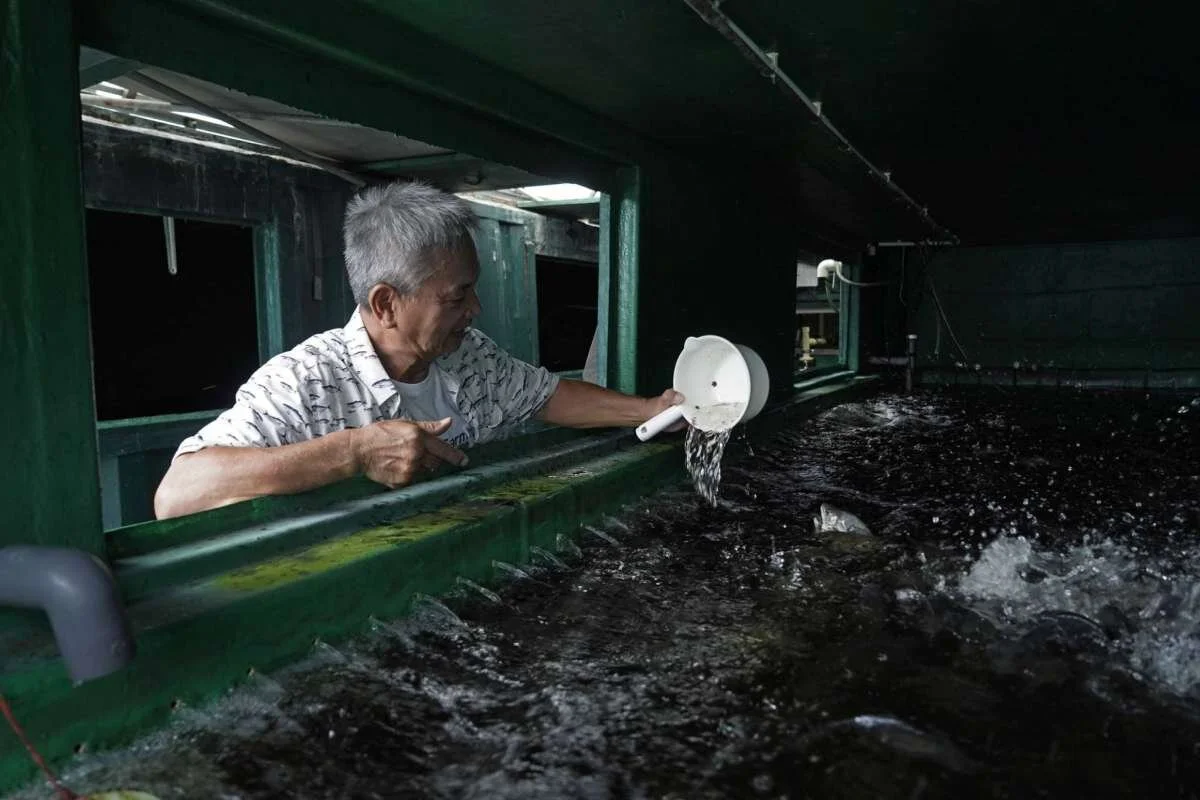
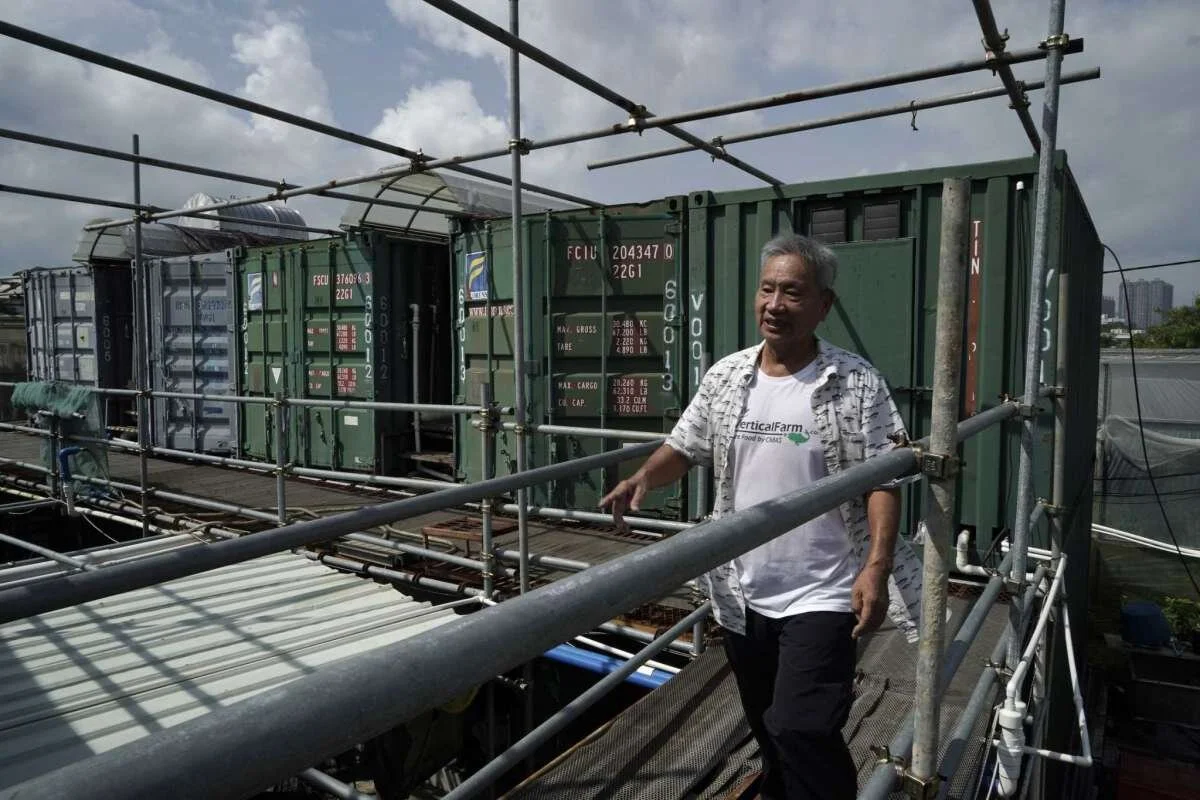

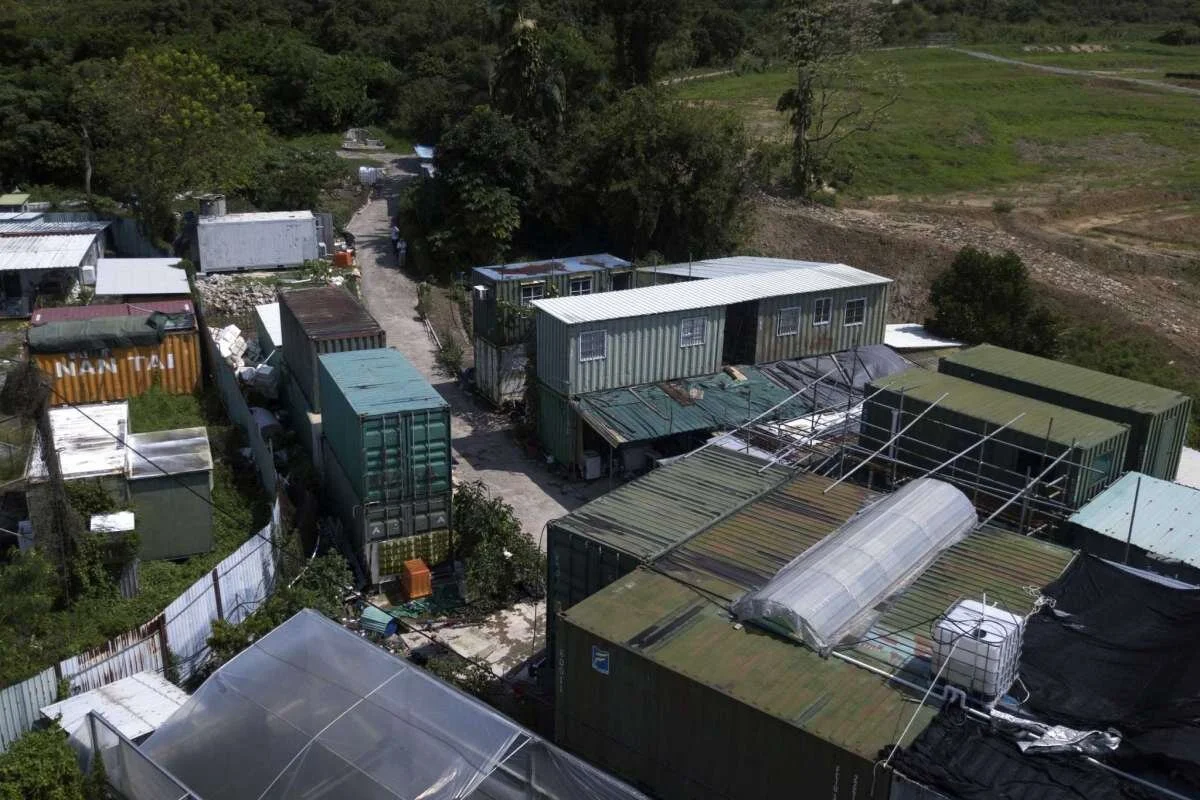


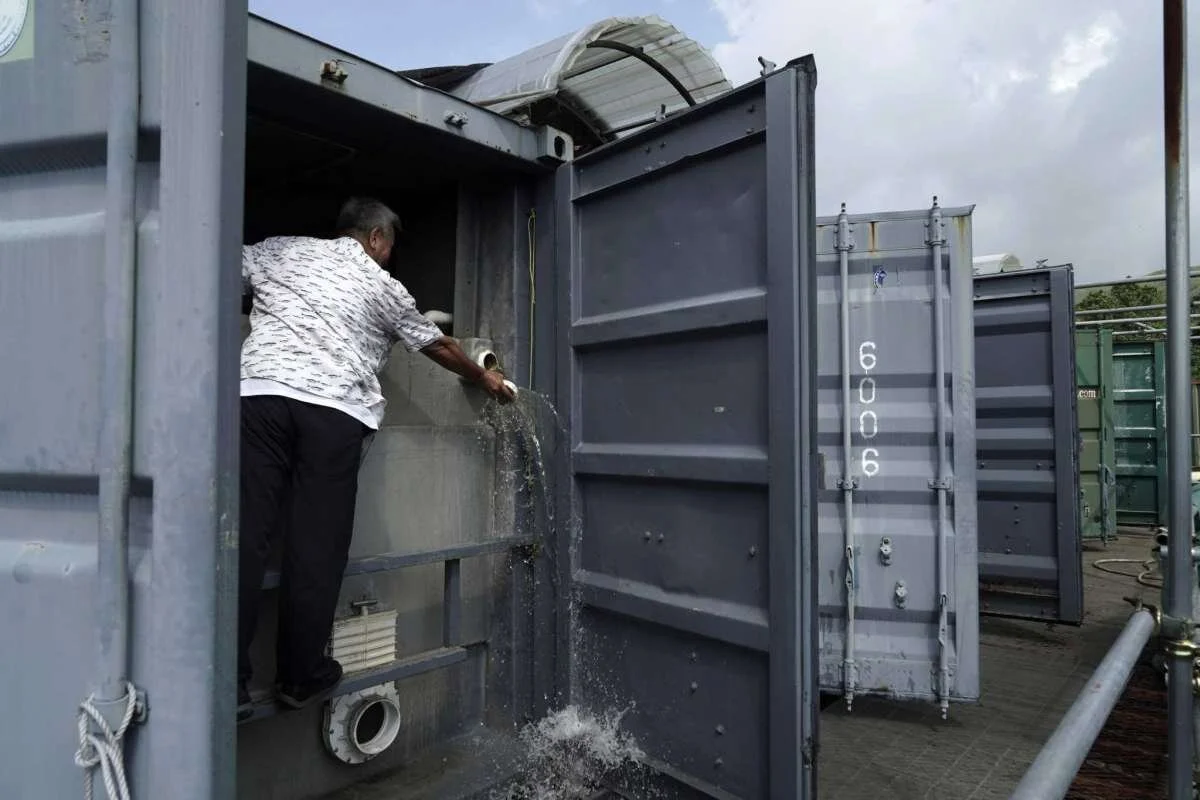


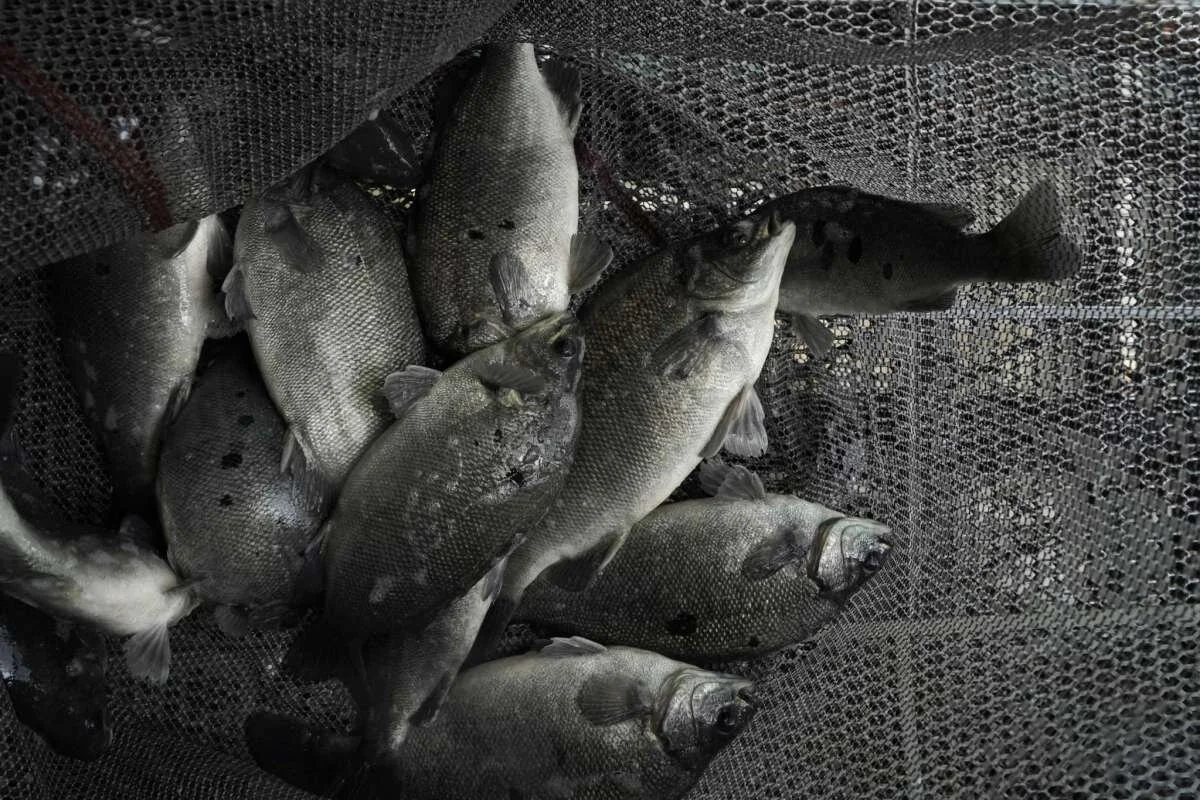
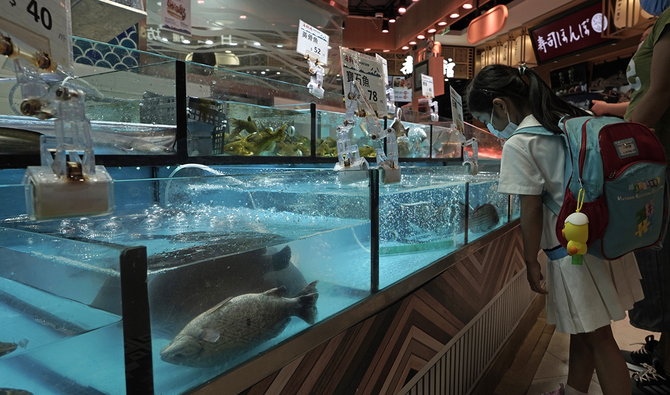



The bounty is sold to supermarkets in the crowded city of 7.5 million that is forced to import most of its food.
As one of the world's great trading hubs, Hong Kong is a rich source of the sturdy 40-foot (12-meter) -long boxes.
Lee uses the latest technology to monitor his crops. The controlled environment inside the boxes uses a hydroponic drip system to deliver nutrients, eliminate the need for herbicides and pesticides, and reduce risks from pests, small animals, and bad weather. Temperature, humidity, carbon dioxide levels, nutrient mixtures, and light can all be monitored and adjusted.
And if Lee loses his lease, he can load his container farm onto trucks and move it elsewhere with minimal disruption.
Shipping container farms have taken off in countries around the world with wildly varying climates, from freezing to tropical, and on scales ranging from single containers to dozens. Many are located in urban areas where fresh produce can easily be delivered to stores or directly to consumers. While vegetables, fruits such as strawberries, and freshwater fish are among the most popular, some growers have turned to raising high-protein insects as a food supplement.
Controlled environment agriculture is just one use for shipping containers, both new and old. In poorer nations, they are often used as shops with the added advantage of locking up tightly at closing time. In more affluent nations, they have been turned into tiny homes, painting studios, coffee shops, backyard sheds for hobbyists, and even swimming pools. Online, containers can be bought for around $4,000, with basic home conversions going for $30,000 or more.
Lead photo (AP Photo/Kin Cheung): Arthur Lee, the owner of MoVertical Farm, feeds his fish inside a shipping container in Yuen Long, Hong Kong's New Territories.

Indoor Farms Are Reimagining America’s Food Supply
With the worldwide population surging and acreage for agriculture shrinking, indoor, indoor farms are literally on their way up as a viable form of food production
SEP 25, 2020
With the worldwide population surging and acreage for agriculture shrinking, indoor, indoor farms are literally on their way up as a viable form of food production.
Bowery Farming, founded in 2015, is growing lettuce and other greens in vertical, indoor farms located just outside of cities. The “farms” are able to produce crops year-round; and Bowery says it is using far fewer resources than traditional farms and generate less waste.
“Farming is very resource-intensive,” noted Katie Seawell, Bowery’s chief marketing officer. “We’re transforming non-arable spaces into arable farmlands. We stack crops from floor-to-ceiling; because they are grown indoors, we can control the environment. We focus on seeds many farmers are unable to grow because of conditions. We start with seeds and then are able to optimize the plants and are able to harvest at their peak and get them in stores quickly. We are the grower, packager and shipper all in one.”
The stacked plants are monitored and fed using the Bowery OS, a proprietary operating system that gathers information as the plants grow and then creates a “recipe” for each one. “We continue to learn what makes them flourish and thrive,” Seawell explained. “The next time we plant, the recipe has been optimized.” Bowery’s crops are pesticide-free, and the company uses less water than traditional growers.
Currently, Bowery Farming is growing different grades of lettuce and herbs as they grow efficiently. The company, however, plans to expand beyond leafy greens, according to Seawell.
Bowery now has three indoor farms, all near urban areas where fresh produce can be in short supply. One is a research and development center in Kearny, NJ, a suburb of Newark. A large-scale commercial farm also is in Kearny and another farm is in White Marsh, Maryland, just north of Baltimore. “We want to scale globally, and grow our national footprint,” she added. “We’re concentrating on urban centers and feel we can deliver.”
The company says it is collaborating with nonprofits in nearby communities. In the New Jersey and New York areas, Bowery works with Table to Table and Teens for Food Justice. In Maryland and the Washington, D.C. area, Bowery offers support to Maryland Food Bank and DC Central Kitchen. Through DC Central Kitchen’s Healthy Corners program, fresh produce is sold to corner stores in D.C.’s low-income neighborhoods at wholesale costs, where it is then sold to consumers at below-market prices.
While other farms have been struggling during the coronavirus pandemic, Bowery was able to grow its customer base, Seawell noted. “We were very fortunate; we were deemed an essential operation, so there was no disruption in our business. In fact, we had an acceleration in demand because of shortages in other parts of the supply chain.” In early January, the company’s produce was in about 100 stores; now the indoor farms are supplying 600 stores, including Giant, Weiss, and Walmart, and has grown its online business. “We have doubled our e-commerce traffic since January,” noted Seawell. “People are turning to e-commerce because of supply chain disruptions and we have a stable harvest and get produce on the shelf in a few days.”·
The company is fulfilling the vision of its founder, Irving Fain, who believed that since agriculture is at the center of many global issues, including food access and security, it was time for formative transformation of the industry using technology. As Seawell explained, “Agriculture is at the epicenter of so many global challenges we have. We’re trying to do good through technology.”
When the economy begins recovering in earnest after the pandemic, Bowery Farming can be a part of rethinking a food supply chain that often falters at various stages. “There is a real desire to strengthen our food system, which will benefit retailers and consumers,” according to Seawell. “We can increase access to fresh, delicious, safe produce 365 days a year. We can play an important role in sustainability and farming and can play a part as we strengthen and rebuild from the pandemic.”
Image credit: Bowery Farming
Ellen R. Delisio is a freelance writer and paraeducator who lives in Middletown, CT. Over the past 30 years, her writing has focused on life science, sustainability, and education issues. Ellen is an avid reader and beach-goer.

How Hydroponic Farming Can Bring You Produce That Aren’t Locally Grown……With No Soil Needed
Derived from Greek terms hydro (water) and pono (work), hydroponics literally means “working water” as plants are grown in water beds, with liquid solution feeding them the minerals and nutrients they need
September 24, 2020
When we think of farming or planting, the basic ideas that come to mind are digging up soil, dumping in seeds, sprinkling it with some water, and letting the power of nature turn the seed into a plant. Of course, humans take part in the process. But looking at the big picture, the soil plays the most crucial role in growing plants and vegetables. It’s going to be their cradle and, for some, their longtime home. Its quality and location will determine the life of a seedling and affect the fruits it will bear. After all, as soil scientist, Charles E. Kellogs said, “all life depends upon the soil… There can be no life without soil and no soil without life.”
But what if the soil is taken out of that picture? Now that is what we call hydroponics. Thanks to the advancements made in science and agriculture, we can now manage to cultivate crops without soil. Derived from Greek terms hydro (water) and pono (work), hydroponics literally means “working water” as plants are grown in water beds, with liquid solution feeding them the minerals and nutrients they need.
This method of horticulture may sound like a recent breakthrough, but studies about soilless farming dates back to the 1600s with works of English philosopher Francis Bacon and geologist John Woodward. According to a 1981 article in The New York Times, since nutrients are brought right to the roots, plants do not have to branch out and fight for food. Unlike farming on soil, hydroponics allows plants to be placed closer together as nutrients are equally distributed.
In the Philippines, many have adopted the hydroponic way of farming, as it offers vegetables that are safe from soil-related disease and typhoon damages.
For business owners Kevin and Kristine Co, hydroponics has also paved a way for a more eco-friendly process of bringing produce to the table. Their brand Herbivore Philippines not only provides vegetables that are free from pesticides and other harmful chemicals, it gives produce that can’t be grown locally.
The couple chats with Manila Bulletin Lifestyle and details the benefits Filipinos can get from hydroponic farming, its sustainable impact, and how their work has been during the pandemic.
How long has Herbivore PH been operating?
Kevin: Herbivore has been operating for a little over a year now. It took us nine months to construct and set the system up. Kristine is a big proponent of clean and healthy living. The idea started during a casual dinner conversation with some friends. It was about the difficulty of sourcing good quality produce and how anybody can easily claim and label themselves as “organic,” “farm fresh,” and the like. We spoke about how there was a lack of customer education on how fruits and vegetables are being grown.
For example, did you know that fruits and vegetables sold in supermarkets in developed countries have Price Look-Up codes to help customers distinguish how the produce are grown? This can be conventionally-grown (most probably with pesticides and chemicals in nutrient-depleted soil), genetically modified (unnatural and has been known to cause various diseases), or certified organic. The desire to grow top-notch, truly “clean” produce is what fueled us to bring this idea to life. We even have our produce tested to make sure that we are completely pesticide and chemical-free.
What is the advantage of using hydroponics compared to other indoor gardening?
Kristine: Some hydroponic farms are not temperature-controlled, hence the quality of the veggies aren’t that great. With our system we can give the plants optimum temperature, light, and nutrients to give them the best possible opportunity to reach their full potential, making better and more consistent quality produce. They are like spoiled babies. By having a completely controlled environment, we could grow produce that are typically imported—our contribution to reducing the carbon footprint of having to keep importing these vegetables.
How did the pandemic affect your operations?
Kristine: The pandemic shifted our business to be more retail-focused because of the increased demand from retail customers. We saw a significant drop in our wholesale business as many restaurants’ operations substantially decreased during the lockdown.
‘By having a completely controlled environment, we could grow produce that are typically imported—our contribution to reducing the carbon footprint of having to keep importing these vegetables.’
What are the imported vegetables you cultivate?
Kristine: We currently grow a handful of produce that has to be imported. Some examples include garland chrysanthemum, domiao, sangchoi (Chinese lettuce), wawachoi (Chinese cabbage) and even for those that can be grown locally like mizuna, kale, arugula, watercress, etc. Our produce is far superior than what you can normally get in the market.
How important is sustainability for the brand?
Kristine: Of course, sustainability of the brand is important so we can carry out our ethos which is to provide our market with the freshest and healthiest vegetables without sacrificing social responsibility. We are constantly trying to improve our system to work toward this.

CHAP Launches CropMonitor Pro – A New Digital Service For Predicting Crop Pest and Disease Risks
CHAP is delighted to announce the launch of a new digital service – Crop Monitor Pro. It is designed to help growers and agronomists predict the likelihood of pest and disease outbreaks on their farm
CHAP is delighted to announce the launch of a new digital service – Crop Monitor Pro. It is designed to help growers and agronomists predict the likelihood of pest and disease outbreaks on their farm.
CropMonitor Pro extends the DEFRA funded, long-standing regional risk evaluation service (Crop Monitor) which was first launched in 2003 by Fera Science Limited (Fera). CropMonitor Pro is a significant advancement on that service by providing field-level risk prediction for a range of pests and diseases affecting winter wheat, winter oilseed rape, and potatoes.
The CropMonitor Pro decision support service is a collaboration between CHAP and Fera and has been in development since 2017. It has been funded by IUK as part of the UK Agri-tech Strategy.
Analytical tools are becoming increasingly popular for growers. Retailers, agrochemical companies, and government are all looking to better predict the risk of pest and disease outbreaks to mitigate against supply chain shortages, predict sales, and encourage environmental stewardship. For the grower, a better understanding of the level of pest and disease risk can ensure pesticides are only applied when required. This will not only offer immediate savings on both chemical applications and operational expenditure but will also reduce the threat of resistance against an increasingly limited arsenal of available crop protection products.
CropMonitor Pro estimates infection risk by analyzing the complex relationship between weather, crop growth stage, management practices, and disease or pest characteristics. It uses a simple traffic light system to show crop susceptibility and suggests optimum times to spray – and when to avoid spraying – for up to four days ahead with up to 85% accuracy.
The system benefits from almost 20 years of historical winter wheat disease data: models which could be validated against this dataset were shown to have a false negative rate of less than 15%. CHAP CEO Fraser Black said: “Developing tools to support the sustainable use of pesticides is critical not only to improve the bottom line of our growers but also to protect our environment and halt the rapid rise of pesticide resistance emerging in the UK. CropMonitor Pro will deliver real financial benefits to growers and agronomists while also protecting the environment.”
Fera CEO Dr. Andrew Swift said: “After several years of development work, we are excited to launch the CropMonitor Pro service with CHAP. It is our hope that CropMonitor Pro becomes a vital tool for the industry to improve profitability while helping to protect our natural ecosystems.”
The system launched on 14th September for growers and agronomists and will be available directly through www.cropmonitor.co.uk on a subscription basis.*
About Crop Health and Protection (CHAP)
Crop Health and Protection (CHAP), funded by Innovate UK, is one of four UK Agri-Tech Centres. CHAP’s vision is for the UK to be a global leader in the development of applied Agri-Technologies, to help secure our future by nourishing a growing population sustainably while delivering economic, environmental, and health benefits to society.
CHAP acts as a unique, independent nexus between the UK government, researchers, and industry, building innovation networks to identify and accelerate the development of cutting-edge solutions to drive incremental, transformative, and disruptive changes in sustainable crop productivity.
Website: chap-solutions.co.uk/
For further information about the project contact:
Chris Delf: chris.delf@chap-solutions.co.uk
Tel: +44 (0)7732 684 786
Twitter: @CHAP_Enquiries
Fera Science Limited, formerly the Food and Environment Research Agency, is a joint private/public sector venture between Capita plc and Defra. Using original thinking applied to support sustainable global food security our vision is to support our partners to respond to the challenges ahead through original thinking and world-class science. Fera is a leading supplier of scientific solutions, evidence, and advice across the agri-food supply chain. Employing more than 350 scientists, Fera analyses over 90,000 samples and publishes over 100 peer-reviewed scientific papers per year. It turns expertise and innovation into ways to support and develop a sustainable food chain, a healthy natural environment, and to protect the global community from biological and chemical risks.
Website: fera.co.uk
For further information about the project contact:
Judith Turner: Judith.turner@fera.co.uk
Tel: +44 (0)1904 462200
VIDEO: Hydroponic Farm Ventures Take Root in Indian Cities
Amid growing demand for fresh farm produce without pesticides, young entrepreneurs in Indian cities such as Delhi, Mumbai, and Bengaluru are turning their attention to hydroponic farming, where plants grow without soil and are fed mineral nutrients through water
September 23, 2020
By Anjana Pasricha
The rows of lettuce, microgreens, and herbs that Himanshu Aggarwal and his mother grow in an enclosed room in a busy New Delhi market began flourishing six months ago, just when the COVID-19 pandemic was taking hold in India.
Himanshu Aggarwal grows lettuce, microgreens, and herbs in an 800-square-foot enclosed room in New Delhi. (Anjana Pasricha/VOA)
It was not the best of times. A day after the Aggarwals launched their hydroponic venture, 9Growers, India declared a stringent lockdown, making them nervous about how they would sell their freshly plucked greens amid the pandemic.
Surprisingly, the situation helped grow their business. Worried about contracting the virus, people began to focus increasingly on healthful foods, and at the same time, shops became willing to stock their produce.
Pratibha Aggarwal helped her son launch the venture 9Growers. (Anjana Pasricha/VOA)
"Vendors were open to having good produce, especially during the lockdown. They were not even getting basic necessities, and we were giving them fresh produce harvested on the same day,” said Himanshu Aggarwal, 24, who was inspired to take up hydroponic farming after seeing the quality of fruits and vegetables during a trip to Europe. “Even our best produce could not match theirs. So I thought about how to achieve the same standards for a small community, and hydroponics seemed the answer.”
Amid growing demand for fresh farm produce without pesticides, young entrepreneurs in Indian cities such as Delhi, Mumbai, and Bengaluru are turning their attention to hydroponic farming, where plants grow without soil and are fed mineral nutrients through water. Using much less water than conventional procedures do, hydroponics has won attention as a sustainable farming method in several countries, such as the Netherlands.
Some in Delhi have opted to put up their ventures in poly houses on the city’s outskirts. Others are doing it in the heart of the city, in residential or commercial areas, where the plants grow in laboratory-like conditions under artificial light that simulates sunlight. Most of the young entrepreneurs learned about it on the internet and through trials and experiments in their homes.
The hydroponic farm is situated on the top floor of a building. (Anjana Pasricha/VOA)
Aggarwal’s plants thrive on the top floor of a small building in an 800-square-foot room. Accessed through an electronics store, the unlikely space transports a visitor from the honking cars and traffic snarls to the surreal sight of the 18 varieties of lettuce and other leafy greens thriving in vertical panels in one of Delhi’s most crowded markets.
“We are giving them everything they want — temperature, air quality, humidity. We are monitoring all the aspects for them so that they give the best result,” Aggarwal said.
The appeal of greens growing in a clean, germ-free environment has grown during the pandemic as people focus more on eating healthful foods, according to shop owners. While the higher cost is a barrier for some, high-income consumers in cities are increasingly willing to pay the price for fresh produce.
Boxes of hydroponic greens are displayed among other vegetables. (Anjana Pasricha/VOA)
In an upscale neighborhood in New Delhi, Mohinder Pal Singh, who stocks the hydroponic greens, said he gets repeat orders from customers who try them out. “Due to COVID, a lot of people have switched to greens to boost immunity. People have also become very conscious of eating nutritious food,” he said. “So the sale of such produce is increasing.”
The owner of a fruit-and-vegetable shop in a Delhi market says hydroponic produce is selling amid rising demand for healthful food amid the pandemic. (Anjana Pasricha/VOA)
Optimistic about the growing demand for local produce in cities, some entrepreneurs are scaling up their businesses. Rohit Nagdewani, the founder of farmingV2, plans to expand to other cities — his seven farms in Delhi produce about 2,500 kilograms of hydroponic produce every month. “People are becoming increasingly aware of the source of the food and how many hands it is exchanging, so there is a big future in hydroponics, where supplies reach within a few hours of harvesting,” Nagdewani said. “All that is fueling demand. That is why I have put my entire savings into it,” he said with a laugh.
For another Delhi-based entrepreneur, Raghav Varma, 30, the inspiration to turn to city farming came during a visit to the hill state of Uttarakhand, where he saw hydroponic produce being grown for export. Back home, his experiments showed that he was able to grow a 300-gram head of lettuce in a small ice cream container on his windowsill. “It was really fresh and crunchy because it is grown in water. So I thought this was an amazing way to produce food for urban dwellers,” said Varma, who has co-founded Farmstacks.
A customer looks at a box of microgreens. (Anjana Pasricha/VOA)
However, the entrepreneurs admit that consumer awareness about hydroponics needs to be raised. To do that, Varma allows people to choose the greens they want to grow for their own use at a small community farm in Delhi.
Most of the entrepreneurs do not have a farming background; Varma was a digital marketing executive, Aggarwal a corporate employee, and Nagdewani started his career as an automotive journalist.
They are proud of their new calling. “ 'Urban farmer' is actually a very good tag. It’s a new profession, I would say, and it gives us a sense that we are back to our roots from where we started,” Aggarwal said with a smile.
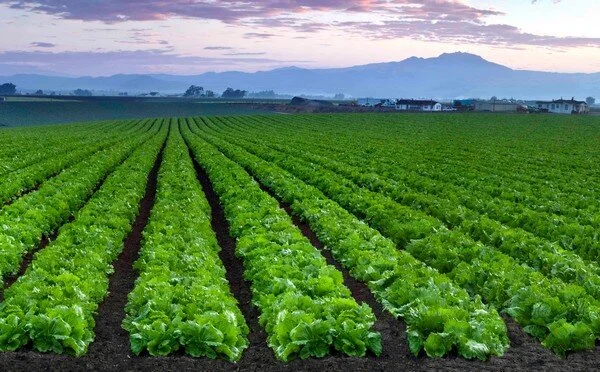
Pricing Soars On Iceberg Lettuce
Prices have spiked on California iceberg lettuce. “The supply of iceberg is low at the moment industry-wide. Yields are lower than normal this time of year due to disease issues,” says Pete Georgalos, Sales for D’Arrigo California
Prices have spiked on California iceberg lettuce. “The supply of iceberg is low at the moment industry-wide. Yields are lower than normal this time of year due to disease issues,” says Pete Georgalos, Sales for D’Arrigo California. “We’ve also been through a couple of long heatwaves this summer.”
Currently, supplies are coming out of the Salinas Valley, CA. “Canada has lettuce but supplies are winding down there. Iceberg lettuce out of Huron CA start in mid to late October for shippers that still produce there. Our next district will be Yuma, AZ which starts in early November,” says Georgalos. “Supplies will likely not increase until Yuma gets into full swing on production.”
Along with Canada, competing product currently comes from Colorado and New Mexico.
Pressures on demand
Meanwhile, solid demand is coming from both domestic retail and foodservice business as well as Canadian demand. “The biggest challenge is producing enough lettuce. It’s difficult this time of year and it’s late in the season to keep up with demand,” says Georgalos. Of course, this is forcing prices to spike significantly. “The lettuce market is three to four times higher than last year at this time. This year the lettuce market has been $40,” says Georgalos.
He adds that in the next few weeks, not much is expected to change in terms of volume or quality. “Rain and other inclement weather can be factors impacting quality and yield as we move into October,” says Georgalos.
For more information:
Claudia Pizarro-Villalobos
D'Arrigo California
Tel: +1 (831) 455-4315
cvillalobos@darrigo.com
https://www.andyboy.com/

Publication date: Mon 28 Sep 2020
Author: Astrid Van Den Broek
© HortiDaily.com
How Tech Farming Is Transforming India’s Agri Landscape
Advancements in agritech offer precise solutions for sustainable farming such as indoor vertical farming, hydroponic farming, and modern greenhouse practices
September 25, 2020
The farming community has been severely impacted by the Covid-19 pandemic. The restrictions on transport and logistics, supply chain, and shutting down of local vegetable mandis obstructed the overall supply of the produce. This led to the vulnerability of our food sources. Additionally, food production, transport, processing, and waste are already placing enormous pressure on environmental resources.
According to estimates of the World Economic Forum, the global population is expected to reach nearly 10 billion in 2050, which will lead to a 60% higher food requirement than it is today. However, at the current rate of ecological degradation, there simply won’t be enough arable land left to meet this demand. This has resulted in the need for utilizing and growing the food sustainably. Consequently, with the adoption of the right technology, farmers can optimize their crop planning to utilize minimum resources and get the maximum benefit out of it.
Understanding the market overview
With remarkable results, agriculture technology has witnessed a huge growth in investment and is still projected to grow at a CAGR of 18% from 2019 to 2025, according to a report by Research and Markets. And Maple Capital Advisors, in a report, says the sector attracted investment of nearly $245 million in 2019. The report, titled ‘India Agritech—Investment Trends, Initiating Coverage’ says the sector is expected to attract investment of more than $500 million in the next two years.
Additionally, to promote the agri firms, the Indian government recently announced that it would fund 112 startups with a sum of ₹11.85 crore in the current financial year.
Innovation in agriculture
Advancements in agriculture technology offer precise solutions for sustainable farming that includes indoor vertical farming, hydroponic farming, and modern greenhouse practices. These practices are set to redesign the farming experience with myriad benefits. They produce healthier, fresh, and more nutritious food that has a longer shelf life. These practices also help in saving valuable water, land, and labour resources. Also, the controlled growing system enables farmers to produce food free from harmful chemicals and residue.
Complementing consumer preferences
In India, consumption patterns have been undergoing changes. People are becoming more aware of eating healthy and fresh. Additionally, the pandemic has also encouraged consumers to change their dietary habits and consume food that helps prevent infections and build strong immunity against infections.
The techniques of ultra-modern tech farming optimise crop production and quality and offer food safety all year round. They are grown in nutrient-rich water without pesticides, harvested a few hours before it reaches the consumer’s plate. This has strengthened the power of making good choices and brought in a behavioural change to create a healthier food system.
Use of technology
The growth in the adoption of advanced technology solutions in agriculture is revolutionising the sector. By using the smart farming model, traditional farming is gradually transitioning to urban modern tech farming. It allows producing differently using new techniques that increase food production and efficiencies in the food chain. By incorporating automated technologies and processes, it becomes easier to meet the burgeoning demand of the population.
Looking at the changing scenario of traditional farming and advancements in technology, farmers have started adopting indoor vertical and hydroponic farming techniques. These are highly data-driven and combine agriculture with science to grow safe and healthy food in much lesser time. These also enable the farmers to manage growth factors and optimize their field for better produce.
After discovering the effectiveness of such farming techniques, the government is also supporting the agritech sector in helping to transform the traditional farming community. The trend of urban modern tech farming is set to boom in the country with millennials being curious about producing fresh inside their houses. They want leafy greens freshly harvested from their farm before putting on the table. In the coming times, consumers are going to become more serious about the benefits of consuming home-grown veggies and organic food. Moreover, people will be fonder of growing vegetables at home for safety, health, and hygiene benefits after the pandemic.
Lead photo: Illustration by Anirban Ghosh
Views are personal. The author is the founder and CEO of Barton Breeze, a commercial hydroponics farm startup.
Follow us on Facebook, Twitter & YouTube to never miss an update from Fortune India. To buy a copy, visit Amazon.
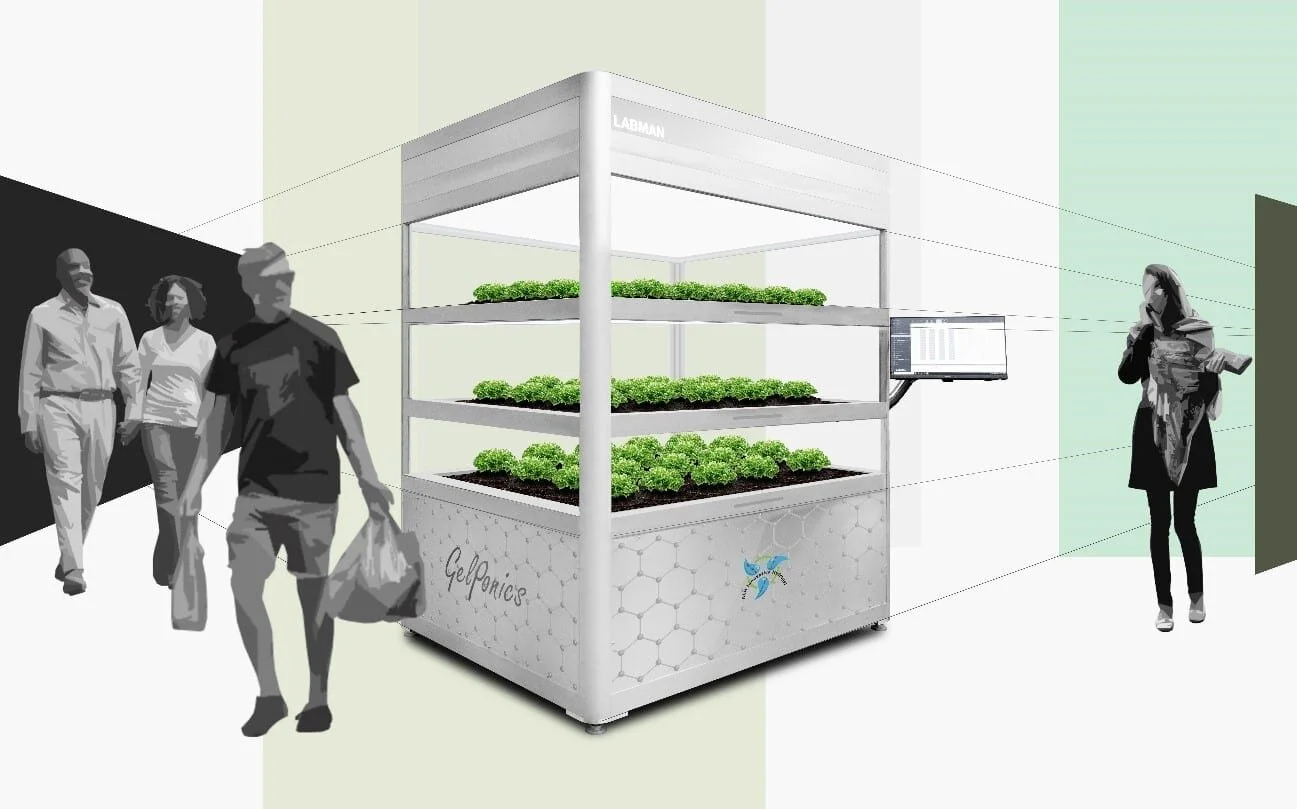
"Vertical Farming Is Not The Answer For All of Humanity's Woes"
When people talk about vertical farming, they often focus on what it gets right: saving water compared to traditional agriculture, providing communities with safe, fresh, healthy and locally-grown food, etc
On the second day of the Vertical Farming World Congress, the speakers really got to the meat of the matter (or should that be to the leafy greens of the matter?). The day was opened with three presentations on market opportunities in the industry, given by Ian Cox of Innovate UK, Christine Zimmermann-Loessl, Chairwoman of the Association for Vertical Farming, and Henry Gordon-Smith, Founder and CEO of Agritecture.
Challenges and opportunities
When people talk about vertical farming, they often focus on what it gets right: saving water compared to traditional agriculture, providing communities with safe, fresh, healthy and locally-grown food, etc. In order to get the complete picture, however, it's also important to look at potential downsides. Ian, in his presentation, didn't shy away from discussing those.
He mentioned the high price of real estate in urban location as one of the potential obstacles to vertical farming. Critics also often argue that vertical farms are energy-intensive; however, Ian notes, there are many different models in vertical farming, and not all of them use lighting. Still, energy is important to the success of a vertical farm, and it is crucial that continuity of power is guaranteed. Finally, not all crops can be grown in vertical farms - the majority is herbs and leafy greens, which grow fast, command a price premium and do not need much light. According to Ian, "more fruits, vegetables, pulses and ground fruits need to be produced in vertical farms."
There are, fortunately, also lots of opportunities in vertical farming - Ian points to innovations in sensors, automation, and new crops being developed as some examples. One of these success stories backed by InnovateUK through CHAP, is GelPonics.
Vertical farming: part of the solution
Christine Zimmermann-Loessl provided an overview of the work of the Association for Vertical Farming. In her presentation, she highlighted the need for agriculture to be more environmentally friendly. In order to achieve this next level, "cooperation of science and industry is important", she said.
With humankind reaching the planetary boundaries, Christine argues, this is particularly important. And while land is scarce, vertical farming alone won't solve this problem. "It will be a part of the solution", she said. For more on Christine's views on vertical farming, check out this HortiDaily interview.
Resilient cities
The last speaker in the day's morning session, Henry Gordon-Smith, spoke about the city of the future, which according to him should be shaped by data-driven scenario planning. He showed how in the past, even a dense urban area like Manhattan had local agriculture. Throughout history, cities always needed to have the resources to make them thrive.
At some point in recent history, that changed, with the focus shifting to heavy urbanization. "One of the cons now is that cities are less resilient". Henry takes Ontario as an example - it used to be an exporter of food, but with unchecked urban development in Toronto, the area actually turned into a net importer of food, making it less resilient. He then went on to highlight some of the solutions Agritecture can offer for these issues.
Image credit: Agritecture
Selecting the best technology and crops
Another session that day focused on choosing the right crops and technology for one's vertical farm, featuring insights from James Lloyd-Jones, Founder and Managing Director of Jones Food Company; David Rosenberg, Founder and CEO of AeroFarms; David Farquhar, CEO of Intelligent Growth Solutions; and Mike Zelkind, Co-founder and CEO of 80 Acres Farms.
James has a background in property and renewable energy - two fields that are related to the vertical farming sector, but not to agriculture as such. Still, James heads one of the largest vertical farms in the world - this fits into a trend that Henry Gordon-Smith also highlighted, where people get into the industry without necessarily having a background in agriculture.
For James, that meant that he had to look for talent to join the team, and he mainly used local, British talent for that. "It's important to build a strong brand to attract strong talent with the right attitude", he emphasized.
An inside view of Jones Food Company
And the growth for Jones Food Company doesn't stop there. At the end of the presentation, James unveiled his plans for the future: by the end of 2021, two new farms will be built in the UK, with an area of 30,000 m2. In addition, the company will continue to scout for talent, and in the first quarter of 2021, they are planning to launch a new retail brand.
"Vertical integration is key"
Next up was David Rosenberg, who introduced his company AeroFarms and the way they work. Having been in business since 2004, they've built ten vertical farms to date, and they're in the process of building one that's twice as large as the biggest one in the world.
David began his presentation by stressing that there's a place for all farms. "Vertical farming is not the answer for all of humanity's woes, not by a long shot. For some crops and for some places in the world, open field or greenhouse farming is the better alternative." For other places and crops, vertical farming is the better alternative. "And those alternatives are going to become more and more as vertical farming reduces capital costs and operating costs," David believes.
AeroFarms
When it comes to choosing new crops, David notes that what works as a small farm doesn't necessarily translate to a big farm. That's why at AeroFarms, they go through three stages when making this decision:
Research & Development: Understand the plant science to improve plant quality and yield
Pilot: Improve how to grow plants mechanically with the right growing system
Commercialization: Solve agricultural problems through collaborations with other industry leaders
This doesn't just apply to crops, by the way - this way of working is just as important when it comes to choosing the right tech. "We pride ourselves in not re-inventing the wheel in automation", David says. "If someone has a better mousetrap, we'll use that. This is a hard business, and to be really good at it, vertical integration is key."
He also stressed the importance of sanitation in the industry, saying it's bad to cut corners there. "I hope we're diligent about that and processes around food safety. After all, we're talking about people's lives here."
And like James, David also had some news to share about the company's future plans. They're currently building what they say is the world's largest R&D indoor vertical farm, as part of an investment of $100 million by the Abu Dhabi Investment Office. Phase 1 of that project is slated to be operational in late Q1 2021.
3-E and 5-D
David Farquhar was up next to talk about the way they do things at Scottish vertical farming company Intelligent Growth Solutions (IGS). "IGS was founded by a farmer, which is why we focus so much on getting crop production perfect", he explains. The way they work is they basically take a traditional open field, cut it up into pieces and stack the pieces on top of each other in towers.
Of course, things do get a bit more complicated with all the tech added into the mix. At IGS, they call it Total Control Environment Agriculture (TCEA). They cultivate their crops 100% IOT-enabled, making use of cloud computing in an Intelligent Grid that was originally for lighting, but can also be used for other links in the chain, including the retail stage.
David then went on to share the philosophy behind all this high tech. First of all, there's the 3-E targets: Excellent quality produce, Economic competitiveness, and Environmentally friendly. In order to achieve these high standards, IGS makes use of the 5-D way of working.
Replicating real weather conditions is an important aspect of the way they work at IGS, and they see weather as three-dimensional (3-D): there's the sun, wind and rain. Of course, David explains, each of these have multiple varieties (between eight and ten each), and each of these variables has almost infinite values. Take light, for instance, which comes in an almost infinite spectrum of colors. David compared it to paying a visit to the hardware store when you want to repaint your bathroom: the array of available colors is dazzling.
Time is also an important factor, it's the fourth dimension in the 5-D equation. At IGS, they give the crop what it needs at each stage in its life cycle, from darker and humid conditions in the germination stage, to a lighter environment later on in the crop life cycle.
And finally, there's the dimension of space: each shelf in an IGS tower is its own microclimate - the temperature can differ quite a bit between two of those microclimates, even though they're only 30 cm apart. That way, they can grow a wide variety of crops in a single tower. "Whatever we're growing, we want to replicate something that's as close to nature as possible."
An IGS facility under construction
"Pay the farmer, not the doctor"
Mike Zelkind of 80 Acres Farms focused less on technology in his presentation - he put the spotlight on the consumer: what do they want? As Mike highlighted, consumers are looking for health and nutrition, flavor and freshness, sustainably-grown products, and trust and transparency.
What they're being offered in the fresh produce market, however, is all about price - it's what Mike calls the '10 cents less mentality'. "There's a race to the bottom, because growers don't believe their produce is worth 10 cents more. The whole category has been commoditized, but produce shouldn't be a commodity." Mike believes that vertical farming can bridge the gap to what the consumer wants, and thus stop this race to the bottom.
To do this, it's important for vertical farmers to understand how to do business. One way to contribute to the advancement of the industry, is by forming true partnerships and ego-less collaboration, Mike argues. "That's why years ago we started looking for partners willing to play by the same rules, so we formed Infinite Acres with Priva and Ocado."
In addition to partnerships, data also plays a big role in vertical farming - both in terms of plant science and predicting customer demand. At 80 Acres Farms, they develop machine learning models to allow them to understand their customers' shopping trends and forecast future demand.
One trend they are looking to reverse is that of increased spending on healthcare and decreased spending on food, as the graph below illustrates. "Your grandparents spent more on food and less on healthcare", Mike says, adding that's it's time to reverse this trend - things like COVID-19 have highlighted the need to focus more on preventative care through healthy eating, like people did in the past. As Mike puts it: "Pay the farmer, not the doctor."
The Vertical Farming World Congress, organized by Zenith Global, is held online September 22-24. We'll post updates from the virtual conference floor in the coming days and weeks, so watch this space for more like this.
Publication date: Thu 24 Sep 2020
Author: Jan Jacob Mekes
© HortiDaily.com
Company Adds New Executive Leaders As It Becomes The Largest Vertical Farming Company In The U.S.
Bowery Farming, the Modern Farming Company, today announced that its fresh, traceable Protected Produce is now available in more than 650 U.S. stores — marking a rapid increase from 100 stores in January
StreetInsider.com
9/25/20201
Bowery Farming Announces Availability in 650 Stores,
Marking 600% Growth This Year
NEW YORK--(BUSINESS WIRE)-- Bowery Farming, the Modern Farming Company, today announced that its fresh, traceable Protected Produce is now available in more than 650 U.S. stores — marking a rapid increase from 100 stores in January. With this expansion, Bowery becomes the largest vertical farming company in the U.S. as consumers are hungry for flavorful, local, and sustainable food.
Bowery’s brick and mortar presence in the Mid-Atlantic and Northeast includes Whole Foods Market, Giant Food, Stop & Shop, Walmart, Weis Markets, and a number of specialty grocers. The company’s expansion has catalyzed more than 600% in-store sales growth since the beginning of this year and it has more than doubled sales with e-commerce partners.
Growing a New Generation of Greens
Located near the cities they serve, Bowery’s indoor farms use technology to create a simplified, agile food system focused on flavor, freshness, and safety — farming efficiently to feed locally. At the core of its farms is the BoweryOS, its proprietary operating system, which uses sensors, vision systems, machine learning, and automation technology to monitor and control all variables contributing to crop growth. By applying proprietary machine learning algorithms to environmental data, the BoweryOS determines the ideal recipe for each crop and makes automatic adjustments to conditions, such as temperature, humidity, airflow, light intensity, and nutrients to optimize crop quality, health, yield, and flavor, giving the plants exactly what they need, when they need it. Every farm benefits from the collective knowledge of the BoweryOS, making the entire network stronger with each new farm built.
As a result of the BoweryOS and the other systems built by Bowery, its farms are more than 100 times more productive on the same footprint of land than traditional agriculture, use a fraction of the water, and grow traceable pesticide-free produce. Bowery’s greens and herbs (such as Arugula, Crispy Leaf, Basil, and Butterhead) grow in completely controlled environments year-round, at least two times quicker than in a field — completely independent of weather and seasonality. Bowery produce is harvested at the peak of quality and taste and is available on the shelf within just a few days.
“Climate events continue to disrupt the way food is grown and distributed, and the pandemic exacerbated the vulnerabilities in our already fragile food system. We need a more resilient solution focused on the future, and that’s exactly what we’re building at Bowery,” says Irving Fain, Founder & CEO of Bowery Farming. “Our growth has been driven by consumer demand for safer and more transparently grown produce, and our ability to provide a consistent and reliable supply to our retail partners. We’re incredibly fortunate to have a dynamic team at Bowery that is relentlessly committed to innovation, strengthening our food system, and increasing access to fresh, healthy food.”
Cultivating Bowery Farming Talent
As the company continues to grow, it welcomes its first-ever Chief Supply Chain Officer, Colin Nelson, who will oversee Bowery’s end-to-end operations, from seed to store. A mechanical engineer by training, Nelson has spent the past 30 years of his career in supply chain management and operations at major multinationals, including Unilever and GlaxoSmithKline. Nelson most recently served as Senior Vice President and Global Chief Supply Chain Officer at Walgreens Boots Alliance, where he led supply chain management of retail and wholesale pharmaceuticals and front-end retail.
“I’m impressed by what Bowery is building and how the company is applying innovative technology and human ingenuity to strengthen our food system and help feed a growing urban population in an economically sustainable way,” said Colin Nelson, Chief Supply Chain Officer of Bowery Farming. “I am looking forward to working closely with the incredibly passionate, purpose-driven team to further expand the business and deliver excellent economics through the supply chain and operational efficiencies at Bowery.”
Nelson is the most recent among a series of strategic hires for Bowery, which also includes Carmela Cugini, Chief Revenue Officer (formerly Head of Merchandising & Curation at Jet.com and VP and General Manager of Walmart’s US e-commerce team) and Katie Seawell, Chief Marketing Officer (formerly SVP of Product and Marketing for Starbucks). The company has also added two new members to its Board of Directors: Sally Genster Robling (former EVP of Pinnacle Foods and founding President of the $1.1B Birds Eye Division) and Michael Lynton (Chairman of Snap Inc., and former Chairman and Chief Executive of Sony Pictures Entertainment).
“Bowery Farming’s best-in-class approach and application of software, robotics, automation, and AI has proven that local, smart farming at scale can be a reliable and more sustainable model for the future of agriculture,” said Hans Tung, Managing Partner at GGV Capital. “Solving for our global food challenge requires us to think differently about how we can address a number of issues — from climate events and biodiversity to population growth and public health — and Bowery’s multidisciplinary, technology-driven approach makes this possible.”
As consumers continue to seek healthy, safe, and sustainable food brands, Bowery expects more growth ahead. Already, indoor farming brands are outpacing conventional packaged salad in the grocery store by more than 25% compared to last year, according to IRI. And as online grocery shopping increases in popularity, Bowery is providing consumers with more options with e-commerce retailers, including Peapod and Amazon Fresh.
For more information about Bowery, please visit www.boweryfarming.com, and connect with the company on LinkedIn, Twitter, and Instagram.
About Bowery Farming
Bowery Farming, the Modern Farming Company was founded in 2015 with the belief that technology and human ingenuity can grow better food for a better future. By building smart indoor farms close to the cities they serve, Bowery creates the optimal conditions to cultivate wildly flavorful Protected Produce that’s available on the shelf just a few days after harvest.
Its proprietary software system, the BoweryOS, uses sensors, vision systems, automation technology, robotics, and machine learning to monitor plants and all the variables that drive their growth 24/7. Because Bowery controls the entire process from seed to store, farms grow produce year-round, ensuring a safer supply of food that’s reliable and consistent.
The farms are 100 times more productive on the same footprint of land than traditional agriculture, and grow traceable pesticide-free produce — the purest, best expression of what produce is meant to be — with a fraction of the water.
Bowery currently has three farms: a commercial farm and R&D Center of Excellence in Kearny, New Jersey, and a commercial farm in Nottingham, Maryland. The company serves more than 650 stores in the Tri-State area and Mid-Atlantic region, including Whole Foods Market, Giant Food, Stop & Shop, Weis, Walmart, and specialty grocers, along with online partners, such as Amazon Fresh, Hungryroot, and Peapod.
Based in New York City, the company has raised over $172.5 million from leading investors, including Temasek, GV (formerly Google Ventures), General Catalyst, GGV Capital, First Round Capital, Henry Kravis, Jeff Wilke, and Dara Khosrowshahi, as well as some of the foremost thought leaders in food, including Tom Colicchio, José Andres, and David Barber of Blue Hill.
For more information on Bowery and its products, please visit www.BoweryFarming.com
Press kit: https://boweryfarming.com/press/
View source version on businesswire.com:
https://www.businesswire.com/news/home/20200924005203/en/
Rachel Alkon
Press@BoweryFarming.com
Source: Bowery Farming
10 Hydroponic Books You Should Read Right Now
When it comes to agriculture, you can learn a lot of valuable information from hydroponic books
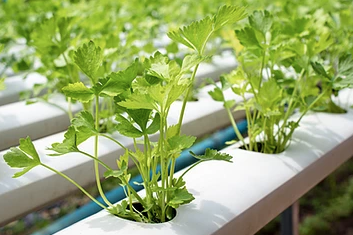
When it comes to agriculture, you can learn a lot of valuable information from hydroponic books. Books are a fantastic tool to provide you with information from trustworthy, credible sources if you don’t have someone you can learn from in person. However, if you can become an apprentice to learn about hydroponics, always take those hands-on learning opportunities as well. This article will talk about which hydroponic books you should be reading right now whether you’re a beginner or an advanced grower.
List of Hydroponic Books To Read
The following list of hydroponic books have been written by reliable sources with the credentials and knowledge to provide you with the tools to learn about hydroponics.
1. Hydroponic Food Production by Howard Resh
This book is written by one of the pioneers of hydroponics and it covers detailed explanations of how to set up and run hydroponic systems.
2. Hydroponic Home Food Gardens by Howard Resh
3. Hydroponics for the Home Grower by Howard Resh
This book covers how to start small, at-home hydroponics systems.
4. Hobby Hydroponics by Howard Resh
This is a great book that tells readers about the average hobby hydroponic units that can be purchased. It also covers various crops, seeds, and best growing environments.
5. Hydroponic Strawberry Production by Dr. Lynette Morgan
This book focuses on how to specifically grow strawberries.
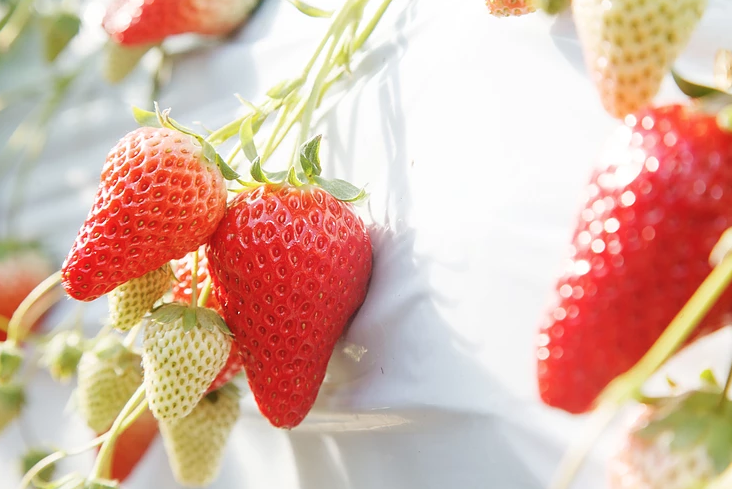
6. Hydroponic Capsicum Production by Dr. Lynette Morgan
This is a guide that covers how to produce, harvest, and market capsicums and peppers.
7. Hydroponic Lettuce Production by Dr. Lynette Morgan
This book focuses on how to hydroponically grow lettuce.
8. Hydroponic Tomato Crop Production by Dr. Lynette Morgan
This book specifically focuses on hydroponically grown tomatoes.
9. Hydroponics: The Essential Hydroponics Guide: A Step-By-Step Hydroponic Gardening Grow Guide to Grow Fruit, Vegetables, and Herbs at Home by Andy Jackson
This is a great book for beginners that covers everything there is to know about hydroponics and gets straight to the details.
10. How to Hydroponics 4th Edition by Keith Roberto
This book covers hydroponics and aeroponics equipment and covers the basics to help you start your garden.
Other Great Agriculture Books to Read
If you’re not just solely looking for hydroponic books but want to understand agriculture on a deeper level, then check out these reads as well.
The Small Farmer’s Journal
This magazine covers everything from farm life to draft animals and is a great resource to understanding everything about farming.
The New Organic Grower by Eliot Coleman
This book should be read by anyone who wants to grow vegetables and it also contains an annotated bibliography that will provide you with in-depth research materials.
The Omnivore’s Dilemma by Michael Pollan
This book covers the paradox of food choices and how the industrial revolution has played a big part in revolutionizing the way we eat and see food today.
Remember when purchasing hydroponic books it’s best to buy local! See what your local gardening stories have for sale and support small businesses; doing this also reduces our carbon footprint. If you’re looking for other ways to learn more about hydroponics, then subscribe to our blog and YouTube channel for weekly updates!
#hydroponicbooks #hydroponicsbooks #hydroponiceducation #hydroponiclearning #howtogrowwithhyrdroponics #hydroponic #hydroponics

VIDEO: UNS Farms - First World Congress For Vertical Farming - Grahame Dunling
Grahame has been in the GCC for over 7 years growing crops inside Greenhouses in Bahrain to Vertical Growing inside warehouses in Dubai and he is now the CEO of Uns Farms a 6,000m2 warehouse farm
Grahame Dunling gave a talk on Hydroponics last week at the World Congress for Vertical Farming. His subject was ''The Future of Hydroponics''
Grahame gave an insight into the complex world of Commercial growing by going back on his 40-year career in Horticulture. In this time Grahame has overseen changes from Greenhouse soil crop growing right through to the latest technology in Warehouse growing. From opening vents by hand in a greenhouse right through to controlling operations via a mobile phone in multiple countries.
Grahame has been in the GCC for over 7 years growing crops inside Greenhouses in Bahrain to Vertical Growing inside warehouses in Dubai and he is now the CEO of Uns Farms a 6,000m2 warehouse farm.
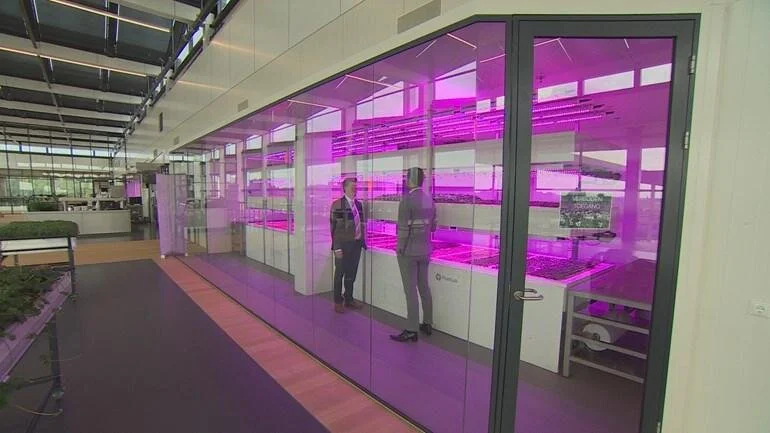
Abu Dhabi To Be Home of World’s Largest Indoor Farm
Project will be developed in three phases and is expected to produce 10,000 tonnes of fresh produce per year
September 27, 2020
Project Will Be Developed in Three Phases And is Expected to
Produce 10,000 Tonnes of Fresh Produce Per Year
The largest indoor farm in the world is set to take shape in the desert of Abu Dhabi, following a joint venture (JV) deal between GrowGroup IFS from the Netherlands and RainMakers Capital Investment from Abu Dhabi.
The project is expected to cost $177m and is planned in different phases over the course of three years. Phase 1 will be operational before Expo 2020 Dubai in October 2021, so GreenFactory Emirates can show the world its innovations, the statement said.
The GreenFactory Emirates is expected to produce 10,000 tonnes of fresh produce per year, on a plot of 17.5 hectares and a cultivation area of 160,000 sqm. The company says it will develop innovative indoor farming with the world’s most advanced indoor growing system from the Netherlands. It is a combination of vertical and flat farming and solves the normal cultivation restrictions due to extreme climates in regions like the UAE.
The facility is expected to involve numerous agro-technological companies in its construction as best of breed for each component will be sourced through top-tier Dutch companies. It is now possible to cultivate high-quality vegetables 100% pesticide-free, all year round and anywhere on the planet, the statement noted.
“The private sector plays a vital role in the transition towards more sustainable food systems. Private sector organizations have entrepreneurial traits that drive innovation. They possess the qualities necessary to disrupt existing non-sustainable agricultural systems,” said Mariam Hareb Almheiri, Minister of State for Food Security.
She added, “The UAE is applying concerted efforts to improve its domestic production of food, with agricultural technology – ‘AgTech’ – having a hugely important role to play. In fact, key targets of the government’s National Food Security strategy launched in November 2018 are to generate a 30% yield improvement from technology-enabled production and for the UAE to become a world-leading hub in innovation-driven food security by 2051. Indoor farms such as GreenFactory Emirates are instrumental in helping us reach these goals.”
The JV also plans to build other indoor farms in other regions of the world, where extreme climates are a challenge to normal cultivation, the statement explained.
RELATED ITEMS: ABU DHABI, AGRICULTURE, FARMINGN, FEATUREDNEWS, GROWGROUP IFS, JOINT VENTURE (JV)