


Welcome to iGrow News, Your Source for the World of Indoor Vertical Farming

A Focus On New Kinds of Vertical Farming Applications
“At Vertigo Farms, we believe that vertical farming serves the future not only for direct consumption purposes but it may also serve as a base for highest quality natural extracts for food, cosmetics and pharma industries”, comments Dawid Drzewiecki, the CEO of Vertigo Farms.
Netled Partners Up With Agritech Start-Up Vertigo Farms
Netled and a Polish agritech start-up, Vertigo Farms have announced a new technology partnership. Vertigo Farms will use Netled’s Vera vertical farming technology in its indoor growing projects. The collaboration has already started, and the goal is to have the first plants growing at the beginning of 2021.
Vertigo Farms is the first publicly known European actor to produce natural extracts from plants grown indoors. Mainly herbs are grown and processed in a sustainable manner with no use of chemicals, all-year-round, regardless of weather conditions.
“At Vertigo Farms, we believe that vertical farming serves the future not only for direct consumption purposes but it may also serve as a base for highest quality natural extracts for food, cosmetics and pharma industries”, comments Dawid Drzewiecki, the CEO of Vertigo Farms.
The company works with research laboratories and universities to develop methods for optimal conditions and nutrition of plants to boost their growth. Each type of plant requires a different approach. For start, the company will experiment with Safflower, Lovage, and Opium poppy, but there will be more species along the way.
Niko Kivioja, CEO of Netled, comments the newly formed partnership: “Vertigo Farms has a very interesting approach to produce natural extracts. Netled is proud to be Vertigo’s technology partner. In addition to this, our crop specialist team is especially excited to have insight into the new, more exotic plants growing in a vertical farming environment. Globally, we see massive opportunities to produce crops which have very high-quality standards in vertical farms, alongside the more common leafy greens.”
The mission of Vertigo Farms is to process and deliver the highest quality natural ingredients with the use of state-of-the-art solutions. Thus, the goal is a great fit with Netled, as the company aims to provide the best technology, expertise, and guidance for vertical farming projects and actors all around the globe.
Read more about Netled’s Vera® Vertical Farm: https://netled.fi/vertical-farming-vera/
Read more about Vertigo Farms: http://vertigofarms.eu/
26th August 2020 by johannak
For more information:
Netled
netled.fi

“If We Really Want To Make A Change, We Should Intensively Invest In Innovation and Technique In Africa”
Christine Zimmerman discusses vertical farming trends
Christine Zimmerman Discusses Vertical Farming Trends
Vertical farming is a rapidly growing industry, and there are many challenges and opportunities. In this interview with Christine Zimmermann-Loessl, Chairwoman at the Association for Vertical Farming, she discusses the latest trends and developments within the vertical farming sector worldwide.
What are the latest trends within vertical farming?
Zimmermann-Loessl stated that there is a very clear trend in automation and fully automated systems. Especially in the USA, Japan, and Europe. “The main trend here is that we see robotics and AI machine learning that will even play a bigger role than it does now. Another trend is scaling, as people start to understand the necessity of vertical farming. I still hear from the majority of greenhouse growers, to have a fully automated greenhouse, the vertical farmers say: no we can be more efficient and it can be much more controlled. However, there are so many input factors that cannot be perfectly controlled in a greenhouse. In order to have reliable minimal resources and yield, vertical farming is a better solution.”
Zimmermann stated that once the energy problem issue is solved, they can connect the issue with solar and teach students about it in the AVF demonstration center. Using solar is possible and there are the costs to have the proof of concept.
Have you seen positive developments in vertical farming regarding COVID-19?
As there are strict hygiene standards, higher than in any other farm, there is a very clean environment. “We are beyond ahead COVID-19 measurements and this needs to be communicated even better.” According to Zimmermann, a great advantage of indoor farming the high hygiene standards. Working with a hygiene room quality and improving these standards. “We have seen a lot of growth, also at the AVF as we gained 11 members. Start-ups have the ambition to grow out of that start-up phase.”
She also notes that vertical farming has had more understanding of politics and politicians, but also on a national- and municipal level. They understand that there is a need to secure the future, being less dependent on external factors. “We had to communicate all these advantages even better. The majority doesn’t know them yet and we have to improve that”, she adds.
What is the quickest growing country in terms of vertical farming techniques?
“That’s a tough question. I think that in Germany really took off in the past two years. We have Fraunhofer Institute in Aachen with two brand new systems that haven’t been on the market before with that high level of innovation. The Orbiplant, from Fraunhofer, shows how economical VF can be today. It is built from material on the market for automation or transport systems highly automated and allows cheap production prices. Another company, Lite+Fog, where I see innovation at a level of experience with a new system design and water-saving fog for the roots instead of hydroponics.
Zimmermann continues that Japanese farming company Spread, its Techno farm, is really the state of the art. It’s a proven operation and they produce for the market. “However, Orbiplant and Lite+Fog are still in a demo size compared to the commercial farms of SPREAD and the fully on-demand farms now. We have a differentiation to make between these three.”
And in terms of newly constructed farms?
"I have visited Farminova, Turkey, and it’s very interesting to see how in such an agricultural country a company takes on the innovative food business. Cantek Turkey, the owner Hakan Karaca decided to go into vertical farming and built a system in one of his warehouses, near Antalya, to bring the topic forward. They see the need for sustainability and innovation.” Zimmermann said that Italy is also becoming an interesting country for vertical farming. Companies such as Planet Farms and Ono Exponential Farms that have fully automated new constructions. “People need to build up their trust in technology and the produce from it. In Europe, they have a prejudice against artificial environment by technology, but in Asian countries such as Japan and Singapore they don’t. They’re much more open to it, also in the new farming technology because it offers safe, fresh, local products. They see the shrinking traditional farming in their countries and growing imports."
Are we at a maturity stage in vertical farming yet?
“Not at all. When we started we were in an infant stage. Now we are at age 12 to 14. From an age perspective, we are not mature enough yet. It would be really good to have official government backing. Not just money-wise, but also policy-wise. We want more agriculture sustainable methods. One of these is indoor vertical farming. Once that statement comes, it would help VF implementation a lot.”
Why do you think that governments haven’t done that yet?
“It’s all about the necessity. ‘Why do we need it? We have greenhouses. We have industrial agriculture. Now, with severe droughts, even in Europe, more politicians see the need. I am part of the dialog forum for the 'Future of Agriculture', where all major stakeholders gather in Berlin twice a year. I get to meet all the associations from traditional farming and few of them have heard of vertical farming. Not to talk about embracing, saying it could be a part of agriculture production. However, it’s still a long way to go for communication, marketing, and raising awareness.
"We need more innovation- and vertical farming centers around the cities and rural areas to enable our hands-on learning and demonstration. If we do that, farmers will see it and understand it better. We start with the farmers. More young people are coming in the industry. We will rely on vertical farming systems to maintain reliable food production. It will play a major role if we want to protect the ecosystem when we have over 10 billion people on this planet.”
What would you address as the most frequent struggles within the industry?
“Investment is still a major struggle. Either banks don’t understand the business model of high-tech farms, because they have only know traditional agriculture business models. Or investors don’t have a sufficient understanding of vertical farming. They want a quick ROI and don’t know that they need patience. So, in order to find the right investor and money, it’s not that easy. If you want to scale, you have to have a proof of concept. But more money is needed to go to that next level.
"It ‘seems easier’ in the USA and Asia. Looking at the UAE, which is taking off with vertical farming, partially because the government is supporting it now too. Their food supply chain is in the hand of a couple of people and they were used to importing all food. It takes time to build a new food chain and trust in new suppliers."
In what underdeveloped countries do you see the most potential for vertical farming?
“Absolutely, we just founded our regional chapter by our team. We cannot serve the interest in India anymore, so we decided to have a local team there. It’s taking off like crazy. Now, we have two members in Africa and we get at least two requests per week. In South Africa, it can be seen that there’s a lot of equipment development. Which gives them the highest level of technology compared to the rest of Africa.
"We see a lot of the need to train farmers and really implement vertical farming in Africa. We just received new proposals from Cameroon to train 1200 farmers on vertical farming in the Northwest. So far, our partner in Cameroon has built the center already and we only need the equipment yet and training can start. It’s great to see what they do. If we really want to make a change, we should intensively invest in innovation and technology in Africa. We can grow forest there, instead of turning more land into agriculture and reduce CO2 even more. They are willing to do that and know what they need. It’s not up to us to tell them what they do. If AVF would have the financial power, we’d be there tomorrow to help them."
Where do you see the most positive reactions towards vertical farming?
"In Asia, we can find mature markets, especially in Singapore and Japan. People are willing to buy and understand the concept. China is an important market from a global perspective. A lot of projects in vertical farming are happening there, but the government policy to protect traditional agriculture has such a big importance for the government. Therefore, it’s very tricky to launch vertical farming in the right way. They have megacities and over 1.3 bln people so the demand is huge. But, they only have 12% of land and so there are many opportunities for farming. However, there’s a huge challenge for vertical farming as it’s very hard to implement it on a bigger scale."
For more information:
Association for Vertical Farming
Christine Zimmermann-Loessl, Chairwoman
czl@vertical-farming.net
www.vertical-farming.net
Publication date: Wed 26 Aug 2020
Author: Rebekka Boekhout
© HortiDaily.com
Boys And Girls Clubs of Metro South Awarded Food Security Infrastructure Grant
The Boys and Girls Clubs of Metro South was awarded a grant of $128,960 by the Baker-Polito Administration in partnership with the Executive Office of Energy and Environmental Affairs as part of the commonwealth’s $36 million Food Security Infrastructure Grant Program on Aug. 18

The Boys and Girls Clubs of Metro South was awarded a grant of $128,960 by the Baker-Polito Administration in partnership with the Executive Office of Energy and Environmental Affairs as part of the commonwealth’s $36 million Food Security Infrastructure Grant Program on Aug. 18.
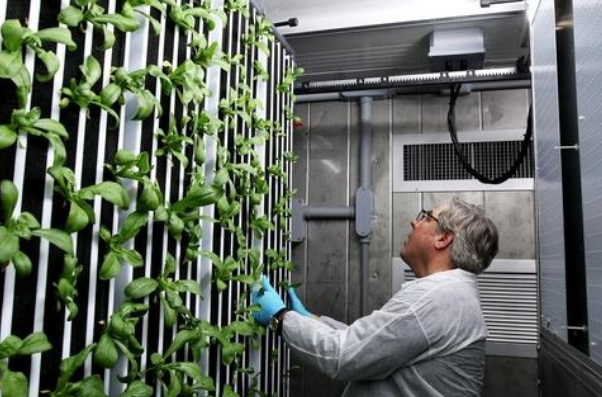
In a concerted effort to address food insecurities in their service area, BGCMS will be using the grant to purchase and operate a Freight Farms Greenery container farm on their Camp Riverside property located at 388 Harvey St., Taunton. The Greenery is a fully functioning, self-contained hydroponic farm housed in a shipping container that allows for plants to grow vertically indoors year-round without soil or direct sunlight. The Greenery will be able to support over 13,000 plants at once.
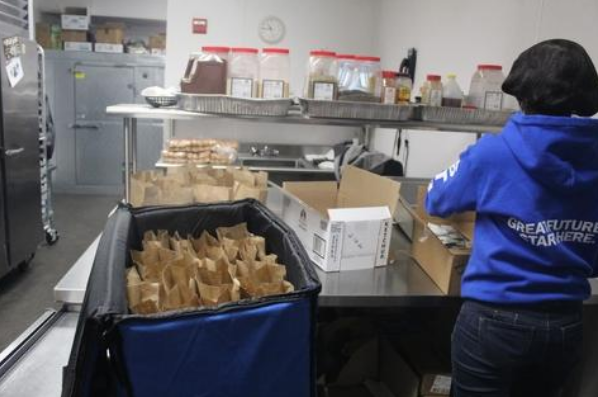
BGCMS intends to use this produce to support their Kids Café Healthy Meals program which provides hot, healthy dinners to every child who attends the Brockton and Taunton Clubhouse each weeknight. The clubs’ Kids Café program feeds more than 400 youth per day and serves more than 100,000 healthy meals annually. In addition to meal service, the clubs will utilize the Greenery to teach members about nutrition, agriculture and how to keep eating healthy foods at home.
“Our goal is to also build upon existing partnerships with local community organizations and other nonprofits that are working to tackle food insecurity — like homeless shelters, soup kitchens, and food pantries in our region — to support their efforts to feed the hungry and feed them nutritious food,” said Monica Lombardo, vice president of advancement at Boys and Girls Clubs of Metro South.
In March, BGCMS jumped into action to adapt its Kids Café meals program into an open grab and go dinner program for youth from 0 to 18 years old in response to the COVID-19 pandemic. Since March 18, meals have been served in a socially distanced fashion at both the Brockton and Taunton Clubhouses every weeknight between 4:30 and 6 p.m. The community response to the grab and go meals program inspired BGCMS to think critically about the clubs’ ongoing role in supporting food security in the region as its afterschool, weekend and summer programs are key social supports for economically vulnerable families.
“Increasing access to fresh, local food is critical to ensure the health and wellbeing of all commonwealth families,” said Gov. Charlie Baker about the grants being offered. “Through this grant program, we are helping residents and businesses who’ve been impacted by the COVID-19 pandemic while making investments in building a strong and equitable local food system for Massachusetts that is prepared for the future.”
To support BGCMS and their mission or to learn more about their Kids Café healthy meals program, visit https://bgcmetrosouth.org.
Posted Aug 25, 2020 at 4:44 PM
Updated Aug 25, 2020 at 4:44 PM


AeroFarms Helps Reduce Food Waste With New Partnership With Table to Table and Matriark Foods
With its global headquarter and farms in Newark NJ, AeroFarms is excited to be able to provide delicious, healthy stems and greens from a second-harvest that normally would be left in the traditional field
AeroFarms Helps Reduce Food Waste with New Partnership with Table to Table and Matriark Foods Through New FarmPlus to People Program, funded by ReFED COVID-19 Food Waste Solutions Fund
AeroFarms is proud to support the new FarmPlus to People program, an innovative partnership with Matriark Foods and to upcycle farm surplus into a healthy, added-value vegetable stew for distribution to the hungry in New Jersey.
Matriark Foods and Table to Table were awarded a $50,000 grant from ReFED COVID-19 Food Waste Solutions Fund to pilot a processing program that pays farmers, creates jobs, diverts vegetables from landfill, feeds the hungry, and proves out the metrics for nimble processing infrastructure. The goal is to deliver 500,000+ meals and offset 1,000,000+ pounds of greenhouse gases over the next 90 days.
With its global headquarter and farms in Newark NJ, AeroFarms is excited to be able to provide delicious, healthy stems and greens from a second-harvest that normally would be left in the traditional field. AeroFarms pioneering indoor vertical farming allows access to the entire root to leaf to create upcycled products that are breaking through for their culinary flavor and nutrition.
The nutritious, tasty vegetable stew will be distributed to the hungry using Table to Table’s established logistics capability and large network of agencies in Bergen, Essex, Passaic and Hudson Counties in New Jersey.
The Covid19 pandemic has increased the challenges of accessibility and availability for much-needed fresh food, straining food system logistics of storage and distribution resulting in an increase in food waste at a time when so many are in need. We are thrilled for the opportunity to partner with such extraordinary organizations who will help us provide an alternative source of nutritious produce. ReFED’s commitment to this project will have a significant impact on our ability to feed our hungry neighbors, while keeping a little less food from ending up in our landfills.” said Ilene Isaacs, Executive Director of Table to Table.
“The goal of this public/private partnership pilot is to demonstrate that with the existence of more nimble food processing, massive amounts of food waste could be diverted from landfill while providing jobs, nutritious food for those who need it, and offsetting GHGs at scale,” states Anna Hammond, Founder and CEO of Matriark Foods. “We plan to optimize the use of the ReFED grant to inspire investment in scaling our model for the benefit of people and the environment.”
“AeroFarms is proud to partner with Table to Table and Matriark to help provide fresh, nutritious, delicious leafy greens and stems and serve our communities struggling with food insecurity. As a Certified B Corporation, we are committed to helping increase access to fresh, healthy, great tasting food while minimizing food waste, a huge contributor to climate change. “Marc Oshima, Co-Founder & Chief Marketing Officer, AeroFarms
“We’re thrilled to collaborate with Matriark and Table to Table to divert high quality produce at risk of going to waste to those who need it most. In particular, we see enormous value in demonstrating a proof of concept for in-time processing of surplus produce, a development that has the potential to build capacity for a food waste reduction strategy that has remained elusive due to lack of nimble processing infrastructure.” Anya Ranganathan, Co-Founder, Bad Apple Produce
“COVID-19 has disrupted the regular flow of the food supply chain, making it difficult to get fresh, healthy food to the people who need it most and increasing the amount of food insecurity,” said Alexandria Coari, Capital and Innovation Director at ReFED, a national nonprofit working to advance solutions to reduce the amount of food waste. “The work of organizations like Table to Table and Matriark Foods is urgent, and we’re excited to get them the critical support they need from the ReFED COVID-19 Food Waste Solutions Fund.”
MAURITIUS: Promotion of Entrepreneurship In Green And Sustainable Agri-Business Activities
A training course in Hydroponics Crop Production and Greenhouse Management, aimed at encouraging entrepreneurship in green and sustainable agri-business activities among co-operative planters, was launched
Date: August 20, 2020
Domain: Agriculture and Food Security
Persona: Business; Citizen; Non-Citizen; Government

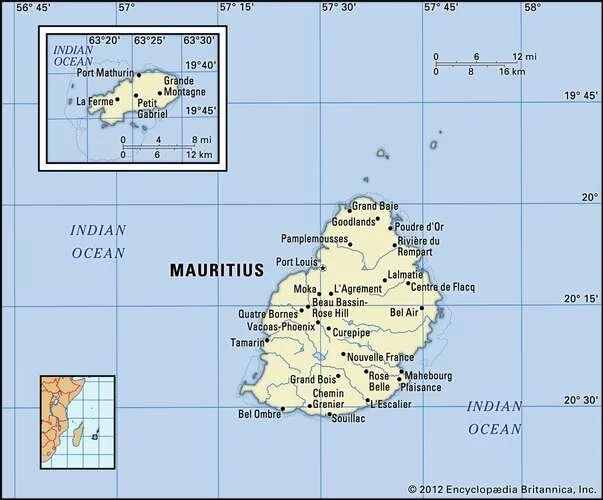
GIS – 20 August 2020: A training course in Hydroponics Crop Production and Greenhouse Management, aimed at encouraging entrepreneurship in green and sustainable agri-business activities among co-operative planters, was launched, today, at the National Cooperative College (NCC), in Terre Rouge. Some 75 co-operative planters and unemployed persons are participating.
The course, which covers both theoretical and practical aspects of hydroponics, is being offered jointly by the NCC, the University of Mauritius (UoM), and the Food and Agricultural Research and Extension Institute (FAREI).
In his address, the Minister of Industrial Development, SMEs, and Cooperatives, Soomilduth Bholah, recalled that the course is in line with Government’s policy to drive agricultural innovation and promote sustainable agriculture and food production. The training, he said, focuses on providing essential basic knowledge and practical skills pertaining to crop production.
The Minister also lauded the benefits of hydroponics farming which are namely: water conservation, use of fewer chemicals, space-saving, faster growth, nutrient control, bigger yields, no soil erosion, and healthier plants.
This emerging sector, Mr. Bholah indicated, is aligned with initiatives promoting the protection of the environment and of public health, food safety, and entrepreneurship. He also highlighted that hydroponics farming requires less pesticides and herbicides, resulting therefore in healthier food for consumption.
The Hydroponics course
This part-time course is of a 30-hour duration and will be conducted once weekly at the NCC. Practical sessions will be held at the Mapou Model Farm and the UoM Labs.
The topics being covered include: introduction to agriculture and hydroponics, greenhouse models and structures, fertigation and nutrient solution preparation, management of greenhouse environment, pre/post-cyclone management practices, troubleshooting, choice of varieties of crop, seedling production, cultural practices, pest and disease management, and harvest and post-harvest practices.
It is recalled that financing plans for hydroponics are available at FAREI and the Development Bank of Mauritius.
Government Information Service, Prime Minister’s Office, Level 6, New Government Centre, Port Louis, Mauritius. Email: gis@govmu.org Website: http://gis.govmu.org Mobile App: Search Gov
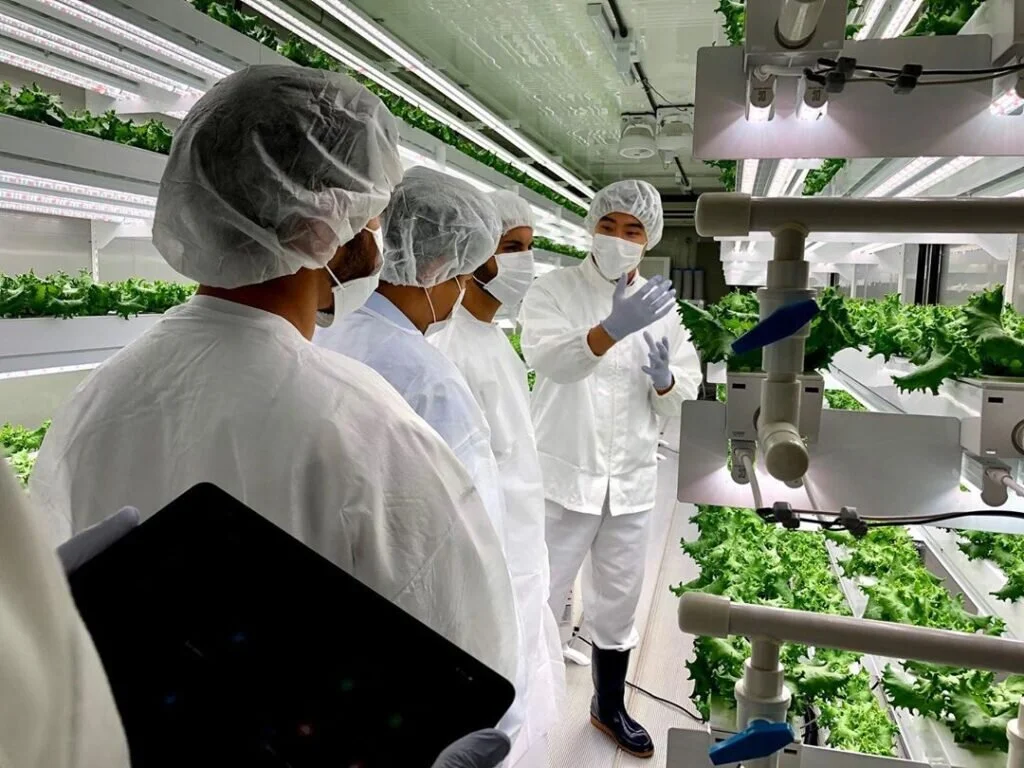
US: Vertical Harvest To Open New Farm in Maine
“We want to grow as much food as possible. We want to employ as many people as possible. We want to do both year-round
An outside shot of Vertical Harvest's Wyoming farm. | Photo: Allison Kreig
The Facility is Expected to be 70,000 Square Feet And Produce 1 Million Pounds of Food in a Year.
August 24, 2020
Posted by Chris Manning
According to story from News Center Maine, vertical farming company Vertical Harvest is expanding to Westbrook, Maine with a 70,000 square foot vertical farm.
“We want to grow as much food as possible. We want to employ as many people as possible. We want to do both year-round. That’s what gave us the idea to go up. So at its heart, we want to be able for these farms to serve the community in which it sits, so that means being in the heart of our urban centers,” said co-founder Nona Yehia, per the article.
Related story: Vertical Harvest takes a new approach to CEA
Vertical Harvest is based out of Jackson Hole, Wyoming. Earlier in 2020, Yehia told Produce Grower that the company had plans to build a farm in Lancaster, Pennsylvania.
Smart Acres CEO on The launch of The UAE’s Latest Vertical Smart Farm
The launch of Smart Acres, the UAE’s latest addition to the hydroponic vertical farming industry, this week means that a line of the freshest, most nutrient-dense greens for UAE residents and businesses alike is now being produced in containers on the Armed Forces Officers Club in Abu Dhabi, with the aim to expand across the UAE
Smart Acres Is Here With Lettuce At The Helm. In An Exclusive Interview With Abu Dhabi World, Smart Acres CEO Abdulla al Kaabi Reveals What This Means To Abu Dhabi And The Farming Community On The Whole.
words Derek Issacs
If you love healthy produce, and who doesn’t, then this news is going to please you and your tastebuds no end. The only draw back at the moment is they’re not for sale in supermarkets just yet, but it won’t be long before they are.
The launch of Smart Acres, the UAE’s latest addition to the hydroponic vertical farming industry, this week means that a line of the freshest, most nutrient-dense greens for UAE residents and businesses alike is now being produced in containers on the Armed Forces Officers Club in Abu Dhabi, with the aim to expand across the UAE.
So we headed over to the St. Regis Abu Dhabi to meet Smart Acres CEO Abdulla al Kaabi to find out more.
Tell us about your background?
I am from tech and farm background. My father has a passion for farming and gardening; he’s very strict about anybody who messes around with his garden or farm. My father has a few farms across the UAE, where he grows crops and dates. When he heard that I was pursuing a project in the agriculture sector he got excited and actually gifted me a farm, which I am grateful for and will keep. However, Smart Acres, rather than the farm my father gifted me, is an urban farm.
How was Smart Acres first developed?
CEO Abdulla al Kaabi (centre)
Smart Acres was founded in 2017 and local testing began in July 2019. Smart Acres was developed by a team of experts, including myself, Director Sean Lee and Lead Project Manager, Aphisith Phongsavanh with the aim of improving food security within the United Arab Emirates and developing the country’s farming capabilities, providing a solution to potential socioeconomic threats such as pandemics and climate limitations the Middle East currently endures.
Tell us more
We planted lettuce and after a few harvests, we decided to expand from two containers to eight containers. From the two insulated containers the yield was 3.5 tons annually, which was our proof of concept. For the proof of concept, our target weight for each lettuce head was 140g. However, we have reached an average of 200g per head. I don’t think any other vertical farm here reached that quality or weight in terms of vegetables at this size.
How would you describe Smart Acres?
It is a one-of-a-kind agriculture system that is designed to produce some of the highest yields of crops within the UAE’s vertical farming industry, while introducing a new future for clean foods and allowing both business to business (B2B) and business to consymer (B2C ) sectors to locally source produce.
Tell us about the containers
We invested heavily in the containers, not just financially, and it took us a while to partner up with n.thing, a South Korean vertical farming technology company, to bring the best vertical farm here in the UAE. We had talks with other companies before and we decided to go with this one, in terms of risk, in terms of technology they are using. And the system we are using in the containers is hydroponics (growing plants without soil) which has been used by growers for hundreds of years. Techno advancements means we were able to implement the Internet of Things for operations, which helps us to monitor the entire farm in terms of humidity, temperature, and even the nutrients that goes inside the plants. Now we have our expansion plan from eight to 78 containers, which eventually will produce more than 140 tons of produce annually. We are currently in talks with private and public entities in terms of the expansion. We are also planning to have a research and development centre in order to start growing our own potato seeds in a controlled environment.
Will Smart Acres just be growing lettuce?
In our current eight containers, we grow four types of lettuce; Lolo rosso , green glace, oakleaf Batavia, but we are able to grow 30 types of lettuce. Currently we are testing new methods to improve quality and weight of the existing lettuce. The results of last month’s test resulted in lettuce whose individual heads weighed more than 200 grams on average. However, we aim to grow more than just lettuce. We have plans to eventually grow baby spinach, mature spinach, and baby arugula. Smart Acres’ vision is to expand to meet the demand of popular produce in the region such as strawberries, and, as I previously mentioned, a shift and emphasis on cultivating potato seeds.
Where can we buy your smart lettuces?
We are now supplying restaurants and hotels for free to get ourselves known, and we have had great feedback from them. We have also partnered with several restaurants and cafes around the country including Inked and Fae Cafe, and have plans to have our produce in the kitchen of dozens of other F&B outlets. The recent initiative by HH Sheikh Mansour bin Zayed, Deputy Prime Minister, Minister of Presidential Affairs, and Abu Dhabi Agriculture and Food Safety Authority (ADAFSA), stating that all major grocery stores in the capital must allocate space for local produce means we are perfectly poised to enter local supermarkets. We have had lots of offers from Abu Dhabi Holding and other government entities that are members in the food security committee to buy our whole produce. Currently we are focused on our actual produce itself, in terms of quality, weight.
Posted in Features, Food, Life, News
Tagged agriculture system Abu Dhabi, CEO Abdulla al Kaabi, Clean foods UAE, food security UAE, SMART ACRES Abu Dhabi, st regis abu dhabi, UAE Climate Change Risks and Resilience, UAE farms, UAE’s vertical farming industry, vertical farming Abu Dhabi

Exploring The Costs And Benefits of Indoor Agriculture
Vertical farming is the shiny new toy in agriculture. It's attracted tremendous media attention and VC investments. Mostly, VC seeks a high rate of return. How has VC investment impacted the business decision making in vertical farming operations?
Leafy GreRobert Colangelo and Matt Roy
Yesterday, the Indoor Agtech kicked off its virtual event, joined by many participants. One, of the many seminars, was about 'Exploring the costs and benefits of indoor agriculture'. Robert Colangelo, Founding Farmer at Green Sense Farms, kicked off the seminar by asking what CEA means to Matt Roy, VP Business Development CEA at Tanimura & Antle. Roy answered, “CEA to me, means anything grown inside. There’s a lot of innovation and disruption happening in the space and I think there’s going to be a lot of different technologies that are going to provide the right solutions here.”
Colangelo: “Is it true that, according to the myth, the leafy greens supply chain is broken and where can it be improved?”
Roy stated that one of the misconceptions out there is that there’s this big waste field on the West Coast on how products are grown, harvested, and shipped out. “It’s actually highly innovative and from innovation, technology, and sustainability standpoint, there’s a lot of exciting things happening out there. I continue to be amazed at how well we are able to get fresh fruits and vegetables across the country. A lot of things we’re trying to achieve indoors, in a lot of ways we have accomplished that outdoors. From growing it, getting it harvested efficiently, timely, and done food safely, we’re getting high quality, nutritious fresh produce across the country in a matter of days.”
Colangelo: “Can you give us a quick thumbnail of the different touchpoints, from seed in the field to the supermarket, how does that level travel and where do you see waste along that line?”
Roy: Naturally, with any farming, indoor, or outdoor there is going to be some level of waste. Obviously, putting products on a truck for five days brings challenges and vulnerability along. A misperception is that all of the food is left in the field, but in a lot of ways, it’s organic material feeding the soil. Just because leaves are left in the field after harvesting, it might be viewed as waste, but it goes back in the dirt and provides nutrition to the soil.
Colangelo: "A challenge in vertical farming is packing on a large economy of scale. What are the challenges of packing as a smaller scaled farm with few centralized packing houses near? How do you get packing done economically?"
Roy: “Hyperlocal smaller farms bring value to the supply chain and continue to provide additional ways to provide nutritious products to consumers. I think it’s going to be one of the challenges, and it’s a huge component that is not talked about a lot. There’s a lot of discussion on the growing side, but I think that we need more conversation on what innovation looks like on the packing side. What is looks like for hydro-cooling, think of everything shipped out from the West Coast, is hydro-cooled. So, when growing indoors, pulling the heat out of the product to ensure you have the shelf life needed out of it. It’s a big piece that needs to be solved.
Colangelo: “Most of the packing equipment is geared to large-scale production and there's very little cost-effective low scale packing equipment out there. So I agree, that it’s an area that we all need to work out. Looking at product recall, there's been a number of recalls with field-grown lettuce, but I've not heard of any from a vertical farm. So, can you talk a little bit about health and safety, and food safety when it comes to field production versus indoor growing?”
Roy: “The challenge has been full case-level traceability. A lot of work was done around the first traceability initiative. But, until all channels of the supply chain jump all in together around traceability, it's going to continue to be a challenge rather outdoors or indoors. Controlling more elements inside allows to produce a safer product, but in a lot of ways, it creates more risk because it's easier to contaminate all of your crops. So it’s really an all-in from everybody jump in and says we're going to prioritize food safety. And yes, this product might be 50 cents or a dollar more of a product, but we're putting a premium on food safety. We know these ‘five golden rules’ they are compliant against and we're going to pay a premium for that. As a buyer, you’re not looking at food safety first, so it’s actually a broader conversation that impacts both indoor and outdoor. It's great to have you here with your unique perspective both as a buyer and now our producer.”
Colangelo: Vertical farming is the shiny new toy in agriculture. It's attracted tremendous media attention and VC investments. Mostly, VC seeks a high rate of return. How has VC investment impacted the business decision making in vertical farming operations?
Roy: “I think it creates a different pressure. Whereas, if you're a self-funded or institutionally funded organization, there's more of a long view on what you're doing and when you're crawled by VC money there's a higher expectation on the return. I think that in a lot of ways vertical is still early stage and technology has not gone to a point that had a mass scale to produce cost-effectively. The market has not matured enough to demand a premium to get those returns. The pressure impacts your day-to-day decisions as a business leader. Are you going to make the right decisions, long-term, for the help of a product in your business, or, are you going to make some short-term decisions that might not allow long-term success in your business?
Colangelo: “Banks don’t provide debt finances to new ventures. Private equity and VC being the only few sources, how do new ideas get funded in this market?”
Roy: “In the last four of five years, from an investment side people have really have given more attention to how much food is consumed, and the size of the industries, the supply chains around products. In general, the energy coming into the food space, investing, bringing innovation and new ideas to disruption is all very exciting, but I think you speak to that challenge. ‘How do you balance funding your business to get started, while still staying true to your principles and creating something long-term?’ So I think that these many people were battling with these challenges. From a macro view to me, it's exciting to see a lot more VC money coming into fresh produce than you’ve seen historically. With that will come continued innovation and disruption.”
For more information:
Green Sense Farms
Robert Colangelo, Founding Farmer
www.greensensefarms.com
Tanimura & Antle
Matt Roy, VP Business Development CEA
www.taproduce.com
Indoor AgTech Innovation Summit
www.indooragtechnyc.com
Publication date: Fri 24 Jul 2020
Author: Rebekka Boekhout
© HortiDaily.com

Piero Lissoni Designs Conceptual New York Skyscraper To Be "Self-Sufficient Garden-City"
Italian architect Piero Lissoni's studio has designed a conceptual skyscraper in New York as a self-contained community and vertical urban farm that would provide an example of living in the post-Covid era
Eleanor Gibson | 14 August 2020
Italian architect Piero Lissoni's studio has designed a conceptual skyscraper in New York as a self-contained community and vertical urban farm that would provide an example of living in the post-COVID era.
Lissoni Casal Ribeiro, the architecture arm of Lissoni's studio, imagine Skylines to be a self-sufficient skyscraper by providing its own energy and resources as well as facilities for occupants to live, like school, sports facilities and a hospital.
The studio said the idea of self-sufficiency within a building has become even more important in light of the global coronavirus pandemic in 2020.
"Covid-19 has made us reflect on how weak we are in the face of a pandemic and has served as a warning after the whole planet essentially closed down for three months, teaching us that the infrastructures of the future must also be imagined to take account of life in the possible event of another lockdown," said Lissoni Casal Ribeiro.
"The year 2020 and the arrival of a global pandemic have indeed highlighted our weaknesses and shortcomings at a structural level, causing us to devise new ways of thinking the city and the infrastructures."
Designed for an imaginary urban plot in New York City measuring 80 by 130 metres, the scheme uses geothermal energy and photovoltaic panels for power and would use a rainwater recovery system and water use management for water.
A curtain of steel cables would form the tapered structure and would hold up hanging garden platforms that run around a glazed tower in the centre.
According to the studio, the idea is that over time these platforms would be covered with trees and shrubs to create a "vertical urban forest".
"The equilibrium between the external and internal spaces gives life to a sort of self-sufficient garden-city," it said.
"A system that produces, optimises and recycles energy, a perfect microclimate that filters the air, absorbs carbon dioxide, produces humidity, reuses rainwater to irrigate the greenery, in addition to providing protection from the sun’s rays and the noise of the city."
Within the glass tower, the living spaces would be arranged vertically, with public and cultural activities on the lower levels and the soilless vegetable gardens and sports facilities above this.
Next would be the hospital "which is also immersed in greenery and well-equipped to face any health emergency".
Above this, there would be schools and a university and spaces for offices and co-working, which the studio argued would be an important part of the programme post-Covid.
Residences, meanwhile, are placed on the top floors to take advantage of the views.
Lissoni Casal Ribeiro designed Skylines for the international architecture competition Skyhive 2020 Skyscraper Challenge and received an honorable mention.
Lissoni founded his interdisciplinary practice Lissoni Associati in 1986. In recent years, he has become better known for his product design and interiors, working with a host of leading brands like Cappellini, Flos, Kartell, and B&B Italia.
His other architecture projects include a proposal for a submerged circular aquarium, which won a speculative competition for a site on New York's East River, and a curved residential building that will be built in Vancouver's new Oakridge community.
Project credits:
Design team: Piero Lissoni and Joao Silva with Fulvio Capsoni
Read more: Architecture Conceptual architecture Skyscrapers News Conceptual skyscrapers Piero Lissoni New York skyscrapers Coronavirus

Farming Goes Vertical
Vertical farming works by growing vegetables in stacked layers that takes place in a controlled environment, often without the use of soil and instead the use of light energy
06-08-2020 | This is money
Top of the agenda for many big firms across Britain and the world in recent years is to find ways to help reduce their environmental footprint and become more sustainable. This has been driven by consumer demand for change and warnings over irreversible damage by large companies, who can make small improvements to help that add up. One such way is vertical farming and it has seen one middle-class supermarket favourite get involved in some stores.
· Vertical farming works by growing fruits and veg in vertically stacked layers
· Claims it can significantly reduce environmental damage
· M&S Simply Food is one of the latest UK retailers to introduce vertical farming
Marks and Spencer is the latest UK retailer to adopt vertical farming into its stores, with a selection of herbs now freshly grown and harvested in stores across London for shoppers to buy.
Vertical farming works by growing fruits and vegetables in vertically stacked layers inside
It has partnered with Infarm, a fast-growing vertical farming firm based in Berlin, that also now operates in other supermarket chains across Europe.
Ocado has also invested £17million in vertical farming while John Lewis plans to grow salads in store in the future in a partnership with LettUs Grow.
Aside from Marks and Spencer, Infarm has recently partnered with the online sustainable supermarket Farmdrop, which stocks a selection of herbs and salad leaves.
It added it will be announcing some new retailers it has teamed up with in the next few months.
Inform also works with a number of chefs in Europe, some of whom have installed farms into their restaurants so they can access the herbs at the freshest point, whenever they want.
In the UK, it supplies produce to Zala Grill in Camden Lock, but it doesn't have a farm in the restaurant.
Meanwhile, in Germany, Infarm currently has eight restaurants with farms including the Michelin starred Sky Kitchen at Vienna House Andel's.
How does it work?
Vertical farming works by growing vegetables in stacked layers that takes place in a controlled environment, often without the use of soil and instead the use of light energy.
Emmanuel Evita, global communications director at Infarm, said: 'Our approach allows us to be climate independent and grow under any conditions, despite changing climate, extreme weather, or disasters which normally interfere with food production and distribution.
'Our vertical farms can be installed directly in any urban space, which is where the majority of the global population will live in the next few decades.'
Compared to conventional farming methods, Infarm argues that vertical farming uses less space, less water, and less transportation.
Its plants are also all locally-grown and free of chemical pesticides, making them better for both consumers and the planet.
When the food comes to harvest, it's just one person in store, moving the produce about a meter from the growing with no machinery, storage or long-distance haulage.
Infarm's hubs are used to initiate the growth seeds.
Once these seeds have developed to a certain maturity, they are delivered to the in-store farms at retailers, to complete their growth cycle and be offered to the consumer.
The hubs grow seeds across more than 65 combinations of herbs, microgreens and leafy greens and also deliver special varieties, like Peruvian Mint or Wasabi Rucola, directly to chefs for use that day.
The fruit and vegetables growing in vertical farming takes place in a controlled environment
One reason vertical farming can help reduce the ecological waste associated with traditional industrial farming, according to Infarm, is that it uses 95 percent less water and 75 percent less fertiliser.
It also uses no chemical pesticides, no genetically modified seeds and says it is able to save 14 litres of water per kilogram of produce.
Evita said: 'Growing fresh produce creates a huge environmental burden on our planet.
'People want to eat the same foods at all times of the year, and this, combined with lengthy transportation routes, and overtaxed soil take a heavy toll not just on the environment but also on the taste and nutrition of what we eat.'
He believes that more retailers are now interested in vertical farming due to the current climate uncertainty.
However, vertical farming is not the cheapest resource out there and has been predicted by some agriculture experts to be three to five times more expensive than traditional farming.
But Infarm says that the product they provide is worth the extra money, especially with the benefits it brings to the environment.
Retailers set the price for the produce Infarm provides in-store with M&S currently charging £1.20 for herbs.
It said the price does not tend to be significantly higher than their other produce offerings.
Vertical farming helps reduce the ecological waste associated with industrial farming
Evita added: 'We find that in recent years, investors from around the globe have been drawn to innovation that addresses the need for sustainable solutions to the challenges that affect our planet.
'Certainly, these are challenges that many countries and regions are dealing with now, and they are becoming increasingly urgent for all of us.'
Coronavirus has also posed many problems to the vertical farming industry, including the need to implement social distancing measures at hubs, although Infarm said it has been able to keep growing during this period.
It added that the global pandemic has seen increased interest from both investors and consumers in the industry with Infarm clients experiencing a 222 percent sales growth in the second quarter of this year.
This means the business has more than doubled its employees since June last year.
The future of vertical farming definitely looks bright. Infarm started just under a decade ago and since then, it has grown to more than 900 farms in supermarkets and distribution centres all around the world, allowing it to harvest over 250,000 plants a month and growing.
It is now expanding from just Europe to the United States with Kroger and Canada with Sobeys as well as recently announcing plans to enter Japan and build the first vertical farming network in Asia through a new partnership with Konikuniya.
Source: This is money
Photo Courtesy of Infarm

UAE, Israel Both Expect To Benefit From Agricultural Ties
The regional government in the capital, Abu Dhabi, announced in April that it was investing approximately $100 million in vertical farming
TARA KAVALER
08/23/2020
Emiratis will have access to Jewish state’s agritech while Israelis will gain financially
The United Arab Emirates, where less than 1% of the earth is arable, is set to reap major growth from its agricultural sector with the help of Israeli technology after the two countries normalize relations.
Israel, a world leader in agriculture under conditions with little water and high heat, will sell its expertise to farmers in the desert nation where the average temperature in August is 43°C (109°F) and the average annual temperature is 30°C (86°F). Israeli growers also plan to export food to the UAE, from where it may be re-exported to currently unreachable markets.
The UAE and other Gulf Cooperation Council countries have been trying to become more self-reliant in food, most of which they import. The UAE has already seen an explosion in agricultural growth, particularly in vertical farming and other next-generation planting techniques. It plans to start using hydroponics, soil-less crop cultivation, before the end of this year. The regional government in the capital, Abu Dhabi, announced in April that it was investing approximately $100 million in vertical farming.
“Any food production here requires a technological solution,” Nicholas Lodge, a UAE-based agricultural expert, told The Media Line.
“It doesn’t make sense to grow almost anything in terms of arable crops, except for higher-value crops like tomatoes that are grown in greenhouses, with the latest technology, like hydroponics, where minimal water is needed,” Lodge said.
Dr. Yaron Drori, an Israeli agronomist and co-owner of Etza Agriculture consultants, told The Media Line: “There are very sophisticated greenhouses all over the world, especially in northern Europe, but what is special about Israeli equipment is that we know how to deal with the excess of heat in the structures.”
“Most of the year in our greenhouses, we are trying to avoid overheating. This is the opposite of what you are trying to do in Europe, where you are trying to gain heat,” added Drori, whose company specializes in desert farming in southern Israel.
The greenhouses in Israel use shade nets that can be turned on automatically with a “smart” control system that monitors temperature, radiation, and humidity.
The system also activates cooling sprinklers, or a “curtain” of water, which brings outside air into the greenhouse to change the high temperatures and low humidity that make desert agriculture difficult.
The device also irrigates plants without wasting scarce resources. Saving water is one of the centerpieces of Israel’s “advanced innovation” in agritech, Drori said.
Associate Prof. Zvi Peleg of the Hebrew University in Jerusalem spoke to The Media Line about his work at the university’s Robert H. Smith Institute of Plant Sciences and Genetics in Agriculture to reduce the amount of water plants need.
“We are working now on how to improve water-use efficiency, meaning the plants will produce more biomass by using less water.”
“We are trying to change the plant … so it will be more suitable for the climate,” Peleg said. “We are changing the root system to become deeper … to get to the water more easily and reduce the size of the root architecture so it will not take so much water from the soil because it’s a very limited resource.”
He also explained some of Israel’s latest agricultural technology.
“By using sensors to check the water status in the soil and the plant, you improve productivity because you irrigate whenever the plants need water, not whenever you feel they need water,” Peleg said.
“We are also using thermal imaging to see if a plant needs water or nutrients. There are a lot of techniques now related to drones and different kinds of cameras to detect the plant’s growth, as well as diseases and other problems the plant has,” Peleg said. There is “a lot of technology that can benefit many regions, including the UAE.”
Meanwhile, the UAE is doing high tech agricultural research of its own. Dr. Mohammed Abdul Mushen Salem Alyafei, an associate professor at The College of Food and Agriculture at United Arab Emirates University, said studies are being done in the Emirates on an “open-top chamber,” which encircles a plant to examine the impact of carbon dioxide levels and an “aeroponic control unit.” Aeroponic devices grow plants in the air in a moist environment.
Israel’s successful efforts to make its own desert bloom have resulted in exports of its desert produce.
Some “60% of Israel’s [agricultural] exports, which include tomatoes and watermelon, come from the Arava [in the southeast], which is very similar to the UAE, with bad soil and poor [quality] and limited amounts of water,” Shafrir Godel, an agricultural business expert, told The Media Line.
“Everything is against the farmer, and yet it is the major export region for Israeli produce [sent] to Europe and America,” said Godel, founder and managing director of Israel-based AgriQuality, an international consulting company.
Long-distance exporting is very expensive, but Israel has figured how to do it profitably; this know-how could help the UAE.
“The chain from the seed to the supermarket shelf abroad is something that Israelis do well and cost-effectively: starting with the variety [of crop] to plant, the methods and technical solutions for growing, sorting, picking, the plastic you are using to extend shelf-life, and getting them to the right companies that have a hold on the main markets.”
Israeli growers are also looking for new markets.
“Over the years, Israeli farmers have grown with a capacity that is way beyond Israelis’ ability to eat. We need other markets. It is a new market, and it could be a transit station to places that we normally would not sell to,” Godel said.
The UAE is one of the world’s top three re-export hubs.
Agricultural expert Lodge noted that “the UAE has built a reputation as a transport hub serving many countries.” “It’s quite interesting what you might be able to do with that mix of location, technology, and capital for certain crops.”
Both countries’ agricultural businesspeople are excited about the potential for the new alliance.
“The UAE has a history of looking at where it can forge partnerships, where it can make investments where there’s a mutual benefit,” Lodge said. “Israel is an acknowledged leader in arid farming and the application of technology to make farming possible. I’m sure it’s one of the areas that could and should benefit both parties.”
Etza Agriculture’s Drori said: “If you bring the practical and academic knowledge and all the technology that we have to the UAE, we can all benefit from it, both the Emirati and the Israeli companies.”
“Israel gets business, so it benefits financially. But beyond that, it would be fascinating to work there. It’s a new place, you learn and see new things,” he said. “It’s a new world for us.”
Lead photo: Dr. Effi Tripler, a soil and water scientist, stands next to a solar-powered sensor that helps a drip-irrigation system know when and how much to water a crop of sorghum at the Central and Northern Arava R&D facility on May 21, 2015, in Hatzeva, Israel. The soil and water R&D facility tests and produces various crops in the dry, harsh climate of the Arava, near the Jordanian border. (Ann Hermes/The Christian Science Monitor via Getty Images)

Urban Crop Solutions Launches New "Modulex Plant Factory" on Sept. 9th, 2020
Launch Webinar hosted by Henry Gordon-Smith, CEO of Agritecture, on Sept 9th, 2020 (9 am EDT, 3 pm CEST, 9 pm SGT - 45 minutes)
Register And Get A Sneak Preview on The
New www.urbancropsolutions.com Website
Launch Webinar hosted by Henry Gordon-Smith, CEO of Agritecture,
on Sept 9th, 2020 (9 am EDT, 3 pm CEST, 9 pm SGT - 45 minutes)
Indoor Vertical Farming is a fast-emerging agriculture technology that provides compelling solutions to the United Nation’s Sustainable Development Goals: waste less food and support local farmers (Goal 2), avoid wasting water (Goal 6), and provide decent work (Goal 8).
However, few early adopters are making a profit.
Urban Crop Solutions has worked tirelessly to find a sensible solution to the open issues many investors and growers still face today. The initial Capex or investment cost is high and creates the need for a scalable solution. The unique freshness, taste, and shelf life of the crops go to niche markets with ever-changing needs, which requires a Plant Factory to be extremely adaptable. Also, high labor costs push Indoor Farms to implement more automation and become more efficient.
Based on the experiences and feedback of the customers on the 1st generation products, a new generation Plant Factory was designed from the ground up. The company believes it developed a concept that ‘simply makes sense’.
The ModuleX, the “Sensible Plant Factory” is Scalable, Adaptable, and Efficient.
The ModuleX can be configured between 2 to 64 Grow Modules, which means that the Plant Factory is scalable. One Grow Module contains 86 m² (925 sq.ft) of growing surface, yielding about 6.000 kg/year (13.228 lbs/year) of fresh vegetables. Each separate module features an independent climate and nutrient system, allowing the mix of crops to be adaptable to customers’ needs.
The base price is an industry-low Capex of 1.800 EUR per m² growing surface ex-works (199 USD/sq.ft). The labor costs are reduced by the automated crop-to-person ‘BenchCarousel’. For example, the ModuleX-8 has 8 Grow Modules for a total of 688 m² (7.403 sq.ft). The base price is 1.238.400 EUR (approx. 1.47 mm USD) for an output of 44 ton/year of romaine lettuce (97.000 lbs/year). For mid-sized solutions under 5500 m² growing surface, this is probably the most efficient solution on the market today.
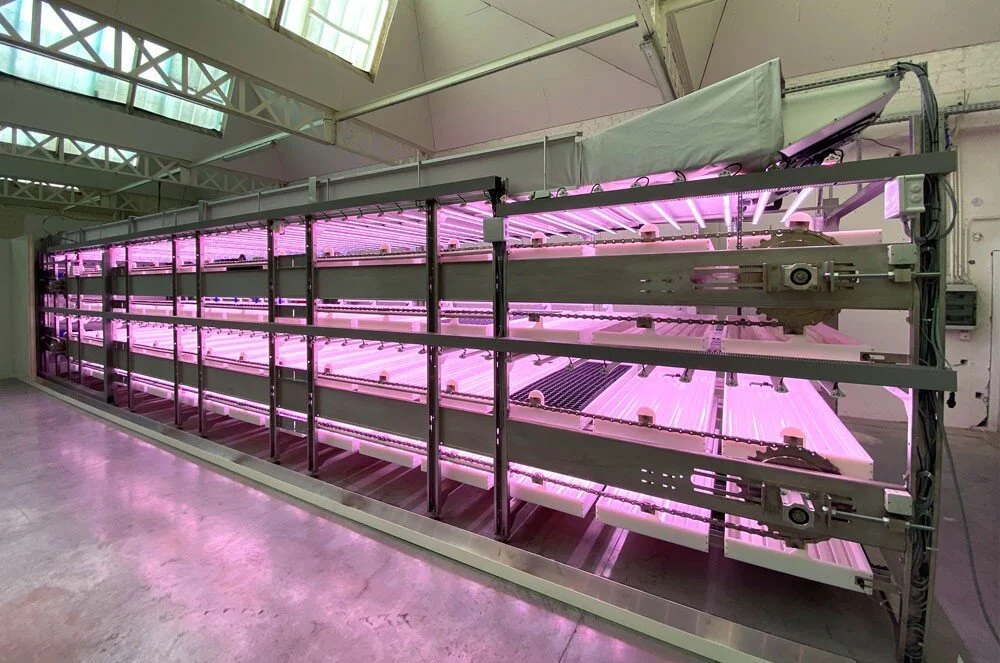

To help people in the long and confusing journey into indoor vertical farming, the company also initiates an end-to-end support program, with a free feasibility calculator, technical support, biological consulting, and contract research. Urban Crop Solutions also developed a Corona-proof support system for training, set-up, startup, and first harvest support of any ModuleX Grow Module, which all can now happen remotely.
Tom Debusschere, CEO of Urban Crop Solutions: “We’ve been listening closely to the feedback of our customers and we found improvements just about everywhere. But the breakthrough invention is the automated BenchCarousel. This new crop-to-person carousel brings any bench of your choice to you within 90 seconds. It also allows us to fit a growing surface of 86m² (925sq.ft) within a 40ft insulated freight container, which we believe is an industry record.
What you really pay for is growing surface, labor, and electricity, and the ModuleX Plant Factory offers a step-change improvement in each. We invite you to take a look at our new website, with the investment cost in full transparency, so you can quickly see which solution is the best fit for you.”
Urban Crop Solutions is an agtech pioneer in the fast-emerging world of ‘Indoor Vertical Farming’. Throughout years of research, 220+ ‘plant growth recipes’ were developed for efficient indoor growing. All drivers for healthy plant growth, such as optimal LED spectrum and intensity, nutrient mix, irrigation strategy, and climate settings are tested and validated daily in the company’s own Indoor Biology Research Center.
To date, Urban Crop Solutions has manufactured container Farms and a Plant Factory for clients throughout Europe, North America, and Asia. Urban Crop Solutions’ commercial farms are being operated for vegetables, herbs, and micro-greens for food retail, foodservice, and industrial applications. Research institutions operate the growing infrastructure of Urban Crop Solutions for scientific research on banana seedlings, flowers, hemp, and many more.
Visit www.urbancropsolutions.com for a full virtual tour.
For more information: www.urbancropsolutions.com
Brecht Stubbe, Sales Director brst@urbancropsolutions.com
Maarten Vandecruys, CTO mava@urbancropsolutions.com
Tom Debusschere, CEO tode@urbancropsolutions.com
European headquarters: Regional headquarters:
Grote Heerweg 67 800 Brickell Avenue, 1100 Suite
8791 Beveren-Leie (Waregem) Miami (FL 33131)
Belgium Florida
(+32) 56 96 03 06 +1 (727) 601 7158
Facebook: www.facebook.com/urbancropsolutions
Twitter: www.twitter.com/U_C_Solutions
LinkedIn: www.linkedin.com/company/urbancropsolutions
YouTube channel: http://www.youtube.com/c/UrbanCropSolutions
Instagram: https://www.instagram.com/urbancropsolutions/?hl=en

Join Farm Expert Derek As He Live Streams From Inside The Freight Farms Greenery - August 19, 2020 - 12 Noon EST
Take a deep dive into the basics of controlled environment agriculture, hydroponics, and vertical farming...all from the comfort of your own home - August 19, 2020 - 12 Noon EST
Come Check Out The Greenery™
Take a deep dive into the basics of controlled environment agriculture, hydroponics, and vertical farming...all from the comfort of your own home!
Joining is simple – register for free below.
RSVP
When
Wednesday, August 19th, 2020
12:00 - 12:45 PM EST
Where
Zoom Video
Click here to reserve your spot!

Kuwait JV Opens Large-Scale Indoor Vertical Farm
&Ever Middle East, a joint venture between Kuwait’s NOX Management and German company &ever, in partnership with German engineering companies SAP and Viessmann, has opened the first commercial indoor vertical farm in the Middle East
August 16, 2020
&Ever Middle East, a joint venture between Kuwait’s NOX Management and German company &ever, in partnership with German engineering companies SAP and Viessmann, has opened the first commercial indoor vertical farm in the Middle East.
Kuwait, a country that previously relied on European and overseas imports for most of their leafy greens and herbs, can now locally grow up to 250 varieties of greens and herbs using dryponics technology.
The facility, with approximately 3,000 sq m growing (or farming) space, has a daily output capacity of up to 550 kg of salad, and herbs. The products are available in all leading retailers and co-operatives under the brand name &ever Kuwait.
The farm produces high-quality and sustainable crops indoors, which increase the nutritional quality and decrease environmental impact. The cutting-edge vertical farming method uses 90 percent less water compared to traditional farming, 60 percent less fertilizer, and zero pesticides. Using a sustainable “farm to fork” model, the technology is able to preserve the plants’ nutritional value until the produce reaches the customer, said the statement.
“Previously, Kuwait’s restaurants imported all of our greens and herbs, mainly from Europe,” said Faisal AlMeshal, Director of Strategy and Business Development, NOX Management. “Our JV with &ever and the partnership with SAP and Viessmann on this indoor farm is enabling the local farming supply chain to save on costs and logistics, to minimize waste, and to make a better choice for the planet. Our customers have enhanced experiences with tastier and fresher produce.”
This knowledge exchange complements Germany and Kuwait’s trade ties. Bilateral trade is €1.3 billion, and Germany’s private sector invests €14.6 billion in Kuwait, according to Germany’s Federal Foreign Office.
Germany and Kuwait are strong partners not only in politics but also in business, said Stefan Möbs, German Ambassador to Kuwait, who recently participated in a virtual media roundtable about the farm’s success hosted by the German Business Council Kuwait.
“I welcome the innovative business idea of German company &ever specifically here in Kuwait. Both countries are seeking new ways in difficult times. Even better to work together!”
Climatized rooms
The farm has partnered with Viessmann Refrigeration Solutions to develop highly efficient climatized rooms which are used in its indoor vertical farm. The technology is 40% more energy-efficient than other indoor vertical farming systems when it comes to energy use for climatization, said the statement.
&ever built its operating system, &ever Cloud, using the SAP Business Technology Platform -- SAP HANA in-memory platform and SAP Cloud Platform. Farmers can monitor, analyze, and adjust hundreds of data points on plant health, airflow, light, carbon dioxide levels, humidity, and temperature in real-time.
“Technology is the foundation for transforming customer experiences in restaurants and agricultural production in Kuwait, and for fostering diversified economic growth and sustainable agriculture worldwide,” said Andy Froemmel, Managing Director, SAP Kuwait. “Digitally transforming Kuwait’s agricultural sector supports New Kuwait 2035 goals, and helps to foster the local innovation economy and job creation.”
&ever is ready for global roll-out
Building on the global deployment capabilities of its key partners, &ever will scale its operations quickly and globally. “Our vision is to bring better tasting greens with high nutritional value to more and more people,” says Mark Korzilius, Founder of &ever. “We have an interesting pipeline of opportunities around the globe,” adds Dr Henner Schwarz, CEO of &ever. “We hope to be able to travel internationally again soon to get our next farms live as quickly as possible.”
The German Business Council Kuwait is a non-profit organization and business platform, founded in 2005, in order to promote and cultivate relations between German-speaking individuals and companies with their counterparts from the host country and the region. - TradeArabia News Service

2nd Annual Global CEA Census Announced: CEA Amidst COVID-19
AgTech leaders Autogrow and Agritecture Consulting have launched their 2nd Annual Global CEA Census, focusing on understanding the impact of the COVID-19 pandemic on controlled environment agriculture (CEA) operations around the world
The 2020 Global Census will run from July 7 2020 until August 10 2020.
8/14/20 UPDATE:
The Global Census has been extended
& will run thru this Weekend
7 July 2020
AgTech leaders Autogrow and Agritecture Consulting have launched their 2nd Annual Global CEA Census, focusing on understanding the impact of the COVID-19 pandemic on controlled environment agriculture (CEA) operations around the world.
“We’re all operating in a unique situation right now and what’s required is a reality check. All of us, including growers, suppliers, distributors, government and financial institutions, need a clear view of what should be implemented, ensuring farm operators address a raft of challenges to continue to feed communities,” explains Autogrow CEO, Darryn Keiller.
“In every major market, media coverage of farms has made clear the high COVID-19 infection rate amongst farm workers, coupled with major challenges in getting their traditional immigration sourced labor across closed borders. Infection rates in food processing plants are another example.”
“It will take accelerated engagement between industry stakeholders to get us through the next 12 months and on into the future. Some farm operators have adapted well, whereas others will require additional financial intervention and modernize their approach to farming. We hope this Census will highlight the true impact of what’s happening and where the priorities lie.”
Last year, the 2019 Census reported on several areas including growth plans, agricultural experience, and profitability. This year, the Census will focus specifically on COVID-19 and whether decisions indicated last year have been affected.
“In 2019, we found 90% of respondents planned to increase their production area. We’re curious as to whether that is still the case, and if not, what other business changes are being implemented due to COVID-19,” says Agritecture Founder and CEO, Henry Gordon-Smith.
“The future is going to be about maintaining the health of workers, alongside the health of the business. Consumers will be looking for transparency around food sourcing, sustainable and local producers, and this is an opportunity for the CEA industry to take a lead in what will be our new normal.”
Recent figures released by the World Health Organization show the rapid spread of COVID-19 that has resulted in countries implementing various lockdown measures. This, in turn, has had a major impact on the entire food supply chain, including CEA farms that are key food producers around the world.
The 2020 Global Census will run from July 7 2020 until August 10 2020.
All completed submissions will go in the draw to win multiple prizes, including tickets to Agritecture Xchange, a speaking spot in the conference, a feature on Agritecture’s blog, and a discount off an annual Folium subscription with every purchase of a Folium Sensor Starter Pack.
TAKE THE SURVEY HERE
READ TERMS & CONDITIONS HERE
MEDIA INQUIRIES
Kylie Horomia, Autogrow Head of Communications
(e) Kylie.horomia@autogrow.com
(m) +6421 733 025
(w) https://autogrow.com/ | www.farmroad.io
Briana Zagami, Agritecture Media Strategist
(e) briana@agritecture.com
About Autogrow
Autogrow leverages the power of technology, data science, and plant biology to provide indoor growers affordable, accessible, and easy-to-use innovation – 24/7, anywhere in the world.
Our solutions support growers and resellers in over 40 countries producing over 100 different crop types.
We are the experts in Controlled Environment Agriculture (CEA) and continue to stay ahead of a rapidly evolving landscape.
About Agritecture Consulting
Agritecture Consulting provides a comprehensive approach to CEA project development.
In operation since 2014, Agritecture has helped more than 100 organizations determine the feasibility of their ideas, validate their business strategies, recruit talent for their projects, and manage operational challenges.
Our job is to jumpstart your knowledge of CEA, help you navigate barriers to entry, make industry connections, and mitigate risk. Our consulting services are backed by several years of operations data and a team of experienced growers, engineers, and sustainability managers.

TitletownTech VC Fund Invests in Appleton-Based Agtech Startup Fork Farms
The TitletownTech venture capital fund, a $25 million fund and venture studio led by the Green Bay Packers and Microsoft, is investing in a Wisconsin agriculture technology startup that makes hydroponic systems
TitletownTech is located within the 45-acre Titletown district and is devoted to tech startups, venture capital and offices for the leadership team that manages Titletown operations.
The TitletownTech venture capital fund, a $25 million fund and venture studio led by the Green Bay Packers and Microsoft, is investing in a Wisconsin agriculture technology startup that makes hydroponic systems.
Appleton-based Fork Farms' indoor vertical farming system, called the Flex Farm, was designed to eliminate food transportation costs, consume 97% less water than traditional agriculture practices, and be 40% more energy efficient compared to hydroponic systems currently in the market.
“Low accessibility of fresh food is a huge problem for many people, and Fork Farms is a great example of local entrepreneurs chasing a big opportunity to make positive change," said Craig Dickman, the managing director at TitletownTech, in a statement.
During the last 12 months, TitletownTech has invested in more than a dozen startups. Two of those startups have relocated their headquarters to Green Bay following the investment and including Fork Farm, 10 of TitletownTech’s investments are companies based in Wisconsin.
The fund, which is managed from the Packers' Titletown District in Green Bay, writes checks between $100,000 and $1 million.
“TitletownTech is an incredibly innovative model that will significantly bolster the local start-up economy," said Fork Farms founder Alex Tyink. "It provides an exemplary blueprint that should be followed by other organizations around the country. The depth of support is unprecedented and will provide Fork Farms significant acceleration and lift to our organization's mission of unleashing the power of fresh food production."
Lead Photo by Nick Williams
By Nick Williams, who is a reporter covering residential real estate, transportation and technology for the Milwaukee Business Journal
August 04, 2020


CANADA: Local Leaf Farms To Open Vertical Farming Site In Kingston
Purchasing local produce will become easier year-round after Local Leaf Farms opens their newest vertical farming site on Innovation Drive. Their innovative take on farming removes the need for a lot of land, and our Canadian dependency on weather
Credit: localleaffarms.com
Purchasing local produce will become easier year-round after Local Leaf Farms opens their newest vertical farming site on Innovation Drive. Their innovative take on farming removes the need for a lot of land, and our Canadian dependency on weather.
Local Leaf Farms is on a mission to change the way food is produced and distributed in Canada, growing superior quality food that’s safer, fresher, and more sustainable. Using vertical farming technology first invented by NASA, they are able to provide Canadians with pesticide and herbicide-free, hyper-local produce (grown within the city it is sold) year-round. With a model that has them delivering the product directly to store shelves within hours of harvest, they ensure maximal freshness of the product, while reducing both food waste and the carbon footprint of transportation.
Packed in 100% plastic-free, compostable containers, their innovative technology provides retailers & consumers with a fully traceable food source, via a QR code on the package, that allows instant access to all details about how the product in a specific package was grown, when and by whom.
Kingston Economic Development and the City of Kingston are pleased to welcome this new business to our community in the St. Lawrence Business Park. “I’m absolutely delighted to welcome Local Leaf Farms to Kingston,” says Mayor Paterson. “This is a company that brings an exciting and innovative approach to local food that will bring great benefits to our residents, and will further position Kingston as a leader in food security and sustainability.”
The Local Leaf facility will be located in a new development at 800 Innovation Drive and is anticipated to open in late October of this year. This business is a $450,000 investment in the Kingston community in terms of start-up costs and is expected to create seven (7) full-time jobs locally.
“We’re proud to have Local Leaf Farms joining the innovative businesses that will be sharing one roof at 800 Innovation Drive when it opens this fall,” says Ben Pilon, President of BPE Group. “Their focus on sustainability and food security aligns nicely with our business philosophy, making this agreement a natural fit. With tenants like Local Leaf, 800 Innovation Drive, will see job creation, strengthen our local economy, and show the world that good things grow in Ontario.”
“As we scale to build 20 production facilities across the country by 2025, Kingston was an obvious choice. As a gateway to eastern Ontario, Kingston represents the perfect mix of a City whose municipal government understands the importance of both innovation and the food sector, an Economic Development Office that is exceptional in supporting out of town businesses in their relocation and a community that values sustainable, quality food products. It was an obvious choice that we are excited to commence upon,” says Steve Jones, President, and CEO of Local Leaf Farms.
“We are excited that Local Leaf Farms selected Kingston as a new site for their 7,000 sq. ft. facility. Their business mission aligns with the City of Kingston’s vision for innovation, entrepreneurship, and food security making it a great fit in the community,” says Shelley Hirstwood, Business Development Officer, Attraction & Aftercare with Kingston Economic Development Corporation. “The Kingston Economic Development team is looking forward to continuing to work with Local Leaf Farms as they became established.”
While you’re here …
…Can we take two minutes of your time?
More Kingstonians than ever are relying on Kingstonist for their local news. But we need your help to keep it going.
A few years ago, two big media conglomerates, Torstar and Postmedia, “swapped assets” and promptly shuttered one of Kingston’s main newspapers. We saw talented journalists displaced and years of recorded Kingston history destroyed by a decision made in another city, with interests not grounded in what was best for the Kingston community.
And we resolved that we would not permit that to happen again.
That’s when we decided to take the Kingstonist, at that time a popular Kingston community blog, and reimagine it as the dedicated, independent local news provider you see now.
Today, businesses everywhere are struggling under the burdens of COVID-19, and we are no different. So we’re asking you to support us. Help us in our mission to: hold our local governments accountable; provide voices for those fighting against social injustice; fight against misinformation; and provide news not censored by the influence of corporate bias.
We believe that access to news is an integral component of a healthy community. If you believe the same, click here to subscribe to Kingstonist.

Farming Goes Vertical - The New Supermarket Trend For Growing Herbs In-Store
Marks and Spencer is the latest UK retailer to adapt vertical farming into its stores, with a selection of herbs now freshly grown and harvested in stores across London for shoppers to buy
The new supermarket trend for growing herbs in-store could help the environment - how does it work?
Vertical farming works by growing fruits and veg in vertically stacked layers
Claims it can significantly reduce environmental damage
M&S Simply Food is one of the latest UK retailers to introduce vertical farming
By GRACE GAUSDEN FOR THIS IS MONEY
4 August 2020
Top of the agenda for many big firms across Britain and the world in recent years is to find ways to help reduce their environmental footprint and become more sustainable.
This has been driven by consumer demand for change and warnings over irreversible damage by large companies, who can make small improvements to help that add up.
One such way is vertical farming and it has seen one middle-class supermarket favorite get involved at some stores.
Marks and Spencer is the latest UK retailer to adopt vertical farming into its stores, with a selection of herbs now freshly grown and harvested in stores across London for shoppers to buy.
Vertical farming works by growing fruits and vegetables in vertically stacked layers inside
It has partnered with Infarm, a fast-growing vertical farming firm based in Berlin, that also now operates in other supermarket chains across Europe.
Ocado has also invested £17million in vertical farming while John Lewis plans to grow salads in store in the future in a partnership with LettUs Grow.
Aside from Marks and Spencer, Infarm has recently partnered with the online sustainable supermarket Farmdrop, which stocks a selection of herbs and salad leaves.

These 4 Reasons Tell Us Why It’s Time To Shift To Indoor Farming
Though growing indoors can never be a replacement for outdoor agriculture, it can certainly help in growing certain vegetables, herbs, microgreens, and more
By Ecochirp Foundation in Environment
6th August 2020
Traditionally, agriculture was done on large open farms, having a large dependence on external environmental factors. In recent times, there is a new vertical emerging in agriculture, giving promising results i.e., Indoor farming or vertical farming. Particular challenges that were faced in conventional cultivation techniques have been resolved with indoor agriculture. Though growing indoors can never be a replacement for outdoor agriculture, it can certainly help in growing certain vegetables, herbs, microgreens, and more.
Let’s have a comparative study of indoor growing vs. outdoor growing.
Weather Dependence
Traditional outdoor growing is largely dependent on weather conditions. Only seasonal crops can be grown. Weather conditions can be the biggest nightmares for farmers as things like thunderstorms, floods, droughts can damage crops overnight. By growing indoors, we eliminate our dependence on the weather. Instead, growers can control the climate inside the indoor growing system creating the ideal environment for maximum outputs. Using a wide range of sensors, indoor growers can check their plants at all times.
Pesticides And Herbicides Requirement
Do you also wear a mask while consuming those??
The crops are more prone to pests and other animal damage as they are exposed to the outer environment. We recently saw the locust attack that happened; it devastated large areas of crops. We saw how fast they traveled and farmers couldn’t take measures in time. They had to spray large amounts of pesticides to protect the remaining crops that eventually went into our systems. The pesticides and chemical fertilizers used are a root cause of major ailments like cancers, immune disorders, infertility, and cardiovascular diseases.
Indoor grown edibles need fewer chemical additives to grow well. Being indoors, they are not prone to pests. Also, the environment is controlled; therefore, there is no need for pesticides or herbicides. Therefore, the vegetables are pure.
About 70% of the world’s freshwater goes to agriculture. And with increasing populations, this water requirement is expected to go up by 15% by 2050. This is a thing we should be afraid of, as the freshwater resources are declining. If things keep going in the same way, there is a possibility that we might not be able to keep up with the requirements. Taking the case of indoor growing, techniques such as hydroponics take up to 90-95% less water. They use a closed-loop system, where there is no wastage, and resources are optimally utilized.
The Nutritional Content Of Edibles
The current agriculture system is centralized. Therefore, fruits and vegetables have to travel thousands of miles before they reach us. In the meanwhile, they lose a considerable amount of nutritional content. For example, spinach loses about 50-90% of its vitamin C within 24 hours of being harvested, which means the vegetables and fruits we eat at our homes in cities is not as nutritional as it should be.
In the case of indoor growing, which is generally done in cities near our homes, transportation time is less than 5-6 hours. Therefore, they are fresh and highly nutritious.
Pre And Post-Harvest Losses
About 40% of the world’s food is wasted due to the pre and post-harvest losses. Pre-harvest losses occur before harvesting begins, and may be due to insects, weeds, and rusts. Post-harvest losses occur between harvest and the moment of human consumption. Fruits and vegetables are perishable products and tend to get spoiled or degraded with time and unfavorable factors. Indoor growing has very low wastage as they rarely get diseases; they are near to cities and therefore, have lower transportation times. The edibles are consumed soon after they are harvested.
This comparison is just a brief glimpse of how growing indoors is more beneficial as compared to conventional growing. However, this article does not mean that indoor growing can replace proper farming. Outdoor farming can not be eliminated but can be decentralized, and with the help of indoor growing techniques, we can revolutionize the current agriculture system for the better.
About the author: Palak Kumar is an insatiably curious Mechanical Engineering student, passionate about flying, clouds, literature, and plants, working towards revolutionizing Indoor Vertical Growing.

Hydroponic Propagation: A Webinar Event You Don’t Want to Miss
On August 12, 2020, we will be a part of a free, informative event to cover hydroponic propagation for seedlings
On August 12, 2020, we will be a part of a free, informative event to cover hydroponic propagation for seedlings.
This free webinar will cover the best in class techniques and methodologies to use to yield results, technology advances, how to create and deliver environmental recipes, and more! We’ll be partnering with other experts who will talk about all there is to know with hydroponic seedling propagation. Still, want to know more about hydroponic propagation? We’ll help you understand more in this article.
The 3 Life Stages for Seedlings
Before we can describe hydroponic seedling propagation, you’ll need to know about the plant’s life stages first. Since hydroponic plants don't require soil, seeds have to get their nutrients through other methods. When it comes to seeds, there are 3 life stages that you’ll need to pay attention to in order to have successful yields. The three stages are:
Germination: This occurs when a seedling goes from a dormant state to an active one. The radicle breaks out from the outer shell and becomes a root. However, this usually happens during warm and moist conditions, which is why it’s essential to take note of the temperature when growing seedlings. Once you can see the plant expelling from the seed, it’s time to move them to the propagation system.
Propagation: This stage is when the seedlings start to grow roots and true leaves. The propagation stage ends when the roots have nearly fully developed. Once you notice this, you can begin the transplant process.
Transplant: During this stage, you will move the young seedlings into your growing system to watch them reach their full growth.
The Importance of Temperature
One of the main driving forces to your plant’s growth success can boil down to temperature. Depending on the plant you’re growing, you’ll need to ensure that the correct environmental conditions are met per crop type. This boils down to if you’re planting warm or cool weather plants.
Warm Weather Plants: Basil, oregano, thyme. Typical herbs and fruiting crops such as tomatoes, and peppers.
Cool Weather Plants: Lettuce, Kale, Swiss Chard, Spinach, tomatoes, and other greens.
Tips for Hydroponic Propagation Success
In this section, we’re going to discuss a few tips you can use to ensure propagation success.
Do not overexpose your plants to heat. This is because seedlings are especially vulnerable and sensitive to heat. It’s best to keep in mind that seedlings shouldn’t be overexposed to anything from nutrients to pesticides to fertilizers.
Don’t keep your media too wet. This can lead to damping off which can invite various molds and fungi to form, leading to a loss in stem structure.
Give your plants nutrients after you notice the first set of true leaves. Around this stage, the plant will need more external nutrients from things like soil or synthetic fertilizers. It’s best to use the same nutrient mix you’d use during your grow out, just make sure to dilute way more.