


Welcome to iGrow News, Your Source for the World of Indoor Vertical Farming

"Very Little Has Really Been Established in Urban Agriculture, But We Are Innovating And That is Exciting"
Urban agricultural technology players brought together by UKUAT
Bringing together key players in the UK Urban Agriculture industry. That is the goal of UK Urban AgriTech (UKUAT). The organization helps growers, suppliers, researchers help each other out. UKUAT brings them together and is a platform for information and knowledge. In February of 2020, the collective formalized the organization, and a temporary board of 5 directors was appointed during the online AGM elections in March of this year.
With Mark Horler, the chairman, at its core, UKUAT started as an informal discussion forum between practitioners and researchers in the field, who progressively fielded increasing interest and sought ways to pool their efforts and collaborate. Katia Zacharaki, communications director, tells us about the organisation and what they do for the Urban AgriTech sector in the UK.

Small room at VFarm
Memberships
UKUAT is a membership organization welcoming organizations, institutions, and individuals with an interest in the application of Agritech in urban environments. Growers of all scales and mandates, technology and energy suppliers, universities, consultants and individuals actively involved or even thinking about setting up a vertical farm, rooftop greenhouse project, community growing project, etc. or developing policy, technology, and services supporting the expansion of the urban agriculture industry, have somewhere to go in the UK to feed from its membership’s collective expertise, experience and drive.
So anyone who has an interest in urban agritech is welcome to join. The most important advantage of membership is connecting with others, but there are also the issues of decision and policy making for the future of urban and peri-urban agricultural activities. “Urban agricultural technology is a very new topic. Very little has really been established yet, but we are innovating and that is exciting.”
Lettus Grow system
Interacting with policymakers, alongside other international organizations like GlobalGAP, is key. Internally to the organization, the members are organized into four groups where they can provide input and ideas - education & outreach, policy & advocacy, research & expertise, and publicity & promotion, in which they can exchange information relevant to their company or interest.
“The organization can work as a database pool, where members can access expertise and knowledge sharing can take place. For example, members can refer within the organization to identify potential partners for commercial or research projects and funding bids.”
Brexit
Katia thinks that the Brexit will cause some uncertain times for the UK, but also that indoor farming and CEA can help provide sustainability and resilience by increasing the self-sufficiency of the country. “We can turn it into an opportunity.” For now, however, mostly microgreens and lettuce are grown in these circumstances, so not products that people can eat all the time. Research and innovation are required to expand the amount of edible products that can be grown indoors and in urban settings.
Intelligent Growth Solutions integrated growth trays
Collaboration
UKUAT is currently working closely with Farm Tech Society and GlobalGAP on inserting urban agritech into their certification scheme.
Collaboration between urban farms, however, is harder to arrange. Urban farms tend to have high initial investment requirements, and that causes a lot of them to be very secretive about what they do exactly so they don’t get copied. “Some competition is good to stay in business, of course, but we think collaboration is better. We'd like to see UK cities contribute more to a fresh produce food system that is heavily import-dependent. We try to highlight this, which will hopefully cause more collaboration. Not everyone has to invent the wheel.”
The five directors are Mark Holder, the chairman, Johnny Stormonth-Darling the secretary and website wizard, Paul Myers the Treasurer, Oscar Rodriguez the Director of Policy and Katia Zacharaki is the Director of Communications. Paul is also the managing director of Farm Urban, Oscar owns consultancy Architecture & Food, and Katia is a senior research engineer at Digital Farming.
For more information:
UK Urban AgriTech
communications@ukuat.org
www.ukuat.org
Publication date: Wed 17 Jun 2020
Author: Marlies Guiljam
© HortiDaily.com
TURKEY: "We Are Ready To Expand Domestically and Get Into Foreign Markets"
The Istanbul-based Plant Factory is constructing its first big facility, named ‘PF001’. The facility will be starting its test production by the end of August 2020.
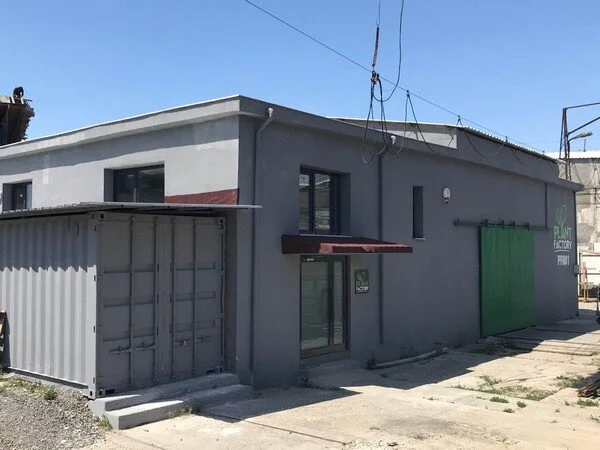
The team of Plant Factory has implemented the following elements in its new facility: controllable dynamic lightning, modifiable shelf space, and smart air conditioning and dosing systems, which are used for production and will also be used for research and development. “After five years of field research, we are ready to expand domestically and penetrate foreign markets with our technical infrastructure and plant knowledge.”
The automated dosing system
“As we will be starting our first production 3 months later due to COVID-19, we aim to produce 5000 crops per harvest”, says Halil Beşkardeşler, CEO of Plant Factory. In the upcoming months, the facility will be focusing on the production of different types of lettuce, basil, and arugula followed by other leafy greens analysis, testing, and production. PF001 will generate part of its energy from installed photovoltaic panels on the roof. “In this way, we aim to benefit from renewable energy sources and lower the unit product costs.”
Plant Factory's UV and filter system
The company recently launched an animated video, intending to spread more awareness on vertical farming in Turkey. Beşkardeşler adds: “With our video, we have started to inform our end consumer and the investors that are interested in investing in urban agriculture”.
For more information:
Plant Factory
Halil Beşkardeşler, CEO
halil@plantfactory.company
www.plantfactory.company

Source: HortiDaily
Publication date: Fri 10 Jul 2020
Author: Rebekka Boekhout
© HortiDaily.com

Bay Area Brothers Hope to Feed The World With Their Robotic Indoor Farming Technology
Their entrepreneurial “garage” is a two-story-tall indoor vertical farm in San Jose, California, where we met up with CEO Samuel (a Santa Clara University graduate) and Chief Technology Officer John (Westmont College, Technical University of Munich)
June 28, 2020


By Linda Zavoral
Mercury News
(San Jose)SAN JOSE, Calif. – You’ll forgive the Bertram brothers if their Silicon Valley elevator pitch is as fast-paced as a doubles match. After all, they moved from Melbourne, Australia, to the United States to play collegiate tennis, then developed a love for engineering and robotics – and a lofty goal to meet the world’s nutritional needs.
Less than a decade after arriving in California, they co-founded OnePointOne, an agricultural technology company, and Willo, their direct-to-consumer health and lifestyle brand.
Their entrepreneurial “garage” is a two-story-tall indoor vertical farm in San Jose, California, where we met up with CEO Samuel (a Santa Clara University graduate) and Chief Technology Officer John (Westmont College, Technical University of Munich). After checking out the technology, gawking at the hundreds of red mizuna plants carefully nurtured by growers, engineers, and robots, and nibbling on just-harvested, state-of-the-art basil, it was time to ask some questions.
Q: How did you two hit upon this idea for a vertical farming start-up?
Sam: There are 1.1 billion people that began this millennium malnourished. Think about that number for a moment. Galvanized by its magnitude, John and I named our vertical farming company OnePointOne, or OPO, as a constant reminder of what we are aiming to solve. Compounding the problem: Poor nutrition kills more people in the USA than anything else, including cigarettes. Plants have always been and will continue to be, the solution to the problem of malnourishment and diet-related disease. Our technology – through production and plant research – intends to solve these problems.
Willo is the first revolutionary step in this direction. It is the direct-to-consumer brand of our company. By allowing you to configure and control what you grow in your Willo Farm Plot, we can work together to personalize your nutrition, and use plant-based food as the primary tool for preventative medicine that it has always been.
Q: How does Willo’s OnePointOne technology differ from other indoor farming methods?
John: Willo’s high-performance indoor farming technology is different from any other indoor or outdoor farm. We use LED lights to supplant the sun, we use a nutrient-rich mist to replace the soil, and a clean-room environment to keep the plants safe, comfortable, and away from the dangers of the outdoors. We are the only organization in the world to grow plants out of tall vertical towers using aeroponics (which is a form of hydroponics using a nutrient-rich mist). And we use fleet robotics to perform many of the functions inside of our farm – everything from plant seeding, plant movement, and plant inspection.
Q: An early client of yours is chef David Kinch’s new Mentone restaurant in Aptos.
He calls basil the “spirit animal” for that Cal-Mediterranean concept. So you’ve got a three-Michelin-starred chef who wants high-quality basil year-round. No pressure there! How did you develop a basil that meets his standards?
Sam: Chef Kinch offered us a challenge to replicate the quality of a specific basil variety grown in Pra, Italy. Through many months of varying the size, shape, taste, and texture of the basil, we arrived at precisely the product he was looking for. Now we are the sole supplier of Ligurian Genovese basil to his restaurant.
Funnily enough, now that we have the “recipe” to grow Mentone’s basil, the pressure is off. Since we control the plant’s experience so closely, the replicability and consistency of the product is guaranteed.
Q: Are there nutritional studies that have compared vegetables and herbs grown this way with those grown conventionally outdoors in soil?
Sam: Yes, and we are in the process of compiling an extensive study on Willo’s produce in comparison to outdoor-grown produce. What I can say is that organic farms use pesticides and often contain heavy metals. Willo’s produce never will.
To be clear, conventionally and “organically” grown produce is still far better for you than almost any other food, and the farmers/workers that grow it for you are modern-day superstars. The problem is one of sustainability. Massive consumption of water, large-scale contamination of water, soil degradation, and pesticide poisoning are all very serious problems that Willo’s farming technique eliminates.
Q: How do you mitigate the effects of the agricultural job losses this technology creates?
John: In every facility that Willo builds, there will be a host of new employment opportunities for a wide variety of skill sets – growers, engineers, scientists, and operators. These facilities are set to create jobs in each location we build, not eliminate them. Indoor farming is the last thing farmers and their laborers have to worry about. Without our technology, there is already a shortage of workers and an average age of 57. Willo ensures that in the midst of these statistics, consumers will continue to receive access to fresh produce.
Q: You’re now starting to grow produce for the public. How does this membership work and what will customers receive?
Sam: You get to subscribe directly to Willo’s Farm and claim a Farm Plot of your own. You’ll first receive a home-delivered Welcome Box filled with our first generation of crops; 5 oz. kale, 5 oz. mizuna, 5 oz. protein crunch, 5 oz. microgreens and a 5 oz. salad mix of the combination of products. Within seven days you’ll be given the opportunity to configure your farm with the crops you enjoy most or to continue with the Welcome Box farm configuration. Depending on your subscription, Willo delivers these five 5 oz. packages weekly or bi-monthly directly to your door.
Willo is currently developing an app to connect you directly to your Farm Plot. There, you’ll be able to watch your plants grow through time-lapse imagery, add new crops to your Farm Plot, trade Farm Plots with your neighbors, and donate Farm Plots to Willo’s charitable partners among many other things.

"There’s No Such Thing As One Perfect Spectrum For A Crop”
Just over two years ago the US company Fluence, specialised in horticulture lighting solutions, was acquired by the German Osram group and their ambitions have been clear
Fluence expands top light series
“There's no such thing as one perfect spectrum for a crop. It’s just too complicated: the ideal spectrum is a combination of different factors and is also cultivar dependent, but much more comes into play: the natural light at the cultivation site, the target light level, electricity costs and the produce sales price for example”, says Timo Bongartz with Fluence. That’s why the light supplying company is happy to expand their VYPR Top Light series with several new PhysioSpec spectra. With additional reflectors and mounting hardware, they want to offer greenhouse growers a broad toolbox to select their perfect light solution from.
Diversifying the business
Just over two years ago the US company Fluence, specialized in horticulture lighting solutions, was acquired by the German Osram group and their ambitions have been clear. “Fluence has been an important player in the indoor market ever since we were founded in 2012. With the acquisition, further growth came within reach and the strategy has been to diversify the business. The greenhouse growers are a key part of that”, says Timo Bongartz, general manager for Europe, Middle East, and Africa. “We’ve always seen that our LED products can be of help for growers of high wire crops, yet there are specific challenges that they deal with. Offering them our solutions and adjusting our portfolio, has been top of our mind.”
With the expanded PhysioSpec Spectra the moment is there. In addition to the two existing spectra, the VYPR top light series now also can be equipped with additional PhysioSpec BROAD spectra as well as several red and blue DUAL spectra. Over the past years, extensive research was put into place to select these spectra. “Together with our research partners worldwide in the Netherlands for tomato, in Belgium for cucumber, in the US and Netherlands for cannabis, In Canada for bell pepper and in Germany for leafy greens and herbs”, Timo says. “Of course also the growers trialed the different spectra in their greenhouses. The combination of normal and applied science is what we selected the spectra on.”
So what’s behind this choice? When talking about LEDs, it’s often about efficacy. “With our red and blue spectrum we can reach 3.8 µmol/joule and a PPF per fixture that goes up to 2330 µmol/s. That’s something we’re proud of since it’s one of the highest in the industry and these numbers are often important to growers. Yet there’s more to it: other than the light efficiency, also the plant efficiency plays an important role in the functioning of the light within the growing company as a whole”, Timo explains. He adds how Fluence does not want to step away from their broad-spectrum strategy that has helped many growers so far. “But we’re broadening our solution sets for growers at any location worldwide and for all different kinds of crops with the launch of these new PhysioSpec spectra.“
With expanded PhysioSpec™ spectra, the VYPR top light series offers higher efficacies (up to 3.8 µmol/J) and higher photosynthetic photon flux (up to 2330 µmol/s) per fixture over comparable lighting technologies. (Photo courtesy of Fluence by OSRAM)
Broad-spectrum lighting
“Finding the right lighting strategy includes more than finding the right spectrum or finding the right amount of lighting in terms of PPFD levels”, he continues. “A broad-spectrum light could be the best spectrum when looking at the plants’ efficiency and overall yield but does not have the best energy efficiency. It is a case by case analysis to select the right spectrum together with the grower.”
In order to realize the best company results, a grower would have to think of the best ROI. “And for example calculate their energy prices through. Red light is the most efficient to produce, whereas producing a broad spectrum is less energy efficient. The additional yield and the price you make for that yield would have to justify the additional energy costs”, Timo shows.
He adds how for example Italian growers also would need different lights than growers in Sweden since they would use a higher amount of supplemental light. “In the end finding the right spectrum is defined by different factors. If a cucumber grower in the Netherlands can change from traditional ambarella to high-wire cultivation and to winter production by adding supplemental lighting and that would improve revenue and profitability it is also important to consider the working conditions of the employees in regard to the color of light. That’s why we always speak with growers and find the lighting solution that suits their business, not a spectrum that suits only the crop. It’s not a one size fits all.”
The new VYPR spectra - the DUAL spectra developed with a focus on energy efficiency and the BROAD spectra within the full PAR region of 400 to 700 nm - will give the team a broader toolbox to select from. “Especially in the LED industry, there is so much yet to learn. We learn how plants are performing on different spectra and see the influence on plant architecture, the time flowering to harvest, and fruit quality for example. That’s all valuable information for a grower and something he will base his business model on. Therefore we accompany all growers with our team of horticulture specialists to adjust and constantly optimize the cultivation under LED considering all growing factors.”
"Fluence’s extended PhysioSpec™ spectra enable growers to optimize lighting strategies for any crop in any growth stage or geographic location", the team explains. (Photo courtesy of Fluence by OSRAM)
Reflectors, mounting solutions, and power supply
it’s not the only addition to the Fluence toolbox. Together with the new spectra also new reflectors and mounting solutions are launched and the VYPR series is updated with a patented thermal management technology as well as a more efficient and smaller power supply.
“The reflectors can be used under the LED light fixtures and will give growers the possibility to distribute the light from a 120 to a 150-degree beam angle, which offers new possibilities in lighting designs and more ways to distribute the light uniformly. Since HPS often has a beam angle of 150 degrees, we needed these reflectors also to realize nice overall and spectral uniformity for growers that want to opt for a HPS-LED hybrid installation.”
With the additional mounting options the installation of the lights is more flexible ”Growers can put the lights under the trellis, perpendicular or next to it.” He explains how it is important to integrate your lighting solution already in the planning phase of the greenhouse, yet how this is often not possible - especially when working in an existing facility. “Working in a low greenhouse means the distance to the crop is limited and if you can gain an additional 20 centimeters just because of how you mount the LED lights that can already mean a huge difference in uniformity. It does not matter if it's the spectrum, beam angle, or mounting brackets, it is all about finding the best fit for the individual needs of the grower.”

For more information:
Fluence Bioengineering
4129 Commercial Center Drive
Suite 450
Austin, TX 78744
512-212-4544
info@fluencebioengineering.com
www.fluence.science
Publication date: 2 Jun 2020
Author: Arlette Sijmonsma
© HortiDaily.com

Urban Farming Partners Singapore Awarded Funding to Build Dutch Technology Indoor Farm in Singapore
With Singapore’s ambition to produce enough food locally to meet 30% of the country's nutritional needs by 2030, the Republic's strategies towards achieving long-term food security is more urgent than ever
Urban Farming Partners Singapore (UFPSG), a unique partnership between Singapore and the Netherlands, has been awarded funding support by the Singapore Food Agency (SFA) under the Agriculture Productivity Fund (APF), enabling the urban farming initiative to take the next step towards strengthening Singapore’s food supply chain and paving the way to food security.
With Singapore’s ambition to produce enough food locally to meet 30% of the country's nutritional needs by 2030, the Republic's strategies towards achieving long-term food security is more urgent than ever. As a total solution provider for urban farms, integrating proven patented technologies and expert-backed worldwide operations, UFPSG’s vision is to contribute considerably to food security in Singapore, as well as Asia.
“We started our journey in 2017 when we presented our grand vision for food sustainability and food security in and around cities globally at the World City Summit in Singapore,” said Wouter Vos, director and founder of the UrbanFarmingPartners Holding in the Netherlands and he has since taken steps to actualize this vision together with Henk van Eijk, his fellow director. This year, UFPSG will initiate construction of a $3m state-of-the-art indoor farm in Singapore, which will be partially funded by SFA. It will be located inside the premises of HSL Waterfront@Penjuru at 42D Penjuru Road in Singapore, where all types of lettuce, baby leaves, herbs as well as other crops like spring onion and fennel will be produced in a fully-controlled indoor growing environment. This indoor urban farm is a first in Singapore that utilises Dutch technology.
“’Local for Local’ and ‘The Circular Economy’ are no longer just buzzwords. The COVID-19 pandemic makes it even more apparent that we need to restructure our critical systems globally more than ever. It is time to make a notable difference with our way of life with food,” said Grace Lim, UFPSG’s Director and project representative in Singapore. This farm can potentially produce 33 Tonnes of healthy and fresh, ready-to-eat produce for the Singapore market. Circular processes like the harvest of rainwater and solar power are examples of sustainable proven technologies that will be included in the overall design of the urban farm.
Artist’s impressions of the urban farm at HSL Waterfront @Penjuru
“We are glad to see strategic collaborations between our local agri-food industry and their overseas counterparts, as this results in the transfer of innovative and productive technology to Singapore,” said Mr Melvin Chow, Senior Director of SFA’s Food Supply Resilience Division. “Harnessing technology to grow more within our constraints will need to be the new norm for our agri-food industry as we strive towards ’30 by 30’. We will continue to support farms that are keen to develop technological capabilities.”
For more information:
Urban Farming Partners Singapore Pte. Ltd.
Grace Lim, Director, Urban Farming Partners Singapore Pte. Ltd.
gracelim@urbanfarmingpartners.com
+65 97887996
Publication date: Tue 9 Jun 2020

US: Vacant For Five Years, A Former Target in Calumet City Gets New Life As An Indoor Vertical Farm Growing Greens For The Chicago Area
The 135,000-square-foot building in the River Oaks shopping center will house stacks of trays growing kale, arugula and other leafy greens under artificial lights. A retail shop on-site will sell the produce to the community and invite people in to learn about how indoor farming works
CHICAGO TRIBUNE | JUL 15, 2020
Jake Counne, founder of Wilder Fields, is seen July 14, 2020, inside an empty Target he plans to convert to an indoor farm, in Calumet City. (Brian Cassella / Chicago Tribune)
A former Target that’s been sitting vacant in Calumet City for five years will be reborn as an indoor vertical farm producing locally grown greens for the Chicago area.
The 135,000-square-foot building in the River Oaks shopping center will house stacks of trays growing kale, arugula and other leafy greens under artificial lights. A retail shop on-site will sell the produce to the community and invite people in to learn about how indoor farming works.
Once at full capacity, Wilder Fields will employ 80 people and produce 25 million heads of lettuce a year that will be available in grocery stores across the region, said founder Jake Counne. Wilder Fields is the new name of the company, which previously was called Backyard Fresh Farms.
The property was exactly what Counne envisioned when he set out to repurpose existing buildings as indoor farms to supply fresh produce to cities far from the growing fields of California and Arizona.

An empty Target that Jake Counne, founder of Wilder Fields, plans to convert to an indoor farm in Calumet City. (Brian Cassella / Chicago Tribune)
As retail giants close stores, a trend that’s been exacerbated by the COVID-19 pandemic, Counne hopes to put the buildings they leave behind to sustainable use.
“We think this is very repeatable,” said Counne, who was a real estate investor before he became an agricultural entrepreneur. “There is a huge amount of vacant anchor retail space.”
Calumet City, which borders Chicago’s southern edge, acquired the building from Target and will lease it to Wilder Fields for 12 months, Counne said. After that, he plans to purchase the property from the city.
Counne expects to break ground by the end of this year and have the first phase of the redevelopment completed by early next year. After operating at a smaller scale to work out the kinks, Counne plans to finish developing the site by 2023. A group of investors is funding the first phase of the project. He declined to say how much funding he has received.
Produce grown locally indoors has gained popularity with consumers in recent years for environmental and quality reasons. It uses less land and water than traditional agriculture and travels far shorter distances, so the product is fresher and lasts longer when it gets into consumers’ hands. Growing year-round in controlled environments also cuts down on waste and contamination and avoids the challenges of unpredictable weather.
The Chicago area is home to several greenhouses that sell greens commercially, including Gotham Greens in Chicago’s Pullman neighborhood and BrightFarms in Rochelle, both of which have recently expanded. But vertical farms, which use artificial light rather than sunlight, have struggled to succeed at a large scale.
Counne believes he can make it profitable with lower-cost automation, which he has been testing at a small pilot facility at The Plant, a food business incubator in Chicago’s Back of the Yards neighborhood.
He’s developed robotics to reduce the amount of time workers spend climbing ladders to tend to plants. For example, an automated lift collects trays of ready plants and brings them to an assembly line of workers for harvest. He’s also developed a system of cameras and artificial intelligence software that prompts the environment to automatically adjust to optimize growing conditions.
Jake Counne, founder of Wilder Fields, on July 14, 2020. (Brian Cassella / Chicago Tribune)
Wilder Fields’ pricing will be in line with greenhouse-grown lettuces, which typically retail at $2.99 to $3.99 for a clamshell.
Though its first products will be standards like spring mix, spinach and basil, the plan is to also sell more unique varieties that people may not have tasted before. Among those Counne tested during his pilot were spicy wasabi arugula, tart red sorrel and horseradish-tinged red mizuna.
Counne is proud that his first farm is bringing fresh vegetables and jobs to an area that needs both. Parts of Calumet City are in a food desert.
Counne will be hiring for a variety of positions, from harvesters to software engineers to executives. He plans to implement a training program that will allow people to move from entry-level roles to positions managing the computer algorithms.
Alexia Elejalde-Ruiz
Alexia Elejalde-Ruiz covers the food industry for the Chicago Tribune's business section. Prior beats include workplace issues, the retail sector and lifestyle features, plus stints at RedEye, the Daily Herald and the City News Service. Alexia grew up in Washington, D.C., and has her degree in international relations from Brown University.

Living Greens Farm Hires New CEO
George Pastrana brings 30 years of successfully managing iconic consumer brands
George Pastrana Brings 30 Years of Successfully
Managing Iconic Consumer Brands
Source: Living Greens Farm
July 15, 2020
Living Greens Farm CEO George Pastrana

New president, CEO, and board member George Pastrana joins Living Greens Farm, one of the largest indoor aeroponic farms in the U.S.
FARIBAULT, Minn., July 15, 2020 (GLOBE NEWSWIRE) -- via NetworkWire – Living Greens Farm (LGF), one of the largest vertical, indoor aeroponic farms in the United States, which provides year-round fresh salad greens, exclusive bagged salad kits, microgreens, and herbs, announces the arrival of George Pastrana as its new president, chief executive officer, and board member.
Pastrana is a commercial leader with a successful record of managing iconic consumer brands for innovation and profitable growth at leading, growth-oriented, market-driven companies. His marketing and operational experience includes Fortune 100 multinational companies as well as smaller entrepreneurial organizations, where he was successful in growing sales, profit, and market share.
Pastrana will reside in Minneapolis and will bring nearly 30 years of commercial and innovation leadership at consumer-packaged goods companies to contribute to LGF’s success in the coming years. He will be leading a talented, experienced team of leaders to establish LGF as a premier brand in the fast-growing bagged and clam-shelled salads and salad kits industry. He also has plans for LGF’s national rapid expansion.
“I am excited about the opportunity to lead LGF’s passionate coworkers as we embark on scaling up our proven, breakthrough aeroponic farming system and to provide our healthy, nutritious, and flavorful greens and herbs to customers with discerning eating habits nationwide,” says Pastrana. “LGF’s patented aeroponic farming systems are a cost-effective way to deliver flavorful, better-than-organic farm fresh greens and herbs. We have a proven model, and we are ready for national expansion with a talented team of leaders.”
Prior to joining LGF, Pastrana was president and COO of Dogfish Head Brewery in Milton, Delaware. He holds a biomedical engineering degree from Rensselaer Polytechnic Institute and an MBA from Cornell University's Samuel Curtis Johnson Graduate School of Management, and he completed the advanced management program at INSEAD Business School.
ABOUT LIVING GREENS FARM
Living Greens Farm (LGF) operates one of the largest indoor aeroponic farms in the United States. Aeroponics and specifically LGF’s proprietary grow systems, have been described as the next generation of ag-tech and a solution to the world’s food challenges.
Headquartered in Minnesota, Living Greens Farm is Earth-friendly using 95 percent less water and 98 percent less land compared to traditional farming and can grow safely, consistently, and locally year-round. All products are considered better than organic because they’re grown in a controlled environment without the use of pesticides, herbicides or other harsh chemicals and are non-GMO. Living Greens Farm has a full product line that includes bagged and clamshell salad greens, premium microgreens, and delicious herbs available to customers throughout the Midwest.
For more information, please visit http://www.livinggreensfarm.com.

5 Benefits of Microgreens That Will Boost Your Health
Microgreens are the powerhouse of nutritious foods. These functional foods are the seedlings of vegetables or herbs and are known to boost health function and prevent disease
Microgreens are the powerhouse of nutritious foods. These functional foods are the seedlings of vegetables or herbs and are known to boost health function and prevent disease. Known as being tiny vegetables, microgreens are great additions to any dish as they provide texture, various flavors, and are packed with nutrients. In this article, we’re going to cover five benefits of microgreens that are beneficial to your health.
Nutrient Rich
Studies have shown that microgreens tend to have nine times the amount of nutrients than their mature counterparts. In this study that was published in the Journal of Agricultural and Food Chemistry, it states that “microgreens contain considerably higher concentrations of vitamins and carotenoids than their mature plant counterparts.” By being rich in nutrients with great taste, it’s no wonder these tiny vegetables are growing in popularity.
Prevents Diseases
Not only are they rich in nutrients, studies have shown that microgreens are also filled with antioxidants. Antioxidants can help prevent diseases by removing free radicals from the body. Free radicals are unstable waste molecules that accumulate from factors such as pollution or natural bodily processes. But, as these unstable molecules build, they can develop diseases such as cancer. Intaking foods high in antioxidants can help increase your chances of preventing diseases since they help remove unstable molecules from the body.
Free From Pesticides
Since microgreens are easy to grow indoors, growers will always know what’s going on with their food. This means that microgreens won’t have to be sprayed with pesticides and that they’ll be eaten fresh. These tiny plants can grow in 1-2 weeks and are easy to harvest. Now, we can take comfort in knowing that our homegrown microgreens are free from pesticides and any other harmful chemicals that other crops fall victim to.
Sustainable Source
Since microgreens are easy to grow indoors, city dense populations could take advantage of growing these healthy-packed foods at home. With a turnaround time of a few weeks to full growth, people will always have access to fresh, nutrient-dense foods. To create an ongoing source of microgreens, you could rotate a few crops at the same time, so you’ll always have something fresh to eat per week. This could be a life-changing method for low-income families to get healthy vegetables at a low cost on a consistent basis.
Reduce Risk for Heart Disease
One of the benefits of microgreens is that they have the potential to lower blood pressure, which is one of the major risk factors for heart disease. Since these special vegetables are rich with fiber and vitamin K, eating them on a daily basis can lower your risk to develop heart disease.
The benefits of microgreens are endless. We at the Nick Greens Grow Team understand the nutritional and life-saving benefits behind these magical plants. The time to start learning how to grow your own microgreens is now.
Subscribe to our YouTube channel so you can start learning about how easy it is to grow from home!
#microgreens #nutrition #eathealthy #healthyplate #healthfirst #healthconscious #healthyfood #microgreengoodness #microgreensbenefits #urbanfarming #locallygrown #healthyliving #benefitsofmicrogreens

UAE Agricultural Firm Uses Technology To Help With Food Security
Smart Acres aims to support the UAE’s food security program by using high-tech vertical farming to produce approximately 8,000 kilograms of lettuce per cycle
KATERYNA KADABASHY
July 13, 2020 | DUBAI
Smart Acres aims to support the UAE’s food security program by using high-tech vertical farming to produce approximately 8,000 kilograms of lettuce per cycle.“
In the expansion phase, we will have 78 modules, which comes to a total of 88,320 pots. Each lettuce, for example, will weigh 100 grams. So, that is approximately 8,000 kilograms of crops per cycle,” the company’s CEO Abdulla Al-Kaabi told Arab News.
The vertical farm — currently in the proof-of-concept stage — is expected to launch in the third quarter of 2020, producing 12 cycles of crops annually and expanding from Abu Dhabi to the rest of the country. In this type of farming, plants are stocked vertically, providing more produce per area and resembling something similar to the green walls sometimes seen in malls.
Smart Acres collaborated with South Korean vertical farming technology n.thing in their farming processes. (Supplied)
The company collaborated with South Korean vertical farming technology n.thing to employ the Internet of Things in their farming so as to efficiently use water and monitor humidity, temperature, and nutrients.“
Vertical farms, in general, save over 90 percent of water compared to traditional farming methods. There is constant water flow across all the little pots, and the water is filled with all the nutrients necessary for the plant to grow,” Lead Project Manager Aphisith Joe Phongsavanh said.
The high-tech design of the farm allows Smart Acres to produce clean crops without any pesticides and with minimal intervention.“
Since we are growing our crops in a 100 percent closed environment, we don’t have to use pesticides at all. That’s exactly what we mean by clean food: non-adulterated food products that go through minimal processing,” Phongsavanh said.
However, this closed environment in which the plants grow requires staff and visitors to wear protective gear before entering the premises in order to preserve the sterility of the area.“
It is almost like going into a very high-tech factory. You have to wear lab coats and go through an air shower, where one door is closed and the other door only opens after 10 seconds of disinfection,” Director of Smart Acres Sean Lea said.
Currently, the company does not have any investors, but Al-Kaabi said that the expansion phase “of course will require an investment,” expected to cost around AED16.7 million ($4.5 million).
It will not just include a larger number of crops, but also a research and development center with a vision to start cultivating baby spinach, mature spinach, baby arugula, strawberries, and potato seeds.
Earlier in July, Abu Dhabi’s Crown Prince Mohammed bin Zayed Al-Nahyan visited some local farms and met with agricultural entrepreneurs.“
I was pleased to meet some of the UAE’s aspiring agricultural entrepreneurs who are pioneering sustainable and resilient farming practices using modern technology,” Al-Nahyan tweeted.
The UAE is pushing for local production of crops and livestock.
According to Khaleej Times, the Abu Dhabi Agriculture and Food Safety Authority provided over $174 million to “138,000 families, 30,632 breeders and farmers, and 259 small-scale producers and commercial animal farms in Abu Dhabi” to support the industry in June.
Lead Photo: Smart Acres’ vertical farming technology enables it to produce approximately 8 tons of lettuce per cropping cycle. (Supplied)

VIDEO: SANANBIO Announces the Availability of its Unmanned Vertical Farming System UPLIFT to Global Growers
“Pour your seeds in the seeder and do nothing but expect fresh veggies to be harvested in a matter of days,” said Zhan Zhuo, co-founder, and CEO of SANANBIO. UPLIFT has been under tests in the last two years and proves to be commercially feasible and ready to be established as turnkey projects for worldwide growers
XIAMEN, CHINA, July 16, 2020--SANANBIO, one of the world’s largest indoor farming technology providers announces the availability of its unmanned vertical farming system, a.k.a. UPLIFT, to growers globally.
“Pour your seeds in the seeder and do nothing but expect fresh veggies to be harvested in a matter of days,” said Zhan Zhuo, co-founder, and CEO of SANANBIO. UPLIFT has been under tests in the last two years and proves to be commercially feasible and ready to be established as turnkey projects for worldwide growers. “It can produce 6-8 tons of fresh leafy greens every day on a farm of only 5,000 sqm. By stacking up layers higher than a traditional vertical farm, we can best utilize the space to increase the yields. With the same farm size, UPLIFT’s productivity is 6 times of a 6-layered vertical farm.
The increased yield means a lowered cost, which in turn makes our produce affordable to more people. We’ve also upgraded our water circulation system so that 60% of the water can be absorbed by plants and the remaining 40% recycled. This fact is especially meaningful for the regions of the world that struggle with water shortages and harsh agricultural conditions.” said Zhan.
UPLIFT uses PlantKeeper, a proprietary indoor farming management system, to control and monitor environmental factors so farm operators can be updated with real-time growing conditions throughout the farm. By using simple and proven robotics and conveyor systems, UPLIFT automates seeding, transplanting, harvesting, plant transporting, and system cleaning, reducing labor intensity to its lowest.
“We’re phasing out manpower to make our produces available for more people. So we can say that UPLIFT is unmanned for humanity,” said Zhan.
About SANANBIO
SANANBIO is a joint-venture by Sanan Optoelectronics, one of the world’s largest LED manufacturers, and the Institute of Botany of Chinese Academy of Sciences, China’s leading institute in plant science. Comprised of LED experts and plant scientists, SANANBIO is able to provide simple indoor farming solutions for global growers. The RADIX, a patented vertical hydroponic system, has been widely endorsed by growers in more than twenty countries.
“We’re phasing out manpower to make our produces available for more people. So we can say that UPLIFT is unmanned for humanity,” said Zhan.
To learn more about UPLIFT, please contact SANANBIO at global@sananbio.com or visit its LinkedIn page https://www.linkedin.com/company/fujiansanansinosciencephotobiotechcoltd.

Aeroponics: ‘Getting To The Roots’ of a Soil-Free Vertical Farming System
A UK study detailing the environmental benefits of vertical farming – and in particular, aeroponics – has listed ‘strategic areas of future research’ to underpin the system’s productivity and sustainability.
Pic: GettyImages/shansekalaIn hydroponics farming, plant roots are either partially or completely immersed in a nutrient solution.
A UK study detailing the environmental benefits of vertical farming – and in particular, aeroponics – has listed ‘strategic areas of future research’ to underpin the system’s productivity and sustainability.
According to new research out of the John Innes Centre, the University of Bristol, and technology provider LettUs Grow, there is a growing environmental and economic case for vertical farms.
Yet key knowledge gaps remain. In a recently published study, six authors layout future research areas they say could accelerate the ‘sustainable intensification’ of vertical farming, using aeroponic systems.
Allocating resources to these research areas could help transform food production on a larger scale, suggested Dr. Antony Dodd, a group leader at the John Innes Centre and senior author of the study.
“By bringing fundamental biological insights into the context of the physics of growing plants in an aerosol, we can help the vertical farming business become more productive more quickly while producing healthier food with less environmental impact.”
Source: New Phytologist
‘Getting to the roots of aeroponic indoor farming’
Published: 24 June 2020
RELATED TOPICS: Market Trends, Food Tech, Sustainability, Start-ups and disruptors, Digitalisation, Fruit, vegetable, nut ingredients

VIDEO: New England Living: The Future of Farming With Freight Farms
Farming under a city overpass? As the world’s leading manufacturer of container farming technology, Boston-based Freight Farms is changing the way the world grows its food
Farming under a city overpass? As the world’s leading manufacturer of container farming technology, Boston-based Freight Farms is changing the way the world grows its food.
New Growcer Hydroponic System Will Allow Sheshegwaning to grow Fresh Produce For Residents At Any Time of The Year
It may only be a sea container at this time, but soon Sheshegwaning First Nation (on Manitoulin Island in Ontario, Canada) will be able to grow fresh produce on a year-round basis in this unit and build food security for the community
By Tom Sasvari
July 3, 2020
New Growcer hydroponic system will allow Sheshegwaning to grow fresh produce for residents at any time of the year
SHESHEGWANING – It may only be a sea container at this time, but soon Sheshegwaning First Nation will be able to grow fresh produce on a year-round basis in this unit and build food security for the community.
“We took delivery of the Growcer self-contained hydroponic system,” stated Sheshegwaning Chief Dean Roy last Thursday. “With this project, we will be able to provide some food security as we will be able to produce fresh produce and food year-round here. With COVID-19 there have been times we haven’t been able to get fresh produce as readily as we want from neighboring grocery stores.”
He pointed out, “Growcer is a self-contained modular hydroponic system. We just have to hook up services for hydro and water and will have a representative of Growcer on hand soon to provide training on how to use the system to grow the produce here locally.”
“We should be able to produce 500 heads of fresh produce such as different lettuce weekly, year-round,” said Chief Roy. “I think we will be starting with romaine lettuce and other leaf lettuces, red kale, basil and parsley and we will be able to grow strawberries, for example, in the winter with this system.”
“We took delivery of a sea container last week for the Growcer system,” said April Folz, economic development officer for Sheshegwaning, this past Monday. “The week of July 13 Growcer company representatives will be on hand to provide training. After that, we will be up and running.”
Ms. Folz explained, “we’re going to be growing green products such as romaine lettuce, spinach, bok choy, basil, mint, and dill. And once we get going we will want to get into growing other different greens and produce.” She noted, “we were having a hard time getting fresh greens in local stores, but with this system in place, this will be available at all times. Local residents won’t have to travel to the nearest grocery store.”
Ms. Folz said, “we’re hoping to be able to provide a subscription box for residents, where for say $10 they will be able to get five heads of fresh greens at a time. The hydroponic system will allow for 450 heads of produce to be grown each week.”
“Growcer outfits everything that is needed in the sea containers, and there will be a desk for a systems manager to work at and the actual green area where the seeds are planted and the produce is grown,” said Ms. Folz. With this new system in place, one full-time person will be hired as well as two part-time casual positions will be created.
Chief Roy noted the community currently has a job posting for a systems manager.
Ms. Folz added, “we have a community logo/branding competition for a name for this program here and are hoping to get local input on a name. We will be taking input and submissions until July 15.”

UK Urban AgriTech Collective
UKUAT is a cross-industry group devoted to promoting urban agtech as a solution for food and environmental crises
The UK Urban AgriTech collective, or UKUAT, brings together the UK’s key players in modern agricultural technologies. We’re a cross-industry group devoted to promoting urban agtech as a solution for food and environmental crises. We influence policy by sharing information, educating, and communicating practitioner needs as one. We promote the uptake of agtech in urban and peri-urban settings by uniting to attract funding and customers.

UKUAT - A Brief History
It started out with a group of perhaps 5 people. Mark Horler, our founder, brought these people together to just have a chat about the industry in the UK. The short version, though it may seem hard to believe now, is that there really wasn’t that much of an industry in this country then. There were only a handful of companies developing tech and systems as well as a couple of universities with an interest in the general area.
However, slowly but surely, that number began to grow, and so did the number of people in that little group. At some point in late 2017, it was agreed that we ought to give it a name, and so UK Urban AgriTech (UKUAT) was born.
Over the next couple of years, an interesting thing happened. The UK had been slow to get going with controlled environment agriculture (CEA), but then it started to happen. More companies appeared, and more universities took an interest, as did various consultancies and other interested parties. Some of these joined UKUAT, which, at the time, was an informal collective. As happens with these things, they spoke to others, who spoke to others and, before we knew it, we had a fairly substantial number of members.
As all this was happening, we made a collective effort to start hammering out what we wanted this collective to be and do. Lengthy discussions were had, ideas were proposed and batted around, via our monthly online calls. In early 2019, most of the group met in person in Coventry. The main results of that meeting were a document detailing our aims, and another setting out our mission & vision.
These went back through the discussion & revision process. When we met again in London in late 2019, we all agreed it was time to turn UKUAT into a formal organisation. We’ve now done that, and it’s now time to get on with the work we want to do - education, outreach, policy, advocacy and more! We’ll be at events and partnering on all sorts of interesting projects in the coming months (and years).


5 Ways Urban Farming Empowers Communities For Sustainability
Urban farming has the potential to empower cities and communities all over the globe. From backyard farms to community gardens to vertical farming, the possibilities of growing sustainable foods are endless.
Urban farming has the potential to empower cities and communities all over the globe. From backyard farms to community gardens to vertical farming, the possibilities of growing sustainable foods are endless. As more and more urban areas start to implement local farms in their areas, the communities will reel in a wide range of benefits. In this article, we’re going to cover some of the major benefits that communities will experience when using urban farming.
Provides Educational Opportunities
As a society, we are disconnected from our foods; we don’t know where the foods we eat come from. Urban farming will not only teach communities how to grow their own foods, but also will establish a clear understanding of current food systems. This is an incredible learning tool for families to adopt into their livelihood because it will empower them to spread the word to others about the world-changing benefits of urban farming.
Offers Food Security
One of the most reassuring aspects of urban farming is that it bridges the gap of food access. Many densely populated cities are hundreds of miles away from conventional farming areas. With urban farming, these cities will have direct access to food sources in their area. This also allows for reduced food prices since no travel is needed to get the crops from one place to another.
Increases Food Quality
With the ability to have local farms, members will be able to grow a wide variety of foods that aren’t usually seen in supermarkets. Growing heirloom crops or foods with a lower shelf life can’t be done with conventional farming because they won’t last the travel time. Urban farming solves this issue by allowing the community to plant and harvest foods of their own choices without having to worry about shelf life. This allows communities to enjoy fresh, nutritious foods that they may have never seen in a supermarket before.
Creates Job Opportunities
The growth of urban farming will increase the need for community members to get involved, thus creating jobs that directly benefit the city itself. Urban cities tend to have higher cases of poverty and hunger. By establishing local urban farms in cities, more people will be able to get jobs and to learn about how to grow their own food back at home. This will stimulate the local economy and provide an educational outlet to the community.
Reduces Carbon Emissions
With local farms on the rise, there will be less of a need to transport foods to cities. Urban farming will help cut down on the immense amount of fossil fuels that’s needed to transport food from one place to another. This is a great opportunity to reduce a carbon footprint while also empowering communities to grow their own local food sources.
Cities across the nation are beginning to see the value in urban farming, and some have even implemented their own farming systems. We at the Nick Greens Grow team understand the importance of urban cities having direct access to their own food sources. Want to learn more about the future of farming? Subscribe to our blog for weekly updates and to our YouTube channel to learn about educational farming techniques.
#urbanfarming #urbanfarm #locallygrown #microfarm #gardening #fromthegarden #gardengrown #growyourownveggies #homegardening #urbangardening #backyardgarden #veggiegarden #growingfood #veggiepatch #urbanfarmer #localgrownfood #growlocal

Vertical Agriculture in Chile
Urban agriculture is beginning to take off in Chile, where the AgroUrbana start-up has just closed a $ 1 million seed capital round, raising its total capital to $ 1.5 million, to create a vertical farm, according to the Association for Vertical Agriculture
Urban agriculture is beginning to take off in Chile, where the AgroUrbana start-up has just closed a $ 1 million seed capital round, raising its total capital to $ 1.5 million, to create a vertical farm, according to the Association for Vertical Agriculture.
Leading the round with a 33% cash contribution was the CLIN Private Investment Fund managed by Chile Global Ventures, the venture capital arm of Fundacion Chile, a public-private initiative for innovation and sustainability in the country. Funding also came from CORFO, Chile's economic development agency, and private investors.
The funds will go to the construction of a 280-square-meter pilot facility in the suburbs of Santiago, where tests are being carried out with hydroponic crops and led lights powered by renewable energy. Green leafy fruits and vegetables are grown there.
According to company sources, the closure of restaurants due to COVID-19 made them focus on e-commerce and direct sales to consumers. In the long term, the owners plan to expand the facility to 3,000 square meters, which they speculate could be financed with funds from new capitalization rounds before the end of this year. Design and production will depend on the results of their pilot tests.
Source: Bioeconomia.info / agrositio.com.ar

IGS Completes Deal With Vertegrow to Build Scotland’s First Commercial Vertical Farm
A 245 m2 insulated superstructure will accommodate four nine-metre-high towers alongside a 1,600 m2 service area on Vertegrow’s site at Waterside Farm in Aberdeenshire. This will provide approximately 1,343 m2 of growing space, producing up to 70 tonnes of produce per annum when fully operational
New Vertical Farming Operator to Adopt IGS Agritech
Platform in Scotland
Edinburgh, Scotland – 08 July 2020 - Indoor agritech specialist IGS has today announced the completion of a deal with new vertical farming operator Vertegrow. The four-tower system will be built in Aberdeenshire in Scotland in late 2020.
A 245 m2 insulated superstructure will accommodate four nine-metre-high towers alongside a 1,600 m2 service area on Vertegrow’s site at Waterside Farm in Aberdeenshire. This will provide approximately 1,343 m2 of growing space, producing up to 70 tonnes of produce per annum when fully operational.
This is the first move into vertical farming for Vertegrow, diversifying alongside existing agricultural operations, currently growing crops including barley and rye in open fields.
Vertegrow was established through Steadman Partners, the UK-based private investment office set up by BrewDog co-founder Martin Dickie. Located in Scotland, Steadman Partners has a wide range of interests and investments throughout the UK and beyond.
The IGS platform was selected after a rigorous analysis of the market and considered to be the most advanced, efficient, and scalable to meet Vertegrow’s requirements. The plug-and-play vertical farming product developed by IGS offers them a highly controllable platform, designed specifically to maximize productivity whilst minimizing energy consumption and allowing the production of consistently high-quality produce at scale.
The towers, which are expected to be operational in early 2021, will grow a variety of crops that are intended to service the local food supply chain. Vertegrow will work with a range of local customers including retailers, caterers, restaurateurs, and other local services, to deliver fresh, nutritious, high-quality produce all year round.
IGS CEO David Farquhar commented: “This is an exciting step for IGS and for Vertegrow as we set out to deploy a new vertical farm for a new operator in this space. With proven experience in traditional farming and extensive involvement, through its owners, in the food and drink sector, we are confident that this will bring a new and top-quality offering to the local market. Such re-localization of the food supply chain is a feature of post-coronavirus planning we are seeing all over the world.”
“We were delighted that the IGS platform was selected for this project. It is proof that our rigorous commitment to engineering design excellence and our unique patented systems deliver what customers want – a system that is highly pragmatic, flexible, modular, and scalable. We look forward to getting underway with the deployment of our Growth Towers with the Vertegrow team.”
Graeme Warren, of Vertegrow commented: “Vertegrow is delighted to be working with IGS on this innovative project as we position our farm business to address the challenges of the modern food supply chain. We have spent considerable time identifying the right partners and systems, and the IGS platform stood out as a quality solution that could be configured for our needs. Growing quality, nutritious food in North East Scotland will allow us to reduce food miles for our customers. Combined with our renewable energy sources and rainwater harvesting, the efficiency of the IGS system is a key part of our ambition to grow crops in a carbon-neutral way. We look forward to continuing to work with IGS as we construct the facility later this year.”
The team at IGS will continue to work closely with its new customer in the construction and deployment phases over the coming months.
Ends
Notes to editors:
For more information: please contact Kate Forster, IGS on kate@intelligentgrowthsolutions.com or call +44 7787 534999.
About IGS:
Founded in 2013, IGS brought together decades of farming and engineering experience to create an agritech business with a vision to revolutionize the indoor growing market. Its commitment to innovation has continued apace and it has evolved the applications of its technology beyond agriculture to create solutions for a wide variety of indoor environments that enhance life for plants.
IGS launched its first vertical farming demonstration facility in August 2018.
For more information visit www.intelligentgrowthsolutions.com or connect with us on Twitter and LinkedIn.
About Vertegrow
Vertegrow represents the indoor growing arm of an existing productive arable farm in North East Scotland. It is committed to producing high-quality food sustainably, responsibly, and ultimately in a carbon-neutral way. Vertegrow expects to sell its first crops in early 2021 and then to expand and improve its crop range through research and development.
More information will be available from www.vertegrow.com as the facility approaches completion. Connect with us on Twitter, Instagram or contact hello@vertegrow.com

VIDEO: Can Sweden's 'Vertical Farms' Solve Global Food Shortages
The coronavirus crisis has disrupted global food supply chains, leading to shortages in some countries
Al Jazeera takes a look at an intricate farming operation (SweGreen) within Stockholm’s city walls.
by Paul Rhys
July 6, 2020
The coronavirus crisis has disrupted global food supply chains, leading to shortages in some countries.
The World Bank warns 130 million people could be at risk of starvation.
But an increasingly popular urban farming system could provide a solution.
Al Jazeera’s Paul Rhys reports from Sweden's capital Stockholm.
SOURCE: AL JAZEERA NEWS & SWEGREEN

VIDEO: The Produce Industry Podcast With Patrick Kelly. We Chat With Nick Greens, Horticulturist/Consultant at Nick Greens, LLC
In this episode of The Produce Industry Podcast with Patrick Kelly we chat with Nick Greens, Horticulturist/Consultant at Nick Greens, LLC
THE PRODUCE INDUSTRY PODCAST
In this episode of The Produce Industry Podcast with Patrick Kelly we chat with Nick Greens, Horticulturist/Consultant at Nick Greens, LLC. Nick Greens started his growing career in 2002. From 2007-2014 Nick made big moves in the industry with vertical and greenhouse farming along with leading new generations for success! Nick and Patrick dive into vertical farming during the COVID-19 pandemic and how teaming up with a greenhouse / vertical farm to create consistent food for your business.

The "AgrarCycle" Network is Intended to Give Vertical Agriculture a Major Boost
In vertical agriculture, vegetables and fruits are grown in multi-story buildings. This system does not require direct sunlight or arable land because the plants grow in nutrient solutions under artificial light or daylight
Osnabrück University of Applied Sciences
July 3, 2020
In October of the previous year, the Osnabrück University of Applied Sciences announced that a new research center "Agricultural Systemys of the Future" would be created on the Haste campus. The expertise from the research center will also be incorporated into the ZIM network "AgrarCycle". Graphics: Hüdepohl.Ferner Architektur- und Ingenieurges.mbH
In the network for agricultural systems development, the university works closely with research and development institutions, small and medium-sized companies, and start-ups. Cooperation with partners from the IT, engineering, and agricultural sectors should result in highly innovative approaches for food production.
(Osnabrück, July 2nd, 2020) In the coming months and years, a research team from Osnabrück University of Applied Sciences wants to set up a highly innovative network of science and business under the name "AgrarCycle" in order to sustainably promote vertical agriculture in Germany. The project is being funded with more than 120,000 euros from the Innovation Program for Small and Medium-Sized Enterprises (ZIM) of the Federal Ministry for Economic Affairs and Energy.
In vertical agriculture, vegetables and fruits are grown in multi-story buildings. This system does not require direct sunlight or arable land because the plants grow in nutrient solutions under artificial light or daylight. In addition to efficient use of space at height, food can be produced in an indoor vertical farm (IVF) in reliable, weather-independent quality. In addition, the use of pesticides can largely be dispensed within production in closed and controllable agricultural systems of an IVF. "This will make it possible for people in urban areas to be supplied with locally produced food in the future," says Prof. Dr. Andreas Ulbrich, professor of vegetable production and processing.
Further project partners are welcome
Food from an indoor vertical farm is still too expensive, partly because of the higher electricity consumption. With regard to an IVF, for example, the project proposal states: "Apart from additional costs, the costs of energy consumption of 7 kWh per kilogram of leaf lettuce are already over one euro." To significantly reduce production costs, there is above all a lack of innovative power electronics. With the help of the ZIM network, that should change. "With the various project partners, we want to find ways to reduce emissions and use resources more efficiently," explains Prof. Dr. Hans-Jürgen Pfisterer, Professor of Electrical Drives and Fundamentals. "We want to meet the requirements of nutrition and health-conscious consumer groups and bring new herbal product innovations to the market",
This should succeed both with partners who support the network financially and with associated partners who ideally support the network. The time for the project seems favorable in many ways: In July of last year, the Faculty of Agricultural Sciences at the University of Göttingen published a study that concluded that every second consumer would buy products from vertical agriculture.
Additional project partners from science and industry are being sought for the "AgrarCycle" network. "The vision of the ZIM network AgrarCycle is the further development of closed and controllable agricultural systems with all components and stakeholders along the entire agri-food value chain so that they are climate-resilient, efficient, quality-oriented and economical, and energy and material cycles are optimized and closed can ”, says the project application.
Further information:
Prof. Dr. Hans-Jürgen Pfisterer
Phone: 0541 969-3664
Email: j.pfisterer@hs-osnabrueck.de
Prof. Dr. Andreas Ulbrich
Phone: 0541 969-5116
email: a.ulbrich@hs-osnabrueck.de
Background: The ZIM network "AgrarCycle - Network for agricultural system developments to increase efficiency and climate-secure production of vegetable raw materials through energy and material cycles" is large. Regular partners are: DIL German Institute for Food Technology; ISFH - Institute for Solar Energy Research; DH Light - Professional Lighting; RAM measurement and control technology; Gefoma; Thissen Analytics; Cultinova Experior Microtech; Ingenieurbüro Mencke & Tegtmeyer; Anedo and Hagedorn Software Engineering. Associated partners are: Seedhouse - InnovationsCentrum Osnabrück; Knowledge networking Weser-Ems - bioeconomy Landkreis Osnabrück; Mählmann vegetable growing; ELEA; ELO eG; Vrielmann; K + S and TROX HGI.
By: Holger Schleper | Jasmin Schulte