

Welcome to iGrow News, Your Source for the World of Indoor Vertical Farming

CEA Advisors – Farminova Plant Factories To Exhibit At Fruit Logistica 2020
Glenn Behrman, President, and founder of CEA Advisors, together with Farminova Plant Factories is pleased to invite you to visit us at Fruit Logistica in Berlin, Hall 9, Booth D-25 from February 5-7, 2020
Glenn Behrman, President, and founder of CEA Advisors, together with Farminova Plant Factories is pleased to invite you to visit us at Fruit Logistica in Berlin, Hall 9, Booth D-25 from February 5-7, 2020.
Farminova Plant Factories are competitively priced automated, labor-saving, energy-efficient
high-volume systems designed and developed for the optimized production of a wide variety of food and non-food crops.
Our focus is always on a higher yield in a shorter time. The Farminova research center staff is constantly experimenting with different varieties and different environments and our R & D Department is laser-focused on automation, water quality, fertilizers, and fertigation, LED lighting and Control Systems.
Our team includes world-class plant physiologists, plant scientists, experienced growers, seed specialists, engineers and experts in HVAC systems. Our Business Development team and senior advisors are experts in Controlled Environment Agriculture with years of global experience.
Farminova is a division of the Cantek Group, with almost 30 years of experience in food processing, meat processing, cold storage and the design and manufacture of state-of-the-art HVAC systems. The Cantek Group team of over 300 employees has successfully completed over 13,000 projects in 55 countries. For more information, visit us online at www.cantekgroup.com
CEA Advisors is a global consultant to the vertical farming industry. Our senior management has been in the Horticulture Industry since 1971 and CEA has designed and developed successful projects for commercial clients in the US, England, Spain, Germany including growers, grocery retailers, food manufacturers,
pharmaceutical manufacturers, universities and more. For more information, visit us online at www.cea-advisors.com
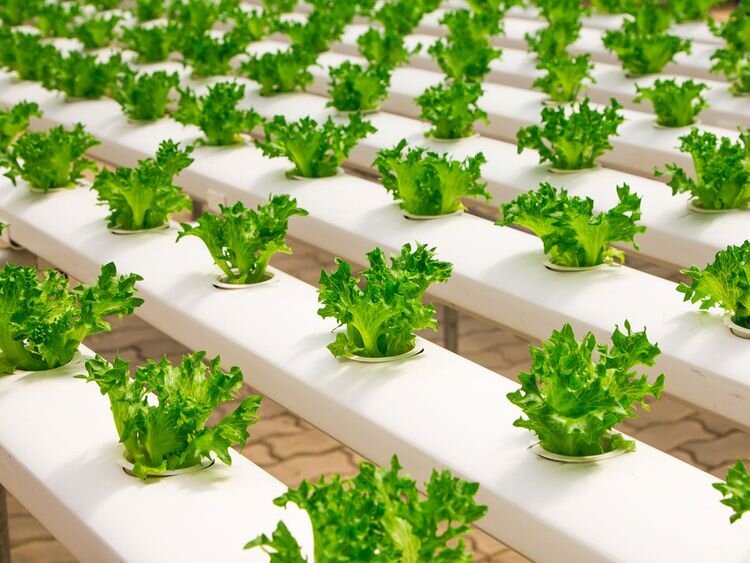
INDIA: Vertical Farming Envisages Profitable And Suitable Agriculture Business
A silent revolution is underway in the agriculture sector, which is going to be quite evident in the days to come. With the global population is set to reach near ten billion marks by 2050, the food production must increase by 70 per cent, estimates the United Nations
Plants can be grown indoors which assures protections from unruly winds, incessant rain
January 04, 2020
New Delhi: A silent revolution is underway in the agriculture sector, which is going to be quite evident in the days to come. With the global population is set to reach near ten billion marks by 2050, the food production must increase by 70 percent, estimates the United Nations.
However, there is a global appeal seeking restrictions on the forests getting converted into the farmlands in the wake of global warming.
There comes the need for technological innovation in the farming processes. And the idea of vertical farming is among them. It is in accordance with the principles of sustainable development, which beseeches judicious use of environmental resources.
Vertical farming is a practice of growing crops in vertically stacked layers in a controlled environment.
It does not just reduce the requirement of water but also increases yield and ability to cultivate a larger variety of crops.
The concept of indoor vertical farming facilitates the cultivation of all crops even those that are not suitable to the local climatic conditions. It means growing tomatoes near Delhi or potatoes near Chennai.
According to the Food and Agriculture Organisation of the United Nations (FAO), the vertical farming system consumes 75 percent less raw material than traditional farming and just 60 watts of power daily to grow 150 kg of vegetables in a month.
To obtain this quantity, vertical farming needs just 6 m2 space while traditional farming requires at least 72 m2 land area. Also, the requirement of water would be just 12 L to produce 1 kg of vegetables due to recycling as against 300-400 L under traditional farming.
More importantly, the vertical farming ecosystem holds a key to the major problem of weather-related crop losses.
Effects of climate change such as erratic rain events, prolonged droughts, and frequent floods in the country are causing farmers to incur heavy financial losses.
There have been many instances when ready-to-harvest crops were destroyed due to the unseasonal rains.
Plants can be grown indoors, with or without soil, under vertical farming, which assures the protections from unruly winds, incessant rains, dry climate. The key environmental elements such as light, temperature, humidity, and micro-nutrients are controlled to optimize plant growth.
Vertical farming can be carried out in the areas with scarcity of water as well as in urban areas as it can be set up in small plots.
There are a few different gardening methods. The most dominant is hydroponics, in which the roots are submerged in water infused with nutrients.
Another method is aeroponics. It has the potential to reform the farming practices in the drylands and drought-prone areas as plants are grown in mist environment with no soil and very little water.
Some research says plants grown with the aeroponics method uptake more nutrients such as vitamins and minerals. It translates into healthier plants and higher yield.
Vertical farming facilitates more crop cycles compared to that through conventional ways.
The fruits, vegetables are grown in vertical farming are fresh, nutritious and safe as they are grown in a controlled environment with the least possible exposure to contaminants.
From the view of reducing carbon footprint, the food procured locally reduces "food miles"- roughly means the distance the agriculture produce has traveled to reach your plate.
If fruits and vegetables are imported or procured from far away locations, transportation leads to higher carbon emissions.
Transportation and agriculture are among the largest five emitters of greenhouses gases, finds the Emission Gap Report - 2019 of the United Nations Environment Programme (UNEP).
One may think that vertical farming also leads to emissions as it requires energy for indoor lighting and air-conditioning.
However, the high-efficiency lighting, low-carbon electricity, nano cost climate control can even achieve a relatively low carbon footprint. Additionally, the higher crop yield offsets the emissions caused to operate the indoor vertical farming units.
Many entrepreneurs in India and other parts of the world have found interest in the concept of vertical farming.
It is a profitable business that promotes sustainable development - a win-win situation for all. Vertical farming is set to herald a new era of urban and compact agriculture sectors.
Lead Image Credit: Pexels

Freight Farms Is Rearchitecting The Concept of Vertical Farming
Freight Farms helped invent the now-thriving farm-in-a-container market, where companies build vertical farms inside old shipping containers to grow pesticide-free produce throughout the year
Freight Farms helped invent the now-thriving farm-in-a-container market, where companies build vertical farms inside old shipping containers to grow pesticide-free produce throughout the year. But now that vertical farming companies are sprouting up almost as fast as the leafy greens they grow, the Boston, MA-based startup wants to completely rebuild the shipping container concept.
Its new product, The Greenery, which the company just announced today, isn’t a reiteration of its existing Leafy Green Machine (LGM). Instead, it’s a complete re-imagining of the shipping container concept that enables just about anyone to farm a large variety of crops. Or in the words of Freight Farms cofounder Brad McNamara, they’re “rearchitecting the whole vertical farm concept.”
To do that, McNamara and fellow cofounder Jon Friedman kept the foundational basics in play: farming still takes place inside a 40-foot shipping container and still involves the usual mix of hydroponics, LEDs, and software to control things like plant nutrients, temperature, and light levels. But inside the walls of that 40-foot container, Freight Farms has introduced some major changes.
One of the biggest tweaks is also one of the simplest: the inclusion of a racking system that’s actually movable. Since its founding in 2010, Freight Farms has used stainless steel vertical towers arranged in rows inside the shipping containers for growing. (SF-based Plenty employs a similar structure to its farms.) While this allows for much more growing space than in most vertical farms — which actually use horizontal rows of shelves — McNamara and Friedman saw a way to make the space inside the container even more productive by enabling customization.
With The Greenery, both the grow racks and the panels that hold the LEDs are now movable, so farmers can customize the layout inside the container based on the type and number of plants they grow. “In order to accommodate a larger variety of crops, rows can expand and contract,” Friedman explains of these mobile racks. For example, some plants are rooted, some grow on vines, and some simply need more space (e.g., tomatoes). Rather than having to grow plants according to what the space inside a container dictates, Greenery allows farmers to change the space based on what they need to grow.
A big impact on growth and yield is lights — that is, LEDs. But more LED power equals more electricity, which is financially constraining on companies and just all-around bad for sustainability. “Indoor agriculture has always struggled because you’re replacing the free resource of sun with lighting,” McNamara explains.
With The Greenery, Freight Farms addressed the lighting issue by redesigning the ropes of LEDs into panels that, according to the company, triples access to light and keep light energy from being wasted. McNamara and Friedman explained to me that the new lighting design produces a light intensity that’s 3x more powerful than its predecessor (the LGM) but doesn’t incur a 3x energy increase.
Arguably, though, the biggest improvement Freight Farms has made with The Greenery isn’t any one piece of technology, but the decision to bring all the tech in-house and build it themselves.
The typical vertical farm takes various off-the-shelf technologies, such as sensors, lighting, and hydroponics, and strings them together. The result is a farm that runs off fairly siloed elements that weren’t necessarily built to “talk” to one another, which can lead to interoperability issues, higher costs, and more time spent making sure these various systems work together. By contrast, the pieces at work in The Greenery were built with interoperability in mind, which in theory at least means a more reliable system and better control over the whole operation. Freight Farms also says it’s easier to automate the farming process with all the tech in-house, thereby making it simpler for anyone to use.
“It’s a turnkey offering in that no matter where you are in the world you can just pick up the instructions and go,” says Friedman. And because of that ease and lower costs, more populations can reap the benefits of vertical farming, including underserved ones most in need of easier access to fresh food. “This platform allows us the opportunity to not only feed a demographic and teach them how to farm,” says McNamara.
And while this vertically integrated vertical farm is a fairly new concept, Freight Farms isn’t the only one trying its hand at the idea. Over in the UK, the Future Farming Hub is attempting a similar one-stop-shop indoor farm, though their project doesn’t officially kick off until April of 2019. Even so, I expect we’ll see more companies in future exploring and offering vertically integrated systems.
Freight Farms currently operates in over 15 countries, including the Everlane factory in Vietnam and a Wendy’s location in Guam. According to Friedman, The Greenery will sell initially for $104,000. The company, meanwhile, plans to expand into new markets, particularly around the non-profit sector in order to help individuals and companies give back to their communities by making it easier and faster to get healthy, locally grown food.
"I Like To Call Us A Technology Partner Instead of Equipment Supplier"
Netled CEO Niko Kivioja was interviewed by the International Association of Vertical Farming, AVF, about the future of Netled and vertical farming. In the first part of the interview, Niko’s thoughts on Netled and the future of the company are shared
Niko Kivioja, Netled:
Netled CEO Niko Kivioja was interviewed by the International Association of Vertical Farming, AVF, about the future of Netled and vertical farming. In the first part of the interview, Niko’s thoughts on Netled and the future of the company are shared.
How did Netled come to regard vertical farming as the future of the company?
My father started organic tomato greenhouse production, one million kilograms annually, in 1987. That was our family business for 25 years until he retired. We started to develop more energy-efficient lighting for that greenhouse in 2005 and established Netled Oy in 2007 to facilitate the R&D. Focus in vertical farming started by joint development, a 500 sq m project to Robbe’s Lilla Trädgård in 2015.
We’ve been supplying technology already in 7 industrial type vertical farms scaling from 100 to 4500 sq m.
How do you select the technologies that you are currently using?
Our core team has 25 years of experience in commercial horticulture and CEA growing. We have learned from the best possible practices and technologies from these fields modified them to fit into vertical farming and topped that with our special design for vertical farms such as automation integration, LED lighting, racking design, climate design, and energy re-circulation as well as processing design, just to mention few.
We differ from many other suppliers by our own integrated design in all parts of our Vera Vertical Farm. There are no third-party suppliers of commercially available equipment. This allows us to have the best knowledge of the technology and take the technology risk to ourselves.
How is Netled’s own Vera the most advanced vertical farming system in the world?
Vera Vertical Farming System is an ecosystem-level combination of technology, services and IT, developed especially for industrial-scale vertical farming. This means that Vera is an all-inclusive technology with verified yields and technical performance, topped with maintenance and outsourced technology risk. I like to call us a technology partner instead of an equipment supplier because we are aiming at long-term partnerships instead of quick sales.
In addition to performance, we’ve also developed the best possible layout and material flow allowing optimized internal logistics expenses and labor costs. So, we are developing our system from the smallest detail to the overall general, making sure all parts are planned to serve the best possible performance.
Our automation level consists of the full-automatic growing environment, growing cycle for crop logistics (transplanting and spacing) and full-automatic harvesting, platform processing and replanting of crops. We have developed Vera OS, high-level software, for advanced care of crops, while our hardware-level automation is designed as robust and highly integrated. Vera OS has 53 parameters for static and dynamic care for each layer/crop, making a total of 318 parameters in each production unit. These parameters are packed into growing programs with the closest description being the recipe.
Standard growing recipes are supplied with the facility, but we also allow our clients to develop their own recipes. We develop constantly our own recipes, so our clients have the best possible recipe for their crops.
From this perspective, Vera constantly improves its yield and performance. The well-working recipe can also be copied to any Vera Vertical Farming System, because of our standardized, but easily scalable and modular technology with the same growing results. This allows Vera growers to make also additional income or focus purely on recipe development and sales.
We offer Vera in proof of concept scale with 96 sq m production area and industrial-scale modular system with 1000 to 7000 sq m production area in a single production unit.
The article is based on an interview conducted by the Association of Vertical Farming.
For more information:
Netled
+358 40 1585528
solutions@netled.fi
netled.fi
Publication date: Fri 3 Jan 2020

Indoor Ag-Con Announces May 2020 Conference Keynote Speaker Sneak Preview
CEOs From Aerofarms, 80 Acres Farms, Crop One Holdings Join Growing Speaker Lineup For May 18-20, 2020 Edition At Wynn Las Vegas
INDOOR AG-CON ANNOUNCES MAY 2020
CONFERENCE KEYNOTE SPEAKER SNEAK PREVIEW
CEOs From Aerofarms, 80 Acres Farms, Crop One Holdings Join Growing Speaker Lineup For May 18-20, 2020 Edition At Wynn Las Vegas
LAS VEGAS (January 2, 2020) -- Attendees will hear from CEOs, thought leaders and industry experts from today’s cutting edge farms and other innovative companies during Indoor Ag-Con, the premier crop-agnostic trade event for vertical and indoor farming, heading to the Wynn Las Vegas from May 18-20, 2020. Among them, keynote speakers David Rosenberg, CEO, Aerofarms; Mike Zelkind, CEO, 80 Acres Farms; and Sonia Lo, CEO, Crop One Holdings.
In addition to these top-notch keynotes – and others to be announced in the coming weeks -- the robust 2020 Conference Schedule will feature three core tracks – Business, Science | Technology, and Alternative Crops.
“We surveyed our past attendees to find out what they need from a conference and our 2020 format and track topics are in direct response to their feedback,” says Nancy Hallberg, co-owner of Indoor Ag-Con LLC along with other event industry veterans Brian Sullivan and Kris Sieradzki. “ The full program will offer a mix of panel presentations, fireside chats, roundtables and other programs that bring together different perspectives and steer clear of commercial pitches.”
Look for more information coming soon on these keynote speakers, their topics and other announcements about additional keynotes, featured speakers and the full conference schedule. In addition to the extensive educational component, attendees will also find more new initiatives and show highlights to explore during the May 2020 edition, including:
NEW LOCATION: WYNN LAS VEGAS
To deliver a top-quality meeting experience for its attendees, Indoor Ag-Con heads to Wynn Las Vegas for 2020. Wynn Resorts is the recipient of more Forbes Travel Guide Five Star Awards than any other independent hotel company in the world and was once again named the best resort in Nevada on Condé Nast Traveler’s 2019 “Gold List,” a title received for the 12th time.
NEW ASSOCIATION ALLIANCES
Indoor Ag-Con is forging new alliances with other events, industry associations and groups that will play an integral role in its marketing outreach and conference programming. Look for partnership announcements coming soon.
NEW START-UP SHOWCASE
Indoor Ag-Con will launch Start-Up Showcase, a dedicated showplace on the exhibition floor for early to mid-stage indoor farming and agtech companies seeking ways to meet investors, farmers/growers and other attendees. Available exclusively to new, first-time Indoor Ag-Con exhibitors, Start-Up Showcase is designed to offer these young companies a cost-effective, easily accessible gateway to indoor ag decision-makers.
EXPANDED EXHIBIT FLOOR & NETWORKING OPPORTUNITIES
In addition to the new Startup Showcase, the Indoor Ag-Con team is working to bring even more resources for farmers/growers to explore across all sectors – everything from government agencies to insurance/finance and other business services to IT solutions, lighting solutions, substrates, vertical farming solutions and much more. Attendees and exhibitors alike will also have even more networking opportunities with daily continental breakfast, coffee break and luncheon sessions, evening receptions, and more.
QUICK FACTS:
WHEN: Monday, May 18 – Wednesday, May 20, 2020 (Exhibits Open May 18-19)
WHERE: Wynn Las Vegas , 3131 Las Vegas Blvd, Las Vegas, NV 89101
INFO: For information on exhibiting or attending visit www.indoor.ag or email
hello@indoor.ag
ABOUT INDOOR AG-CON LLC
Founded in 2013, Indoor Ag-Con has emerged as the premier trade event for vertical farming | indoor agriculture, the practice of growing crops in indoor systems, using hydroponic, aquaponic and aeroponic techniques. Its events are crop-agnostic and touch all sectors of the business, covering produce, legal cannabis|hemp, alternate protein and non-food crops. In December 2018, three event industry professionals – Nancy Hallberg, Kris Sieradzki and Brian Sullivan – purchased Indoor Ag-Con LLC from Newbean Capital, so setting the stage for further expansion of the events globally. More information: https://indoor.ag
SPECIAL THANKS TO OUR GROWING ROSTER
OF MEDIA ALLIES & INDUSTRY PARTNERS
In addition, Indoor Ag-Con is proud
to be a member of the
Hemp Industries Association
The James Hutton Institute In Invergowrie Has Submitted The First Stage of A £62 Million Masterplan To Build A New International Hub
The James Hutton Institute in Invergowrie has submitted the first stage of a £62 million masterplan to build a new international hub.
The James Hutton Institute in Invergowrie has submitted the first stage of a £62 million masterplan to build a new international hub.
The science facility is using money from the Tay Cities Deal to develop an International Barley Hub (IBH) and Advanced Plant Growth Centre (APGC) which backers believe will allow them to continue competing on the global stage.
The organization has submitted the masterplan to Perth and Kinross Council and it will go on public display for consultation on January 11 at The James Hutton Institute, from 10 am to 4 pm.
Philip Gane, capital projects manager at the Institute, hopes the development will be completed by the end of 2022, now that the initial submission has been filed.
He said: “We’re seeking approval for a site masterplan which shows how we’re going to develop the plan as a whole.“Then we will be submitting plans for individual buildings.
“We’re hoping work will start in the summer of 2020 and we’re hoping it will be completed by Christmas 2022.”
The International Barley Hub will provide the institute with a “unique platform” to translate its barley research into economic benefits for the food, brewing and whiskey industries, while also becoming an internationally recognized training and development center.
Last month, the director of research at the Scotch Whisky Research Institute, Professor James Brosnan, was appointed interim chairman of the IBH.
Prof Brosnan believes the hub provides an opportunity for the links of the barley supply chain to work together to ensure a long term, the resilient supply of a product that is vital for the whiskey industry.
He said: “As a whiskey scientist I know that without barley there is no Scotch whiskey.”
The APCG will help the institute develop their vertical farming technology.
Mr. Gane said: “We’re very excited. What we do has a global impact so we need to compete on the global stage.“This will make us much more able to compete on the world stage in terms of science.
”The organizations believes it could take up to seven years to have both projects fully operational which will see 211 people employed at the hubs, 87 of which will be new roles.
In addition to the new hubs, the masterplan also seeks to develop new farm buildings, demolish the existing buildings and refurbish other parts of the centre.
Groundworks, including new roads, footpaths, and a car park will also be developed.
The submission is the first substantive act in the multi-million Tay Cities Deal spending.

Florida: Meet The Brick Street Farms Cultivation Hub!
The Cultivation Hub will house a 2 story 6,500 Sq mixed-use space. In The Hub, we'll be serving coffee, beer, wine, and you'll be able to sit and enjoy healthy grab-n-go food options from our 1,800 Sq farm-to-table market
You wanted more greens, and baby you're going to get more greens! Meet the Brick Street Farms Cultivation Hub! Set to begin construction in February, The Cultivation Hub will house a 2 story 6,500 Sq mixed-use space.
In The Hub, we'll be serving coffee, beer, wine, and you'll be able to sit and enjoy healthy grab-n-go food options from our 1,800 Sq farm-to-table market! We'll be hosting pop-up restaurants, food trucks, private dinners, events and more! Not only that, we'll have 10 container farms, more than doubling our farm size!
Our current Farm Market will be transitioning to a commissary kitchen where Brick Street Canning Company and other local food businesses will be working out of. We are BEYOND excited!
During construction, we will be temporarily relocating off 22nd Ave S. At that time you'll be able to order your greens online and pick up from one of our pick up locations, or you can visit us at the Indie Flea Green Market. We also plan on popping around town in our refrigerated van, so be on the lookout!
We are seeking local food-based businesses to partner up with. Email illene@brickstreetfarms.com if you're interested in finding out more details!
VISIT OUR WEBSITE
Indoor Farming Becomes Decade's Hottest Trends, Millions Invest Globally
According to the Union Bank of Switzerland report, food and agriculture innovation have marked remarkable amounts of investor capital in recent years and is expected to become a $700 billion market by 2030
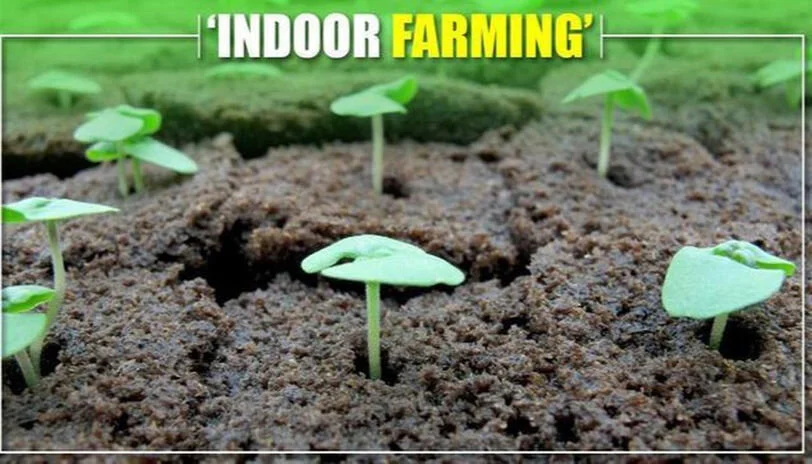
Indoor farming becomes one of the hottest trends in the past 10 years and millions have invested money globally that is expected to become a $700 billion market.
Written By Sounak Mitra | Mumbai
Indoor farming has become one of the hottest trends in the past 10 years. According to the Union Bank of Switzerland report, food and agriculture innovation have marked remarkable amounts of investor capital in recent years and is expected to become a $700 billion market by 2030. A lot of money is being invested globally in indoor urban farms because of their accountability to produce more food with less impact. Dozens of large scale projects have been launched in Dubai, Israel, the Netherlands, and other countries.
Indoor farming may be hampered in the US by high start-up costsBut, it may be hampered in the US by high start-up costs, high urban rents, and lack of safety net in a food system that is highly dependent on subsidies. Trump administration announced in September that it would go back to the Obama era energy-saving measures that would have effectively eliminated the standard pear-shaped incandescent variety. This move is expected to lower the demand for LED bulbs which lasts longer and consumes less electricity as compared to any other type.
The new move to be effective from January is being fought by 15 states and a group of environmental and consumer groups that claim the changes will contribute to climate change and raise consumers' energy bills.
According to Irving Fain, chief executive of Bowery Farming, indoor urban agriculture is a threat to scalability and profitability. The indoor vertical farming company has raised funds of about $122.5 million from celebrity chefs Tom Colicchio, Jose Andres and Carla Hall, Amazon worldwide consumer chief executive Jeff Wilke and Uber chief executive Dara Khosrowshahi.
READ: Schools In Kochi Promote Organic Farming
Department of Energy's proposal
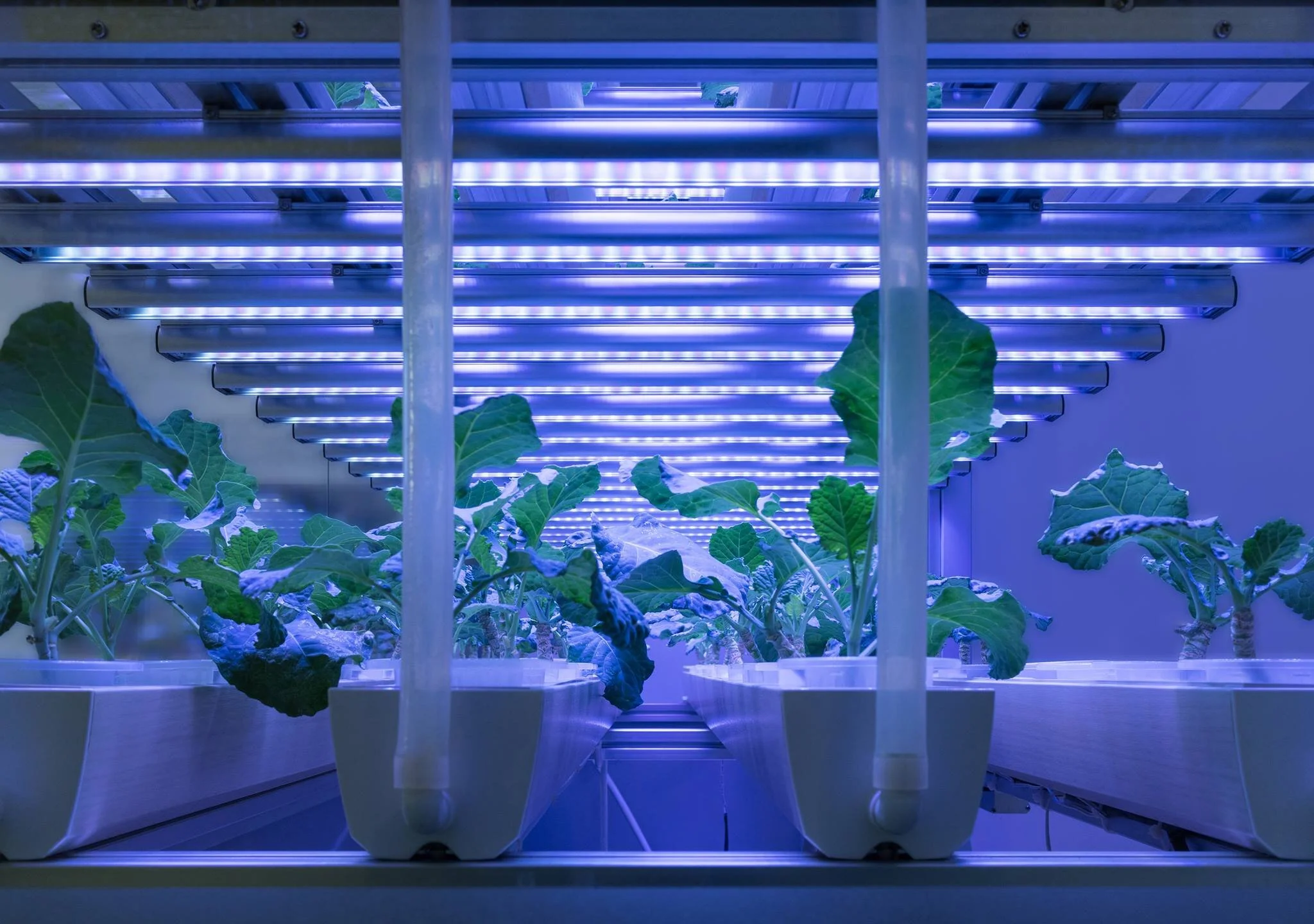
Some indoor farms stack plants vertically to the ceiling in shipping containers or enormous warehouses and the plants' photosynthesis is achieved via high-tech light-emitting diode (LED) bulbs.
According to Fain, the US Department of Energy's proposed reversal of energy efficiency standards could hamper the emerging agricultural sector. Indoor vertical farming became economically viable when LEDs became popular, cheap and efficient.
Previously, indoor growing lights produced an enormous amount of heat. After the passage of energy legislation bill in 2007, the Department of Energy ruled that the general lightbulbs must emit at a minimum efficiency of 45 lumens per watt by the beginning of 2020. Incandescent bulbs and halogen do not basically meet the efficiency standard.

Will Buffalo Become A Climate Change Haven?
“Buffalo is stepping up and preparing to welcome this new type of refugee,” said the city’s mayor, Byron Brown. “We believe that we can accommodate people who have experienced displacement due to harsh weather and natural disaster.”
DECEMBER 5, 2019
The Western New York City possesses a distinct mix of weather, geography, and infrastructure that could make it a potential climate haven. But for whom?
When Hurricane Maria hit Puerto Rico, Maria Robles saw rainfall so severe that it punched a hole through her roof and flooded her home in San Juan. “We lost everything inside the house,” she said. “Everything, everything, everything.”
The storm marked the beginning of a long journey that took her from the convention center in San Juan to a hotel in Florida to an airport in Philadelphia, concluding with an 11-hour bus ride to Buffalo, New York — her husband had once visited the city as a teenager and remembered liking it. She arrived with two of her four children in tow. It didn’t take long for Robles and her family to settle into their new home. She landed a job in a factory that makes face cream, lip balm, and other personal care products, while her husband found a job in a plastics factory. Robles said she still struggles with the frigid weather, but she would gladly take a snowstorm over a hurricane any day.
Robles may not have known it when she moved in, but Buffalo is unusually well-insulated against climate change. Rising temperatures have yet to produce more heat waves or extreme rainfall in Western New York. Experts say the region’s cool climate and ample freshwater could make it an attractive destination as the planet heats up. And Buffalo has room to grow — the city’s population has dropped by half over the last 70 years of industrial decline.
These facts have not gone unnoticed. In his 2019 State of the City address, the mayor dubbed Buffalo a “Climate Refuge City.” Civic leaders are hopeful that the coming wave of climate refugees will revive Buffalo, filling its vacant lots and abandoned storefronts.
“Buffalo is stepping up and preparing to welcome this new type of refugee,” said the city’s mayor, Byron Brown. “We believe that we can accommodate people who have experienced displacement due to harsh weather and natural disaster.”
As Buffalo becomes a more appealing place to migrate, can it remain a haven for refugees like Robles, who come in search of affordable housing and a decent job? Or will Buffalo become a cold-weather haven for the professional class? With ample space for newcomers, Buffalo doesn’t look like cities typically at risk for gentrifying. But what happens if high earners from vulnerable cities like Miami and New York flock to the shores of Lake Erie? Will Buffalo be prepared?
“With climate change, the world is going to suck, but Buffalo may suck less.”
In 2016, SUNY Buffalo State climate scientist Stephen Vermette set out to show how climate change had made life harder in western New York with the hope of galvanizing locals to take up arms against the carbon crisis. He scoured weather records going back to 1965 and found that temperatures have risen a little more than 2 degrees Fahrenheit over that time, roughly consistent with the rest of the Lower 48.
TO READ THE ENTIRE ARTICLE, PLEASE CLICK HERE
Year In Produce No. 9 — Urban/Vertical Farming
As consumer interest in topics like locally grown food, sustainability, food deserts, and urban agriculture continues to grow, innovative produce companies continue to meet demand, whether expanding onto the rooftops of cities like Chicago and New York or forming vertical farms in warehouses and containers
December 28, 2019
( Photo courtesy Aero Farms; Graphic by Brooke Park )
As consumer interest in topics like locally grown food, sustainability, food deserts, and urban agriculture continues to grow, innovative produce companies continue to meet demand, whether expanding onto the rooftops of cities like Chicago and New York or forming vertical farms in warehouses and containers.
Dec. 16
AeroFarms building its largest facility in rural Virginia
By Chris Koger
Vertical farms company AeroFarms, Newark, N.J., is investing $42 million to build a 150,000-square-foot aeroponic facility in rural Virginia.
The operation, in an industrial park that’s a joint venture for the city of Danville and Pittsylvania, is the 10th facility for Aerofarms. Virginia was in competition with North Carolina for the project, according to a news release from the office of Virginia Gov. Ralph Northam.
Nov. 21
Time magazine names AeroFarms as a best invention
By Chris Koger
AeroFarms, the Newark, N.J.-based indoor aeroponic grower of leafy greens and microgreens, has been named as one of Time magazine’s 100 Best Inventions.
In the online listing, Time calls the company’s patented technology a key advance, specifically the growing medium: “rather than grow in dirt, these crops grow in a reusable cloth made from recycled water bottles. Instead of being doused with water, the crops are hydrated with a gentle mist.”
Nov. 14
Gotham Greens opens large greenhouse in Chicago
By Tom Karst
The 100,000-square-foot facility, built from a portion of the former Ryerson Steel Mill, is the company’s sixth greenhouse for the company and the second one in Chicago’s Historic Pullman Neighborhood. The greenhouse more than doubles the company’s Midwest production to 11 million heads annually, according to a news release. ...
Ten years after its 2009 beginning, Gotham Greens will operate 500,000 square feet of greenhouse farms in five U.S. states by the end of the year, according to the release.
Oct. 16
AeroFarms receives sustainability award
By Amy Sowder
Newark, N.J.-based AeroFarms won the Responsible Business Award for Sustainable Innovation at the Ethical Corporation Awards, a Reuters event.
Members of the indoor vertical farming and agriculture technology company gathered Oct. 2 in Westminster, London, to receive the award, according to a news release.
June 19
Touring Brooklyn’s Gotham Greens atop Whole Foods
By Amy Sowder
BROOKLYN — It was a perfect summer evening on a Brooklyn rooftop, with colorful food spread out on a picnic table and dozens of friendly faces talking about what they love: fresh vegetables and fruit. The evening was hosted by Gotham Greens, an urban hydroponic greenhouse grower, which started in Brooklyn but has since expanded to at least four locations in New York City, plus a couple in Chicago, and more coming to Baltimore and Providence, R.I.Viraj Puri, co-founder, and CEO of Gotham Greens, gave a tour of the basil, arugula, and salad greens greenhouse, explaining the company’s mission, how the greenhouse technology works, and why it benefits retailers, consumers and urban communities as a whole.
March 29
Greenhouses keeping up with demand
By Amy Sowder
Tim Heydon touched the brick of proprietary soil in the first room.“Everything we do is USDA-certified organic, and it starts with the soil system,” said the CEO of Shenandoah Growers, Harrisonburg, Va., one of the largest commercial indoor fresh herb growers in the U.S. As North American greenhouse vegetable growers of all kinds expand and adapt, this company has jumped on board whenever an indoor growing technology’s cost dropped and efficiency improved.
Shenandoah Growers started in 1989 as a field herb farm. When Heydon came on board in 1998, the company had $1 million in sales with 20 employees. Gradually, the company evolved from field and low-tech greenhouse growing to a more controlled environment indoor growing system in 2008. Now, Shenandoah does more than $120 million in sales, with 1,200 employees. Today, the company has a 35% share of the national organic fresh herb retail market, Heydon said.
March 28
Bowery greens available on Peapod, AmazonFresh
By Amy Sowder
Fresh greens from Bowery Farming, New York, N.Y., are now available throughout the greater New York area from Peapod and will be offered on AmazonFresh in mid-April.
The two online grocery service partners will make Bowery’s produce available for delivery across all five of New York City’s boroughs, north to Scarsdale in Westchester County, east to Deer Park, Long Island, and throughout northern and central New Jersey for the first time, according to company spokespeople.
March 27
Rhode Island governor and Providence mayor to welcome Gotham Greens
By Amy Sower
Rhode Island Gov. Gina Raimondo, Providence Mayor Jorge Elorza, Rhode Island Secretary of Commerce Stefan Pryor and other community leaders will join Viraj Puri, co-founder, and CEO of Gotham Greens, Brooklyn, N.Y., in announcing the company’s first urban greenhouse farm in New England.
The greenhouse farm will be at the historic General Electric Base Works facility in Providence, R.I., according to a news release.
The 110,000-square-foot high-tech farm is scheduled to open in early fall. The facility will grow year-round to supply restaurants and foodservice customers in region with 10 million heads annually of lettuce and leafy greens.
March 11
Square Roots expands indoor farms with Gordon Food Service deal
By Chris Koger
Gordon Food Service, Grand Rapids, Mich., has formed an exclusive partnership with indoor farming company Square Roots, expanding the greenhouse company’s reach from its New York base.The agreement gives Square Roots access to more than a dozen Gordon Food Service distribution centers and 175 retail locations, although the news release announcing the partnership doesn’t specify where Square Roots plans to build more indoor farms. Brooklyn, N.Y.-based Square Roots now serves about 30 locations in the New York metropolitan area, according to its website.
Jan. 29
DelFrescoPure and CubicFarms team for new growing technology
By Tom Karst
A partnership between Kingsville, Ontario-based DelFrescoPure and CubicFarms will result in LivingCube, an indoor automated vertical growing machine that continuously produces living lettuce, living basil and microgreens all year long.
According to a news release, the LivingCube system has 12 mechanized growing, germination and irrigation machines, each built inside proprietary insulated 40-foot-long stainless steel growing chambers. The growing machines, according to the release, are individually climate-controlled to optimize the environment for each crop and also connected to a fully enclosed climatized common work area. LivingCube is powered by DelFrescoPure’s off-the-grid electrical cogeneration system, according to the release.

GERMANY: February 12-14, Wageningen Lighting In Greenhouses And Vertical Farms 2020
Do you want to improve the use of LED lighting in greenhouse production or vertical farming?
Do you want to improve the use of LED lighting in greenhouse production or vertical farming? Would you like to know how to reduce energy use and carbon foot print, how to improve production, or how to improve quality? Do you want to understand the different characteristics of light and how they affect physiological plant processes? Then this course might be valuable for you.
In this course on lighting in greenhouses and vertical farms Wageningen UR scientists will share their unique knowledge with international students, researchers, and horticultural and light experts.
For whom?
This intensive course is meant for professionals in lighting, greenhouse production and vertical farms as well as MSc and PhD students, post-docs and junior scientists from all over the world.
Course objectives
The aim of this course is to learn the basic principles behind the effects of LED lighting on plant growth, yield, product quality, and energy use efficiency. It aims that participants also understand how to apply this information in their daily practice by developing strategies to optimize the use of lighting in relation to the whole production system.
Learning outcomes
This course gives participants an in-depth view on:
Perception of light by plants
Major plant physiological and morphological processes affected by light
How lighting can be used effectively in greenhouses and vertical farms
The different characteristics of light and how to measure.
Click here for more information and to register.
Publication date: Fri 20 Dec 2019

UAE Farm Calls On Residents To Buy Local Produce
Madar Farms head of operations Kyle Wagner has implored UAE residents to buy more locally grown produce
Madar Farms head of operations Kyle Wagner said it will help support sustainability
Dec 23, 2019
Madar Farms head of operations Kyle Wagner
Madar Farms head of operations Kyle Wagner has implored UAE residents to buy more locally grown produce.
Speaking during a panel discussion at New York University Abu Dhabi, Wagner said that doing so can help support sustainability and contribute towards solving food and water security.
A UAE-based company, Madar Farms uses hydroponic vertical farming that allows it to grow fresh produce in the country’s arid conditions while using 95% less water than traditional farming.
The company is currently working with the wider industry and education authorities to support the UAE government’s National Food Security Strategy 2051 that aims to solve the region’s food problems and provide enough nutritious food all-year-round.
At the Cooking the Nation: Global perspectives and local insights on culinary nationalism and diplomacy panel discussion Wagner, said: “At Madar Farms, education is already a big part of what we’re doing. Whether that is attending conferences or launching a school sustainability program, creating awareness of what we do and helping people understand what we want to achieve is important for us.
“We are living in a diverse country where the supermarkets are full of different ingredients and products from many different countries. Sometimes, we do not look at which country vegetables come from but if we can help adults to think carefully and choose a UAE-grown produce instead of one from another country, then we are going in the right direction.
“At schools, we launched a sustainability program ‘Sustainable Futures’ where students are getting hands-on learning experiences. This has been a great success so far as it gives them an opportunity to learn more about pressing environmental topics. And by engaging with the younger generation, we can create that change that can have a long-term effect.”
How This Chennai Firm Is Changing The Way We Consume Food
Housed in a bustling commercial complex on GP Road, the Sustenance Agritech office is an oasis of calm
DECEMBER 03, 2019
Akhil Nichani of Sustenance Agrotech | Photo Credit: M Vedhan
Microgreens pack in a lot of power and flavour, and this year-old startup is tapping into their potential by supplying to restaurants around town
Housed in a bustling commercial complex on GP Road, the Sustenance Agritech office is an oasis of calm.
Akhil Nichani, the 23-year-old founder, inspects rows of greens jostling for space in their plastic containers. As he runs a check on the produce to be shipped the next day, he pulls out a radish microgreen, plucks off the root and proffers it to me. “Go ahead. Try it.”
”As I bite into the delicate green, the intensity of flavour in a mere two-inch plant surprises me. The radish green creates an explosion of spiciness; in comparison, a slice of radish itself is much milder.“
That is because microgreens pack in a lot more nutrition and flavour when compared to the actual vegetable,” says Akhil, who supplies to hotels like Crowne Plaza and Radisson Blu Hotel GRT, and a set of restaurants, which include The Summer House Eatery, Patina, Broken Bridge Cafe, Radio Room, Lord of The Drinks and Soul Garden Bistro.
An electronic engineer by qualification, Akhil decided to get into hydroponics and microgreens after stumbling upon the concept in college.“I read up extensively about microgreens. I then walked into the kitchen and asked my mother for mustard seeds and began experimenting,” he laughs. Once he graduated from SRM University last year, he began seriously working on Sustenance.
Currently, Sustenance offers microgreens in radish (red, white, pink and purple), amaranth (red and green), bok choy, cabbage, cauliflower, mustard, clover and broccoli. “I have experimented with beetroot, but the weather in Chennai is not conducive to it. Beets need colder climate. I am experimenting with sunflower too.”Typically, he uses seeds that have a germination rate of 90 to 95%. “At the very least 75%. We also prefer untreated seeds, since seed covers usually linger on microgreens and one doesn’t want to be ingesting chemicals.
Seed growers often use a chemical to coat the seed to protect it from fungus or infection,” he says. His hunt for quality seeds led to a tie-up with Durga Seeds and All That Grows, in Chandigarh.
Micro Facts
Microgreens are plants that are seven to 10 days old.
Once the seeds germinate and grow their first set of leaves, they are harvested and consumed.
Seeds usually have enough energy in terms of starch and carbohydrates to germinate and grow the first set of leaves. So microgreens don’t need any growth mixtures.
Microgreens offer anywhere between 20% to 40% more nutrition than regular vegetables. The flavour profile is more intense as well.
When they first started, deliveries were done by Akhil and his then business partner. Today, he has a team in place, with one person exclusively handling deliveries.“I started off by myself, but soon I had two seniors from school join me. One of them moved on, but Maulin Tolia and I are continuing in the business.” Akhil also runs a 300-square-foot hydroponics farm in Kilpauk, where he grows Thai basil, kankong and watercress.
Akhil says that one of the biggest challenges he faced when he first started out was to be taken seriously due to his age.“Chefs and purchase managers would assume I’d landed up at the wrong place,” he laughs. “But microgreens open a lot of doors. There aren’t many players in Chennai; most of the microgreens used here come from Pune and Bengaluru. I began approaching chefs with samples and they knew I was there to talk business.”
Chennai’s weather also limits variety. “I know people in Mumbai who can offer around 50 varieties, while I offer around 15. Here we keep a watch on temperature and humidity. The air conditioner the humidity in the room at about 40% and we don’t let the temperature go beyond 30°C.”
Akhil adds that microgreens as a concept is still picking up in Chennai. Weather and awareness are major factors, but “it is all about marketing now.”

Vertical Farming vs. Greenhouse Farming
When starting a farming operation, the first choice you face is what type of farm to start
June 1, 2019
When starting a farming operation, the first choice you face is what type of farm to start. The options are many: indoor vs. outdoor; arable vs pastoral; intensive vs. extensive. For farmers going the indoor route, one of the biggest decisions is between vertical farms and greenhouses. Both vertical farms and greenhouses operate indoors, which means they enjoy benefits like climate control, year-round growing, and chemical-free pest control.
However, there are as many differences between these types of farms as there are similarities. Each one serves a unique purpose; but, they can be compared in terms of efficiency. For a long time, it was thought that greenhouses were more efficient and profitable than vertical farms, due to the lack of a need for artificial lighting. But recently, a study out of Quebec showed that vertical farms enjoy a number of benefits over greenhouses–especially if the farm is operating for commercial purposes.
To understand what those benefits are, we first need to understand the reasons for farming indoors in the first place.
WHY GROW INDOORS?
For most of human history, farming has been an outdoor operation. Plants need sunlight to live, and soil to get water and nutrients from, so it’s no surprise that the traditional farm is an outdoor farm.
But as agriculture developed, farmers gradually realized that there were benefits to farming indoors. For one, it allowed certain crops to be grown all year long. For another, it kept pesticides at bay. And finally, indoor farming in ‘hot’ greenhouses could cause plants to grow faster than they would outdoors. By the late Roman Empire, greenhouse-like methods were already being used for these and other reasons.
In the 1800s, Greenhouses hit their stride, as European farmers started using them to grow tropical plants that otherwise wouldn’t grow naturally on their continent. This fact illustrates the main benefit of indoor farming: it provides the ability to grow crops year round, in a controlled environment, free from pests.
if you want it a bit shorter, this whole section can easily be cut
THE DIFFERENCES BETWEEN VERTICAL FARMS AND GREENHOUSES
Although vertical farms and greenhouses are both indoor facilities, the similarities end there. First, greenhouses rely on sunlight, while vertical farms rely on artificial light. Second, vertical farms have plants stacked in layers, while greenhouses have them arranged on one horizontal plane. Third, vertical farms can operate in urban areas, while greenhouses require a large amount of space and are therefore best suited for rural or suburban environments.
Many people have argued that, because vertical farms require artificial light, they are necessarily less efficient than greenhouses. It is true that artificial light is a major cost at vertical farms. However, the paper “Comparing a Greenhouse to a Vertical Farm in Quebec” showed that growing lettuce in a vertical farm can actually be more profitable than growing it in a greenhouse, owing to two factors: increased yield per square meter, and centralized distribution.
"When starting a farming operation, the first choice you face is what type of farm to start. The options are many: indoor vs. outdoor; arable vs pastoral; intensive vs. extensive"
YIELD
The main advantage that vertical farms have over greenhouses is greater yield per square meter. Although vertical farms have higher light and heat costs, they have the benefit of more produce grown per unit of soil. This means that even though vertical farms cost more to operate, they produce more crops, with the end result being higher revenue.
The policy paper mentioned proves this through the results of a simulation, which showed that lettuce grown in a vertical farm has a slightly higher yield than that grown in a greenhouse.
DISTRIBUTION
One major advantage of vertical farms is centralized distribution. Because these farms can be run in warehouses or almost any kind of building, they can be located in urban areas. This puts them right at the heart of major distribution hubs, in the middle of a big local customer base. So, compared to a rural greenhouse, a vertical farm has less distance to travel to get to customers, and when it does have to ship over a distance, it has better transportation options.
As a result, vertical farm crops can be sold more quickly and at higher margins than greenhouse crops. According to the Quebec paper, this creates a perception of freshness that helps the vertical farm produce sell quicker than the greenhouse equivalent.
GROSS PROFITS
As a result of centralized distribution, vertical farms may enjoy higher gross profits than greenhouses. The Quebec paper showed this to be the case specifically for lettuce grown in the Quebec area. Although the wholesale price of lettuce produced at greenhouses and vertical farms is usually the same, the vertical farm’s lettuce may enjoy a premium when sold in its local market due to the perception of freshness. Additionally, because the vertical farm is located in an urban area, it can ship more fresh produce to more customers, without high transportation costs.
A second reason for the higher gross profits at vertical farms is winter heating costs. It’s almost taken as a gospel truth that greenhouses use more electricity than urban farms. But that’s not necessarily the case. It really depends on the specific farm(s) in question. As the Quebec experiment showed, in areas that get extremely cold in the winter, Greenhouses can be very expensive to heat. Depending on how rural their location is, they may need to be heated by a generator; and depending on their size, they may consume quite a bit of electricity. So while the vertical farm needs to be heated year round, the greenhouse can actually be more expensive to heat in the crucial winter season.
GROWTH POTENTIAL
One area where vertical farms really shine is the potential for growth. While sales from greenhouses are growing at 8% year-over-year, sales from vertical farms are growing at a full 30% annually. That means that vertical farms are growing more than three times as quickly as greenhouses. While part of this can be explained by the fact that vertical farms are newer than greenhouses, it also has to do with centralized distribution. Since vertical farms have access to urban distribution centers, they can get more product out, more quickly, than greenhouses can. The greater yield per square metre of vertical farm space also contributes to this fast growth.
PUTTING IT ALL TOGETHER
Vertical farming is the cutting edge of agriculture. Offering the ability to grow more crops, in a controlled environment, inside major distributions hubs (i.e. cities), it takes advantage of economies of scale in a way no other farming operation can. In the past, many critics have cited lighting costs as a stumbling block to profitability for vertical farms. But as the Quebec research paper showed, vertical farming can actually be more profitable than a conventional greenhouse operation. Especially when situated in major urban centers, and taking full advantage of the distribution benefits that come with that, vertical farms can be highly profitable. And when you add the benefits of automated labor into the equation, the benefits can be greater still.
We see VF as the evolution of the greenhouseWe see VF as the evolution of the greenhouse
Latest developments in LED (less consumption) and solar energy (higher efficiency) will reduce the biggest remaining cost factor (energy) during the next years
Automation will increase the benefits of a VF even further
MORE NEWS
Europe’s most automated Vertical Farm in Basel (CH)
August 1, 2019
Growcer is setting up Switzerland’s first vertical farm in Basel. At the same time, it’s one of Europe’s most automated Vertical Farms using latest achievements in Robotics & AI. The farm is six floors high and can produce leafy vegetables, herbs, shoots and fruit all year round.
How do we feed a growing population most of whom live in cities?
Why We Don’t Use Containers For Our Farms
July 1, 2019
When you decide to start a vertical farm, you’re immediately faced with a number of choices.
Should you put your farm in an urban location, or a rural location?
In a cold environment, or a warm one?
Should you use hydroponic systems, or soil?
About Growcer
May 1, 2019
Feeding the world has always been a challenge. With ever-growing populations and a limited supply of food, innovations are needed to make food better, cheaper, and more abundant. From the early days of agriculture to the mass farming of today, new technologies have arisen to meet the challenge of providing food for the world….
Vertical Farms Grow The Food of The Future
On a cold, blustery day while bare tree branches sway in the winter wind, vibrant, leafy salad greens packed with nutrition and bursting with flavor are flourishing at FreshBox Farms, an indoor vertical farm — where it doesn't matter what the weather is outside — in Millis, Massachusetts, about 30 miles southwest of Boston
Getty
Indoor farms offer a number of advantages, and they can help conserve resources.
By Eileen Abbott
Story at a glance
Indoor vertical farms are expanding across the country.
It still costs more to raise produce inside than out, but prices are dropping, and some indoor farms are profitable.
Yields can be up to 350 times outdoor equivalents, with substantial savings in water, pesticides and food miles.
On a cold, blustery day while bare tree branches sway in the winter wind, vibrant, leafy salad greens packed with nutrition and bursting with flavor are flourishing at FreshBox Farms, an indoor vertical farm — where it doesn't matter what the weather is outside — in Millis, Massachusetts, about 30 miles southwest of Boston.
With the world’s growing population expected to exceed 9 billion by 2050, the U.S. Department of Agriculture sees indoor vertical farms — which can operate year-round — as having potential in addressing food security. In a vertical farm, crops are grown in vertically stacked layers to save space and in a climate-controlled system to optimize growing conditions.
FreshBox Farms, which has been operating since 2015, joins a growing number of indoor vertical farms that have been sprouting up in recent years and spanning the country. These include 80 Acres Farm in Cincinnati, which claims to be the world’s first fully automated indoor farm, all the way to the West Coast, where kale, tatsoi, beet leaves, arugula, and mizuna greens thrive at the California-based Plenty.
For many consumers like Maria Quintas-Herron of Mechanicsville, Virginia, produce grown at indoor vertical farms is desirable, but needs to be pocketbook-friendly. Quintas-Herron is an avid runner who appreciates the value of good nutrition to fuel her runs, but she says, "I would love nothing more than to be able to always go for the best, most natural, organic products available. But at the end of the day, my budget dictates: cheaper is preferable.”
A report in AgFunder Network Partners estimates that it is “3 to 5 times more costly to grow in a vertical farm compared to conventional farming.”
However, Crop One Holdings — the platform under which FreshBox Farms’ brand falls — reports that technology is reducing costs and that the product is competitive as a result. “Crop One now has accumulated the largest database in vertical farming – a critical basis for AI/predictive agriculture,” says a company spokesperson in an interview with Changing America. “The company has invested in best-in-class plant science, software and control systems that control plant growth to generate the best outcomes – increased yields and reduced costs.”
In fact, Crop One says the success of its profitable farm in the Boston area is why it will expand across the globe, growing in Dubai in 2020. “The $40 million joint venture with Emirates Flight Catering will be the world’s largest vertical farming facility — a 130,000 square-foot controlled environment that will produce three U.S. tons daily of high-quality leafy greens at capacity,” reports a company spokesperson.
Headquartered in the Silicon Valley region of California, Plenty, like the other indoor vertical farms across the country, uses technology and science to nurture rows of hydroponic greens. Robots assist in the farming process while layers of produce from floor-to-ceiling are lit by LED lights. According to the company’s website, “Plenty’s vertical farms grow crops up 20-foot towers, achieving yields up to 350 times that of the most productive outdoor equivalent.” Here’s a link to a Plenty company video for an inside look.
These indoor vertical farms may be crucial in fulfilling a key tenet of urban resilience, which is strengthening local food production. “Generally, fresh produce grown in vertical farms travels only a few miles to reach grocery store shelves compared to conventional produce, which can travel thousands of miles by truck or plane,” states the USDA’s website.
This is important, because according to the USDA, by 2050, “two out of every three people are expected to live in urban areas. Producing fresh greens and vegetables close to these growing urban populations could help meet growing global food demands in an environmentally responsible and sustainable way by reducing distribution chains to offer lower emissions, providing higher-nutrient produce, and drastically reducing water usage and runoff.”
FreshBox Farms adds that because their produce is grown in sealed, climate-controlled rooms, the result is a fraction of the pathogen risk compared to conventional outdoor farming. A company spokesman says, “Vertical farming is how we safeguard crops from weather volatility and from pathogen spread such as the romaine e-Coli contamination. Greens grown at FreshBox Farms have 1/600th the bacteria of washed, field-grown greens. Its grow units use 18,000 gallons of water per year — in order to grow the same amount in the field, a farmer would require 46 million gallons of water.”
And the food simply tastes better, according to Plenty, which promotes produce with “zero pesticides and just-picked, cravable flavor” while supporting the local economy and teaching kids to eat healthier: “When kids grow up with access to delicious vegetables, they learn to eat healthier, a habit that will stay with them all their lives.”
Helping the community eat healthier is why Mark Lilly started Farm to Family CSA/The FarmBus, based in the Richmond, Virginia, area, with the mission of distributing food from local, sustainable farms. Lilly doesn’t think indoor vertical farms will replace outdoor agriculture. “Because you can only grow a certain number of things in indoor farms,” he says. “You have to have outdoor space for certain varieties, like pumpkins and watermelons which take a lot of space. You have to have pollination and organic, dense, nutrient-based soil."
Lilly says the food tastes different when grown outdoors. "You’ve got the natural sunlight. You’ve got the natural air.” As far as the different types of farming, Lilly says, “We’re all part of the whole. It doesn’t matter who’s growing what, where. It all needs to be done."
Published on Jan 01, 2020

Business Ideas For 2020: Urban Farming
With urbanization meaning we have less and less arable land for farming and agriculture, urban farming is the solution we need to continue feeding the world in the future. Unsurprisingly, then, this field presents a wealth of business opportunities
With urbanization meaning we have less and less arable land for farming and agriculture, urban farming is the solution we need to continue feeding the world in the future. Unsurprisingly, then, this field presents a wealth of business opportunities.

December 20, 2019
by Robyn Summers-Emler
How much does the food I eat contribute to my carbon footprint? How are we going to continue to feed a growing population in the future?
When it comes to the food we eat, these questions regarding the environment and overpopulation have taken centre stage in recent years – which might explain the growing trend of urban farming solutions.
Urban farming, put simply, is the cultivation and distribution of food in an urban or densely populated areas. More specifically, this can mean the DIY growing of food (or even keeping of bees or farming of bugs!) in your own home or the high-tech setups such as vertical farming and Controlled Environment Production (CEP).
Vertical farming is the indoor cultivation of plants in a stacked formation, allowing for several rows of crops to be grown in vertically arranged layers. The produce is grown in a controlled environment (light and temperature) and, in some cases, even without any soil (thanks to techniques such as hydroponics). The urban spaces used for this farming can be anything from abandoned warehouses to shipping containers.
Finally, as people become more concerned about exactly where their food is coming from, and with ‘field-to-fork’ on the rise, it’s unsurprising that there’s been a surge in restaurants, companies, and individuals wanting to grow food themselves in the city. Whether it be in a city allotment, on a rooftop, or on a tiny London apartment windowsill – we’re becoming much more inventive and resourceful when it comes to finding farming space!
Read on to learn more about the importance of this ‘trend’ (although you’ll probably realize this concept is much bigger than a passing curiosity) and the interesting variety of business opportunities urban farming presents for 2020 – and the future of the planet.
Find out more:
Why is urban farming a good business idea for 2020
Is urban farming a Brexit proof business idea?
Urban farming: business opportunities
Is urban farming a sustainable business idea?
Insider opinion
Interested in starting a business? Why not take a look at these posts for more inspiration and practical advice:
Business ideas 2020 – what business should you start this year?
How to start a business – what steps do you need to take?
Small business statistics – find out how the UK small business scene is evolving
Why is urban farming a good business idea for 2020
“In order to feed the anticipated 10 billion people living on earth by 2050, food production must be increased by 70%,” says Thomas Constant, the founder of the brand new vertical bug-farming product startup BioBea (don’t worry – more on that innovative idea later!).
One reason urban farming is likely to prove a lucrative business opportunity in 2020 (and far beyond) is due to its necessity in an increasingly urbanized world with a crippling demand for more food. In addition, the growth of the industry will continue to be driven by a growing demand for produce that is high-quality and grown without the use of pesticides, in a way that does not negatively impact the environment and climate.
As the Telegraph reported in 2019, the desperate clamoring of the agriculture industry to keep up with the needs of a growing population has a huge environmental impact in terms of emissions.
So, it’s no surprise that urban farming solutions are growing in interest and popularity. By 2022, it is predicted that the global vertical farming market will have an estimated value of $5.8 billion, having grown by 24.8% between 2016 and 2022.
On the home-growing side of things, a 2019 article from Insightdiy reported a 29% increase in millennials enjoying gardening, and that 81% of young gardeners claimed to grow plants specifically for food (53% said they grow their own produce as a cheaper alternative to buying and 45% for well-being and health reasons.)
The buzz around this concept hasn’t gone unnoticed, with publications such as the Guardian writing about how to grow your own food at home “even if you don’t have a garden”, and several companies such as above-mentioned BioBea offering easy-to-use indoor farming solutions.
If you’re still not convinced by the potential of urban farming, the many examples you can see around you in major cities around the UK may tip the balance. Looking to the incredible ‘green-roofing’ projects in Paris, the futuristic Growing Underground salad farm located 100 feet below Clapham High Street, and the 16-storey food towers on the cards for the future – there are plenty of examples which, as The Guardian put it in 2019, “show that urban agriculture is, in some cases at least, not a fad”.
Quick urban farming glossary
Urban farming can mean…
Urban agriculture – this term suggests urban farming on a large scale and with commercial intent (selling of produce).
Homesteading (in relation to farming) – the growing of food to feed yourself, in your own home, garden, allotment, etc. (no commercial intent).
Indoor farming – the umbrella term for growing produce entirely indoors, usually in artificial or controlled environments (light and temperature), like vertical farming.
Is urban farming a Brexit proof business idea?
The Grow Like Grandad blog, a finalist in The Garden Media Guild Awards two years running, explained in 2018 about how new (hard) Brexit importing laws could have a dramatic negative impact on the price and availability of fruit and vegetables in the UK. The proposed solution? Grow your own.
With one of the main focuses of urban farming being local production and distribution of produce, this concept seems to not only be Brexit proof but possibly the answer to agricultural and farming issues posed by the leaving of the EU.
Urban farming: business opportunities
Starting a business as technologically sophisticated and large-scale as a commercial vertical farm may seem daunting, and will certainly require knowledge of the science behind growing produce and the relevant technology. However, there are now plenty of available resources, such as those offered by the Vertical Farming Academy, which offers step-by-step support to launching your own urban or vertical farming project. The UK success-story Growup Urban Farms also offers inspiration in its honest description of the somewhat rocky road it took to get to where it is today.
With the demand for vertical farms increasing, any business providing such projects with the technology they need will likely see demand for its products grow.
Some highly innovative home-farming products have come to the market recently, reflecting consumers’ growing interest in grow-your-own, homesteading, and self-sufficiency. One memorable example of this is BioBea’s new home insect-growing pod, which allows users to farm insects to eat as a high-protein addition to their diets.
“The sustainability of insect farming, which uses a fraction of the land, water and resources needed for traditional livestock while producing greater nutritional benefits, is key to the demand of the product,” says Thomas Constant, the founder of BioBea.
“Empowering people of any age to produce their own sustainable source of protein and make use of their food waste, even in urban locations, is one of the most effective ways consumers can impact the global food supply chain.”
BioBea’s insect-growing pod
Moving from bugs to fungi, another grow-your-own concept comes from Fungi Futures CIC (trading as GroCycle) which operates out of an urban mushroom farm in Exeter selling ‘grow your own gourmet mushrooms’ kits – and there are many suppliers offering iterations of similar grow-your-own products.
Another potential business idea in this field: shipping containers. Yes, you read that correctly. As Johnathan Bulmer, MD at UK-based company Cleveland Containers, explains: “There is a billion-dollar demand for local food, due to environmental, economic and food-quality reasons. Because of this, the appeal of urban farming – specifically container farming – to consumers and businesses will only continue to rise.” With large container units being used as the home for an increasing number of urban and vertical farming projects, you can see why supplying the farmers with this equipment could be lucrative.
If hospitality is your area of expertise, you could take inspiration from an increasing number of restaurants who grow their own food locally, a world-famous example being Michelin-starred Noma in Copenhagen. Farm-to-Fork restaurants are growing in popularity in the UK and beyond, with more people conscious of the environmental impact of their meals and the farming standards behind the growing of the ingredients used.
Finally – and moving on from just-food – the demand for responsibly farmed products is growing. “We are seeing a growing and enduring movement towards consumers selecting sustainably sourced and ethical products,” says Katie Tyndale, the founder of Bee Green Wraps, which offers an eco-friendly alternative to clingfilm, and Let’s Go Plastic Free, a lifestyle platform for eco-friendly products. Farming in a sustainable way to produce food or textiles to sell (at increasingly popular farmers’ markets and farm shops) would be a smart way to capitalize on this trend whilst doing your bit for the planet.
Business ideas in the field of urban farming:
Start a commercial vertical or urban farm
Supply vertical or urban farming technology to related businesses
Create a farming product that consumers can use in their own home, even with limited space
Break into the growing market of edible insects and insect farming
Supply (shipping) containers for indoor farming projects
Start an eatery which grows its own ingredients
Create and/or sell locally farmed, eco-friendly products (urban growing, beekeeping, etc.)
Is urban farming a sustainable business idea?
Sustainability is, essentially, what urban farming is all about. The challenge it aims to solve is the current unsustainable situation of food demand outweighing agricultural production. Compared to traditional farming methods, vertical farming uses an estimated 95% less water. It also encourages food to be grown very close to where it is eaten, meaning the financial and environmental costs of transportation are minimal.
Insider opinion
Urban farming businesses are likely to thrive owing to the absolute necessity for change in how we farm and eat. Thomas Constant explains that “we are currently living in a ‘food enlightening’ period. Consumers are becoming increasingly conscious about where their food comes from, what impact their diet has on the planet, and what nutritional benefits their diet offers them.”
Dr. Richard Anderson, the Head of Learning & Development at High-Speed Training, adds, “Urban farming is on the rise and leading the millennial food revolution.
“The food industry is one that is constantly changing, and many companies may feel that they are not able to keep up with their competition. However, in order to not only compete, but also thrive, they should look at alternative and niche methods that put them a level ahead of the rest.
The implementation of urban farming methods is a fantastic example of how issues relating to the environment and food fraud can be overcome by adopting a forward-thinking approach to the traditional method of farming.”
Robyn Joined Startups as the Deputy Editor in 2019, bringing with her first-hand experience of working in Berlin’s startup scene. Along with the Editor, she helps determine the site's content strategy, and contributes to creating engaging, aspirational articles and campaigns aimed at making a positive impact on your small business and the wider startup community.
United Fresh 2020 To Feature Inaugural Controlled-Environment Pavilion
To support this growing category of indoor agriculture, the United Fresh Produce Association has joined forces with the Controlled Environment Agriculture Food Safety Coalition (CEA Food Safety Coalition) on a Controlled Environment Pavilion.
By Bridget Goldschmidt - 12/26/2019
Indoor agriculture methods such as hydroponic greenhouses have seen rapid growth over the past few years
To support this growing category of indoor agriculture, the United Fresh Produce Association has joined forces with the Controlled Environment Agriculture Food Safety Coalition (CEA Food Safety Coalition) on a Controlled Environment Pavilion. The new pavilion on the United 2020 expo floor will bring together growers, companies offering tools and technologies for indoor production, and thought leaders helping to grow the farming method.
“We’re pleased to collaborate with United Fresh in hosting this new pavilion,” said Marni Karlin, executive director of the coalition, a member-governed group whose mission is to develop credible, strong, and appropriate food safety standards; educate consumers and regulators on controlled-environment growing; and communicate the value of this type of agriculture. “Our members are pioneering new production models in fresh produce, and we look forward to the opportunity to engage with participants at the United Fresh event – to share perspectives and create an opportunity for conversation across the entire supply chain.”
Among the members of the CEA Food Safety Coalition are BrightFarms, AeroFarms, Plenty, Little Leaf Farms, Revol Greens and Bowery.
The pavilion will feature a discussion area where thought leaders can discuss current issues and growth opportunities for indoor agriculture, hydroponics, vertical farms and rapidly expanding greenhouse production. Retail and foodservice buyers can visit the pavilion to find out more about the category and meet with potential suppliers.
“From first-generation indoor farms growing tomatoes and cukes, to today’s innovators growing berries, leafy greens, microgreens, herbs and more, the Controlled Environment Pavilion is the place to meet with potential customers and service providers, and learn from experts in every phase of the business,” said Tom Stenzel, president and CEO of Washington, D.C.-based United Fresh, which represents companies across every segment of the fresh produce supply chain, including growers, shippers, fresh-cut processors, wholesalers, distributors, retailers, foodservice operators, industry suppliers and allied associations.
Growers and service providers may exhibit their products in stand-alone booths alongside the Controlled Environment Pavilion, or choose from 10-foot-by-10-foot in-line booths or kiosks within the pavilion.
United Fresh 2020 will take place June 16-19 in San Diego.
ALSO WORTH READING
CEA FOOD SAFETY COALITION NAMES 1ST EXECUTIVE DIRECTOR
Marni Karlin previously worked for OTA, Wisconsin U.S. senator
GOTHAM GREENS OPENS LARGEST GREENHOUSE
2nd Chicago facility more than doubles leafy greens supplier’s Midwest production
KROGER TO INTRODUCE HYDROPONIC FARMS IN STORES
QFC banners are 1st locations to grow produce on site
BRIGHTFARMS BUILDING NEXT GREENHOUSE IN NORTH CAROLINA
Henderson County facility to supply local grocers
YOU MAY ALSO LIKE
PRODUCE / FLORAL
CEA Food Safety Coalition Names 1st Executive Director
PR
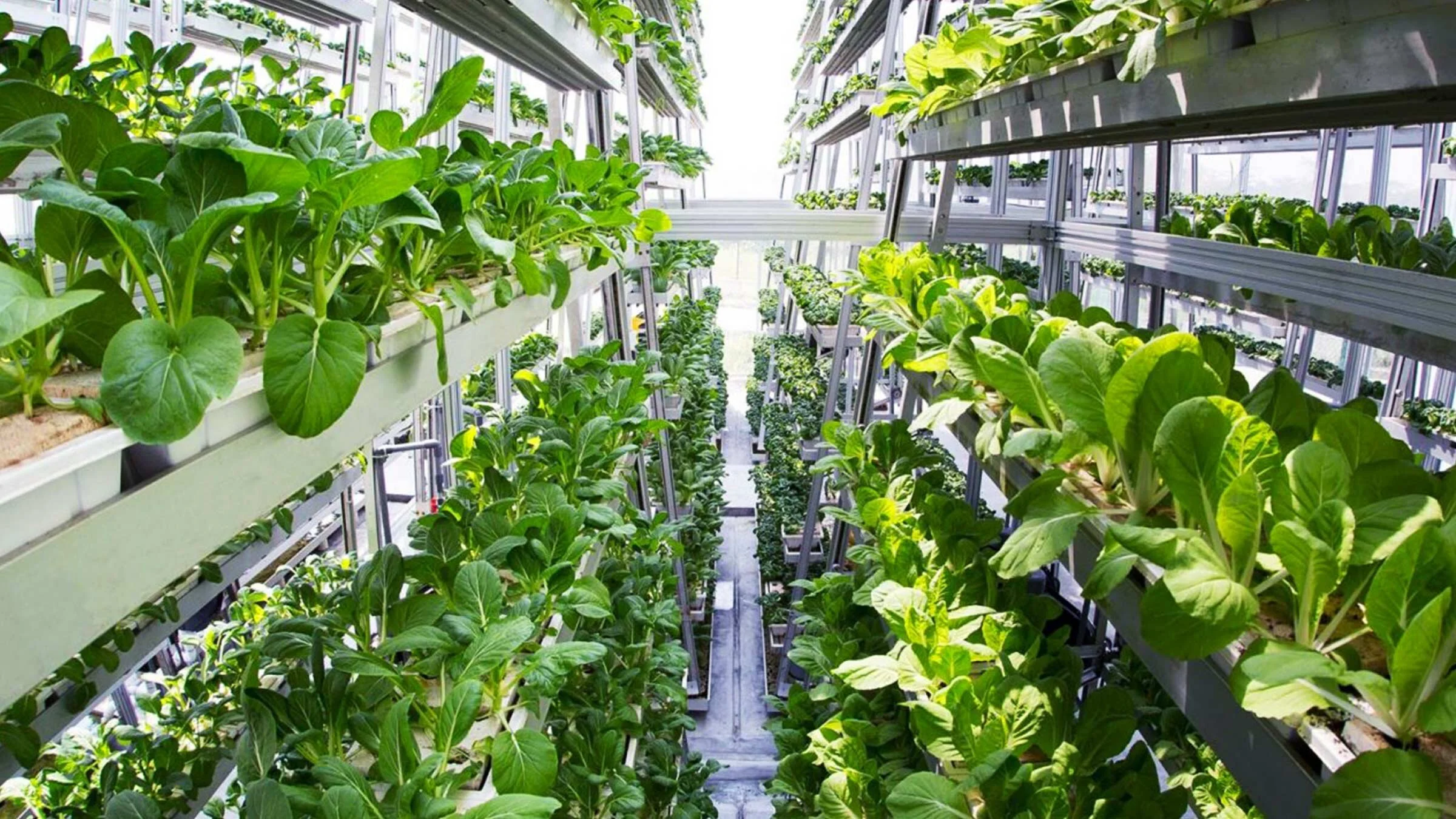
Making Sense of The Terms In Vertical Farming
What exactly is vertical farming? I know that I picture stacked layers of plants sprouting in organized rows inside some big, bright warehouse
13 JUNE 2018
By Meghan Horvath, EUFIC
What exactly is vertical farming? I know that I picture stacked layers of plants sprouting in organized rows inside some big, bright warehouse.
Putting it all together
This isn’t quite wrong. Columbia emeritus professor Dickson Despommier is credited for making the term mainstream. His definition refers to a method of growing crops, “usually without soil or light, in beds stacked vertically inside a controlled-environment building.”1
Definitions certainly vary. The Vertical Farming Institute in Vienna defines VF as “agricultural production inside buildings, in the metropolitan areas of cities,” therefore often repurposing existing structures for use as vertical farming facilities.2
VF is primarily used for food production, but not exclusively as the process can be applied for horticulture purposes as well. Regardless, when reading about vertical farming, there are several terms that are often used interchangeably, making it hard to understand just what they describe. For clarity, we put into context the following key terms when discussing the topic of vertical farming.
An overview
Controlled Environment Agriculture (CEA)
Vertical Farming
Hydroponics
Aquaponics
Aeroponics
Rooftop Farms
Indoor Plant Cultivation, Indoor Farming
Urban Agriculture, Microgreens
Why not familiarise yourself with the language, —we’ll also link terms within future blog posts back to this page to guide your reading and help when in need of a refresher.
Controlled Environment Agriculture (CEA)
CEA is an umbrella term for the many ways of growing crops indoors.3 An easy way to look at it in the context of VF is that VF can use CEA technology. CEA includes greenhouse agriculture, vertical farms, and some rooftop farms.4 Plants are grown in a controlled environment using technology to ensure crops are growing under optimal conditions, which, in the most advanced forms is without the use of soil.
It is important to note the debate around energy consumption and the CO2 footprint of current CEA systems. Critics argue CEA is expensive and requires a high use of energy as artificial light must be created.5 However, this system also uses less water than traditional methods and allows year-round crop production and thus often higher crop yields.3
Vertical Farming (VF)
VF is a type of CEA and is considered a system of food production where crops are cultivated on vertically stacked levels in buildings.8
Predominantly, VF takes place without soil and natural sunlight. These resources are instead provided via the use of artificial lights and growth systems that give the crops the nutrients they need.9
In some cases one acre of vertical farming can provide the produce equivalent to between 10-20 acres of conventional agriculture.9 With climate change expected to pose a major issue for crop production due to increasing temperatures, carbon dioxide emissions, and severe weather events, vertical farming presents an alternative to existing farming methods that aims to address these issues.10
Critics of VF, however, see even greater increases in pollution and greenhouse gas emissions and argue against how expensive the technology is.10 From a climate standpoint, some argue that going vertical, sustainably, would require advances in renewable energy because of today’s high carbon cost due to light for vertically farmed crops.8
There are three growth systems you can use inside a Vertical Farm:
The first type of CEA is Hydroponics, a water-based growth system without soil in which a nutrient solution is pumped around reservoirs that plant roots grow directly into.6 This system is also widely used in greenhouses.
Next is Aquaponics, which is a combination of hydroponics and aquaculture, so plants grow in an aquatic environment with nutrients that come from aquatic species raised in tanks, i.e. fish.7
Next is Aeroponics, where plant roots grow not in a base of soil or water, but where a water and nutrient solution is sprayed directly onto them.5 The unabsorbed mist then condenses and returns to reservoir tanks to be used again, preventing the plants from becoming water-logged.3
Rooftop farms
The next type of CEA, rooftop farms are found to regulate building temperatures in New York City while using 75% less water than conventional farms.4 Within rooftop farms and VF as well, all production factors can be regulated as crops grow in a closed system.
This allows for a more self-sufficient, circular economy in which crops can grow faster and year-round, producing greater yields without harming more land by overuse and use of pesticides.10
Indoor Plant Cultivation
Indoor plant cultivation is a way to describe how CEA can allow for optimal growing conditions. This method arguably promotes food security by avoiding uncertainties in terms of climate and environmental factors, while making it possible to grow certain plants anywhere, even in cities.6
Indoor Farming
As Dickson Despommier, the Vertical Farming spokesman once said, “Nature will repair itself if you give it a chance, and indoor farming gives it that chance.” While land loss, overuse of pesticides and soil degradation is a serious, global issue, what is often overlooked in the discussions on VF is the very specific local, country and city contexts. Not all areas around the world have the same pressing issue of pesticide over-application, soil degradation and loss of agricultural land.
Urban Agriculture
Still, as the world’s population increases and people increasingly move to cities, our food system and conventional food production is feeling the pressure.13 Urban Agriculture or “the growing, processing, and distribution of food and other products through plant cultivation in and around cities for feeding local populations” is thus becoming a more viable option.4 Urban Ag can provide fresh food where people live, cutting down on food miles and often creating a true community of self-sufficient urban growers in the process. Urban Ag also may use less land, less water, and have less production loss to pests and diseases, while allowing for year-round crop production, as well as increased daylight hours or growing time per day.9
Critics point to the cost of this method and find it hard to alleviate food deserts when producing food in this way is so expensive. Are we not just making hipster food for yuppies? What should be kept in mind as well is that even if urban populations are rising, at present and in the future, many people will still live in rural areas – a factor often overlooked in discussions on sustainable, local food production. It’s important to note as well that there are a lot of crops that simply cannot be grown indoors, at least not yet.
Microgreens
Microgreens, lettuce and herbs, for instance, consist of the bulk of crops produced indoors with this technology.12 However, in a few years and with technology progression, other crops such as cucumbers or tomatoes could be grown at an affordable price. Therefore, indoor farming is not necessarily the solution to solving hunger in the face of a changing climate, but it may be a part of it.11
What do you think about these technologies? Will they become the norm? Let us know your thoughts in the comments below! Also watch for our next blog and series as part of our Cultivating Engagement project, where we’ll expand on how horticulture and agriculture fit into the conversation.
References
Frazier I (2017). The Vertical Farm. The New Yorker.
Vertical Farm Institute. What Is Vertical Farming?
FreshBox Farms (2016). Controlled Environment Agriculture (CEA): More than Hydroponics. Medium.
Game I, Primus R (2015). Urban Agriculture. Sustainable Development UN.
Balch O (2018). This Swedish Indoor Urban Farm Wants To Revolutionize How We Live And Eat. Huffington Post.
Cornell University College of Agriculture and Life Sciences (2012). About CEA.
European Commission. Aquaculture.
Schubert D, Vrakking V, Zeidler C (2013). Feasibility Study: Vertical Farm EDEN. ResearchGate.
Welsh Government (2018). Vertical Farming: A new future for food production? Business Wales.
Coyle B, Ellison B (2017). Will Consumers Find Vertically Farmed Produce “Out of Reach”? Choices Magazine. Agricultural & Applied Economics Association.
Caughill P (2018). Urban Farming Is the Future of Agriculture. Futurism.
Haspel T (2016). Will indoor, vertical farming help us feed the planet – or hurt it? The Washington Post.
FAO. Urban agriculture.
About The Author: Meghan Horvath
I graduated with a bachelor's degree in Journalism from the University of Wisconsin-Madison and am now part of the Communications Team at the European Food Information Council (EUFIC). I began university as a Food Science major, but I found my skill set better suited communicating about food issues rather than scientifically researching them. Food has always been a main passion of mine and I look forward to my involvement in EIT Food Communications, including content creation for the Vertical Farming blog.
The industrialization of the agricultural sector has brought with it a large increase in the number of pesticides we use to protect plants and humans from various diseases. However, these same pesticides can also have a large number of negative health and environmental effects. In this video, entrepreneur Luca Speziga explains how his new technology can produce a completely natural fertilizer that is just as powerful as a chemical fertilizer.
Keep in touch
Receive the latest EIT Food news and event updates by subscribing to our newsletter or following us on social media
EIT Food iVZW
Ubicenter A Philipssite 5 box 34
Leuven (3001 Heverlee)
Belgium

'This Is The Farming of The Future': The Rise of Hydroponic Food Labs
Needing no soil or sun, an underground farm in Liverpool challenges traditional methods
Needing no soil or sun, an underground farm in Liverpool challenges traditional methods
Farm Urban’s operations director, Jayne Goss, carries a strip of hydroponically grown lettuce.
Photograph: Joel Goodman/The Guardian
Nazia Parveen North of England correspondent @NParveenGT
26 Dec 2019
Beautifully arranged rows of bok choi, parsley, tarragon and basil alongside dozens of variety of lettuce grow together in harmony under the pink glow of an LED light in a former sugar factory.
Water infused with nutrients trickles on to the green towers, keeping the rosettes hydrated and fed. This is a technically advanced indoor vertical farm buried deep in a basement at a former Tate & Lyle warehouse and now the Liverpool Life Sciences UTC.
Two academics pooled their resources, recruited Ph.D. and master’s students and are growing food hydroponically in towers – an increasingly popular concept where salads and leafy greens are grown all year round under precise conditions in vertically stacked foam-filled beds without natural sunlight and soil.
The farm is the creation of Jens Thomas and Paul Myers, both with scientific backgrounds, who first met at a conference and then again at a Thai boxing class before deciding to work together. They founded Farm Urban in 2014.
Since then, they have installed systems across the city including at the University of Liverpool, Alder Hey children’s hospital and Ness Botanic Gardens and have carried out a range of public outreach activities.
Jayne Goss, left, technical director, Jens Thomas, and managing director, Paul Myers, in a skate park next to Liverpool Life Sciences UTC. Photograph: Joel Goodman/The Guardian
Their aim is to change our relationship with food: the traditional methods of agriculture, they say, and using acres of land is no longer sustainable. The world’s population is growing – the World Health Organization estimates it will have increased to 9.7 billion people by 2050, with 70% of people living in urban areas
To preserve natural habitats and improve worldwide food security there needs to be a complete overhaul of food production methods, say Thomas and Myers.
They are in precarious territory. Similar schemes have failed, including one in Greater Manchester. The Biospheric Foundation, based in a mill by the banks of the River Irwell in Salford, was supposed to be a state-of-the-art urban aquaponic farm, where fish waste provided the food source for growing plants, and the plants provided a natural filter for the water. Three years after the project opened, it went under more than £100,000 in debt, with the reputation of the whole scheme in tatters.
Can we ditch intensive farming - and still feed the world?
Such food production schemes face very real financial challenges. First, there are the costs that, if not carefully managed, could end up being astronomical. They are mainly associated with the energy use required to maintain a controlled environment and provide artificial light. There is the issue of the carbon footprint of using high amounts of energy amid efforts to reduce greenhouse gas emissions. There has also been criticism of the farms for being geared to producing only leafy greens and not higher-calorie crops.
Thomas and Myers insist their project is different. Their aims are hyperlocal – they want to start small and gear production in tandem with increasing commercial interest in their products. Their current vertical farm, which was shipped over from Canada, has been paid for by First Ark, a Knowsley-based social investment organization. The £150,000 funding is part-loan and part-grant.
Thomas and Myers are hoping to recoup some of the cash by selling salad boxes for £12.50 to individuals and businesses, with annual subscriptions costing £600. They have also launched a crowdfunding campaign, Greens for Good, where every box of greens bought by a local business supports a box of greens going to a local school. They have raised more than £17,000 of their £25,000 goal.
Jens Thomas stands between the rows of optimised LED lighting and vertical strips of vegetables growing on moveable racks. Photograph: Joel Goodman/The Guardian
Myers, 32, the son of a hairdresser and entrepreneur, became interested in food production while working on his Ph.D. at the National Cancer Institute. Billions are spent on drug research, but he feels there needs to be a more holistic approach to look at how diet and food quality can affect health.
“This is the farming of the future. Pesticide-free and moving from the traditional horse and tractor agriculture that is steadily destroying the planet to a more sustainable approach,” he says.
Myers is fully aware of the risks of his chosen career path. “Yes, I am a bit scared – we have taken on a huge debt – but we de-risked it as much as humanly possible and now it’s just a case of carrying on and working to make it work.
”He certainly has the backing of students Emmanuella Aul-Mku and Rhianna Ghalleb, both 14, who have seen firsthand the benefits of growing salad in vertical farms. Their school canteen upstairs serves salad from the farm and pupils are regularly invited into the basement to see the mechanics of the technologically advanced food production.
Ghalleb, who spent some of her childhood in Tunisia, and Aul-Mku in Nigeria, both come from families which grew their own vegetables and fruit in their back gardens.
“My nanna had olive trees and figs and I would do gardening with her all the time and help her grow things but we don’t do that here. We just go to Asda and buy our food in plastic packets – we don’t know what conditions it has been grown in – what has been used to help it grow,” says Ghalleb.
Aul-Mku agrees this reliance on supermarkets affects people’s relationship with food and thinks these new vertical farms could change that.
“We get to see it growing in front of us and that really makes a difference. If there were farms like this everywhere then people would be able to feel part of a community because they would all be growing food for each other,” she says.

United Fresh 2020 Launches Controlled Environment Pavilion
According to a press release, the CEA Food Safety Coalition is a new independent and member-governed coalition whose mission is to develop credible, strong, and appropriate food safety standards; educate consumers and regulators on controlled environment growing; and communicate the value of controlled environment agriculture
Dec. 23rd, 2019
WASHINGTON, DC - Right about now, everybody is experiencing the full swing of the holiday season, but that’s not slowing United Fresh down. The organization announced that it has teamed up with the Controlled Environment Agriculture Food Safety Coalition (CEA Food Safety Coalition) to launch a new Controlled Environment Pavilion at the United Fresh Convention & Expo. This new Pavilion was made to support the growing category of indoor growers and the commitment to drive innovation in fresh produce.
Tom Stenzel, President and CEO, United Fresh Produce Association
“From first-generation indoor farms growing tomatoes and cukes to today’s innovators growing berries, leafy greens, microgreens, herbs, and more, the Controlled Environment Pavilion is the place to meet with potential customers and service providers, and learn from experts in every phase of the business,” said United Fresh President and CEO Tom Stenzel.
According to a press release, the CEA Food Safety Coalition is a new independent and member-governed coalition whose mission is to develop credible, strong, and appropriate food safety standards; educate consumers and regulators on controlled environment growing, and communicate the value of controlled environment agriculture.
This year’s United Fresh Convention & Expo will feature a Controlled Environment Pavilion, sponsored by the Controlled Environmental Agricultural Food Safety Coalition (CEA Food Safety Coalition)
Marni Karlin, Executive Director of the CEA Food Safety Coalition
“We’re pleased to collaborate with United Fresh in hosting this new pavilion,” said Marni Karlin, Executive Director of the CEA Food Safety Coalition. “Our members are pioneering new production models in fresh produce, and we look forward to the opportunity to engage with participants at the United Fresh event—to share perspectives and create an opportunity for conversation across the entire supply chain.”
Members of the CEA Food Safety Coalition include BrightFarms, AeroFarms, Plenty, Little Leaf Farms, Revol Greens, and Bowery. The Pavilion will feature a discussion area where thought leaders will share perspectives on current issues and growth opportunities for indoor ag, hydroponics, vertical farms, and rapidly expanding greenhouse production. Retail and foodservice buyers can visit the pavilion to learn more about the category and meet with potential suppliers.
For more innovative opportunities happening in the produce world, keep reading ANUK.
Trade Association United Fresh Produce Association Controlled Environment Agriculture Food Safety Coalition Innovation Launch Partnership Expo Feature New Feature Discussion Trade Show Event New Partner Marni Karlin Tom Stenzel