


Welcome to iGrow News, Your Source for the World of Indoor Vertical Farming
Brazilian Company Takes Farming Innovation In An Upward Direction
A vertical farm in Sao Paulo has been experimenting with indoor vegetable growth and it uses artificial pink lighting, also known as Pink Farms
Paulo Cabral | Paulo Cabral@PCabralReporter
October 9, 2019
A vertical farm in Sao Paulo has been experimenting with indoor vegetable growth and it uses artificial pink lighting, also known as Pink Farms.
CGTN’s Paulo Cabral reports.
This is a farm but not your usual kind. Everything here happens indoors and since the plants don’t have sunlight inside to grow.
They are supplied with 100 percent artificial pink lighting also known as Pink Farms.
The principle here is hydroponic agriculture: the plants don’t grow in soil but in a kind of foam soaked in water and nutrients.
After the seeds are planted they move to a first stage of growth in a dark room.
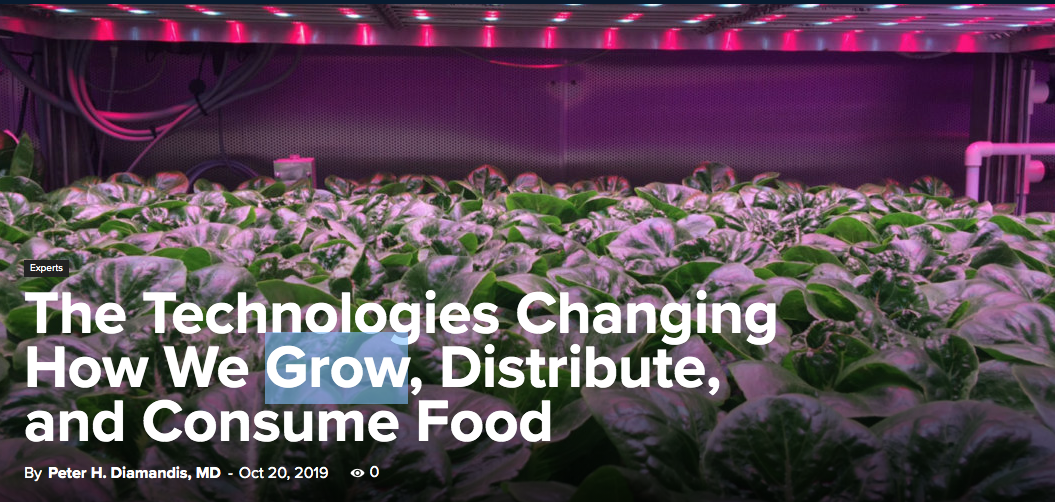
Eventually, they are transferred to these rooms setup with pink lights- made of 80% red and 20% blue- ideal for plant growth.
“We think this is important because we will have in the next years a huge growth in the population so we need to find better ways to grow food for them,” Rafael Pereira, the founder, and partner of Pink Farm said.
“And controlled environment agriculture is one of the ways we have to increase this productivity.”
The products in this farm cannot be considered formally organic because they are not planted on actual soil. But since they are grown in a confined and controlled environment there is no need for the use of pesticides. And the vegetables are totally clean: ready to be eaten right after being picked.
Some shops in Sao Paulo are already selling Pink Farm products. These so-called baby greens – similar to sprouts – are attracting some buyers here.
“This is a totally innovative method,” Marcel Honda, manager of Natural da Terra said.
“We had never seen anything like this. We had already seen hydroponics Sales are still picking up because people still need to get to know these products. So we have been organizing tastings here at the shop and once people try it they buy it.”
“I had never tried this and really liked it,” Rodrigo, a customer said. “Tastes great with this mustard sauce.”
“I am very strict about the quality of food I bring home, Jarbas Pereira, a lawyer said. “And I see this is great. My wife has already bought some.”
For now, this vertical farm is a small scale project that’s just begun to show some commercial results. But as demand for food grows and space to produce it becomes more scarce, opportunities for high-tech farming may become more important to fulfill people’s needs in the future.

Can Cutting Costs, Via Robotics, Unlock Vertical Farming Profits?
Despite the enthusiasm of the investment community for vertical ag in recent years, the indoor vertical farming industry has yet to deliver an economically viable business model
October 15, 2019
Donald Marvin Contributor
GETTY
Despite the enthusiasm of the investment community for vertical ag in recent years, the indoor vertical farming industry has yet to deliver an economically viable business model. No matter how well funded they might be, most indoor vertical farms struggle to be profitable. The reasons are simple: high operating costs, especially for labor and energy.
One of the newest entrants to the vertical ag scene, Fifth Season, has designed its first 60,000-square-foot indoor vertical farm, now being constructed near Pittsburgh, and is looking ahead toward solving the profitability challenge. The company got its start under the name RoBotany while in the incubator program at Carnegie Mellon University’s (CMU) Swartz Center for Entrepreneurship, which supports innovation coming out of the university's renowned robotics, business and other schools. Drive Capital and other investors with connections to CMU have helped supply over $35 million in total funding to date to help Fifth Season commercialize its innovative technology platform.
Co-founder and CEO Austin Webb, a CMU alum and former investment banker with B. Riley FBR, said it took the company three years to develop and perfect its platform technology at two indoor R&D farms, working out of an old warehouse in Pittsburgh. Webb and his team—plant scientists and robotics and AI engineers—designed their facility to achieve the goal of producing greens, including spinach, arugula, lettuce and herbs, to be sold locally, at affordable prices and at a profit.
Fifth Season's first commercial, large-scale indoor vertical farm will begin operation in early 2020. It is a welcomed participant in the revitalization of the riverside town of Braddock, longtime home of U.S. Steel’s Edgar Thomson Works, one of the oldest still-operating steel plants in the Monongahela Valley.
Webb and his colleagues noticed early on that, after an initial surge of investments in vertical farming, funders have more recently been posing very pointed questions about profitability. Accordingly, said Webb, his team has been designing with profitability as the paramount objective.
“Consumers are all in for locally produced, clean food that’s affordable,” Webb noted. “But to be sustainable and profitable long-term, you’ve got to prove favorable ‘all-in’ per-unit costs. And that’s what makes us different in the industry.”
That is where robotics come in. In their due diligence, Webb and colleagues saw that routine work in the full production chain could be turned over to robotics to help drive down costs. That’s most opportune, given that somewhere from 40% to 60% of a typical vertical farm’s operating costs are for labor. Fifth Season has targeted 20% and less, courtesy of robotics.
“We said, let's take an empty warehouse and design a system—from seed to harvest to package to destination,” Webb said. Their resulting proprietary design strings together an “Internet of things” of about 40 different robotic components, or “bots”—in Webb’s words, “a fully integrated solution of robotic hardware and software.”
Energy is another big cost factor in vertical growing, and Fifth Season’s team designed its operation with cost efficiency in mind there, too. Energy costs are reduced via solar collectors, which help provide the power supply not only to the robotics and IT, but for grow lights, which are in use 16 or more hours a day in a typical indoor vertical farm.
Fifth Season is collaborating with GE Current, a Daintree Company, to employ the most efficient lighting technology to its operation. In an interview, Michel Doss, general manager of specialty at Current in Montreal, said he believes a vertical-farming approach that can drive energy and labor costs down toward those of outdoor farming will be the big winner.
“I'm definitely convinced 100% that vertical farming will work,” Doss said in an interview. “But nobody knows exactly when as a date on a calendar. But the economics have to be there for it to happen.”
In addition to working with Fifth Season, Doss's division did the lighting for two of the largest vertical farms in the world: Mirai Co. of Japan and the U.K.’s Jones Food Co.
Doss called the advent of LED lighting a “missing link” that has enabled indoor farming. But, he added, lighting is only one factor, along with seeds, ventilation, humidity control and airflow, among others: “The entire ecosystem for indoor growing is critical. The technology is still evolving as it’s being tested in the field.”
Lighting alone is a work in progress, he said: “We’ve historically done a mix of deep red, which has a 660-nanometer range, and blue, a regular blue that’s readily available and seems to be yielding good results with leafy greens. But we still need more studies. What about adding green? What about white, and what kind of white, because all white isn't equal? We're just at step one of a 10,000-step journey in the space.”
Webb’s team at Fifth Season, along with Doss’s Current lighting crew and other vendors and collaborators, are still tweaking many variables, always with a sidelong glance at the elusive holy grail of indoor growing: tasty and sustainable profits.
Follow me onTwitter.
I am president and CEO of Concentric, a developer and producer of proprietary biological and plant nutrient inputs for specialty and broadacre crops. Concentric was named one of the Forbes Top 25 Most Innovative Agtech Startups in 2018. I report on agtech developments based on my more than 30 years’ experience in building and leading bioscience and agtech companies. Prior to joining Concentric in 2014, I was CEO at IdentiGEN, Inc., a provider of DNA-based solutions to the agriculture and food industries. Earlier in my career, I co-founded the Nasdaq-traded Orchid BioSciences, a pioneer in human DNA identity testing and was president and CEO of Diatron Corporation, a biomedical company developing fluorescence-based instrument systems for the clinical diagnostics industry. I have raised in excess of $350 million in both private and public financings and completed over a dozen M&A transactions. I earned my B.S. in microbiology from Ohio State University and an MBA from Iona College.

The Rise of Vertical Farming
Using Controlled Environment Agriculture (CEA) technology, the artificial control of temperature, light, humidity, and gases makes it possible to produce a vast array of crops on an industrial scale — without any outdoor exposure
It is estimated that one acre of vertical farming offers the equivalent production of at least four to six acres using conventional outdoor methods.
Darcy Simonis | ABB
09/17/19
With over 7,800 high-rise buildings, the city of Hong Kong soars above all others. More than 300 of its buildings surpass 490 feet, with more people living over 15 floors above ground level than anywhere else in the world. Having a skyline in the clouds helps the densely populated metropolis to prosper where space is restricted. Agriculture has taken note of this construction technique, as vertical farming creates impressive yields.
Darcy Simonis, industry network leader for ABB’s food and beverage segment, explains how.
Vertical farming is the process of food being produced in vertically stacked layers, instead of on a single level such as in a field or greenhouse. The layers are commonly integrated into urban structures like skyscrapers, shipping containers and repurposed warehouses.
Using Controlled Environment Agriculture (CEA) technology, the artificial control of temperature, light, humidity and gases makes it possible to produce a vast array of crops on an industrial scale — without any outdoor exposure.
The sky’s the limit
By 2050, around 80 per cent of the world’s population will live in urban areas. With agricultural space in these areas scarce or completely non-existent, how do we deliver produce?
It is estimated that one acre of vertical farming offers the equivalent production of at least four to six acres using conventional outdoor methods. As the plant’s growth is not dependent on sunlight or affected by meteorological conditions, production can continue at the same rate all year round. In terms of resources, the plants require as much as 70 per cent less water than traditional farms.
Organic crops are a huge market, with demand often outstripping supply. As vertically farmed crops are produced in a well-controlled area, there is far less need for chemical pesticides. It is also believed that vertical farming could bring fresh produce closer to urban populations, reducing the risk of nutrients diminishing during transport.
No more soil
Hydroponics is a predominant growing method in vertical farming. The process involves growing plants in nutrient solutions that are essentially free of soil, as roots are submerged into the solution and the plants are regularly monitored to maintain the correct levels of chemical composition.
If we’re ever to fulfill futuristic plans of colonizing Mars, we’re going to need to grow our own food. So, where on Earth has the conditions to test out this method?
It may not share the same qualities as the Red Planet, but Antarctica’s nonstop winters make it impossible to grow produce outdoors, and fruits and vegetables are shipped long distances from overseas just a few times a year.
In a step closer to extraterrestrial farming, a semi-automated hydroponic facility grows plants without soil, using mineral nutrient solutions in a water solvent. Scientists on Germany’s Neumayer Station III grow produce in a 20-foot-long shipping container, cultivating greens in an area where such produce is usually limited. This is just one example of how vertical farming techniques can be used in areas affected by harsh weather conditions.
Sensing growth
To hit high levels of production, growth conditions in vertical farms must be continuously optimized. Sensors and data must be used to effectively track variables such as climate, nutrient composition and light levels.
Climate is characterized by a combination of air temperature, humidity, and carbon dioxide (CO2) levels. The effects of these factors are tremendous. The difference between plant and air temperature, for example, can tell us whether the leaves’ stomata are open. If they’re closed, the plant cannot absorb CO2 and convert it into biomass. We can also measure the light level and spectrum as perceived by the plants and the pH of irrigation water for optimal growth.
Using smart sensors that can monitor these variables will ensure that vertical farms produce yields that greatly exceed those of conventional farms, which are impacted by uncontrollable conditions.
With a skyline full of modern, gleaming constructions, Hong Kong makes the most of its space to deliver prosperity. While vertical farming still has a long way to go before it is commercially viable, it is certain that food producers can learn from the techniques it applies to help deliver produce our rising populations.
The content & opinions in this article are the author’s and do not necessarily represent the views of AgriTechTomorrow

Knowledge From Algae Industry To Better Vertical Farming System
PaiGE Growth Technologies Inc. entered into MOU with CubicFarm Systems Corp. in Langley, BC to study the effectiveness of combining vertical farming systems with its technology
PaiGE Growth Technologies & CubicFarm partner up
PaiGE Growth Technologies Inc. entered into MOU with CubicFarm Systems Corp. in Langley, BC to study the effectiveness of combining vertical farming systems with its technology.
If successful, the partners will provide an efficient, modular and readily deployable system to grow vegetables or plants using the latest advances in precision agriculture and vertical farming.
CubicFarms is commercializing industrial-scale vertical farming systems for multiple industries worldwide. The CubicFarms platform consists of a containerized, automated and environment-controlled system where trays of high-value crops like leafy vegetables and herbs follow a patented, undulating path that ensures ideal growing conditions.
Pond has developed a growth platform for algae and terrestrial plants using proprietary lighting, controls and artificial intelligence. Pond has granted PaiGE an exclusive license for the application and further advancement of this technology for terrestrial plants.
Improvements
As part of the MOU, PaiGE and CubicFarms envisage a multi-phase study to test the improvements from retrofitting the CubicFarms system with PaiGE technology. Each phase shall compare plant growth and resource input in a PaiGE-equipped growth cube against a standard unit – first incorporating proprietary lighting, then sensors, and finally a precision nutrient and water dosing system. In each phase, PaiGE shall provide the engineering design, coordinate equipment manufacturing, and installation, and run and assess trials. If the trials prove successful and CubicFarms decides to incorporate PaiGE technology into its growth cubes, CubicFarms agrees to pay PaiGE licensing fees for its technology. PaiGE shall retain intellectual property developed by it throughout the joint project.
Increase local production
Dave Dinesen, CubicFarm’s CEO commented: “Our commercial-scale modular CubicFarm growing machines allow our partner farmers to increase local production of nutritious vegetables, herbs, and many other crops, helping to address both food security and the environmental footprint associated with transportation. We’re excited to incorporate PaiGE precision technology with the goal of improving resource efficiency and crop yields.”
Steve Martin, PaiGE CEO stated: “The partnership with CubicFarms allows us to demonstrate Pond’s growth technology in the terrestrial environment, potentially opening the door to a whole new category of applications. CubicFarms is the ideal partner for us to evolve the PaiGE technology as their growth cubes provide a fully controlled environment – similar to Pond algae bioreactors. As a technology provider to CubicFarms, we are excited to support their mission of advancing sustainable precision agriculture and vertical farming.”
Publication date: Wed, 23 Oct 2019

A New Vertical Farm Is Coming To Compton. Is This The Solution To The World’s Global Food Crisis?
At a nondescript gray building about 10 miles south of the Mission District, a team of a couple of hundred people is trying to make vegetables taste better. This is the headquarters for Plenty, a company in the business of vertical agriculture — using hydroponics (growing plants without soil) to farm in an enclosed space
A look inside the Plenty farm in South San Francisco. The company will open a farm location in Compton in 2020. (Plenty)
By JENN HARRIS STAFF WRITER
October 25, 2019
South San Fransisco — At a nondescript gray building about 10 miles south of the Mission District, a team of a couple of hundred people is trying to make vegetables taste better.
This is the headquarters for Plenty, a company in the business of vertical agriculture — using hydroponics (growing plants without soil) to farm in an enclosed space — which is a long-in-development new frontier of farming that is starting to get to a place of technological efficiency that will allow it to scale commercially. In a space the size of a basketball court, the farm is growing kale, arugula, bok choy, beet leaves, fennel, and mizuna.
At Plenty, the mission is to make plants that taste so good, you’ll want to eat them over everything else.
Chief executive and co-founder Matt Barnard, 47, claims that Plenty not only uses 1% to 5% of the water used to grow comparable crops on a traditional farm but also uses a fraction of the land — and he’s doing it all in a 100% renewable facility powered by a combination of wind and solar energy.
After launching the South San Francisco farm this summer, the company will announce Friday that it has inked a deal to open a second vertical farm, this time in Compton. It will take just a few months to get the 95,000-square-foot facility up and running, but the farm is not expected to bring produce to market until late 2020.
Once completed, Plenty will supply produce to dozens of Southern California restaurants, including Nancy Silverton’s Osteria Mozza and Pizzeria Mozza, as well as hundreds of grocery stores.
The farm will be the largest of its kind in the greater Los Angeles area and one of what Plenty hopes is at least 500 farms around the country in densely populated urban areas with 100,000 or more people.
“By doing that, we increase access and availability through high-quality produce, change behaviors and get people to eat fruits and vegetables in lieu of snack food,” Plenty spokeswoman Christina Ra said.
Besides restaurants and grocery stores, the company also hopes to make inroads in local schools. Plenty is in talks with the city of Compton schools to create a partnership that will bring the farm’s produce and technology to kids in the area.
The company declined to say how much it will cost to build and operate the new facility, but Barnard said he plans to create dozens of jobs by hiring locally.
“Compton has rich agricultural roots and Plenty Farms is continuing that tradition,” Compton Mayor Aja Brown said in a statement.
Employees check on produce in a processing room at the Plenty farm in San Francisco. (Plenty)
In the center of the San Francisco warehouse, the Plenty farm is wrapped in a foil-like material that reaches from the concrete floor to the ceiling like an alien fortress. Giant dehumidifiers hum loudly on the outskirts of the rooms.
Once the farm is running at full capacity next year, Plenty claims it will be able to grow enough produce for more than 100 grocery stores. The growing capacity in Compton will be even greater.
Visiting the farm requires hair nets, beard nets, full jumpsuits, booties, gloves and special glasses; the vibe is less American Gothic and more like a movie about a world-ending virus.
The crown jewel of Plenty is the growing room, where plush greens sprout out from tall vertical towers that blend into each other like rows of continuous living walls. Opposite the plants are glowing strips of LED lights. Once the plants spend a few days in the growing room, the towers move along a track out into a processing room. A robotic arm turns the towers on their side, slices off the produce, then sends the greens to a room for packaging.
People manage and sterilize the machines, but no human hands actually touch the produce at any point in the farming process.
“There’s no need to wash our product,” Barnard said. “You know those bags of lettuce that say triple washed? They are washed in bleach. We don’t think people should have to eat pesticides or bleach.”
An employee checks on some produce at the Plenty farm in San Francisco. (Plenty)
Barnard, who grew up on a farm in Wisconsin, sees vertical agriculture as a way to address obesity, drought and food shortage problems — along with eliminating the need for your salad spinner. According to a 2018 USDA report, the earth will need almost 70%more food, 30% more water and more than 50% more energy production by 2050.
In a conference room at the farm, Barnard and Olivia Nahoum, the senior product development and sensory manager for the company, have set out a tasting of sorts. Using tweezers, Nahoum places borage flower, pea herb, wasabi flower, wasabi leaves, and purslane on a plate and instructs me to try them.
Tasting the pea herbs, fairy-sized green leaves attached to tinier stalks, is like biting into a raw snap pea with a freshness and earthiness likely better than the real thing. Purslane tastes of an ice-cold glass of sweet and sour lemonade on a hot summer’s day. Borage flowers, gorgeous sky blue blooms with white centers, evoke
a mojito, with pure sugar and notes of fresh cucumber. The wasabi flowers look innocent enough, but the delicate petals pack a peppery punch. The wasabi arugula leaf was the strongest of the bunch, offering up a nose-tingling slap of wasabi.
But the bulk of what Plenty grows is not fancy herbs. I also sampled baby kale that was soft and sweet, an unbelievably peppery arugula and a mixture of green and purple bok choy that made me think of baked potatoes.
Those greens have impressed Los Angeles chef Nancy Silverton, who is on the board of the company as a culinary advisor and collaborator.
“I was so blown away,” Silverton said of her visit to the farm. “The idea that this not only can be done, but I was so surprised by how good everything tasted.”
Chef Dominique Crenn, who is also on the Plenty board, uses a purple butterfly herb that Plenty grows to add a bit of tartness to her black cod dish at her San Francisco restaurant Atelier Crenn.
In order to tweak flavor profiles, scientists adjust what Barnard refers to as the light recipe of a plant. When you’re outside, everything is up to mother nature; Barnard said the climate, soil and overall growing environment “algorithm” determine a plant’s flavor. Inside, he and his team are adjusting the lights, air temperature and humidity to coax the maximum amount of flavor from the produce.
“For our kale, we can take the flavor spectrum and move it from bitter to sweet so that it’s more balanced and easier to eat healthy food,” Barnard said. “Now that we have brought the farm inside, we can control the things that control flavor and change the recipe in order to make plants that people like.”
Plenty has a plant and flavor science team in Wyoming that tests seeds and varieties to figure out which have the most flavor potential. In the last year, the facility tested 700 kinds of produce. Although most of what Plenty produces are leafy greens, Barnard said they are working on strawberries as well.
It may sound like something out of “Blade Runner,” but Chris Dardick, lead scientist and plant molecular biologist with the USDA’s Agricultural Research Service, says this type of flavor manipulation is feasible.
“Scientifically, I don’t know how much data or evidence there is yet on that, but from our own experience, fruit crops that develop sugars and flavors are influenced by environmental conditions like the amount of sunlight,” Dardick said. “Those properties can be manipulated if you have control over lighting conditions and temperature.”
He is doing his own work with vertical farming and sees immense potential.
Inside the Plenty farm in San Francisco. (Plenty)
“One of the ways we [USDA Agricultural Research Service] got interested in vertical agriculture was the idea being we could take an orchard and bring it indoors,” he said. “We work on fruit crops, particularly temperate trees like peaches, plums, apples, and pears.”
Most of those fruit are challenging to farm indoors because of their size, shape, and need for dormancy. The research Dardick is doing may make it possible to grow these fruit year-round, without the need to wait between planting a seed and the fruit flowering.
Plenty is not the only company to attempt vertical agriculture. There’s Bowery Farming and Farm One in New York, Buckeye Fresh in Ohio, and Canadian Grocer in New Jersey. NASA started testing crop systems with shelves of hydroponic systems at the Kennedy Space Center in the late 1980s. The scientists grew wheat, soybeans, potatoes, lettuce, tomatoes and a couple of attempts at rice in a controlled chamber as a way to test a volume-efficient approach to farming in space.
Raymond M. Wheeler, who was on the team that tested the crop system in the 1980s, said they used high-pressure sodium lamps similar to the orange-colored street lights you see on many city blocks to grow the plants. The lights, he said, were far from efficient, so Wheeler was encouraged by Plenty’s LED light system, the company’s focus on flavor, and what that could mean for growing plants in space.
“If someone can come up with a very flavorful, very nutritious leafy green or a range of types, that would be perfect,” Wheeler said. “You have to get people to eat on space missions so any way you could kind of help that out by enhancing flavor, the texture, the colors, all these things and the nutrients are all a good thing.”
Although the benefits of vertical farming are generally touted as positive, some critics point out that the energy it takes to fuel a hydroponic facility can be excessive. According to Paul Zankowski, a senior advisor at the USDA, it all depends on a farm’s location.
“It all depends on where it is grown and the energy factors of that city,” he said.
Plenty is still working out what will be grown at the Compton farm and where it will be available. The company is currently selling salad boxes of greens for $4.99 at small retailers in the Bay Area like Good Eggs and Bi-Rite, and some of the produce is available at restaurants like the San Francisco robot burger joint Creator.
“We’re looking to compete with the whole middle section of the grocery store — all that dead stuff with highly processed sugars and lots of calories,” Barnard said. “We want to compete straight up on flavor.”
Jenn Harris is a senior writer for the Los Angeles Times Food section. She has a bachelor’s in literary journalism from the UC Irvine and a master’s in journalism from the University of Southern California. Harris covers restaurant news, dining trends, chefs and cocktails. She’s also the unofficial fried chicken queen of Los Angeles. She once visited 22 bars and restaurants in a single day for a story. If you want to see what she’s eating now, follow her @Jenn_Harris_ on Instagram.

Vertical Farming Is On The UP In London
Square Mile Farm’s crops are grown vertically as a means of optimizing space, maximizing yields, reducing waste and producing nutritious plants. This means that they do not have to compete with natural habitats for space or resources
Phoebe Young - 24 October 2019
The growing techniques are centuries-old, the agricultural technology is cutting (v)edge and the aesthetics look as if they are from the far-off future.
Say hello to an amazing, vertical hydroponic farm that produces ultra-fresh and highly-nutritious crops. What’s even more exciting is that Square Mile Farms have set up in Paddington Central, London’s busy work and social hub.
They have picked this unlikely location because their aim is to bring sustainable agriculture into the urban environment in the form of vertical farm crops.
What is Vertical Farming and how does it work?
Square Mile Farm’s crops are grown vertically as a means of optimising space, maximising yields, reducing waste and producing nutritious plants. This means that they do not have to compete with natural habitats for space or resources.
Their crops are grown ‘hydroponically’ in a controlled environment. This means that they are cultivated using small amounts of nutrient-rich water and no soil. Square Mile are producing fresh, nutritious produce including kale, fennel and basil in their vertical garden, which is nestled on the rooftop of 2 Kingdom Street.
Why Paddington Central?
Paddington Central joins the previously industrial gap between Paddington Station and the West End and is home to some of the world's biggest organisations. It's not exactly the first destination you'd think of for a farm.
Crops are grown ‘hydroponically’ in a controlled environment
How will farm and community connect?
The farm hopes to integrate itself with the community in Paddington, and inspire the city dweller to latch on to the growing trend of making food production sustainable, nutritious and local again. It will do this through organising events centred around food, well being and the environment.
Johnathan Ransom, Square Mile Farms Co-owner, explains that “Square Mile Farms is a business passionate about the food we eat, the impact it has on our environment and the growing demand to bring the farm back to the centre of the community it feeds. We take pride in offering professional insights and specialist expertise, as consultants, nutritionists and growers.”

Square Mile Farms is a business passionate about the food we eat
Workshops and events at Square Mile Farms
The farms will partly achieve this through hosting events. These will include talks on topics like The Basics Of Healthy Eating and Managing Stress and Anxiety. Guests will learn how what they eat affects their physical health and mental well being. A seminar on minimizing Food Waste will also take place.
To give you an idea of what will be on the cards, they recently held talks on ‘Nutrition: Essential For Sports; and ‘Nutrition: Good Food, Good Mood’.
Ongoing workshops about How To Grow Your Own Microgreens are another way in which Square Mile will get the fingers of these city dwellers greener. Attendees will be offered a personal session with the farm’s chief grower, who will be on hand to discuss everything from equipment, to the different varieties of microgreens and the conditions they require. Guests can also visit the farm by appointment to learn more about the project and take away some greens!
Events at the Square Mile Farm are priced from £5 to £25. For more information and to book an event please visit www.paddingtoncentral.com


US: Arlington, Virginia - Arlington’s Only Commercial Urban Farm
Tucked in an unassuming strip mall on Lee Highway, with no signage or disclosed address, Fresh Impact is under the radar of most Arlingtonians, but well-known among local chefs, particularly higher-end chefs
October 21, 2019
If you’ve dined in D.C. at Jose Andres’ minibar, Johnny Spero’s Reverie, or Robert Wiedmaier’s Marcel’s, chances are you sampled produce grown in Arlington.
It’s no secret that interest in urban farming has skyrocketed in recent years, however Arlington-based Fresh Impact remains the county’s only commercial urban farm.
Tucked in an unassuming strip mall on Lee Highway, with no signage or disclosed address, Fresh Impact is under the radar of most Arlingtonians, but well-known among local chefs, particularly higher-end chefs.
Founded in 2017, the company has grown over 300 different rare herbs, varieties of greens, and edible flowers based on the needs of the local restaurant industry.
“One of the primary reasons we located in Arlington was to be as close to D.C., and our customer base, as possible,” said founder Ryan Pierce.
“Being able to grow indoors, not only is it sustainable but our produce is free from pesticides, fungicides, and herbicides,” Pierce said.
At any given time, employees at Fresh Impact are maintaining between 30 to 40 varieties of produce depending on the season. Despite this, the farm still has room to grow and add more products.
“We’re hoping to sell out completely by the end of 2020, we want to get to where we simply can’t grow anymore,” Pierce said. “When that happens, then we’ll look at opportunities to expand our operations to other facilities and look to provide more local products to other restaurants.”
The company has grown primarily via word of mouth, through recommendations from chefs to other chefs. Everything is harvested and delivered to the restaurants on the same day to maintain maximum freshness.
InvertiGro Has Scale-Up Plans For Its Innovative Vertical Farming Solution
“We can grow anything that requires a controlled environment — all the way from micro-greens to proteins to fibres to medicinal plants.” One example is traditional farmers, who can use the InvertiGro system to grow additional livestock feed to back up their crops “Another interesting thing that’s popped up is we’re now working closely with property developers to incorporate productive green spaces into their buildings.”
(Pic: Getty Images)
October 20, 2019 | Sam Jacobs
Developing advancements in food and agriculture technology have been cited as a key area of opportunity for Australian entrepreneurs.
Earlier this year Phil Morle — a partner at Main Sequence Ventures (the CSIRO’s $230m innovative venture fund) told Stockhead that Australia can be a world leader in sustainable food solutions.
Already there’s a number of interesting narratives within the space. And Sydney-based agtech InvertiGro is one company looking to drive some innovation of its own with a sustainable indoor farming solution.
Speaking with Stockhead, founder and CEO Ben Lee said the company has been pleasantly surprised by the local market, since starting the business in 2017.
That launch followed an initial proof-of-concept that the founding team established in Singapore — a country that imports more than 90 percent of its domestic food supply.
“Going through that process, it became apparent that rather than compete in food production, the opportunity was far greater to give players in the market the option to adopt our technology and build out efficient indoor farming systems in their own right,” Lee said.
While developing the tech, the InvertiGro team came into contact with Mark Adams, Dean of Agriculture at Sydney University, who was enthusiastic about the prospects for the business in the Australian market.
That helped prompt the move in 2017, and Sydney Uni maintains an ongoing partnership with InvertiGro along with other tertiary institutions including Swinburne University of Technology and Newcastle University.
Customer foot-print
Lee said the company has a diverse range of customers for indoor farming technology, although existing players in the food-produce supply chain are the “mainstay” of its client base.
“That’s wholesalers and distributors looking for a reliable and profitable supply of fresh produce,” he said. “But we can grow anything that requires a controlled environment, so in that manner, the hardware systems we developed aren’t limited to fill a particular gap — it can be adapted to a whole range of produce.”
“We can grow anything that requires a controlled environment — all the way from micro-greens to proteins to fibres to medicinal plants.”
One example is traditional farmers, who can use the InvertiGro system to grow additional livestock feed to back up their crops.
“Another interesting thing that’s popped up is we’re now working closely with property developers to incorporate productive green spaces into their buildings,” Lee said.
“That’s for both new developments, and to convert underutilised spaces (eg car parks) into profitable urban farms to supply local residents and communities with fresh produce.”
Raising funds
To finance its early growth, InvertiGro has raised seed funding from private investors and venture capital.
Lee said investors have fallen into two distinct categories — “those who understand the model and are willing to support and those who don’t and are essentially more cautious”.
The company has taken investment from Australian VC fund Artesian Capital in connection with the Clean Energy Finance Corporation — a federal government-owned bank that facilitates capital flows into the clean energy sector.
“We’ll look to carry out a Series A capital raise in the next two years, in order to accelerate growth into global markets and develop our technology offering,” Lee said.
For now, InvertiGro is focused on execution for its existing customer commitments, developing the tech and growing out its footprint in the Asia-Pacific region.
Lee also highlighted the opportunity to leverage InvertiGro’s crop database to provide unique industry insights — a form of intellectual property that will prove valuable as the customer base expands.
“It’s still a very nascent space, and for people who want to adopt tech but who aren’t sure, we take away the uncertainty,” Lee said. “It allows agriculture companies to grow with much less hassle, and essentially establish a profitable business.

Why Indoor Ag Is Like 3D Printing
As a student, Maarten Vandecruys was looking for a way to scale his impact. After seeing the waste and inefficiency of the old food supply chain, he decided indoor agriculture was how he’d make his mark. He’s kept this focus on impact as Founder and Managing Director of Contain vendor Urban Crop Solutions
As a student, Maarten Vandecruys was looking for a way to scale his impact. After seeing the waste and inefficiency of the old food supply chain, he decided indoor agriculture was how he’d make his mark. He’s kept this focus on impact as Founder and Managing Director of Contain vendor Urban Crop Solutions, working with diverse partners on projects to reduce food waste at IKEA and simulate growing on Mars. We sat down with Maarten to hear what he’s learned in the process.
Maarten Vandecruys, image courtesy of Urban Crop Solutions
What’s Urban Crop Solutions’ signature approach?
We’ve always looked at the industry rather holistically, not as an engineering company, building systems or technology, and not as purely biologists, looking at how to grow things. For us, it always starts with the customer and starts with the customer’s market. It’s the end-user that defines the needs of a producer.
Then we have our plant scientists find the most optimal conditions and then they optimize the yields our client can produce to maximize their profits. Based on that, we can maximize their system, using different lights, sizes, etc.
We see that our growers have enough challenges as it is. At the end of the day, they’re producing living things, so we want to take tech and biological challenges away from them.
You’ve collaborated on projects ranging from reducing waste and supplying greens to IKEA, to simulating life on Mars with Puratos. What did you learn from these diverse partnerships?
One thing that you always see, looking at the two — the Mars project, which is more of a fundamental research approach, while with IKEA, it’s a practical applied project — what you always see is there is still so much about the growth and production of crops that is learning, daily, about new methods and which process is happening inside the plant.
The potential is far from unlocked. In initial trials with Puratos, we are already increasing the yields of wheat fivefold, per square meter of growing surface, not accounting for multiple layers of growth, as in a vertical farm. Economically, it’s still not viable enough, that’s the downside, but we continue to focus on optimizing.
IKEA had a very strong focus on sustainability. We are trying to approach our clients’ projects as holistically as possible. That’s the essence of what we did with IKEA, where we’re producing food from food waste. All waste from their restaurants included in our project were brought to a biogas facility, which provided electricity for our containers, and CO2 for our plants. It’s a real circular system, which functions well as a business case, and also increased interest in IKEA’s dishes using our greens, once they started communicating with the public about where it came from. This is what I see as the start of something very big for the industry.
Image courtesy of Urban Crop Solutions
Some people say indoor farming has overstated its potential to the media and investors. What do you think?
There’s really a lot of similarities with the 3D printing industry. When it was new, it was this big thing attracting lots of investment, only for people to initially find out that it was all too expensive. However, as the tech improved, the costs have gone down, and now there are multiple niches that create huge and sustainable added value.
Indoor vertical farming is very similar in that regard. Will indoor vertical farming feed all of humanity in ten years? Let’s be honest, likely no. Will it offer huge benefits to specific industries and shorten the supply chain with better quality? Yes. This will happen in food, pharmaceuticals, the floriculture industry, and it’s already happening now. It’s not moving as fast as five years ago, but it’s for the best. You start walking before you can run.
What are some of the biggest challenges you see when new growers want to get into indoor ag, especially around financing?
Financing is very important. We always conduct a feasibility study with our clients. It’s mainly an industry of new entrants, people or companies with no experience in food production or distribution. They have a lot of challenges coming towards them. We look at who is their customers, what is the location, what to grow, how are they funded.
It’s a new industry, so traditional funders and lenders aren’t as interested in this. What’s important is that growers can improve their case by covering their risk, and one of the things to help with that is working with a tech provider with a proven track record and customer base. It’s still not as easy as it seems, which is why having an industry-specific provider, like Contain, which knows what the field looks like, benefits each side.
The larger companies are slowly moving into the field, like IKEA and some of the airlines, which creates more credibility towards the banks. Five years ago, that wasn’t happening. It’s only for the best, especially because they are successful.
What’s the common feature among the most successful indoor growers you see, and what can our readers learn from them?
Understand the complexity of the industry. In the end, you are producing a living organism. You’re getting way more output than input, which is pretty unique. In order to do that properly, you need tons of expertise: plant physiology, food safety, etc. It’s not easy to have all of that, especially as a small company. That’s why having the right team is so important, or to put yourself with the right partners. That’s the best way to succeed.
What industry trends are you most excited about?
What I’m most excited about is breeding for indoor ag. In the past, our plants have been bred for disease-resistance and yields. But right now we have more and more interest in collaborations to breed for indoor farms, which unlocks way more potential. We can drop the disease element and focus on quality. This will open us up to new perspectives on food, thinking about the functionality, putting new vitamins in food. If we can maximize the number of crops we grow, while reducing the necessary water, waste, and transport, the impact will be incredible. It’s happening already, whereas in the past it was too little. The impact will slowly drip to the market, and that’s what I’m really excited about.
This conversation transcript has been lightly edited for length and clarity.
Learn more about Contain and funding your indoor ag business at our website, and subscribe to Inside The Box, our weekly newsletter.
The Technologies Changing How We Grow, Distribute, And Consume Food
Already, indoor farming is projected to be a US$40.25 billion industry by 2022, with a compound annual growth rate of 9.65 percent. Meanwhile, the food 3D printing industry is expected to grow at an even higher rate, averaging 50 percent annual growth
October 20, 2019
Food. What we eat, and how we grow it, will be fundamentally transformed in the next decade.
Already, indoor farming is projected to be a US$40.25 billion industry by 2022, with a compound annual growth rate of 9.65 percent. Meanwhile, the food 3D printing industry is expected to grow at an even higher rate, averaging 50 percent annual growth.
And converging exponential technologies—from materials science to AI-driven digital agriculture—are not slowing down. Today’s breakthroughs will soon allow our planet to boost its food production by nearly 70 percent, using a fraction of the real estate and resources, to feed 9 billion by mid-century.
What you consume, how it was grown, and how it will end up in your stomach will all ride the wave of converging exponentials, revolutionizing the most basic of human needs.
Printing Food
3D printing has already had a profound impact on the manufacturing sector. We are now able to print in hundreds of different materials, making anything from toys to houses to organs. However, we are finally seeing the emergence of 3D printers that can print food itself.
Redefine Meat, an Israeli startup wants to tackle industrial meat production using 3D printers that can generate meat, no animals required. The printer takes in fat, water, and three different plant protein sources, using these ingredients to print a meat fiber matrix with trapped fat and water, thus mimicking the texture and flavor of real meat.
Slated for release in 2020 at a cost of $100,000, their machines are rapidly demonetizing and will begin by targeting clients in industrial-scale meat production.
Anrich3D aims to take this process a step further, 3D printing meals that are customized to your medical records, heath data from your smart wearables, and patterns detected by your sleep trackers. The company plans to use multiple extruders for multi-material printing, allowing them to dispense each ingredient precisely for nutritionally optimized meals. Currently, in an R&D phase at the Nanyang Technological University in Singapore, the company hopes to have its first taste tests in 2020.
These are only a few of the many 3D food printing startups springing into existence. The benefits from such innovations are boundless.
Not only will food 3D printing grant consumers control over the ingredients and mixtures they consume, but it is already beginning to enable new innovations in flavor itself, democratizing far healthier meal options in newly customizable cuisine categories.
Vertical Farming
Vertical farming, whereby food is grown in vertical stacks (in skyscrapers and buildings rather than outside in fields), marks a classic case of converging exponential technologies. Over just the past decade, the technology has surged from a handful of early-stage pilots to a full-grown industry.
Today, the average American meal travels 1,500-2,500 miles to get to your plate. As summed up by Worldwatch Institute researcher Brian Halweil, “We are spending far more energy to get food to the table than the energy we get from eating the food.” Additionally, the longer foods are out of the soil, the less nutritious they become, losing on average 45 percent of their nutrition before being consumed.
Yet beyond cutting down on time and transportation losses, vertical farming eliminates a whole host of issues in food production. Relying on hydroponics and aeroponics, vertical farms allows us to grow crops with 90 percent less water than traditional agriculture—which is critical for our increasingly thirsty planet.
Currently, the largest player around is Bay Area-based Plenty Inc. With over $200 million in funding from Softbank, Plenty is taking a smart tech approach to indoor agriculture. Plants grow on 20-foot-high towers, monitored by tens of thousands of cameras and sensors, optimized by big data and machine learning.
This allows the company to pack 40 plants in the space previously occupied by 1. The process also produces yields 350 times greater than outdoor farmland, using less than 1 percent as much water.
And rather than bespoke veggies for the wealthy few, Plenty’s processes allow them to knock 20-35 percent off the costs of traditional grocery stores. To date, Plenty has their home base in South San Francisco, a 100,000 square-foot farm in Kent, Washington, an indoor farm in the United Arab Emirates, and recently started construction on over 300 farms in China.
Another major player is New Jersey-based Aerofarms, which can now grow two million pounds of leafy greens without sunlight or soil.
To do this, Aerofarms leverages AI-controlled LEDs to provide optimized wavelengths of light for each plant. Using aeroponics, the company delivers nutrients by misting them directly onto the plants’ roots—no soil required. Rather, plants are suspended in a growth mesh fabric made from recycled water bottles. And here too, sensors, cameras, and machine learning govern the entire process.
While 50-80 percent of the cost of vertical farming is human labor, autonomous robotics promises to solve that problem. Enter contenders like Iron Ox, a firm that has developed the Angus robot, capable of moving around plant-growing containers.
The writing is on the wall, and traditional agriculture is fast being turned on its head.
Materials Science
In an era where materials science, nanotechnology, and biotechnology are rapidly becoming the same field of study, key advances are enabling us to create healthier, more nutritious, more efficient, and longer-lasting food.
For starters, we are now able to boost the photosynthetic abilities of plants. Using novel techniques to improve a micro-step in the photosynthesis process chain, researchers at UCLA were able to boost tobacco crop yield by 14-20 percent. Meanwhile, the RIPE Project, backed by Bill Gates and run out of the University of Illinois, has matched and improved those numbers.
And to top things off, The University of Essex was even able to improve tobacco yield by 27-47 percent by increasing the levels of protein involved in photo-respiration.
In yet another win for food-related materials science, Santa Barbara-based Apeel Sciences is further tackling the vexing challenge of food waste. Now approaching commercialization, Apeel uses lipids and glycerolipids found in the peels, seeds, and pulps of all fruits and vegetables to create “cutin”—the fatty substance that composes the skin of fruits and prevents them from rapidly spoiling by trapping moisture.
By then spraying fruits with this generated substance, Apeel can preserve foods 60 percent longer using an odorless, tasteless, colorless organic substance.
And stores across the US are already using this method. By leveraging our advancing knowledge of plants and chemistry, materials science is allowing us to produce more food with far longer-lasting freshness and more nutritious value than ever before.
Convergence
With advances in 3D printing, vertical farming, and materials sciences, we can now make food smarter, more productive, and far more resilient.
By the end of the next decade, you should be able to 3D print a fusion cuisine dish from the comfort of your home, using ingredients harvested from vertical farms, with nutritional value optimized by AI and materials science. However, even this picture doesn’t account for all the rapid changes underway in the food industry.
Join me next week for Part 2 of the Future of Food for a discussion on how food production will be transformed, quite literally, from the bottom up.
Join Me
Abundance-Digital Online Community: Stay ahead of technological advancements and turn your passion into action. Abundance Digital is now part of Singularity University. Learn more.
Image Credit: Vanessa Bates Ramirez
TAGS Future of Food
Dr. Peter Diamandis was named by Fortune Magazine as one of the World’s 50 Greatest Leaders.
He is the Executive Founder of Singularity University, a Silicon Valley institution that counsels the world’s leaders on exponentially growing technologies.
He is the Founder and Executive Chairman of the XPRIZE Foundation which leads the world in designing and operating large-scale incentive co... Learn More
Growing Food Anywhere With Freight Farms
Freight Farms was founded by Brad McNamara and Jon Friedman in 2010, before the “ag tech” industry existed. McNamara and Friedman were pioneers who envisioned the need for urban agriculture as a competitive industry to make local food a reality around the globe. Their initial focus was on rooftop greenhouses, but it quickly became clear that there was a need for a modular and scalable design that could yield produce 365 days a year
By SOLIDWORKS October 8, 2019
Freight Farms was founded by Brad McNamara and Jon Friedman in 2010, before the “ag-tech” industry existed. McNamara and Friedman were pioneers who envisioned the need for urban agriculture as a competitive industry to make local food a reality around the globe.
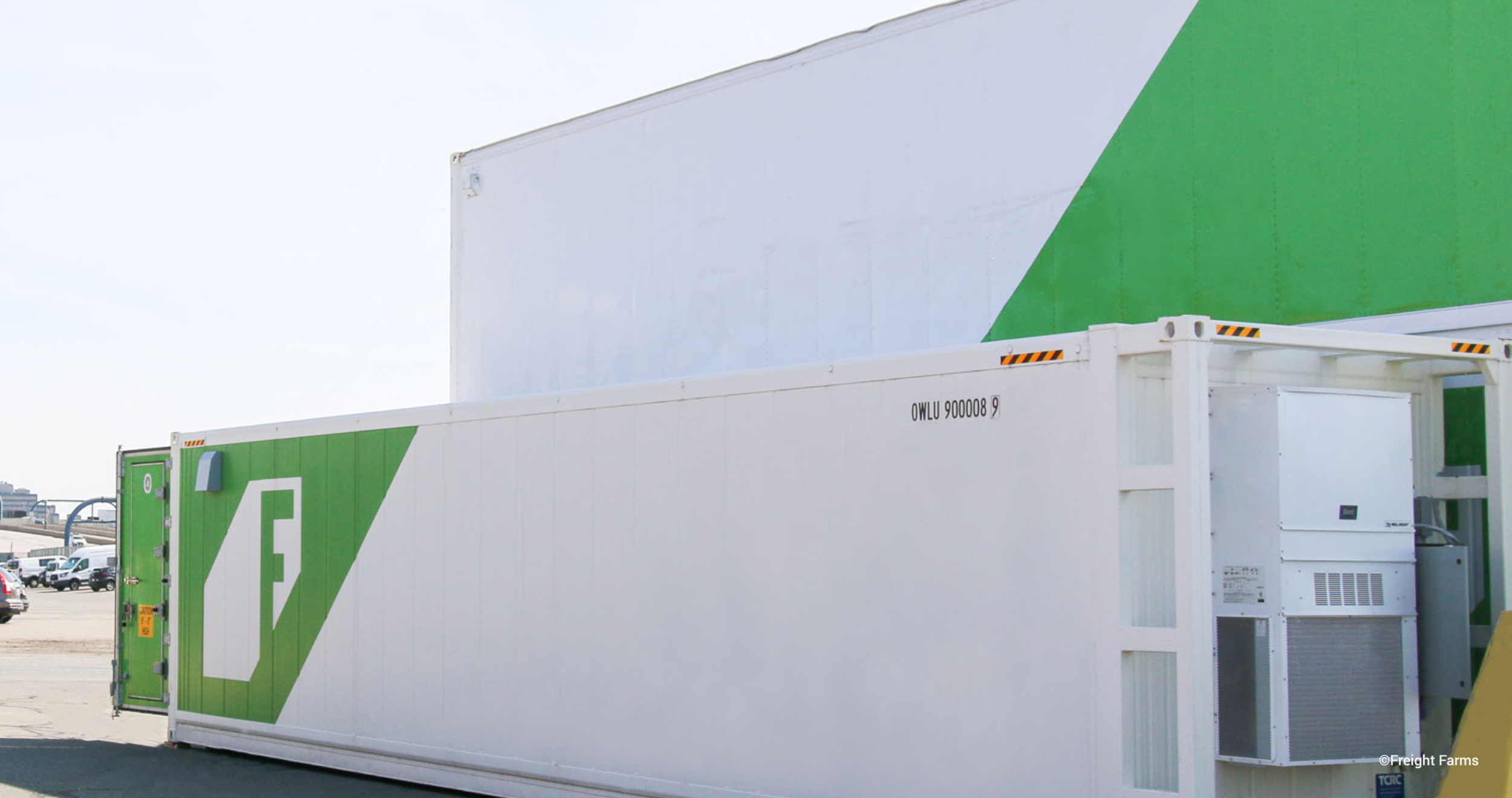
Their initial focus was on rooftop greenhouses, but it quickly became clear that there was a need for a modular and scalable design that could yield produce 365 days a year. To perfect logistics and reduce costs, McNamara and Friedman designed their new technology to be housed inside shipping containers, which are widely available, even in areas unsuitable for traditional farming methods.
Now Freight Farms is at the forefront of the fast-growing ag-tech industry and the first company to build a farm inside a shipping container. Its customers include restaurants, hotels, entrepreneurs, small businesses, corporate campuses, universities and non-profits in addition to traditional farmers. The company is constantly working on new technology to modernize farming.
The Leafy Green Machine
The mission of Freight Farms is to empower anyone to grow food anywhere. Its miniaturized commercial-scale farm, the Leafy Green Machine, fits inside an intermodal freight container, so it’s protected from the elements and erratic changes in climate.
The hydroponic, atmospherically controlled, tech-connected farm was the first containerized farm on the market. With maximization of every bit of cubic space, the Leafy Green Machine produces about a thousand baby heads of lettuce or 500 full heads of lettuce a week with an ebb and flow system (intermittent water flow) for seedling propagation and initiation and a vertical drip system for mature plants.
The plants begin in horizontal beds and are harvested from vertical beds. These ergonomic beds enable easy access to plants—no more stooping to work with seeds and plants in the ground!
SOLIDWORKS Makes Every Stage More Efficient
When designing within a literal box, it’s vital that every piece of equipment and its interaction with the operator and the plants is seamless. SOLIDWORKS 3D CAD was instrumental in the design of the Leafy Green Machine as the team was able to test designs with meticulous accuracy and make modifications without creating expensive physical prototypes.
Freight Farms also uses SOLIDWORKS on a daily basis to quickly grasp the reality of a space. Using SOLIDWORKS mates they quickly identify interference points, and they block out the size of a head of lettuce or other plant to determine how the space must change to accommodate each week of the growth cycle.
According to Freight Farms Designer Derek Baker, SOLIDWORKS’ sheet metal feature is a game changer because it helps him understand the constraints the fabricators encounter when building a part: “When I have that understanding, I’m able to bring that part to conclusion just so much quicker.”
The Internet of Things and Farming
Internet of Things (IoT) farm management and automation have become a way of life with Freight Farm’s easy-to-use digital platform that lets you manage, analyze, and remotely control your farm from any location.
The platform enables you to know exactly how things are running by viewing the current status of all your growing equipment including real-time views of temperature, humidity, carbon dioxide, and pH levels. You also receive alerts if your farm’s temperature falls above or below your threshold.
Farmers are now no longer confined to where they can farm—urban, suburban, or rural—Freight Farms makes geography a non-issue. Even the unpredictable ways of Mother Nature are minimized with the Leafy Green Machine.
The potential impact of the Leafy Green Machine excites Baker: “I want to make food accessible to the world, and that’s what I would hope people will think about when they think about me or Freight Farms.”

Vertical Farming Firm Secures £4m In Seed Funding
London FoodTech firm Vertical Future has secured £4m in a seed round designed to power its sustainable food production technology. The firm’s technology allows for the growing of primarily baby leaf vegetables and herbs in a controlled, indoor environment
The London Company Uses Technology To Grow Plants In A Technique
Known As ‘Vertical Farming’
Alistair Hardaker 8th Oct 2019
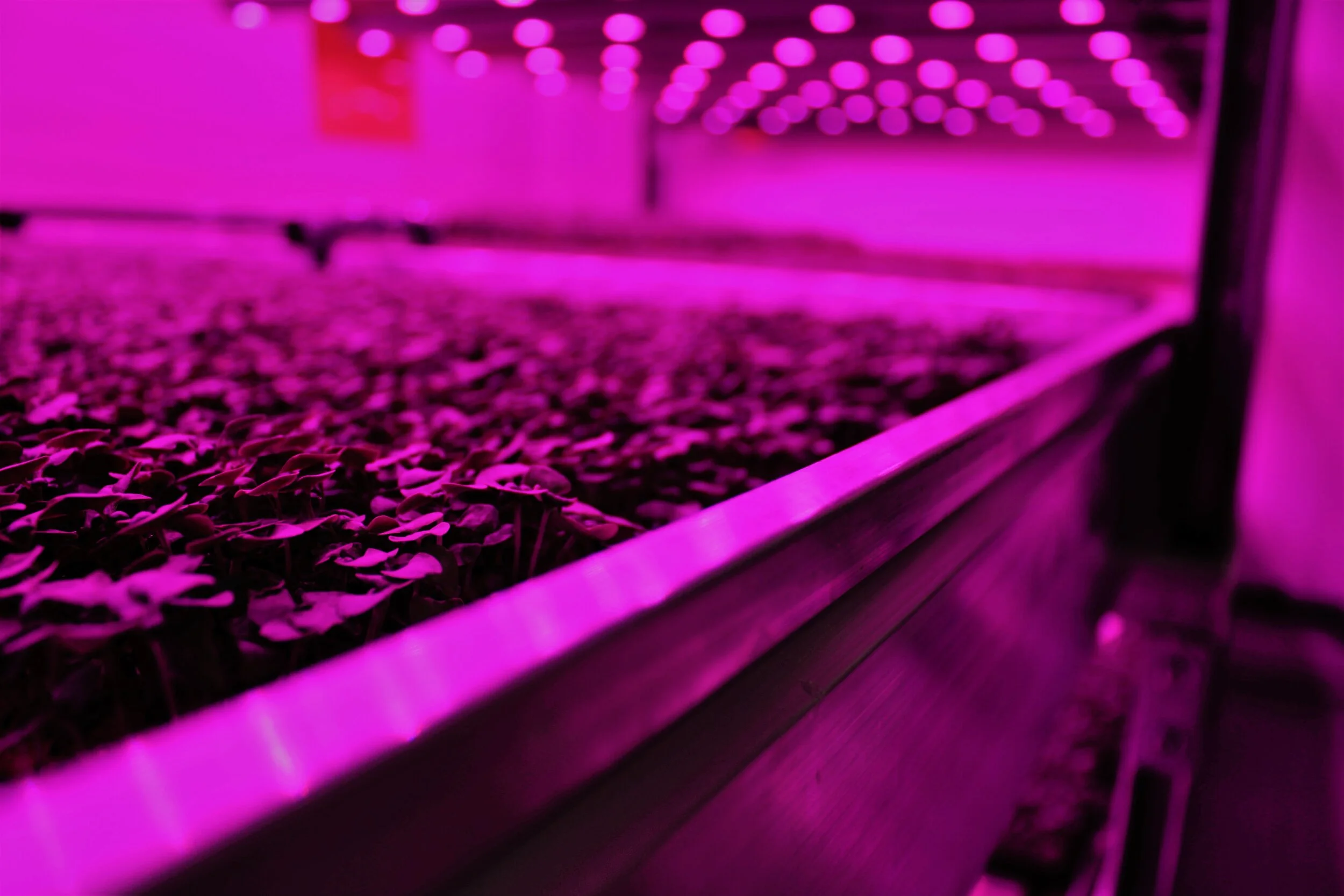
An example of a 'vertical farm'
London FoodTech firm Vertical Future has secured £4m in a seed round designed to power its sustainable food production technology.
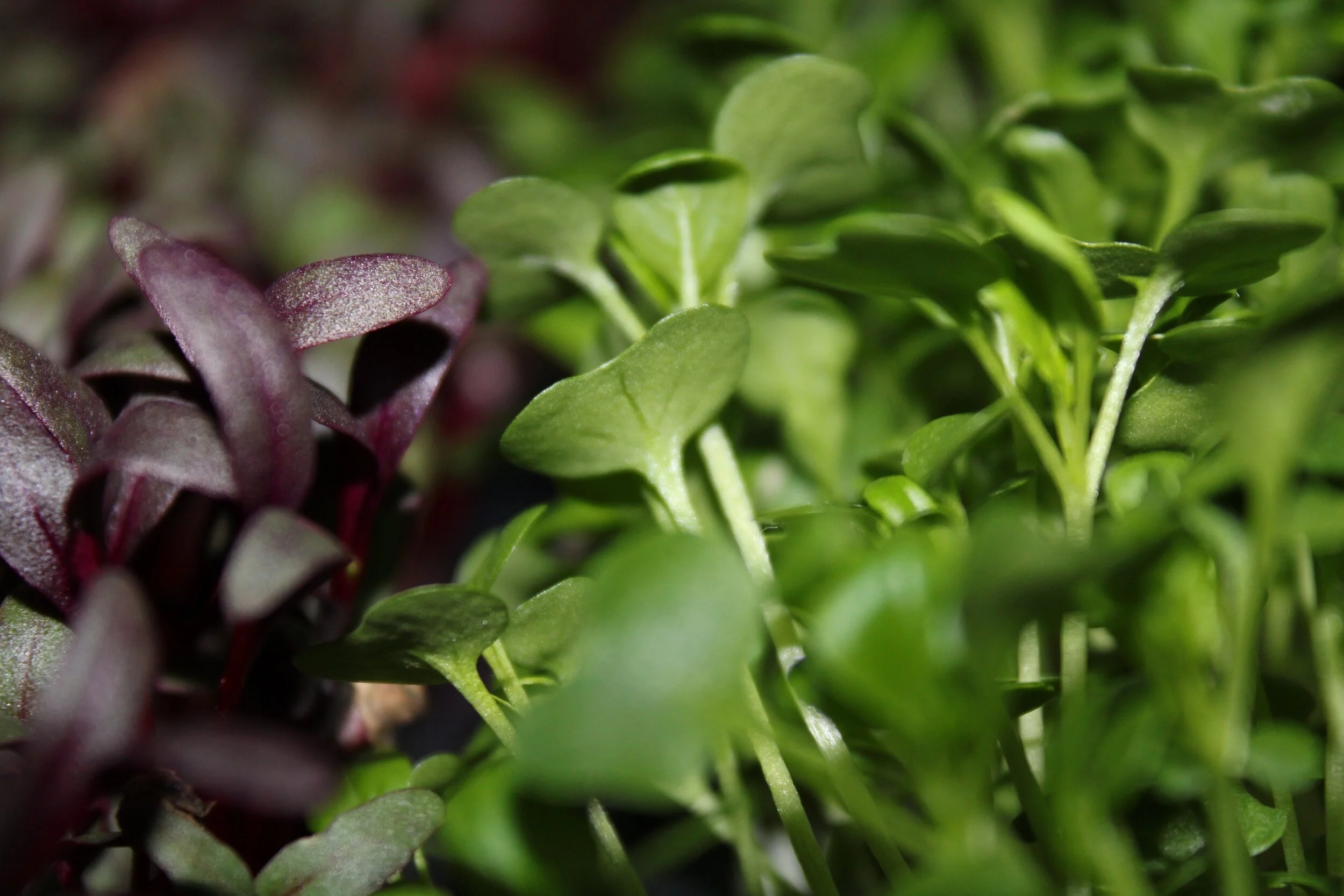
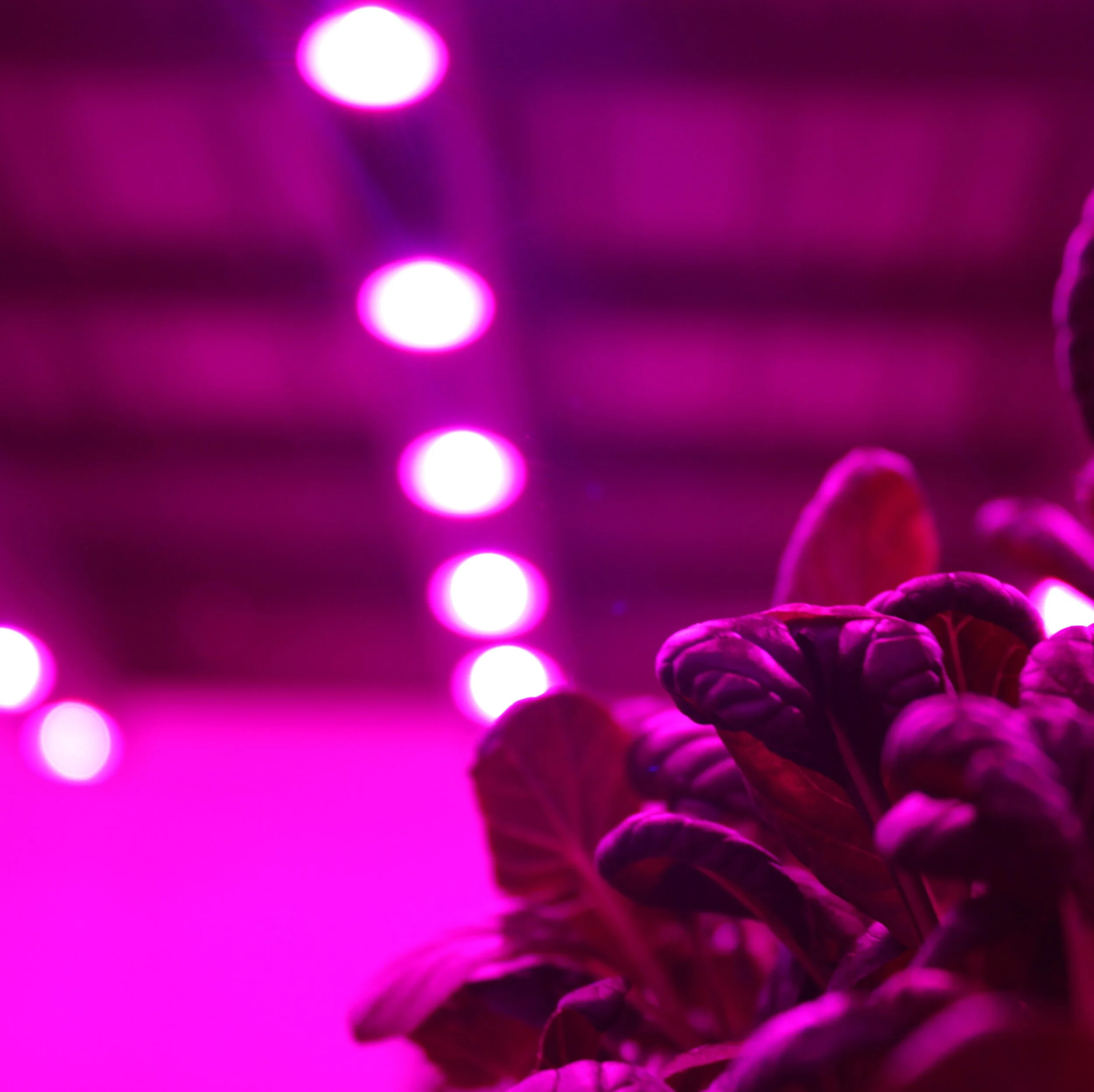
The firm’s technology allows for the growing of primarily baby leaf vegetables and herbs in a controlled, indoor environment.
The method has been developed with a vision to improve health and reducing CO2 emissions in ‘plant factory’ sites in London Fields and Mayfair, with a new development in its existing Deptford site.
Its new funding will support the first phase of the firm’s growth strategy – increasing crop production at these sites, with a target of a ten-fold increase in its B2B restaurant business alongside expansion into a B2C model under its MiniCrops brand.
Its more than 100 existing clients include Chop’d, Tom’s Kitchen and Mindful Chef.
Jamie Burrows, founder and CEO of Vertical Future, said the raise follows several years of hard work.
“Today’s raise validates our growth strategy and strong position in the London market, furthering our mission to improve the food and health of urban inhabitants, starting in London,” he said.
Ben Prior, CEO of Earthworm, added: “Vertical farming offers huge potential in solving one of the biggest issues of our time – how to feed a growing population sustainably.
“We are really impressed with Jamie’s vision and work ethic, and the team at Vertical Future has a very special business poised for growth.”
The technique’s popularly was recently bolstered after Ocado invested £17m into its own vertical farming venture.

Abu Dhabi Prepares For The Future of Food
This is a historic year for Agriculture Technology (AgTech) in the UAE. This March the Abu Dhabi government approved an AED 1 billion package to support the AgTech sector
This is a historic year for Agriculture Technology (AgTech) in the UAE. This March the Abu Dhabi government approved an AED 1 billion package to support the AgTech sector. The package is part of Ghadan 21 (Tomorrow 21), which is a three-year AED 50 billion program designed to accelerate the capital’s economic growth and reduce dependency on oil revenues. It is led by the Abu Dhabi Investment Office (ADIO), which was created in 2018 with the mandate to increase foreign direct investment. In this article, we are going to take a deep dive into the initiative.
What is it?
The stimulus consists of cash and non-cash benefits, which include rebates of up to 75% of R&D costs subject to eligibility and commercialization criteria.
Who is eligible?
Local and international companies are eligible. The program is focused on three specific sectors in the AgTech industry that have been identified for their strategic significance: precision farming and agriculture robotics, indoor farming, and bioenergy (algae).
But why?
The government has taken this major decision primarily for three reasons.
Firstly, the government seeks to establish Abu Dhabi as a global center for innovation in agriculture, especially in desert environments. This is achievable because the AgTech industry is in its early stages globally. As such, there is an opportunity to become global leaders if we become knowledge exporters. R&D is underfunded globally, which is why the initiative targets R&D and seeks to attract the best talent from around the world.
Secondly, agriculture is a high-risk industry due to the sheer number of variables that cannot be controlled, which is why governments around the world provide various levels of assurances and support. AgTech promises to decrease these risks in the medium term. However, developing and localizing these solutions to the UAE’s environment adds a degree of complexity. This is why the government’s initiatives are crucial for the success of this industry as a whole.
Finally, the government recognizes the urgency of addressing food security and diversifying the economy. Currently the UAE imports over 90% of its food, and the country’s population is forecast to increase from today’s 9.4 million to 11.5 million by 2025. Demand for food, especially high-quality produce, is set to rise sharply. A booming AgTech industry should meaningfully reduce dependence on imports.
What is expected?
Like any investor, the government seeks the highest return for its investment. The government measures success by analyzing which initiative will have the largest GDP multiplier (i.e. where 1 AED will generate the biggest knock on effect). In addition to reducing dependency on food imports and oil revenues, the package is expected to generate a contribution of AED 1.65 billion to the GDP and create more than 2,900 jobs in Abu Dhabi by 2021.
Are there any other benefits?
In addition to funding R&D, the initiative allows it to be easy to setup in AD with world-class infrastructure etc. and attract global level talent here to make UAE a global center of excellence for this industry.
Additionally, …
Government funding alone does not ensure success. Regulations need to keep pace with technological and commercial innovation. The ADIO acts as a bridge for industry to discuss the regulatory environment. These discussions have played in a key role in recent regulatory changes for the agricultural industry.
The Abu Dhabi government consolidated regulation of the agriculture sector through the establishment of the Abu Dhabi Agriculture and Food Safety Authority (ADAFSA). This new organization has taken on the roles of the Abu Dhabi Food Control Authority, the Abu Dhabi Farmers’ Services Centre, and the Food Security Centre – Abu Dhabi. It is responsible for overseeing agriculture, food safety, food security, and biosecurity. The founding of ADAFSA is another step in accelerating the emirate’s efforts to drive scientific research and agricultural development while helping to build partnerships between the public and private sectors, according to Sheikh Mansour bin Zayed Al Nahyan, the deputy prime minister and minister of presidential affairs. He told local media:
“Food security continues to be a national and strategic priority that entails concerted actions between the government and private sectors in order to ensure a well-integrated food security strategy that is conducive to unlocking the value in the agriculture and food supply chains, and ensuring all segments of society have access to all food supplies”.
Like any new industry, businesses in the AgTech industry will inevitably discover that some aspects of the existing regulatory framework do not meet their commercial needs. This is natural as regulators cannot predict future industry requirements with 100% accuracy. However, it is encouraging to see that the government is proactive about increasing their understanding and are taking decisive actions. We are more optimistic than before about the AgTech industry’s prospects in the UAE.
For more information, please visit www.investinabudhabi.ae or follow them on Instagram, Twitter, LinkedIn and Facebook.
Digant Raj Kapoor
People Manager
Sources
Gulf News – 11 March 2019
The National – 11 March 2019
Arabian Business – 11 March 2019
ADIO Website – seen on 26 August 2019
Zawya – 15 May 2019
AgFunder News – 25 March 2019
World Future Energy Summit – 27 March 2019

This Startup Is Building A Massive Indoor Farm In A Rust Belt Steel Town
The farm, from a startup called Fifth Season, will begin selling spinach, lettuce, and other leafy greens early next year, using a robot-based system that the founders say is cost-competitive with growing and transporting the same crops from a traditional farm
Fifth Season will begin selling spinach, lettuce, and other leafy greens—all grown inside with the help of robots—early next year.
![[Photo: courtesy Fifth Season]](https://images.squarespace-cdn.com/content/v1/57c8695d5016e11e71be1d83/1571775183199-IUHZR5DNO9CBGVHK8ZW1/Screen+Shot+2019-10-22+at+2.58.24+PM.png)
[Photo: courtesy Fifth Season]
10.22.19
In a vacant lot next to one of the last remaining steel mills in Braddock, Pennsylvania, a town just south of Pittsburgh, a massive new indoor farm is taking shape. The farm, from a startup called Fifth Season, will begin selling spinach, lettuce, and other leafy greens early next year, using a robot-based system that the founders say is cost-competitive with growing and transporting the same crops from a traditional farm.
It’s more affordable, they argue than some others in the vertical farming industry. “We looked at vertical farming and realized that the industrywide struggle to make the economics work was a huge factor, and something that would really prevent the industry from truly taking off,” says Austin Webb, co-founder, and CEO of Fifth Season, which incubated its first farm at Carnegie Mellon University. “The per-unit economics don’t work. Companies are losing money for every pound that they sell. And that obviously needs to change.”
![[Photo: courtesy Fifth Season]](https://images.squarespace-cdn.com/content/v1/57c8695d5016e11e71be1d83/1571775204169-EKLFXU52DQJSVJPSBHMD/Screen+Shot+2019-10-22+at+2.58.14+PM.png)
[Photo: courtesy Fifth Season]
Like others in the space, the startup touts the advantages of growing indoors. It’s possible to use only a tiny fraction of the water that’s used to grow greens in fields; most lettuce is currently grown in drought-prone California and Arizona. (In Arizona, farmers will also soon start losing access to water from the Colorado River.) Growing indoors eliminates the need for pesticides. It eliminates food safety hazards like E. coli contamination. And if crops are grown close to end markets—in this case, restaurants and stores in Pittsburgh—it also eliminates the emissions from trucks traveling thousands of miles and the problem of less-than-fresh produce that may be more likely to be thrown out because it’s already starting to wilt. “When we look at the food distribution system, we looked at it and saw an overly complicated broken system, where no one’s connected to their food, and there’s a lot of food waste,” Webb says.
[Photo: courtesy Fifth Season]
Some past efforts at indoor farming have failed because of high costs, such as FarmedHere, near Chicago, which shut down in 2017 in part because of the cost of labor. “When you look at vertical farms and labor is 40% to 60% of their cost—labor for them is actually more than the all-in delivered cost of Western-grown field produce—it’s just not going to work,” he says. The company’s system, which it has running now at another location and which it’s recreating at the new location, uses around 40 robots. “Together, they’re completely integrated so that our facility is, in a sense, one robotic system.”
Robots plant seeds in trays and deliver trays to grow rooms, where automated systems control everything from the amount of nutrients the plants receive to the schedule of lighting and the amount of carbon dioxide in the air. When a crop is ready, it goes into an automated harvesting system, and then to an automated packaging system, and the trays are sent back to be automatically cleaned and sanitized and then replanted. “We essentially looked at it and said that we should create an automated fulfillment center,” says Webb. “The difference being that instead of pallets of boxes, it should be trays of plants.” Solar panels on the roof and a battery backup system means that the facility can continue operating even if extreme weather takes out the electric grid.
[Photo: courtesy Fifth Season]
Other companies in the industry are also developing automated systems, including Plenty, a Softbank-funded Silicon Valley startup that now has a suite of state-of-the-art custom robotics. Plenty hasn’t shared the details of the cost of its system. But Fifth Season estimates, as an example, that its own robot used for storing and retrieving plants may cost two to three times less. It also uses space more efficiently than some other companies; because everything is automated and humans don’t need to access rows of produce on scissor-lift equipment, the aisles between plants can shrink, growing more produce in the same amount of space. (The new farm is 60,000 square feet, a little smaller than the 69,000-square-foot farm run by another company called Aerofarms.) During its first full year of operation, it expects to grow half a million pounds of greens and herbs, with prices in line with organically grown produce. At that price point, the payback period of the full system will be less than two years.
[Photo: courtesy Fifth Season]
In Braddock, where the population has shrunk more than 90% since its high point in the 1920s to around 2,000 people today, the new farm can provide some new jobs, despite the automation. Three shifts a day will employ 20 workers each. “These are manufacturing-like jobs where we’ve got folks that are helping us operate our machinery,” Webb says. “We’ve got folks that are monitoring the health of the equipment. All of that is something where someone can come from a previous job and you’re not necessarily saying you’re going to do something that’s totally completely different, such as sit at a computer and write code.” As the company expands, it will also hire more engineers and plant scientists.
The startup hopes to replicate the new facility, designed as a modular system, throughout the country. “We’re able to take what we’re building in Braddock and take those blueprints and really hit the repeat button quickly,” he says.
ABOUT THE AUTHOR
Adele Peters is a staff writer at Fast Company who focuses on solutions to some of the world's largest problems, from climate change to homelessness. Previously, she worked with GOOD, BioLite, and the Sustainable Products and Solutions program at UC Berkeley, and contributed to the second edition of the bestselling book "Worldchanging: A User's Guide for the 21st Century."
You Might Also Like:
Robots are already farming crops inside this Silicon Valley warehouse
Live in your own farm in the sky in this plant-covered apartment building
Video: The most crucial advice Patreon CEO Jack Conte has for any struggling creator
SPONSORED: OLD DOMINION
How Old Dominion is using technology to better serve its customers

Vertical Farming Reaches New Heights In Germany With Fraunhofer IME
The AVF was invited to visit its member Fraunhofer IME in Aachen, Germany, one of 72 institutes of the Fraunhofer-Gesellschaft, the leading organization for applied science in Europe with over 26,000 employees and various international branches around the world
OCTOBER 22, 2019 | KYLE BALDOCK | Indoor Vertical Farming - Association
Visit to the Fraunhofer IME in Aachen: On September 4th, the AVF was invited to visit its member IME and experience their groundbreaking, innovative vertical farming technologies live on the spot.
Aachen, 04. September 2019: The AVF was invited to visit its member Fraunhofer IME in Aachen, Germany, one of 72 institutes of the Fraunhofer-Gesellschaft, the leading organization for applied science in Europe with over 26,000 employees and various international branches around the world.
The Fraunhofer Institute for Molecular Biology and Applied Ecology IME has six different sites in Germany and conducts research in the field of applied life sciences from the molecular level to entire ecosystems. Its division “Molecular Biotechnology” is located in Aachen, Germany and conducts R&D in the field of biotechnology with a strong focus on plant-based applications.
Over the last 10 years, the IME has developed and established two different vertical farming systems at the Aachen site in cooperation with the Fraunhofer IPT and IIS (à VertiPharm) as well as the Fraunhofer IML (à OrbiPlant™):
VertiPharm, a fully automated vertical farm with a strong focus on different research applications (e.g. plant cultivation, plant phenotyping, biopharmaceutical production) and OrbiPlant™, a novel and cost-efficient approach to vertical farming of food crops. These two vertical farming systems are complemented by LEDitGrow, an innovative multi-chamber system for the rapid development of plant growth protocols and the optimization of specific plant target values.
The design of the two IME vertical farming systems, their degree of automation, data management, efficiency and productivity, as well as their application and research possibilities go beyond the current state of the art of indoor farming technology. The systems provide an unprecedented basis to promote vertical farming, not only in Germany but worldwide. The different technology platforms are available for cooperation projects. Potential cooperation partners are encouraged to get in contact with IME (see below).
During a facility tour AVF had the opportunity to visit the different systems that are outlined below.
Fig.1: LEDitGROW plant cultivation unit for the accelerated multi-parameter development of plant growth protocols (© Ann-Katrin Beuel, IME).
LEDitGROW – Multi-parameter single plant cultivation system
A LEDitGROW unit comprises 24 single plant cultivation chambers, each equipped with various different LED-based light spectra including UVA. The unit has been designed to fit into a phytotron to run experiments at defined temperature, humidity and CO2 concentration. Each plant chamber can hold a single plant or several tissue culture petri dishes and can be individually supplied with nutrient solution.
The parallelization of cultivation conditions together with a statistical multi-parameter design of experiment (DoE) approach allows the rapid establishment of species-specific growth recipes as well as the optimization of specific target values such as biomass, secondary plant metabolites or morphology.
VertiPharm – Automated multifunctional research platform for vertical farming
Fig. 2: Top view on VertiPharm’s vertical farming unit (above, © AVF) and N. benthamiana plants under LED lighting in one layer of the vertical farm unit (below, © Andreas Reimann, IME).
The highlight of the IME in Aachen is the fully automated, pilot-scale vertical farming research platform featuring core functionalities such as multi-tier-based vertical farming, single plant handling, sensor-based in-process control, 2D/3D plant scanning, vacuum plant infiltration, downstream processing and central data management.
The impressive construction of the vertical farm unit consists of eight cultivation levels and provides ~550m2 of net cultivation area for the continuous or batch-wise cultivation of plants under highest reproducibility.
Different parameters such as temperature, humidity, CO2-concentration, LED-based lighting and composition of the plant nutrient solution can be defined and monitored in the central control system. Each plant receives a unique ID during seeding and is tracked individually throughout the entire cultivation time until harvest. Movement, sensor and measurement data are continuously recorded and can be used for in-process control or retrospective analysis of cultivation parameters and specific plant characteristics.
The fully automated facility can be used to produce food and non-food plants of different varieties and sizes. In addition to the vertical farming of plants a separate vacuum-infiltration unit connected to a fermentation suite allows the rapid production of recombinant biopharmaceuticals (e.g. vaccines, antibodies or enzymes) in plants by Agrobacterium-mediated gene transfer. Thanks to this multifunctionality the plant production research platform at Fraunhofer IME enables a broad spectrum of applications in different plant-based fields but also in the field of engineering, for instance:
Cultivation of food plants
Cultivation of medicinal/ specialty plants
Cultivation of ornamental plants
Production of recombinant biopharmaceuticals
Plant breeding and plant phenotyping
Software-based applications (e.g. digitization of production, artificial intelligence, augmented reality-assisted maintenance)
OrbiPlant™ – groundbreaking vertical farming system for the cost-efficient production of food crops
Fig. 3: OrbiPlantTM pilot-scale system with various leafy greens and herbs on a conveyor belt. The plant size gradually increases along the four conveyor belt loops (© Andreas Reimann, IME).
OrbiPlant™ represents an innovative approach to vertical farming of food crops that can truly make a difference to the spread and market penetration of vertical farming.
The major difference to classical tier-based approaches is a continuous conveyor belt system that is flexibly arranged in vertical loops allowing the easy placement of seeds or seedlings on one end of the conveyor system and the easy harvest on the other end. In between plants grow self-sufficiently under specific LED lighting conditions that can be adapted to the respective growth stage.
The conveyor belt movement can be specifically adjusted to a plant’s growth cycle and takes advantage of a growth-stimulating orbitropal effect on the plant, which is stemming from the changing gravitational orientation of the plant on the conveyor belt. The water-nutrient supply is ensured by aeroponic nozzles inside the belt loops. The innovative OrbiPlant system has several key improvements over current vertical farming systems:
High plant biomass yields and short growth cycles
Low production costs (e.g. <0.40 € per lettuce head)
Optimal cost-efficiency due to minimal hardware and personnel costs
Modular conveyor belt concept easily adaptable to different plants and growth cycles as well as to different building geometries
Improved vertical heat convection
Low LED lighting requirement
Flexible degree of automation depending on customer need


OrbiPlant is not only providing a cost-effective, optimized production platform for food crops with minimal space and resource requirements, but its unique design and flexibility has the potential to take vertical farming to a new level. It overcomes the shortcomings of today’s most commonly used horizontal rack systems, saves energy, utilizes intelligent automation, and enables easy handling and operation.
The AVF in cooperation with the Fraunhofer IME welcomes company and stakeholder inquiries on the presented systems.
Contacts:
Christine Zimmermann-Lössl, AVF Chairwoman
Email: czl@vertical-farming.net
Marvin Spence, AVF Project Manager
Email: ms@vertical-farming.net
Andreas Reimann, Senior Acquisition and Project Manager at Fraunhofer IME, Business Field Indoor Farming/Vertical farming
Email: andreas.reimann@ime.fraunhofer.de
Visit Fraunhofer IME’s website to learn more about them.

New Zealand: Vertical Farming Takes Off In Former Wellington Nightclub
The lights are still there, but the moody blues have been replaced by state-of-the-art multi-colored LED grow lights. Shoots Microgreens is a start-up company growing tiny crops mainly for restaurants, but with some of the produce sold through stores such as Moore Wilson
To View The Video, Please Click Here | ROSA WOODS/STUFF
Shoots Microgreens is one of NZ's first vertical farms, housed in a former nightclub.
Once nightclub goers used to bounce off the walls of a Wellington basement, but now it's been transformed into an urban market garden supplying over 80 restaurants.
The lights are still there, but the moody blues have been replaced by state-of-the-art multi coloured LED grow lights.
Shoots Microgreens is a start-up company growing tiny crops mainly for restaurants, but with some of the produce sold through stores such as Moore Wilson.
Microgreens are the intense flavoured first shoots and leaves, and are popular among chefs and bartenders for garnishing meals and cocktails. Many familiar leaves can be used as microgreens, including mustard, basil, rocket and coriander.
Co-owner Matt Keltie started the business last year and it now employs three fulltime workers, although it is yet to make a profit.
While ostensibly a hydroponic-style system, Shoots Microgreens is marketing itself as different to such common garden businesses that have been around for decades.
ROSA WOODS/STUFF
Shoots Microgreens co-owner Matt Keltie has started a business in a former Wellington nightclub.
First, the location: vertical farms have sprung up in a number of major urban centres where the crops are grown close to where people consume them – in high rises, derelict buildings and abandoned warehouses – reducing carbon emissions and maximising unused spaces in cities.
"It's all about using an efficient production area, recycling water, and having a lower carbon footprint."
Secondly, the crops are grown without the need to cart in soil and spray the chemicals that conventional growers use to control animal pests, fungal diseases and weeds.
Thirdly, everything is recycled including the water and growing trays, and deliveries are made using e-bikes.
Keltie started the business in a garage before moving into a smaller space than where he is now. Once he had successfully realised the proof of concept and started to supply restaurants, he had enough confidence to launch the business.
The Energy Efficiency and Conservation Authority (Eeca) helped with a $12,300 investment in the special LED grow lights under its "Gen Less" campaign.
Ray McGregor delivers microgreens for company Shoots Microgreens on an e-bike. | SUPPLIED
Compared with traditional incandescent hydroponic lamps, the LEDs are cool to the touch, and can be frequency controlled to improve productivity – they grow the shoots around twice as fast as their halogen counterparts.
The LEDs conserve 45 percent more lighting electricity, saving Keltie's business about $25,000 a year on its power bill.
With customisable spectrums of light, the colour of LEDs can be adjusted to optimise the growth of each specific variety of microgreens. As they do not produce heat, they can be stacked at every vertical layer, with no risk of heat damaging plants, as with incandescent hydroponic lamps.
Every day chefs order their microgreens and are delivered or collected.
The non-soil medium the plants are grown in is a trade secret, although Keltie is planning on moving to a hemp-based medium once it becomes available.
Keltie says the taste of the microgreens is governed by the light applied to the plants – the lights are one component but managing and changing alone or all components of the growing system influences the plants.
"When I take two trays of the same plants grown under different numbers of bulbs, some chefs can tell me how they've been grown because there's a subtle difference in flavour. It's all about the mix of water and lights.
"Not only do the LEDs provide the right growing spectrums, they are hellishly efficient in terms of power."
A supplier provides the fertiliser in the right sorts of ratios but Keltie is starting to test which plants take up which nutrients, so he can apply a specific rather than a broad spectrum mix. For example, peas do not require much nitrogen.
ROSA WOODS/STUFF | . Microgreens are used as garnishes or in cocktails.
He admits there has been a lot of trial and error in the start-up period.
"When people say how far down the track are you with your learning, I say about 5 per cent, I've still got a solid 95 percent left to learn. But we hope to start soon in Auckland, once we've ironed out the issues here."
Prices start at $7.25 for a tray of peas, which grow in a little over a week, whereas slower growing red sorrel is priced accordingly higher.
Quotes from famous historical figures are mashed up in a call to arms for climate change campaign Gen Less, encouraging New Zealanders to get more out of life by using less.
Capitol Restaurant owner-chef Tom Hutchison says he buys the microgreens every day.
"It's good that they're doing well, the product is fantastic."
Hutchison is not so much a fan of the very young greens, preferring the more mature, larger leaves.
Eeca technology innovation manager Dinesh Chand worked with Keltie to help get the project off the ground.
"This project not only shows potential for LEDs to reduce electricity use and increase productivity, but is a great example of reducing transport-related emissions. In this case, supplying locally eliminates the equivalent annual carbon emissions of taking 20 cars off the road."
GETTY-IMAGES
In London. microgreens are grown in old air raid shelters beneath some of the capital's busiest streets.
Vertical farming can save up to six times the ground space that conventional farming uses. Keltie said it was not a replacement for traditional New Zealand farming yet, but was part of its future.
Eeca chief executive Andrew Caseley said the authority's intention in running the Gen Less campaign was to mobilise New Zealanders to be world leaders in clean and clever energy use.
Companies that have already joined Gen Less, include Westpac, Countdown, New Zealand Post, Stuff, Wishbone Design, Ecostore, Lewis Road, and Ethique.
"Less" refers to reducing greenhouse gas emissions from energy use. People could join the campaign by walking their children to school, switching to a more efficient car such as an EV, buying sustainable goods and services, and using LED bulbs, he said.

Indoor-Farming Company Square Roots Expands Into Michigan
Square Roots, an indoor seed-to-sales urban farm headquartered in Brooklyn, New York, will open its newest indoor farm at the Gordon Food Service headquarters in Wyoming, Michigan
September 30, 2019
An artist's rendering of the new Square Roots' indoor farm at Gordon Food Service, Wyoming, Mich. ( Courtesy Square Roots )
Today, Square Roots, an indoor seed-to-sales urban farm headquartered in Brooklyn, New York, will open its newest indoor farm at the Gordon Food Service headquarters in Wyoming, Michigan. This is the beginning of a strategic partnership that will see Square Roots’ high-tech farms built on or near Gordon Food Service locations across the continent, helping to bring hyper-local produce to customers year-round.
Link To Facebook Video - Opening of Square Roots New Michigan Farm Campus
The fact that so much has happened in just six months is credited to Square Roots’ modular, scalable farm-tech platform. The company can bring this model to any city in the world, and it can be done fast.
“As the network of farms gets larger, it gets smarter,” the company said. “Cloud-connected farms and data-empowered farmers learn from each other, enabling Square Roots to replicate success from one location to another, seamlessly. Opening the Michigan farm brings us closer to the vision of a distributed network of indoor farms, built across the world, to bring real food to people in cities while empowering thousands of next-gen leaders in urban farming.”
The opening of the new facility in Michigan has also opened up a new pool of applications for Square Roots’ Next-Gen Farmer Training Program — half of the newest applicants are from the Michigan area.
Staff for the Michigan site is already in place: Brian Mitchell, the new Farm Manager, is coming from an 87,000 square-foot indoor aquaponics facility, and the Assistant Farm Managers are Lauren Niergarth, a horticulture major from Michigan State University, and Eli Zimmer, a former Next-Gen Farmer from Brooklyn.

Lighting Research Consortium Brings CEA Community Industry-Ready Technologies
The goal of the consortium, an initiative between NYSERDA, Cornell University and Rensselaer Polytechnic Institute, with Rutgers University participating as a collaborator, is to reduce carbon emissions, Erico explains
Without light, plants can't grow. The continued advance of controlled environment agriculture means that sunlight is often supplemented and in some cases completely replaced by artificial lighting. It works well, but there's one caveat: artificial lighting can take a lot of energy. Reason enough for the New York State Energy Research and Development Authority (NYSERDA) to kickstart the Greenhouse Lighting and Systems Engineering (GLASE) consortium with $5 million in funding. That was in June 2017. What's happened since then? Erico Mattos, the consortium's Executive Director, tells us more.
The goal of the consortium, an initiative between NYSERDA, Cornell University and Rensselaer Polytechnic Institute, with Rutgers University participating as a collaborator, is to reduce carbon emissions, Erico explains. "NYSERDA saw the growth of the CEA industry, indoor farms and greenhouses, and with technologies evolving really fast, especially on greenhouse systems like lighting controls and LEDs, they realized that there's a lot of room for technology development that can help reduce the energy consumption of lighting and integrated systems in greenhouses. So NYSERDA sponsored this program with the objective to reduce the carbon emissions coming from greenhouses' electricity use by 70% from the levels of 2017."
Cornell University Greenhouse
To achieve this ambitious goal, a combination of engineering and plant physiology is used. “At Rensselaer Polytechnic Institute we work with the center for Lighting Enabled Systems & Applications (LESA). Led by Dr. Elsebeth Kolmos, LESA engineers are developing new LED research modules, new driver technologies, and spectroanalysis to optimize plant growth under LED lights. At Cornell University, a team of researchers led by Dr. Neil Mattson is developing integrated lighting control systems based on plant physiology responses to optimize crop production yield and reduce operational costs in commercial greenhouses".
Focus on food, but everyone benefits
The consortium focuses their research on food crops - they work with the following crop models:
Lettuce
Strawberry
Tomatoes
"Those are the crops we use to do research. But the outcomes of this research," Erico points out, "can be applied to any of the industries. And our outreach activities, which are not sponsored by the NYSERDA funds but paid for by membership fees, are open to the entire CEA industry. They're pretty much crop agnostic." That means cannabis or ornamental growers, for instance, can also benefit from the consortium's efforts.
And while the consortium was started in New York, that doesn't mean it's geographically limited. "We started in New York because all the founding members are here, but at this time we have members all across the US, we have 22 industry members today, including an international body of farms, in the Middle East. For now, we're establishing a base in the US, the next step is going international."

Diagram of GLASE work frame
Sharing knowledge and technology
The consortium focuses on the following types of industry members:
CEA growers
Lighting, sensing and control manufacturers
Basic manufacturers (companies that make the LEDs, drivers, etc. that go into lighting, sensing and control)
Retailers
Service providers
So what do those members actually get out of it? "Growers get all this knowledge that we are generating. With the GLASE consortium, we have more than 300 technical milestones, from the development of new LEDs to implemented systems in greenhouses."
For growers, GLASE offers knowledge and technology transfer. "The knowledge transfer happens through our outreach activities, like webinars, industry talks, industry advisory board meetings where growers come together with manufacturers and we discuss all the research that we're doing." In addition, grower members have access to the GLASE researchers at Cornell, RPI and Rutgers University.
When it comes to the technology transfer, members of the consortium have first-hand access to technology that's developed by those researchers. "If there's any IP, for example, it's disclosed to members first - they have the right of first refusal.”
GLASE Commercial pilot: SAF Produce, Berlin, NY
Practical results
According to Erico, these are exciting times for the consortium. After the start-up phase, now the time has come to start harvesting. For instance, the consortium has developed their own LED module for lighting research. They use these to research how growers can best use lighting in their cultivation. But there's also something in it for the manufacturers: "Everything we do in these research fixtures, they can take that information and use this to guide product development.”
This research is conducted in the context of the milestones set by NYSERDA, but the GLASE researchers do get feedback from industry members during quarterly meetings (two of them by phone, two of them in-person meetings) on how this knowledge can be applied practically. "For example," Erico says, "they can make recommendations on what to research next, or on how to better implement the technology we're developing into commercial facilities." Using this feedback, the researchers tweak or adjust their research to end up with a practically implementable solution. “We are working to de-risk the technology development process by validating new technics in the lab and in commercial pilot greenhouses to provide the CEA community industry ready technologies.”
GLASE Commercial pilot: Wheatfield Gardens, Buffalo, NY
For the practical implementation, GLASE is working with two commercial lettuce greenhouses in New York State: SAF Produce in Berlin, and Wheatfield Gardens in Buffalo. Both greenhouses were retrofitted with LEDs. "It is our goal to implement all the technologies that were developed by GLASE in each of those greenhouses, establishing a baseline on the energy consumption and then compare the results before and after." This is an ongoing process, and GLASE will publish the results at a later stage.
For more information:
Greenhouse Lighting and Systems Engineering
glase.org
Publication date: 9/18/2019
Author: Jan Jacob Mekes
© HortiDaily.com

Major UK Supermarket Marks & Spencer Will Launch Infarm Vertical Farms In Six More London Stores
For the last few weeks, M&S shoppers have been able to purchase fresh herbs like Italian, Greek, or Bordeaux Basil, Mint, Curly Parsley and Mountain Coriander. The herbs are sold with their roots attached to maintain freshness
October 18, 2019
Infarm display of herbs at Marks & Spencer's Clapham Junction store in London | STEVE AGER

Elizabeth Rushe Contributor
I write about sustainability and food innovation in the EU.
“We believe that by offering produce grown and harvested in the heart of city, that's how we want to practise this form of agriculture - resilient and sustainable and beneficial for the planet, while meeting the needs and desires of city dwellers like Londoners,” Co-founder of vertical farming start-up Infarm, Osnat Michaeli, told me yesterday on the phone from London, speaking about Infarm’s new partnership with UK supermarket Marks & Spencer.
Marks & Spencer is a much-loved retailer in the UK, which was established 134 years ago and is known for high-quality clothing, homewares, and food products. Infarm’s hydroponic vertical farms will be launched in six more Marks & Spencer stores in central London by the end of the year, following the initial launch at the 105-year-old Clapham Junction location in early September, which has been reopened as a food hall.
For the last few weeks, M&S shoppers have been able to purchase fresh herbs like Italian, Greek, or Bordeaux Basil, Mint, Curly Parsley and Mountain Coriander. The herbs are sold with their roots attached to maintain freshness. Infarm chose London for this rollout because it represents many of the sustainability challenges that people will experience in cities over the next decade, Michaeli told Forbes.
Each of the individual hydroponic farms are cloud-connected and remotely controlled by the Infarm central farming platform, "Our farmer in the cloud," Michaeli explained. Twice a week, “infarmers” visit the farms in-store to harvest and pack the mature plants, and place new seedlings in the system.
Infarm is a Berlin-based vertical farming start-up founded in 2013, which raised $100 million in Series B funding earlier this year. With over five hundred of their hydroponic vertical farms in supermarkets (like Metro in Germany) and distribution centres around the world, which grow 200,000 plants each month, the huge number of plants and cloud-controlled system gives Infarm a vast amount of data to work with. “We improve our growing recipes on a week to week basis,” Michaeli said.
According to Infarm’s website, their vertical farms use 95% less water than soil-based farming, take up only 0.5% of the space, use zero chemical pesticides, need 90% less transportation and 75% less fertiliser.
This partnership with M&S is a model of Infarm’s goal to disrupt the supply chain, by getting rid of it. “We're redefining the entire food supply chain from start to finish,” Michaeli told me, “Instead of building huge scale farms outside of the city and then distributing produce, our approach is to distribute the farms themselves throughout the city, bringing the nutritional produce to consumers right at the point of sale.”
Other retailers in the UK are also committing resources to vertical farming. Ocado, the online supermarket, announced earlier this year that they are investing £17M in vertical farming, and the high-end department store John Lewis also shared plans to grow salads in their supermarkets with the help of LettUs Grow.
Infarm also hopes to work closely with farmers across the UK as they grow their presence there. “I believe that local producers and farmers are now and will continue to be vital to food supply needs in communities everywhere,” Michaeli says, “I hope that we can all work together to tackle some of these problems.”
I’m a freelance writer from Ireland, based in Berlin. I’m interested in the future of food and how we’re going to feed the world in the decades ahead. To learn about what exactly is going on in the soil, I spent a year training in organic horticulture in 2014, growing the likes of pumpkins, tomatoes -- and of course potatoes -- in the wilds of the northwest of Ireland. This year of training made a huge impact on me and within a few months, I changed my diet to plant-based. My background includes working for startups in Berlin and my writing on food innovation and sustainability has been published by Vice, Pacific Stand and Paste Magazine.