


Welcome to iGrow News, Your Source for the World of Indoor Vertical Farming

New Web Service For The Indoor Farming Industry - IndoorFarming-Jobs.eu
For the first time, in the Indoor Vertical Farming Industry, this job board offers you the opportunity to apply for jobs with indoor farming companies in Europe. IndoorFarming-Jobs.eu provides a much-needed service.
Recently, An innovative Web Service Was Launched
IndoorFarming-Jobs.eu
For the first time, in the Indoor Vertical Farming Industry, this job board offers you the opportunity to apply for jobs with indoor farming companies in Europe.
For candidates and job seekers this service is free of charge.
It is streamlined:
Create an account, create your resume, upload your CV and apply by clicking on job applications from companies in Europe.
We work with the Association for Vertical Farming, an International organization dedicated to advancing the Indoor Vertical Farming, we offer their members a 20% discount on first-time use and a permanent 10% discount as long as they are members of the Association for Vertical Farming.
Benefits For The Employee:
Jobseekers can view their application documents on their dashboard, and see all of the companies that they have applied to, in addition, job alerts can be activated if you want to be informed about a specific job when it appears.
Benefits For The Employer:
Job vacancies can be posted quickly, via the employer dashboard, applications can be viewed and direct contact made with applicants. If the company does not have the time or the employee to post the job vacancy, IndoorFarming-Jobs can do it for you.
Companies can choose whether they are looking for suitable candidates as Startup, Small Business or Enterprise, depending on their payment plan.
Job applications can be placed online for as little as 8 cents per day.
Take a moment of your precious time and
Check Out Our Website.
CubicFarm® Systems Corp. Announces The Appointment of Interim CFO
CubicFarm® Systems Corp. CEO, Dave Dinesen commented, "I look forward to working closely with Rodrigo as interim CFO as we move the business forward and execute on CubicFarms growth plan."
Vancouver, BC--(AccessWire – Sept 24, 2019) – CubicFarm® Systems Corp. (TSXV: CUB) (“CubicFarms” or the “Company”) welcomes Rodrigo Santana as the Company’s interim Chief Financial Officer.
CubicFarms is pleased to welcome Rodrigo Santana as its interim CFO. Supported by the rest of the CubicFarms finance team, Rodrigo will continue his role as Chief Operating Officer. Rodrigo is very experienced in the dual role of COO and CFO where he held both positions in his previous employment at Sacre-Davey Engineering, helping the company grow and attain their strategic objectives.
CubicFarm® Systems Corp. CEO, Dave Dinesen commented, "I look forward to working closely with Rodrigo as interim CFO as we move the business forward and execute on CubicFarms growth plan."
CubicFarms greatly appreciates the work provided by their previous CFO, Dani Palahanova, who was instrumental in assisting the company with their public listing efforts and wishes her every success in her future endeavors.
Neither the TSX Venture Exchange nor it’s Regulation Services Provider (as that term is defined in the policies of the TSX Venture Exchange) accepts responsibility for the adequacy or accuracy of this release.

Scaling Indoor Farming At Speed: Square Roots' New Michigan Farm Campus
On September 30, Square Roots will cut the ribbon and officially open our newest indoor farm on the Gordon Food Service headquarters in Wyoming, Michigan
Square Roots | 09.18.19
Company / Updates
On September 30, Square Roots will cut the ribbon and officially open our newest indoor farm on the Gordon Food Service headquarters in Wyoming, Michigan. This is the beginning of a strategic partnership that will see Square Roots’ high-tech farms built on or near Gordon Food Service locations across the continent, bringing high-quality, hyper-local produce to customers all year round.
The Michigan Farm Campus is the beginning of Square Roots and Gordon Food Service’s partnership to bring local food to people in cities across the continent, all year round.
Scalable Urban Farming at Speed
Square Roots’ partnership with Gordon Food Service was announced at the end of March, and our first co-located farm is opening just six months later. This speed is possible thanks to our modular, scalable farm-tech platform. We can bring our model—perfected in a Brooklyn parking lot—to any city in the world, and we can do it fast.
Link To Facebook Video - Opening of Square Roots New Michigan Farm Campus
As our network of farms gets larger, it also gets smarter. Cloud-connected farms and data-empowered farmers learn from each other, enabling Square Roots to replicate success from one location to another, seamlessly. Opening the Michigan farm brings us closer to the vision of a distributed network of indoor farms, bringing local, real food to people in cities across the world—while empowering thousands of next-gen leaders in urban farming through our unique training program.
Data-empowered farmer checking their Square Roots app in a farm.
Love is the Magic Ingredient in Great Tasting Food
Of course, at the center of the Square Roots model are the farmers themselves. It’s their love for the plants that makes our food taste so good! With the food system rapidly changing all around us, there’s never been a more exciting time to forge a new career in farming and contribute to the real food revolution. The Square Roots Next-Gen Farmer Training Program is an incredible opportunity for young, diverse change-makers to learn and take their place at the forefront of urban agriculture.
Thousands of people have applied to our Next-Gen Farmer Training Program, and the demand to join our Michigan farm has been no different. We saw an incredibly diverse group of applicants, with about half local to the Michigan area, and others from as far away as Singapore and Nigeria. (Sadly, we’re only open to U.S. residents right now.) Diversity in perspective is essential for the agriculture industry to build a more complete and sustainable food system—one that can feed 10 billion people by 2050. For example, one of our new farmers, Winn Hermanski, is moving from Texas where he is leaving a career in software sales to join the real food revolution. His understanding of various business models comes with a personal passion for creating solutions for growing urban centers.
Meanwhile, Savevone Sonsyanth, a pre-med graduate from Ferris State University, is bringing her love for real food with practical biology experience and an interest in human wellness to a new career in agriculture. It feels like a natural next step. However, the reality is that there are very few opportunities across the world for young people to make this leap. We’re humbled by these stories as it becomes clear that the Next-Gen Farmer Training Program is captivating the minds of so many young people from across the globe and that so many people are eager to help us figure out a new, sustainable food system. One that is ultimately better for people, the planet, and the economy. We’ll be featuring all of our Next-Gen Farmers on the blog over the course of their year with Square Roots, so keep an eye out for their stories.
The Inaugural cohort of Next-Gen Farmers at our Michigan Farm Campus
We’ve also been fortunate to attract exceptional talent to the management team in Michigan. Brian Mitchell, our new Farm Manager, is coming to us from an 87,000 sq. ft. indoor aquaponics facility in Minnesota. And joining us as Assistant Farm Managers are Lauren Niergarth, a horticulture major from Michigan State University, and Eli Zimmer, a former Next-Gen Farmer from our Brooklyn Farm Campus. Eli’s advancement to farm management is just one example of the Next-Gen Farmer Training Program creating pathways to leadership roles for young farmers.
We are thrilled to be working with Gordon Food Service to bring this farm to life and empower so many young people to become leaders in urban farming while supplying local buyers with delicious food, year-round. “Customers want fresh, locally grown food all year round,” says CEO of Gordon Food Service, Rich Wolowski “We’re now on a path to do that at scale with Square Roots.”
Meet the Michigan Next-Gen Farmers
Katie LaRue, Montague, MI
Former teacher and recent Master’s graduate in environmental protection & agricultural food production
Joshua Van Kleeck, Fenwick, MI
Former retail operations manager
Rebekah Box, Muncie, IN
Recent Ball State University graduate in natural resources & environmental management
Amal C. Jennings, Oklahoma City, OK
Former soil farmer
Savevone Sonsynath, Grand Rapids, MI
Recent Ferris State University graduate in biology
Jacob Smaby, Grand Rapids, MI
Former teacher
Alyssa Patton, Grand Rapids, MI
Recent Kuyper College graduate in intercultural studies & theology
Winn Hermanski, Dallas, TX
Former tech account manager
Jarad Jaent, Grand Rapids, MI
Recent Hope College graduate in business
For more information, tune into Gordon Food Service’s Facebook on September 30 at 2:30 pm to view the live stream of the grand opening. Plus, subscribe to the Square Roots newsletter and follow @squarerootsgrow for updates

Farmshelf Continues Expansion In Foodservice Channel, Signs Agreements To Bring Vertical Farming To Primary Schools And Universities
Farmshelf, an indoor farming company, today announced continued success in its foodservice channel with the addition of ten primary school system partnerships, and multiple university agreements including University of Illinois at Chicago, which will anchor Farmshelf’s launch in the Midwest next month
BROOKLYN, N.Y.- Farmshelf, an indoor farming company, today announced continued success in its foodservice channel with the addition of ten primary school system partnerships, and multiple university agreements including University of Illinois at Chicago, which will anchor Farmshelf’s launch in the Midwest next month.
Through these partnerships, Farmshelf will provide its proprietary hardware and hydroponic technology that makes growing more than 50 types of leafy greens, herbs and edible flowers easy for foodservice providers, restaurants and hotels. Farmshelf is currently operational in New York, Washington, D.C. and Houston metros with 100 units in operation.
“Schools and universities are on the cutting edge of finding new ways to feed students in a healthful, responsible and cost-effective way, while also educating them on opportunities to reduce waste and grow produce on site,” said Andrew Shearer, founder and CEO of Farmshelf. “Working with foodservice providers in an academic setting is the perfect engagement for us as it helps educate the next generation about healthy eating and responsible, sustainable farming.”
“Farmshelf is ushering in a new way for us to provide fresh produce to students and staff who dine on campus by bringing the farm right to our facility,” said Laura Lapp, Vice President of Sustainability and Culinary Services for Chartwells Higher Ed. “Providing our chefs direct access to a variety of greens and herbs allows them to elevate their dish offerings with fresh, flavorful and healthy ingredients – all at their fingertips. We can utilize Farmshelf as a teaching tool in our educational programming to show students not only how easy it is to grow fresh produce, but to also highlight the wellness attributes and flavor that fresh herbs and vegetables add to a dish.”
Farmshelf’s product is a smart, efficient and visually stunning growing system that brings fresh produce to the consumer, no matter the location. The company uses the latest technology in vertical farming, computer vision and machine learning to grow food to optimize flavor, yield and quality.
“Our mission at Farmshelf is to bring indoor farming to as many establishments as we can, including academic settings, foodservices and restaurants – essentially wherever fresh produce is used,” said Shearer. “We are pleased with the adoption we’ve seen to date in the food community with leading chefs Marcus Samuelsson and José Andrés being passionate users of Farmshelf and supporters of our mission. We are excited to help familiarize and get people excited about this type of food procurement.”
Farmshelf operates on a monthly subscription model with an upfront fee for the unit, as well as options to lease the hardware. Subscription services include monthly seedpod delivery and Farmshelf remote monitoring.
About Farmshelf
Founded in 2016, Farmshelf is an indoor vertical farming company that makes it easy for foodservice providers, restaurants, hotels and schools to grow their own leafy greens and herbs in an attention-grabbing, compact, on-site installation. For additional information, visit: http://www.farmshelf.com.

The Pinke Post: Vertical Farms Have Nowhere To Go But Up
There are empty buildings and warehouses everywhere that could become home to vertical farming, bringing fresh produce to areas often labeled as food deserts — areas where it is difficult to access fresh, quality food
Written By: Katie Pinke | Sep 16th 2019
Lettuce Abound Farms grows seven varieties of lettuce and basil at their indoor vertical farming facility in New London, Minn. Katie Pinke / Forum News Service
What is vertical farming? It is an agricultural practice of vertically growing food on an inclined surface. I have heard the term and considered vertical farming to be more for urban populations and city centers, but to get a look at vertical farming I didn’t travel to a city. Instead, my AgweekTV colleague and I went to New London, Minn., pulled off a rural road and, in between corn and soybean fields, walked into what was once an empty building.
Today the building is home to 180 acres of vertical lettuce farming and headquarters of Lettuce Abound.
Lettuce Abound Farms grows seven varieties of lettuce and basil. They produce inside, using no natural sunlight and just 4% of the water typically used in lettuce farming, according to Lettuce Abound founder and CEO Kevin Ortenblad.
Ortenblad gave a tour to a group of Minnesota Farm Service Agency managers and I was able to join. “This is a great way to grow food, and I think this is the farm of the future,” Ortenblad said.
After seeing Lettuce Abound’s facility I have a clearer vision of how it can grow and supplement established farms and create opportunities for a vertical farm to pop up anywhere globally. Ortenblad once was a corn and soybean farmer, but no more, “we are the only aeroponic organic facility, so we did the trial and error method, which is very painful and it takes a long time,” he said
I also appreciate the ingenuity and vision many farmers have to step out and find a new way — a different path in agriculture. I think Ortenblad and his family are those types of farmers.
Lettuce Abound Farms is harvesting 2,000 heads of lettuce a week and distributing across Minnesota and now into Hornbacher’s grocery stores in North Dakota. It’s better than any lettuce I’ve grown or purchased recently.
There are empty buildings and warehouses everywhere that could become home to vertical farming, bringing fresh produce to areas often labeled as food deserts — areas where it is difficult to access fresh, quality food. “It’s something that can be taken anywhere that it wants to go to. Instead of I don't have any land here, I can’t farm. Well, you can build a building.” Ortenblad said.
Of course, it takes capital to make it happen.
I learned on the tour that vertical farms like Lettuce Abound are not classified as a farm because they are not farming 10 or more acres of tillable land, limiting the farm programs or loans they could qualify for. Can this change? I hope so.
We need all kinds of farms to feed a booming global population. With more people, there is less land to farm. Vertical farms are a part of a bigger solution for agriculture. I am grateful for farmers in Mexico, South America, California, Arizona, New Mexico, Texas, and Florida, who provide fresh produce when it can’t be grown in the Upper Midwest.
But Lettuce Abound Farms is changing that. Fresh lettuce from central Minnesota in the dead of winter is a reality.
I hope to see more vertical farms get established and grow from our rural areas to urban centers.
Pinke is the publisher and general manager of Agweek. She can be reached at kpinke@agweek.com, or connect with her on Twitter @katpinke.

Our Cultural Need To Integrate Local Food Production And Artificial Intelligence
While we know that AI can be a force for positive change where, for instance, failures in food growth can be detected and where crops can be analyzed in terms of disease, pests, and soil health, we must wonder why food growth has been so divorced from our culture and social reality
September 14, 2019
Julian Vigo Contributor
Social Media I cover the anthropological intersections of tech, politics & culture.
Matt Barnard, chief executive officer and co-founder of Plenty Inc., speaks at the SoftBank World 2019 event in Tokyo, Japan, on Thursday 2019. Barnard said the company's high-tech approach to growing crops indoors results in plants that yield more without pesticides, use a fraction of water of their counterparts in the field and taste better, to boot. Photographer: Akio Kon/Bloomberg Photo credit: © 2019 Bloomberg Finance LP © 2019 BLOOMBERG FINANCE LP
The use of AI (artificial intelligence) in agriculture is not new and has been around for some time with technology spans a wide range of abilities—from that which discriminates between crop seedlings and weeds to greenhouse automation. Indeed, it is easy to think that this is new technology given the way that our culture has distanced so many facets of food production, keeping it far away from urban spaces and our everyday reality. Yet, as our planet reaps the negative repercussions of technological and industrial growth, we must wonder if there are ways that our collective cultures might be able to embrace AI’s use in food production which might include a social response to climate change. Similarly, we might consider if new technology might also be used to educate future generations as to the importance of responsible food production and consumption.
While we know that AI can be a force for positive change where, for instance, failures in food growth can be detected and where crops can be analyzed in terms of disease, pests, and soil health, we must wonder why food growth has been so divorced from our culture and social reality. In recent years, there has been great pushback within satellite communities and the many creations of villages focussed upon holistic methods of food production. Indeed, RegenVillages is one of many examples where vertical farming, aquaponics, aeroponics and permaculture are part of this community's everyday functioning. Moreover, across the UK are many ecovillages and communities seeking to bring back food production to the core of social life.
Lammas is one such ecovillage which I visited seven years ago in Wales which has, as its core concept, the notion of a “collective of eco-smallholdings working together to create and sustain a culture of land-based self-reliance.” And there are thousands of such villages across the planet whereby communities are invested in working to reduce their carbon footprint while taking back control of their food production. Even Planet Impact’s reforestation programs are interesting because the links between healthy forests and food production are well known as are the benefits of forest gardening which is widely considered a quite resilient agroecosystem. COO & Founder of Planetimpact.com, Oscar Dalvit, reports that his company’s programs are designed to educate as much as to innovate: “With knowledge, we can fight climate change. Within the for-profit sector, we can win this battle.” Forest gardening is a concept that is not only part of the permaculture practice but is also an ancient tradition still alive and well in places like Kerala, India and Martin Crawford’s forest garden in southwest England where his Agroforestry Research Trust offers courses and serves as a model for such communities across the UK.
But how can AI help to make sustainable and local farming practices over and above industrial agriculture? Indeed, one must wonder if it is possible for local communities to take control of their food production. So, how can AI and other new tech interfaces bring together communities and food production methods that might provide a sustainable hybrid model of traditional methods and innovative technology?
We know already that the IoT (internet of things) is fast becoming that virtual space where AI is being implemented to include within the latest farming technology. And where businesses invested in robotics are likewise finding that there is no ethical implementation of food technology, we must be mindful of how strategies are implemented which incorporate the best of new tech with the best of old tech. Where AI is helping smaller farms to become more profitable, all sorts of digital interfaces are transmitting knowledge, education and the expansion of local farming methods. This means, for instance, that garden maintenance is continued by others within the community as some members are absent for reasons of vacation or illness. Together with AI, customer experience is as much a business model as it is a local community standard for communication and empowerment.
The reality is that industrial farming need not take over local food production and there are myriad ways that communities can directly respond to climate change and the encroachment of big agriculture. The health benefits of local farming practices are already well known as are the many ways that smartphone technology can create high-yield farms within small urban spaces.
It is high time that communities reclaim their space within urban centers and that urban dwellers consider their food purchasing and consumption habits while building future sustainability which allows everyone to participate in local food production. As media has recently focussed upon AI and industrial farming, we need to encourage that such technology is used to implement local solutions that are far more sustainable and realistic instead of pushing big agriculture.
Follow me on Twitter or LinkedIn. Check out my website or some of my other work here.
I am an independent scholar and filmmaker who specializes in anthropology, technology, and political philosophy. My latest book is "Earthquake in Haiti: The Pornography of Poverty and the Politics of Development" (2015) and I am a contributor to Quillette, TruthDig, Dissident Voice, Black Agenda Report, The Morning Star, The Ecologist, HuffPost UK and CounterPunch.

Explore Future of Food In Virtual Reality At University of Cambridge Festival of Ideas
Did you know that only 20 per cent of the fish we harvest each year actually ends up in our stomachs? Now Natural Machines is using its Foodini 3D printing technology to create an edible product from offcuts that would otherwise be wasted
By Paul Brackley- paul.brackley@iliffemedia.co.uk
08 September 2019
Did you know that only 20 percent of the fish we harvest each year actually ends up in our stomachs?
Now Natural Machines is using its Foodini 3D printing technology to create an edible product from offcuts that would otherwise be wasted.
Future Kitchen VR workshop in the Botanic Garden's classroom, Esme Booth with a device being placed on Emanuel Bernardo. Picture: Keith Heppell. (15994444)
And, in an immersive virtual reality video that you can see at the University of Cambridge’s Festival of Ideas, you can go inside the 3D printer as it operates.
It is one of an extraordinary series of food technology videos released on FoodUnfolded.com, created by an international team involving the university.
Designed to show how food tech can improve the sustainability of our food and transform ways it is produced, the series of videos in the ‘Future Kitchen’ project gives viewers a 360-degree, fully immersive experience that makes them feel like they are part of the story
.Dr Holly T Kristinsson, consultant for innovation and market analysis at Matis and co-ordinator of the Future Kitchen project, says: “We are trying to explore the potential of virtual reality to connect people with food tech more effectively.
“With consumer trust in the food system at an all-time low, we need to step up, reconnect with people and inspire them.”
Another video explores how farmers in Iceland are able to grow tomatoes despite the sub-zero temperatures outside. Viewers get to look around the greenhouses, powered by geothermal or hydropower energy. Bees are brought in to pollinate the tomato plants - and no pesticides are required.
“When we are using the bees, we get something like a 90-95 per cent yield from the plants, which is an enormous increase from a farmer’s point of view,” horticulturalist and biologist Guðríður Helgadóttir tells viewers.
A third video explores Plantcube, an intelligent vertical farming system for the home, created by Agrilution.
The German company was founded by Max Loessl and mechatronics engineer Philipp Wagner to bring the freshest vegetables, salads and herbs to the home, grown without pesticides and as close and to the place of consumption as possible. The Plantcube - which will set you back 2,979 euros - provides an indoor garden for growing lettuce, microgreens and herbs on eight ‘fields’, with automated watering, optimal LED lighting and sensor-based climate control.
Future Kitchen VR workshop in the Botanic Garden's classroom, Esme Booth with a device. Picture: Keith Heppell. (15994450)
This vertical farming system even notifies you via an app of the perfect time to harvest to your food.
The VR project is funded by EIT Food, Europe’s leading food innovation initiative, and is a response to the need to connect, and reconnect, people with food.
While technology in a food context tends to have negative connotations among the public, the series aims to show how it can be used to improve sustainability.
The makers believe it could act as a pilot for the food industry to help engage consumers as well as entice those interested in food-related careers.
Further videos are coming, which will introduce viewers to future kitchen devices, explore the origin of food, robotics, metabolomics, personalised nutrition, macro and micro algae processing and novel food processing, including how alternative proteins are made.
Regular focus group lunchtime sessions are being held in Cambridge where visitors can view the videos and share their thoughts.
After watching the Foodini video, one University of Cambridge student said: “I never knew how 3D printing food worked, and to be immersed in the whole process is fascinating.”
And at the Festival of Ideas - supported by the Cambridge Independent once more this year - two sessions will be held at the Alison Richard Building on West Road on Saturday October 19 to introduce members of the public to the videos. Bookings open on September 23.

Can Indoor Farming Surmount Agriculture’s Biggest Challenges?
Ten shipping containers dominate a corner of the Brooklyn parking area, each full of climate control tech, growing herbs that are distributed to local stores on bicycles. This is urban farming at its most literal
Russell Hotten | BBC | September 9, 2019
A car park opposite the infamous New York City housing estate where rapper Jay-Z grew up seems an unlikely place for an agricultural revolution.
Ten shipping containers dominate a corner of the Brooklyn parking area, each full of climate control tech, growing herbs that are distributed to local stores on bicycles. This is urban farming at its most literal.
The containers are owned by Square Roots, part of America’s fast-expanding vertical farming industry ….
The world’s best basil reputedly comes from Genoa, Italy. Square Roots grows Genovese seeds in a container that recreates the city’s daylight hours, humidity, Co2 levels – and all fed hydroponically in nutrient-rich water.
“Rather than ship food across the world, we ship the climate data and feed it into our operating system,” says co-founder Tobias Peggs.
Related article: Viewpoint: Why grow GMO crops? Because they cut pesticide use 37%
An artificial intelligence expert, Mr Peggs founded Square Roots with investor Kimball Musk (Elon’s brother) two years ago. They’ve signed a deal with one of America’s big distribution companies, Gordon Food Service, to locate herb-growing containers at some its 200 warehouses.
He says the deal represents everything about indoor farming’s potential: locally grown, quick-to-market, fresh produce that can be harvested year-round and is free of pesticides and not affected by harsh weather.
Read full, original article: The future of food: Why farming is moving indoors

The Scottish Innovations Tackling The World’s Food Shortage
Invergowrie-based Intelligent Growth Solutions (IGS) has created Scotland’s first vertical farm, pictured here, and the company has recently harvested a £5.4 million cash boost from the Scottish Investment Bank, agri-food investor S2G and online venture capital firm AgFunder
Intelligent Growth Solutions' purpose-built facility is being constructed at the James Hutton Institute near Dundee.
SARAH DEVINE
19 September 2019
Scotland’s agriculture sector is changing rapidly, with rural businesses across the country driving forward groundbreaking innovations in attempts to address the myriad challenges of the land.
Globally, some 113 million people across 53 countries reportedly experienced food poverty last year, and it is expected that the world’s population will reach 9.8 billion by 2050, according to the UN.
However, inventive organizations across Scotland are devising new and creative ways to tackle the global food shortage.
Invergowrie-based Intelligent Growth Solutions (IGS) has created Scotland’s first vertical farm, pictured here, and the company has recently harvested a £5.4 million cash boost from the Scottish Investment Bank, agri-food investor S2G and online venture capital firm AgFunder.


The firm, which is based at the James Hutton Institute situated on the outskirts of Dundee, provides vertical farming technology to enable efficient food production through indoor crops around the world, having built its demonstration facility at Invergowrie last year.
It features stacked layers, LED lights and app-controlled air vents to create the perfect conditions for crops to thrive all year round.
The early-stage company states that its patented Internet of Things-enabled power and communications platform is able to reduce an organization’s energy usage by up to 50 percent and labor costs by up to 80 percent, in comparison to other indoor growing environments, and can produce yields of 225 percent compared to crops that have been grown under glass.
IGS experimented with colored LED lights, growing basil plants at the indoor facility in an impressive 20 days.
Its chief executive, David Farquhar, explains that such developments are urgently needed because at present an astonishing 30 percent of the world’s food is put to waste.
“Vertical farming allows experimentation to take place in order to impact the yield or cost of production, flavor, nutrients, appearance or a combination of those things,” he says.
“Producers want consistency, assurance of supply, and to know they are going to fill supermarket shelves or supply those Michelin-starred restaurants every day of the week. Those are things that farmers struggle with all the time.”
Farquhar adds: “If there is a forecast for bad weather and a supermarket decides to only take half of their delivery, what are they going to do with the rest of the produce?”
Using the vertical farm, a crop’s growth can be slowed down or sped up to prevent waste.
“People have been talking about vertical farms for several years, but we are now at the starting point. Over the next six months, we will get going with the first technology in the world that is capable of delivering this on an industrial scale.”
The firm, which was formed in 2013, plans to use this recent funding to create jobs in areas such as software development, engineering, robotics, and automation.
Investment into such areas is also needed across Scotland because dietary demand is changing, according to David Ross, chief executive of Edinburgh-based Agri-EPI Centre.
“Environmental sustainability is personal now for everyone and therefore there are challenges for primary producers to adapt to the needs of the consumer, the needs of society and the overall sustainability of the planet,” he says.

Webinar Series: Humidity Control In CEA Systems
When choosing dehumidification equipment, there are a number of variables that have to be considered
Humidity Control In Greenhouse And Other Indoor Plant Environments
Date: September 26, 2019
Time: 2 a.m. - 3 p.m. EDT
Presented by: Nadia Sabeh
Register here
When choosing dehumidification equipment, there are a number of variables that have to be considered to ensure that it operates effectively with the crop and production facility. In this webinar Dr. Nadia Sabeh will talk about how to transition from indoor to greenhouses, how to select your dehumidification system, the impact of plants on dehumidification and how relative humidity control impacts disease and pest control.
Special thanks to our Industry partners
Join today
If you have any questions or would like to know more about GLASE, please contact its executive director Erico Mattos at em796@cornell.edu

US - OHIO: Great Lakes Ag-Tech Summit - September 23, 2019
Join Urban Ag News, Hort Americas and Current, powered by GE, for the inaugural Great Lakes Ag Tech Summit on September 23rd
Don't miss the opportunity to hear from this year keynote speakers, Austin Webb (Robotany) and Chieri Kubota (The Ohio State University.)
Join Urban Ag News, Hort Americas and Current, powered by GE, for the inaugural Great Lakes Ag-Tech Summit on September 23rd. Held at the historic Nela Park campus in Cleveland, the one-day event features keynotes and panel discussions from leading researchers and innovative growers in the Great Lakes region. Connect with growers, scientists, researchers and entrepreneurs as we shape the future of food and move controlled environment agriculture forward.
Register Now!
We have added a panel to the agenda!
Hear Michel Doss, Paul Brentlinger, Dr. Chieri Kubota, Dr. Ariana Torres, Austin Webb and Chris Higgins at the end of the day as they recap and take your questions!
Location
The Institute at Nela Park
1975 Noble Rd. Cleveland, OH 44112
When
Monday, September 23, 2019
9 am to 4pm
Cost
Early bird ticket cost is $30 if you register before September 16.
Regular admission $50.
Keynotes
Optimizing Plant Production Under a Controlled Environment – Research and Education Programs at the Ohio State University
Dr. Chieri Kubota – Ohio State University
Dr. Kubota’s research mission is to serve in the development of science and technology in the area of controlled environment agriculture (CEA). Her projects are in an interdisciplinary area that encompasses plant physiology and horticultural engineering to enhance understanding and efficiency of CEA plant production systems such as greenhouses, warehouses (vertical farms), and growth chambers.
Are Consumers and Growers Putting Dollars in the Local Food Industry? Insights on Technologies and Preferences
Dr. Ariana Torres – Purdue University
Dr. Torres’ background combines field experience in agriculture with theoretical and applied research on agricultural economics. She has worked on projects looking at the impact of marketing choices on technology adoption for fruit and vegetable growers; the economic implications of social capital on entrepreneurship; and the role of community support on the resilience of small business after disasters.
Dr. Torres uses economic analysis to support the economic viability of the horticulture industry. Her research focuses on the intersection between the horticulture industry and marketing decisions. Her goal is to conduct innovative outreach and applied research in Specialty Crops Marketing, with the end of promoting economic sustainability for horticultural businesses.
Dr. Torres is currently working on a project evaluating the market, economics, and potential barriers to produce export-quality dried apricots from smallholders of southern Tajikistan. She is also working on evaluating the adoption of solar dehydrator for selected dried specialty crops in Indiana and Georgia. Lastly, she is collecting foundational data and establishing long-term pricing reports for Indiana farmers’ markets.
Agenda
Start: 9 am 09/23/19
9-9:30 am Introduction from Current
Brief history of Nela Park and Thomas Edison’s Institute
9:30-10 am Introduction from Hort Americas/Current
Chris Higgins, Owner of Urban Ag News and President of Hort Americas, LLC
Michel Doss, General Manager of Specialty at Current, powered by GE
10-10:45 am Keynote: Hear from a New Vertical Farming Company
10:45-11 am Break
11-11:45 am Panel discussion
Participants and topic TBD
11:45-1pm Lunch
1-1:45 pm Keynote: Ohio State University
Dr. Chieri Kubota
Dr. Kubota’s research mission is to serve in the development of science and technology in controlled environment agriculture (CEA). Her projects are in an interdisciplinary area that encompasses plant physiology and horticultural engineering to enhance understanding and efficiency of CEA plant production systems such as greenhouses, warehouses (vertical farms), and growth chambers.
1:45-2:30 pm Keynote: Purdue University
Dr. Ariana Torres
Ag economist focused on the marketing and economics of specialty crops, especially those grown in controlled environments. Courses instructed center on entrepreneurship, marketing and the economics of specialty crop production. Researches technology adoption for specialty crop operations, and how consumers perceive grower technologies.
2:30-2:45 pm Break
2:45-3:30 pm Panel discussion
Participants and topic TBD
3:30-3:45 pm Closing remarks
Hort Americas and Current, powered by GE
USA - OHIO: A Microgreen Garden Grows In Salem
Amorette Farms is an indoor, vertical farm that grows non GMO microgreens – the shoots of salad greens like arugula – using controlled environment agriculture. Since launching this spring, the company is already serving about a dozen commercial clients, said its founder, Devyn Rothbrust
Pictured: A crop of amaranth, a bright magenta microgreen high in calcium and vitamin C, grows at Amorette Farms.
YOUNGSTOWN, Ohio — A startup agriculture business looks to harvest an ecologically sustainable industry in Salem.
Amorette Farms is an indoor, vertical farm that grows non GMO microgreens – the shoots of salad greens like arugula – using controlled environment agriculture. Since launching this spring, the company is already serving about a dozen commercial clients, said its founder, Devyn Rothbrust.
“It’s introducing a new type of agriculture into an area that’s predominantly traditional agriculture,” Rothbust says. “For me right now, it’s just getting my brand out there to try to get people to know who I am, what I’m doing and that this is in the area now.”
After graduating from Kent State University Salem in 2016, Rothbrust worked as a senior researcher in the field for a few years. The indoor, vertical farm trend is something that’s very popular in Europe and Japan and is “something that’s on the move elsewhere in the United States,” he says. Currently, AeroFarms in New Jersey is the big name in the industry, he says.
With the vast inventory of vacant industrial space in the five-county region, the area is ripe for this type of agriculture, he says. Empty factories and abandoned buildings are “the types of things that vertical farmers can fit into perfectly,” he says, because they can control the light levels, temperature and air.
And with urban areas like Youngstown building itself back up, it’s the right time to make a go of it in his hometown of Salem, he says.
“I think it’s important for people my age, especially entrepreneurs, to improve the place they live in,” Rothbrust says. “I think this type of industry will add value to the city and bring something new and unique.”
Initially, Rothbrust wanted to set up in a large space within the city, but eventually decided to start smaller and work his way up, says Julie Needs, executive director of the Sustainable Opportunity Development Center, Inc. The SOD Center has been working with Amorette for nearly a year to help Rothbrust put together a business plan and get his company off the ground, Needs says.
Needs connected Rothbrust with the Ohio Small Business Development Center to develop a business plan, she says. The organization also courted local restaurants to try Rothbrust’s product.
“We have a large amount of restaurants here in Salem, a lot of them are family owned,” Needs says. “So there’s a great benefit for the product that he sells to many of the restaurants to offer them fresh produce.”
Currently operating out of a small space in Beloit, Rothbrust grows about 200 to 400 ounces of microgreens at a time – about two weeks from seed to harvest. Some crops like cilantro may take up to three weeks, while others, such as radishes, take just eight days. Microgreens are harvested after the first true leaf emerges, “about two inches in height,” he says.
The process is so quick because it isn’t reliant upon the outside weather, Rothbrust explains. He has complete control over light and water throughout the entire life of the plant, “so it’s growing in optimal conditions to grow as fast as it can,” he says. “All the energy is stored in the seed, so there’s no need to fertilize.”
Rather than invest in cutting-edge technology like artificial intelligence and robotics, which are popular in the industry, Rothbrust minimizes technology use to keep costs low, instead relying on his knowledge of the process, he says. Operating costs are kept to “a couple hundred bucks” monthly, he says.
As he expands, the vertical farming process “has the potential to use a lot of electricity,” but still uses 95% less water than conventional farming, he says. This helps keep his utility costs low.
In addition to cilantro and radishes, he grows arugula, broccoli, amaranth, mustard, cress, and mild and spicy lettuce mixes.
“I’m continuing to grow that list as I move forward,” he says.
Clients order produce for special events and farmers markets, but Rothbrust projects increased orders as more learn about and understand the process, he says. Deliveries are guaranteed within 24 hours of harvest, he says, so customers are getting “the absolute freshest greens they can get.” Food miles are kept anywhere from zero to 60.
And as national news stories of E. Coli outbreaks force the recall of some traditionally grown products and put greater scrutiny on food safety, vertical farming reducing those risks, he says.
“Our crop never touches human skin,” he says. “We wear the proper equipment to handle it to where it’s going to be the safest it can be.”
With Amorette up and producing and selling to customers about a year after the idea was first conceived, SOD’s Needs attributes that to Rothbrust’s “great entrepreneurial spirit and mindset,” she says. And with it being a unique product, “it’s been fun to watch,” she says.
“When someone brings you that idea and you see how it can benefit the community and the individuals in the community and all the other business they can touch, it’s fantastic,” Needs says. “It’s really what we’ve seen in our downtown. We’ve had some successful entrepreneurs and they’re feeding off of each other.”
Which is why Rothbrust hopes to soon move his operation into a downtown location to be a part of that growth, he says. To get there, he looks to continue building his brand, adding customers and opening up opportunities for investors to help expand his operation further.
“Our goal since the beginning has been to add value to the community we are in,” he says. “By establishing our offices downtown we can be a part of that restoration. We would be a unique business to the area and I believe setting up in Salem would be a great opportunity.”

INDIA: Green Your Home, Green Your Mind
MB Nirmal, founder and chairman of Exnora International says, “Even in homes, there are multiple ways to create a home garden, terrace farming, indoor farming, compound wall farming, sun-shade farming etc. These farming techniques restrict entry of polluted air from city
DECCAN CHRONICLE. | EZEKIEL MAJELLO G
September 11, 2019
If you think you can't grow your own food because you live in the city, don't have a yard or have a serious lack of space - we have news for you.
MB Nirmal
The fruits of labour are said to be sweeter. Nowhere is this truer than in gardening. Many of us look forward to the unmistakable taste of fresh, locally grown vegetables and fruits, and those that come from our own soil taste even better.
But space constraints in urban settings barely give one the place to grow vegetables in the little available space with erratic sun exposure, but surprisingly, many vegetables tolerate partial shade, and a few could even be considered ‘shade vegetables’ as they don't tolerate full exposure to the sun.
MB Nirmal, founder and chairman of Exnora International says, “Even in homes, there are multiple ways to create a home garden, terrace farming, indoor farming, compound wall farming, sun-shade farming etc. These farming techniques restrict entry of polluted air from city. It is a myth that plants cannot grow without light. If it is really a problem, one can rotate the plants from terrace and balcony every two days”.
Shibu Alexander’s ‘Hi-Tech Drip Box’ project on a terrace
The options for vertical gardening are vast and require only some creativity. “One can also build a vertical garden inside their apartments with a 12-ft tall ceiling”, explains Nirmal.
Rashmi Sunil’s exhibition in balcony; Vertical Farming (right)
It is possible for urbanites and apartment-dwellers to take part in the grow-your-own-food movement, even in a balcony. “Farming and agriculture went down when the IT boomed 13 years ago. Therefore I came up with the idea ‘Hi-Tech Drip Box’ and started launching it in houses. With this setup, even children, physically challenged people and senior citizens can do farming inside their houses,” says Shibu Alexander, a naturalist.
“The water will not be wasted in this process and recycled within the system. People can execute this plan even in 80 square feet space. We can grow plants in any dry land, whether it's inside the house, the balcony or the terrace”, he adds.
People have also started gifting a plant to their friends and relatives. Rashmi Sunil, who owns a garden shop, says, “People are approaching us often for customised plants to gift to their relatives or friends.”
They also offer a method called bio-breathing walls in home farming for people who think they have a lack of space at home.
“This method is a success among customers. We have created farms in kitchens, terraces, near bathroom sinks etc. Herbs like alovera are being sold like hotcakes in the city,” Rashmi elaborates. “Corporate offices also request for table plants for each employee to reduce work stress since the plants produce more oxygen. People are going more natural and eco-friendly now for a better tomorrow,” she concludes.
Like Nirmal says, “Greening your home is greening your mind".

Vertical Farming, A Sustainable Innovation
This new form of farming, within buildings located close to urban areas, is gaining momentum. Some believe it will become common place as the world’s population grows. According to the UN, the global population will hit 9.7 billion by 2050.
September 10, 2019
Could new innovative light recipes in indoor farms hold the key to feeding the world’s growing population?
Innovatus, a sustainable agricultural business in Fuji City, Japan, reached out to us. It had an interesting challenge it wanted help in solving. Namely, to produce high-quality, tasty, and pesticide-free lettuce in the most efficient way possible. In recent years, Japanese consumers have become increasingly concerned with food safety. People worry about pesticide-treated vegetables grown outdoors and the effects of fine particle pollutants that can be a serious health risk. To cater for the demand for clean, safe produce, Innovatus established a vertical farm with strict hygiene controls to produce truly safe vegetables.
We swung into action, responding with a mix of LED lighting expertise and technology. Our goal was simple: to increase the efficiency of one of the world’s largest closed-environment vertical farms - helping it to deliver 12,000 heads of lettuce every single day.
This new form of farming, within buildings located close to urban areas, is gaining momentum. Some believe it will become common place as the world’s population grows. According to the UN, the global population will hit 9.7 billion by 2050.
“We were really impressed by how well-suited the Philips LED modules are for vertical farming. They allow us to create consistent quality produce locally, using only a fraction of the water and electricity compared to open field lettuce or lettuce grown with the help of fluorescent lighting,” said cultivation management group team leader Shinichi Kitamura.
Consumers find the lettuce fresh and flavorful, especially compared to lettuce grown outside. Additionally, since the lettuce from Innovatus is grown and packaged in an extremely hygienic environment, there is no need for its consumers to wash it before eating and it lasts for two weeks.
“At Signify, we’re proud to be contributing to such projects because it reflects how we can solve social and environmental challenges using technologies that are more sustainable,” said Anton Brummelhuis, Senior Director Sustainability at Signify. “This project meets one of our eight sustainable focal areas. In this case, Basic Needs – in other words, how we contribute to the availability of fresh air, water, and food.
Vertical farming for smarter and more sustainable cities
More efficient food production will be needed to support an additional two billion people on the planet through to 2050. New and smarter agricultural methods other than rural farming will be required to deliver food – at scale – to meet demand.
And that’s why Signify develops special lighting for vertical farming and high tech horticulture – to help feed this growing population in a more sustainable way.
We help optimize growth systems with LED lighting for crop cultivation all year round. Our tailor-made light recipes contribute to predictable growth, bigger harvests and higher quality plants.
Our tailor-made light recipes contribute to predictable growth, bigger harvests, and higher quality plants."
Our GrowWise Center in Eindhoven, the Netherlands, is where much of the research into new light recipes takes place. There, scientists constantly look for improvements in crops such as taste, health benefits, texture and quality. By controlling parameters needed to grow plants, such as light, humidity, and irrigation, we help our customers get the most out of crops while saving space, energy and water.
“We use exactly the same photons as the sun, just optimized for the type of plant. We use water but we recycle it so use less. We keep out bugs and pests and optimize the plant for taste. We do this in a clean environment, all year-round. The result is reduced waste, food miles…and produce that is clean, healthy, and nutritious food, grown in a resource efficient way,” said Roel Janssen, Global Director City Farming
In Japan, a new large-scale vertical farm was built using the Philips GreenPower LED production module to grow high-quality lettuce varieties, spinach and coriander year-round.
Crops from the vertical farm don’t use pesticides and have a much lower bacterial count. The automated process from seeding to harvest takes only 39 days compared to 70 days in the open field, and production reaches up to 3,200 kg of lettuce a day. And the controlled environment gives the customer the opportunity to steer growth characteristics to improve shelf life, red coloration in lettuce, even vitamin C levels.
Vertical Farming and Sustainable Development
To help create a bright future for people and the planet, the UN established global goals for sustainable development. These interconnected goals aim to tackle the most pressing challenges we face as a global community including, but not limited to, climate, resource scarcity and poverty.
Vertical farming as a sustainable agricultural practice is important. Innovative solutions for urban agriculture, if scaled up, can be an answer for future food scarcity while developing sustainable food production patterns.
Sustainable agricultural practices are crucial if the world is to achieve the UN’s Sustainable Development Goals, such as goals 11 and 12, for sustainable and resilient cities and communities, and responsible production and consumption.
With our research, we develop climate-resilient technology and increase resource efficiency that contribute to the transition towards more sustainable and smarter cities, at the heart of SDG 11. And scaling up these solutions creates sustainable food production patterns, which in turn contribute to SDG12.
Lighting is perhaps the killer app for vertical farming. Recent breakthroughs in LED technology may well lead to a golden age for urban farmers, improving plant consistency, quality and yield. Vertical farms that use fewer resources, located close to towns and cities will reduce the distance from farm to fork, reshaping the role of agriculture.”
Anton Brummelhuis
Senior Director Sustainability at Signify
“Lighting is perhaps the killer app for vertical farming. Recent breakthroughs in LED technology may well lead to a golden age for urban farmers, improving plant consistency, quality and yield. Vertical farms that use fewer resources, located close to towns and cities will reduce the distance from farm to fork, reshaping the role of agriculture,” said Anton Brummelhuis, Senior Director Sustainability at Signify.
About the author:
Thomas Marinelli
Head of Sustainable Design and Sustainable Products

Square Roots, Gordon Take First Step Toward Year-Round Local Food Across The Continent
Square Roots will cut the ribbon and officially open its newest indoor farm Sept. 30 on the Gordon Food Service headquarters in Wyoming, MI
SEPTEMBER 18, 2019
Square Roots will cut the ribbon and officially open its newest indoor farm Sept. 30 on the Gordon Food Service headquarters in Wyoming, MI.
This is the beginning of a strategic partnership that will see Square Roots’ high-tech farms built on or near Gordon Food Service locations across the continent, bringing high-quality, hyper-local produce to customers all year round.
Scalable Urban Farming at Speed
Square Roots’ partnership with Gordon Food Service was announced at the end of March, and its first co-located farm is opening just six months later. This speed is possible thanks to Square Roots' modular, scalable farm-tech platform. It can bring its model — perfected in a Brooklyn parking lot — to any city in the world — and the company can do it fast.
"As our network of farms gets larger, it also gets smarter," said the company. "Cloud-connected farms and data-empowered farmers learn from each other, enabling Square Roots to replicate success from one location to another, seamlessly. Opening the Michigan farm brings us closer to the vision of a distributed network of indoor farms, bringing local real food to people in cities across the world—while empowering thousands of next-gen leaders in urban farming through our unique training program."
Of course, at the center of the Square Roots model are the farmers themselves. It’s their love for the plants that make the food taste so good. With the food system rapidly changing all around us, there’s never been a more exciting time to forge a new career in farming and contribute to the real food revolution. The Square Roots Next-Gen Farmer Training Program is an incredible opportunity for young, diverse change-makers to learn and take their place at the forefront of urban agriculture.
"Thousands of people have applied to our Next-Gen Farmer Training Program, and the demand to join our Michigan farm has been no different," the company said. "We saw an incredibly diverse group of applicants, with about half local to the Michigan area, and others from as far away as Singapore and Nigeria. (Sadly, we’re only open to U.S. residents right now.) Diversity in perspective is essential for the agriculture industry to build a more complete and sustainable food system — one that can feed 10 billion people by 2050. For example, one of our new farmers, Winn Hermanski, is moving from Texas where he is leaving a career in software sales to join the real food revolution. His understanding of various business models comes with a personal passion for creating solutions for growing urban centers.
Meanwhile, Savevone Sonsyanth, a pre-med graduate from Ferris State University, is bringing her love for real food with practical biology experience and an interest in human wellness to a new career in agriculture. It feels like a natural next step. However, the reality is that there are very few opportunities across the world for young people to make this leap. We’re humbled by these stories as it becomes clear that the Next-Gen Farmer Training Program is captivating the minds of so many young people from across the globe and that so many people are eager to help us figure out a new, sustainable food system. One that is ultimately better for people, the planet, and the economy. We’ll be featuring all of our Next-Gen Farmers on the blog over the course of their year with Square Roots, so keep an eye out for their stories."
The company has also been fortunate to attract exceptional talent to the management team in Michigan. Brian Mitchell, new farm manager, joined the company from an 87,000-square-foot indoor aquaponic facility in Minnesota. And joining Square Roots as assistant farm managers are Lauren Niergarth, a horticulture major from Michigan State University, and Eli Zimmer, a former Next-Gen Farmer from the company's Brooklyn farm. Zimmer’s advancement to farm management is just one example of the Next-Gen Farmer Training Program creating pathways to leadership roles for young farmers.


The company said it is thrilled to be working with Gordon Food Service to bring this farm to life and empower so many young people to become leaders in urban farming while supplying local buyers with delicious food, year-round. “Customers want fresh, locally grown food all year round,” said Chief Executive Officer of Gordon Food Service Rich Wolowski. “We’re now on a path to do that at scale with Square Roots.”

US: Early Morning Farms And Global Access Capital Enter Into Global Joint Venture
Early Morning Farms LLC (EMF) is an indoor vertical farming company in the business of deploying indoor vertical growing systems which we seek to locate in facilities near every major market in the United States and throughout the world
Minneapolis, MN
September 17, 2019
New Hope, MN-based Early Morning Farms LLC (“EMF”) and Minneapolis, MN-based Global Access Capital LLC (“GA Capital”) announce their entry into a global joint venture to bring Early Morning Farms’ best in class indoor vertical farming to the world. The new joint venture is Early Morning Farms International (“EMFI”). Preliminary discussions are already underway in several countries.
“I am excited to be working with the team at GA Capital to catalyze our international expansion goals,” said Howard Rogers, COO, of EMF, continuing that “the depth and expertise of the GA Capital team will permit us to more broadly and deeply penetrate the global markets in which we seek to compete and allows EMF to keep its focus on expanding our domestic business”. “We also look forward to bringing our expertise in specialty mushrooms, particularly our unique ability to grow high-quality morel mushrooms year-round to customers and markets around the world that have not had consistent access to these highly valued specialty mushrooms up to now,” said EMF’s Founder and Chairman Dean Terry.
“On our side, we are very excited to join forces with Howard and the outstanding team at EMF to bring their state-of-the-art growing techniques and technologies into new international markets,” said Michael Macaluso, a Principal of GA Capital. In addition, Gregg Haugen, CIO of GA Capital noted: “that GA Capital’s business has been evolving to include working with companies such as EMF as a business and operating partner to drive business expansion and market entry in domestic and international markets”.
About Early Morning Farms
Early Morning Farms LLC (EMF) is an indoor vertical farming company in the business of deploying indoor vertical growing systems which we seek to locate in facilities near every major market in the United States and throughout the world. Our indoor growing systems will provide consumers with high demand, top quality food products. EMF’s growing systems and multi-level growing facilities can significantly increase yields over conventional growing methods by many multiples. Fresh. Local. Organic. Everywhere!
For more information, please visit: www.earlymorningfarms.com
About GA Capital
Global Access Capital LLC (GA Capital) is an independent global operating partner, strategic advisor, and private direct investor. Accessing today’s domestic and global opportunities, while managing the attendant risks, in an environment characterized by intensifying competition and disruptive challenges, often in real-time, can prove challenging for even for the most savvy and innovative organizations. As an operating partner and strategic advisor, we work with our companies and clients to develop practical strategies and solutions for realizing their aspirations with greater certainty and less financial and execution risk through our integrated global approach. GA Capital advises, and from time to time partners with, growing businesses from growth-stage companies to the Fortune 500 that have significant opportunities in their markets or industries, seek to open or grow new markets, possess transformative or unique technologies and brands, and are typically led by experienced management.
For more information, please visit: www.globalaccesscsg.com
For additional information regarding Early Morning Farms International LLC, please visit us online at www.emfiverticalfarms.com or contact:
Gregg Haugen
ghaugen@emfiverticalfarms.com
+1.612.325.1806
Howard Rogers
hrogers@emfiverticalfarms.com
+1.612.998.3622
Forward-Looking Statements
This press release contains projections and other forward-looking statements regarding future events or our future financial performance. All statements other than present and historical facts and conditions contained in this release, including any statements regarding our future results of operations and financial positions, business strategy, plans and our objectives for future operations, are forward-looking statements. These statements are predictions and reflect our current beliefs and expectations with respect to future events and are based on assumptions, are subject to risk and uncertainties and are subject to change at any time. We operate in a very competitive and rapidly changing environment. New risks emerge from time to time. Given these risks and uncertainties, you should not place undue reliance on these forward-looking statements. Actual events or results may differ materially from those contained in the projections or forward-looking statements. Forward-looking statements in this release are made pursuant to the safe harbor provisions contained in the Private Securities Litigation Reform Act of 1995.
Media Contact
Company Name: Global Access Capital
Contact Person: Michael Macaluso
Email: Send Email
Phone: 6127184200
Address:80 South Eighth Street
City: Minneapolis
State: MN
Country: United States
Website: www.globalaccesscsg.com

CANADA: Ontario’s First Vertical Farm Produces Local Herbs
Back40growers started its operations in 2018 with a state-of-the-art facility that recycles 98 per cent of its water, collects transpired water from the air with dehumidifiers, uses a sophisticated air-management system to create a pathogen-free environment, and follows organic plant-growing principles
Herbs Have Proved More Profitable
For The Company Than Growing Salad Greens
September 10, 2019
The production system at back40growers employs towers to grow herbs. Photo: Courtesy back40growers
An unobtrusive warehouse in a commercial-industrial area of Burlington houses Ontario’s first year-round supplier of locally grown herbs.
Back40growers is also Ontario’s first vertical farm. Vertical farming is an emerging production system – plants are grown entirely indoors without sunlight and everything from temperature and humidity to light, irrigation and nutrients is precisely controlled.
Why it matters: As climate volatility grows, vertical farming could offer production guarantees and food security as well as lower agriculture’s environmental footprint.
RELATED ARTICLES
Are vertical farms ready for prime time?
Plant tissue culture growth system wins award
Coming soon to a menu near you? Lab-grown steak for eco-conscious diners
“The main advantage of vertical farming is full control over the production process and you can produce huge yield on a single layer independent of whether the soil is good or not,” said Prof. Leo Marcelis, chair of Horticulture and Product Physiology at Wageningen University in the Netherlands. “What is also important is the guarantee that on a specific day of the year I can grow that many kilograms of a specific quality – prediction is easier than in open field.”
Back40growers started its operations in 2018 with a state-of-the-art facility that recycles 98 per cent of its water, collects transpired water from the air with dehumidifiers, uses a sophisticated air-management system to create a pathogen-free environment, and follows organic plant-growing principles.
“We use less than two per cent of the water that a conventional farm does, and we’re 17 times more efficient per square foot than an outdoor farm,” said senior business development manager Bob Legault. “And (the food’s) travel miles are down because we are local, all of which contributes to the sustainability of what we do.”
Back40growers uses a tower-based growing system. Plugs are planted in a soilless growing medium made out of recycled bottles and towers are placed vertically side by side in rows inside the facility. A single tower’s capacity varies according to the crop, holding 30 chive or 12 basil plants, for example.
Production includes basil, mint, cilantro, thyme, sage, rosemary, oregano, chives, parsley and tarragon.
“This is where the demand is. We wanted to do lettuces, but selling herbs is more profitable,” says head grower and manager of farm operations, John Hattingh. “We mimic the natural growing cycle and we optimize every plant as it should be for sun, water, and nutrients. We don’t have drought, rain or bugs.”
Herbs are available in small packages, which back40growers says reduces food waste as few people ever use a whole clump of herbs as they are traditionally available in a grocery store.photo: Courtesy back40growers
Software helps manage crop scheduling and traceability, as well as conditions inside the facility; if the system detects an abnormality, such as a spike in humidity, Hattingh receives a text message so he can address the issue before it causes a problem in the crop.
“If we see disease in a tower, we can take the whole tower out, which limits any major outbreaks,” he added. “And because we control humidity and airflow, it makes it harder for pathogens to establish.”
Herbs are sold under the Sprigs Premium Herbs brand at Rowe Farms, Denningers’, Commissos and most recently Longo’s, who’ve just launched the product in Burlington, Oakville and Mississauga.
Most fresh herbs in Canada are currently imported and sold in plastic clamshell packages or fresh bundles. Sprigs, however, are sold in small eight and 11 gram packets, which Legault says was done very deliberately to meet market demand.
“Food waste is a big problem and most people buy herbs for just one dish – but a clam holds 40 grams, which is too much, and most consumers don’t need that big fresh bundle,” he explained.
The company spent months perfecting its packaging, settling on micro-perforated bags of recyclable plastic that allow the herbs to breathe. This provides up to 17 days of shelf life per package, according to Legault, although the average is in the 10- to 12-day range depending on conditions, handling and herb varieties. Herbs go from cut to store in about 72 hours.
Back40growers is partnering with University of Guelph start-up FloNergia, developer of airlift pump technology that aerates and circulates water simultaneously and uses 50 to 70 per cent less energy than conventional systems, for a new aquaponics venture where waste from farmed fish is used as food for plants that then cleanse the water for re-use.
They’re starting with tilapia and are currently looking for a partner to buy the market weight fish.
“We’re a farm first, but aquaponics is the engine that will drive it,” Legault said. “What we’re doing is the future of farming – local and sustainable.”
ABOUT THE AUTHOR
Lilian Schaer's recent articles
Ontario’s first vertical farm produces local herbs 5 hours ago
Diversifying dairy August 28, 2019
Plant tissue culture growth system wins award August 20, 2019

Tech-Driven Vertical Farming Company Kalera Names New CEO, Daniel Malechuk
“I’m honored and excited for the opportunity to lead Kalera in this new phase of expansion and continued innovation as we bring nutritious, healthy, leafy green vegetables to more people locally and around the globe,” said Daniel Malechuk, new CEO of Kalera
The company also announces new Vice President of Sales, J. Michael Carr, to focus on expansion into foodservice and grocery markets
September 17, 2019 08:04 ET | Source: Kaleraphoto-release
Technology-driven vertical farming company Kalera announced that it has hired veteran foodservice and grocery industry executive Daniel Malechuk as CEO. Kalera’s Co-Founder and current CEO, Cristian Toma, will move to the role of Chief Technical Officer. The company also announced that J. Michael Carr has joined as VP of Sales.
ORLANDO, Fla., Sept. 17, 2019 (GLOBE NEWSWIRE) -- Today, technology-driven vertical farming company Kalera announced that it has hired veteran foodservice and grocery industry executive Daniel Malechuk as CEO. Kalera’s Co-Founder and current CEO, Cristian Toma, will move to the role of Chief Technical Officer. The company also announced that J. Michael Carr has joined as VP of Sales.
“I’m honored and excited for the opportunity to lead Kalera in this new phase of expansion and continued innovation as we bring nutritious, healthy, leafy green vegetables to more people locally and around the globe,” said Daniel Malechuk, new CEO of Kalera. “Throughout my career, I’ve had the opportunity to work across many different disciplines within the food industry — from both the buyer side and supplier side — while consistently growing the size and scale of the business, all of which will be critical to my position at Kalera.”
“Daniel is a world-class executive with extensive experience managing and growing some of the world’s best food and grocery companies,” said Cristian Toma, Chief Technical Officer of Kalera. “As we enter the growth stage of this business and the world recognizes the value of our fresh, clean, local produce, we need a different sort of management — where knowledge of the factors that drive the large produce markets are as vital as the technology that got us started. This is an exciting time in the company’s growth and the collective experience of Daniel and Michael, in both foodservice and grocery, will help propel us forward.”
A food industry veteran, Malechuk began his career as a District Manager at ALDI, where he helped the company expand into new markets and was subsequently promoted to Director of Corporate Purchasing at ALDI’s US headquarters. There he headed several of the company’s perishable programs and focused on global sourcing, purchasing, marketing, and product development. In addition, he developed and spearheaded the company's corporate seafood sustainability policy and also developed a product that won the national Private Label Manufacturers Association's Salute to Excellence award.
After his tenure at ALDI, Malechuk served as an executive in several of the country's leading food and produce companies in both sales and supply chain, as well as having full P&L leadership roles. While at Shamrock Foods, Malechuk led the retail division and drove explosive revenue and profitability growth and expansion across the Southwest. Daniel also served as Vice President at Keysource Foods, where he led company strategy and sales operations and negotiated contracts with top executives for the world's largest food companies, including ConAgra, Carnival Corporation, PF Chang’s, ALDI, and Sysco.
J. Michael Carr, the new Vice President of Sales, previously held the position of Director of National Sales Planning and Retail Operations at Village Farms International, North America’s largest publicly traded natural and organic hydroponic greenhouse grower. Carr joins Kalera to expand the company’s reach and relationships with suppliers, restaurants, and grocery stores.
Last year, Kalera opened the first hydroponic HyCube growing center on the premises of the Orlando World Center Marriott. This HyCube followed similar installations that were already operational at the company’s headquarters. Kalera is now scaling operations to include a new growing facility in Orlando, which will be the single largest indoor vertical farm in the Southeastern United States. The new facility will have the capacity to produce upwards of 5 million heads of lettuce per year. The company plans for accelerated growth and will build additional facilities as production capacity is further expanded in the US and internationally.
Central to Kalera’s business is good science. The company is planting non-GMO seeds, and over the past several years has perfected plant and data science-driven methods to naturally optimize the factors that make plants thrive. Kalera manages these natural factors in a way that makes plants reach their maximum potential, resulting in the highest quality produce, grown locally with consistent high-yields year-round.
By using a closed-loop irrigation system, Kalera’s plants grow while consuming 95% less water compared to field farming. While a head of lettuce grown in a field may use as much as 60 gallons of water, Kalera’s systems result in a healthier plant with less than five gallons.
The company utilizes cleanroom technology and processes to eliminate the use of chemicals and remove exposure to pathogens. With indoor facilities situated right where the demand is, Kalera is able to supply an abundance of produce locally, eliminating the need to travel long distances when shipping perishable products and ensuring the highest quality and freshness.
About Kalera
Kalera is a technology-driven vertical farming company with unique growing methods combining optimized nutrients and light recipes, precise environmental controls, and cleanroom standards to produce safe, nutritious, pesticide-free, non-GMO vegetables with consistent high quality and longer shelf life year-round. The company’s high-yield hydroponic production systems are automated, data-driven facilities that grow vegetables faster, cleaner, at a lower cost, and with less environmental impact.

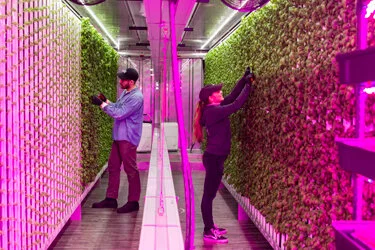
The Greenery Is A Vertical Hydroponic Farm That Thrives Within An Insulated, Custom-Built Shipping Container.
The Greenery is a vertical hydroponic farm that thrives within an insulated, custom-built shipping container
ALL YOUR GREENERY QUESTIONS–ANSWERED
Our digital product booklet captures all of the Greenery's innovative new features and systems, explaining in full detail how a 320 sq. ft. container can be transformed into a high production farm.
Download the booklet now to explore the power, beauty, and smart design behind the most advanced container farm in the world. We're detailing every aspect of the Greenery to showcase how you can grow with confidence anywhere, any season.
See inside the Greenery with our comprehensive Virtual Tour or visit us online at freightfarms.com/greenery.
Freight Farms, 46 Plympton St, Boston, MA 02118, US, 877-687-4326
The Greenery represents a new category onto itself, a distillation of an idea into a core, governing concept. With the opportunity for countless unique applications, the Greenery cannot be confined to just one category: greenhouse, nursery, laboratory...none can capture the Greenery’s full potential.
The Greenery is a vertical hydroponic farm that thrives within an insulated, custom-built shipping container. It is possible to walk past without realizing that the unassuming green and white container houses a verdant world where the weather is always warm and the sun never sets. Unlike traditional farms, the plants in the Greenery grow vertically indoors without soil:
The plants obtain all their nutrition from water and their light energy from powerful LEDs. This independence from land, climate, and season allows the Greenery to bring the power of food production anywhere in the world– its modular design means it can easily traverse the globe by land and sea before arriving at its new home.
The Greenery’s climate control components work together to recreate an ideal spring day, everyday. As a result, plants can thrive inside the container regardless of the external environment–harsh climates, tight urban centers, and extreme weather conditions have no effect on the plants growing inside.
Insulation
The Greenery’s shell has a Department of Energy Insulation rating of R-28. This means the Greenery can maintain an average internal temperature of 70oF in extreme climates ranging from -40oF - 130oF and a variety of inclement weather conditions.
Climate Control
The 36,000 BTU Bard HVAC unit automatically cools the Greenery based on farmhand® programming. An integrated economizer saves energy by drawing in cool outside air when appropriate, doubling as an intake fan.
Dehumidifier
Integrated within the Bard unit, the Greenery’s dehumidifier maintains optimal in-farm humidity levels. Condensate is captured and recirculated back into the water tanks at up to 1.88 gallons/ hour, decreasing the farms overall water consumption.
Airflow Ducts
Two fans power on-panel air ducts to distribute cool, CO2 -enriched air evenly through varied-sized holes in the anti-microbial material, creating uniform airflow in the entire container.
CO2 Regulator
A precision regulator with a safety shut-off feature provides plants with the CO2 needed for photosynthesis. CO2 is fed directly into the airflow ducts and permeates into the main cultivation area.
VIEW FULL BROCHURE
Nursery Station Features
38-gallon Tank
The nursery station water tank is vertically integrated into the table for easy access. An attachable hose drains water from the nursery tank into the Greenery’s main cultivation tank, where it is flows out through a drainage spigot. Conversely, operators can route the hose directly outside through the farm door for straightforward cleaning and maintenance.Specialized LED Array
The nursery station features specialized light arrays with a higher ratio of blue lights to encourage strong stem development from the moment seeds sprout.Flexible Tray Capacity
The nursery station holds sixteen 200- or 288-cell trays, so that the operator has a constant supply of seedlings. Removable rails make routine trough cleaning effortless.Drainage Basin
The Greenery’s drainage basin acts as a designated spot for saturated grow plugs, discarded leaves, and other refuse. The removable catch basin with stainless steel drip tray contains the mess and keeps the work surface sparkling clean.
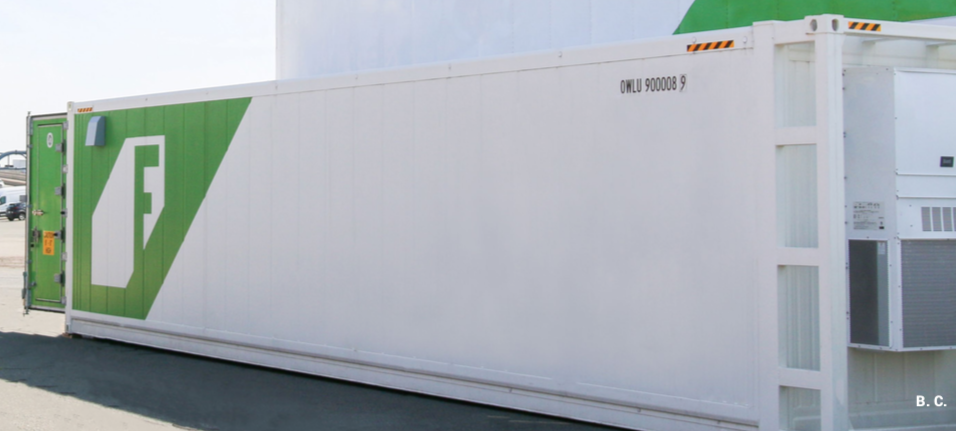
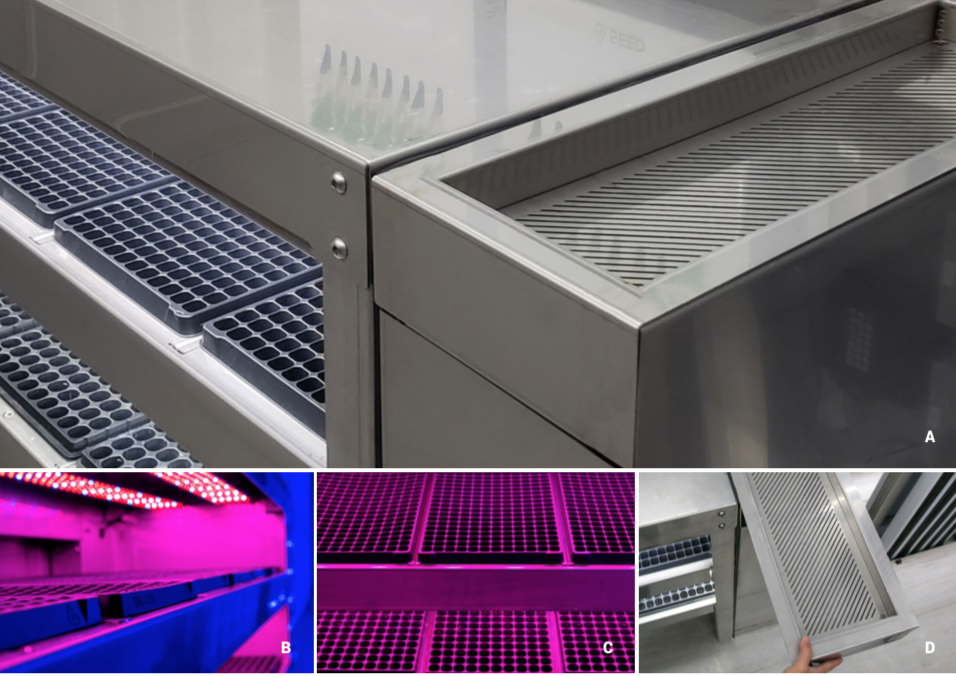
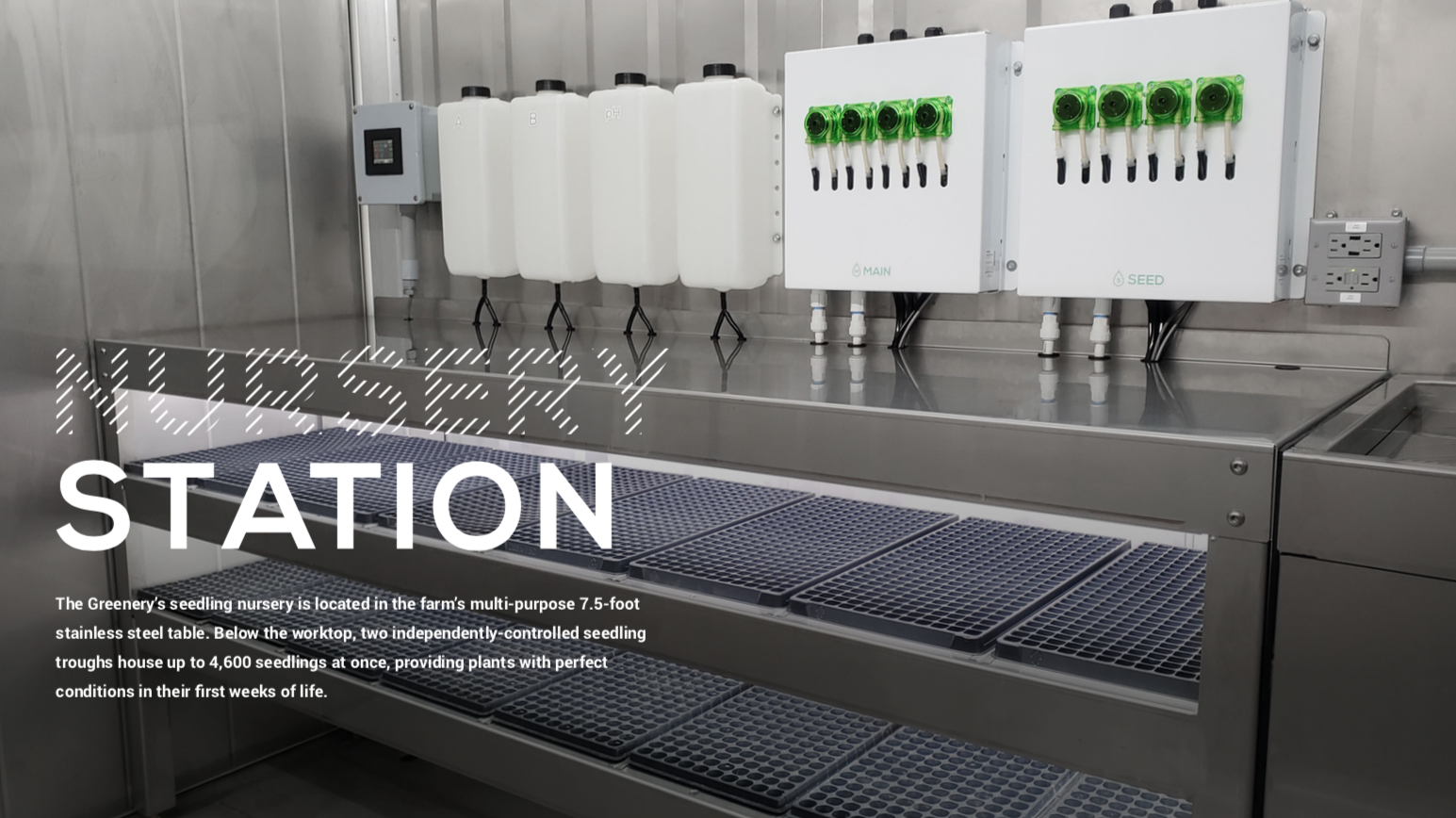

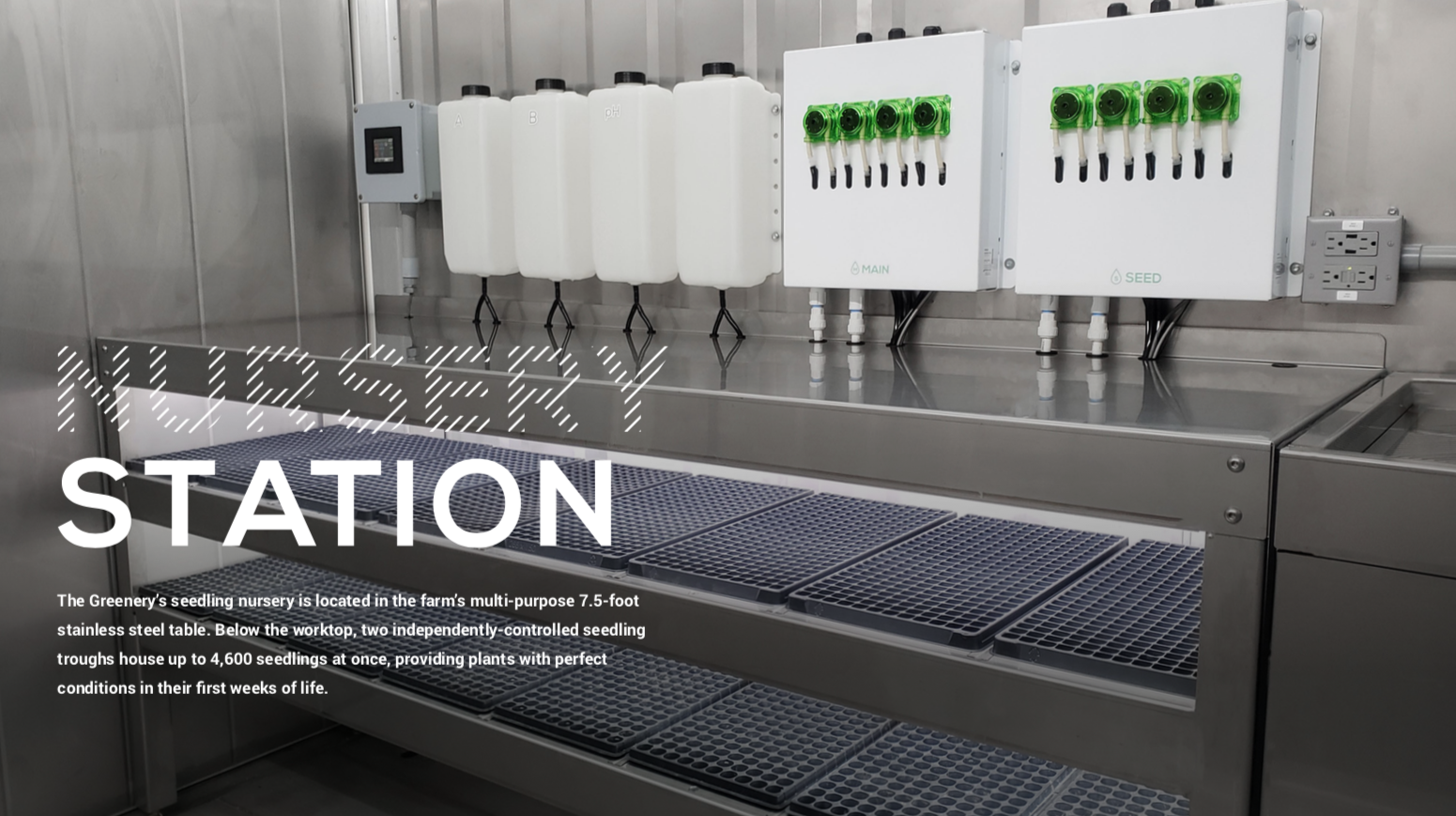
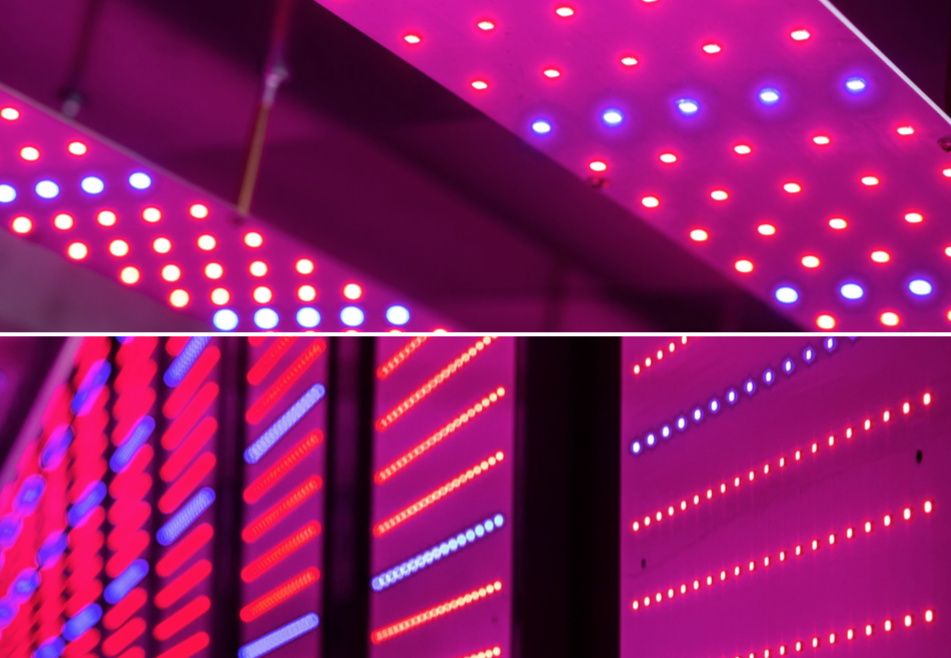



Chance To Grow
Aeroponics has been steadily refined since the earliest crude versions were attempted in the 1920s then advanced during the 1970s. The process uses small plastic containment tubes hosting seeds that will sprout and grow relatively quickly in any enclosed room of a home or commercial building
OPINION MIKE MASTERSON:
Chance to growby Mike Masterson | September 10, 2019
I read reporter Doug Thompson's recent story about Sen. John Boozman visiting the Vet Veggies hydroponic farm in Springdale founded by veteran Jerry Martin.
It was a natural stop for the senator who serves on the Senate Veterans' Affairs and the Agriculture, Nutrition and Forestry committees. Among other things, the senator was introduced to vertical farming indoors with the aid of grow lights and nutrition-infused water.
The idea was this was a potentially profitable business that veterans could pursue with an investment of about $350,000. This indoor approach to farming, which I'm convinced is a growing trend in years ahead, is capable of supplying enormous amounts of food. It's especially timely considering the unpredictable weather in recent years, much of which has not been conducive to traditional farming.
Thompson's story reminded me of the column I wrote more than a year ago about Brent Stewart, an entrepreneur farmer who has been perfecting aeroponics methods.
Considering the timely issue is more relevant than ever, I'm re-sharing edited portions of that column here.
The future tiptoed quietly into our lives years ago when it comes to raising vegetables and plants aeroponically. This space-age system uses only air, efficient LED or fluorescent lighting and minimal amounts of nutrient-soaked mists to grow food without the destructive nature of unpredictable weather or the worries over location, soil conditions, and pesticides or fertilizer applications affecting our food supply.
Brent Stewart of Harrison has applied for a patent to recognize his cutting-edge contribution he calls "Mr. Tip" that could transform seemingly magical aeroponics into something even more efficient and effective to grow food.
Aeroponics has been steadily refined since the earliest crude versions were attempted in the 1920s then advanced during the 1970s. The process uses small plastic containment tubes hosting seeds that will sprout and grow relatively quickly in any enclosed room of a home or commercial building. Operators of these systems see roots quickly propagate and a final product such as lettuce ready for harvesting in as soon as 30 days.
"It's pretty mind-boggling when you think about the significance and possibilities this holds for the planet," Stewart said. With the right equipment to accommodate ever-larger vegetation, it could be possible to grow fruit-bearing and other trees in indoor settings.
I liken it to placing seeds in tubes on the seats of miniature Ferris wheels that continually rise back to the light while being lightly misted with water-soluble foods they need to fully mature.
"I predict this so-called vertical growth method will become the standard for growing in all types of areas worldwide," said Stewart, adding that his revolutionary quick-connect Mr. Tip will make aeroponic agriculture much more efficient by more quickly and effectively applying the important nutrients in tiny yet precise amounts.
Developing his sophisticated nutrient-spraying tip required 12 years from the time Stewart sketched its rough prototype until the "very expensive" mold was completed that brought life to his drawing. Now the Mr. Tip mold is capable of churning out at least 8 million plastic Mr. Tips each year, he said.
I admitted shameful ignorance to this prolific food-production method until meeting Stewart, with his attorney Robert Ginnaven of Jasper. He was eager to explain how an efficient, larger aeroponics operation can produce an unlimited amount of plants a year of pretty much whatever a grower chooses that will fit in an appropriately sized tube to accommodate and nurture its root system.
"Surprisingly, it's not that expensive or space-consuming for a person to become involved in aeroponics. People can dedicate a room of their house or a shed to growing herbs, flowers, or other plants and vegetables," he said. "Entrepreneurs can set up vast numbers of the vertical growth towers to serve the needs of area grocers. There are different ways and forms in using aeroponics. Overall, the basics are simple."
He said aeroponics also has shown itself capable of virtually doubling the growth rates of plants and vegetables grown both through hydroponics and in traditional soil, as evidenced by the results of a NASA comparison study of the three methods.
Successful and prolific aeroponic gardens constructed in different formats could easily be capable of steadily supplying grocers across all of Northwest Arkansas with fresh produce, Stewart added. He cited what a boon such facilities also could have on assisting nonprofit organizations and food banks that are continually seeking contributed food. They could establish their own mini-indoor farms.
In short, the coming revolution in how we produce foods can benefit many in so many ways, including veterans and employment for the handicapped who, through aeroponics and hydroponics, could establish successful operations.
------------v------------
Mike Masterson is a longtime Arkansas journalist, was editor of three Arkansas dailies and headed the master's journalism program at Ohio State University. Email him at mmasterson@arkansasonline.com.
Editorial on 09/10/2019
Print Headline: MIKE MASTERSON: Chance to grow