


Welcome to iGrow News, Your Source for the World of Indoor Vertical Farming

What Does The Future of Vegetable Growing Look Like?
What does 2019 hold for mass fruit and vegetable production? CREDIT: INFARM
21 MARCH 2019
Thanks to technology, vegetables can now be grown in outer space and deserts, even subterranean tunnels, and soon, the most hostile environment of all: supermarkets. During your rush hour shop, instead of fighting over ready meals you may find yourself in pick-your-own strawberry bliss on aisle 12, free of plastic packaging and air miles.
Energy-efficient LED grow lights, robots and internet-connected vertical farms are some of the technical breakthroughs that are revolutionising edible gardening, notably in places with no outside space at all. And with our global population closing in on eight billion - a majority in garden-less urban apartments - this futuristic tech promises to remove pressure from our natural world (and our own to-do lists) in the nick of time.
Supermarket farming aisles
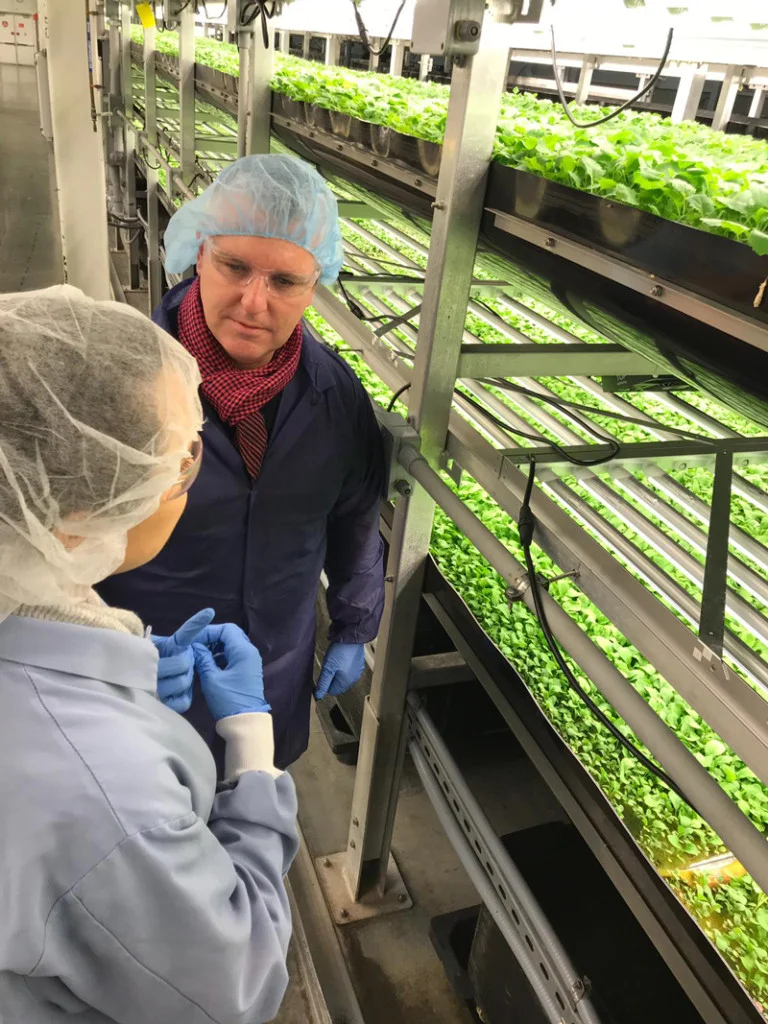
German company InFarm has more than 100 vertical microfarms already in shops across Germany, Switzerland and France with plans to bring them to the UK. Shelving units with grow lights and hydroponic trays of nutrient-rich water, they resemble shop refrigerators growing live salads, veg, herbs and fruit. Staff simply slide trays in to grow and out once customers have picked everything.
One Bristol-based start-up also hopes to bring vertical farms to high streets using aeroponics that spray roots in a nutrient mist. India Langley, of LettUs Grow, says aeroponics give plants “better access to oxygen and carbon dioxide which results in them growing much faster: we have shown a 70 per cent increase in growth rate compared with hydroponics.”
Langley is keen to highlight benefits including lack of pesticides, “by reducing food miles, we can help slash food waste and reduce the carbon footprint of fresh produce, around 50 per cent of bagged salad we buy in the UK ends up in the bin.”
InFarm, German microfarm company CREDIT: INFARM
Yield per metre can be many times that of in-ground farming, making it possible to feed dense urban populations in very little space. It sounds futuristic but soilless growing has been used for decades, the step change is the cheap-to-run LED grow lights and internet connectivity.
“Our aeroponic grow beds are fully automatable,” says Langley, excited about the fact their system has central control from LettUs Grow’s headquarters, so shop staff won’t need to worry about nutrient formulas, “it makes this technology accessible to everyone.”
Restaurant kitchen gardens
Around the world many restaurants are following suit, two Michelin-starred Atera in New York has its own indoor vertical microfarm supplied by Farm.One. In the basement directly next to the kitchen, the farm grows a large variety of unusual herbs and salads for fresh flavour and choice, reducing supply cost and environmental impact.
“By communicating with the farm we are able to get herbs picked just a couple of hours before use and they are to our exact specifications,” says James Moore, Atera’s head chef, “they have so many varieties of herbs that we can sample and use the variety we want to get the best balance out of the dish.”
Australia-based Farm Wall produce another, attractive-looking vertical farm designed to be seen in cafes and restaurants, and Evopro sell an industrial hydroponic unit in the UK for a cool £8,000. Other options include hydroponic plastic towers housing ten or more plants in a column, which, like all vertical farms, can be used with sunlight (on a rooftop for example) or LED lights.
Terminology
Aeroponics
Aeroponics is a way of growing plants without soil, where the roots are watered using a fine mist. Not only does this allow more oxygen to the roots, delivering better flavour and faster growth, but it uses up to 95 per cent less water than traditional agriculture.
Hydroponics
Hydroponics is the process of growing plants in sand, gravel, or liquid, with added nutrients but without soil.
A new kitchen appliance
For those with no outdoor space, IKEA has an indoor vegetable growing solution to slot next to the dishwasher. Its low-cost hydroponic grow towers with the familiar Scandinavian aesthetic are easy to use. Customers scarred by attempts to keep herbs alive on a windowsill can look to these as a living pantry.
Tom Dixon, designer and mastermind behind IKEA’s ‘gardening will change the world’ show garden at the RHS Chelsea Flower Show, certainly believes in the idea. In May he and the home superstore will construct a two-tiered garden with an underground urban farm beneath a garden for wildlife and wellbeing in the Great Pavilion at Chelsea.
Robot weeding
Robot vacuums not only amuse cats, they often clean better than we ever did and the future of robot lawn mowers looks assured, but what of the neverending task of veg plot weeding? Roll forward Tertill, a weeding robot crowdfunded through Kickstarter, created by Joe Jones, inventor of best selling robot vacuum, the Roomba.
Jones explains that Tertill patrols the garden constantly with “a small weed whacker cutting down weeds that have just emerged and are under about an inch tall.” Solar powered, the device constantly weeds during the day keeping plots spick and span.
For those who find weeding challenging, Tertill could be the answer, and it’s certainly appealing for those fiddly vegetables that require regular hand weeding, such as asparagus, garlic and onions. To these Jones hopes to answer prayers of gardeners plagued by rabbits and deer with “functions that will let Tertill chase pests from the garden and collect extensive data about growing conditions and possibly individual plants.”
Automated watering and weather monitoring
Everyone forgets to water sometimes, usually in times of summer drought but Hozelock’s new Cloud Controller and irrigation systems mean you need not panic, you can water the garden from anywhere in the world using an app on your phone.
In conjunction with Netatmo, a WiFi connected outdoor thermometer and rain gauge, you can mollycoddle courgettes while on holiday. Why stop there, by installing outdoor Foscam cameras you can even watch your tomatoes being eaten by slugs.
Futuristic mass production
When it comes to vegetable technology, farming leads the way, the sector often first to adopt growing technology. In California, Naio produces three different sized electric weeding robots for crops, removing the need for herbicides. It’s the stuff of sci-fi films and Iron Ox, another farming tech start-up in California is trialing a fully computer operated indoor farm claiming to produce 30 times the quantity of lettuce of a traditional farm.
Sterling Sussex is a new hydroponic tomato farm in the UK with state of the art smart glasshouses. “We have a central computer constantly monitoring and controlling temperature, nutrition, humidity, light and CO2 levels,” explains director David Scrivens, “we use climate corridors to raise and lower temperatures, while LED lights and shading allow us to produce crops year round, even in winter.”
Drones have been trialled for spraying and large scale rooftop farms are planned for cities around the world, including London. If eating plants fed on nutrients in water doesn’t appeal, it’s worth remembering that’s how plants transport nutrients naturally from soil and the trade off is crops without pesticides or chemicals used to prolong shelf-life. As for flavour, well, there’s no technology for that, yet.
Find Jack’s blog at jackwallington.com. Follow him on Twitter @jackwallington and on Instagram @jackwallingtongardendesign
What do you think the future of vegetable growing looks like? Would you like to see these technological advances? Tell us what you think in the comments section below.
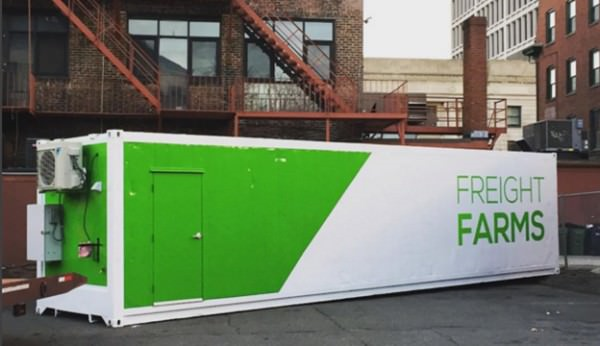
The Practicality of Container Farming
Container farms can be found in cities and backyards, parking lots and warehouses around the world. This kind of farming has interested millions of people, who like the idea of using discarded containers for farming.
The Practicality of Container Farming
Len Calderone for | AgritechTomorrow
03/07/19, | Indoor & Vertical Farming | Len Calderone - Contributing Author | Analysis and Trends, Containers
Container farming is the growing of plants in shipping containers instead of planting them in the ground. Both edible as well as non-edible plants can be grown in containers. Container farming lessens the problem of soil-borne diseases, and eliminates weeds. This type of gardening allows for easier monitoring of moisture, temperature, and sunlight.
Container farms can be found in cities and backyards, parking lots and warehouses around the world. This kind of farming has interested millions of people, who like the idea of using discarded containers for farming. They’re modular and easy to move, along with being compact, self-contained, cheap and available.
The key advantage of farming in a container is that you don’t need a lot of land or a greenhouse. This allows for a farmer to drop a container behind a restaurant or school cafeteria or anywhere near to where the food will be consumed. Because the container must be level for drainage, the location might need a concrete pad.
There are millions of used containers almost everywhere as container shipping is very popular and many used containers are available. When there is a problem with a container, it is usually cheaper for the logistics company to buy a new one rather than fix the old one. For a few thousand dollars a container shell can be built out for a farm.
Of course, there are some drawbacks as with any business. When using a container, the farmer must install environmental controls, such as light and heat. The structural integrity of the container is also a factor. It must be able to be outfitted with the growing materials and strong enough to be moved.
In an indoor farm, the lights are generating heat, water is evaporating, plants are transpiring, gasses are accruing and being exchanged. All the heat and humidity that are caused by these processes are amplified in a compact growing environment. This means that environmental control must be recognized and prioritized in the design of the farm.
A container farmer can set up a farm from scratch or buy a complete farming system in- a-box. Leafy Green Machine is a container that comes fully assembled to allow a farmer to easily kickstart a farm. The Leafy Green Machine is a complete hydroponic growing system in a box, helping a container farmer to perform every farm-related task from seeding to harvesting and packaging inside the container.
These containers are climate controlled, which automatically responds to air and water sensors inside the farm to guarantee a perfect growing environment for the crops. Each farm has a central brain that is programmed to automatically adjust all the components inside the farm so that it's creating the perfect environment. It even has remote monitoring and control. The modular and stackable design of the Leafy Green Machine allows a farmer to quickly scale up or start a new business from scratch. A Freight Farms’ unit runs over $85,000 and the cost to operate the farm is about $10,000 to $18,000 a year.
Photograph: Freight Farms
If you are a soil farmer, but can only farm outdoors during certain growing seasons, a container farm would allow growing 365 days, which would add additional income to the farm. A container farm allows for harvesting standing up, while forgetting about weeds and pests.
A farmer, who adds a container, can ignore unexpected frosts, droughts, or even hurricanes. With a controlled environment, there would be a stable income. There is always some part of the farm that is unproductive, but with a container, that land can be used for additional farming.
A container allows for a wider product line throughout the year adding to the farm’s revenue and keeping employees that would normally be released during the off season.
Shipping containers have been modified into offices, vacation homes, and even bars and public libraries. Their corrugated steel construction makes them strong. They are able to hold up to vertical and horizontal forces when they are stacked or interlocked. Because they are so strong, they are ideal for container farming.
The reason to build a container farm is to grow crops closer to market and fill the demand for fresher food. If demand doesn’t exist, then there goes the business. Like any business location, location, location is the key.
Just because the technology exists to grow food in a container, the would-be container farmer still has many questions to answer. If a farmer is unable to sell the food, the farmer best avoid growing it. Just because a farmer can grow it doesn’t mean that it can be sold.
In addition to matching the crop to the local market, it’s important to understand how to transport the produce from the container to customers. Therefore, a farmer must know the customers and locate the farm as close as possible to them.
Next item to consider is the power requirements. Controlled environment farms require substantial amounts of electricity and water. Not all nearby buildings have the type of electricity at the capacity a container needs to operate. A farmer needs know how much power the farm will need to support the automation equipment, growing equipment, lighting, pumps, HVAC, dehumidifiers, fans, and computers.
Pricing the product is important. Most new farmers check the prices in the local grocery store and price their product to compete. Big mistake. A container farmer should not compete with the local grocer. Today’s savvy customers will pay more for a product that was not grown in some unknown field, using unidentified chemicals, handled by foreign workers and possibly shipped hundreds or even thousands of miles. They will spend more just for the known quality and peace of mind. Just look at the recent problem that grocery market had with Romaine lettuce. Customers feel that local products are fresher, more trustworthy.
Photo by Jatuphon Buraphon from Pexels
There are many hard-working farmers, who invest their time, energy, and financial resources into questionable ideas that are not practical, taking their money and dreams away at the same time.
To be successful at container farming, a farmer needs to sell food with the growing technology taking a back seat. Trying to sell and develop more technology at the same time will lead to failure.
The content & opinions in this article are the author’s and do not necessarily represent the views of AgriTechTomorrow
Len Calderone - Contributing Author
Len contributes to this publication on a regular basis. Past articles can be found with an Article Search and are listed below. He also writes short stories that always have a surprise ending. He has also written a book on wedding photography on a budget. These can be found at http://www.smashwords.com/profile/view/Megalen
Other Articles
By positioning sensors, farmers can understand their crops at a micro scale, sustain resources, and reduce environmental impact.
LED Lighting for Indoor Agriculture
As used in commercial indoor growing, LED lighting technologies have been around less than ten years. LED lights are less understood than other types of grow lights, which have been studied for several decades.
Will Robots be the Future of Farming?
The robotic industry is estimated to be worth $2.75 billion in farming with a projected annual growth rate of over 20% a year until 2022. We can expect this industry to eventually reach a market capitalization of $13 billion.
More about Len Calderone - Contributing Author
03/07/19, 07:48 AM | Indoor & Vertical Farming | Len Calderone - Contributing Author | Analysis and Trends, Containers | Monitoring & Growing | Precision Farming
Singapore Airlines Announces “Farm-to-Plane” Initiative With Aerofarms
Abandoned Steel Mill near Newark Airport Becomes World’s Largest Vertical Farm of its Kind – To Produce the World’s Freshest Airline Meals
March 21, 2019
Airplane food is about to get a lot fresher! Reflecting passengers’ growing interest in healthy travel, Singapore Airlines has launched its first Farm-To-Plane partnership with AeroFarms, the leader in indoor vertical farming, bringing the benefits of the world’s freshest inflight produce to SIA flights from Newark to Singapore later this year.
“Imagine boarding a plane and enjoying a salad harvested only a few hours before takeoff — literally the world’s freshest airline food,” said Antony McNeil, director of food and beverage for Singapore Airlines. “The only way to get fresher greens inflight is to pick them from your own garden.”
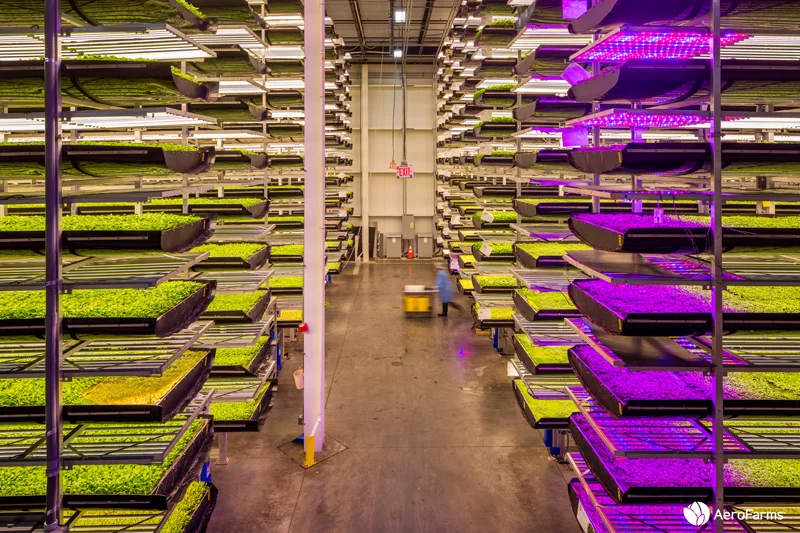
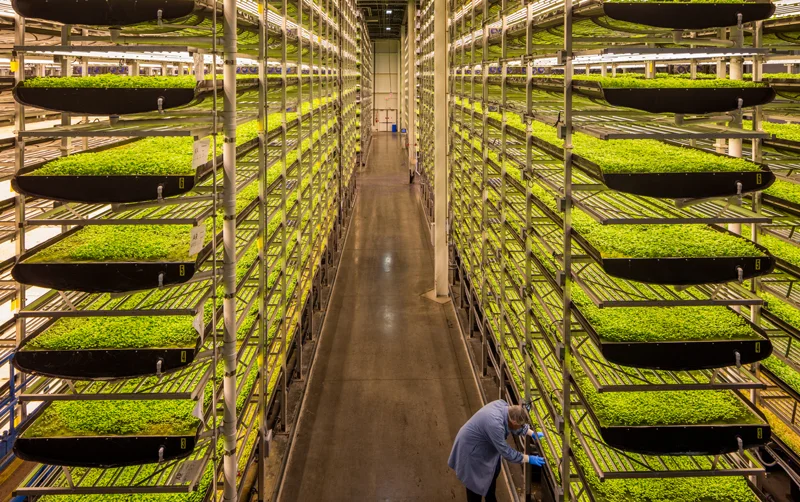
AeroFarms has reclaimed an abandoned steel mill in industrial area near Newark International Airport, transforming it into a 1-acre, indoor vertical farm producing the equivalent of 390 acres of locally grown produce with up to 30 harvests each year – all without soil, pesticides or sunlight – even at the height of winter. AeroFarms will grow a customized blend of fresh produce for SIA’s Newark-to-Singapore flights from September 2019.
At conventional farms, salad greens are generally harvested days or even weeks before being served – even longer during winter months in the Northeast, when produce must be shipped thousands of miles from Florida, California or Mexico. In comparison, greens for SIA’s Farm-To-Plane flights are picked within 24 hours of flight departure at AeroFarms’ indoor growing facility less than 5 miles from the airport. SIA is planning additional Farm-To-Plane initiatives throughout its global network.
AeroFarms’ Indoor Vertical Farming Technology: How It Works:
SIA’s AeroFarms greens are grown “aeroponically”: Instead of using soil, seeds grow indoors on a specialty growing cloth medium under LED lights calibrated to provide the ideal spectrum for plant development. Under strict temperature and humidity controls, plant roots are misted with precise amounts of water and nutrients, and the formula and lighting can be adjusted to optimize the plant’s nutritional value and maximize flavor. Plants typically grow from seeds to fully mature produce in as little as a few days, using 95 percent less water and a fraction of the fertilizers used in conventional farming. All AeroFarms’ produce is grown without pesticides, herbicides and fungicides.
SIA’s Expanding Focus on Enhancing the Passenger Experience
SIA’s Farm-To-Plane initiative complements a series of wellness-oriented partnerships SIA has recently developed to enhance the passenger experience. For U.S.-originating travelers, the carrier has partnered with Canyon Ranch, the world’s premiere integrative wellness brand, to provide an extensive range of menus and other offerings to enhance comfort, relaxation and general well-being aboard SIA’s ultra-long-haul flights to Singapore. For Asia-based customers, SIA has recently announced a partnership with Singapore-based COMO Shambhala to create a series of meals featuring a range of specific nutrition profiles promoting wellness, to be introduced on selected flights departing from Singapore later this year.
About AeroFarms:
Founded in 2004, AeroFarms has been on a mission to grow the best plants possible for the betterment of humanity. A global, mission-driven company and certified B Corporation, AeroFarms has been named one of the World’s Most Innovative Companies by Fast Company two years in a row and by Inc Magazine as one of the Top 25 Disruptors in the world. AeroFarms patented, award-winning aeroponic technology provides the perfect conditions for healthy plants to thrive, taking indoor vertical farming to a new level of precision and productivity with minimal environmental impact and virtually zero risk. Customers can enjoy locally grown, pesticide-free produce that bursts with flavor and nutrition, all year round, and their brand Dream Greens can be found at major retailers.


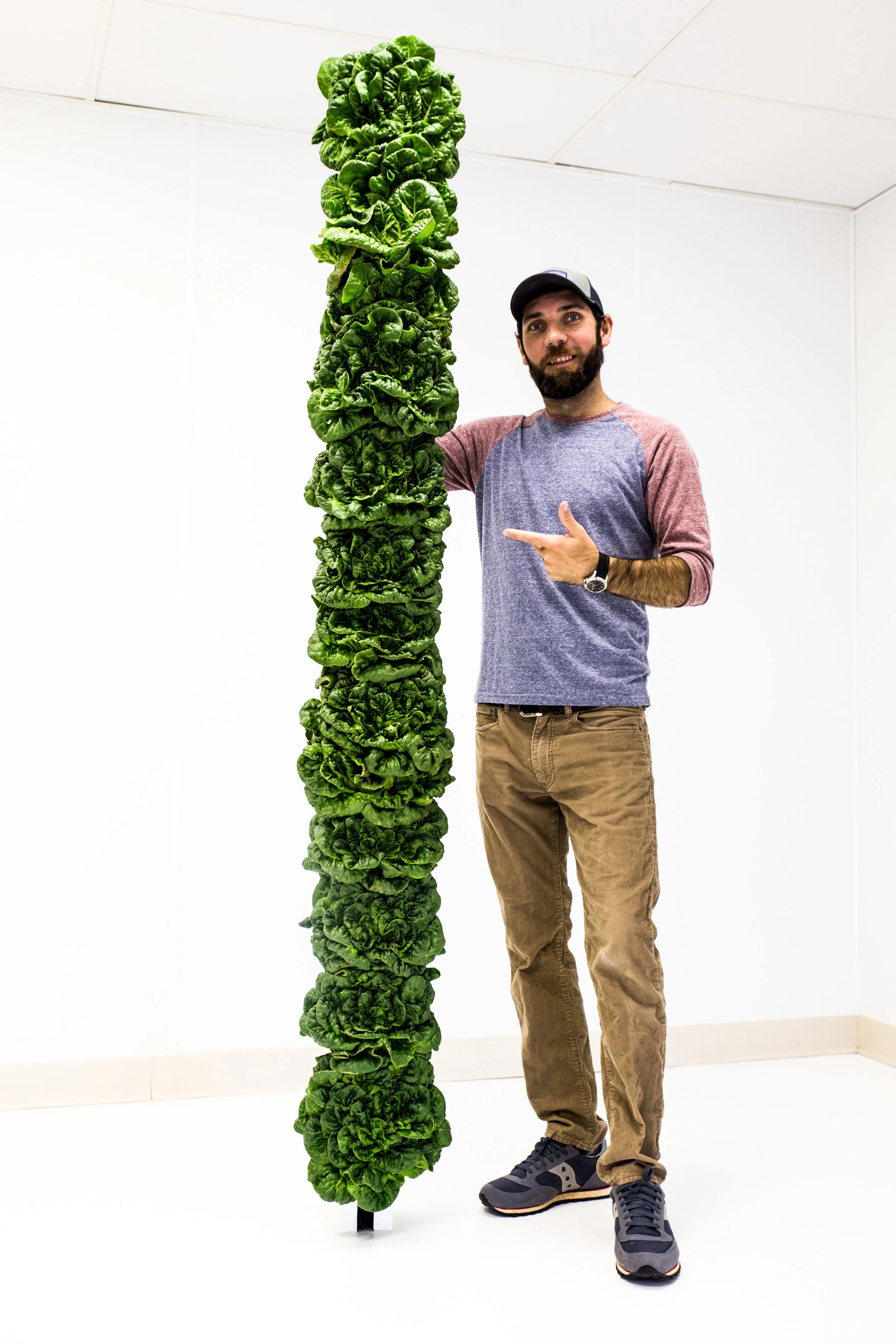
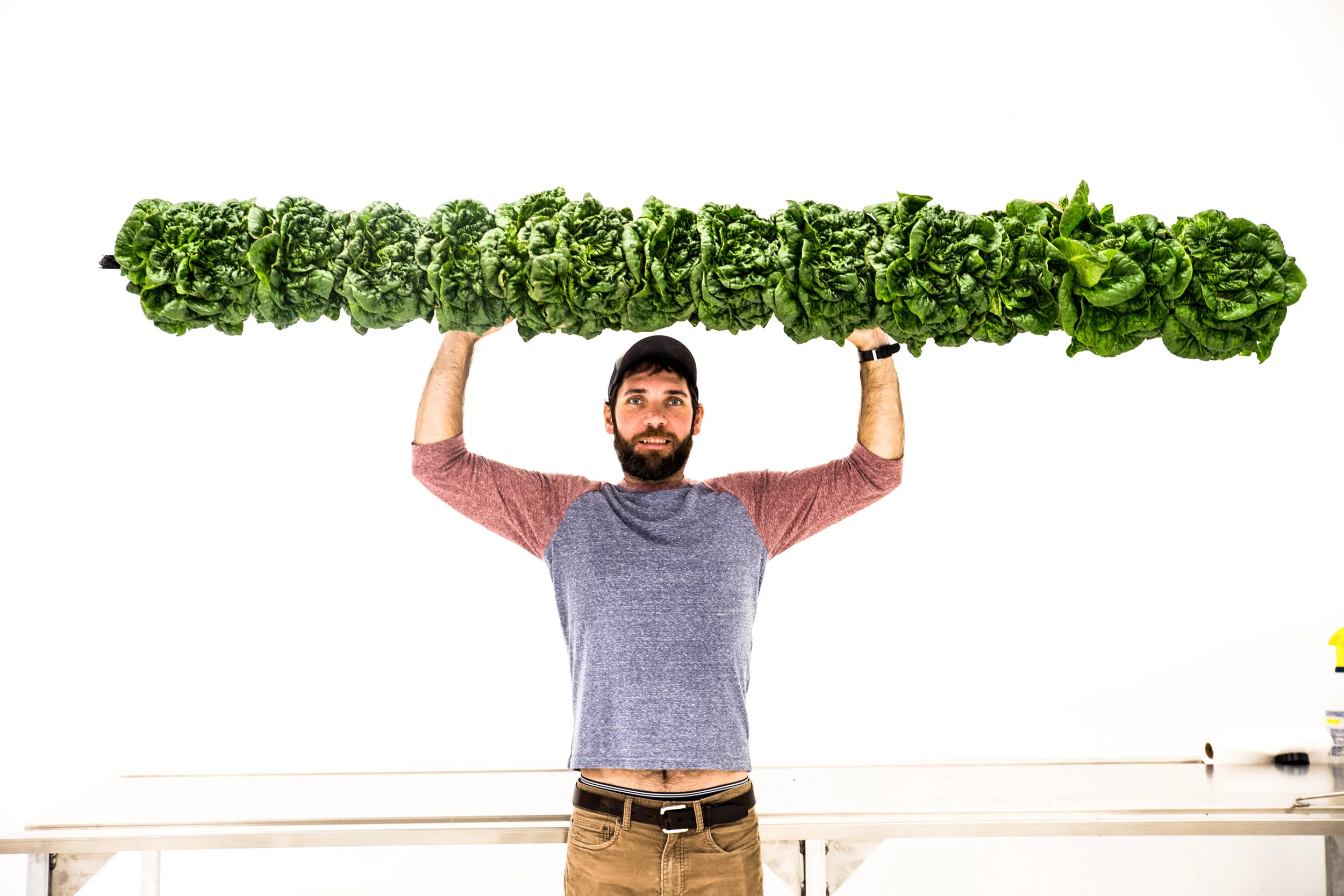
A Vital Question: "What Are The Best Crops For Vertical Farming?"
Written by Chris Michael
"Vertical farming is not about how much production you can possibly cram into a space. It’s about growing better food closer to market and maximizing your production as a function of the resources you invest, such as capital, light, water, energy, and labor." - Chris Michael, Bright Agrotech
Vertical farming with ZipGrow is one of the most efficient type of growing in modern farms, but one question that people get hung up on is:

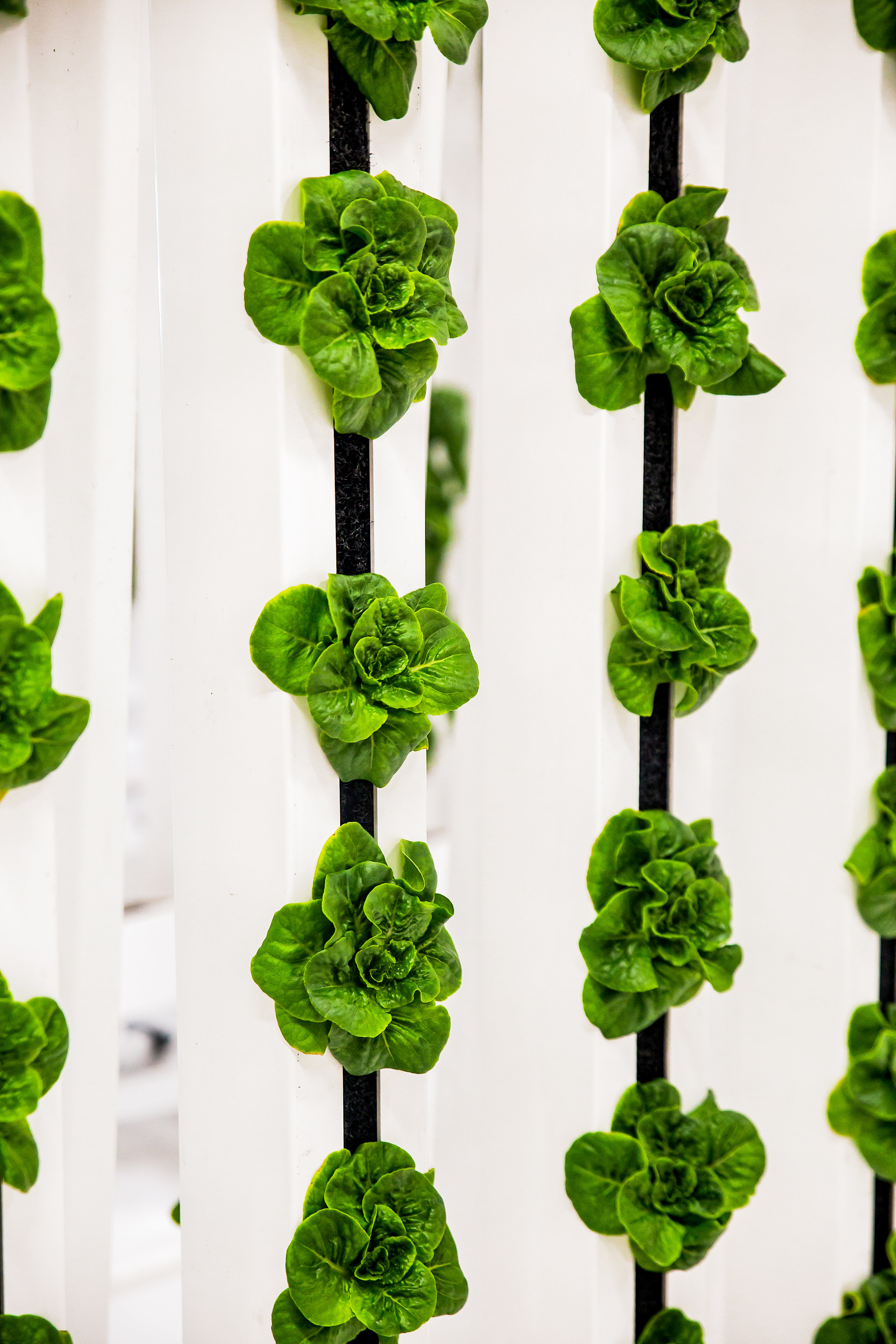
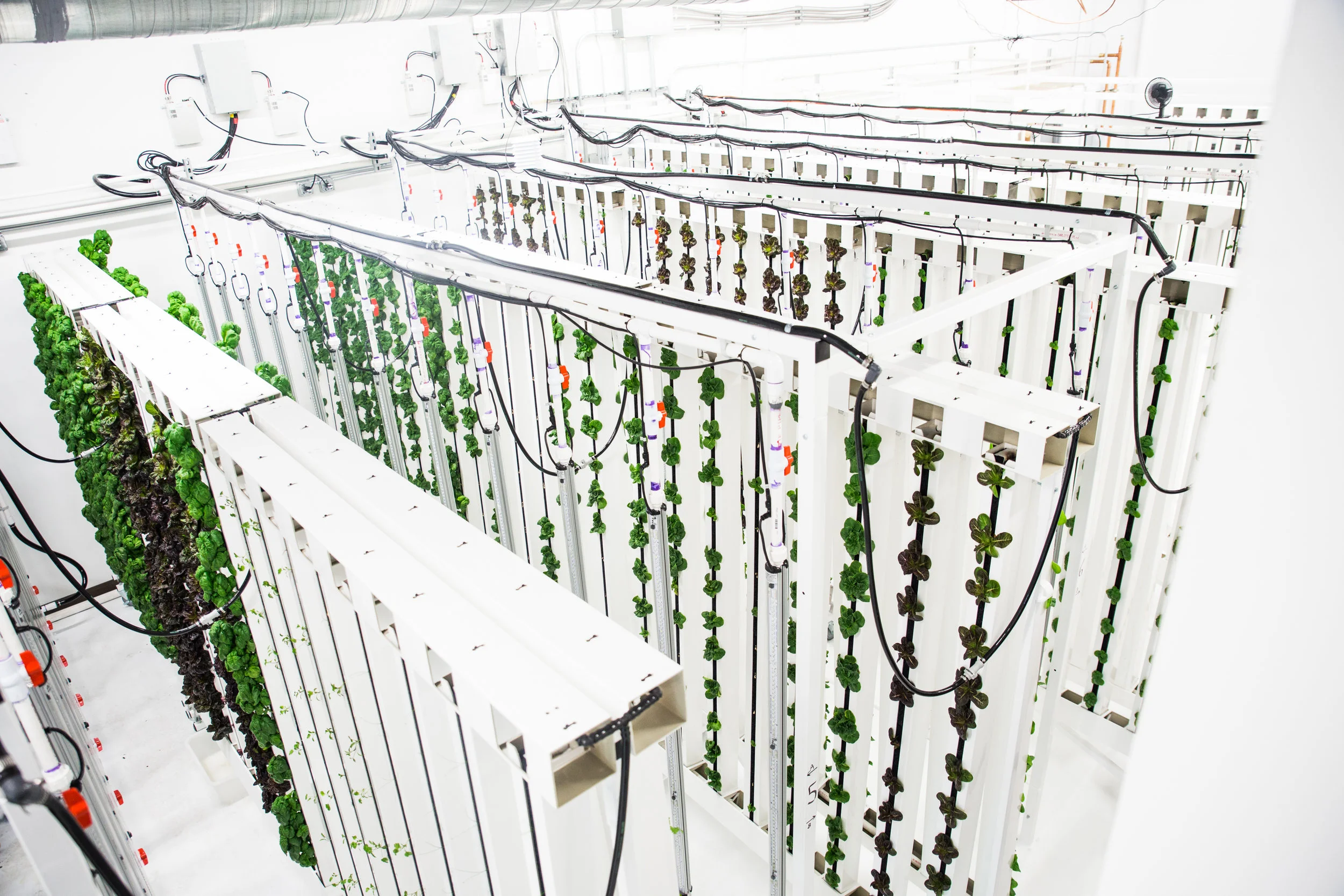
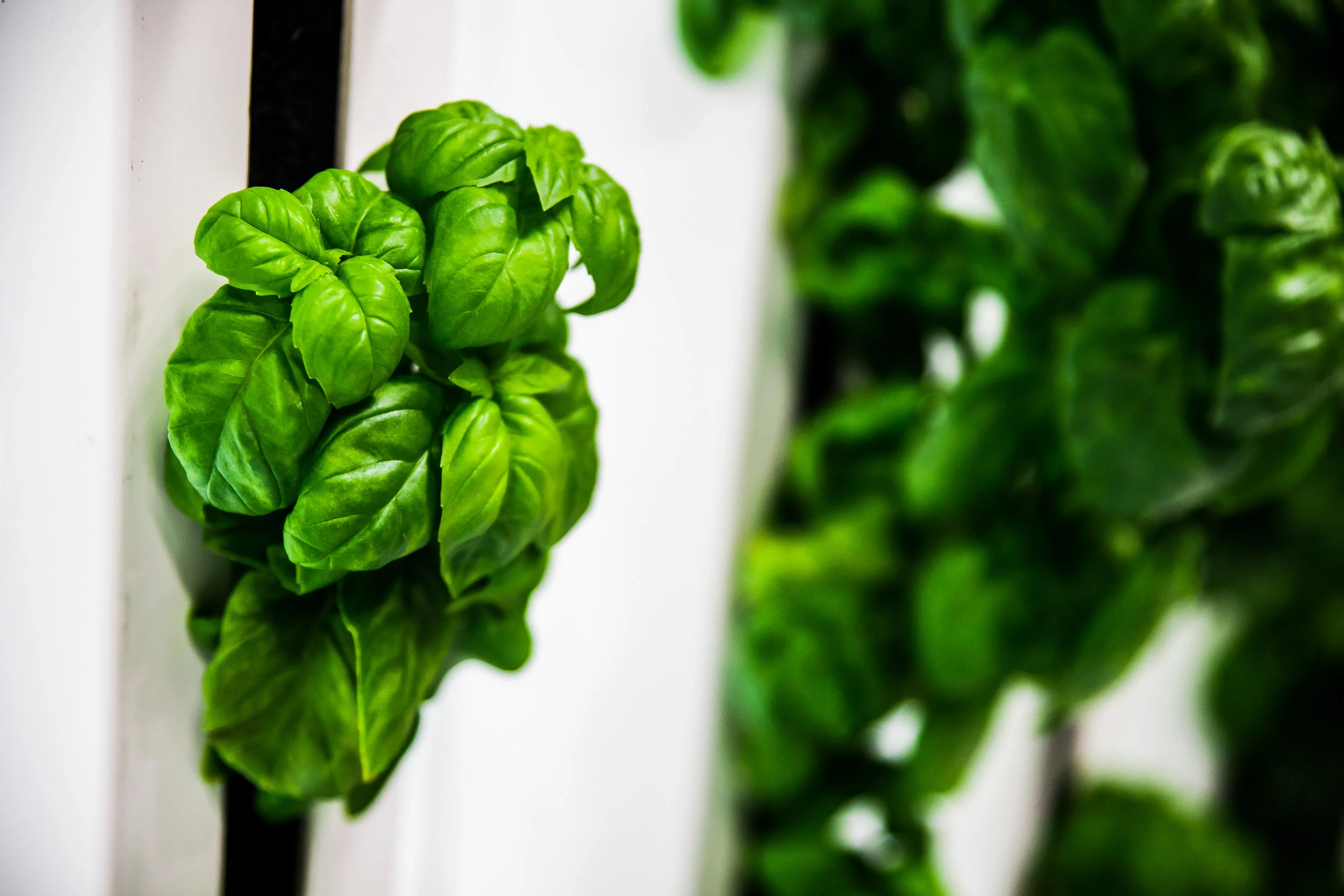
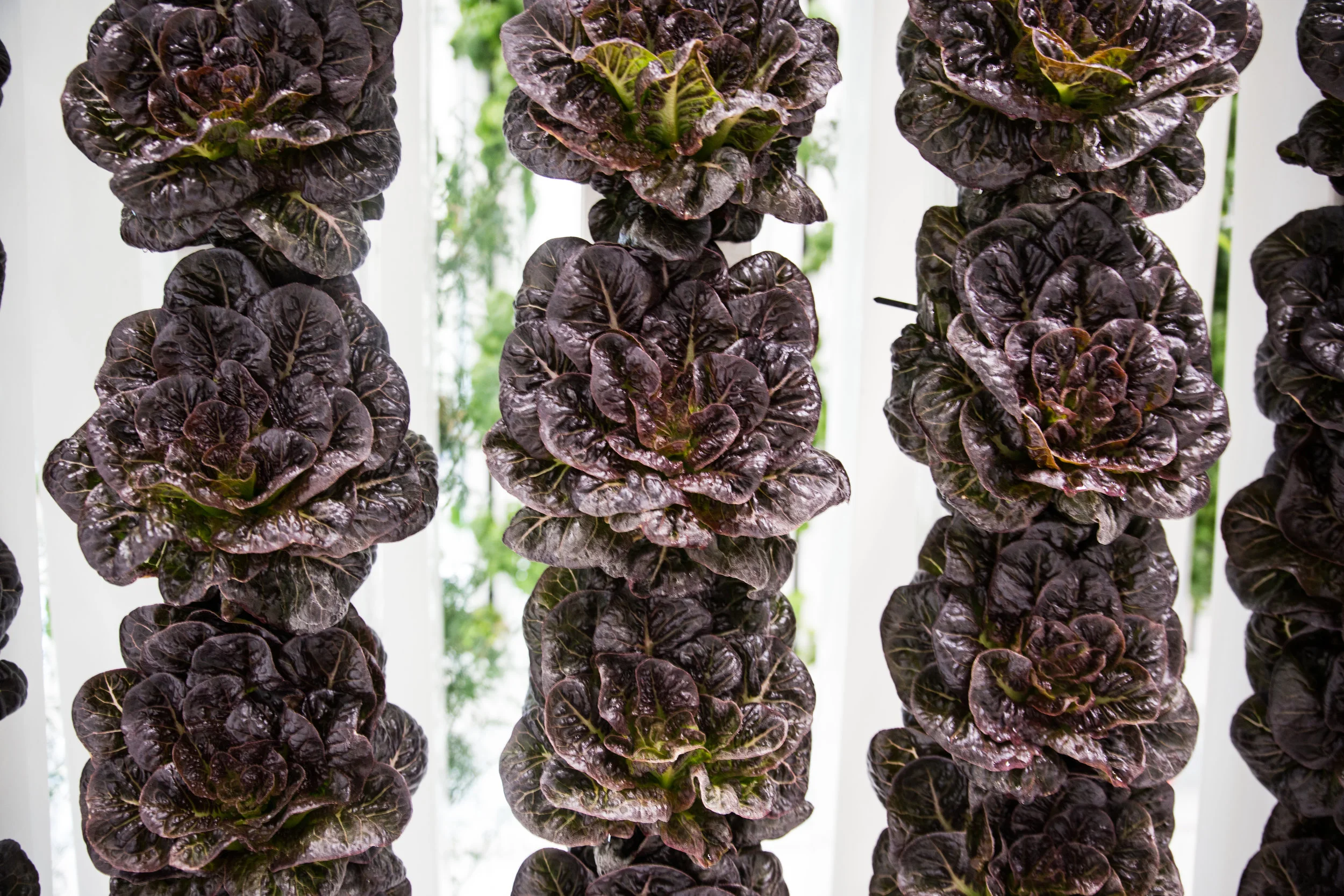
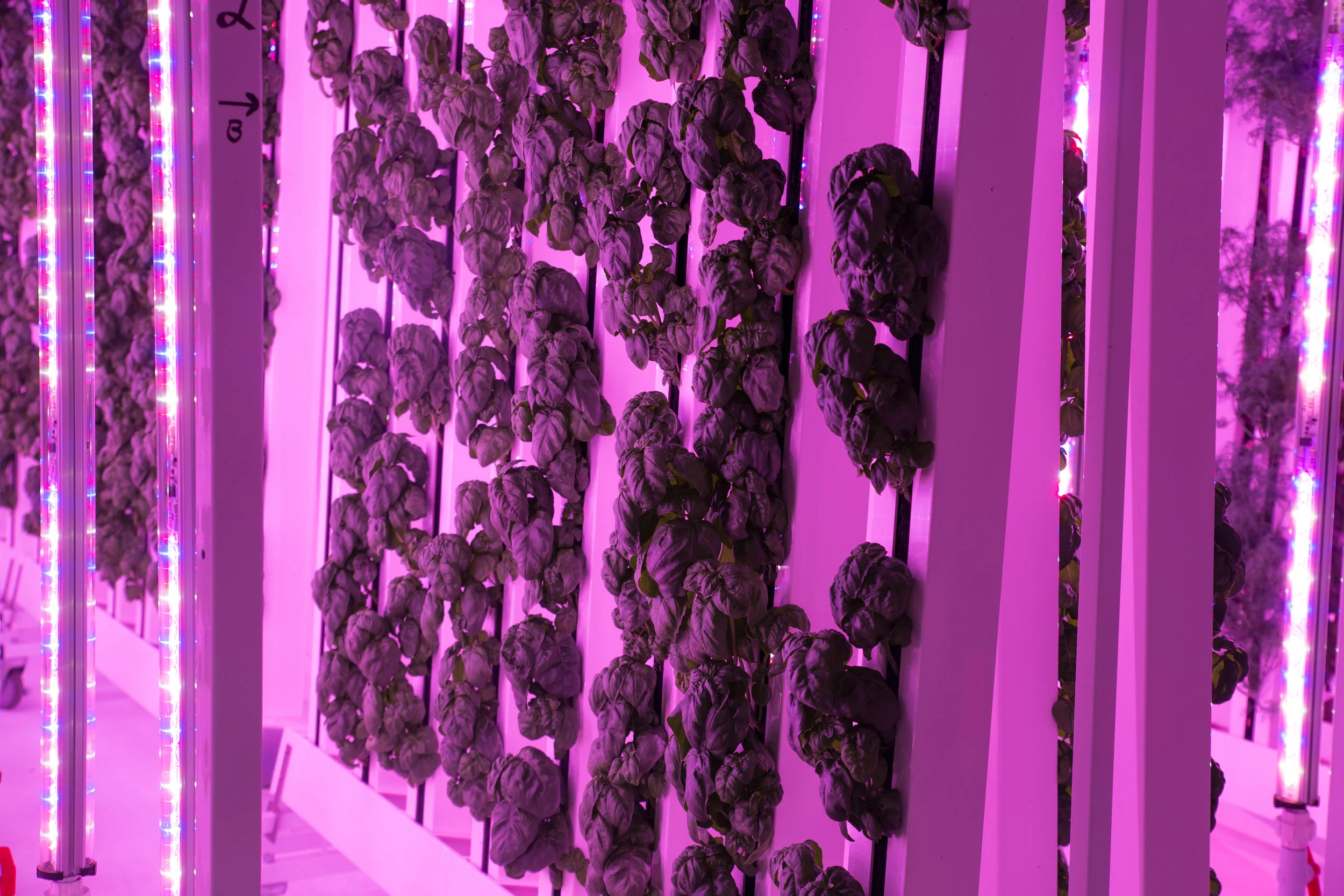
What can you actually grow on vertical planes?
It's a vital question! Anyone considering a vertical farm should be planning out their crops as part of the process. As a farmer, you have to make sure that you can actually sell what you grow and that your production costs won't be too high.
Part of that is good crop choices.
Although choosing crops should be part of a whole feasibility study for your farm, we thought a guide on some of the best vertical crops for vertical farming would be helpful to people in the middle of the planning process.
What can you grow vs. What should you grow
With the right set-up, you can grow almost anything in a vertical farm.
Just because you can, however, doesn't mean that you should. Here are several factors to choosing an appropriate crop for your vertical farm.
1) Economic viability
Even if a crop is biologically viable (you can grow it) it might not be economically viable (you can't make money on it!).
If you can't make money on a crop, there could be several reasons:
Lack of demand (no profit)
Inappropriate technique (high production costs)
Climate (high heating, cooling, light costs)
Of course, each of those factors require a little balancing to master. "High" cost is relative to the margin that you're getting on the output.
Once you understand your demand, budget, and climate requirements, there are a few other factors to consider with your crops:
2) Timing and liability
A "turn" is the time it takes from the seedling going into the system to the mature plant coming out and going to market.
Focusing on crops with really fast turns (lettuce, mustard greens, collard greens, basil, mint) allows you to minimize your liability by never being more than six weeks or so away from production.
Slow-turn crops (like herbs and fruiting crops) are typically a bit trickier but can have higher margins than greens, depending on your local markets. We typically recommend a high greens-to-herbs ratio. For example, a new farmer could start with 80% of his space planted with greens and 20% planted with herbs.
When you know what you do and don't want, you can start browsing through crop lists and seed catalogs! Here are some of ours and our farmers' favorites:
Lettuces (Romaine, Butterhead, Red Leaf, etc.)
Lettuces have fairly consistent demand across much of the world and throughout the year. There are dozens of varieties of lettuce, making it fun to grow and offer to customers. Some markets are excited to branch out and trying new varieties and crop mixes (perhaps your very own spring mix), this is where you can start building niche markets and setting yourself apart from other vendors.
Kales (Tuscan, Winterboar, and Dinosaur)
Kales are fairly easy to grow, although the crop requires extra care when harvesting if farmers are to get the highest yield. Each type of kale has its own variation on the rich taste and dark colors. Tuscan kale is one of the most popular varieties, Blue Curled kale has a very robust flavor profile and is also popular.
Chard & collard greens
Collard greens are like a thicker, deeper version of spinach. They can get quite large in the proper conditions.
The gentler version of collard greens, chard is a French green that cooks like spinach. Like kale or collard greens, chard can be harvested multiple times (taking only 30% of the plant each time) and grows back for larger yields later on.
Chives and mint
Chives and mint are some of the best crops for beginners. Although categorized with herbs, both chives and mint have a quick turn and grow densely like a grass. It is also easy to harvest.
Basil (Sweet, Lemon, Cinnamon, etc.)
Basil is possibly the most loved ZipGrow crop. It grows better in the ZipGrow Towers than any other technique in the world and – because of it’s charming aromatics and bold flavors that add to nearly any dish – creates demand almost everywhere it goes. While a bit trickier to grow, harvest, and store, many farmers include basil in their crop offering. Some farmers even specialize in the popular crop.
Small woody herbs
Small woody herbs like rosemary and it's kin, thyme and oregano, represent a rather picky group of crops. As woody herbs, they prefer "dry feet", and have a relatively slow growing cycle. Since the shrubby herbs are so potent and unique, many farmers still find the traction to sell them in their markets. These woodier crops can be less finicky, however, when it comes to harvesting and packaging, which should also be taken into consideration – especially if market demand is high.
Learn more about crops
Want to learn more about individual crops? Learn more at Upstart University:
Here’s What You Need to Know About Growing Bok Choy in Hydroponics
Best Conditions & Methods for Growing Parsley in Hydroponics
Everything You Need to Know About Growing Chard Without Soil
OR see which crops farmers like you are growing all over the world through their own pictures and posts.
Seeding The Right IoT Architecture To Build A Better Farm
AeroFarms is using data-driven insights from an IoT deployment to increase yields, conserve resources and improve the flavor of its produce.
Dell EMC
Enterprises around the world are working actively to capitalize on the opportunities brought by the convergence of high performance computing, data analytics and artificial intelligence. And we’re not talking about just the big, global players. Small and midsize businesses are very much in this game — in a big way.
That’s the case at AeroFarms, a U.S.-based company that is on a mission to build and operate environmentally responsible farms throughout the world by enabling local production at scale.
This young company is dedicated to nourishing communities with safe, nutritious and delicious food. To carry out its mission, AeroFarms runs the world’s largest indoor vertical farm, which yields up to 390 times more produce than a traditional field farm — all without sunlight, soil or pesticides, and all with 95 percent less water.
AeroFarms builds vertical farms in urban areas that aren’t known for agriculture — such as Newark, New Jersey, where the company has its global headquarters, as well as indoor farming operations. In these and other facilities, AeroFarms is proving that through a high-tech, data-driven method of misting nutrients directly on to the plant roots, as well as directing appropriate amounts and wavelengths of artificial light, leafy greens can thrive in an indoor farming environment.
All of this, of course, takes more than great ideas and great execution. It also takes a lot of great technology to harness the data that helps AeroFarms gain insights into operations and make informed decisions. This is where Dell Technologies enters the picture. Through its partnership with Dell Technologies, AeroFarms is well positioned to implement the right data-driven machinery into its industry-leading processes. Using data related to temperature, humidity, airflow, nutrients, light, water and food safety, AeroFarms automates and analyzes everything from seed to package.
The IoT journey
To begin its IoT journey, AeroFarms worked with Dell Technologies Consulting to determine its use cases, design a technical architecture that met its business requirements, and then to develop an implementation roadmap to achieve the company’s business goals.
From an IT architecture standpoint, AeroFarms faced several unique challenges and considerations. Here’s a look at some of these higher-level issues, and how Dell Technologies approached them.
Dell EMC
As part of the architecture, we recommended the use of Dell Edge Gateways for IoT to help the research and production farms accelerate the analysis of plant health instrumentation data. We also included a Dell EMC PowerEdge 740xd high-performance compute node to support artificial intelligence, deep learning and advanced, custom analytics. These capabilities can help AeroFarms improve growing conditions — for example, by automating image recognition and classification to adjust plant nutrients, light and other factors.
Key takeaways
Ultimately, AeroFarms is a technology company that is leveraging science and engineering to redefine what’s possible in agriculture. In this quest, the company is equally vested in harvesting not just its plants but also its data to gain a closer understanding of the symbiotic relationships among biology, environment and technology, and to drive better performance.
AeroFarms is a fascinating example of how technology advances human progress, and we’re proud to be part of the company’s story. In providing strategic and technical guidance, Dell Technologies Consulting has helped AeroFarms implement a scalable architecture that meets business requirements, including custom grow analytics, and that also works within the unique parameters of an emerging company.
To learn more about our consulting services and the work we did at AeroFarms, watch the video “Achieving Scale with Big Data and IoT.”
Laddie Suk leads a cross-functional Dell Technologies Consulting team focused on digital transformation and industry solutions.
\

Food Pantry to Receive Lettuce Grown Hydroponically At UW Oshkosh’s Polk Library
by Laurie Schlosser | March 19, 2019
Books, computers and…lettuce?
A nook at the University of Wisconsin Oshkosh’s Polk Library is housing a state-of-the-art hydroponic unit. The tender green lettuce that is sprouting—especially throughout winter and spring—will provide a welcomed healthy produce option at Lutheran Food Pantry in Oshkosh.
“My hope for this partnership is that it will be a tangible example for students, staff and the community of what it looks like to have various organizations working together to benefit the community,” said Abigail (Knoll) Miedaner, of Jericho Road Ministries (JRM) Lutheran Food Pantry, recipient of the harvested lettuce.
A 2013 UW Oshkosh graduate who majored in biology and minored in chemistry, Miedaner said the lettuce can be grown from seed to harvest in as little as three weeks. Growth, though, is dependent on many variables.
She said she is very interested to find out about the variables in Polk Library and how the lettuce responds. Small plugs of rockwool growing medium that contained tiny romaine and green star lettuce plants were inserted into the hydroponics unit Feb. 27. By late March, the first crop of lettuce should be on someone’s table for dinner.
The hydroponics unit will be operated at Polk Library for the spring semester and likely be moved to another location for summer. The unit may be returned to Polk when school is back in session in fall.
“Fresh produce in food pantries is difficult to obtain and keep, especially in winter, and we have no control over the quality of the produce we receive,” Miedaner said. “One of the ways that we are seeking to address this issue is to grow produce ourselves right at the food pantry.”
The Flex Farm hydroponics machine at UW Oshkosh was donated by Aurora Health Care and is the fourth machine generating crops for the JRM Lutheran Food Pantry. The machine is the newest Flex Farm hydroponics grow machine available from Fork Farms, based in Appleton. Schools, restaurants and nonprofit businesses are among Fork Farms’ clients.
Lots and lots of lettuce!
With hydroponics, plants mature in a growing medium with a nutrient solution. The practice allows plants to grow year-round and it minimizes exposure to environmental damage, disease and insects.
Monthly cost of electricity, water and supplies is estimated to run around $50. The units produce about 150 heads of lettuce a month—equating to around 33 cents each.
The Lutheran Food Pantry serves 350-400 Winnebago County families monthly. Each client can use the pantry once per month, so leaders stress the importance of high-quality, long-lasting food being available.
UW Oshkosh senior environmental studies student Elijah Tesch, of Oconomowoc, is overseeing the planting of seeds and harvesting of the lettuce.
“My role in this project is to maintain the machine and make sure the lettuce is growing,” Tesch said. “When the lettuce is fully grown, I’ll harvest it and bring it to the Lutheran Food Pantry on Division Street.”
Tesch stops by several times a week to check on water level, pH and nutrient level of the water. Once a month, he’ll harvest and then re-plant the hydroponics unit.
Lights are on 24 hours a day to start. A timer reduces the amount of light to 18 hours per day and then 14 hours a day, as it mimics a natural light cycle.
Focus on sustainability
There are some unique opportunities in partnering with the University, Miedaner said, adding that they would like to try some other crops, including spinach, in the Flex Farm unit.
“The University has equipment, which would allow us to gather data that may be beneficial for us and other growers,” she said, “and would provide additional opportunities for student learning and engagement.”
Kevin Crawford, a chemistry professor who is director of the University’s Sustainability Institute for Regional Transformations, said hydroponic and aquaponic startup companies and nonprofits are appearing throughout northeastern Wisconsin. The partnership with Jericho Road Ministries gives students an opportunity to gain hands-on experience while helping address poverty issues in Oshkosh.
How To Rank Agtech's Top 50, According to SVG-THRIVE
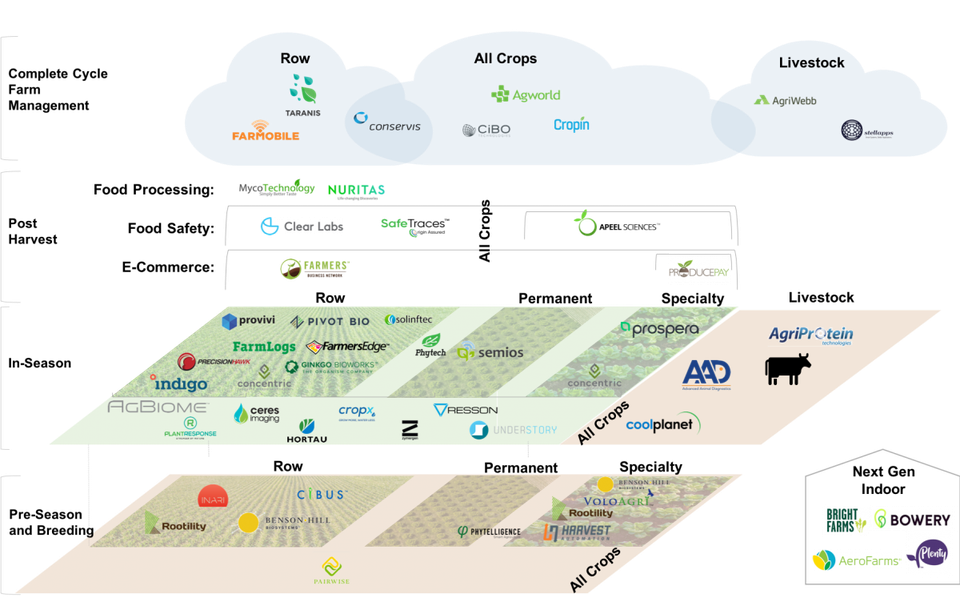
Several “next-gen” farming operations made the Top 50, including the New Jersey-based vertical farm operation Aerofarms and Bright Farms, an indoor farming company based out of New York.
How To Rank Agtech's Top 50, According to SVG-THRIVE
Jenny Splitter Contributor
Food & Drink I cover the intersections of technology, farming and food.
Farmers work at the Bowery Farming Inc. indoor farm in Kearny, New Jersey, U.S., on Tuesday, Aug. 7, 2018. Photographer: David Williams/Bloomberg© 2018 BLOOMBERG FINANCE LP
The agtech landscape is littered with disruptors, but when “everyone is either disrupting or being disrupted,” as Jill Lepore wrote in a 2014 New Yorker piece entitled “The Disruption Machine,” how can you tell the difference between hype and a company that could bring about real change? “It’s a good question,” says John Hartnett, CEO of agtech investment firm SVG Partners, and it’s one he’s prepared to answer. As part of its THRIVE AgTech platform, SVG has just released its Top 50 Report ranking the best growth stage companies in the industry.
“If I look at the last five years,” says Hartnett, “investment in this whole category has increased 500% plus.” Across all of that investment, Hartnett acknowledges “there’s been quite a bit of hype across the digital side,” but he believes the top 50 have earned their ranking for a reason.
Hartnett offers Farmers Business Network as an example. The online network is kind of a central information hub for farmers, where they can analyze data collected from farm machines and find up-to-date pricing for things like seed and fertilizer. “Farmers Business Network [came] in...out of nowhere and [now] they’re disrupting the biggest companies,” he argues. “I kind of look at that as a real live example of a company making big traction.”
Infographic representing SVG-THRIVE Top 50 Ranking SVG-THRIVE
Robotics companies also made the list, says Hartnett, because the technology could help solve problems like labor shortages or demand for herbicide alternatives. And the technology is being put to the test in the field, which is an important data point for Hartnett. “Somebody like Driscoll’s berries, largest berry company in the world,” he says, is now beginning to use robot fruit pickers combined with artificial intelligence to ensure the berries are being picked when they’re actually ripe.
“There’s [also] a company that came to our accelerator called Farmwise,” says Hartnett, “[who uses] AI in conjunction with robotics automation solutions to be able to identify what’s a weed and what’s a plant to be able to target and get rid of the weed.” Farmwise made THRIVE’s “Ones To Watch” list, a list of contenders that fell just shy of making the Top 50.
Several “next-gen” farming operations made the Top 50, including the New Jersey-based vertical farm operation Aerofarms and Bright Farms, an indoor farming company based out of New York. Though vertical farms were initially met with skepticism by the industry, Hartnett says these days the technology looks far more scalable. “Vertical farming is still a small percentage of the overall pie of farming, but...there’s significant investment going into these companies,” which helped these startups become serious contenders.
Biotech—long a leading category in the overall agtech field—grew even more exponentially over the last year. The category captured 62% of the funding pool, a feat Hartnett suspects was helped along by an activity-driving boost from last year’s mega-mergers between agriculture giants like Bayer and Monsanto as well as DuPont and Corteva. Biotech companies like Indigo Ag and Gingko Bioworks made the Top 50 Report, due in part to this funding boom.
MicroGen Biotech, an Irish biotech company founded by a Chinese scientist with funding from both Chinese and Irish investors, is another company that made the “Ones To Watch” list. Hartnett, who is originally from Ireland, was intrigued by the company when he first came across it a few years ago. “They’re taking an interesting approach to reducing [impact from] metals in the soil [by] using their technology to protect the seed” rather than treat the soil directly.
Brad Goehring, owner and operator of Goehring Vineyards Inc., stands for a photograph at one of his vineyards in Lodi, California, U.S., on Thursday, Dec. 29, 2016.Photographer: David Paul Morris/Bloomberg© 2017 BLOOMBERG FINANCE LP
“This year’s awardees are developing incredible solutions that enable the agriculture and food industries to respond...to urgent environmental challenges, labor shortages, food security and human health concerns” says Hartnett of the rankings. “Top 50 companies are critical assets to the industry and we are proud to highlight the incredible spectrum of innovation.”
Jenny Splitter Contributor
I’m a food, science and health writer whose work has appeared in The Washington Post, New York Magazine, Slate, Mental Floss, SELF and the Breakthrough Journal. Since 2015, I’ve been fascinated by the intersection of technology and food, from cutting edge cattle feedlots to new formats like cellular agriculture and lab meat. I especially enjoy writing about genetically engineered crops, food and agriculture policy, and sustainability in agricultural and food technologies. I grew up in Northern California, not too far from the farms of the Salinas Valley “Salad Bowl,” and now live in Washington, D.C. with my husband and two kids. You can find me on Twitter at @jennysplitter.

Russia: Vertical Farm Upgrades LEDs to Save on Energy
In greenhouses, supplemental lighting is often used, enhancing the sunlight and boosting the natural mechanism of photosynthesis in plants. In iFarm's vertical farms that are assembled in closed units with no access of light or air from the outside, LED lamps are used. They provide the plants with the required light spectrum for growth.
“In the beginning we purchased special lamps with various spectrums, bicolor and full spectrum ones, but we were not happy with their efficiency: they got as hot as radiators but provided little light”, shares the general director of iFarm, Aleksandr Lyskovskiy.
The first vegetables in the company's experimental bio-vegetarium were grown with the usage of such lamps. Further, iFarm began cooperation with a light equipment producer and got an opportunity to use the lamps with the most efficient LED existing at that moment. They showed a good result in terms of crops and energy consumption, requiring twice as little energy as the analogues, but they were rather costly.
iFarm specialists were confident that they could improve those lamps. For that purpose the chief engineer and head of the R&D department of the iFarm Project, Pavel Zeeman, unscrewed every singe lamp ever acquired by the company, browsed through tons of literature and recalled everything that he knew about LED lamps.
Square lamps were used in the vertical farm in the summer of 2018. As a result of their own research, iFarm determined the parameters for improved lighting under the conditions of a vertical farm, one of which is a high humidity level.
According to the chief engineer, iFarm lamps produce white light that includes blue, red, yellow and green spectrums, therefore fully replacing the sunlight. "Bicolor ones, which are often considered the most efficient ones", produce only the red and blue spectrums, which is much less healthy for the plants.
Due to the usage of highly efficient LED lamps, the company has reduced the energy consumption significantly, to 90 Watt per square meter. That allows for the decrease of greenery production cost and therefore makes the technology even more accessible for the franchisees.
Currently, a new big vertical farm is being constructed in a plot owned by the Vega Absolute company. The latter is acting as a technological partner of iFarm in lighting for the new project.
For more information:
iFarm
ifarmproject.ru
Publication date : 3/19/2019

Agriculture in Orange? An Indoor Farm Could Soon Be Approved
By Jared Kofsky
March 19, 2019
Aerial view of proposed development: 182 Hill Street, Orange. Image via Google Maps.
While agriculture might have once been a major industry in parts of Essex County, the streets of the county’s 22 municipalities tend to be lined with houses, apartments, stores, and office buildings today rather than farmland. At first glance, it might appear that farming is a thing of the past in the Garden State’s third largest county, but over the last few years, a different kind of agricultural business has started to boom in the Newark area.
Instead of the traditional outdoor farming that one might be used to seeing in sparsely populated corners of the state, the latest trend in the industry tends to be centered around locations that would previously never have been thought to be associated with agriculture. For instance, AeroFarms operates what has been described as the “world’s largest vertical farm” in Newark and owns additional indoor farms in the city, including a “research and development farm” in the middle of the downtown district. New York-based Radicle Farm also runs a smaller greenhouse in Newark’s North Ward.
Now, Orange could become the latest community to see indoor farming in action. A legal notice that was issued that month shows that a company called Intravision Greens NJ, Inc. is looking to begin hydroponic salad production at 182 Hill Street, which is located in an industrial area between Route 280 and the New Jersey Transit train tracks.
The firm is seeking approval from the city’s Zoning Board of Adjustment, including a use variance, in order to “permit the use of these premises for the growing and harvesting of salad foods for wholesale distribution to local food purveyors,” according to the notice.
The matter is scheduled to be heard by the board during its meeting on Monday, March 25, at 7:30 p.m. Intravision Greens NJ reportedly wants the board members to “recognize hydroponic salad production as equivalent to light manufacturing.”
It is not immediately clear who is behind Intravision Greens NJ. Property records indicate that the site is owned by an LLC that is registered out of the Illinois offices of the Timber Hill Group, but the website of Team Resources, Inc. mentions a seven-year 13,500-square-foot lease by a company called Intravision Greens USA. Last year, plans for a Canadian indoor farm by a firm known as Intravision Greens were revealed, but it is not known if there is a connection between the business north of the border and the proposed one in Orange.
Note to readers: The dates that applications are scheduled to be heard by the Orange Zoning Board of Adjustment and other commissions are subject to change.

NL: How Vertical Farms Make Safe Food More Accessible
Seven Steps To Heaven is a company from Eindhoven founded by Gertjan and Lianne Meeuwswhich, grows fresh produce in the high-tech vertical farm using LEDs instead of daylight in combination with temperature and evaporation control. The CEO of the company, Gertjan Meeuws, says that the biggest difference between traditional farming and vertical farming is that an indoor farm can operate where the consumers live – even in the centre of a big city. “Instead of having a long supply chain where the source of your fresh produce is the whole world, all the necessary vegetables come from one local farm. Indoor farming is the new supply chain,” says Meeuws.
Organic farming 2.0
“Vertical farming is not invented by the farmers,” the CEO of Seven Steps To Heaven says. “Usually traditional farmers work far away from the consumers and they have to focus on the yield on making a living most of all. Breeding companies are developing new varieties of vegetables with the emphasis on the resistance, high yield but not on the taste and nutrition. Indoor farming is also about yields and making a living just like traditional farming is, but in addition to those we also focus on growing safe, tasty, nutritious produce – as close to the market as possible.”
Meeuws believes that traditional farming and indoor farming can cooperate – it is not only the one or the other: “For instance, our company can grow young plants that can be planted in a greenhouse or in an open field and they are more vital than the plants grown in the traditional way. We can make young tomato plants that have extra energy, so when they leave our nursery, they still benefit from that energy during the first weeks after being planted in the greenhouse. That even allows the growers to use zero or hardly any pesticides because these plants are so strong. There are lots of ways in which our technology and know-how experience can support traditional farming and breeding.”
Quality, taste and nutritional levels
All the plants have photosynthesis – they take carbon dioxide from the air and produce oxygen and glucose. Meeuws explains that there are three levels of plant metabolism. On the first level the plants produce just enough sugars to merely stay alive, on the second level they produce enough glucose for maintenance and start growing, on the third level the plants make more sugar that they need for their growth and start producing secondary metabolites – they are better known as vitamins and antioxidants, which have enormous importance to our health and wellbeing. Secondary metabolites are important to the life of the plants just as well: plants use those substances for the protection against pests or for the attraction of insects involved in pollination. Meeuws says: “When the plants reach the third level of metabolism, they start giving something like a signal “Environment, don’t eat me!”
Making the plants reach the highest level of their metabolism that would fill them with vitamins is easier if the plants are grown in the controlled environment of an indoor farm than in the open field. In addition to this, a vertical farm operator doesn’t have to harvest the produce unripe for transportation reasons because the concept of an indoor farm involves local consuming. “Most of the fresh produce that we eat today is harvested way too early – the plants don’t reach their full potential, so they are not as tasty and as nutritious as they could have become,” says the co-founder of Seven Steps To Heaven.
Read the full story at innovationorigins.com
Publication date : 3/13/2019
Q & A With Kettering Graduate Who Is Changing The Future of Agriculture
03/18/2019
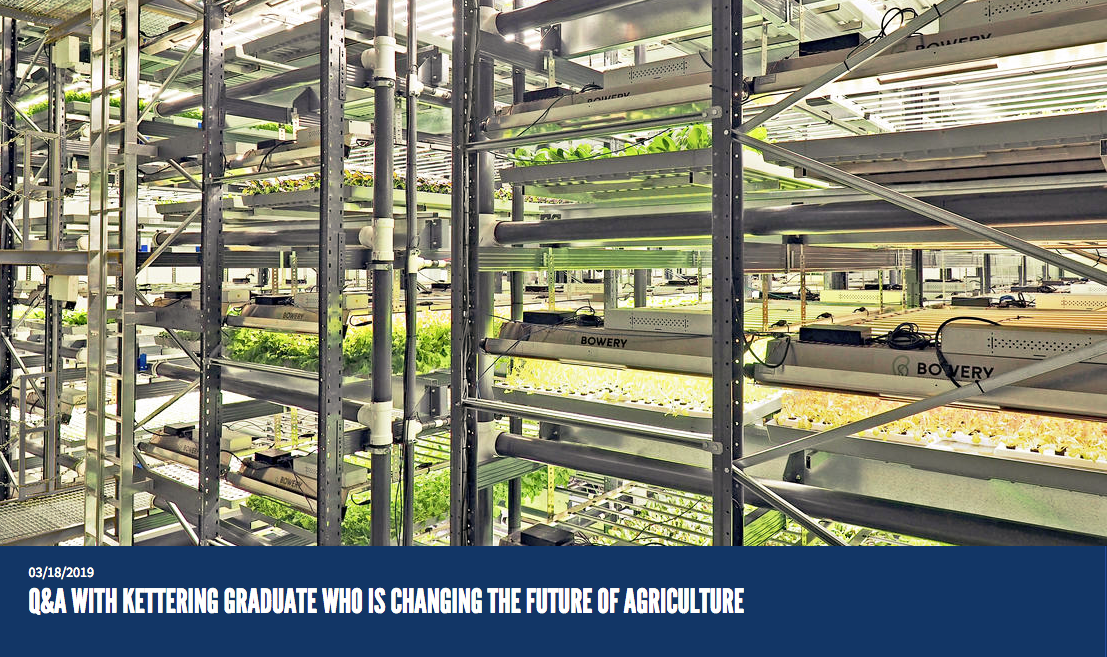
Brian Falther ‘10 is the co-founder of Bowery Farming, a modern, indoor farming company that grows vegetables and greens with less water and less space than traditional farming.
The New York-based company was founded in 2015. Farms in New Jersey and the New York City area grow non-genetically modified produce using vertical rows, LED lights, no pesticides, and efficient techniques. The produce uses 95 percent less water than traditional agriculture, and the company is 100 times more productive on the same footprint of land.
Falther studied Mechanical Engineering at Kettering and he launched three different food production-related startups, including Urban Tech Farm: Project Grand Rapids and Future Farm Tech.
He answered questions about Bowery Farming and how his time at Kettering University helped him become an entrepreneur.
What were the most valuable experiences at Kettering University?
Three vivid experiences at Kettering completely changed the trajectory of my life.
The first involved the tail-end of my time on campus in which there was this program introduced called “Entrepreneurship Across the Curriculum.” Several of the classes I took involved entrepreneurial-based projects. I’m confident that’s what catalyzed any dormant notions of entrepreneurship to emerge from within me. There are a few examples of this that have stuck with me:
In senior seminar, one of the books we read in Dr. Ezekiel Gebissa’s class was entitled “The Power of Unreasonable People.” This book in particular had a really big impact on my view of the world at the time. I think it ultimately led to cultivating a passion of entrepreneurship in me through refusing to accept the status quo.
The most impactful classroom experience I had was the class taught by Business faculty members Larry Navarre and Art Demonte called “Business Innovations and New Ventures.” This was probably my favorite class at Kettering. We learned the fundamentals of pitching (they had an investor that came in and critiqued our pitches live) and how to develop a business plan along with building out a financial model to support it. My group conceptualized a company called DISCovery, and the product that we had created for it was a disc-golf disc that had a tracking device in it which could be tracked by your cell phone when you inevitably lose your disc in the trees or tall weeds. There were moments when we seriously thought about pursuing the design and manufacturing of the idea into a real business.
The second experience was studying abroad in Germany at Hochschule Ulm. It was an absolutely incredible time in my life. Living in Europe for a term allowed me to increase my worldly empathy in a way that I’ve been able to more successfully navigate international business relationships throughout my career.
The third and most valuable experience, was meeting my wife, Julie. Both of us were members of the climbing club and we we met on one of the annual West Virginia trips. She was a B-Section Electrical Engineering student and I was an A-Section Mechanical Engineering student—we normally wouldn't have crossed paths otherwise. She alone has had the single greatest impact on everything I do, and I wouldn’t be where I am today without her.
How has Kettering made an impact on your career?
The co-op experience at Kettering has had an asymmetrically-positive impact on my career. Having the opportunity to gain a tremendous amount of application specific real-world experience is invaluable. I worked for two automotive suppliers in my co-op career. That experience is what allowed me to know extremely early on in my career that I absolutely didn’t want to work in automotive. I had discovered my ‘anti-career’ earlier than one may have in a more typical environment.
Kettering offers the capacity to gain more than two years experience in the field, coupled with the fact that the classroom environment is much more fast-paced than a typical schooling environment. Those two things combined have certainly enabled me to operate in a fast-paced environment.
When did you found Bowery Farming and what is your role?
I started experimenting with the idea that eventually became Bowery in 2010. In the process of discovering Bowery, I iterated through three separate attempts at building a business on the exact same idea from 2010 to 2014 before ultimately co-founding Bowery with Irving Fain and David Golden in early 2015.
My role at Bowery historically seems to evolve about every six months, and it’s been an incredible ride. It began with designing, building, and operating the very first proof-of-concept grow system in the basement of our house in Grand Rapids. From there it evolved to designing and building our first large-scale commercial indoor farm to helping to lead the design and engineering of our largest production facility. I love this type of work because of the all the interaction and integration of different competencies. The most recent evolution of my role at Bowery has been focused within systems engineering. I’ve been specializing in automation and robotics for our grow system.
Where did your interest in this kind of company come from and where the idea originated from?
Ever since I was young I’ve always had an interest in starting a company, but I didn’t really have a solid idea of what I wanted to work on until in late 2010. I came across a TED talk called “The Other Inconvenient Truth” given by Dr. Jon Foley. In his talk, Dr. Foley mentions that if we continue to farm the same way we do today, we’re going to run out of arable landmass by the year 2050. The notion of this idea really struck me and stuck with me—I couldn’t shake it. So, I started to think about what solutions could look like to solve this problem and started to look for companies that were working on solving this already because I wanted to work there.
What I found was, at that time, there really wasn’t anyone working on this in the way that I thought the problem could be solved. I figured I could do it myself. So I really became obsessed with learning about food production systems, designing grow systems, and learning to grow. I felt that if agriculture was able to be coupled with technology, software, and fundamental manufacturing principles, then the world could realize a food production system more efficient than humanity has ever seen. I had this ‘A-ha’ moment when I realized I could leverage my experience in the world of automotive manufacturing and apply that to food production.
There were a bunch of unoccupied warehouses, and I had originally started thinking about how to create a fully automated indoor food production system. At the time I was in my early 20s, and it was really tough to convince anyone that I was ready to raise the millions of dollars needed to execute on that vision. It would be several years later when I realized that raising money is not my core competency. I needed to find someone who could execute that part of building a business in a way that I knew I wasn’t going to be able to. So I was fortunate to have met Irving Fain, who’s done an incredible job for us as co-founder and CEO.
Bowery received Series B round of financing - what does this mean for the company?
Yes! In December, we announced a $90 million Series B fundraiser, bringing our total funding amount to $117.5 million to-date. As access to safe, fresh food becomes even more critical, Bowery will use these funds to expand our operation quickly and sustainably, to meet the demands of an ever-growing population. We’ll be opening farms in new cities by the end of 2019. We’re going to continue tackling complex agricultural and environmental issues through investing in technology and innovation across the company, maintaining the highest level of food safety, and hiring top talent.
What do envision for the future of Bowery Farming?
I think the most exciting aspect of Bowery stems from the fact, everybody eats. They always have and always will. The core mission of Bowery is to grow food for a better future by revolutionizing agriculture. What we envision is a farm in every major city in the world, and ultimately I foresee us continuing to accelerate the world’s transition to a more sustainable food production system for generations to come, on Earth, and perhaps even beyond.
Anything else you'd like to share?
You can find out more about Bowery at https://boweryfarming.com/. I tweet on occasion, feel free to reach out to me at @BrianFalther.
Written By Lindsay Knake | Contact: Lindsay Knake - lknake@kettering.edu - (810) 762-9639

Can Vertical Farms Be Profitable?
Can Vertical Farms Be Profitable?
By David Kuack, UrbanAgNews.com
March 13, 2019
Although vertical farms producing leafy greens are receiving most of the press coverage, there are a variety of other crops being being grown and innovative growers are finding these crops to be profitable.
When you think about a vertical farm what picture comes to mind? Ricardo Hernandez, horticulture professor at North Carolina State University, said most people think of vertical farms as indoor growing operations that produce leafy greens, primarily lettuce.
“There are both small and large leafy greens vertical farms,” Hernandez said. “Some of them are going out of business and some new ones are opening up. All of them have similar challenges.
“The main challenge is that even though they can produce a lot of leafy greens because they are able to stack the plants, there is a bottleneck in terms of how fast they can produce the crops. The bottleneck is tied to the plant genetics. With the current plant genetics and cultivars that most vertical farm entrepreneurs are using, it is very hard to outperform the lettuce crops coming out of the field. This is especially the case if the field conditions are suitable to grow lettuce such as in California and the southern part of Arizona during the winter.”
For many of the cultivars being grown in the field, including butterhead, red leaf lettuce and baby greens, the same seed is being used in vertical farms.
“In order for the leafy greens produced in vertical farms to actually gain significant market share, the genetics have to be changed in those plants,” Hernandez said. “This can come through conventional breeding or gene editing or through targeted breeding using molecular tools. A new set of cultivars is needed, a new set of genetics that are specific for indoor farms. Right now we are using the genetics that are good for field production. These field cultivars have high plant uniformity in terms of growth under a large variability of environmental conditions. The field genetics enable plants to look the same even if there is a lot of variability in the environment.”
Ricardo Hernandez, horticulture professor at North Carolina State University, said one of the biggest challenges facing vertical farms growing leafy greens is the lack of cultivars bred specifically for these production facilities.
Photos courtesy of Ricardo Hernandez, N.C. St. Univ.
Because vertical farms provide a stable environment, Hernandez said the types of genetics that are needed are specifically for an environment that can be controlled. The genetics for field crops of maintaining high uniformity and minimizing large variability are not a concern with vertical farms.
“Unfortunately, the market for breeding companies to develop varieties specifically for vertical farms is small,” Hernandez said. “There is not an established market for vertical farm growers. There hasn’t been a significant effort by established breeding companies to start developing cultivars specifically for vertical farms. Maybe some startups will be able to develop new cultivars or university researchers may be able to give those efforts a boost.”
Cost of production
One of the major hurdles with vertical farms is cost of production.
“There is a lot of technology and utilities associated with producing leafy greens in vertical farms,” Hernandez said. “That cost of production is very high compared to the leafy greens grown on the West Coast even when the shipping costs are added on.
“There actually are some vertical farms making money. Some of those are in boutique markets. These growers are able to get more money for a head of lettuce than the competing product that comes from the field. However, it is going to be difficult for growers who are selling to boutique markets and who receive a premium price for a head of lettuce to break into the mass market. Most consumers are not willing to pay the higher boutique prices.”
Hernandez said in order for vertical farms to acquire a significant share of the market, they are going to have to bring down the price of lettuce so more people will be willing to pay for the product.
Making money with transplants
One area of vertical farm production that Hernandez said growers can be profitable is producing transplants or starter plants.
“I’m convinced based on economic studies that we have done in my lab, using vertical farms or indoor growing is economically viable for growing transplants or starter plants,” he said. “Growing transplants is a very economical way to successfully adopt vertical farm production. These starter plants are a high value product and they can be grown under very high density in vertical farms, even higher than they can be grown in a greenhouse. These transplants are inserted into the current supply chain and will be sold to greenhouse and field growers who will produce the end products.”
Hernandez has started a transplant vertical farm, Grafted Growers, with his business partner John Jackson. Hernandez said growers looking to produce transplants in vertical farms should choose crops considered to have the highest value.
“These would be transplants that benefit the most from being grown indoors,” he said. “The clean controlled environment of a vertical farm can ensure a very high germination rate and a lot of plants can be produced in a small area. The controlled environment of vertical farms also provides a desirable outcome including finished plants that flower sooner or plants that have more dry mass.”
The controlled environment of a vertical farm used to produce transplants can ensure a high germination rate and can produce a lot of transplants in a small area.
Hernandez said the uniformity and quality of transplants grown in a greenhouse may not always match transplants grown in vertical farms.
“If there is good solar radiation levels, greenhouse growers can produce very good transplants,” he said. “If growers are trying to produce those transplants in greenhouses during the fall or winter, they may have to supplement the natural light levels or the quality of the transplants may not be as good. There may be a difference in quality and uniformity between seasons.
“Growing transplants in a vertical farm the quality of the transplants is consistent no matter what the outdoor conditions are. Comparing transplants grown in a vertical farm with transplants grown in a greenhouse during the winter, which is when many transplants are grown, the vertical farm transplants usually have a higher dry mass and are more uniform.”
Hernandez said a grower producing transplants during the winter may be able to match the quality of vertical farm transplants if a lot of supplemental light is used.
“It’s not only the amount of light that is important, but also the quality of light,” he said. “Even though transplants grown in a greenhouse may be receiving enough light with the use of supplemental light, depending on the light spectrum the transplants could end up stretching because they are planted at a high density.
“In a vertical farm the transplants can be kept from stretching by controlling the light spectrum so that they can be grown compact in a very high density. By taking the sun out of the equation and controlling the plant growth with artificial light eliminates the potential for stretching.”
Having the right vertical farm setup
Hernandez is quick to caution growers considering starting a vertical farm that different crops require different production setups.
Different crops require different vertical farm setups. The production setup that is optimum for for transplants may not work for leafy greens.
“Growers can create a lot of microclimates and have poor uniformity when they have the wrong vertical farm setup,” he said. “The vertical farm that works for leafy greens may not work for transplants because the requirements for transplants uniformity are different from those for leafy greens. If growers don’t have the right vertical farm to grow transplants, it’s not going to be easy and it could become a bigger problem.
“Growers need to listen to the plants and know what the plants need. Growers can incorporate a lot of technology, including robotics and sensor control, but if they are not listening to what the plants need, the technology will only deliver marginal improvements. The most important thing in a vertical farm is the plants. Everything else is just details.”
For more: Ricardo Hernandez, North Carolina State University, Department of Horticultural Science, Raleigh, NC 27695-7609; rhernan4@ncsu.edu; https://hortenergy.cals.ncsu.edu.
This article is property of Urban Ag News and was written by David Kuack, a freelance technical writer from Fort Worth, TX.
This Airline Is Working With The World's Largest 'Vertical Farm' For Fresher In-Flight Meals
BY ALEX FITZPATRICK MARCH 21, 2019
In-flight meals that are actually enjoyable are few and far between. In part, that’s because ingredients often need to be shipped hundreds or thousands of miles from farms to airports, meaning sometimes they’re not exactly fresh. Singapore Airlines is aiming to change that with a “farm-to-plane” partnership announced Thursday with AeroFarms, a vertical indoor farming company.
At AeroFarms’ Newark, New Jersey headquarters, a variety of leafy greens are grown with only light, nutrients and oxygen — there’s no sunlight or soil to speak of. The operation, which TIME toured on Thursday, resembles a data center, but instead of racks upon racks of servers and other hardware, it has rows of plants in various stages of growth.
AeroFarms’ plants are grown atop a layer of cloth suspended over a chamber about the size of a small bathtub, into which nutrients are pumped. Instead of sunlight, the plants are exposed to LED light, the color of which can be changed depending on whatever’s best for a particular species. The company closely tracks the progress of each batch of plants, providing data that can help it refine the combination of light, nutrients, fertilizers and other factors involved. AeroFarms says its process uses 95% less water than typical farming, and doesn’t use pesticides or similar chemicals.
The company’s “aeroponics” approach, says co-founder and Chief Marketing Officer Marc Oshima, is 390 times more efficient in terms of land usage than an equivalent traditional farm. And because the indoor farm is temperature-controlled and protected from the elements, AeroFarms’ growing techniques can be highly customized. “It’s a type of control and precision you can’t ever get out in the field,” says Oshima. He adds that the Newark facility is the world’s largest indoor vertical farm.
It takes about 12-14 days for baby leafy greens to grow at AeroFarms’ facility, Oshima says, compared to 30-45 days at an average outdoor farm. That quicker growth means food can be grown and supplied faster. But it also allows for the kind of rapid prototyping more commonly seen in the software world — if AeroFarms wants to experiment with a different technique for a certain plant, it won’t take long for it to see the results and adjust as needed.
AeroFarms’ proximity to Newark Liberty International Airport, which serves the New York metro area, means that greens grown there can be on a Singapore Airlines passenger’s plate within hours of when they’re harvested, allowing for fresher and tastier meals. The airline hopes to have the first AeroFarms-grown food available on flights by September. Singapore Airlines’ culinary experts are particularly interested in AeroFarms’ bolder, spicer greens, which can help overcome passengers’ decreased senses of smell and taste in dried-out airplane cabins. (TIME enjoyed a taste test of those bolder, spicer greens and can report they’re also excellent while on terra firma.)
Singapore Airlines sees the AeroFarms partnership as a way to further differentiate itself in the crowded, commoditized aviation world. “Food is an area where we can stand out,” says Singapore Airlines VP of PR James Boyd. Some examples of potential Singapore Airlines menu items that could feature AeroFarms greens include soy poached chicken, a garden green salad, and heirloom tomato ceviche. (AeroFarms also sells greens to local grocery stores under the brand name Dream Greens.)
AeroFarms’ approach has benefits beyond fresher salads in first-class and coach. It’s also one potential solution to the problem of so-called “food deserts,” or areas that don’t have enough access to fresh, healthy foods. Some people have looked to rooftop farming as a fix for that problem in urban neighborhoods, but there’s only so much viable rooftop real estate in any given city. But indoor vertical farms like AeroFarms can make use of an entire building to produce food, echoing the way cities have built upwards over time when they run out of room to grow sideways.
Write to Alex Fitzpatrick at alex.fitzpatrick@time.com.
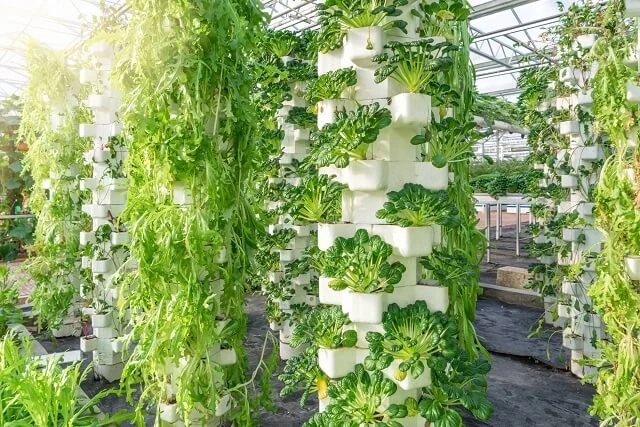
Vertical Farms Attracting Greater Interest and Investments in the GCC
According to Orbis Research, the MEA vertical farming market is expected to reach USD 1.21billion by 2021 at a CAGR of 26.4% from only USD 0.38 billion in 2016
By AG Reporter
March 7, 2019
With MEA vertical farming market expected to hit US$1.21 billion by 2021, vertical farming is attracting considerable interest and investments in the GCC
Growing importance is being given to vertical farming, among other Controlled Environment Agriculture (CEA) methods across the GCC and is generating interest and increased investments from regional and overseas players. According to Orbis Research, the MEA vertical farming market is expected to reach USD 1.21billion by 2021 at a CAGR of 26.4% from only USD 0.38 billion in 2016.
RELATED: Gulfood Reaffirms Dubai as Global Food Trade Capital
One of the GCC countries leading this change is the UAE, which has upcoming projects facilitated by the government as well as private players to help increase food security in the region. These include the UAE Ministry of Climate Change and Environment allotting space for 12 vertical farms to be built by Shalimar Biotech Industries, and the world’s largest vertical farm for Emirates Airlines by Crop One Holdings Inc. With around 90 percent of food being imported in the UAE, territorial problems of water scarcity and small percentages of arable land, vertical farming is becoming increasingly vital to ensure food security within the region.
RELATED: UAE’s Thriving Organic Farming
H.E. Mariam Al Mehiri, Minister of Future Food Security and a leading campaigner of urban farming plans to create a ‘Food Valley’ or a technology hub, dedicated to the development of food and farming automation. The Food Valley, and other government-led initiatives, are being introduced to attract and enable a new generation of farmers to help build future sustainability. Commenting in a recent interview, the Minister said “[The idea] comes from the Silicon Valley in the United States, where you have technologies, or start-ups, sprouting and developing into commercial giants.” explains the Minister. “We want to bring this to the UAE and build a Food Valley that’s all about food technologies.”
RELATED: Five Ways UAE Is The Architect of Its Own Food Security and Sustainability
The Middle East and Africa: A prime location for CEA to successfully take off.
By capitalizing on vertical space, and controlling the environment for year-round optimal growth, CEA can produce significantly more yields per square foot than traditional agriculture, while using only a fraction of the water.
AgraME 2019 is once again creating a platform for the latest technology to be showcased to the regional agribusiness market, along with promoting knowledge sharing between leaders in the global industry and key local players around urban farming techniques and methods.
Henry Gordon-Smith, Founder and Managing Director of Agritecture and an acknowledged global thought leader in urban agriculture, stated that the Middle East has an unprecedented ability to reshape critical infrastructure that supports modern human life; “The potential is certainly there to transform what has historically been a relatively small traditional farming industry into perhaps the most technologically advanced agriculture industry in the world. This means economic development, increased production of nutritious local produce, and lowered food costs, all with minimal water consumption and increased resilience to climate change and foreign markets” said Gordon-Smith who will be speaking at the AgraME Conference in March.
Commenting on the Middle East market, Bob Hunsche, Sales Manager, Van der Hoeven said; “We are really starting to see the horticulture industry take off in the Middle East. We have just completed the largest greenhouse project in the UAE (11 ha). With the most advanced technology in terms of climate and humidity control, the facility is expected to locally produce 3,000 tonnes of tomatoes year-round with the aim of helping the UAE become more self-sufficient in its food production. AgraME 2018 was a great event and we are really looking forward to connecting with more projects at the 2019 show!”
Samantha Bleasby, Exhibition Director of AgraME said, “With the aim of increasing food security in the Middle East and attaining the UN Sustainable Development Goal (SDG) of zero hunger, we are excited to present the industry with new technologies from around the globe and free-to-attend learning and networking opportunities that will increase productivity in the region with sustainable use of water and land resources”
The show is attracting key players in the CEA industry such as Certhon, Agrotonomy, Veggitech, Wuxi, iGrowths Technology Co. Ltd, Ozorganic Urban Farming LLP and Van der Hoeven.
Taking place from 5 – 7 March 2019 at the Dubai World Trade Centre, AgraME 2019 will bring to Dubai some of the leading innovators and urban farming experts to provide the industry with valuable information and knowledge.

Siberian Startup iFarms Secures $1mn To Develop “Vertical Farms” Across Russia and Europe
By EWDN in Moscow February 19, 2019
iFarm, a Novosibirsk, Siberia-based startup, has just secured $1mn in a round led by Gagarin Capital – the California-based VC firm founded by Nick Davidov and Mikhail Taver – with participation from individual Russian investors. The details of the deal have not been disclosed, reports East-West Digital News.
"We created iFarm to grow natural vegetables, berries and greens in the city at any time of the year, using innovative technologies," the company says on its website. Russia has enormous agricultural potential, but the weather makes growing fruit and vegetables difficult on most of the country's territory.
This agritech startup builds vertical farms, which “use a footprint of land more productively than traditional greenhouses.” It has also designed automated all-year-round greenhouses from 100 to 1000 sq.m. as well as growing trays “for growing greens and strawberry right in your restaurant or grocery.” iFarm’s first experimental projects were completed in 2017. The next year, iFarm developed vertical farms to grow such short-term crops as strawberries, lettuce and herbs. Two such vertical farms of 500 sq. m. were developed with grocery stores.
This year, iFarm plans to launch a new 3,000 sq. m. project in Novosibirsk, a smaller one in Moscow (100-500 sq.m.), and to experiment its technology on the European market. It will also use the money raised in the recent round to develop further its technology and enlarge its team.
The company has offices or representatives in Novosibirsk, Moscow and Luxembourg.

Affinor Growers (AFI) Trading Down 12.5%
Affinor Growers Inc (CNSX:AFI) dropped 12.5% during mid-day trading on Thursday . The company traded as low as C$0.04 and last traded at C$0.04
Posted by Emily Schoerning on March 21st, 2019
Affinor Growers Inc (CNSX:AFI) dropped 12.5% during mid-day trading on Thursday . The company traded as low as C$0.04 and last traded at C$0.04. Approximately 229,250 shares were traded during trading, a decline of 22% from the average daily volume of 292,753 shares. The stock had previously closed at C$0.04.
About Affinor Growers (CNSX:AFI)
Affinor Growers Inc, a farming technology company, engages in acquiring, patenting, and commercializing various agriculture technologies and vertical farming technology for indoor controlled environment and outdoor greenhouse agriculture industry in North America. It grows crops, such as romaine lettuce, spinach, and strawberries using its vertical farming technology.
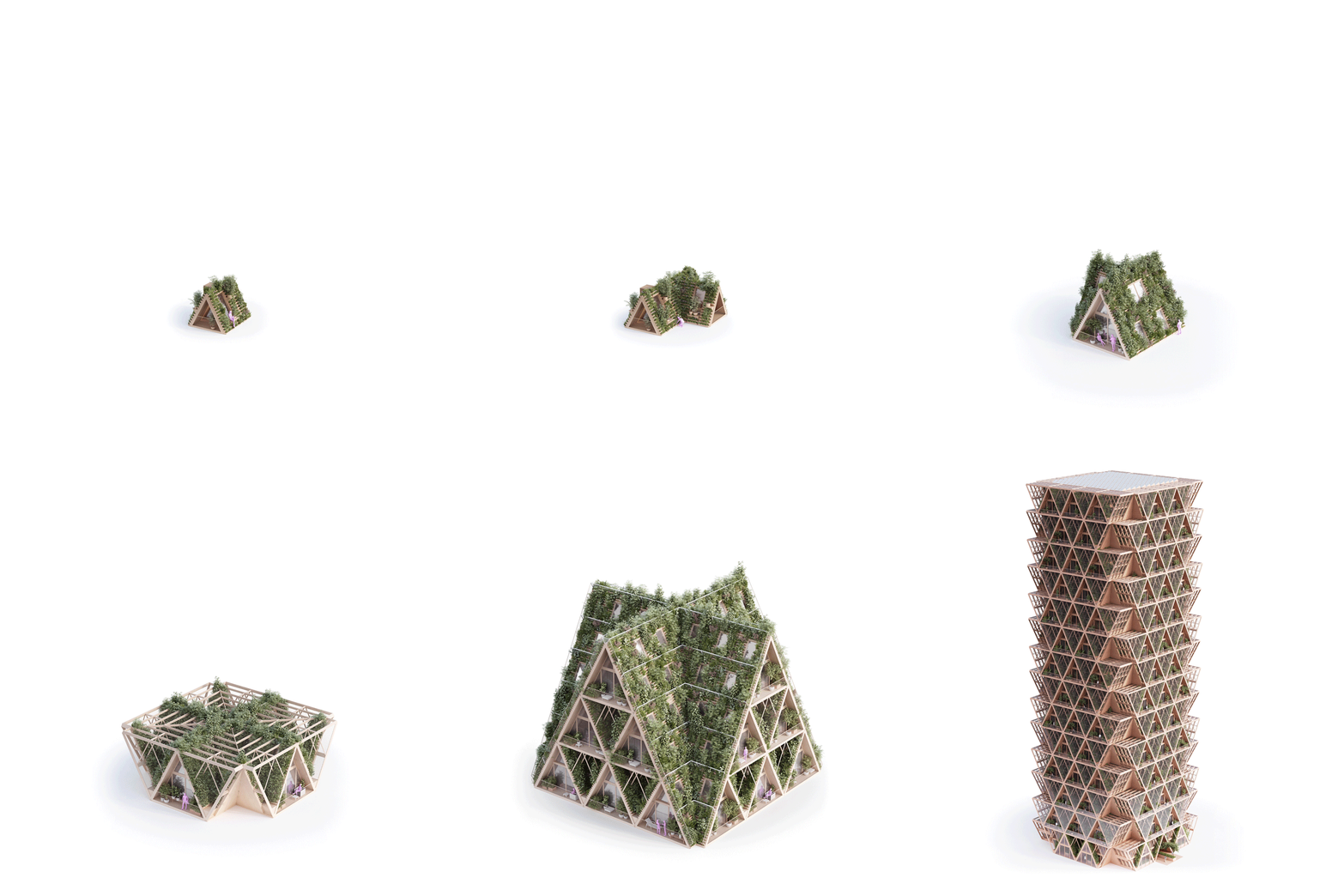
Do The Costs For Vertical Farming Stack Up?
The technology is available to grow a wide range of crops under controlled conditions, but this requires high levels of technical skill and investment
Friday, 15 February 2019
Controlled Environment Agriculture is seen by many as the answer to reducing environmental impact, helping to feed a growing population and producing premium crops. AHDB-funded Nuffield Scholar, Sarah Hughes, argues the economics for vertical farming don’t always stack up.
With increasing land prices, a shrinking and ageing rural workforce, increased climate variability and Brexit on the horizon, I wanted to find out if compact and highly productive growing systems stack up economically as a viable way to grow a crop.
There is an exciting future for controlled environment agriculture (CEA) and vertical farming, but it may only be for high-value crops, such as those grown for medicinal use.
After travelling to Brazil, Japan, The Netherlands, California, Dubai, in my opinion a hybrid system might be the best way to make the economics work. This would mean using glasshouse technology and adding knowledge gained from Controlled Environment Agriculture to improve production.
Getting the business model right
The technology is available to grow a wide range of crops under controlled conditions, but this requires high levels of technical skill and investment.
If you haven’t got a high value crop, you may struggle to make the books balance. People need to look at the crop and the business model first, and then decide the best way to grow it.
The ideal would be to model all the variable costs of each different CEA system, to assess whether it is economical.
To identify the ‘sweet spot’ for when vertical farming adds up, the following changes may need to happen:
Reduced LED lighting costs
Reduced electricity costs
Increased costs of conventional production methods
There are business models where CEA currently work well, such as seed breeding and medicinal plants; however other models, such as niche crops, fodder and leafy greens, appear less economical unless on a large scale in the later example.
Environmental sustainability
It is difficult to substantiate the claims for environmental sustainability based on energy used in these systems, even with renewable energy. However the arguments are more convincing when applied to water use.
Vertical Farms do minimise land-use, growing in stacks can obviously be done on a much smaller footprint. However the argument for growing in urban environment really needs looking at in detail. If you buy space in middle of London, the real estate cost is phenomenal, that argument doesn’t really work.
Hybrid systems
Wageningen University and Research in The Netherlands, who I visited as part of AHDB’s SmartHort campaign, have been looking at the nitty gritty of growing in these systems. They argued the energy requirement is currently too high to make it work, compared to a conventional glass-house system.
A Smart-glasshouse or a hybrid system might be way forward. This would involve using conventional glasshouses, but adopting vertical farming technologies when needed. For instance, we have good light levels in the UK, but when light is poor, it could be supplemented with LEDs, but this isn’t necessary every day of the year.
Sarah Hughes runs the company ‘Eat My Flowers,’ an edible flowers business based in North Wales and undertook her research into Controlled Environment Agriculture as an AHDB-funded Nuffield scholar. You can read Sarah’s Nuffield Scholarship Report here.

Living Greens Farm Becomes One of The Largest Indoor Farms In The World
FARIBAULT, MINN. – With the opening of a new grow room, Living Greens Farm, a vertical, indoor aeroponic farm that provides year-round fresh salads, microgreens and herbs, is set to become the largest vertical plane aeroponic farm in the world on February 22, 2019. This brings their farming operation to 60,000 square feet – allowing Living Greens to offer produce that’s better for you and the environment. Unlike most produce, Living Greens Farm never uses pesticides, herbicides or GMOs – delivering the highest standards in food safety. Because Living Greens’ products are fresher, they contain more vitamins and nutrients than conventional produce.
While aeroponics has been around for decades, Living Greens Farm has discovered a way to successfully transition and improve this technology for commercial production. Aeroponics is the practice of suspending a plant’s roots in the air and spraying them with a nutrient-rich solution, instead of burying them in soil. Living Greens Farms’ patented vertical plane design allows one acre to produce the equivalent of hundreds of conventional acres.
A high-tech computer system manages the plants growing conditions for variables such as light, temperature, humidity and CO2 to grow year-round produce. Overall, Living Greens Farms’ system uses 200 times less land and 95 percent less water than traditional growing methods. While other vertical aeroponic farms are larger in square footage, Living Greens Farms’ vertical plane design is the first of its kind and is more efficient than other aeroponic growing methods which decreases labor by up to 60 percent.
“Our patented growing technology has changed the game of aeroponics, within one year our new farm will save 24 million gallons of water and several hundred thousand miles of shipping – saving over 35,000 gallons of diesel and nearly a million pounds of CO2 emissions,” said Dana Anderson, Chairman and CEO of Living Greens Farm. “With our third grow room, Living Greens Farm will nearly triple its capacity, move into major market segments and position the company for even stronger growth in 2019. The expansion places Living Greens as the world’s largest vertical plane aeroponic farm in the world.”
Living Greens Farm’s new grow room will allow an expansion of their consumer product line into new states including Minnesota, Wisconsin, Illinois, Iowa, North Dakota and South Dakota by February 2019.
ABOUT LIVING GREENS FARM
Headquartered in Minnesota, Living Greens Farm is the world’s largest vertical plane aeroponic farm. Living Greens Farm produce requires 95 water and 99 percent less land to grow year-round and all products are grown without pesticides or GMOs. Living Greens Farm has a full product line that includes salads, microgreens and herbs available throughout the Midwest. For more information, please visit http://www.livinggreensfarm.com

VertiFarm2019 - International Workshop on Vertical Farming Wageningen 13-15 October 2019
Contact
prof.dr.ir. LFM (Leo) Marcelis
Vertical farming is a next level production system, which allows production of plants at any place including the most urbanised regions of the world. The use of LED light and the full control of both the aboveground and belowground conditions in combination with the right cultivar, enables growers to produce products with extra added value, which appeal to the demand of consumers for safe, reliable, and tasty, nutritious food.
It is now time for the first international workshop on Vertical Farming which is organised under the auspices of the International Society for Horticultural Science.
Organised by
Wageningen University - University of Bologna - University of Arizona
Date
Sun 13 October 2019 until Tue 15 October 2019
Venue
Wageningen Campus
The workshop combines a number of oral presentations of world leading horticultural researchers, panel discussions with renowned companies, short oral and poster presentations on the latest research results on vertical farming.
The workshop welcomes scientific presentations on all aspects of vertical farming, ranging from plant physiology, breeding, climate control, engineering, systems design, urban planning, economics, consumer demands and business development.
Although at this moment vertical farming largely deals with vegetables, there are also opportunities for production of ornamental (young) plants. Therefore, the workshop also welcomes presentations on ornamentals in vertical farms.
You are most welcome to attend the workshop from 13 to 15 October on the Campus of Wageningen University - the Netherlands. If you want to be sure to have a place at the workshop, register as soon as possible.
PRACTICAL INFORMATION:
Workshop fee:
Registration fee includes welcome reception, lunches, bites & drinks, coffee/tea.
Fee Non-ISHS includes 1 year membership of ISHS
Registration:
- via this website: Registration VertiFarm2019
- the deadline for registration is 6 October 2019
(early bird until 1 August 2019)
Information about the programme of the workshop & How to travel to Wageningen / Housing / Tourist information:
1-Brochure workshop VertiFarm2019 - including programme.pdf
2-How to travel to Wageningen - housing - tourist information 2019.pdf
Sponsorship opportunities:
VertiFarm2019 Sponsoring packages.pdf
Contact:
Questions about the registration procedure:
Niek Botden (HortiLink)
- mail: niek.botden@hortilink.nl
Other subjects (programme, sponsorship etc.): Leo Marcelis
(Horticulture & Product Physiology group)
- mail: leo.marcelis@wur.nl

Sponsored by:
Organisors:
Prof.Dr. LFM Marcelis Horticulture & Product Physiology group Wageningen University
Dr. Francesco Orsini Dept. of Agri-Food Sciences and Technologies -DISTALUniversity of Bologna
Prof.Dr. Murat Kacira Dept. of Agricultural & Biosystems Engineering - CEAC University of Arizona
Living Greens Farm Becomes One of the Largest Indoor Farms in the World
On Feb. 22, Living Greens Farm Will Open Their Third Grow Room In Faribault, Minn.
FARIBAULT, MINN. (PRWEB) FEBRUARY 13, 2019
With the opening of a new grow room, Living Greens Farm, a vertical, indoor aeroponic farm that provides year-round fresh salads, microgreens and herbs, is set to become the largest vertical plane aeroponic farm in the world on February 22, 2019. This brings their farming operation to 60,000 square feet – allowing Living Greens to offer produce that’s better for you and the environment. Unlike most produce, Living Greens Farm never uses pesticides, herbicides or GMOs – delivering the highest standards in food safety. Because Living Greens’ products are fresher, they contain more vitamins and nutrients than conventional produce.
While aeroponics has been around for decades, Living Greens Farm has discovered a way to successfully transition and improve this technology for commercial production. Aeroponics is the practice of suspending a plant’s roots in the air and spraying them with a nutrient-rich solution, instead of burying them in soil. Living Greens Farms’ patented vertical plane design allows one acre to produce the equivalent of hundreds of conventional acres. A high-tech computer system manages the plants growing conditions for variables such as light, temperature, humidity and CO2 to grow year-round produce. Overall, Living Greens Farms’ system uses 200 times less land and 95 percent less water than traditional growing methods. While other vertical aeroponic farms are larger in square footage, Living Greens Farms’ vertical plane design is the first of its kind and is more efficient than other aeroponic growing methods which decreases labor by up to 60 percent.
“Our patented growing technology has changed the game of aeroponics, within one year our new farm will save 24 million gallons of water and several hundred thousand miles of shipping – saving over 35,000 gallons of diesel and nearly a million pounds of CO2 emissions," said Dana Anderson, Chairman and CEO of Living Greens Farm. “With our third grow room, Living Greens Farm will nearly triple its capacity, move into major market segments and position the company for even stronger growth in 2019. The expansion places Living Greens as the world’s largest vertical plane aeroponic farm in the world.”
Living Greens Farm’s new grow room will allow an expansion of their consumer product line into new states including Minnesota, Wisconsin, Illinois, Iowa, North Dakota and South Dakota by February 2019.
ABOUT LIVING GREENS FARM
Headquartered in Minnesota, Living Greens Farm is the world’s largest vertical plane aeroponic farm. Living Greens Farm produce requires 95 water and 99 percent less land to grow year-round and all products are grown without pesticides or GMOs. Living Greens Farm has a full product line that includes salads, microgreens and herbs available throughout the Midwest. For more information, please visit http://www.livinggreensfarm.com