

Welcome to iGrow News, Your Source for the World of Indoor Vertical Farming

Indoor Farming Technology Market To Grow To $ 40.25 Billion
The indoor farming technology market was valued at $ 23.75 Billion in 2016, and is projected to reach $ 40.25 billion by 2022, at a compound annual growth rate (CAGR) of 9.65% during the forecast period, according to a report by MarketsandMarkets.
17 Dec 2018
The indoor farming technology market is projected to reach $ 40.25 billion by 2022.
The indoor farming technology market was valued at $ 23.75 Billion in 2016, and is projected to reach $ 40.25 billion by 2022, at a compound annual growth rate (CAGR) of 9.65% during the forecast period, according to a report by MarketsandMarkets.
One of the main advantages of indoor farming is its higher yield compared to traditional farming, which makes it a viable option. Enclosed facilities used in indoor farming create optimum growing conditions for farmers to grow a crop from the seed to its harvesting stages in lesser time and obtain higher yields in each cycle with limited land area.
The indoor farming technology market was valued at $ 23.75 Billion in 2016, and is projected to reach $ 40.25 billion by 2022, at a compound annual growth rate (CAGR) of 9.65% during the forecast period.
The indoor farming technology market was valued at $ 23.75 Billion in 2016, and is projected to reach $ 40.25 billion by 2022, at a compound annual growth rate (CAGR) of 9.65% during the forecast period.
Indoor farms help increase overall crop yield
According to the USDA data, in 2016, the average yield of tomatoes grown in greenhouse hydroponics was 10.59 pounds per square foot, and that of traditionally grown tomatoes was 1.85 pounds per square foot. “Therefore, indoor farms can help in increasing the overall crop yield per unit area with the usage of stacked layers of potted seeds,” states the report.
Also read: Colruyt Group develops vertical farm
Market for aeroponics to grow at the highest rate
In aeroponics, the plant roots are inserted in containers filled with plant nutrients, instead of soil, which is ideal for oxygenation and moisture and helps the plant absorb nutrients effectively, thereby aiding faster development and cultivation. This system can be controlled externally through computers or timers for the release of moist air at regular intervals and does not require frequent use of pesticides, weeding, and other maintenance processes as compared to conventional farming. “Thus, with a high adoption rate of this technology, the market for aeroponics is projected to grow at the highest rate during the forecast period,” says MarketsandMarkets.
Indoor farming is used for growing crops or plants suitable for both large- and small-scale farming.
Increasing consumer demand for pesticide- and herbicide-free food
Indoor farming is used for growing crops or plants suitable for both large- and small-scale farming. “On a larger scale, indoor farming is followed to bolster local food supplies and provide nutritious, fresh produce to urban and suburban consumers. This method of farming controls the input of plant-fertilizing nutrients, so the food that is grown using this technique is highly nutritious. Indoor vertical farming systems provide organic food that is not contaminated with the use of agrochemicals. Hence, the driving forces for indoor vertical farming are the increasing consumer demand for pesticide- and herbicide-free food and the growing requirements to reduce the carbon footprint of traditional agricultural practice,” the report states.
Key players in the indoor farming technology market
The key players in the indoor farming technology market include Philips Lighting (Netherlands), Argus Controls Systems (Canada), Netafim (Israel), LumiGrow (US), Illumitex (US), and EVERLIGHT Electronics (Taiwan).
These companies are developing new processes or products to help improve productivity and achieve overall market growth. For instance, Philips Lighting (Netherlands), which provides lighting solutions for indoor farming, has been undertaking R&D operations for providing energy-efficient lighting systems. In January 2018, Philips Lighting introduced GreenPower LED top lighting at IPM Essen, Germany. This new version offers higher light efficacy, longer lifetime of 35,000 burning hours, and high energy efficiency compared to the former top lighting module.
Furthermore, companies are focusing on investments, partnerships, and agreements. For instance, in July 2017, Softbank (Japan) invested USD 200 million in Plenty (US), a Silicon Valley start-up for vertical farm technology. In August 2014, FarmedHere LLC (US) partnered with Illumitex, Inc. (US), a leading lighting solution provider, to cultivate crops using less energy and lighting systems provided by Illumitex, Inc.
Future opportunities for indoor farming technology
According to MarketsandMarkets, the cultivation of crops such as tobacco and cannabis for large-scale production of biopharmaceutical proteins is a recent development in indoor vertical farming. Biopharmaceuticals are proteins or compounds produced by a living organism, used for diagnostic and therapeutic purposes in human or animal health. Conventional methods of manufacturing biopharmaceuticals involve the usage of organisms that are highly expensive.
"The driving forces for indoor vertical farming are the increasing consumer demand for pesticide- and herbicide-free food and the growing requirements to reduce the carbon footprint of traditional agricultural practice,” states the MarketsandMarkets report.
Indoor vertical farms as pharmaceutical facilities
“However, using existing agricultural technologies such as indoor vertical farming to produce biopharmaceuticals in plants is cost-effective, requires less time and efforts, is pollution-free, and easy to produce. Indoor vertical farms are being used not only for food production, but also for aiding in applications that can support human health. For instance, Caliber Biotherapeutics, LLC (US), the world’s largest plant-made pharmaceutical facility that has an 18-story, 150,000-square foot warehouse facility, which contains a 2.2 million tobacco-like plants, stacked 50-feet high. These plants are grown for making new drugs and vaccines. These indoor vertical farms are carefully monitored and controlled by technicians, thus eliminating the chances of possible diseases and external contamination.”
Below you can watch a report by CBS on vertical farming

US: Ohio, ME Students Share Tower Garden Project
DECEMBER 21, 2018 BY PIQUA DAILY CALL
US, Ohio, ME Students Share Tower Garden Project
Hydroponic garden bought with MEEF grant
For Miami Valley Today
Students gather around the Tower Garden in Kathy Irick’s fourth grade classroom at Miami East Elementary. Students shared their favorite learning experiences with the Tower Garden by writing a story about it. The authors, pictured here, were Joselyn Rowe, Alyssa Siefring, Alivia Palivec, Lincoln Littlejohn and Charley Hatcher.
CASSTOWN —Miami East Elementary Schools fourth graders are taking gardening to new heights.
Kathy Irick’s fourth grade classroom added a hydroponic Tower Garden purchased with a Miami East Education Foundation grant.
Recently, four students, Charley Hatcher, Lincoln Littlejohn, Alivia Palivec, Joselyn Rowe and Alyssa Siefring, wrote a story about their Tower Garden to share how it works.
Fourth grade student Carson Smith said, “The Tower Garden grows quicker than a normal garden. Like when I’m at my house, my garden didn’t grow until the end of summer.”
It produces enough greens to feed 80 kids at a time. Students shared how the Tower Garden is a team effort with students testing water levels and the pH balance.
The students shared how the Tower Garden works using gallons of water to grow the plants. Students add nutrient solutions to the water and test the pH balance levels.
“I like that every week a team of two students gets to take care of the Tower Garden. They test the pH and measure how high the water level is and add gallons if needed,” said fourth grader Haley Lang.
The students’ story can be found online at www.miamieast.k12.oh.us.
Trouble In The High-Rise Hothouse
Big indoor farms are attracting big investments. But transforming agriculture might depend on putting nanofarms everywhere — maybe even in your home.
Editor-in-chief, Ideas: The Magazine of the Aspen Institute, senior editor, The Atlantic, five-time James Beard Journalism Award winner, restaurant critic
December 6, 2018
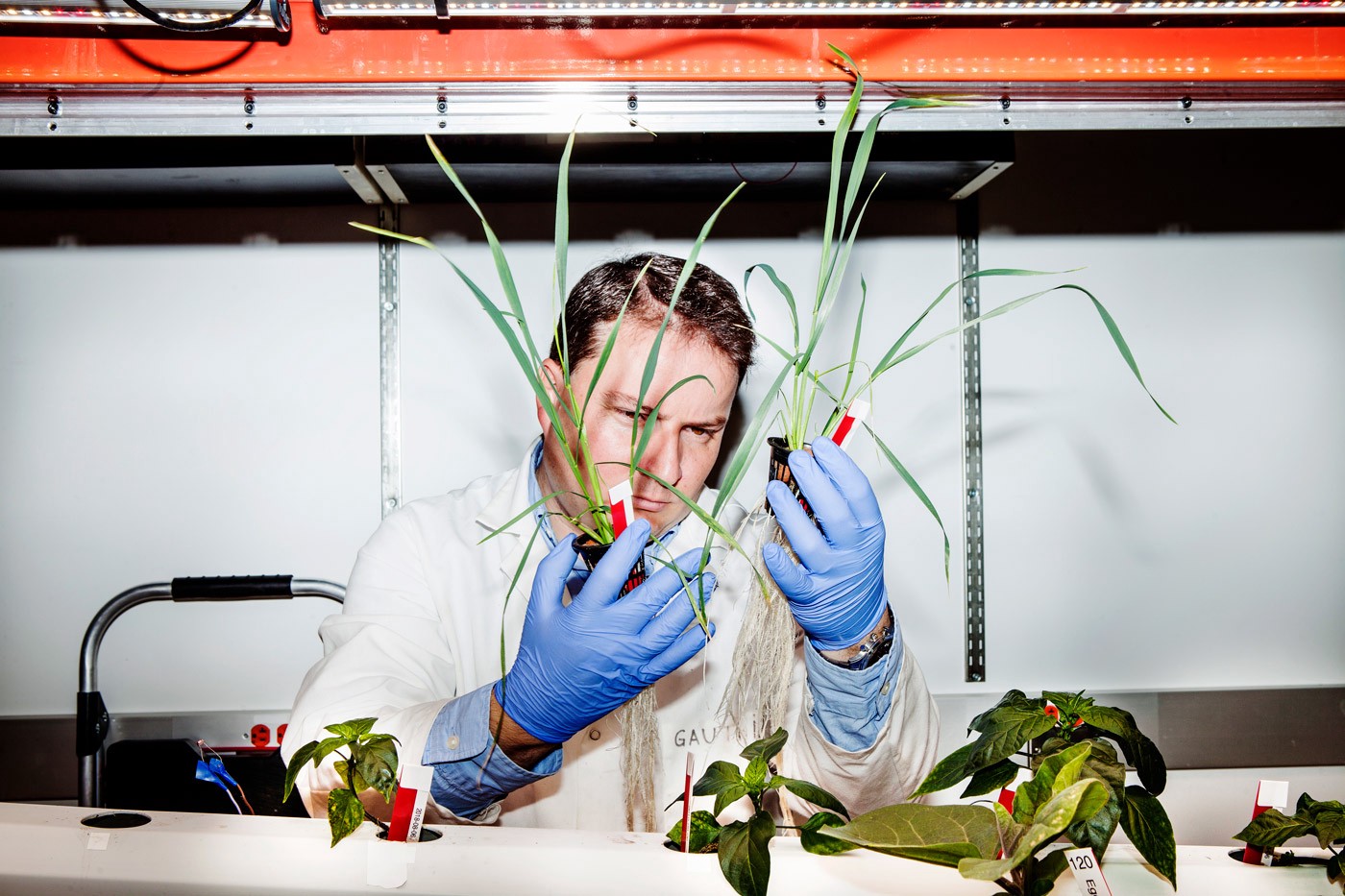
Paul Gauthier launched Princeton’s Vertical Farming Project to explore the economics of indoor agriculture. Photo by Lauren Lancaster
Big indoor farms are attracting big investments. But transforming agriculture might depend on putting nanofarms everywhere — maybe even in your home.
This was written for NEO.LIFE in association with NOVA Next/WGBH Boston.
Paul Gauthier, a plant physiologist at Princeton University, took a short drive up the New Jersey Turnpike to try to figure out whether the biggest vertical farm on the East Coast is succeeding. The answer isn’t as clear as you might think.
AeroFarms, which runs a 70,000 square-foot operation in Newark, is one of the highest-profile companies founded on the premise that growing crops indoors will transform agriculture. These aeroponic indoor farms stack leafy greens and herbs on racks that nurture the produce with sprays of mist and light from LEDs or high-pressure sodium lamps. They use no soil or pesticides, and can operate year-round. For further efficiency, AeroFarms mechanizes the seeding, harvesting, packaging, and cleaning of its produce.
It requires a great deal of electricity to give plants the light and heat they could get for free outdoors. But the idea is that vertical farms in big urban centers will be less costly—both economically and for the environment—because of the inputs they avoid, like toxic chemicals and long-distance transportation to consumers.
So do they actually come out ahead? Gauthier studies the science and the economics of growing food indoors, and he wants it to work. But the indoor farms getting glamour-puss investments refuse to release their numbers. And after touring several of them, digging into their methods to weigh the costs and the benefits, he’s suspicious about whether the numbers add up.
If you ask him whether the farms are making money or on track for any real financial viability, Gauthier, raised in Nantes and trained there and in Paris, where he earned his Ph.D, does a French thing with his mouth that translates to an existential shrug. “Who knows? So they say.” But he’s pretty sure that economics is a “major part of what’s stopping vertical farms from growing.”
Feeding 10 billion people in a world stressed by the rapidly changing climate is going to require constant innovations in how food is produced—a new green revolution, just this time not involving methods that wreck soil and water. But while vertical farms might work as a technical concept, thriving as businesses is another matter.
The problem, Gauthier suspects, is that the future of indoor agriculture might not look like a venture capitalist’s dream, with microgreens and other fancy kinds of lettuce sold at macro markups. To have a truly global impact, the startups ideally would also be researching how to grow staple crops threatened by climate change and trying to maximize their nutritional value. And, Gauthier and others argue, these agricultural startups should be thinking small at the same time—encouraging cottage and studio-apartment farmers to raise indoor tomatoes and strawberries themselves and join what could become an information-sharing revolution.
“Stupid designs”
Gauthier, who has been at Princeton’s geosciences department for six years, has a typical academic’s curiosity but also a French touch of mischief. He considered medical school, he says, but “then someone told me that even if we cure all the diseases on earth, people will still have to eat. Plus plants are cool.”
A set of test shelves in Gauthier’s lab. Photo by Lauren Lancaster
And nothing sounded cooler than saving the world by growing its food indoors, right where rapidly expanding urban populations need it. But he was baffled by the wildly optimistic predictions he read and heard for vertical farming. A widely cited 2013 study by German economists at the Macrothink Institute made the case that vertical farms in high-density urban areas, particularly in India and China, could be cost-effective because of the transport costs they would save. And they could increase access to food and reduce hunger in the bargain.
But the claims being made for the majority of vertical farms were, Gauthier says, unbacked by current, deep, and comparative data. “As a scientist, this wasn’t acceptable,” he says. “A lot of what they said was just marketing.” So two years ago he launched Princeton’s Vertical Farming Project to understand what can and can’t work economically.
He regarded with a beady eye the Ivy League grads applying for investment and Silicon Valley venture capitalists funding indoor vertical farms. Where they see a future full of urban warehouses and exurban hangars repurposed to grow food, he sees a bubble likely to burst too soon, with all those massive buildings more likely to be eventually repurposed for marijuana — the one indoor crop guaranteed to turn a profit.
Lettuce, microgreens, and herbs—the primary crops of vertical farms—have a high markup relative to, say, brussels sprouts, and being highly perishable suits them to very short transport time from indoor farm to store. But not many other commercial crops check those same boxes. Some vertical farms market kale, which is an odd choice, because it’s dirt cheap. Why bother? Gauthier leans over as if imparting a big secret: “Because anyone can grow kale, and it grows everywhere.”
Vertical farms might work as a technical concept. Thriving as businesses that transform agriculture is another matter.
Anything grown in a vertical farm might sell in China, where contaminated-food scandals mean consumers will pay a premium for food they consider to be safe, like that of fast-food chains. Vertical farms use little water and don’t need pesticides or fertilizers, all of which can be sources of contamination. So it could be smart that the most highly capitalized vertical farm company — Plenty, based in San Francisco, which has raised more than $200 million — plans to build 300 vertical farms in China.
It also would be wise to diversify the number and kind of crops in vertical farms. That optimistic German study from 2013 was based on a simulation of a farm that would grow not just vegetables but also tilapia, in tanks. Variety of output protects any business against the collapse of any one product — but that isn’t the current practice in vertical farms. Why? Perhaps because new startups follow the examples of others that seem to be successful. Perhaps because research on protein-rich products like chickpeas or fish is less evolved than it is for easy-to-grow, easy-to-sell bagged lettuce. Perhaps because different crops require different amounts of light, humidity, and nutrients and thus make for less-efficient production in a single space. David Rosenberg, cofounder and CEO of AeroFarms, says his company has experimented with growing 700 different plants, but his production is still heavily concentrated on microgreens that can fetch $40 a pound. He also sells baby greens, which he’s proud to have turned profitable, as they usually go for a much lower price to stay competitive—just $6 a pound.
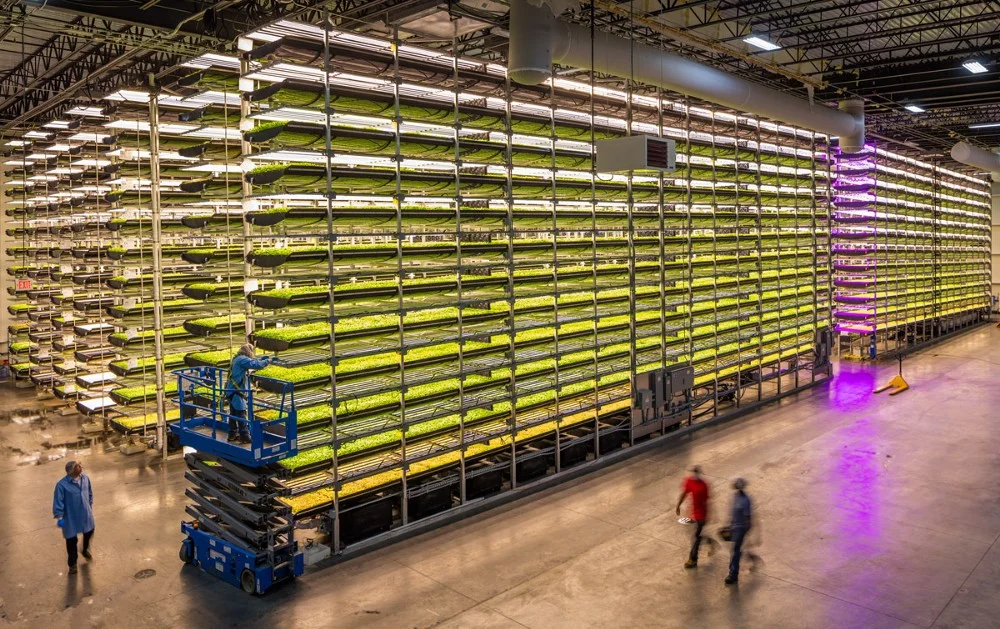
Inside AeroFarms’ facility in Newark. The company’s CEO has said most startups in the industry won’t survive three years. Photo courtesy of AeroFarms
More diversified crops are possible to grow together in vertical farms — and economically safer in the long run, Gauthier thinks. But the business models might be trickier to construct for startups looking for funding. He has two indoor test gardens, one on wire shelves in a side room off his lab in the atmospherically collegiate Princeton geosciences building, and one a bit outside of the tony, horsey town of Princeton. In these little indoor gardens he grows particularly sweet strawberries he’s proud of. They don’t grow efficiently enough, though, to appeal to today’s commercial vertical farms.
Though Rosenberg won’t disclose whether AeroFarms is profitable, he shares much of Gauthier’s general skepticism about many of his competitors in vertical farming. In a keynote address to an indoor-farming conference last year, he predicted that 60 to 90 percent of indoor farms would fold within three years of starting. Some already have gone bankrupt.
Rosenberg says not enough of them truly understand how costly their build-outs and operations will be before their first robot plants a seed in ecologically ultra-responsible growth medium. He says he and his team of 120 workers, most of them engineers, have learned this from several years of expanding into four buildings in downtown Newark. “Biological systems scale in non-obvious ways,” he says.
In the last year alone, he says, four companies that were going out of business approached him to buy their assets. Those companies had “stupid designs,” he says. “They lost before they got going.”
Lettuce, microgreens, and herbs have a high markup, and being highly perishable suits them to very short transport time from indoor farm to store. But not many other commercial crops check those same boxes.
In general, Gauthier says, energy for lighting and climate control accounts for as much as 60 to 70 percent of operational overhead in a vertical farm. Add in labor costs, which are higher in the urban areas where vertical farms are located, and the farm is likely to have, at best, a profit margin of 4 to 5 percent. That’s more than what’s reaped by most U.S. farms, which are strapped by international competition and the current trade war. Even 4 to 5 percent, though, is nothing to venture funders, who look for profitability of 10, 15, 20 percent and beyond. (Rosenberg, without disclosing specifics of AeroFarms’ business, says those fatter profit margins are indeed possible—but only if debt-service and real-estate costs are low, and if many processes are mechanized.)
Peppers harvested from Gauthier’s lab. He tinkers with the pH of the growth medium to manipulate the peppers’ spiciness. Photo by Lauren Lancaster
The danger, Gauthier thinks, is not that a few well-funded farms will turn only a modest profit growing niche crops to be sold by boutiques whose customers can afford high markups. It’s that many indoor farms will fail, because anyone who tries the things he thinks would best serve the industry — crop diversity within the same indoor space, research into lower-margin staples like wheat that are threatened by climate change, efficient techniques for growing high-protein crops — won’t appeal to funders who expect too much too soon.
Micro-farm in the rec room
Vertical farmers might have a better chance of nailing the math if they had real-world data about what works. And that’s hard to come by. Those well-funded indoor farms keep their data secret: the costs of buildout and climate control and labor; how plant growth varies with the nutrients they feed plants; the amount and color of the light and heat and humidity and growing time for each one, the prices the harvests fetch.
What if a lot more of that data were widely available to anyone who wanted to transform agriculture by bringing it indoors, anywhere in the world? How expensive are the lights, shelves, aeration, and hydration and climate-control systems? How long do they take to amortize? How do different plants grow indoors in different places and conditions — not just the sterile, ultra-controlled-atmosphere buildings stacked 37 stories high, the utopia conjured in endless vertical farm stories?
Gauthier checks the roots on two new plants. Photo by Lauren Lancaster
Gauthier envisions a much broader ecosystem: a future of thousands upon thousands of farms, in basements and bedroom corners, growing strawberries and basil and lettuce and tomatoes, uploading data to central servers that help cottage growers all over the world as well as larger-scale indoor farmers. “Everybody has a basement or a corner,” Gauthier says. Only 15 minutes of tending a day max, he promises. And if the climate isn’t perfect and the lighting is not custom-tailored for one plant, well, people’s gardens in real life aren’t so tailored either.
These micro-farms in every rec room, study nook, and garage would be simple — no need for the colored lights that large-scale vertical farms use. Just full-spectrum LEDs of the kind Gauthier has in his pocket-sized lab farm. The vivid light in the space makes it warm and inviting, unlike the compact fluorescent light over his research assistants in the next room. “People come here and say, ‘I could put my desk here,’” he says. Just being here and fussing with his leggy strawberry and basil plants visibly brightens Gauthier’s mood.
Why would you follow his suggestion and buy the makings for your own basement or closet? The same reason that inspires window-box and patio gardeners everywhere: to have fresh food you’ve grown yourself, for pennies on the dollar and the kind of brightness of flavor those bright lights suggest. And unlike with window boxes and mini-terraces, indoor gardens would flourish independent of weather.
Turning basil into data
Caleb Harper, of MIT’s Media Lab, also has very large ambitions for very little indoor farms all over the world. He founded the Open Agriculture Initiative, or OpenAg, with open-source data, hardware, and software as founding principles. He wants to create more “digital farmers” around the world by making how-to information and tools easily available to them, and he hopes to connect them so they do the neighborly tip-sharing that used to take place at the feed and seed store.
One of Harper’s first moves, in 2015, was to release designs for a prototype “food computer,” a kit that creates a milk-carton-sized, digitally controlled hydroponic growing environment for even, say, one stalk of basil. That was version one, and the costs for materials ran from $2,500 to $4,000 for a souped-up model. The most recent version, V3, costs about $500. Its starter equipment includes a “central nervous system” that incorporates a printed circuit board, USB camera, LED lights, fans, and sensors to measure temperature, humidity, and carbon dioxide. Wi-Fi-connected processors in the box upload millions of pieces of data about the plant’s progress to cloud servers that help others replicate and share their results.
One of Caleb Harper’s “food computers” that captures data about growing conditions. Photo by MIT Open Agriculture Initiative (CC-BY-NC-SA 4.0)
Harper’s idea, like Gauthier’s, is that the more information that indoor farmers around the world share — the levels of irrigation, minerals, nutrients, light, and temperature that together he calls the “climate recipe” — the faster the field can keep up with what Harper calls mounting climate and ecological pressures.
The VC firms funding vertical farms, Harper says, seem to believe that they need to hoard the best and most efficient technology and formulas to farm indoors. But little to none of the materials that go into vertical farms are much farther evolved than the off-the-shelf equipment used in greenhouses and what his food computers require. Few if any processes are likely to be so different from what anyone else is using as to create windfalls, he thinks.
Even so, companies won’t disclose data about indoor farming. They’re saying to Harper, “Why are you telling the Muggles our secrets?” His operative answer: “I want to make vertical farming work. And I see how often claims are completely baseless — and the number of bankruptcies over the past 10 years.”
OpenAg operates two sets of food computers at MIT, one in miniature in the glossy, glassy Media Lab building and another in three repurposed shipping containers in a former storage warehouse for a disused linear accelerator. Harper himself is all over the world all through the year, raising awareness and raising money. He researches what his funders want. So one of the shipping containers at MIT has an extra-tall growing chamber to fit hazelnut trees for Ferrero, the hugely profitable, family-owned maker of Nutella. Harper recently dispatched half his team to India to rig out a shipping container to grow cotton for Welspun, a sheets and towels manufacturer that hopes to enlarge the limited supply of sustainably grown cotton. But even though his high-profile clients are usually secretive, all the research the MIT team conducts is, by the Open Agriculture Initiative’s contract, open-source.
“Why are you telling the Muggles our secrets?”
Hildreth England, OpenAg’s assistant director, has a diplomacy major’s fluency of expression and comes from a multi-generational engineering family. As she explains the uses of the 3.5 million data points she says the food computers produce per plant every growing cycle, her head is illuminated by a mesmerizing light show emanating from the box behind her. The food computer can be programmed to cycle through green, red, yellow, blue, and white lights shining on a basil plant viewable from a little window inside the black honeycomb cube, like something in Hamburg’s Reeperbahn. Various colors of light can make the plant express more of the volatile essential oils and fragrances it produces in reaction to the stress that microbes in dirt, wind, and drought inevitably impose — “in a sad, sad way we’re stressing the plants out,” she says — and these compounds can be valuable in dietary supplements and medicines. She and Harper expect indoor farms to someday grow high-profit plant-based derivatives for the pharmaceutical industry, alongside tomatoes bred to express more cancer-resisting lycopene thanks to data uploaded by thousands of growers.
In a collaboration with the United Nations World Food Programme, the Initiative put food computers in Syrian refugee camps in Amman, Jordan, to provide fresh food where people aren’t allowed to make changes to the land. A professor who was a refugee had the idea of experimenting with how to create a climate recipe that would increase the active ingredients in St. John’s wort to treat depression and anxiety: for many people, drinking herbal tea is more culturally acceptable than taking Prozac.
The uses of indoor farming, then, can be as unexpected and ingenious as the places it appears and the people who tend the plants. The underlying technology might be similar the world over, Gauthier says. But think of the iPhone: Everyone uses it a little differently, and Apple collects that data so it can make the next generation easier to use. Large leaps and small serendipities might well come from the tiny plots both he and Harper envisage — the ones that can turn the latest sexy innovation into tomorrow’s world-changing revolution.

What's Wrong With Today's Food Supply Chain And How Do We Fix It?
The new year is just around the corner and we continue to radically rethink today's agricultural landscape - in Germany and abroad
Worldwide it is estimated that approximately 1.8 billion people engage in agriculture and most use pesticides to protect the food and commercial products that they produce. Every year over 5.6 billion pounds of pesticides are used worldwide. Among them are highly toxic substances, harming not only nature but the farmers and humans who get in touch with these substances. It has been estimated that as many as 25 million agricultural workers worldwide experience unintentional pesticide poisonings each year.
Why all the stats? The heavy use of pesticides is one reason, why we have the conviction to revolutionize the urban food supply through our indoor cultivation. With Dryponics we protect our environment, using zero pesticides and only a fraction of the water and fertiliser that other cultivation methods require.

Producing hyper locally allows us to deliver freshness and nutrients, instead of low quality produce that travels thousands of miles. In short: we combine the benefits of the best local farms with advances made possible by technology to grow produce you can feel good about eating.
We still have a long way to go but with our ambitious vision, our diverse team and strong partners we get closer to achieving our goals day by day. We want to thank everyone who has believed in us and supported us so far. We are looking forward to an eventful new year and are excited to announce that we are expanding to the Middle East in 2019.
While our Dryponics farm in Hamburg is up and running since 1.5 years, we are ambitious to increase our impact by producing greens in dry regions where food imports are an even bigger challenge. Stay tuned for more details coming up soon!
Producing hyper locally allows us to deliver freshness and nutrients, instead of low quality produce that travels thousands of miles. In short: we combine the benefits of the best local farms with advances made possible by technology to grow produce you can feel good about eating.
We still have a long way to go but with our ambitious vision, our diverse team and strong partners we get closer to achieving our goals day by day. We want to thank everyone who has believed in us and supported us so far. We are looking forward to an eventful new year and are excited to announce that we are expanding to the Middle East in 2019.
While our Dryponics farm in Hamburg is up and running since 1.5 years, we are ambitious to increase our impact by producing greens in dry regions where food imports are an even bigger challenge. Stay tuned for more details coming up soon!
Producing hyper locally allows us to deliver freshness and nutrients, instead of low quality produce that travels thousands of miles. In short: we combine the benefits of the best local farms with advances made possible by technology to grow produce you can feel good about eating.
We still have a long way to go but with our ambitious vision, our diverse team and strong partners we get closer to achieving our goals day by day. We want to thank everyone who has believed in us and supported us so far. We are looking forward to an eventful new year and are excited to announce that we are expanding to the Middle East in 2019.
While our Dryponics farm in Hamburg is up and running since 1.5 years, we are ambitious to increase our impact by producing greens in dry regions where food imports are an even bigger challenge. Stay tuned for more details coming up soon!
Producing hyper locally allows us to deliver freshness and nutrients, instead of low quality produce that travels thousands of miles. In short: we combine the benefits of the best local farms with advances made possible by technology to grow produce you can feel good about eating.
We still have a long way to go but with our ambitious vision, our diverse team and strong partners we get closer to achieving our goals day by day. We want to thank everyone who has believed in us and supported us so far. We are looking forward to an eventful new year and are excited to announce that we are expanding to the Middle East in 2019.
While our Dryponics farm in Hamburg is up and running since 1.5 years, we are ambitious to increase our impact by producing greens in dry regions where food imports are an even bigger challenge. Stay tuned for more details coming up soon!
Producing hyper locally allows us to deliver freshness and nutrients, instead of low quality produce that travels thousands of miles. In short: we combine the benefits of the best local farms with advances made possible by technology to grow produce you can feel good about eating.
We still have a long way to go but with our ambitious vision, our diverse team and strong partners we get closer to achieving our goals day by day. We want to thank everyone who has believed in us and supported us so far. We are looking forward to an eventful new year and are excited to announce that we are expanding to the Middle East in 2019.
While our Dryponics farm in Hamburg is up and running since 1.5 years, we are ambitious to increase our impact by producing greens in dry regions where food imports are an even bigger challenge. Stay tuned for more details coming up soon!
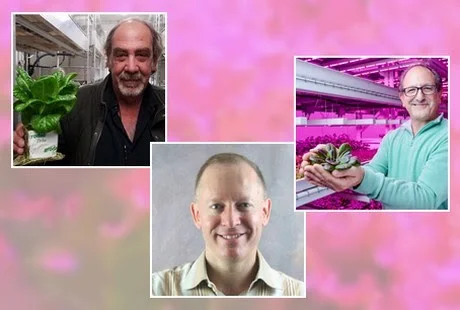
Glenn Behrman, Robert Colangelo and Erik Runkle Reflect And Look Ahead
To kick things off, we ask our guests how they would describe indoor agriculture's 2018 in five words or less.
From left to right: Glenn Behrman, Erik Runkle, Robert Colangelo
An Indoor Ag Year Of Investments And Innovation
2018 is almost over. That means it's time for relaxation, exchanging gifts, and eating way too much (and not just veggies). It's also a time to reflect on the past year, and to look forward to what's on the horizon. That's exactly what we'll do now. Joining us at the holiday table to discuss the state of the indoor agriculture industry are Glenn Behrman, Founder & President of GreenTech Agro and CEA Advisors, Robert Colangelo, Founding Farmer/CEO of Green Sense Farms, and Erik Runkle, professor in the Department of Horticulture at Michigan State University.
To kick things off, we ask our guests how they would describe indoor agriculture's 2018 in five words or less.
Glenn: "Exciting but still not there."
Robert: "Dynamic, disruptive, transformative."
Erik: "Continued industry investment and expansion."
For Glenn, 2018 was a good year, with the successful pilot and subsequent expansion of the Store Grown program with their major US grocery retail partner, Central Market. "Hyper-local produce grown behind the actual supermarket in Growtainers and available for sale in the Produce sections, sometimes only minutes after harvest."
Robert sees the increased amount of capital going into the agtech market as a sign the controlled environment agriculture sector is being taken seriously. Erik, meanwhile, points to an increase in knowledge, having learned more about how green light influences leaf expansion and increases growth of lettuce. Yet much more research is needed in 2019 and beyond, he says.
Hyping, pricing, and working together
The biggest challenge for the industry in 2019, according to Glenn, is that there are "too many newcomers entering the industry that have been lured by 'likes', 'followers', hype, VC money and the promise of unrealistic returns. We need more people that truly understand what indoor ag is and what it isn’t and are not afraid to take chances and think outside the box. Those that understand that the technology available today is only a tool to produce more outputs with less inputs."
Robert says the biggest challenge for the coming year will be increasing the unit price of produce. "In part it can be done through branding, marketing and educating the consumer on the nutritional value of locally grown produce."
Those challenges are of course best tackled through cooperation within the industry, which itself could be seen as a bit of a challenge. According to Erik, developing a unified indoor farming industry association will be another challenge in the year ahead. At the individual firm level though, he thinks profitability will continue to be the greatest challenge.
Disruption, automation, innovation
Looking forward, Robert is particularly excited about new advancements in indoor growing technology. At the moment, at Green Sense Farms they are working on conveyance automation systems to optimize production and a robotic ventilation system to minimize micro climates.
Erik is focused on continued sole-source lighting research in combination with other environmental factors to increase yield and quality attributes of leafy greens. "I have several projects in mind, but the scale and scope will depend on the funding we can obtain to support the research."
After 45+ years in global horticulture, including the past 10 years laser focused on indoor ag and technology-based production, Glenn sees a future that capitalizes on the highest and best use of the available resources.
He sees 2019 as the year that he'll be able to "blend all the experience, wisdom and instinct that I possess and perfect a game changing strategy that totally disrupts the fresh produce supply chain. I’m 68, I've been doing this since I’m 21. It’s time for me to concentrate on the legacy I wish to leave behind."
Publication date : 12/24/2018
Author: Jan Jacob Mekes
© HortiDaily.com
Barbados: Government To Start Veggie Project ‘Early Next Year’
December 19, 2018
Article by Barbados Today
A high-tech farming project is set to kick-off early next year that could slash demand for imported vegetables by over 80 per cent.
The Government project to be set up in the new year, comes as a private firm owned by young farmers uses technology in an agricultural project that is intend to eventually feed the entire country while withstanding the threat of natural disasters, said Agriculture Minister Indar Weir.
Operating out of a 40-foot shipping container at Hastings, Christ Church, the directors of Ino Grow have developed a hydroponic farm, which currently produces lettuce, herbs and other leafy greens.
The company is producing non-genetically modified organisms (non-GMO) and herbicide-free crops, which can be grown every day of the year.
After a tour of the small facility, an excited minister for food security revealed the project had won the support of Government. Weir has invited Ino Gro directors Warren Kellman and Rishi Pajwani to be part of a similar programme, to be rolled out by Government at the beginning of the New Year.
“We are going to get together and we’re going to pull all of the costing together… and take agriculture to the next level. But more importantly, we need the scale,” said Weir.
Government’s ultimate goal is to produce almost 80 to 90 per cent of some of the vegetables currently being imported, Weir declared.
Minister Indar Weir (left) under the artificial sunlight provided by the agricultural farm, being schooled by Ino Gro co-directors Rishi Pajwani (left) and Warren Kellman (second from right) as mentor Ayub Kola looks on.
“I speak of tomatoes and lettuce of all varieties, and then we are going to look at broccoli as well, because broccoli is one of the vegetables that we import and we have to address that. If I am able to pull all of this together in short time, we then start looking at reducing our food import bill,” he said.
Amid the worldwide threat of global warming, Weir praised the new technology for responding to the growing need for “climate-smart” initiatives.
“We have to look at what climate change is doing to the Caribbean islands and indeed Barbados is vulnerable to climate change and if we’re going to get into climate smart agriculture, then this is the way we have to go,” according to the agriculture and food security minister.
“So that if we get a climate event, we don’t find ourselves without food for extended periods of time . . . . We have to be able to protect the amount of food that we are going to need to get through a climate event. We have to protect the seedlings to make sure that we have them at our disposal so that we can continue to grow,” he stressed, while indicating that the use of green energy will also be key to the development of similar initiatives.
Weir is particularly excited about the promise of climate smart agriculture for youth. “It excites the younger mind; those people who are coming out of school, who would have traditionally stayed away from agriculture, because they didn’t see it as a career option. But if we could replicate this right across Barbados, all of a sudden we are addressing a 21st century need, where we can create entrepreneurs, through having young people now graduating from university and getting involved in projects like these as businesspeople,” he said.
Ino-Gro co-director Rishi Pajwani thanked Weir for giving them a platform to show off the young farm initiatives. He also assured Barbadians that his company is up to the task of reducing the country’s “enormous” food import bill.
“We wanted to cut that down as well as educate the youth here in Barbados about agriculture – Traditional agriculture. Agriculture is no longer outside, hot sun and breaking your back. It’s now become labour efficient and easy, so we wanted to inform everyone and the youth to re-innovate the industry and get back into agriculture, because this is where Barbados was born,” said Pajwani.
But the new private sector initiative has not come without obstacles. As co-director Warren Kellman put it, the idea was so peculiar to Customs officials that they were sceptical when equipment started coming in.
“Customs had never seen something like that before. So when they saw certain pieces of equipment . . . they said they’ve never seen something like this attached to farming. We had to work closely with Customs as well, and actually create new entries in their system, so that people who are interested in this type of innovative farming, when they do bring in systems like this in the future, they wouldn’t face issues that we faced, because we tried to pave the way,” he said.
Making the process easier is the knowledge that they have the backing of Government in their quest to revolutionise Barbadian farming, Kellman said.
The Urban Farming Startup Created By Kimbal Musk — Elon’s Brother — Lets You Scan Your Produce To See Where It Came From. Take A Look Inside
Business Insider/Jessica Tyler
December 19, 2018
Square Roots farmers sell their crops to local customers.
Business Insider/Jessica Tyler
Elon Musk's brother, Kimbal, is on a mission to reduce the global food shortage and train the next generation of urban farmers.
His Brooklyn-based company, Square Roots, delivers fresh herbs that are grown inside 320-square-foot shipping containers.
In the wake of the romaine E. coli outbreak, Square Roots is determined to substitute the opaque practices of the industrial food industry.
The company now allows you to scan its crops and learn exactly when they were produced — and who made them.
While his brother, Elon, dreams up moonshot projects like colonizing Mars and building a tunnel for autonomous vehicles, Kimbal Musk's thoughts are rooted in a much more immediate crisis: the global food shortage.
Though he's on the board of both Tesla and SpaceX, he'd much prefer to talk about Square Roots, the urban farming startup that he co-founded with friend and entrepreneur Tobias Peggs.
Since 2016, Square Roots has been delivering fresh herbs to retail stores across New York City. The company also pioneered a training program that walks young entrepreneurs through every step of the indoor farming process, from planting seeds to selling crops.
Read more: Kimbal Musk predicts a movement of millennial workers fleeing desk jobs for farms
One of the advantages of indoor farms is that they can control climate conditions to reduce the risk of contamination in the water or air.
Square Roots is taking this a step further by offering customers some peace of mind about how, when, and where their food is being grown — adding in the kind of transparency that could one day prevent incidences like the recent romaine E. coli outbreak, which resulted in more than 50 reported illnesses across 19 states.
By scanning a QR code on the back of an herb, customers can learn the name of the Square Roots farmer who grew it, and exactly when the growing process started.
The new scanning system makes Square Roots an industry standout, even among the numerous vertical farms popping up across the nation.
Earlier this year, Business Insider took a tour of the Brooklyn-based indoor farming compound. Take a look.
Square Roots is headquartered in Brooklyn, but its non-GMO, pesticide-free herbs are also sold in Manhattan and Queens.
Business Insider/Jessica Tyler
The company is more than just a collection of indoor farms.
Business Insider/Jessica Tyler
"There's an incredible opportunity to re-envision the food system," said co-founder Tobias Peggs.
Business Insider/Jessica Tyler
In an interview with Business Insider, Musk said he expects a growing number of young Americans to join him in the local farming movement.
Peggs said Square Roots plans to have one of its farms in every city in America, before going global.
Business Insider/Jessica Tyler
Even on a rainy day, visitors crowded around the steel shipping-containers that house Square Roots' produce.
Business Insider/Jessica Tyler
Each shipping container has its own programmable climate, which is controlled by Square Roots farmers.
Business Insider was given a peek at the herbs being harvested inside.
Business Insider/Jessica Tyler
The company's hydroponic growing system uses 90% less water than conventional agriculture.
Business Insider/Jessica Tyler
LED lights illuminate the crops, but they don't run 24-7 like some other vertical farms.
Business Insider/Jessica Tyler
Peggs said operating the farm is intuitive, like using an iPhone.
Business Insider/Jessica Tyler
"You press a few buttons and it's magic," he said. The company's software allows farmers to monitor the growth process, adjust temperature conditions, and conserve resources in real time.
Square Roots has access to historical records that can tell it when and where the best crops were grown.
Business Insider/Jessica Tyler
If you tasted the basil in Northern Italy in 2006, the company can research and replicate the temperature conditions to give you a similar product.
Peggs said the average apple takes nine months to get through the food system.
Business Insider/Jessica Tyler
The typical storage time for lettuce is around one to four weeks, but certain produce can be stored for up to a year.
To keep an apple from rotting, distributors often coat it in wax or treat it with a pesticide-active ingredient that slows down the growing process.
Business Insider/Jessica Tyler
In those instances, Peggs said, consumers think they're making a healthy choice, when "you're actually just eating a waxy ball of sugar."
Like apples (which are not offered by Square Roots) herbs begin to lose their nutrients if they're stored for too long.
Business Insider/Jessica Tyler
The company delivers its herbs to retail stores within 24 hours of harvest, which is critical to keeping them fresh.
Business Insider/Jessica Tyler
Square Roots let us try their freshly-grown chives, which were some of the yummiest we've ever tasted.
Business Insider/Jessica Tyler
"When people try real food, they don't go back to industrial food," Musk said. "It just doesn't taste good."
The company also produces herbs like mint, oregano, thyme, and basil.
Business Insider/Jessica Tyler
The scanning system gives a detailed timeline of the crop from seed to shelf.
Business Insider/Jessica Tyler
That may sound like simple information, but food labeling laws in the United States are notoriously lax.
Business Insider/Jessica Tyler
It was only after the latest E. coli outbreak that the Food and Drug Administration finally asked producers to label romaine with a harvest date and region of origin.
All you have to do is point your iOS camera at the bar code on the back of the package.
Business Insider/Jessica Tyler
From there, you'll gain access to more than just data.
Business Insider/Jessica Tyler
The timeline offers links to learn more about the farmers and their growing techniques.
"At the heart of everything we do are the farmers," Peggs said. "You have to love the arugula to make it grow better."
More: Features BI Innovation Indoor Farm Kimbal Musk
“Indoor Farming Is About Producing An Economic Product By Using Technology”
Bowery Farming raises $90 million
“Indoor Farming Is About Producing An Economic Product By Using Technology”
"The mistake in our industry is that many people tribute the soul success of indoor farming to LED. LED makes indoor farming viable. But if you want to make indoor farming scalable, you have to think in trends that are happening in robotics, automation, computer vision and machine learning." Speaking is Irving Fain, CEO with Bowery Farming. Yesterday the company announced a $90 million funding round, led by GV (formerly Google Ventures). Additional investors in this round include Temasek (the global investment company headquartered in Singapore), Dara Khosrowshahi (CEO of Uber), David Barber’s fund Almanac, First Round Capital, GGV Capital and General Catalyst. What's their secret? “Bowery Farming isn’t just about focusing on growing indoors, it is also about producing an economical product by using technology.”
Indoor farming
Indoor Farming is a hot topic these days. With on one hand companies going through the roof and on the other hand companies having to give up their activities, there's obviously both opportunities as well as major challenges in the industry. "Overall it has been an exciting time for our industry of indoor farming. We work in ways that ten years ago weren’t possible," Irving Fain with Bowery Farming explains. The company opened up their first farm in 2017 in New York. "Indoor farming is not just putting up four walls. It is controlling the environment to provide the growing population in cities with fresh food.”
To Bowery Farming, the line between techniques and producing food is a thin one. In totally controlled environments they are able to grow consistently, pesticide-free and year-round, regardless of the climate. “Given the level of control, we are not only growing twice as fast as the field, we are getting more yield of every crop cycle, as well as more crop cycles per year than the field does. We can grow a lot faster while saving over 95% of water.” Then there’s traceability, producing local and food safety – especially in these days an important reason to keep an eye out for indoor farms. Bowery’s farms are SQF certified, the highest level of food safety, and they implement stringent food safety policies so that retail partners and customers can be confident purchasing produce that has gone through the highest levels of food safety and quality testing.
Want to take a peek into the farm? Bowery's head of R&D and BoweryOS, Henry Sztul, sat down with Fluence Bioengineering to share how they are able to cultivate food 365 days a year in a highly productive and efficient way.
Software control
One of the unique points of Bowery Farming specifically is their own software control system: BoweryOS. “We are not only a farm, but also a tech company. We’ve built a proprietary software system that uses automation, machine learning and vision systems and sensors to monitor our plants 24/7 and collect millions of data points. This allows us to constantly iterate on each varietal, tweak flavor profiles, provide each crop exactly what it needs to thrive, and harvest each crop at the exact right time. BoweryOS will also tell the farmer what to do, when and how, which means that we don’t necessarily need to hire experienced farmers.” According to Irving, the lack of need for skilled labour is one of the points that will assure Bowery Farming of a future not touched by the troubles many indoor farms are in.
Viable indoor farming
“We honor the innovation that’s been going on for decades in places like the Netherlands. The Dutch growers have been innovators in agriculture for a long time. With what we are building here, we take the knowledge of all those years and innovate on top of that,” says Irving.
As an example, he recalls the developments in LED lighting, making indoor farming possible in a way that hasn’t been before. “Part of the indoor farming developments occurred thanks to LED. LEDS were expensive for a long time. In the last seven years they have dropped in cost by 85% and doubled in efficiency. And even more interesting: they are dropping again and will become twice as efficient as today,” he confirms. “The mistake in our industry is that many people tribute the soul success of indoor farming to LED. It makes indoor farming viable, that’s for sure. But if you want to make a solid business case, indoor farming has to be scalable. Therefore you have to think in trends that are happening in robotics, automation, computer vision and machine learning. These are the things that allow the economics of the business to change in various ways. Bowery Farming isn’t just about focusing on growing indoors, it is also about producing an economic product by using technology.”
Proof of concept
With the first Bowery farm, Irving has delivered his proof of concept in the last couple of years, both tech wise as in the market. The company supplies to a number of retail outlets like Whole Foods and has increased distribution with the opening of the new farm. “Together we’re expanding in the market: we deliver to a number of Whole Foods and Foragers in the area and continue to grow. We’ve also opened up some foodservice partnerships with Temple Court, sweetgreen and Dig Inn in the New York area.”
According to Irving, the growth isn’t ending. “Our biggest challenge is to get people to really believe in this industry and in the importance of what we’re doing.” This might be pretty easy with the current circumstances – the E.coli outbreak. But there’s more, Irving explains. “Thanks to our efficient use of supplies and nearby growing, we’re offering a product that’s premium in terms of quality, but pricewise equivalent to field produce.”
Selling the system?
Even though he’s currently occupied fully with the recent opening of their new farm, the eyes at Bowery are set on the horizon. “The opening of our second farm is just the beginning. The roadmap is enormous, we have plenty more opportunities. We have a lot of interest both from consumer and retailer. Although we focus on succeeding in the New York market, the growing popularity of people moving into cities is not only an issue in the US but everywhere. Ultimately I see Bowery Farming all around the world using our technology to provide fresh food to urban environments.”
The recent $90 million funding is to contribute to this. Prior to this round, Bowery raised $27.5 million from investors. Bowery plans to use the capital to scale their operation in new cities across the country and open multiple farms by the end of 2019. This funding will also enable them to continue growing the team, investing in technology and innovation across the company.
Does he consider expanding by selling their technique instead of opening up new farms on their own? For now the answer is no. “For now there is so much learning to be done. We fully focus on building and designing to put us in a better position.” He explains why that remains important. “We are a technology company, but our product is food.” It sounds simple, but to Irving it is important to not lose sight on that. “At the end of the day we are growing food for people. They bring it home to their families, are at the dinner table. That’s a topic we should never let out of sight. While we are developing all this great technology, the end result has to be good food.”
For more information:
Bowery Farming
https://boweryfarming.com/
contact@boweryfarming.com
Publication date : 12/13/2018
Author: Arlette Sijmonsma
© HortiDaily.com

Canadian Automated Vertical Farm Systems Developer Inno-3B Raises C$6m Seed Funding
Canadian vertical farming systems developer Inno-3B has completed its first seed round of financing at nearly C$6 million ($4.45m).
Located in Quebec and Ontario, the company provides turnkey vertical farming systems for a variety of customers, from researchers, biotechnologists, and small-scale farmers, to regional and multinational producers.
Inno-3B provides fully automated, controlled, scalable, and remotely monitored robotic growing systems with real-time support to help customers grow organic produce, berries, and herbs locally.
This week, the business benefitted from a seed investment round led by the Ecofuel Fund, with the participation of Desjardins Capital, the Fonds de Solidarité FTQ, Premier Tech, the Fonds de Solidarité FTQ Bas Saint-Laurent, Investissement Québec and the Ministère de l’Économie et de l’Innovation.
Inno-3B said that the C$6m will enable the business to implement a demonstration of its technology in the context of real-time operations, a move which is designed to accelerate product marketing and ensure constant support for customers. This will include creating 10 new jobs to advance the company’s design and manufacturing processes; the company already has 15 employees across its two locations.
“We are enthusiastic to start this new phase of development with such strategic investors dedicated to our success,” said Martin Brault, President and CEO of INNO-3B, adding that the Ecofuel Fund, Desjardins Capital and the Fonds de solidarité FTQ were, in particular, actively supporting the company’s growth.
Richard Cloutier, president and CEO of the Ecofuel Accelerator and managing partner of the Ecofuel Fund, said that Inno-3B’s innovative technology had the capacity to enable customers to produce vegetables with low production costs, high yields and low energy consumption, and to do so all in a small space.
“Innovation makes it possible for the company to respond to the growing needs of consumers for fresh quality products while also reducing greenhouse gases significantly,” he said.
In addition to accelerating Inno-3B’s marketing push, the new funding will also be used help to intensify R&D activities within the business.
“Thanks to the technological advances made in recent years, we have managed to position ourselves among the leaders in automated vertical farming,” said Brault, revealing that the company was also exploring certain ‘interesting synergies’ relating to artificial intelligence (AI) as part of its future development planning.
The Ecofuel Fund is a C$30m venture capital investment fund and accelerator offering customized training programs for clean technology companies. Powered by Cycle Capital, Ecofuel works with entrepreneurs to assist them in starting businesses to breakthrough internationally.
Ecofuel is funded by Investissement Québec, BDC Capital, Fondaction, the Fonds de solidarité FTQ and the Centre québécois de valorisation des biotechnologies (CQVB).
Desjardins Capital, working with a background of nearly 45 years expertise, is committed to the promotion and support of small and medium-sized businesses in Quebec, having assets under management of C$2 billion. The fund contributes to the sustainability of 460 businesses, cooperatives and funds operating in various sectors of activity and from all regions of Quebec.
The Fonds de solidarité FTQ is a capital development investment fund that is financed with Quebec savings. With net assets of C$13.7 billion as at November 30, 2017, the fund contributes to the creation and maintenance of 186,440 jobs, partnering with more than 2,700 companies and with more than 645,000 shareholders.
Related Stories
AeroFarms ‘Always in Capital Raising Mode’ as Vertical Farming Group Raises $20m
How Canadian Vertical Farming Company TruLeaf Aims to Prevent Disease Through Nutrition
Circular Economy and True Sustainability: the Next Phase for Vertical Farming
Association for Vertical Farming to Reveal Sustainability Certification Scheme at Summit
4 Things Every Investor Should Know About Vertical Farming: Lessons Learned From AVF Summit
What Do Investors Need to Know About the Future of LED Grow Light Technology?
Ag Industry Brief: FBN Makes Moves in Canada, Bayer Sells Digital to BASF, more

Developer Plans $33 Million Indoor Farm, Microgrid Project In Former Paper Mill
DECEMBER 20, 2018
Arcadia Energy Corp. wants to transform the former Florelle Tissue Corp. plant, pictured here in 2010, into an up to $33 million indoor farm and energy complex.
WATERTOWN DAILY TIMES
BROWNVILLE — A Rochester microgrid developer plans to build an up to $33 million indoor hydroponic farm and energy complex in a former paper mill on the Black River.
Acadia Energy Corp. wants to repurpose the 100,000-square-foot mill that once housed Florelle Tissue Corp., which closed in 2013, for a vertical farm and a microgrid.
John Bay, CEO of Acadia Energy, said for the farm, which would occupy only 10,000 square feet, he envisions growing produce like lettuce, tomato and arugula in bins of seven to 15 feet with rotating trays. The microgrid would produce electricity and thermal energy using natural gas, although Mr. Bay said he wants to transition to using hydroelectric and solar to generate power down the road.
“We’re very excited about this opportunity. This marketplace is an up-and-coming marketplace,” Mr. Bay said. “We’re excited to work with and serve people in the greater Watertown area.”
The state awarded Acadia Energy $415,000 through the Regional Economic Development Council program Tuesday, which will help fund the vertical farm.
The firm has already secured preliminary commitments from banks to finance the overall project, which would include about $3.5 million for the farm and $20 million to $30 million for the energy complex. Mr. Bay said, however, the firm must take several more steps before opening the complex, including purchasing the building, updating it and finishing the engineering designs.
“It’s been probably three years in the process and we’re probably another 12 to 18 months before we bear fruit,” Mr. Bay said. “We’re not certain at this point if we’re going to own the hydroponics (farm) or put somebody in as a tenant.”
Building the farm and energy complex inside the former Florelle Tissue mill is not Arcadia Energy’s first north country project. The firm, which has an office in the Watertown Center for Business and Industry, has also been designing the Jefferson County Industrial Development Agency’s microgrid to supply electricity to tenants in the Jefferson County Corporate Park.
“One reason we’re down there is the welcome we got from the county and town” of Watertown and Hounsfield, Mr. Bay said about his project in the mill.
"Mushroom Growth As An Early Precursor Of What Is Now Vertical Farming"
Those who drive onto the property of Johan van Namen in Hoenzadriel, a small village in Gelderland, Netherlands, do not expect to find a vertical farm
Berjelle van Namen, son of mushroom grower, fascinated by vertical farming
Those who drive onto the property of Johan van Namen in Hoenzadriel, a small village in Gelderland, Netherlands, do not expect to find a vertical farm. Yet in one of the cells no longer are mushrooms being grown, but herbs and micro vegetables. Berjelle van Namen, son of Johan, has started vertical farming with a growth surface of 160 square meter. "The first growth results are positive. The plants are feeling fine, just like me actually."
Preparations for the growth started two years ago. Berjelle, now a fourth year student Business Administration & Agribusiness at the HAS Hogeschool, was doing an internship in Finland in the spring 2017, where he saw a vertical farm, Robbe's Little Garden, where lettuce, herbs, and micro vegetables were grown. "I was made responsible for the optimization of the growth by means of LED-lighting."
Mushrooms as an 'early example'
Vertical farming in Finland was not to be expected, particularly not in a country where the price per square meter is relatively low. "The total growth area of the company was 500 square meter, with the intent of expanding. By growing in layers, the company was able to guarantee an even better product quality, and higher turnovers were achieved."
Berjelle now has the same goal in his own vertical farm. Back in The Netherlands, the plan took shape. End 2017 the moment came, and one of the cells in the mushroom nursery was transformed slowly into a vertical farm. "The mushroom growth could be seen as an early precursor of what is now vertical farming. The racks used for mushroom growing, turned out to be well suited to multi-layer growth."
Growth adjustments
Still, a lot had to be figured out before the first growth could finally start in September. "For example, I have spent a full week on realizing the optimal water dosage. I also worked on the ideal light recipe. Light spectra contain small differences, which do have a surprising effect on the appearance, the taste, and the health of the plant. Ultimately, everything depends on what the grower wants for his product, and for the growth methodology. By now there is a lot of variation worldwide in how vertical farms are constructed. I have underestimated the work involved a little, to be honest. But now the first results are in, I want to continue."
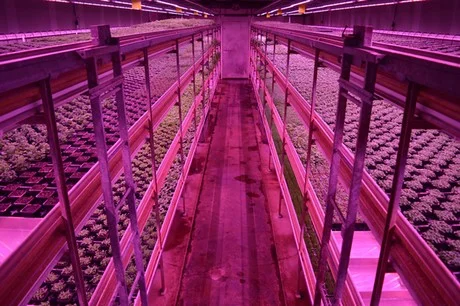
Berjelle hopes to finish his study as soon as possible to spend more time in the 'pink cell'. The software for the cell, in which around 20 herbs and micro vegetables are grown, has been supplied by Green Simplicity of Wessel van Paassen. The lamps are by Hortilux. "CO2, lighting, and irrigation are not required when growing mushrooms. Actually, besides the adjusted settings, I only use the climate control that controls the temperature, just like it did for mushrooms."
Golden mean
From the back to the front, various tests from young to old can be found in the cell. "This growth was a test. Not everything is optimal, but the results are good. Basil of course requires a bit warmer climate, and coriander a bit cooler on the other hand, but in one cell you have to choose the golden mean, make compromises. That went okay, I think."
Berjelle bought the seeds for the herbs and the micro vegetables at Enza Zaden. He preferred the lesser known herbs, such as lavas, savory, and pizza herbs, but also the more known types such as thyme and parsley grow under the red glow. "Ultimately, with especially bred seeds for vertical farming, much more profit can be made, I expect."
Farming with a sustainable and healthy product
But before you are ready, you can already continue fine tuning. The ultimate goal of Van Namen Specialties, as Berjelle wants to call his young project, is expansion to multiple cells. "At first I think of a warm and a cooler cell. Still, the herbs and micro vegetables are already of good quality without special climate adjustments."
Berjelle will be soon starting his first harvest. "I am going to try to sell the herbs and micro herbs to local shops, and I will offer my products to clients I already know from the mushroom trade, whom I can offer something extra. The beauty of vertical farming is that it exudes sustainability. You do not need heat, because the lamps already give off sufficient heat. And the electricity for the lighting is generated by the solar panels on the roof of the nursery."
But Berjelle does not only want to distinguish himself on sustainability. "I have much faith in research that shows that vegetables and herbs from multi-layer growth contains more anti-oxidants."
For more information:
Van Namen Specialties
Berjelle van Namen
berjelle@xs4all.nl
06-25420255
Publication date : 12/20/2018
© HortiDaily.com

Curwin Steps Down As CEO of TruLeaf
Peter Moreira
December 17, 2018
Gregg Curwin is stepping down as president and CEO of Nova Scotia-based TruLeaf Sustainable Agriculture. - Contributed
Gregg Curwin has stepped down as CEO of AgTech company TruLeaf Sustainable Agriculture, paving the way for McCain Foods to steward the company through a phase of expected “exponential” growth.
In an interview last week, Curwin said it was his decision to step down and he did so with the full support of the TruLeaf board and major investors. All decided the company’s ambition and the complexity of its machine learning-driven vertical farms required a larger management team and access to more capital. Curwin left the post late last month.
Halifax-based TruLeaf aims to be the North American leader in vertical farming, which combines hydroponic technology, LED lighting and reclaimed rainwater with machine learning to produce vegetables year-round indoors. Vertical farming is nearly 30 times more efficient than traditional agriculture, uses as much as 95 per cent less water, and takes up less land.
“Startups are like kids — they’re your baby, and with that comes a lot of hard work, cost and emotional attachment,” said Curwin in the interview. “But ... as founders, it’s prudent to understand when to let go.”
Having taken on investment over the years, TruLeaf now has four major shareholders, none of which has a majority stake. McCain Foods invested an undisclosed amount in TruLeaf earlier this year, and will now manage the company. As well as Curwin, the other major shareholders are Toronto-based investors Mike Durland and Jeff Watson. Innovacorp, the early-stage venture capital agency owned by the Nova Scotia government, is also a small investor.
Curwin described the decision to step down as the hardest of his life and it is coming at a critical time for the company. TruLeaf plans next month to open its $16 million plant in Guelph, Ont., which will supply its Goodleaf Farms brand produce to the Toronto market.
The company already has a farm in Truro, which produces greens for the Maritime market and is experimenting using machine learning to optimize nutrition, taste and growing times.
But the Guelph plant will be far more sophisticated, with more sensors and a greater capacity for its systems to learn from the data it collects.
The next step for TruLeaf is to open farms in Montreal and the Prairies with the eventual goal of becoming the largest indoor farm operator in North America. Calling the projected growth rate “exponential”, Curwin admitted such ambitions will require a lot of capital but did not go into how much money is needed.
Curwin has been working for nine years on TruLeaf, and said that by the end of his run he was “physically, mentally and creatively spent.” He will continue to sit on the TruLeaf board and serve as an adviser, but otherwise will take some time off before getting involved with other endeavours.
Looking back on his time with the company, he noted several social and economic factors combined to propel the company forward. TruLeaf’s low-energy, local production of greens meets the demands of buy local, environmental and pro-nutrition movements.
Said Curwin: “I never imagined in my wildest dreams that we’d have this perfect storm.”
Peter Moreira is a principal of Entrevestor, which provides news and data on Atlantic Canadian startups.

SOUTH KOREA: Smart Farm At Industrial Site Grows Future Foods
Miraewon’s container-shaped vertical farm is run by a robot that adds and removes seed trays on its own. The climate, including temperature and humidity, is automatically controlled. [LIM HYUN-DONG]
December 18, 2018
PYEONGTAEK, Gyeonggi - Miraewon, a farming company, is in an unlikely place, an ordinary industrial site in northern Pyeongtaek, Gyeonggi. But that’s because it’s a smart-farming company.
On Dec. 3, senior government officials, including the Ministry of Science and ICT’s first vice minister, gathered at Miraewon as it hosted a conference for experts as the government looks to establish research and development reform measures in search of new industries.
The company is at the forefront of smart urban farming, which utilizes technology to grow produce on vertically-stacked layers within a contained environment. Traditional methods rely on vast tracts of arable land. The fledgling smart farming sector is bringing agriculture indoors and promising high-density production without the use of chemicals.
While the company’s building seems like a manufacturing facility from the outside, the 1,160 square meters (12,486 square feet) inside are protected from external contaminants and produce 80 tons of around 20 different types of agricultural goods annually, including herbs and lettuce.
The company not only grows vegetables but also packages the produce, as, for example, salads ready to be sold on store shelves. Combining agriculture and manufacturing, the facility is a model smart farm for the future.
Last year, Miraewon supplied products it grew and packaged to 25 retailers, such as Lotte Mart, Hyundai Department Store, Samsung Welstory and CU, generating 35 billion won ($30.9 million) in sales.
“We reached the break-even point two years ago,” said Kang Dae-hyun, vice president of Miraewon. “For this year, we expect to record around 42 billion won in sales.”
“We plan to expand the vertical farming facility to a size of 700 pyeong [24,908 square feet] and push out full-scale automated lines,” Kang added.
A laptop monitor with details of the controlled environment is placed at the entrance of one of Miraewon’s cutting-edge container-shaped smart farms.
The laptop displays the current temperature, humidity level, pH level and carbon dioxide level, among with other essential climate details required to maintain an ideal environment to grow vegetables.
The smart farm, which specifically grows leafy vegetables such as lettuce, requires no human intervention.
Seed sowing is automated and trays with the sowed seeds are placed under LED lighting in 10-tray shelves stacked 20 centimeters (7.87 inches) apart by mobile robots. Lettuce sprouts are grown for 15 days, and in that period, they are fed with nutrient fluid and carbon dioxide.
All humans need to do is replenish the nutrient fluid and set the climate.
Miraewon’s container-shaped urban farm supplies young leafy plants, while other existing urban farms ship out vegetables.
High-tech farming has advantages over traditional methods.
“Smart farming can steadily supply vegetables through the four seasons. And because it is completely sealed from the outside, there is no need to use pesticides. We produce completely chemical-free food,” said Son Geum-joo, a researcher at Miraewon’s Agricultural Food Research Institute.
“Although the environment is limited, the farm will become price competitive with time as it will generate consistent high-density production,” Son added.
Smart urban farming is now reaching the state of industrialization, going beyond the laboratories of government-funded facilities or universities.
In addition to Miraewon, other companies in the country make use of urban farming. The list includes Agronics and Insungtec. Notable examples abroad include U.S.-based AeroFarms and Japan’s Akisai.
Urban farming is presented as a defense against the dangers of population growth and could help if food shortages are the result. The International Space Station currently operates a vertical farm for astronauts.
“Urban farming was chosen as one of the top 10 urban innovations of 2015 by the World Economic Forum,” said Seo Kyung-choon, the head of the bioscience technology division at the Ministry of Science and ICT.
“As all industries incorporate a form of intelligence and undergo a paradigm shift, urban farming, which combines biology and information and communication technologies, is currently in the spotlight as a promising new industry,” Seo added.
BY CHOI JOON-HO [chae.yunhwan@joongang.co.kr]
Uber CEO And Alphabet Invest In Urban Farming Startup
December 12, 2018
The two-year-old company raised $90 million in funding
Bowery Farming is part of a new wave of ag-tech startups
Farmers work at the Bowery Farming Inc. indoor farm in Kearny, New Jersey. Photographer: David Williams/Bloomberg
Bowery Farming Inc., a two-year-old startup that uses robotics to cultivate crops indoors, is on track for more growth. The New York-based company plans to announce on Wednesday that it raised $90 million from investors including Alphabet Inc.’s GV and Uber Chief Executive Officer Dara Khosrowshahi, said Bowery’s co-founder and CEO, Irving Fain. The company declined to provide its valuation.
Bowery is part of a new crop of agriculture technology startups growing leafy greens in controlled environments near cities. Last year, Plenty, a San Francisco-based vertical farming company, raised $200 million from the Japanese conglomerate SoftBank Group Corp.’s Vision Fund. Bowery grows its veggies in layers of sensor-rich trays that move and react to humidity, carbon dioxide and light. One square foot of Bowery’s indoor farm is 100 times more productive than an equivalent plot of arable land, Bowery says. Plenty makes similar claims.
Rows of produce grow in trays at the Bowery Farming Inc. indoor farm in Kearny, New Jersey. Photographer: David Williams/Bloomberg
Part of the urgency of Bowery’s business plan is the prospect of looming global food shortages. The United Nations says food production will need to double in the next three decades to feed the planet’s swelling population. Bowery and its ilk see a business opportunity in building massive indoor farms in and on the outskirts of cities -- a costly proposition, but one that could cut down on waste and ensure fresher produce.
"This round is solid validation for the scope of the problem and the opportunity," said Fain. To date, Bowery has raised $118 million from investors including First Round Capital and General Catalyst. GV, formerly Google Ventures, led the most recent investment, which includes funding from Singapore’s state investment firm, Temasek Holdings Pte.
Dara Khosrowshahi | Photographer: Simon Dawson/Bloomberg
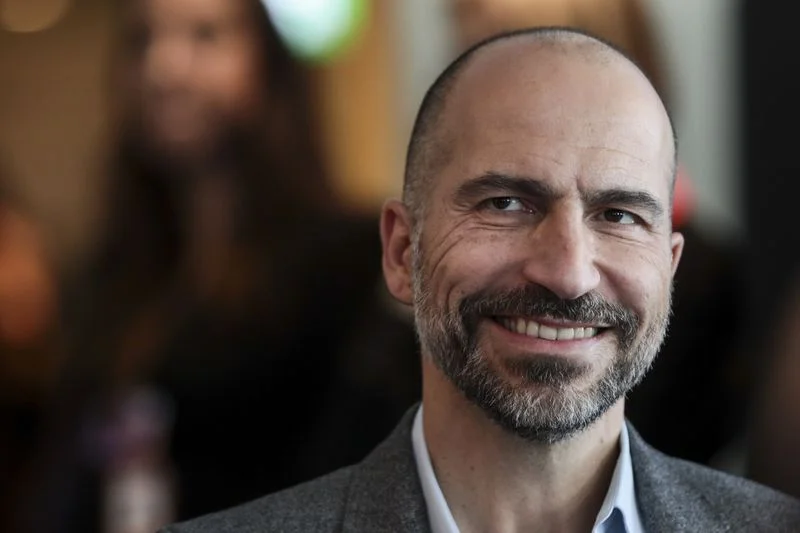
Fain said Uber’s Khosrowshahi became an investor because of his interest in futuristic cities. "Uber is a big believer in cities and the importance of sustainable cities," said Fain.
Bowery currently operates two indoor farms in Kearny, New Jersey. The facilities send greens like kale, bok choy and butterhead lettuce to Whole Foods and salad chain Sweetgreen. Fain said the fresh funding will be used to open new farms in the U.S. and internationally. Bowery declined to disclose how many new farms are in the works or where they would be located. "There is no question that we intend to have our farms in cities across the world," Fain said.
Roots of arugula plants are seen inside plastic trays at the Bowery Farming Inc. indoor farm. Photographer: David Williams/Bloomberg
Andy Wheeler, a Bowery board member and partner at GV, echoed Fain’s global expansion ambitions. "The company is poised to have a significant impact on the global produce market," he said.
Bowery is planning to expand its headcount too, Fain said. The company employs 65 people. Some of these employees could come from Amazon, Fain suggested. Though competition for talent will likely be tough as the e-commerce giant ramps up hiring for its new office in New York. This year, Bowery hired Brian Donato, a former senior operator of Amazon Fresh and Pantry food delivery services; Scott Horoho, a former senior Amazon engineering manager; and Jeff Raines, a former director of data center engineering for Amazon Web Services.

Finland: Fully Automatic Vertical Farm Demo Facility Opened
Netled Continues Developing Grow Recipes
“Growing in vertical farms differs from greenhouse growing a lot. This is why new growing recipes and guidance needs to be offered together with the equipment." Speaking is Niko Kivioja, CEO with Netled Oy.
The company develops and sells turn-key fully automatic vertical farms and has just opened a new demo facility in the company's premises in Pirkkala.
"The demo facility serves R&D purposes, but also works for variety testing in order to find and develop most suitable varieties for vertical farming", Niko explains.
Furthermore, the demo facility enables Netled to accurately define the optimal growing environment setups in their Vera® vertical farm system for different varieties. The company has started the variety tests in the demo facility, which works as a platform for their recipe development.
"As a result, we can offer our customers fully tested and verified growing recipes, which enables them to take new varieties in their growing process without investing time and money in their own separate testing procedures."
At the moment the first crops are harvested.
The demo facility is not open to the public, but customers are invited to presentations regularly and of course we will keep you updated on that!
For more information
Netled Oy
Niko Kivioja
T: +358-50-360-8121
niko.kivioja@netled.fi
Publication date : 12/14/2018
Author: Arlette Sijmonsma
© HortiDaily.com
Vertical Farm Company Raises $90 Million To Grow More Veggies In The Middle Of New York City
December 15, 2018

Senior Editor, UK | Contactable via charlotte@livekindly.co
Vertical farming company Bowery has closed a $90 million fundraising round, allowing it to grow even more veggies in the middle of New York City. Google Ventures led the round, which was also participated in by Uber CEO Dara Khosrowshahi.
According to Venture Beat, First Round Capital, General Catalyst, GGV Capital, and Temasek also participated in the round, which follows the $27.5 million the business raised in June; the total amount raised by Bowery now stands at $117.5 million.
Founded in 2017, Bowery intends to revolutionize the agriculture industry. The company currently has two farms in New York, but thanks to the new funding, in 2019, it plans to open two more, in cities that are currently unnamed. It also hopes to advance company tech and innovation with the funding.
According to Bowery, indoor farms provide a solution to impending water scarcity and don’t require the use of harmful pesticides. The farms are unaffected by the weather or season changes, and they allow scientists to closely monitor the crop-growing process, enabling them to give the plants no more than exactly what they need. Bowery currently grows crops such as baby kale, arugula, and butterhead lettuce and supplies them to vegan-friendly restaurant chain Sweetgreen and Whole Foods stores.
Speaking to Fortune earlier this year, Bowery’s CEO Irving Fain said, “We’re growing post-organic produce, it’s the next evolution. It’s a better product for us and better way of growing and less destructive to the earth, we’re using technology to grow the purest food possible.”
He continued, “At Bowery, we’re re-thinking what agriculture looks like in a world where water is scarce, people live in cities, and we’re waking up to the dangers of pesticides and other chemicals.”
Growing Demand For Indoor Vertical Farms
As populations rise around the world and climate change looms, the need for indoor farming facilities is growing. Companies are striving to minimize their carbon footprint by purchasing sustainable produce from farms that are close by.
Bowery isn’t alone in satisfying this demand, indoor farming company Farm.One – based underneath a New York Michelin-starred restaurant – delivers its produce to the best eateries in the city via bike or subway.
In Las Vegas, Oasis Biotech recently set up its first indoor vertical farm, and In August, Plenty attended its first-ever event, Outside Lands music festival in San Francisco, selling its vertically grown kale and arugula.
Image Credit: Farm.One
Speaking to Fortune earlier this year, Bowery’s CEO Irving Fain said, “We’re growing post-organic produce, it’s the next evolution. It’s a better product for us and better way of growing and less destructive to the earth, we’re using technology to grow the purest food possible.”
He continued, “At Bowery, we’re re-thinking what agriculture looks like in a world where water is scarce, people live in cities, and we’re waking up to the dangers of pesticides and other chemicals.”
Growing Demand For Indoor Vertical Farms
As populations rise around the world and climate change looms, the need for indoor farming facilities is growing. Companies are striving to minimize their carbon footprint by purchasing sustainable produce from farms that are close by.
Bowery isn’t alone in satisfying this demand, indoor farming company Farm.One – based underneath a New York Michelin-starred restaurant – delivers its produce to the best eateries in the city via bike or subway.
In Las Vegas, Oasis Biotech recently set up its first indoor vertical farm, and In August, Plenty attended its first-ever event, Outside Lands music festival in San Francisco, selling its vertically grown kale and arugula.
Image Credit: Farm.One
Speaking to Fortune earlier this year, Bowery’s CEO Irving Fain said, “We’re growing post-organic produce, it’s the next evolution. It’s a better product for us and better way of growing and less destructive to the earth, we’re using technology to grow the purest food possible.”
He continued, “At Bowery, we’re re-thinking what agriculture looks like in a world where water is scarce, people live in cities, and we’re waking up to the dangers of pesticides and other chemicals.”
Growing Demand For Indoor Vertical Farms
As populations rise around the world and climate change looms, the need for indoor farming facilities is growing. Companies are striving to minimize their carbon footprint by purchasing sustainable produce from farms that are close by.
Bowery isn’t alone in satisfying this demand, indoor farming company Farm.One – based underneath a New York Michelin-starred restaurant – delivers its produce to the best eateries in the city via bike or subway.
In Las Vegas, Oasis Biotech recently set up its first indoor vertical farm, and In August, Plenty attended its first-ever event, Outside Lands music festival in San Francisco, selling its vertically grown kale and arugula.
Image Credit: Farm.One
Speaking to Fortune earlier this year, Bowery’s CEO Irving Fain said, “We’re growing post-organic produce, it’s the next evolution. It’s a better product for us and better way of growing and less destructive to the earth, we’re using technology to grow the purest food possible.”
He continued, “At Bowery, we’re re-thinking what agriculture looks like in a world where water is scarce, people live in cities, and we’re waking up to the dangers of pesticides and other chemicals.”
Growing Demand For Indoor Vertical Farms
As populations rise around the world and climate change looms, the need for indoor farming facilities is growing. Companies are striving to minimize their carbon footprint by purchasing sustainable produce from farms that are close by.
Bowery isn’t alone in satisfying this demand, indoor farming company Farm.One – based underneath a New York Michelin-starred restaurant – delivers its produce to the best eateries in the city via bike or subway.
In Las Vegas, Oasis Biotech recently set up its first indoor vertical farm, and In August, Plenty attended its first-ever event, Outside Lands music festival in San Francisco, selling its vertically grown kale and arugula.
Image Credit: Farm.One
Speaking to Fortune earlier this year, Bowery’s CEO Irving Fain said, “We’re growing post-organic produce, it’s the next evolution. It’s a better product for us and better way of growing and less destructive to the earth, we’re using technology to grow the purest food possible.”
He continued, “At Bowery, we’re re-thinking what agriculture looks like in a world where water is scarce, people live in cities, and we’re waking up to the dangers of pesticides and other chemicals.”
Growing Demand For Indoor Vertical Farms
As populations rise around the world and climate change looms, the need for indoor farming facilities is growing. Companies are striving to minimize their carbon footprint by purchasing sustainable produce from farms that are close by.
Bowery isn’t alone in satisfying this demand, indoor farming company Farm.One – based underneath a New York Michelin-starred restaurant – delivers its produce to the best eateries in the city via bike or subway.
In Las Vegas, Oasis Biotech recently set up its first indoor vertical farm, and In August, Plenty attended its first-ever event, Outside Lands music festival in San Francisco, selling its vertically grown kale and arugula.
Image Credit: Farm.One
Speaking to Fortune earlier this year, Bowery’s CEO Irving Fain said, “We’re growing post-organic produce, it’s the next evolution. It’s a better product for us and better way of growing and less destructive to the earth, we’re using technology to grow the purest food possible.”
He continued, “At Bowery, we’re re-thinking what agriculture looks like in a world where water is scarce, people live in cities, and we’re waking up to the dangers of pesticides and other chemicals.”
Growing Demand For Indoor Vertical Farms
As populations rise around the world and climate change looms, the need for indoor farming facilities is growing. Companies are striving to minimize their carbon footprint by purchasing sustainable produce from farms that are close by.
Bowery isn’t alone in satisfying this demand, indoor farming company Farm.One – based underneath a New York Michelin-starred restaurant – delivers its produce to the best eateries in the city via bike or subway.
In Las Vegas, Oasis Biotech recently set up its first indoor vertical farm, and In August, Plenty attended its first-ever event, Outside Lands music festival in San Francisco, selling its vertically grown kale and arugula.
Image Credit: Farm.One
Speaking to Fortune earlier this year, Bowery’s CEO Irving Fain said, “We’re growing post-organic produce, it’s the next evolution. It’s a better product for us and better way of growing and less destructive to the earth, we’re using technology to grow the purest food possible.”
He continued, “At Bowery, we’re re-thinking what agriculture looks like in a world where water is scarce, people live in cities, and we’re waking up to the dangers of pesticides and other chemicals.”
Growing Demand For Indoor Vertical Farms
As populations rise around the world and climate change looms, the need for indoor farming facilities is growing. Companies are striving to minimize their carbon footprint by purchasing sustainable produce from farms that are close by.
Bowery isn’t alone in satisfying this demand, indoor farming company Farm.One – based underneath a New York Michelin-starred restaurant – delivers its produce to the best eateries in the city via bike or subway.
In Las Vegas, Oasis Biotech recently set up its first indoor vertical farm, and In August, Plenty attended its first-ever event, Outside Lands music festival in San Francisco, selling its vertically grown kale and arugula.
Image Credit: Farm.One
Speaking to Fortune earlier this year, Bowery’s CEO Irving Fain said, “We’re growing post-organic produce, it’s the next evolution. It’s a better product for us and better way of growing and less destructive to the earth, we’re using technology to grow the purest food possible.”
He continued, “At Bowery, we’re re-thinking what agriculture looks like in a world where water is scarce, people live in cities, and we’re waking up to the dangers of pesticides and other chemicals.”
Growing Demand For Indoor Vertical Farms
As populations rise around the world and climate change looms, the need for indoor farming facilities is growing. Companies are striving to minimize their carbon footprint by purchasing sustainable produce from farms that are close by.
Bowery isn’t alone in satisfying this demand, indoor farming company Farm.One – based underneath a New York Michelin-starred restaurant – delivers its produce to the best eateries in the city via bike or subway.
In Las Vegas, Oasis Biotech recently set up its first indoor vertical farm, and In August, Plenty attended its first-ever event, Outside Lands music festival in San Francisco, selling its vertically grown kale and arugula.
Image Credit: Farm.One
Speaking to Fortune earlier this year, Bowery’s CEO Irving Fain said, “We’re growing post-organic produce, it’s the next evolution. It’s a better product for us and better way of growing and less destructive to the earth, we’re using technology to grow the purest food possible.”
He continued, “At Bowery, we’re re-thinking what agriculture looks like in a world where water is scarce, people live in cities, and we’re waking up to the dangers of pesticides and other chemicals.”
Growing Demand For Indoor Vertical Farms
As populations rise around the world and climate change looms, the need for indoor farming facilities is growing. Companies are striving to minimize their carbon footprint by purchasing sustainable produce from farms that are close by.
Bowery isn’t alone in satisfying this demand, indoor farming company Farm.One – based underneath a New York Michelin-starred restaurant – delivers its produce to the best eateries in the city via bike or subway.
In Las Vegas, Oasis Biotech recently set up its first indoor vertical farm, and In August, Plenty attended its first-ever event, Outside Lands music festival in San Francisco, selling its vertically grown kale and arugula.
Image Credit: Farm.One
Speaking to Fortune earlier this year, Bowery’s CEO Irving Fain said, “We’re growing post-organic produce, it’s the next evolution. It’s a better product for us and better way of growing and less destructive to the earth, we’re using technology to grow the purest food possible.”
He continued, “At Bowery, we’re re-thinking what agriculture looks like in a world where water is scarce, people live in cities, and we’re waking up to the dangers of pesticides and other chemicals.”
Growing Demand For Indoor Vertical Farms
As populations rise around the world and climate change looms, the need for indoor farming facilities is growing. Companies are striving to minimize their carbon footprint by purchasing sustainable produce from farms that are close by.
Bowery isn’t alone in satisfying this demand, indoor farming company Farm.One – based underneath a New York Michelin-starred restaurant – delivers its produce to the best eateries in the city via bike or subway.
In Las Vegas, Oasis Biotech recently set up its first indoor vertical farm, and In August, Plenty attended its first-ever event, Outside Lands music festival in San Francisco, selling its vertically grown kale and arugula.
Image Credit: Farm.One
Speaking to Fortune earlier this year, Bowery’s CEO Irving Fain said, “We’re growing post-organic produce, it’s the next evolution. It’s a better product for us and better way of growing and less destructive to the earth, we’re using technology to grow the purest food possible.”
He continued, “At Bowery, we’re re-thinking what agriculture looks like in a world where water is scarce, people live in cities, and we’re waking up to the dangers of pesticides and other chemicals.”
Growing Demand For Indoor Vertical Farms
As populations rise around the world and climate change looms, the need for indoor farming facilities is growing. Companies are striving to minimize their carbon footprint by purchasing sustainable produce from farms that are close by.
Bowery isn’t alone in satisfying this demand, indoor farming company Farm.One – based underneath a New York Michelin-starred restaurant – delivers its produce to the best eateries in the city via bike or subway.
In Las Vegas, Oasis Biotech recently set up its first indoor vertical farm, and In August, Plenty attended its first-ever event, Outside Lands music festival in San Francisco, selling its vertically grown kale and arugula.
Image Credit: Farm.One
Speaking to Fortune earlier this year, Bowery’s CEO Irving Fain said, “We’re growing post-organic produce, it’s the next evolution. It’s a better product for us and better way of growing and less destructive to the earth, we’re using technology to grow the purest food possible.”
He continued, “At Bowery, we’re re-thinking what agriculture looks like in a world where water is scarce, people live in cities, and we’re waking up to the dangers of pesticides and other chemicals.”
Growing Demand For Indoor Vertical Farms
As populations rise around the world and climate change looms, the need for indoor farming facilities is growing. Companies are striving to minimize their carbon footprint by purchasing sustainable produce from farms that are close by.
Bowery isn’t alone in satisfying this demand, indoor farming company Farm.One – based underneath a New York Michelin-starred restaurant – delivers its produce to the best eateries in the city via bike or subway.
In Las Vegas, Oasis Biotech recently set up its first indoor vertical farm, and In August, Plenty attended its first-ever event, Outside Lands music festival in San Francisco, selling its vertically grown kale and arugula.
Image Credit: Farm.One
Speaking to Fortune earlier this year, Bowery’s CEO Irving Fain said, “We’re growing post-organic produce, it’s the next evolution. It’s a better product for us and better way of growing and less destructive to the earth, we’re using technology to grow the purest food possible.”
He continued, “At Bowery, we’re re-thinking what agriculture looks like in a world where water is scarce, people live in cities, and we’re waking up to the dangers of pesticides and other chemicals.”
Growing Demand For Indoor Vertical Farms
As populations rise around the world and climate change looms, the need for indoor farming facilities is growing. Companies are striving to minimize their carbon footprint by purchasing sustainable produce from farms that are close by.
Bowery isn’t alone in satisfying this demand, indoor farming company Farm.One – based underneath a New York Michelin-starred restaurant – delivers its produce to the best eateries in the city via bike or subway.
In Las Vegas, Oasis Biotech recently set up its first indoor vertical farm, and In August, Plenty attended its first-ever event, Outside Lands music festival in San Francisco, selling its vertically grown kale and arugula.
Image Credit: Farm.One
Speaking to Fortune earlier this year, Bowery’s CEO Irving Fain said, “We’re growing post-organic produce, it’s the next evolution. It’s a better product for us and better way of growing and less destructive to the earth, we’re using technology to grow the purest food possible.”
He continued, “At Bowery, we’re re-thinking what agriculture looks like in a world where water is scarce, people live in cities, and we’re waking up to the dangers of pesticides and other chemicals.”
Growing Demand For Indoor Vertical Farms
As populations rise around the world and climate change looms, the need for indoor farming facilities is growing. Companies are striving to minimize their carbon footprint by purchasing sustainable produce from farms that are close by.
Bowery isn’t alone in satisfying this demand, indoor farming company Farm.One – based underneath a New York Michelin-starred restaurant – delivers its produce to the best eateries in the city via bike or subway.
In Las Vegas, Oasis Biotech recently set up its first indoor vertical farm, and In August, Plenty attended its first-ever event, Outside Lands music festival in San Francisco, selling its vertically grown kale and arugula.
Image Credit: Farm.One
Speaking to Fortune earlier this year, Bowery’s CEO Irving Fain said, “We’re growing post-organic produce, it’s the next evolution. It’s a better product for us and better way of growing and less destructive to the earth, we’re using technology to grow the purest food possible.”
He continued, “At Bowery, we’re re-thinking what agriculture looks like in a world where water is scarce, people live in cities, and we’re waking up to the dangers of pesticides and other chemicals.”
Growing Demand For Indoor Vertical Farms
As populations rise around the world and climate change looms, the need for indoor farming facilities is growing. Companies are striving to minimize their carbon footprint by purchasing sustainable produce from farms that are close by.
Bowery isn’t alone in satisfying this demand, indoor farming company Farm.One – based underneath a New York Michelin-starred restaurant – delivers its produce to the best eateries in the city via bike or subway.
In Las Vegas, Oasis Biotech recently set up its first indoor vertical farm, and In August, Plenty attended its first-ever event, Outside Lands music festival in San Francisco, selling its vertically grown kale and arugula.
Image Credit: Farm.One
Speaking to Fortune earlier this year, Bowery’s CEO Irving Fain said, “We’re growing post-organic produce, it’s the next evolution. It’s a better product for us and better way of growing and less destructive to the earth, we’re using technology to grow the purest food possible.”
He continued, “At Bowery, we’re re-thinking what agriculture looks like in a world where water is scarce, people live in cities, and we’re waking up to the dangers of pesticides and other chemicals.”
Growing Demand For Indoor Vertical Farms
As populations rise around the world and climate change looms, the need for indoor farming facilities is growing. Companies are striving to minimize their carbon footprint by purchasing sustainable produce from farms that are close by.
Bowery isn’t alone in satisfying this demand, indoor farming company Farm.One – based underneath a New York Michelin-starred restaurant – delivers its produce to the best eateries in the city via bike or subway.
In Las Vegas, Oasis Biotech recently set up its first indoor vertical farm, and In August, Plenty attended its first-ever event, Outside Lands music festival in San Francisco, selling its vertically grown kale and arugula.
Image Credit: Farm.One
Speaking to Fortune earlier this year, Bowery’s CEO Irving Fain said, “We’re growing post-organic produce, it’s the next evolution. It’s a better product for us and better way of growing and less destructive to the earth, we’re using technology to grow the purest food possible.”
He continued, “At Bowery, we’re re-thinking what agriculture looks like in a world where water is scarce, people live in cities, and we’re waking up to the dangers of pesticides and other chemicals.”
Growing Demand For Indoor Vertical Farms
As populations rise around the world and climate change looms, the need for indoor farming facilities is growing. Companies are striving to minimize their carbon footprint by purchasing sustainable produce from farms that are close by.
Bowery isn’t alone in satisfying this demand, indoor farming company Farm.One – based underneath a New York Michelin-starred restaurant – delivers its produce to the best eateries in the city via bike or subway.
In Las Vegas, Oasis Biotech recently set up its first indoor vertical farm, and In August, Plenty attended its first-ever event, Outside Lands music festival in San Francisco, selling its vertically grown kale and arugula.
Image Credit: Farm.One
Speaking to Fortune earlier this year, Bowery’s CEO Irving Fain said, “We’re growing post-organic produce, it’s the next evolution. It’s a better product for us and better way of growing and less destructive to the earth, we’re using technology to grow the purest food possible.”
He continued, “At Bowery, we’re re-thinking what agriculture looks like in a world where water is scarce, people live in cities, and we’re waking up to the dangers of pesticides and other chemicals.”
Growing Demand For Indoor Vertical Farms
As populations rise around the world and climate change looms, the need for indoor farming facilities is growing. Companies are striving to minimize their carbon footprint by purchasing sustainable produce from farms that are close by.
Bowery isn’t alone in satisfying this demand, indoor farming company Farm.One – based underneath a New York Michelin-starred restaurant – delivers its produce to the best eateries in the city via bike or subway.
In Las Vegas, Oasis Biotech recently set up its first indoor vertical farm, and In August, Plenty attended its first-ever event, Outside Lands music festival in San Francisco, selling its vertically grown kale and arugula.
Image Credit: Farm.One
Speaking to Fortune earlier this year, Bowery’s CEO Irving Fain said, “We’re growing post-organic produce, it’s the next evolution. It’s a better product for us and better way of growing and less destructive to the earth, we’re using technology to grow the purest food possible.”
He continued, “At Bowery, we’re re-thinking what agriculture looks like in a world where water is scarce, people live in cities, and we’re waking up to the dangers of pesticides and other chemicals.”
Growing Demand For Indoor Vertical Farms
As populations rise around the world and climate change looms, the need for indoor farming facilities is growing. Companies are striving to minimize their carbon footprint by purchasing sustainable produce from farms that are close by.
Bowery isn’t alone in satisfying this demand, indoor farming company Farm.One – based underneath a New York Michelin-starred restaurant – delivers its produce to the best eateries in the city via bike or subway.
In Las Vegas, Oasis Biotech recently set up its first indoor vertical farm, and In August, Plenty attended its first-ever event, Outside Lands music festival in San Francisco, selling its vertically grown kale and arugula.
Image Credit: Farm.One
Speaking to Fortune earlier this year, Bowery’s CEO Irving Fain said, “We’re growing post-organic produce, it’s the next evolution. It’s a better product for us and better way of growing and less destructive to the earth, we’re using technology to grow the purest food possible.”
He continued, “At Bowery, we’re re-thinking what agriculture looks like in a world where water is scarce, people live in cities, and we’re waking up to the dangers of pesticides and other chemicals.”
Growing Demand For Indoor Vertical Farms
As populations rise around the world and climate change looms, the need for indoor farming facilities is growing. Companies are striving to minimize their carbon footprint by purchasing sustainable produce from farms that are close by.
Bowery isn’t alone in satisfying this demand, indoor farming company Farm.One – based underneath a New York Michelin-starred restaurant – delivers its produce to the best eateries in the city via bike or subway.
In Las Vegas, Oasis Biotech recently set up its first indoor vertical farm, and In August, Plenty attended its first-ever event, Outside Lands music festival in San Francisco, selling its vertically grown kale and arugula.
Image Credit: Farm.One
Speaking to Fortune earlier this year, Bowery’s CEO Irving Fain said, “We’re growing post-organic produce, it’s the next evolution. It’s a better product for us and better way of growing and less destructive to the earth, we’re using technology to grow the purest food possible.”
He continued, “At Bowery, we’re re-thinking what agriculture looks like in a world where water is scarce, people live in cities, and we’re waking up to the dangers of pesticides and other chemicals.”
Growing Demand For Indoor Vertical Farms
As populations rise around the world and climate change looms, the need for indoor farming facilities is growing. Companies are striving to minimize their carbon footprint by purchasing sustainable produce from farms that are close by.
Bowery isn’t alone in satisfying this demand, indoor farming company Farm.One – based underneath a New York Michelin-starred restaurant – delivers its produce to the best eateries in the city via bike or subway.
In Las Vegas, Oasis Biotech recently set up its first indoor vertical farm, and In August, Plenty attended its first-ever event, Outside Lands music festival in San Francisco, selling its vertically grown kale and arugula.
Image Credit: Farm.One
Speaking to Fortune earlier this year, Bowery’s CEO Irving Fain said, “We’re growing post-organic produce, it’s the next evolution. It’s a better product for us and better way of growing and less destructive to the earth, we’re using technology to grow the purest food possible.”
He continued, “At Bowery, we’re re-thinking what agriculture looks like in a world where water is scarce, people live in cities, and we’re waking up to the dangers of pesticides and other chemicals.”
Growing Demand For Indoor Vertical Farms
As populations rise around the world and climate change looms, the need for indoor farming facilities is growing. Companies are striving to minimize their carbon footprint by purchasing sustainable produce from farms that are close by.
Bowery isn’t alone in satisfying this demand, indoor farming company Farm.One – based underneath a New York Michelin-starred restaurant – delivers its produce to the best eateries in the city via bike or subway.
In Las Vegas, Oasis Biotech recently set up its first indoor vertical farm, and In August, Plenty attended its first-ever event, Outside Lands music festival in San Francisco, selling its vertically grown kale and arugula.
Image Credit: Farm.One
Speaking to Fortune earlier this year, Bowery’s CEO Irving Fain said, “We’re growing post-organic produce, it’s the next evolution. It’s a better product for us and better way of growing and less destructive to the earth, we’re using technology to grow the purest food possible.”
He continued, “At Bowery, we’re re-thinking what agriculture looks like in a world where water is scarce, people live in cities, and we’re waking up to the dangers of pesticides and other chemicals.”
Growing Demand For Indoor Vertical Farms
As populations rise around the world and climate change looms, the need for indoor farming facilities is growing. Companies are striving to minimize their carbon footprint by purchasing sustainable produce from farms that are close by.
Bowery isn’t alone in satisfying this demand, indoor farming company Farm.One – based underneath a New York Michelin-starred restaurant – delivers its produce to the best eateries in the city via bike or subway.
In Las Vegas, Oasis Biotech recently set up its first indoor vertical farm, and In August, Plenty attended its first-ever event, Outside Lands music festival in San Francisco, selling its vertically grown kale and arugula.
Image Credit: Farm.One
Speaking to Fortune earlier this year, Bowery’s CEO Irving Fain said, “We’re growing post-organic produce, it’s the next evolution. It’s a better product for us and better way of growing and less destructive to the earth, we’re using technology to grow the purest food possible.”
He continued, “At Bowery, we’re re-thinking what agriculture looks like in a world where water is scarce, people live in cities, and we’re waking up to the dangers of pesticides and other chemicals.”
Growing Demand For Indoor Vertical Farms
As populations rise around the world and climate change looms, the need for indoor farming facilities is growing. Companies are striving to minimize their carbon footprint by purchasing sustainable produce from farms that are close by.
Bowery isn’t alone in satisfying this demand, indoor farming company Farm.One – based underneath a New York Michelin-starred restaurant – delivers its produce to the best eateries in the city via bike or subway.
In Las Vegas, Oasis Biotech recently set up its first indoor vertical farm, and In August, Plenty attended its first-ever event, Outside Lands music festival in San Francisco, selling its vertically grown kale and arugula.
Image Credit: Farm.One
Speaking to Fortune earlier this year, Bowery’s CEO Irving Fain said, “We’re growing post-organic produce, it’s the next evolution. It’s a better product for us and better way of growing and less destructive to the earth, we’re using technology to grow the purest food possible.”
He continued, “At Bowery, we’re re-thinking what agriculture looks like in a world where water is scarce, people live in cities, and we’re waking up to the dangers of pesticides and other chemicals.”
Growing Demand For Indoor Vertical Farms
As populations rise around the world and climate change looms, the need for indoor farming facilities is growing. Companies are striving to minimize their carbon footprint by purchasing sustainable produce from farms that are close by.
Bowery isn’t alone in satisfying this demand, indoor farming company Farm.One – based underneath a New York Michelin-starred restaurant – delivers its produce to the best eateries in the city via bike or subway.
In Las Vegas, Oasis Biotech recently set up its first indoor vertical farm, and In August, Plenty attended its first-ever event, Outside Lands music festival in San Francisco, selling its vertically grown kale and arugula.
Image Credit: Farm.One
Speaking to Fortune earlier this year, Bowery’s CEO Irving Fain said, “We’re growing post-organic produce, it’s the next evolution. It’s a better product for us and better way of growing and less destructive to the earth, we’re using technology to grow the purest food possible.”
He continued, “At Bowery, we’re re-thinking what agriculture looks like in a world where water is scarce, people live in cities, and we’re waking up to the dangers of pesticides and other chemicals.”
Growing Demand For Indoor Vertical Farms
As populations rise around the world and climate change looms, the need for indoor farming facilities is growing. Companies are striving to minimize their carbon footprint by purchasing sustainable produce from farms that are close by.
Bowery isn’t alone in satisfying this demand, indoor farming company Farm.One – based underneath a New York Michelin-starred restaurant – delivers its produce to the best eateries in the city via bike or subway.
In Las Vegas, Oasis Biotech recently set up its first indoor vertical farm, and In August, Plenty attended its first-ever event, Outside Lands music festival in San Francisco, selling its vertically grown kale and arugula.
Image Credit: Farm.One
Speaking to Fortune earlier this year, Bowery’s CEO Irving Fain said, “We’re growing post-organic produce, it’s the next evolution. It’s a better product for us and better way of growing and less destructive to the earth, we’re using technology to grow the purest food possible.”
He continued, “At Bowery, we’re re-thinking what agriculture looks like in a world where water is scarce, people live in cities, and we’re waking up to the dangers of pesticides and other chemicals.”
Growing Demand For Indoor Vertical Farms
As populations rise around the world and climate change looms, the need for indoor farming facilities is growing. Companies are striving to minimize their carbon footprint by purchasing sustainable produce from farms that are close by.
Bowery isn’t alone in satisfying this demand, indoor farming company Farm.One – based underneath a New York Michelin-starred restaurant – delivers its produce to the best eateries in the city via bike or subway.
In Las Vegas, Oasis Biotech recently set up its first indoor vertical farm, and In August, Plenty attended its first-ever event, Outside Lands music festival in San Francisco, selling its vertically grown kale and arugula.
Image Credit: Farm.One
Speaking to Fortune earlier this year, Bowery’s CEO Irving Fain said, “We’re growing post-organic produce, it’s the next evolution. It’s a better product for us and better way of growing and less destructive to the earth, we’re using technology to grow the purest food possible.”
He continued, “At Bowery, we’re re-thinking what agriculture looks like in a world where water is scarce, people live in cities, and we’re waking up to the dangers of pesticides and other chemicals.”
Growing Demand For Indoor Vertical Farms
As populations rise around the world and climate change looms, the need for indoor farming facilities is growing. Companies are striving to minimize their carbon footprint by purchasing sustainable produce from farms that are close by.
Bowery isn’t alone in satisfying this demand, indoor farming company Farm.One – based underneath a New York Michelin-starred restaurant – delivers its produce to the best eateries in the city via bike or subway.
In Las Vegas, Oasis Biotech recently set up its first indoor vertical farm, and In August, Plenty attended its first-ever event, Outside Lands music festival in San Francisco, selling its vertically grown kale and arugula.
Image Credit: Farm.One
Speaking to Fortune earlier this year, Bowery’s CEO Irving Fain said, “We’re growing post-organic produce, it’s the next evolution. It’s a better product for us and better way of growing and less destructive to the earth, we’re using technology to grow the purest food possible.”
He continued, “At Bowery, we’re re-thinking what agriculture looks like in a world where water is scarce, people live in cities, and we’re waking up to the dangers of pesticides and other chemicals.”
Growing Demand For Indoor Vertical Farms
As populations rise around the world and climate change looms, the need for indoor farming facilities is growing. Companies are striving to minimize their carbon footprint by purchasing sustainable produce from farms that are close by.
Bowery isn’t alone in satisfying this demand, indoor farming company Farm.One – based underneath a New York Michelin-starred restaurant – delivers its produce to the best eateries in the city via bike or subway.
In Las Vegas, Oasis Biotech recently set up its first indoor vertical farm, and In August, Plenty attended its first-ever event, Outside Lands music festival in San Francisco, selling its vertically grown kale and arugula.
Image Credit: Farm.One
Speaking to Fortune earlier this year, Bowery’s CEO Irving Fain said, “We’re growing post-organic produce, it’s the next evolution. It’s a better product for us and better way of growing and less destructive to the earth, we’re using technology to grow the purest food possible.”
He continued, “At Bowery, we’re re-thinking what agriculture looks like in a world where water is scarce, people live in cities, and we’re waking up to the dangers of pesticides and other chemicals.”
Growing Demand For Indoor Vertical Farms
As populations rise around the world and climate change looms, the need for indoor farming facilities is growing. Companies are striving to minimize their carbon footprint by purchasing sustainable produce from farms that are close by.
Bowery isn’t alone in satisfying this demand, indoor farming company Farm.One – based underneath a New York Michelin-starred restaurant – delivers its produce to the best eateries in the city via bike or subway.
In Las Vegas, Oasis Biotech recently set up its first indoor vertical farm, and In August, Plenty attended its first-ever event, Outside Lands music festival in San Francisco, selling its vertically grown kale and arugula.
Image Credit: Farm.One
Speaking to Fortune earlier this year, Bowery’s CEO Irving Fain said, “We’re growing post-organic produce, it’s the next evolution. It’s a better product for us and better way of growing and less destructive to the earth, we’re using technology to grow the purest food possible.”
He continued, “At Bowery, we’re re-thinking what agriculture looks like in a world where water is scarce, people live in cities, and we’re waking up to the dangers of pesticides and other chemicals.”
Growing Demand For Indoor Vertical Farms
As populations rise around the world and climate change looms, the need for indoor farming facilities is growing. Companies are striving to minimize their carbon footprint by purchasing sustainable produce from farms that are close by.
Bowery isn’t alone in satisfying this demand, indoor farming company Farm.One – based underneath a New York Michelin-starred restaurant – delivers its produce to the best eateries in the city via bike or subway.
In Las Vegas, Oasis Biotech recently set up its first indoor vertical farm, and In August, Plenty attended its first-ever event, Outside Lands music festival in San Francisco, selling its vertically grown kale and arugula.
Image Credit: Farm.One
Speaking to Fortune earlier this year, Bowery’s CEO Irving Fain said, “We’re growing post-organic produce, it’s the next evolution. It’s a better product for us and better way of growing and less destructive to the earth, we’re using technology to grow the purest food possible.”
He continued, “At Bowery, we’re re-thinking what agriculture looks like in a world where water is scarce, people live in cities, and we’re waking up to the dangers of pesticides and other chemicals.”
Growing Demand For Indoor Vertical Farms
As populations rise around the world and climate change looms, the need for indoor farming facilities is growing. Companies are striving to minimize their carbon footprint by purchasing sustainable produce from farms that are close by.
Bowery isn’t alone in satisfying this demand, indoor farming company Farm.One – based underneath a New York Michelin-starred restaurant – delivers its produce to the best eateries in the city via bike or subway.
In Las Vegas, Oasis Biotech recently set up its first indoor vertical farm, and In August, Plenty attended its first-ever event, Outside Lands music festival in San Francisco, selling its vertically grown kale and arugula.
Image Credit: Farm.One
Speaking to Fortune earlier this year, Bowery’s CEO Irving Fain said, “We’re growing post-organic produce, it’s the next evolution. It’s a better product for us and better way of growing and less destructive to the earth, we’re using technology to grow the purest food possible.”
He continued, “At Bowery, we’re re-thinking what agriculture looks like in a world where water is scarce, people live in cities, and we’re waking up to the dangers of pesticides and other chemicals.”
Growing Demand For Indoor Vertical Farms
As populations rise around the world and climate change looms, the need for indoor farming facilities is growing. Companies are striving to minimize their carbon footprint by purchasing sustainable produce from farms that are close by.
Bowery isn’t alone in satisfying this demand, indoor farming company Farm.One – based underneath a New York Michelin-starred restaurant – delivers its produce to the best eateries in the city via bike or subway.
In Las Vegas, Oasis Biotech recently set up its first indoor vertical farm, and In August, Plenty attended its first-ever event, Outside Lands music festival in San Francisco, selling its vertically grown kale and arugula.
Image Credit: Farm.One
Speaking to Fortune earlier this year, Bowery’s CEO Irving Fain said, “We’re growing post-organic produce, it’s the next evolution. It’s a better product for us and better way of growing and less destructive to the earth, we’re using technology to grow the purest food possible.”
He continued, “At Bowery, we’re re-thinking what agriculture looks like in a world where water is scarce, people live in cities, and we’re waking up to the dangers of pesticides and other chemicals.”
Growing Demand For Indoor Vertical Farms
As populations rise around the world and climate change looms, the need for indoor farming facilities is growing. Companies are striving to minimize their carbon footprint by purchasing sustainable produce from farms that are close by.
Bowery isn’t alone in satisfying this demand, indoor farming company Farm.One – based underneath a New York Michelin-starred restaurant – delivers its produce to the best eateries in the city via bike or subway.
In Las Vegas, Oasis Biotech recently set up its first indoor vertical farm, and In August, Plenty attended its first-ever event, Outside Lands music festival in San Francisco, selling its vertically grown kale and arugula.
Image Credit: Farm.One
Speaking to Fortune earlier this year, Bowery’s CEO Irving Fain said, “We’re growing post-organic produce, it’s the next evolution. It’s a better product for us and better way of growing and less destructive to the earth, we’re using technology to grow the purest food possible.”
He continued, “At Bowery, we’re re-thinking what agriculture looks like in a world where water is scarce, people live in cities, and we’re waking up to the dangers of pesticides and other chemicals.”
Growing Demand For Indoor Vertical Farms
As populations rise around the world and climate change looms, the need for indoor farming facilities is growing. Companies are striving to minimize their carbon footprint by purchasing sustainable produce from farms that are close by.
Bowery isn’t alone in satisfying this demand, indoor farming company Farm.One – based underneath a New York Michelin-starred restaurant – delivers its produce to the best eateries in the city via bike or subway.
In Las Vegas, Oasis Biotech recently set up its first indoor vertical farm, and In August, Plenty attended its first-ever event, Outside Lands music festival in San Francisco, selling its vertically grown kale and arugula.
Image Credit: Farm.One
Speaking to Fortune earlier this year, Bowery’s CEO Irving Fain said, “We’re growing post-organic produce, it’s the next evolution. It’s a better product for us and better way of growing and less destructive to the earth, we’re using technology to grow the purest food possible.”
He continued, “At Bowery, we’re re-thinking what agriculture looks like in a world where water is scarce, people live in cities, and we’re waking up to the dangers of pesticides and other chemicals.”
Growing Demand For Indoor Vertical Farms
As populations rise around the world and climate change looms, the need for indoor farming facilities is growing. Companies are striving to minimize their carbon footprint by purchasing sustainable produce from farms that are close by.
Bowery isn’t alone in satisfying this demand, indoor farming company Farm.One – based underneath a New York Michelin-starred restaurant – delivers its produce to the best eateries in the city via bike or subway.
In Las Vegas, Oasis Biotech recently set up its first indoor vertical farm, and In August, Plenty attended its first-ever event, Outside Lands music festival in San Francisco, selling its vertically grown kale and arugula.
Image Credit: Farm.One
Federal Farm Bill Expected To Benefit Urban Farmers In New Jersey
Eyewitness News
December 17. 2018
NEWARK, New Jersey (WABC) --
New Jersey Senator Bob Menendez paid a visit to a farm in Newark Monday to discuss how the federal farm bill passed by Congress last week would benefit the Garden State.
Menendez said the bill would produce "major wins" for urban farmers while creating jobs and new economic opportunities for New Jerseyans.
Menendez said until now, urban farmers have been excluded from federal programs and funding through the U.S. Department of Agriculture (USDA) that have been designed for traditional farming.
He said he cosponsored a provision included in the 2018 Farm Bill to correct this disparity.
The remarks came during a visit to Aero Farms the world's largest indoor vertical farm, growing organic produce all year, every day.
"This is about how we transform agriculture," said Mark Oshima, co-founder of AeroFarms. "This is about how we can bring the farming indoors and be able to grow with greater efficiency."
AeroFarms has five facilities in Newark and hires most of its workers from the city. The company is expanding and says the new farm bill is expected to make that easier.
"Companies like AeroFarms are proving that agriculture can thrive not only in our beautiful farmlands but here in the midst of our bustling cities," said Menendez.
Urban farms were not eligible to participate in federal programs that offered money, low interest loans and other business assistance that traditional farms have had access to. But this new growth industry will now, under the farm bill.
"As farming moves to urban farming centers we should be able to take advantage of that, the jobs that it's creating," said Newark Mayor Ras Baraka.
Beyond jobs, AeroFarms hopes to make a local impact on the nutritional habits and choices in urban communities. It has hydroponic farms in two Newark schools and a dietician on its staff.
Bowery, An Indoor Farming Startup, Raises $90 Million More, Including To Counter A SoftBank-Funded Rival
Connie Loizos@cookie / December 12, 2018
When in July of last year, SoftBank’s Vision Fund led a whopping $200 million round in the Silicon Valley startup Plenty, investors behind a competing indoor farming startup across the country, New York-based Bowery, were left reeling. Just one month earlier, they’d closed on a round that brought Bowery’s total funding to $31 million. As one of Bowery’s backers told us in the immediate aftermath of Plenty’s enormous round, SoftBank’s involvement “definitely gives you pause.”
Its involvement has not, however, prompted investors to give up. On the contrary, Bowery just today announced that it has raised $90 million in fresh funding led by GV, with participation from Temasek and Almanac Ventures; the company’s Series A investors, General Catalyst and GGV Capital; and numerous of its seed investors, including First Round Capital.
It’s easy to understand investors’ unwavering interest in the company and the space, given the opportunity that Bowery, and Plenty, and hundreds of other indoor farming startups, are chasing. As Bowery outlined in a post this morning, “traditional agriculture uses 700 million pounds of pesticides annually, and fresh food takes weeks” and sometimes longer to land on the dinner table. Along the way, terrible things sometimes happen, including E.coli outbreaks, like the kind recently linked to the sale of romaine lettuce in the U.S.
Meanwhile, Bowery, which is growing crops inside two warehouses in New Jersey, can promise people in New York that their bok choy didn’t travel far at all.
Bowery also appears to be gaining the kind of momentum that VCs want to see. According to the company, it started life with five employees three years ago; today its staff has ballooned to 65 people. It has established a distribution partnership with Whole Foods. It has partnered with sweetgreen, the fast-food chain known for its farm-to-table salad bowls, and Dig Inn, a New York- and Boston-based chain of locally farm-sourced restaurants.
Unsurprisingly, the company says it plans to partner with new retail, food service and restaurant partners in the new year, too.
Bigger picture, Bowery says it plans to build a “global distributed network of farms” that are connected to each other through a kind of operating system, and that it has already begun work on the first of these outside the tri-state area.
Whether it succeeds in that vision is anyone’s guess at this point. It’s hard to know how big an impact that Bowery, or Plenty (which plans to build 300 indoor farms in or near Chinese cities) or any of its many competitors will ultimately have. But given that we’ll need to feed two billion more people by 2050 without overwhelming the planet, it’s also easy to understand from a humanitarian standpoint why investors might be keen to write these companies big checks. In fact, the rest of us should probably be rooting them on, too.
Image Credits: Tom Baker / EyeEm

Altius Farms Is Supplying Local Restaurants
High-Tech Urban Greenhouse Takes Local Farming To A New Level In Denver
December 14, 2018
By: Liz Gelardi
DENVER -- People walking or driving by Altius Farms have picked up their phone to call and ask about the greenhouse at 25th and Lawrence. The glass-enclosed structure houses an urban farm that is using advanced technology to change the way we think about growing food.
"This is our mission, is to bring urban farming back into our communities," said Altius Farms Founder and CEO Sally Herbert.
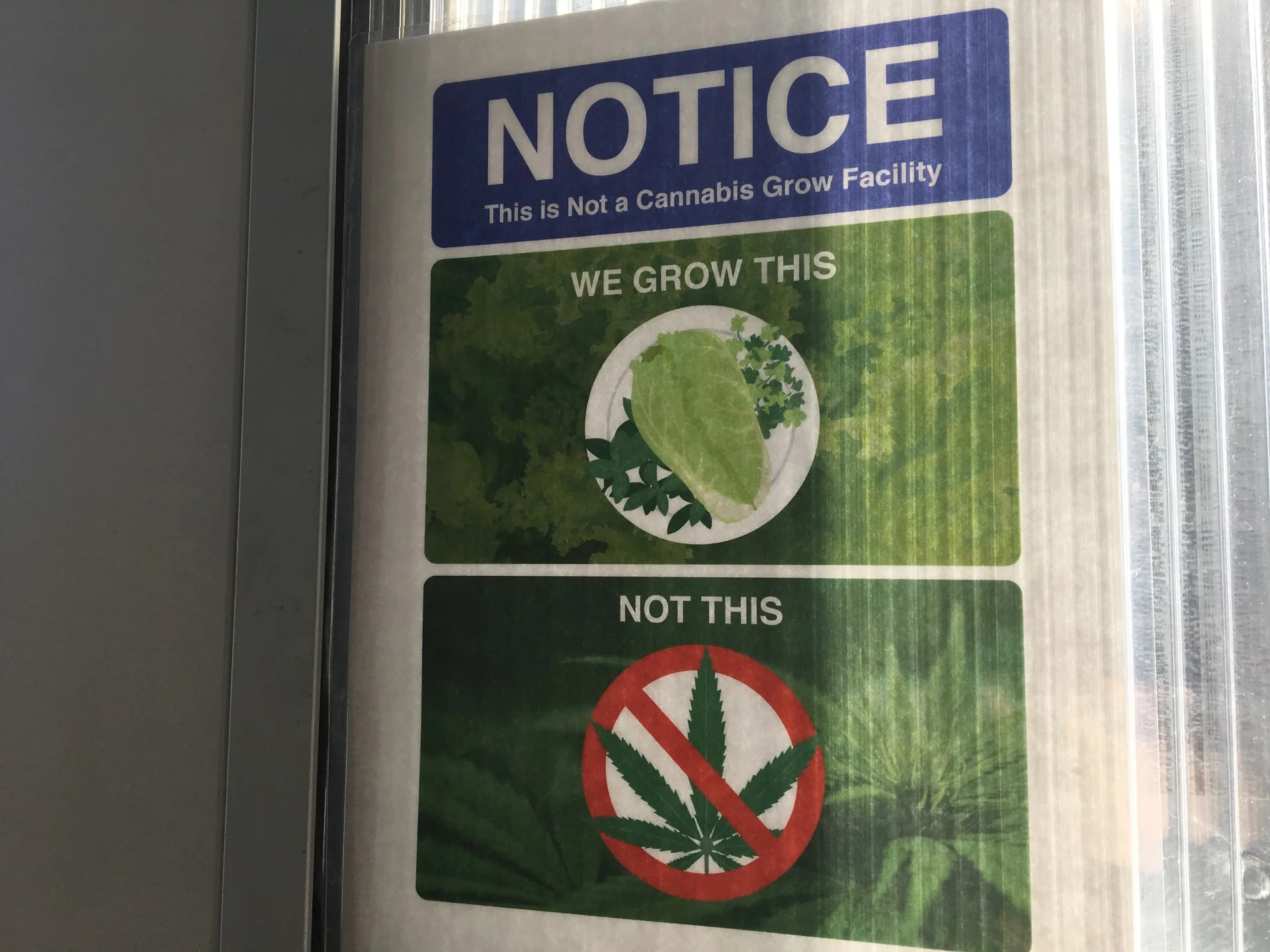
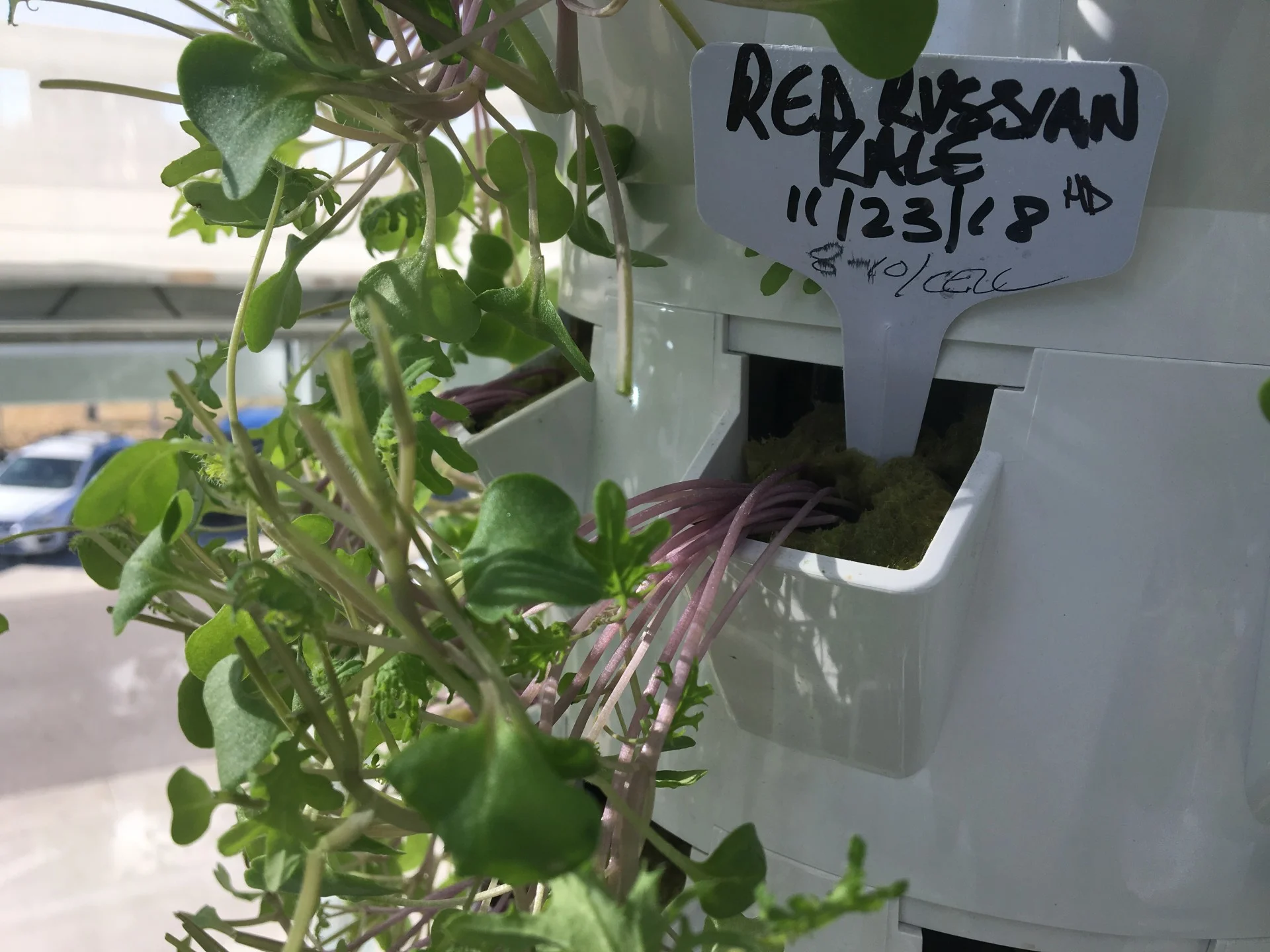
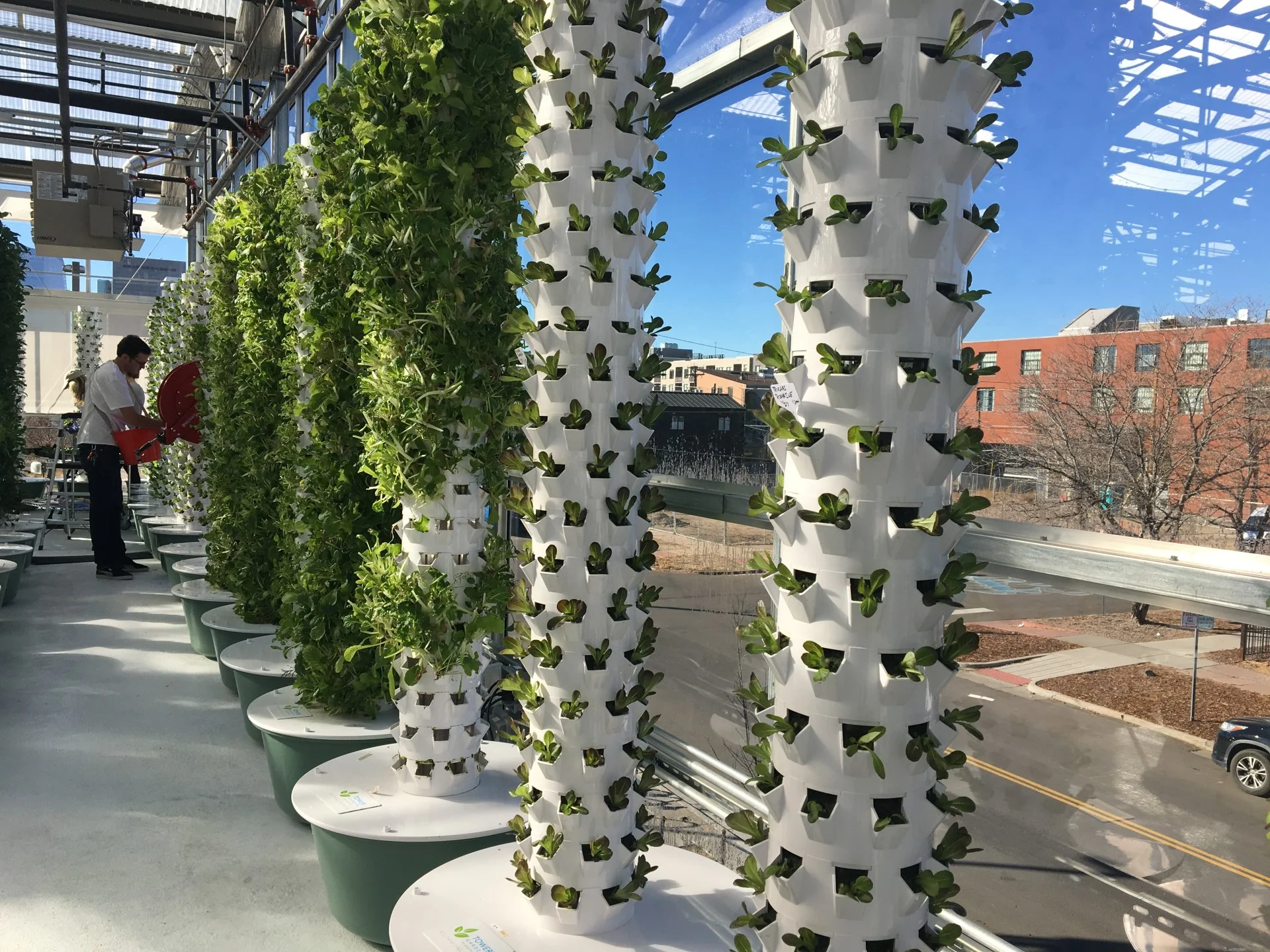
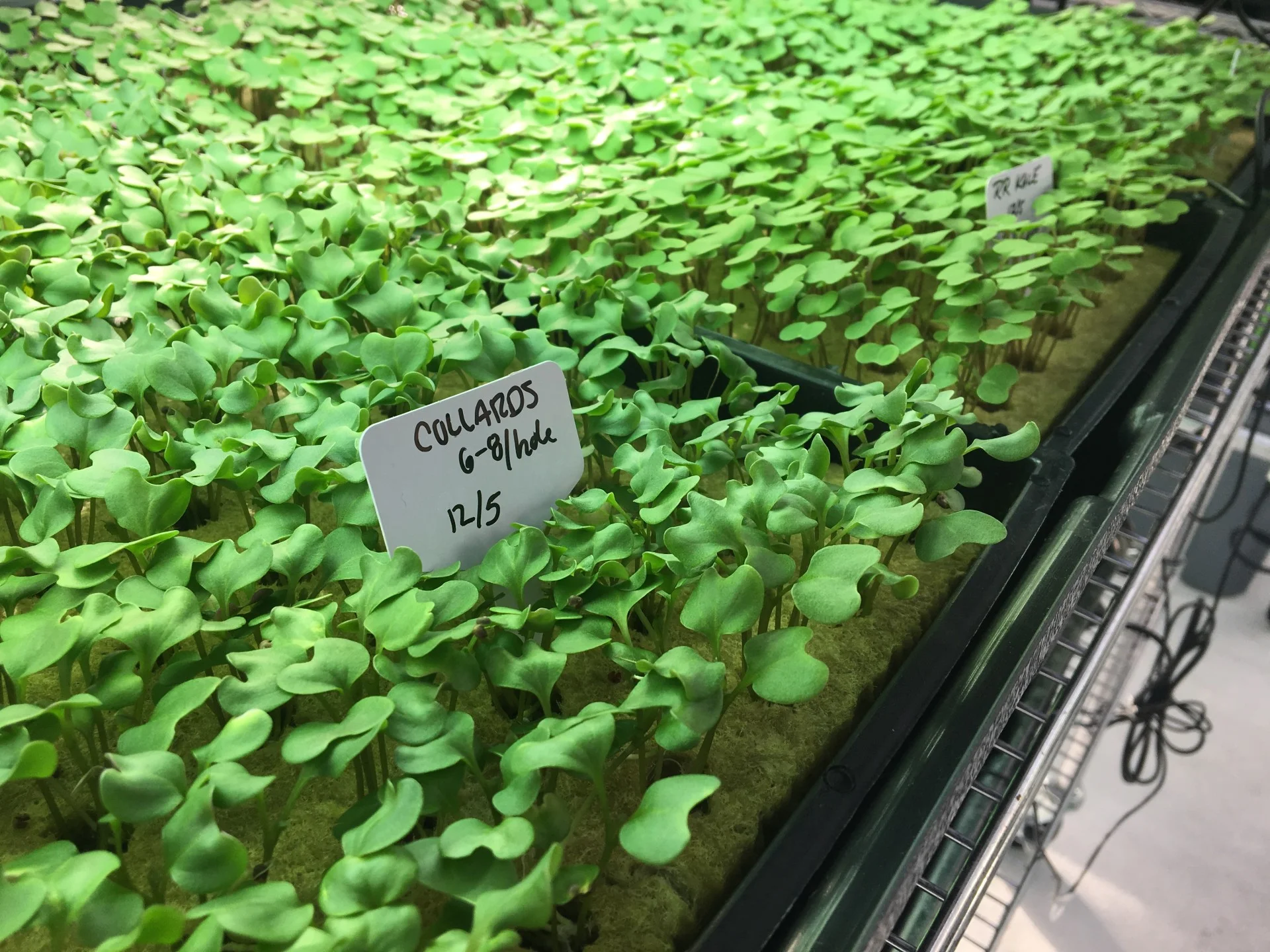
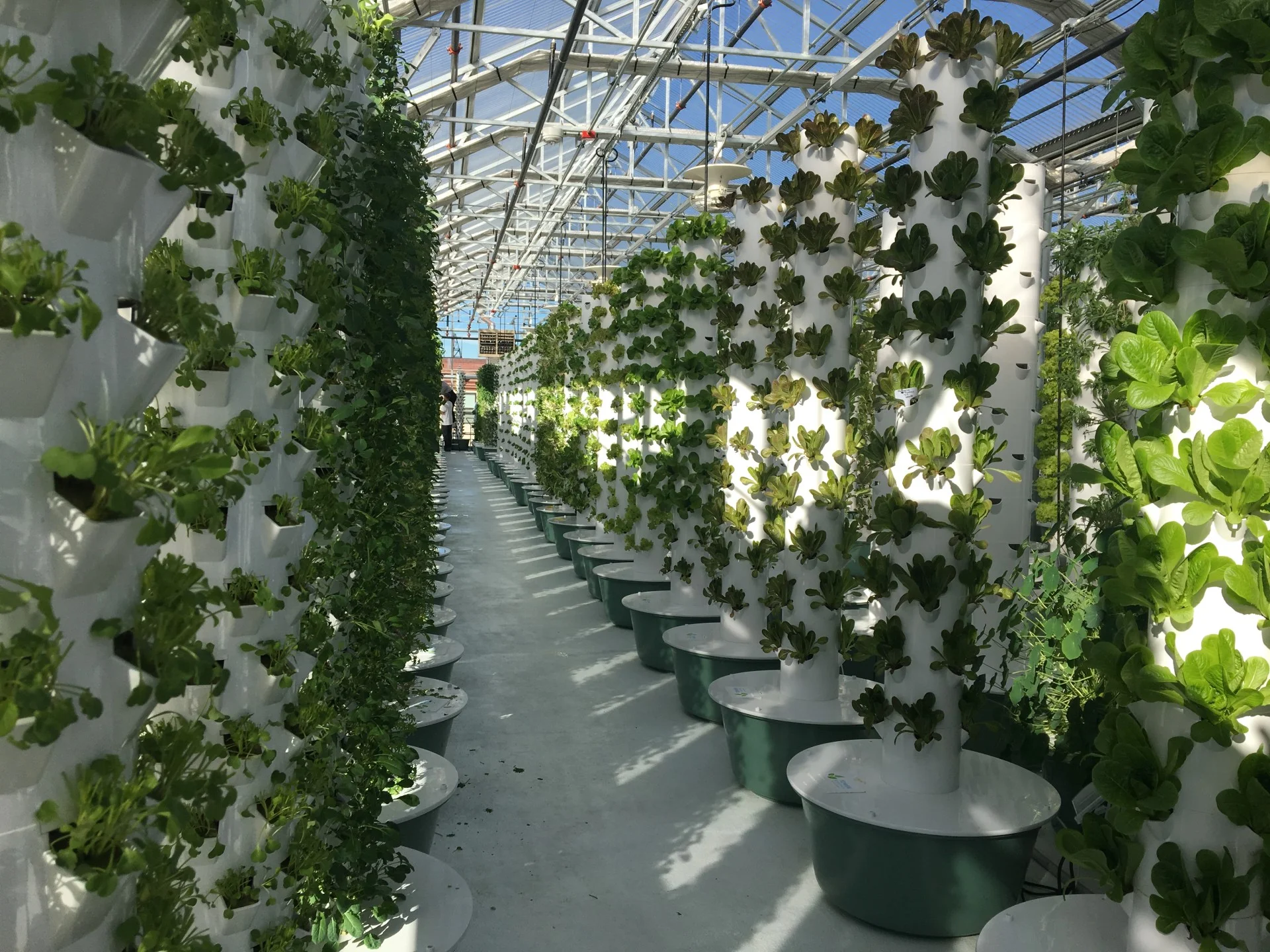
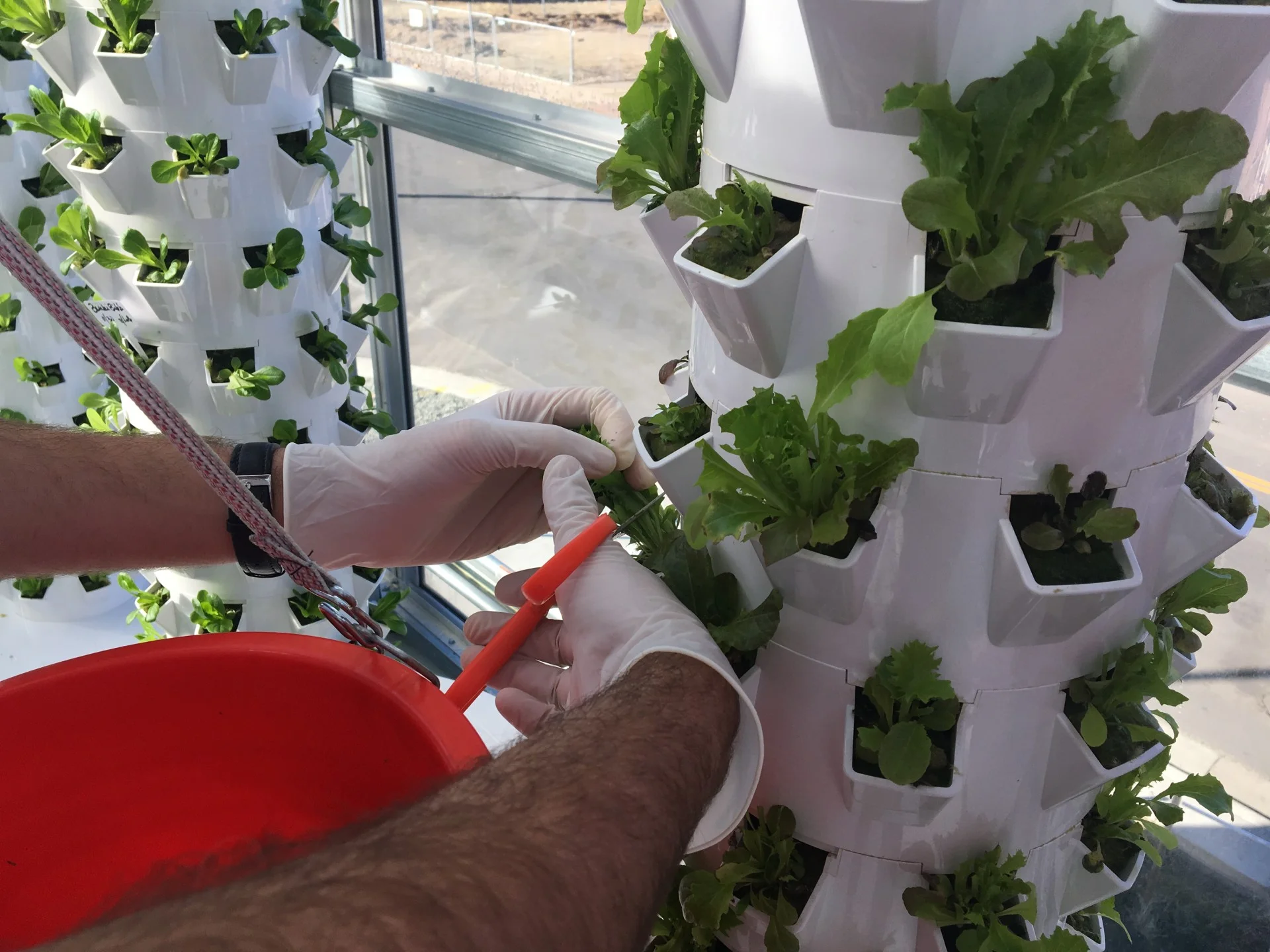
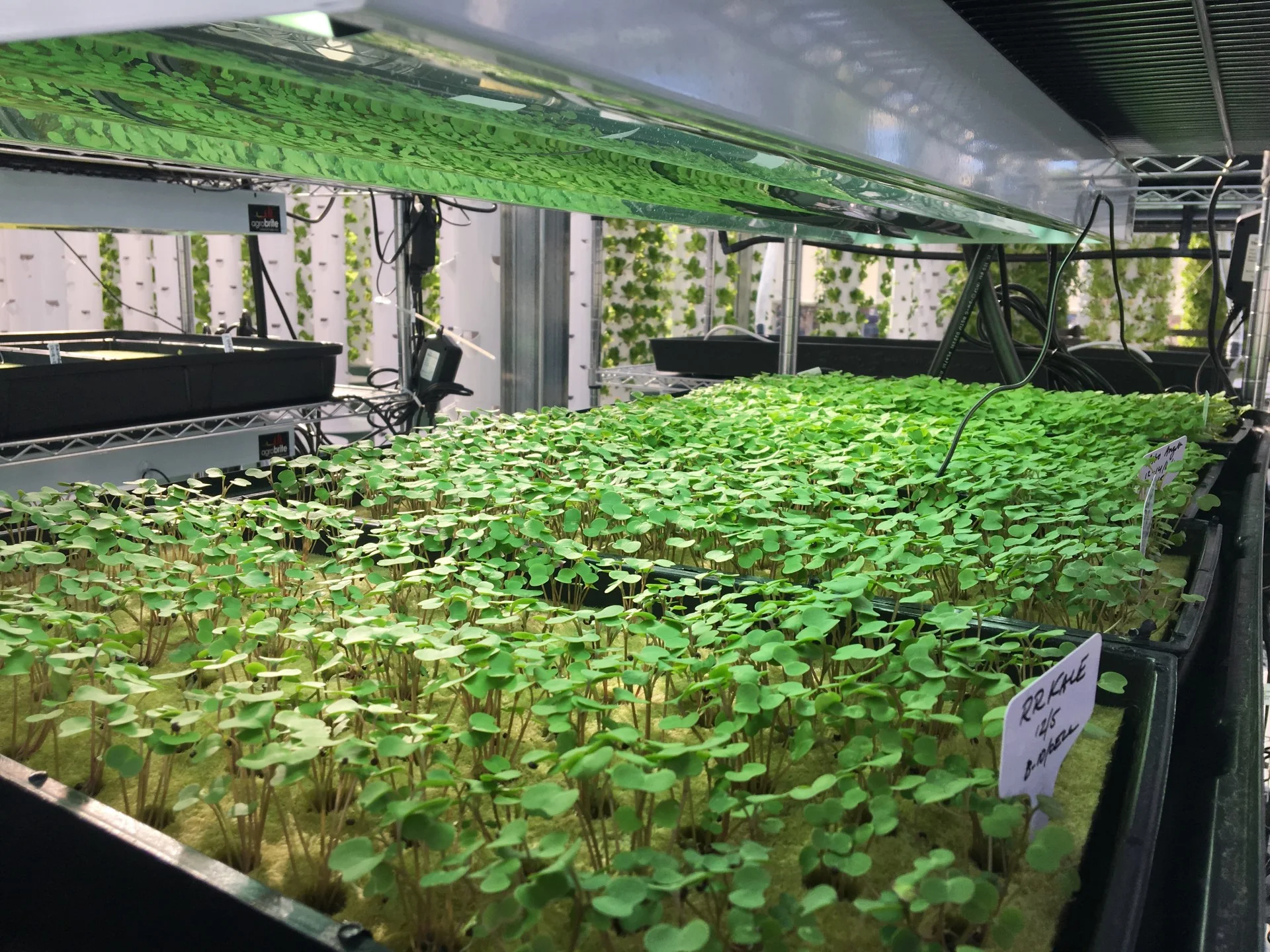
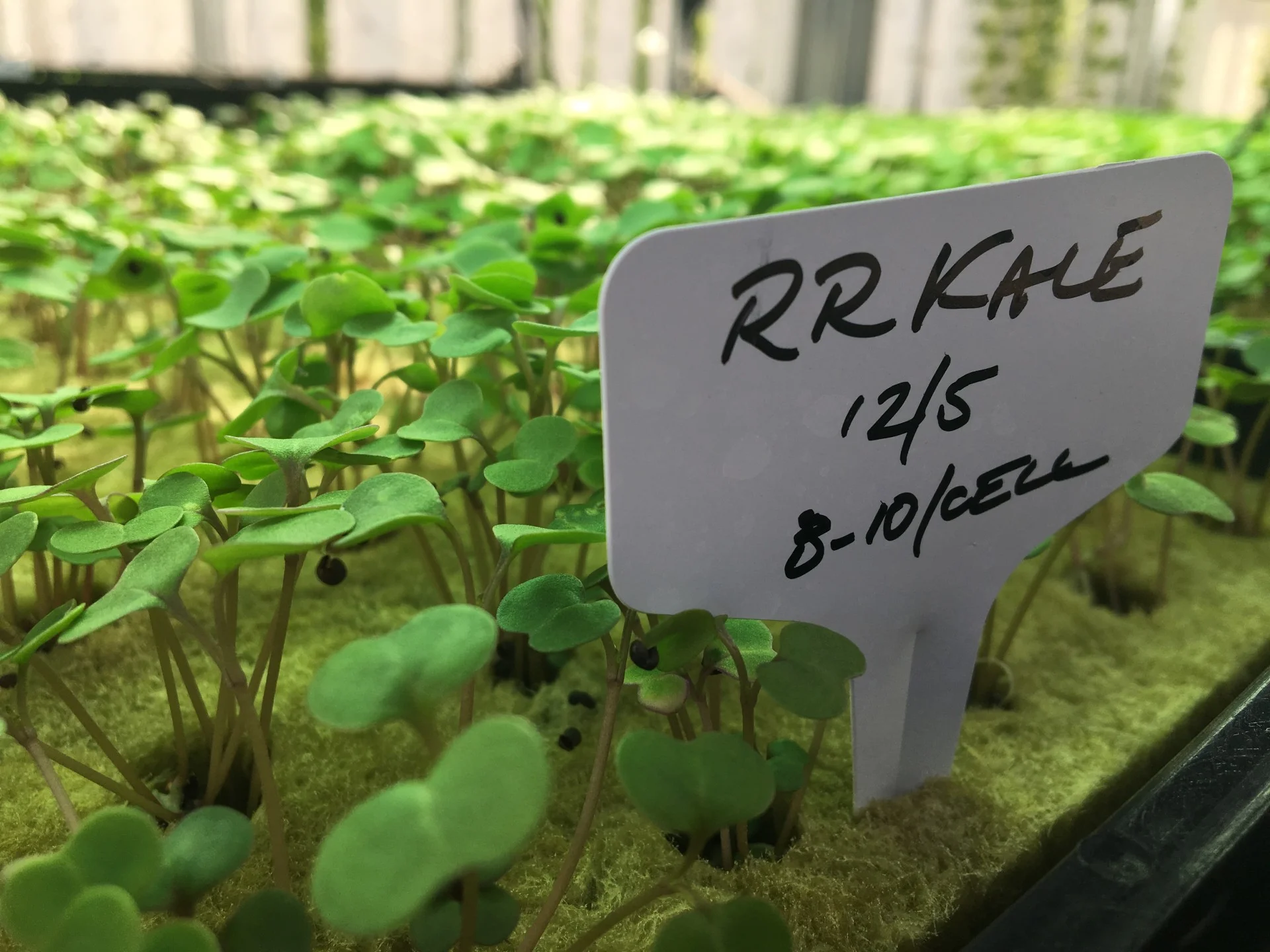
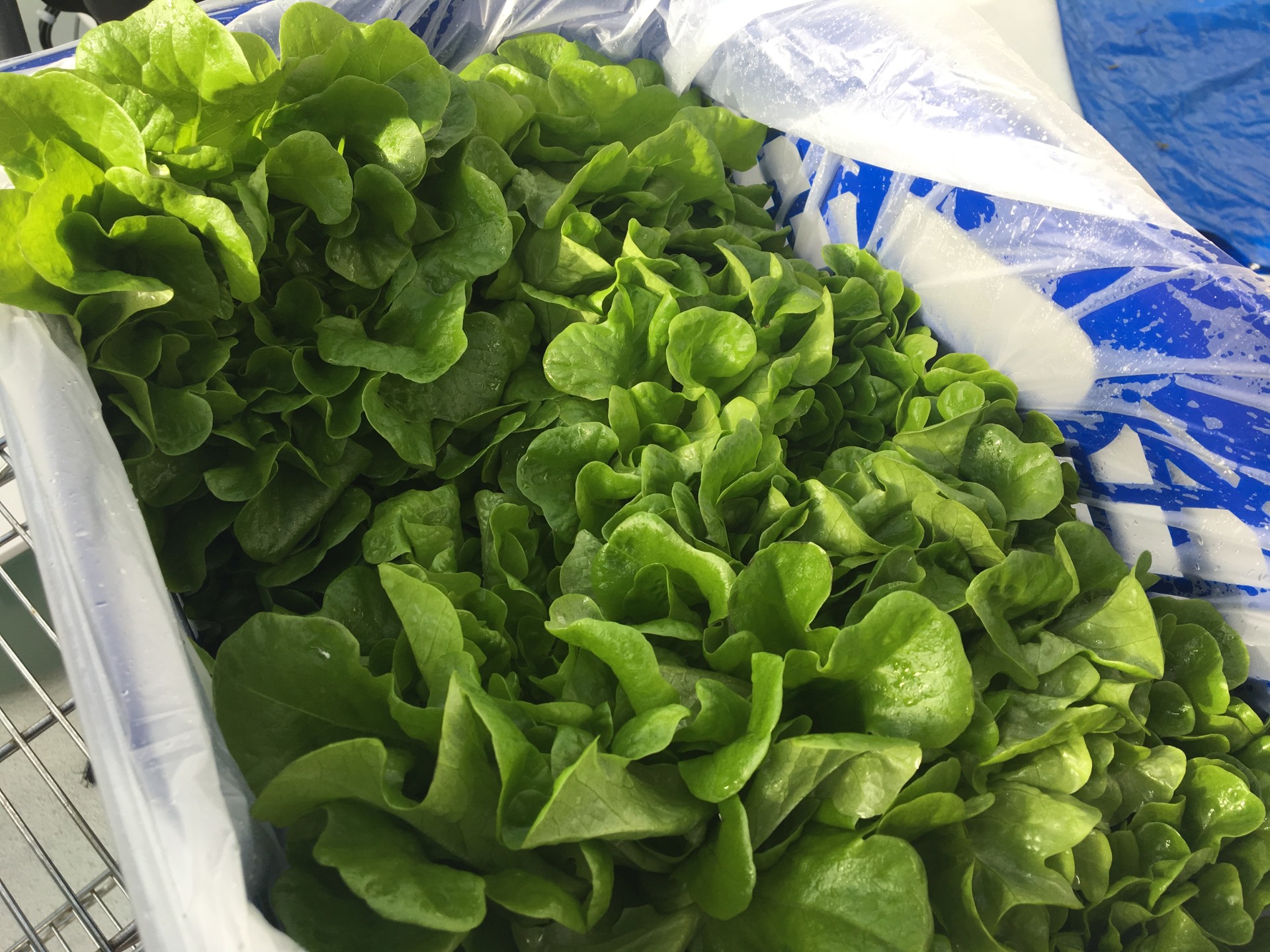
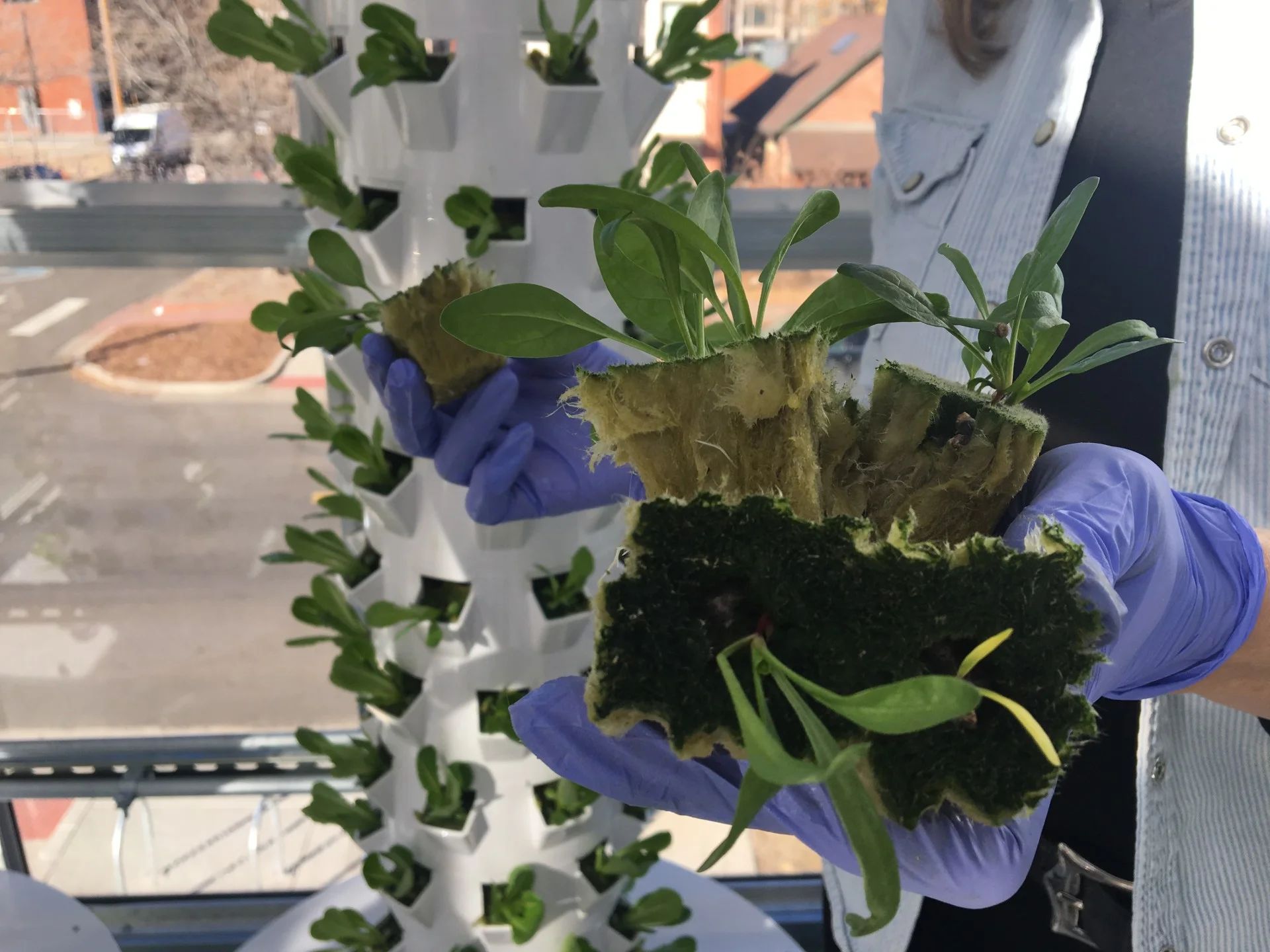
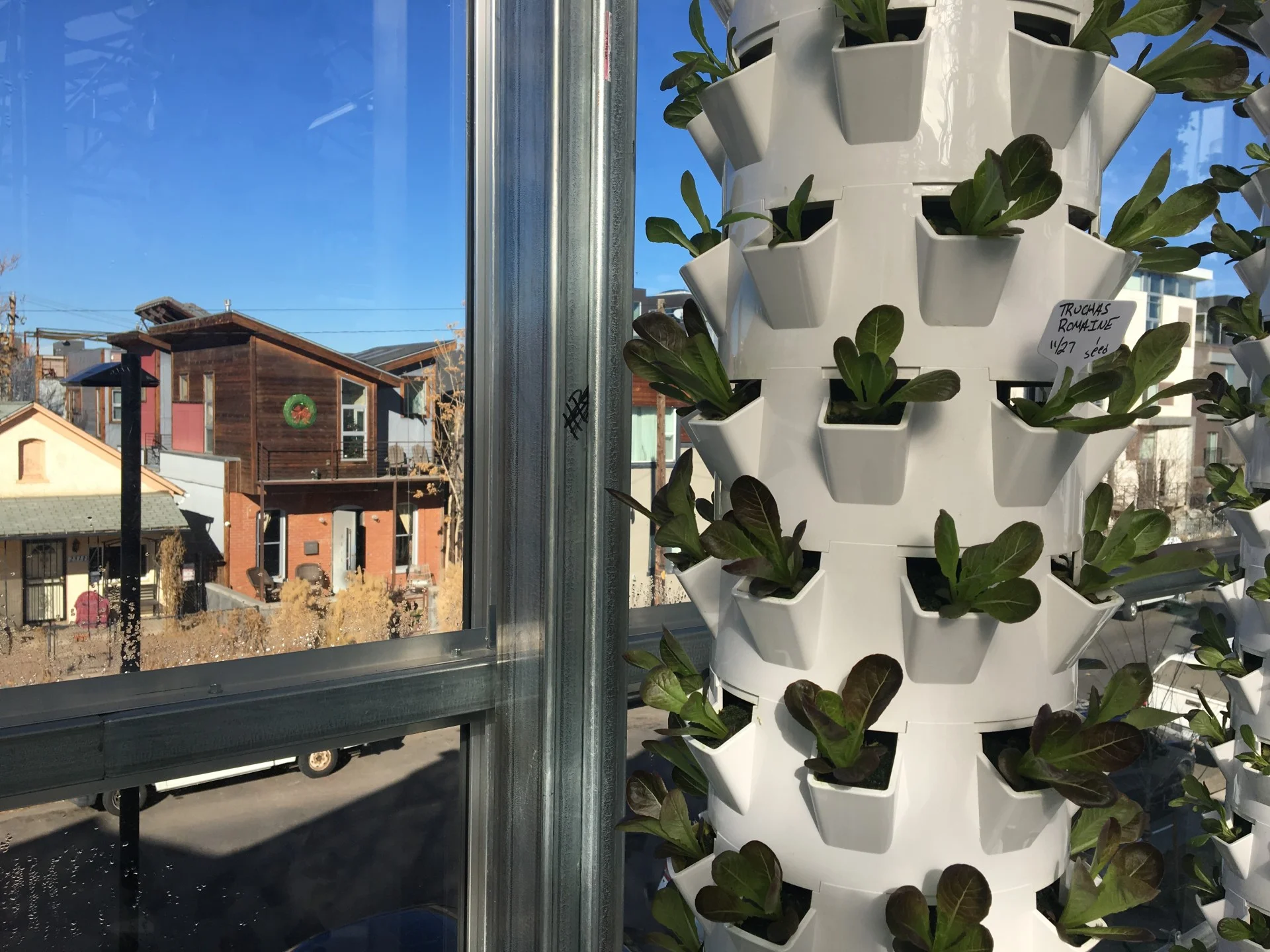
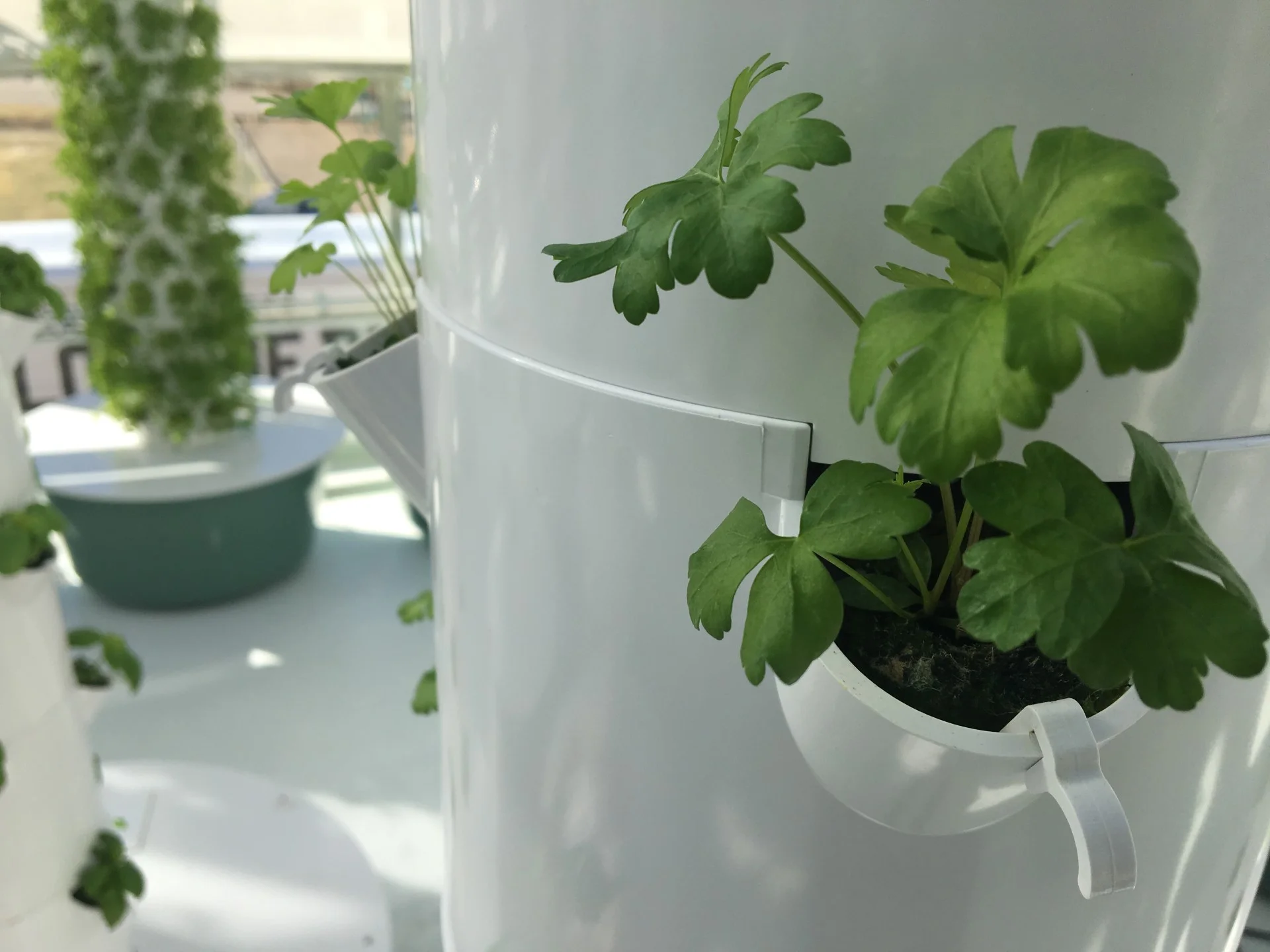
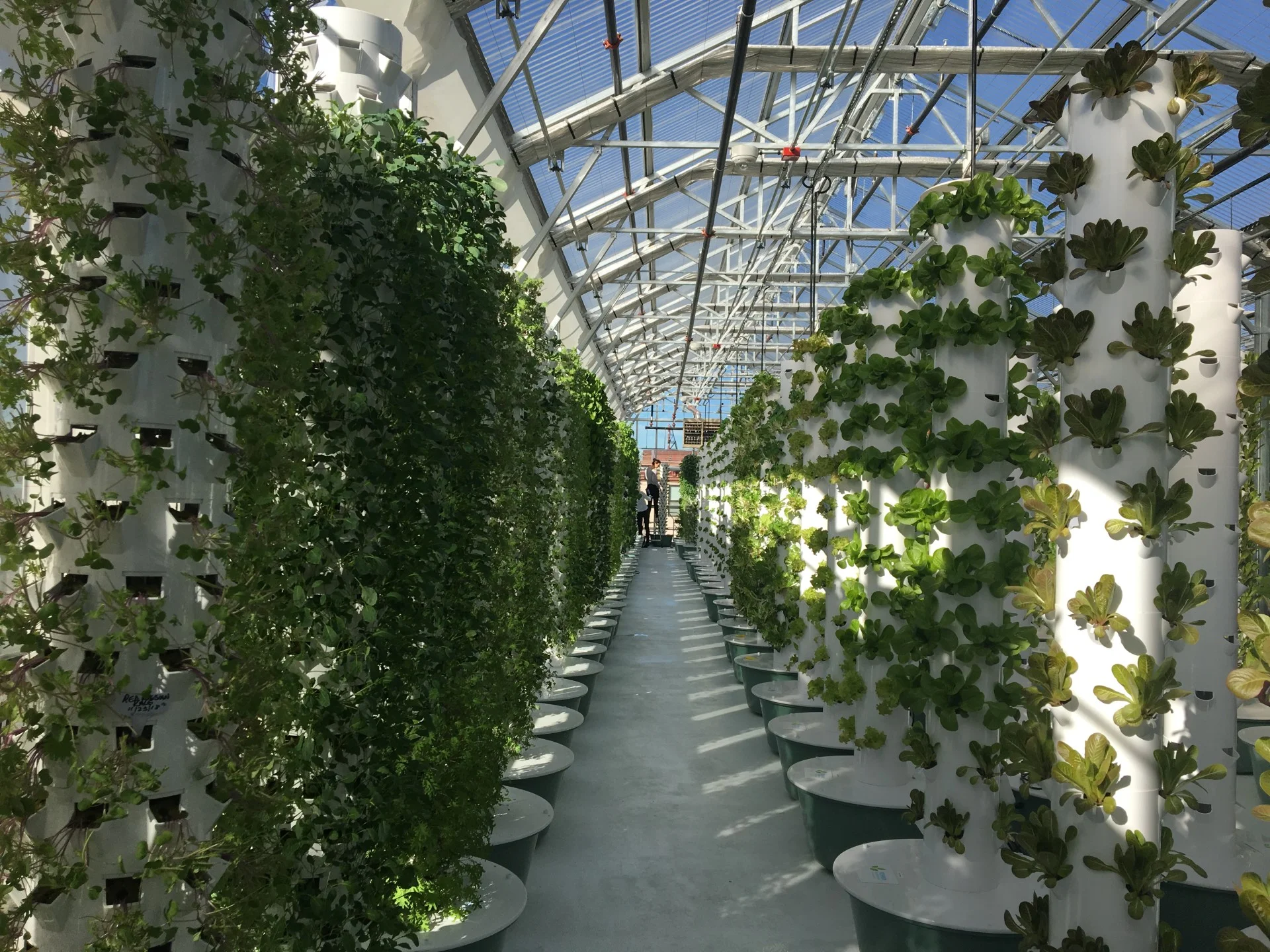

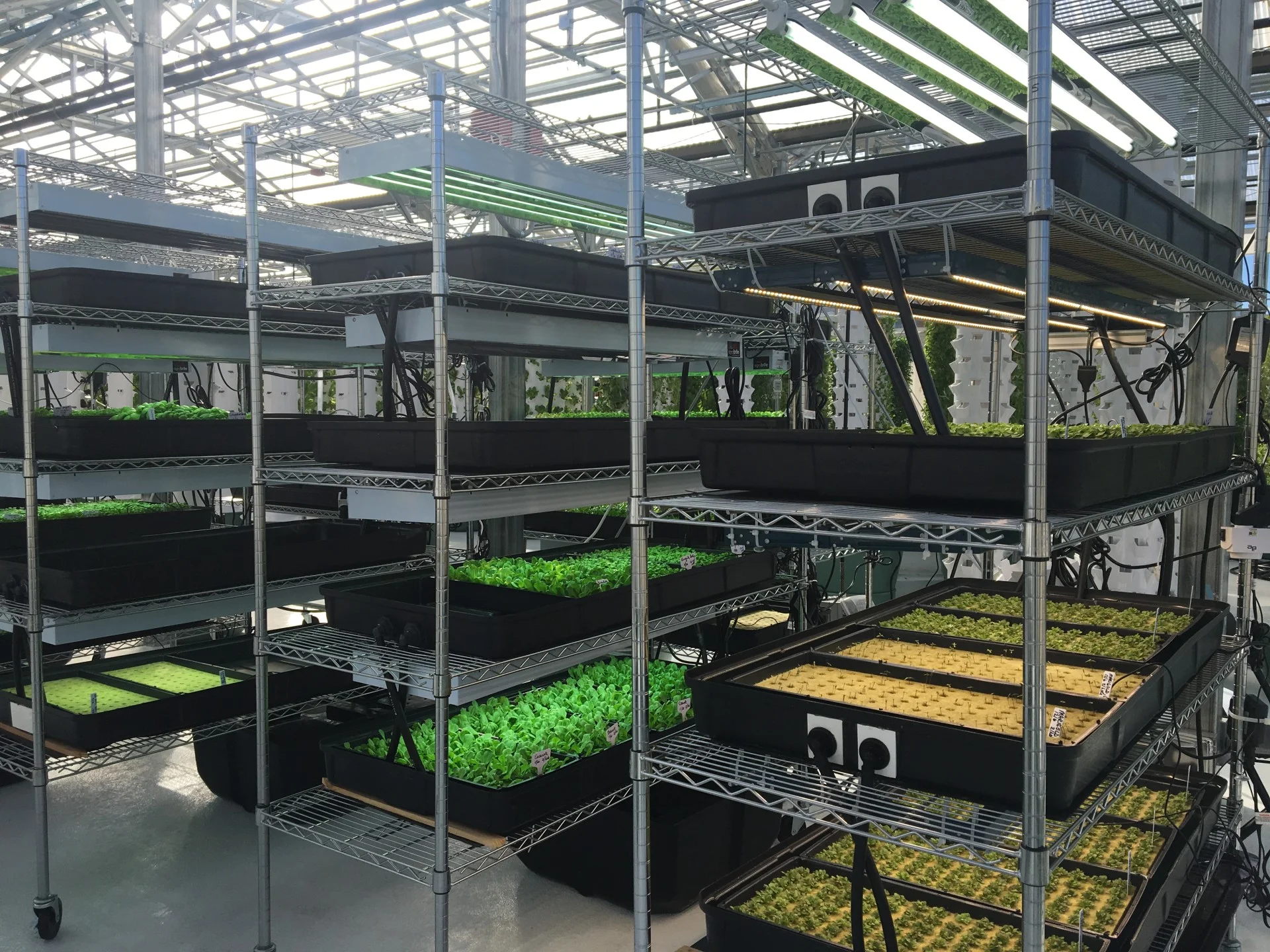
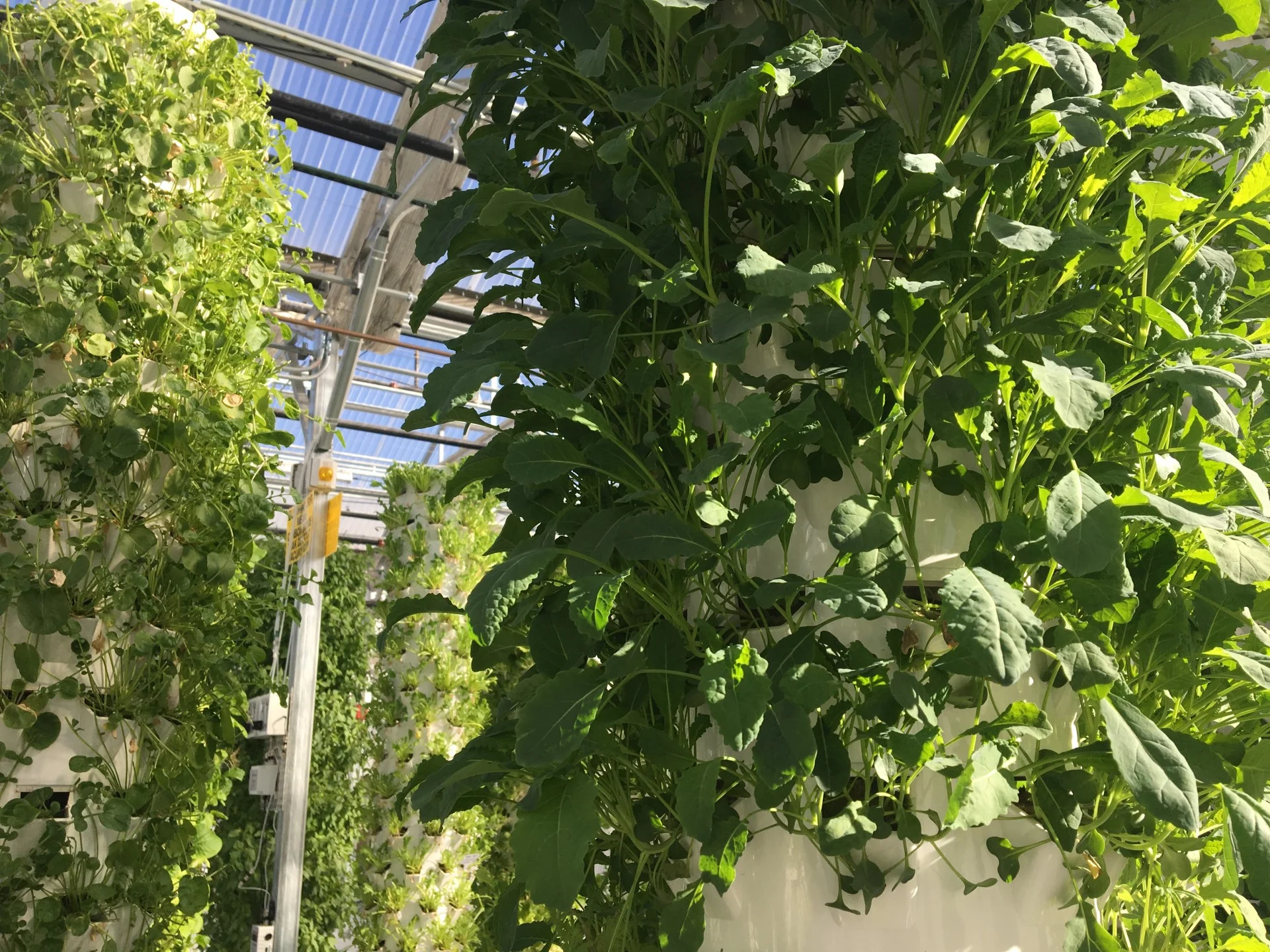
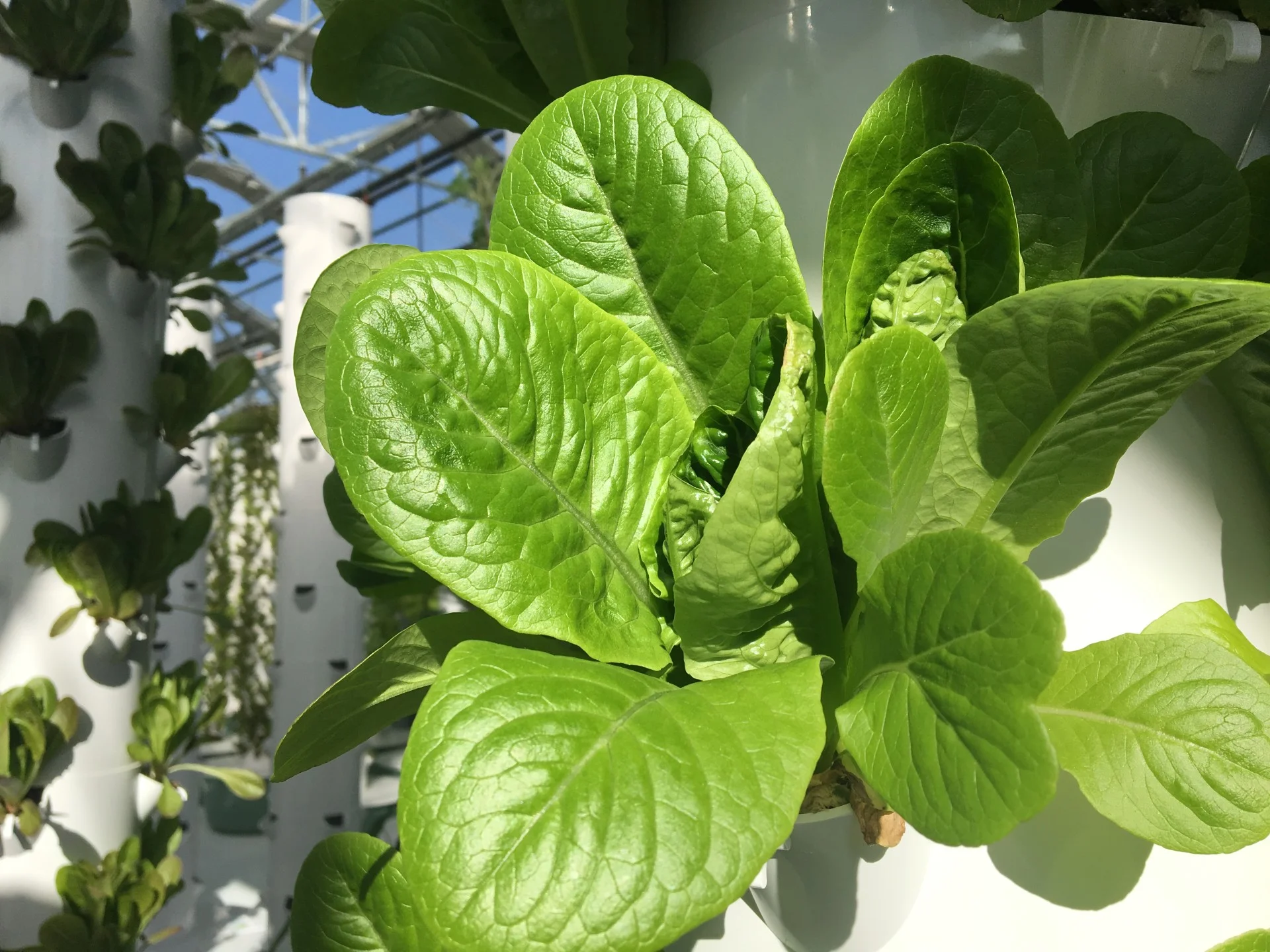
Photos: Altius Farms uses vertical farming to supply local Colorado restaurants and stores
The farm is already supplying about 20 local restaurants and Marczyk's Fine Foods with fresh produce. Herbert hopes to introduce a community-supported agriculture (CSA) program where people will be able to buy directly from the farm.
"People can know their farmer. These restaurateurs and their customers will understand where their food is coming from every day," said Herbert.
Herbert gave Denver7 a tour of the facility, starting with the steps everyone has to take to in order to enter the greenhouse's controlled environment. She started by rinsing her shoes, washing her hands and putting on gloves. Then she explained the control panels that essentially run the 8,000 square-foot building.
"It really does most of the work for us – everything from nutrients to the plants to CO2 production," said Herbert.
Sensors on the inside and outside of the greenhouse check the environment every 90 seconds. If the temperature or humidity is off, adjustments are made automatically. Panels on the side of the building open and close to let cool air in. The greenhouse almost feels like it's breathing when the roof opens to let warm air out.
The plants seem to be thriving in the environment. Twenty-eight different varieties are currently growing inside, including herbs, a variety of lettuces and edible flowers.
The vertical towers give them the ability to maximize the space, allowing them to produce 10 times as much as conventional farming while using only 10 percent of the water. The seedlings get their start with supplemental light but the rest of the greenhouse utilizes Colorado's natural sunlight.
Altius Farms uses vertical farming to supply local Colorado restaurants and stores and gives you home growing tips
As Herbert walks around, she samples some fresh arugula and parsley. She's fairly new to the agriculture business and got her start after a career in corporate America. She served on the board of an organization called Veterans to Farmers, where the idea to start her own farm was born. Herbert is also a veteran and is now hiring vets to help grow the business.
“I can’t say enough about this team. This team makes it happen," said Herbert.
Indoor Ag Sci Cafe Discusses How Industry and Academia Can Work Together
How Industry and Academia can Work Together’, Colangelo discussed the current status of indoor farming industries.
By
October 19, 201801337
This month’s ‘Indoor Ag Science Café’ featured Robert Colangelo, Founder of Green Sense Farms, as a speaker. In his presentation ‘Growing the Vertical Farming Industry – How Industry and Academia can Work Together’, Colangelo discussed the current status of indoor farming industries, gaps and cultural differences between businesses and academia, as well as possible strategies to work together on R&D for common critical technologies. Indoor Ag Science Café is a monthly online forum organized by three scientists (Chieri Kubota, Ohio State U; Erik Runkle, Michigan State U; and Cary Mitchell, Purdue U).
Please contact kubota.10@osu.edu to join the café.