

Welcome to iGrow News, Your Source for the World of Indoor Vertical Farming
Rooftop And Vertical Farms In Cities, The Most Advanced Projects Around The World
Some of the best rooftop and vertical farms in cities around the world. Where farm-to-table agriculture is becoming a key component of urban growth.
The phenomenon of urban farms took root after the Second World War to feed a population that was exhausted by years of poverty. In the last few years it has been growing exponentially, so much so that “locally sourced” no longer refers to products that come from the surrounding countryside, but in the very place where urban consumers live. The element of verticality was added to the equation, the opportunity and necessity to grow crops on rooftops and inside tall building allows for an efficient use of the limited space found in cities.
In some cases initiatives sprout from local communities, in others, prestigious architecture firms design innovative projects that use technology to incentivise local self-sufficiency from a nutritional standpoint as well as reduce the impact of urban demands on rural areas. Growing crops on terraces and rooftops is convenient not only because of greater solar exposure, but also because particulate matter tends to deposit at lower levels. Here are some of the most advanced rooftop and vertical farms from around the world.
The Sunqiao agricultural district in Shanghai
Whilst large-scale hydroponic cultivation systems and urban farms are still struggling to catch on in the United States, they represent a solution to the problem of a growing population and the consequent need to increase food production in China. Nearly 24 million people live in Shanghai alone and the business capital’s rapid economic growth is threatening an agricultural system that is more limited in scale compared to the Western model, just like in other Chinese metropolises.
Leggi anche: Urban forests, cities’ answer to climate change (and much more)
Sunqiao represents a new urban approach to agriculture pioneered by international architecture firm Sasaki. The objective is to show that urban agriculture can grow vertically, just like skyscrapers. The plan for this district (whose construction began at the end of 2017) focuses on integrating vertical farms and research. Over half (56 per cent) of the diet of Shanghai’s inhabitants consists of leaf vegetables, making hydroponic and aquaponic systems particularly appropriate to satisfy their needs. Spinach, lettuce, kale and watercress don’t require specific care, they grow quickly and weigh very little, making them a cheap and efficient option.
The Sunqiao district in Shanghai is a perfect example of the union between architecture and sustainability © Sasaki
The district features floating greenhouses, green walls and vertical facades for seed collection. This is an even more sustainable approach towards supporting the local food network, which perfectly fits the plan adopted by Shanghai that aims to safeguard food and farmers by taking control of local production and distribution whilst maintaining cultivations within the city.
Gotham Greens, in the United States
Gotham Greens is a New York-based farming company that has been supplying the inhabitants of New York and Chicago with fruits and vegetables grown without using pesticides and with an irrigation system based on reusing water. It manages various rooftop farms on a number buildings (some of which are decommissioned, like a former wood warehouse in Brooklyn). The company was the first to design a commercial hydroponic urban farm in the country.

Gotham Greens, a farming company that brings urban farming to Chicago and New York, grows crops on the roofs of buildings © Gotham Greens
The largest and most advanced greenhouse as well as the most productive rooftop farm were opened in Chicago in 2015. Gotham Greens’ model incentivises local production, therefore sustainable development, whilst also cutting transport costs and using renewable energy for production. The founder of Gotham Greens, Viraj Puri, was invited as a speaker the Seeds and Chips summit in Milan in 2017, one of the most important food innovation events in the world.
DakAkker, Rotterdam
DakAkker is the largest rooftop farm in Europe, in the centre of the Dutch city Rotterdam. It was created by Binder Groenprojecten in 2012 and the project was undertaken by ZUS society, in collaboration with the Rotterdam Environmental Centre. The building is fitted with a smartroof that works as a sensor with a water storage capacity that is superior to that of a typical rooftop garden, supplying all the water needed for growing crops.
DakAkker crops seen from above, together with the pedestrian bridge constructed thanks to a neighbourhood fundraiser and built to comfortably cross over the railway tracks © Ossip van Duivenbode
DakAkker is also an area used to experiment new vertical farming methods in the city, not only by growing fruits and vegetables, but also by safeguarding urban biodiversity thanks to the presence of a botanical garden where various aromatic herbs are grown. Furthermore, considering the great importance of bees to the ecosystem (approximately 30 per cent of food derives from the pollination carried out by these insects), six beehives are present on the rooftop.

UK: London's Underground Farm Opens Doors To The Public
To View Video, Please Click Here
Ever wondered what’s going on beneath your feet under the streets of London? Well, now is your chance to enter another world by visiting Growing Underground. This urban farm is situated 33 meters underneath the streets of Clapham, London in a World War II air raid shelter.
For the first time ever and for a limited time, these tunnels will open to give you a tour of the depths of the underground farm, on November 27.
Naza Plantation Signs MoU With Taiwan-based YesHealth To Set Up Vertical Farming
KUALA LUMPUR
22nd November 2018
Naza Plantation Services Sdn Bhd, the agricultural business unit of the Naza Corporation Holdings Sdn Bhd, today signed an MoU with YesHealth Agri-Technology Co Ltd. to signify a new joint venture to establish a leading vertical farming company in Malaysia and South East Asia.
The MoU signing took place at MAEPS, Serdang in conjunction with the Malaysia Agriculture, Horticulture & Agrotourism Show (MAHA 2018).
This joint venture agreement will be the first between Naza Plantation Services and the Taiwan-based company. The establishment of this joint venture agreement will see an investment of RM35 million for the development of a technologically-advanced vertical farming business in the country.
“We are proud to partner with YesHealth Agri-Technology Co Ltd., a renowned fully-integrated vertical farming company on this new joint venture that will contribute significantly to national food security. This collaboration is yet another milestone of Naza Agro’s business plans to expand and evolve its agro business in Malaysia and for its export markets to other Asian countries,” said SM Nasarudin SM Nasimuddin, Group Executive Chairman & CEO, Naza Corporation Holdings Sdn Bhd.
“Vertical farming is the way forward to ensure global food supply is met with current demands. Latest agricultural technologies from YesHealth have enabled the production of vegetables in an environmentally friendly way at a more cost-effective and space-saving solution. This revolutionary method of farming ensures the produce is healthier, chemical-free with no use of pesticides and guarantees crop yields all year long,” added SM Nasarudin.
Currently the world’s largest hydroponic vertical farming company by production volume, YesHealth will contribute significantly to the joint venture through its proprietary technologies and expertise in environmentally responsible agricultural practices in vertical farming that creates higher yields compared to traditional field farms. The produce from the indoor vertical farms are completely free from pesticide and heavy metal with very low nitrate level and bacteria load. As a result, consumers of the this day and age would be able to enjoy a much greater selection of fresh, safe and highly nutritious vegetables.
The Taiwanese company will be responsible for the structural design of the vertical farms, and operational support, providing its related know-how and training of local operators. Meanwhile, Naza Plantation will construct the facilities and run the management, sales and distribution aspects for the products.
Naza Agro, a Biotechnology Transformation Programme (BTP) status company, was established in 1995 as the agro business arm of the Naza Group, is involved in the production of tropical fruits and vegetables using high technology agro systems with cutting-edge biotechnology, green house fertigation system, vertical farming, biofertilisers and commercial farming methods. Naza Agro now owns and manages 3,118 acres of sprawling plantations located in Pahang, Perak, Perlis, Pulau Pinang and Negeri Sembilan, producing premium MD2 pineapples under their trademark Tropicale brand for local distribution and export. Naza Agro also manages a tropical fruits distribution and certified export centre in Serdang, Selangor and processing factory in Pekan Nanas, Johor.
Naza Agro’s long-term vision is to establish a strong presence in the China market and continue to explore other export markets such as Japan, Korea and the Middle East. Plans are also in the pipeline to expand their tropical fruits plantation land bank by another 2,000 acres which includes planting of pineapple, melon and durian for export market within five years’ time.
With this new joint venture with YesHealth Agri-Technology Co Ltd., Naza Agro hopes to supply fresh vegetables for the domestic market and in the near future supply to export markets in Asia.
-END-
About Naza Plantation Services Sdn Bhd:
Formed in 1995, Naza Plantation Services Sdn Bhd, a Biotechnology Transformation Programme (BTP) status company, is the agro business arm of the Naza Group with over 20 years of experience in the agriculture sector. Under the Naza Agro pillar, Naza Plantation Services is involved in the production of tropical fruits and vegetables using high technology agro systems with cutting-edge biotechnology, green house fertigation system, vertical farming, biofertilisers and commercial farming methods.
Naza Agro now owns and manages 3,118 acres of sprawling plantations located in Pahang, Perak, Perlis, Pulau Pinang and Negeri Sembilan, producing premium MD2 pineapples under their trademark Tropicale brand for local distribution and export. Naza Agro also manages a 14,334 sq ft of tropical fruits distribution and export centre in Serdang, Selangor and processing factory in Pekan Nanas, Johor.
“Tropicale” is a registered Trademark in Malaysia and Singapore.
About Naza Group of Companies:
The Naza Group of Companies began operations in 1975 as an importer of used cars by the late Tan Sri SM Nasimuddin SM Amin. Fast forward to today, the Naza Group’s automotive business has expanded extensively to provide comprehensive end-to-end services with more than 100 points of sales. The Naza Group now represents 10 international automotive brands as the importer and distributor for numerous international four-wheel and two-wheel marques including Ferrari, Maserati, Mercedes-Benz, Peugeot, Citroën, DS, Kia, Ducati, Indian Motorcycle and Vespa in Malaysia.
The Naza Automotive Manufacturing (NAM) plant, set up by the Naza Group in 2004, is now the regional manufacturing hub for Groupe PSA for the ASEAN market. The Group also established the Naza Automall as Malaysia’s ‘Largest Automotive Showroom’ – certified by the Malaysia Book of Records – displaying a wide variety of cars and motorbikes as the country’s premier ‘one-stop-centre’ lifestyle auto mall.
The property development arm of the Naza Group, Naza TTDI Sdn Bhd, is on course to becoming a formidable property developer in Malaysia, committed to delivering quality lifestyle concepts and products with customer service excellence. Today, Naza TTDI is the developer for several high-impact property projects namely KL Metropolis, Malaysia International Trade and Exhibition Centre (MITEC) and Platinum Park in Kuala Lumpur.
Over a span of 40 years, the Naza Group’s portfolio has diversified to encompass automotive franchises, property development, engineering & construction, manufacturing, asset management, telecommunications, agriculture, education, F&B, finance and insurance and transportation sectors.
For more information on the Naza Group of Companies, please visit www.naza.com.my.


Wageningen University Announces Course On Lighting In Greenhouses And Vertical Farms
By: urbanagnews -
October 30, 2018
In 2019, the Horticulture & Product Physiology group, together with Wageningen Plant Research, again will organize a course on lighting in greenhouses and vertical farms. In this course WageningenUR scientists share their unique knowledge with international students, researchers, and horticultural and light experts.
The course is held in Wageningen, The Netherlands.
Registration for the course in February 2019 is now possible.
The course consists of a mixture of interactive classroom lectures, group discussions, demonstrations, and an excursion day.
The lectures will be given by a team of experts of Wageningen University & Research. Lecturers include Prof. Leo Marcelis, Dr. Cecilia Stanghellini, Dr. Ep Heuvelink, Dr. Anja Dieleman, and Prof. Ernst Woltering.
This excellent and intensive course is meant for professionals in lighting, greenhouse production and vertical farms as well as MSc and PhD students, post-docs and junior scientists from all over the world.
For more detailed information on the course content, please visit the corresponding web page: Course Lighting 2019
Crop One Holdings Reaffirms the Superior Cleanliness and Safety of FreshBox Farms’ Leafy Greens
Controlled Environment Agriculture Farming Method ensures FreshBox Farms’ Romaine Lettuce Remains Safe for All to Eat
November 21, 2018
Source: Crop One Holdings, Inc.
SAN MATEO, Calif. and MILLIS, Mass., Nov. 21, 2018 (GLOBE NEWSWIRE) --
Crop One Holdings (“Crop One” or “the Company”), the world’s largest vertical farm operator through its FreshBox Farms brand, would like to inform all of its customers – including individuals, wholesalers, and retail distributors – that it is voluntarily complying with the CDC’s Food Safety Alert, even though Crop One believes that the CDC warning regarding potential E. coli contamination of romaine lettuce does not apply to FreshBox Farms’ romaine lettuce and other leafy greens grown using the Company’s unique controlled indoor farming systems. Crop One appreciates that the CDC uses these types of broad and general alerts when it knows the cause of contamination, but cannot identify the specific source, and understands that traceability of leafy greens is very limited or not possible for many farmers.
FreshBox Farms abides by the strictest health and safety standards, using operating procedures certified by the USDA Good Agricultural Practices and Good Handling Practices programs. The traceability of the farm’s leaves goes back to the 2’ x 4’ shelf in which it was grown. FreshBox Farms also relies on a stringent data collection system, using layers of digital sensors and controls to gather substantial amounts of information on each plant – from seed to harvest.
Using a variety of controlled environment agriculture technologies, FreshBox Farms grows its leafy greens in soilless, modular enclosures further protected from potential outdoor contaminants by being inside a sealed warehouse. Unlike other vertical farmers or greenhouses, FreshBox Farms’ dual ‘box within a box’ system provides multiple layers of hygiene protection and control. In addition to being insulated from outdoor pollutants and diseases, plants are grown with highly purified water produced by an on-site water treatment system.
Unlike “ready-to-eat” packaged greens, FreshBox Farms does not expose its leafy greens to potentially contaminated water through triple washing, and even its waste water is potable. FreshBox Farms’ leafy greens are so clean that Crop One is the only Kosher-certified vertical farmer in the United States. Products leave FreshBox Farms with 1/600th the bacteria of field grown, triple washed products.
“Yesterday’s warning by the CDC is a wise precaution and certainly in the best interest of the public,” said Dr. Deane Falcone, Chief Scientific Officer of Crop One Holdings. “That said, we feel FreshBox Farms’ customers should know that our produce is grown in controlled, tightly-sealed environments with filtered air and water, and our plants are never touched by more than three gloved and gowned individuals. This distinctive indoor production method protects our produce from potential pathogens found in water, soil, or fecal matter, which are the typical causes of E. coli outbreaks.”
Inside Soilless Modular Enclosure
Sonia Lo, Chief Executive Officer of Crop One Holdings, added to Dr. Falcone’s comments, “As a result of our commitment to innovation and accountability, as well our responsibility to the health of our consumers and the planet, FreshBox Farms continues to grow the cleanest, freshest and best-tasting produce possible for our customers. Our wish this holiday season is to support our customers as best as we can, and ensure them that they can continue to rely on FreshBox Farms to provide safe, healthy, delicious leafy greens this Thanksgiving. We have reached out to our local FDA offices to continue this dialogue on food traceability and cleanliness, practices at Crop One which surpass other greenhouse and vertical farming methods.”
About Crop One Holdings
San Mateo, California-based Crop One Holdings is a vertical farming holding company for two subsidiaries – FreshBox Farms, Millis, Mass., and a joint venture with Emirates Flight Catering, Dubai South, United Emirates. Crop One has been in continuous commercial production longer than any other major vertical farmer in the U.S. It produces the highest crop yield per square foot, at 25% of the capital cost of any vertical farm, due to its unique combination of proprietary technology platform and best-in-class plant science.
For more information on Crop One or vertical farming, please visit the Company website at croponeholdings.com or follow FreshBox Farms on Facebook, LinkedIn and Instagram for the latest company news.

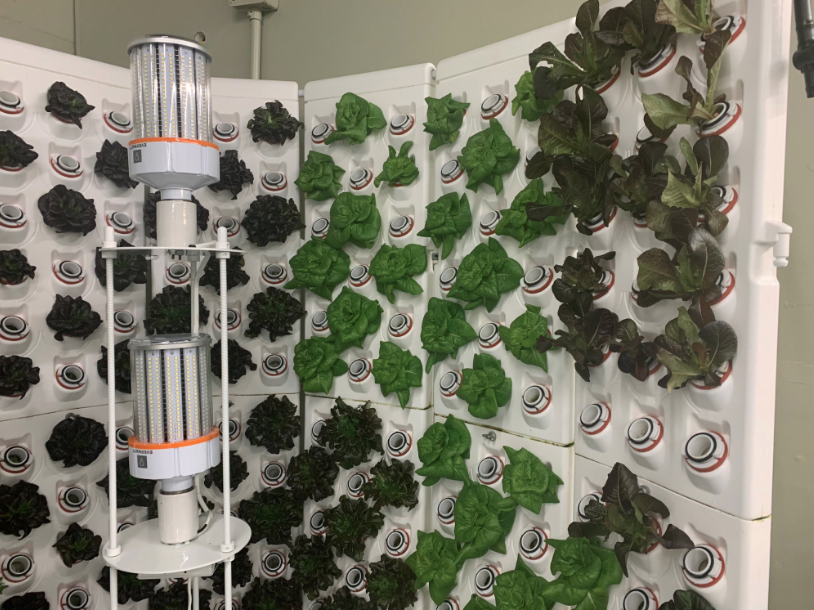
Local Company's Indoor Growing System Could Be Solution To Safer Romaine And Other Lettuce
by Amanda Becker, FOX 11 News
Sunday, November 25th 2018
Local company's indoor growing system could be solution to safer Romaine and other lettuce. (WLUK/Amanda Becker)
FOX CROSSING (WLUK) -- The FDA and Center for Disease Control warned people this past week not to eat romaine lettuce due to a dangerous strain of E. Coli.
The CDC estimates that E.Coli, also referred to as STEC, causes 3,600 hospitalizations and 30 deaths in the US each year.
This past summer an outbreak caused 5 deaths.
The CDC has reported outbreaks of E. Coli, in various leafy green vegetables alone, 7 out of the last 12 years.
The latest scare came just before Thanksgiving and the busiest day of the year for many grocers.
While many businesses were clearing their shelves of romaine lettuce, it was the customers clearing the shelves here at the Free Market in Appleton.
“People snatched it all up. They've been saying this is the only place they can find it,” said Kyra Evers, a Free Market associate.
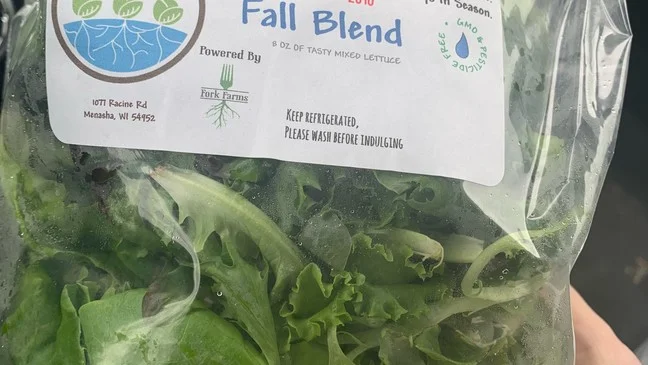
Sunday just one bag of mixed greens remained, but they don’t have far to go for more. The produce travels just two miles from the Fox Valley Hydro Farm to here. It's not your conventional farm, instead a vertical hydroponic system indoors.
“If we had an acre of these systems we could grow roughly 100 acres of conventional farming,” said Steve Main, the owner of Fox Valley Hydro Farm.
He grows and distributes, leafy greens to local businesses and at Farmers Markets- mainly lettuce.
Local company's indoor growing system could be solution to safer Romaine and other lettuce. (WLUK/ Amanda Becker){p}{/p}
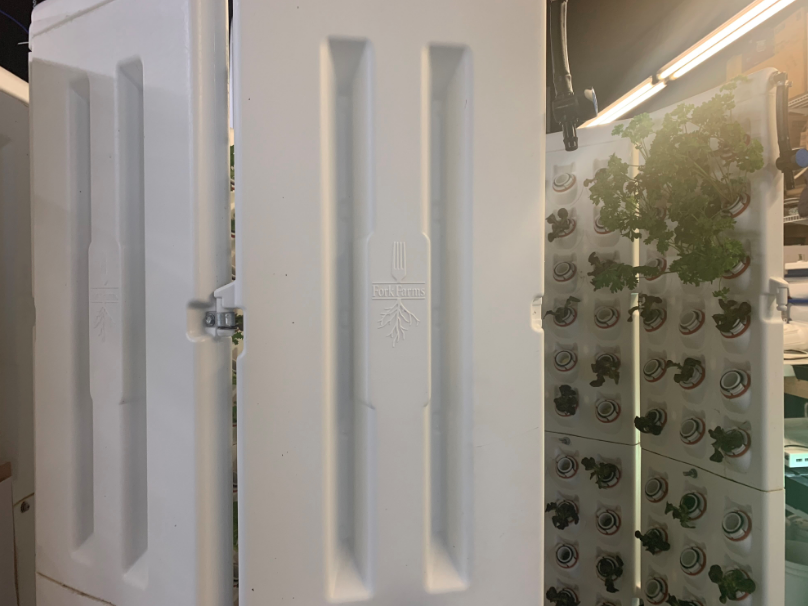
Fork Farms is the Appleton tech company that designs and builds the system.
”We are able to control the environment here so not only can we control the growth rates and the success of the plant but we can also control the food safety really carefully,” said Alex Tyink president of Fork Farms.
Safety is what’s on the mind of shoppers when buying lettuce these days.
“The E. coli outbreak is really scary,” said Tyink.
Tyink says growing indoors, and locally, lowers the chances of bacterial growth.
“Those crops are coming from very large-scale farms usually in Arizona and California and it’s where we get majority of our produce right now in the United States,” said Tyink. “Farms like that they grow outdoors primarily.”
He lists things like human contact, travel time, well water and environmental conditions to all have negative effects on crops.
“That product being at such a large scale has to go through a lot of different steps in the supply chain in order to get here- and every one of those steps is an opportunity for pathogens to get into the food,” he said.
Steps that he says are eliminated with this hydroponic process.
“Some of those unknowns, we can really tightly control here,” he said.
From 'indoor farm' to table.

"Exempt Indoor Grown Lettuce From Romaine Recall"
With the romaine being pulled out of the shops and the product receiving some very bad publicity due to the recent E.coli contamination, greenhouse growers throughout the US and Canada are opening up to show the public what solution they can bring to food safety.
Yesterday we've shown you already how Gotham Greens responded, today there's more.
Food safety in mind
“We started from the beginning with food safety in mind, and this is the safest way,” said Jay Johnson with Revol Greens to CBS Local. “That’s why it’s difficult to be grouped in with the broad romaine alert.”
It’s also why Revol is working with the industry’s lobby to ask federal regulators to exempt indoor grown lettuce from the recall. Arguing that unlike field-raised crops, their romaine lettuce is never exposed to possible contamination sources from birds or animals.
Amongst customers, the story has landed for sure - the phone at Revol has been ringing non stop. "We can of course supply clients with mixes or products without Romaine, but we currently also have people asking specifically for our Romaine lettuce, since they know our produce is safe."
The demand from the food service is very high. Since Revol is operating local and can adjust easily, they try to help as many customers out - especially since Thanksgiving puts pressure on the hospitality and food service industry.
BrightFarms
Also BrightFarms, growing in Virginia, Ohio and Pennsylvania, made a statement, showing how indoor farming can benefit the industry. "All of BrightFarms' products, including our romaine lettuce, are safe to eat and are NOT associated with the CDC's investigation into an unfortunate outbreak of illness."
"Our salad greens and herbs are grown inside of local greenhouse farms, a controlled indoor environment, which allows for clean, safe, and pesticide free produce. We're proud that our model allows for complete traceability to a local farm (and farmer!) in your community."
"Safe to eat"
lēf Farms from Loudon shows the public a video of their farm on social media. "Rest assured, our lettuce is safe to eat because our hands-free operation delivers nothing but clean and tasty greens grown right here in NH. So, in this season of thankfulness, you can be thankful for a local grower who cares about your health. And we, in turn, can be thankful for the ongoing support from customers like you."
Then there's Go Green Agriculture. After Tuesday's email, many buyers told him not to send any romaine lettuce and “trucks should be turned around immediately; everything’s being dumped and destroyed on site.” He explains to 10News why the indoor farming technologies “pretty much guarantees that everything is 100 percent safe."
"Clean means clean"
Also the Alberta-based company Inspired Greens is responding to the situation. "Our A$60 million investment into the world’s most innovative greenhouse technology was based on a fundamental premise: clean means clean", they explain. The company offers greenhouse-grown lettuce varieties grown with triple-filtrated water in a closed, environmentally safe and secure environment.
“Retailers and consumers have a heightened awareness of food safety, quality and taste,” said David Karwacki, Chief Executive Officer of The Star Group of Companies, which built the Inspired Greens greenhouses. “We invested this cutting-edge clean technology to ensure we can unequivocally deliver clean, fresh, healthy lettuce with no concerns about contamination.”
The Inspired Greens greenhouses opened in Coaldale, AB, in June 2017 and can produce up to 12 million heads annually. It is the first North American greenhouse to use this advanced technology, with plants untouched by human hands from seed to harvest. In April 2018, Inspired Greens announced plans to double its production capacity based on strong industry and consumer demand.
Optimum traceability
Crop One Holdings, known for its FreshBox Farms brand, also informs its customers their food is safe. However, they are voluntarily complying with the CDC’s Food Safety Alert. "Even though we believe that the CDC warning regarding potential E. coli contamination of romaine lettuce does not apply to FreshBox Farms’ romaine lettuce and other leafy greens grown using our unique controlled indoor farming systems."
“Yesterday’s warning by the CDC is a wise precaution and certainly in the best interest of the public,” said Dr. Deane Falcone, Chief Scientific Officer of Crop One Holdings. “That said, we feel FreshBox Farms’ customers should know that our produce is grown in controlled, tightly-sealed environments with filtered air and water, and our plants are never touched by more than three gloved and gowned individuals. This distinctive indoor production method protects our produce from potential pathogens found in water, soil, or fecal matter, which are the typical causes of E. coli outbreaks.”
In case you’re wondering, our #Romaine is not part of the recent recall. We will continue to bring fresh products to our markets this weekend and you do not have to throw our #Romaine out of your fridge🙂 #knowyourfarmerpic.twitter.com/J58kIdoOTF
— Doef's Greenhouses (@doefs) November 22, 2018
Publication date : 11/23/2018
Author: Arlette Sijmonsma
© FreshPlaza.com

Welcome To The Future of Farming In Australia
Just Days To Go Before The Start of Australia’s Largest Ever Agricultural Innovation Trade Fair
Australia’s largest ever agricultural innovation trade fair, GFIA In Focus Australia is set to kick off in Brisbane next Tuesday – and with some of the country’s top food producers in attendance, it’s a prime opportunity for farmers, growers and agribusinesses to learn more about the latest innovations in agriculture.
Part of a global series of exhibition and conferences driving sustainable food production and innovation, GFIA In Focus Australia takes place at Brisbane’s Convention & Exhibition Center from 27-28 November. Leading producers Mort & Co National Feedlot, Mighty Green and Sundrop Farms are just some of the featured guests, and for Cy Kovacich, owner/manager of Mighty Green, the event is a chance to share his experiences diversifying his sugarcane operation:
“The sugar cane industry is traditionally a monoculture – but with margins closing up through soil stress and other issues, my focus is on optimising soil health and finding production gains and economic savings through diversification, by growing other crops like rice, beans and soy. I’m honored to be involved, and to have the chance to hopefully inspire others through discussing my own experiences.”
Amongst the many innovative exhibitors showcasing the latest game-changing innovations and technology is Ceres Tag, who have announced they will be doing a live demonstration at the event, in what will be a world first for the GFIA. In the days leading up to the event, Ceres Tags will be tagging over 100 cattle in Townsville with their Smart Ear Tags, before live streaming their location, health and behaviour 1,000 kms away at the conference.
Guest speaker at the opening ceremony on the 27th November will be The Honourable Mark Furner MP, Minister for Agricultural Industry Development and Fisheries, Queensland. Mark describes the event as “a brilliant opportunity for farmers, growers and agribusinesses across the country to understand more about some of the latest innovations that can better support Australia’s agricultural industry.”
Tim Gentle, Founder, Digital Crusader and Educator of Think Digital will be the second guest speaker at the opening ceremony. He’ll be talking about the some of the immersive new technologies available for agriculture, including the most exciting advancement to date in the world of Virtual Reality – a VR Platform for Agriculture. “If you thought Virtual Reality is just for gamers, and Augmented Reality is to catch Pokemon Go’s, then think again,” he says. “In agriculture, immersive technologies will increase productivity, improve safety, enhance training and help you to communicate more effectively than ever before, and I’m excited to be able to unveil the details of this new technology at the conference.”
For Sales Director at One CMG Group David Stradling, the company behind GFIA In Focus Australia, the event looks set to be a game-changer for those involved. “We anticipate that this event will deliver huge business opportunities for ag-tech suppliers in markets expected to experience significant growth over the next few years,” he says.
The GFIA are giving away 2,000 free tickets – but with only a small number left, farmers and agribusinesses are encouraged not to miss out on the chance to attend this unique mix of exhibitions, conferences, innovation sessions and educational workshops.
To register your place at GFIA In Focus Australia before it begins, visit www.gfiaaustralia.com

Seven-Eleven To Set Up Veggie Factory For Salads And Sandwiches
LED-equipped indoor farm to produce lettuce for Tokyo-area stores
TAKUYA IMAI, Nikkei staff writer | November 21, 2018
Seven-Eleven Japan plans to sell salads made with lettuce grown at the new facility in Tokyo-area stores. (Photo by Takuya Imai)
TOKYO -- Seven-Eleven Japan will turn to an indoor farm to grow vegetables for salads and sandwiches sold at its convenience stores, aiming to reduce weather-related supply risks.
The roughly 6 billion yen ($53.3 million) plant factory will be built on a Sagamihara site in Kanagawa Prefecture run by Prima Meat Packers subsidiary Prime Delica, which makes such items as boxed meals for 7-Eleven stores. Featuring a light-emitting-diode lighting system, the facility will be able to churn out enough lettuce for 70,000 salads per day.
The facility is slated to begin operating in January. Seven-Eleven will use the vegetables in products for sale in stores in Tokyo and neighboring Kanagawa Prefecture. It will consider growing spinach and other vegetables as well.
This foray into indoor farming by the country's largest convenience store operator could encourage the model to spread. Seven-Eleven, a unit of Seven & i Holdings, plans to build more indoor farms alongside supplier production sites across Japan.
The company usually purchases vegetables from outside sources including farmers, but this arrangement leaves it at the mercy of the weather. Poor conditions can cause prices to surge to as much as double normal levels.
Growing food in indoor farms is somewhat more expensive, but ensures stability in terms of both price and quality. And after taking into account the lower amounts of waste involved, Seven-Eleven estimates plant factories will actually reduce average production costs.
Japan changed its tax system this month to provide the same tax breaks for plant factories built on former farms as for actual farmland, hoping to encourage productive use of idle land.

Protected Cropping Heralded As The Ideal System To Help Supercharge Australian Agriculture
‘Sustainable growth’ is the key phrase underpinning the Australian Government’s plans to make the nation’s agricultural industry a $100 billion industry by 2030. Yet with widespread and continued drought conditions challenging these ambitious plans, growers are looking to new solutions to ensure more consistent crops and higher yields – and protected cropping is one increasingly attractive proposition.
There’s no doubt that indoor and controlled environments, speed breeding and hydroponic systems are currently driving food production like never before. The Protected Cropping Industry is the fastest growing food producing sector in Australia, valued at around $1.8 billion per annum. As Vertical Farming Systems Executive Director John Leslie explains, that’s no surprise. “Australian agriculture currently has a return on investment of about 3-5%, and that’s not sufficient to attract investment into the sector,” he says. “Vertical farming removes much of the labour cost, which is the most expensive component of farming, so the ROI can be increased to 20% and upwards – and then agriculture does become an attractive investment proposition.”
With a $3.9 billion fund recently set up to support water infrastructure and drought-related projects, protected cropping has never been more relevant. Controlled environment farming protects the industry from unfavourable weather conditions like drought, contributing to more consistent crops and higher yields. John sees vertical farming as the ideal solution for some parts of the industry, because the process is impervious to climate, and the dehumidification process generates a massive amount of water. “We’re actually producing water out of the air, and that makes vertical farming highly viable, even in places as arid as the Sahara desert. While vertical farming isn’t a fix-all for every drought situation, it’s another tool we can use to combat the effects – and it will certainly support some parts of the food supply chain and help address things like drought.”
Current advancements in the technology mean that protected cropping will soon be applicable on a broader scale. John explains how his company is developing systems that will soon be able to produce animal feed and proteins. “It’s based on the same technology we’re right now using for vegetables, and over time that will begin to address the problem on a wider scale,” he says.
Hydroponics is another production sector currently experiencing rapid growth – and as hydroponic grower and consultant Brian Ellis explains, it’s highly efficient in its use of inputs including water, fertilisers, labour, land and energy. “It’s possible to produce 5-10 times as much per hectare using hydroponic systems compared to growing in soil. There’s no doubt that adverse weather is impacting everyone as the climate continues to change – but with hydroponics you have much more control over your environment. Essentially there’s much more predictability, and less effect from extreme weather.”
Brian explains how hydroponic systems use only minimal water, which contributes further to their viability. “We often only use as little as 5% of the water for re-circulated hydroponic crops, compared to growing the same crop out in the field. That gap may have closed a little with the introduction of new technologies, but it’s still nowhere close to that figure. As drought continues to affect growers, there’s no doubt that hydroponics will become even more important, and more relevant to the success of the industry.”
In the face of food security and global climatic variability concerns, safe, sustainable protected cropping in the form of vertical farming, hydroponics and speed breeding could well be the way of the future. With protected-crop growers at the forefront of highly sustainable, efficient and innovative food production processes, protected cropping will increasingly help to secure a profitable and more sustainable future for Australian agriculture.
The Global Forum for Innovations in Agriculture (GFIA) will present the latest innovations and technologies for the controlled environment and protected cropping sector at Australia’s largest agricultural innovation event, GFIA in Focus, in Brisbane on November 27-28. John and Brian will join a host of guest speakers discussing everything from vertical farms and greenhouses to hydroponic and aquaponic systems and much more.
To register for a free entry badge or to find out more, visit www.gfiaaustralia.com

The Cutting-Edge Technology That Will Change Farming
Thousands of young collard greens are growing vigorously under a glow of pink-purple lamps in a scene that seems to have come from a sci-fi movie, or at least a NASA experiment.
WASHINGTON POST
NOVEMBER 6, 2018
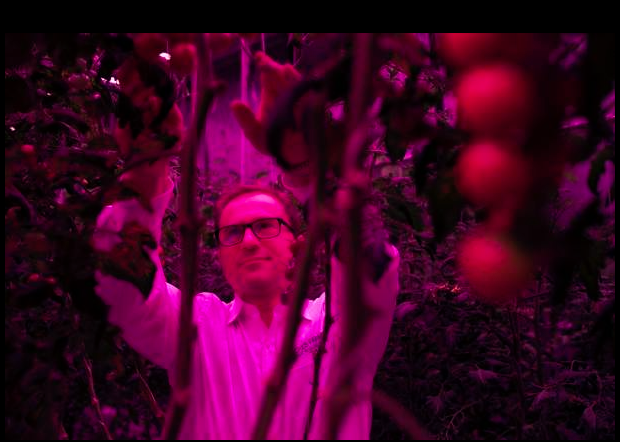
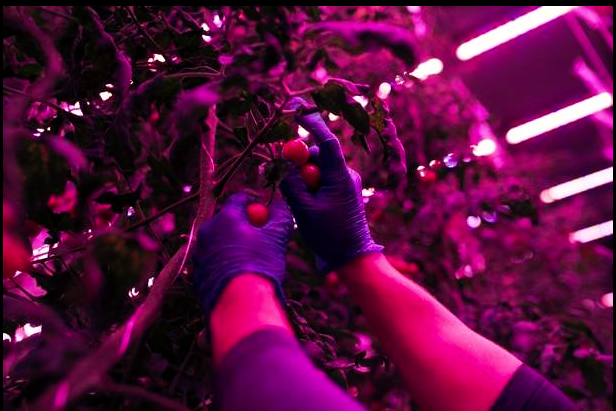
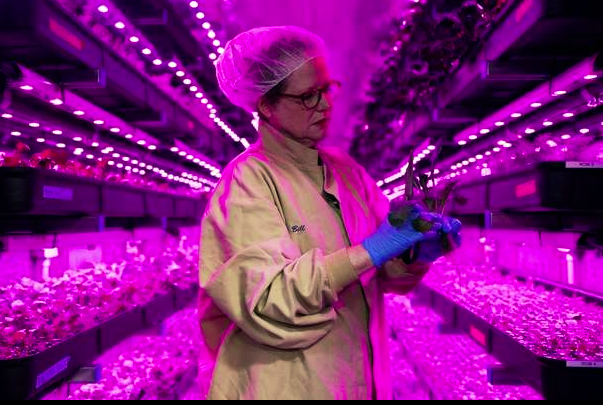
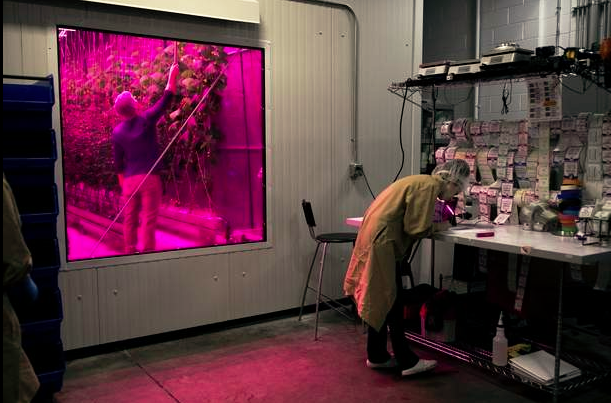
Mike Zelkind, chief executive of 80 Acres Farms, grows produce with artificial-light made possible with new LED technology.
Mike Zelkind stands at one end of what was once a shipping container and opens the door to the future.
Thousands of young collard greens are growing vigorously under a glow of pink-purple lamps in a scene that seems to have come from a sci-fi movie, or at least a NASA experiment. But Zelkind is at the helm of an earthbound enterprise. He is chief executive of 80 Acres Farms, with a plant factory in an uptown Cincinnati neighborhood where warehouses sit cheek by jowl with detached houses.
Since plants emerged on Earth, they have relied on the light of the sun to feed and grow through the process of photosynthesis.
But Zelkind is part of a radical shift in agriculture - decades in the making - in which plants can be grown commercially without a single sunbeam. A number of technological advances have made this possible, but none more so than innovations in LED lighting.
“What is sunlight from a plant’s perspective?” Zelkind asks. “It’s a bunch of photons.”
Diode lights, which work by passing a current between semiconductors, have come a long way since they showed up in calculator displays in the 1970s. Compared with other forms of electrical illumination, light-emitting diodes use less energy, give off little heat and can be manipulated to optimize plant growth.
In agricultural applications, LED lights are used in ways that seem to border on alchemy, changing how plants grow, when they flower, how they taste and even their levels of vitamins and antioxidants. The lights can also prolong their shelf life.
“People haven’t begun to think about the real impact of what we are doing,” says Zelkind, who is using light recipes to grow, for example, two types of basil from the same plant: sweeter ones for the grocery store and more piquant versions for chefs.
For Zelkind, a former food company executive, his indoor farm and its leading-edge lighting change not just the way plants are grown but also the entire convoluted system of food production, pricing and distribution in the United States.
High-tech plant factories are sprouting across the United States and around the world. Entrepreneurs are drawn to the idea of disrupting the status quo, confronting climate change and playing with a suite of high-tech systems, not least the LED lights. Indoor farming, in sum, is cool.
It has its critics, however, who see it as an agricultural sideshow unlikely to fulfill promises of feeding a growing urbanized population.
Zelkind agrees that some of the expectations are unrealistic, but he offers an energetic pitch: He says his stacked shelves of crops are fresh, raised without pesticides and consumed locally within a day or two of harvest. They require a fraction of the land, water and fertilizers of greens raised in conventional agriculture. He doesn’t need varieties bred for disease resistance over flavor or plants genetically modified to handle the stresses of the field. And his harvest isn’t shipped across the country in refrigerated trucks from farms vulnerable to the effects of climate change.
“We think climate change is making it much more difficult for a lot of farms around the country, around the world,” he says, speaking from his office overlooking a demonstration kitchen for visiting chefs and others.
In addition to shaping the plants, LEDs allow speedy, year-round crop cycles. This permits Zelkind and his team of growers and technicians to produce 200,000 pounds of leafy greens, vine crops, herbs and microgreens annually in a 12,000-square-foot warehouse, an amount that would require 80 acres of farmland (hence the company’s name).
Zelkind says he can grow spinach, for example, in a quarter of the time it takes in a field and half the time in a greenhouse. Growing year-round, no matter the weather outside, he can produce 15 or more crops a year. “Then multiply that by the number of levels and you can see the productivity,” he said.
Zelkind and his business partner, 80 Acres President Tisha Livingston, acquired the abandoned warehouse, added two shipping containers and converted the interior into several growing zones with sophisticated environmental systems that constantly monitor and regulate temperature, humidity, air flow, carbon dioxide levels and crop health. Grown hydroponically, the plant roots are bathed in nutrient-rich water. The moisture and unused nutrients exhaled by the plants are recycled.
But it is the LED lighting that has changed the game. Conventional greenhouses have relied on high-pressure sodium lamps to supplement sunlight, but HPS lights can be ill-suited to solar-free farms because they consume far more power to produce the same light levels. They also throw off too much heat to place near young greens or another favored factory farm crop, microgreens. Greenhouses, still the bulk of enclosed environment agriculture, are moving to a combination of HPS and LED lighting for supplemental lighting, though analysts see a time when they are lit by LEDs alone.
In the past three years, Zelkind says, LED lighting costs have halved, and their efficacy, or light energy, has more than doubled.
Production in the Cincinnati location began in December 2016. In September, the company broke ground on the first phase of a major expansion 30 miles away in Hamilton, Ohio, that will eventually have three fully automated indoor farms totaling 150,000 square feet and a fourth for 30,000 square feet of vine crops in a converted factory. (The company also has indoor growing operations in Alabama, North Carolina and Arkansas, which acted as proving grounds for the technology.)
“We feel the time is right for us to make the leap because the lighting efficiency is there,” Livingston says.
The visible spectrum is measured in minuscule wavelengths, shifting at one end from violet-blue light through green to red at the other. For decades, scientists have known that photosynthesis is optimized within the red band, but plants also need blue lightwaves to prevent stretching and enhance leaf color.
A barely visible range beyond red, known as far red, promotes larger leaves, branching and flowering. With advances in LED technology, light recipes - determining the number of hours illuminated, the intensity of photons directed at plants and the mix of colors - can be finely tuned to each crop and even to each stage in a crop’s life.
Given the evolving nature of the technology and its enormous commercial potential, light manufacturers and universities, often in collaboration, are actively involved in research and development.
“We have a completely new era of research,” says Leo Marcelis, a horticulture professor at Wageningen University in the Netherlands. Tweaking light recipes has allowed researchers to manipulate crops in a way never seen before. In the lab, chrysanthemums have been forced into bloom without the traditional practice of curtailing their daily exposure to daylight. This will allow growers to produce bigger plants in flower.
“It’s to do with playing around with the blue light at the right moment of the day,” Marcelis says. “Its internal clock is affected differently, so it doesn’t completely recognize it’s still day. There are so many amazing responses of the plant to the light.”
Lettuce, for example, likes as much as 18 hours of light per day, but basil prefers brighter light for 15 hours, says Celine Nicole, a researcher for Signify, formerly Philips Lighting. “Every plant has its own preference,” says Nicole, who conducts research at the company’s high-tech campus in Eindhoven, Netherlands. She has already tested 600 types of lettuce.
Although the permutations are still under study, the sun suddenly seems so analog. “The spectrum from sunlight isn’t necessarily the best or most desirable for plants,” says Erik Runkle, a plant scientist at Michigan State University. “I think we can produce a better plant” with LED lights, he says. “The question becomes: Can you do it in a way that is cost-effective considering the cost of plants indoors?”
The answer seems to be yes. LED light shipments to growers worldwide are expected to grow at an annual average rate of 32 percent until 2027, according to a market report by analysts with Navigant Research in Boulder, Colorado. Shipments of LED lights will overtake those of legacy lights starting next year, says Krystal Maxwell, who wrote the report with Courtney Marshall.
Most of the growth will be as supplemental lighting in greenhouses, but vertical farms are seen as an alternative production system that will develop alongside greenhouses, not displace them, Marcelis says.
Runkle estimates there are 40 or more vertical farms in the United States, and new ones are opening every year with the help of deep-pocketed investors. In some of the biggest deals, AeroFarms, headquartered in Newark, last year raised a reported $40 million. Plenty, a grower based in South San Francisco, raised $200 million in 2017 for a global network of vertical farms. (One of the backers is a venture capital firm created by Amazon founder Jeff Bezos, who also owns The Washington Post.)
Zelkind declined to reveal his capital costs, but for start-up entrepreneurs, LED-driven vertical farms can be one of the most lucrative forms of agriculture. “Based on manufacturers and growers I have talked to, that’s where the money is,” Marshall says.
Critics argue that a lot of the hype around indoor farming is unwarranted, saying it won’t fulfill promises of feeding an increasingly urbanized planet and reverse the environmental harm of industrialized agriculture, not least because most staples, such as corn, wheat and rice, cannot be grown viably indoors.
Also, to build enough indoor farms for millions, or billions, of people would be absurdly expensive.
Runkle says vertical farming “shouldn’t be considered as a way to solve most of our world’s food problems.” But it is a viable way of producing consistently high-quality, and high-value, greens and other plants year-round.
Zelkind says what he’s doing may be novel, but it’s just one component of how we feed ourselves in this century. “We shouldn’t overblow what we do. Eventually it’s going to become more important, but vertical farming alone isn’t the cure-all.”
He adds, however, that “there’s no reason today to ship leafy greens from California to Ohio.”
Livingston likens LED-raised food to the advent of smartphones. “Five years from now everyone is going to be living with indoor farming and wonder how we did without it,” she says.

Schneider Electric Goes Big By Going Local In The Microgrid Market
November 16, 2018 By Elisa Wood
Advanced microgrids were still something of a bet four years ago when Schneider Electric and partners rolled out the Oncor microgrid in Texas, an early demonstration project.
Tiptoeing into microgrids then, the energy management and automation giant now is in full stride, made clear this week at its Innovation Summit North America in Atlanta, Georgia.
Schneider Electric’s Innovation Summit North America in Atlanta, Georgia. Courtesy of Schneider
Top company brass have their eyes on the microgrid market. Chairman and CEO Jean-Pascal Tricoire featured some of the company’s advanced microgrids as he highlighted various Schneider success stories during his opening remarks.
“You’ve got powerful catalyzers of change here in the electrical system, which are pushing the grid to be richer at the level of the edge, closer to the consumption,” Tricoire said, to an audience of 1,200 companies, buyers, analysts and others tracking Schneider’s business, which netter $28.5 billion in revenue last year.
Tricoire described microgrids at the Marine Corps Air Station (MCAS) Miramar in San Diego, California and in Montgomery County, Maryland, two large and sophisticated projects.
But they soon became old news when two days later Schneider unveiled another microgrid project, the latest in a string of announcements. The new microgrid is for Bowery Farming, a New York company that offers indoor agriculture.
Cultivating local partners
The Bowery Farming microgrid emerged out of Schneider’s strategy of partnering with smaller microgrid developers and local electrical contracting companies to reach into local markets.
“We can’t call on every small building to make an offer,” said Mark Feasel, vice president, electric utility segment & smart grid, in an interview with Microgrid Knowledge.
But local contractors are in neighborhood buildings all the time — they see where opportunity lies.
So Schneider has launched a program called EcoXpert, which makes available training tools and demos to help smaller companies upskill their work force, create new jobs and tackle more complex projects.
By gaining a better understanding of the digital overlays and cloud products being integrated into microgrids, the partners gain a competitive edge, Feasel said.
“The electrical contractor has to transform along with this market. In a world where the consumer is no longer passive, their requirements are changing,” he said.
Schneider selects the best of the EcoXpert participants as partners for microgrid development.
The division of labor can take various forms in the partnerships. For example, Schneider doesn’t necessarily handle the microgrid engineering, procurement and construction; it may relinquish the role to the local partner and instead sell products, software and services. In the case of Bowery Farming, New Jersey-based Scale Microgrid Solutions will build, own and operate the microgrid.
Natural pairing of urban farms and microgrids
The indoor farming movement melds philosophically with microgrids. Often in urban areas, indoor farms are typically close to those they serve – just as microgrids are. So the indoor farms use fewer resources than agribusinesses in delivering product, creating efficiencies, again as microgrids do.
Indoor farms also use less water and crop treatment because they are in contained environments. However, they demand substantial energy for lights, water pumping and other operations.
Bowery Farming will improve its environmental profile by using energy from a microgrid that will rely on solar, energy storage and natural gas. Schneider will provide the lithium-ion battery energy storage system, the microgrid controller and a cloud-connected energy management software platform.
Indoor farming melds philosophically with microgrids. Photo by ESstock/Shutterstock.com
The microgrid will generate energy at a price lower than grid power due to the spark spread, Feasel said.
The indoor farm also gains reliability since the microgrid can island from the central grid during a power outage and rely on its on-site generators. The digital platform orchestrates when to stop and start, when to charge and discharge, forecasting, weather monitoring, and load balancing in real time. The solar can operate when the microgrid is in island mode.
At a future date the Bowery Farming microgrid may also gain revenue through demand response and ancillary services. However, the microgrid can achieve cost savings even without those potential revenue streams, Feasel said.
Speed to market and standardization
Indoor urban farms tend to occupy buildings that were once used for other purposes. Not long ago, installing a microgrid in that kind of setting would have meant extensive study and engineering. That too has changed for many projects. Microgrids are becoming more standardized and modular, taking a few months — not years — to build, Feasel said.
“Microgrids are becoming more accessible to a larger population. It’s due to standardization and a commercial, off-the-shelf approach,” he said.
“Microgrids are becoming more accessible to a larger population,” says Mark Feasel of Schneider Electric
The Bowery Farming microgrid, for example, is scheduled to begin operation in the first quarter of 2019.
To simplify microgrids “for folks who don’t wake up everyday thinking about electricity,” Schneider developed what it calls the Energy Control Center, which orchestrates all of the resources within the microgrid.
The owner can configure how many and what kind of distributed energy resources it wants to employ in the microgrid, based on pre-defined use cases. For Bowery Farming, the microgrid’s distributed energy are all managed within a simplified panel board. The system is monitored within the cloud by Schneider’s EcoStruxure Microgrid Advisor, a software platform that the company uses for both its small microgrids, like Bowery Farming. and its large ones like the Montgomery County.
“Bowery will have the same kind of visualization — a small microgrid for a relatively small price — that someday a big airport might have,” Feasel said.
Microgrids for the rest of us?
Expect to hear about more new microgrids soon; Schneider says it’s got them coming.
Still, the microgrid market is not moving as quickly as it might, Feasel said.
For one thing, “there is still too much management by catastrophe,” Feasel said. Companies and communities often don’t consider microgrids until they’ve experienced the cost and pain of power outages brought on by severe storms. For corporations and other large energy users, the microgrid industry encourages pro-active project development by quantifying what power outages will cost them. But it’s harder to do the calculations for smaller operations and neighborhoods. So developers lack data to make an economic case for microgrids to a broad swath of society.
Credit-worthiness creates another roadblock. Some customers want microgrids but cannot secure financing. Feasel sees a possible role for electric utilities in helping those customers — but so far state regulators have been slow to allow utility microgrid development.
So even as more and more microgrids come on line, “there is still a real question of how do we make this transition work for everybody,” Feasel said.
Track news about Schneider Electric and its microgrid play.
Subscribe to the free Microgrid Knowledge newsletter.
CAM Led Lighting, A Division of CAM Mfg., A California Company, Announces It’s Agreement To Market And Distribute The Wand.
Latest Product News for InDoor Growers, Farmers and Commercial Horticulture Operators
Los Angeles, CA, October 16, 2018:
CAM Led Lighting, a Division of CAM Mfg., located in Murrieta, CA is proud to announce their partnership with BioRadiance Grow Science, a cutting- edge Science & Technology Company based in the UK. BioRadiance offers cost-effective straight forward solutions to urgent, destructive, very costly and sometimes life-threatening sickness problems caused by harmful pathogens.
The “Wand” delivering BRe3, is a Patented Light Energy Science that prevents Pathogen infection and cures infected plants, vegetables, cannabis & seeds & extends the lives of flowers, cut vegetables/plants by organically destroying fungi and bacteria. The non-visible WaveLength light is safe for use from Seed 2 Sale, has no residues or toxins to leave behind and is safe for all humans, animals and plants. Growers can maximize crop potential and eliminate the use of pesticides and chemicals allowing them to grow clean and healtheir produce/plants and cannabis.
The Wand is a LED Emitter Light Bar, approximately 48” L x 1- 1/ 2” W, installs along side current grow lights, or can be used as a stand-alone LED Grow Light + Pathogen Control. The Light source uses the non-visible spectrum of light and delivers natural occuring wavelengths, covering up to a 6’ x 4’ area at a distance of 24” away from the plant(s), or as close as 6” away from the plant(s) covering a smaller footprint of 4’ x 2’ for quicker results. The Bar has an IP65 rating and can be also be installed in outside grows under cover with structural support for attachment.
Several Certified Lab Tests have been conducted in commercial grow rooms and results are available upon request. Please email Director of Marketing, Judi Randall, @ info@camledlighting.com, for more information on Test Results.
“We are excited and thrilled to be offering such an amazing product to the Indoor Grower’s Industry, particularly here in California where regulations on Pesticides are on the forefront and may detour good quality growers from entering into the market. We believe this product and it’s science is the answer to grow/production issues relating to the quality, control and the safety of plants, vegetables, fruit, flowers, insects and related products to the Public.” States, Judi Randall.
Judi can be contacted @ their CA company headquarters, 1-951-837-4776 or by email info@camledlighting.com for additional information, pricing or ordering.
## END ##

Urban Crop Solutions Offers A Glowing And Growing Global Future For Indoor Farming
A start-up that engineers and builds fully automated indoor vertical farms inside shipping containers and buildings.
by S. Virani
25 September 2018

“Imagine yourself standing inside a climate-controlled, high-ceiling warehouse. In front of you stands a tower with 8 irrigated levels, on each of which lettuces, herbs, micro greens, and baby greens grow under LED lights. Robotics move trays with young plants from outside this grow room into the right position in the grow tower, while on the other end fully grown crops are taken out, ready to be harvested. Can you see it? You are standing in Urban Crop Solutions' Plant Factory — the state-of-the-art in indoor vertical farming technology. A highly engineered manufacturing plant producing not goods, but crops.” — Urban Crop Solutions.
Meet Urban Crop Solutions: A start-up that engineers and builds fully automated indoor vertical farms inside shipping containers and buildings. They also provide clients that have bought a system with carefully selected and tested seeds, substrates, nutrients and comprehensive software grow recipes. The result: year-round production of fresh and healthy crops.
The start-up’s goal is to create an optimum environment for plants to grow, with the right combination of climate, lighting and nutrients throughout their growth cycle.
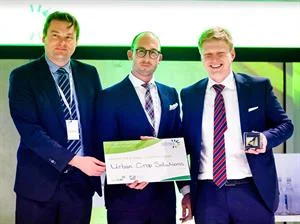
From left, Frederic Bulcaen, co-founder and chairman at Urban Crop Solutions, with Brecht Stubbe, global sales director and Maarten Vandecruys, co-founder and CEO with at European FoodNexus Award Ceremony
Headquartered in Belgium, with regional offices in Miami (USA) and Osaka (Japan) as well as a network of sales agents in various territories, Urban Crop Solutions will take part in the World Agri-Tech Innovation Summit to be held from October 16-17 in London, selected as one of the 13 start-ups to present their innovative solutions.
Produce Business UK sat down with Brecht Stubbe, global sales director of Urban Crop Solutions, to understand the technology that the start-up has developed, as well the growth of the vertical farming market in general, challenges that farmers face now and will face in the future, and Urban Crop Solutions’ formulas to combat food shortage in the future.
How did the Urban Crop Solution concept come about?
By 2050, more than 70 per cent of all people will live in cities. The population will grow from 2.5 billion to over 9.8 billion, leading to a need to produce 70 per cent more food. In 2012, 80 per cent of the land suitable for agriculture was already in use. Due to these facts, it was safe to say that something needed to change.
That is when our co-founder (Maarten Vandecruys) started thinking: “What if we could use technology to grow any plant, year-round and independent of local climate? What if we could do this using 95 per cent less fresh water? What if we could do this using zero pesticides and herbicides?” Together with Frédéric Bulcaen, the other co-founder who acted as a business angel, they set out to explore this further.
With the above goals in mind, modular solutions were developed at Urban Crop Solutions: A fully controlled and automated resolution that can be placed anywhere and which can grow any plant. Imagine a closed box or warehouse with crisp white walls in which plants are grown using LED lights, as well as without soil.
In lieu of the Agri-Innovation Summit, where you will present alongside a dozen or so other start-ups, what is it about your technology that stands out and set up apart? Essentially what is your unique selling point?
Urban Crop Solutions has a total turnkey solution, as well the latest technology in terms of indoor farming systems. A big difference with other competitors is the fact that we have plant scientists that develop recipes for more than 180 crop varieties. We also offer all the consumables — seeds, substrates, nutrients — to help you grow your crops.
Finally, we have experience all over the globe, from Belgium to Japan to Miami.
So when we look at our unique selling propositions, these would be the consistent high quality of produce combined with our biological know-how of how to grow them, as well as the use of automation to bring down labour costs.
Let’s talk about your clientele and the sorts of industries that you have worked with? Furthermore, would you say there has been a growth in demand for this over the years?
A first category of clients are the entrepreneurs, people who see the opportunity this technology offers and plan to start from scratch. For example, those who want to build a produce brand growing vertically and indoors.
Another category are R&D institutions and corporate departments as well as crop science companies that use our technology to conduct relevant research while being able to manage all variables precisely to their needs.
A third important category is the existing vertical farmers who are looking for a high-quality, third-party solution provider to help them scale.
We would also include the category of existing traditional farmers that are looking to capture the new market this technology offers by complementing their existing production methods. For example, open-field and greenhouse farming.
Do you see other start-ups competing in this space?
Not really. There are a lot of vertical farmers focused on growing and integrating technology themselves. However, they are not any qualitative total solution providers like Urban Crop Solutions, that have the ability to design and build a tailored, fully automated efficient solution the world over.
We just did a piece about the new Emirates Airlines vertical farm. It provides an example of how other industries can apply and utilize the vertical farm. What are your thoughts on that?
This is a good example of disruptive new business opportunities and vertical integration into supply chains. Zooming out, the broader definition of this case can be defined as food catering companies (a subcategory of food processing companies) integrating produce farming into their business. The technology allows them to capture an additional margin by adding the value themselves as opposed to buying the produce from a third party and enables them to perform just-in-time production with reductions in waste and certainty of ability to deliver.
You have various solutions on your website: The Farmflex Container, The Farmpro Container? The Plant Factory. What are the main differences between all of them?
We have two different product categories:
Off-the-shelve product
This includes our FarmPro & FarmFlex container. These are mainly used as a first stepping stone/proof of concept for companies that would like to grow commercially or conduct research on a larger scale in the future.
FarmPro container: The Urban Crop Solutions FarmPro is a 40-foot, fully automated freight container with a state-of-the-art leafy green growing system. This system gives a four-layer growing solution. Its design is primarily focused on growing lettuce and individual herbs.
FarmFlex container: This system has a state-of-the-art leafy green growing rack setup. It gives a fully automated, four-layer growing solution with maximum flexibility as to what you can grow. For this reason, educational and research institutions have the highest demand for this product, as it allows growth of almost anything: lettuce, herbs, micro greens, baby greens and more.
Then we have custom-made large-scale solutions:
PlantFactory: Our Urban Crop Solutions PlantFactory allows you to grow in any available space, whether it is a basement or a warehouse. This way, you can produce leafy greens year-round on an industrial scale or set up complex large-scale R&D infrastructure.
In an Urban Crop Solutions PlantFactory, everything is designed and engineered according to the available space, as well as to the customers’ needs. For example, the cultivation area, our innovative LED growing technology, ingenious irrigation systems and climate control.
In terms of industries, what industries do you work with, and what would you say are the industries most relevant for now in 2018?
Agricultural food production and crop science research are the most relevant industries for 2018 based on the demand they produce for us.
As a B2B publication focused on produce, we are interested in how vertical farming truly can affect the industry as a whole. What are some predictions you might have about the effect of vertical farming on produce? Are there particular fruits or vegetables that will thrive in this environment and produce higher yields?
There exists a distinction between what we can grow from a technical standpoint (almost everything – even strawberries, cucumbers, tomatoes, peppers, etc.) Then, however, there is the commercial standpoint. The latter is more limited because obviously one needs a positive cash flow. The capital-investment cost and substantial operational costs (e.g. electricity) require that one selects a crop that has a short grow cycle, high density and harvests the full biomass created.
As a result, the current commercially viable food production crops are the leafy greens such as lettuce, herbs, baby greens and micro greens.
Just how good, just how efficient are these farms?
The farms can be tailored to include carefully selected and tested seeds, substrates, nutrients and a comprehensive software tool automatically providing the plants with the right combination of climate, lighting and nutrients throughout their growth cycle. Our solution leads to higher yields, higher nutritional value, food safety and security, higher water efficiency. This can actually be up to 95 per cent less than open-field farming.
On your home page, you make the following claim: “Urban Crop Solutions envisions to become the global independent reference of the fast-emerging vertical farming industry." How would you say this is possible?
At this time, vertical farmers are trying to juggle two widely different business plans: on the one hand, they spend capital developing and integrating an engineered solution and the biological corresponding know-how. On the other hand, they then apply this research to construct a vertical farm, operate it as farmers, and earn back the investment not only of the infrastructure, but also of the R&D that precedes it, as well as continues afterwards. In our opinion, this is a poor business plan because they have to earn back their R&D and their operational infrastructure investment with the sale of crops.
If we look at the more mature greenhouse industry, we get a sense of where the sector of vertical farming will eventually evolve. A greenhouse tomato grower that wants to set up a new production facility will not develop his own technology, but instead turn to the 15 best greenhouse project developers, ask for quotes, and select the one he feels most confident about. In that setup, we see technology companies focusing on providing systems, and growers focusing on farming. We start seeing a change in the mindset of vertical farmers along those lines today as well.
Let’s talk briefly about the upcoming World Agri-Tech Innovation Summit. What will you be presenting there?
We will begin with a company introduction, present our unique selling points, newest technology, projects and achievements.
While creating all these solutions, there indeed have to be challenges that need solutions. What would you then say are some of the actual challenges that farmers face today?
Traditional farmers are combating unreliable climate conditions, increased labor costs, crop diseases, crop pests, soil degradation and much more. Our solutions provide reliable alternatives to all of these concerns.
Existing vertical farmers from their end are struggling with the high labor costs associated with running non-automated vertical farms — requiring scissor lifts or stairs to harvest the higher levels of crop cultivation areas — as well as inconsistent quality in their production due to poor control of the different variables. Our fully automated and well-engineered system reduces labour costs and deviations from the ideal settings, respectively.
The vertical farm model is certainly a rising trend amongst start-ups. How did this movement come about?
Well, it’s like I said from the beginning. By 2050, more than 70 per cent of all people will live in cities. Added to that, in 2017 almost 300 million USD has been invested in vertical farming, creating more and more momentum.
To put things into perspective globally, which regions would you say have the biggest influence on the vertical farm boom?
In North America and South East Asia, we see the most vertical farms. In South East Asia, there is a lack of land to farm on and a variety of food safety issues. In North America, there are a lot of business opportunities with vertical farming technology due to the willingness of consumers to pay a premium for locally produced healthy crops.

Farming The Cities: An Excerpt From Nourished Planet
Worldwide, there are nearly a billion urban farmers, and many are having the greatest impact in communities where hunger and poverty are most acute.
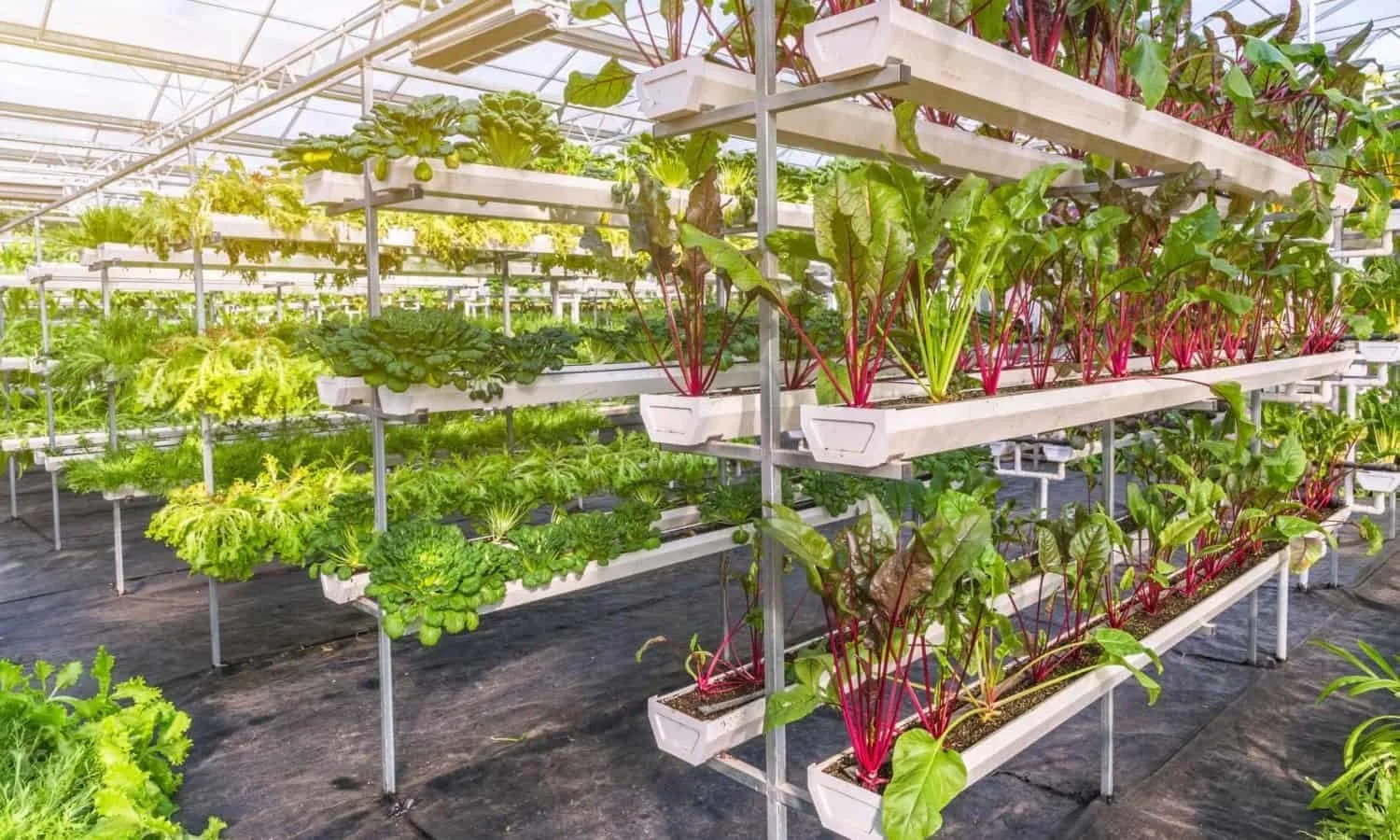
The following is an excerpt from Nourished Planet: Sustainability in the Global Food System, published by Island Press in June of 2018. Nourished Planet was edited by Danielle Nierenberg, president of Food Tank, and produced with support from the Barilla Center for Food & Nutrition.
By 2050, 70 percent of the world’s people are expected to live in urban areas, and if we’re going to feed all those people, we’ll need to continue to make cities and towns into centers of food production as well as consumption. Worldwide, there are nearly a billion urban farmers, and many are having the greatest impact in communities where hunger and poverty are most acute. For example, the Kibera Slum in Nairobi, Kenya, is believed to be the largest slum in sub-Saharan Africa, with somewhere between 700,000 and a million people. In Kibera, urban farmers have developed what they call vertical gardens, growing vegetables, such as kale or spinach, in tall empty rice and maize sacks, growing different crops on different levels of the bags. At harvest time they sell part of their produce to their neighbors and keep the rest for themselves.
The value of these sacks shouldn’t be underestimated. During the riots that occurred in Nairobi in 2007 and 2008, when the normal flow of food into Kibera was interrupted, these urban “sack” farmers were credited with helping to keep thousands of women, men, and children from starving.
The role urban farmers played in saving lives in Kibera is probably only a precursor of things to come. In large parts of the less developed world, as much as 80 percent of a family’s income can be spent on food. In countries where wars and instability can disrupt the food system and where the cost of food can skyrocket overnight, urban agriculture can play a fundamental role in helping prevent food riots and large-scale hunger. In that respect, promoting urban agriculture isn’t only morally right or environmentally smart, it’s necessary for regional stability.
But urban agriculture isn’t important only in sub-Saharan Africa or other parts of the developing world. In the United States, AeroFarms runs the world’s largest indoor vertical farm in Newark, New Jersey, where it grows greens and herbs without sunlight, soil, or pesticides for local communities in the New York area that have limited access to greens and herbs. Another group, the Green Bronx Machine, which is based in New York City’s South Bronx neighborhood, is an after-school program that aims to build healthy, equitable, and resilient communities by engaging students in hands-on garden education.
Across the Atlantic, in Berlin, Germany, a group called Nomadic Green grows produce in burlap sacks and other portable, reusable containers. These containers can be set up in unused space anywhere, ready to move should the space be sold, rented, or become otherwise unavailable. In Tel Aviv, Israel, Green in the City is collaborating on a project with LivinGreen, a hydroponics and aquaponics company, and the Dizengoff Center, the first shopping mall built in Israel. This collaboration provides urban farmers with space on the top of the Dizengoff Center to grow vegetables in water, without pesticides or even soil. Green in the City also provides urban farming workshops and training in the use of individual hydroponic systems.
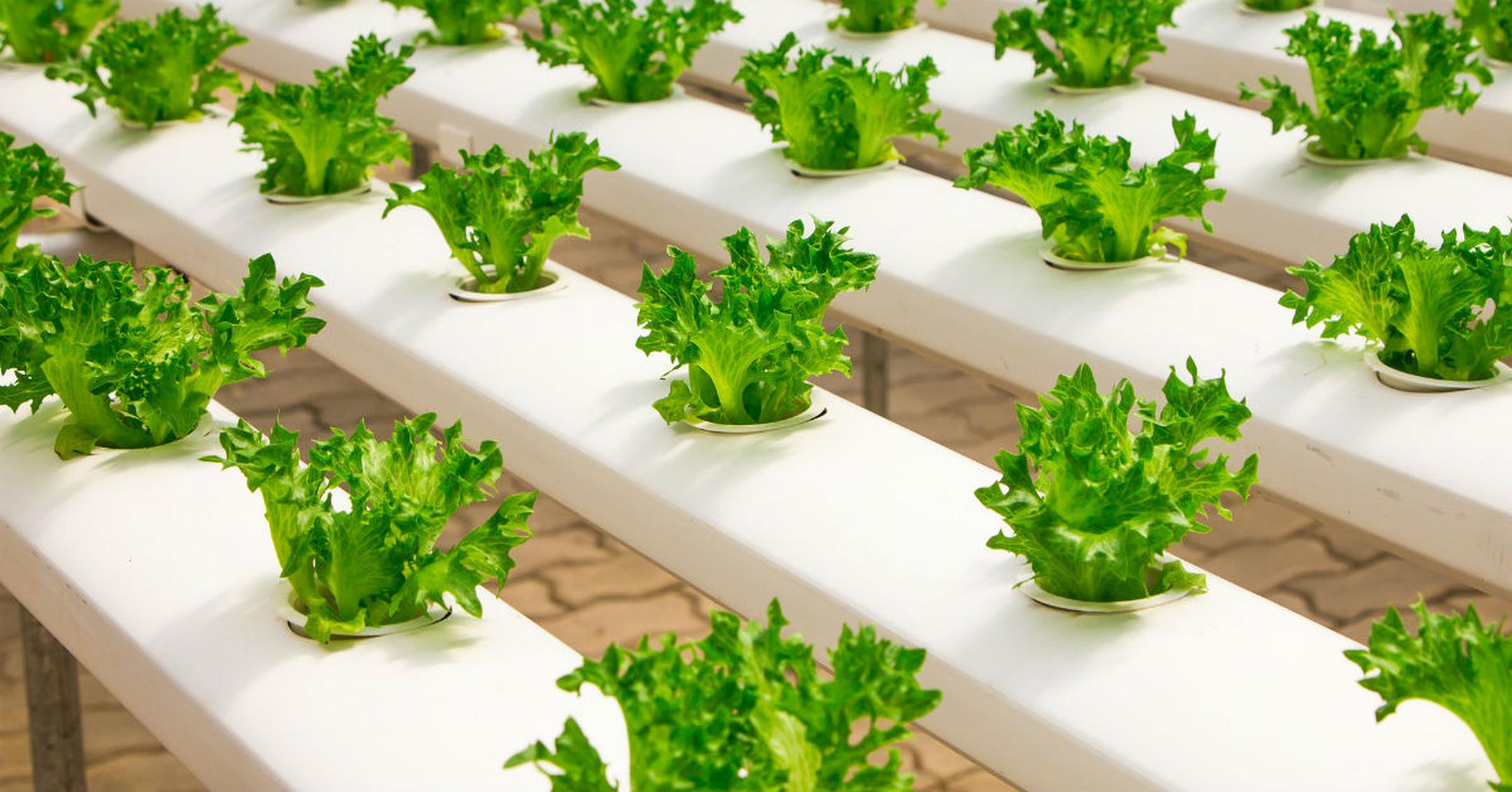
First Automated Indoor Farm In The U.S. Will Grow Greens For Whole Foods
America is about to get its first fully automated indoor farm.

BY KRISTIN HUNT
1 MONTH AGO
America is about to get its first fully automated indoor farm. This one-of-a-kind site will use robotics and artificial intelligence to grow fresh produce for supermarkets across the United States, including national chains like Whole Foods.
The farm is underway in Hamilton, Ohio — a city just 20 miles away from Cincinnati, where the company behind this innovative project is based. 80 Acre Farms has been on the vertical indoor farming scene since 2015, but this expansion will mark a dramatic increase in production.
The new farm will span over 150,000 square feet, or roughly 3.4 acres, and grow crops ranging from microgreens to kale. Once construction is complete, 80 Acres Farms will supply Whole Foods, Jungle Jims, U.S. Foods, Dorothy Lane Markets, and other food sellers and distributors with veggies year-round.
"We already have demonstrated that we can provide to our customers the freshest, best-tasting and nutritious locally-grown produce, while using renewable energy, very little water, and no pesticides," Mike Zelkind, co-founder and CEO of 80 Acres Farms, said in a press release.
"With the Hamilton facility we will achieve the next-generation of indoor vertical farming using best of breed technology. This project will deliver our proof of concept that indoor farming can be fully-automated, commercially scalable, higher-yielding, and profitable.
"It will serve as a prototype for our ambitious plans to co-locate similar facilities with commercial customers in other parts of the country."
80 Acres Farms uses a hydroponic system that nourishes plants with minimal resources. Hydroponic farming typically requires no soil, no pesticides, and much less water than traditional growing methods, making it the technique of choice among many sustainable food makers.
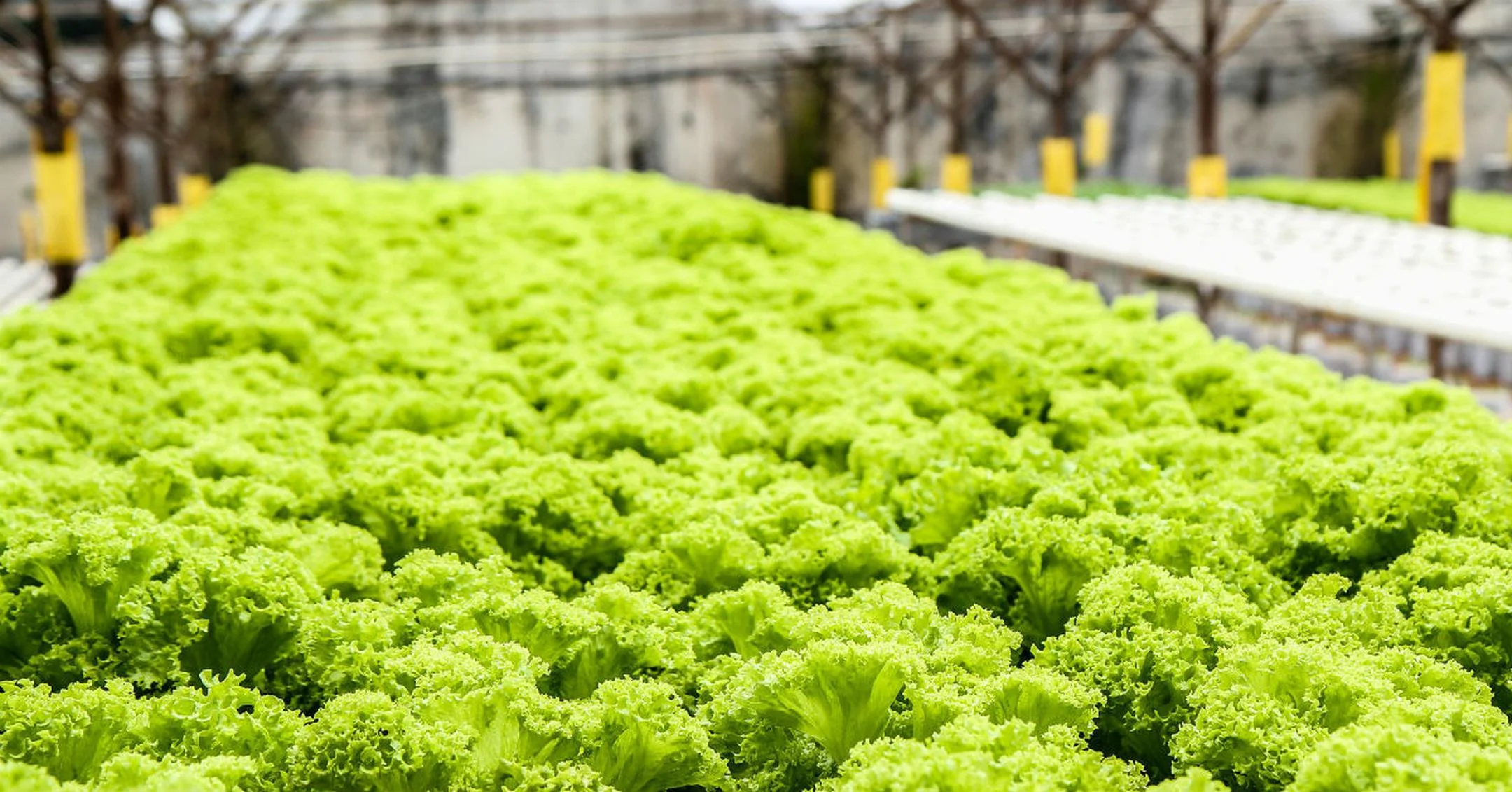
Indoor farms also allow for better temperature control. With four walls and a roof, growers can keep the environment as warm, cool, or mild as they like — meaning no crop is ever out of season.
They’re also not an energy drain. Thanks to efficient LED lights that nurture the plants’ growth, 80 Acres can manage its power needs. That efficiency extends to the day-to-day operations, which will be bolstered by artificial intelligence, data analysis, robotics, monitors, and control systems.
Despite the robot assistance, the farm will create 40 jobs with an average $40,000 to $50,000 salary — plus benefits.
"Hamilton thanks 80 Acres Farms for its investment in our city," Pat Moeller, the mayor of Hamilton, said in the release.
"80 Acres' high-tech indoor farm efficiently grows fresh produce that will continue to be sold locally. I have had the opportunity to purchase 80 Acres produce and really enjoyed the fresh, flavorful taste."
According to CNBC, the farm’s projected cost is somewhere between $10 and $15 million. Hamilton officials and 80 Acres Farms expect the first phase of the project to wrap by the end of this year, with three additional phases to follow after that.
It’s unclear when the new farm will be open and ready for business, but once it is, it could have a significant impact on the way the U.S. grows and sells food.

Farm Family: Ernessi Farms
(Midwest Farm Weekly/WFRV)
Harvest season will come to a close in a matter of weeks, but not for one Ripon, WI farm. They do not rely on mother nature to dictate seasons. In fact, it is always spring at Ernessi Farms.
The weather is always perfect at Ernessi Farms to grow everything year round because they are able to control the entire growing environment from the lighting, to the temperature, and even the nutrients. Ernessi does all of this the basement of a Watson Street business and they do it hydroponically.
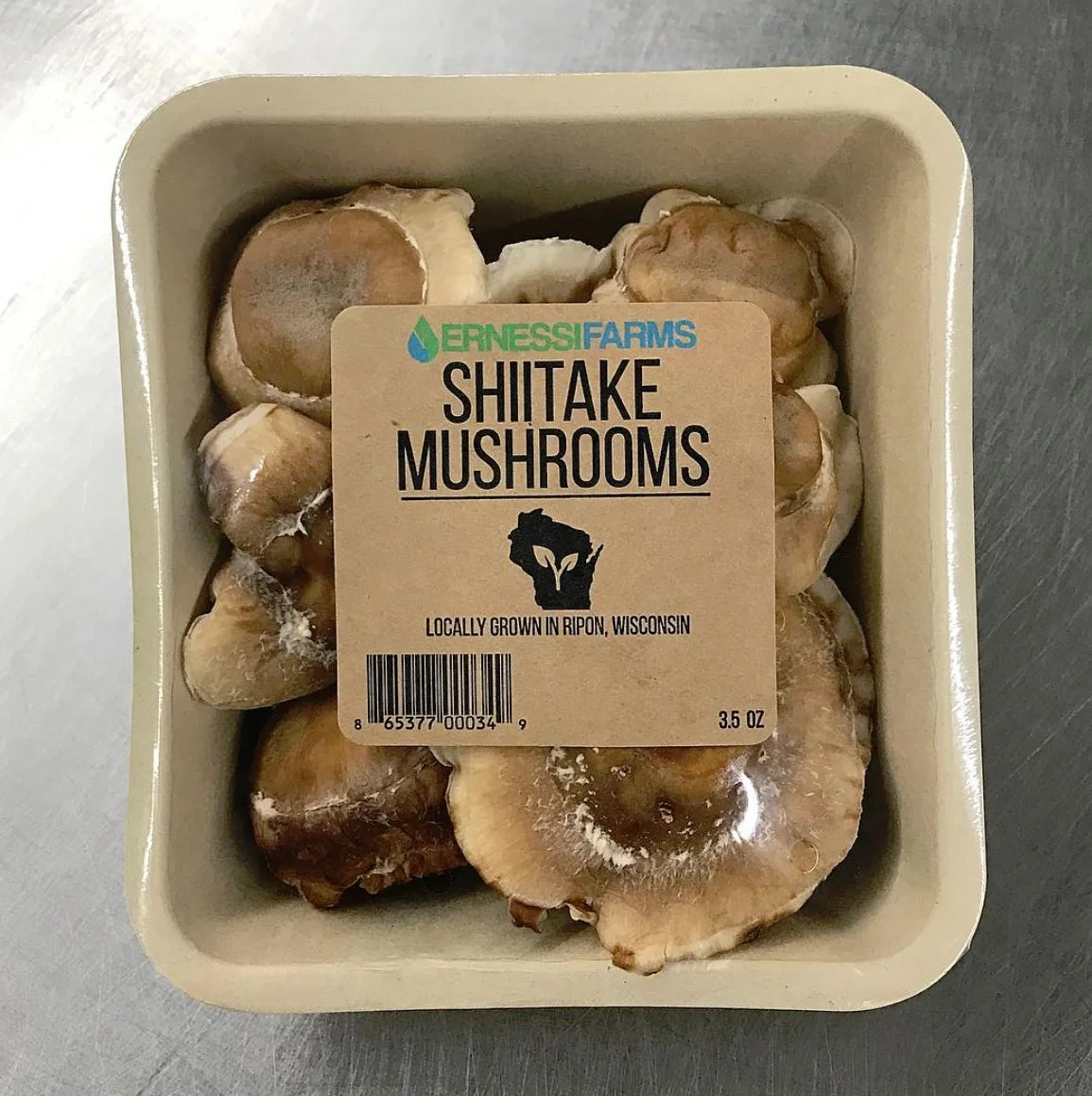
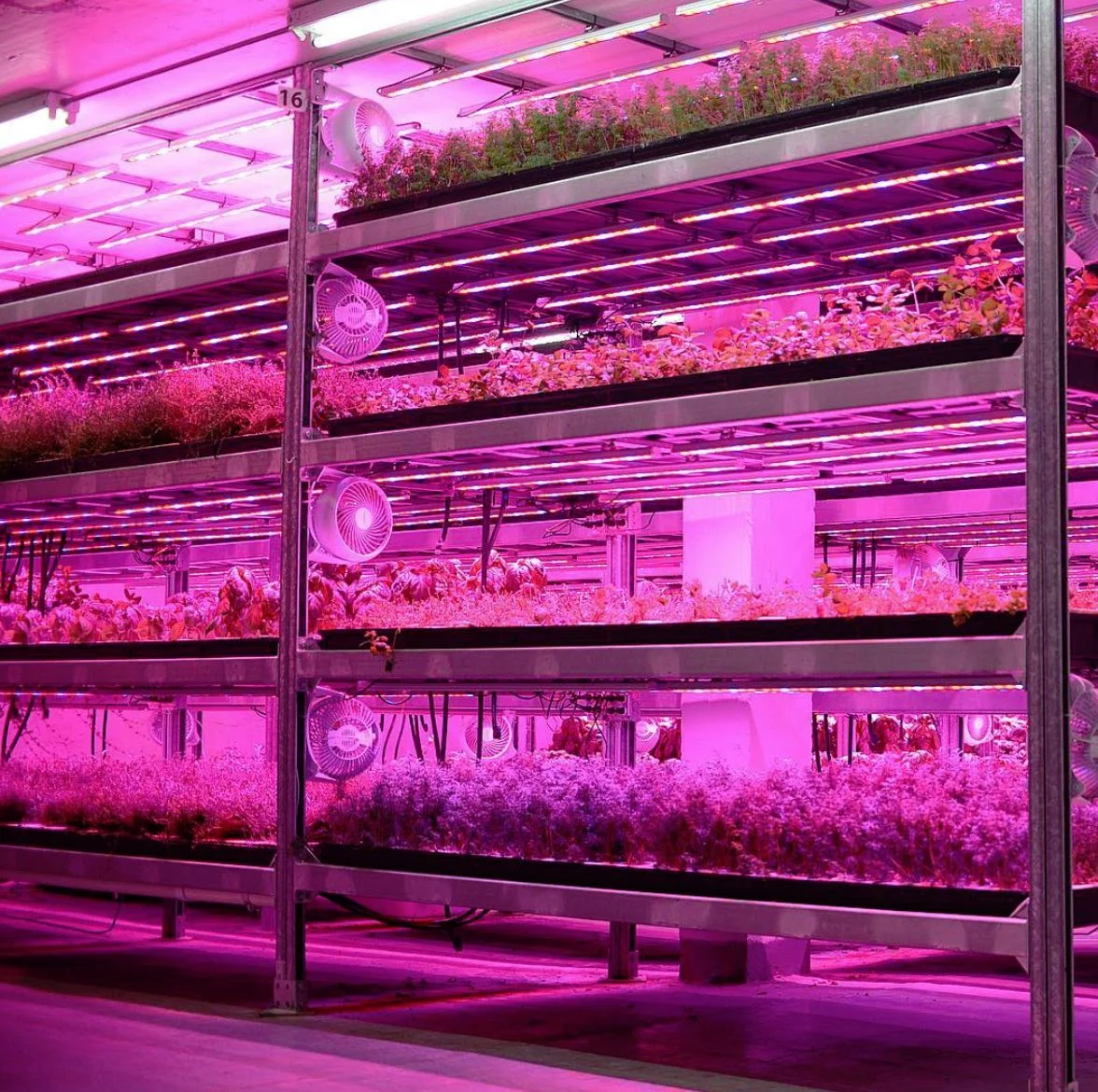
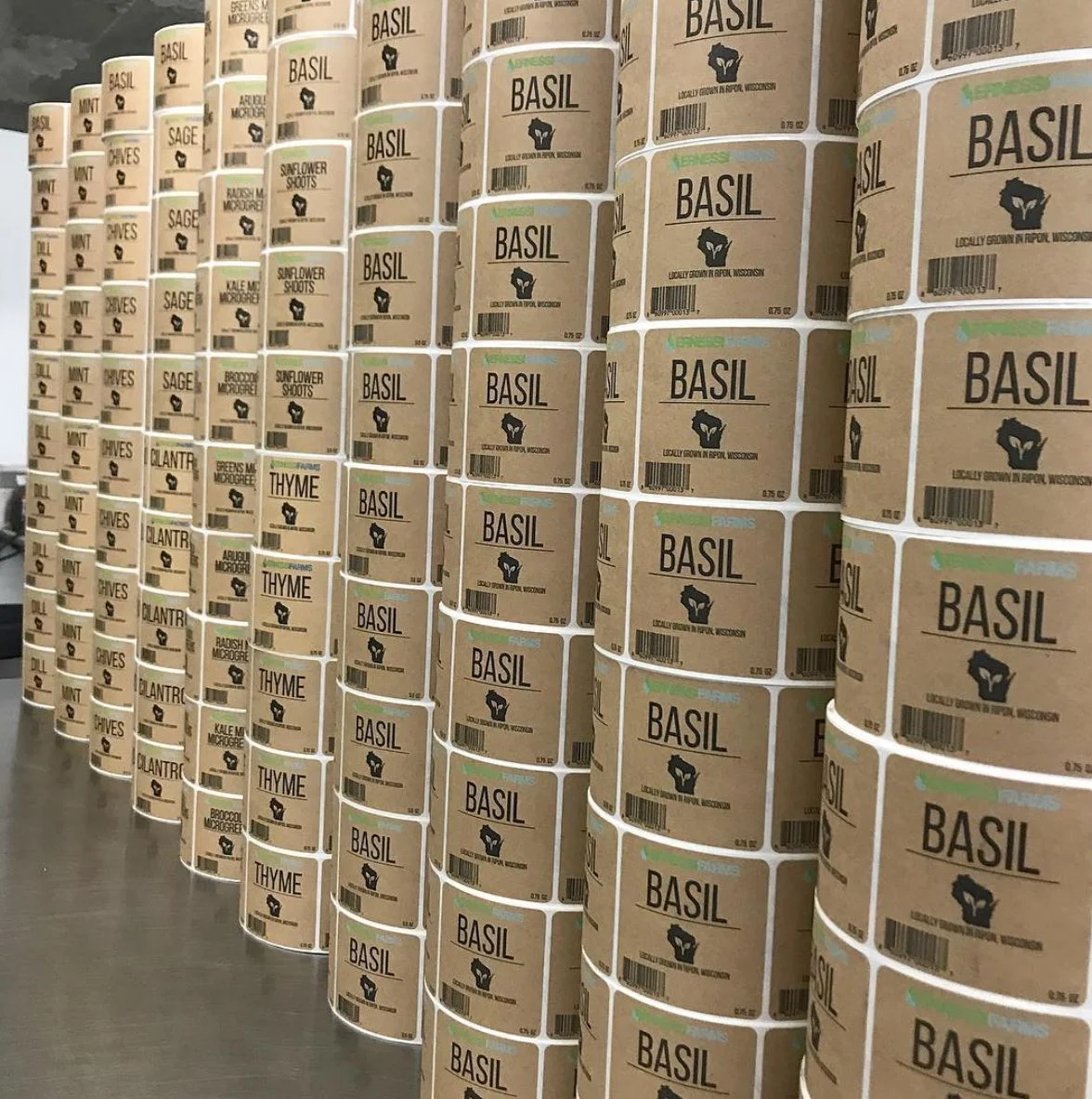
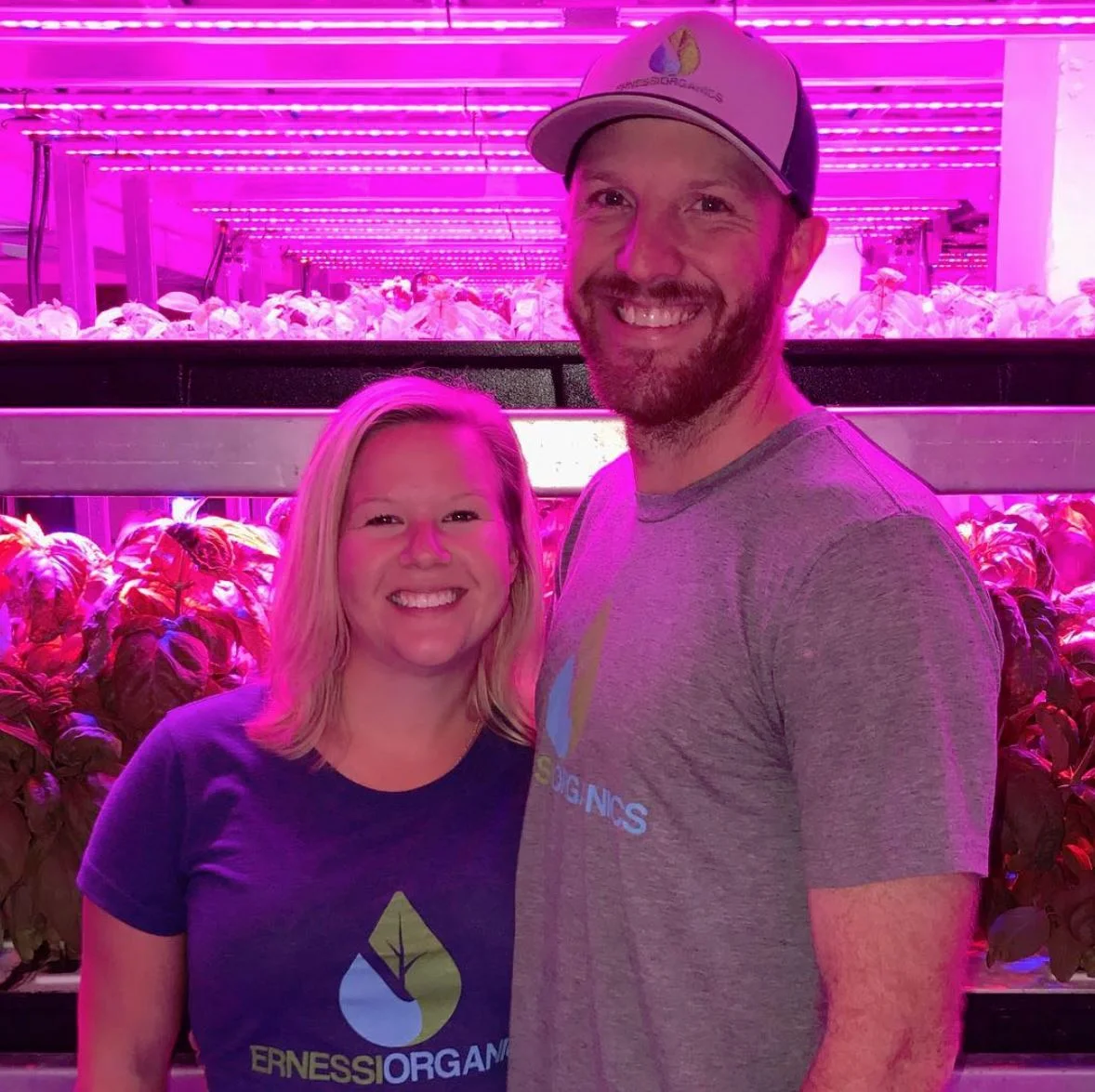
Bryan Ernst, owner of Ernessi Farms says that “because we're able to control everything down to the wavelength of the light of the plants receive we can fine-tune every single plant so that way they grow their optimum size.
Visit ErnessiFarms.com to learn more about the products they offer!
Never Heard of Indoor Farming? That's About To Change
October 30, 2018
Cincinnati-based 80 Acres Farms is in the middle of an expansion that will triple the size of its current Spring Grove location on Este Avenue and potentially revolutionize farming.
"It's going to be a fully automated farm," said Mike Zelkind, CEO of 80 Acres Farms. The company plans to open two new locations in Hamilton during the first half of 2019.
The indoor farming facilities will be the first of their kind to use robotics in the farming process.
"(It) will essentially allow us to automate the process from seeding all the way to harvesting," Zelkind said.
Zelkind and president Tisha Livingston started 80 Acres Farms in 2015. They took the company's name from the fact that the Este Avenue building is able to produce 80 acres worth of produce despite being located on just a quarter of an acre.
The company also boasts the world's first completely indoor, in-building vine crop room, where workers are able to grow tomatoes, cucumbers, peppers and strawberries.
The idea is to grow the produce cleanly and quickly so that when it is harvested, they are able to deliver to restaurants and grocery stores within 24 hours.
"It's a lot fresher than anything else you'll see," said Robert Norris, head grower for 80 Acres Farms.
"Most of the other produce that is on the produce shelves gets shipped from California or Florida," Norris said.
That time on the road, or what he calls "food miles," degrades the food quality, shortens the shelf life and leads to food waste, according to operations supervisor Samantha Bergman.
"You're going get something freshly picked," she said. "And, you're going to get at least two weeks out of it."
The company currently provides produce to local restaurants and grocery stores like Jungle Jim's, Whole Foods and Clifton Market. It also provides produce to Dorothy Lane Market in the Dayton area.
"Our goal is to provide the cleanest, healthiest food to our local communities, grown in the most sustainable way possible," Zelkind said.
They use a process called precision agriculture, which includes using LED lighting to promote photosynthesis and using filtered air and water that is piped to the plants with nutrients. The delicate plant roots are protected by controlling the temperature with water chillers. It's all done with very little waste.
"We're a hydroponic farm," Bergman said. "One of the really cool things is we have 97 percent less water waste than traditional farming."
"All of the evaporation gets captured back into the system and is put back into our nutrient solution," Norris said. "So, everything goes back to the plant."
They've seen success with their process based on a demand for produce. Two shipping containers on the side of their current location are used for additional growing space. Bergman said there's been a big demand for kale.
"We were totally sold out and people really, really wanted kale," she said. "We were getting phone calls, 'Please give us more kale.'"
Zelkind said they don't label their produce organic, even though they don't use pesticides. He said the indoor growing process they use is cleaner that traditional farming, and the opposite of genetically modified organisms.
"What you do with GMOs is you take the original genetics of the plant and you try to modify it to survive in a specific environment," he said. "We create a perfect environment for those genetics to succeed and to thrive."
"We are the future of farming," Bergman said.
Growing Microgreens With LED Grow Lights In Sonora, Mexico
Written by, admin
Urban grower Karla Garcia is proud to announce the creation of her new company, Microgreens FLN based in Sonora, Mexico. Karla is a recent graduate with honors and a master's degree in plant science from the University of Arizona. She is proud of her company's commitment to specializing in microgreens production using an indoor vertical farming strategy. Microgreens are an emerging class of specialty leafy greens and herbs. The crops are harvested when the cotyledons are fully developed and in some cases when the young plants have one true leaf.
Studies have shown that microgreens are an excellent source of vitamins (Sun et al., 2013; Xiao et al., 2012) that offer a variety of flavors, textures and colors. For this reason they are quickly gaining in popularity among foodies, salad lovers and top chefs around the world. Karla and Microgreens FLN are currently focused on producing a wide variety of microgreens, including broccoli, mustard, coriander, beetroot and radish.
Creating the proper growing environment
Climate management is key in allowing Karla and her team to grow consistently and year round. Their specifically designed grow room enables them to maintain production throughout the year regardless of the outside temperature. The room is conditioned with fans and a cooling system to maintain seedlings at an average temperature of 21 ° C (70 ° F). Growracks are used to stack the crops and maximize the square foot production area.
Microgreens FLN is also working with Hort Americas to create the proper light intensity and light spectrum with ARIZE LED grow lights from GE in combination with white fluorescent lamps . This combination enables the company to provide at least one daily light integral DLI of 12 mol / m / d in order to maintain quality, predict growth and reduce energy costs.
How-to tips
For growers interested in trying to grow microgreens, Karla offers the following tips.
1. Ensure a clean area by disinfecting trays, seeds (in case they need it) and shelves.
2. Germinate seed by keeping trays in dark and humid conditions for the first three days.
3. After germination, place seedlings under grow lights for about two weeks and then harvest.
Harvesting techniques
Microgreens FLN has two different harvesting techniques. Some customers request that their microgreens be delivered live, still growing in trays filled with substrate which provides a longer shelf life. Other customers prefer that the crop be harvested with sterilized scissors and packaged in a plastic clam shell. The delivered product is protected ready to be washed and served.
Microgreens FLN's goal is simple: offer a fresh, healthy, environmentally-friendly product that is nutritious and flavorful.
"Take care of your body, take care of the planet, eat microgreens!" Said Karla.
Urban farmer Karla Garcia is proud to announce the creation of her new company, Microgreens FLN in Sonora, Mexico. Karla (recently graduated with honors and a Masters in Plant Sciences from the University of Arizona) is proud of her company which is committed to specializing in the production of shoots using vertical farms as a strategy. For those who do not know the term buds. The shoots are a new class of vegetable product, which consists of edible seedlings grown from vegetable seeds or herbs, which are harvested at the end of the development of tender leaves called cotyledons.
Studies have shown that shoots are an excellent source of vitamins (Sun et al., 2013; Xiao et al., 2012), also offering a range of colors, flavors and textures. Reason why this product has quickly gained interest in consumers of vegetable products, salad lovers and top chefs around the world. Karla and Microgreens FLN are currently focused on the production of different types of shoots such as: Mustard, broccoli, radish, beet and cilantro.
Creating the right environment to grow
The control of the environment is the cornerstone that allows Karla and her team to grow shoots throughout the year. This team has been dedicated to design a quarter of growth to maintain its production during the year regardless of the outside temperature. The room is conditioned with fans and cooling system to maintain seedlings around 21 ° C on average. They use a shelf system to maximize production per area. Microgreens FLN also collaborates with Hort Americas to create the right lighting environment using GE "Arize LED" lights for plant growth with a combination of fluorescent bulbs. This combination allows Karla and her team to maintain quality, predict growth (Managing at least one DLI of 12 mol m -2 d -1 ) and in turn to reduce energy costs.
Tips to grow
For those wondering how they can do shoots at home, Karla gives the following tips:
The first step for the production of shoots is to ensure a clean area, by disinfection of trays, seeds (if necessary) and shelves. Second, induce germination by keeping the trays in a dark and humid place. After germination, the seedlings are placed under the growth lights for two weeks and then harvested.
Harvesting techniques
Microgreens FLN has two different harvesting methods. Some consumers demand to keep their buds alive, growing on the substrate, which generates a longer shelf life. Other consumers prefer that Microgreens FLN harvest the product, by cutting with sterile scissors, being packed in plastic containers. The delivered product is then ready to be washed and consumed.
The goal of Karla and Microgreens FLN is simple, to offer a product full of nutrients and flavor that is fresh, healthy and friendly to the environment. Quoting Karla: "Take care of your body, take care of your planet, consume Microgreens FLN!"
Tagged