


Welcome to iGrow News, Your Source for the World of Indoor Vertical Farming

Canada: Factory Of The Future: The Automatic Farm
The company, formed by CEO Amin Jadavji and six fellow foodies in 2017, had a simple mission: to grow high-quality herbs and salad greens such as kale and arugula for five Toronto restaurants.
Linked by Michael Levenston
Shining down on each tier are nine-foot-long lamps equipped with 60 LED lights. Those lights are a specific combination of light (cool white, green, deep red, ultraviolet, far red), depending on the plant being grown.
The company, formed by CEO Amin Jadavji and six fellow foodies in 2017, had a simple mission: to grow high-quality herbs and salad greens such as kale and arugula for five Toronto restaurants.
Photography By Nathan Cyprys
Written By Judith Pereira
Globe And Mail
Published October 1, 2018
Excerpt:
That’s where the University of Guelph’s Controlled Environment Systems Research Facility (CESRF) comes in. CESRF is home to the Space and Advanced Life Support Agriculture program, which has been at the forefront of trying to grow plants in a variety of hostile environments without an atmosphere—think of The Martian’s stranded astronaut, Mark Watney, growing potatoes using a complex hydroponics system.
The Guelph facility started off testing the kind of warm lights used by greenhouses, but then it began experimenting with LED systems created by Intravision Group, a photobiology company based in Norway. Intravision founder and CEO Per Aage Lysaa studies how plants respond to various wavelengths of light spectrum and intensity, and how changes in light could affect a plant’s nutrient or medicinal properties.
Read The Complete Article Here.

Leading Agribusiness Groups Throw Their Weight Behind Australia’s Largest Ever Agricultural Innovation Trade Fair



GFIA in Focus Australia is fast becoming a much-anticipated event within the agricultural community – and with some of Australia’s leading trade bodies recently announcing their commitment to the upcoming exhibition, it’s set to be one of Australia’s most exciting business-to-end-user sector trade fairs in the 2018 calendar.
REGISTER HERE
Nine of Australia’s key agribusiness member organisations have now pledged their support for the show, a satellite edition of a series of fairs that run internationally, driving sustainable food production and innovation. Promoting it as a great opportunity for agri-food professionals to freely attend the exhibitions and adjoining conferences, the organisations include Agribusiness Australia, Queensland Farmers’ Federation, AgForce Queensland, Irrigation Australia, Growcom, Passionfruit Australia, Queensland Olive Council, Society of Precision Agriculture Australia and Northern Territories Farmers Association.
Tim Burrow, CEO at Agribusiness Australia welcomed the collaboration:
“Our mantra is to advocate, to be inclusive and to spread knowledge, with the sole aim of advancing agri-business for the national good. A stronger agri-business sector benefits not only our communities, but also our nation’s financial and cultural wealth, and this event will no doubt be invaluable in creating new business opportunities, advancing knowledge and supporting greater collaboration.”
For Travis Tobin, CEO at Queensland Farmers’ Federation, the upcoming fair aligns with QFF’s key strategies. “In representing the interests of peak state and national agriculture industry organisations, we engage in a broad range of economic, social, environmental and regional issues of strategic importance to the productivity, sustainability and growth of the agricultural sector. With our mission being to secure a strong and sustainable future for Queensland farmers, GFIA In Focus is a great opportunity to learn more about developing sustainable farming for the future.”
The Australian edition takes place at Brisbane’s Convention & Exhibition Centre from 27-28 November 2018, and organisations like these, which represent tens of thousands of corporate agri-businesses, farmers and growers across the country will now be involved – a move which it’s anticipated will greatly extend the exhibition’s reach and influence.
With the world’s population expected to increase from seven billion to almost nine billion by 2040, the Global Forum for Innovations in Agriculture (GFIA) was born with the belief that continuous innovation in agriculture is the only way to sustainably feed us all.
To support the Australian Government’s ambition to increase our agricultural output to a $100 billion industry by 2030, the Queensland Government is committed to growing agriculture as one of the ‘four pillars’ of the state’s economy. However, as David Stradling, Sales Director of One CMG Group, the company behind GFIA In Focus Australia explained, government’s efforts alone will not achieve the target:
“Unlocking agriculture’s growth potential requires a collaborative effort from all levels of government, industry, researchers and vested interest communities. In the face of continued drought and calls to raise productivity, farmers, growers and agribusinesses will increasingly need to implement more sustainable technologies.”
“We see GFIA In Focus Australia as a prime opportunity for farmers, growers and agribusinesses across the country to learn more about the latest innovations in agriculture,” he continued. “We’re pleased to have nine of the country’s most influential agri-business member organisations on board for this unique event.”
David described the exhibition as the beginning of a progressive long-term strategy to create opportunities that strengthen and support Australia’s agricultural industry. “We anticipate this event will deliver huge business opportunities for ag-tech suppliers in markets expected to experience significant growth over the next few years,” he said.
The two-day show features two world-class showcases of leading-edge technology in precision and smart farming on one side of the Convention Centre’s Grand Hall, and on the other, an exhibition of suppliers in technology for controlled environment and protected cropping. The events are supported by their own dedicated conference and side-event programs, and visitors will have access across the entire event.
GFIA are giving away 2,000 free tickets for November’s In Focus exhibition to food producers, policy makers and investors. Visit www.gfiaaustralia.com to register your attendance, or for further information about exhibiting at GFIA In Focus Australia.
Event details:
GFIA In Focus Australia
27 November 2018: 09.00 – 18.00
28 November 2018: 09.00 – 16.00
Brisbane Convention and Exhibition Centre
About GFIA
The Global Forum for Innovations in Agriculture has emerged as a global authority on sustainable food production, driving innovation through exhibitions and conferences across the globe. GFIA exhibitions have welcomed more than 25,000 visitors, and worked with over 50 international partners to showcase innovative products with a proven benefit to the agricultural industry. Their conferences offer stakeholders pioneering forums and marketplaces to foster meaningful dialogue, collaboration, recognition and action between regional food producers, buyers, innovators, policy makers and investors.
Tim Burrow, Agribusiness Australia

Peter Smith, AgForce QLD with David Stradling, One CMG Group
Travis Tobin, Queensland Farmers' Federation
Controlled-Environment Farming Advancing With Improved Technologies
Dr. Paul Ulanch, left, executive director of the crop commercialization program at the North Carolina Biotechnology facilitated a discussion on controlled environment agriculture with Michael Barron with AeroFarms, Dr. Ricardo Hernandez with North Carolina State University, and Dr. Matt DiLeo with Elo Life Systems.
Controlled environment agriculture is viewed as another important technology to feed a growing world population.
John Hart | Oct 05, 2018
Thanks to advances in LED (Light Emitting Diodes) lighting, producing crops indoors is now a reality. But will indoor agriculture replace outdoor farming as the technology progresses?
Speakers at a forum on indoor production systems or controlled environmental agriculture held at the North Carolina Biotechnology Center in Research Triangle Park, N.C., agreed that the new technology is just one more tool needed to feed a growing world population, but it will never replace conventional outdoor agriculture. However, they all see great promise for the technology.
“I’m excited about controlled environment agriculture. There is a lot of potential now that we can control these environments and cater to what the plants really need. We can focus a lot more on quality traits, on flavor and nutrition,” said Dr. Matt DiLeo, director of Elo Life Systems, based in Research Triangle Park, N.C.
DiLeo said controlled environment agriculture combined with a suite of new technologies that includes gene editing, genotyping and gene discovery will drive forward improvements in crops faster than has been possible with previous generations of technology.
AeroFarms is a Newark, N.J.,-based company that produces greens in a converted steel warehouse that does not require sunlight or soil. The company has built indoor farms that can produce food using a technology called “aeroponics.” Plants are not grown in soil, but in air canals spayed with water mist. This provides the roots with the necessary water to grow.
AeroFarms is marketing Dream Greens, a retail brand of blends of baby greens that feature baby kale, arugula, ruby streaks and baby watercress produced through the indoor farming system.
Michael Barron, director of research and development for AeroFarms, emphasized the technology is not designed to replace conventional agriculture, but to add to it.
“It is one more step in feeding more people. We don’t see ourselves replacing field faming. It’s more of a complement to current systems. There are a lot of innovations that are needed to address food security worldwide, and this is just one of many advances that will be taking place,” he said.
“With the increased control you can produce more, and you can also have it be higher quality. You can change the nutrition of it. There is lot more you can do. It gives you a lot more control over the crop and the production of the crop,” Barron said.
In fact, Barron notes that with the advances AeroFarms has made in its production system, the growing cycle of producing baby greens has been reduced from 30 to 45 days in the field to two weeks under controlled environment conditions.
Meanwhile, DiLeo points to the benefits-controlled environment agriculture can offer to plant breeding, particular in improving the quality, flavor and nutrition of produce.
“For those involved in breeding, it’s a pretty tough environment out there for plants. Breeders first focus on yield because wherever you are growing your crop, you need to have it survive and produce enough so farmers can make money,” DiLeo said.
“After that you have to have storage and shipping traits because you may be sending your fruits and vegetables 2,000 miles away. They might have to sit in storage for six months or longer. And only after that is quality, flavor, nutrition. As important as that is that comes way below these other practical concerns.”
Through controlled environment agriculture, food can now be grown right next to where the consumer lives and at any time of the year. “That’s going to give us on the breeding and genetics side the ability really to focus on quality in a way that was never really possible before” he said.
DiLeo said controlled environment agriculture will make the breeding cycle faster and produce crops that offer the diversity of flavors and nutritional qualities consumers demand.
At North Carolina State University, Dr. Ricardo Hernández, associate professor in the Department of Horticultural Science, is leading research efforts on controlled environment horticulture. His work focuses on indoor production systems, including greenhouses, vertical farms/plant factories and tissue culture.
Hernandez notes that improvements in LEDs allow scientists to focus on the effect of light quality or spectrum, light intensity and the interaction of light with other environmental factors to produce crops indoors.
“Controlled environment agriculture increases the amount of product you can get for every kilowatt hour of energy,” Hernández explains.
“By doing this, we like to see the interaction between the different components that compromise plant growth such as light, light quality, air velocity, C02, humidity and temperature and then see through a combination of these if we can actually reduce the amount of light needed and increase the amount of grams produced for every kilowatt hour.”
Like Barron and DiLeo, Hernandez emphasizes that indoor farming or controlled environment agriculture is just one more tool to increase global food production and will not replace, but complement conventional agriculture.
TAGS: CROPS TECHNOLOGY VEGETABLES FRUIT
Farming The Cities: An Excerpt From Nourished Planet
The following is an excerpt from Nourished Planet: Sustainability in the Global Food System, published by Island Press in June of 2018. Nourished Planet was edited by Danielle Nierenberg, president of Food Tank, and produced with support from the Barilla Center for Food & Nutrition.
The following is an excerpt from Nourished Planet: Sustainability in the Global Food System, published by Island Press in June of 2018. Nourished Planet was edited by Danielle Nierenberg, president of Food Tank, and produced with support from the Barilla Center for Food & Nutrition.
By 2050, 70 percent of the world’s people are expected to live in urban areas, and if we’re going to feed all those people, we’ll need to continue to make cities and towns into centers of food production as well as consumption. Worldwide, there are nearly a billion urban farmers, and many are having the greatest impact in communities where hunger and poverty are most acute.
For example, the Kibera Slum in Nairobi, Kenya, is believed to be the largest slum in sub-Saharan Africa, with somewhere between 700,000 and a million people. In Kibera, urban farmers have developed what they call vertical gardens, growing vegetables, such as kale or spinach, in tall empty rice and maize sacks, growing different crops on different levels of the bags. At harvest time they sell part of their produce to their neighbors and keep the rest for themselves.
The value of these sacks shouldn’t be underestimated. During the riots that occurred in Nairobi in 2007 and 2008, when the normal flow of food into Kibera was interrupted, these urban “sack” farmers were credited with helping to keep thousands of women, men, and children from starving.
The role urban farmers played in saving lives in Kibera is probably only a precursor of things to come. In large parts of the less developed world, as much as 80 percent of a family’s income can be spent on food. In countries where wars and instability can disrupt the food system and where the cost of food can skyrocket overnight, urban agriculture can play a fundamental role in helping prevent food riots and large-scale hunger. In that respect, promoting urban agriculture isn’t only morally right or environmentally smart, it’s necessary for regional stability.
But urban agriculture isn’t important only in sub-Saharan Africa or other parts of the developing world. In the United States, AeroFarms runs the world’s largest indoor vertical farm in Newark, New Jersey, where it grows greens and herbs without sunlight, soil, or pesticides for local communities in the New York area that have limited access to greens and herbs. Another group, the Green Bronx Machine, which is based in New York City’s South Bronx neighborhood, is an after-school program that aims to build healthy, equitable, and resilient communities by engaging students in hands-on garden education.
Across the Atlantic, in Berlin, Germany, a group called Nomadic Green grows produce in burlap sacks and other portable, reusable containers. These containers can be set up in unused space anywhere, ready to move should the space be sold, rented, or become otherwise unavailable. In Tel Aviv, Israel, Green in the City is collaborating on a project with LivinGreen, a hydroponics and aquaponics company, and the Dizengoff Center, the first shopping mall built in Israel. This collaboration provides urban farmers with space on the top of the Dizengoff Center to grow vegetables in water, without pesticides or even soil. Green in the City also provides urban farming workshops and training in the use of individual hydroponic systems.
Click HERE to purchase Nourished Planet today! Food Tank readers can enjoy a 20 percent discount with promo code: FOOD.
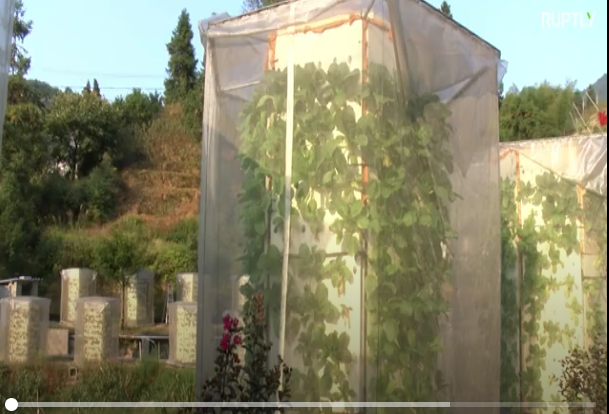
Vertical Farms In China Provide Food For 36,000 DAILY
Farmers in Zhejiang Province have designed 'smart' vertical farms which allow vegetables to be grown without much soil or sunlight. Plants are provided with nutrient solutions through an intelligent control system. A shorter growing season and a ban on pesticides also make smart farms more environmentally friendly.


Australia: Sustainable Agriculture In The Spotlight At GFIA In Focus
The Global Forum for Innovations in Agriculture (GFIA)
Will Take Place On November 27-28 In Brisbane
The Australian government is pushing for agriculture to become a $100 billion industry by 2030 – and with the Queensland Government aiming to double the state’s food production by 2040, the leading authority on sustainable food production and agriculture is hosting an event in Brisbane designed to showcase sustainable growing practices and new agricultural technologies.
The Global Forum for Innovations in Agriculture (GFIA) In Focus Australia event will take place on November 27-28.


Exhibiting the latest sustainable ag-tech innovations and technology from suppliers across all types of food production, it’s set to be Australia’s largest ever agricultural innovation trade fair.
The event will place a particular focus on ‘growing sustainably’ and ‘unlocking new technology’, with more than 2000 delegates expected to attend from across the Asia Pacific. Featuring two adjacent exhibitions, the first will present Controlled Environments & Protected Cropping, and the second will focus on Precision Agriculture and Smart Farming products. Within ‘Controlled Environments’, exhibitors will promote the latest greenhouses, system integrators, control systems and hydroponic, aquaponic and aeroponic systems – and the ‘Precision Agriculture’ sector will cover everything from data analytics and modeling to harvesting and irrigation equipment, seeding and planting equipment and GPS systems.
A high-level conference programme will also run during the event – and for David Stradling, Sales Director of One CMG Group, the company behind GFIA In Focus, the event is “a rare opportunity to learn from agriculture food producers, policy makers and investors about the latest innovations and technologies for smart food production.”
Among the confirmed exhibitors will be multi-level indoor growing company Vertical Farm Systems, who will showcase their fully automated technology for growing commercial crops all year round, in any climate or location. Executive Director & Design Engineer John Leslie described the new system as the next generation of indoor growing solutions built for profitability more than spectacle.
“Over the past 9 years we have refined the system automation to achieve the best return on investment yields we have seen in the sector. Of the 28 system sizes we supply, our smallest uses only 500 square metres of floor area, yet the 20 tons annual harvest rate is the same as 8 acres of prime agricultural land. The bioponic live microbe based growing system delivers a major reduction in water use, with zero chemicals, pest issues or crop losses, and it can be installed in very close proximity to the end user – all of which is fantastic for sustainable farming.”
One CMG Group Sales Director David Stradling described the significance of the event for Australian agriculture.
“GFIA In Focus is intended to help Australian agri-businesses share knowledge, so we can continue to develop sustainable farming into the future. There are some incredibly innovative technologies and practices out there, and we’re excited to host what’s going to be an inspiring and highly informative event for attendees.”
For more information:
www.gfiaaustralia.com
Publication date : 9/20/2018
Building The Sustainable Cities Of The Future
By Heather Snowden - September 12, 2018
The ultimate in urban planning
Earlier this year, a report from by United Nations predicted that 2.5 billion people will be living in cities by 2050; that’s two out of every three people on the planet. While that of course means cities will become increasingly diverse, the demand on resources and services, such as food, policing, and public transport systems, will rise exponentially.
It's understandable then that governments and organizations around the globe are looking to technology to help power the cities of the future, and make them smarter, creating urban areas that use data-driven, innovate solutions to create efficient, sustainable ways to aid economic development and improve the quality of life for inhabitants.
Sustainable food solutions
Cities need feeding. While the number of cities that are taking charge of their own food destinies and looking for new, innovative ways to cut down on their carbon footprint, and making healthy options more readily available as a result, is growing, there’s still a long way to go.
Thinking about how to feed a rapildy growing population while also tackling obesity and global warming is a huge task; it’s also not the most convenient. Of course it would be easier to keep driving to the local store and pick up a packet of beef that was reared a 15-hour plane journey away, but it’s not sustainable.
AeroFarms is building a 78,000 square foot vertical farm. Credit: AeroFarms
AeroFarms in Camden, New Jersey is offering one solution: vertical farming. The company is planning a 78,000 square foot vertical farm that would grow 12 stories of leafy goods, from kale to bok choy. Thanks to tech developments, keeping plants on a steady diet isn’t as time-consuming as it once was; systems can be created that release calculated amounts of nutrients and water into the soil, powered by hydroponic and areoponic systems.
Elsewhere, Good Bank, a Berlin-based restaurant, has implemented urban-farming inside its restaurant space, with incubators growing salad lining the dining room walls.
Looking for alternatives also means opening our palettes to new horizons. Exo and Aspire Food Group are two of the companies currently incorporating crickets into their protein bars – which, by the way, are already sold at Whole Foods.
Vertical gardens
From vertical farming to vertical gardens. As more people flock to suburban areas, we’re forced to become more innovative about how we use the physical space. Green spaces do way more than just make places pretty – they’ve been found to alleviate stress levels, improve biodiversity, attracting birds and insects, help defuse heat from dense urban areas, and improve air quality.
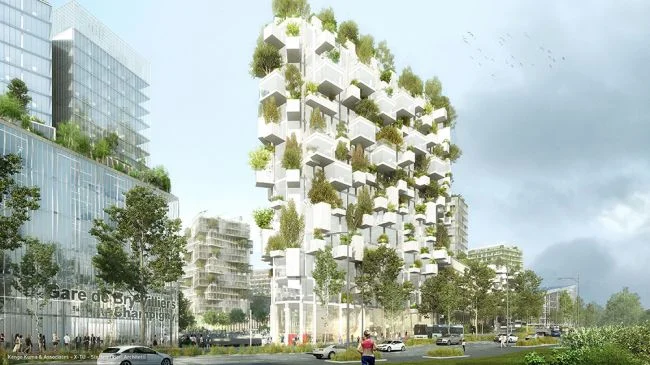
Stefano Boeri Archietti is planning 'vertical forests' in Paris. Image credit: Stefano Boeri Architetti
Italian architecture firm Stegano Boeri Architetti is planning to create a huge Foret Blanche in Paris – a 54-meter high vertical forest that’s planted with trees, shrubs, and flowers. The same firm is also working on a 'Forest City' in China, where everything from schools, to homes, to hospitals will be covered in greenery — CNN dubbed it “the world’s first pollution-eating city”. Meanwhile in London, The Edible Bus Stop is tackling the citiy's pollution with playful ideas like creating an Edible Bus Route, which sees bus stops throughout the city surrounded by herbs and edible flowers.
Two wheels good, four wheels bad
Covering a bus stop in edible petals isn’t the only way to make public transport sustainable. Argentina’s capital Buenos Aires chopped one of the city's major 20-lane avenues in half, leaving 10 lanes for cars. The other half is used as a 'surface subway' – an express lane only for public transport, which gets passengers across the city in half the time.
Other cities are trying to ban cars completely. Madrid has already started to take action by banning non-residents from driving in the city center, and only allowing low-emission cars that belong to locals, delivery vehicles, and public transportation in downtown areas.
Copenhagen is one of the world’s most bike-friendly cities. Credit: Wikicommons
When it comes to eliminating vehicle pollution entirely, however, bicycles are the obvious solution. Improving bike lanes in urban areas is a global endeavor at present, with Copenhagen boasting one of the most highly-developed systems. According to Wired, since 2015 the Danish capital has completed a Harbour Ring bike route along the whole inner harbor, piloted a new traffic light system that prioritizes cyclists, launched digital congestion signs to improve bike traffic glow, and opened new superhighway routes. Some 62% of the city’s residents ride their bikes daily, while just 9% drive.
Policing
One important and perhaps less talked-about aspect of smart city innovation is surveillance; namely how police departments are incorporating technology into their operations. One way in which tech is advancing law enforcement is body cameras, with Smart Cities Drive stating that one-third of police departments in the US either already uses or are looking into outfitting their officers with bodycams. The devices not only help to keep police officers safe, but are used to record interviews, and take photographs.
Law enforcement agencies are increasingly looking to use drones to catch criminals. Credit: Wikicommons
Drones are also part of the move to increase public safety, used to track down stolen vehicles, and chase fleeing ones. Earlier this year the city of Louisville in Kentucky submitted an application to the Federal Aviation Administration asking if it could use drones to respond to shooting scenes – the drones would be equipped with ShotSpotter, a system that uses a series of microphones to identify the source of gunfire within seconds.
If technology can help to make our urban environments safer, as well as cleaner, greener and healthier, then the cities of the future could well be pretty idyllic places to live.
'The Next Evolution Of Farming Has Already Begun'
By Austin Stankus - Wednesday, October 10, 2018
The world population continues to grow with ever-increasing urbanization predicted to reach 80 percent by 2050. The U.N. predicts that human population will reach nearly 10 billion by 2050. This increasing population is also growing richer — and hungrier.
To feed this population using traditional farming practices, much more land would need to be brought under cultivation. But, already much farmland around the world has been degraded from poor management practices, and lands remaining available for food production are decreasing from the effects of erosion, salt buildup and pollution.
As you read this today, tens of millions of children are going to bed hungry, with the Food and Agriculture Organization of the United Nations estimating the number of hungry in 2018 at 812 million or approximately one out of 9 people.
Something needs to change. Food production needs to get more efficient, more equitable and more environmentally minded. Moreover, food production should follow the population to the cities, or as Dickson Despommier, a forerunner of this movement, simply states: “Put the food where the people live.”
Indoor farming through controlled-environment agriculture (CEA) will be an important component towards establishing local food systems that can address this pending crisis in global food insecurity. CEA, simply put, is using smart, sustainable farming practices inside of high-tech greenhouses. This is nothing new, and these modern greenhouses are an established technology and can be found around the world. In fact, much of the lettuce, tomatoes, peppers and cucumbers in the EU come from CEA in the Netherlands and Spain.
These greenhouses have incredible benefits compared to traditional farming: They use less water because they are protected from the sun and wind, they use fewer pesticides because insects and disease can be kept outside, and there is less waste because production can be matched exactly to consumer demands.
If hydroponics or other soil-less practices are used, the farmer does not need to use tractors for tilling, plowing and reaping, so the oil bills and energy consumption are lower. In addition, the fertilizer usage is reduced, and all the fertilizer the farmer uses is consumed by the plants, thereby reducing nutrient-rich runoff that can pollute watersheds. Known as eutrophication, this nutrient pollution is a huge problem for coastal communities in the Chesapeake Bay and Gulf of Mexico and has impacted fisheries, recreational activities and livelihoods around the world.
However, CEA greenhouses can occupy a lot of space. So, the next logical evolution is stacking these modern greenhouses, one atop the other.
Vertical farming, as greenhouses stacking is called, has additional benefits. Reducing the footprint means that more food can be grown in a smaller area and therefore can be brought closer to the people eating that food. As populations move toward the cities, it makes sense for the food to follow.
Part of the vision of vertical farms is the reconnection of the producer and the consumer plus the restructuring of food value chains to become more transparent and responsive to the needs and wants of the people.
An added benefit of farming inside of skyscrapers is the option of having mixed-use buildings. When combined with a wholesale market, the skyscraper can not only produce the food but get it to the consumer faster. Less time in storage, less transportation and less handling means fresher produce and reduced need for postharvest treatments like irradiation and chemical fumigation.
There are still some daunting challenges as well as some encouraging recent developments.
Unleashing the innovative power of American small businesses has jump-started the transition to modern farming, and the public desire for local, healthy food is an economic engine driving the industry toward change. In fact, there are currently so many vertical farm startups that a shortage of qualified workers is now the main hurdle to accelerating the establishment of new indoor farms. On one hand this is a challenge to the industry, but on the other it presents an enormous opportunity for job creation in urban areas if an inclusive, enabling environment is codeveloped with the vertical farms to provide vocational training and career advancement prospects.
On a technical level, there is a significant energy demand needed for pumping water, maintaining good environmental conditions like temperature and humidity, and powering the grow lights to keep producing year-round. However, with smart buildings wired on intelligent platforms, the energy consumption can be monitored and controlled to maximize efficiency — and by tying into other green enterprises like photovoltaic and biogas generation, this energy demand is decreasing day by day. In fact, with the new innovations in LED lighting technology, the power demand has been reduced tenfold in the last few years.
The next evolution of farming has already begun, and big players are already involved. In fact, the National Grange wrote a letter to Congress with their support to public-private funding mechanisms to accelerate the modernization of agriculture, specifically highlighting the potential of vertical farming. With this type of buy-in from large agribusinesses, national and international agricultural organizations, funded with innovative financial mechanisms, and driven by the innovative spirit and technological power only found in the U.S., vertical farming will feed tomorrow’s children with healthy, safe food; protect the environment while being resistant to environmental shocks; and spur economic growth in the process.
For a detailed look at one such startup, see the centerfold story on Skyscraper Farm • Austin Stankus, an integrated farming specialist, is chief science officer at Skyscraper Farm LLC
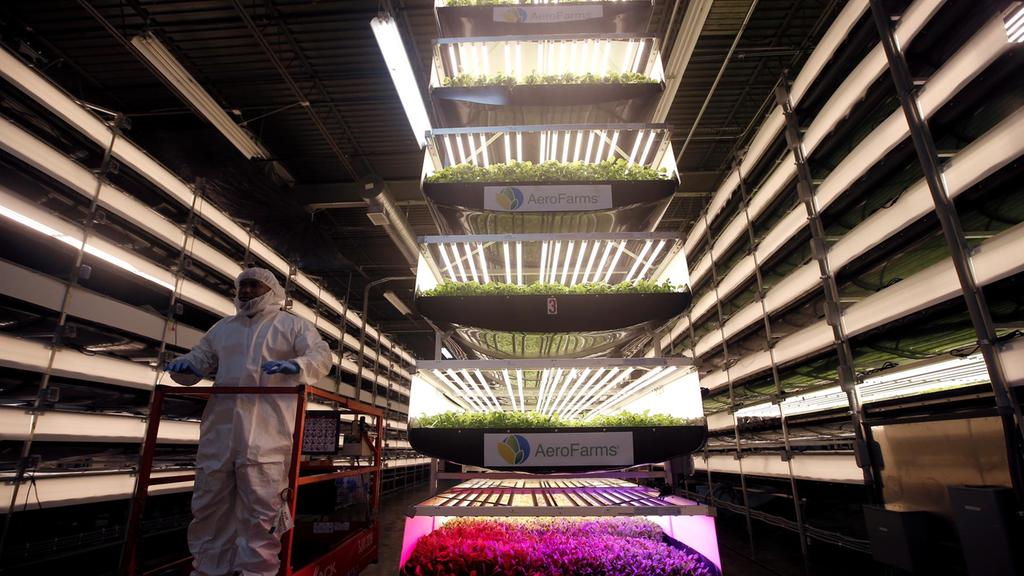
Vertical Farming: The New Way of Urban Life
With cities growing bigger by the day, finding farmland is becoming a prevalent problem. To solve the food shortages that the whole world is facing, vertical farming seems like a surefire solution
ŞULE GÜNER
ISTANBUL
November 2, 2018
With cities growing bigger by the day, finding farmland is becoming a prevalent problem. To solve the food shortages that the whole world is facing, vertical farming seems like a surefire solution
For the past few years, one of the leading problems in the world has been food shortage and safety. Although food production is currently at its highest levels, it is hard to understand why there is still an increase in the number of malnourished people. Likewise, food safety has become a major problem for every country be it a developed or developing country.
With the effects of industrial food on human health often being scrutinized, some believe that excessive meat consumption causes more gas emissions in the atmosphere. Now, we have a new trend that has emerged to offer a solution to these problems - urban farming. The method employed by this farming model is called technological agriculture, or agritech for short.
Aiming to feed more people with foods that have higher nutritional value, agritech's key role is to produce natural food in indoor spaces by making use of technology. Even if you are not a farmer, you can still grow your own fruits and vegetables in your house thanks to agritech.
"Vertical farming" enables you to utilize an empty and unused space in your home or workplace. Vertical farming basically means producing food in vertically stacked growing layers that have their own watering systems with the help of LEDs that mimic sunlight. Encouraging agriculture in urban spaces, this method has been gaining popularity in the U.S. and Asia over the past decade for some viable reasons.
We sometimes forget that a small part of the millions who are struggling with famine live in cities. Access to food products sold in supermarkets or farmers markets in big cities is decreasing day by day. Technologists, who argue that the notion of agritech also has a social dimension, believe that small farms or plantation areas can be built in city centers with the help of technology. Among the innovative solutions offered for urban spaces, vertical farming is the most technological.
HIGH-QUALITY PRODUCTS
I had a chance to have a Skype meeting with Henry Gordon-Smith, a young agriculture technology expert who is the founder of the New York-based Agritecture Consulting, a leading consulting business in the field of vertical farming in the U.S. With five-person team, Gordon-Smith enables the agritech method by bringing together urban agriculture companies and new "urban farmers."
The fact that Gordon-Smith is a young entrepreneur in the field of agritech is an important detail showing that farming is not a job only for older people.
"The average age of farmers in the U.S. is 58. The new generation does not set agriculture and farming as a goal and working in this field does not appeal to them. I want to prove them wrong. My motivation to start this business was to find a technological solution to the difficulties people confront in terms of food in urban life. I believe that smart solutions must be introduced in smart cities. Vertical farming does not only enable the production of higher quality fruits and vegetables, but also demonstrates that everyone, including younger and older generations, can be a farmer," Gordon-Smith explained.
He also describes the working model of vertical farming, a brand new business line in the digital world, as follows, "When a person or a company consults us, we primarily conduct the required research and economic analysis. We firstly ask our clients what their goals are. Do they may aim to grow plants in a small space in their house that would suffice a family, or harvest as much as possible in a wider indoor or outdoor space and sell the product. We offer different solutions according to varying purposes. Sometimes we suggest implementing only vertical agriculture models in a certain part of the production space, and sometimes we suggest conventional agriculture methods especially when there is a vast space. After completing all the analyses, we begin the phases of designing and engineering the farm."
AGRITECH'S POPULARITY WILL RISE
"To give an example, a hotel that wishes to do so will be able to transform an empty space in its basement into a farm illuminated with LED lights. It does not matter how dark or damp the space is. By transforming such a space into a farm, the hotel would be able to provide its restaurant's kitchen with food it knows to be fresh and nutritious. For example, in the U.S., we eat tomatoes imported from Mexico without knowing anything about their freshness. One cannot be sure about their nutritional value," Gordon-Smith said.
He then went on to claim that food grown via vertical farming, which is similar to the common primary school experiment where beans are grown in water, is more nutritious because no supplements are used to grow them. Another benefit of farming indoors is that it allows the maximization of environmental factors that contribute to plant growth.
Vertical farming experts I've met in the U.S. stated that the only thing needed by any person or entrepreneur wishing to get into vertical farming is an empty indoor area with electrical wiring and that the farming spaces created by vertical farming can be offered to the public via small administrations and municipalities.
The companies that have gotten into the business of building urban agriculture farms and creating new technological solutions are sure that the trend of technological farming will continue to grow. These companies in the short term aim to grow "a wide range of reasonably priced and trustworthy produce with long shelf life that can be grown year-long independent of the weather." But the biggest obstacle to the faster progress of such companies is the high cost of technological farming, especially vertical farming.
Henry Gordon-Smith states that the minimum amount of capital required to start vertical farming is $50,000. On the other hand, the requirement to be amateur-engineers that can keep up with the digital environment imposed on people, especially as the projects that intend to transform cities into digital and smart cities progress, is also present in technological farming endeavors.
Anyone wishing to get into vertical farming should be able to navigate the technological expertise required and have enough knowledge to be able to organize the conditions of weather, soil and water suitable for plant growth in nature's stead.
MORE GREENS
The first question that comes to mind regarding vertical farming is usually whether the product grown indoors via LED lights tastes different from the ones grown traditionally. Gordon-Smith answers this in the following manner, "I personally have not discerned any difference in taste but that's my opinion, others might disagree."
After high prices, the second disadvantage to this method of farming is that green vegetables are preferred due to their high yield. Gordon-Smith explains the reason for this preference as follows, "This is not because other products are unsuitable to grow with this method, a very wide variety of vegetables and fruits can be grown, but the yield with leafy greens is especially high compared to other vegetables."
CAN QATAR GET THROUGH THEIR EMBARGO WITH VERTICAL FARMING?
Qatar is now employing methods of urban agriculture in an effort to build self-sufficiency due to sanctions imposed on it by five member states of the Arab League, which includes the trade of food as well. David Forsenberg, the CEO of Aerofarms, one of the largest urban agriculture firms in the world, says that Qatari authorities have a positive outlook on vertical farming and that they wish to cooperate with local business people. Additionally, the Doha News Agency stated, "Qatar is interested in long term projects regarding independent food production and in the case that vertical farming can yield produce at a reasonable cost, it might be implemented in Qatar."

Dubai Government Agrees On Deal To Start Up 12 Vertical Farms In The City
The Ministry of Climate Change and Environment will allocate 7,600 square metres of land to the growing industry
The National
July 8, 2018
A new wave of vertical farms, using similar techniques to this one in New Jersey, America, will soon be springing up in Dubai. REUTERS.
The Ministry of Climate Change and Environment (MoCCAE) has agreed a deal to establish 12 vertical farms in the city.
The ministry will allocate 7,600 square metres of its land in the city to encouraging the growth of the thriving industry after reaching an agreement with Shalimar Biotech Industries.
The company will develop infrastructure facilities, such as a water desalination plant, climate-control air conditioning, LED lighting, and automatic irrigation systems for the dozen farms.
Vertical farming is viewed as the new frontier of agriculture, with proponents saying it makes the best use of land and water for high-value crop production.
The UAE is fast becoming a hot spot for the phenomenon. Only last month it was revealed that the catering arm of Emirates Airline has partnered with a Californian company, CropOne Holdings, to develop what has been described as the world's largest vertical farm.
Vertical farming is based on the use of hydroponics, in which plants are grown using nutrient media instead of soil, a technique first used in the UAE almost half a century ago and now well established locally through a number of commercial farms.
_____________
Read more
Gulf's first commercial vertical farm opens in Dubai
Emirates to build Dh150m farming factory next to Dubai airport to feed passengers
Special report: The inside story of how the UAE landed its first place in space
The absence of soil – with hydroponics, plants grow in media such as rock wool, a fibrous substance produced from molten rock – eliminates soil-borne diseases.
Temperature can be controlled by air conditioning, allowing year-round production even in the UAE, or evaporative cooling.
Sultan Alwan, Assistant Under-Secretary for the Regions Sector at MoCCAE, and CP Ramachandran, Founder and CEO of Shalimar Biotech Industries, signed the agreement at MoCCAE headquarters.
Speaking about the partnership, Alwan said, "The agreement leverages synergies between MOCCAE and the private sector to encourage innovation in agriculture, with the aim of enhancing the UAE’s food security and diversity.
"As vertical farming has a significantly smaller carbon footprint than traditional farming, ventures such as this one align with the country’s drive to improve its agricultural self-sufficiency."
The five-year cooperation agreement seeks to promote new agricultural technologies; provide an educational centre for local farmers, students and researchers; reduce agricultural waste, the risk of infection and the spread of agricultural pests; achieve year-round crop production, and mitigate thermal emissions from agricultural processes.
Strange-Looking Hydroponic Farm In Forbes Is Fully Functioning Experiment
By Nick Shashkini | Oct 8, 2018
Paul Gauthier, associate researcher, stands in front of the Forbes hydroponic farm.
By Nick Shashkini
Just inside the main lobby of Forbes College, an eerie white glow emanates from an alcove containing a strange contraption covered in signs warning passersby not to get too close.
The Forbes hydroponic farm may look like a portal to another universe, but its purpose is to show students that crops can grow anywhere by demonstrating hydroponics, or the cultivation of crops using nutrient solutions instead of soil. The hydroponic farm is also a fully functioning laboratory where students and staff regularly conduct experiments.
The hydroponics lab is an offshoot of the Princeton Vertical Farming Project, which began in April 2017 in the Forbes downstairs lounge. It seeks to introduce vertical farming concepts to the Princeton community while also conducting vertical farming experiments.
Paul Gauthier, associate research scholar of plant physiology, horticulture, and stable isotopes, runs the research aspect of the hydroponics display. Hydroponics is one of Gauthier’s many research interests.
“When I meet a group of students, I ask them if they want to be farmers, and usually nobody says yes,” Gauthier said, noting that he wants to change perceptions about crop-growing.
Gauthier said a highly visible location such as the Forbes lobby seemed perfect for raising awareness.
That said, much of the team’s experimental and research work is done in the Moffett Laboratory, while the Forbes location is intended to be more visible and presentable to the public.
Gauthier hopes the farm will make students ask more questions about modern agriculture and connect the plants they see with what they eat every day at the University. The project plans to eventually serve some of the produce in the Forbes dining hall.
Korlekuor Akiti ’19 works on the project for her senior thesis for the ecology and evolutionary biology department, and she is also organizing a public tasting of the crops in November.
“There was a lot to be explored with the hydroponic farm,” Akiti said. “People had been looking at the inputs, but no one had been looking at the outputs: the quality of the crops.”
She said that it has been extremely rewarding to see her work running experiments and tending to plants pay off, especially considering the short life cycle of some of the plants, enabling her to see them grow and develop instead of having to wait years.
She is also excited by the prospect of more students learning about agriculture, with the lab so close to their living spaces. As the project develops, she hopes that students will walk into the lobby and see what they will eat that day.
Student reaction to the lab has been positive, with many curious about the purpose of the setup.
“It’s an interesting idea,” Colin Moffet ’21 said. “It will be cool to know that some of the food I am eating in the dining hall was grown in-house.”

Staay Food Group's Vertical Farm Build Awaiting Operating Grant
German retailers demand guaranteed subsidy before contracts are signed
The innovative lettuce plant Staay Food wants to build in the Dutch town of Dronten only exists on paper. This ambitious project - Europe's largest 'vertical farm' - has been delayed and is becoming substantially more costly. Company owner, Dammis van der Staaij, indicated on this site in December already that lettuce cultivation would no longer take place in the processing plant, but elsewhere on the site.
However, construction has not yet begun. It is waiting on an operating subsidy worth several million euros. According to the Group's Director, Rien Panneman, this needs to be granted by the European Fund for Regional Development (EFRO). ‘We do not yet have written confirmation that we will be getting the EFRO subsidy", he said in the Dutch business newspaper, the Financieel Dagblad. The lettuce's buyers, several German supermarket chains, want this guarantee before they sign any contracts.
Due to this delay, construction and installation costs have since increased by 25%. The investment, including installations, is now estimated to stand at EUR10 million. This means the lettuce will soon become more expensive, says Panneman. The three varieties Staay Food wants to grow - Lollo Bionda, Frisée, and Lollo Rosso - will, by the latest indication, be twice as expensive as regular lettuce. "It will certainly not be a commodity", says Panneman. ‘We are going to use it in ready-to-eat salads. Then it will be affordable, we think."
But, will construction continue? "We believe it will. We are pioneers in this field. It is just becoming an expensive project. Once the grant has been definitively secured, we can get started with the construction. I hope we will be able to harvest the first lettuce before the end of 2019", he says.
Source: Financieel Dagblad
Publication date : 9/25/2018
Evergreen Farm Will Install 6 Operational Grow360 Units (worth 750,000 €) In Espoo Innovation Garden in Finland
This farming facility will perform research, as well as, produce food and industrial crops (biofuels and bioplastics), yielding up to 12,960 crops per harvest.
Evergreen Farm Oy will provide the farming units, training, and mentoring free of charge, since Ali Amirlatifi believes in the enormous educational value this hands-on experience has for students particularly in fields of automation, robotics, computer science, electrical engineering, space technology, material science, manufacturing, chemistry, biology, water management, marketing, communication, and business.
This farming facility will perform research, as well as, produce food and industrial crops (biofuels and bioplastics), yielding up to 12,960 crops per harvest. The students’ objective is that the revenue from food production can be used to fund further technological development in indoor farming, biorefineries, manufacturing, and the space adaptation of such technologies.
Evergreen Farm is in negotiation with Urban Mill, Aalto University (ACRE), and City of Espoo,
Finland to obtain the premises for the indoor farm, which could be the pre-existing underground tunnel or any other available facilities in the Espoo Innovation Garden ecosystem in the heart of Aalto university campus.

CAN (ON): DelFrescoPure Announces Partnership With CubicFarms
A new partnership between DelFrescoPure and CubicFarms has resulted in the LivingCube – a system of automated vertical farming growing machines that continuously produces living lettuce, living basil and microgreens all year long. The LivingCube system has 12 mechanized growing, germination and irrigation machines, each built inside proprietary insulated 40’ stainless steel growing chambers. The growing machines are all individually climate controlled to optimize the environment for each crop and then connected to a fully enclosed climatized common work area, all coming together to create a complete stand-alone growing system and independent growing facility.
The announcement follows the integration of Bevo Agro into Zenabis. As part of the reverse-takeover, Bevo announced it would spin out its interest in CubicFarms.
“CubicFarms is thrilled to be supplying DelFrescoPure with one of our commercial-scale growing systems and to be partnering with them to bring locally grown produce to DelFrescoPure customers year-round”, expressed Dave Dinesen, CubicFarms CEO. “DelFrescoPure’s vision to bring the very best locally grown produce to their customers and continuously expand the number of crops they can supply, aligns perfectly with CubicFarms capacity to grow fresh produce year-round in large quantities.”
LivingCube is powered by DelFrescoPure, which produces power by using an off-the-grid electrical cogeneration system. This new growing system is environmentally sustainable due to its minimal land footprint, a reduction in greenhouse gases, the usage of recycled water and pesticide-free integration.
“We wanted to offer our retail partners new, innovative and local commodities and the ideal solution was to partner with CubicFarms”, stated Carl Mastronardi, President of DelFrescoPure. “With the introduction of the vertical farming growing system, we offer a large quantity of locally grown living lettuce, living basil and microgreens.”

Emirates Flight Catering Selects Dubai South For Site of World’s Largest Vertical Farm Facility
Dubai, UAE, 7 october 2018
Dubai South announced that it has signed a memorandum of collaboration with Emirates Flight Catering. Under the agreement, Emirates Flight Catering will expand its operations in the Aviation District to build the world’s largest vertical farm in a joint venture with Crop One Holdings. The facility, which will cover 130 thousand square feet, represents an investment of 146.8 Million Dirhams (US$40 Million).
Today’s announcement marks an important milestone in the two companies’ long-standing partnership. Emirates Flight Catering already operates a transit restaurant, and has also opted to establish its new ventures, including an institutional catering kitchen, a VIP catering facility and a laundry facility, at Dubai South.
H.E. Khalifa Suhail Al Zaffin, Executive Chairman of Dubai Aviation City Corporation, said: “The construction and operations of the world’s largest vertical farm in Dubai South will benefit the district and airlines flying from Al Maktoum International Airport and Dubai International Airport, where Emirates Flight Catering is considered one of the leading partners in the aviation industry. The location of the farm in the Aviation District will ensure quick delivery and high quality of the produce”.
“Saeed Mohammed, Chief Executive Officer of Emirates Flight Catering, said: “As one of the world’s largest airline catering operations, we are constantly looking at ways to improve our productivity, product and service quality. Building our vertical farming facility in the Aviation District we will deliver our fresh products from farm to fork within hours of harvest, while significantly reducing our environmental footprint. We look forward to continuing our fruitful partnership with Dubai South.”
The construction of the facility is scheduled to start in November 2018 and will take approximately one year to complete. The first products are expected to be delivered to Emirates Flight Catering’s customers including 105 airlines and 25 airport lounges, in December 2019.
At full production, the vertical farm facility will harvest 2,700 kg of high-quality, herbicide-free and pesticide-free leafy greens daily, using 99% less water than traditional farms. The proximity of the farm to the point of consumption will substantially reduce carbon emissions associated with transportation. It will also ensure the quick delivery of the fresh products, reaching customers within hours of harvest, maintaining high nutritional value.
This Automated Indoor Farm Is Growing So Fast, It Makes You Think This Thing Might Work
09.24.18
Bowery, which began distributing produce just under two years ago, is opening a new farm and ramping up its output by 30-fold.
[Photo: Bowery]
Around two years ago, the then 10-person team of Bowery, an indoor farming startup, started growing a small array of leafy greens out of what was once a shipbuilding yard in Kearny, New Jersey. Undeterred by the rather harsh post-industrial environment, the Bowery team was just looking for somewhere to set up that had a lot of space. After all, their farming system is more about the tech than it is the soil and the water and the things you might generally associate with farming. By growing produce in trays, stacked high in rooms whose temperature, lighting, and humidity is tightly controlled by a proprietary operating system, Bowery’s farming requires no soil, and instead delivers nutrients to its array of leafy greens via a hydroponic system that uses 95% less water than traditional agriculture.
Bowery certainly doesn’t look like a farm, but that, to CEO Irving Fain, is the point. “We’re excited about being able to move into these abandoned spaces in cities and create new jobs and industry,” he says. In Kearny, that’s exactly what Bowery is doing: On September 24, the startup officially unveiled its second, larger farm (the company does not disclose square footage) in a new building on the same industrial complex, which was built in 2017 as part of a larger revitalization effort in Kearny. In terms of output, the new farm is about 30 times more productive, and the startup has greatly diversified its crop output, adding bok choy, cilantro, and parsley to its original kale, spinach, and basil offerings. The startup is also expanding its distribution: It will continue selling through Whole Foods, as it already has been (at a price comparable to most of the retailer’s other greens) and also be featured on menus at Sweetgreen and Dig Inn throughout the Northeast.
[Photo: Bowery]
For an indoor farming company, this type of speedy growth is now not unprecedented–AeroFarms, another New Jersey-based indoor farming company, is also rapidly expanding–but it is a sign that perhaps, the industry is beginning to iron out the kinks that initially called into question whether it was a model that was cut out for success. Balancing the development of new technology and the associated costs along with the pressures to actually produce significant quantities of edible vegetables often proved challenging and not financially viable. Stories like that of PodPonics, an indoor farming venture that had to fold when it couldn’t raise the capital necessary to scale, often tend to dominate the narrative around the model.
[Photo: Bowery]
But while Bowery is, as Fain says, focused on its mission of upping the local supply of fresh produce grown without pesticides, it’s taking a decidedly tech-centric approach to doing so–which may be fueling its success. Before launching its second farm, Bowery raised a round of $20 million in funding from Google Ventures and General Catalyst, among others, and brought in Brian Donato, who previously managed Amazon’s automated fulfillment centers, to help build it out as the SVP of operations.
In contrast to other indoor farming startups like FreshBox, which is less concerned with building its own tech system and more focused on using whatever systems will produce the greatest yield, Bowery is all about the tech. Its automated system that manages and controls the whole farm–called BoweryOS–is entirely proprietary. In the original farm, workers still help move trays of produce, and harvest the crops when their ready, but in the sprawling new facility, humans barely need to interact with the growing plants, because the system of sensors and cameras monitors the plants and controls how much water, light, and nutrients they receive.
Unlike the original farm, where all the produce was grown in one room, the new facility has multiple growing rooms. “We can essentially create different climates room by room,” Fain says. This is especially beneficial for growing a broader range of greens: Crops like cilantro grow best in hot, dry climates, while kale and bok choy thrive in cooler, wetter environments, and Bowery can now create those different climates in its growing rooms. With the upgrades to the operating system, the “farmers” at the new Bowery farm walk around with tablets, mostly in the processing area, checking to ensure that the crops are growing according to plan, but mostly focusing on post-harvest work: quality control, sorting, and packaging.
In that way, Fain says, Bowery is trying to fulfill a tech-world promise of bringing a new type of job to areas, like Kearny, still reeling from the collapse of previous industry. “We don’t require a labor force that has experience in agriculture, or really any at all,” Fain says. “We can move into a new city and essentially hire anyone, and teach them how to read the system.” Bowery decided to open its second farm in the New York-New Jersey area because its first, smaller farm couldn’t tap as much into the local labor market as they wished. They’ve now grown the team from 10 people to over 60, and plan to keep expanding as the new farm continues to ramp up operations. And starting next year, Fain says, they’ll begin eying expansion to other cities.
ABOUT THE AUTHOR
Eillie Anzilotti is an assistant editor for Fast Company's Ideas section, covering sustainability, social good, and alternative economies. Previously, she wrote for CityLab.

UGA Researchers Receive $5 million To Help Reduce Energy Costs of Indoor Farming
By: Merritt Melancon University of Georgia College of Agricultural and Environmental Sciences
September 15, 2018
Photo courtesy of UGA CAESUGA College of Agricultural and Environmental Sciences Department of Horticulture’s Professor Marc van Iersel, right, is leading an interdisciplinary team which hopes to integrate new lighting technologies, big data and better growing practices to reduce energy costs in greenhouses and plant factories. Dorothy Kozlowski
One of the steepest barriers to profitable controlled-environment agriculture is the energy cost associated with providing the plants enough light, but new research being pioneered by University of Georgia could cut those costs by 50 percent.
With the support of a $5 million grant, a UGA-led team is working to develop strategies to increase the efficiency of lighting for controlled-environment agriculture: the practice of growing plants in greenhouses or plant factories.
Professor Marc van Iersel, of the UGA College of Agricultural and Environmental Sciences (CAES) Department of Horticulture, is leading the effort. The U.S. Department of Agriculture National Institute for Food and Agriculture Specialty Crop Research Initiative funded the project, called “LAMP: Lighting Approaches to Maximize Profits,” earlier this summer.
“When you are talking about a greenhouse or plant factory, up to 60 percent of their total costs can go to energy and about half of that goes to lighting,” said van Iersel, who has studied ways to reduce the lighting and irrigation costs in greenhouses for more than a decade. “So, if we can reduce those lighting costs, that would be a really big deal. The economic feasibility of plant factories is still questionable because it is so expensive to provide electric light to the plants.”
Currently, high costs and energy usage make it difficult for all but the most valuable crops to be grown profitably in controlled environments. Reducing the costs and carbon footprint of controlled-environment agriculture could open the door to more food being grown in arid, frigid or urban areas or for ornamental plants to be grown more efficiently.
U.S. growers spend about $600 million per year on electricity for lighting in their greenhouses and plant factories. Using informatics, engineering, high-efficiency LED lights and state-of-the-art greenhouse management practices, van Iersel hopes that they will be able to reduce the lighting energy costs by 50 percent.
“This will increase the narrow profit margins in the industry while reducing carbon dioxide emissions associated with energy production,” he said.
The team received the grant funds late this summer and has started work on its prototype lighting systems and strategies to optimize crop growth and quality.
“Having team members with such different areas of expertise is critical to the success of the project,” van Iersel said. “Together, we will be able to do things that none of us can do by ourselves.”
Informatics will be used to schedule lighting around peak power-use times, reduce light use to compensate for natural sunlight and further refine lighting efficiency. Horticulture researchers and engineers will look at the possibility of growing plants with limited-spectrum lighting, which could reduce energy use and be used to manipulate crop growth and quality.
“We want to help producers answer a few simple questions,” van Iersel said. “One: Is lighting cost-effective in their specific situation? Two: If lighting is cost-effective, are high-pressure sodium or LED lamps the better option? And three: What is the most cost-effective way to use those lamps?”
They’ll also be calculating the carbon footprint of each scenario to see if growing indoors makes environmental sense.
Answering these questions could help growers decide when it may be feasible to grow crops in a harsh environment and when it makes better sense to ship food to a location. Their findings could also have substantial impact on the way military deployments provide fresh food to troops or how fresh produce is supplied to desert or arctic locales.
CAES team members dedicated to the project include van Iersel, horticulture professor Paul Thomas, agricultural economist Ben Campbell and impact evaluation expert Kay Kelsey.
UGA faculty Mark Haidekker, WenZhan Song, Javad Mohammadpour Velni and Tom Lawrence, all of the College of Engineering, will contribute to the project, as will UGA Terry College of Business energy informatics experts Rick Watson and Maric Boudreau.
Collaborators from other institutions include Jennifer Boldt at the USDA Agricultural Research Service in Toledo, Ohio; Neil Mattson and Kale Harbick at Cornell University; A.J. Both at Rutgers University; Bruce Bugbee at Utah State University; and Tessa Pocock at the Rensselaer Polytechnic Institute.
For more information about the project, visit http://www.facebook.com/HortLAMP/.

The World's First Floating Dairy Farm Will House 40 Cows And Be Hurricane-Resistant
PETER KOTECKI
September 24, 2018
Beladon
The Dutch company Beladon is opening the world’s first floating dairy farm in the Netherlands.
Located in Rotterdam, the farm will house 40 cows in a high-tech facility on the water.
Minke van Wingerden, one of the project’s leaders, told Business Insider that the farm will produce an average of 211 gallons of milk each day.
Most of the cows’ food will come from city waste products, such as grains left over from local breweries and by-products from mills.
Beladon is also interested in launching floating chicken farms and floating vertical farming greenhouses.
A Dutch company is set to debut the world’s first floating dairy farm near Amsterdam.
A high-tech, multilevel facility will soon be floating in the water in Rotterdam, located roughly 50 miles outside of Amsterdam. Minke van Wingerden, a partner at the property development company Beladon, told Business Insider that the 89-by-89 foot farm will produce an average of 211 gallons of milk each day.
The facility will have 40 cows, which is fairly typical for a small dairy farm in the Netherlands.
“Although it’s strange and not very logical perhaps for some people, we think that on the water there is still space for growth and also space to look at new opportunities for technology,” van Wingerden said.
Van Wingerden and her husband, Peter van Wingerden, came up the idea after a business trip to New York City in 2012. Hurricane Sandy hit the city during the visit, flooding Manhattan and knocking out power for many residents. The storm quickly made it difficult to buy fresh produce, as thousands of food delivery trucks were unable to reach their destinations.
Beladon decided to search for a way to help cities produce food close to where residents live in order to better withstand supply chain disruptions. Eventually, the company moved forward with designs for a farm that could float on water.
The idea adds to existing innovations in urban agriculture, including rooftop and warehouse farms. Floating farms, Minke van Wingerden said, can adapt to changes in the climate and be hurricane-resistant.
“You go up and down with the tide, or the water, and it has no influence on your food production, so you can still make fresh food in the city,” she said.
The farm’s bottom level will feature machinery for processing and packaging the dairy. The cows will be on the second level, along with robots for milking. Beladon will use the third level to grow clover and grass for the cows to eat.
Beladon | A floating dairy farm under construction in Rotterdam, Netherlands.
The farm will also recycle as much as it can, van Wingerden said. For example, the cows will be fed with various waste products from the city, such as grains left over from local breweries and by-products from mills. Beladon will also process the cows’ manure and sell it as a natural fertiliser.
After launching the Rotterdam project, van Wingerden said Beladon will work on opening more floating farms. Beyond producing dairy, the company is designing floating chicken farms and floating vertical farming greenhouses. Van Wingerden said she would like to open farms in Singapore and China soon, and the company is in talks with another Dutch city for a second farm.
She and her husband also believe that new communities should be built with food access in mind. The area by the Rotterdam harbour, for example, is on track to be filled with residential spaces and offices in the next several years, and Minke van Wingerden said food production should be at “the heart of that community.”
Rotterdam’s port authority initially had some reservations about Beladon’s farm, voicing concerns about the smell and noise. Van Wingerden said the manure will be removed quickly from the farm by robots, which will reduce any bad odor associated with the farm.
As for the cows making noise, van Wingerden said there is not much they can do.
“Some people are afraid what’s going on, but on the other hand there are also [those] who cannot wait until the first cows come in,” she said. “They are very much looking forward to see a cow here in the harbour.”
How Do You Grow Vegetables In The Desert?
A Syrian farmer in the UAE is producing a variety of salad vegetables and herbs in the inhospitable climate and terrain of the region.
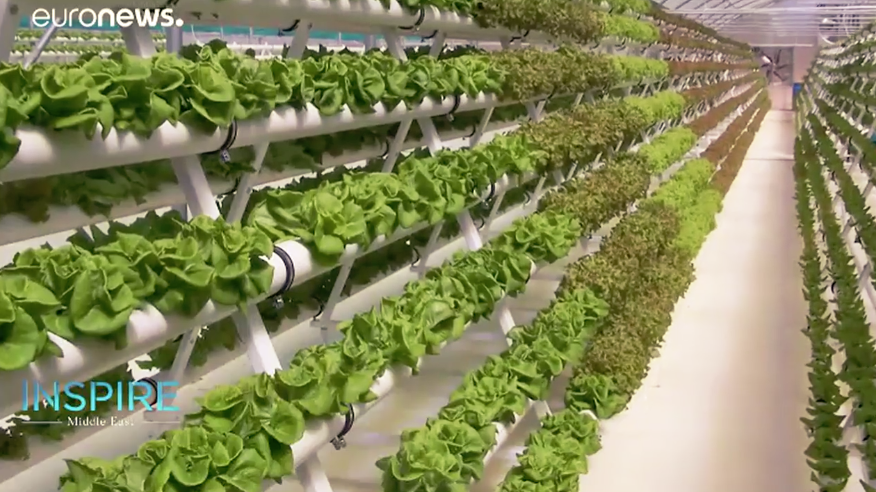
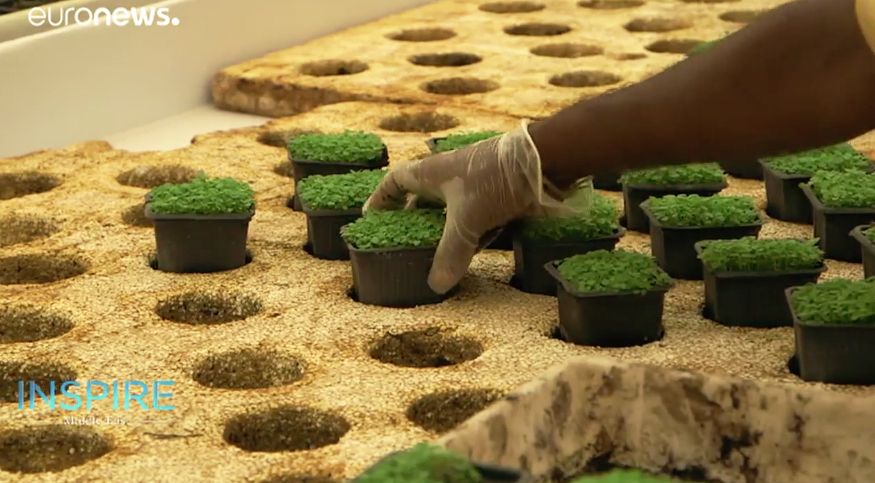
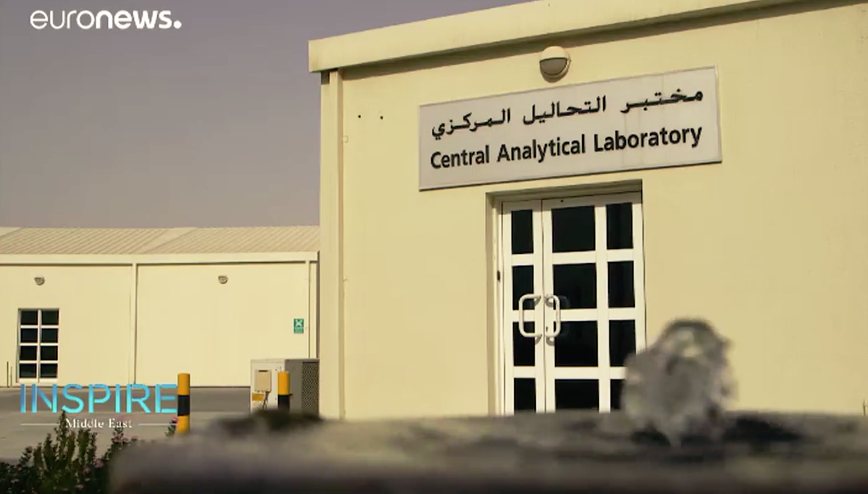
Amjad Alkhal, who works as an agricultural engineer at Emirates Hydroponics Farms , uses a hydroponic farming system - an innovative method of growing plants without soil - but instead using a liquid nutrient solution. Amjad Alkhal grows produce in the desert using a hydroponic farming system Chilled water passes through insulating tubes to nourish plants like lettuce, which are planted in a fibrous material called rockwool. Rockwool is made of crushed rocks and holds water like a sponge.
Once the water has completed a cycle, it is drained back out to be filtered and reused. In this process crops are planted in rockwool, a fibrous material made of crushed rock Using alternative farming systems has saved Alkhal around 90 percent of the water that he would have used by deploying traditional farming methods. The farmer also uses a vertical farming rotatory field - a stackable, revolving farm bed with 18 rows.
This set-up has also saved Alkhal space, allowing him to be located closer to the city centre and deliver produce to stores faster, which in turn has reduced the farm’s environmental footprint. “That rotatory greenhouse, which we applied in 2005, is the first rotatory greenhouse in the Middle East,” says Alkhal, “Due to the system, if you were going to plant in the same area for traditional agriculture it would need around six times [the space of] this one.”
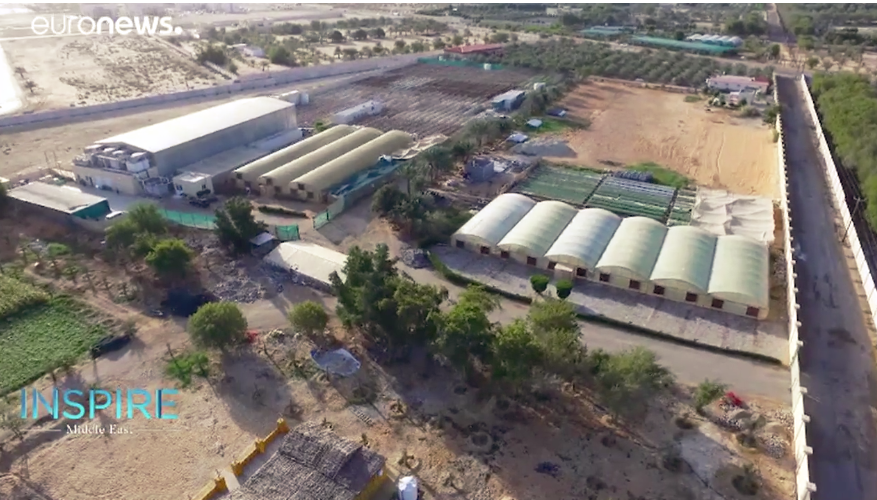
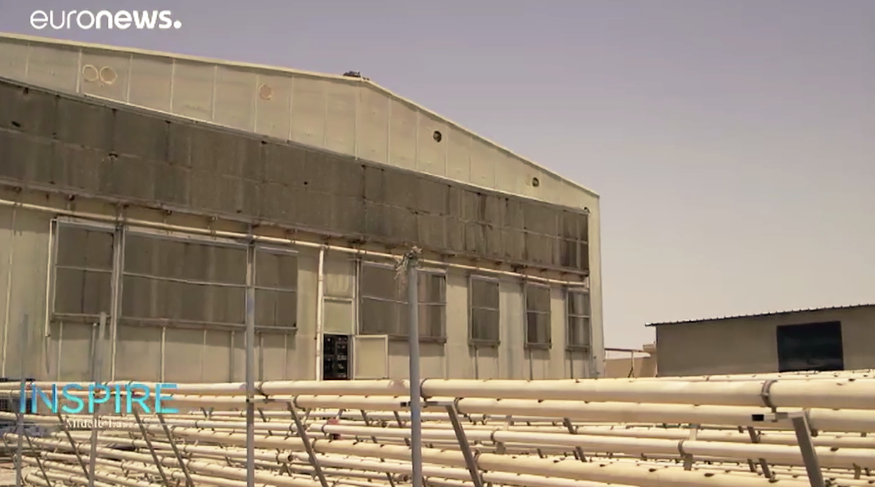
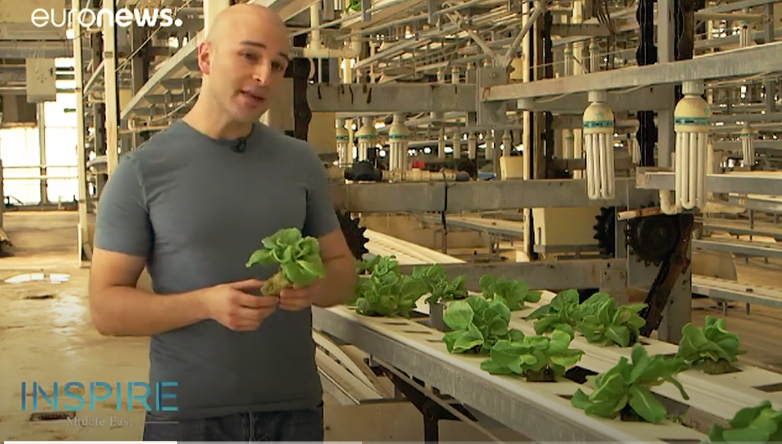
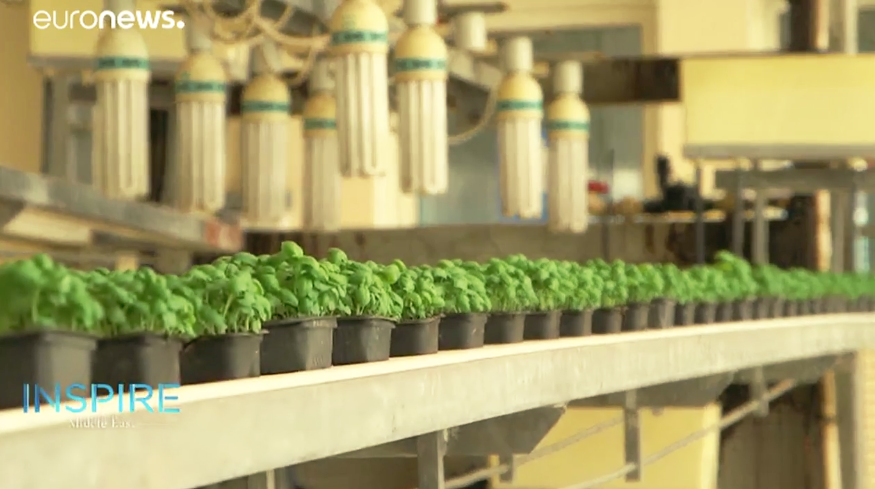
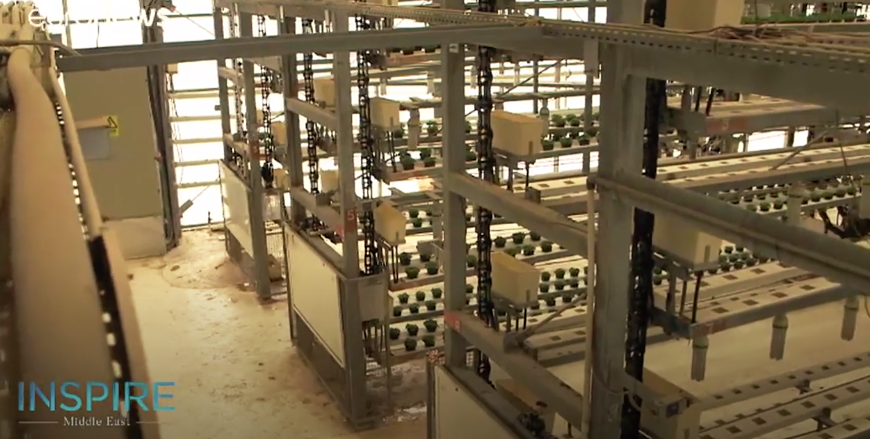


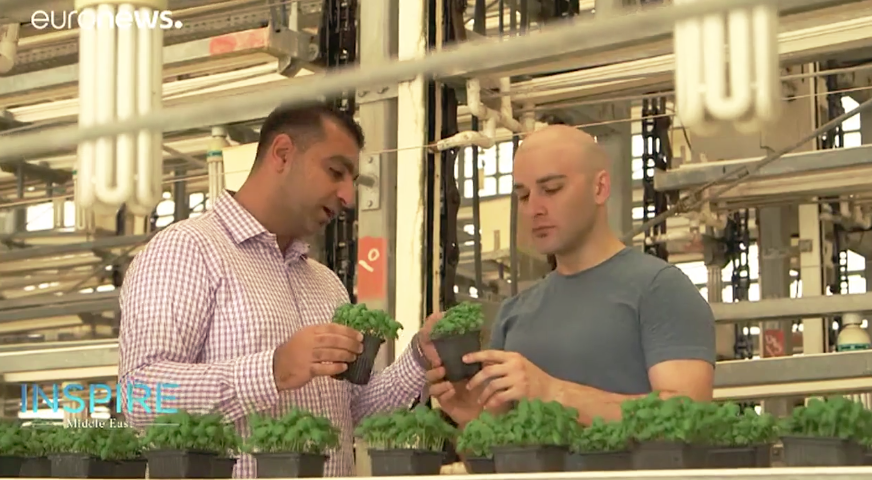
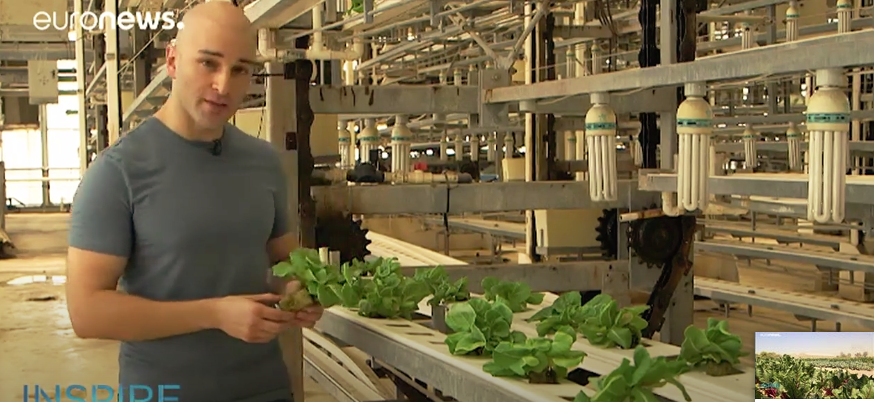
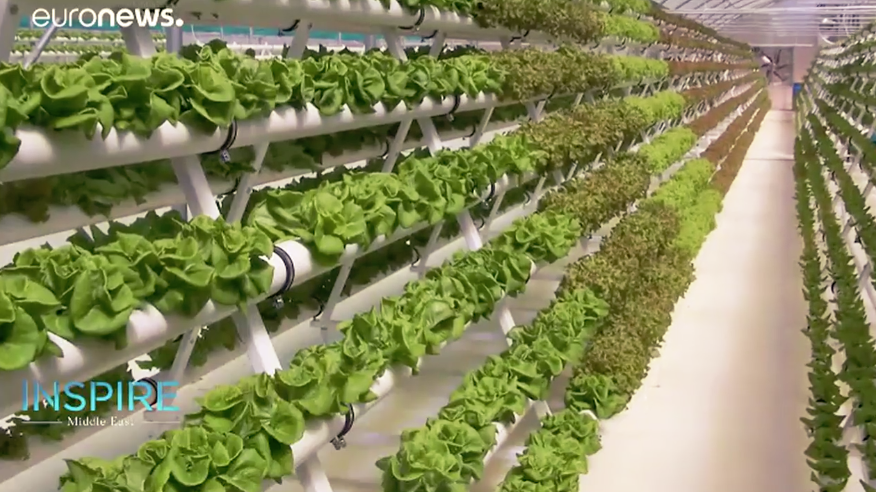
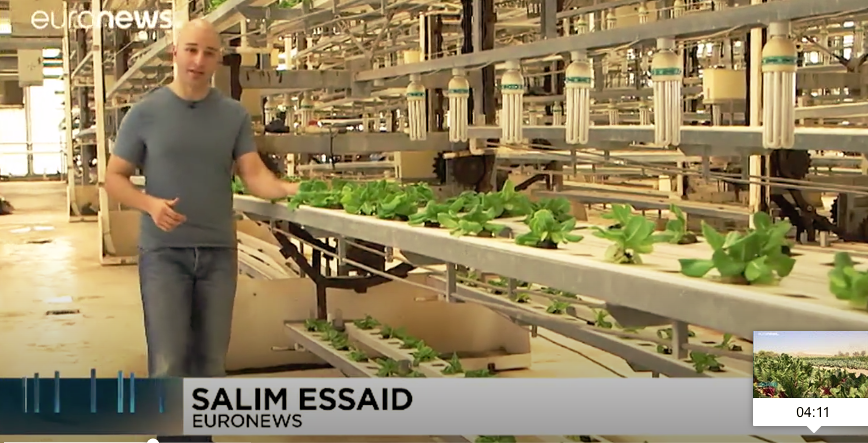
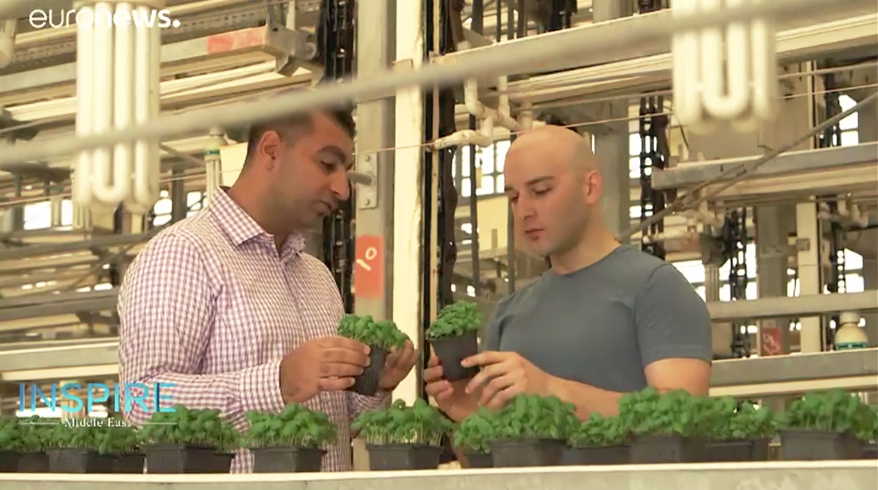
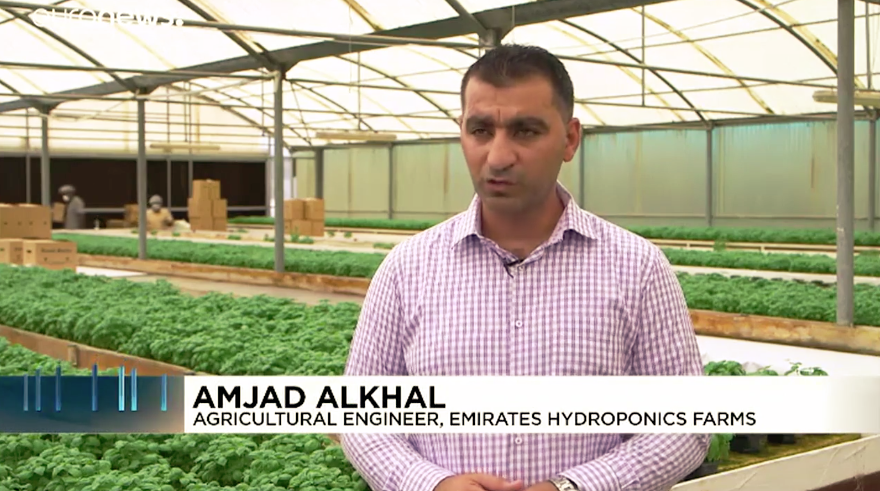
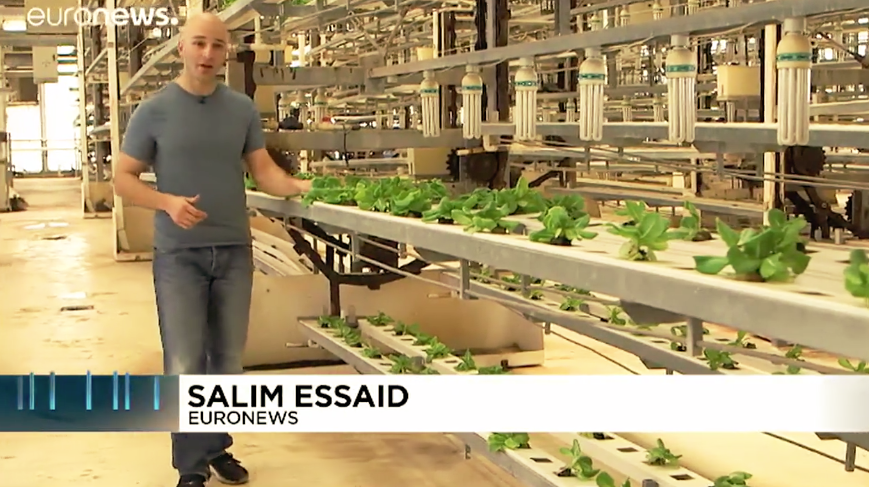
Alkhal’s rotatory greenhouses use six times less space than traditional agriculture Emirates Hydroponics Farms is approximately two hectares large, equivalent to the size of two rugby fields. Alkhal is able to produce around 500,000 lettuce plants - including nine varieties - and two million herbs each year. Like Alkhal, many UAE-based farmers grow their crops on 'marginal land' - meaning that it has low agricultural worth due to factors like poor soil, little freshwater and harsh temperatures.
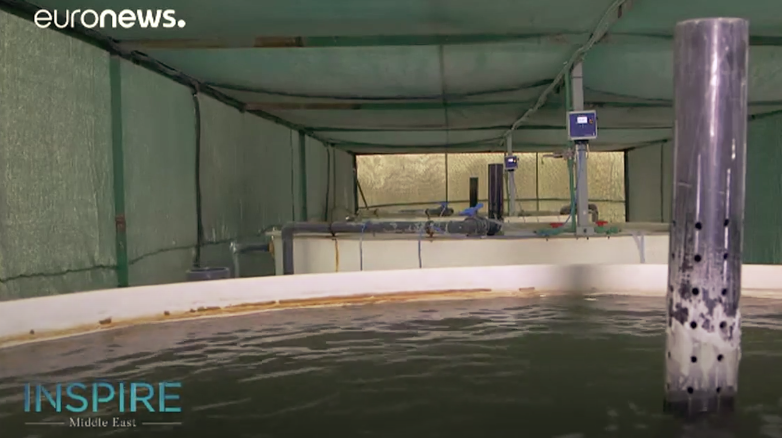
The International Center for Biosaline Agriculture is also working to find homegrown solutions in the UAE, exploring ways to get the most out of scarce resources like freshwater. The centre uses salty seawater to farm certain crops that are both salt and heat tolerant, such as quinoa and mustard plants. Other than using salt water for agriculture, the ICBA has an ‘integrated aquaculture’ that desalinates naturally salty groundwater to produce freshwater for farming.
It also produces brine – a highly concentrated salt water - to farm fish. The ICBA enriches the water with fish waste products to fertilise crops In a separate operation, this brine water is enriched with fish waste products, and used to fertilise a sea-bean-like vegetable called salicornia. Yet another growing trend in regional agriculture is so-called precision farming, which gives plants the exact amount of what they need to flourish.
“Date palms require about 50 litres [of water] a day in the winter and about 150 litres in the summertime. Whereas if you talk to any farmer, they provide more than 300 liters a day per tree,” explains ICBA’s Director Ismane Elouafi, “With precision agriculture, you give the information to the farmers that they don’t need to use more than 50 litres, and sensors can also make the irrigation stop at a certain time.”
Drones are used to measure plants hydration, allowing for a precise irrigation system that saves water This type of ‘smart farming’ uses drones with sensors to measure a plant's hydration. It is currently being applied in a variety of ways in the UAE, which is investing in new food technologies .
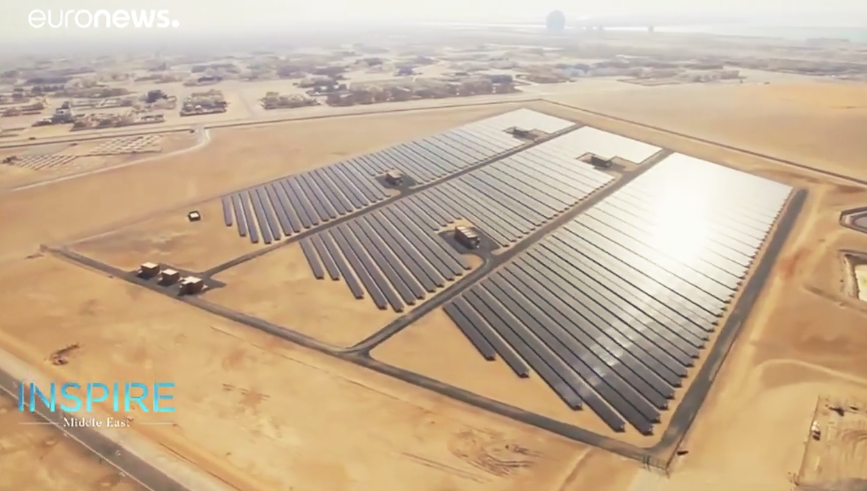
The country is planning to build in Dubai the world’s largest vertical farm later this year. Construction is set to being in November.
In addition, Masdar - a sustainable city in the desert of Abu Dhabi set up with an original investment of $15 billion - plans to test smart home farms, whilst looking at ways to better conserve energy and water nationwide. / Euronews

Jobseekers, Youths Encouraged To Start Vertical Farming With Brunei's Farmers Ageing Into Retirement
SEPTEMBER 15, 2018
A vertical garden built using inexpensive materials such as plastic bottles and recycled wood. Photo: Courtesy of Ministry of Primary Resources and Tourism
TEMBURONG – The government wants more youths to start vertical farming in order to supply domestic market demand and replace Brunei’s ageing farmers.
To identify interested participants, the Department of Agriculture and Agrifood (DAA) has begun inviting registered jobseekers nationwide to attend agriculture courses.
According to the department’s Head of International Affairs and Public Relations, Hirman Hj Abu, the course, dubbed “Kursus Pendedahan Teknologi Mudah dan Murah”, educates youth on inexpensive methods to start an agricultural business.
The programme encourages young people to build vertical gardens that require minimal space, using cheap materials such as used plastic bottles and wooden planks. It also solves the problem of needing land to start a farm.
“The objective of this programme is to give them a head start in the world of agriculture and we will help them overcome common problems faced by other agriculture startups like pests,” he said.
A ‘sawi’ sapling growing out of a plastic bottle in a vertical garden. Photo: Courtesy of Ministry of Primary Resources and Tourism
The programme is the first of its kind in Brunei, specifically targeting youths, as the nation’s farmers age into retirement.
“We’ve held similar courses previously but the demographic was specifically targeting low income individuals such as single mothers, to help them generate income,” he told The Scoop.
The first course, conducted in all four districts, is an introductory course, to expose young people to the opportunities in starting an agricultural business.
This is where the DAA will be able to identify those who are serious about becoming farmers.
“Upon the completion of the first course, participants who are interested in pursuing this venture will be encouraged to register for a second and more intensive course. We will give them more in-depth information on the technicalities and economics of running their vertical farms.”
This includes marketing their produce and branding their business — an aspect that he believes is often overlooked by local farmers.
When both courses are completed, participants will proceed to the final stage of starting and running their own vertical gardens. During this stage, they will be monitored by theDAA and provided guidance if needed.
However, this does not mean that the startups expected to stay small. The department hopes that the course will allow youth “agripreneurs” to mature their businesses more quickly then their predecessors.
“After a few years in the industry, these startups will be able to generate enough income and generate capital to start commercialising their products.”
Hirman said startups that show the most potential, and who can prove consistent output, will be helped by the DAA to bring their products to a wider market.
“Our hope is that these youths who enter the industry will be more dynamic, as youths of this day and age are exposed to different technologies and methods that can innovate the industry. That is what we want,” he added.
The first course has already been conducted in Temburong, and will be expanded to the other districts in the coming months.