

Welcome to iGrow News, Your Source for the World of Indoor Vertical Farming

Who Will Win In Indoor Agriculture?
According to Allison Kopf, CEO of Artemis, there are five ways big players will enter indoor agriculture. "The indoor agriculture (both greenhouse and vertical farming) market is one of the fastest-growing industries
According to Allison Kopf, CEO of Artemis, there are five ways big players will enter indoor agriculture. "The indoor agriculture (both greenhouse and vertical farming) market is one of the fastest-growing industries. Big companies in agriculture and technology are trying to figure out ways to capitalize on the rapid growth of the industry."
"Artemis, the leading software infrastructure company in the industry, which allows us to have a front-row view of how the industry is growing and what the industry needs," says Allison. "Our market has historically been fragmented, where legacy companies have been growing for decades and new players have emerged more recently with innovative models to stake their ground as market leaders. Most of the growers are trying to displace traditional field-grown commodities and increase domestic (i.e. in their local country) production of fresh produce; and we’re seeing this shift, as well."
Allison says that in the 1990s in the United States, the number of tomatoes consumed grown in greenhouses was negligible. Now, only 20 years later, close to 40% are grown indoors. This shift isn’t just happening with tomatoes, it’s happening with crops best suited for indoor growth, such as lettuce, herbs, cucumbers, peppers, and increasingly berries.
"In this industry, unlike more traditional commodity markets, we have no dominant suppliers (inputs, chemicals, finance, technology) yet. Bigger companies have largely left the market open for smaller specialized companies and startups. But this is about to change. The indoor market has shown it’s a lasting and major component of our agricultural supply chain and someone will enter this market with a goal of winning. So, who will it be?"
"I believe the winner will own one or more of the areas below," says Allison.
Data
Companies who understand grower workflow, farm financials, operational data, and biological data will have a distinct advantage in the battle for the market. This creates an opportunity for folks like lighting, breeding, climate control, greenhouse manufacturers, lenders, and others.
According to Allison this isn’t just about getting closer to the farmer, it’s also an opportunity to develop technologies faster and to have commercial R&D capacity at your fingertips. "Lighting, for example, is one of the most impactful components for growing indoors. Yet, lighting companies have no access to yield information or quality information from the growers."
With access to on-farm information, lighting can become proactive and intelligent, rather than the PLC technology of the past. Signify and Osram are already leaders in horticultural lighting and are likely in a strong position to start offering intelligent lighting solutions. "Watch out for breeding companies here too. Unfold recently launched with $30m in funding from Bayer to breed indoor crops. I would expect others like Syngenta and Rijk Zwaan to follow with similar initiatives," Allison affirms.
Finance
There is an estimated $20 billion gap in project finance over the next 3-5 years for greenhouse and vertical farm construction in the United States alone. Agricultural companies who have lending capabilities, like ADM, Bunge, Cargill, Dreyfus, and others will find indoor agriculture opportunities less risky from a growing standpoint than traditional commodity investments. Lenders will need to get comfortable with the relationship-heavy buying market and the lack of offtake contracts in produce but should be able to underwrite with growers who sell to known retailers, like Costco, Walmart, and Target.
"Many growers also have a need for an operating line of credit, often needing to buy in bulk for consumables like seeds, growing media, and chemicals to obtain better pricing. With some buyers, growers face long receivables periods, which also hurt operating cash flow," says Allison.
Ultimately, legacy agriculture companies who lend to agricultural producers will win by creating financial products for the indoor agricultural space and by partnering with the technology producers who can help de-risk the investment. This opportunity will open up billions of dollars in new revenue for someone on a relatively short timeframe.
Traceability
Product recalls and supply chain blind spots hurt everyone in the ecosystem. Bigger agricultural companies have started adding traceability to their strategic plans. Many are testing out blockchain-based technologies. Allison says that others are focused on digital workflow platforms. For the most part, companies haven’t yet figured out how to stretch all the way back to the farmer and this is where the most opportunity lies with indoor agriculture, in particular.
Because indoor agriculture is more predictable, companies who can track product from input to crop to finished good and all the way through the supply chain will have a critical advantage over others. Retailers like Walmart and Target are making this a priority and have the potential to disrupt their supply chains dramatically with indoor agriculture.
"Let’s say Walmart partnered with indoor producers for 100% of their salad greens, tomatoes, cucumbers, peppers and berries. While implementing this, they set traceability standards for producers and required compliance with those standards. This would not just ensure safe products that are normally high-risk for consumers, it would also enable stable year-round supply of products (with accurate forecasting) for Walmart and would lay the groundwork to move the needle dramatically on sustainability. This means less food waste, more efficient production, stable year-round products, safer, and more sustainable production," says Allison.
It’s not just retailers who can set the bar when it comes to traceability. Large technology companies like Schneider Electric who have their technology in the hands of all the components of the supply chain, from grower to retailer, are also in a unique position to offer end-to-end traceability products.
Consumables
Consumables are another exciting opportunity for more traditional players entering the indoor agriculture market. Today, growers buy products from many individual suppliers. This drives the price up and makes reliability difficult. If one supplier is out of a product, growers are forced to buy new untested products or find another supplier on short notice.
Large greenhouse growers are often importing products from other countries and buying in bulk just to try to reduce price. And there’s a severe lack of transparency for both pricing and performance. Because the industry is moving so quickly, growers are left to buy based more on marketing claims than on actual performance.
Allison adds: "Indoor growers spend a lot of money on inputs each year and are willing to do so because quality has a direct impact on pricing. This is a drastically different approach from traditional commodity markets where yield is the prime, if not only, driver for financial performance. Because of this, growers tend to pay a premium for inputs to impact not just yield but quality as well."
Farmer’s Business Network has created a marketplace to solve for exactly this type of challenge in the inputs space. This market is ripe for an offering like this. Large chemical companies like OCP and ICL should also be paying attention to this market as specialty products will likely emerge as one of the largest product categories over the next few years.
Digital workflow
Companies like Trimble, John Deere, Syngenta, and Corteva have started making inroads in digital workflow products. None of the products designed for workflow in the field cover the workflow of indoor agricultures.
"In indoor agriculture, you need to couple the traditional cultivation processes and biology of growing with a manufacturing mindset. In indoor agriculture, the growth times are dramatically shorter than in field, so the challenges are more aligned with a factory. You’re thinking about how to manage space, time, and throughput on a continuous basis. It’s just-in-time inventory management," Allison states.
Understanding this workflow is critical to all of the other items listed above. This is what drives proper data collection, ensures traceability, and enables models like financing or a consumables marketplace. Companies who have a deep understanding of inventory management, like NetSuite, Sage, SAP, and Microsoft might do well capitalizing on this new industry. Other agricultural companies who also work in the construction and manufacturing space, like Trimble, might also win here.
For more information:
Artemis
Nathalia Delima
ndelima@artemisag.com
www.artemisag.com
Publication date: Mon 4 Jan 2021
Author: Rebekka Boekhout
© VerticalFarmDaily.com

Future of Agriculture Grows Under Seoul’s Subway Stations
The Seoul Metropolitan Government, Seoul Metro, and the agriculture company Farm8 have come together for this project
Experts introduce the facility during the opening showcase of Metro Farm at Sangdo Station in September 2019. (Farm8)
Walking down the stairs from exit No. 2 of Sangdo Station in southwestern Seoul, its not easy to miss a white and green signboard that reads “METRO Farm.”
A method of what‘s known as “smart farming,” Metro Farms can create nature-friendly environments while being located inside urban subway stations, using AI and Internet of Things (IoT) technologies.
Sangdo Station’s exit No. 2 was originally left unattended, merely serving its purpose as a meet-up plaza. Since September 2019, the space is now a farm full of sprouts and herbs.
The 394-square-meter cultivation facility is a complex space consisting of an “Auto-Farm,“ where robots manage basic sowing and harvesting, a “Farm Cafe,” which sells fresh salad and juice, made from crops harvested on the same day, and “FarmX,” a zone where visitors can learn about the future of agriculture.
The Seoul Metropolitan Government, Seoul Metro, and the agriculture company Farm8 have come together for this project. In 2004, Farm8 started out as a firm that produced and distributed vegetable salads. Over time, the company shifted gears to conduct research on indoor farming as a method of sustainable agriculture that can operate regardless of weather conditions and has succeeded in developing high-tech distribution centers.
The three organizations worked together to enhance the ecological sensitivity of Seoul as a city, and allow young people living in urban districts to experience agriculture with their own eyes.
Children line up in front of a Metro Farm to experience and learn about agriculture in January 2020.(Farm8)
“We tried our best to make Metro Farms a lively experience, where visitors can get a grasp of its possibilities and to be recognized a place where technology meets nature,” senior manager of Farm8 Yeo Chan-dong told The Korea Herald.
Since the very first showcase of Metro Farm at Dapsimni Station in eastern Seoul in May 2019, Yeo explained that they have made progress in creating urban agricultural jobs and expanded Metro Farms across the city.
An average of 7.5 million people take the subway each day in Seoul, according to Seoul Metro. This means that passersby will naturally encounter Metro Farms on their way to work, home or to meet family and friends.
“Our assignment for the new year is to make Metro Farms more popular and sustainable,” Yeo spoke with confidence, “In other words, not only presenting the experience but eventually making a system for the crops grown to be made a competitive quality to suit the needs of the public.”
By Kim Hae-yeon (hykim@heraldcorp.com)
PODCAST: Harry Duran - 2020 Year End Review
A 2020 wrap up by podcast
Be Sure To Check Out
Harry Duran's
Year-End Review Here!
VERTICAL FARMING PODCAST
Listen & Subscribe

Pilot Project To Recycle Crypto Mining Farm Energy Waste Into Energy For Greenhouses
The pilot project's objective is to address concerns about the excess energy waste generated by crypto mining facilities while also supporting the government's objective to become more self-sufficient in food production, rather than relying on imports
Genesis Mining has announced the launch of a new pilot project that will focus on recycling excess energy waste from crypto mining facilities into sustainable heat and energy to power greenhouses.
The pilot project's objective is to address concerns about the excess energy waste generated by crypto mining facilities while also supporting the government's objective to become more self-sufficient in food production, rather than relying on imports.
Commenting on this potential, Mattias Vesterlund, Senior Researcher at RISE (Research Institutes of Sweden), said, "A 1 MW data center would have the ability to strengthen the local self-sufficiency up to 8% with products that are competitive on the market."
The project is a private-public partnership between Systemair, Lulea Technical University, RISE (Research Institutes of Sweden), Boden Business Agency, the local Boden municipality, and Genesis Mining's philanthropic arm, Hashpower For Science. It's located in Boden, Sweden, and has been in development for over one year.
Boden Business Agency's Nils Lindh, said, "This project is exciting because there is an opportunity to contribute in scaling up the food industry and at the same time meet the national energy efficiency targets. It's the first of many projects within the Energy Symbiosis, and hopefully, the results will show that it's very possible to scale up into large commercial production."
For the initial pilot project, one of Genesis Mining's custom-built crypto mining storage containers will be placed near the greenhouse. The greenhouse and container are connected via a custom-built air duct system that carries the excess energy directly from the crypto mining storage container into the greenhouse.
Andreas Johansson, a Senior Lecturer from Lulea Technical University, who is making the calculations for designing the system for air flow from the datacenter to the greenhouse, said, "For the cold climate in the north of Sweden, our calculations show that a 300 m2 greenhouse can easily be heated with a 550 kW container, even with outdoor temperatures reaching almost -30℃. But the potential is much bigger than that. The temperature difference over the greenhouse is in this calculation only 10 degrees since we assume a DC output temp of 35℃ and a GH temp of 25℃. If the DC output is increased to 55℃, then the GH area can be tripled to 900 m2."
Genesis Mining's CEO and co-founder Marco Streng said, "Crypto mining is the backbone that makes decentralized cryptocurrencies and applications possible, and we strongly believe the benefits of this decentralization will transform the world, but all those benefits can't come at the cost of the environment."
As one of the world's largest crypto mining companies with over a dozen data centers spread across the globe, Genesis Mining's R&D team has been actively working on different solutions and collaborations to enable more sustainable crypto mining facilities.
"Genesis Mining has always preferred locations that offered 100% renewable energy sources, that's why we've focused so much on the Nordics. But as the industry leader, we view it as our moral and ethical responsibility to push the industry forward, and finding a way to convert our excess energy has been a major priority. We look forward to scaling this project and bringing it to not only more of our own datacenters — but to others as well."

PODCAST: An Interview With Henry Sztul - Chief Science Officer At Bowery Farming
In this episode, Harry and Henry discuss the promise that vertical farming provides to the world and why it resonated so soundly with Henry
Season 2 Episode 18
Join Harry Duran, host of Vertical Farming Podcast, as he welcomes to the show physicist, entrepreneur, and self-proclaimed tinkerer, Henry Sztul. Henry is the Chief Science Officer at Bowery Farming, a modern farming company on an ambitious mission to transform the future of food and change the face of agriculture.
In this episode, Harry and Henry discuss the promise that vertical farming provides to the world and why it resonated so soundly with Henry. Henry shares his personal career journey, his thoughts on the current state of agriculture, and what excites him most about the future of hydroponics and the AgTech industry in general.
Listen & Subscribe

US: 17 Things You'll See In Every Grocery Store in 2021, According To Experts
2020 rocked the grocery store scene as we know it. Here are the new changes you can expect to stick around
2020 rocked the grocery store scene as we know it. Here are the new changes you can expect to stick around.
JANUARY 1, 2021
FACT CHECKED BY FAYE BRENNAN
Although we wish things in the grocery store like empty shelves, plexiglass shields, and capacity limits could stay behind in 2020 as we begin the new year, the coronavirus and its effects are still ravaging how we shop for food. Masks will still be required for a while, and senior shopping hours, Clorox disinfecting wipe shortages, and even social distancing are here to stay.
There are some intriguing supermarket changes to look forward to, though, says the Supermarket Guru, Phil Lempert. For over 25 years, he has been an author, speaker, and analyst on grocery store consumer behavior, marketing trends, new products, and more. We spoke with him and gathered other data to prepare you for what grocery stores will look like in 2021. (And before your next trip, check out the 100 Easiest Recipes You Can Make so you can add the ingredients to your list.)
VIDEO: Click Here: Grocery Store Tricks of the Trade
1 - Less Delivery Options
Courtesy of Walmart
Grocery delivery saw a huge increase in popularity this year because it is safer than shopping in-store. Chains updated their websites, apps, and click and collect services (like pickup lockers!). Some grocers even added pickup for the very first time.
Lempert believes this trend is temporary because some people simply prefer picking their own items, even if going inside the grocery store is considered to be more dangerous. With that said, the various types of grocery delivery options may be reduced.
For more on how to stay safe should you decide to go to your local supermarket, here are 10 Grocery Store Safety Tips From a Health Expert.
2 - More Robots
Shutterstock
Meatpacking plants saw the number of coronavirus cases among workers skyrocket in 2020. Over 10,000 Tyson employees tested positive between March and July. Smithfield was fined thousands of dollars for outbreaks at its meatpacking plants, and other companies like Hormel, Cargill, National Beef, and more also saw employees get sick. Lempert believes this will pave the way for robots to have larger jobs in these types of facilities. But, you may also potentially see more robots working inside your local grocery store.
3 - Reservation Slots For Shopping Times
Expect to approach grocery shopping like going to a restaurant: You'll go to a reservation making website, then pick your preferred time to shop. Next, Lempert predicts that you'll be asked to select any non-produce grocery store items ("the stove-top stuffing, the Heinz ketchup," Lempert says) that you'll need during your trip so that those can be retrieved, bagged, and ready for you once you arrive for your reservation. At that point, you can peruse the produce aisles, then checkout.
All of this, of course, will be in an effort to reduce crowding and encourage social distancing. (Related: The Worst Grocery Stores of 2020.)
4 - New Grocery Store Sites
Shutterstock
Because of the previous prediction, Lempert says grocery store websites are going to be significantly more detailed than they are now. "The data that's on most retailer's websites is horrible and outdated," he says. "The ingredients are typically wrong. The nutritional information is wrong. The product gets updated probably about once every nine months. That's not right."
One way some grocery chains are already using their platforms to help inspire change is by highlighting minority-owned food brands inside their stores.
5 - Less Space
Shutterstock
Another huge change you can expect? A new layout! "The size of your grocery store will likely be cut in half, Lempert says. "The back half of the store will be fully robotic, and those robots will now be picking the items that you ordered online."
The front of the store will be all the fresh items you can shop for yourself, as well as the baker, butcher, and produce sales associates whom you can still ask for help. But this way, "You're going to be able to pick all those fresh foods that you want, and you're going to have a much better shopping experience," Lempert says.
6 - Less Time In-Store
Shutterstock
Because of his new prediction about the way we will shop, customers will spend a lot less time inside shopping, Lempert says. One trip will consist of about 10 minutes picking out fresh produce and deli items, grabbing the bags of items from the center of the store that the robots packed up for you, and simply checking out.
Before 2020, Lempert thought it would take about three to five years for this change to happen, but because of the coronavirus pandemic, he says it will only take six or seven months.
In the meantime, know that More Grocery Shoppers are Making These Dangerous Mistakes, Survey Finds.
7 - More Comfort Foods
Shutterstock
Kroger also released its predictions for what's in store for 2021, and one trend is the continued rise of comfort foods. Things like quick-cook risotto, white cheddar macaroni and cheese, and even brown butter truffle ice cream will be on shelves for you and your family. This trend dominated 2020, too. But as you shop, keep in mind The Shocking Side Effect of Eating Comfort Food.
8 - More Fresh And Prepared Foods
Shutterstock
Convenience is key, especially during—and after—a pandemic. "We're buying frozen foods and more convenient offerings," Lempert says. "And if you look at the prepared foods offerings in the supermarket—the freshly prepared ones—they're going through the roof because people just want to microwave or put food in the oven."
That said, here are 12 Frozen Dinners to Always Leave on Grocery Store Shelves.
9 - Fewer Items To Choose From
Shutterstock
Some of your favorite companies have downsized this year. Coca-Cola announced it's discontinuing 200 drink brands, Kraft-Heinz is cutting 20% of its products, and quite a few more are cutting down. Even if products return ever so slightly to normal production, the way factories are built now doesn't quite allow for safety measures to be implemented (that Lempert believes are here to stay).
For more, here are All of the Beloved Grocery Items That Are Secretly Being Discontinued.
10 - More Sustainable Products And Transparency
Shutterstock
For the products that do make it to grocery store shelves in 2021, transparency about their ingredients and where they were grown or made will be important. Lempert says companies want to keep sustainability in mind with their products, and that will be reflected because, now, "we really don't have a choice" about whether or not to care about the environment. For more on this prediction, here are 20 Ways to Be More Sustainable When It Comes to Food.
11 - More Immune-Supporting Foods
Debra Millet/Shutterstock
Thanks to the influx of safety rules and regulations COVID-19 gave us, the experts at Kroger believe foods that help keep us healthy and support the immune and digestive system will see more popularity in 2021. On your next trip to one of the grocery store chain's almost 3,000 stores, look out for products like almond butter, organic sparkling kefir water, caffeinated water, and even elderberry gummies. (Related: The 7 Healthiest Foods to Eat Right Now.)
12 - More Self-Driving Trucks
Walmart started to test driverless trucks in Arkansas in 2019, and so far, those vehicles have driven more than 70,000 miles on their own (but with a safety driver inside), the grocery store chain says. Now, the initiative is moving to Louisiana.
Lempert believes this trend will expand next year because of the increased importance of sustainability, the cost, and much more. But, it's not just driverless grocery chain trucks you may see out and about: Walmart is also testing drone delivery.
13 - Fewer CBD Food Products
All the CBD items you saw sprouting up in your local supermarket this year may not have the same luck in 2021, Lempert says. This is because these products aren't regulated, so the amount of CBD in them ranges based on the manufacturer. Lempert does believe they will come back, though, once the government gets involved and forces companies to show the total CBD percentage and other information on labels. (Related: What Happens to Your Body on CBD.)
14 - Cleaner Ingredients In Alternative Meats
Shutterstock
The number of meat alternative products that entered the market in 2020 has given shoppers tons of options. But, new options will contain a few other things besides just plant-based protein. "What we're really seeing is flexitarianism will be much more important," Lempert says. "It's not about extremes; being all-vegan or an omnivore."
This means you may see blended meat options, featuring both mushrooms and beef or cauliflower and pork. Until then, here are 33 Easy Plant-Based Recipes Even Carnivores Will Love.
15 - More ItemsFrom Restaurant Chains
Shutterstock
"I think we're going to see a lot more restaurant-supermarket partnerships," Lempert says of grocery stores in 2021. "Prepackaged foods made fresh from the restaurant and delivered to the supermarket on a daily basis."
This is a win-win for both—especially as the restaurant industry continues to struggle because of the pandemic.
16 - A Bigger Emphasis On Health
Shutterstock
Right now, the most super of supermarkets, aka Walmart, is starting to healthcare workers in New Mexico, with plans distribute one of the FDA-approved COVID-19 vaccines to supply it at over 5,000 stores and pharmacies across the country. The Supermarket Guru says Walmart will continue to promote and grow the health clinics in their stores.
(Related: 8 Ways to Shop Safely at Walmart Right Now.)
17 - More Indoor And Verticle Farming
Shutterstock
You may not see these in your local grocery store, but they may be popping up just down the street thanks to now-empty office buildings that can be converted into indoor farms. "That's the perfect place to put in vertical farms because you can serve the population closer," says Lempert. "Produce also grows three times faster because it's in a controlled environment. Right now, most indoor farming is either tomatoes or leafy greens. But that's about to change."
Polygreens Podcast Episode: 007 - Jim Pantaleo
In mid-2014, Jim made a move away from a 20-year career in technology to indoor vertical farming for food and non-traditional crop production
POLYGREENS PODCAST EPISODE 007
JIM PANTALEO
In mid-2014, Jim made a move away from a 20-year career in technology to indoor vertical farming for food and non-traditional crop production.
Indoor farming (growing plants for food consumption in totally enclosed environments using only LED lights for photosynthesis) plays a part in directly addressing water, land, population, and natural ecosystem challenges borne from current, large-scale (unsustainable and harmful) agricultural practices.
In order to move from tech to indoor farming, He took a full year to immerse himself in the subject, learning as much as he possibly could while directly engaging with the industry's credible difference-makers and organizations.
Over the past six years, he has been a large-scale, commercial operator/indoor farmer, speaker, writer, business developer, investigative C-level start-up team member, plant science nerd, and conference organizer/MC. Jim seeks to create positive change, shift the paradigm of sustainable indoor plant production, and disrupt (and enhance) supply chains to meet the challenges of modern, large-scale agriculture.
Listen
"Leading The Next Frontier of Farming And This Investment Further Accelerates Our Momentum"
“The addition of our new farm to the network is a critical next chapter in our growth,” said Irving Fain, founder, and CEO of Bowery Farming
“The addition of our new farm to the network is a critical next chapter in our growth,” said Irving Fain, founder, and CEO of Bowery Farming. “It will expand our reach and ability to be a reliable source of local produce for more communities. We’re leading the next frontier of farming, and this investment further accelerates our momentum.”
Bowery Farming is building its newest commercial farm in Bethlehem, Pennsylvania. Joining its network of farms in Kearny, New Jersey, and Nottingham, Maryland, Bowery’s new Bethlehem farm will be its largest, most technologically-advanced commercial farm yet.
Driven by explosive demand for safer, traceable pesticide-free produce, and propelled by the BoweryOS- which integrates software, hardware, sensors, computer vision systems, machine learning models and robotics to orchestrate and automate the entirety of operations - the strategic location of Bowery’s Bethlehem commercial farm will expand the company’s reach in the region.
This farm will feature a number of developments that build on previous Bowery technology, further automating the growing process from seed to store, and enhancing the efficiency of Bowery’s network such as, Water Conservation: A state-of-the-art, comprehensive water transpiration system will recapture almost all water used throughout Bowery’s growing process, with the goal of reclaiming and repurposing nearly all of the water in the farm.
The facility will also focus on more efficient LED Lighting amplifying Bowery’s holistic approach to sustainability and features industry-leading environmental improvements like energy-reducing LED lighting throughout.
"It's the smartest farm yet, powered by the BoweryOS, this farm will leverage billions of data points collected from Bowery’s network of farms to grow a reliable supply of consistently delicious produce year-round. Laying the groundwork for the next chapter in smart, scalable indoor farming, the Bethlehem farm will feature next-level technological capabilities unlike any Bowery farm to date, deepening the integration of the BoweryOS across all aspects of the business."
Furthermore, it offers restoration to the community. Bowery is working with the Commonwealth of Pennsylvania to transform the Bethlehem location from a non-arable industrial site into productive, modern farmland—stimulating economic revitalization that will provide year-round sustainable farming jobs for the community.
Since the beginning of 2020, Bowery has experienced more than 600% brick and mortar sales growth, and more than doubled sales with e-commerce partners, including Amazon. Bowery’s produce is harvested year-round at peak freshness and delivered to stores within a few days of harvest — a stark contrast to the 90% of leafy greens grown in the U.S., which are transported over 3,000 miles to consumers on the East Coast.
With this new farm, Bowery’s Protected Produce will be available to the 49 million people living within the farm’s 200-mile radius, advancing the company’s goal of expanding access to local, traceable, pesticide-free food to people in every major city in the U.S. and around the world.

For more information:
Bowery Farming
Shelby Farahan, Communications
sfarahan@boweryfarming.com
www.boweryfarming.com
Publication date: Fri 18 Dec 2020
Author: Rebekka Boekhout
© VerticalFarmDaily.com

Could AI-Controlled Vertical Farms Be The Answer To Feeding The Growing Population?
Vertical farms are becoming a trend these past few years in various countries, like in the US, the UK, and Dubai. Vertical farming makes farming possible even with a scarce land area because it is producing food on vertically inclined surfaces instead of a field or greenhouse

Erika P.
Dec 31, 2020
Scientists said that the Earth had lost one-third of its arable lands in the last 40 years. That means, lesser land to grow crops that will provide food for humanity. But these days, vertical farms have slowly become a trend in cities, growing leafy vegetables inside a controlled room.
In the next 30 years, it is estimated that the world's population will grow to 9.7 billion people, which poses many challenges, such as producing food for everyone. Agricultural lands are slowly vanishing in some countries due to industrial development and urbanization that turn rural areas into cities.
Vertical Farming
Vertical farms are becoming a trend these past few years in various countries, like in the US, the UK, and Dubai. Vertical farming makes farming possible even with a scarce land area because it is producing food on vertically inclined surfaces instead of a field or greenhouse.
In vertical farming, produce is vertically stacked in layers commonly integrated into the other structures, such as a skyscraper, shipping container, and repurposed warehouse or night clubs.
This modern idea of indoor farming uses the Controlled Environment Agriculture technology that controls the room's temperature, light, humidity, and gases. Vertical farming is somewhat similar to greenhouses that use metal reflectors and artificial lighting to augment natural sunlight.
Ultimately, vertical farming's primary goal is maximizing crops in a limited space and providing more food for the whole population.
ALSO READ: Dubai's Green Revolution Starts at Its Vertical Farms in the Middle of the Desert
AI-Controlled Vertical Farms Promise A Revolution in Food Production
Nate Storey, who co-founded the San Francisco agricultural-technical startup called Plenty, uses vertical farming to answer the increasing food demands of the growing population.
His company has constructed climate-controlled vertical farms that have drawn over $400 million funding from Soft Bank, Amazon's Jeff Bezos, and former Google Chairman Eric Schmidt, TechXplore reported.
His vertical farms only use about two acres, yet it can produce 720 acres worth of fruit and vegetables. He uses AI-controlled robots to control the lighting, temperature, and watering. Meanwhile, LED panels to serve as the sunlight, which means that food is grown 24/7 inside his vertical farms, and water is recycled because the evaporated water is recaptured so that there is no waste.
Plenty's vertical farms are so efficient that it uses 99% less land and 95% less water than conventional farming practices. Also, the rows of hanging plants produce 400 times more food per acre. Indeed, a revolution in food production.
The AI-controlled robots monitor the plant growth and constantly adjust the environmental factors to ensure more efficient and economic output.
Vertical farming looks more promising, especially in times like the pandemic when food production is disrupted. In Dubai, their food supply was not affected so much during the pandemic's early days because of their vertical farms. The San Francisco-based company's approach to farming also plays a similar role in the stability of the food chain.
"Free agriculture from the constraints of weather, seasons, time, distance, pests, natural disasters, and climate," Plenty's website reads.
READ MORE: Hydroponics Farming Is the Next-Gen Food Production Technology

Agrify Seeks $25 Million IPO For Indoor Agriculture Growth Plan
The firm develops products and related services for the indoor agriculture market
Written by: Donovan Jones Marketplace
Author of IPO Edge.
Dec. 28, 2020
Summary
Agrify has filed to raise $25 million in an IPO.
The firm sells proprietary products and software to the indoor vertical farming market.
AGFY has grown quickly from a very small revenue base and the industry has promising growth prospects.
Quick Take
Agrify (AGFY) has filed to raise $25 million in an IPO of its common stock, according to an S-1 registration statement.
The firm develops products and related services for the indoor agriculture market.
AGFY is a still tiny firm growing topline revenue quickly while operating in a promising industry.
I’ll provide an update when we learn more about the IPO from management.
Company & Technology
Burlington, Massachusetts-based Agrify was founded to provide proprietary hardware and software to enhance the efficiency of indoor agriculture operations.
Management is headed by CEO Raymond Change, who has been with the firm since 2019 and was previously the founder of GigaMedia (GIGM).
Below is a brief overview video of a vertical farming operation:
To read the full article, please click here.
Note: This report is intended for educational purposes only and is not financial, legal or investment advice. The information referenced or contained herein may change, be in error, become outdated and irrelevant, or removed at any time without notice. You should perform your own research before making any decisions. IPO investing carries significant volatility and risk of loss.
Editor's Note: This article covers one or more microcap stocks. Please be aware of the risks associated with these stocks.
Disclosure: I/we have no positions in any stocks mentioned, and no plans to initiate any positions within the next 72 hours. I wrote this article myself, and it expresses my own opinions. I am not receiving compensation for it (other than from Seeking Alpha). I have no business relationship with any company whose stock is mentioned in this article.
VIDEO: Agroz Aims To Build Malaysia’s Largest Indoor Vertical Farms
Agroz Group Sdn Bhd has announced that it’s building 100,000 square feet of indoor vertical farms in Malaysia throughout 2021, making it the largest of its kind in the country. When completed, the vertical farms can produce 3 tons of clean and fresh vegetables daily
30 DECEMBER 2020
Agroz Group Sdn Bhd has announced that it’s building 100,000 square feet of indoor vertical farms in Malaysia throughout 2021, making it the largest of its kind in the country. When completed, the vertical farms can produce 3 tons of clean and fresh vegetables daily.
The Malaysian-based agriculture technology (agritech) company was founded by serial technopreneuer, Gerard Lim Kim Meng, who has experience in the Malaysian technology and digital industry. The group aims to address the issue of Food Safety, Food Security, and Sustainability in Malaysia with its commercial large scale and industrial-grade indoor vertical farms.
Vertical farms are an efficient way of producing fresh vegetables as it uses less space and water compared to traditional farming on open land. The environment can be controlled accurately which include temperature, humidity and lighting. Since the vegetables are farmed in a well-controlled environment, it also eliminates the need for pesticides and additional chemicals.
According to the press statement from Agroz, it claims that most fresh vegetables including organic ones are several days or weeks old and are preserved “fresh” with large amounts of chemicals and preservatives.
It added that these vertical farms can be built within the community so that they are placed closer to where it’s consumed for a “farm to fork” supply chain. As a result, consumers will be able to enjoy clean, fresh, chemical-free and high quality food within hours.
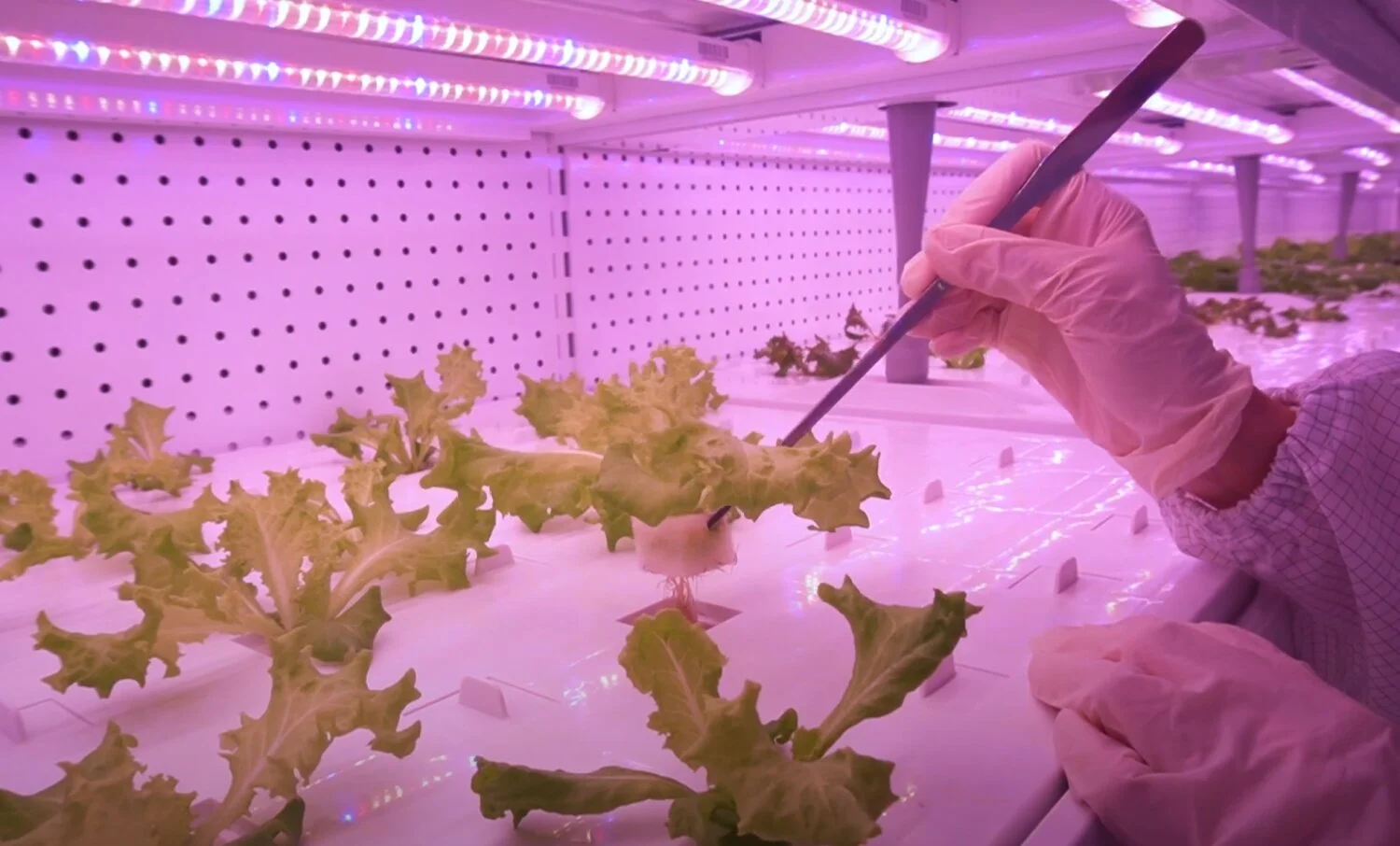
Agroz will be using a myriad of advanced technologies to ensure that its farming process is repeatable, scalable, and traceable. This would include IoT, big data analytics, artificial and augmented intelligence, machine learning, blockchain, and in the future, 5G, to create a sustainable approach to modern precision agriculture through indoor vertical farming.
The group is seeking to raise RM100 million through issuance of Redeemable Convertible Preference Shares (RCPS), with exit plans in 5 years through a proposed initial public offering (IPO) or via a trade sale to a Special Purpose Acquisition Company (SPAC), if applicable.
According to its founder and CEO, Gerard Lim, they currently have over RM5 million worth of contracts in its order books with millions of dollars more in the pipeline to design, build, operate and manage various indoor vertical farms. He shared that they are currently growing 200kg per month and will soon have the capacity to grow 1 ton per day from their various farms that are already committed.
Gerard added that the indoor vertical farms will create hundreds of new high valued jobs and generate income for local communities in the post-COVID-19 era.
Those who are interested, may drop an email to gerard@agrozgroup.com or visit their official website.

VIDEO: AI-Controlled Vertical Farms Promise Revolution In Food Production
These upright farms take up only 2 acres yet produce 720 acres worth of fruit and vegetables. Lighting, temperature and watering are controlled by AI-controlled robots
DECEMBER 30, 2020
by Peter Grad, Tech Xplore
When you think about it, early civilizations had a rough time when it came to dinnertime. With no supermarkets, McDonald's, or Cheesecake Factories, you pretty much had to find and prepare your own meal every day. And since Uber would not be invented for another 14,000 years, primitive peoples around 12,000 BC had to walk, sometimes for miles, and learn to hunt, fish, gather and cook for their daily meals. In the rain. Even on Sundays.
Farming evolved quite a bit since then. But with a world population hurtling towards 8 billion, we face a problem. As the 18th-century economist Thomas Malthus observed, the human population increases geometrically, while food production increases only arithmetically. That means the more civilization grows and thrives, the more likely it will be unable to keep up with demands for food.
While advances in food technology have helped forestall Malthus' dire predictions, there remains a great concern for the future of food production as the Earth's population soars on a planet with shrinking farming real estate. National Geographic recently predicted that by 2050, there will be more than two billion additional mouths to feed while the Earth's irrigable land remains essentially the same.
A San Francisco agricultural-technical startup thinks it might just have an answer. Nate Storey, who co-founded the appropriately named Plenty, wants to reinvent farming.
To do so, he has constructed climate-controlled vertical farms that are so promising, they have drawn $400 million in funding from former Google Chairman Eric Schmidt, Amazon's Jeff Bezos, and SoftBank.
These upright farms take up only 2 acres yet produce 720 acres worth of fruit and vegetables. Lighting, temperature and watering are controlled by AI-controlled robots. Sunlight is emulated by LED panels, so food is grown in optimal conditions 24/7. And water is recycled and evaporated water recaptured so there is virtually no waste.
The operation is so efficient it uses 99 percent less land and 95 percent less water than normal farming operations.
"Imagine a 1,500-acre farm," Storey says. "Now, imagine that fitting inside your favorite grocery store, growing up to 350 times more. That's efficient."
It is so efficient that these rows of hanging plants produce 400 times more food per acre than a traditional farm.
AI monitors growth patterns and constantly adjusts environmental factors such as temperature, water, and light patterns to ensure ever-more efficient and economical output.
In an era that has seen food production lines disrupted by a pandemic, wildfires, and hurricanes, Plenty's approach will play a key role in ensuring future stability in the food chain.
Plenty's website explains vertical farming "free agriculture from the constraints of weather, seasons, time, distance, pests, natural disasters, and climate."
Also noteworthy is that the crops are grown "GMO-free" and use no pesticides or herbicides, according to Plenty.
Plenty will soon supply more than 400 stores in California with its produce. The company says its packaging is specially designed to keep produce fresh longer and is 100 percent recyclable.
In October, Driscoll's, a leading producer of fresh berries, reached an agreement with Plenty to produce strawberries year-round in its Laramie, Wyoming-based farming operation, currently the largest privately-owned vertical farming and research facility in the world.
The Plenty website lists several products currently offered in stores, including lettuce, arugula, bok choy, mizuna and kale.
If the first civilizations to invent farming back around 12,000 BC only had the convenience of vertical farming, maybe they could have saved 8,000 or so years by spending more time working on inventing the wheel. And ear pods.
Explore further
The yield potential of wheat grown in controlled-environment vertical farms
Lead photo: Credit: Plenty
Welcome To The Future of Food!
A unique form of farming is ‘taking rise’ in the UK with fresh food and other crops being grown indoors on special towers using light, hi-tech food production equipment, and hot water
A unique form of farming is ‘taking rise’ in the UK with fresh food and other crops being grown indoors on special towers using light, hi-tech food production equipment, and hot water.
“We construct energy-efficient buildings and create vertical farms inside of them,” said Dr Paul Hilton, CTO of Solar 2 Food Ltd. “With Brexit and also the current crisis we are living through, people understand the value of hyper-local food production and also the benefits of a secure food supply for our communities. Now we have methods, thanks to advances in horticulture lighting, to be able to grow food within buildings in this way.”
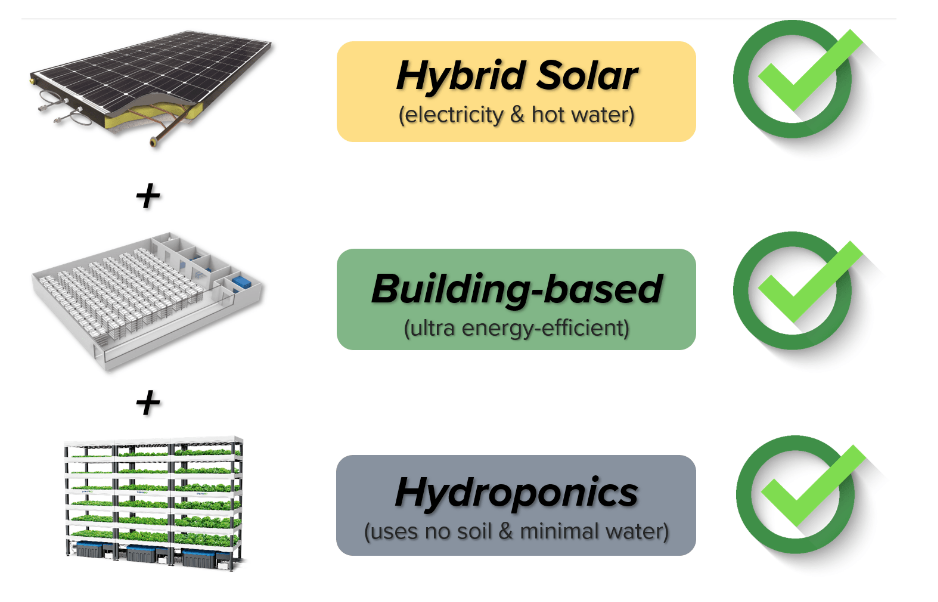
But the key difference with other vertical farming operations elsewhere is the inclusion of solar, and in particularly ‘hybrid solar’ i.e. solar panels that produce both electricity and heat. Solar 2 Food parent company Advanced Solar Technologies Ltd are the developers of the technology and their business model is quite simple: capture the heat energy (as hot water) from the hybrid solar panels and use that to help power the vertical farm units.
Partners



“The solar panels produce the hot water really cheaply, so why not use it to help produce food for our communities at a lower cost?” said Solar 2 Food Chairman, Antos Glogowski. “Our vertical farming units are entirely hydroponic, using no soil whatsoever, so the system is effectively ‘plug and play’ with little waste. Our tech partner is Sananbio, part of one of the largest LED lamp manufacturers in the World and they have developed special LED lamps that give plants exactly the types of light they need to grow, and no more i.e. no wasted energy”.
The vertical farm units allow multiple crops to grow in a small space. And rather than one annual harvest each year, the controlled indoor environment of the Solar 2 Food facilities produce fresh food all year round without worrying about changes in the climate outdoors. “The technology also allows us to grow food locally that may usually grow in only certain parts of the world like Asia or Africa”, said Dr Hilton. “You get hyper-local, fresh produce that doesn’t have to travel halfway around the World to arrive on your dinner table, so we are making our own significant contribution towards sustainable, carbon-neutral societies that use only clean, green energy. Surely every business should operate this way?"

VIDEO: "Harvested Here" Is An Indoor Farming Service Developed by Babylon Micro-Farms Inc
This service is ideal for corporate dining, healthcare, education, and grocery stores that are looking to increase the resiliency of their food supply chain
"Harvested Here" is an indoor farming service developed by Babylon Micro-Farms Inc. It is designed to allow foodservice operations to grow their own fresh sustainable produce at the touch of a button. This service is ideal for corporate dining, healthcare, education, and grocery stores that are looking to increase the resiliency of their food supply chain.

INDIA: Hydroponics Startups Are Slowly Growing On Indian Consumers
Chennai-based biotechnology graduate Rahul Dhoka’s rooftop looks like a maze. Only, it’s a maze of over 6,000 organically grown leafy vegetables and herbs such as carrom, kale, lettuce, and spinach
Written by Monika Ghosh
29 Dec 2020
The COVID-19 pandemic has dramatically
accelerated the demand for organically grown produce
Chennai-based biotechnology graduate Rahul Dhoka’s rooftop looks like a maze. Only, it’s a maze of over 6,000 organically grown leafy vegetables and herbs such as carrom, kale, lettuce, and spinach.
These vegetables, grown in planters made of PVC pipes that have taken over his 90 square feet rooftop, are grown using hydroponics technique—a method of growing plants in nutrient-rich water instead of soil. Non-commercial hydroponics farming does not require large spaces and can be grown on rooftops like Dhoka’s or even in a smaller set up such as a doorstep. They can also be designed as vertical farms to optimize the land area.
In 2016, Dhoka got into hydroponics as a hobby, and three years later, once he mastered the technique and learned how to create different design structures, he founded Acqua Farms, a consultancy startup that helps people set up their own hydroponics farms.
Dhoka told KrASIA that the consumer interest in hydroponics has increased dramatically due to the COVID-19 pandemic as people have become more conscious of what they eat and want to know where their food comes from.
“My revenue in the first two to three months of COVID-19 was almost the same as the entire previous year’s,” said Dhoka, founder and CEO of Acqua Farms.
Eat healthy, live healthy
Acqua Farms is one of the several organic food companies that have reported a surge in sales during the pandemic while individuals are showing interest in growing their own produce. This trend of owning farms and eating healthy has boosted the demand of hydroponics farms.
The startup, in addition to selling hydroponics starter kits, also runs a subscription service for people with no knowledge of maintaining a hydroponics set up. Under the subscription service, the startup assigns an agronomist who takes care of the plants and monitors them once a week. Till date, Acqua Farms has helped set up over 500 hydroponics farms.
Rahul Dhoka, founder of Acqua Farms posing with the hydroponics set up on his rooftop. Photo credit: Ashwin Prasath
One of the primary benefits of aquaponics farming is that since plants receive nutrition directly from the treated water, they grow around 15-20% faster than traditional soil-based farming, providing higher yields, said Dhoka. This also allows more harvests of the same crop than is possible in traditional farming, giving hydroponics farmers an edge.
“With good management, you can even get 16 harvests in a year [for leafy greens], whereas in soil-based farming only three or four [harvests] are possible,” he said.
Dhoka said, in addition to higher yields, hydroponics is also a sustainable way of farming as it utilizes 90% less water than traditional farming. The benefits of hydroponics don’t stop here: since it can be set up inside buildings and roof-tops, it reduces carbon footprint and food wastage as the produce doesn’t require any storage or long-distance travel, which makes it ideal for farm-to-fork model.
According to the Food and Agriculture Organization of the United Nations, 190.7 million Indians are undernourished. Amidst this dire situation, 16% of India’s agricultural produce is wasted due to the lack of proper storage and transportation.
Hydroponics startups are largely focusing on growing leafy greens due to their shorter crop cycles, easier management, and lesser space requirements. It also caters to the niche market of exotic green produce like kale, lettuce, and herbs.
Commercial-scale set ups
While Acqua Farms works mostly with individuals and families, a few hydroponics startups focus on setting up commercial-scale farms as well. Unlike non-commercial set ups, these require greenhouses or poly houses to provide complete climate control. This allows the production of crops irrespective of the weather conditions.
This is where Mumbai-based startup Barton Breeze comes into the picture. It sets up farms on the rooftops of apartments as well as inside the buildings. To ensure its clients have a steady income, Barton Breeze buys their produce at a price that gives these urban farmers a 30% profit on each harvest. The startup then sells this produce in the market.
The entire process is hassle-free for farmers as Barton Breeze manages their farm, and takes care of marketing, transportation, and sale of the produce.
Large and commercial-scale hydroponics farms require to be equipped with advanced automation systems to ensure the yield is unaffected by weather conditions.
Barton Breeze enables such farms with automation systems to track their farms remotely. The startup’s app iFarm offers a farmer remote access to the farm, “wherein a farmer can not only just monitor but also control the farm remotely which means sitting at home, you press a button and things will happen on the farm,” Shivendra Singh, CEO, Barton Breeze, told KrASIA.
S Sudhanva, COO of Barton Breeze. Photo courtesy of Barton Breeze.
Through the app, the farmer can control the temperature and humidity, and even control the dosing of nutrients in the water. The app also allows users to get updates on their farm data such as energy consumption.
When anything in the farm fails or goes wrong, the farmer gets an alert via email, message, or a buzzer in the app. This not only makes it easier to manage large farms spread across acres but also reduces the need for human labor.
Additionally, Barton Breeze offers farm management software to maintain day-to-day activities. This software can help farmers identify their approximate date of harvest, and expected yield. Moreover, the company installs humidity sensors, sunlight sensors, climate control systems, and thermal sensors in the farm that send alerts when stocks are running low and highlights issues like pest attacks and any increase in the level of plant allergens.
To reduce human contact amid the pandemic, the company has automated customer onboarding through its app. But, most importantly, it has created an artificial intelligence (AI) system that provides crop management guidance to farmers. “For example, if your plant’s leaves are yellow, [the] AI can find out why they are yellow, what are the remedies, and what are the things you can do to cure it,” said Singh.
Singh claimed Barton Breeze grew at a CAGR of 500% year-on-year in 2019 and saw twice more online visitors this year compared to 2019.
Investor interest in hydroponics
According to Singh, hydroponics produce is very well accepted in urban cities like Mumbai, Delhi, and Bengaluru. Spending is not a problem for customers–it’s the unavailability of options near them that keeps people from accepting hydroponics, he said. The products are sold in supermarkets, and unlike a couple of years ago, they have a distinct label that mentions they have been grown using hydroponics.
Most hydroponics startups are still, however, struggling to match their price with the market price of traditional farm produce due to high operational as well as production costs.
However, Singh said Barton Breeze has managed to significantly bring the cost down. “We have brought down the production cost. So, if something is coming from Bengaluru to Mumbai and costs INR 200 (USD 2.70) per kilogram, we offer it at a price of INR 120 (USD 1.62) per kilogram which is lower than the market price,” he said.
With the prices of hydroponics produce being at par with or lower than traditional farm produce, Singh believes the customer base for the former is expanding which is currently limited to upper middle class families. But the demand still remains limited to metros and tier 1 cities.
Read this: Farm to fork: This millennial urban farmer grows vegetables on carpark rooftops in Singapore
Even though the hydroponics startups are experiencing increased demand, investors remain skeptical of the potential of hydroponics produce in the market. For consumers, as long as the produce is organic and the price is at par with other available options, it doesn’t matter whether it is grown in a hydroponics set up or in any other way.
“Hydroponics is more expensive [than greenhouse and net-house farming], and mostly for the production of raw greens, exotic vegetables, and super-premium berries,” said Mark Kahn, Managing Partner at Omnivore, an agritech focused venture capital firm. Earlier this year, Omnivore participated in agritech startup Clover’s USD 5.5 million Series A round. Clover sells hydroponically grown fresh produce.
“We think there is a market for hydroponics produce in India, but it will remain a niche segment within CEA [Controlled Environment Agriculture],” he added.
According to Kahn, there are two major hurdles for the hydroponics segment–lack of consumer demand and high cost of infrastructure.
“…identifying the target segment and building demand will require significant downstream investment and large marketing budgets. As for the latter [hurdle], hopefully, hydroponics startups in India can find ways to lower setup costs and make units more modular,” he said.
However, he adds that Omnivore remains “excited” about hydroponics and will continue to explore investment opportunities in the sector.
Although Omnivore has a cautiously optimistic outlook of the hydroponics market, both Barton Breeze and Acqua Farms reported increased investor interest since the start of the pandemic. “We were definitely in touch with a couple of investors [before] but after COVID, every week there’s a new investor interested in us,” Singh said.
Lead photo: Rahul Dhoka, founder of Acqua Farms posing with the hydroponics set up on his rooftop. Photo credit: Ashwin Prasath
Indoor Farming Gets Greener Via Solar Load Aggregation
Transportation to markets is one expense addressed by controlled environment agriculture. Other direct energy costs remain a challenge
DECEMBER 28, 2020
The economic feasibility of plant factories has been questionable because of energy costs. Now, customers of one containerized farm provider can opt for 100% clean energy using a subscription service.
Food and commercial crops that grow outside can soak up sunshine in order to grow. But move those same plants indoors as part of so-called “controlled-environment agriculture” and the associated energy costs can make all but the highest-margin crops prohibitively expensive.
That’s because, in a greenhouse or plant factory, up to 60% of operating costs can go to energy; about half of that goes to lighting. And, because the grid still is not decarbonized, fossil-based electricity sources wind up making controlled environment agriculture something less than green.
To read the entire article, please click here.
Lead photo: Transportation to markets is one expense addressed by controlled environment agriculture. Other direct energy costs remain a challenge. David Wagman

How 4 Young Vertical Farming Visionaries Built A Thriving Business In Just 3 Years
Recently, in one of our most popular webinars of all time, Wihelmsson fired us up with Ljusgårda’s amazing story – building a thriving modern farm in what was once a factory, by “replacing the tractor with lights and the shovel with an iPad.”
An enthusiastic evangelist for modern vertical farming, Wihelmsson explained, “We took the concept of farming outdoors and brought it indoors, creating a controlled ecosystem where we can grow under optimal conditions year-round. We have a facility here of 7,000 sq meters.
Article from | Heliospectra
It all began in 2017 when three friends, Magnus Crommert, Cristoffer Barath and Erik Lundgren decided to try modern indoor farming. Our own Plant & Light Expert, Ida Fällström, remembers when Magnus visited our Göteborg office, introduced us to his team’s vision of modern farming, and left with an ELIXIA LED grow light under his arm. With that LED grow light, he started to conduct tests in his garage while the rest of the business took form, including bringing on a young business visionary, Andreas Wihelmsson, as partner and CEO. Fast forward to today, and their operation has grown to become Ljusgårda AB, a successful and sustainable climate certified farm in Tibro, Sweden.
Recently, in one of our most popular webinars of all time, Wihelmsson fired us up with Ljusgårda’s amazing story – building a thriving modern farm in what was once a factory, by “replacing the tractor with lights and the shovel with an iPad.” An enthusiastic evangelist for modern vertical farming, Wihelmsson explained, “We took the concept of farming outdoors and brought it indoors, creating a controlled ecosystem where we can grow under optimal conditions year-round. We have a facility here of 7,000 square meters. A year from now, we will have outgrown this facility and we will begin building the next one.” He continued, “If someone would have told me years ago that I would be growing salad for a living, I would have thought they were joking. Yet today thousands of families are eating our salad every week.”
What are the secrets to Ljusgårda’s overwhelming success? Here are 5 key things we learned in our webinar about starting a successful vertical farm:
5 Habits of a Highly Successful Vertical Farm
1. Quality Comes First
Wihelmsson commented that “More than 70% of all the fruits and vegetables Sweden eats are imported from other countries.” This leads not only to higher emissions, but it also negatively affects plant quality and nutrients due to the transportation time. Because indoor vertical farming enables Ljusgårda to grow locally, they always get their products to store within 24 hours of harvest to retain quality and nutrition.
2. Give Your Customers What They Really Want (Not What You Think They Want)
Ljusgårda produces salad greens, including lettuce and arugula, for Swedish tables year-round. Wihelmsson noted, “When it comes to making a produce buying decision in Sweden, 7 out of 10 people say that one of the most important factors is that it's Swedish. Sustainability and price are also very important. We provide a great tasting Swedish product that is sustainable, and we sell it at roughly the same price as imported products.”
When it comes to giving customers what they want on an individual crop level, Ljusgårda is able to use LED grow lighting and intelligent controls to influence every phase of plant growth, from biomass development to finish and flavour. Wihelmsson commented, “One very interesting experience we had was with our rocket salad, the first product we launched. I remember our initial tryouts and it tasted terrible.” He laughed, “We were by far growing the worst tasting rocket salad in the world, but we became better. We developed a good product with a robust peppery flavour, and we went to grocery stores for people to try it. Their polite reactions were that it was okay, so we knew that we had it dead wrong. We progressed by altering our rocket salad’s flavour through lighting control and conducting countless in-house and in-store taste tests.”
Wihelmsson continued, “We realized that Swedes didn’t want a traditional strong rocket salad. They wanted a mild one. We have a term in Sweden, Lagom, which relates to balance – not too little, not too much. We ended up producing a milder rocket and outsold all other products in that store.” He concluded, “You don't always know what the customer actually wants until you test in person and can see their reaction. If in the future customers demand a spicier rocket salad, we can achieve that with our flexible LED lighting. We have the ability to control taste, nutrition, quality, colour, biomass, almost everything – because light has a huge effect on the plants. You just first need to figure out what your customer wants in their food.”
3. Control Your Light to Optimize Your Production
An intelligent LED lighting strategy can help you achieve your crop goals. We have worked with Ljusgårda to accelerate their production of arugula and reduce their production time by 19%, by making adjustments to their lighting strategies. Wihelmsson commented, “For us, light control is very important to our production. If we look at our collaboration with Heliospectra, we chose to go with ELIXIA LEDs because we needed maximum flexibility. The other reason was their positive effect on reducing power consumption.”
Ljusgårda has also found that flexible LEDs can help them control risk and even save crops. Wihelmsson noted, “Now that we have been running this farm for a few years, we’ve come to see that our flexible lights can actually be used to compensate for human errors or things like the water tank failing or other issues. In such cases, we have been able to change the spectrum to recovery lighting. Our LED lighting has meant a lot to us and the flexibility has been extremely important.”
4. Automate Step by Step (and Plan Several Steps Ahead)
Wihelmsson talked about the company’s approach to automation, “We had to redesign the system to be able to get it automated step by step and growing-wise it's been working. For us most steps in production will be semi-automated, leveraging a machine but with human beings still involved, while other steps will be fully automated.”
He cautioned, “You need to do the math and see where automation makes economic sense for you. Our approach is to look at what takes up the most labour, what is most costly in the whole economic calculation, and address it. We also run the numbers to plan ahead. For example, we are preparing some processes for automation, but we won't automate them until production volumes hit certain critical numbers. Overall, it’s best to take it one step at a time, starting with a semi-automated approach.”
5. Keep it Simple and Learn from Others
Rather than focusing on the high-tech aspects of their operation, Ljusgårda found that their consumers responded better to a simpler, more straightforward message. Wihelmsson commented, “We know that our consumers want local produce, and so it says three times on the bag that our salad is from Sweden. We keep our messaging and packaging simple, ensuring people know that we are passionate about growing great tasting, nutritious, and sustainable food that they can eat in good conscience year-round. This simple, positive message has helped put our bag salad in the top three in each and every store, and it’s even number one in several of them.”
If you are interested in starting your own vertical farming operation or taking your farm to the next level, Wihelmsson suggested that you try to learn from others who have succeeded. He commented, “We have something we like to call common farmer sense. It's a direct translation from Swedish, and it basically consists of us questioning all the solutions that are out there and always telling ourselves not to reinvent the wheel. See if any industry or any other grower has already taken an approach you want to try. Take a look at it, learn from it, and then start growing from there.”
Watch the entire webinar here.
The content & opinions in this article are the author’s and do not necessarily represent the views of AgriTechTomorrow

The Wave of Hawaii's Future Agriculture: A Mix of Traditional Farming And New Technologies
Kalera announced it will open a facility in Honolulu, Hawaii in 2021. Kalera’s Hawaiian location will be the company’s eighth facility announced. The farm will provide approximately 60 jobs to the local community upon opening
“The pandemic has really shown us how important sustainability is to Hawaii’s future… One of my goals for a sustainable Hawaii is to double local food production and a bright spot of the pandemic is that more families are consuming locally produced food and attempting to grow their own food. Every little bit helps as we try to work towards our sustainability goals,” said David Ige, Governor of Hawaii.
“I believe a mix of traditional farming and new technologies is the wave of the future for agriculture in Hawaii. Innovations like vertical farming help farmers be more productive while using less resources – especially water. That’s why it’s exciting that a company like Kalera is making an investment to bring their operations to Hawaii, where we are sensitive to reducing our impact on the environment. I think technologies such as vertical farming and hydroponics also have appeal to younger people and could help attract more young farmers to the field.”
Kalera announced it will open a facility in Honolulu, Hawaii in 2021. Kalera’s Hawaiian location will be the company’s eighth facility announced. The farm will provide approximately 60 jobs to the local community upon opening.
The news of this facility comes on the heels of a string of exciting updates from Kalera, including the announcement of upcoming facilities in Atlanta, Houston, Denver, Seattle and Columbus; the addition of two new members to the Board of Directors, including Red Lobster CEO, Kim Lopdrup; and the completion of over $150 million in fundraising this year.
With millions of heads of lettuce to be grown per year, Kalera’s Honolulu facility will provide a rare and much needed local source of fresh, non-GMO, clean, living lettuces and microgreens to retailers, restaurants, and other customers.
90% of Hawaii’s greens are currently grown on the mainland United States and shipped into the state – an expensive 2,500-mile journey that can take over 10 days and require many touchpoints and opportunities for contamination. Kalera’s location within city limits will shorten travel time from days and weeks to hours, preserving nutrients, freshness, and flavor.
“In addition to providing a bounty of fresh, affordable, and delicious lettuces and microgreens to restaurants, cruise lines, resorts, hotels, and retailers, Kalera’s Honolulu location will increase food security and resilience on the island,” said Daniel Malechuk, Chief Executive Officer for Kalera. “With price inflation impacting almost all produce that reaches Hawaii due to prolonged shipping times, Kalera’s affordably priced products will increase access to a stable supply of healthy food for Hawaiian citizens and tourists.”
Distributors anticipate that locally grown greens will improve their business. “Vertical farming is a great way to provide our customers with the freshest quality products grown in a food-safe and sustainable manner while supporting local farming,” said Dwight Otani, founder, and president of D. Otani Produce, Hawaii's largest wholesaler, providing local hotels, restaurants, business institutions and retailers with the highest quality produce.
For more information:
Kalera
info@kalera.com
www.kalera.com
23 Dec 2020

Never Forget The Horizontal In Vertical Farming
Vertical farming is all about how high you can go, how you can repurpose the space you have in ways you never thought possible before
Vertical farming is all about how high you can go, how you can repurpose the space you have in ways you never thought possible before.
But what sometimes gets lost in these conversations about vertical farming is the horizontal. To take advantage of all that high-density mobile grow rack systems like Montel’s GROW&ROLL have to offer, to truly maximize your space and your yield, always remember that it’s just as much about growing out as it is about growing up.
Whether you’re cultivating leafy greens, herbs, mushrooms, or cannabis, both the vertical and horizontal axes must work together to optimize space in grow rooms and reliably produce the healthiest crops month after month, year after year.
WHAT WE ALREADY KNOW ABOUT VERTICAL FARMING
We’ve spoken a lot about how multi-tier vertical farming benefits indoor growers, but it never hurts to go over the basics.
First and foremost, vertical farming capitalizes on the space you have, not the space you wish you had. Growing two, three, four times more plants without an inch of additional space is only limited by your imagination.
Montel’s mobile vertical farming racks can outfit your grow op with ventilation, lighting, and watering systems built right into each mobile carriage—no wasted power or resources, no plants missing out on what they need to thrive. And because of its collapsible design, mobile racking for indoor farms lower the risk of unauthorized handling, chemical contamination, or spreading disease.
HERE’S WHAT YOU MIGHT NOT KNOW ABOUT HORIZONTAL FARMING
We’ll take vertical farming out of the picture for a moment—how does horizontal farming contribute to the goals of high-density mobile racking for indoor grow ops?
Let’s look at rolling benches, another popular mobile racking option for indoor farmers. Traditional rolling benches leave about seven inches between each bench, enough room to slip a hand between to shift one bench open. Sure, that’s lost space, but it isn’t that much, right?
Actually, when the goal is to maximize canopy yield with only the space you have, it absolutely is.
Montel’s mobile benches were designed with special handles that don’t require the gap between benches. The result of this small change? You can fit sixteen Montel benches in the space needed for fourteen traditional benches. That’s two more benches of plants, two more benches of crop, and two more benches of profit.
Even when the conversation in agriculture focuses on the vertical in vertical farming, Montel always remembers the horizontal.

ISRAEL: The Supermarkets That Have A Farm In The Parking Lot
“Our first Vertical Field farm at Rami Levy was launched in Modi’in. Now we have four farms at Rami Levy branches whose produce is already sold inside the supermarket
Four Israeli supermarkets sell their customer’s pesticide-free greens and herbs grown inside an indoor vertical farm set up in a trailer just outside their doors.
DECEMBER 14, 2020
When you buy supermarket veggies, you don’t know how far they traveled or when they left the farm. And that matters because picked produce loses nutritional potency rapidly.
Now, shoppers in four Israeli supermarkets can buy pesticide-free greens and herbs harvested from an indoor farm right on the premises.
This unusual setup comes courtesy of Israeli agri-tech business Vertical Field and the Rami Levy supermarket chain.
A Vertical Field indoor farm at a Rami Levy supermarket in Israel. Photo courtesy of Vertical Field
“Vertical Field has been operating in partnership with Rami Levy for approximately a year,” says Noa Winston, marketing director for Vertical Field.
“Our first Vertical Field farm at Rami Levy was launched in Modi’in. Now we have four farms at Rami Levy branches whose produce is already sold inside the supermarket,” Winston tells ISRAEL21c.
“Additionally, we have a farm at the Tel Aviv Port in collaboration with the city of Tel Aviv. We have plans to significantly expand our operations with Rami Levy and to open more farms over the course of 2021.”
The indoor farms raise leafy greens and herbs such as kale, lettuce, basil, cilantro, dill, parsley and peppermint. Bok choy and spinach are now being planted.
Leafy greens and herbs growing in a Vertical Field farm at a Rami Levy supermarket.Photo courtesy of Vertical Field
The space-saving vertical containers grow the plants in soil under LED lighting from BioLed EcoLight Systems based at Kibbutz Tzuba. (BioLed also provides the lighting for Energy Boxes that Innovation: Africa provides to off-grid African schools and health centers.)
The Ra’anana-based company says that indoor vertical farming uses 90 percent less water than traditional field farming and saves as much as 20 days’ time from seeding to harvest in a typical growth cycle. The system is weather- and pest-resistant.
Vertical Field has two installations in New York State – at a supermarket and a restaurant – and has ambitious expansion plans.
“Our goal is to penetrate the global market,” says Winston. “We have begun that process starting with the United States, where we have two farms, and we plan to continue to expand there. We are also currently developing several promising projects both in the field of vertical urban farms as well as vertical landscaping that will be launched in the USA, in Europe, and other regions.”
Lead photo: These boxes of Vertical Field greens say, “Grown and picked here and now,” because they are raised on the supermarket premises. Photo courtesy of Vertical field