

Welcome to iGrow News, Your Source for the World of Indoor Vertical Farming

AUSTRALIA: NSW Architect’s Idea For Sustaining Life on Mars is a Winner
Calabrese’s submission outlined how rockets would send robotic self-building farms a year prior to the first human landing. Using Artificial Intelligence and 3D printing, these buildings, preloaded with seeds, would then assemble autonomously and begin growing enough fruits and vegetables to sustain nine astronauts for up to two years
7/12/2020
Architecture news & editorial desk
A proposal conceptualized by an NSW architect for an international design competition that sought ideas for sustaining life on Mars has won the top prize.
Giuseppe Calabrese, the senior architect at Council Approval Group – a small Australian town planning and architecture firm – was placed first at the international competition launched by the Californian smart city development company, Mars City Design, and backed by NASA. The primary objective of the competition was to source ideas to sustain human life on Mars for more than two years.
Calabrese’s submission outlined how rockets would send robotic self-building farms a year prior to the first human landing. Using Artificial Intelligence and 3D printing, these buildings, preloaded with seeds, would then assemble autonomously and begin growing enough fruits and vegetables to sustain nine astronauts for up to two years.
Last month, Calabrese was shortlisted in the top 10 designs, competing against international firms from the USA, Germany, United Arab Emirates, and Taiwan. On the live-streamed awards night recently, his submission was announced as the winner for ‘Mars City Design Urban Farming Challenge 2020’, which was presented by NASA astronaut, Col. Terry Virts.
Until less than a year ago, Calabrese spent his time designing granny flats, duplexes and boarding houses for investors. Following the COVID pandemic, he was able to keep his job thanks to the Job Keeper program. During this period, he was also able to use his surplus design time on a passion project – town planning on Mars. When the competition came up, he decided to apply his architectural skills to the challenge.
Competition founder Vera Mulyani was very impressed with the Australian submission, not only for the visually appealing designs but also for the fact that every detail was supported by hundreds of pages of research and scientific data.
“Our next step is to secure funding, so we can build a prototype of the winning designs, which include Calabrese's proposal, in the Californian desert,” Mulyani added.
Calabrese’s smart farm idea couldn’t have come at a more perfect time given that NASA’s latest high-tech Rover will be reaching Mars in February 2021 while Elon Musk is considering a mission to the red planet as early as 2024.
“Australia already leads the world in many farming practices. So why not in space? And when billionaire Elon Musk needs an architect to design his mansion on Mars, he now knows who to call,” Calabrese said with a smile.
December Indoor Science Cafe Recording Is Now Available!
This presentation 'Crop Growth Monitoring and Simulation-Based Resource Use Optimization' was given by Dr. Murat Kacira and KC Shasteen (University of Arizona) during our 25th cafe forum on December 8th, 2020
"Crop Growth Monitoring and
Simulation-Based Resource Use Optimization"
by KC Shasteen & Murat Kacira (University of Arizona)
This presentation 'Crop Growth Monitoring and Simulation-Based Resource Use Optimization' was given by Dr. Murat Kacira and KC Shasteen (University of Arizona) during our 25th cafe forum on December 8th, 2020.
Cafe Archive & QA Forum
Our archived Indoor Ag Science Cafe page in OptimIA website now has a forum function! Please click on presentations of your interest and ask your quick questions. Notifications come to us and we should be able to respond promptly.
Submit Your General Questions For 'Indoor Ag Sci Queries'!
Please submit your questions (anonymously if you wish) about sciences and technologies of indoor farming to this submission site. Any questions are welcome! The site is always open for your questions. Selected questions will be discussed in our future Indoor Ag Science Queries series.

GE Current Expands Horticulture Distribution Network To Support Indoor Growers Across Eurasia
Current’s Lucalox and Arize lighting solutions are available now. Customers can contact their local distribution partner for more information and advice on the best Current solution for their individual greenhouse set-up
GE Current, a Daintree company, has signed three new distribution partnership agreements with Agro Top Garden, Helle-Tech Oy, and Vitro HTS to make its full Lucalox HPS and Arize LED portfolio available to more greenhouse growers across Europe and Asia. The deals inked will provide growers focusing on horticulture, floriculture, and the burgeoning medicinal cannabis market, with easier access to leading lighting technologies, whether they rely on traditional HPS or are looking to transition over to low-energy LEDs to meet net-zero carbon goals.
Malcolm Yare, Business Development Manager for Horticulture at Current, commented, “There are all sorts of variables that combine to create the most productive greenhouse environment, from location and surrounding geography, to weather patterns and the type of crop grown. We want to ensure that greenhouse growers have access to the perfect lighting for their unique set-up. By expanding our network of distribution partners, we can ensure that growers receive expert, localised advice and support to ensure that they get the right Current system to maximise their yields and grow their businesses.”
Agro Top Garden is now the exclusive European distributor of Current’s Lucalox HPS lighting to the medicinal plant market, as well as being a master distributor of the company’s Arize LED portfolio. With a depth of broad horticultural experience, Agro Top Garden advises customers on the best growing media and fertilisers for their flowering plants. Now, with Current’s broad portfolio at its disposal, the company will also be able to advise cannabis growers on the most appropriate, low-energy lighting technology to nurture high-quality, abundant harvests every time.
Based in Finland, Helle-Tech Oy provides a range of greenhouse products, up to complete turn-key installations. With more than 30 years’ team experienced in building greenhouses all over Europe and Russia, Helle-Tech Oy partners with its customers throughout every stage of planning and installation, followed by close support and counsel, in order to maximize the potential of each greenhouse. With more growers looking to reduce their energy bills and carbon footprint, Helle-Tech Oy is expecting to guide many more customers through the transition from HPS to LED lighting in 2021, working with Current’s lighting experts to maintain yields and income throughout the process.
Vitro HTS is based at the heart of Eurasia, in Antalya, Turkey, and is focused on supporting growers across Turkey, Georgia, Armenia, and Azerbaijan. With new investments in horticulture and floriculture across the region, Vitro HTS is ideally positioned to support new market entrants and existing growers with Current’s state-of-the-art lighting systems that reduce energy consumption and costs, whilst boosting revenue.
Current’s Lucalox and Arize lighting solutions are available now. Customers can contact their local distribution partner for more information and advice on the best Current solution for their individual greenhouse set-up.
For more information:
www.gecurrent.com
agrotopgarden.de
www.helle-tech.fi
www.vitrohts.com
1 Dec 2020

Nature Fresh Farms Has Expanded Operations With A New Distribution Center in Laredo, Texas
The new 61,000 square foot Distribution Center in Laredo, Texas, provides a new major hub of fresh produce
Leamington, ON (December 2, 2020) – Nature Fresh Farms has expanded operations with a new Distribution Center in Laredo, Texas, with future developments planned for next year.
The new 61,000 square foot Distribution Center in Laredo, Texas, provides a new major hub of fresh produce. Since the opening of the facility, they have employed over 30 team members with more positions available for hire. The center will help service Nature Fresh Farms Mexican winter program and allow for direct shipping of product, shortening their supply chain. With this fully operational facility, the company will be able to bring fresher produce to customers located in the Southern United States.
Laredo Division Manager, Sergio Restrepo, said the new Distribution Center is in response to Nature Fresh Farms continuous growth. “The acquirement of our new center is part of our plans to optimize our distribution network,” shared Sergio. “With this, we are able to further strengthen our logistics and operations, ensuring that we can better meet the needs and expectations of our consumers and customers.”
Nature Fresh Farms has had a streak of sustained operational growth with their newly completed Phase 7 and 8 greenhouses, and a large expansion planned for their Leamington location with more details to follow. The company also has future plans for expansion in Ohio with an extension of acreage, in addition to their current 45 acres of greenhouse, and the construction of a new Distribution Center.
“We are looking forward to further developing our Ohio location with many new initiatives planned,” said Vice President, John Ketler. “We see significant opportunities in the continued construction with these new facilities needed to support our growth.”
Nature Fresh Farms has experienced rapid growth over the last few years. Today the company has over 600 employees, 200 acres of greenhouses Tomato, Pepper, and Cucumber plants, with multiple facilities across North America.
-30-
About Nature Fresh Farms -
Continuously expanding, Nature Fresh Farms has become one of the largest independent, vertically integrated greenhouse vegetable farms in North America. As a year-round grower with farms in Leamington, ON, Delta, OH, and Mexico, Nature Fresh Farms prides itself on consistently delivering exceptional flavor and quality to key retailers throughout North America, while continuing to innovate and introduce more viable and sustainable growing and packaging solutions.
SOURCE: Nature Fresh Farms | info@naturefresh.ca T: 519 326 1111 | www.naturefresh.ca
VIDEO: Vertical Farms Heading For Mars
In this video interview, Paul Millett, Co-Founder, and COO at Invertigro talks about the main trait he looks for in new hires, what their vision is for 2021, and the incredible applications vertical farming has not just on this planet
In this video interview, Paul Millett, Co-Founder, and COO at Invertigro talks about the main trait he looks for in new hires, what their vision is for 2021, and the incredible applications vertical farming has not just on this planet.
Check it out here:
What is InvertiGro ?
Fully-integrated, cost-effective, and flexible indoor vertical farming solutions that enable sustainable and reliable production of fresh and healthy produce. Everywhere.
InvertiGro indoor vertical farming solutions apply innovative design and leading-edge technologies to profitably and pragmatically solve the real-world challenge of sustainable and affordable food production.
We design, build, supply, and support cost-effective and flexible indoor vertical farming solutions that enable customers around the globe to quickly convert indoor spaces into highly efficient fresh produce farms.
InvertiGro indoor vertical farms are capable of growing a vast number of different crops; from herbs and leafy greens to microgreens, berries, fruits, vegetables, fibers, feed-stock, and more. Our hydroponically grown produce is also herbicide- and pesticide-free.
Modular growing units and their supporting smart technology systems are able to grow (and switch between) a variety of crops with superior yields, consistent quality, and greater resource efficiencies (water, land, labor, and capital).
InvertiGro’s fully integrated indoor vertical farming solutions provide everything required to quickly begin producing hassle-free, profitable, and reliable supplies of quality fresh produce well into the future.
Our indoor vertical farming systems are available in two different configurations:
The fully-integrated and supported InvertiCube system is designed to enable businesses to produce reliable rural-scale fresh produce. InvertiCube indoor vertical farming systems are modular and scalable by design making them equally well-suited to purpose-built warehouses or manufacturing spaces as to under-utilized existing spaces such as disused carparks and basements – of any size, shape or location. Unique pallet-size modular growing units can be configured for (and easily switched between) horizontal or vertical growing to suit a variety of different crops and applications. Their supporting smart technology operating and monitoring systems ensure clients benefit from our on-going R&D advancements.
The InvertiWall system is a productive green-wall designed for smaller-scale commercial and community applications. The space-efficient and aesthetically pleasing design also lends itself to installation in shared indoor spaces (such as foyers, food courts, and restaurants).
Both InvertiGro indoor vertical farming systems are designed to be scalable, flexible, affordable and smart, enabling businesses and communities to become successful and sustainable modern farmers.
Contact InvertiGro: info@invertigro.com
Colorado Students Become Virtual Farmers During Pandemic
Students at a Douglas County high school are learning COVID-era business skills using a freight container converted into a high-tech hydroponic vertical farm as their virtual classroom
December 3, 2020
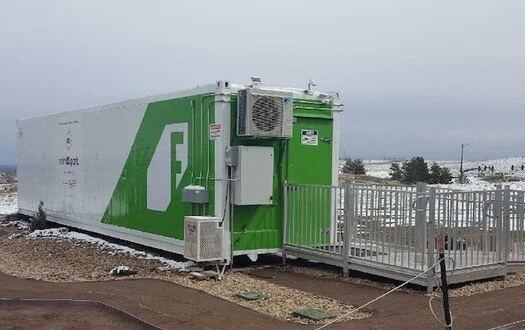
HIGHLANDS RANCH, Colo. -- Students at a Douglas County high school are learning COVID-era business skills using a freight container converted into a high-tech hydroponic vertical farm as their virtual classroom.
After Mountain Vista High School recently switched to remote learning, students and teachers had to completely reorganize the farm's workflows and lesson plans.
David Larsen, agriculture business teacher and farms manager at Mountain Vista High School, said while some students may go on to pursue biology or horticulture, skills learned during the pandemic should transfer to any field.
"Most of these kids are not going to actually be farmers," Larsen admitted. "But they all will have jobs in which they have to troubleshoot, scheduling, logistics, it all comes into play. And the goal I always have with students is to, as much as possible, involve them in that decision-making."
With kids unable to be physically inside the farm to seed, plant, tend, harvest, package and sell crops, Larsen live streams, and records every lesson.
Supply-chain disruption during the pandemic drove up sales, and Larsen saw an opportunity for a business lesson in supply and demand. Crops typically sold during two-day markets have been selling out within two to three hours.
Larsen noted the Greenery unit created by Massachusetts-based company Freight Farms is resistant to pandemics, but also extreme weather and drought.
The unit uses nearly 99% less water than a traditional farm, running on less than the average dishwasher uses.
While most food consumed in the U.S. travels hundreds or even thousands of miles, Larsen observed the Mountain Vista operation is as close to zero food-production miles as you can get.
"So we are literally harvesting and putting into bags as the customer is standing right there," Larsen explained. "So they are living plants. People love lettuce; it's definitely delicious and very clean."
Larsen added students still are able to interact with local shoppers via live video streaming, learning important customer-service lessons.
Because the climate is controlled inside the container, Larsen said food can be grown all school year long with a predictable commercial-scale output.
A Greenery unit can support 13,000 plants at a time, producing harvests of up to 900 heads of lettuce per week.
Lead photo: Crops produced by students at Mountain Vista High School in Douglas County usually are sold during two-day market sales, but post-COVID, customer volume has shot up, selling out within two to three hours. (Mountain Vista High School)
Will you help us reach our goal of $10,000? Starting December 1, @CO.mediaproject will match contributions of up to $1,000 dollar-for-dollar, up to $5,000 total, for our newsroom - meaning your support goes twice as far! Give now and invest in homegrown journalism that puts people first. This is #newsCOneeds: https://www.publicnewsservice.org/dn1.php/
Eric Galatas, Public News Service - CO

Startup of The Month: Unfold
The future of vertical farming begins on the genetic level. That’s the philosophy of Unfold, a Sacramento-based startup focused on innovating fruit and vegetable seeds to better serve indoor growing facilities
John Purcell is the president and CEO of Unfold. (Photo courtesy of John Purcell)
Breeding Seeds For Vertical Farms

December 3, 2020
By Russell Nichols
The future of vertical farming begins on the genetic level. That’s the philosophy of Unfold, a Sacramento-based startup focused on innovating fruit and vegetable seeds to better serve indoor growing facilities.
Vertical farms use artificial light and take up less space than traditional farms. They are automated to control factors such as light, temperature, and humidity. With a biochemistry background, John Purcell, president, and CEO of Unfold recognized a gap between open fields (and greenhouses) and controlled environments. He heard from many vertical farmers that seeds intended for outdoor use didn’t work as well indoors where plants are grown on shelves.
“They’ve made so many investments on lighting and mechanics, but they were trying to get by with seed varieties that were developed for other production systems,” Purcell says.
Unfold aims to fill that gap using seed genetics (germplasm) from vegetable crops to create new varieties best suited for vertical farms. The startup’s bimodal strategy begins with a screening phase, analyzing which germplasm yields optimal results, followed by a breeding phase to develop the varieties that thrive in a controlled environment.
With urban living and organic food becoming more popular, the vertical farming industry has been booming globally. In 2019, the market reached about $4.4 billion, according to Statista. By 2025, the market value is expected to hit $15.7 billion. Using vertical spaces increases the amount of yield per square foot or per acre while being able to grow food closer to the consumer. Because these farms are automated, they require less labor to run, which is also attractive, given the labor shortages in agriculture, Purcell says.
Purcell previously worked as senior vice president at Bayer and head of vegetables research and development for its Crop Science division. He also spent nearly 30 years at Monsanto Company, acquired by Bayer in 2018. His team will be exploring questions such as: How does a plant respond to artificial light? How fast does a plant grow with no disease or insect pressures? What kinds of varieties have proved to be successful already?
Lettuce greens will be the first crop tested because they are the biggest crop grown by indoor farmers — 57 percent of indoor farms, including vertical farms, produce leafy greens, according to the Agrilyst 2017 “State of Indoor Farming” report. In the future, Unfold also plans to examine other crops such as tomatoes, peppers, and cucumbers.
But vertical farms aren’t all the same. They use similar core technology (lighting, temperature, humidity), but the setups vary. The lack of standardization in the market presented a challenge, which is why Unfold is also providing a crop model (a “digital recipe”) to growers to define how to set up the various parameters for optimal results.
Unfold launched with $30 million in initial funding and an agreement for certain rights to germplasm from Bayer’s vegetable portfolio. The funding is meant to help the startup fast-track tailor-made seeds to the vertical farming industry, says Derek Norman, vice president of venture investments for Leaps by Bayer, the company’s impact investment division.
“Everybody saw the sector as high potential but relatively small today compared to traditional vegetable growing,” Norman says. “Vertical farming hasn’t commanded the same resources.”
In 2021, Unfold plans to have its facility secured and the breeding program established. For Purcell, the initial investment plus the advantage of a license agreement to tap into Bayer Crop Science allows Unfold to “hit the ground running, providing solutions,” he says.
And what better ground for an agtech startup is there than Sacramento? Purcell chose the Capital Region because he recognized it as a center for agricultural innovation and a great hub for seed companies like Unfold. “Not a whole lot of better places, especially for horticulture and produce,” he says. “There’s such a robust ecosystem.”
–

VIDEO: How Max Chizhov, Co-Founder And CEO of iFarm Raised $4M To Build An Indoor Farming Solution Provider In Today’s Urban Environment?
The company is an indoor farming solution provider of plug and play automated vertical farms and data-driven software. Easy one-button managed farms from 50 till 5000 sq.m and a wide range of plants to grow are available for customers
Max Chizhov is the co-founder and CEO of iFarm. The company is an indoor farming solution provider of plug and play automated vertical farms and data-driven software. Easy one-button managed farms from 50 till 5000 sq.m and a wide range of plants to grow are available for customers. Farms can be set in a store, restaurant, warehouse, home, or country house. iFarm allows everyone on Earth to grow their healthy food sustainably and be independent of the supply chain.
iFarm technologies are recognized worldwide: the project is not only included in the TOP 500 food startups of the world and is a member of the EIT Food Accelerator Network; iFarm also became the best agricultural startup in Europe in The Europas Awards 2020, the winner in the category of the best social impact startup of Nordic Startup Awards 2019
In an exclusive interview with AsiaTechDaily, Max Chizhov says:
The main mistake is to lose focus. We have been there too. At first, we wanted to create a whole product line that would meet both the b2b and b2c needs: indoor farms, containers, grow boxes, etc. And in the end, we realized that this would entail additional costs and postpone the launch indefinitely. As a result, we decided to focus on one area, create a high-quality industrial technology, and then develop new formats.
Don’t be afraid to make mistakes. Without them, you cannot become your best self. Also, never cease to learn. It is actually something that should be taught at school — not simply give knowledge, but teach how to find it, interpret and apply.
Read on to know more about Max Chizhov and his journey.
Please tell me about your personal background and What motivated you to get started with your company?
Max Chizhov: In 2017, I was looking for a project that, on the one hand, would be interesting for me from a professional point of view, and on the other, bring tangible benefits to society. I already had experience in the technological field, which is why I focused on that area. At that time, I also met Alex Lyskovsky, who had just finished a course at a culinary school in France. That experience left him wondering whether it was possible to grow high-quality vegetables all year round, regardless of climate conditions and with the least environmental impact, ideally making a profit. His story resonated with me, so I thoroughly researched the topic and realized that I wanted to do something; that’s how iFarm was born.
What is your current main product, and can you share any previous product pivot story to the current product?
Max Chizhov: At first, we wanted to develop as a producer of farm vegetables, herbs, and berries. But having evaluated the scaling prospects, we realized that we were not ready to wait 20 years to become a global supplier.
Then iFarm focused on developing technological business solutions for growing delicious natural products on vertical farms in today’s urban environment. Since 2018, the iFarm team has created automated vertical farms and an IT platform to manage them. We want to equip farmers worldwide with advanced growing technologies to earn by supplying fresh, tasty, and healthy products.
How much fundraising have you raised in total so far? When was the recent funding round?
Max Chizhov: This year iFarm closed a $4M investment round. The round was led by Gagarin Capital, which has previously invested in the project. Other investors included Matrix Capital, Impulse VC, IMI.VC and several business angels.
What were the internal decision processes in determining when to begin fundraising, and what were the logistics for this? And how many investors have you met so far and how did you meet these investors, and which channels worked best for you?
Max Chizhov: When we came up with iFarm, we were aimed at multiple growths. Having experience setting up several businesses with a similar strategy, we already knew how to develop companies at high speed and what to focus on. We needed venture capital investments to scale faster, improve the quality of our products and services, and strengthen the team with the best specialists.
The first investors were ourselves — the founders. We created a prototype and received the first money from the sale. Later, investments started to come from friends, acquaintances, and close associates. Thanks to this, we reached stable growth, finalized our target audience, and made the technology’s first sales. That was useful when we began to communicate with venture capital funds, who could give us additional value — help enter new markets and reach potential clients and raise funds in the next rounds.
The funds that have already invested in iFarm provide us with such assistance. We are also looking for new funds that are ready to work with us and help us accelerate the company’s development.
What are the biggest challenges and obstacles that you have faced in the process of fundraising? If you had fundraising, what would you do differently?
Max Chizhov: We made several pivots during fundraising. Initially, fundraising was different, but we changed it along the way. It was not easy, but it was a conscious decision for us. After a few experiments, we came up with the most efficient and scalable concept and business model.
Not every investor is tolerant to a sudden change of concept in a company’s development, so it was important for us to find funds that would trust us and treat such changes with understanding. Of course, any decision like that has to be supported by analytics and convincing reasoning and backed by a certain reputation of the founders in investors’ eyes.
What are your milestones for the next round? And what are your goals for the future?
Max Chizhov: We are planning to close Round A for € 5 million in the first quarter of 2021. This funding will be used to advance further in Europe and the Middle East, develop iFarm Growtune and update the library of growth recipes with new crops, expand the team, and increase sales. Next year we are also aimed at launching 40,000 square meters of vertical farms under our management.
How have you attracted users, and with what strategy have you grown your company from the start to now?
Max Chizhov: We were our own first clients because, in the first place, we were creating a technology that we wanted to use. The results allowed us to validate the quality and made it clear that we had produced the product we were willing to consume ourselves.
The next customers came through word of mouth: they contacted us through a recommendation or after tasting the products. For three years, we did not invest anything in advertising or marketing. All clients came thanks to our own activity on social networks, events, and media.
Entering new markets today, we, of course, launch a sales funnel and aim at our target groups: b2b, enterprise, city-farmers.
What do most startups get wrong about marketing in general?
Max Chizhov: The founders’ biggest mistake is to ignore their customers and end up making a product that the market does not need. The prototype must be shown to the customer as soon as it is ready, then you collect feedback and finalize the product according to it. When entering new markets, it is necessary to conduct cust dev, collect opinions on improvement and customers’ vision for further product development.
How do you plan to expand globally?
Max Chizhov: Next year we will continue our expansion in Europe and the Middle East. In 2022-2024 we plan to enter the North American and Asian markets.
What are the most common mistakes companies make with global expansion?
Max Chizhov: None of us had any experience in this area; we wanted to produce high-quality and tasty products. It was important to go all the way from the idea to the final product, to make all possible mistakes, to realize the shortcomings of the chosen business model, and finally determine that our product would be the vertical farming technology itself, and not greens.
How do you handle this COVID-19 outbreak situation for your company’s survival in the future?
Max Chizhov: Over the last few years, the overall trend in agriculture has been to localize production. This is due to the high rates of urbanization, population growth, and in 2020 the additional impact of the Covid-19 pandemic and the quarantine following it that made the problems of long supply chains and food security even more obvious.
Such conditions make growing vegetables, berries, and greens in the consumer’s immediate vicinity a necessity. Countries have begun to think strategically about food security issues, which brought us, several large customers.
From the point of view of organizing teamwork, we did not face any difficulties. Even before the pandemic, we had been building processes and implementing tools for an effective remote team’s smooth work.
What are the most common mistakes founders make when they start a company?
Max Chizhov: The main mistake is to lose focus. We have been there too. At first, we wanted to create a whole product line that would meet both the b2b and b2c needs: indoor farms, containers, grow boxes, etc. And in the end, we realized that this would entail additional costs and postpone the launch indefinitely. As a result, we decided to focus on one area, create a high-quality industrial technology, and then develop new formats.
Another mistake is to pay too much attention to details without seeing the bigger picture. For example, in the beginning, we did not think about any high-level process automation. But the further we went, the more clearly we understood the need to reduce human involvement in the production. That is why we developed special software for managing vertical farms — iFarm Growtune launched a drone and continues to create solutions that automate planting, moving trays on racks, assembling, and packaging.
What’s the best advice you’ve ever received? And What advice do you have for someone who is interested in doing similar things like yours or in a similar direction?
Max Chizhov: Launching a project, it is crucially important for the founders and early team members to share the same vision and ambition and make sure they are in tune. This will help you stay focused.
What are the top-three books or movies (TV series) that changed your life and why?
Max Chizhov: My top-3: Ray Dalio – Principles, Tony Hsieh – Delivering happiness, Daniel Kahneman – Thinking, Fast and Slow. These books help me to look at our business from different sides and make my workdays more efficient.
How do you keep yourself motivated every day?
Max Chizhov: New goals and plans, a global mission that the entire team is guided by, allow you to avoid unnecessary distractions and make sure you work towards your goals. Being involved in development in the food industry, you can see, touch, and taste your work’s tangible results. This also gives additional motivation.
What are the top-three life Lessons that you want your (future) sons and daughters to know?
Max Chizhov: Don’t be afraid to make mistakes. Without them, you cannot become your best self. Also, never cease to learn. It is actually something that should be taught at school — not simply give knowledge, but teach how to find it, interpret and apply.
What would you like to be remembered for?
Max Chizhov: I would like that in a year when you hear about our company or see products grown using our technology, you would remember where we started and what mistakes we made at the very beginning, and that each mistake motivated us to move on.
You can follow Max Chizhov here.
Are you looking to secure investment for your startup or a keen startup enthusiast, keep an eye on our interview section.
Follow Asia Tech Daily to know about the innovative startups and how they are revolutionizing the ecosystem.

Hamill Has Moved Into Agritecture
Canadian farmers are relying on indoor farming than greenhouse farming for growing microgreens because of the electricity needed for lighting and also growing indoors eliminates many of the pest and disease problems of outdoor production”
When COVID-19 hit Canada in February 2020, the Hamill Group of Companies was in its early inception. “We weren’t quite sure how things were going to play out, but we knew that whatever challenges were, we could tackle them head on!” said CEO Bob Benner. As a leader in manufacturing services and having carved out a niche for microgreens harvesting equipment, Hamill quickly realized it would need to do more to support their growers.
The company took the step forward and moved to Agritecture. Vertical, hydroponic, and aquaponic farms are taking hold in many major cities throughout the world. With the help of enhanced indoor and vertical farming practices, the US growers have been able to produce microgreens on a large scale.
Canadian farmers are relying on indoor farming than greenhouse farming for growing microgreens because of the electricity needed for lighting and also growing indoors eliminates many of the pest and disease problems of outdoor production” [1].
One of the major crops that they grow are microgreens but these farming environments presented new challenges in and of themselves. As growers looked to establish their systems, they realized they needed the Hamill Group of Companies to propel them forward. This was due to Hamill's superior experience in 3D engineering, manufacturing, prototyping, electrical. For Hamill, they had to rapidly shift their focus from just harvesting equipment to innovating and designing farms, and full production facilities being an end-to-end provider.
Hamill’s ability to adapt and pivot meant that the Hamill Group of Companies could foster new partnerships throughout Canada and the US. They have undertaken projects such as with AquaGreens in Toronto, Intravision Group in Welland, as well as are in the preliminary stages of planning with InCity Farms in the United States.
For more information:
Hamill Agricultural Processing Solutions
contactus@hamillaps.com
www.hamillaps.com
Publication date: Thu 3 Dec 2020

New Technology To Speed Discovery of Sustainable Crop Solutions For Farmers
Terramera announced the launch of six custom, state-of-the-art plant growth chambers. Many crop protection products fail in the field because labs and greenhouses do not accurately replicate real-world conditions
Terramera announced the launch of six custom, state-of-the-art plant growth chambers. Many crop protection products fail in the field because labs and greenhouses do not accurately replicate real-world conditions. Each chamber offers precise control over temperature (ranging from 5 to 40 degrees Celsius), humidity, and light to simulate many possible field conditions, from cool nights and morning mists to desert and subtropical conditions, and will be outfitted with a Terramera-built automation system for end-to-end integration.
Automation will enable experiments to run entirely without human intervention including watering, spraying, nutrient dosing, and imaging of the plants throughout their lifecycle, dramatically accelerating data collection for product performance and increasing accuracy with Terramera’s industry-leading Artificial Intelligence (AI) and Machine Learning (ML) platform.
“Customized growth chambers allow us to simulate weather to study disease and insect infestations with integrated treatment and imaging systems in one automated system -- replicated six times for parallel studies,” said Annett Rozek, Terramera Chief Scientific Officer. “This is as close as we can get to real-world conditions in a research environment and will deliver solutions as rapidly and efficiently as possible.”
The new growth chambers bring Terramera’s total to 12 and are part of a larger technological scale-up for the company, which also brought a new liquid handling robot on board. Terramera’s own machine learning (ML) model named the robot, “Enzing,” which is integrated into Terramera’s fully automated in-vitro screening and data analysis pipeline. The robot has already enabled Terramera’s largest in-vitro screening project yet, testing the company’s Actigate library against numerous plant disease pathogens.
“This marks an exciting milestone for Terramera and a step-change in the industry by adding a new, essential capacity,” said Karn Manhas, Terramera Founder, and CEO. “Simulated environment studies are the missing link between controlled environments like the lab or greenhouse and field trials since many products fail because lab and greenhouse conditions are too different from the outside world on a farm. This technology increases our throughput, allowing us to predict outcomes more accurately, allowing us to quickly scale our knowledge and technologies to make farming healthier, more sustainable and productive while turning back the clock on climate change.”
For more information:
Terramera
www.terramera.com
4 Dec 2020

Grow Plants Indoors All Year Long With Hydroponics
Hydroponics is a method of growing plants without soil. Usually, hydroponic production is done indoors, but it is also an excellent method for gardeners with a balcony or limited access to gardening space outdoors
December 3, 2020
A simple DIY hydroponics system for growing lettuce and other greens
Are you looking for:
A new winter hobby?
Access to fresh greens or herbs throughout the winter?
A fun project for kids?
A unique holiday gift idea?
Hydroponic gardening checks all of these boxes! Hydroponic gardening allows you to grow greens and herbs all winter long indoors and can be done easily and affordably.
Hydroponics is a method of growing plants without soil. Usually, hydroponic production is done indoors, but it is also an excellent method for gardeners with a balcony or limited access to gardening space outdoors. This method uses less water than soil-based gardening, allows for faster growth and often higher yields, and requires few materials.
Check out our new webpage to learn
more about whether hydroponic gardening is for you!
‘Salad As A Service’: Retailers’ Interest In Vertical Farming Grows
Retailers are waking up to the potential of vertical farming, with technology-enabled agriculture a core part of supply chain bosses’ and food buyers’ plans
By Ben Sillitoe
07 Dec 2020
Retailers will be aware of software as a service (SaaS) – and they may have noticed the emergence of the shopping-centre-as-a-service model, described by Computer Weekly in 2019 – but what about ‘salad as a service’, the latest SaaS opportunity?
If they haven’t yet, they soon might. For food retailers, it could revolutionize supply chains, boost companies’ environmental credentials, and drive new customer experiences.
The concept is related to the evolution of vertical farming, also known as controlled environment agriculture. Vertical farming allows food to be grown independently from climate conditions and other outside elements.
Typically, in aeroponic system vertical farming, plants are grown vertically, with their roots suspended, soil-free, in cylinders where they are nourished with nutrients. LED lighting is increasingly being used in the process to influence how plants grow and taste.
Although the vertical farming term was first coined over a century ago, interest and investment in it has ramped up in recent times for several core reasons, not least enhancements in technology and a renewed focus by businesses on their eco-credentials.
Reflecting on a Mintel 2019 study, Mintel analyst Armando Falcao says vertical farming “can reduce wastage and preserve available resources”.
“Food wastage is a key concern of grocery shoppers, and Mintel research shows that 83% of consumers think it’s important to cut back on the amount of food that is wasted,” he adds.
Supply chain bosses at several large UK retailers are increasingly looking at how they can incorporate this technology-enabled agribusiness into their operations for the reasons Falcao suggests.
But by launching these facilities in urban areas, nearer to the end consumer, there is a chance to significantly reduce the time it takes for fresh produce to get from ‘farm’ to fork, which comes with other obvious environmental benefits.
Mini in-store ‘farms’
Marks & Spencer, Selfridges and Amazon-owned Whole Foods are among the first burst of UK retailers to bring food production even closer to customers by introducing in-store herb-growing pods, from which shoppers can pick the produce themselves.
Those three businesses are using units from urban farming company Infarm, which works with multiple food retailers across Europe. In Whole Foods’ London stores, for example, produce grown includes coriander, parsley, basil, and mint.
Selfridges announced its partnership with Infarm in August, with several leafy greens grown within an in-store unit at the company’s flagship Oxford Street location in London. The first in-store harvest was in September. Prior to that, Selfridges’ customers could order directly from Infarm’s London plant hub for collection in store.
Maria Trapani, Selfridges’ food buyer, says vertical farming provides customers with “hyper-local, extremely fresh and naturally flavourful produce”.
“We are constantly looking for new and more sustainable ways to source food, and this allows us to reduce our carbon footprint, as well as being chemical-free and using 95% less water,” she says. “The range we are offering, which is exclusive to us, is proving popular with customers and we’ve had some great feedback.”
Infarm says its growing environments connect to “a central cloud-based farm-brain”, combining big data, the internet of things (IoT), and cloud analytics technology to gather tens of thousands of data points throughout a plant’s lifetime. The vertical farm provider argues its platform can “learn, adapt, and improve itself constantly” to optimize plant growth.
The modular ‘farms’ provide consumers with something new to explore in-store, but there is much deeper disruption vertical farming could bring to the retail supply chain.
Salad as a service?
Adam Waterman, chief software architect at LettUs Grow, a vertical farming company comprising tech experts and plant scientists, uses the phrase “salad as a service” to describe how his business can aid retailers and food industry suppliers.
Those using LettUs Grow’s vertical farming systems have the option to tap into the company’s experienced in-house experts for recommendations and improvements related to their yields, described by Waterman as “a rapid feedback loop”.
For Waterman, in-store growing units, like Infarm’s, are a “starting point” for vertical farming’s wider use in retail. He believes the discipline will become much more influential.
“I see it moving towards larger food production warehouses in the outer areas of urban centers, in industrial parks, for example, where consistently produced food in large quantities is produced for cities, taking the pressure off the land use around the city,” he says.
UK retailers are very much in the learning phase of what vertical farming could do for their businesses. Online grocer and tech provider Ocado Group has arguably taken a more significant step forward, having formed a joint venture (JV), Infinite Acres, with Priva and 80 Acres, which both operate in the vertical farming industry.
Ocado also has a majority stake in Jones Food, a vertical farm based in Scunthorpe, UK, which when combined with the 2019 JV took its overall investment in the sector to £17m.
CEO Tim Steiner says the plan is to co-locate vertical farms within or next to Ocado’s distribution centers and its rapid food delivery arm Ocado Zoom's micro-fulfillment sites, enabling fresh produce to reach customers within an hour of purchase.
Waterman, who says LettUs Grow is in talks with salad producers and major retailers in the UK about how they might want to use vertical farming, adds: “It’s got the potential to have quite a large impact on the overall food supply chain.”
The main selling points, he says, are consistency and reliability of production, and year-round output that is not affected by weather or seasonality.
LettUs Grow’s vertical farm systems operate on a minimum scale of 24m2. They often cover a container-sized footprint, although the company also builds facilities inside buildings.
Software developed in-house controls, monitors, and manages the farm, taking care of lighting, irrigation, fertigation, and the overall environment such as air temperature and humidity to help plants grow. Users can develop a “gross plan for a crop, and projected yield”, notes Waterman.
Although the main focus of production via vertical farming is currently on leafy vegetables and herbs, the variety of crops that can be grown successfully in this manner continues to broaden.
A vertical farming structure in Wyoming in the US, called Vertical Harvest, for example, has operated with a capacity to produce more than 20 tonnes of tomatoes per year since 2015.
“Expanding vertical farming into a wider variety of produce is completely feasible,” Falcao says.
Future yield
Beth Eldridge, a plant scientist at the University of Bristol, who specializes in soil erosion, heralds the lack of pesticide used in most vertical farms, but she says “so much fundamental plant science is required” to understand this approach’s impact on crops.
“What’s interesting is how we might automate the systems to get feedback on plant growth and energy input,” she says. “Are there clever ways we can measure plant growth indicators, and can computers sense this and feed it back into the system to adjust conditions accordingly?”
She predicts vertical farming will be one part of the supply chain, supplementing already-in-use huge greenhouses and traditional farms.
“I see a niche for it in leafy greens and herbs because there is so much wastage in the transportation of those types of vegetables that I can see a real benefit of having them in the store, picking them fresh and increasing longevity.”
Eldridge also says there is an opportunity for retailers to connect people with the food they purchase by using the smaller in-store units.
When you go in store and pick food yourself, you become a lot more engaged in where it comes from
Beth Eldridge, University of Bristol
“People can become very disconnected on where the food comes from when they buy in packets, but when you go in-store and pick it yourself, you become a lot more engaged in where the food is coming from.”
Trapani suggests there will be multiple uses for the units in Selfridges’ stores, adding: “For now, we are selling from the stacks in the food hall, but the longer-term plan is to also use the salads within our restaurants.”
Vertical farming technology continues to evolve. LettUs Grow, specifically, is aiming to create a general control system, where the software can help predict yields and improve reporting of food provenance information.
“Having effective traceability is an industry must, and we plan to build out in that direction,” Waterman says.
A report from market research group IDTechEx, published this year, acknowledges vertical farming has caught the imagination of entrepreneurs and investors alike. It forecasts the market value to rise from $709m now to $1.5bn by 2030, but highlights potential obstacles to growth, such as electricity costs for lighting.
Michael Dent, analyst at IDTechEx, says: “Rather than focusing on mass-produced, wholesale crops, where vertical farms will always struggle to compete on price with traditional farms and greenhouses, it may make more sense for vertical farm operators to focus on high-value crops that command a price premium, perhaps within niche markets or specialized applications. The debate over the best size for a vertical farm is still ongoing.”
Brexit and any potential disruption in the transportation of goods at the UK border may further influence British companies to invest in vertical farming as part of local sourcing strategies. One thing seems certain, though – food retailers will continue to assess their options as this new technology-enabled agriculture market establishes itself in the UK.

Diving Into Aquaponics
Aquaponics, a method of raising crops and fish in an all-water, soilless environment, presented a fun challenge to Aquaponics Club co-founders Jonathan Dong ’21 and Robbie Rioux ’21
21 DECEMBER 3, 2020
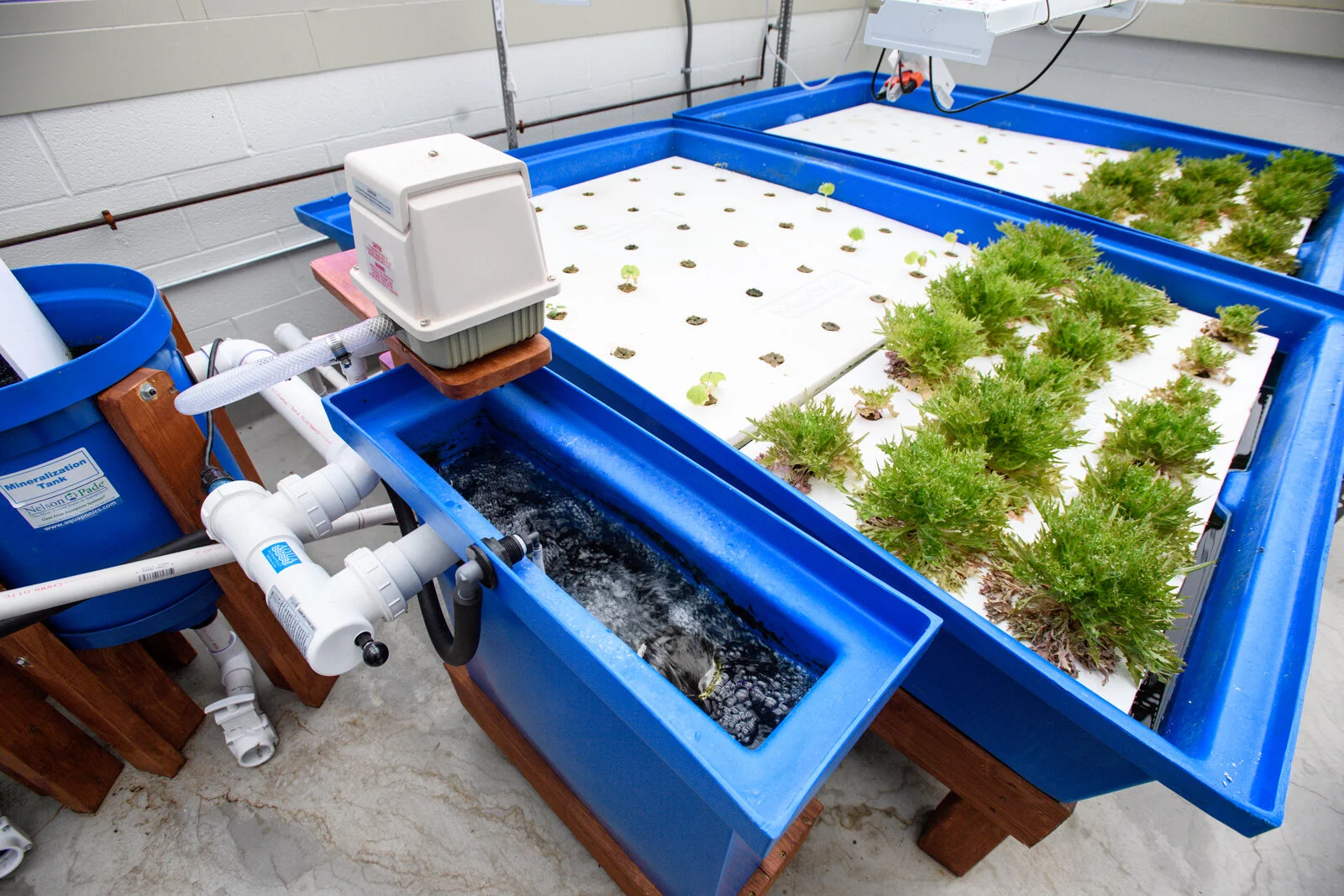
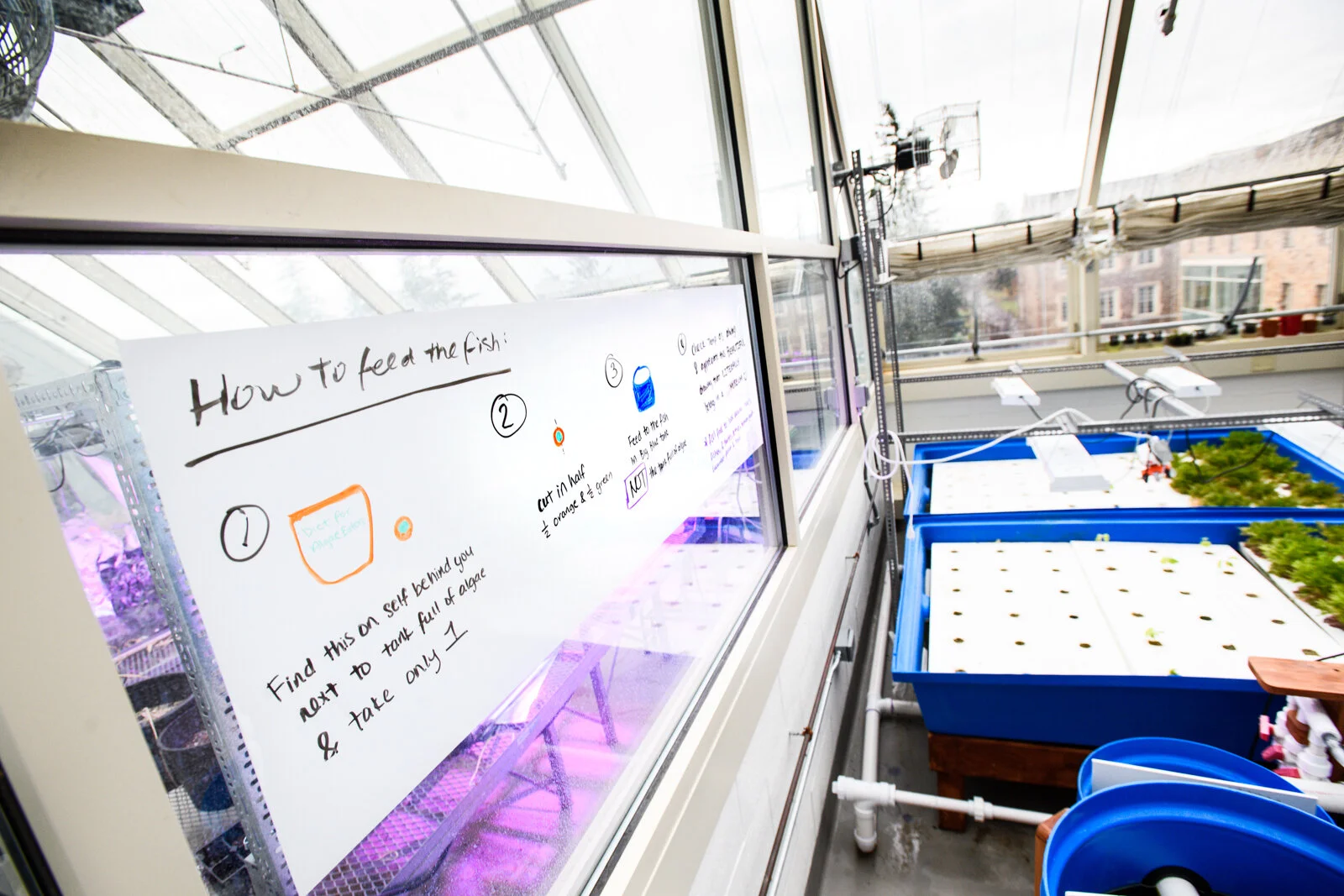
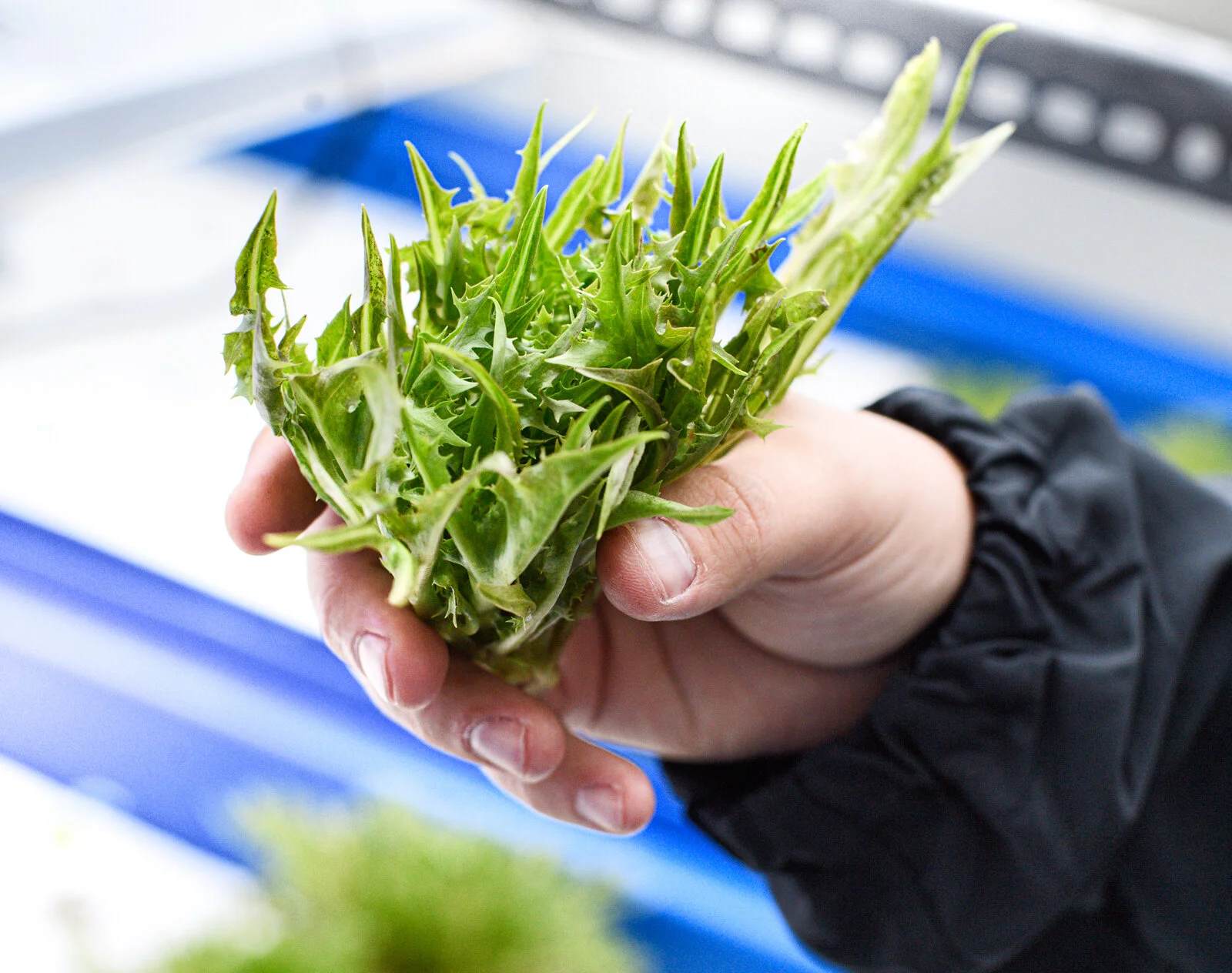
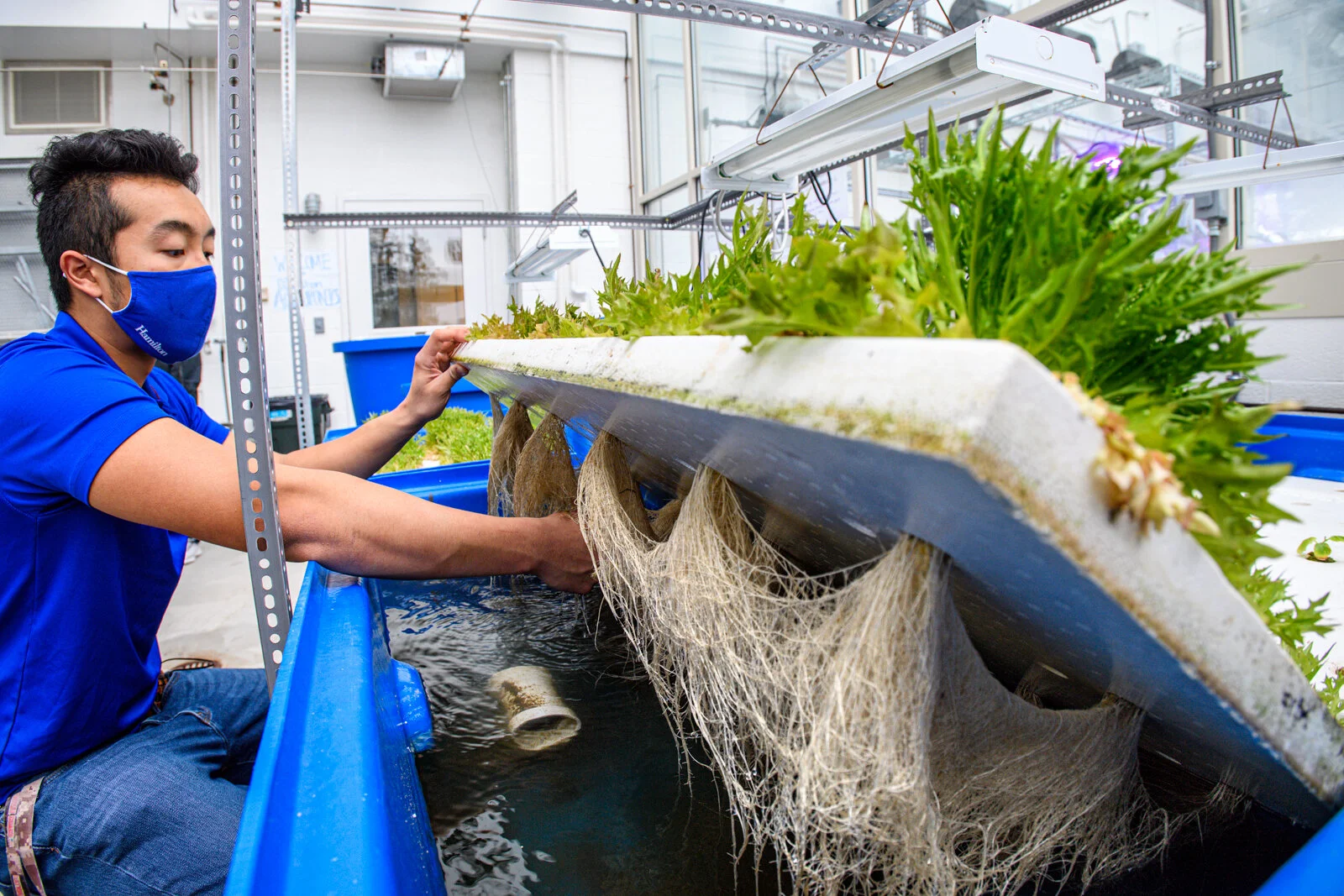
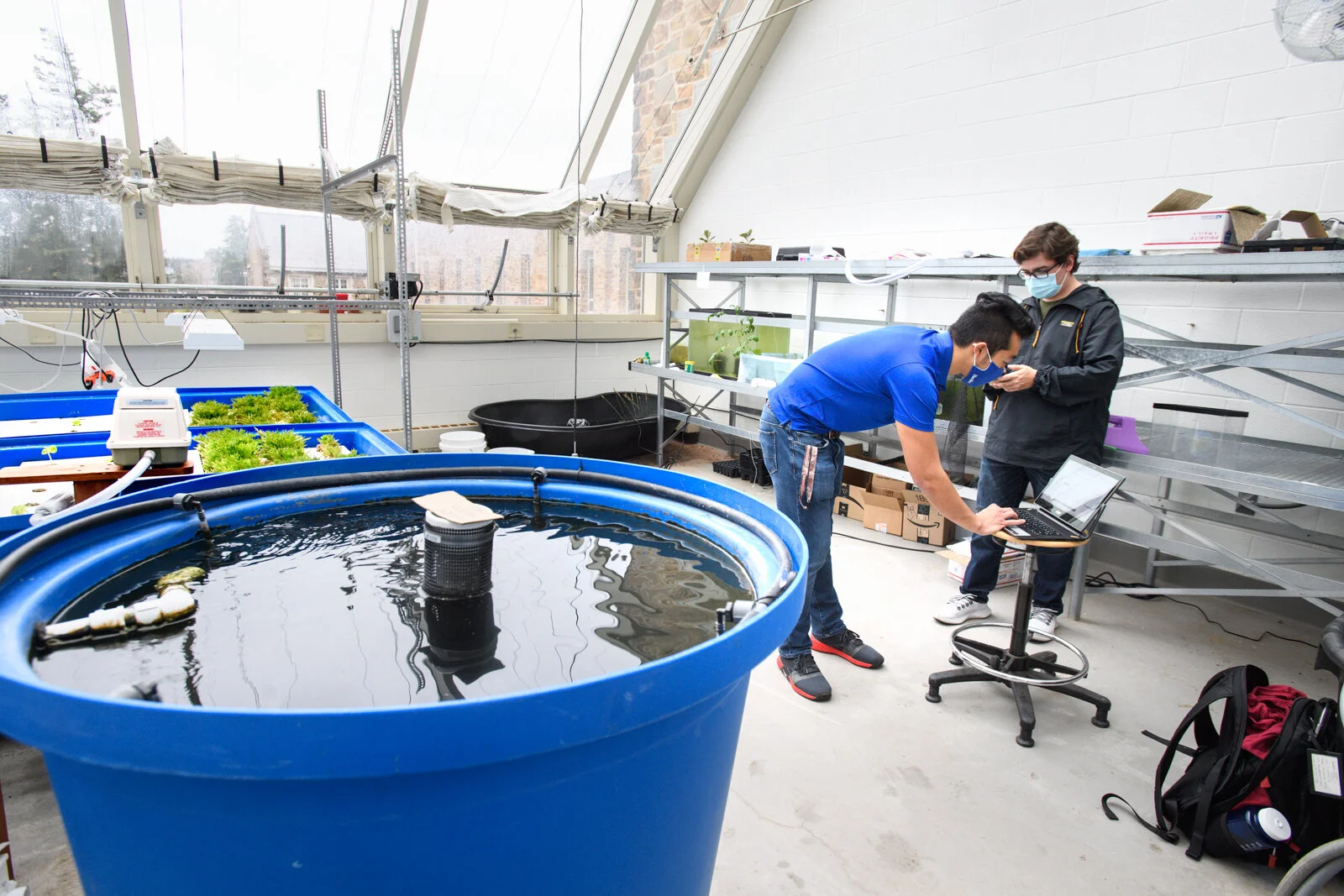
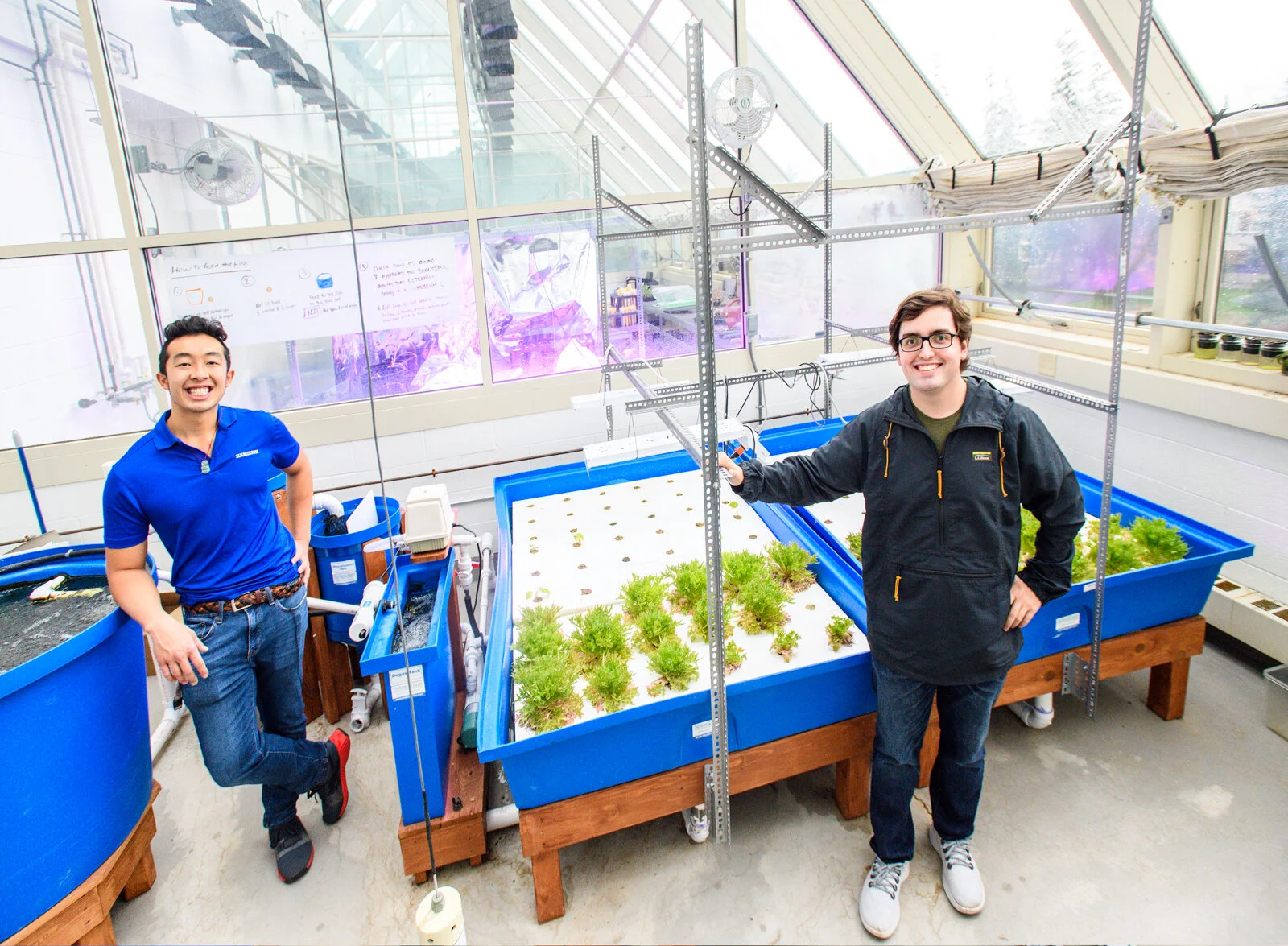
Tucked away in the Taylor Science Center’s greenhouse, a new aquaponics system brims with tilapia, lettuce, and other developing life. Built in 2019 by Hamilton’s Aquaponics Club, the system promotes on-campus food sustainability while also providing a space for students and faculty to learn about aquaponics. And with its accessibility, regular maintenance, and potential to expand with student interest, the system does just that.
Aquaponics, a method of raising crops and fish in an all-water, soilless environment, presented a fun challenge to Aquaponics Club co-founders Jonathan Dong ’21 and Robbie Rioux ’21. According to Dong, the club started with the aim of creating “a sustainable farming practice and system on campus that [community] members could maintain.” With members representing a variety of disciplines, including chemistry, history, and government, the club teaches students about animal and plant biology and practicing aquaponics.
After building the aquaponics system, Dong and Rioux populated it first with tilapia and lettuce, two of the easiest and most efficient products to cultivate in water. The 400-gallon system includes a 100-gallon tilapia tank, tanks that break down tilapia waste, and tanks that contain the plants. Nutrients from the tilapia waste sustain the plant life, and club members feed the tilapia daily. (The club’s adviser, Supervisor of Introductory Laboratories in Biology and Lecturer in Environmental Studies Jason Townsend, feeds the fish during breaks.) The $7,000 system was funded through Student Assembly.
“The thought is that we grow the food and give it to someone on campus or in the Hamilton community,” Rioux said. The Aquaponics Club donated the first batch of lettuce to students living in the Woollcott Cooperative and the first tilapia harvest to a family from the Utica Refugee Center. Rioux said the club hopes to eventually have the tilapia served in Commons.
In addition to the initial tilapia and lettuce, the club is looking to raise and grow other animals and plants in the system. The effort to expand reflects student curiosity about how aquaponics works. “We got a ton of students on campus with their own questions about the system that they want answered,” Dong said. Club projects include researching which tilapia breed, vegetable types, and flower species that grow best with aquaponics.
Since its founding in 2018, the Aquaponics Club has come a long way in both bringing aquaponics to Hamilton and recruiting members to maintain and learn about the system. Both Dong and Rioux expressed their appreciation for the opportunity to design and continue the project. “We transformed the greenhouse into our own space, and that was a lot of fun,” Rioux said. “Hamilton’s [has] been very supportive of having us in there and letting us do what we need to, so that’s been pretty great to be able to do.”

Dutch Scale-Up PlantLab Launches First Production Site In USA
In Indianapolis, PlantLab has entered into a joint venture with Englewood Community Development Corporation, which works to promote the sustainable development of urban corridors
Annual Harvest of 420,000 Kilos For Indianapolis Residents
Den Bosch (The Netherlands), December 7, 2020 – PlantLab, the Dutch indoor farming pioneer, has opened a new production site in Indianapolis (Indiana). This first-ever ‘Plant Paradise’ in the United States is growing vegetables for the local population at a site that was previously unthinkable - a former battery factory near the city center.
In Indianapolis, PlantLab has entered into a joint venture with Englewood Community Development Corporation, which works to promote the sustainable development of urban corridors. The fresh vegetables are being marketed under the brand name ‘Uplift, good food for purpose’. “Our collaboration allows us to deliver greater value to the population of Indianapolis,” explains Michiel Peters, CEO of PlantLab. “This is also very much in line with our global mission: we not only increase the supply of sustainable and healthy fresh food for local clients but also create local jobs in a completely new sector.”
First harvest
This week, the first herbs and heads of lettuce will be harvested at the 54,000 square feet growing site for delivery to local supermarkets and foodservice companies. PlantLab is growing various kinds of tomatoes, cucumbers, lettuce, and herbs in Indianapolis. The new location will provide an annual supply of close to 1,000,000 pounds of fresh vegetables as well as jobs for roughly 30-70 persons. Chris Arnold, CEO Uplift: “It tastes like I went out to my backyard garden, picked it, and put it in my bowl.”
The new production site, the former battery factory of P.R. Mallory, was once the pride of the city, also producing batteries for army vehicles during World War II. After the factory fell into decline in the 1970s, a joint effort by the municipality, NGOs, and businesses breathed new life into the area with the construction of a new campus.
The United States and the Bahamas
Indianapolis is the first American city where the Dutch scale-up PlantLab is opening an indoor production facility. The Bahamas will soon follow. PlantLab’s production sites can be located anywhere in the world, even on barren soil or in urban areas. Thanks to optimized temperature, moisture, and light regulation, the crops grow to their full potential, while at the same time needing only 5% of the water used in conventional farming. Light is provided by specially developed LEDs, which radiate the exact color of light needed by the plant for photosynthesis.
PlantLab has a dedicated R&D center in Den Bosch (the Netherlands), the largest such center in the world for vertical farming, as well as a commercial production site in Amsterdam. PlantLab holds patents for its indoor farming technology in 74 different countries, including the US. Its indoor farming patent applies to the method used for regulating the root/substrate temperature as well as the evaporation and leaf temperature of the crop. Many of the indoor farming systems presently in use may constitute a violation of PlantLab’s intellectual property.
Globally patented technology
Over the last 10 years, PlantLab has worked hard to realize a breakthrough via its extremely efficient and globally patented technology for innovative urban farming. The new technology is already being put into practice at its commercial production site in Amsterdam, the capital of the Netherlands, as well as at this new location in Indianapolis. The breakthrough technology makes it possible to grow day-fresh, healthy, delicious vegetables on a large scale very near to the consumer without the need for any chemical crop control agents. On a production site no bigger than two American football fields, it is now possible to grow enough produce to supply a city of 100,000 residents with 200 g of fresh vegetables each on a daily basis.
This summer, PlantLab received an injection of €20 million of growth capital from De Hoge Dennen Capital. The scale-up intends to use these funds to launch indoor production sites in various locations, including the Netherlands, the United States, and the Bahamas.
About PlantLab
PlantLab specializes in technology for innovative urban farming, the sustainable food supply of the future. The company was founded in 2010 in Den Bosch with the goal of optimizing the production of food for our planet. Over the last 10 years, the company has already invested € 50 million in the development of technology that makes it possible to grow healthy, day fresh vegetables close to the consumer anywhere in the world without the use of chemical crop agents sustainable and environmentally friendly, while at the same time reducing water consumption to an absolute minimum. Enough crops can be grown on an area no bigger than two football fields to supply a city of 100,000 residents with 200 g of fresh vegetables every day. As the new technology can be used everywhere and always, it also makes it possible to radically shorten the logistic chain year-round. The benefits: superior product quality, longer shelf life, much less food wastage, and no CO2 emissions or nuisance associated with long-distance transport. PlantLab aims to make its technology accessible to everyone and therefore bring fresh and sustainably grown food within reach for everyone.
Note for the editors, not for publication
For more information and for requesting interviews with the initiators, please contact Koolhoven & Partners: plantlab@koolhovenenpartners.nl or +31 85 4017175.
You can download royalty-free images here.
PlantLab, the Dutch indoor farming pioneer, has opened a new production site in Indianapolis (Indiana). On the left Chris Arnold, CEO of Uplift, on the right co-founder of PlantLab Leon van Duijn. Click on the picture to download the royalty-free image in a high resolution.

Babylon Microfarms Bets On Automation For The Future of Vertical Farming
What started as a humble tabletop farm at the University of Virginia has since evolved into a major company to watch in the vertical farming space, particularly when it comes to the software piece of the process
What started as a humble tabletop farm at the University of Virginia has since evolved into a major company to watch in the vertical farming space, particularly when it comes to the software piece of the process. Babylon Microfarms has over the last few years garnered quite a bit of attention for its controlled-environment farms the company now licenses to hospitals, cafeterias, and other other foodservice operations.
Based in Charlottesville, Virginia (though soon moving HQ to Richmond, VA) Babylon makes a “plug-and-play” system for hydroponic farming that automates much of the grow process and makes controlled-environment farming more accessible. The company raised a $2.3 million seed round in January of this year and, its current product is a standalone farming unit that grows leafy greens.
Of late, however, the bulk of founders Alexander Olesen and Graham Smith’s focus is on software: namely, using it to automate the growing process, which removes the more complicated aspects of vertical farming that would be off-putting to the average user.
“Growing is a cumbersome experience for many,” Olesen explained to me over the phone this week. “Removing the friction of the user experience and combining that will some of the remote management [will make] smaller forms of vertical farming possible.”
Were the average person to try and build their own high-tech grow system, it would require significant expertise in horticulture, hardware infrastructure, and software development. To name just a few examples, that would include calculating one’s one LED light recipe (which takes the place of sunlight in controlled-environment ag), controlling the temperature of the farm, and understanding how much nutrient to feed each crop and when to do that. Everyday would require a certain amount of trial and error for every plant variety.
All of this makes for prohibitively high costs when it comes to commercial greenhouse production. Olesen noted that for controlled-environment farming to go mainstream, it has to be less technically complicated for the user.
Babylon’s software is one solution addressing those complications. The company’s “seed-to-sale” system automatically dispenses the right amount of nutrients, light, and water for each crop, simultaneously collecting data on the plants so that the system can make adjustments as needed. The entire system can be controlled remotely via a mobile app.
Up to now, the company has drawn comparisons to the likes of Farmshelf, Farm.One, and InFarm, all companies that license a hardware-software farming combination out to foodservice and hospitality operations.
But Babylon’s founders told me they aren’t necessarily interested in the hardware aspect going forward. Smith says they would prefer something like teaming up with a hardware manufacturer that wants to make vertical farms but perhaps needs more expertise in software to complement their hardware capabilities.
Such a scenario is actually on its way to becoming a reality. At CES this past year, hardware giant LG announced plans for a smart-farming appliance for the consumer kitchen. At the same time, GE Appliances showcased its Home Grown concept, which featured grow systems using hydroponics and soil-based methods. Prior to CES, Miele acquired Agrilution in another play for smart farms in the appliance space.
All of these hardware developments suggest great opportunity for the accompanying software. While many companies in the vertical farming space try to do both right now, Babylon’s future focus on being “an enabling company” that offers software and services may prove a wiser bid for the long term. Besides building out distribution of its own farms, Babylon is currently interested in working with other businesses, particularly those making hardware, that want to enter the vertical farming space.
There will be no one product that wins, Olesen said, adding that instead, it will be a combination of tools working together to make vertical farming more accessible to everyone.
FILED UNDER: AG TECH BUSINESS OF FOOD EDUCATION & DISCOVERY FEATURED FOODTECH
MODERN FARMER VERTICAL FARMING

Challenges With Airflow Strategies In Vertical Applications
As the industry continues to search for ways to maximize efficiencies, the utilization of LED lighting is becoming increasingly common. Aside from energy efficiency gains, one of the many benefits of migrating to LED’s is the ability to also maximize space utilization
As the industry continues to search for ways to maximize efficiencies, the utilization of LED lighting is becoming increasingly common. Aside from energy efficiency gains, one of the many benefits of migrating to LED’s is the ability to also maximize space utilization.
With less radiant heat and more consistent PPFD, cultivators are able to move lighting much closer to the plant canopy (in some cases less than 6”), which makes vertical, or multi-tier, cultivation far more feasible than with HID lighting.
The obvious benefit to tiered applications is the ability to increase canopy square footage without additional building square footage. Although there are some drawbacks to multi-tier growing, there can also be great reward, and so we’re seeing more and more of our clients choose to go this route in their facilities.
From an HVAC perspective
The challenge with multi-tier cultivation is twofold: first, we must ensure homogeneity to the entire canopy at multiple heights (that all plants at all levels are seeing the same conditions), and second, we must ensure that the HVAC system is getting adequate access to the hot, humid canopy air to ensure that it operates at full capacity.
When standalone dehumidifiers are in use (as opposed to integrated dehumidification systems), it’s doubly important. Dehumidifiers are typically ceiling-mounted and getting the humidity from the lower tier all the way to the ceiling is both difficult and absolutely vital to the proper operation of the dehumidification system. These requirements can be challenging even in single tier applications, so when the complication of airflow obstructions associated with multiple tiers of canopy are added into the mix, the need for specialized expertise becomes even more evident.
Unfortunately, it can be exceptionally difficult for cultivators to find and incorporate a well-designed airflow system for their racking design. While something is certainly better than nothing, one-size-fits-all strategies without the proper engineering can be difficult to dial in, often resulting in improper air speed over the canopy, uneven temperatures, higher than necessary cost or higher than necessary energy use in both HVAC and the air distribution system itself.
The variables must be considered
Various lengths of ductwork, various canopy heights, and various distances from the lighting source will all result in variances in airflow requirements. The speed of the airflow, the diffusion of the airflow, and the temperature of the air will all impact VPD and plant transpiration. As even LED lights vary in wattage and sensible heat output, so should the amount of air being displaced over the canopy to ensure that temperature goals are met.
While certain components of racking airflow systems can be utilized in multiple applications, some care must be taken in each application to ensure that the components being applied are appropriate—from duct diameter to static pressure and fan selection to diffusion strategies. And this is only contemplating what is required to deliver cooler, dryer air to the canopy. Delivering the hot, humid air to the air conditioning and dehumidification system must also be considered. Luckily, these are all challenges that can be addressed with the right experience and engineering expertise, and it doesn’t have to cost an arm and a leg.
The racking airflow design should be an integral part of the HVAC design
We are very happy to help any cultivator retrofit their existing racking systems with a well-designed airflow system, regardless of the HVAC system in use. With the proper engineering behind them, these retrofits can solve homogeneity and airflow challenges quite nicely and at a reasonable cost.
By the same token, what we find is that the most cost-effective and energy efficient multi-tier airflow strategies are those incorporated from the get-go as part of the HVAC design. Looking at it objectively, of course these systems should be incorporated at the HVAC design level when possible. Incorporating airflow over the canopy is a natural extension of the HVAC system. However, historically the industry has seen it as a separate challenge, or as a component of the racking systems themselves, and has largely considered only canopy air movement without considering how to ensure the HVAC system impacts the design.
Consistent airflow is achievable if designed right
The fact of the matter is, integrating the airflow systems with the racking systems is the easiest part. The hard part is making sure the airflow systems themselves are correctly designed to achieve their actual purpose: helping provide a cultivation environment that is consistently perfect.
When the multi-tiered airflow strategies within a room are considered as part of the HVAC design, all of the various airflow systems in the room are working in harmony instead of competing and interfering with each other, ensuring that everything operates as it was intended. This approach also minimizes the amount of equipment being utilized to achieve air distribution goals, which minimizes capital costs, overall connected electrical load, and energy use. It can even boost the energy efficiency of the HVAC system itself, by ensuring that air handlers have greater access to the hot, humid air at the canopy.
In any multi-tier application, a well-engineered racking airflow system design is an absolute requirement. However, we must stop thinking of these systems as components of racking, or as a design afterthought, and start thinking of them as an important part of the overall HVAC strategy.
Whether designing the system at the beginning of the room HVAC design or incorporating it after the fact, engineering and expertise that implements the racking airflow system as a vital component of the overall HVAC strategy will always yield the best results.
For more information:
Surna
Tel. +1 303 993 5271
www.surna.com

Staying On Track When The Path Keeps Zigzagging
On January 6, 2020, when I pulled the trigger to turn this dream of mine called “Second Chances Farm” into reality by hiring the first cohort of returning citizens who were formerly incarcerated, I had no idea how challenging 2020 would be
A Second Chances Farms Blog
by Ajit Mathew George
Sir Richard Branson is often credited with the saying, “If dreams don’t scare you, they are too small.” As the year 2020 draws to an end, I admit to you that my dreams for Second Chances Farm have scared me far more often than I want to admit. What a ride it has been.
On January 6, 2020, when I pulled the trigger to turn this dream of mine called “Second Chances Farm” into reality by hiring the first cohort of returning citizens who were formerly incarcerated, I had no idea how challenging 2020 would be. All startups are nerve-racking, but as a veteran entrepreneur, I thought I knew what I was getting into. But COVID scattered my best-laid plans like a tropical hurricane. We had to learn how to pivot to stay alive in these trying circumstances – to carve out a track when the path continued to zigzag.
It often seems that planning beyond the Coronavirus is an exercise in futility, especially in communities that are disparately devastated by the pandemic. Yet, our plans for Second Chances Farm in Opportunity Zones in Wilmington, North Philadelphia, Chicago and Las Vegas, all of which are in fresh-food deserts, will hopefully upend neighborhoods plagued by economic inequities and innovate in a way that transforms lives and social outcomes while addressing urban blight and economic decline.
Second Chances Farm hopes to jumpstart the lives of formerly incarcerated persons by providing a path of hope for the hopeless and by becoming a model for compassionate capitalism. We believe the best way to stop people from re-offending and returning to prison is to help them see a future worth working toward.
Fulfilling my dream depends upon that concept of “compassionate capitalism.” At Second Chances Farm, we’ve established a for-profit business model that is sustainable long-term because it is profitable. That’s the capitalism part.
But inextricably interwoven in the model is compassion – for our returning citizens, our disadvantaged neighbors, and local people living in food deserts. That’s why we’re located in an Opportunity Zone in the poorest area of Wilmington. That’s why we invest time developing partnerships that support the delivery food to Riverside, Wilmington, New Castle, and other forgotten neighborhoods. That’s why we’re investing in educating children and their parents on ways to eat healthy.
Of course, I strongly support non-profits in their mission and work to help people in crisis. But our business model is different: we want to give people the tools to become entrepreneurs in their own right – again, capitalists – to be successful in the future. And we hope, in turn, they may take on that mission to reach out to help nurture and train others going forward.
If there is any reason why we continue to be disrupters for good with our social impact project, please read this letter — published with permission — that I received this past weekend from someone I don’t know.
November 28, 2020
Dear Mr. George:
I am writing to you in hopes I can gather information regarding Second Chances Farm.
My nephew is presently in Pauling County Jail. His life’s story you most likely have heard and seen time and again. He got into a wrong group; trying to find acceptance by someone. Liam got himself in trouble with stealing, drugs took them) while he was dreaming for help inside... some direction... abusive home life starting at a very young age.
Liam is 19; had no childhood, as you and I may have known it. He is a good good soul. Just a rotten home life.
Liam almost graduated from high school but all the above was instrumental in why he didn’t. While in school he found agriculture very interesting and was going to further that education after graduation. He went from getting student of the month(s) to where he is... It’s a long painful life story.
His grandmother (my sister) he adores... he talks with her often (every day). I have been trying to help her deal with this crisis in her life mostly because she is battling breast cancer during all of Liam’s problems.
While looking for an agricultural future for him once released, my sister and I came across Second Chances Farm! We have been so excited about your wonderful program and I decided I’d write to you get more information on top of the very informative info on your site. Starting with the first step to completing what has to be done... I imagine an application to start. Would you be so kind as to provide me with this info and anything else to start the process of getting accepted into your stellar program.
Mr. George, this young man’s life. I know with the proper mentoring and guidance, can change and he can be a stellar human being if given the chance... he needs to know he belongs, self-worth and love.
I am hopeful with your help; giving Liam a second chance would be the beginning of a life yet to be lived. Thank you for any and all considerations. I will continue to pray that my prayers are being heard.
Sincerely, with thankfulness for your continued success in making this world a better place.
Susie Fricano
Greensboro, Georgia
This poignant letter embodies the compelling reasons why Second Chances Farm is needed in communities throughout the United States.
Today, less than a year after we opened our doors at 3030 Bowers Street, Second Chances Farm, LLC is the first commercial indoor hydroponic vertical farm in Delaware and one of the leading “smart farms” in the United States. More than 40 returning citizens have come to work, and some have come to stay. We’re a business, a support system, and a family. We are a public benefit corporation, certified minority business enterprise, a qualified opportunity fund and a Foreign Trade Zone. Our compassionate capitalism has created something entirely new: a for-profit solution to a non-profit problem.
For more information:
Second Chances Farm
www.secondchancesfarm.com
4 Dec 2020
RotoGro Executes Binding $10 Million Technology License Agreement With Verity Greens
The agreement is designed to provide RotoGro with a foothold in the expanding indoor urban vertical farming space as a technology and services provider
RotoGro executes binding $10 million technology license agreement with Verity Greens
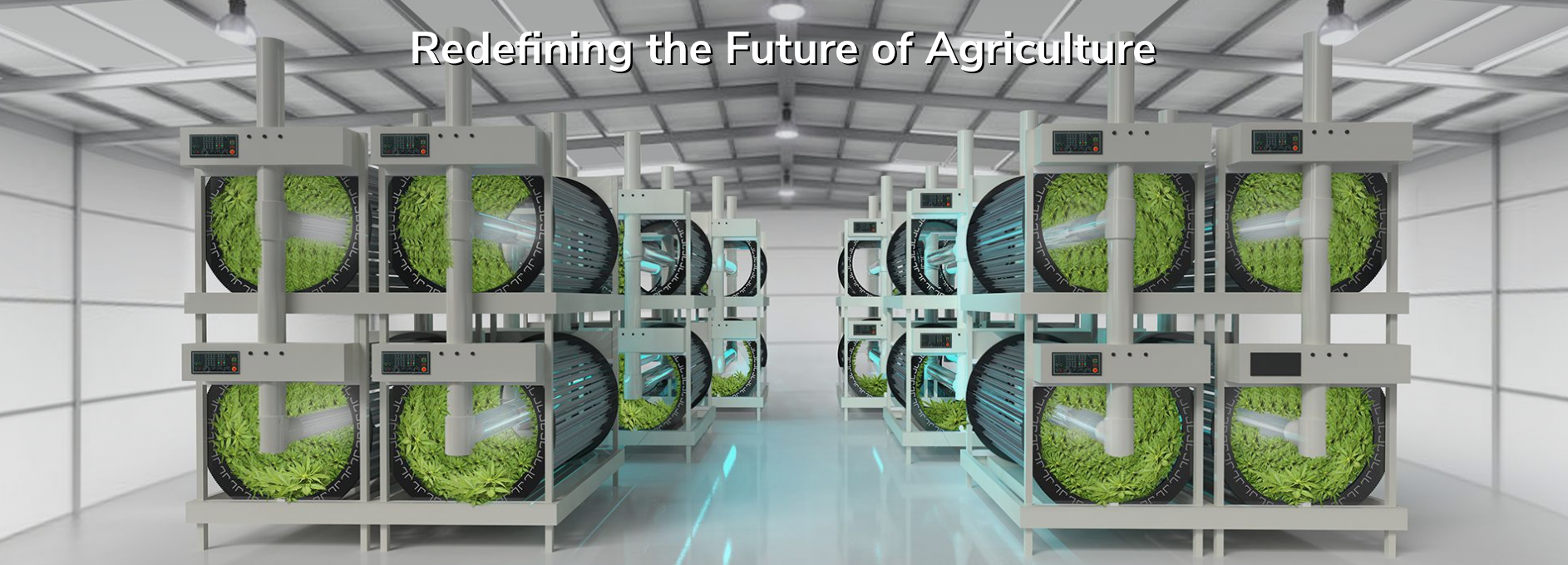
RotoGro executed a binding Technology License Agreement with Verity Greens Inc. for the granting of manufacturing and technology use licenses. The agreement provides RotoGro with a foothold in the expanding indoor urban vertical farming space as a technology and services provider globally.
The agreement also facilitates the payment of annual software licensing fees and a long-term net profit share from the sale (by Verity) of perishable foods cultivated at facilities utilizing RotoGro technology for the initial 20-year term of the agreement. All of which are expected to generate long-term sustained recurring for RotoGro.
The agreement is designed to provide RotoGro with a foothold in the expanding indoor urban vertical farming space as a technology and services provider. It facilitates RotoGro providing Verity Greens with the opportunity to use and manufacture the company's patented and proprietary cultivation technology in the perishable foods field, consistent with the company's strategy to engage in less capital-intensive business partnerships and collaborations.
Read the complete agreement here.
For more information:
RotoGro
info@rotogro.com
www.rotogro.com
3 Dec 2020
CANADA: CEA Supplier Sustainitech Finds Capital Partner
Sustainitech's energy-efficient indoor farming system uses HIFI (High Intensity Farming Indoor) containers that realize increased crop density over industry-standard greenhouses and hydroponic vertical farms
FullCycle Climate Partners just announced their investment in Sustainitech, a controlled environment agriculture company based in Toronto. Sustainitech's energy-efficient indoor farming system uses HIFI (High Intensity Farming Indoor) containers that realize increased crop density over industry-standard greenhouses and hydroponic vertical farms. "Their technology consumes less electricity per unit of agricultural produce to achieve high crop yields at industry leading prices," they say.
"Sustainitech is an indoor farming technology developer focused on growing environments that are competitive to modern greenhouse farming. Their horizontal farming complex is designed to enable flexible and crop agnostic farming, creating the ability to grow high value produce up to 6ft tall, not possible in vertical farming," they say.
"With climate change's long-term impact on crop yield, this investment is particularly well-timed, given the new US administration's focus on infrastructure solutions to address climate change. Secular growth and political priorities are expected to have valuable implications for low-carbon technologies like Sustainitech and others in the FullCycle portfolio," they explain.
In a move expected to spur further development into the carbon-neutral economy, President-Elect Biden appointed John Kerry to lead the Presidential Envoy for Climate, and his $2 trillion clean energy investment package totals 20x the clean-energy spending in Mr. Obama's 2009 economic-recovery package.
"Climate change is a threat to global food security. The innovations pioneered at Sustainitech will allow communities to count on access to a wide variety of fresh, low-cost, and nutritious produce while reducing the climate impact from their food supply chain. We see Sustainitech playing a pivotal role in growing a wide range of crops in any climate at industry-leading costs and best in class energy usage," FullCycle Founder and Managing Partner, Ibrahim AlHusseini said in a statement announcing the investment.
Sustainitech fits well within the FullCycle portfolio. Their unit economics exceed FullCycle's IRR thresholds, and their Carbon-Return-on-Investment (CROI20) of Short-Lived Climate Pollutants (SLCP's) meets FullCycle's requirement of gigaton level carbon abatement. With this investment, FullCycle acquired substantial equity as well as exclusive rights to invest in the roll-out of Sustainitech's projects worldwide.
"As the demand for building larger facilities grows, we needed to find the right capital partner to scale us from the present through to a high growth future. Only FullCycle offers the right instruments, tools, and values to allow us to chart a path to a multi-billion-dollar horizon while keeping our focus on a sustainable future," said Sustainitech CEO Joey Hundert.
FullCycle also announced the appointment of Ann M. Veneman to their Board of Advisors. Previously Veneman was the United States Secretary of Agriculture, the first and only woman to hold that position to date. "I have spent much of my career in agriculture, and look forward to identifying promising and sustainable climate-friendly solutions," said former US Secretary of Agriculture Ann M. Veneman.
26 Nov 2020
Global CEA Census Report Shows Continued Positivity Despite COVID-19
Autogrow and Agritecture Consulting have released the 2nd Annual Global CEA Census Report highlighting positive signs of growth despite the global pandemic
1 December 2020: Autogrow and Agritecture Consulting have released the 2nd Annual Global CEA Census Report highlighting positive signs of growth despite the global pandemic.
Data captured over an 8-week period show 95% of growers have an optimistic outlook for the next 12 months with all types of operations including greenhouses, shipping containers, tunnel, and vertical farms showing profitability.
“The optimism reflects what we have seen across many areas of the industry including increased technology adoption and increased consumer expenditure on fresh produce. And despite the challenges we’re seeing an overwhelming number of new entrants into the market,” says Autogrow CEO Darryn Keiller.
“What has not changed is the high percentage of new growers, almost 50%, that have no experience in agriculture before starting their business. That lack of experience has an impact on new technology solutions created and the need for more education to be available to support them. It also shows a real desire to make a difference considering their willingness to start during a pandemic.”
Respondents from 58 countries shared their views on their farming practices, financials, and the impact of COVID-19. The report also gave insight on three key growth regions around the world – India, the UK, and MENA (Middle East & North Africa).
"The results of the 2020 Census confirmed our hypothesis that the UK, India, and MENA regions are the emerging hotspots for CEA, albeit for different reasons. In the UK, Brexit is driving investment towards CEA to combat supply chain risks, while in India rising population and increased premium consumer demand for clean food are driving CEA. In the MENA region, government responses to COVID-19 have accelerated policies and incentives for developing scalable CEA solutions,” explains Agritecture Consulting Founder Henry Gordon-Smith.
“All of these regions present great opportunities for the CEA industry to grow and make a meaningful impact on their respective local conditions.”
Other takeaways from the Census:
68% of respondents are salad green growers
88% of growers surveyed are below age 50
29% of respondents receive funding from multiple sources
For a copy of the FREE report - https://engage.autogrow.com/census