

Welcome to iGrow News, Your Source for the World of Indoor Vertical Farming

UAE: Smart Acres: Heights of Sustainability
Smart Acres, the latest in UAE's hydroponic vertical farming industry, is now producing a line of the freshest, most nutrient-dense greens for UAE residents and businesses
Rohma Sadaqat
October 19, 2020
Smart Acres, the latest in UAE's hydroponic vertical farming industry, is now producing a line of the freshest, most nutrient-dense greens for UAE residents and businesses.
A growing focus on healthy food farmed sustainably and locally has meant that vertical hydroponic farms are finding a home in the UAE. The last few years have seen a marked increase in the number of companies that have launched their vertical farming facilities in the country, providing hotels, cafes, restaurants, and households across the emirates access to a growing portfolio of fresh greens.
Smart Acres, the latest addition to the UAE's hydroponic vertical farming industry, is now producing a line of the freshest, most nutrient-dense greens for UAE residents and businesses. The company has launched in collaboration with n.thing, a Korean-based technology company that designed the farm modules using an award-winning Internet of Things (IoT) based technology system to grow and monitor their greens - a system that not only consumes less resources but generates ultra-high quality crops.
Abdulla Al Kaabi, Founder and CEO of Smart Acres, revealed that vertical farming is a relatively new modern farming concept that was first proposed in the late 1990s. The main advantage of vertical farming technology, he explained, is that you can achieve a huge output in a limited space.
"Our container farms have a crop yield that is 20 times greater than traditional farming methods," he explained. "We currently harvest approximately 10,000kg a year from 120sqm of land, but to achieve the same output in traditional farming methods, you would require over 2,500 sqm of land."
Al Kaabi also explained that the hydroponics method has been around since the 1700s. With the advancement of modern-day technology, companies are now able to use this farming method to cultivate crops commercially. The biggest advantage of hydroponics comes from the decrease in water usage. Smart Acres' method uses up to 10 times less water than traditional farms to grow lettuce.
"We've lost over a third of our arable land on this planet in the past 40 years, and with the increase in population, we will face a great shortage of arable farmland to grow enough food for the world's population by traditional means," Al Kaabi said.
"Freshwater scarcity is also a serious issue that we face as a civilization, and it was listed as the largest global risk by the World Economic Forum in 2019. These two problems are a severe challenge in the UAE. In 2019, the UAE was ranked 10th out of 164 in a global rank of nations where water supplies are most stretched."
Looking ahead, he said that he believed that the future of farming will be a mix of different technologies. "Different crops require different farming methods and there is no one size fits all. For lettuce variety, we strongly believe that we have achieved great efficiency and commercial viability with the mix of vertical farming and hydroponics technology along with the advancement of IoT. The UAE's Food Security Strategy is multi-faceted with the core goals of identifying and diversifying food sources. Local production is a vital component, but it also needs to be supplemented with global imports. Even for local production, optimum farming methods for different crops may vary for rice, strawberry, lettuce, tomatoes, etc."
Currently, Smart Acres grows five different varieties of lettuce on their farm. They take six weeks to grow from seeding to harvest. The first step is to plant the seed in the growth medium which is placed in the germination room. After the seeds have been successfully germinated, they are transplanted into the growth area where light, temperature, airflow, and humidity are all micro-controlled to provide the most optimum environment for the plants to grow.
"We are currently testing many different varieties of lettuces in the UAE," Al Kaabi said. "At the same time, our research team is collaborating with other researchers around the world to develop the most optimum environment for some of the other crops. Our goal is to be able to introduce a new crop every year for the next five years and there is a very good chance that strawberries will be one of the five crops that we may cultivate in the next five years."
Asked about the response that the concept has received, Al Kaabi said that there has been a lot of support and interest from the restaurant and café industry in the region. Chefs have been using vertically farmed produce for a few years now, but the scope has only been limited to micro-greens because growing large lettuce heads at a consistent weight can be challenging.
"Sustainable farming practices are very much on the minds of most chefs here in the UAE," he said. "The industry is becoming more aware of how sustainable practices are vital to the safety of the environment and for our survival. We have received a lot of inquiries from restaurants and hotels across the emirates for our crops, which was the result of managing to successfully grow large and premium-quality lettuce heads with consistency. Currently, we have not focused on providing our produce to many outlets as we have set our sights on developing our R&D facility that will spur long-term growth for UAE food security."
- rohma@khaleejtimes.com

5 Microgreen Types Packed With Nutrients You Should Be Eating
Microgreens are known for their nutrient-packed health benefits. But which microgreen types are the most nutritious and healthy to add to our diets? We are going to cover the top nutritious microgreen types and why you should add them to your eating habits now.

Microgreens are known for their nutrient-packed health benefits. But which microgreen types are the most nutritious and healthy to add to our diets? We are going to cover the top nutritious microgreen types and why you should add them to your eating habits now.
Arugula
In microgreen form, arugula has a nutty, peppery, wasabi-like taste. Arugula is one of the microgreen types that is nutrient-dense. It contains high amounts of vitamin C, copper, and iron, which help prevent illnesses like anemia. The phytochemicals also produce glutathione, which is an antioxidant. The combination of these health benefits help prevent and fight off toxins in the body.
Basil
The basil microgreen is a healthy addition to any salad since it has a crisp, citrus-like taste. This microgreen type has polyphenols that reduce oxidation and inflammation to promote gut health. It is high in vitamins such as A, B6, C, E, and it contains calcium, phosphorus, iron, zinc, copper, magnesium, and potassium. Basil is one of the microgreen types that are rich and nutrient-dense and can be a beneficial additive to your diet.
Pea Shoots
Pea shoots are one of the microgreen types that can be eaten raw or cooked. Add them to your salad or cook them in a stir fry to add nutrient-packed vegetables to your food. These microgreens have a plethora of vitamins such as vitamin A and C and folic acid.
Radish
Radish microgreens are known for their spicy flavor profile. You can top off your dishes with the raw radish sprouts to add some heat to any dish. These microgreens are rich in vitamins such as vitamins A, B, C, E, and K. They also contain high amounts of calcium, iron, magnesium, phosphorus, potassium, and zinc. Radish sprouts contain amino acids and chlorophyll, which helps fight illnesses such as cancer.
Broccoli
Broccoli microgreens is another one of the microgreen types that are delicious and nutrient-packed. These popular microgreens contain a high amount of vitamin C, which helps our immune system fight off sickness. They also contain antioxidants and cancer-fighting compounds.
Want to learn more?
Do you want to learn how to grow microgreens from the comfort of your home? We at the Nick Greens Grow Team use our in-depth knowledge to teach our subscribers how to grow microgreens at home!
Sign up for our microgreens class that takes place every Friday at 4:30 pm CST, and become a member of our FaceBook group to connect with others who are learning just like you. If you don’t want to take a class, subscribe to our blog and Youtube channel for weekly updates about growing microgreens and other farming related news!
#microgreentypes #microgreenstypes #microgreentype #microgreenstype #bestmicrogreenstogrow #bestmicrogreens #microgreenvarieties #microgreensvarieties #microgreenvariety #microgreensvariety #growingmicrogreen #growingmicrogreens #microgreen #microgreens
INDIA: Grounded Mumbai Pilots Use Hydroponics to Grow & Deliver Toxin-Free Veggies
The duo decided to grow a range of vegetables like Pak Choi, Lettuce, Red Basil, Italian Basil, Kale, Iceberg, Baby Spinach, and rocket arugula. To provide nutrients for the plants, the water runs across the UPVC pipes for 10 minutes with nutrients like magnesium, calcium, and potassium dissolved – every two minutes
Mumbai based pilots Harsh Parekh and Ishan Modi
launched the hydroponics startup FarmJet
to provide fresh toxin-free exotic vegetables
AUTHOR: HIMANSHU NITNAWARE
OCTOBER 20, 2020
What would you do if you’re cruising at 30,000 feet in the air daily and are suddenly grounded for months? Well, these pilots started a hydroponics business on their terrace. A long-held ‘project’ in the mind of Mumbai-based domestic airline pilot Harsh Parekh, the Covid-19 lockdown paved the way to bring this idea into reality.
In 2017, Harsh witnessed a lady harvesting coriander leaves opposite the Kurla local train station in Mumbai.
“The coriander and other greens were being picked up along the railway lines of the station. The visuals lingered in my mind making me think about where our food comes from,” says Harsh Parekh, a pilot.
When he learned about Hydroponics, the idea intrigued him. Hydroponics is a method of growing plants without soil. The nutrients are mainly introduced with the water, while the plant is rooted in coco peat, vermiculture, or rock wool. Harsh then started researching on the topic and accessing all the details required to be such a farmer.
From pilot to farmer
Hydroponics are grown in pipes where water flows through them
But it was only during the Covid-19 lockdown around March when he shared the idea with his friend, also a captain with another private airline, Ishan Modi.
“I discussed the idea with my wife Garima, and after feeling confident, shared the same with Ishan. He along with his wife Soumya agreed to come on board,” Harsh said.
The pilot said the duo worked for the entire month of April to plan and set up the startup. Living in Matunga, Harsh agreed to take the operational tasks under him, while Ishan from Borivali took up the responsibility of accounts and packaging.
“We did not have space and had to hunt one down. Luckily, a childhood friend in Chembur offered his terrace for setting up the farm,” Harsh said.
The pilot added they purposefully chose to take up outdoor farming. With the foundation in place and around Rs 10 lakh invested, the startup FarmJet officially opened in May.
“There are many indoor hydroponic farms, but that requires air conditioning and LED lights. We wanted to cut down on our carbon footprint and grow plants in a natural environment,” Harsh said, adding the farm got installed with A-structured UPVC pipes. The PVC pipes have lead in them, thus harmful to their health.
The duo decided to grow a range of vegetables like Pak Choi, Lettuce, Red Basil, Italian Basil, Kale, Iceberg, Baby Spinach, and rocket arugula.
To provide nutrients for the plants, the water runs across the UPVC pipes for 10 minutes with nutrients like magnesium, calcium, and potassium dissolved – every two minutes.
Freshness is the key
Hydroponics facility set up at a friend’s house at Chembur.
Ishan says the only selling point of the company is guaranteed freshness. “We harvest the vegetables ordered in the morning and deliver it by noon. There are no harvests without orders and storing of the vegetables,” he adds.
The hydroponics grown do not get sprayed with insecticide or pesticides. “As the greens grow without soil, the need for such products does not arise. They are completely natural through the process,” he adds.
Ishan said the freshness is guaranteed at all times. “We often send videos of the harvest to the customers. One customer even did a litmus test on our produce for chemicals which turned out negative,” he adds.
The co-founder said the initial days were quite challenging for the duo. “We started around monsoon when the sunlight is not adequate at all times. The plants could grow better in other seasons,” Ishan said.
Speaking to The Better India, Ishan added that with no workforce permitted due to Covid-19 lockdown, the entire responsibility of setting up, maintaining, and cleaning the facility was upon them.
“Moreover, the market is not so open to exotic vegetables. It is only in recent times that people are aware of such vegetables and want to try them. The taste buds are yet to develop for a majority of the people,” Ishan says.
More potential to tap
Hydroponics are grown in a germination tray before they are placed in hydroponic pots
Almost six months since its inception, the company is attending about 25-30 customers a week. “Our followers are growing by 200 a week and customers by 25 percent. However, we are still in a nascent stage to take commercial produce and build capacity,” Harsh says adding the company is catering to orders based in Mumbai for now.
However, with the resuming of flights the pilots are back in the skies. Ishan said that with their wives as stakeholders of the company, they ensure that operations do not get affected.
“We plan the operations to see that at least one of the four members are present for the operations,” Ishan added.
Harsh adds the duo wants to expand in Navi Mumbai and Thane soon. “We are also open to assisting residential societies in setting up a facility on their terrace. The terrace only gets used on New Year parties and remains vacant for the other 364 days of the year,” he said.
When asked if they plan to quit their airline job, Harsh says, “We might think it in the future, but surely not for now.”
Harsh, however, adds, “The prospect is good and gives joy. The thought that the lettuce in my burger is grown in a toxin-free environment and harvested by me has an entirely different kind of satisfaction.”
Reciprocating the thoughts, Ishan says soon they plan for customers to visit the farm, harvest their produce and experience, and enjoy a fresh green salad beside the farm.
FarmJet accepts orders at +91 9867677779.
(Edited by Vinayak Hegde)
Can Vertical Farming Grow Beyond Herbs And Leaves?
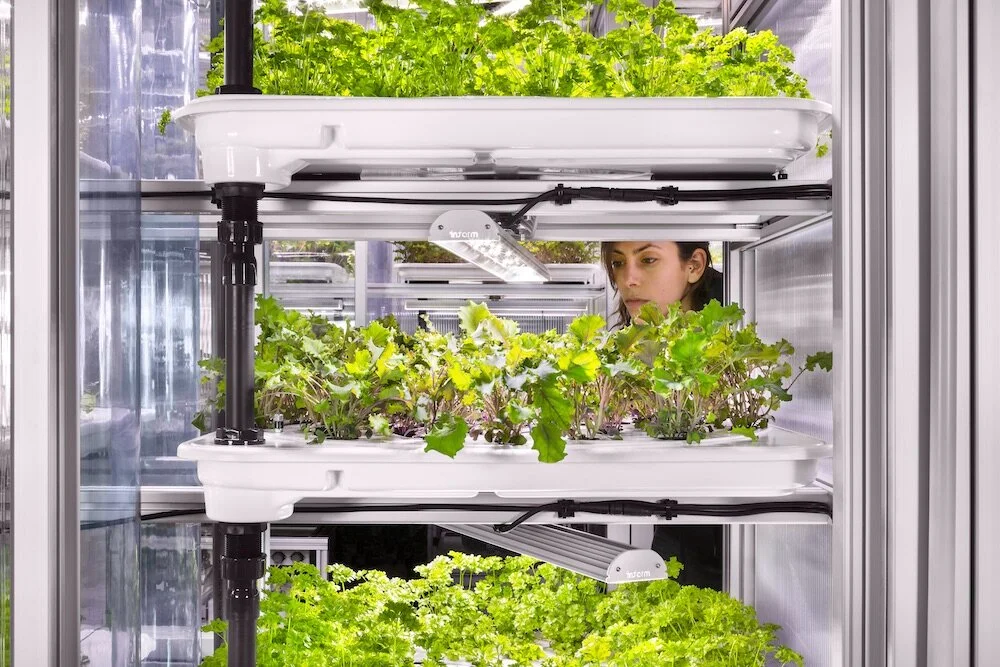
Vertical farming divorces crops from the land entirely, which is in many cases more sustainable than traditional farming and allows previously dead areas to be repurposed for growing food
20 OCTOBER 2020
In the early 20th century German-Jewish scientist Fritz Haber and his colleague Carl Bosch worked out a way to synthesise ammonia, making it possible to create industrial amounts of fertiliser for the first time. It’s said that two out of five humans on the planet today owe their existence to the discovery, which led to an explosion in the amount of food the world could produce.
Today there is a new revolution going on in agriculture.
Vertical farming divorces crops from the land entirely, which is in many cases more sustainable than traditional farming and allows previously dead areas to be repurposed for growing food. All across the world, disused underground bunkers and empty shipping containers are being jazzed up with high-tech equipment — like flashy pink LEDs and environmental control sensors — to grow a new style of crop on stacked trays indoors.
This alternative process has gained a lot of attention — and money — in recent years. The global vertical farming market is expected to reach a promising $12.77bn by 2026, up from $2.23bn in 2018. Prominent European VC investors like Atomico and in the US the Footprint Coalition (Robert Downey Jr’s sustainability initiative) have jumped on the vertical farming train.
Many European startups are leading the way. Berlin-based Infarm, which builds and installs vertical farming systems for crops in supermarkets, raised $170m last month. Earlier this year, Finnish startup iFarm, which has developed a vertical farming SaaS solution, bagged a $4m funding round.
Retailers also seem enthusiastic, with online grocery supermarket Ocado recently increasing its stake in the UK vertical farming startup Jones Food Company.
There is just one problem with the vertical farming “revolution”, however. Unlike the Haber-Bosch process of fixing nitrogen to allow all crops to grow bigger and faster, vertical farming at the moment only really makes sense for a small number of expensive crops (like basil and parsley) — and that’s hardly going to feed the world.
So the battle is now on to expand what vertical farming can do. Can the vertical farming pioneers pull it off? And what is getting in their way?
Why do people like vertical farming at all?
A vertical farm uses high-tech LEDs as an alternative light source to grow crops. Credit: diephotodesigner.de
Consumer demand for organic produce has shot up in recent years, with total retail sales hitting €40.7bn in 2018, up from €26.3bn four years before. The idea of vertical farming is appealing for many who have become increasingly conscious about buying products that are sustainably produced.
So far, the usage of water, pesticides, fertilisers and herbicides have been drastically reduced in vertical farming.
Professor Leo Marcelis, the head of horticulture and product physiology at Wageningen University, and an expert in vertical farming, points out the vast water reduction capabilities of the system. “When growing tomatoes in the Mediterranean climate, you would do a very good job using 60 litres of water per kilogram of tomatoes. In the Netherlands, a regular greenhouse grower would use around 15-17 litres of water and in a vertical farm around 2-4 litres,” he tells Sifted. The European agriculture sector alone accounts for more than 50% of Europe’s total water usage.
What’s more, European startups operating vertical farms are drastically reducing resource usage. Guy Galonska, cofounder of Infarm says: “Compared to outdoor agriculture, our water usage is 90-95% more efficient, we use 70-75% less fertiliser and no pesticides, fungicides or herbicides at all.”
“This is not a VC trend. “[Vertical farming] is going to have an actual impact.”
On top of resource savings, vertical farming has also been recognised as a way to simplify the global food supply chain, by growing crops in urban settings. This allows products to travel a considerably shorter distance to reach supermarkets, restaurants, distribution centres and people’s homes, increasing freshness and reducing transport emissions.
And while it’s been a hotspot for investors in recent years, Galonska believes that it’s more than that: “This is not a VC trend. “[Vertical farming] is going to have an actual impact,” he tells Sifted.
The future of vertical farming seems pleasant, but there’s a catch. Some elements — like cost and energy — are weighing down the sector and threatening its chance to scale further.
Grown with expensive taste
The problem is that, to date, the majority of vertical farms have cracked how to make money off growing and selling a range of herbs and leaves like basil and parsley, rosemary and thyme, and… well, that’s about it.
Marcelis points out that it’s not because growing other crops like potatoes and carrots is tricky. Instead, the high operational costs of running a vertical farm forces a lot of cheaper crops to become unprofitable. “Technically, we can grow any crop very well in a vertical farm. The question is how can we do it in an economically feasible way?” he says.
“[Vertical farming startups] are invariably forced into growing only high-margin, niche products to survive.”
Jamie Burrows, chief executive of London-based vertical farming startup Vertical Future says that a common factor blocking startups from optimising their vertical farms is a lack of capital access. “Ultimately, the key for the future of vertical farming will come through full automation, data, fair pricing and a focus on the lifetime performance of the project. One reason some vertical farms fail is that they have inadequate capital to build an installation that will allow this. They are invariably forced into growing only high-margin, niche products to survive,” he says.
Galonska says Infarm plans to roll out more products, such as chillies and tomatoes, soon. “[At Infarm], we’re investing a lot in innovation and growing new crops and root vegetables. We are going to release some of those products very soon, first in Berlin and then scaling out to other locations.”
The idea is to grow — and price — products that ‘normal’ people can afford. “We are aiming for it to be accessible to average consumers. We don’t want it to be elite,” says Galonska.
Marcelis, on the other hand, thinks that it’s imperative that operational costs drop before cheaper products can be grown and sold at prices for the everyday consumer. “I don’t expect that cheaper products that can be easily stored will be grown in vertical farms… it will be for herbs and leafy products, for strawberries and perhaps cucumbers and tomatoes,” he says.
A huge factor causing these mammoth operating costs comes from the vicious energy usage that comes from technology powering the farms — like LEDs and climate control technology — but there are some vertical farming startups with a few tricks up their sleeves in an effort to tackle this problem.
Going greener
Jamie Burrows, chief executive and founder of Vertical Future
Vertical Future claims that it’s up to 60% more energy efficient compared to other vertical farms, which make its economics more attractive as well.
Burrows says that this is made possible by its unique approach to LED lighting, which he tells Sifted is tackled “through geometry and some very clever engineering. Also, our growing patterns allow for a flatter distribution of energy across any given day and fewer peaks.”
Climatisation control technology, which monitors a vast array of elements in vertical farms to optimise the growth of crops — such as CO2 emissions and temperature — is also proving to be a good option. &ever, a German startup which has a vertical farm running in Kuwait, says that its methods allow up to 40% more energy efficiency in comparison to its counterparts, due to its unique approach to climate cells (the stacked trays in which the crops grow).
Its farms are highly automated with little manual labour involved, meaning that the vertical farms are smaller, allowing more control and concentration for crops. But what does this do for energy efficiency? “Due to &ever’s high level of automation, there are no walkways needed at all and climatisation [heating, venting, air conditioning] takes place in the grow space only,” the startup’s chief executive Henner Schwarz tells Sifted.
Galonska also mentions that Infarm is working on strategies to improve the energy problem in vertical farming. “We are investing a lot into making farms more efficient, both on a hardware level with things like LEDs and on a software level with growing recipes by optimising quality and yield while looking at exactly how much light each plant needs,” he says. Currently, 90% of its network is powered by renewables.
Room for improvement
Despite vertical farming’s challenges, there’s still a lot of enthusiasm around improving the sector. But what needs to be done for it to reach the next level?
“The real question is how can we scale cheap clean renewable energy? That’s what the industry needs,” says Galonska. A potential game changer, according to the cofounder, that could be cheaper and more efficient is solar energy. “If you look at the demand and supply curve of solar panels, they supply energy in the day, but energy demand is in the night. That’s a place where vertical farming could go quite nicely.”
“LEDs will become more efficient in converting electricity into light.”
Marcelis agrees that improved efficiency with LED lights is needed and he predicts that “LEDs will become more efficient in converting electricity into light.”
There are big bets on data being a vital component to steer the sector down the right path in the future. Marcelis, Burrows and Galonska believe that data collected from the AI sensors monitoring and controlling the treatment of plants in vertical farms will help provide valuable information on how to improve the system dramatically in the future. “This data is going to be useful in building AI and machine learning models that can predict growth, quality, and in turn can be also used to optimise other crops,” Galonska tells Sifted.
Looking decades into the future, if vertical farming can break through these barriers, supply chains might look much smaller and automated, thinks Marcelis. “It’s hard to predict what the sector will become in the next few decades, but I think that chains will get smaller due to systems like vertical farming where production becomes increasingly localised.”
“Computers will control farms globally, and manual labour will be reduced, mainly to monitor and maintain these farms remotely from control rooms,” he adds.
Progress is being made to push the sector to new heights while improving elements like cost, energy, technology and sustainability, but startups will have to get through quite a few growing pains to get there first.
Connor Bilboe is Sifted’s editorial assistant. He tweets from @connorbilboe

CombaGroup SA Reveals Rebrand With New Name, Logo, and Products
Last year, the company realized it was time to leverage its unique position in the field of mobile aeroponic growing solutions. This year, they've rebranded to solidify their stance, offering, and direction within the industry
Molondin, Switzerland – 21 October 2020 : CombaGroup SA announced today the company's complete rebranding and launch of its new website.
Last year, the company realized it was time to leverage its unique position in the field of mobile aeroponic growing solutions. This year, they've rebranded to solidify their stance, offering, and direction within the industry.
The new name, CleanGreens, is synonymous with powering clean, sustainable solutions in the agrotech space. It also reflects the company's mission to represent more directly what they are bringing to the table: fresh, healthy, premium quality yields of their customers’ favorite crops.
The rebranding is a response to accelerated company growth and a renewal of its corporate vision, subtly captured by its new logo with the notion of interaction and connectedness. These are core to the capabilities of scalable mobile aeroponic technology platforms that are a priority for both CleanGreens and its clients and partners.
With six years of R&D and technology breakthroughs in mobile irrigation and agronomy expertise, CleanGreens is proud to offer CleanGreens Pro, a system designed to be as simple as A-B-C, with immediate support and maintenance as well as a technical hotline available in addition to the built-in resources.
As a platform, CleanGreens is expanding to welcome new communities of users and has gone even further in solidifying its global position going forward. It has released new product packages and features that allow its clients to build, manage, and deploy custom applications quickly with its own intuitive, integrated, cloud-based operating application, GURU by CleanGreens. The platform gives clients the ability to grow exactly what they want with the support they require whenever they need it.
Based on the experiences and feedback from CleanGreens’ agronomist team and customers, this new app assists in key tasks like sowing, harvesting, and preventive maintenance and also features built-in reminders, alerts, and real-time records. It’s like having your own personal CleanGreens agro-expert assistant at your fingertips.
Currently, there are seven cultivation lines in operation in three locations: Molondin and Geneva in Switzerland, and Châteauneuf-sur-Loire in France. More are in the pipeline for the future. The new improvements have allowed CleanGreens to meet elevated customer demands for more of its innovative products and technologies.
"Our complete solution is different from any system in the market and our re-branding is largely driven by our effort to reflect this for our products, mission, vision, and of course, our customers and consumers,” says Serge Gander, CEO.
He adds: ”We've taken a clean, modern approach to the name, the website's design and the user experience in our new look and rebrand. We purposefully set out to challenge the status quo in all aspects of our business and this redesign reflects that."
Please visit the revamped website www.cleangreens.ch to explore the new website and learn more about the products and services offered.
About CleanGreens
CleanGreens is a Swiss agro-technology company that provides farmers and industrialists with innovative mobile aeroponic farming solutions for growing fresh, environmentally-friendly, nutrient-rich vegetables. A certified B Corp company CleanGreens’ patented technology significantly reduces water consumption and contamination risks while offering maximum productivity per square meter and minimizing environmental impact. Automated irrigation and mechanized spacing system produce clean, quality, pesticide-free salads, aromatic herbs, and medicinal plants all year round, thus providing consumers with healthy, responsible products.
For more information
+41 21 545 99 25

Tech-Magnate Jack Ma Visits Dezhou Greenhouse
Jack Ma congratulated China on its achievements in the development of smart agriculture and said: At present, the modern agricultural industry, is similar to the Internet at the beginning of the 21st century, is undergoing tremendous changes, and there is still much room for future development
The Chinese horticultural industry might get ready to rumble as two major business magnates found their way into the greenhouse. Last week Jack Ma (Ma Yun), founder and CEO of Alibaba, and Sun Hongbin, CEO of Sunac, visited the Kaisheng Haofeng Facility. This is the largest greenhouse in the Shandong Province in the Lingcheng District, Dezhou City. They were joined by representatives of the Dezhou Financial Investment Group, Qingdao Haofeng Food Group, and Kaisheng Haofeng (Dezhou) Intelligent Agriculture.
Photograph source: Kaisheng Haofeng (Dezhou) Intelligent Agriculture Co., Ltd.
Technology in the greenhouse
With Alibaba Jack Ma has created one of the biggest technology multinationals in the world, specializing in e-commerce, retail, internet, and technology. Now he took a peek at the "high-quality" scientific and technological content behind a small tomato.
The committee members of the Dezhou Financial Investment Group and vice-CEO Yu Ruihua introduced the modern greenhouse, in what the control over temperature, light, water, carbon dioxide, and fertilizer is integrated via the automatic environmental-control system. The process, including seed selection, seedling raising, planting, pest control, irrigation, picking, packaging, etc., is designed based on the growth requirements of the tomato plants. Besides, standardized management is strictly implemented. The greenhouse uses an automatic screening line with the spectral system, the automatic weighting and screening can be carried out according to the color, weight, and defect degree of tomatoes, ensuring uniform product quality and uniform gram weight.
"The tomatoes planted in this way are not only high in value but also good in taste full of seeds, juice, and rich vitamins", the team explained. After that, the technical operation team reported in detail the variety selection, research, development, plant model construction, digital management, and standardization system of the smart greenhouse.
Second season
The smart greenhouse's second planting season has just finished. The intelligent farm is buzzing with energy and the plants flourish. Jack Ma paid close attention to the growing conditions of the tomato plants, including the coconut coir growth medium, drip irrigation, liquid fertilizer, and other innovative plantation technologies. The bumblebee pollination attracted particular attention. During the period when the tomato plants blossom, the farmers use bumblebees to pollinate the flowers. They do not add hormones, but improve fruit ratio naturally. The tomatoes are juicy and plump, and the flavor is excellent.
Photograph source: Kaisheng Haofeng (Dezhou) Intelligent Agriculture Co., Ltd.
The inspection tour was followed by a conference where the technical operation team provided a detailed report on the development and selection of product varieties in the smart greenhouse, plantation installations, digital management, and standardized systems.
Jack Ma congratulated China on its achievements in the development of smart agriculture and said: At present, the modern agricultural industry, is similar to the Internet at the beginning of the 21st century, is undergoing tremendous changes, and there is still much room for future development. The development of agriculture should pay attention to the input of talents and technology. He hopes to discuss more development possibilities about agriculture with everyone and jointly promote the progress of farmers, industries, and the whole society.
19 Oct 2020

We Control The Entire Growing Process From "Seed To Store"
The company's proprietary farming management software system monitors plants 24/7 along with all supply chain variables to optimize growth, traceability, and food miles
Edible Garden Advances Sustainable Produce Category
With Patented Greenhouse Technology
Edible Garden, an agriculture-technology company that operates advanced environmentally controlled greenhouses and indoor hydroponic farms under stringent food safety protocols, announces its commitment to a sustainable future of next-generation farming with Zero-Waste Inspired innovation. The company's proprietary farming management software system monitors plants 24/7 along with all supply chain variables to optimize growth, traceability, and food miles.
"Our expansive indoor facilities are interconnected nationwide to reduce the company's carbon footprint and plastic waste while maximizing access to our USDA-Certified Organic salad greens and culinary herbs," said Jim Kras, CEO of Edible Garden. "Since we control the entire growing process from 'seed to store,' our farms exceed produce category profitability with minimal product loss."
An aerial view of Edible Garden headquarters. The company operates thousands of acres of sustainable greenhouses and hydroponic farms.
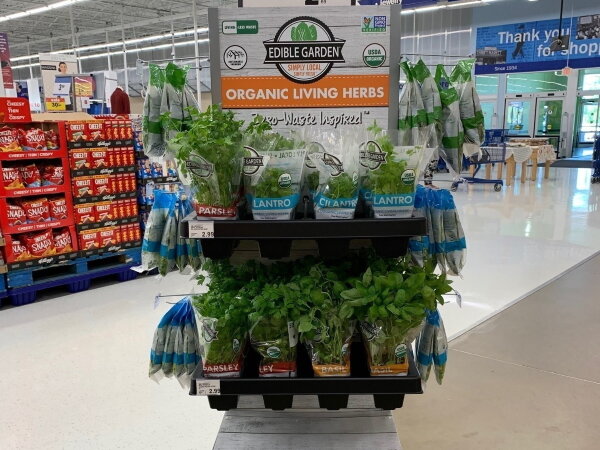
Zero-Waste Inspired innovations feature recyclable micro-perforated bags with micro-cap laser packaging that optimize atmosphere transfer rates within the bag and keep it free of contaminants. Edible Garden's patented self-watering in-store displays, designed to extend the life of the plant, are available exclusively at Meijer stores.
Edible Garden's advanced agriculture technology and environmentally controlled crops ensure food safety and quality.
Headquartered in Belvidere, New Jersey, Edible Garden operates additional farms nationwide through cooperative farming efforts that transcend the company's social mission to bring fresh produce and jobs to local areas. Edible Garden is a key contributor to Project Gigaton, a Walmart initiative to avoid one billion metric tons (a gigaton) of greenhouse gases from the global value chain by 2030.
Edible Garden produce includes USDA-Certified Organic Premium Fresh Cut Herbs, Hydro Fresh Basil, Organic 4" Living Herbs, and Premium Organic Living Lettuces that are currently available at major and local retailers including Meijer, Walmart, Wakefern/ShopRite, Hannaford, Target, Sweetgreen, among many others.
Lead photo: Edible Garden's patented self-watering in-store displays extend plant life for a better product and minimal loss.
For more information:
Edible Garden
283 County Road 519
Belvidere, NJ 07823
(844) 344-3727
www.ediblegarden.com
Publication date: Thu 8 Oct 2020
How Indoor Farming Is Shaping The Future of The Agriculture And Curbing Climate Change
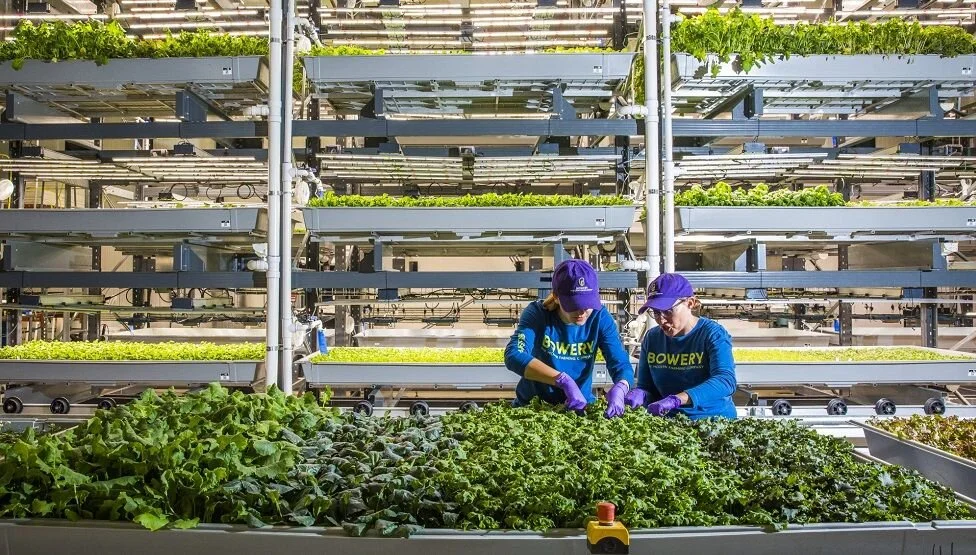
Bowery Farming Founder & CEO joins Yahoo Finance’s On The Move panel to discuss how the vertical farming company has expanded into more than 650 U.S. stores as well as break down how consumer demands are changing our food systems
October 14, 2020
Irving Fain - Bowery Farming Founder & CEO joins Yahoo Finance’s On The Move panel to discuss how the vertical farming company has expanded into more than 650 U.S. stores as well as break down how consumer demands are changing our food systems.
ADAM SHAPIRO: Farming revolution under the way. Sustainable farming, but the kind of farming that takes place indoors and on rooftops. To talk about this, we bring in Irving Fain. He's Bowery Farming founder and CEO.
Years ago, I got to see an indoor marijuana farm, essentially, where they grew everything in a ground coconut shell, but it was incredibly efficient the way the nutrients and the water were recycled. And I would imagine that's part of what you do.
But what's even cooler about this is, you're already supplying, what, is it 600 plus stores in the tri-state area with your produce. So how does someone who's got their start in software and finance go into farming?
IRVING FAIN: Yeah, it's a good question, Adam. Thanks for having me. I think I've been a believer since I was a young kid that the technology and the innovation economy could be used to solve hard problems and important problems.
And when you look at what's happening with the climate crisis right now, you look at the fires in California, you look at the storms we've been seeing, you look at just the droughts we've been going through for the last decade-plus, there is no greater cause of climate harm than agriculture. It is the largest consumer of resources globally. 70% of the world's water goes to ag every year. And we use about 6 billion pounds of pesticides annually across the world.
And so, in the last 40 years alone, we've lost 30% of all of our arable farmlands. And you look at the fact that the world population is increasing. We need more food to feed that growing population. And we are urbanizing at a faster and faster rate. I just got really obsessed with this question of, how do you get fresh food to urban environments, and how do you do that more efficiently and more sustainably?
JULIE HYMAN: Irving, it's Julie here. Thank you for joining us. You know, this has seemed to be a trend. We spoke with a company recently that was going public through a SPAC that was a big indoor farming company. That person, too, was not necessarily a farmer, right?
As Adam mentioned, you're from a banking and tech background. And so I'm curious, is the farming industry, so to speak, onboard? We have talked a lot on this show about how family farms are dying, in many cases. The economics are really tough there. So I'm wondering how much this new part of the industry is incorporating the old, and how much those people might be on board?
IRVING FAIN: Yeah, you know, I think what's so exciting to see right now, Julie, is just the fact that technology is penetrating all areas of agriculture right now. So you're seeing precision agriculture on the farms. So we can give crops much more precise amounts of water or fertilizers versus just dumping from planes or spreaders like you can see on the photo right now.
You're seeing the use of satellite imagery and drone imagery. So I think when you look at innovation in agriculture, we've got to look at indoor farming as a part of a larger puzzle. We are a piece of this puzzle, a very important piece of it because the fresh produce industry is so critical.
But in order to solve a problem where agriculture is consuming so many of these resources, where our climate is being stretched in the way that it is, we're going to need cooperation from outdoor farmers and indoor farmers alike.
MELODY HAHM: And Irving, I think the company that Julie was mentioning was AppHarvest. Also news today that SoftBank is leading a $140 million funding round for Plenty, of course, your counterpart there. And actually, Driscoll's, the berry company, is going to be an investor.
I want to think about the idea of vertical farming. Speaking with folks who are in very saturated cities or very cosmopolitan areas, as I understand it, vertical farming was another way to provide fresh fruits, fresh veggies to perhaps lower-income students, many of whom depended on their schools for breakfast, lunch, and even dinner sometimes.
How have you been navigating this space, if at all? And what's your vision therein allowing a lot of these fresh produce items to reach the masses and perhaps those who wouldn't be able to afford some fresh things at Whole Foods?
IRVING FAIN: Yeah, no, it's a great question, Melody. And so, you know, at Bowery, we're building the modern farming company. And, you know, we're really proud to be the largest indoor vertical farming company in the United States right now. And we are building smart farms that are close to the cities that we're serving. And we really take the responsibility of the community members seriously.
And so that, for us, means a number of things. We're engaging with nonprofit partners in the mid-Atlantic, where we are, as well as in the tri-state area. We're actually the largest donation partner for fresh produce in the Maryland Food Bank right now.
We're actually selling a wholesale product to the DC Central Kitchen Healthy Corners Program right now. And what they then do is they take that produce and they bring it into corner stores in food deserts across the Baltimore and the DC area. And they sell that at a subsidized price inside coolers to get fresh, healthy produce to consumers who may have a difficult time achieving that.
That's a really critical piece, but also, we have just built Bowery under the belief that we want to democratize access to high-quality fresh food. Everybody should be able to eat great produce. And the produce we're growing is, it is like the produce you remember from your grandparents' garden.
And so you can find Bowery products everywhere from Whole Foods or a Giant, all the way to retailers like Walmart and then online retailers as well. And so we really believe in spreading the access to what we're growing at Bowery.
ADAM SHAPIRO: I am curious because I think a lot of people, there's a passion about what you're doing with this farming revolution. But it's all about yield when you talk about crops. So can you give us a perspective of where the indoor farming market stands with its yield? And potentially, we're talking about feeding, at least this country, with things that are grown in this manner, or is that really a pipe dream?
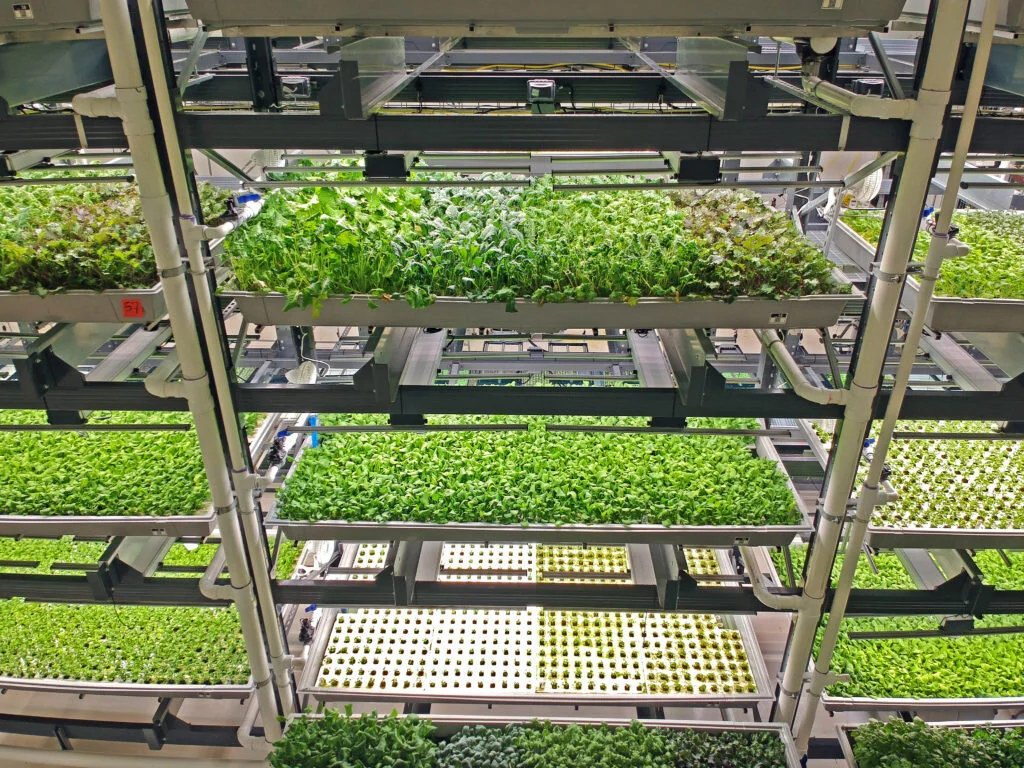
IRVING FAIN: No it's the right question to ask. I think it's one of the reasons why, at Bowery, we've invested really heavily in the technology side of what we're building. And so, we're building warehouse-scale indoor farms. We stack our crops from the floor to the ceiling. And we grow under lights that mimic the spectrum of the sun.
And so we can grow year-round, independent of weather and seasonality. It is pesticide-free, protected produce. We're 100 times plus more productive than a square foot of farmland. And we use only a fraction of water compared to traditional agriculture. And what really makes that possible is innovation that we've been driving in robotics and automation, as well as innovation around the software side.
So we've built something called the Bowery OS, Adam, which is, it's the brains of our farm. It's a proprietary system, and it uses software, computer vision, machine learning to both monitor and manage our crops to ensure they're getting exactly what they need when they need it. They're as flavorful as possible. And they're harvested at that peak yield and peak freshness.
So it really is where technology marries traditional growing and traditional agriculture, which comes together. And it creates an enormous opportunity. I mean from our view, this is a $100 billion a year opportunity in the US and probably about a trillion dollar a year opportunity globally.
And that's not for every crop. We don't look at staple crops, for instance, corn and wheat and soy, as areas that we're necessarily focused in today. Could you do that eventually? You know, technology has a nice way of surprising us. But that's not something where we're focused or counting on right now. And you don't need that to build a big business.
ADAM SHAPIRO: Look, I tried to grow tomatoes on the 18th floor, the terrace out here. And I refer to them as the toxic tomatoes because it was a disaster. I want to thank you for joining us, Irving Fain, Bowery Farming founder, and CEO.

Plenty Bags $140m In Funding For Its Indoor Farming Tech
The Series D round was led by existing investor, SoftBank Vision Fund 1, with participation from new investor Driscoll’s, a California-based agriculture business that claims to control around one-third of the $6bn berry market in the US
10/14/20
Image: Plenty
Californian Indoor Agriculture Business Plenty
Has Raised $140m In Its Latest Funding Round,
Bringing The Total Raised By The Start-Up To $500m
On Wednesday (14 October), San Francisco vertical farming business Plenty announced that it has raised $140m in Series D funding.
The Series D round was led by existing investor, SoftBank Vision Fund 1, with participation from new investor Driscoll’s, a California-based agriculture business that claims to control around one-third of the $6bn berry market in the US.
Plenty, which was previously listed as an urban agriculture start-up to watch on Siliconrepublic.com, plans to use the latest round of funding to fuel growth and execute new commercial collaborations with Driscoll’s and US grocery business Albertsons.
Plenty’s technology
Plenty was co-founded by Matt Barnard, Jack Oslan, Nate Mazonson, and Nate Storey in 2014. The company’s vertical farming technology can grow produce all year round, and Plenty claims that it uses 99pc less land and 95pc less water to grow crops than traditional methods.
Plenty’s San Francisco farm uses 100pc renewable energy and according to the company, the firm can grow 1,500 acres of produce in a building the size of a big-box grocery store.
To date, Plenty has raised more than $500m from investors including Bezos Expeditions, Innovation Endeavors, and DCM Ventures. Plenty is currently developing a new indoor farm in Compton, California, which the start-up believes could become the world’s highest-output vertical farm.
Jeff Housenbold, managing partner at SoftBank Investment Advisers, said: “In just 30 years’ time, the world will need 70pc more food than we currently produce, requiring more efficient use of land and water. Without innovation in agriculture, this demand will be impossible to meet.
“We believe Plenty is transforming the way food is made and are pleased to continue supporting their mission to build sustainable, intelligent farms that deliver healthy, safe produce with a focus on premium flavour.”
Plenty’s agriculture platform uses data analytics, machine learning, and customized lighting to iterate at high speeds, using 200 years’ worth of growing data. The company said that it has seen a 700pc yield improvement in leafy greens over the last 24 months by using this data.
Barnard, who serves as chief executive of Plenty, said: “The recent disruptions in the global supply chain caused by the west coast wildfires and Covid-19 have highlighted how quickly our access to quality produce can be thwarted.
“Plenty’s controlled and resilient farms and local distribution made it easy for us to scale quickly, even during the pandemic, demonstrating that our indoor, vertical farm flourishes under environmental pressures and delivers delicious greens along with the sales that come with it.”
Kelly Earley is a journalist with Siliconrepublic.com
RELATED: ANALYTICS, FOOD, AGRITECH, FUNDING AND INVESTMENT, SAN FRANCISCO, AGRICULTURE
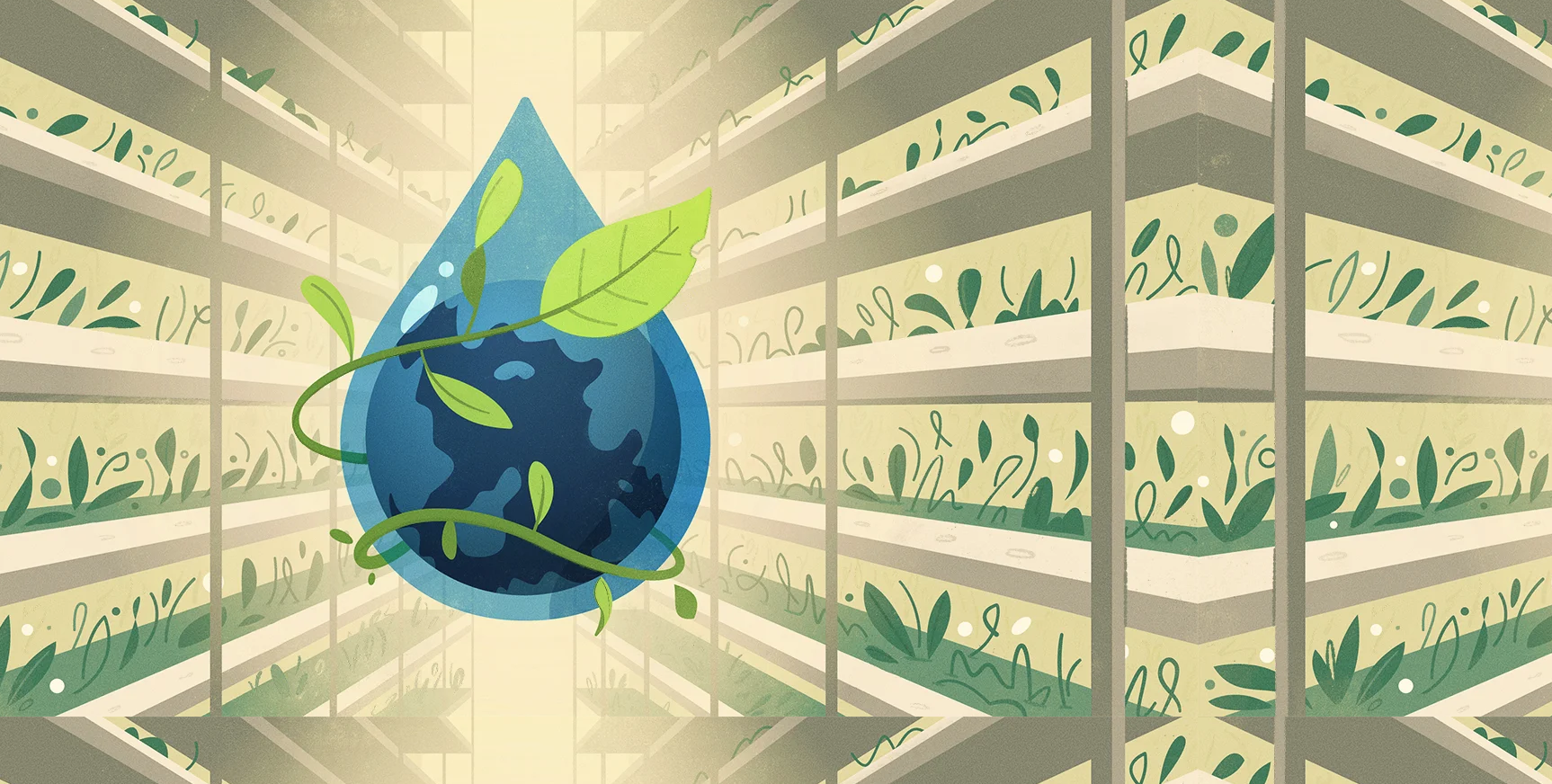
How Vertical Farming Helps Save Water
In many places around the world, for example in the Middle East, water resources are limited and their price is high. Reducing water consumption on a vertical farm in such regions can have a very positive economic and environmental impact
Generally, vertical farming uses 95% less water than traditional farming. At iFarm we have improved this indicator.
In many places around the world, for example in the Middle East, water resources are limited and their price is high. Reducing water consumption on a vertical farm in such regions can have a very positive economic and environmental impact. iFarm engineers have recently developed and patented a dehumidification system allowing to reuse the water that farm plants evaporate during growth.
How does it work? Let's take a look at a vertical farm with a cultivation area of 1000 m2. It produces 2.5 tons of fresh salads and herbs every month. To get such a yield, you need 2020 liters of water daily, most of which — 1400 liters — is used for plant nutrition. However, the daily actual water consumption is almost three times less. 2020 liters are poured into the system once, and then the "engineering magic" begins.
At iFarm vertical farms, we use flow hydroponics, i.e the roots of plants are constantly placed in the nutrient solution and consume it whenever they need, getting all the macro- and microelements in the right ratio and concentration.
From 1400 liters of the water, plants use only 80 liters for weight gain (consumption of nutrients from a larger volume is a prerequisite). The remaining 1 320 liters the plants simply evaporate. In the process of transpiration, a lettuce leaf can evaporate an amount of water that exceeds its own weight many times. We collect this water with air conditioners and dehumidifiers, purify it and reuse it in production, maintaining the optimal humidity inside at 70%.
The second "source" of water on the farm is the water supply system — another 700 liters are collected from it and then run through a special filtration unit, resulting in 560 liters of purified and 140 liters of untreated water. The latter is collected in a special tank for technical needs (washing hands, pallets, floors, etc.).
Thus in order to save water, we started collecting it from air conditioners and dehumidifiers that were originally designed to maintain optimal moisture on the farm. This approach allows the production to use only 700 liters of tap water per day, which is three times less than growing plants in conventional hydroponic greenhouses.
We are currently improving the automation of the nutrient solution replacement. The system will determine what macro- and microelements are missing in the trays at a given time and adjust them. According to the calculations of engineers, this will reduce the number of times the sewerage has to be drained completely and almost halve its consumption — from 360 liters to 150 liters. The amount of tap water required by a vertical farm to produce delicious and reach yields then will be just 440 liters, which is five times less than what a hydroponic greenhouse needs.
16.10.2020

Ultra-Local Brooklyn-Based Aquaponics Operation Upward Farms Has National Agenda
In an interview with SeafoodSource, Upward Farms CEO Jason Green described the company’s whole ecosystems as “a paradigm shift in productivity and scalability compared to status quo production methods dependent upon synthetic chemicals.”
October 14, 2020
By Cliff White
Originally founded in 2013 as Edenworks and previously known as Seed & Roe, Brooklyn, New York, U.S.A.-based Upward Farms takes an ecosystem-based approach to its aquaponics operation, which produces microgreens and “mercury-free, antibiotic-free, and hormone-free” striped bass, rated as a “Best Choice” by the Monterey Bay Aquarium Seafood Watch program. In an interview with SeafoodSource, Upward Farms CEO Jason Green described the company’s whole ecosystems as “a paradigm shift in productivity and scalability compared to status quo production methods dependent upon synthetic chemicals.”
The company has had success selling its greens into Brooklyn grocery outlets including Whole Foods Market but has not yet sold any fish commercially. Green said the company has a “20-year vision to create a sustainable future for the food system by advancing the importance of the microbiome in both indoor and outdoor agriculture.” Upwards Farms recently closed on more than USD 15 million (EUR 12.8 million) in new funding, led by an investment from Prime Movers Lab.
SeafoodSource:
Why was striped bass chosen as the complementary species in Upward Farms’ integrated aquaponics system?
Green:
We’re an aquaponic farm – we grow fish and plants together in a closed ecosystem. It’s important for us to use a freshwater species instead of saltwater so we can directly utilize the waste from the fish as fertilizer for our leafy greens production. The striped bass hybrid that we use is a freshwater fish that retains the quality and character that eaters of striped bass love – clean, firm flesh with just the right amount of richness and skin that crisps up beautifully. Striped bass is also a fish that has a strong local following in the New York area, so there’s a baseline level of consumer awareness.
So while chefs and consumers in New York are already familiar with striped bass as a wild local fish that is available seasonally, we sought to complement that with a sustainably farmed alternative that can be sourced year-round.
SeafoodSource:
Can you say more about the company’s new facility and your other expansion plans?
Green:
Our new headquarters facility is based in Greenpoint, Brooklyn, and will be a fully automated vertical farm with aquaponic production. It will serve as our commercial facility, distributing leafy greens and fish to grocers across the New York City area. Our new headquarters is also where we’ll continue to conduct research and development to advance our technology and develop new products.
Longer-term goals include opening a farm outside every major metropolitan area, near distribution centers that serve the grocers for that area. This will enable us to cut down on how far food travels. This is a key objective of ours, given that 95 percent of U.S. leafy greens are trucked in from California or Arizona, and 90 percent of fish is imported from other countries. All those miles between farm and form compromise quality, safety, and cost. In cutting down food miles, we can create a more transparent, stable, and safe supply chain.
The importance of local production is something that COVID has really underscored. Add on top of that the risks posed by climate change, especially this year with record wildfires in the American West. In agriculture, as we’ve seen in medicine and other industries related to the public health response, the importance of short, stable supply chains is being recognized now more than ever.
SeafoodSource:
What role will the fish side of things play in the company’s future development?
Green:
The fish play an important and symbiotic role in our process. The fish are the source of fertilizer for our plants and the fuel for the microbiome that drives our competitive advantage. Our microbiome allows us to deliver higher produce yields, a disease resistance product, and superior food safety by preventing the growth of foodborne bacteria like E. Coli. In the long term, we anticipate our fish being a major source of revenue in and of itself.
Given that fish farming is the largest and fastest-growing food segment globally, and that local fish is the number-one consumer demand, yet 90 percent is imported and 40 percent is mislabeled, we see this as a blue ocean opportunity, pun intended.
SeafoodSource:
What is the fish-growing capacity at the farm?
Green
We’d like to pass on this as we’re not currently sharing this information publicly.
SeafoodSource:
When will they be commercially available?
Green:
Our fish will be commercially available in New York City by mid-2021.
SeafoodSource:
Has the company’s Monterey Bay Aquarium’s “Best Choice” rating been affected at all by the changes being made to the Seafood Watch Program?
Green:
According to the Monterey Bay Aquarium’s Seafood Watch Program, striped bass continues to be a “Best Choice” when farmed in indoor recirculating tanks with wastewater treatment, like our aquaponic production.
SeafoodSource:
How will the recent hiring of former RBC Capital Markets Managing Director and Co-Head of Real Estate Investment Banking John Perkins as Upward Farms’ new chief financial officer affect your company’s goals and fundraising efforts?
Green:
With our purpose of enabling everyone to nourish their body, family, and the planet, we are fortunate to have John join our team and together achieve massive scale and impact. John's unparalleled talent and experience, particularly in capitalizing the real estate and infrastructure that transformed the American food supply chain, will help Upward Farms attract the right capital partners, grow rapidly, and realize the full potential of our vision and technology platform.
Photo courtesy of Upward Farms

Kalera Contemplates Private Placement
Kalera has engaged ABG Sundal Collier ASA and Arctic Securities AS to advise on and effect a contemplated private placement of up to 31,000,000 new shares in the company to raise gross proceeds of up to NOK 930 million (equivalent to approx. USD 100 million)
Kalera has engaged ABG Sundal Collier ASA and Arctic Securities AS to advise on and effect a contemplated private placement of up to 31,000,000 new shares in the company to raise gross proceeds of up to NOK 930 million (equivalent to approx. USD 100 million).
The completion of the Private Placement would bring the company’s total equity funding in 2020 to around USD 160 million and would be used to maintain and fuel its rapid US and international expansion. Specifically, Kalera intends to use the net proceeds from the private placement to finance the construction of new facilities, in both the US and internationally, as part of the company's rollout plan for 2021, as well as for general corporate purposes.
"In a short time, we have proven that our model allows us to provide produce at industry-leading yields and unit economics that enables rapid facility expansion and provides our end-user customers the opportunity to purchase our premium quality greens at stable, conventional pricing,” said Daniel Malechuk, CEO of Kalera. “This private placement will allow Kalera to take the next step in its rapid US domestic and international expansion and become a true global leader in vertical farming of fresh, clean and nutritious leafy greens in close proximity to urban centers.”
For more information:
Kalera
info@kalera.com
www.kalera.com
22 Oct 2020

UNITED KINGDOM: Underground Farm Based In Former Clapham Air Raid Shelter To Open New Site In Suburbs
Growing Underground cultivates micro herbs and salad leaves in a former Second World War air raid shelter, 33 metres beneath the streets of the capital. Using LEDs, hydroponics, data analytics, and 100 percent renewable energy, the 65,000sq farm has been delivering fresh produce to hundreds of restaurants and supermarkets since 2015
Growing Underground cultivate micro herbs and salad leaves in its 65,000sq urban farm located 33m below the streets of London.
It is now pushing for new investors in a bid to expand its operations and revolutionize Britain’s agriculture
REBECCA SPEARE-COLE
The Evening Standard
A massive underground farm in Clapham is set to open a new site on London’s outskirts in a bid to ramp up its sustainable agriculture operations.
Growing Underground cultivates micro herbs and salad leaves in a former Second World War air-raid shelter, 33 metres beneath the streets of the capital.
Using LEDs, hydroponics, data analytics, and 100 percent renewable energy, the 65,000sq farm has been delivering fresh produce to hundreds of restaurants and supermarkets since 2015.
Now, it is looking to open a new site, at an undisclosed location in the city suburbs, to grow produce next to distribution centres that supply supermarkets across the UK.
Growing Underground
The farm’s corresponding push for investors comes at a time when the pandemic has exposed systemic problems and vulnerabilities in global supply chains.
It also chimes with David Attenborough’s recent warning about the critical importance of moving away from exhaustive farming practices to innovative solutions, in his new film A Life on Our Planet.
Growing Underground’s COO Richard Ballard told the Standard: “Any business starting today has got to think about its impact on the environment and society, and that is one of the key drivers for us.”


Growing Underground is farm in WW2 air-raid shelters under the streets of Clapham (Growing Underground)The underground farm has become a pioneer in the UK’s controlled environment agriculture industry (CEA) — a technology-based approach towards food production.
Mr. Ballad said: “Technology around LED lights has really evolved so it has become possible to grow an enormous amount of produce in a small space.“
We also recirculate water with a hydroponic system so we reduce our impact on resources. We don’t use pesticides and in terms of transportation we grow very close to the point of consumption, so we reduce food miles and food waste.
We use recycled products for our substrates and the carpets that hold the seeds, so we are working within a circular economy concept,” he added.
The farm also uses only renewable energy from the provider Good Energy, and Mr. Ballad said they plan to become entirely carbon neutral by 2021.
But what distinguishes Growing Underground from other CEA operations is that they chose a redundant underground space, which does not require them to use up resources on air movement and temperatures like a greenhouse would.
“Being underground we get a consistent temperature all year round so we don’t need a lot of electricity and power for controlling the environment,” he said.
The farm is run on operation shifts seven days a week, with at least seven people working a day, harvesting greens like Thai basil, coriander, pea shoots, rocket, and mustard leaf. The produce is also grown to be very high in nutrition.


Clapham underground is home to 'Growing Underground', the UK’s first underground farm. (Getty Images)
Besides selling the produce and (before the pandemic struck) running tours of the underground farm, Growing Underground has also amassed a huge amount of valuable data over the last five years.
The environment is measured with data points around the farm, which is used to find “the perfect temperature, perfect yield, pH of the water, oxygenation of the water and the spectrum of the lights” for growing a product.
For example, in the last five years, Growing Underground has reduced the number of days for cultivating coriander by 50 percent as well as increasing its yields by 25-30 percent.
"The data has meant we can tailor environment recipes for the products, giving us a very efficient method”.
Mr. Ballad also said that technology and innovation behind CAE is making agriculture a more attractive industry for young people in developed economies, citing research that found the average age of farmers across the world is 60-years-old.
He said: “This is a new trained way of agriculture — looking at data, looking at the science of growing and intensifying yields and getting the most of a small space as opposed to traipsing across fields and pulling things out.”
Now, after five years of building and growing under Clapham North, Mr. Ballard said it is the “right place and the right time to take agriculture to the next level”.
Growing Underground is taking a “two-pronged” approach, Mr. Ballard said.
“We already have our first London site and Clapham is big enough to supply a huge amount to the capital’s foodservice market through places like New Covent Garden Market,” he added.“
But we want to get out there to the wider market as well and we feel that building a second site that supplies into the retail markets and the wider foodservice is where we want to be.”
This new second site, which is still in the final stages of negotiations, will be on the outskirts of London in order to easily supply the rest of the country.
The company is also looking at other sites where they can build fully automated production lines with seeds in at one end and products out the other.
Mr. Ballard said: “We have a few potential sites in our sights and we are just in negotiations at the moment.”
“The plan is to use space close to a current distributor of produce so we are building a proximity farm that feeds directly to that customer.“
And we only need a small space within the current infrastructure of a building to grow produce.”
Upscaling will also mean that the farm can start producing a wider range of crops, that are too costly to grow in CEA at the moment, he said.
For Mr. Ballard, Growing Underground is not just about making a profitable and sustainable method of agriculture but it's about building a business that tunes into a changing world.
Growing Underground is looking to expand
(Photo: Paul Marc Mitchell)
“We are facing massive problems with the global food production system and we have seen empty fresh product shelves in supermarkets,” he said.“
We’ve had Brexit, the pandemic, and many more once-in-a-lifetime extreme weather events than we used to see. In the UK, there have been more storms and extreme weather affecting crops as well as hotter summers.
“And all related to this is climate change. Statistics from the UN saying we have got 40 harvests left due to soil degradation and intensive farming practices.“
So this is a really good time to be looking at alternative sustainable agriculture methods to take us into the middle of this century.“
This probably going to be one of the most disruptive things that has happened in Agriculture since the Agricultural Revolution itself,” he said.
More about: | Growing Underground | Clapham | Controlled Environment Agriculture | farm

Can Vertically-Grown Leafy Greens Make Your Salad Fresher And More Sustainable?
As indoor farms can control everything from temperature to humidity to airflow and even lighting schedules, their products are often marketed as more sustainable than outdoor agriculture
Courtesy of Forward Greens
A warehouse may seem like an odd place for a farm, but it's one of the places you'll find arugula, kale, and other leafy greens growing in Vancouver, Washington. The 25,000 square foot warehouse is home to Forward Greens, one of several indoor vertical farms attempting to use technology to make our lunch salads taste better and be better for the planet.
"We're trying to grow the cleanest healthiest greens we can while preserving the earth's resources," said Ken Kaneko, the founder of Forward Greens. Even if you haven't yet had greens from an indoor farm, chances are more and more of the greens in your salad are going to come from farms like Forward Greens, Gotham Greens, Bowery Farming, and others.
Related: Young Farmers Need Land and These Organizations Are Helping Them
What Exactly Is a Vertical Farm?
Simply put, it's a farm where rows of produce are stacked. "We grow up instead of out," Kaneko said. In the late 1990s and early 2000s, Columbia University professor and microbiologist Dickson Despommier and his graduate students began popularizing the idea of vertical indoor farms as one answer to some of the world's biggest problems: how to feed a growing worldwide population, especially with more and more people, centered around cities, and how to produce that food more efficiently and sustainably.
Today most indoor farms use soilless farming techniques. Some like, New York-based Gotham Greens, one of the early pioneers of indoor farms and whose products you'll find in Safeway, Meijer, and Harris Teeter, among others, use a hydroponics system. Other soilless systems include aeroponics and aquaponics.
Does Arugula Grown on an Indoor Farm Taste Better Than Arugula Grown Outside?
While outdoor farms rely on water, sun, and sometimes luck to produce leafy greens, most vertical indoor farms use technology and constant data monitoring to grow their crops. That data means that indoor farms can tweak everything from how your arugula tastes to how it feels to the nutrients it contains.
But beyond the tech, depending on where you live, leafy greens grown indoors might be fresher. Most of the salad greens you find in the supermarket likely came from Salinas, California, or Yuma, Arizona. According to Kaneko, Forward Greens delivers its products to markets in the Pacific Northwest within 48 hours of harvest. As vertical farms aren't dependent on weather, you can buy the same arugula from the same farm year-round. "We can provide a consistent year-round supply," said Gotham Greens CEO Viraj Puri. And that supply is also fully traceable, possibly making it safer.
Are Leafy Greens from an Indoor Farm More Sustainable?
As indoor farms can control everything from temperature to humidity to airflow and even lighting schedules, their products are often marketed as more sustainable than outdoor agriculture. According to Bowery Farming, whose leafy greens are available in the Mid-Atlantic and Northeast at Whole Foods Market, Giant Food, Stop & Shop, Walmart, and Weis Markets, their indoor farms are more "productive on the same footprint of land than traditional agriculture."
Similarly, Forward Greens says through its technology; it can use 95 percent less water, 99 percent less land, and 100 percent less pesticides compared to outdoor agriculture. But there's not much data on how vertical farms compare to their conventional counterparts. Researchers from Cornell University are in the middle of a three-year grant looking at not only how controlled-environment agriculture compares to traditional field agriculture in terms of energy, carbon and water footprints, profitability, workforce development, and scalability but what if any educational and psychological benefits local systems can offer by connecting urban people to their food. However, it's not clear if that study will also account for food waste, which has been found to be as high as one-third on traditional farms, and which both Puri and Kaneko say their farms can reduce.
While indoor farming likely isn't going to save the planet it may be one part of the puzzle and will make it easier to get fresh, locally grown salad greens year-round.

Living Lettuce, Vertical Gardening: This Startup Is Using AI For Organic Farming
Analytics India Magazine got in touch with Shivendra Singh, founder and CEO of Barton Breeze, who believes that in the future the vegetable greens will likely come from the building next to you
13/10/2020
Srishti currently works as Associate Editor at Analytics India Magazine.…
The interest and popularity of organic and sustainable farming are increasing drastically. While the consumers are often skeptical about the food products that they consume, Dubai and New Delhi-based Barton Breeze is growing safe, delicious, and healthy food while relying on analytics and AI. It offers top-quality products that are grown locally in nutrient-rich water without pesticides. The crops are harvested weekly and delivered to sales outlets within a couple of hours.
Following the principle of ‘living lettuce’, it follows a method where roots are left intact, which makes it last longer. The startup also follows vertical gardening where it uses vertically stacked growing beds, up to five levels high using less than 1% of the space required by the conventional growing, a precious commodity in densely populated urban areas.
Analytics India Magazine got in touch with Shivendra Singh, founder and CEO of Barton Breeze, who believes that in the future the vegetable greens will likely come from the building next to you.
The Journey
After graduating from IIM Ahmedabad, Singh started working on a pilot project around hydroponics and set up two container farms in Dubai. “During this time I thought, a country like India with profound climate changes needs this technology more than anyone else,” he says.
Soon after, Barton Breeze was established in 2015 in Dubai, UAE, with a mission for technology innovation in agriculture. As Singh recalls, the journey initially was challenging and well expected, but with the right vision, it became unstoppable. In addition to the lack of proper information, availability of funds, market volatility, the task to create consumer confidence was critical. Another challenge was that hydroponics was a new technology to adapt, and the existing unprofessional quality and high prices made it difficult to find the right customer in the market.
Overcoming these challenges, Barton Breeze is now the market leader in the sector and has expanded operations to India.
Data Science And AI Is At The Core
Barton Breeze team includes experts from deep data science to engineering, and from marketing to producing. “When we started, people had no idea about this new technology. And whatever talent was available, they had to unlearn. Training and building our staff from the ground up, we are now a team of six core members, supported by 25 field farms,” added Singh.
Explaining how Barton Breeze uses analytics and AI to increase the farm produce, Singh shares the areas as below:
Smart Farms: Each smart farm is backed with the expertise of the chief technology officer, a dedicated R&D team, plant scientists, microbiologists, mechanical engineers, and design engineers.
Cloud Architecture and Data Center: Barton Breeze collects hundreds of data points at each of its farms to its data center, which allows it to quickly alter its indoor precision control for taste, texture, color, and nutrition. It also helps in adjusting variables like temperature and humidity to optimize its crop yields. Barton also collects all yield and harvest data into the cloud to calculate sales projections and market trends.
Using Artificial Intelligence and IoT (Internet of things): Barton uses software with a device clipped on the stems and leaves of each plant. It informs the nutrients or mineral needs of the plants.
Highlighting other venues where AI is used, Singh shares that they have perfected their algorithm for optimal taste, texture, color, and nutrition so one can taste the science of flavor in every delicious bite of leafy greens. “We do this by leveraging plant science, engineering, and lighting to optimize our plants while also using 85% less water, 5x productivity, and zero pesticides,” he added.
He further shares that Barton Breeze carefully monitors the health and quality of plants daily to optimize taste, texture, color, nutrition, and yield to deliver a better product using AI. “Barton’s growing techniques can be highly customized,” he said.
The startup has also developed iFarm, a cloud-based data and farm output AI software. It allows the clients to get all their farm and production details on the cloud at home or office. “Our farm dashboard and IoT uses artificial intelligence and data analytics to measure important indicators that help in food/crop planning and hence help connect in the food security ecosystem,” he said.
Some areas where AI and IoT are used at Barton:
SMS alert system
Data logging facility
Online monitoring and control
Sensor-based control system
Environment management system
Water temperature management
Sunlight monitoring system
Crop management system
Farm system efficiency dashboard
Nutrition management system
Barton team includes members with deep expertise in science, engineering, technology, food safety, crop physiology, microbiology, and more to help deliver rapidly deployable and scalable solutions.
“Being first and one of a kind in the segment of agri-tech, we at Barton Breeze are trying to create and promote healthy lifestyle’ To achieve it, we are working into the whole ecosystem in the form of B-FRESH, B-FARM and B-HOME,” shares Singh.
Growth Story
With experienced and known names in the team, Barton Breeze has increased team members, post-COVID to increase the outreach. “Currently we are in 10 states, and Barton Breeze is planning to enter five more states in the next couple of months,” shared Singh. The startup takes pride in increased customer query by 200% and increased consumer awareness by 10X post COVID.
Singh further shares that there has been an increase in the interest level from angel investors and venture capitals for Barton Breeze with VC calls gone up by 150%. The startup is closing 1.5 million USD funding within this year.
“Our goal is to achieve 360-ton produce marketing per year by the end of March 2021 while adding 25 more clients. We are targeting 50 crores revenue @CAGR 800%. We would also be coming up with ten new commercialized farms apart from doing R&D on 50 crop varieties,” concluded Singh on an ambitious note.
Srishti currently works as Associate Editor at Analytics India Magazine. When not covering the analytics news, editing, and writing articles, she could be found reading or capturing thoughts into pictures.

Q & A With Jake Counne, Founder, Wilder Fields
Jake Counne, founder, Wilder Fields shares greens with Calumet City Mayor Michelle Markiewicz Qualkinbush
Jake Counne, founder, Wilder Fields shares greens with Calumet City Mayor Michelle Markiewicz Qualkinbush. Pictured announcing Wilder Fields’ commitment to build and operate a full-scale commercial vertical farm in a former Super Target store in Calumet City, Ill.
When Jake Counne established Backyard Fresh Farms as an incubator in 2016, he knew that most large-scale vertical farming operations were large-scale financial disappointments.
So rather than attempting to patch up the prevailing model, he and his team chose to build something new from the ground up. “Other start-ups had tried scaling their operations with antiquated greenhouse practices,” he says. “We realized that to solve the massive labor and energy problems that persist with indoor vertical farming. We needed to look to other industries that had mastered how to scale.”
That vision, and several years of persistent innovation, came to fruition in 2019 when Counne announced he would transplant the successful pilot farm—now renamed Wilder Fields—into a full-scale commercial vertical farm. It is currently under construction in an abandoned Super Target store, with an uninterrupted expanse of three acres under its roof in Calumet City, just outside Chicago.
Wilder Fields is designed to supply supermarkets and restaurants in the Chicago metro trade area,. It is scheduled to sell its first produce in the spring of 2021. It will provide fresh produce to those living in nearby food deserts in Illinois and Northwest Indiana. In this Q & A With Jake Counne, Indoor Ag-Con will share more about Jake’s vision and plans for the future.
According to an Artemis survey, only 27 percent of indoor vertical farms are profitable despite attracting $2.23 billion in investments in 2018. Why do you think a small start-up like Wilder Fields can succeed where so many have yet to earn a profit?
We started four years ago by investing our own resources. We were also working on a very limited scale in a small incubator space. I think those constraints pushed us to be more discerning about what we should tackle first. In that time, we developed an array of proprietary software and hardware, many of which have patents pending. And we refined a new paradigm for vertical farming, moving from the greenhouse model to lean manufacturing.
We also had the good fortune of starting up just as many first-wave indoor farms were closing down. So we looked at those case studies to understand what went wrong. And, what they could have done differently—what was needed to succeed. In fact, the founder of one of those first-wave farms now serves on our advisory board and really helped us identify the right blend of automation and labor.
With traditional vertical farming, the bigger you get, the more your labor costs increase. It seemed to us that the first generation of large-scale commercial vertical farms thought they could simply scale-up labor as they grew.
But we realized that operational excellence and efficiencies are essential to marry growth and profitability. It’s very hard to control a wide variety of factors using a 100 percent human workforce; for the most part, our industry has realized we need to recalibrate and find ways to automate.
This 135 thousand square foot former Super Target store in Calumet City, Ill. will soon be transformed into one of the world’s largest vertical farms. This former retail space will house 24 clean rooms with the capacity to produce 25 million leafy green plants each year.
So automation solves the problem? It’s not as simple as that.
Now the problem that the pendulum has swung a little too far in the other direction. The industry is almost hyper-focused on automation—as if automation is the answer to all of the vertical farming’s problems. It’s not. Remember when Elon Musk tried using too much automation to produce the Model 3? I believe he called his big mistake “excessive automation” and concluded that humans are underrated.
We believe well-run vertical farms, and the most profitable ones will achieve the right balance of human labor and automation. And that’s been our laser-focused goal from day one—to bring down labor costs in an intelligent way, in order to make vertical farming economically sustainable.
We also reduced costs by repurposing an existing structure rather than building a new one. We located a vacant, 135,000-square-foot Super Target in the Chicago suburb of Calumet City. What better way to farm sustainably than to build our farm in a sustainable way? Along with City leaders, we think we can help revitalize the depressed retail corridor where it is located.
To my knowledge, converting a big-box space to an indoor vertical farm has never been done before. So we also are creating a blueprint for how to impart new life to empty, expansive buildings.
We also will provide opportunities for upwardly mobile jobs and environmentally sound innovations, and produce food that promotes community health.
Vertical farming is a fairly new development. How does it fit into the history of modern agriculture?
I make an analogy with the automobile industry. Field agriculture is sort of like the combustion engine. It came first and was easy to scale up, making it available to more and more people. There were obvious downsides to it, but soon the whole world was using the combustion engine, so we kept churning them out.
But as the detrimental effects began to accumulate, we started asking ourselves how to reduce the negative impact. That’s when the auto industry came up with hybrid cars—they’re the greenhouses in this analogy—and while they were certainly a less bad solution, they weren’t really the solution.
And now we have the fully electric car and it has started outperforming combustion engines on many different levels—just as indoor vertical farming is now beginning to outperform field agriculture
Today’s business mantra holds that the more you automate, the more efficient you become. So why is vertical farming any different?
There are certain efficiencies that don’t require specialized robotics, especially if these tasks can be accomplished in other ways that sustain quality and reduce costs. For example, instead of our workers going among the plants to tend them, the plants come to the workers in an assembly-line fashion that requires fewer harvesters. So it’s always a balance between the investment in specialized machinery and the cost of the labor that it will eliminate.
And while there’s definitely room for automation, it doesn’t always require new specialized robotics. In our industry, plenty of mature automation already exists that can be used to good effects, such as automated transplanting and automated seeding: both employ proven, decades-old technology.
So when I see some other start-ups trying to reinvent these processes, it’s hard to understand. They design and build new, expensive equipment—something possible with an unlimited budget—but in fact, a more affordable, simple solution already is available.
Start-up costs are notoriously difficult to finance. How were you able to get off the ground? What advice would you have for others in the industry?
There’s no easy way to bootstrap from a small start-up to a large scale without that big infusion of capital. You’ve got to decide early on if you should try to secure venture capital from institutional folks or search out more, smaller checks from friends and family and accredited investors.
As I see it, venture capitalists look to the founders’ background and education more than a business model that needs to be tested. If you don’t have that pedigree out of the gate, it’s an uphill battle.
We chose to take a different path, one that has proven successful for me in the past. It’s one where I led a group of investors who acquired overlooked residential properties on Chicago’s South Side. We brought stability to neighborhoods and now manage a large portfolio of quality rental properties. There was no white paper when we embarked on that venture, but we shared a vision for revitalizing good housing stock.
I also tell people to explore equipment financing, which thanks to the cannabis industry has opened up more and more. It’s definitely possible to finance some of this equipment. That seems to be a good route as well.
How will vertical farming impact the types of the crops you grow?
Wilder Fields grows and will continue to grow a wonderful variety of leafy greens. Many will be new to people because they can’t be efficiently raised in a field. So we are building our product line around flavor and texture as opposed to supply-chain hardiness.
But remember, the indoor vertical farming industry is in its very early days. Soon we will have a whole new frontier of applications and crops to grow. Especially now that certain companies are offering indoor-specific seeds. We’ve seen this movie before. When greenhouse-style vertical farms first came on the scene, they used seeds that were really bred for the field. They were doing okay. But, as soon as seeds were bred specifically for that greenhouse environment, yield and quality shot through the roof.
Now that we’re on the cusp of having specialized seeds bred specifically for our purposes, I think we’re going to see that same leap in yield and quality as well.
Of course, your initial planning could not have factored in a global pandemic and ailing economy. How have the ramifications of COVID-19 affected Wilder Fields, and your industry at large?
This is a time for us to champion the benefits of indoor agriculture because vertical farming is doing really well. Any farms primarily serving restaurants obviously had a problem. Companies that pivoted away from restaurants have been able to reach consumers more than ever. They’re capitalizing on their indoor-grown—and therefore much cleaner—product.
Supermarkets are our primary market. With people cooking more at home and looking for fresher and healthier choices, they’re eating more leafy greens. This is another positive phenomenon.
The success of your model relies heavily on your proprietary technology. Do you have any plans to eventually license your innovations—to make them available to others, for a fee?
That’s a question we’ve been asked a lot, not only from our industry but also from the cannabis industry. We may revisit that opportunity in the future, but it’s not something we’re immediately considering.
Here’s why. When I first entered the industry in 2016, I noticed there were so many consultants. Many people were licensing technology, but none of them were actually using that technology to grow leafy greens at scale. They’re like the folks who sell the pickaxes and the shovels instead of mining the gold.
My perspective is, “You’ve got to venture into the mine to know what sort of shovel and pickaxe you need”; in other words, that’s how to understand what models to create for logistics and ergonomics and what tools are needed to make them work. I did not want our company to be one of those that are just sort of camping outside the mine and hawking its wares.
I think the only way we can develop a solution that’s worth its weight is by operating our own technology and equipment at scale. And I haven’t seen anybody do that yet. Is it possible that we license our technology somewhere down the road once we’ve actually proven it out at scale? Maybe; but it’s not part of our business model right now.
So, along those lines, when will Wilder Fields deliver your first produce—grown in your first full-scale commercial vertical farm—to grocers in metro Chicago?
We have committed to the end of the first quarter of next year: March 2021. In addition to this Indoor Ag-Con Q & A with Jake Counne, you can learn more about Wilder Fields visit the company website

VIDEO: “Everyone Can Become A City Farmer”: Interview With iFarm’s Co-Founder And CEO Max Chizhov
If you’re interested in agtech and the future of food but also in having a positive social impact, reducing our carbon footprint, or how to build a solid team in a startup, you’ll find some good advice from Max
October 13, 2020
Today’s agricultural models have shown their limits in terms of their impact on the environment, biodiversity, and production. In a bid to reduce pollution, biodiversity loss, and shrinking yields, one solution presented has been ‘vertical farming’, otherwise known as growing crops in vertically stacked layers, and in a controlled environment.
We recently caught up with Max Chizhov, co-founder and CEO of Helsinki-based iFarm, a startup founded in 2017 that are providing ‘plug&play’ automated vertical farms for stores, restaurants, warehouses, and even homes. We asked him a few questions about things that matter when you’re an entrepreneur and leading your company to grow.
If you’re interested in agtech and the future of food but also in having a positive social impact, reducing our carbon footprint, or how to build a solid team in a startup, you’ll find some good advice from Max down below.
Hello Max, thank you for being with us today. Could you please give us a short overview about how you became an entrepreneur as well as why you founded iFarm?
In 2017, I was looking for a project that, on the one hand, would be interesting for me from a professional point of view, and on the other, bring tangible benefits to the society. I already had experience in the technological field, that is why I focused on that area. At that time, I also met Alex Lyskovsky, who had just finished a course at a culinary school in France. That experience left him wondering whether it was possible to grow high-quality vegetables all year round, regardless of climate conditions and with the least environmental impact, ideally making profit. His story resonated with me, so I researched the topic thoroughly and realized that that was something I really wanted to do — that’s how iFarm was born.
iFarm is based in Vantaa, Finland. What is your opinion on the environment for creating a tech company there?
Finland offers a favorable environment for tech startups that care about the social side of business as much as the profits. It has a strong community of tech entrepreneurs, an excellent networking base, and government support.
iFarm has announced recently an approx. €3.6 million seed investment. What are your future plans with such capital?
The company will use the funding to develop our iFarm Growtune IT platform that enables operations of multiple varieties of vertical farms and quadrupling the number of plants available to iFarm’s tech. In addition, iFarm will be optimizing its automated production lines to reduce labor costs and complete experiments with growing strawberries, cherry tomatoes, sweet peppers, radish, and other crops.
We are also currently preparing for Series A round, which will take place in Q4’2020 – Q1’2021. Next year we are planning to expand our presence in Northwest and Central Europe and the Middle East.
This news comes amidst great uncertainties with COVID-19. Has the pandemic impacted your activities and priorities as a company?
Over the last few years, the overall trend in agriculture has been to localize production. This is due to the high rates of urbanization, growth of population, and in 2020 the additional impact of the Covid-19 pandemic and the quarantine following it that made the problems of long supply chains and food security even more obvious.
Such conditions make growing vegetables, berries, and greens in the immediate vicinity of the consumer a necessity. Countries have begun to think strategically about food security issues, which brought us several large customers.
From the point of view of organizing teamwork, we did not face any difficulties. Even before the pandemic, we had been building processes and implementing tools for smooth work of an effective remote team.
Since 2017, your team has grown to over 20 people. What tips would you give to someone who wants to build a solid team?
Create a welcoming atmosphere and avoid strict hierarchies. At iFarm, every employee has the opportunity to contact the founders, ask any question, or come up with a proposal. This does not require full control over tasks and is based on the trust and professionalism of each team member. Top management is to come to the rescue when necessary and prioritize a large pool of operational issues. This increases the level of employee motivation and loyalty, that is how we manage to achieve our goals and to meet deadlines, while maintaining high quality.
Hire people that share your company’s mission and values, are independent and self-organized. We allow for mistakes to take place, they can happen and it is part of the process. Reflecting on these mistakes, understanding their essence and cause helps employees to become stronger and more confident, and to avoid them in the future.
In your opinion what makes iFarm stand out from the competition?
iFarm provides a turnkey solution, so our clients do not need to have special knowledge — everyone can become a city farmer and produce crops for sale; traditional agricultural productions will be able to modernize their capacities, and such businesses as HoReCa, retail and food manufacturers will receive a technological solution that ensures uninterrupted supply of ingredients for their dishes and goods.
Another important advantage of iFarm is the range of crops that can be grown using our technology, while most vertical farms in the world produce the same salads and greens, which is often criticized in the market.
What is it like to tackle such an important issue as food and agriculture?
That is a great challenge and a great responsibility. On the one hand, we want to ensure access to healthy and high-quality food for as many people in the world as possible, on the other hand, we want to conserve the natural resources of our planet and minimize our carbon footprint. Thus, creating iFarm technology, we are always guided by these principles when making decisions that affect this result.
What is your advice to young entrepreneurs looking to kick off their own agtech company?
Don’t be afraid to make mistakes, set ambitious goals, work in a team, and remember to delegate.

Signify’s LED Lighting Helps GoodLeaf Farms To Increase Food Production All Year Round
As a branded producer, GoodLeaf grows and packs fresh, nutritious, and pesticide-free micro and baby greens year-round
October 15, 2020
Eindhoven, The Netherlands – GoodLeaf Community Farms in Canada selected Signify (Euronext: LIGHT), the world leader in lighting, to equip its new state-of-the-art farm with Philips Horticulture LED lighting and increase its food production, enhance flavor and improve nutritional value. As a branded producer, GoodLeaf grows and packs fresh, nutritious, and pesticide-free micro and baby greens year-round. The company operates a 4,000-square-metre indoor vertical farm in Guelph, Ontario, which is now fully operational to supply some of the largest Canadian retail chains. GoodLeaf is backed by McCain Foods as its strategic investor.
The vertical farm is fully automated and equipped with the latest LED lighting technology for growing indoors. The energy-efficient Philips Greenpower LED production modules enable GoodLeaf to shorten production cycles. As it provides a controlled environment it also allows GoodLeaf to produce all year round without any lighting, temperature, and pesticide worries and reducing waste at the same time.
GoodLeaf Farms started working with Philips products in 2013 at the company’s test facility in Truro, Nova Scotia. “Signify has been very advantageous to GoodLeaf. We’ve worked with many vendors and Signify would stand out as one of the most collaborative, if not one of the best partners we’ve had through this project. We will work with them on a go-forward basis and very much look forward to that,” said Jeff McKinnon, Chief Financial Officer and Vice President of GoodLeaf Community Farms and TruLeaf Sustainable Agriculture.
Signify has built up a substantial track record in more than 400 projects in the horticultural lighting market since 1995, developing ways to apply lighting technology to crop farming. With cutting-edge LED innovations, the company can custom-build a science-based solution for growers providing data and plant expertise to optimize yields.
This expertise is built on close collaborations with Signify’s horticulture partners and through research at its own vertical farming research facilities in Eindhoven, called GrowWise Center. Vertical farming, or city farming, means that plants can be grown indoors in a controlled environment without sunlight. This is ideal for propagating young plants, cultivating full head crops, and growing healthier, pesticide-free crops. It maximizes production by using LEDs to light multiple layers of crops, achieving a higher yield with a smaller footprint.
“The support from Signify and the folks from GrowWise Center is phenomenal. We meet with them monthly. The data they collect covers the data we collect as well, so sharing that knowledge has been excellent, and the service over their Philips’ products has been exceptional,” said McKinnon.
For more information about this project at GoodLeaf, you can watch the video here.
--- END ---
For further information, please contact:
Global Marcom Manager Horticulture at Signify
Daniela Damoiseaux
Tel: +31 6 31 65 29 69
E-mail: daniela.damoiseaux@signify.com
Signify Global Media relations - Professional Lighting
Wendy Schellens
Tel: +31 6 51 863 401
Email: wendy.schellens@signify.com
About Signify
Signify (Euronext: LIGHT) is the world leader in lighting for professionals and consumers and lighting for the Internet of Things. Our Philips products, Interact connected lighting systems and data-enabled services, deliver business value, and transform life in homes, buildings, and public spaces. With 2019 sales of EUR 6.2 billion, we have approximately 36,000 employees and are present in over 70 countries. We unlock the extraordinary potential of light for brighter lives and a better world. We have been named Industry Leader in the Dow Jones Sustainability Index for three years in a row. News from Signify is located at the Newsroom, Twitter, LinkedIn, and Instagram. Information for investors can be found on the Investor Relations page.
UA-CEAC Online Hydroponic Tomato Intensive Workshop
Are you interested in growing tomatoes hydroponically? Join the University of Arizona Controlled Environment Agriculture Center for the Hydroponic Online Intensive Workshop - November 16th& 17th via Zoom
The University of Arizona Controlled Environment
Agriculture Center Is hosting Its First-Ever
Hydroponic Tomato Online Intensive Workshop
On November 16th and 17th
Are you interested in growing tomatoes hydroponically? Join the University of Arizona Controlled Environment Agriculture Center for the Hydroponic Online Intensive Workshop - November 16th& 17th via Zoom.
Taught by Dr. Stacy Tollefson, this two-day event is perfect for novice growers and will be packed with tons of critical information and research discoveries that UA-CEAC has assembled into their courses and programs for over 20 years.
You will get access to numerous lecture materials, personal question follow-ups, certificate of completion, and tons of knowledge!
Click Here To Register!
Limited seats are available
For questions, please email arizona.ceac@gmail.com

GE Current Donates Horticulture Lighting Fixtures To The Ohio State University
“We are excited to be deepening our relationship with OSU,” said Melissa Wesorick, Chief Product and Strategy Officer at Current. “This is a great opportunity to strengthen our ties with this historic institution and the Ohio community, as well as inspire and empower the next generation of growers.”
GE Current, a Daintree company has gifted 272 horticultural lighting fixtures to The Ohio State University to benefit the university’s College of Food, Agricultural, and Environmental Sciences.
The Arize Element L1000 LED fixtures will illuminate a state-of-the-art greenhouse being built within the new Controlled Environment Food Production Research Complex. The greenhouse was made possible with funding from Nationwide Insurance, as well as support from other Ohio-based companies.
“We are excited to be deepening our relationship with OSU,” said Melissa Wesorick, Chief Product and Strategy Officer at Current. “This is a great opportunity to strengthen our ties with this historic institution and the Ohio community, as well as inspire and empower the next generation of growers.”
With construction slated to begin in 2021, the production greenhouse will provide hands-on training opportunities for students to learn how to grow various crops in a greenhouse setting. The multiple tailored light spectrums offered by the Arize Element L1000 opens the door for unique research and scientific exploration into crop production and plant growth, as well as expand upon the understanding of how LEDs can further that growth. The facility will also serve as the location for future grower conferences and workshops.
“Lighting is a key technology of controlled environment agriculture,” said Chieri Kubota, professor in Ohio State’s Department of Horticulture and Crop Science and lead researcher at the new greenhouse facility. “We are excited about potential research outcomes that will advance the science and technology of growing in these environments. We greatly appreciate Current’s generous and important gift to help make this happen.”
Kubota’s work encompasses plant physiology and horticulture engineering to enhance the understanding and efficiency of controlled environment agriculture production systems such as greenhouses, warehouses (vertical farms) and growth chambers.
For more information:
www.gecurrent.com
cfaes.osu.edu
Publication date: Thu 8 Oct 2020