

Welcome to iGrow News, Your Source for the World of Indoor Vertical Farming

Five Tips For Horticulture: New Video On Monitoring Hydroponic Systems
This video is part of the series called “Five Tips for Horticulture” featured on the Greenhouse Training Online channel (https://tinyurl.com/ufgto)
Dr. Paul Fisher from the University of Florida IFAS Extension hosts Jon Greene of Bluelab Corporation in a new YouTube video (https://youtu.be/Yxt7OZnieng). They discuss technical tips for pH and electrical conductivity (EC) monitoring in hydroponic plant production, as well as water management and the importance of maintaining monitoring equipment.
This video is part of the series called “Five Tips for Horticulture” featured on the Greenhouse Training Online channel (https://tinyurl.com/ufgto). The series highlights technical topics from university and industry experts. Look for upcoming videos on topics such as growing media, vermicompost, and hydroponics substrates. The channel is sponsored by the Floriculture Research Alliance (floriculturealliance.org).
For more information on hydroponics, take the UF IFAS Extension online course for growers on Hydroponic Vegetable Production beginning on November 9 (https://hort.ifas.ufl.edu/training/) in English and Spanish.
The mission of the University of Florida Institute of Food and Agricultural Sciences (UF/IFAS) is to develop knowledge relevant to agricultural, human, and natural resources and to make that knowledge available to sustain and enhance the quality of human life. With more than a dozen research facilities, 67 county Extension offices, and award-winning students and faculty in the UF College of Agricultural and Life Sciences, UF/IFAS brings science-based solutions to the state’s agricultural and natural resources industries and all Florida residents. ifas.ufl.edu | @UF_IFAS
Share this:

Reminder RSVP - Indoor Ag Science Cafe October 20th 11 AM Eastern Time
Learning critical control point for hydroponic food safety - "Hydroponic Crops How can you produce safe vegetables?"
October Indoor Science Cafe
October 20th Tuesday 11 AM Eastern Time
If you already signed up, thank you!
Learning critical control point
for hydroponic food safety
"Hydroponic Crops
How can you produce safe vegetables?"
by
Dr. Sanja Ilic (The Ohio State University)
Please sign up so that you will receive Zoom link info.
Indoor Ag Science Cafe is an open discussion forum, organized by Chieri Kubota (OSU), Erik Runkle (MSU), and Cary Mitchell (Purdue U.) supported by USDA SCRI grants.
Sign Up Here

How To Prevent And Identify Plant Diseases In Hydroponic Growing Systems
Depending on what kind of disease or virus your crops have, it’s possible the sickness could destroy your entire crop as it spreads from one to the next.
Plant diseases in hydroponic gardens can be detrimental if not properly taken care of. Depending on what kind of disease or virus your crops have, it’s possible the sickness could destroy your entire crop as it spreads from one to the next. In this article, we’re going to discuss how to identify and prevent plant diseases in hydroponic growing systems.
Preventing Plant Diseases
To prevent plant diseases from occurring in your hydroponic garden, you’ll want to follow these rules:
Promote good air circulation by adding fans to your growing area, spacing out plants, and pruning or removing dead or diseased plants.
Make sure your hydroponic system has good drainage by not overwatering and checking to see if there’s any standing or oversaturated water.
Try growing plant species that have been bred for growing indoors since they are made to be disease-resistant.
Prevent your plant’s stress by ensuring they have the necessary nutrients, and the correct temperature and humidity. Stressed plants can be more vulnerable to diseases.
Clean and sanitize your tools, growing media, and trays regularly.
Check for signs of plant diseases at least 1 to 2 times per week.
If able, allow for a one to two-month crop-free period once a year to eliminate all threats of disease.
Check for signs of pests because they can introduce and spread diseases amongst your plants.
Signs of Plant Diseases
Depending on what kind of disease your plant has contracted will determine the symptoms and signs to look out for. Plants are susceptible to viruses, diseases, fungi, and pythium. Once a pathogen enters your plants you’ll notice a development of galls, swellings or leaf curls, yellowing or stunted leaf, fruit, or root growth, or plant tissue die-off (wilting, rotting, browning, etc.).
Bacteria: If your plant has been contaminated by bacteria, you will notice a slimy, brown-colored coat on the plant’s roots. Try seeing if this brown coating is on your hydroponic reservoir’s walls, tubes, and water pump filter.
Fungi: Evidence of a fungal pathogen is when you notice powdery or fuzzy growths on the plant’s roots or leaves. These growths are typically gray, blue, white, or green colors.
Pythium: This type of disease is known for being the most deadly for hydroponic growing systems. Pythium will blacken the plant’s roots, ooze a foul-smelling odor, and halt the growth of the plant. This pathogen is highly contagious and can spread quickly to ruin entire crops.
Virus: While viruses in plants are rare, they can be fatal when they do occur. Viruses are typically brought about by outside insects or outdoor soil. When introduced to a virus, the virus will spread quietly through the crop and can hide dormant in plants waiting to come out later. If not treated, a viral plant infection can lead to the destruction of the entire crop.
Want to Learn More?
We at the Nick Greens Grow Team have a plethora of knowledge covering hydroponic growing. Join our new Patreon page so you can get behind the greens, which is a behind the scenes look at growing food inside a closet and on kitchen counters. Learn every process of how to hydroponically grow strawberries, lettuce, green onions, kale, cucamelons, lemon cucumbers, and microgreens. We upload how-to and informational videos twice a week.
#plantdiseases #hydroponicsdiseases #hydroponicdiseases #hydroponic #hydroponics #hydroponicsfarming #hydroponicsgrowing #hydroponicfarming #hydroponicgrowing #usinghydroponics #hydroponicsfarmer #hydroponicfarmer

Four Innovative Design Responses To The Climate Emergency
Design Emergency began as an Instagram Live series during the Covid-19 pandemic and is now becoming a wake-up call to the world, and compelling evidence of the power of design to effect radical and far-reaching change
October 4, 2020
Design Emergency began as an Instagram Live series during the Covid-19 pandemic and is now becoming a wake-up call to the world, and compelling evidence of the power of design to effect radical and far-reaching change. Co-founders Paola Antonelli and Alice Rawsthorn took over the October 2020 issue of Wallpaper* – available to download free here – to present stories of design’s new purpose and promise.
The redesigned System 001/B, The Ocean CleanupTragic, and destructive though the Covid-19 crisis has been, it is one of a tsunami of threats to assail us at the same time. A concise list of current calamities includes the global refugee crisis; spiraling inequality, injustice and poverty; terrifying terrorist attacks and killing sprees; seemingly unstoppable conflicts; and, of course, the climate emergency. Since the start of the pandemic, global outrage against systemic racism following the tragic killing of George Floyd, and the destruction of much of Beirut have joined the list. Design is not a panacea to any of these problems, but it is a powerful tool to help us to tackle them, which is why Paola Antonelli and Alice Rawsthorn are focusing Design Emergency on the most promising global efforts to redesign and reconstruct our lives for the future.
Thankfully, there are plenty of resourceful, ingenious, inspiring, and empathetic design projects to give grounds for optimism. Take the climate emergency, where design innovations on all fronts: from the generation of clean, renewable energy, to new forms of sustainable food growing, and rewilding programs are already making a significant difference to the quality of the environment.
Here Are Four of Paola Antonelli And Alice Rawsthorn’s
Favorite Design Responses To The Ecological Crisis
Urban farm
Photography: © Nature Urbaine
Looming beside the Porte de Versailles subway station in south-west Paris is the colossal exhibition venue Paris Expo Porte de Versailles. By the time it hosts the handball and table tennis events in the Paris 2024 Olympics, Paris Expo will also be the home of Agripolis, the largest urban farm in Europe. Agripolis already operates other urban farms in Paris and occupies 4,000 sq m of Paris Expo’s roof. Over the next two years, it plans to expand across another 10,000 sq m, to produce up to 1,000kg of fresh fruit and vegetables each day using organic methods and a team of 20 farmers. The produce will be sold to shops, cafés, and hotels in the local area, while local residents will also be able to rent wooden crates on the roof to grow their own fruit and vegetables. Once it is completed, Agripolis’ gigantic rooftop farm at Paris Expo should place the Ville de Paris’ program of encouraging urban agriculture at the forefront of global developments in greening our cities.
The Ocean Cleanup

The redesigned System 001/B, The Ocean Cleanup
Scientists claimed that it wouldn’t work. Environmentalists warned that it risked damaging marine life. Few design projects of recent years have been as fiercely criticized as the Ocean Cleanup, the Dutch social enterprise founded in 2013 by Boyan Slat, who quit his degree in design engineering to try to tackle one of the biggest pollution problems of our time by clearing the plastic trash that is poisoning our oceans. Despite its critics and a series of setbacks, notably, when the original rig had to be towed back to San Francisco to resolve technical problems, the Ocean Cleanup has persevered. The redesigned System 001/B (pictured top) successfully completed its trials in the Pacific last year, and System 002 is scheduled for launch next year. The Ocean Cleanup has also developed a parallel project, The Interceptor, a solar-powered catamaran with a trash-collecting system designed specifically for rivers, and which can extract 50,000kg of plastic per day.
The Great Green Wall

Photography: The Great Green Wall of the Sahara and Sahel © UNCCD
Few regions are hotter, drier, and poorer than the Sahel, on the southern edge of the Sahara Desert. The brutal climate has wrought devastating damage in recent decades by causing droughts, famine, conflicts, poverty, and mass migration. The Great Green Wall is an epically ambitious project launched in 2007 by the 21 countries in the Sahel to restore the land by planting an 8,000km strip of trees and plants from the Atlantic coast of Senegal to Djibouti on the Red Sea. The practical work on the Great Green Wall, which is run as an African-led collective supported by the United Nations Convention to Combat Desertification, is executed by each of the 21 countries. So far, more than 1,200km of greenery has been planted, although the focus of the project is less on the progress of the wall itself than on its impact in persuading each country in the Sahel region to transform what has become arid desert back into fertile farmland.
Zero-waste village
Photography: © Kazuhiro Nogi/AFP via Getty Images
This was to have been the year when the people of Kamikatsu, a village on the Japanese island of Shikoku, would achieve their goal of becoming a zero-waste community. The 1,500 villagers may struggle to produce no waste at all in 2020 but will come impressively close to doing so in a 20-year experiment that demonstrates the contribution a resourceful group of individuals can make to curb the climate emergency. The initiative began in 2000 when the local government ordered the closure of Kamikatsu’s incinerator. Rather than ship their waste elsewhere, the villagers took a collective decision to reduce and, eventually, eliminate it. They opened a Zero Waste Academy, where waste is sorted into 45 categories for reuse or recycling. Anything sellable is dispatched to a recycling store; fabric is upcycled at the craft center. The villagers have now eliminated over 80 percent of their waste, but are still struggling to recycle leather shoes, nappies, and a few other tricky exceptions.

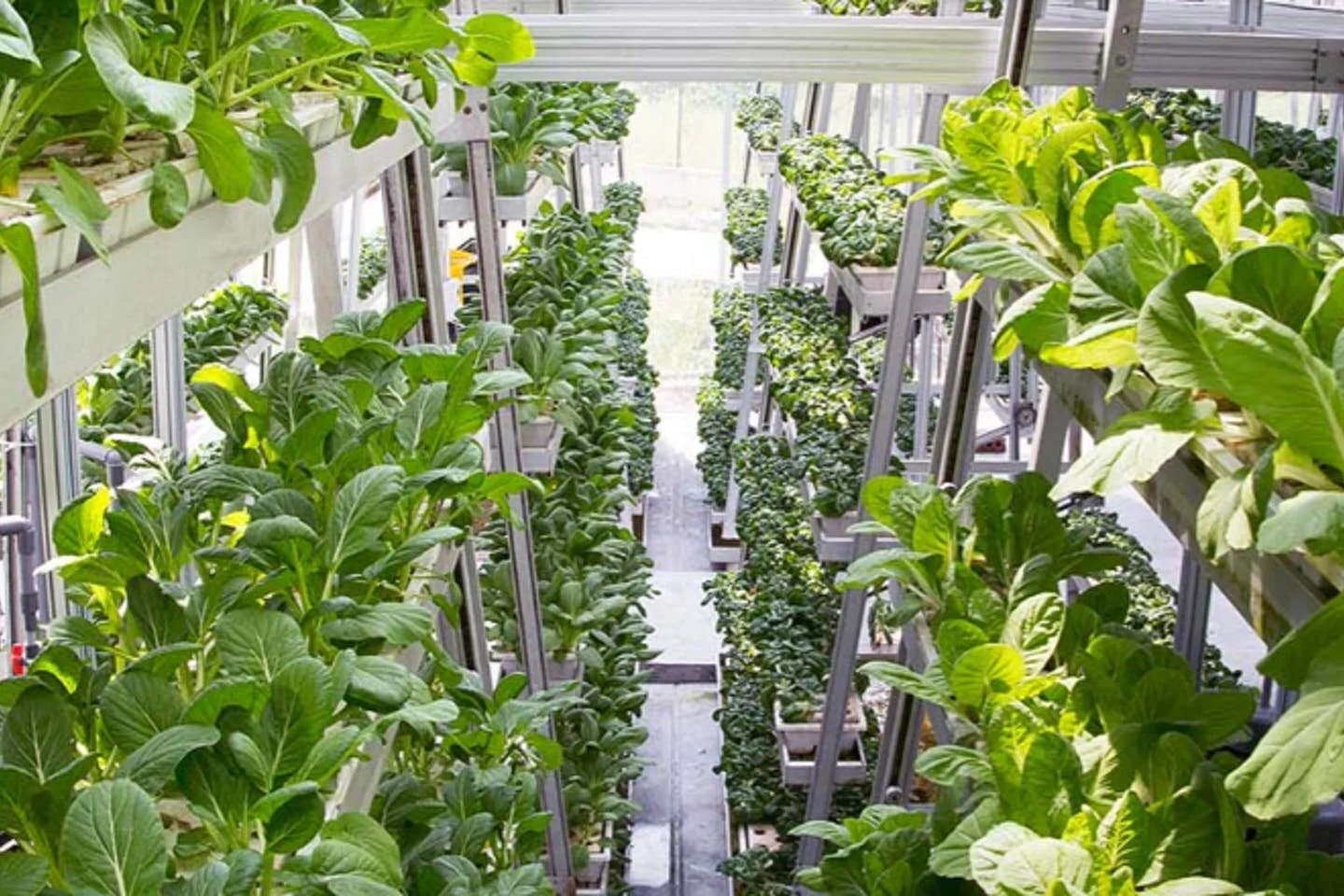
Vertical Farms Are Overserved: Global Food Resilience Needs A Rebalancing Act
Recent moves by Singapore’s state investment firm Temasek in the food and agritech space have prompted a rethink of what the political economy of food could look like over the next decade

By Huiying Ng
Oct. 11, 2020
Focusing investment in agritech among a few, powerful corporations is not the right way to ensure the future of food security and agricultural sustainability, writes Huiying Ng.
Recent moves by Singapore’s state investment firm Temasek in the food and agritech space have prompted a rethink of what the political economy of food could look like over the next decade.
Urban farm models—which Singapore is intent on exporting—will stream proprietary genetic information, business profits, and property assets to the same companies and individuals at the expense of both people and global, diverse multi-crop ecosystems. Many urban farms in Singapore are receiving large amounts of state support—including nearly $40 million in funding announced earlier this month.
As Temasek increases its investments in the agricultural and food technology space, it is worth looking at how a state sovereign fund uses its wealth.
In the last few years, Temasek supported German company Bayer’s buyout of Monsanto in 2018, funded Impossible Foods and Just Food, and reinvested as Impossible’s third-largest investor in 2020. Some of these groups have stirred controversy: Monsanto, a seed and agrichemicals giant, is facing several ongoing class-action lawsuits in the United States from farmworkers stricken with cancer from the use of the herbicide Roundup. Bayer later paid $10 million in settlements, which comes down to an average of less than $160,000 per plaintiff not considering litigation fees—while continuing to sell the very same pesticide to farmers.
This year, Temasek expanded its agri-food investments by partnering with Bayer to set up a company, Unfold, to sell genetically modified seeds to vertical farms.
Merged with Monsanto, Bayer-Monsanto is one of the largest agri-food conglomerates supplying most of the world’s seeds and agrichemicals, controlling 30 percent share of the world’s proprietary seed genetic material and agrichemicals. This means that many farmers are at the mercy of seed-agrichemical pairings made by a limited number of agribusiness companies.
Bayer-Monsanto’s investment decisions actively create a world of petrochemical and genetic dependence. Their products narrow the range of genetic resources and make resources that exist in the commons into commodities we have to pay for.
This is done in the name of food security. But in practice, these companies drive capital towards commodity production lines that require scale and homogenization. Their work strips smallholders of land, knowledge, and agri-cultures, and propagates the inequalities that took root in the Green Revolution, the era after World War II when synthetic fertilizers, pesticides, and herbicides were used to boost production, causing long-term chemical-based soil degradation.
While the Green Revolution is said to have lifted smallholders out of hunger and poverty, in practice it was a war on smallholders across the world, orchestrated over half a century by companies in Western Europe and the United States. Temasek’s choices indicate the state’s investment in dependence on big agritech at a time when global agriculture needs to be nourished and our knowledge capacities rebuilt, and its protective and regenerative functions renewed.
Seed laws, genetic diversity, and organic farming
Seed laws
Many seed laws such as the Trade-Related Intellectual Property Rights (TRIPs) Agreement of the World Trade Organisation (WTO) define seeds as a “creation and invention” belonging solely to seed corporations.
This effectively prohibits farmers from the free breeding and exchange of certain seeds.
Dietary diversity
Currently, no more than 120 cultivated species provide for 90 percent of human food supplied by plants, and 12 plant species and five animal species alone provide for more than 70 percent of all human food. Seed laws, which are generally used to develop standardized, homogenous crops to meet the demand of urban populations, have the effect of limiting genetic diversity in farmed crops. This negatively impacts the range of foods in our diets.
Crop uniformity
Seed corporations have asserted the need for crop homogeneity in response to industrial agriculture’s application of chemicals to control pests, diseases, weeds, or to fertilisers. This makes them less able to cope with continuously evolving pests and diseases. Organic farmers, however, tend to grow diversified crops as a way to adapt to the same challenges, but which do not threaten food resilience.
The global political economy of food
It’s clear that food security cannot be achieved through production alone. What is more important is the continued viability of our living environments to sustain and renew themselves. A political economy is needed that supports regenerative agriculture and ensures the fair distribution and management of resources—including financial capital.
Financial support for a narrow range of companies will create a market where people will eventually depend on a particular brand of farm, and increasingly that will mean indoor, ‘hi-tech’ vertical farms.
The global indoor farming market size was worth US$100 billion in 2018. By 2030, innovation in food and agriculture could be worth $700 billion. Hi-tech farms designed to grow a single crop will guzzle energy for air-conditioning, use up land, and give up on the land’s ability to be restored. Even with the new jobs high-tech farming will create, workers will have no real power to disengage from a system that narrows the planet’s genetic seed stocks, land, and knowledge resources.
In Asia, where so much of the future of food is at stake, we need to have public conversations about agritech to get greater clarity and transparency about the impact of new farming models on people and the planet, and how to create socially responsible products.
Companies can either increase social inequality and environmental degradation or join a global community working to increase our shared human access to land, knowledge, food resources, and peace. Agritech firms play an important role in shaping where investors put their money, and if 2020 makes anything clear, it is that neither business-as-normal nor the new normal can achieve food long-term security and sustainable agriculture.
Agritech’s climate responsibilities
Businesses have always had the power to look after the needs of people—and they are under more pressure than ever to do so today.
This decade will see more transboundary environmental disasters. Agritech and its funders would be wise to consider how their investments shape greater transboundary resource renewal, including the regeneration of lands and waters.
What agritech can do
There are five things agritech and agrifinance can do to redistribute equity in the food system:
1) Invest in solutions that increase the amount of arable non-monocrop food forest and arable land that commits to using regenerative multi-cropping techniques
2) Commit to working with national or regional seedbanks to increase genetic diversity, encouraging clients and customers to use saved, native, and heirloom seed varieties in gardens and urban farms
3) Broker regional peace and trust by improving food distribution logistics and addressing bottlenecks in the food supply chain. More food production is nothing if we do not address this.
4) Ensure food is grown with the principles of nutrition, diversity and equity in mind, by bringing the food insecure into the conversation, ensuing profits are redistributed among local communities to develop relationships in neighborhoods, workplaces, and schools.
5) Begin real dialogues with food sovereignty organizations and networks.
Seeds produced for vertical farms are highly profitable for the companies that produce them. But it is not in these companies’ business interests to replenish the arable land and water resources that we need to live on this planet.
We need to invest in practices that renew agricultural knowledge across our generations, reforest degraded and degrading lands, and redistribute resources that have been taken from elsewhere.
And we need to invest in technologies that support seed banks, enable innovation in the use of available low-carbon resources, and help people make the right choices about what to plant locally.
Now is the time to create the pathways that will afford us better solutions for the planet, not profit—and these solutions need to bear fruit within our lifetimes. Let’s invest appropriately.
Huiying Ng is partnerships and research lead at the Soil Regeneration Project.
The sidebar was written by Edmil Chue and Amanda Foo from Project Rewild.
FOOD & AGRICULTURE
Vertical farms ‘underserved’ when it comes to new seed varieties
Read now
Lead photo: A vertical farm. Are investments in seeds for vertical farms being concentrated among fewer, large corporations? Image: SkygreensThanks for reading to the end of this story!
We would be grateful if you would consider joining as a member of The EB Circle. This helps to keep our stories and resources free for all, and it also supports independent journalism dedicated to sustainable development. For a small donation of S$60 a year, your help would make such a big difference.

Agriculture, Industrial And Consumer Equipment Sales Veteran Dan Schmidt Joins CubicFarms As Senior Vice President of Global Sales
In Dan’s new role, he is responsible for growing and leading the Company’s global sales strategy as it enters its next phase of rapid growth
VANCOUVER, BC, OCTOBER 8, 2020 – CubicFarm® Systems Corp. (TSXV:CUB) (“CubicFarms” or the “Company”) is pleased to announce the appointment of Dan Schmidt as Senior Vice President of Global Sales, effective immediately.
In Dan’s new role, he is responsible for growing and leading the Company’s global sales strategy as it enters its next phase of rapid growth.
Dan has spent more than 20 years forging a successful, proven track record for building commercial brands with some of the largest heavy agricultural equipment manufacturers in the world.
He has been responsible for establishing and growing independent dealer-partner channel relationships for multi-national organizations, including John Deere, JCB, and Stanley Infrastructure, while mentoring, developing, and advancing the teams that work with him.
Prior to joining CubicFarms, he served as Vice President of Sales at Stanley Infrastructure, a division of Stanley Black & Decker – a manufacturer of hydraulic attachment tools – and led the integration of five independent sales organizations into one division comprising 180 sales staff and approximately US$500 million in annual revenue.
As JCB Americas’ former Vice President of North American Sales, Dan was responsible for recruiting and leading 120 JCB Americas dealers and sales staff to achieve US$650 million in annual revenue. He also held various senior roles within JCB, including Vice President of North American Agriculture – where he led the development of an independent agriculture dealer network of 120 dealers for revenue diversification, as well as Sales Director for Eastern Europe – where he built brand awareness for JCB’s heavy equipment line in 15 Eastern European countries.
At John Deere, a world-leading manufacturer synonymous with the farm tractor, he served in manager-level sales and marketing roles, implementing the southern U.S. division’s annual marketing and sales plans through multiple distribution outlets, combination dealerships, independent dealerships and mass channel partners. He also led a cross-divisional channel sales team that generated over US$500 million in annual consumer revenue.
Dan holds a Bachelor of Business Administration in Political Science and Business Communications from the University of Kansas, and a Masters of Business Administration from the University of Georgia’s Terry School of Business.
CubicFarms CEO Dave Dinesen commented: “After an exhaustive search for a proven sales leader, Dan emerged as the right candidate to help propel our business onto the global stage. He deeply understands our customers’ operational and financial objectives and has the experience to educate and partner with them to ensure overall satisfaction and longevity with CubicFarms. His expertise in developing relationships with global distributors and dealers, and coaching in-house sales teams, will be a huge asset to our company. I’m excited to work with Dan and extend him a warm welcome to our executive team.”
Dan Schmidt, Senior Vice President of Global Sales, commented: “Having worked in agricultural equipment manufacturing and distribution sales for the last few decades, I have witnessed the agriculture industry’s evolution of new farming techniques and the adaptation of technology to help manage the fields. I’ve always kept my eye on emerging concepts such as vertical farming, which could alter the future of how and where we get our fresh food.
“When I discovered the innovation built into CubicFarms’ proprietary systems, I knew I wanted to be part of the bold idea that agriculture could take place anywhere without being at the mercy of Mother Nature. I believe that CubicFarms really could be the next technological evolution of the tractor!”
Neither the TSX Venture Exchange nor it’s Regulation Services Provider (as that term is defined in the policies of the TSX Venture Exchange) accepts responsibility for the adequacy or accuracy of this release.
About CubicFarm® Systems Corp.
CubicFarm Systems Corp. (“CubicFarms”) is a technology company developing and deploying technology to feed a changing world. Its proprietary technologies enable growers around the world to produce high quality, predictable crop yields. CubicFarms has two distinct technologies that address two distinct markets. The first technology is its CubicFarms™ system, which contains patented technology for growing leafy greens and other crops indoors, all year round. Using its unique, undulating-path growing system, the Company addresses the main challenges within the indoor farming industry by significantly reducing the need for physical labor and energy, and maximizing yield per cubic foot. CubicFarms leverages its patented technology by operating its own R&D facility in Pitt Meadows, British Columbia, selling the system to growers, licensing its technology, and providing vertical farming expertise to its customers.
The second technology is CubicFarms’ HydroGreen system for growing nutritious livestock feed. This system utilizes a unique process to sprout grains, such as barley and wheat, in a controlled environment with minimal use of land, labor, and water. The HydroGreen system is fully automated and performs all growing functions including seeding, watering, lighting, harvesting, and re-seeding – all with the push of a button – to deliver nutritious livestock feed without the typical investment in fertilizer, chemicals, fuel, field equipment, and transportation. The HydroGreen system not only provides superior nutritious feed to benefit the animal but also enables significant environmental benefits to the farm.
Information contact:
Kimberly Lim
VP, Corporate Communications & Investor Relations
Mobile: 236.858.6491
Office: 1.888.280.9076
Email: kimberly@cubicfarms.com

UK: £5m Funding Award For John Innes Centre To Modernize Horticultural Facilities
A little over £3m of the investment will provide new Controlled Environment Rooms (CERs) for plant and microbial experiments. CER’s offer scientists precise control of environmental factors such as light, temperature, and humidity
A multi-million-pound project to modernize the horticultural facilities at John Innes Centre has been approved.
The £5.1m upgrade is funded by UKRI-BBSRC. Work will begin in Autumn 2020, and the project set to be completed by March 2021.
The company's Horticultural Services support the world-renowned science of the John Innes Centre and The Sainsbury Laboratory and occupies a large site on the Norwich Research Park.
A little over £3m of the investment will provide new Controlled Environment Rooms (CERs) for plant and microbial experiments. CER’s offer scientists precise control of environmental factors such as light, temperature, and humidity. The upgrade will also improve the containment measures required for experiments that investigate plant pathogens, or for growing genetically modified plants.
The new infrastructure offers energy efficiency and sustainability gains due to LED lighting, wastewater treatment, and rainwater harvesting. The reduction in utility costs from installing these technologies is estimated to be £116,000 per year.
Further savings will be achieved by more efficient use of glasshouse space (£200,000 per year) and reduced reliance on off-site horticultural facilities (£240,000) per year.
The current glasshouses (which cover an area of 5,775m2) is mostly single-span structures designed and built several decades ago. This investment is the start of a long-term move away from using glasshouses and towards controlled environments which better enable consistency of inputs and experimental results.
Head of Horticultural Services at the John Innes Centre, John Lord said: “World-class science needs world–class, market-leading technology. This investment is timely because there is a desperate need for our scientists to work on solutions to the challenges that face us. From understanding pathogens that cause plant diseases, to creating climate-resilient, nutritious crops that feed the world.
“This investment will bring a much-needed upgrade, providing facilities that are relevant and appropriate for the world-leading plant and microbial science that takes place on the Norwich Research Park. It also future proofs the site to fit with longer-term ambitions to redevelop the infrastructure here.”
Features of the new modernization include 30m2 of large walk-in growth space which offers LED lighting, nutrient enrichment, climate control, and state-of-the-art irrigation systems. The spaces will be configurable, it can be divided into multiple layers or used as a large open space, offering the next step towards bigger trials for crops.
The new facility will also benefit from a sustainable water supply, as it will harvest rainwater. The rainwater will be monitored and treated onsite to ensure it is free from phytopathogens, and that it has the correct pH. This soft, nutrient-rich harvested rainwater means that scientists will be able to minimize the use of fertilizers, and the consistent, monitored water supply will ensure that scientific experiments are reliable and repeatable.
“This is the start of a wider, long term project to update horticultural services at the John Innes Centre to ensure that it continues to meet the needs of science of today while being flexible enough to meet the needs of tomorrow as problems and new technologies arise,” said John.
For more information:
John Innes Centre
www.jic.ac.uk
Publication date: Thu 8 Oct 2020

Register For ERASMUS + ECVET PONICS VET LAUNCH - Friday, October 16th
Erasmus plus helps the CEA industry grow with free online vocational training courses in hydroponics for the technician level profile
ERASMUS DAYS PUBLIC LAUNCH
October 16th, 2020
Register for ERASMUS+ ECVET PONICS VET
LAUNCH:
Erasmus plus helps the CEA industry grow with free online vocational training courses in hydroponics for the technician level profile
PONICS VET:
Hydroponics Technician is an Erasmus + project. It aims to service agriculture communities and future growers from outside the industry. It provides essential basic training and an introduction into practices and the use of technology in the soilless growing of plants. Hydroponic systems have a proven track record in resource efficiency and resilience in the age of climate change. It also provides an attractive solution for existing farm operations that are not economical anymore and create new income streams for growers and would-be farmers.
The PONICS VET training services an innovative professional profile, the hydroponics technician, and delivers credentials for such a profile in a commercial context. The course will introduce system definitions, various technical insights, and important proficiencies in practical growing, including pest control, food safety, and certification information. Also included are case studies and ample supporting material. The micro-credential rules are drawn from the ECVET (the European credit system for VET) methodology, which will allow recognition of applied learning outcomes in the EU and beyond.
As the development of workforce pathways in times of CoVid19 and for the agriculture, communities has become a critical demand, FTS and its industry-based membership was selected as a critical partner in the development and deployment of PONICS VET project. Stay tuned for further modules and languages.“Workforce development in Agriculture has been underserviced in new and innovative agriculture practices and needs to be the main focus by the industry as well as the policymaker, PONICS VET is a great start for the Controlled Environment Agriculture sector as there currently no accredited vocational training courses online outside of the NL/BE greenhouse cluster. “ ~ FarmTech Society
HOW TO JOIN THIS EVENT:
Registration Page
INTERESTED IN JOINING THE COURSE:
Link to FREE ONLINE COURSE (Guest)
About FTSFarmTech Society (FTS) ASBL is an international non-profit association that unites and supports the Controlled Environment Agriculture (CEA) industry, seeking to strengthen the sector through the development and implementation of resilient and future-proof methods and technologies for indoor growing. A prime focus area of the FTS is education, by developing training and education courses and creating credentials for graduates facilitating certification that meets industry needs. Secondly, the FTS engages with lawmakers in order to help promote policies and regulations that foster innovation and propel businesses in CEA. Thirdly, the FTS supports the establishment of standards to help the industry grow and innovate. Lastly, the FTS also provides an international network for the CEA industry.
Project Partners:
1 Latvia University of Lifesciences and Technology (Lativia)
2 Eurocrea Merchant Srl (Italy)
3 IDEC (Greece)
4 BIC Innobridge (Bulgaria)
5 FarmTech Society ASBL (Belgium)
6 zemniekusaeima (Lativa)

October 16th to 18th - Awesome Features of The First ONLINE Aquaponic Conference
We want this conference to maximize your connection and engagement with other attendees. We're featuring both live and recorded speakers and by reserving a ticket you can access all these recordings until the end of the year!
Interactive Sessions, Networking &
industry Experts Sharing Exciting Developments
In The World of Aquaponics
You're not going to want to miss this.
We want this conference to maximize your connection and engagement with other attendees. We're featuring both live and recorded speakers and by reserving a ticket you can access all these recordings until the end of the year!
You'll find sessions ranging from aquaponics in prisons, experts in decoupled aquaponics, STEM educators, and international discussion panels!
Get a greater understanding of this rapidly evolving industry and connect with the experts today.
Reserve Your Ticket ›
The Aquaponics Association
© 2020 Aquaponics Association
COLORADO: Kalera To Open Newest Vertical Farming Facility In Denver, Continuing Its Rapid Expansion Across The US
Kalera, one of the fastest-growing vertical farming companies in the United States, today announced it will open its newest facility in Colorado in 2021
The Denver-Area location Is The Fifth
Facility Announced by Kalera, One of
The Fastest Growing Indoor Farming Companies In The Nation
October 05, 2021
Kalera, one of the fastest-growing vertical farming companies in the United States, today announced it will open its newest facility in Colorado in 2021. The Denver-area facility further establishes Kalera as a leading producer of vertically-grown greens across North America.
Source: Kaleraphoto-release
ORLANDO, Fla., Oct. 05, 2020 (GLOBE NEWSWIRE) -- Kalera (NOTC: KALERA, Bloomberg: KSLLF), one of the fastest-growing vertical farming companies in the United States, today announced it will open its newest facility in Colorado in 2021. The Denver-area facility further establishes Kalera as a leading producer of vertically-grown greens across North America.
The announcement is the latest step in Kalera’s rapid domestic and international expansion plan to grow fresh, clean, and nutritious leafy greens in close proximity to urban centers. Kalera currently operates two growing facilities in Orlando and is constructing facilities in Atlanta and Houston which will open in early 2021. The new Colorado facility will generate approximately 60 jobs for the local community.
“As the gateway to the Rockies and one of the great food cities in the world, Denver is the ideal location for Kalera’s latest vertical farm. Chefs and retail customers in Colorado are very health-focused and have a strong appreciation for local, fresh, better-than-organic produce,” said Daniel Malechuk, Kalera CEO. “Kalera is quickly becoming a world-leading company in indoor vertical farming with an ability to deliver fresh, locally grown greens, nationally. Thanks in large part to our streamlined design process, we are able to achieve a high rate of growth.”
By the end of 2021, Kalera will have five commercial growing facilities open and operating across the US. The company’s major milestones include:
Its first commercial vertical farm, the HyCube growing center, currently operates on the premises of the Orlando World Center Marriott, bringing fresh, local produce to the hotel’s visitors and customers.
In March 2020, Kalera opened its second facility in Orlando, providing produce to the area’s top retailers, leading foodservice distributors, resorts, hospitality groups, and theme parks.
The Atlanta facility is the third farm in Kalera’s portfolio and when it opens early next year, will be the largest vertical farm in the Southeast.
Its fourth facility is slated to open in Houston spring 2021 and will be the largest of its kind in Texas.
As Kalera accelerates its growth over the next few years, it will continue to open additional facilities, expanding production capacity throughout the US and internationally.
"Kalera's model has proven that we are able to provide produce at industry-leading yields and unit economics that allow end-user customers to purchase our premium quality greens at stable, conventional pricing,” continued Malechuk. “We believe that everyone should be able to afford to eat safe, clean, fresh, and healthy local produce. And with yields at 300-400 times that of traditional field farms, we are on the way to achieving our goal."
Kalera utilizes cleanroom technology and processes to eliminate the use of chemicals and remove exposure to pathogens. Kalera's plants grow while consuming 95% less water compared to field farming.
About Kalera
Kalera is a technology-driven vertical farming company with unique growing methods combining optimized nutrients and light recipes, precise environmental controls, and cleanroom standards to produce safe, highly nutritious, pesticide-free, non-GMO vegetables with consistent high quality and longer shelf life year-round. The company’s high-yield, automated, data-driven hydroponic production facilities have been designed for rapid rollout with industry-leading payback times to grow vegetables faster, cleaner, at a lower cost, and with less environmental impact.
Media Contact: Molly Antos
Phone: (847) 848-2090
Plenty And Driscoll’s Partner To Grow Strawberries Indoors
Strawberries aren’t exactly exotic, but for vertical farming, they are a logical next crop after leafy greens
San Francisco Bay Area-based vertical farming startup Plenty and well-known berry brand Driscoll’s announced a partnership today to grow strawberries year-round via controlled-environment indoor farms. The partnership will use Plenty’s indoor farming technology and incorporate Driscoll’s proprietary genetics for strawberries, according to a press release sent to The Spoon.
Plenty hinted at strawberries (and tomatoes) more than a year ago when it unveiled its high-tech vertical farm Tigris. Currently, the company is best known for its mixtures of leafy greens, which it grows indoors via the hydroponic method. Plenty’s facilities also utilize sensors, LED light mixtures, and temperature and air control to create the optimal growing environment for plants.
Leafy greens are still one of the most common crops grown in these controlled-environment farms and for a few good reasons. For one thing, they’re one of the most popular produce types among U.S. consumers today. They are also far more delicate than, say, a mango, making it harder to transport them without spoilage. Leafy greens also yield more crops in a smaller space compared to something like a row of sweetcorn, and they can be harvested faster. Something like a strawberry takes more time to grow, and one profile of Plenty last year noted that it can take up to nine months to understand how a strawberry plant performs inside a controlled environment operation.
Lately, though, more ag-tech companies have announced plans to grow more than arugula and herbs. Most notably, a Singapore-based company called SinGrow has employed its proprietary vertical farming tech to grow strawberries on a rack designed specifically for that fruit. SinGrow also creates its own strawberry breeds. Unfold, which just raised $30 million, has added cucumbers and tomatoes to its roster. Plenty itself said at the time of the Tigris launch that it wants to grow “exotic” fruits and vegetables, though as yet the company hasn’t named specific crops.
Strawberries aren’t exactly exotic, but for vertical farming, they are a logical next crop after leafy greens. Plenty’s home state of California produces over 91 percent of the country’s entire strawberry supply, and that fruit is also high on U.S. consumers’ lists.
To start, Driscoll’s will grow strawberries at Plenty’s Laramie, Wyoming facility. Driscoll’s Chairman and CEO J. Miles Reiter said in today’s press release that this partnership “will create a competitive market edge.” While that remains to be seen, one thing we can expect with a fair amount of certainty is that more companies will be growing strawberries via controlled environments in the months to come.

Groundless Myths
Since Aristotle, people believed that plants exclusively feed on organic matter. Only in the 18th century did these ideas begin to be questioned
05-10-2020 | iFarm
Since Aristotle, people believed that plants exclusively feed on organic matter. Only in the 18th century did these ideas begin to be questioned. Scientists discovered that in fact plants’ primary source of nutrition is inorganic in nature. Similar myths exist today. One of them is that soilless cultivation is an artificial process, during which tasteless vegetables, berries and greens grow rapidly almost on "steroids". We compared hydroponics — one of the most common and sustainable soilless crop cultivation technologies, with traditional farming to identify their key differences and similarities.
A bit of history
The concept of "hydroponics" was introduced in the 1930s by the American biologist William Gericke.

During the Second World War, the first hydroponic plantations were launched using this technology. Since the 1970s, hydroponic systems of various modifications have begun to appear in different parts of the world. Today NASA is working on an inflatable expandable greenhouse where hydroponics will be used. It is planned to be installed on Mars so that the first settlers can provide themselves with fresh vegetables, berries and herbs like on the Earth.
Hydroponics combines several methods of plant cultivation in artificial environments: wick and drip irrigation systems, flooding irrigation, nutrient layer method, etc. On iFarm vertical farms, we use the flow hydroponics method: seeds are sown in one of the types of substrate (peat or mineral wool), and nutrient solution is served into the pots from below.
A huge advantage of hydroponics is its controllability. The technology makes it possible to create ideal conditions for plants in terms of nutrition, lighting, temperature, and environment. In an optimal microclimate, they reveal their maximum potential, useful properties, have a prominent taste and aroma.
Nutrient intake
All elements of root nutrition are absorbed by plants either from the soil or a mixture of water-soluble fertilizers only in the form of ions.
Growing in soil
The content and availability of macro and microelements (nitrogen, potassium, phosphorus, magnesium, iron, etc.) in the soil is influenced by the temperature of air and soil, the amount of solar energy and moisture, the pH of the environment. Natural conditions are very unstable: air temperature and pressure fluctuate during the day, the sun is often covered with clouds, there may or may not be any rain for several days. All this affects the availability of nutrients for plants, causing a deficit of one or more of them, which in turn reduces yields and product quality. To accelerate plant growth and ensure yields, people began to use mineral or organic fertilizers.
Hydroponics
The microclimate inside a vertical farm is stable and the plants get nutrition in the amount they require. "We do not accelerate the growth of plants, but create conditions in which they can fully develop, without experiencing a lack or excess of nutrients and stress from changes in the environment. All this allows you to get tastier and earlier harvests," said Natalia Smirnova, a plant nutrition specialist at iFarm. iFarm labs select balanced nutrition for all crops grown on vertical farms. In fact, macro- and microelements are the same, but the delivery methods to the root systems may differ.
iFarm agrochemists select a balanced diet not only for each crop, but also for a specific phase of its development (the amount and ratio of consumed macro- and microelements depends on it). They can adjust the supply of nutrients to plants to get fruits not only with specified taste characteristics but also with a specific concentration of iron, silicon, vitamins, carotene, and other components important for human health.
The quality of vegetables, berries, or herbs does not depend on the method of their cultivation, but on the conditions the plants grew in, regardless of the environment being natural or artificial. Products that taste like "plastic" are often obtained using a large number of fertilizers, growth stimulants and pesticides, helping fruits to gain weight faster and increasing their shelf life. They are usually harvested without being given time for natural ripening or accumulation of nutrients (although two or three times per season).
Natalia Smirnova
Candidate of Biological Sciences,
iFarm plant nutrition specialist
Protecting from pests and diseases
In the closed ecosystems of vertical farms pests cannot infect the plantings (there is no need to fight them, that is why production is pesticide-free unlike traditional field farming or greenhouses). You can lose crops only due to disturbances in plant nutrition.
Growing in soil
10 billion microorganisms live in 1 g of black soil. Some of them are pathogens (fungi, viruses, and bacteria) that cause various diseases in plants. In order to protect crops and keep harvests, agricultural producers are forced to use chemical agents (pesticides: herbicides, fungicides, insecticides) in the fields while growing. In addition, ripe fruits are also processed for safety during transportation. Pesticides remain on products even after washing in water and, once they enter the human body, can cause diseases of the gastrointestinal tract, oncology, reproductive and endocrine disorders, etc.
Hydroponics
Vertical farms using iFarm technologies have a closed microclimate. An energy-efficient air purification and disinfection system ensures complete absence of outside air, any pollution, pests or diseases. The substrate that holds the roots of plants is purchased from leading international manufacturers. iFarm agronomists always check suppliers' quality certificates and test substrates in laboratories. For the nutrient solutions, we use treated water, purified in a special system that eliminates any impurities letting in only oxygen and water molecules through a membrane. There is simply no need to use pesticides.
Soilless cultivation also allows to carry out an early analysis of the root systems, giving a chance to evaluate every single plant’s condition. On vertical farms, root access is always open.
Water consumption
Vertical farms use 90% less water than greenhouses. Special engineering solutions can help to further improve this number to save even more water, allowing the plants to receive precisely required amount of moisture.
Growing in soil
Producers annually calculate the irrigation norm rate — the amount of water plants require to fully grow. It depends on the climate, soil properties, crop characteristics, cultivation technology. However, it is difficult to calculate accurately due to the unreliability of weather forecasts. As a result, plants may receive too little or too much water. Failure to comply with irrigation norms washes away the upper layers of the soil: irrigation erosion annually carries away 100−150 t/ha of soil, 0.8−1 t of humus, 100−120 kg of nitrogen, and 110−165 kg of phosphorus. On such soils, crops grow unevenly, and yields decrease.
Hydroponics
Thanks to the automated microclimate, the amount of water required by plants to fully develop is determined with an accuracy of a milliliter. iFarm engineers have also developed a dehumidification system to collect moisture evaporated by plants, filter, decontaminate and reuse it to water crops. This will help save even more water, which is incredibly useful in regions where water resources are limited (when grown in soil, moisture released by plants simply evaporates).
www.nutrienhorticulture.com.au
The advantages of hydroponics (climate controllability, pesticide-free production, preservation of the environment) stimulate the growth of the global vertical farming market. According to Research and Markets, in 2017 it was about $ 2.3 billion, and by 2023 it will grow to almost $ 7.5 billion, adding more than 20% annually.
Source and Photo Courtesy of iFarm

WALES: Vertically Farmed Anglesey Watercress Is A Hit For Hooton’s Homegrown
TechTyfu is creating a skill-sharing forum and is working in collaboration with local growers and food businesses to develop supply chains
BY JOHN SWIRE
SEPTEMBER 29, 2020
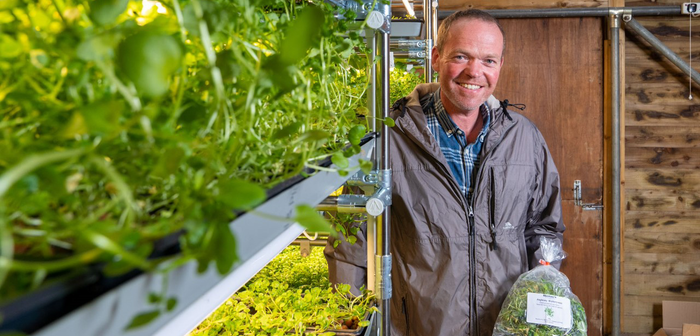
Watercress grown on one of the island’s first Vertical Farms has sold out in hours at Hooton’s Homegrown, Brynsiencyn.
James Hooton and his family are well known for growing quality fruit and vegetables and rearing their own livestock. Their latest offer, watercress, was grown as part of Menter Môn’s ‘TechTyfu’ project, with James one of 3 commercial growers in Gwynedd and Anglesey to trial an innovative vertical farm growing system.
The family received support from TechTyfu, a project created by Menter Môn, to establish a vertical farm at their farm shop in Brynsiencyn over the Summer. Anglesey watercress is grown in a vertical farm unit, which uses a flood and drain hydroponic system to pump nutrient-rich solutions to the plant crop, enabling efficient and clean growth without soil.
“My family have been farming here since the early 1960s,” explained James Hooton, “and watercress is the latest produce we grow to supply our farm shop, Hooton’s Homegrown.”
“We have been using hydroponics to cultivate crops for many years, such as with the tabletop strawberries you’ll see at our ‘pick-your-own’ site. However, this is the first time we’ve used a vertical farm system.”
“I’ve been impressed with the ease of using this system,” said James. “Being able to trial the system through the TechTyfu project has shown me that the system works well and offers a number of advantages. We plan to further trial the system by growing other crops such as pea shoots and various herbs.”
“Watercress is a fabulous source of vitamins and minerals. It is a little green wonder-leaf, and our customers have been delighted with the taste and quality of the Anglesey watercress we’ve produced.”
Gram for gram, watercress contains more calcium than milk, more folate than bananas, more Vitamin C than oranges, and more Vitamin E than broccoli. It is highly nutritious and is packed with more antioxidants than the rest of the Brassica family it belongs to.
“With the winter months ahead, watercress’ nutritional content are sure to appeal to our customers and the vertical farm gives us the ability to produce this wonder food all year round,” shared James.
Luke Tyler, who is leading the project, says “Our project is helping position food production in North Wales to be more resilient, and open doors for farmers, businesses and restaurants looking for strategic ways to diversify. Anglesey watercress’ popularity proves that there is great demand for fresh, local produce”.
TechTyfu is creating a skill-sharing forum and is working in collaboration with local growers and food businesses to develop supply chains.
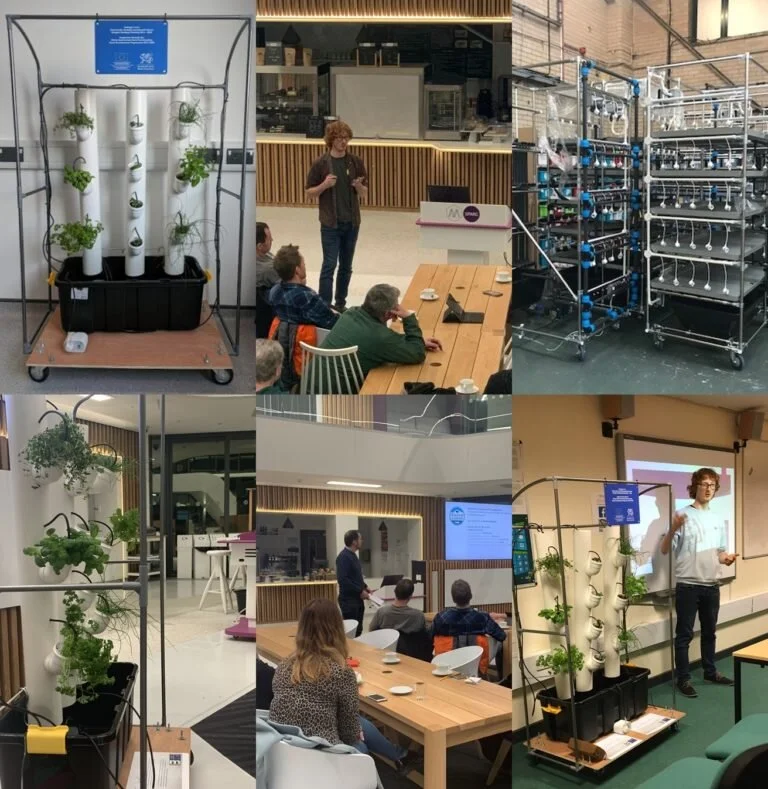
“Growing is often the most straightforward aspect of getting local produce to the market,” noted Luke. “The real challenge on our hands with TechTyfu is developing the supply chains so that every partner along the way makes a profit and fresh produce reaches the customer in excellent condition.”
Since participating with TechTyfu this year, and despite the challenging economic conditions, new doors have opened for growers such as James Hooton.
“We have further developed our own supply chain since collaborating with TechTyfu,” said James. “We have established a new route to market with a local fresh produce distributor, and it was thoroughly rewarding to see our rhubarb reaching various local restaurants.”
in addition to watercress, the project has already identified local opportunities for specialist crops such as pea shoots and a range of microgreens.
“Our estimate is that the market for pea shoots only is worth about £40-50k in Gwynedd and Anglesey alone,” noted Luke. “And by growing them locally, a grower would be able to offer unbeatable freshness. We have already had prominent local chefs asking where they could purchase local pea shoots.”
TechTyfu is a project run by Menter Môn. Luke Tyler can be contacted at luke@mentermon.com and the project can be followed on Facebook and Twitter.
TechTyfu has received funding through the Welsh Government Rural Communities – Rural Development Programme 2014-2020, which is funded by the European Agricultural Fund for Rural Development and the Welsh Government.

Publix Is Helping People Connect With Their Food Through Hydroponics
As far back as 2008, Publix started working with hydroponic growers Tanimura & Antle out of Livingston, TN. Soon, their hydroponically grown butter lettuce became a best seller for leafy lettuce
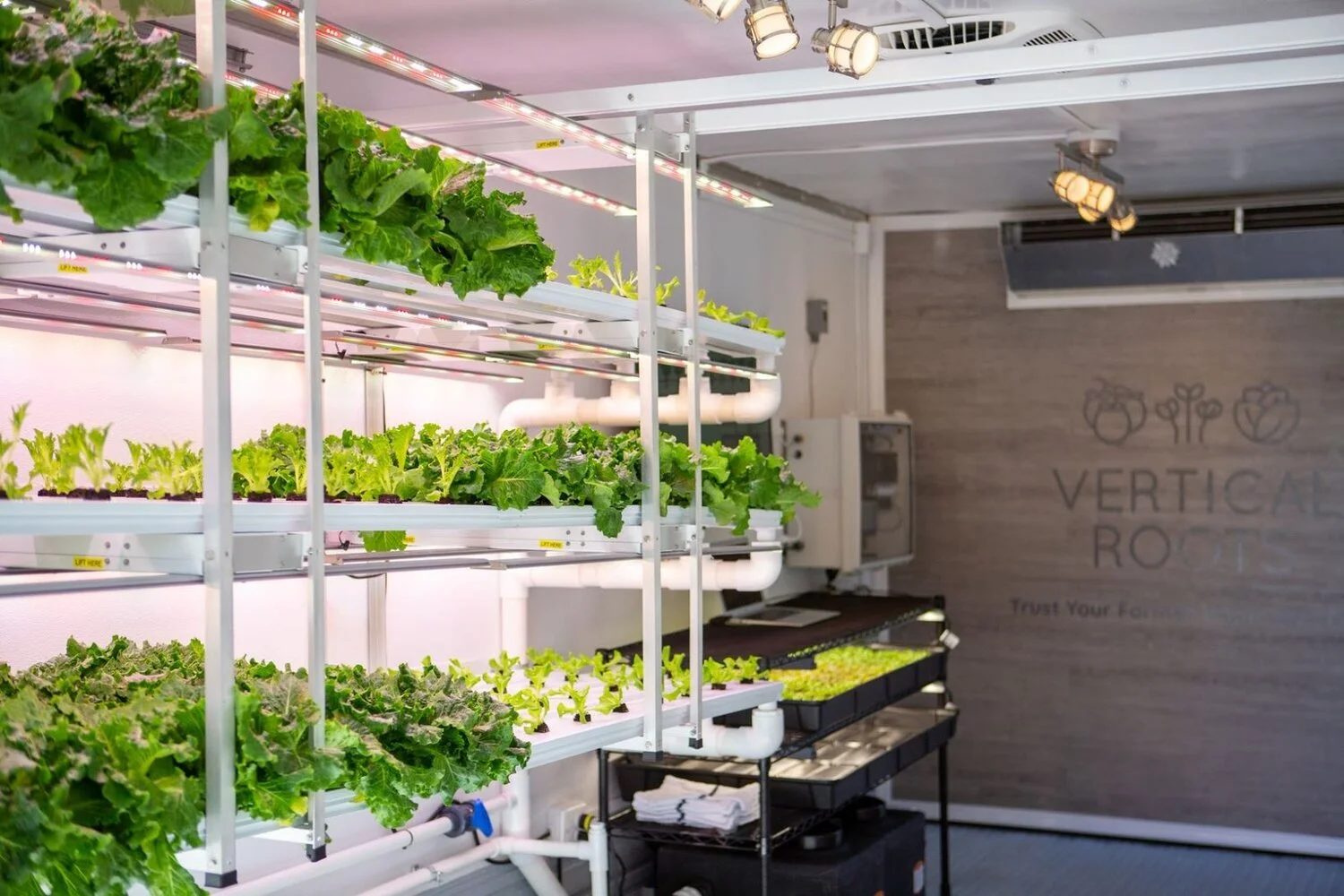
Image sourced from: Publix
Editor’s note: The following information is derived from an interview Agritecture conducted with Curt Epperson, Business Development Director of Produce and Floral at Publix Super Markets.
Publix Super Markets, headquartered in Florida, is the largest employee-owned grocery chain in the United States. Since opening in 1930, they have been committed to supporting the communities in which they operate, and a big piece of that is forging connections with local produce growers, whether they are farming traditionally or hydroponically.
As far back as 2008, Publix started working with hydroponic growers Tanimura & Antle out of Livingston, TN. Soon, their hydroponically grown butter lettuce became a best seller for leafy lettuce. Seeing this lettuce grow into having the best sell-through, Publix began to look more seriously at the category.
Their decision to bring in more hydroponically grown greens into their stores has resulted from not only their decades-long commitment to locally sourced food but to greater sustainability as well. “Hydroponics are known for their very high quality, they have consistent flavor, they certainly carry a good sustainable message in all that they do for being grown locally, supporting the communities in which they’re being grown in, and low carbon footprint,” says Curt Epperson, Business Development Director of Produce and Floral at Publix Super Markets.
Hydroponics can be grown 365 days a year, regardless of weather conditions. The format in which they are grown enables them to be exceptionally efficient— without soil, these crops utilize 90% less water than traditional farming, and all 2- to 3,000 miles closer to the dinner table. Epperson explains, “Being grown in a closed environment, it reduces the risk of outside contaminants and it helps control and better provide food safety. I think all those are possibilities as to why we’re seeing the success that we are.”
Consumers Connect with the Heart of Hydroponically Grown Produce
Today, hydroponically grown products are on the rise, in part, because they help consumers connect with a brand’s purpose. Through hydroponic product packaging, many farmers are sharing their brand story and the product’s environmental benefits. “Our customers were telling us something: we want products that are fresh, and right for the economy and the planet. Right then, we knew we were headed in the right direction, not only with hydroponics but with hyperlocal hydroponics,” Epperson reflects. His team started researching the growing number of hydroponic farms across their seven-state footprint and cultivating relationships with Kalera in Florida, and Vertical Roots in South Carolina, among others.
Sustainably minded shoppers love understanding how a brand’s environmental values align with their own and revel in supporting a locally grown, sustainable product that has a longer shelf life. Because hydroponically grown lettuce is spending less time on the road, it can spend more time in the fridge. As Epperson points out, “In addition to being sustainably grown, hydroponically grown lettuces last longer, so people experience less food waste. This is appealing not only from a financial standpoint but an environmental standpoint, too, since food waste contributes to greenhouse gas emissions.”
Even though hydroponically-grown produce is typically more expensive, popularity is consistently on the rise. Where, on the one hand, the efficient use of space and reduced transportation of commodities should translate to reduced prices, the lack of soil and utilization of artificial lighting, and such technology counteracts the price reduction. They also owe the prices to the new tech, growers, and investors entering the industry. Epperson explains, “There’s a lot of work and research to be done to scale up and provide the yields that the Western growers have been providing for centuries,” Epperson notes. Consumers seem to agree, this is a small price to pay.
As an extension of their commitment to local, hydroponically grown lettuces, in April of this year, Publix’s GreenWise Market (which specializes in organic, natural, and specialty groceries) embarked on a pilot program with Brick Street Farms to grow, harvest, and package hydroponically-grown lettuce in a container farm located right outside the GreenWise Market Lakeland, Florida store. “The lettuce we are growing onsite travels feet instead of miles—you don’t get much more local than that,” Epperson marvels.
By growing the lettuce on-site in this 40-foot container farm, Publix is able to grow an equivalent of 2.5 to 3 acres of lettuce and eliminate pollution from transportation. By utilizing a rotational planting cycle, the on-site container farm yields a new crop every five weeks, and approximately 700 heads of lettuce every week. Here, customers can watch the growing process through an observation window, learn more about this method of farming, and see exactly how their produce is grown.
Publix is expanding its hydroponic operations to have hydro-growers in each state in which they operate. The Publix team sees potential ahead due to possibilities of scaling up, increased research and development, and expansion beyond leafy greens into growing peppers, cucumbers, berries, and more. “We look forward to seeing what our local hydroponic farmers are going to grow in the coming years. Whatever it is, we know it will be flavorful and environmentally friendly, which will make our customers very happy,” Epperson says.
For more information contact:
Maria Brous, Director of Communications - Maria.Brous@publix.com
FURTHER READING
ARE HYDROPONIC VEGETABLES AS NUTRITIOUS AS THOSE GROWN IN SOIL?
AL GHALIA FARMS: ADVANCING HYDROPONIC FARMING IN THE KINGDOM OF BAHRAIN

With $68m In Fresh Funding, Revol Greens Plans To Build The World’s Largest Indoor Farm
“We need to have more [CEA] projects around the country and around the world. It is a very efficient way to grow food and a better way to grow food sustainably for the future. So, I am happy that it has moved into somewhat more mainstream investing.”
October 7, 2020
The controlled environment agriculture (CEA) space appears to be in a race, with startups jostling to see which can build the biggest facility or supply the most produce. Owatonna, Minnesota-based Revol Greens is throwing its hat in the ring, having recently raised $68 million in Series A funding. Greenhouse-hungry VC Equilibrium Capital led the round, which brings the startup’s investment total to $215 million.
“Greenhouses are the tech disruptor in a 10,000-year-old agriculture sector,” Equilibrium CEO David Chen said in a press release announcing the funding. “[The firm’s] investment strategy is to find the industry leaders that will create the future of agriculture. Revol Greens [is] poised to be one of those tech-driven disruptive agriculture market leaders.”
Launched in 2016, Revol Greens is the brainchild of an interdisciplinary team composed of the founder of local farm Bushel Boy, a greenhouse grower from Amsterdam, and a horticulture consultant. It employs closed-loop hydroponics to grow lettuces in a system that uses 90% less water than traditional open-field agriculture, according to the startup. Its glass greenhouses also mitigate the need for pesticides, herbicides, or other chemicals.
Revol and Equilibrium have taken a slightly different approach to finance their CEA expansion. Equilibrium is footing the bill for the construction of the facilities, which Revol will then lease from the VC.
With that funding, the startup is planning to build a new, 80-acre greenhouse complex in Texas – which it claims will be the largest such facility globally. It also recently inked the paperwork for a California installation that will be operational in the first quarter of 2021. With these two locations plus its home base in Minnesota, Revol is positioning itself to access key markets.
Invest with Impact. Click here.
“With these three cities we will have taken a pretty big chunk of the country west of the Mississippi,” Mark Schulze, the newly appointed CEO of Revol, told AFN. He joined the startup in March 2020 after three decades working for Cargill in domestic and global leadership roles. Delivering produce within 24 hours of harvest is a key goal for the startup.
“There are other expansions that are going on like AppHarvest, but it has never grown lettuce,” he said, referring to the rival CEA startup. “There is a lot of money there but we have been growing lettuce since 2018. We have done thousands of trials on seeds to know what seed provides the best characteristics and quality for our consumers. We’ve done massive innovations in the process that are different from off-the-shelf greenhouses that you can buy.”
Revol is also focusing on scale. With its 10 to 20-acre facilities it’s hoping to drive down costs so it can provide a price-competitive product, Schulze added.
“We don’t have to be priced at two times the imported price of West Coast lettuce.”
Last week, Kentucky-based AppHarvest announced a merger with NASDAQ-listed Novus Capital, enabling it to go public. The deal is slated to bring in $475 million in gross proceeds.
“I think [that deal] certainly raised the profile of the space. I think that’s terrific,” Schulze said.
“We need to have more [CEA] projects around the country and around the world. It is a very efficient way to grow food and a better way to grow food sustainably for the future. So, I am happy that it has moved into somewhat more mainstream investing.”

VIDEO: How To Optimise Plant Growth In Vertical Farms
Lisanne Meulendijks, Researcher at Delphy Improvement Centre, Mike Zelkind. Cofounder and CEO 80 Acres Farms and Mariska Dreschler discuss the latest insights in Vertical Farming
Back to overview Print webpage
VIDEO: How to optimise plant growth in a vertical farm
08 September 2020
GreenTech
Lisanne Meulendijks, Researcher at Delphy Improvement Centre, Mike Zelkind. Co-founder and CEO 80 Acres Farms and Mariska Dreschler discuss the latest insights in Vertical Farming.
Climate control in vertical farms
What have we learned from the transition from conventional farming to vertical farming
What should you optimize in your vertical farm
Difference between horticulture and a vertical farm
The impact of wind and lights
Plant processes, how can you optimize this in vertical farms
Which innovations are needed in vertical farming
The necessity of interdisciplinary approaches to reach common goals in vertical farming
You can watch the video, or listen to the audio on one of our podcast platforms »
Share your horticulture stories with us
Do you have an innovation, research results or other interesting topics you would like to share with the international horticulture industry? The GreenTech website and social media channels are a great platform to showcase your stories!
Please contact our Brand Marketing Manager Murkje Koopmans.
Are you a GreenTech exhibitor?Make sure you add your latest press releases to your Company Profile in the Exhibitor Portal for free exposure.
+31 (0)6 264 34 601

Seed Firm Bayer Invests In Vertical Farming Future
Vertical farming provides fresh produce to urban dwellers, uses less water, less chemical, and less of other crop inputs
Sales From Vertical Farming Are
Estimated To Grow To Just Over $12 Billion By 2028
10-04-20
By: Ron Walter
One of the world’s largest agricultural seed and chemical companies has invested in the development of vertical farming.
Bayer AG of Germany has teamed up with Singapore investment bank Temasek to raise $30 million USD in a fund called Unfold.
Unfold will focus on the development of seed varieties bred for the indoor conditions and artificial lightings used in vertical farms.
Most vertical farming research is based on infrastructure.
Unfold bought the rights to some seed germa-plasm from Bayer.
Vertical farming, or urban agriculture, as it is often called, has grown in recent years, Forbes Magazine estimated vertical farming sales at $2.13 billion US in 2018 and estimates sales will grow to just over $12 billion by 2028.
Vertical farming provides fresh produce to urban dwellers, uses less water, less chemical, and less of other crop inputs.
Ron Walter can be reached at ronjoy@sasktel.net
Lead photo: (Getty Images)

Lettuce In A Hydroponic System: 100% Organic Nutrients
The hydroponic section in the company's innovation center has recently been redesigned and all ponds now receive a 100% organic nutrient solution
Van der Knaap is known for its substrate knowledge, but did you know they also developed a sustainable cultivation system? The liquid nutrient solution rich in organic NO3 that is produced with this system is also extremely suitable for other cultivation systems, such as growing lettuce in a hydroponic system.
The hydroponic section in the company's innovation center has recently been redesigned and all ponds now receive a 100% organic nutrient solution. The earlier phase of their research has already proven that the organic fertilizer holds its own compared to mineral fertilizer. On a number of points it even surpasses the traditional method, they report.
The follow-up research now focuses on influencing the cultivation by means of different pH values. In addition, the young lettuce plants get a good start on Obturo plugs or conventional pressed pots.
For more information:
Van der Knaap
www.vanderknaap.info
Publication date: Thu 8 Oct 2020
"Urban Farming": Are Rooftop Fields The Future?
Large cities offer millions of square meters of unused roof space. Why aren’t they being converted to cultivate crops? The potential seems enormous, but “urban farming” is still in its infancy. EURACTIV Germany reports
By Florence Schulz | EURACTIV.de | translated by Sarah Lawton

September 30, 2020
This article is part of our special report New terminologies in sustainable food systems.
Large cities offer millions of square meters of unused roof space. Why aren’t they being converted to cultivate crops? The potential seems enormous, but “urban farming” is still in its infancy. EURACTIV Germany reports.
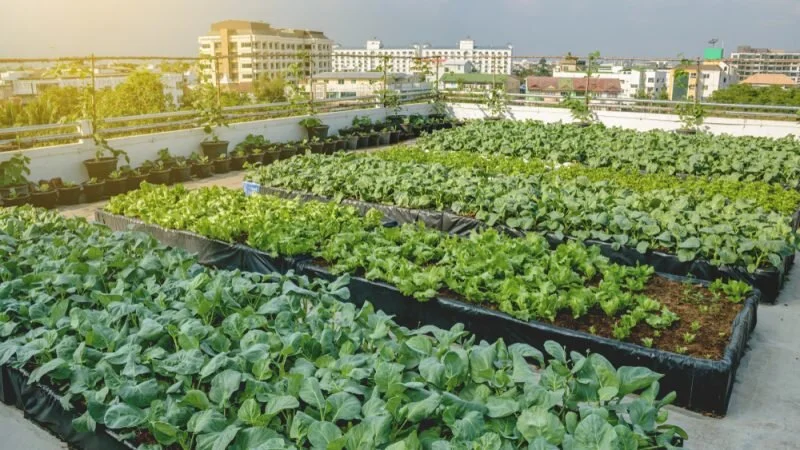
Salad from the roof of the supermarket or tomatoes from the facade of a high-rise building? What sounds like fiction is already a reality in some cities, albeit on a small scale. Urban farming is not a new concept, but one that has hardly been exploited to date.
Cultivating fruits and vegetables could experience a boom in the coming decades. After all, the human population is growing rapidly and is increasingly settling in cities. More than half of this population is already living in cities, and by the middle of the century, around 66% of people are expected to be living in cities – out of a world population of 9.7 billion.
More food also means correspondingly more demand for farmland, but this already accounts for 42% of the global land area.
Another problem is transport. According to the Fraunhofer Institute, around 12% of agricultural emissions are attributable to this alone.
As the World Summit on Biodiversity opens on Wednesday (30 September), new measures to halt its decline are being discussed, including the concept of payments for environmental services, which is currently widely debated in France and Europe. EURACTIV France reports.
Urban gardens for times of crisis
Could urban farming be part of the solution? One thing is certain: The idea is not new. Until the 19th century, cultivating crops was common practice within cities. When they disappeared, private allotment gardens spread.
Interestingly, a new trend is emerging: self-sufficiency is booming in the city, especially in times of crisis.
Often with success, as the British example shows: During World War Two, the government launched the “Dig for Victory” campaign. As a result, up to 50% of fruit and vegetables were produced by the population in allotment gardens.
In Spain, during the economic crisis, the proportion of allotment plots and community gardens increased six-fold between 2006 and 2014.
Apart from private cultivation, however, there are hardly any places where agriculture takes place on a larger scale in cities.
Roof gardens of the future use domestic heat and rainwater
In Europe, urban farming is still in its infancy.
“Every morning, I ask myself why not many more cities invest in it,” says Jörg Finkbeiner, architect, and co-founder of the Berlin network ‘Dachfarm.’ The consortium consists of gardeners, agroscientists, and architects, who together plan greenhouses for growing crops in the city.
However, Finkbeiner believes that this cannot be the case with urban farming, because most buildings are not statically suitable for it: “If you put crops in tubs on a roof and water them, you can quickly achieve 300 kilograms per square meter. Most buildings can’t support that.”
Dachfarm, therefore, relies on roof structures that are as light as possible and are built on top of existing buildings. The plants grow either in substrates such as pumice, lava, or compost, as these are much lighter than soil or in hydroponic systems, where the nutrient supply is provided directly via a nutrient solution.
The glass gardens are designed to operate as efficiently as possible by using the waste heat from the building, collecting rainwater, or recycling greywater from households.
The concept of soil carbon sequestration, a cornerstone of regenerative farming, is regaining strength as a key measure in both climate mitigation and adaptation.
With Dachfarm, we want to show that the increasing amount of pavement in cities and the loss of arable land do not contradict themselves, Finkbeiner told EURACTIV.de.
Other advantages are that roof gardens can be used to produce close to the consumer and “on-demand,” so to speak, eliminating long transport routes or the need to store food. But not every type of agricultural cultivation is structurally possible, Finkbeiner points out. Besides, there are many open questions particularly in terms of building codes.
Bologna and Amsterdam with great potential
For supermarkets or restaurants, the own roof garden could be an attractive concept.
However, it is not worthwhile for everyone, because investment costs are still comparatively high and the food harvested in this way is more expensive.
A 2017 study by the European Parliament’s Scientific Service (EPRS) also came to the same conclusion: urban agriculture is “associated with considerable ecological, social and health benefits,” but can increase biodiversity and counteract the heating of cities.
However, this is also associated with high operating costs, for example for electricity, and is in competition with other types of use, for example for solar energy systems. In addition, the report says, tensions between “traditional and innovative farmers” and an increase in land values are also concerns.
There are no reliable figures on how widespread urban farming is in the EU. However, according to the ERPS evaluation, the potential could be huge, depending on the city.
In Bologna, for example, more than three-quarters of the vegetables consumed there could be grown in roof gardens. In Amsterdam, where currently only 0.0018% of food is produced locally, up to 90% of the fruit and vegetables consumed could be grown.
In a clear nod to the strategic importance of agroforestry, the term has now cropped up in both the European Green Deal, the European Commission’s roadmap for making Europe the first climate-neutral continent by 2050, and the EU’s flagship new food policy, the Farm to Fork (F2F) strategy.
Commission has no plans special funding
These figures seem optimistic, as they would probably require strong political support. In the current EU Common Agricultural Policy, urban farming projects can theoretically be financed with funds from both pillars as well as from the European Social Fund and the Regional Development Fund, but this is at the discretion of the member states.
Further support is not in sight, as the Commission “currently has no plans to coordinate strategies for urban agriculture beyond different levels of government,” according to the response EU Agriculture Commissioner Janusz Wojciechowski gave in the European Parliament in May. However, a planning study on the topic is currently being prepared. This should be completed this autumn.[Edited by Gerardo Fortuna/Zoran Radosavljevic]
Topics agriculture Agrifood CAP reform urban farming Urban Gardening
The content of this page and articles represents the views of the author only and is his/her sole responsibility. The European Commission does not accept any responsibility for use that may be made of the information it contains.
Follow @eaagrifood
Lead Photo: Up to two million square meters of roof space could be used for plant cultivation in Berlin alone. But the investment costs are still relatively high. [YuRi Photolife/ Shutterstock]

Canada To The U.S.: Keep Your Romaine Lettuce
Beginning this week, leafy greens growers in America’s Salad Bowl will have a much harder time shipping to Canada—after food safety officials up north imposed new, strict restrictions on romaine lettuce imports in an effort to stave off potential E. coli outbreaks this fall
by Jessica Fu
10.08.2020
“Canada’s making a clear statement there”: As the U.S. continues to deal with leafy green E. coli outbreaks, our northern neighbors are taking a stand.
Beginning this week, leafy greens growers in America’s Salad Bowl will have a much harder time shipping to Canada—after food safety officials up north imposed new, strict restrictions on romaine lettuce imports in an effort to stave off potential E. coli outbreaks this fall.
Last week, the Canadian Food Inspection Agency announced that it would effectively ban imports of romaine sourced from major growing regions in the Salinas Valley unless growers could certify through lab testing that their shipments had “below-detectable levels of E. coli.” The rules took effect on Wednesday and are scheduled to run through the end of the year. Officials said the move was prompted by the numerous E. coli outbreaks linked to U.S.-grown romaine over the past few years.
“From 2016 to 2019, romaine lettuce from California was linked to outbreaks of E. coli illnesses in the USA and Canada,” the announcement read. “To mitigate risk in the event of another outbreak this fall, the Canadian Food Inspection Agency is implementing temporary import measures aimed at preventing contaminated food from entering the marketplace.”
Some food safety experts weren’t surprised by the move, given just how frequently E. coli outbreaks have been traced back to romaine.
“From 2016 to 2019, romaine lettuce from California was linked to outbreaks of E. coli illnesses in the USA and Canada.”
“Canada gets most of its lettuce from [the U.S.],” said Bill Marler, a prominent food safety lawyer and publisher of Food Safety News. “So when we have outbreaks in the U.S., Canada usually has one, too.”
There were last fall’s E. coli outbreaks linked to romaine lettuce sourced from the Salinas Valley. Then there was the 2018 one. Then there was the 2017 one, which also included growers in Arizona and Mexico. Of course, E. coli is far from the only dangerous pathogen that regularly rips through our food system, and E. coli outbreaks have also been traced back to other food items, from other regions, at other times of the year. However, Marler suspected that Canada’s move specifically targeting romaine harvested from Salinas in the fall was the result of getting “whacked” by these particular imports one too many times.
The new requirements may also suggest that Canada is raising doubts about the ability of American leafy greens growers to prevent foodborne illness outbreaks, said Angela Anandappa, executive director of food safety non-profit Alliance for Advanced Sanitation.
“This is a little radical for Canada to do,” she said. Anandappa interprets the restrictions as saying: “We have lost trust in your ability to produce this kind of product.”
“Canada’s making a clear statement there,” she added.
The move’s short notice took growers by surprise, said Trevor Suslow, extension research specialist at the University of California, Davis, who works with farms on food safety issues. In fact, he doubted that many farms would be able to meet the high testing requirements outlined in the new rule—which requires that they take and test 60 samples from every truckload of romaine lettuce products, including mixed salad bags.
The move could indirectly encourage producers to take greater precautions along the growing process.
In response to the move, California Leafy Greens Marketing Agreement—a voluntary program composed of major growers who commit to food safety standards and audits—indicated that it might lead to bottlenecks in leafy green supply chains. After all, this is one of America’s top produce exports to Canada, which imported $333 million worth of lettuce in 2018, according to the Department of Agriculture.
“The measures required in these new restrictions for post-harvest testing are not achievable on an industry-wide basis in the timeframe provided,” the marketing group wrote in a statement. It also suggested that industry groups and government officials were working behind the scenes “to resolve this situation to the benefit of all parties.” (California Leafy Greens Marketing Agreement declined a request for more information.)
The one point everyone I spoke with agreed on was that testing alone doesn’t safer lettuce make. While it can help trace outbreak sources, and minimize the number of people who get sick from recalled products, it doesn’t directly address the root causes of contamination. For example, leafy greens farms are often located near livestock production, which can contaminate water used to irrigate lettuce. Down the line, contaminated water might also be used to wash and process lettuce before shipment. Then, at the consumer level—while cooking lettuce with heat may kill any potential pathogens—lettuce is typically eaten raw.
Having said that, Marler believes the move could indirectly encourage producers to take greater precautions along the growing process.
“If [producers] want to continue to sell products from Salinas to Canada, they’re going to have to play by the rules,” he said. “And I think that might well be a net benefit to food safety in the U.S.”
Lead photo: iStock /Juanmonino Eating Sourcing
Also tagged canada, lettuce, romaine
Jessica Fu is a staff writer for The Counter.