

Welcome to iGrow News, Your Source for the World of Indoor Vertical Farming

MANILA: A Farm In Zambales Has A Competitive Edge In The Market Through Hydroponics
Due to the rise of urban gardening, homeowners, especially those who have limited space for gardening, are looking for ways to grow their own food. Many try vertical or container gardening while others practice hydroponics or the process of growing plants without soil but rather in nutrient-filled sand, water, or gravel
September 4, 2020
Due to the rise of urban gardening, homeowners, especially those who have limited space for gardening, are looking for ways to grow their own food. Many try vertical or container gardening while others practice hydroponics or the process of growing plants without soil but rather in nutrient-filled sand, water, or gravel.
Zennor Hydroponics Farm in Palauig, Zambales also practices hydroponics because of its efficiency in all aspects of farming.
“Using a hydroponic system in a farm works because aside from being able to plant a lot in a small space, it can save a lot of money since you don’t need a lot of manpower to tend to plants as the system takes care of the watering while the nutrient solution provides the vitamins and minerals for the plants’ growth,” said Zennor Hydroponics Farm proprietor Raffy Pagaling during the second episode of AgriTalk 2020 aired on Facebook by the Agricultural Training Institute in partnership with Manila Bulletin and Agriculture Online.
Pagaling added that using a hydroponic system in growing food can generate 20 to 25 percent more produce as compared to planting in soil. Moreover, the process is faster which makes a good return in investment.
An example of a hydroponic technique that the farm uses is the Dutch Bucket System or Bato Bucket system. This system, as its name implies, uses buckets as the core of its growing method. It’s also a variation of the ebb and flow method which works by periodically flooding and draining the plants with nutrient solutions.
“In our farm, we use it to grow fruit-bearing vegetables like cucumber, tomatoes, okra, etc.,” Pagaling said.
Pagaling posing with English cucumbers harvested from his farm.
He added he chose to grow this specific variety of cucumbers that through this method, the farm manages to grow English cucumbers which weigh 500 to 600 grams per fruit.
“This is an advantage of using hydroponics; it can produce better crops in terms of size and quality,” Pagaling said.
From a hundred cucumber plants, Pagaling manages to harvest 278 kilos of English cucumbers which he affirms are crunchy, juicy, and superb in quality. These cucumbers are then sold at P165 per kilo.
Another hydroponic technique that Zenno Farm uses is the rockwool or hydrowool. This method, according to Pagaling, is a soilless medium that serves as the backbone of the farm because all their seeds such as okra, tomatoes, and more are planted on this material.
The farm grows their seedlings in a soilless medium called rockwool.
Rockwool is a lightweight hydroponic substrate made from molten basaltic rock which is then spun into fine fibers to create products such as cubes and blocks. When hydrated, these cubes have a ratio of 80 percent water and 20 percent air, making it difficult to overwater the plants growing in this material.
When ready, seedlings can be easily transplanted from the rockwool to the preferred growing medium.
Other hydroponic methods used on the farm
Since Zennor Hydroponics Farm grows their crops without using soil, they have more than two methods that they follow especially if they want to make the most of their space.
First is the NFT system where the crops are planted in very shallow water that contains all the dissolved nutrients required for plants to grow. These nutrients are re-circulated past the bare roots of plants in a watertight channel.
Zennor Farm’s NFT system allows them to maximize space and even plant different vegetables all at once.
“We have our own version of the NFT system which can accommodate 320 green leafy vegetables and it is the biggest system that we have [on the farm] with an area of 10 feet by six feet,” Pagaling said.
He added that aside from being suitable for most leafy greens, the NFT system keeps their vegetables fresh, even if it’s already been ripe for two weeks or so.
In addition, this system can hold different kinds of leafy vegetables at the same time.
Next is the Wick System. This is the simplest way to grow vegetables without any electricity and can be done by anyone from seven years old and above.
The Wick System is the simplest way to grow vegetables without electricity.
“Any material can be used to create this kind of hydroponic system. It doesn’t require electricity because its main component is stagnant water, but it’s a very efficient way of farming because it can grow plants within 30 days with little supervision. Plus, it keeps it fresh even if you’re away for a long period of time,” Pagaling said.
He added that the Wick System can also be done indoors provided that they are supported with artificial lighting.
An indoor setup is also possible with the Wick System.
The farm even has a small greenhouse where they use the Dutch Bucket system, the Wick type, and the NFT method at the same time to grow crops that are fit for personal consumption.
Zennor Hydroponics Farm has a greenhouse measuring 12 feet by 14 feet and is planted with 700 lettuce and 72 fruit-bearing vegetables.
“With an area of only 12 feet by 14 feet, we still managed to plant here 700 lettuce and 72 fruit-bearing vegetables like cherry tomatoes. But since it produces more than we need, we sell the excess to neighboring towns, friends, families, and neighbors,” Pagaling said.
By using hydroponics in growing food, he added that one need not worry about the sustainability of a farm or garden because the system can run all-year-round, making it suitable for almost every kind of crop.
Much like Pagaling said, there are many benefits that can be reaped from using a hydroponic system. He hopes that his farm can set an example and inspire more people to try out this innovative farming technique.
Watch the full video of the webinar here.
Jake Savageau, COO At FarmBox Foods "There’s A Huge Potential In Helping African Countries Become Self-Reliant And Self-Sufficient”
We offer multiple products that can feed large populations with nutrient-dense food. With mushrooms, we are diversifying that vision because we cannot feed the world with leafy greens alone”, Savageau adds
FarmBox Foods is aiming to scale its production of shipping container farms significantly by the end of 2020. “We have been working with some exciting partners outside the private sector, like Ministries of Agriculture in West Africa. There’s a huge potential in helping African countries become self-reliant and self-sufficient”, Jake Savageau, COO at FarmBox Foods says.
FarmBox Foods holds patents for its vertical hydroponic and mushroom farms. “We are trying to grow the right way, not only in terms of scaling but in separating ourselves from the competition, with logistics as our core tenet. The competition doesn’t focus on logistics like we do, in terms of dealing with governments, and getting our farms deployed all over the world.
We offer multiple products that can feed large populations with nutrient-dense food. With mushrooms, we are diversifying that vision because we cannot feed the world with leafy greens alone”, Savageau adds. “Everyone is growing greens and raising tens or hundreds of millions of dollars, but what I think they are missing is becoming a full-circle food security entity.”
Gourmet mushrooms
Alternative energy solutions
The company is also working on solar power solutions which will eventually be used for running their farms off-grid. Atmospheric water generation technologies are also in the works—a vertical hydroponic farm uses three to five gallons (11.4-19 liters) of water per day. FarmBox Foods has partnered with a Denver company that develops microgrid systems. “As we start working with governments, they won’t be putting just one farm into a warehouse or village. Rather it will be 100 farms or more where there’s limited infrastructure. That’s why we want to ensure that our farms will be fully amenable to off-grid setups.”
It’s not about making money and raising money—it’s about feeding the world. The FarmBox Foods team ultimately offers a solution to a global problem. “We are not the only solution, but I think we are a pretty good one. Our system is very well-thought-out for the end-user. We built the farms to allow for the least amount of labor with the highest yield”, Savageau notes. Currently, FarmBox foods is developing its third product, a root vegetable farm which will allow an entirely new group of crops to be grown in its farms.
Jake Savageau, COO at FarmBox Foods
Savageau continues: “The mushroom farm is a bit different than our previous designs, but we have taken care of everything in just one container. So, from start to finish, we have everything inside that’s needed to produce up to 400 pounds (180kg) of gourmet mushrooms per week. Just like the vertical hydroponic farm, it’s deployable for national disasters or food shortages. There are benefits to small compartmentalized systems because when you have a large greenhouse, it cannot be moved easily. Island nations are particularly well suited for container farming because they can control their food supply in a way that was previously unimaginable”
For more information:
Farmbox Foods
Jake Savageau, COO
jake@farmboxfoods.com
www.farmboxfoods.com

Is Hydroponic Farming Actually Sustainable?
If you've ever wondered how sustainable hydroponic farming really is—or what exactly is involved in vertical farming—this article is for you.
September 4, 2020
According to the UN, the world is on the brink of its worst food crisis in 50 years.
The global food industry is searching for a more sustainable and accessible system for producing healthy food, particularly fresh fruit and vegetables. Techniques such as hydroponics and vertical farming may provide the solution by maximizing overall output and minimizing the use of space, soil, and other resources.
But what exactly is hydroponic farming? And is it actually sustainable?
Gotham Greens grows fresh produce such as leafy greens in urban greenhouses. | Image/Gotham Greens
What Is Hydroponic Farming?
There are a variety of different approaches to Hydroponic Farming. But they all involve growing plants and fresh produce minus the soil.
There are several main styles of hydroponic systems. One uses an absorbent wick to transfer nutrients from a water reservoir up to the roots of the crop. While others leave an air-gap, allowing part of the root system to absorb nutrients directly while the remainder is exposed to oxygen in the air.
Plants may also be positioned on a floating raft, or grown through a medium, into which water is regularly pumped. Top feeding also requires regular water circulation, while aeroponics involves leaving the roots completely exposed but frequently filling or misting the space with nutrient-enriched water.
Whatever the precise method used, hydroponics involves regular exposure to both air and nutrient-rich water. According to Vertical Roots, a South Carolina-based Indoor Hydroponic Container Farm, there are five core elements to hydroponic farming. These are freshwater, oxygen, root support, nutrients, and light.
By growing crops in water, vertically, and in climate-controlled greenhouses, Vertical Roots and other similar farms are able to produce nutrient-dense food anywhere in the world, at any time of year, and using fewer resources than traditional methods.
Hydroponic farming is more resource-efficient than traditional methods. | Image/Shawn Ang via Unsplash
Is Hydroponic Farming Sustainable?
Soil-less farming techniques, in general, are typically more resource-efficient long term than traditional methods. According to the National Parks Service (NPS), hydroponics can use up to 10 percent less water than field crop watering.
By operating a closed-loop system and recycling rainwater, high-tech greenhouse developer AppHarvest uses up to 90 percent less water than traditional methods.
Most hydroponic farms utilize closed-loop systems, like AppHarvest, that contain and preserve water. This control over the water system also allows for delicate adjustments to the environment. PH levels, amount and type of light, and quantity of nutrients can all be modified to enhance the growth of crops.
Emphasizing perennial agriculture—particularly in combination with vertical farming and hydroponics—can further maximize both production and nutritional content per-plant. Many perennials, which can be maintained all year round with no replanting, are extremely nutrient-dense.
Start-up costs for hydroponic systems are typically greater than for traditional farming. But overall, it produces far greater output with fewer resources. It also allows growers to produce food anywhere in the world. Thereby reducing the carbon emissions generated through transportation, and allowing for year-round production in even inhospitable environments or weather conditions.
In general, hydroponic systems can produce a greater yield of fruits and vegetables. This is in part due to the controlled environment, but also because plants can be housed much more densely than possible using traditional methods. This both increases the overall output and reduces the quantity of land required.
Vertical farming can decrease the amount of land used for fresh produce even further. | Image/Markus Spiske via Unsplash
What Is Vertical Farming?
Vertical farming involves the growing of vegetables in stacked layers, frequently in a controlled environment.
Vertical farming also requires much less land than traditional methods. Typically, it incorporates controlled-environment systems such as hydroponics to maximize output. The primary goal of vertical farming is to increase the crop yield while reducing the space required, much like hydroponics itself.
Vertical farming firm Infarm recently partnered with supermarket chain Marks & Spencer to grow fresh herbs in select stores. The company is also working with several retailers and chefs across Europe who aim to add small vertical farms to their restaurants and stores.
“Our vertical farms can be installed directly in any urban space,” said Emmanuel Evita, global communications director at Infarm. “Which is where the majority of the global population will live in the next few decades.”
It is particularly useful for growing produce in areas where there is a lack of arable land. In Abu Dhabi, where there are extremely high temperatures and increasing water scarcity, the government is investing $100 million in indoor farming.
Inner-city gardening, in general, also lends itself to vertical farming. While harder to create a controlled environment, guerilla gardening and other community-based projects have also made use of the vertical system. This enables greater access to fresh produce and reduced mileage overall, even with rudimentary systems in place.
Emphasizing perennial vegetables could also maximize nutrients, increase production, and reduce the consumption of resources.
Why Do We Need Alternative Farming Methods?
Studies indicate that the suburbanization of major supermarkets has led to food deserts within cities. This disproportionately impacts low-income people and those who live in urban areas. Traditional malnutrition affects around two billion people worldwide. But the Standard American Diet (SAD) and lack of access to fresh food is also responsible for chronic deficiencies.
Access to fresh fruit and vegetables is likely to become even more restrictive in the recession following the COVID-19 coronavirus pandemic. And even in countries with plenty of food, there will likely be further disruptions in the food supply chain.
In order to provide enough vegetables for the global population to maintain a healthy diet, food production would need to triple. Alternative methods such as vertical farming and hydroponics could provide a resource-efficient and accessible way of revolutionizing the global food industry.
Gotham Greens, a fresh food farming company, specifically choose to build sustainable greenhouses within cities. Local cultivation helps the company deliver products quickly and with minimal energy expenditure. This also allows those who live within urban areas access to fresh, nutrient-dense food, and to agricultural jobs.
AppHarvest is also creating jobs, minimizing its carbon footprint, and increasing its output with its choice of location. By opening a new facility in Morehead, Kentucky, the company is both tackling high local unemployment rates while placing itself less than one day’s drive from 70 percent of the U.S. population. This reduction in travel for delivery has dropped its overall diesel costs by 80 percent.
“It’s time for agriculture in America to change,” said Johnathan Webb, the founder, and CEO of AppHarvest. “The pandemic has demonstrated the need to establish more resilient food systems, and our work is on the forefront of that effort.”
STAFF WRITER | BRISTOL, UNITED KINGDOM | CONTACTABLE VIA: LIAM@LIVEKINDLY.COM
Liam writes about environmental and social sustainability, and the protection of animals. He has a BA Hons in English Literature and Film and also writes for Sustainable Business Magazine. Liam is interested in intersectional politics and DIY music.
Lead photo: How sustainable is hydroponic farming? | Image/Gotham Greens

LIVE Virtual Tour - Inside the Greenery Container Farm with Freight Farms' Lead Designer - Thurs, Sept 10, 2020 - 4:30 PM EST
Explore the technology behind our Greenery container farm that allows farmers to grow food anywhere in the world!
Take a Virtual Tour of the Freight Farms Greenery™
Explore the technology behind our Greenery container farm that allows farmers to grow food anywhere in the world!
Farm expert Derek will explain the ins and outs of the Greenery using a live video stream inside the farm. He’ll cover the basics of controlled environment agriculture, hydroponics, vertical farming, and how all those work together inside the Greenery to create the perfect conditions for crop growth regardless of geographic location.
To Register For This Free Zoom Virtual Live Tour
Thursday, September 10, 2020 - 4:30 PM


Sakata Seed America Announces Formation of CEA Department
Leading the new division will be Tracy Lee, an 11-year veteran of Sakata Seed America with an extensive background in agriculture. At Sakata, she has played active roles specializing in product development for multiple categories, as well as handling the company’s home garden and farm market vegetable seed sales
Sakata Seed America announced the formation of a Controlled Environment Agriculture (CEA) department. This new department will focus on indoor agriculture, a growing segment of the produce industry that focuses both on traditional greenhouse production as well as specialized vertical farming.
According to Justin Davis, Sakata’s Director of Sales & Marketing, this new group is designed to bolster the company’s role in developing varieties for controlled environment ag. “We have been focused on this segment for a number of years, especially in the leafy greens category. The timing is ideal for Sakata to create this group to hone our efforts on CEA in order to bring more products to the market for Indoor ag.”
Leading the new division will be Tracy Lee, an 11-year veteran of Sakata Seed America with an extensive background in agriculture. At Sakata, she has played active roles specializing in product development for multiple categories, as well as handling the company’s home garden and farm market vegetable seed sales.
“I think there is tremendous growth opportunity in serving the Controlled Environment Agriculture segment, and I’m very pleased that Sakata is continuing its leadership in the market. This is something that I’m passionate about and have been active in for the past several years,” says Lee.
Lee completed her BA at Clemson University and earned a Master of Science in Horticulture from her alma mater. Her field of study focused on sustainable vegetable production. Prior to her work at Sakata, she held product management, marketing, and sales positions at vegetable and flower seed companies for an additional 10 years.
“I feel that my background and specific work with indoor growers gives me unique insight into the market’s needs. My goal is to harness my experience in the field and bring the right mindset back to Sakata as we develop new products created specifically for CEA,” says Lee.
For more information:
Sakata Seed America www.sakata.com
Mon 7 Sep 2020
Publix Donates More Than 11 Million Pounds of Fresh Produce
The need for food assistance has reached unprecedented levels in this country due to the coronavirus pandemic with Feeding America estimating that an additional 17 million Americans may face hunger, bringing the total to 54 million Americans
SEPTEMBER 07, 2020
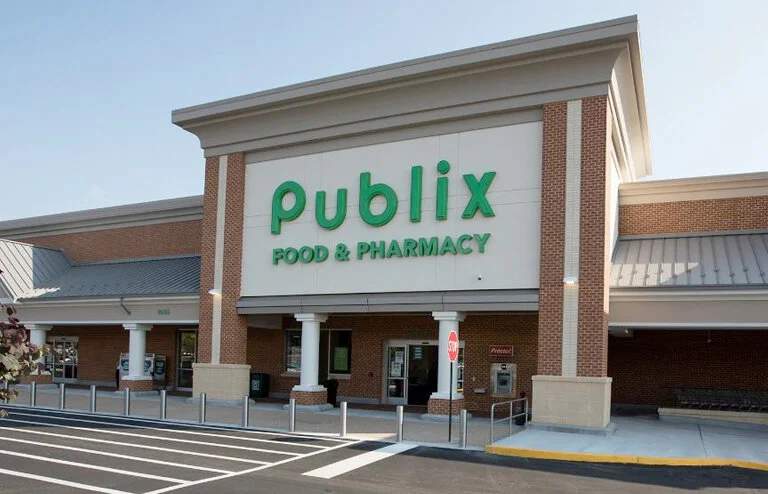
The need for food assistance has reached unprecedented levels in this country due to the coronavirus pandemic with Feeding America estimating that an additional 17 million Americans may face hunger, bringing the total to 54 million Americans. As part of their commitment to help alleviate hunger, Publix and Publix Super Markets Charities are continuing their efforts to provide needed support to local communities and families through a combination of financial contributions, donations of fresh produce and milk purchased from southeastern farmers, Publix’s in-store perishable food recovery program and its Food for Sharing register campaign.
Publix Charities is donating an additional $3 million to Feeding America member food banks and other nonprofit partners, bringing it’s total 2020 giving to $5 million. Earlier this year, Publix Charities donated $2 million to Feeding America member food banks to help provide food and other essential support to people impacted by the pandemic. Its latest donation will support 32 member food banks throughout the Southeast as well as 215 other organizations throughout Publix’s operating area. For a complete list of donations to Feeding America member food banks, visit publixcharities.org/hunger.
Additionally, as the pandemic created an unexpected decrease in demand, many produce and dairy farmers across the Southeast found themselves dumping or plowing over product they could no longer sell. Meanwhile, food banks throughout the region were reporting substantial increases — some as high as 300 percent to 400 percent — in need. To bridge the gap, Publix implemented a program to purchase surplus produce and milk from farmers and deliver it directly to food banks. Since April, Publix has purchased and delivered more than 11 million pounds of produce and 500,000 gallons of milk to Feeding America member food banks throughout the Southeast.
“Millions of Americans aren’t sure where they will get their next meal, and as a food retailer, we can make a difference,” said Publix CEO Todd Jones. “It’s been our privilege at Publix to help people in need for many years, most recently with our new program supporting farmers, food banks and families hit particularly hard by the pandemic. Publix is also grateful to Publix Charities for their continuing efforts to alleviate hunger in the communities we serve by bringing nourishment to people who need it most, especially during these difficult times.”
A Visionary Partner of Feeding America, Publix has worked to alleviate hunger for many years. Every day in stores, as part of its perishable food recovery program, Publix associates gather wholesome but unsalable dairy, deli, meat, and produce items to give to member food banks and other nonprofits. Since 2011, Publix has donated more than 525 million pounds of food, equaling over 400 million meals, including more than 35 million meals already donated in 2020.
Twice each year, Publix offers its Food for Sharing campaign, allowing customers to join in its efforts to alleviate hunger by making donations at checkout. Over the last 11 years, Publix customers have contributed almost $96 million toward hunger-relief efforts. Customers are invited to support their local food banks by making donations in stores Sept. 1 – 13.
“Food banks across the country have been working tirelessly to meet increased demand, but we cannot do it alone,” said Claire Babineaux-Fontenot, CEO of Feeding America. “The most vulnerable people in our communities — including many children and seniors — need us now more than ever. Valued partners like Publix and Publix Charities allow us to respond more efficiently and effectively when our clients need us the most.”
This Sustainable Neighborhood of The Future Is Designed To Manage Both Climate Change And Pandemics
A proposal for a new city in China is designed to be as green as possible—and also makes it easy to isolate in the case of another outbreak
09-04-20
A proposal for a new city in China is designed to be as green as possible—and also makes it easy to isolate in the case of another outbreak.
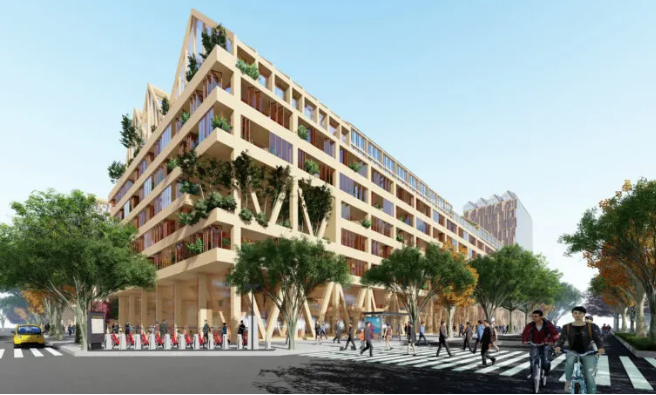
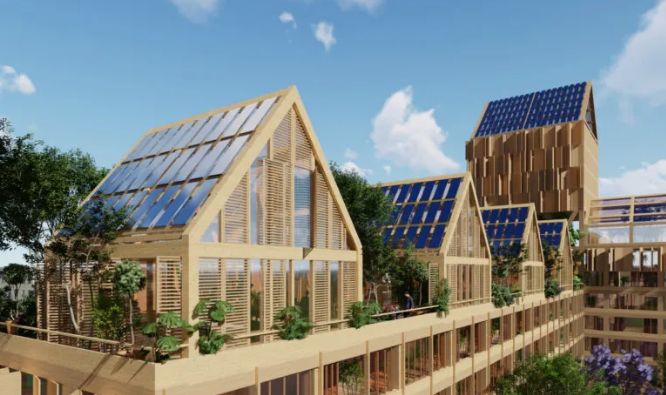
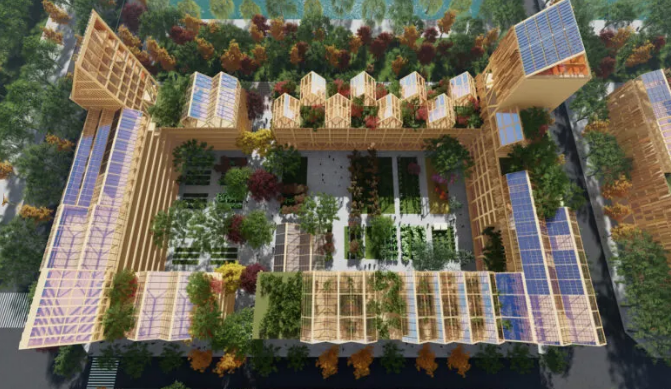
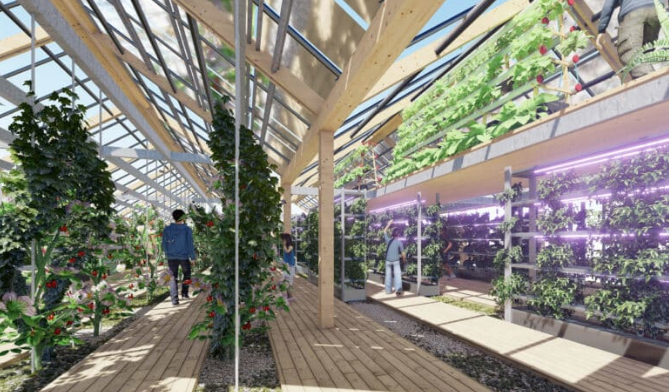
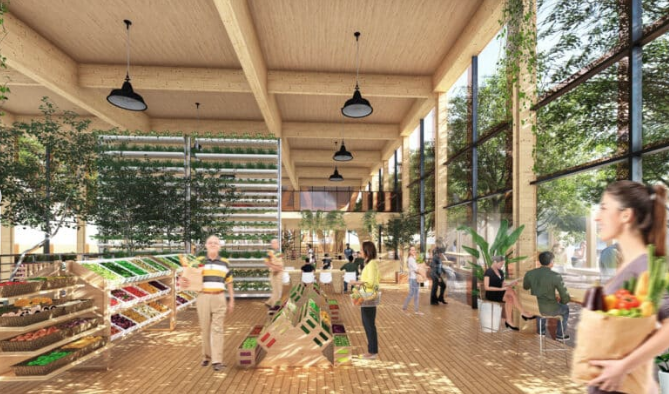
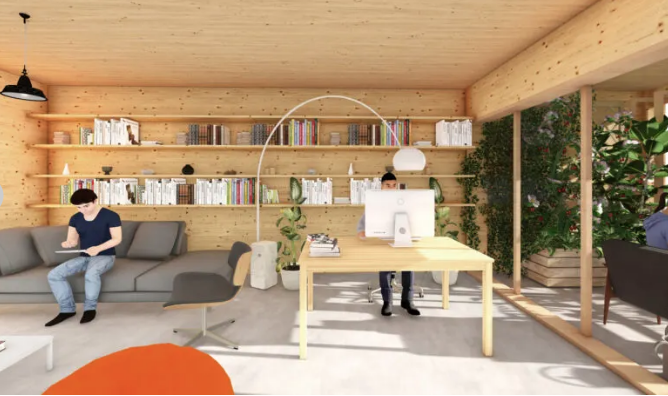
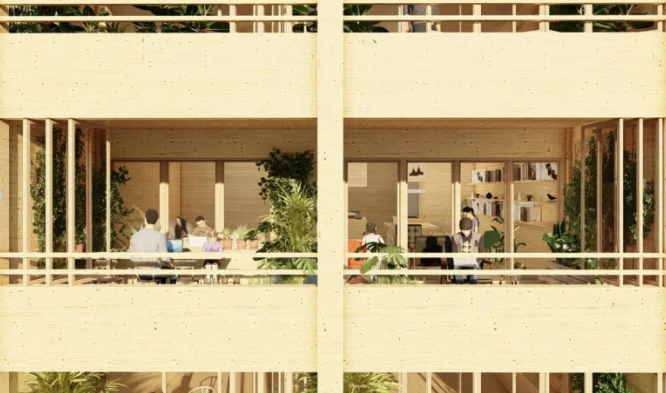
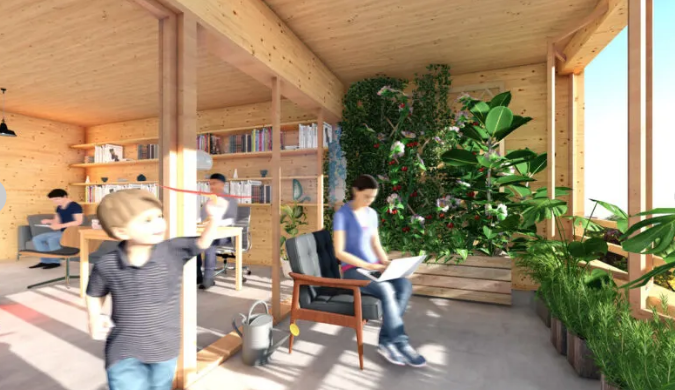
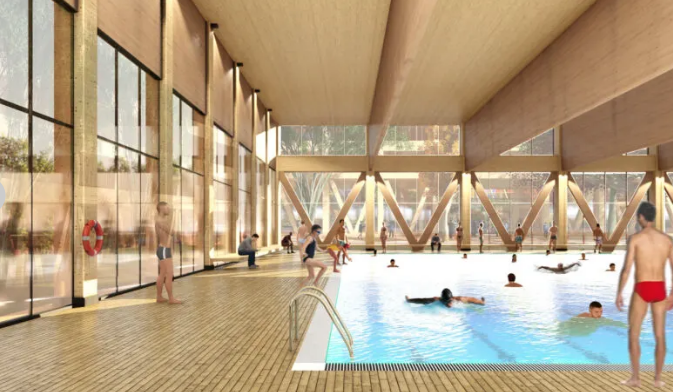
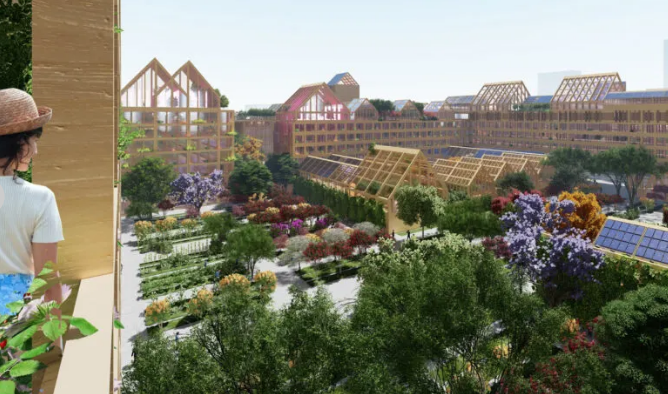
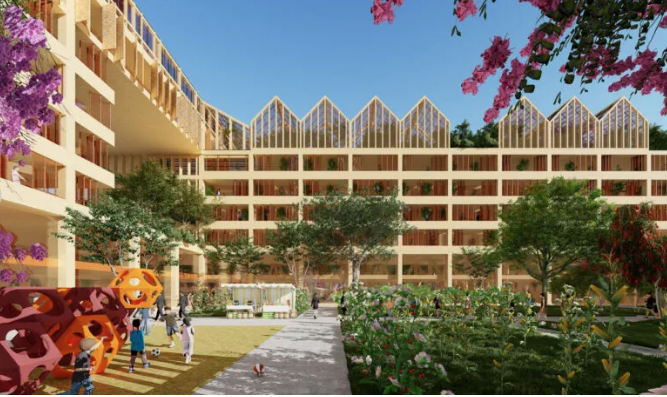
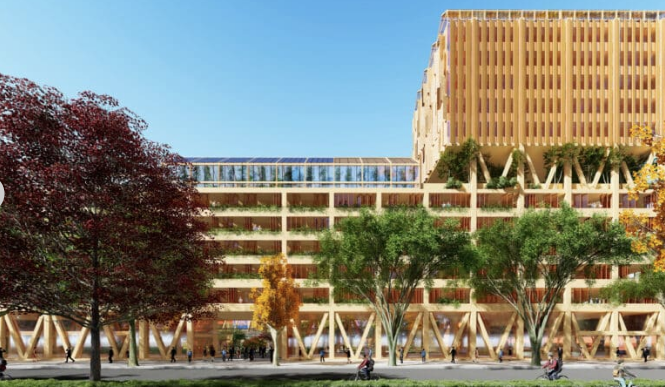
[Image: courtesy Guallart Architects]
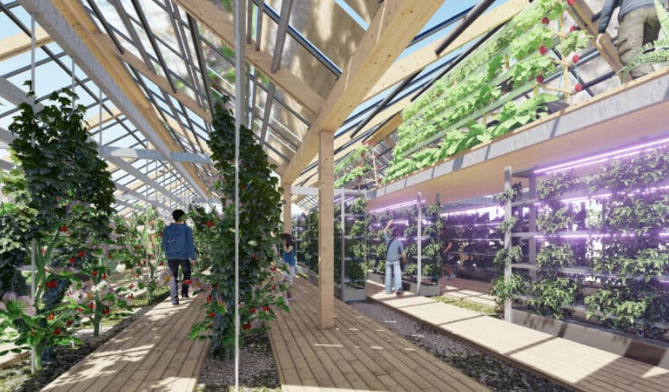
Eighty miles southwest of Beijing, the Chinese government is planning a new five-million person city as a model of sustainability—powered by clean energy, featuring huge green spaces, and unsullied by many cars. A new design shows what neighborhoods in the city, called Xiong’an New Area, might look like.
City blocks would surround courtyards with native plants and garden plots. Apartments, designed for people of all income levels and ages, have large balconies with built-in boxes for gardening; greenhouses with vertical farms sit on the roofs, next to rooftop homes with gardens of their own. The wooden buildings, designed to use 80% less energy than typical buildings, use on-site solar power. Most streets are designed to prioritize people on bikes and on foot, not cars.
Read More Here

Housing And Food Services, Along With The Student Organization OUr Earth, Have Joined Together To Bring The Leafy Green Machine To Campus.
Environmental sensors balance temperature, humidity and CO2 levels to ensure a perfect growing environment
Freight Farms
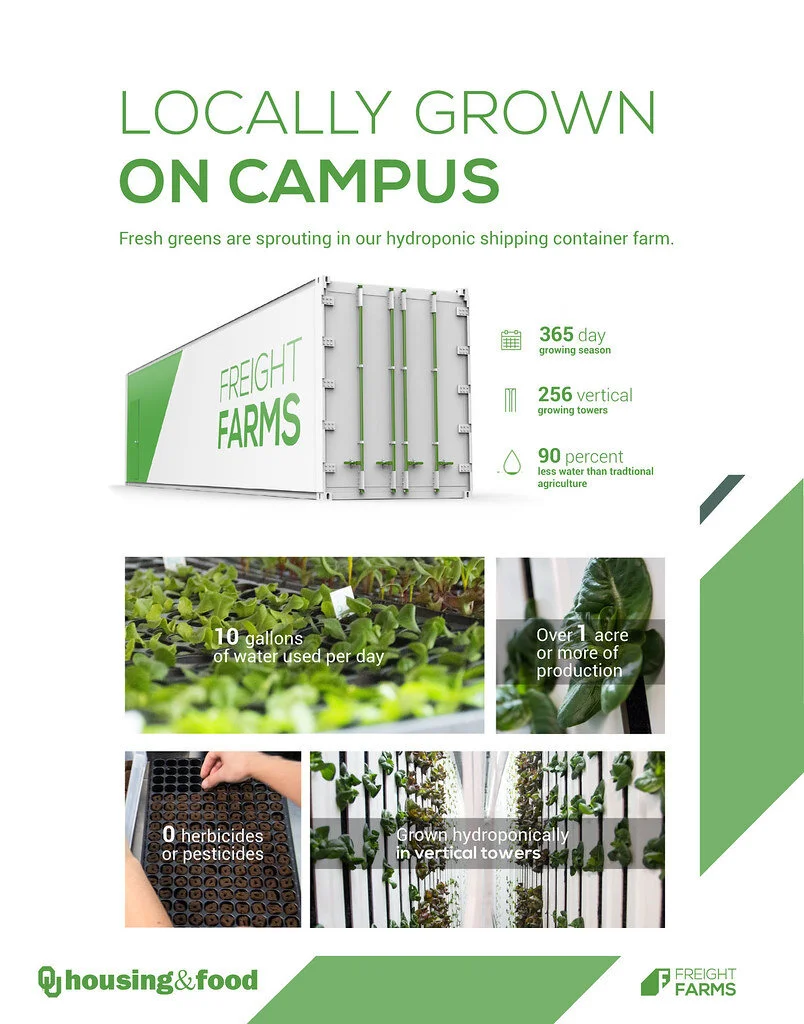
Housing and Food Services, along with the student organization OUr Earth, have joined together to bring the Leafy Green Machine to campus.
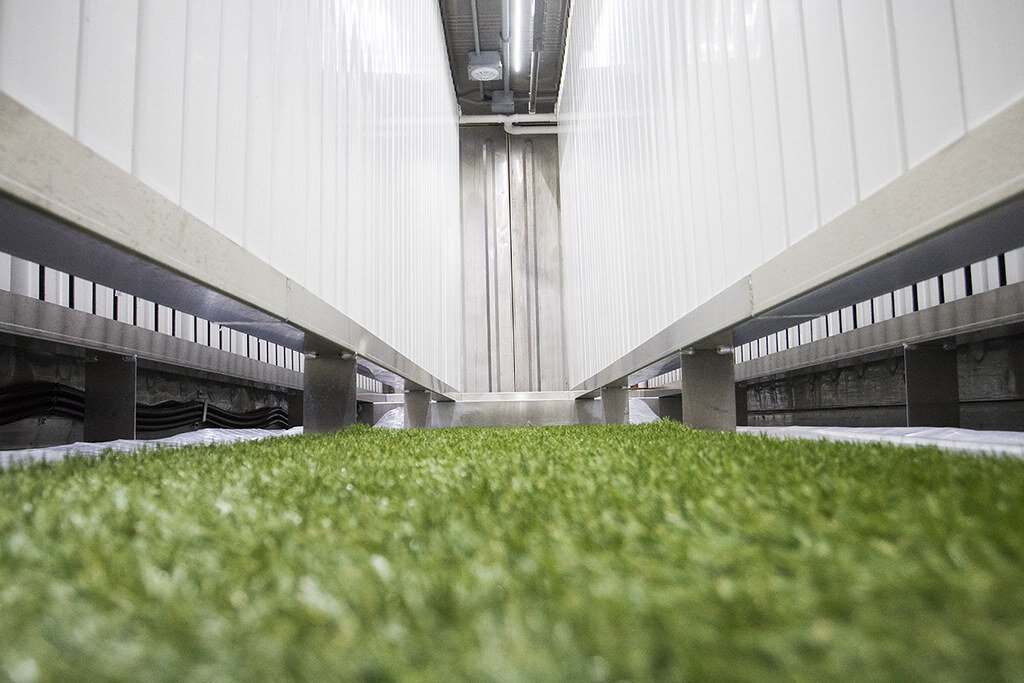
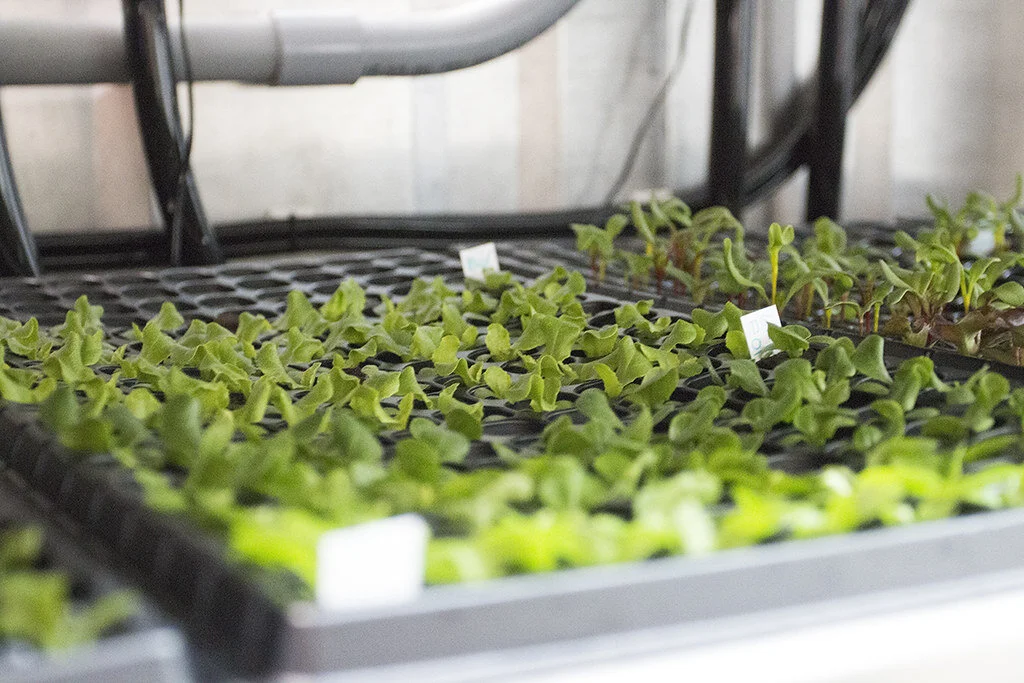
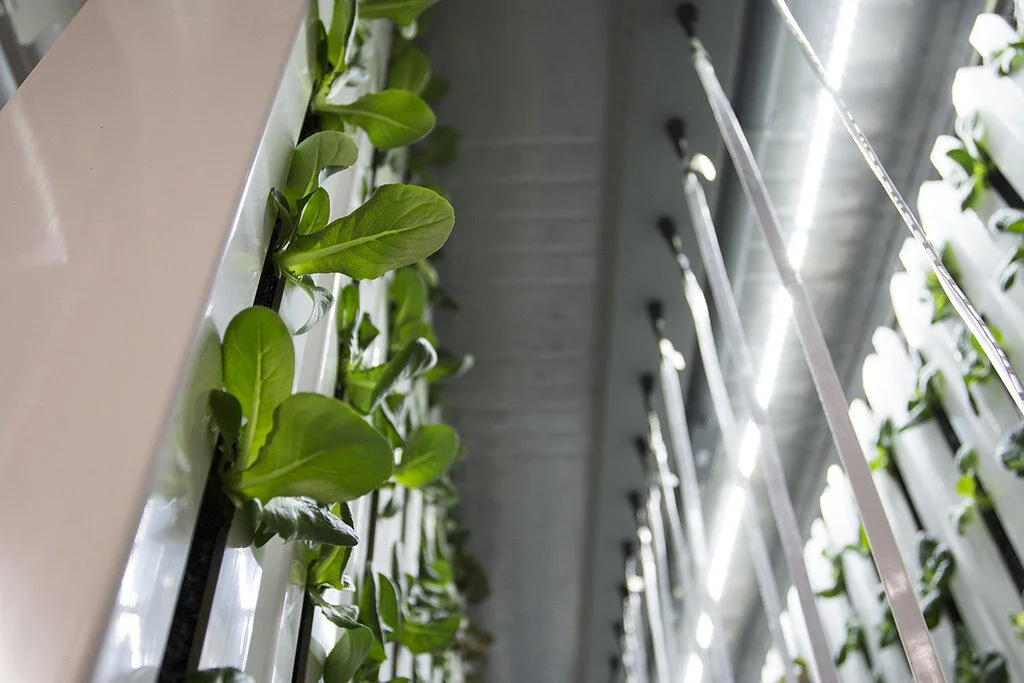
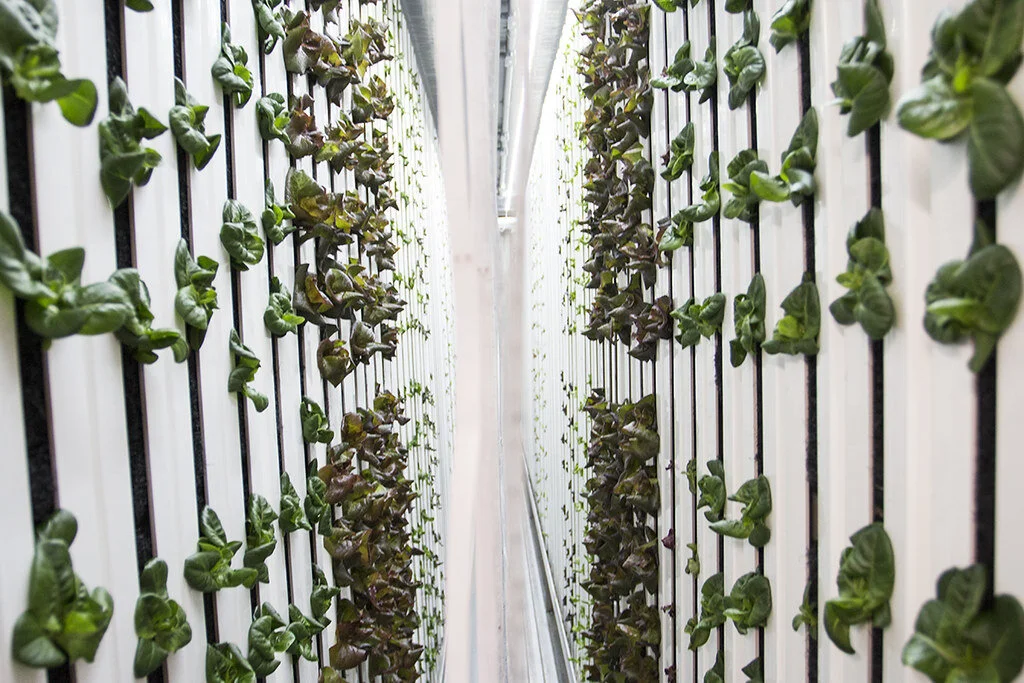
Housed in an upcycled shipping container, it is the first hydroponic farm at a Big 12 university. Produce grown is served in on-campus dining locations.
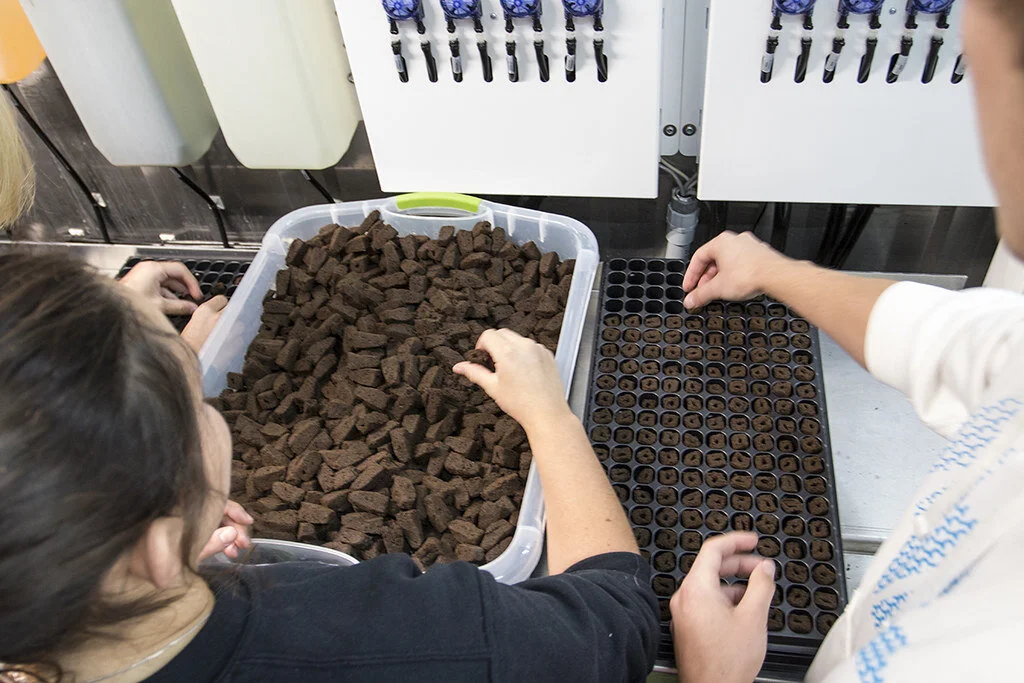
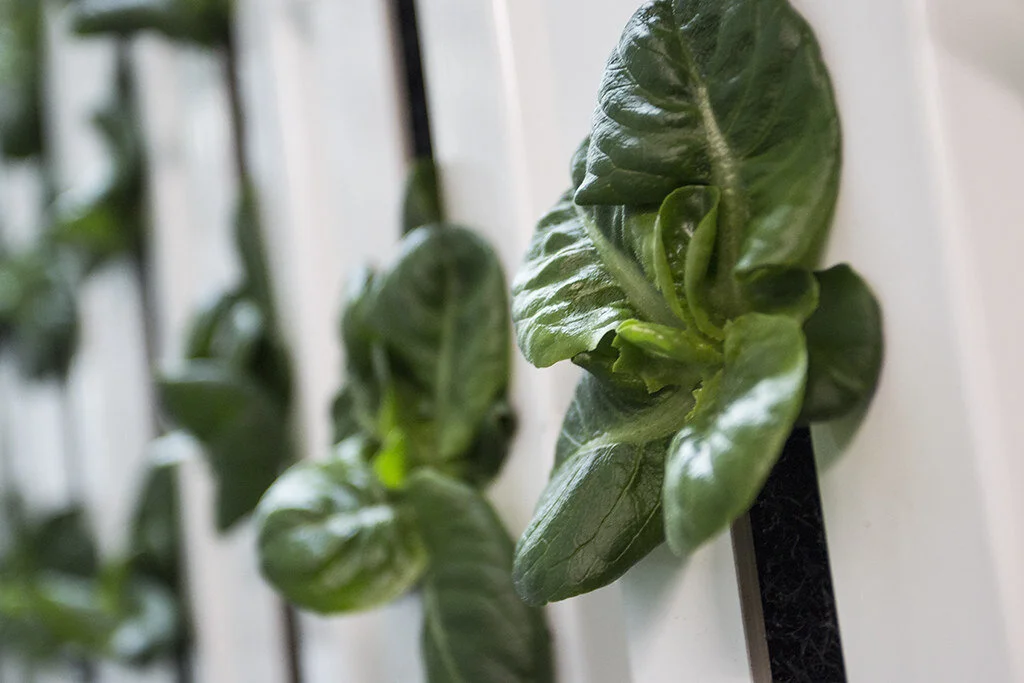
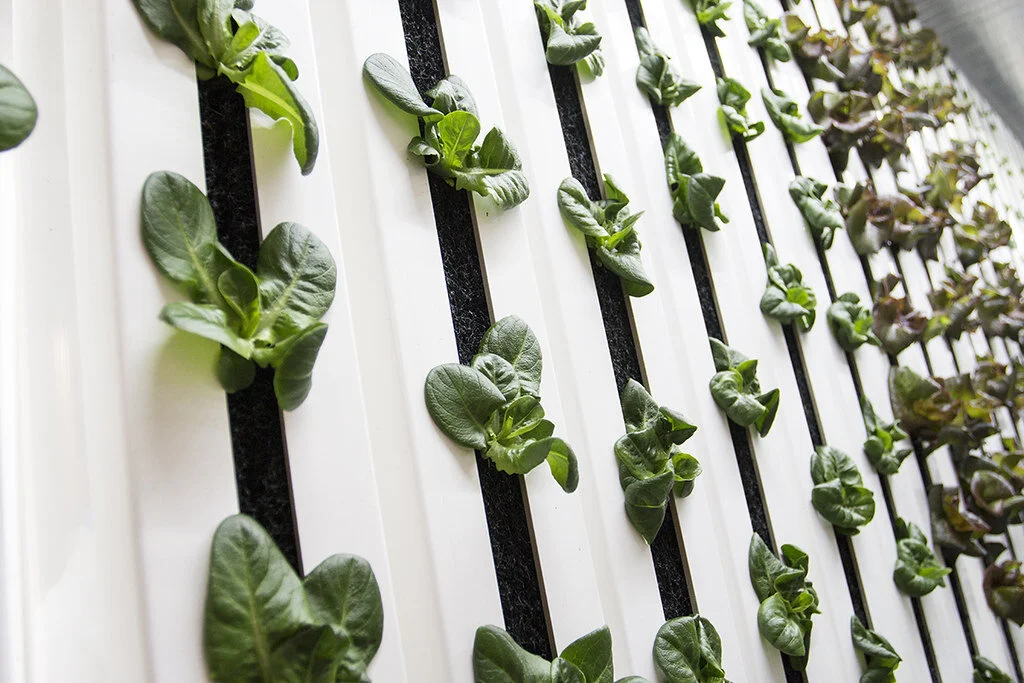
Happy, Healthy Plants
Environmental sensors balance temperature, humidity and CO2 levels to ensure a perfect growing environment. A nutrient-rich water solution is distributed directly to the roots of the produce from a closed-loop hydroponic system.

"Spend Less Time On Your Controls, But More Quality Time With Your Plants"
Practical insights from the Autonomous Greenhouse Challenge
When your team wins the Autonomous Greenhouse Challenge, you may safely call yourself an expert on autonomous cultivation. René Beerkens, who's been with Hoogendoorn Growth Management for twenty years, and Evripidis Papadopoulos, who worked as a Data & Algorithm specialist for Hoogendoorn during the challenge and is now back to LetsGrow.com as a Researcher & Data Analyst, were both involved with winning team AuTomatoes, and from the Hoogendoorn headquarters, they shared some of their insights with growers.
Plant Empowerment
At the heart of Hoogendoorn's holistic approach, René explains, is the concept of Plant Empowerment, which evolved from Next Generation Growing. "We're not only a technical supplier, but also spend an awful lot of time on research and development", René introduces his company.
"The Dutch have a vast history of experience growing plants, mostly by trial and error", he continues. Having learned the laws of physics and completed a lot of research on plant development, growers have moved on from trial and error to a data-driven approach.
Data-driven
This begs the question: why data-driven growing? "We lack experts in the field", René says, "investors want a quick return on investment (they want to invest in something that works from the start), but the main thing is, we want to leave planet Earth in a better way than we found it, using less resources."
The Autonomous Greenhouse Challenge was a perfect opportunity to put this data-driven approach to the test. Using a variety of sensors that measured things like air temperature, humidity, CO2, EC and root temperature, plant temperature, and light levels, a range of data was collected, which was all gathered in one central place so the team could access it wherever they were.
This team featured members from various disciplines, who met once a week. The dashboard, built on the LetsGrow.com platform and customized for Hoogendoorn, helped them analyze data and make the appropriate decisions. As Evripidis puts it, this allows you to "save time for yourself, and due to the holistic approach you find space for further optimization."
Results
The main attraction of the webinar was, of course, the results that participation in the challenge yielded. Using a data-driven strategic approach, the team built their strategies based on historical data from outside conditions. During the challenge, the AI system made adjustments to accommodate the changing circumstances, as can be seen in the below graph showing the ratio temperature radiation (RTR).
"You can't be at your computer daily," Evripidis explains, "so the algorithm made changes automatically, based on feedback from the crop."
It may sound scary to give your precious crops into the hands of an autonomous computer, but the holistic approach taken by team AuTomatoes at least provides the grower with the peace of mind that they can actually see the crop, even when they're not in the greenhouse. The slide below shows how that looks in the dashboard.
René explains that you can also make time-lapses with the dashboard and compare day by day development with the pictures, which is arguably better comparing than just looking at the plants in the greenhouse, because changes in the crop become more noticeable.
Data Driven Operational approach
The next graph shows two identical days with the outside temperature and wind speed the same. In the first day (on the left), the temperature fluctuates a lot, as Evripidis points out. On the second day, the temperature doesn't fluctuate so much, thanks to an intervention in ventilation from the autonomous system, which is of course more favorable to the crop.
While growers are fully focused on ventilation or temperature, Evripidis explains how they came up with VO control. "We keep the windows as closed as possible to trap humidity, so that the temperature is not too high, stomata will remain open, and photosynthesis is maximized. If you trap humidity, you also trap CO2, so it's a win-win situation." With VO control it's not necessary to work with P-band anymore. Growers can set five setpoints, the rest will be done automatically.
René and Evripidis also discussed how the autonomous cultivation system dealt with irrigation and assimilates during the challenge. More about the former can be found in this article from Godfrey Dol on HortiDaily, and Hoogendoorn shared some information on realizing an optimized assimilates balance in this article.
Quality time
In conclusion, it can be said that a grower can do much more based on data. "We had a grower who had never grown tomatoes in the Netherlands, and he did quite well using just data", René shares, telling growers that they can "spend less time on your controls, but more quality time with your plants."
As Evripidis puts it: "We're trying to assist, not take over - we make the car, you drive the car." Or to use another metaphor, as René did: "A plane can fly itself, but the pilot still has to know what happens in the background. We can do a lot with data, but we're still dealing with organisms that are much cleverer than us - they've evolved for millions of years, we are just catching up in the last few years."
For more information:
Hoogendoorn Growth Management
info@hoogendoorn.nl
www.hoogendoorn.nl
Publication date: Mon 7 Sep 2020
Author: Jan Jacob Mekes
© HortiDaily.com

54 Million People In The U.S. May Go Hungry During The Pandemic — Can Urban Farms Help?
Commercial urban agriculture is on the rise, with small-scale farms in New York City like Gotham Greens, which reduces the amount of energy, land use and food waste in tight, underutilized spaces to produce herbs and roughage for the masses
Sep. 07, 2020
By Melissa Kravitz Hoeffner
When I call Chef Q. Ibraheem to discuss urban farming in her own cooking career, she's in the middle of placing an order for microgreens from a small farm in Lake Forest, a ritzy suburb just north of downtown Chicago. Now's a great time for her to chat, actually, because the Chicago-based chef is immersed in what she loves, sourcing ingredients as locally as possible."
It's really important we know where our food is coming from," she says. "I know my farmers by name. I can go to the farms, see how they are growing everything, see it in the soil. It's always nice to have something within reach and know your produce." Chef Q runs supper clubs and chef camps throughout Chicagoland, sustaining the local economy by purchasing ingredients from urban gardens and farms within miles of her pop-up experiences."
As a chef, you realize you have a responsibility to your guests," she says, and for her, that responsibility means being transparent about ingredients, and even educating diners about what's on their plates. Growing up spending summers on a farm in Georgia, Chef Q has an innate curiosity about where and how her food is grown, and she recognizes the importance of farms in both urban and rural areas.
Commercial urban agriculture is on the rise, with small-scale farms in New York City like Gotham Greens, which reduces the amount of energy, land use, and food waste in tight, underutilized spaces to produce herbs and roughage for the masses. In Austin, Texas, backyard farms and urban gardens sell ingredients to restaurants and markets throughout the region, as do similar projects in Los Angeles. In fact, innovations allowing farmers to grow without soil or natural light expand the potential for food sourcing in urban areas. Urban farming has increased by over 30 percent in the past 30 years, with no indication of slowing down. Urban land could grow fruit and vegetables for 15 percent of the population, research shows.
While the COVID-19 lockdowns have inspired a burst of urban farming as people have been starting to grow their own fruits and vegetables at home, a renewed interest in culinary arts, plus a nostalgia for simpler times in many fast-paced big cities — just look at all the mid-century-era diners popping up in Manhattan right before the pandemic — may be accountable for the steady rise in urban farms. More consciousness about the environment, too, may lead small growers to want to reduce transportation emissions and take charge of the use of pesticides and fertilizers in their foods, but there's another great reason for urban farms to continue growing: feeding the masses. And with 68 percent of the world's population expected to live in urban areas by 2050, it's time to take urban farming seriously as a viable, primary food source.
Despite being the wealthiest nation in the world, the United States had more than 37 million people struggling with hunger in 2018. Since the pandemic, that number is expected to rise to up to 54 million people. And while systemic changes may one day be able to greatly reduce this number, a planting cycle is quicker than an election cycle. Bureaucracy may not immediately solve fair wages, but vegetable seeds may help communities when times are tough.
Urban Farming as a Social practice in her work, Chef Q has helped turn empty lots and abandoned buildings into urban farms, which allows neighbors to "take ownership in their communities" and also become educated consumers. In neighborhoods where the fancy grocery store is referred to as "Whole Paycheck," Chef Q has seen seed exchanges help folks start growing new produce, and regain agency over their food budgets and eating habits. Programs like the Chicago Food Policy Summit, a free annual event on Chicago's South Side, help popularize urban farming and education and help provide Chicagoans with grants to start growing their own food. Though gentrification may bring relief to previously dubbed food deserts — neighborhoods without a nearby source of fresh food — the slew of problems attached to gentrification, including higher costs of living, can easily make these new, more nutritious food options completely unaffordable to residents of the neighborhood.
As seen in smaller cities, urban farming may be the key for cities to be less reliant on rural areas, and also help achieve food security. As Dr. Miguel Altieri, professor of agroecology at the University of California, Berkeley, has shown, diversified gardens in urban areas can yield a large range of produce and efficiently feed nearby residents.
Of course, land in cities is often at a premium, with many people living in little space. Shifting public land use to incorporate food growth and getting creative with rooftops, basements and unused buildings can seriously change the way cities consume fresh ingredients. In fact, renewed efforts by the conservation organization World Wildlife Fund to boost indoor farming may revolutionize some sources of produce, particularly in cities. Repurposing unused indoor space, such as warehouses, can create direct sources of ingredients for restaurants or community-supported agriculture for neighbors. Indoor farming, while potentially more expensive, also allows urbanites from all walks of life to connect to the food system, repurpose food waste into compost and expand knowledge on growing food. Greenhouses like Gotham Greens' rooftop spaces can supplement indoor and outdoor spaces, adding even more potential healthy food to local ecosystems.
Urban Gardening With Neighbors in mind when she's not hosting pop-up dinners with culinarily curious Chicagoans, Chef Q volunteers with Foster Street Urban Agriculture, a nonprofit garden that aims to help end food insecurity in Evanston, the Chicago suburb home to Northwestern University. In the garden, Chef Q teaches kids how to water, plant, weed, and grow to produce. She'll notice a multigenerational interest: "Once kids taste zucchini, it's over," she jokes, of little ones bringing in parents and grandparents to learn to cook with more fresh produce. "They'll start [the program] eating hot Cheetos, and they're eating something green and leafy and won't go back."
Kids also just love being able to eat something that comes out of the ground and will take their passion back home, growing tomatoes in their windowsills or trying other small gardening projects in spaces available to them near home. Harvests from Foster Street are donated to food pantries and also sold at a local farmers market, where kids learn community-based entrepreneurial skills.
"Everyone eats, it's a common denominator," she says. "When food is on the table, people will have conversations."
Now, in the wake of COVID-19, urban farms have become more essential than ever. Chef Q has partnered with farms that would otherwise throw away produce without their major restaurant and hotel clients, to redistribute food to Chicagoans in need. She's noticed a spike in the price of fresh food, thanks in part to the expensive early May crops — peas, leeks, and spinach. "It's been imperative," she says, of feeding the community with a local bounty of eggplant, microgreens, cheese, and more farm-to-fork provisions.
Chef Q emphasizes that urban gardens still have to grow food to feed communities. Across the nation, we've seen victory gardens pop up in yards of homebound upper-middle-class Americans, planted with hope, thriftiness, and a creative outlet in mind. But for those who don't have yards or ample space, shared urban gardens can still serve a local population. When people don't have money, growing food is a solution to provide nutrition, and perhaps even income. And it starts with advocacy, volunteers, and outreach. "Plant something in the windowsill," Chef Q suggests, as an entryway into small-scale gardening. "It's essential. We can't stop."
Melissa Kravitz Hoeffner is a writer based in New York. She is a writing fellow at Earth | Food | Life, a project of the Independent Media Institute. She's written for the New York Times, Bon Appetit, Food & Wine, Travel & Leisure, Conde Nast Traveler, Glamour, AlterNet, Cosmopolitan, Teen Vogue, Architectural Digest, Them and other publications. She holds a bachelor's degree in creative writing from Columbia University and is also at work on a novel. Follow her on Twitter: @melissabethk.
This article was produced by Earth | Food | Life, a project of the Independent Media Institute.
Lead photo: An example of urban farming is seen on this Chicago rooftop. Linda / Wikimedia Commons / CC by 2.0
Urban Farming Is Revolutionizing Our Cities - EcoWatch ›5 Examples of Creative Urban Agriculture From Around the World ... ›
Urban Farming Booms During Coronavirus Lockdowns - EcoWatch ›
The real value of urban farming. (Hint: It's not always the food.) - Vox ›

KUALA LUMPUR, Malaysia: This Vertical Farm Was Born In The Pandemic. Sales Are Up
The Vegetable Co. in Kuala Lumpur, Malaysia, grows vegetables under LED lights in a shipping container. “We were a nascent product in an uncertain market,” one of its founders said
The Vegetable Co. in Kuala Lumpur, Malaysia, grows vegetables under LED lights in a shipping container. “We were a nascent product in an uncertain market,” one of its founders said.Credit...Ian Teh for The New York Times
The Vegetable Co. Sits In A Shipping Container On The Edge of A Malaysian Parking Lot. It’s One of Many Small Farms Around The World Selling Directly To Consumers.
By Ian Teh and Mike Ives
Sept. 3, 2020
KUALA LUMPUR, Malaysia — The setup of the two friends’ agricultural venture was unusual. Their farm sat next to a gas station, inside a shipping container where the plants grew in vertically stacked shelves. And the timing of their first sales — during the early days of Malaysia’s coronavirus outbreak — seemed less than ideal.
“We were a nascent product in an uncertain market,” said Shawn Ng, 28, a co-founder of the vertical farm, the Vegetable Co. “We weren’t too sure if it would take off.”
“But somehow,” he added, “the market kind of played in our favor. ”As in-person shopping wanes during the pandemic, Mr. Ng’s Malaysia-based operation is one of many small farms around the world that are selling fresh produce directly to consumers in ways that bypass brick-and-mortar grocery stores.
Some farms sell on e-commerce platforms like Amazon or Lazada, Alibaba’s online emporium for Southeast Asia, or through smaller ones like Harvie, a Pennsylvania-based website that connects consumers with individual farms across the United States and Canada.
ImageShawn Ng, one of the Vegetable Co.’s founders, loaded freshly harvested produce into a car for delivery.Credit...Ian Teh for The New York Times
Others, like the Vegetable Co., sell directly to customers. “I was very ‘kan cheong’ during the lockdown period,” said one of Mr. Ng’s regular customers, Ayu Samsudin, using a Cantonese word for anxious. “Having fresh vegetables delivered to your doorstep was such a relief.”
The Vegetable Co. consists of a 320-square-foot shipping container on the edge of a parking lot in Kuala Lumpur, Malaysia’s largest city. It opened for business, with just a handful of customers, about a month before the country’s restrictive lockdown took effect in mid-March.
Revenue grew by 300 percent in the first few weeks, and the shipping container is now approaching production capacity because of high demand, said Mr. Ng’s business partner, Sha G.P.Apart from the gas station, the shipping container’s other neighbors are a driving range and an oil palm plantation. Inside, tightly packed shelves with hydroponic lettuce, sprouts and other vegetables grow under LED lights.
Mr. Ng on a delivery run in Kuala Lumpur. Malaysia has weathered the pandemic relatively well, at least compared with other Southeast Asian countries.Credit...Ian Teh for The New York Times
The wallpaper outside the growing chamber shows blue sky and clouds, evoking the view from an old-fashioned farm. But employees pace the chamber’s narrow corridor wearing rubber gloves, surgical masks and white lab coats, as if it were a hospital ward.
The founders have scant experience with traditional farming, and they speak about their work with Silicon Valley-like jargon.
Mr. Sha, who has a master’s degree in management, said he first became interested in vertical farming after watching “The Martian,” the 2015 film in which an American astronaut played by Matt Damon is stranded on Mars and learns to grow his own food.
“I was lost in awe about the degree of precision in the technology along with the elegance of the solution to grow vegetables in a zero-gravity environment,” he said. “Since then, I have gone down the rabbit hole of independent research.”
Gudrun Olafsdottir, a Kuala Lumpur resident from Iceland, said the Vegetable Co. was one of the local businesses she was supporting with a “financial hug” during the pandemic.Credit...Ian Teh for The New York Times
The coronavirus took off in Malaysia in March, after an Islamic revivalist group’s gathering there became one of the pandemic’s biggest vectors in Southeast Asia. Since then, the country of about 32 million has weathered the outbreak relatively well, at least compared with some of its neighbors. As of Thursday, it had reported fewer than 10,000 confirmed cases since the pandemic began, according to a New York Times database.
Malaysia’s initial lockdown allowed only one person per household to go outside for essential errands, and the police enforced local travel restrictions with roadblocks.
But even though the rules were gradually loosened to let most businesses reopen, many urban Malaysians have maintained the online shopping habits they developed during the initial lockdown, said Audrey Goo, the founder of MyFishman, an e-commerce platform that connects fishermen from villages along the country’s west coast with consumers in Kuala Lumpur.
Gudrun Olafsdottir, a Kuala Lumpur resident from Iceland, said the Vegetable Co. was one of the local businesses she was supporting with a “financial hug” during the pandemic.Credit...Ian Teh for The New York Times
“Not many end users are willing to go back to the wet market,” said Ms. Goo, adding that her company’s sales had roughly doubled during the pandemic. “So I think the whole business model will continue to change.”
Mr. Ng said the Vegetable Co.’s parent company, Future Farms, was now seeking seed capital to finance an expansion into a larger facility. He recently hired an architect and a software developer to design it. For now, though, the operation remains modest. On a recent afternoon, Mr. Ng climbed into his car for a delivery run that snaked through low-rise residential neighborhoods, as the sun sank below Kuala Lumpur’s hazy downtown skyline.
One of the customers on the 40-plus-mile route, Gudrun Olafsdottir, said that along with yoga and meditation, greens from the Vegetable Co. were part of a routine that helped her keep physically and mentally fit during the pandemic.
Ms. Olafsdottir, who is from Iceland and works in retail, found the farm on Facebook through a local chef who specializes in raw and vegan cooking. She said it was one of several local businesses that she was supporting these days with a “financial hug.”
“I think that we could do so many things to support those in need if we just consciously choose how we spend our time and money,” she has written on her blog. “A hug and a squeeze.”
The farm is in a 320-square-foot shipping container near a gas station, a driving range and an oil palm plantation.Credit...Ian Teh for The New York Times
Ian Teh reported from Kuala Lumpur and Mike Ives from Hong Kong.

INDIA: Indoor Farming: From Vertical Trays To Your Table Within Hours, How Veggie, Salad Market Has Gone Hyperlocal
As climate change worsens due to long-haul transportation as one of the factors, going hyperlocal on production and supply makes indoor farming a lucrative business. What are the dynamics involved?
Sep 04, 2020
As climate change worsens due to long-haul transportation as one of the factors, going hyperlocal on production and supply makes indoor farming a lucrative business. What are the dynamics involved? Check here.
Call it indoor farming, Hydroponics or vertical farming, this green nursery method is gaining popularity | Photo Credit: iStock Images
The lack of space in urban locales, people's preference for fresh vegetables that have not been tossed and battered in transit through wholesale markets, and some bit of out-of-the-box thinking has helped create businesses based on an indoor green revolution within Delhi.
A Times of India report brings one face-to-face with a number of nouveau farmers who have made thriving businesses by nursing their newly developed green fingers.
These new-age farmers are growing romaine lettuce, oak leaves, mint, kale, basil, etc in their vertical plants in urban localities like Lajpat Nagar in Delhi, etc.
Not convinced how one can grow vegetables in crowded, chaotic market areas, the TOI journalist confesses he went to the plants to verify.
Himanshu Aggarwal of 9Growers showed around his farm on the second floor of a building that houses a bank and an electronics store on floors below. His hydroponic farm houses shelves and shelves of microgreens, herbs, and leafy vegetables growing in rows of white, laboratory-like ambiance.
The indoor green revolution of soil-less farming:
There are Petri dishes that hold plants, there is artificial light and the setup has its humidity and temperature monitored and strictly controlled. This soil-less farming is called hydroponic (sustained on water and nutrients) farming, not a new idea at all, but one that is now being widely adopted.
TOI also mentions a visit to farmingV2, a hydroponic farm being run by Rohit Nagdewani in the National Capital Region. Nagdewani says that the need to follow social distancing and to get clean veggies - a demand of the precautions against the coronavirus pandemic has made people appreciate this form of produce more. People want vegetables and salads that are hyperlocal, fresh, and not loaded with pesticides or fertilizers.
What is Hydroponic farming?
Hydroponics is the art of gardening without soil. The word originates from the Latin word meaning “working water.” Instead of using soil, water is deployed to provide nutrients, hydration, and oxygen to plant life. One can grow anything from watermelons to jalapeños to orchids under the careful regimen of hydroponics. It requires very little space, 90 to 95% less water than traditional agriculture, and helps grow a garden full of fruits and flowers in half the time.
Hydroponics helps the cultivation of plants in a manner such that the yield reflects rapid growth, stronger yields, and superior quality.
When nutrients are dissolved in soil-less water beds, they can be applied directly to the plant’s root system by flooding, misting, or immersion. Since no soil is used, there are no pests and therefore no insecticide/pesticide is required. Grown in an environment that is controlled in terms of water at the plants' roots, moisture in the air, humidity in the air, ambient light (same spectrum as of sunlight) etc, the food thus grown is cleaner in physical, chemical, and biological nature.
AI-based Indoor farming will support traditional farming:
The global population is predicted to reach 9.7 billion by the year 2050 and to feed everyone, it’s estimated that global food production will need to increase by up to 70% in the next 30 years. This method will decentralize supply chains and give more business to local suppliers, thereby cutting fuel costs and carbon emissions that long-haul transportation creates.
The indoor farming technology market was valued at $23.75 billion in 2016 and is projected to reach $40.25 billion by 2022, as per a report in The Forbes. Indoor green farms may be an idea whose time has come.
The views expressed by the author are personal and do not in any way represent those of Times Network.

Plants That Can Be Grown In Hydroponic Greenhouse
Vegetables grown under Hydroponic set up are in high demand, and the trend for seeking vegetables/fruits grown through this method is rising every year
31 August 2020
Most of us will know that Hydroponics is a type of “Soil-less” culture, which is a method of growing plants without soil, by using mineral nutrient solutions in a water solvent. It comes under the Horticulture discipline and has many advantages, one of them being a decrease in water usage. This method is considered as superior methods of cultivation when compared with the traditional soil-based cultivation method. In comparison to farming on the soil, the Hydroponic cultivation method requires about 80-90% lesser quantity of water.
Vegetables grown under Hydroponic set up are in high demand, and the trend for seeking vegetables/fruits grown through this method is rising every year. This system is beneficial in enabling growers to produce fresh and healthy vegetables on a controlled and consistent basis. When compared with cultivation under the soil, Hydroponics is one of the most water-efficient methods. Since the system can be designed and built according to the space available, it can be inferred that in case of lesser space, it is not a matter of concern generally. If you believe in experimenting with farming, then growing plants with the hydroponics method is most likely to catch your attention.
If new to hydroponics then is advisable to select those vegetables and plants that most growers have produced successfully. Studies and feedback from successful growers convey the possibility of larger yields through Hydroponic greenhouses than a traditional greenhouse. Here it will be important to consider that in order to maximize the chances of successful production the grower must understand which plants to grow under this method.
One should be aware of some facts that few plants may spread out too much to grow properly in a hydroponic greenhouse, and few others may be suited to cooler weather, hence may not survive under high temperatures. Also, one should also have knowledge about plants that need special attention, when growing in a Hydroponic greenhouse. There is the easy availability of the raw materials and supplies for hydroponic systems in the online and offline markets. Hydroponics not only helps a grower in designing its own system, but it also offers the opportunity to produce fresh and healthy vegetables for the entire year. Now let us know which plants can be grown in a Hydroponic Greenhouse:
Related Links
Strawberries
This type of cultivation environment is suitable for strawberries. The usual layout of the hydroponic greenhouses comfortably accommodates the fruit. Depending upon the size of the berry and desired sweetness level, there are lots of varieties to choose from.
Potatoes
Hydroponic systems can support the growth of potatoes and other root crops as well. But they should be provided sufficient depth to grow adequately. This is because there is a lot of growth in the root area, in addition to growth in stems and foliage. So if these plants are grown in lesser space, overall growth will be restricted. One can prefer smaller varieties of the root crops, in order to provide sufficient depth.
Tomatoes
Tomatoes grow well under this method. In the case of tomatoes, it is necessary to provide them a support system, similar to when cultivated in a traditional greenhouse or home garden set up.
Mint
Mint needs wet weather to grow therefore in Hydroponic greenhouses one has a greater option to choose lot many varieties. Mints should be given enough space as they spread quite a bit. With this method you can easily grow any type of mint – be it peppermint, spearmint, ginger mint etc.
Basil
Basil is a herb and can be grown in the hydroponic setup. The moist conditions provided to the herb through this system are beneficial in enhancing the herb’s flavor. Like other plants, the yield is most likely to increase using hydroponic methods of cultivation.
Lettuce
There are various types of lettuce providing different flavors. Normally the iceberg is commonly produced variety but when it comes to growing hydroponically, once can think of growing romaine, sweet butter and many more varieties, to be used in your salad menu.
Cabbage
Cabbage needs cooler temperature for proper growth, hence suitable for growing hydroponically. One may be required to adjust growing conditions for the cool weather vegetables. This would imply that it will be necessary to grow the plants according to their natural seasons. One can change the temperature settings in your greenhouse as per the crops decided for cultivation.
Green Beans
Normally the Bush-style green beans adjust quite well with the typical conditions set up in a hydroponic system, although pole beans can be grown as well. Also, the size of bush-style beans is convenient to manage versus pole beans.
Plants that require Additional Care in Hydroponic Greenhouse
Watermelon, other melons, squash, and corn are some of these vegetables which occupy greater space to grow, making it difficult to thrive well in Hydroponic greenhouses. Therefore these plants need growers addition care like pruning on a regular basis. Few varieties of pumpkin varieties allowed for the space they need. This is done by planting them outside where they can spread and increase in size accordingly.
Many plants have both male and female flowers on them therefore need the bees to pollinate them. Hydroponic setups do not have bees inside the structure, so cultivating these plants are a bit labor-intensive. Nevertheless, if the task of pollinating these plants is done by the grower himself, then chances of proper growth will be higher.

Could Urban Agriculture Feed The Cities of The Future?
Vertical farms, rooftop farms and computer-controlled growing environments are an emergent phenomenon in cities around the world, which are eager to take advantage of the many benefits of urban agriculture
03 Sep 2020
By Agency
Vertical farms, rooftop farms, and computer-controlled growing environments are an emergent phenomenon in cities around the world, which are eager to take advantage of the many benefits of urban agriculture.
Drawing on new technologies and enthusiasm for locally sourced organic produce, these promising initiatives have raised hopes for greater sustainability that will reduce the environmental impact of cities and agricultural production required to meet the needs of their citizens.
However, the question remains: will urban farms be able to produce enough food to make cities self-sufficient?
The vast majority of fruit and vegetables sold in cities are picked before they are ripe, and are produced using intensive farming methods, which do extensive damage to the environment.
In contrast, urban agriculture offers the hope that we will one day be able to meet the global challenge of feeding cities in a much more sustainable manner. At the same time, it also provides a solution to the need for high-quality and locally sourced fresh food.
Recent successes in the field speak for themselves, notably the US$4mil (RM16.6mil) in funding raised by IFarm, which provides software and technology to the vertical farming sector.
The Helsinki-based company manages heavily automated indoor farms in which produce is grown in vertically stacked beds with a host of technologies that include a wide range of sensors, computer vision, and machine learning.
It currently has some 50 farms that are in development and is hoping to manage one million square meters of vertical farms and provide support for 500 different crops by 2026.
Is food self-sufficiency within reach?
It could be, notably with regard to vertical farms and certain crops. A recent publication in the interdisciplinary scientific journal PNAS has drawn attention to the potential of vertical farming to generate enormous yields of wheat.
Researchers have calculated, on the basis of theoretical values for the growth of wheat under optimal conditions, that a 10-story building on a one-hectare site could provide up to 1,940 tonnes of wheat per year, 600 times more than the average yield from traditional agriculture.
One of the reasons for this is because vertical farming provides conditions that would allow for five harvests per year instead of one. With the added advantages of doing away with the need for herbicides and pesticides, low water use, and land depletion, vertical farms may well fulfill their promise.
Questions remain about the viability of projects
However, as it stands, urban farms are very expensive to set up, and only a very few are actually profitable. Taking advantage of their situation in cities, most of those that are now operating are sustained by revenue from sources other than food production: notably income generated by cultural events, workshops, and renting plots to private individuals. – AFP Relaxnews
Related stories:
Community farm brings residents together
Getting ready for Agriculture 4.0
Lead photo: Urban agriculture is increasingly common in cities. This picture shows one of six farms created by the New York City Housing Authority in Brooklyn, New York. Photo: Leticia Barboza/AFP
TAGS / KEYWORDS: Urban Farming , Food Security , Vertical Farming , Rooftop Farms
Urban Vertical Farming: The Key To A Sustainable Future
By 2050, the forecast is that we will have an extra 2 billion people on the planet. Many of these people will live in urban areas. And we have already used a third of arable farmland in the past 40 years
Living in a dense city population can make you wonder, "where does our food come from?" When you live in urban areas like Houston, New York City, or Seattle, it's rare that you notice farms on your drive to work.
The idea that our food is grown hundreds to thousands of miles away can be worrisome. What if something were to happen to those farms? Our resources would cut off and we would have limited access to foods. This is why vertical farming in urban areas is critical to ensure cities can be sustainable food leaders.
What is vertical farming?
Vertical farming is the practice of growing crops/foods in vertically stacked layers. This is usually done indoors and in a controlled environment. This method optimizes plant growth and allows the use of soilless techniques such as hydroponics.
How does vertical farming work?
Vertical farming needs several things to work. We'll cover each one below:
Physical Layout - The purpose of farming indoors is to maximize volume. We do this by maximizing the output efficiency per square meter. This is why you will see physical layouts in the form of skyscrapers or vertical tower-like structures.
Lighting - To optimize crop growth, a need for artificial and natural lights are essential.
Growing Medium - There are several different growing mediums for vertical farming. These methods include hydroponics, aeroponics, and aquaponics. Coco Coir, Rockwool, ,Biostrate, Vericulite, Perlite, SunShine #4 and Black Gold are great mediums used in indoor farming.
Sustainability Features - Sustainable features often used with vertical farming feature rainwater tanks, wind turbines, and spaces with low energy costs.
Why is urban vertical farming important?
By 2050, the forecast is that we will have an extra 2 billion people on the planet. Many of these people will live in urban areas. And we have already used a third of arable farmland in the past 40 years.
We need to come up with other sustainable ways to grow food to ensure we can feed everyone. Vertical farming allows us to grow healthy, accessible foods within a few acres of land, close to home.
This is critical for urban areas because they will become more populated over time. Instead of relying on faraway food sources, we need to take matters into our own hands. By establishing urban vertical farming settings, we'll be able to control and grow our own food sources.
Vertical farming also uses 95% less water than traditional farming methods. The use of water needed to grow crops traditionally is wasteful. To be able to handle an influx in population, vertical farming is a sustainable solution.
How does vertical farming benefit us?
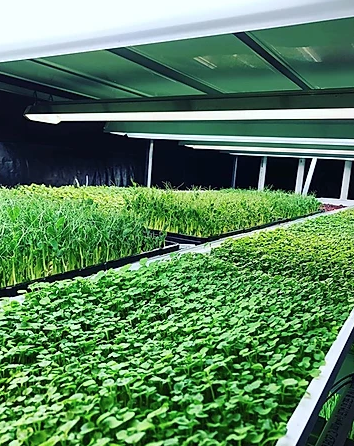
There are many reasons why vertical farming is the future of farming. By building vertical farms, there will be an increase in job opportunities. There will be easier access to healthier and attainable foods. With food grown close to home, we will always be aware of where our food comes from.
Because of the controlled environment, there is a higher chance of growth success. We will be able to grow crops year-round and have larger yields. Crops will not be exposed to harsh weather conditions since they'll be grown indoors. Urban vertical farming methods should start being adopted right now.
The Takeaway
To prepare for the upcoming increase in food demand, urban areas need to adopt sustainable policies. People should start growing their food indoors as well as increasing the demand for high-tech farming methods.

Four Storeys Up, A Commercial Vegetable Garden Thrives In A Converted Sears Warehouse
Growing food on roofs represents the future of farming, especially in these pandemic times, says Mohamed Hage, Lufa’s chief executive officer, who co-founded the company with his wife, Lauren Rathmell
DAVID ISRAELS
SPECIAL TO THE GLOBE AND MAIL
SEPTEMBER 1, 2020
The Lufa greenhouse sits atop a former Sears warehouse in Montreal's St-Laurent neighbourhood.
CHRISTINNE MUSCHI/THE GLOBE AND MAIL
In the industrial part of Montreal’s St-Laurent area, it can be hard to distinguish the bulky buildings from one another, except for one – the roof sticks out like a green thumb.
It’s a great glass greenhouse roof atop a former Sears warehouse – a giant vegetable garden, said by its creators to be the world’s biggest commercial rooftop greenhouse.
The 163,000-square-foot garden, which opened last week, is the equivalent of nearly three football fields worth of food. To date, it is the fourth and biggest commercial facility for Montreal-based Lufa Farms.
Lufa is already well known among local “Lufavores” – foodies, restaurants, and alterna-living people in the Montreal area, who value its fresh tomatoes, eggplants, and vegetables, as well as the produce it gathers from local farmers.
Growing food on roofs represents the future of farming, especially in these pandemic times, says Mohamed Hage, Lufa’s chief executive officer, who co-founded the company with his wife, Lauren Rathmell.“
When we looked at how to grow where people live, we realized that there was only one option – rooftops. It’s not sustainable to always be trucking food in from across the continent or shipping from all over the world,” Mr. Hage says.
The new building was planned and construction began well before COVID-19 hit the world, but it offers a strong response to the pandemic, he explains.“
In March 2020, we saw a doubling of demand for our food. Growing food locally on rooftops and sourcing from local farming families allows us to swiftly adjust and respond to this demand,” he says.
An employee works inside the Lufa greenhouse. | HANDOUT
Co-founder Ms. Rathmell, who is also Lufa’s greenhouse director, says it took three months to build the St-Laurent facility and grow the site.“That would normally have taken years,” she says.
“In response to COVID-19, we enacted stringent safety protocols early on, launched seven-day service, tripled our home-delivery capacity, and launched new software tools,” she says. The company also brought in more than 200 new team members, 35 new local farmers and food makers, and 30,000 new Lufavores customers.
Lufa’s new staff includes two full-time nurses to take workers’ temperatures as well as “social-distancing police” to walk around and make sure workers aren’t too close to one another, Mr. Hage says. The company has also boosted the frequency of its air exchange in all of its facilities, including the new one.
Designing and building a rooftop greenhouse is challenging, Mr. Hage says. Although some of the preparation required is not much different than getting any equipment onto a roof, some of the prep work up there is more complicated, he says.“
We have to meet national building codes, and of course, everything for the greenhouse needs to be hauled up to the roof on a crane,” he says. “Yet once it’s there, you have to do a lot of stuff manually rather than mechanically. All of this is harder than it would be to do on the ground.”
It’s also expensive. “This greenhouse costs two times as much as a ground-based greenhouse,” he says. Lufa declines to give out the cost of this latest project but says the first of its four facilities, built 10 years ago, cost $2.2-million.
Using buildings for farming is catching on, says Mike Zelkind, co-founder of 80 Acres Farms in Cincinnati, Ohio, which also operates building-based facilities in Arkansas, North Carolina, and New York.
“A field can be the least efficient place to grow food,” he says. “An indoor farm can produce more than 300 times more food, with 100-per-cent renewable energy and 97 percent less water. That’s the beauty of growing in buildings.
Montreal-area foodies value Lufa's fresh tomatoes, eggplants and various other vegetables. HANDOUT
”Similarly, in Poughkeepsie, N.Y., up the Hudson River from New York City, restaurateur, food-truck owner, and chef John Lekic pivoted as the COVID-19 lockdowns spread to launch an indoor farming business called Farmers & Chefs.“
“We use technology from an Israeli company called Vertical Field that was being showcased at the Culinary Institute of America, which is nearby,” he says. The Israeli company supplies all the materials to grow some 200 different crops on roofs and in parking lots with minimal experience required.“
We planted and installed a container in March and our first harvest was in April, Mr. Lekic says. “We’re learning fast, but it’s an easy way to grow herbs and produce.”
”Mr. Hage agrees, adding that “rooftops are superior places for an urban farm.”
“When we started [in 2009], we considered leasing parking lots for growing, but no one wanted to give them up,” he recalls. “But for most commercial building owners, rooftops are unloved – they leak, they have to be maintained and, in a cold climate like ours, you have to clean off the snow. A commercial rooftop greenhouse is a solution.”
The new St-Laurent project gives Lufa a total of about 300,000 square feet of agricultural production, and the company plans to eventually expand into Southern Ontario and the U.S. northeast.
Mr. Hage points out that a rooftop greenhouse also makes great sense in terms of environmental sustainability and reducing energy and carbon emissions.“
“We don’t use pesticides and our greenhouses use half the energy that a greenhouse at ground level would consume because we use heating from the building that rises up to the roof,” he explains.
“The biggest challenge is not the greenhouse space – who doesn’t want to walk around in a warm sunny greenhouse when it’s 20 below outside? The challenge is maximizing the warehouse space below the greenhouse,” he says.
“We’re growing so many tomatoes that the warehouses never seem to be big enough to store them.”
Urban farming in Canada is still a niche in a nationwide food industry that is primarily export-based, and accounts for 12 percent, or $62.5-billion, of Canada’s total exports every year, says Claire Citeau, executive director of the Canadian Agri-Food Trade Alliance (CAFTA).
But in a post-COVID-19 world, every bit of food production counts, she says. “We continue to see the adoption of science, technology, and innovative ways to feed people and create new economic opportunities at home and abroad.”
And if that’s not enough, just look at the place, Mr. Hage says. “Boy, do I like driving by – it sticks out like a crystal,” he says. “And when you go inside, it’s like being in a spa.”
TOPICS AGRICULTURE CORONAVIRUS GREENHOUSE MONTREAL ORGANIC FOOD

Doctor Grows Vegetables For Antarctic Team
Dr. Hu Miao, from Shanghai East Hospital, has been working at China’s Great Wall Station in the Antarctic since December 4. As this year’s doctor in the polar region, Hu not only treats scientific investigation team members if they get sick but also grows vegetables. Vegetables contain vitamins that are necessary for health, he says
By Tian Shengjie
2020-08-28
Dr. Hu Miao, from Shanghai East Hospital, has been working at China’s Great Wall Station in the Antarctic since December 4.
As this year’s doctor in the polar region, Hu not only treats scientific investigation team members if they get sick but also grows vegetables.
Vegetables contain vitamins that are necessary for health, he says.
Various types of vegetables are grown in the greenhouse in the Antarctic. | Ti Gong
However, due to the extreme climate, it is rare to see the natural development of plants.
Hu said: “The weather is terrible with heavy snow and high winds even if it is summer in the Antarctic.”
Eating fresh vegetables was just a dream of the team members.
However, that dream became reality after a greenhouse was established at the Great Wall Station in 2015.
Several types of vegetables are grown in the greenhouse now, such as squashes, pumpkins, and pak choi, or Chinese cabbage, Hu said.
He added: “There are over 10 people at the station and everyone can eat a cucumber every two days.”
Plants thrive in the ideal environment of the greenhouse. | Ti Gong
The 36-square-meter greenhouse is made of transparent plastic sheets of the type usually for aircraft windows. It can allow 90 percent light to pass through.
There’s artificial lighting, automatic irrigation, and heating to provide the best environment for the plants to grow, said Shu Yu, one of its developers.
Because of aged circuits, the greenhouse burst into flames in 2018. This year, it has been repaired and renovated with more areas to grow and purple lights to strengthen photosynthesis.
The hospital has sent eight medical workers to the Antarctic and Arctic since 2015.
Source: SHINE Editor: Yang Meiping
Lead photo: Hu Miao harvests vegetables grown in the Antarctic greenhouse.

Horticulture Lighting Based on LEDs To Be Installed In Commercial Buildings, Breaking The Limitation of Plant Growth
Adding LED grow lights and smart cultivation system into commercial construction offer a solution for urban farming to enhance local food production
A new deal announced by Heliospectra, a Sweden based horticulture lighting technology provider, unveiled a new approach for achieving urban farming with LED grow lights.
(Image: Heliospectra)
Heliospectra reported that it has received an order from BBL Construction, who operates as a general contractor in the fields of commercial and institutional construction. According to Heliospectra, the two business partners are going to apply their expertise for several projects.
The partnership might indicate that LED grow light and vertical farming facilities are now considered a function to be integrated into commercial and institutional buildings, highlighting the trend of urban and indoor farming.
Increasing urban farming and indoor cultivation facilities are considered one of the prioritized projects for countries and area who used to rely heavily on imported food, as the food security issue was emphasized with the COVID-19 pandemic. Adding LED grow lights and smart cultivation system into commercial construction offer a solution for urban farming to enhance local food production.
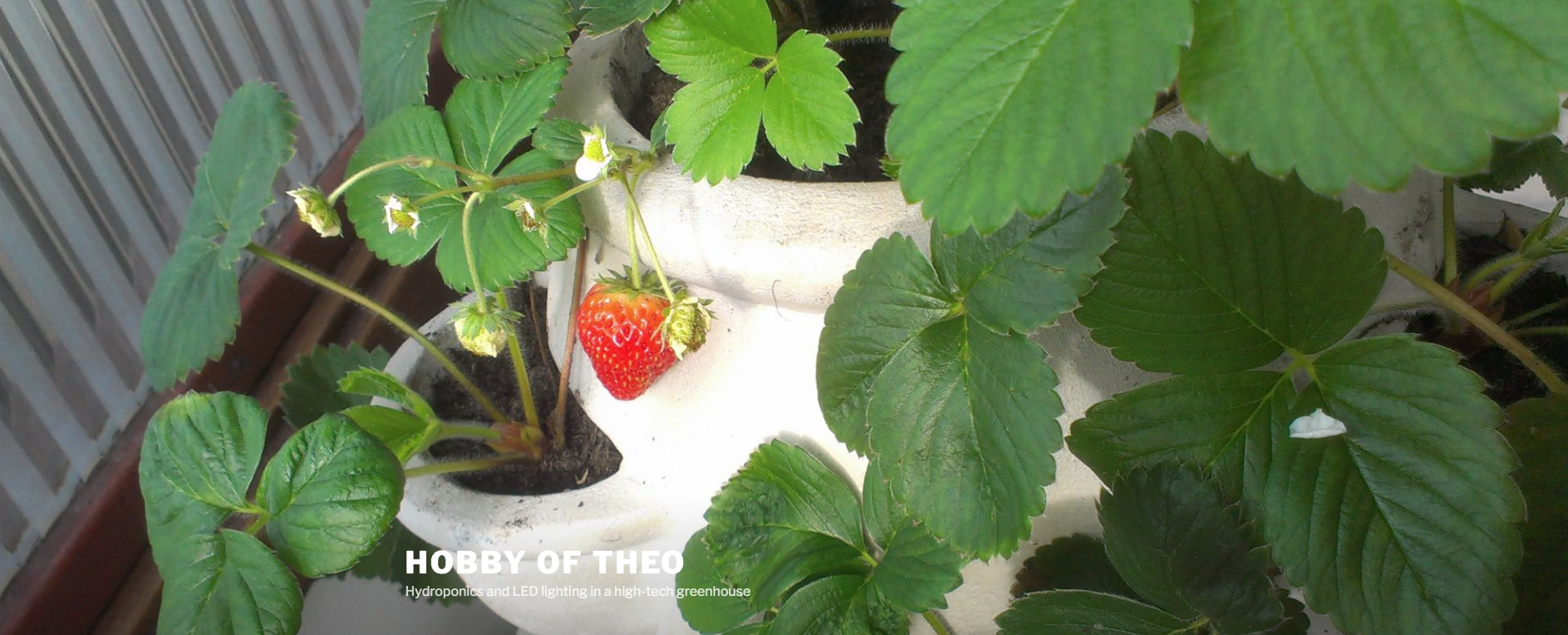
Technician Theo Builds High-Tech Greenhouse As a Hobby
How great would it be to have a small greenhouse in your own garden where you can grow vegetables, fruit, and herbs in an environmentally-friendly, clean, and energy-neutral way?
How great would it be to have a small greenhouse in your own garden where you can grow vegetables, fruit, and herbs in an environmentally-friendly, clean, and energy-neutral way? That is what the recently retired Theo van Lieshout of Wognum (Netherlands), thought. He did not want to sit at home, staring out of the window, and decided to take up a challenge, after he had previously made his home energy neutral.
Now he can also cross the construction of a high-tech greenhouse off his list, and the greenhouse is almost ready for the first crops. Hydroponically grown, that is, and for this, Theo relies on the advice of experts.
Theo in his greenhouse
IKEA
The greenhouse is 5 meters long, 2 meters wide and 2 meters high. The rainwater is collected and stored in stackable IKEA trays. "In the greenhouse, I make use of 4 layers with tubes which, for example, transport water with nutrients according to the ebb-and-flow system once per hour. A pond has been installed on the ground level on which the floats sit. The tube has numerous cutouts for pots with compressed soil as substrate. Put a seed in it, and it grows."
Tinkering with LED lighting
It sounds easy, but of course, it is not, as Theo knows full well. A lot more is required, such as lighting.
"I have purchased customized Chinese LED lights. Adjusted, because the reliability and safety were not up to scratch. Depending on the application, the various layers have different colors, such as mainly blue for seedlings, mainly red for leafy vegetables, and broad spectrum for blossom setting. All groups can be separately controlled in two intensities."
LED lamps from China
Own CO2
Although LED lighting is very efficient (40 - 50%), the lamps are still getting hot, Theo notices during testing. "For this reason, each layer has two fans to provide a calm airflow for the plants, so it is a double-edged sword."
During testing, the tubes first became too hot
"A nice feature is that the CO2, which we breathe out at home, is measured, and when concentration increases (> 700 ppm), a fan will suck the air out of the house. It is then made available for the greenhouse plants."
Tubes wrapped in aluminum tape
Aluminum tape
Every greenhouse owner knows the problem of heating by the sun. In March, the greenhouse was already 20 degrees warmer than the surroundings. Theo has solved this in two ways. "All tubes and trays are wrapped in aluminum tape. The light is no longer absorbed and reflected, and thus available for other plants. That already makes a lot of difference."
On top of that, Theo came up with another 'interesting solution'. "That is using semi-transparent solar panels on the roof. Around 5 percent of the light is let through to be used by the plants, but the rest is used for generation of electricity, an estimated 1500 kWh per year. The sides have been shielded by plants, partially blocking the sun light. The result is that the greenhouse is now no more than five degrees higher than the surroundings."
Partially transparent solar panels on the greenhouse roof
Water pump
Another interesting feature which Theo has applied is the coupling to a heat pump. "A year and a half ago, I completely made my house completely energy neutral with heat pump, solar panels, and heat generation. I also have written books about this, by the way.
"Residual heat is then used to heat the greenhouse but cold from the ground. I also call this ground cold, which can be used to cool the greenhouse, both with a radiator and heat exchanger (hose) in the pond."
Tablet
On balance, the energy use approaches energy neutral, in combination with the solar panels on the greenhouse, Theo notes. "A tablet or PC can be used for control, anywhere. As a technician, I am/was an electrotechnician, I have much experience with technical projects, and at the University of Amsterdam, I worked on projects such as the design of LED lighting for plants and a photospectometer."
Grain of salt
Now Theo is ready to grow, he runs into the fact he does not know very much about the effects of light and nutrients on the plants. Except for what can be found on the internet, but you should take that with a grain of salt. Luckily, there is also some common sense. "Now, I have to mainly focus on the possibilities and demands of the plants."
Cultivation + parallel project
Theo would like to get in touch with people who are as crazy as he is, in his words. "I will never break even, that much is clear to me. I will start with a diversity of seeds (vegetables, fruit, and herbs) and try to optimize with nutrients and light colors.
"A project running parallel to this is the making of a photospectometer to measure the color shift/intensity so you can see whether a plant is saturated with light. This is an extension of the work I have done before. But that is something for winter."
Curious about Theo's progress? Take a look at his website: www.hobbyvantheo.nl.
Theo can be contacted at: info@hobbyvantheo.nl
Publication date: Tue 1 Sep 2020

FREE WEBINAR: Food Safety Opportunities & Challenges Unique To Controlled Environment Agriculture - September 9, 2020
Join the CEA Food Safety Coalition and its panel of food safety experts from Bowery Farming, BrightFarms, Plenty & Planted Detroit - for our next Indoor Ag-Conversation
Join the CEA Food Safety Coalition and its panel of food
Safety Experts From
Bowery Farming, BrightFarms, Plenty & Planted Detroit
for our next Indoor Ag-Conversation:

RESERVE YOUR FREE SPOT!
MODERATOR:
Marni Karlin, CEA Food Safety Coalition Executive Director
PANELISTS:
Chris Livingston, General Counsel, Bowery Farming
Jackie Hawkins, Senior Manager of Food Safety, BrightFarms
Isabel Chamberlain, Senior Manager of Food Safety, Plenty
Simon Yevzelman, Director of Operations, Planted Detroit
DURING THIS 60-MINUTE SESSION, YOU'LL:
Learn about food safety opportunities and challenges specific to CEA leafy greens production - including areas such as system design and recirculating water
Hear from food safety experts from CEA leafy greens producers representing a variety of production practices, sizes, and geographies
Gain an understanding into the role of technology in CEA food safety
Learn why consumers and retailers should care - and the work the Coalition is doing to develop a CEA-specific food safety addendum
LEARN MORE
SPECIAL THANKS TO OUR INDOOR AG-CON 2020
EXHIBITORS, SPONSORS, MEDIA ALLIES &
INDUSTRY PARTNERS
Indoor Ag-Con, 950 Scales Road, Building #200, Suwanee, GA 30024, United States