


Welcome to iGrow News, Your Source for the World of Indoor Vertical Farming
Creating A Business Based on Hydroponics And Agricultural Technology
Fork Farms is a leader in hydroponics and agricultural technology-based here in the Fox Cities. Listen to Alex Tynik, founder and president explain how they have developed the products and organization needed to enable individuals and organizations to produce low cost, high-quality food
June 14, 2020
PLAY EPISODE
Featured Guest:
Alex Tyink, Fork Farms
101 W Edison Ave
Suite 224
Appleton, WI 54915
Email: info@forkfarms.com
Direct: 920.515.0730
Toll-Free: 877.886.7736
BizTalk Air Date: June 6, 2020
Fork Farms is a leader in hydroponics and agricultural technology-based here in the Fox Cities. Listen to Alex Tynik, founder and president explain how they have developed the products and organization needed to enable individuals and organizations to produce low cost, high-quality food.
Fork Farms has built a national and international reputation in just five years and theirs is a story that will inspire others thinking about creating a social enterprise balancing business results and improving society.
Business PlanningFinanceMotivationSales & MarketingStrategic Management
ONLINE WORKSHOP - The Ohio State University Empowerment Plant Workshop, July 9-10, 2020
The goal of this Workshop is for growers to empower crop production through a balanced growing method, through an integrated approach based on physics and plant physiology, for high yields, quality, saving energy, and profitability in greenhouse controlled environments
— Live Education —
The Ohio State University, in partnership with Gotham Greens and Hort Americas, will be organizing the Plant Empowerment Workshop Online on July 9-10, 2020 (10 am – 2:30 pm EDT).
Advanced learning and discussion for growers towards “an integrated approach based on physics and plant physiology, leading to a balanced growing method for high yields, quality, saving energy, and profitability in greenhouse controlled environments
Instructor: Dr. Peter van Weel

Author of ‘Plant Empowerment’
Expert in greenhouse climate control
Former PI at Wageningen UR, The Netherlands
Host: Dr. Chieri Kubota
The Ohio State University
Ohio CEA Center

The goal of this Workshop is for growers to empower crop production through a balanced growing method, through an integrated approach based on physics and plant physiology, for high yields, quality, saving energy, and profitability in greenhouse controlled environments
Textbook (optional): ‘Plant Empowerment’ available at www.plantempowerment.com
Plant Empowerment Workshop Online
10 a.m. to 2:30 p.m. (EDT), July 9-10, 2020
Thursday, July 9, 2020 | 10 a.m. to 2:30 p.m. (EDT)
Part 1: Introduction to Plant Empowerment, The Theories
Basic knowledge about physics and physiology that play an important role in a greenhouse and for plantsPlant empowerment, from experience-based control to sensor-based control
Friday, July 10, 2020 | 10 a.m. to 2:30 p.m. (EDT)
Part 2: The Practical Applications of Plant Empowerment
Introduction to the sensors, the software tools and the value of data analysis
Registration is open through July 1.
Workshop fee is $20 per person.
Register now!
For more information, contact Dr. Chieri Kubota, kubota.10@osu.edu

Sustaining The Future of Indoor Vertical Farming With Microgrids
While indoor agriculture has steadily gained traction in recent years as the world seeks alternative ways to feed growing populations, the uncertainty of today’s global pandemic has accelerated a rethinking of the way we obtain our food
June 15, 2020, By Guest Post
Schneider Electric’s Don Wingate discusses how microgrids can help the indoor vertical farming movement realize its full potential.
Don Wingate, vice president of utility and microgrid solutions at Schneider Electric
While indoor agriculture has steadily gained traction in recent years as the world seeks alternative ways to feed growing populations, the uncertainty of today’s global pandemic has accelerated a rethinking of the way we obtain our food. In the last few months, modern supply chains experienced volatility like never before and it wasn’t long before we started to see the impact beyond medical gear and personal protective equipment and began to affect food production. According to the Institute of Supply Chain Management, 75% of companies reported some kind of supply chain disruption due to COVID-19.
Indoor vertical farming is emerging as an alternative to conventional farming because it both requires lower land-use and introduces the opportunity to bring agricultural production closer to consumers — shortening supply chains and increasing footprint productivity. This is especially important during times of turmoil, which is broader than the current pandemic as weather events and changing climate patterns continue to put constant strain on traditional farming practices. In addition to shortening supply chains, indoor farming has many other advantages in comparison to traditional agriculture such as using zero pesticides, employing 95% less water, and reducing food waste. Health benefits also include fresher food, increased urban availability, and pollution reduction.
Despite the major advantages, there is one looming barrier to mainstream adoption: the process is very energy-intensive.
Solving for the energy intensity problem
Vertical farming presents a unique opportunity to grow food on already developed land and increase domestic food production, but the energy demand required to power these facilities is much higher than other methods of food production. In fact, we’ve identified indoor agriculture as one of the four major drivers that will increase electricity consumption in the next decade, along with electric vehicles, data centers and the electrification of heat. This is why more of today’s modern farming companies are turning to microgrids as a possible solution to ease their energy challenges.
Although most of today’s facilities are not equipped to meet the electricity needs of an indoor agriculture operation, microgrids can provide dynamic energy management and the resources required to support maximum productivity, sustainability, and energy efficiency. They can provide localized power generation and utilize renewable distributed energy resources to help deliver power and reach clean energy goals, while also allowing users more control and reliability. Additionally, microgrids can capture and repurpose CO2 emissions to help in crop production.
Moreover, microgrids provide resilience from unexpected outages that could result in a loss in production. A key advantage of vertical farms is their ability to allow crops to grow year-round, and communities rely on their ability to deliver on this promise. Microgrids not only have several clean energy benefits, but they also increase business continuity that maximizes output. Given their ability to operate either in conjunction with or as an island from the utility grid, they can keep the farm producing even when the grid goes down.
The case for investment: Securing an affordable solution
Building and operating a vertical farm requires various technologies that can translate to high startup cost and design complex processes. At the same time, it is more expensive to maintain a vertical farming operation than traditional field farming. Microgrids offer a compelling value proposition, but they’re inherently complex machines and not many companies have the upfront capital or in-house expertise needed to make the investment. Fortunately, innovative business models such as energy-as-a-service (EaaS) help provide price certainty and make the investment attainable.
For example, a modern farming company, Bowery Farming, created a facility wherein crop production is 100 times more efficient than traditional farmland. This generated a need for a greater need for reliable, efficient power. Thus, the company made the decision to integrate a hybrid microgrid system that would feature a rooftop solar array, natural gas generator, and a lithium-ion battery energy storage system through an EaaS business model. Through EaaS, Bowery Farming saved upfront capital that can be used toward additional operational investments.
By 2050, the world’s population is expected to grow by another 2 billion people, and feeding it will be a major challenge. According to the projections of the Food and Agriculture Organization, we have to increase overall food production by 70% by this timeline. Coupled with new concerns that have surfaced as a result of today’s global pandemic and unstable weather, vertical farming will play a key role in future food production and institutions will take notice. However, the technology that will help ease some of the industry’s ongoing energy challenges will be just as important to aid the transition.
Don Wingate is the VP of utility and microgrid solutions at Schneider Electric.

Fifth Season Opens Flagship Farm And Partners With NHL Hall of Famer Mario Lemieux
Fifth Season, a company that combines vertical farming with proprietary robotics and artificial intelligence to disrupt the country’s produce market and deliver an entirely new category of hyper-local fresh food, announced today it has partnered with NHL Hall of Famer and co-owner of the Pittsburgh Penguins, Mario Lemieux
Pittsburgh | Business Wire | June 11, 2020
Partnership comes as Fifth Season announces opening of industry-leading vertical farm, expanded partnerships with Whole Foods and Giant Eagle, and its innovative direct-to-consumer e-commerce platform
Fifth Season, a company that combines vertical farming with proprietary robotics and artificial intelligence to disrupt the country’s produce market and deliver an entirely new category of hyper-local fresh food, announced today it has partnered with NHL Hall of Famer and co-owner of the Pittsburgh Penguins, Mario Lemieux. The company has also launched a new e-commerce website with expanded product offerings and all products shipping from Fifth Season’s newly-opened indoor vertical farm.
The partnership will accelerate Fifth Season’s expansion plans as the company scales the flagship commercial-scale farm in Braddock, PA, a 60,000-sq.-ft. solar-powered farm with twice the efficiency and capacity of traditional vertical farms. The company’s smart design will allow Fifth Season to produce and market over 500,000 pounds of produce in the first year of full operation. Through AI and robotics, Fifth Season's technology tends to each plant’s individual needs at unprecedented levels of efficiency and precision, providing the perfect light, nourishment and environment for healthier produce, higher yield and better flavor.
“Fifth Season’s exciting technology is a game-changer for Pittsburgh,” said Lemieux. “They are positively impacting people's health and happiness by growing large quantities of delicious fresh food, right here in our hard-working industrial communities. Fifth Season is advancing the legacy of our city and I am proud to partner with the team.”
The new, fully-operational farm is accommodating Fifth Season’s increased demand from a growing list of retailers and restaurants, including an expanded retail presence with Whole Foods and Giant Eagle. At the farm, Fifth Season is growing more than 10 unique leafy greens and herb crops with two proprietary salad blends, spinach and arugula hitting shelves first. The company has plans to quickly expand into more leafy green varieties within the year.
“The events over the last several months have revealed that resilient supply chains and consistent access to fresh foods are more critical than ever,” said Fifth Season co-founder and CEO Austin Webb. “The opening of our first commercial-scale farm comes at a perfect time as Fifth Season works to accelerate our plans to reach new and expanding customer bases.”
The company also announced this month the launch of their industry leading direct-to-consumer program, providing both salad greens and salad kits for order and delivery via Fifth Season’s e-commerce website at www.fifthseasonfresh.com. Customers in the Pittsburgh area can place their order directly via the website to have locally-grown and crafted salads delivered right to their homes.
“Consumers want to connect with farms that reflect their values, and they seek convenience in how they receive their fresh food, whether that’s from their favorite grocer, delivered directly to their doorstep, or picked up from the farm,” said Webb. “Everybody prefers locally grown fresh food to flavorless, days-old greens and we’re proud to provide solutions that make choosing local and living healthy easier.”
By delivering its produce within hours of packaging, Fifth Season is setting a new standard for fresh food, at a price competitive with conventional produce. All Fifth Season produce is grown locally and without pesticides and has an average shelf life of weeks, not days. What’s more, Fifth Season’s produce is grown using up to 95 percent less water and 97 percent less land than conventional farming.
These announcements top off a monumental quarter for Fifth Season, which won a World Changing Ideas Award from Fast Company, an honor that highlights projects actively changing what we eat, how we eat and how we get our food. The company also won the Best Build-to-Suit from the NAIOP for its indoor vertical farm design. During the COVID-19 pandemic the company has increased donations of fresh greens and salad kits to essential workers and community organizations throughout Pittsburgh.
About Fifth Season
Fifth Season’s vertical farms combine proprietary robotics and AI with sustainable agriculture to disrupt the country’s $60 billion produce market and deliver an entirely new category of hyper-local, fresh food. Fifth Season’s newest vertical farm in Braddock, Pa., a historic steel town on the edge of Pittsburgh, features a 25,000-sq.-ft. grow room with twice the growing capacity of traditional vertical farms. It is set to grow more than 500,000 lbs. of produce in its first full year of operation. The company’s fresh, tender lettuces, spinach, arugula, “Bridge City” and “Three Rivers” blends, as well as their herbs, receive individualized attention as sensors monitor every condition — humidity, pH, light, nutrient mix — and adjust to each plant’s needs. Fifth Season can even determine the perfect nourishment to give varietals their own buttery or crispy, soft, sharp, or tangy flavor and texture. For more information on Fifth Season, its technology and produce, visit www.fifthseasonfresh.com.
Contacts
Media Contact
Quinn Kelsey
646-677-1810
FifthSeason@icrinc.com
KEYWORD: PENNSYLVANIA UNITED STATES NORTH AMERICA
INDUSTRY KEYWORD: ENVIRONMENT SPORTS HOCKEY SUPERMARKET FOOD/BEVERAGE RETAIL AGRICULTURE NATURAL RESOURCES ONLINE RETAIL
SOURCE: Fifth Season
Copyright Business Wire 2020.
PUB: 06/11/2020 08:00 AM/DISC: 06/11/2020 08:02 AM

Bridge City Blend (Photo: Fifth Season)



Exelon Invests In Reducing Indoor Ag Energy Needs And Costs With GrowFlux
“GrowFlux specifically can increase yields in indoor farming making it more economical for city centers and where it can serve often underserved communities fresh and healthier foods.”
June 11, 2020
A welcome impact from the Covid-19 pandemic has been clearer skies and returning wildlife to usually polluted areas after industry, transport systems, and more shut down across the world, reducing carbon emissions.
Today marks two months since the UK’s electricity industry last used coal; the longest period since the Industrial Revolution began more than 200 years ago and well beyond the 18 days, 6 hours and 10 minutes record which was set in June last year, according to the BBC. Renewable and nuclear energy have stepped in to make up the shortfall in a trend that’s been particularly pronounced in the US where renewables supplied more energy than coal for the first time ever this year.
Agriculture’s impact on the environment, particularly surrounding its carbon emissions, has been flung into the spotlight in recent years, particularly by alternative meat and animal products startups keen to promote the environmental credentials of their plant-based or cultivated alternatives. But of course, even a plant-based diet has carbon emissions associated with it, from the fertilizer and pesticides applied in the production process, to its transport to end markets. Plant-based products and diets are also not always affordable or accessible to certain demographics who may live in food deserts.
Indoor agriculture has long been a potential solution to food deserts and many of the carbon emissions related to crop production, making it an interesting prospect for city planners and city-based corporates. But the energy consumption associated with the production system, specifically related to lighting and climate control systems, has left much to be desired; not least because the costs involved have stunted the growth of viable business models.
Further, energy demand from these indoor farms is only set to increase as the need for more localized production in certain regions across the world has been highlighted during the Covid-19’s disruption of traditional supply chains; Singapore is a case in point.
“With over 8.6 terrawatt hours of energy consumed by horticultural lighting systems in emerging indoor farms and greenhouses in the US in 2019, utility companies are hard-pressed for rapidly scalable energy management tools that meet the needs of growers,” says Eric Eisele, CEO of GrowFlux. GrowFlux is an agtech startup focused on smart lighting controls for the horticulture industry working to significantly reduce the cost of lighting automation and its energy needs.
GrowFlux, a Philadelphia-based startup, was therefore immediately of interest to Exelon, the nuclear energy provider that claims to have the largest number of electricity and natural gas customers in the US after it launched a new startup incubator late last year aimed at reducing greenhouse gas emissions and bolstering urban centers. GrowFlux is part of the first cohort of Exelon’s $20 million Climate Change Investment Initiative (2c2i) and recently received $100,000 in cash as well as in-kind services such as legal and advisory as part of the program.
“When we think about food & ag, we think about there being a mitigation and adaptation benefit from helping to advance the indoor ag industry for food. [By growing food close to city centers] there’s a climate change mitigation benefit from the decreased emissions related to traditional, carbon-intensive farming methods of harvesting, planting and transporting food from rural areas to cities,” Exelon Corp SVP Chris Gould told AFN. Indoor ag, where farming environments can be completely controlled, is also a good mechanism to adapt to climate change, he added.
“GrowFlux specifically can increase yields in indoor farming making it more economical for city centers and where it can serve often underserved communities fresh and healthier foods.”
GrowFlux says its technology allows even the smallest farms and upstarts to build advanced controlled environment agriculture automation without millions in venture funding. Its approach is different from the traditional high-level objective of optimizing climate control towards a constant set point; instead it aims to respond more dynamically to crops’ needs via distributed sensor data and cultivar specific crop models. “Crop responsive environmental controls have the potential to result in tremendous resource efficiency, creating opportunities to grow new crops in greenhouses, reducing the operating cost of existing CEA, and reducing the capital costs associated with CEA,” reads the company website.
“We reduce cost with cloud-based control (as opposed to cloud-connected control), which is new to the industry. This strategy is unique from our competition, which are essentially boutique engineering firms that do a full range of automation services using on-site controls that are slow to scale and come at a significantly higher cost,” added Eisele.
2c2i is a partnership between Exelon and its foundation and involves $10 million in funding from the foundation and $10 million in-kind contribution of pro-bono services from the corporation, such as mentorship and access to the company’s venture capital and R&D departments.
“Our partnership with Exelon Foundation will help GrowFlux advance its energy savings and energy management solutions, and allow our customers to drive down their operating costs and carbon footprint associated with greenhouse and indoor agriculture,” said Eisele about the investment. “We believe their guidance on energy management strategy is just as valuable, if not more valuable than the cash.”
2c2i is focused on innovations that will positively impact the cities in which Exelon operates, including Atlantic City, Chicago, Baltimore, Philadelphia, Washington, D.C., and Wilmington. Innovations must also have the potential to mitigate greenhouse gas emissions; boost the resiliency of urban infrastructure (e.g., the power grid, transportation systems, buildings, vacant land) against flood, stormwater, and rising temperatures; help cities, businesses and communities adapt to climate change; or help achieve a state or city’s specific sustainability and climate goals. External consultant Freshwater Advisors selected a shortlist to pitch in front of the Exelon team.
“We also consider and have selected startups from outside of our cities, but in that regard we ask them to have a line of sight on one of our cities, with hope of attracting them to region to set up an office,” said Gould.

Scaling Up Urban Farming Beyond COVID-19
More urban dwellers who usually rely on food that is sourced from farms away from the city are turning to urban farming now that COVID-19 has fractured and exposed how fragile the existing food supply chains are
by Esther Ngumbi | University of Illinois
9 June 2020
*Any views expressed in this opinion piece are those of the author and not of Thomson Reuters Foundation.
The world has seen an increase in urban farming amid the coronavirus and fragile food supply chains
Esther Ngumbi, Ph.D., is Assistant Professor in the Department of Entomology and African American Studies Department at the University of Illinois at Urbana-Champaign. She is a Senior Food security fellow with the Aspen Institute New Voices
More urban dwellers who usually rely on food that is sourced from farms away from the city are turning to urban farming now that COVID-19 has fractured and exposed how fragile the existing food supply chains are. Google trends reports show that searches for “gardens” are up and enterprises that sell plants and seeds report a spike in the number of customers. Across America, people are planting more vegetables.
Around the world, other countries have seen a sharp increase in urban farming, from Jakarta, to Singapore to Australia. This is a move in the right direction and the reinvigorating of the urban farming movement should be supported and nurtured.
What does urban farming look like? According to the United States Department of Agriculture and Food and Agriculture Organization, urban agriculture can take many forms, from roof-top gardens to farming on abandoned buildings and parking lots to backyard and balcony gardening. In many African countries, it often entails sack and stack farming and traditional gardening in backyards, and in some places like South Africa, it also includes rooftop gardens and small farm gardens.
There are many benefits to urban farming including condensing the mileage of food from the farm to the market to improving personal health, ecosystems, and food insecurity while promoting sustainable livelihoods. Most importantly, during the pandemic, urban farming has helped families to cope with food insecurities.
The urban farming movement is especially welcome in Africa, a continent that is rapidly urbanizing, with cities that are crowded and costly. At 3.5 percent per year, Africa’s urban growth rate is the highest in the world, and that number is expected to keep increasing. Supporting urban farming across Africa would allow the continent to be ready for any future pandemics. Moreover, at the moment, urban cities in Africa rely on rural areas to meet their food demands, because most of the food consumed is bought in markets and from vendors who source their food directly from farmers that are based in rural areas.
How do we then tap into the renewed attention to urban farming by city dwellers?
Well, to develop effective support systems while further nurturing urban agriculture, there is the need to first and foremost accurately capture and map the current state of things. How many new community and city gardens and farms have been planted? Who is doing it? What challenges have they faced? What kind of food are they growing? How did they finance their venture? Who are they distributing the products to? How big is the space and land they are using?
Creating databases and dashboard maps of this information is vital to growing the urban farming movement. This can be done by sending surveys by organizations that are already practicing urban farming, city governments or educational institutions that are based near urban cities. Creating these inventories would also serve to inform urban city planners and policy makers and governments while connecting urban farmers with each other, to potential funders and to consumers.
Second, farming and agriculture is knowledge-intensive. Consequently, there is a need to establish support systems for these farmers. Urban dwellers need current knowledge about recent growing methods, innovative business models, and other best practices to ensure they make the most out of their urban farming enterprise. The good thing is that there are ample resources such as on the sites of USDA, and UN FAO.
Moreover, as urban farming grows, a community and network of support would be key. Urban farmers living in the same cities and regions can form partnerships to support each other.
As we nurture the movement, we must also encourage many more urban dwellers who have not yet ventured into urban farming to give it a try. From university webpages to private organizations to associations YouTube videos including guiding African cities urban dwellers on how to successfully create a bag garden.
Food supplies disruptions due to another pandemic or other causes are likely to happen. This new appreciation for urban farming fostered during COVID-19 lockdowns should keep growing. We must continue to tap onto urban agriculture to grow fresh, healthy, and nutritious food for urban city dwellers.
THEMES CLIMATE (AIR POLLUTION, GREEN TRANSPORT, ZERO CARBON INITIATIVES ETC)
"After Summing Up All Production Costs, The Plants Cost Less Than 0.25$, Which is 2% of The Total Sum of Normal Farmers"
The growing process is fully automated, except for harvesting. “We purposely chose moveable walls, so when our containers are installed, people with disabilities can participate during projects.”
Cost-Effective Growing
We’re working with high efficiency LED lights and cooling systems, which basically are our only costs. Therefore, our produce is way cheaper than with traditional farming. ”After summing up all production costs, the plants cost less than 0.25$, which is 2% of the total sum of normal farmers”, Tony English, Founder and Visionary of FarmBox Foods says. If a grower spends 2 cents more per plant, they can deliver organic produce with FarmBox Foods growing containers. The seeding process starts in organic fiber where organic nutrients are used. Next to that you can use filtered water and cultivation without pests. But it’s all up to the grower what plants they choose.”
The seedling table
Self-Sanitizing Farm
The growing process is fully automated, except for harvesting. “We purposely chose moveable walls, so when our containers are installed, people with disabilities can participate during projects.” The company uses peat moss plugs for the seedling table, alongside an ebb and flow system. “When the plants are two inches high, they’re transferred to the grow walls. When one batch is harvested, a new one goes in immediately to maintain a constant production cycle,” English adds. These containers are maintenance-friendly and self-sanitizing. The grow towers are cleaned with ozone, a bacteria and disease killing gas. “It works better than bleach or other commonly used sanitizing agents.” When watering the plants, ozone is added into the nutrient solution, allowing the grow walls to clean themselves.
The moveable grow walls
New Designs
The system development took about a year to complete; during this time, FarmBox Foods designed a grow tube which solved all the problems that they came across during the R&D phase. The team is currently testing and researching new crops and designs. The R&D prototype has been sold and is now in use in Georgia. “We build our containers one at a time, and when we think of doing something better, we apply it. For now, we have three containers placed, but we’re looking into manufacturers around the States to speed up the production process.”
The Self-Sanitizing Farm
“We were actually going to build containers for homeless people for the major US cities, as there’s a big shortage of fresh produce, especially for those who won’t have access to them. We bought land and designed a hydro system. When they told us it would take up to 5 years before they would even look at our proposal. It would have been insane to wait for that approval. Well, we had a great hydro system thus why not move them inside a shipping container that we can provide to homeless shelters, churches, and anyone who could grow food for the people who need it the most?” The start-up supplies fully-automated containers for vegetable farming in the US.
Increasing Demand
FarmBox noticed an increasing demand as a result of the COVID-19 pandemic. They now have a major hospital chain buying their farms. “We have a system suitable for schools, and at first we were donating them to schools. We are not going to do that anymore as we’re too busy with fulfilling the demand for our containers farms.”
For more information:
FarmBox Foods Tony English, CEO and Founder
tony@farmboxfoods.com
www.farmboxfoods.com
Publication date: Tue 16 Jun 2020
Author: Rebekka Boekhout
© HortiDaily.com
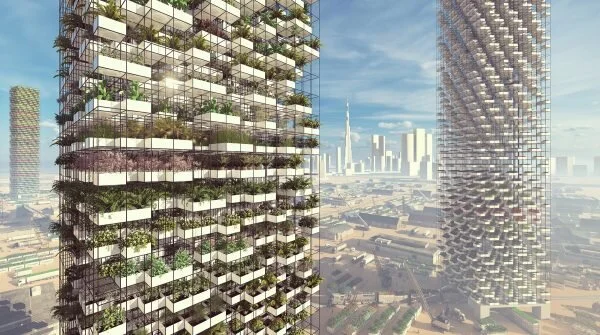
Agri-Khalifa: Agriculture Skyscraper For Dubai
Skyscraper is a perfect medium for vertical farms, especially in the desert climate condition. We utilize space as much as possible. No winter in the desert, so we omit the curtain wall of the building, making use of the natural condition of Dubai
Editors’ Choice
2020 Skyscraper Competition
Zeng Shaoting, Liu Chenyang
China
Dubai is one of the most popular cities in the world, lies directly within the Arabian Desert. With sandy desert surrounded, Dubai has a hot desert climate. Summers in Dubai are extremely hot, windy, and humid, with an average high around 41 °C (106 °F) and overnight lows around 30 °C (86 °F) in the hottest month, August. Most days are sunny throughout the year. Winters are comparatively cool with an average high of 24 °C (75 °F) and overnight lows of 14 °C (57 °F) in January, the coolest month. Desert terrain, extremely high temperatures, and limited rainfall have historically made agriculture unworkable in Dubai and the United Arab Emirates
Dubai currently imports over 80% of its food. The main food influences were from nearby countries such as Saudi Arabia, Oman, Iran, East Africa, and Indian. In order to reach the city’s targets, locally grown food not only has to expand its growth rapidly, but it also has to meet the uncompromising health standards of the UAE, and cater to the diverse population that enjoys a wide variety of international food.
The Burj Khalifa, known as a skyscraper in Dubai, has been the tallest structure and building in the world since its topping out in 2009. Our skyscraper project is Agri Khalifa aimed to use innovative agricultural technology to find ways to grow locally-sourced produce in Dubai and change its current state.
Agri Khalifa is a vertical farm located in the desert area of Dubai, going with a big factory that includes energy, transportation system. There is sufficient solar and wind energy in the desert, and we build a series of energy collect system to supply electricity to the farm. We apply many advantages of current vertical farm technologies, such as lighting system, which uses a series of variable color LEDs, for instance, we can use ultra-violate light to shorten the span of plant growth to improve the production.
Skyscraper is a perfect medium for vertical farms, especially in the desert climate condition. We utilize space as much as possible. No winter in the desert, so we omit the curtain wall of the building, making use of the natural condition of Dubai.
We use robotic arms and elevators to pick up mature plants automatically. There are rail trails beneath the building, and we can use railway transportation to conduct remote carriage to the urban and living area of Dubai.
Up to 20 units of outdoor farmland per unit of vertical farming could return to its natural state, due to vertical farming’s increased productivity. Vertical farming would reduce the amount of farmland, thus saving many natural resources.
Deforestation and desertification caused by agricultural encroachment on natural biomes could be avoided. Producing food indoors reduces or eliminates conventional plowing, planting, and harvesting by farm machinery, protecting soil, and reducing emissions.
Traditional farming is often invasive to the native flora and fauna because it requires such a large area of arable land. One study showed that wood mouse populations dropped from 25 per hectare to 5 per hectare after harvest, estimating ten animals killed per hectare each year with conventional farming. In comparison, vertical farming would cause nominal harm to wildlife because of its limited space usage.

CSO Pleased With Schedule For Lawsuit Asking To Restrict Supplies of Organic Foods
Lee Frankel, executive director of the CSO, stated, “The sooner growers can be sure that the rules established by Congress, the US Department of Agriculture and the National Organic Standards Board that allow for growers to use containers in their operations will remain in place, the more quickly growers can get back to focusing on providing nutritious and delicious organic fresh produce to consumers looking for ways to strengthen their immune systems during the COVID-19 outbreak.”
SAN DIEGO, CALIFORNIA June 12, 2020 – The Coalition for Sustainable Organics (CSO) is pleased with the schedule set by Judge Seeborg in the lawsuit seeking to strip growers of their rights to incorporate appropriate and legitimate growing techniques in their organic operations. The CSO continues to oppose the efforts of the Center for Food Safety and a handful of growers to limit the availability of fresh organic berries, tomatoes, cucumbers, peppers, leafy greens, herbs, microgreens, and mushrooms.
Lee Frankel, executive director of the CSO, stated, “The sooner growers can be sure that the rules established by Congress, the US Department of Agriculture and the National Organic Standards Board that allow for growers to use containers in their operations will remain in place, the more quickly growers can get back to focusing on providing nutritious and delicious organic fresh produce to consumers looking for ways to strengthen their immune systems during the COVID-19 outbreak.”
Under the Scheduling Order, USDA has until July 15 to provide the Administrative Record supporting its decision to deny the petition of the CFS to revoke certification of organic growers incorporating containers on their farms. A series of briefs will be filed culminating in a hearing currently scheduled for January 21, 2021, to present what will likely be the final arguments in the case prior to the judge’s decision.
The Department of Justice on behalf of the USDA stated in the case management order filed prior to the judge’s order that “The agency properly concluded that the OFPA [Organic Foods Production Act] does not prohibit hydroponic production systems. It properly determined that organic hydroponic systems cycle and conserve resources in a manner consistent with the vision for organic agriculture expressed by the OFPA, that hydroponic organic systems produce food in a way that can minimize damage to soil and water, and that hydroponic organic systems can support diverse biological communities. USDA fully explained these reasons and others in its decision denying the petition—a decision that courts review under an extremely limited and highly deferential standard.”
Frankel continued, “The CSO agrees with the USDA. We look to broaden the coalition to other producers, marketers, and retailers that support bringing healthy food to more consumers because we believe that everyone deserves organics.”


An Aussie Vertical Farm Company Has Gained International Interest Amid Concerns About Food Supply Chain During The Coronavirus Pandemic
Aussie company Stacked Farm, a fully automated vertical indoor farm, has been gaining international interest amid the coronavirus pandemic
By Sharon Masige | Business Insider | 5 June 2020
Stacked Farm, an Australian automated vertical indoor farm, has received international interest during the coronavirus pandemic amid concerns about the continuity of food supplies.
The farm produces salad greens and has the capacity for tomatoes and strawberries.
CEO Conrad Smith told Business Insider Australia Stack Farm received significant interest from the Middle East.
Aussie company Stacked Farm, a fully automated vertical indoor farm, has been gaining international interest amid the coronavirus pandemic.
Stacked Farm, founded in 2017, produces salad greens and herbs like lettuce and rocket and has the capacity to produce tomatoes and strawberries. It's even looking at testing out a type of blueberry next year.
The company has been receiving a lot of interest during the coronavirus pandemic amid concerns about virus clusters breaking out in the food supply chain. Back in May, a coronavirus cluster broke out at Melbourne's Cedar Meats abattoir, which was linked to 62 cases, according to the ABC.
"People are more concerned than ever about who is handling their food, where it’s coming from and how many stops it made before arriving on supermarket shelves," Stacked Farm CEO Conrad Smith said in a statement.
The company is headquartered in Burleigh Heads, Queensland and has plans to open up farms across Australia as well. "A scaled-up farm in Victoria will be our first major commercial farm," Smith told Business Insider Australia. Its farm is fully automated, with the produce packed and sealed once its harvested by robotic farming.
"It doesn’t pass through the usual supply chains either – greens and herbs can go directly to wholesalers, retails, hotels and restaurants, unlike traditional produce which passes through a number of hands before reaching our shelves," Smith said in a statement.
Stacked Farm has a partnership with fresh produce supplier Morco Fresh and counts Dnata as one of its clients as well, which provides aircraft services like flight catering.
"We are not too dissimilar to a normal farm where we go through markets and we go through wholesalers and food service distributors," Smith said.
And while it mainly supplies to the food service industry, Stacked Farm is looking at a move into retail so people can grab its produce from supermarket shelves as well. "We haven't got the capacity to do that at the moment," Smith said. "But when we scale up to our Victorian farm, we will certainly have the capacity to do that and we'll be looking for retail partners to jump on the journey that we're on."
The farms are temperature controlled and automated
Stacked Farm grows its produce 12 months a year, without relying on different seasons. Its products are grown in a temperature-controlled environment that is fully automated from seeding to harvesting. The company is looking at post-harvest automation as part of its next business phase.
Stacked Farm also makes barley-based livestock feed. "In a drought-vulnerable country like Australia, there's a lot of opportunity there because while we all think about human consumption, animals are a massive part of the food chain that needs to be considered," Smith said.
The company's employees are mainly in the science and tech field rather than traditional farm labourers.
"We're not like traditional farms where we require pickers, packers and harvesters," Smith said. "We employ more labour leaning towards engineering, software engineering, mechanical engineering, CAD designers [and] horticultural scientists."
The company has been receiving interest from the Middle East
Stacked Farm has received international interest in its farm during the coronavirus pandemic, mainly thanks to concerns over food safety, quality and security.
"There's a lot of food chains that have been broken throughout this COVID-19 pandemic, and we've had interest from the Middle East to set up farms there," Smith said.
"We have been very enthused by the interest from particularly a couple of states in the Middle East that have governments that really support local industry and local farming." Smith gave the example of Dubai which relies predominantly on imports. According to Bloomberg, the United Arab Emirates imports up to 90% of its food.
Smith explained that in Dubai, "a lot of produce can't travel by sea".
"They've immediately recognised that there's a problem in their food chain and they need to bring tech businesses to their country to support feeding their people." And, in the case of Stacked Farm, can help feed livestock too.
Smith added that Stacked Farm can support the future of food production, particularly in extremely hot and dry or extremely cold climates. He explained that one in nine people go hungry around the world. According to the Food and Agriculture Organisation of the United Nations, by 2050 world food demand is expected to rise by 70%.
"Having urban indoor vertical farms is definitely [an] exciting prospect for the future," Smith said. "We can literally shave days off out of the logistics process, we can extend the shelf life of products so there's less wastage and that in turn will benefit the community."


iGrow Presents: Calling All Vancouver Container Farmers
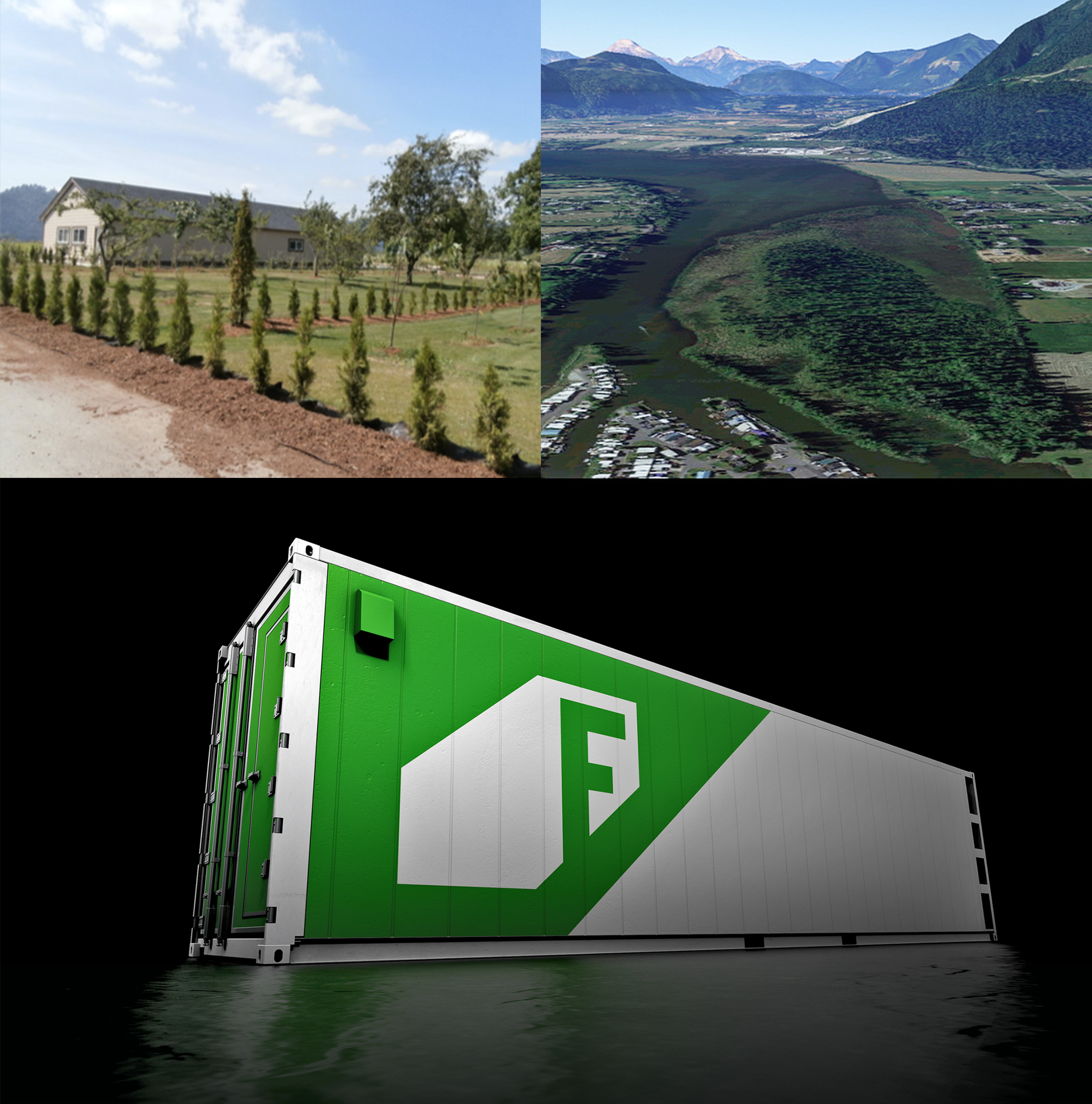
A week’s long vacation an hour outside of town, — reconnecting with the earth while spending time with the family in the open fields of the farm.
A truly turn key solution for the local restaurant looking to grow their own produce. Enter into a lease and immediately take over a functioning container farm already producing hundreds of crops per week.
Thus is the vision of Farhad Enrahimi, looking for a farming-operating partner.

A week’s long vacation an hour outside of town, — reconnecting with the earth while spending time with the family in the open fields of the farm.
A truly turn key solution for the local restaurant looking to grow their own produce. Enter into a lease and immediately take over a functioning container farm already producing hundreds of crops per week.
Thus is the vision of Vancouver real estate entrepreneur Farhad Enrahimi, founder of Crestone Properties, — to build a Vancouver agrotouist destination with a multitude of container farms supplying the local populace.
Mr. Enrahimi has the land, capital, and finance/real estate experience, and is now looking to partner with someone knowledgeable in the economics/operations of a shipping container farm.
iGrow presents this opportunity to any who are interested and qualified in making this future Vancouver venture a reality.
Please fill out the form below to enter into the next steps, and set up a meeting with Mr. Farhad Enrahimi.

The Road Ahead For Vertical Farming
"In the next 10-15 years, it will rise as one of the dominant forms of agriculture." In a recent webinar presented by the Association for Vertical Farming and Heliospectra, the opportunities and challenges facing the vertical farming industry in 2020 and beyond were highlighted, resulting in quotes like the one introducing this article
"In the next 10-15 years, it will rise as one of the dominant forms of agriculture." In a recent webinar presented by the Association for Vertical Farming and Heliospectra, the opportunities and challenges facing the vertical farming industry in 2020 and beyond were highlighted, resulting in quotes like the one introducing this article. Moderated by AVF Chairwoman, Christine Zimmerman-Loessl, the three guests, Nate Storey (Co-Founder & Chief Science Officer of Plenty), Joel Cuello (Professor of Biosystems Engineering, University of Arizona) and Ali Ahmadian (President & CEO, Heliospectra) shone their light on where the industry is headed.
"On the cusp of growth"
According to Joel, the vertical farming industry has had a historic run in growth and proliferation globally in the last five or so years. "Going forward, especially in terms of the enormous COVID-19 disruptions in fresh produce chain, vertical farming will continue growing", he says. "It should be economically viable, but it shouldn't just be a growth story, but also of sustainability and resilience."
Nate adds that currently, the vertical farming industry is still in its infancy. "We're on the cusp of growth and expansion as an industry. By and large, the world is still skeptical because vertical farming isn't a dominant form of production yet, but in the next 10-15 years it will rise as one of the dominant forms of agriculture."
Tech catches up with vision
Having moved on from the stage of pioneers and visionaries (who were, in a sense, "too early", because they saw the potential for vertical farming, but the tech didn't match up to their visions), Nate says that "we're now at a point where the tech matches the need; technology has caught up with the vision", adding that it's not going to be a pain-free road. "Folks will be challenged by the economic fundamentality of the business. We need to either offer a differentiated product, or a product that is cost-competitive with the field, so they're accessible to people."
At Plenty, he says, the primary tech inputs are LED and semiconductors. "As costs go down, we reap the benefits - same with data storage, genetics, etc. So we have created our own tech cost curve around indoor ag, which drives costs down and quality up." As a result, the yield for the same amount of energy increased by 12x at Plenty, Nate explains.
There's still a world to win when it comes to the proper use of tech, however. Ali: "50% of vertical farms today are profitable, while the other 50% are struggling. The main reason why vertical farms are struggling is because farmers underestimate the true cost of labor: many farmers overlook the way in which growing techniques make workers more or less efficient."
A small test of Mother Nature: "Get your act together"
Of course, the elephant in the room wasn't ignored by the panel. COVID-19 has had an impact on all industries, and vertical farms are no exception. "In the US, the fresh produce supply chain has been dramatically upended by COVID", Joel says. "Lots of growers were suddenly left without a place to deliver their produce. They need to establish new contacts, which is hard to do, so lots of fresh produce goes to waste."
At the same time, in a lot of major cities in the US, there's been a huge increase in demand for produce from vertical farms. The same thing happened in Europe, although there the dependence on seasonal workers from outside the EU has proven problematic, Joel explains, with a shortage of workers, again leading to produce going to waste.
Nate points out that in many cases the food supply chain is global now. "We've been pushing yield increases in the field to the max, but it's a system under stress, operating at the max all the time - break a link and the whole system comes crashing down." With instabilities like climate change, Nate argues the industry has a lot of buttressing to do. "COVID was a small test of Mother Nature, basically saying 'get your act together'. As the COVID situation affected the Bay Area (where our flagship farm is), our sales have doubled - indoor produce is a supplement to produce from the field, and retailers are realizing the usefulness of indoor produce."
The crucial role of governments
With the COVID crisis, governments have been giving more attention to indoor/vertical farms now. According to Ali, this will open up huge opportunities for current and future vertical farmers.
Nate agrees. "Government recognition is super important - it's a capital intensive business." At Plenty, they're building agricultural infrastructure, comparable to electricity and water. Nate even goes so far as to say that in the future, food production will become one of those utilities. "Government has to play an important role in getting the industry off the ground, cutting red tape and supporting producers, like with loans and capital to help the industry get started. Government support will be a critical step for this industry."
Christine agrees that the role of governments is important, but they also need to be made aware of the opportunities of vertical farming, they need to be informed of what it is and what it isn't. "Governments always say: 'Human beings can't live on salad - so where do we go with this vertical farming industry? Will we produce things like corn and maize in a vertical farm? What is the blueprint of the future?" So informing and educating is also of the utmost importance.
Attracting investors
The same goes for attracting investors, another important pillar under the industry. According to Nate, "folks are starting to view vertical farming not as an if but a when question - what we've earned over the last decade or two is the recognition that this is a necessary thing. It's driven by incredible demographics changes, so it's an inevitability. We are proving that it can be an extremely profitable venture."
As a result, more people are starting to think about investing in this. "The money out there is going to get smarter and smarter about this industry", Nate adds. "Investors tended to be super-specialized in agriculture; now folks who don't come from that background are also approaching the space, having enough info to start making huge investments. So, access to capital will grow, but there is a gap between the capital which is more risk-tolerant and the capital with very little risk tolerance. We'll have to build relationships with risk-tolerant capital."
For more information:
Association for Vertical Farming
Marschnerstrasse,
81245 Munich,
Germany
info@vertical-farming.net
vertical-farming.net
Publication date: Thu 4 Jun 2020
Author: Jan Jacob Mekes
© HortiDaily.com

Localization is Seeding Innovative Produce Supply Chains
The COVID-19 crisis is shining a light on the vulnerabilities of food supply chains, as well as opportunities to develop inventive ways to deliver fresh foods such as fruit and vegetables from farm to table
A Key Theme of These changes is Localization – An Increasing Reliance on Local Growers to Supply Produce To Retail Outlets.

By Chris Mejia Argueta, Alexis H. Bateman, & Ken Cottrill · June 12, 2020
Editor’s Note: Chris Mejia Argueta is a Research Scientist at the MIT Center for Transportation & Logistics and directs the MIT Food and Retail Operations Lab. Alexis H. Bateman is a Research Scientist at the MIT Center for Transportation & Logistics and directs MIT Sustainable Supply Chains. Ken Cottrill is the Editorial Director at the MIT Center for Transportation & Logistics.
The COVID-19 crisis is shining a light on the vulnerabilities of food supply chains, as well as opportunities to develop inventive ways to deliver fresh foods such as fruit and vegetables from farm to table.
A key theme of these changes is localization – an increasing reliance on local growers to supply produce to retail outlets. The movement has gained momentum as a result of shifting consumer buying preferences and the need to make food supply chains resilient to a wide array of risks.
What is localization?
From a global perspective, localization can mean reorienting supply chains towards suppliers in specific countries or regions in any market. In this article, we focus on the localization of fruit and vegetable supply chains in the United States.
There are several definitions of what constitutes a “local” food supply in the US. The United States Department of Agriculture maintains that although “local” connotates short geographic distance between producer and consumer, there is no consensus on what products meet the definition. A government definition assumes that a product can be considered locally or regionally produced if it is less than 400 miles from its origin or within the state in which it was produced. A consumer survey carried out by the research firm Nielsen found that most buyers classify products across various food categories made 50 miles or less from the store, as local.
Local sources of produce are not confined to farms or small-size plots of land; They also include specialist operations such as high-tech commercial greenhouses and urban gardens. The enterprises sell directly to consumers or to retail customers such as supermarkets.
The size of the market for local food is unclear. From an industry standpoint, research from the Congressional Research Service (CRS) estimates that direct-to-consumer food sales account for about 3% of the total US agricultural production value. Up to one-half of the produce industry relies on sales to supermarkets and other chain stores, and the remainder serves foodservice companies (e.g., restaurants) and large consumers of produce such as schools and other institutions.
Pre-pandemic drivers
The localization movement was gathering steam in produce markets before the COVID-19 pandemic.
One of the drivers is the need to make produce supply chains more resilient to disruptions, like market volatility and labor shortages. Local sourcing avoids the risks associated with shipping perishable product long distances from growers to consumers. Also, shorter supply chains are more flexible, require fewer product touches and intermediaries, reduce wastage, and minimize potentially costly and delay-prone cross-border movements. There are cost advantages as well, mainly in the form of reduced transportation and warehousing costs.
Localization is finding support among consumers. Trust in food crops grown on distant, large-scale factory farms has declined as consumer interest in the safety and origins of food products has increased. Another component of this trend is the increased demand for sustainable products. For example, research by The Center for Food Integrity suggests that concepts such as “food miles” are becoming more relevant to consumers, as they place more value on shorter, more carbon-efficient supply chains.
The localization movement also aligns with the need to provide underserved communities with sources of fresh, nutritious food. One way to combat the spread of so-called food deserts – communities where access to fresh fruit and vegetables is limited – is to connect these communities with local growers.
These forces drive demand for locally grown fruits and vegetables and increase the premium that consumers are willing to pay for “locally produced” and “farm to table” product labels.
Coronavirus-related market shifts
Today, the COVID-19 crisis is reinforcing many of these market changes by illuminating weaknesses in produce supply chains. The pandemic shuttered restaurants and other places where large numbers of people congregate such as schools – effectively depriving fruit and vegetable producers of a primary market.
An obvious response was to pivot to other customers, notably supermarkets and other retail outlets. However, these are different channels with distinct specifications for product packaging and unit sizes. Reorienting supply chains geared to foodservice and institutional buyers towards customers in the retail business proved extremely challenging. To solve this issue, some farmers turned to selling their produce directly to the consumer, highlighting the value of locally produced foods as a source of revenue for farmers during supply chain disruptions. Some farmers may never go back to the original model.
The pandemic also exacerbated the labor shortages that plague growers in agricultural regions of the US. Restrictions on migrant workers crimped the supply of labor before the pandemic. The coronavirus’s health threat made it even more difficult to recruit the workers that growers need to harvest and pack food crops.
While localization does not address all pandemic-related supply chain issues, it does promote the flexibility, agility, and resilience needed to mitigate the risks associated with COVID-19 disruptions. This is one reason why the pandemic has underscored the advantages of local sourcing, especially for perishable products such as fruit and vegetables.
Moreover, preference for neighborhood markets may grow beyond food deserts. A recent study from mathematician Elena Polozova indicates that buying in corner stores is less risky than in big retail formats.
Innovations hone local models
The localization movement also benefits from a number of supply chain innovations in the agricultural industry. Here are some notable examples.
Local supply programs. As NPR reported recently, the movement known as community-supported agriculture (CSA) is experiencing growth in various parts of the country. Members of CSA programs typically commit to buying regular deliveries of fresh produce from local growers. The coronavirus pandemic has raised the profile of CSAs for the reasons described above, although the model is mainly growing in wealthy communities.
Veggie box models. The so-called veggie box model is an evolution of the CSA movement. In this variation, groups of farmers create boxes of produce items in accordance with consumer preferences.
Commercial veggie box models such as HelloFresh are expanding, and provide a new buying channel for fresh produce. However, they do not offer the variety and quantity that most customer segments need. In addition, these services are configured for middle-to-high income population segments and assume that there is enough last-mile delivery capacity to perform dozens of deliveries effectively. However, the capacity is not always available, a problem exacerbated by the COVID-19 crisis.
Dr. Chris Mejia, Dr. Lars Sanches, along with master’s students Jamal Taylor and Luiz Barreto from the MIT Food and Retail Operations Lab have collaborated with colleagues from Tufts University, and the City of Somerville, MA, to explore the veggie box model, in underserved communities. The options under review use neighborhood markets as pickup points for veggie boxes, analyze the impact of ride-sharing systems, and extend the impact of grocery delivery models in the city. Despite its complex design, the researchers found that the veggie-box model can support a local economy, decrease food insecurity, and address shortages of healthy food items. However, neighborhood market owners or managers need to widen the choice of produce, promote the veggie box service to the appropriate customers, and allocate space to store the boxes of produce.
A future article in this series on food supply chains will give a detailed account of the veggie box research described above.
Innovative growing models. Growers are harnessing novel agricultural methods such as hydroponics, advanced sensing, and information technologies to develop alternatives to traditional farms. An example is BrightFarms, a company that grows produce sustainably in high-tech, hydroponic greenhouses located in Pennsylvania, Ohio, Illinois, and Virginia. The greenhouses typically supply local supermarkets. In January 2020, the company opened a 280,000 sq. ft facility in Selinsgrove, PA, that can deliver over 2 million pounds of fresh, local produce year-round in PA and the PA-NJ-DE tri-state area. It has partnered with local supermarkets, including the Giant chain.
Urban and Container Farms. Small urban farms that sell to retail, food service, or restaurants have also become increasingly common with open fields, rooftops, brownfields, and other open spaces being utilized in cities to grow fresh fruits and vegetables. Urban farms that serve public demand reduce product transit and storage needs and increase food freshness in most cases.
Container farms use shipping containers to create self-contained growing environments for fresh produce, often in urban settings. One example is FreightFarms, which provides the container and set up that enable people to grow produce anywhere in the world.
Diversity programs. Traditional farmer’s markets allow residents to shop for a variety of produce items at specific locations in city locations at weekly times. However, these markets may not cater to the fruit and vegetable needs of ethnically diverse communities. World Farmers Organization in Massachusetts is implementing an innovative strategy to support culturally diverse farmers who grow their preferred products in small parcels and connect them to retail outlets. Some of these outlets are located in neighborhood markets.
Small growers, big potential?
While the localization of fruit and vegetable supply chains is attracting interest, most conventional, large-scale growing operations are not under threat.
Not all food crops are viable candidates for small, local suppliers. Moreover, the competitive advantages of localization are subject to tradeoffs between economies of scale, the capital cost of growing facilities, and transportation costs. Also, more emphasis on locally grown produce increases the importance of supply chain transparency. Consumers who buy local produce want to be reassured that their purchases are sourced locally, and this will require relevant sourcing information at the point of sale. The availability of investment funds also influences the commercial success of localization – a factor that could become more critical while the US economy remains mired in recession.
Still, consumers switching to local growers pre-COVID, in combination with the changes wrought by the pandemic, are creating a significant market for locally sourced produce that poses new supply chain challenges and opportunities. Researchers across MIT CTL are working on research projects to better understand this trend.

Babylon Micro-Farms On Why Controlled Environmental Agriculture Will Revolutionize Food Security
The coronavirus pandemic is shining a harsh and revealing spotlight on the fragility of our food supply. We can thank a globalized and fragile food supply chain for the empty grocery shelves, rising food prices, desperate farmers and ominous indications of future food disruptions
Indoor Farming Will Drive
A Post-Pandemic Food Supply Reset
JUNE 12, 2020
The coronavirus pandemic is shining a harsh and revealing spotlight on the fragility of our food supply. We can thank a globalized and fragile food supply chain for the empty grocery shelves, rising food prices, desperate farmers, and ominous indications of future food disruptions. The coronavirus pandemic is a historic anomaly we have not experienced in our living history and its effect on our food supply cannot be dismissed. It has taken what had been warnings and made them a reality. But, there is a silver lining in the chaos of our new food reality. Consumer and institutional interest in sustainable food production were growing by leaps and bounds before COVID-19. In the pandemic, we are primed to make real, significant changes. The controlled environment agriculture industry -- solutions as wide-ranging as solar-powered greenhouse growing; hydroponics and aeroponics; vertical farms have grown under LED lights in warehouses; and freight containers or refrigerator-size growing units -- will be an essential part of the sustainable food economy of the future.
Complicated Supply Chains and Food Waste Threaten Our Food Sovereignty
Watching the videos of farmers dumping mountains of zucchini, truckloads of milk and fruit and crops rotting in fields while desperate Americans line up for miles at food banks has been heartbreaking and unsettling. But as shocking as that is, food waste is by no means a new problem. Over ninety-five percent of our leafy greens are grown in California and Arizona. From this drought-threatened region, fragile leafy greens are shipped to multiple distribution points across the U.S., before they finally reach consumers' fridges and then – maybe – their plate. Even once fresh food purchases make it to our homes, consumers alone experience up to 50 percent spoilage. Combine that with unexpected distribution disruptions – as COVID 19 has so recently amplified and we have experienced many times before via foodborne illness outbreaks or climate-change-related weather events – what you get is a highly inefficient process, wasting food that consumers desperately need, and highly vulnerable to food security disruptions that have a nationwide impact.
Reducing transportation miles eliminates a lot of production problems. The more areas growing more food closer to the end consumer results in a more resilient system. It also means a wider selection of fragile fresh greens become viable commercial crops because they can be harvested and consumed quickly. Many biodiverse crop varieties with unique flavors, textures, and nutritional profiles don’t hold up to the long transport miles and processing techniques of industrial agriculture, but with local production, these varieties can become available to consumers again.
Efficient Indoor farming requires a controlled environment. That means we can control insects, diseases and pathogens in a way that simply isn’t possible in large-scale outdoor production methods. This gives us more variability in varieties we can grow — including non-GMO and heirloom cultivars grown without human and earth-damaging pesticides — to produce the freshest and more nutritional food we can. And it puts us incredibly close to the consumer.
In the case of Babylon Micro-Farms, our ‘food miles” are literally as far as it takes to harvest it from one of our on-site micro-farms, plate it up and sit down to eat. The fewer food miles we have to worry about, the more flexibility we have in what can be grown and eaten locally. And the more we can spend our resources working to grow healthy, locally abundant food rather than transportation costs growing crops that were bred to be shipped, not necessarily eaten.
The 21st Century Needs a “Digital Victory Garden” Renaissance
When things really go south, basic needs remain. Food is a big one. That’s why — after the toilet paper panic resided — so many rushed to buy seeds, plant a garden and grow their own food. It is reminiscent of the “Victory Gardens,” the backyard home kitchen gardens, of our last food crises — WWI, the Depression, and WWII — when Americans produced as much as 40 percent of our fresh fruits and vegetables from their own gardens. But today’s world is vastly different from the Victory Garden era of our grandparents. Fifty-five percent of the world’s population currently live in an urban area. That figure is expected to grow to nearly two-thirds over the next thirty years. People in the 21st century don’t have access to a plot of land like their grandparents had. Nor do they have the knowledge or the time to grow food in the traditional ways.
Food is consumed in different ways as well. Once the ‘shelter-in-place’ orders are lifted, we can assume that eating outside of one’s home — in lunch-room business cafeterias, on-the-go, in restaurants, and even when at home, via prepared meals or food kits — will resume, as will financial pressures. Very few families will be able to afford to have a ‘homemaker’ sitting at home making the daily bread from scratch and canning the bumper crop of green beans. Yet, we still need a way to have more control over our own food. And we need to shorten our supply chains to build up resilient, localized foodsheds for our urban populations. But we won’t be able to do it the same way our grandparents did. Luckily, we do have advantages they didn’t — technology, data collection, and analysis. That’s where indoor, controlled environment vertical farms come into play. We are the “Digital Victory Gardens” of the future.
It Will Take Baby Steps, and Many Innovative Solutions, to Reframe our Food Supply
Just a few years ago indoor hydroponic or aeroponic farming under LED lights was perceived as an impractical solution for food production, cost-prohibitive, and unable to produce significant yields. That didn’t stop those of us who saw the potential to develop technology to improve efficiency, increase yields, and ultimately transform this fringe method of crop cultivation into a mainstream industry that future generations can rely on for their fresh produce.
As our technology and expertise evolves, the cost of production is falling and the knowledge and ability to grow more crops more efficiently in indoor environments is increasing. We are also finding different ways to serve different market sectors with a year-round supply of fresh produce, all via indoor farming solutions. The AeroFarms, Plenty, and Bowerys of the world, with their impressively large warehouses stacked sky-high with leafy greens, are serving the wholesale grocery market needs of their local foodsheds. Whereas here at Babylon Micro-Farms we focus on hyper-local vertical ‘micro-farms.’ We are the vertical farm equivalent of locally controlled, small-scale food production. Only we do it via a remotely managed, data-driven, resource-efficient core technology platform.
Babylon was founded on the principles of developing integrated technology to address the missing link that makes vertical farming inaccessible to most communities and organizations. Our belief is that there is a significant untapped opportunity in creating smaller-scale modular indoor farming solutions that can “plug in” to existing food supply chains. However, in order for these solutions to work, they needed to be powered by a comprehensive operating system that enables all of the technical and operational expertise to be outsourced and controlled remotely through the cloud with a meal-prep style subscription of growing supplies delivered as needed to each farm installation. Our modular controlled environment farms can be placed in almost any business lunchroom, healthcare or educational cafeteria or group-living situation like retirement communities. The service is designed to allow anyone to successfully ‘grow their own food’ indoors by supporting them with on-demand delivery of supplies, a Guided Growing app and a remote-managed system. The operating system we have developed is designed to support a range of modular systems and the data we collect allows us to continually refine the user experience, improve yields, and make this kind of crop cultivation accessible to those who need it most.
The point is vertical indoor controlled environment farming is not a one size fits all solution. That’s the beauty of it. There are countless ways this new technology can (and will be) adapted to fit the many needs of our world’s food system. But it’s not just indoor farming innovations that will revolutionize our food system. We are part of a bigger ecosystem that includes innovations like plant-based protein, advances in solar and wind power, robotics, AI technology and carbon-based, and regenerative farming techniques. Together, we are already disrupting the food system as we currently know it. After the COVID 19 coronavirus pandemic recedes, we will completely reshape it.
Don’t Dismiss the Power of Being Involved in Food Production
At Babylon Micro-Farms our ‘micro-farm’ indoor growing technology puts units right in front of the consumers that have the novel experience of watching and monitoring the food they will eat being grown in real-time. This has given us a unique perspective on the psychological power of keeping people involved in the process of growing their own food, like those old Victory Gardens of old. But in new, novel ways. Our technology takes what had seemed strange and novel and makes it accessible to people without the need for horticulture experience. Our customers have responded with immense excitement, pride, and, most notably, strong interest in more sustainable solutions.
This feedback has made it obvious to us just how important it is that we include consumers in the food-growing technology of the future. Removing the people from the process of growing the food they consume was a massive mistake that our current food system made and has paid for. The ‘digital’ food solutions of the future must involve consumers, businesses, and institutions as much as possible in the process of growing their own food. Babylon Micro-Farms technology is uniquely positioned to do just this. But other solutions can find similar opportunities.
It is crucial that we begin giving businesses and their consumers more control over, and more experiences with, how their food is grown. This exposure will lead to people embracing even more sustainable food innovations. We must not leave the end consumer out of the equation.
If we look back in human history there are obvious inflection points. Culturally, economically and psychologically, humans reached a point where they were primed to make giant leaps forward as a society. Among these major shifts are the transition from fragmented hunter-gatherer paradigms to agriculture-based societies, the industrial revolution and the creation of a factory-based economy, and the technological revolution with its modus operandi of data-based solutions.
We are at the precipice of a food renaissance that will completely change how we produce food over the next few decades. Here at Babylon Micro-Farms, we strive to be a leader in this imminent revolution.
https://www.babylonmicrofarms.com/
Bowery Farming Debuts New Lettuce Variety
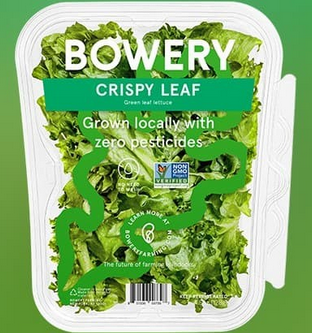
Bowery Farming, per a press release, announced its newest leafy greens launch, Bowery Crispy Leaf Lettuce (Crispy Leaf). A reinvigorated version of iceberg lettuce that is refreshing and simple, Crispy Leaf boasts a bold color and satisfying crunch
Posted by Chris Manning | June 3, 2020 | Produce Grower
Bowery Farming, per a press release, announced its newest leafy greens launch, Bowery Crispy Leaf Lettuce (Crispy Leaf). A reinvigorated version of iceberg lettuce that is refreshing and simple, Crispy Leaf boasts a bold color and satisfying crunch. The much-anticipated product, which goes from harvest to shelf in just a few days, will be available in the produce aisle at over 250 grocery stores and specialty markets in the Tri-State area and Mid-Atlantic region beginning in June 2020. Crispy Leaf will also be available through Bowery’s online partners, including Amazon Fresh, Peapod and Hungryroot.
"With unparalleled flavor and crunch in every bite, we're confident that Crispy Leaf has the potential to disrupt the traditional iceberg market," said Carmela Cugini, EVP of Sales, Bowery Farming. “Crispy Leaf is one of the most in-demand leafy greens from Bowery based on current retailer orders. We've had to ramp up production to meet retail demand,” continued Cugini. “Early feedback from buyers indicates Crispy Leaf is poised to change the way consumers interact with lettuce by introducing a completely new sensory experience to the category."
Crispy Leaf is grown locally at Bowery’s commercial farms in Kearny, New Jersey, and White Marsh, Maryland, and has zero pesticides. The mild and versatile green is the ideal base for salads and grain bowls and serves well as a culinary garnish.


New Digital Publication And Podcast Launched by Agritech Specialist, IGS
Covering the theme of global sustainable food security, the inaugural edition of Clima features interviews with Professor Colin Campbell, Chief Executive at the James Hutton Institute and Michael Dean, co-founder of specialist agrifood venture capital platform AgFunder
Edinburgh, Scotland – 12 June 2020 - Indoor agritech specialist IGS has today launched Clima, its new digital publication and accompanying podcast series. Through Clima, IGS will welcome industry-leading interviewees and share thought pieces on some of the most fundamental issues facing the world, including supply chains, agricultural innovation, and indoor growing.
Covering the theme of global sustainable food security, the inaugural edition of Clima features interviews with Professor Colin Campbell, Chief Executive at the James Hutton Institute and Michael Dean, co-founder of specialist agrifood venture capital platform AgFunder.
Professor Colin Campbell, who leads the world-renowned James Hutton Institute near Dundee, Scotland, explores what he believes are the greatest barriers to achieving a secure, sustainable food supply and the role science and technology have to play in attaining this goal. Continuing the theme, Michael Dean shares his thoughts on the impact of the COVID-19 pandemic and explores the future of food supply chains.
David Farquhar, Chief Executive of IGS, commented: “At IGS we are very aware just what a challenging time this is for our customers and partners, with many countries across the globe still considering the right strategies to alleviate COVID-19 restrictions. Clima was born from our desire to bring the industry together and drive collaboration, informed discussion, and debate which we hope will help to create a more sustainable and secure food eco-system for the future.
“We are very excited to launch Clima publicly and to have the opportunity to share the insights of two brilliant interviewees, both of whom are leading their fields. We hope that readers of Clima and those who listen to the podcast get as much out of it as we have in the process of producing this first edition.”
To subscribe to Clima and to access the first edition, please visit www.igsclima.io.
About IGS:
Founded in 2013, IGS brought together decades of farming and engineering experience to create an agritech business with a vision to revolutionize the indoor growing market. Its commitment to innovation has continued apace and it has evolved the applications of its technology beyond agriculture to create solutions for a wide variety of indoor environments that enhance life for people, plants, and animals.
IGS launched its first vertical farming demonstration facility in August 2018, based at the James Hutton Institute in Invergowrie.
For more information visit www.intelligentgrowthsolutions.com or connect with us on Twitter and LinkedIn.

A Guide To Vertical Farming Techniques
If you don’t already, chances are you’ll be eating more produce from indoor farms in the near future. Learn what that means
If you don’t already, chances are you’ll be eating more produce from indoor farms in the near future. Learn what that means.
Our ancestors first learned to farm nearly 12,000 years ago. By cultivating and domesticating seeds, these once hunter-gatherers broke away from their nomadic lifestyles, settled down to produce controlled and reliable food sources (weather permitting, of course) and, little did they know, change the course of the planet’s future.
Fast forward to the 20th century when a group of architects started planning to alter food production in their own way. They aimed to decreased dependency on traditional land-based farms and harness spatial efficiency in our dense built environment; think less wide-open spaces with tractors and more structures growing stacked layers of crops. This practice—widely referred to as “indoor” or “vertical farming” (taken from Gilbert Ellis Bailey’s 1915 book of the same name)—is alive and booming today, and especially in the New York metro area.
Columbia University professor emeritus and ecologist Dickson Despommier helped to envision the modern vertical farm and indoor agriculture while teaching a graduate-level course in 1999. His students realized that simply using rooftop gardens would been grossly insufficient to feeding the population of Manhattan so inline with urban agriculture predecessors, he began researching different techniques and structures. Despommier is among several academics and vertical farming thought leaders who see vertical farming today as part of the answer to a range of global problems (many partly caused by agriculture) including climate change and water scarcity.
There are a lot of ways to farm indoors and below are three different soilless processes recommended by Despommier. Done properly at various scales, they’re as effective as at growing crops in skyscrapers as they are in 500 square foot studio apartments:
HYDROPONICS
One of the oldest and most common methods of vertical farming, hydroponics includes growing plants without soil and in a water solvent containing mineral nutrients. The simplest hydroponic method (called the floating raft system) suspends the plants in soilless raft like a polystyrene sheet and lets the roots hang to absorb the oxygen-aerated solution. Another common method is the nutrient film technique, which is popular for growing lettuce. Here, a stream of the nutrient-dissolved solution is pumped into an angled channel, typically a plastic pipe, containing the plants. This runs past the plants’ root mat and can then be recirculated for continuous use. New York’s Gotham Greens and Square Roots use hydroponics.
AEROPONICS
It’s no surprise that NASA has been backing research on aeroponic growth for the past two decades as it’s free-floating-roots aesthetic is typically used in futuristic sci-fi movies. With aeroponics, the dangling roots absorb a fine mist comprised of an atomized version of the nutrient solution sprayed directly onto the roots by a pump. Although aeroponics enables plants to grow much more quickly than hydroponics, it requires more solution and therefore is more costly. Newark’s Aerofarms uses aeroponics.
AQUAPONICS
Like hydroponic systems, an aquaponic system contains a soil-free plant bed suspended over a body of water containing nutrients necessary for plant growth. But within the body of water is a population of fish (typically herbivores) that produce waste that function as fertilizer for the plants. In turn, the plants help purify the water to make the water suitable for the fish.
Given that a balance must be achieved to ensure the system of both life forms, aquaponics requires greater attention than hydroponics or aeroponics although filtration and aeration systems can help manage these complications. Furthermore, the types of plants one can grow are much more limited as the necessary plant nutrients must be compatible with those necessary for the fish. Brooklyn’s Edenworks and Oko Farms use aquaponics.
By Matthew Sedacca | Edible Manhattan | May 3, 2017
Lead Illustration by Chamisa Kellogg

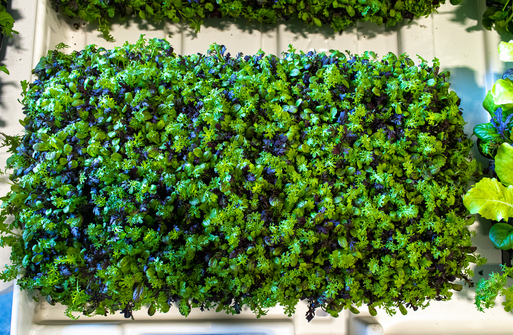
Looking Up: Vertical Farms Fill Produce Supply Chain Lag During Pandemic
The great panic buying of 2020 revealed the time it takes for food to go from farm to shelves. The curtain was pulled back on something the shopper rarely thinks about — supply chain logistics
By Jesse Klein | Green Biz | June 11, 2020
The great panic buying of 2020 revealed the time it takes for food to go from farm to shelves. The curtain was pulled back on something the shopper rarely thinks about — supply chain logistics. As grocery store shelves emptied, the problem wasn’t necessarily lack of food but a drastic shift in demand that caused traditional distribution engines to sputter.
For example, lettuce takes between 30 and 45 days to grow in a field farm. According to a 2001 study by the Leopold Center for Sustainable Agriculture, traditionally grown lettuce travels about 2,000 miles to get to Chicago grocery stores. So by the time prepackaged greens are bought by consumers, that produce can be almost two weeks old. These long lead times caused those empty shelves in March.
Vertical farms have struggled to become a major force in the grocery market. Their products are usually limited to leafy greens, and the high labor costs have made turning a profit challenging for many. But the pandemic clarified their role within a more sustainable food system. Vertical farms, with their hyperlocality and ability to quickly grow new crops, can step in to fill retail shelves when traditional farms falter.
"We are a really critical part of this food supply chain, and we can fill a gap when there is a crisis," said Shireen Santosham, head of strategic initiatives at Plenty, which sells vegetables at 20 locations around the San Francisco Bay area.
Location always has been a core part of the vertical farm appeal and business model. During the pandemic, many have taken advantage of the fact that their growing operations often use abandoned warehouses in urban areas and therefore are much closer to retail stores.
Fifth Season Connection, a vertical farm that leverages robotic technology, operates a 600,000-square-foot vertical farm in the food deserts of Pittsburgh. Its chief category officer, Grant Vandenbussche, called me from inside his delivery truck. He was delivering that day’s produce to grocery stores a mere 24 hours after the greens were picked. His company has seen a 50 percent increase in orders over the past few months, even as its restaurant market has dwindled.
"We have fantastic retail partners that we have really leaned on," he said. "Our partnerships have allowed us to get more onto the shelves and expand our offerings."
The consumer also benefits from the quick turnaround time, especially during the pandemic. According to Vandenbussche, vertical farm greens typically last longer after purchase because they haven’t been out of the dirt for as long as traditional produce. So when every trip to the grocery store feels like a risk, shoppers are looking for products that will last longer than a few days.
According to AeroFarms, its advantage has been the ability to produce baby greens in a third of the time of traditional farms, typically 12 days. AeroFarms operates four vertical farms in New Jersey harvesting almost 2 million pounds of produce a year using aeroponic mist instead of traditional irrigation, resulting in 95 percent less water usage than a traditional farm. According to Marc Oshima, co-founder and marketing director of AeroFarms, most field farms don’t have the nimbleness to respond to a quick change in market demand.
"Because we are inside, we are able to grow all year round," he said. "We can pivot as needed and adjust to the marketplace. We plant, seed and harvest for our customers based on their orders. That allows us to be very customer- and market-driven in how we grow."
Plenty has seen a threefold increase in demand from its retailers since the start of March. The pandemic opened up opportunities with new retail partners for Plenty because the stores were experiencing a disruption in supply chain and looking for alternative means of keeping shelves full, according to executives.
"[The increase in demand] came from both our existing stores as well as from additional stores that called us up and said, ‘Hey, we are having trouble keeping our shelves stocked, could you add some volume with us?’" said Roger Kirkpatrick, director of business development at Plenty.
Plenty was able to meet the demand as it already was gearing up its volume for placement in new stores but coronavirus accelerated the pace, Kirkpatrick said.
Vertical farms are hoping to capitalize on this moment. Shelves empty of a consumer's habitual brands help force consumers over the initial barrier of trying a new product such as those sold by Plenty. Once people do try Plenty's produce, according to Kirkpatrick, they tend to stick with the brand. So even as panic buying has calmed down, Plenty has seen its demand stay level, he said.
And even though the Centers for Disease Control and World Health Organization guidelines agree COVID-19 is unlikely to be passed through food contamination, vertical farms are using consumers’ increased awareness of the food supply chain to push their product as a safer and better alternative.
"[Consumers] will continue to gravitate towards local clean options because, now more than ever, they're thinking about where is my food coming from, who is touching it and how has it been processed," Vandenbussche said.


Kalera and University of Florida LED Lighting Study Sheds New Light on Cost-Effective Modes of Increasing Nutritive Value in Lettuce
Today, technology-driven vertical farming company Kalera announced the publication of a new study, “Effect of End-of-Production High-Energy Radiation on Nutritional Quality of Indoor-Grown Red-Leaf Lettuce,” conducted in partnership with the University of Florida Institute of Food and Agricultural Sciences
The New Study Reveals Exciting Findings For Both Consumers and
Vertical Farming Industry Practices
June 04, 2020, | Source: Kalera
ORLANDO, Fla., June 04, 2020 (GLOBE NEWSWIRE) -- Today, technology-driven vertical farming company Kalera announced the publication of a new study, “Effect of End-of-Production High-Energy Radiation on Nutritional Quality of Indoor-Grown Red-Leaf Lettuce,” conducted in partnership with the University of Florida Institute of Food and Agricultural Sciences. The Kalera-sponsored study found that by using high-energy LED lighting prior to harvest, red-leaf lettuce significantly increases the production of antioxidants and especially of anthocyanins, compounds in plants that may offer health-promoting benefits by protecting cells from free radicals — exciting news for health-conscious consumers. By only using high-energy LED lighting for the last few days before harvest, both yield and quality could be maximized indoors, indicating promising and cost-effective future practices for the vertical farming industry.
The entire study can be read here.
Representative plants at harvest after exposure to EOP treatments
While numerous studies have evaluated the effect of high-energy light as a means to increase nutritional quality of lettuce grown in vertical farms, most research has focused on providing constant light quality or quantity throughout the production cycle, which typically reduces yield or increases production costs. In this new University of Florida study, Dr. Celina Gómez, Assistant Professor of Controlled Environment Horticulture at the University of Florida, who led the study, evaluated the use of end-of-production (EOP) high energy light as a cost-effective, pre-harvest practice that can allow growers to manipulate product quality and increase market value of lettuce without negatively affecting yield.
“Dr. Toma approached me to discuss the possibility of leading the study, which resulted in exciting findings for the vertical farming industry and consumers of healthy produce alike. The objective of the study was to compare growth and accumulation of secondary metabolites such as antioxidants from two popular red-leaf lettuce cultivars grown indoors and exposed to different strategies of EOP high-energy lighting. In general, EOP with blue or high-intensity lighting increased anthocyanin content and antioxidant capacity,” noted Dr Gómez. “Considering potential implications on production costs, EOP with additional blue light is an effective strategy to increase the quality of indoor-grown red-leaf lettuce plants.”
“Given the positive effects of pre-harvest light treatments on nutritional value and marketability of red-leaf lettuce cultivars, vertical farms like Kalera offer tremendous opportunities to deliver fresh, high-quality produce to local markets. This is just one example of what vertical farming can do,” noted Dr. Cristian Toma. “By investing in new developments in science and technology, Kalera is positioning itself as a leader in the vertical farming space and as an expert in the ag-tech revolution. This new research reflects the importance of constantly educating our company, our customers, and our industry on best practices, even as we continue to expand and grow into new markets.”
The new study is being released shortly after Kalera announced its expansion into Atlanta, GA, with its newest facility. Kalera opened its second Orlando, Florida indoor vertical farm in March. While Kalera’s Orlando farm is currently the highest production volume vertical farm in the Southeast, the new Atlanta facility will be more than double the size while generating over 70 jobs for the local community. As was the case in Orlando, Kalera is able to quickly open its newest growing facility in Atlanta with its proprietary technology as a result of a streamlined design and construction process, further illustrating its ability to rapidly scale and expand its vertical farms. The Atlanta facility is the third indoor vertical farm in Kalera’s portfolio and will soon be joined by more in the United States and abroad.
About Kalera
Kalera is a technology driven vertical farming company with unique growing methods combining optimized nutrients and light recipes, precise environmental controls, and cleanroom standards to produce safe, highly nutritious, pesticide-free, non-GMO vegetables with consistent high quality and longer shelf life year-round. The company’s high-yield, automated, data-driven hydroponic production facilities have been designed for rapid rollout with industry-leading payback times to grow vegetables faster, cleaner, at a lower cost, and with less environmental impact.
About UF/IFAS
The mission of the University of Florida Institute of Food and Agricultural Sciences (UF/IFAS) is to develop knowledge relevant to agricultural, human and natural resources and to make that knowledge available to sustain and enhance the quality of human life. With more than a dozen research facilities, 67 county Extension offices, and award-winning students and faculty in the UF College of Agricultural and Life Sciences, UF/IFAS brings science-based solutions to the state’s agricultural and natural resources industries, and all Florida residents.
Media Contact:
Elka Karl
Phone: 510-508-7328
Email: elka@dadascope.com

Microgreens Launched By Vertical Farmer April Sun
Just in time for this year’s winter season, vertical farmer April Sun launched its range of sustainably grown microgreens from its new commercial-sized micro-farming facility in Melbourne
Food & Beverage | June 4, 2020
Just in time for this year’s winter season, vertical farmer April Sun launched its range of sustainably grown microgreens from its new commercial-sized micro-farming facility in Melbourne.
With a philosophy of true sustainability and paired with cutting-edge technology, the local farm wants to provide the community with a range of nutrient-packed microgreens available year-round to their nearby community.
Co-founder Darren Nichol, April Sun visionary of Australia’s cleanest and highest nutritional food supply who has a wealth of knowledge due to his agricultural background, says, “This is a particular focus of the Darebin Council. They have an actual goal to increase food production within its municipality.”
These super foods are grown without pesticides and utilise 95 percent less water than traditional farming methods due to a hydroponic based (closed loop) watering system. Co-founder Ty Dickson, April Sun technologist and facility designer, said this system guarantees the plants do not receive too little or too much water.
“The watering targets each individual plant or root system and is drained back to the holding tanks,” he said. “Traditional farming methods would see water being lost to the ground and you would use more water to achieve the same level of fertigation without the ability to recapture the excess.”
With custom-spectrum lights developed in-house, the microgreens are grown in their ideal conditions, allowing for year-round production and minimal waste.
“We use a combination of specific wavelengths of blue, red, far red and full spectrum light to stimulate the chlorophyll A and B of the plants, while giving the right signals to ensure proper colour, increased nutrients through stress and, above all, a very healthy plant,” Dickson said.
“We are a non-single use plastics company; we opt for PLA compostable packaging. Our facility uses the highest efficiency components and equipment available. We do run on electricity, although we are engaging in using 100% renewables, and are in preliminary talks with the Darebin Council to implement 100kW of solar panels on our warehouse roof.” said Dickson.
In traditional farming, external factors such as drought, pollution, soil erosion and more can impact crop success. However, the world of vertical farming is “most often done indoors in a controlled environment”, he adds. “Vertical farming when done sustainably has less impact on the environment, there are significant reductions in water usage, land usage, gas usage and many other resources. This is all achieved whilst controlling the indoor growing environment with minimal impact to it outside.”
“By controlling every factor in the plant’s environment, you end up with a high-quality product on a number of levels,” said Nichol.
“We can grow to a timeline and the removal of variables such as the weather allows us to more accurately forecast and grow to our customers’ demands. This can reduce the amount of waste and also increase consistency of supply to customers. This is a huge problem for traditional farming and is the cause for the large price jumps and shortages of produce on the market.”
To see more, click here.

