


Welcome to iGrow News, Your Source for the World of Indoor Vertical Farming

Climate Labels On Food To Become A Reality In Denmark
Research from the University of Technology Sydney and Duke University suggests that using labels that are easy to understand may create demand for responsibly produced food. Lead author of the research
The Danish Government has announced that a climate labeling system on food products will accompany its plan to become carbon neutral by 2050. Officials from the Danish Ministry of Energy, Utilities, and Climate stated that the Government is proposing to work with supermarkets to place stickers on all food products that clearly indicate their carbon footprint. The proposal would help consumers make informed choices, with Denmark’s Minister for the Environment, Lars Christian Lilleholt, explaining, “We want to give consumers the means to assess in supermarkets the environmental impact of products.”
Research from the University of Technology Sydney and Duke University suggests that using labels that are easy to understand may create demand for responsibly produced food. Lead author of the research, Dr. Adrian Camilleri, describes the current lack of transparency, “With an appliance such as a heater you can feel the energy used and see an electricity bill at the end of the month, so the impact is quite salient, whereas the impact of food production is largely invisible.”
Minister Lilleholt says that giving consumers easy access to information is important, but accurate labeling comes with a long list of challenges. The labels may have to consider water and land usage, life-cycle analysis, greenhouse gas emissions, and carbon footprint from transport. Director of the Danish Agriculture & Food Council, Morten Høyer, approves of the proposal, but notes a challenging component: nutritional value. “It might be necessary to weigh up the environmental impact against the nutritional value of the product. A bottle of soda may have a low environmental impact, but it is not a product you can live on,” says Høyer.
Developing a comprehensive labeling system that spans all food products in Denmark’s supermarkets may take time, and a formal launch date has not yet been set. If successful, climate labeling could shed light on which practices produce healthy food more sustainably and may even inspire competitive innovation from producers. “My impression is that there is a demand for knowledge about how individual consumers can contribute to improving world climate,” Lilleholt says.
Denmark, which ranked 17th in the world in the Climate Change Performance Index, announced the proposal last year in the wake of the Intergovernmental Panel on Climate Change report highlighting the consequences of global warming
Giant Food Launches Produce Prescription Pilot Program
Giant Food, a leading greater Washington, DC, regional grocery chain, announced its participation in the Produce Rx pilot program in partnership with local nonprofit DC Greens to give customers better access to healthy food
APRIL 19, 2019
Giant Food, a leading greater Washington, DC, regional grocery chain, announced its participation in the Produce Rx pilot program in partnership with local nonprofit DC Greens to give customers better access to healthy food.
Through the program, customers who are Medicaid beneficiaries through AmeriHealth Caritas DC and who are currently experiencing a diet-related chronic illness can receive a prescription for fruits and vegetables from their healthcare provider and fill the prescriptions at the Giant pharmacy. Customers may fill prescriptions during their weekly shopping trips at the in-store Giant pharmacy. When filled each week, a Giant pharmacist will provide the customer with a $20 coupon to be used to purchase fresh fruits and vegetables from the store's produce department.
"Giant Food is excited to be bringing the Produce Rx program to our local Alabama Avenue store," said Gordon Reid, president at Giant Food. "As a food retailer, we recognize the important role we can play in the access to healthy foods and health education, and the program is certainly a natural fit with our ongoing efforts to support the health needs of the communities we serve."
The motivation behind implementing Produce Rx was to further support hunger relief efforts, nutrition counseling and access to healthy foods. Giant continuously aims to build healthy communities through its team of expert in-store nutritionists and pharmacists, the Guiding Starts nutrition rating system, the Nutrition Made Easy! Podcast and more. In 2018, Giant donated over 5 million pounds of food to hunger relief and nutrition education resources.
"We believe that cross-sector partnerships are the only way to achieve health equity in our city," said Lauren Shweder Biel, executive director of DC Greens. "Doctors and patients both need more tools to address food insecurity and diet-related chronic illness. Through Produce Rx, our healthcare system can be a driver to get patients access to the healthy food that they want and need."
The Produce Rx pilot program will run through Dec. 31 and customers may renew their prescriptions with their healthcare providers throughout the program. The pilot will kickoff with 500 AmeriHealth patients, with the hope to expand to more individuals in the future.
Controlled Environment Agriculture Carbon Dioxide Injection
Indoor production of leafy greens, Part III: Is carbon dioxide enrichment beneficial for indoor production of basil seedlings?
March 25, 2019
Indoor vertical production of basil seedling under sole-source light-emitting diodes (LED)Photo: Roberto G. Lopez
In this third article of a four-part series, researchers from Michigan State University share science-based information about indoor production of leafy greens and herbs.
To read part one, click here. To read part two, click here.
In recent years, researchers and growers have been mainly focused on quantifying the effects of sole-source light quality on crops grown in indoor CEA warehouses and containers. However, one commonly overlooked environmental parameter that has the potential to increase growth and yield is carbon dioxide (CO2). Atmospheric (ambient) CO2 concentration has been increasing over the years from below 320 µmol·mol-1 (or parts per million, ppm) in 1960 to current values where CO2 levels outdoors comprise 0.04% of atmospheric volume, or around 400 µmol·mol-1. However, CO2 concentrations in a “tightly sealed” greenhouse or indoor growing operation can quickly dip down to 200 µmol·mol-1 as plants use CO2 during photosynthesis.
You may think that maintaining the CO2 concentration at ambient levels is as easy as venting or introducing fresh air. It can be during certain times of the year, but this can be difficult when outdoor temperatures are very low. Increasing CO2 to concentrations above ambient and up to 1,200 µmol·mol-1 has been shown to increase photosynthetic rates, growth and yield. There are several commercial methods to increase CO2 concentrations above atmospheric levels. However, these methods should be deployed during periods when ventilation is minimal to reduce the loss of the added CO2 outside of the growing area.
For CO2 enrichment above ambient, growers can deploy CO2 burners that produce CO2. This method produces some heat, moisture and CO2 by burning natural gas or propane. Incomplete combustion or contaminated fuels can lead to the introduction of toxic gases for both plants and humans. To improve CO2 uniformity, burners should be dispersed throughout and horizontal air flow (HAF) fans can be deployed to circulate air. Another method of CO2 enrichment for both greenhouses and indoor farms is injecting compressed or liquid CO2 from a tank. The compressed CO2 is converted from a liquid to a gas and then released into the growing area. These tanks can be rented or purchased through local gas distributors. When delivered in this form, CO2 is often dispersed through polyethylene tubes. Remember that CO2 is heavier than the other air components, so concentrations tend to be greater closer to the floor.
Fig. 1. Sweet Basil ‘Nufar’ grown in growth chambers with either 500 or 1,000 µmol·mol-1 CO2 and light intensities of 100, 200, 400 or 600 µmol·m–2·s–1 two weeks after sowing.
Fig 2. Sweet Basil ‘Nufar’ grown in growth chambers with either 500 or 1,000 µmol·mol-1 and light intensities of 100, 200, 400 or 600 µmol·m–2·s–1 two weeks after sowing.
Fig. 3. Limitations to photosynthesis include carbon dioxide (CO2; blue line), light intensity (red line) and biochemical (phosphate; purple line). The green line represents a theoretical photosynthetic response curve.Photos and Graphics courtesy of Kellie Walters
Experimental protocol
The goal of our research program is to develop indoor and greenhouse environmental management protocols for different stages of culinary herb production. Given that CEA production is energy-intensive, we have focused our efforts on young plant production since inputs such as light and CO2 can be delivered across more plants at the seedling stage when plant density is greater compared to the finished stage when plant density is lower. The objectives of our research were to determine if indoor CO2 enrichment during the seedling stage influences: 1) sweet basil seedling growth and development; 2) morphology, growth, and yield at harvest in the greenhouse; and 3) volatile oil content and flavor (this research is in progress and we will report the results in an upcoming article).
Sweet basil ‘Nufar’ seeds were sown in Grodan rock-wool cubes and placed in walk-in growth chambers with an average daily temperature (ADT) set point of 73° F (23° C) and CO2 set points of 500 or 1,000 µmol·mol-1 throughout the day and night. We maintained these concentrations by injecting compressed CO2 into the chambers, and by scrubbing CO2 with soda lime when concentrations were too high. In each chamber we had four light intensity treatments of 100, 200, 400 and 600 µmol·m–2·s–1 that operated 16 h per day to create daily light integrals (DLIs) of 6, 12, 23 or 35 mol·m–2·s–1. This allowed us to determine whether there was an interaction between CO2 concentration and light intensity. The seedlings were grown for two weeks, after which plants were transplanted into deep flow technique (DFT) hydroponic systems in a greenhouse with an ADT of 73° F (23° C) and a DLI of 14 mol·m–2·s–1. With the plants growing in a common greenhouse environment, we could evaluate if differences or higher inputs at the seedling stage would result in increased yields down the road.
In theory, by increasing CO2 concentration, we should have seen increased growth; however, this was not the case. As can be seen in Figs. 1 and 2, light intensity had a much larger impact on seedling growth than CO2, but we will discuss that in the next article of this series. Increasing CO2 concentration did not influence growth and development. Why would increasing CO2 from 500 to 1,000 µmol·mol-1 not actually improve growth and development of basil seedlings?
Cross-merchandising of fresh-cut basil and tomatoesPhoto: Kellie Walters
There are three main limitations to photosynthesis: the supply or utilization of CO2, of light, or of phosphate (also referred to as biochemical limitation; Fig 3.). Theoretically, if CO2 concentration starts at 0 and increases, you will hit a CO2 compensation point above which plants have positive net photosynthesis. As the CO2 concentration further increases, the photosynthetic rate will increase until the CO2 concentration reaches a species or cultivar-dependent saturation point. In our case, 500 µmol·mol-1 CO2 may have been near the saturation point for basil seedlings. Therefore, increasing the concentration to 1,000 µmol·mol-1 did not significantly increase growth. In addition, if photosynthesis is light-limited, increasing CO2 concentration will not result in large increases in photosynthesis. Conversely, if photosynthesis is CO2-limited, increasing light intensity will not result in large increases in photosynthesis. However, increasing CO2 can have some other positive effects, including reducing oxygenation and photorespiration. In our case, increasing the light intensity further or growing the plants past the transplant stage may have resulted in differences between CO2 treatments.
Do our results mean we should write off CO2 enrichment as a means of increasing photosynthesis and ultimately growth and yield? No. We are currently evaluating several other culinary herbs at lower and higher CO2 concentrations and a range of light intensities to see if there is a species-dependent response. In addition, it is possible that elevating CO2 concentration would have a larger impact during the finish stage. More studies are needed to parse out which horticultural crops and at what stage of production CO2 enrichment would be the most beneficial to improving growth and yield.
Take-home message
Other environmental factors besides CO2 concentration may have a larger impact during the seedling stage. Read the last article in this four-part series to understand the benefits of increasing indoor CEA light intensity during propagation on subsequent yield in the greenhouse.
Kellie is a PhD student and Roberto is assistant professor and controlled environment/floriculture extension specialist in the Department of Horticulture at Michigan State University.
The authors gratefully acknowledge Sean Tarr and Nate DuRussel for assistance, Fluence Bioengineering for LEDs, JR Peters for fertilizer, Grodan for substrate, Hydrofarm for hydroponic production systems, Dramm for irrigation equipment and MSU AgBioResearch, MSU Graduate School and the USDA-NIFA for funding.
Seeds Lighting Ventilation CO2 Basil Photosynthesis Temperature
The Research of The Investment Potential of Russian Greenhouse Complexes 2019
The team of analysts from Vostock Capital is preparing a report on the research of Investment Potential of Greenhouse Complexes in Russia 2019. The report will feature:
new investment projects (greenhouse complexes construction and modernisation)
development perspective and challenges of the Russian greenhouse industry
greenhouse products potential at the domestic market in the upcoming future
global mega-trends, influencing Russian greenhouse industry and a lot more outcomes significant for the industry
Get the report by taking part in a 5-minute survey.
Fill in the questionnaire here
The report will be prepared prior to the upcoming Forum Greenhouse Complexes Russia 2019 to be held on 4-5 December in Moscow.
4th Annual Forum and Exhibition Greenhouse Complexes Russia 2019 – is an established professional international platform for attracting investment in the Greenhouse Industry of Russia, discussion of industry development strategies, exchanging of experience between key market players and signing new win-win contracts.
Over 700 leaders and senior executives of agricultural holdings, greenhouse complexes, initiators of investment projects, investors, retail chains, government officials, producers and providers of equipment and related services for the greenhouse industry took part in the Greenhouse Complexes Russia Forum 2018. Delegates from more than 20 countries participated in the event. 500+ business meetings were conducted at the Forum.
Date: 4-5 December 2019
Organised by: Vostock Capital
Website: https://www.greenhousesforum.com/
Contacts: Elvira Sakhabutdinova, Project Director
+7 495 109 9 509
USDA Launches Ace The Waste! Food Waste Contest For Students
WASHINGTON, April 23, 2019 – Food waste is a problem everyone can tackle, including our nation’s youth. As part of Winning on Reducing Food Waste Month, the U.S. Department of Agriculture (USDA), is launching Ace the Waste! A student competition for food waste reduction ideas. This first-ever competition calls on students to come up with creative solutions to reduce food loss and waste in the United States.
The problem of food waste affects everyone. More than one third of food in the U.S. is lost or wasted. This amounts to 133 billion pounds, or $161 billion worth of food each year. Food is the single largest type of waste in landfills. Students age 11 to 18 are encouraged to submit proposals on reducing food loss and waste anywhere along the supply chain, from the farm to the dinner table and beyond. Topic ideas for the proposal include:
Preventing food waste - such as ideas to prolong the storage life of food; improve efficiencies in the processing of food and its distribution; and create new products from unharvested or unsold crops (like so-called “ugly fruit and vegetables”) or from food processing by-products.
Recovering wholesome, excess food to feed people – such as innovative approaches for getting excess food to people who need it and measuring the value of food donations.
Recycling food scraps to keep them out of landfills – such as ideas to connect food waste generators with recyclers and to create animal feed, compost, and energy.
Raising awareness – such as ideas about how to make students more aware about the amount of food being wasted and let them know how to reduce it.
Students may submit 1-2 page proposals or 1-2 minute videos. Proposals will be judged on impact potential; originality and creativity; clarity of expression; and adherence/appropriateness to theme. Judges will include representatives from USDA, the Environmental Protection Agency (EPA), and the Food and Drug Administration (FDA). One winner will be selected from each of two categories – ages 11-14 and ages 15-18. The winner of the challenge will be honored with recognition on USDA’s social media accounts and website, receive a certificate of appreciation, and will have the opportunity to discuss their proposals with USDA leadership.
The deadline for proposals is 5 p.m. EDT, Friday, May 24, 2019. Submit your ideas to the Ace the Waste! competition (PDF, 238 KB) today.
About the Winning on Reducing Food Waste Initiative
The Winning on Reducing Food Waste Initiative is a collaborative effort among USDA, EPA, and FDA to affirm their shared commitment to work towards the national goal of reducing food loss and waste by 50 percent by 2030. The agencies agree to coordinate food loss and waste actions such as: education and outreach, research, community investments, voluntary programs, public-private partnerships, tool development, technical assistance, event participation, and policy discussion on the impacts and importance of reducing food loss and waste.
During Winning on Reducing Food Waste Month and beyond, join the conversation on social media with the #NoWastedFood hashtag. Learn more about USDA, EPA, and FDA programs and resources to reduce food loss and waste.
New York City’s Best Urban Farms
When most people think of urban farming in New York City, they picture a bearded Brooklynite picking kale from atop a warehouse while drinking a home-brewed beer. And while that person does exist, there are a lot of other farms in this city that don’t fit the stereotype
From Bushwick to the Bronx, these 17 urban farms provide fresh food and green space for their communities
By Jessica Dailey and Amy Plitt
April 19, 2019
Eagle Street Rooftop Farm | UIG via Getty Images
When most people think of urban farming in New York City, they picture a bearded Brooklynite picking kale from atop a warehouse while drinking a home-brewed beer. And while that person does exist, there are a lot of other farms in this city that don’t fit the stereotype.
From a 19-year-old garden in East New York to a cooperative farm on a formerly vacant South Bronx lot, every borough plays host to at least one urban farm, and we’ve mapped 17 of the most notable ones here.
GrowNYC Teaching Garden
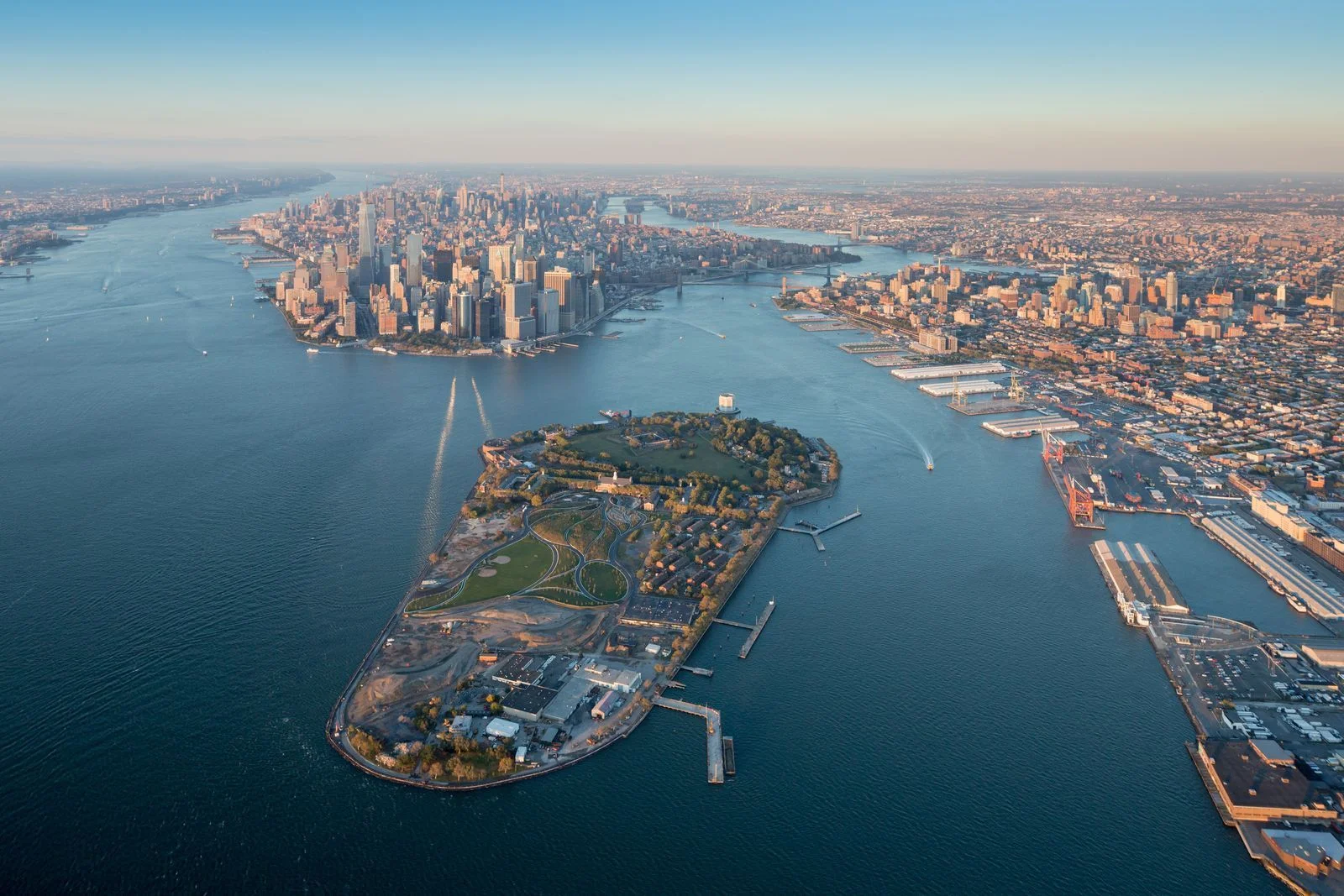
Governors Island
New York, NY 11231
Governors Island has partnered with GrowNYC on this 21,000-square-foot urban garden, which is filled with vegetable beds made from recycled materials. The garden is open for visitors to check out on weekends, and hosts occasional workshops and events.
Iwan Baan/Courtesy West8
The Battery Urban Farm
State St &, Battery Pl
New York, NY 10004
At the tip of Manhattan, one acre in the 25-acre Battery Park is dedicated to growing more than 100 types of vegetables. All of the food is harvest by NYC students, and donated to school cafeterias and food pantries, and resident turkey Zelda keeps everyone in line.
Shutterstock
Riverpark
450 E 29th St
New York, NY 10016
Many restaurants in New York City get their produce from the local Greenmarkets, but few grow it themselves. Riverpark, however, does. Located in the Alexandria Center, the farm uses 7,000 milk crates as grow beds. The farm provides food to Riverpark from spring until fall and grows more than 100 types of vegetables.
John Lamparski / Getty Images
Harlem Grown
118 W 134th St
New York, NY 10030
This urban farm, founded in 2011, aims to educate Harlem’s kids about agriculture, and does so through a variety of programs—there are volunteer opportunities, internships, and a summer camp. The farm has two locations: one on West 127th Street, and one on West 134th Street.
La Finca del Sur Community Garden
110 E 138th St
The Bronx, NY 10451
A group of Latina and black women living in the South Bronx banded together to turn an empty, abandoned lot on 138th Street into a farm in late 2009, and La Finca del Sur was born. The farming cooperative is an official nonprofit, and in 2014, the farm—where owners grow vegetables for personal use—helped launch the South Bronx Farmers Market.
Randall's Island Urban Farm
Wards Meadow Loop
New York, NY 10035
On Randall’s Island in the middle of the East River, 40,000 square feet of land hosts hundreds of plants in 80 raised beds. The farm, which has a great view of the Hell Gate Bridge, is maintained by GrowNYC and the Randall’s Island Park Alliance.
Brooklyn Grange, Long Island City
37-18 Northern Blvd
Long Island City, NY 11101
Brooklyn Grange’s flagship farm is not located, as one would assume, in Brooklyn. It sits on top of a 1919 Long Island City warehouse, and at 43,000 square feet, it’s one of the city’s largest rooftop farms. This commercial organic farm opened in 2010 and grows tens of thousands of pounds of produce every year, but it also hosts events, like tours and yoga classes.
Photo by Carolyn Cole/Los Angeles Times via Getty Images
Eagle Street Rooftop Farm
44 Eagle St
Brooklyn, NY 11222
Before building behemoth farms, Brooklyn Grange founder Ben Flanner co-founded the Eagle Street farm, the first rooftop soil farm in New York City. Today, his co-founder Annie Novak still runs the 6,000-square-foot farm, which is located atop a Greenpoint warehouse owned by Broadway Stages. The farm sells its produce at an on-site market, and delivers to local restaurants.
North Brooklyn Farms
320 Kent Ave
Brooklyn, NY 11249
North Brooklyn Farms was previously located on the Domino Refinery development site, but moved to a more permanent space on Kent Avenue and South 4th Street once construction on that mega project began. The farm hosts community dinners, educational programs, and sells the produce at a farm stand.
Oko Farms
104 Moore St
Brooklyn, NY 11206
Located in Bushwick, Oko Farms is an aquaponic farm, meaning that in addition to fruits and vegetables, its owners also cultivate freshwater fish. (Curious about how this works? They host workshops on aquaponics.) Oko recently partnered with Dabar Development Partners and Thorobird Real Estate, in partnership with the city’s Department of Housing Preservation and Development to bring fresh food and urban farms to a low-income housing project that’s in the works in Bed-Stuy.
Brooklyn Grange, Brooklyn Navy Yard
63 Flushing Ave
Brooklyn, NY 11205
Two years after opening its first farm, Brooklyn Grange more than doubled its growing power by expanding with a 65,000-square-foot farm in the Brooklyn Navy Yard, moving the title of the world’s largest rooftop farm from Queens to Brooklyn. Together, the two farms produce tens of thousands of pounds of vegetables every year.
Phoenix Community Garden
2037 Fulton St
Brooklyn, NY 11233
Many community gardens dedicate space for produce, but the Phoenix Garden in Brownsville fills its entire 20,000-square-foot plot with edible plants. There’s a grape arbor, a large gazebo, and a rainwater harvesting system, and the garden produces about 2,000 pounds of vegetables every season. A portion of the output goes to a local soup kitchen across the street.
East New York Farms
613 New Lots Ave
Brooklyn, NY 11207
East New York was one of the first neighborhoods in New York City to experiment with urban farming. The first seed for the idea was planted in 1995, and three years later, the first actual seed was planted in the ground. Today, the community-run farm provides produce to 17,000 people each year.
The Youth Farm
600 Kingston Ave
Brooklyn, NY 11203
A one-acre youth farm run by the High School for Public Service grows vegetables and flowers for the community while teaching students about agriculture and food justice.
Whole Foods Market
214 3rd St
Brooklyn, NY 11215
Gotham Greens runs the 20,000-square-foot garden atop the Gowanus Whole Foods, in which they grow 200 tons of organic, non-GMO produce with hydroponic techniques. Much of the produce is sold right downstairs in the supermarket.

Shutterstock
Red Hook Farms
560 Columbia St
Brooklyn, NY 11231
Formerly known as Added Value, this community farm in Red Hook is one of New York City’s older urban farms. It started in 2001, and every year, the 2.5-acre plot produces enough vegetables for a neighborhood CSA.
Snug Harbor Heritage Farm
1000 Richmond Terrace
Staten Island, NY 10301
A century ago, the area where Snug Harbor, Staten Island’s Cultural Center and Botanical Garden, sits was farmland, and the center pays homage to that history with a farm of their own. All of the fresh fruits, vegetables and herbs that the farm grows are sold at the Snug Harbor Farm Stand.
The Trouble With The Urban Farming ‘Revolution’
by Emma Bryce | April 5, 2019
Commercial urban agriculture in New York City has provided questionable environmental gains, and has not significantly improved urban food security. These are the findings of a recent case study of New York City which shows that, despite the fanfare over commercial urban farming, it will need a careful re-evaluation if it’s going to play a sustainable role in our future food systems.
The rise of commercial controlled-environment agriculture (CEA)–comprised of large scale rooftop farms, vertical, and indoor farms–is a bid to re-envision cities as places where we could produce food more sustainably in the future. Proponents see CEA as way to bring agriculture closer to urban populations, thereby increasing food security, and improving agriculture’s environmental footprint by reducing the emissions associated with the production and transport of food.
But the researchers on the new paper wanted to explore whether these theoretical benefits are occurring in reality.
They focused on New York City, where CEA has dramatically increased in the last decade. Looking at 10 farms that produce roof- and indoor-grown vegetables at commercial scales, they investigated how much food the farms are producing, who it’s reaching, and how much space is available to expand CEA into.
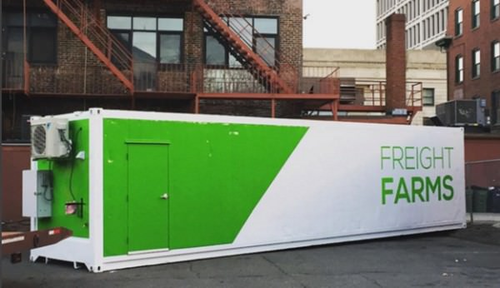
They found that the biggest of these 10 commercial farms is around a third of an acre in size. Most are on roofs spread across New York City, and some are inside buildings and shipping containers. Mainly, these farms are producing impressive amounts of leafy greens such as lettuce, and herbs; some also produce fish.
But while rooftop farms rely on natural sunlight to feed the crops, indoor farms use artificial lights. These farms potentially have a greater energy footprint even than conventional outdoors farms, the researchers say–challenging the assumption that urban farms are less impactful than conventional ones.
Some farms also embraced high-tech systems, such as wind, rain, temperature, and humidity detectors and indoor heating, to enhance growing conditions in environments that aren’t naturally suited to agriculture. These elevate the energy costs of the food produced, and may be giving CEA an unexpectedly high carbon footprint, the researchers say.
Furthermore, the predominantly grown foods–such as lettuce–aren’t of great nutritional value for the urban population, especially those threatened by food insecurity. Most produce from CEAs is sold at a premium, something that partly reflects the cost of the real estate used to grow the food. Consequently, that produce is typically grown for high-end food stores and restaurants, meaning it’s unlikely to reach low-income urban populations who need it most.
The researchers also think it’s unlikely that CEA–which currently occupies just 3.09 acres in New York City–could expand into the roughly 1,864 acres they estimate is still suitable for urban farming in New York City.
The rising cost of real estate might put these urban acres beyond the reach of new farming start ups, they think. These companies also face increasing competition from a growing number of farms springing up on the outskirts of cities–where land is cheaper and there’s space to produce more food, while also benefiting from urban proximity.
With its one-city focus, the research isn’t representative of what might be unfolding in other places around the world. Other cities may be having more success–for instance, Tokyo has gained global attention for its large scale vertical farming efforts. Yet as a case study, it does reveal useful lessons–especially for cities wanting to meet the original twin goals of urban agriculture: equitably increasing access to food, at a lower environmental cost.
The researchers note first of all that CEA is optimal in places where less supplemental heat and light is needed to grow food. More thought might also be given to the nutritional value and cost of foods grown, to generate benefits for all the city’s residents, not just high-income ones. The researchers question whether smaller, community-driven plots of urban agriculture–like community gardens, school, and prison farms–might actually do a better job of providing food to at-risk city residents, compared to commercial urban farms that inevitably have to focus on profits.
Based on the study of New York, the researchers caution: “CEA may be touted as an exciting set of technologies with great promise, but it is unlikely to offer a panacea for social problems or an unqualified urban agricultural revolution.”
It’s easy to be drawn in by the dystopian allure of vertical farms and underground greens nestled into our cities. But until we’ve streamlined its role, we should perhaps not overstate what commercial urban agriculture can do – or, instead be guided by cities where there are stronger signs of social and environmental success.
Source: Goodman et. al. “Will the urban agricultural revolution be vertical and soilless? A case study of controlled environment agriculture in New York City.” Land Use Policy. 2019.
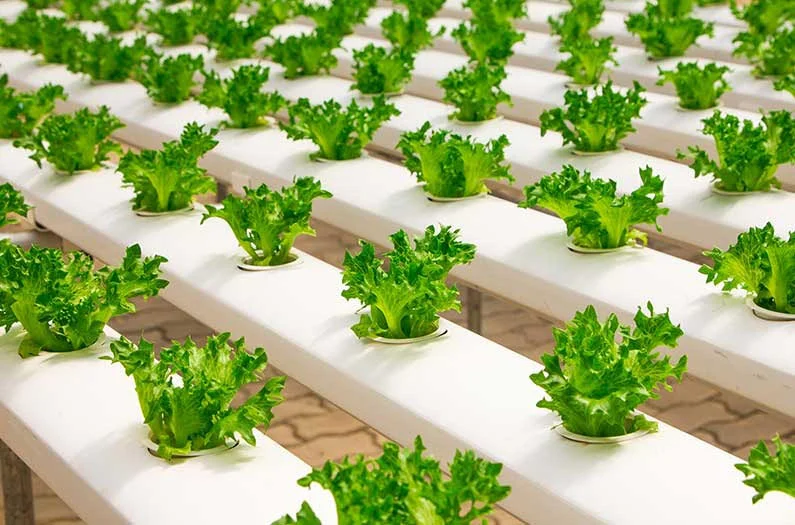
Image: Pixabay
Are Container Farms The Future of The Industry?
The trend for local food has risen over the last few years and as a result, the demand for local produce is showing no signs of slowing down
29 March 2019
Could Shipping Containers Be The Future of
Farming? According To Cleveland Containers,
They Can.
In the UK alone, over half a million people still rely on food parcels, and overall around 3 billion people in the world live below the poverty line, according to Cleveland Containers.
The company states that shipping containers could be the future of farming and could provide an answer to the rapid demand for local produce.
Trend for local food
According to British Cleveland Containers The trend for local food has risen over the last few years and as a result, the demand for local produce is showing no signs of slowing down.
"Creating your own farming space inside a container enables you to grow crops all year round and once modified, allows you to control growing conditions such as climate, soil quality and heat and light exposure," says Johnathan Bulmer. - Photo: Cleveland Containers
“The problem that farmers have with this rising demand is that they are faced with the challenge of providing seasonal produce all year round, with no control over weather conditions,” says the company.
Farmers forced to be creative
With this in mind, farmers are being forced to get creative in how they can deliver the volume needed for local supermarkets, whilst still keeping hold of the nutritional value in its fruit and veg.
So, how could container farms shape the future of the industry? Johnathan Bulmer, Managing Director of Cleveland Containers, explains.
“Many are unaware that containers can be fitted with heating and water systems, as well as gas and electrics and therefore offer a whole host of benefits for crops and farmers alike.”
Control growing conditions
“Creating your own farming space inside a container enables you to grow crops all year round and once modified, allows you to control growing conditions such as climate, soil quality and heat and light exposure.”
Bulmer claims that container farms can produce up to 4,000 heads of lettuce every 10 days, using no soil and 97% less water than a conventional farm.
Eliminating the need for pesticides
“Shipping container farms also mean that crops are protected from nasty pests, therefore eliminating the need for pesticides which can cause health problems in those who consume them.”
Johnathan Bulmer:
Farmers won’t need to empty their pockets and fork out for extra land to expand
By removing the need for pesticides the produce will be healthier and, according to Bulmer, research shows that UK buyers find products free from pesticides more desirable.
Farm anywhere
Container farms are also easily scalable, as they can be stacked, says Bulmer. “What this means for farmers is they won’t need to empty their pockets and fork out for extra land to expand. You also have the flexibility to be located anywhere you want as containers are designed to be easily relocated, so farmers no longer need to be based out in the sticks.”
A 40 foot container could equate to approximately 5 acres of farming land and can be easily transported almost anywhere with minimal effort, says Bulmer.
Cut down on costs
“We are seeing more and more farmers deciding to opt for container farms in the UK. The flexibility and ability to mass produce fruit and vegetables within a short space of time alongside the savings on water usage means farmers can cut down on costs and produce seasonal fruit and vegetables all year round, and on a much grander scale.”
Also read: Indoor farming technology market to grow to $ 40.25 billion
![[Going Green 1] Introducing Healthy Vertical Farming](https://images.squarespace-cdn.com/content/v1/57c8695d5016e11e71be1d83/1556172609090-XQN5CRYWTXGAJ5TRUPRX/index.jpg)
[Going Green 1] Introducing Healthy Vertical Farming
April 23, 2019
Agricultural innovations are essential for feeding our ever-growing global population. Especially these days, as industrialization and global warming continue to negatively affect soil fertility and reduce the amount of arable land.
According to the United Nations, the world’s population is set to reach 9.8 billion by 2050. Such a large population would require approximately 1.7 times more food than is available now.
One potential solution for addressing the world’s need for more healthy and abundant food production is vertical farming – a process that’s growing increasingly popular in places like Europe, the U.S. and Japan, and involves food being grown indoors in vertically stacked layers.
Stable Food Production
What makes vertical farming such an efficient and viable means to produce food are the facts that it (1) saves space, and (2) allows farmers to grow crops all year round, regardless of climate or season.
Interest in vertical farming has been rapidly growing in recent years. Market research firm MarketsandMarkets predicts that the global market for vertical farming will be worth $18.4 billion by 2022, which is twice as much as the market was valued in 2016 ($9 billion).
Innovating for a Greener Future
The movement for healthy, sustainable food production is spreading across the world, and Samsung is committed to driving innovation in this area.
Last spring, Samsung announced the launch of a wide range of horticulture LED offerings that produce a broad spectrum of light to support healthy plant growth. On April 23, Samsung introduced an update to the LM301H, which features the highest photon efficacy among today’s mid-power white LED packages. The company has also revealed a number of exciting innovations designed to make it easy for consumers to grow and enjoy fresh, healthy vegetables from the comfort of their home.
Samsung also made waves at this year’s Kitchen & Bath Industry Show in Las Vegas with its all-new Chef Garden technology, which offers a simple, environmentally friendly way to grow food at home. Chef Garden integrates seamlessly with Samsung’s next-generation Family Hub refrigerator, and automatically regulates light wavelengths to enable users to grow and enjoy fresh, pesticide-free fruit and vegetables all year round.
“There is a growing interest in healthy food,” said Chohui Kim of Samsung Electronics’ LED Technology Center. “Horticulture LED is playing a key role in vertical farming and indoor crop cultivation, and we are looking to expand its applications in various fields.”
The second part of Samsung Electronics’ “Going Green” series will highlight technology trends and the company’s efforts regarding eco-friendly crop cultivation in detail.
Chef Garden Going Green horticulture LEDLM301H PLANTBOX vertical farming
Products > Home Appliances
Products > Semiconductors
RELATED ARTICLES
Seeds&Chips Teenovators
Milan, 19 April 2019 - The Call for Teenovators has just closed, gathering young innovators from all corners of the planet
Stories of Young And Very Young Innovators And Visionaries of The 5th Edition of The
Global Food Innovation Summit
Closed the International Call in collaboration with Fondazione Francesca Rava: 49 projects from all over the world.
Marco Gualtieri: "Greta Thunberg, who is in Italy these days, has triggered something: she has awakened the world, and the young in particular. There are a lot of boys and girls like Greta all over the world, and at Seeds&Chips we will present them together with their projects to save the planet".
Milan, 19 April 2019 - The Call for Teenovators has just closed, gathering young innovators from all corners of the planet. The contest, organized by Seeds&Chips - The Global Food Innovation Summit with Francesca Rava Foundation - N.P.H. Italia, was aimed at teenagers who are passionate and determined to change the food system and face the great global challenges, guided by the UN Sustainable Development Goals: 49 presented projects. The selected candidates will have the opportunity to inspire the leaders of today and tomorrow during the fifth edition of Seeds&Chips, from 6 to 9 May at Fiera Milano Rho.
"Greta Thunberg, with her perseverance, has brought the environmental emergency we are experiencing to the attention of the world's adults. Greta will be in Italy today to meet the Holy Father and the Institutions, but she will also be in the streets alongside thousands of Italian youngsters to ask once again to act immediately" - says Marco Gualtieri, President and founder of Seeds&Chips - "But how many young people like Greta exist? Few people know that there are many young and very young people who are committed to change things, who design innovative solutions for the protection of the environment and to encourage more sustainable lifestyles. These young people have always been the protagonists of Seeds&Chips. Like Ayrton Cable for example, who three years ago, at the time 13 years old, was already a source of great inspiration for me. It is only by listening to these young people that we can realize how the new generations have already changed their ways of thinking and acting of the new generations".
"We are enthusiastic about the synergy with Seeds&Chips because an important part of the mission of the Francesca Rava Foundation - N.P.H. Italia is to educate young people to respect themselves, the others and the environment that surrounds them" - says President Mariavittoria Rava. "N.P.H. (Nuestros Pequeños Hermanos - Our little brothers and sisters), who represents the Francesca Rava Foundation in Italy, has been changing the lives of many people for over 60 years, with the motto “one child at a time, from the street to graduation”. Through our activities in schools and international Camps, we listen to the fresh and motivated voice of many young people, who do not have often the opportunity to express themselves and have their talents be valued. The partnership with Seeds&Chips, allows us to give many deserving young people the unique opportunity to bring their ideas to the table of today’s leaders and in that way be "influencers" for a better future.”
Since its very first editions, Seeds&Chips has been a stage of honor for many very young innovators who, even this year, will be actively involved in the Summit's rich programme. Teenovators (13-19 year old) and Young Pioneers (20-25 year old) from around the world will open the thematic sections and bring their revolutionary ideas to the attention of guests and the public. Each conference will be attended by an under 30 speaker; in addition, the established format GiveMe5! is dedicated to young startuppers, where they will have the opportunity to meet top leaders and present their project in 5 minutes, ask questions and draw inspiration for the future.
Greta's "fight" and the mobilization of #FrydaysforFuture testify that the environmental and sustainability revolution starts from the young. Seeds&Chips will give the space and voice to some of these young people who have already started a transformation in their countries of origin. Such as Nikita Shulga and Sophia-Christina Borisyuk, both 13 years old Ukrainians, who through their projects introduced in more than 230 ukranian schools canteens, a compost system for the organic waste called “Compola” also supported by local institutions. Or Haaziq Kazi, a 12-year-old Indian, who since 2017 has been looking for funds to build his prototype of a ship powered by clean energy,” Ervis” capable of removing especially plastic waste from the oceans. Another example, Gitanjali Rao, this year included by Forbes among the top 30 under 30 for Science. The 13-year- old, hit by the contaminated water scandal at Flint in Michigan, created Tethys, a compact device based on carbon nanotubes that detects the presence of lead in water. In 2017, Gitanjali was awarded the title of Best Young American Scientist. Such as the 16-year-old Italian Giorgia Mira, the "Greta Thunberg" from Bari who, following the example of the young Swedish environmentalist, has the dream of involving her peers in the battle to defend the Earth.
Genesis Butler, an activist for animal rights and environmental protection, is also an ambassador for "Million Dollar Vegan", the organization that runs the global campaign to combat climate change through changing food. Genesis has offered a million dollars to the Holy Father if he agrees to a vegan diet for the whole of Lent. Alongside them also Zuriel Oduwole, 16-year-old American, already a voice and symbol of many African girls. Zuriel met and interviewed 28 Presidents and Prime Ministers one-to-one on global political issues and became the youngest person to have a profile on Forbes. Or Xóchitl Guadalupe Cruz López, just 9 years old, who made a water heater from recycled materials to help the poor and the environment. His next goal is to bring the prototype into the homes of indigenous communities in Chiapas; and finally, even Ayrton Cable, founder of WAFA Youth, who at just 16 years old is one of the youngest entrepreneurs engaged in social work and in the search for more ethical food. He has already received several awards and recognitions and has already participated at Seeds&Chips in 2016.
Seeds&Chips - The Global Food Innovation Summit, founded by entrepreneur Marco Gualtieri, is the world’s flagship food innovation event. An exceptional platform to promote technologically advanced solutions and talents from all over the world. An exhibition area and conference schedule to present, tell and discuss the themes, models and innovations that are changing the way food is produced, transformed, distributed, consumed and talked about. In 2017, Seeds&Chips’ keynote speaker President Barack Obama participated as a speaker The event hosted over 300 speakers from all over the world; over 240 exhibitors and 15800 visitors. It also garnered 131 million social impressions in 4 days. The 2018 edition saw more than 300 international
speakers, among them former US Secretary of State John Kerry, President of IFAD Gilbert Houngbo and Starbucks’ former CEO and Chairman Howard Schultz. The 5th edition of Seeds&Chips – The Global Food Innovation Summit will take place
at Fiera Milano Rho, from May 6 to 9, 2019.
Francesca Rava Foundation - N.P.H. Italia
Founded in 2000, the foundation was the fruit of the witness of love that Francesca left with her short but intense life. It helps children in difficult conditions in Italy and in the world. It represents NPH Nuestros Pequeños Hermanos (Our Little Brothers) in Italy since 1954. Its homes and hospitals are at the service of orphaned and abandoned children in nine countries of Latin America including the poor Haiti. It also represents the Saint Luc Foundation of Haiti.
COMMITMENT TO HAITI
The Foundation operates in Haiti under the guidance of the frontline physician Father Rick Frechette, who for 30 years has led N.P.H. and the affiliated Saint Luc Foundation on the island. In a country where 70% of the population is unemployed, 2 children die from malnutrition and treatable diseases every hour, 1 in 4 do not attend school, the N.P.H. and the Saint Luc Foundation provide work for 1600 Haitians and assist 1 million people a year with 3 hospitals. They run 2 rehabilitation centers for disabled children, 35 street schools that offer food and education to 13.000 children, 2 Houses with 600 children, the Fors Lakay reconstruction project, food and water distribution programs, funerals for thousands of abandoned bodies or whose loved ones are too poor for a dignified burial, the Vocational Training and Production Center in Francisville - city of trades, and reforestation and cultivation programs for self-sustainability.
Urban Farming: Gotham Greens Sees ‘Continued Rise’ In Demand
Gotham Greens said its Chicago facility is “the world’s largest” rooftop farm. © Gotham Greens/Julie McMahon
Posted By: Jules Scully
April 8, 2019
Following the recent romaine lettuce E coli outbreak across North America, US authorities called on the leafy greens supply chain to adopt emerging technologies to trace produce from field to fork.
From October to December, a total of 63 people were infected with the same strain of E coli. While no one died, 25 people were hospitalised and two developed kidney failure.
Following the romaine recall, prices of other lettuce varieties more than doubled at one point due to surging demand. The outbreak – which saw authorities warn consumers to avoid eating romaine lettuce – has heightened consumer demands for traceability, as they aim to ensure the food they purchase is safe to eat.
US urban agriculture pioneer Gotham Greens believes the scare, and resulting supply chain and traceability issues, served to validate its business model of growing produce in a secure environment that can reduce the risk of food-borne pathogens. Indeed, during the incident, the company saw a surge in orders of its romaine lettuce.
“Customers were confident in the origin of Gotham Greens produce and they knew they could rely on our products to be safe and grown locally in sterile greenhouses,” said CEO Viraj Puri, who co-founded the company in 2009.
The firm opened its first facility in 2011, located in Brooklyn, New York, and it now operates more than 180,000 square feet of greenhouse across four sites in New York and Chicago – and currently has an additional 500,000 square feet of development underway across five US states.
Viraj Puri, Gotham Greens CEO and co-founder. © Gotham Greens/Julie McMahon
Last June, the company secured $29 million in a funding round, as it aims to continue transforming urban real estate and promoting sustainable agriculture.
Supplying retail, restaurant, and institutional customers, Gotham Greens’ non-GMO, pesticide-free produce is grown using sustainable methods in climate-controlled urban greenhouses using 100% renewable electricity.
The firm sells produce such as iceberg lettuce, basil, baby kale, rocket, a range of leaf blends, as well as a selection of salad dressings and dips.
“When we built our first rooftop greenhouse, there was really no precedent for what we were trying to construct and we faced our fair share of scepticism from landlords,” Puri said. “Over the last ten years, urban farming has become commonplace in cities across the country, utilising space that wouldn’t traditionally be used for agriculture such as former industrial sites, rooftops, backyards, and parking lots.”
“Over the last decade, we’ve seen a major shift in consumer preferences towards local and sustainably produced food products. The rise in recent foodborne illness has underscored the need for greater traceability and transparency in the supply chain. As a result, we’ve seen a continued rise in demand for greenhouse-grown produce. There is an incredible value proposition of growing highly perishable fresh food in close proximity to large population centres while using fewer natural resources.”
Last week, Gotham Greens revealed plans for a new $12.5 million site in Providence, Rhode Island, which is expected to open its doors in early autumn 2019, creating 60 jobs. Geographically, New England is farthest from the West Coast, where the majority of leafy greens distributed across the US are currently grown.
Using growing methods such as recirculating hydroponics, data-driven climate control intelligence, and renewable energy, the facility is expected to produce approximately “30 times the yield of conventional agriculture per acre”.
The company offers produce such as iceberg lettuce, basil, baby kale, and rocket. © Gotham Greens.
The company’s technology enables it to capture irrigation water for re-use, which allows it to use “90% less water” than conventional farming, while eliminating all agricultural runoff. The greenhouses let it to grow year-round in regions that typically have much shorter growing seasons.
While it serves large foodservice operators and retailers such as Whole Foods Market and Target, Gotham strives to be community-minded and collaborates with local businesses, schools, and community partners where its facilities are situated.
“By locating our greenhouse farms in cities, Gotham Greens not only eliminates the environmental footprint and food waste linked to shipping produce long distances but also advocates for improved healthy food access, environmental education, and community development,” Puri said.
“We want to bring farming closer to city residents while simultaneously addressing supply chain issues for the food industry at large. We think globally but act locally.”
With seven years of data and experience to help inform growing decisions at future sites, the Gotham team believe they are ready to expand their project in 2019, with plans in place to more than double the workforce.
With the food traceability market predicted to surge in the coming years, the future looks positive for Gotham as it meets consumer demands for more sustainable, locally grown produce. Puri concluded: “The challenge is of course that the larger and more successful we get, the more complex scaling the business becomes.”
Tags:Gotham Greens sustainability Urban agriculture US

Qatar Academy Visit Dutch Greenhouse Tech Firm
Eight students of the Qatar Academy for Science and Technology (QAST), a new Science, Technology, Engineering, and Mathematics (STEM) school visited Certhon recently. The students visited the Dutch company because of their curriculum focus on reducing the need for imported food with a specific focus on growing fruits. The academy aims at honing the abilities of talented students to be the leaders and innovators, as well as building a distinctive generation in different paths that is innovative and in line with the requirements of the 21st century in facing the challenges of local and global reality, as well as to prepare students to succeed in institutions of higher education excellence.
This visit gave the students the opportunity to ask everything about the SuprimAir technology Certhon implemented in the UAE. Almost one hectare semi closed greenhouse for the production of tomatoes was built in the desert of Abu Dhabi. And with the first successful harvest in November 2018, a major step towards actual food security has been taken: the step towards the production of fresh and healthy vegetables with sustainable use of water, energy and raw materials in the Gulf region.
For more information:
Certhon
ABC Westland 555
P.O. Box 90
2685 ZH Poeldijk
The Netherlands
Tel: +31 174 22 50 80
Fax: +31 174 22 50 81
www.certhon.com
Publication date: 4/8/2019
Video: PBS WLVT's “Food As Medicine”
Now streaming: PBS WLVT's “Food As Medicine” focuses on how food can be used to treat diseases, improve health, and increase quality of life.
by Rodale Institute
April 3, 2019
What does a greenhouse and a pharmacy have in common? According to a new PBS documentary, they both house tools to heal our bodies.
Available to stream now, the PBS WLVT film “Food As Medicine” focuses on how food can be used to treat diseases, improve health, and increase quality of life.
How Can Food Heal?
The film features a discussion with Dr. Scott Stoll, a board-certified physiatrist and founder of the Plantrician Project. Dr. Stoll describes how nutrients in produce may reverse the course of diseases like rheumatoid arthritis, heart disease, and even cancer.
A plant-based diet high in anti-inflammatory agents such as dark leafy greens, turmeric, berries, quinoa, and other whole foods is central to Dr. Stoll’s message.
“This food that we’re eating is reducing inflammation, it’s turning genes on and off, it’s enhancing our health when we’re eating these healthy foods” Stoll explains. “A whole food plant-based diet can not only prevent these diseases, these autoimmune diseases like rheumatoid arthritis, it can suspend the disease and, in many cases, can actually reverse the disease.”
The film also includes a cooking demonstration by chef Erik Oberholtzer, co-founder of Tender Greens restaurants. Oberholtzer uses the vegetables highlighted by Dr. Stoll to create nutritious, 30-minute meals that can be made by anyone.
Healthy Soil, Healthy Food
Crucial to reaping the health benefits of produce, the film emphasizes, is the connection between soil health and nutritious food. “Food As Medicine” also delves into how regenerative agricultural practices support the nutritional value of produce.
Rodale Institute Executive Director Jeff Moyer explains how the nutrients and minerals that we consume through plants come from the soil. He stresses that consumers have the power to build the kind of food system they want to see.
“Every time you purchase a food item at a supermarket, a grocery store, or a restaurant, you’re making a choice,” Moyer says. “You’re voting with your dollars for a particular type of food system. You’re telling farmers, the agricultural food system, what it is you want. And we have to take that power very seriously, because we can all have a positive impact.”
“When you make decisions about what you’re putting on your plate, those decisions have a multitude of implications.”
Features include a demonstration on organic soil health, as well as an introduction to the ways in which organic produce can be introduced into under-served communities.
“When you make decisions about what you’re putting on your plate, those decisions have a multitude of implications,” Dr. Stoll emphasizes.
“Food As Medicine” drives home that when we take care of our soil, we produce food that is rich in nutrients that can not only help protect the earth, but can protect our bodies as well.
For more information about the connections between agriculture and health care, visit the Regenerative Health Institute.
Unlocking The Potential of Indoor Farming in Cities of The Future
22-23 May in Oslo, Norway @ Urban Future Global Conference
Association for Vertical Farming (AVF)
Announces Partnership With Urban Future Global Conference
AVF brings Indoor Farming Forum to Europe’s Largest Conference On Sustainable Cities
After successful annual conferences in Beijing, Amsterdam and Washington, D.C., the AVF is excited to host the 2019 edition at Oslo’s Urban Future Global Conference on May 22-23. The AVF and Urban Future look forward to welcoming entrepreneurs, companies, technologists, growers, city planners, research institutions, governmental bodies and enthusiasts from all over the globe to Oslo, the 2019 European Green Capital.
Adding to Urban Future’s already extensive audience, the AVF will host a gathering of over 200 experts to discuss developments and propose solutions for the future of indoor and vertical farming. The AVF will facilitate keynote speeches, roundtable discussions and workshops over two half-day time slots. This conference-within-a-conference will touch on all of Urban Future’s main thematic areas but will be the only forum to specifically focus on food production.
Entitled “Unlocking the Potential of Indoor Farming in Cities of the Future,” this conference will give citizens and stakeholders alike unparalleled access to the most pressing topics in the indoor farming industry.
Keynote speakers include:
Dr. Joel Cuello, Professor of Biosystems Engineering and Director of the Global Initiative for Strategic Agriculture in Dry Lands (GISAD) at The University of Arizona.
Dr. Leo Marcelis, PhD., Head of Chair Group Horticulture and Product Physiology, Wageningen University
Josef Schmidhuber, Deputy Director, Trade and Markets Division, FAO
Gertjan Meeuws, Co-Founder, Seven Steps to Heaven
More speakers will be announced in the coming weeks.
Workshop Sessions
Establishing High-Tech Urban Food Systems in Cities of the Future
How can cities keep pace with the rapidly-evolving value chain
The next decade will bring rapid change in the technologies and techniques used to grow food in cities. How can businesses and entrepreneurs keep pace with this level of innovation? Join us in guided workshops to learn how to manage this influx of new technologies and apply them successfully to drive down costs, integrate renewable energy, and improve citizens’ access to healthy, sustainably-produced food.
Topics:
A. Can Blockchain technology advance the vertical farming industry? Moderator: Bernhard Hecker
B. Potential of renewable energy sources in the industry and energy efficiency in indoor farms. Moderator: Ramin Ebrahimnejad
C. Indoor/Vertical Farming Designs and Strategies. Moderator: Joel Cuello
Roundtable Discussion
The Science of Food Production in the City
Food and future cities -- growing food where the people live: what, why and how
Moderated panel discussion with public Q&A session.
Food production meets all of the UN’s 17 Sustainable Development Goals; accordingly, it also touches on all of Urban Future’s thematic areas. Why then is food production so often left out of city planning? This roundtable discussion will cover the importance of placing food at the centre of city planning, and the best ways to go about doing so. Hear unique industry perspectives on what is working and what needs to change, and then take the opportunity to ask questions in a 20-minute public Q&A session.
Event info and tickets are available here: https://pretix.eu/associationverticalfarming/urban-future-2019/
Student tickets are available at a reduced price of €220. Please contact kb@vertical-farming.net for a voucher code.
Please send any questions or special requests to info@vertical-farming.net
22-23 May in Oslo, Norway @ Urban Future Global Conference

Zuri Humblet, Fospan Worldwide CEO “Growing Cannabis In Large-Scale Operations Demands Knowledge"
Fospan Worldwide is a Dutch-Spanish solution provider for the horticulture and specialized in the medicinal cannabis industry with many years of cannabis experience. Zuri, Fospan CEO, points out that “One of the most crucial issues in starting a horticulture business, is to look for and rely on specialized companies and products that aim at supporting growers in being successful”.
According to him, most of the time, setting up a growing facility reveals itself to be trickier than initially expected. “Growing cannabis, especially in large scale operations, demands knowledge on what is available on the market. In the recent past, a lot of starting growers jumped into the cannabis industry based on experience gained in small-scale operations from the days where cannabis was mainly cultivated for own usage”, explains Zuri.
For Fospan worldwide it has always been important to be a developing company whose mission is to support growers in being successful. “We help growers with their projects in every possible way. From designing complete facilities, advising or providing growing systems, custom-built aquaponic, aeroponic, natural substrates and hydroponics systems and equipment up to providing Magnus light (Fospan’s brand LED) solutions. But also our Optimus specialty substrates, nutrients and exclusive CBD seeds and award winning Sumo seeds are part of our portfolio”, says Zuri.
A regulation for lighting
Differently from traditional horticulture, cannabis greenhouses need a more careful management of lighting and, as a result, of climate control, especially with regards to the compliance with pharmaceutical standards. Zuri mentions “There are many fields in which we support our customers. A good example is the lightning which is needed in a farm. We were recently informed that the Danish agency responsible for licensing medical cannabis producers issued regulations on lamps that are allowed to be used. Apart from requirements like easily cleanable (for active cooling, no fans and for passive cooling, no cooling fins) and made from non-toxic materials, the output must be of high quality to ensure that yields and cannabinoid profiles are consistent. Further it is mentioned that the luminaires and parts must be of high quality so that their light output and spectrum does not decay quickly, dramatically affecting the yields. This also concerns the wavelength distribution of the spectrum which must remain without significant changes throughout the luminaires’ lifespan to ensure consistent yields and cannabinoid expressions”.
On the left: water-cooled ML-365 in a medical cannabis facility. On the right: water-cooled ML-700 in a medical cannabis facility
Zuri continues: “Such a regulation disqualifies HPS lamps from being used in GMP/GACP compliant cannabis production. Their light rapidly loses intensity, creating differences among growth cycles, while constancy is a key requirement. The regulations also mention that there is a product safety risk due to braking of the bulb of the HPS fixture as the entire facility would be compromised as the sodium and mercury inside the bulb would get dispersed all over the canopy”
With an eye for future developments, Zuri states: “I am rather convinced that the rules and regulations developed by the Danish authorities will be guiding for a lot of other countries, in and outside Europe, that are in the process of licensing medical cannabis production and whose government agencies will for sure demand GMP/GACP standards.”
As Fospan is the developer and exclusive provider of Magnus LED lights, Zuri understands some Danish regulations, even on the use of LED technology, which in fact support his advices. Most LED luminaires have deep fins which are used for heat dissipation. While good at removing excess heat, those lamps are very difficult to clean, which is seen as an important issue by the Danish regulator, according to him. “Even with a special set of tools and a high effort to get inside the ridges and remove the dust particles and pathogens from within, it would be hard to be absolutely sure and prove that these have been properly sterilized.”
Multiple solutions available
Zuri explains other consequences of the Danish ruling: “LED luminaires with active cooling such as fans cannot be completely closed as they need to circulate air. This means having a device that is even more difficult to clean than a passively cooled LED i.e. one with deep fins. Furthermore, the quality of spectra inside LED luminaires - while better than HPS - varies significantly from manufacturer to manufacturer. In some brands of LED lights, parts of the spectrum will start to diminish already after 10.000 hours of operation, starting with the blue peak and other shorter wavelengths resulting in taller plants with less cannabinoid accumulation (similar to HPS grown plants). This is dependent on the quality of the LED chips the manufacturer uses. The best quality chips will sustain the same spectrum quality with minimal variation over its entire lifespan”
ML-270 & ML-365 COB LED Lights with farred control | available in air or water-cooled fixtures
Zuri is more than happy that Magnus Lights anticipated on such regulations. “These are examples where our experience and partnerships played a major role” he says. Fospan worldwide developed water-cooled Magnus LED (100.000 light hours = 22 years of flowering) specifically for the medicinal cannabis industry and GMP standards. “For instance, some positive points are that the fixtures are totally closed, made of full aluminum parts and available in different wattage, voltage or type fixtures like linear or COB top-lights. The lights are developed in close collaboration with Parus who is one of the leading horticulture LED manufacturers in the world. To underline the quality and durability of the LED’s manufactured by Parus: in a project for the largest Russian lettuce producer which they installed in 2008 has not occurred a single LED fail or output decay until today”, he explains.
All in one
One of the pressing problems within this industry is the lack of a common knowledge that everyone can resort to. “There are so many products and there is so much information published – which is also an indication of how this industry is blooming. At the same time, it is hard for growers to understand what the best way to do things is, and who and what to rely on”. Zuri reacts to those development saying: “That is why we prefer to be completely honest to our clients, and share our experiences and everything we know about this industry with them – as we have been in this business for over 17 years and love what we are doing”.
Zuri explains that Fospan support its clients with tailor-made solutions and in every step of the process, starting from designing and building the facility to growing the plants. “One of trickiest aspects in cannabis growing facilities is lighting, and especially keeping it equal throughout the facility.” Zuri explains that it is crucial to design a lighting system that takes the complete lay-out of the facility into consideration and calculates the amount of micromoles required. “We distribute Magnus Light solutions and design a light plan specifically for each growing facility.”
Multi-layer solutions
According to him, Magnus Light solutions are a solution for both for the vegetative as well as the flowering state. Additionally, Magnus Light solutions support growers in keeping the growing facility as cool and efficient as possible: “We indeed offer lights with a water-cooling system, thus reducing the heat generated up to 20%” not even to mention that this effects also the lifespan positively.
Bringing the industry together
“Through Fospan Worldwide, we try to help growers in every possible aspect of their cannabis projects. For instance, we can supply them with genetics. Our strain portfolio is very diverse, from high THC/low CBD, to high CBD/low THC. With regards to our specialty substrates Optimus portfolio, we can, if requested, provide a made-to-measure mixture for a client who has already a personal mixture in use”.
Zuri underlines: “Fospan’s job is not finished after a project is completed. We take care of our clients, and we really like to follow up with them, exchange ideas and provide them with new developments. Success is the best advertisement. We have been active in this industry for a substantial amount of time, and therefore we have quite a number of connections. This allows us to support growers also in other types of activities and plans, as we can point them to the right direction, company and/or person. There is still a lot to learn in this industry and market, and we think it is important to support each other.”
For more information:
Fospan Worldwide
fospan.com
Magnus Light
magnuslight.com
Publication date: 4/12/2019
Author: Andrea Di Pastena
© MMJDaily.com

Celebrate Earth Day, Everyday "Working Together To Create A Greener World, Without Hunger"
"Working Together To Create A Greener World, Without Hunger"
"Working Together To Create A Greener World, Without Hunger"
Today, we’re celebrating Earth Day by sharing this incredible photo of the first untethered spacewalk, conducted by NASA astronaut Bruce McCandless on February 7, 1984.
Captured by his fellow crew members aboard the Space Shuttle Challenger, this photo shows McCandless approaching his maximum distance from the vehicle.
Following the walk, when asked to describe the panorama with the Earth below him, McCandless remarked: “It really is beautiful.”
Here's How Much Your Food Waste Hurts The Environment
When you let broccoli rot in your fridge, you add noxious gases to more than just your veggie drawer
You probably bought this, not knowing what it is, but that you might get around to using it.
When you let broccoli rot in your fridge, you add noxious gases to more than just your veggie drawer.
By Sara Chodosh September 5, 2018
Our species is pretty good at wasting food. Some we discard at the farm for being undersized or oddly shaped. Others we allow to decay in their shipping containers, thrown away before they even reach shelves. We leave even more foodstuffs wasting away in grocery stores, often by letting it sit there until it reaches its sell-by date. As consumers, we don’t have much control over most of the process that brings our food to the grocery store, but we do have control over how much food we personally waste.
Let's face it: We’ve all found liquified lettuce in our veggie drawers. Don't fret. It's arguably impossible to consume 100 percent of the food we buy. But a healthy reminder of the effect food waste has on the environment might help us all to be more conscious of the amount of food we eat—and don't eat.
Consumer food waste varies extensively depending on the area. In South and Southeast Asia, the Food and Agriculture Organization (FAO) estimates that only around 5 percent of total wastage comes from consumers. Most, instead, comes from the agricultural and handling/storage phases of production. But in America, as in Europe and “Industrialized Asia” (that’s China, Japan, and South Korea), consumers are responsible for about a third of all food wastage. Agriculture also accounts for about a third, and the remaining third is split evenly between the handling/storage, processing, and distribution phases.
That’s no small amount for consumers to be wasting. Globally, we fail to use about a third of all food produced for human consumption. The FAO cites both bad “purchase planning” and “exaggerated concern over ‘best-before dates’” as reasons for the significant wastage on the consumer ends in affluent countries. That is, we buy too much food and let it rot in our homes before we get around to eating it, or we throw out perfectly good food because a printed date says it’s expired. Historically, it’s been difficult to figure out just how much impact any specific food has on the environment.
To estimate a number like that, you have to do what’s called a life cycle analysis. For example, to calculate that amount for a tomato, you’d have to work out which agricultural processes go into farming that fruit. How much fuel does the tractor use? How much energy goes into the fertilizer? And when it comes to meat, how much does a cow burp? How much energy do you need to make the feed for chickens? Interestingly, life cycle analysis doesn’t include the emissions involved in transporting food from farm to market. As Martin Heller, a chemical engineer at the University of Michigan’s Center for Sustainable Systems, previously told Popular Science, “The whole local food movement has really emphasized the impact of food miles, but most of the research points out that that’s not really a huge part of the total. What goes on at the farm is a much bigger piece.”
Engineers and other researchers like Heller have put an enormous amount of collective time into calculating exactly how much greenhouse gas emissions are a tomato or a steak embodies. It’s mostly other researchers who use this kind of data, but we here at Popular Science used it to figure out how wasteful we’re really being when we fail to eat the food in our fridges.
The more you learn about beef, the less good you feel about eating it.
Infographic by Sara Chodosh
This is just a small sampling of the database, but there’s a trend that jumps out pretty quickly: Meat is extremely polluting; beef most of all. That’s because animals require a lot of feed, which itself must be grown, and that extra step of growing mostly grain-based chow really adds up. Cows also burp methane, which is about 30 times more potent than carbon dioxide as a heat-trapping gas.
Cheese also places pretty high, since it requires a lot of milk to make. Depending on the cheese variety, and assuming you’re using cow’s milk, you need around 10 pounds of milk to make one pound of cheese—that’s 10 pounds of milk coming from a burpin’, grain-consumin’ bovine.
You may also notice that oils rank fairly high. Like trendy nut milks, oils have inordinate environmental impacts because they’re purified. A liter of olive oil requires five kilograms of olives (a tree only makes between 15 and 20 in a whole year). That’s why a kilo of the oil represents 3.206 CO2 equivalents, but a kilo of actual olives only represents 0.482 CO2 equivalents.
So the next time you throw out food, think back to this chart. Think about all the fertilizer and tractor fuel that went into making it. And then think about how easy it would be to buy a little less food than you think you might need, or how you could search for recipes to use up that leftover cheese. There’s even a website where you can choose which ingredients you have on hand and it will give you a list of dishes you can make. (Consuming less meat—especially beef—would also help, a lot.) And at the very least, you should make an effort to compost the food you end up throwing away. Otherwise it will continue to produce greenhouse gases as it slowly decomposes in a landfill.
The bottom line is, a third of the food we waste in America gets wasted in our homes, but we have the power to change that.
tags: food pollution greenhouse gas emissions diet environment

Optimising The Modern Farm With LED's At Philips Growwise
Posted by Olga Koltsova | April 17, 2019
© Signify
Vertical farming or city farming – the growth of plants indoors stacked in vertical layers – fully depends on the artificial lighting instead of sunlight. Philips Lighting started working on light products for indoor farming in 2010 together with HAS university and eventually created Philips GrowWise – the research centre in Eindhoven that finds optimal LED-light recipes for indoor farming and develops custom-built vertical farms projects.
YIELD, QUALITY AND RELIABILITY OF A VERTICAL FARM
Global Director City Farming in Signify, Roel Janssen, says that vertical farming has three main benefits. The first advantage of city farming is a higher yield of produce from a square meter of the floor space due to the use of multiple layers – this is very useful in the densely populated areas like Mumbai, Tokyo or Singapore, where a square meter of land is quite expensive. “On one square meter, a vertical farm can produce much more than you would have in a normal field. For example, for growing around 20 kg of lettuce on 1 m2 in California farmers use 200 litres of water per kilogram but in GrowWise facility, we harvest 100 kg from 1 m2 with less than 2 l of water per kilogram.” So vertical farming helps to increase the yield per square meter of actual floor space.
One more merit of a vertical farm is the quality of produce, and Roel Janssen emphasises that quality is the main advantage of city farming: “The quality greatly depends on operating the indoor farm in a right way: if you make sure that the hygiene is up to the proper standards, if you automate most of your production and keep close control over the facility, you can improve the nutritional value of the crops.” Researchers of GrowWise have found light recipes to increase vitamin C content in mint and rocket, and to increase the content of volatiles (aromatic components) in basil. The strawberries that are grown in the controlled environment of GrowWise have a higher Brix value – they are sweeter than strawberries from the open field.
Nowadays lettuce is the most popular crop that is grown in vertical farms, and its quality can be improved. Janssen says: “If you have a bagged salad, often there are red varieties in there, such as lollo rosso. This lettuce is red because of the response to the ultraviolet in the spectrum of the sun. Since we grow the red variety without UV, our ‘red’ lettuce stays mostly green. Three days before the harvest we have a specific pre-harvest light recipe that triggers the colouration of the lettuce. We use a different combination of red and blue and change the daylength, which intensifies the production of anthocyanins (important antioxidants) and makes the lettuce red again after only three days of treatment. This is how we can grow the lettuce in the most optimal way, have a high yield and increased nutritional value. When the lettuce is grown outside, the accumulation of anthocyanins is gradual, and the growth is slower.”
Janssen says that the reliability of the growing process belongs to the benefits of indoor farming as well: “If you do everything properly and get no foreign bodies in your produce, you will always have a constant quality and you can have the same produce all year round.” The reliability of farming indoors also means that the growers can be flexible on the market – they can regulate the growth of produce in accordance with the demands of the customers.
© Signify
HOW TO TWEAK A PLANT IN A VERTICAL FARM
Climate, says Janssen, is the most important tool of indoor farming: most of the water captured by the plant is evaporated, the air becomes humid and it is necessary to remove it from the room. “Light, temperature and CO2 are the main drivers of production and yield. For us in GrowWise the main drivers are, obviously, light and light recipes,” says Janssen. Irrigation and fertigation in the water can influence the growth but also can influence nutrient uptake: “If you want to have low-potassium lettuce, at the end of the growth cycle you can stop adding potassium to the water.”
Seed variety is also an instrument of ‘tweaking’ the crops. “The main goal of the seed breeders is to develop varieties that can resist the environment: breeders want to develop crops that can resist bugs, diseases and temperature shifts. For an indoor farmer, the weather is not crucial – it is always springtime in our climate cells, and the temperature is constant. If we do everything with proper hygiene, there are no diseases. Breeders have already developed seed varieties for indoors: for greenhouses and hydroponic systems. The next step would be to develop specific varieties for the vertical farming – to breed and select for the yield, quality or reliability.”
Currently, GrowWise selects from the available seed varieties together with the breeders. “We work with six-seven breeders to make a selection of the best varieties of crops for indoor farming: we carry out the selection trials to see how the plants perform in the environment without daylight. Maybe we can find varieties that meet our needs and are interesting for us – then the breeders will scale up production. Testing the varieties of crops with us helps the breeders because we will give advice to our customers: we know for sure that this variety works well and gives big yields.”
WHAT TO GROW IN A VERTICAL FARM
By far the most cultivated crops in GrowWise facilities are lettuce and basil. “We have tried over 200-300 varieties of lettuce here,” says Roel Janssen. “Our main focus is on leafy greens because all the energy that you put into those plants is paid back when you sell the produce. If you grow, for example, strawberries, you first need to grow the plant for about two months before it starts fruiting.”
On the racks of the climate cells in GrowWise there are also various baby leaves – 6-10 cm high – red sorrel, mustard leaf, mint, rocket. “We have grown strawberries, cucumbers, kohlrabi, broccoli, even melons – all sorts of crops. It was purely experimental – to see what the possibilities are. However, not all of the crops have commercial viability at his point. The ones that we think are the closest to be economically viable are all the leafy greens, then fruits.” GrowWise is planning to start growing raspberries soon. One of the cells is being re-equipped for the high-wire crops: tomatoes, cucumbers, peppers. “In about two months we will grow tomatoes here, on the third floor of a building,” says Janssen.
In order to succeed, startups should be able to sell the added value of a vertical farm – the higher nutritional value of the produce
WHY VERTICAL FARMS FAIL
Why do vertical farming startups fail? Roel Janssen says that the outcomes greatly depend on the mindset of a company toward innovation. “In the Netherlands, we have a very open way of innovating, especially in the horticultural industry, so cooperation, communication and transfer of knowledge are the basis of the business. But in the USA, for example, people who set up a vertical farm often plan to create intellectual property, patents and a unique design system all by themselves – so, basically, they try to reinvent the wheel and that makes the whole thing difficult. So, they do a lot of things by themselves and eventually they come to the strategy of open innovation and try to find the best partners in different segments, but it takes time. Most of such companies eventually come to us – when they visit us, look at automation, light, and climate control, they typically end up being our partners as well.” “Philips GrowWise obviously supplies the light solutions for indoor farming but also the knowledge on growing crops in a vertical farm and the knowledge on the design of the indoor farming facilities. We have a global partnership program that includes 40 technical parties – they do the full engineering and implementation of the ideas that we develop with the customers.”
Another reason why indoor farms are not feasible is that some vertical farming startups keep their capex as low as possible in the very beginning of their work: “There are vertical farming startups that install indoor farm racks in a warehouse and then stop caring about hygiene factors, climate and scalability. Lots of them produce some crops, come to the market early without knowing how to scale, they are not consistent in supply and they don’t have a good distribution channel – that is why they fail,” says Janssen. “In order to succeed, startups should be able to sell the added value of a vertical farm – the higher nutritional value of the produce, which is also always clean and has a longer shelf life. If the companies don’t have a reproducible, scalable business model and operational mode, they don’t sell that added value, hence fail – that is what is seen in lots of cases, especially in the USA. If someone puts some containers to grow leafy greens then delivers them on a bike around the city and supply some produce to the market, this is not really scalable and financially feasible.”
Janssen admits that a certain level of professionalism in indoor farming needs to be built, but there is no standard yet – and this is the biggest challenge for the industry. “If you look at the example of greenhouses, there is a standard for all of the constructions of that type – it’s a Dutch Venlo greenhouse. Almost all over the world, you can see greenhouses that are very comparable to it in size and dimensions, so all of the technology is built for those dimensions. Here, in our vertical farming facility, we have done research on at least 20 different substrates and at least on 5 different growing systems, but there is no one winning model yet. People are still developing a standard for vertical farming. And we try to develop it in a very open way – together with our customers in order to be successful.”
THE SOLUTION TO GLOBAL FOOD PROBLEMS?
Roel Janssen says: “If a crop is not in the greenhouse at this point we don’t expect it to be in a vertical farm very soon, because first it is much more convenient to grow something in a greenhouse – you can build greenhouses around the city and then transport the produce.” According to Janssen, most of the food shortage issues nowadays are caused by the logistics problems – grains, potatoes are relatively easy to transport, they are just not always transported to the right regions due to the economic and political reasons. What can be achieved with indoor farming is the possibility of supplying more nutritious local food – and that is what is already being done. Greenhouses can be gradually transformed to produce more nutritious crops than they do to feed the regions with food quality problems. Janssen concludes: “I don’t think indoor farming is the solution to this world’s food shortage problem. Greenhouses combined with indoor farming cannot prevent the global food crisis, but they can play a role in improving the situation.”
Vertical farming also has the potential for the production of functional food: if one has kidney problems and would like to eat lettuce with less potassium, it makes sense to produce this lettuce in an indoor farm. It is more difficult to grow low-potassium lettuce in a greenhouse or in an open field because there the growers have to rely on sunlight, which influences the nutritional content in an uncontrolled way. Indoor farming can also develop its potential for the cultivation of pharmaceutical crops – to influence their nutritional content in a controlled way.
HOW TO BUILD AN INDOOR FARM
The process of creating an indoor farm for GrowWise begins like that: customers look through business cases based on ten years’ experience to have a better understanding of what might meet their requirements. Then the research centre with its partners prepares a model, which helps the customers to assume a cost per kilogram of produce: “We take the growing results that we have achieved in all the project done in GrowWise and in Brightbox (vertical farming expertise centre at the Brightlands Campus Greenport Venlo) and also done for our customers to come up with the yield prediction, which is based on a facility of a certain dimensions. We assume certain costs of the investment, and we can come up with the price per kilo of produce. We put it into the business model and if that kind of model works for the customer, we start to discuss the system architecture. We involve our partners who do the detailed engineering: automation, sowing lines, transplanting, germination, growing rooms, climate and irrigation control, CO2 control, spacing, lighting – all of that is considered. Our partners also implement engineering for customers. Typically, the process of creating a vertical farm from the beginning to the implementation takes at least a year. The construction lasts roughly six months and during this time we repeatedly grow the leafy greens to validate the results, so as in three months the customers can have a pretty solid, validated reproducible growth recipe. Then it is necessary to design the facility, make sure that all the partners communicate well, integrate everything, engineer that and implement it. This is how you build a large-scale automated vertical farm.”
“If someone wants to create a small scale research room such as the ones we have here, it’s fairly easy to build – but it can only be useful for a first rough estimation before doing research. If you want to make a vertical farm scalable, automation is the best way to do it.”
PLANT FACTORIES
“In Asia vertical farms are called “plant factories” which may sound as something very artificial for us here, in Europe, but in fact it is quite a good name for an indoor farm facility, because if you run it as a factory, you make sure that everything is controlled, reproducible and scalable – that us what is important if you really want to be successful as an indoor farmer. In Asia consumers view a factory as something well controlled, hence maintaining good quality standards, that is why a “plant factory” term is appealing to the Asian customers. In Europe consumers like the term “indoor farm” more, because “a farm” sounds nicer and warmer than a factory. People prefer to imagine somebody with a beard and dirty hands growing crops because it resembles a farm. By the way, when we introduced bumblebees into our facilities to pollinate the strawberries, everybody loved it and then, all of a sudden, an indoor research facility from artificial and factory-like became nice and cosy.”
Tags: GrowWise, indoor farming, Philips Lighting

MIT’s ‘Cyber-Agriculture’ Optimizes Basil Flavors
April 2, 2019
The days when you could simply grow a basil plant from a seed by placing it on your windowsill and watering it regularly are gone — there’s no point now that machine learning-optimized hydroponic “cyber-agriculture” has produced a superior plant with more robust flavors. The future of pesto is here.
This research didn’t come out of a desire to improve sauces, however. It’s a study from MIT’s Media Lab and the University of Texas at Austin aimed at understanding how to both improve and automate farming.
In the study, published today in PLOS ONE, the question being asked was whether a growing environment could find and execute a growing strategy that resulted in a given goal — in this case, basil with stronger flavors.
Such a task is one with numerous variables to modify — soil type, plant characteristics, watering frequency and volume, lighting and so on — and a measurable outcome: concentration of flavor-producing molecules. That means it’s a natural fit for a machine learning model, which from that variety of inputs can make a prediction as to which will produce the best output.
“We’re really interested in building networked tools that can take a plant’s experience, its phenotype, the set of stresses it encounters, and its genetics, and digitize that to allow us to understand the plant-environment interaction,” explained MIT’s Caleb Harper in a news release. The better you understand those interactions, the better you can design the plant’s lifecycle, perhaps increasing yield, improving flavor or reducing waste.
In this case the team limited the machine learning model to analyzing and switching up the type and duration of light experienced by the plants, with the goal of increasing flavor concentration.
A first round of nine plants had light regimens designed by hand based on prior knowledge of what basil generally likes. The plants were harvested and analyzed. Then a simple model was used to make similar but slightly tweaked regimens that took the results of the first round into account. Then a third, more sophisticated model was created from the data and given significantly more leeway in its ability to recommend changes to the environment.
To the researchers’ surprise, the model recommended a highly extreme measure: Keep the plant’s UV lights on 24/7.
Naturally this isn’t how basil grows in the wild, since, as you may know, there are few places where the sun shines all day long and all night strong. And the arctic and antarctic, while fascinating ecosystems, aren’t known for their flavorful herbs and spices.
Nevertheless, the “recipe” of keeping the lights on was followed (it was an experiment, after all), and incredibly, this produced a massive increase in flavor molecules, doubling the amount found in control plants.
“You couldn’t have discovered this any other way,” said co-author John de la Parra. “Unless you’re in Antarctica, there isn’t a 24-hour photoperiod to test in the real world. You had to have artificial circumstances in order to discover that.”
But while a more flavorful basil is a welcome result, it’s not really the point. The team is more happy that the method yielded good data, validating the platform and software they used.
“You can see this paper as the opening shot for many different things that can be applied, and it’s an exhibition of the power of the tools that we’ve built so far,” said de la Parra. “With systems like ours, we can vastly increase the amount of knowledge that can be gained much more quickly.”
If we’re going to feed the world, it’s not going to be done with amber waves of grain, i.e. with traditional farming methods. Vertical, hydroponic, computer-optimized — we’ll need all these advances and more to bring food production into the 21st century.
Image Credits: Melanie Gonick / MIT

High-Tech Future For The Australian Food Industry
QUT researchers will play a key role in developing smart logistics to link growers with their markets and high-tech methods of growing customised food, with the announcement of the Future Food Systems Cooperative Research Centre
08 April, 2019
QUT researchers will play a key role in developing smart logistics to link growers with their markets and high-tech methods of growing customised food, with the announcement of the Future Food Systems Cooperative Research Centre.
The aim of the Future Food Systems CRC is to develop important new technologies, products and services that help solve major economic, environmental and social challenges facing Australia. “This CRC will work across the food supply chain and incorporate innovations in protected cropping, advanced manufacturing, smart logistics and food science to underpin high-value industries in agrifood hubs,” said Minister for Industry, Science and Technology Karen Andrews when she announced the CRC in March 2019.
Involving more than 50 commercial and research partners, the federal government will inject $35 million into the CRC over 10 years along with almost $150 million in support from the research centre’s educational and commercial participants.
QUT’s involvement in the CRC is spread across the centre’s three research and development programs of planning and logistics in linking growers to their markets, developing smart automated indoor cropping and creating nutrient-dense foods and hybrid food and medical goods tailored to growing domestic and export markets.
Professor Doug Baker will lead the research program into logistics and urban design that will identify planning policy, design and infrastructure for integrating high-tech growing and processing facilities, particularly around transport hubs and in regional centres.
“It’s about being smarter with agriculture and infrastructure, and integrating technology and robotics into that,” Professor Baker said.
“Working with local and state governments and our logistics partners, our planning templates and freight modelling tools will assist food hubs around Australia as they develop sustainable production and supply solutions.”
For example, greenhouses with automated vertical farming used to grow crops on or near airports or port areas, so that the crops could be shipped straight to their markets.
The CRC will look at food hubs around Australia including the new Western Sydney International (Nancy-Bird Walton) Airport, which will have a surrounding cluster of intensive agribusinesses creating high-value products for target markets in Asia.
Professor Sagadevan Mundree will lead a foundation project with the CRC.
Professor Sagadevan Mundree, Director of QUT’s Centre for Tropical Crops and Biocommodities, and Dr Chris Lehnert, a robotics researcher with the Australian Centre for Robotic Vision headquartered at QUT, will also lead foundation projects with the CRC.
Professor Mundree said the researchers would be using smart agricultural technologies to develop enhanced-proteins foods and develop scientifically based tools and methods to create unique Australian-made premium food goods for domestic and export markets.
Professor Mundree will be working with a range of commercial partners including partners such as Greenbio Group Pty Ltd, which will partner in projects in robotics and automation, optimisation and development of novel hydroponic vertical systems, and new crop varieties for vertical systems.
Dr Lehnert will be working on developing robotics and smart technology for vertical and indoor protected cropping.
“The future potential of robotics in indoor protected cropping will be their ability to intelligently sense, think and act in order to reduce production costs and maximise output value in terms of crop yield and quality,” Dr Lehnert said.
“Robotics taking action, such as autonomous harvesting within indoor protected cropping, will be a game changer for growers who are struggling to reduce their production costs.”
The CRC was initiated by NSW Farmers Association on behalf of the national representative farm sector and as part of a broader industry-wide push to increase value-adding capability, product differentiation and responsiveness to consumer preferences.
Image credit: QUT's robotic harvester Harvey is a model of the future of automated farming. Courtesy of QUT.
Related Articles