


Welcome to iGrow News, Your Source for the World of Indoor Vertical Farming

Nepal: AeroRoots Wants To Transform Nepal’s Agriculture By Farming In The Air
In 2017, Rana and Singh designed a system with over 150 plants and put it at Rana’s house. “At that point, we were in a hit and trial process. We didn’t know if our system would work,” shares Rana.
Linked by Michael Levenston
We want to be able to grow Himalayan herbs in the Terai and Terai vegetables in the Himalayas,” claims Rana.
By Shashwat Pant
Online Khabar
March 10, 2019
Excerpt:
In 2017, Rana and Singh designed a system with over 150 plants and put it at Rana’s house. “At that point, we were in a hit and trial process. We didn’t know if our system would work,” shares Rana.
Of the 150 plants they had planted, only one survived. But the survival of one plant was enough to give the two partners the boost to continue the project which they started as a dream.
“The one plant that survived gave us the confidence that we were heading on the right path. Had that plant not survived, I don’t think AeroRoots would have existed today,” shares Rana.
Since then AeroRoots has come a long way. Learning from their mistakes, they have till date created four systems, each upgraded and better than the other.
The co-founders also share that they not only want to create a pesticide-free tomorrow, they also aim to revolutionize agriculture in Nepal. The company through its system is paving way for a soilfree farm which ensures higher yield and less investment of resources including the workforce.
Read the complete article here.

iFarm's Urban Greenhouses Deliver Organic Revolution
IFarm continues to carve out more real estate in the agtech space following an investment from Gagarin Capital. The technology will allow automated vegetable production in cities.
The project has raised $1 million to develops modular automated farms. iFarm makes it possible to produce natural vegetables, salads, and berries year-round.
VC fund Gagarin Capital is the project’s leading investor. JSergey Ryzhikov, CEO of 1C-Bitrix, Russian Association of Franchising board member Sergey Ambrosov, Atlas clinics co-founder Artem Rudi, and the Uniscan Research company made investments as well.
The purpose is to develop an innovative technology to grow produce in a fully controlled automated environment. Farmers will be able to harvest natural salads, berries and vegetables the entire year, including off-seasons.
MEET THE LEAD INVESTOR
Venture capital firm Gagarin Capital Partners (GCP) invests in AI-based products and services. The firm has 20 years of experience in VC, PE, and M&A to facilitate portfolio companies in wide spectrum of vital activities.
Gagarin uses a hands-on approach in its ventures from corporate governance to mastering new markets. GCP is known for building and supporting a strong community of AI experts and top-in-class engineers. The firm’s exits include Facebook’s MSQRD and Google’s AIMatter.
ABOUT IFARM
iFarm was founded by entrepreneurs Alexander Lystovsky, Maxim Chizhov, and Konstantin Ulyanov in June 2017. Their goal is to create a single engineering platform for food cultivation. The company launched its first urban greenhouses and vertical farms in the same year.
iFarm creates a technology where it is possible to plant vertical farms on year-round greenhouses. Urban crop production is now possible thanks to easy-to-use plug-and-play modules.
The company has formed a team of over 30 professionals by the end of 2018. Experts in agriculture, IT, engineering and sales teamed up to build five greenhouses and vertical farms. The team then opened its own shop, and set up partnerships with restaurants and food retail.
Founder and CEO Alexander Lyskovsky said that “the investments from this round will be used to develop technology and expand our team, including our engineering, construction and agro projects teams.”
Lyskovsky came up with the idea after living in Paris for a month. “One day I started to ask sellers about the delivery system of these products to the city, I was interested in how it works. As it turned out, the customers regulate it themselves,” he said.
iFarm plans to enter the international market in 2019. They also plan to add further development of iFarm technology if funding will allow. Lyskovsky looks to pilot the technology on the European market as well.
HOW IFARM WORKS
Indoor farming makes production convenient. Empty warehouses, workshops, basements, roofs of buildings etc. can accommodate farming units.
Each farm is connected to a cloud-based management system. The system sets growing conditions as well as a unified network of sales distribution. Crops are all treated organically without the use of pesticides or preserving chemicals.
iFarm assures fresh produce as crops are delivered to sales outlets within an hour of harvest.
WHY IFARM?
Companies do not need to study agriculture to go into farming. All they have to do is take modules on seeds, fertilizers, and electronics. Plantations will then be optimized for an urban environment. The process also requires less electricity, water, and fertilizer.
Small and medium enterprises can now download growing recipes from a centralized database. Enterprises can grow foods as easy as a press of a button.

Swedish Vertical Farming Company Plantagon International Bankrupt
Another major vertical farming bankruptcy. This week, Plantagon International has been declared bankrupt. Cash flow problems turned out to be insurmountable for the Swedish company.
Agritechture
Plantagon International is headquartered in Stockholm and describes themselves as an Agritechture company. "Plantagon moves food and food production into the city by implementing technical solutions into existing city infrastructure", they explains on their website. "In practical terms, that means using existing assets and real estate with lower need for capital investments."
The company made it into the news regularly with their city and indoor farming concepts and plans - like the 'plantscraper' and office blocks containing 60-metre high urban farms. Last year, the first Plantagon farm was opened, partly owned by Plantagon International.
Cashflow
This week, Plantagon International was declared bankrupt. According to Henrik Borjesson with Fylgia, the company handling the bankruptcy, the issue - it might not be a surprise since the company is declared bankrupt - is money and the (lack of) cashflow. "Currently it is too early to make more comments on the case. Our focus is to get a clear view on the situation and to sell the products we have in the bankruptcy. There's no hard value assets involved - it's mainly patents and trademarks. The company has a clear idea and view, but hasn't been able to get it into business. Now, we're looking for someone who wants to pick up the ideas, patents and trademarks, and goes on with it."
Back in 2017 Plantagon announced its 40th approved patent - with 28 more to be pending. The patents filed within four patent families, all related to growing plants indoors.
Left: the building in which the Plantagon CityFarm Stockholm is located. Above right production in the Plantagon CityFarm Stockholm. Right below: one of the Plantagon concepts.
Stockholm farm
As said, last year the Plantagon City Farm in Stockholm started production. The company is an example of modern indoor farming, located under office tower DN Skrapan and equipped with over 244 vertical positioned, 2500 mm long LED-fixtures and re-using the heat harvested from the lamps in the building.
Plantagon International is a shareholder of the Stockholm farm. Money for this enterprise was also collected through a crowdfunding: last year over 420.000 euro was invested by 477 investors, both private as corporate, and according to the Fundedbyme-page, this resulted in 4.21% of the company's shares.
During the crowdfunding, the company declared plans to open 10 large-scale farms. "With Plantagon CityFarm, you can now buy local and sustainable vegetables. The first facility in Stockholm is fully-financed and begins its production under 2018's 1st quarter. Our target is to build 10 CityFarms in Stockholm by 2020", the crowdfunding website read.
Farm
Whereas the farm itself is unavailable for comments today, insiders report the company has had trouble selling the produce for the needed price. Within two months after production started, the CEO left the company.
The future of the Stockholm farm is currently unclear, as well as the situation of the international offices. On their website, Plantagon reports on Shanghai, Mumbai & Singapore offices.
Publication date : 2/22/2019
Author: Arlette Sijmonsma
© HortiDaily.com

Earth Notes: Urban Agriculture
Vertically stacked growing shelves, closely spaced plantings, and covered beds are helping farms fit in where space is often restricted.
By DIANE HOPE • FEB 13, 2019
In backyards and vacant lots, urban farming is on the rise in towns and cities across the Colorado Plateau. Vertically stacked growing shelves, closely spaced plantings, and covered beds are helping farms fit in where space is often restricted.

Roots Micro Farm
CREDIT MADELYN CHANCE
Listen
Listening...
2:00
Warehouse farming operations grow crops in sterile atmospheres that need costly nutrient inputs and energy for lighting. But small-scale urban farms offer lots of sustainable advantages.
These farms use natural sunlight and moisture, and make great use of local food waste, says Josh Chance. He and his wife Maddy established Roots Micro Farm on a neighborhood lot in downtown Flagstaff two and half years ago.
They mix organic waste from Northern Arizona University and local breweries with horse manure from nearby barns, creating deep fertile growing beds. Hoop houses let them extend the growing season from late April through December. They raise everything from kale to kohlrabi and tomatoes to edible flowers.
Such small urban farms can’t achieve the economies of scale that massive modern farming can – so their produce may cost a bit more than at large grocery chains. But, since they’re often located just a mile or two from consumers, local growers deliver fresh, healthy produce requiring little or no energy for transportation.
There are some extra benefits too--these farms provide pleasant green spaces within a city. And they can give young people the chance to see where food comes from, and how it’s grown. Some even provide training workshops for locals to learn - and trade - skills.
All in all, urban agriculture appears to be an idea ripe for the picking.

For Sale: 4 NEW 20' Growtainers®, FULLY EQUIPPED With Multi-Layer Growrack® System
Price $65,000 each. Financing available.
Great for a start-up, restaurants, schools, etc.
Sold individually or as a package.
Each unit contains the HVAC system, Blue Lab water monitoring and dosing system, individual irrigation systems, four 4 level Growracks® with LED lighting, separate utility room with work table, propagation area, 90-gallon reservoir and non-slip epoxy flooring.
Each 20’ Growtainer® contains 160 square feet of growing space.
These units were built as a successful proof of concept for a Government Agency.
The testing has been completed and the units are now available for sale.
Contact gb@cea-advisors.com for more information.

Disrupting Big Agriculture Means Taking Your Crops Indoors: West Mich. Growers Show Us How
BY LAUREN FAY CARLSON, MANAGING EDITOR | THURSDAY, FEBRUARY 14, 2019


Here in Michigan, “[We are] forced into a controlled agriculture environment,” says Revolution Farms co-founder/master grower Ben Kant. Kent refers to the both fertile and challenging growing conditions of the West Michigan climate, which produces beautiful crops—and unpredictable weather.
And here in the upper midwest, we take advantage of a bounty of local crops—when they’re in season. Of course, summer produce like blueberries, cherries, and asparagus, and fall staples like pumpkins and apples supply our thirst for local produce. But Michiganders — like those in many other states that experience the four seasons — are often left sourcing produce from states like California and Arizona in the cold weather months and beyond, increasing the time and distance our food spends traveling from farm to plate, and also decreasing our choices.
To combat this downside in big agriculture, West Michigan farmers are bringing their crops indoors, taking advantage of new technologies to harvest a variety of produce year-round. With new techniques like hydroponics and aquaponics — as well as carefully curated hoop houses — these futuristic farmers are closing the gap for fresh, home-grown, diverse produce, and redefining farm-to-fork for a new generation.
Ben Kant
In Caledonia, produce and fish live in harmony. At Revolution Farms, Kant and his staff utilize aquaponics, or “Creating a living, healthy, harmonious ecosystem that produces amazing quality food,” he says. In a 50,000 square foot green house, Revolution staff grow tilapia naturally—without hormones or antibiotics—and allow them to do what fish do: swim, eat, and excrete. “Ultimately the fish are creating nutrients,” says Kant, who then utilizes a mechanical filtration system to break down the fertilizer into a nutrient-rich solution for the farm’s four different types of greens.
Using this method, Kant and his team are harvesting both fish and greens daily, delivering their products to Spartan Stores and local VanEerden food distributors on a daily basis. “We provide this amazing value of being able to harvest fresh and send out this product to our customer within 24 hours … from the farm to the plate,” says Kant. “It’s really a miracle.”
While Kant has scaled aquaponics to a large operation off a country road, produce is also growing in the heart of Grand Rapids’ Westside, in a humble shipping container labeled “Green Collar Farms.”
After selling his stake in his steel business, Brian Harris semi-retired and became entranced with hydroponics. After getting a great deal on a vacant lot across from Rockford Construction, Harris began experimenting with vertical growing that requires zero soil.
Utilizing a nutrient-rich solution and taking advantage of the dense, cubed (versus linear, on a traditional farm) squares in the shipping container, Harris grows greens like arugula, salanova, and wasabina, and harvests every seven to eight weeks. Starting off small with uncommon varieties, Harris enjoys introducing locals to the diversity of Green Collar's produce.
Most of all, “For me the most fascinating aspect [of hydroponics] … is to disrupt the food distribution system,” says Harris. He notes that the U.S.’s current agriculture system relies on shipped produce from only a handful of popular locations, forcing the market to rely on just a few, hardy plants that can survive the journey. “[Most people] can’t name more than two types of lettuce,” says Harris. “What bothers me most about our distribution system is it’s built for food, not for people,” he adds.
By sourcing to local restaurants like Reserve and The Sovengard who ascribe to seasonal menu items, Green Wagon Farm and CSA (Community Shared Agriculture) in Ada is also disrupting the nationwide food distribution system. “I don't see many cons about agriculture in West Michigan,” says Farm Manager Heather Anderson, who co-founded Green Wagon in 2010 with her husband Chad Anderson. “We actually enjoy the slightly slower winter months, but still appreciate that we have work that we like to do during that time," she adds.
Carefully cultivating their crops in specially-designed structures, the Andersons and their staff are able to shelter their crops year-round from harsh winds, ice, and rain, as well as trap and regulate heat, much like in a greenhouse.
We grow different crops in different areas according to how cold tolerant they are," says Anderson. "Our most cold-tolerant vegetables like collards and asian greens are grown in what we call caterpillar tunnels. These are unheated 15-foot wide hoops covered with plastic. We have the same type of structure, but larger called hoop houses. These are also unheated, except for the sunshine, and house our more tender salad mixes and lettuces," she adds.
“Our produce in the winter is made up of roots and greens,” says Anderson. “The roots are common and many farms have them throughout the winter. It's the greens that are less common to find. You may see kale and spinach here and there, but the lettuce mixes, asian greens, and herbs are what we do differently.”
It’s this dedication to doing things a little bit differently that inspires these West Michigan growers to produce crops for their communities all year long. Instead of romaine from California, Grand Rapidians can sample arugula or spinach from their own backyard (or parking lot), reinvesting in their community and ultimately consuming a healthier, more sustainable meal. For Harris and others, this is the future of American agriculture.
Hoping to someday scale his hydroponic operation to a 10,000 sq. ft. warehouse in the downtown area, Harris has decided to slow down his business for the next year to focus on research and the next step. “Crops will only grow as fast as crops will grow,” he says.
For all of these growers, the effort to cultivate this local produce, even in the harsh, West Michigan winter, is worth it. "It's a lot more work growing vegetables in the winter, but allows us to employ people and feed people year-round," says Anderson.
Photos courtesy of Revolution Farms.
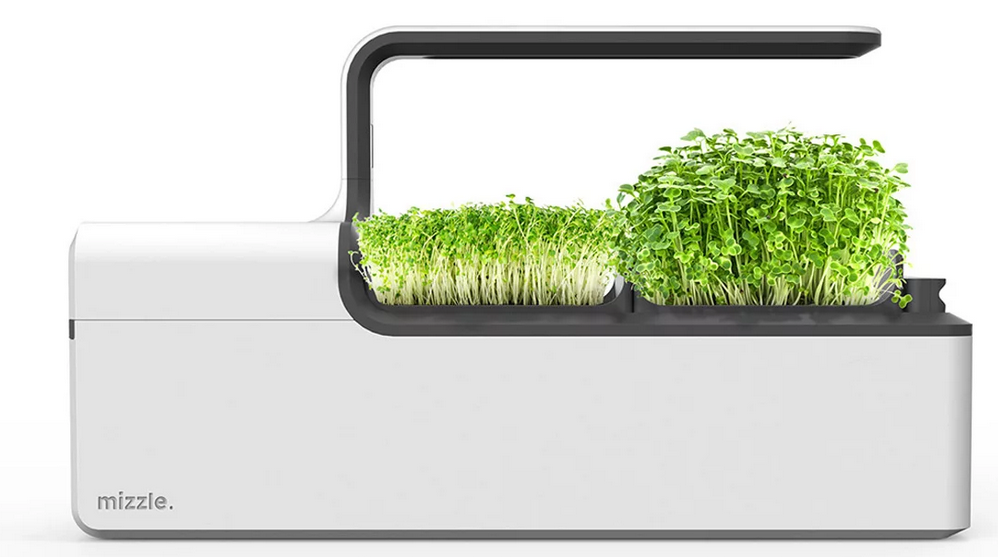
Continuously Growing Microgreens At Home
The perfect present for a food-loving tech nerd should be an innovation that can be labeled as smart, urban and sustainable. Well, the Mizzle microgreen cultivator ticks all the boxes.
The concept, which is not for sale yet, is a product of designers Gökhan Cetinkaya & Deniz Ibanoğlu and a winner of the iF Design Talent Award. The duo designed a smart aeroponic kitchen for consumers to grow microgreens at home.
The Mizzle is divided into three compartments: the first one is for germination in a dark, closed space. The seeds are placed in a tray and once ready they can be pushed to the next compartment, where the microgreens can grow under sunlight or LED light. Once the third compartment has been fully harvested, a new growing pad with seeds can be placed in the tray and can be slid into the germination cell. This way the system allows the consumer to produce microgreens continuously.
What is even more convenient is that the user can install a specially designed app to follow the growing cycles and to get notified when they have to add water.
Read this article from Designboom to get more information.
Publication date : 2/22/2019
Author: Jobke den Hertog
© HortiDaily.com
Arsenic In Your Fruit Juice? Tests Say Yes
Arsenic In Your Fruit Juice? Tests Say Yes
February 13, 2019
Organic Consumers Association
by Julie Wilson
Are there heavy metals lurking in your fruit juice?
Yes, according to a recent analysis by Consumer Reports (CR). CR tested 45 fruit juices in four popular flavors—apple, grape, pear and fruit blends—sold in the U.S. and found “elevated levels” of arsenic, cadmium and lead.
The levels were “concerning,” according to CR. Even more worrisome? Toxic heavy metals were found in nearly half of the juices tested.
The testing analyzed 24 national, store and private-label brands. Results included potentially harmful levels of cadmium, inorganic arsenic (the type most harmful to health) and/or lead in 47 percent of juices tested.
Out of all the flavors, grape juice and juice blends had the highest average of heavy metal levels.
Toxic heavy metals are known for their silent but deadly effects. Humans are exposed to heavy metals in a variety of ways including pesticides in food, contaminated drinking water, personal care products and amalgam dental fillings.
The toxins are the most dangerous when the effects are cumulative. In other words, the more you are exposed to heavy metals, the greater the risk. According to chemist, Tunde Akinleye, who led the testing:
“In the course of a lifetime, the average person will come into contact with these metals [cadmium, inorganic arsenic, lead and mercury] many times, from many sources. We’re exposed to these metals so frequently during our lives that it’s vital to limit exposures early on.”
CR’s test results are particularly alarming for a couple of reasons. For one, fruit juices are often marketed to children, who may be seriously harmed by heavy metal exposure even at low levels. Children who suffer chronic heavy metal exposure may experience lowered IQ, cancer, type 2 diabetes and behavioral problems, among other health issues.
Secondly, these heavy metals wouldn’t be showing up in our food and drink had our regulators at the U.S. Food and Drug Administration (FDA) taken the issue more seriously.
In 2013, the FDA proposed setting a threshold of 10 parts per billion (ppb) of inorganic arsenic in apple juice, the federal standard for arsenic in drinking water. The move followed earlier testing by Dr. Oz and CR in 2011, which found arsenic in apple juice. About 10 percent of the samples exceeded the U.S Environmental Protection Agency’s limit for arsenic in drinking water.
Regulators promised to lower the allowable limit by the end of 2018. But the FDA failed to act and the limit currently remains the same. Jean Halloran, director of food policy initiatives at CR, told CR magazine:
“We encourage the FDA to finalize the limit as soon as possible. And we have pushed the agency to establish an even lower threshold for inorganic arsenic in apple juice at 3 ppb. We also believe more juices should be covered, not just apple.”
The FDA does have a set limit for lead in juice. But it’s 50 ppb, a limit CR warns is far too high. The standard for lead in bottled water is 10 times lower, at 5 ppb.
As for cadmium, the FDA has no set limit for the heavy metal in juice. That oversight is disturbing considering exposure to cadmium is linked to kidney disease, diabetes, heart disease, cancer and osteoporosis.
Unfortunately, heavy metals are not the only threat lurking in fruit juice.
Recent testing by Moms Across America found glyphosate, the key active ingredient in Monsanto’s Roundup weedkiller, in six top-selling orange juice brands: Florida’s Natural, Tropicana, Minute Maid, Starter Bros, Signature Farms and Kirkland.
Most noteworthy about this testing is that glyphosate—an herbicide linked to cancer by the World Health Organization—is turning up in products labeled “natural.”
Consumers seek out products that are labeled “natural,” because they believe those products are pesticide-free. And companies like Florida’s Natural use the word “natural” because they know consumers look for it—and will pay a premium for it.
If you expect products labeled “natural” to be free from unnatural ingredients—including agrochemicals linked to cancer—let Florida’s Natural know.
Click here to tell Florida’s Natural: Orange juice with Roundup weedkiller isn’t “natural!”
Julie Wilson is communications associate for the Organic Consumers Association (OCA). To keep up with OCA news and alerts, sign up for our newsletter.


Start-Ups In The World Agri-Tech Spotlight: Ones To Watch
Fifteen dynamic international start-ups will take the spotlight at the World Agri-Tech Innovation Summit in San Francisco (March 19-20), with breakthrough solutions ranging from soil health, crop optimization, fertilizers and healthy biotics, to precision irrigation, insect monitoring, off road automation, AI and digitized farming operations.
From the summit’s acclaimed Technology Showcase pitching sessions to its dedicated TechHub area, these innovators offer game-changing partnership and investment opportunities for the 1,000+ global agribusinesses, food brands and investors who attend the summit each year to tap the freshest thinking in sustainable agriculture.
Featured start-ups include:
Aerobotics (South Africa) provides tree crop and vineyard protection to growers around the globe, through artificial intelligence. The Aerobotics Aeroview platform uses cutting-edge drone and satellite imagery to facilitate early problem detection and alerts. Aerobotics has processed over 13 million trees to-date, setting the standard for tree crop analytics globally and innovating agricultural processes as we know them.
· AgroCares (Holland) delivers cutting edge data solutions to measure nutrients and other key parameters in soil, feed and leaf. It provides the world’s farming community, with accessible, affordable data-based precision farming tools to extensively and sustainably increase crop yields, contributing to solving the global food gap.
Atmonia (Iceland) is developing a breakthrough electro-catalytic process for generating aqueous ammonia from air and water, for direct use as fertilizer through irrigation. The Atmonia process, unlike conventional ammonia production, has zero emissions and works at ambient pressure and temperature and is based on economical and abundant catalysts.
Bontera BioAg (USA) has a mission to transform agriculture on a global scale through state-of-the-art sustainable technologies. Its products are based on naturally occurring soil microbes selected for superior performance and functionality. These specialized microbes are the catalysts for disease prevention, optimal soil fertility and increased crop yield. Bontera’s products are sold in several countries around the world and continue to make a positive impact in the markets it serves.
Cattle Care (USA) applies AI video analytics to increase dairy farmers’ revenue and make cows healthier at the same time. The product identifies cows in the barn by their unique black and white patterns. Using low-cost commodity video cameras Cattle Care detects, recognizes and tracks every cow as well as business processes, and makes decisions for the farmer about the treatment of a particular cow or a whole barn.
Dynium Robot (UK) is launching in the US in 2019. Precision farming technologies have previously been beyond the reach of orchards because of the inability of aerial imagery to detect diseases below the canopy. Using Dynium’s advanced vision and LiDAR based driverless navigation system, orchard farmers can fully automate crop care and capture data below the canopy 24/7. Coupled with Dynium’s cloud-based crop analytics, farmers can apply precision farming techniques to reduce spraying costs and crop losses.
FaunaPhotonics (Denmark) is a globally recognized leader in sustainable farming practices. It enables the agriculture sector to reduce its chemical use by more than 40% in insect control. Intelligent sensor solutions digitally map insect populations, assisting farmers to identify when and where to spray insecticides. Already working with Tier 1 players in digital farming, by the end of 2019, FaunaPhotonics will have a works-like version of the insect sensor functional in its go-to-market crop.
FOLIUM Science (UK) leads in bioscience technology for the healthy biotic era. Its game-changing, patented science harnesses naturally occurring mechanisms to selectively remove unwanted pathogenic and spoilage bacteria, working to deliver solutions for increased productivity at all points in the food and agriculture value chain. Its Guided Biotics™ maintain healthy animals when added to animal feed or drinking water by selectively reducing unwanted bacteria, forming a major tool in the armoury of animal production improvement and biosecurity systems.
GroGuru (USA) has an innovative solution for precision irrigation monitoring and management, that includes its revolutionary wireless underground system solution, which significantly lowers the deployed cost and total cost of ownership for farmers. Its solution enables a price point and convenience to break-open the market for high volume annual field crops. The payback period is less than one growing season, and the system typically saves farmers 20% on input costs, while increasing yield by 10%.
· Micropep Technologies (France) is a disruptive biotech start-up developing a new generation of crop stimulation and protection solutions based on a unique kind of active ingredients: miPEPs, natural peptides produced by plant cells to regulate their gene expression. Products comprising miPEPs can be used to transiently regulate the expression level of these genes and improve the corresponding phenotypes. Micropep recently closed a €4m round led by Sofinnova Partners to invest in discovery and product development platforms.
· Pebble Labs (USA/Hong Kong) safely and sustainably eliminate pathogens in agriculture, aquaculture and vector-borne disease without chemicals and antibiotics. The company is developing a platform technology to target a wide range of diseases: bacterial, viral and fungal by using RNAi gene silencing delivered via engineered symbiotic bacteria naturally found in the host.
· Pheronym (USA) is an agricultural biotechnology company which enables pesticide-free farming, based in Alachua, Florida and Davis California. The company’s bio-remediation process uses a new pheromone to control plant-parasitic nematodes (microscopic roundworms) in an eco-friendly way and also beneficial nematodes’ efficacy to eliminate pest insects.
· Solynta (Netherlands) is a breeding and biotechnology company which develops and applies new breeding technologies to convert potatoes into a hybrid crop, with potential to unlock billions of dollars in farmgate revenue. New potato varieties offer better characteristics for consumers, processors and farmers while having lower environmental impact.
· Tillo.app (Singapore/South Africa) provides cloud-based collaboration services to farmers, connecting every worker inside and outside the farm through digital boards specifically designed for simple task management and in-the-field data collection and measurement. Its open API platform seamlessly integrates third-party technology and applications, a data-rich ecosystem enabling value transactions through fin-tech and blockchain solutions.
· WeedOUT (Israel) exploits sterility to win the battle against resistant weeds, a new strategy in the world of weed control. Its products are biologically based, mimic natural processes and provide robust and long-lasting solutions for this significant issue facing global agriculture. The novel technology develops unique proprietary weed pollen to prevent the generation of viable resistant weed seeds.
They will be joined by the finalists of the Radicle Challenge and World Agri-Tech Pitch Day, alongside dozens more innovators taking advantage of the summit’s special rates for start-ups to maximize their opportunities to learn and network with industry leaders and investors.
The World Agri-Tech Innovation Summit takes place twice per year in San Francisco and London, generating valuable opportunities for networking, knowledge exchange and deal-making among its international delegation of agribusinesses, technology providers, entrepreneurs and investors.
Full information on the summit, agenda, opportunities and delegate registration is available at www.worldagritechusa.com

Tech Connection Boosts NY Vertical Farmers
By AFP
24 February 2019
A Bowery Farming employee inspects some of their greens grown at the hydroponic farming company in Kearny, New Jersey
Workers at Bowery Farming's warehouse near New York have swapped out a farmer's hoe for a computer tablet that takes real-time readings of light and water conditions.
Launched in 2015, Bowery is part of the fast-growing vertical farming movement, which employs technology in a controlled, man-made setting to grow fresh vegetables indoors all year long.
Champions of the practice see vertical farming as a key tool to meet the world's food needs at a time when the population is rising and the climate is changing.
Irving Fain, CEO and co-founder of Bowery Farming, talks about his hydroponic grown greens
The company's chief executive and co-founder, Irving Fain, said his company's Kearny, New Jersey site uses fewer resources than traditional farms and does not employ pesticides.
"I have been a big believer my entire life in technology as being able to solve not only hard problems, but also important problems," said Fain, who previously ran a company that provides data analysis for big companies on their loyalty programs.
Bowery employs more programmers than agricultural scientists. The company says its use of algorithms enables it to be 100 times more productive per area compared with a traditional farm and to use 95 percent less water.
- Lower electricity costs -
Greens are grown at Bowery Farming, a vertical farming site founded in 2015
Vertical farming has long been practiced in Japan and some other places but it did not take off in the United States until recent technological leaps made it viable.
A key component has been LED bulbs, which have enabled indoor farmers to drastically cut electricity costs.
But Bowery is also making heavy use of robotics and artificial intelligence to keep prices under control.
Bowery makes heavy use of robotics and artificial intelligence to keep prices under control
The combination of these newer tools "is how we really rethink what agriculture will look like in the next century and beyond," Fain said.
The company has also benefited from more than $120 million in funding from tech titans including Google Ventures and Uber Chief Executive Dara Khosrowshahi.
The Silicon Valley connection has also boosted San Francisco-based Plenty, another prominent vertical farming company, which has garnered more than $200 million from Amazon Chief Executive Jeff Bezos, Softbank and others.
US-based Crop One and Emirates Flight Catering have launched a $40 million joint venture to build a giant vertical farming facility in Dubai.
- Profitable? -
AeroFarms co-founder and chief marketing officer Marc Oshima looks at baby kale
The world's biggest vertical farm is in Newark, New Jersey and operated by AeroFarms.
The company, founded in 2004 and considered a pioneer in the sector, remains privately-held and does not disclose financial data. But the company says it is now profitable after a series of fumbles.
David Chang, founder of the noodle restaurant brand Momofuku, is an investor.
AeroFarms exclusively uses company-made technology that has now made its way to China, the Middle East and Europe, said its co-founder Marc Oshima.
AeroFarms's vertical grow towers in Newark, New Jersey
In a warehouse that was once a steel mill with 40-foot (12-meter) ceilings, the company is growing kale and arugula leaves set in rows of 12 metal racks each. The roots are suspended in the air as they are intermittently irrigated while the leaves bask under LED lights.
AeroFarms experiments regularly with lighting and nutrients with an eye towards finding the optimal recipe for each plant and developing the best algorithm.
The company produces watercress that reminded a reporter of her grandmother's soup, kale as tender as spinach and arugula with a hint of spice.
Basil from Bowery Farming was tinged with the flavor of lemon.
But it can take a while for vertical farms to find solutions that are viable.
"The big, big vertical farms are having a difficult time being profitable because they are so capital-intensive at the beginning," said Henry Gordon-Smith, founder of Agritecture, a consultancy.
Large farms typically need seven or eight years before they are profitable, with smaller farms requiring perhaps half as long.
But entrepreneurs in the business are confident in their prospects as more young people in cities express worry about climate change and pesticides.
Baby kale is grown at AeroFarms
"Vertical farming is not THE solution to food security," said Gordon-Smith. "It is one out of the possible solutions."
Critics of vertical farming say it has a large carbon footprint due to heavy use of lighting and ventilation.
But defenders say that this negative impact is more than offset from the benefits of lower water use, the location near population centers and the non-use of pesticides.
A bigger issue may be the limitations of the output itself, at least in terms of nutrition.
"You can't feed the world with salad alone," said Princeton University plant researcher Paul Gauthier, who says vertical farmers will need to develop more protein-rich offerings.
Gauthier -- who grew spicier peppers in his own lab by subtly increasing potassium levels -- said vertical farming could supply fresh food to so-called food "deserts" where it is absent and could in the long-term meet growing food demand as the climate changes.
A Guide To Aquaponics Food Safety
Aquaponics, producing fish and vegetables in a closed-loop water system, reduces fertilizer use and water discharge, and is therefore promoted as a sustainable venture. But how about the food safety?
Aquaponics, producing fish and vegetables in a closed-loop water system, reduces fertilizer use and water discharge, and is therefore promoted as a sustainable venture. But how about the food safety?
Widely understood as one of the major challenges of the horticultural industry, there is not an univocal way to tackle this issue. Because of this, Green Aquaponics LLC has shared a thorough and exhaustive explanation of how to develop a food safety plan for aquaponics cultures.
Click here to read the document
Publication date : 2/22/2019

Simple DIY Aquaponic System For The Home
Aquaponics is the art of growing plants in a system where fish and plants co-exist.
Mother nature has been doing this for as long as plants and fish have existed, humans
have been doing this since the beginning of farming and cultivation, but only recently
has it been brought back into the light with hydroponics. Gaining in popularity, this
technique has been proven to have many benefits for crops while being very eco-friendly.
So why should you add aquaponics to your hydroponic garden? Fish and plants have been working
together for a very long time, their practically soul mates. Bacteria from plants breaks down
the fish waste and feed, then converts it into plant food and nutrient. Organic matter contained
in fish feces and feed are also used for the conversion of fish generated ammonia to nitrate.
The plants consuming the dissolved waste nutrients filter the water for the fish. While
dedicated bio-filters and settlers can be added as precautionary measures, this system is
very self correcting, taking away the need for chemical usage such as fertilizers. Even PH levels are adjusted correctly assuming the fish tank and hydroponic setup is contaminant free.
Quick overview of the benefits
-No nutrients required
-PH balance is adjusted correctly on its own
-water is filtered on its own and recycled
-no chemical usage such as fertilizers and pesticides
-fish can be harvested as a second food source
-crops have a higher turn-around and higher yield
What you will need
This technique isn't just for large commercial agriculture companies, setups small enough to add in
your kitchen as a centerpiece or on a teachers desk for educational use can be easily created. With
all the benefits already known, why not add it in to any size of a hydroponic setup. If you already have
a hydroponic setup, all you will need to do is add in an aquarium/tank with the proper fish and you have a fully functional aquaponic system
Items required for indoor aquaponics
- Hydroponic system including plant bed, medium and tubes connecting to tank
- Grow light depending on where your hydroponic system is setup
- Aquarium or fish tank
- Water pump
- Power source for pump and grow light
- Ceramisite
- Fish
- Plants
Lets build!
Step 1 - Fill the black bottom tank to the water mark with clean uncontaminated water.
Step 2 - Find the small transparent tube and connect it to the water pump.
Step 3 - Connect the water pump to the transparent fish tank.
Step 4 - Place the buoy through the transparent tank into the black bottom tank.
Step 5 - Place the transparent tank on the black bottom tank then attach the pumps power
box onto the bottom tanks notch.
Step 6 - Attach the isolation plug to the solid tube at the top of the fish tank then fill
the tank with water up to the isolation plug.
Step 7 - Stack the top plant tray in alignment with the mountain tube.
Step 8 - Install the clear syphon tube into the flow adjustment switch.
step 9 - Add in your ceramisite until it fills the tray about an inch thick.
Step 10 - Add in your fish and plants!
What fish should you use?
Deciding on what type of fish you should use entirely depends on your setup. Large scale
with the purpose of farming and sustainability should have larger fish to produce more
waste and to carry the benefit of being able to harvest the fish for food. Small scale,
like the setup we just built will require smaller fish. Small also gives you the option
of choosing fish based on your perception of attractiveness. Decorative fish that can be
used in small setups like this are guppies, fancy goldfish, angelfish and swordfish. Some
people have taken is as far as creating environments for turtles, crayfish and even shrimp.
What plants should you use?
Most plants will thrive in an aquaponic environment, especially those commonly used for
agricultural purposes. Large scale operations will grow all kinds of vegetables such as
lettuce, cabbage, tomatoes, spinach or anything grown on a farm. But since this setup is
small and more so decorative, smaller vegetable and herb plants can be used such as basil,
mint, watercress, chives, parsley, lemon grass, oregano, thyme, succulents and many more.
Get started!
Although the idea of aquaponics can be daunting and seem complicated, it's not as big
of a task as it seems. Whether it's for a green solution to growing crops naturally or
a hobby that can double as decoration, everyone can find a reason to jump on the wagon.
As you have read above, with minimal equipment and time, you can create your own little
Eco-system that provides you with food, education and a wonderful conversation starter.

AUTHOR: Luis Rivera has 20+ years of experience in global market expansion, business development, mergers and acquisitions, business re-engineering, finance and investor relations of software companies. He is passionate about technology, spectral science, indoor farming, food production, automation, and more.
Since 2015 he is the president of Advanced LED Lights, a leading LED grow lights manufacturer based in Hiwasse, Arkansas. When not at work, Luis enjoys swimming, yoga, as well as growing grapes and flowers in Sonoma, California.

German Tunnel Cultivation Is Developing At a Rapid Pace
Domestic strawberries from mid-April and into October; this can only be thanks to modern cultivation methods in film tunnels
About 20% of German strawberries already from protected cultivation
Domestic strawberries from mid-April and into October; this can only be thanks to modern cultivation methods in film tunnels. Until about 15 years ago, the season for strawberries was relatively short. The weather had to cooperate, so that the fruits in the fields would be ripe in the spring. Foil covers helped to speed up the process a bit. If it was too warm and sunny, the harvest was over. Therefore, at the beginning of the 1990s, German farmers began to build dams where they planted the plants and subsequently roofed them with traveling tunnels. But still the planted areas had to be changed regularly. This is because strawberries thrive best on fresh soil. For example, soil where potatoes or vegetables were grown the year before.
Not in the soil anymore
Such fields are not available to every strawberry grower. Therefore, more and more of them rely on vertical cultivation. The strawberries no longer grow in the soil, but above the floor in substrate-filled boxes, which are attached to metal structures. Fertilization takes place through automatic irrigation. This has a number of advantages: picking becomes more comfortable, easier on the back and more effective. A surface can be used for years with consistently high berry quality. And fertilizing and watering is only as environmentally friendly as the plants need. In addition, the ripeness of the fruits can be better controlled. Less and less is left to chance or the whims of Mother Nature.
Protection against the vagaries of nature
About 20% of German strawberries are already grown through protected cultivation. Experts estimate that this proportion will be 50% within ten years. The permanently installed tunnels are becoming increasingly similar to the greenhouses in their technical equipment and can be equipped, for example, with automatic ventilation.
There is another big bonus of this modern strawberry culture: It reduces leaf and fruit diseases. Furthermore, pests can be controlled more easily with biological opponents, so-called 'beneficials'. This can greatly reduce the use of pesticides. Plant protection measures are only carried out if there is a clear diagnosis. Plant protection consultants act like doctors - and only prescribe 'medicine' when it is needed.
Supporting regional cultivation
However, investing in the scaffolds and film tunnels also means that fruit growers have to be able to sell their fruits at stable prices for years, until they have recovered the production costs. Buying from a local strawberry producer not only guarantees fresh, ripe fruits with an excellent taste, but also helps support regional cultivation under sustainable conditions.
Even berry bushes thrive better in the film tunnel
In Germany, not only strawberries, but berry bushes as well are grown increasingly in tunnels. Blueberries can be harvested about three weeks earlier and the end of the season is pushed back. With raspberries, the protection of the fruit and thus their durability are in the foreground, as well as more reliable harvest timing. According to official figures, there are already 250 hectares of covered raspberry cultivation in Germany, and around 50 hectares of blackberries - and the trend is rising. The first German blackcurrants, cultivated under film, are already on the market.
Source: Gabot.de
Publication date : 2/22/2019

Regenerative Agriculture Could Save Soil, Water, And The Climate. Here’s How The U.S. Government Actively Discourages It
Cover crops and other regenerative agriculture practices are still pigeonholed as conservation practices, not as good farming practices. But if farmers want crop insurance, they have to play by the rules.
By Jessica McKenzie | Read more
Brandon Gottsacker, Superior Fresh: US (WI): “Science Runs This Facility”
Leafy greens and fresh Atlantic salmon. Add a little lemon wedge and it will be the perfect meal at a picnic. Those two elements also make the biggest aquaponics system in the world, which is located in Hixton, Wisconsin.
At a 123,000 square feet greenhouse they annually grow 1.8 million pounds of leafy greens in the dead of winter. The fish production yields 16,000 pounds a year. In this video Brandon Gottsacker, president of the company explains how it all works and he also tells that they are currently finishing their phase 2 greenhouse which will double the annual yield of leafy greens.
For more information:
Superior Fresh
W15506 Superior Fresh Drive
Hixton, WI 54635
info@superiorfresh.com
www.superiorfresh.com

The Best Crops For Vertical Farming
Written by Chris Michael | January 17, 2017
A vital question: "What are the best crops for vertical farming?"
"Vertical farming is not about how much production you can possibly cram into a space. It’s about growing better food closer to market and maximizing your production as a function of the resources you invest, such as capital, light, water, energy, and labor." - Chris Michael, Bright Agrotech
Vertical farming with ZipGrow is one of the most efficient type of growing in modern farms, but one question that people get hung up on is:
What can you actually grow on vertical planes?
It's a vital question! Anyone considering a vertical farm should be planning out their crops as part of the process. As a farmer, you have to make sure that you can actually sell what you grow and that your production costs won't be too high.
Part of that is good crop choices.
Although choosing crops should be part of a whole feasibility study for your farm, we thought a guide on some of the best vertical crops for vertical farming would be helpful to people in the middle of the planning process.
What can you grow vs. What should you grow
With the right set-up, you can grow almost anything in a vertical farm.
Just because you can, however, doesn't mean that you should. Here are several factors to choosing an appropriate crop for your vertical farm.
1) Economic viability
Even if a crop is biologically viable (you can grow it) it might not be economically viable (you can't make money on it!).
If you can't make money on a crop, there could be several reasons:
Lack of demand (no profit)
Inappropriate technique (high production costs)
Climate (high heating, cooling, light costs)
Of course, each of those factors require a little balancing to master. "High" cost is relative to the margin that you're getting on the output.
Once you understand your demand, budget, and climate requirements, there are a few other factors to consider with your crops:
2) Timing and liability
A "turn" is the time it takes from the seedling going into the system to the mature plant coming out and going to market.
Focusing on crops with really fast turns (lettuce, mustard greens, collard greens, basil, mint) allows you to minimize your liability by never being more than six weeks or so away from production.
Slow-turn crops (like herbs and fruiting crops) are typically a bit trickier but can have higher margins than greens, depending on your local markets. We typically recommend a high greens-to-herbs ratio. For example, a new farmer could start with 80% of his space planted with greens and 20% planted with herbs.
(You can play with percentages and yield in our free Production Calculator.)
When you know what you do and don't want, you can start browsing through crop lists and seed catalogues! Here are some of ours and our farmers' favorites:
Lettuces (Romaine, Butterhead, Red Leaf, etc.)
Lettuces have fairly consistent demand across much of the world and throughout the year. There are dozens of varieties of lettuce, making it fun to grow and offer to customers. One of our favorites is Amish Deertongue Lettuce (pictured in the photo above).
Kales (Tuscan, Winterboar, and Dinosaur)
Kales are fairly easy to grow, although the crop requires extra care when harvesting if farmers are to get the highest yield. Each type of kale has its own variation on the rich taste and dark colors. The Tuscan kale above is one of the most popular varieties.
Chard & collard greens
Collard greens are like a thicker, deeper version of spinach. They can get quite large in the proper conditions; in the picture above, Sam gets ready to chomp down on a foot-wide collard green leaf!
The gentler version of collard greens, chard is a French green that cooks like spinach. Like kale or collard greens, chard can be harvested multiple times (taking only 30% of the plant each time) and grows back for larger yields later on.
Chives and mint
Chives and mint are some of the best crops for beginners. Although categorized with herbs, both chives and mint have a quick turn and grow densely like a grass. It is also easy to harvest. Here, Dr. Nate prepares to harvest chives by cutting all the way down the face of the ZipGrow Tower.
Basil (Sweet, Lemon, Cinnamon, etc.)
Basil is possibly the most loved ZipGrow crop. It grows better in the ZipGrow Towers than any other technique in the world, and creates demand almost everywhere it goes. While a bit trickier to grow, harvest, and store, many farmers include basil in their crop offering. Some farmers even specialize in the popular crop.
Small woody herbs
Small woody herbs like rosemary and it's kin, thyme and oregano, represent a rather picky group of crops. As woody herbs, they prefer "dry feet", and have a relatively slow growing cycle. Since the shrubby herbs are so potent and unique, many farmers still find the traction to sell them in their markets.
Learn more about crops
Want to learn more about individual crops? Learn more at Upstart University:
Here’s What You Need to Know About Growing Bok Choy in Hydroponics
Best Conditions & Methods for Growing Parsley in Hydroponics
Everything You Need to Know About Growing Chard Without Soil
OR see which crops farmers like you are growing all over the world through their own pictures and posts.
Get help building your crop list
The Best Crops for Hydroponics introduces the best crops for hydroponics so that growers can be experts on their produce.
Start learning:
Ideal conditions (EC, pH, temp., and more)
Plant lifecycle from seed to harvest
Common pests and diseases
Typical pricing
Unique considerations
Growing Up: How Vertical Farming Works
FOR thousands of years, human populations have farmed the land for food. But with a sharp rise in the number of people on our planet over recent centuries – as a result of the industrial revolution, increased living standards and falling mortality rates – the pressure on traditional farming has continually increased.
Fred Mills
6 March 2019
With the global population set to exceed 10 billion people by 2050, the challenge of providing enough food for everyone in a sustainable, efficient and cost-effective way is rising in significance. Shedding the restrictions of seasonal weather patterns, overcoming transportation challenges and significantly enhancing yields, the growing trend of “vertical farming” could herald the future of food production.
FOR thousands of years, human populations have farmed the land for food. But with a sharp rise in the number of people on our planet over recent centuries – as a result of the industrial revolution, increased living standards and falling mortality rates – the pressure on traditional farming has continually increased.
While modern techniques have enabled enhanced production rates, more than 11% of the world’s total land area is now used for crop production - creating environmental challenges that range from habitat clearing to soil degradation - and placing immense pressure on our planet’s resources.
Furthermore, as our cities expand, the distances between suitable farming land and the large populations who consume their produce are growing, raising the impact of transportation.
Added to these challenges is a changing climate that is disrupting seasonal weather patterns and the lack of suitable soils in close proximity to rapidly expanding areas.
One potential solution is the quite literally growing trend of "vertical farming" - a concept that sees the sprawling crop farms of old condensed into much smaller factory-like sites where conditions can be optimised and yields significantly increased.
Vertical farms use multi-layered controlled environments to deliver significantly greater yields (image courtesy fo AeroFarms).
Facilities like Aerofarms’ in New Jersey see crops produced in an enclosed environment where almost everything from the lighting and ambient temperature to soil conditions and nutrients are carefully controlled.
The facility uses extensive vertical racking to optimise space as compared to a conventional crop farm, enabling it to be located on a far smaller site and much closer to an established urban area.
Such a location reduces the extent of haulage or “food miles” required to transport produce to consumers, cutting CO2 emissions.
Geography aside, the creation of controlled conditions delivers many benefits.
Firstly, the process of crop production is insulated from seasonal weather patterns that are highly susceptible to disruption as a result of our changing climate.
On a vertical farm, lighting, water and temperature can all be optimised to remove climatic risks and enhance production rates. As a result, sites like MIRAI’s facility near Tokyo – the world’s largest city – are able to generate yields 50 to 100 times greater than that of a traditional crop farm.
The use of a controlled environment also eliminates the losses from birds and insects that must be factored on conventional farms, cutting the need for harmful pesticides to be used and improving the quality of produce.
By removing external factors, like weather and insect damage, vertical farms can produce more nutritious food with fewer pesticides.
Vertical farms also optimise the level of nutrients that crops receive, solving the challenge of finding a sufficient extent of suitable farming land in close proximity to a major urban area.
In many instances, soil is removed altogether and crops are grown on membranes where they are sprayed with nutrient-rich solutions.
Of course, vertical farms do have their limitations and critics have pointed to the level of energy required to maintain such refined environments.
While these concerns are valid, several vertical farms are powered by renewable technologies and recycle many of their resources.
The use of energy efficient LED lighting reduces power consumption, while the blue and red shades of light are even more economical to run.
Using blue and red LED lighting makes vertical farms more economical to run (image courtesy of AeroFarms).
The optimised crop production process also allows vertical farmers to reduce the amount of water used, and many vertical farms are served by rainwater harvesting systems. Some even collect and recycle the water that condenses within the controlled environment itself.
This closed-cycle approach has the added benefit of preventing nutrients and fertilizers from damaging the land or being washed in rivers and streams.
Though the cost and availability of land for vertical farms in urban areas can prove challenging, many facilities are finding home in re-purposed shipping containers, former factories and disused warehouses.
Above: Adapting disused structures reduces the initial cost of vertical farms. (image courtesy of GrowUp Urban Farms).
More sophisticated schemes, like the proposal by Studio NAB below, could even see the vertical farming concept broadened to include the production of fish and honey while re-connecting consumers with the food production process and establishing sustainable jobs for the surrounding community.
Above and Below: Studio NAB's vertical farm proposal (images courtesy of Studio NAB).
While the vertical concept still represents a small part of the global food production industry, the benefits it offers to our ever-expanding population could come to tilt the farming landscape by 90 degrees.
Images courtesy of Kyodo Via, Ilimelgo Architects, AeroFarms, David Williams, Mandy Zammit, Priva, GreeOx, Grow to Green, GrowUp Urban Farms, Heather Aitken and Studio NAB.
We welcome you sharing our content to inspire others, but please be nice and play by our rules.

US: New Solar Greenhouse Registered
Green Stream has registered its proprietary and unique design, solar greenhouse, with the cities of Los Angeles and New York.
"The Solar Greenhouse design is the result of a collaboration among architects Anthony Morali and Richard Hofmeister, in conjunction with plans and concept development provided by Green Stream and its staff. The concept of the Solar Greenhouse is to plant, to grow, and to harvest vegetables on rooftops that are currently unused and non-functioning areas of real estate on top of a building.", the team with the company explains.
"Large food suppliers, such as large market chains and food processors, will be able to grow up to 100,000 pounds of vegetables, such as lettuce (depending on roof space available), on an unused rooftop. The immediate benefit is that the vegetables are able to grow in longer cycles, and need not be picked before thoroughly ripe, thus making them fresher for consumers as well as less expensive as savings are passed on to the end users."
"In addition to those clients of Green Stream, the designs, having been registered with the building departments, will be available for others to use with the payment of a licensing and royalty fee to be determined.", the company concludes.
For more information:
GreenStream Finance
8335 Sunset Boulevard
info@greenstreamfinance.com
greenstreamfinance.com
Publication date : 2/22/2019

Race On To Make Urban Agriculture Viable, Durable
March 3, 2019
Countries and cities are coming up with ever more imaginative forms of urban agriculture. (AFP Relaxnews pic)
A key ingredient is the trend in ever more imaginative forms towards urban agriculture, a multi-faceted recipe already being poured over by some 800 million people globally, according to the UN’s Food and Agriculture Organisation.
The trend takes many forms – from collective market gardens in even the most run-down of urban districts to connected vertical farms using indoor farming techniques to meet spiralling food demand in areas largely bereft of arable land.
The FAO wants to see the trend prosper and become durable and sustainably embedded within public policy.
Yves Christol, of French cooperative In Vivo, has identified six models of the genre.
They include a key European variant, electronically managed without recourse to pesticide — or even soil or sunshine.
Green beans mean… Iceland
“That has allowed Iceland to become a major producer of green beans,” says Christol, thanks to geothermal heating.
Asian countries are also in on the act, not least Singapore, with the high density population city state bent on ensuring high-tech food autonomy.
Japan and China have sought to give new life to sites which once hosted electronics factories even if the strategy appears costly.
China has launched some urban farms even in areas where the soil has been polluted by heavy metals and would be too costly to clean up.
The US model, as cities including New York and Chicago seek to become sustainably hunger-proof, includes hydroponic gardens – effectively eschewing soil and using mineral nutrients in a water solvent, although profitability can prove elusive.
But scale is an issue and the concept will not be viable “so long as the price of the vegetables is not increased fourfold,” to cover energy costs, says Christol.
Strawberry containers forever
The cost of transporting food is something which particularly exercises entrepreneurs such as Guillaume Fourdinier, a founder of French start-up Agricool in Paris and Dubai.
His firm produces strawberries year round in shipping containers fitted out with LED lighting. Urban agriculture’s raison d’etre, he says, comprises fighting against “the ecological disaster of transport”.
“Today, with our containers, we are 120 times more productive per square metre than on open ground,” says Fourdinier.
“We produce in decentralised fashion and closer to customers,” he adds of strawberries sold marginally cheaper than their organic equivalent.
Paris has meanwhile come up with its own urban agriculture model, dubbed “Pariculteur,” a series of town hall-mandated projects designed to cover as much of the capital as possible with greenery via a rise in urban farming.
An initial 10 hectares (25 acres) for the project is set to grow to 30 hectares by next year.
Urban ecologist Swen Deral, who oversaw a pan-European urban agriculture project last year, says if the concept is to be financially viable in cities it has to go “beyond production”.
“Either they recycle, or else they create services linked to urban agriculture, educational activities, restaurants and the like,” he explains.
Researchers point to urban agriculture’s additional benefit of fighting against the effects of climate change as its proponents seek to reinvent urban existence.
Francois Mancebo, researcher at France’s Reims University, summed up the challenge in an article published by peer-review open access publisher MDPI and entitled “city gardening: managing durability and adapting to climate change thanks to urban agriculture.”
Mancebo says the concept must become an integral part of urban planning with local politicians underlining the need for active participation of city dwellers.