


Welcome to iGrow News, Your Source for the World of Indoor Vertical Farming

Pure Harvest Is Not Just A Vertical Farm, But A ‘Veridical’ One, Says CEO
With desert making up the vast majority of its land – and most of the rest taken up by urban development – it’s easy to see why the UAE imports as much as 90% of its food from abroad. Just 5% of the country is considered cultivable

May 7, 2021
With desert making up the vast majority of its land – and most of the rest taken up by urban development – it’s easy to see why the UAE imports as much as 90% of its food from abroad. Just 5% of the country is considered cultivable.
The story is the same across much of the arid Middle East. But with the emergence and continued improvement of technologies in areas like indoor farming, irrigation, and water desalination, the region is beginning to contemplate a future in which it no longer relies as desperately on imports from more temperate, fecund climes.
While they’re short on arable land, something that the UAE and several of its neighbors do have in abundance is the money needed to invest in these technologies – or bring them in from overseas.
Pure Harvest “grows 26 commercial varieties of tomatoes, including six that have never before been seen,” according to CEO Sky Kurtz. Image credit: Pure Harvest Smart Farms
In 2019, the government of UAE constituent Abu Dhabi committed $272 million in financing and tax incentives to the development of a local agtech ecosystem. In April last year, the emirate’s Abu Dhabi Investment Office pumped $100 million of grant funding into startups including local controlled environment agriculture (CEA) grower Pure Harvest Smart Farms, with the startups sharing in a further $41 million injection last December. Also in April 2020, nearby Kuwait invested $10 million in Pure Harvest to bring the company’s desert-customized smart farming solutions to its own shores.
In March this year, Pure Harvest announced that it had closed a $60 million growth funding round, including a $50 million sharia-compliant, structured sukuk financing led by SHUAA Capital and anchored by Franklin Templeton. Sancta Capital made a “sizable” investment in the round, the startup said at the time.
AFN recently interviewed Pure Harvest founder and CEO Sky Kurtz about the company’s funding frenzy, its plans for expansion in the Middle East and beyond, and how it has managed to grow ‘green gold’ in the desert. Read on to hear more from Kurtz.
AFN: Pure Harvest recently raised $60 million in growth funding. How will Pure Harvest use this capital?
SK: This complements our earlier $29.3 million Series A capital to fund capital expenditures that will complete three new high-tech hybrid greenhouse projects, including two in the UAE and a beachhead in Saudi Arabia. The two farms in the UAE are nearly complete and will harvest late-Q2, while the Saudi Arabian farm is to be completed by Q3 and harvesting in Q4.
[We’re also making] additions to headcount, including key functions that further our capabilities, such as data science, machine learning, agronomists with specializations in new crops such as leafy greens and berries, and other high-skilled personnel.
The funding complements sizable R&D incentives received from the Abu Dhabi Investment Office to fund and further develop pilots of new technologies, enhancements to our climate control systems, and product development of new tools, equipment, and sub-systems that will improve the efficiency of our production systems.
AFN: What makes Pure Harvest different from competing indoor farming players in the market
SK: Pure Harvest Smart Farms designs, constructs, and operates high-tech growing systems equipped with proprietary climate management technology to enable year-round production of local, affordable, premium-quality fresh fruits and vegetables in the world’s harshest climates. We are also committed to supporting public initiatives focused on improved food security, water conservation, economic diversification, and sustainability. Through constant engagement with governments, schools, and research institutions, we believe that together, we can lead the Middle East into the next generation of sustainable agriculture.
Our representative differentiators are our proprietary climate management system design and system integration. We buy what we can build what we must. This is heavily informed by data from nearly three years of continuous production and operation in the UAE’s extreme heat and humidity. This is an extreme laboratory and we have unmatched insight into how to design systems to operate here and how to actually grow in this environment.
We have an exclusive design and IP [intellectual property] partnership with Larssen Greenhouse Consulting. [Its CEO Thomas Larssen] is a world-leading design consultant to the high-tech horticulture industry with over 30 years of experience and 1,000 successful projects worldwide. We co-develop designs and solutions; however, Pure Harvest maintains the IP. Thomas Larssen also serves as a director on our board and is a significant investor in the company.
We have regionally exclusive technology licenses with certain sub-suppliers that supply equipment or solutions that we deem to be head-and-shoulders above comparable solutions providers. With these partners we enter mutually exclusive relationships for [our] markets [and collaborate on R&D] efforts to modify their solutions for extreme climates.
We leverage our incumbency [in terms of] data, knowledge, and learning curves to both inform our future designs and procurements, but also to train agronomists. We can deploy them into existing assets within the extreme environment to train them before inserting them into new farms, benefiting from our institutional know-how and de-risking new projects and new market entry.
AFN: What differentiates Pure Harvest from a tech perspective?
SK: The technologies being utilized in Pure Harvest’s growing systems differ from existing systems used by growers in the Gulf region and abroad. Pure Harvest’s solution features an overpressure climate control system that not only serves to maintain the most optimal growing conditions but also helps to keep insects and diseases from breaching the growing area.
As pressurized air escapes from the rooftop vents [it] resists entry from particles and insects. This is a first-of-its-kind in the Gulf region but indeed exists in other parts of the world.
We also recapture condensation water created by our system to ‘create’ water, reducing our reliance upon groundwater and municipal water.
To maximize yields, carbon dioxide dosing is injected into the greenhouse which stimulates the photosynthesis process. Advanced hydroponic irrigation systems recirculate 100% of excess water, while sensors and advanced data analytics provide climate management. Many of these solutions are used in the Netherlands or the US, but are truly novel for the markets that we serve.
AFN: Are Pure Harvest products already available on general sale to the consumer? At what price point?
SK: Pure Harvest products are found in some of the most respected and far-reaching retailers in the Middle East — such as Spinneys, Waitrose, and Carrefour — as well as numerous reputable hotels and restaurants in the UAE. The company currently grows 26 commercial varieties of tomatoes — including six that have never before been seen — and six varieties of strawberries. Leafy greens, baby spinach, and much larger production of strawberries are coming by mid-year.
By early next year, upon completion of the company’s Kuwaiti facility, the product portfolio will broaden even further, including raspberries, blackberries, additional vine crops, and additional lettuces.
Pure Harvest’s products are typically at 20% to 40% lower cost versus comparable quality European imports, but a modest premium to lower cost, lower quality, seasonal regional production. We’ve created a new ‘premium local’ category that did not exist in our markets previously.
AFN: Can you explain what a structured sukuk financing is and why it was necessary in this instance?
Sukuks are a novel financial product whose terms and structures comply with Islamic [sharia] law, with the intention of creating risks and returns similar to those of conventional fixed-income instruments like loans or bonds.
Unlike a conventional bond, which represents the ‘debt’ obligation of the issuer, a sukuk technically represents an interest in an underlying funding arrangement structured according to sharia law, entitling the holder to a proportionate share of the returns generated by such arrangement and, at a defined future date, the return of the capital. It’s more like a sale-leaseback transaction, resulting in ‘profits’ being generated from leasing the property, plant, and equipment as opposed to ‘interest’ on capital, which is not permitted in Islam.
For a corporation tapping the sukuk market, there is a potential marketing benefit for issuers active in Islamic markets, if they are seeking investments in those markets. The investor base represented by sharia-compliant investors is still largely untapped and there has traditionally been significant unmet demand for products.
AFN: What is the biggest challenge that Pure Harvest has faced so far – and how has the team overcome that challenge?
The early challenge was securing capital – to convince investors to believe this was possible in unprecedented markets due to the extreme climate + deploying ‘unproven’ assets in an emerging market.
We have now raised approximately $45 million from the US, Asia, Europe, and the Middle East over the past four years. To do so has taken significant time, energy, and conviction in our vision. The GCC [Gulf Cooperation Council] region is a relatively new venture market with a limited number of venture investors, with smaller ticket sizes. We are pioneering agtech in an asset-intensive sector within an emerging market – it’s very, very hard being first. Now that we have proven our solution and our product-market fit, we are able to tap more established institutional investors and capital markets. Early on, however, there were no successful reference cases or analogs to point to. We entered truly uncharted territory.
Now, we are that analog, which new competitors are pointing to when pitching to investors [as to why they] should trust them to enter the GCC markets.
I cannot underscore just how hard it has been to be first. Even with consumers, convincing them that a premium local offering could be better than European imports – it was previously thought impossible, and ‘local’ was looked down on rather than celebrated.
[Operationally] the most difficult issues to overcome in the region are related to heat and humidity during the long summer months, to be able to deliver European product standards to customers. Developing and integrating world-leading horticulture technology has helped us to overcome the challenges presented by the extreme climate.
AFN: Pure Harvest appears to have raised quite a substantial amount of funding to date. What is the total funding figure and how is it all being deployed? Is building indoor farms in the UAE and Saudi Arabia more capital intensive than, say, Europe or the US?
Total funding commitments secured exceeds $216 million, including a performance-contingent $100 million commitment from our Series A lead investor, Wafra International Investment Company. This also includes the sizeable, non-dilutive incentive package received from the Abu Dhabi Investment Office, the exact value of which we can’t disclose.
Our core use of proceeds is indeed capex. Building these high-tech, ultra-high productivity farms is expensive – but it works [because] we have tremendous amounts of sunlight. We are able to harness that light to deliver world-leading yields, which helps absorb that capital and results in a favorable — often much more favorable — unit cost of production versus similar high-tech growing systems in the US, Europe, and Australia, for instance.
We call our solution ‘veridical’ farming rather than ‘vertical’ farming – ‘veridical’ meaning ‘truthful,’ or ‘realistic.’ We actually meet our claims to investors and to our customers, achieving about 10x to 15x the yield per square meter versus incumbent lower-tech CEA solutions while using a seventh to a tenth of the water.
AFN: What’s next for Pure Harvest?
We aim to be a regional leader in agribusiness in five years and to have expanded into at least two to three foreign markets, including within Southeast Asia. We will have advanced our solution to be 20% to 40% cheaper to build, build it in half the time, and deliver 20% to 40% greater output per unit of ‘light — that is, solar energy — that we can harvest. We will standardize our integrations with renewable infrastructure for our power and CO2 requirements, while utilizing treated wastewater in our cooling systems to reduce our environmental impact, and thus that of our customers when they buy our products.
The future of sustainable farming is here. We wish to serve the underserved billions who live within an eight-hour flight of Abu Dhabi and within 2,000 miles of the Equator, who have historically relied upon imports from other markets. Delivering to these nations is a true and tangible food security solution, and contributes to water conservation, economic diversification, and more sustainable, high-quality, safer, and tastier food.
Lead Photo: Pure Harvest founder and CEO Sky Kurtz. Image credit: Pure Harvest Smart Farms
Comment? News tip? Story idea? Email me at jack@agfunder.com or find me on LinkedIn and Twitter

Polygreens Podcast Episode 25 Julie Gilbert-Vijverberg

G&V Greenhouse Solutions has been meeting customer needs all over the world for 16 years. We are focused on providing greenhouse structures, greenhouse construction greenhouse project supervision, and all greenhouse installation services. We are proud of our knowledge and experience thru our Dutch heritage and American business style. We employ highly qualified supervisors who have experience building/installing every style of greenhouse to ensure we can bring you the quality and solutions your company deserves. We work with reputable companies in the United States & Holland to bring you the supplies you need when you need them. We listen to your needs as every greenhouse is different and know your solutions are needed quickly.
Latest Episode

CANADA: ‘Made In Quebec’ Strawberries Offer Hope For Food Autonomy
The pandemic, with its broken supply lines and closed borders, has been a worrying reminder of Quebec’s dependence on imported food. Roughly 75% of its fresh fruits and vegetables, in fact, come from elsewhere
10-05-2021 | Msn News

Whatever it is, the way you tell your story online can make all the difference.
CANADA- The pandemic, with its broken supply lines and closed borders, has been a worrying reminder of Quebec’s dependence on imported food. Roughly 75% of its fresh fruits and vegetables, in fact, come from elsewhere.
Inside a windowless metal cube in a building on the outskirts of the province’s largest city, Montreal, Yves Daoust is trying to make a dent in those numbers.
The cube houses some 3,800 strawberry plants arranged in vertical gardens, pollinated by bumble bees, and brushed by morning dew. The carefully controlled environment is tracked by sensors and attempts to mimic ideal summer conditions year-round in a city where the average outdoor temperature in January is 13.6 degrees Fahrenheit (-10.2 degrees Celsius) and the winter cold doesn’t let up until May.
When Daoust’s company, Ferme d’hiver -- the name is French for “winter farm” -- started selling batches at C$5.99 ($4.80) a pack at nearby supermarkets in December, the pesticide-free berries were snatched by customers accustomed to Mexican or U.S. produce that often costs a bit less. Now it’s signing up farmers to install the technology and make Quebec winter strawberries viable, helped by C$1.5 million in financing from the government.
Quebec’s history -- it harbors a strong nationalist movement -- has long reinforced a preference for homegrown businesses, but after the pandemic disrupted labor migration and prompted some countries to restrict exports, local sourcing became an urgent matter for the government.
“The pandemic made Quebeckers a lot more sensitive to the importance of supporting local companies,” Agriculture Minister Andre Lamontagne said in an interview. “Every time we increase consumption of Quebec food products by a notch, it has considerable effects on the Quebec economy.”
The government earmarked C$157 million in November to boost food autonomy. In addition, its investment arm, Investissement Quebec, supports individual projects like Ferme d’hiver’s. Two recent projects it financed were greenhouse expansions that together received C$60 million.
The initiative aligns with themes dear to Premier Francois Legault, who was elected in 2018 on a nationalist platform. Quebec, a majority French-speaking province, is protective of its culture and businesses and considers any goods that come from outside Quebec, even from other Canadian provinces, to be “imported.”
Fruits and vegetables aren’t the only problem. Only about half of the all wholesale food purchased by grocers and hospitality companies is grown or transformed locally. To improve that ratio, Quebec is banking on greenhouse production, which it wants to double over five years with C$112 million in aid programs.
Another weapon is state-owned Hydro-Quebec’s cheap and abundant electricity, a key incentive for an industry that requires large amounts of artificial lighting during dark winter days.
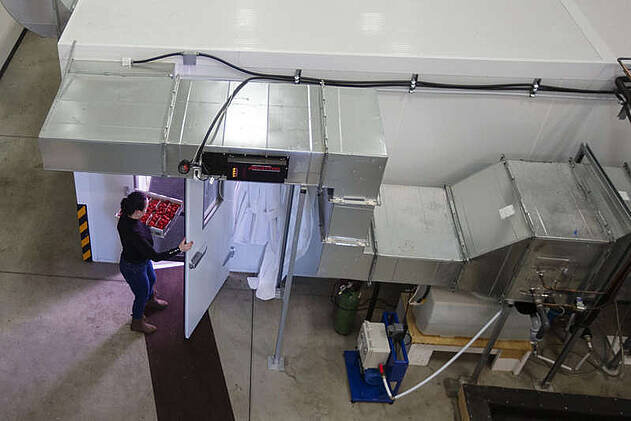
© Bloomberg A Strawberry Harvest At Ferme D'Hiver Vertical Farm. The grow room at the Ferme d’hiver.
Photographer: Christinne Muschi/Bloomberg it is, the way you tell your story online can make all the difference.
In Compton, a town two hours east of Montreal, organic vegetable farmer Frederic Jobin-Lawler is modernizing his 36,000 square feet of greenhouse space with a geothermal heating system, a dehumidifying unit and artificial lighting. After subsidies and other aid, he’ll pay only about 40% of the upgrade costs.
Success or failure of the food autonomy effort will depend on whether small farms like Jobin-Lawler’s can overcome grocers’ general preference for large suppliers or whether they can get institutions like hospitals to buy their produce, he said.
“If we produce more in winter, will our local markets be able to take it in?” he said. “We don’t want to do this to export, we want to do this to sell locally.”
In theory, the province produces enough to supply two-thirds of its fresh and transformed greens, but consumption and production don’t match up perfectly. Quebec grows enough cabbage to cover twice over what it eats, so it exports some. But it meets only 17% of its population’s demand for spinach and 44% for strawberries.
Climate and seasonality have a lot to do with it. As a country, Canada imports the most vegetables and fruits between March and June, followed by the December to February months.
Daoust, the founder of Ferme d’hiver, said he offers a tastier substitute. “It’s not that imported products aren’t good originally, but they are treated to be transported for days,” said Daoust, an engineer by training who grew up on a farm but spent most of his career in the tech industry.
Imported Workers
Not everyone in Quebec is persuaded by the government’s push. Patrick Mundler, a professor at Laval University in Quebec City, says a rush to produce more fruits and vegetables risks increasing demand for other imports, chiefly farm labor.
“The massive production model is totally dependent on labor,” said Mundler, who published a paper on food autonomy last year. “Workers come from Mexico, Guatemala -- I have a hard time accepting we use our electricity to produce cucumbers in heated tunnels rather than buy them from Mexico or Guatemala directly, where they grew in the sun.”
If small farmers manage to get their goods onto grocery shelves where a few giant producers dominate, a big question remains whether consumers will get into the habit of buying local.
“The consumer has the last word,” said Catherine Brodeur, a vice president of economic studies at Groupe Ageco, a consultancy in Quebec City. “The share of consumers who want to buy locally and are ready to pay more grows over time. But a lot of consumers buy the product that’s 5 cents cheaper.”
Photo © Bloomberg A Strawberry Harvest At Ferme D'Hiver Vertical Farm
Strawberries are harvested at the Ferme d’hiver.
Photographer: Christinne Muschi/Bloomberg

Purdue Student Farm Offers Vegetable Season Pass
"The Boilermaker Vegetable Season Pass directly supports the student farm's foundation: to teach students about small-scale agriculture, from growing it to selling it,” said Grace Moore, president of the Purdue Student Farm Club
May 13, 2021
Boilermaker Season Pass provides community participants with fresh vegetables. (iStock photo)
WEST LAFAYETTE, Ind. — The Purdue University Student Farm will provide fresh locally grown vegetables to community members for a second year.
The Boilermaker Vegetable Season Pass will provide Purdue and West Lafayette subscribers with Purdue student-grown vegetables each week from July to November. The 22-week program will include whatever is freshly grown and picked that week.
The Purdue Student Farm started the Community Supported Agriculture (CSA) program in 2020 to support the local community and in response to the closure of the student dining halls, its primary customers. According to Steve Hallett, professor of horticulture and co-director of the student farm, the farm’s students have always wanted to learn about direct sales in local agriculture by selling to the local community.
The Boilermaker Vegetable Season Pass provides an educational experience for students and fresh vegetables to the community. The farm’s goal for the 2021 season is to enlist 50 subscribers for the 22-week program.
"The Boilermaker Vegetable Season Pass directly supports the student farm's foundation: to teach students about small-scale agriculture, from growing it to selling it,” said Grace Moore, president of the Purdue Student Farm Club. “Not only does this program sell fresh, local vegetables to the community, but it also expands the possibilities for students like myself in the Purdue Student Farm Organization to get hands-on experience with local food systems. The support we've seen from the community already is so encouraging to us, and we're very excited to roll out this program."
Petrus Langenhoven is a horticulture and hydroponics crop specialist in the Department of Horticulture and Landscape Architecture and the farm’s co-director.
"Student education is the heartbeat of the farm, and the pandemic has brought a lot of things into perspective for all of us,” he said. “We realized once again how important it is to have locally grown fresh produce when supply chains are broken and that teaching the next generation of growers and horticulturalists is one vital aspect of sustainability. Students, staff, and faculty are working hard to increase our community's resilience. The Purdue Student Farm is grateful to be an integral part of this.”
Hallett said, “We hope to establish new relationships with our local community as a trusted supplier of healthy, safe, and nutritious food. It’s exciting to be reconnecting after this last year; meeting people as they pick up their fresh food and knowing that our programs are reaching the local area. I am very proud of our students and their farm. It’s a very exciting time.”
Julie Huettman, Purdue Extension coordinator, was one of the first subscribers for the 2020 CSA program.
“The Boilermaker Vegetable Season Pass was a great experience,” she said. “Easy to order online, convenient pickup and produce already selected and put in a bag. The variety of produce helped motivate me to try out new recipes. I’m looking forward to subscribing again this year.”
The student team has already received over half of the subscribers for the 2021 season! People can sign up before the end of May for a 20% discount. More information is available online.
Writer: Nyssa Lilovich, 765-494-7077, nclilovi@purdue.edu
Sources: Steve Hallett, halletts@purdue.edu
Chris Adair, ctadair@purdue.edu
Petrus Langenhoven, plangenh@purdue.edu
Agricultural Communications: 765-494-8415;
Maureen Manier, Department Head, mmanier@purdue.edu

Growing Lettuce Under Transparent Solar Cells
A team of researchers at North Carolina State University has shown that using semi-transparent organic solar cells (OSCs) can help greenhouse growers generate electricity and reduce energy use while still cultivating viable crops of lettuce

A team of researchers at North Carolina State University has shown that using semi-transparent organic solar cells (OSCs) can help greenhouse growers generate electricity and reduce energy use while still cultivating viable crops of lettuce.
The research found that red lettuce can be grown in greenhouses with OSCs that filter out the wavelengths of light used to generate solar power. The researchers grew crops of red leaf lettuce in greenhouse chambers from seed to full maturity under constant conditions, apart from the lighting regime.
A control group of lettuces was exposed to the full spectrum of white light, while the rest were dived into three experimental groups. Each of those groups was exposed to light through different types of filters that absorbed wavelengths of light equivalent to what different types of semi-transparent solar cells would absorb.
To determine the effect of removing various wavelengths of light, the researchers assessed a host of plant characteristics, such as leaf number, leaf size, and lettuces weight, as well as how much CO2 the plants absorbed and the levels of various antioxidants. “Not only did we find no meaningful difference between the control group and the experimental groups, but we also didn’t find any significant difference between the different filters,” said study co-author Brendan O’Connor.
“We were a little surprised – there was no real reduction in plant growth or health,” added Heike Sederoff, co-author of the study and professor of plant biology. “It means the idea of integrating transparent solar cells into greenhouses can be done.”
Lead photo caption: The study suggests transparent solar panels will not affect lettuce crop growth

Whole Foods, Amazon Fresh, FreshDirect Step Up Distribution From AeroFarms
Newark, N.J.-based AeroFarms said Thursday that it plans to double its product offering at Whole Foods and, for Amazon Fresh, has expanded from one to five distribution centers, increasing availability throughout the New York metropolitan area
Indoor Vertical Farmer Pilots Leafy
Green Offerings With Walmart in Mid-Atlantic

May 13, 2021
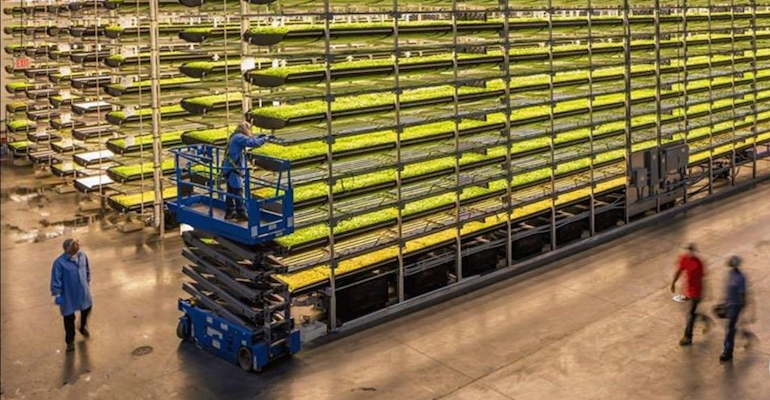
AeroFarms grows all of its leafy greens in New Jersey at one of its commercial indoor vertical farms.
Whole Foods Market, Amazon Fresh, and FreshDirect will be receiving a bigger distribution of leafy greens from indoor vertical farmer AeroFarms, which also has introduced its products at Walmart.
Newark, N.J.-based AeroFarms said Thursday that it plans to double its product offering at Whole Foods and, for Amazon Fresh, has expanded from one to five distribution centers, increasing availability throughout the New York metropolitan area. Both Whole Foods and Amazon Fresh are part of Amazon.com Inc.
Related: Albertsons adds Bowery vertically farmed produce
AeroFarms said its leafy green products are ready-to-eat and don’t require washing.
Related: Kroger brings 80 Acres Farms vertically farmed produce to more stores
Meanwhile, AeroFarms greens have become available for same-day delivery through online grocer FreshDirect’s Express service, following an expansion from one to three distribution centers. And in the Mid-Atlantic region, AeroFarms said it’s piloting its products at selected Walmart stores in Virginia. The Walmart distribution comes after AeroFarm’s ground-breaking last month for a 136,000-square-foot vertical farm in Danville, Va., which the company said will be the world’s largest indoor aeroponic indoor vertical farm when it goes into operation in mid-2022.
In addition, AeroFarms said it has teamed up with Bronx, N.Y.-based fresh produce specialty foods wholesaler Baldor Specialty Foods on retail and foodservice distribution in the Northeast. The vertical farmer also partners with ShopRite in the region.
“Our company is committed to our long-term retail partners, and we are excited to expand our distribution and penetration with them,” David Rosenberg, co-founder and CEO of AeroFarms, said in a statement. “Our leafy greens are consistently praised for their quality, texture and flavor, and our customers connect with our brand because of our authentic and transparent approach to sustainable farming. We’re looking forward to giving our customers more choice and flavor options as we continue to scale the business and broaden our reach.”
A a Certified B Corporation, AeroFarms grows its leafy greens using proprietary aeroponics and indoor vertical-farming technology. The company said its model yields annual productivity up to 390 times greater than traditional field farming and uses up to 95% less water and zero pesticides, in turn providing optimal quality, color, nutrition, texture and taste for its produce.
AeroFarms noted that all of its leafy greens are grown indoors in New Jersey at one of its commercial indoor vertical farms, which are certified for USDA Good Agricultural Practices, SQF Level 2 Good Manufacturing Practices, Non-GMO Project Verification and OU Kosher. The company said its 10 leafy green products — including micro arugula, broccoli, kale, rainbow mix, spicy mix, and super mix plus baby arugula, bok choy, kale and watercress — are ready-to-eat and don’t require washing, providing more safety and convenience to customers. Earlier this month, the vertical farmer announced a rebranding of its Dream Greens retail brand to the AeroFarms label.
Several large U.S. grocery retailers have announced expanded vertically farmed produce offerings at stores this year, including Albertsons Cos. with Bowery Farming in the Northeast and Mid-Atlantic; The Kroger Co. with 80 Acres Farms in Ohio, Indiana and Kentucky; and Giant Eagle with Fifth Season in Pennsylvania and Ohio.
TAGS: SUSTAINABILITY

California Grower Groups Respond To California’s Emergency Drought Proclamation

By TOM KARST
May 11, 2021
California grower groups applauded the state’s May 10 expansion of emergency drought measures but urged caution in their implementation.
“Governor Newsom took a measured step in the right direction, but caution is needed in implementation of this proclamation,” Dave Puglia, Western Growers President, and CEO, said in a statement.
State action
On May 10, California Governor Gavin Newsom significantly expanded his April 21 drought emergency proclamation to include Klamath River, Sacramento-San Joaquin Delta and Tulare Lake Watershed counties. In total, 41 counties are now under a drought state of emergency, representing 30% of the state’s population.
Newsom also proposed a $5.1 billion package of immediate drought response and long-term water resilience investments to address immediate, emergency needs, build regional capacity to endure drought and safeguard water supplies for communities, the economy, and the environment, according to the governor’s office.
Reaction
Puglia said the declaration provides regulatory flexibility for water transfers to mitigate water shortages, and parallel executive action allocates $200 million to repair some damaged sections of key water delivery systems.
“However, the emergency authority granted to the State Water Board to curtail water deliveries should give all water users pause,” Puglia said in the statement. “Water curtailments disproportionately impact rural and disadvantaged communities. During the last drought from 2014-2016, regulatory restrictions on water deliveries resulted in the fallowing of half a million acres of productive San Joaquin Valley farmland and cost farms nearly $4 billion in economic activity. With many South-of-Delta farmers slated to receive between zero and five percent of their water allocations, 2021 is shaping up to be another catastrophic year for rural farming communities in the Valley.”
Puglia urged state water officials to lead with voluntary transfers and curtailments, which he said would give public and private water agencies the space they need to maximize limited water supplies and achieve a balance between the environmental and economic needs of the state.
“Beyond the immediate crisis, state agencies must help mitigate the impacts of changing hydrology by removing the red tape that has long prevented meaningful investments in water storage infrastructure,” he said in the statement.
California’s agricultural and rural communities can’t continue to survive without a reliable water resource, Ian LeMay, president of the California Fresh Fruit Association, said in a statement. “While drought is not an unfamiliar foe to Californians, it should be
acknowledged that this will be the first drought in the era of the Sustainable Groundwater Management Act (SGMA), with the circumstances intensified and the solutions more complex,” LeMay said in the statement. “It is the hope of the Association that today’s announcement is a step to address California’s short and long-term water resiliency.”
The governor’s approach is a “positive step,” Federico Barajas, executive director of the San Luis & Delta-Mendota Water Authority, said in a statement.
“The historic drought conditions have negatively impacted nearly 1.2 million acres of farmland, over 2 million people, many of whom live in economically disadvantaged communities, and 200,000 acres of critical habitat and managed wetlands are reliant on the water provided by members of the San Luis & Delta-Mendota Water Authority.”
“Years like this only reinforce the need for improved water conveyance and increased water storage – so that water can be moved in the years when it’s available and stored for those years when nature fails to provide adequate water for all of California’s needs,” Barajas said in the statement.
The realities of a changing climate mean California must prepare for longer, hotter droughts that can only be effectively mitigated through collaborative approaches that “focuses equally on our state’s economic and environmental sustainability,” Tom Birmingham, Westlands Water District general manager said in a statement.
“We applaud Governor Newsom’s action to mitigate the impacts of a second year of drought in the Central Valley, which has already manifested itself in fallowed fields and lost jobs due to lack of water,” Birmingham said in the statement. “In particular, his move to streamline water transfers and provide $200 million in funding for critical water infrastructure repairs as outlined in Senator Hurtado’s Senate Bill 559 will both help local communities manage drought impacts in the short term and improve drought resiliency by maximizing the beneficial use of every drop of water in the long term. “
Lead photo: (File image)

USA: INDIANA - CASS Housing Is Growing, In More Ways Than One
A local organization keeps growing, in more ways than one. CASS Housing is adding CASS Gardens, an opportunity for residents to grow produce and create jobs

FORT WAYNE, Ind. (WANE) – A local organization keeps growing, in more ways than one. CASS Housing is adding CASS Gardens, an opportunity for residents to grow produce and create jobs.
The mission of CASS Housing is to create and maintain customizable, affordable, sustainable, and safe living arrangements for individuals with developmental and/or intellectual disabilities that promote independent living skills.
These residents will now have the opportunity to work in shipping containers transformed into a garden. Each container will grow 2.5 acres of leafy greens and herbs. The idea was grown from a parent of a future resident and the partnership with Freight Farms was developed. The containers can grow produce year-round and only use 5 gallons of water a day, saving 95% over traditional farming. The LED technology grows the plants on panels inside the containers.
Currently, CASS Housing has two containers and has plans to add 15 in the future. Each container will supply two part-time jobs that residents with CASS Housing are able to walk to.
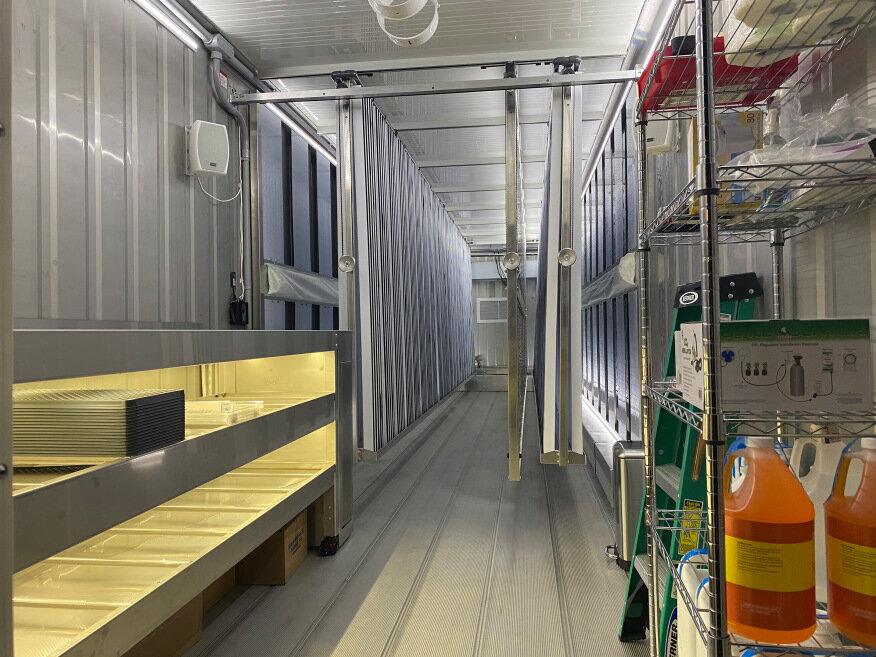

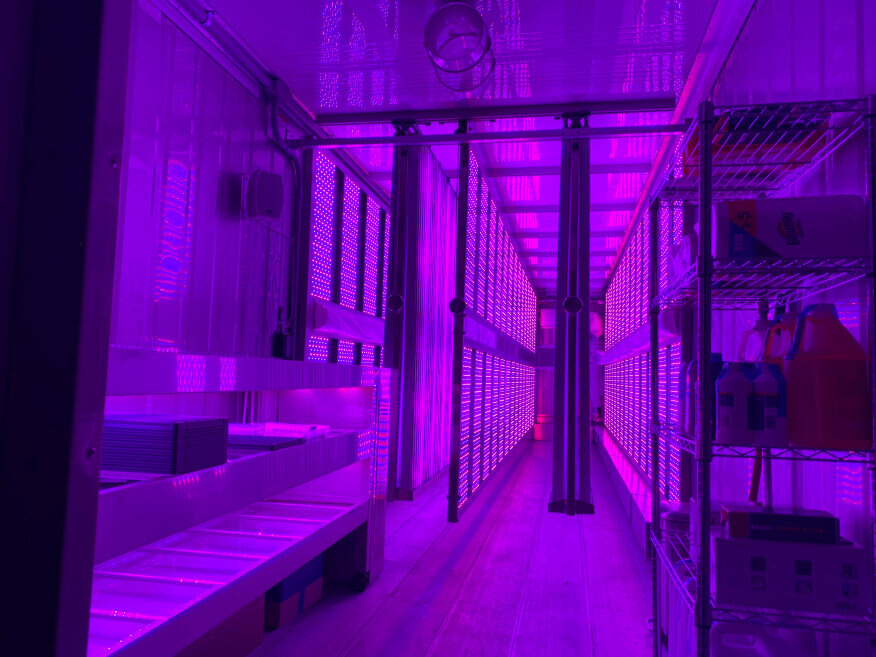


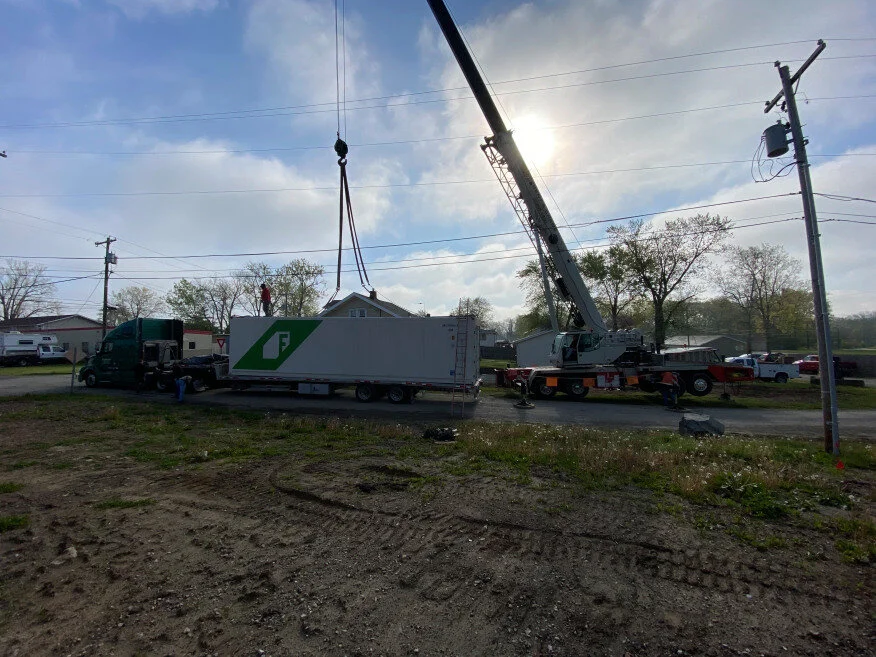

Planting begins Thursday. The produce will be harvested, processed and sold or distributed to customers individually or through wholesale.
“We believe that this employment program could change the national discussion for people with disabilities, starting here in Fort Wayne,” Executive Director David Buuck says.
This is the second Freight Farm in the state of Indiana.
To find out more or to donate, visit casshousing.org.

Polygreens Podcast Episode: 26 Gene Giacomelli
Gene Giacomelli is a Professor in Biosystems Engineering for interdisciplinary education, research, and outreach program for greenhouse and other advanced technology systems. He received a Ph.D. in Horticultural Engineering from Rutgers University in 1983
Gene Giacomelli is a Professor in Biosystems Engineering for interdisciplinary education, research, and outreach program for greenhouse and other advanced technology systems. He received a Ph.D. in Horticultural Engineering from Rutgers University in 1983. He also has a Master's degree in Agricultural Engineering from the University of California-Davis and two bachelor's degrees in Horticultural Science and Biological and Agricultural Engineering from Rutgers University.
Here at the University of Arizona, he teaches Controlled Environment Systems which is an introduction to the technical aspects of greenhouse design, environmental control, nutrient delivery systems, hydroponic crop production, intensive field production systems, and post-harvest handling and storage of crops. His research interests include controlled environment plant production systems [greenhouse and growth chamber] research, design, development, and applications, with emphases on: crop production systems, nutrient delivery systems, environmental control, mechanization, and labor productivity.
Latest Episode

USA - NEW YORK - VIDEO: Into The Woods | Sam Squirrel and General Sequoia | Let's Learn with Mister Ritz
Explore the forest with Mr. Ritz, General Sequoia, and Sam the Squirrel to learn about producers, consumers, and decomposers! Calculate the width and height of the biggest tree on Earth
Join me as I head right outside of CS 55 to discover just how big the world’s biggest tree really is - four times taller than our school! I’m meeting General Sequoia who has some words of wisdom, Sam the Squirrel who comes bearing gifts, and I’ll even be doing math! Addition, multiplication, compare, contrast - this episode has it all!
Explore the forest with Mr. Ritz, General Sequoia, and Sam the Squirrel to learn about producers, consumers, and decomposers! Calculate the width and height of the biggest tree on Earth.
WATCH THE EPISODE NOW
DONATE:
https://greenbronxmachine.org/donate Green Bronx Machine builds healthy, equitable, and resilient communities through inspired education, local food systems, and 21st Century workforce development. Dedicated to cultivating minds and harvesting hope, our school-based model using urban agriculture aligned to key school performance indicators grows healthy students and healthy schools to transform communities that are fragmented and marginalized into neighborhoods that are inclusive and thriving. Like us on Facebook: https://www.facebook.com/green.BX.mac...
Follow us on Twitter: https://twitter.com/greenBXmachine/
Like us on Instagram: https://instagram.com/greenbronxmachine/
Donation FAQ: https://support.google.com/youtube/?p...

Agrify Announces First Total Turn-Key Solution Customer Partnership
Up to 1,200 of Agrify’s Vertical Farming Units to be installed at 50,000 square foot facility with up to $280 million expected in the next 10 years
Up to 1,200 of Agrify’s Vertical Farming Units to be installed at 50,000 square foot facility with up to $280 million expected in the next 10 years

May 12, 2021
Source: Agrify
BURLINGTON, Mass., May 12, 2021 (GLOBE NEWSWIRE) -- Agrify Corporation (NasdaqCM:AGFY) (“Agrify” or the “Company”), a developer of highly advanced and proprietary precision hardware and software grow solutions for the indoor agriculture marketplace, today announced it has signed a definitive agreement with its first Agrify Total Turn-Key Solution (“Agrify TTK Solution”) customer, Bud & Mary’s Cultivation, Inc. (“B&M”). B&M is currently a tier-four licensed cultivator in Bellingham, MA and through its parent company, Bud & Mary’s, LLC, the company is a fully integrated operator in the cannabis space with one dispensary license and a home delivery license in the state of Massachusetts.
Agrify will be working with B&M on a phased approach for the build-out of B&M’s 50,000 square foot facility. The initial construction phase is expected to include installation of 774 Vertical Farming Units (“VFUs”) in a double-stacked configuration to help B&M maximize canopy space. This initial phase is expected to be completed by Q1, 2022, with up to an additional 426 VFUs installed in subsequent phases, which would bring the total up to 1,200 VFUs. Agrify will provide senior financing of up to $13.5 million for construction, which will be repaid within 24 months following the commencement of the first commercial production at the facility.
Under the terms of the agreement, Agrify will also receive fixed SaaS revenue derived from B&M’s use of the Agrify Insights cultivation software as well as additional production-based fees for up to 10 years. Assuming the completion of the maximum 1,200 VFUs being installed at full capacity, Agrify anticipates that it could generate over $28 million per annum in revenue through this partnership.
“I am thrilled to announce that we have secured our first Agrify TTK Solution partnership,” said Raymond Chang, CEO of Agrify. “This solution was developed to enable customers to access the initial capital required to quickly establish modern cultivation facilities that are outfitted with our VFUs and controlled by our Agrify Insights software, which should lead to substantial gains in yield, quality, and consistency at a significantly lower cost of production for them. In turn, we have the potential to develop deeper long-term customer relationships earlier in a company’s lifecycle, create significant IRR for our investment, and increase our total addressable market to drive long-term value creation for both our customers and our shareholders. We look forward to beginning our partnership with B&M and working together over the next 10 years to ensure they have the ability to capitalize on all the benefits our technology has to offer. We expect to announce several more of these long-term customer engagements in 2021 as we have already identified 2-3 additional TTK opportunities.”
“The team at Agrify has developed an unparalleled end-to-end solution that should allow us to get to market faster with industry-leading technology while producing the consistently high-quality products consumers are looking for,” said David Morgan, CEO of B&M. “The ongoing support, extensive training, and knowledge base available throughout the life of our relationship combined with the data and insights available through the software platform made this the clear choice for our company. We sincerely look forward to working with the entire team at Agrify to help us establish ourselves in the growing Massachusetts market.”
About Agrify (NasdaqCM:AGFY)
We are a developer of premium grow solutions for the indoor agriculture marketplace. We use data, science, and technology to empower our customers to be more efficient, more productive, and more intelligent about how they run their businesses. Our highly advanced and proprietary hardware and software solutions have been designed to help our customers achieve the highest quality, consistency, and yield, all at the lowest possible cost. For more information, please visit our website at www.agrify.com.
About Bud & Mary’s Cultivation, Inc.
Bud & Mary’s Cultivation, Inc., through its parent company Bud & Mary’s, LLC, is a vertically integrated cannabis company in Massachusetts focused on the adult-use market. The company is at the forefront of the new era of cannabis, having assembled industry experts in cultivation, processing, packaging, and sales. Bud & Mary’s is poised to bring a unique vision to life: A locally crafted, fully vertical operation utilizing a library of proprietary strains to deliver a superior experience to discerning cannabis consumers.
Forward-Looking Statements
This press release contains forward-looking statements within the meaning of the Private Securities Litigation Reform Act of 1995, Section 27A of the Securities Act of 1933, as amended, and Section 21E of the Securities Exchange Act of 1934, as amended, concerning Agrify and other matters. All statements contained in this press release that do not relate to matters of historical fact should be considered forward-looking statements, including, without limitation, statements regarding our customer relationship with B&M, project timelines, and ability to deliver solutions and services. In some cases, you can identify forward-looking statements by terms such as "may," "will," "should," "expects," "plans," "anticipates," "could," "intends," "targets," "projects," "contemplates," "believes," "estimates," "predicts," "potential" or "continue" or the negative of these terms or other similar expressions. The forward-looking statements in this press release are only predictions. We have based these forward-looking statements largely on our current expectations and projections about future events as well as the terms and conditions that were mutually agreed upon in the underlying definitive agreement between Agrify and Bud & Mary’s Cultivation, Inc. Forward-looking statements involve known and unknown risks, uncertainties and other important factors that may cause our actual results, performance or achievements to be materially different from any future results, performance or achievements expressed or implied by the forward-looking statements. You should carefully consider the risks and uncertainties that affect our business, including those described in our filings with the Securities and Exchange Commission (“SEC”), including under the caption “Risk Factors” in our Annual Report on Form 10-K for the year ended December 31, 2020 filed with the SEC, which can be obtained on the SEC website at www.sec.gov. These forward-looking statements speak only as of the date of this communication. Except as required by applicable law, we do not plan to publicly update or revise any forward-looking statements, whether as a result of any new information, future events or otherwise. You are advised, however, to consult any further disclosures we make on related subjects in our public announcements and filings with the SEC.
Company Contacts:
Agrify
Niv Krikov
Chief Financial Officer
niv.krikov@agrify.com
(617) 896-5240
Rob Kelly
Investor Relations
ir@agrify.com
(416) 992-4539
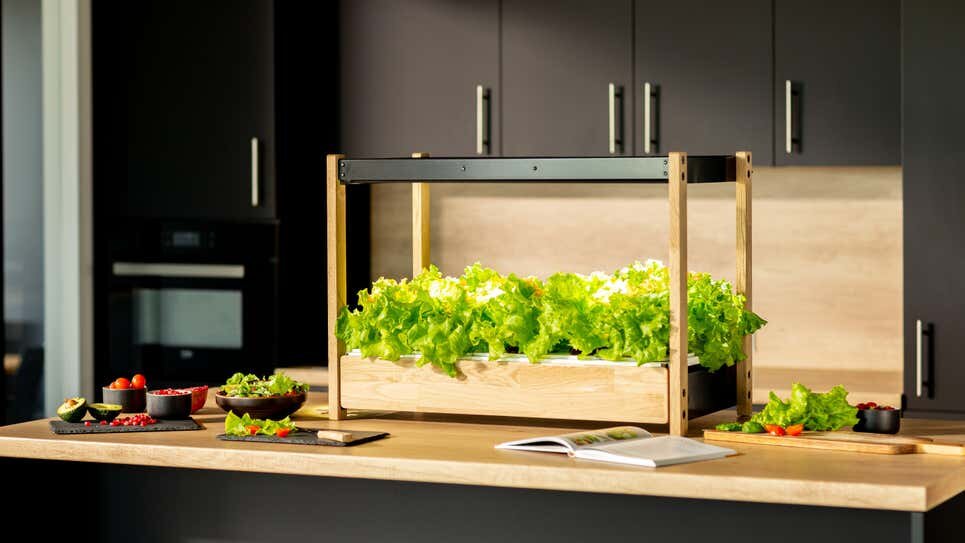
This Indoor Garden Will Feed You Greens Year-Round
The plants grow out of coffee-pod-like earth nuggets and the whole system is designed for minimal interaction. The Smart Soil pods contain calibrated dirt and nutrients and the system waters the plants automatically
May 11, 2021
Click & Grow 25 is the latest project by former orchestra conductor Mattias Lepp who felt that the idea of indoor gardens—essentially, a farmer’s market in a box—would be just the tool for staving off future food shortages. His company, founded in 2009, raised $11 million in 2018 to develop new materials and hardware technologies for indoor gardens. Now, he and the Click & Grow team are taking the tools they used to build large-scale gardens and bringing them into the home.
Lepp calls his tech “hyper-local farming,” and he claims that what he and his team created is entirely unique.
“We’re the only ones in both vertical farming and smaller indoor growing device segment who have figured out how to provide the future of sustainable food while being profitable and having a global reach,” he said. “Compared to big vertical farms we’ve looked at what’s the real problem of vitamin-rich foods like leafy greens—it’s the overly long supply chains that produce waste, nutritional degradation, and transport emissions. The greens from vertical farms still go through the traditional food supply chain, albeit they’re fresher, cleaner, and come from a more local urban farm, they sit in stores, get moved around and half go to waste in a dark corner of a fridge. Unlike vertical farms, we’ve taken a step out of the traditional supply chain and figured out the only sustainable solution, both in terms of nature and business, and that is growing food at the place of consumption.”
Photo: Click & Grow
The Click & Grow 25, which is currently available through Kickstarter, costs $399 for early birds and consists of a frame, containers, and lights. The plants grow out of coffee-pod-like earth nuggets and the whole system is designed for minimal interaction. The Smart Soil pods contain calibrated dirt and nutrients and the system waters the plants automatically.
Lepp’s goal was to make the system as small and simple as possible.
“In 2018 we looked at the numbers and figured out that a family of 4 could feasibly grow a fifth of their food plate in expendable living space, on just 80 square feet of wall at home, for example,” he said. “The idea went through different experiments and prototypes through the years, mainly focusing on how to integrate a garden of this size into even a small New York City apartment and into anyone’s busy lifestyle with its ease of use.”
The team plans to ship in February 2022, and there are a number of permutations of the garden product, which you can stack them against a wall for maximum usage of space. An app will tell you when you add water and when your greens are ready to nosh.
The product is already fully funded to the tune of more than $227,000 and counting, and it looks like just the thing for folks who might need to feed a hungry family or just a hungry rabbit.
John Biggs is a writer from Ohio who lives in Brooklyn. He likes books, watches, and his dog. He is the Editor-in-Chief of Gizmodo. Signal: +16468270591 Telegram: @johnbiggs
Lead photo: Photo: Click & Grow
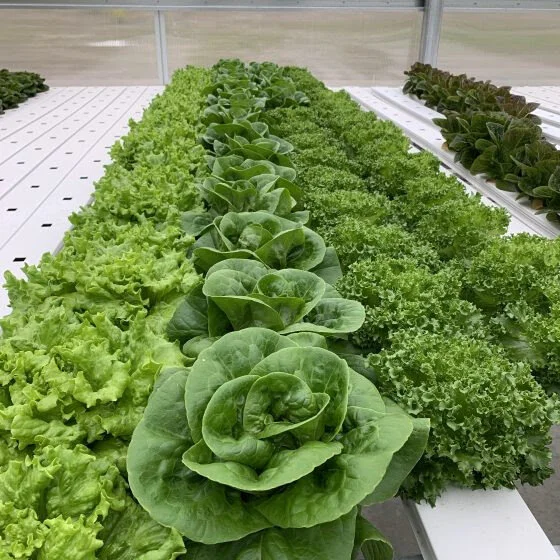
Where All Grow Corn, This Farm Grows Lettuce
The farm that I got to visit was True Food Farms, an 8600 sq. ft hydroponic farm based in Stanton, Iowa
by Shubham
About 5 years ago in 2016 when I landed in Iowa, I couldn't fathom the magnitude of corn farms that I saw here stretching in all the directions, as they disappeared into the horizon. It took me a few months to normalize and make peace with Iowa, the heart of the corn belt. So a week ago, when I came across a local farmer growing lettuce, I knew this was something different.
Visiting an indoor farm has been at the top of my bucket list ever since I claimed the title of being an indoor farming armchair expert. Writing a few blogs, and reading countless articles about the topic acting as my credentials. As all the big guns of the indoor farming industry are either on the west coast in San Francisco, or are spread throughout the east coast. A few of them are scattered through the Midwest, but none of them near me. So when an opportunity came knocking on my door, here in southwest Iowa, I couldn't let it pass.
The farm that I got to visit was True Food Farms, an 8600 sq. ft hydroponic farm based in Stanton, Iowa. It is run by Darren Barkman who originally hails from Canada and grew up on a farm in Manitoba. Darren, who has been farming indoors for the last 20 years was gracious enough to spend an hour of his time giving me a tour of his farm.
How did you decide to grow lettuce in Iowa? I moved with my family to the Stanton area about 5 years ago and was in the indoor farming business in Tennessee before that. The different varieties of lettuce we grew there are more popular in the urban areas. Around this region, however, Iceberg and Romaine are the only two popular varieties, so the market has tremendous potential for the other varieties that we grow. Also, the traditional lettuce is typically grown in the warm climate of the Salinas Valley in California. Once harvested, these lettuce heads travel 1500 miles on a truck taking anywhere between 5 and 10 days to reach the store shelves in Iowa.
True Food Farms is changing that with hydroponically grown lettuce that hits the local grocery shelves within 24 hours of harvesting. Also, we are bringing several different varieties of lettuce like Butterhead, French Crisp, Frisee among others. It will help the locals experience True Food that is clean, healthy, and safe to eat and is grown year-round locally. It doesn't get any better than this.
How would you grow through the winter months?
A hydroponic greenhouse crop doesn't need soil to grow and needs 95% less water than a traditional farm. Being in Iowa that has a gloomy winter for about 6 months, where the sun doesn't show up most of the time between November and March. But a plant needs light to grow, so we have installed LED lights for the winter. These lights emit a spectrum of light that is needed for plant growth. They are controlled by an automated dimming system that reacts to the intensity of the light outside the farm. Also, based on the recipe for the lettuce it will adjust the light emitted to create the perfect growing conditions all throughout winter.
What about the harsh cold of the winters?
When the temperatures drop below a certain number, the heating system kicks in. The floor is heated by hot water running through the pipes spread throughout the floor. It is a highly controlled environment and nothing is left to the unpredictable outside climate giving the ability to grow fresh lettuce even through the cold winters.
What is your biggest cost for the farm?
Until a few years ago, the seeds for growing lettuce indoors were the same as those used for growing outdoors. But nowadays the seeds are bred to suit the indoor farms. Although they are not super expensive, but for the volume of seeds we go through in a year, it can add up.
However, the capital needed to set up the greenhouse is the highest piece of the cost pie. In order to control the environment inside, we had to install all the automated systems, the lights, heating, all these consume electricity, making the power bill it's the biggest number.
What happens when the power goes out?
Since it is a highly automated system that needs a lot of power, we have backup generators that are capable of supporting the farm to run the systems. If the generators fail to switch on in the middle of a winter blackout, we have about an hour before losing the produce.
What is your biggest challenge on the farm?
We are still in the initial stages of setting up the farm but getting it up and running smoothly is the current big challenge. An indoor farm faces the challenge of bugs and diseases, you cannot keep the bugs out but only delay them from coming in. Using helpful insects like ladybugs that fight and eat away the harmful bugs is a healthy option for pest control.
In order to control the diseases, experience is needed to control and monitor the nutrient and pH levels of the water circulated to the crop. Since the whole farm is supplied by the same nutrient solution, any significant change can affect the whole crop.
You will always have problems, you need to keep on top of them. If you let a problem grow, only then it becomes a big problem.
Where do you plan to sell your produce?
Although we are not operating at full capacity, we sell our current production under our brand True Food Farms itself. We are currently supplying our delicious leafy greens to the southwest Iowa region at Hy-Vee stores at Redoak, Clarinda, Shenandoah, and Omaha. We are in talks with Fareway waiting on their corporate approval.
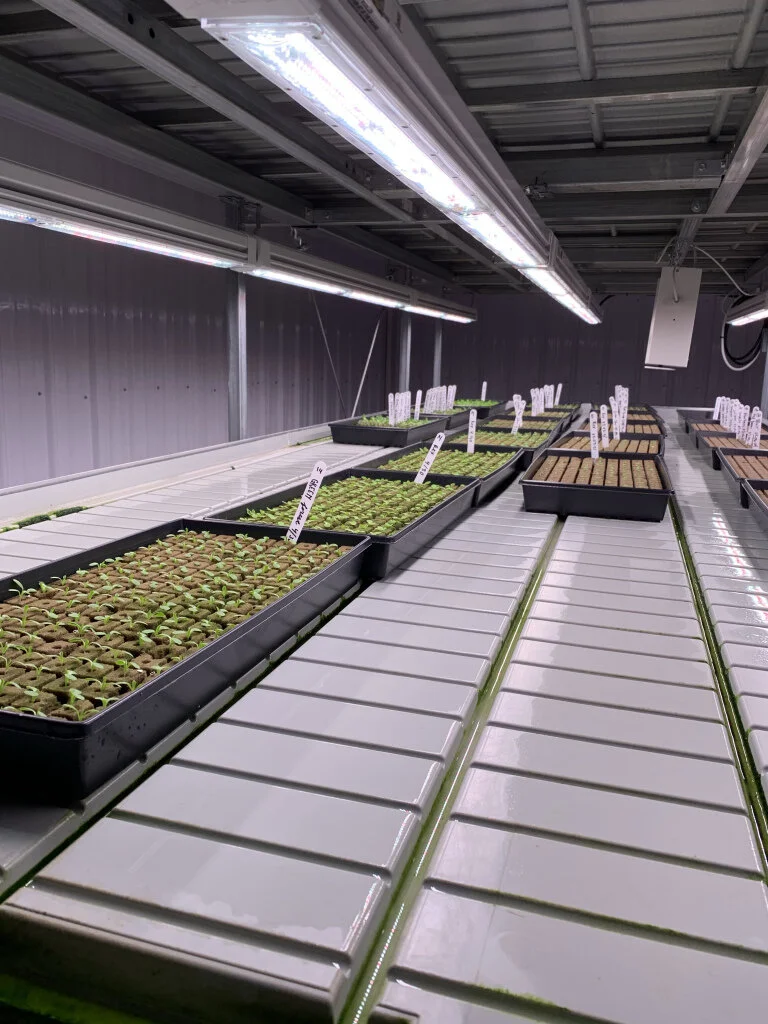
What is next for True Food Farms?
Focus for now is on this farm, to get it up and running at full capacity. We will be hiring more people to help with the harvesting and packaging of the produce. In order to reach more stores, we plan on expanding and adding more farms in the area.
After watching all the videos about indoor farms on the internet, being able to tour a hydroponic farm in person has just increased my curiosity about the indoor farming industry. I was able to get a high-level understanding of operating and setting up a hydroponic farm. Darren has promised to let me bug him again in a few months when the farm is fully operational and I will be back with an update to this post.

Shubham | May 9, 2021
Tags: featured | Categories: AgTech | URL: https://wp.me/p3uM6F-12p

USA - ILLINOIS - Tasty, Fresh And Sustainable
There are no animals, roses, or peaches at Wiseacre Farm, a rectangular, 320-square-foot container farm inside a warehouse Sheinfeld rents in an industrial area at 1975 N. Lake Terrace, Glenview
Glenview Man's Hydroponic Farm
Uses Technology To Grow Garden Variety Produce
5/12/2021
By Dave Oberhelman
doberhelman@dailyherald.com
This is not your grandfather's farm.
It's not Aviad Sheinfeld's grandfather's farm, either -- but Wiseacre Farm is a bridge between childhood days spent on grandparents Yechezkel and Hadassah Gluzman's farm in an Israeli moshav and Sheinfeld's modern training.
That combination has resulted in some of the best greens his customers have ever tasted, grown indoors by futuristic, sustainable methods.
Whatever it is, the way you tell your story online can make all the difference.
"I don't know if it was a goal. I never thought about becoming a farmer. I was always good with computers, so working with computers was kind of the assumed path," said Sheinfeld, 49, of Glenview.
"I think my childhood experiences on the farm really gave me more of an ingrained appreciation for what it takes to grow food. The thing I remember most is the apple orchards and the peaches my grandparents grew, but they also grew roses and sheep, so also animals."
There are no animals, roses, or peaches at Wiseacre Farm, a rectangular, 320-square-foot container farm inside a warehouse Sheinfeld rents in an industrial area at 1975 N. Lake Terrace, Glenview.
Wiseacre's specialty, available by 10-week subscriptions through www.wiseacre.farm, is leafy greens. A recent delivery included six heads of lettuce of differing varieties. Another package will offer the lettuce plus herbs and other greens -- things like parsley, chives, Thai basil, red-veined sorrel, curly kale with chard.
Sheinfeld sometimes delivers his produce the day it's harvested. Reviews are strong.
"Most of our customers have remarked that they had no idea that lettuce, basil -- fill in the blank, whatever produce -- tastes that way," said Sheinfeld's daughter, Yael, who is finishing her last semester at Northeastern University in Boston, but also handling Wiseacre marketing and communications.
"I think it's hard to understand just how much the taste disappears with travel, with chemicals, herbicides, and pesticides, with just time, honestly, and sitting on a grocery store shelf," she said.
Growing crops indoors in Wiseacre Farm's controlled hydroponic environment eliminates the need for herbicides and pesticides. Serving customers within about a 10-mile radius also lends a neighborly appeal.
"It's not just buying your food from anonymous company X," Aviad said.
His father, Sam, also works on the farm. Yael -- and occasionally Aviad and Kari Sheinfeld's two teenage boys, Rahm and Lev -- are fourth-generation farmhands.
Finalizing financing and incorporation in 2018, in November 2019 Sheinfeld received his container farm from Freight Farms of Boston. He said there's a couple hundred of these repurposed shipping container farms worldwide. When he needs advice he reaches farmers in Alaska, Minnesota, Tennessee, even Tasmania.
The interior includes vertical panels about 10 feet tall in which the plants soak up rays of LED lights embedded into opposing panels. The plant panels can be removed and placed horizontally when the plants are ready for harvesting.
The media is not soil but water, to which nutrients are added automatically, manually controlled by computer. Hydroponic methods are 98% more water-efficient than traditional farming, Yael said. Through recycling irrigation water and capturing the water transpired by the plants, on average the farm uses less than 5 gallons of water a day. On very humid days, the farm will capture more water than it uses.
Nutrients, drip irrigation, temperature, humidity, lighting -- all are computer-controlled.
"As farming goes, it's kind of posh," Aviad Sheinfeld said.
"The thing about this farm is it's very technically advanced, so it kind of marries my initial interest in agriculture and my insatiable appetite for technological gadgets all into one big toy," he said.
He earned a bachelor's degree in mathematics at the University of Pennsylvania and added DePaul University master's degrees in network communications and information security and in computational finance.
First working as a software engineer with Motorola, he veered into stay-at-home dad mode after he and Kari, an attorney, started having children. The couple sent their kids to the Science & Arts Academy in Des Plaines, where Aviad served three years as board chairman. During that time, the academy explored hydroponics as part of the curriculum.
"That's kind of where I caught the bug, so to speak," he said.
No bugs at Wiseacre Farm. There is lots of energy consumption.
"We have lights that are powered by electricity and we use a lot of technology, so that is one resource that we use a lot of," Yael Sheinfeld said.
And still ...
"What's wonderful is, due to our partnership with Arcadia (Power, a renewable energy company out of Washington, D.C.) all of the electricity that we consume now is 100 percent offset with wind-generated, renewable energy. So it sort of allows us to keep that focus, knowing that's the main resource we still need to use, but doing that in a more sustainable way," she said.
For lettuce, from seed to harvest it takes only 8 weeks for the container farm to grow the equivalent of 2 acres of traditional farmland, Aviad said. He plans on about six annual growing cycles.
His first crop came through last March, right at the onset of the COVID-19 pandemic. Initially targeting restaurants for his produce, he shifted to a farm-to-table model. Customers also can now pick up goods at the farm itself on Saturdays, though preordering is a must. All packages and purchasing options are available at www.wiseacre.farm.
In its short time, Wiseacre Farm has gained acclaim beyond consumer taste buds. It won Silver for innovation in the Glenview Natural Resources Department's 2020 Environmental Sustainability Awards, and on March 28 the farm was featured in a segment of the History channel's "Modern Marvels" series highlighting "The Future of Food."
After a year, Aviad Sheinfeld said the process has become "a little less magical," but he still gets a kick out of it. Imagine what Hadassah and Yechezkel Gluzman might think.
"You put seed in a plug, and even a few days later when it pops out, I'm amazed," Aviad said.
"I do understand it, but I still don't believe how amazing it is that a plant grows out of this little, tiny seed and a few weeks later you have a head of lettuce or arugula."
Lead Photo: Wiseacre Farm owner Aviad Sheinfeld looks over some of the plants grown at his hydroponic farm in Glenview. Brian Hill | Staff Photographer

Global Investment In Agri-Food-Tech Surged To $ 22.3 Billion
Finistere Ventures report reveals $ 5 billion invested in Agtech and $ 17.3 billion invested in Foodtech in 2020. Finistere Ventures expects 2021 to dwarf 2020 numbers as capital continues to flood into agtech.
5 May 2021
Finistere Ventures report reveals $ 5 billion invested in Agtech and $ 17.3 billion invested in Foodtech in 2020. Finistere Ventures expects 2021 to dwarf 2020 numbers as capital continues to flood into agtech.
According to Finistere Ventures’ 2020 AgriFood Tech Investment Review, a report developed in collaboration with PitchBook Data, total global investment in agrifood tech companies in 2020 surged to $ 22.3 billion – $ 5B in ag-tech and $ 17.3B in food-tech – continuing to grow at 50% CAGR (2010-2020); Finistere expects 2021 to exceed this record year based on early investment data.
Fear of missing out
“While 2020 presented some interesting and, at times, surprising outcomes for the agrifood sector, we saw fear turn into fear of missing out (FOMO) with favorable results for startups, particularly those in later stage situations with meaningful revenue and strong growth stories,” said Arama Kukutai, co-founder and partner, Finistere Ventures.
According to Kukutai, low interest rates and a soaring equity market have provided a backdrop unseen in the relatively short history of the sector. “Investors attracted to the potential disruption of massive total addressable markets fueled increases in investment across all stages and segments,” he said.
Race for innovation access is heating up
Based on the report, the race for innovation access is heating up and creating a new level for agrifood investing. A renewed focus on climate change and carbon offsets is gaining momentum, and rising ESG interest is spilling over into venture-backed companies across agrifood.
Involvement from new or non-traditional players – family offices, large pension and sovereign wealth groups, late-stage PE – swelled and the role of CVCs across the space continued to grow. 2020 saw 8054 unique investors participate across over 9000 transactions in the agri-food space.
Key ag-tech findings include:
Due to the industry’s successful adaptation in the midst of the pandemic, investment into ag-tech continued to expand at a staggering pace through the end of 2020, with the $ 5B total capital invested comprising almost one-third of the $ 15.9B raised across ag-tech sectors since 2010
Late-stage deals and mega-rounds proliferated as investors rallied to support existing portfolio companies and the composition of investors continued to diversify, fueling sustained growth with the median for late-stage deals reaching record heights at $ 67.6M
CVCs considerably increased activity in the ag-tech arena in 2020, participating in 107 funding rounds
Biotech kept its stronghold as the top ag-tech investment area, attracting $ 1.3B in 2020, and starting off 2021 strong with $ 268.2M secured in the first quarter.
Interest in indoor ag spiked, driven by supply chain and sustainability factors, as well as growing consumer preference for local, fresh produce with superior taste and quality –reaching $ 1.3B in funding for 2020, more than doubling YoY from $ 601M raised in 2019
Due in large part to pandemic pressures, animal tech investment exploded in 2020 reaching $ 847.8M after lackluster interest over recent years
Subsectors including digital technologies, precision agriculture, plant sciences, ag marketplace, and fintech also broke investment records in 2020 as stakeholders made their commitment to help growers manage climate change and overcome mounting sustainability pressures clear.
Investments and profits booming
According to Finister Ventures investments and profits are booming. “We expect 2021 to dwarf 2020 numbers as capital continues to flood into the technology categories with absolutely massive disruption potential like indoor ag, supply chain technologies, animal health, novel ingredients and alternative proteins,” said Kukutai.
Substantial consolidation and rise of distinct market leaders
“Valuations, deal totals and market sizes will continue to climb thanks to low interest rates, free-flowing capital, and trillions of dollars of pent-up consumer spending power. However, as the market inevitably right sizes and new categories of innovation emerge to meet these monumental shifts, we also expect substantial consolidation and the rise of distinct market leaders.”

Hugo Claver
Web editor for Future Farming

Raleigh Shipping Container Farm Using Hydroponic Technology
The technology that Nanue’s Farm uses was created by Boston-based company, Freight Farms. Each container has thousands of LED grow lights, temperature controls and uses between five and ten gallons of water each day

BY KYLEIGH PANETTA RALEIGH
MAY 10, 2021
RALEIGH, N.C. — Summer is one of the busiest and most profitable times for farmers across the state but what if they could grow produce year-round?
Nanue’s Farm in Raleigh is using some advanced technology to do just that.
What You Need To Know
Nanue's Farm is located in downtown Raleigh and uses hydroponic technology
The "container farm" is about 320-square feet and can hold 5,000 heads of lettuce
The technology is being used in dozens of countries and may help eliminate "food deserts"
Nanue’s Farm is on S. West Street, what some may say is a pretty strange place for a farm.
“This is in downtown Raleigh. You can see the great skyline we have here,” said Trevor Spear, the owner of Nanue’s Farm. “I walk to work when I can. I don’t have to drive.”
Spear admits that a seemingly empty parking lot with a shipping container is not what most people expect to see when they arrive at a farm.
“It’s funny because people don’t understand what it is. They think it’s just a shipping container and people are storing stuff inside it,” said Spear.
Nanue’s probably looks more like a science experiment than a farm.
“It’s 65 degrees, 60% humidity. Co2 runs at night, so we’re like 2,000 parts of Co2 in there. It’s optimal growing conditions for lettuce and that’s how we do it in seven weeks’ time,” said Spear.
Spear specializes in leafy, crunchy greens. Something else you can hear inside the farm, from time to time, is classical music.
“We play classical music at night and I think it makes a difference. They like it. Sometimes we play a little Van Halen but usually Bach or Beethoven,” said Spear who knows that a little TLC goes a long way and said every lettuce has a name.
It’s not your typical lettuce but Spear is also not your typical farmer. He named the farm after his grandmother, Lydie Cox.
"When I was a kid I would go have summers at Nanue’s house and she had a huge garden, an acre size garden. I would go up and down the rows with her as a kid. That’s where I probably got the bug because once it bites you, you live with the sting," said Spear.
Nanue’s Farm is getting a second container in June and hopefully a third by the end of the year. They currently offer home delivery to a few areas and are looking into creating a farm stand. The majority of the produce is sold to local restaurants in the area.
"When chefs come and tour the farm, they open the door and they’re like, 'Wow.' We can hold 5,000 heads of lettuce. We harvest 60 cases a week, so when they walk in and see that much lettuce growing and looking as good as it does, it’s a take-back," said Spear.
If you’re interested in trying some of their lettuce, you can also find a Nanue’s salad at Hummingbird, a restaurant in Raleigh.
The technology that Nanue’s Farm uses was created by Boston-based company, Freight Farms. Each container has thousands of LED grow lights, temperature controls and uses between five and ten gallons of water each day.
The containers also have cameras and connect to Wi-Fi so it can be monitored from an app or website. Freight Farms said the goal is to replicate an ideal farming environment so that more people have access to fresh produce.
“In the U.S., food moves 500 to 1,000 miles, predominantly from California. If you can move the farm then you can put a farm in a food desert and then you can grow the food and the hyperlocal food and the high nutritional values of that food. Either food deserts or even urban areas,” said James Woolard, the chief marketing officer for Freight Farms. “You might not think it’s a food desert but it is from a socio-economic point of view and an access point of view.”

Red Lobster CEO Kim Lopdrup Named Chairman of The Board For Kalera
Kim Lopdrup provides industry expertise as Kalera prepares for international expansion and US listing of its shares
Kim Lopdrup Provides Industry Expertise As Kalera Prepares For International Expansion And US listing of Its Shares
May 12, 2021
Source: Kalera
ORLANDO, Fla., May 12, 2021 (GLOBE NEWSWIRE) -- Kalera (Euronext Growth Oslo ticker KAL, Bloomberg: KSLLF), one of the fastest-growing and largest vertical farming companies in the world and a leader in plant science for producing high-quality produce in controlled environments, today announced that Kim Lopdrup is appointed as new Chairman of Kalera as the company moves towards a US listing. Kim joined Kalera’s Board last year and remains CEO of Red Lobster.
This announcement comes on the heels of the news of Kalera’s appointment of Sonny Perdue, former US Secretary of Agriculture, and Maria Sastre to the Board of Directors. Current Chairman, Bjorge Gretland, will continue as a board member in the company. Bjorge became Chairman of the company in 2013 when the company only had a handful of employees. Now, the company has become one of the fastest-growing and largest vertical farming companies in the world with truly pan-US coverage.
“We couldn’t be more thrilled to have Kim, a proven titan in the food and restaurant industry, become Chairman of our Board,” said Bjorge Gretland, current Kalera Chairman. “His knowledge and expertise span from securing the highest quality, traceable and sustainable seafood for his vast network of restaurants to leading companies through global expansion. These are skills that are invaluable to Kalera at this time. As Kalera moves towards a US listing of its stock, Kim is extremely well suited to take on the Chairman role.”
Kim Lopdrup has been the Chief Executive Officer of Red Lobster, the world’s largest seafood restaurant company, since 2014. Under his leadership, Red Lobster has greatly improved its food, service, and technology. All of Red Lobster’s seafood is now traceable, sustainable, and responsibly sourced. It has dramatically grown its off-premise sales by adding delivery and Rapid Red Curbside Pick-Up. Red Lobster was recently recognized by Forbes on its 2021 list of America’s Best Large Employers and by Newsweek on its 2021 list of America’s Best Loyalty Programs. Kim was previously President of Specialty Restaurant Group and New Business for Darden Restaurants, where he was responsible for The Capital Grille, Eddie V’s, Seasons 52, Yard House, and Bahama Breeze as well as Darden’s international division, consumer packaged goods, and M&A. He has also previously served as Chief Operating Officer, North America, for Burger King Corporation and as CEO of the International Division for Dunkin’ Donuts and Baskin-Robbins.
“Kalera has a world-class management team and a disruptive technology that allows them to produce the highest-quality produce I have ever tasted in a way that is remarkably clean, sustainable and efficient. It is easy to see why customers get so excited once they try Kalera’s products or tour one of Kalera’s farms,” said Kim Lopdrup. “I am passionate about great food, food safety, nutrition, sustainability, innovation and international growth. Kalera is positioned to excel in all of these areas. I look forward to working with Daniel Malechuk, Kalera’s outstanding CEO, to make the most of these exciting opportunities.”
Kim serves on the boards of Wawa, Inc. (since 2006); Red Lobster (since 2014); Bob Evans Restaurants (since 2017), and Kalera (since 2020). He previously served on the boards of Rubio’s Restaurants (including during its IPO), 31 Ice Cream (a Japanese public company), and Hiram Walker & Sons, Ltd. (a Canadian company). He also served on the board of Boys & Girls Clubs of Central Florida for 12 years, being named Board Member of the Year in 2011 and receiving National Service to Youth awards in 2010 and 2015. He is currently co-chair of Project Opioid. Orlando Business Journal named Kim a “CEO of the Year” in 2016. He holds a BBA from The College of William & Mary and an MBA with Distinction from Harvard Business School, where he won the Uhlmann Prize for best agribusiness research in 1984.
The appointment of Kim Lopdrup as Chairman of Kalera’s Board of Directors will be presented for approval by Kalera’s shareholders at a general meeting.
For further information:
Bjørge Gretland, Chairman
Email: bgretland@kalera.com
About Kalera
Kalera is a technology-driven vertical farming company with unique growing methods combining optimized nutrients and light recipes, precise environmental controls, and cleanroom standards to produce safe, highly nutritious, pesticide-free, non-GMO vegetables with consistent high quality and longer shelf life year-round. The company’s high-yield, automated, data-driven hydroponic production facilities have been designed for rapid rollout with industry-leading payback times to grow vegetables faster, cleaner, at a lower cost, and with less environmental impact.
To learn more visit www.Kalera.com.
This information is subject to the disclosure requirements pursuant to section 5-12 of the Norwegian Securities Trading Act.

CleanGreens Boosts Its Growth With Two New Contracts
The first contract was signed with a longstanding partner: French food-processing company LSDH, whose subsidiary Les Crudettes is a leader in the production of bagged salads
97% - Water-waste reduction with CleanGreens’ aeroponic solutions, vs. traditional cultivation.
30x - Productivity increase with CleanGreens’ aeroponic solutions, vs. traditional cultivation.
With new projects in France and Kuwait, the Swiss company is consolidating its international expansion
Molondin, Switzerland – May 11, 2021. CleanGreens Solutions SA (CleanGreens) has signed two new international contracts to share its innovative technology that enables plants to grow without soil. The Swiss company’s approach convinced prestigious clients in France and Kuwait.
It allows salads and aromatic herbs to grow with 97% less water, while im- proving productivity by a factor of 30, thanks to a high-performing aeroponic system that is unique in the world and totally free of pesticides. “These two new projects represent a key step in the growth of CleanGreens,” says CEO Serge Gander. “They will boost the company’s turnover to more than CHF 4 million and will allow us to increase our workforce by 30%.”
Reinforced cooperation
The first contract was signed with a longstanding partner: French food-processing company LSDH, whose subsidiary Les Crudettes is a leader in the production of bagged salads. “It’s a great pleasure for us to pursue and intensify the aeroponic technology developed by CleanGreens, a trusted partner for more than five years,” says Emmanuel Vasseneix, CEO of the LSDH group. This family-owned company boasts some 2,000 employees and annual sales of € 900 million. After the inauguration of its first commercial greenhouse in France in 2019, Les Crudettes is now expressing its confidence in CleanGreens’ expertise by adding an 8,000m2 installation dedicated entirely to aromatic herbs.
30 - Number of truckloads eliminated with new CleanGreens greenhouse in France.
17 - Number of cargo flights eliminated with new CleanGreens greenhouse in Kuwait.
The new greenhouse is also part of a circular economy approach, as it will be powered by energy recovered from a nearby LSDH production site. Producing 150 tonnes of aromatic herbs year-round, it will allow the development of a reliable local subsidiary, reducing imports by 30 truckloads a year. The facility will be operational by mid-2022.
International expansion
The second project is a 7,000m2 greenhouse for a new client in Kuwait, a milestone in the company’s growth beyond Europe. This installation will produce 70 tonnes of aromatic herbs and 210 tonnes of salad a year, thereby avoiding 17 cargo flights and the CO they would emit. The client, The Green Life Company decided to partner with CleanGreens to respond to the Gulf’s need for fresh produce. “CleanGreens’ aeroponic technology is perfectly suited to the needs of Kuwait,” says Adel Al Shamali, a discreet but influential entrepreneur known throughout the Gulf region, and president and co-founder of The Green Life Company. “The shortage of leafed vegetables and aromatic herbs, our strong dependency on imports (up to 70%) for these products, our severe climatic conditions, and our limited water resources are all factors that make this project highly promising.”
By impacting the global supply chain, the Covid-19 pandemic heightened Kuwait’s concerns about food security, creating a major issue for the government. The water and energy savings of the CleanGreens solution will mark a further step toward food self-sufficiency. Operational in 2022, the project falls within the framework of a broader partnership for CleanGreens in the region.
These new contracts represent two pillars in CleanGreens’ strategy for growth and international expansion. Other projects are under discussion in several countries within and beyond Europe. The contracts also confirm the interest among both the public and the food-processing industry for aeroponics, which ensures outstanding productivity as well as the elimination of pesticides, currently a topic of heated debate in Europe.
About CleanGreens
CleanGreens is a Swiss food-technology company that provides farmers and the farm industry with innovative mobile aeroponic solutions (plants are grown without soil and their roots are sprayed with nutrient fog) for the cultivation of fresh vegetables respectful of the environment and rich in nutritional value. Certified as a B Corporation (for balancing purpose and profit) and awarded the Solar Impulse Label (for positive impact on the environment and economic viability), CleanGreens’ patented technology significantly reduces water consumption and the risk of bacterial contamination, while offering maximum productivity per square metre, thereby minimizing environmental impact. The company’s irrigation systems and mechanized spacing produce salads, cabbages, and aromatic plants all year-round, providing consumers with healthy and responsible products.
Further information:
Céline Calais info@cleangreens.ch
+41 21 545 99 25
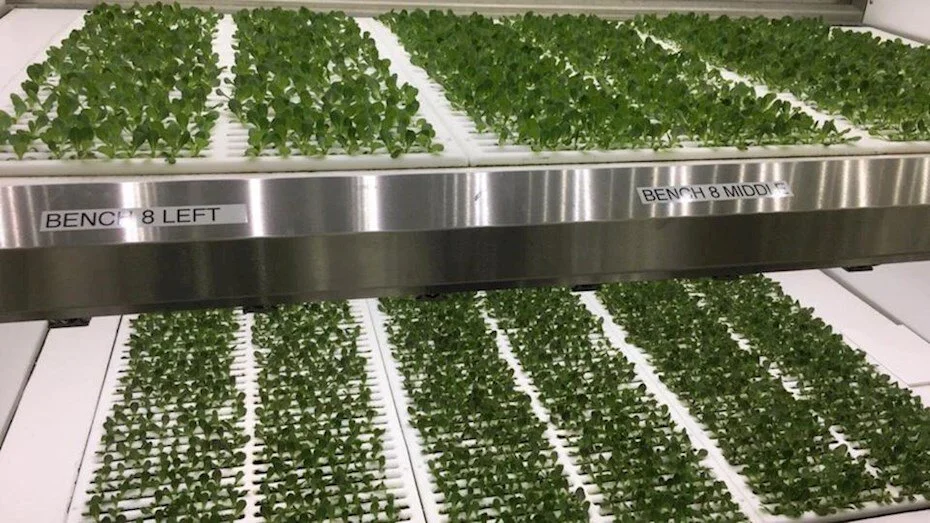
“Nine Out of Ten Businesses Have No Clear Goal”
Vertical farming is playing an increasingly important role in food production worldwide
Reinier Donkersloot is the founder of vertical farming consultancy Consult2Grow and co-owner of a vertical farm in Dubai. Vertical farming is playing an increasingly important role in food production worldwide. On a vertical farm, fruit and vegetables grow above one another in several layers, in a confined space. This cultivation method shows great promise for being the most efficient way to grow local, healthy food in over-populated urban areas.
Reinier gives a glimpse behind the scenes in the creation of a vertical farm in a special city like Dubai.
What are the lesser-known facts about vertical farming?
“Many people are talking about vertical farming nowadays. This is great, but fortunately, there’s also plenty of discussion about indoor farming in general. After all, indoor farming doesn’t always have to be vertical. You can also cultivate in a single layer in a totally controlled environment, shut off from outdoor conditions. Technology is a means to an end, and should never be the goal. For example, sometimes I advise to go for an indoor farm or a vertical farm, but sometimes it works perfectly well to cultivate in a greenhouse.”
At what point did you think things had to change?
“In October 2013, I went on a trade mission to Japan with a number of Dutch businesses, on behalf of Philips (my employer at the time). I told them about vertical farming and got the response: “What are you doing? That’ll never catch on.” All the more reason for me to persevere. In the following years, more businesses became active in this area, including Grodan. That turned out very well for the development of this new industry. I never regretted my decision to fully focus on vertical farming, especially when you see the challenges the world is facing in the food sector as we approach 2050. Innovative crop cultivation is a real solution. Take Dubai, for example, which is extremely vulnerable to droughts.”
What’s the secret behind your vertical farm in Dubai?
“That we’ve embarked on the project with a stable, local partner. There are quite a few businesses that think, ‘There’s plenty of money in Dubai, which is easily hooked with a quick contract.’ It’s true there’s plenty of money and that people enjoy spending in this city, but the locals don’t want to lose face. That’s the crux of it. So we opted to co-invest in the farm, which inspired confidence in our local partner.”
Where do you get your inspiration for vertical farming?
“Actually, from the Italian Luca Travaglini, from Milan. He belongs to the third generation of a big Italian family business that dries salami. It may sound a bit strange, but he saw a big overlap with growing lettuce. And he’s right, although not everyone was immediately enthusiastic. His passion eventually got everybody on board, resulting in the imminent launch of the biggest vertical farm in Europe, Planet Farms. Together with Luca, we’ve proven that it’s interesting to learn from other industries. Being open to different solutions can add enormous value to new developments in food production. We shouldn’t ignore that fact. I’m very proud indeed to have been able to supervise this project in its initial phase.”
What kick do you get from vertical farming?
“Recently, we started receiving the results from research over the past two months, which focused on the growth of a baby leaf. That’s the first phase of a plant, in which the growth is quite slow, making it a slightly more expensive crop. We tried to understand the little plant as much as possible, so we could find the limits for optimization. And we succeeded. The results we achieved were almost 40 percent better than predicted. So we surpassed everyone’s expectations. It was fantastic! That’s what we do it for.”
What’s the first thing you need to do when you want to start with vertical farming?
“As with every business, you really need to think long and hard about what your goal is. Nine out of ten businesses have no clear idea of their goal. Then your project can never be successful. So you have to start by answering some key questions: what do you want to achieve, who are your customers and what do these customers want? Also for the projects I supervise at Consult2Grow, it’s important to first determine the goal, then to understand the local situation, and only then start looking at the technology. I call it reverse engineering.
And don’t forget that cultivating a plant is one thing, but how are you going to market that plant afterwards? In Dubai, 90 percent of produce is imported, because local produce still isn’t good enough. So if you’re going to put a local product on the market, you have to take a good look at how to position it.”
Consult2Grow is a vertical farming consultancy based in Berkel en Rodenrijs, and co-owner of a vertical farm in Dubai. For their research, Consult2Grow likes to work with Grodan products, in order to test their own products, give feedback and optimize their products.
This story is part of the Gro-Hacks series, in which we ask partners and friends of Grodan about the lessons we can learn from their innovative entrepreneurial stories.

VIDEO: Singapore’s Urban Farmers Seek High-Tech Solutions To Turn Waste Into Resources
With the challenges of climate change and a growing population, research and development have become critical in helping overcome threats to sustainability with the help of technology
MAY 11, 2021
KEY POINTS
Singapore’s first urban insect farm, Insectta, is a biotech start-up extracting valuable biomaterials from the black soldier fly.
With the challenges of climate change and a growing population, research and development have Nessa Anwar become critical in helping overcome threats to sustainability with the help of technology.
Farmers in typically traditional environments are also tapping into technology to bring added value to their fields of specialty, such as Singapore fish farm Eco-Ark.
Farmers are popping up in major cities - here’s why
SINGAPORE — Thousands of wriggling larvae won’t deter this self-declared “urban farmer.”
Chua Kai-Ning is one of the founders of Singapore’s first urban insect farm, Insectta — a high-tech farm that rears the black soldier fly to help turn food waste into biomaterials for industrial use.
“The black soldier fly is a way to contribute to what we call the circular economy, where we produce things without anything going to waste,” said the 26-year-old, who has a background in English linguistics.
Some in Singapore are turning to urban farming in this land-scarce city, as they look for high-tech ways to turn waste into useful resources.
Chua is one of them.
We are not only reimagining what we farm, but what we get out of the farming process.
Chua Kai-Ning
CO-FOUNDER, INSECTTA
“Their superpower is their ability to consume food waste,” she said of the black soldier fly, regularly scooping up a handful of writhing insects with her bare hands throughout the farm visit.
“A kilo of larvae can go through four kilograms of waste in just 24 hours,” she said, explaining that pre-consumer food waste — primarily soybean leftovers and spent grain from the beer-brewing industry — is fed to the larvae.
But the work doesn’t stop there.
Insectta’s co-founder and chief technology officer Phua Jun Wei demonstrating water-soluble melanin derived from their black soldier fly larvae.
From the insect farm, the trays of larvae are transported to a laboratory on the other side of the island state. There, biomaterials are extracted from the larvae and used to produce valuable substances for electronics, pharmaceuticals, and cosmetics, such as chitosan and melanin.
The future of urban agriculture, Chua maintained, is in deep technology. Deep tech companies are often start-ups founded on scientific and engineering breakthroughs, aimed at harnessing technology to address environmental or societal challenges.
“We are not only reimagining what we farm but what we get out of the farming process.”
Pioneers such as Insectta are not the only ones coming up with high-tech ways of farming to cater to a world with evolving needs. Farmers in typically traditional environments are also tapping into technology to bring added value to their fields of specialty.
Eco-Ark is one such example. The closed-containment floating fish farm located in the eastern side of Singapore uses seawater that has been optimally treated to farm fish.
The farm — an area slightly smaller than two basketball courts — also uses green energy tapped from its solar roof to power about 20% of its farming activities, the company said.
The Eco-Ark is a closed-containment floating fish farm located off a Singapore coast, yielding more than 160 tonnes of fish a year.
“We produce our own oxygen, we produce our own ozone,” said Leow Ban Tat, CEO of Aquaculture Centre of Excellence, which built Eco-Ark.
Open-net fish farms are vulnerable to environmental threats such as plankton blooms, oil spills and warmer waters due to climate change. Unlike these traditional farms, fish on the Eco-Ark are contained in seawater that is filtered and treated to kill pathogens.
“As fish grow, they produce a lot of ammonia and nitrates,” he explained, adding that water discharged back to the sea is treated and free of waste.
In addition to a water filtration system that improves the mortality of fish reared, the high-tech floating farm is the first in the country to have post-harvest facilities, said Leow.
After cleaning and preparing ready-made fish for consumption, the fish bones and fish heads left behind are turned into pellets that can be used as plant fertilizer, ensuring no unnecessary waste.
Singapore sets its sights on high-tech farming
Traditionally, urban farms are not known to be energy efficient. Critics say that growing food with the help of high-tech systems to boost artificial farming environments, such as in climate control, raises energy costs.
With the challenges of climate change and a growing population, research and development have become critical to overcoming threats to sustainability with the help of technology.
In its latest budget, Singapore set aside 60 million Singapore dollars (about $45.2 million) to encourage farmers to utilize technology. The Agri-Food Cluster Transformation Fund was established in February to help farmers better apply technology to local food production.
The goal of sustainability has drawn people like aquaculturist Nick Goh to fish farms like Eco-Ark.
“This is actually what I wanted to do. It is not sustainable if we keep on doing fish-netting outside, fishing, fish trawling,” he told CNBC. “So if we have aquaculture in the field, we can actually first sustain the ocean, and second, sustain ourselves in terms of food security-wise.”
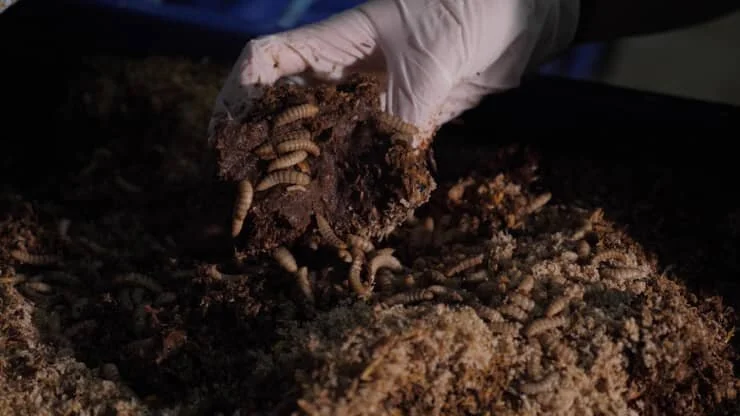
Black soldier fly larvae eating through a tray of pre-consumer food waste.
Insectta’s Chua admits it’s not been easy.
“Pioneering anything, especially in a deep tech industry, is definitely scary,” Chua said. “But it’s also empowering because you know that you’re the first mover for change.”
“If we don’t go out there and look for new solutions to current problems such as the food waste crisis, dwindling natural resources, we’re never going to make any headway.”