

Welcome to iGrow News, Your Source for the World of Indoor Vertical Farming

New Solar Greenhouse With A Window To The Future Opens
The glasshouse was built by Perth high-tech building materials company ClearVue Technologies using three different versions of its transparent solar photovoltaic glazing panels
10-05-2021 | Farm Online
AUSTRALIA, Perth- The world's first clear solar glass greenhouse has been opened at Murdoch University's new grains research precinct in Perth. The glasshouse was built by Perth high-tech building materials company ClearVue Technologies using three different versions of its transparent solar photovoltaic glazing panels.
SOLAR GREENHOUSE: The world's first clear solar glass greenhouse at Perth's Murdoch University uses three different versions of ClearVue Technologies' transparent solar photovoltaic glazing panels.
The ClearVue technology turns windows into a generator of renewable energy.
The facility will be used by Murdoch University geneticist Professor Chengdao Li and his team to develop new plant breeding technologies and use them to develop commercial crop varieties.
Murdoch University Vice-Chancellor Professor Eeva Leinonen said the ClearVue greenhouse project was a number of years in the making but represented what universities and industry could achieve when they worked together.
"Murdoch's research strategy is focused on food, health, and the environment and the interconnections between each," Professor Leinonen said.
"I am delighted ClearVue has become an important new collaborator as we seek answers to wicked global problems - increased food demand, environmental sustainability and food safety."
Constructed using a $1.6 million grant from the federal government's AusIndustry Co-operative Research Centre Projects program, the greenhouse uses clear solar glass that not only lets natural sunlight through but also generates power using the unwanted UV and IR light wavelengths and converts these to power from photovoltaics at the perimeter of the window.
SOLAR VISIONARY: ClearVue executive chairman Victor Rosenberg.
The ClearVue greenhouse has a range of sensors that record and present data in real-time providing scientists with accurate information relating to conditions like temperature, humidity, and the amount of light that plants are receiving.
This information is used to make automatic adjustments to air conditioning, lighting, fans, louvres, blinds, and reticulation systems which in turn allows scientists to maintain a constant micro-climate (23 to 26 degrees C) that provides optimum growing conditions - all while being powered by the energy generated by the ClearVue glass.
ClearVue Technologies executive chairman and founder Victor Rosenberg said ClearVue was also looking to expands into Japan, the US, and Europe.
He hoped to develop a carbon sink that would capture all the carbon produced by the various equipment in the greenhouse and turn it into food-grade carbon dioxide which could be fed to the plants to boost growth.
ROOM WITH A VIEW: Murdoch University's new clear solar glass greenhouse.
"Estimates indicate the world's arable land has reduced by one third in the past 40 years," Mr Rosenberg said.
"By 2050, two-thirds of the world's population is predicted to be urbanized, which will further impact the availability of land for agricultural production."
He said the ability to control the microclimate within the ClearVue greenhouse created an optimum growing environment to achieve higher yields.
Leafy plants required protection from harmful UV rays in the same way humans need to protect their skin, he said.
Plants did this naturally by producing a waxy substance that shielded them from harmful UV rays.
Mr Rosenberg said ClearVue glass blocked these UV rays so the energy required by plants to create the protective layer on leafy vegetables can be redirected to growing more produce.
Source and Photo courtesy of Farmonline
It Is Time To Grow!
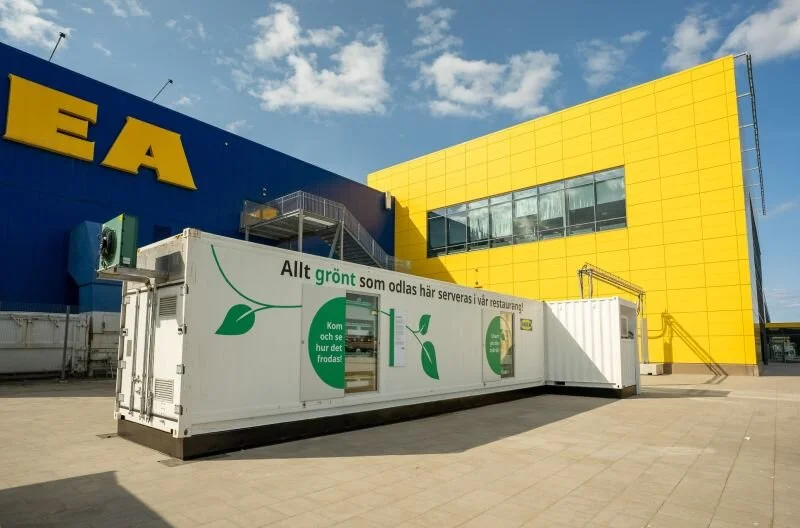
In an Urban farming pilot project, we grow leafy greens in a nutritious fluid, in a container powered with 100% renewable energy outside the IKEA Malmö store in Sweden
2ndProject portfolio Leader på IKEA, Ingka, Group Sustainability
The majority of IKEA visitors enjoy the IKEA food offer and today we enable millions of people to eat healthier and more sustainably by choosing our plant-based options. We are continuously exploring how we can contribute to a better, greener, and tastier future making healthier and more sustainable food accessible and affordable for many people.
In an Urban farming pilot project, we grow leafy greens in a nutritious fluid, in a container powered with 100% renewable energy outside the IKEA Malmö store in Sweden. This will not only result in delicious, fresh, locally grown greens that IKEA visitors can enjoy but what is more important this contributes to our ambition to become people and planet positive by 2030 by using fewer natural resources compared to conventional growing methods:
90% less water
No pesticides
No farmland
Less food waste
Together with Urban Crop Solutions we have installed a controlled-environment vertical farm where plants are grown in a closed system. Water and nutrients are used instead of soil and LED-light is used instead of sunlight.
We believe that every action that enables and inspires people to live more sustainably matters and perhaps we can change the world together, one plant at the time.
Urban Crop Solutions

Investing In Indoor Vertical Farming
The vertical farming market is projected to reach USD 7.3 billion by 2025 from USD 2.9 billion in 2020; it is expected to grow at a CAGR of 20.2% during the forecast period
By: Robert Colangelo, CEO Green Sense Farms Holdings, Inc.
Indoor vertical farms are the new kid on the block, with commercial production farms being a little more than a decade old. The vertical farming market is projected to reach USD 7.3 billion by 2025 from USD 2.9 billion in 2020; it is expected to grow at a CAGR of 20.2% during the forecast period. 1
One vertical farm startup has raised over $250 million, and another has a valuation of over $1 billion. Are vertical farms hype, urban legend, or a good investment? Conducting thorough due diligence by a qualified expert is critical when considering an investment in a vertical farm.
Here are a few pointers to consider when exploring investment candidates.
Business Model: A good business model is a start to creating a profitable vertical farm. The model should include: where the farm will be located, who is the anchor customer, what crop will be grown and what volume, how produce will be packaged, how it will be distributed, and how it will be sold. In addition, it should speak to the type of farm that will be built- a turnkey operation "seed to supermarket" vs. a grow farm, that contracts germination, packing and sales. Startups always take longer than expected to get up and running, make sure there is a grace period built into the plan for initial operations and distribution challenges.
Management Team: After you have developed the winning business model, you need a qualified team to execute the business plan. Now that vertical farming has been around for several years, it’s easier to find qualified people with experience operating these types of farms. The C Suite should consist of professionals experienced in business administration and a technical team with horticultural production experience. This includes a senior grower, production manager, food safety manager, chief ag engineer, and sales manager. Depending on the farm; for example, a highly automated farm could look to related industries to find an operations manager with experience in a mechanized food production facility.
Marketing and Sales: The produce market is very competitive and is referred to as "a pennies business" with tight margins and profit being made on large volume. Shrink can minimize the profitability of a vertical farm. The worst thing for any operator is throwing away crop and shrink can happen at each point of the growing chain (seeding, germination, nursery, growth, harvesting, packing, and shipping). In addition, produce is perishables having a short shelf life of 1-3 weeks. The best way to reduce shrink is to grow high-quality produce that is pre-sold. This will also yield the highest price. Having an experienced sales team with relationships with a wide variety of produce buyers is paramount to success. A well-thought-out marketing and a branding plan are also required to position your crop for the target buyer and detail how to make your brand known, such as in-store samples/tastings, sponsorships, chef partnerships, merchandising…
Technology: What technology will be used in the growing operation? Will the farm be designed and built by the management team, or will they contract an experienced farm design and builder? Will they use a proven hydroponic, aeroponic, or aquaponics growing system or deploy a disruptive new technology A well-designed farm will include a seeding area, a germ room, a nursery, a growing area, a packing area, and a cooler. It will require the Temperature (T), Relative Humidity (RH), and air circulation to be monitored and controlled at each operation. At a minimum, it will require specialized equipment to control the climate, irrigation, treat nutrient water, enrich the grow room with CO2 and control LED lights. In addition, the farm should have adequate sensors, a central data collection system with automated vales, so the delivery of all inputs can be precisely controlled. A disruptive technology can be transformative when scaling the business, increasing yields, generating profit, and optimizing productivity.
Capital is the grease that lubricates the wheels of innovation. Investors continue to explore opportunities in the vertical farming market helping the industry grow.
Investors be(a)aware, there is a lot of hype in this market and much nuance in operating a successful vertical farm that does not show up in financial projections or a business plan. A good business model, a seasoned management team, and a proven growing technology can all add up to make a vertical farm profitable.
1. PRNewswire, NY, Aug 17, 2020.

Robert Colangelo is the founder of Green Sense Farms Holdings, Inc. (GSF. He is an early adopter in Controlled Environment Agriculture (CEA) and has over ten years of experience with the design-build, operations, and raising capital for vertical farms.
GSF provides contract research, consulting, and farm design and build services.
Fresh Fruit In February: Quebec's Premier About To Test A Cherished Commandment of Economics
Quebec has put more than $150 million towards becoming self-sufficient in all four food groups, all year around
Kevin Carmichael
May 06, 2021
Quebec Premier François Legault, who earned a master’s degree in business administration and co-founded Transat A.T. Inc. before entering politics, is about to test one of the most cherished commandments of economics.
David Ricardo (1772-1823) popularized the idea at the core of all trade agreements: comparative advantage. Ricardo observed that it was ridiculous for England to produce wine when plentiful Portuguese vintages were both cheaper and better. Conversely, Portugal had no business making its own cloth, since its textile industry was no match for Britain’s cotton spinners. Everyone would be better off if England imported its wine from Portugal, and if Portugal obtained its cotton from England.
It took some time, but eventually, politicians saw the wisdom of Ricardo’s teachings. It helped that attempts to defy the rule of comparative advantage tend to go badly: the Newfoundland government’s embarrassing attempt in the late 1980s to become self-sufficient in cucumbers, for example. Free-trade agreements replaced tariff walls, culminating in China’s addition to the World Trade Organization in 2001.
Ricardo wouldn’t like many of the current trends in trade. Protectionism is back, thanks to the Great Recession and Donald “Tariff Man” Trump’s four years in the White House. Now, the COVID-19 crisis has some policymakers thinking that an inefficient textile industry might be better than no textile industry if the country with the comparative advantage in the making of masks and medical gowns refuses to send you any at the outset of a deadly pandemic.
The federal budget promises hundreds of millions of dollars for bioengineering, as Canada’s embrace of globalization left it without the manufacturing capacity necessary to make COVID-19 vaccines. Several provinces have initiated programs aimed at boosting home-grown supplies of food, none more aggressively than Quebec, which has put more than $150 million to become self-sufficient in all four food groups, all year around.
Folly? Advances in greenhouse technology combined with cheap hydro-generated electricity and shifts in spending habits suggest that it’s possible. Still, even if the cost of heating a state-of-the-art greenhouse in Quebec during the winter might be relatively cheap, it’s still not as cheap as in sunny Mexico, where fruit and vegetable farmers warm their crops for free. Legault’s bet will come down to whether Quebecers are willing to pay more for their food. Modern industrial agriculture is built on the notion that consumers only care about price. We’re about to see if that’s true.
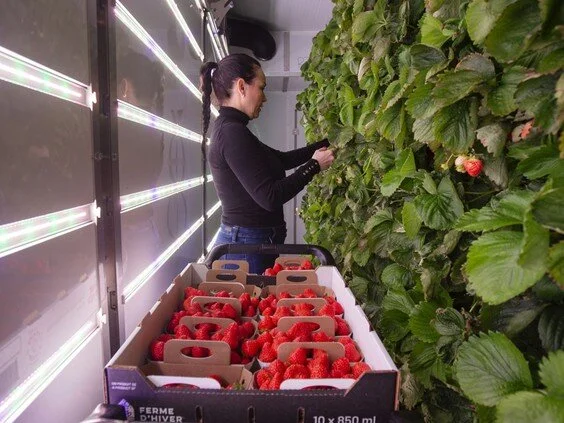
Lead photo: A worker harvests strawberries at the Ferme d'hiver vertical farm in Brossard, Quebec, Canada, on Wednesday, Jan. 6, 2021. PHOTO BY CHRISTINNE MUSCHI/BLOOMBERG

This Weeks Episode - Season 3 Episode 33
Join Harry Duran, host of Vertical Farming Podcast, as he welcomes to the show serial entrepreneur, Dave Dinesen
Join Harry Duran, host of Vertical Farming Podcast, as he welcomes to the show serial entrepreneur, Dave Dinesen. Dave is the CEO of CubicFarm Systems, a local chain agtech company that provides unique automated onsite commercial-scale food and livestock feed technologies. Dave is committed to applying technology to address global challenges like food security and climate change.
In this episode, Harry and Dave discuss the impact the pandemic has had on the vertical farming industry, why Dave places such a high value on equity in the workplace, and the critical tipping point we’ve arrived at for the future of our food supply.
Listen & Subscribe

CANADA: Feeding a City From The World’s Largest Rooftop Greenhouse
Can you grow enough produce for an entire city in rooftop greenhouses? Two entrepreneurs in Montreal, Canada, believe it might be possible.

May. 08, 2021
By Sean Fleming
The world's largest rooftop greenhouse is in Montreal, Canada.
It measures more than 15,000m2 and produces more than 11,000kg of food per week.
The company behind it had to hire 200 new employees due to pandemic-driven demand.
Can you grow enough produce for an entire city in rooftop greenhouses? Two entrepreneurs in Montreal, Canada, believe it might be possible.
Lauren and Mohamed Hage cofounded Lufa in 2009. The company has four urban gardens in the Canadian city, all in rooftop greenhouses. Lufa's most recent sits on top of a former warehouse and measures more than 15,000m2 – larger than the other three greenhouses combined. Its main crops are tomatoes and aubergines, producing more than 11,000kg of food per week. It is, the company says, the largest rooftop greenhouse in the world.
An Ambitious Goal
Rathmell says the new greenhouse will accelerate Lufa's mission to grow food where people live and help it to meet an "ever-growing demand for fresh, local, and responsible foods".
The company – which says it's not trying to replace local farms and food makers, acknowledging that not everything can be grown on rooftops – follows what it calls 'responsible agriculture' practices. These include capturing and recirculating rainwater, energy-saving glass panels, and an absence of synthetic pesticides. Any waste is composted and reused, and food is sold directly to customers on the day it is harvested. Lufa also has a fleet of electric vehicles to make those deliveries.
"Our objective at Lufa is to get to the point where we're feeding everyone in the city," Hage said in an interview in Fortune. Lufa's fifth greenhouse is due to open later in 2021.
At the moment, Lufa grows food for around 2% of the city's population. While that might sound like a modest proportion, interest in urban agriculture is on the rise. Presently, agriculture in urban areas tends to be more common in developing countries. But the UN Food and Agriculture Organization (FAO) favors an increase in urban agriculture, saying it can have "important benefits for food security."
Urban farming is often more common among poorer members of society. UN FAO
A Growing Global Trend

Lufa produces more than 11,000kg of food per week, including tomatoes and aubergines. Lufa
Urban agriculture has been taking off in other parts of the world in recent years, too – from shipping containers in Brooklyn, New York City, to allotments in unused spaces in Brussels, Belgium.
And at 14,000 m2, there's Nature Urbaine in Paris – which claims to be the world's largest urban rooftop farm. Nature Urbaine rents out growing space to Parisians who want to grow their own crops. Tenant farmers pay around $450 per year per 1m2 sized plot. They get a welcome pack with everything they need to start growing, as well as regular access to the Nature Urbine gardening team who are on hand to offer advice and support.
Lufa's first greenhouse was opened in 2011, in Montreal's Ahuntsic-Cartierville borough, to grow herbs, microgreens, cucumbers, and peppers. Two more were added in 2013 and 2017, with the fourth joining last year. It sits on top of a former Sears warehouse in the Saint-Laurent area of the city.
In addition to its own produce, Lufa also sells a selection of other locally made or grown food, including bread, cheese, and drinks to its customers. Rising demand for its service, in the wake of the pandemic, led to the company hiring an additional 200 people, and partnering with 35 new farmers and food makers.
Lead photo: The new greenhouse will accelerate Lufa's mission to grow food. Lufa
Lufa

New Hydroponic Farm, Vittone Farms, Is Welcomed To The Smith Mountain Lake Regional Chamber of Commerce With Ribbon Cutting
“What is great about hydroponic growing is that we can serve the local community with safe, nutritional food 365 days a year, additionally local farming removes the extended transportation of produce from the equation
May 12, 2021
Vittone Farms, Inc., a true-agricultural start-up that uses hydroponic farming to grow thousands of plants a month and host of the Smith Mountain Lake (SML) Farmers Market, celebrated the ribbon cutting with the Smith Mountain Lake Regional Chamber of Commerce on Wednesday, May 5, 2021. As an official member of the region’s growing business community, Vittone Farms looks forward to supporting the local and seasonal community.
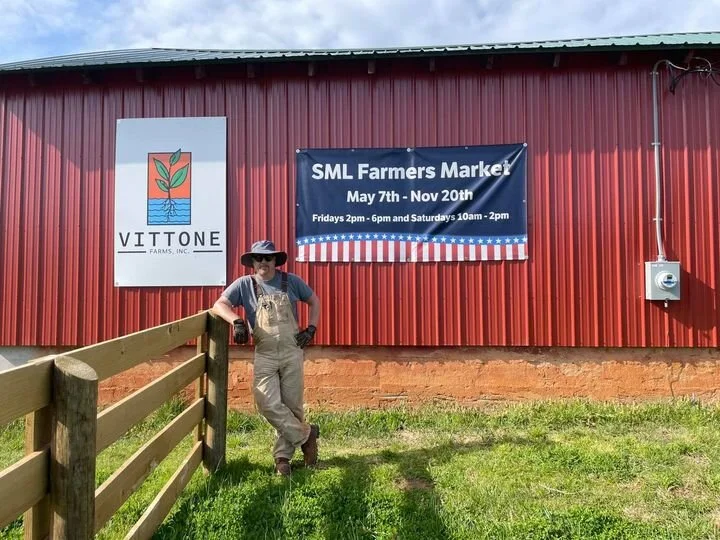
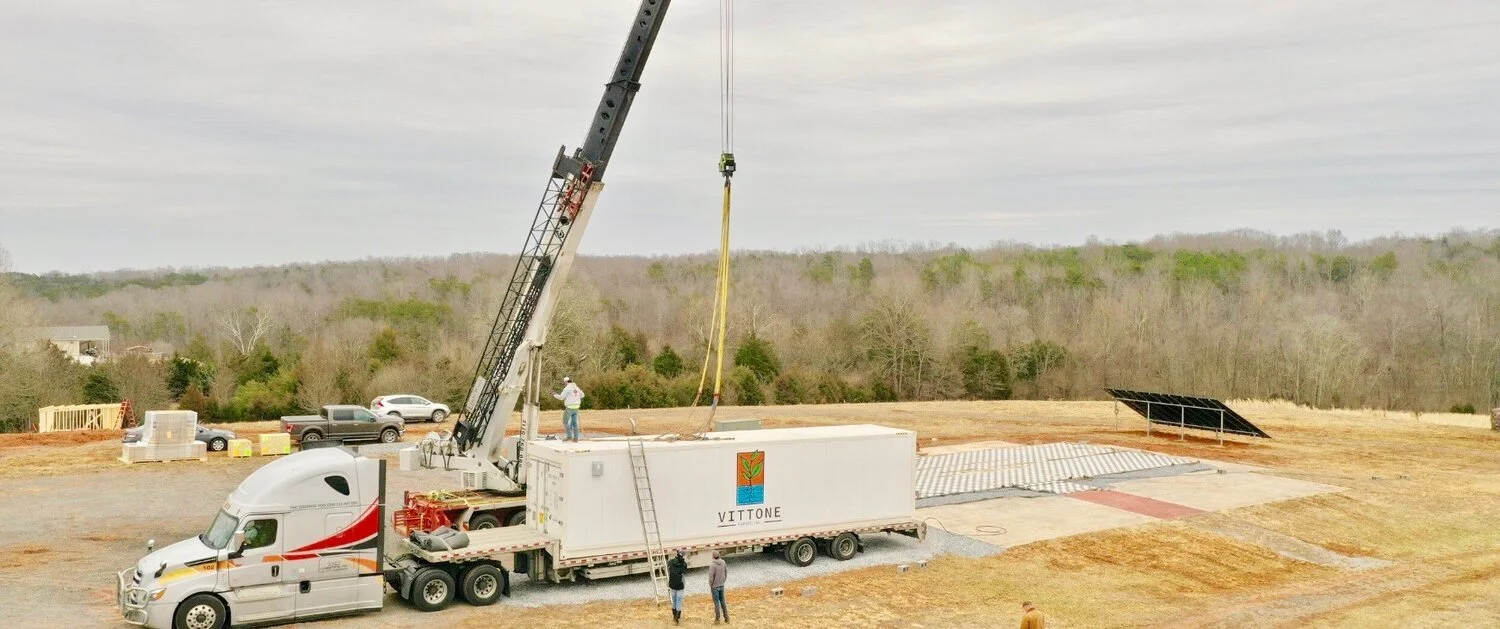
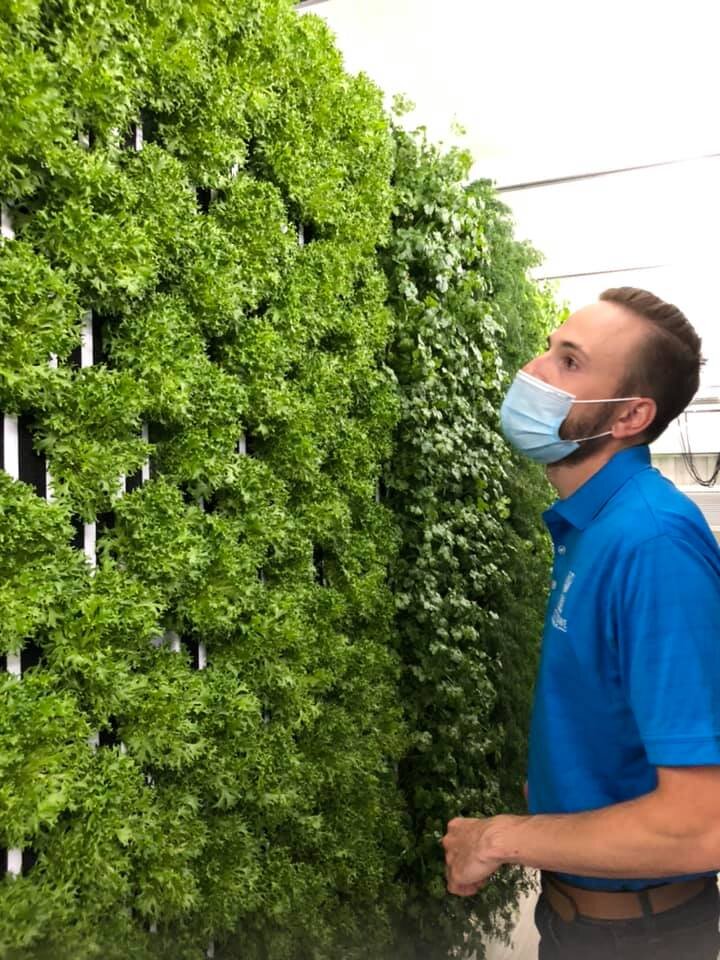
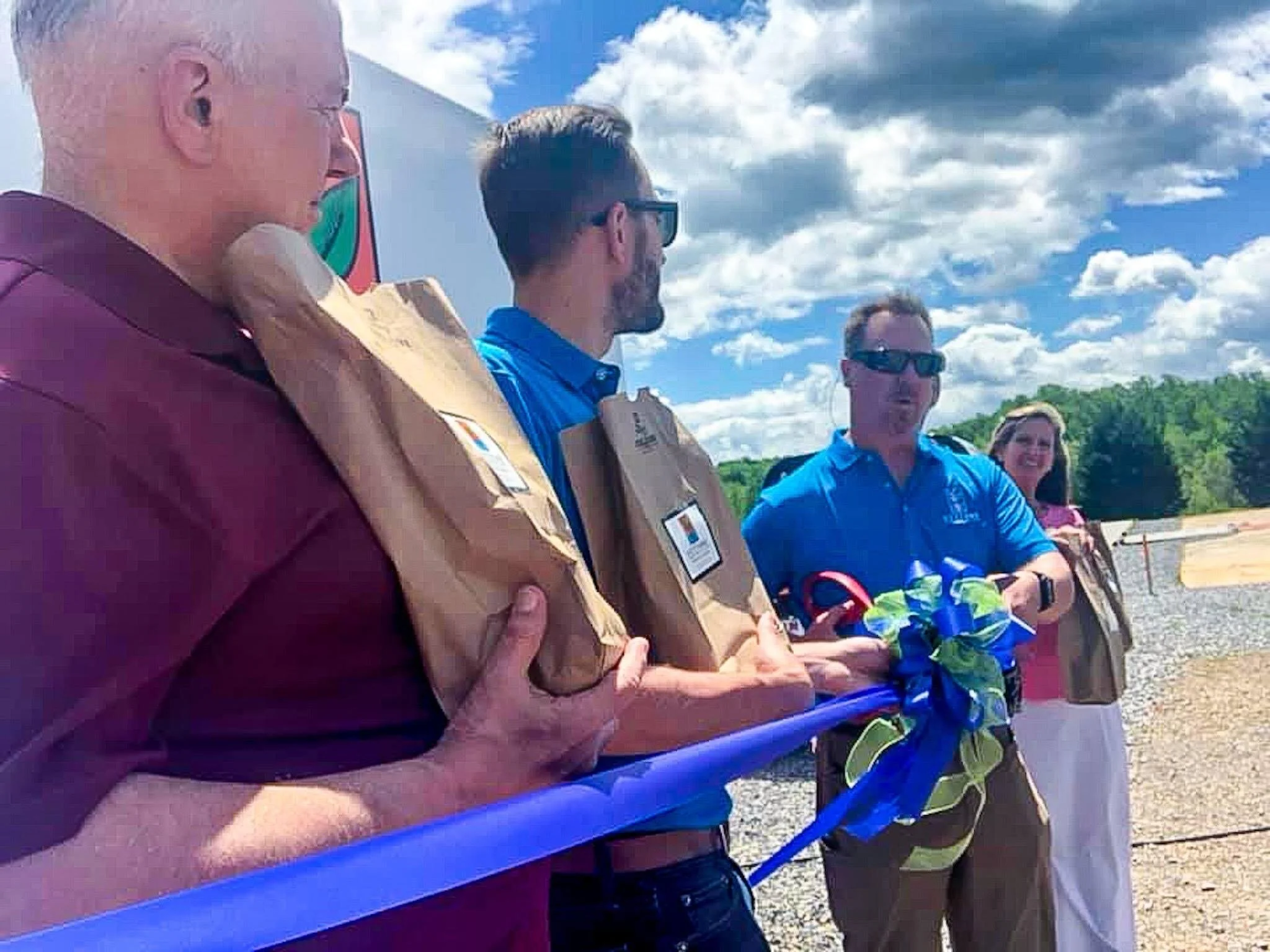
10 local businesses attended the ribbon cutting and each attendee was provided with a hydroponic salad lunch created by a local Smith Mountain Lake restaurant, The Landing Restaurant, with salad ingredients provided by Vittone Farms.
The 40-foot farming container uses advanced vertical farming techniques using every inch of space for effective, indoor, all-season, all-weather growing and sits on land once known in the community for the Mayberry Diner & Drive-In. In 2007 the Diner burned down and for the past several years the prominent land remained vacant and unusable. Vittone Farms plans to make this land useful once again through the use of the farm and farmers market, making Vittone Farms a viable member of the Smith Mountain Lake Regional Chamber of Commerce. The SML Farmers Market features local growers and producers from within a 100-mile radius of its location in Moneta, VA and for the 2021 season, all members of 4-H, FFA, or any young farmer or producer under the age of 18 is eligible to receive free booth space at the up-and-coming farmers market.
The Vittone Farms team consists of Jeff Vittone, the founder of Vittone Farms and SML Famers Market and a U.S. Air Force Veteran, Jordan Gudely, a lifelong farmer who attained his Argibusiness Management Degree from North Carolina State University gained unique experience with organic fruit and vegetable production from the NC State sweet potato breeding program also has 1.5 years’ experience in different forms of farming works alongside part-time worker Kevin Painchaud, a local high school student, and future Horticultural Science Major at Virginia Tech. The Vittone Farms team is preparing for the farmer’s market season by growing a variety of plants and herbs inside the container farm and will continue to learn how to optimize the unique sustainable farming technique.
Vittone Farms offers a variety of produce derived from organic seeds and pesticide-free nutrients from its initial harvest including: Butter Lettuce, Romaine, Bibb Lettuce, Red and Green Salanova Sweet Crisp, Basil, Cilantro, Dill, Parsley, and Radish. Soon, Vittone Farms plans to include Microgreens and eggs from free-range, cage-free, organically fed chickens.
“What is great about hydroponic growing is that we can serve the local community with safe, nutritional food 365 days a year, additionally local farming removes the extended transportation of produce from the equation. When food is shipped over extended distances it loses its quality and nutritional value. We are grateful to be part of this beautiful community and welcomed by the local chamber of commerce. We are honored to make use of a once treasured land by not only growing on the land but inviting others to join us each weekend by selling their local meats, produce, or designs,” adds Jeff Vittone.
This Subway Station In Seoul Doubles As A Futuristic Vegetable Garden
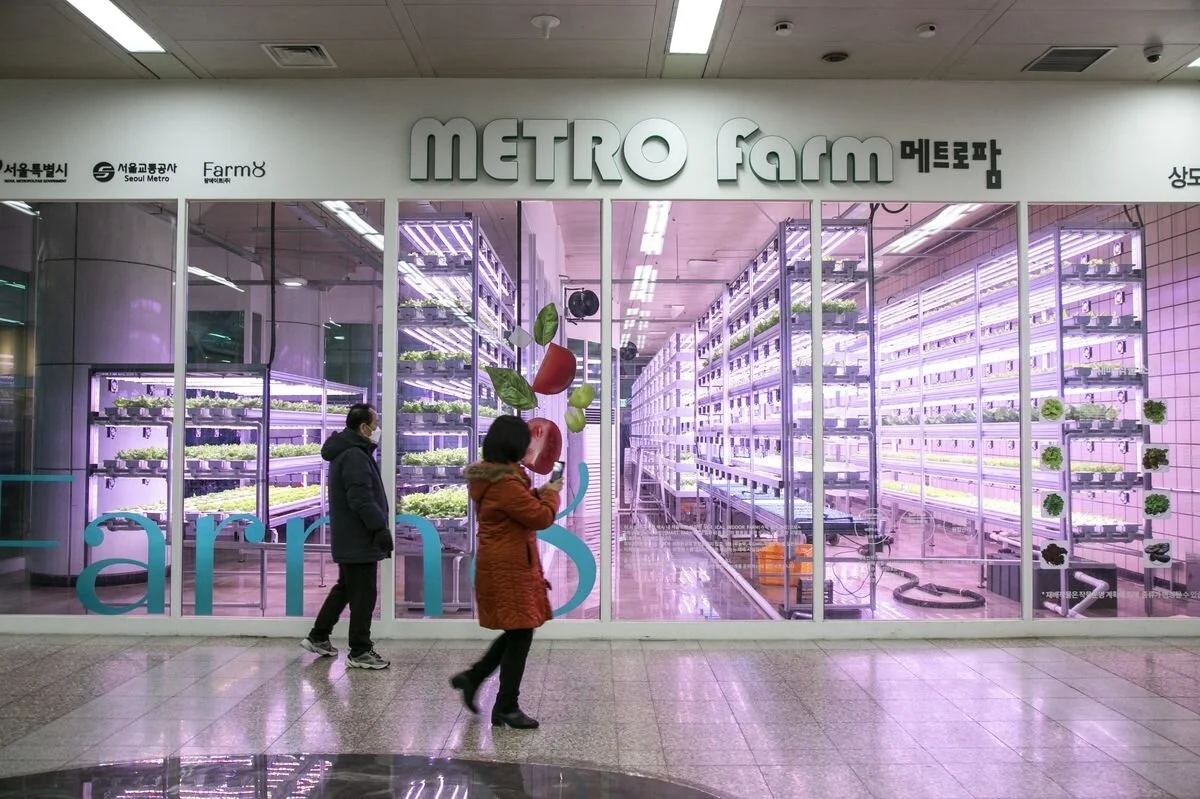
Managed by smart agriculture startup Farm8, the farm at Sangdo metro station is only 4,240 square feet (394 square meters), or teeny tiny compared to the average outdoor farm
May 8, 2021
Although the image above might look like something straight out of Candyland—drat, my age is showing—I am pleased to inform you that it is part of our world. These aren’t sugar creations, but nutritious plants. In fact, if you lived in South Korea, you could enjoy these leafy greens from the comfort of the Sangdo metro station in Seoul.
These vegetables are not only sold there, they’re also grown there in a vertical smart farm taken care of by artificial intelligence-equipped robots, which control the environmental factors needed for the plants to grow. Managed by smart agriculture startup Farm8, the farm at Sangdo metro station is only 4,240 square feet (394 square meters), or teeny tiny compared to the average outdoor farm.
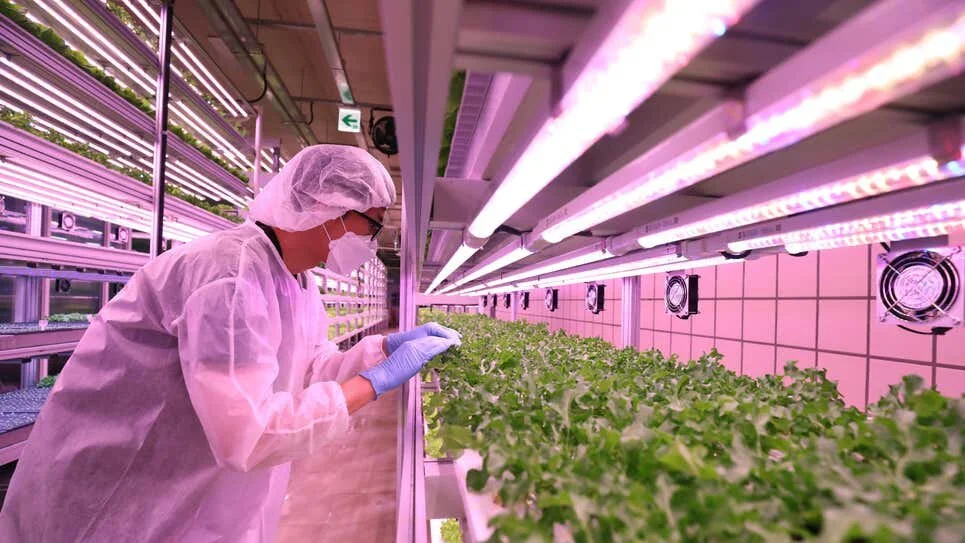
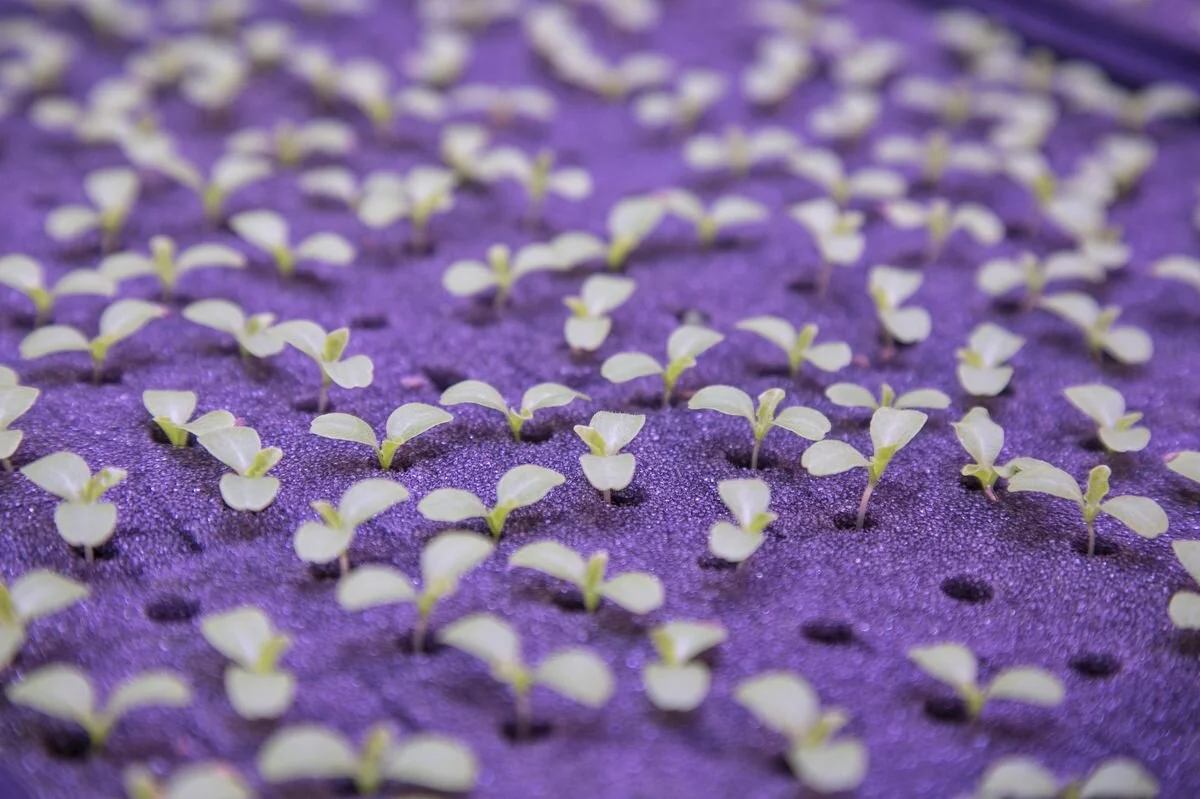
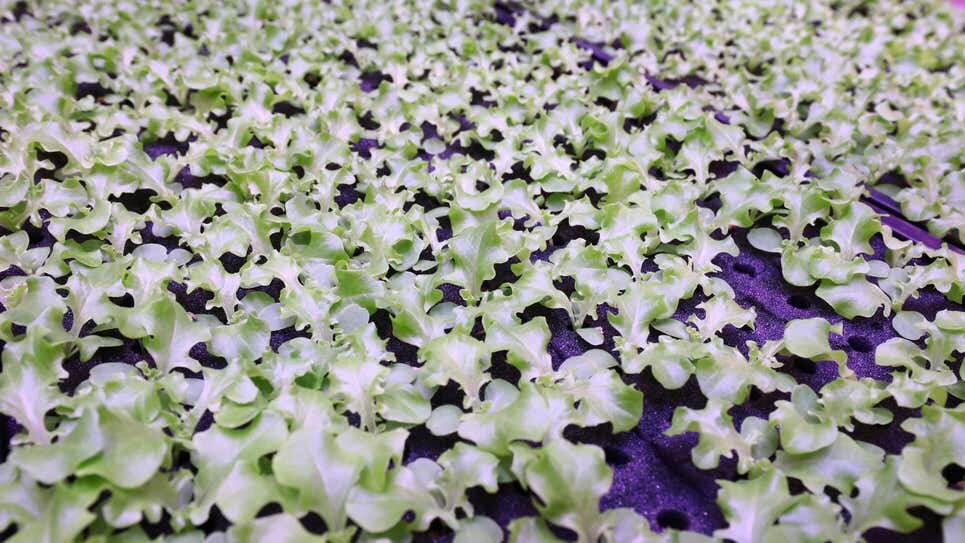
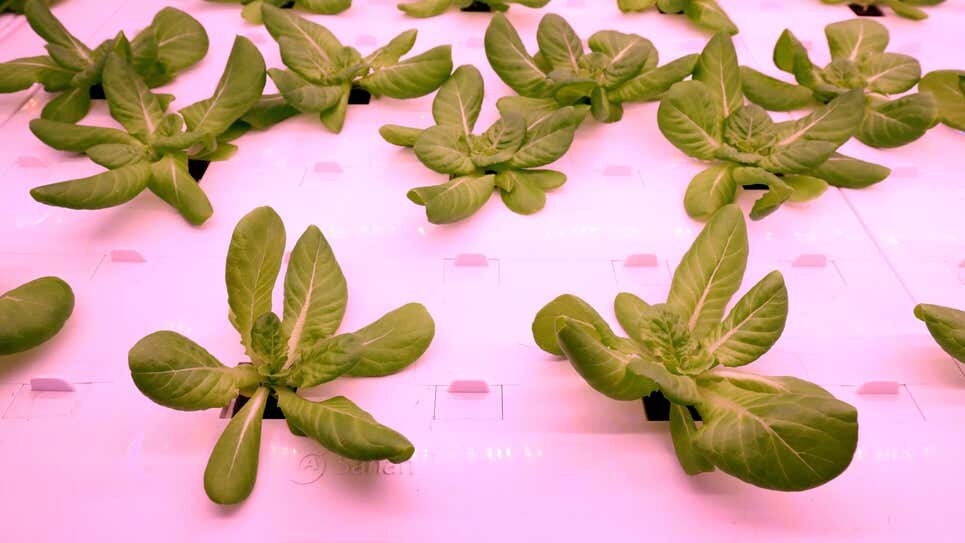
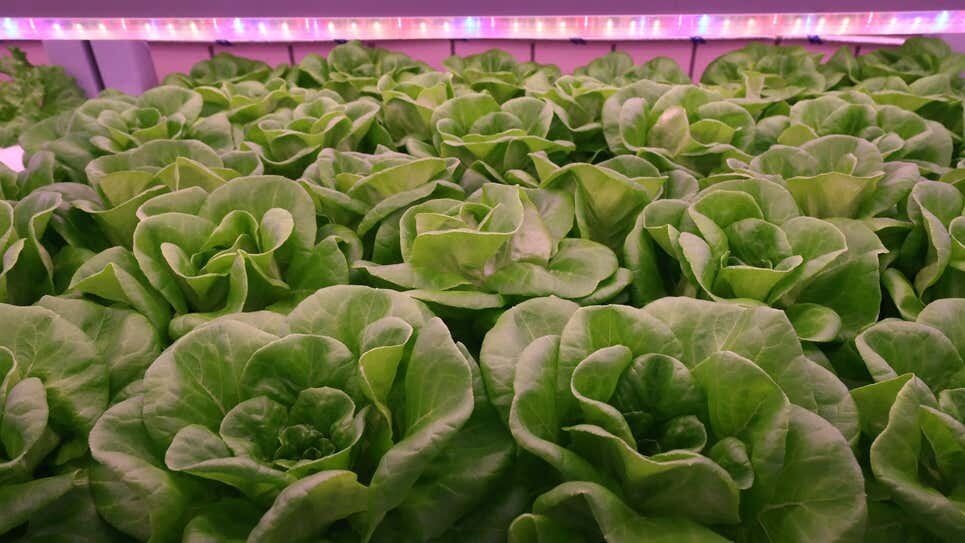
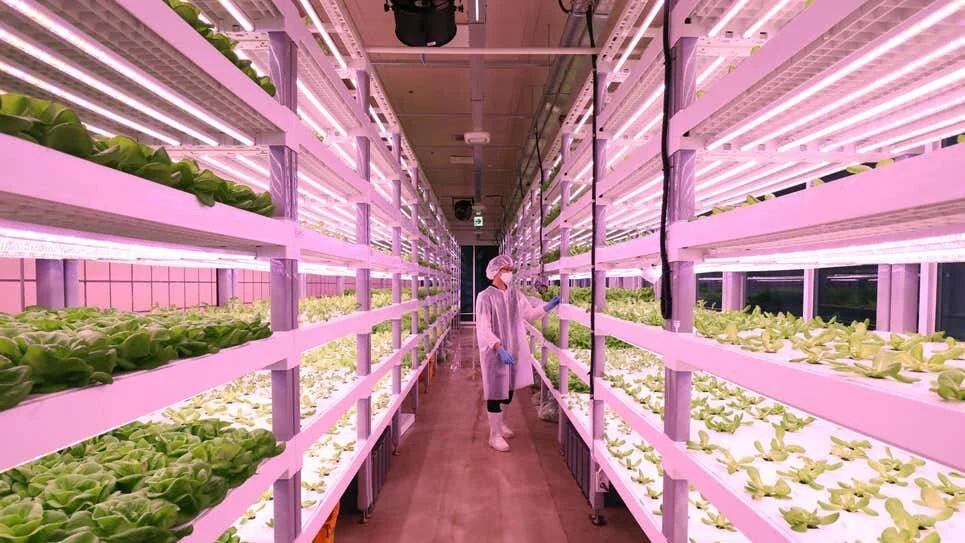
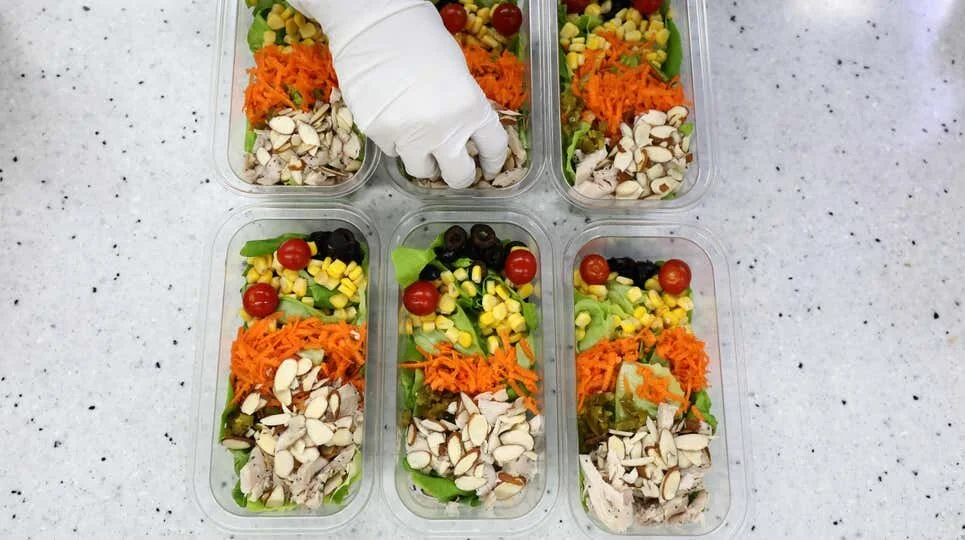
However, it is an example of how we can use technology to make agriculture more resilient in the face of climate change, which can wreak havoc on our food security.
Housing Nonprofit Cultivating Farmers Adults With Disabilities To Help Run Hydroponic Effort
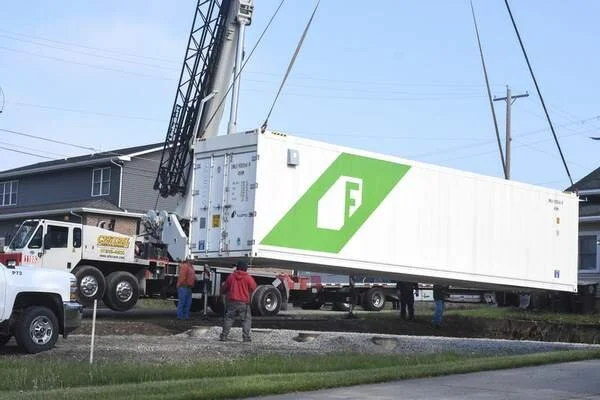
For a few moments early Friday morning, an 80-foot-by-40-foot shipping container the size of a semi hung high in the air, suspended by a huge crane
ROSA SALTER RODRIGUEZ
The Journal Gazette
For a few moments early Friday morning, an 80-foot-by-40-foot shipping container the size of a semi hung high in the air, suspended by a huge crane.
Then, the green-trimmed white container was placed on specially constructed supports – to a short round of applause from about a dozen onlookers.
The construction site off Constance Avenue just north of Turnstone's adaptive sports complex is a bit different from most – the shipping container isn't for storage, a contractor's office or even housing.
It's going to become part of a farm.
CASS Housing, a Fort Wayne nonprofit that has been busily building homes with customized living arrangements for adults with developmental disabilities including autism and Down syndrome, is sprouting a new program.
The organization plans to use the containers to grow produce hydroponically – with water and nutrients but no soil.
David Buuck, CASS founder and executive director, said the idea is to provide not only food but “meaningful days” for the 15 residents of what will soon be five homes.
And the organization has even bigger aspirations – it recently applied to the Fort Wayne Plan Commission to locate another 15 trailers on a lot on Homewood Drive in Washington Township to scale up the growing.
Buuck hopes to grow enough produce to sell to members of the Fort Wayne community through a subscription service, to other nonprofit organizations and, potentially, at wholesale and retail.
Money from sales would be plowed back not only into the farm but also into building more homes for a growing list of potential residents. Buuck said that list now stands at about 200.
The organization's initials stand for Customizable, Affordable, Sustainable and Safe.
Idea planted
The farm plans started, Buuck said, with the knowledge that one of the hardest aspects of life for developmentally challenged young people is finding employment.
“Only 34% of people are employed in the traditional economy,” he said. And, when times get hard, that employment may not last.
“We saw it play out with the pandemic,” Buuck said. Only one out of six employed CASS residents kept a job throughout COVID, he said.
The pandemic got him thinking seriously about an idea from the father of a potential resident.
John Hornbostel of Fort Wayne had been reading about farming in containers as a prospective career for his 21-year-old daughter with disabilities, Rachel.
She has autism and needs someone to be with her while on the job, but she loves salads and growing things, said Hornbostel, vice president of sustainability and milling for Egg Innovations in Warsaw.
He remembers broaching the subject with Buuck, and telling him that 2 acres' worth of leafy produce could be grown in one shipping container.
Hornbostel recalls Buuck's eyes widening. “Really?” Buuck said.
Yes, really.
And not only that, one shipping container could grow 4,400 heads of buttercrunch lettuce a month or 90 pounds of herbs – using only 5 gallons of water a day, 95% less than traditional agriculture.
And the containers' food could be non-GMO and pesticide free.
Teaming up
Soon enough, Buuck got in touch with Freight Farms, a Boston-based company pioneering the idea.
Rick Vanzura, Freight Farms' chief executive officer, said the company has been developing shipping container farms for about a decade. Farms now operate in 49 states and 33 countries.
“Our business is really a global business,” he said, adding that demand comes from small farmers, especially in places with bad soils or difficult climates.
But container farms also have been sold to college and university food suppliers, agricultural education programs, nonprofit organizations feeding underserved populations, and even a grocery store chain in Sweden.
But this is the first time he's heard of an organization using container farms in an integrated program for people with disabilities, Vanzura said.
And, he said, he's thrilled.
“I'm totally on board,” Vanzura said. “I don't know any other way to say it, but it's heartwarming. That's the only way I can put it.”
Growing produce hydroponically isn't new, Vanzura said; many grocery stores sell food grown that way – typically greens including lettuces, spinach, arugula and kale.
But Freight Farms' container systems have several features that set them apart, he explained.
For one thing, they grow produce vertically, not horizontally, in what growers call troughs or benches. Growing vertically maximizes growing space. Second, the trailers use programmable LED light, saving energy costs, and some can use renewable wind or solar energy for power.
Third, the system is fully programmable on a cellphone app called FarmHand.The app provides recipes for regulating the proper amount of water, light and temperature for growing, as well as planting and maturity dates for the precise crop desired. That takes a lot of the trial and error out of growing, Vanzura said.
He said the recipes have been developed over several years in conjunction with participating farmers. The company now can grow more than 500 crops, including some varieties of flowers. Experiments with strawberries are also going on, Vanzura said.
But the best applications are greens, herbs and small root crops such as radishes, he said.
“The tremendous thing is you don't need any specialized knowledge to start. But you do need discipline and a willingness to follow through,” Vanzura said.
Getting started
Buuck said CASS has hired someone to help manage the farm, Robert Johnson, and the resident employees, three to four for each container, will be paid as they would be for any job.
The first two containers, placed Friday, were funded at a cost of $300,000 through a private donation and The James Foundation in Angola, which donates to youth programs.
CASS residents Anna Kramer, 24, and Matthew Hammitch, 26, can't wait to start.
“It's just a really cool idea,” said Kramer, who briefly held a job in retail but got frustrated dealing with a lot of people every day.
Kramer said she gardened with her family before coming to live at CASS. She said she thinks working with plants would be natural.
“I never knew this existed, but if it existed, I never thought it would come to Fort Wayne,” she said.
Hammitch's previous job was as a family dog-sitter. But the FarmHand App technology intrigues him.
“I would really like to get into FarmHand and be able to go into the app and control the temperature and things right through our phones,” he said.
“I was really excited about this. I thought I could do this and have fun,” the young man said.
And make some money?
“That part too,” he said.
Lead photo: For a few moments early Friday morning, an 80-foot-by-40-foot shipping container the size of a semi hung high in the air, suspended by a huge crane.
Also
CASS seeks rezoning for farm project
CASS Housing will go before the Fort Wayne Plan Commission next month to ask for approval of a rezoning and modified primary development plan for a 1.63-acre tract off Homewood Drive in Washington Township.
CASS in August had the site rezoned to planned residential to construct eight attached residential homes for its living programs. It now wants to have the southern part of that site rezoned to general industrial.
The rezoning would allow the nonprofit to place 15 specially outfitted shipping containers for the hydroponic growing of produce.
The site would extend the program now being started on CASS's Constance Avenue property in Fort Wayne.
The organization also is asking to place a building for office space, produce processing and storage as an accessory use. The placement of solar panels and a parking lot also is being considered.
CASS still plans to construct homes on the site, said David Buuck, founder and executive director. The farm is estimated to cost $2.5 million and create 45 part-time jobs for people with disabilities, he said.
The organization is beginning a fund drive to finance some of the construction, he said.
Produce from the 15 containers will be equivalent to the yield of a 40-acre farm, Buuck said.
In its application, the organization said there would be no retail sales at the site and a minimal increase in traffic, as most employees will walk from nearby homes to their jobs.
The application will have a public hearing at 5:30 p.m. June 7 in Room 30 of Citizens Square.

Want To Grow Your Own Food? Try A Hydroponic Garden
Today’s home kits are stylish, smart, and easier to use than ever. Here’s how to get started.
05.08.2021
Today’s home kits are stylish, smart, and easier to use than ever. Here’s how to get started.
WE ALL BECAME homesteaders during the pandemic. The inability to leave home and disruptions to the food supply chain led a lot of people to plant gardens to grow their own food. Upon flexing their green thumbs, though, many found that gardening comes with its own set of issues, from vermin to seasonal shifts. But what if there was a way to bypass those vexations? Say hello to home hydroponics.
How Home Hydroponics Work
To grow something hydroponically is to grow plants without soil. It’s long been associated with growing weed—just saying the word hydroponics will induce smirks—but in recent years, systems like Rise Gardens and AeroGarden have come along to give gardeners a sleek, high-tech way to grow produce like bell peppers, lettuce, and tomatoes from the confines of their homes.
All you need for a hydroponic growing system is a bin filled with water, nutrients, and LED lights, so you don’t need to buy a whole system at all, really. But many of the systems on the market are designed to be aesthetically pleasing and meant to be part of your home, not hidden away.
Most are horizontal and basically have a planter bed that you drop seedpods into. A pump delivers water and nutrients to the seeds, and LED lights mimic the sun. Some systems are vertical, like the Gardyn and the forthcoming Soilless. Large systems typically start at around $400, with plenty of small ones to be found around $100.
Hank Adams, founder, and CEO of Rise Gardens, lives in Chicago where the growing season is short and the summers are hot, he says. A lot of gardening enthusiasts use the hydroponic system to supplement their outdoor endeavors, and he says it's the food lovers that really get a lot out of it. “Everybody knows that fresh ingredients are better. They're better tasting, and what may be less well known, is just how much more nutrient-dense they are,” says Adams. Compared to produce that has been shipped to the grocery store, traveling hundreds or even thousands of miles, freshly plucked lettuce can be more nutritious. It tastes better when it's been freshly snipped too.
The aroma of fresh produce is enough to make Teresa Edmisten, an architect with Tvsdesign in Atlanta, appreciate her hydroponic system. Hers is more utilitarian, she says, but it still effectively grows basil which she and her husband frequently turn into pesto. “Depending on the varieties you do, those leaves are luscious. And the smell is ridiculously beautiful,” says Edmisten.
More Than Just a Garden
One thing that’s certain about modern hydroponic systems is that they are not what they used to be. Manufacturers are being intentional about designing structures that you’d actually want decorating your home.
For Rise, Adams worked with industrial designers to create a system that is made of polished metal and real wood. They went through seven prototypes before landing on a model that can double up as a piece of furniture. Their systems are modular, allowing users to stack up to three tiers of gardens, and the top one has a hard surface that can serve as a table. “It’s minimalist because we wanted plants to be the stars of the show, but it's still a physical structure that has some size to it,” says Adams. “So we wanted people to find it attractive and kind of neutral, so it would fit a lot of different settings.”
A more artful approach to this is the forthcoming system made by Soilless. The company is the brainchild of Westen Johnson and Julie Joo, two graduates of the Rhode Island School of Design who first came up with the system while they were students. The design is simple: “It’s basically a big bag,” says Johnson. He explains that the bag consists of two layers that seal together similarly to a pool float, except instead of being inflated with air, it’s water. The vertical system can grow up to 23 plants. It hangs from a rod with an LED lighting fixture attached and looks like something you'd see hanging in a high-end loft. “It's basically something that a normal person can afford and eat off of that's like a living piece of art in your home,” says Johnson. When the system launches, it’ll retail for around $200.
There's a System for Every Space
You don't need a suburban house with ample space in order to make room for a hydroponic gardening system. In Atlanta, Greg Crafter founded Produce’d with the urban dweller in mind. “For an urbanite, space is very limited and comes at a premium So you want to utilize it and maximize it the best way you can,” says Crafter. People testing his system, which will launch in Atlanta this summer, keep it everywhere from their office to their living room.
If space is just too tight, there are tabletop options too. Rise has a personal garden system that grows 12 plants, but others include Edn which grows 10 plants, down to the petite Sprout by Aero Garden, which grows three plants (perfect for kitchen herbs). These smaller systems will probably not replace the produce you buy at the grocery store, but it’s a good way to supplement things like herbs.
Plants Are Good for Your Mental Health
Spending so much time at home has made us rethink our indoor spaces. We’re surrounded by square shapes and hard lines, which, whether we know it or not, has our brains longing for something akin to nature. It’s why more people are turning to biophilic (love of life) design, which focuses on incorporating nature into indoor spaces. “There are certain patterns and forms and sights and sounds that we encounter in the natural world that give us a positive physiological response,” explains Jennifer Bissonnette, the interim director of RISD’s Nature Lab. From the sound of running water to the aroma of basil, biophilic design elements can help reduce stress, lower blood pressure, and improve overall happiness, says Bissonnette.
While being a “plant parent” is a familiar Instagram trope, it applies to hydroponic plant owners too. Hydroponic systems don't necessarily require the same amount of daily attention that a houseplant might, but engaging with these plants makes us feel connected to them. “I can't stress that enough: It’s wonderful to have it in your living environment, but there's something about engaging with another living thing and understanding that you're in a relationship with it. I think that's a marvelous thing for us,” says Bissonnette.
In a continuous loop of Zoom calls and reruns of The Office, these systems can also help you feel grounded. For Edmisten, checking on her plants is part of her daily routine. “It’s just a focused escape. The escape isn't going somewhere else, it's getting connected to where you are,” says Edmisten.
Tech Offers Faster, Foolproof Growing
Want produce quickly? Then hydroponic growing is definitely for you. “The plants grow twice as fast, because the nutrients are being supplied right to the roots. You can have a smaller garden and still produce a lot more food with it,” says Johnson.
As an added bonus, many of these systems connect with apps that make it harder to kill your plants. Rise, for example, has users enter which plants they’re growing on the app, and then it tracks the water levels, pH balance, and sets the lighting schedule. “We tell you when to do it, how to do it, how much. You really don't need to be techie,” says Adams.
Lia Picard is an Atlanta-based freelance writer who loves exploring all things food and design.
Lead Photo: COURTESY OF RISE GARDENS

AeroFarms Rebranding Retail Product Line
AeroFarms, a certified B Corporation and leader in indoor vertical farming, today announced a new brand identity for AeroFarms and the rebranding of its Dream Greens retail brand to AeroFarms
May 4, 2021
NEWARK, N.J.–(BUSINESS WIRE)–AeroFarms, a certified B Corporation and leader in indoor vertical farming, today announced a new brand identity for AeroFarms and the rebranding of its Dream Greens retail brand to AeroFarms, uniting its mission and activities under one fresh, powerful identity that celebrates its leadership for indoor vertical farming and a brighter future for all.
Since 2004, AeroFarms has been the world trailblazer for technology-enabled controlled environment agriculture and has won over 50 awards for its leadership for innovation, sustainability, and food — including being honored today by Fast Company for its World-Changing Ideas for the 4th year in a row.
Honoring its legacy as farmers and agriculture innovators, AeroFarms’ mission today is bigger and bolder than ever: to grow the best plants possible for the betterment of humanity, using proprietary aeroponics and indoor vertical farming technologies to solve agriculture’s biggest challenges and grow the most delicious produce for its communities.
The blue and green colors of the new AeroFarms logo represent the core elements of growing – water and plants – as well as AeroFarms’ environmental stewardship of Mother Earth, that includes using up to 95% less water and zero pesticides versus traditional and organic field farming.
The unique floating “E” design represents AeroFarms’ expertise in indoor vertical farming and continued work to raise the bar today and for generations to come for agriculture and business overall.
Confident and assertive, the lettering is a modern Gotham font in all capitals that is very straightforward with an engineering quality that speaks to AeroFarms’ leadership and science-driven history while still being sophisticated.
In essence, the font sensibility reflects AeroFarms’ bold positioning for years to come. AeroFarms’ expertise in plant biology and the broader farming industry is captured further in its new tagline Agriculture, Elevated.
AeroFarms starts by selecting the most flavorful varietals of microgreens and baby greens, then perfects them in its proprietary indoor vertical farms for optimal quality, yield, color, nutrition, texture, and taste.
In fact, AeroFarms has trademarked Vertical Farming, Elevated Flavor™ to highlight to consumers not only where and how their food is grown, but also, more importantly, the key growing benefits that AeroFarms uniquely brings to the market, setting a new culinary standard with millions of data points to prove it.
AeroFarms is able to grow its kale to be sweeter and its arugula to be perfectly peppery, and the Company has developed its signature FlavorSpectrum™ to represent the breadth of flavors and hundreds of varieties of leafy greens that it is able to grow.
AeroFarms’ team of experts from horticulturists to engineers to data scientists to nutritionists paired each specific tasting note with a representative color to bring the FlavorSpectrum™ philosophy to life. Across its leafy greens packaging line, the cool blue tones represent sweet and mellow notes, while the intense reds represent bold and zesty flavors.
In addition, AeroFarms’ new packaging design for its sealed tray that is made with 40% less plastic than a traditional clamshell, was developed with rounds of primary consumer research and collaboration with key selling partners. The breakthrough packaging design boasts the largest clear window in the entire packaged salads category.
As a result, the leafy greens are showcased, allowing the product to be the hero to signal the ultimate in freshness and flavor. Major consumer attributes like sustainably grown indoors, no pesticides ever, locally grown, no washing needed, and non-GMO are highlighted in a clean presentation for the consumer, and AeroFarms’ expertise in flavor is brought to life through its descriptive product tasting notes and its “Taste our Difference” invitation to the consumer.
AeroFarms’ leadership in authenticity and transparency (also represented by the clear window) is reinforced by the grown with purpose messaging and by the logo for Certified B Corporation, that provides a scorecard on both environmental and societal factors.
The new elevated AeroFarms branded leafy greens will continue to be available at Northeast Whole Foods Market and ShopRite locations, and online via FreshDirect and Amazon Fresh. Baldor will continue to serve as the brand’s primary retail and foodservice distribution partner in the Northeast.
“Now more than ever, customers want to have an emotional and values-based connection to their food. They want to know and understand where their food comes from, how it’s grown and what it stands for,” said David Rosenberg, Co-Founder and Chief Executive Officer. “We are excited to roll out the new look of our namesake brand with the same delicious, sustainably grown local greens that consistently win on quality, texture, and flavor. The AeroFarms brand further connects our customers to our team of growers and plant scientists, and our leading sustainable farming technology platform, that yields annual productivity up to 390 times greater than traditional field farming, while using up to 95% less water and zero pesticides.”
AeroFarms also recently announced the groundbreaking of its next commercial indoor vertical farm in Danville-Pittsylvania County, Virginia. AeroFarms’ next-generation Model 5 farm will be the largest and most technologically advanced aeroponic indoor vertical farm in the world. Strategically located in close proximity to more than 1,000 food retailers in the region, the Danville farm will provide access to approximately 50 million people located within a day’s drive. The new farm will advance AeroFarms’ leadership in plant science and technology and expand its leafy greens business to the Mid-Atlantic and South regions.
About AeroFarms
Since 2004, AeroFarms has been leading the way for indoor vertical farming and championing transformational innovation for agriculture. On a mission to grow the best plants possible for the betterment of humanity, AeroFarms is a Certified B Corporation Company with global headquarters in Newark, New Jersey, United States. Named one of the World’s Most Innovative Companies by Fast Company two years in a row and one of TIME’s Best Inventions in Food, AeroFarms patented, award-winning indoor vertical farming technology provides the perfect conditions for healthy plants to thrive, taking agriculture to a new level of precision, food safety, and productivity while using up to 95% less water and no pesticides ever versus traditional field farming. AeroFarms enables local production to safely grow all year round, using vertical farming for elevated flavor. In addition, through its proprietary growing technology platform, AeroFarms has developed multi-year strategic partnerships ranging from government to major Fortune 500 companies to help uniquely solve agriculture supply chain needs. For additional information, visit: AeroFarms.

AeroFarms CEO Rosenberg Kicks Off Indoor Ag-Con 2021 Keynote Address
“We are thrilled to have an industry leader like David Rosenberg join us as we kick off our return to the live event format,” says Brian Sullivan, co-owner, Indoor Ag-Con LLC
Rosenberg Headlines Full Roster of Keynotes, Panels, Networking & Expo Floor Innovations For In-Person October 4-5, 2021 Edition In Orlando

MAY 6, 2021 -- AeroFarms CEO David Rosenberg will lead the opening morning keynote address for the 8th annual edition of Indoor Ag-Con, scheduled for October 4-5, 2021 at the Hilton Orlando, Florida.
Themed “Growing Your Business,” the premier trade show and conference for the indoor |vertical farming industry will give attendees the opportunity to explore new resources on the expo floor and hear from Rosenberg, other CEOs, thought leaders and industry experts from today’s cutting-edge farms and other innovative companies.
“We are thrilled to have an industry leader like David Rosenberg join us as we kick off our return to the live event format,” says Brian Sullivan, co-owner, Indoor Ag-Con LLC along with other event industry veterans Nancy Hallberg and Kris Sieradzki. “We look forward to gathering with our industry colleagues again and are working hard to bring the best possible combination of networking, education and exhibition opportunities together in Orlando.”
Scheduled for opening morning, October 4, Rosenberg’s address will be held from 8:30 am – 9:20 am. Rosenberg co-founded and leads AeroFarms. AeroFarms has been leading the way for indoor vertical farming and championing transformational innovation for agriculture overall. On a mission to grow the best plants possible for the betterment of humanity, AeroFarms is a Certified B Corp Company with global headquarters in Newark, New Jersey, United States. Named one of the World’s Most Innovative Companies by Fast Company three years in a row and one of TIME's Best Inventions, AeroFarms patented, award-winning indoor vertical farming technology provides the perfect conditions for healthy plants to thrive, taking agriculture to a new level of precision, food safety, and productivity while using up to 95% less water and no pesticides vs. traditional field farming. Grown for flavor first, AeroFarms enables local production to safely grow flavorful baby greens and microgreens all year round.
ROBUST 2021 CONFERENCE SCHEDULE NOW IN DEVELOPMENT
In addition to Rosenberg’s keynote, look for additional announcements coming soon on other CEO keynote presentations planned for the October event. The 2021 conference will also include a full roster of panel discussions, fireside chats and presentations offering a deep dive into three core tracks – Business & Marketing, Science & Technology and Alternative Crops.
In addition to the extensive educational component, attendees will find more new initiatives and show highlights to explore, including:
NEW LOCATION: HILTON ORLANDO – DISCOUNTED HOTEL RATES, TOO
Indoor Ag-Con’s Hilton Orlando venue makes it the perfect opportunity for a business vacation. Centrally located to all major theme parks and attractions, it is just minutes from the eclectic dining scene and entertainment of International Drive. What’s more, the Hilton Orlando resort sits on more than 26 acres of lush landscaping and tropical inspirations making it a true destination of its own. Indoor Ag-Con has arranged for discounted hotel rates for attendees and exhibitors starting as low as $129/night. Complete details are available on the show website.
NEW ASSOCIATION ALLIANCES
Indoor Ag-Con is also forging new alliances with other events, industry associations/groups that will play an integral role in its marketing outreach and conference programming. Look for partnership announcements coming soon.
EXPANDED EXHIBIT FLOOR & NETWORKING OPPORTUNITIES
The Indoor Ag-Con team is working to bring even more resources for farmers/growers to explore across all sectors – everything from IT, energy, AI and lighting solutions to substrates, vertical farming solutions, business services and much more. Attendees and exhibitors alike will also have even more networking opportunities with daily luncheon sessions and receptions on the show floor.
QUICK FACTS:
WHEN: Monday, October 4 – Tuesday, October 5
WHERE: Hilton Orlando, 6001 Destination Pkwy, Orlando, FL 32819
INFO: For information on exhibiting or attending visit www.indoor.ag
ABOUT INDOOR AG-CON LLC
Founded in 2013, Indoor Ag-Con has emerged as the premier trade event for vertical farming | indoor agriculture, the practice of growing crops in indoor systems, using hydroponic, aquaponic and aeroponic techniques. Its events are crop-agnostic and touch all sectors of the business, covering produce, legal cannabis |hemp, alternate protein, and non-food crops. In December 2018, three event industry professionals – Nancy Hallberg, Kris Sieradzki, and Brian Sullivan – acquired Indoor Ag-Con LLC, setting the stage for further expansion of the events globally. More information: https://indoor.ag

US: INDIANA - Indianapolis Indoor Farm Packages Leafy Greens To Uplift East Side
An indoor-farming facility using cutting-edge technology is bringing new food options to the city’s east side
by: David Williams
May 7, 2021
INDIANAPOLIS (WISH) — An indoor-farming facility using cutting-edge technology is bringing new food options to the city’s east side.
Uplift Produce grows, harvests, and packages leafy greens in a renovated 60,000-square-foot facility in Indianapolis.
“We say that we’re fresh-to-market in hours and the reason for that is we actually harvest, pack, and ship within a matter of a few hours into distribution channels,” Chris Arnold, CEO of Uplift Produce, said Friday.
Keith Cooper, Uplift Produce location manager, said depending on the product, they grow from seed to finish in 14-21 days, with a “100% controlled environment. So, we’re controlling the CO2, the humidity, and temperature to be exactly at the set points that the plant needs.”
The business is a joint venture with a Dutch company called PlantLab. The first product launched from the Indianapolis facility in October. Arnold said the company is committed to uplifting the community.
“It’s working well here in Indianapolis to have that partnership, meaning that every dollar that’s ever made here, a portion of those goes directly right back here into the community,” Arnold said.
They’ve got 11 employees right now. Uplift produce donates about 150 pounds of food a week to places that include Second Helpings hunger relief and the Cafe Patachou Foundation. This area is in the midst of revitalization.
“Everything that we do is really centered around, ‘How do we uplift people and the whole community support?’ Really that partnership with Englewood and the work that the folks at the Englewood Community Development Corporation are doing here in the community, we’re really just trying to equip them to continue to do the work that they do,” Arnold said.
Arnold said he is called to do this work — not only to feed people but also to help this area.
“Our desire is that people would be able to just live, work and play in this neighborhood. Be able to directly walk into work and never have to get in a car,” Arnold said.
The Englewood Community Development Corporation is an ownership partner, Arnold said. The facility is housed at the historic P.R. Mallory campus, inside the Bunker Building.
Arnold told News 8 there are plans to expand the facility even more by the end of this year and bring an additional 20 jobs to Indianapolis.
Uplift Produce has facilities in seven different states and several cities. You can find their products online at Green Bean Delivery and hope to sell on retail shelves in Indianapolis soon.
© 2021 Circle City Broadcasting I, LLC. | All Rights Reserved.

USA: INDIANA - 5 Acres of Food In 80 Feet: Urban Farmer Grows A Garden In The Heart of Indianapolis
An unassuming plot of land sits on the eastside of Indianapolis on 30th Street. From the outside, it looks like an empty lot with a couple of shipping containers on it. But inside those containers is an entire garden
May 6, 2021
An unassuming plot of land sits on the eastside of Indianapolis on 30th Street. From the outside, it looks like an empty lot with a couple of shipping containers on it. But inside those containers is an entire garden.
And among the plants, you can find DeMario Vitalis.
Vitalis is the first in Indiana to own a hydroponic farm inside of a shipping container. The unique method involves planting seedlings of plants such as herbs and lettuces on vertical panels and feeding them controlled levels of water, nutrients, and light — no soil required.
It’s a mode of farming uniquely suited for urban environments. Vitalis is able to produce almost 5 acres of food a year from two 40-foot shipping containers. It also uses 99% less water than traditional farming, according to the company that makes the containers.
Vitalis sells his fresh herbs, lettuces, and more to people in the community through online platforms such as Market Wagon.
The climate control is a huge advantage for Vitalis, who set up his farm, called New Age Provisions, in the latter half of last year. Regardless of the outside weather, he can grow anything he wants.
“It can be 30 degrees outside and raining,” he said, “but inside it’s 65 degrees. In here I’m watching Netflix and planting seeds.”
Even though he now spends much of his time dedicated to plants, Vitalis wasn’t a farmer when he started all of this. He was just an entrepreneur looking for his next project, and farming — which connected to his history as a descendent of enslaved people and Southern sharecroppers — felt like the right choice.
“It was just a way to become an entrepreneur,” he said, “and also get back into the type of occupation my ancestors once had.”
‘It’s in his blood’
Vitalis was looking for something that would put a piece of property he owned to use, and he had a hunch shipping containers were key.
At first, he thought he would set up some modular tiny homes built out of containers. But then he came across Freight Farms, a Boston-based company that could cram 2.5 acres of production into one shipping container, and the decision was made.
Although born in San Francisco, Vitalis’ family is originally from the South, and he moved around quite a bit before settling in Indiana.
“Three of my four grandparents started off from the South,” Vitalis said, “So we were part of that Black migration when we moved eventually from the South to San Francisco on the West Coast.”
After living in Germany, Kansas, and other places as his stepfather moved around with the military, Vitalis’ mother decided to move him to Indianapolis, where he stayed and attended Arlington High School and Purdue University.
Vitalis’ mother Barbara Johnson is a cook, so food has always been important to the family. And the herbs and vegetables grown by her son, she said, are “absolutely wonderful.”
“I just believe that you can always inspire a person with a good meal,” she said.
Even so, farming or food production was never anything they did at home, she said. But she knows it’s something he feels close to because of the family’s history.
“I guess it was just in his blood,” she said.
Vitalis was one of the first Black owners of a Freight Farms shipping container in the country, said Caroline Katsiroubas, marketing, and communications director for the company.
“He, in particular, wanted to be a catalyst for more Black farmers to join the Freight Farming community,” she said, “and I’ve definitely seen the impact.”
Overcoming learning, funding hurdles
It wasn’t easy learning how to grow food.
Despite two degrees from Purdue University, Vitalis doesn’t have a background in farming and had to put himself through some education before diving into his urban farm. He took online classes and even visited Freight Farms in Boston to learn about the equipment and process.
“It does take a learning curve,” he said. “It’s not easy to learn how to farm; you have to learn how to react to the plants.”
Sometimes his daughter will help him with the planting. Johnson, too, will help out and trim plants, clean or help with planting, and occasionally brings her grandson along. Understanding how the farm works was a learning curve for her, too.
“I didn’t know anything about hydroponic farming,” she said. “When I saw that wall of plants, I didn’t think it was possible.”
Funding was another obstacle. The farms cost $100,000 each.
After some research, Vitalis found that the U.S. Department of Agriculture will supply loans for these types of businesses, so he requested $50,000 to help him pay for one container and was promptly denied.
The people evaluating the profitability of these containers simply didn’t understand how it worked or how much it could produce, he said. But instead of giving up, he pushed back. Black farmers have historically been discriminated against when trying to obtain USDA loans, and he was motivated to make sure his business plan was being fairly evaluated.
“There’s a history behind that,” he said. “I was just one of many.”
Vitalis appealed the decision and won. Then, he turned around and asked for $200,000 instead — and got it.
Finally one day, a semi-trailer pulled up outside his property with the containers, picked them up with an enormous crane, and plopped them right down behind the nearby building.
“It was pretty interesting to see a big old 40-foot container fly over a building,” Vitalis said. “It was not easy, but you know, God was on my side and I was able to get through the hurdles that were put in my way.”
How hydroponics works
In a hydroponic farm, everything is vertical — and everything is controlled.
At first, the plants start as seedlings or seeds and are placed on shelves under LED lights, and water flushed with nutrients is dispensed to them with attached machines.
After a few weeks, the plants are large enough to transfer to a series of vertical panels that roll along tracks. These panels are also connected to machines for dosing water and nutrients and placed in between LED lights. The water circulating through the plants is saved and re-cycled through the system, conserving water and nutrients.
Although space may seem tight, one container can output the equivalent of 1,000 heads of lettuce each week, Katsiroubas said.

And throughout the whole process, Vitalis controls the light, temperature, nutrients, and water. The plants live in a perfectly contained ecosystem that’s never under threat from drought, flooding or pests.
“It has its own brain,” Vitalis said.
It’s a big advantage, he said, because he can grow food year-round and he doesn’t have to worry about pesticides or herbicides. It’s also “hyper-local,” he said. When he gets an order, the food comes from the planter into the customer’s hands within a matter of hours.
David Bosley, Vitalis’ former boss at Cummins, Inc., used Vitalis’ greens for his Thanksgiving meal and said he was impressed by the packaging and freshness. At first, he said, the idea of a hydroponics farm was surprising.
“I thought it was rather novel,” he said, “but I also thought, well that’s just like DeMario.”
Nobody was surprised that Vitalis made New Age Provisions happen.
He’s always been one to tackle a project without giving up, Bosley said. And he’s always been a trailblazer and hard worker, his mother said. She thinks it’s something he may have picked up from her, since she worked multiple jobs and attended school while caring for him and his siblings.
“I’m even more amazed with my son,” Johnson said. “He‘s satisfying a need in the community and following a dream. It was his vision and he brought it to fruition.”
Contact IndyStar reporter London Gibson at 317-419-1912 or lbgibson@gannett.com. Follow her on Twitter @londongibson.
Connect with IndyStar’s environmental reporters: Join The Scrub on Facebook.
IndyStar's environmental reporting project is made possible through the generous support of the nonprofit Nina Mason Pulliam Charitable Trust.

HighQuest Events – Global AgInvesting, WIA Summit, Organic & Non-GMO Forum – Return To In-Person
It’s time to reconnect! Global ag event, consulting and media firm HighQuest Partners has announced that it will return to in-person events in the second half of 2021
BOSTON (May 5, 2021) – It’s time to reconnect! Global ag event, consulting and media firm HighQuest Partners has announced that it will return to in-person events in the second half of 2021.
The company will once again bring together the communities of Global AgInvesting, Women in Agribusiness, and the Organic & Non-GMO Forum for unparalleled onsite networking and engagement at its next events, all while respecting current safety guidelines and instituting unique ways of bridging relationships and partnerships in the agribusiness and investing sectors. Most events also will offer a virtual option for those who are not able to attend the live events.
Global AgInvesting On the Green
Just outside NYC, July 13-15
“Despite an extraordinary year of challenges, the GAI community did not waver in its commitment to agricultural advancements and investments,” said Kate Westfall, chief operating officer for the Ag Investing Division. “We are very excited to bring everyone together again this summer in a safe and unique way, and have had an overwhelming response from attendees eager to join us and reconnect.”

The 13th annual Global AgInvesting conference will be held July 13-15 at the Sleepy Hollow Country Club, just an hour north of NYC. Sessions and networking will take place in a professional, covered outdoor setting overlooking the Hudson River and a top 50 golf course,
with plenty of opportunities for al fresco meetings. Preliminary agenda topics include international deal flow in the ag sector, the growth of carbon sequestration/monetization, regenerative farming, agtech investment and adoption, the role of PE and a broad range of agriculture investment vehicles, and many more current themes in the burgeoning sector. Visit globalaginvesting.com to register or for more details.
Women in Agribusiness Summit
Minneapolis, September 21-23
Women in Agribusiness initiatives have fostered a year-round community of engaged executives, leaders and professional women through its distinctive virtual event offerings, its WIA Meet Ups, and informative webinars. “

Our goal is always to provide as much value to as much of our community as possible, so, for our 10th anniversary Summit, we’ve decided to host it both in-person and virtually to ensure that anyone who wants to attend can,” said Joy O’Shaughnessy, chief operating officer for HighQuest’s Agribus
The 10th anniversary Women in Agribusiness Summit, September 21-23, will be held at the Hyatt Regency Minneapolis on Nicollet Mall. Discussions will ensue on innovations in the sector, the supply chain crisis and sustainability, as well as the annual highlights of the executive profiles panel and industry tour. Register and learn more at womeninag.com.
Organic & Non-GMO Forum
Minneapolis, December 1-2

The Organic & Non-GMO Forum is the event that is the source for conventional food and ag businesses to learn about the opportunities in the organic and non-GMO industries. Now in its seventh year, the event returns to Minneapolis at the Hyatt Regency on December 1-2.
Producers, processors, manufacturers, buyers and more will convene to consider the potential in these growing sectors, where sales of certified organic food products in the U.S. alone more than doubled to $7.6 billion from 2011 to 2016. Likewise, the global non-GMO food market is expected to reach $2.76 billion by 2025, growing at a CAGR of 16.5 percent. A plethora of current topics will be presented and examined by expert industry speakers. Learn more at ongforum.com.
A 10 percent discount on registration is offered to all of these events by using the code: HQ10 at check out.
###

Indoor Ag Science Cafe May 18th
"Smart Sensors For Indoor Farming". Indoor Ag Science Cafe is an open discussion forum, planned and organized by OptimIA project team supported by USDA SCRI grants.
May Indoor Ag Science Cafe
May 18th Tuesday 11 AM Eastern Time
Please sign up!
"Smart Sensors For Indoor Farming"
by Dr. Krishna Nemali
Purdue University
Please sign up to receive the Zoom link.
Indoor Ag Science Cafe is an open discussion forum, planned and organized by OptimIA project team supported by USDA SCRI grants.
Sign Up Here

Transparent Solar Cells Boost Lettuce Farming While Decreasing Energy Use
Researchers, who have worked with the organic photovoltaic cell company NextGen Nano, believe OSCs provide a way for greenhouse cultivation without the large energy demands traditionally associated with it
New research found transparent solar cells can help greenhouse growers generate electricity and reduce energy use while cultivating crops

29 April 2021
Greenhouse farming of lettuce can be sustainable and energy-efficient under transparent solar cells.
That’s according to a new study by a team of researchers at North Carolina State University, which suggests semi-transparent organic solar cells (OSCs) can help greenhouse growers generate electricity, reduce energy use and cultivate lettuce.
Researchers, who have worked with the organic photovoltaic cell company NextGen Nano, believe OSCs provide a way for greenhouse cultivation without the large energy demands traditionally associated with it.
Published in Cell Reports Physical Science, the research found that red lettuce can be grown in greenhouses with OSCs that filter out the wavelengths of light used to generate solar power.
This means it is feasible to use transparent solar panels in greenhouses to cover their high electricity needs while not shrinking the crop yield.
Doctor Carr Ho, Research Scientist at NextGen Nano, said: “Greenhouses are used to grow plants because they drastically increase yield in non-native climates while lowering water consumption and pesticide use compared to conventional farming.
“But greenhouse glazing has poor thermal insulation, so heating and ventilation systems need to be installed to help maintain optimal conditions. Along with supplemental lighting, this lights to large, unsustainable energy consumptions.”
Lead Image: North Carolina State University

USA: CONNECTICUT - Killingly High School Breaks Down How Adding A ‘Hydroponics’ And ‘Aquaponics’ Class Encourages Sustainability
Beth Knowlton is a plant science teacher at Killingly and has been for about fifteen years. She tells News 8 hydroponics is a fairly new career in the AG industry, “The future holds us growing plants in warehouse buildings and things in inner cities so we can provide a local food source.”
May 6, 2021
KILLINGLY, Conn. (WTNH) — At Killingly High School over the past few years, they’ve truly enhanced their Agriculture Education Program. They’ve added a hydroponics and aquaponics class to help encourage sustainability.
Beth Knowlton is a plant science teacher at Killingly and has been for about fifteen years. She tells News 8 hydroponics is a fairly new career in the AG industry, “The future holds us growing plants in warehouse buildings and things in inner cities so we can provide a local food source.”
It’s a unique way of agriculture, that relies solely on the light and water in the greenhouse, using no soil at all.
They grow everything from cucumbers to tomatoes and kale.
They’re hoping to add to their hydroponics greenhouse, a misting system. They’ll be able to plant strawberries and have their roots continually misted from the inside, helping them grow.
Just down the hall, Courtney Cardinal teaches her aquaponics students the ways to use fish waste to grow plants.
The setup for aquaponics is a little different, plants grow in gravel beds connected to a water source that comes from pools full of tilapia. As the gravel beds fill and drain, the nutrients are brought to the roots of the plants.
They use hundreds of tilapia fish to water the plants. Cardinal says, “One input of the fish food is actually growing two products. So we’re growing both the fish, the filets of the fish, and then the waste is being reused to grow plants.”
The major nutrient the plants need is Nitrogen, and they get that from the fish waste. Non-traditional but efficient ways to grow food and adjust to the advancing industry.
USA: WASHINGTON - Lacey Is Home To The Largest Vertical Farm On The West Coast
Here they can grow 6 million heads of lettuce a year, using just 2 percent of the water an outdoor farm would need
The Future of Farming Is Happening
Right Now In This 25,000 Square Foot Warehouse.

Author: Saint Bryan
May 6, 2021
LACEY, Wash. — Though it looks like the set of some far-out science fiction fantasy, with bright walls of light and characters dressed in medical gowns, this is actually a farm growing six different kinds of lettuce inside a 25-thousand square foot warehouse located in a Lacey Business Park.
“In the beginning, it was always our goal to find a better way to grow healthier and more nutritious food for families,” says Bryce Clemmer who owns NW Farms with his wife Andrea. It’s the largest vertical farm in the Northwest.
Here they can grow 6 million heads of lettuce a year, using just 2 percent of the water an outdoor farm would need.
“This is a unique combination of robotics, software but also hardware that ultimately makes growing food at large scale possible,” says Clemmer, who is an engineer. He’s invented a few proprietary systems that make this vertical farm unlike any other.
“We've created a perfect environment for plants to grow,” he says.
Everything is monitored here: the temperature, the humidity, the light, the nutrients that go into the water. The result is produce that grows three times faster indoors than outside. The lettuce needs just 20 days from planting to be ready for your table.
“We have experimented with growing everything from strawberries and blueberries to edamame and any type of herbs that you can imagine,” says Clemmer. The only produce he can't imagine growing here are pineapples and pumpkins.
A NW Farms employee prepares to plant lettuce. Credit: KING TV
There are no overalls or John Deere caps here. All farmhands are gowned up, with hairnets and food handling gloves.
“So food safety, the handling, and the overall environment is the cleanest in which it can be,” says Clemmer.
“It's all-natural and healthy,” adds Andrea Clemmer.
She says other farms may rely on pesticides. And with farms so far away from our supermarkets, half of all produce gets thrown out. That doesn’t happen here.
“When our product is pulled off the towers it goes right into the bag, and it's in the store the same day so it's fresh same day and it is still living,” she says.
As the world’s population grows and more pressure is put on natural resources vertical farmers say they may have the key that prevents hunger and famine in the future.
“We have to figure out how to grow reliably and sustainably fresh food that's nutritious for everybody,” says Bryce Clemmer.
KING 5's Evening celebrates the Northwest. Contact us: Facebook, Twitter, Instagram, Email.

Robotic Warehouse Farms Will Save The World
CEA technology is just getting started. Like the Tesla Cybertruck, we have a working concept that promises a more-than-Jetson’s-level future many of us can see the benefits of and actively want―it’s just not quite available to the masses yet

by Elle Griffin
Four years ago, Ritch Wood was looking for a better way to grow plants. As the CEO of global skincare company Nu Skin, he ran into ingredient shortages every winter when fields went dormant―and when he moved grow operations to the equator he ran into water and land shortages, along with a host of quality control issues.
Nu Skin needed reliable, quality ingredients for their skincare products. But farming was too unpredictable an industry. “If there was a way to grow indoors,” he thought, “and be able to do that 24 hours a day, 365 days a year―if we could guarantee that it was grown without any herbicides or pesticides and in a sustainable way that uses less water and land―that would be really helpful.”
At the time, controlled-environment agriculture (CEA) was in its infancy and grow-light technology had yet to take a turn for the more affordable. When he learned of an agricultural system that promised to use a fraction of the land and water used by traditional agriculture methods and had the potential to make it more affordable, Wood made an investment.
Nu Skin paid $3 million for 70 percent of the company and rights to its IP―and Grōv Technologies was born.

Grōv grass grown in the Olympus machine at the Bateman Mosida Farms. Photo from Grōv Technologies
Controlled-environment agriculture is on the rise
The theory behind CEA is that by controlling the environment in which it grows, we can control everything about a plant and what it grows into by micro-tweaking one of a thousand different characteristics―including temperature, humidity, light duration, light wavelength, dissolved oxygen in the water, and carbon dioxide saturation in the air. By tweaking the growing cycle, we can control the caloric content as well as the nutrient content and density of the plant.
“What we’ve learned through controlled-environment agriculture,” Benjamin Swan, co-founder and CEO at Sustenir in Singapore, once told National Geographic, “[is] we can actually emphasize certain characteristics of the plants. So, without using GMO, we can make our kale softer, we can actually make it sweet.”
The theoretical use cases for this technology are endless―from being able to grow in places where water is scarce (like in much of Africa), or where water is overly abundant (like Hawaii), or in places where labor is scarce (like in parts of Asia), or even in places that have long winters (like Northern Europe). Theoretically, we could have grow towers in every town and feed the whole of it no matter its natural environment.
We could even grow those foods to those cities’ exact nutritional needs―more vitamin D-rich foods in wintery places, for example. Dr. Lee Mun Wei, a senior manager at the Food Innovation and Resource Centre (FIRC) in Singapore aims to predict and prevent illness in a given population by tracking their biometric data using Apple watch-like wearables, then 3D printing nutrient-specific foods that could mitigate imbalances.
Though these technologies exist, they are still in their infancy. Singapore leads much of the research and development out of necessity. With limited land and water resources, the county is forced to import 90 percent of their food and 40 percent of their water from outside the country. As a result, they have no option but to grow vertically and desalinate water from the ocean.
Elsewhere, the industry has been slow to catch on, largely due to exorbitant startup costs, low returns, and lack of urgent need. According to a 2017 State of Farming report by L.E.K., only 27 percent of indoor, vertical farms are profitable compared with 50 percent of container farms and 75 percent of greenhouses. But one thing has spurred the industry on in recent years: cannabis.
Legalized in 39 states, demand for cannabis has created a $13.6 billion industry and enough capital to fund CEA-enabled grow operations. “When you have a crop that fetches up to $2,400 or $2,500 a pound, you need to be able to dial everything in and make it consistent and repeatable,” says Dashiel Kulander, co-founder and CEO at Boojum Group. “If the temperature swings five to 10 degrees on a cannabis plant, that will change the plant’s various cannabinoids. The goal is to create a medicine that is consistent batch after batch.”
It’s only recently that there has been some financial incentive to use CEA technologies for food use―largely driven by Big Ag players hoping to hedge out the competition. Berry farming giant Driscoll’s, for one, led a $500 million round to fund Plenty, a 2.2-acre vertical farm in California they hope will help them fulfill a contract with Albertsons. The Ingka Group, for another, led a $100 million round to fund AeroFarms, a 2.4-acre vertical farm in New Jersey that will help them fulfill a contract with Singapore Airlines.
Grōv tent at the Bateman Mosida Farms. Photo from Grōv Technologies
Grōv Tech is building CEA prototypes in Utah
By investing in Grōv Tech, Nu Skin hopes to do something similar, getting ahead of the supply chain that fuels their skincare products before the competition can beat them to it, or before climate change makes traditional methods more difficult, all while shoring up technology that could provide a farming model that is more sustainable―if only it were more economical.
“The purpose was always, can we build a better product for Nu Skin?” Wood says. “We think there’s a huge story around the ingredient sustainability, and there were a lot of ingredients we felt we could grow, but the challenge was: could we do it in an economical way?”
Grōv Tech started out with a prototype: a tower that pairs hydroponic growing technology with grow lights. But like all CEA startups, a lot of the growing process was manual and the technology was prohibitively expensive. To make something that was scalable and profitable the whole thing needed to be automated and it needed to be cheap.
With this goal in mind, Wood decided they would start by growing animal feed for Bateman’s Dairy farm. Having grown up on a dairy farm himself, Wood figured this would allow the company to scale the product while refining and automating the technology to the point that it could be replicated. And all of this would have a fortuitous effect on Nu Skin’s bottom line.
“One of our bestselling products is a weight-loss protein powder which uses whey protein,” Wood says. “So again, a very nice connection there is if the animal is eating a more sustainable product and producing better milk with better protein and it’s being done in a sustainable way―certainly that can be a benefit to Nu Skin down the road.”
One year into feeding the 20,000 animals at Bateman, the company has learned a lot. For instance: cows need a lot of magnesium, but they don’t like eating it. Now, Grōv Tech puts magnesium in the water so it’s directly absorbed into the plant and then becomes bioavailable to the cow upon eating it. And because the growing process only takes seven days, data scientists can analyze the results in real-time and adjust the components to optimize production for the next batch of feed.
According to Grōv Tech president Steven Lindsley, it’s not far off that we’ll be looking at milk production (butter, fats, and proteins) and optimizing a herd’s diet for taste, quality, and nutritional value―not to mention the wellbeing of the animal. We’ll be able to look at how many trips from the veterinarian an animal gets when they’re fed certain nutrients in their diet, and whether they can have more calves and produce the same amount of dairy on less, better quality feed. (So far, the answer to this last question is yes. When animals are fed better quality food they need less of it―just like humans.)
And if we hook all of the cows up to robotic milking equipment and connect everything to artificial intelligence, machine learning, and the Internet of Things―Lindsley’s far-flung goal―then we might be able to collect enough data to not only feed cows to their optimum health and performance ability, but humans too. And that could have ramifications not only for feeding the world, but nourishing it― just like Dr. Wei hopes to do in Singapore.
“Last year was about starting to feed animals and get data and prove out the hypothesis we have while continuing to perfect the technology and get confidence there,” Wood says. “And now we’re really to a point where we’ve got data that proves that it works and that financially it’ll be a good thing for a farmer. So now we can really take that proposition to farmers and start to scale.”
Olympus Tower Farm at Bateman Farms in Mosida, UT. Photo from Grōv Technologies
CEA technology could feed the world
Right now, Grōv Tech is focused on refining its technology right here in our own backyard. But once they do that, the plan is to expand internationally.
“Saudi Arabia has actually passed a law where you cannot use water to grow fodder or feed for animals, so all of that now has to be imported. China imports one-third of their alfalfa feed for their dairy animals because they don’t have the capability of growing it,” Wood says. “So there are countries that will probably benefit more than the US would. But we’ve got to refine the technology and get that built to where it’s ready to scale before we start spreading ourselves all around the globe.”
CEA technology is just getting started. Like the Tesla Cybertruck, we have a working concept that promises a more-than-Jetson’s-level future many of us can see the benefits of and actively want―it’s just not quite available to the masses yet. But with more than a billion dollars invested in the technology in just the past few years alone―we’re getting there. And the “there” we are heading toward is rosy indeed.
“To put it in perspective, one tower that is about 875 square feet on the ground will replace 35 to 50 acres of land,” says Lindsley. “And that will feed the animals on roughly five percent of the amount of water. The UN says that that the world will add about 2.5 billion people in the next 30 years. And we have to find a way to feed them on arguably less arable land and water. The good news is the technology is coming along to help solve that equation.”
If COVID-19 taught us anything, it’s that our food supply chain is fragile. But that’s only because our supply chain was built to grow food in California, refrigerate it so it stays fresh, then transport it 1,500 miles so we can eat a salad in the winter in Chicago. In the future, that might not be a thing. “We’re having a dry year now,” Lindsley tells me in February. “But a year ago we were in a blizzard, and even in the middle of a blizzard in February in Utah, we’re pumping out fresh, beautiful, safe green grass for animals. It’s a paradigm shift.”
“Four years ago it was a good idea,” Wood tells me of his company’s investment in CEA technology, “But four years from now it’s going to be required.”
Elle Griffin
Elle is the editor-in-chief of Utah Business and a freelance writer for Forbes, The Muse, and The Startup. She is also a literary novelist and the author of a weekly newsletter called The Novelleist. Learn more at ellegriffin.com.