


Welcome to iGrow News, Your Source for the World of Indoor Vertical Farming

CANADA: Startup Bets 'Vertical Farms' Can Boost Quebec's Winter Berry Output
Standing about six metres tall, the indoor Vaudreuil facility will cover about 1,250 square metres and eventually produce 15 to 18 tons of strawberries a month, according to founder and chief operating officer Yves Daoust
Brossard-Based Ferme d’Hiver Has Just Raised $5 million
In A So-Called "Seed Round" To Help Accelerate Its Expansion.
Frédéric Tomesco
May 05, 2021
Ferme d'Hiver president Alain Brisebois, right, and founder and COO Yves Daoust in the vertical farming grow room at their operation in Brossard. PHOTO BY JOHN MAHONEY /Montreal Gazette
A South Shore startup is going live with a technology it says will help Quebec growers produce tasty strawberries year-round and reduce the province’s wintertime reliance on imports.
Brossard-based Ferme d’Hiver said Wednesday it has begun building a “vertical farm” in Vaudreuil to produce pesticide-free berries starting in October. The three-year-old company has just raised $5 million in a so-called “seed round” from investors such as Investissement Québec to help accelerate its expansion, while the Quebec government chipped in with $1.7 million in loans and loan guarantees.
Standing about six metres tall, the indoor Vaudreuil facility will cover about 1,250 square metres and eventually produce 15 to 18 tons of strawberries a month, according to founder and chief operating officer Yves Daoust. That would double Quebec’s current winter berry output, he said.
Known as precision farming, Ferme d’Hiver’s technology optimizes climate conditions for indoor gardening, resulting in production and crop density per square metre that’s 15 times greater than that of a traditional greenhouse, the company says.
“This is a game-changer for the growers,” chief executive Alain Brisebois said in an interview Wednesday. “Instead of only producing seven months a year, they can now produce year-round. Our goal in Vaudreuil is to prove to the industry that our technology is not only viable, but profitable and that it can work on a large scale.”
While most growers typically use propane to produce fruits and vegetables, Ferme d’Hiver’s technology relies on electricity. As a result, the company says its solution is 30 percent more energy efficient than a typical greenhouse, which cuts capital costs by 40 percent.
When it strikes a deal with a grower, Ferme d’Hiver commits to buying 100 percent of the production and acting as a wholesaler. It has a long-term contract with IGA in Quebec to deliver at least 25 tons of strawberries every week, Daoust said.
Ferme d’Hiver has signed partnership agreements with about a dozen Quebec growers thus far, and talks are underway with additional producers to buy their output, according to Brisebois.
Within three years, the company is aiming to replace 10 percent of Quebec’s strawberry imports with the production of its grower partners.
Premier François Legault has singled out food production as one of the areas in which he wants Quebec to become self-sufficient to better insulate the province from disruptions in the global supply chain — such as the current pandemic. His government unveiled plans to invest $157 million to increase the province’s “food autonomy” in November.
“The government was very clear when they started financing us two years ago: the goal here is not to become the Amazon.com of strawberry production, but rather to create an industrial cluster around agri-foods,” Daoust said. “We want to help create a nexus of Quebec growers with specific skills in the production of winter fruits and vegetables.”
Although it’s currently unprofitable, Ferme d’Hiver plans to break even when it hits 5,000 square metres of total production capacity, the CEO said.
“Given all the discussions we’re having with producers, we’re very confident of getting to 5,000 square metres next year. Then we can start covering our expenses,” said Brisebois, a former Metro Inc. and Alimentation Couche-Tard executive. “As a startup, I would say we’ve just finished childhood. Now we’re entering adolescence.”

AmplifiedAg Increases Better Fresh Farms Production 50% With New Indoor Farm And AmpEDGE Operating System
AmplifiedAg hydroponic container farm and technologies increased leafy green production over 50% for Better Fresh Farms
By AmplifiedAg
May 6, 2021
AmplifiedAg hydroponic container farm and technologies increased leafy green production over 50% for Better Fresh Farms.

AmplifiedAg, Inc. is an agtech visionary on a mission to provide global access to safe food. (PRNewsfoto/AmplifiedAg)
CHARLESTON, S.C., May 6, 2021 /PRNewswire/ -- AmplifiedAg, Inc.®, holistic indoor farming leader with a mission to provide global access to safe food, has increased leafy green production over 50% for Metter, Georgia-based Better Fresh Farms with its automated hydroponic container farm and AmpEDGE™ proprietary Operating System.
AmplifiedAg farms sustainably grow consistent yields of 800-1000 pounds of full head leafy greens per harvest every 3 weeks.
Founded in 2016 by Grant Anderson, Better Fresh Farms is expanding its hyperlocal produce throughout Georgia with the addition of its first AmplifiedAg farm, the company's exclusive producer of leafy greens.
Anderson said, "Our AmplifiedAg farm replaced two existing models that were fairly inefficient for our goals. The new system has optimized our production in the same square footage,"
"The software is going to help us get our arms around the whole operation; there's nothing out there really like it," added Anderson. "To have tracking processes that follow produce from growth all the way through to the sale is huge. It's been cumbersome up until now, and it will save us money in the long run to have one efficient system instead of multiple programs."
AmpEDGE uniquely combines farm production and business management for an end-to-end system. 24/7 environment controls, detailed analytics, and traceability features allow farmers to easily optimize crop growth, mitigate risk, while also tracking sales forecasts, revenue streams, and daily operations. Multi-tenant software with data-driven learning capabilities, AmpEDGE can operate any type of controlled environment.
"We grow 52 weeks a year in Georgia where the majority of the time weather is extremely hot and humid," added Grant. "We're constantly trying to adapt our systems to work in an environment that they weren't designed for. AmplifiedAg understands how to adapt their containers to different weather."
Manufactured from upcycled shipping containers, AmplifiedAg's enterprise-scale farms are built to the highest global food safety certifications. The resilient architecture allows for farming in any region regardless of resources and climate. A compact 320-square feet container design promotes ultimate segmentation and risk mitigation for reliable production.
AmplifiedAg farms sustainably grow consistent yields of 800-1000 pounds of full head leafy greens per harvest every 3 weeks. The company deploys farms 70% faster and at a fraction of the cost of other CEA implementations
"This has given us a chance to start exploring larger and more legitimate sales opportunities," added Anderson.
David Flynn is the General Manager of AmplifiedAg and leader behind the company's farm and technology production. He and his team have built and deployed over 180 farm containers that services farms across the country. This includes AmplifiedAg's Vertical Roots hydroponic container farm, with produce in nearly 1,500 stores nationwide.
"We've spent the last five years developing a platform that proves our technology and shipping container farms can be used to operate a profitable produce business at scale," said Flynn.
"We're excited to share our technologies and farms with other indoor farming experts like Grant and Better Fresh Farms, and continue to refine the indoor farming process for the future."
Learn more at www.amplifiedaginc.com.
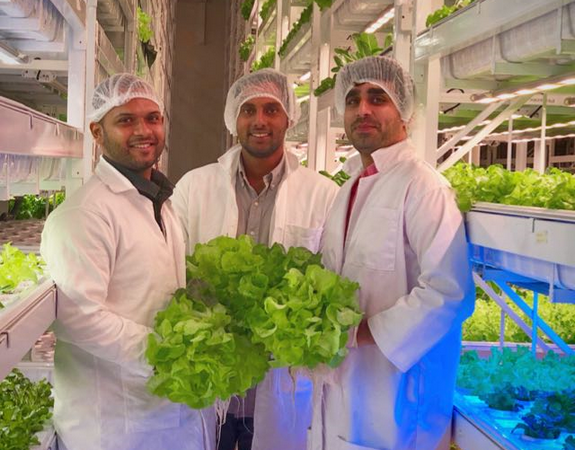
Sri Lanka: “Ever Since We Started, Costs Have Dropped And Economics Have Improved"
“Even greenhouses are relatively new here,” says Aneeshan, one of the co-founders of Honest Greens. “There were no high-tech greenhouses to be found, until five to ten years ago
“Even greenhouses are relatively new here,” says Aneeshan, one of the co-founders of Honest Greens. “There were no high-tech greenhouses to be found, until five to ten years ago. Our farm, therefore, is something rather odd here. Many people are trying to work with hybrid systems, but the main problem is high humidity and erratic weather patterns. During the monsoon seasons, humidity could hit 100%.” According to Aneeshan, this causes many problems for greenhouse farmers, therefore the company wanted to come up with something consistent and controllable.
Boosted by critics
Sanuja explains that “compared to local lettuce grown by traditional farmers, we are more expensive. However, their prices fluctuate drastically, whereas our prices are always stable.” Sanuja notes that vertical farming is new to the country and that people were initially skeptical about it. “People think that our choices are unwise, given electricity is very costly here whereas the sun can be used as a free resource. However, we also notice that many others are fascinated about the concept, as it’s something completely new and unexpected here.”
One of the co-founders, Sanuja, explains: “We’re cultivating varieties that are frequently used in the Sri Lankan cuisine. As our country is an island, there are many fluctuations in product availability and price. With our technology, we want to cater to this inconsistent supply.”
Starting in 2015, Honest Greens has been cultivating several greens inside their farm, which is based in Colombo, Sri Lanka. As the team was new to the industry, they literately took the time to experiment, improve and build up the growing system by themselves. Ever since 2019, their products can be found in local supermarkets around Sri Lanka. The growing facility is 930m2 comprises, with a cultivation area of 370m2. This floor area consists of 10 stacked layers, upon which plants can be grown.
Entrepreneurial approach
Ashish, one of the other co-founders, adds: “We all know it normally takes a lot of time before greens end up on the shelves. We’re glad that we can now render more stability to the market and a guaranteed supply to consumers.” With the home delivery platform, Honest Greens delivers directly to customers, a feature that came in handy during the lockdown. According to Sanuja, the company is looking to expand and increase its product lines. “We already launched pak choi and are working on growing coriander and spinach.”
Besides national expansion, Honest Greens is also planning on taking an international approach in the future. “Once we’ve created a profitable and stable business here, we will scale our company to countries with a large population such as India and Bangladesh,” says Sanuja.
As Ashish Advani explains, their main goal is to give consumers better options in fresh produce available. “People need to eat and food insecurity is becoming a bigger issue worldwide. Countries should own their entire supply chain."
Opportunities ahead
To balance everything out, the team is constantly working on bringing down the unit costs. Unlike in other parts of the world, labor is cheap in South East Asia, so automatization isn’t a high priority, says Sanuja. “Ever since we started the costs have dropped and the economics have improved. We are also looking into solar energy, to lower our electricity costs.”
Ashish notes that the company can do better on CapEx, whereas in Sri Lanka there are many options for industries to use the roof space. “By doing so, solar systems and electricity can be put up back to the grid. However, it’s not really used so far, but as time goes on, in terms of energy, unique economics are ahead of us.“
Lead photo: The co-founders

For more information:
Honest Greens
Sanuja Cooray, co-founder
sanuja.c@urbanagri.co
Aneeshan Tyagarajah, co-founder
aneeshan.t@urbanagri.co
Ashish Advani, co-founder
ashish.a@urbanagri.co
+94 11 702 4251
www.honestgreens.asia

Publication date: Tue 4 May 2021
Author: Rebekka Boekhout
© VerticalFarmDaily.com

Start of A New Series of Tests For Plant Cultivation on The Moon And Mars
The EDEN ISS greenhouse uses particularly robust varieties that were selected by the EDEN ISS Project team and from experiments at NASA’s Kennedy Space Center and as part of the VEGGIE project on the ISS
MAY 4, 2021
NASA Seeds Germinate in
DLR’s EDEN ISS Greenhouse
Start of a new series of tests for plant cultivation on the Moon and Mars
Nine weeks of darkness and temperatures down to minus 50 degrees Celsius. Under these harsh conditions of Antarctica, NASA and the German Aerospace Center (Deutsches Zentrum für Luft- und Raumfahrt; DLR) have begun a joint series of experiments on vegetable cultivation techniques for use on the Moon and Mars. Until early 2022, NASA guest scientist Jess Bunchek will research how future astronauts could grow lettuce, cucumbers, tomatoes, peppers, and herbs, using as little time and energy as possible.
To this end, she will be working at DLR’s EDEN ISS Antarctic greenhouse, where she will put greenhouse technologies and plant varieties to the test. She is also recording any effects the greenhouse and its yield have on the isolated hibernation crew in the perpetual ice. Bunchek is part of the 10-person overwintering crew on Neumayer Station III, operated by the Alfred Wegener Institute, Helmholtz Centre for Polar and Marine Research (AWI).
First harvest – Lettuce, mustard greens, radishes and herbs
“The polar night will soon begin here on the Antarctic Ekström Ice Shelf. With the nine other members of the overwintering crew, it almost feels like we are alone on another planet,” says Bunchek. “In this hostile world it’s fascinating to see the greenery thrive without soil and under artificial light.” Bunchek is a botanist from the Kennedy Space Center, where she has primarily supported the VEGGIE project on the International Space Station (ISS) She was able to sow the first seeds in recent weeks, following a technical reconditioning of the EDEN ISS platform conducted by her and the DLR team. The first harvest, which included lettuce, mustard greens, radishes, and various herbs, followed a few days ago.
NASA seeds and new nutrient supply system
The EDEN ISS greenhouse uses particularly robust varieties that were selected by the EDEN ISS Project team and from experiments at NASA’s Kennedy Space Center and as part of the VEGGIE project on the ISS. The DLR/NASA mission also aims to record and compare the growth and yield of the crop varieties under the conditions of the Antarctic greenhouse. An additional focus will be studying which microbes thrive in the greenhouse alongside the cultivated plants.
NASA will also be testing a plant watering concept in the EDEN Module that can operate in u-gravity settings, like the ISS. The system contains the water and delivers it to the plants by a passive method. “This will provide a side-by-side comparison with the aeroponically grown plants of EDEN ISS” says Ray Wheeler, plant physiologist at NASA’s Kennedy Space Center. In aeroponic irrigation, the roots of the plants without soil are regularly sprayed with a nutrient solution.
Crew time – a precious commodity
Sowing, harvesting, tending, cleaning, maintaining, calibrating, repairing and conducting scientific activities. Bunchek records every second of her activities in the Antarctic greenhouse with a special time-recording eight-sided die, as crew time will be a precious commodity on future missions to the Moon and Mars. “In an initial test run of the greenhouse during the 2018 mission, we found that operations still took too much time,” explains EDEN ISS project leader Daniel Schubert from the DLR Institute of Space Systems in Bremen. “Now we are working on optimizing processes and procedures. We have learned a lot about operating a greenhouse under extreme conditions. We’re applying all this during the current joint DLR/NASA mission.” In addition to the crew’s time, the focus is on their well-being. The overwinterers regularly answer questions about their eating habits or how the plants affect their mood. “We hope to increase our understanding of having plants and fresh food for crews in remote, isolated settings like Neumayer III and ultimately for space” says Wheeler.
Eight months in isolation
On 19 January, Jess Bunchek reached the Antarctic continent on board the research vessel Polarstern. Since 19 March, the 10-person overwintering crew has been on their own at Neumayer Station III. “EDEN ISS is an asset for the crew in many ways,” says Tim Heitland, Medical Coordinator and Operations Manager at AWI. “I know from my own overwintering experience just how much you can begin to miss fresh produce. It’s not just about the taste, but also the smells, the colors, and the fascinating fact that something can grow in this inhospitable environment. That’s why there are always volunteers in the overwintering teams to help cultivate and harvest the plants.” The polar night at Neumayer Station III begins on 21 May, and the first rays of sunlight will not reach the station again until 23 July. Researchers for the summer season and new supplies will end the isolation of this year’s overwintering crew around the beginning of November.
The activities at the EDEN ISS Antarctic greenhouse can be followed on social media using the hashtag #MadeInAntarctica. The Antarctic greenhouse has Facebook and Instagram accounts, as well as a flicker image gallery. Jess Bunchek also writes about her personal experiences of the Antarctica mission in the dedicated DLR blog.

2021 CEA Awards
We are excited to announce the winners of the 2021 CEA Awards. The awards were established to recognize distinguished individuals and organizations in the Controlled Environment Agriculture industry across North America
We are excited to announce the winners of the 2021 CEA Awards. The awards were established to recognize distinguished individuals and organizations in the Controlled Environment Agriculture industry across North America.
The winners were selected by a prestigious, independent awards committee comprised of agriculture professionals from Artemis, Cargill, Fluence by OSRAM, and Schneider Electric. The committee received over 130 qualified nominations for the awards and selected 11 category winners and 3 honorable mention awards.
“It has been inspiring to see our industry step up through the pandemic and continue innovating in every facet of the value chain. I am privileged to honor the outstanding contributors via the 2021 CEA Awards,” said Steve Graves, Vice President of Business Development at Fluence by OSRAM and Committee Member.
“All of the winners have had a tremendous impact on our industry this past year. It’s an honor to acknowledge the work of these companies and individuals,” said Allison Kopf, CEO of Artemis and Committee Member.
Top Employer Award
This award honors an employer who has created a great workplace environment.
Winner - AppHarvest, Inc.
Honorable Mention - NatureSweet
Brand Excellence Award
This award honors a brand that has recently dominated on store shelves.
Winner - Dream Greens by AeroFarms
Health and Safety Award
This award honors a company or individual who has gone above and beyond to create a safe and healthy workplace, as well as safe and healthy products in the wake of COVID-19.
Winner - Sudeshna Nambiar, Lakeside Produce
Sustainability Award
This award honors a company or individual who has focused on operating a sustainable facility.
Winner - Legion of Bloom
Produce Person of the Year
This award honors an individual who has made an immeasurable impact on the produce industry in the past 12 months.
Winner - Daniel Malechuk, Kalera
Honorable Mention - Hiroki Koga, Oishii
Cannabis Person of the Year
This award honors an individual who has made an immeasurable impact on the cannabis industry in the past 12 months.
Winner - Wanda James, Simply Pure
Innovative New Packaging Award
This award honors innovation in packaging and highlights new packaging concepts that have launched in the past 12 months.
Winner - Mucci Farms
Honorable Mention - Nature Fresh Farms
Innovative New Product Award
This award honors a new product launched in the past 12 months.
Winner - Wendy’s Sandwich Leaves & Salad Blend by Inspired Greens
Disruptor Award
This award honors an individual who has a spirit of innovation and is constantly looking to disrupt the status quo.
Winner - Stephen Ritz, Green Bronx Machine
Rising Star Award
This award honors an individual with < 3 years of experience in the CEA industry.
Winner - Cory Roof, Ogallala Greens
Industry Connector Award
This award honors a consultant or advisor who helps growers make the best decisions possible.
Winner - Agritecture
Congratulations to all of the winners for having an incredible impact on the CEA industry this past year. Stay tuned as we will be sharing each winners’ story on our website over the next few weeks.

“We Believe That The Time Has Come To Harness Innovative Technologies”
"The extreme African weather conditions make this market a perfect candidate for controlled environmental growth," says Francois Duvenage, R&D researcher at CAN Agri.
"The extreme African weather conditions make this market a perfect candidate for controlled environmental growth," says Francois Duvenage, R&D researcher at CAN Agri. “From wet tropical to extreme desert conditions, it especially means we can enable African countries to successfully grow their produce and sell a marketable product.”
Francois says the company has “two extremely exciting projects coming up, one project in Namibia starting in the next few months and the other is an international collaboration that we established and are strengthening.” According to him, the company is not only targeting Africa but also areas such as Eurasia and North America.
Value proposition
CAN-Agri has developed a multi-faceted solution to ensure our client’s overall support to successfully commission and sustain a CAN-Agri hybrid vertical-greenhouse. “We employ a six-phase approach where each phase is developed to ensure the client’s requirements are accommodated by detailed consultation agreements," says Francois.
“We believe that the time has come to harness innovative technologies to enable responsible and efficient food production, meeting the challenges and demands of the years to come,” says Francois. CAN-Agri’s operational procedure allows an advantage, that a farming unit is flexible in design and scalable to suit client needs. The vertical tower growing units allow for improved product quality and quantity through all seasons. Rows of fresh produce are harvested daily, opening space for new seedlings to be planted, forming a continuous daily production cycle.
Upcoming projects
As the travel restrictions are lifted, CAN Agri has encountered visitors both diplomats and private investors from several African countries. The interested parties are currently in negotiation processes and according to Francoise, the company foresees that its units will be established in these countries. “The earliest construction of a CAN-Agri greenhouse will probably start early August 2021, in our close desert neighboring country, Namibia.
This year, CAN-Agri has worked closely with a major retailer in the development of an additional market to amplify the supply and demand of its lettuce produce. Francois adds, “We have grown the sales of private markets to the extent that we are currently at full capacity. Our long shelf life, no-wash technique, and clean, great quality produce have been openly accepted by all of our clients, the demand keeps growing daily.”
Hybrid benefits
According to Francois, CAN-Agri’s patented technology allows providing an unmatched scalable, commercially viable farming solution that is grounded in both scientific research and credible data. The company has developed an innovative hybrid farming system. In this way, they can share the knowledge and technical support to allow their clients around the world to create a successful farm. “We continue to prove that our system provides better yields through our enhanced methods.”
As of now, the company does not make use of additional lighting. “We have done in-depth studies with regards to the implementation of lighting coupled with the installment and operation of additional lighting, mainly for use in other parts of the world with low solar radiation. Operating in sunny South Africa it is currently unnecessary to implement additional lighting as ample solar radiation is available to the plants,” says Francois.
In terms of cost-efficient production, the company identified common limiting factors and found solutions to the challenges of successful production in hybrid greenhouses. “Our extensive research and development on operation specifics are always ongoing. We have our commercial-scale testing facility CAN-AGRI Greenhouse RSA and continuously produce and record empirical data to support our model.”
For more information:
Francois Duvenage, R&D plant propagationist
CAN-Agri
info@can-agri.com
https://can-agri.com
3 May 2021
Author: Rebekka Boekhout
© HortiDaily.com
Lead photo: Francois Duvenage

China Enacts Food Waste Law, Brings In Bans For Binge-Eating & Fines For Leftovers
The food waste law also introduces a fee that restaurants can charge to their patrons if they leave “excessive” amounts of uneaten food at the end of their meals. Vendors that “induce or mislead consumers into making excessive orders” can now be fined up to ¥10,000 ($1,540)
May 4, 2021
The Chinese government has passed a wide-ranging law aimed at reducing food wastage in the world’s most populous country.
Among the provisions of the food waste law are a ban on competitive eating and hefty fines of up to ¥100,000 ($15,400) for making “binge-eating” videos where vloggers “usually leave a lot of food uneaten and often vomit what they have consumed,” according to the state-owned Global Times.
The social media phenomenon of livestream eating originated in South Korea where it is called mukbang, meaning ‘eating broadcast.’ The Chinese term for the genre, chībō, means the same thing. Chībō has become wildly popular throughout China in recent years – though not without controversy.
The food waste law also introduces a fee that restaurants can charge to their patrons if they leave “excessive” amounts of uneaten food at the end of their meals. Vendors that “induce or mislead consumers into making excessive orders” can now be fined up to ¥10,000 ($1,540).
Restaurants that consistently waste “large amounts” of food face fines of up to ¥50,000 ($7,720).
The law was first proposed to China’s legislature, the Standing Committee of the National People’s Congress, late last year after Chinese president Xi Jinping described the country’s food waste problem as “shocking and distressing.”
According to the Chinese Academy of Social Sciences, restaurants in the country’s major cities waste 18 million tonnes of food a year, which the Academy estimates as being enough to feed up to 50 million people in the same timeframe.
While the Communist Party-affiliated Times claimed the “adoption of the legislation against food waste does not imply that China is facing an immediate food shortage risk, but [is] a far-sighted move for food security,” China simply can’t afford to waste this much food.
With 1.4 billion mouths to feed and issues such as a growing but ageing population, desertification of already limited cultivable land, and deteriorating relations with major food exporter countries, China is facing significant food shortage risks over the medium to long term.
The Academy predicts a domestic grain supply shortfall of 130 million tons by 2025, with China’s dwindling rural workforce cited as a key factor – meaning that the country can’t simply turn to traditional agriculture as a solution.
In recent years, investment has been pouring into China’s burgeoning agrifoodtech space, with much of it targeted at solving the country’s food security and resilience issues.
Released last month, AgFunder‘s China 2021 Agrifood Startup Investing Report found that agrifoodtech funding in the country rose 66% year-on-year in 2020 to reach $6 billion.
While most of that capital went to e-grocery companies, upstream categories raised a total of $1.4 billion, taking a 24% share of overall agrifood investment compared to 14% a year earlier. In particular, business models and technologies aimed at bringing efficiencies and smaller environmental footprints to farming – such as robotics and drones, farm management software, and biotech solutions – received substantial funding; while startups developing alternative protein sources with the objective of reducing China’s reliance on animal agriculture also saw a pop in funding.
However, solutions specifically targeting food waste reduction and valorization were notably absent from China’s top agrifoodtech funding deals last year – perhaps indicating a major area of white space for entrepreneurs and prospective investors to keep an eye on going forward.

Plenty Produce Honored Twice By Fast Company’s World Changing Ideas
Leading vertical farm recognized for its flavorful, crispy lettuce as well as its partnership with Driscoll’s to grow indoor strawberries
Leading vertical farm recognized for its flavorful, crispy lettuce as well as its partnership with Driscoll’s to grow indoor strawberries
May 04, 2021
SOUTH SAN FRANCISCO, Calif.--(BUSINESS WIRE)--Plenty, the flavor-first vertical farming company with a mission to improve the lives of people, plants, and the planet, today announced it has been named a finalist and Honoree in two separate categories for Fast Company’s World Changing Ideas Awards. Plenty was recognized in the 'Established Excellence: 5-14 Years in Business' category honoring the company’s launch of its popular Crispy Lettuce. In addition, Plenty was recognized as an Honoree alongside Driscoll’s, the leading consumer brand in fresh berries, in the Food category for its partnership to grow Driscoll’s proprietary flavorful strawberries year-round in Plenty’s vertical indoor farms.
“There is no question our society and planet are facing deeply troubling times. So, it's important to recognize organizations that are using their ingenuity, impact, design, scalability and passion to solve these problems”
“It's an incredible honor for Plenty to be recognized not only for our achievement in food innovation, but also the work we are doing with partners like Driscoll’s,” said Nate Storey, co-founder, and chief science officer at Plenty. “2021 promises to be a year of continued innovation, as we add more crops to our indoor towers and prepare to open the world’s highest-output vertical farm in Compton, California. We are changing what we eat, how we eat and how we source and distribute our food while preserving our most precious natural resources.”
Launched in July 2020, Plenty's Crispy Lettuce is grown in a controlled environment that allows the plant to reach its full flavor and nutrient potential while protecting it from weather, pest, and pathogen threats. Plenty's Crispy Lettuce delivers a new level of versatility. With the light, fresh crunch consumers crave, it's the perfect salad foundation, crispy injection, or sandwich topping. Find out where to buy Plenty produce here.
The partnership between Driscoll’s and Plenty was announced in October 2020. Together, the two companies are working to bring flavorful strawberry varieties to market, leveraging the benefits of a controlled growing environment while also creating opportunity for berry expansion into regions that have historically been difficult to serve. Read more about the partnership here.
Fast Company's 2021 World-Changing Ideas honors the businesses, policies, projects, and concepts that are actively engaged and deeply committed to pursuing innovation when it comes to solving health and climate crises, social injustice, and economic inequality. Now in its fifth year, the awards showcase some of the world's most inventive entrepreneurs and companies tackling exigent global challenges across transportation, education, food, politics, technology, and more. Plenty was named a finalist out of a total of 4,000 nominees.
“There is no question our society and planet are facing deeply troubling times. So, it's important to recognize organizations that are using their ingenuity, impact, design, scalability and passion to solve these problems,” says Stephanie Mehta, editor-in-chief of Fast Company. “Our journalists, under the leadership of senior editor Morgan Clendaniel, have discovered some of the most groundbreaking projects that have launched since the start of 2020.”
The complete list of winners, finalists, and honorees can be found at fastcompany.com.
About the World-Changing Ideas Awards
World Changing Ideas is one of Fast Company's major annual awards programs and is focused on social good, seeking to elevate finished products and brave concepts that make the world better. A panel of judges from across sectors choose winners, finalists, and honorable mentions based on feasibility and the potential for impact. With a goal of awarding ingenuity and fostering innovation, Fast Company draws attention to ideas with great potential and helps them expand their reach to inspire more people to start working on solving the problems that affect us all.
About Driscoll’s
Driscoll’s is the global market leader of fresh strawberries, blueberries, raspberries and blackberries. With more than 100 years of farming heritage, Driscoll’s is a pioneer of berry flavor innovation and the trusted consumer brand of Only the Finest Berries™. With more than 900 independent growers around the world, Driscoll’s develops exclusive patented berry varieties using only natural breeding methods that focus on growing great-tasting berries. A dedicated team of agronomists, breeders, sensory analysts, plant pathologists, and entomologists help grow baby seedlings that are then grown on local family farms. Driscoll’s now serves consumers year-round across North America, Australia, Europe and China in over twenty-two countries. As a fourth-generation grower and the son of one of Driscoll’s founders, J. Miles Reiter serves as Chairman and CEO.
About Plenty
Plenty is an American farming technology company that frees agriculture from the constraints of land, weather, seasons, time, distance, pests, natural disasters, and climate. The company's plant scientists, engineers, and farmers have developed its indoor vertical farming technology to grow nutrient-rich and pesticide-free plants with extraordinary flavor. Plenty’s proprietary towers and intelligent platform make it the only vertical farm that can grow multiple crops with consistently superior flavors and yield. Plenty's flagship farm and headquarters are located in South San Francisco, and the company operates the largest of its kind Research and Development farm in Laramie, Wyoming. Plenty is currently building the world's highest-output, vertical, indoor farm in Compton, California.
Contacts
Driscoll’s: Fran Dillard, press@driscolls.com
Plenty: Jane Gideon, press@plenty.ag

Freight Farms Releases Next Generation of Container Farming
Freight Farms released the 10th generation of their container farming system – Greenery S, which has several key improvements on its predecessors
4 May 2021
Freight Farms released the 10th generation of their container farming system – Greenery S, which has several key improvements on its predecessors.
Since its founding in 2013, Freight Farms has been dedicated to making modular vertical farming technology accessible to more communities around the globe in a sustainable fashion. Their systems use a hybrid of hardware, software and services to make food production possible for anyone of any background, anywhere in the world.
“Greenery S represents the apex,” Jon Friedman, COO and co-founder tell Future Farming, “leveraging the excellent design and intuitive automation to streamline workflow while driving up yields.”
LED technology
Greenery S has several key improvements on its predecessors. This includes the new Dynamic Lighting Control, which uses LED technology that allows farmers to customize the lighting spectrum, intensity and duration for optimal plant yields. It also features a brand new user-centric Workstation design making for a sleek, self-contained and multi-functional farm command center.
Text continues underneath image
LED technology allows farmers to customise the lighting spectrum, intensity and duration for optimal plant yields. - Photo: Freight Farms
More consistent harvests
This new generation also brings with it an update to Freight Farms’ farmhand software that includes a new feature called “Recipes.” This update allows farmers to obtain more consistent harvests.
“Operators simply choose the crop they wish to grow and farmhand automatically adjusts in-farm settings for that crop production,” explains Friedman. “In-farm cameras and sensors gather information and continuously improve the precision of the recipes over time, aggregating data from the entire farmer network to determine patterns that lead to exceptionally successful harvests.”
Of all their systems, Greenery S combines Freight Farms’ most optimized combination yet to allow farmers the highest possible yields at the highest quality with the fastest rates.
Lower startup costs
With lower startup costs, Freight Farms reports that their Greenery S farm system can grow an equivalent of 2.5 acres of traditional farmland with 12 harvests per year. According to Friedman, it typically takes their farmers two to three years to see returns on their initial investments.
Greenery S is now available for purchase worldwide.
Jaclyn Krymowski
Correspondent for North America
Read more about: Vertical Farming Indoor Farming Container Farming

Strategic Partnership Between Oreon And Enersavings, Inc.
The energy savings possibilities of Oreon’s LED grow lights made EnerSavings recognize the advantages of the sustainable water-cooling technology
IJsselstein, 4 May 2021. Oreon and the Canadian company EnerSavings Inc. have come to an agreement for a strategic partnership. EnerSavings is a leader in customized lighting retrofits throughout Canada with a presence in 7 provinces. As a lighting engineering firm, they continuously work on improvement and innovation. EnerSavings expertise in providing the most sustainable and energy-saving solutions to its customers, fits perfectly with the sustainable water-cooling technology of Oreon’s LED grow lights.
Energy saving solutions
In EnerSavings, Oreon sees a strong partner for the Canadian market. EnerSavings is based in Toronto, Ontario, and has over a decade of experience in the ever-increasing market demand for efficient lighting technologies. The energy savings possibilities of Oreon’s LED grow lights made EnerSavings recognize the advantages of the sustainable water-cooling technology. They see lots of opportunity for growers in the fixture’s high efficiency and the ability to reuse the gained heat and save on cooling costs. The active water-cooling makes it possible for the LED fixtures to efficiently produce a large amount of light without heating up the greenhouse or grow facility. Revenues are increased by lowering operating costs, and growers get full control over the climate in their facility. This results in high-quality yields year-round.
"EnerSavings is excited to partner with Oreon and expand its presence in the North American LED plant grow light market. The Oreon water-cooled fixture is by far the best grow light in the market today, bringing the highest value proposition to growers. Oreon was the first to bring an LED grow light to market in 2009 and its fixtures are the best built, and cheapest per micromole. The water-cooling ensures productive longevity second to none. The first install over a decade ago still has over 90 percent light output today!" – Jason Beer, Business Development Director of EnerSavings.
“With EnerSavings Inc. as a new dealer, Oreon creates a better connection to the Canadian market. Both Oreon and EnerSavings share the fact that we are both committed to providing sustainable LED solutions and tailored energy-saving solutions, so customers can reduce operating expenses and increase profits. With the expertise of EnerSavings in commercial horticulture projects, we see a promising future in this rapidly growing market,” says Bill Whittaker (North-American Sales Manager) of Oreon.

US: TEXAS - Awty Unveils Carbon-Neutral Container Farm Thanks to Sustainability Grant From Green Mountain Energy Sun Club
Incorporating a container farm into Awty’s current operations and curriculum reinforces the school’s commitment to sustainability while providing a real-life example of environmentally sound sourcing practices to their international student body
Source: GREEN MOUNTAIN ENERGY
05/03/21
Teachers and students alike at The Awty International School are excited about the possibilities a carbon-neutral container farm brings to their campus. Awty received a $135,000 sustainability grant from the Green Mountain Energy Sun Club to implement the container farm that now provides fresh produce to the school’s cafeteria and hands-on education for students through a newly formed urban farming elective class. The school installed a 20-foot hydroponics shipping container, a 20-foot aquaponics shipping container, and a 14.4-kilowatt solar system with 48 panels to power both containers to achieve the carbon-neutral status.

Incorporating a container farm into Awty’s current operations and curriculum reinforces the school’s commitment to sustainability while providing a real-life example of environmentally sound sourcing practices to their international student body. The farm serves to demonstrate how to reduce the carbon footprint of a food operation by shortening the supply chain and reducing fuel emissions. The innovative container farm and solar-powered equipment provides Awty a year-round steady supply of fresh produce, regardless of the outside climate. The closed-loop hydroponic system also uses 98 percent less water than traditional agriculture, significantly reducing the environmental impact of food production.
“While our school community has already started to reap the benefits from the farm, one of our many goals for the container project is sharing what we have achieved with others,” stated Robert Sload, STEAM coordinator at The Awty International School. “As an international school, we certainly want to help other international, national, and local schools introduce their communities to the wonderful community-wide lessons this project provides. A larger goal is to deconstruct our efforts and refashion a much simpler and cost-effective model that could be recreated anywhere with a particular eye to school communities located in food deserts.”
Green Mountain Energy, the nation’s longest-serving renewable energy retailer, founded Sun Club in 2002 to advance sustainability by partnering with nonprofit organizations engaged in meaningful work to support the communities the company serves. Awty is one of more than 130 projects to receive a sustainability grant since Sun Club’s founding. The grants are awarded to nonprofits seeking to implement projects promoting renewable energy, energy efficiency, resource conservation, and environmental stewardship.
“Green Mountain Energy’s goal with Sun Club grants is to promote sustainability in the community, and we were excited about this project from the start as it amplifies the message to future generations through education,” said Mark Parsons, vice president, and general manager of Green Mountain Energy. “Container farming will allow Awty students the opportunity to explore innovative new approaches to food production. Farming fresh produce directly on campus powered by solar energy makes it easy to captivate students and facilitate a dialogue around farming and solar energy at the same time.”
The respect of self, of individuals, and of the environment, and the importance of contributing to the community, are the fundamental principles of Awty’s sustainability program. The program’s mission is to reduce the school’s environmental impact and become more sustainable while inspiring and challenging students to come up with innovative solutions to environmental problems. Initiatives like composting, recycling, collecting water from HVAC units, and working toward becoming a zero-waste school have allowed the school to become a Bronze Award recipient of the Eco-Schools program, an international organization that accredits schools demonstrating a commitment to sustainability.
Tags: Indoor & Vertical Farming, Processing & Supply Chain | Containers

The Importance of Indoor Farming In The Classroom
"At Food Corps we love to do any kind of gardening, food, and nutrition lessons, as well as educate students on where their food comes from," says Allly Staab with Food Corps in Norwalk
"At Food Corps we love to do any kind of gardening, food, and nutrition lessons, as well as educate students on where their food comes from," says Allly Staab with Food Corps in Norwalk.
For years, Tower Garden has served as a classroom learning model teaching students about the basics, like science, technology, engineering, and mathematics, to even more tactile things, like cooking and garden maintenance. Currently, Tower Garden is used in over 7,500 classrooms in 49 states across the country -- and that number just keeps on growing as Tower Garden expands its global footprint.
"Since 2017, the Tower Garden has been at Brookside Elementary. Last year I kind of experimented a little with it. This year was Tower Garden’s time to shine, and I’ve been invested in making it work. There is a huge chunk of time here where it is too cold to be growing outside, so having a Tower Garden has been really helpful. In a Connecticut climate, I’m still able to grow a bunch of different stuff indoors. Every grade level has had some type of experience or interaction with Tower Garden," says Allly.
The role of the tower garden in the classroom is to let kids understand how growing indoors can be beneficial, and how you can produce your own food during the colder months indoors. Kids are taught that even in a city apartment, food can be grown.
"The speed of growth is so great that the kids can see it before their eyes. They can measure and observe. We’ve done taste tests where we’ve done a salad with romaine lettuce, and then we added in cucumbers and tomatoes and salad dressing from the store. We had a bunch of herbs growing and made salsa with cilantro. They are able to see the full system, from planting to harvesting, and taste the fresh food.," Staab explains.
"A lot of the students at our school may not have access to fresh, healthy foods all the time, and if we can give them access, I think it’s super important. If students are more invested in watching a plant grow, the more likely they are to try it. They usually really like it, even if they are nervous to try it at first."
Staab notes that "A lot of the students at our school may not have access to fresh, healthy foods all the time, and if we can give them access, I think it’s super important. If students are more invested in watching a plant grow, the more likely they are to try it. They usually really like it, even if they are nervous to try it at first. Sometimes we hold up our piece of lettuce together and thank it, and then eat it all at once. I try to make it as fun and engaging as possible. Even if they are scared to try it, if all of their friends are trying it, they are more likely to do so."

Read the complete article at www.towergarden.com.
For more information:
Tower Gardens
www.towergarden.com

3 May 2021

What Is A Container Farm?
A container farm is usually a vertical farming system built inside a shipping container. The benefits of placing a farm within a container, rather than a building, are that it is transportable and can be squeezed into existing spaces, such as in car parks or on farmland
30-04-2021 LettUs
Container farming, vertical farming, indoor farming… What do they all mean? Are they all the same thing? In this blog, we’re going to explain exactly what a container farm is and what the benefits of growing crops in this way are.
The controlled environment agriculture club
Controlled environment agriculture (CEA) is a term for using different technologies to grow food indoors. In CEA, these technologies ensure the best growing conditions and protection for specific crops. This is slightly different to just indoor farming - by nature, indoor farms simply protect crops from external forces such as weather and pests. A container farm would be an example of CEA, as would other indoor farms such as vertical farms and high-tech commercial greenhouses.
A container farm is usually a vertical farming system built inside a shipping container. The benefits of placing a farm within a container, rather than a building, are that it is transportable and can be squeezed into existing spaces, such as in car parks or on farmland.
Since it is classified as a temporary structure, you typically don’t need planning permission for a shipping container. This can be particularly useful for those who rent their farmland. However, there are always exceptions and the necessary checks should always be made before making arrangements. As long as there is level ground, access to electricity, water & wifi, a shipping container can fit into a range of different settings.

Serving communities, big or small
Since they’re easy to transport, container farms can be easily deployed as and when they are needed. This means they could be used for research or social-impact projects, without needing to build a permanent facility. Shipping containers are also modular, which means multiple containers can be used to build a larger facility and businesses can scale their operations appropriately. They also have the potential to be bedded into existing container parks - these are dotted around the UK and are usually shipping containers made up of independent shops, cafes, and restaurants. One container farm could supply fresh produce to all of these.
In this way, container farms have the potential to be a positive disruptor within our food supply networks and strengthen our local food security by reducing our dependence on imported produce. Food waste and carbon caused by food transportation would also be reduced by strategically placing containers in key locations within communities.
The DROP & GROW container farm
LettUs Grow’s container farms are powered by aeroponic technology. This is a soil-less system that uses a nutrient-dense mist to irrigate crops - boosting oxygen levels and encouraging healthy root stock. Whilst hydroponic container farms are more common, DROP & GROW uses aeroponics to optimise crop health and increase growth rates.
Our container farms have also been designed with the grower in mind. DROP & GROW:24 includes a separate preparation area, providing ample space for the grower to do their job. Our farms have also been designed to be easy to maneuver within and check on your crops.
Celebrating vertical farming technology
DROP & GROW wasn’t designed to be inconspicuous. Quite the opposite! We think urban farming, new technologies and feeding local communities is something to shout about, so a DROP & GROW on your site is an opportunity to start a conversation and encourage your customers to learn more about the benefits of vertical farming.
If you want to take a positive step towards a more sustainable and resilient food supply chain in the UK, then talk to LettUs business development team about why a container farm might be in the right choice for you. Find out more...
Source and Photo Courtesy of LettUs Grow
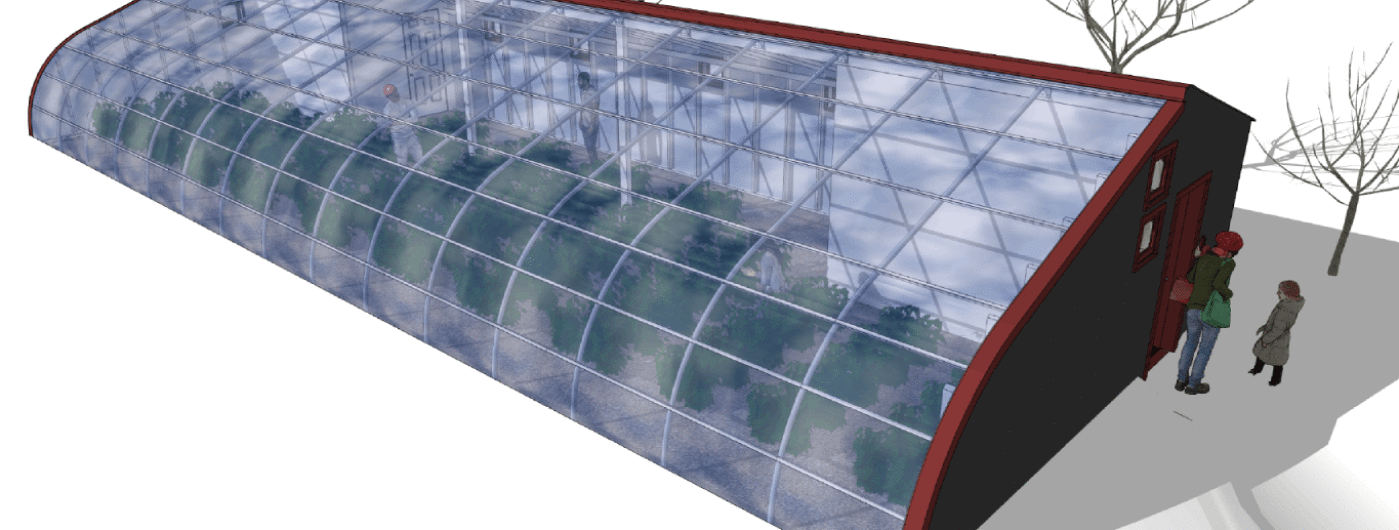
New Greenhouse Design Shines With More Growing Capacity
Lettuces, Asian greens, herbs, and more. These are just a few types of produce that Shayne Johnson of Grampa G’s farm in Pillager has experimented with growing in the middle of winter in Central Minnesota
30-04-2021
University of Minnesota Extension
Lettuces, Asian greens, herbs, and more. These are just a few types of produce that Shayne Johnson of Grampa G’s farm in Pillager has experimented with growing in the middle of winter in Central Minnesota.
Photo: Shayne (left) and Louise Johnson of Grampa G’s farm in Pillager, outside their deep winter greenhouse prototype, 2018. Courtesy of University of Minnesota Extension
“Nothing we’ve tried to grow has failed,” said Johnson, who sells the farm’s product to local food co-ops and customers in the area by word of mouth.
How does Grampa G’s do it? With the help of a prototype deep winter greenhouse made possible by a collaboration with the University of Minnesota Extension Regional Sustainable Development Partnerships (RSDP) and the College of Design Center for Sustainable Building Research (CSBR).
In fall 2020, this collaboration released new designs for a farm-scale winter greenhouse (FSWG v1.0). These new solar winter greenhouse designs seek to improve both the productivity and profitability of extended season vegetable and produce production in Minnesota, creating a more resilient, local food system.
“Our partnerships with Minnesota farmers and the Center for Sustainable Building Research to develop these farm-scale winter greenhouse designs will make winter production more accessible to small- and mid-sized farmers in Minnesota and beyond,” said Greg Schweser, statewide co-director of RSDP’s Sustainable Agriculture and Food Systems program who has helped lead related research and outreach with Daniel Handeen, winter greenhouse designer and CSBR research fellow.
Evolution in solar winter greenhouse design
The farm-scale winter greenhouse designs rely on passive solar principles, similar to the earlier deep winter greenhouse design (DWG 2.0), but build on and incorporate lessons learned from the deep winter greenhouse prototypes in the field. The deep winter greenhouse at Grampa G’s farm is one of five prototypes in Greater Minnesota, supported by RSDP.

Farm scale winter greenhouse under construction at Appetite for Change in Minneapolis, 2021. Photo credit: Daniel Handeen.
The new farm-scale designs have a larger footprint that increases growing capacity. They also include variations in foundations and thermal storage specifications to accommodate different budgets.
“These designs keep evolving and getting better. That’s what I find so cool about them,” Johnson said. “The University adjusts based on our experiences and feedback with the technology.”
RSDP and CSBR partners iteratively developed the farm-scale winter greenhouse designs with input from growers like Johnson and Carol Ford, Extension project coordinator, and an early winter greenhouse pioneer. Ford has helped spread the word and grow a network of deep winter greenhouse adopters and enthusiasts.
“It’s always been about not just making this technology effective for me, but then having it be something that other farmers would feel engaged to do,” Ford said, during a recent podcast interview about this work.
Since their release in November 2020, the farm scale winter greenhouse designs have had more than 1,150 downloads. Solar winter greenhouse designs are freely available and can be downloaded from the RSDP Deep Winter Greenhouse resource website.
Farm scale designs ripe for testing
Schweser noted the designs are now ripe for testing and recommends a similar, regional prototype approach that proved successful with the earlier deep winter greenhouse design.
Open house at the Lake City Catholic Worker Farm deep winter greenhouse, 2018.
In the earlier prototyping process, university and community partners prioritized both research and education, testing the design’s performance and hosting outreach events that have attracted hundreds of participants.
“It’s turned out to be so much more than just the prototype and initial support,” Johnson said. “It’s now this long-standing relationship. We connect with other greenhouse operators and are regularly in touch with our university partners throughout the year.”
Schweser hopes to see similar results with prototypes of farm-scale winter greenhouses in the coming years. University and community partners could then evaluate their performance in the field and improve existing cost estimates before encouraging more widespread adoption.
After field testing, Schweser believes the new structures could open up opportunities for smaller and more diverse farmers to grow more produce and be more profitable.
“The new farm-scale design, more so than the smaller deep winter greenhouses, is far more affordable to construct, and is an appropriate scale for most small direct-market farmers,” Schweser said. “It has the potential to be an equity-building, level-playing field technology to sustainably and profitably grow produce in the winter.”
Johnson is also optimistic about the potential of the new farm-scale winter greenhouse designs.
“I love to see the evolution of these greenhouses taking shape,” Johnson said. “We are learning from our accomplishments and defeats, and then we make them better. That’s what’s exciting about this work and these partnerships—if anyone can make these designs better, this initiative is the one to do it.”
Those with questions about the University of Minnesota's farm scale winter greenhouse designs and related work can contact RSDP's Greg Schweser (schwe233@umn.edu), statewide co-director of the Sustainable Agriculture and Food Systems program.

From Passenger Plane To Vertical Farm – Repurposing Old Aircraft
Recently iFarm’s engineers began designing a custom vertical farm that could flourish inside the body of a commercial airplane, with the potential to extend the life of decommissioned aircraft
By MATT PESKETT
April 19, 2021
iFarm (Intellectual Farms Oy) is a Helsinki-based international company that develops solutions, platforms, and technologies for indoor farming and agribusiness. Recently iFarm’s engineers began designing a custom vertical farm that could flourish inside the body of a commercial airplane, with the potential to extend the life of decommissioned aircraft.
Experts from iFarm were approached by a European airline with the brief. In response, they proposed converting a passenger plane’s cabin into a salad bar and designed a vertical farm with a total growing area of 135 m² in the aft section of the aircraft so that the bar can offer 14 kg of fresh salad daily.
The partition between the cafe and the farm can be made transparent, and the equipment zone moved to the tail end of the plane [Image source: iFarm]
For the airline, this project would serve as a demonstration of its forward-thinking approach and the increased focus on customer service, including the provision of fresh and healthy meals on board.
For iFarm, the project demonstrates another innovative way of integrating agrotechnology into seemingly unsuitable infrastructure and the versatility of vertical farming.
While contemplating additional ways of using the wide-body aircraft to grow plants, engineers suggested a number of configurations that make such refitting not only useful for advertising purposes but also commercially viable. For example, a farm located in the body of a decommissioned cargo jumbo jet can produce up to 1.5 tons of greens per month.

“Vertical farms are good because they can be installed in a wide variety of spaces, from abandoned subway stations to airplanes that no longer serve their intended purpose. We will be happy to cooperate with companies that think outside the box and consider such high-tech repurposing options. This project does not yet have a deadline, but it has already drawn the attention of specialized design bureaus as an easily scalable example of old aircraft upcycling.” commented Kirill Zelensky, CEO of iFarm Europe.
Not all obsolete aircraft are recycled. The airline industry has long used conservation methods to repurpose aircraft, such as sending airliners to spare airfields in dry climates, where they essentially serve as containers of spare parts. Each aircraft includes about 350,000 individual components, and many of these planes remain useful long after their last flight.
But some owners prefer upcycling to disposal in an attempt to provide “second life” old aircraft, especially those with some historical value (e.g., the first airplane of the airline). There are existing examples of creative airliner usage, including dozens of on-board cottages, offices, cafes, and hotels all over the world, and even an old soviet Yak in Georgia that hosts a kindergarten.
For airline companies, the opportunity to upcycle planes into highly sustainable vertical farms is an enticing one. When an industry known for its high carbon footprint can find new ways to support sustainable practices, it could offset emissions, enhance a brand’s image and have a genuine impact on the environment.

OGVG And Blue Radix Introduce Autonomous Greenhouse Management In Ontario
The Ontario government is supporting greenhouse growers by investing over $3.6 million in 12 innovative projects to help develop new technologies
The Ontario government is supporting greenhouse growers by investing over $3.6 million in 12 innovative projects to help develop new technologies, recover from the impact of COVID-19 and enhance competitiveness and innovation.
One of these approved projects is ‘Autonomous Greenhouse Management’- a collaboration between the Ontario Greenhouse Vegetable Growers (OGVG) and Blue Radix, an independent Dutch AI-tech specialist for the international greenhouse industry. This project is supported through the Greenhouse Competitiveness and Innovation Initiative, a cost-share program funded by the Ontario Ministry of Agriculture, Food and Rural Affairs and delivered by the Agricultural Adaptation Council.
Autonomous growing with Crop Controller
“Together with OGVG we introduce autonomous growing with Crop Controller to Ontario vegetable growers,” says Ronald Hoek, CEO of Blue Radix. “Crop Controller is a service: data models and algorithms control the greenhouse installations 24/7, supported by off-site Autonomous Greenhouse Managers with in-depth knowledge about crops, energy, and data. With autonomous steering of the greenhouse installations, the crop strategy is put into practice with artificial intelligence. Crop Controller is not developed to replace growers. The grower is still needed to define the crop strategy. Ultimately, they can manage more hectares and worry less about repetitive actions and routine thinking. The algorithms do the work for them in their daily operations.”
“We are very thankful to the Ontario government for the GCII funding of this project. It will help greenhouse businesses improve their productivity with adopting autonomous growing. Greenhouse owners are less dependent on crop experts, will have a higher operational profit while limiting their operational risks and usage of resources,” says Ronald.
Main objectives project
The project looks to meet four main objectives:
1) To research the specific needs of Canadian growers (compared to Dutch growers) related to autonomous greenhouse management and translate these needs into product features.
2) To research and implement the adjustments that must be made to improve the match of Crop Controller with different Canadian (Ontario) climate conditions.
3) To demonstrate the working of the Blue Radix data models and algorithms. This helps growers to better understand the value and adopt this new technology in their company.
4) To share knowledge with market peers and help growers to work with this new technology in their day-to-day operations.
OGVG will select three vegetable greenhouse production locations across Ontario to participate in the project. During the project OGVG & Blue Radix will share information regularly about progress and results through articles, learn ‘n’ lunch sessions, presentations and online demos.
About the GCII program
The Greenhouse Competitiveness and Innovation Initiative is a cost-share program, to help the sector to create, adopt and invest in innovative new technologies to reduce production costs, increase productivity and improve produce quality. Enabling operations to expand their businesses, attract new investment and create good jobs. It is delivered by the Agriculture Adaptation Council, on behalf of the Ontario Ministry of Agriculture, Food and Rural Affairs (OMAFRA).
About OGVG
Ontario Greenhouse Vegetable Growers (OGVG) represents approximately 200 farmers responsible for over 3,200 acres of greenhouse tomatoes, peppers and cucumbers across the province. With farmgate sales of over $1 billion in 2019, support for over 13,000 jobs, a contribution of $1.8 billion to the economy and a consistent track record of growth, the sector is a valuable economic driver for the province.
About Blue Radix
Blue Radix is an independent Dutch AI-tech specialist for the international greenhouse industry. Blue Radix creates solutions with artificial intelligence for daily decisions and actions in greenhouses. Greenhouses offer an efficient way to produce food and flowers in a sustainable manner. But the number of skilled people with expertise of growing crops in greenhouses is declining every year. This has direct impact on yield, costs, continuity and product quality. Blue Radix offers solutions for these challenges: smart algorithms which optimize and steer climate, irrigation and energy continuously and autonomously, supported by off-site Autonomous Greenhouse Managers. Always working with the grower’s unique crop strategy as a starting point. Blue Radix offers growers a digital brain for their greenhouse.
For media inquiries, please contact:
OGVG
Mr. Joseph Sbrocchi, General Manager
T 519-326-2604 or 1-800-265-6926
Email: j.sbrocchi@ontariogreenhouse.com
www.OGVG.com
Blue Radix
Mrs. Marijke van Rongen, Manager Global Marketing & Communications
T +31 6 53 43 38 39
E-mail: marijke.vanrongen@blue-radix.com
www.blue-radix.com

USA: NEW YORK - When A Shipping Container Becomes A Farm
Compact, enclosed vertical farms are making their way to Hudson Valley's urban areas
Compact, Enclosed Vertical Farms Are Making Their
Way To Hudson Valley's Urban Areas
May 3, 2021
John Lekic is the chef and owner of Farmers & Chefs in Poughkeepsie and vertically grows his own produce for his restaurant in a shipping container on site. He came across the concept of shipping container farming at an exhibition at the Culinary Institute of America in 2019. Aaron Lacan
The Hudson Valley is quite familiar with what it means to be farm-to-table, but what if the farm is also practically right next to the table, even in the more urban and metro areas?
Vertical farming via high-tech shipping containers is emerging as a new solution for businesses seeking to grow their own produce in a way that shrinks the necessary agricultural footprint while maximizing yield and reducing produce travel time. Here in the Hudson Valley, a 20 by 20-foot shipping container is being used to grow up to 400 pounds of fresh produce a month at Farmers & Chefs restaurant in Poughkeepsie.
Last year, the restaurant partnered with an Israel-based agro-tech company Vertical Field to grow herbs and vegetables for its dishes in a new and innovative way. The startup, established in 2006, uses technology to create innovative growing methods to improve food supplies in urban areas around the world, working mostly in the Middle East and Europe but also recently in the United States — including right here in Dutchess County.
Poughkeepsie's Farmers & Chefs is one of the first businesses in the Hudson Valley to try shipping container farming. The restaurant's 20 by 20-foot climate-controlled container (pictured above) produces about 400 pounds of fresh produce a month. Aaron Lacan
John Lekic, chef and owner of Farmers & Chefs, grows everything from buttercrunch lettuce, kale and baby arugula to herbs like rosemary, sage and basil in his enclosed vertical farm. The container is divided into four growing fields and is set on the restaurant’s property for customers to see, which has drawn even more interest to Farmers & Chefs as of late.
So why vertical farming?
Vertical Field is just one manufacturer specializing in reimagining steel shipping containers into enclosed, climate-controlled farms that are powered by LED lights instead of the sun, essentially supercharging a growing environment. Freight Farms and Grow Pod Solutions, other manufacturers, also tout this farming approach for its lower burden on farm labor and land, and for the higher output per square foot.
Shipping container farming is climate-controlled, powered by LED lights instead of the sun, and can produce high yield in a small space. But humidity and start-up infrastructure costs can be challenges. Aaron Lacan
“It’s a dream come true for chefs to be involved from the seed to the plate,” said Lekic. “It’s a great experience when you grow your own ingredients.”
Lekic pursued vertical farming after coming across Vertical Field during an exhibition showcasing a number of Israeli-based companies involved in food and agriculture at the Culinary Institute of America in late 2019.
Before the shipping container arrived at the Poughkeepsie restaurant, Lekic sourced vegetables from nearby farms and grew herbs in small outdoor gardening beds on site. However, Lekic found that it wasn’t enough yield, especially in the summer, and he often collaborated with additional farms to fill the gap. With a shipping container for growing, the restaurant is able to produce enough of what they need and on site – a key benefit for Lekic.
“There is a huge importance of having urban farms where the demand is,” said Lekic. “The problem with today’s agriculture is that everything has to travel. Most people are not aware of it, but depletion of the nutrients in our food is a huge issue.”
If you harvest spinach, it would be full of vitamin C that same day, Lekic said. But that changes dramatically just 48 hours later, when that nutrient is mostly gone. (A 2013 study by the University of California showed that spinach could lose as much as 90 percent of vitamin C in a single day.)
Farmers & Chefs restaurant grows everything from buttercrunch lettuce, kale, and baby arugula to rosemary and sage in its on-site shipping container. Aaron Lacan
By growing the restaurant’s produce steps away from the kitchen, “it’s as fresh as it gets,” said Lekic.
Farmers & Chefs received its shipping container farm right around the same time that COVID-19 hit last year, which Lekic said actually worked out well, as it gave him a chance to learn the ins and outs of vertical farming during a period that was quiet for his restaurant. By April, he was harvesting the first crops.
“Overall, the goal of vertical farming is to reduce the cost of healthy and fresh food to the retailer and to the end buyer as well,” said Vertical Field marketing director Noa Winston. “Since vertical farming reduces transportation costs, food losses, inventory inconsistencies, and price fluctuations due to climate, natural disasters, and other crises that create shortages, the retailer with vertical farming can benefit from consistency, security, and ownership over the entire supply chain.”
In another regional example, Evergreen Market, a grocery store in Monsey in Rockland County, partnered with Vertical Field to grow vegetables that ultimately stocked the store’s produce aisles, while also inviting customers to view its micro-farm when they visit the store.
Cost and maintenance concerns
This farming approach isn’t for everyone and there are drawbacks. “While it does offer some solutions to things like land access — which is, frankly, a huge barrier to the farming we advocate for here in the Hudson Valley — there is a lot of infrastructure needed,” said Kathleen Finlay, president of Glynwood, a center for regional food and farming based in Cold Spring.
“That brings a whole other set of challenges — how to create enterprises with a high capital upfront cost, how to get sustainable systems. It’s a different suite of challenges than more land-based production.”
Indeed, the start-up costs for an on-site shipping container farms aren’t cheap, although businesses say savings can be realized downstream by the reduced costs of paying produce purveyors for food that a restaurant or business is now growing itself.
Freight Farms' 2021 Greenery S model costs $149,000, which doesn’t include the shipping fee. Additional start-up costs can vary depending on where its being shipped, training packages selected, and any extras. Vertical Field would not disclose the fees associated with its model.
Plus, there is a bit of a learning curve when farming in a shipment container. Lekic played around with different variables, like what was best to grow at the same time, to see what would produce the highest yield.
"It's as fresh as it gets," said John Lekic of Farmers & Chefs, pictured above, about the new way of farming. Aaron Lacan
“For my purposes, I learned to stick with only two to four items – mostly greens,” said Lekic about his growing. “It makes the most sense based on my demand.”
Maintenance is an ongoing effort with an enclosed growing system that requires constant electricity and temperature controls to assure optimal growing conditions. “It’s always work,” said Lekic.
Over the past year, Lekic had to work out some kinks and issues, like making sure the air conditioning and heat levels were favorable to growing produce year-round. Just like traditional farming, some seasons might require more work — a vertical farm in the summer, for example, would have increased humidity that could negatively affect plants if not properly controlled.
While some growers may need back-up plans for electricity outages, Lekic doesn't foresee issues there because he is connected to the main restaurant building, which runs on a hospital-grid electricity system. Just in case, he has two generators that he could connect to if needed.
These drawbacks are outweighed by the ability to grow such consistent produce yield himself on site, he said, and the built-in technology features like being able to water plants by pushing a button on his phone. Lekic said overall it’s pretty easy to operate and monitor, so much so that the restaurant is looking into upgrading its original container to the newer version of the same size, and purchasing a second container.
“I’m interested in doing a mushroom container,” said Lekic. “There is the possibility of that. It’s a completely different kind of experience, but we would be super excited.”
DIY shipping container farming
While the hefty price tag of some farming shipping containers might be too prohibitive for some, others are riffing off of elements of tech-first farming for their own DIY growing methods.
KC Sullivan, a New Jersey-based mushroom farmer, created his own vertical farming environment out of an abandoned 40-foot-length shipping container that was used for storage at the Whitechapel Projects in Long Branch. Sullivan, who often collaborates with Tivoli Mushrooms here in the Hudson Valley, decided to create his own container farm by spray foaming it, sealing the floors, putting in an HVAC system, adding lighting and installing a misting mechanism.
He estimated the costs to be between $15,000 and $20,000 — not insignificant but far cheaper than a new shipping container already turbo-charged for farming.
“It was challenging,” said Sullivan. “There is no real guidebook or instruction manual on how to create a container mushroom farm. It was all about brainstorming how we wanted it to be.”
While it’s only been a year since mushrooms have been grown out of this urban shipping container, Sullivan is happy with the high-yield results: he's growing around 400 to 500 pounds of mushrooms a week. Mushroom container farming is slightly different from growing vegetables or herbs; for example, Sullivan doesn’t grow compost mushrooms, so there is no dirt necessary.
“We grow hardwood varieties, so it’s exclusively on red oak saw dust that is supplemented with agricultural byproducts,” said Sullivan. “You mix the two together with water, pasteurize it to kill off any pathogens, inoculate it with the strain of mushroom you’re looking to grow. It goes through an incubation period in a separate room [outside of the container], and then it goes to the fruiting room, which is the container and where it will be harvested.”
Just like Lekic, Sullivan also has run into some maintenance hiccups. The waterlines froze during the winter, which was a “big challenge and setback,” leading to a starved off humidification system, costing him around 100 to 150 pounds of crop.
Despite that hurdle, Sullivan also says the container can stand up against storms because it’s “built like a tank,” while regular farmland could be vulnerable to severe thunderstorms and potential flooding.
“One tool in the toolbox”
While an exciting option for some, vertical farming is “one tool in the toolbox” and it’s important to not forget about the benefits of traditional farming, said Finlay of Glynwood.
Finlay applauds any effort to produce food “that aligns with environmental sustainability,” but doesn’t think vertical farming will ever replace traditional farming or even fix the lack of land available for production.
Still, any effort to grow fresh food for more people is a win overall.
“We need more healthy food, accessible and affordable to more people,” said Finlay. “As much as vertical farming can play a role to that, I think that’s wonderful.”

Written By
Cloey Callahan is a lifelong Hudson Valley resident who was born and raised in Brewster, lived in New Paltz for four years while she attended college, and now resides in Newburgh on Liberty Street. On a sunny day, she strolls through Newburgh enjoying the 19th-century architecture on her way to the Hudson River waterfront. You can reach her at cloey.callahan@hearst.com to say hi or with pitches.
Vertically Grown Salads And Fresh Herbs In Føtex And Bilka Across Denmark
Danske Nordic Harvest has entered into a strategic partnership with Salling Group
Danske Nordic Harvest has worked at high pressure to get one of the world's largest vertical farms, fitted with the ground-breaking technology, ready for production for Danish consumers, and now the products are landing on Danish shelves for the first time: "The products from Nordic Harvest are unique in taste and quality. They are made without the use of pesticides, with an approx. 250 times less water consumption and through completely optimal land use.
We have believed in Nordic Harvest's innovative products for several years and are pleased that it has now become a reality," says Stephan Bruhn, category director at Salling Group, and continues: "We know that consumers are interested in the green transition, food security, and goods without chemicals, and we are convinced that sustainable products in this form will be a hit. That's why we also go out and launch in all føtex and Bilka's for a start."
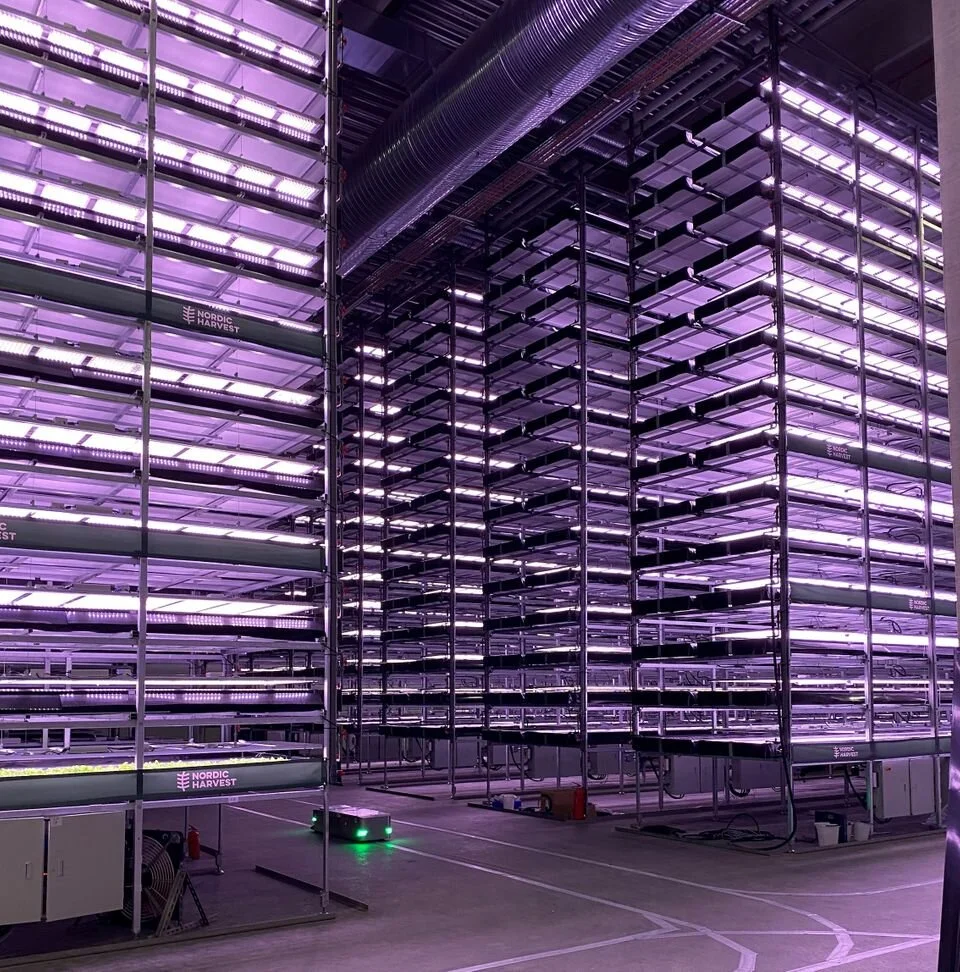
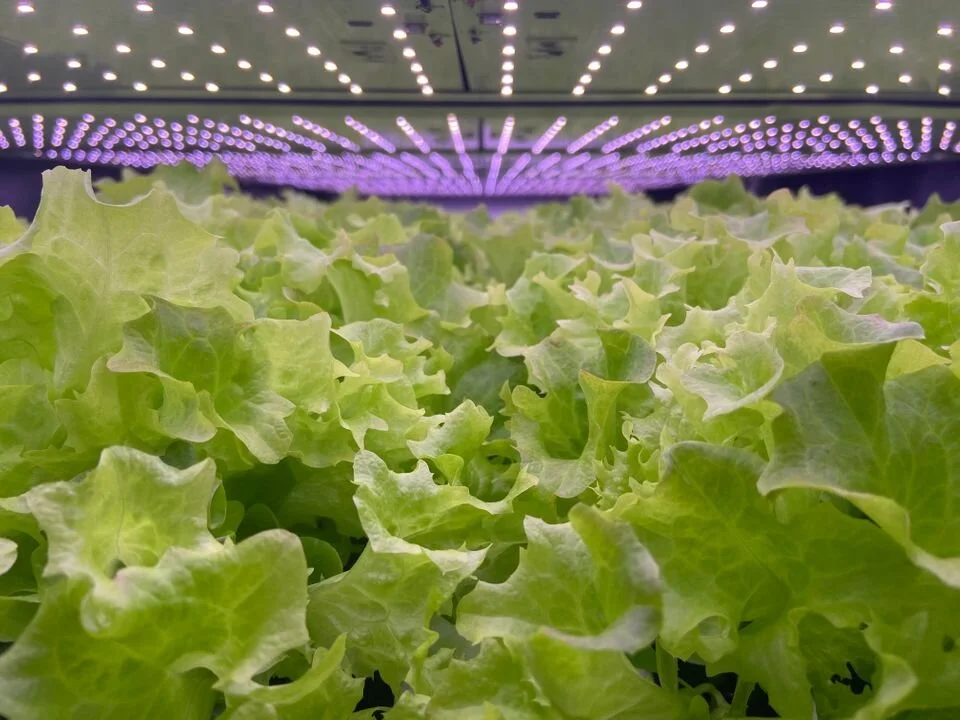
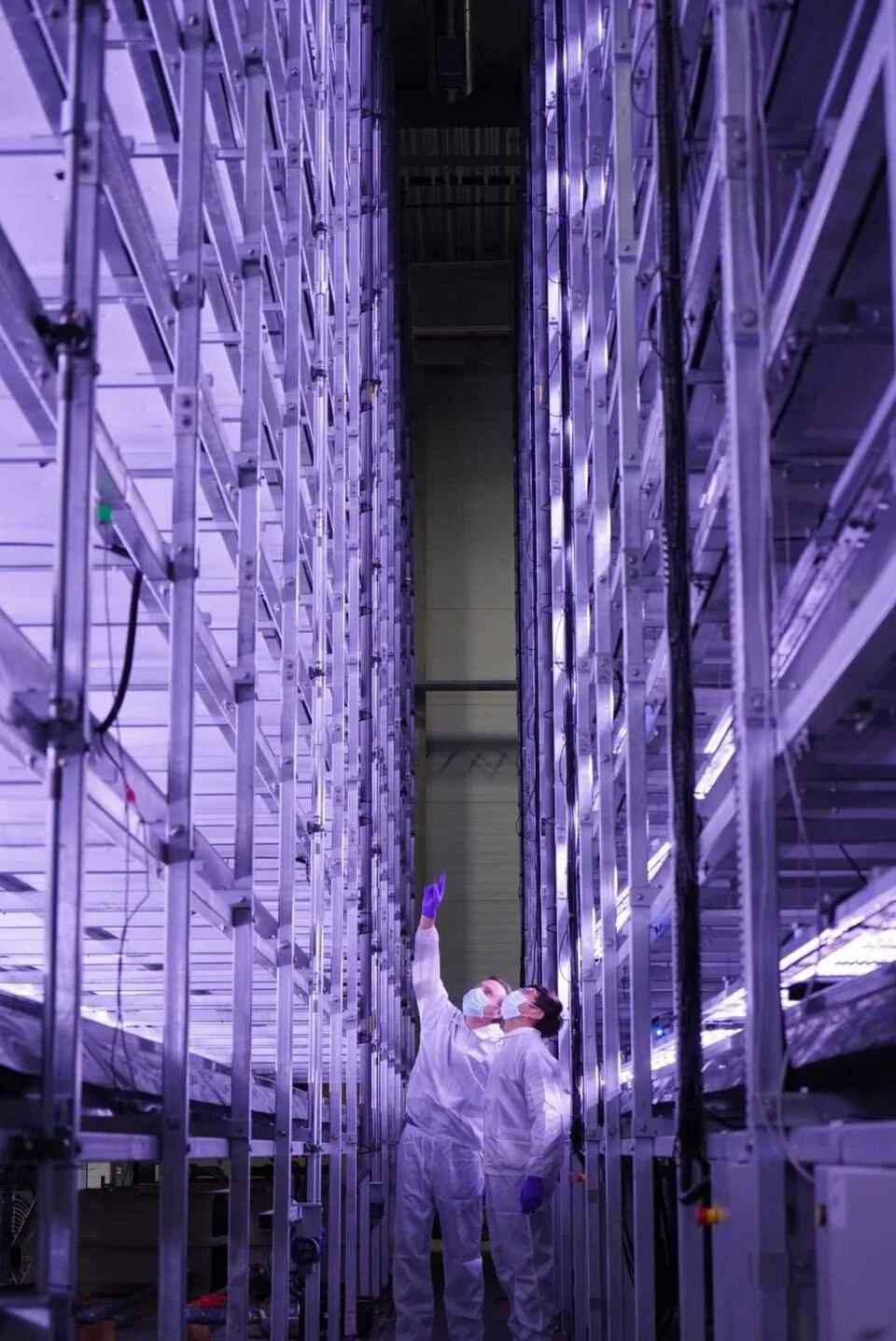
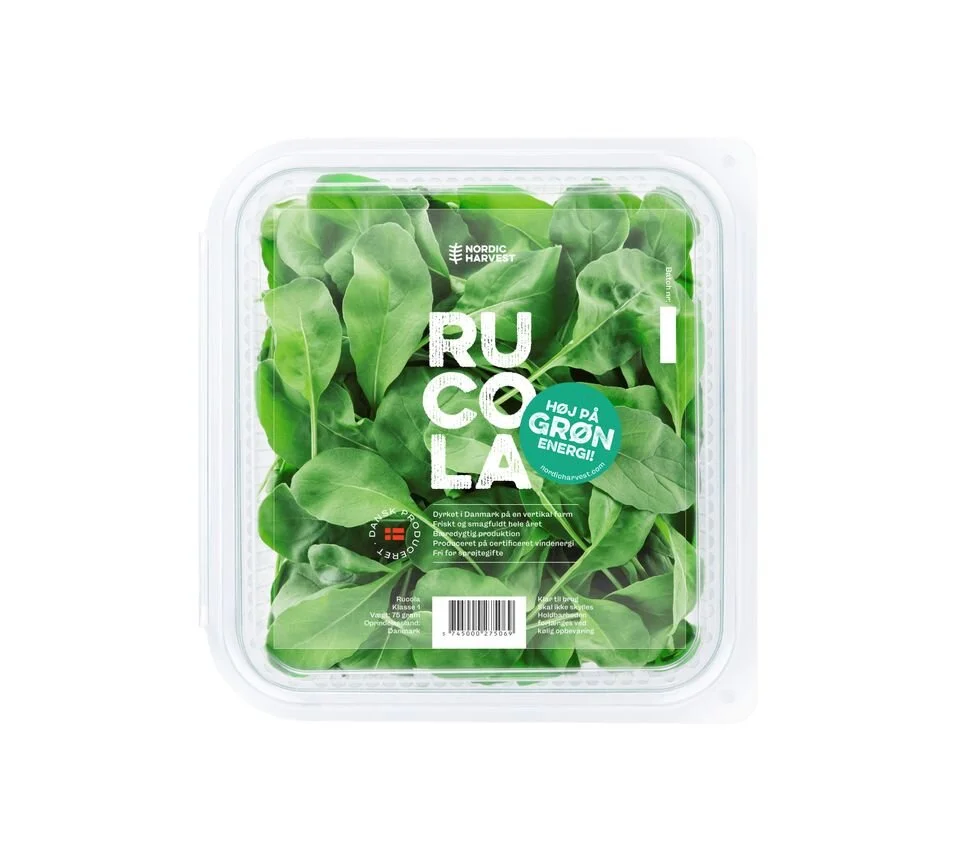
With the agreement, Nordic Harvest will deliver almost three tonnes of salads and herbs a week to the Salling Group. At the same time, the plan is to test new products in Salling Group's chains on an ongoing basis.
On Nordic Harvest's vertical farm in Taastrup, the crops are grown on floors, which utilizes space. On 14 floors, the salads and herbs are grown in water in a closed and controlled environment that gives the plants the optimal conditions for growth, taste and nutritional content."
From harvest until they are in the package in the fridge, it takes about 10 minutes. From seeds to supermarkets, they have never been in contact with soil, human hands, bacteria, fungal spores or pests. And they, therefore, do not need to be rinsed, either when packed or before being used at home at the dining table. So there is nothing along the way that degrades the plant, and therefore the products have an impressive shelf life that minimizes food waste.
"We could not have found a better launch partner than Salling Group. Our common values around sustainable production and their skilled sense of taste and quality have meant that we have had a fantastic dialogue and a good collaboration from our very beginning. I am looking forward to seeing how Danish consumers receive our products," says Anders Riemann, CEO of Nordic Harvest.
The prices of Nordic Harvest products will be at the same level as similar organic products. All the products from Nordic Harvest are delivered cut and in boxes that do not crush the leaves, and which can also be easily closed again if you do not use it all at once. The packaging is made from 100 percent recyclable recycled plastic.
Source: https://via.ritzau.dk/
Photo source: Dreamstime.com

Publication date: Fri 30 Apr 2021
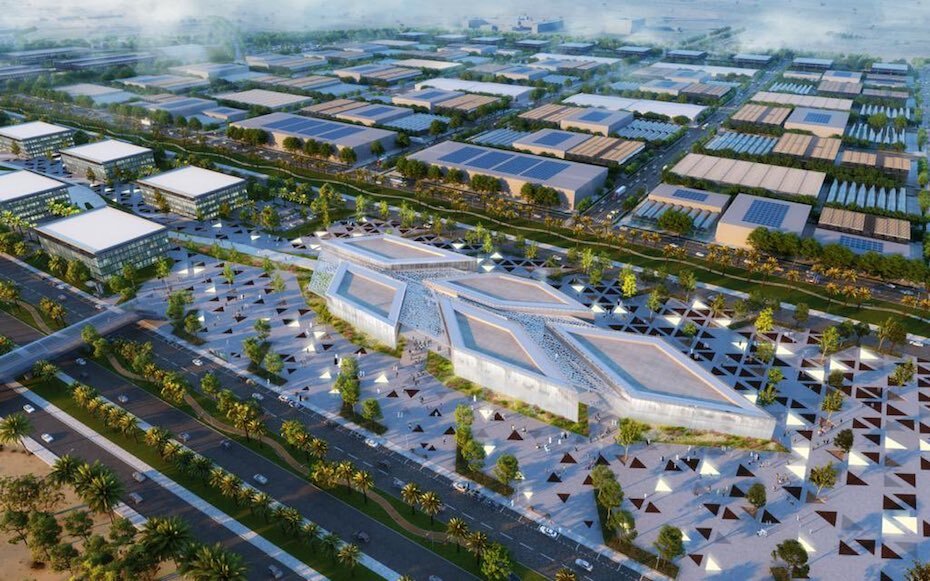
Sheikh Mohammed Launches Food Tech Valley In Dubai
It seeks to triple the UAE’s food production and will include a smart food logistics hub, R&D facilities as well as agricultural technology and engineering labs
It seeks to triple the UAE’s food production and will include a smart food logistics hub, R&D facilities as well as agricultural technology and engineering labs
MAY 2, 2021
The first phase of a new initiative that seeks to triple the UAE’s food production has been launched in Dubai.
The Food Tech Valley was launched on Saturday, May 1, by Sheikh Mohammed bin Rashid Al Maktoum, Vice President and Prime Minister of UAE and Ruler of Dubai, and is a partnership between the Ministry of Food and Water Security and Wasl Properties to explore urban planning of future smart and food independent cities.
The initiative that aims at helping the UAE meet its National Food Security Strategy 2051 targets, will – in the initial phase of its launch – focus on strategic projects to achieve food self-sufficiency while ensuring sustainability and conservation of resources, said Mariam Almheiri, Minister of State for Food and Water Security.
The Food Tech Valley will be home to four main clusters: agricultural technology and engineering, a food innovation centre, R&D facilities, and an advanced smart food logistics hub.
The agricultural technology and engineering cluster will have a vertical farm that will employ the latest food technologies to grow year-round vital crops, noted a statement issued by Sheikh Mohammed regarding the initiative. The cluster will also focus on developing innovative projects in bioengineering, automation, robotics and artificial intelligence and supporting capacity building across the food ecosystem.
The food innovation centre meanwhile will provide an integrated agri-business ecosystem to incubate promising ideas and support startups and entrepreneurs. The cluster, which will have a specialised food factory to produce new foods and second-generation restaurants (restaurants 2.0), will explore models that are based on sustainability and production sufficiency to reduce consumption and wastage of resources.
The third cluster will have world-class R&D facilities to train food specialists and support food establishments. The facilities will explore the use of agri-robotics to maximise yields and drought-resistant crops. Specialised researchers will also explore the application of 3D printing in algae cultivation and alternative protein production. The R&D facilities will also study the use of AI to monitor, analyse and manage agricultural crops, and detect environmental impact and climate change.
It will complement global food security research efforts by exploring successful saline agriculture, nutritional genomics, agricultural mechanisation and the use of drones in food production.
The fourth cluster will feature a fourth-generation food storage system that provides smart and automated logistical storage services. The smart storage system will apply blockchain technologies and big data in sorting, transporting and distributing various food products. It will track food quality, origin, components, processing methods, storage and delivery to ensure the efficiency of food supply chains.
The initiative aims to create an integrated modern city where over 300 varieties of crops will be produced using modern farming techniques and which will serve as a hub for future clean tech-based food and agricultural products and an incubator for researchers, entrepreneurs, startups and industry experts to develop solutions to address issued regarding food production.
It will support the use of technologies and applied research in food processing and agriculture and apply modern farming techniques – such as vertical farming, aquaculture and hydroponics – to accelerate self-sufficiency in fresh food produce and reduce wastage of resources.
“[The Food Tech Valley project] will be an economic zone, which is particularly significant considering that the size of the AgTech market is projected to grow from $13.5bn to $22bn over the next four years. The project is part of our efforts to achieve our strategic national goals with respect to food security, as it constitutes an incubator for advanced farms – including indoor and vertical farms – with more than 60 per cent of the project’s space allocated to these activities,” said Mariam Almheiri.
Read: Sheikh Mohammed reiterates UAE’s drive to enhance food and water security
“The project features a food innovation centre that has been designed to resemble a head of wheat and will incorporate laboratories, research centres and prototype agricultural systems. Strategically located close to universities and academic institutions, it will support the R&D ecosystem and explore and deliver sustainable solutions around food,” added Almheiri.
Hesham Abdullah Al Qassim, CEO of Wasl Asset Management Group, noted: “The project provides an integrated legislative framework that facilitates new food product development and access to the market. Its competitive incentives and services enable investors to utilise local and global demand for the UAE brand and leverage Dubai’s global commercial and trade networks to achieve the desired growth.”
According to the Ministry of Climate Change and Environment’s 2019 figures, the UAE has more than 177 advanced farms that use modern agricultural technologies and hydroponics, and over 100 entities that implement organic farming across the UAE. These facilitate the growth of locally sourced produce all year-round and reduce reliance on seasonal farming. The country currently hosts over 500 specialised food processing companies that supply to local markets and export globally.
As an economic zone, the Food Tech Valley is a valuable addition to the UAE’s 1,250 legislations that support agriculture and food production sectors in ensuring food safety, storage and transport. With food and beverage investments in the UAE currently totalling Dhs62bn, the initiative is expected to contribute to attracting further local and foreign direct investments within the field.
DUBAI FOOD FOOD TECH VALLEY MINISTRY OF FOOD AND WATER SECURITY SHEIKH MOHAMMED BIN RASHID AL MAKTOUM UAE WASL PROPERTIES

US: June 27, 9:30 AM - 3:00 PM - Symbiotic Aquaponic: Modoc Nation To Host Virtual Aquaponics Course
The workshop will teach the science and business basics of aquaponics. This class is offered in partnership with the Modoc Nation and the Native American Agriculture Fund (NAAF). Twenty-three scholarships will be available to members of any Native American tribes
Symbiotic Aquaponic and the Modoc Nation will host a one-day, online Introduction to Aquaponics course on June 27. The course is open to the public.
The workshop will teach the science and business basics of aquaponics. During the class practitioners and experts will discuss topics such as the different types of aquaponics systems, fish and plant species selection, water testing, system maintenance, and more.
This class is offered in partnership with the Modoc Nation and the Native American Agriculture Fund (NAAF). Twenty-three scholarships will be available to members of any Native American tribe.
“We’re offering this class with the Modoc Nation for the first time,” Symbiotic CEO and co-owner Kaben Smallwood said, “We’re hoping this will benefit Native American entrepreneurs as well as the Miami community.”
The Modoc Nation installed its first aquaponics system this year. Called the Maklaks Farm, or “the people’s farm” in Modoc, this system will grow produce and fish for tribal members as well as the tribe’s restaurant, The Stables.
“We are thrilled to be able to be able to expand our agricultural services program and teach a new set of skills to our younger generation of Native farmers,” said Modoc Nation Council Member Tyler Scifers. “The Maklaks Farm, not only enables us to continue our well-established ranching tradition, it also empowers our members to grow in the area of climate-controlled agriculture, an opportunity we have not had previously.”
Registration includes course materials. The early-bird price for general members of the community is $35 per seat with special group rates for groups of four or more. Due to digital capacity and to ensure high-quality interaction the workshop is limited to the first 50 participants.
The class will be conducted online via video conference from 9:30 a.m.- 3:00 p.m. Registration for the event is open to the public and available online at www.symbioticaquaponic.com. For more information please contact aquaponics@modocnation.com or call 913-735-6618.

30 Apr 2021