

Welcome to iGrow News, Your Source for the World of Indoor Vertical Farming

How To Grow Better Lettuce … In Space
The key to better eating on Mars might be a technology whose main commercial use today is enhancing the colors on television screens

Larissa Zimberoff
March 27, 2021
(Bloomberg Businessweek) -- The key to better eating on Mars might be a technology whose main commercial use today is enhancing the colors on television screens.
Quantum dots, or QDs, are tiny man-made particles whose properties can be manipulated so they emit specific colors when exposed to light. In consumer electronics, this proves useful for making brighter, more energy-efficient screens. In agricultural settings, quantum dots can be integrated into films that convert sunlight to orange and red light, colors that boost plants’ photosynthetic efficiency.
Directing the light from high-intensity lamps through a film-coated in quantum dots increased leaf size and yield in romaine lettuce by 13% in a recent study published in the journal Communications Biology. (The type of romaine the researchers used is called “Outrageous.”) Such films could significantly improve the prospects of extraterrestrial crops, by converting the ultraviolet radiation common in space into light that’s nourishing to Earth plants. It puts a new spin on the long-standing assumption that the way to higher yields is more light. Now growers can turn the light they already have into something better.
The NASA-funded study was conducted by the University of Arizona and UbiQD Inc.—pronounced “ubiquity”—a New Mexico-based startup that makes the film. Gene Giacomelli, a professor of horticultural engineering at the university who oversaw the study, says the technique is attractive because it requires no energy to operate, needs only lightweight materials, and can be easily installed. He’s confident it could be used to grow food on the moon, where he envisions densely packed rows of lunar lettuce. “They’ll grow to a foot tall,” he says. If we create a way for people to survive on the moon or Mars, “then I’m quite sure the plants would thrive, grow, and produce.”

© Photographer: Cassidy Araiza for Bloomberg Businessweek tech_food_07 This image can only be used with attached article for period of 90 days from publication
For now, there aren’t enough humans living in space to support a market for salad. Until that happens, UbiQD is primarily selling its films to agricultural clients on Earth. The company has conducted more than 60 trials, including the largest cucumber grower in North America and a tomato grower in Spain that reported a 20% yield increase in one crop cycle.
UbiQD produces rolls of film that are 4 feet wide, and it’s working on a 60-foot-wide version that would be more useful in large-scale agricultural operations. UbiQD, which has partnered with Solvay SA, an industry leader in producing greenhouse films, closed a $7 million Series A funding round in December. Nanosys Inc., the largest manufacturer of quantum dots, joined the round as a strategic investor.
“I believe that advanced materials underpin every technological advancement in the history of civilization,” says Hunter McDaniel, a former materials scientist at New Mexico’s Los Alamos National Lab who is UbiQD’s founder and chief executive officer. He hopes to use the prospect of space as a way to make quantum dots seem like an essential part of any serious growing operation. “What’s the ultimate in ubiquitous if not going off the planet?” he asks. “You leave the planet, you’re in the lead.”
It wouldn’t be the first time NASA’s research affected Earth-bound agriculture. The agency was early in funding tests of LED lights, which have been adopted by vertical farms—indoor facilities with growing trays stacked high on top of one another. Vertical farmers spent more than $1.2 billion on LED lighting in 2019, according to Emergen Research.
Margins in farming are very low, so any technique that can squeeze additional yield is attractive. But many operations are wary of new capital expenses. UbiQD’s film costs about $3 a square foot and has no operational costs. McDaniel says most customers can earn back their investment within two years, though more profitable crops, such as cannabis, may do so in a single season.
Although persuading a traditionally conservative industry to invest in QDs has been slow going, UbiQD thinks the market could be significant. For his part, Giacomelli is halfway through a study for NASA testing varieties of light specifically tuned for different crop types. “There’s going to be a recipe for every plant, every variety, and every age,” he says.
Lead photo: © Photographer: Cassidy Araiza for Bloomberg Businessweek tech_food_grid
For more articles like this, please visit us at bloomberg.com
©2021 Bloomberg L.P.

The Stock Market Discovers Indoor Ag In A Big Way
Special purpose acquisition companies are a faster cheaper way to raise company funds than the traditional IPO process. What role may they play in our ever growing vertical farming industry?
Robinhood antics aside, there’s no hotter topic in finance right now than SPACs (special purpose acquisition companies), and even indoor agriculture has become caught up in the buzz.
SPACs, or special purpose acquisition corporations, are a shell company that lists itself on a stock exchange and then uses the listing proceeds to acquire or merge with another company. It’s an attractive route to raising funds for companies looking for a faster and cheaper way to list than the rigours of the traditional IPO process.

Though SPACs have been around since the 1990s, they have had a reputation for being “the buyer of last resort”, primarily owing to a spate of failures in the early 2000s. The approach has once more taken off in recent years. There was nearly 8x as much raised in 2020 as in 2018, and 2021’s total has already surpassed last year’s[1]. The approach has become so hot that even Goldman Sachs junior investment bankers recently complained that they were burned out by the sheer volume of SPACs they’re working on[2].
This newfound enthusiasm is generally traced to a combination of tighter SEC regulations, efforts by cash-rich private equity companies to exit portfolio companies and fewer traditional IPO listings. Higher quality sponsors, such as 40-year old private equity firm Thoma Bravo, lead some to believe that things are different this time around. The lustre of famous SPAC participants – such as baseball player A-Rod and basketball legend Shaquille O’Neal – has helped things along.
Detractors point to post-listing underperformance by SPACs, high fees to sponsors and opaqueness around the acquisition of companies. SPAC rules mean that institutional investors sometimes get to see information on potential acquisitions ahead of retail investors.[3] On a recent Clubhouse chat, one investor compared SPACs to the risky no-revenue internet listings of the late 1990s. Another questioned whether retail investors’ appetite for such vehicles would cause greater market volatility[4].
Dan Bienvenue, the interim CEO of mega public pension fund CALPERs, recently described SPACs as “fraught with potential misalignment, potential governance issues”.[5] That said, similar dire warnings have accompanied the rise of many a new approach in finance, most recently equity crowdfunding, and have proven wrong as often as right.

As is so often the case in indoor agriculture, cannabis companies have led the way when it comes to SPACs, generally listing in Canada owing to the US federal prohibition on the crop. One example is Choice Consolidation Corp, which raised $150mm in February, and says that it plans to acquire “existing strong single-state operators”[6].
Historically, food-focused indoor agriculture companies have sourced little of their capital from public markets, preferring instead to work with private equity and strategic investors. To be sure, there is a small cadre of listed CEA firms, such as Canadian greenhouse operator Village Farms (TSE: VFF) and Canadian grow system tech company CubicFarm Systems Corp (TSXV: CUB) are exceptions to this rule.
All of that changed last month when Kentucky-based greenhouse company AppHarvest raised $475mm through NASDAQ listed SPAC Novus Capital. The funds will fuel the expansion of up to a dozen new farms through 2025.
Naturally, the move has led to speculation that vertical farms and greenhouses will follow suit, though it’s worth noting that the rules that govern SPACs aren’t necessarily friendly to CEA companies. They favour large, highly valued companies that easily capture the attention of retail investors, and those are not plentiful in CEA.
Regardless of whether the SPAC trend becomes a permanent feature of the indoor farm fundraising landscape, one more method of accessing capital for CEA can only be a good thing. For the moment at least.

For more information:
Contain
www.contain.ag
Note: None of the above constitutes investment advice.
Sources:
[1] SPACInsider figures
[2] “Goldman’s junior bankers complain of crushing workload amid SPAC-fueled boom in Wall Street deals”, CNBC, March 18, 2021
[3] For instance, where a PIPE is being considered by the SPAC
[4] “SPACS: IPO 2.0 & Agrifoodtech Exits”, March 4, 2021
[5] “CalPERS’ Bienvenue: SPACs are fraught with potential misalignment”, Private Equity International, March 16, 2021
[6] “New cannabis SPAC raises $150 million in IPO for US acquisitions”, Marijuana Business Daily, February 19, 2021

Publication date: Wed 24 Mar 2021
Author: Rebekka Boekhout
© VerticalFarmDaily.com

SINGAPORE: Green Fingers For GKE As It Moves Into Indoor Farming Obtains License From SFA
Warehousing and logistics company GKE Corporation, via its wholly-owned subsidiary GKE Agritech, has received its farm license from the Singapore Food Authority to commercialize indoor farming.
Lim Hui Jie
March 30, 2021
Warehousing and logistics company GKE Corporation, via its wholly-owned subsidiary GKE Agritech, has received its farm license from the Singapore Food Authority to commercialize indoor farming.
The receipt of the farm license allows GKE Agritech to grow and sell its produce commercially in Singapore.
In a press release on Mar 30, GKE explained that with consumers becoming increasingly aware of healthy living, there is a higher demand for better quality and higher nutritional value produce.
This, together with Singapore’s dependence on imported food, motivated it to broaden its businesses into agriculture, it said.
GKE took into account, among others, that its strategic investment in GKE Agritech would enable it to achieve better utilization of its office premises and to align with the Singapore Government’s initiative to produce 30% of the nation’s nutritional needs locally by 2030.
The company revealed that its unutilized office premise located at 6 Pioneer Walk has since been converted into an indoor farm, and has obtained approvals from all relevant authorities to grow vegetables indoors.
It added it has adopted the controlled-environment agriculture approach, where automation and sensors are deployed to provide protection and maintain optimal growing conditions throughout the development of the crop.
GKE then said the initial focus of GKE Agritech is to grow kale as its key product for local consumption and believes that indoor cultivation of kale will provide consistency in the quality and quantity of pesticide-free vegetables,
Neo Cheow Hui, CEO and Executive Director of GKE explained that the kale is cultivated indoors vertically via a racking system, which allows the company to enjoy higher utilization of the office space.
Furthermore, Neo said the current cultivation area for kale is about 2,400 square feet, and with the farm license, the company is looking to increase the cultivation area gradually to 12,500 square feet.
As the business of GKE Agritech is still at an early stage, GKE does not expect this to have any material contribution to the Group in the current financial year ending 31 May 2021, and said it will update shareholders on material developments as and when they arise.
Why The 'Tesla Of Strawberries' Cost $5 Each
"This is an oh my god berry," one Omakase berry enthusiast gushed in Oishii's promotional Instagram video
BY HANNA CLAESON
MARCH 17, 2021
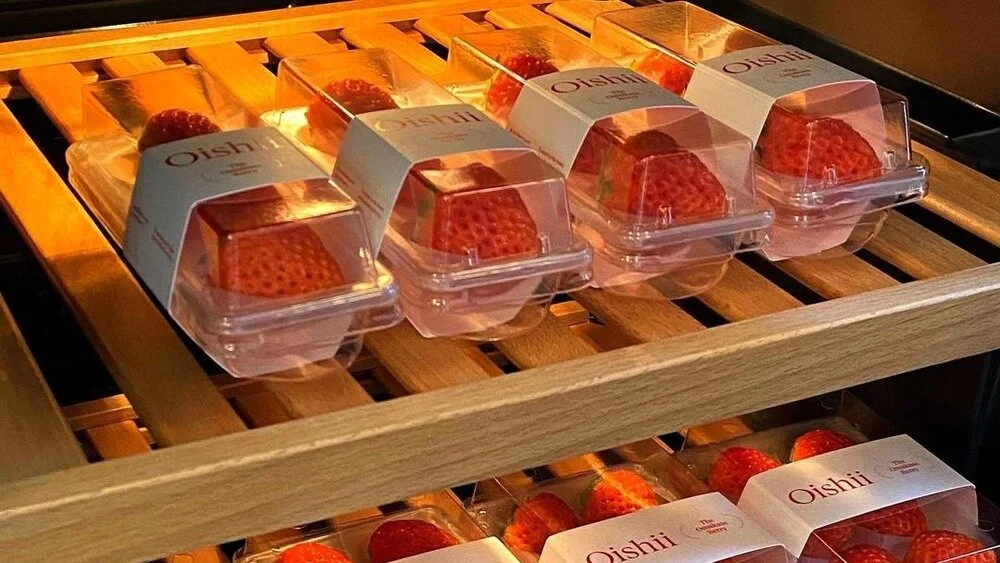
Why does the "Tesla of strawberries" cost $5 each? "This is an oh my god berry," one Omakase berry enthusiast gushed in Oishii's promotional Instagram video. To give you a more precise idea: Oishii's strawberries, berries that the company's CEO, Hiroki Koga, calls the "Tesla of strawberries" or the "happiest strawberries that you can find on this planet," are sold in three-packs (via Food Navigator and Instagram). Oishii suggests you pair your first "with a sip of perfectly brewed Japanese Oolong Tea," you're second with "a bite of creamy, bloomy rind cheese" and your third "with a glass of natural wine."
The whole experience will cost you at least four McDonald's Happy Meals; be prepared to dish out between $15.00 and $18.75 for these strawberries (they retail, says Grub Street, at between $5.00 and $6.25 a pop, depending on size) in addition to your tea, cheese, and alcohol investment.
If you do buy an Omakase berry, you shouldn't wait to eat it. Oishii, Time reports, guarantees that upon purchase, their strawberries will have been harvested and delivered on the same day to ensure that each berry is perfectly, exquisitely ripe. The company's farmers are trained, intensively, to identify the optimum "shade of red" (via Instagram). "When you bite into it, the aroma just spreads into your mouth," Koga told NPR. "Our customers say when they leave a tray of our strawberry in their room, and they come back after two or three minutes, the entire room smells like strawberry."
The science behind the "happiest strawberries on the planet"
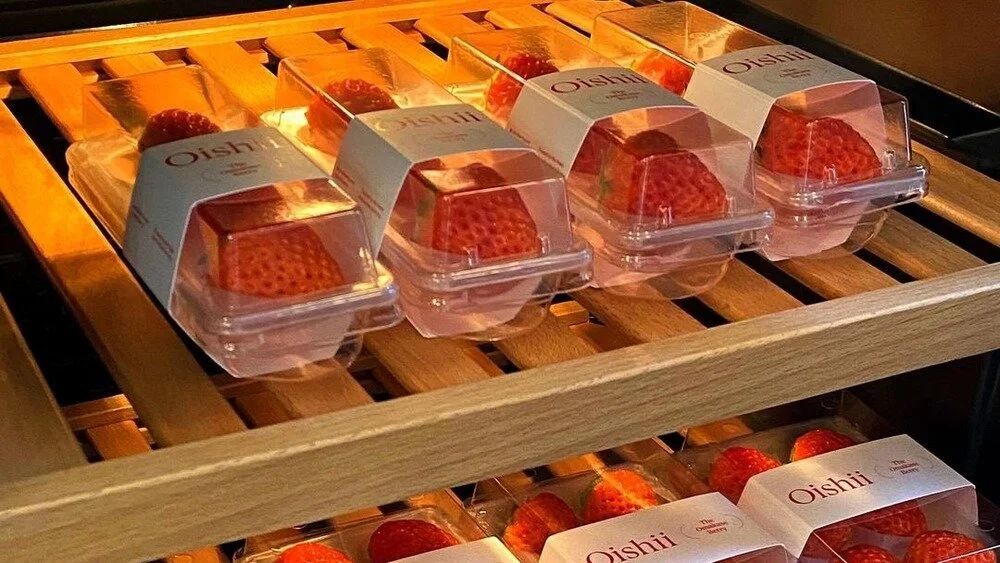
When Oishii's CEO moved to the United States and tasted strawberries here, he was crestfallen. "It almost reminded me of cucumbers," he told NPR. So Koga traveled back to Japan and taste-tested nearly 50 varieties of strawberries before he settled on the one he'd grow in his vertical farm in New Jersey, a 15-minute drive from New York City. The variety Koga painstakingly selected contains twice as much sugar as any-old-American-supermarket strawberry. Besides that, Oishi promises "an airier texture and unexposed seeds."
To achieve perfection, Koga relied on Japanese experts to simulate the weather conditions of a "perfect day in Japan." And he doesn't simply control the temperature in his vertical farm, he also regulates "humidity and levels of CO2 and wind speed" (via NPR). Additionally, with the help of an AI machine, real, live bees pollinate the farm's strawberry flowers. Oishi claims that it's the first indoor vertical farm to achieve such natural pollination (via Instagram). The result, says Grub Street's Adam Platt, is a "diabolically uniform" berries, "you would call [them] monotonous, except they're really quite delicious."
For now, you'll only be able to try these strawberries with non-cucumber-like taste profiles if you have easy access to Manhattan. But a recent $50 million investment into Oishi may soon change that. Koga, according to Food Navigator, has already developed simpler-to-grow, cheaper, grocery-friendly strawberry varieties. He swears they have similar taste profiles to the original Omakase berry.

PODCAST: Vertical Farming Podcast - Season 3 Episode 28 - Robert Laing. Rob Is The Founder And CEO At Farm.One
Join Harry Duran, host of Vertical Farming Podcast, as he welcomes to the show founder, leader, and author, Robert Laing. Rob is the Founder and CEO at Farm.One, an organization that has reinvented specialty farming, and now supplies some of the best chefs in New York.
In this episode, Harry and Rob discuss Rob’s background in design and how Rob’s entrepreneurial drive led him to launch Farm.One. Rob talks about how the pandemic impacted his business and how he was able to pivot to different business models to combat those challenges. Rob shares the work he and his organization are doing to help underrepresented groups as well as the work they’re doing with Google to address sustainability.
Listen & Subscribe
Season 3 Title Sponsor
If you are starting a vertical farm and don't know where to begin, or which technology would suit your needs, Cultivatd can help. As indoor farm brokers, they help connect you to the right technology and ensure your project is successful. Best of all, their service is free. They work on behalf of their partners.
Smart Acres, UAE''s Latest Hydroponic Vertical Farm, Reaches Significant Milestones Within One Year of Launch
At the moment, the team is currently garnering a large amount of interest amongst industry chefs due to the consistent weights of its crops and especially the shelf-life of these tasty greens reaching up to 14 day
3/30/2021
(MENAFN - Mid-East.Info) Having only launched in August 2020, the vertical farm has surpassed industry-targeted weights with its clean, and locally-grown produce in the UAE
Dubai, United Arab Emirates: Smart Acres, the UAE's latest addition to the hydroponic vertical farming industry, has accomplished a series of achievements within its first year since launching. In its inception, Smart Acres has begun distributing a variety of lettuce to various partners and has since then obtained its record-high numbers in producing some of the largest and heaviest greens in the UAE.
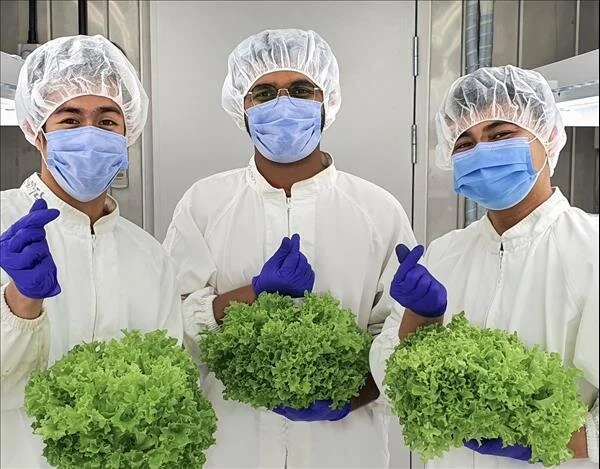
Within the last year, Smart Acres has been producing a line of the freshest, most nutrient-dense greens for UAE residents and businesses alike, and in recent months it has successfully dominated its system of cultivating and harvesting mature species of lettuce exceeding industry-targeted weights for vertical farming, a rare achievement amongst all vertical farms in the GCC region. The AgriTech farm has grown Green Glace up to a record-breaking 419 grams, and has broken maximum weight records with all of their other varieties as well, reaching above 300 grams per lettuce head. This has been a tremendous effort by the company as the produce is not only maintaining large weights, but it is also consistent in its quality and taste. Despite achieving such results, size plays a secondary role when deciding which crops meet the quality standard as their main focus is shape, colour, and taste. At the moment, the team is currently garnering a large amount of interest amongst industry chefs due to the consistent weights of its crops and especially the shelf-life of these tasty greens reaching up to 14 days.
The accomplishments of Smart Acres are in large part due to the internal research and development their team completed prior to and post-launch in 2020. Thanks to the efforts of their team, not only have they produced some of the highest quality lettuce in the region, but there has been a steady increase in demand for purchasing from Smart Acres for food services despite the challenges brought on throughout 2020. Additionally, the vertical farm has achieved a planting ratio of 95% and above when transplanting seedlings. The company takes into consideration the overall size, root health, and health of the leaves when deciding which seedlings are healthy or not to achieve the best results. Smart Acres has managed to cultivate exceptional quality crops with its current farm module technology, and for its upcoming expansion, the company will be installing even newer technology with updated physical systems that will allow for better resource consumption and airflow.
Smart Acres was founded with the mission of improving food security within the United Arab Emirates and developing the country's farming capabilities, providing a solution to potential socioeconomic threats such as pandemics and climate limitations the Middle East currently endures. The vertical farming company, developed by a team of experts, CEO Abdulla Al Kaabi, Director Sean Lee, Lead Project Manager, Aphisith Phongsavanh, and Farm Operations Manager, Vishakh Nath, is a one-of-a-kind agriculture system which is designed to produce some of the highest yields of crops within the UAE's vertical farming industry, whilst introducing a new future for clean foods and allowing both B2B and B2C sectors to locally sourced produce.
Smart Acres'' vision is to shape a balanced well-being for communities and connect them with readily available clean foods. Through their technology and growth methods, Smart Acres will easily provide the UAE with ultra-high quality produce farmed sustainably. The future expansion plan of the company will lie at the development of ''Smart Acres Institute of Food Security & Agriculture'', which will be built on the existing land owned by their CEO, Abdulla al Kaabi.
MENAFN30032021005446012082ID1101830796
Legal Disclaimer:
MENAFN provides the information “as is” without warranty of any kind. We do not accept any responsibility or liability for the accuracy, content, images, videos, licenses, completeness, legality, or reliability of the information contained in this article. If you have any complaints or copyright issues related to this article, kindly contact the provider above.

This Indoor Vertical Farm Relies On Hydroponics To Grow Crops Anywhere During Any Season!
Hydroponic vertical farming is a form of farming that ditches the need for soil, substituting in different root-supporting materials like peat moss or Rockwool, allowing plants to grow in nutrient-rich water
Since 2013, the Green Concept Award has functioned as a platform for networking and been awarded to designers who have made globally sustainable and innovative products. The awards recognize products already on the market or in their conceptual stages that stand out for their design, innovation, and commitment to sustainability. Each year, the Green Concept Award jury members finalize a pre-selection list before awarding the winning product with the year’s title. One of the products on 2021’s pre-selection list is Farmhouse, a hydroponic vertical farm conceptualized by designers at Kingston University’s School of Art.
Hydroponic vertical farming is a form of farming that ditches the need for soil, substituting in different root-supporting materials like peat moss or Rockwool, allowing plants to grow in nutrient-rich water. The five-tiered Farmhouse is stocked with trays that contain all the materials necessary for optimal hydro-plant growth, like filtered, nutrient-infused water, oxygen, and root support.
Additionally, the vertical farm comes equipped with bright lights, either LEDs or HIDs, to replace the natural sunlight outdoors so that each plant can receive special lighting according to its own Daily Light Integral (DLI). Hydroponics is a sustainable farming practice for many reasons, but a significant one might be that by tending to a hydroponic farm, like Farmhouse, crops can be grown anywhere, during any time of the year.
The food we eat on a day-to-day basis travels about 1,500 miles before reaching our plate. While picking produce up at the supermarket seems simple, a lot of pollution takes place behind the scenes, all before hitting the shelves. Delivering produce to grocery stores across the globe requires lots of plastic packaging and plenty more fuel for transportation, increasing levels of microplastic and air pollution in the process. The designers behind Farmhouse aim to cut those unsustainable practices by designing a hydroponic farming solution that can be used in any home, during any season.
Designer: Kingston University (Kingston School of Art)
The five shelves of the Farmhouse contain all the necessary materials required for hydroponic farming.
Outfitted with shelves, Farmhouse grows crops using metal trays that guide the plant’s direction of growth.
A water system, filter, and root-support material all work together to help produce crops through hydroponics.
Without the convenience of natural sunlight, hydroponic farming relies on LEDs and HIDs to feed crops with light.
Thanks to a ribbed glass pane and warm color scheme, Farmhouse can fit into any room.
Coming in denim blue, moss green, rose pink, scarlet red, and blonde yellow – the Farmhouse also comes with a simple frame and intuitive build.

A raised top shelf feeds the plants inside the Farmhouse with plenty of airflow and oxygen.

Indoor Farms Are Particularly Environmentally Friendly
Vertical farming has long since moved beyond the experimental stage. The market research company Global Market Insights forecasts a growth rate of around 28 percent by 2026
Glass display cases in grocery stores are nothing unusual. But what is this one doing in the vegetable section of a Frankfurt supermarket? In fact, there is neither sausage nor cheese behind glass; instead, herbs stretch out into the purple artificial light. It is a small greenhouse.
The customers look on with interest and skepticism. The lush green doesn't quite match the trays on which the plants are arranged in rows, as if in a laboratory. One shelf further on, the private label parsley finally makes its way into the shopping cart - origin: Germany, Morocco or Spain, may vary depending on the offer.
Photo by Satish Kumar on Unsplash
Spanish greenhouses are not exactly known for their economical use of water, fertilizers or pesticides. These glass showcases are quite different. They were developed specifically to allow crops to grow in them in a way that conserves resources as much as possible. This is because food production is increasingly reaching its limits worldwide: Arable land and drinking water are already scarce in many places, and climate change and its accompanying effects are likely to exacerbate the problem in many parts of the world in the future. Added to this is population growth. According to United Nations projections, some 9.7 billion people will inhabit the earth in 2050, around one-third of them in the metropolitan areas of large cities. More than two decades ago, Dickson Despommier of New York's Columbia University, therefore, began looking at ways of creating particularly economical greenhouses. This idea is also behind the glass showcases that the Berlin-based company Infarm is installing in supermarkets.
The saving starts with the space. Plants are stacked on top of each other on shelves in a very confined space - this new form of agriculture is called "vertical farming. If, in addition, sunlight is completely avoided in a completely enclosed space, this is known as "indoor farming. In principle, this can be implemented on any size scale: While agricultural entrepreneurs produce salads and herbs in industrial halls the size of a soccer field or set up glass showcases in supermarkets, hobby gardeners grow their greens in miniature farms that look like extravagant microwave ovens at first glance.
Vertical farming has long since moved beyond the experimental stage. The market research company Global Market Insights forecasts a growth rate of around 28 percent by 2026. Vertical farming is already being practiced on a large scale in America, Japan, Denmark, and the Netherlands. One pioneer is the German company Infarm, which says it already produces salads and herbs indoors on an area of 50,000 square meters - mainly in supermarkets and restaurants. With central indoor systems in factory buildings, so-called growing centers, the company wants to increase this area tenfold within five years. Meanwhile, researchers and entrepreneurs around the world are working on indoor farming technologies.
"By growing crops vertically, we can produce more than a hundred times as much food on the same amount of land," says Simon Vogel, a biology lab technician working on indoor farming concepts at Fraunhofer IME in Aachen. The demand is considerable: food is now grown on half the land in Germany, and yet around 65 percent of vegetables in this country are imported. "With the help of indoor farms, less food needs to be imported," Vogel says. Space-saving greenhouses even fit into urban centers. Herbs and salads then grow where they are consumed, reducing the need for transport and therefore CO2 emissions.

Underground Agriculture In London Is Gearing Up
By 2022, Growing Underground aims to produce 60 metric tons of vegetables across an area of 528 square meters. That should be enough for 10,000 households and is 12x more than what is produced on a regular farm
Growing Underground In London Is One
of The Largest Underground Vertical Farms
In the World That is Controlled Entirely
By A Digital Twin At The University of Cambridge.
29 March 2021
All the good things an old World War II bunker can bring, right? Thirty meters below ground, near the London New Covent Garden food market, two entrepreneurs have been working together for several years with the British University of Cambridge on an underground farm that has great ambitions.
Their intention is not only to significantly increase production on-site over the coming years. The project also serves as an example for the whole world, according to co-founder Richard Ballard,
By 2022, Growing Underground aims to produce 60 metric tons of vegetables across an area of 528 square meters. That should be enough for 10,000 households and is 12x more than what is produced on a regular farm.
Energy and water
Vegetable cultivation takes place without soil, as the plants thrive on a kind of ‘woolen carpet’ that uses very little water. “70% less than on a conventional farm,” claims Growing Underground. Energy consumption is also low due to the great depth – which ensures few temperature fluctuations – and thanks to the energy-efficient LED lighting.
Nevertheless, energy is the one thing that still stands in the way of a global breakthrough. Ballard: “Vertical agriculture is on the verge of exponential growth due to ever-improving LED technology, the Internet of Things, cloud computing, and wireless sensors. But the really big breakthrough will come once more and cheaper renewable energy becomes available that can also be stored.”
Ballard believes vertical agriculture can make a significant contribution to the food problem we undoubtedly have in store as a result of an ever- growing global population. For a techie, the fun part is that it also requires a lot of high-end sensor technology.
Melanie Jans-Singh
A digital twin
There are 25 sensors in the underground farm that constantly track how the plants are doing. E.g., whether something needs to be done with the amount of CO2 in the air, nutrients, temperature, humidity and light. In total, 89 variables are involved. Even the speed at which the plants grow is measured, says researcher Melanie Jans-Singh from the University of Cambridge.
Jans-Singh: “The digital twin provides us with a 3D representation of the situation in London here in Cambridge. That image is even better than if you were there on site yourself. The digital twin can do much more than a human being. It can monitor, learn, give feedback and make predictions. All factors that will help increase productivity.”
A great deal of research into vertical farming is also being done in the Netherlands, such as by the company Plantlab.
ABOUT THE AUTHOR
Maurits Kuypers graduated as a macroeconomist from the University of Amsterdam, specializing in international work. He has been active as a journalist since 1997, first for 10 years on the editorial staff of Het Financieele Dagblad in Amsterdam, then as a freelance correspondent in Berlin and Central Europe. When it comes to technological innovations, he always has an eye for the financial feasibility of a project.

Polygreens Podcast Episode: 19 Grahame Dunling - WorldWide Local Salads
Grahame Dunling, together with son Matthew, has launched WorldWide Local Salads, bringing vertical farming to the city where the rich rural hinterlands served his family well for more than 100 years
Joe Swartz & Nick Greens | 3/26/2021
In this episode Joe and Nick interview Grahame Dunling about his extensive career in vertical farming. Vertical farming allows us to grow healthy, accessible foods within a few acres of land, close to home.
Grahame Dunling, together with son Matthew, has launched WorldWide Local Salads, bringing vertical farming to the city where the rich rural hinterlands saw the family well for more than 100 years.
More about Grahame Dunling:
LinkedIn: https://www.linkedin.com/in/grahame-dunling
More about Joe Swartz:
Website: https://amhydro.com/
Twitter: https://twitter.com/HydroConsultant
More about Nick Greens:
Website: https://www.nickgreens.com
Twitter: https://twitter.com/InfoGreens
Support the show (https://www.patreon.com/nickgreens)
Latest Episode

CALS Researchers Imagine Future of Urban Farming
Making the case for urban agriculture, Cornell researchers have presented a vision for greener cities and a more equitable future for farmers
March 26, 2021
By Rory Sheppard
Making the case for urban agriculture, Cornell researchers have presented a vision for greener cities and a more equitable future for farmers.
The Cornell Small Farms Program, housed in the College of Agriculture and Life Sciences, is responsible for a body of research that advocates for the development of viable small farms throughout New York State.
Cornell Small Farms continues to advocate for urban agriculture through emerging projects such as Urban Ag, which focuses on highlighting the considerations farmers need to make to farms in urban environments and cites examples of successful urban farming.
As part of the program’s mission to ensure a future of rural and urban agriculture through research and educational opportunities, Director of the Cornell Small Farms Program, Dr. Anusuya Rangarajan and Urban Agriculture Specialist of the Cornell Small Farms Program, Molly Riordan published “The Promise of Urban Agriculture” in 2019.
The authors argue in the report that urban farms have the potential to become commercially viable, adding that up to now, much of the existing research has focused on the impact of urban agriculture on social indicators, such as community development and educational attainment.
According to Riordan, the make of a viable urban farm depends on factors such as the laws and regulations of a municipality, the availability and affordability of land, and opportunities available for season extension.
To produce a more comprehensive picture of the future of urban agriculture, Rangarajan and Riordan started by collecting data, speaking to an active network of growers.
“Every time we spoke with someone, we asked, ‘Who else should we speak with about commercial farming in cities?’” Riordan said in an email. “Inevitably that led us to more conversations that broadened and deepened our understanding. We spoke with over 160 individuals in the course of the study.”
Since publication, the multiple findings and recommendations of the report have started to take effect. Partnering with Rooted, an urban agriculture training organization, Cornell Small Farms has been working to introduce training for urban farmers to help improve commercial viability.
Riordan said that the farms, specifically those in controlled environments, have been known to generate considerable finances and interest from venture capital, alongside the development of more technology-focused urban farms. Likewise, technical assistance, research, and training will be essential in increasing the number of urban farms in the coming years.
As the researchers envisioned the future of urban agriculture, they were acutely aware of the concerns that still impact the field. One of the major challenges for urban farmers is, despite the typically smaller nature of the farms, urban land access.
“Knowing that urban growers struggle for access to land, especially Black, Indigenous, immigrant and other farmers of color, institutions can do more to lift up their voices and put the weight and the funding of the
Lead photo: Ben Parker/Sun Senior Photographer -
Housed in CALS, the Cornell Small Farms Program seeks to build more diverse, equitable, and sustainable food systems.

Solar Panels And Water Canals Could Form A Real Power Couple In California
This new study presents an analysis from researchers at the University of California Merced and University of California Santa Cruz that quantifies the economic feasibility of building a “solar canal” system in the state

MARCH 25, 2021
SOLAR AQUA GRID LLC
Solar canals save water, create energy, and protect natural lands all at the same time.
California has around 4,000 miles of canals that shuttle clean water throughout the state. New research shows that these canals can do way more than bringing California’s residents with drinking water—paired with solar panels, these canals might also be a way to both generate solar power and save water.
This new study presents an analysis from researchers at the University of California Merced and University of California Santa Cruz that quantifies the economic feasibility of building a “solar canal” system in the state.
California’s water system is one of the largest in the world and brings critical water resources to over 27 million people. Brandi McKuin, a postdoctoral researcher at UC Santa Cruz and lead author of the study, found that that shading the canals would lead to a reduction in evaporation of water, kind of like keeping your glass of water under the shade instead of out in the open on a hot summer day prevents evaporation from stealing sips. Putting up a solar panel using trusses or suspension cables to act as a canal’s umbrella is what makes the double-whammy of a solar canal.
“We could save upwards of 63 billion gallons of water annually,” she says. “That would be comparable to the amount needed to irrigate 50,000 acres of farmland, or meet the residential water needs of over 2 million people.” Water is of especially critical importance to California, a state regularly stricken with drought.
So why don’t we cover up our water canals already? Micheal Kiparsky, the director of the Wheeler Water Institute at the UC Berkeley School of Law who was not involved in the study, says while the water savings from solar canals may sound really great, they are modest when considering the scale of the project. “Water might not be enough of a motivator to tip the scales to do this for the whole state,” he says.
[Related: At New York City’s biggest power plant, a switch to clean energy will help a neighborhood breathe easier.]
Beyond just cooling down canals, those solar panels can pick up loads of energy from being out in the open sunlight. While the analysis didn’t measure how much capacity these solar panels would have, McKuin estimates through a “back of the envelope” calculation it would be about 13 gigawatts, or “half the projected new capacity needed by 2030 to meet the state’s decarbonization goals.” With that kind of electricity, there is a possibility that diesel-powered irrigation pumps, which do a number on air quality, could be replaced.
Kiparsky finds the idea of tying electricity generation with the water system that uses a vast amount of electricity intriguing. “I like the idea of making things internally renewable,” he says.
Aquatic weeds also plague canals and can bring water flow to a standstill, but the researchers found that by adding shade and decreasing the plant’s sunshine slashes the amount of weed growth. McKuin says preventing weed growth would also lighten the load for sometimes costly mechanical and chemical waterway maintenance.
[Related: 4 sustainability experts on how they’d spend Elon Musk’s $100 million climate commitment.]
While this study is a “modeling exercise” to show the potential of this idea, McKuin hopes this analysis will inspire utilities, as well as state and federal agencies, to test it out on the real waterways. So far, the only test cases of suspended solar panels are in India. In the city of Gujarat, a “canal-top” solar power plant cost over $18 million in 2015 but has saved 16 hectares of land and trillions of gallons of water. In other locations, where flowing water is not critical, floating solar panels have been installed on reservoirs and lakes around the world in places such as Japan and Indonesia.
Placing solar panels above existing canals can also spare untouched natural land that is frequently slated for sometimes expensive or environmentally destructive solar panel installations. “I think one of the important parts of this story is that in California we have this mandate to produce renewable energy at scale, but we also have to be careful about taking large parcels of land,” McKuin says. “By being creative about where we put solar panels we can maybe avoid some of these trade-offs.”
Tags: CLIMATE ENERGY RENEWABLE ENERGY SOLAR PANELS SUSTAINABILITY SCIENCE ENVIRONMENT

Lisette Templin, Professor At Texas A&M University - A Pioneering Woman In Agriculture
Lisette Templin is the director and founder of the Texas Urban Farm United (TUFU - TAMU) a startup vertical farm she and a couple of students began in 2019
According to Lenny Geist and Anne Amoury, with Kansas Freedom Farms, one of many pioneering women in agriculture is Lisette Templin, a professor of health and kinesiology at Texas A&M University (TAMU) in College Station, Texas. Lisette Templin is the director and founder of the Texas Urban Farm United (TUFU - TAMU) a startup vertical farm she and a couple of students began in 2019.
As a faculty member overseeing Physical Education, Templin is keenly aware of how food choices and essential daily nutrition are to overall animal and human health.
She and her students received a small grant from the TAMU public health school to go vertical. Templin has a number of hydroponic growing towers in her new venue she and a few co-workers maintain. Some of the all-natural forage is donated to the university’s “12th Can” food bank program to alleviate local hunger...clearly one of Templin’s strongest passions.
Lisette Templin (Photo credits: Texas A&M University)
“Food as medicine must play a more urgent and vital role in the health of our children and the health of our country. Indoor hydroponic farms can play a pivotal role in transitioning people off of medication from chronic diseases as well as strengthen the immune system.
Micro and macronutrient dense food grown locally can effortlessly replace food that is highly inflammatory to the human body while providing the needed phytochemicals that promote health,” she wrote recently. Templin is in the process of applying for grants and financial support in hopes of raising $1 million (USD) to erect a two-story CEA facility that will be home to hydroponic growing operations on the top floor with a kitchen, cafeteria, classrooms, and offices on the ground floor.
Photo credits: Texas A&M Urban Farm United / The Eagle
“Hydroponic food is about the impact of delivering maximum nutrient density to the immediate local community. Hydroponic vertical growing technology's innate potential is its ability to eradicate food deserts across our country,” Templin says. Clearly, she’s a Texas trailblazer with tall towers to tend.
According to Lenny Geist, "we need more like Templin, to improve agriculture and promote environmental stewardship. It behooves the stuffed shirts to follow the determined bunch out on the “north 40” -- the bunch that likes to wear Gucci or Louis Vitton heels just as much as they do Justin or Tony Lama boots."
"They aren’t afraid of hard work, trying new things, and exploring what’s possible even if it means a setback or two along the way," he adds. "Since they see these as learning opportunities to get better and march forward toward their ultimate objectives having gained greater perspectives. Someday, these movers and shakers or any of their sure-to-follow feminine disciples may just give the old, stodgy stuffed shirts the boot. There are lots of reasons to believe this will be for the best."

For more information:
Lisette Templin,
Texas A&M, Texas Urban Farm United
lisettetemplin@tamu.edu
www.agrilifetoday.tamu.edu
29 Mar 2021
The Pollination Pickle of Indoor Farming
Pollinators like bees, birds, and bats account for 35% of the world's current food production, so every third bite of food you eat, thank the pollinators

New Post On Shubham Khoje
by Shubham
A few months ago, I wrote a post about how the farms in the future could go indoors. I had looked at some of the pros and cons of indoor farming and had barely scratched the surface. So I dived a little deeper and found this really interesting challenge as the nascent indoor farming industry moves forward.
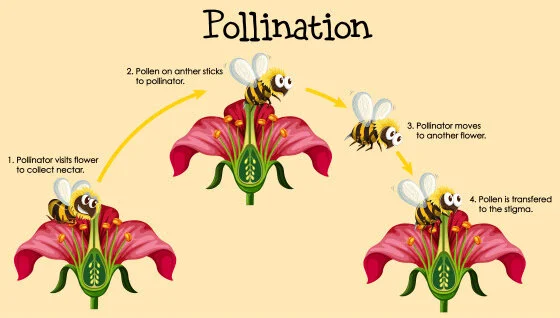
Pollinators like bees, birds, and bats account for 35% of the world's current food production, so every third bite of food you eat, thank the pollinators. In the US, these pollinators alone contribute to over $18 billion in the production of over 100 crops every year. Pollination of some form is vital for 75% of the major food crops of the world including apples, almonds, coffee, and many more. In short, pollination is essential to growing food and ultimately for the survival of human beings.
Source: Flower vector created by brgfx - www.freepik.com
But what does pollination have to do with indoor farms?
A majority of the indoor farming companies, be it greenhouses or vertical farms, are focused on growing leafy greens like lettuce, kale, arugula, etc. using either hydroponics, aquaponics, or their hybrid versions. To build these farms you need a lot of cash upfront. The short growth cycles and relative ease of growing these leafy greens are what makes them lucrative to cover the high capital costs.
Stephen Pankhurst in his video explains how there would be three phases of indoor farming, the leafy greens marking the first phase of this industry.
Phase I - Leafy Greens
Phase II - Roots and Fruits
Phase III - Staple Crops
So far, the indoor farming companies have researched and worked towards improving their leafy green growing recipes. They have built software for controlling and optimizing the light, water, wind, and now adding AI to the mix gives them a head start. Having mastery of Phase I has given them the courage to venture further into Phase II, growing fruits.
The big guns of vertical farming like Plenty are already stepping up their game. With their $140 million series D funding, they have partnered with Driscolls, the company that controls 1/3rd of the U.S berry market, to expand into growing strawberries.
But in order to grow fruits, the flowers need to be pollinated. When you try to grow fruits in an indoor farm, which is a closed environment with no access to bees and birds, the biggest challenge would be the pollination process.
The pollination pickle
The main purpose of automating any process is to reduce laborious tasks and make machines do our bidding. Indoor farming companies love to automate their processes, from machines that help the seeding process to automatic conveyors that move the racks for growing the greens, and ultimately robots that harvest the leafy green produce.
In the natural world, however, the labor-intensive task of pollination is left to the wind, birds, and the bees at no cost to us. But with the indoor farms that are spread over millions of square feet either horizontally or vertically, natural pollination becomes a problem. So as we move indoors, some efforts are being made to build tech for reducing the efforts needed for the pollination process.
Tomatoes, for example, are self-pollinating, meaning, the pollen needs to fall inside the flower itself to pollinate and develop into a fruit. But the pollen needs to be "shaken" to fall down, usually, the bees help the tomato plant. But in a greenhouse or an indoor farm, hand pollination with electrical wands replaces the humming of the bees to pollinate the tomatoes. Humans have to move from flower to flower on a scissor lift, making sure the pollination is done on all the flowers. From passionfruit in Brazil, tomatoes in the USA, and eggplants in Nederlands that are grown indoors are hand-pollinated, a tedious and labor-intensive task indeed.
A new approach is being taken by companies like Polybee that are developing drones small enough to fly from flower to flower and pollinate them. The Israeli company Edete has automated almond pollination by using lasers to locate the almond flowers and blow pollen into them. Although almonds are an outdoor crop, the breakthrough technology could someday be possibly used for indoor farms.
Oishii, a New Jersey-based indoor farm, on the other hand, is playing a different ball game altogether, they are growing world class Omakase strawberries that sell for $5 for a single strawberry. Unlike any other indoor farm, they have mastered the technology of using bees to pollinate their fruit and just closed a $50 million Series A funding to expand their farms. They are also at par with using robots for automating their other process. I believe this to be a step in the right direction.
In conclusion, the indoor farming industry that is focused on growing leafy greens is venturing into growing fruits. They have brought down power consumption with energy-saving LEDs, reduced manpower by automating all the processes, built high precision software to help monitor and improve the growth and yield of their produce. Surely, these technological advancements will help them move forward into the next phase, but to scale up the second phase to the humongous levels of Phase I, the industry will have to solve this pollination pickle.
To automate or not to automate the pollination process, that is the question.
P.S: There is an episode on the dystopian Netflix series "Black Mirror", about how in the future, autonomous drone bees built to replace the extinct natural bees, takes a turn for the worse and ends up killing people.
https://shubhamkhoje.files.wordpress.com/2021/03/pexels-videos-4408-1.mp4
New Research by Edith Cowan University: ‘Green Leafy Vegetables Are Essential For Muscle Strength’
Researchers examined data from 3,759 Australians taking part in Melbourne’s Baker Heart and Diabetes Institute AusDiab study over a 12-year period
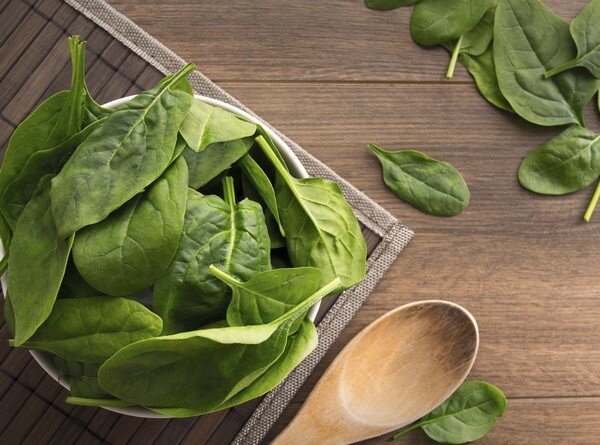
According to new Edith Cowan University (ECU) research, eating just one cup of leafy green vegetables every day could boost muscle function. The study was published in the Journal of Nutrition; it found that people who consumed a nitrate-rich diet, predominantly from vegetables, had significantly better muscle function of their lower limbs.
Researchers examined data from 3,759 Australians taking part in Melbourne’s Baker Heart and Diabetes Institute AusDiab study over a 12-year period. They found those with the highest regular nitrate consumption had 11 percent stronger lower limb strength than those with the lowest nitrate intake.
According to scitechdaily.com, Lead researcher Dr. Marc Sim from ECU’s Institute for Nutrition Research said the findings reveal important evidence for the role diet plays in overall health. “Our study has shown that diets high in nitrate-rich vegetables may bolster your muscle strength independently of any physical activity,” he said. “Nevertheless, to optimize muscle function we propose that a balanced diet rich in green leafy vegetables in combination with regular exercise, including weight training, is ideal.”
Lead photo: mage: Dreamstime.com

26 Mar 2021

VIDEOS: How To Design A Successful Vertical Farm
Vertical farming provides a practical and cost-effective way to bring food production to congested spaces. Getting a vertical farm off the ground requires more than just a green thumb and some warehouse space, though

March 26, 2021
Vertical farming provides a practical and cost-effective way to bring food production to congested spaces. Getting a vertical farm off the ground requires more than just a green thumb and some warehouse space, though. Read on to find out how to design a successful vertical farm and start harvesting crops indoors in city environments.
What Is Vertical Farming?
Vertical farming is an indoor cultivation technique that maximizes the use of space for plant production. It involves layering multiple crops or types of crops in a highly controlled vertical hydroponic or container-based system. Those who are already familiar with indoor growing can think of it like a traditional hydroponic or container garden but on multiple levels.
The Four Key Design Factors
There are four key design factors that future vertical farmers must keep in mind if they want to bring down large, high-quality yields. They mimic processes that occur in nature but would otherwise be absent in a man-made system. The four factors are:
Lighting
Climate control
Nutrient control
Vertical integration
There’s little sense in purchasing seeds or rootstock until future farmers know exactly how they will provide for all the plants’ needs, so this is a good place to start. Let’s take a look at what factors farmers need to take into account before they start the design phase.
Adequate Lighting
All indoor farms and gardens require some form of artificial lighting. Farmers and growers who are still in the beginning stages of taking their operations indoors can get the basics down by visiting Agron and reading through their educational materials. However, vertical farming is a little more complicated than a normal hydroponic or container-based garden.Since plants will be grown on multiple levels, hanging lights from the ceiling isn’t always the best solution. Most vertical farmers purchase specialized ballasts and use LED lights that emit very little heat so they can keep their lighting as close to the plants’ canopies as possible. Some modern farmers also go in for more advanced options like installing rotating beds or utilizing smart lights, but they won’t make up for inadequate lighting for all levels of the vertical farm.
Climate Control
Plants can only grow and thrive under the right climate conditions. Vertical farms need good temperature, humidity, and air handling systems. In most cases, the building’s HVAC system will be able to handle heating and cooling demands. Without adequate ventilation and air handling systems in place, though, high humidity can negatively impact plants’ cellular respiration processes and create a perfect environment for the spread of fungal diseases. It’s worth taking the time to investigate options like dehumidification systems, exhaust fans, or specialized HVAC systems that manage humidity and airflow as well as temperature control.
Nutrient Control
Plants don’t get all the energy they need from photosynthesis alone. They require nutrients as well as light and water. Every species has a different set of requirements, but all terrestrial plants need macronutrients like nitrogen (N), phosphorous (P), and potassium (K) along with a smaller amount of micronutrients to fuel healthy growth and crop production. How they get those nutrients is largely a matter of farmers’ preferences.
There are four types of systems that are appropriate for vertical farming. On a small scale, container farming using soil, amendments, and fertilizers can work. However, most large-scale vertical farms eschew this traditional practice in favor of hydroponic or aeroponic systems. Hydroponic and aeroponic setups remove soil from the equation entirely. They’re similar systems, but while hydroponics gives plants access to nutrients via a water-based solution, aeroponics involves leaving the roots exposed and spraying them with nutrients.
Finally, some more sustainability-minded vertical farmers introduce elements of aquaponics into their farms. Aquaponics involves cultivating both plants and fish. The fish provide beneficial nutrients via a hydroponic system, while the plants filter the water so the fish can thrive. The benefits of vertical aquaponics systems include improved sustainability, water conservation, and added crop value.
Vertical Integration
Not all indoor farms are vertical farms. To qualify as a vertical farm, the plants must be cultivated on multiple levels in the same room. Warehouses are perfect for this approach since they have high ceilings that can accommodate tall towers of plants and all the equipment required to maintain optimal temperatures, humidity levels, light, and nutrient delivery. The key in designing a vertically integrated farm is to maximize crop production by ensuring that the plants have just enough space to grow and thrive and receive as much light as possible.
Crop Selection for Vertical Farming
It may be tempting to assume that since vertical farming occurs indoors in a highly controlled environment, that means it’s suitable for all crops. While it’s true that vertical farmers can grow almost any kind of annual plants, and even some perennials, that doesn’t mean they should. Farmers need to consider these factors when selecting crops:
Local demand
Time to harvest
Climate requirements
Revenue margins
If the idea is to get crops out to market as fast as possible, farmers may want to stick with fast-turn crops like lettuce, potherbs, and other greens. Most of these crops will be ready for harvest in six weeks or less. Slow turn crops have higher revenue margins but require more inputs and time to grow than leafy greens. It’s also perfectly fine to plant a combination of crops as long as they all have similar climate requirements.
Vertical Farming Is the Future
With climate change poised to wreak havoc on agricultural lands across the globe and the costs associated with water scarcity on the rise, vertical farming poses a viable solution. A well-designed system can help to conserve water, avoid the impacts of inclement weather, and provide reliable, year-long access to fresh food.
The best part is, designing sustainability features like LED lighting, aquaponic systems, or even wind turbines into the vertical farm from the beginning can help to offset both the financial and environmental costs of producing food for city-dwellers, often right in their backyards. It takes a large initial investment to get started, but the payoffs will be worth it.
Related Videos about How to Design a Successful Vertical Farm :
Vertical Farms | Design, and Innovation
Growing Up: How Vertical Farming Works
Designing the vertical farm
Vertical Farming
Tags: vertical farming design pdf, vertical farming business plan, vertical farming technology, vertical farm for home, vertical farming in india, hydroponic vertical farming, vertical farming equipment, how to start vertical farming,

Introducing Low-Cost Farming Models To The Philippines
“I am convinced that we found a system that works perfectly here for the local climate conditions, with minimal cost of electricity and well suited for the skill level of the labor force, whilst delivering the highest quality produce
Through Local Sourcing
And The Use of Natural Resources
The Philippines is one of the greatest exporter of coconuts, mangoes, and pineapples worldwide, it is quite a surprise that a large number of vegetables are imported from surrounding countries. “Fresh herbs and leafy greens, in particular as they’re much more expensive here and low-quality,” says Ralph Becker, CEO and founder of Urban Greens. “Our climate is not ideal for some specific vegetable cultivation because of the extreme heat, torrential typhoons and other natural disasters. However, there is growing awareness regarding a healthy lifestyle, whereas the demand for vegetables is increasing noticeably.”
After spending a decade in corporate technology with Sony Electronics, Ralph Becker decided to shift his focus. “When I left the shelter of corporate life and moved back to the Philippines, I noticed that lots of food was imported. It made me think whether that could be done more efficiently with a smaller carbon foodprint and eventually better food quality.”

Ralph Becker
Sourcing locally
Hydroponic material and equipment is easily obtainable in most western countries but less so in the Philippines and particularly when he started his venturesome 4 years ago, which is why Ralph and his team designed everything themselves from the ground up.
“I am convinced that we found a system that works perfectly here for the local climate conditions, with minimal cost of electricity and well suited for the skill level of the labor force, whilst delivering the highest quality produce. One of the benefits for us is that the equipment can easily be repaired from parts available in a local hardware shop, for instance.
Contrary to other players who brought in technology from abroad that was not particularly designed for these temperature and humidity conditions, such as container farms which heat up in this tropical climate and take a lot of electricity to cool down – cost that has to be recovered on a slim profit margin to start with. We have our own technology and we’re able to scale it, without having to rely on outside technology.”
The new warehouse
With the brand-new warehouse farm right in the city center, the company will soon be delivering more than 1,5 tons of fresh produce per month. “Everything we’ve learned thus far in previous smaller units is now replicated in our new farms implementing the same model. The Philippines is a big country with many cities that rely quite heavily on imports, which is the main market we want to target,” says Ralph.
Ralph had always been interested in plant growing ever since being exposed to hydroponic farming in Japan and the US. Once he relocated to the Philippines he started doing some experiments with growing herbs. Posting about his project on social media many people reached out as they wanted him to grow for them too. Ralph says that restaurants and hotels were eager to validate the demand of high-quality local produce.
Pilot model
Urban Greens is building the new warehouse farm with a bigger purpose in mind, namely, as a pilot model for more farms. People interested in the vertical farming space can come and visit the farm. Ralph adds, “We want to inspire visitors by showing the possibilities of these new farming models. After all, we need young farmers to come into the industry. The younger generation isn’t that interested in farming because of the hard labor and low wages. We want to prove them wrong by showing that farming can be lucrative and modern too.”
Apart from cost-effectiveness, reliability is one of Urban Greens’ greatest assets. “Consistency of supply gets easily interrupted due to tropical storms, which is both bad for the farmer and for those who rely on it. Reducing food miles is of essential importance to food availability,” Ralph states. This also happened during COVID, when many supply chains were cut and the company noticed a strong increase in demand. “We turned hardship into an opportunity,” says Ralph. “Once we’ve finished up this warehouse farm in the heart of Makati, people will see that vertical farming can be viable in the Philippines. This country has 7000 islands, and I think each of them is in need of an Urban Greens farm.”

For more information:
Ralph Becker, CEO
Urban Greens
ralph@eaturbangreens.com
www.eaturbangreens.com
Publication date: Mon 29 Mar 2021
Author: Rebekka Boekhout
© VerticalFarmDaily.com

SINGAPORE: New Guidelines For Local Farms To Ensure Produce Is Safe, Sustainable
The guidelines are meant to assure consumers that produce from local vegetable farms is fresh, free from synthetic pesticides, and grown sustainably
The guidelines are meant to assure consumers that produce
from local vegetable farms are fresh, free from synthetic
pesticides, and grown sustainably
March 25, 2021
SINGAPORE - New guidelines to help local farms ensure the production of clean and green local produce were launched on Thursday (March 25).
They are meant to assure consumers that produce from local vegetable farms is fresh, free from synthetic pesticides, and grown sustainably - with efficient use of resources and without compromising the environment.
"SS 661: Specification for Clean and Green Urban Farms - Agriculture", the standard including the guidelines, was launched by the Singapore Food Agency (SFA) together with Enterprise Singapore, the Singapore Manufacturing Federation - Standards Development Organisation, and Republic Polytechnic (RP).
It contains criteria that urban vegetable farms have to meet in terms of farm management, techniques, and practices to achieve a clean and green production system.
A clean farm production system refers to one that does not use pollutive farm inputs, such as synthetic pesticides, and does not leave behind undesirable residue for consumers and the environment.
A green farm production system ensures the efficient use of farm inputs and natural resources, the recycling of farm waste to minimize the impact on the environment and ecosystem, as well as the optimization of farm production.
The criteria include minimum competency requirements for farm employees, plans for the responsible management of resources, green procurement practices and farm operations, as well as procedures for handling customer complaints, farm product recalls and conducting internal audits.
The standard will also help vegetable farms adopt smart farming techniques and practices to reduce wastage of resources, incorporate circularity in their resource management, and optimize operational efficiency.
Dr. Tan Lee Kim, SFA director-general of food administration and deputy chief executive, said these guidelines are timely, given the increasing challenges from climate change.
"(Climate change) can put a strain on food supply chains, including our local food production... The standard will be critical in ensuring our local farms employ farming practices that make efficient use of our resources to grow more in land-scarce Singapore and are sustainable in the long run," Dr. Tan said.
"As a result, local urban farms will be recognized for producing safe, quality food, using resource-efficient practices in a clean and sustainable environment. This will allow us to differentiate and brand local produce, further strengthening Singapore's reputation for quality produce as we work towards achieving our '30 by 30' goal."
The "30 by 30" goal is for Singapore to produce 30 percent of its nutritional needs locally by 2030.
The SFA will work with local farmers and industry players to promote and raise awareness of the standard.
RP will also launch a three-day training course from April to assist farms in adopting the standard.
Lead photo: by LIANHE ZAOBAO: The guidelines are meant to assure consumers that produce from local vegetable farms is fresh, free from synthetic pesticides, and grown sustainably.
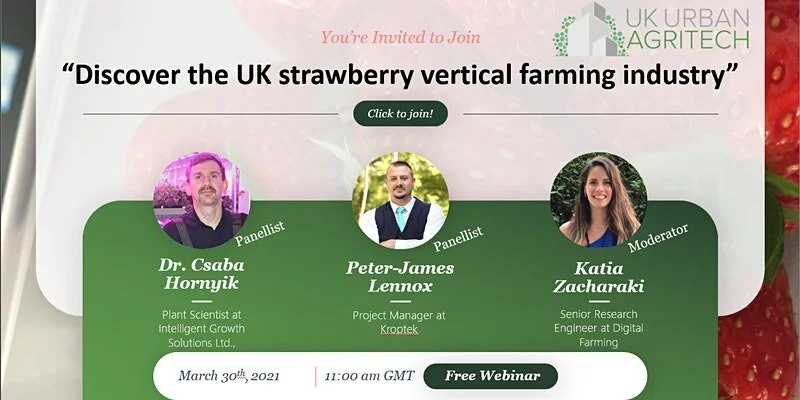
Webinar: Tuesday, 30 March 2021 Dr. Csaba Hornyik (Intelligent Growth Solutions), Peter-James Lennox (Kroptek), Katia Zacharaki (Digital Farming / Harper Adams University / UKUAT)
This panel is the second online event, which succeeds the intro webinar with the title ‘What is the secret to growing strawberries in TCEA?’
Discover The UK Strawberry
Vertical Farming Industry
Strawberries can be grown in TCEA. That is well established. Challenges exist, but the industry is thriving to tackle them. Are you wondering where the UK urban farming industry is in terms of the development of TCEA strawberry systems? Are you keen to ask questions about pesticide use in TCEA? Or where the plants are coming from? Or questions about the yields and the fruit quality (size, Brix)? UKUAT brings to you a panel discussion to answer all these questions.
REGISTER
This panel is the second online event, which succeeds the intro webinar with the title ‘What is the secret to growing strawberries in TCEA?’. Following some of your questions, we bring to you two fine organization members of UKUAT to share their experience working with strawberries in TCEA and answer more of your questions.
Dr. Csaba Hornyik from Intelligent Growth Solutions Ltd. and Peter-James Lennox from Kroptek will be our panelists, and Katia Zacharaki will facilitate the discussion. The webinar will be interactive, engaging and will provide a collision space for like-minded interested growers, producers, scientists and enthusiasts for this field. And of course, there will be opportunities for a live Q & A at the end of the session. Katia Zacharaki will facilitate the discussion.
Dr. Csaba Hornyik, Plant Scientist at Intelligent Growth Solutions Ltd.
Csaba is an experienced plant scientist having a background in plant development, molecular biology and pathology. His main role at IGS is to plan, carry out and analyze crop trials focusing on the development of environmental recipes for crops growing in a total controlled-environment. Csaba also develops the crop portfolio and manages customers trials at the vertical farm in Invergowrie, Dundee.
Strawberry is in the focus of several customers and the industry needs a reliable supply of propagules. The vertical farm is suitable to grow strawberry plants from seeds, grow them up and produce runners to further propagate the plants. All of the different stages of plant development need special settings which could be set in the vertical farm. We develop recipes for germination, early-stage growth and runner production. Root development is also under optimization to produce strong propagules during a short time. Flower and berry production is out of scope for IGS at the moment, but optimization is underway for flower development and berry production.
Peter-James Lennox, Project Manager at Kroptek
Peter is a project manager at Kroptek for the last two years, an LED grow lights and farming solutions company - with over 16 years of experience in the horticultural industry. Having previously worked as a Designer Manager in the technology sector made him realize the lack of equipment and knowledge in the TCEA horticultural industry. This, combined with the passion developed from growing up in a strawberry farm that only used soil, inspired me to find the best solutions for the horticultural sector.
Bio of webinar moderator:
Katia Zacharaki is working as Senior Research Engineer for Digital Farming involved in leafy salads, microgreens, and strawberry research. She is working on her Ph.D. with Harper Adams University and supports UKUAT as Communications Director.


RUSSIA: iFarm Supports Urban Greenhouse Challenge At TPU
iFarm, the winner of The Europas Awards 2020 as the Hottest Ag/FoodTech startup, has supported Urban Greenhouse Challenge: Reforest, an international competition held at Tomsk Polytechnic University

By avborovskaia
March 27, 2021
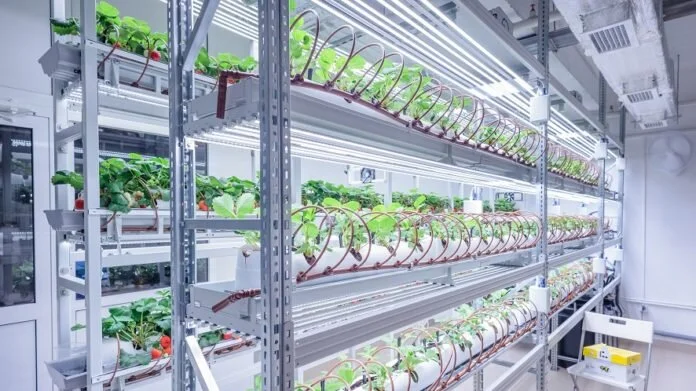
iFarm, the winner of The Europas Awards 2020 as the Hottest Ag/FoodTech startup, has supported Urban Greenhouse Challenge: Reforest, an international competition held at Tomsk Polytechnic University.
iFarm creates technologies to grow fresh herbs, berries and vegetables throughout the year, including modular automated vertical farms and iFarm Growtune IT-platform. and has offices in Novosibirsk, Moscow, and Amsterdam, along with a showroom in Finland. The herbs, grown using iFarm technologies, are sold in all federal chain stores of Russia.
iFarm is a winner of the CovHack-2020 Virtual Innovation Challenge in the Best Startup category, a winner of the Nordic Startup Awards in the Best Social Impact Startup category, an Overall Indoor Farming Solution Provider of the Year in AgTech Breakthrough-2020 Awards in the Indoor Farming category and others.
“Urban farming arises at the intersection of multiple technological disciplines: agricultural engineering, engineering, and IT. We consider that similar competitions help teams to dive into such a multidisciplinary environment, master their skills, and further, together with us, change approaches to plant growing. It does not matter if it is about trees or food products, the set of technologies will be approximately the same,” Kirill Zelenski, iFarm Europe Managing Director, says.
“The events like Urban Greenhouse Challenge are an investment in the development of a new industry, staff training and highlighting really crucial problems, that humanity is going to face soon,” Kirill Zelenski emphasizes.
Besides the lecture part, the iFarm representatives will take part in mentoring the teams over the period of the competition. The company is interested in involving as many students from different countries as possible in this new industry.
“Non-specialists are usually the ones who change technological approaches to various fields of life. For instance, it was Henry Ford who made a revolution in people transportation but not the companies, which had been constructing carts and carriages for centuries. iFarm is a striking case in point. It is an IT-company that creates automated vertical farming technologies applying knowledge and approaches that have almost never been used in agriculture before. Therefore, what we expect from students is different, even the most incredible but well-elaborated ideas, which we will help them implement,” the expert says.
“We wish the participants not to be afraid to ask questions and try to understand things that they are not good at yet. Only such an audacious approach leads to the emergence of new and breakthrough solutions,”