

Welcome to iGrow News, Your Source for the World of Indoor Vertical Farming

VIDEO: Device Communicates With Plants Using Electric Signals
Researchers envision a future where farmers can take preventive steps to protect their crops, using the plant ‘communication’ device they have developed
24 March 2021
Researchers envision a future where farmers can take preventive steps to protect their crops, using the plant ‘communication’ device they have developed.
A team of scientists led by Nanyang Technological University, Singapore (NTU Singapore) has developed a device that can deliver electrical signals to and from plants, opening the door to new technologies that make use of plants.
The NTU team developed their plant ‘communication’ device by attaching a conformable electrode (a piece of conductive material) on the surface of a Venus flytrap plant using a soft and sticky adhesive known as hydrogel.
Pick up and transmit electric signals
With the electrode attached to the surface of the flytrap, researchers can achieve two things: pick up electrical signals to monitor how the plant responds to its environment, and transmit electrical signals to the plant, to cause it to close its leaves.
According to the scientists, the ability to measure the electrical signals of plants could create opportunities for a range of useful applications, such as plant-based robots that can help to pick up fragile objects or to help enhance food security by detecting diseases in crops early.
Text continues underneath the video
Monitor crop health
The research team envisions a future where farmers can take preventive steps to protect their crops, using the plant ‘communication’ device they have developed.
Lead author of the study, Chen Xiaodong, President’s Chair Professor in Materials Science and Engineering at NTU Singapore said: “Climate change is threatening food security around the world. By monitoring the plants’ electrical signals, we may be able to detect possible distress signals and abnormalities. When used for agriculture purpose, farmers may find out when a disease is in progress, even before full‑blown symptoms appear on the crops, such as yellowed leaves. This may provide us the opportunity to act quickly to maximise crop yield for the population.”
Smartphone
The device has a diameter of 3 mm and is harmless to the plant. The researchers say it does not affect the plant’s ability to perform photosynthesis while successfully detecting electrical signals from the plant. Using a smartphone to transmit electric pulses to the device at a specific frequency, the team elicited the Venus flytrap to close its leaves on demand, in 1.3 seconds.
The researchers have also attached the Venus flytrap to a robotic arm and, through the smartphone and the ‘communication’ device, stimulated its leaf to close and pick up a piece of wire half a millimetre in diameter.

US: INDIANA - Hi-Tech Indoor Farm In South Bend Taking On Lettuce Market
inside a new six-acre building on West Calvert Street in South Bend, Matt Gura is keeping a close watch over a sea of baby plants that fill a greenhouse about the size of two big-box retailers, or 174,000 square feet
By ED SEMMLER South Bend Tribune
March 27, 2021
SOUTH BEND — It’s a chilly, wet, and windy day – enough to remind us that winter still isn’t too far in the rearview mirror.
But inside a new six-acre building on West Calvert Street in South Bend, Matt Gura is keeping a close watch over a sea of baby plants that fill a greenhouse about the size of two big-box retailers, or 174,000 square feet.
It’s like a warm day in early summer inside the building, which uses computers and monitors to control light, liquid nutrients, temperature, humidity, and even plant-loving carbon dioxide.
Gura, director of operations at Pure Green Farms – a hydroponic indoor farm on the city’s southwest side – touts it as the “most technologically advanced leafy green greenhouse in the world.”
“And it’s in South Bend,” he says.
Though it might seem odd to build a massive indoor farm in northern Indiana – considering the cold weather and the perma-cloud that seemingly hangs over the region each winter – leaders at South Bend-based Ceres Partners, an agricultural investment firm, studied the project for years.
They believe there is an opportunity to disrupt the lettuce trade, which is largely dominated by growers in California who ship products to markets in the Midwest.
There’s more sunlight here than most of us realize, and the fact that it doesn’t get too hot in the summer means that the cost of trying to keep the building cool won’t be out of line, Gura said.
A combination of LED and high-pressure sodium lights will supplement the light needs of the plants, and there’s an automated shade that can be used to cut down on light coming in or out of the greenhouse as needed.
In the winter, the indoor farm will use offal heat from the nearby South Bend Ethanol plant, and discussions are underway to possibly use carbon dioxide produced by the facility if it makes economic sense for both businesses.
Ceres also liked the location because it’s near its headquarters near the University of Notre Dame as well as major transportation links that will be crucial to getting the leafy greens produced by Pure Green Farms to grocers, restaurants, and other customers throughout the region, said Brandon Zick, chief investment officer for the firm.
“There’s 55 million people within a 300-mile radius,” said Joe McGuire, a seasoned produce distribution executive who was brought in to serve as CEO of Pure Green Farms. “There’s 75 million people within 400 miles.”
That distance gives Pure Green a significant shipping advantage over traditional leafy green producers that are located in California, Arizona and other far-away locations.
By the time lettuce is harvested and processed in California, for example, it might take 10 days to reach store shelves in the Midwest. Conversely, the romaine, arugula and leaf lettuces grown at Pure Green could be on store shelves in a couple of days or even less.
“We think there’s going to be strong demand for fresher produce that’s grown in the market,” McGuire said.
The first shipments have gone out to Kroger stores in Indiana, and it won’t be long before Pure Green is available at Martin’s Super Markets and other grocers.
Beyond the freshness factor, Pure Green believes it can separate itself from other salad providers because it is not using pesticides or other sprays that might be needed to control bugs and plant diseases outdoors.
Plant protection and eliminating chances for contamination are of paramount importance at the South Bend facility, which currently has 20 workers.
Employees crossing into the greenhouse walk through a tray of shoe sanitizer and wear gloves, coats and hairnets.
After seeds are inserted into a blend of sanitized peat and wood fiber by machine, the planting trays move into the greenhouse, where they are given a nutrient drink while germinating under less intense light and then growing up under full light.
Depending on the variety, it will take about 25 days for the romaine, arugula and leaf lettuces to reach the stage where they are harvested by lightning-fast cutters, blended together, packaged and boxed for shipment.
“From planting to packaging, it’s never touched by human hands until it’s opened by the consumer,” McGuire said.
Nothing is wasted. The nutrient mix that isn’t consumed by the plants is collected, cleaned, tested and reused; the peat material in the growing trays will be composted and used for other agricultural purposes.
“We use 90 percent less water than field-grown lettuces,” said Gura, who previously served as director of operations at Ceres-owned Hop Head Farms in Baroda, Michigan, before joining the team at Pure Green. “I believe it’s the future of growing.”
Though current laws don’t allow the lettuce to be labeled as organic, Zick and McGuire indicated there could be court challenges as controlled-environment growing facilities continue to spring up around the country.
“It’s not classifiable as organic because we don’t put it into the ground,” McGuire said.
Though indoor facilities have been used to produce tomatoes and other crops, producing leaf lettuces at a significant volume is a more recent phenomenon, brought about by shipping distances, food safety and the push for locally produced food.
Beyond the freshness factor, lettuces produced at Pure Green Farms could eliminate 500,000 truck miles annually and up to 300,000 pounds of food waste each year, according to figures provided by Ceres.
Ariana Torres, an assistant professor of agricultural economics at Purdue University, said the timing is right for ventures such as Pure Green because people are consuming more salad and insisting on higher quality produce.
“Consumers want something that is local and fresher,” Torres said. “People also are more aware of food safety, and the pandemic showed that there can be disruptions in the supply chain.”
Though there are competitors in the market – such as Gotham Greens in New York and Chicago, and Little Leaf Farms in Massachusetts – Pure Green is still at the front-edge of a what could be an enormous trend in the future, Zick said.
“The market is huge and only a tiny fraction is grown indoors,” said Zick, the Ceres executive. “Though we won’t be the first to do it, we’re still getting into it early and gaining important experience.”
Looking ahead, the business needs to dial in its efficiencies by fine-tuning its highly-automated growing, harvesting and packaging processes, Gura said.
About $25 million already has been spent on the project, but up to three additional phases are planned. Eventually, Green Farms could have about 16 acres of enclosed greenhouse and about four acres under roof for planting, processing, and packaging.
With 64 acres owned by Green Farms and an additional 280 adjoining acres owned by its parent organization – Ceres – there’s plenty of room for growth, including the possibility of bringing in other operators that are experienced in growing tomatoes, strawberries, and other produce.
“We’ve been interested in developing an ag-tech campus there,” said Zick, adding that partnerships could be developed with Purdue, Notre Dame and other universities to work on problems associated with controlled-environment agriculture.
South Bend Mayor James Mueller was impressed by what he saw during a tour of Pure Green Farms on Friday.
“A lot of people would be surprised by what’s going on there and the level of technology,” Mueller said. “It’s part laboratory, part agriculture, and part advanced manufacturing.”
And he said he’s looking forward to seeing the South Bend-produced lettuces on store shelves.
“Their farm will serve as a model for sustainable and advanced farming techniques,” he said.

AeroFarms, The World Leader In Indoor Vertical Farming, To Become Publicly Traded Company Through Combination With Spring Valley Acquisition Corp
Founded in 2004, AeroFarms is widely recognized as the world leader in vertical farming. As a certified B Corporation and public benefit corporation since 2017, AeroFarms is on a mission to grow the best plants possible for the betterment of humanity

March 26, 2021
NEWARK, N.J.--(BUSINESS WIRE)--AeroFarms, a certified B Corporation, and leader in vertical farming, announced today it has entered into an Agreement and Plan of Merger (the “Merger Agreement”) with Spring Valley Acquisition Corp. (Nasdaq: SV) (“Spring Valley”), a special purpose acquisition company. Upon closing of the transaction, AeroFarms will become publicly traded on Nasdaq under the new ticker symbol "ARFM". The combined company will be led by David Rosenberg, Co-founder and Chief Executive Officer of AeroFarms.


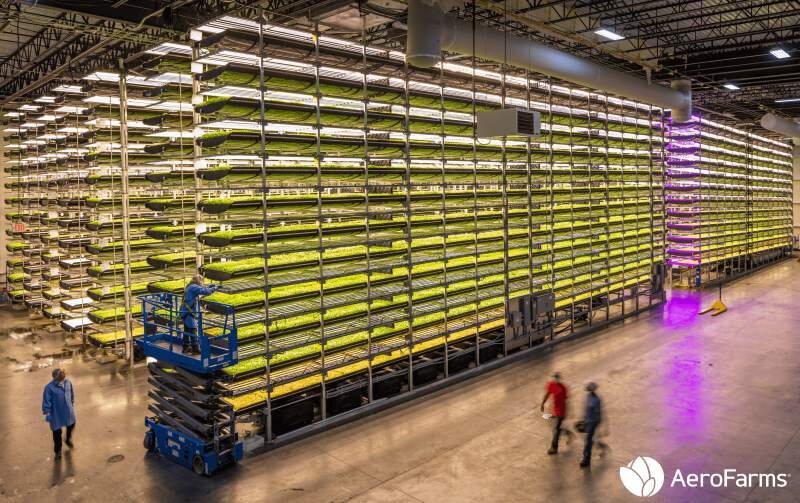

Founded in 2004, AeroFarms is widely recognized as the world leader in vertical farming. As a certified B Corporation and public benefit corporation since 2017, AeroFarms is on a mission to grow the best plants possible for the betterment of humanity. Through its innovative growing platform, AeroFarms helps solve issues brought on by macro challenges such as population growth, water scarcity, arable land loss, health consciousness, and supply chain risks like the COVID-19 pandemic. AeroFarms has developed patented and award-winning technology in areas such as plant biology, mechanical design, environmental control, data science, operations, and plant genetics.
Through the integration of these disciplines, AeroFarms achieves up to 390 times greater productivity per square foot annually versus traditional field farming while using up to 95% less water and zero pesticides. With over 250 invention disclosures and a vast library of data collected over 15 years of operations, AeroFarms is continually improving its systems to understand plants at unprecedented levels and solve agriculture-related supply chain issues. Today, AeroFarms sells great-tasting leafy greens products under its Dream Greens brand, which is consistently celebrated by top chefs and tastemakers.
AeroFarms’ Investment Highlights
AeroFarms is revolutionizing agriculture and has been innovating vertical farming for 15 years.
$1.9 trillion total addressable market opportunity within its core leafy greens market and other adjacencies.
Proprietary technology and industry leadership with proven innovation and design evolution through five generations of farm models supported by an experienced team and a robust portfolio of over 250 invention disclosures.
Data science-driven and fully-controlled technology platform enables AeroFarms to better understand plants and optimize farms while improving quality and reducing costs.
Commercially selling leafy greens with a brand that is already winning at retail, providing customers with a premium product with superior quality, flavor, taste, and texture.
Grown over 550 varieties of produce to date and working with key strategic partners to use its growing platform to address broader problems in agriculture.
Strong projected financial performance driven by demonstrated farm key performance indicators (KPIs) and an accelerated farm rollout schedule.
Management Commentary
Chris Sorrells, CEO of Spring Valley, said, “Our goal was to partner with an industry-leading, best-in-class, sustainability-focused company and we are ecstatic to combine forces with AeroFarms, the market leader in vertical farming, to accomplish this vision. AeroFarms has a technological edge on the industry, developing a world-class innovation team that has fueled a robust and growing intellectual property portfolio of patents and trade secrets. Moreover, their team has been selling commercial product with major retailers, building a trusted brand that is performing well, and developing influential partnerships that will enhance their ability to scale this business quickly. The future is very bright for AeroFarms and we are excited to share this highly compelling ESG investment opportunity by bringing the market leader in the vertical farming industry public.”
David Rosenberg, Co-Founder, and CEO of AeroFarms, added, “At AeroFarms, our mission is to grow the best plants possible for the betterment of humanity, and we are executing on this by taking agriculture to new heights with the latest in technology, innovation, and understanding of plant science. Our technology empowers our operations – this is how we get closer to where the problems, opportunities, and solutions are. We also have the capabilities to innovate fast by turning our crops a typical 26 times per year that allows us to continuously learn and improve yield and quality while simultaneously reducing capital and operating costs. Our business is at an inflection point where we will scale up our proven operational framework and begin our expansion plans in earnest. With the support of Spring Valley, we not only have the capital in place to execute our plan, but also a sponsor who shares the same ESG philosophies to make a positive impact on the world, while serving the interests of our shareholders.”
Transaction Overview
Under the terms of the Merger Agreement, the transaction is valued at a fully diluted pro forma equity value of approximately $1.2 billion assuming no redemptions by Spring Valley shareholders. The PIPE offering was anchored by leading institutional investors, AeroFarms insiders, and Pearl Energy Investments, the sponsor of Spring Valley. The transaction will provide approximately $317 million of unrestricted cash at close to fund future farm development and general corporate purposes.
The transaction has been unanimously approved by the Board of Directors of Spring Valley, as well as the Board of Directors of AeroFarms, and is subject to satisfaction of closing conditions, including the approval of the shareholders of Spring Valley.
Upon completion of the proposed transaction, AeroFarms expects to nominate two of Spring Valley’s existing directors, Debora Frodl and Patrick Wood, III, to its Board of Directors. The remaining directors and officers of Spring Valley are expected to resign and be replaced with AeroFarms nominees, which will be named at a future date.
Additional information about the proposed transaction, including a copy of the Merger Agreement and investor presentation, will be provided in a Current Report on Form 8-K to be filed by Spring Valley with the Securities and Exchange Commission ("SEC") and is available on the AeroFarms investor relations page at https://aerofarms.com/investors and at www.sec.gov.
Advisors
J.P. Morgan Securities LLC is acting as exclusive financial advisor to AeroFarms. Cowen is acting as a financial advisor to Spring Valley. Cowen and Wells Fargo Securities are acting as capital markets advisors to Spring Valley. J.P. Morgan Securities LLC, Cowen, and Wells Fargo Securities acted as placement agents to Spring Valley in connection with the PIPE offering.
DLA Piper LLP (US) is acting as legal counsel to AeroFarms, Skadden, Arps, Slate, Meagher & Flom LLP is acting as legal counsel to the placement agents and Kirkland & Ellis LLP is acting as legal counsel to Spring Valley.
Webcast Information
Spring Valley and AeroFarms management will host a webcast to discuss the proposed transaction on March 26, 2021, at 8:00 a.m. ET. Hosting the call will be Chris Sorrells, CEO of Spring Valley; David Rosenberg, Co-Founder and CEO of AeroFarms; and Guy Blanchard, CFO of AeroFarms.
To listen to the prepared remarks via telephone, dial 1-877-407-0784 (U.S.) or 1-201-689-8560 (international) and an operator will assist you, or via webcast which can be found on AeroFarms’ investor relations website at https://aerofarms.com/investors. A telephone replay will be available through April 9, 2021, at 11:59 p.m. ET by using 1-844-512-2921 (U.S.) or 1-412-317-6671 (international) and pin number: 13718018.
About Spring Valley Acquisition Corp.
Spring Valley Acquisition Corp. is a blank check company formed for the purpose of entering into a merger, share exchange, asset acquisition, share purchase, reorganization or similar business combination with one or more businesses or entities. While Spring Valley may pursue an initial business combination target in any business or industry, it is targeting companies focusing on sustainability, including clean energy and storage, smart grid/efficiency, environmental services and recycling, mobility, water and wastewater management, advanced materials and technology-enabled services. Spring Valley’s sponsor is supported by Pearl Energy Investment Management, LLC, a Dallas, Texas-based investment firm that focuses on partnering with best-in-class management teams to invest in the North American energy industry.
About AeroFarms
Since 2004, AeroFarms, through its holding company, Dream Holdings, Inc., has been leading the way for indoor vertical farming and championing transformational innovation for agriculture. On a mission to grow the best plants possible for the betterment of humanity, AeroFarms is a Certified B Corporation with global headquarters in Newark, New Jersey, United States. Named one of the World’s Most Innovative Companies by Fast Company two years in a row and one of TIME’s Best Inventions, AeroFarms’ patented, award-winning indoor vertical farming technology provides the perfect conditions for healthy plants to thrive, taking agriculture to a new level of precision, food safety and productivity while using up to 95% less water and no pesticides versus traditional field farming. AeroFarms enables local production to safely grow all year round for its commercial retail brand Dream Greens that has peak flavor always®. In addition, AeroFarms has developed multi-year strategic partnerships ranging from government to major Fortune 500 companies to help uniquely solve agriculture supply chain needs.
For additional information, visit: https://aerofarms.com/.
Additional Information and Where to Find It
In connection with the business combination, Spring Valley intends to file a Registration Statement on Form S-4 (the “Form S-4”) with the SEC which will include a preliminary prospectus with respect to its securities to be issued in connection with the business combination and a preliminary proxy statement with respect to Spring Valley’s stockholder meeting at which Spring Valley’s stockholders will be asked to vote on the proposed business combination. Spring Valley and AeroFarms urge investors, stockholders, and other interested persons to read, when available, the Form S-4, including the proxy statement/prospectus, any amendments thereto and any other documents filed with the SEC, because these documents will contain important information about the proposed business combination. After the Form S-4 has been filed and declared effective, Spring Valley will mail the definitive proxy statement/prospectus to stockholders of Spring Valley as of a record date to be established for voting on the business combination. Spring Valley stockholders will also be able to obtain a copy of such documents, without charge, by directing a request to: Spring Valley Acquisition Corp., 2100 McKinney Avenue Suite 1675 Dallas, TX 75201; e-mail: investors@sv-ac.com. These documents, once available, can also be obtained, without charge, at the SEC’s website www.sec.gov.
Participants in the Solicitation
Spring Valley and its directors and officers may be deemed participants in the solicitation of proxies of Spring Valley’s shareholders in connection with the proposed business combination. Security holders may obtain more detailed information regarding the names, affiliations and interests of certain of Spring Valley’s executive officers and directors in the solicitation by reading Spring Valley’s final prospectus filed with the SEC on November 25, 2020, the proxy statement/prospectus and other relevant materials filed with the SEC in connection with the business combination when they become available. Information concerning the interests of Spring Valley’s participants in the solicitation, which may, in some cases, be different than those of their stockholders generally, will be set forth in the proxy statement/prospectus relating to the business combination when it becomes available.
No Offer or Solicitation
This press release does not constitute an offer to sell or a solicitation of an offer to buy, or the solicitation of any vote or approval in any jurisdiction in connection with a proposed potential business combination among Spring Valley and AeroFarms or any related transactions, nor shall there be any sale, issuance or transfer of securities in any jurisdiction where, or to any person to whom, such offer, solicitation or sale may be unlawful. Any offering of securities or solicitation of votes regarding the proposed transaction will be made only by means of a proxy statement/prospectus that complies with applicable rules and regulations promulgated under the Securities Act of 1933, as amended (the “Securities Act”), and Securities Exchange Act of 1934, as amended, or pursuant to an exemption from the Securities Act or in a transaction not subject to the registration requirements of the Securities Act.
Forward Looking Statements
Certain statements included in this press release that are not historical facts are forward-looking statements for purposes of the safe harbor provisions under the United States Private Securities Litigation Reform Act of 1995. Forward-looking statements generally are accompanied by words such as “believe,” “may,” “will,” “estimate,” “continue,” “anticipate,” “intend,” “expect,” “should,” “would,” “plan,” “predict,” “potential,” “seem,” “seek,” “future,” “outlook,” and similar expressions that predict or indicate future events or trends or that are not statements of historical matters. All statements, other than statements of present or historical fact included in this press release, regarding Spring Valley’s proposed acquisition of AeroFarms, Spring Valley’s ability to consummate the transaction, the benefits of the transaction and the combined company’s future financial performance, as well as the combined company’s strategy, future operations, estimated financial position, estimated revenues and losses, projected costs, prospects, plans and objectives of management are forward-looking statements. These statements are based on various assumptions, whether or not identified in this press release, and on the current expectations of the respective management of AeroFarms and Spring Valley and are not predictions of actual performance. These forward-looking statements are provided for illustrative purposes only and are not intended to serve as, and must not be relied on as, a guarantee, an assurance, a prediction, or a definitive statement of fact or probability. Actual events and circumstances are difficult or impossible to predict and will differ from assumptions. Many actual events and circumstances are beyond the control of AeroFarms and Spring Valley. These forward-looking statements are subject to a number of risks and uncertainties, including changes in domestic and foreign business, market, financial, political, and legal conditions; the inability of the parties to successfully or timely consummate the proposed transaction, including the risk that any regulatory approvals are not obtained, are delayed or are subject to unanticipated conditions that could adversely affect the combined company or the expected benefits of the proposed transaction or that the approval of the stockholders of Spring Valley or AeroFarms is not obtained; failure to realize the anticipated benefits of the proposed transaction; risks relating to the uncertainty of the projected financial information with respect to AeroFarms; risks related to the expansion of AeroFarms’ business and the timing of expected business milestones; the effects of competition on AeroFarms’ business; the ability of Spring Valley or AeroFarms to issue equity or equity-linked securities or obtain debt financing in connection with the proposed transaction or in the future, and those factors discussed in Spring Valley’s final prospectus dated November 25, 2020 under the heading “Risk Factors,” and other documents Spring Valley has filed, or will file, with the SEC. If any of these risks materialize or our assumptions prove incorrect, actual results could differ materially from the results implied by these forward-looking statements. There may be additional risks that neither Spring Valley nor AeroFarms presently know, or that Spring Valley nor AeroFarms currently believe are immaterial, that could also cause actual results to differ from those contained in the forward-looking statements. In addition, forward-looking statements reflect Spring Valley’s and AeroFarms’ expectations, plans, or forecasts of future events and views as of the date of this press release. Spring Valley and AeroFarms anticipate that subsequent events and developments will cause Spring Valley’s and AeroFarms’ assessments to change. However, while Spring Valley and AeroFarms may elect to update these forward-looking statements at some point in the future, Spring Valley and AeroFarms specifically disclaim any obligation to do so. These forward-looking statements should not be relied upon as representing Spring Valley’s and AeroFarms’ assessments of any date subsequent to the date of this press release. Accordingly, undue reliance should not be placed upon the forward-looking statements.
Related articles: The Spoon - Cheddar - Go Dan River - Food Dive
Contacts
Spring Valley Acquisition Corp.
www.sv-ac.com
Robert Kaplan
Investors@sv-ac.com
Investor Relations:
Jeff Sonnek
ICR
Jeff.Sonnek@icrinc.com
1-646-277-1263

Media Relations:
Marc Oshima
AeroFarms
MarcOshima@AeroFarms.com
1-917-673-4602

VIDEO: What Makes Organic Food "Organic"?
Organic food is no longer a niche market. Sales of organic food products in the European Union have more than doubled over the last decade - from €16.3 billion in 2008 to €37.4 billion in 2018 - and demand continues to grow
The EU is the second-largest consumer of organic food in the world. - Copyright nsplaUsh
Organic food is no longer a niche market.
Sales of organic food products in the European Union have more than doubled over the last decade - from €16.3 billion in 2008 to €37.4 billion in 2018 - and demand continues to grow.
However, many Europeans are still unsure of what "organic" really means. Is it natural? Free of pesticides? Locally grown?
Well not exactly. Here are some of the conditions food products must meet in order to be considered organic in the EU:
No synthetic fertilizers
Natural fertilizers, such as compost and seaweed derivatives, are essential to maintaining fertile and healthy soil. So organic food must be grown with these products, rather than synthetic fertilizers that are used in conventional farming, and which tend to be made of harsher chemical ingredients including nitrogen compounds, phosphorus, and potassium.
"Organic farming improves soil structures and quality and enhances biodiversity. Studies have shown that organic farming present 30% more of biodiversity in the fields", explains Elena Panichi, Head of Unit at DG Agriculture and Rural Development (DG AGRI).
No synthetic pesticides
Farmers need to fight weeds and pests. Organic farmers are only allowed to use naturally-derived pesticides, made from plants, animals, microorganisms, or minerals.
"These chemicals are of a natural origin. For instance, essential oils, plant extracts, that are listed in the relevant regulation, and are authorized, following a process that implies a scientific committee to assess the effect on the environment", says Panichi.
Organic farms also have techniques such as crop rotation or planting different crops on the same plot of land, to help to prevent soil-borne diseases.
Natural predators, such as ladybugs, can also be an effective method of pest control.
However, it is important to remember that just because something is “natural”, it doesn’t automatically make it harmless to either people or the environment.
No GMOs
To be certified as “organic”, food cannot contain products made from genetically modified crops.
This rule is the same for organic meat and other livestock products. Besides, the animals are to be raised on 100% organic feed.
Antibiotics as a last resort
The animals we eat, or whose products we consume, need to be kept disease-free. Many conventional farmers routinely use antibiotics for disease prevention. These can end up making their way into the food chain.
Excessive antibiotics are not good for people or animals because they can help create superbugs. Antimicrobial resistance is a global concern. Every year, around 33, 000 people die in the EU, due to infections from antibiotic-resistant bacteria.
On organic farms, the use of antibiotics is severely restricted. Farmers control disease by limiting the number of animals they raise and using methods such as a healthy diet for their livestock. They are only allowed to use antibiotics when absolutely necessary for an animal's health, in order to avoid suffering, and when natural remedies such as phytotherapeutic and homeopathic medicines are not effective.
"If in conventional [farming], sometimes antibiotics are given as preventive tools, inorganics, antibiotics can be given as a last resort if there are no other methods to intervene. Normally, the higher animal welfare standards applied in organics already keep animals in a healthier status that prevent the use of antibiotics", explains Panichi.
However, studies have shown that antibiotic use on farms is on the decline. Sales of animal antibiotics in the EU have fallen by more than 34% between 2011 and 2018.
Better animal welfare
Organic farmers must provide the environmental conditions necessary for animals to express their natural behavior, such as adequate outdoor space. This is not compulsory in conventional farming.
There are additional rules such as the prohibition on caging or mutilation unless absolutely necessary for health reasons.
What "organic" doesn't mean
Locally grown
Europeans are the second largest consumers of organic in the world. Local supply can’t meet demand yet, so a large number of organic products are imported.
China, Ukraine, Dominican Republic and Ecuador are the main EU trade partners for organic food imports.
"Green" packaging
Words like “natural”, “green” or “eco” on labels and packaging do not necessarily mean a product is organic.
Healthy
There's a wide range of organic product on supermarket shelves, from burgers to pizzas, from cheese to wine. The health implications of consuming excess fats, salt, or sugar don't disappear just because a food product is organic. Too much fat, salt, and sugar are still bad for you, whether it is organic or not.
How can you be sure that the “organic” food you’re buying is actually organic?
EU organic logo European Commission
The most reliable way to know if a product is organic is if it has this official EU logo.
The white leaf on a green background means that EU rules on production, processing, handling, and distribution, have been followed and that the product contains at least 95% organic ingredients. This logo can only be used on products that have been certified by an authorized control agency or body.
Some countries have also created their own organic logos. They are optional and complementary to the EU's leaf. This is the French one, for instance.
French organic logo Agence Bio
New rules coming in 2022
EU rules on organic production will change soon. In 2022, Europe will have legislation with stricter controls.
Panichi believes it will bring a "substantial improvement" to the organic sector.
"We have to bear in mind that the new organic legislation is not a revolution, but it's an evolution of the organic legislation that started in the past years and has been kept evolving together with the sector".
The new legislation will harmonize rules for non-EU and EU producers. It will also simplify procedures for small farms in order to attract new producers, thanks to a new system of group validation.
The list of organic foods is expected to grow, with the addition of products such as salt and cork. The possibility of certifying insects as organic is also expected in the rules.
What is the future of organics?
"Surfaces in Europe are increasing or as well as all over the world, and they are increasing at a fast pace," says Panichi.
As part of its Farm To Fork strategy, the EU has committed to increasing organic production, with the goal of 25% of all agricultural land being used for organic farming by 2030. In 2019, it was only around 8%.
By 2030, Europe also aims to reduce the use of harmful chemicals and hazardous pesticides by 50%.
Buying organic food is still too expensive for many. One of Farm To Fork's main goals is to make healthy, sustainable food more accessible and affordable to all Europeans. A French family 2019 shows that a basket of eight organic fruits and eight organic vegetables is, on average, twice as expensive as a basket of non-organic products.
Note: The requirements listed in this article are just some of the conditions necessary for a product to be considered organic. If you want to know more about what is needed to obtain the green logo, please check the EU regulation.
Lead photo: EU organic logo European Commission

Fashion Giant Makes Foray Into Leafy Greens

25th March 2021, London
New Investment In Vertical Farming Company Ljusgårda AB
Comes From Platform Owned By Chairman of H&M
The investment platform owned by H&M chairman, Karl Johan Persson, has invested in Ljusgårda AB, the Swedish vertical farming business based in Tibro.
Reports published by HortNews indicate the vertical farming company is backed by a number of investors, including Philian, which is the investment platform owned by Persson.
Ljusgårda, which produces crispy bagged salads, is planning to use the new investment to expand its production area in order to produce more products.
“We will grow from a cultivation area of 300m2 to 2,500m2, and thus from cultivating two tonnes a month to 60 tonnes when the factory is in full swing after the summer,” Ljusgårda marketing manager Maria Hillerström told reporters. “We will expand with more products this spring.”
Ljusgårda’s chief executive, Andreas Wilhelmsson, added the company is ambitious to expand. “We are looking at a number of possible new locations. As our first factory will soon start producing, it’s time to start financing the growth plans.
“The interest is huge out there. On the one hand, we are joining the sustainability trend, food-tech is starting to become very popular at the same time as this type of company out in the countryside where we are is not so common.”
Lead Image credit: Hort News
Enjoyed this free article from Eurofruit Magazine and its team of editors? Don't miss out on even more in-depth analysis, plus all the latest news from the fresh produce business. Subscribe now to Eurofruit Magazine.

Three Way To Maximize A Vertical Farm's Potential
Population growth and urbanization are forcing global food production to a crossroads
17 March 2021
By Abhay Thosar, Ph.D., director of horticulture services for Fluence by OSRAM
Previously published in the February 2021 issue of Inside Grower.
Population growth and urbanization are forcing global food production to a crossroads. Overall, migration to high-density areas increases access to health care, higher-paying jobs, education, and other socio-economic opportunities. But it also places more strain on existing infrastructure and demand for resources, leading to greater water scarcity, energy consumption, waste, and, perhaps most importantly, threats to the food supply, prices, and quality.
The economically disadvantaged will be the first to pay the price of increased urbanization. As prices increase and access to quality food sources decreases, the nutritional health of poor populations will decline. Over the next several years, the responsibility of bridging the gap between projected food supply and demand in urban areas will largely fall on vertical farms, an industry that is expected to nearly quadruple by 2025 to about $16 billion. The COVID-19 pandemic could accelerate that growth rate even further.
The vertical farming industry still has challenges to overcome. Production costs remain relatively high and, as a young market, knowledge gaps in operational best practices in critical areas like facility design and environmental conditions threaten long-term sustainability and profitability. The evolving economic dynamic with supermarkets is forcing vertical farms to scale quickly as they attempt to grow and supply a wider variety of crops while maintaining the buyer’s standards around produce size, quality, and nutritional value.
And, as we look to the future, new innovations in lighting strategies, facility design, cultivation best practices, and automation mean that vertical farming operations have to be constantly adapting and seeking new operational advantages. This is just as true for new market entrants and relatively established players alike, and each will be critical to not only maintaining profitability, but ensuring that food production in urban areas can increase with demand.
With that in mind, here are three critical factors vertical farmers need to consider to meet market expectations, improve efficiency and ultimately grow, cultivate and distribute larger quantities of quality food to more people in a smaller area.
Facility design as a function of market demand
The history and growth of the vertical farming market are largely driven by two trends at the consumer and buyer levels. A decade ago, consumers asking questions about how, where, and when their food was grown was practically unheard of. Things are different today. People want to know the provenance behind the food they buy and ensure it is chemical-free and safe to eat. Every product has become more than a label, it’s become a story that consumers want to hear, and one that has an equally significant impact in where they shop and what they buy.
Supermarkets have taken notice. Beyond that, though, vertical farming operations have given supermarkets one more option in addition to the existing supply chains on which they’ve relied for food production and distribution. Vertical farms play an even more important role during large-scale disruption events like the COVID-19 pandemic or massive recalls. As a result, supermarkets—which value the consistent supply of produce above all—are turning to their local vertical farming operations and, in some cases, even investing in them directly. The increased attention, however, comes at a cost (literally and metaphorically). Supermarkets are demanding that the vertical farms supplying them grow a wider variety of crops—lettuce, tomatoes, cucumbers, leafy greens, microgreens, herbs—more consistently while also meeting unique specifications around weight, aesthetic, nutritional value and a variety of other factors that are ultimately dictated by the vertical farm’s environment and the grower’s expertise.
Vertical farmers are quickly realizing they need to expand their portfolio from potentially a handful of crops to a few dozen or more, raising a range of questions on how to design or retrofit their facilities and adjust environmental conditions that favor any given crop.
The first decision many vertical farmers face is the growing technique that will be most scalable and viable for their operation. Hydroponics, aeroponics and aquaponics have all emerged as viable options with varying degrees of success, but they’re far from interchangeable.
In the end, there is no universal solution for every vertical farm. Cultivators should closely consider their buyers’ expectations, and how those expectations might change over time. Then, cultivators must assess the full range of their crops’ needs and how each might respond differently to various environmental factors and lighting strategies.
Strike a balance between environmental factors
The next set of factors governing facility design, investment and day-to-day operations should always be the environmental conditions themselves.
How air flows into and across each rack of a vertical farm is one of the most unique and important challenges vertical farms have to solve. Ignoring or failing to closely monitor airflow is often a death blow to entire sections of crops and to profitability, yield, and consistency as a result. Air movement helps to maintain temperature, humidity, and transpiration at each rack, and lack of it creates wide temperature swings or large gaps between crops at the bottom and crops at the top. It’s an incredibly fragile balance to strike. Everything from the number of access points into a warehouse—there should only be one access point—to HVAC and circulation systems affect air movement.
As a best practice, the maximum difference between the temperature at the top-most rack and the bottom-most rack should be no more than two degrees Fahrenheit. In practical scenarios, cultivators facing large temperature fluctuations can also consider placing crops that prefer relatively warmer temperatures—such as basil, oregano, chives, sage or thyme—at the top and simply let the laws of thermodynamics do the rest.
Carbon dioxide enrichment is a slightly easier condition to manage but no less important and changes based on temperature and lighting strategy. CO2 enrichment, too, can fluctuate based on the number of access points into a warehouse (again, there should only be one). Enriching a cultivation environment with carbon dioxide stimulates photosynthesis and plant growth, the rate of which is critically dependent on the difference between CO2 concentrations in the air and in the leaf cells.
The law of diminishing returns puts a cap on the amount of carbon dioxide cultivators should be introducing. CO2 is by no means the only factor governing plant growth, but vertical farms have the advantage of being able to closely monitor and control CO2 levels. To do so properly, however, they shouldn’t shy away from significant investments in both handheld devices—which allow cultivators to measure carbon dioxide levels at each rack, each plant, and each leaf—but also large-scale control systems that can measure and track CO2 throughout the entire warehouse.
Humidity levels govern a plant’s transpiration rate and the aperture sizes of its stomata, ultimately affecting how much water it moves from its root zone to release back into the warehouse. When a plant’s stomata open, they release water while also collecting carbon dioxide, making the balance of humidity, temperature, and carbon dioxide all the more crucial. Different plant types in different growth stages have different transpiration rates, adding even more complexity to how a vertical farm is designed and managed. The most common way to express humidity is relative humidity, the percentage of water vapor in the air at a given temperature compared to the total amount of water the air can hold at that temperature. In vertical farming, however, vapor pressure deficit (VPD) is the more accurate way to gauge humidity’s effect on plant growth. VPD remains an interesting discussion among researchers as the industry seeks to understand the differences between VPDs for air and leaves as well as exact VPD calculations.
Every environmental factor in a vertical farm affects the others to some degree. Nearly everything can be controlled; it’s both the advantage and the challenge native to the market. No factor, however, is more important to photosynthesis than its primary driver: light. Each factor—CO2, temperature, airflow, humidity, fertilizer, irrigation, VPD—need to be fine-tuned with changes to light quantity and quality to optimize plant performance and response.
Designing an effective lighting strategy
The design and implementation of an effective lighting strategy is and always will be the primary driver of your vertical farm’s success. In environments as complex as vertical farms, identifying the correct light intensity, spectra, photoperiod, and configuration will determine how other environmental factors work together to optimize a facility for plant yield and quality.
The first of these, the fixtures themselves, carry more implications for vertical farms than other cultivation spaces; in a vertical farm, plants receive no other source of light. The sun isn’t the safety blanket that it is for greenhouses. This simple and obvious fact means that vertical farmers have to find efficiencies in ways others don’t, which can manifest across a variety of operational metrics. Light efficacy, for instance, becomes more important. Most vertical farms are located in urban areas and are likely paying a premium for electricity. Maximizing micromoles per watt and reducing energy waste becomes more than a sustainability initiative, it’s critical to overall profitability.
Similarly, vertical farms operating warehouses measuring in the tens of thousands of square feet need fixtures with a good form factor without sacrificing light intensity. The right configuration means vertical farms can squeeze more racks into their facilities while also putting the lights closer to the plants for better results.
Beyond the hardware specifications, lighting design and strategy consist of several key factors: light intensity, light quality (or spectra), and light bar configuration. Each should be rooted in a facility’s overarching goals—typically defined by the consumer or buyer. Lighting strategies can be customized by crop, yielding specific plant chemistries or changes in biomass. Differences in spectra and light intensity can affect a crop’s coloration, shelf life, taste, and smell. Desired crop characteristics should be determined upfront in conjunction with the prospective buyer, therefore guiding a lighting designer to identify the optimal strategy to accomplish a facility’s goals.
Light quantity is the first and foremost aspect when it comes to optimizing the productivity of the crop. It is important to target the correct mols/day for each crop. Light quality (or spectra) is defined by measuring light’s wavelength in nanometers (nm). Wavelengths of light that drive photosynthesis are primarily found within 400 to 700nm—a range identified as photosynthetically active radiation (PAR). In a vertical farming environment, broad, white light has proven effective for tissue culture, propagation, and vegetative growth—while also serving the more practical function of making it easier for human eyes to diagnose and observe crops day in and day out. As the body of research into LED applications has expanded, it’s become clear that lighting strategies need to shift based on the growth stage. The days of bombarding plants with the same intensity and spectra are quickly fading. More and more research is showing that different cultivars respond to different lighting strategies at different stages of their maturation. More nuanced, customized lighting strategies are increasingly leading to tangible business outcomes for cultivators: longer shelf life, improved aesthetic, enhanced nutritional value, faster cycle times, and higher yields.
LED improvements will continue to drive costs down, while more in-depth research will discover and confirm a new set of lighting strategies and operational best practices to help vertical farmers meet future market demand for increased food production while also improving profitability. Overall, the future for vertical farms is bright and ripe for even broader innovation. Automation—the final frontier of food production—will mean even greater control of agricultural environments. That future is on the horizon. For now, though, vertical farms just need to stick to what they can control, which is pretty much everything else.
About Abhay
Abhay Thosar is the director of horticulture services at Fluence by OSRAM, where he is responsible for managing a team of horticulture specialists that enhances how cultivators grow their crops, optimize their lighting strategies and increase profitability in their operations. He holds a Ph.D. in plant physiology from Gujarat Agricultural University and spent more than a decade at leading greenhouses and nurseries throughout the U.S.

Vertical Growing Solutions That Are Easily Multiplied Increasing The Management Scale of Each Grower
GrowSpec offers three main products, each with numerous product lines contained therein. These three products include LED grow lights, vertical grow systems, and container farms
GrowSpec is an indoor farming equipment supplier established in 2015. GrowSpec offers three main products, each with numerous product lines contained therein. These three products include LED grow lights, vertical grow systems, and container farms. According to GrowSpec CEO Alvis Ma, these products can be used to produce a variety of crops indoors.
LED Grow Lights
GrowSpec offers six different types of LED lighting: AgriSpec, AgriBar, Sun Ray, Panel, SlimSpec, and Quantum. According to the company’s website, AgriSpec is a high-performance top-lighting solution with dimmable capabilities to allow growers to transition from vegetative to regenerative growth (i.e., flowering). The lights’ slim configuration enables installation in low rooms, racking systems, etc. While AgriBar and Sun Ray are both advertised as applicable for greenhouses as well as indoor farms, Panel is more specifically designed for indoor growing as the wide panels are somewhat wide for greenhouse use yet provide high light uniformity for indoor environments.
Vertical Grow Systems
GrowSpec also designs a number of vertical grow systems, all consisting of racks with integrated power supply, control system, and PVC trays so that each 4’x 8’ tray can be managed independently. Among these product lines in VertiDrip, a modular rack consisting of GrowSpec’s lighting, drip irrigation, airflow system, power supply, and touchscreen controls. The company’s VertiGro follows similar principles. GrowSpec’s main grow system, which was previously featured in IGrow (Combining Hydroponic And Aeroponic In Vertical Farming — iGrow) is VertiAero, which uses aeroponic technology. According to Alvis, VertiAero is patent pending in both the United States and Europe and offers various savings to growers.
“VertiAero reduces operational costs by 40%. In terms of electricity, we use 30% less. With nutrients, we save 85% because we use aeroponics rather than soil, so the root area is sealed and water losses are reduced. Our vertical grow systems are designed to optimize farm’s operation, they can match up with different irrigation systems so as to meet growers’ different preferred cultivation skills, and easily multiplied increasing the management scale of each grower,” explains Alvis.
Moreover, Alvis explained that having an integrated ventilation system in every rack of GrowSpec’s vertical grow systems helps to decrease plant disease.
“With inadequate ventilation, some plants will have diseases like powdery mildew or botrytis. But if you have full ventilation and every leaf can be blown with air, you will seldom have those diseases,” says Alvis.
Alvis also explained that the racks are space-efficient by both having an adjustable height and by being horizontally mobile using a mechanical assist. This, according to Alvis, allows growers to fit more racks into a grow room.
Container Farms
GrowSpec’s third product offering is container farms, which are equipped with GrowSpec’s vertical grow systems. According to Alvis, GrowSpec’s container farms are ideal both for production and for research as the conditions are highly modifiable and allow growers to test various things.
“If people want to do research, they can use this container to do so. They can set up irrigation, lighting, temperature of the root zone, temperature of the canopy, light intensity, etc. It is the perfect toy for them.”
Efficiency and scalability as priorities
Across GrowSpec’s three product types (LEDs, vertical grow systems and container farms), the company has emphasized improved resource use efficiency and scalability so that growers can easily increase production over time.

“For installation, we design our systems in modules so that they are very easy to install. It is a complex system yet easy to install. And it is scalable. It is easy to design the grow room because every rack is independent. The rack height is also customizable, and the power is integrated so that there is one main cable per rack, this allows requires the systems to be easy to maintenance ” explains Alvis.
GrowSpec also reports increased crop productivity by allowing growers to produce seven crops per year rather than four crops in traditional farming systems.
For more information:

US: INDIANA - Purdue Students Earn Top Honors For Crop Stimulant Developed From Soybeans
A group of students from Purdue University has developed an organic additive that is designed to promote crops in vertical farms

by: Wes Mills, Inside INdiana Business
March 25, 2021
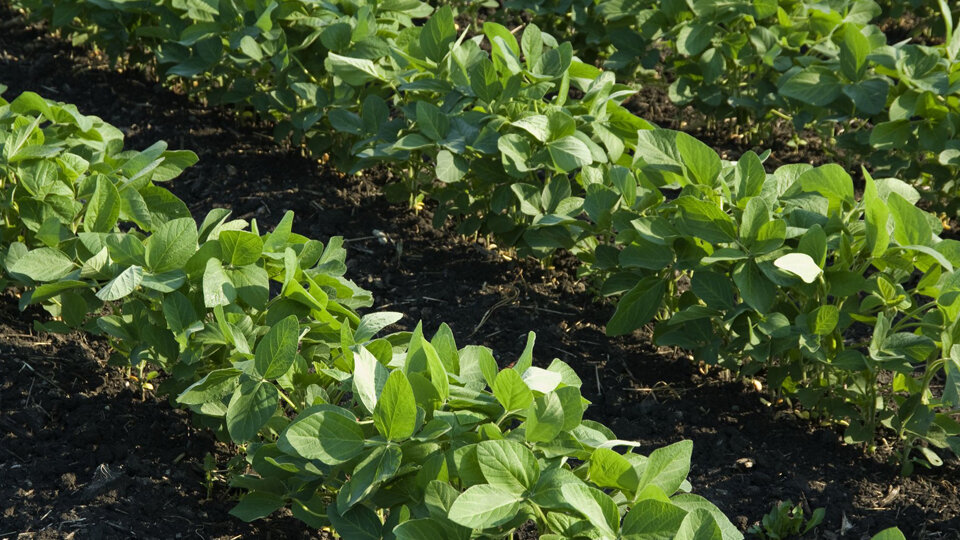
WEST LAFAYETTE, Ind. (Inside INdiana Business) — A group of students from Purdue University has developed an organic additive that is designed to promote crops in vertical farms. The primary ingredient of the liquid biostimulant is soybeans. The innovation earned the team top honors during the 27th annual Student Soybean Innovation Competition sponsored by the Indiana Soybean Alliance.
To win this competition, Purdue University students must develop novel applications for soybeans that satisfy a market need.
“The goal of this contest is to highlight the versatility of soybeans while addressing a need in agriculture or the general public,” said Anngie Steinbarger, a farmer from Edinburgh and one of the judges for the contest. “This biostimulant is mostly made of a soybean protein, and it has been developed to help grow crops. This seems like a slam dunk for what we want from this competition.”
The soybean alliance says biostimulants help crops germinate rapidly, achieve greater plant mass and yield, and improve nutrient uptake. The team says its organic product is not a fertilizer, but it does improve grow rate and ease crop stress.
“One of the major successes we saw with our product is how great it worked with lettuce we’ve grown in the greenhouse,” said Purdue Sophomore Cai Chen, who is a member of the winning team.
Chen says when biostimulant was added to lettuce, it was 30% larger than standard lettuce.
In addition to Chen, the other members of the team include Nate Nauman, a sophomore from West Lafayette, and graduate student Emmanuel Alagbe of Nigeria. They will share the competition’s $20,000 top prize.
The team says soy protein peptides have antimicrobial and antibacterial properties which could help reduce the risk of foodborne illnesses in leafy greens.
Second place was awarded to a team that developed a hypoallergenic tape for athletes. Third place honors went to the creators of a biodegradable cosmetic face mask.
“Indiana soybean checkoff funds are used to find new uses and new markets for our soybeans; thereby creating demand and helping our farms to be more profitable and sustainable,” said Steinbarger. “Some of the products that evolve out of this contest could potentially have a positive impact on our soybean prices.”
Lead photo: (photo courtesy: United Soybean Board)
© 2021 Circle City Broadcasting I, LLC. | All Rights Reserve

USA: ILLINOIS - Glenview's Wiseacre Farm To Be Featured On History Channel
"We were connected to this opportunity through Freight Farms, a hydroponic farming container company in Boston. Our farm was built and distributed by Freight Farms," said Yael Sheinfeld, whose father, Aviad, founded Wiseacre Farm
This Sunday's Episode of "Modern Marvels"
Will Highlight Innovative Hydroponic Techniques


March 23, 2021
The Wiseacre Farm crew (left to right): Sam Sheinfeld, Yael Sheinfeld and Aviad Sheinfeld. (Photo by Wiseacre Farm)
GLENVIEW, IL — Back in December of last year, a television production crew from the History Channel made a special visit to Glenview. Wiseacre Farm, a family-owned hydroponic farm, will be featured this Sunday as part of the network's "Modern Marvels" program.
Yael Sheinfeld, who handles marketing for the farm at 1975 N Lake Terrace, said the team at Wiseacre hasn't seen the episode titled, "Future of Food," yet. It is set to air at 9 p.m.
"We were connected to this opportunity through Freight Farms, a hydroponic farming container company in Boston. Our farm was built and distributed by Freight Farms," said Yael Sheinfeld, whose father, Aviad, founded Wiseacre Farm. "We're so grateful for the experience, and are very excited for the episode to air."
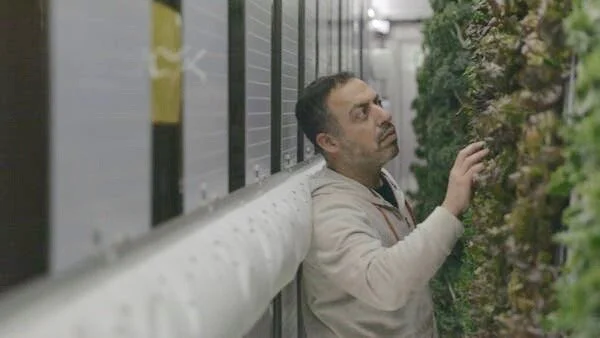
Aviad Sheinfeld shows off Wiseacre Farm during an episode of "Modern Marvels" on The History Channel. (Courtesy of Wiseacre Farm)
Sunday's episode of "Modern Marvels," hosted by food author and culinary entrepreneur Adam Richman, showcases Wiseacre's innovative hydroponic farming process as the future of food, highlighting the farm's mission to grow clean, fresh produce within the community that it serves.
"It was exciting for the film crew to visit the farm. Our farming team (Aviad Sheinfeld and his dad, Sam Sheinfeld) talked through each step of the plant life cycle and delivery process while the crew filmed," Yael Sheinfeld said. "[We also] participated in sit-down interviews where we discussed the concept behind the farm, how we started it, etc."
Yael Sheinfeld said that due to COVID-19 restrictions, the entire film crew for the episode was local.

Founder Aviad Sheinfeld talks about Wiseacre Farm during the episode of "Modern Marvels" titled, "Future of Food." (Photo by Wiseacre Farm)
Wiseacre Farm works to shorten the path from farm to table, promote and practice environmental sustainability, and educate consumers about the origins of their food.
"We're a family-owned hydroponic farm in Glenview that provides fresh, hyperlocal greens to the community," Yael Sheinfeld said. "We currently offer home delivery and farmside pickup options."
Wiseacre greens are available through home delivery subscriptions and weekly farmside pickup. Wiseacre Farm also makes frequent donations to local food pantries, working to ensure that fresh greens are accessible to all.
More information about Wiseacre Farm can be found here: https://www.wiseacre.farm/.

Could Depletion of Fertile Soil Trigger A Bigger U.S. Food Crisis?
U.S. farmland in the Midwest has lost over one-third of the soil necessary to sustain crop production, according to scientists at the University of Massachusetts, Amherst
By Ted Kelly
March 9, 2021
U.S. farmland in the Midwest has lost over one-third of the soil necessary to sustain crop production, according to scientists at the University of Massachusetts, Amherst. The study concluded that fertile soil has been destroyed — not as a result of natural wind and water erosion, but by a century of overplowing. (tinyurl.com/wps8c99c)
Topsoil is the “black, organic, [carbon and mineral] rich soil that’s really good for growing crops,” said Evan Thaler, a Ph.D. student at UMass. Topsoil accumulates over centuries and is teeming with microorganisms.
The healthy and fertile soil was effectively managed and stewarded by Indigenous peoples of the region for centuries, if not millennia. But after a few hundred years of hyper-exploitation, first, by European colonial settlers and later big agribusiness, a third of all the topsoil across Illinois, Iowa, Indiana, and Minnesota is now gone according to a study reported in the Proceedings of the National Academy of Sciences. (tinyurl.com/3yxy4v9d) This figure is much higher than has been reported by the U.S. Department of Agriculture. Lead researcher Thaler said, “I think the USDA is dramatically underestimating the amount of loss.” (NPR)
This assessment is corroborated by a 2006 study from Cornell University which found fertile soil is disappearing faster than it’s being replaced, stating: “Each year about 10 million hectares of cropland are lost due to soil erosion, thus reducing the cropland available for food production. The loss of cropland is a serious problem because the World Health Organization reports that more than 3.7 billion people are malnourished in the world. Overall soil is being lost from land areas 10 to 40 times faster than the rate of soil renewal imperiling future human food security and environmental quality.” (tinyurl.com/cpav2xj9) [One hectare is the equivalent of 100 acres.]
This follows a global trend that has caused a drastic reduction in fertile farmland due to capitalist overdevelopment. Almost all food production — 99.7%, according to the Cornell study — depends on healthy topsoil. But half of it has been destroyed in the last 150 years according to the World Wildlife Federation. (tinyurl.com/pxkcx37b)
An impending food crisis is not the only issue at stake. Low-nutrient soil produces low-nutrient crops. Food today simply does not have as many vitamins and minerals as it did a few decades ago.
Another study, conducted by the University of Texas at Austin, found “‘reliable declines’ in the amount of protein, calcium, phosphorus, iron, riboflavin (vitamin B2) and vitamin C” in dozens of fruits and vegetables since 1950. (tinyurl.com/3nhwhzza)
Corporate genetic modification of plant species, like corn, is aimed at making more profitable — not healthier — produce. “Efforts to breed new varieties of crops that provide greater yield, pest resistance and climate adaptability have allowed crops to grow bigger and more rapidly, but their ability to manufacture or uptake nutrients has not kept pace with their rapid growth,” the UT study claimed.
Cuba shows the way
There is a model, however, for soil replenishment and food production that could point to a way forward that would avoid famine and nutritional starvation. And it comes, unsurprisingly, from the socialist world.
The “Special Period” in the history of revolutionary Cuba refers to the great upheaval immediately after the dissolution of the Soviet Union, which socialist states around the world had depended on.
In 1993, the Cuban Communist Party formed agricultural cooperatives to manage hundreds of state-owned farms. The goal was to increase domestic food production, while providing jobs and housing to Cuban workers, and to rely less on imported chemical pesticides and other synthetic farming techniques.
“The land redistribution program has been supported by solid research-extension systems that have played key roles in the expansion of organic and urban agriculture, and the massive artisanal production and deployment of biological inputs for soil and pest management,” writes Miguel Altieri, one of the founders of the Cuban Association of Organic Agriculture. (Monthly Review, “The Paradox of Cuban Agriculture,” Jan. 1, 2012)
Even more impressive is the growth of food production on urban farms, or organopónicos. “Cuba’s achievements in urban agriculture are truly remarkable — there are 383,000 urban farms, covering 50,000 hectares of otherwise unused land and producing more than 1.5 million tons of vegetables . . . using no synthetic chemicals. . . . Urban farms supply 70% or more of all the fresh vegetables consumed in cities such as Havana and Villa Clara.”
Capitalism is at a dead-end by every conceivable metric. Socialist societies point the way forward to providing healthy, nutritious foods for all without a profit motive.

OurCrowd, Waterfund Launch New Water Investment Platform
Waterfund committed $50 million of capital to the OurCrowd managed portfolio, with an initial investment completed in Plenty, Inc., a vertical farming leader
Waterfund committed $50 million of capital to the OurCrowd managed portfolio, with an initial investment completed in Plenty, Inc., a vertical farming leader.

By ZEV STUB MARCH 22, 2021
Future Crops will set up a farm to grow vertical agriculture in the UAE. (photo credit: Courtesy)
OurCrowd and Waterfund said Monday they will build a dedicated investment portfolio of 15 leading water and agricultural technology companies. Waterfund committed $50 million of capital to the OurCrowd managed portfolio, with an initial investment completed in Plenty, Inc., a vertical farming leader.
The companies also announced that they are jointly working on a water-focused financial product platform called Aquantos, which they said will "pioneer the issuance of Blue Bonds and other innovative water investment products." “We are working to issue Blue Bonds that can be both climate bonds-certified and backed by sovereign or sub-sovereign borrowers," said Scott Rickards, CEO of Waterfund.
"This new financial tool and others are being designed to enable water projects in the Middle East to acquire leading technologies to address water scarcity in a fundamentally new way.” Sustainable investing assets now total more than $30 trillion globally, with 34% growth over the past two years, According to Morgan Stanley research cited by the companies. In the United States alone, $12 trillion is sustainably invested, they added.“In 2016, the Paris Agreement heightened interest in green bonds; in the years since, we’ve seen a spike in companies, municipalities, sovereigns, and banks issuing green bonds.
We expect that demand for next-generation water-oriented bond products will see similar growth,” Rickards said. “The Abraham Accords present a huge opportunity to bring new water and agricultural technology to the water scarcity challenges of the entire Middle East," said Jon Medved, Founder & CEO of OurCrowd. "Alongside Waterfund, it is our mission to invest in and help build game-changing technology companies. We are excited to be working together with Waterfund to drive more private capital to address the critical challenges of water."

AUSTRALIA: VIDEO - Shipping Container Farms: Check Out This Craze In Modified Containers
Greenhouses, hydroponics, and mushroom farms – converted shipping containers can produce protein and vegetables for all your needs
Greenhouses, hydroponics, and mushroom farms – converted shipping containers can produce protein and vegetables for all your needs. Even if you’re not an environmentalist, there are business opportunities to be had in delivering extremely fresh food to people in urban environments like Brisbane. Given the changing climate and topsoil loss we are facing, shipping container farms could well be an answer to these issues.
Over the years in the Gateway Gazette, we have published a number of stories that look at producing food in converted shipping containers. Reflecting on what we have published and looking at the detail of what can be done, let’s consider the possibilities that come with shipping container farms.
Open Top Container Greenhouse
One of the most cost-effective ways of using a shipping container as a food-producing unit is by attaching a glass top to an open-top shipping container.
In this video, Urban Farm Units looked at the concept of a greenhouse-container. An open-top 20-foot container would have a greenhouse attached to the top with shelving units directly under the glass. This allows photosynthesis to take place in the normal way.
Seedlings can be started in the lower part of the unit, which is warmed by the light and heat from the outside.
One step down from slapping a greenhouse on top of an open-top container would be to use a flat rack container and to have the greenhouse on the base (Gateway Containers can supply both open-top and flat rack containers).
The concept is an improvement on the one in the video, as long as you keep the greenhouse within the dimensions of a 20ft standard or high-cube container, it would be possible to lift and move the container farm from place to place.
This might be useful where you have an agreement with property developers or a council to use vacant plots of land in a city for agriculture. When the site is ready to be developed you can stick it all on a truck and move it to the next plot.
The concept of a shipping container greenhouse is:
Cheap to buy
Mobile
And often won’t need planning permission for a permanent site
Could this be something you’d consider? Contact us at Gateway Containers to discuss your needs!
Mushie Container Farm!
Image source: King Oyster Mushrooms Facebook
In 2019 we reported how Belgrave, Vic-based John Ford has developed a shipping container mushroom farm. This could produce protein for people as an alternative to meat or for anyone who loves the taste of freshly cut shrooms.
Mushrooms of any kind don’t store well and are best eaten as soon as possible after cutting. This is why having a mushroom farm close to restaurants could be a money-spinner.
This requires no modification from a basic shipping container, you could even install the racking inside the container yourself.
In their lifecycle, mushroom mycelium live out of sight of the world until they are stressed and get the impression that they are facing death. When stressed they flower to produce spores – those flowers are the mushrooms that many of us love to eat.
A shipping container is perfect to take advantage of such a lifecycle. Logs or other media are infected with the mycelium and left to rot for a certain time. By altering the environmental conditions, so you deliberately stress the fungi and they flower.
In our article, we reported how John Ford is producing mushroom species that are famed for their delicate taste but don’t travel well at all – shiitake and oyster mushrooms. As a sideline to his main income as a marine biologist restoring seagrass habitats near Belgrave, he produces freshly cut shrooms for local people and restaurants.
For you as an entrepreneur, mushroom growing would require buying a used shipping container and setting it up as a mushroom farm. If you are planning an urban mushroom container farm, you can take advantage of the fact that you can treat the container as a mobile unit and not as a permanent base. Shipping containers are also pretty inexpensive to buy and convert.
Hydroponics – The Rolls Royce of Shipping Container Farms
Image source: ABC
The hydroponics concept is highly developed for the use of fresh food and can be set up for high density vegetable farming in shipping containers. This requires a fair bit more modification than the two systems we describe above.
Unlike the Urban Farm Units company, several companies have managed to survive over the years selling their hydroponic container farm businesses to entrepreneurs and restaurants around the world.
Modular Farms is a company we featured in our blog originally based in Canada, but who recently set up shop over here in Australia. According to their website, they “design and manufacture container farm systems that can be used to grow food in most locations on earth.”
These systems strive to get around some of the issues we face here. Cities like Brisbane get far too much water sometimes and then face droughts for years on end. The Australian Food Services News reported, “With a focus on sustainability, Modular Farms’s hydroponic, closed-loop system uses 95% less water than a typical outdoor farm.”
Topsoil erosion is a problem, especially in prolonged droughts when it gets blown away as dust. Hydroponics use media like rock wool and even used mattresses to house the plants’ root systems and feed them nutrients via a watering system.
With our ever more extreme climate, food often has to be imported into cities from hundreds or thousands of miles away. A hydroponic container farm can enable you to grow many vegs very close to markets and restaurants.
This has been observed by global homewares retail giant IKEA, which in 2019 announced it was piloting growing vegetables in its stores for use at its restaurants. We reported, “While selling hydroponic indoor growing equipment to customers, IKEA is feeding its staff with lettuce and other vegetables grown in a container outside its Malmö and Helsingborg stores.”
Image source: ABC
There are a few downsides to hydroponics. Firstly, while some types of plants are happy enough growing in hydroponics – the simpler ones producing leaves and flowers (like broccoli!) – others aren’t so happy, such as cassava, wheat, and potatoes.
The next big issue is that for a high-intensity farm, not unlike factory farming chickens, you need to be ultra-clean in your production as the arrival of a destructive disease or fungus could wipe you out very quickly.
Container Fish Farm Too?
In theory, it is possible to run a fish farm connected to the hydroponics container farm, with you largely feeding the fish and collecting their feces and other waste to feed the plants. The plants would clean the fishes’ water and make it habitable for them as reed beds do in nature. This a concept that is in development but hasn’t caught on commercially yet.
How Can Gateway Containers Help?
We can provide and convert an insulated container for you to get started with and advise you how to best make further additions without compromising the overall structure.
If any or all of these ideas have caught your interest – or you just know about these concepts and need a shipping container to make it possible – then get in touch with us today to discuss your needs!
Posted on February 22, 2021
By Mark FinneganOtherShipping ContainerModified Shipping ContainersLeave a comment

Evaluating Real Estate For Indoor Agriculture
Several factors need to be evaluated before purchasing or leasing a piece of real estate for CEA. Will you build new construction or rehabilitate a vacant building? Are you building a large-scale greenhouse or a small, urban vertical farm?
March 17, 2021
Traditionally, buyers of agricultural real estate have focused on rural land where primary considerations for their farm include things such as soil quality, annual rainfall amounts, and adequate drainage. Increasingly, however, agriculture start-ups are moving indoors. Compared to field-based agriculture, indoor farming allows for more crop cycles, less water usage, and the farms can be located closer to the consumer. The considerations for an indoor, or controlled environment agriculture (CEA) operation are considerably different than for outdoor farms.
Assessing Potential Real Estate for CEA
Several factors need to be evaluated before purchasing or leasing a piece of real estate for CEA. Will you build new construction or rehabilitate a vacant building? Are you building a large-scale greenhouse or a small, urban vertical farm?
Environment
Weather and terrain are important for natural light greenhouse projects. The primary limiting factor to crop production in a greenhouse is low light intensity during the winter so consult with an Ag-extension service or other resource to get that information for a proposed location. Adequate acreage is a must for not only the greenhouses themselves but, also shipping and receiving space, a retention pond (if needed), and potentially even worker housing.
Spacing
For a vertical or urban farm in an enclosed building, important factors to consider include adequate square footage to allow for proper spacing between growing systems and enough room to move the towers (if mobile) for cleaning or maintenance. Additionally, a building should have a sufficient water supply and potentially drainage, a robust HVAC system and humidity controls, and a ceiling which is high enough for the growing towers. Although indoor farms using high efficiency LED lighting, these systems, combined with pumps, humidifiers, and HVACs can use significant amounts of electricity, a developer should carefully and conservatively estimate those costs prior to negotiating those terms with a landlord or electric company. Finally, the farm should be in close enough proximity to allow for routine delivery to local customers, be they restaurants, groceries, farmers markets, or Community Supported Agriculture distributors.
Labor
In both types of farms, labor availability and cost is a critically important consideration. The cost of wages for urban farms, even for unskilled workers, will likely be higher than that of rural areas. And in the case of any real estate development, ensure prior coordination with relevant agencies has been done on permits, licenses, and zoning regulations prior to signing any leases or closing on a land contract. Prior to starting a search for a CEA project, it’s wise to seek expert help from outside consultants who can save an indoor farm developer time, money, and aggravation.
Tags real estate, indoor agriculture, cea

USA: CALIFORNIA - Futuristic Vertical Farm Aims To Bring Fresh Produce And Jobs To Compton
The vertical farm will contain rows upon rows of crops with the capacity to produce 365 harvests of high quality leafy greens per year
The vertical farm will contain rows upon rows of crops with the capacity to produce 365 harvests of high-quality leafy greens per year. "From day one it's perfectly controlled...We don't use pesticides, there's nothing to wash off, it's usually not touched by human hands ever, and so we have a safe clean product that is ready to eat right out of the package", the owner says.
When we talk about farming, we don't often think of Compton. But the future of farming could soon be coming to life there. A company is building a massive vertical farm that would save water, land, and eliminate the need for pesticides.
It is still under construction, but when this unassuming 95,000-square-foot warehouse is up and running, the inside will look like something out of the future-- rows of vertical crops with LED lights replacing the sun.
"From day one, it's perfectly controlled. We don't spray any pesticides. There's no birds flying over our field pooping on the produce. There's nothing to wash off. It's usually not touched by human hands ever. And so we have a safe, clean product that is ready to eat right out of the package" says the owner.
Read the complete article and watch the video at www.news.yahoo.com.
22 Mar 2021
VIDEO: On Tour With Little Leaf Farms
If you've ever wondered what a commercial scale, hydroponic grower of leafy greens in the New England area is like, wonder no longer
By AMY SOWDER
March 22, 2021
If you've ever wondered what a commercial scale, hydroponic grower of leafy greens in the New England area is like, wonder no longer.
And if you haven't wondered, you'll still enjoy this virtual tour of an example of a growing sector of the produce industry: agtech and indoor growing.
Founder and CEO Paul Sellew of indoor grower-packer-shipper Little Leaf Farms, Devens, Mass., leads us on a tour of his expanded facility.
The greenhouse grows green leaf, red leaf, arugula, and other lettuces harnessing the power of the sun. When the sunshine isn't doing its thing, then there are LED and other lights to fill in.
See how a freshly seeded row comes in, and all the greens at different stages of growth shift along the line to keep the process moving.
Sellew said it's part of the future of agriculture and enables consumers along the East Coast to buy lettuce grown closer to home during all seasons.

UAE: “Hydroponic Farming Is Not Yet Deployed At A Meaningful Scale”
Greener Crop was founded in September last year with the goal of enabling hydroponic farming in the Middle East and Africa
“While hydroponic farming is extremely relevant to the water-poor Middle East, and incentives for agriculture such as energy and water subsidies have been put in place, the technology has not been deployed at a meaningful scale yet,” Alexander Kappes, founder of Greener Crop states.
Greener Crop was founded in September last year with the goal of enabling hydroponic farming in the Middle East and Africa. Alexander was working at an investment office prior to Greener Crop which brought his attention to the long-existing problem: the country is too dependent on food imports. “We wanted to enable local sustainable farming here as well.” Greener Crop offers farm management solutions, removing entry barriers.
The company offers four key solutions for existing or aspiring farmers: development of crop strategy, input management, physical farm management, and crop marketing. From Container farms to greenhouses and indoor vertical farms, Greener Crop supports their clients from finding the right supplier and setup, to selling the crops in the market. “It’s a great solution if you’re looking for an experienced partner to get your farm up and running, whether it’s short or long term,” says Alexander.

Alexander Kappes
There has been a strong push from local governments to develop alternative farming methods. The government in the UAE has invested over $200 million to support the development of growing facilities. This is a highly valuable approach, however, it is important to keep in mind that even a $40m indoor vertical farm can only contribute 0.03% of the local annual fruit & vegetable consumption. Farming is a highly democratized industry and requires not only a handful of a large farm but thousands of small and medium-sized farms that enable a country to be self-sufficient,” Alexander claims.
Removing barriers
Whether farmers want to expand or convert their farm into a hydroponic farm or an outsider investor, Greener Crop is here to help. The company connects farmers to suppliers and manufacturers, they can either run the farm, handle the supply chain and in some cases, handle the sales. “Clients no longer have to figure out everything on their own – we are here to support them with the operations and even sale of their crops. In many cases, clients are self-consumers such as hotels and restaurants,” Alexander explains.
The company sits together with their clients, comes up with a plan, ticks off the boxes, and starts setting things up, given the customer budget. Based on the expected yield, an approximate selling price per kg can be provided to clients. “We can always predict with a certain degree of accuracy. In this way, we can sketch revenue, utility costs, including labor, etc., which eventually leaves us to the expected profits. After the preliminary proposal is given, we reach out to potential suppliers as we understand what they offer in terms of yield, cycles, crop analyses, costs, and input.”
Green Crop has the ability to run a farm completely independently, however, the client can decide how hands-on they want the company to be. Clients can set foot on the farm at any time. “We can also operate certain parts of the operation such as maintenance for instance. Our benefit is that we come in, with trained staff, they do the work and go out.
Finding a suitable market
Alexander says, “The difficulty is not in selling all of the produce, but whether you are able to sell it at the right price. The smaller the farm, the higher the production costs. Being able to sell something at the price where it covers all costs is the main goal.” The challenge this therefore to gauge the available client-base for your produce, as well as the competition and their prices. Similarly, a thorough crop strategy must account for seasonal price fluctuations and ensure that we seed to harvest at the right time.
Often, the biggest challenge, according to Alexander, for smaller individual farmers is sourcing the right seeds and nutrients. Finding suppliers of quality products is often a challenge, and in most cases, they require you to buy large quantities that exceed the farms' annual consumption. “There are large differences in quality between suppliers and often when farmers choose the most affordable solution, this results in high costs for maintenance and replacements. For many new manufacturers, hydroponic farming looks like an easy enough industry to get into, but they underestimate the complexity of fine-tuning an indoor farm for efficient farming, and it’s often the farmers that pay the price for this,” Alexander notes.
Greener Crop started operations in the UAE and is now expanding into Saudi Arabia and Qatar, with the rest of the Middle East and all of Africa in their sights. Alexander adds: “As the region in the world most under threat from water stress and shortages, conventional farming is often not a sustainable option. It is for that reason that we chose to focus on enabling hydroponic farming in this area.”
For more information:
Alexander Kappes, Founder and CEO
Greener Crop
alexander@greenercrop.com
www.greenercrop.com
Publication date: Mon 22 Mar 2021
Author: Rebekka Boekhout
© VerticalFarmDaily.com
PODCAST: Vertical Farming Podcast - Season 3 Episode 27 - Allison Kopf - Founder and CEO of Artemis
Hosted by Harry Duran
The Vertical Farming Podcast is the #1 show dedicated to the Vertical Farming market. Tune in every week for fascinating conversations with CEOs, Founders, and luminaries from the exciting and fast-growing world of Vertical Farming. Vertical farming is a revolutionary approach used to produce food and medicinal plants in vertically stacked layers such as in a skyscraper, used warehouse, or shipping container. It facilitates production of huge quantities of nutritious and quality fresh food without relying on favorable weather, high water usage, skilled labor, and high soil fertility.
This ensures reliable yield and consistency in crop production year-round with climate control, and no effects of external environment factors such as diseases, pests, or predator attacks.
The Vertical Farming industry is projected to generate $12.77 Billion, Globally, by 2026 with a compound annual growth rate (CAGR) of 24.6%.
Subscribe and learn more by visiting Vertical Farming Podcast
Listen & Subscribe
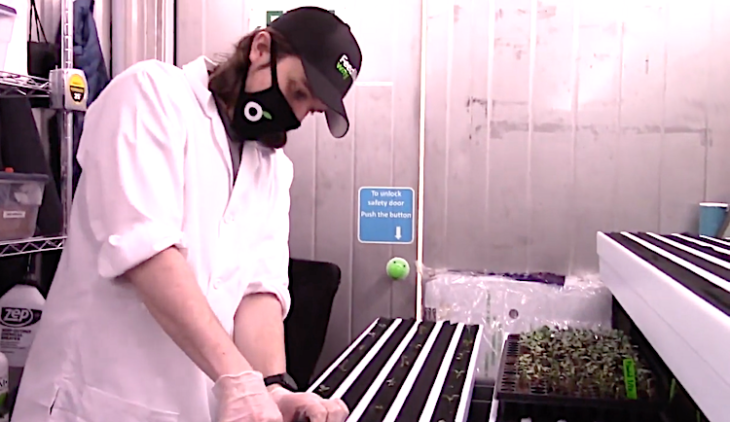
US: NEW YORK - 21st Century Fund Awards FeedMore WNY $100,000 For Expanded Freight Farms Greenery
In 2020, FeedMore WNY served more than 16 million meals to WNYers who were homebound due to quarantine

by queenseyes
March 17, 2021
Recognizing the needs of the community is an integral component of the 21st Century Fund. Making sure that those needs are met is another. The Fund – “a giving circle open to anyone who wants to give back in Western New York” – designates significant awards to worthy organizations that submit applications for consideration. This year, FeedMore WNY is the recipient of $100,000, which will allow the non-profit to continue on with its efforts to feed those struggling during the pandemic.
In 2020, FeedMore WNY served more than 16 million meals to WNYers who were homebound due to quarantine. This was accomplished via the group’s 300 pantries, soup kitchens, emergency shelters, etc., throughout Erie, Niagara, Cattaraugus, and Chautauqua counties.
FeedMore WNY will be using the significant funds to expand its GrowMore for Good project, by allowing the organization to double its capacity, which in turn will ensure that fresh produce will be available to over 129,000 individuals. The expansion of a FeedMore-operated Freight Farms Greenery™ (the organization’s second hydroponic container farm) means that FeedMore will be able to produce 200 lbs. of produce each week. The group’s initial hydroponic “container farm” will supplement the effort. This food will be harvested and distributed within 24 to 48 hours, according to FeedMore.
This is an incredible effort that will allow more people to access healthy foods, instead of relying upon less wholesome canned foods.
In order to receive the crucial funding, FeedMore WNY made it to the final four, out of a streamlined pool of 30 applicants, before coming away with top honors. Homespace, Jericho Road, and OLV Charities were the other three finalists – all four projects can be found here.
Members* from across the country ended up casting their votes for FeedMore WNY, knowing how imperative it is to get healthy foods into the hands and onto the tables of disadvantaged households. The existence of ‘food deserts’ and the fight for ‘food justice’ go hand-in-hand. Compounded by the pandemic, it’s more important than ever to offer people food security, for healthier futures.
“FeedMore and all the clients we serve across Erie, Niagara, Cattaraugus and Chautauqua counties are overwhelmingly grateful for the generous support from the 21st Century Fund which will allow us to purchase our second container farm. The indoor, vertical growing, hydroponic farm will allow us to double our output of crops to enable us to put fresh, nutritious and fragile produce into our clients’ hands within 48 hours of harvest,” said Tara A. Ellis, FeedMore president and CEO.
“Our giving circle is a great way to introduce people to philanthropy,” said Ted Borowiak, 21st Century Fund Co-Chair. “We are always accepting members and encourage anyone including families, school groups or organizations to learn more about our membership options. Once you are a member, you are a member for life, allowing you to stay informed on new projects underway and make an impact in our community over and over again.”
The next 21st Century Fund grant process will open in the fall of 2021. For more information about the 21st Century Fund and membership details, visit www.21stcenturyfund.org.
*Members pay a one-time fee to join the 21st Century Fund and come together every other year to vote on awarding a $100,000 grant to one deserving organization for a specific project that will benefit the community. The 2018 winner chosen by members was the Niagara Falls Boys & Girls Club’s 17th Street Clubhouse Revitalization Project.
Tagged with:21st Century Fund, FeedMore WNY, food deserts, Freight Farms Greenery, GrowMore for Good, Tara A. Ellis, Ted Borowiak
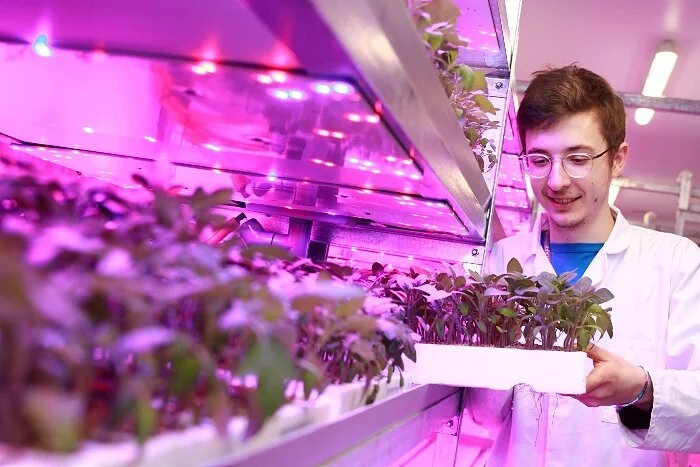
UNITED KINGDOM: “Vertical Farming” Training Centre Unveiled At Reaseheath College In Nantwich
The project aims to showcase the technological innovations within the fast growing and specialized sector and offers undergraduates and businesses applied research and technical training
March 20, 2021
The UK’s largest training and research centre for vertical farming have been completed at Reaseheath College and University Centre in Nantwich.
Vertical farming is the practice of growing plants indoors under fully controlled and sterile conditions in stacked layers.
The Vertical Farming Centre is part of the Institute of Sustainability and Food Innovation.
It’s a joint venture between Reaseheath and its academic partner, the University of Chester.
The project aims to showcase the technological innovations within the fast-growing and specialised sector and offers undergraduates and businesses applied research and technical training.
Reaseheath also plans to link with local schools, particularly in the practical application of digital and STEM subjects.
Covering 200 square metres, the main facility has three floors to ceiling growing chambers and a separate research growing room.
The project has been supported by Cheshire and Warrington Local Enterprise Partnership, which has contributed £340,000 through its Local Growth Fund.
This government funding is available for projects which benefit the local area and its economy.
Simon Burgess, Reaseheath’s Head of Projects, Research and Innovation, said: “This is an exceptionally exciting project which offers tremendous benefits to both our students and our academic and industry partners.
“University Centre Reaseheath is extremely good at applying practical science to commercial research and this will open up a lot of opportunities, for instance through our ability to set up trials and develop the optimum conditions for growing particular crops.”
Clare Hayward, Chair of the Cheshire and Warrington LEP, added: “Innovation in agriculture is important for all our futures and central to the agenda we are progressing through our Sustainable and Inclusive Growth Commission.
“Vertical Farming comes with the promise of increased crop yields from a smaller area of land, along with many other benefits, and Cheshire students need to be able to access this 21st century technology.”
Martin Ellis, Director of iGrowing Ltd, said: “It will provide excellent hands-on access for students and businesses and enable them to fully understand the benefits, both commercial and environmental, of these growing systems.
“There is no doubt that vertical farming will play a greater part in sustainable crop production in the future.”
Crop Production Supervisor Jake Jackson, a University Centre Reaseheath graduate, is in charge of the day to day management of the new facility.
He said: “I’m extremely excited as to where this might lead.
“Who knows, in the future we may see vertical farms on supermarket roofs!”
Lead photo: Jake Jackson tends crops in Reaseheath’s new Vertical Farming Centre)
Tags: Farming, Reaseheath, vertical

Providing A Sustainable Growing Solution For Farmers, Using Renewable Energy in Container Farming
Recently, Freight Farms and Arcadia have partnered to provide Freight Farms' U.S. customers with access to clean energy for their everyday operations
“The past year has really proved our proposition as it has never been proven before,” says Rick Vanzura, CEO at FreightFarms. “The pandemic put a huge focus on supply chain security, local food access, and how to handle disruption to a supply chain, and we saw that having a modular farming solution that can be put next to people where they need food fits in perfectly. Some segments have suffered, while our farms have proven to be a great solution.” The company has seen demand going up, with 2020 being a record year: Freight Farms tripled revenue versus the prior year and set a record for orders.
Recently, Freight Farms and Arcadia have partnered to provide Freight Farms' U.S. customers with access to clean energy for their everyday operations. With this partnership, Freight Farms and Arcadia are taking strides to align their respective industries, moving indoor farming into a more sustainable future. Freight Farms’ customers can now connect the utility for their container farm to Arcadia to match 100% of the farm’s electrical usage with clean energy.
Tackling sustainability pillars
“We already have a number of current farmers that have signed up with the Arcadia energy offering. It was a really important milestone for us as sustainability has been a core mission since the founding of the company.” Rick identifies the sustainability pillars in farming as soil conservation, water conservation, food miles, and energy usage. “At Freight Farms, we have always performed very strongly in the first three categories. Our farms have no effect on soil; they use very little water (5 gallons/day, or 19 L/day), and they reduce food miles significantly, sometimes to zero. What remained for us to solve and why the Arcadia partnership is so crucial is energy,” Rick notes.
Before the Arcadia partnership, energy was the only unsolved part of the sustainability pillars Freight Farms hadn’t tackled yet. The recent partnership has given access to clean energy to all small business farmers. “With the presence of clean energy, we believe there hasn’t been a more sustainable farming solution similar to this one before.
Freight Farms looks at sustainability through the triangle of labor, yield, and power. They are increasing the output per unit of input. According to Rick, Freight Farms is far down the road in the development of greater efficiencies in their farms, focusing on optimizing for yield per unit of power and continuing to research renewable energy options. Rick says that “Everybody’s success is a collective success as we’re all relying on the industry as a whole... We’re all bound by this mission to create a more sustainable planet. Therefore, anything we can do in our own small way, we’re ready to do.”
Improving farm efficiency
On the product side, the company is doing updates to everything. “We made our farms more efficient, delivering value in several aspects, working on different renewable energy in all forms. The ROI has never been better than this farm, because of the intersection of output and efficiency gains. As we’re big believers in helping the industry as a whole for good, our ultimate goal is to be NET zero ultimately.”
While Freight Farms customers already span 46 U.S. states and 32 countries, Rick believes that the company will expand into more locations this year. This growth is stimulated by recent investment and team expansion. “By the end of 2021, we’re expecting to be in every US state and several other countries. Ospraie Ag Science led our last fundraising round, where they invested heavily in our ability to do research. Therefore, we’ve added lots of strength to the team over the last year.”
Collaborations
As a plug of vertical farming, Freight Farms is collaborating with MIT sustainability lab students together on a project. The project is about working in conjunction with the government, and public- and private partnerships around sustainability. “The goal is to be part of something where brilliant people are willing to donate their time and energy. This is just one example of many where people want to pitch in and help as we all want to have a more sustainable planet,” Rick notes.
“We’re not trying to solve for renewable energy on a location by location basis. That would be the route to go with today, but it’s a solution limited to the United States as of now,” Rick affirms. Freight Farms is always on the lookout for partners worldwide where its services can be made available.
For more information:
Rick Vanzura, CEO
Freight Farms
+1 877 687 4326
info@freightfarms.com
www.freightfarms.com
Publication date: Wed 17 Mar 2021
Author: Rebekka Boekhout
© VerticalFarmDaily.com