

Welcome to iGrow News, Your Source for the World of Indoor Vertical Farming

Indoor Agtech: An Evolving Landscape of 1,300+ Startups
Our Indoor AgTech Landscape 2021 provides a snapshot of the technology and innovation ecosystem of the indoor food production value chain
March 17, 2021
Editor’s note: Chris Taylor is a senior consultant on The Mixing Bowl team and has spent more than 20 years on global IT strategy and development innovation in manufacturing, design, and healthcare, focussing most recently on indoor agtech.
Michael Rose is a partner at The Mixing Bowl and Better Food Ventures where he brings more than 25 years immersed in new venture creation and innovation as an operating executive and investor across the internet, mobile, restaurant, food tech and agtech sectors.
The Mixing Bowl released its first Indoor AgTech Landscape in September 2019. This is their first update, which you can download here, and their accompanying commentary.
Since the initial release of our Indoor AgTech Landscape in 2019, the compelling benefits of growing food in a controlled indoor environment have continued to garner tremendous attention and investment.
One of the intriguing aspects of indoor agriculture is that it is a microcosm of our food system. Whether within a greenhouse or a sunless (vertical farm) environment, this method of farming spans production to consumption, with many indoor operators marketing their produce to consumers as branded products. As we explore below, the indoor ag value chain reflects a number of the challenges and opportunities confronting our entire food system today: supply chain, safety, sustainability, and labor. Of course, the Covid-19 pandemic rippled through and impacted each aspect of that system, at times magnifying the challenges, and at others, accelerating change and growth.
Invest with Impact. Click here.
Our Indoor AgTech Landscape 2021 provides a snapshot of the technology and innovation ecosystem of the indoor food production value chain. The landscape spans component technology companies and providers of complete growing systems to actual tech-forward indoor farm operators. As before, the landscape is not meant to be exhaustive. While we track more than 1,300 companies in the sector, this landscape represents a subset and serves to highlight innovative players utilizing digital and information technology to enhance and optimize indoor food production at scale.
Supply chain & safety: Where does my food come from?
The pandemic highlighted the shortcomings of the existing supply chain and heightened consumer desires to know where their food comes from, how safely it was processed and packaged, and how far it has travelled to reach them. A key aspect of indoor farming is its built-in potential to respond to these and other challenges of the current food system.
Indoor farmers can locate their operations near distribution centers and consumers, reduce food miles and touch points, potentially deliver consistently fresher produce and reduce food waste, and claim the coveted “local” distinction. The decentralized system can also add resiliency to supply chains overly dependent on exclusive sources and imports.
Growing local has many forms. Greenhouse growers tend to locate their farms outside the metropolitan area while sunless growers may operate in urban centers, such as Sustenir Agriculture in Singapore and Growing Underground in London. Growers like Square Roots co-locate their indoor farms with their partner’s regional distribution centers, and Babylon deploys its micro-farms solution on site at healthcare and senior living facilities and universities. Recently, Infarm announced it was expanding beyond its growing-in-a-grocery store model, to include decentralized deployments of high-capacity “Growing Centers” across a number of cities. Additionally, the value of “growing local” might take on a much larger meaning if your country imports most of its produce from other countries; a number of the Gulf region countries have announced major indoor growing initiatives and projects with AeroFarms, Pure Harvest, and &ever to address the region’s food dependence on other countries.
Organic produce sales jumped to double digit growth in 2020 as consumers are increasingly mindful of the healthiness of their food. The additional safety concerns due to the pandemic only accelerated this trend. While not typically organic, crops produced in the protection of indoor farms are isolated from external sources of contamination and are often grown with few or no pesticides. Human touch points are reduced as supply chains shorten and production facilities become highly automated. Through the CEA Food Safety Coalition, the industry has recently taken steps to establish production standards with a goal to keep consumers safe from foodborne illness.
Indoor farmers market their products as local, fresh, consistent and clean. This story is resonating with consumers as the growers seem to be selling everything they can produce, with many reporting significant sales growth in 2020. The direct connection to consumer concerns is also a key part of their ability to sell their branded products at a premium, which has been critical to financial viability for some growers. This connection can also enable them to collapse the supply chain further, at least at smaller scales, through direct sales and creative business models, e.g., sunless grower Willo allows subscribers to have their own “personal vertical farm plot” and watch their plants grow online.
Sustainability: Is my food part of the problem or part of the solution?
Farming, as with most industries, has been under increasing pressure to operate more sustainably, and indoor growers, with their efficient use of resources, have rightfully incorporated sustainability prominently into their narratives.
We are well aware of the impacts of climate change, including greater variability in weather patterns and growing seasons. The UN’s Food and Agriculture Organization projects that over the coming decades climate change will cause a decrease in global crop production through traditional farming practices, causing greater food insecurity. Indoor growing, which provides protection from the elements, consistent high yields per land area, and the ability to produce food year-round in diverse locations, including those unsuitable for traditional agriculture, can help mitigate this trend.
Water scarcity is projected to increase globally, presenting a national security issue and serious quality of life concerns. According to the World Bank, 70% of the global freshwater is used for agriculture. Indoor agriculture’s efficient use of water decreases use by more than 90% for the current crops under production. It is also common practice for greenhouses to capture rainwater and reuse drainage as does Agro Care, the Netherlands’ largest greenhouse tomato grower.
On the flip side, energy use, particularly in sunless facilities, is indoor growing’s sustainability challenge. Efficiency will continue to improve, but as recent analysis on indoor soilless farming from The Markets Institute at WWF indicated, there is an industry-wide opportunity to integrate alternative energy sources. Growers recognize this opportunity to decrease impact and improve bottom-line and are already utilizing alternative approaches such as cogeneration, geothermal sources, and waste heat networks. H2Orto tomatoes are grown in greenhouses heated with biogas generated hot water. Gotham Greens’ produce is grown in 100% renewable electricity-powered greenhouses, and Denmark’s Nordic Harvest will be running Europe’s largest indoor farm solely on wind power.
Labor: We’re still hiring!
There are labor challenges and opportunities throughout the food system value chain, and this couldn’t be more acute than on the farm. Farm operators—both in-field and indoor—find it difficult to attract labor for the physically demanding work. Even before the pandemic, the hardening of borders in Europe and the US created a shortage of farmworkers for both field and greenhouse production. In addition, grower and farm manager-level expertise is in short supply, exacerbated by an aging workforce and the rapid addition of new indoor facilities. While operators would like to see more trained candidates coming from university programs, they are also looking to technology and automation to relieve their labor challenges.
Automation of seedling production and post-harvest activities is already well established for most crops in indoor farming. In addition, the short growth cycle and contained habit of leafy greens lends them to mechanization. For example, the fully automated seed-through-harvest leafy green systems from Green Automation and Viscon have been deployed in major greenhouse operations like Pure Green Farms and Mucci. On the sunless side, Urban Crop Solutions has uniquely implemented automation in shipping containers, and Finland’s NetLed has developed a fully automated complete growing system. Note that many of the larger-scale sunless growers have developed their own technology stacks and have designed labor-saving automation into their systems. For example, Fifth Season has robotics deployed throughout the entire production process.
Despite numerous initiatives, the challenging daily crop care tasks and harvesting for certain crops (tomatoes, peppers, cucumbers, and berries) have not yet been automated at scale. However, planned, near-term commercial deployments of de-leafing and harvesting robots offer the promise of significantly altering labor challenges. Software technologies, like those from Nitea and Hortikey address labor management, crop registration, yield prediction, and workflow/process management for the indoor sector and strive to improve operational efficiencies for a smaller workforce.
Technologies that provide, monitor, and control climate, light, water, and nutrients are already deployed in today’s sophisticated indoor growing facilities and are fundamental to maintaining optimal conditions in these complex environments. They also form the base for the next innovation layer, i.e., crop optimization and even autonomous control of the growing environment based on imaging and sensor platforms (like from Ecoation, iUNU, and 30MHz), data analysis, machine learning, digital twins and artificial intelligence. Recent events like the Autonomous Greenhouse Challenge have successfully explored the potential of AI to “drive horticultural productivity while reducing resource use and management complexity”. Emerging commercialized autonomous growing innovations, such as the Blue Radix Crop Controller and Priva’s Plantonomy, promise to extend and enhance the reach of available grower expertise, particularly in large and multi-site operations.
Where do we go from here?
Since we created our initial Indoor AgTech Landscape, there has been positive change and reason to be optimistic about the future. But, as with any evolving market and sector of innovation, it can be a bumpy ride. Some believe CEA is not the answer to our food problems because not everything can be economically grown indoors today. We see indoor ag as just one of the approaches that can help fix our food system and it should be applied when it makes sense. For example, tomatoes sold through retail are already more than likely grown in a greenhouse. Expect more crops to be grown indoors more economically with further advancements.
One aspect of our previous landscape was to increase awareness that, despite the fervor surrounding novel sunless farming, greenhouse growing was already well-established. Dutch greenhouse growers have demonstrated the viability of indoor growing with 50-plus years of experience and more acres “under glass than the size of Manhattan.” The recent public offering and $3 billion market cap of Kentucky-based greenhouse grower AppHarvest also clearly raised awareness! Other high-profile and expanding greenhouse growers, including BrightFarms and Gotham Greens, have also attracted large investments.
The question is often asked, “which is the better growing approach, sunless or greenhouse?”. There is no proverbial “silver bullet” for indoor farming. The answer is dictated by location and the problem you are trying to solve. A solution for the urban centers of Singapore, Hong Kong and Mumbai might not be the same as one deployed on the outskirts of Chicago.
Regardless of approach, starting any type of sizable tech-enabled indoor farm is capital intensive. A recent analysis from Agritecture indicates that it can range from $5 to $11 million dollars to build out a three-acre automated farm. Some of the huge, advanced greenhouse projects being built today can exceed $100 million. Given the capital requirements for these indoor farms, some question the opportunity for venture-level returns in the sector and suggest that it is better suited to investors in real assets. Still, more than $600 million was raised by the top 10 financings in 2020 as existing players vie for leadership and expand to underserved locales while a seemingly endless stream of new companies continue to enter the market.
Looking forward, indoor farming needs to address its energy and labor challenges. In particular, the sunless approach has work to do to bring its operating costs in line and achieve widespread profitability. Additionally, to further accelerate growth and the adoption of new technologies in both greenhouse and sunless environments, the sector needs to implement the sharing of data between systems. Waybeyond is one of the companies promoting open systems and APIs to achieve this goal.
As we stated in the beginning of this piece, the indoor ag value chain reflects some of the challenges and opportunities confronting our entire food system today: supply chain, safety, sustainability, and labor. Indoor agriculture has tremendous opportunity. While it is still early for this market sector overall, it can bring more precision and agility to where and how food is grown and distributed.

"Providing A Multi-Faceted Solution With The Potential To CEA Farmers And The Industry"
Simon Deacon, CEO of Light Science Technologies said: “The opening of the laboratory demonstrates our full commitment to the ‘art’ of plant science
Light Science Technologies Opens Its New In-House Laboratory
Light Science Technologies (LST), has opened its new, state-of-the-art in-house laboratory as it aims to help growers create the most optimal plant recipe.
Simon Deacon, CEO of Light Science Technologies said: “The opening of the laboratory demonstrates our full commitment to the ‘art’ of plant science. It will help accelerate the development of horticulture lighting and environmental technologies over the next few years. And, beyond as we seek out more sustainable, energy-efficient ways of farming."
The purpose-built testing facility at LST’s Derby site will mimic, via a test and replicate process, a grower’s closed indoor environment and test new crops in its controlled environment chambers managing temperature, humidity, and CO2. By running up to 12 concurrent trials in 6 chambers, a team including in-house scientists and top-level industry experts will harness historical and real-time data to help farmers and growers create the right recipe.
Simon continued: “Our testing facility provides a multi-faceted solution with the potential to controlled environment agriculture (CEA) farmers and the industry at large. Not just recipe development for higher density and profit margin crops, but a pathway to industry-leading scientists in different plant species. And, equally importantly, an opportunity to prototype new crops before investment.”
Utilizing its Conviron A2000 reach-in grow chambers along with its integrated, fully updateable and bespoke lighting solutions, LST’s lab offers multiple benefits to growers while helping them achieve the optimal yield, including lowering CAPEX and OPEX costs.
One of LST's scientists outside Conviron growth chambers in lab
By harnessing advanced lighting technology, LST’s lighting systems can identify the right spectral waveforms and PPFD levels required for any species of plant or microbiology and can validate the performance of a grower’s existing set-up or compare new solutions independently, using its own Quantum PAR Photo-Goniometer testing facility. Built inside a 22-meter bespoke light tunnel using its 2021 SSL Spectral Photo Goniometer, it can accurately measure PAR (400nm-700nm) Quantum PAR (250nm-1040nm) and CIE.*
The lab’s capabilities also mean it can measure plant health thanks to the LIcor LI-6800, the only photosynthesis system capable of measuring combined gas exchange and fluorescence from leaves and aquatic samples in just a few seconds with the highest level of accuracy and detail. It also instantly details temperature and humidity.
Other key elements include advanced water and environmental testing, used to help growers identify the macronutrients in their plants and check for all types of food safety, quality and chemical contamination. And, to ensure only plant performance data is collected, GrowFoam, a natural biodegradable growing medium that has no effect on the plant, will be used in the chambers.
One of the most interesting aspects of the lab is the focus on developing an AI capable of monitoring and proactively controlling environmental parameters and plant performance. This is done by leveraging LST’s partnership with a number of universities and its work using an in-house Big Data resource. Using the latest stacked GPGPU technology, data can be brought to life to increase plant performance, taste control and quality.

For more information:
Light Science Tech
Claire Brown, PR Consultant
claire.brown@lightsciencetech.com
www.lightsciencetech.com
Publication date: Wed 17 Mar 2021

Responding To Local - And Sustainable Food Sourcing
“Running a farm is quite a complex learning process, therefore we’ve removed the entry barrier from a learning curve point of view to form the actual system,” Alexander Olesen, CEO and co-founder of Babylon Micro-Farms
Babylon Micro-Farms Is Dialing In Recipes,
Support Software For Specific Crop Types,
And Even For Specific Markets
“Running a farm is quite a complex learning process, therefore we’ve removed the entry barrier from a learning curve point of view to form the actual system,” Alexander Olesen, CEO and co-founder of Babylon Micro-Farms.
Babylon has set up a remote management platform connected to sensors and cameras to run the majority of vertical farms through the cloud. The company set out to develop technology that would automate the complex aspects of indoor farming and in doing so make this method of crop production accessible to anyone.
Alexander Oleson
Lifting barriers
“For us, the challenge is to aggregate the data from all our farms so we can continuously learn to do things better. We’ve automated all things around shipping, supply, and all of the other factors that come along. Our advantage is that we really start to dial in recipes, support software for specific crop types, and even for specific markets. That becomes quite powerful and it drives product development. It’s a really interesting software, transferrable to all sorts of hardware, and represents a big step forward for small-scale vertical farms. It reimagines the user experience and opens up the market for anyone who wants to start sustainable plant growing,” says Alexander.

Local and sustainable sourcing
Babylon Micro-Farms has seen an expansion of the local food movement. Meaning accelerating trends towards more sustainable and local produce sourcing. “The time is now, as there has never been such a great focus on sustainable- and local food sourcing. Also, on the fact that all micro-farms can labor superior products on-site, giving all the benefits of food production. Therefore, it has been really exciting for us, and certainly for the industry as a whole,” Alexander notes.
The last year has been really exciting for the company as a lot of their technology has been out in the field. As Babylon’s main takeaway is to remotely manage farms, they literally had to do so. Once the lockdown was in place, in the US, they were tested in a good way. Alexander adds, “It has proven we can support a network of farms without ever setting foot on-site. That was a huge prove point for us.”
There are growing pains within any business, says Alexander, in terms of scaling, distribution, and support. “Support for a network of small micro-farms is something no one has even done successfully before. We provide automation and high-service without the need for boots on the ground. It’s a phenomenal leap forward for the industry I’d say, but it’s not without its quirks and we’re still learning a lot and overcoming these hurdles.”
'Removing the green thumb'
The company provides a high level of support that is designed to remove the green thumb from growing, according to Alexander. “We’re opening the market of vertical farming to institutional service operators, businesses, communities, etc. In this way, customers are supplying their own products that are harder to source and to be rather independent. Next to that there’s a huge appeal to have stuff on-site as it’s great to explain what kind of business you are and the experience it gives is certainly exciting. I think we’re taking a rather different approach to the industry than others. It looks like it’s working and that’s exciting for us,” Alexander notes. Babylon Micro-Farms is also currently targeting the expansion of its micro-farms distribution throughout North-America.

For more information:
Alexander Olesen, CEO and Co-founder
Babylon Micro-Farms
3409 Carlton St, Richmond
VA 23230, United States
alexander@babylonmicrofarms.com
www.babylonmicrofarms.com
Publication date: Thu 18 Mar 2021
Author: Rebekka Boekhout
© VerticalFarmDaily.com

USA: FLORIDA - The Villages Grown: Food-As-Medicine Concept Expands In America's Largest Retirement Community
The innovative growing complex covers 85 acres with 40 acres dedicated to vertical hydroponics in controlled environment greenhouses
As consumers across the globe look for locally produced, nutritious, and reasonably priced fresh produce, The Villages Grown is rising to the challenge for Florida and is currently the largest CEA operation in the southeastern United States.
The Villages Grown LLC began as a farm-to-table, food-as-medicine initiative centered in The Villages, Florida, America’s largest retirement community with roughly 165,000 residents. The innovative growing complex covers 85 acres with 40 acres dedicated to vertical hydroponics in controlled environment greenhouses. The site also includes space for cut processing and a commercial kitchen. Using five different hydroponic techniques, The Villages Grown produces a wide variety of crops including tomatoes, cucumbers, leafy greens, microgreens, herbs, and other specialty products. This, according to executive director Jennifer Waxman, is one of the things that sets the company apart from other operations.
“Most CEA operations are category killers and are producing large volumes of one or 2 types of crops. They may produce only lettuce or only tomatoes, for example. At The Villages Grown, we’ve managed to crack the code on diversification and now produce tomatoes, cucumbers, microgreens, lettuces, fine herbs and specialty products, 365 days a year,” says Jennifer.
The Villages Grown has always been committed to producing nutrient-dense fruits and vegetables, which it achieves through precise nutrient control and irrigation control, a combination of natural and supplement lighting, and biological control methods including Integrated Pest Management (‘IPM’). The company also conducts nutritional analyses both in-house and through third-party laboratories to ensure that its products are indeed nutritionally superior. As Jennifer explains, “if you give a plant everything it needs, it will give you everything you need.”
While The Villages Grown was initially developed to supply the retirement community with fresh produce, it has since modified its business model to become somewhat of a food hub. In addition to the 7 million lbs of produce grown annually, the company has partnered with 17 local farms and 26 artisans to aggregate local products and develop a “By Florida, for Florida” food system. The onboarding of new farms and artisans will continue to expand.

Stores & Pick-Up
The Villages Grown offers its products through its stores, with orders then delivered to pick-up locations within 2-48 hours by the company’s own delivery fleet. The company is also partnered with other key produce distributors as well as other large retail grocers to cover the state of Florida, all of which will operate on a no-inventory model to ensure that products always reach the consumer at peak freshness.
Recently, The Villages Grown announced that it has entered more hospitals, restaurant holding groups, school districts, and assisted living facilities to provide nutritionally dense products to these organizations. Moving forward, the company aims to begin producing year-round berries and other key produce items in new types of warehouse growing facilities.
For more information:
The Villages Grown
www.thevillagesgrown.com/#
Publication date: Wed 17 Mar 2021
Author: Rose Seguin
© FreshPlaza.com

US: MAINE - Vertical Harvest Wants To Grow
The developers of the greenhouse/parking/residential project, who plan to break ground in about six months, want to expand on their original plans for downtown Westbrook
The developers of the greenhouse/parking/residential project, who plan to break ground in about six months, want to expand on their original plans for downtown Westbrook.
BY CHANCE VILES
AMERICAN JOURNAL
A new rendering showing what the expanded Vertical Harvest would look like if approved. Contributed / Westbrook Planning Department
Developers of the Vertical Harvest project want to add another 6,000-7,000 square feet of retail space and 10 more apartments, for a total of 60, to the building they plan for downtown Westbrook.
The City Council received an update on the Vertical Harvest expansion plans Monday along with other updates on ongoing projects throughout the city, including repairs to the Cornelia Warren outdoor pool, which have hit a roadblock.
Work is expect to begin in late summer or early fall on the $60 million Vertical Harvest building at Mechanic and Main streets, but the city Planning Board must review the plan again and approve the requested expansion.
Saunders said at the same time developers TDB LLC and Vertical Harvest are looking to expand the project: They are looking to “reduce their footprint,” so the building takes up less space and allows for additional sidewalks by the parking area.
The four-story project will include a city-owned free parking garage, a “vertical harvest” indoor farm that will employ upwards of 55 people, first-floor retail space, and if approved, 60 apartments on the top of the structure.
RELATED
Read more about the Vertical Harvest
“The agreements are being finalized between the parties, but first the farm will open, then the retail and parking, with the residential last,” Saunders said.
Saunders has previously said the project may take upwards of two years to finish.
The city will pay $15 million for the parking garage through an agreement using tax revenue from the project, City Economic Development Director Dan Stevenson said, meaning there will be no direct impact on taxpayers. Developers will take on $40 million of the cost and pay for maintenance of the garage, which will continue to be a municipal lot.


Is All White Light the Same - Webinar
In this free webinar, we break down the differences among different types of white horticultural lighting. We will present the results of comparative plant trials we conducted using a variety of our own and other LED providers’ luminaires
More and more LEDs are going from purple to white. Is there any difference among the countless white LED light options on the market, in addition to fluorescent? Cool white, warm white, full-spectrum white, fluorescent, white with UV and far red, etc. How to evaluate these choices?
In this free webinar, we break down the differences among different types of white horticultural lighting. We will present the results of comparative plant trials we conducted using a variety of our own and other LED providers’ luminaires.
Spectra appearing white to human eyes contain a variety of spectrum colors, including green. Humans can distinguish them in terms of their temperature (e.g. warm white and cool white) and CRI (color rendering index) which determines how realistic objects appear under them.
Plants however can have dramatically different reactions to light that appear nearly the same to us. The example here shows the difference in biomass accumulation from three light sources that look exactly the same!
This webinar is aimed at growers and researchers trying to understand which kind of light to illuminate their growth chambers, indoor farms, and greenhouse compartments with.
Register for the webinar here.
Contact Valoya sales here - sales@valoya.com
About Valoya
Valoya is a provider of high-end, energy-efficient LED grow lights for use in crop science, vertical farming, and medicinal plant cultivation. Valoya LED grow lights have been developed using Valoya's proprietary LED technology and extensive plant photobiology research. Valoya's customer base includes numerous vertical farms, greenhouses, and research institutions all over the world (including 8 out of 10 world’s largest agricultural companies).
Additional information:
Valoya Ltd, Finland
Tel: +358 10 2350300
Email: sales@valoya.com
Web: www.valoya.com
Facebook: https://www.facebook.com/valoyafi/
Twitter: https://twitter.com/valoya

Kalera Announces Newest Vertical Farming Facility To Open In St. Paul, Minnesota
With millions of heads of lettuce to be grown per year, Kalera’s St. Paul facility will provide a source of fresh, non-GMO, clean, living lettuces and microgreens to retailers, restaurants and other customers. Kalera’s location in the heart of the city will shorten travel time for greens from days to mere hours, preserving nutrients, freshness, and flavor
The New Facility Will Provide Fresh,
Hydroponically-Grown Produce To The Western Midwest
ORLANDO, Fla., March 15, 2021 (GLOBE NEWSWIRE) -- Kalera (Euronext Growth Oslo ticker KAL, Bloomberg: KSLLF), one of the fastest-growing US vertical farming companies in the world and a leader in plant science for producing high-quality produce in controlled environments, today announced the purchase of a facility in St. Paul, Minnesota which they will convert to a vertical farming facility. Kalera’s Minnesota location is the eighth facility it has announced, making it one of the fastest-growing vertical farming companies in the United States. This announcement comes on the heels of the news of Kalera’s appointment of Sonny Perdue, former Secretary of Agriculture and Maria Sastre to the Board of Directors, as well as its acquisition of Vindara, the first company to develop seeds specifically designed for use in vertical indoor farm environments as well as other controlled environment agriculture (CEA) farming methods.
With millions of heads of lettuce to be grown per year, Kalera’s St. Paul facility will provide a source of fresh, non-GMO, clean, living lettuces and microgreens to retailers, restaurants and other customers. Kalera’s location in the heart of the city will shorten travel time for greens from days to mere hours, preserving nutrients, freshness, and flavor. The facility will also generate approximately 70 jobs upon opening.
“I’m proud to be welcoming Kalera to St. Paul and the W. 7th neighborhood,” said City Councilmember Rebecca Noecker, who represents St. Paul’s Ward 2. “The facility is not only bringing millions of dollars in investment into the community but is also providing jobs and importantly, increasing access to fresh, non-GMO, clean, locally grown produce.”
Kalera currently operates two growing facilities in Orlando and last week started operations in its newest and largest facility to date in Atlanta and is building facilities in Houston, Denver, Columbus, Seattle, and Hawaii. Kalera is the only controlled environment agriculture company with coast-to-coast facilities being constructed, offering grocers, restaurants, theme parks, airports and other businesses nationwide reliable access to locally grown clean, safe, nutritious, price-stable, long-lasting greens. Once all of these farms are operational, the total projected yield is several tens of millions of heads of lettuce per year, or the equivalent of over 1,000 acres of traditional field farms. Kalera uses a closed-loop irrigation system which enables its plants to grow while consuming 95% less water compared to field farming.
“Minnesotans are all too familiar with the limitations of a challenging climate,” said Daniel Malechuk, Kalera CEO. “They also take great pride in local accomplishments, so we are extremely excited to facilitate this opportunity for Minnesotans to have fresh, high quality produce year-round, grown by the locals for the locals.”
Final project commitments, including jobs and capital investment, are contingent on final approval of state incentives.
ABOUT KALERA
Kalera is a technology-driven vertical farming company with unique growing methods combining optimized nutrients and light recipes, precise environmental controls, and cleanroom standards to produce safe, highly nutritious, pesticide-free, non-GMO vegetables with consistently high quality and longer shelf life year-round. The company’s high-yield, automated, data-driven hydroponic production facilities have been designed for rapid rollout with industry-leading payback times to grow vegetables faster, cleaner, at a lower cost, and with less environmental impact.
US: NORTH CAROLINA: CraftGrown Farms Offers Fresh Microgreens, Lettuce And Herbs
All of the growing is done inside, allowing CraftGrown Farms to produce year-round and the ability to expand its growing capacity
BY JESSICA MAURER
March 10, 2021
CraftGrown Farms involves a hydroponic farm on Castle Street. (Photo courtesy of CraftGrown Farms)
Randall Rhyne’s career has included teaching high school biology and earth science as well as serving in the Army Reserve, with deployments to Iraq and Syria.
After visiting Wilmington last year, he fell in love with the city and decided to relocate from Virginia.
While serving overseas, Rhyne and his unit often had little to no access to fresh food, relying on MREs or snacks like Pop-Tarts. He often longed for fresh produce.
One spring when he was in the Syrian desert, he saw trucks hauling locally grown produce and found himself thinking that if the locals were able to grow their own food in the middle of a civil war, in a desert, there was no reason why he couldn’t do this at home. As soon as he returned to Virginia, Rhyne got to work.
Now, having secured a Castle Street storefront and growing space across from Luna Café on Castle Street last fall, Rhyne has created CraftGrown Farms, an indoor, hydroponic farm selling nutrient-dense microgreens, hydroponic lettuce, and herbs to local restaurants and the public.
All of the growing is done inside, allowing CraftGrown Farms to produce year-round and the ability to expand its growing capacity.
Rhyne said the response so far has been remarkable; in fact, he’s already outgrown his initial vertical grow system.
“It’s a great problem to have,” Rhyne said.
He said new customers are usually so excited about what they’ve tried that they want to take home more than they need.
“I’m an old school believer in the quality of the sale and even though these items have a good shelf life, I try to discourage people from buying too much at once,” Rhyne said.
CraftGrown Farms only harvests what it sells, so the produce is picked right in front of the customer, providing maximum flavor and freshness.
There are currently about a dozen microgreen blends available, as well as leafy greens such as kale, arugula, and tatsoi. The microgreens will keep in a vegetable crisper for two weeks, and all of the lettuce is sold with the root ball intact to preserve flavor and freshness.
“These are not your everyday lettuces,” Rhyne said.
CraftGrown Farms is located at 603 Castle St. and is open from noon to 6 p.m. Monday through Friday and 10 a.m. to 4 p.m. on Saturday.
Have a tip for Restaurant Roundup? Email us at: restaurant@wilmingtonbiz.com.

The Rise of Vertical Farming: A Solution to Key Agricultural Challenges
Right now, vertical farming is transforming the industry and could be the future of food production with the world’s population expected to grow to a staggering 9.7 billion by 2050. So, what exactly is vertical farming and how could it change farming as we know it?
By Essex Mag
March 13, 2021
As such a critical industry, it is always interesting to read about the latest developments in farming and agriculture. Right now, vertical farming is transforming the industry and could be the future of food production with the world’s population expected to grow to a staggering 9.7 billion by 2050. So, what exactly is vertical farming and how could it change farming as we know it?
What is Vertical Farming?
The topic of vertical farming was recently explored by Marsh Commercial, providers of farming insurance, who outlined vertical farming as an indoor farming process with plants growing on vertically stacked surfaces under controlled conditions. This would allow farmers complete control over light, climate, irrigation etc which would enable them to grow seasonal crops throughout the year. This means that as opposed to farming on a single level, such as on a field, food could be produced in stacked layers integrated into structures such as a skyscraper.
Vertical Farming Benefits
Vertical farming is taking off in the UK and provides many solutions to a few of the biggest challenges facing agriculture today, including climate change and the growing and aging population. Essentially, this is because vertical farming allows food products to maximize space and optimize the environment for food production allowing for greater yield per square mater, low water consumption, and a lack of soil or pesticide.
Vertical Farming in the UK
Additionally, vertical farming is well-suited to island economies and those that import a lot of produce. Security of supply is incredibly important when it comes to the food chain in these places and vertical farming can strengthen this greatly, which in the UK is a huge plus when you consider the pandemic and Brexit. As explained by The Grocer, food supply chains are under more scrutiny than ever right now and vertical farming could be the solution.
Projects
FWI revealed that there are a number of big vertical farming projects announced in the UK lately, including Ocado sinking in £17 million in the sector in 2019 and an Edinburgh-based company with ambitions to develop 40 vertical farming sites (which 5 already in place).
Just Food also recently revealed that popular UK sausage and vegan food manufacturer Heck has also partnered with a vertical farming specialist Vertical Future to install a vertical farm in its headquarters. The farm will focus on micro-crops, which they believe could allow them to create new “unique and interesting flavors” too.
It is fantastic to see innovative and sustainable developments like vertical farming growing in the UK, especially in troubling times like this where there is so much uncertainty particularly when it comes to food supply and there being many challenges in the agricultural industry. Vertical farming is certainly the future and it is quickly becoming the norm in the UK with many big names realizing the potential for this innovative form of food production.
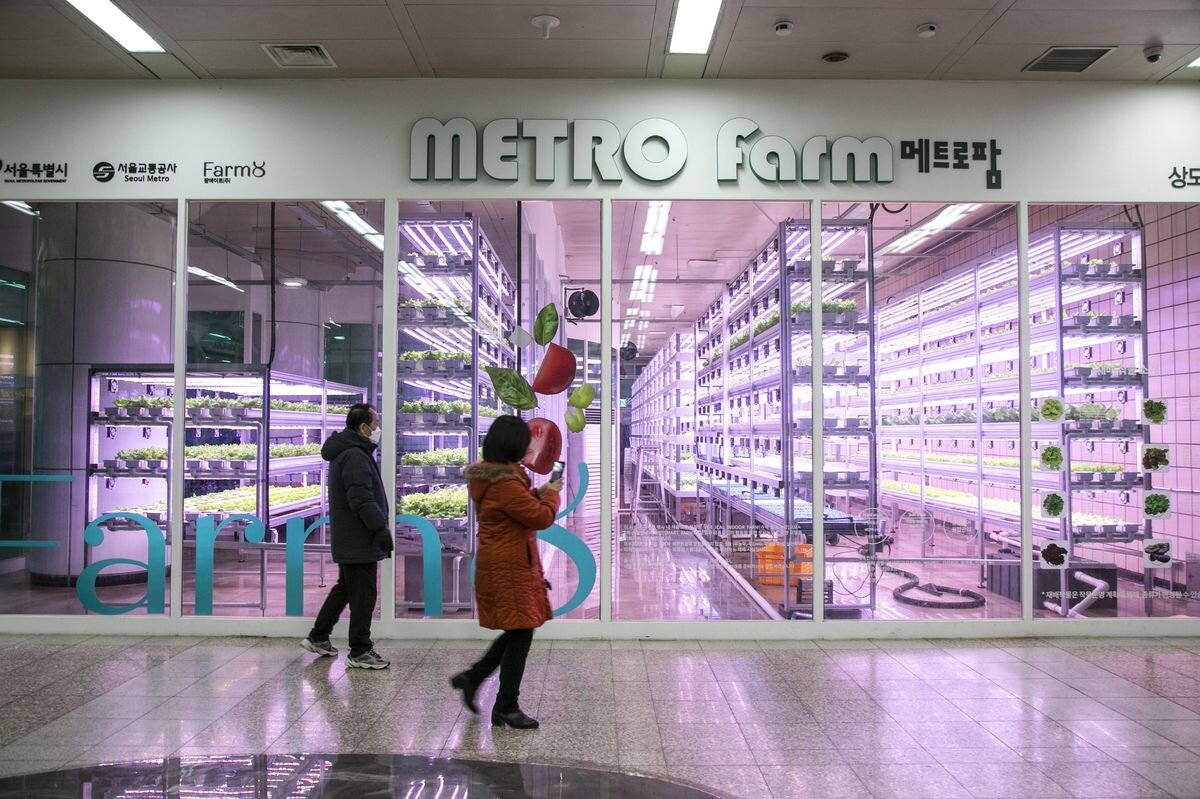
Marijuana And Makeup Are New Growth Areas For Vertical Farms
South Korean startup Farm 8 Co. is among a proliferation of indoor urban growers that saw sales jump during the pandemic
Heesu Lee
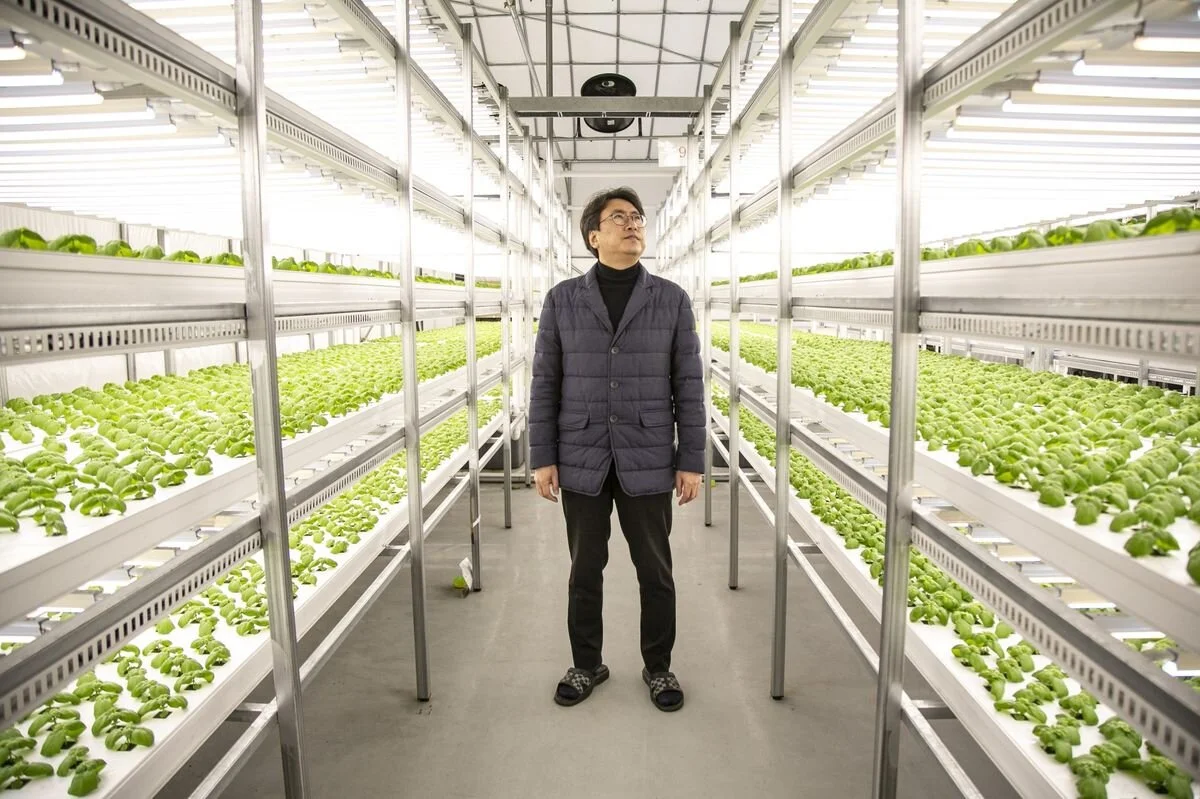
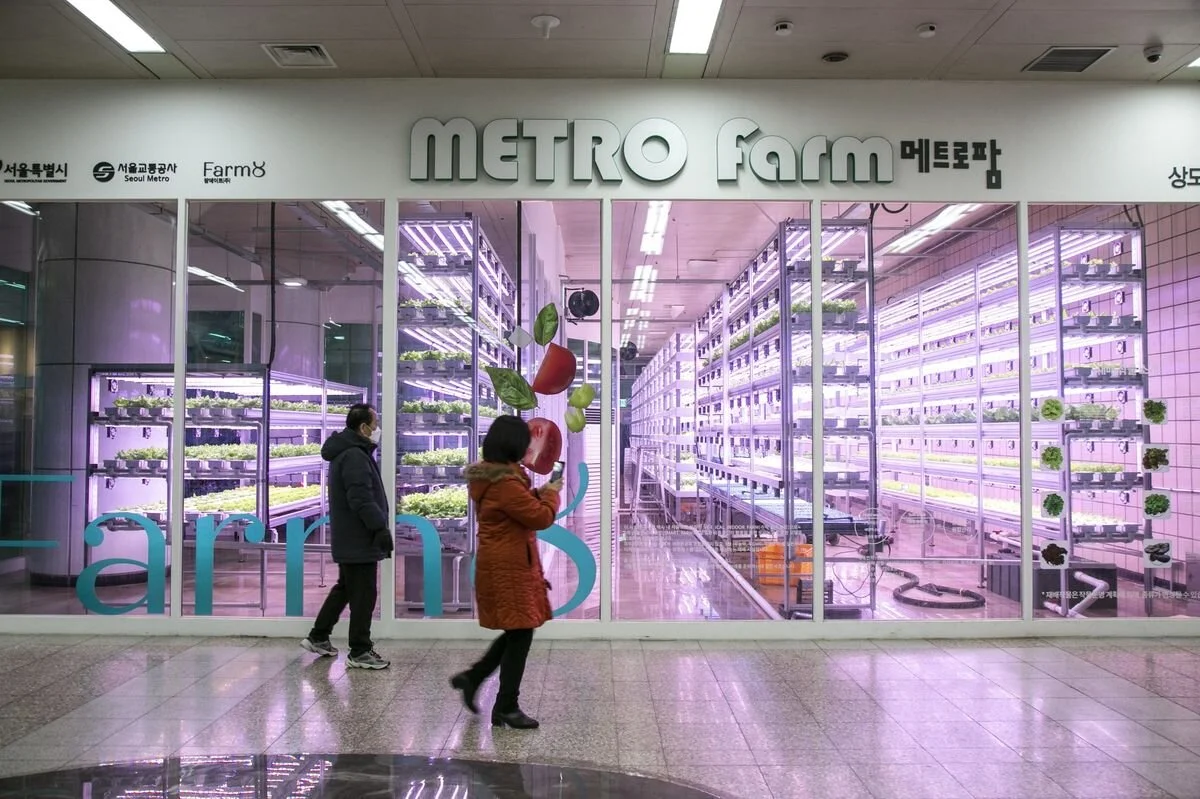
March 13, 2021, (Bloomberg) -- Supercharged by the need to secure local supplies of fresh vegetables during the pandemic, some vertical farms are now branching out into other high-margin areas such as medical cannabis, health supplements, and cosmetics. South Korean startup Farm 8 Co. is
Read more at: https://www.bloombergquint.com/business/marijuana-and-makeup-are-new-growth-areas-for-vertical-farms

Copyright © BloombergQuint

PODCAST: Is This The Fastest-Growing Vertical Farming Business In The World?
Infarm’s global footprint has expanded rapidly in recent months. Its in-store units have been cropping up across the globe – including in Japan, one of the longest established and most developed indoor agriculture markets
March 11, 2021
Indoor agriculture is competitive. While there is so much whitespace for vertical farms and high-tech greenhouses to grow and sell produce regionally, those that are VC-backed seem to have been fighting for investor attention for years – with big announcements often lacking substance. So who is really leading the race?
When I returned from maternity leave in January, I reached out to my good friend Henry Gordon-Smith from urban ag consultancy Agritecture to find out what I’d missed and what sort of traction these highly-funded startups were really getting.
When thinking about which company was making the greatest strides, Henry highlighted Infarm – the Berlin-based vertical farming group with more than $300m in funding under its belt.
Infarm’s global footprint has expanded rapidly in recent months. Its in-store units have been cropping up across the globe – including in Japan, one of the longest established and most developed indoor agriculture markets. It’s also expanding into new crops, a welcome addition to the leafy green focus so many of its peers continue to have. And, since we recorded this podcast — yes that’s how fast they’re moving — they announced the roll-out of new modular ‘Growing Centers’ and added yet more funding.
So we decided to co-host an episode with Infarm’s two co-founders — and brothers — Guy and Erez Galonska, to dig into this growth.
Expect to hear about Infarm’s surprising commitment to sustainability; the focus on their core customer -the retailer; the expansion of their plant science team; and the evolution of their differentiated business model. Enjoy!
Lead photo: Image credit: Infarm
BERMUDA: Government Issues Vertical Farming Call
The Government has urged companies interested in bringing vertical farming to Bermuda to step forward through a new request for information

March 31, 2021
The Government has urged companies interested in bringing vertical farming to Bermuda to step forward through a new request for information.
The RFI calls for expressions of interest for parties who want to launch a commercial vertical farming operation “founded on principles of sustainability and environmentally friendly technology”.
Produce would be expected to be herbicide, fungicide, and pesticide-free, along with non-genetically modified.
The submission deadline for the RFI is 5 pm on Wednesday, March 31.
Submissions must include financial projections including sales volumes and corresponding revenue and relevant costs.
Wayne Furbert, the Minister for the Cabinet Office, said in November the Government had been working with US firm AeroFarms to “design and implement a vertical farming facility in Bermuda”.
Asked what the RFI meant for the relationship between the Government and AeroFarms, a spokeswoman for the Cabinet Office said the RFI was put out as part of the office’s due diligence efforts.
She said: “Through an RFI, the Government is seeking to determine if other interested parties were either contemplating or were in the process of producing commercial vertical farming in Bermuda.
“Interested entities who wish to engage further about this exciting, innovative, and environmentally sustainable project should visit www.gov.bm/procurement-notices.”
Vertical farming involves the production of crops in a controlled environment, usually indoors, using techniques such as hydroponics instead of soil and the crops grow in stacked layers.
The Government said last November that it was close to finalizing plans to bring a vertical farm to the island to help meet Bermuda’s demand for fresh produce.
Mr. Furbert said at the time the plan could reduce the cost of food production in Bermuda and generate 30 jobs.
He added that the proposal would be put to the Cabinet Committee for Economic Development later that month – but no further announcements have been made.
Improved Product Consistency
Introducing Travaglini FarmTech, a new business division that has been established by Travaglini S.p.a., the world leader in meat, cheese, and fish processing equipment. Travaglini FarmTech will deliver turnkey vertical farm solutions to food processors to help them improve product consistency and simplify their supply chain dynamics
12-03-2021 Philips Lighting
ITALY, Milan- Introducing Travaglini FarmTech, a new business division that has been established by Travaglini S.p.a., the world leader in meat, cheese, and fish processing equipment. Travaglini FarmTech will deliver turnkey vertical farm solutions to food processors to help them improve product consistency and simplify their supply chain dynamics.
“With vertical farming
we can grow and process consistent, high-quality produce in one location that can be close to retailers and consumers. We have full control over the entire process.”
- Luca Travaglini, leader Travaglini FarmTech
The challenge
Travaglini S.p.a. builds on 68 years of expertise in developing extremely accurate climate control, industrial automation, processing, and packaging equipment. The company is partnering with Philips Lighting, the world leader in lighting, to establish Italy’s first vertical farm research lab in Milan. This facility will be used to develop a state-of-the-art model for vertical farming growth strategies and technologies. The Italian vertical farm research lab will focus primarily on the production of leafy greens.
The right lighting
Vertical farming is a reply to the environmental problem that exists today in horticulture – how to provide fresh food to urban environments in a way that’s efficient and sustainable. “With vertical farming we are looking to answer many of the questions that the food industry is facing today and that will only become clearer and more pressing in the coming years,” said Travaglini. We can grow and process consistent, high-quality produce in one location in a vertical farm that can be close to retailers and consumers. Plus, we can fully control the entire supply chain, from seed to packaging.”
Luca Travaglini, leader of Travaglini FarmTech division said, “We chose to work with Philips Lighting because they have the strongest expertise in this field, and we trust them to help us expand our skillset and knowledge base over the long-term.
Photos Courtesy of Philips Lighting
Click here for more information.
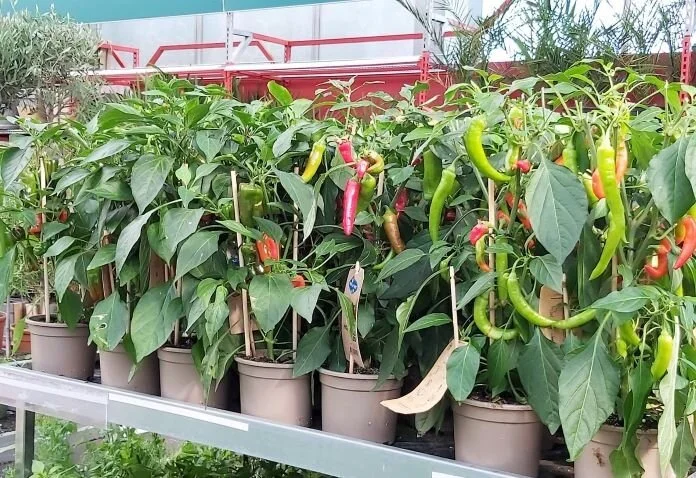
Stockholm’s Indoor Farms Boost Food Security
The city is revolutionizing its food sector by showing results in eco-friendly urban farming
The City Is Revolutionizing Its Food
Sector By Showing Results
In Eco-Friendly Urban Farming
14 Mar 2021
In April 2020, the UN warned that the world was on the brink of a catastrophic famine.
It was estimated that about 135 million people in around 55 countries faced shortages in food, particularly nutritious food, in 2019.
Against this backdrop, the UN has set an ambitious goal to ensure food security and wipe out hunger by 2030. It estimated that around 183 million people could slide into starvation and malnutrition if stricken with a pandemic akin to Covid-19. The coronavirus crisis disrupted global food supply chains, leading to chronic shortages in many countries.
Even before this pandemic, the ecological costs of food production were rising, compounded by water scarcity in many places. Irrigation accounts for about 70% of freshwater withdrawals around the world, with the figure reaching 90% in some developing countries.
Food production, which is critical for survival, affects the ecosystem. With the Earth’s resources depleting every day and the world population growing, we must discover innovative ways to cultivate food. We need ground-breaking and resourceful approaches to not only feed the world’s population but to do so in eco-friendly ways.
Faced with this dilemma, we need to develop alternative methods of farming, particularly using artificial intelligence.
Stockholm’s modern indoor farming methods provide some answers on how to overcome global food shortages. The city is revolutionizing its food sector by showing results in eco-friendly urban farming.
Some buildings in Stockholm incorporate artificial intelligence and eco-friendly methods into indoor farming. Circular energy wastewater and carbon-absorbing mechanisms enable indoor-grown greens while reducing the ecological footprint.
Indoor farming in Stockholm uses LED lighting and hydroponic watering systems. Food, especially vegetables, is grown indoors all year round. Growing vegetables indoors not only cuts reliance on food imports but also makes cities self-sufficient in food.
More than 1.3 million plants are grown indoors in Stockholm every year. Indoor farming has allowed Sweden to slash food imports by 60% and cut carbon emissions incurred in transporting food. Such transport accounts for a quarter of emissions in Sweden.
In some Stockholm suburbs, bright LED lights illuminate a business space. In this building, plants follow an artificial daylight rhythm to grow as efficiently as possible. Delicate plants such as various herbs and lettuce grow in stacks of about 20 metres wide by six metres high. Local restaurants, supermarkets and airlines buy this indoor-grown indoors.
Weather conditions in Sweden allow open-air farming for only three to four months a year. But climate is not a constraint in indoor farming, which maximises the use of space using stacks. Each shelf has its own LED lighting and circulating water. Even fruits like strawberries can be grown throughout the year.
Sweden Foodtech, a government agency, acts as a catalyst in promoting and encouraging innovation in the food sector. This agency also offers support to firms that want to restructure the food ecosystem. Companies converge when business events are organized focusing on major themes revolving around the future of the Swedish food sector.
Besides Sweden Foodtech, the Stockholm Business Region, a business promotion agency, aims to create a resilient food ecosystem for innovative businesses. Its goal is to position Stockholm as a “leading food-tech hub” for 300 companies in the food-tech industry.
Public interest, environmental consciousness, and an innovative society has made Stockholm a conducive place for food-tech initiatives. Consumers in this city are more ecologically vigilant, and many of them feel it is their moral obligation to support eco-friendly products. The city itself also extends support to all kinds of sustainable projects.
As a society grows more affluent, it places greater emphasis on health issues and ecological considerations. Ecological degradation and the use of harmful chemical fertilisers and pesticides will spur demand for eco-friendly and healthier food products.
Some 55% or 4.3 billion of the global population of 7.8 billion are urban dwellers. This figure could reach 70% or 6.8 billion of the world’s population of 9.7 billion by 2050.
High-tech vertical farms offer alternative ways to grow food on a large scale. In this way, we can grow our food in more energy-efficient and healthier ways. Despite developments in agricultural technology, conventional farming faces problems such as pests, climate change, and natural disasters.
With the scarcity of arable farming land, ecological problems, and health hazards, the trend is towards indoor food cultivation. The only challenge is to reduce the cost of indoor farming, especially for urban dwellers in less affluent countries.
But with technology rapidly advancing along with ongoing R&D and innovation, costs will fall, allowing economies of scale in indoor farming. Technological advances will lower costs, enhance quality and improve harvests, all of which will provide better returns on investments.
The trend towards indoor vertical hydroponic or aeroponic farming will gain momentum, especially in urban areas. Mass food production in the future will probably focus on indoor farming in buildings rather than horizontal farming on the ground.
READ MORE: Use idle city land to grow food
What’s in it for Malaysia? Our total agricultural imports reached nearly $18.3bn in 2019, roughly 7% from the US. We must slash this high import bill.
The government should encourage more Malaysians to enter the food ecosystem and develop the sector completely along the value chain. It should give incentives to unemployed graduates, especially those in relevant disciplines, to venture into the food sector. It should encourage them to get involved in R&D, integrated farming, indoor farming, manufacturing, logistics, marketing and distribution.
If there is anything we can learn from the coronavirus pandemic, it is that we have to ensure food self-sufficiency. We saw how the pandemic severely disrupted global food supply chains, and so our national agenda should prioritize food security.
Thanks for dropping by! The views expressed in Aliran's media statements and the NGO statements we have endorsed reflect Aliran's official stand. Views and opinions expressed in other pieces published here do not necessarily reflect Aliran's official position.
Our voluntary writers work hard to keep these articles free for all to read. But we do need funds to support our struggle for Justice, Freedom and Solidarity. To maintain our editorial independence, we do not carry any advertisements; nor do we accept funding from dubious sources. If everyone reading this was to make a donation, our fundraising target for the year would be achieved within a week. So please consider making a donation to Persatuan Aliran Kesedaran Negara, CIMB Bank account number 8004240948.

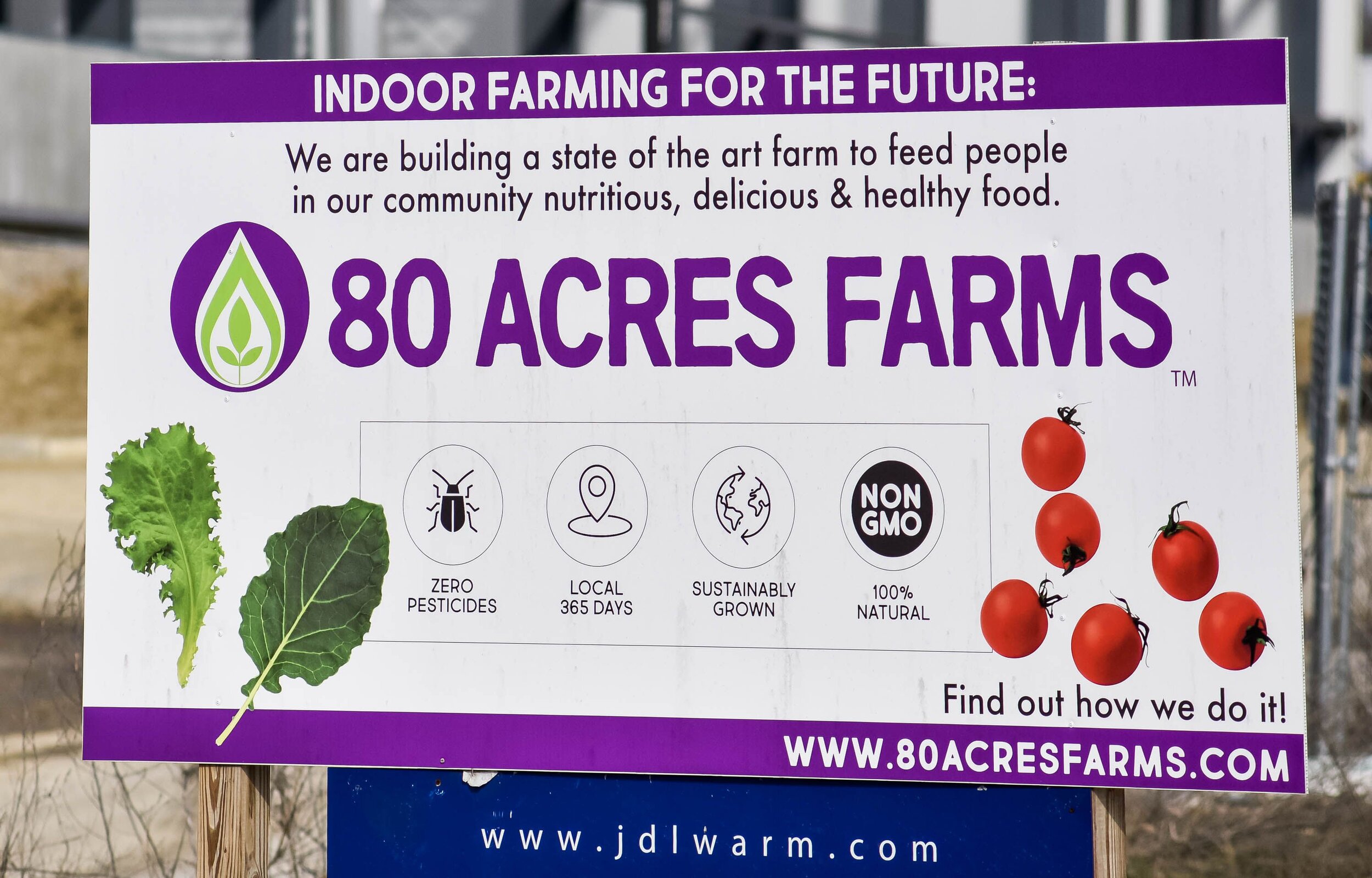
USA - OHIO: ‘Amazing Accomplishment’: 80 Acres Produce Made In Hamilton Now Kosher Certified
Hamilton-based 80 Acres Farms recently received Kosher certification, and a rabbi who is part of that approval said he was astounded at how well the indoor-farming company keeps insects from its produce, even though it uses no pesticides
March 13, 2021
By Mike Rutledge
Hamilton-based 80 Acres Farms recently received Kosher certification, and a rabbi who is part of that approval said he was astounded at how well the indoor-farming company keeps insects from its produce, even though it uses no pesticides.
Credit: Journal News
“It’s an amazing, amazing accomplishment,” said Rabbi Avrohom Weinrib, administrator of Cincinnati Kosher, which now oversees about 50 establishments in Ohio, Kentucky, West Virginia and Indiana.
The not-for-profit organization soon also will be known as Central Kosher as it expands regionally. Both organizations will use the symbol of a circle around the letters CK.
With Passover starting the evening of March 27, such a designation can make preparing salads much easier for Jewish families. Vegetables and other plant products normally are Kosher. Yet a Kosher law bans eating even the tiniest of insects, Weinrib said.
“It has to be perfectly clean to be considered Kosher,” Weinrib said. “So basically, what we’re certifying — and this is the incredible process of 80 Acres — is they, through technology, got to the ability to grow things without any infestation, to the point of perfection, which is an incredible accomplishment in the world at large, but particularly an incredible breakthrough for the Kosher world.”
As part of the certification process, crops are washed in water, and that water is poured through a fine cloth that catches even the tiniest organisms. Then the cloth is checked on a light box. Then reviewers use magnifying glasses, and sometimes microscopes, “to ensure there’s nothing on there — anything like an insect,” Weinrib said.
“We’ve done about six weeks of inspections at 80 Acres to make sure that’s the case, and so far, it’s been zero,” he said. “There’s a few others in the country that have gotten to this level — very, very few — and 80 Acres is probably the best in the country in terms of this accomplishment.”
Never eaten a raspberry
Every time Weinrib’s family prepares salads or greens, “It’s going to take my wife, or one of my children, or if we pay someone to do it, to go through this exact process of washing, inspecting and almost always washing a second, or third or fourth time, until it actually gets clean,” he said.
“Because we have to make sure it’s fully clean,” Weinrib added. “So it’s time-consuming, it’s labor-intensive, and it’s something that is not an easy process.”
But when consumers see the Kosher symbol, said Kosher coordinator Rabbi Lazer Fischer, “They just open up the bag, and they can use the lettuce inside,” knowing it’s completely insect-free.
Monica Noble, who runs 80 Acres’ quality and food safety program, said the company didn’t have to change anything to earn the certification.
“Our controlled growing environment is ideal to meet Kosher requirements,” she said.
At 80 Acres, “our grow zones are enclosed and employee traffic is extremely limited, which helps us prevent pest access in the first place,” Noble said.
Kosher laws are so stringent that Weinrib has never eaten a raspberry. Fischer, who recently moved from Israel, hasn’t had one since about age 5, after intensive cleansing of those raspberries.
Other difficult-to-clean produce includes blackberries, asparagus, Brussels sprouts and sometimes strawberries.
Fischer has tasted raspberry syrups, so he has a general idea. But he hopes one day 80 Acres will have “a breakthrough” for people who have never tasted a raspberry.
Explore PHOTOS: How 80 Acres Farms has grown in Hamilton so far this year
Holiday meals
Kosher certification feels good to Samantha Bergman, 80 Acres’ senior manager of retail sales and merchandising, because of her grandfather, Harvey Bergman.
“That was something that was so important to him, honoring the Jewish tradition, and passing that down from generation to generation,” Bergman said. “I’m grateful I work somewhere that can honor this tradition for the multitude of families that hold it close to their hearts.”
Many Muslims and others also pay attention to kosher certifications.
Shakila Ahmad, with the Islamic Center of Greater Cincinnati in West Chester, said when their Halal certification isn’t on a product, many Muslims look at the Kosher certification, especially when making sure there are no traces of pork in a product.
During Passover, which runs from March 27 to April 4, which this year coincides with Easter, Jews don’t eat breads, cakes or any grain-based product. That lack of leavened food represents the fact that in escaping slavery while leaving Egypt, they had to flee quickly with no time for dough to rise into bread. Maybe someday, 80 Acres will grow romaine lettuce, which can be used as a bitter herb, representing slavery. Romaine is particularly difficult to clean, the rabbis said.
PlantLab Opens The First Indoor Grow Site In The United States
As a Dutch pioneer in indoor farming (vertical farming), PlantLab has opened a new production site in the US city of Indianapolis, the capital of Indiana
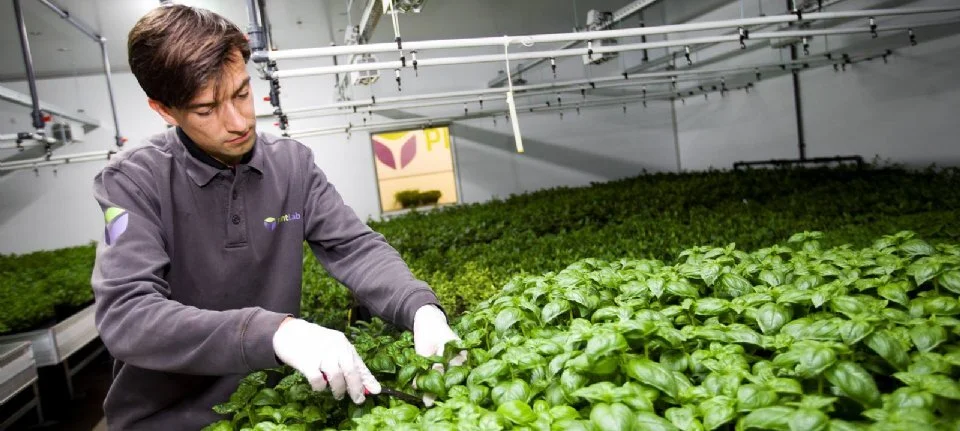
As a Dutch pioneer in indoor farming (vertical farming), PlantLab has opened a new production site in the US city of Indianapolis, the capital of Indiana.
The first overseas ‘Plant Paradise’ grows vegetables for the locals in a place where it was previously unthinkable: in a former battery factory near the center of town.
The first herbs and lettuce heads have now been harvested from the 2,000 square meter grow site and delivered to local supermarkets and foodservice companies. PlantLab will grow different types of tomatoes, cucumbers, lettuce, and herbs in Indianapolis. The new location will ultimately be good for a total of 420,000 kilograms of fresh vegetables and provides employment for around seventy people.
Healthy and delicious
PlantLab has made a breakthrough over the past ten years with its efficient, worldwide patented technology for innovative urban agriculture, which is now in use in a commercial production site in Amsterdam and now also in Indianapolis.
This makes it possible to grow fresh, healthy, and tasty vegetables on a large scale close to the consumer without the use of chemical pesticides. In an area of only two football fields, it is possible to produce enough to supply a city of 100,000 people with 200 grams of vegetables every day.
Sustainable urban corridors
PlantLab has partnered in Indianapolis with Englewood Community Development Corporation, which works on the sustainable development of urban corridors. The products are marketed under the brand name “Uplift, good food for purpose”.
“The collaboration gives us the opportunity to mean more to Indianapolis society,” says Michiel Peters, CEO of PlantLab. “It fits exactly with our mission. We are not only increasing the supply of sustainable and responsible fresh food for local customers, but we are also creating jobs in a sector that is totally new to this region. ”
Need less water
This summer, PlantLab raised € 20 million in growth funds from De Hoge Dennen Capital as part of an investment round. Scaling wants to use that money to open theatrical production sites in the Netherlands, the United States, and the Bahamas, among others. PlantLab production sites can be located anywhere in the world, even on sterile soil or in the middle of urban areas.
Crops reach their full potential by regulating temperature, humidity, and light, while 95% less water is needed. The light comes from specially developed LED lights that provide the specific color of light that the plant needs for photosynthesis.

Sonny Perdue, Former US Secretary of Agriculture And Georgia Governor, Joins Kalera Board of Directors
Brings over 40 years of experience in agriculture
Brings Over 40 years of Experience In Agriculture
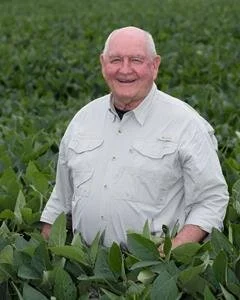
Kalera (Euronext Growth Oslo ticker KAL, Bloomberg: KSLLF), one of the fastest-growing and largest vertical farming companies in the world and a leader in plant science for producing high-quality produce in controlled environments, today announced that Sonny Perdue, former United States Secretary of Agriculture and Georgia Governor, will join its Board of Directors and has also personally invested in the company in the latest financing round. Perdue’s appointment to the Board follows the addition of Maria Sastre to the Board of Directors, as well as Kalera’s acquisition of Vindara Inc., the first company to develop seeds specifically for use in vertical farming environments.
Sonny Perdue served as the United States Secretary of Agriculture from 2017 to 2021, where he initiated USDA’s Ag Innovation Agenda. Prior to his time as Secretary of Agriculture, Sonny served as Governor of Georgia from 2003 to 2011 and a Georgia State Senator from 1991-2002. As a state senator, he was often praised for tackling issues when no one else had the courage to do so and for his ability to grasp the nuances of complex problems. Sonny was recognized as a leading authority on numerous issues including agriculture, transportation, education, emerging technologies and economic development.
“Kalera remains focused on being global leaders in all that we do, whether it be in technology, expansion, innovation, building an executive team, or having a world class Board of Directors,” said Daniel Malechuk, CEO of Kalera. “The addition of a global industry titan like Sonny Perdue is a testimony to this commitment and validation of Kalera’s role in defining how we feed the world for generations to come. We are humbled that Sonny has chosen to join us as a fully-active participant on our Board, and are excited about the unique perspective and insight he will provide through his experience as Secretary of Agriculture for the world’s leading agriculture and food producer.”
“Kalera is leading the pack in a booming vertical farming industry,” said Sonny Perdue. “Kalera is a perfect example of the power of American innovation, creativity, and entrepreneurship to develop different, better ways to grow and provide food at home and around the globe. Through my travels, I’ve had the opportunity to experience many intriguing ideas in food and agricultural innovation and technology. In my opinion, Kalera captures the intersection of technology and sustainable food production better than anything I have seen. That is why I am excited about the potential I see in Kalera to change the way we grow and consume our food.”
This news follows the Company’s recent acquisition of Vindara Inc., the first company to develop seeds specifically designed for use in vertical indoor farm environments as well as other controlled environment agriculture (CEA) farming methods. Kalera has realized rapid expansion into a number of new markets including Atlanta, Houston, Denver, Columbus, Seattle, and Hawaii. Kalera is the only controlled environment agriculture company with coast-to-coast facilities being constructed, offering grocers, restaurants, theme parks, airports and other businesses nationwide reliable access to locally grown clean, safe, nutritious, price-stable, long-lasting greens. Kalera uses a closed-loop irrigation system which enables its plants to grow while consuming 95% less water compared to field farming.
About Kalera
Kalera is a technology driven vertical farming company with unique growing methods combining optimized nutrients and light recipes, precise environmental controls, and clean room standards to produce safe, highly nutritious, pesticide-free, non-GMO vegetables with consistent high quality and longer shelf life year-round. The company’s high-yield, automated, data-driven hydroponic production facilities have been designed for rapid rollout with industry-leading payback times to grow vegetables faster, cleaner, at a lower cost, and with less environmental impact. To learn more visit www.Kalera.com.

New Sustainability Partnership Launched Between Sodexo And ZipGrow Inc.
Sodexo, world leader in Quality of Life Services, has joined forces with ZipGrow Inc., the manufacturer of the world’s most installed vertical hydroponic equipment, to develop a unique program to introduce sustainable growing systems to facilities throughout Canada and the United States of America
Burlington, March 11, 2021: Today, two international industry leaders have launched a first-of-its-kind partnership to develop more sustainable local food chains throughout North America.
Sodexo, world leader in Quality of Life Services, has joined forces with ZipGrow Inc., the manufacturer of the world’s most installed vertical hydroponic equipment, to develop a unique program to introduce sustainable growing systems to facilities throughout Canada and the United States of America.
One of Sodexo’s primary goals is to ensure all our operations are industry-leading from a sustainability perspective. “This new partnership with ZipGrow Inc. not only enables us to reduce our carbon emissions of distance traveled for food source, onsite food waste, and packaging requirements, but also to introduce innovative technology to our facilities and team members”, said Normand St-Gelais, Director of Corporate Responsibility, Sodexo Canada.

ZipGrowTM technology is a patented system that utilizes both hydroponic growing systems and vertical planes to maximize production volume within a small footprint. Primarily growing leafy greens such as lettuce and kale, along with herbs and small fruiting crops such as strawberries, ZipGrow systems will be installed in Sodexo locations including educational institutions, conference facilities, and corporate food service centres.
“Having been installed throughout the world over the past decade, our system enables growers, both big and small, to access fresh produce no matter where they are located”, explains Eric Lang, President of ZipGrow Inc. “We are excited to move ahead with this new partnership with Sodexo. Together we will be able to introduce sustainable food to Sodexo locations throughout North America.”
“As a Chef, we are always looking for ways to introduce the freshest possible produce to our kitchens”, said Chef Davide Del Brocco, Sustainability Manager, Sodexo Canada. “By having a grow system on site, we can now not only customize our produce to meet our upcoming needs, but we can also now harvest fresh greens and use them that same day.”
“Having like-minded partners like ZipGrow who understand what is important to us and who are aligned with our values and goals is crucial in working together for a Better Tomorrow." said Andrea Cantin, Corporate Social Responsibility Coordinator, Sodexo Canada. With Sodexo and ZipGrow Inc. both having company values strongly embedded in sustainability, this new partnership will see this innovative agriculture technology being introduced to multiple Sodexo facilities in Canada and the US.
About Sodexo
Sodexo delivers a wide range of customized solutions, designed to optimize work and living environments. Sodexo has been providing food and facilities management services in Canada for over 40 years, with a focus on enhancing safety, work process, and well-being. Sodexo is a market leader in Canada. Sodexo has been recognized as a top employer for the past seven consecutive years. Sodexo is proud to have created the Sodexo Stop Hunger Foundation, an independent charitable organization that has raised over $3 million to fight hunger and donated more than one million meals to at-risk youth across Canada since 2007. Sodexo is included in the CAC 40, FTSE 4 Good, and DJSI indices.
Key figures (as of November 2020)
420,000 employees
1st in its sector in both the Dow Jones Sustainability Index (DJSI) and the 2020 SAM sustainability yearbook 64 countries
100 million consumers served daily
About ZipGrow Inc.
ZipGrow Inc. is an international leader in indoor, vertical farming technology. Our flagship product, the ZipGrowTM Tower, is a core component of many of the world’s most innovative farms; from indoor hydroponic warehouses to vertical aquaponic greenhouses and high-density container farms. For more information contact hello@zipgrow.com or at 1-855-ZIPGROW.
Contacts
Media
Caroline Desvaux
Tel: +1 514 476 2158
Caroline.desvaux@sodexo.com
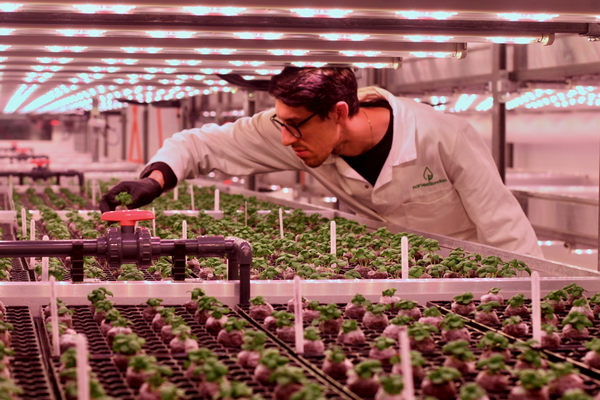
“Vertical Farming Gives Us The Opportunity To Create A Demand-Driven Food System”
Harvest London allows its customers control in letting them decide details of the specific crop they’re interested in, not only on things like taste, color but also packaging, frequency of deliveries
Starting the business in 2017 with a proof of concept, Harvest London was ready to construct a more high-tech farm. “We’ll only grow the requested demand of the customers,” says Chris Davies, CEO at Harvest London. “Everything is supply-based, however, this has resulted in food waste and a fundamentally broken food supply system. Our customers sign a long-term growing contract, selling the capacity to grow produce.”
Harvest London allows its customers control in letting them decide details of the specific crop they’re interested in, not only on things like taste, color but also packaging, frequency of deliveries. In addition to being grown to order, this gives them more control over their supply chain which they previously didn’t have, as normally they would take what they’d be given.
Matching supply to demand
Harvest London makes use of a ‘partners by design’ model, meaning everything cultivated is grown to order, matching supply to demand. Going from harvest to delivery within four hours as long as customers are London-based. Meaning they don’t grow for money's sake, as the company believes it has the most impact on cutting prices, margins and increasing food waste. Therefore, Harvest London works very closely with customers in order to truly understand their demand. This enables them knowing where the produce is going and who the produce is used by.
Variety focus
On its previous farm, the company was growing 10-15 things as they had a different business plan back then. Harvest London was growing several unique crops for Michelin restaurants. However, it was only growing 500 grams to one kilo at a time. Chris adds, “We focused on variety which was the most important thing back then. Now, we’ve learned from that and have the recipes and know-how still, but we’re growing five crops at the same time at a larger scale. Certain crops are viable at the moment, but that viability is a function of how well you can do things.”
Quickly the company sold the business out and within three months, it was growing at 100% capacity. This resulted in turning customers away says Chris as they didn’t have more capacity. After meeting their maximum capacity the company ran some funding rounds in order to construct a bigger farm to increase production.
Emerging technologies
We’re fundamentally system integrators, using existing techniques from different industries, and have compiled all of those together. This ends up with a vertical farm.” According to Chris, many vertical farms are making the mistake by trying to be a hardware and vertical farming company at the same time. However, being a vertical farm is already hard enough on itself.
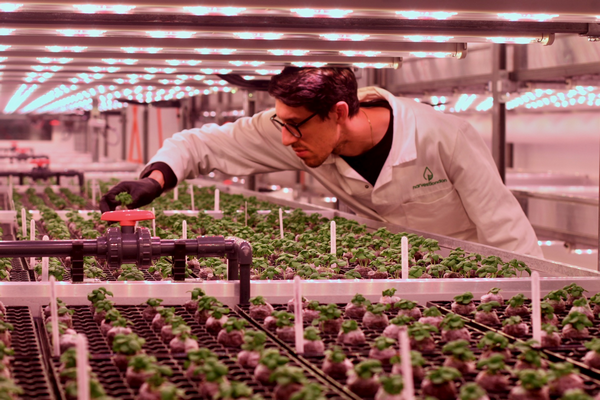
“We don’t play at the hardware space, at the base layer of hardware, however, we add value to the value-added technology space. We built a platform that essentially operates as the brains of our farm, regardless of the hardware, growing method, etc. It doesn’t matter from a hardware perspective, here’s a software platform that allows our data-driven operations. The thinking is that by taking this approach you’ll be able to break down silos of data. This is done by sharing data across different hardware providers and constantly learn, not being tied to any kind of hardware ecosystem,” Chris affirms.
The green infrastructure space
In the shortest term doing things with renewable resources, says Chris, is kind of a stop-gap measure. It’s the right thing to do in the short term, but based on the significant energy costs a vertical farm has, you have to take a more holistic approach. There’s a lot of money present in the market, the concept of green finance ‘greening the financial system’ hasn’t reached its potential yet. “The way you’re really going to transform food production is by thinking more holistically about food production within the context of a larger infrastructure. The most success we had with investors, the ones that already understand the green infrastructure space. If you already understand the economics of solar farming, wind farming or anaerobic digestion, then you understand the concept behind investing in vertical farming. Very high capital expense at the start of the process, but very productive for the lifetime of the asset”
Co-locating vertical farms
However, when wanting to make a difference in food systems, according to Chris, is building more vertical farms, which is high capital intensity. More and more, vertical farms will be treated as green infrastructure projects. It’s almost like the multiplier effect when already owning a solar farm and anaerobic digester e.g. imagine a scenario of co-locating a vertical farm right next to these grids. You can create a very circular energy and food production system here. The hub and spoke model of vertical farming works really well. As about 85% of the produce comes out of the country, says Chris, a farm just outside London is still an exponential. We all know that in order to get the economy of scale, and efficiency, and maximizing your kilos per square meters.
For more information:
Harvest London
Chris Davies, CEO
chris@harvestfarms.ag
www.harvest.london
Publication date: Fri 12 Mar 2021
Author: Rebekka Boekhout
© VerticalFarmDaily.com