


Welcome to iGrow News, Your Source for the World of Indoor Vertical Farming

TURKEY: Use of Artificial Intelligence In Greenhouse And Vertical Agriculture
Vertical farming is generally used when the yield of the soil is low or under unused conditions and it also contributes to the cultivation of crops. Consequently, many vertical fields and greenhouses are designed as closed spaces and are inclined to provide better light

October 25, 2020
Vertical farming is the production of products vertically stacked so that even if the land is used it can now be produced as a more effective method, smart agriculture.
Vertical farming is generally used when the yield of the soil is low or under unused conditions and it also contributes to the cultivation of crops. Consequently, many vertical fields and greenhouses are designed as closed spaces and are inclined to provide better light.
In vertical farming, artificial light is often used in combination with natural daylight, and pioneers who prefer this method, such as ForFarming have observed positive impacts on future food safety and human health, and the need for agricultural land will be reduced. One of the most important reasons for this is the protection of natural life and the prevention of environmental pollution.
Another important issue is the importance and use of artificial intelligence in vertical agriculture. IoT-based artificial intelligence system, developed by ForFarming, “Farmio” with a stylish and elegant design that you are currently producing greenhouses, parks, and gardens can be controlled and monitored simultaneously with Farmio plays a role.
Farmio can be controlled from anywhere with its advanced algorithm system, and it ensures that your current harvest can be measured automatically such as humidity, temperature, temperature, pH, or CO2. This feature provides great advantages to the users, and the fact that it can be followed in a coordinated manner has a great effect on the maximum utilization of production.
ForFarming, which wants to be the world’s landless agricultural technology provider, provides the world’s first and only artificial intelligence supported intelligent agriculture solution, and provides healthy and fresh products throughout the year.
With its elegant design, Farmi is ready to be used in many different areas than you can imagine and is suitable for use in many places from supermarkets to restaurants, offices, and hotels. In addition, Farmi enables its customers to grow more than 30 plants, and by using artificial intelligence in all processes from production to harvest (Farmio), it provides customers with great advantages in tracking processes and makes this work much more enjoyable.


CONFERENCE: Vertical Farming In A Nordic Context - November 13, 2020
The conference will gather industry, policy, and academic stakeholders with the aim of increasing cooperation and accelerating the development of the vertical farming sector in Scandinavia
NOVEMBER 13, 2020
COPENHAGEN, DENMARK
Read More and Register
The Association for Vertical Farming is proud to be part of the “Vertical Farming in a Nordic Context” conference in Copenhagen. The conference will gather industry, policy, and academic stakeholders with the aim of increasing cooperation and accelerating the development of the vertical farming sector in Scandinavia.
Vertical farming is an innovative way of producing fresh food close to consumers with minimal consumption of water and no use of pesticides. In Nordic countries, the interest for vertical farming is currently growing and new farms are established at an increasing rate. To further strengthen this production form in a Nordic context, the Innovation Network for Bioresources, Food & Bio Cluster Denmark, and the University of Copenhagen are hosting a conference on vertical farming on November 13th, 2020. At the conference, you will meet speakers with hands-on knowledge, business developers, researchers, and authorities. We encourage vertical farmers, the agricultural industry, the scientific community, policymakers, authorities, and everyone with an interest in vertical farming to participate in the conference to build networks and share knowledge.
Focus topics at the conference are:
Plant nutrients and food quality
Light regimes and effects on plant growth and quality
Economics of vertical farming
Sustainability of vertical farming
Legislation and certification
Market potential and consumer attitude
Click here to see the full program.
Private companies have the opportunity to participate in a physical exhibition and/or an online presentation of their product or service.
Corona information
You can feel safe by registering for the conference!
We will adapt to the guidelines and restrictions in place at the time of the conference. So go ahead and register to be sure you get one of the few available seats. There are 60 available seats for private companies/organizations, 15 seats for university employees, and 10 for students. Online participation is unlimited.
We have different options ready if the situation in November does not allow for a conference with a physical presence.
Read More and Register

Packer 25 2020 — Marc Oshima Thinks Big
Oshima is co-founder and chief marketing officer of indoor vertical grower AeroFarms, Newark, N.J.
October 26, 2020
Oshima is co-founder and chief marketing officer of indoor vertical grower AeroFarms, Newark, N.J.
Yet Oshima and his company do more than grow leafy greens: He is trying to improve the industry as a whole.
“My passion and focus, and what we’re trying to do with AeroFarms, is how do we increase consumption and how do we help the industry move forward?” Oshima said.
Founded in 2004 in Ithaca, N.Y., AeroFarms’ 170-member team of science experts and warehouse employees creates the aeroponic and lighting technology for growing leafy greens by misting nutrient-filled water under LED lights.
The produce is sold at major retailers — such as Shop Rite and FreshDirect in the Northeast — in the urban vicinity of its farms and joint-venture farms in Ithaca, Newark, Chicago, Seattle, and Jeddah, Saudi Arabia.
“We actually do proprietary research for major Fortune 500 companies to be able to help them solve their ag supply-chain needs. We’ve grown over 850 types of crops,” Oshima said.
Hear more from Oshima in this video interview.
Oshima’s far-reaching, global perspective was planted at a young age through extensive travel and exploring the foods of other cultures.
“That’s always given me an appreciation for our differences and the things that unite us,” he said.
Half Japanese and half German, Oshima studied East Asian studies at Columbia University to learn more about his Japanese identity, which was whitewashed after his father and that side of the family were held at Japanese internment camps in California in the 1940s.
After graduation, Oshima’s job at a media research company opened his eyes to the world of marketing, so he returned to Columbia for a master’s degree in business administration.
He then managed brands at Kraft and L’Oreal and led the marketing department for Toys “R” Us in the U.S. and Puerto Rico.
Oshima’s introduction to the food industry began when he became marketing director for The Food Emporium under the A&P banner.
He was then vice president of marketing for Citarella, named by Gourmet Retailer magazine as one of the top 50 specialty food retailers in the U.S.Soon after, Oshima met David Rosenberg and co-founded AeroFarms with him and Cornell science professor Ed Harwood.
Their mission-driven company became a Certified B Corp. to focus on how businesses can be a force for good by using a scorecard and framework that applies across industries.
“One of the things that’s really important is that we have a common language about how we think about problems, but more importantly, solutions,” Oshima said.
Oshima is a smart guy with a generous spirit who benefits the whole fresh-produce industry, said Cathy Burns, CEO of the Produce Marketing Association, where Oshima is a board member.“
I can’t say enough about his innovative thinking and his marketing experience. Those two are a powerful combination if you think about the work that the produce industry is doing to address problems in the supply chain, sustainable packaging, food safety, and water,” Burns said. “Having his voice contribute to solutions helps PMA’s vision to make a better world.”
Oshima’s company is involved in the World Economic Forum and United Nations Sustainable Development Group and develops curriculum with Cornell and Rutgers universities. He’s on the board of the Controlled Environment Agriculture Food Safety Coalition.
Oshima was a member of the Food and Drug Administration romaine task force and works closely with the Foundation of Food & Agriculture Research’s Precision Indoor Plant consortium.
“This is an exciting time for us as a company and the work we’re doing because it’s no longer about urban farming or indoor vertical farming, but agriculture overall,” Oshima said.
Lead photo: Courtesy AeroFarms; graphic by Amelia Freidline
Related news:
VIDEO: Marc Oshima of AeroFarms: 'How do we find a common language to find solutions?'
AeroFarms repeats Fast Company awardsIndoor farm companies rank high on FoodTech 500 list
VIDEO: NJ-based AeroFarms receives sustainability award, launches microgreens

US - WISCONSIN: Appleton International Airport: Introduces New Hydroponic Farming System
Leading as the first and only airport in Wisconsin to have its own system, Flex Farm provides higher quality and fresher tasting options for travelers
APPLETON, Wis. (October 21, 2020) — Appleton International Airport (ATW) is now growing its own fresh greens with its new on-site Flex Farm, a hydroponic farming system. Leading as the first and only airport in Wisconsin to have its own system, Flex Farm provides higher quality and fresher tasting options for travelers.
“Eating healthy on the go can be difficult with a lack of fresh, nourishing food,” said Abe Weber, Airport Director. “We have worked closely with our health partner, ThedaCare, to introduce this on-site Flex Farm to meet those desires.”
As a health partner with ATW, ThedaCare has worked with the airport’s restaurant, The Fox Cities Eatery, to provide more healthy menu selections and incorporate Flex Farm’s fresh greens into meals such as sandwiches and burgers. This effort is in tandem with ATW’s ‘Making Healthy Connections Fly’ initiative, a forward-thinking program to ensure each traveler has an excellent experience at the airport.
To make the Flex Farm hydroponic system a reality, ATW is proud to work with Fork Farms, a local social enterprise in Green Bay. Fork Farms is an indoor agriculture technology company that partners with communities to make the process of producing healthy food accessible to the world. Their hydroponic unit uses only water, air, nutrients, and LED lighting to grow 300 pounds of fresh greens annually, and eliminates the need for soil, pesticides, and herbicides. These fresh greens produced by the unit will be harvested just steps away from ATW’s Fox Cities Eatery restaurant.
“We are glad we could have local support with this project and would also like to thank Fork Farm, the creators of the Flex Farm, for their help in making this possible,” said Weber. “While eating at The Fox Cities Eatery, our ticketed passengers can see the Flex Farm hard at work – producing fresh greens just a few feet away!”

AppHarvest Breaks Ground On Second High-Tech Greenhouse
The indoor facility will grow non-GMO, chemical pesticide-free fruits and vegetables to be distributed to U.S. grocers and restaurants. Because of the company’s strategic location in Appalachia, AppHarvest can reach nearly 70% of Americans in just a day’s drive, reducing transportation costs by up to 80% compared to existing growers in Mexico and the Southwestern U.S.
AppHarvest has started construction on a second high-tech controlled environment agriculture facility in Central Appalachia. Located in Madison County, KY, the farm, when complete, will exceed 60 acres.
The indoor facility will grow non-GMO, chemical pesticide-free fruits and vegetables to be distributed to U.S. grocers and restaurants. Because of the company’s strategic location in Appalachia, AppHarvest can reach nearly 70% of Americans in just a day’s drive, reducing transportation costs by up to 80% compared to existing growers in Mexico and the Southwestern U.S.
Located on nearly 250 acres, the facility will double AppHarvest's growing space in Central Appalachia. AppHarvest will open its flagship farm — a 2.76-million-square-foot facility growing tomatoes — this month in nearby Morehead, KY.
“This purchase brings us one step closer to our goal of establishing America's next AgTech hub from right here in Appalachia,” said AppHarvest Founder & CEO Jonathan Webb.
Central Appalachia
The company’s greenhouses are designed to reduce water usage in growing by 90% compared to traditional open-field agriculture due to unique irrigation systems connected with large-scale rainwater retention ponds. The system is designed to eliminate harmful agricultural runoff, which contributes to toxic algae blooms.
AppHarvest farms are located in water-rich Central Appalachia in contrast to much of America’s vegetable production that is concentrated in Arizona and California, states that continue to confront water scarcity and climate disruptions.
Strong relationships with leading AgTech universities and companies in the Netherlands position AppHarvest as a leading applied technology agriculture company. The Netherlands has developed a significant high-tech greenhouse industry, becoming the world’s second-largest agricultural exporter despite having a landmass roughly equal in size to Eastern Kentucky. Earlier this year, AppHarvest led a landmark 17-organization agreement uniting Dutch and Kentucky governments, universities, and private companies, with all committing to building America's AgTech capital from within Appalachia.
Breaking ground at Madison County
Madison County Judge-Executive Reagan Taylor: "It is an exciting day for Madison County. Over the past two years, the Madison County and AppHarvest teams have been focused on finding economic development opportunities that capitalize on our combination of hard-working people, central location, and agricultural history. Today is the result of that hard work and we couldn't be happier.”
Eastern Kentucky University President David McFaddin: “We are excited to welcome AppHarvest to our community. The work in AgTech they are doing in Eastern Kentucky has generated excitement among our community schools and citizens. I look forward to forging partnerships with AppHarvest that will provide new outlets for our students to gain hands-on experience with the latest techniques in farming.”
The Morehead site
Investments
In just over two years, AppHarvest has attracted more than $150 million in investment into Central Appalachia and announced on September 29 a definitive agreement for a business combination with publicly-traded special purpose acquisition company Novus Capital Corporation. The combination, which is expected to close late in the fourth quarter of 2020 or early in the first quarter of 2021, will provide $475 million of gross proceeds to the company, including $375 million fully committed common stock PIPE at $10.00 per share anchored by existing and new investors – including Fidelity Management & Research Company, LLC, Inclusive Capital, and Novus Capital Corporation.
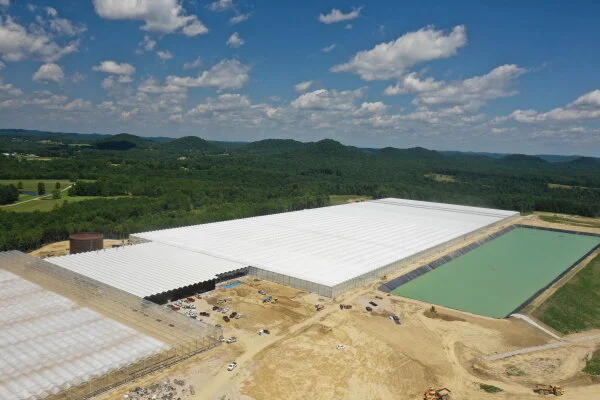
Another photo of the company's Morehead location
AppHarvest’s investors include Revolution’s Rise of the Rest Seed Fund, Inclusive Capital Partners, Equilibrium, Narya Capital, Lupa Systems, Breyer Capital, and Endeavor Catalyst. Endeavor selected AppHarvest Founder & CEO Jonathan Webb as an Endeavor Entrepreneur in 2019.
Board members include food icon Martha Stewart, Narya Capital Co-Founder, and Partner JD Vance, Impossible Foods Chief Financial Officer David Lee, and impact investor Jeff Ubben.
For more information:
AppHarvest
www.appharvest.com
21 Oct 2020

Navotas City Launches Philippines' Tallest Vertical Farm
The vertical farm is equipped with state-of-the-art technology that increases vegetable yield by a factor of 100, two times more than other farms
October 24, 2020
By DANNY PATA
National Capital Region's Navotas City Council, together with the Boy Scout of the Philippines (BSP) and Good Greens & Co., unveiled on Saturday the tallest aeroponic vertical farm in the country.
Text and photos by Danny Pata
According to the city council, the four-tower farm standing on a 300-square-meter area in Tanza resettlement community."
The aim is to produce high-volume harvests that are centrally located in the community," according to Simon Villalon, GGC president.
He said that aeroponic tower farm technology allows saving 75% to 90% space, which is an important consideration when operating out of a greenhouse, indoors, or on a rooftop.
The vertical farm is equipped with state-of-the-art technology that increases vegetable yield by a factor of 100, two times more than other farms.
Suited to a tropical climate, the structure supports vegetable growth year-round, with a target harvest of eight tons of leafy vegetables every year.
In the Philippines, aeroponic vertical farm is already tested in Taguig City, Villalon said, adding that some have been built up in San Fernando, Pampanga; and two in Bacolod City; and in Paranaque City
Text and photos by Danny Pata
LBG, GMA News

Superior Fresh Announces New Salad Variety: Citrus Splash
“We have created a balanced organic ecosystem by raising the cleanest, healthiest Atlantic salmon using organic practices and principles and applying our proprietary organic farming methods to grow the best tasting organic salads and greens you have ever eaten
Superior Fresh is proud to unveil its newest salad blend: Citrus Splash. Filled with bright sunny citrus notes, this blend offers consumers a unique opportunity to expand their culinary experience. Citrus Splash brings more than exceptional flavor to the salad bowl. Paired with our non-GMO, organically fed Superior Fresh Atlantic salmon, the possibilities are endless.

“We have always been about doing things a little differently,” says Todd Linsky of Superior Fresh. “We have created a balanced organic ecosystem by raising the cleanest, healthiest Atlantic salmon using organic practices and principles and applying our proprietary organic farming methods to grow the best tasting organic salads and greens you have ever eaten. We do this while raising the bar on sustainability with practices that give us the ability to grow lettuce using less than one gallon of water. And what’s really impactful is we actually reuse 99% of all water.”
Todd goes on to say, “You do not choose organic aquaponics as a growing method by sticking to what is established. You do not commit to 800 acres of soil regeneration if you are doing it like everyone else. We are taking the responsibility of being one of the largest USDA certified organic salad operations very seriously. Our customers expect us to bring our best using thoughtful innovation – every time – whether that be in the way that we farm or with what we grow.”

Citrus Splash is sure to make a splash in the produce pool. Look for it on the shelves of your local grocery store and inquire directly for wholesale, retail, and food service options.

Mon 19 Oct 2020

VIDEO: How This Indoor Vertical Farm Makes Perfect Japanese Strawberries
The engineered berries go through a meticulous growth and monitoring process from seed to finished product. The result is a strawberry with a consistent and optimal size, flavor, and texture
Oishii Berry founder Hiroki Koga combines Japanese strawberry cultivation techniques with the technology of a first-of-its-kind indoor vertical strawberry farm in America to create the highest quality strawberry possible. The engineered berries go through a meticulous growth and monitoring process from seed to finished product. The result is a strawberry with a consistent and optimal size, flavor, and texture.
For more information:
www.oishiiberry.com
www.eater.com
Publication date: Fri 23 Oct 2020
Mucci Farms Announces 200-Acre North American Expansion!
“Demand for greenhouse grown produce is growing rapidly as consumers continue to put pressure on the food industry to prioritize food safety, sustainability, responsible growing practices and clean growing environments,” said Bert Mucci, Chief Executive Officer
Bert Mucci
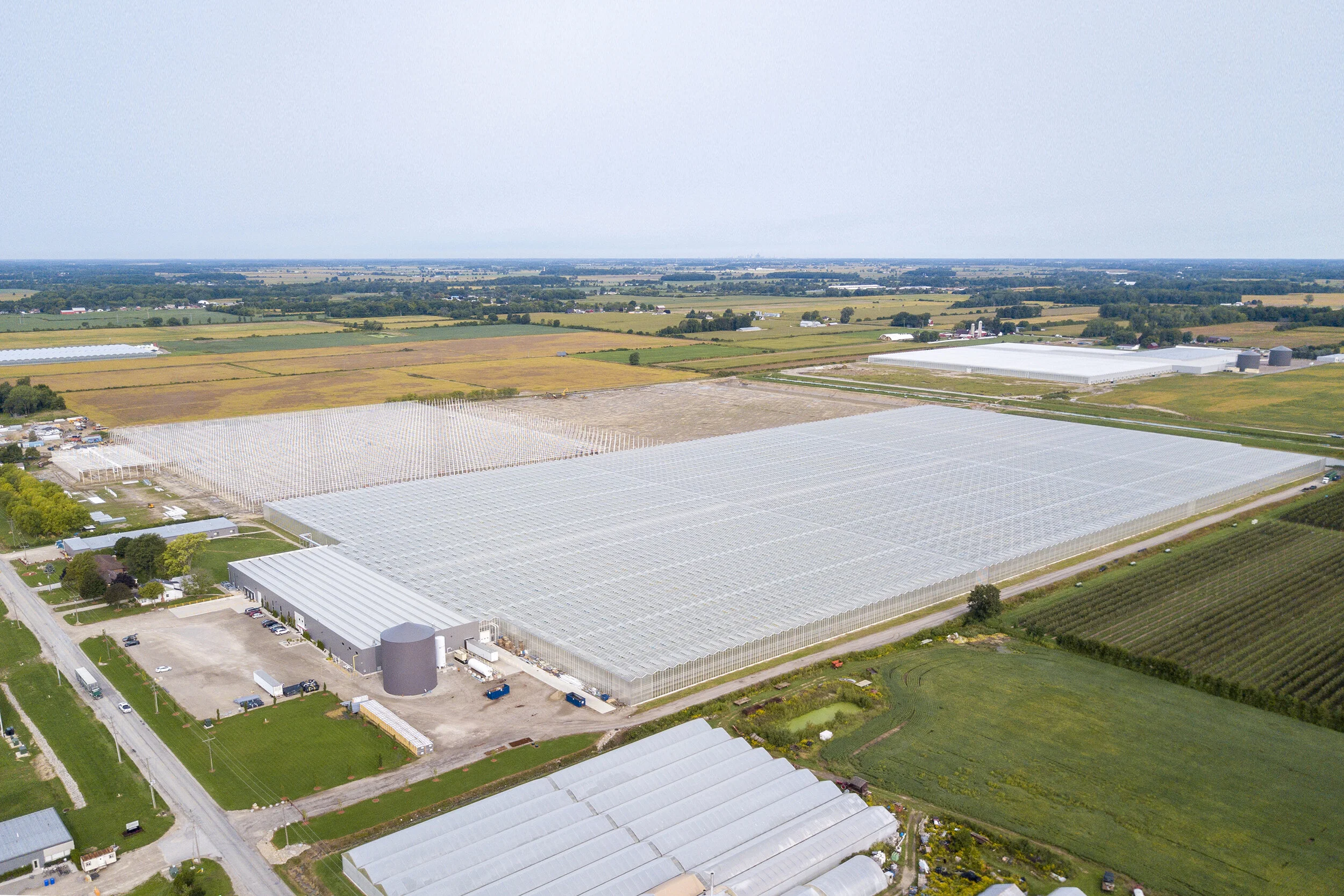
October 29th, 2020 (Kingsville, Ontario) – Mucci Farms announces major expansions in Kingsville, Ontario and Huron, Ohio totalling 206-acres over the next two years. These investments support their ongoing emphasis on maximizing local and regionally grown fruits and vegetables year-round through expansion and lit culture grow light technology. “Demand for greenhouse grown produce is growing rapidly as consumers continue to put pressure on the food industry to prioritize food safety, sustainability, responsible growing practices and clean growing environments,” said Bert Mucci, Chief Executive Officer.

Joe Spano
The first year of expansions include bell peppers, cucumbers, tomatoes, and their innovative award-winning strawberries that are grown in the largest controlled climate strawberry farm in North America. “Our berry program has been a big success and we believe it’s because of the quality and flavour we are able to provide through a clean growing environment, sustainable growing practices and our proximity to market,” explained Joe Spano, VP of Sales and Marketing. “Since we aren’t importing from California or Florida, we can maximize sugars by allowing product to be fully ripe before we harvest.”
The second year will focus exclusively on Bell Peppers with a 100-acre expansion to accommodate a growing need for supply in the category, which is being done through expansion as well as technology. “We have seen a strong rise in demand for locally grown peppers in recent years and expanding our own supply reduces our reliance on partner growers and imports,” said Bert. “We are currently trialing lit culture grow lights for our Pepper program which will be a game changer that allows us to grow local peppers 365 days a year.”
The first year of expansions include bell peppers, cucumbers, tomatoes, and their innovative award-winning strawberries that are grown in the largest controlled climate strawberry farm in North America. “Our berry program has been a big success and we believe it’s because of the quality and flavour we are able to provide through a clean growing environment, sustainable growing practices and our proximity to market,” explained Joe Spano, VP of Sales and Marketing. “Since we aren’t importing from California or Florida, we can maximize sugars by allowing product to be fully ripe before we harvest.”
The second year will focus exclusively on Bell Peppers with a 100-acre expansion to accommodate a growing need for supply in the category, which is being done through expansion as well as technology. “We have seen a strong rise in demand for locally grown peppers in recent years and expanding our own supply reduces our reliance on partner growers and imports,” said Bert. “We are currently trialing lit culture grow lights for our Pepper program which will be a game changer that allows us to grow local peppers 365 days a year.”
Expansion Breakdown by Acreage and Commodity
· 25-acres of Tomatoes on-the-vine in Huron, Ohio, the third and final phase of the 75-acre project
· 30-acres of multiple varieties of Bell Peppers in Kingsville
· 36-acres of SmucciesTM Sweet strawberries in Kingsville, doubling the current acreage to a total of 72-acres
· 15-acres of mini-cocktail cucumbers, branded as the award-winning CuteCumber Poppers
· 100-acres of multiple varieties of Bell Peppers at a new site in Kingsville with construction beginning in 2022
Danny Mucci
Additional projects include a dedicated research and development facility to be ready in 2021. “We have over 300 varieties of various commodities being trialed at any given time,” stated Danny Mucci, President of Sales and Marketing. “Consolidating them all into one specific building allows us to be much more thorough and expand our capabilities. Our trial program includes non-traditional greenhouse grown items such as zucchinis, blackberries and melons and we have a healthy appetite for new innovative varieties.”
This past June, the organization announced the addition of two new warehouse facilities in Romulus, Michigan and San Antonio, Texas that will serve as warehouses, distributions centers and cross docks to increase efficiencies and expand the regions they can service. Both facilities will be ready in 2021.
A major focus for the company is expanding their winter program through lit culture grow light technology. With aggressive annual expansions, the company has the largest acreage of supplemental lighting in the greenhouse industry and continues to expand its acreage year-over-year to maximize local and regional production year round.
Growing fresh produce for over 60 years, Mucci Farms is vertically integrated from seed to retail with a global partner network combining for more than 1700-acres of fruit and vegetable greenhouses. Headquartered in Kingsville, Ontario, the award-winning company is dedicated to continual investments in automation and technology along with a high level of research and development to offer consumers the most flavourful varieties in the world.

VIDEOS: Vertical Farming Goes High-Tech And Underground
Vertical Farms Are Evolving Into A Major
Food Industry Powered by Sophisticated
Technologies And Production Methods
Growing fresh produce in underground areas
Transforming a tunnel into a vertical farming operation
Infarm allows customers to pick the produce themselves
Vertical farming companies are facing an array of challenges
Technology and lower costs are critical for the industry’s sustainability
Innovation is vital to solving the world’s greatest challenges
Farmers around the world are heading towards an uncertain future. Apart from the prospect of feeding the global population that’s set to reach around 10.9 billion by 2100, they are also facing climate change-induced floods, droughts, and heatwaves. Fertile land is in ever shorter supply as soil erosion intensifies. Farming is also to blame for some of these problems as the CO2 footprint of food accounts for 17 percent of total global emissions. And by the time plants get transported to supermarkets, they lose 45 percent of their nutrients. As it becomes increasingly apparent that traditional agriculture is unsustainable, growing food in an artificial environment is emerging as a potentially better way forward.
Instead of plowing fields, farmers would produce food in vertically stacked trays. Soil would be replaced by nutrient-rich water, while LED lights would act as the sun to ensure plants photosynthesize. This practice, known as vertical farming, offers many benefits. The indoor environment protects crops from extreme weather events and pests, which means that food grows fast and there’s no need for pesticides. Also, food is grown close to cities, which not only reduces food miles and the related carbon footprint but also provides consumers with fresh and tasty crops.
However, vertical farming faces certain challenges as well. Companies have to constantly innovate to cut production costs and turn a profit, which is vital for the survival of this industry. But entrepreneurs remain optimistic. The global vertical farming market is forecasted to reach $12.77 billion by 2026 and people are becoming increasingly aware that there’s a better way to feed the populGrowing fresh produce in underground areas
High rents and the lack of space have prompted some modern urban farmers to go underground. In London, for instance, a farm called Growing Underground operates from a World War II bomb shelter located 33 metres below Clapham High Street. Owned by Stephen Dring and Richard Ballard, the vertical farming facility produces an array of herb and salad mixes, including parsley, red mustard, coriander, and pea shoots. Fresh produce is then sold through Marks & Spencer, Waitrose, Ocado, and several other retailers. Some restaurants have also expressed interest in buying fresh produce, says Ballard.
He also points to many advantages of vertical farming. For instance, his farm delivers 60 harvests a year, compared with around seven that can be achieved in traditional agriculture. Furthermore, Growing Underground is carbon neutral and uses 70 percent less water than typical farms. The only major cost he’s trying to reduce is the electricity that powers the lights. And his ambitions are global. “The UK is the hardest market for growing salad. We’ve got very low prices in the supermarket, so if we can make it work here we can make it work anywhere,” says Ballard.
Underground vertical farming is thriving in other British cities as well. The Liverpool-based social enterprise Farm Urban, for example, provides customers with a weekly box of living salad leaves, edible flowers, and fragrant herbs. Jens Thomas, the company’s technical director, says that the product is pesticide-free and “it’s grown using 90% less water than if it was grown in a field; it’s zero-waste; and it’s hyper-local.” Farm Urban is trying to promote healthy and sustainable living. For each box of greens customers buy, the company delivers a box of greens to a local school. This activity is part of the Greens for Good campaign that aims to reconnect people with locally-grown food.
In New York, the vertical farming business Farm. One is also growing. Its underground farms produce over 500 different herbs, edible flowers, and microgreens year-round, using specialized software to manage multiple operations, such as seed, harvest, and flavor optimization. Founded by Rob Laing, the company supplies fresh produce to various New York-based restaurants, including Atera, Ai Fiori, Benno, and Flora Bar. All deliveries are made by bike and subway. Also, visitors can book a tour of the farm or take a class in hydroponics to learn how to grow vegetables in a soil-free environment.
Transforming a tunnel into a vertical farming operation
Successful vertical farming businesses can also be launched outside of cities. NEXTON, a South Korea-based startup, has built vertical farms in a former highway tunnel, located 190 kilometres south of the capital city of Seoul. Growing salads, leafy greens, and strawberries beneath mountains has many advantages. For one, the 6,500-square-metre facility naturally maintains a temperature that ranges between 10 to 20 degrees Celsius, which translates into lower energy spend for cooling or heating. Furthermore, labor costs are reduced by automating various operations. And as farming is done without pesticide or herbicide, with sensors monitoring humidity and CO2 concentrations, customers receive both healthy and affordable products.
Choi Jae-bin, the CEO of NextOn, also uses non-tech tactics to boost production. For instance, the music of Beethoven and Schubert is played in the 600-metre-long tunnel as Jae-bin believes it will help plants to grow faster. And his plan is to build more farms in urban areas. “Plants easily grow at home, at nearby stores, at hamburger restaurants, or even at metro stations. I think the system to grow crops far away from a city and transporting it will disappear,” he says.
Infarm allows customers to pick produce themselves
Infarm, a Berlin-based startup, has already achieved in several European countries what Jae-bin plans to do in South Korea. The German company builds modular farms that are placed in customer-facing locations, such as schools, grocery stores, restaurants, and shopping malls, enabling customers to pick the produce themselves. Clients can also add more modules if they want to increase the farming output, while the production is monitored and controlled through a cloud-based platform. Essentially, the whole thing functions as a ‘farming as a service’ operation that combines the IoT, Big Data, and cloud analytics.
The company is working with 25 major food retailers in Germany, France, and Switzerland, including Migros, Casino, Intermarche, Auchan, Selgros, and AmazonFresh. Furthermore, it has installed more than 200 in-store farms, as well as 150 farms in distribution centres. And in 2019, Infarm raised $100 million in Series B investment round. The funding will be used to expand research and development, sales, and operation teams. Also, the startup plans to increase its presence in the UK and negotiate partnerships with retailers in the US and Japan.
Vertical farming companies are facing an array of challenges
While the rise of vertical farming companies has been impressive, the industry is facing many challenges and its survival depends on reducing costs and increasing productivity. Take, for example, the fact that deploying even a small, low-tech vertical farm with the 1st generation technology costs around $280,000. On the other hand, the cost of setting up more complex farms with advanced tech can go over $15 million. There are also operating expenses such as lighting and labour that can further pressure companies’ bottom line, making it hard to compete with organic and traditional producers.
So it comes as no surprise that return on investment (ROI) in vertical farming projects is mediocre at best. The current market prices don’t make the situation any easier either. A kilogram of vertically-grown leafy greens is around $33, while organic produce costs $23. To gain a competitive edge, vertical farming startups need to take several measures.
Technology and lower costs are critical for the industry’s sustainability
The first step in ensuring the long-term profitability of vertical farms is transitioning to 2nd generation technology. This means that in addition to automatic control of irrigation, humidity, lighting, CO2, and other relevant parameters, farms should also be capable of autonomously collecting data and optimizing growing processes. They also need to implement cutting-edge machines that will autonomously run planting and weeding operations in the facility, and harvest sort and package produce for shipping. These improvements can enable the second generation of vertical farms to yield 55 times more produce than conventional farms.
Increased automation will also cut labour expenses. Intelligent Growth Solutions, a UK-based agritech business, has reportedly developed an automated farming system that uses modular structures to reduce labour needs by up to 80 percent. Furthermore, LED lighting efficiency is likely to improve by an additional 70 percent by 2030, reducing the energy spend. Boaz Toledano, a business consultant specializing in vertical farming, says that “lighting improvements should reduce OPEX [operating expenses] by 12%, and automation should cut OPEX by a further 20%+”.
Companies can also reduce costs by setting up farming operations underground. This would not only help them avoid the high cost of renting in urban centres but also enable them to enjoy the benefits of having a steady temperature. Underground facilities also offer better protection against natural disasters and can be more easily adapted to producers’ needs.
Innovation is vital to solving the world’s greatest challenges
New technologies are moving the food industry forward. Vertical farming, though still gaining traction, could help solve some of the world’s greatest challenges, such as food shortage. Tasked with feeding the growing global population, today’s agriculture producers still primarily rely on farming practices that hurt the environment. As it becomes clear that traditional farming is unsustainable, innovative entrepreneurs and scientists have come up with a potential solution. Vertical farming is increasingly hailed as an alternative food production method that can provide people with healthy and fresh produce. Thriving in undergrounds, stores, and restaurants around the world, vertical farms are becoming a major industry. But their survival depends on the ability of businesses to lower food production costs and increase productivity.
This article is written by Richard van Hooijdonk
Trendwatcher, futurist, and international keynote speaker Richard van Hooijdonk takes you to an inspiring future that will dramatically change the way we live, work, and do business. All lectures
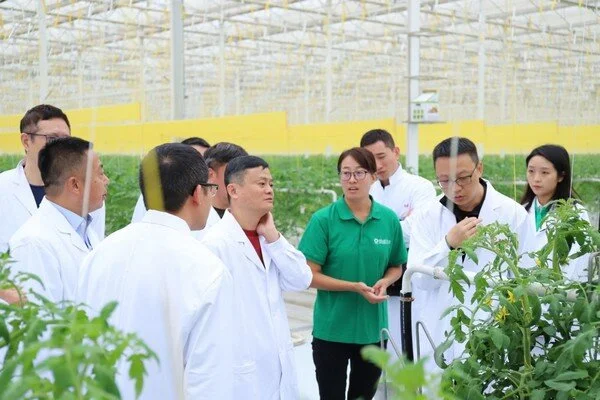
Jack Ma Also Checks Out Strawberry Cultivation
On the morning of October 10th and following his visit to the Dezhou high-tech tomato greenhouses, Jack Ma, founder of Alibaba Group, went to Licheng District, Jinan City, to inspect the development of the strawberry industry
On the morning of October 10th and following his visit to the Dezhou high-tech tomato greenhouses, Jack Ma, founder of Alibaba Group, went to Licheng District, Jinan City, to inspect the development of the strawberry industry. The Licheng strawberry industry has been developing since the early 1990s and has now become one of the main production areas for strawberry cultivation in China. At present, there is over 1,000 hectares of greenhouse strawberry planting area in the whole district, the total output is 66,000 tons, the total output value is 1.25 billion RMB [187 million USD], and the derivative output value is nearly 2 billion RMB [300 million USD].
At Prandtl Agricultural Technology Co., Ltd., Licheng District, Jack Ma led a delegation to listen to the introduction of the development of the strawberry industry in Licheng District, viewed the display of strawberry related products, and learned more about the construction of seedling detoxification and rapid propagation laboratory and secondary seedling greenhouse operating situation. The company has carried out in-depth research, demonstration, and promotion of strawberry detoxification technology, soilless cultivation, and new variety cultivation. Jack Ma had in-depth exchanges and discussions with the technical staff of the company and learned in detail about the research and promotion of strawberry seedlings, especially the detoxification and rapid propagation technology.
At the Hongmei Farm in Dongjia Street, Jack Ma and his delegation inspected the construction and operation of the combined greenhouse and the winter greenhouse and asked in detail about the three-dimensional cultivation of strawberries and traditional planting. The farm’s strawberry production is supported by biological control, water, and fertilizer integration, and modern agricultural Internet of Things management systems, focusing on the application of prevention and control. Jack Ma said that the popularization and promotion of advanced planting technology will help ensure the high quality of strawberries.
At Strawberry Paradise in Dongjia Street, Jack Ma and his delegation visited the greenhouse, communicated with growers in-depth, and learned about the application of various strawberry cultivation models and market operations. Combined with the construction of a new countryside in Shiziyuan Village, it has formed an industrial system integrating strawberry planting, picking, catering, and tourism.
Jack Ma expressed his appreciation for Jinan's efforts to develop the strawberry industry and increase farmers’ incomes through cooperatives. He hopes that Alibaba Group and Jinan will further deepen exchanges and cooperation, and jointly explore new models and new paths to promote the development of Jinan's characteristic industries such as strawberry planting.
Source: k.sina.cn
Publication date: Fri 23 Oct 2020

New OEM-Agreement For Shelf-And-Lighting Panels For Vertical Farming
Senmatic and LED iBond International have entered a strategic partnership for OEM delivery of shelves with built-in grow light to be included in Senmatic’s offering of industrial vertical farming solutions
Senmatic and LED iBond International have entered a strategic partnership for OEM delivery of shelves with built-in grow light to be included in Senmatic’s offering of industrial vertical farming solutions. The new vertical farming shelves are based on LED iBond’s patented lighting fixture, which combines superior cooling characteristics and minimal space requirements with a high carrying capacity.
The strategic partnership between Senmatic and LED iBond is based on Senmatic’s in-depth knowledge of LED grow lights and software solutions for industrial vertical farming and LED iBond’s unique LED technology platform.
"We have more than 40 years of experience with indoor plant production. We will combine LED iBond’s super-slim and energy-efficient shelf-and-lighting panels with our controllers and software to create a multifunctional vertical farming solution with best-in-class growth conditions for industrial indoor horticulture. This new partnership with LED iBond will further contribute to our growth in the vertical farming market, so we are very pleased indeed for this opportunity to join forces with LED iBond," says Mads Nychel, CEO at Senmatic.
Rolf H. Sprunk-Jansen, CEO of LED iBond, adds: "The new partnership with Senmatic marks LED iBond’s commercial entry into the industrial vertical farming market. With their vertical farming technology and their global network of 40 dealers, Senmatic is an ideal partner for us, bringing our LED panel technology into play in an emerging industry with huge growth potential. The agreement with Senmatic makes us even more confident that LED iBond’s financial outlook is well within reach."
The joint vertical farming offering is planned to launch at the end of Q4 2020.
For more information:
Senmatic
Publication date: Tue 20 Oct 2020

Indoor Farming Start-Up BrightFarms Raises $100m In Funding
The start-up has raised over $200 million in funding to date, and BrightFarms claims that it will use these latest funds to invest in its current farms and retail programs and expand its network of regional indoor farms across the US
By Martin White
21 October 2020
Indoor hydroponic farming start-up BrightFarms has secured $100 million in a Series E funding round led by Cox Enterprises, which now owns a majority stake in the company, and a further investment from Catalyst Investors.
BrightFarms builds and operates indoor farms near major metropolitan areas in the US, providing supermarkets and retailers with a consistent supply of locally grown produce. It currently operates indoor farms in Illinois, Ohio, Pennsylvania, and Virginia, with three new farms currently under development in North Carolina, Massachusetts, and Texas.
The start-up has raised over $200 million in funding to date, and BrightFarms claims that it will use these latest funds to invest in its current farms and retail programs and expand its network of regional indoor farms across the US.
BrightFarms claims that its growing methods “use 80% less water, 90% less land and 95% less shipping fuel than traditional agriculture”. The company claims that its indoor growing methods can provide pesticide-free packaged greens to supermarkets in as little as 24 hours after harvest.
The start-up has formed partnerships with major retailers including Ahold Delhaize, Kroger, and Walmart, distributing produce to over 2,000 stores in the US. The firm anticipates that it will expand its distribution to more than 15,000 stores by 2025.
Steve Platt, CEO of BrightFarms, said: “Our goal over the next five years is to make quality, locally-grown greens a staple on grocery shelves and in refrigerators nationwide.
“We are thrilled to have the strong financial backing of Cox Enterprises, an organization that closely aligns with our mission to build a healthier and more sustainable future and to have the additional support of our long-term partners at Catalyst Investors. Together we are ready to scale our model for local indoor farming in every major market in the US”

Scientists Work In Arizona To Reshape Desert Food Production
The experimental garden at Biosphere 2 about 35 miles north of Tucson is part of a wider effort to radically reshape desert food production to meet the growing challenges posed by climate change
Methods To Increase Yield, Lower
Water Use Draw On
Practices of Indigenous Cultures
Caleb Ortega, an environmental studies undergraduate student, harvests basil from an experimental garden outside Biosphere 2. Record heat has given the research new urgency.
Josh Galemore/Arizona Daily Star
TUCSON, Ariz. (AP) – In the cool shade of solar panels, a lush plot of herbs and vegetables hints at one possible future for farming in the desert.
At the moment, that future includes more basil than researchers know what to do with.
“We’ve been pulling out pounds of it every week,” said University of Arizona biogeographer Greg Barron-Gafford. “All of us are getting a little sick of pesto and pizza and mozzarella at this point.”
The experimental garden at Biosphere 2 about 35 miles north of Tucson is part of a wider effort to radically reshape desert food production to meet the growing challenges posed by climate change.
The 14 researchers from the Southwest and Mexico believe their model can produce a sustainable, local source of food that will improve the health and well-being of consumers and farmworkers alike.
The idea involves a mix of desert-adapted food species grown cooperatively in ways that increase yield while reducing water use.
Picture a variety of agave and fruit-bearing cactus interspersed with rows of mesquite and other legume trees, all with wild herbs, greens, beans, and native chiltepin peppers growing in the shade beneath them. Other potential crops include squashes, mints, and jicama.
In some cases, those plants would be grown beneath a photovoltaic “canopy,” as the solar panels generate cheap, renewable electricity to pump irrigation water and power farm equipment.
Pilot projects to test the model are now underway in the U.S. and Mexico, including at Biosphere 2 and in campus gardens at three public schools across southern Arizona.
“I like to think of it as using the desert and the sun here as our laboratory for the future,” said Erin Riordan, a UA research associate and one of the lead authors on a scientific paper about the project.
The team focused on desert plants that are as nutritious as they are drought-tolerant, with special emphasis on crops that can reduce or even prevent diabetes and other chronic diseases often exacerbated by heat stress.
Meanwhile, the shady design of the growing areas would benefit both the plants and the workers tending to them, curbing the frequency of injuries or illnesses associated with farm labor in extreme environments.
The sweeping proposal, published recently in the journal Plants, People, Planet, is rooted in practices perfected over millennia by Indigenous desert cultures.
“People have been growing food in the shade for 4,000 years in this region,” Barron-Gafford said.
“It’s not something that’s new to anyone,” said Gary Paul Nabhan, the study’s other lead author and a research social scientist in the university’s Southwest Center. “We’re drawing on that expertise and combining it with modern techniques and technology.”
Solar panels, healthy crops
The importance of food security has been highlighted in recent months by record-setting heat, sputtering monsoon conditions, and supply disruptions caused by the pandemic.
“We are already hitting the temperature limits of conventional crops,” said Nabhan, a MacArthur award-winning agroecologist and the endowed chairman in food and water security at UA.
Greg Barron-Gafford, Caleb Ortega, and Alyssa Salazar work in a garden that is part of an experiment on growing techniques for hotter, drier desert conditions. Josh Galemore/Arizona Daily Star
Among the Southwestern farm staples most threatened by global warming, he lists corn, dry beans, melons, chiles, and most vegetables.
“Yes, we can still grow chiles in our backyards,” he said, but growing them in a large-scale agricultural setting will become increasingly difficult as temperatures rise, droughts deepen and water resources shrink.
Nabhan said a market already exists for some of the new crops considered in the study. “They’re already in our grocery stores, but we’re importing them from 1,000 miles away,” he said.
Back at his outdoor laboratory at Biosphere 2, Barron-Gafford said pairing agriculture directly with solar generation could “open the door to food production in marginal lands” by providing both a shady place to grow plants and the electricity needed to pump water to them.
For the right crops, the shade beneath the solar panels can produce healthier, more productive plants with as little as half the water, all while extending the length of the growing season.
In turn, the plants provide a benefit to the solar array, cooling the air around it by as much as 12 degrees and improving the efficiency of the panels.
Barron-Gafford said the experiment in so-called “agrivoltaics” began nine years ago with a few plants tucked underneath a single, small solar panel slanting up from the ground.
“We started with salsa plants because we’re here,” he said with a smile.
Some crops grow, others don’t
The test garden now covers an area about the size of a half-court in basketball, shaded by a solar array mounted 10 feet off the ground.
Along with all the basil, the current crop includes heirloom cherry tomatoes, Anasazi red beans and a special type of bell pepper Barron-Gafford said was brought in from Mexico by the chefs at Penca restaurant in Tucson.
In a nearby control garden, equal-sized plots of the same plants bake in the direct sun. The basil there doesn’t even look like the same species. Its leaves are skinnier and more pointed, and the plants are already going to seed. One patch has shrunk and dried out in the heat after its water ration was cut in half to match a similar plot still going strong in the shade of the solar array.
“Those plants died for science,” said Barron-Gafford, an associate professor with the UA’s School of Geography, Development, and Environment.
He and his research assistants planned to plant a fall crop – both in the shade and out – of cilantro, fava beans, white onions, and native mouse melons, which taste like cucumbers but look like miniature watermelons.
Agrivoltaic farming doesn’t work for everything. Broccoli, for example, tends to grow large, impressive leaves in the shade, but it never produces florets.
The jury is still out on the Anasazi beans. Barron-Gafford said the ones planted in the direct sun of the control garden have already produced their crop of seed pods, while the ones shaded by the solar array are taking their sweet time.
Whether that will lead to a fuller, more flavorful bean or a pile of tiny, underdeveloped pods remains to be seen.
Questions about scaling up
There’s one thing the research team already knows: Transforming an entire agricultural sector won’t be easy.
“It is a big shift,” said Riordan, the principal scientist coordinating the binational research team based at the UA’s Desert Laboratory on Tumamoc Hill. “There’s a huge scaling piece that is going to have to be addressed.”
One key part will be convincing consumers to expand their palates to include wild, locally grown foods they might not have considered before.
Luckily, Riordan said, Tucson already has something of a head start there, thanks to its diverse population, rich cultural history, and its designation six years ago as the first UNESCO City of Gastronomy in the U.S.
The community is already home to about 40 startup businesses that produce more than 120 new desert food and beverage products.
Ultimately, researchers argue, desert agriculture will be transformed by climate change whether we want it to be or not. Through careful planning and adaptation, we can make that transition profitable instead of painful.
“It might be hard right now to envision edible desert landscapes, but it might not seem so far-fetched in a few years,” Riordan said. “I think we’re going to have a lot of motivation to come up with big solutions fast.”
New Restrictions On Lettuce
Unprecedented federal import restrictions on romaine lettuce and salad mixes from California’s Salinas Valley point to problems in the U.S. agricultural system that supplies British Columbians with more than half their fresh vegetables, Canadian food safety researchers say
Marc Fawcett-Atkinson, Local Journalism Initiative Reporter
October 22, 2020
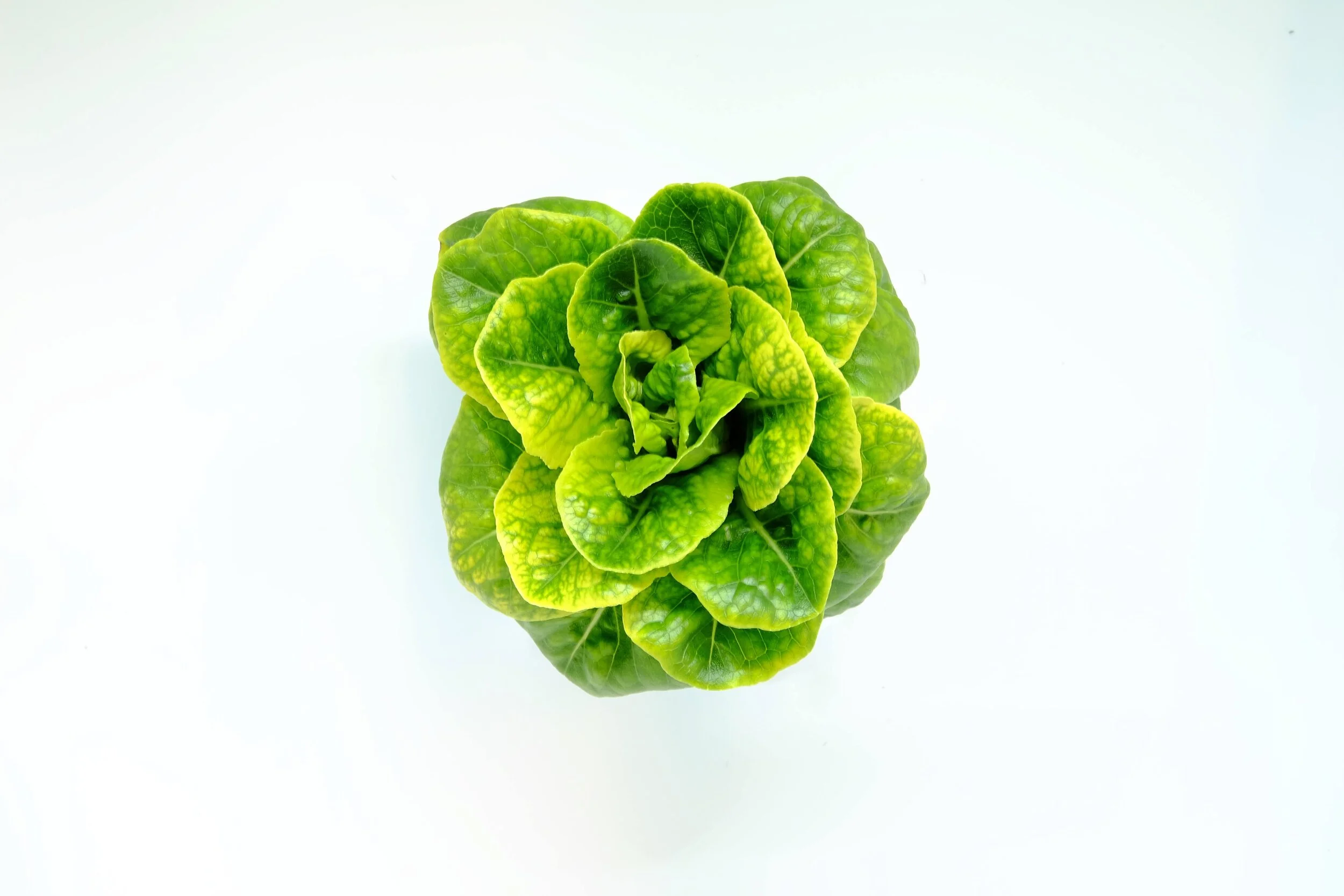
Unprecedented federal import restrictions on romaine lettuce and salad mixes from California’s Salinas Valley point to problems in the U.S. agricultural system that supplies British Columbians with more than half their fresh vegetables, Canadian food safety researchers say.
Companies that import lettuce must now prove each shipment has been tested for E. coli, or was grown outside of California's Santa Clara, Santa Cruz, San Benito and Monterey counties. The directive will remain in force until Dec. 31, to cover the harvest season for California lettuce producers.
Lawrence Goodridge, director of the Canadian Research Institute for Food Safety at the University of Guelph, says repeated outbreaks of E. coli contamination from American farms precipitated the move. There have been at least four outbreaks associated with romaine lettuce alone since 2016, Goodridge said. Investigations by American and Canadian authorities have also pinpointed the region as the source of several past E. coli outbreaks.
“The problem is nobody quite knows how the lettuce is becoming contaminated,” said Goodridge. “It could be the irrigation water, wild animals could run through the field and defecate. It’s hard to trace.”
Canada imported 183,300 tonnes of lettuce from the United States last year, and 64 per cent of that was from California. The remainder came from Arizona, Ohio and Florida. Between June 2019 and July 2020, more than 50,000 shipments of the vegetable crossed the border.
Lettuce is not the only vegetable that’s mostly imported to Canada outside the summer months. In 2018, about $2 million worth of vegetables flowed north, everything from kohlrabi to kale. Like lettuce, the majority was grown in California or other southwestern states.
Cattle are pastured on the hillsides surrounding the Salinas valley. That means manure can be washed downhill, gather in the bottom of the valley and possibly contaminate surface water and groundwater. This water is used to irrigate the hectares of lettuce and other vegetables growing in the valley bottom.
“The current temporary import requirements, implemented on Oct. 7, (are) a preventative measure due to the repetitive outbreaks linked to California romaine lettuce over the past four years,” the Canadian Food Inspection Agency said in an emailed statement.
The decision has received a tepid reception from American lettuce producers.
“Our producers will do their best to comply (with the new testing requirement) in an effort to continue shipping romaine lettuce to our valued trade partners in Canada,” the California Leafy Greens Marketing Agreement (LGMA), an association of shippers and handlers who adhere to shared food safety measures and are responsible for about 90 per cent of the leafy greens grown in the U.S., said in a written statement.
“However, this may not be feasible due to limited laboratory capacity. More importantly, product testing has not proven to be a reliable indicator of product safety.”
The organization is advocating for in-field testing instead of the post-harvest tests the Canadian government requires. It also said that recently implemented measures are sufficient to protect consumers.
The changes implemented by the LGMA classify irrigation water into categories depending on where it comes from, and how it will be used. Water used for overhead irrigation exceeds the U.S. Environmental Protection Agency’s “recreational standard” - clean enough for swimming. Water used for ground level or buried irrigation systems can fall below that standard.
However, that’s not enough, said Keith Warriner, a food security professor at the University of Guelph. He would like to see the water tested more frequently, similar to the weekly or daily water testing requirements many states require for water to meet their recreational standard - an unfair comparison said the LGMA.
“Comparing recreational water use and irrigation water use is questionable because swimmers taking a drink of the water they are swimming in is a very different risk profile than irrigating a crop that will then be exposed to the environment...before a consumer eats that product,” the organization said in an emailed statement.
Nor does post-harvest cleaning do much, Goodridge and Warriner agreed.
“We know that washing actually spreads bacteria,” Goodridge said. “You’ve got to think that these are big processing operations (that) could be receiving lettuce from many different fields all over the place. If you have one batch that’s contaminated, but you’re running other batches through (the same cleaning line) at the same time, they can all get contaminated.”
Tracing a leaf of contaminated lettuce from a Canadian consumer’s plate back to individual farms is impossible, he said, especially since it could be more than two weeks before someone gets sick from the lettuce.
Nor is the federal government’s approach perfect.
Lettuce from other parts of the U.S. could also be contaminated, especially if water standards for processing and irrigation aren’t any higher.
And testing isn't very accurate because it only captures a minute snapshot of the total lettuce shipment, Goodridge said. A better approach would be to push the industry to implement system-wide changes that would address the problems at their source, such as treating all irrigation water with chlorine, to help deal with the issue.
These are largely regulatory matters Canada can’t control, since water and growing standards fall under U.S. jurisdiction. Still, the economic pressure exerted by an import ban could help push the industry to implement changes of its own volition.
“You have to have regulation,” said Goodridge. “But, ultimately, it’s when the industry takes food safety seriously, as opposed to seeing it as a necessary evil, (that) we will really begin to address these ongoing outbreaks.”

How The Pandemic Has Accelerated The Next Generation of Farming
Vertical farming, or the practice of cultivating crops in vertically stacked shelves and often in a controlled indoor environment, allows produce to be shipped to grocery stores, restaurants and other dining services in a matter of minutes
Vertical farming has provided an innovative
way to serve customers and ensure clean food
Coronavirus puts farmers in 'dire need' of help from government: Farm Bureau president
Farm Bureau President Zippy Duvall discusses how coronavirus is challenging farmers, trade with China, and reopening the economy.
The foodservice industry is betting big on vertical farming as the pandemic ushers in a heightened awareness of food safety and cleanliness.
Vertical farming, or the practice of cultivating crops in vertically stacked shelves and often in a controlled indoor environment, allows produce to be shipped to grocery stores, restaurants and other dining services in a matter of minutes.
EVEN WITH A STRONG CROP THIS YEAR, US FARMERS ARE SUFFERING
A new report by Allied Market Research shows that the global market for vertical farming crops is projected to reach $1.38 billion by 2027 with a compounded annual growth rate of 26.2% from 2021 to 2027. Last year alone, the industry was estimated to be around $212.4 million.
Amid the trajectory for growth, the coronavirus outbreak has accelerated the demand for fresh and locally grown produce. And as restaurants reopen, vertical farming has provided an innovative way to serve customers and ensure clean food.
“The pandemic has certainly shed light on the fact that everybody is very aware of cleanliness and safety, and food is no exception,” CEO of Kalera Daniel Malechuk told FOX Business. “What vertical farming can offer is something that is local, something that hasn’t been in a journey to get to the end or touched by a significant number of people and something that is grown in a clean room where the product is not subject to harmful elements or exposure.”
TRUMP ANNOUNCES $13B WORTH OF NEW RELIEF FUNDING FOR US FARMERS
Kalera, an indoor vertical farming company with hydroponic technology, is on track for rapid growth, particularly in high dense urban markets. After opening the largest vertical farming facility in Texas, the ag-tech company has plans to expand to Atlanta where it will be the highest production volume vertical farm in the Southeast, as well as Denver by 2021. Aside from its typical operations providing lettuce and microgreens to theme parks and restaurants, Kalera has also entered the grocery space marked by a deal with Publix that went into effect in April.
(Credit: Kalera)
“We love supporting our local growers—whether they are growing in a field or on top of a hotel,” Business Development Director Produce and Floral of Publix Super Markets Curt Epperson told FOX Business. “Our customers really appreciate hydroponically grown leafy greens, not only because they are flavorful but because they are sustainable. We’re excited to see where vertical farming goes in the future. Wherever that is, you can be sure that we’ll be keeping in touch with our local hydroponic farmers, finding out what they’re doing, and talking about how we can work together.”
Hydroponically grown greens emerged in grocery stores prior to COVID-19, but the global health crisis has only accentuated the need to know where food comes from and how it is grown.
(Credit: Kalera)
With technology that doesn't require soil to grow plants and consumes up to 10 times less water compared to traditional soil-based growth, hydroponic systems are not only sustainable but also can be controlled to minimize pesticides and other dangerous chemicals.
Additionally, the minimal transport involved allows produce to reach store shelves without traveling thousands of miles and being exposed to more touchpoints.
Global supply chain disruption has also forced retail chains like Publix to secure produce that does not conflict with restrictions on transportation, which particularly came to light during the first phase of lockdown and with varying state travel mandates.
US FARMERS SCRAMBLE FOR HELP AS COVID-19 SCUTTLES IMMIGRANT WORKFORCE
On top of that, more customers are turning to vertical farming solutions like Kalera for lettuce due to the shortage caused by the California wildfires, where the ash in the fields have affected the growth and safety of the traditional product.
And as vertical farming becomes more attractive in light of the pandemic, more cities will tap into these alternative methods, according to Kalera’s Daniel Malechuk.
“What Kalera is able to do is to offer and shed new light on farming is the backbone of American society and one of our strengths as a nation,” Malechuk said. And leading the wave of the ag-tech revolution is what vertical farming companies like Kalera are doing.”

Korean Smart Farm Company Farm8 Eyes IPO In 2022
The firm has been seeing robust growth despite the coronavirus slump, gaining recognition for its eco-friendly agricultural cultivation and processing technologies. It is the country’s leading smart farm factory, incorporating the latest technologies including artificial intelligence and internet of things to optimize and automate the cultivation process
2020.10.23
Photo provided by Farm8
Farm8, a South Korean agricultural firm with advanced technologies in indoor farming, is seeking to go public on the main Kospi in 2022 after gaining confidence from capital investment.
Farm8’s biggest backer IMM Investment is expected to play a pivotal role in the initial public offering and likely to remain as its No. 1 shareholder to drive the company’s global expansion.
The Seoul-based alternative asset investment firm first linked up with Farm8 in 2014 by investing 16 billion won ($14.1 million) and has since been an ardent supporter of the company, backing its financing, benchmarking and promotion efforts.
In March this year, it helped pulled 10 billion in outside capital, including 5 billion won from state-run Korea Development Bank.
Farm8’s valuation is estimated at 80 billion won after its rights issue.
Farm8 posted 47.2 billion won in revenue last year, up 7.5 percent from 2018. Sales this year are estimated to jump 25 percent to 58 billion won, according to the company.
The firm has been seeing robust growth despite the coronavirus slump, gaining recognition for its eco-friendly agricultural cultivation and processing technologies. It is the country’s leading smart farm factory, incorporating the latest technologies including artificial intelligence and internet of things to optimize and automate the cultivation process.
Farm8 has installed Metro Farms in five subway stations in Seoul and is planning to build a container smart farm in South Korea’s Antarctic research station by the end of this year. It aims to triple its smart farm capacity to 9,910 square meters next year.
The firm also plans to add more value-added crops such as ginseng and strawberries and is exploring options of using these ingredients for cosmetic and medical purposes.
Korea’s smart farm market is estimated to be worth 2.6 trillion won this year, with potential to grow even further amid pledges of government support.
Farm8 is also intent on taking its business global. It said it aims to build its presence in Asian markets including Mongolia, Singapore and Japan, and eventually break into North America and Europe.
By Park Chang-young and Kim Hyo-jin

"We Have Barely Scratched The Surface In The MENA AgTech Sector"
"Badia Farms is the first commercial vertical farm to launch in the GCC. We officially started operations in the heart of Dubai in 2016, but the seeds were planted further back
"Badia Farms is the first commercial vertical farm to launch in the GCC. We officially started operations in the heart of Dubai in 2016, but the seeds were planted further back. My background is in engineering and banking. I first took the entrepreneurial leap in Saudi Arabia in the hospitality sector by opening multiple unique restaurant concepts." That's how Omar Al Jundi, Founder & CEO of Badia Farms, introduces himself.
Mesmerized by hydroponics
When he decided to enter his next venture, he says "I knew it had to be both challenging and able to add value and make a difference to our society and communities. When I was introduced to the concept of hydroponics, I was mesmerized with this new technique of growing where we don’t require any soil, we can recycle 90% of the water, and it can be grown in a fully closed environment, without even sunlight! Years before we launched I learned as much from experts, conferences, courses, and by working in a high-tech greenhouse facility in Holland."
Sustainability
Food security is one of the main issues in the MENA region, and the development of sustainable farming is crucial. "We have seen this first hand during the early days of the Covid pandemic," Omar says. "Produce supply chains were halted, and many countries (especially in MENA) had to reassess their long-term plans and fast-track their commitment to AgTech models such as vertical farming."
The choice to go vertical
Vertical farming and AgTech is needed in the GCC. Why? Omar explains: "Over-dependence on imported produce and the simple fact that traditional framing does not work in our arid desert climate. I want to tackle an issue that will make a difference to society while preserving our natural resources such as water. Badia products are pesticide and herbicide-free. Since our crops are grown naturally in sterile, soil-free mediums, along with the controlled environment, it removes the need for harmful additives. We can also harvest fresh produce all year round. Our harvest yields 4-8 times the amount of crops in the same space compared to conventional soil farming. As a former restaurateur, it has been amazing to be able to work with the top chefs and restaurants in the UAE and be able to supply them with fresh, better than organic flavourful products that wouldn't be available to them otherwise. The journey from food to table is much shorter."
Optimal growth conditions
In this vertical farming environment, Badia Farms is able to control every aspect of the ecosystem to ensure optimal growth conditions are provided for each crop. "For example, our facilities utilize LEDs, artificial lighting to replace the sunlight, we control and monitor all environmental inputs (humidity, temperature, CO2), and we use computer linked dosing units to schedule the irrigation and feed formulas," Omar points out. "Lastly, our hydroponic growing methods use 90% less water compared to open field growing, and since we recirculate our water there’s no wastage."
Support needed
There were also some challenges along the way to achieving this, as AgTech and modern farming are still very new to the region. "The biggest challenge is there aren’t off the shelf solutions that we can purchase and implement immediately," Omar says. "In the case of vertical farming, which is still at an infancy stage globally, we had to design our own grow system to form our IP and ensure we have a commercial operation that will yield high-quality products and profits to ensure we stay in business.
We surely need a lot more support from the government and private sectors for this industry to see the light. For example, the government can support the industry by introducing cost-effective initiatives that reduce the operational cost that will ensure the viability of the projects. Educating the public and consumers on the benefits of modern farming and vertical farming is very important to ensure the continuity of this new industry. We are seeing more regional and global VC's and investment funds interested in the AgTech sector in our region, but they haven’t made the big investments yet!"
Opportunities in the Middle East
Asked what advice Omar would give to people looking into breaking into the UAE food/ag market, he says: "What's great right now is that we have barely scratched the surface in the MENA AgTech sector, so there are so many opportunities, which has been propelled by the pandemic. The UAE is an open economy, I suggest whoever is interested to enter the market to come and meet with the different governmental entities, to meet with distributors, understand the market dynamics, pricing, etc. Come and do the work themselves vs hiring a consultant to do the job. The journey won't be easy. But even with the advent of technology farming is still what it was hundreds of years ago: to grow something needs constant attention, passion, and patience."
E-commerce platform
Badia Farms has a lot in store for the future, like increasing their product offering, expanding their facility in the UAE, and growing their team. "We are also excited about the launch of our own e-commerce platform! The crop will be harvested only once a customer places an order and will reach them within a couple of hours. We are also raising our next round of funding. So a lot is going on", Omar concludes.
Omar Al Jundi will be one of the speakers during the upcoming Agritecture Xchange. When registering, you can use the code 'HDaily10' to get 10% off tickets.
For more information:
Badia Farms
www.badiafarms.com
Publication date: Fri 23 Oct 2020
Author: Jan Jacob Mekes
© HortiDaily.com

US - INDIANIA - Vertical Farm Is On The Way Up In Nappanee
No matter what the weather is outside, the inside of Micro Farms' futuristic, squared-off, Venlo Dutch greenhouse is as balmy as a pleasant summer evening. The facility covers just one-quarter of an acre of land, but the output of produce sustains the cash-and-carry business managed by Dion Graber
by Steve Grinczel
October 23, 2020
It's harvest time throughout Michiana.
Then again, it's always harvest time at Micro Farms LLC in Nappanee, where growing season for tomatoes, lettuce, cucumbers and peppers includes every day from Jan. 1 to Dec. 31.
No matter what the weather is outside, the inside of Micro Farms' futuristic, squared-off, Venlo Dutch greenhouse is as balmy as a pleasant summer evening. The facility covers just one-quarter of an acre of land, but the output of produce sustains the cash-and-carry business managed by Dion Graber.
"We have the best of all seasons in Indiana here inside, so that's what's really nice," he said.
Cucumbers and lettuce are harvested on a daily basis and tomatoes and peppers are picked three times a week.


"With most of your outdoor stuff, some things harvest earlier in the season, but basically, you have four months of harvest, so they're all done now. We have 12, and that's what really sets us apart," Graber said. "It is really hard to grow in winter, with a lot less lighting and stuff, so your production is down, but we're still able to produce fresh produce when it's snowing outside."
Evidence of greenhouse-like structures dates back to the 1400s, but Graber's facility—known as a vertical farm—has more in common with science fiction than archeology.
Micro Farms' hundreds of plants are grown in a high-tech, aeroponic-hydroponic system, which means their roots never touch a speck of dirt.
Seeds are germinated in foam cubes and eventually moved to the main growing area where they reach up to the underside of the pitched roof. Four varieties of lettuce grow in patented plastic cups, developed by Micro Farms, that fit into wide PVC tubes.
"Nothing is sitting in water," Graber said. "Our tubes are a combination of aeroponics and hydroponics. There's a nozzle that comes down the middle of each tube and sprays out. The cups hold the cube of lettuce, and then the water just drips down through and the roots grow into the middle of the tube."
Tomatoes, cucumbers and peppers are rooted in rows of large, rockwool growing medium cubes set on the floor.
"With that, you have fewer chances for diseases," Graber said.
Non-stinging bumblebees are brought in to pollinate the plants and other natural means are used to control pests. No chemical growth or pesticide inputs are used, Graber said.
Tomato vines produce optimally for six to eight months and average about 45 to 55 feet in length. Cucumber plants average about 3 inches of growth per day and plants eventually stand 18 feet tall. Pepper plants get up to 15 feet.
While water is obviously key component of a hydroponic operation, greenhouses typically use far less water to grow the same plant cultivated outdoors.
"We also collect rain water off of this roof and the building next door to feed our plants," Graber said. "Close to 80 percent of our water is rain water. We have about 35,000 gallons worth of storage."
The watering system, located in the basement, is tailored to the needs of each crop with nutrients Graber compared to over-the-counter, human health supplements.
Graber grew up on his family's nearby farm that transitioned from dairy to spe-cialty beef cattle when he was a youngster. His father, Loren, became interested in hydroponics after reading an article about the Epcot theme park at Walt Disney World in Orlando, Fla., where they have been growing and abundance of vegetables indoors without soil or "fairy dust," according to FarmFlavor.com, since 1982.
"That really intrigued him so he kind of just stayed with it, and 25 years later he and his agronomist, Steve Kiefer, decided to go into the greenhouse business, and here we are, six years in now," Graber said. "I was working on the farm with the cows and doing custom hay, and helped build the greenhouse.
"I wasn't planning on working here, but then it just all came together and decided to give it a shot."
In addi-tion to being self-taught, Graber crammed his way through Arizona State University remote classes on growing tomatoes and peppers indoors.
As arable farmland continues to dwindle and populations grow, hydroponic agriculture has long been studied as a potential solution to increased demand on the world's food supply. Hydroponic plants are generally considered three to 10 times more productive than outdoor soil-based plants. According to Neil Mattson, of Cornell University's School of Integrative Plant Science, 20 to 50 times more lettuce per acre can be produced in a greenhouse than in a field.
In a recent LAist.com story, Plenty farms, a San Francisco-based startup, claimed its state-of-the-art vertical system can grow 350 times more produce per square foot than a conventional farm can.
In 2006, Epcot set a world record with 32,000 tomatoes produced by a single plant over a 16-month period.
"We're looking at how to grow things indoors and what works best in this area," Graber said. "This is basically a university for growing. I've tried close to 60-some different kinds of lettuce, four different kinds of tomatoes, six different kinds of peppers and four different kinds of cucumbers just to see what works best in this environment."
Graber makes due with whatever sunshine Mother Nature will provide, while supplementing minimally with artificial light.
"You actually have a little more wattage of sunlight in winter than you think with all the reflection," he said. "That's why everything inside of this greenhouse is powder-coated white because 1 percent more reflection creates 1 percent more yield, and you've got rays bouncing all over the place in here.
"It's definitely big for us to be able to grow fresh produce all year-round."
Graber's mature produce looks uniform and flawless, and he said it compares favorably with similar products grown outdoors.
"We feel we're pretty close to garden-taste," he said. "Some people prefer different flavors, and our lettuce definitely sets us apart just because of how fresh it is. It's harvested less than eight hours before you get it."
Graber sells his produce on-site on Wednesday and Friday afternoons with an order-and-drive-through set-up patterned after the one the Chick-fil-A fast-food chain has been employing during the pandemic.
"Even in the dead of winter, you never have to get out of your vehicle," Graber said. "We also supply some mom-and-pop grocery stores, a couple of restaurants and a bakery."
Micro Farms is also part of a start-up, online delivery service called Local Farms Direct (localfarms direct.com) that is designed to deliver fresh produce and a wide variety of fresh baked goods from Amish bakers and other private bakeries to work environments, such as office complexes.
"One of the best things about this job is you see new growth and progress every day with your plants, along with just being able to get your customers some healthy food throughout the year," Graber said. "We have a very loyal base of customers."
With advancements in LED lighting, hydroponic producers are able to grow produce in almost any enclosed space, including abandoned buildings, warehouses and even caves. Futurists have long envisioned the day when urban crops for big cities will be grown indoors in tall buildings occupying a real estate footprint that's a fraction of a farm field.
Indoor farming was a $23.75 billion industry in 2016 and expected to grow to $40.25 billion in 2020, according to MarketsandMarkets.com study.
"This is definitely just the beginning," Graber said. "I would have said, when this first was built, we were one of the most advanced facilities in Indiana if not the U.S. We've probably been way surpassed by now because this industry is growing very fast.
"It's food and people have to have food to live."

US - FLORIDA: Orlando Vertical Farming Firm Kalera Eyes Funding Deal To Fuel More Growth
Kalera plans to list up to 31 million shares on the Merkur Market, a trading platform for small and medium companies that’s part of the Oslo Stock Exchange
Staff Writer, Orlando Business Journal
Oct 23, 2020
Like The Produce It Grows, Kalera Inc.’s
Growth Trajectory Is Going Vertical.
The Orlando-based vertical farming company is working with Oslo-based investment firms ABG Sundal Collier and Artic Securities AS to complete a private offering of company stock that would raise Kalera up to $100 million. That money would be used to accelerate the growth of Kalera, which has recently expanded its local workforce and entered new markets.
Corporate growth
Kalera plans to list up to 31 million shares on the Merkur Market, a trading platform for small and medium companies that’s part of the Oslo Stock Exchange. The first day of trading is anticipated to be Oct. 28, the company announced Oct. 21. The deal is a private placement, a sale of shares to pre-selected investors and firms.
Kalera will use the funds to build new vertical farming facilities in both the U.S. and abroad. The firm operates two indoor growing facilities in Orlando, and Kalera expects to grow its corporate workforce in Orlando, CEO Daniel Malechuk told Orlando Business Journal.
To see inside Kalera's HyCube in Orlando, check out the slideshow above.
"Our Orlando [growing] facilities are fully-staffed and hired out,” Malechuk said. “Our corporate office is where we’re going to see a lot of growth.”
Companies may raise capital through a private placement deal in order to fund operations and planned growth, Michael Okaty, an Orlando-based business attorney and partner at Foley & Lardner LLP, told OBJ. Companies using a private placement deal to raise money face less regulatory scrutiny than an initial public offering (IPO), when stocks are offered on an open market, Okaty added.
Aggressive expansion
This is another step in Kalera’s rapid expansion since it was founded in 2010. The company’s vertical agriculture facilities grow quality-controlled produce year-round. Kalera in 2021 will open its newest facility, a roughly 75,000-square-foot building in Denver, and expand the company’s reach to four U.S. markets. The company employs about 75 people, mostly in Central Florida, but will grow its workforce to more than 300 companywide by the end of next year, Malechuk said.
Many of Kalera’s customers, such as restaurants, hotels and Universal Orlando Resort, have seen a drop in business due to the pandemic. Still, Kalera was helped by striking a partnership with Publix Supermarkets Inc. earlier this year. Plus, it’s targeting new customers, such as school systems, Malechuk added.
The global vertical farming industry has big potential, and it’s expected to be worth nearly $12.77 billion by 2026, according to industry analysis site Report Buyer. Plus, the food grown this way is less susceptible to bacteria and disease, and it boasts a longer shelf life, Malechuk previously said.
Kalera anticipates to soon take on more growth in Orlando, across the U.S. and internationally, Malechuk said. “We’ve got a lot more aggressively coming.”