

Welcome to iGrow News, Your Source for the World of Indoor Vertical Farming
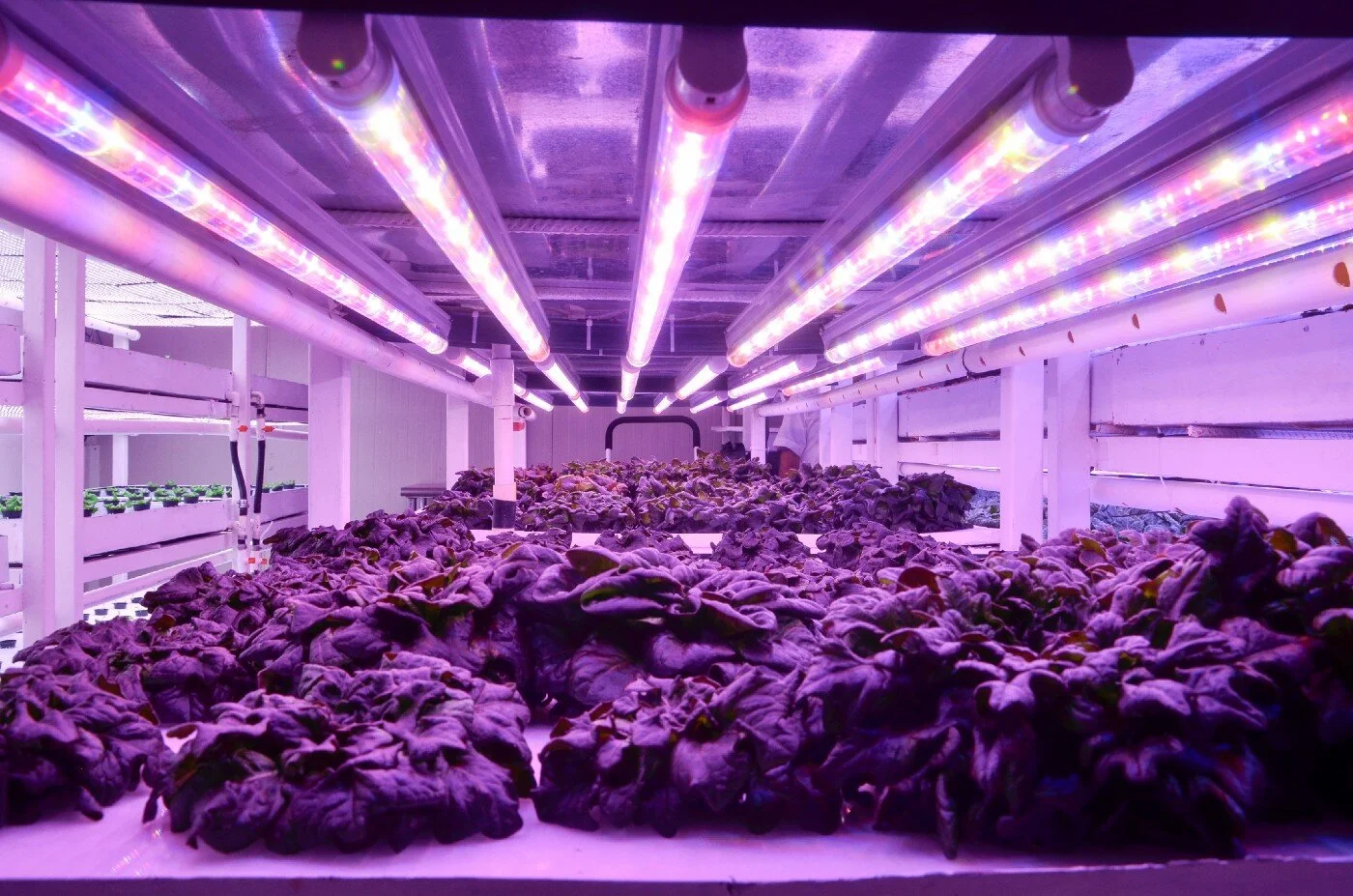
Worldwide Horti Lighting Industry To 2030
The worldwide population is expected to increase to 8.5 billion by 2030, from 7.7 billion in 2019, as per the United Nations Department of Economic and Social Affairs (UN-DESA). Additionally, the disposable income of people is also rising, and the two factors are together resulting in a growing demand for food products
21-09-2020 | Cision PR Newswire
DUBLIN- The "Horticulture Lighting Market Research Report: By Type, Technology, Cultivation, Application - Global Industry Analysis and Growth Forecast to 2030" report has been added to ResearchAndMarkets.com's offering.
The worldwide population is expected to increase to 8.5 billion by 2030, from 7.7 billion in 2019, as per the United Nations Department of Economic and Social Affairs (UN-DESA). Additionally, the disposable income of people is also rising, and the two factors are together resulting in a growing demand for food products.
To increase the yield, by making the best use of the available land, several countries are developing indoor farming techniques. Thus, with the population boom, the revenue generated in the global horticulture lighting market is expected to rise from $3.2 billion in 2019 to $20.3 billion by 2030, at a CAGR of 18.1% during 2020-2030 (forecast period).
Light-Emitting Diode (LED) to Dominate Market during Forecast Period
Till 2030, LED would continue holding the largest revenue share in the horticulture lighting market, as this technology is quite cost-effective and lets farmers control the light intensity to suit different plants and crops. These factors are resulting in a high adoption of LED lights in greenhouse and indoor agricultural processes.
During the forecast period, the flowers bifurcation is expected to witness significant horticulture lighting market growth, as the demand for flower buds and cut flowers for decorative purposes is surging. From 2017, the exports of such products rose by 2.5%, to garner $6.6 billion in revenue in 2018, as per Trade Map. Currently, Europe's flower exports account for the highest revenue, followed by Latin America (LATAM), Asia-Pacific (APAC), Middle East and Africa (MEA), and North America.
In 2019, top lighting dominated the horticulture lighting market, as this type of lighting is vastly used for vertical farming, wherein the lights are placed close to the plants. Similarly, in indoor farming, the lamps and bulbs are suspended for the ceiling, because it creates optimum conditions for the growth of plants.
In the coming years, the fastest growth in the horticulture lighting market is projected to be experienced by the indoor/vertical farming division. The rapid increase in population and urbanization rate is leading to the shrinking of cultivable land, which is forcing the agrarian community to adopt indoor farming methods. Additionally, farmers are being offered financial support, to install vertical farms, by companies such as Toshiba Corporation and Panasonic Corporation.
Europe was the largest horticulture lighting market during the historical period (2014-2019). This is because it is the largest exporter as well as producer of fruits, flowers, and vegetables around the world. During the forecast period, the highest CAGR, of 21.1%, would be experienced in Asia-Pacific, owing to its increasing disposable income and population. Further, as a result, the reducing arable area, numerous countries in the region are looking at modern farming techniques, such as indoor horticulture, greenhouse, and vertical farming.
Market Players Strongly Pursuing Client Wins to Better their Position
In the recent years, several players in the horticulture lighting market have successfully pursued client wins to increase their sales and strengthen their position in the industry. For instance, a Canadian licensed producer of recreational and medicinal marijuana selected LumiGrow Inc. as its LED lighting partner in May 2019, for its six-acre cannabis greenhouse expansion project.
Similarly, in October 2019, Heliospectra AB received a $7.46 million (SEK 72 million) order for its MITRA LED lights from Nectar Farms in Victoria, Australia. The lights will be installed at a tomato-based glasshouse at Nectar Farms.
The competition in the global horticulture lighting market is primarily among Cree Inc., Samsung Electronics Co. Ltd., Lumileds Holding B.V., EPISTAR Corporation, Everlight Electronics Co. Ltd., Osram Licht AG, Broadcom Inc., Signify N.V., Illumitex Inc., Hubbell Incorporated, Hortilux Schrder B.V., LumiGrow Inc., General Electric Company, and Heliospectra AB, as they are the largest companies in the domain.
Click here for more information.
Media Contact:
Research and Markets
Laura Wood, Senior Manager
press@researchandmarkets.com
For E.S.T Office Hours Call +1-917-300-0470
For U.S./CAN Toll-Free Call +1-800-526-8630
For GMT Office Hours Call +353-1-416-8900
U.S. Fax: 646-607-1907
Fax (outside U.S.): +353-1-481-1716
SOURCE Research and Markets

Basil Production In Horizontal or Vertical Aquaponic Systems
The main objective of this work was to compare basil production between horizontal and vertical decoupled aquaponic systems and assess the utilization of supplemental lighting in a greenhouse environment
Source: ECB
Aquaponic facilities allow the joint production of fish and plants in a reduced space. This hydroponic technique, combined with vertical farming, is not well studied. The main objective of a recent work was to compare basil production between horizontal and vertical decoupled aquaponic systems and assess the utilization of supplemental lighting in a greenhouse environment.
Six independent vertical racks were arranged with hydroponic trays at three heights. Three racks were affixed with LED lighting on the lowest levels and three with supplemental lighting on the intermediate level. Immediately adjacent to the vertical systems, two independent horizontal systems containing three trays were constructed to compare basil production.
After 35 days of growth post transplanting, the total production per tray and weight, height, number of leaves, and nodes of 20 selected plants per tray were determined. Records of the intensity of illumination photosynthetic photon flux density (PPFD)) were recorded at dawn (8:00), noon (12:00), and dusk (18:00) at randomly predetermined positions associated with the 20 selected plants per tray.
The total basil production in the experiment was 58.79 kg, with an average production per unit area of 2.43 and 0.94 kg m−2 for vertical and horizontal systems, respectively. Productivity per unit area in the vertical systems was 160% greater than in horizontal systems. A significant effect of lighting, the height of the tray, and plant position inside the tray was found on plant growth parameters.
Optimization of light source distribution and tray orientation can enhance the productive performance in vertical aquaponic systems. Electricity cost associated with supplemental lighting per kg of production increment was 21.84 and 12.25 $ kg−1 for the bottom and intermediate levels of the vertical system, respectively, the latter being economically the most profitable.
Agronomy 2020, 10(9), 1414; https://doi.org/10.3390/agronomy10091414
by Víctor M. Fernández-Cabanás 1,*,Luis Pérez-Urrestarazu 2,Alexes Juárez 3,Nathan T. Kaufman 3 andJackson A. Gross 3
1 Urban Greening and Biosystems Engineering Research Group, Departamento de Ciencias Agroforestales, Universidad de Sevilla, ETSIA, Ctra, Utrera km.1, 41013 Seville, Spain
2 Urban Greening and Biosystems Engineering Research Group, Area of Agro-Forestry Engineering, Universidad de Sevilla, ETSIA, Ctra, Utrera km.1, 41013 Seville, Spain
3 Department of Animal Sciences, University of California, Davis, Davis, CA 95616, USA
Author to whom correspondence should be addressed.
Received: 29 July 2020 / Revised: 10 September 2020 / Accepted: 14 September 2020 / Published: 17 September 2020
(This article belongs to the Section Horticultural and Floricultural Crops)
View Full-Text Download PDF Browse Figures Cite This Paper
Keywords: decoupled aquaponics; vertical farming; hydroponics; basil; artificial lighting
Source: MDPI.

How We Can Rethink Agriculture So It’s More Local
While we can still produce enough food to feed the world today, we are running out of time
SEP 21, 2020
Climate Week is a reminder of how susceptible global agriculture systems are to climate change risks. More than 800 million people went to bed hungry every night even before COVID-19 disrupted the global food supply chain, which put an additional 130 million at risk of food insecurity.
This unprecedented crisis comes as industrial agriculture already struggles to feed a growing global population under threats of declining resources and an increasingly inhospitable environment.
While we can still produce enough food to feed the world today, we are running out of time. Many experts believe that conventional farming techniques are becoming unsustainable because of the vast amounts of land, water, and energy required, as well as additional crop failures that will occur with the warming climate. To achieve sustainable food security, we must fundamentally disrupt the traditional forms of agriculture. We must pivot towards more cost-effective food production that is closer to home, more sustainable than factory farming, and less land-intensive.
Building more local capacity for agriculture
With a global population projected to exceed eight billion in 2023 and 10 billion by 2056, we can ill afford the inefficiencies and incremental gains of today’s industrial agriculture. Feeding 10 billion people will require an additional 109 million arable hectares, a landmass larger than Brazil. Given that 80 percent of arable land is already in use, the world faces even more acute food shortages if we can’t figure out how to grow more with less and get it where’s it’s most acutely needed.
The first step is to decentralize food production and distribute it more locally. When the 2017 famine in South Sudan took hold, it wasn’t because there wasn’t enough food to feed the five million people; it was because disruptions to the food supply prevented its distribution. Similarly, when food supply disruptions caused harrowing shortages on American supermarket shelves in the early months of the pandemic, we all witnessed how quickly panic and hoarding set in.
Urban agriculture is one way to build more local capacity. Building in cities, even on rooftops, can improve local food security and nutrition in food deserts where underserved communities suffer from access to fresh produce. Studies show that urban agriculture can meet 15 to 20 percent of global food demand today.
The next step is to bring food production indoors, when and where it makes sense. Technological innovation has helped bring food closer to local communities, enabling food to be grown more in places once thought impossible. However, we need to rethink our approach to indoor growing systems.
Today’s most advanced greenhouses and indoor vertical farms have significant shortcomings. Vertical farms, for instance, require massive amounts of energy due to the need for climate control systems and artificial lighting. Some argue that energy and environmental costs of vertical farms are offset by the reduced “food miles” of transporting food from afar. But as climate and environmental scientist, Dr. Jonathan Fole points out this argument turns out to be a red herring. Local food typically uses about the same energy per pound to transport as food grown away due to volume and method of transport.
And both indoor vertical farms and greenhouses suffer from a lack of the sun’s full light spectrum, compromising the robustness of indoor plant growth as well as the quality of the food.
The need for precise controls
Instead, a new model of agriculture is emerging that is nimbler than large scale commercial farming, safer than outdoor farms, greener than greenhouses, more natural than vertical farms, and more efficient than almost any other growing technique in terms of water consumption, power usage, and CO2 production. It’s essentially a hybrid approach of all three growing modalities – outdoors, greenhouses, and indoor farms. This “fourth way” of agriculture integrates and continually refines entirely new approaches to crops, operations, facilities, systems, and the growing environment (COFSE). The model was developed to produce far higher yields per acre than outdoor farms, superior yields to greenhouses, and up to 20 percent better yields than comparably sized indoor farming systems.
The new model has two key principles: first, bring the full sun indoors and, secondly, create and control an indoor ecosystem precisely tuned for each kind of crop.
Plants grow most robustly and flavorfully in full natural sunlight. While it may seem counter-intuitive to some, even the clearest of glass greenhouses inhibit the full light spectrum of the sun. But new cladding materials have emerged recently that enable the near-full-transmission of the sun’s RV and light spectrum.
Unlike plastic or glass, these new transparent membranes can help crops achieve their full genetic (and flavor) potential. Natural light also warms the microclimate when necessary, dramatically reducing heating energy requirements. And at times when the sun isn’t cooperating, advances in supplemental grow lighting can extend the plants’ photoperiod – even beyond natural daylight hours – to maximize crop growth and quality, and reduce time to harvest by up to 50 percent or better.
Greenhouses and vertical farms are also compromised by outdoor and human-introduced contamination. The new model relies on creating a tightly-sealed, cleanroom-like microclimate that keeps pests, pesticides, and other pollutants outside.
Thanks to artificial intelligence (AI), the Internet of Things, and similar advances, growers can create highly automated growing systems that reduce human intervention and its associated costs. Finely-tuned convective air circulation systems enable the microclimate to remain sealed and protective. Natural temperature regulation using sunlight and organic foam-based clouds can significantly reduce air-conditioning electricity requirements. And highly automated hydration, fertilization, and lighting are all continuously optimized by machine learning.
This new model, which has been designed over more than three years of research and development, is set to be put into large scale practice when the first of three new grow facilities completes construction on a 41-acre site in Coachella, Calif. Construction is set to commence within the next year. This unique approach, which included contributions from lighting experts who had previously worked at NASA sending plants into space, was developed to significantly affect local food security in an environmentally friendly way.
It applies the best aspects of current growing methods – outdoors, greenhouse, and indoors – and, where possible, replaces their shortcomings with superior technology and processes, creating an overall improved approach. Yet as a result of the facility design and automated growing system, it is designed to and expected to consume up to 90 percent less energy than traditional indoor grow operations while producing up to 10 to 20 percent better yields than other comparably sized farming systems.
The world we live in now gives us the intelligence and technologies we need to change the outdated legacy of how farming is done today into tomorrow’s way of producing food, creating a robust, delicious, and nutritious food chain on a global level. Using these technologies, we can decentralize production, reducing our reliance on global supply chains, and move high-density growing systems closer to communities to ensure food security for all.
Image credit: Devi Puspita Amartha Yahya/Unsplash
INGO MUELLER is the CEO of AgriFORCE Growing Systems Inc.
Future Looks Bright For Indian Hydroponics Market
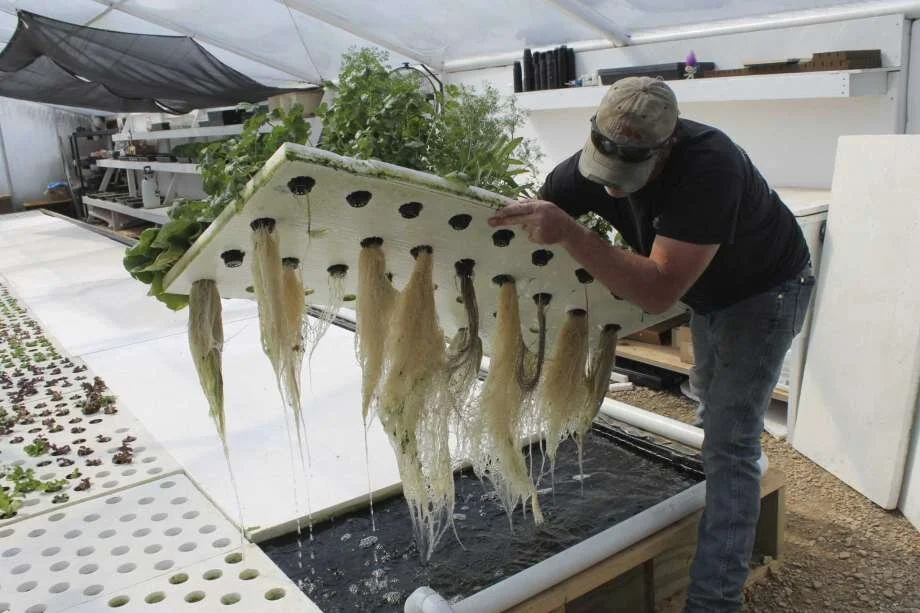
Hydroponics is a method of growing plants in a water-based, nutrient-rich solution without soil, where the root system is supported using an inert medium such as perlite, rock wool, clay pellets, peat moss or vermiculite
10 September 2020
Darsh Lathia and Yamini Vivek
Hydroponics is a method of growing plants in a water-based, nutrient-rich solution without soil, where the root system is supported using an inert medium such as perlite, rock wool, clay pellets, peat moss or vermiculite.
The roots are suspended in a purified water system enriched with nutrients, thereby reducing the chances of pest and insect attack. This technique caters to a host of challenges, such as water and arable land shortage, global warming, and overuse of harmful pesticides and fertilizers.
Although hydroponic systems depend on water and water-based solutions, they use only about 1/20th of the amount of water used in traditional farming. Based on Frost & Sullivan’s analysis, productivity was found to increase by 3-10 times the conventional output in the same amount of space as conventional farming. The technology allows the decrease in time between harvest and consumption, leading to higher retention of nutritional value for the end-product. Many crops can be produced twice as fast in a well-managed hydroponics system.
Hydroponics on the Rise in India
Hydroponics is at a nascent stage in India, with the majority of farms being operated as startups. However, large corporates are entering this business, which will increase their acceptance at the commercial level. Based on our research, there are over 40 commercially active hydroponic farms in India and a couple of new farms are underway. With produce being perishable, the majority of farms cater to the nearby metro cities and companies try to set up farms close to demand centres for ease of logistics.
The large farms are concentrated in southern and western India. According to our analysis, Southern India accounts for the highest share, with cities like Hyderabad, Bangalore, and Chennai having a large number of farms and many new small and medium farms being established.
Farms are forming near the Mumbai-Pune belt and other western regions of Maharashtra, such as Nasik and Kolhapur. Competition is currently not intense as the technology is in a very nascent stage and the awareness level is low, even amongst chefs and food enthusiasts. However, it is expected that the popularity of hydroponics will increase, and the competition will intensify correspondingly.
Our research revealed that Hydroponic farms in India are largely used to grow leafy greens like lettuces and herbs like Italian basils and vegetables like cherry tomatoes, cucumbers, and red and yellow bell peppers. In terms of volume and value, large greens like cherry tomatoes, bell peppers, and cucumbers, account for the major share of the hydroponic output, which is followed by leafy greens like various lettuces, arugula, and pakchoi.
The Green Conundrum Facing Farmers
Our research reveals that hydroponic farming is largely a B2B business model with HoReCa (Hotel, Restaurant, Cafe) and organised retail accounting for a 90%-95% share, and remaining by the unorganised sector. Organised retail is the primary mode of selling supply products in the retail market. The unorganised sector is almost negligible and the penetration of e-commerce is minimal. The organised retail outlet offers decent volume off-take and better margins compared to HoReCa.
With the unorganised retail market being price-sensitive, conventional farm output has a stranglehold due to its pricing. Transportation is done primarily through transport vans delivering the produce to adjoining city centres, typically about 100-200 km from the farm. Only farms supplying long distances (over 500 km) use reefer trucks.
Commercial hydroponic farms typically have a land area of 10,000 sq. ft. to 50,000 sq. ft. Usage of the grow bag technique accounts for 70%, whereas NFT (Nutrient Film Technique) and others account for the rest. As per Frost & Sullivan’s analysis, the cost of setting up a grow bag/trough system for growing large greens is almost half compared to setting up an NFT system for growing leafy greens and, hence, large greens are the preferred product category. Although leafy greens go through six to seven crop cycles and large greens take one to two crop cycles in a year, the output per plant for large greens in terms of volume is up to 20 times that of leafy greens. Also, in terms of value, large greens fetch about 25%-30% more value per kg compared to leafy greens.
Farm utilities include equipment for setting up the farm, plant seeds, minerals/nutrients and water, organic pest control solutions, packaging, and so on. Greenhouses, NFT channels, grow bags, net pots, fogger and auto dossers are some of the major farm equipment used. Plant seeds and nutrients account for the largest component of the operational expenses, some of which are imported from Europe and America.
HoReCa and Healthy Lifestyles Set to Boost Hydroponics
HoReCa is considered to be the largest customer segment for hydroponics as it has a bulk requirement, and farm owners trying to offload their volume prefer to cater to the HoReCa segment.
Hydroponics also ensure a smooth supply, despite weather conditions and monsoon seasons, when supply is usually interrupted for traditional vegetable suppliers. Within HoReCa, high-end cafes and restaurants not only have a decent off-take but also offer better margins as this sub-segment prefers high-quality vegetables and is open to paying a premium. With health-conscious customers requesting vegan, Keto diet, and so on, the menu is revised constantly to cater to the demand of the customers, and there will be increased growth of detox juices and salads. The entry of more salad outlets is leading to the growth of exotic vegetables, thereby creating opportunities for hydroponically grown vegetables. Since 2017, salad consumption has increased by 25%-30% and this trend is expected to continue in the coming five years.
With an improved lifestyle, high disposable income, and growing awareness, there is an increasing demand for healthy menus like low-carb and organic, where customers are requesting more leafy vegetables that are organically grown. Not only Tier 1 cities, but Tier 2 and Tier 3 cities also are expected to follow a similar disrupting trend in the coming years.
Over the past few years, the share of expenditure on health and wellness has increased among the young working class. According to the Federation of Indian Chambers of Commerce & Industry, the foodservice industry is expected to reach ?5,52,000 crore by 2022, growing at a CAGR of 10%. Of this, the health-conscious segment is expected to cater to over 1 crore people in the top six Indian cities by 2022, registering a growth rate of 12%.
Organised retailers and specialty grocery stores, especially in major cities, have higher-volume off-takes and also offer comparatively better margins for hydroponic growers. This is because the consumers visiting these stores are willing to pay a premium for high-quality produce. However, prices offered at unorganised retailers are too low for the hydroponic farmers to break even. Direct-to-customer offers a higher margin compared to HoReCa or retail; however, it also requires additional effort in acquiring customers, creating awareness, offering innovative packaging, and so on.
Hydroponics Headed in the Right Direction
Hydroponics holds advantages over traditional farming. However, organically grown products have already become popular among young consumers. HoReCa and organised retail still prefer organically certified products over hydroponics.
Conventionally grown products are available at a much cheaper rate compared to hydroponically grown produce as well. The presence of hydroponic players in India was limited until 2015; however, with the growing popularity of the technology and year-round supply, which conventional farms cannot offer, it has gained attention in recent years. New players are expected to enter the market in the coming years and revolutionise urban farming in the country.
The authors are consultant and consulting analyst, chemicals, materials & nutrition practice, Frost & Sullivan. They can be reached at Srihari.Daivanayagam@frost.com)

Lettuce Linked To 40 E. Coli Outbreaks In A Decade – Most Related To Romaine
Of outbreaks linked to a specific leafy green — rather than a mix — 54% were linked to romaine. Spinach and iceberg lettuce were each linked to 17% of the outbreaks, and cabbage, green leaf, and kale were each linked to 4%
Romaine Lettuce's Growing Popularity,
However, Doesn't Explain Its Link To Numerous Outbreaks.
Sept. 16, 2020, / Source: NBC News
By Sara G. Miller
Leafy greens are a common culprit of foodborne illnesses, with the produce linked to 40 outbreaks of a serious strain of E. coli from 2009 to 2018, a report published Wednesday in the journal Emerging Infectious Diseases finds.
Among those outbreaks, one lettuce, in particular, bore the brunt of the blame: romaine. (Recall 2018, a year rocked by two massive romaine-linked E. coli outbreaks?)
Of outbreaks linked to a specific leafy green — rather than a mix — 54% were linked to romaine. Spinach and iceberg lettuce were each linked to 17% of the outbreaks, and cabbage, green leaf and kale were each linked to 4%.
To View the Above Video, Please Click Here
It's not entirely clear why romaine was the most common culprit in the outbreaks. The researchers noted, for example, that more iceberg lettuce was harvested and sold each year from 2009 to 2017 than romaine.
Romaine did grow in popularity during the decade analyzed, the researchers wrote: By the end of the study period, more money was spent on romaine lettuce than on iceberg. But this alone doesn't explain why romaine was responsible for so many outbreaks.
Another possible explanation, the researchers posited, is the lettuce's shape, which could provide an entry point for pathogens: "Romaine is tall with loosely clumped leaves, open at the top; iceberg is smaller with compact leaves."
Other outbreaks were linked to mixed greens, including three romaine and iceberg mixes, a butter lettuce and radicchio mix, and a spinach and spring mix.
The report focused on outbreaks of a type of E. coli called Shiga toxin-producing E. coli, or STEC. The name refers to a toxin produced by the bacteria that makes people sick. Symptoms can include diarrhea and vomiting, according to the Centers for Disease Control and Prevention. Most people recover on their own within 5 to 7 days, though some may need medical care.
Related NEWS
Food-poisoning outbreak that is in 6 states is likely from ground beef
The decade of outbreaks, which occurred in the United States, Canada or both countries, accounted for 1,212 illnesses, 420 hospitalizations and eight deaths, according to the report. A total of 77 cases of hemolytic uremic syndrome, a kidney problem that requires hospitalization, were also attributed to the outbreaks.
Shiga toxin-producing E. coli are linked to about 265,000 illnesses each year in the U.S., according to the report. One type of STEC in particular, STEC O157, tends to cause more severe illness. The most common source of this infection is ground beef, followed by leafy greens. Indeed, STEC O157 was responsible for 32 of the outbreaks described in the report.
Though leafy greens are grown year-round in the U.S., more outbreaks began in October and April than any other month of the year. It's unclear why this seasonality in outbreaks occurred, the study authors wrote.
There are several reasons why leafy greens are particularly susceptible to E. coli contamination, starting with how the crops are cultivated, Benjamin Chapman, a professor and food safety specialist at North Carolina State University, said.
"The vast majority of lettuce production is outside and requires a lot of water," Chapman, who wasn't involved with the report, said in an email. And in the U.S., it's mostly grown in areas where animals — a source of E. coli — are also raised. E. coli contamination can come from sources such as irrigation water, animals, and handling.
"We know from earlier outbreaks that a little bit of contamination in the field can lead to cross-contamination," he said.
Once that contamination has made it onto the plant, it's "very difficult to remove," Chapman said. Produce is triple-washed in processing plants, and in the home, a person may be able to rinse off "90 to 99% of what's there, but that may not be enough depending on how much" contamination there is, he added.
And because lettuce is almost always eaten raw or undercooked, "any contamination that makes it to the plate ends up in the gut," he said.
Avoiding outbreaks entirely is, unfortunately, a supply chain issue, he said.
This story was originally published on NBC News.
Vertical Farming World Congress Kicks Off With Remote Site Visits
Aerofarms in the United States, Intelligent Growth Solutions (IGS) in the United Kingdom, Root AI (United States), Uns Farms from the United Arab Emirates, and YesHealth Group in Taiwan all opened their doors to virtual visitors, by means of videos showcasing what their operations are all about
Under normal circumstances, participants in the Vertical Farming World Congress, organized by Zenith Global, would have been able to visit some vertical farming sites, see the lights, sample some produce, talk to the farm managers. With the global pandemic still raging, however, the organizers decided to take the event online. As part of that move into the virtual domain, participants were able to 'visit' some vertical farms from the comfort of their own home.
Aerofarms in the United States, Intelligent Growth Solutions (IGS) in the United Kingdom, Root AI (United States), Uns Farms from the United Arab Emirates, and YesHealth Group in Taiwan all opened their doors to virtual visitors, by means of videos showcasing what their operations are all about.
The presentation program was then kicked off by Richard Hall, Chairman of Zenith Global, who introduced the first speaker: Ellis Janssen, Global Director City Farming at Signify. The Dutch lighting supplier has put increasing attention on developing products for vertical and indoor farming in recent years. According to Ellis, while lighting is crucial to photosynthesis, it's only part of the puzzle: "It's a combination of factors that makes a vertical farm successful or not - the sum of all elements should add up to more."
Ellis Janssen
Educating vertical farmers
Next up, Wythe Marschall introduced the FarmTech Society (FTS). As Education Committee Chair, he focuses on education and workforce development, pointing out that there are lots of opportunities there in the industry.
Wythe Marschall
"In the US, there are not that many places to go for training, unlike in Northern Europe or Japan for instance," Wythe noted. "We look to work with educational institutions and members, and based on what industry members want, we offer courses with industry credentials, skills that are vetted by the academic institutions and industry." To this end, a CEA training and education consortium has been formed by the FTS.
Vertical circularity
The mic was then passed to Stephan Wullschleger and John Macdonald of Porohita Projects, who tuned in from Switzerland and New Zealand respectively. As Stephan explains, 'Porohita' stands for 'circular' in the Maori language, so it's no surprise that the company is all about circularity in indoor agriculture.
John Macdonald
The duo met in the Middle East, where John was working on a bottled water project. Recently he also spent some time in the UAE and Saudi Arabia working on controlled-environment agriculture projects, before moving into vertical farming. "Most importantly, this project was water positive for most of the year, that made it really very exciting", he says about the latter project.
Saving energy
In the Q&A session, the discussion moved back to lighting. "It's very important that you look at the efficacy of the lighting module", Ellis explained. "In the end, some light is for free, so we need a proper business case for a vertical farm to make it economically feasible.
At Signify, they've been working on improving the efficiency of lighting modules, but as Ellis points out, the other part is also crucial: the yield of your farm. "That yield is influenced by the light spectrum. What you gain in kilograms in yield in your farm, has a direct impact on your price - not only the cost price but also the sales price.
"So it's a combination of having the right spectrum and the right module. Do not only look at capital expenditure but look at the total light plan."
John agrees that it's important to take into account energy as a critical factor and a really big cost. "Water positivity is interesting and emotionally nice to achieve, but it's not going to be your biggest cost, so energy is the one to work on."
The Vertical Farming World Congress continues until the 24th of September. HortiDaily will be posting summaries of several of the sessions in the near future, so keep an eye out for those updates!

Publication date: Wed 23 Sep 2020

5 Questions To Answer Before Starting A Vertical Farm
Indoor farming is a science—but that doesn’t mean you have to be a scientist to start one. Plenty of people with diverse backgrounds, from finance and business to hospitality (and yes, agriculture and science) enter the world of indoor vertical farming
Indoor farming is a science—but that doesn’t mean you have to be a scientist to start one. Plenty of people with diverse backgrounds, from finance and business to hospitality (and yes, agriculture and science) enter the world of indoor vertical farming.
Regardless of your past experience, if you are thinking of entering the world of vertical farming, you need to know what to expect. As a starting point, here are five questions to ask yourself before seriously considering launching a vertical farm.
1. What crops should you consider growing?
What are you planning to grow? This decision will have an impact on every aspect of your vertical farm, from setup and spacing to resources, distribution, and lighting, so it’s crucial that you make a choice that best suits you.
It is likely that you already have an idea of what crops you want to grow. But is that crop a good fit for a vertical farm? What’s its harvest cycle? Is there enough demand for it in your area? How does it need to be distributed? You’ll need to conduct an analysis of crops suitable for vertical farming and consider your options before going further into the schematics of your farm.
2. How much space do you have or need?
One of the perks of vertical farming is that growing racks allow you to make very efficient use of very little space. We’ve seen smart vertical farming setups make growing in the middle of a crowded city or a small complex attainable. However, what may seem like the smallest factors (like fixture mounting heights) have the potential to impact your farm’s viability. That’s why working with trusted partners like Current is critical to your success: we can get you started on the right path with a free light plan, amongst other things.
3. Do you have a partner?
Speaking of partners—do you have one? Are you working alone or with a team? Do you have access to plant scientists and researchers who can provide insight on best practices? Is there an expert who can design your lighting for optimum yields? Who will you turn to if a grow light fails?
These questions are the first step to a serious venture as pairing with the right partner means you can tackle all challenges that may come up in one fell swoop. Look for resources or someone in your network who have a reputation of excellence throughout the industry. Bonus points if those prospects also have a strong network of partners in horticulture they can turn to for specific expertise.
4. Who is investing?
Few people can fund a vertical farm on their own. You need investors—and sometimes that means getting banks on board as well. Having a formal business plan backed by industry stalwarts will be critical to presenting a strong front to the financial world and turning your dreams of owning your own vertical farm into a reality.
5. What grow lights will you use?
You have the space, you know what you want to grow and you’ve found your partners—now what? Time to select the grow lights that will power your vertical farm.
The right light is a crucial component to making your operation a success and will get you the yield you need to succeed in this new venture. Choosing the horticulture grow lights to get you there is a decision that marries price, light spectrum, warranty, ease of maintenance, efficiency, and much more. LED lighting may seem like a complex world – and that’s where we come in. We’re here to help you understand the basics of grow lights, figure out how they’ll interact with your farm, and set your farm on the road to success. We see growers pour their hard work and passion into their vertical farms every day. That’s why we think your partners should match your enthusiasm and go above and beyond to help your farm succeed.
Learn more about how Current helps vertical farms get off the ground.

VIDEO: It's A 2-Acre Farm, Packed Into A Shipping Container That Doubles As A Farm Building
The Farm From A Box system is designed to feed 150 people per year and includes drip irrigation, all of the tools, and its own renewable energy setup
The Farm From A Box system is designed to feed 150 people per year and includes drip irrigation, all of the tools, and its own renewable energy setup.
This plug-and-play farming system combines water-smart irrigation, renewable energy, and precision farming technology in a single shipping container that is said to be capable of supporting the cultivation of almost two and a half acres, using regenerative agriculture practices.
We've covered a few different approaches to the "farm in a box" concept, but all of them so far have been built around the idea of growing the crops inside a shipping container, using hydroponics or aeroponics, and artificial lighting. The Farm From A Box is quite a bit different in that the farming takes place outside of the box (or shipping container) and after the contents have been unpacked and deployed, the box itself becomes the hub of the farm infrastructure.
According to the company, this is a "turnkey farm kit" that can be used to build a stronger local food system, especially in food deserts and in the developing world, where infrastructure can be spotty and unreliable at best, and possibly even non-existent. The system is described as being “food sovereignty in a box" that can be a “Swiss Army Knife” for off-grid farming, and while there is a basic template, each unit can be customized to fit the particular situation."
We want to develop this as a rapid response transitional food production system. The box is really infrastructure for places that are struggling with a lack of infrastructure." - Brandi DeCarli, co-founder of Farm from a Box. While the units are designed to be complete systems with all of the core components (minus the land and water rights and labor, of course), the company doesn't just stop there, but also includes a training system to help "new farmers tackle the steep learning curve of permaculture technique." To me, this is one of the critical parts of the venture, because if you've ever tried to grow food on a larger scale than your own backyard, without having any formal training or guidelines to follow, it can be a humbling experience that is full of failures learning opportunities."
Based on extensive field research, we found that rural communities often lack the resources and infrastructure needed to access nutritious food. We developed a toolkit that contains all of the core components needed to grow your own food, on a two-acre plot of land, without the need for an existing grid. Imagine the good it can do by growing local, organic food for a school, or helping jumpstart food production after a disaster. ‘Farm from a Box’ enables and empowers communities to provide for themselves." - DeCarli
Currently, Farm In A Box has a prototype unit operating in Sonoma, California, and a second version is in the works for deployment in the Rift Valley of Ethiopia. Basic units will cost about $50,000, which includes a 3 kW solar PV array, a battery storage system, a drip irrigation system and water pump (which can be fitted to a well or to a municipal water supply), basic farm tools, a sensor package, a seedling house, and a WiFi connectivity package, all packaged into a single shipping container. Other options are available as well, including a water filtration system, an advanced sensor suite, remote monitoring capabilities, and more.

Expert Input Can Boost Yields For Vertical Farming
Designing, constructing and integrating new facilities that live up to vertical farming’s many promises calls for the right kind of knowhow, says Ian Hart, business development director at adi Projects
3rd September 2020
Designing, constructing, and integrating new facilities that live up to vertical farming’s many promises calls for the right kind of know-how, says Ian Hart, business development director at adi Projects.
For almost 12,000 years, humankind has found increasingly ingenious ways to convert the natural forces at play on Planet Earth into an ever more bountiful, diverse and predictable source of sustenance.
And, as global and national populations have grown historically and in particular, in recent decades, the issue of food security has always hovered somewhere in the background. Today, although we’re by no means on the brink of a Malthusian catastrophe, the idea that the UK might at some stage struggle to feed itself has taken on a new relevance.
We’ve always been used to the supermarket shelves being full. But the early stages of lockdown betrayed the reality that supply chains are highly sensitive not only to the onset of a pandemic but to economic and environmental shocks.
Imperfect storm
Putting COVID to one side, the UK is staring those other two factors square in the face. We currently import approximately 80% of our food, including real basics, such as carrots, but, in Brexit, we are on the verge of a significant dislocation between ourselves and our biggest and closest trading partners who also happen to supply 30% of the total.
And, while Brexit may cause short-to-medium term disruptions, presupposing an eventual agreement on future trade, the risks posed by the environment seem baked in for decades to come.
High hopes for UK vertical farming startup
Scottish vertical farming startup harvests £5.4m in funding
Extreme weather events, such as significant flooding which has quadrupled since 1980, can harm livestock and spoil crops. On the other side of the coin, water inefficiency and scarcity are issues in many parts of the world, as agriculture competes increasingly with industry and domestic use.
Rising temperatures are playing havoc with growing seasons and sparking ever more wildfires that can devastate farms, even when the flames don’t actually reach them.
So, the commercial risks are there for producers. Supply chains are fragile, meaning that businesses dependent on imported produce may be unable to meet the service levels demanded by the supermarkets – even in the short-term – and then scramble for unsustainable and often very costly workarounds.
Removing risk
Vertical farming facilities are the subject of increased interest in the industry. Climate-controlled facilities enable producers to regulate the variables of the environment and avoid pollution to grow produce of a consistently high standard and at predictably higher yields.
The vertical farm projects we have worked on are very hygienic, removing fungal and bacterial risks and the threat from all manner of pests. And, run on LEDs and recycling very high proportions of the water they use back into their processes, energy costs can be minimized, there is no need for water to be chemically treated and producers can extricate themselves from any sense that the taps might one day dry up.
Locally sited facilities mean the vagaries of geopolitics and international trade agreements are no longer an issue. And, as importantly, locating one close to a waste-to-energy plant would enable you to harness its heat and CO2 to aid the growing process.
The UK currently imports around 80% of its food
So, vertical farming has a real role to play in helping create circular economies at the local level.
While no means a silver bullet, in our experience vertical farms do solve many of the problems of contemporary food production and have the potential to help brands forge solid reputations as innovators and on sustainability.
But, so great are its potential upsides, one might quite reasonably ask why the shift to vertical farming isn’t gathering pace at a steadier rate. The answer, I believe, lies in a perceived lack of expertise in this country at getting such projects off the ground.
A specialist business
For all the simple answers the technology offers, the processes involved are highly sophisticated and capital intensive. Often it is only businesses with the means who go beyond the initial feasibility stages but, even then, they require specialist assistance.
The design and construction of the facilities themselves are highly complex. Different vegetable, fruits, and greens each require their own zoning and specific climatic conditions, and each of the different vertical levels – up to nine in some cases – has to create and sustain its own unique characteristics.
The electrical and robotic systems running the lighting and hydroponics are as innovative as anything in the sector and that’s before one overcomes the challenges of integrating the entire operation.
So, I’d advise companies exploring their options on vertical farming to go back to basics. If you can get those right from the outset and ensure you have continuity throughout the project, you can not only remove risk during planning and construction and for the duration of the facility’s lifecycle but also enjoy certainty on cost and program during the set-up phases.
Ian Hart is business development director at adi Projects
Visit the UK’s dedicated jobsite for engineering professionals. Each month, we’ll bring you hundreds of the latest roles from across the industry.

Vertical Farming Is Coming To A Store Near You
Indoor farms, and even in-store farms, are fulfilling our need for more local vegetables. These semi-autonomous vertical farms offer fresh, healthy food options by bringing food production closer to consumers
September 9, 2020
by Julien Muller, Maxime Cailler
Inadequate consumption of fruits and vegetables is among the top 10 risk factors for our health. Eating fruits and vegetables daily helps prevent major diseases, ensures an adequate intake of most micronutrients and fibers, and can help displace foods high in saturated fats, sugar or salt.
The health benefits of eating more produce can’t be denied, but what about the old adage “fresh is best”? Locally grown fruits and vegetables have distinct advantages. The less time it takes to get to your plate, the better. Once vegetables are picked and harvested, they begin to lose their nutrients. Also, produce that is grown and sold locally has minimal transportation time, which translates to reduced fossil fuel emissions.
It may soon be common for anyone to pluck a farm-fresh tomato from the vine or choose their lettuce while it’s still growing, even if they live in urban areas without gardens. Indoor farms, and even in-store farms, are fulfilling our need for more local vegetables. These semi-autonomous vertical farms offer fresh, healthy food options by bringing food production closer to consumers.
Vertical farms use state-of-the-art technologies, such as specialized LEDs, to help the vegetables grow. Simulation is used to strategically design and optimize indoor farm lighting to create an optimal environment that decreases growing times.
Vertical Farming Lighting Challenges
Engineers designing in-store vertical farms must consider many optical aspects.
First, for a row containing a certain type of plant, it is important to ensure the right illumination value. Different plants need varying amounts of light to grow, and that amount can vary during the growth cycle.
It is also important to ensure illumination homogeneity through a row so all the seeds grow at the same speed. This eases the burdens of plant care during production and allows harvests to be scheduled as needed.
Similarly, when it comes to the light spectrum, plants don’t need all the wavelengths of natural light to grow. Plants respond best to just the red and blue wavelengths, so traditional lamps mimicking sunlight are a waste of energy. Careful optical design can help to optimize LED lighting to target only necessary wavelengths, saving energy in the process.
Lastly, the amount of light absorbed by the plants should be maximized. The less light plants reflect, the faster they grow, which reduces energy consumption.
Vertical Farms Grow with Simulation
LED lights are the most efficient, effective, and customer-friendly way to illuminate plants indoors. They use low energy, produce little heat, and can be color-optimized for growth.
To show how Ansys SPEOS can be used to design grow-light LED array solutions and simulate an indoor farm, we designed a generic light array with 90 LEDs. According to the literature, a diffuse purple spectrum (containing no green light) is optimal for plant growth. Plants reflect much of green visible light and absorb the rest of the spectrum. Consequently, the light array we created has 45 LEDs in the blue spectrum and 45 LEDs in the red spectrum, combining to make purple.
Grow light array for a purple spectrum
Inside our farm, we first designed eight rows of 15 lettuce plants. Each row is illuminated by three of our purple spectrum light arrays.
Vertical farm isometric (left) and side view.
To take the optical properties (light absorption and reflection) of the lettuce into account, we measured some leaf samples using Ansys’ Portable Optical Measurement Device (OMD). The bidirectional reflectance distribution function (BRDF) obtained was applied to all of the lettuce plants in the geometry.
We then used light simulation to measure and visualize illuminance homogeneity, as well as the vegetables’ light absorption. The results obtained for the first design are shown below.
Illuminance sensor (left) and 3D absorption (right)
We could see that the illumination was not homogeneous on the whole row. We then iterated on the LED array’s position, the spectrum of the LED, and the material of the walls of the vertical farm to produce the most efficient solution.
Vertical Farming Simulation Results Are Illuminating
We spaced the luminaires more evenly and gave more space between the LED arrays and lettuce plants. We also changed the materials on the sides and the back from transparent (absorbing) to white (diffusing). The front of the vertical farm was kept transparent so consumers could see the plants as they shopped.
Vertical farm isometric (left) and side view.
Our next simulation showed that the illumination reaching the lettuce plants is more evenly distributed, producing a more uniform light absorption, as shown below.
Illuminance sensor (left) and 3D absorption (right)
However, the lettuce plants in the front and back are a bit less illuminated, so they might not grow as well as the ones in the center. Because the simulation results are so visually striking, it’s easy to determine where the vertical farming design could be improved. One idea for the front lettuce plants would be to apply a partially reflective coating on the inside face of the front glass to reflect more light toward them. The optimized system would then both ensure an optimal harvest yield and optimal energy consumption.
Vertical farming for in-store produce is an idea making its way to the mainstream. Optical simulation helps quantify and visualize the benefits of vertical farms, such as using less energy and water, and growing what is needed in small batches, which wastes less food.
Learn more about optical simulation and Ansys SPEOS.

Food Revolution With Dubai Vertical Farms
There is a growing need for local produce to be safe and fresh, and warehouse farms like Uns are responding to that demand. As the CEO of Uns Grahame Dunling puts it
Zubina Ahmed
September 4, 2020
An Al Quoz-based indoor vertical farm is setting a new template for food production. (Photo: Shihab/KT)
Imagine an ultra-modern, high-tech farm right in the middle of a desert, where fresh vegetables are being grown without soil or sunlight. Al Quoz-based facility Uns Farms is an indoor vertical farm that is growing high quality, pesticide-free, farm-fresh local produce in a controlled, indoor environment using hydroponic technology and LED lights. Produce includes greens like kale, mustard, basil, lettuce, eggplant, and capsicum, as well as a wide variety of crops ranging from leafy to microgreens. The farm, which began production in January last year, is on a 3,000 sqm plot of land in one of Dubai's main industrial areas and produces crops equivalent to 5,000 sqm of land. The idea is to create natural, healthy, and safe food options that can be produced with optimal resources throughout the year, even during peak summers.
"Agriculture has progressed drastically over the decades," says Mehlam Murtaza, executive director of Uns Farms. "It went from field farming to greenhouses, but both these models demand nature's aid. The Middle East is challenged in terms of the weather. It's hot, humid and there's a scarcity of water. Vertical farming, on the other hand, is a model that can be adopted anywhere in the world. It is resource-efficient and the climate and temperature are controlled, which, in the context of the GCC, is perfect.
"The sprawling indoor facility in Al Quoz uses three stages of farming to grow crops. Mehlam explains the first stage as being one where seeding is done. "That's where we are more efficient because we put one seed per plug." In the subsequent nursery stage, the seed grows into a small baby plant, which is then ready for transplanting. "That's when the root has developed into a certain amount as the plant requires more space to grow," says Mehlam. The final stage is when the crops grow. After the harvest, the plants are processed and packaged for distribution.
An indoor farming environment demands appropriate lighting. "In terms of light, the farm has energy-saving LED spectrums, which have different biological effects on the plant. For example, the red spectrum elongates the plant, the blue spectrum makes it thick, the green spectrum aids in health and immune system of the crop," says Mehlam
.Vertical farming also has a solution to concerns related to water. "What you see in soil farming is that you would drip-irrigate or spray water on the floor. A lot of that water goes into the earth and is lost. Hydroponics feeds the root and drains out into a tank and goes into a circular system, where the water is reused and that's how we save 90 percent of water."
There is a growing need for local produce to be safe and fresh, and warehouse farms like Uns are responding to that demand. As the CEO of Uns Grahame Dunling puts it, "We are very local and centralized with no outdoor influences. So, if there is anything in the atmosphere, it doesn't affect our crops." In fact, Covid-19 has brought about a renewed focus on vertical farming. "In pre-COVID times, we had difficulty in explaining to consumers what indoor farming really is, but the pandemic made us realize the fragility of the supply chain.
A lot of our customers had issues importing food, and with the UAE being a major food importer, it seemed to be a very big challenge. Because of COVID, we were able to expand and show people the importance of locally-owned produce," says Mehlam.
Today, Uns produces anywhere between 1,000 to 1,500kgs of vegetables every day and supplies to gourmet chefs, hotels, restaurants, supermarkets, and hypermarkets. Much to his gratification, Grahame notes that his modern farm is a 'choice for the future'.
zubina@khaleejtimes.com

Vertical Mini-Farm At Whole Foods Market In Manhattan West
With a mission to surprise and delight with fresh, local, specialty ingredients grown in city centers, Farm.One’s mini-farm represents a major shift in urban food production and supply chains
Farm.One, a Manhattan vertical farm, launched its latest mini-farm at the newly opened Whole Foods Market Manhattan West. Farm.One custom-designed the farm for the Manhattan West store and maintains the on-site mini-farm to supply the in-store prepared food and beverages with freshly grown and harvested Blue Spice Basil. The basil is used as an ingredient for a variety of delicious menu items, including freshly made pizza and the Whole Foods Mule, a specialty cocktail.
With a mission to surprise and delight with fresh, local, specialty ingredients grown in city centers, Farm.One’s mini-farm represents a major shift in urban food production and supply chains. With mini-farms, businesses have continual access to the highest quality, most flavorful and consistent professional-grade ingredients. Further, the distance between production and consumption is now mere footsteps, eliminating any carbon emissions associated with delivery of the produce.
“Every kitchen knows the difference that freshness and quality of ingredients can make to the food they serve,” said Rob Laing, founder, and CEO of Farm.One. “When we started in 2016, it wasn’t financially feasible to build and operate small farms profitably in cities like New York. We’ve now been able to decrease the cost of building a farm and have developed a model where a larger farm, like our TriBeCa flagship, can support small farms for grocery stores, restaurants and the hospitality industry all over the greater New York City area. This marks a real inflection point for what people can expect in their meals and the economy of urban food production.”
Farm.One’s mini-farm at Whole Foods Market Manhattan West takes up just thirty-two square feet and features a hundred and fifty plant sites on three growing levels. The hydroponic system was designed and built by Farm.One’s engineering and technology team to optimize crop productivity, minimize intrusiveness to the store experience, and require minimal maintenance. The facade of the mini-farm was customized to match the familiar brushed stainless steel aesthetic of Whole Foods Market. The mini-farm is capable of supplying at least 8 pounds of basil every month, including harvesting the fragrant basil flowers for use in the Whole Foods Mule.
“The first thing our customers notice when they enter the prepared food section of the store is the incredible fragrance of the basil,” said Chris Manca, local forager, Whole Foods Market Northeast Region. “As soon as our chefs, and even our mixologist, had access to the basil they were inspired to create menu items that highlight the freshness and flavor of Farm.One’s blue spice basil. This collaboration with Farm.One has really impacted the way we think about fresh ingredients in our kitchens and we can’t wait for customers to come by and experience it.”
Farm.One’s distributed agriculture model
Farm.One has taken a distributed approach to scaling indoor farming in cities, an alternative to the large, expensive warehouse farming models. By establishing a Farm.One flagship as a hub in a city, the company is able to centralize farming and business operations, engineering, training, and support, to build and maintain on-site ‘spoke’ farms throughout a city for its customers. This results in lower investment requirements, a faster path to profitability, and the flexibility to grow a diverse range of crops that meet a variety of customer needs.
Whole Foods' Manhattan West store includes an in-store mini-farm that provides freshly harvested Blue Spice Basil to be used in store-made food and beverage offerings.
“Our hub-and-spoke model of distributed agriculture proves that indoor agriculture doesn’t need tens or hundreds of millions of dollars to be viable and achieve scale,” added Laing. “Also, by putting farms in visible places around the city we’re ensuring openness and transparency never before achieved in the industry. Whether you visit a Farm.One flagship for a tour or class, when it’s safe to do so or experience a mini-farm in the middle of a grocery store, you’ll see and learn about how your food is grown.”
The company has plans to build flagships and mini-farms in major cities around the United States and globally over the next twenty-four months.
Farm costs are further reduced through its relationship with leading LED lighting company Fluence by OSRAM. The cost of lighting and electricity remains one of the highest cost centers for building and operating indoor farms. By collaborating with Fluence, Farm.One is leveraging innovative LED technology to ensure its growing environments are optimized by crop type and for operational efficiency.
“In a vertical farming environment, efficiency isn’t a perk, it is paramount to the farm’s success,” said David Cohen, CEO of Fluence. “Farm.One is tapping into the world’s most advanced cultivation technology to deliver beautiful, delectable plants in the heart of one of the busiest metropolitan areas in the world. Their ability to localize high-quality crop production illustrates how exploring the interaction between light and life will yield a healthier and more sustainable world.”
The mini-farm at Whole Foods Market Manhattan West adds to several mini-farms Farm.One has built out of its flagship farm in TriBeCa, including at OCTOBER, a restaurant in Nolita which features a 100% plant-based menu, Eataly NYC Flatiron, and at the Institute of Culinary Education (ICE), the site of Farm.One’s original prototype farm. Farm.One also maintains a farm at Project Farmhouse at Union Square.
For more information:
Farm.One
77 Worth Street, Floor 1,
New York, NY 10013
www.farm.one

Fluence
4129 Commercial Center Drive
Suite 450
Austin, TX 78744
512-212-4544
info@fluencebioengineering.com
www.fluence.science
Publication date: Thu 10 Sep 2020

Netled And SweGreen Collaborate In Sweden – Netled’s Vertical Farming System Delivered To In-Store Farm In ICA Focus Supermarket
Netled is specialized in developing and selling high-technology vertical farming systems
7th September 2020 by johannak
We have delivered a vertical farming system to our partner SweGreen’s project in Sweden. SweGreen has agreed on providing ICA Focus, one of Sweden’s biggest supermarkets in Gothenburg, an automated in-store farming solution. The greens are grown within the store and harvested directly off the shelf. This kind of in-store farm is first-of-its-kind in Sweden and globally unique in size as well as production capacity.


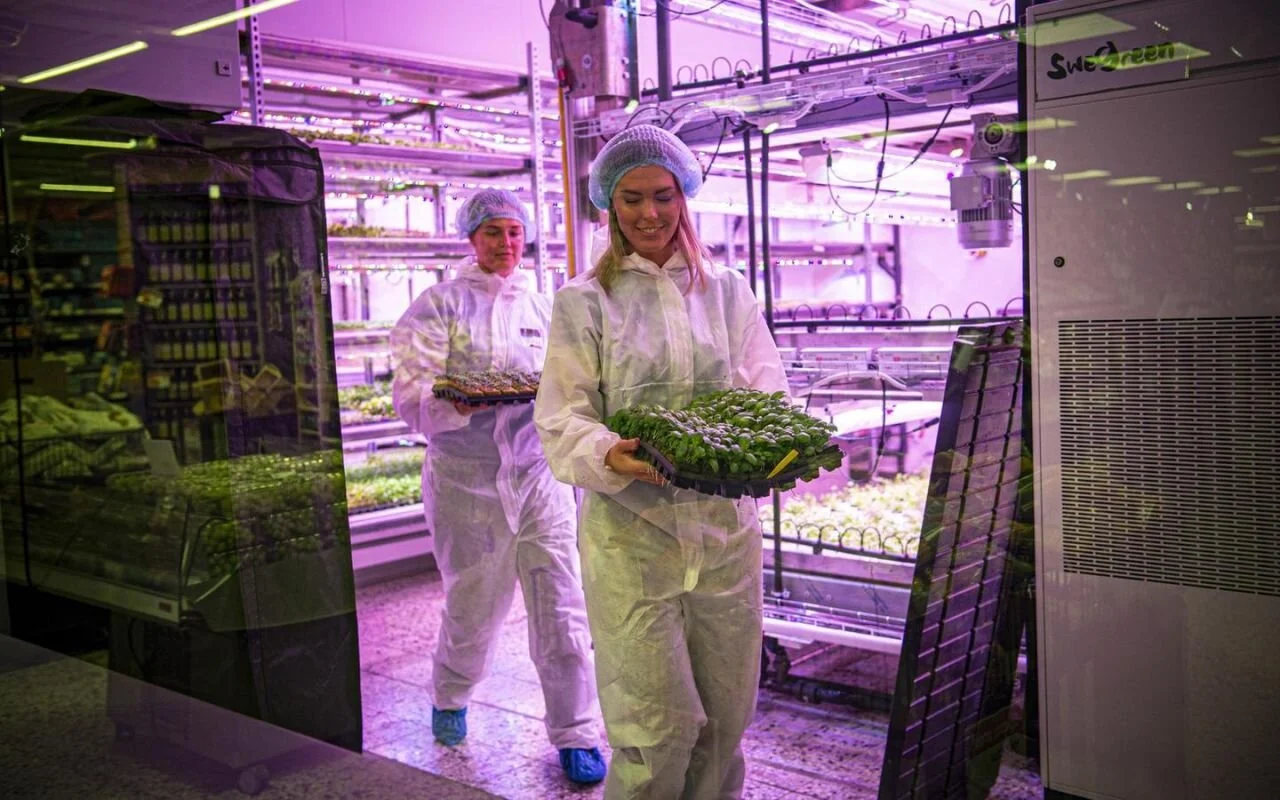


Netled is specialized in developing and selling high-technology vertical farming systems. Our mission is to enhance vertical farming by providing the best technology, expertise, and guidance for vertical farming projects and actors all around the world. The collaboration with SweGreen has been outstanding and produced valuable next steps towards hyper-local vertical farming.
Netled’s CEO Niko Kivioja comments: “We have followed the markets for ultra-local vertical farming for quite some time now and seen that our technology has clearly many opportunities for the current markets. This first project we have executed with and according to the wishes of our Swedish partner SweGreen is a great reference for us. Their business model, Farming as a Service, is elegant and easy to implement by supermarkets. Our team is proud to be partners with SweGreen, making fresh production close to consumers possible.”
Photos: SweGreen & Netled
More photos in SweGreen’s post on LinkedIn >
Watch a video by ICA Gruppen on LinkedIn >
Read more from the article in Gothenburg’s local paper Göteborg’s Posten (in Swedish) >
Facebook Twitter LinkedIn Share
Filed Under: NewsTagged With: agtech, autonomous farming, indoor farming, indoor farming technology, indoor growing, vertical farming, vertical farming expertise, vertical farming technology

LIVE Virtual Tour - Inside the Greenery Container Farm with Freight Farms' Lead Designer - Thurs, Sept 10, 2020 - 4:30 PM EST
Explore the technology behind our Greenery container farm that allows farmers to grow food anywhere in the world!
Take a Virtual Tour of the Freight Farms Greenery™
Explore the technology behind our Greenery container farm that allows farmers to grow food anywhere in the world!
Farm expert Derek will explain the ins and outs of the Greenery using a live video stream inside the farm. He’ll cover the basics of controlled environment agriculture, hydroponics, vertical farming, and how all those work together inside the Greenery to create the perfect conditions for crop growth regardless of geographic location.
To Register For This Free Zoom Virtual Live Tour
Thursday, September 10, 2020 - 4:30 PM



Housing And Food Services, Along With The Student Organization OUr Earth, Have Joined Together To Bring The Leafy Green Machine To Campus.
Environmental sensors balance temperature, humidity and CO2 levels to ensure a perfect growing environment
Freight Farms
Housing and Food Services, along with the student organization OUr Earth, have joined together to bring the Leafy Green Machine to campus.
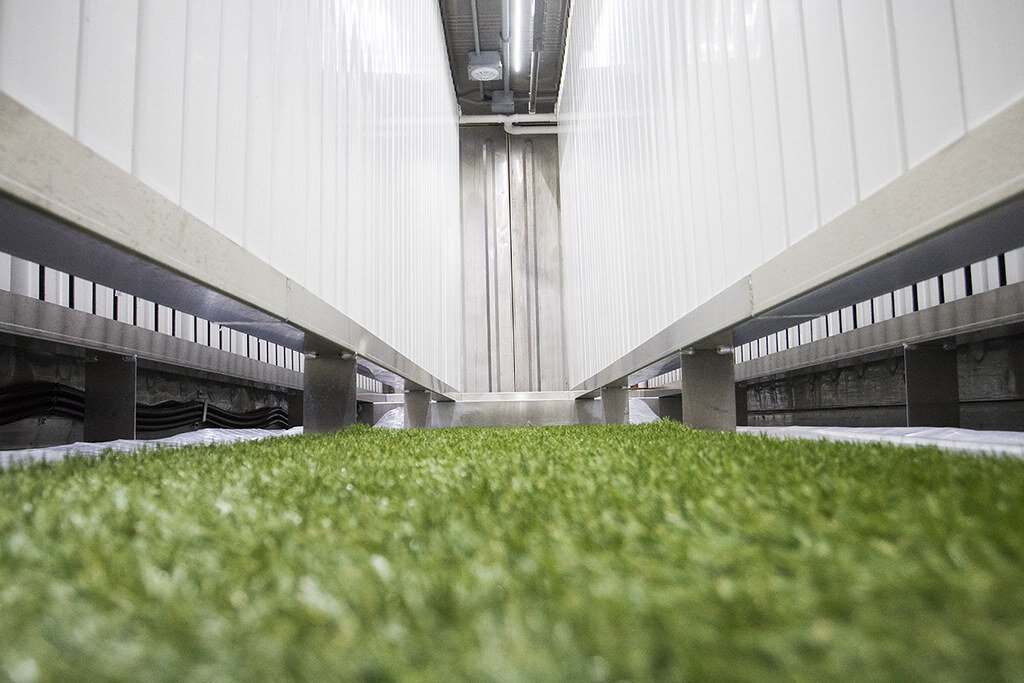
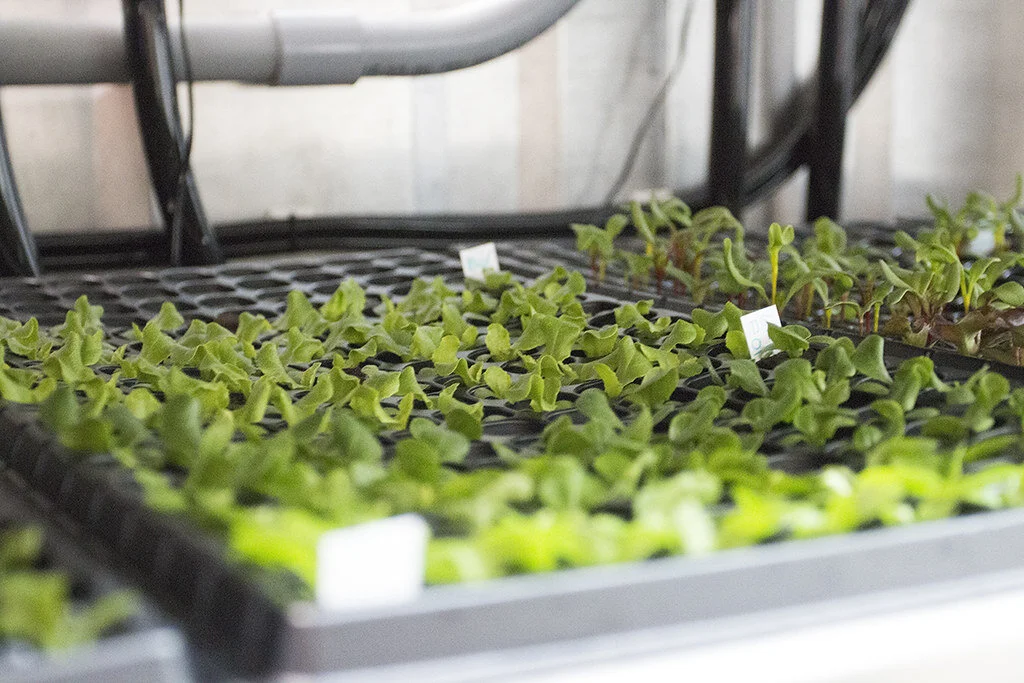
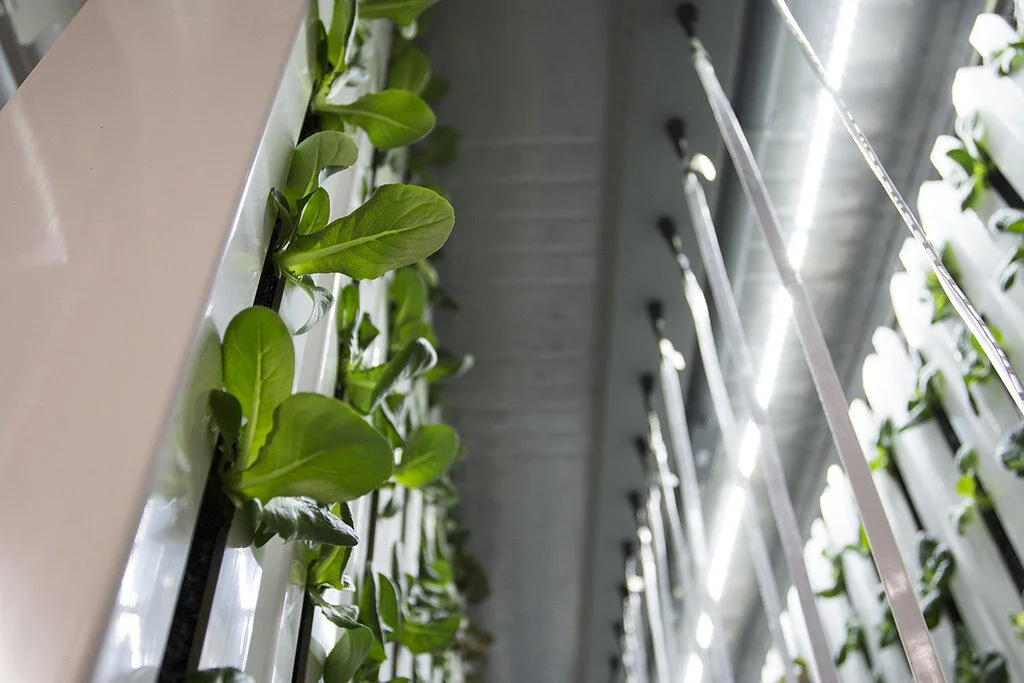
Housed in an upcycled shipping container, it is the first hydroponic farm at a Big 12 university. Produce grown is served in on-campus dining locations.
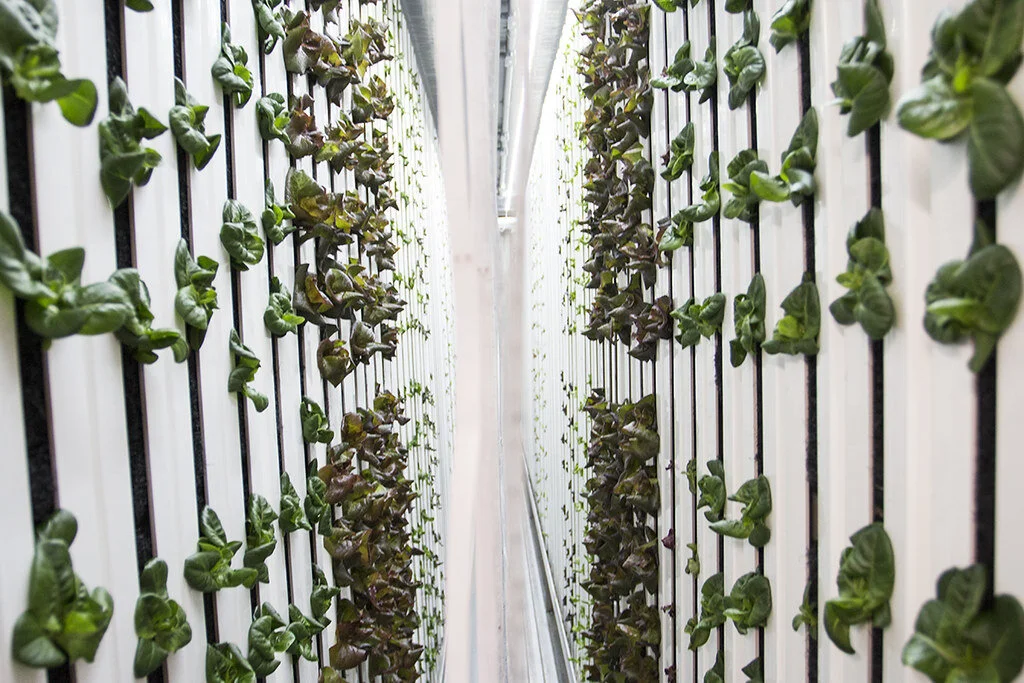
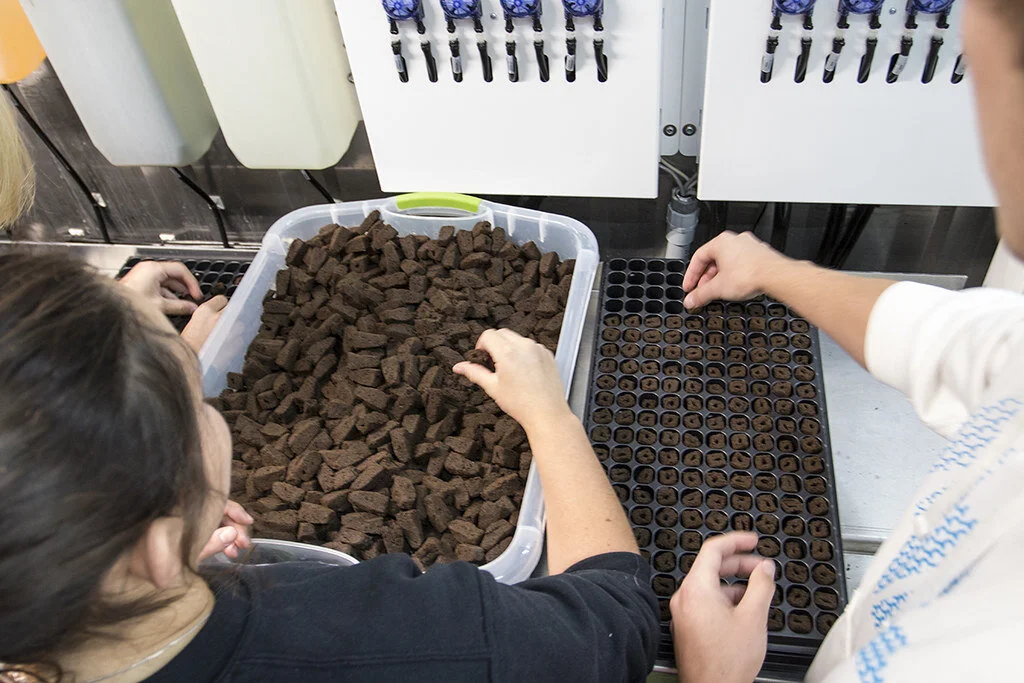
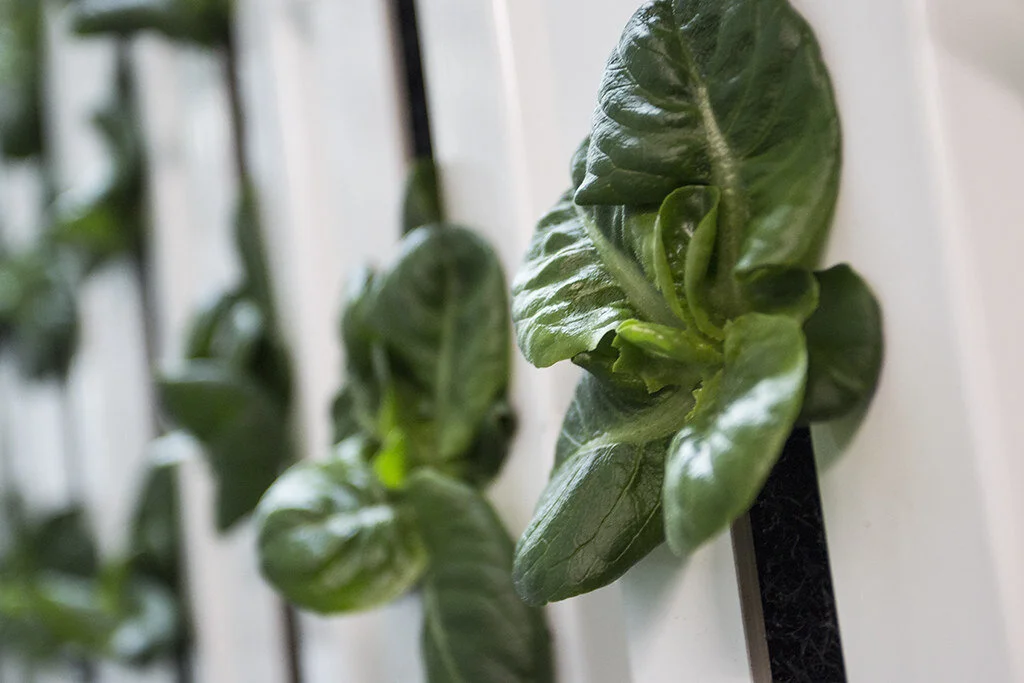
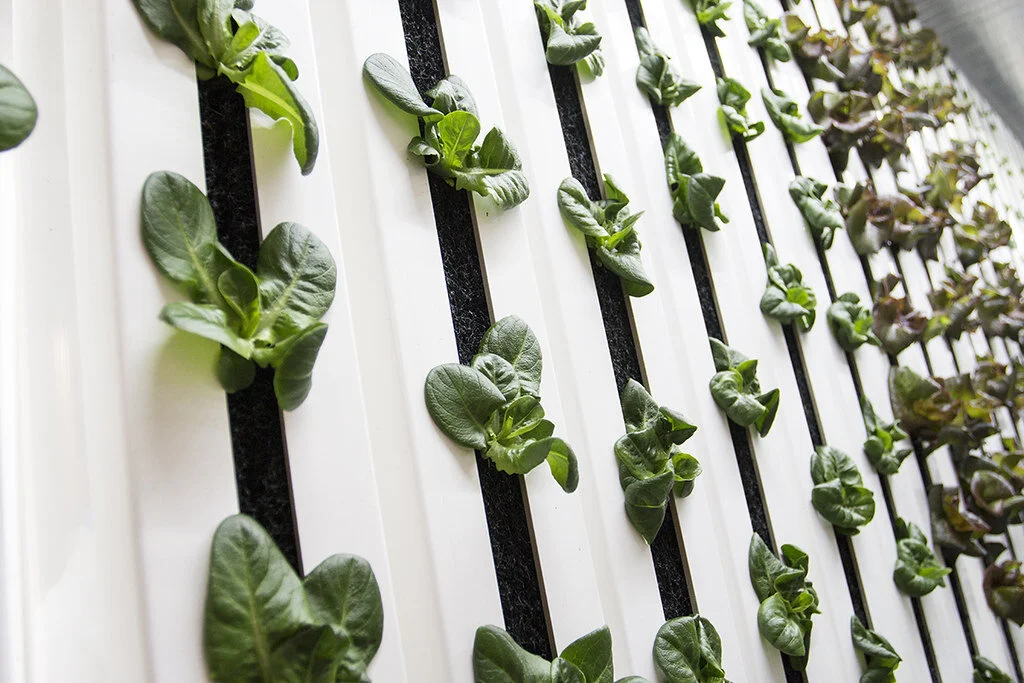
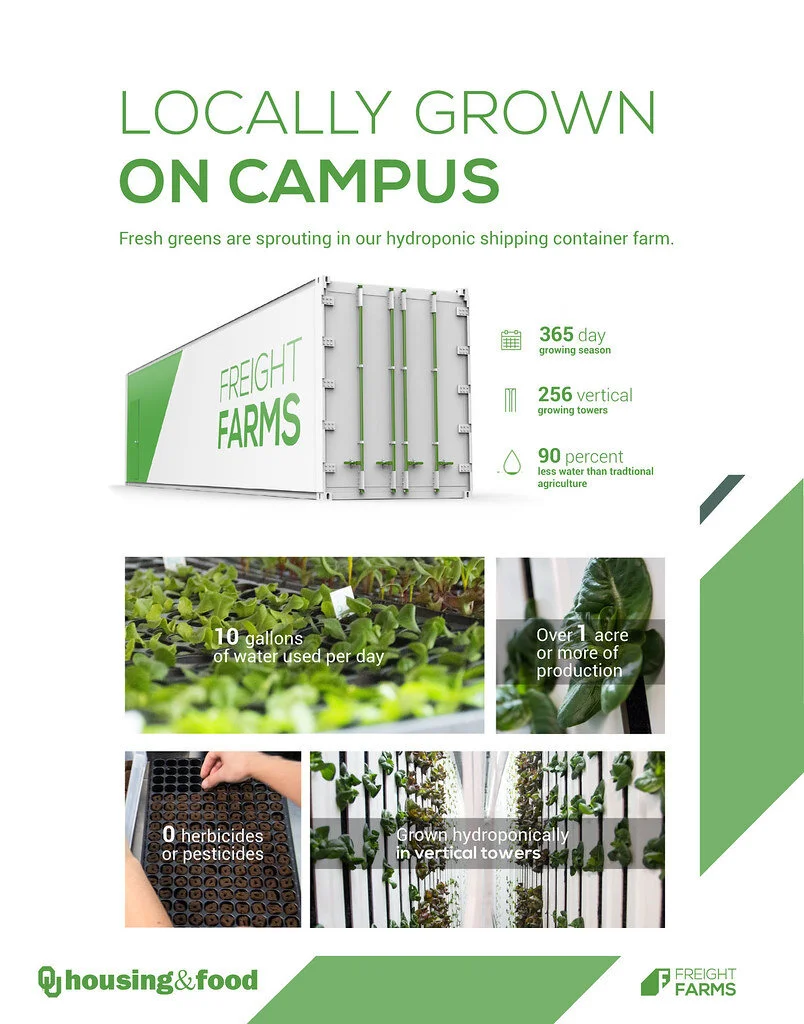
Happy, Healthy Plants
Environmental sensors balance temperature, humidity and CO2 levels to ensure a perfect growing environment. A nutrient-rich water solution is distributed directly to the roots of the produce from a closed-loop hydroponic system.

Four Storeys Up, A Commercial Vegetable Garden Thrives In A Converted Sears Warehouse
Growing food on roofs represents the future of farming, especially in these pandemic times, says Mohamed Hage, Lufa’s chief executive officer, who co-founded the company with his wife, Lauren Rathmell
DAVID ISRAELS
SPECIAL TO THE GLOBE AND MAIL
SEPTEMBER 1, 2020
The Lufa greenhouse sits atop a former Sears warehouse in Montreal's St-Laurent neighbourhood.
CHRISTINNE MUSCHI/THE GLOBE AND MAIL
In the industrial part of Montreal’s St-Laurent area, it can be hard to distinguish the bulky buildings from one another, except for one – the roof sticks out like a green thumb.
It’s a great glass greenhouse roof atop a former Sears warehouse – a giant vegetable garden, said by its creators to be the world’s biggest commercial rooftop greenhouse.
The 163,000-square-foot garden, which opened last week, is the equivalent of nearly three football fields worth of food. To date, it is the fourth and biggest commercial facility for Montreal-based Lufa Farms.
Lufa is already well known among local “Lufavores” – foodies, restaurants, and alterna-living people in the Montreal area, who value its fresh tomatoes, eggplants, and vegetables, as well as the produce it gathers from local farmers.
Growing food on roofs represents the future of farming, especially in these pandemic times, says Mohamed Hage, Lufa’s chief executive officer, who co-founded the company with his wife, Lauren Rathmell.“
When we looked at how to grow where people live, we realized that there was only one option – rooftops. It’s not sustainable to always be trucking food in from across the continent or shipping from all over the world,” Mr. Hage says.
The new building was planned and construction began well before COVID-19 hit the world, but it offers a strong response to the pandemic, he explains.“
In March 2020, we saw a doubling of demand for our food. Growing food locally on rooftops and sourcing from local farming families allows us to swiftly adjust and respond to this demand,” he says.
An employee works inside the Lufa greenhouse. | HANDOUT
Co-founder Ms. Rathmell, who is also Lufa’s greenhouse director, says it took three months to build the St-Laurent facility and grow the site.“That would normally have taken years,” she says.
“In response to COVID-19, we enacted stringent safety protocols early on, launched seven-day service, tripled our home-delivery capacity, and launched new software tools,” she says. The company also brought in more than 200 new team members, 35 new local farmers and food makers, and 30,000 new Lufavores customers.
Lufa’s new staff includes two full-time nurses to take workers’ temperatures as well as “social-distancing police” to walk around and make sure workers aren’t too close to one another, Mr. Hage says. The company has also boosted the frequency of its air exchange in all of its facilities, including the new one.
Designing and building a rooftop greenhouse is challenging, Mr. Hage says. Although some of the preparation required is not much different than getting any equipment onto a roof, some of the prep work up there is more complicated, he says.“
We have to meet national building codes, and of course, everything for the greenhouse needs to be hauled up to the roof on a crane,” he says. “Yet once it’s there, you have to do a lot of stuff manually rather than mechanically. All of this is harder than it would be to do on the ground.”
It’s also expensive. “This greenhouse costs two times as much as a ground-based greenhouse,” he says. Lufa declines to give out the cost of this latest project but says the first of its four facilities, built 10 years ago, cost $2.2-million.
Using buildings for farming is catching on, says Mike Zelkind, co-founder of 80 Acres Farms in Cincinnati, Ohio, which also operates building-based facilities in Arkansas, North Carolina, and New York.
“A field can be the least efficient place to grow food,” he says. “An indoor farm can produce more than 300 times more food, with 100-per-cent renewable energy and 97 percent less water. That’s the beauty of growing in buildings.
Montreal-area foodies value Lufa's fresh tomatoes, eggplants and various other vegetables. HANDOUT
”Similarly, in Poughkeepsie, N.Y., up the Hudson River from New York City, restaurateur, food-truck owner, and chef John Lekic pivoted as the COVID-19 lockdowns spread to launch an indoor farming business called Farmers & Chefs.“
“We use technology from an Israeli company called Vertical Field that was being showcased at the Culinary Institute of America, which is nearby,” he says. The Israeli company supplies all the materials to grow some 200 different crops on roofs and in parking lots with minimal experience required.“
We planted and installed a container in March and our first harvest was in April, Mr. Lekic says. “We’re learning fast, but it’s an easy way to grow herbs and produce.”
”Mr. Hage agrees, adding that “rooftops are superior places for an urban farm.”
“When we started [in 2009], we considered leasing parking lots for growing, but no one wanted to give them up,” he recalls. “But for most commercial building owners, rooftops are unloved – they leak, they have to be maintained and, in a cold climate like ours, you have to clean off the snow. A commercial rooftop greenhouse is a solution.”
The new St-Laurent project gives Lufa a total of about 300,000 square feet of agricultural production, and the company plans to eventually expand into Southern Ontario and the U.S. northeast.
Mr. Hage points out that a rooftop greenhouse also makes great sense in terms of environmental sustainability and reducing energy and carbon emissions.“
“We don’t use pesticides and our greenhouses use half the energy that a greenhouse at ground level would consume because we use heating from the building that rises up to the roof,” he explains.
“The biggest challenge is not the greenhouse space – who doesn’t want to walk around in a warm sunny greenhouse when it’s 20 below outside? The challenge is maximizing the warehouse space below the greenhouse,” he says.
“We’re growing so many tomatoes that the warehouses never seem to be big enough to store them.”
Urban farming in Canada is still a niche in a nationwide food industry that is primarily export-based, and accounts for 12 percent, or $62.5-billion, of Canada’s total exports every year, says Claire Citeau, executive director of the Canadian Agri-Food Trade Alliance (CAFTA).
But in a post-COVID-19 world, every bit of food production counts, she says. “We continue to see the adoption of science, technology, and innovative ways to feed people and create new economic opportunities at home and abroad.”
And if that’s not enough, just look at the place, Mr. Hage says. “Boy, do I like driving by – it sticks out like a crystal,” he says. “And when you go inside, it’s like being in a spa.”
TOPICS AGRICULTURE CORONAVIRUS GREENHOUSE MONTREAL ORGANIC FOOD

CubicFarms Announces Sale of Control Rooms To Global Agtech Leader, Terramera
In June, CubicFarms offered its Control Room system for sale to growers requiring complete control over the growing environment that is so crucial for high crop yields and quality
VANCOUVER, BC, AUGUST 31, 2020 – CubicFarm® Systems Corp. (TSXV:CUB) (“CubicFarms” or the “Company”) is pleased to announce the sale of three Control Rooms to Terramera, a global agtech leader transforming how food is grown and the economics of agriculture. Terramera is a British Columbia-based company on a mission to reduce global synthetic pesticide use 80 percent by 2030 with its revolutionary Actigate™ technology platform, named a 2020 World-Changing Idea by Fast Company.
In June, CubicFarms offered its Control Room system for sale to growers requiring complete control over the growing environment that is so crucial for high crop yields and quality. Each CubicFarms Control Room is assembled inside a proprietary stainless steel, fully insulated growing chamber with the option to customize features such as lighting, automated irrigation, and nutrient delivery, providing full climate control for temperature, humidity, and carbon dioxide levels. The system has a variety of sensors available, all of which can be remotely monitored and controlled.
Dr. Travis Good, Terramera’s Chief Technology Officer commented, “We required a closed space with precise controls to isolate each environmental variable and produce uniform, plentiful and high-quality plants for our research. CubicFarms’ Control Room system is an ideal solution and helps us scale our Actigate™ technology with the goal of dramatically reducing the use of synthetic pesticides in agriculture.”
CubicFarms CEO Dave Dinesen commented, “We are pleased to call Terramera a customer as we share the same strategic investor, Ospraie Ag Science, and vision to transform how food is grown with the use of leading-edge technology. Terramera is a natural fit for a synergistic partnership in the future as both companies look to develop our machine learning and AI capabilities to further advance our respective technologies.”
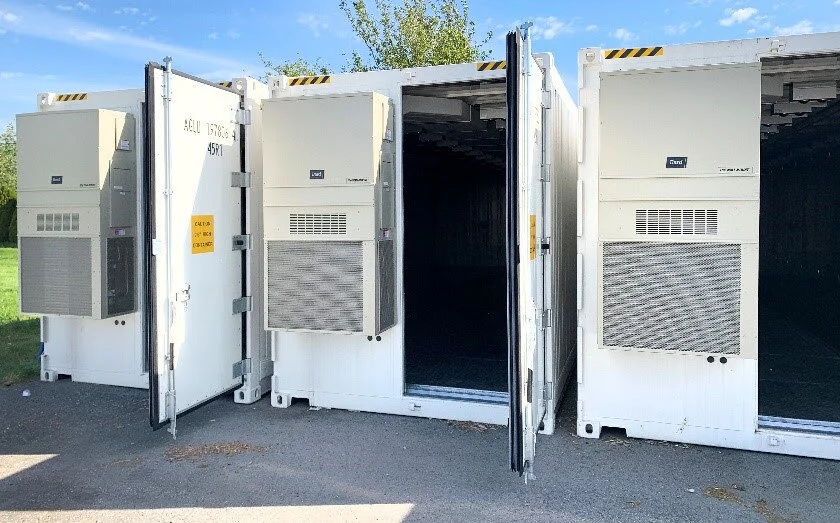
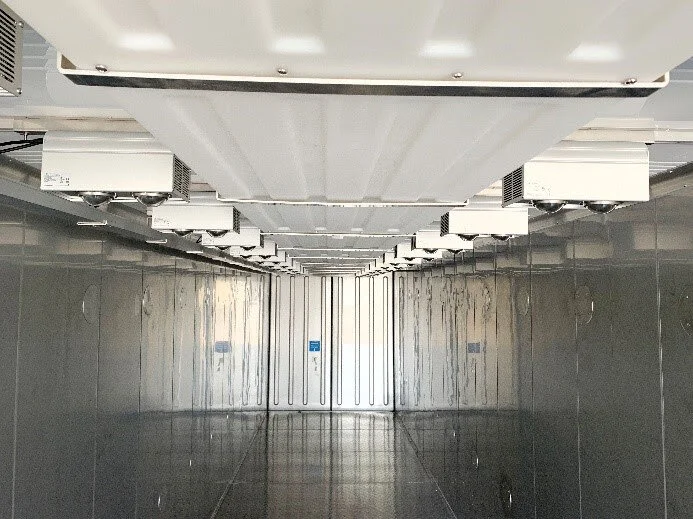
Photos: The CubicFarms Control Room, complete with LED light fixtures, an automated heating, cooling and ventilation system, and wired environmental controls.
Neither the TSX Venture Exchange nor it’s Regulation Services Provider (as that term is defined in the policies of the TSX Venture Exchange) accepts responsibility for the adequacy or accuracy of this release.
About CubicFarm® Systems Corp.
CubicFarm Systems Corp. (“CubicFarms”) is a technology company developing and deploying technology to feed a changing world. Its proprietary technologies enable growers around the world to produce high quality, predictable crop yields. CubicFarms has two distinct technologies that address two distinct markets. The first technology is its patented CubicFarms™ system, which contains patented technology for growing leafy greens and other crops. Using its unique, undulating-path growing system, the Company addresses the main challenges within the indoor farming industry by significantly reducing the need for physical labour and energy, and maximizing yield per cubic foot. CubicFarms leverages its patented technology by operating its own R&D facility in Pitt Meadows, British Columbia, selling the system to growers, licensing its technology, and providing vertical farming expertise to its customers.
The second technology is CubicFarms’ HydroGreen system for growing nutritious livestock feed. This system utilizes a unique process to sprout grains, such as barley and wheat, in a controlled environment with minimal use of land, labour and water. The HydroGreen system is fully automated and performs all growing functions including seeding, watering, lighting, harvesting, and re-seeding – all with the push of a button – to deliver nutritious livestock feed without the typical investment in fertilizer, chemicals, fuel, field equipment and transportation. The HydroGreen system not only provides superior nutritious feed to benefit the animal, but also enables significant environmental benefits to the farm.
About Terramera
Terramera is a global agtech leader fusing science, nature, and artificial intelligence to transform how food is grown and the economics of agriculture in the next decade. With its revolutionary Actigate™ technology platform, which was recognized by Fast Company as a 2020 World Changing Idea, Terramera is committed to reducing the global synthetic pesticide load 80% by 2030 to protect plant and human health and ensure an earth that thrives and provides for everyone. The privately-held, venture-backed company was founded in 2010 and has grown to include a world-class bench of engineers, scientists, advisors, and investors. Terramera is headquartered in Vancouver, British Columbia, with integrated operations in Canada, the US, and India that include research labs, a greenhouse and farm, and more than 240 patents in its global IP portfolio. For more information, please visit terramera.com

Cautionary statement on forward-looking information
Certain statements in this release constitute "forward-looking statements" or "forward-looking information" within the meaning of applicable securities laws, including, without limitation, statements with respect to CubicFarms’ future partnership with Terramera; and the development of machine learning and AI capabilities by CubicFarms. Such statements involve known and unknown risks, uncertainties, and other factors which may cause the actual results, performance, or achievements of CubicFarm Systems Corp., or industry results, to be materially different from any future results, performance, or achievements expressed or implied by such forward-looking statements or information including the Company obtaining the approval of the Offering from the TSX Venture Exchange. Such statements can be identified by the use of words such as "may", "would", "could", "will", "intend", "expect", "believe", "plan", "anticipate", "estimate", "scheduled", "forecast", "predict", and other similar terminology, or state that certain actions, events, or results "may", "could", "would", "might", or "will" be taken, occur, or be achieved.
These statements reflect the Company's current expectations regarding future events, performance, and results and speak only as of the date of this news release. Consequently, there can be no assurances that such statements will prove to be accurate and actual results and future events could differ materially from those anticipated in such statements. Except as required by securities disclosure laws and regulations applicable to the Company, the Company undertakes no obligation to update these forward-looking statements if the Company's expectations regarding future events, performance, or results change.
Information contact:
Kimberly Lim
VP, Corporate Communications & Investor Relations
Mobile: 236.858.6491
Office: 1.888.280.9076
Email: kimberly@cubicfarms.com

USA: VIRGINIA - Hull Street Indoor Urban Farm Launches Sales In September
In 2016, Ferguson started his tech-driven farming business Nouveau Farms in the quiet of his basement. An engineer by day, Ferguson says he began researching how to grow his own food after he realized that imported, out-of-season produce was not what he wanted to feed his family
Trevor Ferguson is now accepting orders from his Hull Street indoor hydroponic farm, Nouveau Farms. Scott Elmquist
While most farmers fight daily against the peccadilloes of ever-abrasive Mother Nature, Trevor Ferguson battles only market demands and water flow inside his hydroponic urban farm.
In 2016, Ferguson started his tech-driven farming business Nouveau Farms in the quiet of his basement. An engineer by day, Ferguson says he began researching how to grow his own food after he realized that imported, out-of-season produce was not what he wanted to feed his family.
Once the left-brained Ferguson started learning about hydroponics, he was hooked. For those unfamiliar with the ’ponic world, this type of horticulture forgoes soil and instead uses mineral nutrient solutions, light, oxygen and filtered, freshwater to grow plants as much as 50% faster than those grown in the great outdoors.
“When you start eating those greens and those herbs, you can taste the difference,” Ferguson says. “It sort of changed my whole perspective.”
Ferguson started with an eight-tower wall garden, growing microgreens, salad greens, and herbs like mint, chive, and basil. “I’m originally from the Bahamas and we had fruit trees in the backyard,” Ferguson says. “I would go and get mangoes right off the tree, so that’s where that connection comes from.”
While still working his 9 to 5 as a natural gas infrastructure development manager, Ferguson carved out time for hydroponic training courses, moving his small underground operation into his garage. He started the commercial rollout of Nouveau Farms in January. As of Tuesday, Sept. 1, you can order your microgreens and mint directly from Ferguson’s 800-square-foot Hull Street indoor farm.
“I surely hope this turns into a full-time thing,” Ferguson says. “I am building this for the long run, making long-term investments. People who go into farming know it isn’t to get rich quick, I won’t become a millionaire.”
Ferguson says when the business launched at the beginning of 2020, the goal was to provide major suppliers with bulk orders. “That sort of bottomed out for us.” Like the rest of the world operating during the pandemic, he readjusted his business model. And, a bit serendipitously, Ferguson says he likes this initial direct-to-consumer approach better.
“People have been so disconnected from their food for such a long time,” he says. “The pandemic has made people realize how important it is to have food security.” Ferguson wishes he were “further ahead” in his rollout plan, simply so he could meet the needs of the people in his community. “One of the things I’m hyper-focused on is that whatever we grow and supply, we need to be cost-competitive.”
So while his salad greens will damn sure be more flavorful than the imported grocery store stuff that’s grown primarily for hardiness, Ferguson isn’t going to charge people an exorbitant price. “If you’re buying a bag of red romaine from me, it will be the same price as any place else,” he assures.
The Hull Street farm is currently catering to individual consumers and pledges that all produce is harvested within 24 hours of delivery. Customers can place orders online (nouveaufarms.com) Sundays-Fridays, with free deliveries to those within 15 miles on Saturdays.
In addition to the Hull Street business, Ferguson also has his sights set on a truly halcyon, pastoral dream: a sprawling farmhouse located on 7 acres in Varina, situated amongst a vineyard, strawberry patches, and a space allotted to weekend farmers markets.
Only seven minutes from Richmond’s city center, Nouveau Farms & Vineyard consists of three abutting lots, with the farmhouse to the far left, the middle lot devoted to grape-growing, and the far lot serving as an active farm open to the public. A huge undertaking, yes, but Ferguson is ready for the challenge.
“The Varina farm is going to be strawberry heaven,” Ferguson laughs. He says that one impetus to grow his own food was to create the best berries for his daughter. “We would go to the grocery store and she loves strawberries and we would buy them on a weekly basis, but it was really hit or miss.”
The Nouveau Farms berries will all be hits, with Ferguson using “a bit of hydroponics” plus traditional farming methods to grow his fruits de terre. “We won’t be in the soil – we will use a hybrid version of soil with a mix of peat moss, plus good drainage. And we’ll be feeding nutrients straight to the berries.”
Ferguson says he will be experimenting with a couple of different berry varieties and will solicit help from the public to choose which berry is best — he’s hoping the farm will be able to institute weekend pick-your-own days for families, too.
By 2022, Ferguson plans to have weekend farmers’ markets in addition to events and weddings – the backdrop is a bridal dream. “We’ll have smoothies made of our fresh fruit, people can enjoy a glass of wine and play cornhole,” Ferguson muses.
He can see it now: a weekend reset on the farm before heading back into the city for the daily grind. Now all he needs are some mango trees.
Follow Nouveau Farms on Instagram for updates about produce, purchasing, and when the farm will be ready for strawberry picking.

Freight Farms in Montrose Colorado - Eatin' Greens Farm - Locally Grown Produce
“We have been container farming for 3 years now and we were in agriculture in this area since 1970, so we have been through a few cycles of wet and dry years. We are able to grow consistently all year long no matter what the weather is like. We only use about 3 or 4 gallons of water a day, so drought or no drought we aren’t affected.”⠀
The deserts of the west meet the Rocky Mountains, blocking any rainfall that might come their way. ⠀
Instead, the town relies on snowmelt to irrigate their valley so they can grow beautiful crops of corn, alfalfa, peaches, apricots and apples, and more.⠀
But for the past 2 years, the area has been experiencing a drought and the availability of water for next year depends entirely on the amount of snowfall the mountains receive this winter.⠀
“These cycles certainly make my wife and I appreciate the Freight Farm," says Steve Arnold of @eatingreensfarm. “We have been container farming for 3 years now and we were in agriculture in this area since 1970, so we have been through a few cycles of wet and dry years. We are able to grow consistently all year long no matter what the weather is like. We only use about 3 or 4 gallons of water a day, so drought or no drought we aren’t affected.”⠀


Special Report: How Farming Is Gaining Ground in UAE
The UAE has implemented a range of policies, measures and strategies to ensure constant food supplies from abroad and scaled up agricultural production at home - and this is evident as businesses come forward and share their roles in aligning their strategies to boost food and water security.

Photo Supplied by VeggiTech
8/24/2020 11:00:45 PM
(MENAFN - Khaleej Times) The UAE has implemented a range of policies, measures and strategies to ensure constant food supplies from abroad and scaled up agricultural production at home - and this is evident as businesses come forward and share their roles in aligning their strategies to boost food and water security.
On Sunday, His Highness Sheikh Mohammed bin Rashid Al Maktoum, Vice-President and Prime Minister of the UAE and Ruler of Dubai, said: "Food and water security are among the priorities of the UAE government for the post-coronavirus period, and the objective is to launch specialist initiatives that will ensure our readiness to confront all types of crises."
The farming sector is aggressively working towards boosting local production of agro produce. Agrotech company VeggiTech, for instance, is addressing the key challenges of traditional farming through its design of protected hydroponics and grow lights-assisted hydroponics.
"We have chosen the challenging conditions of UAE to demonstrate the positive use of agro technology to create sustainable farms aligned to the UAE's vision of food security," said Hemant Julka, co-founder and COO of VeggiTech.
In the last 18 months, the company has built and is operating over 30 hectares of farms with protected hydroponics and is also in the process of going live with 4,500 sqm of indoor vertical farms that employ grow light-assisted hydroponics.
"We produced over 1.6 million kg of produce last year and this year [including the summer months] and we will produce more than 1.9 million kg with over 500 tonnes of organic produce from our farms between August 2020 and July 2021," added Julka.
Similarly, Dake Rechsand's primary focus is enabling desert regions to expand their agriculture and long-term water storage capacities and create food and water security.
"Our strength is being able to achieve this using simple, ordinary and abundantly available sand as a raw material. We are ramping up production and expect our technologies to enable farming and greenery for at least 10,000 acres across the UAE or for half-a-million trees by the first half of 2021," said Chandra Dake, executive chairman and group CEO of Dake Group.
"Within the same period we also expect to be ready with a comprehensive strategy for harvesting and usage of rainwater, which will allow us to enable 10 cubic metres [two million gallons] of water storage from harvested rainwater. In fact, we are ready to take on pilot projects during the upcoming monsoons next month and work with the government bodies to showcase how our products and technology can help harness rainfall and deliver immediate and tangible results for the UAE."
Tech disruption
VeggiTech produce utilises less than 10 percent of the water used in traditional farms and is pesticide-free. In addition, they have deployed technology for complete food transparency through QR codes that give complete visibility of the growing process of the vegetable produce from farms. The firm is in the business of offering "farming as a service", where the firm builds and operates digital smart farms that are sustainable and environmentally friendly.
In the first half of 2020, despite the Covid-19 circumstances, VeggiTech signed contracts for 13,000 sqft of grow area for indoor vertical farms and building protected hydroponic farms of 80,000 sqft.
"We are upbeat on the current pipeline of projects [over 10 million sqft of farms - protected hydroponics; more than 200,000 sqft of indoor vertical farms] to be signed in the third and fourth quarters of 2020 and these would start producing over 25 million kg of produce every year from 2021-22. The optimal use of land assets combined with the reduction in water resources and pesticide free crops are an ideal example of using technology to align with the UAE's food security goals," added Julka.
Desert farming
The Middle East, including the UAE and GCC, is enriched with desert sand. However, most of these desert regions import a bulk of their food commodities. Dake Rechsand has what it calls 'magic sand', a technology enables the sustainable production of organic food in the desert using up to 70 percent less water than conventional methods. At 65 percent of total use, the agriculture sector is the largest consumer of water in the UAE.
"On average, about 11 to 12 litres of water is being used to irrigate one sqm of land per day in the UAE. If we reduce that requirement by 70 percent, we could conserve about 45 percent of the total water consumed in the UAE. More importantly, this can be achieved while increasing the UAE's agricultural production significantly," said Dake.
Dake Rechsand creates breathable surfaces for roads, kerbstones and pavements, etc, which can absorb water, and harvest it.
"Coupled with our decentralised mini-reservoirs made from the same material, we can help harvest rainwater and keep it fresh for up to seven years, without any energy inputs. This can not only result in creating a new, reliable and cost effective water source, adding to the UAE's water reserves, but also one that is much cleaner since rainwater is a better source than desalination," added Dake.
"Our approach towards maximising water retention in sand is what propels desert farming and is both economically as well as organically efficient. That means one can get organic products grown from these regions very easily. Our products are designed scientifically, and they contribute to environmental sustainability."
ICBA committed to boost food and water security
The International Center for Biosaline Agriculture (ICBA) completely supports every effort towards the food and water security of the UAE's vision.
Dr Ismahane Elouafi, director-general of the ICBA, said: "Like national security, food and water security must be a priority for all countries. Thanks to the UAE's wise and visionary leadership, the country has always been at the forefront of ensuring food and water security in the country. During the recent disruption to global food systems, due to the Covid-19 pandemic, the UAE set an excellent example of its efforts towards food security. It was one of the few countries where the food supply remained uninterrupted. Even though the UAE is short of arable land and freshwater resources, and has harsh climatic conditions, the country harness the benefits of innovation to make agriculture possible and profitable in the country."
The UAE's National Food Security Strategy 2051, which was launched in 2018 with a vision to become a world-leading hub for innovation-driven food security, also prioritizes agricultural research and development. The country rose from 33rd place in 2017 to 21st in 2019 in the Global Food Security Index, compiled by the Economist Intelligence Unit. The ICBA has been working on several technologies and innovations to boost agricultural productivity and improve farmers' livelihood, in non-arable lands and harsh ecosystems.
All of the ICBA's research and development programmes are directly beneficial to the region, particularly to the UAE.
"We have introduced what we call climate-smart and resource-efficient crops such as quinoa, pearl millet, sorghum, and Salicornia, among others, in countries in Central Asia, the Middle East, and North Africa. These crops are nutritious and resilient to heat, drought, and salinity, therefore fit for ecosystems such as UAE. Furthermore, our crop development and research trials have been mostly conducted in our experimental farm in Dubai. Hence, all data and results are very relevant to the UAE," added Dr Elouafi.
Legal Disclaimer:
MENAFN provides the information “as is” without warranty of any kind. We do not accept any responsibility or liability for the accuracy, content, images, videos, licenses, completeness, legality, or reliability of the information contained in this article. If you have any complaints or copyright issues related to this article, kindly contact the provider above.

