

Welcome to iGrow News, Your Source for the World of Indoor Vertical Farming

Vertical Farming Startup Expands Through New Retail Deals With Whole Foods, Safeway
A South San Francisco farming startup is quickly growing its retail roots after landing new distribution deals with two of the area's largest grocers
Vertical farming startup Plenty is ramping up its retail distribution through two new deals with Whole Foods Market and Safeway.
South San Francisco, CA
By Katie Burke – Staff Reporter, San Francisco Business Times
A South San Francisco farming startup is quickly growing its retail roots after landing new distribution deals with two of the area's largest grocers.
Vertical agriculture company Plenty will soon stock the produce shelves at a handful of Whole Foods Market and Safeway locations across the Bay Area to mark the beginning of what the startup is hoping will be a widespread push into new retailers and restaurants. Plenty's vegetables first began selling in retail outlets last year and are now available through Good Eggs, Berkeley Bowl, Bi-Rite Market and the robotic burger restaurant, Creator.
Plenty grows its produce hydroponically, meaning it feeds the plant without having it rooted in soil. By cutting water consumption, shortening the supply chain and shrinking the amount of space needed to grow produce, Plenty will be able to deliver more produce at a faster rate, Plenty CEO Matt Barnard previously told the San Francisco Business Times.
Matt Barnard, CEO and CoFounder, Plenty Inc.
Since it was founded in 2013, Plenty has raised more than $400 million, $175 million of which was raised as part of a Series C round the company closed last June. The round pushed the company's valuation to its current $1.05 billion.
The latest infusion of capital has helped fund the company's expansion to Los Angeles, where it's in the process of opening a new 95,000-square-foot farm in Compton. The new facility is expected to begin supplying produce like bok choy, mizuna, fennel, and kale to retail partners by the end of this year.
The company's South San Francisco farm, which launched last summer, is on track to hit full capacity before the end of the year. At that point, it will be able to supply more than 100 grocery partners throughout the Bay Area. Plenty also operates a test farm in Wyoming, where it experiments with different seeds and varietals.
Plenty is ultimately aiming to have as many as 500 vertical farms stationed in highly populated, urban areas around the world.
"We are able to deliver a product that’s both better than and at a price that is less than anything that’s in the market," Barnard previously said. "You are going to see us on more and more shelves. You going to be able to find us, have us delivered to your home. We want our product in more people’s hands and mouths."
Europe Can Be At The Heart of Tech With Purpose
“Some say China has all the data, and the US has all the money. But in Europe, we have purpose.”
09 Jan 2020
Tom Wehmeier Partner and Head of Research, Atomico
This article is part of the World Economic Forum Annual Meeting
• Venture-backed, purpose-driven companies represented 12% of all capital invested in Europe in 2019.
• Talent and consumers are both demanding start-ups display social commitment.
• Only 1 in 5 start-up founders actually measure environmental and social impact.
“Some say China has all the data, and the US has all the money. But in Europe, we have purpose.”
Thus observed EU commissioner for competition Margrethe Vestager when she outlined her priorities for the next five years in October.
Her words could not be timelier. This year, the number of purpose-driven European founders who have pitched to us at Atomico has been overwhelming. Tech leaders have the most powerful tech toolkit in history available to them, and European companies are stepping up to help solve some of the world's most pressing challenges such as the climate crisis and healthcare.
We quantified this trend in our annual State of European Tech report, released in November. With Dealroom, we created a framework to assess venture-backed European tech companies based on their alignment with the United Nations Sustainable Development Goals (SDGs). The analysis focused on a subset of seven of the 17 SDGs. Only companies where the purpose-driven impact was considered core to the business model were included in the final dataset and analysis.
In total, the analysis identified 528 unique venture-backed, purpose-driven tech companies. They raised a total of $4.4 billion in capital investment in 2019, up from less than $1 billion in 2015. That $4.4 billion represents 12% of the total capital in Europe invested in 2019. It also represents the third largest “industry” in European tech by capital invested, behind fintech and enterprise SaaS.
These companies span Europe and include Infarm in Germany, which is building advanced vertical farms, telemedicine firm Kry in Sweden, and insect farming start-up Ÿnsect from France.
From an investor's point of view, it is obvious that the world’s biggest challenges also represent some of the world’s biggest markets and opportunities. But the rise of purpose-driven tech in Europe is also a response to the changing priorities of talent and consumers in Europe.
More debate and visibility over the impact and unintended consequences of digital technology on our society have made talent think more about working for companies that align with their values. Kate Hilyard, COO at Healx in the UK who we partnered with this year, expressed this trend very well in the report.
“At Healx, we believe every rare disease patient deserves a treatment. It's this belief that drives us to achieve our mission of taking 100 new treatments towards the clinic by 2025. Having such a clear mission also helps with recruiting and retaining the best and brightest talent. For the team here, there's no bigger motivator than knowing you're applying your skills to improving the lives of patients, their careers and their families. This is especially the case for the many team members who count either themselves or a relative amongst the 400 million people worldwide living with a rare disease.”
Then there are consumers who also want to support companies that align with their values and beliefs. According to a survey of 30,000 global consumers by Accenture Strategy, 62% of consumers want companies to “take a stand on current and broadly relevant issues like sustainability, transparency or fair employment practices”.
It also makes sense that European tech start-ups are differentiating themselves on purpose, as compared to their US or Asian peers. Many western European countries are leaders on sustainability from energy to transportation. According to RobecoSAM and Robeco’s Country Sustainability Ranking, a comprehensive framework for analyzing countries’ ESG performance based on governance, societal and environmental considerations, seven of the top 10 countries are in Europe.
Despite this rise in purpose-driven companies, only one in five founders told us in our State of European Tech survey that they are already measuring their firm’s environmental or social impact – something potentially important for all tech companies regardless of their business model. Given that the majority of founders say they are considering measuring this, and only 14% say they don’t think it’s important, measurement seems to be one way that investors could support all founders to consider the impact of their business on society.
In the early 20th century, technologies from electrification, to the washing machine to the jet engine improved the day-to-day lives of millions and opened up new frontiers for humanity. Technology drove economic growth and boosted prosperity, but it also left deep scars on the environment and failed to solve big problems such as global food security.
Though we are only two decades into this century, the work of purpose-driven European founders suggests that the legacy of technology in the 21st century might have a more beneficial and transformational impact on our society, one in which purpose and profit are mutually reinforcing.
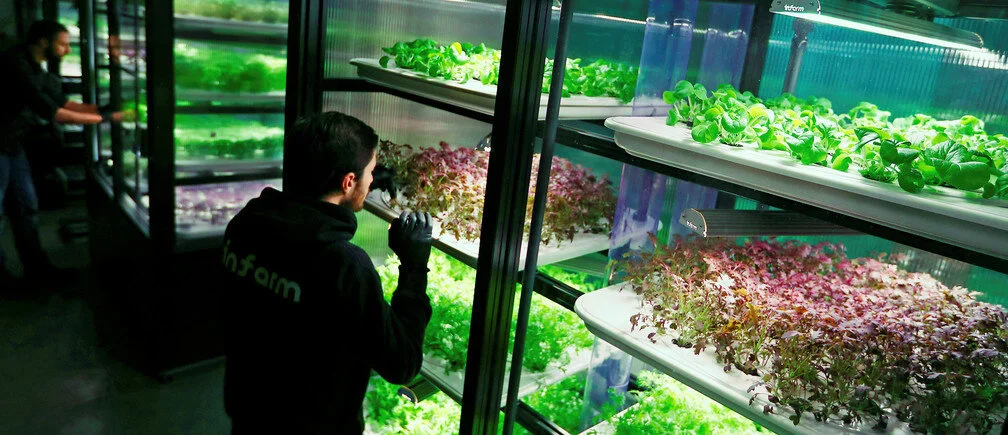
Lead Photo: An employee of the urban farming start-up Infarm checks an indoor growing system.
Image: REUTERS/Hannibal Hanschke

US: Massachusetts - Alum Introduces Brookline To New Farming Techniques
Levine's startup Town to Table utilizes several different hydroponic technologies such as those made by Freight Farms, which allows plants to be grown in winter. Each 40-foot container can produce the equivalent of an acre of conventionally grown crops
GRAPHIC BY NICK CLONEY
Nick Cloney, News Managing Editor
January 14, 2020
Levine's startup Town to Table utilizes several different hydroponic technologies such as those made by Freight Farms, which allows plants to be grown in water. Each 40-foot container can produce the equivalent of an acre of conventionally grown crops.
Massachusetts isn’t exactly known for its farming capabilities. Between its varied terrain, harsh winters, and short growing seasons, many obstacles stand in the way of the state producing much agriculturally. But Jack Levine ‘16 is working to change that.
Levine felt that his experience in high school lacked real-world relevance. Now, his work to introduce innovative and sustainable agricultural techniques to the Brookline community through his startup Town to Table allows him to offer real-world experience to students at the high school.
Starting after Thanksgiving, Town to Table plans to take on up to 10 high school students as interns for the second semester. Student volunteers in the program would gain hands-on experience working in Town to Table’s hydroponic Freight Farm, a shipping crate modified to grow crops in a water-based medium, as opposed to a planting bed made of dirt.
Social Studies teacher and Food Justice Club adviser Roger Grande explained how the key feature of hydroponics – the delivery of nutrients through the water – is beneficial for the growing process.
“The key thing is that no matter how nutrients are being delivered to the plant, as long as they’re getting there, the plant is going to grow. If they are being delivered via water, then it cuts down on the lack of mobility and lack of flexibility that you have to deal with when everything is buried in dirt,” Grande said.
Levine said that the cross-country transportation that most vegetables in Massachusetts undergo reduces their quality, a problem solved by localized agriculture.
“In Massachusetts, 98 percent of our leafy greens come from California or Arizona, so pretty much every time I eat a salad, I think of it being jet-lagged, like how you feel when you get off that plane in California,” Levine said. “We’re offering districts farm-to-plate food. Within 24 hours of when we harvest it, students will be eating it.”
Grande said that one of Levine’s goals is to give students an opportunity to gain hands-on experience in an environment unlike any they have encountered before.
“I think he would also like to see this programming be integrated to the Brookline public school system, and for kids to have really interesting opportunities related to learning by doing. That’s authentic learning – it’s not just learning about something, it’s learning by doing that thing,” Grande said.
Levine said he was often a difficult student to teach during his time at the high school due to his lack of engagement with traditional high school subjects.
“Funny enough, I met with Brittany Stevens recently to talk about introducing this program to some of her classes. She asked me if I remember how I used to say every single day, ‘we have to fix the school,’” Levine said. “‘School doesn’t work’ was kind of one of my things since it especially didn’t work for me. I was off the walls. I was a pain in the butt for teachers, I was crazy.”
English teacher Elon Fischer, who taught Levine’s English for Entrepreneurs class during his senior year, said that he showcased an interest in business and charting his own path while still in high school.
“He was a goofball, but he was also very interested in entrepreneurship. By the time he was a senior, he was kind of fed up with school, and was looking to do something a bit more interesting than what BHS offered,” Fischer said. “Jack felt like school was just a big game and he wasn’t very interested in playing it. Great sense of humor, really a smart kid, but he was looking for something different to do.”
Grande said he was impressed with Levine’s vision to expand his business and involve food justice.
Levine said that the goal of any partnership would be to provide students with hands-on experiences that are relevant to their future career paths.
“That’s what we want, to take this and show other students that something like this can capture their attention in a classroom. You know, there’s no right or wrong answer when you’re growing a plant. It’s just a process and it’s a process in which you’re constantly learning. To us, that’s what we should be preparing students to do,” Levine said.
Grande explained that one of the biggest benefits of Town to Table’s services is the autonomy and decision-making power that sustainable, localized agriculture offers.
“At its core, it’s about empowerment: it’s about having more control over our health, our nutrition, and our values. It’s about seeing your place in the world and taking back some of your power from people who are making choices for you,” Grande said. “People should be more focused on being thoughtful about the choices they’re making, or the choices that are being made for them. There are many powerful forces that try to shape those things and steer us into buying what they’re marketing.”
Fischer said that Levine is a great role model for how students can take things they’re passionate about and transform them into careers.
“This is just a great example of what kids can do when they find something that they care about. And I think that the more that we as a school can make these opportunities available to kids, and work hard to spark their interests in things that aren’t directly academic, the better,” Fischer said.

Discover The NKBA Award-Winner: The Natufia Kitchen Garden At KBIS
Come and learn how to create a healthy, happy and sustainable life with Natufia Kitchen Garden

NATUFIA AT KBIS
Natufia is excited to showcase the NKBA award-winning
Natufia Kitchen Garden at KBIS, North America's premier trade show dedicated to kitchen design & innovation.
We would love for you to visit us in BOOTH SL1625 at the South Hall.
Enjoy a FREE Expo Pass as our guest with promo code EXIV844585.
Come and learn how to create a healthy, happy and sustainable life with Natufia Kitchen Garden.
Schedule an Appointment
Our mailing address:
Värvi 5, Unit C 216, 10621 Tallinn, Estonia
(702) 686 4196 ⎮ info@natufia.com
ALASKA: Indoor Produce Sprouts In Anchorage
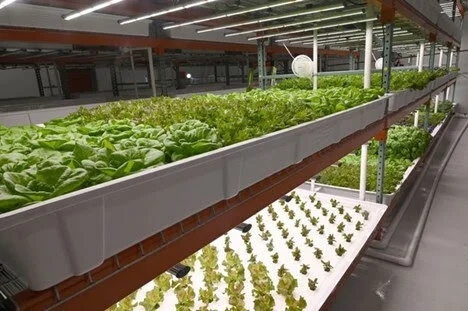
Anchorage Greens is an expansion of Juneau Greens, a similar business in the state’s capital, said Trevor Kirchhoff, who co-owns the businesses with John Krapek. In the back of Anchorage Greens’ warehouse, a vivid green garden grows in a hydroponic system. Racks of plants sit in nutrient-filled water under LED lights
Author: Alex DeMarban
Anchorage Greens: This new indoor farm at 1207 E. 73rd Ave. in South Anchorage is building a devoted clientele eager for tasty lettuce, herbs, and other greens, especially in winter when grocery stores can run low on quality produce.“
This is amazing produce," said customer John Schoen, buying a tub of butter lettuce and other leafy veggies on Friday. “Nothing at the grocery stores comes anywhere near this.”
“Our family doesn’t drive much," said Meghan Holton, another customer grabbing an order. "But we drive here every week to get fresh greens because it tastes like summer.”
Anchorage Greens is an expansion of Juneau Greens, a similar business in the state’s capital, said Trevor Kirchhoff, who co-owns the businesses with John Krapek.In the back of Anchorage Greens’ warehouse, a vivid green garden grows in a hydroponic system.
Racks of plants sit in nutrient-filled water under LED lights.
The first plants were harvested in November. Customers can subscribe to the Greens Bag program, a weekly rotating menu of lettuces and herbs including basil, cilantro, and red-veined sorrel. Kirchhoff said customers can also buy items individually.
The store features hard-to-find veggies such as purple-leafed basil, a colorful take on the herb.
Anchorage Greens has done no advertising, Kirchhoff said. Clients are learning about it through word of mouth.
Business owner Trevor Kirchhoff closes the cooler door at Anchorage Greens, Jan. 3, 2020. (Anne Raup / ADN)
Lead Photo: Plants grow at Anchorage Greens, Jan. 3, 2020. (Anne Raup / ADN)

Brick Street Farms To Construct Cultivation Hub, Increase Production In St. Pete
Backed by proprietary technology developed by Brad and Shannon, Brick Street Farms is now able to produce the equivalent of 2-3 acres of agriculture per shipping container
OWNERS OF BRICK STREET FARMS, BRAD DOYLE AND SHANNON O’MALLEY
For some reason, I can never keep plants alive. Maybe I don’t water them enough. Or perhaps I water them too much! Could it be the amount of light I expose them to? You know what, it’s probably due to my cats eating the leaves off every plant I’ve ever owned. Either way, I’ve never been able to provide the perfect environment for green life to thrive. And back in 2015, Shannon O’Malley and Brad Doyle were having similar troubles. But for them, the problem was the Florida heat.
Luckily, the couple found a solution to their woes. When they took their plants inside and put lights on them, the plants flourished. Brad and Shannon didn’t know it yet, but this revelation would end up being the seed that would sprout into an agricultural movement in Downtown St. Pete. After extensive research, the duo realized they could use their backgrounds in computer engineering and IT skills to build indoor hydroponic farms.
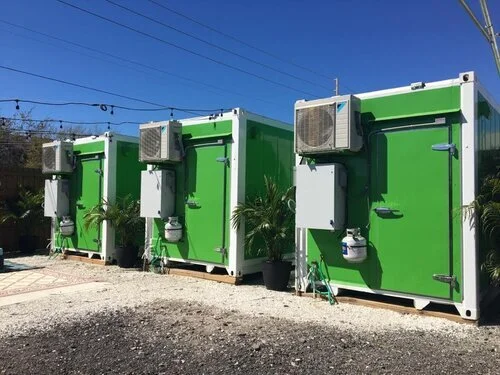
HUMBLE BEGINNINGS: BRICK STREET FARMS FIRST THREE CONTAINER FARMS
And so in January 2016, the duo purchased an overrun junkyard at 2001 2nd Avenue South in the Warehouse Arts District for $125,000 to house their new venture — Brick Street Farms. After months of environmental inspections, permitting and zoning obstacles, and electrical and plumbing issues, Brick Street Farms kicked off their first grow cycle inside three 320 square-foot shipping containers in October 2016.
Backed by proprietary technology developed by Brad and Shannon, Brick Street Farms is now able to produce the equivalent of 2-3 acres of agriculture per shipping container. The farm cultivates a variety of leafy greens including heads of bibb, butterhead and romaine lettuce, kale, basil, and rainbow chard.
Best of all, the growing process uses no dirt, no pesticides and much less water than traditional farming. Needless to say, their concept caught the attention of many local residents, and restaurants, such as the Vinoy, Oak & Ola, Oxford Exchange, and Pacific Counter.
For the past three years, Brick Street Farms has been feverishly trying to keep up with production. “When we started, we really just thought we’d be a wholesale production facility to grow and sell to restaurants, and maybe grocery stores,” says O’Malley. "But the level of interest and inquiries we get from everyone from chefs to elementary schools, we realized we couldn’t be closed off to the public.”
INSIDE ONE OF BRICK STREET’S HYDROPONIC SHIPPING CONTAINER FARMS
This year will be Brick Street Farm’s biggest yet. After bringing on a few investment partners in late 2019, the hydroponic farm will begin construction on a community-focused grow facility and will also dramatically ramp up production to satisfy demand from a new Publix partnership.
The current farm, located at 2001 2nd Avenue South, will be transformed into the Brick Street Cultivation Hub, which will include an expanded market, more container farms, a commissary kitchen, a beautiful courtyard, and pop-up event space.
RENDERING OF THE BRICK STREET CULTIVATION HUB AT 2001 2ND AVENUE SOUTH IN THE WAREHOUSE ARTS DISTRICT OF ST. PETERSBURG
Right now there are four container farms on site, but once the Cultivation Hub is complete, there will be a total of ten, stacked two high. Not only will Brick Street continue to grow lettuces, kales, and herbs, but they’ll be expanding into other products, such as tomatoes and strawberries.
“People always laugh at us, but one product we can grow exceptionally well in the containers is strawberries,” says O’Malley. “We haven’t sold them because we live in the strawberry capital of the world, but ours are phenomenal so we are going to give them a try and see if people want them.”
The largest addition to the property will be a new 6,500 square foot mixed-use building. The first floor will contain a 1,800 square foot farm-to-table market featuring greens grown on-site, as well as items from other local farms, like dairy, fruits, and vegetables, which cannot be grown in Brick Street’s shipping containers.
Additionally, the market will carry sustainable products from other local businesses, such as baked goods, health and beauty items, apothecary products, grab-and-go meals, beer and wine, and much more. Well-known local companies like St Pete Ferments, Nightshift Wax Company, Mother Kombucha, and Sunny Culture will also be available at the market.
A coffee concept will be located in the center of the Cultivation Hub. “It’ll be a full-time community space serving coffee, beer and wine,” says O’Malley. “Customers can relax in the beautifully landscaped courtyard, connect to the wifi and just hang out.” Two local coffee companies are currently in negotiations to lease the space.
An existing 416 square foot building will be converted into a commissary kitchen. This will be the new home of Brick Street Canning Company, helmed by Illene Sofranko, founder of The Urban Canning Company, which recently closed up shop. “We will be revising all of her core products and introducing an all-new line of products as well,” says O’Malley.
When Sofranko isn’t using the space, it’ll be rented out to local food makers. A few local restaurants will be hosting pop-up events at Brick Street, including Greenstock, Pete’s General, and Top Chef alum Jeffrey Jew, whose new St. Pete restaurant, Lingr on 6th St, opens this Spring.
“The Cultivation Hub will be dog-friendly and kid-friendly,” says O’Malley. “It’s just going to be a multi-functional property centered on food.” Construction begins in February and is tentatively scheduled to open in November.
If the Cultivation Hub wasn’t exciting enough, Brick Street Farms has also leased a warehouse on 22nd Avenue South that will serve as a manufacturing facility as well as house all farming operations while the Cultivation Hub is under construction.
BRICK STREET FARMS RECENTLY STARTING SELLING AT A PUBLIX SUPERMARKET IN LAKELAND, FL. AS PRODUCTION INCREASES, BRICK STREET PRODUCE WILL BE AVAILABLE IN ST. PETE & TAMPA
Brick Street Farms recently started selling their greens at a Publix Supermarket in Lakeland, the grocery chain’s test market. Feedback has been stellar and Publix is interested in expanding the partnership. “We have been selling 12 times their projected volume,” says O’Malley. “As our production grows, we will begin expanding to more cities.” Brick Street Farms is slated to hit St. Pete Publix stores in early March followed by Tampa and Central Florida thereafter.
With interest from Publix and a growing list of wholesale partners, the 22nd Avenue South warehouse will serve as a farming container assembly line. “It’ll be like a car plant,” says O’Malley. “We have an entire construction crew ready to begin building the farm containers.”
The goal is to build 60 containers in 2020 and an additional 100 in 2021. So if Brick Street’s goal is met, they’ll be operating around 170 container farms or the equivalent of 340 to 510 acres of agriculture by the end of 2021.
BRICK STREET FARMS RED LEAF LETTUCE
So, where will all of these container farms live? Everywhere! One of the core tenants of Brick Street Farms is to decentralize farming. In other words, the Tampa market will be served by Brick Street farm containers in Tampa, and Orlando produce will come from farm containers in Orlando.
“We have been overwhelmed by the response from the community, both from individual households as well as our restaurant accounts,” says O’Malley.
At St. Pete Rising, we couldn’t be more excited for Shannon O’Malley, Brad Doyle and the future of Brick Street Farms, a true homegrown local business. Be sure to follow them on Facebook and Instagram to stay up to date on well their produce will hit St. Pete shelves and for the debut of the Brick Street Cultivation Hub at 2001 2nd Avenue South.
Babylon Micro-Farms Closes $2.3m Seed Round
Babylon Micro-Farms has raised a $2.3 million seed round led by Virginia-based early-stage investment group CIT GAP Funds and startup incubation group Plug and Play Ventures. The round also includes a $225,000 grant from the National Science Foundation. This brings the company’s total capital to $3 million
January 8, 2020
Babylon Micro-Farms has raised a $2.3 million seed round led by Virginia-based early-stage investment group CIT GAP Funds and startup incubation group Plug and Play Ventures. The round also includes a $225,000 grant from the National Science Foundation. This brings the company’s total capital to $3 million.
Combining cloud-based technology and what it describes as “remotely-managed growing services,” the Charlottesville-based startup describes its technology as a plug-and-play hydroponics system for indoor ag. The hardware piece of its product is a 32” x 66” x 96” tall machine, according to Forbes. The company claims that its 15 square-foot micro-farms can produce as much produce as a 2,000 square-foot of outdoor farmland.
The software piece of the platform offers fine-tuned nutrient and irrigation systems that can be customized to almost any plant and LED lights take the place of sunlight. It currently offers 227 seed varieties.
With the software at the helm, the “smart farms” automatically dispense the appropriate amounts of water, nutrients, and light for each crop while also collecting data on growth that allows the system to make needed adjustments. These functions are performed remotely, cutting down on Babylon’s labor costs.
Babylon leases the machines on two-year contracts with fixed monthly fees. It handles the installation and provides growing supplies.
Because it’s designed for any experience level, Babylon markets the platform to foodservice operators at retirement communities, schools, and hospitality businesses so that they can grow their own produce on-site. Co-founder Alexander Olesen said in a statement announcing the funding that he expects to see thousands of Micro-Farm installations throughout North America in the next five years and more products with a similar function built around Babylon’s core technology.
So far, the company has been focused on product development and working with a shortlist of customers to vet its product including UVA, Dominion Energy, and local restaurants, schools, and country clubs, reports Forbes. Olesen and his co-founder Grant Smith expect to see sales outside Virginia early next year with plans to go nationwide soon after.
Controlled environment agriculture is having a renewed bout of interest, according to several metrics. Young, male farmers are flocking to the industry, according to a 2019 report from Agritecture Consulting and Autogrow, which also showed that the industry is diversifying beyond just leafy greens and herbs. AFN’s top 10 most-read stories in 2019 included three stories on the topic of indoor growing systems and celebrity chef Tom Colicchio told us why he’s betting on indoor ag and adding its produce to his menus.
Some question where the industry is heading amid challenges around the cost of production and finding precious real estate in well-established densely populated urban areas. But so far, indoor ag companies seem to be diversifying their business models in creative ways to find their specific path forward. Similar to Babylon’s reliance on an easy-to-use system, Freight Farms is offering ready-to-grow container farms while Bowery and BrightFarms are selling packaged salads to local retailers.

UK Agri-Tech Firm Raises £2.3m To Advance Vertical Farms
UK agri-tech company LettUs Grow has raised £2.3 million in seed funding as demand for vertical farming technology continues to rise
9 January 2020 | by FarmingUK
LettUs Grow has designed a patent-pending indoor farm system for greenhouse and vertical farms to address global food concerns
Team | Arable, News, Renewables and Environment
UK agri-tech company LettUs Grow has raised £2.3 million in seed funding as demand for vertical farming technology continues to rise.
The Bristol-based firm raised the significant amount in an investment round led by Longwall Venture Partners LLP.It comes as the recent Intergovernmental Panel on Climate Change report states that climate change is threatening global food security with severe potential risks for traditional methods of food production.
The report makes it clear that the level of risk will depend on how production, technological development, and land management evolve.
LettUs Grow was founded to mitigate these risks posed to agriculture and to lessen the environmental impacts of growing fresh produce.
The firm has designed a patent-pending indoor farming system for greenhouse and vertical farms to address global food security and sustainability concerns.
These indoor farms need no fertile land to operate, use zero pesticides and provide a 'consistent, predictable and climate-resilient food supply all year round'.
The company's offering is centered around two core products: a novel aeroponic system and an integrated farm management software called Ostara.
Growth rate increases of over 70% across a range of crops has been seen using this system, compared to current vertical farming methods such as hydroponics.
Ostara automates and controls the whole indoor farm, whilst collecting data on plants, overseeing inputs to crop growth and allowing farmers to trace crops from seed to sale, making operations more efficient.
LettUsGrow built one of the world’s most advanced indoor aeroponic growing facilities in 2019.
The investment will now allow the company to build their second aeroponic research centre, scale existing technology and accelerate new product lines to market.
Charlie Guy, co-founder of LettUs Grow:
“This investment gives us a platform to really accelerate in 2020 and scale-up the delivery of our game-changing technology to farmers across the country.
“We’re seeing rising demand from around the world for new technologies to help farmers grow crops in ways that mitigate against the effects of climate change and ever-increasing extreme weather events.”
The seed fund round also included follow-on investment from the University of Bristol Enterprise Fund, Bethnal Green Ventures and ClearlySo, with legal representation from VWV LLP.
Evergreen Farm Oy Is Invited To G20 Ministers Meeting In Collaboration of The Food and Agriculture Organization of The United Nations (FAO) iIn Saudi Arabia
Feeding The World
January 5th, 2020
Evergreen Farm Oy has received an invitation to G20 Ministers Meeting To showcase its Grow360 and Grain365 systems. Evergreen Farm Oy will also promote the “World First Sustainable Circular Community Ecosystems Template” located in Hiedanranta Tampere Finland which Evergreen Farm Oy is one of the main partners among City of Tampere.
The Kingdom of Saudi Arabia assumes the G20 Presidency, leading up to the Ministers Meeting in Riyadh on 15-18 March 2020.
The Kingdom will guide the work of the G20 under the theme of "Realizing Opportunities of the 21st Century for All" and will focus on three aims:
Empowering People, by creating the conditions in which all people—especially women and young people—can live, work and thrive.
Safeguarding the Planet, by fostering collective efforts on food and water security, climate, energy, and environment.
Shaping New Frontiers, by adopting long-term, bold strategies to share the benefits of innovation and technological advancement.
International organizations have historically contributed significantly to the G20 agenda. Invited international organizations for 2020 include the Food and Agriculture Organization (FAO), the Financial Stability Board (FSB),
the International Labour Organization (ILO), the International Monetary Fund (IMF), the Organization for Economic Cooperation and Development (OECD), the United Nations (UN), the World Bank Group (WBG), the World Health Organization (WHO) and the World Trade Organization (WTO).
Evergreen Farm Oy’s mission is to fundamentally transform agriculture by implementing a technologically advanced and easy to use Grow360 & Grain365 system throughout the world. Thus, improving crop production while encouraging responsible, innovative farming methods that protect the environment and educate the community.
“We are extremely proud and thankful for the invitation from the Ministry of Environment, Water, and Agriculture of the Kingdom of Saudi Arabia!
After years of product development, we have got one step closer to our objective to make fresh, healthy, delicious, non-GMO, chemical and pesticide-free food accessible to everyone. While doing so, we also aim to improve the quality of life of local communities by providing job opportunities and a platform for growth and education, “said Ali Amirlatifi, CEO of Evergreen Farm Oy.
Evergreen Farm is not only focusing on its technologies but also is involved with some 40 R&D projects, experiments and corporate & NGO actions which is wrapped around the development of the city district. This growing ecosystem of businesses is providing new solutions and technologies for the Hiedanranta development and to the global markets. “ Ali Amirlatifi said.
Evergreen Farm Oy is a Finnish company, located in Tampere. Evergreen Farm Oy is an award-winning technology company focused on providing clean sustainable food through agricultural innovation. By offering the World highest yield per square meter as well as cubic meter, indoor protection from the elements, a variety of crops that go beyond leafy green, and the benefits of existing technology in robotics artificial intelligence and engineering, Evergreen Farm is sure to provide a solution to the food crisis and its associated environmental impacts.
For any inquiry to Evergreen Farm Oy please contact:
Ali Amirlatifi CEO, Evergreen Farm Oy
ali.amirlatifi@evergreenfarm.fi
Mobile: +358 50 390 3333 Website: www.evergreenfarm.fi

Kitchens Get Smarter At CES Tech Show, Not Yet In Many Homes
Tell your refrigerator about your dietary preferences and it'll concoct a recipe plan for the coming week, sending a shopping list to your smartphone when it notices you've run out of the right ingredients
By MATT O'BRIEN and JOSEPH PISANI
Associated Press
JANUARY 8, 2020
LAS VEGAS — Tell your refrigerator about your dietary preferences and it'll concoct a recipe plan for the coming week, sending a shopping list to your smartphone when it notices you've run out of the right ingredients.
Counter-top robotic arms help chop veggies. Artificially intelligent oven cameras and internet-connected meat thermometers keep track of what's cooking. And then — voila! — a stove-top camera can show off your culinary creations on Instagram.
These are some of the new "smart kitchen" tech features on display this week at the CES gadget show in Las Vegas. Appliance-makers are competing with one another to show off futuristic kitchen innovations they hope might resonate with younger consumers, knowing that once these appliances squeeze themselves into a home, they could stay for a while.
Just don't expect to get much help at your local Home Depot anytime soon. There's also the challenge of getting consumers interested and keeping up with rapid changes in technology.
"The problem is that refrigerators are 10-year devices," said food technology analyst Michael Wolf, who hosts a podcast on smart kitchens. "The sales personnel haven't really asked about smart features and consumers really aren't asking for them."
That hasn't stopped big appliance-makers like Samsung, LG Electronics, GE Appliances, Whirlpool and Bosch from trying to reinvent the kitchen around internet connectivity.
Their mission: Appeal to consumers who are comfortable with smartphone apps. Target consumers include those looking to discover new step-by-step digital cooking instructions and consider themselves foodies even if they're not necessarily expert chefs with a lot of free time.
"Food and food culture is just really one of the dominant things that Millennials and 'Gen Z' put on their social media," Wolf said.
GE Appliances added a third, AI-powered oven camera to its Kitchen Hub system, which includes a 27-inch touch screen for interacting with friends and family or tuning into Netflix or Spotify while a watchful computer helps make sure you don't burn dinner.
Bosch is using its partnership with startup Chefling to send recipe commands to appliances such as refrigerators, which have cameras inside to keep track of inventory. Bosch is one of several companies using computer vision inside refrigerators to recognize items and how long they've been sitting there.
Whirlpool unveiled its Yummly smart thermometer, which can be pierced into a raw chicken. As your meal roasts, your phone will get alerts when the thermometer reaches the right temperature. Later this year, the $129 thermometer will also be able to follow recipes on the Yummly app and automatically adjust the temperature of Whirlpool's smart ovens.
LG showed off an entire "smart" restaurant at its CES booth, complete with a robot to cook and make coffee, one to greet customers and a tabletop robot to take orders. The rounded, expressive robots are part of LG's CLOi line announced at CES in 2018. The South Korean company debuted the cooking Chefbot robot in November at a restaurant in Seoul.
Samsung also emphasized an artificial intelligence-laden kitchen that could help plan meals and monitor nutrition. The company also has a robotic kitchen aid — Bot Chef — a mechanical arm that can chop, whisk, stir and otherwise help prepare food.
As with all internet-connected home devices, some of them raise privacy and security concerns. The devices record audio and video as they listen for your cooking commands and watch from your stove-top or from behind the milk cartons. Hackers could spy inside homes if the apps or devices have security flaws, as many do.
But even if appliance-makers are able to address those risks, some experts say they're still focusing too much on what's technologically possible and not on the improvements in the food experience that consumers might actually want.
"It fits the old school way they've been thinking about this — that every year or two they update the physical models," said Frank Gillett, a tech analyst for Forrester Research. "They're not thinking in terms of outcomes, which are meals. How do you shift the thinking from delivering the best stove to giving people the meal experience they want to have?"
Gillett predicts big structural changes in the food tech industry in the coming years. One far-out possibility: subscription services enabling consumers to commit to a favored supermarket, tech company or other provider. This company would deliver groceries and help run the appliances that work with its system.
Wolf is not as excited by all these AI-enabled bells and whistles as he is about other food tech innovations such as indoor hydroponics, the practice of growing plants without soil.
A few big appliance-makers like LG are now experimenting with indoor gardening technology. Previously, the products were confined to startups like Indiana-based GroPod, which showed off a prototype that can sustain 60 plants that just need water and small nutrient pods.
But none of these smart appliance features and hydroponic gadgetry have taken off with consumers as much as simpler kitchen tech innovations that sit on counters and don't need internet connections.
"Two counter-top appliances have become mainstream: Instant Pot and air fryers," Wolf said. "Five years ago, no one was using those."

CES 2020: The Planty Cube Aims to Make Vertical Farming More Modular And Automated
Like other vertical farms out there, the Planty Cube environment contains rows and shelves of planters stacked inside a shipping container
While many questions remain around exactly what role vertical farming will play in the future of agriculture, there are a few things we can count on with certainty. These indoor farms will become more and more automated over time, as well as modular. They will also be more user-friendly to the average consumer or small business, something evident by the number of indoor farming offerings at CES 2020 this week.
Among those offerings is the Planty Cube, a smart hydroponic indoor farm made by a Seoul, South Korea-based IoT company called n.thing. The grow system is modular enough to work in a number of different settings, from an apartment to a cafeteria, and automated enough that pretty much anyone can operate it.
Like other vertical farms out there, the Planty Cube environment contains rows and shelves of planters stacked inside a shipping container. Plants rely not on soil and human hands cultivating them, but instead on a computerized system that delivers the right “recipe” of nutrients, water, and light from LEDs to help photosynthesis. Humans have little involvement with the actual plants during the grow process. Most of the work on the farm, such as adjusting the LEDs, controlling temperature and humidity, and monitoring plant health, is done by the Planty Cube system, which uses sensors to collect data on the plants and can be controlled remotely by a smartphone.
Leo Kim, n.thing’s CEO, came up with the idea for the farm after creating an IoT-enabled smart pot called “Planty.” From there, the company developed the Planty Square, a modular system made up of multiple capsules called Pickcells, each roughly two inches in width, length, and depth, that contain the seeds of each plant. Users can connect multiple Squares (“like a Lego block,” says Kim) to grow larger crops, and enough of these put together make up the Planty Cube farm.
The Planty Cube system relies heavily on data from farming logs, which are fed back into a database known as the CUBE Cloud and analyzed with AI to help farmers determine optimal growing conditions for each crop. As the user adds more Squares to the farm with new and different crops, this real time, cloud-based system makes it easier for the user to manage the overall farm, even remotely.
While a number of companies now operate automated vertical farms that grow leafy greens, most of these (Kalera, Plenty, Intelligent Growth Systems) are better suited to large warehouse settings that produce millions of heads of lettuce. Planty Cube’s modular and user-friendly nature make it a more apt candidate for places like schools, hospital cafeterias, and university dining halls — all locations that would benefit from having freshly harvested greens onsite.
Planty Cube nabbed a Best of Innovation award for CES this year. If you’re currently milling about the show floor in Vegas, drop by n.thing’s booth to see the Planty Cube in action.

Tomatoes To Grow In 2020 Guggenheim Exposition
In the exhibition, there will be numerous objects showing the connection between nature and sustainable, efficiently produced and healthy food
from Picasso to plants: horticulture becomes art
In 2019 there was a fuss about tomato plants growing in the East River in New York. In 2020 tomato plants will be growing at an even more remarkable location: in the New York Guggenheim Museum! In the exposition Countryside, The Future, created in collaboration with Rem Koolhaas, various horticultural solutions will be shown inside and outside the famous museum.
© AMO - OMA Rotterdam
February 2020
"An exhibition addressing urgent environmental, political, and socioeconomic issues", is how The Guggenheim itself describes the new exhibition that will open on February 20, 2020. "Exploring radical changes in the rural, remote and wild territories collectively identified here as 'countryside', or the 98% of the earth’s surface not occupied by cities, with a full rotunda installation premised on original research."
Resulting from this original research, horticulture is presented as one of the solutions for the future. Dutch architect Rem Koolhaas got in touch with the horticulture sector a couple of years ago and was impressed by the level of technique in the industry and its contribution to global issues like energy, water, food supply, food safety, sustainability and the general well-being of people around the world. That's why he invited the industry to participate in the Guggenheim exhibition.
"Mainly Dutch entrepreneurs and suppliers show the various solutions they can bring to these developments", says Ed Smit, founder and key connector of NethWork, a new foundation that facilitates all in-kind deliveries of horticultural objects that will visualize how food is produced in a healthy, sustainable and efficient way, in which Joep Hendricks (World Horti Center), Peter Maes (Koppert Biological Systems), Rob Baan (Koppert Cress) & Stephan Petermann (AMO/OMA) also participate.
Photo by Pieternel van Velden of the Koppert Cress greenhouse in The Netherlands 2011), selected by Rem Koolhaas
Vertical farming
In the exhibition, there will be numerous objects showing the connection between nature and sustainable, efficiently produced and healthy food. Concretely that means that there will be a transparent vertical farming production unit in front of the Guggenheim museum. Behind a transparent wall, cherry tomatoes are grown under LED lighting. Leading partners Priva/Infinite Acres have united with Rijk Zwaan, Grodan and PL Light - Hortilux to complete this installation and Koppert Biological Systems will take care of the biological crop protection and pollination. "Crop and harvesting activities are provided through a daily program", Ed explains. "We work together with schools in the area. The goal is actively involving young children actively to get them to get to know horticulture."
In the museum itself, a greenhouse is realized with a rolling bench filled with herbs from Koppert Cress, LED lights from Signify and drones from PATS. Also, the Priva Kompano Deleafing Robot will be present to visualize that the role of man will change through robotization. The mini Airobug from Koppert Biological Systems is present to illustrate that sustainable, healthy and efficient production is possible through knowledge, and links innovation to big data and artificial intelligence.
Horticulture is art while the show will last until August, it is hoped the effects will remain in place longer. And it's not the first time horticulture is considered art. Earlier this year German aerial photographer Tom Hegen launched his Greenhouse Series, showing illuminated greenhouses in the nighttime.
For more information:
Ed Smit
Jungle Talks www.jungletalks.com
NethWork www.nethwork.info

Publication date: Thu 19 Dec 2019

GE Appliances Shows Off Future Kitchen Technology At CES
Louisville-based GE Appliances, a Haier Company, will reveal its reimagination of the home at CES 2020, which comes in the form of two new kitchen concepts: “Shift,” and “Home Grown.”
The Home Grown Kitchen employs three different gardening systems for consumers to cultivate their own trees and produce in-home. It additionally comes with guides to assist the user from seeding, harvesting, and preparation of produce.

By Sarah Shadburne – Reporter, Louisville Business First
Jan 8, 2020
Louisville-based GE Appliances, a Haier Company, will reveal its reimagination of the home at CES 2020, which comes in the form of two new kitchen concepts: “Shift,” and “Home Grown.”
"At GE Appliances, our driving force is to eliminate the distance between what we make and what our consumers need, and it propels us to imagine what's to come," said Shawn Stover, vice president of SmartHome Solutions, GE Appliances, in a news release.
CES, the brainchild of the Consumer Technology Association, hosts its annual event this week as tech trailblazers from around the world make the pilgrimage to Las Vegas for a three-day showcase of their innovations.
GE’s thesis statement is one of personalized kitchen convenience for all members of the home, the release said.
As many homes become multigenerational and house people with varying physical abilities, GE said it sought to create kitchens that empower their users.
“Shift” is a technological kitchen which utilizes face and voice recognition technology to determine features applicable to its user, which include height adjustments for wheelchair users, to update the space in real-time.
The “Home Grown” offering features three different gardening systems so users can grow foods directly in their homes. The gardening system utilizes aeroponics, hydroponics, and soil to enable in-kitchen growth for trees and produce and is regulated by a user interface which guides the user from growth to harvest to food preparation.
At the conference Tuesday, GE was named Smart Appliance Company of the Year for the second year in a row through the IoT Breakthrough Awards program. The program attracted 3,700 nominations this year and seeks to recognize innovators, leaders, and visionaries in internet-of-things (IoT) categories such as industrial and enterprise, connected home and home automation and more.
“GE Appliances was the first manufacturer to offer a full suite of connected products for the home and they continue to define what’s possible, responding to consumer needs and preferences with “breakthrough” products that deliver real-world results,“ said James Johnson, managing director at IoT Breakthrough, in a news release. “GE Appliances is redefining the appliance industry by creating appliances that get smarter over time with software updates and upgrades. Making continued investments in research and development of compelling and useful smart appliance features and products, GE Appliances proves it is the leader year-after-year in the smart appliance segment. We congratulate them once again and look forward to continued leadership and innovation in the smart appliance arena.”
GE will also host Tech Talks at its booth #16006 daily through the conference from 10 a.m. to 3 p.m. The Haier section of the booth will highlight its work to create a fully connected IoT living space, from Smart Kitchen to Smart Living Room to Smart Closet.
Locally, GE is the second largest manufacturer in Louisville, with 6,000 full-time employees and 12,500 companywide. They operate the Appliance Park at 4000 Buechel Bank Road.

Plans For Mammoth Vertical Farm Near London
Various companies have announced plans for at least 50 new vertical farms across England and Scotland including one that will be four times the size of Europe’s largest vertical facility
BY FRED SEARLE
7th January 2020
The company behind Europe’s largest vertical farm is planning to build a plant four times the size with backing from Ocado
RELATED ARTICLES
Various companies have announced plans for at least 50 new vertical farms across England and Scotland including one that will be four times the size of Europe’s largest vertical facility.
The business behind Europe’s current largest vertical farm, Jones Food Company, plans to construct the new mega plant near London with backing from Ocado, according to The Times.
Its existing facility near Scunthorpe in Lincolnshire produces 420 tonnes of food a year and houses 17 levels of leafy greens grown under eight miles of strip lighting.
In addition, Edinburgh-based start-up Shockingly Fresh has plans for 40 sites, with five already under development – one in Scotland and four in England – covering 123 acres in total.
Meanwhile, Growing Underground, which grows salad, herbs and microgreens in former air-raid shelters in south London, is planning to open six more farms in urban locations.

Grower Data: Farming As A Business With The LGM
Our customer base here at Freight Farms is incredibly diverse, but whether you’re an entrepreneur, a distributor or a restaurant, the business numbers need to make sense
February 15, 2019, Caroline Katsiroubas
Welcome to our most popular blog post of all time!
We originally published this story back in 2015 so the content is a bit outdated. We have since launched our next-generation container farm, the Greenery™, which we encourage you to learn more about! This new farm has more plant sites, stronger LED lighting, and more flexibility for growing your business.
Our customer base here at Freight Farms is incredibly diverse, but whether you’re an entrepreneur, a distributor or a restaurant, the business numbers need to make sense. We shared data on how the LGM compares to traditional farming practices, and now we are sharing the data we’ve been able to collect on crop yields, business and operating expenses, pricing and revenue.
The small business farmers in our network are each unique in how they operate their businesses. Some sell directly to customers, others to restaurants or wholesalers. The diversity in business plans influences the numbers significantly. Some of the other variables that have an impact are packaging, location, crop, and hired labor. While the numbers we are sharing have significant ranges, they still paint a good picture of how a business can be run using the Leafy Green Machine.
First, we’re sharing some of the top crops grown by our farmers and the corresponding weekly yields. We’ll then elaborate more on the costs associated with running the LGM, and how pricing and revenue can break out.
Crop Yields
By now you’re aware that the crops that grow best in the Leafy Green Machine are... leafy greens. To optimize all 320 square feet inside the container, we recommend growing smaller compact crops, like head and loose leaf lettuces, herbs and heartier greens like kale and swiss chard. That doesn’t mean larger crops can’t grow, but for those who are operating it as a business, we recommend growing crops with a high turnover rate, which just means each farmer will have more produce to sell for profit.
Here we’re sharing the weekly yields of some of the more popular crops grown by our network of farmers. You’ll notice that we measure yields by a unit dependent on the crop (heads, bunches, ounces etc.), but we’ve also converted the yield numbers into a standard unit of measure (pounds), across the board. It’s important to keep in mind that this is not how the market buys and sells all varieties of produce, but we wanted to give a relative measure that you could wrap your head around.
Operating costs
Now that you’ve got a good sense of what the LGM can produce, let’s talk about its consumption. You’ll notice wide ranges, and that’s because a lot of these costs are location dependent. For example, electricity costs in New York City may be drastically different than those in Arkansas, and a site lease in Boston may cost more than one in New Hampshire.
We’ve seen operating costs ranging from around $8,000 to $16,500, but most frequently this falls around $10,400 annually. Obviously, some of these costs are subject to change.
Business Costs
In addition to operating an LGM, there are also indirect costs associated with running the LGM as a business. These costs are largely driven by our farmers and their chosen business model, so similar to the operating costs these are also going to range. We think of these numbers differently than operating costs, because these vary based on who is buying the produce. As a result we really rely on our experienced farmers’ network to uncover best practices for our newest farmers. Ultimately our farmers are their own boss, and each farmer’s income and goals are his/her own. But as a result of being so personal, these items are less straightforward. Even so, we wanted to include as many of the potential line items as possible. For the purpose of being clear about the numbers, we’ve included the bulk of the line items we uncovered and a range of our farmers’ annual spend:

Again, we’ve seen business costs ranging from around $3,900 to $9,600, but most frequently this falls around $7,200 annually.
Below we've combined all the costs associated with operating the LGM as a business that we discussed above:
Adding it all up
Alright, we just shared a lot of numbers that are important to know. These are crucial to understanding when farmers figure out how to price the end product. What we encourage our farmers to do is drill this number down into a cost per unit (unit depending on crop and described in the chart above). This number gives you a floor for pricing, meaning you’d never want to continuously sell your crop for less than what it took to produce. This is the most important thing to remember when operating the LGM as a business.
We totally understand that this can sound like a daunting task to those who aren’t familiar with how to calculate all-in costs, which is why Heather came up with a handy spreadsheet model that calculates each freight farmer's cost per unit. All you need to do is input some of your own data! So if you’re working on your business model, and need to figure out the cost per unit just ask us and we’ll send it right over.
Revenue and Pricing
Pricing can be tough for some farmers. The above information will keep your business profitable, but when optimizing revenue you need to take into consideration a few more variables. Here are the three things to keep in mind when pricing a product:
Cost to produce (above)
Competition and substitute prices (what else is in the market that buyers can purchase instead?)
Customer willingness to pay (at what price will a buyer say “ouch” but buy it anyway?)
For those farmers who are new to the market or for companies introducing a new product to their current buyer, they can choose to introduce their crop by offering it at a low introductory price. This limits the buyer's risk for purchasing this new product, enticing them to try it out. This also gives the farmer the ability to attract customers while not anchoring the price of their product too low, and furthermore, gives the buyer the ability to test the product. After a specified period of time, if the buyer is happy with the product, the price reverts back to the non-introductory (e.g., higher) price. In essence, you’re building your very own demand curves!
Pricing
Like we said earlier, each of our farmers operates unique businesses, choosing to grow and sell different crops to a variety of different outlets. This diversity in business plans influences the numbers significantly, but we do want to give an example of how some of our farmers are pricing their product. Here is a range of what our freight farmers in Boston have been commanding in wholesale price for cases of mini heads of Red Oak Leaf Lettuce:
The Bottom Line
Now that we’ve talked about yields, operating/business costs, and pricing, it’s time to put it all together to get an annual profit. Below we’re using the pricing example from our farmers in Boston selling mini-head lettuces wholesale:
88 cases x $12.50 = $1,100 weekly revenue
$1,100 x 52 weeks = ~$57,000 annual revenue
$57,000 - $18,000 = ~$39,000 annual profit
An average of 88 cases per week breaks out to $1,100 in revenue or ~$57,000 annually. Factoring in the annual costs discussed above (~$18,000) calculates to a profit of ~$39,000 annually for one Leafy Green Machine.
So how do these numbers scale if farmers operate more than one farm? It’s tempting to multiply the bottom line for the number of farms, but here are two things to remember: fixed costs and some other variable costs scale. This gives a boost to profits over multiple farms.
But what is the biggest variable that drives the economics of the farm? Crop type. The buyer type (who the farmer sells to) comes in a very close second. We’ve talked at length about lettuce, but for this example, we’re switching to a lower-price crop: basil. The low price of this crop can be overcome by packaging it in small units (picture 1 or 2-ounce clamshells of basil). When farmers choose to sell directly to end consumers (CSAs, farm stands, etc.) they may command the highest price point for some normally low-price crops. Conversely, choosing to sell that same low-price crop in bulk to a wholesale produce distributor generally does not command a price above the “all-in” cost per unit - so don’t do that! Just keep in mind that the labor involved in packaging will increase costs.
Growing in the future
The most powerful thing to know here is that our network of farmers is relatively new to the occupation. These numbers weren’t gathered by expert growers, but simply from everyday people like you and me who had a burning desire to become a farmer. Another great thing about these numbers is that they aren’t static; they will change as we get more farmers growing, and they will change again as we make our systems more efficient.
It’s important to us to share the capabilities of the Leafy Green Machine, but even more important to tell the story of each of our farmers. And we owe it to them for all of this information. They are the ones growing for their local communities, and making the real positive change in the food system. We wouldn’t be where we are today without them!
See this content in the original post
Related Articles
Data from our growers: how the LGM stacks up
Labor requirements for the LGM
How to approach your municipality about shipping container farming
Webinar: A Freight Farmer's journey
See this content in the original post
Discover more from Freight Farms
Strategies In Selling The Concept of Vertical Farming - Sweden's Grönska Gives Insight
Grönska - a Swedish vertical farming startup - began with a group of friends testing lights and plants in their basement, trying to come up with an alternative to traditional ways of consuming produce in big cities like Stockholm. Today, it is one of the largest vertical farming companies in Europe and is looking to expand
December 19 , 2019
Grönska - a Swedish vertical farming startup - began with a group of friends testing lights and plants in their basement, trying to come up with an alternative to traditional ways of consuming produce in big cities like Stockholm. Today, it is one of the largest vertical farming companies in Europe and is looking to expand.
The company's co-founder walked us through its strategies and challenges in operating a vertical farming startup in an ever-changing market.
Grönska's beginnings
After finding a Reddit thread on Japanese vertical farming, two of the founders - Petter Olsson and Robin Lee - read about urban solutions to farming and became inspired to develop their own version in Sweden.
At the same time, co-founder Natalie de Brun Skantz was doing her master's thesis on urban farming in the U.S.
Self-described as a "garage rock band" in its earliest stages, the group would meet late in the evening to devise plans. From there, they worked tirelessly on technology and marketing.
It began with "the development of technology and then started test growing different kinds of things and trying LED and doing lots and lots of experiments," co-founder de Brun Skantz told FreshFruitPortal.com.
Through more funding and research money, the company quickly grew to be awarded with two notable awards in Sweden for innovation and entrepreneurship.
Nowadays, it offers an array of leafy greens, herbs, and micro-greens, packaged and ready to eat. Shoppers in Stockholm supermarkets can choose between items ranging from kale to cilantro - all grown in Grönska's self-made hydroponic system.
In its facility in Stockholm, the startup uses its own AI, lamps, and data-collecting technology to monitor and grow its crops.
While the company focuses on large scale farming, its smaller scale vertical farms can be installed in grocery stores, offices, schools, etc. So, it's not just a simple question of growing produce for urban shoppers but also about making an image for Grönska - a future for sustainable, locally sourced food.
Marketing a concept
Business, then, has to be strategic and competitive. In this context, being a small startup in uncharted territories can be daunting. The objective is to market a concept and demonstrate to wholesalers and consumers that urban farming is the future of produce - even if it's a bit pricy right now.
"It's more of a concept" that they're trying to sell, co-founder Natalie de Brun Skantz told FreshFruitPortal.com. Grönska is "a consumer brand".
Hydroponic vertical farms operate in many kinds of ways since the concept is so new. Grönska's specific model focuses on the fact that, even if the veggies have a heftier price tag, the system that produces them doesn't have to.
"What we're really good at is that we build very cost-efficient systems," she said. And that's important because the market as a whole has high volumes and low margins.
It's really all about the market and finding fast-growing, high yield plants. The reason the company is so confident in its low-cost technology is because it sources all of its technology and equipment itself.
"If you buy from a middle man then you will pay extra. Each step in the supply chain adds expenses. So, we decided to cut through the value chain and source all of the parts ourselves," she added.
This means that everything, down to its one-of-a-kind LED lamps, were designed and produced by its small team. That way, it paid very close attention to having "high-quality lamps that are very energy efficient".
Challenges of being a vertical farming startup
De Brun Skantz continued by explaining how the company operates amidst challenges. Since the team is "in a new industry being a new company", it's forced to experiment.
"We have to invent. So if we try lettuce, we might try ten different seeds to see what works for us," she outlined.
When it comes to dealing with large infrastructure in the industry, Grönska is still learning. As everything is "new, new, new", it doesn't have the advantage of being a big corporation that understands all of the nuances involved in selling fresh produce - nor does it have the resources.
"It is a new product and we're getting into a big industry that already has a lot of structures in place. I mean, we go up against very big companies that have been growing, let's say, lettuce, for many years," she detailed.
That means, since they're so small, its prices cannot yet compete with big competitors. And, "it's not just one system" that the startup is tasked with figuring out. It has to navigate how to adapt to delivery, integrating its products into supermarkets and all of the steps involved in the supply chain.
All of those things, alongside the ever-changing dynamics within the company itself, can be complicated to manage. For example, selling in bulk is "not always the easiest when you're also working with innovation and developing something new," according to de Brun Skantz.
However, the company is confident that its technology is its "most secure area". Since the market is in some ways out of its control, Grönska especially thrives internally. In this field, it is sure of its expertise and cost-efficient model.
Looking forward: eyes set on expansion
While de Brun Skantz couldn't give us all of the details, she told us about what the future of the company might look like.
"We’re currently setting the exact strategy and business model. The idea is to continue being local," she said.
For example, it "wouldn’t construct a huge farm in the middle of Sweden and deliver from there". Rather, the company wants to expand to different cities across Europe.
Its target is to sell its brand and market its leafy greens to capture more interest in vertical farms as opposed to traditional imported produce. To do that, it needs to expand its client base.
"Our goal is not just to give premium vegetables. I mean, we want to be commercial. Our produce has a high sustainability factor and we want to spread that impact. In order to do that we need to have competitive prices," she explained.
To lower costs and spread its reach, it wants to form new partnerships. Good "synergies" between Gröska and other companies is what sparks creativity and provides cost-efficient solutions.
Grönska recently partnered with Scandinavian Airlines. It says that this is a good step in the right direction.
"We would love to work with larger clients as well," added de Brun Skantz. Working with "big, bold companies" is an exciting prospect.
Looking to automation to enable laborers
Lastly, Grönska told us a bit about moves in increasing automation.
In the past, agriculture required specific skill sets and expertise. Today, with automation, companies like Grönska hope to use urban farming as a platform to make the agriculture sector more inclusive.
For de Brun Skantz, automation of its vertical farming means that employees don’t necessarily need specialized knowledge of regional crops and growing conditions. Rather, looking forward, the startup wants to utilize more automation in its logistics to eliminate repetitive tasks.
"For specific methods, you end up relying heavily on experience and knowledge. With automation, you can develop and scale without being dependent on local methods or expertise. It allows for a kind of farming where know-how can be centralized," detailed de Brun Skantz.
This both allows for scaling and enables more kinds of people to work in vertical farms. She half-jokingly told us the idea is to have a sort of "McDonald's style" accessibility to labor in the future.

The Navy Yard Company That Helps You Grow Your Own Food Farmshelf Wants You To DIY — With Some Help
“We basically have been working on building systems that make the process of growing your own food easy, enjoyable and efficient,” Andrew Shearer, the 29-year-old founder of Farmshelf, told the Brooklyn Eagle.
January 3, 2020, Michael Stahl
A Farmshelf farm wall with a variety of fruits and vegetables nourished by remote software. Photo: Courtesy of Farmshelf
When it comes to food delivery, Brooklyn has no shortage of options. There’s Seamless (or a phone call) for takeout and Fresh Direct for groceries. But Farmshelf, a Brooklyn Navy Yard-based company, is taking food access to a whole new level, and hoping to help solve some of the planet’s growing environmental problems along the way.“We basically have been working on building systems that make the process of growing your own food easy, enjoyable and efficient,” Andrew Shearer, the 29-year-old founder of Farmshelf, told the Brooklyn Eagle.
His company builds hydroponic “farm walls” for residences. They’re 6 feet tall and electric-powered, growing leafy greens, herbs and edible flowers, their seeds initially planted in miniature flower pots. Fifty foods are available for the customized units, including far-flung rarities like Portugese kale and red komatsuna, a Japanese hybrid of spinach and mustard plants.
With just 30 to 45 minutes of effort weekly, including watering the system and other minor maintenance, consumers can watch their plants sprout as tank cameras and sensors send data to the Navy Yard Farmshelf office. There, automation software takes care of the food’s nourishment and optimizes growing conditions. Electronic alerts instruct Farmshelf users when it’s time to harvest.
Founded nearly four years ago, Farmshelf has planted more than 100 smart indoor farms in homes, restaurants, hotels, schools and even Grand Central Station, home of the company’s first installation. There are Farmshelf systems in Chicago, Houston, Austin, Dallas and Washington, D.C. Through three seed rounds of funding, Farmshelf has raised $7.4 million, and by the end of 2020, Shearer believes the company will operate more than 1,000 units coast to coast.“We really just see this as the first inning,” Shearer said.
Andrew Shearer, CEO, and founder of Farmshelf. Photo: Courtesy of Farmshelf
The company began in San Francisco, where Shearer lived and worked in tech. He became interested in home food growth and left an ad sales position at Pinterest to found Farmshelf, building it out first in a basement and, later, a garage — realizing “every San Francisco stereotype” along the way, Shearer said.
The move to New York came about when Farmshelf was accepted into the Urban-X tech startup accelerator, a three-month program that provides seed money and other resources to select companies, aiding them with growth.“We did not pack in a way that meant we were moving here,” Shearer said. However, the local tech community’s embrace of the company, the growing network of local venture capitalists and a variety of other partners and resource providers made such a transition a no-brainer. “Farmshelf was born in San Francisco, but it was raised in Brooklyn,” Shearer added.
He and his team also recognized that New York’s population density would supply greater sales opportunities while showing off their solution to food-supply and delivery problems not as prevalent out west.
Nearly all lettuce eaten in the U.S. is grown in California and Arizona. Parts of those states also produce 90 percent of all leafy greens the country eats between November and March when it’s too cold elsewhere to grow such crops. Not only are California and Arizona starved for water, they’re also thousands of miles away from East Coast metropolises whose landscapes are generally unfit for most traditional agriculture. But the tens of millions of people who call those cities home need to be fed somehow.
Urban agricultural companies such as Farmshelf, as well as other Brooklyn-born rooftop farming bodies like Gotham Greens and Brooklyn Grange, can help provide leafy greens to these areas without the environmental impact that comes with trucking them cross-country. More farming with hydroponics also means less land needed for agriculture, which could, in turn, be used to meet new housing needs or see the reestablishment of lost natural habitats.
By the year 2050, the human population is expected to reach nearly 10 billion, which could boost food demands by approximately 60 percent worldwide. If the agricultural status quo is maintained, freshwater use might also have to jump 15 percent, with supplies already under threat, in part because of the climate crisis. Though tech-based urban agriculture comes with its own environmental concerns — growing these plants still takes a lot of energy — a company like Farmshelf, which puts fruits and vegetables in a bookcase-size, custom-lit glass tanks that can live in a person’s home, could help ease both those burdens.Local foods provide more nutritious products to consumers, too. Most produce loses 30 percent of its nutrients within three days of harvest. With truck drivers only allowed to drive up to 11 hours across 14-hour shifts, just about all produce in East Coast stores that come from the West Coast has lost at least that much nutritional value.
A societal shift from such inefficient delivery methods would not be unprecedented.“In the early 1800s we used to ship ice from the north via trains and barges,” Shearer said. “If you tell someone today that we used to ship ice via trains and barges they would look at you like you’re crazy. And then we got centralized cold storage … and then the advent of the refrigerator, where you’re not shipping [ice over] miles; your ice is traveling feet.”
Arguably, all the time spent these days shipping leafy greens, fruits and vegetables from places like Yuma, Arizona, to New York City, also takes away from its taste. To that point, Shearer relayed a story about the time one of his company’s advisors brought his 6-year-old son into the Farmshelf office. They’d given the kid a bag with which to go harvest some fruits and vegetables from one of their farm walls. Of all things, he’d picked some kale.“
And his dad turns to me and goes, ‘He doesn’t like vegetables, and he definitely doesn’t like kale, ’” Shearer recalled.
It was shortly after Halloween, and when the boy bit into the kale, he said, “Wow, this is better than trick or treat!”
“You get to bring these flavors and these crops in a beautiful way into people’s lives, but also the flavors and the tastes of what these things are supposed to taste like when grown right,” Shearer said. “Getting to bring that into the experiences is so exciting.”
Michael Stahl is a New York-based reporter covering business and technology across the borough. You can find him on Twitter.
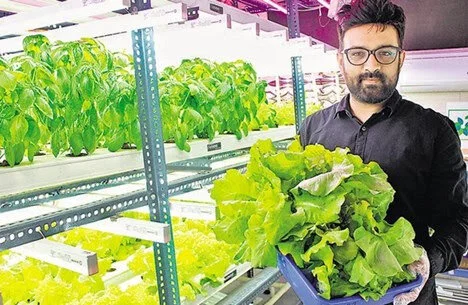
Hydroponic Entrepreneurs Farming For The Future
Hydroponics is no buzzword when speaking about the “future” of farming. A growing population, shrinking land base and water resources suggest a reinvention of the agrarian process is more than needed. In India, hydroponics meets less than 1% of the total food basket.
Startup Saturday: Hydroponic entrepreneurs farming for the future
The alternative agrarian method has taken root in the startup landscape. Greens are first on this healthy menu
PUNE, INDIS Jan 04, 2020 Namita Shibad

Hindustan Times, Pune
Hydroponics is no buzzword when speaking about the “future” of farming. A growing population, shrinking land base and water resources suggest a reinvention of the agrarian process is more than needed. In India, hydroponics meets less than 1% of the total food basket.
Israel is the hydroponics leader when it comes to feeding its people, but India still has enough land... for now.
What role can hydroponic startups play in a market that is dominated by traditional agriculture? Are people willing to buy hydroponically grown fruits and vegetables?
FarmingV2, set up in 2018
Founder: Rohit Nagdewani
Indoor and outdoor hydroponic farms.
Why hydroponics?
Our food is full of harmful chemicals. Besides, I am a big foodie and a home-cook and was finding it impossible to source high quality produce in the market. I began researching a small kitchen garden and heard about hydroponics. With its major USP being the ability to grow anything, anywhere, it didn’t take a lot of time for me to venture into it commercially.
Setting it up
I started experimenting with small imported setups but couldn’t scale due to the lack of information and equipment. A lot of research and calls later, I found two companies that help set up hydroponic farms – Urban Farmer and Valens Arbor in Mumbai. With their help, I set up my first commercial farm. The challenge for hydroponic farmers like me is the fact that the technology is at a very nascent stage, so getting access to the right people, equipment and process is not easy. No government permissions were needed.
Investment
I started with a small 300 sq ft indoor farm that cost me Rs 4 lakh. Now I have expanded to a 6,600 sqft indoor farm and one 6,000 sq ft outdoor farm. All this cost me Rs 45 lakh.
The challenges
Both the capex and the opex of a hydroponic farm is higher than soil-grown produce, which results in a higher selling price. In the case of commodity crops like wheat and rice, the price will be four times more than soil-grown crops.I saw the opportunity in the greens business. Last year India grew 15 crops tonnes of greens.
There is a market for it and producing greens costs marginally more than traditional crops, about 2-3%. With the nutritional benefits, there are people who will pay more. I have 500 customers who are subscribers and a few restaurants who buy regularly. (Rohit does not wish to share his turnover.)It is impossible to even think about growing hydroponically at the scale at which traditional farmers do. Currently, it is not viable for commodity crops. But yes, once we deplete our freshwater sources and arable land in a couple of decades, the shift towards hydroponics would be much more apparent.
Future
Education! If we are able to educate people about the availability of such chemical-free, healthy produce, the product will sell itself. Since the capex of setting up a hydroponic farm is high, funds are also an issue, but we are already witnessing a global focus on such indoor farms (Softbank invested $200m in a vertical farm called Plenty).
Salad Growers, set up June 2019
Founder: Yash Patel
Grows a variety of greens and herbs; sells by monthly subscription
Why hydroponics?
The demand for exotic greens and gourmet salads is at an all-time high and unfortunately, with our horrible weather conditions, it is impossible to get consistent quality greens and herbs all-year-round. With hydroponics, we are able to grow exotic greens and herbs all-year-round, and with consistent quality always.
Setting it up
We had a great idea and we were certain that we wanted to execute it at some point in time. The question was - would it be possible to run an actual business? I did a lot of research and even zeroed in on one international firm that specializes in vertical farms, but their estimate was about 10 times the cost I finally paid to a domestic company.
Extensive market research revealed that people don’t like to eat salads every day, but prefer it twice or thrice a week. With the rising trend of veganism, people like their salads to be vegetarian. We on-boarded a chef and a nutritionist and developed gourmet salad recipes that we are currently testing in the market. We intend to have a subscription model and aim to sell our salads at Rs 300 a plate (400gms). Once I reach 100 subscribers I will break even.
Yash Patel currently owns a 500 sqft farm.( HT/PHOTO )
Investment
invested Rs 15 lakh to set up a 500 sqft farm and that changed the game for me. Today, my farm can churn our 1,500 plates of salad per week. I am also planning to set up another farm of 4000 sq ft.
The challenges
Our primary challenge is to educate our potential customers on the benefits of our product. This topic is gaining momentum on social media and more people are aware of the benefits of eating hydroponic food.Our product – greens and herbs - is something that traditional farmers do not grow or rather cannot grow due to the weather conditions, so there is no issue with that at all. We only grow varieties that you don’t usually get at the local farmers’ market.
Future
We are in the final stages of validating our product and have planned on expanding to a farm that is almost 10 times the current size next year. Our marketing strategy is also in place, but we are waiting to execute everything at the right time as we don’t want a bandwidth we are not able to manage.
The big picture
Shyam Agarwal, Perusal Global (Financial research and advisory)
Markets and Markets, a market research company, the global hydroponics market is estimated to grow from $8.1 billion in 2019 to $16.0 billion by 2025, registering a CAGR of 12.1%. The primary drivers for this handsome growth include growing population and the need to ensure food security through alternative high-yield farming techniques as arable land and water have been depleting.
Hydroponics globally has grown because of the high yield (20-25%) and 2-5 times productivity. This system eliminates the use of artificial ripening agents and pesticides creating nutritionally superior vegetables. That said. India’s overall fruit and vegetables (F&V) market was estimated at around Rs 5,00,000 crore in 2015. Even if we assume a meager 0.5% of this overall market, it translates into a humongous opportunity of around Rs 2,500 crore for hydroponic produce, which may take at least five years to materialize. Renowned business groups such as DS Group and Patanjali are also considering hydroponics on a commercial scale.
A growing awareness and the focus on healthier lifestyles amongst people in India should help hydroponic producers reap benefits in the long term. Moreover, an evolving demand of produce not grown in India such as swiss chard, kale, parsley, oregano, and cilantro, provides the necessary tailwinds to hydroponics producers.
Shyam Agarwal, Perusal Global (Financial research and advisory) ( HT/PHOTO )
What to watch for?
The lack of tax cuts and incentives is a key factor that hinders the growth of hydroponics in developing regions, as the high set-up costs and running, costs can often render operations difficult to sustain. The founders of hydroponic farms should first identify the market/distribution channel to sell its produce. Since hydroponics involves the high cost of production, it is imperative for hydroponics growers to keep a check on the competition arising from the local produce in the price-sensitive Indian market. The founders should then work backward to decide whether the project provides the desired ROI, which is in sync with invested capital and efforts.
Another issue that is a major hindrance to hydroponic farmers is the threat of waterborne diseases. Considering that the nutrient-enriched water is recirculated throughout the system, any kind of waterborne disease that enters the nutrient reservoir often affects the whole crop. As a result, growers often keep their plants spaced out to prevent crowding, which is often how pathogens enter the system.
Lead Photo: Rohit Nagdewani currently has a 6,600 sqft indoor farm.(HT/PHOTO)

HYVE® Indoor Farming Systems To Be Featured On Virginia Farming Show Airing On VPM PBS and RFD-TV
HYVE® Indoor Farming Systems are complete contained environment agriculture systems that utilize hydroponics to produce large-scale commercial crops in vertical farming applications
January 9, 2020, Verona, Virginia – DASCOM Americas, a worldwide diversified technology leader and marketer of HYVE® Indoor Farming Systems today announced that HYVE® will be featured on Virginia Farming Television airing regionally on VPM PBS and nationally on RFD-TV.
Virginia Farming is a widely respected agricultural program hosted by Jeff Ishee and Amy Roscher. The program explores innovations, highlights, challenges, and unique stories of interest for the agricultural community in and around the state of Virginia.
According to statistics from 2017, Virginia Farming reaches about 60,000 viewers each month and is distributed throughout 40 counties in Virginia, Maryland, and Washington, D.C. Virginia Farming also airs nationally on RFD-TV. According to the RFD-TV website: “RFD-TV is the flagship network for Rural Media Group. Launched in December of 2000, RFD-TV is the nation’s first 24-hour television network featuring programming focused on the agribusiness, equine and rural lifestyles, along with traditional country music and entertainment.” The independent cable channel is available in more than 52 million households and is distributed by many of the top names in national cable and direct television service channel providers.
HYVE® Indoor Farming Systems are complete contained environment agriculture systems that utilize hydroponics to produce large-scale commercial crops in vertical farming applications. HYVE® Systems are designed to provide commercial growers with a means to grow crops in a pesticide and herbicide-free environment. The systems utilize LED grow lighting, advanced automation, fertigation, and irrigation techniques, and vertical racking to allow farmers to grow healthy, high-yield crops with accelerated grow cycles that provide an exceptional return on investment for the farmers and fresher supplies of vegetables for merchants and consumers. The systems designed by HYVE® hold great promise in helping farmers meet the challenges of feeding a growing world population while mitigating some of the risks that are more typical in conventional farming.
The HYVE® website is www.growhyve.com. Virginia Farming’s website is https://www.pbs.org/show/virginia-farming/ and RFD-TV’s website is https://www.rfdtv.com/.
The segment on HYVE® will air at 8:00 a.m. EST on January 11th with a repeated episode on January 12th at 8:30 a.m. on VPM PBS. The show will air on January 16th at 8:30 a.m. on the RFD-TV network. The episode will also be available shortly after air on the Virginia Farming website.
Congress Funds Office of Urban & Innovative Agriculture
The Mission of the Office is to encourage and promote urban, indoor, and other emerging agricultural practices
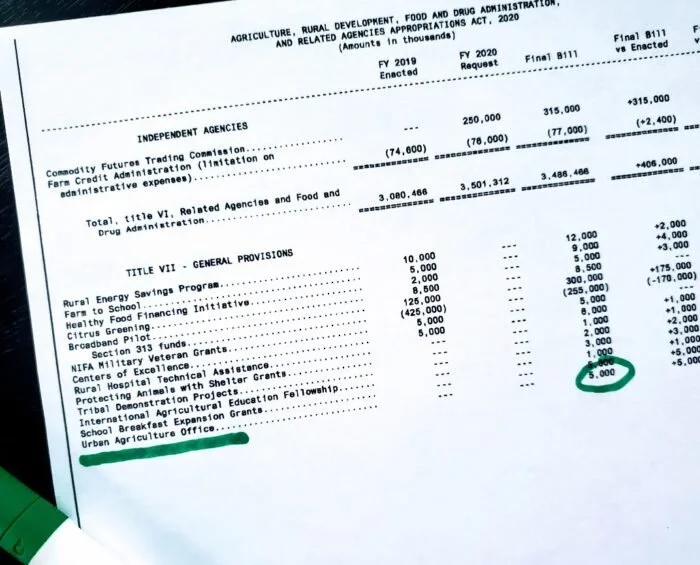
By Brian Filipowich
The new Office of Urban Agriculture and Innovative Production created by the 2018 Farm Bill had been sitting in limbo for the past year. The USDA declined to establish it without dedicated funding from Congress.
On December 20, 2019, the President signed into law H.R. 1865, The Further Consolidated Appropriations Act of 2020. The Law includes $5 million for the Office.
The Mission of the Office is to encourage and promote urban, indoor, and other emerging agricultural practices, including:
community gardens and farms located in urban areas, suburbs, and urban clusters;
rooftop farms, outdoor vertical production, and green walls;
indoor farms, greenhouses, and high-tech vertical technology farms; and
hydroponic, aeroponic, and aquaponic farm facilities.
The Office will disburse $10 million in grants before 2023 intended to “facilitate urban agricultural production, harvesting, transportation, and marketing.”
Senator Debbie Stabenow (D-MI) was the main sponsor of the new Office and was responsible for adding it to the 2018 Farm Bill. This past Fall, Senator Stabenow introduced an amendment to appropriate the $5 million to fund it.
The next step is to establish the Advisory Committee that will guide the establishment of the Office. The Committee is to be composed of 12 individuals from various sectors of the urban and innovative ag field.
The Farm Bill directed the establishment of the advisory committee by Summer, 2019. The USDA missed the target date because of the lack of funding and the USDA’s major relocation project from Washington, DC to Kansas City, MO, which “has resulted in catastrophic attrition at USDA’s top research agencies.”
Hopefully, with the new funding, the USDA can establish the Office soon.