


Welcome to iGrow News, Your Source for the World of Indoor Vertical Farming

NASA-Inspired Speed Breeding For Crop Improvement To Feed The Future
NASA experiments to grow wheat in space using continuous light on wheat which triggered early reproduction in the plants were the inspiration for University of Queensland scientists to develop the world’s first ‘speed breeding’ procedures here on planet Earth
June 20, 2019 . | . Ken Ecott
Crop improvements can help us to meet the challenge of feeding a population of 10 billion, but can we breed better varieties fast enough?
Farmers and plant breeders are in a race against time. The world population is growing rapidly, requiring ever more food, but the amount of cultivable land is limited. Warmer temperatures have extended growth seasons in some areas — and brought drought and pests to others.
While a host of fascinating innovations are primed to change the face of agriculture, there remains a stubborn limiting factor for plant breeding. This is the long generation times of crops that allow only one or two generations per year.
This roadblock to progress has been alleviated by speed breeding protocols developed by research teams at the John Innes Centre and the University of Queensland.
Fast-growing plants in the crop-speed breeding facility at The University of Queensland. The plants featured are barley plants. Credit: The University of Queensland
“We face a grand challenge in terms of feeding the world,” said Lee Hickey, a plant geneticist at the University of Queensland in Australia. “If you look at the stats, we’re going to have about 10 billion on the planet by 2050 and we’re going to need 60 to 80 percent more food to feed everybody. It’s an even greater challenge in the face of climate change and diseases that affect our crops that are also rapidly evolving.”
NASA experiments to grow wheat in space using continuous light on wheat which triggered early reproduction in the plants were the inspiration for University of Queensland scientists to develop the world’s first ‘speed breeding’ procedures here on planet Earth.
The team tricked the crops into flowering early by blasting blue and red LED lights for 22 hours a day and keeping temperatures between 62 and 72 degrees Fahrenheit. Last November, in a paper in Nature, they showed that they can grow up to six generations of wheat, barley, chickpeas and canola in a year, whereas traditional methods would only yield one or two.
Dr Lee Hickey in his speed breeding lab at University of Queensland, 20 June 2016.
Botanists first started growing plants under artificial light — carbon arc lamps — 150 years ago. Since then, advances in LED technology have vastly improved the precision with which scientists can adjust and customise light settings to individual crop species.
So far, the researchers have mainly experimented with one parameter, light, but they have plans to investigate several other method of increasing, growth and generation times.
The team highlight that speed breeding combines well with a range of other developing technologies. These include speed gene cloning a technique developed by Dr Wulff’s team at the John Innes Centre to rapidly scour the genomes of wild relatives of modern crops to identify disease resistance genes which can be bred into elite crops.
This involves using hydroponic culture which gives plant roots quicker access to nutrients and oxygen. A carbon dioxide-enriched atmosphere is also under investigation and one of the most productive areas of research is likely to be temperature.
“One technology alone is not going to solve our problems,” Dr. Hickey said. “We’re going to need all the tools in the shed.”
Dr Hickey believes the sky is the limit for the new technology and he is now investigating the integration of speed breeding with other modern crop breeding technologies.
“It could also have some great applications in future vertical farming systems, and some horticultural crops,” Dr Hickey said.
A review published in the journal Nature Biotechnology outlines continuing efforts to harness speed breeding to a raft of crop technology innovations required to meet the 2050 challenge.

Get Ready For New Forms of Extreme Weather: Hurricanes Plus Heat Waves
Most discussion of climate change and extreme weather focuses on how existing weather hazards such as heat waves, floods, and droughts are likely to become more frequent and intense
by Sarah DeWeerdt | Jul 23, 2019
Most discussion of climate change and extreme weather focuses on how existing weather hazards such as heat waves, floods, and droughts are likely to become more frequent and intense.
But climate change could also spark the emergence of new forms of extreme weather that are especially difficult to prepare for because we’ve never seen them before.
Suppose, for example, a powerful tropical cyclone causes widespread power outages and then, before the grid can be repaired, a heat wave hits. The lack of power for air conditioning to mitigate the heat could put a lot of people at risk.
Until now, such events have been rare. But according to an analysis published yesterday in Nature Climate Change, if high carbon emissions continue these combined tropical cyclone-heat events could be an annual occurrence by the end of the century.
Researchers gathered records of 121 major tropical cyclones that made landfall in the Northwest Pacific, South Indian, and North Atlantic basins between 1979 and 2017. They computed the probability of a cyclone affecting given location on land for each day of the year.
They also used temperature records to compute the probability of locations experiencing a heat index of 40.6 °C (105 °F) for each day of the year. This enabled them to model the likelihood of a heat wave occurring in the 30 days after a storm’s landfall. A 2015 map of global population added the final piece: how many people might be affected by these tropical cyclone-heat events.
Such events can be expected to occur about once a decade, the researchers calculated, and to affect about 400,000 people. In fact, four tropical cyclones were followed by heat waves between 1979 and 2017. But as luck would have it, they all occurred in remote areas of northwest Australia, with only about 1,000 people affected.
Several other major storms have been followed by heat that fell just short of the 40.6 °C cutoff, including Cyclone Marian that hit Bangladesh in 1991, Hurricane Emily that struck the Caribbean and Mexico in 2007, and Typhoon Rammasun that smashed into the Philippines in 2014.
And as climate change proceeds, such storms will become more and more likely to be followed by heat waves. For example, with 2 °C of global warming, there’s a greater than 70% chance that a storm like Cyclone Marian would be followed by extreme heat.
Heat waves following tropical cyclones would be expected to occur 7 out of every 30 years and affect 1.2 million people with 1.5 °C of warming, and 11 out of every 30 years affecting 2 million people with 2 °C of warming. If global average temperature increases by 4 °C, they could occur once a year or more with 11.8 million people at risk.
If anything, the analysis probably underplays the risk. That’s because the calculations don’t take into account the fact that tropical cyclones are predicted to happen more often with climate change, nor do they account for future population growth in regions prone to both tropical cyclones and extreme heat. Plus, the heat index tends to be elevated in the days before a tropical storm – meaning evacuations in the path of a coming storm could also become increasingly dangerous.
Source: Matthews T. et al. “An emerging tropical cyclone-deadly heat compound hazard.” Nature Climate Change 2019..
US: OHIO: 80 Acres To Create 125 New Jobs As It Opens New Hamilton Headquarters
A $26.9 million investment from San Francisco private equity firm Virgo Investment Group will allow 80 Acres Farms to carry out planned phases for continued expansion of its operations in Hamilton and enable the company to create 125 new jobs in the city
July 29, 2019
Eric Schwartzberg, Staff Writer
Hamilton, Ohio
A $26.9 million investment from San Francisco private equity firm Virgo Investment Group will allow 80 Acres Farms to carry out planned phases for continued expansion of its operations in Hamilton and enable the company to create 125 new jobs in the city.
As a result of that investment and the commitment to create those new jobs, the Ohio Tax Credit Authority this morning approved a Job Creation Tax Credit for the project for 1.647 percent over eight years.
80 Acres Farms also has moved its corporate headquarters, as well as 15 employees, to newly renovated office space in downtown Hamilton, company officials said Monday. The company derives its name from its ability to grow 80 acres worth of food in a quarter of an acre space, all starting in its original location in Cincinnati.
MORE: A Hamilton facility will be the first of its kind in North America after new investment
80 Acres Farms is now producing tomatoes in downtown Hamilton. They purchased the former Miami Motor Car Co. building on S. 2nd Street in February 2017 and have renovated it to create an indoor farm facility. NICK GRAHAM/STAFF
Its vision is to establish year-round indoor farming operations in major cities around the world growing more nutritious produce, according to Mike Zelkind, 80 Acres Farms’ co-founder and CEO.
80 Acres Farms’ closed-loop, modular systems grow crops more sustainably, and their proximity to consumer locations dramatically decreases the distance produce must travel, thereby increasing shelf life and more importantly taste.
“Hamilton is a rising community looking for diversified growth and is strategically located near multiple large population centers,” Zelkind said. “Sustainability continues to be an essential part of our business, and Hamilton’s commitment to emissions-free, renewable energy through hydropower was also an important component in our decision to become an even bigger part of the Hamilton community.”
MORE: Hamilton’s large indoor growing operation is so advanced they want it around the world
Hamilton City Manager Joshua Smith said 80 Acres Farms’ decision to call Hamilton home is catalytic for three reasons.
“First, they will soon be one of our largest utility customers,” Smith said. “Second, their presence in Hamilton is attracting interest from other innovative companies. And third, their multiple locations throughout the city will have a positive impact on local businesses.”
The company was founded in 2015 by Zelkind and Tisha Livingston, two veteran food industry executives. It is supported by a board of directors representing executive and leadership experience at leading food, healthcare and other companies.
80 Acres Farms provides customers with a variety of locally grown, just-picked leafy greens, microgreens and vine crops, including the world’s only tomatoes and cucumbers grown completely indoors using proprietary technologies. That includes modular grow zones, customized LED lighting, precisely tuned climate controls and an artificial intelligence-powered growing system.
The company said that allows to produce flavorful and nutritious locally grown fruits and vegetables at affordable prices.
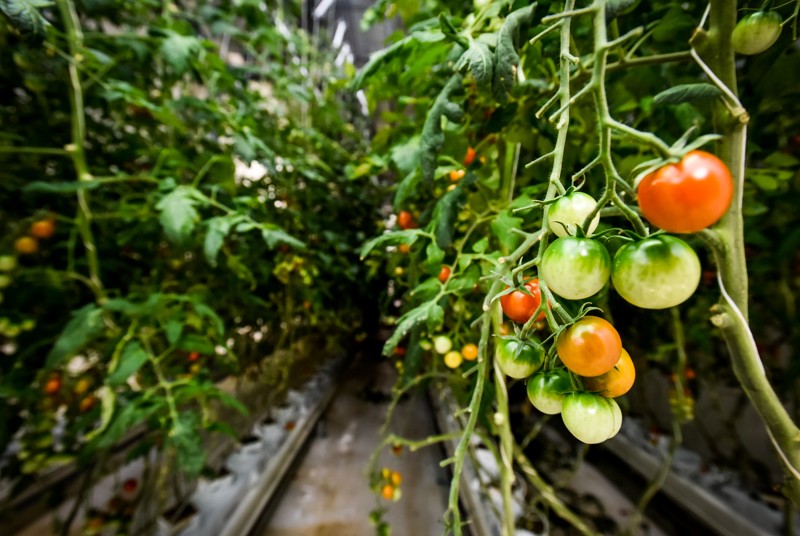
80 Acres Farms is now producing tomatoes in downtown Hamilton. They purchased the former Miami Motor Car Co. building on S. 2nd Street in February 2017 and have renovated it to create an indoor farm facility. NICK GRAHAM/STAFF
MORE: Dilapidated Hamilton building transforms into an industry-changing grow facility
80 Acres Farms launched renovations on the former Miami Motor Company building on South 2nd Street in early 2017, with plans to create 30,000 square feet of office and food production space downtown. The company is growing vine crops in that renovated location, where it started harvesting its first crops in April.
In September 2018, 80 Acres Farms broke ground on the first phase of its Hamilton Enterprise Park facility and in late March the first phase of the site started when the company started growing its first crop there.
It is set to become the country’s first fully automated indoor farm.
Most recently, the company moved its corporate headquarters, as well as 15 employees, to a newly renovated office space in downtown Hamilton. The company’s planned investment in Hamilton is expected to be more than $26.9 million.
MORE: Company with large Hamilton indoor growing operations joining international food effort
Future phases will add around 150,000 square feet of controlled environmental agriculture, or CEA, space. That space will allow 80 Acres to “dramatically increase” distribution with its growing list of retail and food service partners, which includes Whole Foods, Jungle Jim’s International Market, Dorothy Lane Market and Green Bean Delivery, Zelkind said.

Progressive Farming Developments For The Indoor And Vertical Farming Industry
Now into its third successful year, Urban Agri World
is the region's leading agriculture event focused on Agritech,
Controlled Environment Agriculture and Indoor Farming
It brings together Growers, Investors, Produce Buyers, Academics, Policy Makers, Technology & System Integrators and CEA Business Owners.
Featuring practical sessions on the hottest topics, exhibits, lunch table discussions and unlimited networking opportunities, it connects services and solution providers from all over the world to serious local buyers and partners.
About Urban Agri World (UAW 2019)
Many countries and companies are expressing strong interest in vertical farming business & urban agriculture. It is a solution to the weather and pests problems, food security, climate change and environmental preservation challenges.
Commercialization of vertical farming is catching on in Asia, Europe, USA, Russia & now Africa. Many private companies are interested in growing crops in hydroponic, aquaponics & aeroponics systems in warehouses, greenhouses, containers & high skyscrapers.
There is also a burgeoning interest in the production of medicinal plants in vertical farms following the new rulings on cannabis production for medicinal use. UAW 2019 will touch on the pressing issues pertaining to progressive farming developments for the Indoor and vertical farming industry.

"AGrowth AgTech Accelerator - 12 week programme"
The AGrowth Accelerator is a 12-week programme supporting innovative and scalable AgTech companies, from late seed through Series B stage. This programme focuses on delivering breakthrough innovations and technologies to impact the future of farming
The AGrowth accelerator programme is a 12-week programme commissioned by National Innovation Agency (NIA) and powered by Nest. Aimed at innovative and scalable AgTech startups, this accelerator programme supports startups and entrepreneurs from around the globe in delivering breakthrough innovations and technologies in AgTech to make an impact on the future of farming.
We are seeking AgTech companies that have established product-market fit and have
developed innovative solutions addressing the following areas:
Data transparency and analytics: data capture and analysis tools to maximise productivity
Automation & digitisation: technologies that can help reduce manual processes and increase efficiency
Logistics and supply chain visibility: platforms that create price transparency and visibility of logistic options and provide alternatives to incumbent solutions
New market identification and access: tools and platforms enabling farmers to access new buyers / markets
Urban agriculture: technologies to enable the creation of self-sustaining ecosystems in city environments, including but not limited to vertical and indoor farming
AGrowth Accelerator participants will be guided through their business growth and development with the help of business mentoring from NIA and Nest, as well as two leading corporates. It’s a great opportunity to establish a foothold in Thailand, or to expand your existing presence in the region through commercial partnerships.
The selected startups can expect a highly supportive and collaborative environment, with an opportunity to pitch their solutions. If chosen for the programme, startups will:
Be immersed in the innovation ecosystem in Thailand and establish a foothold to build a broader network in Asia as a foundation for future expansion
Be guided through a 12-week structured process working towards a potential PoC and possible commercial integration opportunities with two corporate sponsors
Gain exposure to business leaders and receive mentorship opportunities
Receive access to a network of investors as well as investment advice from Nest,
with the chance to pitch to investors at a demo day
Access customer insights regionally and internationally
Receive one round-trip flight as well as accommodations for the duration of the time
spent in Bangkok, Thailand
Applications close on August 11th, 2019
To learn more about the programme: http://bit.ly/32h2H5y
To apply: http://bit.ly/2NHobp8

Can Conveyors Improve Yield For Vertical Farming Systems?
Conveyors are sometimes used in indoor farming to optimize the density of the plants as they grow and to move the plants through automated systems to reduce labor in planting and harvesting
Vertical farms or indoor farms have the potential to achieve great efficiency in food production, promising less use of water and delivering fresh food produced efficiently from nearby geographic locations. However challenges remain – and conveyors and better vertical farming technology will likely be part of any economically viable solution. This is what the conveyor technologies company Ultimation is looking to provide to the sector.
Conveyors are sometimes used in indoor farming to optimize the density of the plants as they grow and to move the plants through automated systems to reduce labor in planting and harvesting. High efficiency LED lights have greatly enabled more efficient vertical farming technology. However replicating the efficiency of the sun remains a major challenge that indoor farming companies hope to achieve through improved control of all other plant growth variables.
Automation for vertical indoor farms
Conveyors and industrial automation equipment used in vertical farming automation systems can include many of the traditional conveyor types such as gravity roller conveyors, belt conveyors and skate wheel or flow rail conveyors. But more recently the technology used in larger systems is including motorized conveyor systems and overhead conveyors. Power and Free conveyors are the ultimate in space and volume optimization for vertical farming systems as they enable tight concentration of product in some areas while then enabling separation of the products as and when required for movement to processing areas.
Ultra high-density vertical farming systems aim to optimize plant production relative to the productive space employed for the task. Conveyors are essential in that optimization process to use all the available vertical space of a facility. Vertical farming automation can enable spacing to change as plants grow throughout a facility. Technology used can include robots as well as overhead conveyors, floor conveyors and specialized plant processing equipment.
According to Ultimation food safe materials and lubricants are used for all of their vertical farming conveyor systems. Vertical farms can help reduce “food miles” which is the distance that food items travel from the point of production to the table. High volume indoor farms located near to major consumption areas have the potential to reduce CO2 emissions from transport as well as deliver fresher and better tasting products.
For more information:
Ultimation Industries
15935 Sturgeon St.
Roseville, Michigan 48066-1818, USA
Tel: +1 (586) 771-1881
info@ultimation.net
www.ultimationinc.com
Publication date: 7/17/2019

AeroFarms Raises $100 Million In New Capital
Last year, AeroFarms raised $40 million in Series D funding with the INGKA Group, chef David Chang and retired U.S. general David Petraeus among the investors. At that time, AeroFarms had raised over $130 million; the new investment pushes its total over $230 million
Photo courtesy of AeroFarms
The New Jersey-Based grower Is Valued At $500 Million
According To Its Latest Round of Funding
July 19, 2019
According to an article in the Financial Times, Newark, New Jersey-based indoor farming company AeroFarms has raised $100 million in its latest round of funding. The lead investor is the INKGA Group, the parent company of furniture company IKEA. After this round, AeroFarms is valued at $500 million.
According to the Financial Times, the company's latest round of investment included no new backers. The company has not yet publicly disclosed the new funding.
Last year, AeroFarms raised $40 million in Series D funding with the INGKA Group, chef David Chang and retired U.S. general David Petraeus among the investors. At that time, AeroFarms had raised over $130 million; the new investment pushes its total over $230 million.
As of 2019, AeroFarms has two commercial farms in the U.S. - its flagship 70,000 square foot facility 30,000 square foot farm. The locations opened in 2016 and 2015, respectively.
In March of this year, it was announced that AeroFarms greens would be served on Singapore Airlines flights from Newark to Singapore. It also hired Roger Post, formerly of Danone Foods and Kraft Nabisco,as its new COO in February.

Indoor Vertical Farming, Electronically - Consumer Electronics Giants Such As Panasonic Are Expanding Into Indoor Agriculture
When the news first broke several years ago that Panasonic was growing lettuce in a warehouse in Singapore, it was tempting to think of it as a kind of lark—an exotic branding exercise meant to show the ever-expanding depth and breadth of new electronics technologies. The results have proven otherwise
When the news first broke several years ago that Panasonic was growing lettuce in a warehouse in Singapore, it was tempting to think of it as a kind of lark—an exotic branding exercise meant to show the ever-expanding depth and breadth of new electronics technologies.
The results have proven otherwise. Panasonic is now an established and growing player—if still a small one—in Asia’s agricultural marketplace, selling primarily to local grocers and restaurants. And it is not alone. Several of its rivals are engaged in similar experiments in diversification into vertical agriculture far beyond their core electronics businesses. What’s driving these high-tech high-fliers into this low-margin business? And what’s in it for them?
Not business as usual
A look inside Panasonic’s hydroponic operation reveals that there are indeed the predictable high-tech bells and whistles: automated farming systems do the seeding, potting, and irrigation. Plants grow under intelligent LED grow lights in a room whose temperature, humidity, and carbon dioxide settings are electronically controlled at levels that hasten and maximize plant growth.
But the electronics company is taking the enterprise seriously. It has more than quadrupled the farm’s square footage and output in the past few years. Its lab-coated farmer engineers now run a facility of almost 13,000 square feet that yields more than 80 tons of produce annually.
Meanwhile, in 2016, Fujitsu joined forces with Masuda Seed and Orix, a private equity firm, to use cloud-based technology to grow produce indoors in a facility in Japan, while Toshiba has also dabbled in leaf-vegetable production. In Dubai, Sharp recently debuted a high-tech strawberry-growing operation built around its Plasmacluster air-disinfecting technology. Many of these efforts are supported by governments in Asia that are looking for solutions to concerns about the scarcity of arable land and food sustainability. One estimate places the market for vertical indoor farming in Asia at $4 billion by 2024.
“It’s super interesting to see these companies starting to play in farming, where you go from the highest tech margins to the lowest margins possible,” says Allison Kopf, founder and CEO of Agrilyst, a tech company that harnesses data to help indoor farm operators build their businesses. The depth and intensity of the connection between the electronics companies and agriculture crystallized for her last year in China, when she toured a facility operated by BOE Technology Group, a Chinese maker of intelligent interface products like cell phone displays that, in a not-unrelated development, is also in the LED business. “The carryover opened up a new market for them,” she says. “And it makes sense—the technology definitely overlaps.”
Neil Mattson, associate professor at Cornell’s School of Integrative Plant Science in the department of horticulture, studies indoor growing. He points out that the factories are eerily suited to what growers need—predictability in an increasingly unpredictable world. These companies already produce electronic components in clean rooms with tight environmental controls that ensure impeccable air quality, lest any floating contaminants end up in motherboards or other highly sensitive equipment. “A clean-room protocol is really good in terms of food safety and infectious-disease issues,” Mattson says.
Climate, controlled
The indoor factories also mitigate food-supply issues arising from the changing climate. California’s unusually wet winter several years ago, for example, triggered shortages in spinach crops, causing the vegetable to virtually disappear for a time from stores on the East Coast. “The thought is that as the climate changes, we’re going to have to be more conscious of transportation and water and so on,” says Mattson. “And we don’t have to worry about wild animals, we don’t have surface-water irrigation sources, so there’s a lot less potential for contamination, and it’s a lot easier to control checkpoints.”
Growing in these kinds of controlled conditions is also several times more efficient than conventional farming in terms of water and fertilizer use and the use of space, Mattson notes. In 2015, researchers from Arizona State University found that lettuce grown in a hydroponic system used about a tenth of the water required with conventional methods. Scientists at the University of Nevada-Reno came up with a similar finding in a study focused on strawberries. These kinds of results prompted the authors of the Arizona study to note that hydroponics “could become a strategy for sustainably feeding the world’s growing population, if the high energy consumption can be overcome through improved efficiency and/or cost-effective renewables.”
Mattson concurs that the main issue right now is the power required for the lighting systems—and that research into LEDs may hold the solution. “Energy is the current sticking point,” he says.
All of these overlaps in technology and marketplace demand have made for some intense buzz. Back in the U.S., for example, the indoor farming startup Plenty recently announced it had raised $200 million in funding. A Panasonic spokesman told one media outlet: “We foresee this business to be a potential growth portfolio, given the global shortage of arable land, increasing populations, climate change, and demand for high-quality and stable food supply.”
But can it scale?
For all the deserved excitement, though, there are good reasons the electronics companies so far have mostly only dabbled in their respective enterprises. Serious questions remain about whether vertical farming is viable at any sort of significant scale. One problem is energy: indoor farms use twice as much as a greenhouse in the same climate, Mattson says, and significantly more than it takes to grow crops in a field and to ship them thousands of miles.
There are reasons why no dominant company has emerged, and they have to do with climate and geography, and the challenges inherent in shipping delicate foods like lettuce and strawberries. “Globally, you’ve got an industry that’s been around for decades and decades, but it looks very, very different in different regions,” Kopf says. “There are similarities that carry through, but as far as technology goes it looks very different because of geography. There’s no real standardization, which makes it hard for a clear market winner to evolve.”
In China, Kopf saw companies dabbling in agriculture using government subsidies, or opening farms on a one-off basis as a kind of experiment in ways to build market advantage, she says. The farming enterprises essentially amount to elaborate R&D programs—experimental efforts to determine whether produce can become a high-value product. “It feels very much like the Wild West,” Mattson says. “I like to say the hardware of intelligent lighting is farther advanced than our physiological understanding of plants. So a company can deliver these lights to the market, but we don’t truly know the best way to operate or use those lights.”
The learning curve
The reasons to bet on these counterintuitive types of business expansions? One is simply that these companies are deeply experienced at manufacturing and shipping products at scale. Mattson also says to expect improvements in LEDs and the understanding of how to use them—refining what companies refer to as their “light recipes.” Meanwhile, the continued evolution of robotics will drive down overhead.
One key question that remains is whether electronics companies really want to own and run the farms, or just provide the technology to run them. Either way, it’s safe to say that if you live in Asia in the not-so-near future, your lettuce and your Bluetooth headphones might very well have something very much in common.

The Future of The Agriculture Industry Is Vertical Farming
It’s only a subtle whiff in the air that indicates something might be hidden beneath the surface. But more than 100 ft below a nondescript building in south London’s district of Clapham, vegetables and herbs are growing in former raid shelters.
Vertical farming uses LED lights and nutrient-infused water to create optimal growing conditions for plants. Credit: Jeff Gilbert
23 July 2019
It’s only a subtle whiff in the air that indicates something might be hidden beneath the surface. But more than 100 ft below a nondescript building in south London’s district of Clapham, vegetables and herbs are growing in former raid shelters.
“You will hear trains rumbling four storeys above us, that's the Northern line,” says Steven Dring, co-founder of Growing Underground, a vertical farming start-up.
The shelters, built between 1939 and 1942 in tunnels under one of London’s busiest train lines, became a place of refuge for 8,000 people fleeing the Luftwaffe aircraft over the skies of London during the Battle of Britain.
Nearly a century later, the underground space has seen a radical transformation, as a pinkish hue now floods the tunnels lined with trays growing the garden-variety of produce: pea shoots, red mustard, fennel, radishes, rocket leaves, coriander, baby leaves and more.
For Growing Underground, so-called vertical farming promises to change the way food is produced through facilities that optimise vegetable growth and bring production within touching distance of town centres.
The industry itself is expected to be worth more than $11bn in just over six years, and has seen a commitment in the UK from the government, which is preparing to invest $24.8m through its Industrial Strategy Challenge Fund in innovative projects that boost agricultural productivity at a time when traditional farming is facing an uphill battle.
The average cost per acre of agricultural land has jumped almost 5,000pc from 1966 to $9,800 in 2017, while the amount of land available for farming has declined, as almost 450,000 hectares were lost to urban developments last decade.
“It's efficiency, this is how we need to grow,” Dring says. “It's about controlling that environment forensically to give the plants exactly what they want all the way through their life.”
To grow its produce, the Clapham-based company first sows seeds into a recycled piece of carpet that acts as a substrate for germination to take place in the dark.
Once the seeds have started to spring to life, they are incubated in vertically stacked trays, which are exposed to LED lights dialled into the exact brightness needed by the plants, and a carefully-crafted infusion to optimise growth, taste and yield.
“All the nutritional composition you would have in soil we put into water through a nutrient mix that is exactly what's required by the plants,” Dring says.
Credit: Jeff Gilbert
The company has found success with its products, becoming a key supplier to supermarket giants such as Waitrose, Whole Foods and Marks and Spencer, and are far from the only ones taking advantage of this new way of producing food, as a host of companies have started to experiment with vertical farming - all while swooning investors.
AeroFarms, a New Jersey-based vertical farming company, raised $100m at the start of the month in a funding round led by the investment vehicle of IKEA-owner, Ingka Group. It’s a move that brings the firm a step closer to “unicorn” status with a post-funding valuation of $500m, and will help it boost the production of its pesticide-free produce.
Meanwhile online food retailer Ocado, which announced an almost $1bn tie-up with Marks and Spencer earlier this year around its delivery business, declared its intention to step into vertical farming after revealing a $21m investment in the space last month, including in Scunthorpe-based Jones Food Company, operator of Europe’s largest indoor farm.
At the time, Tim Steiner, chief executive of Ocado, said that he hoped locally-grown herbs and vegetables could one day be delivered “to a customer’s kitchen within an hour of it being picked”.
But the influx of money into vertical farming didn’t always seem likely. According to Dring, the agriculture sector was “under-optimised” just a decade ago, with little attention directed towards the disruptive potential of technology.
Some keen-eyed investors caught a glimpse of potential early on. Take Graham Ramsbottom, chief executive of Wheatsheaf, the agricultural investment arm of the centuries-old Grosvenor Estate, headed by the Duke of Westminster.
Set up in 2012, Wheatsheaf took an early bet on Aerofarms when its first facility was “in a disused disco”. Ramsbottom, who has been involved in the agriculture industry for more than 30 years, said he saw little change in the way food was produced in that time, but found the data-led, precision approach on offer from vertical farming to be an interesting road forward.
“We grow food in open environments that have huge variability around climate,” he says. “If you take one acre of land from one side of the field to the other, you can have huge variation in terms of shading, temperature, type of soil, pest damage.”
The shift away from traditional agriculture has indeed picked up pace, but some criticism has been levelled at vertical farming, with concerns about the amount of energy needed to maintain facilities that are essentially growing plants 24/7.
“There's no doubt the energy equation is one of the big calculations that anyone looking to set up a facility like this does need to do at the outset,” says Belinda Clarke, director of trade body Agri-Tech East. Ramsbottom also claimed that he was “cognizant” of the issue before investing.
The growth of lettuce in a vertical farm, for example, requires 3,500kWh a year of energy for each square metre it is grown in due to the demands of artificial lighting, versus the 250kWh of energy needed to grow lettuce in a greenhouse.
As Clarke points out, managing these kinds of facilities “does require a degree of sophistication” that ensures management of the appropriate conditions, delivery of water, and correct humidity, all while keeping pests and diseases out.
But there could be workarounds to the energy conundrum. Prioritising the use of low-energy LED lights and recycling water can cut costs, while more innovative solutions can support the industry too. Clarke points to a facility run by Japanese tech giant Fujitsu, which uses “spare heat” to warm up a vertical farming system producing lettuce.
Another issue at hand is the high capital input cost involved in the initial setup of a facility, which is why the Agri-Tech East director thinks vertical farms need to be deployed in an “appropriate” way.
For some farmers eyeing up the opportunities in vertical farming for crops like wheat, potatoes or sugar beet, the benefits may not stack up, while for others in more challenging climates, the business case is evident.
“If you're in an environment which is very environmentally inhospitable, for example, or in a disaster recovery zone or something like that, then there is a real opportunity to augment the food production,” Clarke says.
The case for vertical farming has gone beyond just business. According to the United Nations, the world population is expected to reach 9.7bn by 2050, and the carbon intensive demands of current agricultural processes will be unsustainable if climate change is to be tackled.
“It's getting really hard to deny climate change [and] there’s going to be another India and China effectively on the planet by 2050,”says Dring.
Growing Underground has seen a “significant focus” from Asia and the Middle East, regions which are moving “to protect their food security and supply chains” as swelling middle-class populations will demand more and better quality produce.
It’s one reason why vertical farming is likely to stick around, but ultimately, any reason to produce food more effectively is one to grab a hold of.
“It's really doing what plants have always done,” says Ramsbottom, “in an environment where you can truly understand it.”

CubicFarms Is Pleased To Announce The Appointment of Rodrigo Santana as President And Chief Operating Officer
Rodrigo has extensive senior leadership experience from both private and publicly traded growth-oriented companies such as Dow Agrosciences, SGS, Commercial Testing & Engineering, and Sacré-Davey Engineering
VANCOUVER, BC / ACCESSWIRE / July 25, 2019 / CubicFarm® Systems Corp. (TSXV: CUB) (“CubicFarms” or the “Company”) is pleased to announce the appointment of Rodrigo Santana as President and Chief Operating Officer (COO).
“It is a great pleasure to welcome Rodrigo to our team”, stated Dave Dinesen, CEO of CubicFarm® Systems Corp. “Rodrigo brings a wealth of knowledge and expertise. Rodrigo’s appointment will enhance our ability to deliver operational excellence and further establish our vertical farming technology as a leader in the controlled environment agriculture space to drive customer and shareholder value.”
Rodrigo has extensive senior leadership experience from both private and publicly traded growth-oriented companies such as Dow Agrosciences, SGS, Commercial Testing & Engineering, and Sacré-Davey Engineering. As the Chief Operating Officer at Sacré-Davey Engineering, he led the company to significant growth, through strategic business and corporate development initiatives, as well as geographical expansion across North America.
Rodrigo has a successful track record in strategic growth planning and execution, financial and operational management, engineering, project management, and operational efficiency. Rodrigo has extensive international management experience in Europe, Africa, Australia, and the Americas.
Rodrigo earned a bachelor’s degree in Agriculture Engineering from the Federal University of Lavras, Brazil, and a Master’s in Business Administration from Lake Forest Graduate School of Management, Chicago, IL. As well, Rodrigo is a certified Six Sigma Black Belt.
"I am very pleased to join the talented team at CubicFarms. Together, we will further develop our operational capabilities and innovative technology to enhance the Company's growth”, said Rodrigo Santana.
Appointment subject to TMXV approval
Neither the TSX Venture Exchange nor its Regulation Services Provider (as that term is defined in the policies of the TSX Venture Exchange) accepts responsibility for the adequacy or accuracy of this release.
About CubicFarm® Systems Corp.
CubicFarm® Systems Corp. is an Ag-Tech and Vertical Farming company that utilizes patented technology to cultivate high-quality produce. The Company believes that it can provide a benefit to the world by significantly reducing the physical footprint of farming, shipping costs, and associated greenhouse gasses, while significantly decreasing the use of fresh water and eliminating the need for harmful pesticides.
Founded in 2015, the Company’s mission is to provide farmers around the world with an efficient growing system capable of producing predictable yields with superior taste. Using its unique, undulating growing system, the Company addresses the main challenges within the indoor farming industry by significantly reducing the need for physical labour, by reducing energy, and by maximizing yield per cubic foot. The Company has sold and installed systems in Canada and the US and is currently negotiating with a global pipeline of prospective customers. It also operates one wholly-owned facility in Pitt Meadows, BC and sells its produce in British Columbia to retail and wholesale customers under the brand name Thriiv Local Garden™.
CubicFarm® Systems Corp.’s patented growing system provides customers with a turnkey, commercial scale, hydroponic, automated vertical farming operation that can grow predictably and sustainably for 12 months of the year virtually anywhere on earth. CubicFarm® enables its customers to grow locally and to provide their markets with produce that is consistent in colour, size, taste, nutrition and allows for a longer shelf life. CubicFarms is focused on providing its technology to farmers to grow safe, sustainable, secure, fresh produce, nutraceutical ingredients, and animal feed. Further support and value are provided to our clients through our patent pending germination technology and proprietary auto harvesting and processing methods.
CubicFarm® Systems Corp.
For further information contact:
Ross Rayment, VP - Corporate Development
ross@cubicfarms.com work: 1-403-616-0312
Cautionary Notice Concerning Forward-Looking Statements
This news release includes certain “forward-looking statements” under applicable Canadian securities legislation. Forward looking statements are based upon a number of estimates and assumptions (including the receipt of regulatory approvals) that, while considered reasonable, are subject to known and unknown risks, uncertainties and other factors which may cause the actual results and future events to differ materially from those expressed or implied by such forward looking statements. Accordingly readers should not place undue reliance on forward-looking statements. The Company disclaims any intention or obligation to update or revise any forward-looking statements, whether as a result of new information, future events or otherwise, except as required by law.
SOURCE: CubicFarm® Systems Corp.
View source version on accesswire.com:
https://www.accesswire.com/553345/CubicFarmR-Systems-Corp-welcomes-Rodrigo-Santana-as-President-and-Chief-Operating-Officer
Micro-Naps For Plants: Flicking The Lights On And Off Can Save Energy Without Hurting Indoor Agriculture Harvests
Growing crops under artificial light is gaining momentum , particularly in regions where produce prices can be high during seasons when sunlight is sparse
7/22/2019
Author: Kevin M. Folta
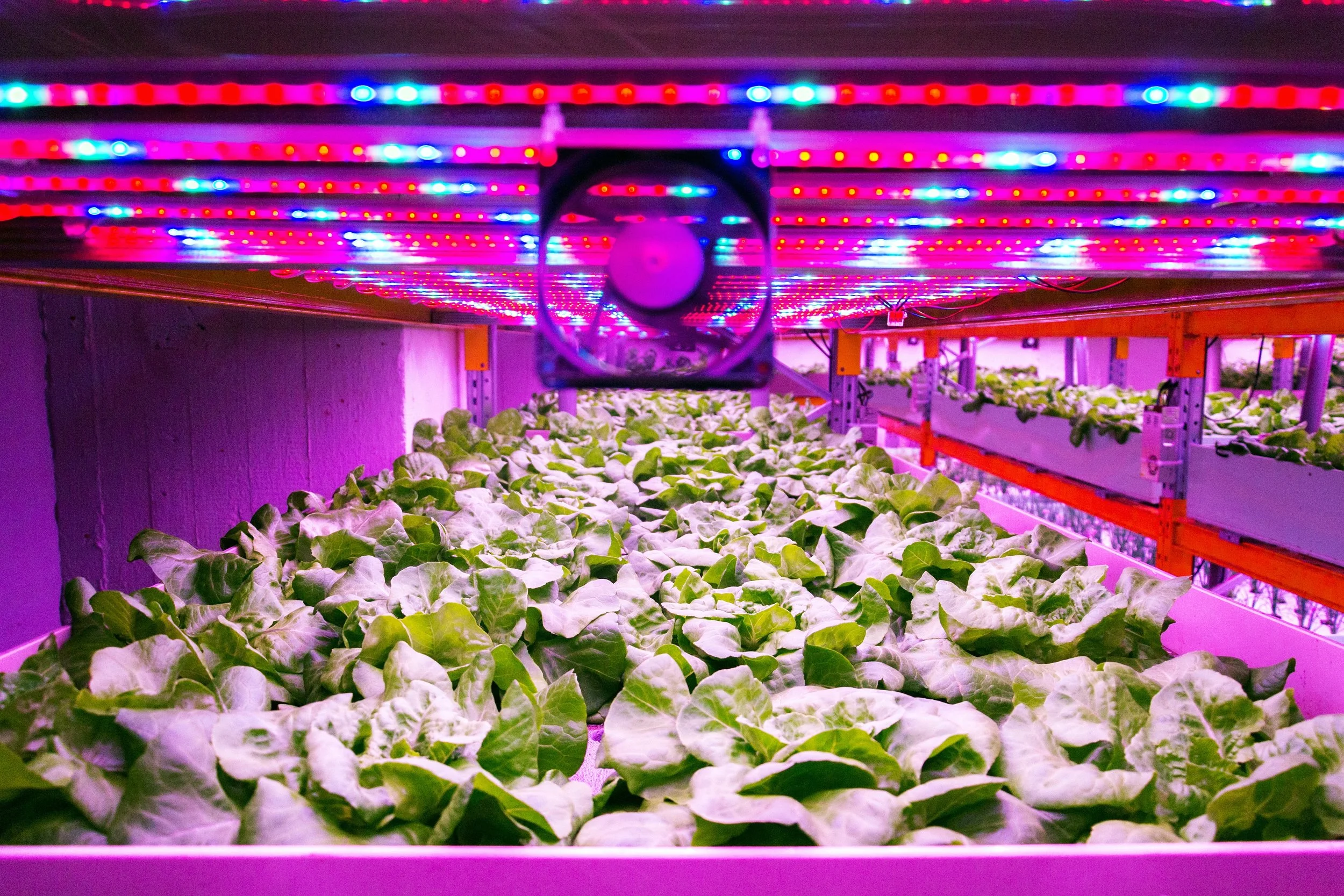
(MENAFN - The Conversation) A nighttime arrival at Amsterdam's Schiphol Airport flies you over the bright pink glow of vegetable production greenhouses. Growing crops under artificial light is gaining momentum , particularly in regions where produce prices can be high during seasons when sunlight is sparse.
The Netherlands is just one country that has rapidly adopted controlled-environment agriculture , where high-value specialty crops like herbs, fancy lettuces and tomatoes are produced in year-round illuminated greenhouses.Advocates suggest these completely enclosed buildings – or plant factories– could be a way to repurpose urban space, decrease food miles and provide local produce to city dwellers.
One of the central problems of this process is the high monetary cost of providing artificial light , usually via a combination of red and blue light-emitting diodes.Energy costs sometimes exceed 25% of the operational outlay. How can growers, particularly in the developing world,compete when the sun is free ? Higher energy use also translates to more carbon emissions, rather than the decreased carbon footprint sustainably farmed plants can provide.
I'vestudied how light affects plant growth and development for over 30 years. I recently found myself wondering: Rather than growing plants under a repeating cycle of one day of light and one night of darkness, what if the same daylight was split into pulses lasting only hours, minutes or seconds?
Indoor plants need plenty of artificial light. josefkubes/Shutterstock.com
Short bursts of light and dark
So my colleagues and I designed an experiment . We'd apply the normal amount of light in total, just break it up over different chunks of time.
Of course plants depend on light for photosynthesis, the process that in nature uses the sun's energy to merge carbon dioxide and water into sugars that fuel plant metabolism. Light also directs growth and development through its signals about day and night, and monkeying with that information stream might have disastrous results.
That's because breaking something good into smaller bits sometimes creates new problems. Imagine how happy you'd be to receive a US$100 bill – but not as thrilled with the equivalent 10,000 pennies. We suspected a plant's internal clock wouldn't accept the same luminous currency when broken into smaller denominations.
And that's exactly what we demonstrated in our experiments . Kale, turnip or beet seedlings exposed to cycles of 12 hours of light, 12 hours dark for four days grew normally, accumulating pigments and growing larger. When we decreased the frequency of light-dark cycles to 6 hours, 3 hours, 1 hour or 30 minutes, the plants revolted. We delivered the same amount of light, just applied in different-sized chunks, and the seedlings did not appreciate the treatment.
The same amount of light applied in shorter intervals over the day caused plants to grow more like they were in darkness. We suspect the light pulses conflicted with aplant's internal clock , and the seedlings had no idea what time of day it was. Stems stretched taller in an attempt to find more light, and processes like pigment production were put on hold.
But when we applied light in much, much shorter bursts, something remarkable happened. Plants grown under five-second on/off cycles appeared to be almost identical to those grown under the normal light/dark period. It's almost like the internal clock can't get started properly when sunrise comes every five seconds, so the plants don't seem to mind a day that is a few seconds long.
Just as we prepared to publish, undergraduate collaborator Paul Kusuma found that our discovery was not so novel. We soon realized we'd actually rediscovered something already known for 88 years. Scientists at the U.S. Department of Agriculture saw this same phenomenon in 1931 when they grew plants under light pulses of various durations. Their work in mature plants matches what we observed in seedlings with remarkable similarity.
A 1931 study by Garner and Allard tracked the growth of Yellow Cosmos flowers under light pulses of various durations.
J. Agri. Res. 42: National Agricultural Library, Agricultural Research Service, U.S. Department of Agriculture.,CC BY
Not only was all of this a retread of an old idea, but pulses of light do not save any energy. Five seconds on and off uses the same amount of energy as the lights being on for 12 hours; the lights are still on for half the day.
But what would happen if we extended the dark period? Five seconds on. Six seconds off. Or 10 seconds off. Or 20 seconds off. Maybe 80 seconds off? They didn't try that in 1931.
Building in extra downtime
It turns out that the plants don't mind a little downtime. After applying light for five seconds to activate photosynthesis and biological processes like pigment accumulation, we turned the light off for 10, or sometimes 20 seconds. Under these extended dark periods, the seedlings grew just as well as they had when the light and dark periods were equal. If this could be done on the scale of an indoor farm, it might translate to a significant energy savings, at least 30% and maybe more.
Recent yet-to-be published work in our lab has shown that the same concept works in leaf lettuces; they also don't mind an extended dark time between pulses. In some cases, the lettuces are green instead of purple and have larger leaves. That means a grower can produce a diversity of products, and with higher marketable product weight, by turning the lights off.
One variety of lettuce grew purple when given a 10-second dark period. They look similar to those grown with a five-second dark period, yet use 33% less energy. Extending the dark period to 20 seconds yielded green plants with more biomass.
J. Feng, K. Folta
Learning that plants can be grown under bursts of light rather than continuous illumination provides a way to potentially trim the expensive energy budget of indoor agriculture. More fresh vegetables could be grown with less energy, making the process more sustainable. My colleagues and I think this innovation could ultimately help drive new business and feed more people – and do so with less environmental impact.
Artificial Intelligence And Controlled Environment Agriculture
As the role of controlled environment growing increases in agriculture, so does the opportunity for artificial intelligence. But can AI replace the human touch? Kent Gruetzmacher investigates
Kent Gruetzmacher | July 15, 2019
Takeaway: As the role of controlled environment growing increases in agriculture, so does the opportunity for artificial intelligence. But can AI replace the human touch? Kent Gruetzmacher investigates.
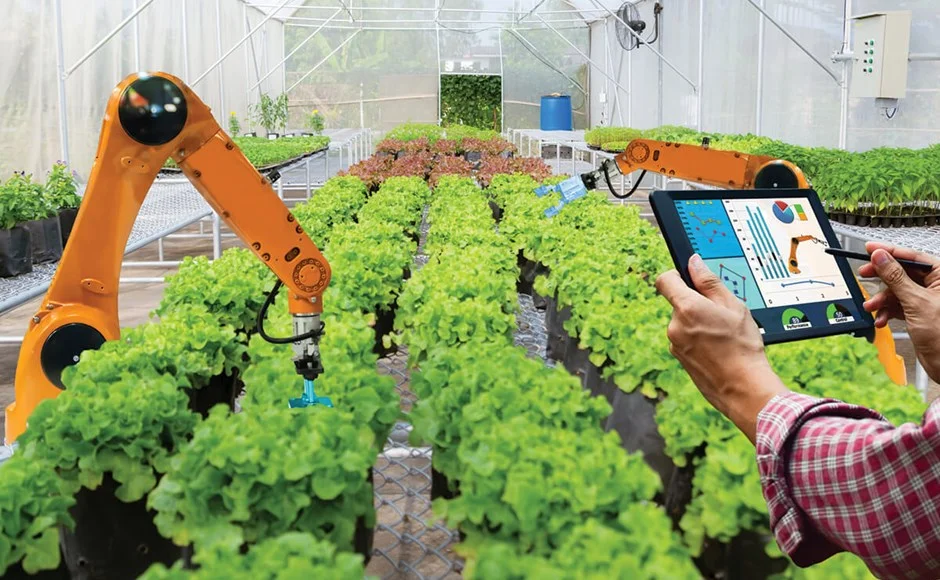
As both a process and vocation, controlled environment agriculture (CEA) is intimately entwined with technology. As CEA gets increasingly sophisticated through technological advancements, how these developments will affect horticultural processes and, in turn, world food supplies, remains largely unknown. At the forefront of new frontiers in CEA technology lies artificial intelligence (AI), which can potentially forever change the way humankind procures fresh produce, largely by replacing human labor with mechanized production.
We live in a world increasingly dependent upon, and defined by, technology. This notion rings true in almost every facet of day-to-day life in the 21st century, including communication, entertainment, and work. Similarly, for those living in the Western world, this same technology contributes to meeting our general human needs, as food is readily available for most people at grocery stores and beyond. Yet, our current food subsistence patterns are far from infallible and the technologies that make commercial agriculture possible are falling short on several fronts.
These shortcomings are evident in pesticide- and preservative-laden food sources as well as hungry human populations in less-fortunate regions of the globe.
Over the last few decades, CEA production has grown leaps and bounds in its scale and capabilities. Many believe CEA practices such as urban agriculture and vertical farming will eventually help resolve global food crises. This positive outlook is largely because of technological advancements in “smart” environmental controls and LED lighting, which have made CEA production viable, as well as profitable, on a commercial scale for the first time.
Sophisticated irrigation systems have also drastically reduced the amount of human labor required in propagating crops. For many CEA advocates and technology authorities, AI is the next phase in streamlining and sophisticating agricultural procedure as well as global subsistence patterns.
Why Artificial Intelligence?
There are several reasons why AI has so much potential in the world of CEA. These reasons mainly have to do with notions of horticultural processes and labor efficiency. Today, automation is already an essential element in most CEA growing, and its benefits are related to both consistency and efficiency in operations. For example, smart controllers take much of the guesswork out of troubleshooting environmental issues, while fertigation systems accomplish irrigation in a controlled and effective fashion.
Artificial intelligence has the capabilities to take these advancements even further.
Technology authorities postulate that AI can potentially circumvent human interaction with horticultural processes and garden maintenance almost in their entirety. According to agfundernews.com: “Hypothetically, it is possible for machines to learn to solve any problem on Earth relating to the physical interaction of all things within a defined or contained environment… by using artificial intelligence and machine learning.” The important take away here is the idea AI systems can learn as well as make choices based on the objective constraints that dictate rational human decision making.
Concerning both production and labor, this avant garde theory pushes notions of CEA automation to their absolute extremes. This AI learning concept postulates robots would be at the controls of environmental and irrigation systems that currently require human intervention in the way of fine tuning and decision making. Also, AI could circumvent human error from these processes by removing the human labor needed to grow CEA crops.
While these ultramodern appraisals of AI and CEA cultivation can seem somewhat alarming, many see a real potential benefit in the technology, namely because humans are, well, undependable. The industry is traditionally plagued by labor shortages in jobs that aren’t very attractive to even the most entry-level employees. Many companies, in CEA and beyond, understand the struggles of finding dependable help for their businesses, with tech retail giant Amazon currently employing more than 40,000 robots in its warehouse operations.
In agriculture, there are several robots being developed that can handle more rudimentary CEA garden chores such as leaf pruning. When it comes to AI learning applications and high-level jobs in CEA, it’s worth noting even the most rudimentary human error in fertilization or irrigation can have devastating effects on crops. Large vertical farming companies are aware of this and are currently implementing AI help in certain facets of their operations.
Read also: Automation Options for Outdoor Soil Gardens
Sensors and Data Analytics
Artificial intelligence applications in CEA are entirely data driven — machines both gather, as well as use, this information as the basis of machine learning. This sort of remote sensing, data compiling technology is already widely popular in more advanced CEA operations, especially regarding soil and air sensors. These technological advancements are used to measure moisture levels in grow mediums, and temperature and humidity levels in the air, and give cultivators real-time updates on the working analytics of their operations.
Commercial agriculture operations are taking notions of remote sensors and data analytics to the extreme by way of drone sensing. Some commercial farms use drones to fly over fields of crops and take precise readings of growth patterns and environmental conditions. This data informs growers, in real time, what sort of elements their garden is lacking or burdened with — allowing them to make proactive decisions in counteracting potential problems.
For the time being, drone technology in commercial agriculture is still being utilized to inform rational decision-making in the human mind — but many feel these processes would be integral with informing data matrices in the “minds” of AI machines.
Artificial Intelligence and Machine Learning
Potential advances, as well as drawbacks, of AI applications for CEA can be drawn from current mainstream research — such as with IBM — into the technology’s capabilities regarding commercial agriculture. agfundernews.com reports: “Interviews with some of the IBM project team members … revealed that the team believed it was entirely possible to ‘algorithm’ agriculture, meaning that algorithms could solve any problem in the world.”
While IBM’s claims are grandiose and positive in nature, they are not entirely unreasonable. Major computer tech companies such as Google and Pandora already utilize algorithms to isolate relevant data, make decisions, and cater to human needs. However, all these algorithmic applications depend upon objectively derived, predictable points of data in informing the machine learning process.
When it comes to creating algorithms for agriculture, researchers have been running into countless problems stemming from the unpredictability of the natural world. There are countless variables contributing to weather patterns around the globe; the nuances of these factors are far beyond the scope of human understanding. This notion is relevant because humankind cannot program machines to learn about environmental systems that we don’t yet understand, and AI cannot make the critical step in accounting for anomalous factors in weather or crop production. Therefore, our technology is only as strong as the data we supply it with via our own knowledge.
While issues with environmental predictability that plague AI applications in traditional agriculture may not seem to affect CEA production as intensely, there are still factors that make AI fall short in controlling CEA growing in its entirety. For instance, many greenhouse gardens are still largely at the mercy of Mother Nature and present challenges with anomalous weather patterns.
Similarly, indoor growing operations experience problems with such irregularities as equipment failure and power outages, which only human intervention can fix.
Controlled environment agriculture crop production is only as strong as the equipment and human labor supporting it, so the balance between these two continues to shift under the pressures of new advancements with technology such as AI. This notion presents an interesting crux in modern cultivation processes, as automation can provide a more efficient platform for consistency than with human labor. However, machines cannot account for the rhythms of the natural world or other operational variances.
Many accomplished horticulturists understand the intuitive touch it takes to produce exceptional crops — this intuition comes as a feeling rather than as a form of objective knowledge or data. AI and other technological advancements in CEA growing have their place in today’s horticultural processes, yet cannot match the capacity for creativity explicit in the human mind.
Written by Kent Gruetzmacher
Kent Gruetzmacher is a California-based freelance writer and the west coast director of business development at Mac & Fulton Executive Search and Consulting, an employment recruiting firm dedicated to the indoor gardening and hydroponics industries. He is interested in utilizing his Master of Arts in humanities to explore the many cultural and business facets of this emerging industry by way of his entrepreneurial projects.

Apex Farms Corp. Retains New CFO and Board Member
Apex Farms Corp. (“Apex Farms” or the “Company”), a vertical farming technology company that designs and produces proprietary vertical hydroponic farming systems for both commercial and residential use, is proud to announce that it has retained Melissa Kennedy as its Chief Financial Officer and as a member of its board of directors
ACCESSWIRE July 24, 2019
WILMINGTON, DE / ACCESSWIRE / July 24, 2019 / Apex Farms Corp. (“Apex Farms” or the “Company”), a vertical farming technology company that designs and produces proprietary vertical hydroponic farming systems for both commercial and residential use, is proud to announce that it has retained Melissa Kennedy as its Chief Financial Officer and as a member of its board of directors.
Melissa Kennedy was the controller of a Hotel Sofitel (1994-1997), a sole proprietor working as the bookkeeper for several entities (1997-2010), the campaign controller for a U.S. senator (2001-2010), the treasurer for a political action committee (2003-2011), the business manager for a strategic and political consulting firm (2010-2017) and, most recently, a sole proprietor working as an intermediary accountant for clients reporting to the SEC (2015-2019).
Melissa Kennedy stated ‘I’m very happy to be CFO of Apex Farms Corp. “I’m an electric car-driving , tree hugger” living in the Pacific Northwest so working for a green company is an absolute dream come true. I look forward to putting my accounting and SEC-reporting skills to work in growing the company and to help take the company to the next level.”
Alexander M. Woods-Leo the Founder and CEO of Apex Farms Corp. went on to say “bringing Melissa Kennedy on as CFO and as a member of our board is an important step as we traverse through our next goal of completing becoming publicly traded. Ms. Kennedy’s background and expertise with respect to finances and her experience as a controller will be instrumental to strengthening our internal and disclosure controls and to our future success.”
Initial Public Offering
Apex Farms Corp. is seeking to sell up to 5,000,000 shares of its common stock at an offering price of $0.20 per share for aggregate maximum gross proceeds of one million dollars ($1,000,000). To date, the Company has raised $191,368.80 under its Regulation A+, Tier 2 IPO. The Company is now posting its offering on the StartEngine platform where it will seek to raise up to an additional $808,631.20 over the next 90 days. The Company intends to use the net proceeds of the offering for engineering and prototyping, marketing, production and inventory, administrative and corporate expenses, professional fees and compensation and working capital reserves. The offering circular for the offering is available on the SEC's website at www.sec.gov and may be accessed using the following link:
https://www.sec.gov/cgi-bin/browse-edgar?company=Apex+Farms+Corp.&owner=exclude&action=getcompany
and on the Start engine portal https://www.startengine.com/apex-farms-corp
Both accredited and non-accredited investors can invest as little as $500 in the offering by visiting the offering page on the StartEngine website using the following link: https://www.startengine.com/apex-farms-corp
The offering of the Company's common stock is subject to market and other conditions, and there can be no assurance as to whether or when the offering may be completed, or how much capital will be raised, if any. The Company cannot predict the timing of its planned quotation on the over-the-counter market.
About Apex Farms Corp.
Apex Farms Corp. designs highly practical vertical growing systems. We have analyzed, challenged, and worked out a system for growing food that can be accessible to everyone at relatively low prices. We see our community as the world at large, standardizing our farming method to create jobs, cultivate healthier eating opportunities, and reducing the carbon footprint.
With global hunger on the rise, many farms face challenges in meeting demand due to the high costs of water, land, energy, and labor. Apex Farms has developed a Vertical Farming System to address this need. Using patented and patent-pending technology, the hydroponic system can grow a wide variety of plants, including vine plants, root plants, flowers, and greens. The planting rows are stacked to reduce overall resource use but are fully accessible for harvesting from the ground - no need for conveyor belts, scaffolding, or complex machinery. Ultimately, the company wants to achieve the highest levels of efficiency and allow clients to fully customize their farm.
For more information about Apex Farms Corp., please visit: www.apexfarming.com
FORWARD-LOOKING STATEMENTS:
The information set forth above includes statements, estimates, projections with respect to our anticipated future performance and other forward-looking statements, which are subject to risks, uncertainties and assumptions. In some cases, you can identify these statements by forward-looking words such as "may," "might," "will," "should," "expect," "plan," "anticipate," "believe," "estimate," "predict," "potential," "future" or "continue," the negative of these terms and other comparable terminology. The forward-looking statements include statements about our ability to successfully commercialize a smaller residential system at a lower price point, our ability to successfully raise capital in our Regulation A offering, our ability to obtain additional patents, our ability to successfully generate revenues, grow our business and execute our business plan. Such forward-looking statements are based on current plans, estimates and expectations and are made pursuant to the Private Securities Litigation Reform Act of 1995. These statements, estimates and projections are based upon various assumptions that we made concerning our anticipated results and industry trends, which may or may not occur. We are not making any representations as to the accuracy of these statements, estimates or projections. Our actual performance may be materially different from the statements, estimates or projections set forth above as a result of various risks applicable to our company as discussed in our Form 1-A Offering Statement that was filed with the Securities and Exchange Commission. We undertake no obligation to update or revise forward-looking statements to reflect changed assumptions, the occurrence of unanticipated events or changes to future operating results.
Important Notice the Regarding Regulation A Offering
Apex Farms Corp. is conducting an offering of its securities under Regulation A of the Securities Act of 1933, as amended. To learn more about this offering or to invest in this offering visit Apex Farms' offering page using this link : https://www.startengine.com/apex-farms-corp . An offering statement regarding Apex Farms' Regulation A offering has been filed with the SEC. The SEC has qualified that offering statement, which means that Apex Farms Corp. may make sales of the securities described by that offering statement. It does not mean that the SEC has approved, passed upon the merits or passed upon the accuracy or completeness of the information in the offering statement. You may obtain a copy of the offering circular that is part of that offering statement through this link: https://www.sec.gov/Archives/edgar/data/1729481/000144586619000827/apex_253g1.htm
Investing in an initial public offering like our Regulation A offering is subject to unique risks, tolerance for volatility, and potential loss of your investment, that investors should be aware of prior to making an investment decision. Please carefully review the risk factors contained in the offering circular for this offering.
For more information contact:
Alexander M. Woods-Leo
alex@apexfarming.com
302-307-3668 Ext. #1
SOURCE: Apex Farms Corp.

GP Solutions Creates New "Living Soils" For Consumers, Gardeners and Farmers
GP Solutions created a unique growth medium called "Prolific" that contains no native soil. Prolific is composed of a diverse population of beneficial bacteria and fungi, which create an ideal environment for abundant, healthy crops of all types
New Bio-Technologies Give Rise To A New Product Formulation That
Will Disrupt The $262 Billion Organic Food Market
CORONA, Calif., July 22, 2019 /PRNewswire/ -- GP Solutions (GWPD), a leading developer of modular automated micro-farms, has created a category-disrupting, proprietary lineup of premium "living soils."
GP Solutions created a unique growth medium called "Prolific" that contains no native soil. Prolific is composed of a diverse population of beneficial bacteria and fungi, which create an ideal environment for abundant, healthy crops of all types.
An article in The Scientist reported, "Plants are populated by a cornucopia of diverse microorganisms," and that adding beneficial microbes in the form of a "plant probiotic" could produce healthier, more robust harvests.
A research study published by Microbial Biotechnology, confirmed that these probiotics enhance crop production.
"Plant-associated microbiomes have tremendous potential to improve plant resilience and yields in farming systems," the scientific journal reported.
GP Solutions developed this proprietary growth medium with accountability and traceability for each ingredient.
"As consumers become aware of the differences between dirty farming, which contains contaminated human and sewage waste byproducts in the soil, and clean farming, which contains a diverse beneficial microbial population that produces mineral rich crops, the demand for our living growth medium will increase exponentially," said George Natzic, President of GP Solutions.
GP Solutions will be providing Prolific to customers of GrowPod™ automated farms, as well as to the general public within the near future.
"This is not just disrupting the organic and farming industries, it is the dawning of a new era in agriculture," Natzic added.
For information, visit: www.growpodsolutions.com, or call (855) 247-8054.
ABOUT GP SOLUTIONS:
GP Solutions developed "GrowPods" – portable, modular, automated indoor micro-farms that provide optimum conditions for plant cultivation with total environmental control.
Forward-Looking Statements
This release includes predictions or information that might be considered "forward-looking" within securities laws. These statements represent Company's current judgments but are subject to uncertainties that could cause results to differ. Readers are cautioned to not place undue reliance on these statements, which reflect management's opinions only as of the date of this release. The Company is not obligated to revise any statements in light of new information or events.
Connect:
Email: info@growpodsolutions.com
Website: www.growpodsolutions.com
Facebook: facebook.com/GrowPodTechnology
Twitter: @GrowPodSolution
Media:
hello@inov8.us

LettUs Grow Wins National Shell Enterprise Development Award
LettUs Grow makes cutting edge technology for greenhouses and vertical farms with the mission to create a more sustainable future for the world’s eating habits
The Sustainable Indoor Farming Company Takes
Home A Financial Prize to Help Scale The Company
23RD JULY 2019
LettUs Grow makes cutting edge technology for greenhouses and vertical farms with the mission to create a more sustainable future for the world’s eating habits.
And their efforts to make ethical eating possible aren’t going unnoticed – LettUs Grow’s Co-founder and Managing Director, Charlie Guy, has been crowned national winner of the Shell LiveWIRE Young Entrepreneur of the Year Award.
This award is more than just a title too – the startup has been gifted with £30,000 to help scale the indoor farming company.
The only way is up
Charlie is incredibly humbled and grateful for the recognition. He says, “I am truly honoured to have won amongst such an impressive group of finalists. Making it through the competitive process for the national competition is fantastic validation for the potential impact of our technology.
“It’s a testament to the amazing work from our whole team over the past three years, to bring our unique indoor growing products to market. We’re looking forward to working with the best growers from around the world, to realise the full impact of our technology over the coming years!”
LettUs Grow’s incredibly unique aeroponic indoor farming tech enables crops to grow without sunlight or soil – and what’s more is this revolutionary innovation reduces water and fertiliser use by up to 95%, without requiring pesticides or herbicides.
This new system of growing our food has the potential to make an incredible environmental impact on delivering your food from farm to fork as farms can be situated in either rural or urban locations.
The judges were hugely impressed by the breath of positive impact LettUs Grow could have. Ana Avaliani, Head of Enterprise Hub at the Royal Academy of Engineering and judge on this year’s panel says, “Despite working in the increasingly popular sector of vertical farming, Charlie impressed the judges with LettUs Grow’s truly innovative patent-pending technology with a unique farm management software for indoor and vertical farms.
“I’m excited to watch the business scale and expand into markets outside the UK, deliver on its mission to reduce the waste and carbon footprint of fresh produce and see how Shell’s funding can support this growth.”
A passionate pitch
The finalists took part in a day of pitching to bid for the number one spots. Charlie’s clear enthusiasm for LettUs Grow impressed the judges, as Ana tells us, “Charlie himself has all of the makings of an entrepreneur: his vision for the company – to grow the world’s leading vertical farming business – was evident in every aspect of the presentation, and his passion to feed people in a more sustainable way was clear.”
All the finalists were then invited to attend StartUp Connect, a Shell event for low carbon startups with the ambition to scale up.
Founder of StartUp Britain, Oli Barrett, hosted the afternoon, which connected 100 low carbon entrepreneurs with over 300 senior executives and bright minds with the ability to help get their startup off the ground.
Congratulations to LettUs Grow for the prize and award! Check out LettUs Grow’s website for more information about them, or follow them on Twitter here: @LettUsGrow.

VIDEO: This Robotic Farm Uses 90% Less Water Than Traditional Farming
There are multiple advantages of our approach to farming. With hydroponics, we can grow near consumption, near people. And with robotics, we can make sure that we're getting a consistently, great product every week
Iron Ox's robotic farm uses 90% less water than traditional farming.
The plants are grown without soil in sensor-connected, hydroponic trays.
Following is the transcript of the video.
This robotic farm uses 90% less water than traditional farming.
According to the World Resources Institute, the world population will be 10 billion by 2050.
That's 2.4 billion more mouths to feed than today.
That's a challenge that start-up Iron Ox is tackling.
Iron Ox wants to create more sustainable farming by combining robotics and hydroponics.
Hydroponics is the process of growing plants without soil.
Brandon Alexander: There [are] multiple advantages of our approach to farming. With hydroponics, we can grow near consumption, near people. And with robotics, we can make sure that we're getting a consistently, great product every week.
Automation Sets Its Sights On Agriculture, With "Civilization" Hanging In the Balances
Indoor farms are now producing food at quantities that may have them competing with conventional farms in the near future
By Innovation & Tech Today | Jul 18, 2019
Arguably, the most vital science known to civilization is that of agriculture.
Even at its most primitive stages, society could not exist without a source of food for those in it. Likewise, cultures with the most accessibility to food historically tend to be the most prosperous. Given this plight, farming has always been a key area for the focus of scientific advancement, from Roman aqueducts to horse-driven plows. The high-tech 21st century is no exception, and moreover poses an unparalleled need for agricultural innovation.
7.5 BILLION AND COUNTING
With a global population of 7.5 billion people and rising, the farming industry must modernize not only to provide sustenance on such a scale, but also to do so economically. Opportunely, various means of improving the farming system are on the rise, most conforming to a field typically referred to as automated agriculture. Automated agriculture encompasses a hybrid of computer automation, robotics, and the traditional agrarian lifestyle, with the aspiration of increasing food availability while decreasing the cost of production.
The exact origins of automated agriculture are debatable, as some remotely controlled farming systems, such as automatic sprinklers, have been utilized for generations. The notion of automated agriculture as a standalone enterprise nonetheless began when manufacturing legend John Deere publicly released its AutoTrac tractor guidance system in 2002, the first commercially available GPS setup of its kind. This rudimentary system allowed for the automated planting and harvesting of fields based on predefined coordinate paths, though still required some manual command from a driver, and was scarcely as precise as desired.
In spite of its imperfections, the AutoTrac was a massive success and would go on to refine its ability to operate a tractor with little to no human control. Through the AutoTrac, Deere had begun popularizing the craft of precision agriculture (or precision ag), a term first coined to encompass the fusion of information technology and agriculture. In the years following, precision ag would grow exponentially, establishing new methods to automate duties that were previously burdensome and time consuming. Mechanization would eventually become commonplace for irrigation, soil analysis, application of nutrients (known as Variable Rate Farming), yield assessment, and countless other tasks critical to farm management.
Although the rapid realization of farming mechanization was unquestionably game changing, full-fledged automation had yet to be reached – that is, until the introduction of smart technology. Devices such as iPhones and tablets would finally give farmers a means of operating advanced systems in a convenient, all-in-one format that would at last give birth to true automated agriculture.
NOT JUST “SMART” TECH
The scope of automated agriculture has since gone far beyond its inception of using smart technology to optimize machinery. Rather, it’s now seeking to turn machinery itself into smart technology. At the forefront of this mission is the ongoing development of what is possibly automated agriculture’s most ambitious project yet: the autonomous tractor. A member of the up-and-coming family of autonomous vehicles, these tractors could further revolutionize the trade by removing the need for manual tractor operation in its entirety.
The usual big names such as John Deere and Case IH are particularly invested in this idea, delivering promises in recent years that fully autonomous tractors are on the near horizon. However, despite much promotion, there remains no sign of industry leaders releasing robotic tractors any time soon. This of course does not imply that autonomous tractors are completely out of reach, in large part due to the budding agricultural company Smart Ag and their flagship product AutoCart. Debuted at the 2018 Farm Progress Show in Boone, Iowa, AutoCart intends to deliver the first fully functioning autonomous tractor technology to the consumer market.
AutoCart is not a tractor in itself, but rather a system to modify preexisting equipment for complete automation. The mean unit price is set at $37,500, and those who placed the first available pre-orders in late 2018 should expect to receive theirs by the spring of 2019. As idealistic as the autonomous tractor may be, the concept has yet to face the ultimate test of what leverage it currently has to offer to the average farmer, leaving the future of the driverless tractor currently unclear.
Traditional farms, while having been responsible for devising automated agriculture, are not alone in enjoying the rewards of such innovations: in an ironic turn of events, automated agriculture would become responsible for enabling the rapid growth of indoor farming. Indoor farming, as its name implies, involves agricultural production in an indoor, and often urban, environment.
As farmlands far and wide reaped the benefits of precision agriculture, and eventually automated agriculture, these same technologies were being modified to raise crops in closets, garages, and warehouses. Predictably, the early days of modern indoor farming were often focused on the marijuana trade; however, it was not long before its larger potential for agricultural advancement was realized. Indoor farms are now producing food at quantities that may have them competing with conventional farms in the near future.
Furthermore, the employment of automation gives indoor farming an indispensible advantage in that every component of the process can be automated, some of which, including light exposure and climate, are fundamentally uncontrollable in an outdoor setting. With such prospects for growth and sustainability, regardless of evolving outdoor equipment such as autonomous tractors, the automated future of agriculture could very well be enclosed in walls rather than sprawling across plains.
Farming is an ancient industry, one that has undergone innumerable changes for millennia, always in the interest in allowing for food to become more abundant and affordable. These adaptations and innovations are undeniably always tied to the steady progression of humankind and how it chooses to organize itself. Much like how breakthroughs during the industrial revolution allowed for the development of the plow, it seems that the computer era has found its analogue in automated agriculture.
Farms are becoming more efficient thanks to automated technologies like robotics and GPS, enabling substantial quantities of crops to be produced at unprecedentedly decreased costs and labor. Amidst these current renovations are the looming future of automated agriculture: the inevitability of autonomous tractors and large-scale indoor farms. While the total supply of food on Earth remains relatively limited, the debut of automated agriculture indicates a great deal of both advancement and hope in the future of food production.
The post How Automation is Revolutionizing Agriculture appeared first on Innovation & Tech Today.

Ultimation Expands Conveyor Systems To Improve Vertical Farming Efficiency
As sustainable agricultural operations such as vertical and indoor farms become more prevalent, conveyor technology systems can be part of the solution, according to Ultimation Industries LLC, a leader in conveyor technology and automation for nearly 30 years
ROSEVILLE, Mich. (July 10, 2019) – As sustainable agricultural operations such as vertical and indoor farms become more prevalent, conveyor technology systems can be part of the solution, according to Ultimation Industries LLC, a leader in conveyor technology and automation for nearly 30 years.
Vertical farms can potentially achieve higher yields for the surface area dedicated to production by controlling the light, temperature, humidity, water and nutrients the plants receive. They also reduce “food miles,” which is the distance that food items travel from the point of production to the table, and can reduce CO2 emission from transport while delivering fresher and better tasting products.
“Conveyors are essential to vertical farming because they can make use of all the available vertical space of a facility and can move plants through automated systems as they grow,” said Jacqueline Canny, CEO of Ultimation Industries. She adds that robots as well as overhead conveyors, floor conveyors and specialized plant material handling equipment can increase efficiency in planting and harvesting operations. Ultimation has already completed a major system for a west coast based vertical farming system, which is believed to be the world’s largest scale facility. The technology used in that project is proprietary and several customized projects with other customers are in progress.
Conveyors and industrial automation equipment used in vertical farming includes many of the traditional conveyor types such as gravity roller, belt, and skate wheel or flow rail conveyors. These conveyors are among the most versatile because they help reduce the manual labor of carrying items by hand. More recently, the technology used in larger vertical farming systems is including motorized and overhead conveyors. These systems take advantage of unused vertical space above a working area and bring plants down to an operator level when needed. Power and Free conveyors are the ultimate in space and volume optimization for vertical farming systems as they enable tight concentration of product in some areas while also enabling separation of the products for movement to processing areas.
Ultimation supplies vertical farming companies with conveyors and equipment ranging from small gravity and belt conveyors from their “quick ship” product range to major overhead power and free conveyor systems to support commercial scale production. Their systems meet food-safe requirements for lubricants, oils and greases.
“As indoor farmers work to achieve greater efficiencies in food production, conveyor systems technology is likely to be part of any economically viable solution,” said Canny. “We see the vertical and indoor farming space as a major new segment for material handling systems, and we’re pleased to be taking a leading position in this category.”
Interested in vertical farming technology and vertical farming equipment? Contact Ultimation today at info@ultimation.net or call us on +1-586-771-1881 to discuss your requirements or visit the Ultimation website at https://www.ultimationinc.com/ for more information.
About Ultimation:
Ultimation Industries LLC is a woman-owned leader in the conveyor technology and automation industry. Founded in 1989, Ultimation designs, manufactures and installs machinery and equipment, automation devices, tire and wheel processing lines and conveyor systems for customers throughout the Americas. The company offers a line of proprietary automation systems and is also a leading integrator of Webb Power and Free conveyors. Ultimation’s e-commerce channel sells Webb, Ultimation and a wide range of other conveyor equipment. Visit https://www.ultimationinc.com/ for the latest product information and news about Ultimation Industries LLC.
###
For further information please contact: Nancy Sarpolis at nancy@scgmich.com.

Pink Farms Secures Early Funding To Bring Vertical Farming To Brazil
Post-harvest food losses can reach 40% in many places, and Brazil is no exception. São Paulo-based Pink Farms has raised two million reals ($532,000) to combat food waste by bringing the farms into the city
Impact Tech | July 17, 2019
ImpactAlpha, July 18 – Post-harvest food losses can reach 40% in many places, and Brazil is no exception. São Paulo-based Pink Farms has raised two million reals ($532,000) to combat food waste by bringing the farms into the city.
The funding round was backed by agribusiness venture capital firm SP Ventures and seed venture fund Capital Lab. Pink Farms will use the funding to build its first large-scale facility to grow greens and vegetables in São Paulo.
The company is an early mover in vertical farming in Brazil, but globally, its peers have been raking in hundreds of millions of dollars in investment capital to improve the nascent technology’s capabilities and costs.
New Jersey-based AeroFarms and Germany’s InFarm both recently raised $100 million funding rounds to support their vertical farming growth.

Case Study From Freight Farms
A conversation with Steve Huntley of Enlightened Crops on how he discovered Freight Farms and leveraged previous business experience into his new venture of Container Farming
A conversation with Steve Huntley of Enlightened Crops on how he discovered Freight Farms and leveraged previous business experience into his new venture of Container Farming
07/18/19
Launching a Successful Second Career With Container Farming
Case Study From | Freight Farms
Steve wasn’t always a farmer. After some years in the corporate world, he started a small service business with his wife Cathy. The business focused on plumbing, heating, and cooling, and the couple ran it successfully for 18 years. In 2017, Steve and Cathy decided that they were interested in moving on to something that would be more flexible as they looked towards retirement.
They set out looking for a new venture that would benefit the community–especially in the downtown area. One thing they found was a lack of fresh produce availability in Downtown; They decided to explore that route and ran into the concept of hydroponic farming.
A friendly face
Steve wasn’t the only person in Grand Rapids interested in hydroponics. Brian Harris had previously purchased a Leafy Green Machine (LGM) and was a long-time friend of Steve’s from a job 30 years ago! Steve had been thinking of pursuing hydroponics with a free-standing warehouse system, but after seeing Brian on local TV, he reached out and saw the LGM for himself. After working at the farm with Brian a few times, Steve was convinced this is was what he was looking for.
Fellow Freight Farms Brian Harris of Green Collar Farms
“We were very impressed with the Freight Farm, how efficient everything was–it was already pre-set up and there was great support. We did some calculations and, with good yields, we could supply a lot of product to the urban area.”
— Steve Huntley
No experience, no problem
Steve felt comfortable pursuing a new farming career in spite of having almost no agricultural background. While he had grown up in a farming community, the closest Steve had gotten to commercial food production was a small personal garden at home. However, he was sure that with the farm’s smart set up, and the support of Brian, fellow farmers, and the Freight Farms team, he could be successful.
THE BUSINESS
Previous business experience helped Steve think strategically about his market.
“First thing you want to find out is if the market’s available: It could be a great idea, but if the market’s not ready or saturated, it won’t work.”
With this in mind, Steve created a market research form with questions for chefs and sous chefs, their initial target customers. The goal was to get a sense of the market, and they came away with a resounding yes, especially for access to good quality produce year-round in Michigan’s seasonal climate.
Knowing that the demand was there, Steve and Cathy looked at their potential yields, calculated potential expenses and profits, and decided they were ready to start farming.
Taking a leap of faith
Before the arrival of his farm, Steve had marketed the produce to chefs that were excited about the idea of local, chemical-free produce. However, without samples, he wasn’t able to finalize any agreements. At that point, he had to trust that his due diligence had been enough.
“The leap of faith is necessary for anyone starting any business. You can get all the data, but nothing is guaranteed. You have to just make an educated guess...If you’re passionate about it...it will work out for you.”
— Steve Huntley
Friends > competitors
In spite of the fact that Steve and Brian are both Freight Farmers in the same city, Steve doesn’t believe they’re anywhere near saturating the market and becoming direct competitors. Steve explains: “The Freight Farm is such a unique concept that there’s enough to go around in our area. We do experience competition from other types of–mainly larger–hydroponic farms, but we’re carving out our niche.”
Finding customers
Since launching his farm, Steve’s customers include several high end restaurants, an urban fresh food grocery store, and–most recently–a fresh food distribution company that delivers Steve’s greens to stores around the city.
Steve initially focused on restaurants because they had smaller demands that would be more achievable while him and Cathy were getting comfortable in the farm. He approached several high end restaurants (the ones that would want to pay a premium for greens) with samples from his newly-arrived farm and some informative brochures.
These he either mailed or, more successfully, dropped off in person during off-peak restaurant hours. Once Steve’s farm was producing higher yields, he approached retail stores in his area with the same tactic.
“I was surprised that a lot of these chefs were willing to talk with me and try out our samples. You don’t get everyone of them, but if you go back every couple of months, at some point they’ll need your product.”
— Steve Huntley
Steve also runs a small farm stand for friends and neighbors. Since he frequently schedules more production than he needs to make sure regular customers always get their demands met, this means that there are usually crops left over. Steve sells surplus produce through a simple online portal (using Eat from Farms) that customers can use to order whatever Steve has in stock. He also uses surpluses as an opportunity to donate to local food banks.
Crops and yields
So what is Steve actually selling to this wonderfully diverse customer base?
After lots of feedback and testing, Steve has narrowed his production down to a few superstar crops: Arugula and basil form 80 percent of the farm’s production, while artisanal lettuces make up the remainder of the farm’s weekly output. Steve differentiates his produce for his different customers: the grocery store sells a selection of everything he grows, while the restaurants mainly purchase arugula and lettuce.
When it comes to yields, Steve is always looking to optimize. Currently he grows 8-10 ounces of basil and 16 ounces of arugula per tower.
Determining Price
Steve begins his price negotiations by calculating all of his expenses–seeds, electricity, etc–to get a sense of the overall and unit costs of the farm. This helps him go into meetings with a good idea of what price he needs to make a profit. After a few rounds of negotiating, Steve and his buyer are able to land on a price that works for everyone.
Thanks to the quality of his produce, Steve is able to negotiate a premium price for his crops. Steve also gets higher prices by promising his customers that he will keep the price consistent.
“[Customers] like the fact that they can budget, they don’t have to worry about prices going up and down; We can give them a price that is consistent all year long.”
Marketing
Steve relies on the popularity of local food as a way to differentiate himself at the store, saying “Local is huge” for consumers, who increasingly want locally-sourced food that is fresher, cleaner, and more transparently-grown.
Demos are one of Steve’s greatest marketing strategies: every time they’re able to give people a taste they see their sales go up. When people ask if the produce is organic, Steve doesn’t skip a beat. He tells them: “We’re not certified organic, but we don’t have any contaminants in our soil because we don’t use soil, there are no toxins from the air or the rain…We’re better than organic.”
SITE & OPERATIONS
Convenient Location
The Enlightened Crops farm is located on the west side of Downtown Grand Rapids, Michigan in a parking lot near the expressway. The site is very convenient–it’s kiddy-cornered with the grocery store Steve sells to, and is just a few minutes driving distance away from the restaurant customers.
Steve shares the site with Brian–in fact, Brian already had the site set up by the time Steve was ready to buy. All Steve had to do when his farm arrived was set up an electrical connection. Since there’s no running water, Steve uses a water reservoir tank and is able to pump water directly into the farm.
Ramping Up
The Leafy Green Machine was delivered mostly pre-assembled, so the first few days were spent on the finishing touches: hanging towers, calibrating sensors, and connecting pumps. Steve was able to rely on his new neighbor, Brian, and the Freight Farms team for support througout.
Even with the support, the first few months had their challenges. Steve and Cathy had trouble finding the right watering and harvesting schedules, which led them to over-water the plants and leave them in their towers for too long. However, by tracking their operations carefully they were able to learn from their mistake. Steve advises new farmers to do the same: “Use analytics as much as you can to track how long you have certain towers in, what plants in what towers, and what area of the farm...It all helped us to go back and look at that data as we were learning those first six months.”
Day-to-day Operations
Most days, it’s just Steve and Cathy working in the farm, with occasional help from their son. Together they’re able to share the farm work, which on top of seeding, transplants, harvesting, and cleaning also includes keeping careful track of their plants, all the way from the seeds’ log numbers, to the final destination. This not only helps the Huntleys track their yields, but is important in staying transparent with their customers.
Steve and Cathy spend a combined 20 hours working on their business. This involves a general 70-30 split of time spent in the farm compared to meetings or marketing activities; These proportions can change when Steve is actively working on winning new business.
Packaging
Steve’s customers have varied packaging requirements. Restaurants simply ask for the crops to be delivered in 1-2 lb bags. Retail outlets require much more specific packaging, including food-safe clamshells, UPC codes, barcodes, and printed labels with product specifications. This sounds complicated, but Steve encourages new farmers not to be intimidated: “There’s a lot more work getting started with a retail chain, but once it’s up and going, it’s really not that bad at all.”
As with other parts of the business, Steve is constantly looking ahead at ways to make his product better. With packaging, this means moving away from plastic as much as possible. To that end, Steve is working with the University of Michigan to develop plant-based clamshells, as well as with the store itself to find ways to display and sell the produce in a way that doesn’t require any plastic.
Delivery
Delivery is simple for Steve since all his customers are located nearby. He delivers to the grocery store three times a week, usually by walking the produce across the street, and then makes one-time weekly deliveries to his restaurant customers. Individuals purchasing online will come to the farm or to Steve’s house to grab their orders.
COMMUNITY
Many of the people in Steve’s life where justifiably surprised when he announced he was starting a farming business. However, once they learned more about the technology, the surprise turned into excitement.
The community reaction
“The more educated people get, the more interested they become in our kind of farming: local, no chemicals, and fresh.”
The customers’ reactions
“[My customers] are drawn to the taste and the smell–they take a bite and they love how fresh it is, the appearance of it is beautiful and green.”
LIFESTYLE
Not only does Enlightened Crops create a benefit for the community, but it has also had a positive impact in Steve’s life. Steve exalts, “For most of my life, I was working the 8-5, if I was lucky! The farm gives us a lot of flexibility which, as we slide into retirement age, was very important to us. I love working down at the farm–it’s quite and relaxing, not physically demanding, plus we can plan our day!”
The content & opinions in this article are the author’s and do not necessarily represent the views of AgriTechTomorrow
07/18/19, 08:50 AM | Indoor & Vertical Farming | case study