

Welcome to iGrow News, Your Source for the World of Indoor Vertical Farming
CubicFarm(R) Systems Corp To Commence Trading On The TSX Venture Exchange
"The public listing of CubicFarm Systems Corp. shares is a significant milestone for our company and for all of our stakeholders," said Dave Dinesen, CEO, CubicFarms
VANCOUVER, BC / ACCESSWIRE / July 8, 2019
CubicFarm® Systems Corp. (TSXV: CUB) ("CubicFarms" or the "Company") has announced that the common shares of the Company are scheduled to commence trading on TSX Venture Exchange as a Tier One Issuer on Tuesday July 9th, 2019 under the symbol "CUB".
"The public listing of CubicFarm Systems Corp. shares is a significant milestone for our company and for all of our stakeholders," said Dave Dinesen, CEO, CubicFarms. "We are tremendously grateful for the support we've received so far, and we're equally excited about the potential growth for the company that we see ahead of us."
For further information regarding the new listing of Cubic please refer to the Listing Application (Form 2B) dated June 25, 2019 of the Company, which is available on SEDAR.
Neither the TSX Venture Exchange nor its Regulation Services Provider (as that term is defined in the policies of the TSX Venture Exchange) accepts responsibility for the adequacy or accuracy of this release.
About CubicFarm® Systems Corp.
CubicFarm® Systems Corp. is an Ag-Tech and Vertical Farming company that utilizes patented technology to cultivate high-quality produce. The Company believes that it can provide a benefit to the world by significantly reducing the physical footprint of farming, shipping costs and associated greenhouse gasses, while significantly decreasing the use of fresh water and eliminating the need for harmful pesticides.
Founded in 2015, the Company's mission is to provide farmers around the world with an efficient growing system capable of producing predictable yields with superior taste. Using its unique, undulating growing system, the Company addresses the main challenges within the indoor farming industry by significantly reducing the need for physical labour, by reducing energy, and by maximizing yield per cubic foot. The Company has sold and installed systems in Canada and the US, and is currently negotiating with a global pipeline of prospective customers. It also operates one wholly owned facility in Pitt Meadows BC, and sells its produce in British Columbia to retail customers under the brand name Thriiv Local Garden™ and to wholesale customers as well.
CubicFarm® Systems Corp's. patented growing system provides customers with a turnkey, commercial scale, hydroponic, automated vertical farm growing systems that can grow predictably and sustainably for 12 months of the year virtually anywhere on earth. CubicFarm® enables its customers to grow locally and to provide their markets with produce that is consistent in colour, size, taste, nutrition and allows for a longer shelf life. CubicFarms is focused on providing its technology to farmers to grow safe, sustainable, secure, fresh produce, nutraceutical ingredients, and animal feed. Further support and value is provided to our clients through our patent pending germination technology and proprietary auto harvesting and processing methods.
CubicFarm® Systems Corp.
www.cubicfarms.com
For further information contact:
Ross Rayment, VP - Corporate Development
ross@cubicfarms.com
Cautionary Notice Concerning Forward-Looking Statements
This news release includes certain "forward-looking statements" under applicable Canadian securities legislation. Forward-looking statements include, but are not limited to, statements with respect to the Company satisfying the conditions required to complete the listing of its common shares on the TSXV as well as statements regarding Company's beliefs regarding the application of its technology. Forward-looking statements are necessarily based upon a number of estimates and assumptions (including the receipt of regulatory approvals) that, while considered reasonable, are subject to known and unknown risks, uncertainties, and other factors which may cause the actual results and future events to differ materially from those expressed or implied by such forward-looking statements. There can be no assurance that the listing will be completed as currently planned or at all. Accordingly, readers should not place undue reliance on forward-looking statements. The Company disclaims any intention or obligation to update or revise any forward-looking statements, whether as a result of new information, future events or otherwise, except as required by law.
SOURCE: CubicFarm® Systems Corp.
View source version on accesswire.com:
https://www.accesswire.com/551027/CubicFarmR-Systems-Corp-to-Commence-Trading-on-the-TSX-Venture-Exchange
Read more:http://www.digitaljournal.com/pr/4372776#ixzz5t79nMa69
BREAKING NEWS: AeroFarms Raises $100m As Investors Rush To Indoor Farms
Another multi-million dollar investment in vertical farming. The Financial Times reports that AeroFarms has raised $100m in their Series E fundraiser to further expand its warehouses of stacked growing trays and branch out into different produce
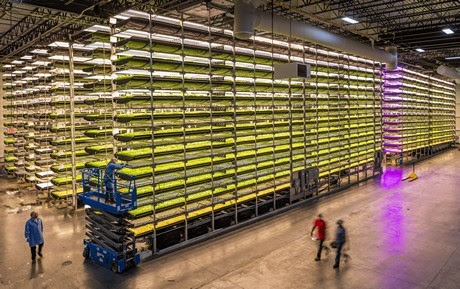
Another multi-million dollar investment in vertical farming. The Financial Times reports that AeroFarms has raised $100m in their Series E fundraiser to further expand its warehouses of stacked growing trays and branch out into different produce. This round again was led by the Ingka Group, known as the parent company of Ikea.
Other than Ingka, existing investors include UK-based Wheatsheaf and ADM Capital, as well as Mission Point Capital, China’s GSR Ventures and AllianceBernstein, which will also participate in the capital round.
Indoor growing through the roof
It's the most recent multi-million dollar investment in vertical farms. Since Plenty raised $200 million from investors, many others followed. Bowery Farming announced a $95 million investment last year, 80 Acres Farms completed their $40 million private equity firming early this year and also InFarm, based in Berlin, closed a $100 million investment round.
Now it's AeroFarms' turn again. Following earlier investments including $40 million in their series D round, they're looking to seriously scale up their business by doubling the money raised so far.
AeroFarms
The company was in the news earlier this year with the revelation of Singapore Airlines being supplied by the Newark farm. AeroFarms will provide a customised blend of fresh produce for SIA’s Newark to Singapore flights from September 2019.
Earlier this year AeroFarms announced its participation in a new high-tech consortium developing crops for indoor agriculture. Working together with Fluence, Priva, and BASF, they want to develop new crops specially intended for indoor agriculture.
Publication date: 7/9/2019
Read more at: Financial Times (Lindsay Fortado)
Indoor Farmers Bet On Robots, AI
While the first versions of modern vertical farms sprouted about a decade ago, in recent years the introduction of automation and the tracking of data to regulating light and water has allowed them to get out of lab mode and into stores. Now they are trying to scale up
Erik Groszyk, 30, used to spend his day as an investment banker working on spreadsheets. Now, he blasts rapper Kendrick Lamar while harvesting crops from his own urban farm out of a shipping container in a parking lot in Brooklyn, New York, US. REUTERS/Mike Segar/Files
Leafy salad greens grown under banks of LED lights, with mist or drips of water are having their day in the sun. Several top US indoor farms, stacked with plants from floor to ceiling, tell Reuters they are boosting production to a level where they can now supply hundreds of grocery stores.
Plenty, Bowery, Aerofarms, and 80 Acres Farms are among young companies that see a future in salad greens and other produce grown in what are called vertical farms that rely on robotics and artificial intelligence, along with LED lights.
While the first versions of modern vertical farms sprouted about a decade ago, in recent years the introduction of automation and the tracking of data to regulating light and water has allowed them to get out of lab mode and into stores. Now they are trying to scale up.
Plenty and others say their customized, controlled lighting — some more blue light here, some more red light there — makes for tastier plants compared to sun-grown leaves and that they use 95 percent less water than conventional farms, require very little land, and use no pesticides, making them competitive with organic farms.
And because vertical farms exist in windowless buildings that can be located in the heart of urban areas, produce does not have to travel far by fossil-fuel-guzzling trucks to reach stores.
The companies’ expansion comes as plant-based burger makers Beyond Meat Inc and Impossible Foods captivate investors and make inroads in high-end restaurants and fast-food chains.
But whether the sunless farms can compete financially with their field-grown brethren, given big upfront investments and electric bills, remains a question.
“We’re competitive with organic today and we’re working very hard to continue to make more and more crops grocery store competitive,” said Matt Barnard, chief executive and co-founder of Plenty, which is based in Silicon Valley.
Plenty’s salads sell on organic grocery delivery site Good Eggs for 99 cents an ounce, while a leading brand, Organic Girl, on grocery chain Safeway’s online site was priced at 80 cents an ounce.
Plenty said its new farm, dubbed “Tigris,” can produce enough leafy greens to supply over 100 stores, compared with its previous farm that could only supply three stores and some restaurants.
The technology world is paying attention. In its last round in 2017 Plenty raised about $200 million from investors including Japan’s Softbank, Amazon founder and CEO Jeff Bezos and former Alphabet Chairman Eric Schmidt. New York City-based Bowery raised $95 million in a fund-raising round led by Google Ventures and Temasek last year.
LED lights glow from a cluster of 10 hydroponic climate-controlled farms housed in repurposed 320-square-foot metal shipping containers where entrepreneur farmers enrolled in the "Square Roots" farming program are growing and selling a variety of organic greens in the parking lot of a former Pfizer factory in Brooklyn, New York, US. REUTERS/Mike Segar/Files
Bowery said its third farm coming online soon will help it supply hundreds of stores from dozens today, and Aerofarms, in New Jersey, said it is doubling its space to meet demand.
None of the three companies would give details about costs.
Former Vertical Farm CEO Matt Matros is sceptical that sunless farms can make economic sense. He invested in and ran Chicago-based FarmedHere in 2015, but changed its business into food processing.
“The issue with indoor farming was that you could really only grow a couple things efficiently — namely basil and micro greens. But the problem is the world just doesn’t need that much basil and micro greens,” Matros said.
80 Acres Farms in Cincinnati says it already grows and sells tomatoes and cucumbers, and Plenty is testing cherry tomatoes and strawberries in the lab.
Agriculture technology investor Michael Rose says vertical sunless farms are more expensive to run than modern greenhouses that rely on sunlight, supplemented by LED lights. He sees limited areas where it makes sense, such as the Middle East, where much of the food is imported, or China’s mega-cities where pollution and urban sprawl limit the availability of premium fresh food.
At Plenty’s new farm, robots put seedlings in tall, vertically hung planters. The planters move along a wall of LED lights for 10 days and are then put through a harvesting machine that shaves off the leafy greens.
The machines minimize labour needs, and Plenty says the speed of production also helps control pests.
“We use no pesticides,” said Nate Storey, co-founder and chief scientist at Plenty. “We don’t even have to use things like ladybugs, because we go so fast in our production that we out-race the pests themselves.”
Farming Smart in Northern Manitoba
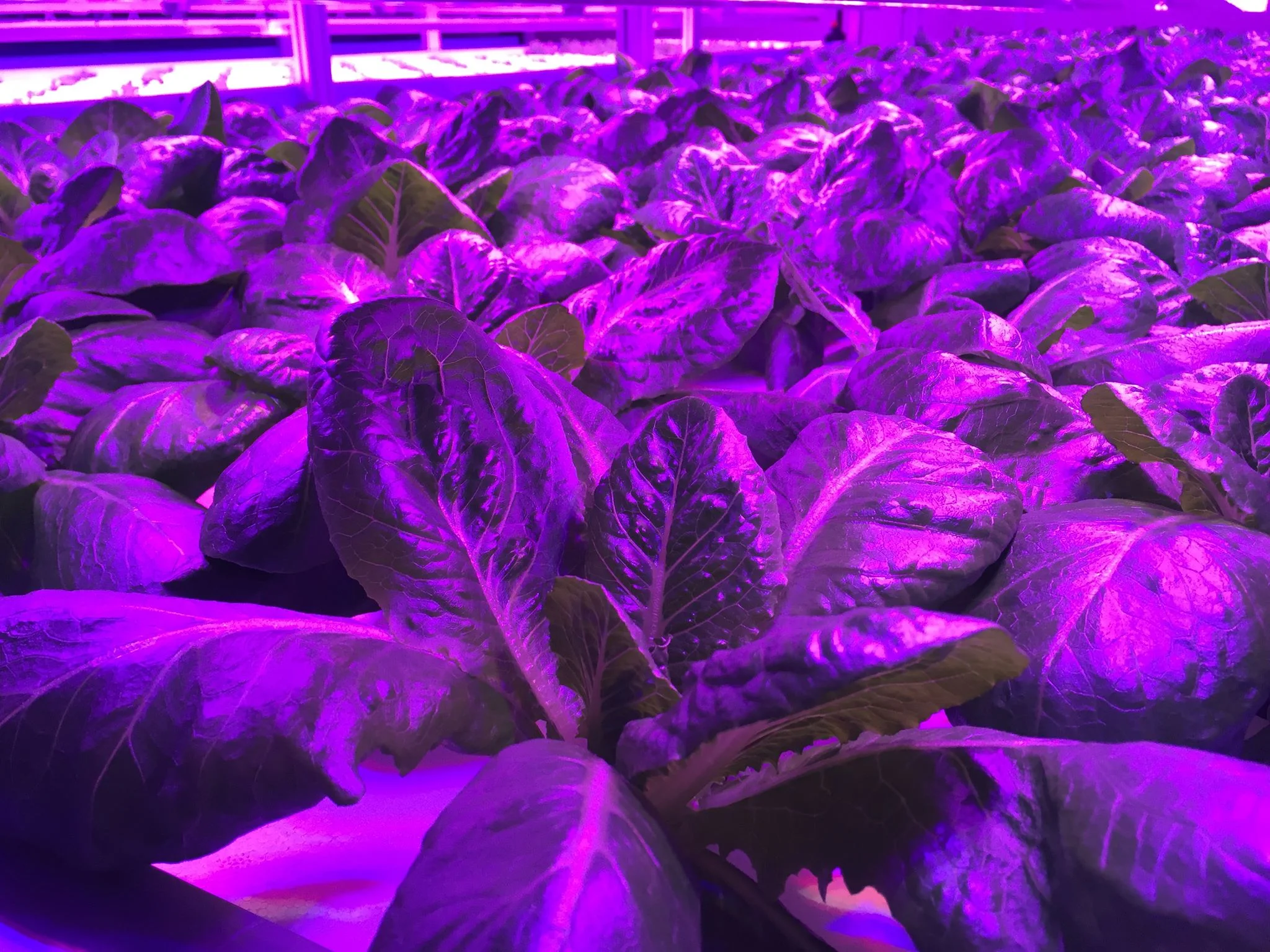
Food accessibility has long been an issue in more remote regions of Canada. This northern initiative puts new indoor farming technology to good use in the OCN community.
Food accessibility has long been an issue in more remote regions of Canada. This northern initiative puts new indoor farming technology to good use in the OCN community.
July 02, 2019
Written by Q&A with Joan Niquanicappo and Stephanie Cook of OCN Smart Farm
Since the first seeds were planted in 2016, members say the OCN Smart Farm has successfully grown over 70 different varieties of vegetables, flowers and fruits.
For the Opaskwayak Cree Nation (OCN) in northern Manitoba, new smart farming technology is improving their access to fresh, healthy food in a big way.
Presented at the Canadian Greenhouse Conference (CGC) last fall, operations manager Stephanie Cook and general manager Joan Niquanicappo of the OCN have been heading a vertical farming pilot project that offers affordable, fresh produce to those living in remote regions.
According to the presentation, a study by the Opaskwayak Health Authority showed that close to 50 per cent of the OCN community suffered from diabetes – an alarmingly high rate. In partnering with the University of Manitoba, they hoped to conduct a health research study to explore whether functional produce from the smart farm, along with the right educational resources, could help lead to change in the community – all while ensuring that the farm could be a viable business in its own right.
Partnering with technical specialists from Korea Agriculture System & Technology (KAST), the first seeds were planted on the smart farm in February of 2016. Over 70 different varieties of plants have been successfully grown since.
Following their presentation at the CGC, Greenhouse Canada magazine followed up with Cook and Niquanicappo on their smart farming journey.
Q: What prompted you to begin a vertical farming operation?
Niquanicappo: The concept of a year-round produce growing facility was intriguing. For the OCN to initiate a project of this scope, the ability to produce fresh vegetables – and functional vegetables at that – this was exciting. It was astounding to find that vegetables could help combat chronic illnesses, such as diabetes and its complications. A hydroponic system, utilizing recyclable water, no soil, no pesticides/chemicals, independent of weather, and all using smart technology – the opportunities were endless.
Q: What problems did you enounter during the initial set-up?
Niquanicappo: Beside the initial stage fright, the main problem was to have all the equipment CSA approved. There were growing pains in that short period of time from December 2015 to March 2016, but we were able to overcome them. The logistics of preparing the equipment to Canadian standards was time-consuming, and the cost of utilizing tradespeople was very high. The training of local people to assemble, maintain and operate the smart farm was not a problem, but it was still very new, so there was a bit of uncertainty on our part. We have since successfully grown 70 different types of vegetables, flowers and fruits.
Q: How do you control or prevent diseases and insect pests?
Cook: We follow strict sanitation procedures, including Hazard And Critical Control Points (HACCP) developed by KAST and adapted to our Smart Farm for caring for the plants personally and procedurally. We ensure that our Smart Farm is sanitized regularly.
As our Smart Farm operates in our community hall, whenever an event is held, we wait two days before entering the farm. Our pest control consists of natural remedies such as lemon juice with water or vinegar and water to help with arachnids, arthropods, dipterans, aphids and other pests.
Q: How do pricing and freshness compare to imported products?
Cook: When we started selling our produce, it was being distributed to community members who had been coming back for the freshness, so the price remained constant throughout the year. Unlike imported vegetables, our produce is grown locally for freshness, and available all year round.
Q: Since the farm’s inception, how has the community responded?
Cook: The community members cannot wait for each harvest. They welcome the produce with curiosity, both to newly introduced varieties and to common produce such as lettuce and herbs.
Q: What’s next for the smart farm?
Niquanicappo: We will be using the smart farm to combat diabetes. We are going to conduct a research study with community members living with diabetes or pre-existing diabetic conditions. We also want to explore ways in which we can make our operations sustainable through the sale of the smart farm equipment, service and maintenance packages, as well as supply sales.
From members of the OCN Smart Farm: On November 9, 2018, the OCN lost a close and valued colleague, Isaac Jung. Jung was instrumental in forming the relationship between the OCN and KAST, which resulted in the creation of the OCN Smart Farm. Isaac will always be remembered as a true partner of the OCN. He will be missed.
Editor’s note: Responses were edited for length and clarity.

Korean Smart Farm Heads For Abu Dhabi
A Korean artificial farming technology developer has sent its first "farm" to the Middle East, boosting the start-up's global competitiveness in the promising industry
2019-07-08
By Ko Dong-hwan
A Korean artificial farming technology developer has sent its first "farm" to the Middle East, boosting the start-up's global competitiveness in the promising industry.
"Planty Cube," a white, 12.2-meter container created by n.thing, was shipped to Abu Dhabi from Busan Port in South Gyeongsang Province, on July 6, the Seoul-based company told The Korea Times.
Inside the module-type smart farm in the shape of a shipping container are multi-stacked rows of water troughs on both sides. Small pots called "Pickcells" can be slotted on each trough where seeds of whatever farmers want can be sown. The plants can then grow without human hands, with a computerized system controlling the environment from temperature to humidity and disease elements.
The maneuver happens in a control room outside the container. The room oversees inside all Planty Cubes, remotely changing the isolated spaces' conditions automatically and manually, based on each plant's "recipe" data.
The latest export to the United Arab Emirates city will first grow romaine lettuce. It will diversify its crops based on distribution data from the city's markets. The cultivated crops, from salads to herbs, will then be distributed to fresh vegetable markets.
Inside Planty Cube, the isolated environment's temperature, humidity and disease elements can be remotely controlled from outside. Courtesy of n.thing
"Those who influence the Middle Eastern smart farm markets quickly will eventually lead the industry on a global scale," said n.thing strategy officer Han Seung-soo.
"No smart farmer has yet stood tall in the region. We will move fast and aggressively to make our name known in the industry."
The Middle East, where many smart farm companies from different countries have ventured, has been supporting the industry because growing vegetables there in traditional methods is difficult because of the hot desert climate and a shortage of farm land and water.
In March this year, n.thing CEO Leo Kim signed a partnership with a major Korean conglomerate and then with an international trader in Abu Dhabi to mass-produce the cubes and auxiliary system parts.
Established in 2014, n.thing's smart farm modules can be linked to each other, making it easy for users to increase or decrease the capacity of their farm businesses. The company said the convenience differentiated the product from factory-type smart farms that could only be vertical.
Lead Photo: n.thing's "Planty Square" was transported to Busan Port on June 20 for export to Abu Dhabi, the United Arab Emirates, the following month. Courtesy of n.thing
aoshima11@koreatimes.co.kr More articles by this reporter
The Steep Climb Of Vertical Farms And Where Urban Ag Might Be Revolutionary
Will this technology revolutionize the way customers access fresh produce? Is this a big deal for sustainability?
By Marc Brazeau | June 13th 2019
Comes the news that the British online food retailer Ocado is making major investments in two vertical farming companies.
this week in a bid to become what it described as “a leader in the newly emerging vertical farming industry”. First, the company’s ventures arm has signed a three-way joint venture deal with 80 Acres Farms and Priva Holding. 80 Acres and Priva have been working together for over four years to design turnkey solutions to sell to vertical farming clients worldwide, with forecast revenues in 2019 of over $10m. The new venture will be called Infinite Acres. ... “We believe that our investments today in vertical farming will allow us to address fundamental consumer concerns on freshness and sustainability and build on new technologies that will revolutionise the way customers access fresh produce,” Ocado CEO Steiner explained.
Will this technology revolutionize the way customers access fresh produce? Is this a big deal for sustainability? A few years back in an essay titled: “Why I’m empowering 1,000’s of millennials to become #realfood entrepreneurs through Vertical Farming”, Elon Musk’s younger brother Kimball announced that he was going to invest in urban farm incubators in multiple cities. While there is certainly room for vertical farms in urban food systems to supply hydroponic greens and herbs to upscale grocers and restaurants, Musk’s ambitions go far beyond that.
The Kitchen’s mission is to strengthen communities by bringing local, real food to everyone. With our commitment to local food sourcing, our restaurants have become major catalysts for local food economies — across Colorado, Chicago, and now Memphis — serving real food to over 1 million guests a year. Meanwhile, our non-profit The Kitchen Community has built 300 Learning Gardens across the country — inspiring 150,000 kids each day as we get them outdoors and teach them about real food.
But the impact of those initiatives are a drop in the ocean compared to what’s needed. By 2050, 9 billion people will live on our planet, and 70% of them will live in cities. These people need food. And the data is clear: they will want local, real food.
The industrial food system will not solve this problem (more Deep Fried Twinkies, anyone?). Instead, finding the right solution presents an extraordinary opportunity for new entrepreneurs. As I’ve said before, “Food is the new internet.” I know the next generation is excited to join the #realfood revolution, and shape the future.
That’s why I’m thrilled to introduce a new company in The Kitchen’s family: Square Roots.
Introducing Square Roots
Square Roots is an urban farming accelerator — empowering 1,000’s of millennials to join the real food revolution. Our goal is to enable a whole new generation of real food entrepreneurs, ready to build thriving, responsible businesses. The opportunities in front of them will be endless.
Square Roots creates campuses of climate-controlled, indoor, hydroponic vertical farms, right in the hearts of our biggest cities. On these campuses, we train young entrepreneurs to grow non-GMO, fresh, tasty, real food all year round and sell locally. And we coach them to create forward-thinking companies that — like The Kitchen — strengthen communities by bringing local, real food to everyone.
The real and imagined impacts and potential of vertical farms had very much been on my mind. Just the week before, a friend on Facebook shared a story on the amazing ecological efficiencies of a new vertical farm and asked, “Is this stuff real or is it just hype?”
The article asked, “Considering it uses 95% less water than regular farms, could vertical farming be the future of agriculture?” and told the story of a vertical farm in Newark, NJ in an old laser tag facility.
At AeroFarms in Newark, New Jersey, crops are stacked more than 30 feet high in a 30,000 square foot space that was formerly a laser tag arena. They use aeroponic technology, which involves misting the roots of the plants, using an astonishing 95% less water than more conventional farming methods. David Rosenberg, CEO of AeroFarms told Seeker, “Typically, in indoor growing, the roots sit in water, and one tries to oxygenate the water. Our key inventor realized that if we mist nutrition to the root structure, then the roots have a better oxygenation.”
AeroFarms doesn’t use any pesticides or herbicides either. The plants are grown in a reusable cloth made from recycled plastic, so no soil is needed to grow them. They also use a system of specialized LED lighting instead of natural sunlight, reducing their energy footprint even further. “A lot of people say ‘Sunless? Wait. Plants need sun.’ In fact the plants don’t need yellow spectrum. So we’re able to reduce our energy footprint by doing things like reducing certain types of spectrum,” Rosenberg said.
IT’S ALWAYS SALAD GREENS
I would say that it’s mostly hype, certainly not revolutionary. These projects always center on salad greens and herbs, crops that sell at a premium and deliver very few calories, but a lot of water.
Crops require light, water, and a growing medium – three things in abundance at low prices on rural farms in the form of sun, rain, and soil. The economics of paying for light and rain, plus the economics of real estate are such that these projects cannot pencil out for any crops other than high end greens and vegetables. There is a reason why so much of the innovation in hydroponic growing systems came out of marijuana production. The ROI per square foot is far greater than for oats.
The future of urban farming is in crickets and other insects, mushrooms and other fungi, algae and yeasts, and in vitro meat. If you want to go beyond premium salad greens and herbs, you need to focus crops or herds that don’t require lots of space, water or sunlight. More importantly, if you really want to lower the impact of food production, urban farming needs be able to close nutrient cycles in dramatic ways.
[ For a more enthusiastic and rigorous take on the potential of vertical farms see this piece by Dan Blaustein-Rejto of the Breakthrough Institute.]
The exception might be in cities like Detroit, where a collapsing urban footprint changes the economics of the real estate. As a city economy grows, agglomeration increases the productivity per square foot, driving up rents which leads to the necessity of greater productivity per square foot. If urban farming catches on, it requires more square feet, driving up rents, requiring greater productivity per square foot, driving up the required productivity per square foot driving up the price required to be charged per square foot of product. TLDR: this model cannot work for barley, oats, canola, cowpeas, black beans, soybeans, pinto beans or any other serious sources of calories or protein in an urban setting. The revolution is not going to be powered by expensive salad greens.
Tamar Haspel helpfully chimed into that discussion to share an article she did for the Washington Post on the ledger of environmental challenges and benefit of vertical farming. In terms of growing lettuce greens she tallied the use of less land, less water, less fertilizer and less pesticides as four environmental benefits of vertical farming. On the down side, she pointed out that one of the biggest trade off was foregoing solar power for electricity.
However, unless the vertical farm is powered by nuclear or renewables or both there is one big sticking point: But before you shell out for the microgreens, there are a couple of disadvantages. The first is that you’ll have to shell out a lot, and the second gets at the heart of the inevitable trade-off between planet and people: the carbon footprint. If you farm the old-fashioned way, you take advantage of a reliable, eternal, gloriously free source of energy: the sun. Take your plants inside, and you have to provide that energy yourself. In the world of agriculture, there are opinions about every kind of system for growing every kind of crop, so it’s refreshing that the pivotal issue of vertical farming — energy use — boils down to something more reliable: math.
There’s no getting around the fact that plants need a certain minimum amount of light. In vertical farms, that light generally is provided efficiently, but, even so, replacing the sun is an energy-intensive business. Louis Albright, director of Cornell University’s Controlled Environment Agriculture program, has run the numbers: Each kilogram of indoor lettuce has a climate cost of four kilograms of carbon dioxide. And that’s just for the lighting. Indoor farms often need humidity control, ventilation, heating, cooling or all of the above.
… Let’s compare that with field-grown lettuce. Climate cost varies according to conditions, but the estimates I found indicate that indoor lettuce production has a carbon footprint some 7 to 20 times greater than that of outdoor lettuce production. Indoor lettuce is a carbon Sasquatch.
She goes on to explain that with more efficient lighting systems and access to nuclear and renewable energy sources, vertically grown lettuce can close a big part of that gap, but it’s still a steep climb.
Before moving on to the reasons why I’m enthusiastic about farming crickets and other insects, mushrooms and other fungi, algae and yeasts in urban settings, I want to circle back to the economics of real estate that serves as the stake through the heart of mass scale vertical farming of traditional crops.
A LITTLE PERSPECTIVE ON SCALE
First let’s put some things in perspective about scale. One of the larger well known urban rooftop farm in New York City is 42,000 square feet. 42,000 square feet sounds like a lot of square feet. But retail and office space are measured in square feet. Farms are measured in acres and 42,000 square feet is pretty much one acre. 0.964187 acres to be exact. New York state has 7 Million acres of farmland across 36,000 farms. That’s just the state of New York, which isn’t a particularly rural state. Urban real estate is denominated in square feet. Farms are denominated in acres.
Field corn (not grown for ethanol) accounts for over 50 million acres of farmland. Wheat, another 50 million acres. That’s 100 million acres just in two major grains. But let's put that aside. Nobody thinks were are going to grow corn and wheat in urban vertical farms, I just think it’s important to start with a baseline of the scale of the footprint of where most of our calories come from. And if you think we should be getting less of our calories from corn and wheat – and I’d agree with you – just keep in mind that no other crops come close on calories per acre, so any shift away from corn and wheat is going to drive that 100 million number upwards. Leaf lettuce is grown on just shy of 70,000 acres in the U.S. The acreage for herbs is so small it doesn't register in USDA reports and surveys outside of mint for mint oil (think spearmint chewing gum and peppermint ice cream). Total cropland in the U.S. is about 250 million acres. Nearly all domestic leaf lettuce is grown in either California or Arizona. Redistributing the production to regions with lower pressure on water supply and delivering fresher products to consumers can have some benefits, but it's hardly going to revolutionize vegetable production, much less the food system.
Let’s look at the crops that make up the core calories of a healthy diet. Barley accounts for 3.2 million acres. Lentils, dried beans and peas 2.7 million acres. Rice – 2.6 million acres. Vegetables – 4.1 million acres and half of that is potatoes, sweet corn and tomatoes. Orchards and berries – 5.4 million. 18 million acres total or 756 Billion square feet.
Let’s grant these vertical farms the wildly ambitious ability to increase yield by a third and say that shifting 10% of production into vertical farms would be a substantial impact. That would require 50 Billion square feet of urban real estate.
ECONOMIES OF AGGLOMERATION
Now let’s back up to the point we made about real estate prices and productivity. As cities grow bigger and denser productivity rises. Similar firms cluster and generate a base of workers who circulate among them increasing knowledge and competence. Travel times are lower, so a delivery van can make more stops per hour in a city than in a suburb or rural community. With more customers in their base, firms can grow larger and take advantages of economies of scale. This is what is called agglomeration in economics. Agglomeration makes for productive, vibrant cities, but it also drives up rents. Which further puts pressure on firms to increase the productivity out of each square foot of real estate that they own or lease. To increase productivity per square foot firms can either produce more units or charge more per unit. This is why expensive herbs and greens are the only products that currently make sense in vertical farms.
Now imagine what it would mean to add demand for another 50 billion square feet of real estate to US cities. Scaling up the operations of vertical farms would COMPOUND the pressure to produce crops that they can sell at high prices. While proponents often claim that as more vertical farms come online, prices will come down, for most crops the economics of cities tell us that the opposite is true.
So the economics of urban real estate are stacked against vertical farms except in places like Detroit where the urban footprint in shrinking and there is massive slack in the real estate market. But the economics for vertical farms are even steeper when we take comparative advantage into account.
COMPARATIVE ADVANTAGE
Comparative advantage is an economic concept that most people have heard of but very few understand and a vanishingly small number of people “get” on an intuitive level. That’s because it is one of the most counter-intuitive concepts in economics and I balk at the headache of even attempting to put it across when I think I’ve probably already made my case as to why I don’t expect vertical farms to catch on beyond expensive herbs and greens (and maybe some heirloom tomatoes and peppers). But it’s an important concept to understand in general and for the case I’d like to make for why I think the future of urban agriculture is in mushroom and cricket farming, black soldier flies, algae and yeasts, and in vitro meat production.
The economist Paul Krugman once called comparative advantage “Ricardo’s Difficult Idea” in an essay in which he explains why a concept formalized in 1817 by the philospher and political economist David Ricardo remains so poorly understood, if not outright resisted, even by economic sophisticates.
The idea of comparative advantage — with its implication that trade between two nations normally raises the real incomes of both — is, like evolution via natural selection, a concept that seems simple and compelling to those who understand it. Yet anyone who becomes involved in discussions of international trade beyond the narrow circle of academic economists quickly realizes that it must be, in some sense, a very difficult concept indeed. I am not talking here about the problem of communicating the case for free trade to crudely anti-intellectual opponents, people who simply dislike the idea of ideas. The persistence of that sort of opposition, like the persistence of creationism, is a different sort of question, and requires a different sort of discussion. What I am concerned with here are the views of intellectuals, people who do value ideas, but somehow find this particular idea impossible to grasp.
My objective in this essay is to try to explain why intellectuals who are interested in economic issues so consistently balk at the concept of comparative advantage. Why do journalists who have a reputation as deep thinkers about world affairs begin squirming in their seats if you try to explain how trade can lead to mutually beneficial specialization? Why is it virtually impossible to get a discussion of comparative advantage, not only onto newspaper op-ed pages, but even into magazines that cheerfully publish long discussions of the work of Jacques Derrida? Why do policy wonks who will happily watch hundreds of hours of talking heads droning on about the global economy refuse to sit still for the ten minutes or so it takes to explain Ricardo? Against that backdrop let me apply my meager talents to see if I can pound this into your thick skulls with any greater efficacy. Here goes.
Ricardo provided a simple two country model to show the math at work here. Consider two countries, England and Portugal, producing two identical products but at different rates of productivity.
In the absence of trade, England requires 220 hours of work to both produce and consume one unit each of cloth and wine while Portugal requires 170 hours of work to produce and consume the same quantities. England is more efficient at producing cloth than wine, and Portugal is more efficient at producing wine than cloth. So, if each country specializes in the good for which it has a comparative advantage, then the global production of both goods increases, for England can spend 220 labor hours to produce 2.2 units of cloth while Portugal can spend 170 hours to produce 2.125 units of wine. Moreover, if both countries specialize in the above manner and England trades a unit of its cloth for 5/6ths to 9/8ths units of Portugal’s wine, then both countries can consume at least a unit each of cloth and wine, with 0 to 0.2 units of cloth and 0 to 0.125 units of wine remaining in each respective country to be consumed or exported. Consequently, both England and Portugal can consume more wine and cloth under free trade than in autarky.
WIKIPEDIA: In this illustration, England could commit 100 hours of labor to produce one unit of cloth, or produce 5/6ths units of wine. Meanwhile, in comparison, Portugal could commit 90 hours of labor to produce one unit of cloth, or produce 9/8ths units of wine. So, Portugal possesses an absolute advantage in producing cloth due to fewer labor hours, and England has a comparative advantage due to lower opportunity cost.
To share an embarrassing story from my past, at the last union I worked for I had a boss who was a supremely talented union organizer and I was going through a personal rough patch and not firing on all cylinders, though I was still OK at my job. But he was constantly frustrated with me and just wanted to push me aside and do my job for me because he could do my job better than I could. And he could – he was just much more talented at union organizing than I was, especially during that sad chapter of my life. But he didn’t, because not only was he much better at my job than I was, he was much, much better at HIS JOB than I was. So it made more sense of him to concentrate on doing his job – supervising me and another ten organizers than to split his time doing his job and my job (and assigning me the minor parts of his job that he wouldn’t have time to do).
In the neighborhood I grew up in, software engineers frequently paid thirteen-year-old kids to mow a lawn in an hour that they could mow in 45 minutes. But if they were going to put in one more hour of effort that week, it was better spent working as a highly paid software engineer, not out-competing thirteen-year-old’s who mowed grass to buy grass.
So think of a simple economy composed of the city of Los Angeles and California’s Central Valley where both produce movies and tomatoes. Even if Los Angeles could produce tomatoes somewhat more efficiently than the Central Valley, the theory of comparative advantage tells us that they should still stick with movies and let Central Valley deal with tomatoes – they will both be better off. Likewise, if we imagine an economy of New York City and Iowa, where they both produce business services and corn, even if NYC can do corn better than Iowa, they should stick with business services, where they are heavyweight champion.
These are simple models and there are all sorts of situations and examples where comparative advantage doesn’t work in a clean, frictionless, straightforward way. But any narrative which attempts to make the case that vertical farms are the next big thing in agriculture needs to deal with comparative advantage rather than sidestep, ignore or dismiss the issue.
To beat this horse a bit closer to death, here is Krugman on trying to make a charitable interpretation of those who seem to be in denial about the power of comparative advantage:
Surely, we have argued, the problem is one of different dialects or jargon, not sheer lack of comprehension. What these critics must be trying to do is draw attention to the ways in which comparative advantage may fail to work out in practice. After all, economists are familiar with a number of reasons why the gains from free trade may not work out quite as easily as in the simplest Ricardian model. External economies may mean underinvestment in import-competing sectors; imperfect competition may lead to a strategic competition over industry rents; because of distortions in domestic labor markets, imports may reduce wages or cause unemployment; and so on. And even if national income rises as a result of trade, the distribution of income within a country may shift in a way that hurts large groups. In short, there are a number of sophisticated extensions to and qualifications of the model introduced in the first few chapters of the undergraduate textbook – typically covered later in the book.
Which is to say that, standard economics is not ignorant of all the reasons you may come up with for trying to dismiss the implications of comparative advantages just because you can’t shake the idea that vertical farms are a neat idea and wouldn’t it be cool if cities were self-sufficient in food production.
We’ll look at some examples of where cities would have comparative advantage going forward in terms of local food production. I think these are areas where Kimball Musk’s 1000’s of millennials will ultimately find greater success. But first, we need to look at the one big advantage an urban setting brings to agricultural production.
THE NUTRIENT CYCLE
When you grow a crop, the plant takes nutrients, most notably the old NPK – nitrogen, phosphorus, and potassium out of the soil to feed and construct itself. When the crop is harvested a lot of those nutrients go with them and they need to be replaced in the soil. This creates a problem that is solved by planting nitrogen-fixing legumes and adding fertilizers, either synthetic fertilizers or manures. But they have to come from somewhere – and that somewhere is generally somewhere not on the farm.
Meanwhile, the nutrients have been shipped in our simple model economies from the Central Valley to Los Angeles and from Iowa to New York City. The people eat the nutrients and then deposit the nutrients into the trash, compost bins or their toilet. This creates a waste management problem.
Nitrogen management is a huge issue in agriculture, but the nutrient cycle problem that most keeps the deep thinkers up at night is phosphorus. It’s pretty easy and getting easier to pull nitrogen out of the air to fertilize crops. We have an effectively infinite supply of potassium. However, we are running out of phosphorus that we can mine. Eventually, and the sooner the better, we need to figure out how to close the nutrient loop that mostly ends when food reaches our cities.
The modes of food production that close that loop will be the ones that make the greatest impact, both ecologically and economically. That’s why I think the future of urban agriculture will be in crickets and other insects, mushrooms and other fungi, algae and yeasts, and in vitro meat.
CRICKETS: Crickets grow to maturity in 3-4 weeks, so they do not take a lot of space to produce prodigious amounts of protein. Protein per acre is a threshold measure in food security. Protein is ecologically expensive – carbs need carbon which is easily pulled from the air and converted into structure by photosynthesis – the nitrogen in the air is bound by very tight chemical bonds which require a lot of energy to break and put it to use. Lots of protein per square foot means cricket can pay urban rents in cities where heating costs are low (crickets like the temperature to stay above 25C).
And the reason urban rents make sense is that cricket thrive on food waste. Current cricket production is geared to a higher end consumer product, which also makes paying the rent easier, but that requires a more uniform diet to achieve a more uniform tasting cricket. The big breakthrough from an environmental perspective and the ability to achieve impactful scale will be when cricket producers start selling affordable cricket feed to livestock and aquaculture producers. That will allow cricket farms to be less fussy about what they feed the crickets and will create an economical way of cycling nutrients back to rural communities from cities that can complement the current practice of composting food waste and shipping the humus to farms from cities.
BLACK SOLDIER FLIES: Even better at turning waste into usable protein is the black soldier fly larvae. The larvae can feed on human solid waste and drastically reduce the volume and weight, allowing it to be shipped as a fertile soil amendment while transforming the nutrients into protein which is ideal for livestock feed. Black soldier flies can also feeding food waste and reduce it to a soil amendment much faster than composting without producing the greenhouse gases that make composting environmentally problematic.
One startup is taking the fruit and vegetable pulp waste from a local juicery and the day-old bread from a bakery using the grubs to transform it into high-quality animal feed. Cities are full of these waste streams in dense supply chains. This kind of waste is currently mostly going to landfills where it creates greenhouse gases emissions.
MUSHROOMS: Mushrooms are a vegetable crop that has one massive advantage over lettuces and hydroponic tomatoes and peppers in an indoor growing environment. Mushrooms don’t use photosynthesis and thus don’t require light to grow. This removes a major energy input in comparison. Another thing mushrooms have going for them is that they thrive in coffee grounds and our cities are producing massive amounts of spent coffee grounds that would be relatively easy to cordon off into new supply chains. After mushrooms are harvested, the mix of spent coffee grounds and mushroom roots makes a great soil amendment that can be marketed to suburban gardeners and peri-urban farms.
algae AND YEASTS: algae and yeasts are currently being used to produce previously expensive compounds and ingredients. Sometimes developed by traditional breeding, sometimes via the techniques of synthetic biology, algae and yeast have been used to produce replacements for palm oil which is environmentally disastrous by and large and for compounds like vanillin which we generally get from vanilla farms in environmentally fragile ecosystems. algae and yeasts are also used to produce pharmaceutical compounds. Currently, sugars are used as the input for their growth and as the substrate they convert to more useful and valuable compounds, but current research and development is fairly quickly moving to make using a wider range of cellulosic biomass as a substrate more and more viable. Be one the look out for vegan milk, cheese and butter from this sector.
IN VITRO MEAT: “Test tube meat” or cultured meat is still a ways out in it developing an economically viable product, but it’s certainly coming. I expect it to be used in sausage production before we get to a satisfying vat grown ribeye, but cultured meat meat production fits our criteria for successful urban agriculture. You can produce a lot of valuable product in a relatively small space, without the need for light as an energy source and you can use urban waste streams as a valuable input.
Now, I’m not saying that there aren’t going to be vertical farms that are successful in producing and selling high-end lettuces, herbs, peppers, and tomatoes. There will be. It will be a limited, upscale market, but that niche will work. What I am saying is that those kinds of vertical farms will not ever achieve the kind of scale necessary to transform the food system in consequential ways. Nor do they do much to tackle the biggest challenges in the food system, which have to do with waste management and the nutrient cycle.
The kinds of urban ag that will transform the food system and significantly reduce the environmental impacts of food production will be those that are not fighting against the economics of cities but are leveraging the economics of cities. That means leveraging comparative advantage rather than trying to dismiss it. Most of all, it means leveraging the dense supply chains and waste streams of valuable inputs that already exist in cities, rather than trying to replace the rain, sun, space, and soil that already exist on rural farms.
The Agromodernist Moment is a project of Food and Farm Discussion Lab. If you'd like to support this column and the other work we do, consider a monthly donation via Patreon or a one-time donation via Paypal.

With Huge New Vertical Farm, Plenty’s Produce Could Hit More Shelves
Just outside the LED-lit depths of the Bay Area’s newest and most futuristic indoor farm, a robot arm grabs a row of seedlings and sticks them into a hydroponic planter. An even larger robot arm then flips the planter vertically and sends it onward to become one thin sliver of a 20-foot-tall wall of arugula, baby kale and beet leaves
June 20, 2019
Plants grow on vertical towers inside Tigris.Photo: Plenty
Just outside the LED-lit depths of the Bay Area’s newest and most futuristic indoor farm, a robot arm grabs a row of seedlings and sticks them into a hydroponic planter. An even larger robot arm then flips the planter vertically and sends it onward to become one thin sliver of a 20-foot-tall wall of arugula, baby kale and beet leaves.
South San Francisco vertical farm company Plenty has unveiled its biggest, most efficient and most automated farm yet in its hometown. Called Tigris, it grows produce hydroponically — without soil — with LED lights year-round. Unlike outdoor farmers, Plenty’s engineers don’t have to think about the seasons, pests or what plants will grow best locally. While Tigris is specifically designed for leafy greens, Plenty CEO Matt Barnard said the company has test-grown nearly 700 varieties of plants within the last year.
Related Stories
BY JONATHAN KAUFFMAN
U.S.’s first robotic farm opens in the Bay Area
BY LEENA TRIVEDI-GRENIER
The novice farmer whose search for his roots led to an organic...
BY TARA DUGGAN
The Bay Area company building world’s largest vertical farm...
There are more than 20 companies erecting indoor farms around the country — another Bay Area player is San Mateo’s Crop One, which is building a giant farm in Dubai. Industry leaders say vertical farms can be a solution at a time when labor shortages, drought and climate change threaten outdoor agriculture as well as bring fresh produce to regions that lack arable land. These farms are springing up all over the world, including Japan, the Netherlands and Antarctica.
According to Plenty, the new farm can grow 1 million plants at a time in a facility around the size of a basketball court and process 200 plants per minute, thanks to strides in automation. The new farm means Plenty will be able to greatly widen its distribution to grocery stores and restaurants.
Plenty’s newest vertical hydroponic farm Tigris in South San Francisco can grow 1 million plants at a time in a facility about the size of a basketball court.Photo: Plenty
Plenty, which operates one other farm in South San Francisco as well as farms in Wyoming and Washington, plans to open farms all over the world, and has received $226 million in funding, according to Crunchbase. Plenty’s engineers designed ways to control the environment of each individual plant at the new farm, from the temperature to the amount of light, which impacts flavor.
“On the farm I grew up on, we didn’t measure any of the things we measure here because at the end of the day, there was nothing we could do about it,” said Barnard, who was raised on a cherry and apple farm in Wisconsin.
Inside these vertical farms, everything is intentional and nothing happens by chance, according to engineers.
“We have only one sun outside, but here we can choose the exact light spectrum and intensity based on what we want the plant to taste like,” added Izabelle Back, an engineering manager at Plenty.
In 2018, the company started selling greens through online retailer Good Eggs, San Francisco market Faletti Foods and Roberts Market in Woodside. Barnard said Plenty could expand to as many as 100 grocery stores in the Bay Area by late 2019. He also said prices should continue to drop due to the farm’s efficiency — on Good Eggs right now, a 5-ounce box of salad greens goes for $4.99.
Barnard also hopes to work with more chefs. Plenty supplies San Francisco robot burger spot Creator and fine dining restaurant Atelier Crenn.
Anthony Secviar, chef-owner of Michelin-starred Palo Alto restaurant Protege, described Plenty’s greens as “delicious, vibrant, luscious” and “aesthetically immaculate.” He also remarked on their unusually lengthy shelf life and the lack of need to wash them as being a huge boon for busy chefs.
“We’re begging them to get in the restaurant industry because they’re going to change the game,” Secviar said.
The new farm holds rows and rows of tall green walls, which alternate with walls of bright, colorful LED displays you’d expect to see at Burning Man. Combined with the climate-controlled environment, it clearly racks up a higher energy bill than outdoor farms.
Barnard prefers to look at the entire environmental footprint, including carbon footprint. Since Plenty’s business model is based on distributing only in a farm’s immediate region, its produce travels far fewer miles than, say, avocados from Mexico.
Barnard said Plenty has taken steps to grow more efficient, with the new farm being five times as energy efficient as the company’s other farm one year ago. “We are now roughly on par with a field farm when you look at the total footprint.”
Plenty plans to implement solar and wind power at future farms. The company also claims Tigris uses less than 1% of the amount of land and less than 5% of water compared with conventional outdoor farms.
Because the vertical farming industry is so new, there isn’t much in the way of academic research into its viability. In 2017, Cornell researchers received a three-year, $2.4 million grant to comprehensively study indoor farms, including their environmental impacts compared with outdoor farms. The results are still to come.
Plenty is pushing forward regardless. The company has started experimenting with strawberries and tomatoes and expects to respond to consumers’ increasing interest in plant-based protein with legumes within the next few years.
Some crops, like wheat, are too expensive to grow indoors at scale to be realistic ventures, but the vertical nature of Plenty’s farms doesn’t represent a barrier, according to Plenty chief scientific officer Nate Storey. He said plants adapt to the verticality and support themselves — Plenty has even grown watermelon, which didn’t start dropping to the floor until they reached 20 pounds.
“There’s nothing that won’t work,” he said. “The question is, do the economics make sense today?”
Janelle Bitker is a San Francisco Chronicle staff writer. Email: janelle.bitker@sfchronicle.com Twitter: @janellebitker
Follow Janelle on: https://www.facebook.com/SFChronicle/janellebitker
Janelle Bitker joined The San Francisco Chronicle in 2019. As the food enterprise reporter, she covers restaurant news as well as Bay Area culture at large through a food lens. Previously, she served as a reporter for Eater SF, managing editor at the East Bay Express, and arts & culture editor at the Sacramento News & Review. Her writing has been recognized by the California Newspaper Publishers Association and Association of Alternative Newsmedia.
Past Articles from this Author:

Feeding The Masses With Indoor Farming - Agriculture Finally Grows Up
Food insecurity happens when the people it affects do not have consistent access to nutritious foods. Then, the problems span from stunted growth in childhood to obesity because people cannot get enough nutrient-rich, healthy food to maintain an ideal body weight.
June 11, 2019
Food insecurity happens when the people it affects do not have consistent access to nutritious foods. Then, the problems span from stunted growth in childhood to obesity because people cannot get enough nutrient-rich, healthy food to maintain an ideal body weight.
Credit: MetsikGarden, Pixabay
Traditional farming can help alleviate some food insecurity, but the agricultural industry is heavily dependent on Mother Nature. Unusual weather patterns, poor soil conditions and invasive pests are some of the many things that can cause farmers to have disappointing growing seasons. There’s also the reality that some areas of the world do not have the climates necessary for producing some types of food, and that problem could get worse due to global warming.
So, what if it were possible to take all those outdoor variables out of the picture? That’s happening already thanks to an increasing interest in indoor farming.
Growing Things Vertically
Indoor farming is also called greenhouse farming. Discussions surrounding either of those terms often bring up the concept of vertical farming. It involves growing crops in vertically orientated stacks. This method allows for practically utilizing the available space. Moreover, parties in the vertical farming industry typically use sensors that detect the precise amounts of light, water and other essentials that the crops need to grow.
Taking this approach avoids the waste and uncertainty that can accompany traditional farming. AeroFarms, located in New Jersey, is one of the largest indoor farms. It substitutes LED lights for the sun and uses a specialized cloth instead of soil. Plus, the operation reportedly uses up to 95% less water than standard methods of farming because it delivers a mist of water and nutrients to the root structure.
Other vertical farms operate in similar ways, and their overall methods result in shortened growing times. It’s also worth noting that although the exact statistics vary, an acre of vertical farming could produce as much as a conventional farm that’s at least ten times larger.
Population Growth Is a Pressing Matter
Researchers understand that there’s no time to waste when figuring out how to feed the world’s population. Some estimates say that as the global population grows from 7.3 billion to 9.6 billion people by 2050, we’ll need to produce 70% more food to feed them all. LED lights are particularly advantageous in indoor farms because they allow offering dynamic light spectrums for individual plants. Sunlight is comparatively unpredictable.
But, customizable light is not the only aspect of indoor farming that could make it a feasible way to feed future generations. Some indoor farms use robots to manage many of the necessities. Research shows that labor costs represent as much as 80% of an indoor farm’s operating expenses, but many are using automation to keep costs down. Doing that could help tackle the problem of aging farmers contributing to a labor shortage.
Vertical Farms Help Solve Problems With a Lack of Land
When people bring up matters related to population growth, they often talk about how the increase of people on the planet makes it more difficult for those individuals to secure housing. In the agriculture sector, the opposite problem can arise, whereby an uptick of buildings for houses and offices leaves less land for agricultural development.
Indoor farms address that problem since they can exist inside of or on buildings — such as in one case where a former warehouse in Brooklyn now has a rooftop garden. Then, in the Sunqiao district of Shanghai, vertical greenhouses are integrated parts of the city, showing that farms can thrive without vast expanses of land.
Dealing With the Sustainability Challenge
Vertical farms offer higher yields than outdoor farms, and they’re compatible with urban environments. Many companies also sell compact indoor growing solutions for households, and those product manufacturers took inspiration from the large-scale indoor farms. All of those things are good news for fixing food insecurity.
But, critics point out that some indoor farms are not always sustainable options due to the energy required for things like climate control. That’s a valid argument, but people need to realize that no single solution will completely encompass the issue related to both food insecurity and sustainability.
As mentioned earlier, indoor farms use less water than traditional farms. Plus, they typically don’t require pesticides, which is another advantage for the planet. If enough indoor farms meet food availability needs, it’s also possible that produce would not need to travel as far to reach the people who eat it. That’s a sustainable outcome, too.
The possible downsides of indoor farms should merely be reminders of how solving the problem of feeding the future should take sustainability into account. Then, the results could mean that more people have access to the food they need, and the planet gets the necessary protection.
US (IL): Vertical Harvest Wants to Expand Greenhouse Concept Into Chicago
An innovative greenhouse that backs up to the Millward Street parking garage, now has $500,000 in hand to study expanding into Chicago
$500,000 Grant To Study Expansion
An innovative greenhouse that backs up to the Millward Street parking
garage now has $500,000 in hand to study expanding into Chicago
The Federal National Mortgage Association, or Fannie Mae, awarded Vertical Harvest a grant of that sum through its Sustainable Communities Innovation Challenge.
The grant program is a partnership with the National Affordable Housing Trust, which presents exciting prospective growth opportunities for the community greenhouse formed a decade ago by valley residents Nona Yehia, Penny McBride and Caroline Croft Estay.
“I think the National Affordable Housing Trust has 1,452 sites that they’re going to be developing in the next 10 years,” said Sam Bartels, Vertical Harvest’s business development director. “Jackson has always been our proof of concept and our pilot,” she said. “We’ve had people from all over the world contact us on a weekly basis about how they could do this.”
While adding Vertical Harvest-like facilities around the country and planet may be the long-term vision, the product of the grant is initially much more narrow.
The half-million dollars will be put toward a feasibility study that will analyze the efficacy of building vertical greenhouses at three existing affordable housing developments in the Chicago area, Yehia said.
Source: Jackson Hole News & Guide (Bradly J. Boner)
Publication date: 6/27/2019

These Tech Start-Ups Are Changing What It Means To Farm
Feeding a rapidly expanding population without depleting the Earth’s finite resources, is one of the major challenges of the 21st century
The future of farming? Image: REUTERS/Ilya Naymushin
01 Jul 2019
Briony Harris Senior Writer, Formative Content
This article is part of the Annual Meeting of the New Champions
Feeding a rapidly expanding population without depleting the Earth’s finite resources, is one of the major challenges of the 21st century.
These four entrepreneurs - who have all been selected as the World Economic Forum’s Technology Pioneers for 2019 - have a vision to transform the way we farm in order to help feed the world.
Mini-farms in underground parking lots
In an abandoned car park in downtown Beijing, trays and trays of planting beds are stacked on top of each other.
This is a mini-farm, right in the heart of the city, and it supplies nearby hotels with lettuce, celery, herbs, kale and other green vegetables.
“It’s no longer impossible to grow food where people work and live”, says Stuart Oda, who co-founded the agriculture start-up Alesca Life in 2013, referring to the amount of disused urban infrastructure available, including things such as old shipping containers.
LEDs provide the light, and mineral nutrients are added to water instead of soil. Internet-linked devices monitor humidity, acidity levels and the amount of dissolved oxygen in the water, allowing such variables to be adjusted to increase yields.
“Our system allows us to automate all of the major points of human error that could lead to a loss of crop,” Oda says.
Stuart Oda shows his container farms to the UAE’s minister for food security . | Image: Stuart Oda
The proximity of the mini-farms to the customers means that the produce is fresh, and reduces transport and packaging.
Alesca Life has signed an agreement to distribute 1,000 container farms across the Middle East, Africa, China, and North America.
Oda’s decision to launch his company was prompted by the change he could see happening all around him in China, including rapid urbanization, population growth and land degradation of traditional farms.
“There’s a real sense of urgency to dealing with these challenges and I want to dedicate all my productive years, including my passion and my youth, to addressing them,” he says.
2. Finding a market for ugly fruit and veg
Christine Moseley has witnessed massive food waste at first hand.
During the harvest of romaine lettuce, Moseley watched as 25% of each plant was put into uniform packaging, while the rest was discarded.
“I knew then we had a broken food system. It was my ‘aha’ moment and I vowed not to stop until I found a way for that produce to be utilized for consumption,” she told Forbes.
That was when she decided to start Full Harvest, a B2B platform to sell rather than waste unsightly or unwanted fruit and veg.
Roughly one-third of the food produced in the world for human consumption every year — approximately 1.3 billion tonnes — gets lost or wasted, according to the Food and Agricultural Organization of the UN.
In the US alone, 9 billion kilos of ‘ugly’ and surplus produce are wasted each year simply due to the cosmetic standards of grocery stores.
Supermarkets often only buy perfect produce
Image: Reuters/Ngwyen Huy Khan
Full Harvest connects food companies with trucking firms and farms so that they can make use of the imperfect and surplus produce.
This not only makes good use of the food, it also stops water being wasted and limits carbon dioxide emissions from agriculture.
3. Preventing waste with NASA’s hyperspectral imaging
Hyperspectral imaging sees information on parts of the electromagnetic spectrum that human eyes cannot. That means it can test the freshness of food - from beef steaks to avocados - without even touching it.
The technology - first developed by NASA for aerial imaging - detects the internal quality and chemical composition of food products.
ImpactVision then uses machine-learning techniques to assess the quality of the product, providing food companies with real-time information about their stock.
With an avocado, for example, the images can determine the fruit’s ripeness and reject any rotten ones. Previous systems have depended on sampling - and then wasting - fruits.
“Using advanced imaging and machine learning, we help food companies learn about the quality of their food products non-invasively, providing real-time continuous data,” says ImpactVision’s CFO Rachael Gan.
“That leads to optimized decision-making during processing that in turn reduces waste.”
Can you tell which avocado is ripe without touching . Image: REUTERS/Siphiwe Sibeko
ImpactVision is now working with several leading food producers and supermarkets in the US and believes the data it gathers has the power to transform food supply chains in the same way as GPS transformed navigation.
As food quality control is digitized, this new technique could also help spot contamination and prevent costly food recalls at a later date.
Have you read?
4. More productive seeds
“Seeds are the heroes of modern agriculture. If we improve seeds, then we determine how much land, how much water, how much fertilizer will be used,” says Ponsi Trivisvavet, CEO of Inari Agriculture. “We can solve these major environmental problems by going back to the root cause - the seed.”
Image: FAO
Inari operates a seed foundry where a plant’s genes are edited - some genes may be knocked out, others inserted and others fine-tuned. "Everything we do would probably happen naturally over the next 1,000 years or so,” says Trivisvavet. “We’re just speeding up that process.”
Three changes were simultaneously carried out on tomato plant seeds in order to grow the size of the branch, increase the number of flowers and expand the size of the fruit. This led to an increase of productivity of more than 90%, something which has never happened before in the history of crop development, according to Trivisvavet.
The same technology is being used for soybeans, where the genes of the seed are being edited to increase the number of pods per node, and the number of seeds per pod.
Inari’s seed foundry uses AI-powered computuational crop design to understand the genomes of the crop and how they interact with each other.
“The gene editing itself is easier than identifying where the changes need to be made,” Trivisvavet says. “AI tells us where the changes need to be.”
Among the areas being worked on is making crops more drought-resistant and less dependent on fertilizer.
“We’re working out how to feed the world without starving the planet,” Trivisvavet says.
“If we can grow food with less inputs, then we can return land to nature and lighten the ecological footprint of farming.”
Written by Briony Harris, Senior Writer, Formative Content
The views expressed in this article are those of the author alone and not the World Economic Forum.
Best Practices For Vertical Farming: An Analysis of Pros And Cons
Vertical farming can be done from anywhere and has a number of different advantages along with disadvantages. We evaluate how you can start vertical farming
written by Green Coast
May 20, 2019
Vertical farming can be done from anywhere and has a number of different advantages along with disadvantages. We evaluate how you can start vertical farming.
Best Practices For Vertical Farming (Including Pros and Cons)
At Green Coast, we are focused on providing you with the best insights on how to live a better life through green living and renewable energy.
We believe that renewable energy and green living is packed with punchy terminology and hard to understand science.
We are here to help make complex ideas more straightforward. One that is growing tremendously is indoor vertical farming through greenhouses or DIY applications at your home. Our guide will provide everything you need to know about vertical farming, including products, applications, best practices and more.
What is vertical farming?
Vertical farming refers to a method of growing plants or crops in vertically stacked layers. The concept behind this type of farming is quite different from conventional or horizontal farming. The growing methods may include the use of soil, aeroponic or hydroponic practices.
However, the basics of vertical farming remain the same while utilizing each of these methods.
What is Domestic Vertical Farming
In the past few years, innovators and inventors come up with numerous ideas for vertical farming at home. Now you have plenty of options when it comes to practicing vertical farming at the comfort of our home.
However, prior to setting up your own vertical farm, it is essential to know the construction and running cost of such a farm. You need suitable materials to build the structure and electricity to run the system.
How To Start Vertical Farming At Home
To start vertical farming within or around your house, it is advisable to go for a prototype with a view to check the feasibility. In fact, you can set up a DIY vertical farm using the materials available in your home. This will save you some initial cost of establishing such a facility.
To begin with, make use of regular plastic bottles as efficient pots or containers. You can also automate the supply of water without using electricity. This method makes it possible to provide water through evaporation.
The procedure for building a DIY vertical farm within your home includes the following steps.
Grab some water bottles of equal size
Remove the bottom of each bottle by cutting it
Use the lid of two of the bottles for using them as the tower and funnel
Fill the pots you have made from the bottles with a mixture of dirt and manure
Place these pots vertically on the rack you have dedicated for your vertical farm
Use a bottle as the water tank. Make small holes in it to provide a slow but continuous supply of water
Place this bottle on the tower and connect it with the funnel connecting all the pots
Now it’s time to plant the seeds or young plants
If you have been successful in running this type of vertical farm at home, it’s time to take it to the next level. This transformation may not be cheap, as you need to purchase most of the essential components.
In order to build a fully automated vertical farm, you need a regular supply of electricity. The technology used for this purpose is innovative and expensive. Moreover, you must also know how to operate the vertical farm systems.
Products like AeroGarden make is easy for you to start your own indoor farm at your house.
Best Practices For Vertical Farming
Apart from being revolutionary, vertical farming is a more sustainable method of growing crops. It utilizes almost 70% less water and helps to save a reasonable amount of resources. In addition, it is an eco-friendly method, which proves to be efficient in almost every environmental condition.
Here are some of the best practices that you can employ while building your own vertical farm.
Hydroponics
Hydroponics serves as the most viable system of growing plants without soil. It is gaining the attention of both domestic as well as commercial farmers, who are looking forward to setting up a vertical farm.
The basic concept behind this method is to grow plants in a nutrient rich solution. This practice works by suspending plant roots in a solution, which offers a suitable amount of nutrients for the plants to grow.
However, it requires great attention and knowledge to grow plants using just a solution. The liquid needs to be circulated frequently and you need to maintain an ideal composition of such a solution.
Aeroponics
Aeroponics is a technique that allows growing plants without soil and with a minimum amount of water. In fact, the plants literally grow in air, with roots exposed. The mist environment provides the necessary amount of moisture to the root, so that plant can grow.
No doubt, aeroponics is the most advanced and efficient way of growing crops through vertical farming. The amount of water consumed is 90% less than conventional farming. It is even more efficient than hydroponics system when it comes to vertical farming.
Moreover, while growing in an aeroponics system, the plants absorb more nutrients and mineral. Hence, the vegetables produced through this method are more fresh, tasty, nutrient-rich, and healthy.
Aquaponics
This system is identical to the hydroponics system but it has some additional benefits. The idea behind this system is to create an ecosystem where plants and fish benefit each other. This suggests that when you grow fish in indoor ponds, the water becomes nutrient rich. This water serves as a food source for the plants growing in your vertical farm.
On the other hand, plants will clean and purify the water and make it available for the fish. This saves you a lot, as there is no need to recycle the pond’s water frequently. A small-scale aquaponics system appears to be an ideal option while running a vertical farm at home.
Most of the commercial vertical farms also use this innovative system to enhance their yield. In addition, this allows them to make more profits by yielding two products at the same time. This allows solving any of the financial issues faced by the owners of commercial vertical farms.
Vertical Farming Requirements
Unlike other farming options, vertical farming systems require the latest structural and engineering equipment. The whole process of farming takes place through automation. This ensures to treat crops with utmost attention and care. As a result, it is possible to get the maximum amount of yield while utilizing minimum space.
Depending on the size, the height of a vertical farm may reach up to 30 feet. At such height, it is not viable to control the irrigation, lighting, and fertigation. Hence, automation is the only method to manage your vertical farm in a proper manner.
Given below are the various equipment and systems, necessary to run a vertical farm at home as well as commercially.
Climate Control System
Vertical farming allows us to grow plants under a controlled environment, it is essential to manage its different aspects. This includes controlling humidity, lighting, temperature, and CO2. The climate control system relies on various devices, engineered specifically for this purpose.
Controlling the environment is crucial for the healthy growth of plants in a vertical farm. If you are starting this type of venture on a big scale, it would be appropriate to purchase an efficient climate control system.
Hydroponics System
This system provides a required amount of water, oxygen, and nutrients to the crop. The hydroponic system helps to grow plants without any soil; hence, you need to provide all the nutrients through a solution.
You need to add a calculated amount of nutrient for nurturing the plants. For this purpose, you need to be precise enough to feed the crop. Over or under-dose can damage the plants or affect their growth and yield.
Irrigation & Fertigation Controllers
This system allows you to save energy by managing irrigation and fertigation requirements of a vertical farm. These controllers are highly efficient and help to monitor different aspects of your vertical farm.
List of Top Indoor Farming Products to Purchase Online
You are probably wondering how do I buy the right equipment to start indoor and vertical farming. Here are some amazing products that are easy to use and are affordable to start your indoor gardening.
Watex WX139 Urban Farming Vertical Garden, Cool Grey
Watex urban farming kit is an ideal option if you are building a vertical farm at Home. It has all the essential ingredients to start a vertical farm of your own. The pots are durable and lightweight. Moreover, UV-resistant color protects the pots from damage.
The design and layout of the whole structure make it perfect for placing at small places like a balcony or patio. This DIY kit offers easy installment. Even a person with minimum technical knowledge can assemble it.
It comes with an integrated irrigation system, which works on a micro-drip irrigation mechanism. The 12 pots setup offered by this vertical garden is highly suitable for the beginners.
SHOP NOW AT AMAZON
AeroGarden 800296-0100 Seed Starting System for Farm Models, Black
The latest design of the AeroGarden Seed Starting System ensures healthier development of roots. This system allows you to remove and transplant the seedling without any hassle. Due to strong roots, the plant grows faster.
The AeroGarden helps to nurture the seeds by providing a sufficient amount of water and plant food. It promotes healthy growth of seeds through reliable germination. The seed starting system serves well if you plan to run a vertical farm at home.
It comes with durable—re-usable seed starter tray, plant food, and Grow Sponges (Biodegradable).
SHOP NOW AT AMAZON
AeroGarden Liquid Nutrients (1 Liter) (Pack of 2)
This specially formulated and patented pack of liquid nutrients offers sustainable germination and better growth. The liquid is capable of providing essential nutrients to the plants whether growing in hydroponics or aeroponics system.
These nutrients offer faster growth with maximum output. AeroGarden Liquid Nutrient is also beneficial for other houseplants. The liquid in both packs is sufficient for more than 100 feedings. The pH buffering system works well with all types of hydroponic applications.
SHOP NOW AT AMAZON
Combo: Year-Round Vertical Freestanding Garden Planter (4 Tier, White) Plus Expansion Packs For Indoor Outdoor Use: Altifarm Urban Grow System + Grow Lights + Greenhouse Cover + Mobility Wheels
This vertical farm system is ideal for both indoor and outdoor use. It comes with greenhouse cover, mobility wheels, grow lights, and 4 tier planter. It helps to grow all types of herbs or vegetables irrespective of the season.
Setting up this vertical farm is quite easy, as it just takes a few minutes to assemble all the parts. Its built-in watering system helps to maintain a regular supply of moisture for plants.
SHOP NOW AT AMAZON
Advantages And Disadvantages Of Vertical Farming
Just like any other technological developments and innovations, vertical farming also has its pros and cons. To give you a better understanding, both the advantages and disadvantages of vertical farming are discussed below.
Vertical Farming Advantages
Here are some of the benefits and advantages of vertical farming.
Improves Production— One of the most important vertical farming objectives is to get maximum production by using minimum land. It manages to grow plants in almost every condition. Hence, there is no need to wait for a specific season to grow your crops.
Less Land Required— You can grow a sufficient amount of crops by utilizing less land. On the contrary, conventional farming uses more land and resources, which also increases the cost of production.
Environment-Friendly— Vertical farming utilizes less amount of resources as compared to traditional farming. You need a minimum amount of water, space and fertilizers to grow your crop. Hence, it helps to overcome various environment-related issues by conserving natural resources.
Immediate Availability of Agricultural Products— Unlike conventional farming, vertical farming allows growing your crops within an urban area. This makes it easy to provide a fresh supply of produce without any delay. The farm-to-market process reduces from days to just hours.
Vertical Farming Disadvantages
Here are some of the limitations, challenges, and disadvantages of vertical farming.
Economic Viability— One of the major disadvantages associated with vertical farming is its cost. It is not even possible to calculate the economic feasibility of setting up a vertical farm. The major portion of investment relates to the purchasing of high-tech instruments. The cost of running such a farm also fluctuates depending on the requirements of the crop.
A Threat to the Rural Community— There is no doubt, rural community relies heavily on agriculture for its sustenance. This is what drives their economy. By shifting farms from rural area to the urban part of the cities, we may cause trouble to the rural areas by disrupting their economy.
Requires Constant Energy— Vertical farming depends mostly on electricity for running all its mechanism. You need electricity to provide a sufficient amount of light to the plants and run various high-tech equipment. Hence, this type of farming leaves behind some sort of carbon footprints.
Complex Processes— Since vertical farming requires a lot of automation and electrical equipment, it is not an easy task for an ordinary person to handle this type of farming.
Conclusion on Vertical Farming
Vertical farming is an innovative and sustainable method of growing crops. Unlike contemporary agricultural practices, vertical farming helps to yield more produce by utilizing minimum resources. The most amazing and encouraging aspect of this type of farming is that you can even set up a vertical farm at your home. Despite some of its disadvantages, vertical farming appears to be the future of our agriculture.
What are your favorite components of vertical farming? Please let us know in the comments below. We’d love to hear from you.
Related Resources
Follow our green living blog for the latest industry insights and topics
A complete overview of flora and fauna
Best greywater systems for your home
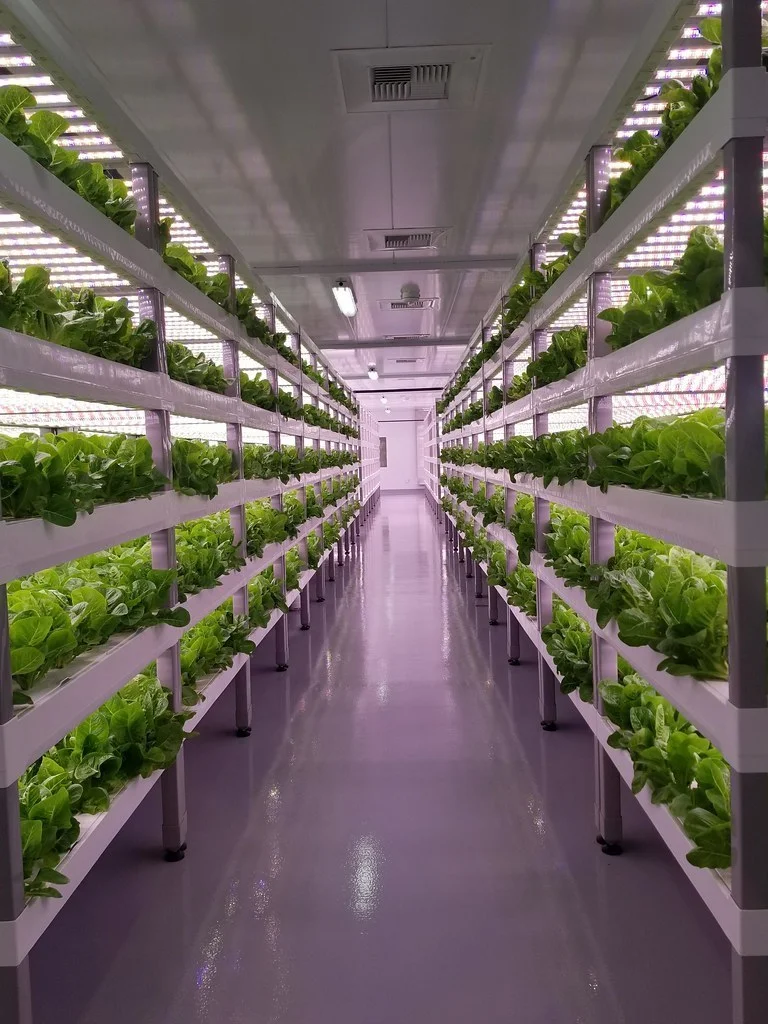
Top 25 Vertical Farming Companies
The phrase “vertical farming” probably doesn’t need to be explained even though it’s quite new
May 3, 2019 By MAI TAO
The phrase “vertical farming” probably doesn’t need to be explained even though it’s quite new. But anyway, vertical farming refers to the practice of producing fruits and vegetables vertically, in stacked layers, perhaps on many floors inside a building, using artificial lights instead of the sun, and a whole range of relatively new technologies.
The two main reasons why it’s a much-discussed topic now is because:
there are a number of startup companies emerging in the sector and attracting tens of millions of dollars in investment; and
more people live in cities than do in rural areas, a global trend which seems irreversible, and this means that the demand for fresh produce will increase in urban areas, and bringing the production closer to the consumer would make sense.
The third thing we could have added is that there is the range of new technologies available now that make vertical farming in urban areas cost-effective and possibly profitable. But we already mentioned that.
Some of these technologies have been available for some time, decades even, but they were probably too expensive in the past to make vertical farming a viable business proposition.
The key technologies in vertical farming include:
perception technologies – cameras and other sensors which can monitor for colour and other factors, such as disease;
artificial intelligence – which can process the data from the sensors and formulate solutions;
automated and even autonomous mechatronics – robots and other automated machines which pick the produce when it is ready for market, or apply cures to ailments during their growing.
The above list is a very simple breakdown of the fundamental technologies that will be required to, basically, reduce to a minimum or even eliminate the need for human involvement.
If vertical farms are run like traditional greenhouses, there would be too much human input required and it probably would not be profitable.
It’s the new automation technologies that will make it work.
Carnegie Mellon University is among a number of organizations which have developed integrated systems for vertical farming. CMU’s version is called ACESys, short for Automation, Culture, Environment, and Systems Model for Vertical Farming.
An academic paper probably worth checking out is called Advances in greenhouse automation and controlled environment agriculture: A transition to plant factories and urban agriculture.
In their introduction to the paper, the authors note: “Greenhouse cultivation has evolved from simple covered rows of open-fields crops to highly sophisticated controlled environment agriculture facilities that projected the image of plant factories for urban farming.
“The advances and improvements in CEA have promoted the scientific solutions for the efficient production of plants in populated cities and multi-story buildings.”
So the interest in the field is strong and most people seem to think it’s a viable business proposition.
And to underline the positivity about the sector, Research and Markets forecasts the vertical farming market will grow to a value of $3 billion by 2024, from virtually nothing now.
However, not everyone is convinced, and some people have dismissed the whole idea as a scam. They say it won’t work, will be too expensive and not be able to yield enough to provide adequate returns on investment.
But in some sectors, such as marijuana production, indoor farming is providing a strong foundation for healthy profits, although we are not encouraging that sort of thing – this article is more about produce such as lettuce and other healthy vegetables and fruit, usually found in greengrocers.
Anyway, whatever we or anyone else thinks of the prospects, there are a large number of companies which have entered the field and we thought it would a good idea to make a list of them.
It’s a very new business sector, so this list is not ordered on any scientific basis – just 20 companies that are notable and active.
We’re not going to include Samsung for now even though it’s been on this website recently for demonstrating a home vertical farming product. The reason is that vertical farms are currently not central to Samsung’s business by any stretch of the imagination, although the company may have a contribution to make to the sector going forward.
1. AeroFarms
This company has won many plaudits for its operation and uses its own patented “aeroponic technology… to take indoor vertical farming to a new level of precision and productivity with minimal environmental impact and virtually zero risk”.
The company has raised at least $138 million in funding since launch in 2004, according to CrunchBase. Some of its backers are quite impressive, as this article in Ag Funder News reports.
The term “aeroponic” farming refers to the process of growing plants in an air or mist environment without the use of soil or any earth-like material, which is known as “geoponics”.
Aeroponic systems enable the production of plants using 95 percent less water, which is what AeroFarms says it does.
2. Plenty
Although Plenty doesn’t make seem to mention aeroponics on its website, it’s difficult to see how it can reduce the water consumption of its vertical farms by 95 percent, as it claims to do, without the air-and-mist system as described above.
Like the other big vertical farming companies on this list, Plenty is another one that retails its produce, which include kale and other greens, as well as some exotic herbs.
Plenty is probably the biggest company in terms of the amount of money it has raised in funding – approximately $226 million, according to CrunchBase.
Green Spirit Farms started raising money as early as 2013, but has not disclosed the amounts. Area Development reported that the company was investing $27 million in a vertical farm system in Pennsylvania, which would suggest it’s well financed.
However, given that it doesn’t seem to have a website of its own, it’s difficult to say what its current and future activities are with full confidence. Owler estimates its annual revenues to be $1.2 million.
You’d think any farming startup of any kind would steer clear of everything that’s genetically modified, but the fact that Bowery makes a point of saying it uses “zero pesticides and non-GMO” seeds might suggest that some vertical farming companies don’t have the same ideas.
Having raised more than $140 million in investment since inception in 2015, Bowery has carefully developed a distribution network in the US. Its leafy greens are available to buy in Whole Foods Market and Foragers. It also supplies a number of restaurants and sells online.
It doesn’t look like Bowery supplies its platform to other companies, even though some might be interested in its claims, such as: 95 percent less water usage than traditional agriculture; 100 times more productive on the same amount of land; and from harvest to shelf “within a few days”.
5. BrightFarms
Another of the big-money startups, BrightFarms has so far raised more than $112 million since its establishment in 2010, according to CrunchBase.
But unlike some of the other big companies, it isn’t into aeroponics as much. It seems more interested in hydroponics, which refers to growing plants with water, or, to be more accurate, mineral nutrient solutions in a water solvent.
Neither aquaponics nor hydroponics use soil. How each one compares in terms of quality, efficiency and profitability will probably only become clear a few years from now when we see how well these companies have done. Chances are they’ll all probably use a mix of systems.
BrightFarms has a long list of impressive-sounding partners, including Giant, Walmart and Metro Market, among others.
This company is one of many which have started up in the New York area. Strange to say it about such a new sector, but the market for vertical farming produce may be saturated – in that city at least.
Gotham Greens has so fair raised at least $45 million since its launch in 2011. It has four production-scale facilities, in New York City and in Chicago, and plans for more in several other states.
And, like BrightFarms, it’s more of a proponent for the hydroponic method, although it may well eventually mix it all up and try different approaches in different facilities.
7. Iron Ox
This company appears to use robotics perhaps more than the others, in the picking process at least, and claims to operate fully autonomous indoor farmings. It too is a proponent of hydroponics, and is a retail-oriented company.
Its products are similar to the others’ – leafy greens such as lettuce and kale or things like that. It’s one of the newer startups on the list so a lot might change.
Iron Ox has only recently started supplying its products to local markets in California. The company has so far raised over $6 million in funding, according to CrunchBase.
8. InFarm
Most of the above companies are US-based, but there are also numerous vertical farming startups in Europe and Asia. InFarm is based in Berlin, Germany, and has so far raised approximately $35 million in investment.
The company appears to be going into the exotic herbs market, including Thai basil, Peruvian mint and such like. But it’s also growing fairly common herbs such as dill, basil, sage and so on.
It doesn’t say on its website whether it uses hydroponic or aeroponic systems, but it does claim to use 95 percent less water, which would suggest it uses at least one of those. However, it says it uses 75 percent less fertilizer, which might suggest it mixes earth-based processes into its technology. Most likely, it uses a hydropic system.
9. AgriCool
French vertical farm startup uses an aeroponic system to grow fruit and vegetables. It appears to like strawberries more than other produce. Not a bad idea since strawberries are hugely popular in France, which has a massive traditional agriculture industry.
AgriCool says its aim is to be within 20 km of its customers and offers a program called “Cooltivator”, through which customers can learn how to use its technology and possibly become producers and distributors themselves.
So far, AgriCool has more than $41 million in funding since its launch in 2015, according to VentureBeat. The company also uses shipping containers as “Cooltainers” in which its aeroponic farms can be set up.
10. CropOne
While we couldn’t immediately find how much funding CropOne has raised, we did find that it has signed a $40 million joint venture agreement with Emirates Airlines to build what is described as “the world’s largest vertical farming facility” in Dubai, UAE.
It follows, perhaps, that it will eventually supply a lot of its produce to Emirates Airlines for its flight passengers.
CropOne, founded in 2011, claims to use just 1 percent of the amount of the water required by traditional agriculture, using a hydroponic system. It’s also big on big data, with “millions of data points collected each day” about its plants, which are mainly edible leafy greens.
11. Illumitex
Halfway through this list, and we feel the need to chill out, and what better way to relax than write about Illumitex, which supplies LED lights – light emitting diodes – which are popular among cannabis growers.
Of course, all sort of other companies uses LED lights, but Illumitex’s biggest customers are probably in the dope sector.
LED lights are claimed to use 90 percent less energy than incandescent lighting and 60 percent less than fluorescent lighting. This energy efficiency – and, therefore, lower cost – is a critical factor in the likelihood of making profits in vertical farming being quite high.
Lights supplied by Illumitex, founded in 2005, are installed in some of the world’s largest vertical farms.
12. PodPonics
Not much information is immediately available about this company, but according to the Angel investment website, it raised almost $5 million in 2014, which is a long ago in startup terms.
The company constructed a vertical farming facility in and is said to be doing something similar in the Middle East. However, without being able to find the company’s website, we can’t really say much more.
13. Surna
Getting even closer to the “demon weed”, this company specializes in providing water-efficient solutions for indoor cannabis cultivation, and counts more than 800 grow facilities as clients and partners.
The company appears to use hydroponic systems in the main, but given its long client list, it probably installs a variety of technologies, depending on the customers’ requirements.
Surna is based in Boulder, Colorado, one of the first states to decriminalize cannabis, now at the centre of a flourishing industry. However, the company says it can grow anything anywhere, including “potatoes on Mars”.
14. Freight Farms
Rather like AgriCool, Freight Farms manufactures a product called the “Greenery”. As its name suggests anyway, Freight Farms provides shipping containers modified as hydroponic indoor farms – the Greenery.
In fact, Freight Farms claims to be the world’s leading manufacturer of container farming technology, and provides ready-made or “turnkey” container farms. Or plug-and-play maybe.
As you might expect, these farms can be managed through smartphones. The company has a whole range of tech solutions built around its central product.
Freight Farms has so far raised almost $15 million in funding since its founding in 2010, according to Owler.
15. Voeks Inc
Voeks Inc, a US company, appears to have no connection with a similarly named company, called Voeks, in the Netherlands, Europe – that one seems to be for former employees of Shell.
Voeks Inc provides a range of services including for vertical farms, mostly in the areas of heating and irrigation systems, as well as nutrient delivery.
Its client list includes some big names, such as Monsanto, Syngenta, and Bayer, which is in the process of taking over Monsanto.
16. SananBio
SananBio provides vertical farming solutions which mainly involve the hardware, such as the lights and the platforms.
Backed by a significant scientific research and development unit, the company is one of the leading suppliers of vertical farm systems in Asia and is expanding in the US.
It emphasizes hydroponic equipment on its website, but it’s likely that it customizes its solutions depending on its clients’ requirements.
Interestingly, Sanan claims to be the largest LED chip manufacturer in the world, and we’ve already mentioned how crucial LED lights are to indoor farming.
17. HelioSpectra
Talking about LED lights, which basically replace sunlight, HelioSpectra is one of the leading suppliers in the indoor farming market, with a big client base from the cannabis growing sector.
But HelioSpectra aren’t all into growing cannabis, however. The company’s lights are also used to grow a variety of lettuce types, tomatoes, and peppers, among other fresh produce.
18. Agrilution
Back to a complete vertical farming systems supplier, but with a couple of slight differences. Not only because Agrilution is European – German, to be more precise – but also because it supplies what it describes as a “personal vertical farming ecosystem”.
In other words, its “PlantCube” product can be installed into the average home, taking up a similar amount of space as a dining table or large fish tank.
Perhaps similar to the product being tested by Samsung, Agrilution’s PlantCube uses a hydroponic process.
19. Altius Farms
Specializing in aeroponic systems, Altius provides what it calls “tower gardens” among its products. Just imagine a multi-level plant pot and you’ll get the idea.
The company integrates its farms into a variety of urban spaces, fromschools to urban youth centres and veterans’ homes, sometimes on rooftops, sometimes at ground level.
Altius looks more like a social venture than a private enterprise, and we couldn’t immediately find whether it has raised any equity finance.
20. Badia Farms
Vertical farms are the culmination of emerging technology in a relatively new market, so there’s bound to be many companies claiming to be the “first” or “biggest”, and of course “revolutionary”.
Badia Farms claims to be building the Middle East’s Gulf states’ first indoor vertical farm, in readiness to supply “micro-greens and herbs” to top restaurants in places such as Dubai.
The company’s multi-story greenhouse will use the hydroponic method for growing, and already boasts a prestigious client base.
21. Intelligent Growth Solutions
Another vertical farming specialist, also with an eye on the Middle East, Intelligent Growth Solutions is actually a Scottish company.
Interestingly, IGS claims to be increasing LED efficiency by a further 50 percent, which would give it a big advantage since lighting is probably the single biggest cost in indoor farming systems.
The company also emphasizes automation in its solutions, saying that its towers and overall system uses robotics and is reducing labor costs by up to 80 percent.
22. FarmOne
FarmOne’s main facility is installed in the basement of a posh retaurant in Manhattan, the two-Michelin-starred Atera. The company has used this as a platform to launch across the US and now partners with numerous fine restaurants in many states.
FarmOne uses the hydroponic method and provides smartphone apps for managing the facility, which can either be a ready-made, off-the-shelf solution or tailor-made for the individual customer.
The company has raised at least $5 million since 2017.
23. Sky Greens
This company is headquartered in Singapore, which about the size of Manhattan and yet has huge influence in the South-east Asian economy. The city-state may have one of the busiest seaports in the world, but its residents would probably prefer to buy locally-grown leafy greens and herbs if available.
Sky Greens uses a patented system which integrates a range of hydraulics to build very tall structures – 9 meters with 38 tiers of growing troughs – which can use hydroponic or soil-based processes.
24. Spread
This Japanese company was one of the first vertical farming startups covered by Robotics and Automation News when we started three years ago, and the company’s latest projects include what is described as “the world’s largest plant factory”.
It has big-time partners as well, including telecommunications giant NTT, with which it jointly developed an internet of things platform for its facilities, which inevitably use artificial intelligence as well.
The company actually started in 2007, which makes one of the older vertical farming companies. The financing at the time amounted to just $1 million, which is small in comparison to newer startups.
25. Sasaki
More of a property developer than a vertical farming company. However, this company does at least attempt to negate the effect of taking over arable farming land by constructing buildings that provide indoor farming opportunities.
Among its projects is one called “Sunqiao Urban Agricultural District”, covering an area of approximately 100 hectares, located between Shanghai’s main airport and the city center. The development is said to designed to integrate vertical farming systems which could provide products such as spinach, kale, bok choi, watercress and so on.
This Belgian startup, specializing in “leafy greens”, offers three ready-made solutions for indoor farming: “traditional”, which offers a growth process of 70 days’ duration; “greenhouse”, 40-50 days; and “urban”, just 21 days.
The company hasn’t disclosed how much investment it has received, but there certainly has been enough for it to market and sell its solutions overseas, including its first projects sold in China, Japan and Australia last year.
High on life
We’re not the only ones enthusiastic about vertical farming. The US Department of Agriculture is offering grants to research initiatives in the sector.
We’ve tried to concentrate on companies that provide complete solutions in this list, rather than individual components, such as lighting or watering systems and so on, although some of them are included.
However, it’s difficult to say how the above companies will evolve over the next year or two. Some of them may find that it’s more feasible for them scale down and provide components rather than complete systems.
Hopefully, they won’t disappear completely because it seems like a good idea to have indoor farms in urban areas so that healthy leafy greens are within reach for city dwellers who are currently on a diet of greasy fast food.
Perhaps the availability of fresh produce will provide a platform for new types of healthier fast food joints.
And speaking of joints, dude…

The Urban Farm Concept
Urban farming is becoming increasingly popular and is now at the heart of a growing number of business models that want to address the needs of fast-growing urban markets looking to source fresh local produce
Urban farming is becoming increasingly popular and is now at the heart of a growing number of business models that want to address the needs of fast-growing urban markets looking to source fresh local produce.
While it may be true that the costs of developing new facilities will increase the cost of production, the reduction in the costs associated with transporting produce to an end market, both economically and environmentally, more than offset this.
In the UK, for example, Ocado is investing £17m in a high-tech vertical farm which is to run alongside its robot-run distribution centres, and the company said that it plans to roll this concept out around the world.
The vertical farm, Jones Food, currently grows around 420 tonnes of basil, parsley and coriander a year in stacked trays using LED lights to encourage growth.
Ocado will be looking to use its experience and expertise in robotics and AI to help make the Jones Food operation more efficient.
According to senior management at Ocado, the company is also forming a joint venture – Infinite Acres – with a US-based vertical farming business 80 Acres and Priva, a Dutch horticultural technology provider. 80 Acres currently grows tomatoes and courgettes as well as leafy salads and herbs, without using pesticides.
The concept of vertical or urban farming is becoming more popular and at its heart it looks to help retailers to better address fundamental consumer concerns such as seasonal availability, freshness and sustainability.
Unlike traditional farms, urban farms look to control every aspect of a plant’s growth - but that can prove very expensive to enable.
“When we talk about urban farming it’s about getting the farm closer to the end market. Today, much of what we think of as fresh has had to travel miles before getting to a store,” explains Bruno D’Amico, Design and Product Manager at Current, part of GE. He continues, “It means that by the time you eat it, it could be months old. Take apples or onions, for example, these are products that if stored correctly can have a very long storage life.
“The idea of being fresh depends on where it was sourced. The urban farm is about how you can get the farm nearer to urban centres and produce food locally.
“New technologies are helping to revolutionise the way in which we can access fresh produce,” D’Amico suggests.
Industrial scale food production
Current offers horticultural LED lighting systems that have been designed to maximise the potential of urban farms and to support industrial scale levels of food production.
“We provide data to help better understand what is happening in the local environment. So, we’ll look at occupancy rates and temperature, for example, and that data is then made available to the customer to better support the specific outcome they’re looking for.”
Light is obviously one of the most crucial elements when it comes to plant growth, yet while the sun’s light spans a broad spectrum – from UV through to infrared wavelengths – the available light spectrum can be affected by things like geography, the weather and the changing seasons.
“Different plants have different light needs and today it is possible to vary the light ‘recipe’ to some extent, enabling greater control over how plants grow,” explains D’Amico. “However, when you talk about urban farms a lot will depend on the buildings and facilities that are used.
“These farms can be located in a warehouse or in a tower block. If you look at a lot of entry level farms, many have started in an apartment before moving to a larger space.
“If you look beyond these kind of ‘start-ups’, increasing numbers of serious investors are looking for an optimum growing space and will consider building suitable facilities – all of which will require the collection of environmental data.”
Whatever the facility lighting, while vital, is just one of the things that need to be considered. Air flow will be crucial along with water circulation and applying the right amount of nutrients.
“Air flow management is critical, especially in vertical farms,” D’Amico explains. “There are certainly some basics that need to be addressed, but a lot will depend on where you are growing and the type of building that you are using – it means that a lot will need to be managed.”
The use of LEDs and their ability to process light generation, extraction and re-absorbance and the fact that they can run indefinitely, means that they can offer farmers much greater control over their crops - whether that is to promote leaf coverage, fruit generation, plant or leaf mass.
“Light can also prove critical when it comes to the management of pests, bacteria and fungal pathogens and can be used to create ‘traps’ that prevent threats spreading across crops,” explains D’Amico.
According to D’Amico, the urban farm sector is benefitting from two big trends – a growing urban population and worries about the environment.
“We are seeing large investors looking at issues around the environmental impact of farming and whether it is sustainable, and how technology can then be used to address these problems at the top level.
“When it comes to urban farming we are seeing the development of both mega urban farms, with large buildings and a large footprint, as well as strong growth in much smaller farms too. These farms look to support local grocery stores and restaurants, for example. It’s hard to say which is gaining the most traction, but both are growing.”
Lighting solutions
Current is involved with a number of projects that are using its lighting solutions, but it is also supporting job training and education in a bid to help develop more local food systems and a greener approach to farming.
Current has installed 12km of its Arize LED solution in a new facility owned by Jones Food, which is now working closely with Ocado. The equipment is housed in a state of the art facility which has been designed to enable crops to be grown in isolation away from external contamination.
“Lighting is the life blood of the facility,” said the company’s CEO James Lloyd-Jones, “and Current was able to provide the right lighting set up and spectrum.”
“We’ve developed Arize Lynck LED Growlights that by isolating and combining different light wavelengths are able to replicate and accelerate natural photosynthesis and thereby reduce growth cycles,” explains D’Amico.
“Plants are sensitive to blue and red light spectrums and by varying those spectrums – we can offer seven variations – we are able to encourage different growth patterns.
“We approach our customers with a spectrum, look to understand the outcome they are looking for and work with them to give them the right light to support their needs.
“We don’t just focus on the lighting perspective but try to better understand the entire environment.”
According to D’Amico the benefits of the LEDs come in the form of ease of installation, a reduction in operational costs and much greater levels of reliability.
But the issue, D’Amico suggests, is not only about sourcing fresh food locally, but also providing access to food where accessibility can be a real problem.
“Can an urban farm be relocated to remote areas to source food locally food?
“A good example of this is how our LED lighting solution has been used by the Big Tex Urban Farm to grow crops. Partly an innovation lab as well as a production facility, it has used our LED solutions to grow food for isolated desert communities.”
The farm originally comprised of just 100 raised garden boxes but after significant investment Big Tex was able to produce 11,000 pounds of food in 2018, which translates into 140,000 servings, using the Arize LED lighting system to provide optimal light spectrums to drive plant growth.
The red spectrum encourages flowering and fruit generation, while the blue produces much thicker leaves. A combined red-to-blue mix has helped to encourage much greater overall growth.
“Critically, these LEDs have been able to produce better crops, quicker. But they are longer life, require less maintenance and less heat than more traditional forms of lighting,” says D’Amico.
Urban agriculture can happen anywhere and the technology being used is making it more viable economically, providing an incredible opportunity for growers everywhere.
Vertical Harvest To Study Expansion of Greenhouse Concept Into Chicago
An innovative greenhouse that backs up to the Millward Street parking garage now has $500,000 in hand to study expanding into Chicago
With $500K Grant It Will Look At Potential For
Vertical Greenhouses At Housing Developments
June 26, 2019
Michele Dennis deposits sweet mix in Vertical Harvest’s revolving planters in May. The private-public partnership was recently awarded a $500,000 Fannie Mae grant to study an expansion into Chicago.
An innovative greenhouse that backs up to the Millward Street parking garage now has $500,000 in hand to study expanding into Chicago.
The Federal National Mortgage Association, or Fannie Mae, awarded Vertical Harvest a grant of that sum through its Sustainable Communities Innovation Challenge.
The grant program is a partnership with the National Affordable Housing Trust, which presents exciting prospective growth opportunities for the community greenhouse formed a decade ago by valley residents Nona Yehia, Penny McBride and Caroline Croft Estay.
“I think the National Affordable Housing Trust has 1,452 sites that they’re going to be developing in the next 10 years,” said Sam Bartels, Vertical Harvest’s business development director.
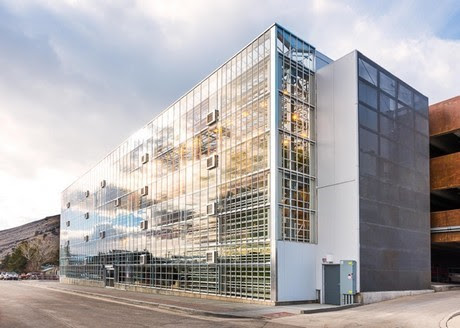
“Jackson has always been our proof of concept and our pilot,” she said. “We’ve had people from all over the world contact us on a weekly basis about how they could do this.”
While adding Vertical Harvest-like facilities around the country and planet may be the long-term vision, the product of the grant is initially much more narrow. The half-million dollars will be put toward a feasibility study that will analyze the efficacy of building vertical greenhouses at three existing affordable housing developments in the Chicago area, Yehia said.
The study will assess what model of greenhouse could be integrated into the developments, and what products would best serve the Midwestern metropolis market. It will also look at programs that could be integrated into greenhouses and that provide ancillary benefits for the community, she said.
“Could you put a commercial kitchen in there?” Yehia said. “A food hub? Or even a day care center?”
The existing Vertical Harvest is far from an ordinary business. It’s a public-private partnership, for one, relying on town of Jackson property, and funds from the Wyoming Business Council and philanthropic groups and people. More than a dozen employees at the three-story central Jackson workplace have special needs, and volunteers assist as well.
“Vertical farming is the fastest-growing industry of farming,” Yehia said. “It’s such a nascent field, and it has so much potential impact. We’re really the only ones looking at the social impacts.”
Vertical Harvest’s annual harvest is around 100,000 pounds of produce, all hydroponically grown on 1/10th of an acre.
Yehia anticipates the study, which will be authored by in-house employees, will take about 18 months to complete. Work is set to start in October. This next step of Vertical Harvest’s evolution is “exciting,” she said.
“From the get-go this is what the team had in mind: to grow and replicate this model,” Yehia said. “We’ve always had our eye toward that end goal.”
Yehia’s architectural firm, GYDE Architects, is collaborating on the study.
Contact Mike Koshmrl at 732-7067 or env@jhnewsandguide.com.

Breaking News: Europe Braces For Peak of A Record Heatwave
Europeans braced Thursday for the expected peak of a sweltering heatwave that has sent temperatures soaring above 40oCelsius (104 Fahrenheit), with schools in France closing and wildfires in Spain spinning out of control
Europeans braced Thursday for the expected peak of a sweltering heatwave that has sent temperatures soaring above 40oCelsius (104 Fahrenheit), with schools in France closing and wildfires in Spain spinning out of control.
Governments warned citizens to take extra precautions, with the high temperatures also causing a build-up of pollution, and emergency calls to hospitals increased. Exceptional for arriving so early in summer, the heatwave will on Thursday and Friday likely send thermometers above 40oC in France, Spain and Greece.
A forest fire in Torre del Espanol in Spain's northeastern Catalonia region raged out of control, devouring land despite the efforts of hundreds of firefighters who worked through the night.
French Health Minister Agnes Buzyn said people had to be prepared for the peak of the heatwave and expressed irritation that some appeared not to be taking the advice on board.
Possible all-time high
The average maximum temperature recorded Wednesday in France of 34.9oC was already a record for the month of June, said state weather forecaster Meteo France. Even higher temperatures are expected on Friday, where areas in the south could see peaks of 42 to 44oC.
Meteo France said France's all-time record could be broken; an August 12, 2003 reading of 44.1oC in Saint-Christol-les-Ales and Conqueyrac in the southern Gard region.
Source: phys.org
Publication date: 6/28/2019

Five Intriguing Questions With Wanjun Gao, CEO Of BiFarm
What would you do if you could control all the variables of precision growing and control all the things that possibly could go wrong directly on an app, anywhere in the world?
June 26, 2019
Warren Bobrow Contributor
I work with cannabis and have done some wild things in life. cocktailwhisperer.com
Precision Growing in an App | BIFARM
I'm lucky to have a green thumb. Give me some seed or a cutting or just about anything and I can grow it. This was probably caused from my growing up on a Biodynamic farm belonging to my family in New Jersey. However, most people have black thumbs. They plant something in the earth and it just shrivels and dies no matter what they do. They can't understand why the plant died, it just stopped being happy, then it turned to brown and said, without much fanfare, good-bye.
What would you do if you could control all the variables of precision growing and control all the things that possibly could go wrong directly on an app, anywhere in the world?
BiFarm is similar to the concept of Seedo and Leaf except neither of them are available commercially.
BiFarm is the only precision controlled high pressure aeroponics system. Most of the home systems are hydroponics.
BiFarm doesn’t provide lights, casing or air filtering, because growers might already have them, and the selection is geared towards what lights to select, as an example.
BiFarm's system is designed for aeroponics working conditions, which is dependant on precision nutrient delivery, and root area temperature stability. But aeroponics works way better if conditions are right.
Other than home use, BiFarm is perfect for R&D purpose, for schools, labs and seed companies. They need tools to repeated testing on different input.
For example, Cornell university’s agritech center likes BiFarm's AeroKit, and we are working on presenting them a solution similar to 'co-location' project. That will enable them to test out generic change testing.
Enter Wanjun Gao, the intrepid CEO of BiFarm
Warren Bobrow=WB: Where are you from? When did you discover cannabis? Where are you producing your product now?
Wanjun Gao=WG: I originally came from China; however, I have been living in Florida for the most of my adult life. BiFarm's activities of research, design, development, and user experience trial are conducted here in the United States. While exploring the sourcing partners around world, we currently work with our suppliers and manufacturers in China for prototyping and initial production for AeroXPS.
WB: Tell me about your company? Why Cannabis instead of practicing law or say, becoming a surgeon? What is your passion?
WG: BiFarm is a technology company. We develop agricultural technologies and provide soil-less solutions that maximize harvest quality and yields. Our focus is precision aeroponics with automated control. We believe precision-controlled cultivation leads to consistent, reliable, and repeatable results. Imagine if we can have agricultural freedom in environments that are traditionally hard to cultivate in: the dry deserts of Middle-east or cold winters of northern Europe and Canada. In our bigger picture, our goal is to improve the future of agriculture for generations to come.
Bifarm's technologies can grow various plants. For example, university agri-tech center and USDA lab purchased BiFarm’s precision aeroponics equipment as genetics research tools for plants like the apple tree. In a sense, BiFarm's equipment is like an iPhone, and users can utilize different apps to grow different plants. If we look back at BiFarm's origin, it is an accidental business. It started with the problem of my inability to keep indoor plants alive for long, and I took it upon myself to automate the gardening tasks. Before long, I had enthusiastic teammates join me. My passion is to create and make things work. It is quite a sense of accomplishment when I see things that I put together, work.
WB: Do you cook? If so, who taught you? What’s your favorite food? What is your favorite local restaurant? Why?
WG: Well, I guess "cook" is a subjective term. I think I can cook. I learned by trial-and-error, like most people. When it comes to food, I don't discriminate. I like it all, as long as it is of good quality.
WB: What is your six-month plan, one year? What is your inspiration for the future?
WG: With the release of the AeroXPS we are now focusing on scaling the technology for commercial facilities. There are two goals:
1. One is to provide clusters of individually controllable habitats powered by AeroXPS grow systems that are ideal for genetic research labs and small cultivation facilities. The habitat environment can be recreated and repeated with the exact settings for benchmark testing.
2. Another one goal is scale up the grow system to be more efficient for the yields & costs and streamline indoor cultivation activities. In other words, we want to make the facilities the farms of future.
WB: If you could be anywhere in the world right now, where would that be? Doing what? With whom?

The Urban Farm With A Global Growth Plan
BY EUGENIO FELICE
Tuesday 18th June 2019, London
Reckoned To Be Europe's Largest, Most Advanced Vertical Farming Site,
Italy's Planet Farms Could Soon Appear Elsewhere
Luca Travaglini pictured at Planet Farms' Milan-based laboratory
Produce more food, of better quality, using fewer resources. Luca Travaglini and Daniele Benatoff’s message to the Triennale exhibition in Milan was crystal clear: their start-up company Planet Farms is planning to build Europe’s largest and most advanced vertical farm, then establish similar projects in other countries around the world.
Work on the new centre begins this month and is due for completion in spring 2020. Located in Cavenago, halfway between Milan and Bergamo, the farm will eventually extend across 9,000m2 and supply 40,000 packs of produce per day. Inside, an innovative growing process from seed to packaged product is set to turn out zero-residue fresh produce that will impress in terms of their taste, long shelf-life and high level of sustainability.
“Vertical farming is to agriculture what Formula 1 is to cars,” say Travaglini, an apt description given the centre is just a few minutes’ drive from Monza’s world-famous race track. Planet Farms will employ state-of-the-art technology to grow babyleaf salads, basil and other aromatic herbs in a completely controlled environment situated right at the point of sale, 365 days a year. A capillary system of sensors allows the entire production process to be monitored constantly and, because the entire process is automated, Planet Farms says the consumer will be the first to touch what is a completely fresh product. Each plant will grow from a traditional seed in pure air and water, without the need for pesticides, with water usage minimised.
The new structure could be just the start as far as Planet Farms’ ambitious global development and growth plan is concerned. In fact, it aims to make Lombardy a vertical farming capital by exporting its model throughout the world, as co-founder Benatoff confirms: “The Cavenago plant represents the starting point on a path that will take us all over the world, a project that speaks Italian and that will soon see new concrete applications both in Italy and abroad.”
An architect's rendering of how the new vertical farm will look
As with any F1 team, lots of other specialists are involved behind the scenes, including architect Studio Dordoni, lighting provider Signify, Travaglini FarmTech, WoodBeton, Sirti, 255, Repower and Netafim. Travaglini, which has years of experience in food production, is helping to plan and construct the farm’s air conditioning systems – with a focus on energy efficiency – and its clean packing rooms, where the aim is to minimise the risk of contamination from outside. Philips spin-off Signify, meanwhile, previously worked with Planet Farms on its research laboratory and is supplying Dynamic Philips GreenPower LEDs that can be fine-tuned to every type of vegetable.
“From 2020, the Cavenago facility will produce 800 tonnes of salads and aromatic herbs a year, which is equal to 40,000 packs per day,” comments Luca Travaglini. “The process, which is completely automated and checked, goes all the way from seed to end product. Air, water, light and soil, these are all variables that can be controlled: we will be the first to use clean rooms to control the air; the water will be sterilised and integrated only with mineral salts, plus we will use 97 per cent less compared with traditional agriculture; the lighting will be high-efficiency LEDs that use only the spectrum of light needed by the plant; and the soil will be substituted by organic substrates designed specifically for each crop.”
The advantages of such a system are clear, Travaglini adds. No longer constrained by weather conditions in the outside world, Planet Farms can in theory grow any product wherever there is consumer demand. “We can even rediscover ancient flavours using seeds that can no longer be used in traditional agriculture,” he suggests. “A few hours after packing, we will deliver a product that is healthy because it is rich in vitamins and antioxidants, and free of pesticides that scare today's consumer. It will also be a taste explosion, which is the paradox of vertical farming: we are rediscovering the real flavours that we no longer find in our dishes. For us, this was the primary goal and our biggest challenge.”
The result, it would seem, is that the end consumer will be the first to touch that chemical-free, crunchy, tasty salad, without needing to wash it before eating. But for Travaglini, vertical farming should not be seen as a replacement for older methods of production. “Our research and innovations can then be transferred to traditional agriculture,” he says. “We cannot and do not intend to replace it.”
High-efficiency Philips lighting will be used in the centre's clean rooms
This article is translated from the original Italian article, which can be found on the Fruitbook Magazine website.

Most Efficient Leafy Greens Farm In The World Delivers Absolute Control And Precision For New Standards of Delicious And Clean Eating
Plenty , the vertical farming company that puts flavor first, today debuted its new farm, Tigris, designed for the best possible flavor while producing with extreme efficiency and cleanliness
SOUTH SAN FRANCISCO, Calif., June 20, 2019 /PRNewswire/ -- Plenty , the vertical farming company that puts flavor first, today debuted its new farm, Tigris, designed for the best possible flavor while producing with extreme efficiency and cleanliness. Tigris exerts absolute control over variables like climate and light, while using less than one percent of the land and less than five percent of the water compared to an outdoor farm.
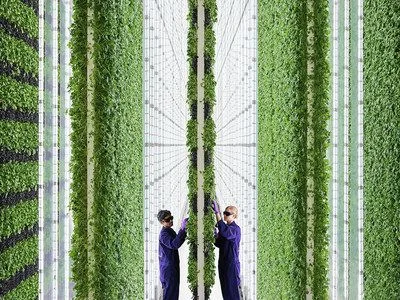

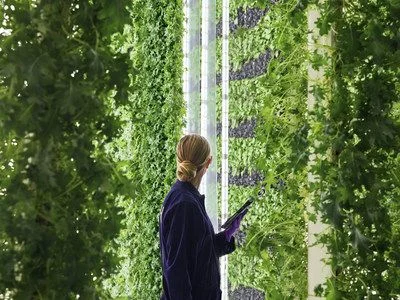
Photo Credit: Spencer Lowell (Photographer)
"Plenty is on a mission to change the way we eat by growing produce with craveable flavor while increasing availability to a world that long ago ran out of additional fruit and vegetable farmland," said Matt Barnard, CEO and co-founder of Plenty. "The globe can grow only one-third of the fruits and vegetables required to provide people with a healthy diet,1and those fruits and vegetables are largely available only to the affluent or people who live near a Mediterranean climate. A farm like Tigris has the potential to improve human and planetary health, and that's exactly why Plenty is here."
With Tigris and future farms, Plenty can not only create an environment that nurtures the perfect flavor in a crop, it can choose crops that have never been grown for grocery stores, due to the whims of climate or seasonality or the many food miles that fruits and vegetables travel today.
"There are 70,000 edible fruit and vegetable varieties in the world, and because of the challenges of growing outdoors and putting food on trucks, we've been relegated to eat the few dozen that we find at the grocery store," said Nate Storey, chief science officer and co-founder of Plenty. "Plenty has unlocked a future where people across the globe, regardless of income or geography, can experience the joy of incredible, nourishing fruits and vegetables."
Tigris is currently being commissioned and will then undergo a facility-level food safety certification pursuant to internationally-recognized third party standards, guaranteeing that it meets and exceeds the highest levels of cleanliness and safety for its produce. Plenty is available in the Bay Area today online through Good Eggs and in-person at numerous neighborhood markets, and the greens from Tigris will be widely available later this year. For more information, people can visit Plenty online .
Contact:
Christina Ra, press@plenty.ag
1 https://journals.plos.org/plosone/article?id=10.1371/journal.pone.0205683

Investors' Growing Interest In Vertical Farms
These kitchen gardens are increasingly
interesting for retailers and investors alike.
These systems could indeed solve several problems.
Starting with the challenge of feeding 9 billion people by 2050 while
preserving the planet.
One of the advantages of vertical farms is that they no longer exploit farmland, which is already over-stretched in the current food system. Daniel LEAL-OLIVAS / AFP
By Helene Gully
June 6, 2019
With 100 million dollars raised during a new fundraising, the German start-up Infarm will be able to continue its conquest of major cities. Young sprout specializing in vertical farms, Infarm offers its customers the rental of kitchen gardens to enjoy fresh produce all year round.
As a result, the German nugget raised a total of $ 134 million, including a European grant of $ 2.5 million. Its portfolio already has dozens of clients, including 25 retailers such as Casino, Intermarché, but also Metro and Amazon Fresh in Europe. This makes Infarm one of the prodigious children of this emerging and growing industry.
The principle of vertical farms is to grow plants indoors, without using pesticides and consuming as little water as possible - in general, they use 95% less water than their conventional counterparts. At Infarm, for example, the earth is replaced by coconut fiber, immersed in water saturated with nutrients and mineral salts, and the sun with LED lighting.
Multiplication of investments
These systems are attracting increasing interest from investors since they could solve several problems. Starting with the challenge of feeding 9 billion people by 2050 while preserving the planet. One of the advantages of vertical farms is that they no longer exploit farmland, which is already over-stretched in the current food system. But also to be able to cultivate locally and market fresh produce.
"With this technology, we can grow in different places, creating and maintaining an ideal environment for any plant to grow," Osnat Michaeli, one of Infarm's founders, told Echoes. last November. And these indoor farms can be installed anywhere in the city, an invaluable asset at a time when in all major cities, space is becoming scarce.
The Farm.one start-up cultivates its plants in a New York winery
InFarm is of course not the only one to have positioned itself on the sector. This week, the British online retail chain Ocado, which delivers Marks & Spencer products, among others, took a majority share of 58% in "Jones Foods", the largest vertical farm in Europe. The ambition: to provide fresh products to its customers in less than an hour.
On the other side of the Atlantic, the young Californian nugget, Plenty, raised $ 200 million during a roundtable led by SoftBank. Another start-up, Bowery Farming, was able to seduce Google's parent company, Alphabet, and Uber Dara Khosrowshahi's boss, who injected $ 90 million into his business.
Hélène Gully

Tech Farming Is Making Its Way To Grand Rapids, Michigan
Square Roots, an urban indoor farming company, will bring its Next-Gen Farmer Training Program to Grand Rapids in September. The goal of the program is to train young people in indoor urban farming and grow localized food and herbs year-round in technology-driven environments
Partnering With Gordon Food Service, Square Roots
Aims To Train Young People In Indoor Urban Farming
June 21, 2019
| By Danielle Nelson |
Jacque Kirila and Em Helle harvest sage at a Square Roots indoor farm, which is comprised of repurposed shipping containers. Courtesy Square Roots
One company is hoping to shake up the landscape of farming.
Square Roots, an urban indoor farming company, will bring its Next-Gen Farmer Training Program to Grand Rapids in September. The goal of the program is to train young people in indoor urban farming and grow localized food and herbs year-round in technology-driven environments.
The company will partner with Gordon Food Service to distribute food that is grown by farmers enrolled in the training program to its consumers and retailers across the country.
“Customers want an assortment of fresh, locally grown food all year-round,” said Rich Wolowski, CEO of Gordon Food Service. “We are on a path to do that at scale with Square Roots and are excited to be the first in the industry to offer this unique solution to our customers.”
According to Square Roots, 10 full-time farmers will be chosen through an application process to learn all aspects of farming, from the planting of the seeds to the selling of the produce. They will receive a wage, subsidized health care coverage and other benefits.
The year-long program enables farmers to study the molecular level of the plant as it grows, get hands-on experience with the business side of farming so they can pursue a start-up indoor urban farm and get involved with the community.
Square Roots’ training program was created with advice from experts in farmer education, controlled environment agriculture, regenerative agriculture and urban agriculture, including Glynwood, New York University, Cornell University and the University of Arizona. There will be guest lecturers who will talk about farming and entrepreneurship. There also will be workshops, which will cover a variety of topics, such as pest management practices to real food entrepreneurship frameworks.
The farmers will work in indoor vertical farms that are constructed in 10 specially designed Square Roots shipping containers that will occupy less than 2 acres of Gordon Food Service’s 50-acre headquarters site in Grand Rapids, but it is expected to produce more than 50,000 pounds of herbs annually. Each container will have its own controlled climate that is optimized for growing certain crops. The cloud-connected modular farms will have hydroponic growing systems to water the plants.
“Because we grow in a completely closed environment, we have full control over each climate parameter — from CO2 in the air to the number of hours of light,” Square Roots officials said. “We research the best natural climate for a certain variety of plant, recreate it inside the farm and grow the best tasting produce 365 days a year.”
Gordon Food Service will not only provide a place for urban indoor farms, but farmers from the training program will work with the food service company. The farmers are expected to grow food on a consistent basis to meet the standard of Gordan Food Service and the demand of its consumers.
Additionally, Next-Gen farmers will have the opportunity to represent Square Roots at customer-focused engagements, marketing activities and community events, where farmers can connect directly with customers.
The Next-Gen Farmer Training Program was started in Brooklyn, New York, in 2016. So far, 16 farmers have completed the program, according to Square Roots. Some farmers in the program have either started their own urban farming businesses, taken jobs at companies in urban agriculture or moved into permanent positions on the Square Roots team.
According to the Michigan Department of Agriculture and Rural Development, the food and agriculture industry contributes $104.7 billion annually to the state’s economy and accounts for about 22% of the state’s employment.
Square Roots said its end goal is to be a pathway for future farmers in the urban farming industry in cities around the world. More information can be found at squarerootsgrow.com/program.
Danielle Nelson
Danielle Nelson is a Grand Rapids Business Journal staff reporter who covers law, startups, agriculture, sports, marketing, PR and advertising and arts and entertainment. She is also the staff researcher who compiles the weekly lists.
Email: Danielle at: dnelson@grbj.com
Follow her on Twitter @Dan_Nels
TAGS GORDON FOOD SERVICE / NEXT-GEN /SQUARE ROOTS