

Welcome to iGrow News, Your Source for the World of Indoor Vertical Farming

"Vertical Farming Is A Viable Solution For Urban Environments"
Ali Ahmadian, Heliospectra
Heliospectra CEO Ali Ahmadian will join AVF at Urban Future Global Conference to provide a keynote speech on May 22. AVF’s Head of Science and Education Ramin Ebrahimnejad sat down with Mr. Ahmadian to learn more about the company and their vision for the future of lighting control in vertical farming.
What are the key factors to operating a successful vertical farm?
I think the two key factors for creating a successful and profitable vertical farm are 1) the choice of crop and 2) the choice of technology.
Today, vertical farms have proven success with a wide variety of herbs, lettuce or leafy greens and berries as these crops respond well in compact production areas with artificial lighting. And it is exciting to see many of these operations as well as research organisations like NASA and DLR’s EDEN ISS push the envelope with successful cultivation of even more vegetables and seed varieties. Vertical farmers know well that the only constant is change and we see vertical farming operations rapidly diversifying the types of crops they are taking to retail markets.
Choosing proven technologies that deliver reliable control and crop performance is essential. Growers and vertical farmers need to recognise that lighting controls and environmental controls, or the lack thereof, impact businesses’ ability to deliver consistent, highest quality produce to market, harvest after harvest. Predictable, repeatable production cycles and consistent crop results rely on a solid control system to ensure predictable and stable revenue streams for the business.
How important are associations like AVF for growing the industry?
AVF and other partner associations are important because they provide standardised guidelines, best practices and collaboration opportunities for established growers and, also for new businesses who may be interested in starting up a vertical farm. AVF represents and advocates on behalf of a huge community of professionals and experts. The knowledge that this community shares with each other ensures the future and the success of the vertical farming and horticulture industries. And most importantly AVF helps businesses and the supply companies like Heliospectra attract new scientists, product developers and technologists who will create the new growing environments, cultivation methods and innovations for future generations.
Can you evaluate the importance of UFGC in regard to connecting vertical farming with decision makers?
The Urban Future Growing Conference is an opportunity to demonstrate the difference that vertical farming and indoor farming applications are making in communities across the globe. We need to show urban planners and city planners that vertical farming is a viable solution for urban environments and that it will provide significant contributions and fresh, sustainably grown and nutritious food supplies back to local communities. My expectation is that we as an industry and as business decision makers can partner with AVF and other UFGC participants to create a new mindset or type of thinking. We share a vision that local communities will benefit from better quality crops and produce, that businesses and vertical farms will create local jobs, that industry will collaborate with universities to create more educational opportunities and vocational training programs, and that we as a society can reduce carbon footprint worldwide while securing our future food supply.
Read the full interview here.
Publication date: 5/20/2019
Top 25 Vertical Farming Companies
The phrase “vertical farming” probably doesn’t need to be explained even though it’s quite new
May 3, 2019 By MAI TAO
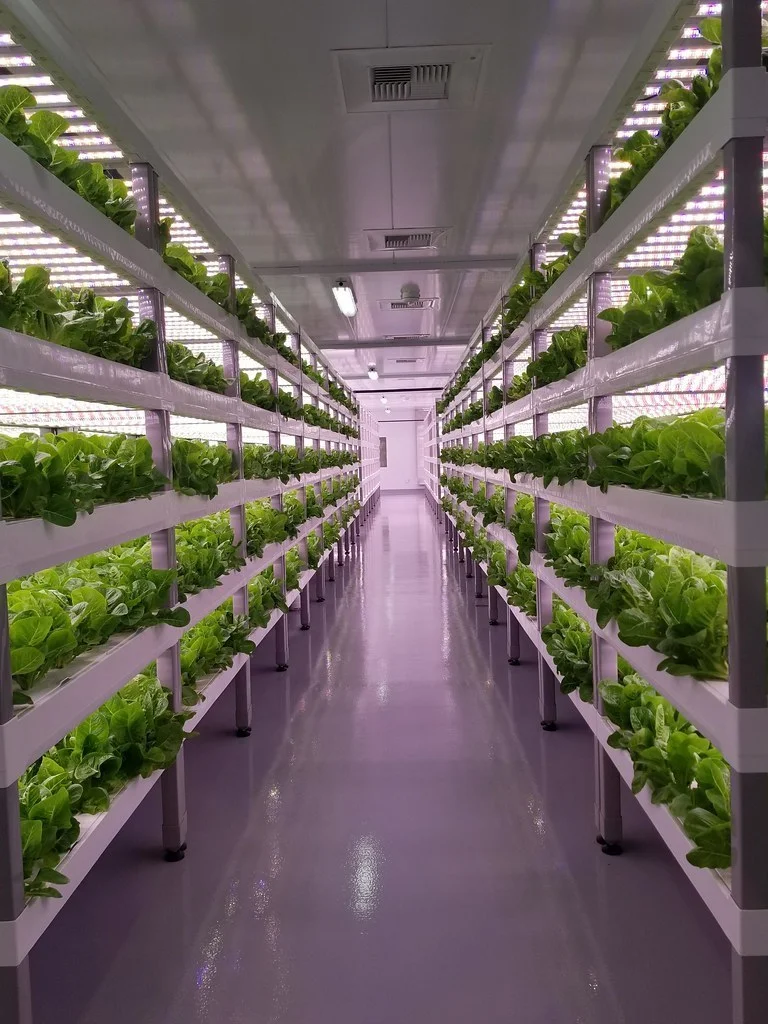
The phrase “vertical farming” probably doesn’t need to be explained even though it’s quite new. But anyway, vertical farming refers to the practice of producing fruits and vegetables vertically, in stacked layers, perhaps on many floors inside a building, using artificial lights instead of the sun, and a whole range of relatively new technologies.
The two main reasons why it’s a much-discussed topic now is because:
there are a number of startup companies emerging in the sector and attracting tens of millions of dollars in investment; and
more people live in cities than do in rural areas, a global trend which seems irreversible, and this means that the demand for fresh produce will increase in urban areas, and bringing the production closer to the consumer would make sense.
The third thing we could have added is that there is the range of new technologies available now that make vertical farming in urban areas cost-effective and possibly profitable. But we already mentioned that.
Some of these technologies have been available for some time, decades even, but they were probably too expensive in the past to make vertical farming a viable business proposition.
The key technologies in vertical farming include:
perception technologies – cameras and other sensors which can monitor for colour and other factors, such as disease;
artificial intelligence – which can process the data from the sensors and formulate solutions;
automated and even autonomous mechatronics – robots and other automated machines which pick the produce when it is ready for market, or apply cures to ailments during their growing.
The above list is a very simple breakdown of the fundamental technologies that will be required to, basically, reduce to a minimum or even eliminate the need for human involvement.
If vertical farms are run like traditional greenhouses, there would be too much human input required and it probably would not be profitable.
It’s the new automation technologies that will make it work.
Carnegie Mellon University is among a number of organizations which have developed integrated systems for vertical farming. CMU’s version is called ACESys, short for Automation, Culture, Environment, and Systems Model for Vertical Farming.
An academic paper probably worth checking out is called Advances in greenhouse automation and controlled environment agriculture: A transition to plant factories and urban agriculture.
In their introduction to the paper, the authors note: “Greenhouse cultivation has evolved from simple covered rows of open-fields crops to highly sophisticated controlled environment agriculture facilities that projected the image of plant factories for urban farming.
“The advances and improvements in CEA have promoted the scientific solutions for the efficient production of plants in populated cities and multi-story buildings.”
So the interest in the field is strong and most people seem to think it’s a viable business proposition.
And to underline the positivity about the sector, Research and Markets forecasts the vertical farming market will grow to a value of $3 billion by 2024, from virtually nothing now.
However, not everyone is convinced, and some people have dismissed the whole idea as a scam. They say it won’t work, will be too expensive and not be able to yield enough to provide adequate returns on investment.
But in some sectors, such as marijuana production, indoor farming is providing a strong foundation for healthy profits, although we are not encouraging that sort of thing – this article is more about produce such as lettuce and other healthy vegetables and fruit, usually found in greengrocers.
Anyway, whatever we or anyone else thinks of the prospects, there are a large number of companies which have entered the field and we thought it would a good idea to make a list of them.
It’s a very new business sector, so this list is not ordered on any scientific basis – just 20 companies that are notable and active.
We’re not going to include Samsung for now even though it’s been on this website recently for demonstrating a home vertical farming product. The reason is that vertical farms are currently not central to Samsung’s business by any stretch of the imagination, although the company may have a contribution to make to the sector going forward.
1. AeroFarms
This company has won many plaudits for its operation and uses its own patented “aeroponic technology… to take indoor vertical farming to a new level of precision and productivity with minimal environmental impact and virtually zero risk”.
The company has raised at least $138 million in funding since launch in 2004, according to CrunchBase. Some of its backers are quite impressive, as this article in Ag Funder News reports.
The term “aeroponic” farming refers to the process of growing plants in an air or mist environment without the use of soil or any earth-like material, which is known as “geoponics”.
Aeroponic systems enable the production of plants using 95 percent less water, which is what AeroFarms says it does.
2. Plenty
Although Plenty doesn’t make seem to mention aeroponics on its website, it’s difficult to see how it can reduce the water consumption of its vertical farms by 95 percent, as it claims to do, without the air-and-mist system as described above.
Like the other big vertical farming companies on this list, Plenty is another one that retails its produce, which include kale and other greens, as well as some exotic herbs.
Plenty is probably the biggest company in terms of the amount of money it has raised in funding – approximately $226 million, according to CrunchBase.
Green Spirit Farms started raising money as early as 2013, but has not disclosed the amounts. Area Development reported that the company was investing $27 million in a vertical farm system in Pennsylvania, which would suggest it’s well financed.
However, given that it doesn’t seem to have a website of its own, it’s difficult to say what its current and future activities are with full confidence. Owler estimates its annual revenues to be $1.2 million.
You’d think any farming startup of any kind would steer clear of everything that’s genetically modified, but the fact that Bowery makes a point of saying it uses “zero pesticides and non-GMO” seeds might suggest that some vertical farming companies don’t have the same ideas.
Having raised more than $140 million in investment since inception in 2015, Bowery has carefully developed a distribution network in the US. Its leafy greens are available to buy in Whole Foods Market and Foragers. It also supplies a number of restaurants and sells online.
It doesn’t look like Bowery supplies its platform to other companies, even though some might be interested in its claims, such as: 95 percent less water usage than traditional agriculture; 100 times more productive on the same amount of land; and from harvest to shelf “within a few days”.
5. BrightFarms
Another of the big-money startups, BrightFarms has so far raised more than $112 million since its establishment in 2010, according to CrunchBase.
But unlike some of the other big companies, it isn’t into aeroponics as much. It seems more interested in hydroponics, which refers to growing plants with water, or, to be more accurate, mineral nutrient solutions in a water solvent.
Neither aquaponics nor hydroponics use soil. How each one compares in terms of quality, efficiency and profitability will probably only become clear a few years from now when we see how well these companies have done. Chances are they’ll all probably use a mix of systems.
BrightFarms has a long list of impressive-sounding partners, including Giant, Walmart and Metro Market, among others.
This company is one of many which have started up in the New York area. Strange to say it about such a new sector, but the market for vertical farming produce may be saturated – in that city at least.
Gotham Greens has so fair raised at least $45 million since its launch in 2011. It has four production-scale facilities, in New York City and in Chicago, and plans for more in several other states.
And, like BrightFarms, it’s more of a proponent for the hydroponic method, although it may well eventually mix it all up and try different approaches in different facilities.
7. Iron Ox
This company appears to use robotics perhaps more than the others, in the picking process at least, and claims to operate fully autonomous indoor farmings. It too is a proponent of hydroponics, and is a retail-oriented company.
Its products are similar to the others’ – leafy greens such as lettuce and kale or things like that. It’s one of the newer startups on the list so a lot might change.
Iron Ox has only recently started supplying its products to local markets in California. The company has so far raised over $6 million in funding, according to CrunchBase.
8. InFarm
Most of the above companies are US-based, but there are also numerous vertical farming startups in Europe and Asia. InFarm is based in Berlin, Germany, and has so far raised approximately $35 million in investment.
The company appears to be going into the exotic herbs market, including Thai basil, Peruvian mint and such like. But it’s also growing fairly common herbs such as dill, basil, sage and so on.
It doesn’t say on its website whether it uses hydroponic or aeroponic systems, but it does claim to use 95 percent less water, which would suggest it uses at least one of those. However, it says it uses 75 percent less fertilizer, which might suggest it mixes earth-based processes into its technology. Most likely, it uses a hydropic system.
9. AgriCool
French vertical farm startup uses an aeroponic system to grow fruit and vegetables. It appears to like strawberries more than other produce. Not a bad idea since strawberries are hugely popular in France, which has a massive traditional agriculture industry.
AgriCool says its aim is to be within 20 km of its customers and offers a program called “Cooltivator”, through which customers can learn how to use its technology and possibly become producers and distributors themselves.
So far, AgriCool has more than $41 million in funding since its launch in 2015, according to VentureBeat. The company also uses shipping containers as “Cooltainers” in which its aeroponic farms can be set up.
10. CropOne
While we couldn’t immediately find how much funding CropOne has raised, we did find that it has signed a $40 million joint venture agreement with Emirates Airlines to build what is described as “the world’s largest vertical farming facility” in Dubai, UAE.
It follows, perhaps, that it will eventually supply a lot of its produce to Emirates Airlines for its flight passengers.
CropOne, founded in 2011, claims to use just 1 percent of the amount of the water required by traditional agriculture, using a hydroponic system. It’s also big on big data, with “millions of data points collected each day” about its plants, which are mainly edible leafy greens.
11. Illumitex
Halfway through this list, and we feel the need to chill out, and what better way to relax than write about Illumitex, which supplies LED lights – light emitting diodes – which are popular among cannabis growers.
Of course, all sort of other companies uses LED lights, but Illumitex’s biggest customers are probably in the dope sector.
LED lights are claimed to use 90 percent less energy than incandescent lighting and 60 percent less than fluorescent lighting. This energy efficiency – and, therefore, lower cost – is a critical factor in the likelihood of making profits in vertical farming being quite high.
Lights supplied by Illumitex, founded in 2005, are installed in some of the world’s largest vertical farms.
12. PodPonics
Not much information is immediately available about this company, but according to the Angel investment website, it raised almost $5 million in 2014, which is a long ago in startup terms.
The company constructed a vertical farming facility in and is said to be doing something similar in the Middle East. However, without being able to find the company’s website, we can’t really say much more.
13. Surna
Getting even closer to the “demon weed”, this company specializes in providing water-efficient solutions for indoor cannabis cultivation, and counts more than 800 grow facilities as clients and partners.
The company appears to use hydroponic systems in the main, but given its long client list, it probably installs a variety of technologies, depending on the customers’ requirements.
Surna is based in Boulder, Colorado, one of the first states to decriminalize cannabis, now at the centre of a flourishing industry. However, the company says it can grow anything anywhere, including “potatoes on Mars”.
14. Freight Farms
Rather like AgriCool, Freight Farms manufactures a product called the “Greenery”. As its name suggests anyway, Freight Farms provides shipping containers modified as hydroponic indoor farms – the Greenery.
In fact, Freight Farms claims to be the world’s leading manufacturer of container farming technology, and provides ready-made or “turnkey” container farms. Or plug-and-play maybe.
As you might expect, these farms can be managed through smartphones. The company has a whole range of tech solutions built around its central product.
Freight Farms has so far raised almost $15 million in funding since its founding in 2010, according to Owler.
15. Voeks Inc
Voeks Inc, a US company, appears to have no connection with a similarly named company, called Voeks, in the Netherlands, Europe – that one seems to be for former employees of Shell.
Voeks Inc provides a range of services including for vertical farms, mostly in the areas of heating and irrigation systems, as well as nutrient delivery.
Its client list includes some big names, such as Monsanto, Syngenta, and Bayer, which is in the process of taking over Monsanto.
16. SananBio
SananBio provides vertical farming solutions which mainly involve the hardware, such as the lights and the platforms.
Backed by a significant scientific research and development unit, the company is one of the leading suppliers of vertical farm systems in Asia and is expanding in the US.
It emphasizes hydroponic equipment on its website, but it’s likely that it customizes its solutions depending on its clients’ requirements.
Interestingly, Sanan claims to be the largest LED chip manufacturer in the world, and we’ve already mentioned how crucial LED lights are to indoor farming.
17. HelioSpectra
Talking about LED lights, which basically replace sunlight, HelioSpectra is one of the leading suppliers in the indoor farming market, with a big client base from the cannabis growing sector.
But HelioSpectra aren’t all into growing cannabis, however. The company’s lights are also used to grow a variety of lettuce types, tomatoes, and peppers, among other fresh produce.
18. Agrilution
Back to a complete vertical farming systems supplier, but with a couple of slight differences. Not only because Agrilution is European – German, to be more precise – but also because it supplies what it describes as a “personal vertical farming ecosystem”.
In other words, its “PlantCube” product can be installed into the average home, taking up a similar amount of space as a dining table or large fish tank.
Perhaps similar to the product being tested by Samsung, Agrilution’s PlantCube uses a hydroponic process.
19. Altius Farms
Specializing in aeroponic systems, Altius provides what it calls “tower gardens” among its products. Just imagine a multi-level plant pot and you’ll get the idea.
The company integrates its farms into a variety of urban spaces, fromschools to urban youth centres and veterans’ homes, sometimes on rooftops, sometimes at ground level.
Altius looks more like a social venture than a private enterprise, and we couldn’t immediately find whether it has raised any equity finance.
20. Badia Farms
Vertical farms are the culmination of emerging technology in a relatively new market, so there’s bound to be many companies claiming to be the “first” or “biggest”, and of course “revolutionary”.
Badia Farms claims to be building the Middle East’s Gulf states’ first indoor vertical farm, in readiness to supply “micro-greens and herbs” to top restaurants in places such as Dubai.
The company’s multi-story greenhouse will use the hydroponic method for growing, and already boasts a prestigious client base.
21. Intelligent Growth Solutions
Another vertical farming specialist, also with an eye on the Middle East, Intelligent Growth Solutions is actually a Scottish company.
Interestingly, IGS claims to be increasing LED efficiency by a further 50 percent, which would give it a big advantage since lighting is probably the single biggest cost in indoor farming systems.
The company also emphasizes automation in its solutions, saying that its towers and overall system uses robotics and is reducing labor costs by up to 80 percent.
22. FarmOne
FarmOne’s main facility is installed in the basement of a posh retaurant in Manhattan, the two-Michelin-starred Atera. The company has used this as a platform to launch across the US and now partners with numerous fine restaurants in many states.
FarmOne uses the hydroponic method and provides smartphone apps for managing the facility, which can either be a ready-made, off-the-shelf solution or tailor-made for the individual customer.
The company has raised at least $5 million since 2017.
23. Sky Greens
This company is headquartered in Singapore, which about the size of Manhattan and yet has huge influence in the South-east Asian economy. The city-state may have one of the busiest seaports in the world, but its residents would probably prefer to buy locally-grown leafy greens and herbs if available.
Sky Greens uses a patented system which integrates a range of hydraulics to build very tall structures – 9 meters with 38 tiers of growing troughs – which can use hydroponic or soil-based processes.
24. Spread
This Japanese company was one of the first vertical farming startups covered by Robotics and Automation News when we started three years ago, and the company’s latest projects include what is described as “the world’s largest plant factory”.
It has big-time partners as well, including telecommunications giant NTT, with which it jointly developed an internet of things platform for its facilities, which inevitably use artificial intelligence as well.
The company actually started in 2007, which makes one of the older vertical farming companies. The financing at the time amounted to just $1 million, which is small in comparison to newer startups.
25. Sasaki
More of a property developer than a vertical farming company. However, this company does at least attempt to negate the effect of taking over arable farming land by constructing buildings that provide indoor farming opportunities.
Among its projects is one called “Sunqiao Urban Agricultural District”, covering an area of approximately 100 hectares, located between Shanghai’s main airport and the city center. The development is said to designed to integrate vertical farming systems which could provide products such as spinach, kale, bok choi, watercress and so on.
This Belgian startup, specializing in “leafy greens”, offers three ready-made solutions for indoor farming: “traditional”, which offers a growth process of 70 days’ duration; “greenhouse”, 40-50 days; and “urban”, just 21 days.
The company hasn’t disclosed how much investment it has received, but there certainly has been enough for it to market and sell its solutions overseas, including its first projects sold in China, Japan and Australia last year.
High on life
We’re not the only ones enthusiastic about vertical farming. The US Department of Agriculture is offering grants to research initiatives in the sector.
We’ve tried to concentrate on companies that provide complete solutions in this list, rather than individual components, such as lighting or watering systems and so on, although some of them are included.
However, it’s difficult to say how the above companies will evolve over the next year or two. Some of them may find that it’s more feasible for them scale down and provide components rather than complete systems.
Hopefully, they won’t disappear completely because it seems like a good idea to have indoor farms in urban areas so that healthy leafy greens are within reach for city dwellers who are currently on a diet of greasy fast food.
Perhaps the availability of fresh produce will provide a platform for new types of healthier fast food joints.
And speaking of joints, dude…
Singapore: High-Rise Building Features Vertical Sky Allotment Gardens
CapitaLand unveiled the design of One Pearl Bank perched atop the verdant Pearl’s Hill. The development comprises two gently curving 39-storey towers linked at the roof by sky bridges. Towering at 178 metres, One Pearl Bank will be the tallest residential development in the Outram-Chinatown district in Central Singapore.
One Pearl Bank will feature a series of sky allotment gardens arrayed vertically at one edge of each tower. With each tower featuring an allotment garden every four storeys and each garden housing 11 plots, One Pearl Bank will have a total of 18 sky allotment gardens with close to 200 plots where residents can grow their own herbs, fruits and vegetables. The allotment gardens not only support urban farming, they offer spaces to promote community bonding.
Mr Ronald Tay, CEO of CapitaLand Singapore, Malaysia and Indonesia, said: “As the one and only development atop Pearl’s Hill, One Pearl Bank offers residents an exclusive opportunity for city living amidst a lush garden setting. Given its unparalleled location, we wanted a design scheme that contributes meaningfully to Singapore’s cityscape and enhances its surroundings.
These include incorporating abundant greenery at different elevations and adding a landscaped path linking One Pearl Bank to the adjacent Pearl’s Hill City Park – a beautiful but hitherto largely underutilised public park. Residents can look forward to the rejuvenation of the City Park, which will be transformed into a playground and social space for the community and linked to Fort Canning Park through the scenic Singapore River, as part of the Urban Redevelopment Authority’s Draft Master Plan 2019.”
For more information:
www.capitaland.com
www.onepearlbank.com.sg
Publication date: 5/20/2019


The Ups And Downs of Vertical Farming
The term Vertical Farming (VF) can be used to define a variety of concepts. For some, it might conjure up images of tall structures with plants growing on the outside, while others may imagine stacks of shipping containers. In essence, VF refers to the practice of building upwards, or downwards in the case of underground setups, to maximise production area for a given footprint.
by Jon Swain
Vertical farming can offer a practical solution in places where space is limited or land value is high, such as in cities, or where conventional greenhouses would not be viable, perhaps due to space or climate. It may also be possible to create a vertical growing setup within a conventional greenhouse, if an arrangement of layers can be set up adequately, without compromising crop quality, although the height of the structure could limit what is practical.
As vertical farming establishes itself as a viable alternative to traditional methods, sustainability is really the key. Building vertically not only saves space but can also allow unconventional spaces, such as underground tunnels, to be used for growing. Additionally, VF has also been demonstrated to reduce the amount of soil and water required, with many using hydroponics, making it an option in arid regions where conventional glasshouses are not viable.
An important consideration for vertical farms is to ensure sufficient light reaches all layers of the crop. Even if using daylight, shading of the lower layers, especially in built-up areas, will reduce the amount of light reaching the crop. Most VFs will require supplementary lights; a light fitting above each layer of the crop is likely to be necessary.
Growing Underground, a London based setup, uses a hydroponic system to grow microgreens on four levels in 500m2 of tunnels 33 metres underground. With no natural light, high-efficiency LEDs are vital to give the crop the light spectrum it needs, but these still consume a large amount of energy and produce a considerable amount of heat. Chris Nelson from Growing Underground says, “the aim is to become carbon neutral, but it is still an energy intensive business. With closely packed layers, it is easy for a microclimate to form, so it is important to have good, effective climate monitoring and control to ensure sufficient air movement and to maintain an optimum growing environment.”
Fully enclosed farms (i.e. with no windows) demand complete control over the environment. While the number of external factors is reduced, it can also be expensive, as there is no access to free daylight. This could be an interesting option for anyone with access to an underground space, but “a clear business case is crucial” warns Chris Nelson.
The temperate UK climate means conventional glasshouses work well; heating demands can be met easily and light levels are usually acceptable. As such, vertical farms have typically been aimed at supplying niche markets: low volume, high value. Vertical farming may not be the ‘greenest’ solution compared to crops grown under glass in warm, sunny climes, but it does allow produce to be grown close to the market. As such, food miles can be drastically reduced.
A self-contained setup lends itself well to consistent, year-round production with a quick turnover time. A closed system, i.e. with water and nutrient recycling and heat recovery from vented air, can help improve efficiency, but disease control is vital. Careful climate management is necessary. Depending on the location, vertical farms often need a significant amount of heating or cooling, as well as some form of humidity control. Air movement is also important to maintain an active climate. All of these will use energy and contribute significantly towards operating costs, but sustainable, local food production is a benefit in itself and offers a degree of security against the myriad of factors that can adversely affect conventional production methods.
Although VF may not yet drastically reduce the industry’s environmental impact, in the UK at least, it does offer a solution to food production in areas where conventional methods just would not work. This is one of the main drivers behind VF, which can help combat the need to produce more food for an ever-expanding world population.
For more information:
NFU Energy
024 7669 6512
www.nfuenergy.co.uk

What Is Vertical Farming?
Agriculturist and author Gilbert Bailey coined the term “vertical farming”. He was referencing the vertical nature of plant growth. At present, vertical farming refers to growing plants on stacked layers
By Paulo Prieto
May 10, 2019
The age-old notion that farming only happens in distant fields disconnected from residential and urban centers no longer holds true. Over the past several decades, innovative agriculturists have been working to bring farms closer to consumers. Vertical farming is one way used by growers to bring fruits and vegetables closer to your table.
Traditionally, farming has always required vast amounts of space and water to grow produce. Farms are not ideally situated near burgeoning cities for a variety of reasons. Urbanization and changing zoning restrictions can force regular farms near cities to shut down. As a result, most agricultural facilities are built farther from population centers.
The use of space in cities has gravitated towards vertical rather than horizontal. Residential and commercial buildings are built tall to maximize the space requirements of a growing population. Available space is minimal. Vertical farming capitalizes on this reality to produce food within city limits.
What is Vertical Farming?
Agriculturist and author Gilbert Bailey coined the term “vertical farming”. He was referencing the vertical nature of plant growth. At present, vertical farming refers to growing plants on stacked layers.
Vertical farming uses shelves which can be suspended on fences, walls, or stacked to grow produce. Most vertical farms make use of hydroponics, a method of growing where plants are grown in nutrient-rich water. Another common method is aeroponics, where the roots of plants are regularly sprayed with nutrients and water.
These methods are often complemented with artificial or natural light to spur photosynthesis and are implemented with the aid of technology for improved monitoring.
How is it implemented?
Vertical farming is implemented in a variety of ways. A number of which are quite interesting. An example would be the inclusion of vertical farms in the design and management of mixed-use skyscrapers. Developers build these types of high-rise residential buildings to encourage residents to grow their own food based on community and personal requirements. However, these aren’t meant to grow produce on a commercial level.
Companies have also developed innovative ways to implement vertical farming in non-agricultural locations. Agriculturists are now using vertical farming methodologies in used shipping containers. Companies can move and stack the containers in urban locations. Some companies remotely monitor the growth of produce via computer vision and neural networks.
Some problems
Critics of vertical farming systems, however, are quick to point out perceived flaws in this form of production.
Opponents argue that gains from VF logistical advantages are still not enough. They contend that the added costs brought about by the need to use additional power for artificial light, climate control, and monitoring systems. In locations that rely on environmentally unfriendly energy sources, this is said to be a net detriment. This also adds to the idea that VF is cost-ineffective.
What are the benefits?
Aside from decreasing the travel time between farms and dining tables, proponents of vertical farming claim that their method provides other benefits as well.
Produce grown in vertical farming conditions are independent of external weather. This makes them less vulnerable to strong wind, flooding, and heat waves.
Proponents also claim that their methods are environmentally sustainable. They cite the use of modern techniques such as the integration of natural lighting and the use of water recapture methods which significantly decreases water consumption to support their claim.
All of this and more, despite its perceived inefficiencies, may still be worth exploring. The world’s rapidly growing population, scarcity and rising prices of food remain tangible issues. New developments in vertical farming may provide solutions to these problems.
Photo credit: The feature image has been done by CityofStPete. The photo “aquaponic basil” has been taken by Chris Bentley.
Tom Dixon and IKEA's Urban Farming Solutions Will Be Available as Early as 2021
The two-level garden will feature over 4,000 plants, as well as a horticultural lab that integrates technology into the system
By Emily Engle - May 14, 2019
As part of the 2019 RHS Chelsea Flower Show, Tom Dixon and IKEA have designed an experimental model for urban farming. Titled "Gardening will Save the World," the exhibition demonstrates how people can grow food at home and do their best to reduce food waste, through the combination of design and technology.
The two-level garden will feature over 4,000 plants, as well as a horticultural lab that integrates technology into the system. "Aiming to give back to cities and create productive landscapes within urban zones, the garden includes a raised modular landscape with edible and medicinal plants and an enclosed based garden fueled by hydroponic systems and controllable lighting," says Dixon.
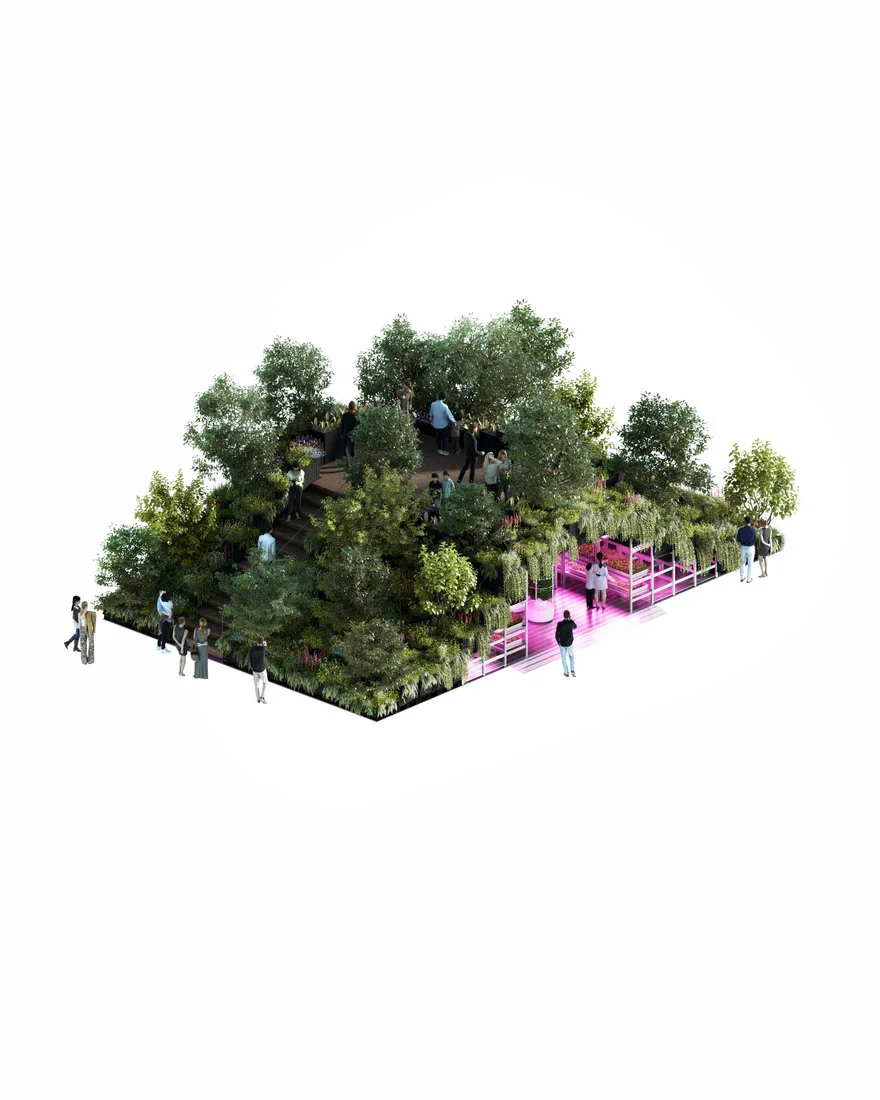
IKEA has explored gardening systems in the past, but this is the first time the company is working on a scalable system that can be applied to both large spaces and the individual home. "We want to create smart solutions to encourage people and to make it easier for them to grow plants anywhere they can, whether that's in their community garden, rooftop or in containers on balconies and window sills," says James Futcher, Creative Leader at IKEA Range and Supply.
A few of the solutions for urban growing that resulted from this collaboration will actually be available at IKEA stores globally in 2021. After the Chelsea Flower Show comes to a close, "Gardening will Save the World" will be donated to Participatory City and moved to East London for at least three years.

Emily is Core77's Editor, footwear enthusiast and resident stress baker.
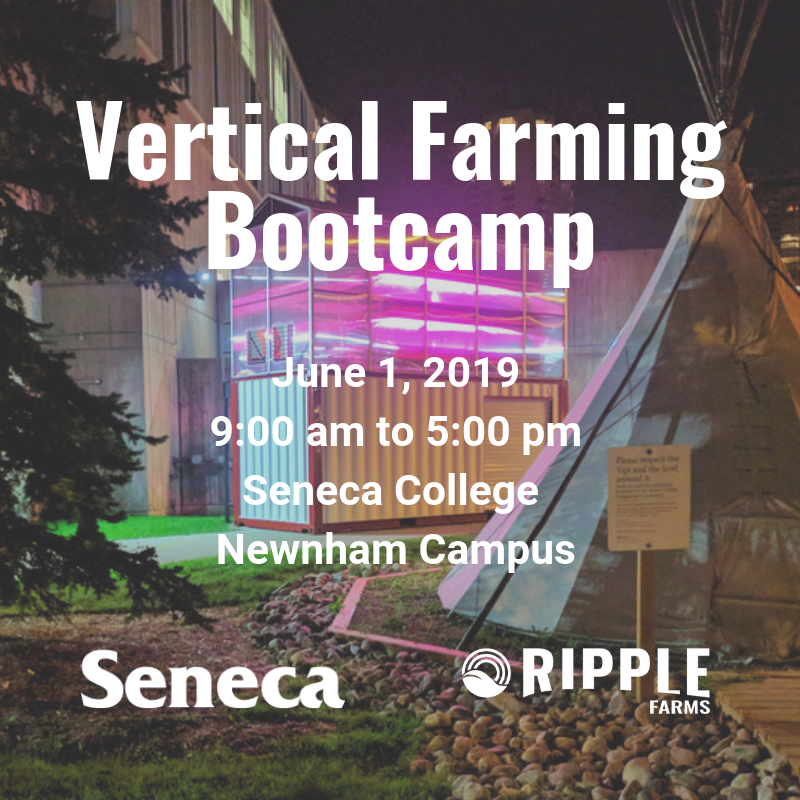
This One-Day Bootcamp Takes A Deep Dive Into The Science, Production And Profitability Of Starting Up An Aquaponics Or Hydroponics Vertical Farm
Want to learn more about Vertical Farming, Aquaponics and the technology behind it? Please Click Here
Want to learn more about Vertical Farming, Aquaponics and the technology behind it? Do you have a business model in mind and need to learn the components to execute it?
This One-Day Bootcamp Takes A Deep Dive Into The Science, Production And Profitability Of Starting Up An Aquaponics Or Hydroponics Vertical Farm. Our Team Is Here To Help The Next Generation Of Farmers And Entrepreneurs Overcome The Hurdles Of Controlled Environment Agriculture And Build A Business Model That Investor's Will Love.
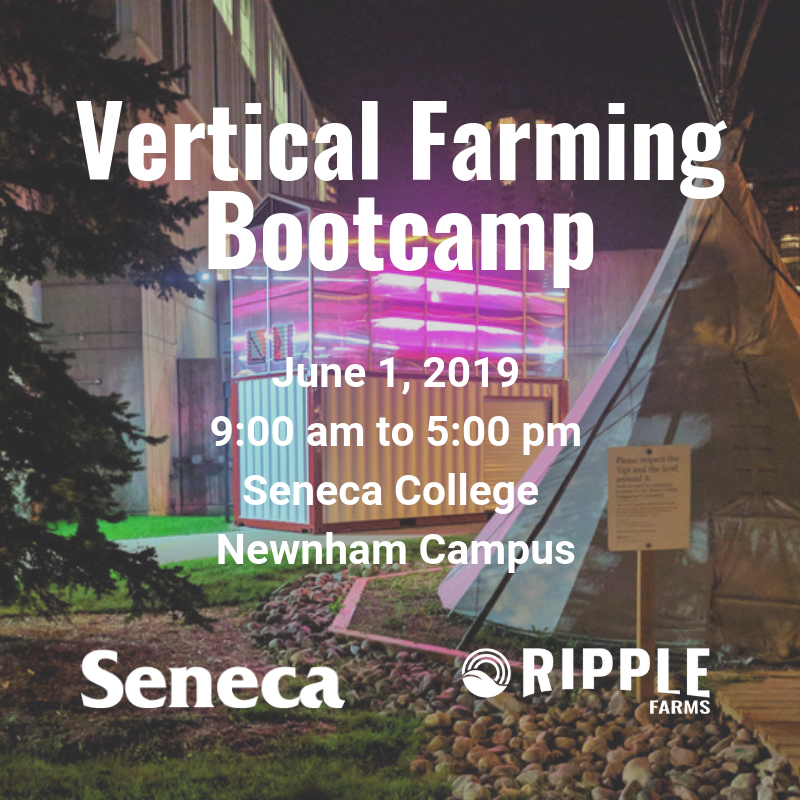
June 1, 2019 - 9:00 am to 5:00 pm
Seneca College Newnham Campus
Sign Up Now! https://bit.ly/2Zzd6Zg
This workshop is in partnership with Seneca College.
Hands-Off Farming Is Way of The Future
In most industries, and agriculture is no exception, automation has typically been viewed as a way to gain greater efficiency from traditional methodologies
DAVID PLATT, The Weekly Times
05-14-19
IN RE-IMAGINING food for the future, we must focus on understanding and transforming our food production capabilities — a revolution well on its way.
The capabilities that are becoming standard for anyone in food production are automation that reframes efficiency; new means of production that reshape our thinking about nutrition; and the smart use of data to record immediate feedback and meet customer needs.
In most industries, and agriculture is no exception, automation has typically been viewed as a way to gain greater efficiency from traditional methodologies.
In farming, that has emerged as enhancements to existing technologies. From autonomous machinery and drone-based remote inspection to robotic milking and harvesting — all are accepted as improvements to business as usual.
However, rapidly emerging forms of automation are radically reshaping farming.
RELATED CONTENT
Popular utes recalled over serious flaw
Popular utes recalled over serious flaw
Iron Ox is a start-up in California focused on embedding robotics into hydroponic indoor farming. Its technology has the potential to reduce repeatable human interactions that comprise most current costs of production.
Efficiency in the future is indoor farms producing leafy greens (and more) in perfect climatic conditions, with limited water, pesticide free, in both urban and rural contexts, with limited human interaction.
And all driven by solar energy, which not only powers the food factory, but enables the farmer to on-sell any excess energy.
Until now, the contribution that farming makes to nutritional wellbeing has been taken for granted. Whether livestock, veg or dairy, fresh has generally equated to healthy.
That too is changing.
Whether it’s due to concerns about meat consumption or pesticide exposure, consumers are becoming more selective about what they consume and why. Emerging businesses such as Beyond Meat and Foodini have launched products that are radically reshaping our relationship with food and the nutrition it provides.
Beyond Meat uses plant-based cells to recreate the molecular structure of meat — meaning the meat-substitute looks, feels and tastes just like the real thing — but is from a different source, not livestock.
Foodini is a 3D-printing kitchen appliance designed for both commercial and domestic markets — giving cooks localised control of their processed foods.
In fact, part of Foodini’s core assertion is that all food is processed in some way, so why not have control of both inputs and outputs?
In a world where data is now being created at an exponential rate, knowing what to collect and how to use it is critical.
Indoor vertical farming company Aerofarms is leading the way with its use of “smart” technologies and data to reset business and operating models. In Aerofarms’ case, real-time feedback data supports continuously refining its system to ensure it gets the best results from its pesticide-free leafy greens.
So, whether you’re moving to enhanced automation, rethinking nutrition or embracing the power of data, you need to keep pace with the future of food production, and know what to invest in and when.
To be a part of the ‘thinking food in the future’ conversation, email David at thinkingfood@resilientfutures.com
David Platt is a director and strategist at Resilient Futures. He is an expert facilitator and is the co-author of Disrupted: Strategy for Exponential Change and The Disruption Readiness Test.

Plenty To Invest In Writing Light Algorithms
"We have to listen to plants in a plant-based industry"
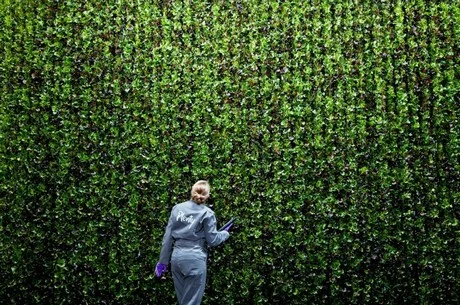
To bridge the gap between fundamental research and applied science, Plenty has hired Tessa Pocock as Director of Lighting Optimization. Bringing over 30 years and over 1,000 spectral experiments on dozens of food and floriculture crops, she shares the newest light knowledge with us. "We’re writing light algorithms that make plants produce the characteristics most desired by consumers."
Plenty is one of the most talked about indoor farming start-ups of the last couple of years. After being founded in 2014 as an ag-tech company focusing on growing produce indoors, they surprised the whole world by raising 200 million dollars to expand their indoor farming business in 2017. Now the company prepares for international expansion and improvements to its vertical growing technology - and they've hired Tessa Pocock to help them with this.
"Tessa represents our leap into the fundamental sciences to bridge the gap between fundamental research and applied science. Indoor ag is one of the most opportunity-rich new industries to apply a lot of this knowledge, and I think that Tessa is the best in the field, and the research she's done is going to drive our efficiency and quality forward by leaps and bounds", Nate Storey, co-founder and Chief Science Officer with Plenty says.
Research
Tessa has been working with light and plants for over 30 years. In 2007, she was hired as Director of Research for a European horticultural LED light company. This required a new way of thinking as she saw how quickly plants responded to the spectral quality of light that LEDs allowed. Before coming to Plenty, sShe moved to academia for many years , where she helped develop the Greenhouse Lighting and Systems Engineering Consortium with Neil Mattson at Cornell.
Algorithms
During a period of research spanning twelve years, with 1,000 spectral experiments on dozens of food and floriculture crops, Tessa certainly learned a thing or two about the importance of light. "Light is one of the most important environmental factors for plants. It performs several roles in a crop’s life. Light provides all of the energy required for growth, and is an information source to direct processes such as height, branching, nutrient density and tolerance to stress", she says.
Of course, this doesn't come as a surprise to the average grower. What may come as a surprise though, is that lighting is not just a matter of putting some lamps over the crop, or even of combining colors in light recipes. "'Recipes' is not an accurate term to describe this work", Tessa explains. "What we’re doing is more complex -- we’re writing light algorithms that make plants produce the characteristics most desired by consumers."
She explains how this touches the base of vertical farming. "The opportunities of indoor farming are many. Indoor farms are perfect for areas that suffer from severe droughts, extreme weather events and lack of arable land. It is possible to maintain freshness by building the farms close to densely populated cities. The closed environment allows absolute control and consistency of crops that meet consumers' demands year-round." The consumers is also taken into account in creating the algorithm. "Algorithms are multi-dimensional and include light intensity, spectrum, duration, and timing. The lighting program at Plenty is unique as it merges applied and fundamental science while working closely with engineers to ensure high energy efficiency."
To create these algorithms, Tessa researches the crop, and the answers to the following questions start the process. "What are the optical properties of the leaves? Where does it come from and where does it grow best? How domesticated is it and where does it fit into the ecosystem? What parts do we consume? What are the nutrients that can contribute to health and under what conditions do they accumulate", she sums up. And then there's the creation of the feedback system for indoor farming. Tessa, holding three patents on remote sensing of crop plants (two pending), continues her work toward the perfect biological feedback system, as it will help to remove a lot of the guesswork that currently is used to set up environments for the different crops. "Sensing the environment and the physiological state of the plants are also beneficial as we will be able to let the plants control their environment. We have to listen to plants in a plant-based industry!"
Applied and fundamental research
Tessa explains how, in her research, she will focus on optimising the Plenty production of leafy vegetables as well as research and developments. "The optimization will be based on applied and fundamental research, carried out by all of the plant scientists at Plenty. This is what separates Plenty from others -- we are encouraged to carry out both applied and fundamental research here. This strengthens our R&D program." This has to do with the company’s long-term focus. "At a high level, universities are doing really good research but they're limited by the LEDs that are available on the market today and the speed of realizing their findings to the market. Government research centers and extension offices also add tremendous value to this field. It is difficult for growers to spend time, money and production space to research as it can be a risk and their livelihoods are dependent on production. Forward-looking farms such as Plenty offer a good place to add value to agricultural research, as we are in this for the long run."
Listening to plants
Then there's more. According to Tessa, both lighting and the regulation of crops will propel Plenty toward the future of vertical farming. "The integration of sophisticated lights and sensing systems into Plenty's farms will solve many of the challenges faced by crops grown under sole-source lighting. We can provide the highest quality crops for people by leveraging light to make them look and taste great, while maximizing nutritional content. Plenty will be using light to take advantage of and push the natural genetics that make veggies so good for us."
For more information:
www.plenty.ag
Publication date: 5/3/2019
Author: Arlette Sijmonsma
© HortiDaily.com

Robot Farming Startup Iron Ox Sells First Produce In California
Robot farming startup Iron Ox has announced that it’s selling robot-reared leafy greens in a single location in California. The firm, which launched last October, is offering three varieties of greens at the San Carlos branch of Bianchini’s Market, a family-owned grocery store that specializes in local and organic produce.
Iron Ox is one of a number of companies trying to automate the human-intensive work of agriculture. It uses a combination of robotic picking arms, hydroponic vats, and self-driving porters to grow vegetables. But despite its repeated claims that its farming is “autonomous,” humans are still needed for a lot of the work. Laborers plant seedlings and package plants when they’re ready to eat: robots just tend them while they’re growing.
One benefit is that robot farms can be located nearer to customers because of their smaller physical footprint. Iron Ox says the greens it’s producing for Bianchini’s travel just 0.6 miles to get there, which is half the distance traveled by a typical head of lettuce. This means lower transportation costs and fewer food miles, a big factor when it comes to the environmental impact of what you put on your plate.
But the scale of Iron Ox’s operation is limited. It’s selling just three varieties of leafy greens and delivering them to Bianchini’s just once a week. The prices aren’t exorbitant, but they are on the expensive side. A two-ounce box of red-veined sorrel will go for $2.49, a two-ounce box of Genevieve basil will cost $2.99, and four heads of baby lettuce will be $4.99.
Source: www.theverge.com
Publication date: 5/3/2019

Gotham Greens' CEO Joins Conference Line-Up For Indoor Ag-Con
May 22-24, 2019 | Las Vegas
Indoor Ag-Con expands its educational line-up with a new keynote session from Viraj Puri, CEO and Co-Founder of Gotham Greens. Puri joins other keynote presenters, Irving Fain, CEO / Co-Founder, Bowery, and Brad McNamara, CEO / Co-Founder, Freight Farms to headline the educational conference program for the 7th annual edition, May 22-24, 2019, at Red Rock Resort, Las Vegas, NV. Featuring 40+ sessions, panel discussions and keynotes, the comprehensive line-up spans five tracks: Grow Equipment, Crop Selection, Customers & The Supply Chain, Business, Policy & Societal Impact.
The full conference schedule is available at https://indoor.ag/lasvegas/las-vegas-2019-schedule-sessions/
“We are thrilled to welcome Viraj Puri to our program,” explains Jim Pantaleo, Conference Chairman, Indoor Ag-Con. “Our keynote sessions now give attendees the chance to hear the unique perspectives and insights from three of the industry’s top CEOs. We’ve worked to bring together a broad and deep series of programs that promise to arm attendees with the latest innovations, trends, business-building strategies and insights into emerging technologies and industry breakthroughs.”
Puri’s presentation will be held on Thursday, May 23 from 1-1:30 pm. Since its pioneering greenhouse launch in 2011, Gotham Greens has grown from a single urban rooftop greenhouse in Brooklyn to a multi-state indoor farming leader and one of the largest hydroponic salad producers in North America. The company currently operates more than 180,000 square feet of greenhouse in New York and Chicago and has an additional 500,000 square feet of development underway across five U.S. states, including Chicago, Il., Baltimore, MD and Providence, RI. Gotham Greens was founded in 2009 in Brooklyn, New York and was named one of the ‘Coolest Businesses in America’ by Business Insider.
On opening day, Wednesday, May 22, 2019, Irving Fain, co-founder and CEO of Bowery, the modern farming company growing food for a better future by revolutionizing agriculture, kicks off the conference with a presentation from 9:15 – 9:55 am.
In addition, Brad McNamara, CEO and Co-Founder of Freight Farms, the agtech company that first established the hydroponic vertical container farming industry, will lead his keynote session from 9:15 – 9:55 am on Thursday, May 23, 2019.
In addition to the keynotes, attendees can choose from an expansive line-up of sessions and panel discussions led by industry executives and thought leaders. Among them: Bayer Crop Science, Signify, AeroFarms, Shenandoah Farms, MVP Farms, Fluence Bioengineering, Farmbox Greens, Urban Crop Solutions, Sananbio, Vertical Harvest, TapRoot holdings, Pulse Labs Smallhold, Germains Seed Technology, Argus Controls, AgEye Technologies, HSG-AME Certified Laboratories and many others.
For more information:
Indoor Ag-Con
indoor.ag
Publication date: 4/30/2019
Brian Jenny Joins Vertical Farm BrightFarms
May 21, 2019
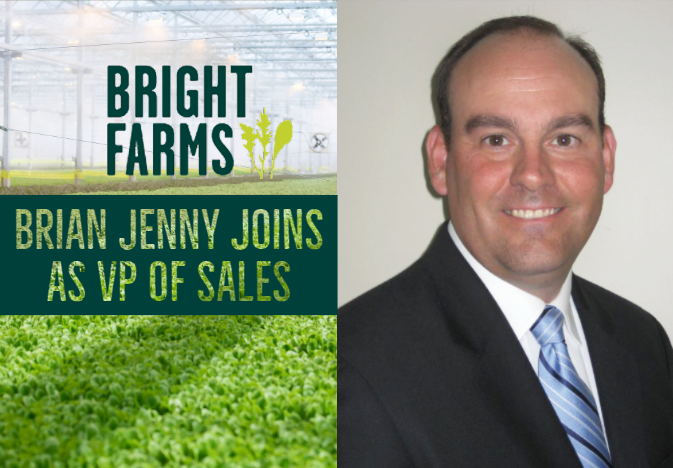
Brian Jenny has joined BrightFarms, Irvington, N.Y., as vice president of sales.
Jenny oversees existing retail accounts and leads business development as the company continues to grow, according to a news release. He most recently was vice president and general manager of CC Kitchens, a division of the Castellini Group, Cincinnati.
Before that, Jenny was at Naturipe Farms as vice president and general manager of the value-added division according to the release. He joined Naturipe after seven years at Monterey Mushrooms, in roles that included direct of sales for the Eastern Region.
Jenny has been in the United Fresh Produce Industry Leadership Program, has been chairman of United Fresh’s Fresh-Cut Processor Board, and a member of the executive committee of United Fresh’s board of directors. He has been involved in the Produce Marketing Association, Southeast Produce Council and the Eastern Produce Council.
“Brian has a demonstrated history of growing sales with many of the nation’s largest and best food retailers.” Paul Lightfoot, CEO of BrightFarms, said in the release. “He brings to BrightFarms a wealth of produce industry knowledge and expertise.”
PHOTO: courtesy of BrightFarms

Meet Mexico’s Biggest Producer of Hydroponically Grown Food
When you meet Leo Lobato, co-founder of Karma Verde Fresh, the first thing that you will notice is his charisma and warm-hearted charm
When you meet Leo Lobato, co-founder of Karma Verde Fresh, the first thing that you will notice is his charisma and warm-hearted charm. Leo’s energy for life and his well-earned passion for indoor growing has not only allowed him to start what may prove to become Mexico’s biggest producer of hydroponically grown food but has also allowed him to create some great allies along the way.
by Jens Ruijg
May 17, 2019
I sat down with Leo at NCERA-101, meeting in May to learn more about the newest Farmtech Society member.
Leo grew up in the farming and ranching community of Durango, Colorado, where he learned the balance of life eating produce grown in his Irish grandfather’s garden. His journey took Leo to Jalapa, Veracruz, Mexico in 1974, as a study abroad student from the University of Colorado. In 2004 Leo launched his atmospheric science business which is now a major contractor to the country’s National Weather Service, with exclusive representation of some of the World Meteorological Organization’s largest technology committee members. His post as the President of the Membership Committee for the American Chamber of Commerce of Mexico, and as a founding board member of the Ag-Industry Sector of CANACINTRA (Mexico’s largest industrial chamber) he has fostered many connections; it was a thoughtful conversation with a fellow member that inspired him to begin his exploration into indoor farming.
Beginning in 2015 until 2018, Lobato Kelly headed abroad to understand the landscape of indoor farming. Starting at the agriculture focused Milan World Fair, followed with trips to Rome and Munich, and finally landing at the Japanese Plant Factory Association summit, he consulted with some of the world’s best indoor farming experts. In order to understand the impact of hunger on violence in society Lobato Kelly visited the Peace Institute in Washington.
This long journey resulted in Leo securing a critical location for production in Mexico, a head grower, and essential industry connections that helped him to Karma Verde Fresh’s proof of concept site in 2018.
Truly embodying the spirit of the Farmtech Society, Karma Verde Fresh began collaborating with key universities throughout the region and has donated GrowRacks sourced from Hort Americas to expand educational opportunities. Thanks to the Enterprise-University-Enterprise (E-U-E) Collaboration Model and key industry guidance, Karma Verde Fresh has carried out 5 separate training courses preparing 163 local students, professionals and citizens for indoor growing.
Lobato is marketing lilies grown with his university partners to 10 Home Depot stores to help generate funding for ag school student food and transportation scholarships and for funding further vertical agriculture R&D.
Thanks to the success of the E-U-E at the UANL in Monterrey, and the university interest in further development of Mexico as a thought leader in Controlled Environment Agriculture, in 2019 the team at Karma Verde begins their Proof of Production phase of 10,000 square feet at the Marin Campus, within 30 minutes of the Central Distribution Centers of the major grocery store chains. The company has plans to expand into full production into the first of 2 of 30, 100,000 sq ft facilities between Monterrey and Mexico City beginning in 2020.
With an undeniable knack for creating community, the Farmtech Society is excited to partner with this growing company to help expand Ponics VET, which is based on the Erasmus+ vocational training credentials, and will serve to augment the course materials for certifying students in controlled environment agriculture across Mexico.
FarmTech Society will organize a series of panel discussions during Greentech Amsterdam 2019. On Tuesday June 11, Tom Zöllner will host a discussion on Plant Nutrition – Extra Natura, focusing on how we can grow the best possible plants in a controlled environment with speakers from Rijk Zwaan, Valoya, INTAG and Signify.
On Wednesday the 12th, Daniel Podmirseg of the Vertical Farming Institute will host speakers from The European Commission, Priva, Liberty Produce, Cultinova and Vertimis to discuss Energy and Building Topology for controlled environment agriculture.
Finally on Thursday June 13, Gus van der Feltz will host a discussion on Vertical Farming Business cases and Consumer Acceptance with speakers from Valoya, 80 Acres, Wageningen University, and Innovation Quarter.

For more information:
FarmTech Society
Place du Champs de Mars 5, 1050 Ixelles
+32 487 90 79 54
contact@farmtechsociety.org
farmtechsociety.org
Publication date: 5/16/2019

Indoor Vertical Farming - Edible Flowers
Sananbio U.S.
Please Click Here to View the Video
Edible flowers are having quite the moment in the culinary scene. A crucial part of being a successful vertical farm is being able to meet the demand of the growing markets and consumer needs.
With the dynamic ability of the Radix, we are giving our grow partners the ability to do just that. Our knowledge of working with hundreds of cultivars gets passed on to our partners.
If we want this industry to grow, we must support its growth.
Let's grow together.
Crop One Holdings, US-based Vertical Farming Company, Will Be Speaking at Urban Future Global Conference
Based in the San Francisco Bay area, Crop One is growing its global footprint
Crop One Holdings, the company behind the successful vertical-farming company FreshBox Farms, is coming to Oslo for the AVF conference, Unlocking the Potential of Indoor Farming in Cities of the Future.
Based in the San Francisco Bay area, Crop One is growing its global footprint.
Back in June, 2018, Crop Once announced that they had secured a $40 million joint venture agreement with Emirates Flight Catering to build the largest vertical farm in the world in Dubai. Construction of the UAE facility is underway and the first products will be delivered to Emirates Flight Catering’s customers, including 105 airlines and 25 airport lounges, by December 2019.
The 130,000 square foot controlled environment facility will produce three US tons (6,000 pounds or 2,700 kg) of high-quality, herbicide- and pesticide-free leafy greens, harvested daily, using 99 percent less water than outdoor fields. Its location will enable quick delivery of fresh produce within hours of harvest, maintaining the food’s nutritional value and reducing carbon emissions associated with transportation.
Crop One announces an exciting new development in the United States
On May 8, Crop One announced that it will sponsor its first "qualified opportunity fund" in an Opportunity Zone in Texas; the fund will support the construction of a vertical farm in the Austin-San Antonio corridor, allowing it to serve some of the US's largest cities including Austin, San Antonio, Houston and Dallas-Fort Worth Metroplex.
Connect with Crop One at Urban Future Global Conference
VP of International Business Development and Strategic Projects, Pitichoke Chulapamornsri, will present a keynote speech on May 22 and participate in the roundtable discussion on May 23.
You can read more about Mr. Chulapamornsri at the AVF Blog here: https://bit.ly/2vRlKEM.
Urban Future Global Conference is the world’s largest event for sustainable cities. The AVF is proud to have Crop One as one of our sponsors for this event dedicated to indoor farming, where we will discuss realistic strategies for implementing food production systems in cities across the globe.
If you would like to join us in Oslo, there are still a few tickets left: https://bit.ly/2JdzbZ4
Student price: €220
Member price €360
We look forward to seeing you there!
Sincerely,
The AVF Team
Find Tickets

Getting The Growing Bug
Adam Green
Photo courtesy of Adam Green
Adam Green took a "winding road" through college, but found his niche growing microgreens and other crops at AGreen Farms.
May 8, 2019
Before he founded his own vertical farm in his apartment building,, Adam Green’s journey through college was, as he calls it, “a winding road.” He started out at Drexel University in his native Philadelphia before he transferred to Syracuse University in Upstate New York, where he changed his major “three or four times.” Green then transferred again — this time to Temple University, back home in Philadelphia — and graduated with a degree in vocational development.
“When I was at Drexel, I was a film major,” he says. “Then I guess it went from being a screenwriter and not falling in love with the film industry so much, so I wanted to be a writer. I wanted to write fiction novels, so I became an English major. Then that didn't work out.” At Syracuse, he got the "science bug" – and switched to geology – before majoring in phycology when he transferred to Temple.
It was at Temple that horticulture got onto Green’s radar. Along with his girlfriend, who majored in horticulture, Green started shopping at farmers markets in Philadelphia and volunteering at Backyard Eats, an urban garden company in the Chestnut Hill neighborhood, in 2017. Today, Green has launched his own business — AGreen Farms — a hydroponic indoor farm in Philadelphia growing microgreens, herbs, edible flowers and more.
“I think that college is kind of now become, for a lot of Millennials, a place where you find what you don't want to do — and that's kind of what it was for me for sure,” Green says. “By finding out what I didn't want to do, I found out what I was most passionate about, and that was food.”
Gaining experience
After he transferred to Temple, Green wanted to switch to horticulture as a major. But due to his previous majors, he was unable to take the requisite sciences classes. When Green graduated last May he sought out any growing experience he could. He says he applied to pretty much “any indoor farm that was a moderate success in the country.” Only one got back to him: Farm.One, a New York City specialty crop producer whose primary customers are restaurants in the Big Apple.
“When I went there I had a really great sales manager in Wilson [Gibbons] and he showed me the ropes of what it's like to walk into a restaurant unannounced with a bunch of rare and exciting products, and I was just totally bitten by the sales bug,” he says. “It was funny that I wanted to be a paid farmhand at Farm.One and they didn't have a position open, so I took what I could."
Green returned to Philadelphia in August and started applying for jobs at different farms in the area, but without a horticulture degree or science background, no opportunities presented themselves. But after a conversation with his dad Bill, a career entrepreneur, AGreen Farms was born. Initial funding came from Bill.
“We had been talking about me starting my own farm for a few years, but we wanted to get, obviously, as much experience before I took such a daring venture on, for sure,” he says. “Things just fell into place; the timing was just kind of right.”
Mapping out a business plan
Philadelphia — like New York — has a burgeoning restaurant scene where chefs crave locally-grown produce for their restaurants, Green says. It helped that the elder Green had helped finance restaurateur Michael Schulson. Schulson had just opened Giuseppe & Sons, an Italian restaurant, and needed microgreens and AGreen Farms had its first customer.
“With my time at Farm.One, the specialty herbs started to excite me, and the edible flowers started to excite me, so it's really the unique flavors and the strong flavors that really interested me the most, and they became items that I was pretty good at selling because they're so hard to access for chefs while also being local and of really high quality,” he says.
Green estimates that were he able to add other notable area chefs and restaurants to this client list — a process that’s already begun — the farm would be set-up for long-term success. As the business begins, professional chefs and some hospitality establishments are the clientele Green is after.
To get the farm itself built, and Brandon Merrill was hired as farm manager. Merrill previously worked for Oasis Biotech, a Chinese-owned corporate growing company, and urban farming company Gotham Greens.
“We're totally giving him a ton of creative freedom, and that's why we got him on board to build this farm and not wait until the farm was built and then him say, ‘You know what? I wouldn't have done it this way,’” Green says.
The 5,000-square-foot growing space — outfitted with “bare bones” technology to keep costs down — is in Green’s apartment building. The company that owns his building, Post Brothers, was willing to lease him the space (and allow the farm to be built) in part because of an existing business relationship with Schulson. Green adds that, as opposed to other potential farm sites that wanted him to sign a five-year lease, Post Brothers allowed him to sign a more flexible lease. The plan is to prove the concept, take on investment and move into a bigger growing space to continue growing the company.
“It's going be a grind for sure, and it's not going to be easy. It's going to be about getting the right people in place, having a really great team, and just hauling ass,” Green says. “We're going to be developing relationships with chefs that we haven't met and have connections with, by walking into their restaurants three days a week and knowing what products they're already purchasing from distributors from across the country, and just bringing it to them more locally, more fresh and with better quality."

CropOne Holdings Joins AVF As Main Event Sponsor At Urban Future Global Conference - May 22nd & 23rd
MAY 9, 2019
KYLE BALDOCK
Crop One Holdings Leads the World in Combining Plant Science and Data Analytics
Crop One is transforming the agriculture industry, using advanced hydroponic technology and proprietary data analytics to provide pure, safe, and consistent produce year-round. This is the company behind the successful container-farming group FreshBox Farms, who grow top-quality produce in controlled environments for retail in the state of Massachusetts.
Crop One Plans to Build the World’s Largest Vertical Farm
Crop One is currently building the world’s largest vertical farm in Dubai, following a joint venture with Emirates Flight Catering. At the core of the company is creating a food system that can sustainably provide nutritious, fresh produce in and for communities, regardless of the geographical location.
Introducing Pitichoke Chulapamornsri of Crop One, Keynote Speaker at Urban Future Global Conference
Pitichoke Chulapamornsri is the Vice President of International Business Development and Strategic Projects at CropOne. Prior to joining the Crop One team, Mr. Chulapamornsri was a founding team member and the Director of Business Development at Neighborly Securities, a FinTech startup platform for investing in “world-positive projects.” Pitichoke was also a Senior Analyst at Goldman Sachs in the Private Equity Group, a fund-of-fund with over $35bn in AUM. He was the youngest appointee to the Risk Management and Analytics oversight committee. Mr. Chulapamornsri earned his BBA in Finance and International Business (cum laude) from University of Washington and Master in Public Policy from Harvard University, where he served as the student body president.
Mr. Chulapamornsri will be presenting a keynote speech and participating in the roundtable discussion at our event: Unlocking the Potential of Indoor Farming in Cities of the Future.
Urban Future Global Conference is the world’s largest event for sustainable cities. The AVF is proud to partner with UFGC to bring a dedicated event for indoor farming, where we will discuss realistic strategies for implementing food production systems in cities across the globe. Crop One joins Ÿnsect as main event sponsors. If you would like to join us in Oslo, there are still a few tickets left: https://bit.ly/2JdzbZ4
Student price (with valid student ID): €220
Member price €360
Please contact re@vertical-farming.net to request a voucher code for either of the discounted prices.
Visit our Facebook event page here: https://www.facebook.com/events/2040058069620579/
EMAIL US ATINFO@VERTICAL-FARMING.NET

Samsung Introduces Benefits of Horticulture LEDs for Vertical Farming
The development of agricultural innovation has become more and more urgent than ever given the factors of increasing world population and global warming. As a result, vertical farming, which serves as a feasible solution to mass produce healthy and safe food, is getting increasingly popular across the world.
Samsung Electronics has launched full-spectrum white-based horticulture LEDs to keep up with the trend of agriculture innovation and underline the advantages of applying LEDs for smart farming approaches such as vertical farm.
Smart farming refers to an intelligent farming system that applies information and communication technologies (ICT) to agriculture. Vertical farming, wherein food is produced in vertically stacked layers, is regarded as a potential future agricultural with several benefits including its economical space and resource usage, environmental-friendly cultivation, and reliable harvesting.
Since Plant photosynthesis, germination and growth all depend on the wavelength of light the plant is exposed to; LED lighting enables optimum lighting conditions for growing any plant with its adjustable wavelength. Different light wavelengths can affect the taste and nutrient content of different types of plants or even the same species, This matching of the right wavelength to the right vegetable is called a ‘lighting recipe’.”
Professor Changhoo Chun, adviser to Samsung’s horticulture LED development and professor at College of Agriculture and Life Sciences, Seoul National University, said that Samsung’s white-based horticulture LEDs which blend RGB colors offered a wide spectrum of wavelengths, making it more effective in indoor framing.
(Professor Changhoo Chun; image: Samsung)
He explained, “Growing plants well comes down to providing the right combination of wavelengths specific to each type of plant – from vegetables to fruits to medicinal plants. However, finding the optimum for each type of produce is often time-consuming and costly – a difficult undertaking for most vertical farms.”
Samsung has worked closely with agriculture research teams to find the optimal combination of light wavelengths necessary for peak plant growth. In order to do this, the most in-demand produce from existing plant factories were documented and then experiments on them were conducted with various combinations of light wavelengths. From the results of these trials came Samsung’s lighting solution lineup, including the full-spectrum white-based horticulture LEDs.

Growing The Future: High-Tech Farmers Are Using LED Lights In Ways That Seem To Border On Science Fiction
Mike Zelkind, chief executive of 80 Acres Farms, grows tomatoes and other produce with artificial-light recipes made possible with new LED technology. (Maddie McGarvey for The Washington Post)
By Adrian Higgins Nov. 6, 2018
Mike Zelkind stands at one end of what was once a shipping container and opens the door to the future.
Thousands of young collard greens are growing vigorously under a glow of pink-purple lamps in a scene that seems to have come from a sci-fi movie, or at least a NASA experiment. But Zelkind is at the helm of an earthbound enterprise. He is chief executive of 80 Acres Farms, with a plant factory in an uptown Cincinnati neighborhood where warehouses sit cheek by jowl with detached houses.
Since plants emerged on Earth, they have relied on the light of the sun to feed and grow through the process of photosynthesis.
But Zelkind is part of a radical shift in agriculture — decades in the making — in which plants can be grown commercially without a single sunbeam. A number of technological advances have made this possible, but none more so than innovations in LED lighting.
“What is sunlight from a plant’s perspective?” Zelkind asks. “It’s a bunch of photons.”
Diode lights, which work by passing a current between semiconductors, have come a long way since they showed up in calculator displays in the 1970s. Compared with other forms of electrical illumination, light-emitting diodes use less energy, give off little heat and can be manipulated to optimize plant growth.
In agricultural applications, LED lights are used in ways that seem to border on alchemy, changing how plants grow, when they flower, how they taste and even their levels of vitamins and antioxidants. The lights can also prolong their shelf life.
“People haven’t begun to think about the real impact of what we are doing,” says Zelkind, who is using light recipes to grow, for example, two types of basil from the same plant: sweeter ones for the grocery store and more piquant versions for chefs.
For Zelkind, a former food company executive, his indoor farm and its leading-edge lighting change not just the way plants are grown but also the entire convoluted system of food production, pricing and distribution in the United States.
High-tech plant factories are sprouting across the United States and around the world. Entrepreneurs are drawn to the idea of disrupting the status quo, confronting climate change and playing with a suite of high-tech systems, not least the LED lights. Indoor farming, in sum, is cool.
It has its critics, however, who see it as an agricultural sideshow unlikely to fulfill promises of feeding a growing urbanized population.
Grower David Litvin picks tomatoes at 80 Acres Farms in Cincinnati. The vines grow in a high-tech environment that includes LED lamps with customized light recipes. The plant factory produces 200,000 pounds of leafy greens, vine crops, herbs and microgreens annually in a 12,000-square-foot warehouse. (Maddie McGarvey/For The Washington Post)
Zelkind agrees that some of the expectations are unrealistic, but he offers an energetic pitch: He says his stacked shelves of crops are fresh, raised without pesticides and consumed locally within a day or two of harvest. They require a fraction of the land, water and fertilizers of greens raised in conventional agriculture. He doesn’t need varieties bred for disease resistance over flavor or plants genetically modified to handle the stresses of the field. And his harvest isn’t shipped across the country in refrigerated trucks from farms vulnerable to the effects of climate change.
“We think climate change is making it much more difficult for a lot of farms around the country, around the world,” he says, speaking from his office overlooking a demonstration kitchen for visiting chefs and others.
In addition to shaping the plants, LEDs allow speedy, year-round crop cycles. This permits Zelkind and his team of growers and technicians to produce 200,000 pounds of leafy greens, vine crops, herbs and microgreens annually in a 12,000-square-foot warehouse, an amount that would require 80 acres of farmland (hence the company’s name).
Zelkind says he can grow spinach, for example, in a quarter of the time it takes in a field and half the time in a greenhouse. Growing year-round, no matter the weather outside, he can produce 15 or more crops a year. “Then multiply that by the number of levels and you can see the productivity,” he said.
Zelkind and his business partner, 80 Acres President Tisha Livingston, acquired the abandoned warehouse, added two shipping containers and converted the interior into several growing zones with sophisticated environmental systems that constantly monitor and regulate temperature, humidity, air flow, carbon dioxide levels and crop health. Grown hydroponically, the plant roots are bathed in nutrient-rich water. The moisture and unused nutrients exhaled by the plants are recycled.
But it is the LED lighting that has changed the game. Conventional greenhouses have relied on high-pressure sodium lamps to supplement sunlight, but HPS lights can be ill-suited to solar-free farms because they consume far more power to produce the same light levels. They also throw off too much heat to place near young greens or another favored factory farm crop, microgreens. Greenhouses, still the bulk of enclosed environment agriculture, are moving to a combination of HPS and LED lighting for supplemental lighting, though analysts see a time when they are lit by LEDs alone.
In the past three years, Zelkind says, LED lighting costs have halved, and their efficacy, or light energy, has more than doubled.
Production in the Cincinnati location began in December 2016. In September, the company broke ground on the first phase of a major expansion 30 miles away in Hamilton, Ohio, that will eventually have three fully automated indoor farms totaling 150,000 square feet and a fourth for 30,000 square feet of vine crops in a converted factory. (The company also has indoor growing operations in Alabama, North Carolina and Arkansas, which acted as proving grounds for the technology.)
“We feel the time is right for us to make the leap because the lighting efficiency is there,” Livingston says.
Grower Julie Flickner inspects kale at 80 Acres Farms. Growing year-round, no matter the weather outside, the vertical farm can produce 15 or more crops annually. The produce is sold in Cincinnati-area grocery stores and restaurants. (Maddie McGarvey/For The Washington Post)
The visible spectrum is measured in minuscule wavelengths, shifting at one end from violet-blue light through green to red at the other. For decades, scientists have known that photosynthesis is optimized within the red band, but plants also need blue lightwaves to prevent stretching and enhance leaf color. A barely visible range beyond red, known as far red, promotes larger leaves, branching and flowering. With advances in LED technology, light recipes — determining the number of hours illuminated, the intensity of photons directed at plants and the mix of colors — can be finely tuned to each crop and even to each stage in a crop’s life.
Given the evolving nature of the technology and its enormous commercial potential, light manufacturers and universities, often in collaboration, are actively involved in research and development.
“We have a completely new era of research,” says Leo Marcelis, a horticulture professor at Wageningen University in the Netherlands. Tweaking light recipes has allowed researchers to manipulate crops in a way never seen before. In the lab, chrysanthemums have been forced into bloom without the traditional practice of curtailing their daily exposure to daylight. This will allow growers to produce bigger plants in flower.
“It’s to do with playing around with the blue light at the right moment of the day,” Marcelis says. “Its internal clock is affected differently, so it doesn’t completely recognize it’s still day. There are so many amazing responses of the plant to the light.”
Lettuce, for example, likes as much as 18 hours of light per day, but basil prefers brighter light for 15 hours, says Celine Nicole, a researcher for Signify, formerly Philips Lighting. “Every plant has its own preference,” says Nicole, who conducts research at the company’s high-tech campus in Eindhoven, Netherlands. She has already tested 600 types of lettuce.
Although the permutations are still under study, the sun suddenly seems so analog. “The spectrum from sunlight isn’t necessarily the best or most desirable for plants,” says Erik Runkle, a plant scientist at Michigan State University. “I think we can produce a better plant” with LED lights, he says. “The question becomes: Can you do it in a way that is cost-effective considering the cost of plants indoors?”
“People haven’t begun to think about the real impact of what we are doing.”
Mike Zelkind, chief executive of 80 Acres Farms
The answer seems to be yes. LED light shipments to growers worldwide are expected to grow at an annual average rate of 32 percent until 2027, according to a market report by analysts with Navigant Research in Boulder, Colo. Shipments of LED lights will overtake those of legacy lights starting next year, says Krystal Maxwell, who wrote the report with Courtney Marshall.
Most of the growth will be as supplemental lighting in greenhouses, but vertical farms are seen as an alternative production system that will develop alongside greenhouses, not displace them, Marcelis says.
Runkle estimates there are 40 or more vertical farms in the United States, and new ones are opening every year with the help of deep-pocketed investors. In some of the biggest deals, AeroFarms, headquartered in Newark, last year raised a reported $40 million. Plenty, a grower based in South San Francisco, raised $200 million in 2017 for a global network of vertical farms. (One of the backers is a venture capital firm created by Amazon founder Jeffrey P. Bezos, who also owns The Washington Post.)
Zelkind declined to reveal his capital costs, but for start-up entrepreneurs, LED-driven vertical farms can be one of the most lucrative forms of agriculture. “Based on manufacturers and growers I have talked to, that’s where the money is,” Marshall says.
Critics argue that a lot of the hype around indoor farming is unwarranted, saying it won’t fulfill promises of feeding an increasingly urbanized planet and reverse the environmental harm of industrialized agriculture, not least because most staples, such as corn, wheat and rice, cannot be grown viably indoors.
Also, to build enough indoor farms for millions, or billions, of people would be absurdly expensive.
Runkle says vertical farming “shouldn’t be considered as a way to solve most of our world’s food problems.” But it is a viable way of producing consistently high-quality, and high-value, greens and other plants year-round.
Zelkind says what he’s doing may be novel, but it’s just one component of how we feed ourselves in this century. “We shouldn’t overblow what we do. Eventually it’s going to become more important, but vertical farming alone isn’t the cure-all.”
He adds, however, that “there’s no reason today to ship leafy greens from California to Ohio.”
Livingston likens LED-raised food to the advent of smartphones. “Five years from now everyone is going to be living with indoor farming and wonder how we did without it,” she says.
David Litvin, left, inspects vine crops while farm operations tech Devon Brown prepares labels for retail packaging. (Maddie McGarvey/For The Washington Post)
Additional credits:
Lettering by Craig Ward for The Washington Post; animation by Sarah Hashemi; photo editing by Annaliese Nurnberg; design and development by Elizabeth Hart.

The Urban Farming ‘Revolution’ Has A Fatal Flaw
Commercial urban agriculture in New York City has provided questionable environmental gains, and has not significantly improved urban food security
By Emma Bryce
April 15, 2019
Commercial urban agriculture in New York City has provided questionable environmental gains, and has not significantly improved urban food security.
These are the findings of a recent case study of New York City which shows that, despite the fanfare over commercial urban farming, it will need a careful re-evaluation if it’s going to play a sustainable role in our future food systems.
The rise of commercial controlled-environment agriculture (CEA)—comprised of large scale rooftop farms, vertical, and indoor farms—is a bid to re-envision cities as places where we could produce food more sustainably in the future. Proponents see CEA as a way to bring agriculture closer to urban populations, thereby increasing food security, and improving agriculture’s environmental footprint by reducing the emissions associated with the production and transport of food.
But the researchers on the new paper wanted to explore whether these theoretical benefits are occurring in reality.
They focused on New York City, where CEA has dramatically increased in the last decade. Looking at 10 farms that produce roof- and indoor-grown vegetables at commercial scales, they investigated how much food the farms are producing, who it’s reaching, and how much space is available to expand CEA into.
They found that the biggest of these 10 commercial farms is around a third of an acre in size. Most are on roofs spread across New York City, and some are inside buildings and shipping containers. Mainly, these farms are producing impressive amounts of leafy greens such as lettuce, and herbs; some also produce fish.
But while rooftop farms rely on natural sunlight to feed the crops, indoor farms use artificial lights. These farms potentially have a greater energy footprint even than conventional outdoors farms, the researchers say–challenging the assumption that urban farms are less impactful than conventional ones.
Some farms also embraced high-tech systems, such as wind, rain, temperature, and humidity detectors and indoor heating, to enhance growing conditions in environments that aren’t naturally suited to agriculture. These elevate the energy costs of the food produced, and may be giving CEA an unexpectedly high carbon footprint, the researchers say.
Furthermore, the predominantly grown foods—such as lettuce—aren’t of great nutritional value for the urban population, especially those threatened by food insecurity. Most produce from CEAs is sold at a premium, something that partly reflects the cost of the real estate used to grow the food. Consequently, that produce is typically grown for high-end food stores and restaurants, meaning it’s unlikely to reach low-income urban populations who need it most.
The researchers also think it’s unlikely that CEA—which currently occupies just 3.09 acres in New York City—could expand into the roughly 1,864 acres they estimate is still suitable for urban farming in New York City.
The rising cost of real estate might put these urban acres beyond the reach of new farming start ups, they think. These companies also face increasing competition from a growing number of farms springing up on the outskirts of cities—where land is cheaper and there’s space to produce more food, while also benefiting from urban proximity.
With its one-city focus, the research isn’t representative of what might be unfolding in other places around the world. Other cities may be having more success—for instance, Tokyo has gained global attention for its large scale vertical farming efforts. Yet as a case study, it does reveal useful lessons—especially for cities wanting to meet the original twin goals of urban agriculture: equitably increasing access to food, at a lower environmental cost.
The researchers note first of all that CEA is optimal in places where less supplemental heat and light is needed to grow food. More thought might also be given to the nutritional value and cost of foods grown, to generate benefits for all the city’s residents, not just high-income ones. The researchers question whether smaller, community-driven plots of urban agriculture—like community gardens, school, and prison farms—might actually do a better job of providing food to at-risk city residents, compared to commercial urban farms that inevitably have to focus on profits.
Based on the study of New York, the researchers caution: “CEA may be touted as an exciting set of technologies with great promise, but it is unlikely to offer a panacea for social problems or an unqualified urban agricultural revolution.”
It’s easy to be drawn in by the dystopian allure of vertical farms and underground greens nestled into our cities. But until we’ve streamlined its role, we should perhaps not overstate what commercial urban agriculture can do—or, instead be guided by cities where there are stronger signs of social and environmental success.
Source: Goodman et. al. “Will the urban agricultural revolution be vertical and soilless? A case study of controlled environment agriculture in New York City.”Land Use Policy. 2019.
This piece was originally published on Anthropocene Magazine, a publication of Future Earth dedicated to creating a Human Age we actually want to live in.