

Welcome to iGrow News, Your Source for the World of Indoor Vertical Farming

Vertical Farming Systems Raises $1M For Automated Agtech
April 30, 2019
Image via VFS
Australian agtech company Vertical Farming Systems (VFS) has raised $1 million for its automated indoor farming technology. Terms of the deal were not disclosed, although company co-owner Ashley Thompson told StartupSmart the investment comes from someone with “significant experience in the agriculture industry.”
Based in Queensland, Australia, VFS says its system can take plants from seedling stage to fully grown in just 28 days. Thompson, along with co-owner John Leslie, run the farm out of a warehouse facility divided into three climate cells, or insulated environments where computers control the lighting, water, and humidity levels, to give plants optimal growing conditions. The system automatically plants the seeds in trays of clay pods, then loads those trays onto stackable racks equipped with LEDs, where the plants will grow. Currently, the facility houses about eight acres’ worth of crops.
You can watch a video of the system in action here.
VFS isn’t just growing greens, however. Running with the idea that vertical farming needs to be fully automated to offset labor costs, Thompson and Leslie spent nine years developing their patented XA Series warehouse system to sell to customers around the world. The system comes in 28 different configurations, which can be matched to a customer’s business needs and expanded if need be in the future.
They’re not alone in bringing indoor farming into the spotlight of the agtech space in Australia. A company called Modular Farms sells a variety of expandable container farms, though these require a little more hands-on work from humans than VFS’ system (think Freight Farms in the U.S.) Invertigro, meanwhile, sells a modular system the company says can grow everything from leafy greens to berries.
In addition to further developing the XA system, VFS is also using the new funds to develop other technologies, including an automated fodder machine, which can feed livestock for 14 days without human intervention, and a mealworm farm system.

Challenge Accepted: Mini-Makeathon Vertical Farming Recap
On Friday October 5th, sixteen young professionals and students from several Dutch (applied) universities came together at the Design Museum in ‘s-Hertogenbosch, the Netherlands, to think of their own food concept for vertically farmed produce
By Tessa Naus, PlantLab
On Friday October 5th, sixteen young professionals and students from several Dutch (applied) universities came together at the Design Museum in ‘s-Hertogenbosch, the Netherlands, to think of their own food concept for vertically farmed produce. It was our very first Mini-Makeathon event, just in time for the Design Museum’s Food is Fiction exhibition and the 2018 Dutch Agricultural Food Week!
A Mini-Makeawhat?
If you haven’t heard of a mini-makeathon before, it essentially brings together people with different educational backgrounds, to design a new and useful product concept, based on a contemporary (consumer) problem. They typically do this in small groups and within one day’s time.
Our mini-makeathon for vertical farming was organised by the Technical University of Munich (TUM) and PlantLab as part of the Cultivating Engagement project. The participants worked on three different challenges related to (indoor) vertical farming. One challenge focused on the fact that it is difficult to label vertically farmed produce as organic in the market. Organic produce typically has requisites specific to soil usage, however, many vertical farms do not use soil to grow their crops but hydroponics agricultural methods. So, organic certification can be difficult or impossible to obtain for vertical farms.
The Vertical Farming Mini-Makeathon: A Quick Recap
Our vertical farming mini-makeathon was kicked-off with a presentation by the Design Museum. Mascha Gugganig (from TUM) then introduced the participants to the Cultivating Engagement project. Tessa Naus from PlantLab presented the concept of Vertical Farming, its challenges and the purpose of the mini-makeathon: to develop a new food concept around vertically farmed produce in response to one of the vertical farming’s challenges.
The participants were then divided in five multidisciplinary teams, so that each team consisted at least of one person with a business background, one person with food innovation expertise and someone experienced in food technology.
Creation phase
After getting to know each other, each team chose one of the three challenges to include in their new food concept. They were given 2,5 hours to put their minds together to conceptualise and create their concept. Coaches from EUFIC, TUM and PlantLab with expertise in communications, business innovation, marketing, food design and anthropology walked around to help the teams with any questions they had. After the lunch break, the teams had 90 minutes to finalize their product concept and to prepare their pitches.
And the winner is…
The jury consisted of Martine van Veelen from EIT Food, Joke Backx from the Design Museum, John van Gemert of PlantLab and Jan Hoskam, one of the aldermen of the municipality of ‘s-Hertogenbosch.
All teams pitched their concept to the jury. They were each given five minutes to convince the jury that they should win the coveted prize: their own little (indoor) vertical farm.
After a difficult jury deliberation, Jan Hoskam announced the winners: Team VertiMix would take home the prize!
The concepts created by each of the teams build the base for potentially further developing ideas together with the makeathon participants.
Closing of the day
Following the award ceremony, some drinks and final thoughts were shared between the organisers and attendees. We would like to thank the Design Museum, all participants, the jury members and all partners who contributed to the Mini-Makeathon Vertical Farming. It was with your help that we are able to drive our project forward.
Do you have your own food concepts for vertically farmed produce? Let us know below!
About The Author: Tessanaus
https://www.linkedin.com/in/tessa-naus-3a8844116/
Tessa Naus recently graduated with a master’s degree in Health Food Innovation Management from Maastricht University and now works as a Business Developer at PlantLab. She started off university with a bachelor in European Public Health, where a minor abroad in Hamburg got her specifically passionate about the interaction between food, innovation and business. She looks forward to continue working with innovation that can feed the world in a healthy and sustainable way.

The Role of Sensors And Data Collection In A Successful Vertical Farm
It’s widely recognized that vertical farming has many advantages over traditional crop-growing methods. Simply put, despite relatively high setup and operational costs, the production per unit of growth area in vertical farms easily exceeds that in the most advanced greenhouses
It’s widely recognized that vertical farming has many advantages over traditional crop-growing methods. Simply put, despite relatively high setup and operational costs, the production per unit of growth area in vertical farms easily exceeds that in the most advanced greenhouses. But to consistently hit this level of production, you need to ensure growth conditions are continuously at their best. This is where sensors and data play a pivotal role, and why they’re ready to transform the future of vertical farming.
What data do you need to capture?
To use sensors and data effectively, you first need to know what kind of data is valuable and why. The most important values to measure are the following conditions for growth:
Climate (characterized by a combination of air temperature, humidity levels, CO2 levels and air speed)
Plant temperature
The nutrient composition of the irrigation water
The light level and spectrum (as perceived by the plants)
Plant morphology, deficiencies and growth (phenotyping)
These conditions are significant for different reasons. The difference between plant temperature and air temperature, for example, can tell us whether the leaves’ stomata are open. If they aren’t, the plant cannot absorb CO2 and convert it into biomass. Likewise, we can continually measure the pH (acidity) and EC (electrical conductivity) of the irrigation water to ensure optimal plant growth. We are also cooperating with several companies that are developing sensors to measure other parameters of the irrigation water (such as f.e. iron or magnesium).
You might be surprised to see that we measure the light level and spectrum as perceived by the plants, presuming that we can deduce this already from the type and number of LED lighting modules installed. However, our research has found that the plants’ perceived light level can deviate up to as high as a factor of two from the light level installed depending on the optical properties of the materials used between and above the plants. This value largely depends on the degree to which the plants cover the growth area, and with such a high potential deviation rate, is one we need to measure and track to ensure optimal growth conditions.
The value of monitoring every stage of the growth process
Sensors enable us to monitor these growth conditions, recognize anomalies and identify problems as early as possible. By detecting problems at an early stage, we can respond pro-actively instead of reactively. This holds especially true for system-related problems – such as the temperature deviating from an intended setpoint – which can be rectified almost immediately.
In addition to measuring growth conditions, measuring growth results also provides valuable data – using parameters such as plant size, height, weight and color. We can use cameras to capture images of the plants in the growth layer, for example, following growth development over time and gauging whether growth meets expectations or not by comparing it to data captured in previous growth cycles under similar conditions. Like sensors, cameras can also help to prevent problems early by enabling the detection of early-stage growth deficiencies (such as tip-burn) and diseases.
How our sensor and data platform can help
Our sensor platform allows us to measure the conditions most important for plant growth. These conditions include climate parameters and irrigation parameters (including water supplied/drained in addition to pH and EC). At the GrowWise Center in Eindhoven’s High Tech Campus (HTC), we collect about 1,600 unique setpoint and sensor readings every ten minutes from our eight climate cells – valuable ongoing research that helps us to continuously build on our knowledge base and improve the solutions we can offer.
The sensors can be placed anywhere within a growth layer and wirelessly communicate the data they gather to the system backend. Cloud applications then retrieve this data and visualize the information that is most relevant and useful to plant specialists and growers. The development of the sensor platform is part of Horizon 2020 Internet of Food (H2020 IoF), a European Commission (EC) innovation project, in which we are closely collaborating with Staay Food Group.
The future of vertical farming
The benefits of modern sensor technology and data science are already manifold, but technological advancements in areas such as AI promise to be truly revolutionary. Signify is currently researching AI-based algorithms that can train models to couple realized growth conditions with realized growth results, for example, in a process known as ‘supervised learning’. This will ultimately enable us to predict the precise growth conditions to achieve optimal growth – and meet the most specific grower needs. AI techniques like machine learning can also be used to analyze images of plants’ growth to immediately detect any unexpected deviations or growth deficiencies.
Right now, our sensor and data platform combined with cloud applications adds considerable value for our plant specialists and customers – from monitoring the growth process and detecting problems as early as possible to accelerating the development of new optimized growth recipes. It’s clear that sensors and the data they capture play a pivotal role in the continuing evolution of vertical farms. Signify and our customers will not just be a part of this revolution – we will drive it.
Dr. Marcel Krijn is a principal research scientist at Signify and has over ten years of experience in horticulture. His primary interest is the advancement of vertical farming as a mainstream method of food production that is both energy-efficient and commercially beneficial for Signify’s customers. His research efforts also focus on the development of new options for data-driven growth management.

Could One Parking Lot Feed A City? They're Betting On It
May 3, 2019
VERTICAL FARMING COMPANY SQUARE ROOTS HAS A PLAN TO FEED CITY RESIDENTS WITH LOCALLY GROWN PRODUCE. THE ONLY CATCH IS, CAN WE AFFORD IT?
In a parking lot in the Bedford-Stuyvesant neighborhood of Brooklyn, New York, there’s a 20-acre farm. But there’s no soil or tractors in sight. Instead, 10 bright white shipping containers occupy the asphalt.
The lot is contested space in a major city like Brooklyn. But Square Roots isn’t using it for parked cars. It’s using the space to grow herbs. The company has deliberately chosen the middle of an urban environment, and its goal is to feed the city that surrounds it.
“We’re literally in a parking lot of an old Pfizer pharmaceutical factory. We’re across the road from the Marcy [housing] project. We’re within a subway ride of 8 million people in New York,” Tobias Peggs, a co-founder of Square Roots, told NationSwell.
Square Roots, a vertical farming company, runs its operation out of the refurbished containers. Its goal is to make local food accessible to everyone.
A lack of fresh produce is a major problem for many residents in urban areas like New York, where over 16 percent of the population is food insecure. And for those who do have access to fresh produce, chances are it traveled hundreds of miles before ending up at the grocery store.
This leads to a variety of problems. People living in food deserts generally rely on processed foods and have higher health risks than those who can afford weekly trips to Whole Foods. Transporting vegetables and fruits around the world has a hefty carbon footprint and nutritional values quickly diminish after produce is picked.
And as the world’s population grows to 10 billion by 2050, our food output will need to drastically increase — by an estimated 70 percent, according to the Food and Agriculture Organization.
Square Roots’ founders think they may have found a solution to the aforementioned problems.
“Rather than shipping food from one part of the planet to the next, what if you could just ship environmental data?” Peggs asked. “And recreate climates from all over the world, but recreate those climates in your backyard.”
Square Roots relies on technology to create each crop’s ideal environment in every container. The humidity, temperature, water and light are all controlled. The farms are connected to the “cloud,” which provides accurate, real-time information on each crop.
And the setup is yielding results. When Square Roots first grew basil it took 50 days. Now the growth cycle is just 28 days. By tracking light, heat and water, it can adjust each variable and create the conditions under which each crop grows best.
Tobias Peggs dives into the technology behind Square Roots’ operations.
Photo courtesy of Square Roots
Once a month, Square Roots invites people from across New York’s five boroughs to look inside the business’s operations. Visitors trickle in, and I watch as they munch on the 28-day-grown basil, chives and mint while learning about Square Roots’ operation.
“We picked them yesterday,” a farmer said.
After a quick overview of the program, we head outside for the main attraction — a peek inside the farm.
Peggs commands the crowd. Eager for the big reveal, he opens the heavy, metal doors. A pink glow cascades over us — energy-efficient light that helps the herbs grow.
Peggs dives into the science. “Basically, when you study photosynthesis, plant growth, the plant doesn’t absorb the full spectrum of white light. The plant only absorbs certain spectrums of light. A lot of red and a lot of blue. What we’re able to do in the farm is really control that light spectrum and only give the plant the spectrum of light that it needs.”
Efficiency is at the core of Square Roots’ operations. Besides refurbishing old shipping containers, each farm uses 90 percent less water than a similarly sized outdoor farm. There’s no soil; instead, the plants are fed nutrient-rich water. The containers also boast energy-efficient LED lights, and there are rumors of adding solar panels to power them. The produce is then biked to grocery stores across Manhattan and Brooklyn, which cuts back on emissions from transportation.
The result is a higher yield with fewer resources. Currently, the farms grow herbs, like mint, basil and chives; and greens, like romaine, gem and Tuscan kale. Peggs says the farms can grow practically anything. Strawberries, eggplants, beets, radishes and carrots are on its horizon.
But the catch is that each type of produce has unique energy requirements. One of the main criticisms of vertical farming is its lack of variety. Most vertical farms focus on lettuces and herbs because those greens have the largest output and highest profitability. Denser crops require more sunlight. That means more energy, and therefore, higher costs and more emissions.
Paul Gauthier, an associate research scholar at Princeton and founder of the Princeton Vertical Farming Project, researches vertical farmings sustainability.
“In terms of carbon emission, it’s actually better to have your lettuce transported from California to New York if your [vertical farming] energy is coming from any fossil fuel,” he told NationSwell. “The energy consumption in a vertical farm in New York would be so high that you would produce more CO2 for lettuce than you [would] if you ship it from California.”
But if the energy is coming from renewable sources, then vertical farming is a competitive player.
It comes down to fueling these farms with the right energy and using efficient light.
Gauthier believes that vertical farms and other small, high output farms will be a key factor in feeding the world — but only if the crop variety grows.
“We won’t feed the world with lettuce,” he said.
A farmer harvests basil in Square Roots’ vertical farm.Photo courtesy of Square Roots
But there’s debate on whether these ventures are affordable or realistic.
For example, Square Roots’ lot in Brooklyn cost about $1.5 million to build, which was funded by Peggs, the former CEO of Aviary, a photo-editing program, and Kimbal Musk, Elon Musk’s little brother, who sits on the boards of Tesla and SpaceX. So the idea that shipping container farms are scalable feels a little out of reach for the average person or company.
But the cost hasn’t deterred interest. This year Square Roots partnered with Gordon Food Services, which is the largest food distribution company in North America. This partnership will put Square Roots containers across the country.
Even as the company scales, it won’t reach every demographic. A $3 an ounce, basil isn’t something that’s going to solve America’s food deserts.
Peggs stressed that we’re just not there … yet.
“The reality today is that we’re right at the beginning of the technology road map here. Right at the beginning.”
Square Roots isn’t the only private urban farming company that’s professing scalability. Urban farms, such as AeroFarms and Bowery Farming, are currently attracting lots of attention for their potential to make local food available to everyone. According to AgFunder, agriculture-tech startups raised $16.9 billion in support in 2018. And investors, like Google Ventures and IKEA, have poured millions of dollars into supporting those initiatives.
And urban farming is likely to take root in the coming years. A study published in 2018 on Earth’s Future, found that if urban farming is fully implemented around the world, it could account for 10 percent of the global output of legumes, roots and tubers and vegetable crops — 180 million tons of food every year.
“Not only could urban agriculture account for several percent of global food production, but there are added co-benefits beyond that, and beyond the social impacts,” Matei Georgescu, a co-author of the study, told City Lab.
Peggs and Gauthier agree that there isn’t one clear cut solution. Instead, it’s going to take a combination of urban and traditional farming to feed the world in the future.
“The very clear position here is that the more of us working to get people connected to locally grown food the better,” said Peggs.
Environmental Technology Local Agriculture Local Food Vertical Farming

Crop One Holdings Announces Launch of Vertical Farm Opportunity Fund in Major Farm-to-Table Initiative
Crop One Holdings (Crop One) a leading vertical farm operator through its FreshBox Farms brand, today announced that it will sponsor its first “qualified opportunity fund (QOF)” in an Opportunity Zone
The Fund will build a vertical farm in Texas expected to produce
2 tons of fresh produce per day, create at least 75 new jobs, and reach
17 million potential customers
Oakland, Ca., May 8, 2019 – Crop One Holdings (Crop One) a leading vertical farm operator through its FreshBox Farms brand, today announced that it will sponsor its first “qualified opportunity fund (QOF)” in an Opportunity Zone.
The Vertical Farm Opportunity Fund #1 (the Fund) will invest in building and operating a new vertical farm in Texas (the Farm), to be located in a qualified Opportunity Zone in the Austin-San Antonio corridor. The Farm will primarily serve Austin (the #11 largest city in the U.S.), and will have easy access to San Antonio (#7), Houston (#4) and the Dallas-Fort Worth Metroplex (#9).
Vertical farming produces crops indoors, and ensures pesticide-free, optimal growing conditions. Crop One anticipates locating many of its future farms in Opportunity Zones that have potential for farm-to-table distribution, in locations that may range from rural to urban settings. These farms require that temperature, humidity, light, water and plant nutrients be provided in a controlled environment.
Crop One’s track record and its investment team’s more than 40 years of combined investing experience make it uniquely qualified to manage the building and operation of the Farm through the Fund. Its produce is already sold in over 35 grocery stores in the Northeast U.S through its FreshBox Farms brand. In 2018, Crop One entered into a JV with Emirates Flight Catering to build the world’s largest vertical farm in Dubai, which will begin production early 2020.
For this project, Crop One will be raising capital under a Regulation D 506(c) offering for the development of the Farm’s facilities and to fund business operations.
“With this Opportunity Zone Fund, we are bringing scalable, vertical farming technology to Texas,” said Sonia Lo, Chief Executive Officer of Crop One Holdings. “The new farm will be environmentally conscious and produce fresh, locally-grown food that is healthy and affordable. Our expert staff of farmers, resource conservation specialists, and ag-tech leaders are changing the way we grow and enjoy food, and we are looking forward to providing great, fresh produce to the Austin-San Antonio area."
“With the creation of at least 75 new jobs in its initial phase, the Farm will have a positive economic impact on the local economy,” added Deane Falcone, Crop One Chief Science Officer. “As with all of our farms, the Farm is expected to use 99 percent less water compared to conventional farming. Our products are pesticide-free, non-GMO, nutritious, and delicious, and because our produce can reach more than 17 million people within a 3.5-hour radius, we will be able to reduce food miles and food waste.”
Enacted as part of the 2017 Tax Cuts and Jobs Act, Opportunity Zones were created by Congress to encourage social advancement and private investment in low-income communities to aid job creation and new business formation.
Investors in QOFs such as the Fund are eligible for a range of tax benefits, including deferral of current capital gains, a tax reduction of up to 15 percent on current gains and no capital gains taxes on appreciation of the QOF interest if the interest is held for 10 years or more.
Through the Fund, investors will partner with Crop One and participate in the rapidly emerging vertical farming sector while being eligible for these generous tax benefits.
Qualified accredited investors seeking investment information related to this offering and Vertical Farm Opportunity Fund #1, are asked to contact Crop One at cropone.ag/investors or email investors@cropone.ag for more information.
About Crop One Holdings
California-based Crop One Holdings is a technology-driven vertical farming company that produces fresh, organic, produce in a sustainable manner for its customers. It operates two subsidiaries: FreshBox Farms in Millis, Mass., and a joint venture with Emirates Flight Catering in Dubai South, United Arab Emirates. Crop One has been in continuous commercial production longer than any other vertical farmer in North America. The company’s proprietary technology and plant science put it ahead of its competitors, producing crop yields among the highest of the industry, but at 25% to 50% of the capital cost of other vertical farming companies.
The information contained in this Press Release is not intended to be and should not be taken as investment, tax, legal of any other type of advice. It is not an offer to sell or a solicitation of an offer to buy an interest in the Fund, the Farm or any other entity. No investment shall be offered or sold to any person without such person first being provided with a confidential information memorandum or similar document setting forth the risks associated with any such investment. Investing in funds of this nature are inherently risky and illiquid and shall be limited to persons that are “qualified purchasers” under U.S. securities laws. No investment shall be sold to any person without the Fund taking reasonable steps to verify that such person is an “accredited investor” under the US Securities Act, which steps may include third-party verification by the investor’s financial adviser, broker, accountant, banker and/or counsel. Any such investment involves a high degree of risk and is suitable only for sophisticated and qualified investors.
Mandated Regulation D 506(c) Disclosure Legend
Any historical performance data represents past performance. Past performance does not guarantee future results;
Current performance may be different than the performance data presented;
The Fund and Crop One are not required by law to follow any standard methodology when calculating and representing performance data;
The performance of the Fund and Crop One may not be directly comparable to the performance of other private or registered funds or companies.
The securities are being offered in reliance on an exemption from the registration requirements, and therefore are not required to comply with certain specific disclosure requirements;
The Securities and Exchange Commission has not passed upon the merits of or approved the securities, the terms of the offering, or the accuracy of the materials relating to any offering of equity in the Fund.
Marla Kertzman | Senior Vice President
Financial Profiles, Inc.
Main 310.478.2700 | Direct 209-852-9027| Mobile 408 482-3546
mkertzman@finprofiles.com | www.finprofiles.com
The Ups and Downs of Vertical Farming
The term Vertical Farming (VF) can be used to define a variety of concepts. For some, it might conjure up images of tall structures with plants growing on the outside, while others may imagine stacks of shipping containers
The term Vertical Farming (VF) can be used to define a variety of concepts. For some, it might conjure up images of tall structures with plants growing on the outside, while others may imagine stacks of shipping containers. In essence, VF refers to the practice of building upwards, or downwards in the case of underground setups, to maximise production area for a given footprint.
Vertical farming can offer a practical solution in places where space is limited or land value is high, such as in cities, or where conventional greenhouses would not be viable, perhaps due to space or climate. It may also be possible to create a vertical growing setup within a conventional greenhouse, if an arrangement of layers can be set up adequately, without compromising crop quality, although the height of the structure could limit what is practical.
As vertical farming establishes itself as a viable alternative to traditional methods, sustainability is really the key. Building vertically not only saves space but can also allow unconventional spaces, such as underground tunnels, to be used for growing. Additionally, VF has also been demonstrated to reduce the amount of soil and water required, with many using hydroponics, making it an option in arid regions where conventional glasshouses are not viable.
An important consideration for vertical farms is to ensure sufficient light reaches all layers of the crop. Even if using daylight, shading of the lower layers, especially in built-up areas, will reduce the amount of light reaching the crop. Most VFs will require supplementary lights; a light fitting above each layer of the crop is likely to be necessary.
Growing Underground, a London based setup, uses a hydroponic system to grow microgreens on four levels in 500m2 of tunnels 33 metres underground. With no natural light, high-efficiency LEDs are vital to give the crop the light spectrum it needs, but these still consume a large amount of energy and produce a considerable amount of heat. Chris Nelson from Growing Underground says, “the aim is to become carbon neutral, but it is still an energy intensive business. With closely packed layers, it is easy for a microclimate to form, so it is important to have good, effective climate monitoring and control to ensure sufficient air movement and to maintain an optimum growing environment.”
Fully enclosed farms (i.e. with no windows) demand complete control over the environment. While the number of external factors is reduced, it can also be expensive, as there is no access to free daylight. This could be an interesting option for anyone with access to an underground space, but “a clear business case is crucial” warns Chris Nelson.
The temperate UK climate means conventional glasshouses work well; heating demands can be met easily and light levels are usually acceptable. As such, vertical farms have typically been aimed at supplying niche markets: low volume, high value. Vertical farming may not be the ‘greenest’ solution compared to crops grown under glass in warm, sunny climes, but it does allow produce to be grown close to the market. As such, food miles can be drastically reduced.
A self-contained setup lends itself well to consistent, year-round production with a quick turnover time. A closed system, i.e. with water and nutrient recycling and heat recovery from vented air, can help improve efficiency, but disease control is vital. Careful climate management is necessary. Depending on the location, vertical farms often need a significant amount of heating or cooling, as well as some form of humidity control. Air movement is also important to maintain an active climate. All of these will use energy and contribute significantly towards operating costs, but sustainable, local food production is a benefit in itself and offers a degree of security against the myriad of factors that can adversely affect conventional production methods.
Although VF may not yet drastically reduce the industry’s environmental impact, in the UK at least, it does offer a solution to food production in areas where conventional methods just would not work. This is one of the main drivers behind VF, which can help combat the need to produce more food for an ever-expanding world population.
Source: GrowSave
Publication date: 4/25/2019
‘We Are Right At The Starting Gate’: Vertical Farming Could Change The Food System
08-May-2019 By Katy Askew
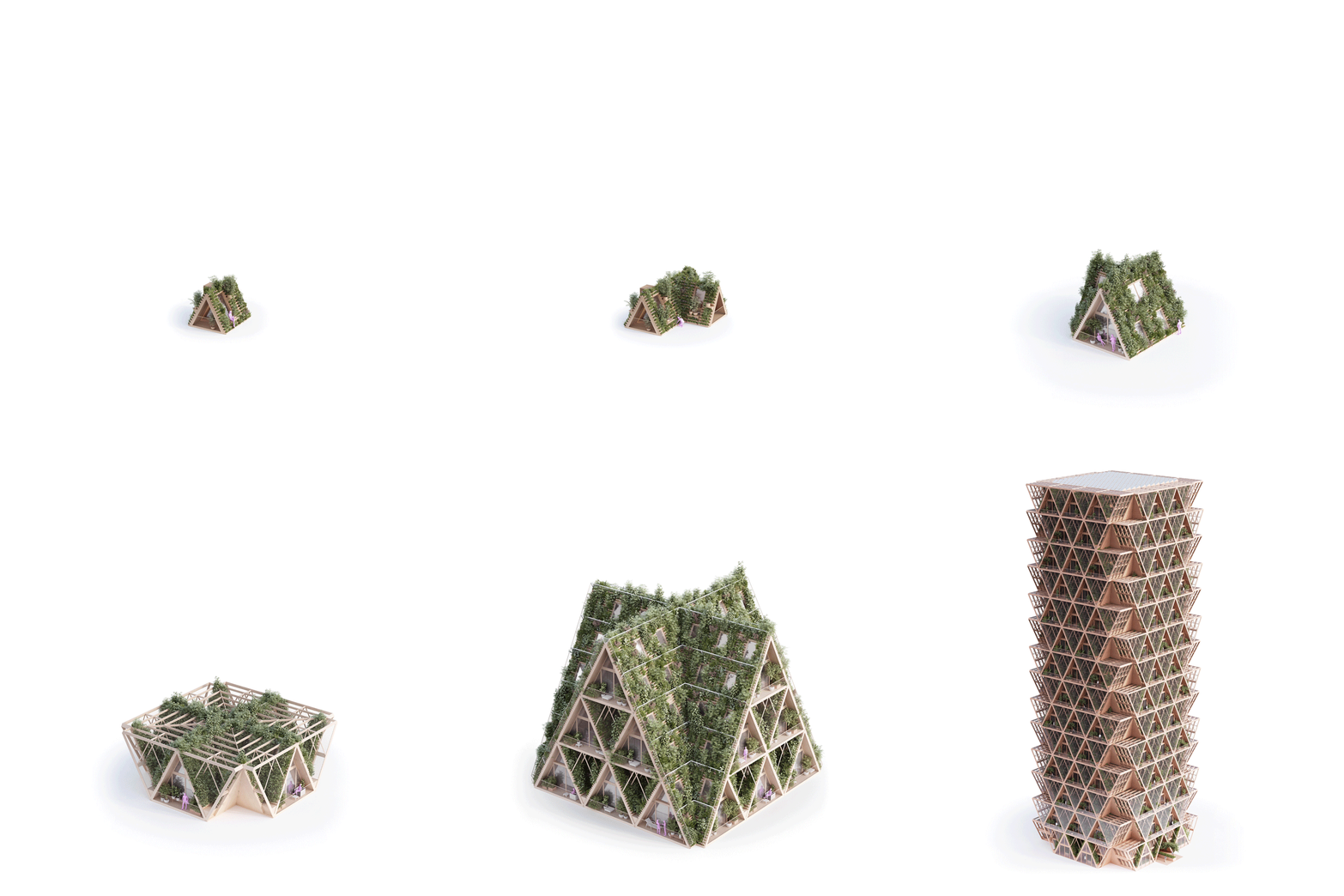
Intelligent Growth Solutions (IGS) talks vertical farming, demand growth and its unique technological proposition.
To Read the Article and View the Video, Please Click Here
What Is The Cost of Vertical Farming?
How can vertical farming contribute to (inter)national food production? This question is more complex than it initially seems. The answer does not only depend on the production, but also on the costs for water, energy and CO2. The Greenhouse Horticulture Business Unit of Wageningen University & Research and TU Delft are investigating the feasibility of this new production system.
Take a head of lettuce for example: how much does it cost to produce one? The answer is fairly well known when it comes to cultivation in greenhouses in the Netherlands. Greenhouse models and growth models can be used to predict the production at a certain consumption of water, energy and CO2. Those models are not suitable, however, for cultivation in a vertical farm. The combination of high-density crop production and a closed construction necessitates a different approach with respect to heat, cooling and dehumidification.
The key question when comparing both cultivation systems is: how much energy does a vertical farm need? The required amount of water and CO2 can be reduced compared to a 'traditional' greenhouse, but this is not the case for the cooling and dehumidification demand. The high internal heat load and the lack of natural ventilation ensure a high cooling demand, which consequently results in residual heat.
Using residual heat in the city
The question is whether this residual heat could be used in the surrounding urban environment. One of the key features of vertical farming is that it can take place in the city, which would allow it to exchange energy with other users. Those other users could become customers of the residual heat from the vertical farm.
Vertical farming. Photo: Guy Ackermans
Feasibility of vertical farms in five steps
WUR and TU Delft have joined forces to calculate the feasibility of vertical farms in five steps. The first step investigates how plants process energy in a closed cultivation system. The second step concerns the total energy demand: how much energy does vertical farming need? Step three focuses on optimising this energy consumption and step four on the integration of the vertical farm into the city. Ultimately, this information is used in step five to calculate the financial feasibility of (urban) vertical farming. The research project will be completed by the end of 2019.
This work was supported jointly by Staay Food Group, Westland Infra and the Top Sector Horticulture & Propagation Materials (EU-2016-01) via EFRO Fieldlab Freshteq.
Source: Wageningen University & Research
Publication date: 4/17/2019

South Africa: AAVF Creates Platform For Vertical Farming Network
The African Association for Vertical Farming (AAVF) recently held its launch and inaugural conference for vertical farming in Africa at the University of Johannesburg’s Soweto campus. The conference spanned three days and featured speakers, workshops and site visits to vertical farming enterprises.
The programme line-up included Dr Naudé Malan from UJ’s Anthropology and Development Studies department, Josephine Favre, president of AAVF, Veronica Shangali Aswani, co-founder of WavuNow and official AAVF representative in South Africa, Thendo Ratshitanga, head of agriculture at Simeka Capital Holdings, and Zandile Kumalo, director of HyHarvest (Pty) Ltd.
According to Josephine Favre, the AAVF is not just another non-profit organisation. They are in fact building a network of individuals, organisations and research institutions in Africa’s urban agriculture sector, and providing a digital platform that connects all stakeholders, helping to enhance coordination and collective action within the industry.
“Our members will be able to organise their efforts, collaborate to overcome problems and form partnerships that will drive individual success and move the industry forward sustainably,” she said.
Food security and sustainability was without a doubt the topic of the day, with many speakers addressing it during their presentations. However, no one was fooled into thinking that vertical farming is the solution to food security. Ratshitanga did however emphasise that it offers an opportunity for people to take charge of their food requirements by growing their own food.

INDIA: Roots of Labour: IIM Alumni's Startup Barton Breeze Brings Farms To Your Doorstep
Gurugram-based Barton Breeze sets up fully-automated hydroponic farms using its in-built technologies to grow clean and pesticide-free vegetables.
22nd Apr 2019
We all know that home-cooked food is the best. But what we really don’t seem to consider is the backend process – vegetables grown using chemicals, pesticides, and insecticides to increase their yield. These chemicals get accumulated in the soil, and in turn, increases the plant's uptake of chemicals. As a result, by the time the food reaches our plate, it would have lost half its nutritional value, and we might be consuming vegetables with high pesticide residues.
Solving this pain-point is Gurugram-based Barton Breeze. Started by Shivendra Singh (31) in 2016 in Dubai, UAE, with a mission to bring technology innovation in the farming sector, Barton Breeze focuses on Hydroponics. It is a method of growing plants without soil by making use of mineral nutrient solutions. It reduces water consumption as well as increases yield.
Shivendra Singh, Founder
The company, which started operating in India by the end of 2017, wants to give ‘clean food’ to its customers throughout the year, without being affected by the changing seasons.
At present, Barton Breeze grows 28 varieties of crops, including edible flowers, eight different coloured bell peppers, lettuce, different varieties of tomatoes, and micro-greens at its farms across India.
The beginnings
After graduating from IIM Ahmedabad, Shivendra worked with the Landmark Group in Dubai. Later, in 2016, he started working on a pilot project around hydroponics and set up two container farms in Dubai. Shivendra says, it was then he met Ratnakar Rai (49), an Agro Technologist, in an agri-tech meet.
“We shared our thoughts on the need for hydroponic and clean food in India, and soon he joined me on my second research project,” says Shivendra.
After setting up a branch in India, Ratnakar, who specialises in Controlled Environment Agriculture, joined the company as the Co-founder.
Shivendra and Ratnakar Rai (L-R)
“Ratnakar can do magic in agri-support and operation. But we needed tech support for faster growth, and that’s when Dheeraj joined us,” Shivendra adds.
Dheeraj Joshi (35) has over 14-years of experience working with software and automation companies in India, the UK and Singapore.
While keeping Dubai farms operational, Barton Breeze entered the Indian market by the end of 2017. The company has developed six fully-automated farms within a year in four states namely Haryana, Rajasthan, Uttar Pradesh, and Uttarakhand.
However, “Getting skilled operators was impossible, and we had to train and build our own ground staff team. We are now a team of six core members, supported by 14 field farms,” says Shivendra.
Quality control using tech
Barton Breeze builds farms, operates it, and directly sells the produce to the customer. This end-to-end operation not only reduces the final cost to the consumers, but also ensures total control over quality.
The team claims to have built fully-automated farms using its in-built technology.
“We have built a software where we clip a device on the leaves and stem of each plant. The software is connected to the computers, and informs the user when a particular plant needs more nutrients or minerals,” says Shivendra.
However, the journey wasn’t as easy for the team. “The supplier base was limited, and so we developed products ourselves and encouraged vendors to develop a few,” says Shivendra.
As a result, Barton Breeze has five hydroponic products developed in-house. This includes Nutrient Film Technique channels, home gardening essentials, and consumables like plat nutrition, net pots, and grow media.
Inside a Barton Breeze farm
The startup is now a retail supplier of these products, and this “adds up to 15 percent of our revenue,” Shivendra adds.
Debolina thinks life is all about seeking that one "great
perhaps". She considers herself a foodie and wants to
have her own food and travel column in a magazine someday

What Is The Cost of Vertical Farming?
The Greenhouse Horticulture Business Unit of Wageningen University & Research and TU Delft are investigating the feasibility of vertical farming as a new production system.
25 April 2019
Whether vertical farming can contribute to food production also depends on the costs for water, energy and CO2, says Luuk Graamans of Wageningen University & Research.
The Greenhouse Horticulture Business Unit of Wageningen University & Research and TU Delft are investigating the feasibility of vertical farming as a new production system.
Complex
So, how can vertical farming contribute to (inter)national food production? This question is more complex than it initially seems, according to Luuk Graamans. “The answer does not only depend on the production, but also on the costs for water, energy and CO2‘”, he says.
The combination of high-density crop production and a closed construction necessitates a different approach with respect to heat, cooling and dehumidification when it comes to vertical farming. - Photos: AFP
Greenhouse models
Graamans gives an example: “How much does it cost to produce one head of lettuce? The answer is fairly well known when it comes to cultivation in greenhouses in the Netherlands. Greenhouse models and growth models can be used to predict the production at a certain consumption of water, energy and CO2.”
However, according to the scientist, those models are not suitable cultivation in a vertical farm. “The combination of high-density crop production and a closed construction necessitates a different approach with respect to heat, cooling and dehumidification.”
Energy consumption of a vertical farm
Graamans says the key question when comparing both cultivation systems is: how much energy does a vertical farm need? “The required amount of water and CO2 can be reduced compared to a ‘traditional’ greenhouse, but this is not the case for the cooling and dehumidification demand. The high internal heat load and the lack of natural ventilation ensure a high cooling demand, which consequently results in residual heat.”
A worker checks on baby kale grown in vertical grow towers in Newark, New Jersey (United States). Residual energy coming from vertical farms could be exchanged energy with other users in cities.
Re-use residual heat
Graamans says the question is whether this residual heat could be used in the surrounding urban environment. “One of the key features of vertical farming is that it can take place in the city, which would allow it to exchange energy with other users. Those other users could become customers of the residual heat from the vertical farm.”
Feasibility of vertical farms in 5 steps
WUR and TU Delft have joined forces to calculate the feasibility of vertical farms in 5 steps. The first step investigates how plants process energy in a closed cultivation system.
The second step concerns the total energy demand: how much energy does vertical farming need?
Step 3 focuses on optimising this energy consumption and step 4 on the integration of the vertical farm into the city.
Ultimately, this information is used in step 5 to calculate the financial feasibility of (urban) vertical farming.
The research project will be completed by the end of 2019.

Urban Crop Solutions Appoints Tom Debusschere As New CEO To Manage Its International Growth
Urban Crop Solutions, the global indoor farming solutions provider headquartered in Belgium, appoints Tom Debusschere as the new CEO of its group. Co-founder Maarten Vandecruys will continue to lead the R&D division and will spend more time for international business development.
Tom Debusschere has an engineering and business background. Over the last 10 years, he lead two multinational industrial companies headquartered in Belgium, Deceuninck Group and Balta Group, both listed on the Brussels Stock Exchange. Urban Crop Solutions has grown tremendous in the last quarters. The company now has a proven technology and an expanding customer base in Europe, North-America and Asia; and is ready for international growth. The appointment of a seasoned leader will accelerate this process.
The goal of Urban Crop Solutions and Tom Debusschere as its new CEO is to develop the company into a leading total solution provider for the fast emerging indoor vertical farming industry.
Tom Debusschere also subscribes substantially into the Company’s series A capital round, targeting a 6m EUR capital increase, expected to close in the coming months.
“With the appointment of Tom Debusschere, we validate the ambition of our group and our shareholders.” explains Frederic Bulcaen, co-founder and chairman of Urban Crop Solutions. “Tom’s proven leadership, combined with his engineering background and his experience in building global organizations is a perfect match with the long term strategic plan that we are rolling out.”
Tom Debusschere: ”When I met Frederic and Maarten as a prospective investor, they were extremely transparent and offered me the opportunity to take a deep look into the Company’s superior technology, research projects, customer base, order pipeline, and above all their ambition. That’s when I truly got excited and offered them to help grow Urban Crop Solutions globally. The international potential is considerable. In 2050, the world population will grow to 9 billion people, of which 70% will live in cities. Indoor farming offers exciting opportunities for reduced water consumption, efficient land use, and bringing pesticide-free, healthy food close to consumers. Urban Crop’s research also focuses on efficient farms for use in pharmaceutical and cosmetics applications. I truly look forward in getting to know our Customers and Partners and help build sustainable factories for this fast emerging branch in the agricultural industry”
“Tom’s experience will bring tremendous value for our customers and to our team.” explains Maarten Vandecruys, the company’s co-founder. “The timing is perfect, as we feel that our products and services get traction in all parts of the world. As we are growing, we need to hire talent and develop our team. With Tom we gain the multinational and operational experience for our global roll-out, while my focus will lie on delivering superior solutions for our clients in both existing and new markets. This kickstarts the next phase in our company as we will build teams in various countries and time zones to guarantee our high standards of quality and support.”
Urban Crop Solutions develops tailor-made indoor vertical farming solutions for its clients. These systems are turnkey, robotized and able to be integrated in existing production facilities or food processing units. Urban Crop Solutions has its own range of standard growing container products. Being a total solution provider, they can also supply seeds, substrates and nutrients for clients that have limited experience with (indoor) farming. Currently the company has developed plant growing recipes for more than 220 crop varieties that can be grown in closed environment vertical farms. Some of these recipes (ranging from leafy greens, vegetables, medicinal plants to flowers) are developed exclusively for its clients by the Urban Crop Solutions team of plant scientists. With headquarters in Waregem (Belgium – Europe) and operations in Miami (Florida, US) and Osaka (Kansai, Japan) they are globally active.
Automation: The Final Frontier of Vertical Farming
Article Blurb: Vertical indoor farming is poised to become a transformational and indispensable part of our food system — and system-wide automation is the key to unlocking its full potential.
By: Sam Bertram, Co-Founder & CEO of OnePointOne
It’s no secret that the world’s food system needs help. Our growing global population is urbanizing at a rapid rate – it’s estimated that 9 billion people will live in cities by 2100 – and traditional food sources will fall woefully short of being able to meet their needs. Vertical indoor farming is poised to become a transformational and indispensable part of our food system as we face the challenge of feeding those people. We’ve begun to see the first glimpse of successful vertical farming in the market, and system-wide automation will be the key to unlocking its full potential.
Already, urban dwellers around the world are enjoying freshly harvested produce grown locally on spare rooftops, in old shipping containers, and in repurposed warehouses. These farms provide tremendous benefits to consumers and producers: they can grow pesticide-free, nutritious leafy greens year-round in a controlled, space-, time- and resource-efficient way. The industry has experienced a rapid acceleration of growth and interest, with the likes of Jeff Bezos and Eric Schmidt placing early bets on the potential of this industry. Along with substantial investments, major partnerships with airlines, retailers, and governments are increasing the presence of vertically grown produce in our day-to-day lives.
However, despite the demonstrable consumer demand and investment around vertical farming, there is a significantly low volume of vertically farmed produce in the market. Why would this be? These farms are offering fresher and cleaner food than urban consumers have traditionally had access to before, and these products are arriving at a time when the local and organic food industries are positively booming.
What it comes down to is a simple fact that vertical farming is currently not a profitably scalable venture. In 2017, 73% of vertical farms were not profitable, even considering the premium at which their products are often sold. The vast majority of vertical farms have not been able to successfully expand to different locations and different markets. Overcoming this hurdle is essential if vertical farming is to capture a meaningful share of the retail and food service market in the US and abroad. The only way that vertically farmed produce can become a mass-market product is through system-wide automation.
Currently, no vertical farm has automated sufficiently or successfully enough to scale effectively or be price competitive in the current mass-market supply chain. This is not due to a lack of intellectual or capital resources, but rather the tremendous inherent complexity of automating the growth of a living plant and replicating it continuously. An apt analogy is Tesla. Tesla has run into enormous difficulty with automating the fabrication of what should be a predictable assembly line. Even with substantial financial and human capital, Tesla went through hell to make robotically automated car production lines a reality. Now replace the car with living organisms, and the profound complexity of this effort becomes apparent. Given this incredibly high barrier to entry, why would developing system-wide automation be a worthwhile endeavor?
Agrilyst reported that in 2017, labor accounted for 56% of production costs for vertical farms. Labor remains the single highest operating cost for even the most well-capitalized vertical farms in the world. Vertical farms must find more efficient ways to operate through strategic and sparing use of human labor in order to overcome this tremendous barrier. Total system automation must be developed if vertical farms hope to deliver on current promises and change our global food system.
Vertical farming companies have known this for a long time. The phrase “automated vertical farming” has been touted for many years, although without a clear definition, standardization, or validation process. Below is the first proposed framework to standardize levels of automation in vertical farms. Taking principles from categories of car automation, the framework below can be used to categorize the current and future automation potential of vertical farming companies and technologies.
The majority of commercial vertical farms exist in Level 2 (basic growth and automation). A small number of vertical farms – in pursuit of scale and improved margins – have managed to operate commercially in Level 3 (conveyor automation). Only a subset of the most well-capitalized vertical farms has attempted the jump from Level 3 to Level 4 (adaptive automation) – unfortunately with little commercial success. Here, complex logistics and decision-making will become the responsibility of the machine; it will be the most difficult of all the transitions. In addition, almost all vertical farms do not have the necessary ingredients to even attempt such a leap: patient investors, sufficient capital, plant science expertise, automation/robotics expertise, software expertise, etc. For those without sufficient resources, hundreds of profitable niche markets remain to be satisfied around the world. For those with sufficient resources, cost-competitiveness with the traditional supply chain awaits, along with multiple billion-dollar market opportunities.
Current farms are concentrated in technologically advanced and affluent cities. If they hope to expand their reach and become seriously competitive players in the mass market, they will need to drastically reduce operating costs with capital-efficient automation. Most consumers buy on price, and vertical farms will never compete on cost if they remain stagnant in Level 3. Incredible profit and scale await the vertical farms that can crack Level 4, as well as the capacity to feed people outside of the global top 1%. What’s exciting is that with the right combination of plant science and automation robotics, that future is sure to be right around the corner.
Crop One Holdings Wins Best Innovation In Indoor Farming Award For Joint Venture With Emirates Flight Catering
Crop One Holdings, the world’s leading vertical farm operator through its FreshBox Farms brand, has won the Best Innovation in Indoor Farming Award at the 2019 Global Forum for Innovations in Agriculture (GFIA) conference in Abu Dhabi, UAE
Oakland, Calif., April 29, 2019 -- Crop One Holdings, the world’s leading vertical farm operator through its FreshBox Farms brand, has won the Best Innovation in Indoor Farming Award at the 2019 Global Forum for Innovations in Agriculture (GFIA) conference in Abu Dhabi, UAE. Crop One Holdings was recognized for being a leader in confronting core environmental, economic, and social issues, combining spatial optimization with resource efficiency to grow leafy greens year round.
The company announced a $40 million joint venture agreement with Emirates Flight Catering last year, to build the world’s largest vertical farming facility in Dubai, UAE. The controlled environment facility in Dubai, will be 130,000 square feet and use 99 percent less water than traditional fields to produce three US tons of high-quality, herbicide- and pesticide-free leafy greens daily.
“This award is a testament to our commitment to responsibly feed our planet’s 7.4 billion people,” said Sonia Lo Crop One Holdings chief executive officer. “We are firm believers in building a more sustainable world, and aim to continue being a thought leader in this industry.”
Seven years after its founding in 2012, Crop One is now the world’s largest vertical farmer and the only one to consistently maintain a gross profit. The company’s patented grow process, created and augmented by top plant scientists and systems engineers, allows its farm to grow 400 acres worth of outdoor-grown produce in 1 acre of warehouse space. The GFIA judging criteria was on four main criteria: environmental sustainability, innovation, productivity and impact.
“The GFIA Innovation Awards celebrates some of the world’s most pioneering developments in agriculture,” said GFIA Event Director David Stradling. “Crop One has a proven dedication to providing innovative solutions to one of the world’s most complex problems by combining soilless hydroponic growing technology with advanced plant science to produce local, fresh greens globally.”
GFIA was founded in 2014 and is the global authority on innovative, sustainable agriculture practices and food production. Its Innovation Awards are designed to celebrate innovations that help to improve global food security while maintaining and improving sustainable agriculture practices.
About Crop One Holdings
Oakland, California - based Crop One is a vertical farming holding company for two subsidiaries – FreshBox Farms, Millis, Massachusetts, and a joint venture with Emirates Flight Catering, Dubai South, United Emirates. Crop One has been in commercial production longer than any other major vertical farmer in the U.S. It produces the highest crop yield per square foot, at 25% of the capital cost, of any vertical farm, due to its unique combination of proprietary technology platform and best-in-class plant science.
For more information about Crop One and vertical farming follow the link to cropone.ag.
About Emirates Flight Catering
Emirates Flight Catering is one of the world’s largest catering operations. Offering airline, events and VIP catering as well as ancillary services including laundry, food production and airport lounge food & beverage, Emirates Flight Catering is a trusted partner of over 100 airline customers, hospitality groups and UAE government entities. Each day, the company’s 11,000 dedicated employees prepare an average of 225,000 meals and handle 210 tonnes of laundry.
INDIA - VIDEO: A Vertical-Farming Startup Cultivating Organic, Healthy Greens in Space-Crunched Mumbai
The hyper-local farm delivering freshly-harvested,
leafy greens right to your doorstep
A vertical-farming startup cultivating organic, healthy greens in space-crunched Mumbai. Watch the journey of Herbivore Farms in the video below:
Mumbai Couple Grows Organic Produce through Hydroponics on
Commercial Level
25 April, 2019
By: Dr. Sangeeta Soi
A Mumbai based couple - Oshua Lewis and Sakina Rajkotwala decided to take the leap after a visit to Auroville in Puducherry in 2017 where they got inspired by Krishna Mckenzie, a native of England, who’s “honouring Mother Nature through local food.”
They named it as Herbivore Farms, Mumbai’s first hyperlocal, hydroponic farm. Today, the farm grows 2,500 plants, and sells fresh, organic vegetables to customers across Mumbai.
As told to Mumbai Foodie, the couple said, “Herbivore Farms is Mumbai’s first hyperlocal farm located in Andheri East. We grow super-healthy varieties of leafy green vegetables like Swiss chard, kale, rocket, and lettuce using hydroponic methods of cultivation.”
The farm is actually made at a place which was earlier used as a warehouse in an old industrial estate. It is spread over 1,000 sq ft, and houses over 2,500 kinds of plants in a temperature-controlled indoor setting.
According to the couple, the hydroponic method they use to grow their vegetables sets their produce apart. They also stated that there is no real-time solution to all the questions that they had in hydroponic farming so the trial and error methods usually works.
The irrigation system used here is re-circulating type which uses 80 percent lesser water to grow the produce. Other than this no pesticides are used in order to keep the environment sterile and safe completely. The water in which the plants are grown contains macro and micro-nutrients that facilitate the growth of the plant. Growing the plants in a vertical format has helped the couple to grow five times more the normal produce their farm would have otherwise done.
The couple also makes sure that they can deliver their products through home delivery, maintaining freshness, nutrition, and flavour.
They also reported that in spite of the higher cost of boxes the fresh organic produce are always in demand among customers.
#Mumbai #hydroponics #OshuaLewisandSakinaRajkotwala #Herbivorefarms#hydroponicfarm #recirculating

Solar Microgrid To Power Indoor Farm All Year Round
So you want to buy local produce, but you also want strawberries in December? Soon you can have your cake – scratch that – vegetables, and eat them too. Up to 100 varieties of vegetables, including lettuce and kale, will soon be grown in an indoor warehouse in New Jersey, supported by a solar microgrid to keep plants growing all year round.
Bowery Farming’s facility will be be powered by batteries, solar panels, and on-site gas generators to enable it to operate independently from the electric grid. Scale Microgrid Solutions will build, own and operate the microgrid, and Schneider Electric will provide most of the infrastructure and software for the indoor farm.
Bowery is well acquainted with high-tech agriculture, making waves with its “post-organic” vertical farming which landed it $20 million in investment in 2017. In fact, its produce is grown in trays and requires no soil at all, using 95% less water than traditional farming due to a finely-tuned hydroponic system. Now, it is adding microgrids to its tech-repertoire.
One doesn’t normally associate microgrids with the realm of agriculture, and Scale Microgrid Solutions CEO Ryan Goodman thinks it might a first. “I believe no one has ever done microgrids in the indoor agricultural space like we’re doing here,” Goodman said, according to the Energy News Network. “There are some differences, but primarily they’re related to the load profile and how we’re using the assets.”
15% of the power will come from solar, while some of the power will still come from the grid, and the rest from the natural gas generator and batteries. So while New Jersey winters will bring cold winters, with short days lacking in sunlight, the indoor farm will be unaffected. Schneider Electric’s lithium-ion battery energy storage system will store solar energy that can be released to lower demand from the grid.
Schneider currently has more than 300 microgrid projects on the go in the US, and is using its EcoStruxure Microgrid Advisor software platform for cloud-connected, demand-side energy management. It’s integrated into the system to enable a look at current electric rate tariffs and optimization of energy usage – but does so faster than any human could.
This, combined with Bowery’s hydroponic system that uses 95% less water than is normally needed to grow plants, enables the creation of a super high-tech urban agriculture startup that will perhaps change the way we think about farming. Bowery Farming is set to begin the microgrid project this year, we can’t wait to see some tasty results.
Images: Bowery Farming
Tags: Bowery Farming, New Jersey, Scale Microgrid Solutions, schneider electric, vertical farming
About the Author
Erika Clugston Erika is a writer and artist based in Berlin. She is passionate about sharing stories of climate change and cleantech initiatives worldwide. Whether it’s transforming the fashion, food, or engineering industries, there’s an opportunity and responsibility for us all to do better. In addition to contributing to CleanTechnica, Erika is the Web and Social Media Editor at LOLA Magazine and writes regularly about art and culture.
Hydroponic Farming: Why the Future of Food Is Indoors
Hydroponic farming needs a fraction of the water and space needed
to grow crops compared to conventional farming.
Hydroponics could help meet the world’s growing food pressure.
Pixabay
There are about 7.5 billion people on the face of the planet. With every new person born, there’s a new mouth to feed.
In just a few decades, we might just hit a Full-Earth scenario.
By 2100, the global population will be around 11 billion. To feed this many people, we need 0.22 hectares of cultivated land on average per person. That gives us 2.4 billion hectares. Currently, there are 1.5 billion hectares of cultivated land in the world. So, we need about 1 billion more hectares of farmland, roughly the size of the United States.
That’s not even thinking about all of the water needed to irrigate these crops and the strain this will put on the world’s water resources.
Besides being unfeasible, it’s just an unsustainable model that we used and tested for a very long time.
Non-conventional agriculture systems, like vertical farming and urban farming, could help produce more food, while also easing environment issues related to food production.
Hydroponic farming is another method that allows growing plants to not only meet quantity needs but also quality standards.
Indoor Hydroponic Farms: no Soil, no Pesticides, and Very Little Water
If hydroponic farming sounds futuristic, the concept itself is about as old as agriculture with many instances of hydroponic farms throughout history and civilizations.
The Hanging Gardens of Babylon, one of the Seven Wonders of the Ancient World, is the first known example of hydroponic farming. The Aztec built chinampas, floating farms that used hydroponic systems.
Hydroponics is basically an irrigation system that allows growing plants without soil.
Leveraging robotics and data analytics, many companies are taking indoor hydroponic farming to levels never before reached.
One such company is Bowery Farming, a startup founded in 2014 in New York that specializes in indoor farming.
The company claims its farming system to be 100 times more productive than traditional farming while using 95% less water and zero pesticides.
A combination of tech solutions enable Bowery to produces a wide variety of crops, twice as fast, and take them to market within a few days after harvest.
Irving Fain, Bowery CEO and co-founder, told Clean Technica:
“BoweryOS, our proprietary software system, uses vision systems, automation technology, and machine learning to monitor plants and all the variables that drive their growth 24/7, while combining software and automation with industrial process management to optimize production, fulfillment and distribution. By applying proprietary machine learning algorithms to millions of points of data collected by an extensive network of sensors and cameras.”
Because indoor farms offer a closed and controlled environment for greens to grow, there’s more to these products than just their little resources requirements.
They are safer to eat because controlled environment technology minimizes the risk of contamination from different sources, like animal waste, water, or irrigation run-off.
In the case of Bowery products, because they control “the entire process from seed to store, our greens aren’t matriculated through large distribution and fulfillment centers that often lead to additional exposure to contaminants”.
Zayan Guedim
Trilingual poet, investigative journalist, and novelist. Zed loves tackling the big existential questions and all-things quantum.
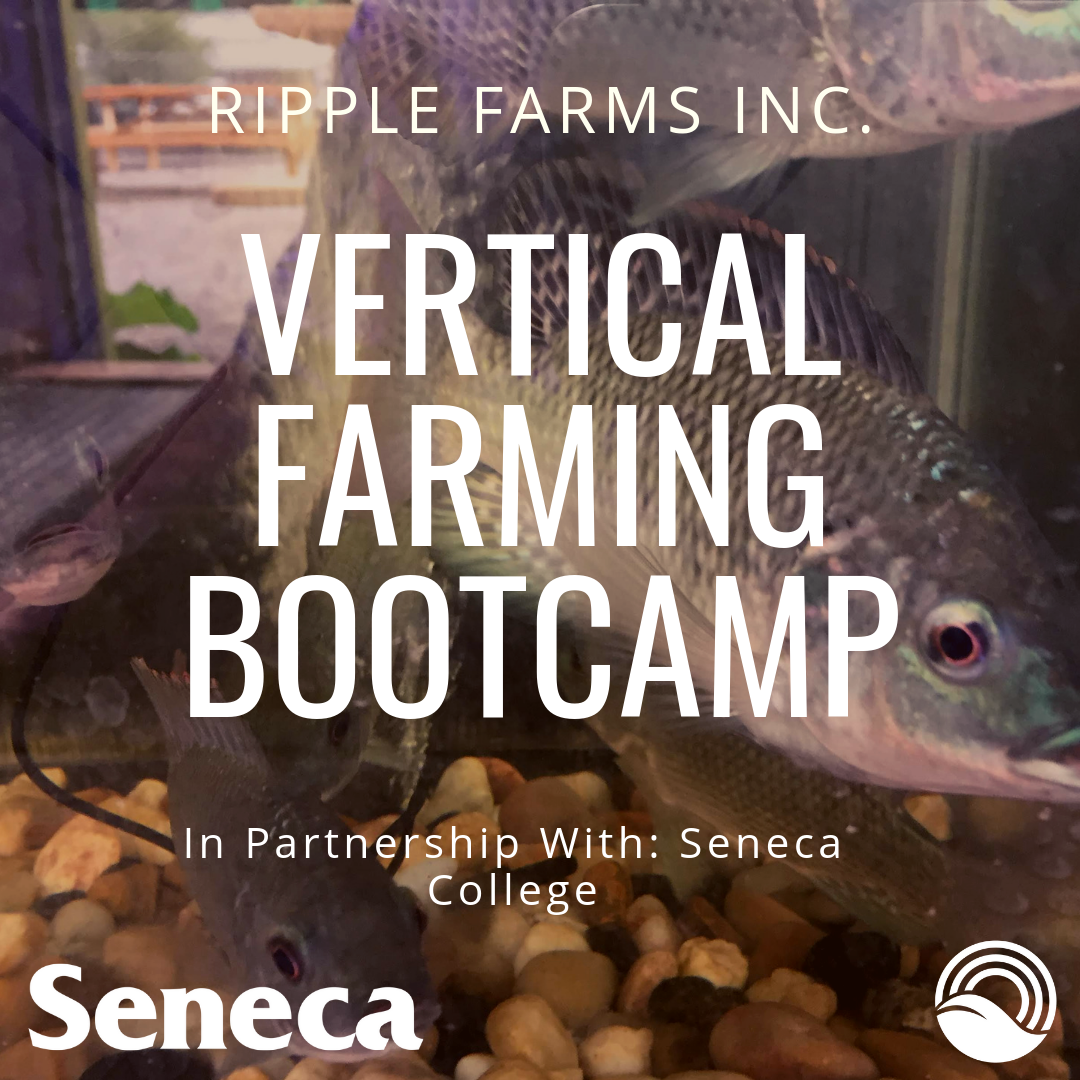
We Are Excited To Announce Our Partnership With Seneca College To Bring Our First "The Vertical Farming Bootcamp"
Want to learn more about Vertical Farming, Aquaponics and the technology behind it? Please Click Here
Want to learn more about Vertical Farming, Aquaponics and the technology behind it? Do you have a business model in mind and need to learn the components to execute it? Now is your chance! Sign up for our Vertical Farming Bootcamp!
June 1, 2019 - 9:00 am to 5:30 pm
Seneca College Newnham Campus
Please Click the link to sign up:
https://www.eventbrite.ca/e/vertical-farming-bootcamp-tickets-60711365328
Acquisition of Manufacturing Assets
Cobotix is the current manufacturer of the Company’s Patented Vertical Farming Technology
Vancouver (Canada), April 17, 2019
Affinor Growers Inc. (“AFI” or the “Company”) (CSE:AFI, OTC:RSSFF, Frankfurt:1AF) is very pleased to announce that it has entered into a letter of intent to acquire manufacturing assets that make up the Cobotix Manufacturing Inc.’s (“Cobotix”) business, undertakings and goodwill in Port Coquitlam (the “Acquisition”). The Company and Cobotix will have thirty (30) days to complete the due diligence process and determine a closing date for the Acquisition. In consideration for the assets, the Company will pay to Cobotix up to $2,900,000, subject to a valuation of the assets (the “Consideration”).
The Consideration will be satisfied by certain cash payments and the issuance of up to 38,000,000 common shares (the “Common Shares”) in the capital of the Company at a deemed price of $0.05 per Common Share. Upon completion of the Acquisition, it is anticipated that Ron Adolf will be appointed to the board of directors and become an officer of the Company. No additional changes will be made to the Company’s board of directors or management based on the Acquisition.
Cobotix is the current manufacturer of the Company’s Patented Vertical Farming Technology. As a result of the Acquisition, the Company will be able to consolidate the intellectual property associated with the manufacturing and design aspects of the Vertical Farming Towers, and will be able to extend its reach, diversification and stability, which are fundamental to the growth and profitability of the Company going forward. Cobotix is currently developing multiple cell manufacturing opportunities throughout North America, building on the success of current operations. The Company and Cobotix act at arm’s length.
Cobotix brings over 30 years of expertise to the design and manufacturing of the Vertical Farming Towers. Over the past six months, Cobotix has been working directly with the Company to develop and test the new designs that were unveiled at the 2019 BC Tech Summit.
Randy Minhas commented “This is a great opportunity for the Company to move to the next level with its Vertical Farming Towers and to be involved directly with design and manufacturing going forward. We will now be in a position to capitalize on the extremely talented team at Cobotix, who have been instrumental in our new tower designs.”
Ron Adolf commented “We’re excited to be joining AFI and collectively working to commercialize the new Vertical Farming Towers while continuing to work on new designs and technologies in the vertical farming industry. Over the past six months, we have been very pleased with the great strides AFI has made in advancing their technology. Our business model of collocated manufacturing cells is a great fit in the evolution of Cobotix and AFI.”
Randy Minhas
President and CEO
About Affinor Growers
Affinor Growers is a publicly traded company on the Canadian Securities Exchange under the symbol ("AFI"). Affinor is focused on developing vertical farming technologies and using those technologies to grow fruits and vegetables in a sustainable manner.
Neither Canadian Securities Exchange nor its Regulation Services Provider (as that term is defined in the policies of the Canadian Securities Exchange) accepts responsibility for the adequacy or accuracy of this release.
This news release may contain assumptions, estimates, and other forward-looking statements regarding future events. Such forward-looking statements involve inherent risks and uncertainties and are subject to factors, many of which are beyond the Company's control that may cause actual results or performance to differ materially from those currently anticipated in such statements.
Can Indoor Farming Solve Our Agriculture Problems?
April 15th, 2019 by Erika Clugston
Food is central to our lives – that’s a given – but our relationship with it is problematic: agriculture is one of the leading causes of climate change. With the world’s population growing rapidly in the next few decades, the global demand for food is expected to increase by 70%. However, the production of this food is costly: meat and dairy have the highest global carbon footprint and agriculture uses 70% of the world’s freshwater, to name just a few problematic aspects. This coupled with a higher demand and pressure from the effects of climate change creates a vicious cycle. How do we break it?
Photos courtesy of Bowery Farming
Bowery Farming believes it has a solution. The company’s high tech, indoor farms use a hydroponic system, requiring 95% less water than traditional agriculture to grow produce. Additionally, vertical farming requires less space, meaning that Bowery is 100 times more productive than a traditional farm on the same amount of land. Because the farms are indoors, in closely controlled environments, there is also no need for pesticides. These are just a few of the ways that Bowery is rethinking contemporary agriculture systems.
We wanted to know more, so we reached out to Bowery CEO and co-founder, Irving Fain, to discuss his vision for today’s farming practices and the role that technology can play in improving our relationship to food.
Bowery CEO and Co-Founder Irving Fain
What was your inspiration and mission for founding Bowery?
I’m a big believer in technology’s ability to solve difficult problems. After building my last company, I wanted to spend my time working on an area that I was personally passionate about and a set of problems that were broadly important. Agriculture sits at the epicenter of so many global issues today. Over 70% of our global water supply goes to agriculture, we use over 700 million pounds of pesticides each year in the US alone, and industrial farming practices have caused a loss of over 30% of the arable farmland in the last 40 years. At the same time, our global population is growing to 9-10 billion people by 2050 and we will need 70% more food in order to feed a population of that size, meaning that more food will need to be produced in the next 30 years than has been produced in the last 10,000. After becoming obsessed with the question of how to provide fresh food more efficiently and sustainably to urban environments, I teamed up with my co-founders David Golden and Brian Falther to build Bowery. Bowery combines the benefits of the best local farms with advances made possible by technology in large-scale commercial indoor farms to grow produce consumers can feel good about eating.
What sets Bowery apart from traditional farming?
While traditional farming methods waste resources and endanger our future food supply, indoor farming allows us to grow more efficiently and with fewer resources. Bowery farms use zero pesticides, 95% less water, and are 100x times more productive on the same footprint of land than traditional agriculture. We’re also able to grow a wide variety of crops twice as fast, more crop cycles per year, and more yield per crop cycles than the field, regardless of weather or seasonality. BoweryOS, our proprietary software system, uses vision systems, automation technology, and machine learning to monitor plants and all the variables that drive their growth 24/7, while combining software and automation with industrial process management to optimize production, fulfillment and distribution. By applying proprietary machine learning algorithms to millions of points of data collected by an extensive network of sensors and cameras, BoweryOS can make automatic adjustments to environmental conditions to improve crop quality, health, yield, and flavor.
Since we’re able to provide consistent conditions for crops (many which are tough to grow outdoors, especially with changing global climates), there are truly endless possibilities to what we can grow at Bowery. And because we’re close to the point of consumption and don’t have to worry about growing crops to withstand long travel distances or shelf life, we can grow more flavorful, less commodified crops.
Additionally, because we grow in a completely closed environment, we drastically minimize the risk of contamination from foodborne illness. Unlike outdoor farms, which are vulnerable to contamination from animal waste, tainted groundwater or irrigation run-off, Bowery produce is grown in a closed-loop indoor system that recirculates filtered municipal water free of contamination. And because we control the entire process from seed to store, our greens aren’t matriculated through large distribution and fulfillment centers that often lead to additional exposure to contaminants.
Technology and agriculture aren’t often thought of together. Do you see them as natural counterparts?
Agriculture and technology are historically deeply intertwined. While many people think of technology as purely digital, agriculture is actually one of the first major human technological breakthroughs, and is the basis for the creation of towns, cities and civilizations. Over the years, there has been constant innovation in agriculture, and it’s supported the growth of human populations through today. So tech and agriculture have always had a close relationship.
Today, agriculture is at the epicenter of many of our global challenges. At Bowery, we began with the fundamental conviction that technology is critical to developing both a scalable and sustainable solution to those global issues.
What kind of produce do you grow?
Our proprietary technology BoweryOS allows us to grow a dynamic portfolio of different crops on a smaller footprint of land. We currently offer 9 SKUs at retail partners, including spring blend, kale mix, baby kale, arugula, butterhead lettuce, romaine, bok choy, sweet & spicy mix, and basil. Beyond that, we’ve experimented with over 100 varieties. Right now we’re focused on delivering the best leafy greens and herbs possible to our retail and restaurant partners, but we’ve already started experimenting beyond leafy greens with root vegetables such as turnips, and plan to expand our offerings in the future.
How did you finance the company – which VCs or companies invested?
With Bowery, we were fortunate to have a number of world-class investors excited about Bowery’s mission, the technology we’re creating, the team we’re building and most importantly, the food we are growing. When we built our first farm, we were fortunate to work with Rob Hayes and First Round Capital who led our seed round, along with a number of other fantastic investors. To date, we’ve raised $122.5M from leading investors such as Google Ventures, General Catalyst, and GGV. Bowery has also welcomed noteworthy thought-leaders in the culinary industry as investors, including Chef Tom Colicchio, Chef José Andrés, Chef Carla Hall, David Barber, co-owner of Blue Hill, and the founders of sweetgreen, among others.
Where are you currently located? Plans for expansion?
We currently have two farms located in Kearny, New Jersey. This past December, we announced our Series B funding round of $90 million and we plan to use the capital to scale our operation in new cities across the country and expand our network of farms in 2019.
As CleanTechnica has already covered, Bowery has announced plans to use a microgrid that will run in part off of solar power to support an indoor farm year round. Can you talk a little bit about the benefits and challenges of using the microgrid and when this project will be underway?
We are working to incorporate a proprietary hybrid microgrid system that uses distributed energy resources, including a rooftop solar array, a natural gas generator equipped with advanced emissions control technologies and lithium-ion battery energy storage system. These solutions will help cover a meaningful amount of our energy consumption needs for this farm and will set us up with the knowledge and experience to install significantly more sustainable solutions in future farms. We will continue to meaningfully increase this percentage over time as we innovate on our electrical energy distribution efficiency.
What are the costs of urban farming like in comparison with traditional produce?
The existing food supply chain has a lot of inefficiencies. Because we’re located near the point of consumption, we cut out much of the waste and cost in distribution while delivering a fresher, better product. At the same time, the technology we’ve developed allows us to grow in a way that is 100x times more productive than traditional farming on the same footprint of land, which enables us to keep the cost of our produce competitive with organic products grown in the field.
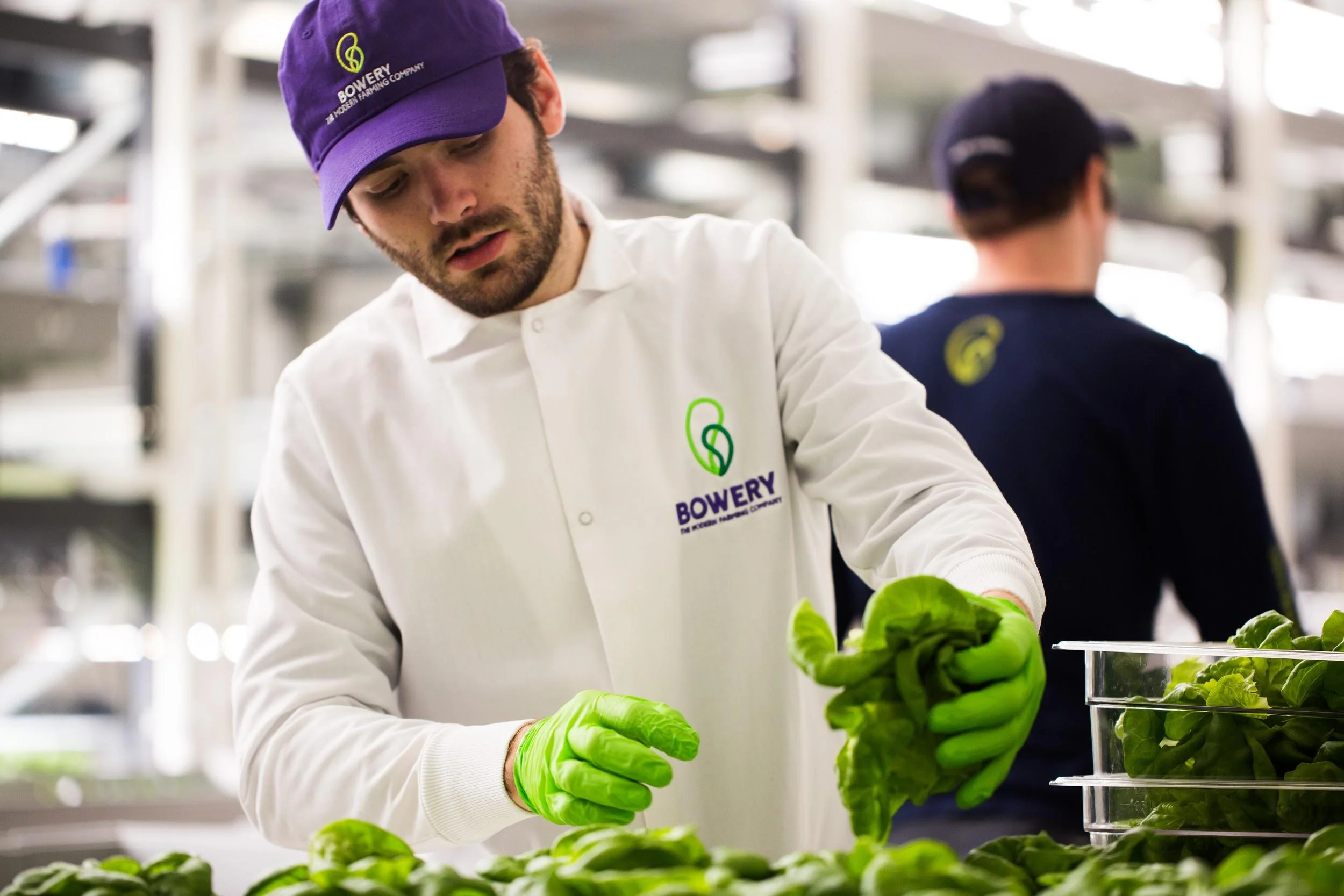
Do you foresee urban farming as the solution to issues caused by growing populations, climate change and increasingly limited resources?
Yes, we view urban farming as one of the solutions to issues caused by growing populations, climate change, and increasingly limited resources including food and water supply as well as environmental degradation.
For one, there simply is not enough arable land in the world to feed the growing population using today’s conventional methods, and fresh produce loses 45% of its nutritional value when shipped. At Bowery, we solve for this by reappropriating previously unusable industrial space to grow crops indoors, closer to the point of consumption, at a rate that is 100x more productive per square foot of land than that of traditional agriculture. Produce is also typically grown in one central area, shipped to cold storage, then driven via long-haul across the country, and finally transported by last mile shippers to stores. In the U.S. alone, food trucking is responsible for 12.5% of total emissions. By locating close to the point of consumption, we drastically minimize the carbon footprint of food distribution. Additionally, while the agriculture industry uses 70% of the world’s freshwater and over 700 million pounds of pesticides in the U.S. alone, we use 95% less water than traditional farming and absolutely no pesticides.
What are your goals for Bowery in the next few years?
Our goal is to open more farms in new cities to give people access to fresher, safer, more sustainable produce. And, from a macro level, in order to provide food for a growing population, we need to feed the world with more than just lettuce and herbs. Getting these right is an important first step, but in order to keep up with current customer demand, we’re working on growing more types of produce as we build more farms, with an eye toward greater access for more people. There’s a huge opportunity to deliver a vast variety of fresh, delicious produce to people around the world with Bowery’s technology.
How much money can a solar roof save you in Var?
Profit from your roof space: find local deals on solar in your area, eliminate your power bill, and join the solar revolution.
Tags: Bowery Farming, indoor agriculture, vertical farming
About the Author
Erika Clugston Erika is a writer and artist based in Berlin. She is passionate about sharing stories of climate change and cleantech initiatives worldwide. Whether it’s transforming the fashion, food, or engineering industries, there’s an opportunity and responsibility for us all to do better. In addition to contributing to CleanTechnica, Erika is the Web and Social Media Editor at LOLA Magazine and writes regularly about art and culture.