

Welcome to iGrow News, Your Source for the World of Indoor Vertical Farming

Optimising The Modern Farm With LED's At Philips Growwise
Posted by Olga Koltsova | April 17, 2019
© Signify
Vertical farming or city farming – the growth of plants indoors stacked in vertical layers – fully depends on the artificial lighting instead of sunlight. Philips Lighting started working on light products for indoor farming in 2010 together with HAS university and eventually created Philips GrowWise – the research centre in Eindhoven that finds optimal LED-light recipes for indoor farming and develops custom-built vertical farms projects.
YIELD, QUALITY AND RELIABILITY OF A VERTICAL FARM
Global Director City Farming in Signify, Roel Janssen, says that vertical farming has three main benefits. The first advantage of city farming is a higher yield of produce from a square meter of the floor space due to the use of multiple layers – this is very useful in the densely populated areas like Mumbai, Tokyo or Singapore, where a square meter of land is quite expensive. “On one square meter, a vertical farm can produce much more than you would have in a normal field. For example, for growing around 20 kg of lettuce on 1 m2 in California farmers use 200 litres of water per kilogram but in GrowWise facility, we harvest 100 kg from 1 m2 with less than 2 l of water per kilogram.” So vertical farming helps to increase the yield per square meter of actual floor space.
One more merit of a vertical farm is the quality of produce, and Roel Janssen emphasises that quality is the main advantage of city farming: “The quality greatly depends on operating the indoor farm in a right way: if you make sure that the hygiene is up to the proper standards, if you automate most of your production and keep close control over the facility, you can improve the nutritional value of the crops.” Researchers of GrowWise have found light recipes to increase vitamin C content in mint and rocket, and to increase the content of volatiles (aromatic components) in basil. The strawberries that are grown in the controlled environment of GrowWise have a higher Brix value – they are sweeter than strawberries from the open field.
Nowadays lettuce is the most popular crop that is grown in vertical farms, and its quality can be improved. Janssen says: “If you have a bagged salad, often there are red varieties in there, such as lollo rosso. This lettuce is red because of the response to the ultraviolet in the spectrum of the sun. Since we grow the red variety without UV, our ‘red’ lettuce stays mostly green. Three days before the harvest we have a specific pre-harvest light recipe that triggers the colouration of the lettuce. We use a different combination of red and blue and change the daylength, which intensifies the production of anthocyanins (important antioxidants) and makes the lettuce red again after only three days of treatment. This is how we can grow the lettuce in the most optimal way, have a high yield and increased nutritional value. When the lettuce is grown outside, the accumulation of anthocyanins is gradual, and the growth is slower.”
Janssen says that the reliability of the growing process belongs to the benefits of indoor farming as well: “If you do everything properly and get no foreign bodies in your produce, you will always have a constant quality and you can have the same produce all year round.” The reliability of farming indoors also means that the growers can be flexible on the market – they can regulate the growth of produce in accordance with the demands of the customers.
© Signify
HOW TO TWEAK A PLANT IN A VERTICAL FARM
Climate, says Janssen, is the most important tool of indoor farming: most of the water captured by the plant is evaporated, the air becomes humid and it is necessary to remove it from the room. “Light, temperature and CO2 are the main drivers of production and yield. For us in GrowWise the main drivers are, obviously, light and light recipes,” says Janssen. Irrigation and fertigation in the water can influence the growth but also can influence nutrient uptake: “If you want to have low-potassium lettuce, at the end of the growth cycle you can stop adding potassium to the water.”
Seed variety is also an instrument of ‘tweaking’ the crops. “The main goal of the seed breeders is to develop varieties that can resist the environment: breeders want to develop crops that can resist bugs, diseases and temperature shifts. For an indoor farmer, the weather is not crucial – it is always springtime in our climate cells, and the temperature is constant. If we do everything with proper hygiene, there are no diseases. Breeders have already developed seed varieties for indoors: for greenhouses and hydroponic systems. The next step would be to develop specific varieties for the vertical farming – to breed and select for the yield, quality or reliability.”
Currently, GrowWise selects from the available seed varieties together with the breeders. “We work with six-seven breeders to make a selection of the best varieties of crops for indoor farming: we carry out the selection trials to see how the plants perform in the environment without daylight. Maybe we can find varieties that meet our needs and are interesting for us – then the breeders will scale up production. Testing the varieties of crops with us helps the breeders because we will give advice to our customers: we know for sure that this variety works well and gives big yields.”
WHAT TO GROW IN A VERTICAL FARM
By far the most cultivated crops in GrowWise facilities are lettuce and basil. “We have tried over 200-300 varieties of lettuce here,” says Roel Janssen. “Our main focus is on leafy greens because all the energy that you put into those plants is paid back when you sell the produce. If you grow, for example, strawberries, you first need to grow the plant for about two months before it starts fruiting.”
On the racks of the climate cells in GrowWise there are also various baby leaves – 6-10 cm high – red sorrel, mustard leaf, mint, rocket. “We have grown strawberries, cucumbers, kohlrabi, broccoli, even melons – all sorts of crops. It was purely experimental – to see what the possibilities are. However, not all of the crops have commercial viability at his point. The ones that we think are the closest to be economically viable are all the leafy greens, then fruits.” GrowWise is planning to start growing raspberries soon. One of the cells is being re-equipped for the high-wire crops: tomatoes, cucumbers, peppers. “In about two months we will grow tomatoes here, on the third floor of a building,” says Janssen.
In order to succeed, startups should be able to sell the added value of a vertical farm – the higher nutritional value of the produce
WHY VERTICAL FARMS FAIL
Why do vertical farming startups fail? Roel Janssen says that the outcomes greatly depend on the mindset of a company toward innovation. “In the Netherlands, we have a very open way of innovating, especially in the horticultural industry, so cooperation, communication and transfer of knowledge are the basis of the business. But in the USA, for example, people who set up a vertical farm often plan to create intellectual property, patents and a unique design system all by themselves – so, basically, they try to reinvent the wheel and that makes the whole thing difficult. So, they do a lot of things by themselves and eventually they come to the strategy of open innovation and try to find the best partners in different segments, but it takes time. Most of such companies eventually come to us – when they visit us, look at automation, light, and climate control, they typically end up being our partners as well.” “Philips GrowWise obviously supplies the light solutions for indoor farming but also the knowledge on growing crops in a vertical farm and the knowledge on the design of the indoor farming facilities. We have a global partnership program that includes 40 technical parties – they do the full engineering and implementation of the ideas that we develop with the customers.”
Another reason why indoor farms are not feasible is that some vertical farming startups keep their capex as low as possible in the very beginning of their work: “There are vertical farming startups that install indoor farm racks in a warehouse and then stop caring about hygiene factors, climate and scalability. Lots of them produce some crops, come to the market early without knowing how to scale, they are not consistent in supply and they don’t have a good distribution channel – that is why they fail,” says Janssen. “In order to succeed, startups should be able to sell the added value of a vertical farm – the higher nutritional value of the produce, which is also always clean and has a longer shelf life. If the companies don’t have a reproducible, scalable business model and operational mode, they don’t sell that added value, hence fail – that is what is seen in lots of cases, especially in the USA. If someone puts some containers to grow leafy greens then delivers them on a bike around the city and supply some produce to the market, this is not really scalable and financially feasible.”
Janssen admits that a certain level of professionalism in indoor farming needs to be built, but there is no standard yet – and this is the biggest challenge for the industry. “If you look at the example of greenhouses, there is a standard for all of the constructions of that type – it’s a Dutch Venlo greenhouse. Almost all over the world, you can see greenhouses that are very comparable to it in size and dimensions, so all of the technology is built for those dimensions. Here, in our vertical farming facility, we have done research on at least 20 different substrates and at least on 5 different growing systems, but there is no one winning model yet. People are still developing a standard for vertical farming. And we try to develop it in a very open way – together with our customers in order to be successful.”
THE SOLUTION TO GLOBAL FOOD PROBLEMS?
Roel Janssen says: “If a crop is not in the greenhouse at this point we don’t expect it to be in a vertical farm very soon, because first it is much more convenient to grow something in a greenhouse – you can build greenhouses around the city and then transport the produce.” According to Janssen, most of the food shortage issues nowadays are caused by the logistics problems – grains, potatoes are relatively easy to transport, they are just not always transported to the right regions due to the economic and political reasons. What can be achieved with indoor farming is the possibility of supplying more nutritious local food – and that is what is already being done. Greenhouses can be gradually transformed to produce more nutritious crops than they do to feed the regions with food quality problems. Janssen concludes: “I don’t think indoor farming is the solution to this world’s food shortage problem. Greenhouses combined with indoor farming cannot prevent the global food crisis, but they can play a role in improving the situation.”
Vertical farming also has the potential for the production of functional food: if one has kidney problems and would like to eat lettuce with less potassium, it makes sense to produce this lettuce in an indoor farm. It is more difficult to grow low-potassium lettuce in a greenhouse or in an open field because there the growers have to rely on sunlight, which influences the nutritional content in an uncontrolled way. Indoor farming can also develop its potential for the cultivation of pharmaceutical crops – to influence their nutritional content in a controlled way.
HOW TO BUILD AN INDOOR FARM
The process of creating an indoor farm for GrowWise begins like that: customers look through business cases based on ten years’ experience to have a better understanding of what might meet their requirements. Then the research centre with its partners prepares a model, which helps the customers to assume a cost per kilogram of produce: “We take the growing results that we have achieved in all the project done in GrowWise and in Brightbox (vertical farming expertise centre at the Brightlands Campus Greenport Venlo) and also done for our customers to come up with the yield prediction, which is based on a facility of a certain dimensions. We assume certain costs of the investment, and we can come up with the price per kilo of produce. We put it into the business model and if that kind of model works for the customer, we start to discuss the system architecture. We involve our partners who do the detailed engineering: automation, sowing lines, transplanting, germination, growing rooms, climate and irrigation control, CO2 control, spacing, lighting – all of that is considered. Our partners also implement engineering for customers. Typically, the process of creating a vertical farm from the beginning to the implementation takes at least a year. The construction lasts roughly six months and during this time we repeatedly grow the leafy greens to validate the results, so as in three months the customers can have a pretty solid, validated reproducible growth recipe. Then it is necessary to design the facility, make sure that all the partners communicate well, integrate everything, engineer that and implement it. This is how you build a large-scale automated vertical farm.”
“If someone wants to create a small scale research room such as the ones we have here, it’s fairly easy to build – but it can only be useful for a first rough estimation before doing research. If you want to make a vertical farm scalable, automation is the best way to do it.”
PLANT FACTORIES
“In Asia vertical farms are called “plant factories” which may sound as something very artificial for us here, in Europe, but in fact it is quite a good name for an indoor farm facility, because if you run it as a factory, you make sure that everything is controlled, reproducible and scalable – that us what is important if you really want to be successful as an indoor farmer. In Asia consumers view a factory as something well controlled, hence maintaining good quality standards, that is why a “plant factory” term is appealing to the Asian customers. In Europe consumers like the term “indoor farm” more, because “a farm” sounds nicer and warmer than a factory. People prefer to imagine somebody with a beard and dirty hands growing crops because it resembles a farm. By the way, when we introduced bumblebees into our facilities to pollinate the strawberries, everybody loved it and then, all of a sudden, an indoor research facility from artificial and factory-like became nice and cosy.”
Tags: GrowWise, indoor farming, Philips Lighting

Vertical Farming, Blockchain And The Circular Economy Are Bringing ‘Farm to Table’ Into The 21st Century
Your groceries are getting a 21st-century reboot thanks to a new research centre focused on the future of food.
Australia’s population is forecast to hit 30 million by 2029 and reach almost 50 million – double the current population – by 2066. That’s a lot of mouths to feed, and with most of this growth concentrated in cities, the question needs to be asked: how can food production keep pace?
A new Future Food Systems Cooperative Research Centre (CRC) has received funding to the tune of $35 million to help answer that question over the course of the next decade.
The new CRC will focus on advanced food manufacturing, as well as how the sector can be more sustainable as Australia’s population continues to grow.
A cornucopia of challenges
Modern food production faces problems on many fronts. Growing populations demand increased output. Meanwhile, fewer people are choosing a life on the land, and climate change will create obstacles, some of which are hard to predict.
Minister for Industry, Science and Technology Karen Andrews said the new Future Food Systems CRC is designed to help Australia stay on the front foot in this area by bringing industry and research together.
“What we have to do is make sure we are looking towards the future and we’re clear what the issues are that we need to address,” she said at the launch event at UNSW.
These challenges include boosting the productivity of regional and peri-urban food systems, making it easier for innovators to bring their prototypes to market, and managing farm-to-table supply chains with extreme accuracy.
The CRC will initially work with regional stakeholders in six ‘food hubs’ to apply the latest innovations in advanced manufacturing, logistics and food science to farms, greenhouse complexes, factories and freight.
Besides putting food on local tables, streamlining food systems and making them more sustainable would place Australia in a good position to become the breadbasket of Asia.
“If I look at food in particular, we have almost half of the world’s population directly north of us … Australia is ideally located to play a key role in this area,” Andrews said.
Agriculture 2.0
This investment comes with opportunities for engineers who are interested in the intersection of food and technology. From genetic engineering to robotics, there are myriad forms this research can take. UNSW Engineering Dean Professor Mark Hoffman said this will be achieved through partnerships between engineers, technologists and primary producers.
“This CRC will move Australia into a new era of high-technology food production, transforming one of our most important industries and reinforcing our place as a major world food producer,” Hoffman said.
Plans are already in place for developing high-tech agrifood precincts in Liverpool, NSW, and Peel, WA. The Liverpool precinct will be developed in parallel with the new Aerotropolis in western Sydney. Developing these precincts includes providing design and circular economy solutions for water and energy use.
The Future Food Systems CRC website states it will partner with major growers and technology entrepreneurs to develop indoor and vertical farming facilities to increase the amount of food production taking place near existing infrastructure. Developing indoor urban agriculture could be worth up to $395 billion globally by 2030, according to a Food Innovation Australia report.
Circular economy solutions like water recycling, renewable energy and water management will facilitate this. Blockchain platforms and automation will also make an appearance as the CRC works with freight and logistics providers to get goods from A to B.
Queensland University of Technology’s Professor Doug Baker, who is also involved in the project, said there needs to be more integration between planning policy, design and infrastructure, and high-tech growing facilities around transport hubs.
“It’s about being smarter with agriculture and infrastructure, and integrating technology and robotics into that,” he said.
He said an example of a well-integrated future food system was automated, vertical-farming greenhouses located near airports or ports so crops could be picked, packed and shipped with minimal fuss.
Dr Chris Lehnert, a robotics researcher at the Australian Centre for Robotic Vision, sees enormous potential for robotics and automation in future food systems, particularly indoor protected cropping.
“The future potential of robotics in indoor protected cropping will be their ability to intelligently sense, think and act in order to reduce production costs and maximise output value in terms of crop yield and quality,” he said.
To further build this capability, the CRC will support 60 PhD students and train future generations interested in using technology to create more sustainable food production systems.
This funding, which will be doled out over the next decade, is on top of $149.6 million the CRC has previously received from more than 60 industry partners interested in this work.
Rachael is the digital editor for create. She loves having a job that lets her go down rabbit holes, ask interesting people (hopefully) interesting questions, and indulge her need to know why things are they way they are and how they got that way.
Tags: AGRICULTURE AGTECH AUTOMATION CIRCULAR ECONO MYFOOD ENGINEERING MANUFACTURING RESOURCE MANAGEMENT ROBOTICS SUPPLY CHAINS SUSTAINABILITY SUSTAINABLE DEVELOPMENT GOALS

DelFrescoPure Introduces The LivingCube
BY DELFRESCOPURE | APRIL 19, 2019
Our exciting partnership between DelFrescoPure and CubicFarms has resulted in the LivingCube -- a system of automated vertical farming growing machines that continuously produces living lettuce, living basil and microgreens all year long.
LivingCube - Vertical Growing System
LivingCube is powered by DelFrescoPure, which produces power by using an off-the-grid electrical cogeneration system. The growing chambers are all individually climate controlled to optimize the environment for each crop to create an independent growing facility.
"We wanted to offer our retail partners innovative and local commodities and the ideal solution was to partner with CubicFarms," stated Carl Mastronardi, President of DelFrescoPure.
The LivingCube living lettuce, living basil and microgreens are always fresh, nutritious and flavor-filled. LivingCube finally offers you the freshness you love without sacrificing nutrition and flavor!
Living Lettuce
Who says you need to compromise quality for flavor? Our LivingCube allows our living lettuce to be vertically grown without pesticides in multiple varieties. Available in a 3-count lettuce bag, our living lettuce is convenient and delicious; you can grow it in your fridge or on your counter. Lettuce grow for you!
Basil Microgreens
With 12x the nutrients of mature leaves, LivingCube microgreens are a small way you can add health benefits to food! We offer multiple varieties and customized packaging combinations. Our LivingCube machines are flexible -- allowing quick crop changes that adjust seasonally. It's convenience with flavor!
"Our LivingCube microgreens allow you to add flavor, quality and fresh health benefits to your food without having to put in hard work to get it," stated Fiona McLean, Marketing Manager of DelFrescoPure.
Our packaging is made from 100% post-consumer recycled PET and comes in 50g and 100g, making our microgreens versatile and easy to buy, store and use. No need to chop, just sprinkle!
Investing In Vertical Farming: Five Take-Aways
Humans have 12,000 years of experience growing food, but only a generation or so worth of experience growing crops indoors
April 5, 2019
Erik Kobayashi-Solomon Contributor
“Eyewatering”
That’s the best description for recent capital inflows into the vertical farming industry. Take a look:
July 2017: Softbank invests $200 million in Plenty.
August 2017: IKEA and the Sheikh of Dubai invest $40 million in AeroFarms (with $115 million invested in the company over its life)
December 2018: GV (Google Ventures) invests $90 million in Bowery Farming.
As someone focused on climate change investing, it’s hard not to take note of the scale of capital flows into private vertical farming companies.
As I mentioned in Agriculture is Broken; AgTech Can Fix It, there is a lot to like about the idea of applying modern technological solutions to the problem of food production. The global population is expanding while the earth is heating up. Something must be done to keep us out of the dismal realm of Malthus.
However, I am enough of a contrarian to become circumspect when I see massive cash flowing into a trendy investment area. Getting good information is particularly hard during boom times, because everyone, it seems, is working some angle.
In my quest to find some good, unbiased information about the industry, I struck up a friendship with Dr. Paul Gauthier, a plant physiologist specializing in vertical farming research. Dr. Gauthier runs the Princeton Vertical Farming Project and will soon transfer his lab and research from Princeton University to Delaware Valley University where he has been selected for the K.H. Littlefield Endowed Professorship of Plant Science.
I spent a day with Paul in Princeton and came away with five important take-aways about vertical farming.
Dr. Paul Gauthier at work at the Princeton Vertical Farming Project labs
PRINCETON UNIVERSITY
“You can’t feed the planet with lettuce alone.”
Lettuce, herbs, and microgreens are easy crops to grow indoors, so a lot of indoor farms are focused solely on producing them. Farmers, though, cannot escape two economic facts: 1) markets conform to the dynamics of supply and demand and 2) farm inventories are perishable.
If your vertical farm and three competitors each have enormous warehouses stuffed full of lettuce growing under LEDs and destined for the same metropolitan area, the price of lettuce in that area is likely to fall and / or someone will be trashing a lot of wilting greens.
Other crops can be grown indoors too – Gauthier has grown berries, eggplants, peppers, and even grain in his lab – but it takes an expert understanding of what plants need to grow and thrive and many cycles of trial and error.
Rows of produce grow inside plastic trays at the Bowery Farming Inc. indoor farm in Kearny, New Jersey, U.S., on Tuesday, Aug. 7, 2018. The startup says automation, space-saving vertically stacked crops and a year-round growing season make its operations 100-plus times more productive per square foot than traditional farms. Photographer: David Williams/Bloomberg
© 2018 BLOOMBERG FINANCE LP
More basic science needs to be done
Humans have 12,000 years of experience growing food, but only a generation or so worth of experience growing crops indoors. We are still progressing up the technology learning curve, to the extent that there is a lack of good data about basic questions -- comparing crop yields for plants grown outdoors in soil, inside a greenhouse, and indoors using hydroponics, for instance.
What’s more, traditional farming techniques are based on conditions that are not applicable to vertical farming. Outdoors, food crops are exposed to variations in rainfall, light and wind, and must compete with other plants to scavenge for nutrients in variable-quality soil while exposed to the threat of animal or insect predation.
The fact that vertical farming removes the uncertainties inherent in nature is a positive, but by taking plants from their natural habitats, we are implicitly saying that we understand everything about what a plant needs to thrive. We don’t. Without that understanding, we are left with overproducing crops that are easy to grow indoors: lettuce, herbs, and leafy greens.
The recently passed Farm Bill provides support for research and investment into vertical farms and that’s a big positive for the industry, but we still have further to go. Without taking time to understand the science, though, vertical farming is not likely to be able to live up to its lofty implied promises (or investment valuations).
Photographer: David Williams/Bloomberg
© 2018 BLOOMBERG FINANCE LP
Vertical Farming is not a pie-in-the-sky, but it’s not a lay-up either.
The cost of powering LED grow lights is one of the biggest hurdles a vertical farm must overcome for its produce to be competitive with fruits and vegetables from a traditional farm.
Costs are so high, in fact, that professor emeritus at Cornell, Dr. Louis Albright, has characterized vertical farms as “pie-in-the-sky” ventures. Albright famously calculates, for instance, that the cost of a loaf of bread would be $24 if farmed indoors – price prohibitive to anyone but Ricky Gervais.
Gauthier acknowledges that energy prices are high but points out that that many are experimenting with using less light to grow crops. Scientific work has shown that only about 6% of available sunlight is used in crop photosynthesis, so there may be ways of growing the same plants with less light.
LED technology is continually improving and at some point, governments around the world will decide to stop externalizing the cost of emitting greenhouse gases. Until that time, however, large scale vertical farm profitability is likely to remain low.
Photographer: David Williams/Bloomberg | © 2018 BLOOMBERG FINANCE LP
Vertical farming offers some great sustainability benefits
While energy costs are not a lay-up, vertical farming does create enormous efficiencies in other areas. Water usage may be drastically reduced because the same water can be recycled time and again through the same hydroponic system.
Fertilizer use can be greatly reduced and herbicides and pesticides for weed and pest control are unnecessary. These agricultural chemicals – which are habitually over-applied, only to run off into rivers and lakes – are likely responsible for everything from ocean dead zones to algal blooms to die-offs among pollinating insect.
Factoring in the economic benefits we enjoy as a result of clean oceans and thriving pollinators, it’s clear that vertical farming offers real value to society. As long as the price of carbon emissions and environmental pollution is not priced explicitly, though, it will be difficult for many people to accurately perceive the benefits.
An employee checks lettuce grown in an indoor farm at a Spread Co. plant in Kameoka, Kyoto Prefecture, Japan, on Tuesday, Oct. 2, 2018. Spread is preparing to open the world’s largest automated leaf-vegetable factory. It’s the company’s second vertical farm and could mark a turning point for vertical farming -- bringing the cost low enough to compete with traditional farms on a large scale. Photographer: Tomohiro Ohsumi/Bloomberg
© 2018 BLOOMBERG FINANCE LP
The future is probably hybrid
In some environments – the Middle East, for instance – a move to vertical farming is a no-brainer. An indoor farm in Saudi Arabia, for instance, can use solar energy to power LEDs at low cost without shading out other farmland. At present, virtually all vegetables must be imported into the country, so having locally-grown crops there would be a big win.
In other geographies, though, the expense of establishing a facility places a high bar on growth and profitability that vertical farms have had trouble clearing. For instance, AeroFarms, a large vertical farming and equipment operation mentioned in the introduction, only started generating a (small) profit eight years into its nine-year life.
Facing high capital and operating expenses, I doubt if large, industrial vertical farms can profitably become the primary source of most US consumers’ fruits and vegetables anytime soon.
However, smaller, tuck-in vertical farming installations on presently operating farms could produce countercyclical crops and supply a local alternative to food that is normally imported.
For instance, a farmer in the upper Midwest could build out hydroponics facilities in an old barn or an unused plot of land that would be used to grow strawberries for sale in Chicago and Minneapolis supermarkets in January. Berries fetch a high price mid-winter in this part of the country, and selling fresh local produce into this market could add a nice, countercyclical income stream to the farmer.
Gauthier’s vision is even more local. He adapts Bill Gates’s 1980 vision of a personal computer in every home and predicts that in the future, every home will have its own hydroponic vegetable plot.
Erik Kobayashi-Solomon Contributor
I am the founder of IOI Capital, the manager of a private investment partnership dedicated to investing in public and private companies focusing on ways to help civilization mitigate and adapt to the effects of climate change. My expertise in valuing private and publicly-traded companies has been sought out by top institutions, including the World Bank, and I have appeared on national TV programs such as The Nightly Business Report and in the international media. In 2014, I published The Intelligent Option Investor: Applying Value Investing to the World of Options (McGraw-Hill) and before becoming a Forbes contributor, I worked as a hedge fund risk manager, an investment banker in Tokyo and New York, a Market Strategist for Morningstar and as the Director of Research for a financial data start-up in Chicago.
Lettuce Lads Aim To Transform Hydroponic Farming
The Lettuce Lads show off their demonstration version of a high-volume, high-density hydroponics growing system at the Canmore Greenhouse on Saturday (April 6).
Photo credit: Aryn Toombs / Rocky Mountain Outlook
BY ARYN TOOMBS | APR 11, 2019
CANMORE – Soon your Bow Valley burger will be topped with fresh locally grown butterhead lettuce courtesy of the Lettuce Lads.
Crisp and nutritious greens aside, customers will be tasting the results of a giant leap in hydroponic agriculture technology.
For the past year, the Lettuce Lads have been developing patented technology that promises growth rates in excess of 200 percent of traditional hydroponics and greenhouse techniques, while requiring significantly less electricity, water and labour.
“What we’re trying to prove here is that we can grow more for less,” said Lettuce Lads co-founder Caleb Allen.
Currently in the demonstration stage, leafy greens are grown in a multi-tiered belted system where optimal amounts of light and water are provided to the plants.
Allen and head engineer Kyle West brainstormed ideas centered around making hydroponic operations more profitable for growers.
“Most hydroponic operations aren’t profitable because they have very high utility costs, high labour costs and that results from a low density setup,” said Allen.
The density of plant growth is what sets the Lettuce Lads system apart from other shipping container and greenhouse systems.
Our system can grow 246 per cent more grams per square foot than our competition,” he said.
The Lettuce Lads also said they are able to get 518 per cent more grams per kilowatt hour of power used than other systems.
The end goal they say is that they can drive down the cost of production for growers, resulting in savings for consumers as well.
“You can already buy hydroponically grown lettuce right now at Save-on-Foods – it’s like $4.50, $5 a head – so we’re going to have that quality or higher, and we’re going to reduce the cost and make it more accessible across the country,” said Matt Howlett, head of marketing and communications for the Lettuce Lads.
Provincially the greenhouse industry has seen flat growth since 2015, with a peak of 188 business province wide in that year, decreasing to 174 in 2017 and rising to 186 at the end of 2018 according to Statistics Canada.
During the same period, the consumer price index commodity price of energy rose sharply to a peak in January 2018 of 164.3 before declining to
159.6 in December.
Energy costs have a direct impact on the profitability of greenhouses because of the size of the growing spaces and way that those environments are heated.
The Lettuce Lads system does away with what they call “competition with the environment,” reducing energy costs by creating a small dense environmentally controlled space.
“If they use our technology in their existing systems they’ll be able to grow more efficiently and be able to grow year round because we’re driving up the output while driving down the utility costs,” said Allen.
Reducing labour costs is also a result of the belted system that moves plants through the multi-tiered growing space to where the farmer is located, instead of the farmer having to go to the plant.
“Traditional hydroponics in shipping containers requires more labour,” said Howlett.
“A farmer with traditional hydroponics would have to go into the container, sometimes have to use a stepladder in order to reach something higher up. He’s going to have to take a tray off, sometimes a 10 to 20 foot tray of produce out and put it on a worktable in order to harvest it.”
The Lettuce Lads say their system does not require the use of worktables.
“The farmer can more or less do all of their work without having to move,” said Allen. “This is plug and play. You drop the plant in and you pull the plant out.”
The end result of lower production costs is equal access to good quality food without wastage.
The next stage of development for the system is a custom-designed sensor package and the use of artificial intelligence in tracking plant growth.
The lads have connected with a horticulturalist in the United States and engineers from NEDlabs in Edmonton to build a sensor system to track microclimates throughout the growth space.
“If you imagine a shipping container, the bottom left versus the top right on the other side is going to have different humidity, different temperatures and different issues, so we want to be able to avoid that and know its coming before it happens and make sure the farmers and producers are aware of these issues and are able to fix those issues,” said Howlett.
Knowing what is being grown also means that farmers can grow the right amount of product to meet market demand, without having to worry as much about product loss.
“We want in the long run to plug [the farmer]into our overall system of saying ‘hey, this grocery store needs this amount at this time, we know you’re going to hit this amount,’ ” he said.
“We know that we can help him or her sell that.”
Current container technology has space for approximately 1,800 growing spots, whereas the demonstration Lettuce Lads system has space for
.3,500 with the eventual goal of 5,000 within a 40 foot by 9 standard space.
The current setup at their temporary lease at the Canmore Greenhouse is just over 30 feet.
For now the focus is on the production of leafy greens, with the possibility of looking at multi harvest plants like peppers and tomatoes in the future.
“We started with a rex butterhead lettuce, which is a burger lettuce, because we knew that a lot of the restaurants and the grocers around here have high demand for it,” said Howlett.
“We’ve already got letters of intent from several of those folks,” he said.
The Lettuce Lads are inviting the public to their launch at the Canmore Greenhouse located at 60 Lincoln Park on April 23 from 5 pm to 9 pm.
A short presentation and discussion about the future of hydroponic growing in the Bow Valley will take place at 7:30.
Go to www.lettucelads.co for more information.
Will Vertical Farming Solve The World’s Growing Ecological And Human Crises?
4 Apr 2019 by Jonny Williamson
Vertical Farming is a new approach that could help solve the world’s escalating food chain crisis. And it is all made possible by data and Lean manufacturing.
We have witnessed an exponential rise in the capability of digital systems to gather data through sensors and process and analyse it – image courtesy of Depositphotos.
Though vertical farming is not a new concept – the theory that food can be grown in large quantities inside tall buildings has been around for decades, it is only recently that it has become possible at a price point that matches that of produce grown using traditional methods, and that is thanks to the same digital manufacturing technologies that are revolutionising our factories.
AeroFarms of Newark, New Jersey, is a pioneer of aeroponic farming with an ambition to set up vertical farms in towns and cities across the world to meet the growing ecological and human crises of the next few decades.
(Unlike hydroponics, where plant roots sit in a small container of water, aeroponics involves ‘misting’ roots with water and nutrients.)
Founded in 2004, and the recipient of substantial financial investment from major Ag investors like ADM Capital, to global celebrity chef David Chang, and the Swedish furniture giant IKEA, AeroFarms is the very model of a solution rising to a global challenge using imagination, ingenuity and technology.
As the company’s founding date suggests, it takes time, coupled with intensive, micro-level R&D to reach that critical point where costs are brought down, allowing prices to compete with traditionally farmed produce.
AeroFarms co-founder David Rosenberg says they are there, producing their own-label pre-packed ‘Dream Greens’. But it was not always easy.
“We didn’t always understand why plants sometimes grew, sometimes didn’t grow,” he told me. “We started tracking data, at first for data’s sake, seeing if we could understand what’s going on in this puzzle called plant biology.
“Slowly, after disseminating the data, the picture became clearer, and we understood sometimes we were saturating a plant with too much light. Sometimes not enough. Sometimes not enough water, sometimes too much. Sometimes different nutrients and micronutrients. The problems we have to solve are analogous to the field, and at the same time, very different.”
Technology growth
AeroFarms is a pioneer of aeroponic farming with an ambition to set up vertical farms in towns and cities across the world – image courtesy of AeroFarms.
The technology world today is also very different from 2004. We have witnessed an exponential rise in the capability of digital systems to gather data through sensors (IoT) and process and analyse it, and an exponential fall in the transmission and storage costs that that data analysis requires.
As the technology matured, so Rosenberg and his team began to acquire the tools they needed to refine how their vertical farm works.
“Having access to the information at our fingertips, having it separated into its different components to be interpreted is key,” he said. “We have used imaging systems, including multispectral cameras to capture our plants in our farm. We have sensors that are connected wirelessly through systems like the Dell Gateways, to connect to our different people.
“We have plant scientists, physiologists, plant pathologists, and molecular biologists that are trying to understand what’s going on. We have people in operations using Lean manufacturing. So, the interconnectedness of the farm is all coming together. It wouldn’t be possible without a complete harmony of these systems, hardware and software, that are connecting all the data.”
It is the application of manufacturing principles like Lean, in a way that could never happen in traditional agriculture, that stood out for Nigel Moulton, Global CTO for Dell EMC, whose systems make the AeroFarms ambitions possible.
“If you take the Six Sigma principle, and you applied it to agriculture, you end up with AeroFarms,” he told me. “It is the combination of a lean process married to a set of technologies that help you deliver Six Sigma, in this case, in agriculture.
“There is the added benefit that it’s in a brownfield location that might have very low yield and use if it weren’t for somebody as innovative as AeroFarms coming in and saying, ‘We can occupy this space, we can apply Six Sigma. We can apply technology to actually grow something.’”
Global challenge:
70% of the world’s water goes to agriculture
70% of freshwater contamination is caused by agriculture
50% more people on the planet by 2050
30% loss of arable land over 40 years
60% of food currently spoiled before it’s eaten
CO2 emissions from food miles increasing
AeroFarms grows produce without sun or soil in a fully-controlled indoor environment – image courtesy of AeroFarms.
Upscaling
Nigel Moulton’s point about the sites AeroFarms uses is well made. Their global HQ is their ninth farm, and is in a converted steel mill in Newark, New Jersey. It’s R&D centre, also in Newark, is a former nightclub. Another farm in Newark is a former paintball and laser tag arena. This is entirely consistent with their philosophy of using as few new resources as possible and recycling as much as they can.
AeroFarms is a member of the Ellen McArthur Foundation’s Circular Economy 100, an elite grouping of companies whose goal is to minimise waste and live by the principles of the circular economy.
Inevitably, it was their ability to micromanage waste out of the system that also contributed to reaching that crucial price point. As a small example, if a plant only needs a part of the light spectrum to grow, why not find a way to deliver just the bit it needs?
AeroFarms is also a certified B Corporation, which means they meet “the highest standards of verified social and environmental performance, public transparency, and legal accountability to balance profit and purpose.”
Their contribution to social and environmental good is augmented by programmes such as placing a growing unit inside inner city schools to enable children to see the technology at work – and give them fresh food to eat.
AeroFarm solution vs traditional field farms
Up to 95% less water used and no pesticides
Up to 50% less time to grow plants
Millions of data points each harvest
390-times more productivity annually
One million kilos of leafy greens per farm annually by AeroFarms
Farms growing food where people live
The future is vertical
AeroFarms’ commitment to the philosophy and principles of the B Corporation is apparent in more than just the way its values and management are entirely bent towards solving global issues such as population growth, hunger and water contamination. It is also obvious in the way that this is not just another high-tech company seeking to corner a lucrative market for itself.
“AeroFarms are the world leaders in this space,” David Rosenberg told me. “But it’s
not a space where there’s one winner and lots of losers. There’s going to be several winners in this space. It is not unlike other industries: there’s a rush of people getting in, excited and inspired by what AeroFarms is doing. And hopefully that competition is good, ups the game, and makes us innovate faster and get to our goals faster.”
To put it another way, onwards and upwards.
How does AeroFarm’s do it?
Smart aeroponics
Mist the roots of the greens with nutrients, water, and oxygen. The aeroponic system is a closed-loop system, using up to 95% less water than field farming and 40% less than hydroponics.
Smart light
LED lights create a specific light recipe for each plant, giving the greens exactly the spectrum, intensity and frequency they need for photosynthesis in the most energy-efficient way possible. This allows control of size, shape, texture, colour, flavour and nutrition with razor-sharp precision and increased productivity.
Smart nutrition
Constantly monitoring all the macro- and micro-nutrients for plants to provide them with everything that they need to thrive. The exact same seed from the field can be grown in half the time as a traditional field farmer, leading to 390 times more productivity per square foot annually than a commercial field farm.
Smart data
Plant scientists monitor millions of data points every harvest, constantly reviewing, testing and improving the growing system using predictive analytics to create a superior and consistent result. With remote monitoring and controls in place, the typical risks associated with traditional agriculture are minimised.
Smart substrate
A patented, reusable cloth medium for seeding, germinating, growing, and harvesting. The growing cloth medium is made out of BPA-free, post-consumer recycled plastic, each taking 350 500ml water bottles out of the waste stream. The cloth can be fully sanitised after harvest and reseeded with no risk of contamination, acting as a barrier between the mist and the plants.
*Adapted from here – courtesy of AeroFarms
Across China: Profits Grow Out of "Plant Factory"
The factory, with an area of over 10,000 square meters, is a project of Chinese e-commerce giant JD.com.
Source: Xinhua| 2019-03-30 | Editor: mingmei
BEIJING, March 30 (Xinhua) -- At 8 a.m., Qin Peng puts on a white coat and stands in front of a machine that blows dust off of him, preparing to start work.
Qin, 45, said the dust on the human body may contain pest eggs, so it has to be blown off.
Qin is a vegetable planter. Instead of toiling in fields, he works in a "plant factory" in the southeastern suburb of Beijing, where eight types of vegetables including lettuce and spinach are growing on planting beds.
The factory, with an area of over 10,000 square meters, is a project of Chinese e-commerce giant JD.com.
Last December, the company's fresh food brand JD Fresh partnered with Japanese chemical manufacturing giant Mitsubishi Chemical to open the factory featuring Japanese hydroponic technology.
To enhance livability, seeds are isolated in a sealed seedling box for around one week. The temperature, humidity and carbon dioxide concentration inside the box are adjustable to keep seeds growing in the best condition. LED lights are also equipped to accelerate the growth of vegetables.
After maturing, the seeds are taken out of the box and plugged into the holes on the plant beds, where their roots can be soaked in a nutrient solution.
The adoption of the recycled nutrient solution enables the factory to consume 90 percent less water than a traditional plantation, and the standard growing process is much more efficient, said Zhao Lei, head of the plant factory project.
"For instance, the growing season of spinach is only 19 days, which allows 19 harvests in one year, while the traditional cultivation of spinach on a farmland plot has only four harvests each year at most," he said.
Zhao said the factory-grown vegetables are sold both online and offline at four to five times the market price of ordinary vegetables, but still sell out every day.
The company aims to set up to 10 plant factories in China. The newly built facility is located in the Tongzhou District of Beijing and is expected to produce 300 tons of vegetable annually with its 11,040 square meter production area.
Zhou Wenjuan, a customer in Changping District, Beijing, has been ordering hydroponic vegetables online for more than a month.
"They are so clean that I don't even need to wash them. The vegetables are grown in a fully enclosed room without pests, and thus pesticide is not used," she said.
With rising incomes and a growing demand for a better life, an increasing number of Chinese consumers are willing to spend more on high-quality food that is nutritious and free of pesticides.
Besides the hydroponic plant factory in Beijing, similar soilless cultivation projects are seen in Shenzhen, Suzhou, Dalian, Changchun and other cities across the country.
Many enterprises, including China's largest food trade company COFCO, and scientific research institutions like the Chinese Academy of Sciences, have been engaged in the sector.
Zhao did not disclose the profits of the plant factory but said they are planning to expand.
"The factory does not need pesticides and can avoid soil pollution. Our 10,000-square-meter factory only needs eight workers. These advantages ensure the profitability prospect of the plant factory," he said.
“The JD Plant Factory in Tongzhou marks JD’s entry into the very beginning of the fresh food production chain, allowing us to guarantee that the fresh goods we sell have been treated with the care JD applies to everything we do. JD’s supply chain technology, logistics network and e-commerce expertise combined with Mitsubishi Chemical’s sophisticated growing technology puts us in an ideal position to create an entirely new model for agriculture, and cultivates a fresh and healthy lifestyle in China,” said Xiaosong Wang, president of JD FMCG and food businesses

Montreal Hits The Roof For Veggies
March 18, 2019 - Produce with Pamela
Lufa Farms, a rooftop hydroponic farming venture launched in Montreal in 2011, has been finding success with the urban greenhouse approach and has been profitable since 2016.
Canada’s Prime Minister, Justin Trudeau, toured Lufa’s new 63,000-square-foot facility in Montreal last year.
This particular structure was Lufa’s third rooftop hydroponic greenhouse and helped bring the grower’s total square footage to 138,000 across three Montreal-area rooftops. The greenhouse features purple LED lighting—in addition to available sunlight—so crops can grow year round.
Lufa offers direct-to-consumer, customized baskets, in a business model that is a combination of AmazonPrime and community supported agriculture (CSA). Customers are emailed Friday when the website’s marketplace opens, and they can then customize their basket up until Sunday night at midnight.
Lufa provides about a quarter of the food it sells on the marketplace, including hydroponically grown bok choy, cucumbers, eggplant, lettuce, peppers, and zucchini. Combining this harvest with those of other local growers results in a varied mix of fresh produce, ready for pickup at one of 300 locations throughout the city or for delivery by electric car (for an additional fee). The growing company delivers over 12,000 baskets every week in the Montreal area.
A different rooftop approach, albeit not in a greenhouse, has also been gathering attention in Montreal. Atop an IGA Duchemin store in St. Laurent, 30 varieties of organic produce, including tomatoes, herbs, peppers, and lettuce, are grown for purchase in the grocery store below.
The 25,000-square-foot farm accepts orders from a kiosk located in the produce department downstairs, and shoppers can use the touchscreen to prompt a harvester on the roof to pick their basket and send it down to the store below.
There are also eight beehives on the roof, providing shoppers the opportunity to purchase hyper-local honey. In a smart marketing move, IGA Duchemin has created and posted an entertaining video of the ordering process at the store, available on YouTube.
In addition to Lufa Farms and IGA Duchemin’s rooftop greenhouses, other local sourcing efforts are popping up in the region. Solar and cold weather greenhouses are being improved in hopes of extending the growing season and cultivating food nearer to population centers, and vertical farming initiatives are also getting attention from the research community.
McGill University’s Mark Lefsrud, associate professor of bioresource engineering, knows from his days at NASA (the U.S. National Aeronautics and Space Administration) that it “takes a little less than eight square meters to feed a human.”
Vertical farms, if financially sustainable, could feed the masses near multiple population centers in the provinces. Lefsrud consulted with Urban Barns Foods, Inc. in the grower’s recent efforts in Quebec to make vertical (hydroponic) farming a reality, particularly with respect to leafy greens.
The company has since relocated to Milner, British Columbia, and operates under the name Cubic Farms. Founder Dave Dinesen continues to advocate for urban farming, including in a recent TEDx speech on lettuce—since Canada imports nearly a billion heads of lettuce every year.
This is an excerpt from the most recent Produce Blueprints quarterly journal. Click here to read the full article.
Tagged Quebec

Singapore Focuses On Food Security To Counter External Threats
Singapore, which imports 90% of the food it consumes, is making concerted efforts to produce and store its own food, as it seeks greater food security in the face of external threats such as climate change and pressures from neighboring Malaysia
City-state rolls out 'agri tech park' project as it seeks to reduce dependency on food imports
JUSTINA LEE, Nikkei staff writer
MARCH 30, 2019
The Singapore government has launched a series of new food projects in order to be able to feed its growing population. Earlier this month, it announced it would open an 'Agri-Food Innovation Park' for high-tech farming processes. © AP
SINGAPORE -- Singapore, which imports 90% of the food it consumes, is making concerted efforts to produce and store its own food, as it seeks greater food security in the face of external threats such as climate change and pressures from neighboring Malaysia.
The Singapore government has launched a series of new food projects in order to be able to feed its growing population. Earlier this month, it announced that it would open a 18ha "Agri-Food Innovation Park" which will be used for high-tech farming processes and research and development activities including insect farms.
"We are working with local and overseas industry players to develop this first phase of the park, which will be ready from the second quarter of 2021 with potential for future expansion," said Koh Poh Koon, Singapore's senior minister of state for trade and industry.
Singapore is also looking to develop a new sector of agri-technology using local talent in its bid for more secure food supplies. SEEDS Capital, the investment arm of government agency Enterprise Singapore, has appointed seven co-investment partners to inject more than S$90 million into Singapore-based agri-food tech startups.
With no natural resources of its own, Singapore depends heavily on foreign food imports, including live animals, worth around S$11.3 billion in 2018 alone. Less than 10% of its food is homegrown due to its small territory and limited available land. Most of its food comes from countries including Malaysia, Australia and Indonesia.
Additional factors such as climate change and tensions with Malaysia mean the city-state is vulnerable to potential disruptions to its food supply.
Last December, Saifuddin Nasution Ismail, Malaysia's domestic trade and consumer affairs minister, said Malaysia was looking at limiting or stopping exports of eggs in order to ensure a sufficient supply for its domestic market. Singapore imports approximately 73 per cent of its eggs from Malaysia, according to the Agri-Food and Veterinary Authority of Singapore.
To prevent shortages from any such potential moves, and despite its limited resources, Singapore is aiming to triple its home-grown food productivity by 2030.
Some local companies are involved in the efforts. Sustenir Agriculture, a local vertical farming company, has successfully cultivated strawberry plants in the laboratory, with the fruits already being sold at Singaporean online supermarket operator Redmart. It has also grown some vegetables which are being sold locally.
Paul Teng, managing director and dean of the National Institute of Education in Singapore, noted that such efforts could help Singapore to boost its food productivity, as indoor vertical farms do not require "large land pockets" which the city-state does not have. "It can be expected that land will not be a major roadblock," he said.
However, due to the heavy involvement of technology in the growing processes, food grown in Singapore might become more expensive, he warned. "Singapore-produced vegetables need to have a justified price premium due to the relatively higher costs of per kilogram production when compared to imports from neighboring countries."
"Food safety, freshness and sustainable production may be part of the certification required to help consumers choose in favor of local produce," he added.

How Does A Virginia Herb Company Grow? By Moving Nature Indoors
The company, which lies two hours west of Washington, is disrupting agriculture from the bottom up, just as Amazon/Whole Foods, Instacart, FreshDirect and others are changing the way people buy groceries from the top down
Tim Heydon, chief executive of Shenandoah Growers, at an indoor grow room with trays of microgreens. The Harrisonburg, Va., company is one of the largest producers of organic herbs in the United States. (Norm Shafer/For The Washington Post)
By Thomas Heath
Part of the genius of investing is recognizing a great business that others miss. Warren Buffett has the knack. He invested in newspapers such as The Washington Post and the Buffalo News in the 1970s, when he saw the potential for local monopolies that can raise advertising prices. Buffett saw the brand dominance of Coca-Cola and invested in the beverage giant when it stumbled in the late 1980s.
Tim Heydon is no Warren Buffett. But he had his one golden insight when he and his business school team from James Madison University tackled a project called Shenandoah Growers in the 1990s.
Heydon saw a $1 million Virginia farm growing herbs — as demand for fresh organic produce was exploding. He saw a location that was a 10-minute drive from Interstate 81, allowing access to markets up and down the East Coast.
Heydon and his team didn’t miss the one-acre greenhouse on the property, either. They grasped a chance to control the growing cycle. That would enable them to increase crop yields and profits by bringing everything indoors.
Two decades on, Shenandoah Growers of Harrisonburg, Va., has blossomed into a business with an expected $120 million in revenue this year. It serves 23,000 stores across the country, including 16 of the 20 largest food retailers. I see its “That’s Tasty” brand in my neighborhood Whole Foods. (I recently kept a bag of its basil alive for weeks in glass of water in my kitchen.)
Heydon and his 1,200 employees have captured 35 percent of the retail fresh organic herb market. And they want more.
The company, which lies two hours west of Washington, is disrupting agriculture from the bottom up, just as Amazon/Whole Foods, Instacart, FreshDirect and others are changing the way people buy groceries from the top down. (Amazon’s founder and chief executive, Jeffrey P. Bezos, owns The Washington Post.)
“This is the future,” Heydon says, standing in a football-field-size greenhouse amid thousands of trays of young basil, mint, cilantro and dill. “We are not changing nature — just bringing the growing indoors and optimizing the conditions. We are increasing the metabolism so we can grow more organic produce at a faster rate.”
The Harrisonburg campus is one of its 11 indoor growing facilities across the United States, including Hawaii. Ninety-five company trucks delivered 13 million pounds of Shenandoah’s herbs to stores in 2018. Labor and delivery to stores are the company’s largest expenses.
A big test is coming. The company is spending tens of millions to double the amount of produce it grows indoors, from 40 percent of its production currently to 80 percent by 2021. The move should allow Shenandoah to place growing facilities closer to customer distribution centers, cutting the delivery costs.
The payoff could be worth it. Taking agriculture indoors raises the yield from 60 percent on crops planted to 90 percent. Profit margins, which the company was reluctant to detail, rise by 25 percent when crops are grown indoors, compared with in the field.
Demand for fresh produce is soaring, as Americans pay more attention to diet. Heydon said the company expects its investment in expanding his indoor production to pay for itself within three years.
The food grown in the Shenandoah Valley will be in the produce section in less than a month’s time.
Shenandoah investors have put $62 million in the company in the past several years, including food and agriculture technology investors such as S2G Ventures, XPV Water Partners, Advantage Capital Partners and D.C.-based Middleland Capital and Arborview Capital.
This is no Civil War-era farming community, which was decimated by Union Gen. Philip Sheridan. Some of the heated, LED-lighted rooms at the Harrisonburg facility, which measures six acres, are right out of a science fiction film. Heydon pointed to one pile of “bricks” made of coconut cores from Sri Lanka. The bricks are a key ingredient in the company’s proprietary soil blend.
The company’s secret sauce that gives it a competitive advantage includes its patented overhead lighting, its hub-and-spoke next-day delivery system and packaging that keeps products fresher longer.
Heydon took me to one room and mysteriously asked me not to take photos or ask too many questions. It involved two large tanks whose mixture helps water and soil accelerate the growing cycle. (I could almost hear Rod Serling’s “Twilight Zone” voice in the background.)
“We have a bigger mission,” Heydon says, “to keep optimizing commercial amounts of product on a small footprint. We are removing the variability of rain from the equation, which makes the cycle far more efficient. Otherwise, we let nature do its thing.”
Heydon, 50, grew up in New Jersey and graduated from West Virginia University. He received an MBA from James Madison in 1998. He tasted business early, while working at his father’s concrete company.
“I didn’t want to just have a job,” he says, describing his desire to attend a business school with an entrepreneurship track. “I love creating.”
Like many business schools, James Madison was pairing its students with local companies to get out of the classroom and into real-life business situations.
Heydon and his student group chose Shenandoah, a sleepy agriculture company that began in 1990. One of the founders had passed away, and the company needed direction.
“The co-founder’s death had taken a lot out of their sales, and they wanted help,” Heydon says. “I didn’t know anything about the business, but I had a passion to develop a company and teams.”
Heydon came along at the right time. It was the late 1990s, and he was mindful of the growing market for nutritious food: “Supermarkets were starting to put full, fresh herbs on the shelves. Healthy eating was going mainstream. Whole Foods was blossoming,” he says.
He became a sweat equity partner, which means he was given a share of the business in return for his work on the job. He said the company had a strong employee base, with a good work ethic, but lacked a strategy.
Heydon would supply the vision. He saw the potential for the Route 81 corridor, which had access to supermarket warehouses from North Carolina to Baltimore.
He attributes the growth to a strong management team and to key angel investors who shared his vision that there was traction in fresh produce. The angels connected Shenandoah to Ulf Jonsson, a European horticultural entrepreneur who played a key role in the company’s success as an indoor grower.
“We really took off after we launched our first certified organic indoor facility in 2008,” Heydon says. Another key move was buying a West Coast competitor in 2016, which opened California and put That’s Tasty in all 50 states.
Heydon said his smartest move has been hiring good people and putting them around him. The management team was so strong that when Heydon took time off to care for his terminally ill younger sister, the company didn’t miss a beat.
The investors, including the original two owners or their survivors, eventually cashed out when the company was recapitalized.
Heydon said he still owns a stake in the company but he would not tell me how much. I asked him whether he had become rich from his success, and he said no, “not yet, anyway. Maybe someday.”
Like Warren Buffett, he’s a long-term investor.

Can Indoor Farming Fulfill The Dream Of Opportunity Zones?
Opportunity zones and indoor farms are both new frontiers for investment, and one company is seeking to combine them.
Zale Tabakman has developed a concept for an indoor farm that grows greens, herbs and vegetables using modular construction, called Local Grown Salads. One LGS farm would be 15K SF and fabricated off-site almost entirely — even the HVAC system, often one of the costliest elements of construction. All the site needs is for the walls, floor and ceiling to be sealed and the water and power to be connected to the grid.
“It’s like installing a giant washing machine into a building,” Tabakman, who is based in Ontario, Canada, told Bisnow.
Tabakman estimates that without any delays, an LGS unit can be installed in two weeks, with its first harvest possible in 30 days, and each subsequent one 30 days after. Each plant produced will be certified organic, non-GMO and kosher (in order for greens to be kosher, they must never come into contact with insects). Each farm is estimated to cost $2.2M, require 15 to 20 workers and start producing income after 150 days.
Several companies have already introduced urban farming, particularly near some of the most in-demand urban markets such as New York and San Francisco. But whereas many of those farms are in sizable, purpose-built new industrial buildings, LGS has a much smaller capital requirement and can take space in older warehouses that are otherwise obsolete for any industrial use.
Because each LGS unit only requires a 15K SF pad with 14-foot clearance heights, Tabakman believes it is actually better suited to older warehouses than newer buildings with higher ceilings, saying “all that extra space would be wasted.” The model is, in a way, ideally suited as an opportunity zone investment. To that end, Tabakman is working to launch a qualified opportunity fund called I95 OZF, focusing on the Northeast corridor, from Richmond, Virginia, up to Boston, where space is at a premium and the most dense population in the country has sky-high food needs.
Many of the opportunity zones in cities like Baltimore and Philadelphia that are in need of investment would consider fresh, local produce to be a godsend. Baltimore in particular is rolling out the welcome mat for opportunity zone investment.
“In community development, there is a lot of concern about food deserts, so something like [an urban farm] could meet community improvement needs,” Ballard Spahr Tax Credits Team Leader Molly Bryson said. “So [if a city had] any parameters about meeting goals of the program, that would potentially be within the spirit of the law.” Those areas also often contain functionally obsolete industrial buildings for which an urban farm could easily meet the significant improvement threshold required under the opportunity zone regulations, according to CBRE Philadelphia Senior Research Analyst Lisa DeNight.
Bowery Farming Bowery Farming, Kearny, N.J.
“[Philadelphia] is one of the oldest industrial stocks in the country, so its buildings are definitely on a smaller scale than other industrial hubs, even on the East Coast,” DeNight said.
“Baltimore is probably very similar.” Because the regulations are otherwise so open-ended, many cities are eager to welcome businesses like LGS with open arms. “We talk to a lot of cities and economic development corporations, and what we’re seeing is that they want stuff to happen in opportunity zones that will help the people that live there, that will generate economic activity, create jobs and fulfill the purpose of the zones,” Tabakman said. “A new condo building, cities aren’t very excited by that. They want businesses, with jobs and permanent economic activity.”
Though he has not signed deals for any locations, Tabakman said that his business’ proper launch is not delayed by any lack of enthusiasm. “One national investor told me, ‘Once you get past the first step, we’d like to [help you] be in 30 cities,’” Tabakman said. Taking that leap remains the biggest obstacle to any opportunity zone investment at this point in time. Investing in an operating business is much more of a gray area than a pure real estate deal, and Tabakman is upfront about the amount of help he would need to truly get LGS off the ground. “The kind of model we have in mind is [for] multiple buildings, and we do not have the skill for that,” Tabakman said.
“We’re looking for someone to come in who has a lot of warehouses and brings us in as a tenant, with someone else coming in [to provide] money.”
Google Maps
Tabakman said that he has talked to institutional investors, private equity sources and cities with public investment funds, and few are willing to take the risk as of yet. The combination of normal startup risks and the unsettled nature of opportunity zone investing may be too much to overcome as of yet. For example, LGS' business model requires that it sell to a distributor, grocery or restaurant chain of a big enough size, rather than to individuals. "An issue is if you use a distribution center outside the zone, or if you sell to customers outside of the zone, that’s still a gray area,”
Bryson said. The exact structure of I95 OZF will be determined by its initial investors, but Tabakman envisions some combination of property management-savvy real estate owners and private equity firms. Either way, he trusts that his model will produce sustainable returns that both satisfy local community groups and investment targets. “We’re attracting investors who either own [old industrial] buildings or are looking to own those buildings by putting opportunity zone funds in there, holding for 10 years and pursuing exit strategies,” Tabakman said. “My hope would be to buy the building for the farm after 10 years, but if after 10 years, gentrification happens, they may want to kick out the farm and redevelop the building or something like that.”
While many investors wait on final clarifications to deploy their capital, a significant number of institutions are seeking opportunities for their social impact funds. Tabakman told Bisnow that social impact investors are among the most interested parties with whom he has spoken, but he has been cautious with his dealmaking because he is hyper-aware of the public damage a failed deal can do to a company touting its social benefits.
“The impact investment market is huge, but there are people who just say they’re impact investors and don’t have standards, and others that have lots of restrictions,” Tabakman said. Nailing down a potential investor at this moment is highly difficult because of the uncertainty surrounding rules of opportunity zone investing.
The most recent hearing for regulation was Feb. 14, and the IRS and Treasury Department have yet to set a firm timeline for any further guidance or a final hearing. Though Tabakman is confident that his business fulfills the spirit of the opportunity zone legislation, he is acutely aware of the herd mentality of investors. “It’s just a matter of when, not if," Tabakman said. "The only challenge is risk tolerance for the people we’re dealing with.
The opportunity zone [legislation] is kick-starting everything; I’m getting three or four calls a day."

A Glimpse Inside A Chinese Indoor Farm
Vertical farming is big, and one of the biggest countries in the world, China, is no stranger to this movement. ECNS offers us a glimpse inside one of the country's indoor farms
Vertical farming is big, and one of the biggest countries in the world, China, is no stranger to this movement. ECNS offers us a glimpse inside one of the country's indoor farms.
Here, vegetables grow in a plant farm belonging to the Institute of Advanced Technology at the University of Science and Technology of China in Hefei, Anhui Province. The farm, housed inside a closed container, uses artificial lighting to help the vegetables grow well.
Dr. Zhang Fangxin, the general manager of Anhui Angkefeng Photoelectric Technology, said the system allows plants to grow well even when placed in an underground space.


Publication date : 3/13/2019
Bowery Greens Available On Peapod, AmazonFresh
March 28, 2019
( file photo )
Fresh greens from Bowery Farming, New York, N.Y., are now available throughout the greater New York area from Peapod and will be offered on AmazonFresh in mid-April.
The two online grocery service partners will make Bowery’s produce available for delivery across all five of New York City’s boroughs, north to Scarsdale in Westchester County, east to Deer Park, Long Island, and throughout northern and central New Jersey for the first time, said company spokeswoman Emily Drago.
Bowery Farming grows hydroponic salad greens in vertical indoor farms. The company launched in 2017 with a plan to build indoor farms near or in cities nationwide. The first two farms in Kearny, N.J., supply restaurants and retailers in the tri-state area.
Related articles:
GV leads $90 million investment in Bowery Farming
New York’s Bowery launches hydroponic indoor farm
Crop One Holdings CEO endorses digital distributive agriculture

Philips GreenPower LEDs Help Prime Delica To Grow Healthier And Safer Crops For 7-Eleven Customers In Japan
Prime Delica’s new vertical farm facility in Sagamihara ensures year-round supply of high-quality lettuce, spinach and coriander
Prime Delica conducted research with Tamagawa University, CCS and Signify to determine the optimal light recipe to increase vitamin levels and nutritional value of lettuce
The entire seeding-to-harvest process is automated and can produce up to 3,200 kg of lettuce daily
Signify helps Japanese food supplier Prime Delica to grow high-quality lettuce varieties, spinach and coriander all year round using the Philips GreenPower LED production module range and offer customers of 7-Eleven crops with higher vitamin levels and nutritional value.
Demand for quality
Prime Delica has been a longtime premium delicatessen supplier to 7-Eleven. To meet increasing demand for fresh, healthy and pesticide-free food, Prime Delica built a new large-scale vertical farm in the city of Sagamihara in the Kanagawa prefecture, Japan.
“It’s difficult to get a good quality and stable food supply from the open field due to the effect of climate change on crop growth,” said Mr. Kazuki Furuya, President of 7-Eleven. “We believe the Sagamihara vertical farm is a great step to guarantee safe and healthy food for our customers.”
Backed by research
“We always aim for the best quality crops and want to guarantee customers a stable supply of healthy vegetables,” said Masayoshi Saito, president of Prime Delica. “LED lighting makes it possible to steer the cultivation process by adjusting the color, duration and positioning of the lighting. After years of research with Tamagawa University, CCS and the plant specialists at Signify, we have found our recipe for growth with Philips GreenPower LED production modules, which allow us to fully control the growth cycle of our crops with the right lighting strategy.”
High value crop
Prime Delica uses different light recipes at different growth stages for each of the crops, with a pre-harvest treatment to increase the vitamin C level to meet functional food requirements. Apart from the premium quality, crops coming from their vertical farm also have a much lower bacterial count and are grown using no pesticides, a big advantage for 7-Eleven.
“We do not use any pesticides because our crops grow in a closed environment, which also means there is no air contamination,” explained Mr. Saito. “Our crops can be delivered to 7-Eleven stores within 48 hours from harvest and are very fresh and full of vitamins. The cost price per crop is higher than in the open field. However, the overall costs of processing are vastly reduced in terms of logistics, checking and washing with very little waste. It’s a cost reduction mechanism if we consider the factory in total.”
Increased automation
Prime Delica has automated the entire process from seeding to harvest, minimizing manual operation time and improving the hygiene of the crops. Robots carry out logistical operations. A total lettuce growth cycle (frillice, red leaf and bimittuce varieties) from seeding to harvesting now only takes about 39 days, compared to 70 days in the open field. Production can even reach up to 3,200 kg of lettuce a day.
The new Sagamihara facility started operating in January 2019, and the company is looking to expand further in 2019 and 2020. Prime Delica is considering to grow other crops like strawberries in similar vertical farm facilities in the future.

Vertical And Urban Farming With Henry Gordon-Smith, Founder & Managing Director of Agritecture
Founder & Managing Director of Agritecture
February 20, 2019
In this interview we talk all about urban and vertical farming: What it is, what the challenges are, and why you should use these farming technologies to grow food in your city. If you’re curious about urban and vertical farming, then don't miss this article!
Henry could you please introduce yourself and you company?
Hi Marek! I’d be happy to, thanks for talking with me today. My name is Henry Gordon Smith, and I am the founder and managing director at Agritecture.
Agritecture is a global urban agriculture consulting firm. So what this means is we assist entrepreneurs and organizations around the world who are looking to start farms of their own or get into the vertical farming space. A lot of entrepreneurs don’t know what they should grow, they don’t know whether they should do a greenhouse or vertical farm. They don’t know what policies or what technologies they should be aware of to be successful. We help them answer those questions through data and our interdisciplinary approach.
A little bit of background about me. I started actually as a blogger, so about 9 years ago I got really interested in urban agriculture and I was dissatisfied with the amount of information available online. The information available wasn’t clear, it wasn’t honest, it wasn’t connected to the way that cities develop and so I created agritecture.com as a blog all about the future of agriculture in cities. Over the years that blog has grown up into a global consulting business which has been very exciting.
Henry how would you define Urban and Vertical farming?
That’s a great question because depending on how you look at them the two things are quite different, but also very similar in a number of important ways.

Urban farming means growing food in the city, and there are many different ways that you can do that. It’s also important to note that urban and local aren’t the same: you can have local farms that are in peri-urban and nearby rural areas, but when we talk about urban farming we’re really talking about growing food right in the city. You can have urban farming on rooftops, you can have it in vacant public spaces, and you can have it in and around private buildings as well. Most people think only about soil-based farming when they think about urban agriculture, but within that definition there should also be greenhouses, hydroponic farms, aquaponic farms and vertical farms.
Vertical farming is one specific type of urban farming, and the specific definition has been evolving I would say. The first definition that was put out there was really by doctor Dickson Despommier, author of The Vertical Farm, who was a mentor of mine as well, and his definition was basically indoor farms are like stacked greenhouses that are two stories high or more. I think that definition is OK but I think it excludes the reality of vertical farming that sometimes happens in basements and sometimes is only one level high, and frequently happens without natural light of any kind. So there's many different kinds of vertical farming today and the definition has really evolved since doctor Dickson Despommier publish his book about 10 years ago. So you know I think it's important to recognize that there are some varieties within vertical farming, and it’s not all the same thing anymore.
I think vertical farming is really about 3D farming. It's about designing with a 3 dimensional space in mind and trying to maximize the layers as much as possible. So vertical farm is typically stacked layers of cultivation and typically this is done hydroponically—although sometimes it can be done with soil—and is typically done indoors with no natural light although sometimes you can have them within some greenhouse models.
What is the relationship between these two farming methods?
I think that vertical farming is typically done in and near cities. When you think of vertical farming one of the main benefits is that you can produce high volumes of local food or food closer to the customer. But vertical farming doesn't have to be urban. You can think about a large scale vertical farm near a food distribution center somewhere far away. You can think about a vertical farm that's growing for scientific purposes and some research center far away from the city. You can think about vertical farms that are on the edges of cities away from the center. But I think most commonly you're trying to reduce the distance between the farm and the customer and so vertical farms tend to be in or very close to urban areas. So I see vertical farming as a subset of urban agriculture.
Why to use vertical and urban farming instead of traditional farming?
There are a couple different reasons and it really depends on where you are. The first thing is that every city is different and the drivers that are going to make urban or vertical farming successful are different in each city.
For example, if I look in New York City the driver for going indoors and growing in a vertical farm (which is very expensive and requires a lot of equipment) is the cold winter. In the winter time you can't get local food and all of our fresh produce comes from places like California, Arizona, Florida and Mexico. Now we have an economic reason to disrupt that situation and grow local food.
If you look at a place like Dubai, the reasons for doing indoor farming are very different than NYC. For example, the heat in Dubai is so significant that most of the greenhouses need to shut down in the summertime. They also import about 90% of their total food supply from abroad. So there are different drivers for vertical farming there than in NYC but the important point is that vertical farming makes sense in both contexts, they just might have slightly different systems that are tailored to the specific local needs and context.
Looking around the globe, there are also a lot of issues with people cutting down forests to build farmland, and also farmland being paved over to make room for growing cities. Urban agriculture and these new methods of growing local produce can be a way to save that land and make sure that you have enough trees to absorb carbon and make sure the ecosystem is performing properly. It's not a solution that’s meant to totally replace traditional agriculture but it should be a significant part of the entire system and I think a lot of people are surprised to learn that actually 15 to 20% of our global food supply comes from urban agriculture according to the FAO.
Henry, could you please talk about the main market issues that these farming methods solve?
Sure, the main system that urban agriculture actually disrupts is distribution. I think a lot of people think about the production and sure there's benefits from clean and pesticide free food, but distribution is the main disruption. Distribution in its most general sense is the major source of the carbon impact coming from traditional agriculture that urban agriculture helps to reduce. The reason you have distribution is actually why sometimes you have to have a lot of chemicals used for packaging. Food waste is a big part of that system as well. The economic opportunity around urban agriculture and vertical farming really comes from providing the product faster and fresher and cleaner and I think distribution is the main disruption point with urban agriculture.
World Vegetable Map 2018, Source: Rabobank, 2019
Vertical and Urban farming is rising right now based on market research, is that true?
Yeah I think it's a hot trend. I think the media is talking about it, and we're seeing some cities get involved in it from a governmental perspective as well. A lot more funding is going to the space so there's lots to talk about I think there's a bit of hype. I think that people are also too excited about it in some ways. I mean look, I'm very excited about it I talked about all the time and my blog writes about it every single day, but at the same time I think the hype isn't that helpful when you see articles like “Vertical farming will save the world” or “Vertical farming will feed the future”. I always try to explain: vertical farming it's a part of the solution, it is not the solution alone.
I think it's really important to understand that you can't grow everything at the vertical farm today. There are very difficult models that you have to operate very carefully and I think also you need to raise a lot of money. It's not an easy business and I think looking at the big picture hydroponic greenhouses are actually a bigger part of the future farming. I think hydroponic greenhouses provide more variety and they are more economically viable today, but it really depends on where you are located. Vertical farming is getting a lot of attention right now but I hope that attention turns into action and science-based knowledge.
What key challenges are these technologies now facing?
I don't think there's anything wrong with the technology. I think the technology works. If you would have asked me a couple of years ago there would have been a lot of challenges with the lighting, a lot of challenges with heating and ventilation, a lot of challenges with automation but now we're seeing that all those technologies of advancing quite rapidly and they are improving every year really.
We are on really good track to have economically viable vertical farming, but the problems that still exist that haven't been solved are the operational problems such as: managing waste, managing food safety, managing labor, hiring the right staff. All these things are still the challenge.
I think there are 2 major problems right now for vertical farming: one is sales and marketing, and the other is operations. I don't think it's the technology. When we see farms fail it's mostly because they struggled with one of those two core challenges.
What do you think will be the next big thing in this field?
I think whatever the next big thing is will have to solve a specific problem. The major problem for urban and vertical farms right now is labor. Labor costs are rising. The labor can be up to 35-40% of your operations costs. That's usually the biggest single chunk of your cost as a vertical farmer. Those costs need to be reduced and I think automation technology is probably the most exciting.
I don't mean necessarily high tech robots that perform every farm task, I’m really talking about specific farm tasks that right now take up a lot of labor time: packaging tasks, washing tasks or harvesting tasks. If we can build farms where the staff are paid more and they only focus on monitoring and maintenance and dealing with problems that arise, this would be the ideal. This would mean you get the talent to create the jobs, those jobs are paid better they are focused on complex challenges not on repetitive activities.
I think automation technology and robotics have a lot of promise for vertical farming. We're making progress there. I think other technologies like artificial intelligence (AI) or computer vision have a lot of potential as well.
Could you please describe today’s typical urban farmer?
The typical vertical farming entrepreneur today is a man, age 35 to 60, who has made money off some kind of business beforehand and is looking to invest it in this new emerging field. They usually feel a strong need to change the world and they know that agriculture is one of these major problems. They see this technology as really exciting because it's going to allow them to do more than they could do on their own. It's going to allow them to solve the problem in a really interesting way. But it’s really important to note that although this is the norm, there are people of all backgrounds who decide to become vertical farming entrepreneurs, and I sincerely hope that the diversity in our industry will only increase as the industry continues to grow.
How do you recognize produce that comes from a vertical farm?
The short answer: The day and the place would be the right way to do it. Otherwise you can't really tell, other than the fact that there’s no soil or dirt on any of the produce, but this is tough because most produce is washed clean regardless. Usually the marketing on the package will give you some indication: it will tell you that “we are vertical farm, we are local, we are fresh, we are pesticides free.”
Do you thinks it's better to say it's from Vertical farm?
No, I don’t think that is what the consumers need to see. I think the consumers wants to see local or they want to see clean.
Henry, why did you choose these farming methods? What drives you?
I was studying political science in Canada and Vancouver wanted to be the greenest city by 2020, and I was looking at these policies and I noticed that food wasn't really part of it. They had plans to managing food waste but they didn’t have a plan for growing enough food. I thought that this was very disappointing, why isn’t food security part of the green planning process? And the truth is that if you look globally it’s really not. Cities don’t consider agriculture as part of their plan which I think is really problematic, and I also was disappointed because I saw hydroponic websites talking about hydroponics technologies but it was disconnected from how the business models work in the city. How the technology would work with the people, with the customers.
I wanted to create a space to explore and share these ideas publicly, which led to the creation of the original agritecture.com blog. And as I started getting more interest in the topic I learned more about the gaps in the market and when I see gaps in the market I see an opportunity to create change. The major gap that existed as that there was no technology agnostic advice that’s available online that's consistent and quality and honest and transparent and so I wanted to solve that problem and fill that gap. That’s when I launched Agritecture Consulting as a technology agnostic consulting service to help entrepreneurs and companies grow local food successfully and sustainably.
My last question: what was the most challenging thing for you and Agritecture?
For me the most challenging thing has been my openness. I think I really want to answer everyone’s questions and I want to solve everyone's problems and I think as a new entrepreneur I didn’t learn quickly enough that you have to focus in and filter out some of the noise and distraction.
My advice to new entrepreneurs would be finding that one thing that you're really good at and focus on that, because there's always new opportunities, there are always going to be new ideas and new ways of doing things and new business potential, but if you don't focus on the core thing you're great at, you’re not going to have a consistent story and you're not going to have a profitable business.
So I think at the beginning the challenge was that I wanted to solve everyone problems, for every single audience, and answer everybody's questions. But the fact is that when you have a team like I do now (we've got 8 full-time employees) you have to be responsible as a leader and you have to be very focused, and that was a real challenge for me.
What is the thing that you would say you’re best at?
I'm good at understanding people’s core needs. I grew up around the world. I grew up in Hong Kong, Tokyo, Germany, Czech Republic, Russia and Canada and so I've lived in all those countries. I’ve been living in New York now for 6 years—the longest I've lived anywhere! I am always moving around and all of that variety allowed me to be very adaptable and very good at understanding people. I can read people very easily and I can understand their needs and motivations and I know how to adapt to meet them and communicate with them in a way that makes the most sense to them. As a consultant, this is a very important skill to make the most of your own time, as well as that of your client’s.
Henry, thanks for calling today. You are doing a great job and I wish you best of luck. Marek Hrstka
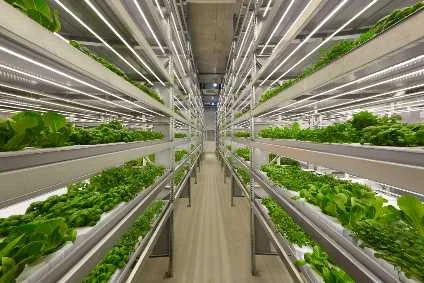
Russia's iFarm on Whether Vertical Farming Could Herald A New Era of Urban Agriculture - Interview
By Joe Baker | 25 March 2019
iFarm eyeing Luxembourg, the Netherlands and Spain
Vertical farming is seeing increasing investment as food growers, suppliers and retailers analyse whether there are benefits of farming closer to where consumers live. Yury Fedorov, an expert behind the iFarm project, one of several start-ups seeking to get ahead in the urban farming stakes, explains why this concept could revolutionise food farming in the future. Joe Baker reports.
In the future, the food we eat could be grown by an AI farmer and plucked from vertically-stacked trays in a high-tech urban greenhouse. This is vertical farming, which is making strides as hydroponic technologies evolve and concerns about arable land proliferate.
The global vertical farming market hit approximately US$2.1bn last year, and, by some projections, is projected to grow by around 25.7% over the next decade. Tech companies are increasingly exploring the potential of 'urban farming' – moving crops from fields to inner-city greenhouses, and from temperamental weather to AI-perfected conditions.
The iFarm project is one such initiative. Founded in 2017 by Russian entrepreneurs Alexander Lystovsky, Maxim Chizhov and Konstantin Ulyanov, the start-up's 30-strong workforce is seeking to revolutionise farming through the provision of modular, automated greenhouse units to urban environments.
Recently, iFarm landed $1m in backing from Gagarin Capital, a Russia-based, venture-capital investor in high-tech start-ups, and is working with a number of restaurants and grocery stores in a bid to grow their business. But why take farming indoors, and what does this actually entail?
According to Yury Fedorov, head of Europe at iFarm, the project sprouted from the founders desire to source their own fresh salad and vegetables where they live. When they found technology lacking, they opted to do it themselves.
"We have been able to build a technological platform to grow salad from vegetables, but also build showrooms to find our first customers, who are really happy to get fresh salad on a constant basis all-year-round," says Fedorov. "We've been able to prove [that] the technology we have developed is working really well and can grow more than 100 different salads, herbs and vegetables."
Aimed at small and medium-sized businesses, iFarm's modular automated greenhouses are able to accommodate all manner of crops, and are designed to fit in a variety of urban spaces – from defunct warehouses to building roofs. Inside these greenhouses, cloud-connected software automatically controls all aspects of the environment – including the temperature, water supply, and lighting, right down to the nutrients mixed into the soil – allowing the company to effectively 'programme the qualities of the plant'.
Using a centralised database, urban farmers are able to download growing recipes designed to maximise the quality of specific crops, based on data collected and analysed by a team of iFarm scientists.
"We collect more than 50 different [data] parameters from every square meter of fertilised soil," says Fedorov. "We have computer vision, which verifies the stages of growth and gives signals on when to harvest and what to do with every crop."
Fedorov says so far the idea has so far appealed to farmers who might be unable to produce the same high-quality vegetable produce for local stores throughout the entire year. However, because recipes can be easily downloaded it could appeal to a new type of urban farmer – one who might be tech-savvy but doesn't know their onions when it comes to growing actual onions.
"In many cases, these are tech entrepreneurs who understand cloud-based technologies and that fresh food is in very high demand, but they don't really see themselves going outside the city," says Fedorov. "They see themselves operating technology with the help of their computer or their mobile phone."
One criticism of vertical farming has been energy demand. A recent article from UK newspaper The Independent noted lettuces grown in vertical farms required 3,500kWh a year for each square metre of growing area, compared to an estimated 250kWh seen in traditionally heated greenhouses.
iFarm's representatives say it has developed agricultural techniques that significantly reduce the electricity, water and fertiliser needed for cultivation compared to conventional methods. One innovation they say is unique to the company's farms is its energy-efficient LED lighting, which has significantly reduced the cost of its farms.
Because iFarm's greenhouses are modular they can be adapted to a variety of sizes and indoor spaces. Closer proximity to food suppliers in cities means pesticides and chemical treatment aren't required – food can be delivered quickly to restaurants and food suppliers. The company has also developed display pods for restaurants that keep food fresh and add a wow factor to the dining room.
"In traditional farming, people would harvest plants when the taste is not formed yet when the qualities of vegetables are not finalised," says Fedorov. "We can act when the [food] is really in the best state to be served and that's what restaurant owners want."
One major area where vertical farming can help restaurants is in trimming food waste. UK-based watchdog WRAP (The Waste and Resources Action Programme) says of the total 3,415,000 tonnes of waste disposed of in the food sector every year, 600,000 tonnes of waste is from pubs, restaurants and hotels.
Fedorov says iFarm had one customer who was forced to consistently waste 50% of their mint supply, after being compelled to buy too much of the ingredient to meet demand.
"Herbs and certain salads are very difficult to preserve at the site," he says. "Just by having contracted us, [the client's] waste was significantly reduced."
Having opened six greenhouses and vertical farms in Russia, iFarm's founders now seek to use the Gagarin investment to help develop technology, expand its construction, engineering and agricultural projects teams, and start construction on a location in Europe for the first time in April.
Fedorov says Luxembourg, the Netherlands and Spain could be potentially ripe avenues to explore. However, one of the biggest challenges in entering the international market is navigating the heavy regulations on the food industry.
"For every market where we enter we need to build our own showroom or our own farm and then prove to local authorities and to local consumers that what we do is really is really worth it," he says.
"We were setting up the company with growth in mind – that's why we developed this modular system for all our vertical farms which allows us to adjust the construction of the farms to basically every size and form of indoor space. It also simplifies and speeds up the construction process for every farm or greenhouse which we build."
The iFarm project is one of a number of fledgling businesses driving vertical farming. US-based Freight Farms makes a crust turning old shipping containers into thriving crop production centres. Another company in the US, Bower Farming, is opening a swathe of new facilities following a $90m investment led by GV (formerly Google Ventures).
The energy requirements of vertical farming may be a caveat that producers will need to provide a strong counter to in the future. However, as projects like iFarm show, the trend is showing no signs of withering any time soon.
This article was originally published on just-food sister site www.foodprocessing-technology.com
Nebullam and LEAH Laboratories Selected Into Y Combinator
Photo courtesy of flickr.
Nebullam and LEAH Laboratories
Selected Into Y Combinator
Two Iowa-based companies, Nebullam and LEAH Laboratories, were selected into Y Combinator’s winter cohort accelerator program.
Their acceptance into the program comes with a seed investment of $150,000 along with mentorship throughout the 90-day program that culminates this week with a demo day in San Francisco.
“One of the biggest takeaways that we’ve had from YC is the fact that the community is just as open when talking about failure as they are with talking about success,” said Clayton Mooney, CEO and co-founder of Nebullam “That openness to sharing what doesn’t or didn’t work is healthy and required for growing a technology startup ecosystem. I believe Ames has the potential to become a powerful technology startup hub over the coming years, but only if the community reaches the point where it wants to optimize for the upside, while not sweating the downside.”
Prior to the winter cohort, Nebullam went through Y Combinator’s Startup School, a 10-week online program that provides mentorship and a startup network.
“Coming into the program, we had been developing this idea for about a year and really needed a ton of flam to light all the gas that we had and Y Combinator really provided that for us,” said Wesley Wierson, co-founder and CEO of LEAH Laboratories.
Out of approximately 12,000 applicants, 205 were selected for the YC winter cohort. This is the first time that two Iowa-based startups have been selected for Y Combinator.
“This was the lowest acceptance rate by YC to date,” said Joel Harris, co-director of Ag Startup Engine. “In spite of that, two Iowa built and based companies, both from the Ag Startup Engine portfolio and with ties to Iowa State University, were selected. Recognition from a leading program like Y Combinator is terrific for Nebullam and LEAH Laboratories, but also an inspiration for other entrepreneurs about the quality of technology businesses being started in the Heartland.”
Both companies will be pitching to investors later today as part of Y Combinator’s Demo Day.
Previous coverage
Leah Laboratories receives seed investment from Ag Startup Engine -Jan. 16, 2019
Middlebit: Nebullam one of six finalists for inaugural IFT Next Food Disruption Challenge -July 20, 2018
Nebullam: Indoor farming -April 17, 2018

Hershey GC Sees Climate Change As Compliance Challenge
By Alison Noon
Law360 (March 14, 2019, 7:21 PM EDT) -- The Hershey Co. is exploring the possibility of moving its cocoa production indoors to save chocolate production from the effects of climate change, the company's general counsel said Thursday, delving into his expectation that global warming will jump from corporate research and risk management to the compliance desk.
The Hershey Co. is exploring indoor farming in light of climate change and the company's top lawyer thinks compliance officers should take note. (Credit: AeroFarms)
Speaking at a corporate ethics conference, Damien Atkins said one of the world's leading chocolate manufacturers is exploring not only the science of indoor cocoa, but whether it could insulate Hershey's supply chain and ease the stress over global warming that will come down the line for his coworkers in compliance.
"I think the geopolitical risk is something you have to manage," Atkins told a ballroom of compliance officers in Manhattan. "With respect to climate change, you see it now in terms of the quality and nature and types of trees and the way that you manage trees, and we're looking at things like indoor farming."
He indicated it's not a far-fetched idea, mentioning that one of the world's largest indoor agriculture facilities was located in nearby New Jersey, where AeroFarms LLC grows vegetables in trays stacked high in climate-controlled warehouses.
"You have to think of ways of how you actually get that product when your core supply can disappear," said Atkins, who worked at Oath Inc. predecessor AOL and Panasonic before Hershey.
But throwing supply chains into disorder will only be the beginning of the disruptive effects of climate change on business, Atkins said. Global warming could sneak up on compliance departments years from now if they let it, which they may — compliance officers interviewed by Law360 at the conference said they did not foresee global warming earning a place in their work. Atkins indicated they have another thing coming.
"Climate change is one of those things that has a slow velocity but high impact, and those are the worst things to plan against, right, because there's no immediate pressure but you know that it's coming," he said on stage at the Ethisphere conference.
He further explained to Law360 after the panel that raising the stakes will increase pressure on employees. As compliance officers know, high pressure invites white collar misconduct.
"As that comes under stress, the dollars to process the systems, the procedures, all kinds of bad things happen," he said.
The prospect of growing cocoa indoors is in research and development, Atkins said. The company currently sources cocoa from family-run farms in Africa and South America that employ 2 million people, according to the company's website. Atkins said the company is wholeheartedly committed to them, recently pledging to invest $500 million over the next decade in West African cocoa communities.
The flip side, Atkins told the conference, is the occasional report that Hershey's family-run farms are employing children. Nothing is without risk, especially in the age of social media.
"You just have to, as my former CEO [at Panasonic] would say, stay on strategy," Atkins said on stage. "You have to keep doing it."
Hershey and other major chocolate manufacturers recently beat several lawsuits that sought to put a disclaimer on chocolate products saying it may have been made using child or slave labor. A Massachusetts federal judge and the Ninth Circuit dismissed those claims.
Increasingly, Atkins said, Hershey's supply chain is thrown off course due to political unrest.
"We have areas in Mexico now where we ship trucks of chocolate and raw material and maybe once or twice a month these trucks get hijacked," Atkins said. "I mean, it's a common occurrence. And how do you plan around areas where you can't go to the police because the police were probably into it?"
He said the hijacking has become "more pervasive" absent government intervention.
"That happens to us a lot."
--Editing by Michael Watanabe.

Food Security On Rise In Gulf
BY RICHIE SANTOSDIAZ
19th March 2019, London
The Agra Middle East exhibition in Dubai demonstrated the growth of vertical farming in the region, as well as other environmentally smart production methods
According to the organisers of the Agra Middle East exhibition in Dubai, which took place at the start of March, vertical farming is gaining in importance across the Gulf region, along with other Controlled Environment Agriculture (CEA) methods, and is generating interest and a rise in investment from across the globe.
The vertical farming market in the Middle East and Africa is expected to reach US$1.21bn by 2021 at a combined annual growth rate of 26.4 percent from only US$0.38bn in 2016, according to Orbis Research.
One of the GCC countries leading this is the UAE, having upcoming projects facilitated by the government, in addition to private players, helping increase food security.
The UAE Ministry of Climate Change and Environment, for instance, has allocated space for 12 vertical farms to be built by Shalimar Biotech Industries. There is also the world’s largest vertical farm for Emirates Airlines by Crop One Holdings.
As 90 per cent of food in the UAE is imported, and given territorial problems over water scarcity and available arable land, vertical farming is pivotal to ensuring food security within the region.
Food security equally forms part of the national strategy of Saudi Arabia, as well as wider economic development and diversification, as witnessed by its Saudi Vision 2030.
At a recent preparatory workshop for next year’s G20 meeting, which Saudi Arabia will be hosting, Abdulrahman bin Abdulmohsen Al-Fadhli, Minister of Environment, Water and Agriculture, said that digital technologies and artificial intelligence would have a growing role in the Kingdom’s efforts to maintain food security. Arab and foreign institutions were looking for modern and innovative technologies and solutions, he said, with the aim of discovering alternative food resources.
The agriculture sector faces major challenges, from price increases of agricultural products to climate change. A big part of the G20 discussions under the Kingdom’s presidency in 2020 includes topics such as the development of natural resources to reduce degradation, sustainable food security and water scarcity, to name a few.
Agra Middle East, which took place at Dubai’s World Trade Centre, brought some of the leading innovators and urban farming experts to the UAE to provide the industry with valuable information and knowledge.
Exhibition director Samantha Bleasby commented: “With the aim of increasing food security in the Middle East and attaining the UN Sustainable Development Goal (SDG) of zero hunger, we are excited to present the industry with new technologies from around the globe and free-to-attend learning and networking opportunities that will increase productivity in the region with sustainable use of water and land resources.”
Singapore Airlines Steps Up In-Flight Sustainability Initiatives
Özgür Töre
21 March 2019
Singapore Airlines is contributing more to greener skies by further reducing food wastage on board, cutting back on the use of plastics for in-flight items and increasing the use of sustainable ingredients in in-flight meals.
“We are proud to have embarked on a new era of greater sustainability, with an enhanced focus on environmentally responsible practices on board that will significantly reduce our carbon footprint and improve the sustainable travel experience of our customers,” said SIA’s Senior Vice President Customer Experience, Mr Yeoh Phee Teik, at SIA’s World Gourmet Forum today.
Cutting down on Food Waste
SIA currently employs customer surveys, data analytics and staff feedback, and works with its caterers to reduce food wastage after flights.
The Airline plans to automate data collection and further leverage on technologies such as artificial intelligence and machine learning to better predict customers’ consumption patterns and further reduce cabin food waste.
Through an improved monitoring system of customers’ consumption patterns and data analytics, SIA will be able to better adjust the quantities of certain food items uplifted to minimise wastage without compromising on the customer experience.
Reducing use of plastics in-flight through alternative sustainable materials
SIA is also committed to reducing the use of single-use plastics with alternative sustainable materials for more in-flight items.
The Airline aims to become entirely plastic straw-free by September 2019. Since September 2018, SIA has removed all plastic straws on board, apart from children’s straws. The latter will be substituted with environmentally friendly paper straws. These changes will reduce about 820,000 plastic straws each year. The Airline also has plans to replace its current plastic swizzle sticks with wood-based ones by September 2019.
From May 2019, SIA will also be replacing polybags from children’s toys with recyclable paper packaging.
Several of the Airline’s paper products, such as menu cards, tissue paper and toilet rolls, are made with FSC-certified paper, which have been sourced in an environmentally and socially responsible manner.
Other upcoming green initiatives include the printing of children’s colouring books and activity kits using eco-friendly soy-based ink.
Sustainable Food Sourcing
Expanding on the Airline’s “From Farm to Plane” concept introduced in 2017, which promotes environmental sustainability and supports local farming communities, SIA will be embarking on an exciting new collaboration with AeroFarms, the world’s largest indoor vertical farm of its kind based in Newark, United States.
Produce at AeroFarms is grown indoors without soil, pesticides or sunlight, using AeroFarms’ award-winning aeroponic technology.
“As vertical farms are not weather dependent but operate under a controlled environment, crops can be grown year-round, thereby increasing the amount of sustainable produce to support more of the Airline’s needs,” Mr Yeoh said.
Aerofarms will provide a customised blend of fresh produce for SIA’s Newark to Singapore flights from September 2019.
“Imagine boarding a plane and enjoying a salad harvested only a few hours before takeoff – literally the world’s freshest airline food,” said SIA’s Food & Beverage Director, Antony McNeil.
In Singapore, SIA through its catering partner SATS currently sources certain types of produce from two local farms for flights departing Singapore. It plans to work with SATS to identify local vertical farms to work with.
Other ingredients obtained from sustainable sources include selected locally farmed fish from fisheries that are certified by Best Aquaculture Practices (BAP).