

Welcome to iGrow News, Your Source for the World of Indoor Vertical Farming

March 5th thru 7th, 2019 - Dubai World Trade Centre, UAE Learn About Vertical Farming, Greenhouses, Hydroponics And More
March 5th thru 7th, 2019
As an important aspect to increasing food security through the sustainable use of water and land, CEA includes Vertical Farming, Hydroponics, Greenhouses and more.
The CEA Conference will bring together leaders from across the world to discuss best practices, new innovations and increasing food security through entrepreneurship.
Register to visit
Controlled Environment Agriculture Conference
5th March 2019
Ensuring year-round local produce through controlled indoor farming
Damion Schwarzkachel, Consulting Engineer and Architect, Certhon
Food Security Through Entrepreneurship: Pathways towards Agriculture Independence in the GCC
Henry Gordon-Smith, Founder and Managing Director, Agritecture
Introducing the GravityFlow technology: A automated controlled environment plant production system
Per Aage Lysaa, CEO, Intravision Group AS
Digital Transformation challenges in Middle East's Agricultural & Food industry
Sage
Register to visit
AgraME Conference certified by:
Contact us to see how we can help you grow your business in the Middle East & Africa.
+971 4 336 5161 | info@agramiddleeast.com | www.agramiddleeast.com

Greg Kelly And Jake Isham Farm Greens In A Former Granite Shed
Greg Kelly (left) and Jacob Isham harvesting greens beneath colored LED lights at Ceres Greens | JEB WALLACE-BRODEUR
Greg Kelly and Jake Isham have come a long way together since they met in 2016. At the time, Kelly, 61, was trying to grow lettuce in the basement of a mutual friend of his and Isham's — and it was not going well.
"I was using LED lights, but I didn't realize they wouldn't grow at 50 degrees," Kelly admitted. "I didn't even grow house plants. I knew nothing."
Their mutual friend soon introduced the pair because "neither of us would shut up about vertical farming," Isham, 28, explained recently in the Barre headquarters of their 2-year-old company, Ceres Greens.
While the business partners have moved away from literal "vertical" farming, in which plants sprout out of tall planter walls often called "living walls," their indoor farm still has a vertical, space-saving component and follows the same principles of hydroponic growing, or "controlled-environment agriculture," as they call it.
By the end of this year, their converted 12,500-square-foot granite shed will hold about 100,000 leafy green plants on shelves layered eight high. The top layer will approach the 26-foot ceiling of the cement-floored industrial space, which evokes quite a different feeling than the average Vermont farm.
At Ceres Greens on an icy early February day, production manager Holly St. Jean was placing seeds from Wolcott's High Mowing Organic Seeds into compostable coconut-fiber plugs nestled into plastic trays. A warm, brightly lit germination room coaxes them into sprouting before they head out to the main floor, where orange metal shelves are filled with vibrant green and red lettuces and aromatic basil.
Electronic sensors closely monitor ideal temperature and humidity. Plants are sustained by LED lights and mechanically pumped water and nutrients. Their roots will never search the soil for nourishment and moisture. Their leaves will not be exposed to sunshine or dew; nor will they face hungry pests, flooding or frost.
"We're controlling for a perfect growing environment," Kelly explained.
Just-harvested romaine lettuce at Ceres Greens | JEB WALLACE-BRODEUR
Ceres Greens does not use pesticides or herbicides, and the system sterilizes and recirculates any water not taken up by the plants. Kelly and Isham estimate they're using 85 percent less water than soil-based farms. Electricity is a significant input, but they're working toward being 100 percent solar powered.
To some, this approach to agriculture is yet another sign of humans trying to distance themselves from the natural world and the impacts we have had on it. Others, like Kelly and Isham, believe it's a valuable, environmentally responsible way to help feed Earth's booming population in the face of depleted natural resources and increasingly extreme and unpredictable weather patterns.
Close to home, they want to provide fresh, locally grown greens to Vermonters year-round. "Consumers obviously have their choice. We're just providing a new option," Kelly said. "As humans, we've already divorced ourselves from nature."
Ceres Greens received a noteworthy vote of confidence in December when it was named one of two winners of Accel-VT Ag & Food Tech 2018. The three-month, Vermont-based business accelerator program is open to early-stage ventures throughout North America that address climate change in various ways.
Managed by the Vermont Sustainable Jobs Fund, Accel-VT's annual entrepreneurial boot camp supports startup or seed-stage enterprises in a broadly defined sector each year. Participants are selected through a competitive process, then all receive business-development support, mentorship and potential access to capital. The eight companies in the 2018 boot camp represented six states and a range of technology-based solutions to issues within the agriculture and food system.
At the end of the program, participants vote on two winning ventures, which each receive $25,000. In addition to Ceres Greens, the other 2018 winner was AgHelp, a Michigan-based company that has developed a mobile platform connecting agricultural workers, employers and support agencies. The 2019 Accel-VT program will focus on energy.
While Kelly and Isham were gratified by their win, simply participating in the program helped them build their network and validate their fledgling operation for potential investors. "It helped us clarify our business strategy," Kelly said.
The prize dollars made an appreciated but relatively small contribution to the $1 million budgeted for full build-out. Ceres Greens has raised about a third of that goal so far from a variety of sources, including crowdfunding $69,000 via StartEngine; personal funds from both cofounders; a private placement offering; and loans from Yankee Farm Credit, Community Capital of Vermont and the Central Vermont Economic Development Corporation.
Ceres Greens is part of Yankee Farm Credit's FarmStart program for new agricultural enterprises that lack the track record, capital or collateral required for most business loans, explained Yankee senior vice president Dave Lane. The maximum loan is $75,000 over a five-year term, and participants are assigned a business adviser. "Our goal is to get them ready for a more traditional lending program," Lane said.
Katy Coombs, who has worked closely with Kelly and Isham for the last year as their FarmStart adviser, had previously researched controlled-environment agriculture for another FarmStart loan in New Hampshire. "It's definitely a different way of growing," she acknowledged. "I think we're going to see a lot more of it going forward. It's still very local, and it's grown in a clean way using methods that are socially friendly."
Coombs was initially impressed by Kelly and Isham's thorough business plan and their complementary skill sets. "They don't come at it just from the idealistic standpoint," she said. "They are also driven by the numbers."
The cofounders' different backgrounds and perspectives also contributed to the way each landed on this type of agriculture as both a mission and a business opportunity.
From left: Jacob Isham, Holly St. Jean and Greg Kelly at Ceres Greens
JEB WALLACE-BRODEUR
Kelly is originally from Guam but moved to Vermont 24 years ago from San Francisco. "It was as far from Silicon Valley as I could get," he said with a wry smile. He did continue a career in technology, building a regional fiber-optic network company, TelJet, which he sold in 2013.
After the sale, Kelly started looking into various sectors for his next move. "Food is a business that's never going to go out of fashion. Everybody has to eat," he said, "and I remembered getting fresh, local produce year-round in California."
He dug into the environmental aspects of food production. "I looked at water, the global water crisis. I looked at air quality," Kelly said. "We have too many on the planet to rely on what a variable harvest produces," he concluded. "How do we have a predictable harvest and not be harming our environment? We need to take a technological approach."
Isham, an eighth-generation Vermonter, grew up in Winooski and graduated from Norwich University with a degree in political science. He was commissioned as an infantry officer in 2012 but was medically retired four years later due to a serious health condition.
While working in finance, Isham started an online master's degree in diplomacy and international terrorism. "I was studying how civil unrest and resource scarcities go together," he explained. "Water and food shortages lead to economic instability. Civil unrest and conflict often follow."
Isham looked at projected global population growth and determined, "we need to develop ways to grow more food everywhere. This is a kind of agriculture you can do almost anywhere."
Shortly after the two were introduced, they expanded Kelly's growing experiments into a small warehouse in Colchester. "We killed a lot of plants," Isham said, laughing. Their first big strides came after he participated in a three-month Veterans to Farmers program in Denver on controlled-environment agriculture.
The business partners balance each other: Kelly has focused on the technology, Isham on the business and marketing side. The more seasoned Kelly is happy to let his younger colleague take the lead. "I didn't want to be the boss anymore," he said. "Jake has a lot of energy and drive. He wanted to be the boss."
Isham, in turn, appreciates Kelly's depth of experience. "I needed somebody to show me the ropes," he said. "I needed someone to steer me in the right direction, calm me down sometimes."
Since the Barre space was renovated last spring, Kelly has had his hands full refining and scaling up their proprietary growing method. In the relatively new field, there are few turnkey systems or specialty suppliers. He is often repurposing parts from other industries, such as marine and recreational vehicle water pumps.
It's no small feat to reproduce what Mother Nature can do so well at her best but with a better track record for reliability. "I joke that I understand why religion is popular in farming communities," Kelly said. "We get to play God," his business partner interjected with a laugh.
Ceres Greens has so far sold only limited quantities of its harvest to a few local restaurants but is poised to quadruple production by the end of April. Its business plan is built on selling 80 percent bulk to restaurants and institutions and 20 percent to independent retail stores such as co-ops. Kelly and Isham expect their price point to fall between conventional and organic and will hang their hat on freshness and low environmental impact.
"Some small part of this is educating people," Kelly acknowledged.
In Vermont, they anticipate hiring eight to 10 employees, among whom Isham hopes to include fellow veterans. Longer term, they envision 10 Ceres Greens facilities across the eastern U.S. employing a total of 100.
Kelly and Isham believe that Ceres Greens will be part of a wave and that there's room for everyone in the burgeoning sector. "We're not trying to corner the market," Kelly said.
Isham noted that the 2018 U.S. Farm Bill includes several programs supportive of newer forms of agriculture, including what it calls "high-tech vertical technology farms."
More farmers growing more greens in a variety of ways makes sense to these entrepreneurs. "We should all be eating more greens," said Isham.
The original print version of this article was headlined "Salad Days"
Hamilton Ohio Facility To Be First of Its Kind In North America
By Eric Schwartzberg - Dayton Daily News (TNS)
HAMILTON — A private investment will enable an indoor farming company to complete its previously announced Hamilton facility, which it says will be the first fully automated indoor farm in North America.
The company 80 Acres Farms received “significant investment” from San Francisco-based private equity firm Virgo Investment Group, which invests in companies transforming and disrupting high-potential industries.
Terms of the financing were not disclosed.
Founded in Cincinnati in 2015 by veteran food industry executives Mike Zelkind and Tisha Livingston, 80 Acres Farms is supported by a board of directors representing executive and leadership experience at leading food, healthcare, and other companies.
80 Acres Farms provides customers with a variety of locally grown, just-picked leafy greens, microgreens and vine crops, including the world’s only tomatoes and cucumbers grown completely indoors using solely LED lighting.
The company has developed its own artificial intelligence-powered growing system, sophisticated data monitoring, and automation technologies to deliver high quality and nutritious products at an affordable price.
By locating its indoor farms close to customers, 80 Acres Farms is able to eliminate the costs, time and environmental impact of cross-country transportation, providing customers with a fresher, longer lasting product while drastically reducing food waste, company officials said.
80 Acres distributes to major national grocers, local retailers, restaurants, and food service companies from its facilities in Ohio, Arkansas, North Carolina and Alabama.
“Virgo Investment Group joins our existing notable and experienced food industry investors in supporting the Company to rapidly commercialize the indoor vertical farming technology we have developed over the past three years,” said Mike Zelkind, co-founder and chief executive officer of 80 Acres Farms. “We are optimizing every aspect of our production processes and driving down costs, which is crucial to scaling an indoor farming business like ours.”
The first phase of the Hamilton project under construction at 7512 Hamilton Enterprise Drive is expected to be operational early this year. It will be automated from seeding to growing to harvesting to produce specialty greens, including leafy greens, culinary herbs and kale.
The Hamilton facility will feature handling robotics, artificial intelligence, data analytics, and around-the-clock monitoring sensors and control systems to optimize every aspect of growing produce indoors.
It will allow 80 Acres Farms to start to service what it said is a “substantial and growing demand” for fresh, locally grown produce year-round from both retailers and restaurants.
“Over the past three years we have provided our customers with fresh, flavorful and nutritious produce grown locally in our facilities with no pesticides and highly efficient usage of water and nutrients,” Zelkind said. “We are rapidly increasing yields for our produce, while advancing each generation of our grow zone designs to lower capital costs, production costs and reduce the use of natural resources.
80 Acres Farms’ Cincinnati location sells to Jungle Jim’s International Market in Fairfield and Eastgate, Dorothy Lane Market’s three Dayton area locations, Clifton Market in Cincinnati and Whole Foods Market locations in Cincinnati, Deerfield Twp. and Dayton. It also distributes to several local restaurants.
The company plans three additional phases at the Hamilton site. When completed, the project will comprise over 150,000 square feet of fully-automated indoor farming. The full-phase expansion will allow 80 Acres Farms to provide more product to serve its existing customers and new ones with just-picked, year-round produce.
Produce grown at the Hamilton site will supply Whole Foods Markets, Dorothy Lane Markets, Jungle Jim’s, U.S. Foods, and other retailers and food service distributors.
Zelkind said 80 Acres Farms’ facilities represent “the realization of the next generation of farming.”
“Our vision is to prove that indoor farming can be fully-automated, commercially scalable, higher-yielding, and profitable,” he said.
Eli Aheto, partner of Virgo Investment Group, said the firm is excited to partner with 80 acres to bring freshly picked produce to local markets year round.
“80 Acres Farms has created a unique and automated growing process and has built great relationships with its retail customers,” Aheto said. “We want to help accelerate the company’s growth in this multi-billion-dollar market.
The 80 Acres investment is an expression of Virgo’s long standing focus on investing in energy efficiency opportunities driven by reduced equipment costs, he said. Virgo has completed investments in utility-scale wind, community solar, electric vehicle charging and now an LED lighting driven business
Would You Pay More For Pesticide-Free Food Grown Indoors Using LED Lighting?
It’s such a hot idea that IKEA and world-famous chef David Chang have invested in it but will Australians embrace this new food trend?
news.com.au FEBRUARY 20, 2019
Inside the world's largest indoor vertical farm
It’s pesticide-free, tastes great and can be grown using 95 per cent less water than conventional farming but will Australians be willing to pay more for food grown indoors?
Homewares giant IKEA and world-renowned Momofuku chef David Chang are betting they will be; they are among a number of investors putting money behind indoor vertical farming company AeroFarms.
The company has built the world’s largest vertical farm — in the US — and is now looking to Australia for possible expansion.
AeroFarms chief executive officer David Rosenberg is in Australia this week for the evokeAG conference, an event held by AgriFutures Australia in Melbourne to highlight new technologies, products and practices in the agriculture sector.
Mr Rosenberg told news.com.au the technology would enable places like Perth, where it’s difficult to buy locally grown food, to cultivate vegetables at scale.
“We can grow plants with a lot less water and arable land,” he said.
AeroFarms’ technology allows plants to be grown indoors without soil and using 95 per cent less water.
Its farm just outside New York City in Newark, New Jersey, has a grow room that is 30,000 square metres (about seven acres) and where salad greens are grown in stacks 12 layers high.
Through optimising temperature, water and nutrient delivery, Mr Rosenberg said they have been able to grow a plant in 14 days instead of the usual 30 days.
They can also turn over 25 crops a year because they are not restricted to growing in seasonal conditions, unlike conventional farmers who can generally only turn over their crops three times a year.
“What we can grow in an acre, they (conventional farmers) would need 130 acres,” Mr Rosenberg said.
The Newark farm covers an area the size of about four soccer fields so in order to produce a similar amount of crops, a conventional farm would need about 910 acres, or about 500 soccer fields.
Leafy greens being grown inside an indoor vertical farm in the US run by AeroFarms. Picture: Casey Higgins/AeroFarms.Source:Supplied
The future of farming? Picture: Casey Higgins/AeroFarms.Source:Supplied
Instead of being exposed to the sun, LED lighting is used to help the plants grow. Fertilisers and soil are replaced by hydroponic and aeroponic techniques that allow plants to get nutrients by sitting their roots in water, or misting them with water rich in elements like zinc. Other essentials are also provided: carbon dioxide gas is dispensed from canisters.
“We give them the right spectrum of light so they are getting the same things,” Mr Rosenberg said. “We break down what the plants want and we give it to them.”
This focus on data analytics to give plants exactly the right conditions to grow also means the taste of the food can be tweaked.
While they are not organic, AeroFarms’ greens are pesticide-free and can compete on taste and texture.
The technology has generated a huge amount of interest with AeroFarms raising $40 million in funding last year from companies like IKEA as well as individuals like David Chang and even former CIA director and retired US General David Petraeus.
Korean-American chef David Chang has invested in AeroFarms.Source:News Limited
Mr Rosenberg said AeroFarms managed to perfect the process for leafy greens about a year ago but they were still developing the model for other vegetables.
Another big challenge was convincing people to pay a premium for these products as the process was very energy intensive and capital expenses were also higher.
“In the US we need a 20 per cent premium to make the economics work,” Mr Rosenberg said.
In Australia, he believes the costs would be similar although this depends on how big the facilities are. Large operations make it more feasible to use automation to run the farms 24 hours a day and make them more economically viable.
However, not everyone is convinced that using huge amounts of energy to create artificial sunlight and control the climate is the best idea.
The indoor vertical farming process. Picture: AeroFarms.Source:Supplied
Each layer has its own LED lighting. Picture: Casey Higgins/AeroFarms.Source:Supplied
“There are questions about the sustainability of growing crops using electricity,” CERES Fair Food program general manager Chris Ennis told news.com.au.
Experts have pointed out that lettuces grown in traditionally heated greenhouses in the UK need an estimated 250 kilowatts per hour of energy a year for every square metre of growing area. A vertical farm needs a staggering 3500kW/h a year.
Mr Ennis said it may not make sense for farms to use huge amounts of coal-fired power to grow vegetables.
“We are asking ourselves, does it add up for the amount of lettuce that you get? We are really struggling with that.”
AeroFarms’ indoor farm is very energy intensive. Picture: Casey Higgins/AeroFarms.Source:Supplied
CERES is a not-for-profit community park in Melbourne that has been selling produce grown from its indoor vertical farm for about three years. It has been stunningly successful.
Mr Ennis said the indoor garden only took up about 100 square metres or less, but generated as much income as the rest of their 10,000sq m market garden.
“It’s incredibly productive,” he said. “We grow sunflower sprouts, pea sprouts and radish sprouts and they’re all certified organic. We supply the CERES shop and health food shops all over Melbourne,” Mr Ennis said
However, CERES’s process is different to AeroFarms’ as it still uses soil and sunlight to grow its plants.
Artificial lights are used in an old shipping container where seeds are germinated but afterwards the plants are moved to a poly tunnel that lets light in. Even in the shipping container there are only lights on the roof, rather than above every layer of plants.
Mr Ennis said the beauty of indoor farms was that you could control every aspect of the growing conditions and it used less water but there were still questions around the energy efficiency of growing that way.
“Does it make sense when we’ve got the sun?”, he said.
An indoor vertical garden located inside a poly tunnel at CERES in Melbourne.Source:Supplied
Continue the conversation @charischang2 | charis.chang@news.com.au

Russia-Based iFarm Secures $1 million To Take Its Urban Farming Solutions To The Next Level
By Natalie Novick, February 12th, 2019.
Moscow-based iFarm Project has raised a $1 million round led by Gagarin Capital in support of their urban farming technologies. The iFarm Project’s fully automated vertical farms and year-round greenhouses enable fresh produce to be grown directly in the city, close to consumers.
iFarm distinguishes itself from other offerings on the market for both their hardware and software that facilitates the cultivation of different crops in entirely closed ecosystems. Rather than integrating existing products, iFarm has developed their own multi-layered horizontal shelf system alongside a digital database of parameters to enable a fully automated microclimate.
These “growing recipes” can be downloaded from the company’s central database, enabling anyone to grow crops without a comprehensive knowledge of agriculture. The iFarm system currently offers cultivation solutions for many different types of produce, among them basil, arugula, spinach, cilantro and strawberries. Alongside their current offerings, the company has plans to apply its technology to the floriculture industry in the near future.
iFarm’s vertical farming system can be scaled to build modular farms of nearly any size. A cloud-based management system optimizes conditions for each farm, letting crops grow successfully in any type of available space, including basements, building roofs or spare rooms.
In addition, their internal closed contour technology has been primarily designed to ensure a sterile growing environment. In fact, the company claims no pesticides are necessary inside their farm modules, and vegetables grown inside their farms do not need to be washed before consumption.
“The investments from this round will be used to develop technology and expand our team, including our engineering, construction and agro projects teams, as well as to pilot the technology on the European market,” explained Alexander Lyskovsky, iFarm founder and CEO. Lyskovsky is one of Russia’s most well-known serial entrepreneurs. He previously co-founded Alawar, one of the country’s largest game development companies, and Welltory, an app used worldwide that allows users to monitor stress levels.
The iFarm Project was established in 2017. Today, iFarm has a team of over 30 people and has built five vertical farms and urban greenhouses in Moscow and Novosibirsk. In 2019, the company plans to open an EU showroom and enter the international market.

Virtual Fences, Robot Workers, Stacked Crops: Farming In 2040
It is 2040 and Britain’s green and pleasant countryside is populated by robots. We have vertical farms of leafy salads, fruit and vegetables, and livestock is protected by virtual fencing
Population growth and climate change mean we need hi-tech to boost crops, says a new report
Jamie Doward
17 Feb 2019
An AI-powered platform called Dick that can spray chemicals and fertilisers exactly where they are needed. Photograph: NFU
It is 2040 and Britain’s green and pleasant countryside is populated by robots. We have vertical farms of leafy salads, fruit and vegetables, and livestock is protected by virtual fencing. Changing diets have seen a decline in meat consumption while new biotech production techniques not only help preserve crops but also make them more nutritious.
This is the picture painted in a report from the National Farmers Union which attempts to sketch out what British food and farming will look like in 20 years’ time.
An AI-powered platform called Dick that can spray chemicals and fertilisers exactly where they are needed. Photograph: NFU
“The Future of Food 2040 report is a catalyst to encourage us all to start the debate about our food and our future so we can plan ahead,” said Andrea Graham, NFU’s head of policy services and author of the report, who interviewed 50 experts across Britain’s food chain to gauge their views. “It is also a reminder for government, at a critical time in British history, to make domestic food production a strategic priority in all policy making.”
Andrea Graham, the report’s author. Photograph: Toby Lea
While some of the predictions may seem a long way off, others are already in their infancy. “Even now, there are technologies being developed that can care for crops on a plant-by-plant basis or control the grazing of cattle without physical fences, and by 2040 this technology will be commonplace in farming,” Graham said.
The British farming sector will need to be more efficient if it is to meet a key NFU goal of producing net zero greenhouse gas emissions by 2040. “Over the next 20 years we will face potentially seismic changes in all aspects of society,” Graham added. “An increase in the global population and the need to mitigate climate change will provide opportunities for British food and farming to increase productivity and reduce its impact on the environment.”
The introduction of vertical stacking and recent advances in LED technology will expand the range of crops that can be grown using hydroponics, aquaponics and other controlled environment systems. Worldwide predictions suggest that the vertical farming industry will grow to be worth billions of pounds over the next few years. Leafy salads, and some vegetables and fruits will be widely grown using the technology. However, its high energy consumption will need to have been overcome, and certain crops will remain difficult to grow, the report acknowledges.
Another key trend will be 3D-printed food, which will produce “intricate sculptures out of everyday foodstuffs that will look good and will also be used to improve the convenience and the nutritional value of meals”. This will enable more food to be produced on demand, reducing wastage.
A robotic strawberry picker, designed by the University of Essex. Photograph: NFU
With the UK on course to be the most obese nation in Europe by 2030, a greater focus on healthy food will emerge. The popularity of flexitarian diets, which are predominantly vegetarian with only occasional meat and fish consumption, is likely to continue to increase. Already 41% of meat-eaters currently classify themselves as flexitarian, and the percentage of meat-free evening meals is on the rise in Britain, according to research from Kantar Worldpanel.
In-vitro meat, cultivated from animal cells rather than from slaughtered animals, and insect protein “may well grow in popularity depending on advances in making these protein sources more palatable, and the ability for them to be produced cost-effectively at scale”, the report says.
On farms, technology will play an increasingly pivotal role. Nano-sensors will be able to collect an array of information, such as soil data and moisture levels, reducing the need to perform daily routine jobs such as checking fuel levels and temperatures.
The use of unmanned aerial vehicles (UAVs), or drones, for sensing and mapping will become widespread, while robots will perform labour-intensive tasks such as fruit picking, milking, livestock feeding and even slaughter.
A growing premium for antibiotic-free meat will see the use of biotechnology in food production become ubiquitous. New breeding technologies, such as genome editing to produce plants and animals with enhanced immune systems and disease resistance, will also become commonplace.
“There’s some great technology out there,” Graham said. “The problem is that much of it is still just prototypes, and small-scale. “The challenge is: can we scale up? How do we go from a few scientists working with just one farmer to a much wider uptake?”
Why Vertical Farming Won’t Grow Without More Data
January 3, 2019
Image courtesy of Princeton University
Vertical farming got a lot of attention at the very end of 2018, from Bowery’s $90 million funding round to news of major corporations starting their own farms.
But amid all those numbers and names, one vital piece of information was (and is) missing: We don’t actually know how well the vertical farming market as a whole is doing — if it’s on track to reach its projected $13 billion marketshare by 2024, and if the concept is even as promising a food source as the headlines would have you believe.
That’s where universities come in to play — Princeton University, to be exact. The Princeton Vertical Farming Project (PVFP) researches what the most optimal growing conditions are for indoor farming and how to produce the best crop yield while using the fewest amount of resources (e.g., water, electricity). Led by Paul P.G. Gauthier, an associate research scholar in plant physiology and environmental plant metabolism, PVFP also wants to provide a model for other initiatives and companies by releasing data on their experiments about what works in vertical farming, and what doesn’t.
“I just wanted to study and provide data,” Gauthier said in a phone interview. “Yes, we’re putting [farms] indoors. We never talk about where the waste water is going, how we get the water. Is it really worth it?”
If you’re a startup operating under the pressure of turning a profit, that’s a scary question. However, Gauthier and his PVFP team are free of that burden, so they can afford to ask questions and conduct more experiments: whether that’s trying to grow wheat or questioning the very value of, say, hydroponics, the current darling of the vertical farming startup scene. “It seems that hydroponic would be more efficient, but that’s never really been proven that that’s true,” says Gauthier. The industry as a whole tends to claim things that aren’t, he says, necessarily backed up by data.
The answer, as he sees it, is open-source vertical farming. That is, turning current data about vertical farming into a framework other projects and startups can use to guide their own efforts in the space. Gauthier would like to see PVFP provide an open-source model for vertical farming so the industry can start to answer some of those tough questions and gain a better understanding of the future.
Tied to that ideal is also the need for data to tell us about the not-so-successful stories. For every AeroFarms out there, there are others who go under for various reasons: operational costs, failure to break even, etc. We know very little, for example, about why Chicago-based startup FarmedHere shuttered in 2017. But the answer could help other vertical farming companies operate more successfully.
Gauthier agrees: “A lot of the small companies have something to tell, and we should hear their story.”
He’s quick to point out, though, that even with more robust data to learn from, vertical farming shouldn’t be treated as a savior come to end world hunger. “There’s really a lot of possibility and a lot of strategy, but it’s important to put everything into a context,” he says. Right now, leafy greens and cannabis are the most successful crops grown in vertical farms; neither make for a meal by themselves, particularly when you look at them in the context of food-insecure populations who need higher-calorie food as fuel.
That said, Gauthier does believe there’s a place in our agricultural future for vertical farming. “It will save us space,” he explains. “And eventually in the future, some of the space we’re using for [traditional] agriculture we can restore to forestry and improve biodiversity.” And initiatives like PVFP can also help train a new generation of labor to understand the science and process behind caring for plants, especially in this indoor context.
Right now, PVFP is working towards realizing that open-source model mentioned above, though no data is currently available publicly as of yet. Currently, the project fuels student theses at Princeton, and the greens produced by their experiments are making their way around campus eating establishments, most notably at the Terrance F. Club, one of Princeton’s dining clubs. PVFP would like to eventually supply all of the school’s dining outposts with vertically farmed greens.
There remains a lot of debate around the merits of vertical farming. I could write a 95-page opus on the complexities of the space, and how it’s neither a worrying distraction nor the robot-manned future of indoor agriculture, and instead lies somewhere in between those two extremes. But I don’t have to: research initiatives like PVFP — not to mention a growing number of others, including University of Arizona and Cornell University — are already delving deep into those complexities as they harness data that gets to the heart of vertical farming’s real value.
Newsletter: The Road to CES and Plant-Based Meat Mania January 4, 2019In "Around The Web"
Future Farming Hub Is Creating a One-Stop-Shop Vertical Farming System for 'Anyone' January 15, 2019In "Ag Tech"
How Cannabis Farmers Helped Create the Indoor Farming Industry November 28, 2017In "Ag Tech"
Jennifer (Jenn) is a writer, editor, and ghostwriter based in NYC. At The Spoon she covers agtech, sustainable food issues, and restaurant tech. She is obsessed with IKEA.
VIDEO: The Future of Farming May Take Place Indoors
Vertical farms transform conventional agriculture with biotechnology, data science, and engineering. Here’s why the future of farming may be indoors.

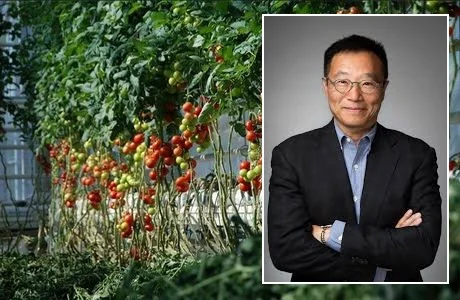
“Access To Equity Capital is a Competitive Advantage”
Equilibrium Capital on Revol Greens & Houwelings investments
There’s a new kid on the block investing in the greenhouse industry. Early this year, Revol Greens announced a facility equity partnership with Equilibrium Capital - and just two weeks later Houweling’s Group was connected to the same investment company. Then there's a third investment, in a yet to-be-named hydroponic berry producer. Time for a chat with David Chen, CEO with the firm. “We definitely look for more opportunities to expand in the greenhouse industry.”
'Strategic advantage'
"Something that's hard to understand for a lot of farmers is that when an industry starts to accelerate, the access to several forms of capital, especially equity capital, becomes a strategic advantage. Most growers and operators have been used to access to bank debt, and have interpreted that as all they needed. What we see is that the growth has accelerated in the US, following a growing market demand. The expansion is no longer five hectares, ten hectares, the expansion is now twenty, thirty hectares, maybe fifty hectares. In this accelerating industry, growers are discovering that access to all forms of equity capital is a competitive advantage,” David Chen with Equilibrium Capital explains when asked about the growing role of investors and foreign capital in horticulture.
"I think the first wave were a number of large tomato operators that took on some outside investors”, he continues. “But I think the real start of this was when the leader in the greenhouse tomato market started to expand and accelerate the amount of acreage that they partnered with and owned in their corporation. And then when they took on some private equity, I think that that signalled the next chapter of this industry.”
In January Revol Greens, a Minnesota greenhouse farm, announced a facility equity partnership with Equilibrium Capital to drive expansion in 2019.
Landlord
And now Equilibrium Capital has taken its first steps in this business as well. The company has an extensive portfolio in wastewater, energy facilities and permanent crops, and has recently expanded into the horticultural industry. “Investing in agricultural infrastructure”, he calls their strategy, explaining that the company has no ambition to be involved in the day-to-day running of the companies they invest in. Rather than participating in the company, they extend the greenhouse operator’s balance sheet.
To make it concrete: Equilibrium is not investing in greenhouse operating companies, but is buying greenhouses and building out future greenhouses. By now, they've invested over $100 million in three large-scale greenhouse operations in California, Utah, and Minnesota and they plan to commit $2 billion to indoor food production over the next five years.
“Our objective is to acquire or build a set of greenhouses and hold onto them for a long period of time. To growers, we operate like a landlord. We give the grower, the operator of the farm, more options to accelerate and manage their growth.”
For example, in the Revol Greens investment, the company bought the existing greenhouse, making it possible for Revol to lease these premises and free up capital and begin plans for expansion. “We do not own any part of Revol. We own the greenhouse and financed the expansion of the greenhouse itself”, he says, comparing it to when companies like FedEx or DHL expand. “They don’t own their distribution center real estate. They own the business and operate the business inside the real estate. Airlines don’t own their terminals, Microsoft don’t own their data centers buildings.
The main advantage of the Equilibrium business model, David explains, is that a grower remains independent: “We just get him some fuel in the tank – and upgrade his motor at the same time!”
To Equilibrium themselves, it provides a safe solution. “In agriculture, putting too much debt is always dangerous. That's why our strategy has been to stay an equity investor, and to hold to very tight debt equity ratios, where the investment is still dominated by the equity."
Portfolio expansion
Having gotten a taste of the market with their recent acquisitions, Equilibrium is looking to expand their portfolio in the horticultural industry, in both existing greenhouses and expansion. Looking at the industry in general, David sees tremendous growth ahead in the next decade. "I can't emphasize enough what a driver climate is in the development of horticulture in non-Mediterranean growing climates. Even the regions that normally have stable weather have to get used to less table weather. Then there's the desire for regionality and for greater variation in the food that we eat. All together this is pushing and propelling indoor agriculture forward. Over the next decade, we're going to see acquisitions, mergers. You're going to see food companies outside of horticulture begin to invest in this area", he speaks. “We not only want to participate in that movement, but to be a leader and pioneer in the financing of that growth. We're believers that a horizontal high-tech greenhouse is going to become a mainstay of vegetable and fruit growing in this next decade, also outside of northern Europe.”
Like many participants in the industry, David emphasizes the importance of knowledge of farming. “Because greenhouses are hot right now, everybody reads about it and says, 'oh, I can do that'. The only caution that we have is: if you don't have experience, then at least have humility! The common belief seems to be there’s three pipes at one end of the greenhouse – putting in seed, water and fertilizers, and a fourth one on the other side, where the tomatoes come out. Well, we know there’s a lot more going on. That’s why we’re looking for the best, most experienced operators in the category, and like to be partners with them for their growth.”
In this outlook, he’s not afraid to cross the US borders. “If some of the Dutch growers were interested in expansion outside of Northern Europe, we would be a great partner for them to expand into Asia, North America, or even South America. Let’s put it like this: if experienced growers bring their knowledge to the table, Equilibrium provides the necessary capital.”
For more information:
Equilibrium
971-352-8430
info@eq-cap.com
eq-cap.com
Publication date : 2/18/2019
Author: Arlette Sijmonsma
© FreshPlaza.com

The Future of Farming Is Up In The Air
David Thorpe | 14 February 2019
Food that’s grown in the air instead of soil could soon appear on plates in Britain and other parts of the world.
A new investment deal worth $1.8 million to build indoor farms uses technologies developed by a company called LettUs Grow, a Bristol, UK-based startup that designs irrigation and control technology for vertical farms.
The startup will partner with ECH Engineering, which manufactures controlled environment technology, traditionally in refrigeration, and urban agriculture experts from Grow Bristol. Bristol has made a name for itself as Britain’s greenest city.
The company is one of a number of startups in the fast-expanding area of indoor growing who are supplying farm management software, crop analysis and testing services, through to full indoor farm design and build.
A glimpse of the pilot aeroponics project in Bristol showing a variety of produce being tested using the system.
Following earlier seed funding, if you’ll pardon the expression, it’s now scaling up operations to produce its aeroponic system, which suspends plants in the air and feeds the roots via a nutrient-dense mist. This technique results in faster growth rates than conventional hydroponics.
“The nutrients we use are made with mineral salts, not chemicals,” co-founder and managing director of LettUs Grow Charlie Guy told The Fifth Estate.
“They’re formulated for the vegetative stage of growth in hydroponics and aeroponic systems and precisely balanced and manufactured for great results.
“In our system we reclaim and recycle most of our water and any nutrients not absorbed by the plants. Due to this recapture and reuse, we use about 95 per cent less water than traditional field-based agriculture and 30 per cent less than typical hydroponics with our unique aeroponic technology.”
Since the plants are indoors, pest control is possible without pesticides and fungicides, making the production process organic. Previous trials have seen crop yield increases of over 70 per cent compared to conventional techniques for leafy greens, salads and herbs.
Yields and crop cycle times vary from crop to crop. The shortest is just five days for certain microgreens, to just over 30 days for head lettuce from seed.
A pilot project involving Grow Bristol involved an indoor hydroponic vertical farm that produced 100 kilograms of nutrient dense leafy greens every month without the use of pesticides and with minimal environmental impact. It tested over 50 crop varieties and sold the products to over 60 customers.
Having tested over 40 different varieties LettUs Grow’s core crops are: coriander (micro), fennel (micro), leek (micro), kale, pea shoots, sunflower shoots, radish, red cabbage, lettuce (many varieties), coriander, watercress, basil, and pak choi. “They’re our main crops, but we’re also growing rooting and fruit crops too (strawberries, spring onions and carrots, for example),” Guy says.
“We are expanding this facility in 2019 by over 10 times, to allow the testing of more and more crops and to expand our work into strawberries and root crops,” he adds.
Government funding
The $718,810 government funding is derived from the UK’s innovation agency, Innovate UK, and will be matched by $157,918 from other sources and research grants.
The grants came hot on the heels of the disruptive startup’s most recent investment round, where they raised $835,179 from ClearlySo, Europe’s leading impact investment bank, which has an extensive network of high-net-worth individual and institutional investors.
“Our investors see the value, both in terms of financial and environmental/social returns from tackling this systemic global problem. That’s why they got involved in LettUs Grow. LettUs Grow provides the technological innovation piece to the vertical smart farming movement that is currently trending rapidly in the urban context,” investment manager at ClearlySo Matias Wibowo says.
The company has ambitions to supply a rapidly growing global market for efficient and sustainable farming technology.
By 2050, humanity has to increase food production by 70 per cent to feed over 9 billion people without breaking the planet’s life-support systems, which would happen if present agricultural and food industry logistics trends continue. Aeroponics can help to address the colossal degree of waste that presently exists throughout the supply chain.
“The global agri-tech industry is very exciting right now, all stemming from the necessity to improve the economic and environmental sustainability of food production. We are fielding enquiries from all around the world from food producers and farmers who want to experience the benefits of our technology across a growing range of crops,” Charlie Guy says.
The environmental footprint
The Fifth Estate asked Charlie Guy about the environmental footprint of the technology and the energy used in a given system, compared to a soil based or hydroponic system.
He says that it depends on a number of factors, including choice of crop, choice of technology, retail route, geography, climate and season. “One of the key benefits of indoor growing, over traditional methods, is the massively reduced supply chain length. This cuts the carbon footprint of produce substantially.”
LettUs Grow are working on integrating indoor and vertical growing with renewable energy technologies to further reduce energy costs and the carbon footprint.
“Indoor, vertical growing generally acts as a substitute for imported produce,” Guy says, quoting studies claiming that CO2 reductions of up to 90 per cent are achievable by growing produce at its point of consumption using hydroponics, compared to the carbon cost of importing the same product from Europe.
He also refers to independent, academic studies into the startup’s technology that have shown that its patent-pending aeroponic technology can reduce the carbon cost of production against traditional hydroponic vertical farms by between 60 and 90 per cent.
But can the operation scale up? “Scale of operation is one of these determining factors and the vertical growing industry is still some way off the scale currently reached in glasshouse growing,” Guy says.
“The productivity increases demonstrated by LettUs Grow’s aeroponic technology represent another step-change in economic viability of farms. This enables smaller farms to deliver a return on investment up to 50 per cent faster than traditional hydroponic indoor farms.
“Energy and labour are two of the greatest operational costs of running an indoor farm and LettUs Grow are working on solutions to bring these two costs down substantially. LED lighting continues to fall in price and increase in efficiency and advanced automation processes are reducing labour costs further still.”
However, Guy says his system is “lighting agnostic”. “Anyone can use our system with any lighting. In fact, you can use our aeroponic technology without any lights, such as in glasshouses.”
To reduce costs, the company is investigating automation, not dissimilar to that found in giant Amazon warehouses. “We have designed our own automated farm management system called Ostara. It is breaking down barriers to entry for indoor farming and aeroponics. Aeroponic technology has historically been seen as complex and difficult to implement. Ostara makes aeroponics easy.”
The company plans to license its technology in the future. Watch out for indoor farms springing up near you in the not too distant future.
David Thorpe is the author of the book The One Planet Life and the forthcoming book One Planet Cities.
Tags: energy, farming, food, technology
CubicFarm® Systems Corp. Provides Update On Corporate Operations
NEWS PROVIDED BY CubicFarm Systems Corp.
February 7, 2019,
CubicFarms has received a $10.0m equity investment, purchase order, and deposit from a strategic investor, increased the deposit at one of its locations, and announces the addition of 12 machines to its total operating network.
VANCOUVER, Feb. 7, 2019 /CNW/ - CubicFarm® Systems Corp. ("CubicFarms") is pleased to announce the following updates regarding the business.
12 Machines Brought Online in Edmonton, Alberta
CubicFarms is glad to announce that the installation of 12 machines at Swiss Leaf Farms in Edmonton, Alberta has begun operation and is currently selling produce. CubicFarms has a 50% equity interest in this operation. This addition results in 23 total CubicFarms machines in operation.
Received $10.0m Investment, Purchase Order, and Deposit from a Strategic Investor
CubicFarms is excited to announce that it has received a $10.0m investment from a strategy venture. As a component of the investment agreement, CubicFarms and the strategic investor will pursue a joint venture to take the CubicFarms Systems technology to China. The strategic investor has also submitted an order for seven CubicFarms machines, one irrigation system, and one 1/8th scale demonstration machine, and has made a deposit in addition to their $10.0m investment.
Increase in Deposit for Richmond, British Columbia CubicFarms System
CubicFarms is pleased to announce that our third-party partner in Richmond, British Columbia has increased their deposit, resulting in an increase in the certainty of shipment. This will be the fifth CubicFarms facility in Canada, adding 12 machines to the operating network once in production. It is expected to be installed in the second calendar quarter.
"The investment of $10.0m from our strategic investor has further energized all of us at CubicFarms and we are excited and eager for the future," said Dave Dinesen, Chief Executive Officer of CubicFarms. "This additional capital combined with a strong pipeline of deposits for system installations shows that the future is bright for our technology to bring fresh, local, sustainably grown product to market and for CubicFarms to continue to be a leader in the controlled environment agriculture space."
The previously announced reverse-take over of Bevo Agro Inc. ("Bevo") by Sun Pharm Investments Ltd. and the distribution of shares of CubicFarms to Bevo shareholders by way of plan of arrangement successfully closed on January 8th, 2019.
About CubicFarms
CubicFarm® Systems Corp. is an Agriculture Tech and Vertical Farming technology company that utilizes revolutionary, patented technology to cultivate high-quality produce. Founded in 2015, the company's mission is to provide farmers around the world with efficient growing systems capable of producing predictable crop yields. Using its unique undulating growing system, CubicFarms® solves the two main challenges within the indoor farming industry: high electricity and labour costs. Currently, CubicFarms® cultivates living lettuce, living basil and microgreens at its own facility in Pitt Meadows, British Columbia and is partnering with other farmers to establish facilities around the world.
Related Links
SOURCE CubicFarm Systems Corp.
For further information: info@cubicfarms.com, 1-888-280-9076.

"Clean Growing Solutions For Hospitals And Research Laboratories"
Seedo, a high-tech company providing fully automated and controlled indoor growing machines for the cannabis and agriculture markets, has signed a memorandum of understanding for mutual research and development with SYS Technologies, a company specializing in the development and manufacture of innovative indoor and portable clean environment technologies, to deploy next-generation containerized clean growing solutions for commercial use. The systems will be applied to technology used in hospitals and research laboratories, resulting in high-quality yield of both medical cannabis and vegetables.
SYS Technologies will provide Seedo's commercial indoor growing machines with positive air pressure clean environment technologies, resulting in pressurized growing containers that have more filtered air then the surrounding space outside the containers. The protected containers will be bacteria-free with zero environmental influence, allowing commercial operators to cost-effectively generate high yields of lab-grade, pesticide-free product. Even in the harshest environments or with limited space, cultivators can use Seedo's intelligent systems and cloud-enabled app for secure remote monitoring and controlling to harvest the leading-edge of precision agriculture.
"We're honored to be working in alignment with Seedo to design the future of commercial indoor growing technologies," said Mr. Yossi Zur, CEO of SYS Technologies. "With quality standards and environmental stressors rising in cannabis and agricultural markets, our mission to provide the cleanest and highest yield of product for commercial growers is well on track in our partnership with Seedo."
SYS Technologies offers a variety of innovative solutions and breakthrough technology in the field of indoor clean environment systems as well as portable solutions. Its clean air environment systems allow the creation of a defined space that is free of contaminants such as particles, bacteria, microbes, and more. These systems have broad applications, both in the medical field such as operating rooms and isolation facilities, and in the high-tech industry such as cleanrooms that have a variety of purposes.
"We are looking forward to the successful development and deployment of our future containerized clean growing solutions for commercial use," said Zohar Levy, CEO of Seedo. "By adopting cutting edge technology that is already in use by governments, non-profits, hospitals and research institutes all over the world, we will meet the highest quality standards and comply with international health regulations."
For more information:
Seedo
+972-546-642-228
info@seedolab.com
www.seedolab.com

On Rooftops And In Tunnels, City Farms Lead Food Revolution
Salad plants are already being grown in old bomb shelters but floating dairy farms and 16-storey food towers could be next
Growing Underground produces food 33 metres beneath Clapham High Street in a wartime bomb shelter. Photograph: Roca London Gallery
10 February 2019
Only the Northern line tube trains rumbling through tunnels overhead provide any clue that Growing Underground is not a standard farm.
The rows of fennel, purple radish and wasabi shoots could be in almost any polytunnel, but these plants are 100 feet below Clapham High Street and show that urban agriculture is, in some cases at least, not a fad.
The underground farm has occupied a section of the second world war air-raid shelters for nearly five years, and Richard Ballard, one of the founders, is planning to expand into the rest of the space later this year.
“The UK is the hardest market for growing salad,” he said. “We’ve got very low prices in the supermarket, so if we can make it work here we can make it work anywhere.”
The Growing Underground experience is being highlighted at two exhibitions this year: Roca London Gallery’s investigation into “agritecture”, London 2026, which opened on Saturday, and the V&A’s Food: Bigger Than the Plate in May, which will also showcase micro-farming methods such as Grocycle’s hanging mushroom bags.
Urban commercial farming – as opposed to Britain’s 330,000 allotments – is a regular topic of interest at places like the World Economic Forum in Davos, where policymakers consider whether the world’s food system, blamed for causing both obesity and malnutrition, can be fixed.
There are already plenty of urban farming projects around the world, particularly in the US, Japan and the Netherlands, ranging from aquaponics – urban fish and plant farms – to vertical farming, where plants are grown in stacked trays, a method Growing Underground also uses.
ReGen eco-villages would power and feed self-reliant families. Photograph: Roca London Gallery
“It’s definitely becoming an expanding industry,” Ballard said. “There’s several other businesses starting up in London in containers, smaller projects, and there are several around the country now, other vertical farms.”
Growing Underground supplies herb and salad mixes – pea shoots, garlic chives, coriander, rocket, red mustard, basil and parsley – to Marks & Spencer, Waitrose, Ocado, Whole Foods and Planet Organic, as well as restaurateurs including Michel Roux. Being in London creates an advantage, Ballard says, as they can harvest and deliver in an hour.
He reels off other advantages. Being underground means temperatures never go below 15C – surface greenhouses need to be heated. They can do more harvests: 60 crops a year, compared with about seven in a traditional farm or about 25 in a polytunnel. Electricity to power the lights is a major overhead, but the firm believes renewable energy will become cheaper.
Similar British ventures include the Jones Food Company in Lincolnshire, while in the US AeroFarms has several projects in New Jersey, and Edenworks in Brooklyn uses the nitrogen waste from the tilapia and striped bass in its aquaponic fish farm to feed its herb crop.
For Clare Brass of Department 22, a sustainability consultancy which curated the Roca London exhibition, projects like Growing Underground are vital pointers to the future.
“We are living in the most ridiculously wasteful system,” she said, citing research that shows about a third of the world’s food is lost. “We need to transition to a circular economy. Business and government are not going to do it. These are people who are innovating, and we need these people to show us the way.”
Some of the ideas presented include rooftop bee-keeping, an insect breeding farm for roundabouts in Stockholm, home food recycling in 24 hours, and a floating dairy farm in Rotterdam that is due to open later this year – a real-life interpretation of the children’s book The Cow Who Fell In the Canal.
Futuristic food tech companies may look like a great investment, but when venture capital runs out, many businesses fold. Paignton Zoo in Devon was one of the first to try vertical farming in 2009, using a system known as VertiCrop to grow leafy greens such as Swiss chard and pak choi for its monkeys. Five years later, the system was gone. The company behind it, Valcent, which later became Alterrus and set up rooftop greenhouses on carparks in Canada, went bankrupt in 2014.
“Vertical farming makes sense for microgreens,” Carolyn Steel, a London-based architect and author of Hungry City, said. Herbs are about 200 times as valuable per kilo as grains. “But why farm grain in a city when it can grow 20 miles away and spend three years in a grain store. Grain stores are one of the reasons cities emerged in the first place.”
For Steel, urban farming should be encouraged as an important reminder for city dwellers where their food comes from. “We have become very remote from our food,” she said, pointing out that London’s geography shows how it was built on its food supply. Grains came along the Thames to Bread Street, chicken entered from the east to Poultry, while beef went to Smithfield.
“Ultimately we need to pay more for food,” Steel said. “Ever since industrialisation we’ve been externalising the true cost of food, and now we’re seeing the true cost of that in terms of climate change, mass extinctions, water depletion, soil erosion and diet-related disease. Where does vertical farming sit in that?”
A hydroponics unit for the home provides water and light for plants. Photograph: Roca London Gallery

'Superfarm' By Studio NAB Proposes A Vertical Farm Concept To Combat Land Shortage
in response to the growing global population, studio NAB, has developed the ‘superfarm‘ concept as an alternative to traditional farming methods. as the name suggests, the project creates a building that focuses on the production of foods with a high nutritional value that can be consumed in addition to a healthy diet. the ‘superfarm’ also strives to recreate an ecosystem within an urban environment. seaweed culture, beekeeping, insect farming, aquaponics and also various greenhouse cultivations and outdoor cultures are included in the scheme by the architect.

view of the project from a dock | all images courtesy of studio NAB
As a conceptual project, studio NAB‘s design has been imagined in the heart of a city on a river development in an effort to respond to scarcity of land. the 6 storey proposal is designed to occupy a small 12m by 12m surface, with a height of 34m. each level of the ‘superfarm’ is developed to increase in area as you ascend, therefore gaining the maximum floor area with minimum impact on the site. each floor will house different functions, with the top floor comprising of a greenhouse with beehives and planting spaces. on the roof, solar panels and wind turbines provide energy to power the building.
view from the access footbridge
in addition to producing a wide variety of highly nutritious foods, the ‘superfarm’ also aims to reduce travel distances of food and therefore restore the link between producers and consumers. inhabitants will also gain easier access to these products by coming directly to the farm. accessible from the footbridge, a direct sales area has been imagined as well as a storage area for dry goods and cold rooms for perishable goods.
view from the platform of the production of seaweed
studio NAB’s concept also aspires to combat unemployment and revive the local economy on a neighborhood scale. the scheme also aims to create a collective awareness of the inhabitants and local partners around a common project of innovative and healthy urban agriculture. thanks to the installation of wind turbines and solar panels, several kW/h can be produced daily to supply the heat production systems and to allow the ventilation and lighting of indoor production areas. therefore, the building will produce it’s own power to operate and be completely energy self-sufficient.
view of the production space in direct connection with the greenhouse
view of the greenhouse, on the roof, solar panels and wind turbines power the building
section through the building showing the functions of the farm and details of the food produced by floors
level 6 greenhouse
level 5 aquaphonics
level 4 algae culture
level 3 insect breeding
level 2 platform
level 1 offices
ground level
project info:
project name: ‘superfarm’
project status: concept
architect: studio NAB
designboom has received this project from our ‘DIY submissions‘ feature, where we welcome our readers to submit their own work for publication. see more project submissions from our readers here.
edited by: lynne myers | designboom
architecture video competitions product library shop socialize

What Type of Solar Kit Do I Need To Run My Grow Lights?
For most people, the main purpose of going solar is to offset the cost of electricity. However, solar power systems come in two general types, grid-tied and off-grid
Q: What Type of Solar Kit Do I Need To Run My Grow Lights?
Quick question on solar. I want to run eight, 1,000W adjustable double-ended bulbs along with a five-ton AC unit and a Quest 205 dehumidifier. Along with fans, lights, and AC on 240V and the rest 120V. On an average of 18 hours a day. Around 150 amps to be safe. Is that a sufficient amount of info to receive an idea of what type of solar kit I can buy?
A: For most people, the main purpose of going solar is to offset the cost of electricity. However, solar power systems come in two general types, grid-tied and off-grid. This is generally one of the first decisions to make when it comes to solar panel installation.
Grid-tied means that the solar panels are directly tied to the conventional power grid and may provide some or all of your power needs. When unused power is created by your solar panels it is automatically delivered to the grid, earning you credits on your power bill.
Off-grid systems are not connected to the conventional power grid and operate independent of your local power company, and requires that 100 percent of your power comes from your system. Also, unused power must be stored in a battery bank until it can be used at a later time. A truly off-grid system will greatly increase the cost per watt of your solar system and also cost more to maintain over time.
I will assume you are most interested in a grid-tied system. Because of the sensitive nature of the equipment, I would recommend having a licensed electrician pull four circuits from your supply of power. Subpanel No.1 will be for the eight lighting fixtures. Each double-ended fixture is capable of 1,150 watts, so we will estimate maximum power consumption at 9,200 watts. At 240V the total draw is approximately 38.3 amps (38.3A). For safety and load ratings I always add 20 percent which makes the correct choice for Subpanel No. 1 a 50A double pole 240V breaker.
Subpanel No. 2 will be for the five-ton commercial grade A/C which will use about 32A or less at 240V, so that makes the correct choice for Subpanel 2 a 40A double pole 240V breaker.
Subpanel No. 3 is for the commercial-grade 205-pint dehumidifier that will require a dedicated 120V 20-amp circuit with a NEMA 5-20 plug. Lastly, I would have your electrician pull a final 120V 15-amp circuit for all of your additional fans and accessories.
The total wattage of the major appliances is around 18,325 watts. Assuming all the major appliances are running at maximum for 18 hours a day, that is approximately 330-kilowatt hours (kWh) per day or 10,030 kWh per month. However, although the lights will operate for 18 hours a day continually, the A/C and the dehumidifier will not, so your actual consumption will be less.
Because of the complexity when it comes to selecting the right size solar system, I would recommend you to consult a local company to determine the number of solar panels you will need. Local factors such as geographic location, weather, positioning, and line of sight blockages in your horizon all play a factor into how many kilowatt hours you can produce per day. Also, local laws, permits, and regulations will apply, which makes consulting a local solar expert worth the time and money to ensure a smooth purchase and installation.
"Fresh Lettuce Even With Snow On The Ground"
CubicFarms is growing again
CubicFarms has completed its latest CubicFarm System near Edmonton, Alberta. Located in Weslock, AB, Swiss Leaf Farms founder and CEO David Pfaeffli is now selling his CubicFarms produce under the Thriiv Local Garden brand to a variety of stores and restaurants. Swiss Leaf Farm’s 14 machine CubicFarm System is capable of growing over a million and a half heads of lettuce a year, along with microgreens, basil and more.
Even though snow is on the ground, and temperatures are dipping below -20 oC, fresh, crisp, local lettuce and microgreens are now available.
David and Alyssa Paeffli and family in front of one of their CubicFarm Machines
DelFresco Pure installation has begun
Ontario CubicFarm customer Del Fresco Pure has completed their building, and 14 CubicFarm growing machines have been delivered to one of Ontario’s largest greenhouse operators. Del Fresco and CubicFarms are partnering together on several exciting projects and were recently together at the CPMA in Orlando where they featured a fully functional “Demo CubicFarm” complete with live produce. Passers by were memorized by the lettuce, basil, and microgreens growing before their eyes. The booth featured Del Fresco’s wide range of greenhouse crops, including strawberries. The ice cream machine was a hit and we featured Del Fresco strawberries and Cubic’s “Microbasil” as toppings.
Del Fresco expects to bring their CubicFarms grown produce to the Ontario market in the next 2 months, including lettuces and microgreens.
The Del Fresco Pure and CubicFarm Systems teams at the Orlando PMA
CubicFarms is working on its public listing on the TSX V
CubicFarms was approximately 40% owned by Bevo Farms, but in late 2018 that ownership was spun out as a one-time special dividend to shareholders. CubicFarms expects to be listed as a publicly traded company in the next month or so, making it one of the first publicly traded vertical farming companies.
For more information:
CubicFarms
1-888-280-9076
info@cubicfarms.com
www.cubicfarms.com
Publication date : 2/1/2019

Hanging Gardens of Steel & Glass
Vertical farming is conceptually simple. Instead of spreading out a farm over the land, you stack it into the air using shelves and multi-storey buildings
By: urbanagnews
February 11, 2019
Article by Lunacy Now
Long spires of steel and glass stretch up towards the sun. Within, teeming billions go about their busy lives, like ants in a kilometer tall nest. But every human in this vast metropolis needs to eat. And the solution is all around: towering vertical farms. Precise algorithms calibrate the exact amount of water and other nutrients required for optimal growth, and deliver it on a pre-determined schedule to ensure optimal growth.
That’s the sci-fi hive city dream, right? So how far are we from being able to produce that density of food production? And can you start producing enough food to feed your family in a regular suburban home?
We spoke with Dr. Joel Cuello, vice chair of the Association of Vertical Farming and Professor of Agricultural and Biosystems Engineering at the University of Arizona to find out.
What is Vertical Farming?
Vertical farming is conceptually simple. Instead of spreading out a farm over the land, you stack it into the air using shelves and multi-storey buildings. That’s how a company like Bowery Farming is able to produce 100 times more food on the same footprint of land as conventional agriculture, according to its statistics.
But it’s not just about horizontal versus vertical. Controlled Environment Agriculture (CEA) technology allows farmers to measure every aspect of their plants physical surroundings. The type and level of light, the temperature, and humidity are tightly controlled. Furthermore, farmers can supply the exact amount of water and nutrients a plant needs at the right time. Complex data analysis programs and AI enable a farmer to track progress and further optimize efficiency.
Types of Vertical Farming
There are two main technologies underpinning indoor farming.
Hydroponic: The plants are grown in a solution of water and nutrients.
Aeroponic: The plants are grown in a nutrient-infused mist.
Subcategories like fogoponic, deep water hydroponics, or aquaponics where fish are added to create an entire ecosystem also exist.
When Cuello spoke with us he had a clear vision that this industry could be the future of agriculture. He identifies three primary types of vertical farms, depending on the buildings.
Skyscrapers: This is probably what most people think of when they imagine a vertical farm. Although the technical capacity to construct them is there, Cuello says the economics don’t necessarily add up. Real estate is at such a premium in urban centers such as New York that it makes no sense to use it for agriculture, even if densely organized. Some architects such as Ken Yeang favor mixed-use skyscrapers which grow plants as part of a broader set of purposes.
Warehouse: Cuello sees this as the most viable for large scale commercial operations. You either build a new warehouse and fill it with vertical farming equipment or buy an existing building and convert it.
Modular: This is the most efficient and practical way to scale out vertical farming, according to Cuello. The beauty of modular farms is you can put them anywhere, in the desert, in Antarctica, it doesn’t matter.
The Japanese were among the first to commercialize this type of agriculture, perhaps due in part to the space restrictions in Japan. Cuello says the best use of vertical farming in terms of return on investment is to grow certain kinds of high-value fresh fruits and vegetables which require specific but not particularly complicated conditions for optimal growth. Grains and cash crops like wheat or rice still make much more sense to grow in fields in the traditional manner, while boutique crops like orchids or and other horticultural crops are already cost-effectively mass produced in large-scale greenhouses.
Cuello has high hopes for modular vertical farms in particular to extend the reach and community-adoptability of vertical farms from its current warehouse form. Although. Although vertical farming is energy intensive and therefore quite expensive, the costs plummet where a renewable energy source is readily available. This makes the desert a fantastic place to put modular vertical farms, as you can simply bolt solar panels onto the roof. The Gulf States are experimenting with this technique at the moment.
History of Vertical Farming
Sophisticated vertical farming techniques such as rice terraces have been used in South America and East Asia for centuries. As early as 1909, Life Magazine produced a sketch of vertical homesteads stacked on top of one another and in 1915, the American geologist Gilbert Ellis Bailey published his book Vertical Farming. But it wasn’t until the 1990s that technology caught up. Professor Joel Cuello did a postdoctoral internship at NASA in 1994, in the Controlled Ecological Life Support Systems division. That unit worked on creating methods of farming which could be used in space, with an eventual view to colonizing other planets. NASA developed efficient crop nutrient
systems based on hydroponics and aeroponics, which utilizing about 90% less water than the typical open-field cultivation.
Based on these and similar ideas of what was possible to do, Professor Dickson Despommier adopted the term vertical farming in 1999 while teaching a course at Columbia. Dr. Despommier wrote The Vertical Farm: Feeding the World in the 21st Century, which was published in 2010. In 2013 the Association of Vertical Farming was founded in Munich, Germany.
Feed The World
Ever since British economist Thomas Malthus published “An Essay on the Principle of Population” in 1798, a certain subset of demographers have worried the human population is going to grow and grow indefinitely. If this doesn’t stop, eventually we will consume the entire world, like fire ants in the jungle. The global population currently stands around 7.68 billion. “To feed those who are currently hungry—and the additional 2 billion-plus people who will live on the planet by 2050—our best projections are that crop production will need to increase between 60 and 100 percent,” the Food Matters report put out by the University of Minnesota’s Institute on the Environment says.
Others are more skeptical. “Hunger is caused by poverty and inequality, not scarcity,” Eric Holt-Gimenez, the Executive Director of Food First, wrote in the Huffington Post. Food First engages in research and action dedicated to helping people achieve control over their food systems. “For the past two decades,” Holt-Gimenez continues, “the rate of global food production has increased faster than the rate of global population growth. The world already produces more than 1 ½ times enough food to feed everyone on the planet. That’s enough to feed 10 billion people, the population peak we expect by 2050.”
Historically, food production capacity has expanded as a result of technological innovations such as the Green Revolution of the 1960s and 70s. Much of our future increased crop yield per acreage is also likely to come from technological innovations such as vertical farming.
Regardless of whether enough food is produced, there is a secondary question of whether or not current methods of agricultural production are sustainable, in terms of land and energy use. An estimated 38.6% of available land is already devoted to agriculture, according to National Geographic. If we don’t want to chop down every last tree to make way for corn fields, something is going to have to be done about density.
Future of Vertical Farming
Market research firm Arizton projects that the US Vertical Farming market will grow to $3 billion by 2024, as reported by PR Newswire. The market is expanding at a compound annual growth rate of 24%. The report predicts that hydroponic, aeroponic and aquaponic business will triple their revenue in the next six years.
Surprisingly, the cannabis industry has been at the forefront of the commercialization and scaling of indoor farming technology. Because cannabis has been illegal for many years, manufacturers usually grow their product indoors, to avoid detection. However, since drug dealing is fundamentally a money making enterprise, they learned to optimize for quality and cost just as any legitimate business operation would do. These standard market pressures pushed producers to experiment with hydroponics/aeroponics. As legalization of recreational marijuana is rolled out, companies like California-based GrowX are maximizing their profits using vertical farming.
One exciting possibility brought about by modular farms is the option to deploy them rapidly where needed, eg. in conflict zones. That’s why Cuello is in talks with Dubai about using specially designed farming units in refugee camps to ease the burden on aid requirements. He is also currently working on a shipping container design which he expects to see operational in the Philippines by the end of the year.
Another way vertical farms can be used is to facilitate the return of nomadism. You can fit a small vertical farm in a roof compartment of a caravan and continue to be mobile while growing enough food to feed a couple. This empowers people to move around and remain self-sufficient in a way that hasn’t been possible for a long time.
The ultimate goal, of course, is space, the final frontier. While Elon Musk and Jeff Bezos are competing to get to Mars, how humans will be able to eat once we get there is a vital question. Perfecting vertical farming on Earth could hold the key to a fully functional year-round lunar base, or the world’s first resource-independent Martian colony.
But enough about the outer reaches of interplanetary existence. Let’s take this right back down, to your zone of control, to an ordinary family home somewhere in America.
The Suburban Vertical Farm
Most suburban homes in America have garages. There is certainly enough space to produce food for your family inside, although Cuello thinks running a commercial operation out of your garage may not be cost effective. The technology is consumer accessible, just go to your local hydroponics shop.
So we called Brite Ideas Hydroponics, Aquaponics and Organics shop in Austin, Texas, to ask them how to rig your garage into an indoor farm.
Athena told us that the most expensive part would be the lights, which range from around $50 to $500. LED lights are best since they are low energy and low heat. They also offer a variety of light spectrums, leafy vegetables need more of a full spectrum, whereas fruit like strawberries needs more red light.
There are lots of different ways to set up a vertical or hydroponic indoor farm. You can use buckets, hang the plants in the air or put them on shelves in float tables.
To fill your whole garage with units with 4-5 shelves with float tables on each unit could run you between $1000-$2000, not including the $300 a year in costs for nutrients. Of course, as with all things, your mileage may vary depending on circumstances. Energy costs will add to the price, but securing a renewable power source is an entirely different conversation.
If you own land, it’s a different story. The company Freight Farms is already selling fully-functional ready to operate vertical farms in up-cycled shipping containers. You can buy one from their website right now if you want (average operating costs are around $13,000/year).
Vertical farming is a sustainably sourced locally grown solution to feeding urban populations. You can even start today and feed your family in a normal suburban home.
Article by Lunacy Now

Urban Ag News Invites You to Virginia For The Innovation in Greenhouse and Vertical Farming Conference
Innovation in Greenhouse and Vertical Farming
9 am – 4 pm, Tuesday, March 12, 2019
Will be held at Virginia Farm Bureau
12580 West Creek Parkway, Richmond, Virginia
Controlled environment agriculture is growing in the field of agriculture. Join academic and industry experts for this one-day event focused on the latest advances in hydroponics, sensor technology, lighting, automation, and vertical farming. Hear from technical experts as well as Virginia producers who have successfully incorporated controlled environment agriculture into their business models.
Keynote Speaker
Neil Mattson, Ph.D.,
Cornell University
Special Guest Speaker
Chris Higgins
Hort Americas
Special Guest Speaker
Travis Higginbotham
Fluence
Pre-registration $75 (before Feb. 28)
Late registration $125 (closes March 8)
Click here for more information or email Joyce Latimer at jlatime@vt.edu
Register now!
Thank you to our current sponsors:
Limited exhibit space available!
Contact Martha Walker at walker53@vt.edu

Van Gelder Fruits & Vegetables And PlantLab Establish Indoor Farming Collaboration
RIDDERKERK (NL), 31 January 2019
Foodservice supplier Van Gelder and indoor farming specialist PlantLab have entered into a partnership to produce various types of fresh vegetables in PlantLab’s fully controlled Plant Production Units (PPUs).
Within the Experience Center located at Van Gelder’s new facilities which will incorporate aspects of knowledge sharing, innovation and experience, Van Gelder will showcase specialty crops. Cultivation will take place within two Plant Production Units designed and developed specifically for these purposes by PlantLab. Next to this, PlantLab will produce various crops in large volumes at its own production facilities for Van Gelder. These exclusive crops will enable chefs currently working with Van Gelder to provide new and exciting culinary experiences to their guests.
More vegetables on the table
“In today's world everyone is focused on eating healthier, but this has been a primary focus of Van Gelder for many years. Since early 2011 we have been actively promoting a healthy lifestyle which is a fundamental philosophy to our new facilities”, says Managing Director Gerrit van Gelder. “Together with our growers, suppliers and partners, it is our responsibility to ensure the products we deliver are high in quality, healthy and fresh. This also means that we are constantly looking for products with better taste and higher nutritional value.” Gerrit van Gelder continues: “During this search we encountered indoor farming and in PlantLab we have found a highly qualified partner.”
Indoor Farming at PlantLab
Indoor farming is a new cultivation method which allows crops to be grown in a multilayer system within a completely enclosed environment. “At PlantLab we refer to this as Plant Paradise®; the optimum growing conditions for the most flavorful and nutrient rich produce,” according to Ard Reijtenbagh from PlantLab. Our fresh produce is grown close to the consumer year round irrespective of climate or season. Ard Reijtenbagh explains: “This allows us to reduce transport-related CO2 emissions and waste in the supply chain. Furthermore, we only harvest once our crops have reached their peak in flavour. PlantLab’s products are grown pesticide-free and we utilise up to 95% less water during production”. This local and sustainable manner of growing fresh produce is a perfect fit in Van Gelder’s new facilities.
Partnership
The partnership between Van Gelder and PlantLab has a strong emphasis on sustainable production and delivery of fresh, flavourful, nutrient rich (vitamins and minerals) vegetables with a constant focus on food safety. Furthermore, both organisations will focus on innovation of new products at the Experience Center in Ridderkerk (NL). The newly designed and developed Experience Plant Production Units will provide inspiration for indoor farming, new products, new flavours and vegetables that contain higher nutritional values.
Gerrit van Gelder enthusiastically explains, “Together with our clients we will search for new products with exceptional new flavours. By doing this we can distinguish ourselves with exclusive, high-quality products. PlantLab will collaborate with us in the field of production, product innovation, technology, software and cultivation”. PlantLab’s Ard Reijtenbagh explains: “It’s of great importance for us to be in touch with the market, partnerships such as with Van Gelder enable us to do so”.
About Van Gelde
Van Gelder groente & fruit is a vegetable and fruit supplier located in Ridderkerk, the Netherlands. Founded as a family business, Van Gelder has developed into a foodservice wholesaler with national coverage, with its own growing and production facilities. Using this model Van Gelder has seen substantial growth over recent years and all signs point to further expansion in the future. In order to be able to continue practicing all activities, Van Gelder is currently constructing its new hyper modern facilities. The new Van Gelder facilities form the entrance to the new business park, Nieuw-Reijerwaard, the most sustainable business park in Europe. This is on the same location where Leen van Gelder sr. once started growing Brussels sprouts.
The new Van Gelder facilities will be a place for education, innovation, inspiration and experience focused on fresh! Alongside growing, packaging, processing, storing and transporting vegetables and fruit, the family business will also share knowledge on nutrition, health and sustainability in a unique way.
Seeing, tasting, smelling, feeling and hearing: all the senses will be stimulated at the Experience Center; the meeting place for healthy nutrition.
About PlantLab
PlantLab produces fresh vegetables in its indoor farm systems known as Plant Production Units (PPUs). PlantLab’s technology is developed in-house at its R&D center in ’s-Hertogenbosch (NL). PlantLab supplies products to various supermarkets and foodservice companies in Europe and North America from its Plant Production Units on location.
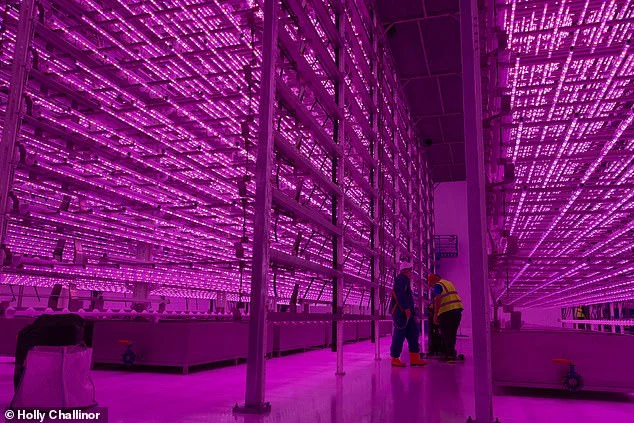
What Is Vertical Farming And Can It Replace Traditional Farming?
Vertical Farming uses horizontal and vertical space to grow plants in multiple layers, or levels. Plants are watered and fertilized with drip irrigation, and are grown in containers in artificial soil mediums.
By Dee Everleigh | January 29, 2019
Vertical Farming uses horizontal and vertical space to grow plants in multiple layers, or levels. Plants are watered and fertilized with drip irrigation, and are grown in containers in artificial soil mediums. It can be used to enhance a landscape, or to feed millions of people! In 2009, Time Magazine awarded Vertical Farming the World's Greatest Invention Award!
When used on a commercial scale, plants are grown in large buildings, with no windows, under artificial lighting. Some commercial systems have been adapted to utilize natural light, however, most require the use artificial lighting. These indoor growing structures may contain racks up to 80 feet long, stacked one on top of the other, every 3 feet, as high as 12 stories. Plants are grown from floor to ceiling!
A major benefit of Vertical Farming is the reduction of water, and chemical use. Commercial, outdoor agriculture currently consumes 75% of the planet's freshwater, and uses an overabundance of chemicals. Vertical Farming can reduce water use by almost 90% and pesticide and herbicide use can be greatly reduced, or eliminated entirely. More plants can be grown in less space. Plants are grown closer to the point of sale, allowing for fresher produce and reduced transportation costs. Supporters strongly believe that it can reduce the amount of farmland needed, decrease deforestation and pollution, and help make urban areas more self-sufficient.
Unlike traditional agriculture, Vertical Farming requires significant electrical usage. The sun is free for outdoor plants, but not for indoor ones. Electricity is needed for artificial lighting, and for running countless other programs and systems which control moisture, temperature, carbon-dioxide, pH, fertilization and irrigation. In addition, indoor conditions need to be kept sanitary and as sterile as possible to prevent the development of microbial plant diseases. Controlled-environments are driven by automation, therefore, close monitoring and constant adjustment of programs are required.
Despite all these challenges, Vertical Farming has been able to make a profit and succeed. The primary crop grown is baby salad greens and herbs, because customers are willing to pay a premium for them. Baby salad greens and herbs are an $8 billion dollar industry. Currently most of America's baby salad greens are grown in fields in the Salinas Valley, in California. In winter months, a large majority of the production moves to fields in Arizona, or Mexico.
When crops are grown indoors, year-round, there is no need to shift location due to weather changes. Vertical farms can be found in Seattle, Detroit, Las Vegas, Houston, Brooklyn, Queens, and many other locations as well. Henry Gordon-Smith, from the Association for Vertical Farming, there are at least 25 companies the United States that are practicing this type of farming. Outside the US, these innovative farms can be found in England, Holland, Sweden, Japan, Korea, Singapore, and Shanghai.
Vertical Farming will likely never completely replace traditional farming. Both types have their pros and cons, and some plants will never adapt to indoor growing conditions. There is still much to learn because these systems have only been optimized for a relatively small number of plant species. Some companies have mastered the production of baby salad greens, but have not yet attempted to grow soybean, corn, or wheat, the top 3 crops in the United States. Soybean, corn, and wheat make up approximately 90% of harvested acreage.
Currently, Vertical Farming works best for plants that can be grown in low-light-intensities, in high plant densities, and with a short turn over time. All three of these requirements do not meet those of soybean, corn, or wheat. New varieties would need development to find ones suitable for indoor growing conditions. It will take years before these systems are optimized, and farmers are able to profit, growing a variety of plant species. In the meanwhile, Vertical Farming will continue to be a valuable resource for agriculture and will continue to impact our planet, in a very positive way!
D Everleigh is a retired plant biologist who enjoys growing plants, and teaching others about them. She is passionate about encouraging people of all ages to experience gardening, and helps run a website that sells unique small greenhouses .
Photos taken by photographer Holly Challinor, Jones Food Company Ltd.