


Welcome to iGrow News, Your Source for the World of Indoor Vertical Farming

Moving The Farm Bill Forward
This week, the final draft of the farm bill was released by the House and Senate Conference.
Here's a summary:
• Creation of a new office within the USDA (Office of Urban Agriculture and Innovative Production) with a mandate to encourage and promote urban, indoor, and other emerging agricultural practices.
• A $10 million annual appropriation for competitive grants to support research, education, and extension activities for urban, indoor, and other emerging agricultural activities.
• An amendment to the Rural Energy for America Program (REAP) making loan guarantees of up to $25 million available for the purchase and installation of energy efficient equipment or systems for agricultural production or processing.
The next step? The president's signature and it becomes law!

GV Leads $90 Million Investment In Bowery Farming
December 12, 2018
( Photo courtesy Bowery Farming )
With a $90-million investment, Bowery Farming plans to build large-scale indoor farms in cities across the country.
Bowery Farming, Kearny, N.J., recently closed the investment deal led by GV, previously Google Ventures.
The new capital — a Series B funding round — brings the indoor vertical farming company’s funding to $117.5 million, according to a news release. The total includes investments from GGV, General Catalyst, First Round Capital and Almanac, the food-tech fund of David Barber, co-owner of sustainable restaurant, working farm Blue Hill and consulting company. Singapore-based investor Temasek and Dara Khosrowshahi, CEO of Uber, have also invested.
Prior investors include celebrity chefs Tom Colicchio, Carla Hall and José Andrés.
Bowery plans to use the capital to build warehouse farms in cities nationwide, opening them by the end of 2019, according to the release.
“We leverage our nascent technology, computer vision and machine learning to build a farm that gives plants exactly what they need,” Bowery CEO and co-founder Irving Fain said at a Dec. 4 media dinner showcasing the company’s products.
Since launching in February 2017, Bowery has opened two farms in Kearny. Tristate area groceries and restaurants are customers of the greens.
Related Topics: Produce Retail Produce Tech Lettuce

Europe's Largest Vertical Farm Is Out To Crack The Hydroponic Puzzle
Vertical farming isn’t new, but now that it’s reaching industrial scale, farmers need to get their business model right
Vertical farming requires skills from many different sectors. For business models to work, there needs to be knowledge transfer between farming and technology
Holly Challinor
Tuesday 4 December 2018
Hairnet-equipped, white coverall zipped up, lab boots on and hands both washed and disinfected: Paul Challinor, the co-founder of the Jones Food Company (JFC), is all set. He is about to enter the germination room of the hyper-clean facility in North Lincolnshire where, four weeks ago, JFC started growing its first crops. This is Europe’s largest vertical farm, with crops soaring up over 17 storeys high. And there’s not a spot of soil in sight.
JFC’s vertical farm is built in an old cold store, which high ceilings let crops grow over 17 storeys. The 5,000 square-meter production site is one of the largest in the world | Holly Challinor
All the crops at JFC are grown hydroponically. Plants are fed the necessary nutrients, diluted in water, with the effect of sunlight created by the eerie, artificial glow of pink-hued, LED lights.
Before he walks in, Challinor still needs to spend a couple of minutes standing in what he calls an “air shower”, to blow off any dust that might be lurking on his exposed hair and skin. “It is crucial that we ensure that our crops don’t get contaminated,” Challinor says, “so that we optimise our production, and provide the highest-quality plants on the market at an industrial scale.”
The site is kept to the highest standards of cleanliness to avoid germs to contaminate the crops. This means that crop yield is optimised compared to traditional methods of farming | Holly Challinor
In the 5,000 square-metre production site – previously a cold store, with high ceilings that provide a perfect setting for a vertical farm – JFC are claiming that they will be able to deliver 420 tonnes of plants per year once the farm reaches full capacity. At this scale, it’s not just the largest vertical farm, it’s right up there with some of the largest in the world, coming close to rivalling AeroFarm’s 6,500 square-metre facility in the US.
Growing underground: the hydroponic farm hidden 33 metres below London
The reason that we need to convert farming from landscape to portrait mode? Food security. The UK’s population is steadily growing at about 0.6 per cent a year – while the country is expected to face a shortfall of two million hectares of farmable land by 2030. Add Brexit into the mix and food security is a significant cause for concern.
In these circumstances, farming methods that don’t rely on traditional agriculture, with its risk of bad harvests because of uncontrollable weather, become very attractive. Last summer, for example, UK consumers saw fruit and vegetable prices rise because farmers struggled to grow crops in high temperatures. The heatwave caused lettuce yields to plummet 25 per cent, while prices went up 22 per cent.
Vertical farms, on the other hand, can produce the same quantity and quality of crops all year round. And they have a significant advantage over greenhouses, too: they take up less space. In theory, they could even operate right at the centre of our cities. Dickson Despommier, professor of public health at Columbia University, draws an apt analogy: “In the context of a densely-populated city, vertical farming is the equivalent of apartment-houses, and greenhouses are similar to single-family houses,” he says.
One of the main advantages of vertical farms is that they take up less space than traditional farming or green houses. They could be built right in the centre of our cities | Holly Challinor
JFC is one of only a few operational vertical farms in the UK, alongside Intelligent Growth Solutions (IGS) in Scotland and the Growing Underground project, which grows crops in a converted air raid shelter below Clapham Common in London.
Neat in theory, vertical farming is more difficult in practice. Plenty of vertical farming projects have gone bust around the world. Podponics and Farmed Here are just two examples of the many projects that failed in past years. Experts say there are plenty of reasons why vertical farms are struggling commercially - and fail.
Rhydian Beynon-Davies, head of novel growing systems at horticultural research organisation Stockbridge Technology Centre (STC), explains previous failures: “Startups come into the industry with too little knowledge of it,” he says. “There isn’t enough knowledge transfer between different sectors. So they aren’t capable of building appropriate business models”.
Vertical farming is an integrated system with different variables, he continues. You have to think of lighting, humidity, air flow, irrigation, and many more. To manage all of those, many skills from different sectors have to be brought together.
STC’s goal is to attract those different skills and bridge between them. The centre has two small vertical farms, where developers can trial and test their technology. “We can generate data about the efficiency of different systems,” says Beynon-Davies. “The ultimate goal is to have a visible supply chain, to make business planning much easier.”
Peter Lane, the founder of CEAR&D, a research and development firm dedicated to controlled-environment agriculture, concurs. “There is a lack of understanding of the complexities of vertical farming,” he says. “It’s like trying to build a house only with a plumber. The plumbing work may be perfect, but the rest will fall apart.”
To try and avoid this pitfall, JFC struck a partnership with Current – a division of General Electric – to manage the LED lighting technology. Current’s lighting solution is only used in one other vertical farm in the UK – and that’s one of the two facilities at the STC. “At the moment Current is ahead of other systems,” says STC chief executive Graham Ward. Current claims that its system generates 33 per cent less heat than competitive products, which means the cooling process is less energy-greedy.
In an industry where energy use is estimated to make up for 20 to 30 per cent of the total production cost, that’s key. “We learned before going into this that the main reason for companies going bust was electricity,” says James Lloyd-Jones, JFC’s managing director. That’s why the farm also uses solar panels to reduce its electricity bills; it is currently 20 per cent carbon neutral and aims to become entirely self-sufficient.
The JFC team is confident that the site is set to become a commercial success – but you shouldn’t expect JFC-made tomatoes or cucumbers anytime soon. The farm is currently growing herbs and leafy greens, like most vertical farms. Technically it’s possible to grow any plant – but basil, dill, chives and the like are a lot more financially viable, mostly because they are smaller and can be grown at scale.
To get started, JFC is focusing on crops that are financially viable – namely, herbs and leafy greens. But it hopes that it can increase crop diversification in the future | Holly Challinor
“The market is built for certain products that we wish to focus on,” says Challinor. “This is the first stage. Only once we have a viable and consistent business, will we look at growing more consumer crops.”
It’s clearly not just the technology that’s a challenge for vertical farms; getting the business model right is a heavy lift too. For Lloyd-Jones, however, it’s only a matter of time: in ten years, he says, we could see vertical farms completely replace greenhouses.

BREAKING: Bowery Raises $90m Series B From GV, Temasek
DECEMBER 12, 2018 LOUISA BURWOOD-TAYLOR
Bowery Farming, the New York-based indoor farming group, has closed a $90 million Series B round of funding in a round led by Google’s venture arm GV, an existing investor in the startup.
Singapore state fund Temasek also joined the round as a new investor alongside Almanac Investments, and Dara Khosrowshahi (CEO of Uber).
Bowery sells eight pesticide-free leafy green products: arugula, butterhead lettuce, romaine, bok choy, basil, and lettuce mixes branded as spring blend, kale mix, and sweet and spicy mix. Customers include Whole Foods, Foragers and Sweetgreens in the New York area, as well as a few restaurants.
The deal brings Bowery’s total funding to $117.5 million after it closed a $20 million Series A last year. Existing investors GGV Capital, General Catalyst and First Round Capital re-upped their investment in this round. Other shareholders include local New York chef sTom Colicchio, José Andrés and Carla Hall.
Bowery argues that it’s two vertical farms in the Tristate area are the most technologically advanced in the world. It uses a variety of hydroponic systems but they are all connected by its proprietary software system called BoweryOS. The system uses computer vision and robotic automation technology, guided by machine learning algorithms to monitor its crops and all the variables that drive their growth throughout the day.
Did you know that AgFunder is one of the most active agrifood tech investors?
We are democratizing access to venture capital. Learn how you can invest with us.
What's In Your Water?
Posted by Zack Foust, Sales Representative on 12/4/2018
One aspect of farming that is often overlooked is the quality of source water being used for crop production. For many greenhouse growers, winter provides a break to clean up and analyze data after a long growing season. Having a sample of your source water analyzed from time to time provides important information for realizing patterns and planning for the next growing season.
Results from a water analysis provide the following information:
Electrical conductivity (expressed in mS) – total concentration of salts dissolved in your water
pH – acidity or alkalinity of your water; pure water has a pH of 7.0
Concentration of ions dissolved in water – narrowed down to essential elements for plant nutrition. Read about these important elements here.
Presence of carbonates and bicarbonates (“hardness” of your water) – concentration of bicarbonates (up to pH 8.2) and/or carbonates (pH of 8.3+) that increase pH buffering capacity
It is important to take action once you receive your results so you could potentially improve your production by:
Adjusting the EC so as not to exceed the set points appropriate for any given time of the year
Meeting nutrient targets for the crop being grown; saving money by switching from a pre-mixed fertilizer to a custom recipe which prevents over-feeding your crop nutrients already found in your source water.
Properly adjusting pH to keep the nutrient solution closer to your set point based on the hardness of your water and the presence of individual ions
Contact CropKing for options to have your water sample analyzed. We also offer an interpretation service for water and tissue samples, and can make recommendations based on the results.
For more information on our custom fertilizer recipes, click here!
Bonus: Sending plant tissue samples to a lab and having them analyzed is also an important step in improving your operation. Tissue analyses provide a breakdown of elements present in the sampled crops. Growers receive the greatest benefit from tissue analyses by:
Sending samples before and after altering fertilizer and/or pH regimes
Provides quantitative data to show how changes affect crop nutrition
Submitting multiple samples throughout the growing season to quickly catch imbalances
Compiling results and identifying patterns to improve future production
Category: News and Updates

JD.com Opens High-Tech Indoor Farm In Beijing
Chinese E-Commerce Group In Strategic Tie-Up With Mitsubishi Chemical
SHUNSUKE TABETA, Nikkei staff writer
December 7, 2018
BEIJING -- China's No. 2 e-commerce operator JD.com has opened a hydroponic vegetable factory in Beijing, seeking to win over the growing ranks of middle-income families worried about food safety.
JD.com said Thursday that the factory, built by Mitsubishi Chemical, is part of a strategic partnership with the Japanese company.
The $3.56 million factory, situated in Beijing's Tongzhou district, is one of the country's largest at some 11,000 sq. meters and can produce vegetables in a clean and controlled environment. With annual capacity of about 300 tons, it will grow lettuce and about five other leafy vegetables. JD.com will begin online sales soon.
After beginning the growing process with artificial light, produce is grown on the pesticide-free farm with solar light. Temperature and humidity are controlled and water is purified with treatment equipment. Crops will be ready to ship in five weeks, the company said.
JD.com will lean on its e-commerce and logistics expertise to bring safe and fresh foods to consumer tables, said Xiaosong Wang, the head of the company's food businesses.
JD.com will assess the needs of safety-focused consumers and share the data with the Mitsubishi Chemical Holdings unit so that the Japanese partner can update the factory with the latest technology. The Chinese company will also encourage its partner farm owners to adopt the same technology, seeking to build a domestic network of 10 such factories.
Mitsubishi Chemical has so far delivered 18 farming facilities in China. The company aims to set up 10 a year in the country, said Hitoshi Sasaki, managing executive officer. It seeks to double Chinese sales by 2020.

Ford Motors Is Using Vertical Farming To Feed And Educate Detroit
Ford Motors Is Using Vertical Farming To Feed And Educate Detroit
November 30, 2018

On Wednesday, Ford Motors and Detroit’s Cass Community Social Services announced a new hydroponic container farm that will grow produce year-round and help to feed Detroit’s food-insecure areas.
The 40-foot shipping container was donated by the Ford’s philanthropic arm, the Ford Motor Company Fund. It’s the second part of a larger $250,000 grant from Cass Community Social Services received from the Ford Motor Farm project. In March of 2018, Ford and Cass unveiled the first part, a F-150 Ford pickup with a garden bed and glass cover that visits local schools.
This latest initiative, dubbed the Ford Freight Farm, will reportedly be used to grow lettuce and greens that will be used in Cass’s non-profit community kitchen, which serves up over 700,000 meals per year. The meals themselves go towards feeding Detroit’s homeless population.
Like other container farms, this one uses LED lighting and has a capacity equivalent to two acres of traditional farmland. That gives Ford and Cass the ability to grow up to 52 harvests per year. “This is urban gardening at its best because we can grow in every season of the year,” Cass Executive Director, Faith Fowler, said in the press release. “And it delivers fresh produce, farm-to-table in half an hour!”
Ford Motor Farm is housed at the Cass Community Social Services’ World Building in Detroit and operates without soil, sunlight, or pesticides. And in addition to providing food, it will also offer some part-time employment to adults with development disabilities.
The entire project was conceived by a group of Ford employees who, in 2017, participated in the company’s philanthropic leadership program called Thirty under 30. The group was tasked with improving Ford’s mobile food pantries
It also underscores a question I keep hearing in conversations with people: urban farming sounds great in theory, but is it a realistic solution to helping feed food-insecure populations? Or as one writer put it, Is urban farming only for rich hipsters?
That’s not to depreciate the good work done by startups like Square Roots, Freight Farms, and the dozens of others looking at new ways to farm more locally. Realistically, though, container farms have high operational costs, high labor costs and require funds to educate those who do the actual care for the plants (because at the end of the day, farming is a skill). Little wonder, then, that the leafy greens coming from these farms cost anywhere from $5 to $15 per bag.
Even so, there’s a rising need to make the benefits of urban farming accessible to a wider population. Backing from a company like Ford will be one approach we’re likely to see more of in the future.

New Plug And Play Devices Deliver Dissolved Oxygen To Plant Roots
Dissolved oxygen (DO) does many things for your plant. It is a critical but often overlooked piece that helps plants uptake nutrients through the roots. Dissolved oxygen is the mechanism that allows the nutrients to be absorbed through the root membrane. "Without sufficient levels of DO, there will be no growth. It is proven that higher levels of DO help prevent “lockout” which is when your plant is getting enough water/nutrients, but not absorbing it.", says Dennis Clark with O2 Grow.
pH, TDS and EC
Dennis explains why a DO meter is an important measuring device that every grower should have. "Most growers already have pH, TDS and EC meters, but not many have a DO meter. A quality DO meter is about the only way for a grower to know if the nutrient water has enough dissolved oxygen."
DO is typically measured in either mg/L or ppm. "Most plants need a DO level of about 6 ppm to grow, some water sources such as well water can have readings as low as 2 ppm. University trials have proven that DO levels above 10 ppm will drive enhanced growth, with a better more robust root system that supports more flowering sites on each plant."
A healthier root system also enables the plant to stave off disease and other ailments common with low DO. "University of Minnesota studies revealed as much as a 30% increase in the number of peppers in a controlled study. Other studies conducted by the University of Wisconsin reported a significant increase in root mass and yield for Crown Peas grown in Nutrient Film Technique (NFT). Also noted, was the enhanced green leaf growth. The plants were simply fuller, healthier and more produced more flowering sites."
The Oxygen Research Group has introduced a product called the O2 Grow. The O2 Grow units deliver supplemental oxygen to nutrient water via the process of electrolysis. "This process converts water molecules into nano bubbles of oxygen gas", Dennis shows.
The tiny bubbles are too small to break the surface tension of the water and are therefore absorbed back into the water. "This process will saturate the nutrient water with as much dissolved oxygen as the water can hold. When measured with a DO meter, water at 20 degrees Celsius can hold as much as 14-16 ppm of oxygen. The O2 Grow units will quickly and efficiently saturate the water to the maximum amount of oxygen the water can hold."
The O2 Grow units require very little energy to operate. They are adapted to run off of a battery source which means they can be run in a field setting or off of a solar grid. "The units are quiet and compact", Dennis shows. "Units are designed to fit a specific nutrient reservoir size based on gallons of water used to water plants from as small as 10 gallons up to 250 gallons. Simply place the emitters into your nutrient water and switch the unit on. Since the units do not need to be run continuously to maintain the higher DO levels, some growers find it easier to set up the units on a timer so nutrient water is ready to go when they need it."
The O2 Grow units can be used for both hydroponic and soil based methods of growing as well as in both indoor and outdoor environments. The units are sized based on the number of gallons/litres of water that the grower will be oxygenating. Units range from 10 gallons (37.8L) up to 250 gallons (946L). There are also units designed specifically for deep water culyure (DWC). Operating the unit is easy, simply plug in and run the O2 Grow emitters prior to watering or set the units up on a schedule with a timer.
For more information:
Oxygen Research Group
15320 Minnetonka Industrial Rd
Minnetonka, MN 55345
952-474-5820
info@o2grow.com
Publication date : 12/5/2018
Research Shows Vertical Farming Has Limits
27 Nov, 2018
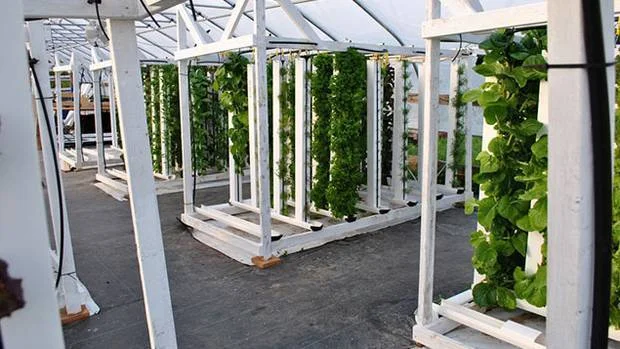
Vertical farming - where food is grown indoors in high stacks - will not replace traditional fruit and vegetable growing in New Zealand, but it may supplement it in future if technology makes it economically viable, research released today finds.
As part of her Kellogg Rural Leadership Programme, Horticulture New Zealand environmental policy advisor Rachel McClung has published a report, Can vertical farming replace New Zealand's productive land to deliver high quality fruits and vegetables in the future?
"Growing towns and cities are reducing access to some of New Zealand's most productive land for growing fruit and vegetables," McClung says.
"There is some complacency about this because of the misconception that fruit and vegetables can be grown 'somewhere else'. But the combination of the right soils and climate is necessary. With housing taking a lot of our prime soils and climate change impacting regional weather patterns, it seemed a good time to look at alternative growing methods, such as vertical farming.
"With an estimate that demand for fruits and vegetables in New Zealand will be 33 per cent higher in 2043 than today, a new way of thinking is required, hence my research.
"I found it interesting that while there are many recognised benefits of vertical farming, with the most prevalent being growing independent of weather conditions, the costs of the electricity needed for artificial lighting and temperature control, combined with the high capital investment and operational costs, currently outweigh the benefits.
"I also found that the type of crops that can be grown in a vertical farm are limited to the likes of leafy greens and herbs, and that vertical farms cannot grow the full range of fruits and vegetables we enjoy in New Zealand.
"I surveyed growers to gain insight and while three respondents had investigated establishing a vertical farm in New Zealand, none had proceeded due to the economics.
"My conclusions include that the New Zealand Government should take a balanced approach to the issue of New Zealand's diminishing productive land and food security," McClung says.
Leafy Greens From A Growing Machine
Advancements In Automated Commercial Scale Vertical Farming
Growing produce automated or nearly automated and in any possible location are some of the advantages often supplied by the vertical farming industry. The Canadian company CubicFarms shows how also traditional greenhouse companies can benefit from indoor farming techniques.
DelFresco Pure recently chose CubicFarm Systems to grow leafy greens alongside their greenhouse production of peppers, cucumbers, tomatoes and strawberries.
CubicFarms has a background in greenhouse horticulture. The British Columbia, Canada based company has developed a indoor growing system based on a conveyer rotation method, allowing indoor farming to become scalable. It is quite a mouthful, but they explain their produce to be grown safe, sustainable and self-sufficient, cost-effective and on commercial scale.
Currently CubicFarms Systems Corp. is expanding and growing with both sales of systems, and sales of produce grown in CubicFarms.
CubicFarm installation in full swing in Pitt Meadows, BC
This summer, CubicFarms finished construction of their first full-scale, completely operational, 11 machine CubicFarm System in Pitt Meadows, BC.
"With the capacity to grow over 1.5 million of heads of lettuce, or over 9 million basil plants, or over 150,000 pounds of microgreens each year, or any combination thereof, we quickly became one of the largest producers of living lettuce, herbs, and microgreens in Canada", they explain.
Plans are already in place to expand the site by 10 fold over the next 12 months.
CubicFarms in Ontario, Canada
CubicFarms recently exhibited at the PMA 2018 show in Florida with its newest customer, DelFresco Pure, of Leamington, Ontario.
DelFresco Pure recently chose CubicFarm Systems to grow leafy greens alongside their greenhouse production of peppers, cucumbers, tomatoes and strawberries. "Our system will allow DelFresco Pure to bring additional produce into their local market without disturbing their current greenhouse operations. Installation has begun and are expected to be completed by the end of January, 2019."
A mini demonstration CubicFarm growing machine was built to display in DelFresco’s huge booth at the Orlando PMA. Strawberry Sundaes with CubicFarm growing micro basil was the big flavour hit at the show.
CubicFarms in Central Alberta
CubicFarms has also recently partnered with Swiss Leaf Farms near Edmonton, Alberta. Swiss Leaf chose CubicFarms’ automated growing machines to bring local, fresh leafy greens to central Alberta.
"The machines have just been installed and will commence growing in December. Swiss Leaf will be utilising CubicFarm’s “Thriiv Local Garden” produce brand to market and sell living lettuce, herbs and microgreens."
Thriiv Local Garden
And there's more. CubicFarms' launched their lettuce, basil and microgreens into Fresh Street Market stores in October, under their proprietary “Thriiv Local Produce” brand.
"We received positive responses from customers enjoying the freshest possible produce. Their living lettuce heads are available in 3 different blends (Springtime Trio, Butter Blend and Merlot Medley) and are sold in their proprietary packaging that allows lettuce to stay alive and fresh on the windowsill or in the fridge for weeks", they explain.
The microgreens have a variety of blends, including the spicy “Fire and Ice” and “Chef’s Blend”.

Is Digging Down The Future of Vertical Farming?
Academics at the University of Nottingham have patented a new concept that would see food production in deep farms in cities. The ideas are being promoted by University of Nottingham academics Professor Saffa Riffat, Fellow of the European Academy of Sciences and President of the World Society of Sustainable Technologies, and Professor Yijun Yuan, Marie Curie Research Fellow.
Deep farming technology would allow crop production all year-round. Up to 10 crop cycles per year could be achieved compared to 1-2 cycles for conventional agriculture. Put another way, 1 indoor acre is equivalent to 4-6 outdoor acres or more, depending on the crop.
Example of a Deep Farm City
As Deep Farms could be located close to urban centres, CO2 emission due to transportation of crops would be reduced. This is particularly important as the proportion of people living in cities continues to rise. Over the last 20 years, the percentage of people who live in cities globally has increased from 20% to nearly 50%.
Cost-effective deep shafts for crop planting would be constructed using new drilling techniques. Existing coal mine shafts, mines and tunnels, many of which are now abandoned could also be used for crop production.
A variety of crops could be grown in the Deep Farms using hydroponic planters (plant roots fed with nutrient-rich water) or aeroponics (growing plants in an air or mist environment). LED units would enable photosynthesis in the absence of sunlight. Groundwater could be used directly or water could be condensed from ambient air in hot/humid desert climates. A major benefit of this approach is that crop production is largely unaffected by climatic or seasonal factors - one of the greatest limitations of conventional farming methods.
Automated Deep Farm concept
New vertical shafts could be created for Deep Farms and also redundant coal mine shafts could be used for crop production. In the UK, for example, there are over 150,000 redundant coal mine shafts.
Carbon dioxide is required for plant photosynthesis and Deep Farms are well suited for carbon capture from ambient air. The CO2 could be released to achieve the concentration levels required by plants.
Use of carbon capture systems has the added benefit of reducing CO2 concentration in the environment, as additional carbon is adsorbed in materials in the ground space. Advanced control systems including sensors and remote controls could be used to monitor crop production. Automated systems such as robots could be used for crop planting and harvesting. Electricity generated from renewable sources and off-peak power could be used to power the LED lighting for plant photosynthesis.
View from above of a Deep Farm
It is estimated that a small Deep Farm can produce 80 tonnes of food per annum. Some of the crops can be ready for harvesting within 2-3 weeks. The amount of energy it would require is equivalent to that consumed by 3 UK homes.
Deep Farms could be installed at various locations to create a ‘Deep Farming City’. This would facilitate the supply of a wide range of fresh crops to the local population.
For more information:
University of Nottingham
Professor Saffa Riffat
+44 115 748 4479
www.nottingham.ac.uk

Infarm Expands Its ‘In-Store Farming’ To Paris
Steve O'Hear@sohear / November 2018
infarm
Infarm, the Berlin-based startup that has developed vertical farming tech for grocery stores, restaurants and local distribution centres to bring fresh and artisan produce much closer to the consumer, is expanding to Paris.
Once again, the company is partnering with Metro in a move that will see Infarm’s “in-store farming” platform installed in the retailer’s flagship store in the French capital city later this month. The 80 metre square “vertical farm” will produce approximately 4 tonnes of premium quality herbs, leafy greens, and microgreens annually, and means that Metro will become completely self-sufficient in its herb production with its own in-store farm.
Founded in 2013 by Osnat Michaeli, and brothers Erez and Guy Galonska, Infarm has developed an “indoor vertical farming” system capable of growing anything from herbs, lettuce and other vegetables, and even fruit. It then places these modular farms in a variety of customer-facing city locations, such as grocery stores, restaurants, shopping malls, and schools, thus enabling the end-customer to actually pick the produce themselves.
The distributed system is designed to be infinitely scalable — you simply add more modules, space permitting — whilst the whole thing is cloud-based, meaning the farms can be monitored and controlled from Infarm’s central control centre. It’s data-driven: a combination of IoT, Big Data and cloud analytics akin to “Farming-as-a-Service”.
The idea isn’t just to produce fresher and better tasting produce and re-introduce forgotten or rare varieties, but to disrupt the supply chain as a whole, which remains inefficient and produces a lot of waste.
“Many before have tried to solve the deficiencies in the current supply chain, we wanted to redesign the entire chain from start to finish; Instead of building large-scale farms outside of the city, optimising on a specific yield and then distributing the produce, we decided it would be more effective to distribute the farms themselves and farm directly where people live and eat,” explains Erez Galonska, co-founder and CEO of Infarm, in a statement.
Meanwhile, the move into France follows $25 million in Series A funding raised by Infarm at the start of the year and is part of an expansion plan that has already seen one hundred farms powered by the Infarm platform launch. Other recent installations include Edeka locations in Düsseldorf, Frankfurt, Stuttgart, and Hannover. Further expansion into Zurich, Amsterdam, and London is said to be planned over the coming months.
“One thousand in-store farms are being rolled out in Germany alone,” adds Infarm’s Osnat Michaeli. “We are expanding to other European markets each and every day, partnering with leading supermarket chains and planning our North America expansion program for 2019. Recognising the requirements of our customers we have recently launched a new product; DC farm – a ‘Seed to Package’ production facility tailored to the needs of retail chains’ distribution centres. We’ve just installed our very first ‘DC farm’ in EDEKA’s distribution center”.

Farms In The City: How A Chinese Firm Uses Tech To Boost Yield
By Feng Yilei
2018-12-01
An appetite for clean, fresh greens is growing with the burgeoning population in Chinese cities and towns. But feeding the rising demand is a challenge, partly because of the country's massive shift from being an agrarian to urban economy.
In the next 15 years, over 200 million Chinese are expected to move from rural areas into urban and suburban environments. This will greatly reduce the labor force on China's arable lands, which some say calls for a revolution in farming methods in order to create sustainable food production.
Beijing COFCO wisdom farm. /COFCO Photo
In suburban Beijing, a number of plant factories built with innovative techniques have incorporated farming into urban growth.
Dr. Wei Lingling, a researcher at the Chinese Academy of Agricultural Sciences, said controlled environmental agriculture (CEA) aims to get the most output with the least resources at the highest efficiency. They use technology like artificial intelligence (AI) and the Internet of Things (IoT) to precisely control production.
On a small plot of indoor space, plants are rooted on layered shelves vertically and bathe in light continuously during the day. Sensors linked to automatic irrigation and temperature control systems provide optimal conditions for growing.
Planned production means a higher yield resource-wise, space optimization, and labor savings. Dr. Wei believes CEA technologies will be more accurate in the future to better balance cultivation and the environment with less energy consumption.
“And in this closed production system, we circulate water and fertilizer to cut emissions, and improve sustainability of agriculture,” she added.
Plant factory using artificial light. /VCG Photo
While many believe this industrialized and intelligent way of farming will gradually replace extensive farming, which relies heavily on manual work and land usage for mass production, ordinary Chinese may have to accept difficulties in their daily lives during the process of moving on to the next stage.
For individual farmers that own the country's hundreds of millions of small plots, some have temporarily transferred their leaseholds to these high-tech farms and are adapting to their new roles.
Villager Wang Xiangang said that he got paid for both his land and working on the farm as an employee meaning he no longer worries about natural disasters and has time to learn about organic farming. He doesn't make as much as he used to, but it is stable.
And when conditions are ripe – will consumers be ready to pay a higher price for the products? Experts say the public will recognize the value of these crops as awareness of food safety and environmental stewardship rises. And once the demand rises, more players are expected to use tech-based food production, which will drive down prices.

Agriculture Is Broken; AgTech Can Fix It
Nov 28, 2018
Erik Kobayashi-Solomon Contributor
Chimneys are seen releasing vapour at the ammonia processing area at the OAO Phosagro plant in Cherepovets, Russia, on Friday, Feb. 21, 2014. OAO Phosagro, Europe's largest phosphate-fertilizer maker, is posting back-to-back weekly gains, pushing the stock above levels it traded at before the collapse of the world's biggest potash venture roiled the industry. Photographer: Andrey Rudakov/BloombergBLOOMBERG NEWS
Imagine that you need to break a $10 bill. You hand the cashier the $10 note and, rather than a $5 bill and five $1 bills, he hands back a single $1 bill.
Certainly, you would be upset. And if you couldn’t extract another $9 from the cashier on that occasion, chances are next to nil that you would ever try to get that shop to make change for you again.
Believe it or not, this transaction – where a consumer offers 10 units and receives only one unit in return – happens literally every second of the day in developed countries. It is not dollars we are exchanging, though, it is calories.
According to a research paper published in 2009, it takes 10 calories of petroleum-based energy to create a single consumable food calorie. The reason for the imbalance is twofold: production methods and distribution networks.
Regarding production methods, the synthetic fertilizers used in crop production are manufactured through the Haber-Bosch process, which relies upon a petroleum resource – natural gas – as a primary input. Natural gas is needed to manufacture the ammonia that forms a crucial building block for synthetic fertilizers.
Grains are used to feed meat animals, so in a real sense, we are feeding natural gas to our chickens, hogs, and cattle as well. Energy is also used in the irrigation, sowing, and reaping processes. Altogether, scientists estimate that it takes a little over eight calories of petroleum-based energy to “manufacture” one food calorie.
The remaining two or so energy calories necessary for us to consume a single food calorie come in the transportation process. I live in Chicago and can drive to my local supermarket to buy a tomato any time of the year – even during the dead of winter. Those winter tomatoes must be shipped in from somewhere!
This photo was taken by author during a blizzard in the Northwest Suburbs of Chicago, IL. Watsonville, CA, where these tomatoes were farmed, is over 2,200 miles from the author's grocery store.ERIK KOBAYASHI-SOLOMON
As an investor, if you showed me a company whose revenue increases were tied to gradual population rise but which was paying $10 in costs to produce a profit of $1, I would show you the best short idea in the world!
Believe it or not, this is the equation on which our modern system of agriculture is based.
AgTech – an industry about which I have written before – is focused on changing this upside-down energy cost equation and rationalizing the process of producing food. It is hard for me to imagine a better area in which to invest.
While my previous AgTech article highlighted mainly American firms, the best example of the advances in this industry is not to be found in the US – the leading agricultural exporter globally – but in the Netherlands – the second largest.
According to this article in National Geographic (which contains some striking photographs and videos of Dutch farms), the Netherlands boasts only 1/270th the land mass of the U.S. located at roughly the same latitude as Saskatchewan, Canada, but exports a comparable amount of food.
Commercial glass greenhouses in Westland. Westland is a region in of the Netherlands. It lies in the western part of the country. High tech industrial production of vegetables and flowers. GETTY
One potato farmer highlighted in the Nat Geo article has reduced his water use by 90% but generates crop yields more than twice as high as the global average; his results are not atypical of the Dutch industry at large. Chemical pesticide use has dropped to nearly nothing and livestock antibiotic use has dropped by around 60%.
Fertilizer use is higher than that in the US per hectare of cultivated crop, but because Dutch farms produce so much more per hectare than American ones, the fertilizer use per food item is much lower. In addition, fertilizer use in the Netherlands has been falling since 2002, rather than rising, as in the US.
Figure 1. Source: World Bank (data), Framework Investing Analysis FRAMEWORKINVESTING.COM
These incredible efficiency improvements have come about because the Dutch government set clear policy objectives, supported by tax and development incentives, then let the free market do what it does best – develop innovative solutions. These policies have allowed the Netherlands to move beyond the technology paradigms of the last two centuries and create intellectual property and jobs suited for the present one.
While Dutch farms have already embraced a new paradigm and are moving forward to take the innovations even further, opportunities exist now in the United States as well. Over the past several weeks, I have been talking to the founders of several innovative AgTech start-ups focused on the local production and packaging of greens and vegetables.
Smart money is pouring into these types of businesses – in 2017, Plenty, a high-efficiency, IoT-enabled vertical farming start-up received a $200 million round B investment from the Softbank Vision Fund and an investment vehicle for Jeff Bezos’s billions.
Matt Barnard, co-founder and chief executive officer of Plenty Inc., speaks at the SoftBank World 2018 event in Tokyo, Japan, on Friday, July 20, 2018. SoftBank World, the company’s annual two-day event for customers and suppliers, ends Friday. Photographer: Kiyoshi Ota/Bloomberg© 2018 BLOOMBERG FINANCE LP
If you think back to Whole Foods Markets in the early 1980s, it qualified as a niche business. Thanks to the vision of its founders and its niche status, it sported nearly a 40-year run with huge revenue growth rates and profit margins 10 times higher than that of other grocery chains. I believe vertical farming firms will experience a trajectory similar to the organic food market, though probably the uptake will be much more rapid.
Elimination of pesticide use, reduction of water wastage, greater efficiency of fertilizer use, much greater food safety and traceability, and hugely decreased petroleum product usage in transportation are all features of vertical farming that will be good for the environment and the society.
The fact that vertical farms’ cost structures mean that, for at least a few years, they will be wildly more profitable than conventional farms will be good for intelligent investors. No wonder the smart money is pouring in.
I am the Director of Training and Research at Framework Investing, a company that teaches institutional and individual investors to close the gap between their investing skills and their investing responsibilities. My expertise in valuing private and publicly-traded companies...

No Tractors Required! Britain's First 'Vertical Farm' Is About To Produce Its First Crop With The Help Of A Robot Named Frank Working In A Warehouse In Scunthorpe
And It Could Change Agriculture Forever
A 'vertical farm' in Scunthorpe has the potential to change agriculture forever
Only four human beings work at the vast warehouse, bathed in eerie pink light
It is designed to produce 500 tonnes of plants annually starting with fresh herbs
A single robot — called Frank — is responsible for gathering trays of plants
By GUY WALTERS FOR THE DAILY MAIL
PUBLISHED: 18 November 2018
Normally, November is not the month for the herb harvest in the British Isles, nor is an industrial estate in Scunthorpe the type of place you’d expect to find people gathering in crops.
Yet that is exactly what will be happening next Monday at a radically new farm — and it may just herald a sea-change in the way we grow our food.
Forget all those traditional images you have of agriculture: rolling fields, combine harvesters and lumbering tractors, even greenhouses and polytunnels.
Instead, picture something straight off a sci-fi movie set — a vast warehouse bathed in an eerie pinkish glow, filled with racks of plants stacked 40ft high and tended by a robot that glides about the floor.
It looks like a scene from a sci-fi movie. In fact, this Scunthorpe warehouse is the world’s most advanced ‘vertical farm’ — and its first harvest could change agriculture for ever
The few humans present on this farm look nothing like farmers. Instead of sporting favourite old pullovers or check shirts, they wear overalls, high-vis jackets and hairnets.
In short, this is less the Darling Buds Of May, more a laboratory from the distant future. Welcome, then, to the world’s most advanced commercial ‘vertical farm’.
It’s run by a new firm called Jones Food Company, and is designed to produce 500 tonnes of plants annually starting with coriander, basil, dill and chives to feed the growing appetite for fresh herbs all year.
The first crop was sown as recently as the middle of last month, and by next week, the initial batch will already have been harvested. Everything here is geared towards growing plants as quickly and efficiently as possible. And all without a single handful of soil.
At the heart of the operation is a technique known as hydroponics, whereby plants are grown under artificial light with their roots resting in a ‘hydroponic solution’ made up of water and essential nutrients such as potassium, calcium, nitrogen, nitrate and magnesium, instead of soil.
In the pink: Hydroponic herbs being grown under artificial light at the country's first vertical farm
During the growing process, the water is also periodically drained away ensuring the plants’ roots are able to ‘breathe in’ enough oxygen.
Almost the entire procedure is automated. A single robot — called Frank — is responsible for gathering up the trays of plants and taking them around the various parts of the farm, including the seeding and germination areas, and ultimately, the harvesting room.
In fact, only four human beings work in the vast warehouse. In order to avoid the plants being contaminated by micro-organisms that can cause diseases such as blight, they have to follow a strict handwashing procedure, after which they must don protective overalls. They then have to pass through an ‘air shower’ which blows off any remaining rogue particles.
All this is despite the fact that at no stage do any humans actually touch the plants themselves.
Pure carbon dioxide is pumped into the room, which enables the plants to absorb 50 per cent more than they would in a traditional greenhouse, causing them to grow faster than normal.
All the air that enters passes through medical-grade filters, and the pressure inside the warehouse is kept higher than the air pressure outdoors to stop insects getting in.
Rather than a brand new concept, Scunthorpe’s vertical farm is the latest step in the long-running attempt to find a way of factory farming plants indoors.
There are already a number of hydroponic farms in Britain. Thanet Earth, for example, south of Gatwick, has been operating for nearly a decade. In 2013, this facility alone produced 225 million tomatoes — around 12 per cent of the UK’s total crop.
In Clapham, South London, hydroponics and artificial lights are used to grow salad crops in former air raid shelters — an indicator of how valuable this technique could be in cities.
What makes the project in Scunthorpe so revolutionary — and so exciting — is the use of so many layers of plants and the high levels of automation which make managing them possible. The other great development from which the vertical farm has benefited has been the source of the artificial light.
At the heart of the operation is a technique known as hydroponics, whereby plants are grown under artificial light with their roots resting in a ‘hydroponic solution' made up of water and essential nutrients such as potassium, calcium, nitrogen, nitrate and magnesium, instead of soil.
Previously, sodium bulbs have been used which require enormous amounts of energy. This didn’t just negate many of the environmental benefits but also made operating the farms hugely expensive.
Back in 2010, one estimate put the electricity bill for growing the amount of wheat required for a just single loaf of bread via hydroponics at around £12.
All that has changed thanks to the widespread adoption of LED lights, which use far less power.
The farm in Scunthorpe boasts no less than 7.6 miles of LED lights, the equivalent of 38 Eiffel Towers laid end-to-end. Their pink glow illuminates a total growing surface area of 5,120 square metres — the size of 26 tennis courts.
The company’s co-founder and chief technology officer, Dr Paul Challinor, who has a doctorate in hydroponics and who did much of the testing of the lights at his own home, explains why his warehouse is lit in that eerie shade of pink.
‘The reason is because the plants grow best under red-and-blue light,’ he says, ‘although we also have white lights so that we can see what we are doing.’
The different-coloured lights have different roles to play during the plants’ life cycles. Red light helps to promote leaf coverage, whereas blue light promotes plant structure and leaf mass.
Dr Challinor says an order for his plants has already been placed by a customer who wants a ‘fresh product’, although he is tight-lipped about who it is. The plants are reputedly just as flavoursome as those grown in traditional soil, and it seems unlikely that any commercial customer would order several tonnes of herbs from the farm if they tasted bland.
Forget all those traditional images you have of agriculture (stock image)
In 1999, an American former professor of microbiology called Dickson Despommier claimed that a 30-floor skyscraper farm could one day feed 50,000 people.
By 2050 it is estimated around 86 per cent of people in the developed world will be living in cities and the world’s population is projected to have swollen from 7.7 billion today, to nearly ten billion.
Proponents of vertical farms have argued that as the food could be grown in the heart of cities, food miles — the distance it travels from traditional farms to consumers — could be all but eliminated, cutting greenhouse gas emissions and leaving us with fresher, tastier food.
The use of vertical farms also slashes the amount of land required to feed a growing population and saves us from having to use damaging pesticides and fertiliser.
Even better, because the inside of the warehouse is so closely controlled, vertical farms can grow crops all year, rather than following seasonal cycles. This also protects the crops from the frosts or droughts that can lay waste to traditional farms.
All this hinges on whether new technology has solved the problem of cheap and reliable artificial light.
It is too early to say whether the use of LEDs is, as the Agriculture and Horticulture Development Board claims, a ‘seismic shift that is set to change fundamentally how we grow plants’. For his part, Dr Challinor is nothing if not ambitious. ‘We have already looked at other sites in the Midlands and the South and hope to be running a number of units,’ he says, and claims the farm is taking ‘British horticulture to another level’.
At present, it is growing herbs because of their high retail value, and plans to diversify into growing salad leaves as well as high-value plants needed by cosmetic and pharmaceutical companies (that principle at least has been proved to work: many illegal cannabis operations grow the drug using hydroponics and artificial lights).
In future, it is hoped that other crops such as wheat and barley could be grown in warehouses rather than in open fields.
If Dr Challinor can manage that, then the sky really is the limit.
The Salvation Army Teaches Children How To Grow Indoors
Mark Lindberg, social enterprise ministry specialist at Salvation Army
Photo: Patrick Williams
With help from CropKing, the organization offers educational programs for at-risk youth at its Fresh Face Farm in Akron, Ohio.
November 15, 2018
GIE Media Horticulture Group
Children in and around Akron, Ohio, could help develop systems that could one day be used to grow food on Mars, upload blueprints for “food computers” and grow produce for wholesale and food pantries.
It’s all part of the studies they’re undertaking with the Salvation Army Summit County Area Services (SCAS), which opened Fresh Face Farm, an indoor growing facility, at its Akron Fort Romig location in January 2018.
The indoor farm provides the children learning opportunities in Science, Technology, Engineering and Math (STEM), culinary arts and other subjects, says Major Kevin Jackson, SCAS coordinator. Jackson says about 90 percent of these students are “at-risk,” which the Journal of General Internal Medicine defines as populations that may have low literacy rates, be economically disadvantaged, face abuse or persecution, or experience other issues. SCAS has partnered with Akron Public Schools (although participation at the farm isn’t limited to children in the district), the University of Akron, NASA and MIT. CropKing provided automated hydroponics systems, sole-source lights and other materials.
“The kids are pretty much involved in every aspect,” Jackson says. “Technology is what drives their world, so the CropKing system was perfect for us in terms of the computer and the sensors, and the automation that came with it.”
The students range in age from 18 months to 18 years, Jackson says. Younger students start out learning about aquaponics and ebb-and-flow systems — which take up about 6,000 square feet of the 18,000-square-foot Fort Romig warehouse. Once the students reach about first or second grade, they begin working in a walled-off 7,000-square-foot commercial grow room in the warehouse that The Salvation Army has outfitted with CropKing’s nutrient film technique (NFT) and Bato bucket hydroponic systems.
In the grow room, lettuce and leafy greens flourish under LEDs, while tomatoes prosper under high-pressure sodium (HPS) lights. Mark Lindberg, social enterprise ministry specialist and the operation’s only full-time employee, says the lights run from about 5 p.m. — after the students have gone home — until the early morning hours. Fresh Face Farms sells most of its produce wholesale, but it sends some to food pantries or home with students.
Basil growing in NFT systems under LED lights at Fresh Face Farm
Photo: Patrick Williams
The idea behind Fresh Face Farms began when Jackson, who has been involved with The Salvation Army his whole life, was given an assignment: to come up with a model to break intergenerational poverty. At the time, he was working throughout the western United States, and he tried growing outdoors in Montana. After weeks of 60-degree temperatures, he planted his crops, then in early June, six inches of snow fell. His wife, Linda, who is now also SCAS coordinator, suggested they try a new approach to farming.
After transferring to Akron, Jackson says he ran an online search for a possible equipment supplier and found CropKing in nearby Lodi, which he calls “sheer luck.” He applauds CropKing’s customer service and expertise, calling the business “not just a vendor.” “You know what's amazing to me?” he asks. “Every once in a while, they’ll just be driving by, and they’ll just stop by [and say] ‘Hey, how's it going? Can we take a look around?’”
Lindberg says he has had similar experiences interacting with CropKing. “Paul calls me on my cell phone,” he says. “It’s like, ‘Hey, Mark, I'm going over that way. You going to be there tomorrow?’ ‘Sure!’”
Growing up in Ashland County — a mostly rural area in Ohio — Lindberg says his parents had a garden, and he was interested in horticulture from a young age. He went on to work in facilities management, but after more than a decade with The Salvation Army, the opportunity presented itself for him to work at Fresh Face Farms. In preparation, he took CropKing’s Grower Workshop to familiarize himself with controlled environment agriculture (CEA).
Lindberg has passed some of the information he learned in the workshop onto the students at Fresh Face Farms. One lesson included how to adjust the alkalinity of water to get it to a desired pH range. On a related note, but one not taken straight from his CropKing Grower Workbook, Lindberg also had students guess the pH of orange juice and milk and then assess the pH of those liquids. “That’s one of the things I love, is this is all hands-on [education],” he says. “This is not just show and tell, but it's experiencing.”
The technology and the hands-on education come together to form a learning experience that shows promising results for inspiring children to explore new avenues of interest and excel in their lives and careers, Jackson says. Some of his former students out west have even gone on to study growing in hopes of making it a career. “When you say, ‘Salvation Army,’ it’s just not what you’re thinking,” he says. “That’s The Salvation Army of the future.”
LEDs HPS Lighting Hydroponics Tomato Indoor agriculture Food nutritionLocal food Education Food security CEA Dutch buckets

Parisian Supermarket Becomes Self-Sufficient With indoor Herb-Farm
We've showed you before that the French like their veggies to be grown nearby. The French supermarket Metro has taken this even further and is now growing herbs in their own supermarket. Chives, basil, coriander, mint, dill and parsley are being grown at the moment in this Parisian Metro store. The products are offered to the hospitality clients.
More than 50 farms
The herb farm is created by Infarm, a German company that is operating more than 50 farms across Berlin in supermarket aisles, restaurant kitchens, and distribution warehouses. Infarm is headquartered in the German capital and was founded in 2013 by Osnat Michaeli and brothers Erez and Guy Galonska. Amongst other projects, they have integrated in-store farming into EDEKA and METRO locations, two of Germany’s largest food retailers, where it grows dozens of herbs and leafy greens.
The Parisian farm is the biggest one in a supermarket so far. "Many before have tried to solve the deficiencies in the current supply chain, we wanted to redesign the entire chain from start to finish", the company explains. "Instead of building large-scale farms outside of the city, optimising on a specific yield and then distributing the produce, we decided it would be more effective to distribute the farms themselves and farm directly where people live and eat," explains Erez Galonska, co-founder and CEO of Infarm, in a statement.
A single 2 sqm farm has an output of up to 1,200 plants per month. The 80 square metre “vertical farm” will produce approximately 4 tonnes of premium quality herbs, leafy greens, and microgreens annually, and that means Metro will become completely self-sufficient in its herb production with its own in-store farm.
Each farm is a controlled ecosystem with growing recipes that tailor light, temperature, pH, and nutrients to ensure the maximum natural expression of each plant. Each farm acts as a data pipeline, sending information on plant growth to the Infarm platform 24/7 allowing it to learn, adjust, and optimise.
Expansion
Infarm will launch operations in London, Copenhagen, and other German cities later this year and has set a goal to expand to 1,000 farms in Europe. Expansion to the US is on their list as well, especially after a $25M investment round earlier this year.
Publication date : 11/23/2018

Two Out of The Three Board Members of The Association For Vertical Farming Have Resigned
November 11, 2018
Tom Zoellner and Penny McBride, two out of the three members of the Board of Directors for the Association for Vertical Farming (AVF), have resigned with immediate effect. This leaves Christine Zimmermann-Loessl the single remaining member of the Board of Directors.
The decision to step down has not been taken lightly and is based on irreconcilable differences within the AVF Board regarding financial management, accountability and managing conflicts of interest. After a long and intense period of internal discussion and concerted attempts to resolve the differences in a constructive manner, no meaningful progress has been achieved. As a consequence, Zoellner and McBride cannot fulfil their duties and responsibilities as members of the Board of Directors anymore.
“It is unfortunate, in an organization like the AVF that could be the choice for the growing indoor farming industry, that conflicts of interests and inadequate transparency risks important partnership with the business community and public funding agencies”, Zoellner says. In 2017, the newly elected Board of Directors was tasked to professionalize the organization.
Among other steps, Zoellner and McBride attempted to implement an improved financial reporting and control system, to obtain basic insight into the association’s financials and to resolve concerns over allocation of membership fees. Despite their efforts and being in the majority, no agreement could be reached by the Board.
Zoellner reports, “Regrettably, it has not been possible to implement simple yet important improvements required to professionalize the association. We would like to apologize to all AVF members for this, as this was the agenda that members had been defined for the Board to execute.”
Concerns about the way of working within the AVF have not gone unnoticed. The organization has suffered from a steady erosion of membership over the past years and many more AVF members have terminated their membership recently. McBride adds: “We have done everything we could think of, but could not achieve the progress that is needed within the current organizational structure. Sadly, making it impossible for us to do our jobs according to the statutes.”
Zoellner and McBride see that the indoor farming industry has moved on already and are now considering different venues to serve the industry going forward. They look forward to engage in the continuing value proposition with constructive and transparent ways of working
For further information:
Tom Zoellner, tzollner@gmail.com, +41 79 361 75 20
Penny McBride, pennymori@gmail.com, +1 (307) 413-6797
Hydroponically-Grown Romaine Lettuce Is Safe
A note from Circle A Lettuce
Hydroponically-grown lettuce is safe for consumption.
IMPORTANT INFORMATION
The recent reportings nationwide of contaminated romaine lettuce is something to take very serious and should you have any store-bought romaine lettuce, please do heed caution and do not consume regardless of suspicions that it could be ok. This sickness is very severe and can even be fatal.
Although, lettuce grown hydroponically is SAFE. The factors we employ to grow our lettuce virtually eliminate the risk of E.coli contamination. So much so that we even encourage you to not even rinse or wash our lettuces.
We take pride and extreme caution in our lettuce-handling practices and we do this for our consumers. We attempt every day to grow the healthiest and safest product we can. It's part of our mission statement.
Thank you for your continued support and faith in our high-standard in growing the best lettuce, EVER !!

Urban Crop Solutions Presents Its Technology To The Belgian King Filip And the French President Macron
The French president Emmanuel Macron and his wife are making a two-day state visit to Belgium (Europe) on November 19th and 20th .
The delegation visits different cities at the invitation of the Belgian King Filip and Queen Mathilde. In addition to the protocol ceremonies, solemn receptions and the state banquet, there was also an important economic part on this two-day state visit. Urban Crop Solutions was selected to present itself as a Belgian high potential innovative company in the category 'eco technology'. The royal and presidential delegation focused mainly on the past realisations, the technology and target markets of Urban Crop Solutions in the world.
On Monday 19 November 2018, 8 entrepreneurs from 4 leading Belgian companies and 4 promising technology companies were given the opportunity to present their high tech innovations during the state visit of the French president Macron to the city of Ghent. The presentation and the Q&A session was attended by the French President Emmanuel Macron, King Philip of Belgium, the Belgian Prime Minister Charles Michel and the minister-president of Flanders Geert Bourgeois. All selected companies’ mission contributes to 1 of 4 themes: circular economy, financial technology, nanotechnology & artificial intelligence and eco technology.
Urban Crop Solutions was selected alongside with Sioen Industries in the 'eco technology' category. As a specialist in indoor vertical agriculture solutions, this was an excellent opportunity for Urban Crop Solutions to put its vision and innovative technologies in the spotlight.
"We are delighted to see that European leaders and our Belgian Royal family are deeply interested in promising technologies and processes that can contribute in the near future to a better world," says Maarten Vandecruys, CEO of Urban Crop Solutions. "I personally did not expect that the Belgian King and the French President had so much questions about our technology and our target markets. They were very enthusiastic about the international potential of our venture. "
Urban Crop Solutions is a one-stop-shop for turnkey and tailor-made solutions in the field of vertical indoor farming. The Belgian company, with offices in the United States and Japan, offers besides growing infrastructures and consumables for indoor farming such as seeds, substrates and nutrients, also consulting, research, training and after sales services.
The advantages of its vertical farming solutions are endless and offer huge added value in the circular economy of today. Thanks to hydroponics (soilless plant growth on water) and the use of automation and robotics in a completely enclosed environment, the use of pesticides, herbicides or other forms of polluting products are obsolete. On top of that 95% less water is consumed compared to traditional outdoor cultivation methods.
Urban Crop Solutions realized in 2016 the largest automated indoor vertical farming plant in Europe and has since then set up numerous research collaborations all over the world. This thanks to its industry-leading technology. The limited need for land due to the multi-layer cultivation structure, high water efficiency (low consumption and recycling) and local production thereby avoiding (international) transport, are key reasons why the indoor vertical farming solutions of Urban Crop Solutions are driver for a better environment of tomorrow.