


Welcome to iGrow News, Your Source for the World of Indoor Vertical Farming

KUWAIT: "Up To 550 kg of Lettuce Per Day Thanks To Faster Growth Cycles"
Instead of traveling 5,000 kilometers between German growing areas and consumers, lettuce from vertical farming company &ever in Kuwait travels less than 100 kilometers
Hamburg-Based Start-Up &ever Makes Big Strides In Kuwait
Instead of traveling 5,000 kilometers between German growing areas and consumers, lettuce from vertical farming company &ever in Kuwait travels less than 100 kilometers. With its first commercial farm in the middle of the Kuwaiti desert, the Hamburg-based company supplies regionally grown leaf lettuce to local restaurants and grocers. These are grown on more than 3,000 m2 of cultivation area and taste like they were picked fresh from the field. "Thanks to faster-growing cycles, we can produce up to 550 kilograms of lettuce per day," Mark Korzilius, founder of &ever, told IT Zoom.de
Hypermodern cultivation technology / Image: &ever
"In the process, our newly developed Dryponics cultivation technology reduces water consumption by 90 percent and fertilizer use by 60 percent when compared to traditional cultivation methods." The company also eliminates the use of crop protection products.
For more information: https://and-ever.com
22 Dec 2020

Valoya Appoints A VP Sales North America
Valoya continues its growth trajectory with the addition of VP Sales North America, Mr. Wes Eaton. With extensive experience in horticulture and business development, Mr. Eaton will be tasked with driving Valoya’s growth in the North American market even further
Valoya continues its growth trajectory with the addition of VP Sales North America, Mr. Wes Eaton. With extensive experience in horticulture and business development, Mr. Eaton will be tasked with driving Valoya’s growth in the North American market even further.
Eaton’s horticulture industry experience is extensive, and his track record is impressive. Having worked in sales of two horticultural LED lighting companies he has a deep understanding of the horticulture lighting applications as well as the competitive landscape in North America. His experience prior to this includes working as a controlled environment agriculture consultant and developing meters and sensors for fertigation and control systems. He thus brings a deep understanding of the market and growers’ needs to the company.
In this role, he will be responsible for driving sales in crop science, cannabis cultivation, vertical farming, and greenhouse applications. Additionally, he will further develop Valoya’s North American reseller network within the cannabis market, as well as establish a local team. In meeting Valoya’s ambitious growth goals he will closely collaborate with existing customers, research partners, and distributors, to enable wider access to Valoya’s high-end LED solutions within the N.American market.
“Valoya’s ongoing commitment to deliver research-based, high-end lighting solutions is commendable. I am excited and honored to join the team and empower growers across North America to drive their plant performance to industry-leading results” says Eaton.
"We have been operating in North America since 2011 and it has always been a very important part of our business. Wes will build on this foundation to take us to the next level with his excellent experience and in-depth insight of the market", comments Mr. Lars Aikala, CEO and Co-Founder of Valoya.
Contact Mr. Eaton at – wes.eaton (at) valoya.com
About Valoya
Valoya is a provider of high-end, energy-efficient LED grow lights for use in crop science, vertical farming, and medicinal plant cultivation. Valoya LED grow lights have been developed using Valoya's proprietary LED technology and extensive plant photobiology research. Valoya's customer base includes numerous vertical farms, greenhouses, and research institutions all over the world (including 8 out of 10 world’s largest agricultural companies).
Additional information:
Valoya Ltd, Finland
Tel: +358 10 2350300
Email: sales@valoya.com
Web: www.valoya.com
Facebook: https://www.facebook.com/valoyafi/
Twitter: https://twitter.com/valoya
PODCAST: Hydroponic Growing System
Learn facts about hydroponic growing systems built out of plastic and metal, it runs on a couple of water pumps and some timers
Learn facts about hydroponic growing systems built out of plastic and metal, it runs on a couple of water pumps and some timers.
Listen

Food Will Be Grown Hydroponically In Shipping Containers In Cardiff's Bute Park
Starting with one trial shipping container in Bute Park, the plan is to expand across the city to grow much more food locally and with much less water. Growing food locally is seen as a key way to reduce carbon emissions, rather than shipping food from across the world
New Technology Means One Shipping Container
Could Grow The Same As 3.5 Acres Worth of Land

A hydroponics unit growing strawberry plants
Local democracy reporter
23 DEC 2020
Food will be grown hydroponically in shipping containers as part of Cardiff council’s plan to become a carbon-neutral city by 2030.
Starting with one trial shipping container in Bute Park, the plan is to expand across the city to grow much more food locally and with much less water. Growing food locally is seen as a key way to reduce carbon emissions, rather than shipping food from across the world.
Cardiff council has been consulting the public on its plan to cut the city’s carbon emissions to net zero in a decade. The draft One Planet strategy includes several schemes to reduce emissions and mitigate the effects of the climate crisis and rising global temperatures.
Food is a big part of that strategy, with the shipping container in Bute Park; plans to revamp Cardiff Market; letting community groups grow food on council-owned land, and making space on new housing developments for growing food.
Councillor Michael Michael, cabinet member for the environment, said one shipping container could grow the same amount of food as 3.5 acres of land. He said: “I’m a great believer in this technology,” as he revealed details of the plans.
The shipping container used to be in Bristol, growing herbs and vegetables for local restaurants. The council will pilot the technology in Bute Park, before potentially rolling it out further, working with community groups and possibly growing food to feed schoolchildren.
The technology works by growing food on racks without soil, using much less water, and controlling the heat and light inside the container to grow all throughout the year.
Cllr Michael said: “You can grow in that one container equivalent to three and half acres, because it’s 24 hours a day. This is becoming much more prevalent. Private companies are putting more and more money into hydroponics. If you can grow basil hydroponically in Scunthorpe, then why would you fly it in from Kenya?
“We do well with allotments in this city, but mostly at this time of year, they’re dormant. What if we work with people with these types of units? Unfortunately because of Covid, we haven’t been able to use it yet — but we will. This is an experiment. I’m a great believer in this technology.”
Several Marks and Spencer stores in London are also trialing the new technology, growing herbs in their shops. Cllr Michael said in the future Cardiff could see “giant greenhouses” above supermarkets growing food to be sold in the shops below.
He added the One Planet strategy will explore how food is bought for schools, and whether more of that food could be grown locally. Fruit trees could also be planted across the city for people to pick and help themselves.
Councillor Michael Michael, cabinet member for the environment (Image: South Wales Echo)
The draft carbon-neutral plan was welcomed by the Conservative and Liberal Democrat groups in Cardiff council, who both pointed out where they thought were gaps in the strategy.
Cllr Emma Sandrey, the Liberal Democrat’s spokesperson on the environment, said the council needs to focus more on reducing how much meat people eat. As well as transporting, a lot of emissions from food come from eating meat, especially beef.
She said: “We believe the council should implement ‘meat-free Mondays’ or a similar scheme across local authority canteens, to educate and inform people about the alternatives to meat, and the benefits of reducing meat consumption for the environment and for individual health.”
She added tackling food waste should be another priority. Currently, apps like Too Good to Go help link up restaurants with surplus food at the end of the day to customers who can buy that food at a discount, to save it from going to waste.
Cllr John Lancaster, the Conservative’s spokesperson on the environment, said the strategy failed to mention the docks or Cardiff airport. Shipping and flying both emit a lot of carbon and are currently difficult to fuel with electricity.
He added the council only has one ecologist and one tree officer, despite promises to address the biodiversity crisis and plant thousands of trees. He said: “There’s a disparity between the words in this One Planet strategy and how they go about it.”
Monitoring emissions needs to be another priority, Cllr Lancaster said: “There’s no plan for committed monitoring or achieving targets. That’s a big concern. How do we know how well the council is doing, how do we know if their targets are on course?”
The latest available data, from 2018, showed that Cardiff emits about 1,647 kilotonnes of carbon dioxide annually — down from 2,679 in 2005. The plan is to get this number to zero by 2030.
The public consultation on the draft One Planet strategy has now ended, and the council is considering the responses, with a full strategy and delivery plan due in the spring.
All the details can be found on www.oneplanetcardiff.co.uk.

Russia Invents New Way To Grow Vegetables In SPACE
How do you grow something in space when there's no gravity, electromagnetic field or sunlight? For more than 50 years, scientists from different countries have been trying their best to solve the problem. Some experiments were even somewhat successful
RBTH
26 Dec 2020
Space wheat, peas, onions, and lettuce... dreams of planting your own food in space have taken a huge leap forward. And it's all thanks to a small step by a clever new system.
How do you grow something in space when there's no gravity, electromagnetic field or sunlight? For more than 50 years, scientists from different countries have been trying their best to solve the problem. Some experiments were even somewhat successful. But now, for the first time, we have a way to grow a large amount of vegetables in space at once.
It's all in the tubes
"A vitamin space greenhouse" is how they refer to 'Vitacikl-T' - a titanium tube setup that allows a conveyor-belt system to grow vegetables aboard the International Space Station. It was developed after Russia lost it’s own 'Lada' greenhouse in 2016: its modified version then made it into orbit, before blowing up together with the Progress spacecraft.
The construction consists of a spinning drum with six root modules. Planting takes place in the first module, followed by another in four days, and so on. In 24 days, you get a harvest in the first module, which gets collected, before the module is refilled with new seeds. The operations are performed in a cycle, one taking place every 44-66 days and, for the time being, this type of setup has been able to produce bigger and better results than any other foreign-made space gardens.
'Vitacikl-T' - Institute of Biomedical Problems (IBMP) RAS
Another invention here is the titanium porous tube system, which penetrates the artificial soil the way arteries do, in order to carry water.
"You can't just water plants in space: the stream turns into drops, flying in all directions. And if you use a capillary tube structure, the water slowly seeps through the pores, straight to the roots of the plants," says Maksim Sheverdyayev, head of the department for special non-nuclear materials at Rosatom.
Cosmonaut Sergei Volkov and the "Lada" - IBMP / Roskosmos
When there's a lack of enough moisture in the soil replacement system, a discharge occurs, which is measured by pressure sensors. When the soil becomes too dry, the computer sends more water.
For now, the plan is to only grow lettuce - whose purpose is also to add variety to the cosmonauts' space diet. But the idea for a space greenhouse should become indispensable in the future, during a potential space colonization, when the need for an autonomous closed ecosystem with water and oxygen is predicted to become especially high.
Space farm?
In actuality, Russian cosmonauts already managed to grow a lot of plants in orbit. The first cultures were sent there way back in 1960, with the second 'Sputnik' ship, together with Belka and Strelka - the two famous dogs. How did the seeds react to microgravity? Was the harvest safe for consumption? Did it affect the plants' DNA? All of these questions (and more) have led to the types of experiments today that should give us the high-tech autonomous system we'll no doubt require in the future.
'Trapezium' - Memorial Museum of Cosmonautics
The growing itself, for the time being, happens in quite a compact setup - as the one in the American segment of the ISS and - until recently - the Russian one. Talk of a mass-scale greenhouse is still just talk at this point.
"There are two ways growing can happen in zero gravity. The plants either attach to a surface, winding around it, or they tend toward some light source - it all depends on their type," cosmonaut Sergey Prokopyev explains. "The plants are grown hydroponically. Horizontally attached receptacles with artificial substrate receive seeds and conditions are created for air to penetrate the greenhouse through the capsule."
Oasis - Journal of Technology-Youth, 1983
The water and nutrients are fed automatically, although, until now, some astronauts perform the procedure manually, using a syringe and tubes, straight into the substrate. The path to doing it this way was a thorny one, however.
In 1974, aboard the 'Salut-4' orbital station, there was a hydroponics setup called 'Oasis'. Cosmonaut Georgy Grechko was trying to grow peas this way. There was no soil and the peas had to grow through a soaked net. Soon after work began, huge water droplets would begin leaking from the system, with Grechko having to chase them with napkins. He ended up cutting the hose and watering manually.
Oasis-1 - Memorial Museum of Cosmonautics
However, this wasn't the only issue. In his book, 'Cosmonaut no.34', he confessed that his hatred of biology in school almost cost him the entire experiment. He thought the sprouts were getting trapped in the cloth and growing incorrectly and freed them from the net. Turned out he confused the roots with the stems.
Tsiolkovsky's space greenhouse - Memorial Museum of Cosmonautics
Despite this, the experiment was concluded successfully. The peas began their cycle - from seed to stem. But of the 36 seeds, only three grew successfully. Why? Well, the scientists thought it was down to the genetic characteristics, which depended on the Earth's orientation - geotropics: the sprout always tends toward the light and the stem in the opposite direction.
Imitating the Earth
After that factor was taken into account, the setup was modified and new seeds were sent into orbit, with success all around. But the plants wouldn't bloom - just as it happened in 1980, with orchids that had been blooming before departure to space. In several days, the flowers would fall, despite new leaves continuing to grow, as it happened with the roots. A theory then merged that the Earth's magnetic field was at play.
Oleg Artemiev / Roscosmos
The father of cosmonautics, Konstantin Tsyolkovsky, described a solution to the problem. He developed a plan to create an artificial gravitational field, involving growing the plants in a centrifuge. The practical solution already existed in 1933. The centrifuge did help: the sprouts turned according to the vector of the centrifugal force. The experiment successfully grew Arabidopsis and rockcress.
Oleg Artemiev / Roscosmos
Following the success, cosmonauts continued to take seeds into space, successfully growing onions, wheat, lettuce, cabbage and other cultures - as well as doing so in open space. In 2007-2008, there was the 'Biorisk' experiment, which involved mustard seeds, rice, tomatoes, radish, yeast, rockcress and nicandra growing for 13 months in a container aboard the ISS. The tomatoes were the only ones to perish - others made it back to Earth, preserving their freshness.
Roscosmos
Eating space-grown cultures has been allowed by law since the 1980s, when scientists first determined their safety, upon studying the effects of such a process of cultivation.

Agrilution Brings Herb Gardens Into The Home With Their "Plantcube"
It will always be spring in your kitchen. That is what the "Plantcube" from Agrilution promises; a fully automated greenhouse that enables vertical farming even on a small scale
Closed Ecosystem In A Designer Cabinet
It will always be spring in your kitchen. That is what the "Plantcube" from Agrilution promises; a fully automated greenhouse that enables vertical farming even on a small scale. Maximilian Lössl, Co-Founder and CEO, spoke about the first experiments in his parents' basement, the new features of the second generation of "Plantcube" and why his personal mini-farm will never run out of basil. With a high-tech herb garden in a designer cabinet, the consumer gets a closed ecosystem where it's always spring. What could a mini-vertical farm like this do for us?
By mimicking the perfect spring conditions every day, the closed ecosystem grows herbs, lettuces, and micro-greens with up to 30 percent higher density of nutrients; all without transportation costs, cold chains or plastic waste. The harvest will also land directly on people's plates, retaining the all-important secondary plant compounds, vitamins, and minerals. It is a combination of special light frequencies, controlled climate, and hydroponic irrigation that will ensure optimal conditions throughout the year, all without pesticides or seasonal dependencies. In this way, technology and nature can work hand in hand.
You first started farm-to-table experiments in your parents' basement. How did the idea come about?
The initial spark, the enthusiasm for vertical farming, came from a book by Dr. Dickson Despommier. On the author's recommendation, I actually went to Den Bosch in the Netherlands to study. But the theories were not enough for me. I became impatient and wanted to act. So I took the concept of vertical farming a step further; the idea of a "mini-vertical farm" in my own home was born. Philipp Wagner then joined me for the technical implementation. Our friendship goes back to our school days when we played basketball together. We started experimenting in my parents' garage and founded Agrilution together in 2013.
Which lettuces and herbs exactly do you grow in the "Plantcube"?
Our portfolio currently includes over 30 different plants - from common kitchen herbs to tatsoi, leaf lettuces, and mixes for pesto to more unusual microgreens such as bronze fennel. The selection is based on the needs of the market, but we also want to offer something unusual that is unavailable in the supermarket or organic market. In addition, growth speed is decisive so that our customers do not have to wait too long. Generally, the harvest time is between one and four weeks.
And what demand is the unit designed to meet?
Assuming a daily consumption rate, the capacity ranges from a single person to a small family - depending on how planting and planning is done. Our app provides insight on growth, advice on harvesting or maintenance, and also allows online ordering of new seedbars that carry the seed.
Won't we lose that particular feeling of taking care of your plants in the field, garden, or balcony?
We don't see ourselves as competing with people who want to have big gardens where they grow their own plants. Rather, we address city dwellers who do not have a balcony or garden in urban centers, are seasonally limited due to their location, or who simply lack a green thumb. Of course, we focus on vegetarians, vegans, and flexitarians, but we also address culinary connoisseurs who are looking for that special aroma. And technology-savvy early adopters who want to outfit their smart homes with the latest tech.
You recently launched the second edition of the "Plantcube". What exactly has been changed or improved?
What's new about the optimized "Plantcube", in addition to its black redesign, is the revised drawers system, which can now be equipped with nine seed bars each on two levels. This offers a much greater variety for planting and the new, portion-sized seedbars are even more aligned with daily needs/the daily harvest opportunity. We have also expanded our plant portfolio and divided it into three categories so that our customers can get a particularly quick overview: Dailies, Essentials and Chefs. In addition to all this, the Seedbar substrate is now 100 percent biodegradable thanks to the use of natural materials.
There is also a so-called "Cinema Mode". What is this in essence?
Cinema Mode is also one of the latest adjustments - it came about as a result of valuable customer feedback and allows the greenhouse to be set to silent and dark for up to two hours. Some users will position the "Plantcube" directly in the living room as a design statement. Its light can be disturbing when people are watching a movie, for example, which is why we have added this option.
You probably own a "Plantcube" yourself. What do you grow in it and why?
The "Plantcube" in our private home is always well-stocked. We eat our greens every day. Since I love Asian cuisine, we always have fresh cilantro for salads or as a topping for avocado bread. But our regular assortment also includes tatsoi and wasabi leaf mustard - nice and spicy. And don't forget the basil. My girlfriend is Italian.
Are there any recipes specifically using plants from the Plantcube?
We are constantly developing recipes with greens from the "Plantcube". Our website provides inspiration, as does the app. We also regularly cook together in our office, which is currently only possible to a limited extent. Otherwise, however, we always come up with highly recommendable creations. We also cooperate with KptnCook and chefs who use the "Plantcube" themselves. My favorite dish is "Asian Pak Choi Stir Fry", which I modify according to my mood.
What impact has the lockdown had on interest in your Plantcubes? Fresh greens from one's own home sounds like an enticing option right now.
Sales have really taken off; because customers will always have something fresh and healthy in the house, and for the first time it's becoming very clear to all of us that local cultivation can't always meet the demand for natural products. As a result, we're sometimes faced with empty vegetable shelves. Also, in general, a more conscious, healthier life is becoming more and more trendy right now.
Lead photo: "Plantcube" / Image: Agrilution.
Source: AD Magazin
23 Dec 2020

“The Shift From The Old Way of Farming Is Going To Be A Big Feature in 2021”
In a normal year Henry Gordon Smith, CEO of consultancy firm Agritecture, and Darryn Keiller, CEO of technology company Autogrow would have met up quite a few times and would have discussed the challenges and developments of the industry regularly
Darryn Keiller & Henry Gordon Smith:
In a normal year Henry Gordon Smith, CEO of consultancy firm Agritecture, and Darryn Keiller, CEO of technology company Autogrow would have met up quite a few times and would have discussed the challenges and developments of the industry regularly. This year though everything has been different – like it has been for everybody – but despite all of that they are positive for 2021. “The energy and the enthusiasm for CEA has not slowed down whatsoever – on the contrary. It feels like 2021 is going to be huge. We’re on track for the big boom of CEA.”
Transparent challenges
“2020 has had its own challenges for everyone. What’s interesting is how the industry has responded. At first, the greenhouse industry, and mainly the US and Canada, had to deal with social distancing, getting their staff together and, particularly in the US and Canada, COVID outbreaks amongst labor force,” Darry Keiller, CEO with Autogrow, says when asked about 2020 in the horticultural industry. “At the same time and due to the COVID outbreak, 2020 is also the year the challenges we’ve all been talking about in the food industry became transparent to everyone in the world: the reliance on immigrant labor, the importance of food safety, the vulnerability of transportation and logistics,” he sums up.
“COVID has further demonstrated the benefits of CEA by exposing the fragility of the food system,” Henry Gordon-Smith, CEO with Agritecture, adds. “In India for example there have been experiments with high-tech CEA – now the full force of the government is getting behind it. For the Middle East it’s the same: the second wave of funding and the support for innovation in farming is up and running.” Being located in Dubai, he’s seen the demand for consultancy grow in countries like Oman. “There’s new programs and tenders. In Saudi there’s a big push for greenhouses and vertical farms, Qatar has recently published tenders for vertical farms and the UAE as a whole is continuing to push money and policy in this space. Before not many stakeholders might have been convinced, but now they see that its the right time for vertical farming especially.”
Darryn Keiler, CEO with Autogrow
Massive explosion
“If it’s indoor farms, tunnels, high tech greenhouses – it doesn’t matter,” Darryn adds. “We’re expecting a massive explosion in CEA for the upcoming years. 2020 has already seen memorable events – if we only look at the reversed IPO of AppHarvest, the first time that a high-tech greenhouse company has gone public this way. But it’s not just the big guys and the megacompanies - there’s more going on: from Florida to the North East there’s a higher demand for lettuce greenhouses and even though people might feel as if this is old news, it’s still the idea of localized food production that is the driving force behind these initiatives.”
Henry adds how COVID again has played an important role in this. “Before many CEA farms were seen as expensive and suitable only for supplying restaurants. Then COVID happened and even though the restaurants shut down, these farms were quicker to adapt, to change their distribution models and to focus on shipping directly to consumers. By focusing on local customers, the CEA farms suddenly had an advantage in being local and in being able to adapt more easily than the large growers. For the vertical farming industry that’s an interesting thought – the adaptability of the food value chain will be a strong part of the road to food security when other shocks occur in the years to come.”
Henry Gordon Smith, CEO with Agritecture
Remarkable is also how the people behind these projects have nothing to do with traditional growers and farmers. “There’s many young people – millennials, GenZ – you name it. After seeing the need for local food supply, they’re the driving force behind this second wave of interest around indoor farming,” Darryn says and points at Henry, who started as a blogger for the vertical farming industry ten years ago and added consultancy to the business in 2014, to guide these ‘newbies’ in the industry. “Based on the 2020 Census 49% of the respondents in our industry have zero experience in growing,” he laughs. “But it’s different than before and they’re challenging us as consultants as well. The general knowledge on CEA increased and so have higher expectations. Even though they have no experience, still they are more educated than many of the people entering the industry before. They understand what vertical farming is, that leafy greens are the most important crops and why some crops can’t grow inside. And they want more: more than traditional growers, they’re eager to learn. The archetype of many traditional growers is still that the way they work is how it should be done and often they’re not open to change. These newbies are open to new things, yet they don’t need to know all parts of growing, they prefer to make use of the techniques relevant to them,” he explains.
Baseline understanding to accelerate growth
As an answer to these people, Agritecture this year released software “Agritecture Designer” allowing growers and investors to check what they’re getting from their business plan and their investments. “Technology companies use it to check their own products, growers to check their farm yields. Our goal with it is to create a baseline understanding of growers to further accelerate growth,” he says. “These new entrepreneurs don’t want to be a grower, they want to be the Elon Musk of their food adventure – build a successful, profitable business. With this eagerness, they’re pushing the industry to move forward: they want high-tech, they want an investible project, they want to differentiate in strawberries or mushrooms and they want the data. Actually, they want all of it because they know it is possible. And that’s pushing us as consultants as well to develop continuously.”
It’s not only new growers and investors entering the industry. “We’re still seeing ourselves as a young company,” Darryn adds – the original Autogrow business began 27 years ago but in 2014 began to expand into software platforms and cloud-based technology including the launch of FarmRoad and Folium Network Sensors “Now all of a sudden there’s a raft of other guys springing up all over the place I don’t think that’s an accident: those founders must have seen what we saw: a transformation in the industry and an opportunity to contribute to that.” He explains how that’s indeed how they look at these developments – not as a threat but as help to lift the digital tide. “If more players talk about using data and platforms to help growing, it can help the industry move away from the old, mechanized way of farming.”
Wireless smart sensor Folium
Data-driven growing
The shift to data-driven growing is not only happening in new markets or new companies. Also, existing associations are looking for ways to catch up. “Egypt and Morocco for example,” Henry gives as an example. “We’re seeing both governmental initiatives as companies trying to catch up. What they’re looking for is not only the technology we have, but the knowledge that can be offered. They’re understanding that’s valuable and that moving farming forward is also something what they are paying for.” Darryn adds how also new generations are following up their parents in existing companies – with often no intention to follow the same strategy as their parents did. “They’ve studied and have grown with new techniques including AI and data. They want to know how these new forms of technology will help the industry and their company move forward.”
“The long-awaited shift from the old way of farming is going to be a big feature in 2021,” Henry concludes. Does this mean both Agritecture can sit down and relax with customers showing up, and Autogrow can wait for their products to sell themselves? Unfortunately not. Back in spring Agritecture lost about sixty percent of their consulting business and significant challenges lasted until November before the company had a positive revenue again. “Still we see the momentum and believe in building the marketplace. We’ve launched a digital product in April and have our first 2000 users and are getting amazing testimonials, we’re about to begin fundraising for the next stage of our software.”
“With the borders closed, the Netherlands in a new lockdown, all the trade events shut down, the situation remains challenging,” Darryn confirms. “Connecting with customers has become harder in 2020, we have to hustle more now.” Being based in New Zealand and having customers all over the world means the usual challenges with different time zones but it’s what everyone needs to do in this new normal. Convinced the situation will not change any time soon, the company has rapidly expanded their presence all over the world. “It’s a high-risk play, but we hired 15 people in the last 12 months. By being present in Europe, in Asia, in America, we are in a better position to support our customers and also learn from their challenges."
Digital twin
And there’s more to come in 2021. “Of course there will be super-advanced stuff coming out,” Darryn laughs and although not all of it can be revealed yet, he explains how the creation of a digital twin for greenhouse crops will be a new tool in the road to the autonomous greenhouse. “But that’s for the long term – for now, it’s technique and software helping the industry to grow. Together with the industry, we’re on track for the big boom of CEA,” he says and Henry adds how it’s one they didn’t expect to happen this way per se. “We always knew CEA was getting bigger but thought on droughts, climate change, and food safety to steer this. We didn’t expect the pandemic to be the next big driver, but it feels like next year is going to be huge.”
Annually Autogrow and Agritecture release a Global CEA Census report, an in-depth global survey of indoor & controlled environment agriculture. The insights discussed in this article can be read in the greater perspective in the second edition of the Global CEA Census Report, that was launched early December. Click here for more information on it and a free download of the report.
For more information:
Autogrow
Agritecture
henry@agritecture.com
www.agritecture.com
Publication date: Thu 24 Dec 2020
Author: Arlette Sijmonsma
© HortiDaily.com
“Wine Can Solve Many Problems, But Not At A Global Scale”
“Having worked in horticulture for over 13 years, made me wonder whether I’d wanted to pursue my career in the industry. Although Signify continued to expand, it became more clear to me that I was ready for a change and new experiences,” says Roel Janssen, former horticulture specialist at Signify
“Having worked in horticulture for over 13 years, made me wonder whether I’d wanted to pursue my career in the industry. Although Signify continued to expand, it became more clear to me that I was ready for a change and new experiences,” says Roel Janssen, former horticulture specialist at Signify.
Roel Janssen and his son Stef
From greens to grapes
Roel has always been passionate about wine as he has imported many wines from various wine regions over the past years. Once the opportunity came across to set up a commercial market for all export markets at Puklavec Family Wines, he decided to give it a go. The team was very marketing-driven, focused on the wishes of the customer but due to COVID the market stayed locked.
Targets were achieved and an increase in sales was noted, however, there was very little challenge to it for Roel. “In my surrounding many things were happening around food security, growing lean and local became so much more important. Wine can solve many problems, but not at a global scale. I am very glad that this switch has made me realize that I do miss horticulture a lot,” Roel states.
Planet Farms
The trigger
During the summer Roel spent his holidays in Italy and was too tempted to visit Planet Farms as he has worked with them during his time at Signify. I was so impressed by their farm and technology because you barely come across these highly advanced farms. Everything in the farm is controlled, offering the most optimal growing environment for crops. Luca Travaglini, Co-founder and CEO of Planet Farms has his roots laying in automation and said to bring change to the world.
He has done a lot of research in picking the best products of all industries, putting them of use in horticulture. “When meeting Luca and Daniele (Co-Founder) they were so enthusiastic that I noticed it was triggering me. After being offered a role as Business Developer at their farm I knew this would make a perfect fit for me, given my experience in the Dutch horticulture and horticultural network. I am going to be the link between the Planet Farms’ crops and technology,” says Roel.
Inside the facility
Booming industry
“The catering industry is great to work in, but as it was closing up more and more, I wasn’t motivated by it anymore. But let’s be honest, horticulture is the best industry of them all. It’s such an openminded space with many people that are willing to share information focusing on collaboration. The indoor farming industry is booming right now as many parties are investing in technology and I see many opportunities here.
According to Roel, many opportunities lie in where farms can create added value in either taste or nutrients, but only when having all control in a farm. Farms won’t be able to differentiate in terms of pricing, because that basically won’t succeed. “Vertical farming will always exist alongside traditional horticulture, but it will not feed the whole world.
Many people went bankrupt because they didn't know anything about horticulture. There is simply not enough data yet to allow computers decision making, because there is so much difference in varieties.” Ultimately, the most successful farms will be the ones that make a difference in the product they deliver and its presentation, in terms of the best user experience.
For more information:
Planet Farms
roel.janssen@planetfarms.ag
www.planetfarms.ag
24 Dec 2020
Author: Rebekka Boekhout
© HortiDaily.com

100% Robotization Allows Constant Quality Produce
"One of the biggest bottlenecks for most vertical farms is labor-intensity and associated costs. Our first focus was to reduce manual handling," says Ard van de Kreeke, Growx's CEO and founder
"One of the biggest bottlenecks for most vertical farms is labor-intensity and associated costs. Our first focus was to reduce manual handling," says Ard van de Kreeke, Growx's CEO and founder.
Growx has recently been featured in the 75th edition of RuMoer Magazine by BOUT, a master student association program in Building Technology at TU Delft, the Netherlands. The 75th issue is dedicated to urban farming as a solution for reconnecting the urban population to their food sources.
Ard continues, "Not only to reduce cost but also to ensure a constant quality of produce. The implementation of 100% robotization was successfully introduced in 2020. This not only makes a huge difference in labor costs and produce quality but also keeps the cell extremely clean. Human interfaces are only needed for malfunctions and checks. Another additional advantage is that there is no need to keep aisles and room for personnel to move around."
Each plant (gutters) continuously records broad water and nutrients, exposure, and air quality. But also a photographic representation in visible and infra-red light. This data stream is centrally stored and analyzed with the aim of developing optimal cultivation profiles.
Growx's robots pick up the entire process from start to finish, in other words, from seeds to harvest. "As soon as the plant moves on to the next phase of the growing cycle, the robot can respond automatically. Think of different light- or water composition," says Ard.
The company created a closed-loop system, where 100% of their waste is recycled to produce energy, CO2, water, and nutrients. They use an anaerobic digester for all the waste, which results in biogas that can be used for heat pumps and CO2 for the plants to use.
The complete article can be found here.
For more information:
Growx
info@growx.co
www.growx.co

Plants Have A Body Clock As Well Research Shows
This research highlights a single letter change in their DNA code can potentially decide whether a plant is a lark or a night owl

This research highlights a single letter change in their DNA code can potentially decide whether a plant is a lark or a night owl. The findings may help farmers and crop breeders to select plants with clocks that are best suited to their location, helping to boost yield and even the ability to withstand climate change.
The circadian clock is the molecular metronome that guides organisms through day and night -- cockadoodledooing the arrival of morning and drawing the curtains closed at night. In plants, it regulates a wide range of processes, from priming photosynthesis at dawn through to regulating flowering time.
These rhythmic patterns can vary depending on geography, latitude, climate, and seasons -- with plant clocks having to adapt to cope best with the local conditions.
Researchers at the Earlham Institute and John Innes Centre in Norwich wanted to better understand how much circadian variation exists naturally, with the ultimate goal of breeding crops that are more resilient to local changes in the environment -- a pressing threat with climate change.
To investigate the genetic basis of these local differences, the team examined varying circadian rhythms in Swedish Arabidopsis plants to identify and validate genes linked to the changing tick of the clock.
Click here to access the complete research.

21 Dec 2020
Published by Dani Kliegerman for iGrow.News

VIDEO: The Ohio State University Announces Ground-Breaking For The Controlled Environment Food Production Research Complex
This new, unique facility will support the needs of our faculty and students unlocking human potential for innovation
This new, unique facility will support the needs of our faculty and students unlocking human potential for innovation. This greenhouse of the future will be a place for collaborative research, sustainable food production, and distinguish Ohio State from other institutions. The CEFPRC will be located at the Waterman Agricultural and Natural Resources Laboratory.
This facility will provide technology and research that will impact all Ohioans and beyond.
Tagged Education Greenhouse Ohio State University Research Vertical Farming

Kalera To Open Hawaii’s Largest Vertical Farming Facility, Bringing Fresh, Locally-Grown Greens And Food Supply Chain Security To An Island That Imports 90% of Its Produce
The new facility will provide produce to one of the most remote population centers in the world as tourism begins to resume operation during COVID
The new facility will provide produce to one of the most remote population centers in the world as tourism begins to resume operation during COVID
December 22, 2020
ORLANDO, Fla., Dec. 22, 2020 (GLOBE NEWSWIRE) -- Tech-driven vertical farming company Kalera (Euronext Growth Oslo ticker KAL, Bloomberg: KSLLF), today announced it will open a facility in Honolulu, Hawaii in 2021. Kalera’s Hawaiian location will be the Company’s eighth facility announced, making it one of the fastest-growing vertical farming companies in the United States. It will also be the largest vertical farming operation in the state, providing approximately 60 jobs to the local community upon opening.
The news of this facility comes on the heels of a string of exciting updates from Kalera, including the announcement of upcoming facilities in Atlanta, Houston, Denver, Seattle, and Columbus; the addition of two new members to the Board of Directors, including Red Lobster CEO, Kim Lopdrup; and the completion of over $150 million in fundraising this year.
With millions of heads of lettuce to be grown per year, Kalera’s Honolulu facility will provide a rare and much needed local source of fresh, non-GMO, clean, living lettuces and microgreens to retailers, restaurants and other customers. 90% of Hawaii’s greens are currently grown on the mainland United States and shipped into the state – an expensive 2,500-mile journey that can take over 10 days and require many touchpoints and opportunities for contamination. Kalera’s location within city limits will shorten travel time from days and weeks to hours, preserving nutrients, freshness, and flavor.
“The pandemic has really shown us how important sustainability is to Hawaii’s future… One of my goals for a sustainable Hawaii is to double local food production and a bright spot of the pandemic is that more families are consuming locally produced food and attempting to grow their own food. Every little bit helps as we try to work towards our sustainability goals,” said David Ige, Governor of Hawaii. “I believe a mix of traditional farming and new technologies is the wave of the future for agriculture in Hawaii. Innovations like vertical farming help farmers be more productive while using less resources – especially water. That’s why it’s exciting that a company like Kalera is making an investment to bring their operations to Hawaii, where we are sensitive to reducing our impact on the environment. I think technologies such as vertical farming and hydroponics also have appeal to younger people and could help attract more young farmers to the field.”
Kalera’s hydroponic systems allow their lettuce to grow while consuming 95% less water than field farmed lettuces and while eliminating the need for chemical pesticide or fertilizer use. Paired with shorter shipping times, Kalera’s operations are more eco-friendly than traditional farming. Additionally, Kalera’s efficient growing methods produce yields that are 300-400 times that of traditional farming, allowing the company to maintain conventional pricing in supermarkets.
“In addition to providing a bounty of fresh, affordable, and delicious lettuces and microgreens to restaurants, cruise lines, resorts, hotels, and retailers, Kalera’s Honolulu location will increase food security and resilience on the island,” said Daniel Malechuk, Chief Executive Officer for Kalera. “With price inflation impacting almost all produce that reaches Hawaii due to prolonged shipping times, Kalera’s affordably priced products will increase access to a stable supply of healthy food for Hawaiian citizens and tourists.”
Distributors anticipate locally grown greens will improve their business.
“Vertical farming is a great way to provide our customers with the freshest quality products grown in a food-safe and sustainable manner while supporting local farming,” said Dwight Otani, founder, and president of D. Otani Produce, Hawaii's largest wholesaler, providing local hotels, restaurants, business institutions and retailers with the highest quality produce.
ABOUT KALERA
Kalera is a technology-driven vertical farming company with unique growing methods combining optimized nutrients and light recipes, precise environmental controls, and cleanroom standards to produce safe, highly nutritious, pesticide-free, non-GMO vegetables with consistently high quality and longer shelf life year-round. The company’s high-yield, automated, data-driven hydroponic production facilities have been designed for rapid rollout with industry-leading payback times to grow vegetables faster, cleaner, at a lower cost, and with less environmental impact.
Media Contact: Molly Antos
Phone: (847) 848-2090
Email: molly@dadascope.com
Kalera To Open Vertical Farming Facility In Ohio, Bringing Fresh, Locally-Grown Greens To The Midwest
With this news, Kalera enters the Midwest, giving the region’s grocers, restaurants, theme parks, airports, schools, and hospitals reliable access to clean, safe, nutritious, price-stable, long-lasting vertically-grown greens. The facility will generate approximately 65 jobs
12/21/2020
The New Facility Is The Seventh To Be Announced
by Kalera, Marking Its Nationwide Presence
December 21, 2020
ORLANDO, Fla., Dec. 21, 2020 (GLOBE NEWSWIRE) -- Kalera (Euronext Growth Oslo ticker KAL, Bloomberg: KSLLF), one of the fastest-growing vertical farming companies in the United States, today announced it will begin construction on a facility in the Columbus, Ohio area, slated to open in 2021. With this news, Kalera enters the Midwest, giving the region’s grocers, restaurants, theme parks, airports, schools, and hospitals reliable access to clean, safe, nutritious, price-stable, long-lasting vertically-grown greens. The facility will generate approximately 65 jobs.
The announcement of the Columbus facility comes on the heels of a series of announcements made by Kalera, including new facilities to be built in Atlanta, Houston, Denver, and Seattle; the addition of two new members to the Board of Directors, including the CEO of Red Lobster, Kim Lopdrup; and the completion of over $150 million in fundraising this year.
“With most of the nation’s greens grown on the West Coast, we’re thrilled to be able to provide Midwest customers year-round access to hyper-local produce. With our centrally located farm facility, we are able to reduce travel times from days and weeks to mere hours,” said Daniel Malechuk, Kalera CEO. “Many regions across the country, including the Midwest, typically only have access to produce that is bred to endure long shipping times, sacrificing flavor and freshness for durability. We’re proud and excited for our Midwest customers to experience the enhanced flavor and nutrition profile of greens that are picked and delivered at the height of freshness.”
As of this announcement, Kalera is slated to have seven commercial growing facilities open and operating across the US by the end of next year. Kalera currently operates two growing facilities in Orlando and is constructing facilities in Atlanta, Houston, Seattle, and Denver which will also open in 2021.
Kalera utilizes cleanroom technology and processes to eliminate the use of chemicals and remove exposure to pathogens. Kalera's plants grow while consuming 95% less water compared to field farming.
"We welcome Kalera’s plans for its first investment in Ohio, which brings an innovative hydroponic agriculture operation and 65 new jobs to the Columbus Region,” said JobsOhio President and CEO J.P. Nauseef. “Demand for Kalera’s non-GMO produce has soared, and Ohio talent at this advanced facility will utilize the latest in vertical hydroponic farming technology to expand its growing U.S. customer base.”
City officials anticipate Kalera's operations will provide many benefits for Columbus residents.
“We’re happy to welcome Kalera to Columbus – a high-growth company doing really cutting edge work with sustainably sourced and locally grown produce,” said City of Columbus Mayor Andrew J. Ginther. “Columbus continues to be a location company choose to create, test, and launch innovative technologies and businesses.”
About Kalera
Kalera is a technology-driven vertical farming company with unique growing methods combining optimized nutrients and light recipes, precise environmental controls, and cleanroom standards to produce safe, highly nutritious, pesticide-free, non-GMO vegetables with consistently high quality and longer shelf life year-round. The company’s high-yield, automated, data-driven hydroponic production facilities have been designed for rapid rollout with industry-leading payback times to grow vegetables faster, cleaner, at a lower cost, and with less environmental impact.
ARGENTINA: Substrate Cultivation And Hydroponics: A Technology on The Rise
“It was found that with hydroponics, productivity and profitability are increased between 30 and 50%, due to the greater efficiency in the use of the surface and natural resources, and it reduces the use of agrochemicals”, Analía Puerta, coordinator National of the “Tierra Sana” Project, carried out by INTA together with UNIDO (United Nations Organization for Industrial Development), within the framework of the Montreal Protocol
INTA, together with national universities, producers, and companies, promotes this production system that has grown in the last 5 years as an efficient and sustainable alternative. During 2021, the institution will be part of the organization of the Virtual International Symposium that will bring together the main national and international referents on the subject.
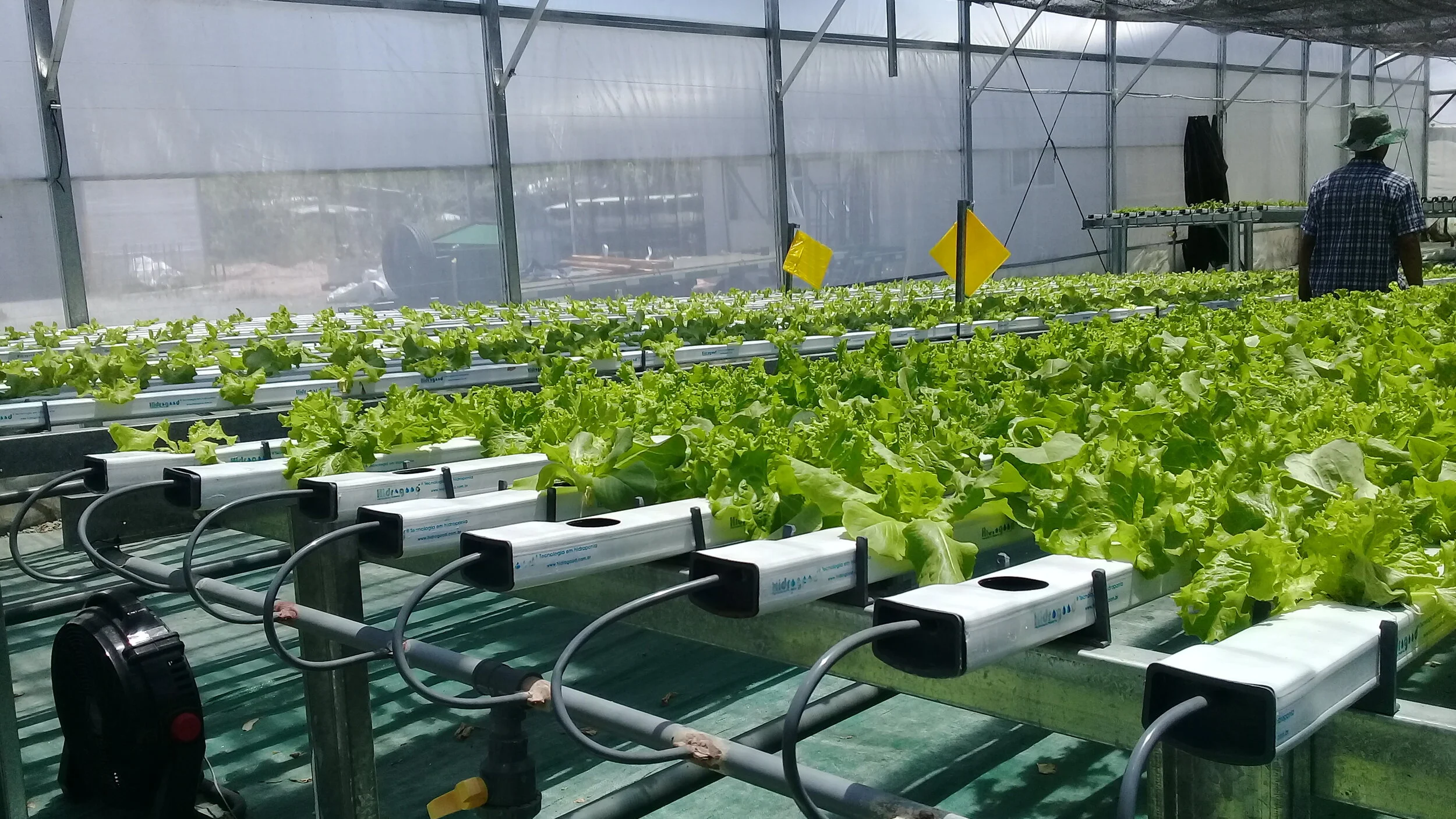
The cultivation in substrate and hydroponics consists of the production of vegetables without the use of the soil, for this reason, they are also called "cultivation systems without soil". When the roots develop in water it is called "hydroponics" and, when they do so in a solid medium, different from the soil, "substrate cultivation", using a great diversity of substrates and/or mixtures of them.
It is a production system that arises from the high degradation of soils, as a consequence of unsustainable management and inadequate practices, which is on the rise among producers as an alternative. This will be one of the topics that will be addressed on March 30 and April 6 and 8, 2021 in virtual form at the International Symposium on Substrate Culture and Hydroponics.
“It was found that with hydroponics, productivity and profitability are increased between 30 and 50%, due to the greater efficiency in the use of the surface and natural resources, and it reduces the use of agrochemicals”, Analía Puerta, coordinator National of the “Tierra Sana” Project, carried out by INTA together with UNIDO (United Nations Organization for Industrial Development), within the framework of the Montreal Protocol.
"In Argentina, the system began to be implemented more than 20 years ago in the ornamental sector, and it grew considerably in the last 5 years, extending to other sectors such as horticulture, citrus, and even for the production of green forage", underlined Puerta.
Along these lines, the most important productions in the hydroponic system correspond to leafy vegetables, such as lettuce, arugula and chard and, in the substrate system, the cultivation of tomatoes, strawberries and, to a lesser extent, peppers stands out.
In addition, the coordinator highlighted, “the well-being of workers is increased, since it improves the ergonomics of all operations, especially those of harvest, and the borders of the productive regions are expanded, allowing production in areas not suitable for cultivation, either due to health problems or the high real estate value of the surface ”.
Another benefit of these techniques is to allow access to fresh vegetables in specific situations, such as in places where the soil is not suitable for production, or directly where there is no soil, such as patios, terraces, landfills, contributing additionally to the promotion of short circuits of production and commercialization of vegetables.
According to Puerta, "it is important to highlight that this production alternative can be adapted to different production levels, from family farming to small, medium and large companies."
Puerta: "In Argentina, the system began to be implemented more than 20 years ago in the ornamental sector, and has grown considerably in the last 5 years".
This production system has established itself as a technology of recognized efficiency and massive implementation in developed and highly technical countries, such as Japan, the Netherlands, Spain and the United States.
According to data from 2015, the world area of crops under this production system (hydroponics and substrate) reaches 40 thousand hectares, with the Netherlands being the country with the largest covered area, with 5 thousand hectares, Spain with 2,500, Belgium and the United Kingdom with 2,000, Japan 1,500, as well as China, France 1,000, Israel 750, Canada 500 and the United States 250 hectares.
"Currently, there are productions of this type in all provinces of the country and, not only in traditional production areas, but there is a massive growth in urban areas," said the coordinator of "Tierra Sana". Along these lines, he added: "With this system the producer becomes independent of the quality of the soil and when the production is carried out undercover, the environmental conditions can be modified, especially the temperature, light intensity, and humidity of the environment".
Nowadays, there are commercial and self-consumption productions from the north to the south of the country, including promising experiences for the supply in the Argentine Antarctica. "In this sense, INTA has been contributing to the consolidation of this production alternative, through numerous research and extension activities carried out by agents from the different units of the country," said Puerta.
To date, there have been countless workshops and training courses and demonstration plots of strawberries and vegetables have been installed in the main productive areas of the country, promoted by the “Tierra Sana” project, in cooperation with units referring to the subject, and together to companies, producers and universities.
On the other hand, it should be noted that the development of these activities is part of the sustainable development goals ("SDG") outlined by current public policies according to the guidelines of the United Nations (UN) and being prioritized on the agenda. 2020-2030.
It is a production system that arises from the high degradation of soils, as a consequence of unsustainable management and inadequate practices, which is on the rise among producers as an alternative.
International Symposium
Currently, INTA is organizing an International Symposium on Substrate Culture and Hydroponics together with 5 universities in the country (UBA, UCC, UNLu, UNLP, UNNOBA), within the framework of the 41st Argentine Congress of Horticulture (ASAHO).
The event will take place on March 30 and April 6 and 8, 2021 in virtual form. It will have the participation of national and international referents who will speak about the latest advances in the field and exchange knowledge with the participants, productions from Argentina and other countries will be visited through virtual tours and there will also be a space for the presentation of scientific and Of disclosure.
Their reception is already open and is until December 31st. There are different registration modalities in order to offer a wide range of possibilities to participants.
"Through all these activities, it is hoped to be able to contribute to the consolidation of a scientific, technical and productive network that includes actors from the public and private sectors around the production of food in an efficient and sustainable way", concluded Puerta.

4 Young Visionaries Built A Thriving Business
Recently, in one of our most popular webinars of all time, Wihelmsson fired us up with Ljusgårda’s amazing story – building a thriving modern farm in what was once a factory, by “replacing the tractor with lights and the shovel with an iPad.”
17-12-2020
It all began in 2017 when three friends, Magnus Crommert, Cristoffer Barath and Erik Lundgren decided to try modern indoor farming. Our own Plant & Light Expert, Ida Fällström, remembers when Magnus visited our Göteborg office, introduced us to his team’s vision of modern farming, and left with an ELIXIA LED grow light under his arm. With that LED grow light, he started to conduct tests in his garage while the rest of the business took form, including bringing on a young business visionary, Andreas Wihelmsson, as partner and CEO. Fast forward to today, and their operation has grown to become Ljusgårda AB, a successful and sustainable climate certified farm in Tibro, Sweden.
Recently, in one of our most popular webinars of all time, Wihelmsson fired us up with Ljusgårda’s amazing story – building a thriving modern farm in what was once a factory, by “replacing the tractor with lights and the shovel with an iPad.” An enthusiastic evangelist for modern vertical farming, Wihelmsson explained, “We took the concept of farming outdoors and brought it indoors, creating a controlled ecosystem where we can grow under optimal conditions year-round. We have a facility here of 7,000 square meters. A year from now, we will have outgrown this facility and we will begin building the next one.” He continued, “If someone would have told me years ago that I would be growing salad for a living, I would have thought they were joking. Yet today thousands of families are eating our salad every week.”
What are the secrets to Ljusgårda’s overwhelming success? Here are 5 key things we learned in our webinar about starting a successful vertical farm:
5 Habits of a Highly Successful Vertical Farm
1. Quality Comes First
Wihelmsson commented that “More than 70% of all the fruits and vegetables Sweden eats are imported from other countries.” This leads not only to higher emissions but it also negatively affects plant quality and nutrients due to the transportation time. Because indoor vertical farming enables Ljusgårda to grow locally, they always get their products to store within 24 hours of harvest to retain quality and nutrition.
2. Give Your Customers What They Really Want (Not What You Think They Want)
Ljusgårda produces salad greens, including lettuce and arugula, for Swedish tables year-round. Wihelmsson noted, “When it comes to making a produce buying decision in Sweden, 7 out of 10 people say that one of the most important factors is that it's Swedish. Sustainability and price are also very important. We provide a great tasting Swedish product that is sustainable, and we sell it at roughly the same price as imported products.”
When it comes to giving customers what they want on an individual crop level, Ljusgårda is able to use LED grow lighting and intelligent controls to influence every phase of plant growth, from biomass development to finish and flavour. Wihelmsson commented, “One very interesting experience we had was with our rocket salad, the first product we launched. I remember our initial tryouts and it tasted terrible.” He laughed, “We were by far growing the worst tasting rocket salad in the world, but we became better. We developed a good product with a robust peppery flavour, and we went to grocery stores for people to try it. Their polite reactions were that it was okay, so we knew that we had it dead wrong. We progressed by altering our rocket salad’s flavour through lighting control and conducting countless in-house and in-store taste tests.”
Wihelmsson continued, “We realized that Swedes didn’t want a traditional strong rocket salad. They wanted a mild one. We have a term in Sweden, Lagom, which relates to balance – not too little, not too much. We ended up producing a milder rocket and outsold all other products in that store.” He concluded, “You don't always know what the customer actually wants until you test in person and can see their reaction. If in the future customers demand a spicier rocket salad, we can achieve that with our flexible LED lighting. We have the ability to control taste, nutrition, quality, colour, biomass, almost everything – because light has a huge effect on the plants. You just first need to figure out what your customer wants in their food.”
3. Control Your Light to Optimize Your Production
An intelligent LED lighting strategy can help you achieve your crop goals. We have worked with Ljusgårda to accelerate their production of arugula and reduce their production time by 19%, by making adjustments to their lighting strategies. Wihelmsson commented, “For us, light control is very important to our production. If we look at our collaboration with Heliospectra, we chose to go with ELIXIA LEDs because we needed maximum flexibility. The other reason was their positive effect on reducing power consumption.”
Ljusgårda has also found that flexible LEDs can help them control risk and even save crops. Wihelmsson noted, “Now that we have been running this farm for a few years, we’ve come to see that our flexible lights can actually be used to compensate for human errors, or things like the water tank failing or other issues. In such cases we have been able to change the spectrum to recovery lighting. Our LED lighting has meant a lot to us and the flexibility has been extremely important.”
4. Automate Step by Step (and Plan Several Steps Ahead)
Wihelmsson talked about the company’s approach to automation, “We had to redesign the system to be able to get it automated step by step and growing-wise it's been working. For us most steps in production will be semi-automated, leveraging a machine but with human beings still involved, while other steps will be fully automated.”
He cautioned, “You need to do the math and see where automation makes economic sense for you. Our approach is to look at what takes up the most labour, what is most costly in the whole economic calculation, and address it. We also run the numbers to plan ahead. For example, we are preparing some processes for automation, but we won't automate them until production volumes hit certain critical numbers. Overall, it’s best to take it one step at a time, starting with a semi-automated approach.”
5. Keep it Simple and Learn from Others
Rather than focusing on the high-tech aspects of their operation, Ljusgårda found that their consumers responded better to a simpler, more straightforward message. Wihelmsson commented, “We know that our consumers want local produce, and so it says three times on the bag that our salad is from Sweden. We keep our messaging and packaging simple, ensuring people know that we are passionate about growing great tasting, nutritious, and sustainable food that they can eat in good conscience year-round. This simple, positive message has helped put our bag salad in the top three in each and every store, and it’s even number one in several of them.”
If you are interested in starting your own vertical farming operation or taking your farm to the next level, Wihelmsson suggested that you try to learn from others who have succeeded. He commented, “We have something we like to call common farmer sense. It's a direct translation from Swedish, and it basically consists of us questioning all the solutions that are out there and always telling ourselves not to reinvent the wheel. See if any industry or any other grower has already taken an approach you want to try. Take a look at it, learn from it, and then start growing from there.”
Watch the entire webinar here.
Source and Photo Courtesy of Agritech Tomorrow
PODCAST: Charlie McKenzie - CropWalk
He is the Director of Partnership and Co-founder of CropWalk, a pest, disease, and production insights provider
Joe Swartz & Nick Greens | 12/18/2020
Charlie is a father of two, husband, horticulturist, biocontrol advisor, friend, and Georgia Bulldawg.
He is the Director of Partnership and Co-founder of CropWalk, a pest, disease, and production insights provider.

E. coli Strikes Again
On November 10th, the CDC issued a statement alerting us that E.coli has struck again, this time in a pre-packaged single-head romaine after several people became ill from eating E. coli contaminated lettuce
The World Is Scary Enough Without Our Lettuce Trying To Kill Us.
On November 10th, the CDC issued a statement alerting us that E.coli has struck again, this time in a pre-packaged single-head romaine after several people became ill from eating E. coli contaminated lettuce.
This calls us back to the past two Novembers where salad mix and commercial romaine were mass-recalled surrounding the most popular eating holiday in the US: Thanksgiving.
You might remember, the shelves all looked like this:
No lettuce as far as the eye can see. Photo: Washington State University
Lucky for us, the food system is slowly changing (too slowly), so that when E.coli strikes some lucky consumers can turn to small-scale indoor farmers in their area for salad greens that are not only safe, but also very tasty.
We know E. coli is bad... but what, exactly, is it?
E. coli is a bacteria found in the intestines of humans and animals.
That’s right...it’s inside of us.
Before you freak out, most strains of the bacteria are completely harmless. Unfortunately, the bad one that makes you sick (E. coli 0157:H7) is the one that’s currently in our lettuce. Womp-womp.
E. coli makes its way into the outside world… through poop. If the poop makes contact with food, you’ve got an E. coli contamination. If the poop makes contact with a lot of food, it becomes a full-on outbreak.
This isn’t just gross, it's dangerous. E. coli 0157:H7 causes intestinal infections (read: diarrhea, abdominal pain, nausea, vomiting, fever, and fatigue). In severe cases it can cause bloody diarrhea (*silent scream*), dehydration, kidney failure… even death.
This is awful. How the heck did it get on our lettuce?
The best explanation we have is animal or human poop infected the soil or water source at a big romaine farm. The scary thing is, this is only an educated guess. Since people might not start getting sick until several weeks after harvest, it’s hard to go back and try to figure out what actually happened at Ground Zero (or even where Ground Zero is).
Feel like you’re having deja-vu?
That’s because this happened literally the past two years! In 2018 we had three E. coli outbreaks in romaine alone, the worst of which was in the spring: There were reported outbreaks in 36 states with 210 infected, 96 hospitalized and 5 dead. Only months later, another outbreak struck 12 states with 43 infected and 19 hospitalized just after Thanksgiving. Since then, romaine-related Ecoli has been popping up all over the place. The most frustrating part is that it usually takes the CDC months to investigate, meaning we don’t even hear about these outbreaks until well after the dangerous food is long-forgotten.
By now you’re probably thinking…
Before you denounce all salad, forever, we may have a solution.
The problem is with the system as a whole.
The reason that E. coli outbreaks are so widespread is because we source 95 percent of our leafy greens from a few farms in California and Arizona. Those greens (romaine included), get harvested and amassed at big distribution points before making their way cross-country to stores and restaurants. This means zero transparency into where the E. coli originated, making it difficult to eradicate. Not to mention, a lack of regulations prevents any actual accountability. The result? We keep eating the nasty stuff, and more people get sick.
One solution is surprisingly simple… decentralization.
This problem wouldn’t exist if we moved away from a centralized food system to a distributed one with small indoor farms. Here's why:
(1) Small, indoor farms create total environmental control with all types of fancy filters and regular water tests. Plus, this prevents exposure to two common sources of E. coli: contaminated soil and animal waste.
(2) Decentralization = transparency. Lettuce from small farmers isn’t changing hands, like, a million times. In the event of an outbreak, we can easily trace it back to its source to confirm that it’s safe to eat. With a shorter supply chain, this process take days, not months.
(3) While chances of contamination in a small indoor farm are much, much, much smaller… it is theoretically possible. Distributed production means, even if you do have one contaminated small farm, the exposure is contained, so it’s still safe to eat lettuces from other local farms.
Cultivar Boston | Massachusetts, @chefmarydumont @cultivarboston
These are all things we know a lot of our farmers' customers appreciate about the Leafy Green Machine. Throughout this whole ordeal, they've had access to safe greens in their neighborhoods.
It’s always rattling to see how fragile our food system can be, and we hope this whole hoopla motivates policymakers, wholesalers, and shoppers to think more about how we source our food.
Want to be the change you want to see in the world?
Become a farmer
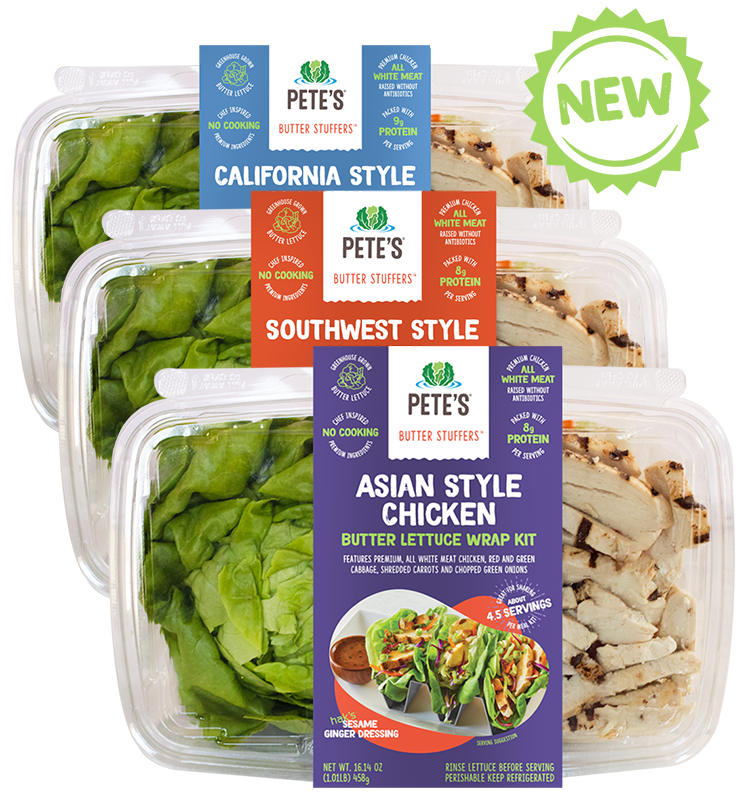
VIDEO: Pete's Introduces Hydroponically Greenhouse Grown Packaged Salad Varieties
Available in four varieties — Benevolent Butter, Hydro Spring Mix, Indoor Romaine and Nice & Crunchy — Pete’s Greenhouse Fresh offers environmentally-conscious consumers a range of fresh and sustainable packaged salad varieties that use 90 percent less land and water compared to field grown product
December 17, 2020
Pete’s, the California-based produce company specializing in hydroponically grown living lettuce and cress varieties in addition to butter lettuce wrap kits, will debut an innovative and sustainable new line of packaged salad varieties, Greenhouse Fresh, in retail locations in and around the West Coast in early January.
Available in four varieties — Benevolent Butter, Hydro Spring Mix, Indoor Romaine and Nice & Crunchy — Pete’s Greenhouse Fresh offers environmentally-conscious consumers a range of fresh and sustainable packaged salad varieties that use 90 percent less land and water compared to field grown product.
These indoor-grown lettuce varieties are also protected from outside elements and do not use triple washing post-harvest the same way many traditionally grown greens do, resulting in less water used during the harvesting process.
In addition, Greenhouse Fresh packaging containers are made from 100-percent post-consumer recycled material, are 100-percent recyclable, and their flexible, resealable closures use less plastic and emit less CO2 than rigid plastic closures.
Pete’s is also partnering with 1 percent For The Planet, pledging 1 percent of Greenhouse Fresh sales to The Recycling Partnership in an effort to help improve the recycling system.
“We are honored Pete’s chose to expand its dedication to sustainability by joining The Recycling Partnership, and by nominating The Partnership to receive funds through its 1 percent For the Planet commitment, ” said Beth Schmitt, senior vice president of corporate engagement at The Recycling Partnership. “Pete’s investment helps us further our goals of assisting every household to recycle more, recycle better, and to catalyze a circular economy.”
Pete’s is an employee-owned and operated company, and all team members play a key role in the company’s short and long-term sustainability efforts.
“All of us at Pete’s are thrilled to introduce a line of packaged salad varieties, that as we like to say, are as green as greens can get,” said Brian Cook, chief executive officer of Pete’s. “At Pete’s, we work as a team and everything we do, we do for the greater good of people, of the planet and of course our leafy greens. Greenhouse Fresh is a perfect example of how our new products ladder back to our broader company mission, vision and values.”
Pete’s Greenhouse Fresh will be available at West Coast area retailers beginning in January and can be found in the Produce Department.

Food Trends Suppliers Should Know to Stay Ahead of the Curve in 2021
With growing concerns about climate change, sustainability and healthy living, 2021 will bring new trends to the food industry. Plant based foods are expected to increase in popularity as more people try to consciously live a more sustainable life.
From insects and pumpkin-seed oil to Brad Pitt-branded wine and transparent packaging, these are the food trends expected to take the U.S. by storm in 2021.

What Will People Be Eating in 2021?
It’s predicted that Americans will be consuming a lot more of the following foods and drinks in 2021:
Insects — According to Forbes, 2.5 billion people around the world eat cooked or raw insects regularly. Many in the U.S. still consider the concept of insect consumption a little grotesque, but attitudes are expected to shift in the coming months with several startups, including Exo cricket protein bars in New York, securing significant funding from investors.
Boxed wine — It’s hard to believe that boxes of wine were considered classy before they were tacky. But in 2021, consumer appreciation for boxed wine is predicted to return. It’s easier to store, cheaper to transport, generates half the carbon dioxide emissions, and has a longer shelf life than its glass-bottled counterparts.
Alternative oils — Whole Foods Market predicts that consumers will become more experimental in their use of oil, choosing walnut, pumpkin seed, and sunflower seed oil over traditional options like olive oil.
Celebrity alcohol — There was an arguably better time when everyone knew someone who wore the Britney Spears perfume. But in 2021, it’s all about Brad Pitt’s rosé and Cara Delevingne’s prosecco, as alcohol brands and vineyards look to drive revenue through partnering with big-name celebrities.
Kombucha — Kombucha is a fermented, lightly effervescent, sweetened black or green tea drink that first hit the mainstream in 2018. Since then, its health benefits have been lauded, and the drink has been growing in popularity. It’s gluten-free and can be filled with live probiotic cultures.
Sweet and Umami — The Green Seed Group suggests that the big flavor combination of 2021 will be umami and sweet. Think rice infused with fish sauce caramel and nori and pork floss.
How Will People Be Eating in 2021?
It’s not just what people eat and drink that will change in 2021, but the entire culture surrounding it.
COVID-19 has contributed to a rise in passionate amateur chefs. With so many people spending much of 2020 stuck at home with extra time on their hands, cooking has become something of an outlet. Indeed, 74% of respondents to a Sensodyne/OnePoll survey said they used cooking as a coping mechanism to manage the stress of being at home, 44% have learned a new recipe, and 32% have taken online cooking classes.
Reduced access to on-the-go, takeout food has seen breakfast truly become the most important meal of the day, and the demand for interesting and diverse breakfast recipes will increase into 2021. Cooking enthusiasts are also investing more time and effort in making baby food and looking for creative takes on staple meals.
Coupled with this newfound enthusiasm for cooking is, unsurprisingly, a newfound enthusiasm for health and wellbeing. Forbes reports that 54% of American consumers care more about the healthfulness of their food and beverage choices in 2020 than they did in 2010. This will see demand for superfoods, probiotics, and supplements grow in 2021, with many food suppliers already incorporating functional ingredients like vitamin C which promise to support the immune system. In a June 2020 survey conducted by GlobalData, 23% of global consumers confessed to stockpiling vitamins and supplements.
COVID-19 has certainly driven Americans to evaluate the relationship they have with food and drink but, fortunately, extreme diets and food fads are expected to lose popularity in 2021. Instead, people are expected to take a healthier and more sustainable approach to healthy living by embracing balance and moderation.
How Will Food and Drink Be Packaged in 2021?
Before COVID-19, food and drink packaging was headed in a very sustainable direction, with consumers increasingly concerned about excess waste and ocean-bound plastics.
But the pandemic has led to increased concerns about biosafety, particularly surrounding the packaging of food and drink. In recent years, many retailers have committed to eliminating unnecessary packaging, but some of these efforts will likely be undone in 2021 due to health and safety concerns and retailers’ desire to reassure their customers. Starbucks, for example, banned the use of reusable cups at the beginning of the coronavirus outbreak.
Despite these setbacks, developments in sustainable and environmentally friendly packaging will continue in 2021.
Other trends will include an increase in transparent windows within food packaging that allow consumers to assess product quality, and QR codes, which can verify product and ingredient claims.
How Will Attitudes to Sustainable Living Change in 2021?
More than two-thirds of consumers want to ensure their everyday actions have a positive impact on the environment. This includes an interest in sustainably produced items, and a shift towards the consumption of plant-based proteins: in 2020, 28% of Americans ate more proteins from plant sources than they did in 2019. Another sustainability trend will see food suppliers up-cycling underused ingredients in a bid to reduce food waste.
Although the year 2021 won’t include a country-wide shift to veganism, retailers can expect increased demand for plant-based food as consumers commit to a more balanced diet and look to reduce their meat and dairy intake.
Image Credit: Rido / Shutterstock.com
Laura Ross Dec 15, 2020

VIDEO: Reviving Urban Life - An Innovative Soil-Based Indoor Vertical Farm That Brings The Production of Food to The Place It Is Consumed
One revolutionary agro-tech company, Vertical Field (www.verticalfield.com), is harnessing the power of geoponic technology, agricultural expertise, and smart design to tackle all of these issues and more
VERTICAL FIELD’S NEW PORTABLE FARMS ARE MAKING
THE WORLD MORE SUSTAINABLE – AND BETTER FED
Consistent Supply
Reduces Inventory Waste
Less Human Handling
More Sterile Environment
[DEC 9, 2020, New York/Rana’na, Israel] – Urban areas contain more than half the world’s population and contribute to some 70% of the planet’s energy emissions. Cities guzzle the bulk of Earth’s resources and produce more waste. Many residents live in “urban food deserts.” And buildings are literally making their occupants sick.
Vertical Field’s Urban Crops offers an ideal alternative to traditional agriculture. The soil-based platform can grow hundreds of types of crops – pesticide-free, indoors or outdoors – and requires no training to operate.
Our planet is home to some 7.7 billion people. In many places, hunger is a reality. Unpredictable climate patterns are threatening the availability and stability of fresh produce. Yet the global population is rising. How will we feed the world by the mid-21st century, when an expected 10 billion of us need food? And now in-light of the COVID-19 pandemic, the food supply chain is in jeopardy more than ever before -- the need to bring food easier and faster directly to consumers is more important than ever.
One revolutionary agro-tech company, Vertical Field (www.verticalfield.com), is harnessing the power of geoponic technology, agricultural expertise, and smart design to tackle all of these issues and more. The Israeli startup – cited by Silicon Review as a “50 Innovative Companies to Watch in 2019” and named by World Smart City in 2019 as “Best Startup” – produces vertical agricultural solutions that help the environment, improve human health conditions, cut down on human handling, reduce waste, and make fresh, delicious and more produce available 365 days a year locally and directly to consumers and other end users.
“Vertical Fields offers a revolutionary way to eat the freshest greens and herbs, by producing soil based indoor vertical farms grown at the very location where food is consumed,” said Vertical Field’s Chief Executive Officer, Guy Elitzur of Ra’anana, Israel who is hoping to place his ‘vertical farms’ in retail chains and restaurants establishments in cities throughout the US.
“Not only do our products facilitate and promote sustainable life and make a positive impact on the environment, we offer an easy to use real alternative to traditional agriculture. Our Urban farms give new meaning to the term ‘farm-to-table,’ because one can virtually pick their own greens and herbs at supermarkets, restaurants or other retail sites,” he adds.
Vertical Field’s Urban Crops offers an ideal alternative to traditional agriculture, especially in urban settings where space is scarce. The soil-based platform can grow hundreds of types of crops – pesticide-free, indoors or outdoors – and requires no training to operate.
From Wall to Fork
Vertical farming in cities is an energy-efficient, space-saving, farming alternative to traditional crops grown in acres and fields. Thanks to Vertical Field, everyone from city planners and architects to restaurants, supermarkets, hotels are using vertical farming to create lush, green edible spaces in congested areas around the world.
Portable Urban Farm
An alternative to the living wall is Vertical Field’s unique Vertical Field®, which can be placed in either a 20-ft or 40-ft. container equipped with advanced sensors that provide a controlled environment. This technology constantly monitors, irrigates, and fertilizes crops throughout every growth stage. Healthy, high-quality fruits and vegetables flourish in soil beds that contain a proprietary mix of minerals and nutrients.
Advantages of Vertical Field’s Vertical Farm:
Bug-free and pesticide-free – healthy, fresh, and clean produce
Less waste – uses 90% less water
Shorter growing cycles, longer shelf life
Plants are “in season” 365 days/year - grow whatever you want, no matter the weather or climate conditions of the geography
Consistent quality
Modular, expandable, and moveable farm
Automated crop management
More Sterile Environment
Less Human Contact
Creating a more sustainable way of life in cities across the globe has never been more urgent. Vertical Field is responding to the challenge today. Green cities will enrich life in urban areas, provide healthier and better food, and shorten the distance between consumers and their food.
About Vertical Field: Vertical Field is a leading agro-tech provider of vertical farming and living green wall solutions for urban environments and smart cities. The company is operated by professionals, agronomists, researchers, and a multi-disciplinary team, enabling the development of smart walls that combine the best of design and manufacturing, smart computerized monitoring, soil-based technology, water and lighting technology, and more. Vertical Field delivers next-generation vertical farming systems for a global clientele, including Facebook, Intel, Apple, Isrotel, Microsoft, and many more.