


Welcome to iGrow News, Your Source for the World of Indoor Vertical Farming

Increasing Lettuce Leaves' Fresh Weight by Light Treatments
Italian researchers dove into the matter and trialed three spectra to see what the effects would be on the crop and what the potential is for growing vegetables at your house
While red light is widely considered the visible spectral region with higher effects on photosynthesis, the amount of blue required for different species is an ongoing question. Italian researchers dove into the matter and trialed three spectra to see what the effects would be on the crop and what the potential is for growing vegetables at your house.
By Mattia Accorsi PhD (1); Federico Carotenuto PhD (2)
1) Biologist2) Researcher CNR IBIMET Florence
Light-spectrum manipulation
The research deepen the enhancement of the nutraceutical components in indoor primary production through only the light-spectrum manipulation. To achieve the experimental results was built, in collaboration with the Department of Agronomical Sciences (University of Bologna), an integrated and automated indoor prototypal growing system. In the prototype different state-of-the-art LED lighting lamps prepared ad hoc by C-LED (www.c-led.it) are compared in order to pinpoint the best spectral characteristics for food production as well as the most energy-efficient solution.
Material and methods: Sampling Location, hydroponic system, and plant material
Indoor growing system was divided into three sectors separated by a non-reflective opaque membrane. Each sector held two draining trays with 8 pots each containing a 50:50 perlite-vermiculite growing medium. The automated irrigation system dispensed 30” of irrigation each three hours from 6:00 to 22:00 (local time) and again at 2 am. A 200 liters tank, refilled weekly, was used as the water reservoir. To the irrigation water were added a series of nutrients. Room temperature was regulated at 18 ± 2 °C between 8 am and 20 pm, and at 16 ± 2°C between 20 pm and 8 am, by the building HVAC system. Each sector (i.e.: each of the three columns with three shelves each) had a specific light spectrum supplied by different LED lamps. Each shelf (i.e.: each row of the scaffolding) contained one of the three varieties of lettuce (Lactuca sativa L.): var. Maravilla de Verano, var. Lollo Rosso, and var. Crispa. In this way, each variety was illuminated by the three different spectra, therefore generating nine combinations between variety and lightning.
Agronomical and morphological determination
Determinations on the number of leaves, LAI, and growth rate were conducted weekly for the entire duration of the plants’ growth since the transplanting (Zink and Yamaguchi, 1962). Plants’ biomass in fresh weight (FW) and dry weight (DW) production were analyzed at harvesting time. Values of electroconductivity (EC) and pH of water tank and drainage was checked three times per week with a conductometer model Basic 30 (Crison instrument, Barcelona, Spain). The content of nitrogen in the leaf tissues was measured weekly utilizing a Yara N-Tester (Oslo, Norway), taking thirty measurement per plant. Vegetables’ yield was related to the lamps’ energetic consumption in order to evaluate the energy use efficiency (EUE) and expressed as g kW-1.
Figure: Morphology of three lettuce varieties (Meravilla de Verano, Crispa and Lollo Rosso), treated with three light spectra at 200 PPFD. Picture acquired at harvesting time (30 DAT). Effects on color intensity (green index) and pigment composition will be deepen in next article.
Biochemical determination
At harvesting time, 30 days after transplanting, a portion of leaf tissues of different theses were collected and stored in polyethylene bags at -20°C until processed. Extraction and quantification of total phenolic and flavonoid contents was conducted as described in Piovene et al. (2014). Antioxidant capacity was determined with the 1,1-diphenyl-2-picrylhydrazyl (DPPH) method as described by Floegel et al. (2011), in order to evaluate the additive and synergistic effects of all antioxidants rather than the effects of single compounds (Brighenti et al., 2005; Puchau et al., 2009).
In all lettuce varieties, leaves’ fresh weight was significantly increased by light treatments. Thesis A (110±34g) and C (112±42g) determined a better production in respect to B (90±34g) as shown in figure. Between three lettuce varieties, at 30 days after transplanting (DAT), Meravilla de Verano showed the highest fresh biomass production with 135±28 grams per plant while Crispa and Lollo Rosso varieties had a production of 104±31g and 72±25g respectively. Dry: Fresh biomass ratio (DFr) revealed opposite trend with respect to total fresh food production: treatment B showed higher DFr with values of 1.34±0.15. These values were significantly different in respect to A (1.25±0.12 ) and C (1.10±0.98).
Discussion: Light characteristics and physiological implications
An increasing interest in indoor growing within the urban area is reflected in a multiplication of commercial solutions making use of soilless systems and precision agriculture techniques (Massa et al., 2008; Poulet et al., 2014; Specht et al., 2014). Differently to artificial lighting technologies such as HPS and fluorescent lamps, LED lighting allows a concrete energy saving and to choose the light spectrum for specific purposes (Ilieva et al., 2010). Continuous advancements in LED technology, allow in-depth research on physiology and biochemistry of plants, two-sector of botany strictly correlated with the quality and quantity of the incident light (Horton, 2000; Poulet et al., 2014).
While red light is widely considered the visible spectral region with higher effects on photosynthesis, the amount of blue required for different species is an ongoing question. Red wavelengths (600-700nm) contain the peak absorption of chlorophyll around 660nm (Massa, 2008). Photosystem I (PSI) and photosystem II (PSII) intercept photons respectively around 650nm (PSII) and 700nm (PSI) (Schopfer and Brennicke, 2010). Blue wavelengths (400-500nm) revealed a variety of important morphological (Blaaw and Blaauw-Jansen, 1970; Cosgrove, 1981), and physiological (Schwartz and Zeiger, 1984; Kinoshita et al., 2001; Horrer 2016; Wang et al., 2016) effects.
In this project, all three light spectra integrate a low percentage (8-19%) of green light. These wavelengths were added to continue the work of Piovene (2015) that identified a specific combination of BRr and green for stimulation of biomass production and nutraceutical characteristics. Other works in literature in mentioned green wavelengths for positive effects towards functional compounds content (Samuolienė et al., 2012) and physiological response to photosynthetic light (Kim et al., 2005; Johkan et al., 2012).
How light spectra influenced food production
This study did not identify the correlation between the percentage of green light and biomass production or nutraceutical characteristics (statistical data not shown) contrary to what stated by the work of Kim et al. (2005) who found positive influence in biomass production with the addition of 24% of green light. Anyway, green light, especially if added to the only red and blue LED, completes the visible spectrum and hence helped in the aesthetic presentation of the plants which appeared less purplish-gray and more natural. Therefore, the latter effect of green light within a growing spectrum, would help in better fitting the plant in the indoor living environment for human purposes and ease the identification of disease onset (Massa et al., 2008).
Figure: Study of LED C-LED lamps in collaboration with an italian university. Range of PAR, UV and Far-red are deeply analizyed in product prototyping process.
The food production has shown significant differences between lettuce varieties and light spectra. Taking into consideration only the lettuce varieties, Meravilla de Verano showed the best yield in respect to Crispa and Lollo Rosso. Light spectra, on the other hand, confirmed that the optimal ratio between red and blue has great relevance in influencing crop yield. While a certain quantity of blue light is necessary for a proper physiological balance (Yoro et al., 2001), this study showed that lower BRr has a positive influence on food productivity across lettuce varieties in accordance with previous researches (Wang et al., 2016). In general, it seems that the optimal BRr is somewhat species-specific since, for example, leafy aromatic vegetables showed better biomass production with a higher percentage of blue wavelengths (Piovene et al., 2015; Abiusi et al., 2013). On the other hand, strawberry showed an improvement of vegetative growth when the red percentage was higher than blue, although compensated by a background white light (Samuoliené et al., 2010)
In fact, many researches points out how plants require a complex spectrum that may include green: this parameter increase the difficulty to choose the “correct” light recipe, considering a number of factors such as specific species-varieties- phonological stage requirements (Wang et al., 2016; Kim et al., 2005).
Nutraceutical implications
Different studies described how BRr influences nutraceutical properties in vegetables grown in indoor condition (Bantis et al., 2015; Piovene et al., 2015). Correlation between polyphenols and flavonoids content with antioxidant capacities has been documented (Dudonne´ et al., 2009; Samaniego Sanchez et al., 2007; Puchau et al., 2009). Polyphenols have an important antioxidant capacity determined by their ability to act as radical scavengers (Carter et al., 2006; Fardet, 2010). In nature, polyphenols are generally accumulated in plant tissues as response to external factors (Loaiza-Velarde et al., 1997). In indoor controlled growing system water, nutrition and microclimate are generally optimized: a particular light spectrum may therefore improve nutraceutical properties through photochemical induction and may, therefore, have a dramatic importance for human nutrition.
The three-light theses tested in this project revealed significant effects on the functional compounds such as phenolics and flavonoids, as well as the antioxidant activity. These data confirm previous works conducted with LED light manipulation (Piovene et at., 2015). In this work, antioxidant activity showed), an attitude of blue light to improve the antioxidant properties of lettuce (Figure 8) with a good correlation coefficient (R2=0.776). This is in accordance with previous researches that correlated the amount of flavonoids and antioxidant activity with blue light stimulation (Ebisawa et al., 2008; Kojima et al., 2010; Ouzounis et al., 2016). Blue light revealed also to be effective in increasing chlorogenic acid (Awada et al., 2001), that has higher antioxidant activity than carotenoids and tocopherols (Rice-Evans et al., 1997).
Fresh food possesses significant amounts of antioxidant and, due to its regular consumption, highly contributes in providing dietary antiradical protection (Deng et al., 2013; Harasym and Oledzki, 2014). Generally, fresh fruits have higher level of total polyphenols, total flavonoids and antioxidant capacity than vegetables (Chun et al., 2005) but, due to the higher consumption of vegetable the antioxidant uptake may be much lower. In epidemiologic studies (Chun et al., 2005) the daily nutraceutical uptake may be estimated at 129mg for TPC and 17mg for TFC.
The indoor experimental structure tested in this study guaranteed a certain TPC and TFC production. Considering the average consumption of 0.27 Kg d-1 person-1 (Leclercq et al., 2009; USP-BO 2013) is possible assert that indoor soilless system lighted with all LED spectrum allowed an average uptake of 6% of TPC and 6.2% of TFC.
Figure: Fresh weight of yield (g plant-1) correlated with Blue:Red ratio highlighted with empty circles (○); Antioxidant activity (DPPH) correlated with Blue:Red ratio highlighted with full circles (●).
Read more on the indoor food production sustainability and the conclusion of the research here.
Lead photo: Figure: Experimental vertical farming system realized in C-LED headquarters. Lettuce varieties at 30 DAT (harvesting time). From right to left: spectra thesis A, B and C. From top to bottom lettuce varieties: Lollo Rosso, Meravilla de Verano and Crispa
27 Oct 2020

US: Kentucky Fresh Harvest And AppHarvest Advance Kentucky’s Horticultural Sector
Kentucky Fresh Harvest (KFH) has held a ribbon-cutting ceremony at its Stanford, KY commercial greenhouse operation based at a 30-acre campus and on the latest in AgTech including a complete controlled environment
Two large commercial growers anchor an organized AgTech push by the state of Kentucky, and the greenhouses involved will consume many LED-based luminaires for supplemental lighting.
October 19th, 2020
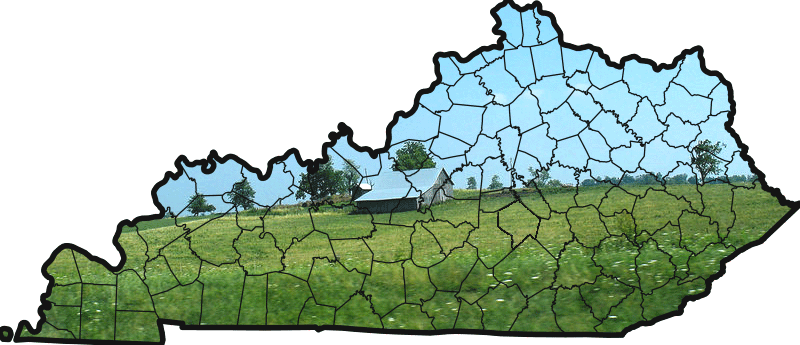
Kentucky-based organizations look to expand the state’s AgTech and horticultural businesses, with Kentucky Fresh Harvest and AppHarvest leading the way toward more LED-based lighting penetration in controlled environment agriculture. (Image credit: Kentucky farm graphic created by Stevietheman from public domain image and CC-BY-SA 2.5 licensed image, via Wikimedia Commons; available for use under CC-BY-SA 2.5. Licensing information available at http://bit.ly/3dGv3fH.)
Kentucky Fresh Harvest (KFH) has held a ribbon-cutting ceremony at its Stanford, KY commercial greenhouse operation based at a 30-acre campus and on the latest in AgTech including a complete controlled environment. The operation will grow tomatoes year round at a location that’s within a one-day truck ride to two thirds of the US population. Meanwhile, AppHarvest, which we have covered before, has announced plans to go public and raise additional capital for expansion and its 60-acre facility in Morehead, KY.
Both AppHarvest and KFH are part of the state of Kentucky’s AgriTech Advisory Council that Governor Andy Beshear formed back in July to boost the AgTech industry in the state. “AgriTech is the future of agriculture, and Kentucky is uniquely positioned to embrace and deliver on it,” said Beshear. “Being the global leader in the AgriTech industry not only will make Kentucky’s farms more productive and efficient, but also will benefit every citizen and every region of the commonwealth in creating industry and jobs.” The state further launched a dedicated website dedicated to AgTech called Kentucky AgriTech.
Kentucky Fresh Harvest
KFH has developed truly a controlled environment agriculture (CEA) setting for its tomato-centric operation. The farm says it recycles all water and nutrients not absorbed by around 13,000 plants, and cleans and recycles that captured fluid for reuse. The farm labels it a closed-loop irrigation system.
The greenhouses feature a mix of LED-based solid-state lighting (SSL) and high-pressure sodium (HPS) lighting. Such hybrid scenarios have become increasingly common because the HPS luminaires do double duty during cool weather, delivering both light and heat to the plants. KFH says that it further injects CO2 into the greenhouse on dark days to boost photosynthesis and increase natural sugar production. The farm is based on an AgTech control platform from InData.Farm.
Kentucky Fresh Harvest runs a true controlled environment agriculture (CEA) operation in Stanford, KY, growing tomatoes under ideal conditions year round with sophisticated water, lighting, and environmental management systems. (Photo credit: Image courtesy of Kentucky Fresh Harvest.)
“I’m extremely proud of our team at KFH,” said Curt Meltzer, CEO of KFH. “Not just for growing and harvesting this pilot crop during an extremely challenging time, but for the multitude of other steps they’ve taken this year to bring our vision for the Future of Farming to fruition. This is a win for Stanford, Lincoln County, and Kentucky’s agribusiness economy as a whole.”
“Kentucky Fresh Harvest is the type of company we envision can help strengthen our state’s economic potential, not just in the years ahead but for generations to come,” said Beshear. “The company bringing its operation on line during such a tumultuous time is a testament to their staff’s ability to adapt quickly and be prepared for any challenge. Kentucky Fresh Harvest has a bright future and I’m proud it will be here in the commonwealth.”
AppHarvest
Moving to AppHarvest, that grower is even larger than KFH. We first covered AppHarvest a little more than a year ago when the company and its partner Signify said that the Morehead operation would have the most LED lighting of any building in the world. Moreover, the farm was one of many horticultural operations to garner significant venture investments. That investment had totaled near $100 million when we first reported on AppHarvest. AppHarvest also spoke at our HortiCann Light + Tech Conference last year, and note that the virtual HortiCann 2021 begins Tuesday, Oct 20.
Now AppHarvest is turning to the public market to raise additional cash. The move to go public will be executed via a merger of the existing AppHarvest business with Novus Capital Corp (Nasdaq: NOVS). Following the close of that deal, the new company will still be named AppHarvest and will be traded on the NASDAQ exchange under a new ticker symbol. AppHarvest founder and CEO Jonathan Webb will lead the new company.
The move to go public is being supported by existing and new investors including Novus Capital, Fidelity Management & Research Company, and Inclusive Capital. AppHarvest expects the move to provide $475 million in gross proceeds. The cash will allow AppHarvest to expand and build more farms throughout the Appalachia regions.
“We are excited to transition AppHarvest to a public company and raise nearly a half a billion dollars in the process,” said Webb. “This will allow us to pursue our mission of transforming agriculture. A mission that’s become even more important since the global pandemic exposed how a rapidly increasing reliance on imports jeopardizes food security. We now know that, to build a more resilient food system that meets our growing population demands, we must immediately start building controlled environment agriculture facilities, as these farms use far fewer resources to grow far more produce. We believe that this partnership with Novus Capital is a transformative transaction which will allow us to both rapidly scale our agriculture facilities, in pursuit of our goal to redefine American agriculture, and build the country’s AgTech capital within Appalachia. Together we can transform agriculture.”
“AppHarvest is a unique and compelling investment opportunity that is redefining American agriculture by improving access for all to fresh non-GMO produce, growing more with fewer resources, and creating an AgTech hub from within Appalachia,” said Bob Laikin, chairman of Novus Capital. “With significant tailwinds from heightened investor focus on ESG [environmental, social, and corporate governance] initiatives and the secular shift to plant-based foods, we believe AppHarvest is well-positioned to execute on its strategy for rapid growth and value creation.”
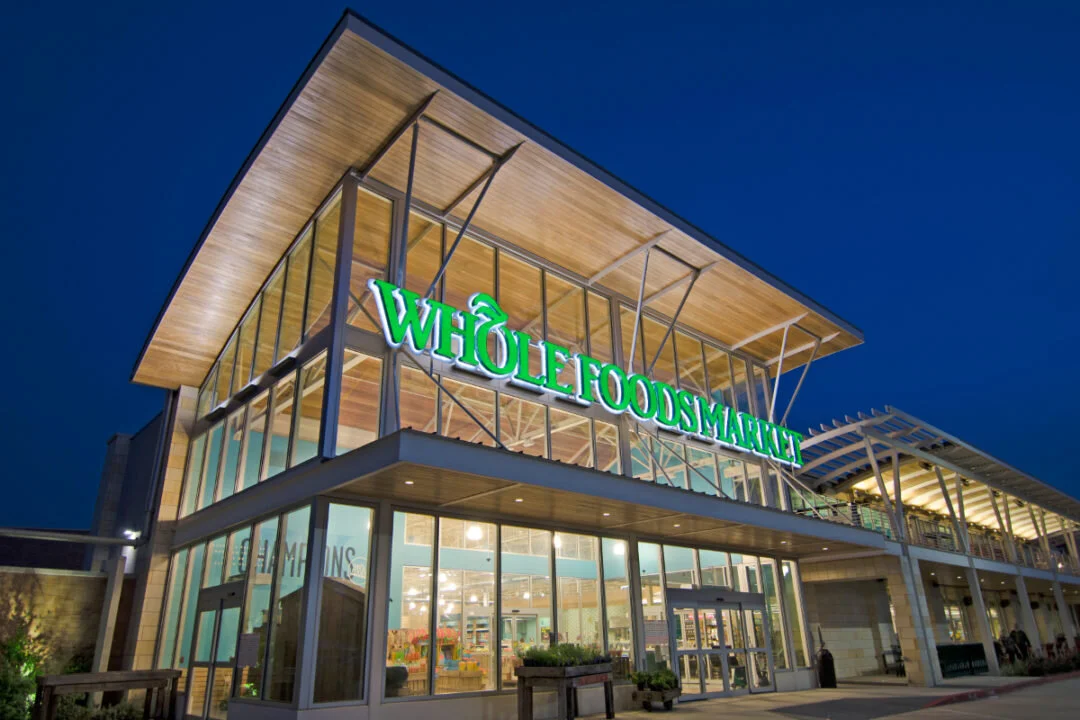
Whole Foods Brings Vertical Farms To Select UK Stores
"We are excited to partner with Infarm to offer a truly hyper-local selection of greens and herbs across all of our London stores,” said Jade Hoai, director of purchasing and operations at Whole Food
10.28.2020
By Emily Park
LONDON – Whole Foods Market is installing vertical farms at the retailer’s seven London stores in a partnership with Infarm, an urban farming network. The vertical farms provide a flexible supply as needed, allowing shoppers to always have access to fresh produce, according to the company.
"We are excited to partner with Infarm to offer a truly hyper-local selection of greens and herbs across all of our London stores,” said Jade Hoai, director of purchasing and operations at Whole Foods. “Whole Foods Market customers can expect to find fresh, unique herbs from Infarm's vertical growing units like Bordeaux purple basil, that are grown locally, have no pesticides, and use a fraction of the traditional resources required to grow. We are excited about this relationship for its joint commitment to environmental stewardship and for the delicious, nutritious meals our customers will be crafting at home."
The partnership between Infarm and Whole Foods Market aims to satisfy increasing consumer demand for sustainably grown products, helping customers to make healthy choices and reduce their food waste.
Infarm units use 95% less water and 90% less transport than traditional agriculture, as well as 75% less fertilizer and no pesticides. Measuring just 2 square meters, Infarm's instore farms produce more than 8,000 plants per year.
Lead photo: Source: Whole Foods
Israeli Start-Up Makes Vertical Farms To Grow Crops In City Parking Lots
The farms come with a number of other advantages over traditional farming. It's container-like nature provides a controlled growing environment, ensuring more sterility and keeping it safe from bugs and therefore not needing pesticides. It also allows for automated crop management, which limits human contact and allows for consistent quality
Vertical farms subvert the space limitations of cities by allowing for portable, shipping container-esque produce farms that can operate in any urban environment.

By AARON REICH
OCTOBER 28, 2020
Vertical Field’s Urban Crops offers an ideal alternative to traditional agriculture.
(photo credit: VERTICAL FIELD)
An Israeli agri-tech start-up has created vertical farms in urban environments, allowing for fresh produce to be grown in cities.
These vertical, sustainable farms were developed by Ra'anana-based Vertical Field through the use of geoponic technology, agricultural expertise and smart design. This is especially useful in "urban food deserts," which are often lacking in available space for crop cultivation.
The vertical farms subvert this limitation by creating vertical growing platforms to essentially farm produce on walls. These greenhouse crop-fields are portable, and are around the size of shipping containers ranging from 20 feet to 40 feet, which can fit right in a parking lot, allowing supermarkets and groceries to grow and sell their own home-grown produce right outside the door.
The farms come with a number of other advantages over traditional farming. It's container-like nature provides a controlled growing environment, ensuring more sterility and keeping it safe from bugs and therefore not needing pesticides. It also allows for automated crop management, which limits human contact and allows for consistent quality.
Furthermore, it also produces less waste, as well as a 90% decrease in the amount of water needed.But perhaps most importantly, it isn't limited by traditional seasons for produce, with all crops being "in season" year-round, having shorter overall growing cycles and longer shelf lives.
And, by growing produce locally, it also reduces wasted emissions in the supply chain.The development builds off of Vertical Fields's successes in 2019, where it was recognized among the top start-ups to watch by Silicon Review and World Smart City.
“Vertical Field offers a revolutionary way to eat the freshest greens and herbs, by producing soil-based indoor vertical farms grown at the very location where food is consumed,” said Vertical Field’s CEO Guy Elitzur, who is hoping to place his vertical farms in retail chains and restaurant establishments in cities throughout the US.
“Not only do our products facilitate and promote sustainable life and make a positive impact on the environment, we offer an easy to use real alternative to traditional agriculture. Our urban farms give new meaning to the term ‘farm-to-table,’ because one can virtually pick their own greens and herbs at supermarkets, restaurants or other retail sites.”
The development of these vertical farms comes at the perfect time, with the coronavirus pandemic cutting off the produce supply chain on both local and global levels. And with the population still growing, and projected by some to reach 10 billion in around 30 years, the need to maintain a sustainable source of fresh produce has become a mounting concern.
This also ties in with a growing demand for fresh and organic foods on the global market. As seen at Tuesday's 2020 Israeli Culinary Expo, more and more consumers are seeking plant-based food products, which translates to a growing demand for fresh produce.
But with Vertical Field's innovative new crop cultivation method, everyone from restaurants, supermarkets, hotels, architects and urban developers can have their own ready supply of local produce.Hagay Hacohen contributed to this report.
Tags food hi-tech Farming Coronavirus COVID-19

CONFERENCE: Vertical Farming In A Nordic Context - November 13, 2020
The conference will gather industry, policy, and academic stakeholders with the aim of increasing cooperation and accelerating the development of the vertical farming sector in Scandinavia
NOVEMBER 13, 2020
COPENHAGEN, DENMARK
Read More and Register
The Association for Vertical Farming is proud to be part of the “Vertical Farming in a Nordic Context” conference in Copenhagen. The conference will gather industry, policy, and academic stakeholders with the aim of increasing cooperation and accelerating the development of the vertical farming sector in Scandinavia.
Vertical farming is an innovative way of producing fresh food close to consumers with minimal consumption of water and no use of pesticides. In Nordic countries, the interest for vertical farming is currently growing and new farms are established at an increasing rate. To further strengthen this production form in a Nordic context, the Innovation Network for Bioresources, Food & Bio Cluster Denmark, and the University of Copenhagen are hosting a conference on vertical farming on November 13th, 2020. At the conference, you will meet speakers with hands-on knowledge, business developers, researchers, and authorities. We encourage vertical farmers, the agricultural industry, the scientific community, policymakers, authorities, and everyone with an interest in vertical farming to participate in the conference to build networks and share knowledge.
Focus topics at the conference are:
Plant nutrients and food quality
Light regimes and effects on plant growth and quality
Economics of vertical farming
Sustainability of vertical farming
Legislation and certification
Market potential and consumer attitude
Click here to see the full program.
Private companies have the opportunity to participate in a physical exhibition and/or an online presentation of their product or service.
Corona information
You can feel safe by registering for the conference!
We will adapt to the guidelines and restrictions in place at the time of the conference. So go ahead and register to be sure you get one of the few available seats. There are 60 available seats for private companies/organizations, 15 seats for university employees, and 10 for students. Online participation is unlimited.
We have different options ready if the situation in November does not allow for a conference with a physical presence.
Read More and Register

Packer 25 2020 — Marc Oshima Thinks Big
Oshima is co-founder and chief marketing officer of indoor vertical grower AeroFarms, Newark, N.J.
October 26, 2020
Oshima is co-founder and chief marketing officer of indoor vertical grower AeroFarms, Newark, N.J.
Yet Oshima and his company do more than grow leafy greens: He is trying to improve the industry as a whole.
“My passion and focus, and what we’re trying to do with AeroFarms, is how do we increase consumption and how do we help the industry move forward?” Oshima said.
Founded in 2004 in Ithaca, N.Y., AeroFarms’ 170-member team of science experts and warehouse employees creates the aeroponic and lighting technology for growing leafy greens by misting nutrient-filled water under LED lights.
The produce is sold at major retailers — such as Shop Rite and FreshDirect in the Northeast — in the urban vicinity of its farms and joint-venture farms in Ithaca, Newark, Chicago, Seattle, and Jeddah, Saudi Arabia.
“We actually do proprietary research for major Fortune 500 companies to be able to help them solve their ag supply-chain needs. We’ve grown over 850 types of crops,” Oshima said.
Hear more from Oshima in this video interview.
Oshima’s far-reaching, global perspective was planted at a young age through extensive travel and exploring the foods of other cultures.
“That’s always given me an appreciation for our differences and the things that unite us,” he said.
Half Japanese and half German, Oshima studied East Asian studies at Columbia University to learn more about his Japanese identity, which was whitewashed after his father and that side of the family were held at Japanese internment camps in California in the 1940s.
After graduation, Oshima’s job at a media research company opened his eyes to the world of marketing, so he returned to Columbia for a master’s degree in business administration.
He then managed brands at Kraft and L’Oreal and led the marketing department for Toys “R” Us in the U.S. and Puerto Rico.
Oshima’s introduction to the food industry began when he became marketing director for The Food Emporium under the A&P banner.
He was then vice president of marketing for Citarella, named by Gourmet Retailer magazine as one of the top 50 specialty food retailers in the U.S.Soon after, Oshima met David Rosenberg and co-founded AeroFarms with him and Cornell science professor Ed Harwood.
Their mission-driven company became a Certified B Corp. to focus on how businesses can be a force for good by using a scorecard and framework that applies across industries.
“One of the things that’s really important is that we have a common language about how we think about problems, but more importantly, solutions,” Oshima said.
Oshima is a smart guy with a generous spirit who benefits the whole fresh-produce industry, said Cathy Burns, CEO of the Produce Marketing Association, where Oshima is a board member.“
I can’t say enough about his innovative thinking and his marketing experience. Those two are a powerful combination if you think about the work that the produce industry is doing to address problems in the supply chain, sustainable packaging, food safety, and water,” Burns said. “Having his voice contribute to solutions helps PMA’s vision to make a better world.”
Oshima’s company is involved in the World Economic Forum and United Nations Sustainable Development Group and develops curriculum with Cornell and Rutgers universities. He’s on the board of the Controlled Environment Agriculture Food Safety Coalition.
Oshima was a member of the Food and Drug Administration romaine task force and works closely with the Foundation of Food & Agriculture Research’s Precision Indoor Plant consortium.
“This is an exciting time for us as a company and the work we’re doing because it’s no longer about urban farming or indoor vertical farming, but agriculture overall,” Oshima said.
Lead photo: Courtesy AeroFarms; graphic by Amelia Freidline
Related news:
VIDEO: Marc Oshima of AeroFarms: 'How do we find a common language to find solutions?'
AeroFarms repeats Fast Company awardsIndoor farm companies rank high on FoodTech 500 list
VIDEO: NJ-based AeroFarms receives sustainability award, launches microgreens

US - WISCONSIN: Appleton International Airport: Introduces New Hydroponic Farming System
Leading as the first and only airport in Wisconsin to have its own system, Flex Farm provides higher quality and fresher tasting options for travelers
APPLETON, Wis. (October 21, 2020) — Appleton International Airport (ATW) is now growing its own fresh greens with its new on-site Flex Farm, a hydroponic farming system. Leading as the first and only airport in Wisconsin to have its own system, Flex Farm provides higher quality and fresher tasting options for travelers.
“Eating healthy on the go can be difficult with a lack of fresh, nourishing food,” said Abe Weber, Airport Director. “We have worked closely with our health partner, ThedaCare, to introduce this on-site Flex Farm to meet those desires.”
As a health partner with ATW, ThedaCare has worked with the airport’s restaurant, The Fox Cities Eatery, to provide more healthy menu selections and incorporate Flex Farm’s fresh greens into meals such as sandwiches and burgers. This effort is in tandem with ATW’s ‘Making Healthy Connections Fly’ initiative, a forward-thinking program to ensure each traveler has an excellent experience at the airport.
To make the Flex Farm hydroponic system a reality, ATW is proud to work with Fork Farms, a local social enterprise in Green Bay. Fork Farms is an indoor agriculture technology company that partners with communities to make the process of producing healthy food accessible to the world. Their hydroponic unit uses only water, air, nutrients, and LED lighting to grow 300 pounds of fresh greens annually, and eliminates the need for soil, pesticides, and herbicides. These fresh greens produced by the unit will be harvested just steps away from ATW’s Fox Cities Eatery restaurant.
“We are glad we could have local support with this project and would also like to thank Fork Farm, the creators of the Flex Farm, for their help in making this possible,” said Weber. “While eating at The Fox Cities Eatery, our ticketed passengers can see the Flex Farm hard at work – producing fresh greens just a few feet away!”

AppHarvest Breaks Ground On Second High-Tech Greenhouse
The indoor facility will grow non-GMO, chemical pesticide-free fruits and vegetables to be distributed to U.S. grocers and restaurants. Because of the company’s strategic location in Appalachia, AppHarvest can reach nearly 70% of Americans in just a day’s drive, reducing transportation costs by up to 80% compared to existing growers in Mexico and the Southwestern U.S.
AppHarvest has started construction on a second high-tech controlled environment agriculture facility in Central Appalachia. Located in Madison County, KY, the farm, when complete, will exceed 60 acres.
The indoor facility will grow non-GMO, chemical pesticide-free fruits and vegetables to be distributed to U.S. grocers and restaurants. Because of the company’s strategic location in Appalachia, AppHarvest can reach nearly 70% of Americans in just a day’s drive, reducing transportation costs by up to 80% compared to existing growers in Mexico and the Southwestern U.S.
Located on nearly 250 acres, the facility will double AppHarvest's growing space in Central Appalachia. AppHarvest will open its flagship farm — a 2.76-million-square-foot facility growing tomatoes — this month in nearby Morehead, KY.
“This purchase brings us one step closer to our goal of establishing America's next AgTech hub from right here in Appalachia,” said AppHarvest Founder & CEO Jonathan Webb.
Central Appalachia
The company’s greenhouses are designed to reduce water usage in growing by 90% compared to traditional open-field agriculture due to unique irrigation systems connected with large-scale rainwater retention ponds. The system is designed to eliminate harmful agricultural runoff, which contributes to toxic algae blooms.
AppHarvest farms are located in water-rich Central Appalachia in contrast to much of America’s vegetable production that is concentrated in Arizona and California, states that continue to confront water scarcity and climate disruptions.
Strong relationships with leading AgTech universities and companies in the Netherlands position AppHarvest as a leading applied technology agriculture company. The Netherlands has developed a significant high-tech greenhouse industry, becoming the world’s second-largest agricultural exporter despite having a landmass roughly equal in size to Eastern Kentucky. Earlier this year, AppHarvest led a landmark 17-organization agreement uniting Dutch and Kentucky governments, universities, and private companies, with all committing to building America's AgTech capital from within Appalachia.
Breaking ground at Madison County
Madison County Judge-Executive Reagan Taylor: "It is an exciting day for Madison County. Over the past two years, the Madison County and AppHarvest teams have been focused on finding economic development opportunities that capitalize on our combination of hard-working people, central location, and agricultural history. Today is the result of that hard work and we couldn't be happier.”
Eastern Kentucky University President David McFaddin: “We are excited to welcome AppHarvest to our community. The work in AgTech they are doing in Eastern Kentucky has generated excitement among our community schools and citizens. I look forward to forging partnerships with AppHarvest that will provide new outlets for our students to gain hands-on experience with the latest techniques in farming.”
The Morehead site
Investments
In just over two years, AppHarvest has attracted more than $150 million in investment into Central Appalachia and announced on September 29 a definitive agreement for a business combination with publicly-traded special purpose acquisition company Novus Capital Corporation. The combination, which is expected to close late in the fourth quarter of 2020 or early in the first quarter of 2021, will provide $475 million of gross proceeds to the company, including $375 million fully committed common stock PIPE at $10.00 per share anchored by existing and new investors – including Fidelity Management & Research Company, LLC, Inclusive Capital, and Novus Capital Corporation.
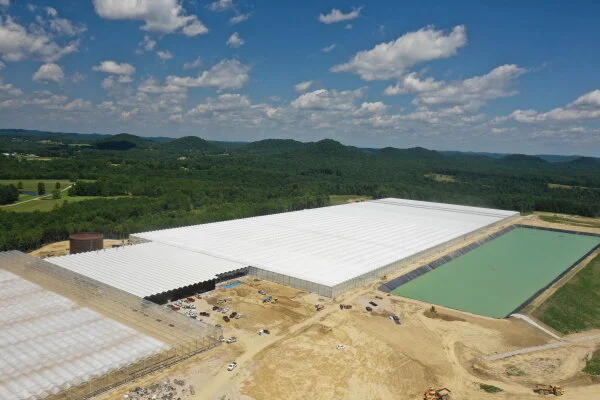
Another photo of the company's Morehead location
AppHarvest’s investors include Revolution’s Rise of the Rest Seed Fund, Inclusive Capital Partners, Equilibrium, Narya Capital, Lupa Systems, Breyer Capital, and Endeavor Catalyst. Endeavor selected AppHarvest Founder & CEO Jonathan Webb as an Endeavor Entrepreneur in 2019.
Board members include food icon Martha Stewart, Narya Capital Co-Founder, and Partner JD Vance, Impossible Foods Chief Financial Officer David Lee, and impact investor Jeff Ubben.
For more information:
AppHarvest
www.appharvest.com
21 Oct 2020

Navotas City Launches Philippines' Tallest Vertical Farm
The vertical farm is equipped with state-of-the-art technology that increases vegetable yield by a factor of 100, two times more than other farms
October 24, 2020
By DANNY PATA
National Capital Region's Navotas City Council, together with the Boy Scout of the Philippines (BSP) and Good Greens & Co., unveiled on Saturday the tallest aeroponic vertical farm in the country.
Text and photos by Danny Pata
According to the city council, the four-tower farm standing on a 300-square-meter area in Tanza resettlement community."
The aim is to produce high-volume harvests that are centrally located in the community," according to Simon Villalon, GGC president.
He said that aeroponic tower farm technology allows saving 75% to 90% space, which is an important consideration when operating out of a greenhouse, indoors, or on a rooftop.
The vertical farm is equipped with state-of-the-art technology that increases vegetable yield by a factor of 100, two times more than other farms.
Suited to a tropical climate, the structure supports vegetable growth year-round, with a target harvest of eight tons of leafy vegetables every year.
In the Philippines, aeroponic vertical farm is already tested in Taguig City, Villalon said, adding that some have been built up in San Fernando, Pampanga; and two in Bacolod City; and in Paranaque City
Text and photos by Danny Pata
LBG, GMA News

VIDEO: How This Indoor Vertical Farm Makes Perfect Japanese Strawberries
The engineered berries go through a meticulous growth and monitoring process from seed to finished product. The result is a strawberry with a consistent and optimal size, flavor, and texture
Oishii Berry founder Hiroki Koga combines Japanese strawberry cultivation techniques with the technology of a first-of-its-kind indoor vertical strawberry farm in America to create the highest quality strawberry possible. The engineered berries go through a meticulous growth and monitoring process from seed to finished product. The result is a strawberry with a consistent and optimal size, flavor, and texture.
For more information:
www.oishiiberry.com
www.eater.com
Publication date: Fri 23 Oct 2020
Mucci Farms Announces 200-Acre North American Expansion!
“Demand for greenhouse grown produce is growing rapidly as consumers continue to put pressure on the food industry to prioritize food safety, sustainability, responsible growing practices and clean growing environments,” said Bert Mucci, Chief Executive Officer
Bert Mucci
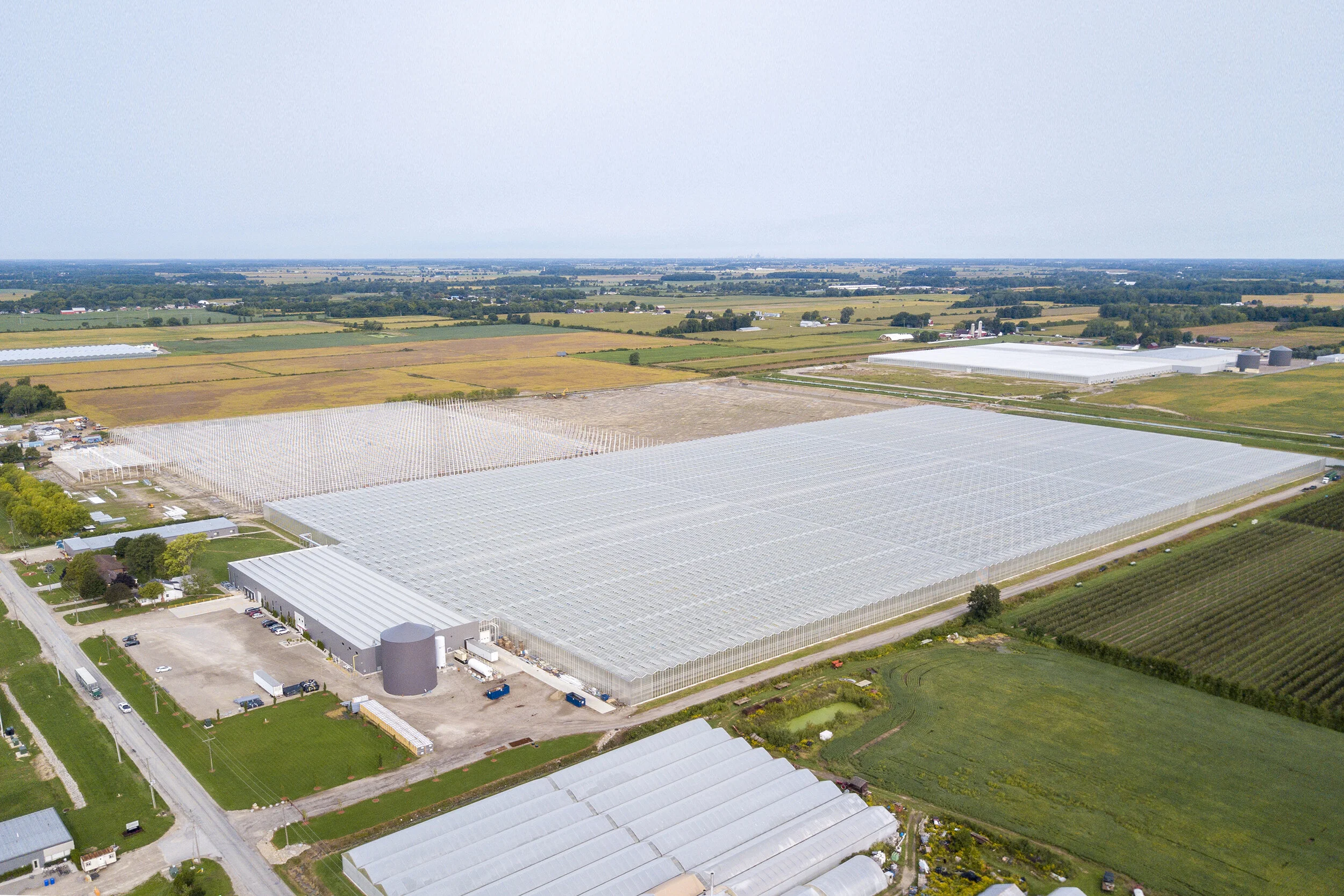
October 29th, 2020 (Kingsville, Ontario) – Mucci Farms announces major expansions in Kingsville, Ontario and Huron, Ohio totalling 206-acres over the next two years. These investments support their ongoing emphasis on maximizing local and regionally grown fruits and vegetables year-round through expansion and lit culture grow light technology. “Demand for greenhouse grown produce is growing rapidly as consumers continue to put pressure on the food industry to prioritize food safety, sustainability, responsible growing practices and clean growing environments,” said Bert Mucci, Chief Executive Officer.

Joe Spano
The first year of expansions include bell peppers, cucumbers, tomatoes, and their innovative award-winning strawberries that are grown in the largest controlled climate strawberry farm in North America. “Our berry program has been a big success and we believe it’s because of the quality and flavour we are able to provide through a clean growing environment, sustainable growing practices and our proximity to market,” explained Joe Spano, VP of Sales and Marketing. “Since we aren’t importing from California or Florida, we can maximize sugars by allowing product to be fully ripe before we harvest.”
The second year will focus exclusively on Bell Peppers with a 100-acre expansion to accommodate a growing need for supply in the category, which is being done through expansion as well as technology. “We have seen a strong rise in demand for locally grown peppers in recent years and expanding our own supply reduces our reliance on partner growers and imports,” said Bert. “We are currently trialing lit culture grow lights for our Pepper program which will be a game changer that allows us to grow local peppers 365 days a year.”
The first year of expansions include bell peppers, cucumbers, tomatoes, and their innovative award-winning strawberries that are grown in the largest controlled climate strawberry farm in North America. “Our berry program has been a big success and we believe it’s because of the quality and flavour we are able to provide through a clean growing environment, sustainable growing practices and our proximity to market,” explained Joe Spano, VP of Sales and Marketing. “Since we aren’t importing from California or Florida, we can maximize sugars by allowing product to be fully ripe before we harvest.”
The second year will focus exclusively on Bell Peppers with a 100-acre expansion to accommodate a growing need for supply in the category, which is being done through expansion as well as technology. “We have seen a strong rise in demand for locally grown peppers in recent years and expanding our own supply reduces our reliance on partner growers and imports,” said Bert. “We are currently trialing lit culture grow lights for our Pepper program which will be a game changer that allows us to grow local peppers 365 days a year.”
Expansion Breakdown by Acreage and Commodity
· 25-acres of Tomatoes on-the-vine in Huron, Ohio, the third and final phase of the 75-acre project
· 30-acres of multiple varieties of Bell Peppers in Kingsville
· 36-acres of SmucciesTM Sweet strawberries in Kingsville, doubling the current acreage to a total of 72-acres
· 15-acres of mini-cocktail cucumbers, branded as the award-winning CuteCumber Poppers
· 100-acres of multiple varieties of Bell Peppers at a new site in Kingsville with construction beginning in 2022
Danny Mucci
Additional projects include a dedicated research and development facility to be ready in 2021. “We have over 300 varieties of various commodities being trialed at any given time,” stated Danny Mucci, President of Sales and Marketing. “Consolidating them all into one specific building allows us to be much more thorough and expand our capabilities. Our trial program includes non-traditional greenhouse grown items such as zucchinis, blackberries and melons and we have a healthy appetite for new innovative varieties.”
This past June, the organization announced the addition of two new warehouse facilities in Romulus, Michigan and San Antonio, Texas that will serve as warehouses, distributions centers and cross docks to increase efficiencies and expand the regions they can service. Both facilities will be ready in 2021.
A major focus for the company is expanding their winter program through lit culture grow light technology. With aggressive annual expansions, the company has the largest acreage of supplemental lighting in the greenhouse industry and continues to expand its acreage year-over-year to maximize local and regional production year round.
Growing fresh produce for over 60 years, Mucci Farms is vertically integrated from seed to retail with a global partner network combining for more than 1700-acres of fruit and vegetable greenhouses. Headquartered in Kingsville, Ontario, the award-winning company is dedicated to continual investments in automation and technology along with a high level of research and development to offer consumers the most flavourful varieties in the world.
Jack Ma Also Checks Out Strawberry Cultivation
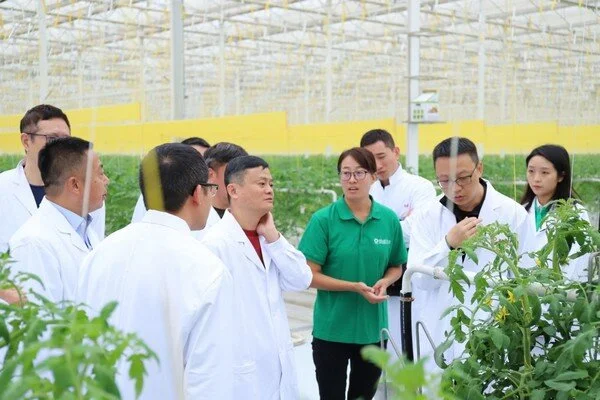
On the morning of October 10th and following his visit to the Dezhou high-tech tomato greenhouses, Jack Ma, founder of Alibaba Group, went to Licheng District, Jinan City, to inspect the development of the strawberry industry
On the morning of October 10th and following his visit to the Dezhou high-tech tomato greenhouses, Jack Ma, founder of Alibaba Group, went to Licheng District, Jinan City, to inspect the development of the strawberry industry. The Licheng strawberry industry has been developing since the early 1990s and has now become one of the main production areas for strawberry cultivation in China. At present, there is over 1,000 hectares of greenhouse strawberry planting area in the whole district, the total output is 66,000 tons, the total output value is 1.25 billion RMB [187 million USD], and the derivative output value is nearly 2 billion RMB [300 million USD].
At Prandtl Agricultural Technology Co., Ltd., Licheng District, Jack Ma led a delegation to listen to the introduction of the development of the strawberry industry in Licheng District, viewed the display of strawberry related products, and learned more about the construction of seedling detoxification and rapid propagation laboratory and secondary seedling greenhouse operating situation. The company has carried out in-depth research, demonstration, and promotion of strawberry detoxification technology, soilless cultivation, and new variety cultivation. Jack Ma had in-depth exchanges and discussions with the technical staff of the company and learned in detail about the research and promotion of strawberry seedlings, especially the detoxification and rapid propagation technology.
At the Hongmei Farm in Dongjia Street, Jack Ma and his delegation inspected the construction and operation of the combined greenhouse and the winter greenhouse and asked in detail about the three-dimensional cultivation of strawberries and traditional planting. The farm’s strawberry production is supported by biological control, water, and fertilizer integration, and modern agricultural Internet of Things management systems, focusing on the application of prevention and control. Jack Ma said that the popularization and promotion of advanced planting technology will help ensure the high quality of strawberries.
At Strawberry Paradise in Dongjia Street, Jack Ma and his delegation visited the greenhouse, communicated with growers in-depth, and learned about the application of various strawberry cultivation models and market operations. Combined with the construction of a new countryside in Shiziyuan Village, it has formed an industrial system integrating strawberry planting, picking, catering, and tourism.
Jack Ma expressed his appreciation for Jinan's efforts to develop the strawberry industry and increase farmers’ incomes through cooperatives. He hopes that Alibaba Group and Jinan will further deepen exchanges and cooperation, and jointly explore new models and new paths to promote the development of Jinan's characteristic industries such as strawberry planting.
Source: k.sina.cn
Publication date: Fri 23 Oct 2020

New OEM-Agreement For Shelf-And-Lighting Panels For Vertical Farming
Senmatic and LED iBond International have entered a strategic partnership for OEM delivery of shelves with built-in grow light to be included in Senmatic’s offering of industrial vertical farming solutions
Senmatic and LED iBond International have entered a strategic partnership for OEM delivery of shelves with built-in grow light to be included in Senmatic’s offering of industrial vertical farming solutions. The new vertical farming shelves are based on LED iBond’s patented lighting fixture, which combines superior cooling characteristics and minimal space requirements with a high carrying capacity.
The strategic partnership between Senmatic and LED iBond is based on Senmatic’s in-depth knowledge of LED grow lights and software solutions for industrial vertical farming and LED iBond’s unique LED technology platform.
"We have more than 40 years of experience with indoor plant production. We will combine LED iBond’s super-slim and energy-efficient shelf-and-lighting panels with our controllers and software to create a multifunctional vertical farming solution with best-in-class growth conditions for industrial indoor horticulture. This new partnership with LED iBond will further contribute to our growth in the vertical farming market, so we are very pleased indeed for this opportunity to join forces with LED iBond," says Mads Nychel, CEO at Senmatic.
Rolf H. Sprunk-Jansen, CEO of LED iBond, adds: "The new partnership with Senmatic marks LED iBond’s commercial entry into the industrial vertical farming market. With their vertical farming technology and their global network of 40 dealers, Senmatic is an ideal partner for us, bringing our LED panel technology into play in an emerging industry with huge growth potential. The agreement with Senmatic makes us even more confident that LED iBond’s financial outlook is well within reach."
The joint vertical farming offering is planned to launch at the end of Q4 2020.
For more information:
Senmatic
Publication date: Tue 20 Oct 2020

Scientists Work In Arizona To Reshape Desert Food Production
The experimental garden at Biosphere 2 about 35 miles north of Tucson is part of a wider effort to radically reshape desert food production to meet the growing challenges posed by climate change
Methods To Increase Yield, Lower
Water Use Draw On
Practices of Indigenous Cultures
Caleb Ortega, an environmental studies undergraduate student, harvests basil from an experimental garden outside Biosphere 2. Record heat has given the research new urgency.
Josh Galemore/Arizona Daily Star
TUCSON, Ariz. (AP) – In the cool shade of solar panels, a lush plot of herbs and vegetables hints at one possible future for farming in the desert.
At the moment, that future includes more basil than researchers know what to do with.
“We’ve been pulling out pounds of it every week,” said University of Arizona biogeographer Greg Barron-Gafford. “All of us are getting a little sick of pesto and pizza and mozzarella at this point.”
The experimental garden at Biosphere 2 about 35 miles north of Tucson is part of a wider effort to radically reshape desert food production to meet the growing challenges posed by climate change.
The 14 researchers from the Southwest and Mexico believe their model can produce a sustainable, local source of food that will improve the health and well-being of consumers and farmworkers alike.
The idea involves a mix of desert-adapted food species grown cooperatively in ways that increase yield while reducing water use.
Picture a variety of agave and fruit-bearing cactus interspersed with rows of mesquite and other legume trees, all with wild herbs, greens, beans, and native chiltepin peppers growing in the shade beneath them. Other potential crops include squashes, mints, and jicama.
In some cases, those plants would be grown beneath a photovoltaic “canopy,” as the solar panels generate cheap, renewable electricity to pump irrigation water and power farm equipment.
Pilot projects to test the model are now underway in the U.S. and Mexico, including at Biosphere 2 and in campus gardens at three public schools across southern Arizona.
“I like to think of it as using the desert and the sun here as our laboratory for the future,” said Erin Riordan, a UA research associate and one of the lead authors on a scientific paper about the project.
The team focused on desert plants that are as nutritious as they are drought-tolerant, with special emphasis on crops that can reduce or even prevent diabetes and other chronic diseases often exacerbated by heat stress.
Meanwhile, the shady design of the growing areas would benefit both the plants and the workers tending to them, curbing the frequency of injuries or illnesses associated with farm labor in extreme environments.
The sweeping proposal, published recently in the journal Plants, People, Planet, is rooted in practices perfected over millennia by Indigenous desert cultures.
“People have been growing food in the shade for 4,000 years in this region,” Barron-Gafford said.
“It’s not something that’s new to anyone,” said Gary Paul Nabhan, the study’s other lead author and a research social scientist in the university’s Southwest Center. “We’re drawing on that expertise and combining it with modern techniques and technology.”
Solar panels, healthy crops
The importance of food security has been highlighted in recent months by record-setting heat, sputtering monsoon conditions, and supply disruptions caused by the pandemic.
“We are already hitting the temperature limits of conventional crops,” said Nabhan, a MacArthur award-winning agroecologist and the endowed chairman in food and water security at UA.
Greg Barron-Gafford, Caleb Ortega, and Alyssa Salazar work in a garden that is part of an experiment on growing techniques for hotter, drier desert conditions. Josh Galemore/Arizona Daily Star
Among the Southwestern farm staples most threatened by global warming, he lists corn, dry beans, melons, chiles, and most vegetables.
“Yes, we can still grow chiles in our backyards,” he said, but growing them in a large-scale agricultural setting will become increasingly difficult as temperatures rise, droughts deepen and water resources shrink.
Nabhan said a market already exists for some of the new crops considered in the study. “They’re already in our grocery stores, but we’re importing them from 1,000 miles away,” he said.
Back at his outdoor laboratory at Biosphere 2, Barron-Gafford said pairing agriculture directly with solar generation could “open the door to food production in marginal lands” by providing both a shady place to grow plants and the electricity needed to pump water to them.
For the right crops, the shade beneath the solar panels can produce healthier, more productive plants with as little as half the water, all while extending the length of the growing season.
In turn, the plants provide a benefit to the solar array, cooling the air around it by as much as 12 degrees and improving the efficiency of the panels.
Barron-Gafford said the experiment in so-called “agrivoltaics” began nine years ago with a few plants tucked underneath a single, small solar panel slanting up from the ground.
“We started with salsa plants because we’re here,” he said with a smile.
Some crops grow, others don’t
The test garden now covers an area about the size of a half-court in basketball, shaded by a solar array mounted 10 feet off the ground.
Along with all the basil, the current crop includes heirloom cherry tomatoes, Anasazi red beans and a special type of bell pepper Barron-Gafford said was brought in from Mexico by the chefs at Penca restaurant in Tucson.
In a nearby control garden, equal-sized plots of the same plants bake in the direct sun. The basil there doesn’t even look like the same species. Its leaves are skinnier and more pointed, and the plants are already going to seed. One patch has shrunk and dried out in the heat after its water ration was cut in half to match a similar plot still going strong in the shade of the solar array.
“Those plants died for science,” said Barron-Gafford, an associate professor with the UA’s School of Geography, Development, and Environment.
He and his research assistants planned to plant a fall crop – both in the shade and out – of cilantro, fava beans, white onions, and native mouse melons, which taste like cucumbers but look like miniature watermelons.
Agrivoltaic farming doesn’t work for everything. Broccoli, for example, tends to grow large, impressive leaves in the shade, but it never produces florets.
The jury is still out on the Anasazi beans. Barron-Gafford said the ones planted in the direct sun of the control garden have already produced their crop of seed pods, while the ones shaded by the solar array are taking their sweet time.
Whether that will lead to a fuller, more flavorful bean or a pile of tiny, underdeveloped pods remains to be seen.
Questions about scaling up
There’s one thing the research team already knows: Transforming an entire agricultural sector won’t be easy.
“It is a big shift,” said Riordan, the principal scientist coordinating the binational research team based at the UA’s Desert Laboratory on Tumamoc Hill. “There’s a huge scaling piece that is going to have to be addressed.”
One key part will be convincing consumers to expand their palates to include wild, locally grown foods they might not have considered before.
Luckily, Riordan said, Tucson already has something of a head start there, thanks to its diverse population, rich cultural history, and its designation six years ago as the first UNESCO City of Gastronomy in the U.S.
The community is already home to about 40 startup businesses that produce more than 120 new desert food and beverage products.
Ultimately, researchers argue, desert agriculture will be transformed by climate change whether we want it to be or not. Through careful planning and adaptation, we can make that transition profitable instead of painful.
“It might be hard right now to envision edible desert landscapes, but it might not seem so far-fetched in a few years,” Riordan said. “I think we’re going to have a lot of motivation to come up with big solutions fast.”
New Restrictions On Lettuce
Unprecedented federal import restrictions on romaine lettuce and salad mixes from California’s Salinas Valley point to problems in the U.S. agricultural system that supplies British Columbians with more than half their fresh vegetables, Canadian food safety researchers say
Marc Fawcett-Atkinson, Local Journalism Initiative Reporter
October 22, 2020
Unprecedented federal import restrictions on romaine lettuce and salad mixes from California’s Salinas Valley point to problems in the U.S. agricultural system that supplies British Columbians with more than half their fresh vegetables, Canadian food safety researchers say.
Companies that import lettuce must now prove each shipment has been tested for E. coli, or was grown outside of California's Santa Clara, Santa Cruz, San Benito and Monterey counties. The directive will remain in force until Dec. 31, to cover the harvest season for California lettuce producers.
Lawrence Goodridge, director of the Canadian Research Institute for Food Safety at the University of Guelph, says repeated outbreaks of E. coli contamination from American farms precipitated the move. There have been at least four outbreaks associated with romaine lettuce alone since 2016, Goodridge said. Investigations by American and Canadian authorities have also pinpointed the region as the source of several past E. coli outbreaks.
“The problem is nobody quite knows how the lettuce is becoming contaminated,” said Goodridge. “It could be the irrigation water, wild animals could run through the field and defecate. It’s hard to trace.”
Canada imported 183,300 tonnes of lettuce from the United States last year, and 64 per cent of that was from California. The remainder came from Arizona, Ohio and Florida. Between June 2019 and July 2020, more than 50,000 shipments of the vegetable crossed the border.
Lettuce is not the only vegetable that’s mostly imported to Canada outside the summer months. In 2018, about $2 million worth of vegetables flowed north, everything from kohlrabi to kale. Like lettuce, the majority was grown in California or other southwestern states.
Cattle are pastured on the hillsides surrounding the Salinas valley. That means manure can be washed downhill, gather in the bottom of the valley and possibly contaminate surface water and groundwater. This water is used to irrigate the hectares of lettuce and other vegetables growing in the valley bottom.
“The current temporary import requirements, implemented on Oct. 7, (are) a preventative measure due to the repetitive outbreaks linked to California romaine lettuce over the past four years,” the Canadian Food Inspection Agency said in an emailed statement.
The decision has received a tepid reception from American lettuce producers.
“Our producers will do their best to comply (with the new testing requirement) in an effort to continue shipping romaine lettuce to our valued trade partners in Canada,” the California Leafy Greens Marketing Agreement (LGMA), an association of shippers and handlers who adhere to shared food safety measures and are responsible for about 90 per cent of the leafy greens grown in the U.S., said in a written statement.
“However, this may not be feasible due to limited laboratory capacity. More importantly, product testing has not proven to be a reliable indicator of product safety.”
The organization is advocating for in-field testing instead of the post-harvest tests the Canadian government requires. It also said that recently implemented measures are sufficient to protect consumers.
The changes implemented by the LGMA classify irrigation water into categories depending on where it comes from, and how it will be used. Water used for overhead irrigation exceeds the U.S. Environmental Protection Agency’s “recreational standard” - clean enough for swimming. Water used for ground level or buried irrigation systems can fall below that standard.
However, that’s not enough, said Keith Warriner, a food security professor at the University of Guelph. He would like to see the water tested more frequently, similar to the weekly or daily water testing requirements many states require for water to meet their recreational standard - an unfair comparison said the LGMA.
“Comparing recreational water use and irrigation water use is questionable because swimmers taking a drink of the water they are swimming in is a very different risk profile than irrigating a crop that will then be exposed to the environment...before a consumer eats that product,” the organization said in an emailed statement.
Nor does post-harvest cleaning do much, Goodridge and Warriner agreed.
“We know that washing actually spreads bacteria,” Goodridge said. “You’ve got to think that these are big processing operations (that) could be receiving lettuce from many different fields all over the place. If you have one batch that’s contaminated, but you’re running other batches through (the same cleaning line) at the same time, they can all get contaminated.”
Tracing a leaf of contaminated lettuce from a Canadian consumer’s plate back to individual farms is impossible, he said, especially since it could be more than two weeks before someone gets sick from the lettuce.
Nor is the federal government’s approach perfect.
Lettuce from other parts of the U.S. could also be contaminated, especially if water standards for processing and irrigation aren’t any higher.
And testing isn't very accurate because it only captures a minute snapshot of the total lettuce shipment, Goodridge said. A better approach would be to push the industry to implement system-wide changes that would address the problems at their source, such as treating all irrigation water with chlorine, to help deal with the issue.
These are largely regulatory matters Canada can’t control, since water and growing standards fall under U.S. jurisdiction. Still, the economic pressure exerted by an import ban could help push the industry to implement changes of its own volition.
“You have to have regulation,” said Goodridge. “But, ultimately, it’s when the industry takes food safety seriously, as opposed to seeing it as a necessary evil, (that) we will really begin to address these ongoing outbreaks.”

"We Have Barely Scratched The Surface In The MENA AgTech Sector"
"Badia Farms is the first commercial vertical farm to launch in the GCC. We officially started operations in the heart of Dubai in 2016, but the seeds were planted further back
"Badia Farms is the first commercial vertical farm to launch in the GCC. We officially started operations in the heart of Dubai in 2016, but the seeds were planted further back. My background is in engineering and banking. I first took the entrepreneurial leap in Saudi Arabia in the hospitality sector by opening multiple unique restaurant concepts." That's how Omar Al Jundi, Founder & CEO of Badia Farms, introduces himself.
Mesmerized by hydroponics
When he decided to enter his next venture, he says "I knew it had to be both challenging and able to add value and make a difference to our society and communities. When I was introduced to the concept of hydroponics, I was mesmerized with this new technique of growing where we don’t require any soil, we can recycle 90% of the water, and it can be grown in a fully closed environment, without even sunlight! Years before we launched I learned as much from experts, conferences, courses, and by working in a high-tech greenhouse facility in Holland."
Sustainability
Food security is one of the main issues in the MENA region, and the development of sustainable farming is crucial. "We have seen this first hand during the early days of the Covid pandemic," Omar says. "Produce supply chains were halted, and many countries (especially in MENA) had to reassess their long-term plans and fast-track their commitment to AgTech models such as vertical farming."
The choice to go vertical
Vertical farming and AgTech is needed in the GCC. Why? Omar explains: "Over-dependence on imported produce and the simple fact that traditional framing does not work in our arid desert climate. I want to tackle an issue that will make a difference to society while preserving our natural resources such as water. Badia products are pesticide and herbicide-free. Since our crops are grown naturally in sterile, soil-free mediums, along with the controlled environment, it removes the need for harmful additives. We can also harvest fresh produce all year round. Our harvest yields 4-8 times the amount of crops in the same space compared to conventional soil farming. As a former restaurateur, it has been amazing to be able to work with the top chefs and restaurants in the UAE and be able to supply them with fresh, better than organic flavourful products that wouldn't be available to them otherwise. The journey from food to table is much shorter."
Optimal growth conditions
In this vertical farming environment, Badia Farms is able to control every aspect of the ecosystem to ensure optimal growth conditions are provided for each crop. "For example, our facilities utilize LEDs, artificial lighting to replace the sunlight, we control and monitor all environmental inputs (humidity, temperature, CO2), and we use computer linked dosing units to schedule the irrigation and feed formulas," Omar points out. "Lastly, our hydroponic growing methods use 90% less water compared to open field growing, and since we recirculate our water there’s no wastage."
Support needed
There were also some challenges along the way to achieving this, as AgTech and modern farming are still very new to the region. "The biggest challenge is there aren’t off the shelf solutions that we can purchase and implement immediately," Omar says. "In the case of vertical farming, which is still at an infancy stage globally, we had to design our own grow system to form our IP and ensure we have a commercial operation that will yield high-quality products and profits to ensure we stay in business.
We surely need a lot more support from the government and private sectors for this industry to see the light. For example, the government can support the industry by introducing cost-effective initiatives that reduce the operational cost that will ensure the viability of the projects. Educating the public and consumers on the benefits of modern farming and vertical farming is very important to ensure the continuity of this new industry. We are seeing more regional and global VC's and investment funds interested in the AgTech sector in our region, but they haven’t made the big investments yet!"
Opportunities in the Middle East
Asked what advice Omar would give to people looking into breaking into the UAE food/ag market, he says: "What's great right now is that we have barely scratched the surface in the MENA AgTech sector, so there are so many opportunities, which has been propelled by the pandemic. The UAE is an open economy, I suggest whoever is interested to enter the market to come and meet with the different governmental entities, to meet with distributors, understand the market dynamics, pricing, etc. Come and do the work themselves vs hiring a consultant to do the job. The journey won't be easy. But even with the advent of technology farming is still what it was hundreds of years ago: to grow something needs constant attention, passion, and patience."
E-commerce platform
Badia Farms has a lot in store for the future, like increasing their product offering, expanding their facility in the UAE, and growing their team. "We are also excited about the launch of our own e-commerce platform! The crop will be harvested only once a customer places an order and will reach them within a couple of hours. We are also raising our next round of funding. So a lot is going on", Omar concludes.
Omar Al Jundi will be one of the speakers during the upcoming Agritecture Xchange. When registering, you can use the code 'HDaily10' to get 10% off tickets.
For more information:
Badia Farms
www.badiafarms.com
Publication date: Fri 23 Oct 2020
Author: Jan Jacob Mekes
© HortiDaily.com

US - FLORIDA: Orlando Vertical Farming Firm Kalera Eyes Funding Deal To Fuel More Growth
Kalera plans to list up to 31 million shares on the Merkur Market, a trading platform for small and medium companies that’s part of the Oslo Stock Exchange
Staff Writer, Orlando Business Journal
Oct 23, 2020
Like The Produce It Grows, Kalera Inc.’s
Growth Trajectory Is Going Vertical.
The Orlando-based vertical farming company is working with Oslo-based investment firms ABG Sundal Collier and Artic Securities AS to complete a private offering of company stock that would raise Kalera up to $100 million. That money would be used to accelerate the growth of Kalera, which has recently expanded its local workforce and entered new markets.
Corporate growth
Kalera plans to list up to 31 million shares on the Merkur Market, a trading platform for small and medium companies that’s part of the Oslo Stock Exchange. The first day of trading is anticipated to be Oct. 28, the company announced Oct. 21. The deal is a private placement, a sale of shares to pre-selected investors and firms.
Kalera will use the funds to build new vertical farming facilities in both the U.S. and abroad. The firm operates two indoor growing facilities in Orlando, and Kalera expects to grow its corporate workforce in Orlando, CEO Daniel Malechuk told Orlando Business Journal.
To see inside Kalera's HyCube in Orlando, check out the slideshow above.
"Our Orlando [growing] facilities are fully-staffed and hired out,” Malechuk said. “Our corporate office is where we’re going to see a lot of growth.”
Companies may raise capital through a private placement deal in order to fund operations and planned growth, Michael Okaty, an Orlando-based business attorney and partner at Foley & Lardner LLP, told OBJ. Companies using a private placement deal to raise money face less regulatory scrutiny than an initial public offering (IPO), when stocks are offered on an open market, Okaty added.
Aggressive expansion
This is another step in Kalera’s rapid expansion since it was founded in 2010. The company’s vertical agriculture facilities grow quality-controlled produce year-round. Kalera in 2021 will open its newest facility, a roughly 75,000-square-foot building in Denver, and expand the company’s reach to four U.S. markets. The company employs about 75 people, mostly in Central Florida, but will grow its workforce to more than 300 companywide by the end of next year, Malechuk said.
Many of Kalera’s customers, such as restaurants, hotels and Universal Orlando Resort, have seen a drop in business due to the pandemic. Still, Kalera was helped by striking a partnership with Publix Supermarkets Inc. earlier this year. Plus, it’s targeting new customers, such as school systems, Malechuk added.
The global vertical farming industry has big potential, and it’s expected to be worth nearly $12.77 billion by 2026, according to industry analysis site Report Buyer. Plus, the food grown this way is less susceptible to bacteria and disease, and it boasts a longer shelf life, Malechuk previously said.
Kalera anticipates to soon take on more growth in Orlando, across the U.S. and internationally, Malechuk said. “We’ve got a lot more aggressively coming.”

October Indoor Science Cafe - Recording Is Now Available!
Learning Critical Control Point For Hydroponic Food Safety "Hydroponic Crops -- How Can You Produce Safe Vegetables?"
Indoor Ag Science Cafe October Recording
Learning Critical Control Point
For Hydroponic Food Safety
"Hydroponic Crops --
How Can You Produce Safe Vegetables?"
by
Dr. Sanja Ilic (The Ohio State University)
This presentation 'Hydroponic Crops: How Can You Produce Safe Vegetables?' was given by Dr. Sanja Ilic (The Ohio State University) during our 23rd cafe forum on October 20th, 2020.

New Smart Urban Farm Takes Root
Using New Tech, it Can Grow Up to 100 Tonnes
or About 1% of Leafy Vegetables Grown Here
October 23, 2020
An urban farm that aims to produce high-yield greens without sacrificing any flavour by leveraging Internet of Things technology was officially launched yesterday.
Commonwealth Greens took root in Jurong in May. The forest-like farm consists of over 6,200 pillars, each of them 2.4m tall, that are reminiscent of the foliage of trees.
Positioned in six different rooms the size of Housing Board flats, the pillars in each room support one type of leafy green: lettuce, kale, chard or herbs. Hydroponics is used to grow the plants.
The farm can grow up to 100 tonnes of vegetables a year, which is close to 1 per cent of leafy vegetables grown locally.
Minister for Sustainability and the Environment Grace Fu (centre) viewing Just Harvest, the latest farm to table solution which will be announced soon for potential clients such as hotels, restaurants and cafes. ST PHOTO: TIMOTHY DAVID
During the launch yesterday, Minister for Sustainability and the Environment Grace Fu visited the farm as well as Archisen, the agri-tech firm that set up and manages Commonwealth Greens.
Archisen's co-founder and chief technology officer Sven Yeo said Commonwealth Greens is one of the highest-yielding indoor farms in Singapore and that it will support and contribute to the country's goal to self-produce 30 per cent of its nutritional needs by 2030.
The farm's leafy greens are currently sold on online supermarkets such as RedMart and PandaMart, under the brand Just Produce. Each 100g salad mix that costs between $4 and $4.50 comprises a variety of lettuce and kale, along with either mustard greens, sorrel or mizuna.
From the middle of next month, the farm will start selling speciality herbs - mustard greens, ice plant and sorrel - in 20g boxes which will cost between $4 and $5.
Archisen has also developed a mini version of its farming system.
Shorter pillars brimming with full-grown veggies are stored in a glass cabinet and can be sent to restaurants for direct harvesting. From next month, the company will deploy those cabinets to five hotels, restaurants and food service companies.
Walls of edible greens: This forest-like area is one of six grow rooms in a new urban farm called Commonwealth Greens. Leafy greens such as lettuce, kale, chard and sorrel are grown hydroponically along each 2.4m white pillar. ST PHOTO: TIMOTHY DAVID
It is not just its aesthetic that makes Commonwealth Greens unique.
To ensure optimal yield, fast growth and highly nutritious and flavourful greens, the vertical systems are powered by a smart cockpit that heavily leverages Internet of Things technology, data analytics and sensors.Culinary uses for speciality herbs
ICE PLANT
The edible succulent is coated with tiny, crystal-like beads that give the unique vegetable a frosty, magical appearance.It typically grows in saline environments and its beads trap salt - hence its salty taste.
Archisen grew different sets of ice plant using nutrient solutions filled with either table salt, sea salt or Himalayan pink salt. It was discovered that table and sea salt made the taste too sharp for comfort but Himalayan pink salt was easier on the palate. The mildly salty succulent has a crunchy texture, and is juicy and refreshing.
MUSTARD GREENS
The dainty-looking leaf with the frilly edges can be a healthier substitute for wasabi.
The fierce wasabi heat hits you immediately, spreading down the throat and up the nose. You may tear up a little too.R&D was used to intensify the wasabi flavour.
RED-VEINED SORREL
The leaves can replace lemon juice or dressing in salads. On second bite, the citrusy flavour explodes, giving a sour surprise.Data is continually stored in the cloud, in real time, for the scientists to analyse and to drive automation. For example, if the pH of the nutrient for lettuce reaches unhealthy levels, sensors will alert a device to automatically restore the acidity level."
As we have more growth cycles over time, our data sets increase, and that enables us to construct mathematical models to predict the outcome of how we grow," said Mr Yeo.
Tenders awarded to turn 9 HDB carpark rooftops into urban farming sitesWild teen to urban farmer: He wants to make Singapore a more sustainable and liveable city
Archisen's office, which is one level above Commonwealth Greens, also houses a research lab for conducting experiments and testing new solutions.In the near future, the company plans to build indoor fruit orchards or vineyards.
Parliament: Encourage growth of urban farming to secure Singapore's food supplies, says Ang Wei NengFeeding cities of the future
Scientists in the lab are now growing black, red and green grapes in a controlled environment. In 10 months, the vines have started to bear clusters of grapes, each fruit about the size of a chickpea. Through traditional farming, it takes about three years to fully grow grapes.Although immature and smaller grapes tend to be sour, the black grapes from the lab taste sweet.
A version of this article appeared in the print edition of The Straits Times on October 23, 2020, with the headline 'New smart urban farm takes root'.
Lead photo: Archisen co-founder and chief executive Vincent Wei (left) and chief technology officer and fellow co-founder Sven Yeo seen here with full-grown veggies from the mini version of its farming system, which will be deployed to restaurants and hotels.ST PHOTO: TIMOTHY DAVID

BrightFarms Secures $100 Million Series E Round of Funding
“Our goal over the next five years is to make quality, locally-grown greens a staple on grocery shelves and in refrigerators nationwide,” said Steve Platt, CEO of BrightFarms
Cox Enterprises assumes majority ownership
BrightFarms has secured more than $100 million in debt and new equity capital to support its expansion plans. The Series E round of funding was led by Cox Enterprises, which now owns a majority stake in the company, and includes a follow-on investment from growth equity firm Catalyst Investors. BrightFarms will use the funds to invest in its current farms and retail programs and expand its network of regional indoor farms across the U.S.
BrightFarms has raised more than $200 million in funding to date to build the nation’s first brand of locally grown produce and has established close partnerships with retailers such as Ahold Delhaize, Kroger, and Walmart. BrightFarms currently distributes its products to more than 2,000 stores in the U.S. and expects to expand its distribution to more than 15,000 stores by 2025. The company has indoor farming operations in Illinois, Ohio, Pennsylvania, and Virginia, with three new farms currently under development in North Carolina, Massachusetts, and Texas.
“Our goal over the next five years is to make quality, locally-grown greens a staple on grocery shelves and in refrigerators nationwide,” said Steve Platt, CEO of BrightFarms. “We are thrilled to have the strong financial backing of Cox Enterprises, an organization that closely aligns with our mission to build a healthier and more sustainable future and to have the additional support of our long-term partners at Catalyst Investors. Together we are ready to scale our model for local indoor farming in every major market in the U.S.”
“Cox Cleantech’s goal is to build meaningful businesses that solve fundamental problems facing society and our environment,” said Steve Bradley, vice president of cleantech for Cox Enterprises. “BrightFarms provides this opportunity through its sustainable model of growing food in the same communities where it’s consumed, resulting in food that’s fresher, safer, better tasting, and better for the environment.”
For more information:
www.brightfarms.com
coxenterprises.com/cleantech
www.catalyst.com
21 Oct 2020