


Welcome to iGrow News, Your Source for the World of Indoor Vertical Farming
Avocados Recalled In Six States Over Listeria Concerns
March 24, 2019
Henry Avocado Corporation is voluntarily recalling California-grown whole avocados sold in bulk at retail stores in 6 states over concerns they may be contaminated with listeria. (Business Wire via AP)
A California-based company announced Saturday it is voluntarily recalling California-grown whole avocados over fears of possible listeria contamination.
Henry Avocado Corporation said in news release it announced the recall as part of a precaution after positive test results for Listeria monocytogenes were discovered on environmental samples taken during a routine government inspection at its California packing facility.
“We are voluntarily recalling our products and taking every action possible to ensure the safety of consumers who eat our avocados,” said Phil Henry, president of Henry Avocado.
As of now, there are no reported illnesses associated with this recall.
TYSON RECALLS 69,000 POUNDS OF FROZEN CHICKEN STRIPS OVER POSSIBLE 'METAL' CONTAMINATION
The recalled products were packed at Henry Avocado’s packing facility in California and distributed in Arizona, California, Florida, New Hampshire, North Carolina and Wisconsin. All shipments from the facility are subject to recall, as the company did not begin packing there until late January 2019.
Avocados imported from Mexico and distributed by Henry Avocado are not subject to the recall and may continue to be sold and consumed, according to the company.
Consumers can identify the recalled products by the “Bravocado” stickers. The organic avocados are labeled "organic” and include “California” on the sticker, according to the company.
SOME BABY COUGH SYRUPS RECALLED OVER RISKS OF BACTERIAL CONTAMINATION
Listeria monocytogenes can cause serious and sometimes fatal infections on children, elderly people and others with weakened immune systems. Symptoms include high fever, severe headache, stiffness, nausea, abdominal pain and diarrhea.
Henry Avocado issued the voluntary recall out of an abundance of caution due to positive test results on environmental samples taken during a routine inspection at its California packing facility. (Business Wire via AP)
"You should seek medical care and tell the doctor about eating possibly contaminated food if you have a fever and other symptoms of possible listeriosis, such as fatigue and muscle aches, within two months after eating possibly contaminated food," according to the Centers for Disease Control and Prevention. "This is especially important if you are pregnant, age 65 or older, or have a weakened immune system."
Henry Avocado said it is contacting all affected customers to confirm that the recalled products are immediately removed from store shelves. Retailers can identify Henry Avocado organic products by the barcode on the stickers.
Consumers who have purchased any recalled avocados are urged not to consume them, but to discard them or return them to the place of purchase for a full refund. Those with additional questions may contact Henry Avocado at (760) 745-6632, Ext 132 or visit the company's website.
Travis Fedschun is a reporter for FoxNews.com. Follow him on Twitter @travfed
Farm to Fork: Local Producers to Meet 30 Percent of Singapore’s Nutritional Needs by 2030
Home-based producers now meet less than 10 percent of Singapore’s nutritional needs, and Singapore imports more than 90 per cent of its food supply
Apollo Aquaculture Group's prototype vertical fish farm at Lim Chu Kang. TODAY file photo
07 MARCH, 2019
SINGAPORE — By 2030, homegrown produce could meet 30 percent of Singapore’s nutritional needs, easing its reliance on imports and reducing its vulnerability to supply disruptions.
Home-based producers now meet less than 10 percent of Singapore’s nutritional needs, and Singapore imports more than 90 per cent of its food supply.
The “ambitious” target, announced by Environment and Water Resources Minister Masagos Zulkifli on Thursday (March 7), will also give enterprises and jobs here a lift.
The Health Promotion Board said that a “healthy plate” is made up of 50 per cent fruit and vegetables, 25 per cent protein such as chicken and 25 per cent staples such as brown rice.
The authorities said that local production has been increasing.
Read also
Last year, farms here supplied 24 per cent of the eggs, 13 per cent of leafy vegetables and 9 percent of the fish consumed in Singapore.
The Government hopes to achieve its 2030 vision in the following ways.
TAPPING TECHNOLOGY
Expand agri-food production in high-tech controlled environments, with farming becoming more akin to manufacturing, in order to ensure a consistent output. This is also a “predictable” avenue to deal with the effects of climate change and extreme weather, which can affect yields.
Bump up the productivity of land, use resources such as water and energy efficiently, and automate and integrate systems via robotics and sensors.
Through technology such as indoor multi-storey vegetable farms that use light-emitting-diode technology and recirculating aquaculture systems, production of vegetables and fish can increase by 10 to 15 times a hectare, compared with traditional farms.
The new Singapore Food Agency (SFA), to be formed next month, will help farmers build capabilities through technical support, research-and-development tie-ups and the transfer of technology.
To encourage sustainable farming, the agency will also help farmers adopt advanced systems such as curtain systems that shade crops and reduce the impact of high temperatures on crop growth.
Read also
EXPLOIT ALTERNATIVE SPACES
Explore more spaces to grow food in Singapore, including underused and alternative spaces such as vacant state buildings, rooftops and even the deep sea.
The former site of Henderson Secondary School along Henderson Road, for instance, will be turned into the country’s first integrated space — spanning 35,686sqm — comprising an urban farm, a childcare centre, nursing home and dialysis centre. It could be a test-bed for innovative food-growing technologies. A public tender for the urban farm will be awarded in May.
Deep-sea fish farming, which is highly productive, can also boost local production significantly. The SFA will work with agencies to open up more sites for this purpose. For example, Barramundi Asia — Singapore’s largest farm rearing barramundi (Asian sea bass) in large sea-cage enclosures — registers a yearly production of more than 400 tonnes. The farm occupies a 7.5ha space (10 football fields) off Semakau island.
Read also
GROOMING EXPERTS IN THE FIELD
A pipeline of Singaporean talent with a good grasp of urban food-production processes and business models is needed to expand and support Singapore’s agri-food ecosystem. They need multi-disciplinary expertise in the sciences, engineering, information and communications, robotics and energy, and waste and business management.
To meet demand, the authorities have been working with institutes of higher learning to develop courses, such as SkillsFuture Earn and Learn Programmes, that lead to diplomas in urban agricultural technology and aquaculture.
CHOOSE HOMEGROWN PRODUCE
Demand from consumers is key.
Homegrown produce is fresher as it arrives at retail outlets more quickly and is safe because it can be traced to its source easily, the Government said.
The Agri-Food and Veterinary Authority of Singapore, which will be dissolved when the SFA is formed, has rolled out initiatives to promote homegrown produce. It has organised SG Farmers’ Markets in the heartlands and tied up with supermarkets to hold fairs featuring such produce.

A Hydroponic Farm In A Refurbished Train Car Is Enriching The Denver Community
Another innovative urban farm is in Denver, this time fully centered around cultivating community. Metro Caring is partnering with Saint Joseph Hospital to bring a Freight Farm to the Mile High City, thanks to a donation from the Morgridge Foundation
Another innovative urban farm is in Denver, this time fully centered around cultivating community. Metro Caring is partnering with Saint Joseph Hospital to bring a Freight Farm to the Mile High City, thanks to a donation from the Morgridge Foundation. This hydroponic garden has the capacity to grow the equivalent of two acres on 10 gallons of water a day, all in a refurbished freight train car. While Freight Farms are now utilizing urban spaces across the country, having a farm inside an old train car is particularly fitting for Denver. It’s marrying two Colorado traditions: farming and railroads, as a consequence of the mining culture.
With The GrowHaus’ hydroponic and aquaponic gardens and Altius’ aeroponic farm, Denver is catching on to the innovative practices in urban farming that are sweeping the country. Metro Caring’s Freight Farm will expand the growing capacity of farms in the city to bring fresh greens and herbs to the tables of Denver residents. “One of the things that we’ve noticed,” said Teva Sienicki, CEO of Metro Caring, “is that most of Metro Caring’s participants – participants is the word we use for our clients – live a lot of times in rental housing, which doesn’t provide access to land to garden and grow their own food.”
READ: A Look Inside RiNo’s Rooftop Urban Farm
In addition to the new Freight Farm, Metro Caring has a few other garden spaces in the Five Points and Capitol Hill neighborhoods. Last year, the organization turned over the care of those gardens to their participants and their community, giving them control to choose what they wanted to grow and cook. “The gardens really came alive, we saw that our participants, volunteers and staff were gardening side by side,” Seinicki commented. For that reason, participants will also help make decisions in operating the Freight Farm.
“This is the freshest lettuce that you’ll find [in the area]”
The Freight Farm
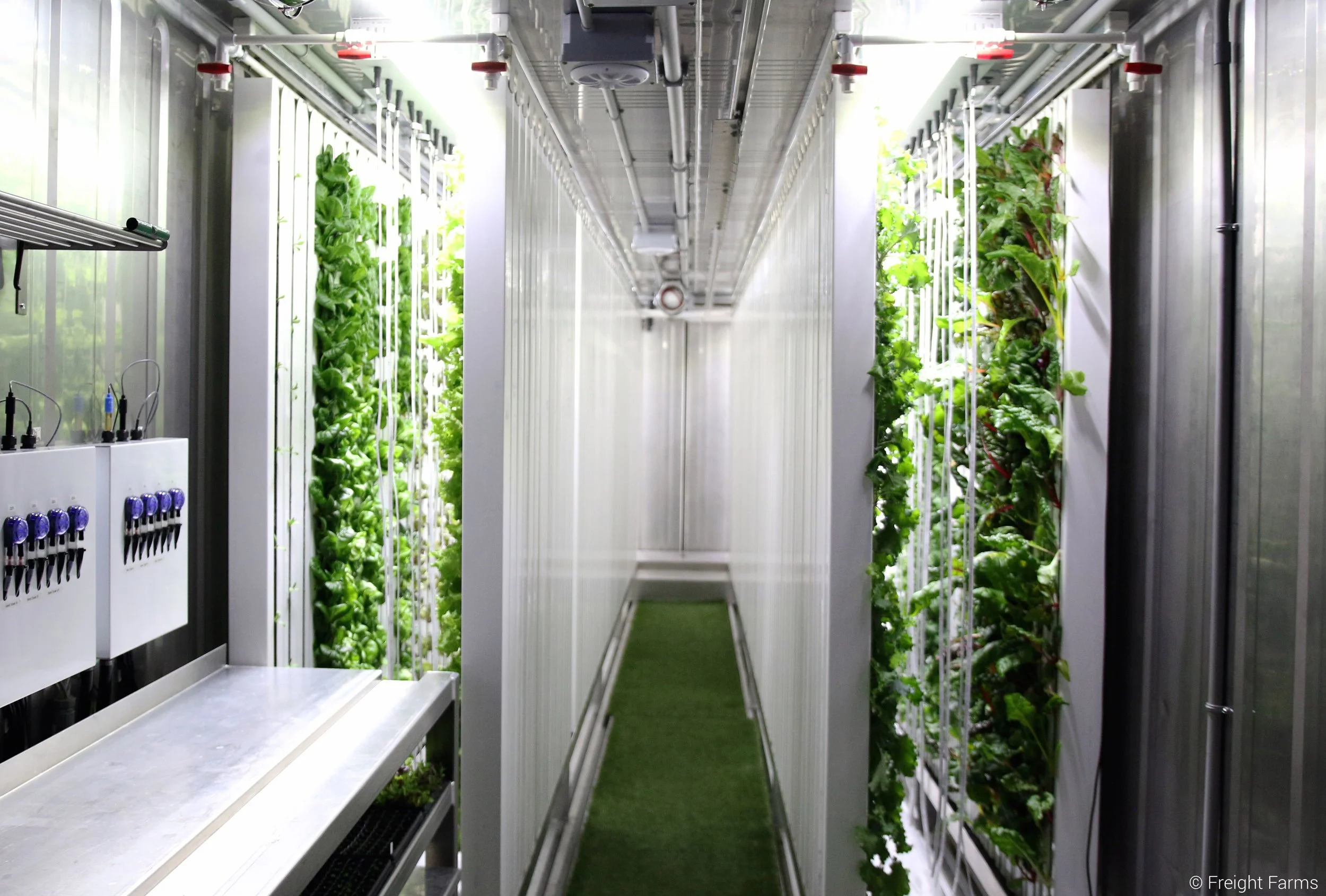
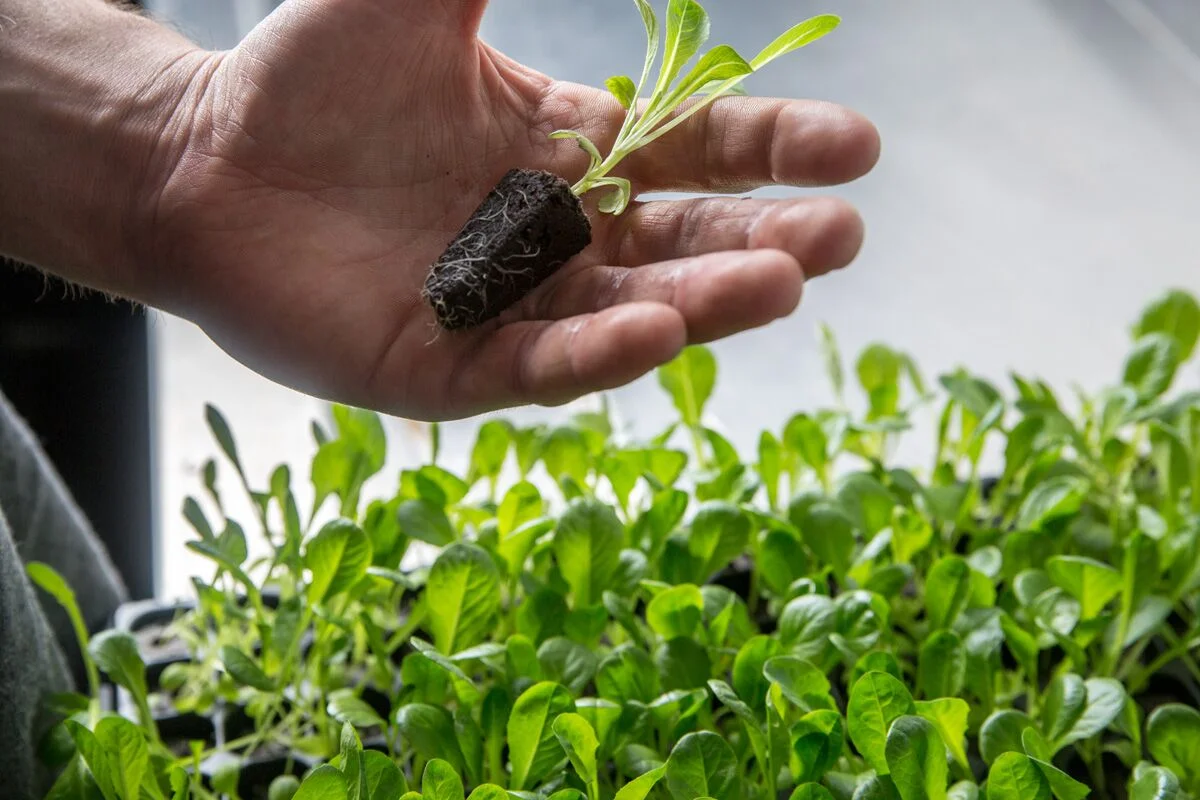
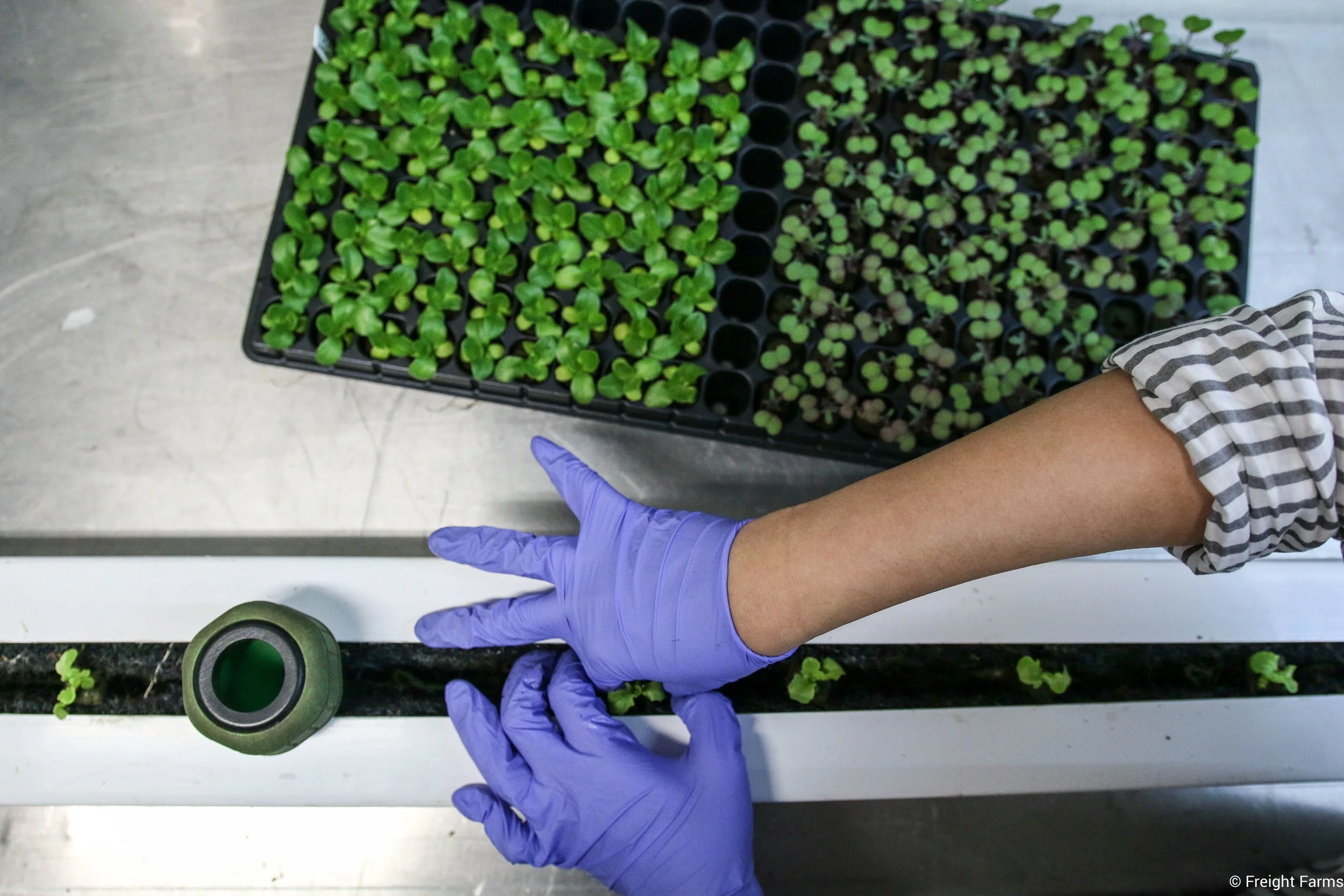
Photo courtesy of Freight Farms
Though the freight car is small, hydroponic growing utilizes space more efficiently than a traditional soil far. In a contained space, farmers are able to provide the ideal conditions for growing – controlling the light, humidity, temperature, CO2 levels and many additional factors that affect growth. Because the plants are given exactly what they need to thrive, they are able to grow faster in their vertical towers than they could on land. In the span of about eight weeks, the Freight Farm will harvest two acres worth of greens – around 500 to 600 plants – packed with nutrients and fresh flavor.
Metro Caring’s chief gardener, Jess Harper, will oversee the farm’s operations. “It’s so fascinating that you can engineer it to have all of the things that your little plants need to grow and be nutrient-dense,” she commented. Harper will be with the plants from seed to harvest, ensuring that the freight car’s environment perfectly suits the plants in all stage of growth.
The process begins in the germination trays where seeds grow in a plug of peat moss. They sit under a set of lights that emulate day and night and are sprayed with water and nutrients until they sprout. Then the seedlings are moved to a pool-like container that floods from the bottom. This allows the roots to soak up water and other nutrients without disturbing the growth up top. After seedlings grow to about two inches, the gardeners will move the plants to the vertical towers that hang from the ceiling and allow water to flow down to the roots of each plant. Along the rows of towers also hang LED full-spectrum lights that are a concentrated form of everything plants need for photosynthesis.
Once the greens reach harvest size, Harper and a team of Metro Caring’s community will remove each plant – with roots attached – from the vertical towers. This lettuce will stay fresh for about two weeks with the root ball attached. Harper is excited to provide greens that will stay fresh three to five times longer than what you could buy in the grocery store. “This is the freshest lettuce that you’ll find [in the area],” she commented.
The Future of Urban Farming
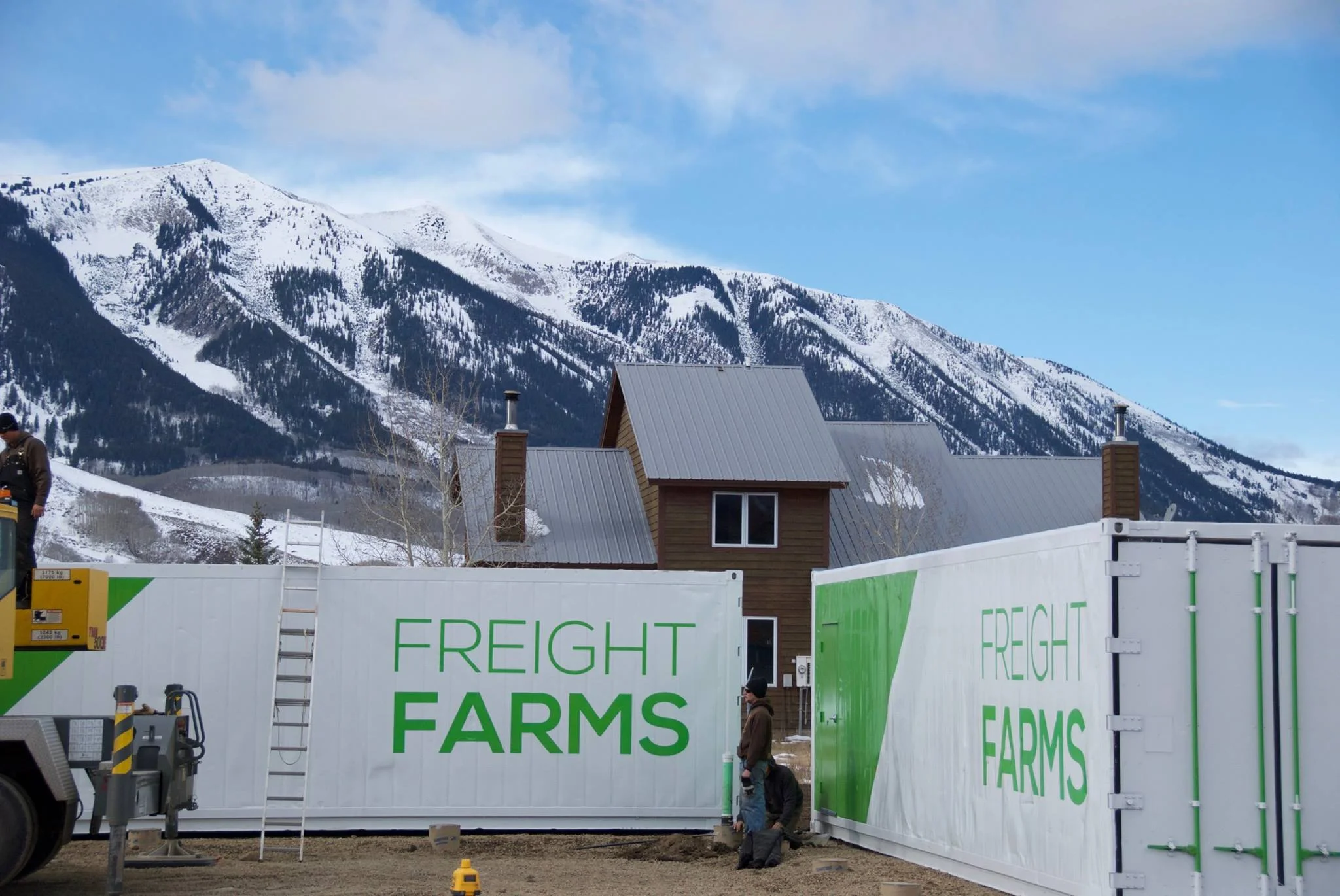

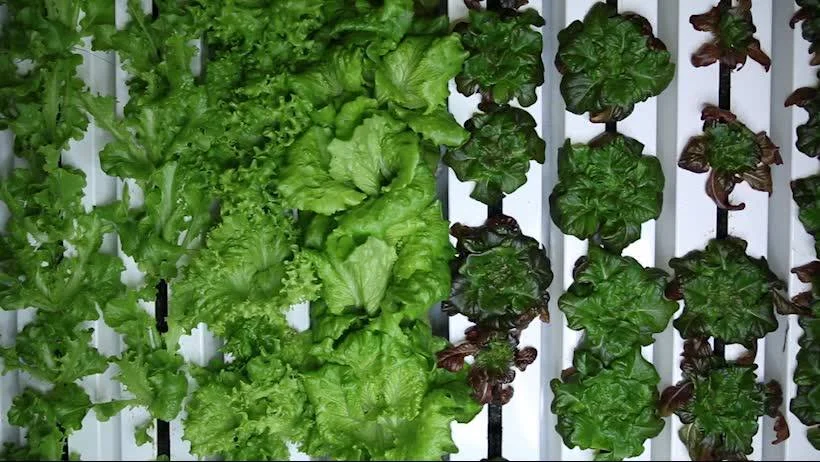
Photo courtesy of Freight Farms on Facebook
The Freight Farms is incredible, not only because it grows fresh and nutrient-dense greens, but also because it is a sustainable method of farming compared to traditional customs. The container itself reduces waste by refurbishing a train car that was headed for the trash. Inside, the hydroponic system uses less water than a soil farm. Because the Freight Farm doesn’t use soil, none of the water is soaked up and unable to be utilized by the plants. The water that does evaporate into the air is removed by a dehumidifier and put back into the tank after being filtered.
The LED lights used to nourish the plants uses significantly less energy than standard grow lights. While the farm does take a lot of energy to run, Metro Caring and Saint Joseph Hospital are considering solar power in the future if they have the funding. The hydroponic system also requires very little space to function, so the Freight Farm takes a small amount of space – a few parking spots – compared to two acres of good farmland. All in all, hydroponic growing in a space with great technology to record data is a great alternative when growing in urban areas.
Metro Caring is clearly excited to be experimenting in this new age of urban growing. Sienicki commented that the Freight Farm “allows us to be a part of a growing movement in the food world around sustainable, urban, local agriculture.” But while Metro Caring’s is excited about giving their participants a chance to participate in the food movement, their partnership with Manual High School is equally as important. Students from the Career Readiness program will come to help out at the farm and learn the science behind hydroponic growing. Metro Caring’s work in teaching a future generation to rethink traditional farming and explore the opportunities in urban farming will be so important for the future of urban growing. In addition to their work on the farm, Manual students will work with a team at Saint Joseph Hospital to discuss the importance of healthy eating and nutrition. This work supports the great work Metro Caring does in teaching their participants about nutrition. As in all of Metro Caring’s work, the Freight Farm is centered around community and providing the resources necessary to help each member of the community thrive.
Nourishing The Community
Photo courtesy of Freight Farms
Giving participants a space to grow their own food is a big part of Metro Caring’s mission in fostering a community. “One of our core beliefs is to allow our participants and our community to co-create with us,” Sienicki commented.With over 40 languages represented by participants, there are so many people from different cultures and cuisines at Metro Caring. Part of Sienicki’s excitement in turning ownership of the garden spaces over to participants was allowing them to grow foods from their various heritages that they couldn’t find in the grocery stores.
In making this change, Sienicki also learned that some of Metro Caring’s participants had a background in farming and growing their own food. One woman, in particular, grew up helping her grandparents on their sharecropping farm. It wasn’t until she began gardening with Metro Caring that she was able to grow her own food again and has now been teaching her own granddaughter how to grow vegetables. “She was so excited to have access to land and to get her hands in the dirt again because she hadn’t been able to do that since she was a kid,” Sienicki explained.
This relationship is part of what inspired Metro Caring to take on a huge project like the Freight Farm. The project will provide more opportunities for participants to grow their own food and learn different farming practices. Once the farm has produced its first harvest, Metro Caring is thinking about selling to local restaurants or corner stores in neighborhoods with less access to fresh, healthy food. They are also considering teaching entrepreneurship skills and allowing participants to create a business out of their gardens. But as Harper pointed out, they are giving the control of those decisions to their participants. “It’s not up to me, it’s not up to Teva [Sienicki],” she explained. “It’s up to the community to decide this is what we need, and this is what we want.”
––
Metro Caring’s Freight Farm is located at 819 Lafayette St., Denver. Contact Teva Sienicki or Jess Harper for more information about the growing process here .
Vertical Farms Attracting Greater Interest and Investments in the GCC
According to Orbis Research, the MEA vertical farming market is expected to reach USD 1.21billion by 2021 at a CAGR of 26.4% from only USD 0.38 billion in 2016
By AG Reporter
March 7, 2019
With MEA vertical farming market expected to hit US$1.21 billion by 2021, vertical farming is attracting considerable interest and investments in the GCC
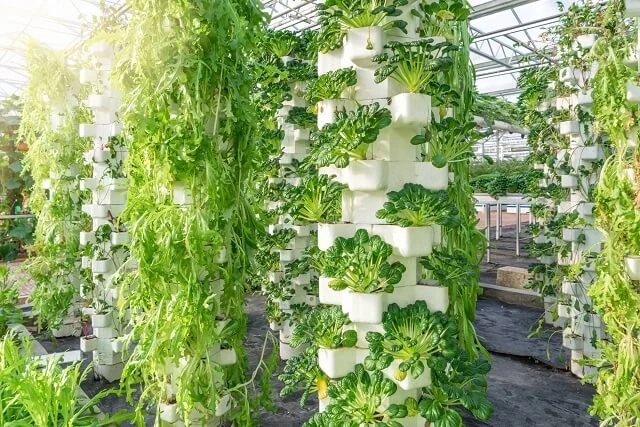
Growing importance is being given to vertical farming, among other Controlled Environment Agriculture (CEA) methods across the GCC and is generating interest and increased investments from regional and overseas players. According to Orbis Research, the MEA vertical farming market is expected to reach USD 1.21billion by 2021 at a CAGR of 26.4% from only USD 0.38 billion in 2016.
RELATED: Gulfood Reaffirms Dubai as Global Food Trade Capital
One of the GCC countries leading this change is the UAE, which has upcoming projects facilitated by the government as well as private players to help increase food security in the region. These include the UAE Ministry of Climate Change and Environment allotting space for 12 vertical farms to be built by Shalimar Biotech Industries, and the world’s largest vertical farm for Emirates Airlines by Crop One Holdings Inc. With around 90 percent of food being imported in the UAE, territorial problems of water scarcity and small percentages of arable land, vertical farming is becoming increasingly vital to ensure food security within the region.
RELATED: UAE’s Thriving Organic Farming
H.E. Mariam Al Mehiri, Minister of Future Food Security and a leading campaigner of urban farming plans to create a ‘Food Valley’ or a technology hub, dedicated to the development of food and farming automation. The Food Valley, and other government-led initiatives, are being introduced to attract and enable a new generation of farmers to help build future sustainability. Commenting in a recent interview, the Minister said “[The idea] comes from the Silicon Valley in the United States, where you have technologies, or start-ups, sprouting and developing into commercial giants.” explains the Minister. “We want to bring this to the UAE and build a Food Valley that’s all about food technologies.”
RELATED: Five Ways UAE Is The Architect of Its Own Food Security and Sustainability
The Middle East and Africa: A prime location for CEA to successfully take off.
By capitalizing on vertical space, and controlling the environment for year-round optimal growth, CEA can produce significantly more yields per square foot than traditional agriculture, while using only a fraction of the water.
AgraME 2019 is once again creating a platform for the latest technology to be showcased to the regional agribusiness market, along with promoting knowledge sharing between leaders in the global industry and key local players around urban farming techniques and methods.
Henry Gordon-Smith, Founder and Managing Director of Agritecture and an acknowledged global thought leader in urban agriculture, stated that the Middle East has an unprecedented ability to reshape critical infrastructure that supports modern human life; “The potential is certainly there to transform what has historically been a relatively small traditional farming industry into perhaps the most technologically advanced agriculture industry in the world. This means economic development, increased production of nutritious local produce, and lowered food costs, all with minimal water consumption and increased resilience to climate change and foreign markets” said Gordon-Smith who will be speaking at the AgraME Conference in March.
Commenting on the Middle East market, Bob Hunsche, Sales Manager, Van der Hoeven said; “We are really starting to see the horticulture industry take off in the Middle East. We have just completed the largest greenhouse project in the UAE (11 ha). With the most advanced technology in terms of climate and humidity control, the facility is expected to locally produce 3,000 tonnes of tomatoes year-round with the aim of helping the UAE become more self-sufficient in its food production. AgraME 2018 was a great event and we are really looking forward to connecting with more projects at the 2019 show!”
Samantha Bleasby, Exhibition Director of AgraME said, “With the aim of increasing food security in the Middle East and attaining the UN Sustainable Development Goal (SDG) of zero hunger, we are excited to present the industry with new technologies from around the globe and free-to-attend learning and networking opportunities that will increase productivity in the region with sustainable use of water and land resources”
The show is attracting key players in the CEA industry such as Certhon, Agrotonomy, Veggitech, Wuxi, iGrowths Technology Co. Ltd, Ozorganic Urban Farming LLP and Van der Hoeven.
Taking place from 5 – 7 March 2019 at the Dubai World Trade Centre, AgraME 2019 will bring to Dubai some of the leading innovators and urban farming experts to provide the industry with valuable information and knowledge.

9 Steps To Launching Your Freight Farms Project
Ready, Set, Grow!
Freight Farmers come from all walks of life; many have never farmed a day in their life, while others have a rich personal and family history of soil farming.
Regardless of who you are and where you’ve been, you have arrived at Freight Farms because you believe in making waves, disrupting the food system, and providing fresh, local, and delicious produce year-round. We’re here to help you succeed in making this farming dream a reality.
PART 1 - RESEARCH, PLAN, AND COMMIT
Discovery
Luckily, you’ve already completed the first step – you found us! However, following us on our various social media accounts will keep you updated with company and industry news, helpful content, and fun engagement opportunities.
Build Your Vision
As with any new business, you need to be aware of who your customers are and where you can find them. This will allow you to determine what your ideal strategy should be. Common strategies include selling direct-to-consumer, at farmers markets, and wholesale to grocers and restaurants. Read more about finding customers here and here.
Once you know who you will be selling to, you need to think about what you will be selling. Our farms are optimized to grow a huge variety of leafy greens! Read our Growing Guide and start to consider which crops you want to grow and sell.
Don’t forget, your account representative is extremely knowledgeable and always happy to answer any questions.
Find Your Site
This is an incredibly important step, so be proactive and start asking the right questions as soon as you start seriously thinking about buying your farm.
We’ve mapped out the zoning process for you, but – as always – give your account rep a call with any questions you have.
Finding the Perfect Home for Your Farm
How to Approach Your Municipality About Shipping Container Farming
Freight Farm with the Federal Realty Investment Trust
Make Your Investment
Take the plunge and join the Freight Farm family! We understand this is a big transitionary step for you, so speak to your account rep for clarifications and answers to any last-minute questions.
Additionally, we are excited to announce that we are currently offering financing! If this is something you are interested in, look into the options available for your needs.
Last but not least – go out and celebrate! You’ve just gotten that much closer to actualizing your farming dream.
PART 2 - LEARN AND LAUNCH
Training
Get ready to farm! We offer a few training options to best work with your schedule.
One option is to participate in a one or two-day intensive training at our headquarters in Boston, MA, where we combine in-farm sessions and classroom lessons. Another option is to learn remotely with our robust step-by-step online training course that allows you to learn on your own time.
Both training options cover everything you need to know! See the Farm Camp syllabus here.
Launch Your Farm
Your farm has arrived and you’re ready to go! Hook up your farm with the help of a trusty electrician and plumber, set up the farm Wi-Fi, and – hooray! – you’ve launched your farm. Your farm comes fully-equipped with all components needed for immediate production, so you can start growing immediately.
This video is a great resource for getting the operational and set up basics.
PART 3 - GROW AND GO
After training, you will have all the tools necessary to start growing in your farm. Don’t worry about making mistakes initially – it takes time to become familiar with all of the farming processes. Allow yourself three months to become a farm expert.
Thanks to the farm’s efficiency, you will be ready to harvest your first crops eight weeks after launching the farm. We estimate that you will need to spend about 20 hours a week to maintain the farm; these hours can be handled by one person, or split between a team. Read all about the farm’s labor requirements here.
In addition to our training resources, we have tons of information available on site, such as:
Get to know your peers!
The best thing about being a Freight Farmer? You’re not alone! You belong to a great community for farmers from all over the world, and they can be the best resources for you as get started.
Read about the journeys of other farmers just like yourself:
Acre in a Box, Houston, TX
Agora Greens, Walpole, MA
Brothers in Farms, Savannah, GA
Bees Greens Co, Waipahu, HI
Corner Stalk Farm, Boston, MA
Karma Farm, Monkton, MD
Very Local Greens, Halifax, Canada
Ready to get started? Simply contact us, and we can help you start container farming in no time!
LET'S GET STARTED!

"With Digital Agriculture, Some Improvements Are Automatic"
Jian Jin, Assistant Professor of Agricultural & Biological Engineering, knows to make progress, one must continuously move forward. The mindset is reflected in his life, and in the plants in his automated greenhouse.
Jin first found success in the phenotyping industry, designing imaging systems for plant screening. After finishing a milestone facility construction project in industry, he decided to switch to academia to continue the exploration of new phenotyping technologies. Jin joined Purdue, drawn by the opportunities to bring new ideas to life.
“We do higher risk, higher reward research as we explore frontiers,” says Jin. “Then, when we find something, we publish those findings. Many other people can adopt those new developments or technologies to be applied.”
In one of the greenhouses his lab oversees, Jin utilized conveyors for an advanced imaging system that enables researchers to perform automatic hyperspectral imaging of over 100 potted plants on an hourly basis. Stationary plants are affected by microclimates within a greenhouse. In a single room, factors like lighting, sunshine, temperature and air circulation can vary significantly.
Jin’s studies show that the conveyor system can eliminate 90% of plant variance. This assures the recorded differences between plants stem from genetics, not environmental factors.
Scanning the plants hourly provides a crucial advantage for Jin. Rarely are other plant images and manual measurements performed on a single plant more than once a day.
“Plants have a biological clock. It’s very different from time to time,” says Jin. “If, when I’m sleeping, you measure my heartbeat or blood pressure, those features are very low. Right now, I’m actively talking. If you measure my biological features now, everything is actually much higher. After jogging, you can imagine, it’s very different. It’s actually the same situation for plants.”
Precision is also the reason Jin uses hyperspectral imaging. While human eyes see visible light in three bands, hyperspectral imaging detects a broader spectrum and measures in narrower bands. The hyperspectral cameras can gather up to 10 terabytes of data each day. With such an influx of information, Jin places a high value on colleagues with the expertise to sift through vast sets of data.
“The image processing and data processing scientists behind the equipment are very important. For hyperspectral cameras, each pixel can have hundreds or thousands of values. How do you store and process that data? With better processing, you can see your imaging results in just a few hours or even immediately after the imaging.”
Digital agriculture innovations continue to stem from Jin’s lab. A second automatic high-throughput phenotyping greenhouse utilizes an overhead collection of cameras that travels to the plants. The greenhouse system simulates the remote sensing of a drone in the field and offers a combination of hyperspectral, thermal, and 3D imaging.
Purdue engineers developed a handheld hyperspectral imager with Jin’s lab as well. It compactly provides the benefits of a precise signal with a lower price than similar offerings.
Jin’s next endeavor is an outdoor automatic imaging system at the Agronomy Center for Research and Education. Upon its completion this summer, a hyperspectral camera will automatically traverse a rail approximately 25 feet above the field, providing remote sensing in a fairly high frequency.
“My goal here is to keep developing ideas,” says Jin. “The best sensor system for the next generation… We have to take some risks. We have to do something people have never done before. With all those new ideas, many will fail. We’ve failed several times already, but sometimes we try some new ideas that work and improve the value for farmers and consumers.”
Jin continued, “This is a really exciting time at Purdue. Different modes of automatic phenotyping, different cameras. We’ve learned a lot from these facilities.”
Source: Purdue University (Chad Campbell

CEA Advisors Announces International Collaborations
March 20, 2019
CEA Advisors, Fospan Worldwide and Canna Pro, global players in Horticulture are pleased to announce that they have finalized their agreement to collaborate on cannabis related business opportunities. These industry heavyweights are joining forces to provide marketing, sales, consulting and technical support to the global Cannabis industry.
CEA Advisors is a major player in the global indoor farming industry. For the past 10 years, they have designed and built state of the art custom container farms for commercial clients such as growers, food manufacturers, pharma manufacturers, universities, government agencies, schools and non-profits worldwide. They are also the designer and manufacturer of Growracks®, an industry standard plug and play vertical production system in use worldwide. www.growtainers.com
Fospan Worldwide SL, headquartered in Barcelona, Spain is an experienced solution provider of Horticultural services to the medicinal and recreational cannabis industry. The registered Dutch- Spanish company also acts as a distributor for many of Europe’s top Horticultural products including their proprietary LED product, Magnus Lights by Parus. Fospan Worldwide’s management boasts of many years of industry experience and the successful completion of high-profile Cannabis projects in Denmark, Switzerland and throughout Europe. www.fospan.com
Canna Pro, a division of Pro Horticulture Inc has spent years designing and building premium indoor cannabis facilities & light deprivation greenhouses for growing high yielding healthy crops. They are a global cannabis entity with strategic partnerships in Canada, USA and Europe. Canna Pro has assembled a team of all-stars bringing tried and true cultivation methods mixed with the perfect dose of cutting-edge technology. They’ve built greenhouses and growrooms all over the globe and work closely with their team of HVAC engineers to provide the optimum indoor environments for rapid growth of healthy plants. www.cannapro.co

Siberian Startup iFarms Secures $1mn To Develop “Vertical Farms” Across Russia and Europe
By EWDN in Moscow February 19, 2019
iFarm, a Novosibirsk, Siberia-based startup, has just secured $1mn in a round led by Gagarin Capital – the California-based VC firm founded by Nick Davidov and Mikhail Taver – with participation from individual Russian investors. The details of the deal have not been disclosed, reports East-West Digital News.
"We created iFarm to grow natural vegetables, berries and greens in the city at any time of the year, using innovative technologies," the company says on its website. Russia has enormous agricultural potential, but the weather makes growing fruit and vegetables difficult on most of the country's territory.
This agritech startup builds vertical farms, which “use a footprint of land more productively than traditional greenhouses.” It has also designed automated all-year-round greenhouses from 100 to 1000 sq.m. as well as growing trays “for growing greens and strawberry right in your restaurant or grocery.” iFarm’s first experimental projects were completed in 2017. The next year, iFarm developed vertical farms to grow such short-term crops as strawberries, lettuce and herbs. Two such vertical farms of 500 sq. m. were developed with grocery stores.
This year, iFarm plans to launch a new 3,000 sq. m. project in Novosibirsk, a smaller one in Moscow (100-500 sq.m.), and to experiment its technology on the European market. It will also use the money raised in the recent round to develop further its technology and enlarge its team.
The company has offices or representatives in Novosibirsk, Moscow and Luxembourg.

Simple DIY Aquaponic System For Home
Aquaponics is the art of growing plants in a system where fish and plants co-exist.
Aquaponics is the art of growing plants in a system where fish and plants co-exist.
Mother nature has been doing this for as long as plants and fish have existed, humanshave been doing this since the beginning of farming and cultivation, but only recently has it been brought back into the light with hydroponics. Gaining in popularity, this technique has been proven to have many benefits for crops while being very eco-friendly.
So why should you add aquaponics to your hydroponic garden? Fish and plants have been working together for a very long time, their practically soul mates. Bacteria from plants breaks down the fish waste and feed, then converts it into plant food and nutrient. Organic matter contained in fish feces and feed are also used for the conversion of fish generated ammonia to nitrate.
The plants consuming the dissolved waste nutrients filter the water for the fish. While dedicated bio-filters and settlers can be added as precautionary measures, this system is very self correcting, taking away the need for chemical usage such as fertilizers. Even PH levels are adjusted correctly assuming the fish tank and hydroponic setup is contaminant free.
Quick overview of the benefits
-No nutrients required
-PH balance is adjusted correctly on its own
-water is filtered on its own and recycled
-no chemical usage such as fertilizers and pesticides
-fish can be harvested as a second food source
-crops have a higher turn-around and higher yield
What you will need
This technique isn't just for large commercial agriculture companies, setups small enough to add in your kitchen as a centerpiece or on a teachers desk for educational use can be easily created.
With all the benefits already known, why not add it in to any size of a hydroponic setup. If you already have a hydroponic setup, all you will need to do is add in an aquarium/tank with the proper fish and you have a fully functional aquaponic system
Items required for indoor aquaponics
- Hydroponic system including plant bed, medium and tubes connecting to tank
- Grow light depending on where your hydroponic system is setup
- Aquarium or fish tank
- Water pump
- Power source for pump and grow light
- Ceramisite
- Fish
- Plants
Lets build!
Step 1 - Fill the black bottom tank to the water mark with clean uncontaminated water.
Step 2 - Find the small transparent tube and connect it to the water pump.
Step 3 - Connect the water pump to the transparent fish tank.
Step 4 - Place the buoy through the transparent tank into the black bottom tank.
Step 5 - Place the transparent tank on the black bottom tank then attach the pumps power
box onto the bottom tanks notch.
Step 6 - Attach the isolation plug to the solid tube at the top of the fish tank then fill the tank with water up to the isolation plug.
Step 7 - Stack the top plant tray in alignment with the mountain tube.
Step 8 - Install the clear syphon tube into the flow adjustment switch.
Step 9 - Add in your ceramisite until it fills the tray about an inch thick.
Step 10 - Add in your fish and plants!
What fish should you use?
Deciding on what type of fish you should use entirely depends on your setup. Large scale
with the purpose of farming and sustainability should have larger fish to produce more
waste and to carry the benefit of being able to harvest the fish for food. Small scale,
like the setup we just built will require smaller fish. Small also gives you the option
of choosing fish based on your perception of attractiveness. Decorative fish that can be
used in small setups like this are guppies, fancy goldfish, angelfish and swordfish. Some
people have taken is as far as creating environments for turtles, crayfish and even shrimp
What plants should you use?
Most plants will thrive in an aquaponic environment, especially those commonly used for
agricultural purposes. Large scale operations will grow all kinds of vegetables such as
lettuce, cabbage, tomatoes, spinach or anything grown on a farm. But since this setup is
small and more so decorative, smaller vegetable and herb plants can be used such as basil,
mint, watercress, chives, parsley, lemon grass, oregano, thyme, succulents and many more.
Get started!
Although the idea of aquaponics can be daunting and seem complicated, it's not as big
of a task as it seems. Whether it's for a green solution to growing crops naturally or
a hobby that can double as decoration, everyone can find a reason to jump on the wagon.
As you have read above, with minimal equipment and time, you can create your own little
Eco-system that provides you with food, education and a wonderful conversation starter.

Aquaponix, The Evolution of Aquaponic Crops
264 Thousand Lettuce Heads a Year Every 1000 sq m
Aquaponix (registered trademark) was one of the innovations presented at Novel Farm in Pordenone (click here for the photo gallery). It enables to grow vegetables, aromatic plants and flowers using aquaculture with fish swimming in the same tank. Promoters ensure it is a revolutionary system that can be adopted for 'urban farming' on a professional level by specialized producers as well as by hobbyists."
"We developed this system together with SEI from Piossasco in the Turin province. It is not a traditional aquaculture system using different tanks for vegetables and fish, as we create a symbiosis - fish eat roots, so plants keep producing root hairs considerably increasing their efficiency and growth," explains agronomist Alessandro Arioli.
Compared to a traditional system, the lettuce cycle is around ten days shorter. There is no drain: water regenerates thanks to its own biodiversity can also regulate the temperature.
"Fish eat the roots, which therefore keep growing day after day so no root disease develops and a bacterial balance is established thanks to the fish."
"The first systems were put in place three years ago and tests show that the vegetables grown this way have more flavor than those cultivated using the hydroponic system. 10-15 dish per cubic meter of water are needed. The system is integrated and fish can be bred to be sold."
As regards yields, we are talking about 264 heads a year per square meter, i.e. 264 thousand heads/year every 1000 sq meters. Considering 200 grams of saleable weight per head, we are talking about 52 tons a year of lettuce very 1000 sq m.
Contacts:
SEI srl
Aquaponix
Via Roma 16, 10040
Rivalta (Torino)
Tel.: (+39) 011/9042821
Tel.: (+39) 335/7356357
Email: seisrlto@gmail.com
Publication date : 2/22/2019
© HortiDaily.com

Does AI Hold The Key To A New And Improved “Green Revolution” In Agriculture?
Producing enough healthy food to feed the world—on a changing planet—is going to be a steep challenge. These researchers are giving farmers AI-driven techniques and tools to find solutions
Producing enough healthy food to feed the world—on a changing planet—is going to be a steep challenge. These researchers are giving farmers AI-driven techniques and tools to find solutions.
BYJACKIE SNOW FEBRUARY 19, 2019 NOVA NEXT
Automation in agriculture may soon make robots as common in greenhouses as they are on factory floors. Photo credit: Shutterstock
On a stretch of highway in the Netherlands not far outside of Amsterdam, a row of greenhouses at Wageningen University & Research (WUR) poke up like knuckles along the flat landscape. The Dutch university is known for its cutting-edge agricultural research, but some of these greenhouses recently ran an experiment that’s novel even for them: autonomous growing.
Stepping into a humid box from a brisk autumn day, you hear the noises of machines adjusting themselves mixing with the sounds of leaves rustling. The amount of light, water, fertilizers, and carbon dioxide—along with the temperature of the greenhouse—are all set by deep learning algorithms and executed by machines. Humans are still responsible for moving vines up the lattices as they grow, as well as pruning and harvesting.
But it’s pretty clear who—or rather, what—is calling the shots.
The Future of Farming?
By 2050, we’ll need to feed nine billion people with about a third less arable land than we had in the 1970s, experts estimate. Farmers will need all the help they can get, including insights gleaned from artificial intelligence, or AI. Developed carefully—and with the people who will be using it taken into account—AI can be part of the solution to feeding a growing world, according to the Refresh report, a document put together by researchers from Google, university professors, nonprofits, and farmers. And as an added bonus, some of the unsustainable practices developed over the past 70 years could be reversed with more efficient, AI-driven technology.
The Green Revolution was a set of advances that started in the 1950s in areas like high-yield crops, synthetic fertilizers, and irrigation technology that greatly increased food production, especially in developing countries—saving an estimated one billion people from starvation. But it left in its wake a culture of pesticides, reduced agricultural biodiversity, and overuse of chemical fertilizers that deplete the soil and poison waterways.
“It was never meant to be used in the long term,” says Danielle Nierenberg, the president of Food Tank, a non-profit working to build a better food system that also worked on the Refresh document. Farmers were supposed to transition back to organic, Nierenberg adds: It just never happened because increased yields generated by industrial-scale farming put pressure on smaller farms to follow suit.
One of the main ways AI could help agriculture transition out of practices forged in the Green Revolution and into a more sustainable future is with precision farming. Until now, there hasn’t been an easy way for farmers to learn from historical or real-time data. But AI-powered programs can combine data on weather patterns, crop yields, market prices, and more to guide farmers to planting at the right time, adding the appropriate level of fertilizers, and harvesting at peak ripeness.
WUR is one of the places where big data approaches to growing food are being tested. Last fall, five teams of AI researchers and biologists from around the world competed in growing cucumbers in separate 96-square-meter greenhouses, with a sixth grown manually as a reference. Each team trained its own algorithm, although the teams had the ability to decide how closely to follow the solutions that their AI models came up with. The teams kept an eye on their crops with sensors and cameras, and could feed the algorithms new data and tweak them as needed. To win, teams had to maximize total yield and net profits while minimizing the use of resources.
The winner was a team called Sonoma, made up of Microsoft Research employees and students from Danish and Dutch universities. According to Silke Hemming, head of the scientific research team for greenhouse technology at WUR, Sonoma’s plan used more artificial light earlier and kept carbon dioxide levels higher than a typical gardener might. But other teams also discovered counterintuitive ways to increase yield, such as pruning smaller cucumbers close to harvest or letting bigger ones have a chance to grow a little more.
Like all problems in AI, growing cucumbers and other crops by algorithm demands a food source of its own: data—and lots of it. The cucumber contest was a start at putting information together that other researchers can build on with future projects.
“You have a dataset you would never have,” Hemming says. “You can learn so much from that.”
The researchers organizing the competition chose cucumbers because they are a fast-growing crop cultivated worldwide, and problems like blight show up in them immediately. But this project could transform how other indoor crops are grown. It’s a first step in finding ways to combine humans and AI technology to produce more food, more efficiently.
“It’s not all about winning.” Hemming says. “It’s also about learning.”

FARMWAVE Founder and CEO Craig Ganssle uses its smartphone app with an automated kernel count feature to assess corn yield. Photo credit: FARMWAVE
AI on the Farm
“Farming is a lot more complicated than other industries,” says Joshua Woodard, an agricultural business and finance professor at Cornell and founder of the farming data company Ag-Analytics. “It’s a really complex system of environment and management practices."
Ag-Analytics’s wants to bridge that gap with easy-to-use data analysis tools to help farmers plan and monitor their fields. Their farm management platform takes data from sensors in John Deere farm equipment and combines it with other datasets, like satellite imagery and weather forecasts, to develop predictions for individual farms.
Algorithms working from afar could make a huge impact for less tech-heavy farms, too. Farmers in the developing world are working with minimal data and stand to make leaps in productivity with algorithms in the cloud instead of expensive machinery in their fields. According to the United Nations, 20 to 40 percent of crop yields are lost each year due to pests and diseases. AI tools like Plant Village and FARMWAVE allow farmers to take photos with their phones of sickly plants, bugs, and weeds, and then have computer vision-powered algorithms diagnose the problem from afar in seconds. FARMWAVE is already working with farmers in countries across the world, who, despite their distance, are all dealing with similar problems that AI can spot.
"Army worm in corn looks the same in Africa versus the U.S.,” says Craig Ganssle, the founder and CEO of FARMWAVE.
In India, a team at the International Crops Research Institute for the Semi-Arid Tropics (ICRISAT) is working on providing real-time pest predictions to help Indian farmers take specific actions to protect their crops. ICRISAT uses cloud computing, machine learning, and data from IoT (short for the “Internet of Things”) sensors to come up with personalized predictions about pest risks.
Dr Avijit Tarafdar of ICRISAT converses with chickpea farmer Mr Srinivasa Boreddy in Adilabad District, Telangana. Photo credit: D Chobe, ICRISAT
“Whenever [farmers] see the pests in the field, they simply go for pesticides,” says Dr. Mamta Sharma, a principal scientist at ICRISAT. “It will help them reduce the amount of sprays that farmers are applying."
ISCRISAT has offices in Africa that could eventually use the tool, with interest coming from South America as well. As these offices collect more data, Sharma says, it could be used to spot new risks due to climate change.
“It helps us recognize emerging threats,” she says.
Robot Green Thumbs
Indoor farming currently occupies around 2.3 million square feet worldwide. But based on information from growers, the analysis firm Agrilyst predicts this number will balloon to 22 million square feet over the next five years. Despite the expense of setting up these spaces and the limited types of produce that can currently be profitably grown, much of AI research is being done in greenhouses and other indoor spaces because, with the reduction of arable land, these production methods will become more critical. Indoor farming can also produce up to 20 times as much fruit and vegetables per square foot as outdoor farming, while using up to 92 percent less water, according to one study, with one company claiming it needs 99 percent less water.
In San Carlos, California, two robots cruise within a hydroponic farm developed by the start-up Iron Ox. These robots, which plan, care for, and harvest produce, are overseen by a computer program affectionately nicknamed “the Brain.” Even before the advent of AI, hydroponic systems were known to use less water, need fewer pesticides, grow faster, and produce more plants in less space. However, hydroponics are notoriously labor-intensive, requiring plants to be moved to different vats throughout the growing phase. Training robots for this monotonous task could make razor-thin profit margins a little less tight.
“A lot of things that weren’t feasible outside of a lab five years ago are possible now,” says Brandon Alexander, the CEO of Iron OX.
In the end, improved agricultural processes lead to better food options. And making small indoor farms more efficient could open up the possibilities of food grown closer to city centers. Most produce travels an average of 2,000 miles from farm to shelf in the U.S., which forces farmers to plant fruits and vegetables that can handle being transported—not necessarily those that taste good.
“Fresh produce isn’t that fresh,” Alexander says.
After improving its robotic systems, Alexander says, Iron OX’s long-term plans include breeding plants using data currently being gathered on its farm. Algorithms crunching this data and other local information, like what sells best, could replace tasteless, homogenized tomatoes and lettuce with more varieties suited to different communities’ tastes.
“We could make delicious, extra healthy things that people want to eat,” Alexander says.

Affinor Growers (AFI) Trading Down 12.5%
Affinor Growers Inc (CNSX:AFI) dropped 12.5% during mid-day trading on Thursday . The company traded as low as C$0.04 and last traded at C$0.04
Posted by Emily Schoerning on March 21st, 2019
Affinor Growers Inc (CNSX:AFI) dropped 12.5% during mid-day trading on Thursday . The company traded as low as C$0.04 and last traded at C$0.04. Approximately 229,250 shares were traded during trading, a decline of 22% from the average daily volume of 292,753 shares. The stock had previously closed at C$0.04.
About Affinor Growers (CNSX:AFI)
Affinor Growers Inc, a farming technology company, engages in acquiring, patenting, and commercializing various agriculture technologies and vertical farming technology for indoor controlled environment and outdoor greenhouse agriculture industry in North America. It grows crops, such as romaine lettuce, spinach, and strawberries using its vertical farming technology.
Where To Find The Freshest Lettuce In Alaska? Try This Freight Container
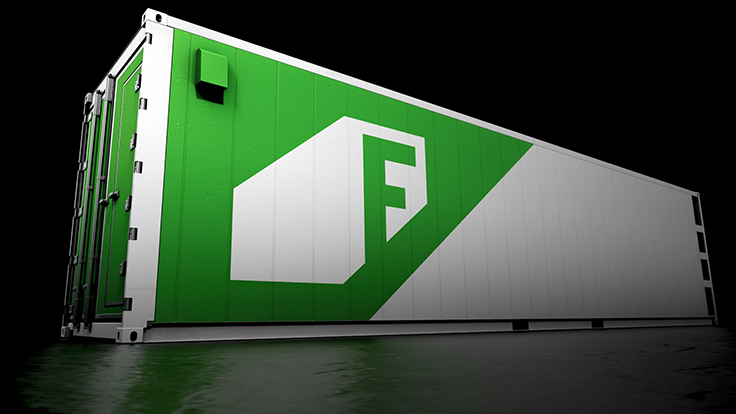
A small green freight container sits behind a popular stop along the Seward Highway, the Turnagain Arm Pit BBQ.
By Hank Davis |
Posted: Mar 07, 2019
ANCHORAGE (KTUU) — A small green freight container sits behind a popular stop along the Seward Highway, the Turnagain Arm Pit BBQ.
Inside is a hydroponic garden, dubbed the Indian Valley Farm. Its climate-control systems monitor for optimal humidity, pH balances, and temperature.
The "Freight Farm" system uses LED technology to mimic 18 hours of sunlight every day.
Owner Jack Goodsell moved the freight farm from Boston to Alaska as a way to provide fresher produce at his restaurant.
According to the manufacturer's website, these hydroponic setups cost around $110,000 to get up and running, but Goodsell says it cost him about $150,000 to get the unit to Alaska and begin farming. Now he's growing more leafy greens than both of his restaurants can use.
"Everything we grow, we harvest live, so it doesn't get fresher," Goodsell said. "The flavors of fresh grown versus what we ship up is incredible."
The enclosed garden is only a couple hundred square feet, but it can support a couple thousand plants if used strategically.
Goodsell regularly has more than 1,000 plants growing in his freight farm, and he says it only takes about five gallons of water daily to maintain that pace.
Goodsell's plants are harvested daily, regardless of the weather conditions outside. His crop boasts half a dozen species of lettuce, kale, Swiss chard, herbs and radishes. He says they're continuously adding new plants to the mix.
He says the surplus greens are among the freshest produce you'll find in Alaska, and can now be bought at either Turnagain Arm Pit BBQ location.
Get the latest updates from ktuu.com delivered to your browser
Do The Costs For Vertical Farming Stack Up?
The technology is available to grow a wide range of crops under controlled conditions, but this requires high levels of technical skill and investment
Friday, 15 February 2019
Controlled Environment Agriculture is seen by many as the answer to reducing environmental impact, helping to feed a growing population and producing premium crops. AHDB-funded Nuffield Scholar, Sarah Hughes, argues the economics for vertical farming don’t always stack up.
With increasing land prices, a shrinking and ageing rural workforce, increased climate variability and Brexit on the horizon, I wanted to find out if compact and highly productive growing systems stack up economically as a viable way to grow a crop.
There is an exciting future for controlled environment agriculture (CEA) and vertical farming, but it may only be for high-value crops, such as those grown for medicinal use.
After travelling to Brazil, Japan, The Netherlands, California, Dubai, in my opinion a hybrid system might be the best way to make the economics work. This would mean using glasshouse technology and adding knowledge gained from Controlled Environment Agriculture to improve production.
Getting the business model right
The technology is available to grow a wide range of crops under controlled conditions, but this requires high levels of technical skill and investment.
If you haven’t got a high value crop, you may struggle to make the books balance. People need to look at the crop and the business model first, and then decide the best way to grow it.
The ideal would be to model all the variable costs of each different CEA system, to assess whether it is economical.
To identify the ‘sweet spot’ for when vertical farming adds up, the following changes may need to happen:
Reduced LED lighting costs
Reduced electricity costs
Increased costs of conventional production methods
There are business models where CEA currently work well, such as seed breeding and medicinal plants; however other models, such as niche crops, fodder and leafy greens, appear less economical unless on a large scale in the later example.
Environmental sustainability
It is difficult to substantiate the claims for environmental sustainability based on energy used in these systems, even with renewable energy. However the arguments are more convincing when applied to water use.
Vertical Farms do minimise land-use, growing in stacks can obviously be done on a much smaller footprint. However the argument for growing in urban environment really needs looking at in detail. If you buy space in middle of London, the real estate cost is phenomenal, that argument doesn’t really work.
Hybrid systems
Wageningen University and Research in The Netherlands, who I visited as part of AHDB’s SmartHort campaign, have been looking at the nitty gritty of growing in these systems. They argued the energy requirement is currently too high to make it work, compared to a conventional glass-house system.
A Smart-glasshouse or a hybrid system might be way forward. This would involve using conventional glasshouses, but adopting vertical farming technologies when needed. For instance, we have good light levels in the UK, but when light is poor, it could be supplemented with LEDs, but this isn’t necessary every day of the year.
Sarah Hughes runs the company ‘Eat My Flowers,’ an edible flowers business based in North Wales and undertook her research into Controlled Environment Agriculture as an AHDB-funded Nuffield scholar. You can read Sarah’s Nuffield Scholarship Report here.

Living Greens Farm Becomes One of The Largest Indoor Farms In The World
FARIBAULT, MINN. – With the opening of a new grow room, Living Greens Farm, a vertical, indoor aeroponic farm that provides year-round fresh salads, microgreens and herbs, is set to become the largest vertical plane aeroponic farm in the world on February 22, 2019. This brings their farming operation to 60,000 square feet – allowing Living Greens to offer produce that’s better for you and the environment. Unlike most produce, Living Greens Farm never uses pesticides, herbicides or GMOs – delivering the highest standards in food safety. Because Living Greens’ products are fresher, they contain more vitamins and nutrients than conventional produce.
While aeroponics has been around for decades, Living Greens Farm has discovered a way to successfully transition and improve this technology for commercial production. Aeroponics is the practice of suspending a plant’s roots in the air and spraying them with a nutrient-rich solution, instead of burying them in soil. Living Greens Farms’ patented vertical plane design allows one acre to produce the equivalent of hundreds of conventional acres.
A high-tech computer system manages the plants growing conditions for variables such as light, temperature, humidity and CO2 to grow year-round produce. Overall, Living Greens Farms’ system uses 200 times less land and 95 percent less water than traditional growing methods. While other vertical aeroponic farms are larger in square footage, Living Greens Farms’ vertical plane design is the first of its kind and is more efficient than other aeroponic growing methods which decreases labor by up to 60 percent.
“Our patented growing technology has changed the game of aeroponics, within one year our new farm will save 24 million gallons of water and several hundred thousand miles of shipping – saving over 35,000 gallons of diesel and nearly a million pounds of CO2 emissions,” said Dana Anderson, Chairman and CEO of Living Greens Farm. “With our third grow room, Living Greens Farm will nearly triple its capacity, move into major market segments and position the company for even stronger growth in 2019. The expansion places Living Greens as the world’s largest vertical plane aeroponic farm in the world.”
Living Greens Farm’s new grow room will allow an expansion of their consumer product line into new states including Minnesota, Wisconsin, Illinois, Iowa, North Dakota and South Dakota by February 2019.
ABOUT LIVING GREENS FARM
Headquartered in Minnesota, Living Greens Farm is the world’s largest vertical plane aeroponic farm. Living Greens Farm produce requires 95 water and 99 percent less land to grow year-round and all products are grown without pesticides or GMOs. Living Greens Farm has a full product line that includes salads, microgreens and herbs available throughout the Midwest. For more information, please visit http://www.livinggreensfarm.com

"Vertical Fixture To Make Hop Cultivation More Sustainable"
Light Engine:
You probably won't notice it during Friday drinks, but there has been a shortage in hop for the production of beer. The hop that is normally grown in the open field has faced failed harvests. It is the reason hop growers are slowly switching to conditioned growth.
Climbing plant
Compared to the cultivation of tomatoes or cucumbers, hop cultivation looks rather strange to outsiders. The fast growing climbing plant grows to a height of several meters in a short time, and produces flowers which are used in the conservation of beer. When growing under controlled circumstances, lighting is one of the ways to increase the yield of the plant. And to make the cultivation even more sustainable, vertical lighting could be the solution, according to LED supplier Light Engine. They developed the Cabled vertical fixtures.
Optimal lighting
Ramon de Vrie, Light Engine: "The light is evenly distributed over the plants, reducing shadows. By placing the plants closer together, you can increase the yield. This is particularly important for growers who are reluctant to switch to conditioned cultivation due to the high energy costs. LED lighting is definitely more sustainable than regular lighting, and by placing the fixtures vertically we use the light optimally."
Looking for the ideal light recipe
Now there are various hop companies which have the Cabled hanging vertically in their greenhouse. They can be found in Hong Kong, the US, and Australia. Besides extensive experimenting in practice, Light Engine is looking for partners and laboratories to test which effects the lights have on the quality and productivity.
"We want to elaborate on the light spectra, wattage, and the number of light hours. When we have found the ideal light recipe, we expect that the grower will have a high yield of high quality." And so it can be that in a few years it will be normal to drink a beer from the greenhouse.
For more information
Huizhou Light Engine Limited
T: (86) 752-311 2222
ramonvandevrie@lightengine-tech.com
www.lightengine-tech.com
Publication date : 3/6/2019

Singapore’s Getting a New Govt Body – And Its Priority Is To Make Sure The Country Has Enough Food
The Singapore Food Agency will be responsible for developing Singapore’s food supply, improving food safety regulations, and handling food-borne disease outbreaks.
February 13, 2019
Come April 1, Singapore’s new food-related statutory board, the Singapore Food Agency (SFA), will come into existence – and its most important job is to ensure the country has enough food supplies.
The new stat board was created to consolidate and handle food-related matters currently scattered under divisions in the Agri-Food & Veterinary Authority (AVA), Health Sciences Authority and National Environment Agency.
SFA’s priority is to develop national strategies to obtain food, Minister for the Environment and Water Resources Masagos Zulkifli said in Parliament on Tuesday (Feb 12).
According to Masagos, imports account for most of Singapore’s food supply, and the republic currently imports items from 180 countries – up from 140 countries in 2004.
The minister said the SFA would continue to look for more import sources to ensure Singapore is not overreliant on any country for food items. This would also reduce the republic’s “vulnerability to external volatility and price hikes,” he added.
In addition, it will also help local food companies based overseas to expand, thus reducing the price of imports.
Another way the stat board plans to develop food security is by increasing the supply from local farms. It is looking at educating farmers at institutes of higher learning (such as universities and polytechnics), so as to incorporate more technology and R&D in the farming sector, Masagos said.
Examples of these technologies include indoor vertical farms and deep sea fish farming.
On top of food security, the SFA will also be responsible for improving food safety regulations and handling food-borne disease outbreaks, such as tracing and recalling food products, and testing food samples.
Its “regulatory oversight over all food-related matters from farm to fork” would allow the government to “address lapses (in food safety) more quickly and more holistically,” the AVA said in a statement.
In addition, a food laboratory, the National Centre for Food Science, will be set up under the SFA to research food safety.

How Urban Agriculture Can Improve Food Security in US Cities
…researchers have calculated that Cleveland, with a population of 400,000, has the potential to meet 100 percent of its urban dwellers’ fresh vegetable needs, 50 percent of their poultry and egg requirements and 100 percent of their demand for honey.
February 13, 2019 10.49pm AEDT
City Farm is a working sustainable farm that has operated in Chicago for over 30 years. Linda from Chicago/Wikimedia, CC BY
Author Miguel Altieri
Professor of Agroecology, University of California, Berkeley
Disclosure statement
Miguel Altieri does not work for, consult, own shares in or receive funding from any company or organisation that would benefit from this article, and has disclosed no relevant affiliations beyond their academic appointment.
Partners University of California provides funding as a founding partner of The Conversation US.
During the partial federal shutdown in December 2018 and January 2019, news reports showed furloughed government workers standing in line for donated meals. These images were reminders that for an estimated one out of eight Americans, food insecurity is a near-term risk.
In California, where I teach, 80 percent of the population lives in cities. Feeding the cities of the nine-county San Francisco Bay Area, with a total population of some 7 million involves importing 2.5 to 3 million tons of food per day over an average distance of 500 to 1,000 miles.
This system requires enormous amounts of energy and generates significant greenhouse gas emissions. It also is extremely vulnerable to large-scale disruptions, such as major earthquakes.
And the food it delivers fails to reach 1 of every 8 people in the region who live under the poverty line – mostly senior citizens, children and minorities. Access to quality food is limited both by poverty and the fact that on average, California’s low-income communities have 32.7 percent fewer supermarkets than high-income areas within the same cities.
Many organizations see urban agriculture as a way to enhance food security. It also offers environmental, health and social benefits. Although the full potential of urban agriculture is still to be determined, based on my own research I believe that raising fresh fruits, vegetables and some animal products near consumers in urban areas can improve local food security and nutrition, especially for underserved communities.
The growth of urban agriculture
Urban farming has grown by more than 30 percent in the United States in the past 30 years. Although it has been estimated that urban agriculture can meet 15 to 20 percent of global food demand, it remains to be seen what level of food self-sufficiency it can realistically ensure for cities.
One recent survey found that 51 countries do not have enough urban area to meet a recommended nutritional target of 300 grams per person per day of fresh vegetables. Moreover, it estimated, urban agriculture would require 30 percent of the total urban area of those countries to meet global demand for vegetables. Land tenure issues and urban sprawl could make it hard to free up this much land for food production.
Other studies suggest that urban agriculture could help cities achieve self-sufficiency. For example, researchers have calculated that Cleveland, with a population of 400,000, has the potential to meet 100 percent of its urban dwellers’ fresh vegetable needs, 50 percent of their poultry and egg requirements and 100 percent of their demand for honey.
Can Oakland’s urban farmers learn from Cuba?
Although urban agriculture has promise, a small proportion of the food produced in cities is consumed by food-insecure, low-income communities. Many of the most vulnerable people have little access to land and lack the skills needed to design and tend productive gardens.
Cities such as Oakland, with neighborhoods that have been identified as “food deserts,” can lie within a half-hour drive of vast stretches of productive agricultural land. But very little of the twenty million tons of food produced annually within 100 miles of Oakland reaches poor people.
Paradoxically, Oakland has 1,200 acres of undeveloped open space – mostly public parcels of arable land – which, if used for urban agriculture, could produce 5 to 10 percent of the city’s vegetable needs. This potential yield could be dramatically enhanced if, for example, local urban farmers were trained to use well-tested agroecological methods that are widely applied in Cuba to cultivate diverse vegetables, roots, tubers and herbs in relatively small spaces.
In Cuba, over 300,000 urban farms and gardens produce about 50 percent of the island’s fresh produce supply, along with 39,000 tons of meat and 216 million eggs. Most Cuban urban farmers reach yields of 44 pounds (20 kilograms) per square meter per year.

An organic farm in Havana, Cuba, that produces outputs averaging 20 kilograms (44 pounds) per square meter per year without agrochemical inputs.Miguel Altieri, CC BY-ND
If trained Oakland farmers could achieve just half of Cuban yields, 1,200 acres of land would produce 40 million kilograms of vegetables – enough to provide 100 kilograms per year per person to more than 90 percent of Oakland residents.
To see whether this was possible, my research team at the University of California at Berkeley established a diversified garden slightly larger than 1,000 square feet. It contained a total of 492 plants belonging to 10 crop species, grown in a mixed polycultural design.
In a three-month period, we were able to produce yields that were close to our desired annual level by using practices that improved soil health and biological pest control. They included rotations with green manures that are plowed under to benefit the soil; heavy applications of compost; and synergistic combinations of crop plants in various intercropping arrangements known to reduce insect pests.

Research plots in Berkeley, Calif., testing agroecological management practices such as intercropping, mulching and green composting. Miguel Altieri, CC BY-ND
Overcoming barriers to urban agriculture
Achieving such yields in a test garden does not mean they are feasible for urban farmers in the Bay Area. Most urban farmers in California lack ecological horticultural skills. They do not always optimize crop density or diversity, and the University of California’s extension program lacks the capacity to provide agroecological training.
The biggest challenge is access to land. University of California researchers estimate that over 79 percent of the state’s urban farmers do not own the property that they farm. Another issue is that water is frequently unaffordable. Cities could address this by providing water at discount rates for urban farmers, with a requirement that they use efficient irrigation practices.
In the Bay Area and elsewhere, most obstacles to scaling up urban agriculture are political, not technical. In 2014 California enacted AB511, which set out mechanisms for cities to establish urban agriculture incentive zones, but did not address land access.
One solution would be for cities to make vacant and unused public land available for urban farming under low-fee multiyear leases. Or they could follow the example of Rosario, Argentina, where 1,800 residents practice horticulture on about 175 acres of land. Some of this land is private, but property owners receive tax breaks for making it available for agriculture.
In my view, the ideal strategy would be to pursue land reform similar to that practiced in Cuba, where the government provides 32 acres to each farmer, within a few miles around major cities to anyone interested in producing food. Between 10 and 20 percent of their harvest is donated to social service organizations such as schools, hospitals and senior centers.
Similarly, Bay Area urban farmers might be required to provide donate a share of their output to the region’s growing homeless population, and allowed to sell the rest. The government could help to establish a system that would enable gardeners to directly market their produce to the public.
Cities have limited ability to deal with food issues within their boundaries, and many problems associated with food systems require action at the national and international level. However, city governments, local universities and nongovernment organizations can do a lot to strengthen food systems, including creating agroecological training programs and policies for land and water access. The first step is increasing public awareness of how urban farming can benefit modern cities.
Canadian Vertical Farming Startup to Distribute Produce to Universities
Chartwells, a Canadian educational food service provider, and the Growcer, announced an exclusive partnership that will bring 'the 100 foot farm' to college and university campuses across Canada. The Growcer converts shipping containers into state-of-the-art vertical farms to grow fresh produce for food insecure areas. Chartwells will be the first to bring this program to the Canadian higher education landscape with this partnership.
Ashton Sequeira, President Chartwells (L) with Ottawa students Alida Burke and Corey Ellis, co-founders of The Growcer (CNW Group/Compass Group Canada)
Founded by Ottawa students Corey Ellis and Alida Burke, The Growcer is a farming system combining hydroponic technology with precision climate controls that allows the user to easily grow fresh produce in a contained space. The distance the produce travels to the consumer can be as little as 100 feet – making this the '100 foot farm'.
"As part of our Thinking Ahead Giving Back vision, we have made a pledge over the next 3 years to deliver 1,000,000 meals to tackle food insecurity both domestically and globally, provide 10,000 hours of community support around mental health and social issues facing students and create 1,000 jobs through a more focused commitment to student employment," said Ashton Sequeira, President, Chartwells. "At Chartwells, we are committed to delivering a student-first experience on campus and this exciting partnership with The Growcer is another step towards this. We will be donating 10% of annual crop grown to tackle local food insecurity as part of our commitment to deliver 1,000,000 meals over the next 3 years. Teaming up with The Growcer delivers on our pledge and puts student innovation, sustainability and community engagement at the forefront of what we do."
"We had the opportunity to partner with any of the companies in this space, but we chose Chartwells because of their commitment towards social and sustainable initiatives, their support around student innovation and leadership within their executive team and all the way to their front-line associates," added Corey Ellis, Co-founder and CEO, The Growcer. "Through our partnership with Chartwells, partner colleges and universities across Canada will benefit from having fresh, local and healthy produce grown only steps away from their food halls and cafeterias, no matter the weather. We're excited that students will get to enjoy locally-grown, nutritious meals throughout the entire year."
"The Growcer's incredible growth is just beginning with the global adoption of indoor farming. More and more, we are seeing ag-tech innovations such as hydroponics being used to address food security challenges, rising population, food prices and shrinking arable land," said Nick Quain, Vice President of Invest Ottawa, whose tech acceleration program, the IO Accelerator, has provided the Growcer with business advisory and support since 2016.
"We couldn't be more proud of The Growcer, and congratulations to Chartwells for having the vision to land this partnership with one of Ottawa's most innovative companies."
For more information:
www.chartwellsschools.com

VertiFarm2019 - International Workshop on Vertical Farming Wageningen 13-15 October 2019
Contact
prof.dr.ir. LFM (Leo) Marcelis
Vertical farming is a next level production system, which allows production of plants at any place including the most urbanised regions of the world. The use of LED light and the full control of both the aboveground and belowground conditions in combination with the right cultivar, enables growers to produce products with extra added value, which appeal to the demand of consumers for safe, reliable, and tasty, nutritious food.
It is now time for the first international workshop on Vertical Farming which is organised under the auspices of the International Society for Horticultural Science.
Organised by
Wageningen University - University of Bologna - University of Arizona
Date
Sun 13 October 2019 until Tue 15 October 2019
Venue
Wageningen Campus
The workshop combines a number of oral presentations of world leading horticultural researchers, panel discussions with renowned companies, short oral and poster presentations on the latest research results on vertical farming.
The workshop welcomes scientific presentations on all aspects of vertical farming, ranging from plant physiology, breeding, climate control, engineering, systems design, urban planning, economics, consumer demands and business development.
Although at this moment vertical farming largely deals with vegetables, there are also opportunities for production of ornamental (young) plants. Therefore, the workshop also welcomes presentations on ornamentals in vertical farms.
You are most welcome to attend the workshop from 13 to 15 October on the Campus of Wageningen University - the Netherlands. If you want to be sure to have a place at the workshop, register as soon as possible.
PRACTICAL INFORMATION:
Workshop fee:
Registration fee includes welcome reception, lunches, bites & drinks, coffee/tea.
Fee Non-ISHS includes 1 year membership of ISHS
Registration:
- via this website: Registration VertiFarm2019
- the deadline for registration is 6 October 2019
(early bird until 1 August 2019)
Information about the programme of the workshop & How to travel to Wageningen / Housing / Tourist information:
1-Brochure workshop VertiFarm2019 - including programme.pdf
2-How to travel to Wageningen - housing - tourist information 2019.pdf
Sponsorship opportunities:
VertiFarm2019 Sponsoring packages.pdf
Contact:
Questions about the registration procedure:
Niek Botden (HortiLink)
- mail: niek.botden@hortilink.nl
Other subjects (programme, sponsorship etc.): Leo Marcelis
(Horticulture & Product Physiology group)
- mail: leo.marcelis@wur.nl


Sponsored by:
Organisors:
Prof.Dr. LFM Marcelis Horticulture & Product Physiology group Wageningen University
Dr. Francesco Orsini Dept. of Agri-Food Sciences and Technologies -DISTALUniversity of Bologna
Prof.Dr. Murat Kacira Dept. of Agricultural & Biosystems Engineering - CEAC University of Arizona