Welcome to iGrow News, Your Source for the World of Indoor Vertical Farming

Indoor Farms of America Brings Customers The Most Innovative Farm Management Platform Available With Award Winning Agrilyst
Indoor Farms of America announces today that all of its vertical aeroponic farms, from the most productive container farms in the world, known as GrowTrucks, to the highest yield indoor farms for warehouse or greenhouse applications, will now come standard with the award winning farm intelligence platform from Agrilyst.
Indoor Farms of America Brings Customers The Most Innovative Farm Management Platform Available With Award Winning Agrilyst
LAS VEGAS, Feb. 17, 2017 /PRNewswire/ — Indoor Farms of America announces today that all of its vertical aeroponic farms, from the most productive container farms in the world, known as GrowTrucks, to the highest yield indoor farms for warehouse or greenhouse applications, will now come standard with the award winning farm intelligence platform from Agrilyst.
“In our desire to bring our customers the best-in-breed for each component of our farms, we recognized that Agrilyst has developed the most comprehensive tool we have studied for effectively managing an indoor farm,” says David Martin, CEO of Indoor Farms of America.
With data tools that help the farm operator easily focus on creating the highest yields from their farm, all managed from a thoughtfully laid out Dashboard, the Agrilyst platform makes the most of the farm on a daily basis.
“Every element of the farm, along with the business side, was taken into consideration by the team at Agrilyst,” states Martin, “and the team at Agrilyst is thrilled to have joined with us in the implementation of their amazing product within our farm offerings.”
“The ability to collect data in real time, analyze that data, display it in a way that the user receives the most benefit from, and to then have that translate into an action plan to guide the farmer to successful yields and harvests, while controlling costs, well, we believe our operators will greatly appreciate that,” said Martin.
In an impressive debut, Agrilyst won the TechCrunch Disrupt competition in September of 2015, and now has a solid amount of time with real world farms under their belt, operating using the Agrilyst platform.
According to Allison Kopf, CEO of Agrilyst, “We are excited to have been chosen as the platform to help make every farm sold by Indoor Farms of America the best it can be,” and “we look forward to working with their team and customers.”
Indoor Farms of America has a showroom with demonstration farms operating in Las Vegas, Nevada where their patented vertical aeroponic equipment is on display, including a container farm, with a primary model that has over 6,800 plant sites in standard configuration, over double the nearest competitor in the container farm segment.
“Our farms represent tremendous value to the purchaser, offer a superior R.O.I. potential than anything else on the market, and with the addition of the Agrilyst platform, our farmers now have the upper hand in total farm management,” stated Martin.
Each week the company hosts business owners, growers, and farm managers from around the U.S. and the world who want to see for themselves the equipment that can grow more crops in any given space that any other brand or type of equipment in the world.
“We will now have the Agrilyst platform operating and on display for our potential farmers to see first-hand, at the first of March, and we are excited for this addition to our end to end indoor farm solution,” according to Ron Evans, President of Indoor Farms of America.
For more information, visit the company website at indoorfarmsamerica.com
This press release was written by Indoor Farms of America and is shared in its original form. For more information on Agrilyst, please visit: www.agrilyst.com.

There Are Acres of Leafy Greens Inside These Shipping Crates On An Old St. Petersburg Junkyard
There Are Acres of Leafy Greens Inside These Shipping Crates On An Old St. Petersburg Junkyard
Friday, February 17, 2017 10:48am
ST. PETERSBURG — The would-be farmers bought three transoceanic refrigerated shipping containers, just a little dinged up, for $6,500 each.
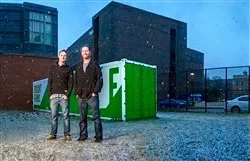
Shannon O'Malley and Bradley Doyle had them hauled to a distressed property they purchased on Second Avenue S and painted them a vibrant green. The green of John Deere tractors and regimented rows of farm crops.
Because this is what they were building: A farm. Brick Street Farms.
The property had been used as a junk yard and asphalt dump for years. They hauled 57 loads of trash away on a 50-yard dump truck. It took eight months to clean and level the property before they could bring in their three slightly used shipping containers, two rows of picnic tables and a tall fence to discourage the lookie-loos.
You can't blame the loos for looking. This is Pinellas County's first and only commercial-size, indoor, hydroponic farm. These three upcycled containers have the ability to grow the equivalent of 6 acres of traditionally farmed leafy greens, herbs and edible flowers, using a minimum of water and no pesticides, herbicides or fungicides.
There is no dirt, there are no bugs and produce is delivered "plate ready" to the Vinoy, Brick & Mortar, Rococo Steak, Souzou, Stillwaters Tavern and BellaBrava, all in St. Petersburg. O'Malley aims to sell everything she produces within five miles of Brick Street Farms.
In this era of locavore fever, you can't get much more local than that.
Indoor, hydroponic, vertical farms are popping up in urban spaces around the globe. A dwindling amount of arable land due to industrialization, urban sprawl and climate pressures, coupled with population growth (9 billion people predicted on Earth by 2050!), has led many people to think creatively about our food supply.
Farmer Dave Smiles launched a 24,000-square-foot warehouse in Tampa in 2015 doing similar indoor vertical farming. In the same year in Newark, New Jersey a steel-supply company was taken over by a new indoor-agriculture company called AeroFarms, filling it with 70,000-square-feet of vertical kale, bok choi, watercress and such. In January, the New Yorker ran an exuberant article about the future of urban farming without soil or natural light.
But it's not easy: The nation's largest indoor farm, FarmedHere, which opened in 2013 in an abandoned warehouse in Bedford Park, Ill., closed its 90,000-square-foot facility in January. While CEO Nate Laurell didn't say precisely what had gone awry, it is clear that growing large enough to offset equipment, energy and labor costs proved tricky.
There are, O'Malley says, considerable costs to running the operation, but she declined to say what the farm's ongoing costs are.
"Hydroponics aren't new, this technology isn't new and all the technology we used is 'off the shelf,'" said O'Malley, 35, who recently quit her job at Duke Energy to work the farm full time. Doyle, 37, still works in information technology at Duke Energy.
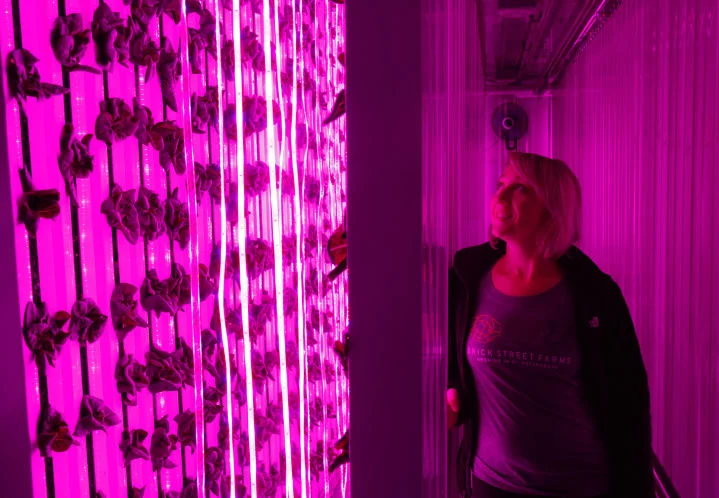
Here's how it works. Each container is its own climate, kale in the one on the right, herbs in the middle one and heirloom lettuces on the left. There are three inches of insulation, plus reflective roofing to keep things cool, plus air conditioning (lettuces like it chilly, around 60 degrees). Everything is grown from non-GMO heirloom seeds, spending two weeks in the seedling area before each tiny root plug is transplanted to a white vertical tower, fitted into a mesh of recycled food-safe plastic.
The plant lives in the tower for three to five weeks, with recirculated water running down a felt wicking strip to feed the plants.
Strips of red and blue Phillips high-efficiency LED lights provide the sunshine (although because electricity is cheaper at night, the plants "daytime" is in the evening. From there, it gets complicated. Computers take readings of the plants every seven minutes — pH levels get adjusted, CO2 levels are tweaked, plant nutrients are measured in electrical conductivity and there's special air circulation for proper "plant transpiration."
According to O'Malley, this kind of indoor vertical farming uses one tenth the water of traditional farming and a tenth of the fuel (a traditional farm uses fuel to run the equipment and deliver product, for an indoor farm fuel costs are all electricity).
So how does all this high-tech food taste?
Glorious. Basil leaves as big as a catcher's mitt (well, a kid's mitt), rainbow chard and lacinato kale. Pea shoots and micro kohlrabi, arugula and red amaranth. The Vinoy is using a special mix of Brick Street lettuces in their salads and Rococo Steak will host a farm-to-table dinner at the farm on Feb. 25.
"It's a much more consistent product and a much cleaner product because it's not grown in dirt," says Jeffrey Jew, the executive chef at Stillwaters Tavern and BellaBrava. "It's super cool what they're doing. I know at the beginning Shannon was looking for chefs and restaurants to sell to. But now they're pretty much maxed out."
It's true. O'Malley and Doyle are looking to buy more containers, their goal seven across and stacked two deep. They don't envision doing a community supported agriculture subscription in which consumers buy a share of a farm, a popular model for more traditional farms. But they do sell direct to the public on Tuesday and Thursday evenings and Saturday afternoons.
They spend a lot of their time explaining what they're doing. No, they're not growing cannabis. No, it's not U-pick. No, it's not open to the public. And it's not a garden. It's not a laboratory.
It's a farm. You just have to think inside the box.
Contact Laura Reiley at lreiley@tampabay.com or (727) 892-2293. Follow @lreiley.
Ikea Releases Open Source Designs For A Garden Sphere That Feeds A Whole Neighborhood
If you’ve already constructed Ikea desks and chairs, then it’s time to take your skills to the next level.
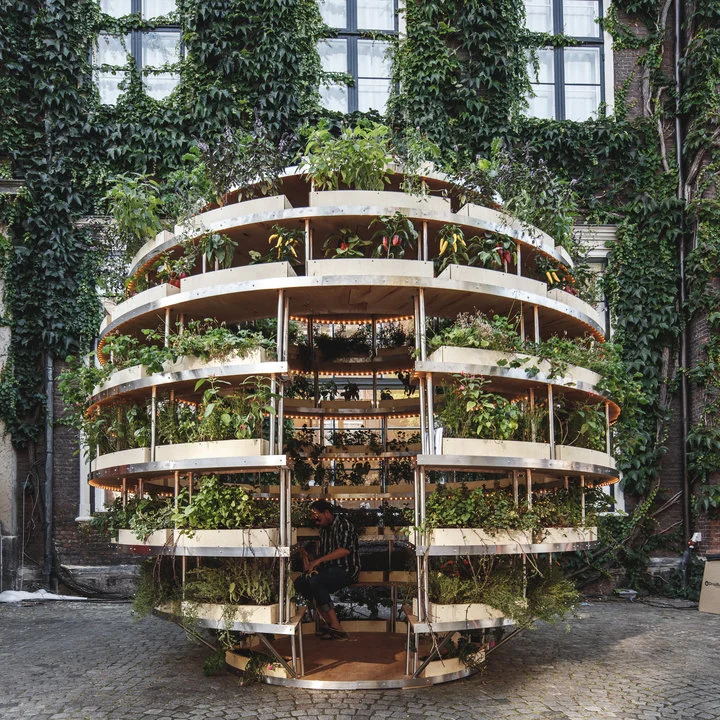
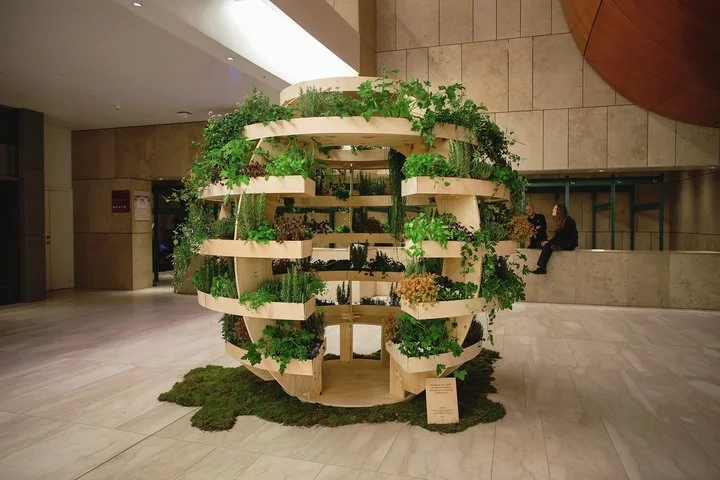
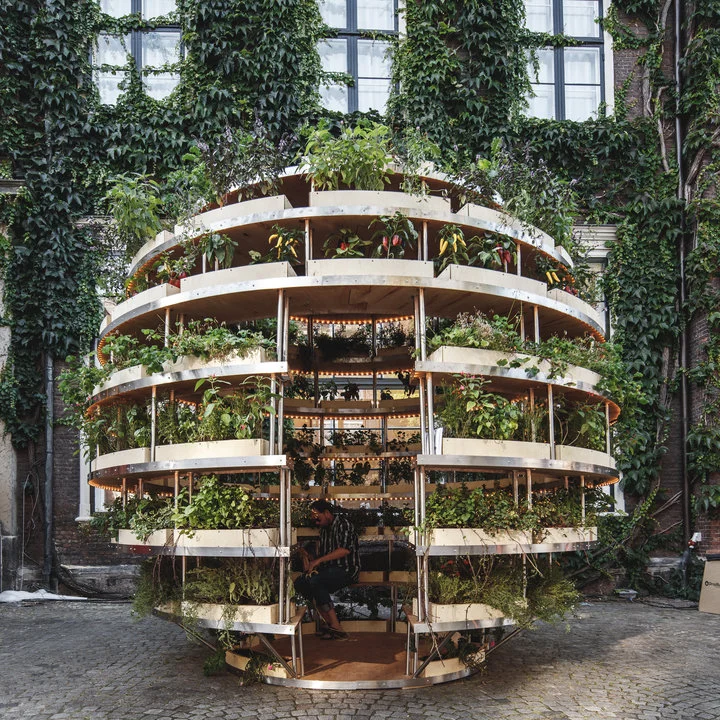
This week Space10, an Ikea lab for futuristic, solutions-oriented designs, released open source plans for The Growroom, a large, multi-tiered spherical garden designed to sustainably grow enough food for an entire neighborhood. Hoping to help spur local growing and sourcing, Space10 made the plans available for free on Thursday.
02/17/2017 01:20 pm ET
Ikea Releases Open Source Designs For A Garden Sphere That Feeds A Whole Neighborhood
It doesn’t even require nails.
If you’ve already constructed Ikea desks and chairs, then it’s time to take your skills to the next level.
This week the company released open source plans for The Growroom, a large, multi-tiered spherical garden designed to sustainably grow enough food for an entire neighborhood. Hoping to help spur local growing and sourcing, Ikea made the plans available for free on Thursday.
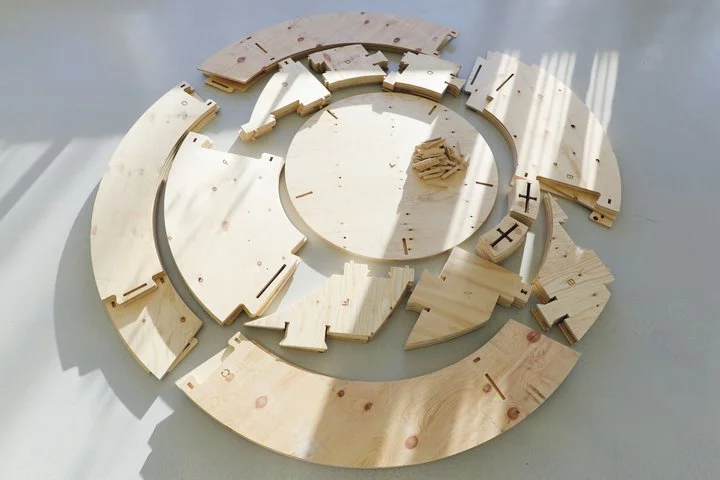
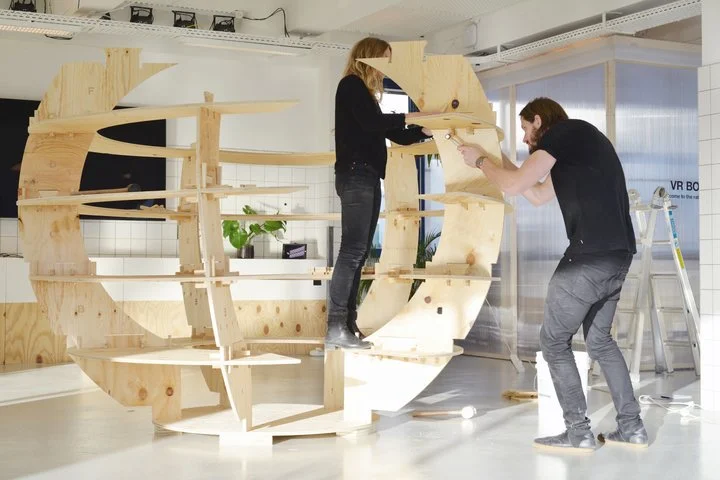
All it takes to complete the 17-step, architect-designed DIY garden of your dreams is plywood, a visit to your local community workshop, rubber hammers, metal screws and some patience:
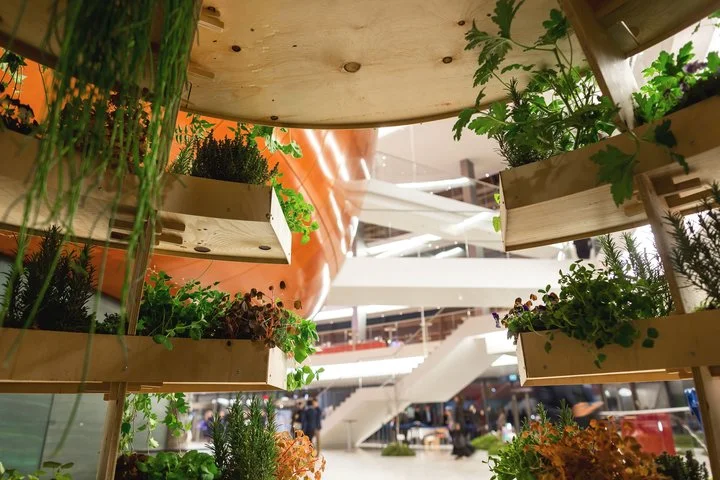
The garden’s “slices” are designed so that water and light reaches each level.
The Growroom is a brainchild of Space10, Ikea’s lab for futuristic, solutions-oriented designs. Though it’s intended mainly for use as a neighborhood garden in cities, you could also build one for your own backyard, a spokesman told HuffPost.
The Growroom doesn’t come in a flat pack like most Ikea products. Rather, users download the files needed to create perfectly-sized plywood pieces, using a local fab lab workshop for professional cutting. Then, they can assemble them using the free instructions online.
There are already plans to build Growrooms in Helsinki, Taipei, Rio de Janeiro and San Francisco, according to a press release. And if you’re up to the challenge, it could bring more locally-sourced food right to your hometown, Space10 writes:
Local food represents a serious alternative to the global food model. It reduces food miles, our pressure on the environment, and educates our children of where food actually comes from. ... The challenge is that traditional farming takes up a lot of space and space is a scarce resource in our urban environments.
The Growroom ...is designed to support our everyday sense of well being in the cities by creating a small oasis or ‘pause’ architecture in our high paced societal scenery, and enables people to connect with nature as we smell and taste the abundance of herbs and plants. The pavilion, built as a sphere, can stand freely in any context and points in a direction of expanding contemporary and shared architecture.

Why We Need Technology As The Key Ingredient In Our Food
When asked how food security and production can be improved in Africa, former Rwandan minister and current president of the Alliance for a Green Revolution in Africa (AGRA) Agnes Kaliba, had one simple answer: “Access to technologies.”
Peter Diamandis, ContributorChairman XPRIZE
Why We Need Technology As The Key Ingredient In Our Food
02/17/2017 01:54 pm ET | Updated 15 hours ago
hen asked how food security and production can be improved in Africa, former Rwandan minister and current president of the Alliance for a Green Revolution in Africa (AGRA) Agnes Kaliba, had one simple answer: “Access to technologies.”
Ms. Kaliba is exactly right. We are sitting at the cusp of an explosion in exponential technologies, which can be the most critically important ingredients to improve the health and quality of life for all humanity.
The World Food Programme (WFP), the largest humanitarian organization in the world, estimates that some 795 million people do not have enough to eat to maintain their health. Additionally, we have faced an unprecedented number of large-scale emergencies — Syria, Iraq and the El Niño weather phenomenon in Southern Africa. Just last month, WFP stepped up support for tens of thousands of displaced Syrians returning home to the ruins of eastern Aleppo City, providing hot meals, ready-to-eat canned food and staple food items such as rice, beans, vegetable oil and lentils. Like Agnes Kaliba in Nairobi, WFP has resolved that technology will help most rapidly in providing better assistance in emergencies and achieve a world without hunger.
Singularity University (SU), which I co-founded with Ray Kurzweil in 2008, is a benefit organization focused on using exponential technologies to solve our Global Grand Challenges. At the World Economic Forum in Davos, Ertharin Cousin, the Executive Director of WFP, announced a new partnership with SU for a Global Impact Challenge for food.
Our Challenge is soliciting bold ideas from innovators around the world on how to create a sustainable supply of food after the onset of a crisis. In this way, we can help vulnerable families support their own households and reduce their dependence on external assistance. Entries can range from concepts to implemented innovations. Shortlisted winners will be invited to a bootcamp at the WFP Innovation Accelerator in Munich to flesh out their ideas with WFP innovators. One team will be selected to attend an all-expenses-paid, nine-week Global Solutions Program at Singularity University at NASA Research Park in Silicon Valley.
Here are some examples of moonshot thinking – and how converging exponential technologies are already reinventing food:
- Vertical Farming: If 80% of our planet’s arable land is already in use, then let’s look up. The impact of technology in vertical farming is powerful. In addition to maximizing the use of land, we can use AI to control the exact frequency and duration of light and pH and nutrient levels of the water supply. Vertical farms using clean-room technologies avoid pesticides and herbicides, and the fossil fuels used for plowing, fertilizing, harvesting and food delivery. Vertical farms are immune to weather, with crops grown year-round. One acre of a vertical farm can produce 10x to 20x that of a traditional farm. And if roughly one-quarter of world’s food calories are lost or wasted in transportation, then let’s think local. The average American meal travels 1,500 miles before being consumed. Moreover, 70 percent of a food’s final retail price is the cost of transportation, storage and handling. These miles add up quickly. The vertical farming market was $1.1 billion in 2015, and projected to exceed $6 billion by 2022.
- Hydroponics and Aeroponics: Traditional agriculture uses 70 percent of the water on this planet. Hydroponics is 70 percent more efficient than traditional agriculture, and aeroponics is 70 percent more efficient than hydroponics. In times of war and natural disaster, there are no readily available food sources, so let’s think creatively on how we can grow food from — and in — the air.
- Bioprinting Meat: In 2016, it took 63 billion land animals to feed 7 billion humans. It’s a HUGE business. Land animals occupy one-third of the non-ice landmass, use 8% of our water supply and generate 18% of all greenhouse gases — more than all the cars in the world. Work is progressing on bioprinting (tissue engineering and 3D printing) to grow meat (beef, chicken and pork) and leathers in a lab. By bio-printing meat, we would be able to feed the world with 99% less land, 96% less water, 96% fewer greenhouse gases and 45% less energy.
- Shifting diets: Optimal health requires 10-20 percent of calories to come from protein. One example of innovative thinking comes from Africa, where farmers are installing fish ponds in home gardens, as the mud from the bottom of the pond also makes a great mineral-rich fertilizer. In the lab, scientists are investigating new biocrops.
This is just the beginning. If we are really serious about creating a vibrant ecosystem of sustainable food production, we need to be thinking exponentially and using technology to help create cost-efficient innovative solutions that can feed the world.

Farmed Here Asset Sale Set for February 23rd
This past month, we at Agritecture syndicated this open letter from Paul Hardej (originally published on the Association for Vertical Farming newsletter) about the closure of the 90,000 sq ft. FarmedHere Facility in Bedford Park, IL
Farmed Here Asset Sale Set for February 23rd
This past month, we at Agritecture syndicated this open letter from Paul Hardej (originally published on the Association for Vertical Farming newsletter) about the closure of the 90,000 sq ft. FarmedHere Facility in Bedford Park, IL.
Upon sharing this news, we received a flood of questions in regards to how and why this happened. This gave us the idea to moderate the panel, An Examination of Shuttered Vertical Farms at the upcoming Aglanta Conference. Paul Hardej will be a participant on that panel.
Since that time, we have been contacted by the assignees charged with liquidated FarmedHere’s assets, and they requested we publish information about the sale which will take place at 2:00 p.m. on Feb. 23rd 2017 at the offices of Rally Capital Services, LLC, 350 N. LaSalle St., Suite 1100, Chicago, IL.
The FarmedHere assets will be sold in either one or two lots at the Assignee’s discretion, and include both tangible and intangible assets including the domain name, patents, social media accounts, trade secrets, grow beds, 1,200 gallon tanks, office furniture and more.
More information about the lots and assets for sale can be found below:
Assignee’s Return of Bids Sale
FarmedHere, LLC
6700 S. Sayre Ave.
Bedford Park, IL 60638
SALE OF ASSETS: On Thursday, February 23, 2017 Howard B. Samuels, not individually, but solely as Assignee for the Benefit of Creditors (the “Assignee”) of FarmedHere, LLC (“FarmedHere”), intends to sell his right, title and interest in and to certain tangible and intangible assets (the “Assets”). The Assets sold or to be sold will be offered only as two separate lots. The Assets to be sold in Lot 1 include but are not limited to trademarks, copyrights, patents, trade secrets, trade dress, and any other known or unknown intellectual property related to FarmedHere or its business, including but not limited to specifically: The domain www.farmedhere.com (to the extent assignable) as well as all farmedhere.com email addresses (to the extent assignable), all FarmedHere social media accounts including but not limited to Twitter, Facebook, Instagram and Pintrest (to the extent assignable); United States Trademark Reg. Nos. 5026385 and 4292224, all UPC codes, Ceres software platform, all trade secrets related to organic growing; Certain other tangible Assets including but not limited to equipment owned by FarmedHere related to the physical production of salad dressings. A complete and detailed list of Lot 1 can be viewed by contacting the Assignee.
The Assets to be sold in Lot 2 include but are not limited to certain tangible Assets utilized for indoor vertical growing of a variety of vegetables or other botanicals, including 168 growing beds, ten 1,200 gallon tanks, approximately 3,500 growing trays, office furniture and fixtures and other items used for indoor vertical growing. A complete and detailed list of Lot 2 can be viewed by contacting the Assignee. FarmedHere was established in August 2011 to operate as a sustainable indoor farming operation supplying year round local greens for public consumption.
On January 17, 2017, Howard B. Samuels, not individually but solely as Assignee for the Benefit of Creditors of the Debtor, received and accepted an Asset Purchase Agreement (“APA”) for Lot 1 for the Assignee’s right, title and interest in and to certain Assets of the Debtor’s tangible and intangible operating assets and rights of any and every kind, used or usable in the Debtor’s business, subject to all liens, claims and encumbrances of record, as a single lot as provided and further detailed in the APA, for a purchase price of Forty Thousand Dollars ($40,000.00). The APA for Lot 1 also details excluded assets and other terms and conditions. Upon request, the Assignee will furnish to a qualified purchaser, after execution of a confidentiality agreement, a complete list of the Assets and a copy of the fully executed APA.
Lot 2 Assets will be sold as a single lot, or at the Assignee’s discretion, in separate lots. All Assets will be sold “AS IS, WHERE IS” with all faults and without any express or implied representations or warranties whatsoever, including, without limitation, warranties of merchantability, quiet enjoyment or fitness for a particular purpose or as to the title, value or quality of the Assets. The Assignee reserves the right, on or prior to the Date of Sale, to modify, waive or amend any terms or conditions of the Sale or impose any other terms or conditions on the Sale, and, if the Assignee deems appropriate, to reject any bids or continue the Sale (whether for all of the Assets or separate lots) without prior notice.
TERMS & CONDITIONS: An Assignee’s Return of Bids Sale (the “Sale”) for the Assets of FarmedHere identified in Lot 1 and Lot 2 will take place on Thursday, February 23, 2017 at 2:00 p.m. at the offices of Rally Capital Services, LLC, 350 N. LaSalle St., Suite 1100, Chicago, IL. The Assets will be offered as single lots or in separate lots as determined by the Assignee on an “AS IS” and “WHERE IS” basis.
To be a qualified purchaser for Lot 1, a party must post a cash deposit (the “Deposit”) in the form of a cashier’s check, certified check or wire transfer in the amount of Ten Thousand Dollars ($10,000), made payable to and delivered to the Assignee one day prior to the Sale. All bidding for the Assets shall be conducted in the same room with the identity and bid terms of all bidders fully disclosed and on the record as recorded by a court reporter. Any subsequent overbids for the Assets will be determined by the Assignee at the Auction; provided, however, the Assignee reserves the right to change the minimum bid from time to time during the Sale. At the conclusion of the Asset sale, the Assignee shall declare on the record which bid has been declared the highest and best bid and accepted, for the Assets and shall recite the terms of the winning bid into the record with the concurrence of the prevailing bidder. The balance of the purchase price for the Assets must be paid to the Assignee in available funds within twenty-four (24) hours. If the successful bidder fails to pay the balance of his or her successful bid for the Assets, then its Deposit will be forfeited and the Assets may, at the Assignee’s option, be sold to the next highest bidder without prejudice to or waiver of the Assignee’s rights and remedies against the defaulting highest bidder. The Assignee reserves the right to adjourn the Sale from time to time without further notice except as announced at the auction. The Assignee further reserves the right to determine the qualifications of any bidder, including the ability to close the transaction on the terms and conditions referenced herein.
The Assets sold or to be sold are being sold as a single lot “As Is” and “Where Is” and with no express or implied warranties, representation, statements or conditions of any kind including but not limited to warranties of merchantability or fitness for a particular purpose and are to be sold in accordance with the terms and provisions set forth above. Assignee is not transferring or selling herein any leased property, whether real or personal, whether evidenced by a true lease or a capital lease (unless the capital lessor so consents).
For more information on Lot 1 and Lot 2 or to arrange for an inspection of the Assets, please contact the Assignee.
Assignee
Howard B. Samuels, Esq. • David N. Missner, Esq.
Jeffrey D. Samuels
Rally Capital Services, LLC
350 N. LaSalle St., Suite 1100
Chicago, IL 60654
(312)645-1975
info@rallyllc.com

Are Retailers Your New Competition?
Target will be following a trend that is already under way in Germany and China: offering shoppers greens that are grown right there in the store, Business Insider reports. The pilot program will take place this coming spring. The markets for the pilot were not identified.
Are Retailers Your New Competition?
By: Carol Miller | Email
Target will be following a trend that is already under way in Germany and China: offering shoppers greens that are grown right there in the store, Business Insider reports. The pilot program will take place this coming spring. The markets for the pilot were not identified.
Target’s chief strategist Casey Carl says it’s weighing how the retailer can take over some of the growing:
“Down the road, it’s something where potentially part of our food supply that we have on our shelves is stuff that we’ve grown ourselves,” Carl told Business Insider.
Food adds $20 billion to Target’s bottom line, Carl told the publication, which is spurring it to consider big-picture moves when it comes to global and domestic agriculture.
Target’s moves echo those taking place across the world. Last year, an agricultural tech start-up company, Infarm, started a pilot program in Berlin grocery stores, offering greens and herbs in a mini greenhouse situated at the end of the aisle, Business Insider reports.
Likewise, a new grocery store chain in Beijing has installed an aisle of hydroponic growing beds of leafy greens that customers can shop from, Hortidaily reports. The hydroponic bench seems a more natural fit, since customers will not need to enter a greenhouse in order to pick out their produce, and can walk along side it in a way they are used to shopping.
Like the Berlin project, Target is working with an agricultural tech company, the Food + Future CoLab, a collaboration with design firm Ideo and the MIT Media Lab. In the Business Insider article, CoLab says it is looking at more than in-store growing. It wants to see how viable vertical growing at an adjacent facility to retailers can be. The idea is that the supply chain may move in the direction of multiple, on-site growing facilities, each one supplying a restaurant or store.
CoLab has a test site at an MIT off-campus facility to test this concept with a few hundred square feet of production, and another, much larger site in India, which is still only about 8,000 square feet.
This concept of having growers dedicate staff to individual stores isn’t a completely new one to American mass merchants.
In the ornamental plant industry, grower-suppliers have employees who are dedicated to merchandising their plants at the store. These teams often maintain the health of the plants in order to ensure that they will sell. Most are on a pay-by-scan contract, which means that the grower is only paid for the plants they sell.
The model would obviously be quite different for produce growers. Vegetable growers would have a more behind-the-scenes role if this model were to take off.
All of this, of course, is speculative at this point. If your retail customer demanded it of you, is this a model you would be able to adjust to?

GE Lighting Horticultural LED Lights Are Specifically Designed for Controlled Environment Agriculture
GE Lighting Horticultural LED Lights Are Specifically Designed for Controlled Environment Agriculture
GE Lighting has introduced LED grow lights for use in greenhouses, vertical farms, tissue culture labs and growth chambers.
BEDFORD, TX (PRWEB) FEBRUARY 15, 2017
GE Lighting has been offering horticultural LED lights to the North American market since 2011.
“GE had been marketing horticultural LED lights in Japan prior to introducing them to the United States,” said Sharee Thornton, Product Manager at GE Lighting. “The reason for not introducing them sooner was the U.S. horticulture market was just starting to work with LEDs and GE was still developing the products specific to this market. We currently have three LED products that we are actively selling in the North American market and have additional products that are expected to come out during 2017. These would include interlighting and toplighting products.
“We have customers who operate vertical farms that are asking for a toplighting product. We are developing toplighting products for both vertical farms and for greenhouses.”
Horticultural LED grow lights
GE Arize Life
The primary application of the GE Arize Life LED light fixture is as a replacement for fluorescent lights typically found in tissue culture labs, growth chambers and testing labs. The fixture is available as a 2-, 4- and 8-foot light bar.
“This fixture has an integrated power supply, is IP66 rated and UL wet rated, which means it’s splash proof and easy to clean,” Thornton said. “If the fixture is used in a high moisture environment, it is easy to wipe clean. The operating temperature can be from 0ºC-40ºC (32ºF-104ºF). The fixtures can be daisy-chained from end to end or they can be daisy-chained with a jumper cable.”
Thornton said the Life fixture, which has a 5-year limited warranty, previously had a L80 of 36,000 hours. She stated GE has updated the fixture to a L90 of 36,000 hours.
“This means at 36,000 hours a grower will still have 90 percent of the fixture light intensity available,” she said. “Other fixtures on the market are at L70 at 35,000 or 25,000 hours. That means at either 35,000 or 25,000 hours a grower is going to get 70 percent of the light intensity. A grower would have to replace the fixture if he loses 25-30 percent of the light intensity. Within that time period at 90 percent a grower may not have to replace the GE light fixture depending on what he is growing.”
Thornton said replacement of the fixtures will depend on where they are used.
“If the fixtures are used in a vertical farm where they account for 100 percent of the supplemental light the plants are receiving, those are usually operated 16-18 hours per day,” she said. “The lights won’t be operating 24 hours because the plants have to have some time to rest. At a rate of 16 hours of light, seven days a week, the fixtures would run approximately 5,000 hours per year. The life expectancy of the fixtures would be around seven years.
“This is what we typically see with some of our other applications. That is why we are able to offer a longer life expectancy. GE has been doing this with its other products. We know how to mechanically and electronically put the products together and run them at a higher efficiency in order to get a longer life. For growers who are using the lights for propagation rather than for a vertical farm, the life expectancy could be even longer if the lights aren’t run as often or as long.”
GE Arize Lynk
Side-by-side the Lynk and Life light bar fixtures look identical. The GE Arize Lynk fixture is available as a 4- and 8-foot light bar with plans to release a 2-foot bar in 2017.
“The biggest difference between the two fixtures is the light intensity,” Thornton said. “The Lynk fixture can be used with vertical farms, in greenhouses, and growth chambers. Like the Life fixture, Lynk is IP66 rated and UL wet rated so it can be cleaned very easily. The Lynk fixtures can also be daisy chained from end-to-end. It has an independent driver so there is no additional driver required. There is also a plug so that it can be hot wired or it can be plugged in.”
Thornton said because the Lynk and Life fixtures are lightweight, weighing less than 5 pounds, they are easy to install with mounting clips.
“The mounting clips are attached with fasteners and then the fixtures are attached to the clips,” she said. “It is a very easy and fast installation. Hort Americas has done a video showing how easy the fixtures are to install.”
Thornton said GE offers similar light spectrums for both the Lynk and Life fixtures.
“We have a reproductive spectrum, a vegetative and a balance. It depends on the goals of the growers,” she said. “The purple light is the ideal light for photosynthesis. Some growers want all purple and then they will move the crop out to harvest it. Others want white light so that they don’t have to move the product around. A grower can have a balanced pink, a balanced purple and a balanced white.
“The reproductive spectrum with a higher red content is for the grower who wants to promote flowering and fruiting. The light spectrum for vegetative growth, which has a higher blue content, is for the grower looking at size or selling the product by the pound. If a grower really doesn’t know what light spectrum he wants or wants a spectrum for both reproductive and vegetative, he can choose the balanced spectrum of red and blue. The balance is the more common spectrum chosen because growers want both or don’t know and want to see what happens with the balanced spectrum. If the balanced spectrum doesn’t produce a beefy enough plant then the grower will look at the vegetative spectrum. Or if the plant didn’t flower or fruit as well as expected, then the grower would use the reproductive spectrum.”
Thornton said the Lynk fixture puts out about twice as much light as the Life fixture.
“A 4-foot reproductive Life fixture produces about 43.2 micromoles per second (μmol/s),” she said. “A 4-foot Lynk fixture produces 82.9 μmol/s. So it’s almost double. There would be a similar difference for the 8-foot fixtures too. An 8-foot reproductive Life fixture produces about 86.3 μmol/s and an 8-foot Lynk fixture is around 181.5 μmol/s.
“We have seen a lot of the 8-foot fixtures used in vertical farms. Because of the insulation and they are so easy to clean, it is a lot easier to install the 8-foot fixtures. A lot of the vertical racks have five 8-foot sections so it works out perfect for the 8-foot light fixtures.”
GE Arize™ Greenhouse Pro LED Flowering Lamp
The GE Arize Greenhouse Pro is for photoperiodic control. It is set up on a BR30 platform.
“This bulb’s main application is to primarily control photoperiod and flowering in greenhouses,” Thornton said. “The light intensity of this bulb is 17.8 μmol/s. It is not as intense as the Arize light bar fixtures, but for its application it is very competitive with similar bulbs on the market. Its life expectancy is L90 at 10,000 hours. It is 90 percent at 10,000 hours.
“We have some trials going on at Michigan State University and expect to have some results coming out this year so that we can help growers use this bulb efficiently.”

SGS Awards GLOBAL G.A.P. Quality Standard To Indoor Farming Company, INFARM
Berlin-based agricultural business INFARM has become the first indoor farming company to be awarded the GLOBALG.A.P. quality standard. SGS officially presented the GLOBALG.A.P. certificate at this year’s Fruit Logistica Trade Fair, in Berlin
SGS AWARDS GLOBAL G.A.P. QUALITY STANDARD TO INDOOR FARMING COMPANY, INFARM
February 14, 2017
Berlin-based agricultural business INFARM has become the first indoor farming company to be awarded the GLOBALG.A.P. quality standard. SGS officially presented the GLOBALG.A.P. certificate at this year’s Fruit Logistica Trade Fair, in Berlin.
INFARM designs and installs vertical farms in urban areas, helping them become self-sufficient in their food production, while eliminating waste and reducing the impact on the environment. As part of this, INFARM has installed “in-store farms” inside two supermarkets – one in the METRO Cash & Carry, in Berlin, and the other in Makro, in Antwerp.
INFARM’s “in-store farms” grow an assortment of herbs, leafy greens and salads, using light, water and nutrient resources from within the self-contained growing environment. The plants are cultivated and harvested within the shop in which they are sold. This reduces transportation costs and the associated food-miles.
This award is an important step forward for INFARM. Many supermarkets require a valid GLOBALG.A.P. certificate from suppliers of agriculture, horticulture and aquaculture products before foodstuffs can be offered for sale. The presentation of the certificate at the Fruit Logistica Fair is an acknowledgement that INFARM is operating according to globally recognized good agricultural practices.
SGS, as the world’s leading inspection, verification, testing and certification company, has plenty of experience of auditing to the GLOBALG.A.P. standard but, as Betina Jahn from SGS explains:
Usually vegetable farms or orchards are audited according to GLOBALG.A.P. Therefore, we first had to adapt the test criteria for the in-store farm. Our experts worked closely with the standard authority, FoodPLUS, to produce a reliable testing process. This can now be applied to all future vertical farming company audits.
SGS Agriculture & Food Services
SGS provides a comprehensive range of services to help manage risk, safeguard consumers, ensure correct storage and transportation, ensure quality and safety throughout the supply chain, and confirm compliance with complex legislation. Learn more about SGS’s Agriculture & Food Services.
For further information, please contact:
Betina Jahn
Head of Innovative Product Management
t: +49 4473 9439 0

Robots Meet Indoor Farming
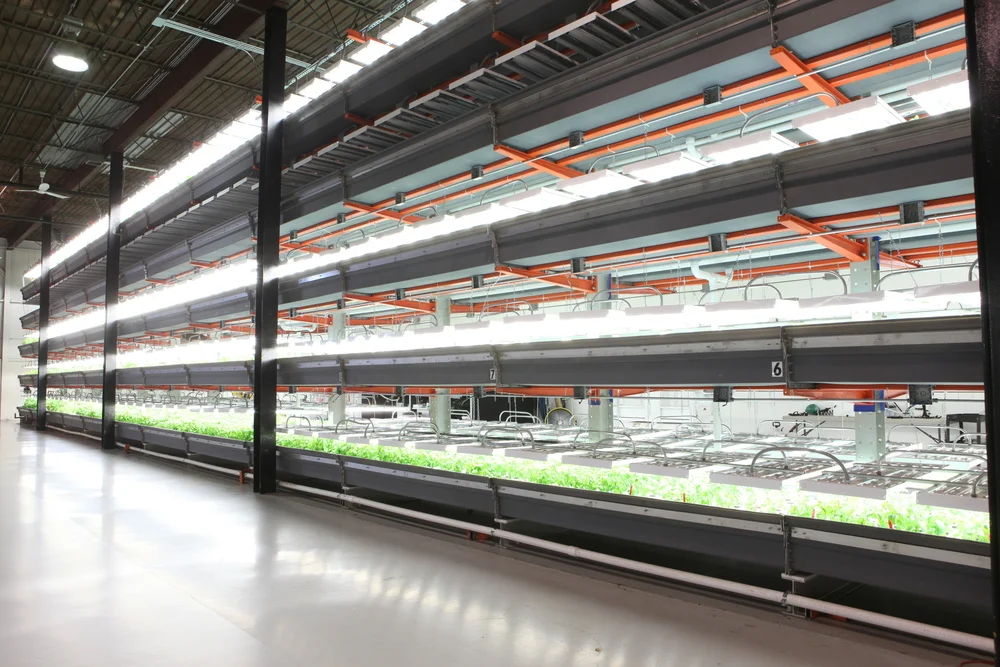
The goal: to produce 30,000 heads of lettuce a day initially using LED lighting and hydroponic technology a 47,300-square-foot facility near Kyoto, SPREAD, an agriculture technology company, is creating a massive, automated, indoor „vertical farm”—and the special ingredient is the use of robots
Robots Meet Indoor Farming
The goal: to produce 30,000 heads of lettuce a day initially using LED lighting and hydroponic technologyIn a 47,300-square-foot facility near Kyoto, SPREAD, an agriculture technology company, is creating a massive, automated, indoor „vertical farm”—and the special ingredient is the use of robots. The goal: to produce 30,000 heads of lettuce a day initially using LED lighting and hydroponic technology, a method of growing plants without soil, using mineral nutrient solutions in a water solvent, and with produce on multiple rows of shelving, stacked one on top of the other.
But robotic systems will do much of the work growing and producing the crops, from watering to harvesting. „The farm will be as robotically automated as possible,” says Frank Tobe, editor of The Robot Report. For example, cranes will deliver seedlings to small robots, which will then transplant the sprouts to grow beds. The company expects the facility to be operational by mid-2017 and to construct and operate 20 new factories over the next five years, in addition to selling the system for others to use in their own facilities, according to Tobe.
Robots and indoor farms
While SPREAD is billing its new facility as the world’s largestplant factory, around the world, an increasing number of other growers and technology companies are using indoor farms, also known as controlled environmental agriculture, rather than the conventional outdoor variety, to grow produce and other greenery. Although still in its infancy, in some cases, they’re experimenting with vertical indoor operations, relying on hydroponic or other non-soil based methods; in others, they’re applying advanced technology to greenhouses.
See also: The farm tech revolution
The key to efficiency, however, is the use of automation, especially robots, as a vital part of the system. The technology does repetitive, tedious tasks usually performed by humans, like constantly rotating containers to get the right amount of sun, for example, or placing items on a conveyer belt. „Robots are perfectly suited for this type of task,” says Tobe.
There are many advantages to robotic indoor systems, from the ability to grow food throughout the year, without being affected by weather variations, to a dramatically reduced use of water and lower labor costs. It’s also a more sustainable type of production that has the potential to boost locally grown, fresher produce.
„Our aim is to build robotic greenhouses in order to allow for cheaper, local and sustainable produce.. „ That’s the goal for Brandon Alexander, co-founder of Iron Ox, a Silicon Valley startup building a robotic environment for greenhouses growing lettuce and other leafy greens. He can’t reveal too many details, but, he says, „Our aim is to build robotic greenhouses in order to allow for cheaper, local and sustainable produce. The goal is fully automated crop production.”
Partial robotics
For now, most systems incorporate robots in part of the process, with other machines and human workers taking care of other aspects of production.
Take Egatic, a company in Odense, Denmark, that is developing a new system in partnership with a grower of herbs and small flowers to take items from a greenhouse to be packed and shipped. It uses a mix of robots, people and other automated equipment. For example, a conveyer belt transports herbs from the greenhouse to a packing area. Workers place herbs in boxes put together by what CEO Mars Nychel calls „erector machines”, but robots place the boxes onto pallets.
Only one person is needed on the assembly line, with a part-time employee supervising. The company will start testing out the new system this year, according to Nychel. Next step: adding flowers to the process.
Lettuce is not like a car
Using robotics in indoor farming is complicated, however. Perhaps the thorniest problem is the variability of each, say, head of lettuce. „It’s not like you’re making a car and every item is the same,” says Alexander. Thus, robots must be programmed to be able to grab, remove and transplant things that are not exactly the same shape.
According to Nychel, his company has been working on a system since 2007 with a client that uses greenhouses to grow tomatoes. The goal is for robots to pick the tomatoes automatically. But the company has struggled with creating a robot able to pick the produce using a sufficiently gentle touch, as well as grab plants that aren’t a standard size. They’re also using vision systems to allow robots to discern whether each tomato is the right color to be picked.
He figures it should take another 18 months or so to finish the project. „It’s been quite a task,” he says. „But, there will be very high demand when it’s done.”
Ultimately, robotic experts predict that robotic indoor farming systems won’t replace conventional methods. Instead, they’ll serve as supplements–enhancing agriculture grown the old-fashioned way with a more efficient, sustainable and weather-resistant method for producing crops.
The contents or opinions in this feature are independent and may not necessarily represent the views of Cisco. They are offered in an effort to encourage continuing conversations on a broad range of innovative technology subjects. We welcome your comments and engagement.
We welcome the re-use, republication, and distribution of „The Network” content. Please credit us with the following information: Used with the permission of http://thenetwork.cisco.com/.

Another Look At GreenGro Technologies Inc
Another Look At GreenGro Technologies Inc (OTCMKTS:GRNH)
By Alex Carlson / in Momentum Stocks, Sector Watch, Stocks / Tuesday, 14 Feb 2017 05:48 AM
GreenGro Technologies Inc (OTCMKTS:GRNH) has traded fairly flat so far this year. The stock has not made the big moves like it did in 2016 when we saw the stock run from $.0171 to just under $.16 a share. With the stock trading on either side of the $.10 level, we’re taking another look at GRNH.
First up, a little background on the company. GreenGro describes itself as “a world class provider of eco-friendly green technologies with specific domain expertise in indoor and outdoor agricultural science systems serving both the consumer and commercial farming markets. It brings together community and commerce through the growth and distribution of healthy, nutritious foods and vital medicines backed by science and technology. Customers include restaurants, community gardens, small and large scale commercial clients. Greengro Technologies also provides design, construction and maintenance services to large grow and cultivation operations and collectives in the medical and recreational marijuana sectors.”
Last week, the company signed a definitive agreement on a ten-acre, $25 million Greengro hydroponic indoor farm project with Global Renewable Resources LLC, a new startup specializing in sustainable technologies and renewable energy. The agreement calls for GRR to purchase a Glass Greenhouse Franchise marketed by Greengro subsidiary BP Gardens, Inc. The project will utilize advanced technology and production methods from Greengro’s newly acquired subsidiary Biodynamics. The GRR Glass Greenhouse Franchise includes a turnkey greenhouse facility powered by renewable energy and designed to annually produce millions of pounds of a large variety of organic, pesticide-free hydroponically grown vegetables and fruits.
Last month, GRNH completed the acquisition of a 55% majority interest in Biodynamics LLC. Biodynamics provides high-tech, hydroponic vertical farms. As a result of the merger, Biodynamics CEO Timothy Madden became the new COO of GreenGro Technologies. He will be managing the ten-acre, $25 million Greengro hydroponic indoor farm project with Global Renewable Resources, LLC along with other Greengro mergers and acquisitions currently in progress. CEO James Haas said:
“By combining Greengro’s business operations with Biodynamics’ superior indoor vertical farming technology, Greengro will be able to offer one of the highest producing and most energy-efficient turnkey systems on the market, at a competitive price. Our research shows that Biodynamics’ ‘smart’ vertical farming technology is arguably among the world’s best, and we expect to make strong inroads into new markets as a result of this deal.”
Earlier this month, GRNH launched GenoBreeding that will look to bring new cannabis varieties to market through new plant breeding technologies. This initiative from Greengro is in keeping with the cannabis industry’s increasing reliance on genetics – heredity and the variation of inherited characteristic in plants – to help growers create better, more powerful and sometimes personalized commercial cannabis strains that share desirable inherited characteristics. Greengro’s GenoBreeding group is focused on developing breeding tools such as molecular markers to enable breeding decisions and processes to achieve top-tier plant performance in a sustainable manner.
Last November, GRNH unveiled a new 5k sq ft fully equipped industrial glass greenhouses for the produce and cannabis markets. Measuring 19 ft. in height, 30 ft. in width and 170 ft. in length, these high-capacity greenhouses provide 5,037 square feet of technologically advanced climate controlled cultivation and harvesting space. The structure of a Greengro Technologies greenhouse is built with nearly two-inch tempered glass and erected with a customized aluminum frame. The turnkey operational setup consists of a Cooling Pad and Fan System designed to regulate temperatures through an efficient circulation system. The ventilation assemblage is driven by a motorized and galvanized hot-dipped rack-and-pinion arrangement, optimizing stability. CEO James Haas said:
“We are very pleased to be bringing this immense, advanced greenhouse offering to the marketplace. Our continuing discovery of technologies suited for lucrative new fields of trade will broaden our footprint in both the consumer and commercial markets alike, strengthening our ability to further capitalize on our unique operating advantages, particularly as local demand escalates with the opening of the new recreational cannabis market while other areas throughout the country embrace medical marijuana provisions.”
Currently trading with a market cap of $27 million, GRNH has been more active on the news front, but that has not moved the needle on the stock price in 2017. Once some of its latest deals translates into higher revenues, we believe GRNH’s share price will start moving again. We will be updating our subscribers as soon as we know more. For the latest updates on GRNH, sign up below!
Disclosure: We have no position in GRNH and have not been compensated for this article.

Indoor Growing System Earns Innovation Award
West Midlands-based urban growing specialist Hydrogarden has taken the Innovation Award at the EEF Future Manufacturing Awards
Indoor Growing System Earns Innovation Award
14 February 2017, by Gavin McEwan
West Midlands-based urban growing specialist Hydrogarden has taken the Innovation Award at the EEF Future Manufacturing Awards.
Judges noted the company's drive to achieve sustainability and its ambition to become carbon-neutral through its vertical farming solution, V-Farm, and praised its innovative approach to engaging with a variety of customers.
V-farm is a fully controllable vertical farming concept, bespoke to the needs of the end user, whether growing on an urban rooftop, warehouse or even in space.
HydroGarden managing director Jonathan Aldridge said: "Manufacturers are amongst the most prolific and successful innovators in the UK, so to win this award is a great accomplishment and compliment to our team."
The company reported last year that interest in urban and enclosed growing systems was growing "even among old-school growers, some of whom are already seeing huge savings."
The company has helped equip recent high-profile London urban agriculture ventures GrowUp, an aquaponics complex in a warehouse in Beckton; and Growing Underground, a subterranean hydroponic salad farm in Clapham.
The company has already equipped two farms in Singapore and one in Australia, growing micro-greens, herbs and salads and has developed growing protocols for around 20 crops including strawberries, pak choi and even rhubarb.
Key to this has been its own experimental Project Urban Grow facility at its base in Coventry. This trial version of the VydroFarm system occupies just 24sq m but has a growing area of 55sq m thanks to its five-storey NFT hydroponic growing system on three mobile racks, which can produce nearly 2,000 lettuces in 28 days.
It uses Valoya LED lighting including the Finnish manufacturer's full-spectrum model.
Formerly the Engineering Employers Federation, EEF works to champion manufacturing and engineering in the UK and the EU.
RELATED ARTICLES

The Future of Agriculture Is Already Here
The Future of Agriculture Is Already Here
2/13/2017
A robot that grafts seedlings. Fleets of remote-controlled, self-regulating greenhouses. Organic rice that’s grown entirely by drones.
Even for those of us on the bleeding edge of U.S. farming trends, the coupling of technology and agriculture often exists on the outskirts of what seems fathomable — or even practical.
Sure, we’ve heard about agricultural drones in theory, but that still seems light years away. And indoor, vertical farms that grow plants aeroponically (without sunlight, water or soil)? Judging by the amount of media attention surrounding a soon-to-open aeroponics facility in New Jersey, the practice continues to hold a science fiction-like fascination.
In Japan, though, these kinds of agri-tech innovations are already readily employed — if not downright common — across the country.
At the 2016 Agri World Expo just outside of Tokyo, over 55,000 companies from across Japan and Southeast Asia have gathered to showcase the latest and greatest in farming technology — and I’m in the middle of it all. A veritable three ring circus of flashing flights, wheeling machinery and tiny bowls of free snacks, the event is something of a sensory overload, with enough newfangled bells and whistles confound any old-fashioned notions of where agriculture is headed.
Rural populations across Japan have been in decline for decades, with younger generations casting off the countryside for the lure of city lights and leaving aging farmers with no other choice than to simply watch their land — and craft — whither. Instead, as urban populations have boomed, Japan has seen a massive push towards metropolis-adjacent indoor farming and other forms of argi-tech that can exist within high-density communities. Growing crops so close to the people who will eat them, advocates suggest, means that they are both fresher and healthier when they reach the consumer.
But the technological innovations on the horizon in Japan go far beyond LED-supported lettuce. Behemoth farm drones lay splayed out like metallic, aerial spiders at multiple booths, and salespeople tittered excitedly about how drone farming — especially when it comes to organic crops — means plants can flourish in a more stabilized, consistent fashion. Constant monitoring and an eagle-eye view, it seems, are key.
The rise of drone-based farming has also opened a new career path for many Japanese.
One of the surest signs that technology and agriculture are pairing off for the long-haul is the buy-in of Japan’s telecommunications giant, Nippon Telegraph and Telephone Corporation (or NTT, for short). With an annual revenue of 11 trillion yen, NTT is the granddaddy of Japanese telephones, retaining their oligopolistic grip on landlines nationwide while constantly pivoting into new areas of information technology in order to keep up with younger, nimbler companies. Increasingly, this means investing in Artificial Intelligence for farmers.
“A lot of our community-based research and design goes into trying to help farmers through new inventions,” a company representative says as he hands me a tiny can of fresh vegetable juice. “We’re looking for ways to make farming more productive.”
At the Agri World Expo, NTT’s booth magnetizes crowds, as women in cow-print dresses mingle among drone-explainer videos, oohing and ahhing. The company’s piece de resistance, though, is Scarecrow: an adorable, teddy bear-sized “personal robot” with big, Disney princess eyes and an “S” emblazoned on its chest.
Scarecrow might be small, but its purpose is mighty: the robot has the ability to remotely control an entire farm. One input from the farmer, and Scarecrow can connect via satellite with plant-fertilizing drones, or operate farm machinery with a single instruction. Since it’s constantly getting feedback and input from the fields, the new technology has the potential to streamline farm operations while serving as a singular point of data retention and collection from season-to-season.
“New technologies are a lot more efficient,” says a representative of E-Minori, a fledgling company which uses sensors to alert farmers if their greenhouse conditions fall below peak standards. “In the past, farmers would only have their experiences and intuition to know if temperatures or humidity inside their greenhouses was off — and they can’t be there all the time. Now, it can be dealt with automatically.”
This also means ensuring that nature doesn’t have the chance to wreak havoc, either. Between plant-eating pests, see-sawing temperatures and the threat of natural disasters like tsunamis and earthquakes, farming that’s tightly controlled — and, yes, indoors — means that no matter what’s going on in the actual dirt, plants will continue to flourish inside their perfectly-regulated, safe bubbles.
“Indoor farming is the way of now, and the way of the future, because it’s not impacted by the temperature,” a man from Clean Farm — a soil-free, water-free aeroponics company that calls itself a “flexible plant factory” — notes. “It is completely isolated from the outside.”
And while, in the U.S., worries about the impact of hazardous materials on crops is a catch-all concern, in Japan, the impetus feels even more urgent in the wake of the 2011’s nuclear plant meltdown in FukushiRama, which resulted in the radioactive contamination of all farmland, groundwater and soil for hundreds of miles. In turn, the promise of disease-free, pollutant-free produce means that families are a natural target audience for the products from many agri-tech companies. Images of toddlers gleefully biting into a fistful of LED-supported spinach are littered across company advertising, and “safe eating” (which is a few standard deviations beyond the concept of organic-only “clean eating”) has become rhetorical dogma.
Larger profits are a major boon, too. Using indoor systems, farmers are able to tinker with seasonality by growing traditionally summer-only crops in the winter (and vice-versa) to sell for higher prices.
“In the wintertime, the sun sets at 5 p.m., which means growing conditions aren’t good,” the BioSun associate notes. “Using indoor systems, farmers can make produce grow faster — and sell faster — because the sunlight and seasons don’t matter, which means they can make more money.”
Still, there are perhaps a few kinks to work out.
After sampling some coriander grown using an indoor vertical system, a colleague of mine noted that while it tasted great, the plant — which is usually quite fragrant — had no smell.
The science behind this seems like a strange, and almost unsettling, development. How can an herb lose one of its most notable characteristics simply by being grown indoors? If LED farms cause such a dramatic shift in the actual chemical make-up of the plant through their modifications, it seems like a potentially slippery slope. Seeing the concern in my face, a company representative nervously brushed it off as a good thing, chalking up the fragrance-free herb to the fact that it lacked the acidity typical of plants grown in soil.
Reassurances aside, there’s no doubt in my mind that the company will soon be going back to the drawing board on this issue, figuring out yet another new way to use technology as both a progressive tool and problem-solver in the world of agriculture.
Loudon Greenhouse Looks to Reimagine Farming With Automated Growing
By DAVID BROOKS
Monitor staff
Sunday, February 12, 2017
pecial clothing is often needed when you’re visiting a farm: Boots, gloves, hats, overalls, lab coats.
Lab coats?
“We wear lab coats in the greenhouse because this is where you could have the most contact with the plant material,” explained Henry Huntington, president and co-founder of the state’s most interesting new agricultural operation, the automated hydroponics greenhouse called Lef Farms in Loudon, as he helped a reporter and photographer put on protective garb – protective for the seedlings, not the people.
With coats, hairnets and gloves in place, Huntington and co-owner Bob LaDue pushed through the door from the operations center, where seven days a week machines carefully place tens of thousands of seeds into 40-foot trays modeled after rain gutters, and entered the 50,000-square-foot greenhouse that they hope will launch a bright new chapter in New Hampshire farming.
On this gray, snowy day, it is certainly bright in the literal sense, with hundreds of high-pressure sodium lights overhead going full blast to compensate for shortage of daylight coming through the glass.
“My goal is to make them think it’s June, every day. We’re feeding the plants photons,” said LaDue, who has been involved in greenhouse research and commercial operations for 20 years.
“We use as much natural light as possible since we don’t have to pay for that, and plan on about 80 percent of light coming from the sun over the course of the whole year,” he said. “Not on a day like today, though.”
A year’s production in less than a week
The bright lights in the vast open space gave the greenhouse the look of an airplane hangar, if you can imagine one with a floor that has been raised 5 feet and is made of salad greens.
How much salad greens? More than you can probably imagine.
LaDue said this 1 acre of hydroponics growing space will eventually produce 3,000 pounds of leafy greens, bagged and ready to be shipped to stores or restaurants, every 24 hours. After a few months of operation, Lef Farms (pronounced “leaf”) is running at about half speed as it tweaks the operation.
That’s a ton and a half daily of arugula, bok choy, mustard greens and lettuce, meaning that every day they expect to produce about one-third the annual production (depending on the crop) expected from an acre grown organically outdoors.
“We are very excited about it. This is the first large-scale farm of this kind designed for wholesale markets here in New Hampshire and the region,” said Lorraine Merrill, the state’s agricultural commissioner. “There have been proposals for this kind of production before that haven’t come to pass.”
Merrill said that indoor agriculture, with the promise of extending our growing season, can be an important part of the mix for state farming alongside traditional wholesale operations like dairy farms, smaller specialty farms, and direct-to-consumer sales via pick-your-own, farmers markets and community-supported agriculture projects.
“I really think one of the great strengths of New Hampshire agriculture is its diversity, and this adds to it. Diversity of types of crops and diversity of types of marketing channels – not putting all of our eggs in one basket,” she said.
The idea of farming indoors, with the aim of growing more produce on smaller plots that are closer to cities and can be harvested even during winter, is becoming realistic as technology improves. One Nashua family, for example, bought a “farm in a box” from the firm Boston Freight Farms and are raising greens for sale in a converted shipping container, with plants grown hydroponically (all the nutrients coming from water rather than soil) in rows of shelving, entirely dependent on light from LEDs.
Lef Farms isn’t quite that high-tech: It went with greenhouses and sodium lights for various cost and scale reasons. But this greenhouse is unlike any you’ve seen.
Greenhouse unlike most
Greenhouses have, of course, been part of New Hampshire agriculture for many decades. In fact, Huntington owns Pleasant View Gardens, which like Lef Farms has greenhouses built on a former gravel pit, where tons of flowers are grown a year. His experience there helped trigger the idea for Lef Farms.
“We have significant greenhouse productions of ornamental and flowering plants in New Hampshire, including D.S. Cole Growers and Pleasant View, two of the larger and most significant plant propagators in the country,” said Merrill.
What makes Lef Farms unusual is that it produces food crops and uses an extremely automated system that can plant, grow, harvest and bag the greens over a two-week growing cycle with little or no human labor.
Huntington and LaDue said this cuts labor costs – Lef Farms has a dozen full-time positions – and maximizes production. But they also say the precision of automation, in which the water used for hydroponics is fully recycled with its nutrients and fertilizers, reduces agricultural pollution from runoff compared to standard farms. The tightly controlled greenhouse, use of hydroponics and a fast growing cycle also greatly reduce the number of insect pests and the need for pesticides, as well as eliminating weeds and any resulting herbicides.
Whether it will be worth the reported $10 million investment remains to be seen. But they have plans to build several more greenhouses if all goes well, and they have town approval for up to 12 acres of operations.
Dirt put in gutters
Growing any crops starts with the soil. At Lef Farms, the soil has a brand name: Cornell Mix, developed at the university where LaDue did research for years. A mix of peat and vermiculite, it comes in 120-cubic-foot bales that double in size when decompressed and watered; specialized machinery from Finland distributes it carefully along the 40-foot-long gutters.
“A lot of the technology for this was developed in Scandinavian countries. They have so little light, the growing season is so short, and they’re trying to grow their own food; that has simulated their technology,” LaDue said.
Once loaded with this dirt, each gutter moves along a conveyer under a series of machines that drop in seeds; sometimes all of one species, sometimes a variety, although growing two species alongside each other is difficult, since they are harvested at the same time and thus must grow at the same rate, so that one species doesn’t shade out the other.
Each gutter then slides onto a huge pivoting arm that swivels and sends the chute through a hole in the wall into the greenhouse. This is done roughly 800 times every day – meaning that 800 other gutters are removed and harvested.
The gutter sits in darkness underneath the growing area for two days while the seeds germinate, before being pulled by on an enormous toothed belt up into the light. Over the next 14 to 19 days, depending on the crop, it will be pulled slowly from one end of the greenhouse to the other, roughly 300 feet, while the plants are fed by a constant stream of water containing a mix of micro- and macro-nutrients, made by blending various fertilizers.
“Bob’s kind of the mad scientist. He makes his own mixes,” Huntington said.
During this entire process, little to no human interaction will be required, although LaDue and others will be monitoring many factors – not just plants’ growth and health, but the building’s temperature, the total light as measured in moles (a unit you might remember from high school chemistry) of photons, its humidity and even its carbon dioxide level.
Even carbon dioxide must be balanced
That last factor is crucial, LaDue said. Plants breathe in carbon dioxide and during the winter, when the greenhouse lacks natural airflow through the heavily screened windows, they would use up most of the CO2, stunting growth, if it weren’t replaced.
Lef Farms produces CO2 as a byproduct of the gas-fired heaters, and even produces more than natural levels to boost growth, which enables them to cut back on lighting, one of their biggest costs.
“Supplement CO2 is another avenue to reduce supplemental lighting – we’re always trying to turn these lights off,” LaDue said. On a winter’s day, byproduct from heat can “save five to six hours of supplemental lighting.”
Lighting has also been a source of irritation to neighbors, who have complained to town officials about the brightness of the glow at night from this new presence in town. Lef Farms has said it will improve its use of shades to reduce the excess.
Getting the plants cold fast
Eventually the plants make it to the far end of the greenhouse, where conveyors transfer them, plants still growing, directly into the cooler, which is larger than some warehouses. Only inside the cooler do they get “a haircut” from automated blades, with salad greens automatically sorted on conveyer belts and dropped into a machine that puts them inside plastic bags. That’s all without human help – at least in theory; LaDue said the system is still being tweaked.
Bringing plants into the cooler while they are still growing is a key to maintaining freshness, said LaDue, who compared it to traditional harvesting.
“On most operations, you get them cut, it goes into bins, people are mixing them by hand. That’s not good,” he said. “The faster you get them cold, the better.”
And that’s not counting the benefit of being closer to our tables and stores. “Alternative to West Coast-grown greens” is a phrase that shows up a lot in their promotional material. LaDue claims that this system gives Lef Farms greens sold to retailers “shelf life like they’ve never seen before,” justifying a premium price.
Plenty of people around the state and the region will be watching, both to see if that belief holds up and to see what it means about our ability to feed ourselves in New England.
“I would expect we will probably see further developments, variations on this theme – in lots of different ways,” said Merrill, the agriculture commissioner. “Farmers are creative and resourceful; they’re always finding ways to make technology work for them.”
(David Brooks can be reached at 369-3313 or dbrooks@cmonitor.com or on Twitter @GraniteGeek.)
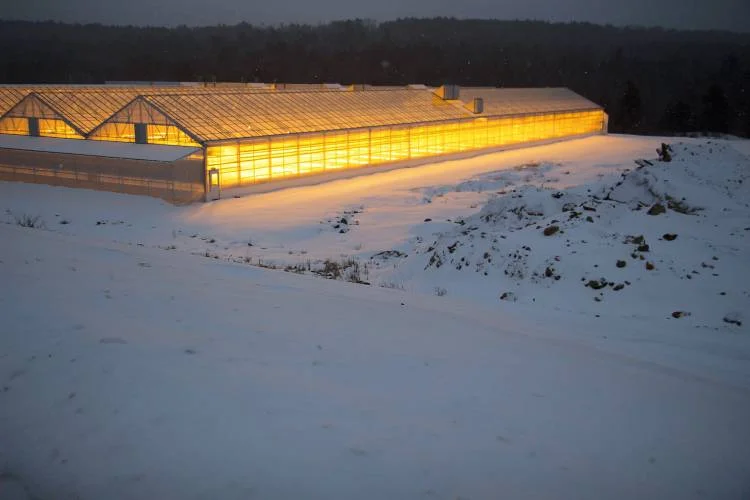
Light glows inside the Lef Farms greenhouses in Loudon last week. Elodie Reed photos / Monitor staff
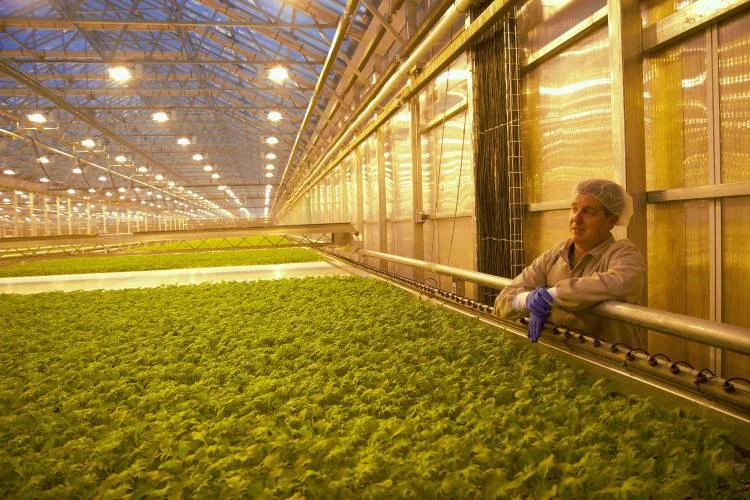
Bob LaDue walks between growing salad greens at Lef Farms in Loudon last week. Elodie Reed—Monitor staff » Buy this Image
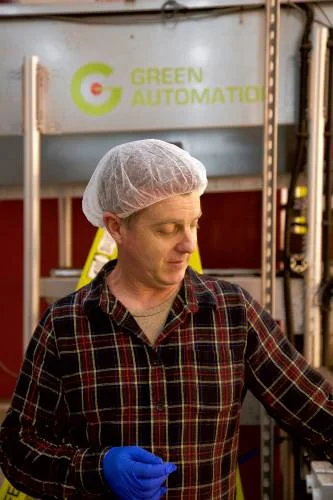
Lef Farms Vice President Bob LaDue explains how the Loudon greenhouse operation grows baby greens year-round last week.
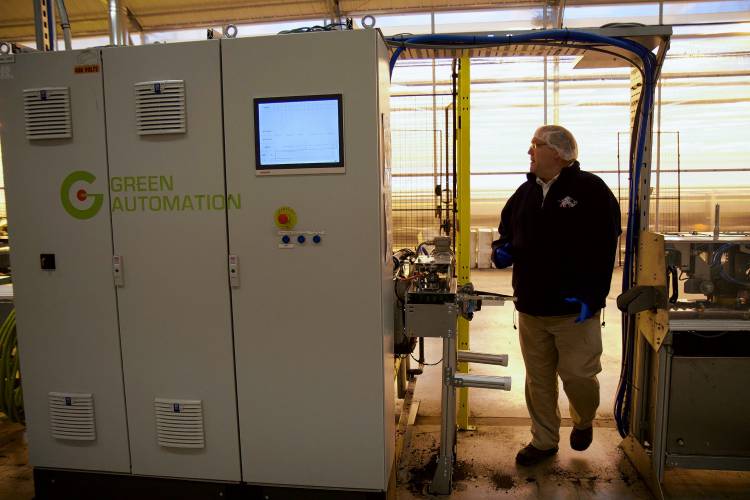
Lef Farms President Henry Huntington walks past one of the many boxes that controls the company’s automated hydroponic growing system.

The Vertical Farm: A Chat with Dickson D. Despommier, Ph.D.
By the year 2050, nearly 80% of the earth’s population will live in urban centers and that number will have increased by about 3 billion people in the interim – a big challenge and opportunity to feed. One emergent model is indoor farming, aka, vertical farming
The Vertical Farm: A Chat with Dickson D. Despommier, Ph.D.
February 10, 2017
By the year 2050, nearly 80% of the earth’s population will live in urban centers and that number will have increased by about 3 billion people in the interim – a big challenge and opportunity to feed. One emergent model is indoor farming, aka, vertical farming.
Columbia professor Dickson D. Despommier, Ph.D., (now emeritus) at Columbia University Medical School authored “The Vertical Farm: Feeding the World in the 21st Century,” published in 2010, and is credited with mainstreaming the term vertical farming.
At its most basic, the process refers to growing crops in vertically stacked beds in a controlled environment, without natural light or soil as Despommier describes here:
Sustainable Brands spoke with Despommier about the adoption of this model today.
“The idea has not been in the public domain for more than ten years,” he said. “It requires a heavy investment and creativity to invent the methods and to create social buy-in. It’s been quite rapid depending on how you define it. The idea smoldered in Japan for ten years and then Fukushima occurred and countries went ballistic as the people of Japan were not buying food grown there thinking it was contaminated.
“An indoor food industry was a solution and the Japanese government supported it. Indoor farming spread in the country and Toshiba and Panasonic were enlisted by the government of Japan to become leaders in indoor farming. These two giants had some downsizing in their own factories due to competition in other sectors that affected their ability to keep pace with the growth of electronics industry. Warehouses not being used were converted to indoor growing systems. Japan has embraced indoor/vertical farming.
“Singapore lacks land but is rich. They want to control food safety and sovereignty. Before urban farming there were no options. Panasonic has large indoor farms in Singapore and six others are being built to fulfill expanding demand.
“Taiwan has 50 vertical farms. They have little land to farm on a mountainous island with a tropical climate. Korea built and experimental farm in 2010 and the Mayor of Seoul announced in the last six months that every building can accommodate an addition for vertical farming. There are 30 million people in Seoul now and they’re importing foods but want to be in control.
“Here in the US, farmers in the Midwest have a winter problem and can’t deliver fresh greens as easily – fresh greens as in picked today – so what arrives is three weeks old and 40% is thrown out from refrigerators as it rots.
“There are 30 or so indoor farms centered around Chicago in abandoned warehouses – many no higher than a single story, single greenhouses – but they must be higher than one story to qualify as vertical farms. Companies like Sears, Kmart and Walmart who have such buildings can get tax breaks to repurpose them for farming but these stories don’t make the radar screen of the public, they don’t usually make the headlines.”
Despommier and his students figured out that a space like Floyd Bennett Field, former airport-turned-park on Jamaica Bay in Brooklyn, could provide enough vegetables and rice to feed every person living in New York City in the year 2050 – along with medicinal plants, and herbs and spices for five different traditional cuisines.
SB asked is this an extensible model?
“Every situation for establishing an indoor farm is predicated on supply and demand,” Despommier said. “Most cities in the US north of the Mason Dixon - the weather division – are going to run out of fresh green vegetables in winter.
“It’s amazing how important they are to restaurants and even fast-food chains as accoutrements – it’s a huge output that needs a reliable source and from that perspective, every city has space but a different set of priorities. You have to be clever in dealing with real estate agents etc.”
“Empty warehouses are a prime target for the establishment – every Mayor has relics from industrial movements and habits developed by Kmart and Costco and Sears. Corporations overextended. Starbucks has gigantic warehouses out of reach of a city for property taxes, several thousand sq. feet, intergowing vegetables like tomatoes and green beans. They’re not hard to grow but you need demand.”
Since your book was published, what changes do you perceive in consumer and business attitudes towards sustainable agriculture?
“There’s been a gradual transition from the Currie and Ives view of farming of the 1910’s and 20’s and then the 30’s drought trashed the Midwest, followed by WWII – and then, as depicted in the “Grapes of Wrath,” a favorite book, what happened next was a generation displaced by climate change who moved to CA. How ironic that CA is in its seventh year of drought and even the weather coming isn’t going to help as it’s coming in the wrong place to solve the problem. The problem continues.
“Moving to dairy farms, out of CA’s total $70 billion agricultural initiative, half is dairy farming. Dairy farmers in Europe are growing food for cattle indoors. No bales of hay, real cow food, and they grow it on demand, enough to raise 300 head of dairy cattle on oats barley grain from plants that stand just six inches tall with a tangled root system – crops in trays – which is then inverted and the root system falls out and that cattle feed is the Häagen-Dazs or Jerry Garcia flavor for them, they love it. You don’t need a lot of room and continuous growth for six weeks yields enough for 300 head of cattle.”
Despommier is hopeful we’ll get it right before we’ve exhausted the planet’s patience and resources but cautions, “humans are born with capacity to creativity and environmental destruction. We do it creatively, use our creativity in ways that damage the planet. Eventually the reality that what we’re doing with environmental encroachment will sink in.”
Today in the U.S., there are vertical farms in Seattle, Detroit, Houston, Brooklyn, Queens and near Chicago.
AeroFarms in Newark, New Jersey is one of the largest with a main crop of
baby salad greens, “vast armies of little watercresses, arugulas, and kales waiting to be harvested and sold. For more than a year, all the company’s commercial greens came from this vertical farm.”
“It’s still hovering at lever of industrial radar screens,” said Despommier, “but it’s a big industry waiting to happen – and the grow-light industry is huge, all that equipment, but it needs to be cobbled together.”
The building now leased by AeroFarms used to be Grammer, Dempsey & Hudson headquarters in 1929 when in an average year, the steel-supply company shipped about twenty thousand tons of steel. When the vertical farm there today is in full operation, soon, they expect to ship more than a thousand tons of greens each year.
Sheila Shayon, President of Third Eye Media, is a senior media executive with twenty five plus years in television and new media including expertise in programming, production, broadband, start-up models, creative and branding strategies, digital content and social networking.

City of Atlanta to Host inaugural “Aglanta Conference”
The City of Atlanta will host its inaugural “Aglanta Conference” to showcase urban and controlled environment agriculture innovation in the City of Atlanta
City of Atlanta to Host inaugural “Aglanta Conference”
February 10, 2017 Valerie Morgan Local News, more news0
The City of Atlanta will host its inaugural “Aglanta Conference” to showcase urban and controlled environment agriculture innovation in the City of Atlanta.
The Mayor’s Office of Sustainability has partnered with Blue Planet Consulting, a firm specializing in urban agriculture projects, to bring together restaurateurs, grocers, architects, entrepreneurs, technologists, business owners and urban farmers to network, share best practices and establish partnerships. The conference will take place on Feb. 19 at the Georgia Railroad Freight Depot, and aims to help foster Atlanta’s growth as a central hub in the nation’s annual $9 billion indoor farming industry.
“We are excited about the inaugural Aglanta Conference and expect more than 200 industry leaders to attend,” said Mario Cambardella, the City of Atlanta Urban Agriculture Director. “The City of Atlanta recognizes the positive health and community outcomes of urban agriculture and will use this conference to foster relationships and partnerships which can ultimately help us meet our goals of bringing local, healthy food within a half-mile of 75 percent of all Atlanta residents by year 2020.”
In December 2015, Mayor Kasim Reed appointed Cambardella as the city’s first ever Urban Agriculture Director. Atlanta is one of a few cities in the nation with an Urban Agriculture Director, dedicated to working on food access generating policy, advocacy, and development. The Aglanta Conference will create an environment for participants to engage with a local, national and international audience. Through workshops, lectures, and networking sessions, the conference will cover issues across the spectrum of urban agriculture business models and technologies, with a particular focus on the emerging field of vertical and indoor farming.
During the conference, the Mayor’s Office of Sustainability will spotlight local champions already doing incredible work growing food as means of ecological restoration, social cohesion, cultural preservation, economic development and biopharmaceutical development.Partners for the conference include the Georgia Department of Economic Development, Georgia Power, Indoor Farms of America and Tower Farms.
To learn more about the conference or to register, visit: https://www.aglanta.org/

“First Commercial Vertical” Farm With LEDs To Be Built In Europe
“First Commercial Vertical” Farm With LEDs To Be Built In Europe
February 10, 2017
Netherlands-based fresh produce company Staay Food Group is building what is described as the first commercial vertical farm in Europe which uses LED lights to grow the crops.
GreenPower LED horticultural lighting by electronics giant Philips will be used on the project.
The facility will serve “one of Europe’s biggest supermarket chains” and will be used for testing, and optimizing processes for future vertical farms, a release from the electronics company said.
The 900m2 indoor vertical farm will have over 3,000m2 of growing space and produce pesticide-free lettuce.
With upcoming stricter regulations on the residual pesticide levels in a bag or bowl of lettuce, retailers will need to provide exceedingly high quality, pesticide-free lettuce, Philips said.
Staay, Philips Lighting and vegetable breeder Rijk Zwaan collaborated and undertook intensive research over the past three years to determine the best combination of lettuce varieties and growth recipes to improve crop quality and yields.
Philips added having the right “growth recipe” prior to the start of operations at the vertical farm would help Staay achieve a faster return on investment.
“Our plant specialists at our Philips GrowWise research center in Eindhoven are testing seeds from a selection of the most suitable lettuce varieties, to define the best growth recipes and to optimize crop growth even before the farm is running,” Philips Lighting Horticulture LED Solutions managing director Udo van Slooten said.
Staay Food Group CEO Rien Panneman said producing lettuce for the fresh-cut segment indoors not only meant avoiding all pesticides, but also “a much lower bacterial count and therefore longer shelf life at the retailers.”
“With the lettuce being packaged at the same spot as where it is grown, we save on transport before distribution to retailers,” he said.
“Also, by avoiding weather fluctuations, we maintain an optimized and stable production environment to guarantee consistent and optimal product quality.”
Meanwhile, a representative from Rijk Zwaan said the tests the company was conducting within this project were enabling it to identify which varieties were optimal for growing in a vertical farm, and also which varieties offered the best taste and texture.
“It will help us with our continuous challenge to offer solutions for the growing world population,” marketing and business development manager Wim Grootscholten said.
“We believe that vertical farms will become increasingly important, because in the future we see more economic and environmental pressure to produce fruit and vegetables, such as lettuce, closer to where end-customers are located.”
The vertical farms in Europe, using LED-based lighting have so far been research centers or specialist producers serving restaurants.
The new Staay facility in Dronten will be the first in Europe to operate commercially, serving large-scale retail. The facility will start operations in the second half of 2017.
Philips’ GrowWise Center in the Netherlands is described as the largest research facility of its kind with a total growing surface of 234m2. Here, Philips Lighting’s researchers trial a variety of crops under different LED lighting and climate conditions to help determine their economic potential.
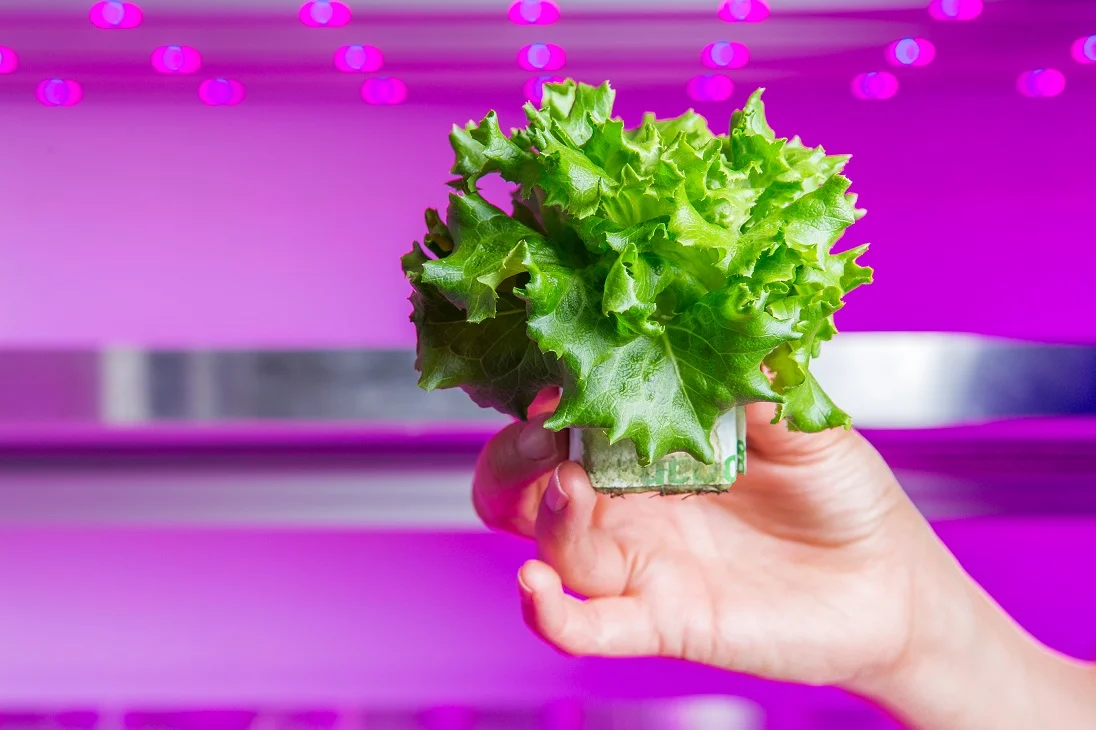


Buy Infinite Harvest's Greens at Nooch and Company Headquarters
Denver-based vertical farm Infinite Harvest has big plans to take its produce-growing capabilities to outer space. In the meantime, it could help a lot of people here on Earth
Buy Infinite Harvest's Greens at Nooch and Company Headquarters
THURSDAY, FEBRUARY 9, 2017 AT 5:48 A.M.
BY LAURA SHUNK
You can now buy Infinite Harvest's Bibb lettuce for use in salads at home.
Denver-based vertical farm Infinite Harvest has big plans to take its produce-growing capabilities to outer space. In the meantime, it could help a lot of people here on Earth. As we reported in our feature story about the company last week, it grows some really tasty lettuce and microgreens.
At the time, you could only find Infinite Harvest products at local restaurants, tucked into salads and sprinkled as garnish on finished dishes or cocktails. But now the company has introduced two ways to purchase its produce for your own home-cooking purposes.
RELATED STORIES
Infinite Harvest has started supplying Nooch Vegan Market, a small retail shop at 10 East Ellsworth Avenue. At the moment, that store is just stocking Bibb lettuce, but the Infinite Harvest team says it may eventually bring on microgreens, too.
If it's microgreens you're after, you're in luck: Starting this weekend, Infinite Harvest will also sell to consumers directly out of its warehouse at 5825 West Sixth Avenue, Frontage Road North, Unit 3B in Lakewood. It's offering fresh-cut living Bibb lettuce plus two-ounce packages of thirteen different varieties of microgreens, including Genovese basil, micro-arugula and micro-pea tendrils.
While the warehouse store will be open from 8 a.m. until noon on Saturday and Sunday, you'll need to order in advance: E-mail info@infinite-harvest.com with your list and specify a pick-up time during the open window. Lettuce is $4 per head, while microgreens are $9 per package; Infinite Harvest requests a $12 minimum order.
If shelf life is a selling point for you, know that my Bibb lettuce lasted nearly two weeks in my fridge, and I imagine my microgreens would have, too, had I not eaten them within, like, sixteen nanoseconds.
If you'd rather try Infinite Harvest's produce in a composed dish, many restaurants around town are using it. Here are the most consistent buyers:
American Grind at Avanti, The Way Back, Jax Fish House, Grind Kitchen + Watering Hole, Il Porcellino, Blue Agave Grill, Brasserie Ten Ten, STK Denver, Machete, Ocean Prime, Shells and Sauce, Cerebral Brewing, Washington Park Grille, Edge at the Four Seasons, Ameristar Casino (Black Hawk), Mackenzie’s Chophouse (Colorado Springs), Odyssey Gastropub (Colorado Springs), Locality (Fort Collins) and 4th Street Chophouse (Loveland).

Crofters, A Startup Helping You Grow Completely Organic Food Right Inside A Living Room
Crofters, A Startup Helping You Grow Completely Organic Food Right Inside A Living Room
“Fear kills more dreams than failure ever will.”
This belief brought Deepak Srinivasan a long way who now finds himself on the entrepreneurial path.
According to Deepak, “The industrialized farming methods based on fossil fuels are putting a huge amount of pressure on our planet. To come up with technically advanced systems that can enable farming in urban areas in a sustainable manner is the need of the hour. The food we eat is engineered to travel long distances and 50 percent of our food is wasted even before it reaches us. We need ways to produce healthy local food."
Deepak, with his co-founder Ashish Khan, started Crofters in March 2016, and they have come up with devices that will help people farm their fresh, healthy food in a sustainable manner. Crofters have developed India's first fully automatic indoor home farm.
They have built an intelligent, self-cleaning, indoor aquaponics ecosystem that helps grow completely organic food right inside a living room. It is for passionate gardeners living in crowded apartments without a backyard space or a terrace of their own.
A combo of nature and technology
They have built an intelligent WiFi-enabled mobile app and sensor unit which helps control and monitor all ecosystem parameters remotely. All this comes with zero maintenance. Users can use the system to grow vegetables, herbs, or small fruits. They are looking to gather data from its users to replicate the model on a large, commercial scale in the future.
How do they implement this?
They create hardware and software that enable people to grow their own fresh food. They have a series of products and solutions that will enable farming in places previously considered unsuitable for it. Their LED grow light technology will help in the indoor farming area to convert huge spaces in urban areas into farms. They claim that their technology will reduce water consumption by 80 percent and pave the way for vertical farming that will make more use of available space.
How did they choose the name of their company and what does it mean?
According to Ashish, “Crofter refers to someone who farms on a small piece of land, so we named our company Crofters as we are on a mission to make farming accessible to everyone on this planet."
Core service/product
They develop IoT-based indoor and outdoor farms based on the science of aquaponics.
Monetization strategy
They have an online-only model for selling their products with doorstep delivery and service. They are into consumables model with income from the sales of accessories to the users through the marketplace. They are working towards setting up experience centres for experiencing the Crofters ecosystem in Bengaluru and Chennai. They will work with ed tech companies on a partnership basis by licensing of their product with a curriculum.
Funding status
They are bootstrapped and want to achieve some tangible traction before looking for funding.
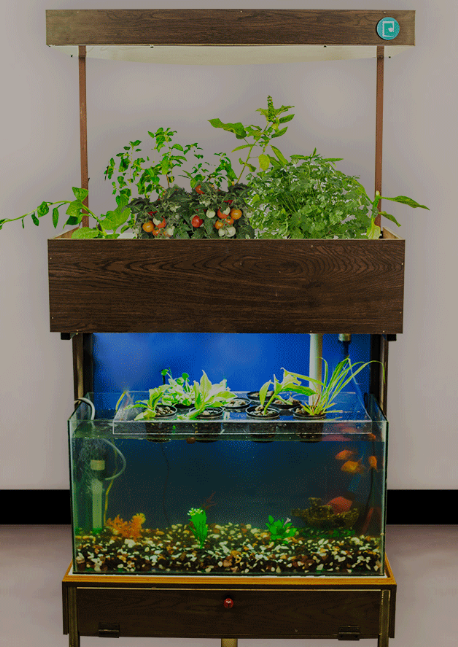
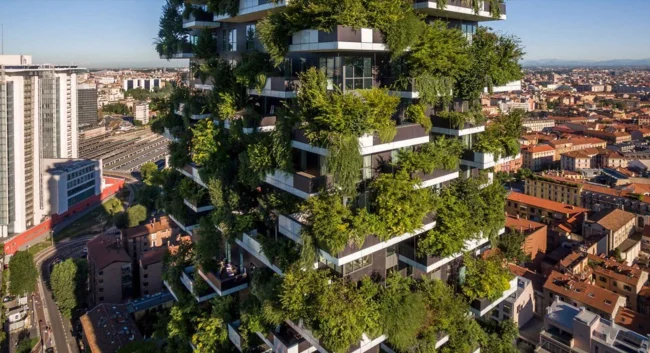
The Future Of Food Will Be Skyscrapers Filled With Plants
Milan is full of unusual sights. As the most populous city in Italy, and its main financial and industrial center, it’s a riot of color and design. But amid the skyline is a building that even for Milan is strange: The Bosco Verticale, or Vertical Forest, a skyscraper encircled with trees, finished in 2014.
The Future Of Food Will Be Skyscrapers Filled With Plants
02.08.17
Milan is full of unusual sights. As the most populous city in Italy, and its main financial and industrial center, it’s a riot of color and design. But amid the skyline is a building that even for Milan is strange: The Bosco Verticale, or Vertical Forest, a skyscraper encircled with trees, finished in 2014. The building was designed by acclaimed architect Stefano Boeri, and — if everyone from marijuana growers to Chinese investors get their way — will soon be as recognizable to urbanites as glass and steel towers are now.
Why? As cities expand, they destroy farmland, pump out smog, and fail to produce food. Parks, community gardens, and other green spaces can only do so much, and many foresee demand for food and the strain of climate change as an imminent danger. At the same time, we’re increasingly eager to know more about what we eat and where it’s coming from, and finding that information lacking. More and more people understand that everything we eat has a “footprint” and that the further your food travels, the more ecological damage it causes.
At the same time, as food-producing California faces water shortages that not even record precipitation can reverse, and climate change affects farmland across the world, shipping food from water-rich regions has become a vital necessity. Simply put, both consumer demand and environmental struggles mean that cities want their farms as close as possible to the populace, producing as much as possible (with as little water loss as possible), and while helping mitigate the pollution.
It’s a tall order. Literally.
Enter the vertical forest, like the afore mentioned building in Milan with more already in the works in Lausanne and Nanjing. The idea is simple: cities need more secure food supplies, more oxygen and to expand upward before gobbling up the land around them, so why not wrap skyscrapers in terraces that offer both, and build giant, towering farms that can feed thousands? The idea is undeniably ambitious, and so far, it’s little more than a proof of concept. But the concept works, and an unlikely industry is offering a path to expand it, thanks to a decision made thirty years ago.
In the 1980s, Ronald Reagan ordered law enforcement to begin helicopter flights that sprayed fields of marijuana with herbicide. The result? Marijuana operations began experimenting with hydroponics. Hydroponics are complex systems that allow farmers to grow plants indoors without soil. Instead, the plants are suspended in paper or mesh (or coconut husk) while a nutrient solution flows through the roots. Grow lights, powerful panels that turn out a replacement for sunlight, are used to offer the energy plants need to grow, with the result being an indoor, water-powered garden.
The hydroponics industry had plenty of other, more legal pioneers, such as the endless acres of Canadian hydroponics operations, but it was marijuana growers who worked on small, productive operations, and that expertise may be crucial to making vertical farms work.
Rick Byrd of PureAgro points out there are benefits well beyond just cutting down on fossil fuels: Vertical forests can deliver more than one harvest a year. As they’re indoors, there’s less of a pest problem, meaning less need for pesticides. And, with space at a premium, hydro operations can be build up, rather than having to grab for land.
These are expensive ideas, but marijuana — in the midst of a mega boom — means that growing operations can pioneer the technology, and then drive down the price to the point where you can grow anything with the same tech.
Byrd may find himself beaten to the punch by scientists, though. MIT recently debuted the Food Computer, an open-source system of computers and robotics that allows users to develop a “profile” for each plant they want to grow. Currently about the size of a shipping container, MIT’s team can see warehouse-sized facilities churning out specific types of food. With the robots doing the hard work, farming would be as simple as punching in the numbers and keeping an eye out for pests.
Hydroponics is not without its challenges. The nutrient solution, for example, is essentially pollution itself, and either needs to be reused or properly processed — although a well-run vertical farm offers better water management and control. Grow lights require enormous amounts of power, even with electron-sipping LED technology rapidly improving. And in a fit of irony, the plants outside these towers will need to be chosen carefully, as they might otherwise contribute to climate change.
But as a solution to a growing problem, vertical forests show that we should grow upward, not outward. Perhaps one day, the fields of the midwest will be filled with skyscrapers full of food, 50 stories tall, vastly increasing the available growing space.

Freight Farms Revolutionizing Farm-To-Fork System
Usually the concept of farm-to-fork is designed to keep locally-grown produce out of shipping containers, but one company is working with local farmers to do just the opposite
By Patrick Lantrip
February 08, 2017
Usually the concept of farm-to-fork is designed to keep locally-grown produce out of shipping containers, but one company is working with local farmers to do just the opposite.
The Leafy Green Machine, developed by Boston-based Freight Farms, is a virtual farm-in-a-box that converts used shipping containers into year-round hydroponic farms, which can be monitored and controlled with your smartphone.
Each unit equates to a two-acre farm in terms of annual production, but is packed into a 40’ x 8’ x 9.5’ space and can be operated year-round regardless of geographic location or climate.
“It provides a pretty cool story thinking about these shipping containers that have previously transported cold goods across the globe and now they’re just in one place growing food,” Caroline Katsiroubas, Freight Farms marketing director said.
When its two founders, Brad McNamara and Jon Friedman, started the company they were originally looking into urban rooftop farming and how to make it economically viable, but after about a year of research, they decided that it was a little bit too cost intensive and time intensive.
The plans were eventually altered for shipping containers and the first prototype was built in 2012.
“Now at this point we have over 100 farms located across the globe,” Katsiroubas said. “A lot of them are small business that have just started and they are selling to their local farmers market, local restaurants or are starting farm stands or CSAs.”
In addition the United States, Freight Farms has operations in Canada, Japan and parts of Europe.
“We’re hoping to be all across the globe soon, because there is a definitely a need from it everywhere,” Katsiroubas said.
However, she noted that the company plans of bring strategic with its growth as not spread itself too thin.
“Our first and foremost priority would be the success of our farmers,” she said.
In Savannah, Ga., Grant Anderson is one such farmer.
Anderson, who was raised by his grandparents in rural Georgia, has been around farming his whole life, but said he never saw it as a viable business model. Since his grandfather owned 90 acres of land and leased most of it out to local farmers, Anderson said he saw many of the farmers’ struggles first-hand.
“I saw what temperamental weather can do to a farmer’s production and their income stream,” Anderson said. “I never really thought it was a stable career path even though it is something that a lot of folks around me did.”
Anderson eventually went to Georgia Tech, and obtained a business degree with the hopes of one day starting his own company.
For six years Anderson worked in finance as an auditor and portfolio manager, before taking a corporate job with Equifax in Atlanta.
However, Anderson said he wasn’t happy with his career trajectory and eventually returned home after the birth of his son and took a job as an administrator with the local board of education.
Once day, Anderson read an article in CNN Money that would change his life about a Boston couple with no agriculture experience who became highly-successful urban farmers through Freight Farms.
“I thought that agriculture is a part of my life even though it’s not something that I actually chose for a career path,” Anderson said. “It just sparked a curiosity.”
Anderson said there were a lot of positives around the idea of local food production and the lack of local food producers.
“The more I looked into it the more interested I became,” he said. “With my background I felt like I could viably operate that business and I also enjoy the hands-on work of growing plants, which I do for my own family over the summer in our backyard.”
Though Anderson has only been container farming for only four months, he is already having success at the local farmer’s market and is now working to build a rapport with local chefs to grow his customer base.
“It’s not something that I think is really popular right out of the gate in South Georgia,” Anderson said. “A lot of people do local dirt farming, so that fact that I am farming is not really a novel idea, but getting people to understand that this is in a shipping container, we can do it year-round and we can grow it vertically up the walls – people are just dumbfounded when they look in these things.”.
Freight Farms converts refurbished shipping containers into hydroponic farms that yield as much produce in a year as two acres of land.
Brad McNamara and Jon Friedman have helped farmers launch more than 100 container farms across the globe since they built the first Leafy Green Machine prototype in 2012.