Welcome to iGrow News, Your Source for the World of Indoor Vertical Farming
It’s The Middle Of Winter, Do You Know Where Your Arugula Is Being Grown?
It’s The Middle Of Winter, Do You Know Where Your Arugula Is Being Grown?
By LIZ REID • 1 HOUR AGO
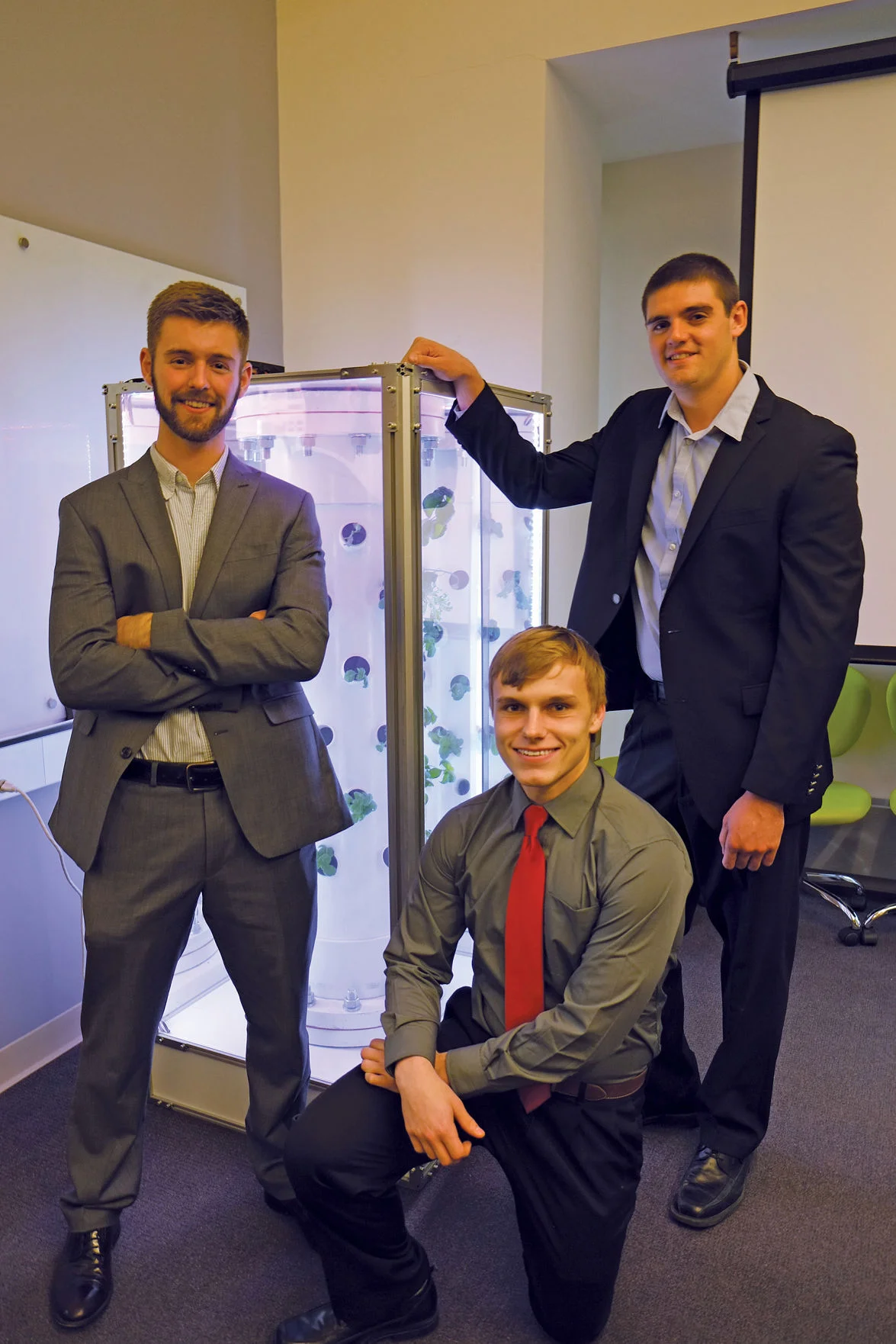
Pure Sky Farms CEO Austin Webb wore a black apron over his dress shirt as he served samples to costumers at the grand opening of the new Whole Foods Market in Upper St. Clair in January.
“This is micro and petite arugula that we have right here, covered in olive oil and lava salt,” he told a customer. “Then we have cilantro with a tortilla chip.”
The customer opted for the arugula, which Webb explained was harvested that very morning.
RoBotany CEO Austin Webb tells customers about his company's produce at the grand opening of the South Hills Whole Foods Market on Wednesday, January 25, 2017.
The concept of vertical farming has been around for more than a century. The idea is to grow a lot more food with a lot less space, water and waste. Plants are grown in trays that are stacked vertically, sometimes several stories tall.
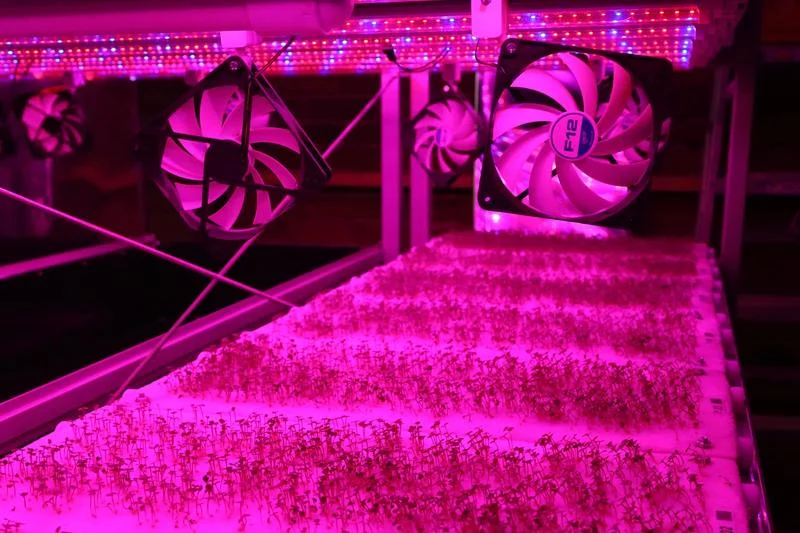
“The roots are hanging down below the trays basically suspended in air and then they get the nutrient rich water which replace soil,” Webb said.
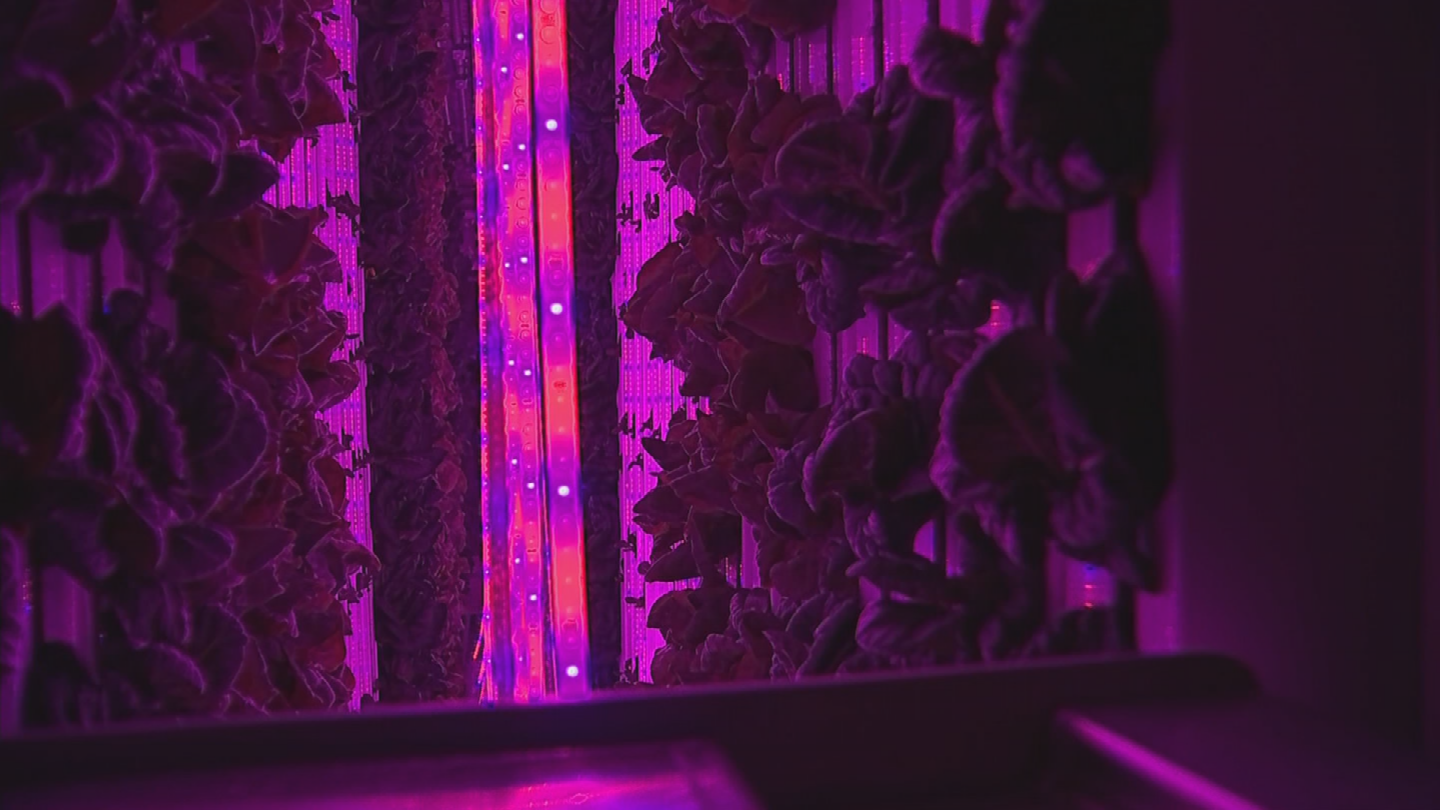
Every 10 minutes, the misters kick on for two-and-a-half seconds. Blue and red LEDs provide just the right color of light to optimize growth.
As high-tech as all this sounds, it’s fairly standard for the vertical farming industry. But Webb said there’s still one part of the process ripe for automation.
“A lot of what you see out there is a lot of folks growing manually,” Webb said. “If they're going 25 or 30 feet in the air they're using ladders and scissor lifts to go up and get the plants.”
RoBotany is developing robots that do the work humans are currently doing, which Webb said will be a huge space saver.
In addition to robots, the company is developing data analytics that will help them optimize for nutrition and taste. Webb noted that traditional farmers often have to optimize for pest resistance and shelf stability, but Pure Sky greens will be grown indoors and harvested the same day they’re put on grocery store shelves.
“It’s a lot cooler to be able to optimize for the nutrients and the taste of a plant and be focusing on if you really want sharp tasting cilantro or mild cilantro,” Webb said.
RoBotany’s current prototype is a much smaller version of what they hope to soon build. Its footprint is just 50 square feet, and they can produce about one pound of greens a day. Because this version is so small, they don’t actually need to use the robots they’ve built to place the trays of seedlings and move them back down to ground level when it’s time to harvest.
But with a 2,000 square footprint, RoBotany’s version two protoype will allow the team to further test their technology. It will be housed in the same South Side warehouse where the company plans to build its full scale, 20,000-square-foot farm.
What will make their farm different than existing vertical farms is that they won’t need aisles wide enough for scissor lifts or even for people. They won’t really even need humans to interact with the plants at all between germination and harvest.
Webb said this is the future of farming and envisions automated indoor farming increasingly supplementing traditional farming. But he said there are still a lot of issues to figure out. Right now, most indoor vertical farms focus on greens and herbs, because they’re pretty hardy and don’t grow very tall. Growing grain, a staple in human and livestock diets alike, is a much bigger challenge.
It’s also important to note that the vertical farming industry doesn’t directly address the biggest problem with current food systems.
“We don’t actually have a food shortage worldwide,” said Tony Miga, master of sustainability at Chatham University’s Eden Hall campus. “It is not a supply issue, it’s a distribution issue.
Miga said the biggest problem with current food systems is access, on both a global and local level. But he said urban agriculture, made greener and more efficient by companies like RoBotany, does have a role to play.
“I think it's finding ways to empower communities to be able to produce their own food at some level,” Miga said.
Webb said ideally, his company’s technology could be used to bring fresh produce to food deserts. But the company is still in its infancy, and right now they’re focused on scaling up production, and bringing hyper local produce to Pittsburgh shoppers. Pure Sky Farms' produce is planned to hit Whole Foods South Hills shelves later this month.
Webb said a future goal is to create Pure Sky Farms franchises, with local owners using RoBotany’s technology to bring fresh produce to customers across the country.
The Associated Press contributed to this report.

The Future of Urban Farming Could Be In A Shipping Container
The Future of Urban Farming Could Be In A Shipping Container
Posted: Mar 21, 2017 11:12 PM CDT | Updated: Mar 22, 2017 1:17 AM CDT
By Jeff Van Sant | GLENDALE, AZ (3TV/CBS 5) -
Urban farming has exploded in popularity over the last few years.
People are becoming more conscious of organic foods and wanting to take charge with what they put in their bodies.
One great way is to create an urban farm in your backyard. Most of us would envision a sort of big garden but one Glendale couple has taken it a step into the 21st century by farming indoors inside an old shipping container.
Heather and Brian Szymura run Twisted Infusions. They farm in a unique way called vertical organic hydroponics. They grow several different kinds of lettuce and kale.
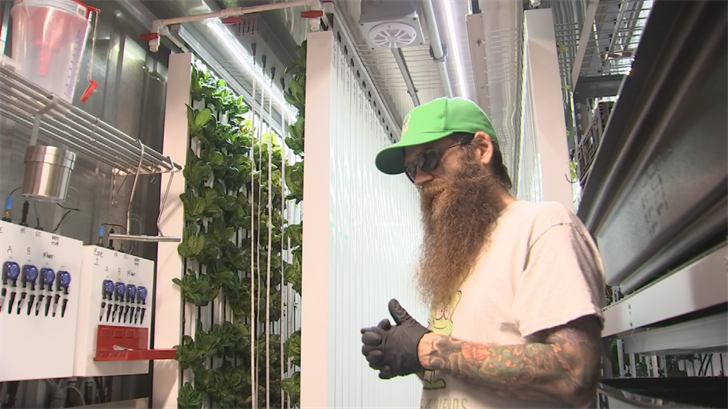
They use an old shipping container that has been converted into an indoor farm. The containers are re-made by a company called Freight Farm.
What's amazing about the containers is that they create whatever atmosphere fits the farmer. All of the controls from the air, water and CO2 levels can be controlled at the touch of an iPad.
The containers are all about creating a sustainable farm and cut down on the use of space. Almost everything can be recycled including the water. Twisted Infusions says they only use about 15 gallons of water a day. Think about that. It's less than your average shower.
The shipping containers run about $85,000.
Copyright 2017 KPHO/KTVK (KPHO Broadcasting Corporation). All rights reserved.
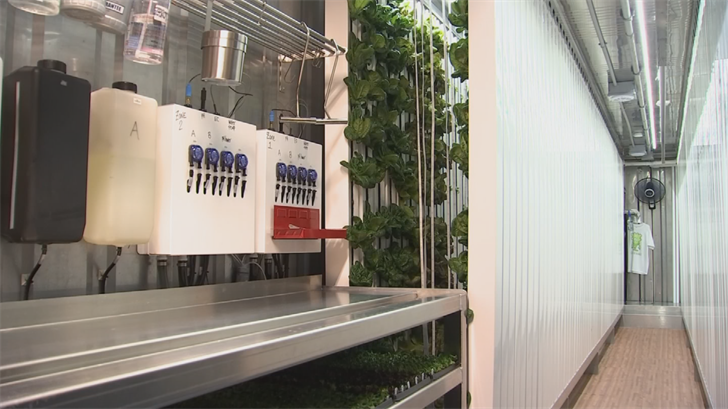
Heather and Brian Szymura are growing vegetables inside a shipping container
The containers are re-made by a company called Freight Farm
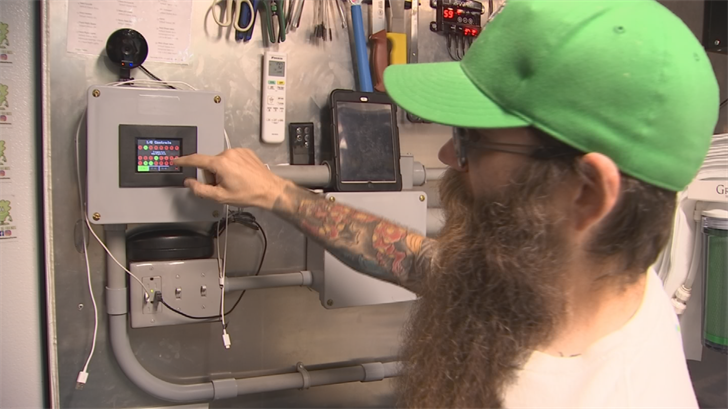
All of the controls from the air, water and CO2 levels can be controlled at the touch of an iPad.
The shipping containers run about $85,000.
Vertical Farms Starting New Agricultural Revolution
Vertical Farms Starting New Agricultural Revolution
Lauren Beaver
According to the United Nations, food supply is one of the world’s most pressing issues. The following statement from the World Bank sets the tone for the expected future of food supply around the world. “The world needs to produce at least 50 percent more food to feed 9 billion people by 2050. But climate change could cut crop yields by more than 25 percent. The land, biodiversity, oceans, forests, and other forms of natural capital are being depleted at unprecedented rates. Unless we change how we grow our food and manage our natural capital, food security – especially for the world’s poorest – will be at risk.”
Investing in agriculture technology is one of the most popular ways this problem is being tackled. All over the world, groups are working to create sustainable agricultural practices; which leads us to Vertical Farming. Vertical Farming is a technique that anticipates issues arising with usable land space and rapid urbanization. It uses high tech lighting and climate controlled buildings to grow crops indoors and upwards in layers to minimize ground space.
Vertical farms have grown particularly in cities where space is limited. In the United States, consumer food trends have been increasingly favoring local and organic. This incentivizes
vertical farms to pop-up in big cities, where growing crops might otherwise not be realistic. Due to the large quantity of crops that vertical farms are able to produce, city dwellers will be able to source their produce from local vertical farms right in their backyards. This growing method is appealing because it ensures that consumers are getting fresh produce that has not traveled for miles to reach the grocery store. The produce from most farms will not travel far past the city it is grown, which is far different from regular agriculture where produce may travel across the country before it reaches its final destination.
There are many benefits to vertical farming. The technology is able to grow crops using up to 70 percent less water, and can do so without soil. On average, outdoor farming has a 50 percent failure rate due to unpredictable events including weather and plant diseases. Vertical farming takes out the majority of those unpredictable events and is able to harvest most of what is grown. Using this controlled environment, farmers are also able to grow a batch of greens much faster than a regular farming cycle. Due to the layered setup of the plants, they are able to capture runoff water that would otherwise be lost to evaporation. It also removes greenhouse gas emissions that would have been caused by the transportation and machinery used to harvest crops.
Most vertical farms have focused on growing greens and herbs because they are the most time and space efficient. In the United States, vertical farming is catering primarily to healthy eaters looking to eat more greens. They are not growing grains, cereals, and other heartier diet staples because those plants weight significantly more. However, this farming technique is new and has lots of growth potential to be able to accommodate those heavier crops.
An example of a successful vertical farm is AeroFarms in Newark, NJ., which has been a pioneer for the Vertical Farm revolution. After installing infrastructure in an old steel mill, they expect to produce two million pounds of greens per year. This company has spent $30 million to realize this new style of green agriculture which promises produce free of pesticides and fertilizer.
Vertical farms are starting to trend in other cities across the world including Europe and Japan. Its immediate benefits include its scale, natural resource savings, and consistency. Many vertical farms have partnered with restaurants to serve their greens “farm-to-table style.”
One of the biggest issues with vertical farming is the cost of infrastructure. They use high tech lighting and climate control to grow produce with less water and soil than what would typically be needed. It can be expensive to install, and is not natural like sunlight and rain. Some vertical farms have failed due to the astronomical cost of electricity used to power the lights. Opponents and supporters of this trend realize that vertical farms take the nature out of growing produce, but is perhaps a step in the right direction for the future of farming.

How An Indoor Farm in Midtown Anchorage Could Help At-Risk Youth
How An Indoor Farm in Midtown Anchorage Could Help At-Risk Youth
Author: Devin Kelly
To help disadvantaged teens and young adults land jobs, an Anchorage mental health provider is staking out ground in the high-tech farming fields of hydroponics and vertical gardening.
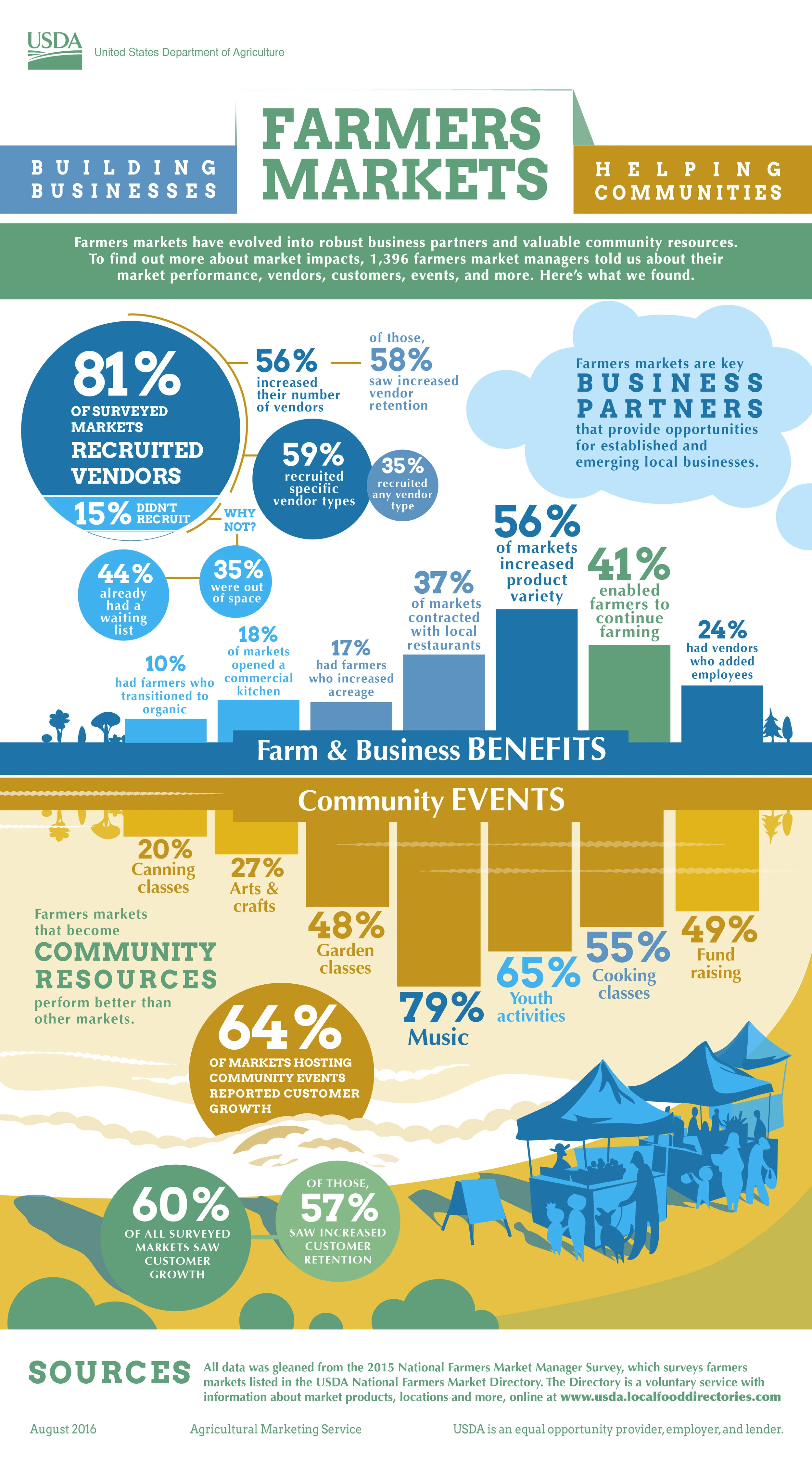
Inside a warehouse off Arctic Boulevard last month, violet light bathed rows of tall white columns. Leafy greens poked out in vertical rows, marked with handwritten labels for romaine lettuce and parsley.
Michael Sobocinski, the chief operating officer of Anchorage Community Mental Health Services, gestured to the columns.
"Each of these towers, you can see up here, has nutrient solution," Sobocinski said, surrounded by the drip-drip-drip sound of small hoses. He showed how water nourishes the roots, collects in a gutter and then recirculates back to a nutrient tank that feeds back into the hydroponic system.
The columns are yielding pounds of fresh veggies. The twist: The gardeners will be largely young adults coming out of foster care, mental health treatment, the juvenile justice system or even homelessness. Sobocinski and his team hope the inside garden will be a turning point for youth at risk of falling through the cracks.
Seeds of Change, as the program is called, has been incubating for years, but it's now on the cusp of becoming reality. Anchorage Community Mental Health Services, a well-established nonprofit that offers a wide range of services to adults and children, is managing the project.
The idea came from Sobocinski, who previously worked at residential children's psychiatric treatment centers in Denver. In that job, Sobocinski saw a lot of kids who grew up hungry. Some of his clients were fishing food out of dumpsters to help feed their siblings.
A horticultural therapist also showed him that young people tend to respond well to working with plants, he said.
In 2014, after years of research and planning, Anchorage Community Mental Health Services bought the building at 26th Avenue and Arctic Boulevard. At least from the outside, it's nondescript — a kitchen cabinet manufacturing company used to be housed there.
Renovating the 11,000-square-foot building to suit an indoor farming operation cost about $3 million. The construction money came from a grant through the state Department of Health and Social Services. More than $100,000 came from the Alaska Mental Health Trust Authority for planning, development and startup staffing costs.
Once fully up and running, Seeds of Change should yield 50 to 70 tons of produce a year, Sobocinski said.
To staff it, Anchorage Community Mental Health Services plans to hire up to 20 people between the ages of 16 and 24. The wages will likely range between $12 and $13 an hour for 10 to 15 hours of work a week, Sobocinski said.
Priority will go to teens and young adults aging out of Alaska's foster care, juvenile justice or mental health treatment systems. Too many kids are coming out of tough circumstances and getting lost in young adulthood, Sobocinski said.
"When you turn 18, by and large, the system of care says, 'Congratulations, you're an adult,' " Sobocinski said. "And so programs and eligibility that work when you were 17 may not necessarily work when you're 18."
All the workers will have access to mental health services through Anchorage Community Mental Health, though they don't have to be clients, Sobocinski said.
As well as working in the greenhouse, the hired youths are expected to attend classes on life skills, like getting an apartment, interviewing for jobs and maintaining good credit.
The positions will last between six and nine months. Finding the workers full-time jobs from there is key, Sobocinski said.
At the same time, finding work for about 20 teens is a "drop in the bucket," said clinical program manager Seina Johndro, who will be running the life-skills component of the greenhouse program.
"There's a huge need for programs like this in town," Johndro said.
Seeds of Change doesn't include apartments or places for young workers to live. But housing is a critical piece, Sobocinski said. He said the organization is still exploring ways to connect participants with housing.
In recent years, Anchorage social service agencies have made forays into food to help clients. The Downtown Soup Kitchen started a bakery and garden to offer work to the women who stay there, as well as a culinary arts program.
But vertical gardening is a novel approach even for the state's farming community. At first, the idea was a more traditional greenhouse, Sobocinski said. But when that plan fell through, Sobocinski and other officials turned to hydroponic growing.
"It's going to give us very big yields, and it's a good use of space," Sobocinski said.
Anchorage Community Mental Health Services bought the system from Bright AgroTech, a Wyoming-based company. The company has also offered startup support, said Johndro, the clinical program manager.
Alaska Seeds of Change is located in a former cabinetry business in Midtown. The location now also houses the drop-in center for Alaska Youth Advocates, which formerly had space at the Anchorage People Mover Transit Center and then briefly at Covenant House Alaska. (Erik Hill / Alaska Dispatch News)
With the help of the Foraker Group, which advises nonprofits, Anchorage Community Mental Health Services also gauged whether there would be demand for the produce.
One fact they learned: Alaska imports 90 to 95 percent of its food.
"I don't think there's any risk of oversupply of locally produced, Alaska-grown products," said Danny Consenstein, the executive director of the Department of Agriculture's Alaska Farm Service Agency.
No marketing contracts have been signed yet. But Sobocinski said his organization is talking to a local restaurant owner as well as grocery chains about buying produce. He thinks businesses may be interested in having a "Seeds of Alaska" stamp on a menu.
Sobocinski said he's confident the operation will be able to support itself by the end of the year and make enough to reinvest in new programs.
For the teens and young adults slated to work in the garden, there's a lot of hands-on work to do, said Ryan Witten, the greenhouse manager. The workers are also expected to learn how to market and sell the produce.
At the moment, the only young people working in the greenhouse were employees of Alaska Youth Advocates, a supportive program for at-risk youth that is part of Anchorage Community Mental Health Services. The program recently moved to the greenhouse building after its floor in the Anchorage transit center closed.
Quavon Bracken, 19, has been an outreach worker with Alaska Youth Advocates for about three years. He had friends in "really bad living situations," he said, but until he got the job, he didn't know how to help them.
Standing in the greenhouse, Bracken, who's headed to University of Alaska Anchorage as a business administration student this spring, said he's looking forward to learning more about marketing. He also helped set up the greenhouse and expected to be part of the hiring team for the teens who will work there.
By early February, the first harvest was on its way. Greenhouse managers were preparing to pick dill and chervil.
About this Author
Devin Kelly covers Anchorage city government and general assignments.


Vertical Farming: A High-Growth Trend
Every year, Americans care more about where our food comes from. Organic food sales are growing by double-digit percentages annually. And the “eat local” movement is still picking up steam
Vertical Farming: A High-Growth Trend
by Samuel Taube, Investment U Research TeamFriday, February 3, 2017
Every year, Americans care more about where our food comes from. Organic food sales are growing by double-digit percentages annually. And the “eat local” movement is still picking up steam.
But if you live in a big metro area, how local or natural can you really eat? For years, the answer was “not very.” Then vertical farming started to enter the commercial mainstream.
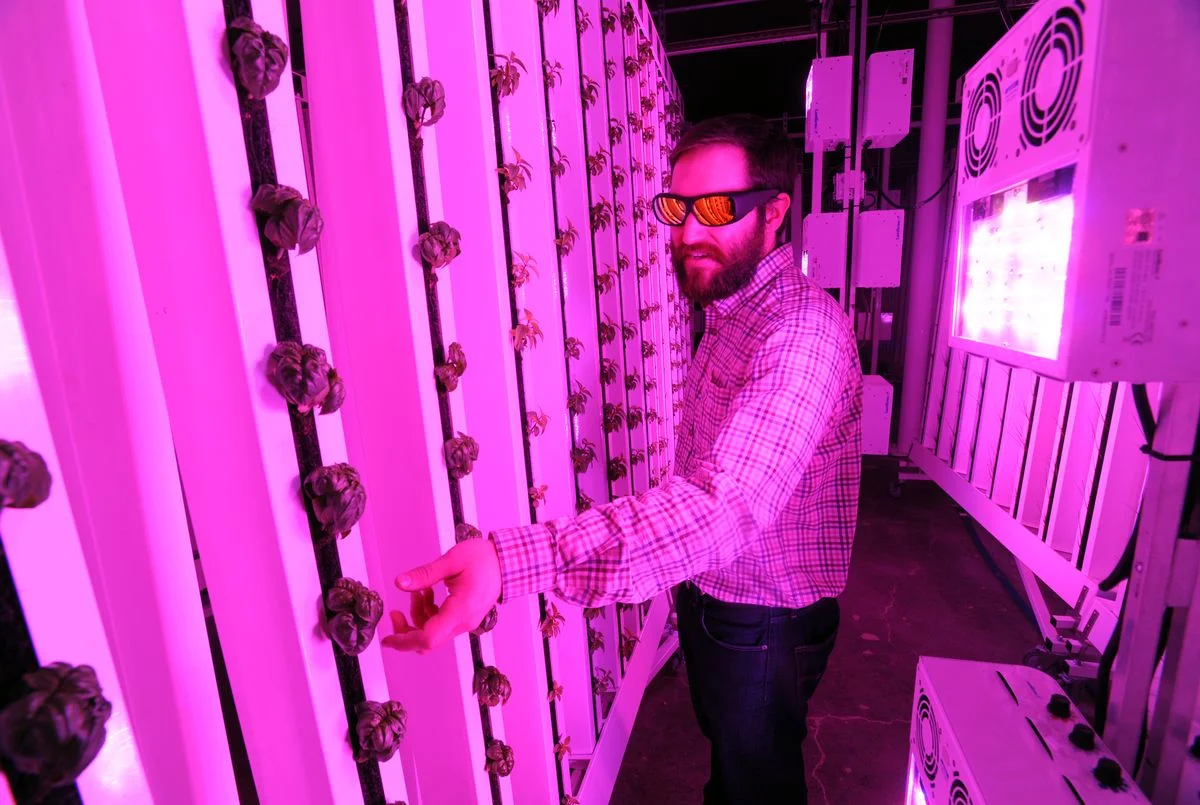
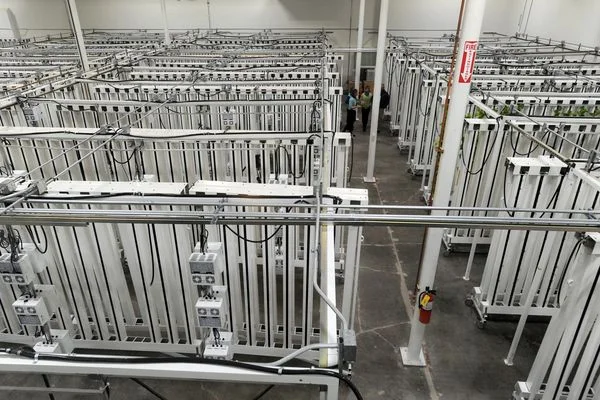
As the name implies, vertical farming means using hydroponic technology, grow lights and other agricultural innovations to build multilevel indoor farms. It allows farmers to grow fresh organic produce in the middle of our ever-growing cities. And in many cases, it’s more efficient than traditional farming.
As demand for locally grown organic food continues to outstrip supply, vertical farming is poised to become a tremendous investment opportunity. In this piece, we’re looking at why - and how to get in early.
Why Vertical Farming Matters
There are two almost unstoppable trends propelling the growth of vertical farming. First, local organic food is getting more popular every year. Second, more people are moving to cities, suburbs and other areas that can’t support traditional agriculture.
As our Editor-in-Chief wrote over the holidays, organic food is quite scarce in our country. That’s not some kind of environmentalist statement. It’s a simple fact. We want more naturally grown stuff than we can produce right now.
That’s why the organic food business has experienced such consistent growth recently. Last year, for the first time ever, a solid 5% of the total food sales in America were organic.
Now, the above graph just shows the growing market for organic food. It wouldn’t be relevant to organic farming... if most people lived near farmland. But they don’t. Four out of five Americans live in an urban area... and that number is constantly going up.
As you can see from the graph below, the U.S. as a whole has never experienced de-urbanization in recent memory. The pace of migration to cities has slowed at times, but it’s never gone below zero.
Plus, American cities are geographically huge compared to those elsewhere in the world. Most major U.S. cities are surrounded by huge rings of suburbs. These can sprawl out for dozens or hundreds of miles.
That means that our city dwellers can get their food in one of two ways. They can load it up with preservatives and truck it in from faraway rural areas. Or they can grow it in the city with vertical farming.
At the moment, the former option still feeds most of America’s urban population. But the demand for fresh, local and organic produce is still growing. So will the necessity of vertical farming.
Technical analysis is the study of price and volume activity in the stock market, and there are three powerful tools that will help you find buying opportunities in the market.
Any investor can become a technical analysis pro by using these simple buy and sell indicators.
We’ve also done the research for you and found three stocks hitting these urgent buy signals right now.
How to Invest
It’s tough to find pure plays on vertical farming. That’s a common problem among emerging technologies. Not many S&P 500 companies are willing to bet everything on a new industry.
Fortunately, several food retailers and gardening companies have made big investments in urban agriculture. These companies offer investors indirect plays on vertical farming.
Whole Foods (Nasdaq: WFM) is a major buyer and financer of vertically farmed produce. Its Local Producer Loan Program has lent tens of millions of dollars to local farming projects. And for the last few years, many of those projects have been urban and indoors.
Then there’s Scotts Miracle-Gro (NYSE: SMG), perhaps the nation’s most prominent gardening supply company. Almost 10% of Scotts’ revenue comes from its hydroponic equipment division. That has given the company an important stake in two investing trends: marijuana production and vertical farming.
As you can see, these two vertical farming “brokers” have done quite well for themselves in the past year.
If you live in a city today, chances are that you’re eating food grown in a place you’ve never been - by people you’ll never meet. And if you’re into organic food, then you’re likely paying a pretty penny for the logistical cost of getting it into the city without preservatives.
But that may soon be changing. As the trends of urbanization and organic food continue to grow, city dwellers need a new way to feed themselves. In a few years, your apples might be grown a few blocks from your apartment. And if you invest in the right grocers and gardening companies today, then you can profit from this futuristic transition.

Connecticut Invests $3 Million in Indoor Agriculture Venture
Connecticut Invests $3 Million in Indoor Agriculture Venture
By Luther Turmelle, New Haven Register
POSTED: 02/03/17, 9:16 PM EST | UPDATED: 6 HRS AGO
The state is investing a lot of green — $3 million in financing — to get an indoor agriculture venture off the ground in Suffield.
Gov. Dannel P. Malloy announced Friday that Four Seasons Farm LLC, the project for which the state is providing financing, is expected to create 40 new jobs over the next two years. The money from the state Department of Economic and Community Development will be used to purchase equipment and machinery for the 10-acre indoor farm, which initially will grow millions of pounds tomatoes.
Although the farm will be located in northern Connecticut, one of the partners in the project is a well-known New Haven County farmer.
Joe Geremia, who runs seven acres of greenhouses in Wallingford, is one of three partners in the project. The other two partners are Henry Froese, a pioneer and expert in the building of greenhouse operations, and Herbert Soroca, chief executive officer of Stamford-based North Cove Capital Advisors, which works with emerging growth companies.
Geremia, a third-generation farmer, called the Four Season Farm “a 21st century agriculture project.”
“Four Season Farm will lay the foundation for a new generation of indoor agriculture to compete with foreign produce, create living wage jobs and tax revenues for Suffield and the state, and provide locally grown, healthy food for Connecticut consumers,” Geremia said. “It is a win-win for everyone.”
Hydroponic farming is a method of growing fruits or vegetables without soil. The plants typically are placed in trays or inserted into tubing over a container of water with a submergible pump.
The pump circulates the water making traditional gardening methods unnecessary.
Four Season Farm will use technology such as computer controlled light, humidity and nutrients. The partners in the project have a five-year plan that includes a ten-acre facility that will produce 5.75 million pounds in the first year and 7.5 million pounds by the third year.
The partners ultimately hope to create a 43-acre greenhouse complex and add crops such as cucumbers, peppers and micro greens.
While hydropinc farming is comparatively new to Connecticut, Four Seasons Farm already has plenty of company in the sector, even in New Haven County. Maple Lane Farms II is located in a Cheshire industrial park while another area hydroponic grower is H2O Farm in Guilford.
Call Luther Turmelle at 203-680-9388.

Global Vertical Farming Market 2017- AeroFarms, Gotham Greens , Bright Farms, Vertical Harvest
Worldwide Vertical Farming Market 2017 Research report is an in-depth analysis of 2017 global Vertical Farming market on the current state
Global Vertical Farming Market 2017- AeroFarms, Gotham Greens , Bright Farms, Vertical Harvest
by John Coates | @ | February 2, 2017 10:41 am
Worldwide Vertical Farming Market 2017 Research report is an in-depth analysis of 2017 global Vertical Farming market on the current state.
First of all, the report (2017 Vertical Farming Market) provides a basic overview of the Vertical Farming industry 2017 including – definitions, classifications, Vertical Farming market by applications and Vertical Farming industry chain structure. The 2017’s report on Vertical Farming Industry analysis is provided for the international Vertical Farming market including development history, Vertical Farming industry competitive landscape analysis, and major regions development status on Vertical Farming scenario.
After that, 2017 Worldwide Vertical Farming Market report includes development policies and plans are discussed. Vertical Farming market 2017 report also covers manufacturing processes and cost structures on Vertical Farming Scenario. This report also states Vertical Farming import/export, supply, Vertical Farming consumption figures as well as cost, price, Vertical Farming industry revenue and gross margin by regions (United States, EU, China, and Japan).
Then, the report focuses on global major leading Vertical Farming industry players with information such as company profiles, product picture and specification, capacity, Vertical Farming production, price, cost, Vertical Farming Market revenue and contact information.
Top Manufacturers Analysis in Vertical Farming market 2017:-
1 AeroFarms
2 Gotham Greens
3 Bright Farms
4 Vertical Harvest
5 Home Town Farms
6 Infinite Harvest
7 Lufa Farms
8 Beijing IEDA Protected Horticulture
9 FarmedHere
10 Garden Fresh Farms
11 Metro Farms
12 Green Sense Farms
Click Here for Report Sample: https://market.biz/report/global-vertical-farming-market-2017/41119/#requestforsample
Global Vertical Farming Market 2017 Analysis: By Product
1 Aeroponics
2 Hydroponics
3 Others
2017 global Vertical Farming market report also covers – Upstream raw materials, equipment and Vertical Farming downstream consumers analysis. Furthermore, the 2017 Vertical Farming market development trends, and marketing channels are analyzed on Vertical Farming scenario.
Finally, The Report (2017 Worldwide Vertical Farming Industry)- Feasibility of new investment projects is assessed, and overall Vertical Farming market research conclusions are offered.

Aglanta Announces Panel About Closed Vertical Farming Operations
Aglanta Announces Panel About Closed Vertical Farming Operations
The event is highlighted by three vertical growing operations that weren't forced to shut down.
February 2, 2017
ATLANTA, GA - Recently, Aglanta's organizers posted an open letter from Paul Hardej about the closure of FarmedHere’s 90,000 square foot Bedford Park facility. After the post, they received inquiries about how and why this happened - and what does this mean for the industry?
Those of you were who were left wondering these question are in luck: Agritecture is pleased to announce that itwill be moderating an exclusive panel - An Examination of Shuttered Vertical Farming Facilities - according to a press release. This panel will held at the Aglanta Conference on Feb. 19 and panelists will include:
- Paul Hardej, Co-Founder of FarmedHere
- Mike Nasseri, Harvest Supervisor at LocalGarden
- Matt Liotta, CEO of PodPonics
Podponics and LocalGarden, like FarmedHere, each operated a vertical farming facility that is now closed. Podponics operated a large facility in Atlanta before declaring bankruptcy and closing their Atlanta facility in June 2016 - while Local Garden operated a large rooftop vertical farm in Vancouver that declared bankruptcy back in 2014.
If you clicked on any of those above links, you may have found you have some questions that you would like answered from our panelists. If so, please comment or drop us a note for what you’d like to know as we prepare for this discussion. There will also be a subsequent Q & A for those in attendance at #Aglanta.
Register here: aglanta.eventbrite.com

Underground Greens Grower Secures Online Retail Deal
Underground Greens Grower Secures Online Retail Deal
1 February 2017, by Gavin McEwan, Be the first to comment
London urban farming pioneer Growing Underground launches its first retail range of international-themed salad mixes via Ocado.com from today (1 February).
Its five-strong series of salad mixes consists of:
- English – English mustard leaves, broccoli shoots and pea shoots;
- Italian – salad rocket, garlic chives and pea shoots;
- Indian – fennel, coriander and pea shoots;
- Asian – purple radish, coriander and pea shoots;
- Japanese – wasabi mustard, pink stem radish and pea shoots.
Based in a World War II bomb shelter 30m beneath Clapham High Street, Growing Underground was founded five years ago by entrepreneurs Steven Dring, Richard Ballard and Chris Nelson, and is backed by chef Michel Roux Jr.
So far the business has been supplying micro-herbs and salads to London wholesalers, farmers' markets and Michelin-starred restaurants. Growing in a fully controlled, pest-free environment enables it to provide crops of consistent quality year-round, it says.
New produce trials are ongoing, and the farm has the capacity to quadruple its growing space as demand increases.
Co-founder Steven Dring said: "We've been working for years to perfect what we do and we're so excited about this retail range. Sustainable, low-energy growing of exceptional produce is a central part of our ethos and we're delighted that through this partnership with the UK's leading online supermarket we can now share our amazing micro-herbs with consumers.
"We're so pleased that Ocado have put their faith in a small start-up that is working hard to promote innovation and sustainability in British farming, and are very encouraged by what this could mean for the future of the industry."


We Proudly Announce
We Proudly Announce
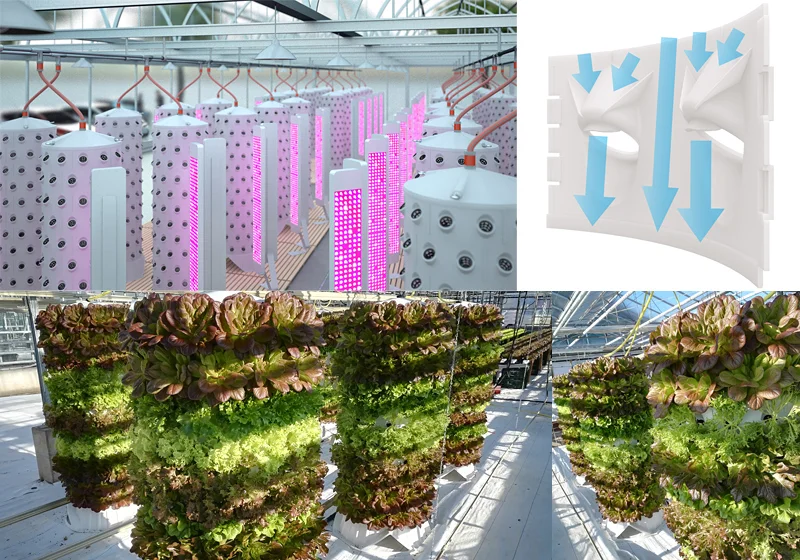
The series production of the 2. generation of our barrel parts is now up and running and we are ready to ship! This includes the standing base, the new lids and the two 2-inch net pot adapter parts to grow lettuce and herbs
All parts incorporate the improvements of the last two years of development and support from professional growers:
- An inside wing structure, directing the liquid to the root areas of your plants, also allowing for much higher barrels.
- A new connection mechanism between the adapter parts ensuring a tight more exact fit, easier assembly, facilitating to stack and handle barrel ring segments.
- A new irrigation option - an inverted sprinkler, and a new lid.
- Materials used: ASA as the main material for the 1/6th parts being the most robust and uv-resistant option and PVC for lids and stands.
If you are interested in running or testing the barrel concept please get in touch now. Here you can find pricing and shipping information and more detailed images of the parts and how it looks in production (scroll down).
In 2017 we plan to extend the barrel concept further into new soil-less adapter parts, that can be used for bigger plants and more versatile grow space set-ups. And we will even extend into a nifty movable soil-based wickerbed version. Click here for more information.
PCT Announcement
In the meantime the PCT announcement of our patent has been published (WO2016/156334) extending the priority phase to localize IP internationally. This is a major milestone to protect new partnerships.
We are currently looking for strong partners to manufacture and/or set up sales channels outside Germany/Europe! For more information please get in touch with us!
Trade shows and events 2016/2017
- GreenTech June 2016 in Amsterdam
- AgTech Week NYC September 2016 in New York City with demo of the aponix vertical barrel.
- CropWorld October 2016 in Amsterdam
- Upcoming 9-10 May 2017, meet us at the Global Forum for Innovations in Agriculture in Utrecht.
Latest mentions
- Read about Marco's and other opinions on the upcoming agri-food revolution.
- UrbanAg News: Aponix extended the NFT idea into the 3rd dimension with their vertical barrel
- National television visiting the aponix underground testing farm (5min video, German).
- Aponix winner at Green Product Award, category freestyle
- Staatliche Lehr- und Versuchsanstalt für Gartenbau Heidelberg (LVG) testing barrels in parallel to NFTs.
The Aponix Vertical Barrel
The aponix vertical barrel can be used as growing component like an NFT in an existing liquid nutrient cycle for high density growing.
Barrels can be build using simple and compact plant adapter parts, being assembled into barrel ring segments. By stacking ring segments you set up your grow spaces without the need for additional fixed table- or rack structures. The available cubic growing space determines the number of grow spaces you can run. Of course multiple barrels can be connected inside your production facility providing >60 grow spaces per sqm. Please check this page for some integration examples.
Barrels can be rotated. Hanging and standing versions are available. Currently each barrel is powered by one top sprinkler or a spray nozzle. Nutrient solution is running down the inside from the top lid being directed by an internal wing structure towards each root area of your plants, practically turning the barrel into a giant vertical 3D-NFT. For more details please check our FAQs.

Women In CEA Startups
Interest in furthering the development of controlled environment agriculture (CEA) is propelled forward by the idea that we can create real solutions to some of humanity’s basic needs: like growing nutritious food. By bringing farming under cover, be that in a hoophouse, greenhouse or vertical farm, we have found ways to closely monitor and manipulate growing conditions
Women In CEA Startups
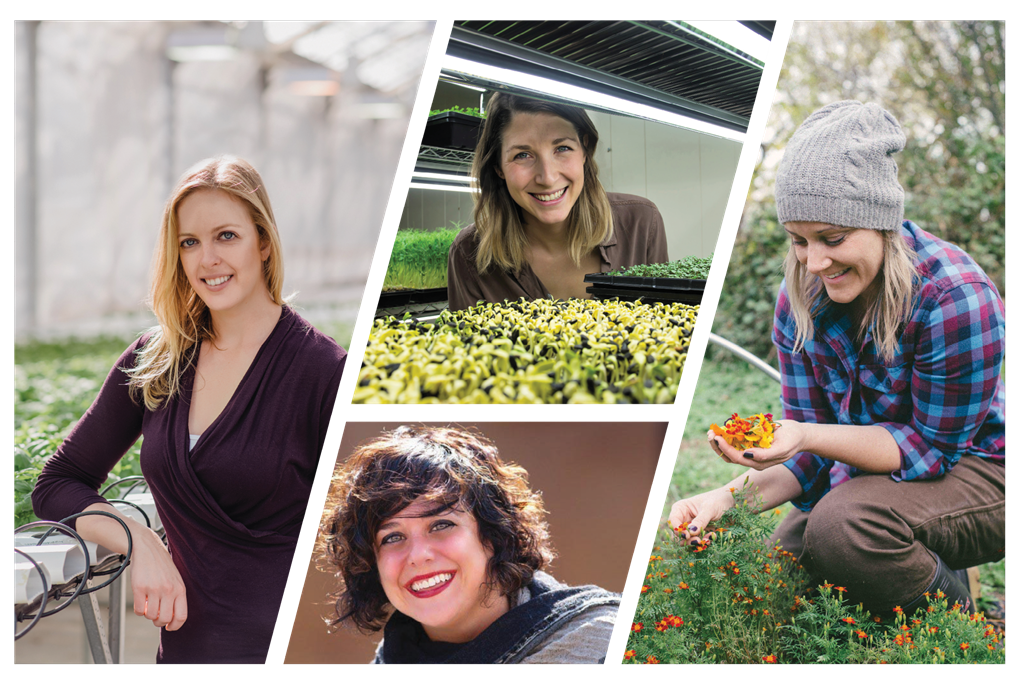
Meet 4 female trailblazers raising the bar in controlled environment agriculture through entrepreneurship.
January 25, 2017
Cassie Neiden
Interest in furthering the development of controlled environment agriculture (CEA) is propelled forward by the idea that we can create real solutions to some of humanity’s basic needs: like growing nutritious food. By bringing farming under cover, be that in a hoophouse, greenhouse or vertical farm, we have found ways to closely monitor and manipulate growing conditions. These efforts have resulted in extended growing seasons — all while improving food access, flavor and local economies.
But CEA’s improvements do not stop there. As this dynamic, ever-changing industry continues to adapt and evolve, new ideas coming to the forefront aim to solve challenges and streamline systems. Unsurprisingly, many of them are coming from women, who asking the simple question: Why not?
Why not integrate greenhouse data into a user-friendly platform? Why not ask if an abandoned garden needs a revamp? Why not grow clean, healthy greens in the comfort of a home? Why not make a greenhouse three stories tall?
On the following pages, we feature determined, inspiring women who are finding CEA success through their innovations and leadership.
Allison Kopf, Founder & CEO, Agrilyst
DATA-DRIVEN: Kopf put together a team of highly skilled data scientists and engineers to form Agrilyst, an intelligence software platform for indoor farmers, in 2015. Agrilyst utilizes algorithms to track and record data from sensors throughout the greenhouse to help growers better understand their operation’s metrics to improve plant quality and output.
Since the company’s conception, Kopf and her 10-member team have nabbed first place in TechCrunch Disrupt’s prestigious technology startup competition, raised more than $1 million in investments for development, secured customers in five countries, and in January, launched Agrilyst Reporting, which helps growers curate their own customized data sets.
“We’re helping [growers] visualize data like never before,” Kopf says. “Big data is just a [phrase], but having insights and having meaningful visualizations is important to growers, so we’ve spent a lot of time focused on that.”
BRIGHT IDEA: Based in the startup central, NYC, Kopf has experience in helping to build companies. Before founding Agrilyst, she spent four years as the Real Estate and Government Relations Manager at BrightFarms, a hydroponic grower and greenhouse builder in New York. She was one of the first employees at the company back in 2011.
“It was a really easy jump for me to say, ‘I want to be in this startup world, and I want to do something that I believe in and work alongside a team on something that’s a big problem that’s solvable by us,’” she says.
In fact, much of the idea for Agrilyst came from her time at BrightFarms. “When I was on the operating side, my job was to essentially solve problems as they came up. And that was really challenging to do because we had fragmented data systems,” she says.
Essentially, climate control systems and other technological advances provided data to the growers — but they had no comprehensive way of gathering and analyzing it. “I said, ‘That’s it. We can’t do this anymore. We have to find a way to log this data somehow,’” Kopf says. “I can build this platform to integrate this data and build a team of people smarter than me to get [growers] insights into that data.” And Agrilyst was born.
Kopf's startup advice is to make yourself an expert in your field, but don't go it alone. "It wastes time and money, especially in this space," she says.
LEVELED OUT: Part of Kopf’s success in the male-dominated technology space is due to her mindset. She was the only woman in her physics class in college; she’s spearheaded a legislative campaign; and also fearlessly pitched her business model to venture capitalists. No matter the space she’s in, she refuses to be intimidated based on her gender because she simply doesn’t factor it in.
“The way that I approach it is that I’m there because I’m the person to do this,” Kopf says. “I presented the company that I had built because I was the right person to build this company. This [is] the thing I was put on this earth to solve. That’s the way I operate … I’ve made myself the expert in the thing I’m doing, and that’s the only [way] you can have confidence standing up there and presenting something that’s yours, in my opinion.”
BORN LEADER: While Agrilyst takes up much of Kopf’s time, she hasn’t shied away from additional professional leadership opportunities. She’s an advisor for a nonprofit to promote young women’s involvement in tech called #BUILTBYGIRLS, as well as a mentor for Square Roots Urban Growers, a hydroponic vertical farm builder. Kopf was also named Entrepreneur of the Year by Technical.ly Brooklyn, and Changemaker of the Year by the Association for Vertical Farming earlier this year.
So it’s no surprise that her favorite part of starting a business is building a team.
“I get to work with people who are tremendously brilliant and interesting, especially in our space,” she says. “And we have not yet hired from a job posting. We’ve consistently hired through our team’s network. But what we’ve done a very good job at is expanding our network broad enough to find [those] people … and make sure we incentivize them to put them on our team.”
Kopf’s also a huge proponent of hiring people of diversity. Agrilyst’s small team is made up of employees from many different backgrounds, and an even split of men and women. “It makes your company and product better, too, by having diversity and by having people who don’t look and think and speak like you do. By nature, you end up building a product that’s more inclusive for a broader set of customers,” she says. “Not ignoring colorblind people when you are building the colors of your platform; not ignoring left-handed folks when you’re building an iPad that doesn’t switch the right way … All of those things can be included earlier by broadening your community.”
BIGGEST CHALLENGE: Opportunities abound with any startup as it morphs into its own identity. So Kopf’s biggest challenge is keeping the company focused. “There are so many areas of agriculture that have a data problem,” she says. “This is why you see so many data companies sprouting up in the outdoor space — or cash commodities crops … It’s one of our biggest industries.
“But as a startup, and as 10 people,” she continues, “you can’t tackle every problem.” She says she’s proud of the way Agrilyst communicates with indoor growers, listening to them and building on what they want to see.
THE BOTTOM LINE: The most rewarding aspect of Kopf’s job is realizing results from what she and her team have created. “Seeing something physically change, or seeing operational management methods change based on using our platform and how that makes a grower able to reach profitability, or expand operations, or open a new facility, or expand into new crops — that, to me, is probably the most successful thing that we could possibly do,” she says.
Vanessa Hanel, Owner & Operator, Micro YY
TINY PRODUCT, BIG OPPORTUNITY: After working on the administrative side of the Calgary Farmers Market for about a year and a half, Hanel decided she wanted to be the grower, not the one sitting behind the desk. So in the basement of her home in Calgary, Alberta, Hanel launched Micro YYC and began to grow a plethora of microgreens varieties and other leafy greens for multiple clients, including a large local farmers market, a CSA-inspired subscription service, and local restaurants and specialty grocers. Hanel’s offerings include pea shoots, broccoli, kale, kohlrabi, arugula and other microgreen blends. “I’m super passionate about quality, delicious food,” Hanel says. “So it makes me happy every day to be growing these happy little sprouts.”
COMMUNITY COLLABORATION: One of Hanel’s biggest accounts is a cooperative with other local growers called YYC Growers’ Harvest Box. On a bi-weekly basis, customers can pick up a “harvest box” that includes a selection of seasonal produce from several different farms in the area. Hanel says not only does this bring her a good amount of business — the collective has grown exponentially from 80 shares in 2015 to more than 500 in 2016 — it also gives her a sense of belonging. The farmers frequently get together for meetings and potlucks and lean on each other for advice and moral support. “It makes you realize you’re not the only one doing something weird for a job,” she jokes.
SOCIAL STANDING: As a one-woman operation, Hanel says she hasn’t had much time to craft a website, but she’s acquired plenty of customers and mentors through social media marketing to keep her going. Every restaurant she’s worked with has found her either on Twitter or Instagram, and she’s acquired some helpful growing advice along the way.
Hanel's microgreens are sold to YYC restaurants and farmers markets.
Photo: Kevin Daines, courtesy of Hop Compost
“Instagram is amazing because it’s so easy to post good pictures on there,” Hanel says. “There’s a great community — it’s so easy to find other people in Calgary doing small local businesses, and food business, and other urban farms in other cities and countries. I connect with a lot of other microgreen growers on Instagram, just asking each other questions, like, ‘What trays are those?’”
PLUS ONE: While Hanel doesn’t necessarily need a large working area to bring in her produce-growing profits, she says her biggest challenge is keeping up with the daily workflow. Because her crop can turn over as quickly as nine days, Hanel plants every week. “I plant on Mondays, and I start harvesting last week’s planting and by the end of the week I clean everything up and I start again on Monday,” she says. It doesn’t leave her much time to strategically grow her business, which she says is her biggest challenge, and so she’s looking to bring on a part-time employee in the near future.
ENTREPRENEUR TIP: Since being featured in Modern Farmer in December 2015, Hanel says she receives many calls from people asking how to get started and where to go to acquire resources. She suggests hitting up local food events and being willing to network, listening to others and being willing to learn. “You can’t expect it to happen overnight,” she says. “But those things will end up counting in the long run.”
Mary Ackley, Founder, Little Wild Things City Farm
Photo: Amber Breitenberg
DREAM JOB: Ackley began her career in a different field, working as an engineer in the United States Agency for International Development (USAID) environmental sector for about seven years, but she aspired to own her own farming business while she was working and hobby gardening overseas in Sri Lanka. When she moved home to Washington, D.C. in 2013, she decided to pursue her love of farming. In 2014, Ackley established Little Wild Things City Farm, a microgreen and edible flower producer specializing in more than 50 different varieties. The produce is sold at local restaurants, grocery stores and farmers markets in the D.C. area. The farm also sells value-added products, like wedding cakes with edible garnishes and ready-made salads.
LAND HUNT: When it came time to find a space to grow, it was a bit difficult, as it can be in any highly populated urban area. Then she realized the only places where there was available land was at institutions, such as schools and churches, so she thought it might be best to ask to use an abandoned plot on another property, instead of purchasing one outright.
On a jog one afternoon, she came across a monastery with an abandoned garden, so she inquired about it. A monk had maintained the space for many years, but when he passed on, no one else had the know-how or passion to take it over — so Ackley offered to help. “To have someone young and ambitious come in to help grow something productive there and also maintain the space — and then [receive] produce — is great,” Ackley says. So in 2014, she started the business with edible flowers and leafy greens.
But that’s not the only location Little Wild Things is currently inhabiting. When a new restaurant, The Pub and the People, came to the area, Ackley did the same thing. But this time, she moved into the restaurant’s basement to grow microgreens under sole-source lighting.
Ackley has also found success in value-added products such as ready-made salads.
MODEL FOR SUCCESS: Ackley wanted to grow something that had the shortest phase to maturity as possible, so she could have more crop turns in a smaller space. Microgreens fit her business plan well. “I was really attracted to the idea that farming in the most environmentally sustainable way would also be the most productive way of farming, and the most profitable way of farming, in theory,” she says. The shorter-term crops have also allowed her to improve growing techniques along the way. “With microgreens, you grow them every 10 days, so you’re learning everything about all these different varieties,” she adds. “Within two years you’re a total expert.”
TECH SAVVY: She and her four-member team have moved to online-only ordering, which has helped her streamline and organize the business. It’s also allowed for on-demand deliveries Monday through Friday. “A chef can log onto our website and place an order, and we’ll actually harvest it right then and there on the spot,” she says. Then a courier service delivers it to the customers. The process can be as quick as 45 minutes, or a maximum of about four hours. “It allows us to compete with farms that are farther outside the city that can’t provide that type of quick service,” she adds.
Photo: Amber Breitenberg
WORDS OF WISDOM: Ackley says jump in, even if your roadmap isn’t complete yet. “People spend a lot of time planning,” she says. “But sometimes you need to just give it a try, and get past the barrier of doing something ... You [won’t] know what the challenges are going to be until you actually are doing whatever it is you want to do.”
Nona Yehia, CEO & Co-Founder, Vertical Harves
PROFESSIONAL PIVOT: An architect by trade, Yehia, and her co-founder Penny McBride, set out for an endeavor to create a sustainable business operation in the city of Jackson Hole, Wyo. in 2008. Providing local food through greenhouse growing was top of mind because of the city’s short four-month growing season. But the duo’s biggest challenge was to find an available construction site in Jackson Hole, a city whose proximity to a national park makes land extremely costly. A town councilman showed them a piece of property owned by the city in the heart of downtown, essentially left over from a parking garage construction. The land was 30 feet wide by 150 feet long and owned by Jackson Hole. “I’m sure, knowing him quite well, that he thought we would put [up] a hoophouse and extend the growing season by a few months,” Yehia says. “But we had bigger aspirations. We wanted to create a consistent source of local food that served the community year-round, and provided employment for people year-round at a substantial level.”
So up they went.
ONE-OF-A-KIND: Vertical Harvest opened a greenhouse that expands in height rather than square footage. The structure opened in March 2016. The entire building works as a complete ecosystem, Yehia says, but each of the three floors has a different microclimate.
The first floor is public-facing. There is an on-site market, as well as a small public atrium that allows people to “experience the verticality of the greenhouse,” Yehia says. It boasts a three-story living wall, as well as a living classroom where basil is grown and educational sessions will soon take place.
The second floor is used for lettuce and microgreen production, where the product is placed on vertically and horizontally rotating carousels. “Not only do we take advantage of as much natural light as we can give to those plants, but it balances out with supplemental artificial lights as plants rotate back into the depth of the building. It brings the plant to the farmer for harvesting and transplanting,” Yehia says.
On the third floor is tomato production, which looks very similar to a standard tomato greenhouse. “It’s really hot up there because we get the solar gain from not only the south but the roof, and it creates the perfect environment,” she says.
The tomato house at Vertical Harvest sits on the top floor of the structure to take advantage of its natural light and heat benefits.
HELPING HANDS: Vertical Harvest employs persons with developmental disabilities, which resonates with Yehia because she has a brother with developmental disabilities. “That was important to my involvement with the project because growing up, I was acutely aware of our ability as a society to really nurture this population during education, but when it comes to employment, there are still a lot of challenges out there.”
Employee positions vary widely, from market associates, to spokespersons and marketing personnel, to IPM assistants, production associates and even an assistant greenhouse manager. “One of the big models that we use to make this whole thing work is something that’s just recently been adopted in the disability world,” Yehia says. “So some people work three hours, some people work 40 hours, depending on skill and ability, and we have a customized plan for each employee.”
STARTUP TAKEAWAYS: Yehia advises aspiring startup owners to let others challenge your ideas. “Listen to your skeptics and critics and value them just as much as your supporters because they will ask you the hard questions,” she says. “And if you can answer them, then you know you’ve got a dream that’s




Aglanta Conference Details Released
The Aglanta Conference is a gathering to showcase urban and controlled environment agriculture (CEA) innovation in the City of Atlanta
Aglanta Conference Details Released
The urban and controlled environment agriculture takes place on Feb. 19.
February 1, 2017
The Aglanta Conference is a gathering to showcase urban and controlled environment agriculture (CEA) innovation in the City of Atlanta. The City of Atlanta has partnered with Blue Planet Consulting to bring together restaurateurs, grocers, architects, entrepreneurs, technologists, business owners, and urban farmers for this premium networking and knowledge sharing opportunity, according to a press release.
The Aglanta Conference will feature an environment for participants to engage with a local, national, and international audience. Through workshops, lectures, and networking sessions, the conference will cover issues across the spectrum of urban agriculture business models and technologies, with a particular focus on the emerging field of vertical/indoor farming. It will spotlight local operations food as means of ecological restoration, social cohesion, cultural preservation, economic development and biopharmaceutical development.
The event takes place on Feb. 19 at the Georgia Freight Depot in Alanta and, according to a press release, is the South’s first CEA focused conference. For more information, contact Mario Cambardella at Mcambardella@atlantaga.gov or Jeffrey Landau Jeffrey@blueplanet.consulting
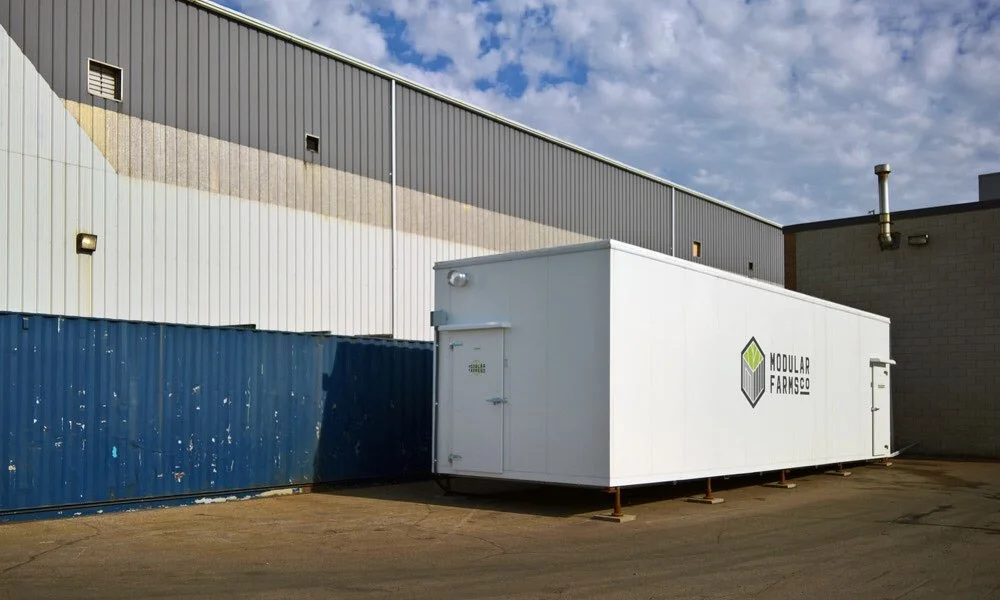
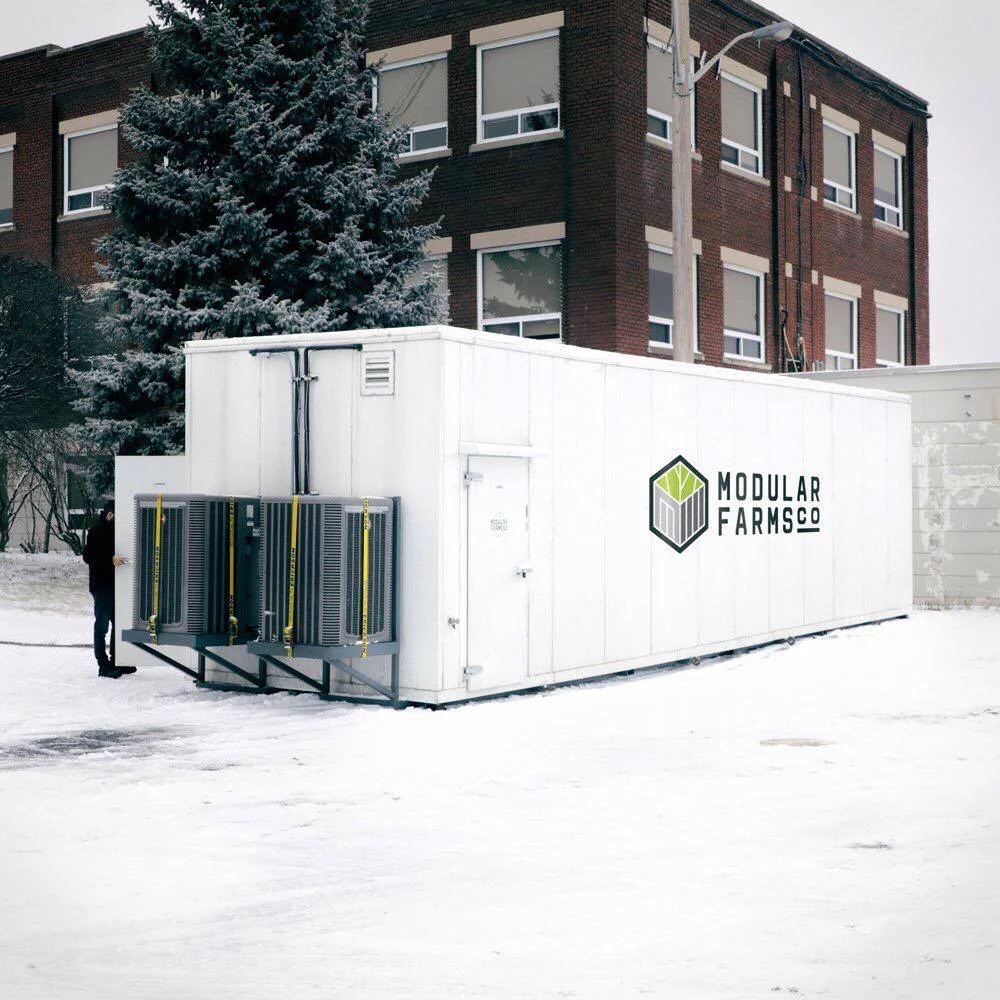
Modular Farms Newsletter #6
January has undoubtedly been the busiest month in the history of our young company. For each calendar day that passed we were introduced to more and more people that are driven to reshape the agricultural landscape, both domestically and abroad, via the use of ZipGrow technology, Modular Farms and other sustainable farming practices
Modular Farms Newsletter #6
January has undoubtedly been the busiest month in the history of our young company. For each calendar day that passed we were introduced to more and more people that are driven to reshape the agricultural landscape, both domestically and abroad, via the use of ZipGrow technology, Modular Farms and other sustainable farming practices. At this rate, 2017 is poised to be a huge year for the indoor farming industry as a whole, and we are honored to be amongst the cohort of businesses that are helping to educate and empower the next generation of hydroponic farmers to make a difference in their communities.
Recently, we had the privilege of taking some of our FarmWalls out of our office and showcasing them at various places throughout our community. The first stop on tour was at an event hosted by 4Life Natural Foods in Kensington Market - an urban Toronto grocery store focused on selling locally sourced, sustainable organic produce. We partnered with 4Life to assist in the development and construction of a 5000 square foot indoor ZipFarm that will be located on the roof of their downtown location.
The FarmWall we showcased at the event gave the grocer's patrons a chance to get a first-hand look, feel and taste of the produce that will be available to them year-round once construction of the rooftop farm is complete. Needless to say, a lot of excitement ensued from those who bravely trekked through the hideous snowstorm to attend that evening.
The second, and more permanent, stop on the FarmWall tour was at the Institute of Management and Innovation, located at the University of Toronto's Mississauga campus. Under the guidance of our Plant Health Technician, Kevin, the Sustainability Management grad students have been eagerly putting their studies into practice by utilizing the 2-tower system as a part of their Capstone project. We are overjoyed with the amount of interest that the students are having with the project, and are excited to see and taste the fruits of their labour!
This month marked the end of an era for Modular Farms, as we watched our beloved beta farm get unplugged, decommissioned and whisked away from our office on the back of a truck. On the bright side, we took solace in the fact that it was on its way to Cornwall, where the Smart Greens team will be using it to educate and train the first generation of Canadian Modular Farmers. As much as our team will miss working and growing in the ol' girl, the farm's departure from our Brampton office signifies our official transition from farmers to manufacturers, as we begin getting the first set of Modular Farms off the production line and into the eager hands of our customers.
As most of you already know, unlike other containerized indoor farming providers, who simply re-purpose used shipping containers, we custom build our farms from the ground up. Aside from the extra room allotted to farmers for working, the fact that our farms are made in-house allows us to meticulously observe and scrutinize the entire manufacturing process. This ensures that the farms our customers are receiving meet all of our stringent quality control requirements; and, as you can see from the above video, it also ensures that we will have a steady stream of memorizing time-lapses of the farms being assembled for years to come!
This month also featured our CEO's yearly overseas pilgrimage out east to the annual Indoor Ag-Con event in Singapore, where he was once again honoured as a featured speaker. The event this year was mainly focused on the accelerating innovation in the industry, from plant biology to innovative farm designs and new business models. Once the event concluded, Eric also had the pleasure of venturing slightly south for the official ribbon-cutting of Modular Farms' new office and manufacturing facility in Australia!
Stay tuned for the next installment of our newsletter!


Hundred-Story Food-Growing Tower Is Dream of Weed Entrepreneur
Hundred-Story Food-Growing Tower Is Dream of Weed Entrepreneu
According to Rick Byrd, the future of farming is tall, dirtless and local.
Byrd's vision of skyscraper farms to feed city dwellers begins with a much different kind of crop: marijuana.
The 45-year-old is chief executive officer and founder of Pure Agrobusiness Inc., a company that sells equipment to grow legal cannabis, a market worth $6 billion in 2016 and expected to reach $50 billion by 2026, according to Cowen & Co.
Because cannabis has higher profit margins than food, and pot is mostly grown inside, Byrd said he hopes the innovations perfected by PureAgro, with the help of customer feedback, could one day revolutionize food production. It's just a question of how much it costs.
Pot is "the perfect catalyst to bring in what I think really needs to change in farming," Byrd said in an interview. "You can't have the average produce truck going 1,500 miles to get to your plate. And there's no way, obviously, to farm the amount of acres that we would need to feed New York City unless we go vertical."
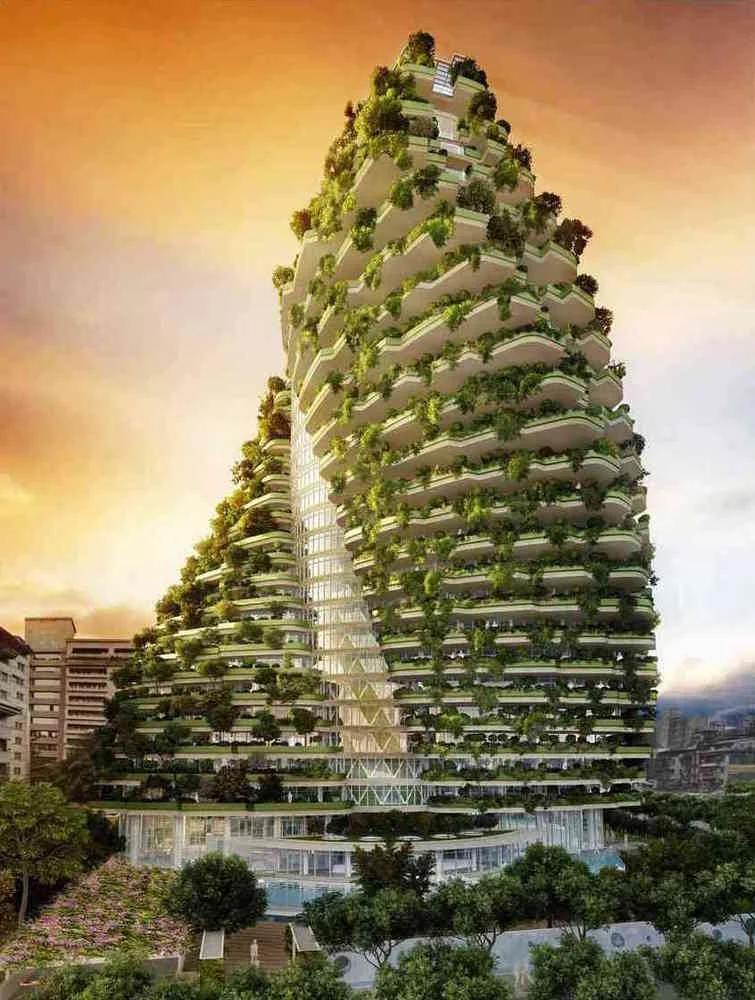
Byrd imagines a 100-story glass skyscraper filled with floors of stacked beds of fruits, vegetables and grain. The same technology that currently enables vertical indoor farms to raise primo weed can one day produce perfect tomatoes or succulent lettuce, Byrd said. Paper or mesh holds up the plants, substituting for soil. Powerful lights do the work now done by the sun, but better. Data calibrate the exact light spectrum and nutrients for the plants to thrive, and machines drip just enough water. Harvests are frequent -- four or five a year, compared with one outdoor.
Making urban farms vertical instead of horizontal could cut agriculture's reliance on fossil fuels and diminish risks from pests, pesticides and an increasingly haywire environment, Byrd said.
Because price is less of a problem with cannabis, pot growers are better able to adapt to new, more expensive technology. An ounce of kale, for instance, costs 49 cents at Whole Foods Market. An ounce of cannabis can run $150 to $200, according to data from BDS Analytics, a research firm. When technology expenses fall low enough, a tipping point arrives, and food farmers can take advantage of what the pot producers already use. With legal weed pushing down pot costs, even marijuana growers will need cheaper technology, Byrd said.
"Who do you think is going to implement technology? Obviously the cannabis guys," Byrd said.
In some places, Byrd's dream of vertical food production is already happening. Specialty items -- basil leaves, for example -- are raised in air farms in places like Brooklyn, New York. Sky Greens, in Singapore, began operating in 2012 to reduce reliance on food imports. Plants are grown using hydroponics -- without soil -- in an aluminum frame. In the offices of Tokyo-based human-resources company Pasona Group Inc., 20 percent of the space is used to grow vegetables. Ten thousand square feet of growing beds and lights share space with conference rooms and offices. The building produces 100 different kinds of fruits and vegetables.
When Byrd first came across plans for farm-filled buildings nearly a decade ago, he thought they were far-fetched, he said. That was around 2008, as Byrd completed building the first LEED platinum certified home with actor Adrian Grenier, of "Entourage" fame, in a project that was featured on Discovery's Planet Green channel. Due to the show's exposure, Byrd received architectural plans for eco-friendly buildings from all over the world, including farms in 100-story high-rises.
"It didn't pencil out then," he said. "Then came the cannabis boom."
The problem with growing indoor food, or pot, is missing out on free resources like rain and sun.
"Why would you ever block a non-carbon-emitting source of photosynthetic active radiation that grows plants at no cost?" said Paul Sellew, CEO of Little Leaf Farms, a greenhouse that cultivates produce in Devens, Massachusetts. "It's a fad, and it will pass."
But climate change is making outdoor conditions less predictable, said Christiana Wyly, operating partner at Satori Capital, a private equity firm.
Byrd, who likes to wear blue and black Armani and said he doesn't smoke marijuana, said PureAgro, based in Denver and Los Angeles, recently began working with an investment bank. That's unusual for a business working with marijuana, which is legal in some form in 28 states but taboo with the federal government. Shares of publicly traded Scotts Miracle-Gro Co., an agricultural supply company and PureAgro's competitor, rose 48 percent last year. Now comes the uncertainty of the Trump administration, and a attorney general nominee in Alabama Sen. Jeff Sessions, who's expressed hostility to legal weed in the past, over how they plan to deal with federal drug law.
Given that the majority of the world's population lives in urban centers, it will eventually be necessary to grow food nearby, said Al Shay, an instructor in the Department of Horticulture at Oregon State University in Corvallis.
But the strength of the land-based farm lobby has kept the indoor industry from spreading more, he said. The cannabis industry could be the spark, he said.
"People toyed around with batteries in cars for a long time," Shay said. "It wasn't until Elon Musk came along with Tesla and made it highly efficient and super sexy."
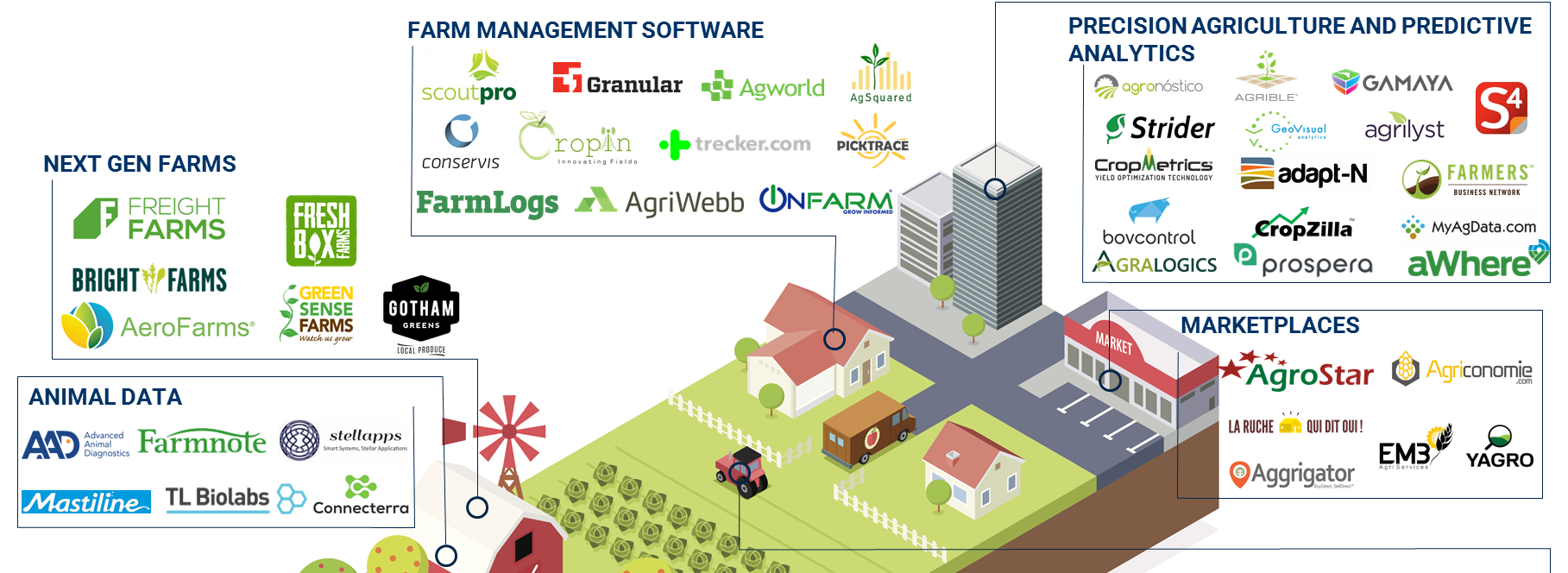
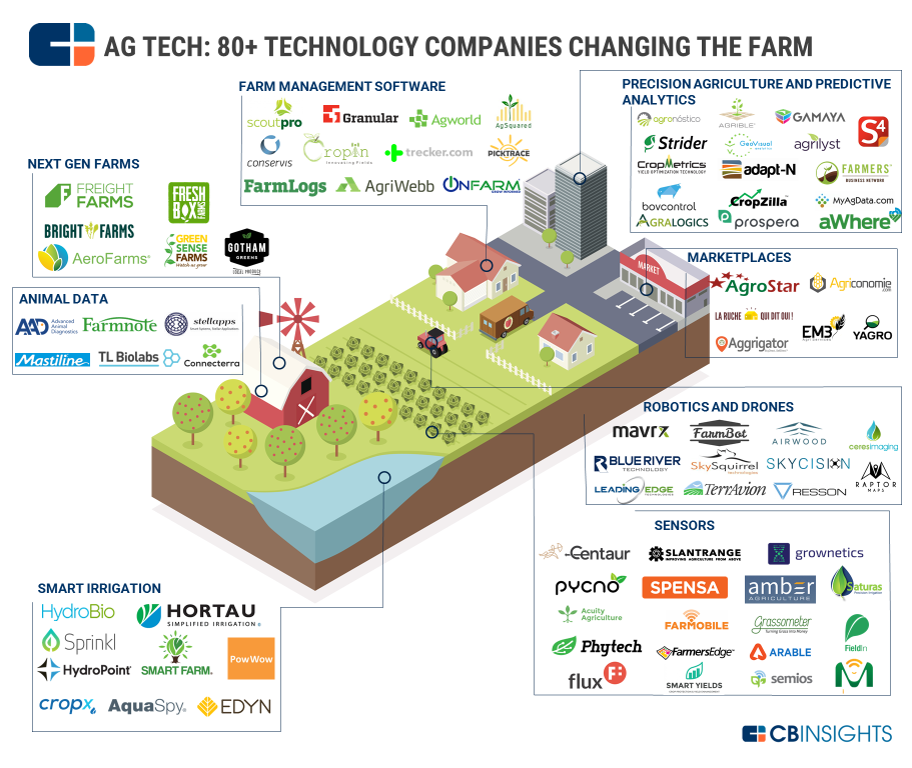
The Ag Tech Market Map: 80+ Startups Powering The Future Of Farming And Agribusiness
JANUARY 30, 2017
The Ag Tech Market Map: 80+ Startups Powering The Future Of Farming And Agribusiness
Corporate investors such as Mitsui, Monsanto, and Syngenta have backed startups improving irrigation, crop spraying, harvesting, and more.
As population growth increases the need to ramp up food production, tech startups are creating a range of agricultural software, services, farming techniques, and more aimed at bringing more data and efficiency to the sector.
We used CB Insights data to identify more than 80 private companies in agriculture tech and categorized them into eight main categories.
We define ag tech as technology that increases the efficiency of farms (in the form of software), sensors, aerial-based data, internet-based distribution channels (marketplaces), and tools for technology-enabled farming. We only include companies that primarily target the agricultural sector.
Farming & Ag Tech Webinar
Tech companies are gradually changing farms and making agriculture more efficient. Register now to see trends, investment data, and more on this growing industry.
The breakdown is as follows:
- Farm Management Software: This includes software like that produced by Andreessen Horowitz-backed Granular that allows farmers to more efficiently manage their resources, crop production, farm animals, etc.
- Precision Agriculture and Predictive Data Analytics: These startups include those that focus on using big data and predictive analytics to address farm-related issues and make better farm-related decisions in order to save energy, increase efficiency, optimize herbicide and pesticide application (such as Prospera, which uses machine vision and artificial intelligence), and manage risk, among other uses.
- Sensors: Startups in the sensor category include Arable, which offers smart sensors that collect data and help farmers monitor crop health, weather, and soil quality.
- Animal Data: These companies provide software and hardware specifically aimed at better understanding livestock, from breeding patterns (Connecterra) to genomics (TL Biolabs).
- Robotics and Drones: This category includes drone companies and related drone services that cater to agricultural needs (such as TerrAvion), as well as robots or intelligent farm machines that perform various farm functions more efficiently (such as Blue River Technology, backed by Monsanto Growth Ventures, Syngenta Ventures, and Khosla Ventures, among others).
- Smart Irrigation: These startups, including Hortau, provide systems that help monitor and automate water usage for farms using various data exhausts.
- Next Gen Farms: A growing category of companies that utilize technology to provide alternative farming methods to enable farming in locations and settings that cannot support traditional farming. Examples include AeroFarms for vertical farming and BrightFarms for new greenhouses.
- Marketplaces: These startups offer marketplaces relevant to agriculture by connecting farmers directly to suppliers or consumers without any middlemen. While some are e-commerce platforms, others use tech to facilitate physical marketplaces (La Ruche Qui Dit Oui).
Some companies may overlap with different categories and are grouped according to their main use case.
Track all the Ag Tech startups in this brief and many more on our platform
Startups are working to change how our farms work. Sign up for a free trial and look for Ag Tech Startups in the Collections tab.

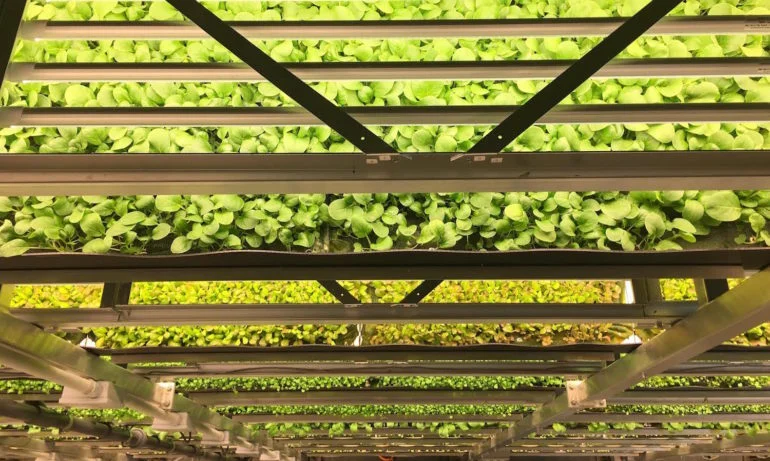
Modular Aeroponic Farms Open Door to Clean Energy Urban Agriculture Modular Aeroponic Farms Open Door to Clean Energy Urban Agriculture
Modular Aeroponic Farms Open Door to Clean Energy Urban Agriculture
Andrew Burger 01/29/2017
Generally speaking, agriculture is rich in opportunities for clean, efficient energy self-generation and, more broadly and significantly, improvements at the nexus of energy, water and food production and use.
The opportunities gain in significance as the climate changes, urbanization continues and people and families, whether by choice or necessity, continue to leave rural areas, farming and ranching to seek out new lives and livelihoods in cities and metropolitan areas.
Agriculture-clean energy entrepreneurs are capitalizing on the confluence of these trends amidst broad-based popular movements to produce food and energy locally, even in cities. Indoor Farms of America (IFOA) on Jan. 27 announced the latest iteration of its soon-to-be-released aeroponic “Container Farms” will be self-sufficient in terms of both energy and water.
Energy and Water-Efficient Indoor Farming
Incorporating IFOA’s patented food-grade aeroponic growing equipment, the Las Vegas, Nevada-based company’s aeroponic indoor “farms” are designed for use in totally enclosed, controlled growing environments and greenhouse operations.
Aeroponics entails growing plants without the use of soil or an aggregate growing medium. Akin to hydroponics and aquaponics, aeroponics uses less water. Reducing the cultivation method to its most basic level, plant’s are suspended and their roots and lower stems sprayed, or misted, with a water solution rich in nutrients.
In addition to being highly efficient in terms of use of space and water, the ability to control environmental conditions enables a much wider variety of high quality greens and fruits to be grown in any given climate/geographic area all year round.
IFOA’s vertical aeroponic equipment offers growing capacities in excess of 40 plants per square foot of floor space at an operating height of just 8 feet, according to the company. Modular and scalable, they can be configured as bi-level and multi-level vertical farms, a key selling point in densely populated urban areas where land is comparatively scarce and expensive. The company has also developed a mobile, “Farmers’ Market” version.
Growing Strawberries in New York – in Winter
Among its U.S. installations, IFOA recently installed an aeroponic “warehouse farm” in Salamanca, New York. Outdoor temperatures were around four degrees Fahrenheit (-15.56°C).
“The use of our patented mineral uptake system allows them to use rocks from the lands they own and speaks to their culture in meaningful ways, while lessening dependence on costly supplemental inputs into the system to yield food that tastes fantastic,” IFOA president Ron Evans explained.
Evans pointed out that the Salamanca, New York farm’s unnamed owners “are particularly focused on operating a very green farm.” That extends to energy.
The upstate New York farm employs geothermal heating, enabling high quality fruits and vegetables to be grown all year long. That includes strawberries, which the farm’s owners are just starting to grow.
Looking ahead, IFOA says it will be shipping multiple container farms internationally this spring. “We are continually humbled by the visits we receive to our facility in Las Vegas from the brightest people in agriculture. It is what drives us to keep making it better, to fulfill our purpose as a company,” company president Ron Evans said in a statement.

Marc Oshima: "Food Is A Fundamental Right"
Let’s Build a Better Food Policy, which will be hosted in partnership with George Washington University and the World Resources Institute on February 2, 2017
Marc Oshima: "Food Is A Fundamental Right"
Marc Oshima, Chief Marketing Officer and Co-Founder of AeroFarms, is speaking at the third annual D.C. Food Tank Summit, Let’s Build a Better Food Policy, which will be hosted in partnership with George Washington University and the World Resources Institute on February 2, 2017.
Mr. Oshima has an extensive background in marketing for retail industries, brand management, and media. Prior to founding AeroFarms, an award-winning clean-technology company that builds and operates responsible, state-of-the art indoor vertical farms in urban environments around the world, Mr. Oshima led the marketing for The Food Emporium and Citarella Gourmet Markets. He has created partnerships with the James Beard Foundation, Museum of Food & Drink, City Harvest, and Le Fooding.
Food Tank had the chance to speak with Mr. Oshima about his work developing AeroFarms and passion for improving America’s food system.
Marc Oshima, Chief Marketing Officer and Co-Founder of AeroFarms
Food Tank (FT): What originally inspired you to get involved in your work?
Marc Oshima (MO): A combination of both professional and personal experience has helped shape my passion for improving our food system. I have been in food retail and marketing for years, and have also been involved with the Marketing Advisory Committee for the Food Bank for NYC, and have seen the challenges of not knowing where your next meal may come from. Here at AeroFarms, with our indoor vertical farming approach, we are focused on democratizing access to nutritious, great-tasting produce that is safely and locally grown all year round.
FT: What makes you continue to want to be involved in this kind of work?
MO: I see first-hand the impact that we are having within the community—creating year-round jobs, addressing food deserts, educating students about agriculture, bringing better product to the market—and I want to help inspire and lead our team to scale our farms around the world.
FT: Who inspired you as a kid?
MO: My parents, teachers, and coaches helped inspire me to grow and be curious. In particular, my middle-school math teacher Mr. Cook helped me develop critical thinking and taught me how to come up with different creative approaches to problems, and to appreciate that there could be more than one solution.
FT: What do you see as the biggest opportunity to fix the food system?
MO: There is such a disconnect between the real challenges of farming and the global macro pressures of an increasing population and urbanization, decreasing access to arable land and fresh water, worker welfare, food safety, food security, and we need to increase awareness of these issues. Fundamentally, I think that we need to develop a greater connection and appreciation for how and where our food is grown, and that will help foster new breakthroughs.
FT: Can you share a story about a food hero who inspired you?
MO: There are many, but one that stands out is Dr. Lucy Cabrera who is the former CEO of the Food Bank for NYC. For over 20 years, Dr. Cabrera lead that organization to help distribute over 70 million pounds of food annually and help raise awareness that one out of five New Yorkers is food challenged and at risk. She helped me appreciate more than ever that food is a fundamental right, and I am inspired to help address that every single day.
FT: What’s the most pressing issue in food and agriculture that you’d like to see solved?
MO: There is an artificially-depressed cost of food, where the externalities and true costs of farming and environmental negative impacts are not factored in.
FT: What is one small change every person can make in their daily lives to make a big difference?
MO: Vote with your wallet, and make informed purchases to buy responsibly grown food.
FT: What advice can you give to President Trump and the U.S. Congress on food and agriculture?
MO: Access to healthy, delicious food is not about party lines—it is a fundamental right for every American, and we need to figure out how to come together to work collectively.

Indoor Farms of America Bringing Fully Off-Grid Containerized Vertical Aeroponic Farms To Market
Indoor Farms of America announces today the company is now preparing to launch a version of its Container Farms that will be energy independent and water independent, allowing deployment of the farms anywhere in the world
Indoor Farms of America Bringing Fully Off-Grid Containerized Vertical Aeroponic Farms To Market
Wisconsin State Farmer
11:11 p.m. CT - Jan. 27, 2017
Las Vegas — Indoor Farms of America announces today the company is now preparing to launch a version of its Container Farms that will be energy independent and water independent, allowing deployment of the farms anywhere in the world.
"We have been working on this for quite some time, and these enhancements to our farm products will be available in production form by the end of Q1 this year", according to David Martin, CEO of Indoor Farms of America.
"From the beginning of our company's existence, we have been, and remain on a path of improvement of what we know to be the best indoor agricultural equipment in existence, and to bring it to every corner of the world in a cost effective manner. We are achieving milestones each month in that regard." states Martin.
The company has container farms in operation across the U.S. and will be shipping multiple container farms to countries around the globe this spring. "We are continually humbled by the visits we receive to our facility in Las Vegas from the brightest people in agriculture. It is what drives us to keep making it better, to fulfill our purpose as a company," commented Ron Evans, President of IFOA.
Sales and delivery of larger vertical indoor farm formats produced by IFOA, such as those in warehouse facilities, has increased rapidly, and the company is working with some of the largest companies in the world that produce or process food due to the extremely attractive financial metrics the equipment represents, according to Martin. He added: "We recently installed a warehouse farm in Salamanca New York, when outside temps were four degrees, and the owners are amazed at what their new farm represents. They have compared our equipment to every other form of indoor growing, and chose us hands down. They are particularly focused on operating a very green farm, and use geothermal for heating of their facility, which means superior fresh greens of any kind, and strawberries, which they are starting to grow, all year long no matter what the weather is like outside."
"The use of our patented mineral uptake system allows them to use rocks from the lands they own and speaks to their culture in meaningful ways, while lessoning dependence on costly supplemental inputs into the system to yield food that tastes fantastic." said Evans.
The company will be exhibiting its patented vertical aeroponic equipment, which provides growing capacities in excess of 40 plants per square foot of floor space in an operating height of just 8 feet, at numerous events in coming months.
Upcoming events in February, including at the World Ag Expo in Tulare, CA from February 14th to the 16th, and at the Aglanta show for indoor agriculture being held in Atlanta, GA on February 19th will allow more folks to see and touch this amazing crop growing equipment, according to Evans.
For more information, visit the company website at indoorfarmsamerica.com.


Hydroponics Towers To Be Built In Lafayette
Hydroponics Towers To Be Built In Lafayette
Hydroponics Towers To Be Built In LafayetteA Purdue entrepreneur in hydroponics is working in conjunction with the non-profit Red Giant Union to bring nine-foot hydroponics towers to Lafayette.
Scott Massey, Purdue senior and founder and CEO of Hydro Grow LLC, has developed a household hydroponics garden that could replace the traditional refrigerator. Cups containing different seeds are inserted into a tower “Keurig-style,” allowing the user to grow fresh produce in the comfort of their own kitchen. Massey and his team are currently working on the second generation model of the Hydro Grow system, which is based on artificial intelligence, or AI.
“The system would actually be aware of what plants were growing in it and it would adapt its environmental conditions to the specific preferences of that plant,” said Massey. “The sunlight, the pH of the water, the electroconductivity of the water, the humidity; our system will automatically adapt to it without the user having to do anything other than placing the cup into the system.”
The AI component will also take the average values of different plants to create the optimal overall environment. As a result, each garden becomes customized to the user.
“(The AI) is something that really no one in the world, as far as I’m aware, is even considering developing right now, because no one thinks it’s possible,” said Massey. “But we’ve found a pretty good way to do it.”
Massey has recently formed a partnership with Red Giant Union, a non-profit group that is striving to create an urban food system in Lafayette focusing on fresh produce, community involvement and sustainability. The executive director and founder of Red Giant Union, Austin Kasso, is currently fundraising for a community garden called the Tower Farms that will consist of nine-foot hydroponics towers housed at 419 N. Third Street in downtown Lafayette, across from the bus depot. The garden would provide fresh produce and a place for community interaction.
Kasso said that Red Giant Union is working with various local groups to create the community-centered garden. The West Lafayette Farmer’s Market will theme their next market in May on hydroponics and the Tower Farms to promote the fundraising campaign within the community. The Tippecanoe Extension is also helping to promote the project in addition to many other groups.
“People think, ‘One dollar can’t make a difference,’ but it does,” said Kasso. Getting 10,000 people with one dollar to donate involves the community and “inspires engagement with the project.”
Massey’s and Kasso’s mutual interests are what led to their strategic partnership. Massey will be applying his knowledge and experience in hydroponics to help make the vertical gardens a reality.
Hydro Grow LLC is rapidly expanding, and Massey won $35,000 through competitions in a single month. He is looking for people to assist him as his project evolves. Massey said all disciplines are welcome and he will find a way for them to “contribute to the project.”
Interested individuals can contact Massey at hydrogrow.site@gmail.com. More information on Hydro Grow LLC is available at www.hydrogrow.site and through the previously published Exponent article titled, ‘Purdue entrepreneur creates next kitchen appliance: a hydroponics garden,’ available at purdueexponent.org.