


Welcome to iGrow News, Your Source for the World of Indoor Vertical Farming

AURAK Students Successfully Implement Vertical Farming
AURAK Students Successfully Implement Vertical Farming
December 05, 2016 02:30 AM Eastern Standard Time
RAS AL KHAIMAH, United Arab Emirates--(BUSINESS WIRE)--Students at the American University of Ras Al Khaimah (AURAK) have successfully implemented vertical farming for the first time within the context of the harsh climate of the United Arab Emirates.
“We bought all of these plastic containers at our local supermarket. Then it is just a case of assembling the pieces and buying soil and seeds.”
The project, which was prepared by two junior biotechnology students, Najath Abdulkareem and Nada Anwar, was one of several submitted by the university as part of the UAE’s second annual Innovation Week, an initiative mandated by the prime minister of the UAE, Sheikh Mohammed bin Rashid Al Maktoum.
Dr. Abdul Gafoor Puthiyaveetil, chair of the university’s biotechnology program, supervised the two students. Discussing the significance of the research, Dr. Abdul Gafoor stated, “With the rapidly increasing population of the planet, we expect the earth’s population to reach 8.5 billion by 2050. Food production is more important than ever. The students have adapted the idea of vertical farming as an innovative method of dealing with this ever-increasing demand.”
Vertical farming allows plants to be grown indoors, using a tiered platform, with a combination of sunlight and LED lights. Dr. Abdul Gafoor was quick to list off the advantages of such a system, explaining, “As all the growth takes place indoors, this strategy of self-sustainability does not require the use of herbicides and pesticides, effectively making this a source of healthier food for individual homes.”
Demonstrating their project during the innovation exhibition at Ras Al Khaimah’s Exhibition Center, Najath and Nada showed how the tiered platform minimizes the space required to grow herbs and vegetables, while maximizing efficient water-use; once the top layer is watered, the water filters down to lower levels. It was also pointed out that the controlled indoor environment led to quicker growth.
The students went on to emphasize the low-cost nature of the project, commenting, “We bought all of these plastic containers at our local supermarket. Then it is just a case of assembling the pieces and buying soil and seeds.”
Najath and Nada have successfully grown the likes of basil, parsley, rosemary and mint within their own homes. It is hoped that further research could lead to this system becoming popular among individual households, as well as being implemented for large-scale food production.
*Source: ME NewsWire
Contacts
American University of Ras Al Khaimah
Eóin Brown, +9717-221-0900 Ext: 1325
Marketing and Public Relations Department
eoin.brown@aurak.ac.ae

Autonomous Home Gardening
We are three friends with a great passion for design, technology and urban farming. We are all current or former students of Linköping University and are now based in Mjärdevi Science Park, Linköping. You will either find us at DoSpace, our co-working space in Mjärdevi Center, or at Makerspace, where we are prototyping the greenhouse
AUTONOMOUS HOME GARDENING
Be self-sufficient in herbs and vegetables with minimal effort
AUTONOMOUS WATERING
Fjorgyn™ has individual watering for each plant, which is automatically taken care of based on the conditions in the soil. You just need to fill up the water tank once in awhile.
AUTONOMOUS LIGHTING
Each plant receives the right amount of light every day, with individually addressed full spectrum LED stripes – enabling the plants to grow with full potential the entire year.
CLOUD-BASED MONITORING
The growing process can be monitored from distance in your smartphone, tablet or laptop, giving you real-time updates about the plants – from the camera as well as the growing data.

AGLANTA '17: Where Growing Opportunity Meets Thriving Community
Where Growing Opportunity Meets Thriving Community:
There is no better time to invest in urban agriculture in Atlanta. The alignment of City leadership, opportunities for entrepreneurs, and industry partners make establishing agtech opportunities in Atlanta sustainable on every level. The inaugural AGLANTA conference will focus on Controlled Environment Agriculture (CEA) workshops that will help you plan your new urban agriculture business or scale your current operations. City leaders and industry advocates will speak, young entrepreneurs will pitch their ideas, and a curated exhibit of technologies will inspire and inform participants.
Lettuce Learn About Vertical Farming
Lettuce Learn About Vertical Farming
Posted: Thursday, December 1, 2016 12:00 AM
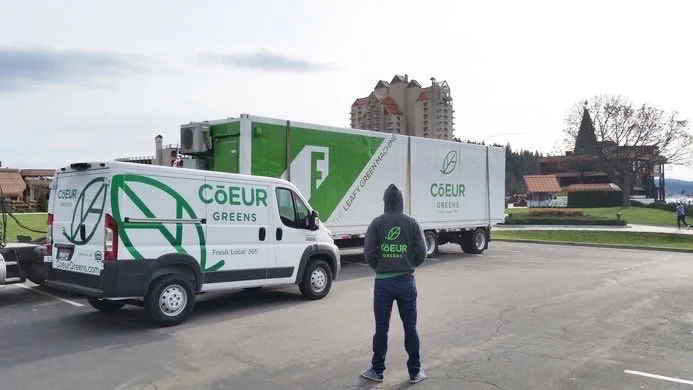
The Coeur d’Alene Press is teaming up with Coeur Greens this weekend to raise donations for the Community Action Partnership Food Bank and to bring awareness to the importance of fresh, local food.
Coeur Greens, an ag-tech startup, will be showcasing “Leafy 1,” the first of many vertical farms the company will use to use to grow fresh greens year round in Coeur d’Alene. Leafy 1, once it’s up and running in January, will be able to produce 1,000 heads of lettuce per week.
Leafy 1 will be set up in the Coeur d'Alene Public Library parking lot Saturday, Dec. 3 and in the parking lot next to Hayden City Hall Sunday, Dec. 4, both days from 11 a.m. to 1 p.m.
Bring your kids down with a non-perishable food item and have them sign Leafy 1 before she goes to work next week. Everyone can have fun learning about vertical farming and Coeur Green’s participation in the Farm to School program — a program that encourages schools to get produce from local sources and brings education and farming together for the betterment of the community as a whole.
For every non-perishable food item donated, Coeur Greens will donate one head of butter lettuce produced by Leafy 1 — up to 800 lettuce heads — to St. Vincent de Paul to be used in free meals for the city’s homeless population.
For more information, contact Tom McNabb with Coeur Greens at tom@coeurgreens.com.
AeroFarms Finalist For Multiple Honors In Environmental, Business Leadership
AeroFarms Finalist For Multiple Honors In Environmental, Business Leadership
Newark, New Jersey
December 1, 2016
After a year of unprecedented growth, AeroFarms, the world leader in indoor vertical farming, is a finalist for both the New Jersey Governor’s Environmental Excellence Awards and NJBiz.com’s Business of the Year Award.
The Governor’s Environmental Excellence Awards recognizes documented environmental benefit made by New Jersey businesses as well as leadership, innovation, education and outreach.
AeroFarms unique, patented growing system uses 95 percent less water than traditional field farming and a fraction of the fertilizers. AeroFarms fully-controlled growing environment requires no pesticides, eliminating the harmful runoff from traditional agriculture, with no harm to our already depleted soil. Plus, these innovative vertical farms bring healthy food to New Jersey neighborhoods that need it most while transforming underutilized warehouse space into productive farms.
“Because our stakeholders share our mission of transformative environmental impact, the sustained health of our environment is at the heart of everything we do,” said AeroFarms CEO David Rosenberg. David is an active member of the World Economic Forum (WEF) and its annual meeting in Davos. David is also a member of the B20 SME Taskforce, which advises the G20. AeroFarms is an Ellen MacArthur Foundation Circular Economy 100 company.
AeroFarms is also a finalist for NJBiz’s business of the year for the category of (51-100) employees. And AeroFarms is continuing to grow with additional roles at both the corporate level and in operations.
The Business of the Year awards recognizes New Jersey’s most dynamic businesses and business leaders who share a commitment to professional excellence, business growth and the community.
After a year of fast-paced growth, AeroFarms is honored to be recognized for its leadership in New Jersey and most importantly to have the support of the local community in Newark.
About AeroFarms
Founded in 2004, AeroFarms® is on a mission to fundamentally change the way the world thinks about agriculture by building, owning, and operating indoor, vertical farms that grow flavorful, safe, healthy food in a sustainable and socially responsible way. AeroFarms patented growing systems make year-round harvests with peak flavor possible while disrupting the traditional distribution channels that lead to massive carbon emissions and food waste. AeroFarms is able to bring the farm to the consumer while mitigating the food safety and environmental risk of commercial field farming.
Tags: Governor, new jersey, NJBiz, Press Release, Sustainability, vertical farm
Tundra to Table: Vertical Farming In The Arctic
Tundra to Table: Vertical Farming In The Arctic
The vast Arctic territory is rich in resources including minerals, hydrocarbons, and wildlife. However, high latitudinal regions receive little sunlight for several months each year, which severely limits the region’s ability to grow fresh produce. Many Arctic urban centers rely on long, complex supply chains to receive shipments of fresh fruits and vegetables from their southerly neighbors.
Alaska imports about 95% of its fresh produce, moving about $2 billion per year of grocery spending out-of-state. Produce destined for the Arctic has to be picked early and ripened in-transit to minimize rot during the long journey from farm to table. Such practices affect the quality of produce polar consumers can buy and drive up prices. Arctic residents often pay exorbitant prices for items as simple as a head of lettuce.
These problems have spurred interest in alternative farming methods in the Arctic, such as indoor farming using hydroponics and artificial lighting systems, sometimes called vertical farming
In recent years, the use of vertical farming has grown in many urban areas, where land is scarce and people have become more aware of the environmental impact of long-supply chains. Urban indoor farms, or ‘plant factories with artificial light’ (PFAL) are expected to play a large role in agriculture during the coming decades, garnering interest from countries around the world. Recently a team of Japanese and American researchers published a comprehensive 400-page volume on the benefits and limitations of indoor farms in different climatic and economic environments.
The ability of PFALs to produce quality produce has been proven in a low cost and resource effective manner. For example, low-heat light emitting diode (LED) fixtures have been around since the 1980s, but recent studies have shown that advances in this technology have enhanced their brightness and energy-efficiency to the point where they are viable in commercial crop agriculture. As these global investments in urban farming continue, the resulting technological innovations could have a revolutionary effect on how Arctic communities source their fresh produce.
The unique environmental and economic conditions of the Arctic make it an attractive region to develop PFALs. Prices for imported fresh produce are high, while environmental conditions for local farming are poor. Moreover, communities in the Arctic are usually isolated, and their inhabitants tend to welcome innovations that increase self-subsistence and decrease reliance on imports.
Several start-ups have begun to fill this niche in the North American Arctic, among them Vertical Harvest Hydroponics. This company, founded in 2011 and based in Anchorage, Alaska, has designed and developed a “Containerized Growing System” in repurposed shipping containers using cutting edge technology. These containerized systems cost about $110,000 each to build and deploy. They are designed to withstand the harsh Arctic conditions, and are mobile—giving Arctic communities the ability to grow produce anywhere with potable water and power. Each unit can produce about 23,000 to 39,000 heads of lettuce per year.
Another Alaskan company, Alaska Natural Organics,has retrofitted an old dairy in Anchorage to house an indoor farm, which can produce up to 20,000 plants per month. The potential for expansion seems strong, as these companies are still young and operate on a relatively small scale compared to the mega-PFALs running in Japan, which can produce up to 10,000 plants a day
Vertical farming in the Arctic has gained recent media attention due to its success. In 2016 several mainstream media outlets, including the New York Times, local CBS news stations, and farming magazines featured articles on indoor farming in the Arctic. Unfortunately, there is a lack of academic literature analyzing the practicality of PFAL systems and vertical farming in an Arctic-specific context, a subject which should be explored given the massive potential applicability of this technology in the region.
Interest in biological preservation and the development of agriculture in the Arctic is nothing new. In Svalbard, the Global Seed Vault is safeguarding a repository of all global plant seeds in an attempt to secure the genetic diversity of flora on this planet in case of a devastating disaster. The Norwegian government, which runs and administers the storehouse, has also taken steps toward increasing the study of sustainable agriculture in the region through the year 2021 with the BIONAER program. In Kirovsk, Russia, the Polar-Alpine Botanical Garden has been active since 1931, as a nursery, biological research institute, and tourist attraction. Interest in these new techniques is growing, with representatives of the city of Murmansk, Russia citing a planned project to convert abandoned industrial buildings into hydroponic farms during an interview. The Russian Arctic has many relatively isolated industrial and post-industrial urban centers, where the development of efficient PFAL systems could usher in a new era of sustainable agriculture. In all of these Arctic regions, the interest in using PFALs to increase the local quality of life is high, however there has been a lack of project feasibility studies and academic literature which could validate increased policy support for PFAL and urban indoor farming methods.
Given the interest in indoor-farming across the circumpolar region, PFAL systems could play an important role in the future life of Arctic communities. The success of the Alaskan start-ups shows the potential for the organic growth of the industry. These systems have the potential to benefit Arctic communities by cutting out expensive and unreliable supply-chains and increasing self-reliance. Indoor farming greatly improves the quality of life for Arctic residents by giving them a realistic path towards regular access to fresh high quality produce. Additionally, localized food production and research in PFAL technology has the added benefit of creating jobs and opportunities for innovation in the region. Nevertheless, the PFAL industry faces significant challenges, including high initial investment costs, which could hamper growth in the coming decades. Hopefully, this hurdle will not be insurmountable.
These Aeroponic Gardens Are Transforming Schools and Homeless Shelters In Los Angeles
These Aeroponic Gardens Are Transforming Schools and Homeless Shelters In Los Angeles
November 30, 201
“Growing your food is a lot better than buying it from a market because they spray it with pesticides or something that could harm us or harm the plant and not make it grow as well,” Sierra Madre Middle School student Elizabeth Nazaros says.
The rest of the class, filled with kids who are barely teenagers, nod in agreement.
“I think it’s more sustainable this way,” student Sarah Vance chimes in.
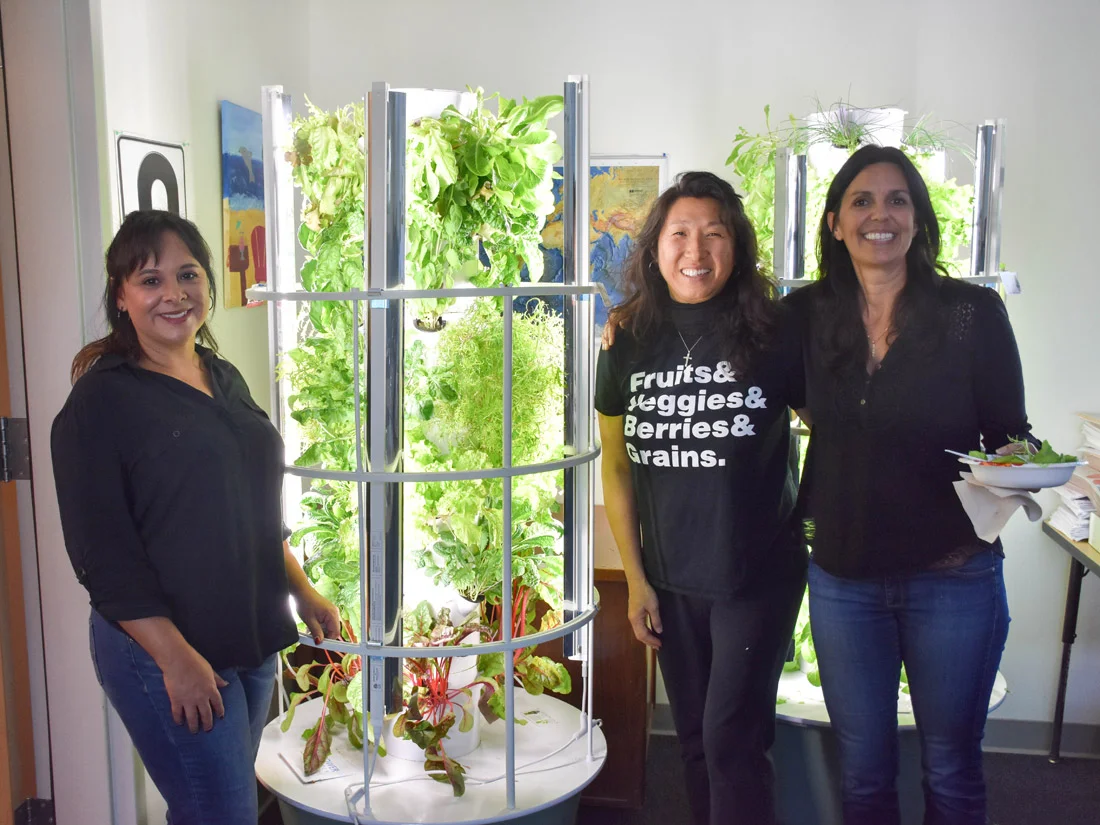
These kids are part of the gardening club at Sierra Madre Middle School, an elective that manages an outdoor soil garden and two aeroponics systems. Today is the day right before school lets off for Thanksgiving break, and while the rest of the school is out in the courtyard screaming for pie, these kids are waiting patiently so they can harvest their greens and eat their hard-earned salads.
It’s amazing to see how excited they get when they see the plants grow,” Gina Davis, the teacher, says. “Especially over a weekend or long weekend and they see the difference. They get so excited to see something that they’ve produced grow.”
The salad is grown in an indoor aeroponics growing system called a Tower Garden. It’s a four foot structure that automatically waters the plants every 15 minutes. A water reservoir is at the base of the garden, which only needs to be refilled every two months. According to Sue Clark, owner of a Tower Garden franchise in Los Angeles, this system uses 90% less water than conventional gardening methods and produces 30% more food. A single harvest can be ready in three weeks. A basic system costs $500.
Note that aeroponic farming is different than hydroponic farming. In hydroponics, the plants still need to be grown in a material, usually a soil substitute. Aeroponics requires no growing medium and the plants are fed through the air with a steady supply of carbon dioxide, water, and nutrients. It’s a more efficient system and as these students have proven, completely kid-friendly.
Clark helped the local school district apply for $6,000 worth of grants for the gardens and today, there are seven of them scattered across the school district.
“[Pasadena Unifed] school district is committed to using ten percent of what’s growing in the garden and putting it into the cafeteria,” Clark says. The Tower Garden makes it especially easy; kids can eat straight off the system without having to wash the leaves.
It’s an astonishingly simple structure that’s making its rounds in Los Angeles. In 2013, Step up on Vine, a 34-room permanent housing facility for the homeless in Hollywood, installed a rooftop worth of gardens so that residents could have year-round access to produce. Franchises like Tender Greens have Tower Gardens scattered throughout their restaurants. While these systems are no doubt a growing trend, the impact they have in schools is immeasurable.
“You can grow any organic, non-GMO seed and the kids grow the plants straight from seed,” Clark says.
At Sierra Madre Middle School, the children are learning about the food system as a whole and what it means to plant seasonally. In their soil garden, natural pesticides and crop rotation is a regular part of their curriculum. The best part of the Tower Gardens, they say, is that they can harvest all year round. They each go around listing their favorite vegetable. Arugula, it seems, is the class favorite.
When I am done interviewing them, the excitement is palatable. They gather around the structures and pick off their favorite vegetables for salad. It’s like watching kids in a candy store – except everything is green.
“Knowing exactly what goes into our food is a good thing,” student Isabel Eisenberg says. “It’s more work, but it’s worth it.”
Indoor Harvest Corp Appoints New CEO As Company Growth Accelerates
Indoor Harvest Corp (OTCQB:INQD), through its brand name Indoor Harvest®, is a solutions provider to the vertical farming and indoor agriculture industry. The Company is pleased to announce that its Board of Directors has appointed John Choo
Indoor Harvest Corp Appoints New CEO As Company Growth Accelerates
By GlobeNewswire, November 30, 2016, 02:50:00 PM EDT
HOUSTON, Nov. 30, 2016 (GLOBE NEWSWIRE) -- Indoor Harvest Corp (OTCQB:INQD), through its brand name Indoor Harvest®, is a solutions provider to the vertical farming and indoor agriculture industry. The Company is pleased to announce that its Board of Directors has appointed John Choo as Chief Executive Officer/President effective January 1, 2017. Chad Sykes Founder and current CEO will assume the role of Chief Innovation Officer and will continue to serve as Chairman of Indoor Harvest's Board of Directors.
"There is no better time for John, our co-founder, to become Indoor Harvest's next Chief Executive Officer. Since joining the team he has been instrumental in developing our partnerships and building our sales pipeline. He quickly learned and identified many of the operational challenges our industry faces and drove our rebranding efforts to address those challenges. John taking on the role of CEO will free me to focus on the technology side of our industry, where my true strengths lie. In my new role as CINO, I will be charged with driving research and development through change management, innovating new platforms in-house while simultaneously working with current and new partners at deploying effective, transparent, and efficient innovation process," stated Chad Sykes
founder and CEO of Indoor Harvest Corp.
"Indoor agriculture has moved at an exponential pace of change over the last five years, it reminds me of the early days of the mobile software industry," stated John Choo
, President and co-founder of Indoor Harvest Corp. "Over the last twelve months we have accelerated what was working well and disrupted portions of our business that needed to improve. The results have kept us deeply vested across North America and Europe in supporting strategies for commercial scale cultivators including our pharmaceutical and academic relationships," stated John Choo, Co-founder and President of Indoor Harvest Corp.
"As the company moves into execution on some of our planning, we have begun working with a multinational accounting firm on tax strategies to ensure our activities in Canada, The United States and Europe are standing on a strong foundation. We are expanding our executive and operations team as well, the excitement around the industry growth across the globe is infectious, we're seeing pools of investment and executive talents moving in quickly," further stated Mr. Choo.
Indoor Harvest has evolved as a commercial cultivation hardware designer to a single trusted source providing engineering, facilities construction centrally designed to support indoor agriculture including development financing for clients. The company has an extensive R&D and partnership network with some of the world's most recognized names in Academia and technology leaders in the space.
Management will host a conference call tomorrow, Thursday, December 1, 2016, at 2:00 PM EST, to discuss third quarter results, provide guidance and conduct a Q&A session for investors and analysts. Individuals interested in participating may dial in using the information below:
Dial In: (855) 551-1031
Conference ID: 23475012
A recording will be made available to investors who cannot attend shortly after the call and will be posted to the Company Facebook and Twitter pages.
Consistent with the SEC's April 2013 guidance on using social media outlets like Facebook and Twitter to make corporate disclosures and announce key information in compliance with Regulation FD, Indoor Harvest is alerting investors and other members of the general public that Indoor Harvest will provide weekly updates on operations and progress through its social media on Facebook and Twitter. Investors, potential investors and individuals interested in our company are encouraged to keep informed by following us on Twitter or Facebook.
Facebook: http://www.facebook.com/indoorharvest
Twitter: http://www.twitter.com/indoorharvest
ABOUT INDOOR HARVEST CORP
Indoor Harvest Corp, through its brand name Indoor Harvest®, is a full service, state of the art design-build engineering firm for the indoor farming industry. Providing production platforms and complete custom designed build outs for both greenhouse and building integrated agriculture (BIA) grows, tailored to the specific needs of virtually any cultivar. Our patent pending aeroponic fixtures are based upon a modular concept in which primary components are interchangeable. Visit our website at http://www.indoorharvest.com for more information about our Company.
FORWARD LOOKING STATEMENTS
This release contains certain "forward-looking statements" relating to the business of Indoor Harvest and its subsidiary companies, which can be identified by the use of forward-looking terminology such as "estimates," "believes," "anticipates," "intends," "expects" and similar expressions. Such forward-looking statements involve known and unknown risks and uncertainties that may cause actual results to be materially different from those described herein as anticipated, believed, estimated or expected. Certain of these risks and uncertainties are or will be described in greater detail in our filings with the Securities and Exchange Commission. These forward-looking statements are based on Indoor Harvest's current expectations and beliefs concerning future developments and their potential effects on Indoor Harvest. There can be no assurance that future developments affecting Indoor Harvest will be those anticipated by Indoor Harvest. These forward-looking statements involve a number of risks, uncertainties (some of which are beyond the control of the Company) or other assumptions that may cause actual results or performance to be materially different from those expressed or implied by such forward-looking statements. Indoor Harvest undertakes no obligation to publicly update or revise any forward-looking statements, whether as a result of new information, future events or otherwise, except as may be required under applicable securities laws.
Contacts:
Indoor Harvest Corp
CEO, Mr. Chad Sykes

713-410-7903
ccsykes@indoorharvest.com
Elected Officials Tour Indoor Farming in Poughkeepsie
A non-descript building on Main Street that used to house an insurance agency now houses the Organic Gardens of Poughkeepsie
Elected Officials Tour Indoor Farming in Poughkeepsie
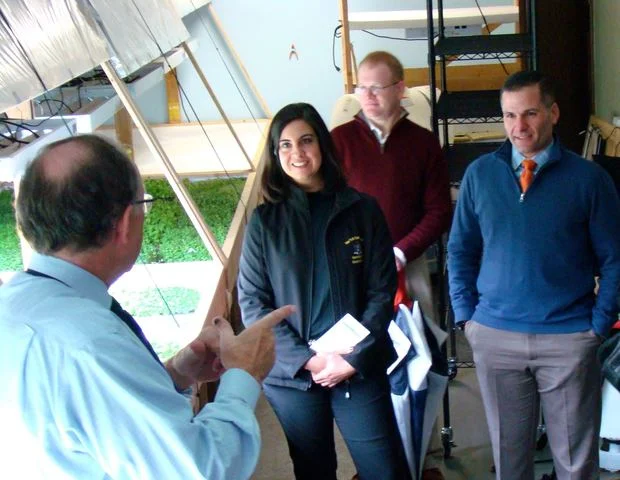
POUGHKEEPSIE – State Assemblywoman Nicole Malliotakis (R, East Shore) was in Dutchess County on Tuesday getting a firsthand look at agriculture in the county.
She spent time on a fact-finding mission at Fishkill Farms in Hopewell Junction and Indoor Organic Gardens in Poughkeepsie.
“I don’t have any farms in my district; I represent Staten Island and Brooklyn, but yet I am still voting on legislation that affects the agricultural industry – farmers – and I think it is important for those legislators that are not from areas that have farms to go and learn about what they are doing and we can do as a state to encourage them because we vote on legislation that affects everybody,” Malliotakis said.
Area Assemblyman Frank Skartados joined with County Executive Marcus Molinaro in Poughkeepsie to tour the organic gardening facility.
A non-descript building on Main Street that used to house an insurance agency now houses the Organic Gardens of Poughkeepsie. This startup business, owned by Brud Hodgkins, has attracted the interest of Malliotakis as she attempts to learn more about farming and organic growing taking place throughout the state.
Using organic sterilized compost and very little water, Hodgkins is currently growing approximately 120 pounds of microgreens per week. The distribution of his product is blossoming and is now serving customers as far away as Miami and Key West, Florida through the assistance of an overnight carrier.
Malliotakis, who serves on the Assembly's Ways and Means Committee, has been researching incentives that could possibly aid businesses such as indoor organic gardens and has visited several farms and grow facilities, including a medical marijuana facility in New Jersey. The assemblywoman credits Molinaro with bringing her to Dutchess to show off a variety of organic farms and facilities.
Indoor Farms of America Announces Financing Options
Indoor Farms of America Announces Financing Options
Wisconsin State Farmer
9:50 a.m. CST November 29, 2016
Las Vegas
— Indoor Farms of America is pleased to announce the immediate availability of multiple sources of financing for the robust product line of Container Farms and fully scalable vertical aeroponic growing equipment.
"These financing options for our products opens doors to many folks who want the best equipment available for indoor farming on the market, but may lack sufficient cash or capital structure to pursue the purchase of one of our farms," according to David Martin, CEO of Indoor Farms of America.
"We are very pleased to have funded our equipment already with our new lending source, Direct Capital. This institution understands the needs of small business people, as well as tailoring the right financing for each customer," states Martin. "They took a very close look at the potential our equipment has for creating a financial success story for the owner of the farm, and we have established a lending relationship with them to continue to grow sales at a rapid pace of our equipment."
"When compared to other indoor crop growing equipment, the vertical aeroponic equipment produced by Indoor Farms of America is clearly the market leader in terms of what that equipment can produce in plant growing capacity and yields in any given space, and I have been involved with indoor growing, in aquaponics and hydroponics, and made use of every other style of equipment for over 15 years," says Ron Evans, company President.
According to Martin, "A recent visitor from Japan, considering a distributorship for that region, simply could not stop talking about how amazed he was at the amount of produce we are growing in such a small space. He went on to tell us he believes our container farm, with the substantially higher yield per square foot than anything else, can transform the market in Japan, and that is pretty nice to hear."
Back from a recent visit to Northern California where one of the company's sold Container Farms, a Model 6825, has recently been installed, Evans recalled, "I was fortunate enough to ride along with our farmer to a presentation of his first crop harvest to a local high end Italian restaurant in the Sierra foothills. The owner of the restaurant told us it was the best tasting Basil he had ever tasted, and the leaves were the most beautiful he had ever seen. That says a bit about how well our equipment works, and keeps me humble."
Indoor Farms of America spent nearly 2 years in R&D developing what now has multiple U.S. patents awarded - truly affordable, economically viable high yield vertical aeroponic crop growing equipment.
Martin adds: "We really nailed about 30 different leafy green products early on in test growing, so we know you can operate a container farm that can service a special niche market, or the local grocery, and have financial success with it. But indoor growing needs to be about much more, so what we have focused on for the past number of months is proving out viable growing of other crops such as cherry tomatoes, strawberries, many smaller pepper varieties, and beans. Our farm equipment grows all of these amazingly well."
The company has also tested growing larger plants, such as heirloom tomatoes, squash, and cucumbers. This line of aeroponic equipment is nearing readiness for release as well.
"Ron and I are greatly appreciative of the response to our equipment," states Martin, "and we are focused on enhancements to our system to bring it to an even broader range of growers, including large scale greenhouse operators, which stand to benefit dramatically by the increase in growing capacity in the same space, over older methods. We are finalizing automation of the equipment to track the sun movement for use in such applications, and will announce that when it is ready."
Local Roots Discloses Its Global Sustainable Indoor Farming Initiative
Local Roots Farms, the LA–based indoor farming company, will now build indoor farming projects across the country to serve its commercial customers.
Not only did we spend years trialing our technology and perfecting our growing practices but we built an actual produce business. This cross section of experience makes developing farming projects a natural advancement.”
LOS ANGELES, CA (PRWEB) NOVEMBER 29, 2016
Local Roots Farms, the LA–based indoor farming company respected for its high-quality leafy greens and innovative approach to farming, announced completion of a TerraFarm network, ready for commercial deployment in Q1 2017. After a dramatic increase in demand for their scalable indoor farming solutions, Local Roots will now build indoor farming projects across the country to serve its commercial customers.
Despite an increased desire nationwide for locally-sourced produce programs, no indoor farm has yet been able to offer the consistency, quality, and affordable price points demanded by the nation’s largest buyers. Local Roots is primed to solve these exact challenges.
“We realized that we were in a unique position,” says CEO Eric Ellestad, “Not only did we spend years trialing our technology and perfecting our growing practices but we built an actual produce business. This cross section of experience makes developing farming projects a natural advancement.”
Local Roots designs, builds, deploys, and operates controlled environment farms that yield the highest quality, locally-grown produce using breakthrough technologies. Those farms, called TerraFarms, grow with up to 99% less water, 365 days a year, pesticide and herbicide free, and with absolute consistency in production. Their plug and play form provides a novel solution to the retail and foodservice sectors by greatly reducing supply-chain risks such as price volatility and food safety exposure.
Featuring a uniquely elegant design engineered to increase environmental control and process efficiencies, each TerraFarm is capable of growing 5-10x more produce than other leading shipping container farms available on the market.
“Rather than depend on anecdotal stories of success and failure from fellow farmers,” says Ellestad, “Our growing practices and standardized operating procedures are rooted in sophisticated data analytics.”
The Local Roots Research and Development team, comprised of plant science, botany, agronomy, design and engineering specialists, capitalizes on this growing body of data to grow more nutrient rich, better tasting produce with guaranteed harvests and yields. Moreover, TerraFarms are PrimusGFS certified and operated according to strict food safety procedures. Taken together these approaches makes Local Roots produce the first of its kind.
Follow Local Roots Farms and its commitment to feeding the global population in the most sustainable way possible. For more information, please visit http://www.localrootsfarms.com or contact Allison Towle at a.towle(at)localrootsfarms(dot)com.
Vertical Farming – The Latest Trend For Producing Food !
Vertical Farming – The Latest Trend For Producing Food !
NOVEMBER 29, 2016
Nowadays, agriculture and food production are under great risk. The major factors for this are as follows
- The land under food cultivation is dwindling so as to give way for real estate activities owing to increase in urban population and their standards of living.
- Climate change is making our food systems vulnerable. Weather has become unpredictable and as a result farmers, especially small and marginal ones suffer from huge crop losses. At some places there are droughts due to delayed or scanty monsoon. At others there are more cyclones and untimely rains flooding the farms.
- The traditional agricultural techniques and practices are getting lost. Aspiring for more profits, farmers are doing mono-cropping and using chemicals in the form of fertilizers and pesticides extensively. This has taken a toll on our soils and has rendered it infertile. Moreover the crop thus raised is harmful for consumption.
Health conscious urban dwellers are switching to organic crops. Few others have gone to the next level of growing their own veggies in their rooftop or kitchen gardens. Demand for healthy and organic food is growing. To cope up with the limitation of land resources and the unpredictability of the weather conditions, scientists and entrepreneurs are developing modern agricultural techniques and technologies. One such innovation is Vertical Farming which is a type of precision farming. The goal of precision farming is to optimize returns on inputs while preserving resources. Vertical farms can produce more crops in less space with minimal environmental damage.
Related Read: The Tense In AgriTech: Past, Present And Future In India !
The characteristics of vertical farming are
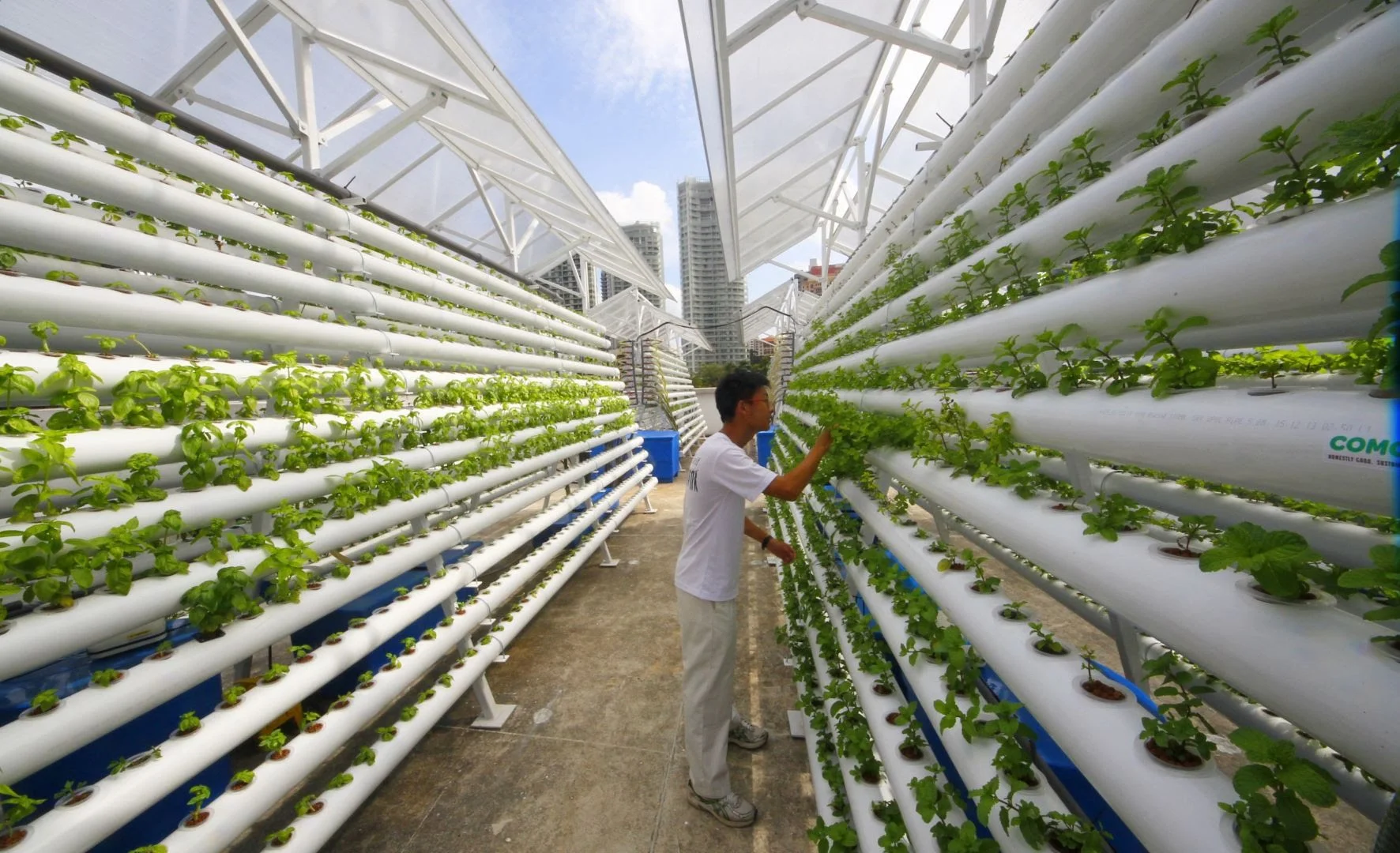
- It involves producing crops in vertical stacks of plant beds one above another. This reduces the need for more land and eliminates the need for tilling.
- It is done indoors and environmental conditions are controlled, thus effectively isolating it from the outdoor weather conditions.
- This soil less farming is achieved either by hydroponics or aeroponics. Hydroponics uses water as medium for conveying nutrients to the roots. Mineral nutrients are dissolved in water, pumped and fed directly to a plant’s root system without any involvement of soil. In aeroponics, the roots are exposed to nutrient rich mist. The benefits associated with these technologies are quicker growth, faster harvest, higher yield and low nutrient and water wastage.
- Here, sunlight is replaced by light from LEDs. When plants photosynthesize they convert light of certain wavelength into chemical energy which is not necessary to come from sun. LEDs which are having high acceptance in replacing traditional lights, have been evolved to provide optimum electromagnetic spectrum for photosynthesis, consume less energy and have minimal heat signatures which keeps the energy requirement for temperature maintenance at a minimum.
Crops generally grown in this method are green leafy vegetables. The vertical farming market is estimated to reach USD 3.88 billion by 2020, at a CAGR of 30.7% between 2015 and 2020.
In some developed countries, vertical farms are on the verge of starting the next green revolution. The first ever commercial vertical farm was setup in Singapore in 2012. The world’s largest vertical farm is coming up in Newark, New Jersey by a company called Aerofarms which aims to produce about two million pounds of leafy greens a year using aeroponics techniques.
In Japan vertical farm technology gained traction after the Fukushima nuclear meltdown exposed the susceptibility of arable land getting contaminated. Closer home, start-ups such as Futurefarms based in Chennai has setup such farms and has begun promoting it.
Vertical farms can be setup in abandoned factories or warehouses. It promises to create more jobs and attracts public-private investment. The vegetables can be locally grown and thus the cost and emissions due to their transportation can be significantly cut down. These farms also give us the option of year-round harvest. And of course, huge swathes of land can be returned to their natural state by reforestation.
Nevertheless, some scientists are sceptical about this technology. They consider it to be a factory rather than a farm almost like a broiler producing plant. Further, the whole system is vulnerable due to human error and technological malfunction. Considering that these systems use huge number of LED lights, motors and sensors the demand for power increases substantially which can make it unsustainable. Detailed research work has to be done before it gets commercialised in India.
10 Exciting Developments Fusing Food And Real Estate
10 Exciting Developments Fusing Food And Real Estate
A new report, Cultivating Development, shows how culinary innovation and foodie culture can help build community
BY PATRICK SISSON NOV 29, 2016, 2:15PM EST
There’s no question that attitudes towards food and healthy living have evolved over the last few decades. Cuisine and food culture have undergone dramatic shifts, from the proliferation of celebrity chefs to ever-more sophisticated palettes; since 1994, the number of farmers markets in the country have increased fivefold. It only makes sense that developers, always on the lookout for the next standout residential and commercial development, would start factoring these trends into their new projects.
In a new report, Cultivating Development, the Urban Land Institute examines how the real estate industry has begun to embrace culinary sophistication and foodie culture, positioning shared gardens and upscale food halls as must-have amenities and retail anchors. These additions not only fuel commerce and community, but can lead to more sustainable, equitable development that legitimately improves the health of residents. Here are 10 of the projects highlighted in the report, from healthy residential developments to indoor farming centers, that both help the bottom line and add value to the community.
Refresh Project (New Orleans, Louisiana)
Turning a food desert into an oasis, this community development project located between the Treme and Mid-City neighborhoods goes beyond adding a healthy grocery option to assembling the resources for healthier lifestyles. Spearheaded by the local group Broad Community Connections, this developmet replaced a vacant supermarket with a Whole Foods Market and a variety of healthy nonprofits, such as the Tulane University Goldring Center for Culinary Medicine, a first-of-its-kind program that teaches healthy eating and cooking in a clinical setting, the ReFresh Community Farm, and Liberty’s Kitchen, an on-site food service and life skills training center. The project didn’t just encourage better eating habits, but offered more holistic health and wellness assistance as well as career opportunities.
Arbor House (Bronx, New York)
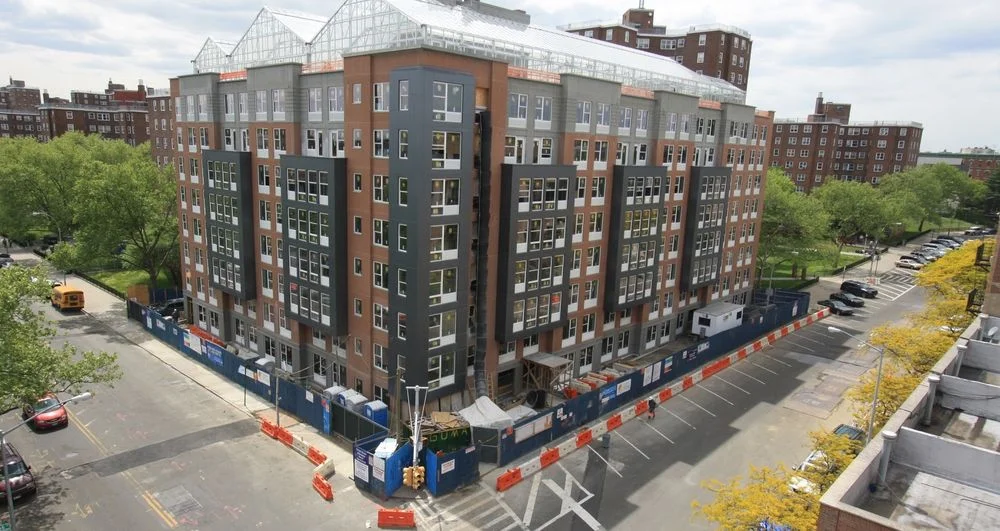
This new housing development seeks to provide not just affordable housing, but a healthy diet, to a community that’s been disproportionately affected by diabetes and heart disease. A 10,000-square-foot hydroponic rooftop farm atop the 124-unit property will grow fruits, vegetables, and herbs, which will then be sold in a neighborhood lacking a surfeit of healthy options.
The Pinehills (Plymouth, Massachusetts)
This new village center models itself after more a traditional layout and design, meaning extensive open space (only 30 percent of the land is developed) and a large two-acre village green as a centerpiece. The retail area, anchored by The Market, the state’s first “healthy market,” is linked to nearby homes via a network of walking paths.
Mariposa (Denver, Colorado)
Built by the city housing authority, this 800-unit mixed-income development utilizes clever design and an array of public programming to encourage healthy living, including a weekly farmer’s market, the on-site Osage Cafe, and a community bike-share program.
Mercado La Paloma (Los Angeles, California)
Established nearly 15 years ago, this former garment factory-turned-food industry incubator has been a celebrated success, earning plaudits from the U.S. Congress. Nearly 200 locals, from social service workers and artists to immigrant entrepreneurs, are employed at this complex, which helps provide startup capital, a health center, as well as conference rooms and performance spaces. An in-house initiative to provide nutrition information, La Salud Tiene Sabor, has spread to local restaurants and markets.
Summers Corner (Summerville, South Carolina)
A “community in a garden” near Charleston, this planned development includes a bike trail system, demonstration gardens, and an outdoor market. The main garden houses the Clemson University master gardener program, which gives residents the opportunity to sharped their skills in the company of experts. Produce from the garden are also used at the nearby Corner House cafe.
Aerofarms (Newark, New Jersey)
This recently opened indoor farm, set inside a former steel mill, will eventually grow two million pounds of produce annually, and serve as an anchor for the RBH Group’s Makers Village project, a three-acre sustainable production district set to activate the local job market.
Eco Modern Flats (Fayetteville, Arkansas)
Using healthy lifestyles as a selling point, a local developer turned these blocks of ‘60s-era apartments into greener, more sustainable homes, featuring a landscape redesigned to include native plants, rainwater harvesting, and rooftop gardens. Parking was also moved to help create a massive communal garden, one of many community features that helps build relationships among tenants.
Aria Denver (Denver, Colorado)
Set to open in 2018, this infill community on the site of a former convent will knit together 450 homes and a variety of gardening and health amenities, including a pay-what-you-can farm stand, a permaculture pocket gardens, a 1.25-acre production garden, shared kitchens, as well as access to healthy cooking classes. The developers believe “giving up” land for these amenities ends up raising the value of the project as a whole, both making it more attractive and bringing in more community partners.
Rancho Mission Viejo (Orange County, California)
A massive series of planned developments intertwined with farms and ranches, this residential and retail project offers a more sustainable and community-oriented model for homebuilding. The first village, Sendero, includes two communal farms amid 941 homes, and when finished, the entire development will include schools, parks, clubhouses, and other recreational facilities. .

Rising Need For Nursery, Indoor And Vertical Farming
There will be a new vertical agriculture revolution, because right now we use up a third of the usable land of the world to produce food, which is very inefficient. Instead we will grow food in a computerized vertical factory building (which is a more efficient use of real estate) controlled by artificial intelligence, which recycles all of the nutrients so there’s no environmental impact at all
Rising Need For Nursery, Indoor And Vertical Farming
by Frank Tobe
November 28, 2016
To meet rising food demands from a growing global population, over 250 million acres of arable land will be needed – about 20% more land than all of Brazil. Alternatively, agricultural production will need to be more productive and more sustainable using our present acreage. Meeting future needs requires investment in alternative practices such as urban and vertical farming as well as existing indoor and covered methods.
Ray Kurzweil, futurist, inventor and Google’s Director of Engineering, said in an interview in The Times in 2013:
There will be a new vertical agriculture revolution, because right now we use up a third of the usable land of the world to produce food, which is very inefficient. Instead we will grow food in a computerized vertical factory building (which is a more efficient use of real estate) controlled by artificial intelligence, which recycles all of the nutrients so there’s no environmental impact at all.
Fully automated regional vertical farms for leafy greens and other commodity crops has long been a vision of the future. Capital costs and other vagaries have prevented such development to date, but lower costs for technology and automation plus higher costs for labor, land and other resources, are making Kurzweil’s predictions come true. There are dozens of vertical farms around the world today with more being built.
Spread, a Japanese factory farmer with a large facility near Kyoto that serves the two metropolitan areas of Kyoto and Osaka, is nearing completion of a fully automated 52,000 sq ft facility where 98% of water will be recycled and seeding, watering, applying fertilizer and harvesting will all be automated. No earth; just shelves on top of shelves from floor to ceiling. They predict 30,000 heads of lettuce can be harvested and delivered daily throughout the year.
Propelling this indoor and vertical farming movement are three influential trends. The Boston Consulting Group, in 2015, produced a study entitled “Crop Farming 2030, the Reinvention of the Sector,” and cited (1) the steady global movement toward precision farming, (2) the availability of economical automation and robotics, and (3) the growing labor shortage as the drivers of the movement.
Vertical farming:
Food grown year round in buildings near urban centers provides many advantages: being close to the point of consumption reduces both distribution costs and spoilage. Outdoor farming is vulnerable to pests and disease, which in turn means intensive use of pesticides and herbicides causing problems with runoff as well as food safety. Vertical farms protect crops from weather and pests and reduce or eliminate the use of pesticides and herbicides. Hydroponic and aeroponic water methods save massive amounts of water compared to outdoor farming. Consequently, as these farms become more prevalent, they could provide a major new role for the ag industry to produce a wide range of commercial crops with major savings in space and water use. In the case of Spread, cited above, they are able to grow lettuce indoors using less than 1% of the water that California Central Valley growers use to grow the same product!
Agriculture accounts for around 70% of water used in the world today according to the OECD (Organization for Economic Co-operation and Development). As population and climate change progress, food needs will grow, and more efficient use of water in ag must happen as well. Vertical farms reduce water usage through recirculating hydroponics, evaporative cooling, control of in- and out-airflow, and other methods. Urban Crops, a Belgian factory farmer and technology provider uses this chart to show the benefits of vertical factory farms versus other methods:
Greenhouse and wholesale nurseries
Greenhouse technology is ideal to protect plants from adverse climatic conditions, insects and disease and to nurse, propagate and grow plants to usable and/or harvestable size. Greenhouses can be framed or inflated structures covered with glass or transparent or translucent material. Greenhouse yields are often 10-15% greater that outdoor yields, consistency and quality tend to be greater, and the growing season is longer.
Similar to vertical farms, greenhouses have high upfront costs and operating expenses, and crop selection must not require pollination. Whether plants are grown in the field or indoors, nurseries transplant, graft, or germinate plants to create seedlings for resale. Their processes are quite complex on two levels: (1) the technical aspects of growing plants which require management of the environment, plant nutrition, propagation, transplanting, irrigation, and pest and disease control, and (2) the business aspects of managing production, labor, customers, distribution and other activities associated with a business. Many nurseries use automation and some level of robotics. Harvest Automation and their mobile robots rearranging potted plants and Urbinati and Visser and their robotic transplanting devices are all examples of the levels of automation utilized in nursery operations.
Commercial and emerging providers:
- AeroFarms – A NJ indoor farmer that is marketing their technology to other prospective vertical farmers. AeroFarms grows a wide variety of leafy greens without sun or soil in a fully-controlled indoor environment using a system of aeroponic misting of the roots for faster harvest cycles, predictable results, food safety and less environmental impact.
- Aris – is a Dutch engineering and systems provider. Many of their projects are integrated with vision and robotics that identify, grade, sort and analyze everything from orchids to chickens, from potted plants to seedlings. Using their systems, nursery clients can then grade and robotically cut branches which can then be potted.
- ALCI Visionics & Robotics – A French integrator of vision and robotics technologies for meat and fish slicing and packaging and for nurseries and growers for potting plants and seed germination, analysis and classification for corn, rice and wheat.
- Conic Systems – a Spanish provider of greenhouse equipment including robotic and software-controlled grafting, seeding and planting systems.
- Demtec – A long established Belgium-based maker of a wide range of horticultural machinery including potting machines, seeders, planters and transplanters. Many of these processes have integrated industrial and mobile robots into their systems. Demtec robotics also play a big part in flat and shelf handling, packaging, palletization, and shipping.
- Egatec A/S – a Danish integrator of end-of-line packaging, boxing and palletizing systems for the ag and food processing industries.
- Harvest Automation – a Boston-area mobile robotics provider with nursery applications for spacing, a task that involves bending over, picking up one or two containers often weighing up to 22 pounds each, walking a few steps and then bending over again to place them in a predefined pattern. The company recently divested a warehousing variation on their mobile robot to better focus on ag industry applications.
- Helper Robotech – a Korean manufacturer of robotic grafting, smart seeding and other smart devices. They also make a wide range of nursery products to nurture seedlings to maturity.
- HETO Agrotechnics – a Dutch manufacturer of horticulture machines including robotic potting systems and pick and place systems for potted plants.
- Hortiplan – a Belgian integrator, reseller and provider of nursery equipment, supplies and mobile gully systems – which move in an automated way from the planting side to the harvesting station. Hortiplan also designs and sells lighting, irrigation and handling systems.
- Irmato Jentjens – An established Dutch builder of systems for automating food handling and packaging. Irmato also makes the Rombomatic, a robotic cutting system for nurseries that examines, assesses, cuts, powders and inserts cuttings into pots and other mediums. Jentjens is a funding partner in a variety of sensing and manipulation projects under the EU’s Clever Robots for Crops program. These include a sweet-pepper harvesting robot, an apple harvesting robot, precision and canopy-optimized spraying robots and other AI-based ag systems.
- Iron Ox – A Silicon Valley startup presently in stealth mode but hiring with a plan to provide a fully robotic, fully controlled environment for ag in a greenhouse growing leafy greens (lettuce, basil and bok choy) using natural light but mobile bots to move plants through each stage of development to harvesting, packaging and palletizing.
- ISO Group – a Netherlands-based supplier of automation solutions for nurseries. They adapt industrial robot technology for horticulture uses such as grafting, planting, vision inspection and replanting.
- Logiqs BV – a Dutch manufacturer of internal transport and logistics systems for greenhouses for growers of cut flowers, tree nurseries, flower bulbs, potted plants and vegetables. Their new modular GreenCube vertical cultivation system uses trays sensors and vertical transporters, also with sensors, for movement between layers and movement to and from the various stages of nursery growing operations.
- CMW Horticulture – a UK integrator and reseller of a whole range of greenhouse and nursery automation products including Logiqs mobility and handling systems
- Mirai Group – A Japanese farmer that, in 2009, became a member and leader of the Japanese government public-private consortium to develop low-cost plant factories. Today Mirai provides R&D and design-build services to grow leafy plants for farmers interested in vertical farming similar to what Spread is doing. Mirai is also producing and wholesaling leafy vegetables from a large plant factory located near Chiba, Japan.
- Photon Systems Instruments – An established Czech Republic provider of ag instruments including high throughput conveyor and robotic nursery phenotyping systems.
- Priva Group – a Dutch engineering, design and systems integrator for greenhouse nurseries. Recent projects include developing a leaf-removing robot for tomato plants. The lowest leaves of tomato plants are regularly removed to promote ripening (this process is called de-leafing).
- QUBIT Phenomics – a Canadian provider of conventional and robotic plant screening systems for nurseries and growers. The company’s PlantScreen™ Field Phenotyping System allows growers an automated non-invasive measurement of photosynthesis, leaf biochemical status, water status and canopy temperature. Greenhouses are the primary marketplace but the company hopes to break into field operations as well. Many major biotech companies and universities have partnered with Qubit in the study of plant responses to various stresses.
- Spread – A Japanese lettuce grower, is constructing the world’s largest plant factory near Osaka and Kyoto. The new factory, scheduled for mid-2017, will be as robotically automated as possible. Spread’s existing facility, from which they are learning what tasks can be automated, produces 21,000 heads of lettuce per day using LED lighting, controlled air conditioning and recirculating water. Spread is planning to construct and operate 20 new factories in the next 5 yearsin addition to selling the technology for others to build their own plant factories.
- Urban Crops – A Belgium startup pioneering the distribution of robotized vertical farming and plant factories. The company offers two types of products, one fits into a 40’ container and can be fully automated or not, and another is custom built for larger spaces. Currently the company has made a small number of sales and has partnered with companies such as Belgocatering, a Belguim based catering company, and a UAE group of investors.
- Urbinati – an Italian manufacturer of nursery technology including automated, and in some cases robotic, seeding, pot filling, transplanting, handling and irrigation devices. They also sell backroom processing robots such as palletizers.
- Transplant Systems – a NZ integrator and reseller of nursery machinery and robots from Urbinati and others.
- Visser – a Dutch provider of horticulture automation systems and complete production lines for large and small nurseries and greenhouses including a robot seeder, transplanter and packing and palletizing robots.
Agricultural Robotics: 160+ profiles
Working together with Tractica, a Colorado research firm, my team and I compiled a list of over 200 global businesses and agencies involved in developing robotic solutions for the ag industry. From that list, I was able to interview and profile over 160 companies and 16 research labs as follows:
- Academic and research labs (16)
- Backroom and post processing (5)
- Dairy and milking (10)
- Drones, analytics and data service providers (26)
- Farm equipment manufacturers (23)
- Harvesting, weeding and thinning robots (21)
- Hobby farming (2)
- Indoor and vertical farming (23)
- Integrator, distributor and reseller (20)
- Self-driving vehicles (15)
- UAS/UAV vendors (15)
This research report will be published in the next few weeks and will contain the whole list, the profiles, and the conclusions drawn from the research, interviews and analyses. The report will be $4,200 for a Basic License (1-5 users) or $6,300 for an Enterprise License.
Note: the link to the report is to the previous report with the same title and will be updated with new information just as soon as the new report is published.
Frank Tobe is the owner and publisher of The Robot Report, and is also a panel member for Robohub's Robotics by Invitation series...read more
agriculture roboticsrobohub focus on agricultural roboticsTractica
Glorious Green Office In Tokyo A Showpiece For Urban Agriculture
The Pasona Group’s blooming headquarters doubles as a promotional tool for farming
Glorious Green Office In Tokyo A Showpiece For Urban Agriculture
The Pasona Group’s blooming headquarters doubles as a promotional tool for farming
BY PATRICK SISSON NOV 28, 2016, 11:23AM EST
Tokyo’s streetscape typically leans towards the modern and mechanized, crowded with bright signs, busy neon lights, and new office towers. But a few blocks from the city’s main train station, the nine-story office of a progressive human resources firm presents a more pastoral addition.
The headquarters of the Pasona Group, one of the country’s largest staffing and talent agencies, literally blooms, a garden in the sky that provides Tokyo with a striking display of foliage. More than 100 types of roses grow on the building’s “green curtain” exterior during the late springtime, and in autumn months, vines growing on the trellised facade display fall colors. And that’s just the outside. The ground floor entrance, lined by citrus plants such as limes and kumquats, leads to a lobby with a functioning rice paddy and urban farm.
“We’re trying to broadcast what you can do in a metropolitan environment,” says Yukie Yoneyama, who works for the company’s urban farm division, which began seeding and planting the midcentury office building in 2010.
Pasona’s investment in a greener office isn’t just about creating a better environment for the company’s more than 1,500 Tokyo employees, though the plant-filled tower does create a less-stressful workplace and cut the building’s annual carbon emissions by 7-8 tons. The living office is part of a larger strategy by the self-described “social solutions company” to help catalyze rural economies and live up to its mission to provide jobs where they’re needed. It’s a physical manifestation of Pasona’s philosophy.
Company founder Yasuyuki Nambu started the staffing agency in 1976 to help provide jobs to mothers looking to re-enter the workplace. As the company grew over the last few decades, Nambu’s social justice focus has expanded to embrace numerous issues in Japan via an array of subsidiaries (Pasona Heartful, for instance, provides jobs for the disabled).
Over the last few decades, the combination of an aging population, a long-term recession, and unemployment has hit the Japanese farming sector hard. Nambu’s proposed solution to the crisis is to “make farming cool again,” investing in ornate projects like the urban farm, which seeks to re-connect city dwellers with agriculture, and funding community-focused businesses in rural areas.
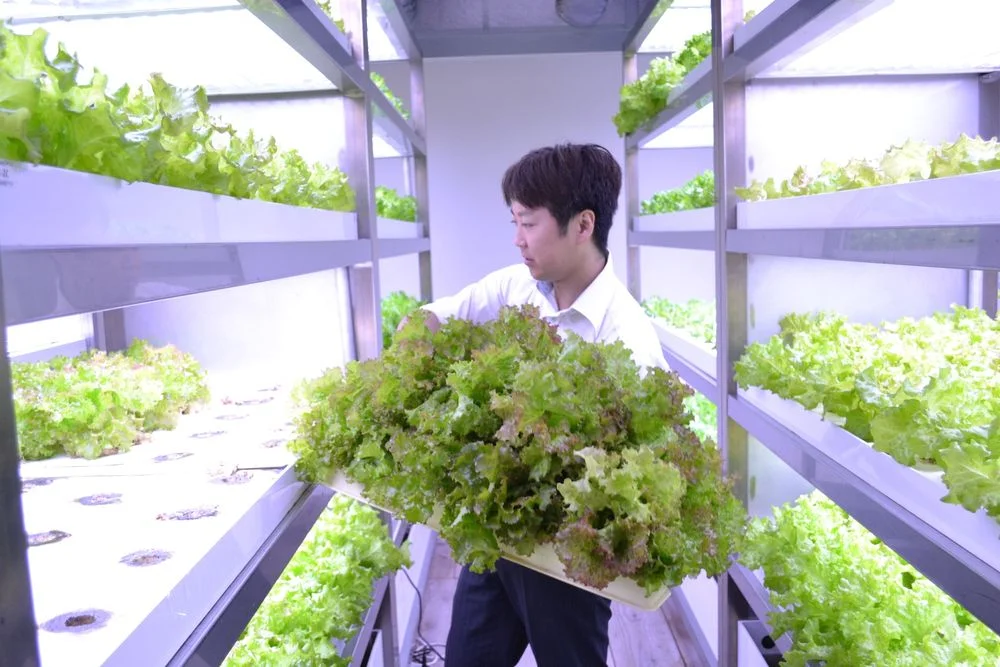
The Pasona HQ certainly offers a sleek, camera-ready model of urban agriculture. With 43,000 square feet of space dedicated to growing more than 200 kinds of crops, nearly every corner of the Kono Designs-created office features some spin on urban agriculture. One of the conference rooms features overhead trellises holding ripe, red tomatoes, while apples and blueberries grow on the grass-covered rooftop. The indoor rice paddy, built from scrap wood and harvested multiple times a years, anchors an employee lobby, which hosts regular concerts during lunch hour. A floor of open meeting spaces includes hydroponic growing systems for herbs—small containers for sprouting seeds are hidden inside benches—offering aromatherapy between appointments. Rows of lettuce plants, raised in a “vegetable factory” along with other produce, help provide more than 10,000 meals a year in the employee cafeteria.
“One of the biggest benefits growing indoors is that we don’t need to worry about seasons,” says Yoneyama, while pointing out the special lighting and watering systems that run throughout the building. “Under normal conditions, lettuce takes 60 days from seed to harvest. We can grow it here in about 45 days.”
In a country where produce prices can by sky-high, Yoneyama says the aim of the company’s agriculture program isn’t to cut costs—rather difficult, when factoring in the cost of indoor lighting—but to spur development. Regional development has been a high priority for many companies, and Nambu believes spurring entreprenurial opportunities is the solution.
“The agricultural industry was hit by all these forces at the same time, so the question is, how do you help the agriculture and tourism industries they depend on?” she says.
In effect, Pasona’s green office is a commercial for regional development, turning normally staid downtown commercial space as a promotional tool. The rice strains planted in the lobby all come from areas hit hard by the 2011 tsunami. The company also supports a farm on Awaji Island, in south-central Hyogo Prefecture, that helps train future farmers and promote local agriculture (products such as dressings and sauces are sold in the company’s lobby).
Long-term, the company plans to continue supporting and promoting small-scale, regional farms and companies, and offer its expertise on urban farming to interested companies or architects. With a renewed focus on corporate social responsibility and healthier workspaces, Pasona fields inquiries from around the world.
“This is something that can really take off and provide a lot of benefits,” says Yoneyama. “We want to look outward.”
Container Farms Add Local Flavor To Fresh Fruit Production
French startup Agricool believes the fruit flown around the world and stacked onto supermarkets shelves ain't what it used to be, so it has hatched a plan to recapture the authentic flavors of yesterday's fresh produce
Container Farms Add Local Flavor To Fresh Fruit Production
November 24th, 2016
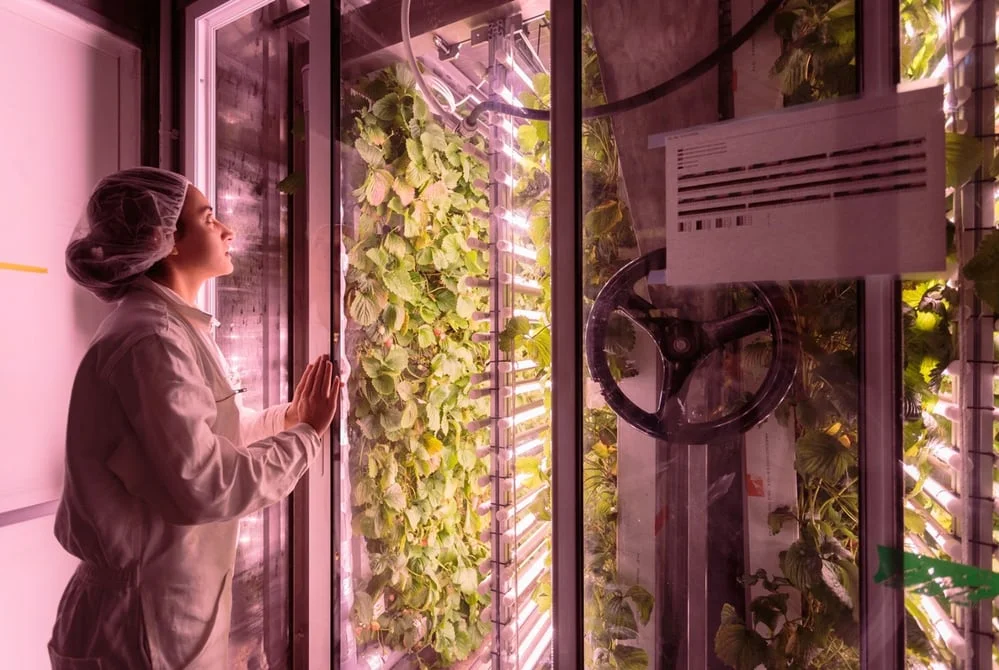
Agricool focuses on growing fruit in its shipping container farms, rather than leafy greens(Credit: Tony Trichanh)
French startup Agricool believes the fruit flown around the world and stacked onto supermarkets shelves ain't what it used to be, so it has hatched a plan to recapture the authentic flavors of yesterday's fresh produce. The company has just raised €4 million (US$4.2 million) in funding to develop specialized shipping containers that can be used to grow full-flavored fruit a little closer to home.
The firm's fresh fruit approach sets it apart from similar shipping container farm outfits like Cropbox and Freight Farms, which typically focus on leafy greens. The first fruit that Agricool is focusing on is the strawberry, a produce it says is the poster-boy for tasteless supermarket fruit.
Agricool kits out its shipping containers as hydroponic growing units, designed to optimize growing conditions like nutrient levels, irrigation, LED lighting and CO2. The air drawn in from outside is filtered in an effort to minimize the possibility of pollution entering the containers.
"We have 30 engineers in house, working all day to improve the technology," company co-founder Guillaume Fourdinier explains to New Atlas. "If you don't do that, you are only able to grow leafy greens. Our mission is to bring back taste in our fruits and vegetables, and we don't feel that it has been lost for leafy greens."
Vertical grow-walls, rather than stacked trays, are used as this is said to make it possible to grow more per square meter, with each container able to house more than 4,000 strawberry plants. Agricool says each container can produce 120 times more than would be the case on the same area of a field. The crops produced are also claimed to be more vitamin-rich, free of harmful chemicals and pesticides and conveniently, don't need washing before they're eaten.
The closed loop system employed for water and nutrients uses 90 percent less water than would be required for conventional cultivation and only electricity from renewable sources is used. What's more, the basic tending of the containers can be done by people with no experience in farming, while Agricool actually monitors the health of the crop and controls water and nutrient feeds remotely.
Only 30 sq m (323 sq ft), or the area of two car parking spaces, is required for each container. It is hoped that this distributed mode of growing can ultimately serve whole urban areas, while also helping to cut transportation time, costs and emissions.
Agricool was founded last year by Fourdinier and his colleague Gonzague Gru, both children of farming parents, because they couldn't find high-quality fruit and vegetables in cities. This, they say, is because crops are harvested too soon so that they don't spoil during transport and because they're chosen for their ability to travel, rather than for taste.
The firm's first prototype was installed in Bercy, in the 12th arrondissement of Paris, France, late last year and there are now three prototypes in operation. It has spent this year conducting research and development, and the new funding will be used to speed up Agricool's growth, with the goal for next year to roll-out 75 containers, distribute 91 tons of strawberries and begin work on two new types of crop.
Source: Agricool
Veggie Plant Growth System Activated on International Space Station
May 16, 2014
Veggie Plant Growth System Activated on International Space Station
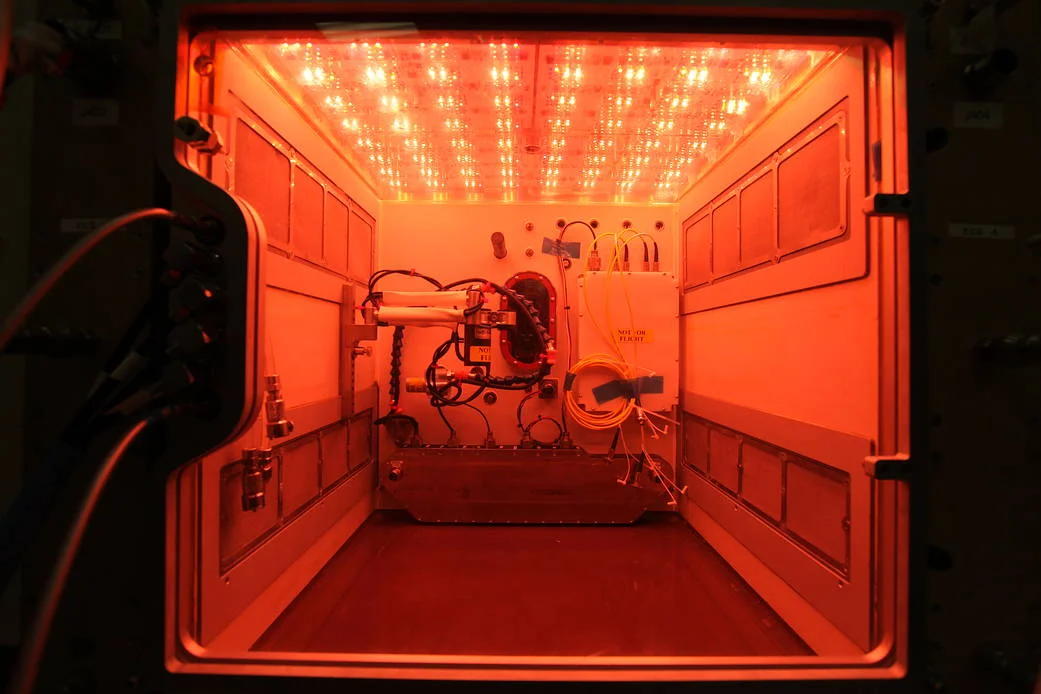
Expedition 39 flight engineer and NASA astronaut Steve Swanson opens the plant wicks in the Veggie plant growth system May 11 on the International Space Station. The six plant pillows contain 'Outredgeous' red romaine lettuce seeds.
Researchers activated the Veggie plant growth system May 9 inside a control chamber at the Space Station Processing Facility at NASA's Kennedy Space Center in Florida to shadow the activation and procedures being performed on Veggie on the International Space Station.
By Linda Herridge
NASA's John F. Kennedy Space Center
If you plant it, will it grow—in microgravity on the International Space Station? Expedition 39 crew members soon will find out using a plant growth system called “Veggie” that was developed by Orbital Technologies Corp. (ORBITEC) in Madison, Wisconsin, and tested at NASA's Kennedy Space Center in Florida.
The first fresh food production system, along with the Veg-01 experiment, were delivered to the space station on the SpaceX-3 mission from Cape Canaveral in April and transferred to the Columbus module for storage until it was time for in-orbit activation.
Expedition 39 flight engineers and NASA astronauts Steve Swanson and Rick Mastracchio installed Veggie in the Columbus module May 7 in an Expedite the Processing of Experiments to the Space Station (EXPRESS) rack.
Wearing sunglasses, Swanson activated the red, blue and green LED lights inside Veggie on May 8. A root mat and six plant "pillows," each containing 'Outredgeous' red romaine lettuce seeds, were inserted into the chamber. The pillows received about 100 milliliters of water each to initiate plant growth. The clear, pleated bellows surrounding Veggie were expanded and attached to the top of the unit.
Inside each plant pillow is a growth media that includes controlled release fertilizer and a type of calcined clay used on baseball fields. This clay increases aeration and helps the growth of plants.
Dr. Gioia Massa is the NASA science team lead for Veggie. She sees Veggie and Veg-01 representing the initial steps toward the development of bioregenerative food production systems for the space station and long-duration exploration missions.
"The farther and longer humans go away from Earth, the greater the need to be able to grow plants for food, atmosphere recycling and psychological benefits," Massa said. "I think that plant systems will become important components of any long-duration exploration scenario."
About 24 hours after Veggie was activated on the space station, back on Earth, "pseudo-naut" researchers activated identical plant pillows in the Veggie control chamber in the International Space Station Environmental Simulator laboratory at Kennedy's Space Station Processing Facility. Researchers will monitor the plant growth and perform the same procedures as Swanson is doing on the space station.
"My hopes are that Veggie will eventually enable the crew to regularly grow and consume fresh vegetables," Massa said.
One of the plant experiment's goals is to verify the Veggie hardware is working correctly. Another goal is to establish that the space lettuce is safe to eat.
On the space station, the Veg-01 plants will grow for 28 days. Photographs will be taken weekly, and water will be added periodically. The pillow wicks were opened to help the seedlings emerge. As the plants grow, the pillows will be thinned to one plant per pillow, and microbial samples will be taken to check for any microorganisms that may be growing on the plants. At the end of the cycle, the plants will be carefully harvested, frozen and stored for return on the SpaceX-4 mission later this year.
Veggie will remain on the station permanently and could become a research platform for other top-growing plant experiments. ORBITEC developed Veggie through a Small Business Innovative Research Program. NASA and ORBITEC engineers and collaborators at Kennedy worked to get the unit's hardware flight-certified for use on the space station.
"Veggie could be used as a modular plant chamber for a variety of plants that grow up rather than in the ground," said Gerard Newsham, the Veggie payload support specialist with Jacobs Technology on the Test and Operations Support Contract. "This is just the beginning."
Another set of six plant pillows, containing 'Profusion' Zinnia seeds could be activated in Veggie for the Expedition crew to grow and enjoy as they wait for word that the red romaine lettuce is safe to eat. If the lettuce is safe to eat, Massa said an additional set of plant pillows containing the romaine lettuce seeds will be activated in Veggie.
"I hope that the astronauts on the space station eventually will use the equipment to 'experiment' with their own seeds or projects," said Nicole Dufour, who coordinated and led the testing of the flight hardware at Kennedy and wrote the crew procedures for the astronauts to use on space station. "Veggie is designed for crew interaction and to enjoy the plants as they are growing."
Dufour said she hopes Veggie serves as a regular facility the crew uses to grow food crops. Dufour is an engineer in the Flight Mechanisms and Flight Crew Systems Branch of the Engineering and Technology Directorate.
Brian Onate, former Veggie project manager, helped shepherd the plant growth system from initiating the build of the flight units in 2012 to just a couple of months before its delivery to the space station.
"I hope to see Veggie's success as the first step in food production that will allow astronauts on the space station to enjoy fresh food and gain knowledge as we explore beyond low-Earth orbit," Onate said.
Why Vertical Farming Is More Than Just Growing Indoors
Feeding urban populations is especially challenging in a linear system. We need to grow food as close as we can to the people who need it
Why Vertical Farming Is More Than Just Growing Indoors
Nicolette Maio · November 22, 2016
As part of Circulate’s collaboration with the Disruptive Innovation Festival, we’re featuring insight from some of this year’s Open Mic contributors in advance of their performance at the DIF. Find out more at thinkdif.co, and don’t forget to catch up on this session with a panel of vertical farming experts.
Feeding urban populations is especially challenging in a linear system. We need to grow food as close as we can to the people who need it. Instead of transporting foods from every corner of the earth, we need to grow food directly in the cities and create more local economies based on necessity. Where we do that can vary: from a vacant lot, a rooftop, in a greenhouse, or even inside of a building.
Farming indoors has its fans and its critics, but it becomes a practicality as the populations of cities increases. Many people are thinking into the future for what food production hubs should look like for sustainable cities of the future.
Could we be on the verge of creating hybrid forms of food production? Can the indoor farmer and the bio-nutrient farmer find common ground? Will Allen is a key figure in knowing how to farm for the future. His revolutionary ways as an urban grower demonstrate the brilliance of a closed-loop system. His organisation, Growing Power, based out of Milwaukee, WI, has implemented greenhouses with stacked functions. The bottom level is an aquaponics system, which feeds the fish poop to the plants’ roots, then circulates back to the fish tank as clean water. It is not just about growing indoors, it is about creating a closed loop that reuses and eliminates waste.
Let’s think bigger. It’s also about incorporating alternative energy instead of fossil fuels wherever possible into the indoor growing system. In Suwan, South Korea there is a three-story 450 metre squared building that the Rural Development Agency is utilising for vertical farming. They have sourced nearly 50% of their heating, cooling and artificial lighting requirements to renewable resources, such as geothermal and solar power. More experimental models like this one are urgently needed.
Permaculture enthusiasts would say, “the problem is the solution.” Where does the potential for growing indoors lie? Could empty warehouses and abandoned buildings be repurposed as mushroom farms? Can sustainable energy be a bigger part of the closed loop? As crazy as it may sound, can harvesting insects provide a new source of protein and reduce the demand for factory-farmed meat? How we grow, what we grow, and where we grow will be shaped by the innovators of today.
Visit thinkdif.co to find out more about the Disruptive Innovation Festival. Don’t forget to create My DIF account to build your own schedule, get session recommendations based on your interests, and 30 days of bonus catch up time after the DIF has ended.
Agricool Harvests $4.3 Million To Grow Fruits And Vegetables In Containers
DISRUPT LONDONDisrupt London Starts Today - It's Not Too Late To Get Tickets Get Yours Today
Agricool Harvests $4.3 Million To Grow Fruits And Vegetables In Containers
Posted Nov 22, 2016 by Romain Dillet (@romaindillet)
French startup Agricool has raised $4.3 million (€4 million) from newly launched VC firm Daphni as well as Parrot founder Henri Seydoux and Captain Train (acquired by Trainline) co-founder Jean-Daniel Guyot. Agricool’s product is quite unusual as the company wants to grow strawberries and later other fruits and vegetables inside shipping containers.
With many people moving to mega-cities, it has become increasingly difficult to provide good food to people living in these cities. In just a few decades, there will be many, many cities with tens of millions of people living there. It’s a logistical and environmental challenge.
That’s probably one of the reasons why processed foods have taken off. It’s so much easier to ship across great distances instead of relying on perishable goods.
And yet, many cooks are trying to reverse this trend, looking for fresh and local ingredients for their recipes. It’s a good trend, but it also means that you’re limiting your options, especially in places with a hostile weather.
Why do we keep seeing the same bright red tomatoes that never go bad and don’t taste like anything? Intensive farming has been great to fight hunger issues, but it’s time to look further — in this case, it means going back to what makes food tastes great in the first place.
Agricool is trying to do something about this and started with strawberries. Instead of relying on trucks filled with strawberries coming from Turkey, Germany, Spain or Italy, the startup tried to produce strawberries right where they were, in Paris.
If you can control the light, the water, the substrate and other factors, the startup noticed that you can grow strawberries anywhere — including in a shipping container.
Then, it’s a matter of optimizing all these factors so you can produce more strawberries from a single container, or cooltainer as the company calls them. The company doesn’t want to use any pesticide and my guess is that it’s going to take a while to make these strawberries as cheap as existing strawberries.
The company is now renting a big warehouse to fill with containers. There’s probably a fair share of A/B testing going on, but with fruits and not website designs. With today’s funding round, Agricool wants to create 75 containers in 2017 and install them around Paris — the goal is to produce 91 tons of strawberries.
The startup also wants to test other crops soon. Maybe some vegetables and fruits will be harder than others when it comes to growing them in a container. It’s going to be a long, capital-intensive venture to iterate on those containers. But it’s an interesting take on the food industry.
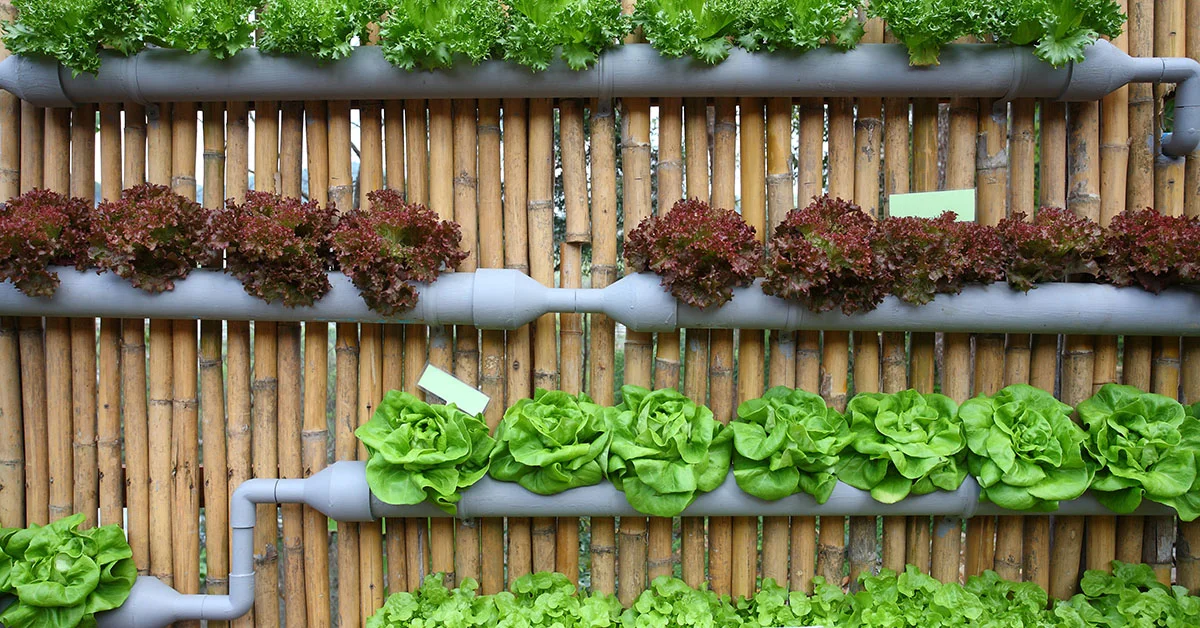
Vertical Farming: The Future of Agriculture?
For those of you unaware of the quiet revolution going on in agriculture, vertical farming is shaping the future of food
Can This Modern Cultivation Practice Of Growing Plants In A Closed Environment Meet Our Food Demands In A More Sustainable Way?
For those of you unaware of the quiet revolution going on in agriculture, vertical farming is shaping the future of food.
World population is expected to reach a colossal 11 billion by 2100 (though it varies depending on whose model you use). As a result, many have begun to askhow are we going to feed even more hungry mouths? The answer, at least in part, comes in the form of vertical farming, a new, revolutionary, and sustainable way to grow our food that can also help to reduce the carbon footprint of food production.
Vertical farming involves growing plants in stacks of hydroponic towers, lit with LED lamps, in a strictly controlled environment. The towers of crops are fed with water laced with nutrients, the strict control of the environment allows for optimum yield from the crops every time. Global Vertical Farming market was worth 600 million USD in 2014.
Vertical farming has numerous advantages over the practices of regular farming. As well as producing a consistent and high yield crop 365 days a year, the crop can be grown in a compact and protected environment — one that is not affected by weather patterns or climate change. All with the added bonus of zero waste (through water recycling) and zero net energy use. All the water used in the hydroponic stacks is recycled and reused — urban waste water can even be recycled for use in vertical farms.
Green Sense Farms in Portage, Indiana, is in the process of building a network of indoor vertical farms across the globe. Their goal is to not only reduce the carbon footprint and environmental consequences associated with traditional farming, but to provideconsumers with locally produced, fresh, leafy greens, to try to foster healthier and more environmentally friend communities. Green Sense Farms is using LEDs built by Dutch tech giants Philips to cut power costs through cheaper LED light, as well as tweaking light wavelengths to try to grow the perfect crop. The Economist praised their farms for the innovative work that they are doing to provide new ways to better feed the planet:
“The crops grow faster, too. Philips reckons that using LED lights in this sort of controlled, indoor environment could cut growing cycles by up to half compared with traditional farming. That could help meet demand for what was once impossible: fresh, locally grown produce, all year round.”
The versatility of location is the greatest strength of vertical farming, especially in the fight against climate change. The farms can be located at, or nearby to, distribution centres, supermarkets, or anywhere that sells or serves large volumes of food, and thus reduce the carbon footprint associated with transporting food from farms to tables – it is the antithesis of globalization.
One of the most globally renowned vertical farming start-ups is Urban Crops, whose headquarters are located in Waregem, Belgium, (though they have recently launched a US division in Miami that will be responsible for the entire American continent, North and South). They don’t see vertical farming as a radical departure from traditional farming, rather they see it as a more refined and efficient evolution of farming. Urban Crops grow their produce under a purple light delivered by red and blue LED lamps that create the perfect conditions for growth; the plants are fed via a hydroponic system of water infused with special minerals and nutrients. Their set-up can turn 50 square meters into 500 square meters of usable farm space and their 30 square meter space produces 220 lettuce plants every day with only five percent of the water that would be needed in traditional farming.
Despite all of these perceived benefits, there have been some who have rejected the idea of vertical farming as a realistic way forward for humanity. TreeHugger has had trouble digesting the concept of vertical farming for a number of years, supporting the belief held by Stan Cox of Alternet that:
“Although the concept [of vertical farming] has provided opportunities for architecture students and others to create innovative, sometimes beautiful building designs, it holds little practical potential for providing food.”
Cox’s main gripe with vertical farming is with the logic (or lack of it) at the heart of the technology; that using renewable energy to power indoor lighting to grow plants with is nothing but a waste of energy a resources. The transfer of energy from sunlight, to solar arrays, to power lamps that feed plants with light energy, is, in his eyes, nothing but a waste of energy (due to transmission losses) and infrastructure. He argues that it is much better to:
“Let crop plants do what they do best: capture cost-free, emissions-free sunlight for themselves, directly.”
Although much of the loss in terms of infrastructure cost could be accounted for if the farms were powered by solar panels on-site – for example by Elon Musk’s solar roof.
Cox also forwards the idea that traditional farming is still viable, that they are simply ploughing the wrong land as it’s become more economically viable to ship produce long distance. The solution is to grow more crops locally, rather than relying on huge sprawling farms and cattle ranches that are not sustainable. Since world hunger is ultimately a result of poor distribution, not a lack of resources, the sensible option seems to be to localize food production as much as possible — whether through vertical farming or more traditional farming techniques.
In contrast to these two polarized opinions Paul Mahon, from Ontario Farmer Publications, doesn’t believe that vertical farming in its more extreme form is how farming is going to develop (at least not in the immediate future).
“Horizontal Farming [a self-coined term] is moving towards that sort of idea, farmers are using hydroponics to ensure a constant supply of water to the roots and crops. GPS and modern technology is allowing farmers to be much more precise in their measurements and their use of land. They are moving to smaller and smaller plots of land for the same yield, and are now able to match nutrients with soil types and capability.”
So the future of farming could marry traditional techniques with some of the small space advancements made with vertical farming to produce higher yields from smaller plots of land. This marriage of techniques has been adopted by Green Living Technologies in their Mobile Edible Wall Unit, which allows users to grow produce outside on an A-Frame mounted flowerbeds to allow for more economic use of space. This could be viewed as a validation of Stan Cox’s opinion that traditional farming isn’t as flawed as many are suggesting.
However, these solutions do not deal with the massive carbon footprint associated with traditional farming, or have the advantages of being immune to climate change and weather conditions in the way that vertical farming is. Although Polyculture farming has offered a way to reduce the carbon footprint of horizontal farming, in a way that is easy for everyone to adopt, it still requires large areas to grow substantial quantities of food. This is where vertical farming truly outstrips more traditional techniques —in urban and more highly populated areas where space is a valuable resource.
With plans in Sweden to build a 16 story “plantscraper” in the works, and MIT working with Target to produce their own greens in-store using vertical farming techniques, there doesn’t seem to be any dispute that vertical farming is going to play a role in the future of agriculture. We will just have to wait to see the extent to which it will dominate agriculture in the future. In the meantime, there are numerous ways that we as individuals can reduce the carbon footprint of agriculture. For example, instead of planting lawns you could grow your own produce, or try to incorporate polyculture farming into your garden. We all need to be responsible for the future of our food, rather than consider it to be someone else’s job.
Josh Hamilton is an aspiring journalist from Belfast, Northern Ireland, living in London, Ontario. Lover of music, politics, tech, and life.
Submit your story or essay to Buzzworthy Blogs