

Welcome to iGrow News, Your Source for the World of Indoor Vertical Farming
Over One Million Grown!
Over One Million Grown!
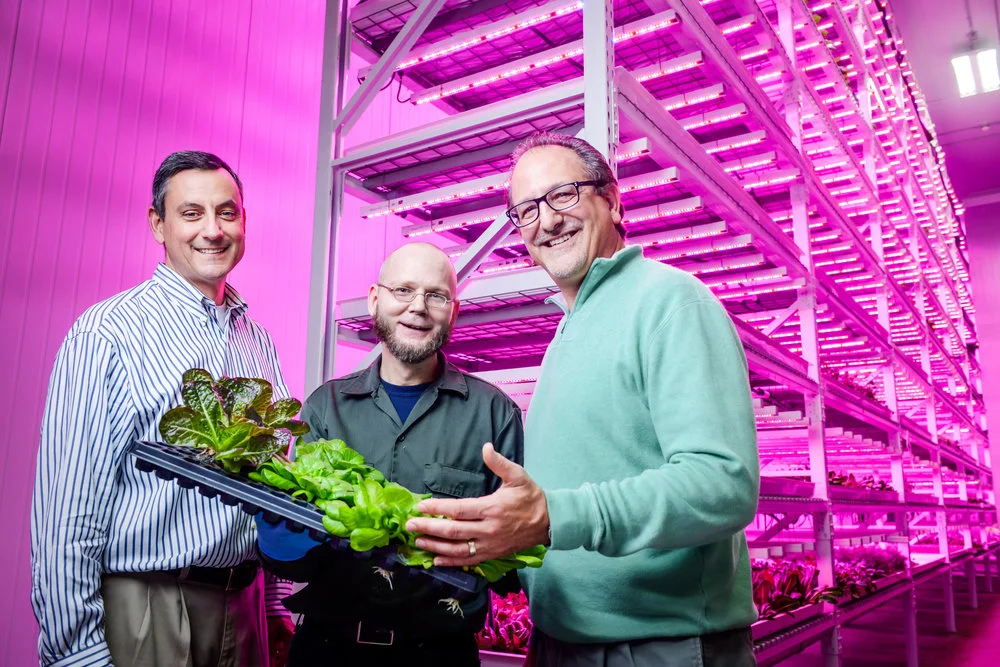
Green Sense Farms has just announced that they have grown 1.4 million plants using their innovative vertical farming technology.
Headquartered in Portage, IN, Green Sense Farms is the largest indoor vertical farm network. These progressive farms grow leafy green vegetables (micro greens, baby greens, culinary herbs and lettuces) indoors in stacking hydroponic towers in a controlled environment year-round, without the use of pesticide, herbicides, and GMOs.
Using sustainable farming practices, Green Sense Farms can grow vegetables, using much less land, water and fertilizer than traditional field farms. They conserve resources, which is good for the environment and the bottom line. Green Sense Farms is working towards zero net energy use, and zero waste, recycling all water.
Green Sense Farms has launched an Equity Crowd Funding campaign.
To learn more about this investment opportunity, please visit StartEngine: https://www.startengine.com/startup/green-sense-farms-llc
Arctic Farming: Town Turns To Hydroponics For Fresh Greens
Arctic farming: Town Turns To Hydroponics For Fresh Greens
The landscape is virtually treeless around a coastal hub town above Alaska's Arctic Circle, where even summer temperatures are too cold for northern-growing forests to take root.
Amid these unforgiving conditions, a creative kind of farming is sprouting up in the largely Inupiat community of Kotzebue.
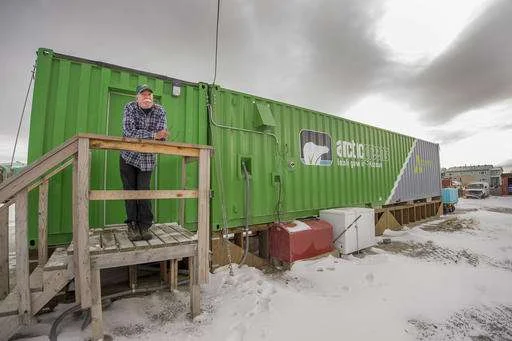
A subsidiary of a local Native corporation is using hydroponics technology to grow produce inside an insulated, 40-foot shipping container equipped with glowing magenta LED lights. Arctic Greens is harvesting kale, various lettuces, basil and other greens weekly from the soil-free system and selling them at the supermarket in the community of nearly 3,300.
"We're learning," Will Anderson, president of the Native Kikiktagruk Inupiat Corp., said of the business launched last spring. "We're not a farming culture."
The venture is first of its kind north of the Arctic Circle, according to the manufacturer of Kotzebue's pesticide-free system. The goal is to set up similar systems in partnerships with other rural communities far from Alaska's minimal road system—where steeply priced vegetables can be more than a week in transit and past their prime by the time they arrive at local stores.
There are other tools for extending the short growing season in a state with cold soil. One increasingly popular method involves high tunnels, tall hoop-shaped structures that cover crops.
But the season can last year-round with indoor hydroponics, which uses water and nutrients to grow vertically stacked plants rooted in a binding material such as rock wool.
Anchorage-based Vertical Harvest Hydroponics, which builds enclosed systems out of transformed shipping containers, partnered with Kikiktagruk. The 2-year-old company also sold the system to a farmer in the rural town of Dillingham.
"Our vision is that this can be a long-term solution to the food shortage problems in the north," said Ron Perpich, a company founder. "We're hoping that we can put systems anywhere that there's people."
But the operations have challenges, including steep price tags. Startup costs in Kotzebue were around $200,000, including the customized freight container and the price to fly it in a C-130 transport plane from Anchorage, 550 miles to the southeast.
The town also relies heavily on expensive diesel power, so operations could eat into profits.
In addition, moving tender produce from its moist, warm growing enclosure to a frigid environment can be challenging. And farming can be a largely foreign concept to Native communities with deeply imbedded traditions of hunting and gathering.
Still, the potential benefits outweigh the downsides, according to Johanna Herron, state market access and food safety manager.
Grown with the correct nutrient balance, hydroponics produce is considered just as safe as crops grown using other methods.
"It's not the only solution," Herron said. "Hydroponics is just a piece of it, but certainly an excellent thing for communities to look into."
Alaska Commercial Co., which has stores in nearly three dozen remote communities, is carrying Arctic Greens in the Kotzebue store. This week, the Dillingham AC store is beginning to sell produce grown in the local farm's hydroponics system. The chain will bring the Arctic Greens brand to more locations if expansion plans prove cost-effective, AC general manager Walter Pickett told The Associated Press.
"The produce is fantastic, at least what we've been seeing out of Kotzebue," he said. "The customers love it."
Lisa Adan is among the Kotzebue residents who regularly buy the produce. She said there are plans to start providing it at the local hospital's cafeteria, where she is an assistant manager.
Adan said the locally grown greens are superior to the produce that's transported north.
"It's so much better," she said. "It tastes like it just came out of your garden."
For now, the new business is operating as a prototype, especially as it enters the long, harsh winter season in Kotzebue, 26 miles north of the Arctic Circle.
The town, the regional hub for northwest Alaska villages, is built on a 3-mile-long spit, and many there live a subsistence lifestyle. The community has a chronically high unemployment rate, with the school district, state and local hospital among its major employers.
For now, the biggest selling point of the hydroponics produce is freshness. Prices are parallel with greens brought up from the Lower 48.
But operators are trying to work out kinks and find ways to lower energy costs, possibly through such alternatives as wind power, according to Anderson.
"We want to be a benefit to the community," he said. "Not only do we want fresher produce, but affordable produce."
Nearly 400 miles to the northeast, the village corporation in the Inupiat community of Nuiqsut is considering acquiring one of the systems. Joe Nukapigak, president of the Kuukpik Corp., said he plans to travel to Kotzebue after Thanksgiving to see hydroponics in action.
Unlike diesel-powered Kotzebue, Nuiqsut is just miles from the Prudhoe Bay oil field and taps into far less costly natural gas.
Nukapigak envisions the oil industry as a possible customer if hydroponics takes hold in his village. He also likes the thought of same-day freshness as opposed to produce that's sometimes ruined by the time it arrives.
"If we have a local operation like that, it would not get spoiled as much," he said. "It would be made locally, and that would help."
Explore further: Farm in a box: Shipping containers reused for fresh produce
Trendy Indoor Farms Will Allow You To Have Personal Produce
Trendy Indoor Farms Will Allow You To Have Personal Produce
Eve Turow Paul, I write about Millennials and food culture.
Opinions expressed by Forbes Contributors are their own.
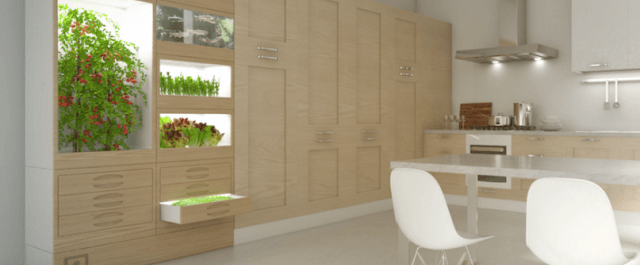
Now, what if this simple houseplant could feed you too? Companies like Grove, SproutsIO, Aerogarden and Replantable are working to make your in-home edible garden a reality, with compact aquaponic, aeroponic and hydroponic systems that will seamlessly integrate into your living room, kitchen, or wherever your green-thumb strikes you.
With rising rates of “nature deficit disorder,” a raucous Millennial obsession with food, only 2% of Americans living on farms, and skyrocketing rates of stress, distraction, and anxiety, many entrepreneurs believe that in-home “farming” can alleviate many of modern society’s pain points . The goal is not necessarily to feed people exclusively from their countertops. The mission, instead, is far more philosophical. And a bit political.
“ I really believe that people need to have more of a connection to their food ,” states SproutsIO co-founder Jennifer Farah. Farah began her journey to in-home gardening via architecture, designing grow-walls and other mechanisms to bring nature into cities. Then, as a Masters candidate at MIT, Farah was able to observe the benefits of taking this concept down to a more personal level, as she watched young students interact with an early prototype of a SproutsIO growing system.
First and foremost, Farah believes that we, as a society, a better understanding of our food will ultimately lead to greater respect for produce and thus improve diets. But overall, Farah focuses more on the fun and creativity generated by putting seeds into the eater’s hands.
Grocery store produce sections are limited by the current supply chain: what produce can survive the travel time, the refrigeration, what’s worth the shipping and handling costs, what can be harvested in bulk, etcetera. Indoor growing systems allow consumers to explore thousands of varietals of tomatoes or lettuce or basil that simply aren’t available at the local supermarket.
And with Sprouts IO, users can even customize the environment of a plant to grow a product exactly as they want it. Think of it as personal produce. For example, if you like a more peppery arugula or a sweeter tomato, you can adjust the nutrient levels and misting of your SproutsIO system to cultivate ingredients with your desired characteristics. “These things are allowing us to get more nuanced flavors,” explains Farah. It’s for this reason that SproutsIO launched first with chefs. And it’s also part of what excites users: putting all the control and creativity into their own hands. It’s like building a recipe far before the measuring cups are taken out of the drawer.
Both Grove and SproutsIO put the act of “farming” into a plug-and-play setting, utilizing the benefits of technology to connect people with something truly un-digital: plant growth and the act of harvest. Both Grove and SproutsIO are regulated by app, allowing users to monitor and assess their units even while away from home. It also relieves the user of many of the unknowns and uncontrollable elements of traditional farming.
“When the microwave came out people didn’t know why they needed it or what to do with it,” says Farah, “but soon people gravitated towards it.” Why, Farah ponders, shouldn’t growing produce become ubiquitous in our lives? “When we’re cooking for friends and family, why shouldn’t some of that produce be grown in your home? I do think it will become more a part of people’s everyday experiences.”
The transparency and interactive design of these in-home units also encourage education and conversation, notes Grove co-founder Jamie Byron. “It’s social. The entire family,” he says, or your group of friends or a classroom, “really come together around this experience. It’s a shared responsibility.”
As an undergraduate student at MIT, Byron was able to witness the communitarian, as well as health aspects, of in-home gardens. Back in 2013, Byron built an aquaponic system with a “Rube Goldberg Machine”-like contraption of PVC pipes, lights, and bins that balanced in the window of his fraternity house where he shared a bedroom with Grove co-founder Gabe Blanchet. The eye-sore experiment eventually flowered into a mass of peas, chard, tomatoes, kale and more.
Though Blanchet was at first skeptical of his roommate’s fish and greenery creation, the benefits of his little jungle were obvious. While the fraternity hallway smelled like beer and body odor, Byron and Blanchet’s room provided an oasis of oxygen-rich air and attractive foliage. The two found themselves grazing on their home garden daily, thus increasing their vegetable intake. Inspired by this makeshift garden, the roommates graduated and founded Grove to create a clean-cut product that has already found its way into some school and homes. Byron hopes that one day they can put their indoor gardens in prisons and hospitals to offer not just physical benefits, but the positive emotional experience as well.
“There’s this joy that people don’t talk about,” says Farah. “When you’re planning your vacation, there’s a joy in setting up that experience, and then the vacation is the culmination of that. Growing your own produce can provide a similar joy. When I can also incorporate produce I’ve grown to make a dinner, it’s even more special.” Both founders, independently, observed that the true benefit of their products is actually not what they had originally thought it would be, that growing produce at home has ramifications far beyond great tasting food. Ultimately, they hope these units will become touchstone items for creativity, connection to nature, and perhaps, an tool for taking a deep breath of fresh air and enjoying the roses…or wheatgrass…or whatever you have growing in your kitchen corner.
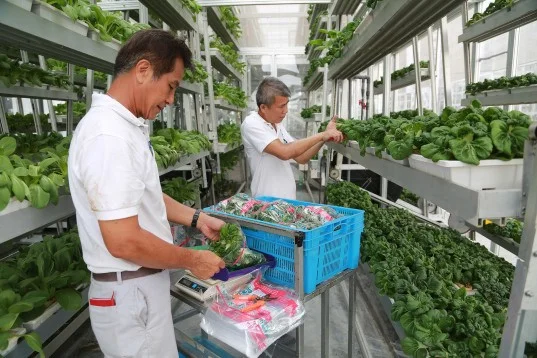
Local Farms Urged To ‘Embrace Technology’ To Increase Food Supply
Embracing technology could help Singapore farms “make a quantum leap in our food production levels”
‘S’pore can make a leap in food production levels, new innovation could be shared’BY
PUBLISHED: 4:00 AM, NOVEMBER 3, 2016
SINGAPORE — With increasing stress on global food supply brought on by growing demand and degrading conditions for producing food, farms — including those in Singapore — should take steps such as embracing technology to increase food supply, said Minister for National Development Lawrence Wong.
Embracing technology could help Singapore farms “make a quantum leap in our food production levels”, and new technologies could be shared with other countries that are urbanised like Singapore, Mr Wong said, speaking at the 27th Commonwealth Agricultural Conference yesterday.
With Singapore’s agricultural sector playing an important role in the food system here, the Government will continue to ensure “sufficient agriculture land for farms that are able to harness technologies, leverage on innovation and maximise their productivity,” said Mr Wong, addressing an audience of about 250 farmers and regional government officials.
“The Government is also supporting these farms with funding for technology adoption and R&D. So while we may be small in size, we believe that we can be a useful ‘living lab’ for urban farming solutions and new technologies,” he added.
For example, in the area of vegetable farming, Singapore now produces about 10 per cent of local demand. “But we have farmers who are starting to try out new technologies and different ways of farming.
“One of them is Sky Greens, which is the world’s first commercial vertical vegetable farm. Its hydraulic water-driven vertical farming system enables it to be resource-efficient and produce up to five times more than traditional vegetable farms,” noted Mr Wong.
Agri-Food & Veterinary Authority of Singapore (AVA) chief executive Tan Poh Hong, who also spoke at the conference, noted the growing support in promoting local produce.
Going forward, the farming sector could be “branded” differently to attract the next generation of young farmers.
“Someone in (the) computer (field) could decide to do fish farming, and use his knowledge to design a water-monitoring system that he can monitor from his iPhone,” she said.
Responding to questions from the audience on how Singapore deals with matters of limited land and short leases of 20 years, leaving farmers with little certainty, Ms Tan said that they are issues the authorities are still “mulling over”.
“We’ll be talking to the (Kranji Countryside Association), and to many of the farmers … (to discuss) what happens after 20 years.
“Our premise has always been if the land is meant for agriculture, and you use it for agriculture productively … it is likely you could get an extension on your own land, or on replacement land … We always premise on the fact productivity will be one of the key considerations in (ensuring) tenure of land,” she said.
Kranji Countryside Association president Kenny Eng was optimistic about the local agricultural community’s ability to innovate, but felt the Government needed to provide more certainty, such as with a ten-year masterplan, and keeping farmers in the loop.
Referring to the 62 farms in Lim Chu Kang which will have to make way for redevelopment plans, Mr Eng acknowledged the authorities had not been turning a “deaf ear” to their sentiments. For the 62 farms with leases due to expire next year, AVA has granted a reprieve by extending them to 2019.
New sites nearby would be opened for bidding, and in June, the AVA announced that all new agricultural land will be tendered on 20-year leases, instead of 10 years.
Mr Eng told reporters yesterday: “If we have a proper plan, then we won’t rush (things) as we know the next step is the right move and everyone will (follow) happily.
“But the frustration on the ground is that we are unsure, everyone is worried that we might (be told to shift again) … Careful thought has to be put into this industry.”
Agreeing, Ms Chelsea Wan, director of Jurong Frog Farm, said: “You can’t (just) tear down and rebuild agriculture. It takes time for people to build up an area, a reputation.”
Sky Greens founder Jack Ng felt there was no lack of government grants to draw on to boost the firm’s productivity, but there are too few specialists to guide farmers on issues such as disease management, for instance.
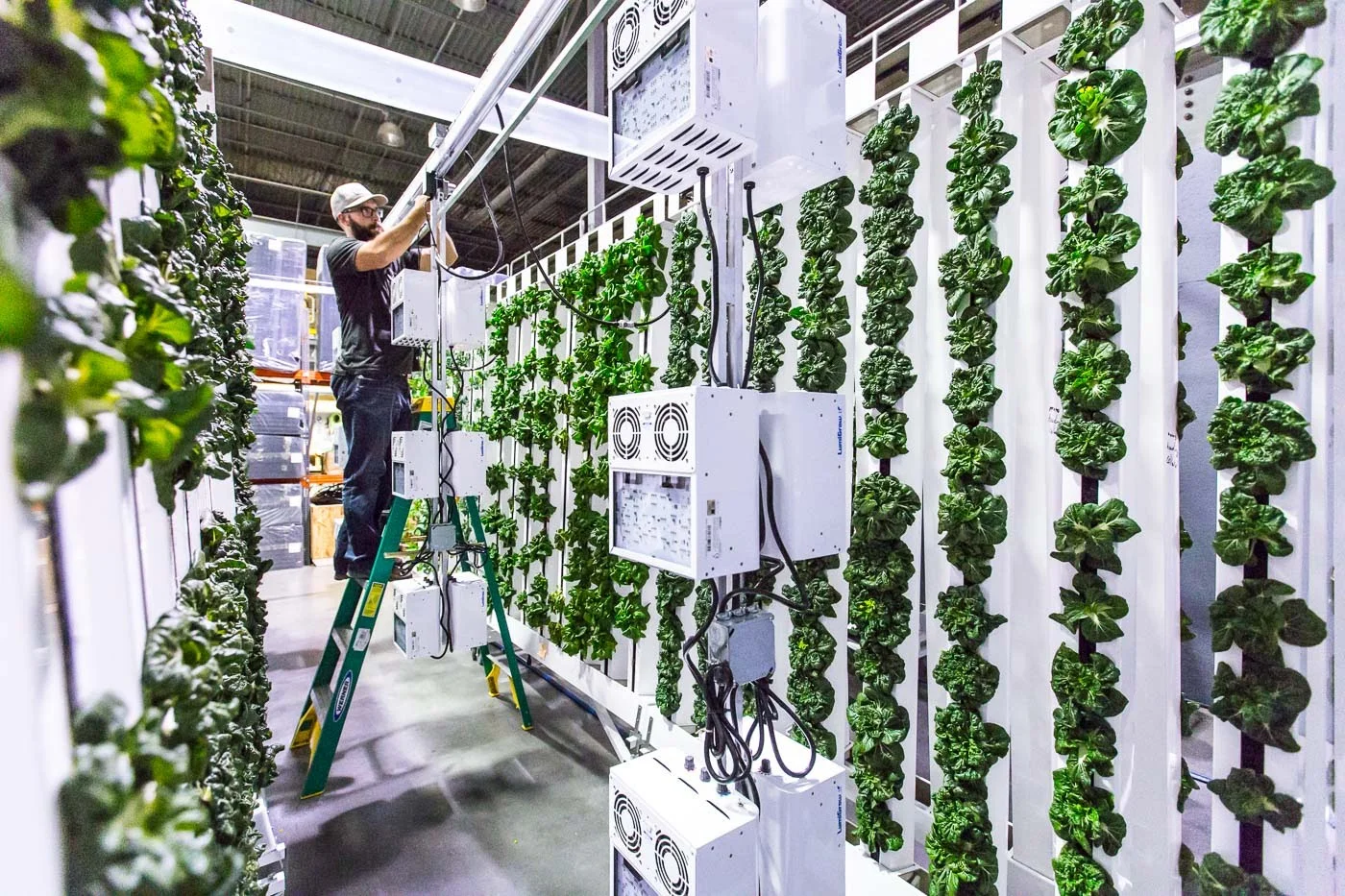
What's Indoor Farming All About?
For a lot of folks, the idea of growing plants indoors on a [relatively] large scale is a little mind boggling
What's indoor farming all about?
Chris Michael
Co-Founder and CMO at Bright Agrotech
If you've found yourself asking this question in the past few months, you're not alone.
For a lot of folks, the idea of growing plants indoors on a [relatively] large scale is a little mind boggling.
And rightly so.
At first, it's hard to understand why anyone would want to give up the beautiful, life-giving sunshine and start a farm in a warehouse, shipping container, or even their garage saying things like....
Sure the technology is fascinating and all, but sunlight is free! How could indoor farms ever justify the additional lighting cost?
I'm going to stop you right there.
As all farmer's know, there's a cost to everything. Including sunlight.
That's because sunlight (assuming you actually have enough where you're trying to grow crops) comes with its own set of limitations.
For instance, relying on the sun means you need to grow outdoors or in a greenhouse, both of which also constrain you to specific sets of conditions, crops, and costs.
Growing outside without a greenhouse of any kind means you have to live in a location with the optimal temperature range and enough quality light to grow your crops effectively. And without a covering, you're subject to temperature fluctuations and/or weather events like hail or strong winds - all of which can damage crops due to shock.
Maybe that doesn't sound devastating enough to make you want to grow indoors, but you're probably not relying on the successful sale of these crops for your livelihood either. Remember today's small farmers are largely bootstrapping their operations their ability to not only grow but sell their food means staying in business or closing their doors. No farm subsidies here either.
Growing in a greenhouse also allows you to leverage "free" sunlight as well, but don't forget about the seasons! Depending on your location, you may actually have too much sunlight in the summer and not enough in the winter (you know, like most places in the northern hemisphere). That means you have to factor in the added costs of dealing with too much heat in your growing environment (e.g. fans, cooling walls or even HVAC systems that all suck up electricity at alarming rates).
And unless you're planning on closing up shop for the winter, you're going to need to think about how to give your plants the optimal amount of light when the sun angle is too low and your light quality/duration drops significantly.
All of this assumes you have the land (and zoning approval) needed to grow crops in your city or other urban/suburban environment.
You see, nothing - including the sun - is without tradeoffs. That's how life works. That's how farming works.
Indoor Farming Helps Control the [Climate] Chaos
Now I know what you're thinking...
"If growing outdoors or in a greenhouse cost money, then growing in a warehouse must be crazy expensive!"
Maybe, but you're really thinking about this the wrong way.
The cost of farming depends on a wide variety of factors from the growing technology you use to the cost of real estate/rent, to electricity prices and market demand, but these are factors all growers, regardless of technique have to think about.
That said, once you understand the tradeoff between the benefits of natural light vs. the benefits of increased control, it's pretty easy to see all the advantages growing indoors gives modern growers and subsequently the communities they serve.
The benefits mostly come in the form of optimizing the environment to stabilize temperatures, humidity levels, lighting quality and duration, and much more. Optimizing all of these variables allows tech-savvy indoor farmers to maintain better plant health, with faster, more consistent yields.
More control also means more flexibility in terms of where farmers grow food. Barring any type of natural disaster, indoor farms aren't nearly as susceptible to the climate constraints or variability that conventional farms are, giving them the ability to grow all year long.
Because of that, I believe we're rapidly approaching a reality where fresh crops can be grown and sold anywhere, regardless of climate or conventional food distribution capabilities.
And these are just the benefits we know about... Don't even get Dr. Storey started about the ones we haven't discovered yet.
"But, what's in it for me?"
Most people who read this may not have any current connection to farming or a farmer and may be wondering why this all matters.
Well for one, it matters because our food system is broken... and chances are, you eat food.
Broken not just in terms of the 1,500 miles from farm-to-plate, the depletion of precious soil nutrients, the rampant pesticide use, the massive factory farms owned by just a few food conglomerates exploiting low-wage labor, and don't forget about the chronic droughts in parts of the country that historically have grown most of our produce... but broken in terms of the transparency and accountability that existed when agriculture was relational.
For some, the idea of "shaking your farmer's hand" might sound a little overly romanticized. And, that's fine, but can't we have some middle ground? Wouldn't you feel better about the lettuce you buy if you knew who grew it and how it was grown at the very least?
It's like they took our most basic relational (i.e. human) elements of communication, trust and accountability. All we got in return was an empty "O" label.
But indoor farming is changing all that.
One small farmer at a time.
Thanks to the bold, yet generous modern farmers around the country like Localize Farm, more and more people are getting greater access to better food everywhere.
Soon we can all have the option of feeding our families fresh, healthy food regardless of whether you live in the light-deprived tundra or the water-starved desert.
If you don't have one of these innovative farmers in your city yet, don't fret.
You will soon enough. 😉
[This article expands on a recent Instagram post I created on behalf of Bright Agrotech. If you want a glimpse inside some of the world's most innovative farms, you should totally be following us.]
Chris is the Chief Marketing Officer and Chief of Staff at Bright Agrotech. He believes strongly in the power of small farmers and small businesses to impact their communities in meaningful ways and loves playing a small role in their ability to be successful.
Embracing Technology Is Necessary To Nurture The Next Generation Of Farmers
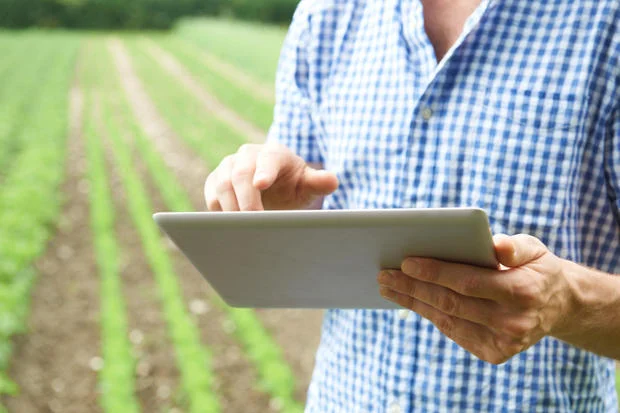
In a modern farm, there are sensors to monitor everything from temperature to humidity and illumination
Kareyst Lin | Nov. 3, 2016
Emerging technology like robotics, sensors, closed-loop agriculture systems and the Internet-of-Things (IoT) make the agriculture sector interesting and exciting for the millennials.
The new generation can help to transform farming into a high-tech profession that requires skillsets like engineering, computing and data analytics, said Lawrence Wong, Minister for National Development and Second Minister for Finance. He was speaking at the 27th Commonwealth Agriculture Conference on 2 November 2016.
Wong asserted that it is important for farmers to adopt technology because of its ability to help turn out more reliable and high-quality good products.
In a modern farm, there are sensors to monitor everything from temperature to humidity and illumination. Data is collected in real-time and information is analysed to work out the best regimes for future crops.
Developments in environmental control systems enable us to work out the best lighting, heat and humidity for optimal growth, Wong said.
This has resulted in the emergence of commercial-scale indoor farming, which protects crops from environmental impact. At the same time, it allows for vertical scaling, intensification and optimisation of agriculture land.
Even robots are being deployed on the ground to take over back-breaking work in the farms. These robots can identify weeds in fields of vegetables and zap the weeds individually. They can also recognise and pick fruits which are ripe for plucking.
These new advances will increase yield and reduce the resources required for crop production, Wong urged.
Affinor Growers’ (RSSFF) Vertical Farming System Has Many Advantages
Agriculture is one industry that will always be a major part of our global economy for obvious reasons of course… We all gotta eat
Affinor Growers’ (RSSFF) Vertical Farming System Has Many Advantages
Bolton Flautt Follow | Wednesday, 02 November 2016 16:48 (EST)
Agriculture is one industry that will always be a major part of our global economy for obvious reasons of course… We all gotta eat. A growing world population is a concern that our demand will be greater than our supply. Affinor Growers (RSSFF) is a farming technology company, engaged in designing, patenting, and commercializing vertical farming technology for indoor controlled environment and outdoor greenhouse agriculture industry in North America. It produces strawberries and other crops, such as romaine lettuce and herbs using vertical farming technology. The company is headquartered in Vancouver, British Columbia, Canada and is led by Chief Executive Officer, Interim President, and Chief Operating Officer Mr. Jarrett Malnarick.
Mr. Malnarick commenting on Affinor Growers’ purchase agreement with THC BioMed to install Affinor’s tower vertical farming system, "Affinor Growers looks to align itself in all agriculture sectors such as fresh produce, fruiting plants, and flowers. As a technology seller of vertical growing systems, this new relationship with THC BioMed allows us to continue business development within different sectors pertaining to plants and demonstrate the diversity of the technology in the vertical farming space. Affinor will now have several installations of the technology within commercial settings actively growing different crops."
Technological advancements have occurred in every industry except agriculture. However, new challenges in food security, dwindling natural resources and population growth have created agricultural problems that can only be solved through the use of technology. As a practice, traditional farming is not going to disappear, but it is crucial that alternative agricultural practices be devised to alleviate the pressure imposed by conventional farming methods.
As a solution, Affinor Growers offers patented agricultural technology and proprietary cultivation systems for vertical farming and controlled environment agriculture. Controlled Vertical Farming has a number of inherent advantages. Compared to conventional farms, it is significantly more efficient in terms of usage of space and reliance on water. Vertical farming also enables foods to be are grown in soils without the use of pesticides, nutrient rich and free from chemical contaminates. Because they can be implemented virtually anywhere, Controlled Vertical farming systems can serve communities where certain foods are not normally grown.
The fresh food organic produce is a $33.8 billion industry and is expected to nearly double by 2020. In continental North America, there are over 17,000 hectares of greenhouse farms. Affinor is the only company to offer patented vertical farming technology to both the indoor controlled environment and outdoor greenhouse industries. Affinor’s vertical farming technology will help farmers gain certain advantages by optimizing growing conditions, extending growing seasons year round and improving yields of production per square foot, as well as by improving quality through automated harvesting, handling and packaging systems.

Seven Ways To Get Funding For Your Indoor Farm
Finding funding for your indoor agriculture operation is tough
Seven Ways to Get Funding for Your Indoor Farm
NOVEMBER 2, 2016 LAUREN MANNING
Finding funding for your indoor agriculture operation is tough. Recently we wrote that venture capital funding doesn’t always make sense for startups planning to build indoor farms because the time horizon and returns profile may not match.
Newbean Capital, the investment advisory firm focused on indoor ag and organizer of Indoor Ag-Con, clearly sees the struggle faced by startups after launching a financing arm called Contain Inc.
“We decided to launch Contain, Inc. because we saw that many of the kinds of financing that were readily available to outdoor farmers—such as leasing equipment—weren’t currently offered to indoor farmers,” Nicola Kerslake, founder of Newbean Capital recently told AgFunderNews via email. “This is a significant disadvantage, as one critical aspect of establishing or expanding a farm is access to capital.”
The long-term goal for Contain Inc? To become the premier provider of capital for the indoor ag sector.
Part of Newbean Capital’s efforts has included talking to lenders about the needs of indoor farmers to help them understand the unique aspects of the sector. It’s also selected some strategic partners.
“We’re working just with Bright Agrotech’s current and prospective Upstart Farming community now, but we envision rolling it out to all indoor farmers over time,” says Kerslake. “We’ve also been thinking through the way that farmers interact with banks, and that’s something that will lead to several new features over time.”
While Newbean Capital is busy creating new and disruptive financing options, there are a few channels that indoor ag startups and businesses can use to keep the lights on and the hydroponic systems pumping.
Here are six routes you could go, whether you run a hydroponic greenhouse, a container farm, a vertical growing operation, or some other outfit.
USDA’s Rural Energy for America Program
One of the biggest inputs for indoor ag is electricity. Keeping those pink and purple hued lights burning around the clock can lead to costly bills no matter how energy efficient they may be.
The USDA’s Rural Energy for America Program (REAP) offers grants of $20k or less along with guaranteed loan financing to ag producers and small rural businesses that want to install renewable energy systems or make other energy efficiency upgrades. Examples of the ways the cash can be used include equipment to produce energy from biomass, hydropower, hydrogen, wind and solar generation, and ocean-based generation.
Applicants must earn at least half of their gross income from an agricultural operation, while small businesses in rural areas must meet other specified criteria. Eligible businesses must be located in areas with a population of less than 50,000 folks.
USDA Specialty Crop Production Grant Program
This provides funding to indoor farms in participating states to conduct specialty crop research provided that the partners in the operation include a research organization or cooperative extension that can publish the research results. The purpose of the program is to address the critical needs of the specialty crop industry by awarding grants to support research and extension that address key challenges of national, regional, and multi-state importance in sustaining all components of food and agriculture, including conventional and organic food production systems. Indoor ag companies that are willing to do some research could really benefit from this opportunity.
USDA Value-Added Producer Grant Program
Funds provided through this grant can be used to promote, market, and distribute value-added products from farms and other agricultural enterprises. This can cover things like packaging, delivery, labels, and websites. Priority is given to certain groups, including beginning farmers or ranchers, socially-disadvantaged farmers or ranchers, and small-to-medium sized operations. Family farms are also looked upon favorably. The maximum amount available to each awardee is $75k for planning grants and $250k for working capital grants.
USDA Local Food Promotion Program
Offering planning grants between $25k to $100k and implementation grants from $100k to $500k, this program supports the development and expansion of local food businesses. It’s geared toward boosting the amount of domestically-produced and regionally-grown agricultural products and to help create new markets for farmers in their local communities. Eligible entities must support local and regional food business enterprises that process, distribute, aggregate, or store locally or regionally-produced food, including agricultural businesses and cooperatives, as well as other for-profit agricultural business entities.
Microloans
Providing under $50k in capital, these short loans are geared toward early-stage companies that may not have substantial credit history. Some non-profit lenders like KivaZip offer loans of up to $25k. It usually takes some sort of collateral to get the loan, but this can be as simple as using a farm vehicle. In some instances, the lender will even provide some business support services like business planning with the microloan. Some banks shy away from offering them, finding that the cost of servicing the microloan outweighs the money that they make on the interest. Although there are numerous private and non-profit organizations that provide microloans, some public entities provide them, too. For info about the US Small Business Administration’s microloans program, click here.
Lobbying for Tax Abatements or Rebates for Indoor Crop Production at the Local Level
Local governments can create incentives for indoor ag production, giving people a financial motive for turning abandoned structures, vacant overgrown lots, and other spaces into food-producing businesses. In New York, for example, there are 10k acres of land and rooftop areas that could be prime indoor ag space. California recently passed an Urban Agriculture Incentive Zones Act, which lets landowners in metropolitan areas use a tax incentive for putting some of their property into agriculture use.
Know of another funding route for the indoor ag space? Get in touch Media@AgFunderNews.com.
Vertical Farming Innovator Urban Crops Opens U.S. Regional Headquarters
Urban Crops, a Belgian agriculture technology company, recently established operations in the U.S.
November 1, 2016
Vertical Farming Innovator Urban Crops Opens U.S. Regional Headquarters
Posted By: Rosemary Gordon | Email
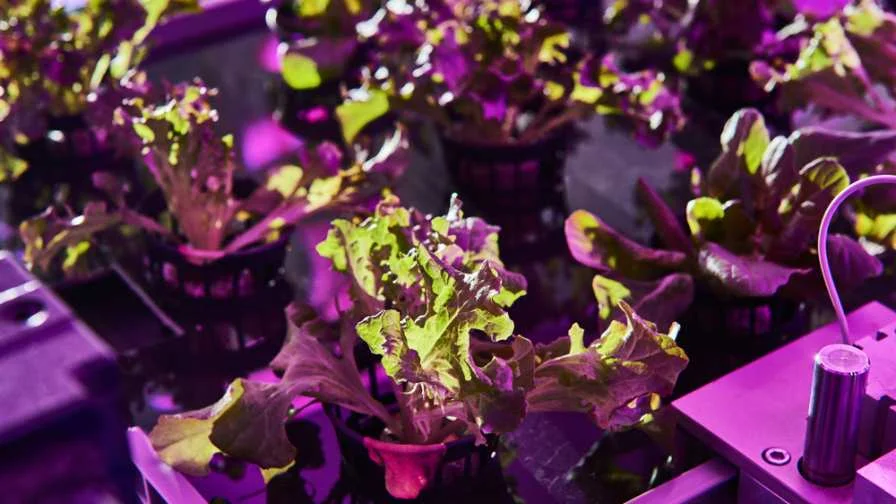
Growing crops in a climate controlled multi-layer environment with the LED lights achieves shorter growth cycles, higher water efficiency, flexible but guaranteed harvests and safe and healthy crops. Photo courtesy of Urban Crops.
Urban Crops, a Belgian agriculture technology company, recently established operations in the U.S. The company opened an office in Miami, FL, that will be responsible for North and South America.
Urban Crops is a solution provider in the closed environment, vertical farming industry and is expanding its business globally through its own offices as well as a network of sales agents. Pieter De Smedt is leading the U.S. operations for Urban Crops.
The company creates tailored growth infrastructures, which are turnkey, automated, robotized, and able to be integrated into existing production facilities or food processing units. Urban Crops also has its own range of growth container products.
The company also can supply seeds, substrates, and nutrients for all its growth recipes. Currently, more than 160 varieties of crops that can be grown in Urban Crops’ systems using growth protocols developed specifically for indoor farming by the company’s team of plant scientists.
Growing crops in a climate controlled, multilayer environment with LED lights achieves shorter growth cycles, higher water-use efficiency, flexible but guaranteed harvests, and safe and healthy crops, according to Urban Crops. The grow infrastructure can be installed in new buildings, as well as in existing (industrial) buildings, or unused spaces. The grow infrastructure also gives the clients the possibility to grow, harvest, and consume locally, every day, and in any chosen quantity.
Urban Crops’ main office is in Belgium, where the company has built the largest European automated growth indoor farm to date, which is used mainly for R&D purposes and test runs for potential customers.
“Opening an office in the U.S. became a necessity as we received numerous requests in the past months from the American continent,” says Maarten Vandecruys, Managing Director of Urban Crops. “Our grow systems and business model make it possible for all people that have interest in the agri-food, medicinal industry, or any other industrial crop production to start its own production activities, leveraging on our proven know-how of plant science and plant grow infrastructure.”
De Smedt adds: “Supplying innovative and high-quality solutions, products, and services is our core strength. Our U.S. presence is thus a very important factor if we want to service our clients and sales agents from this continent.”
Urban Crops is currently looking for sales agent candidates. For more information, contact Pieter De Smedt at pieter.desmedt@urbancrops.be, or 786-479-8902.

Target’s Talk of Vertical Farms Met With Skepticism
Some analysts are less than impressed with Target’s plans to start testing vertical farms in stores
By Ashley Nickle October 31, 2016 | 2:46 pm EDT
Some analysts are less than impressed with Target’s plans to start testing vertical farms in stores.
Business Insider reported that the Minneapolis-based retailer is looking to implement the technology as early as spring 2017. Target declined to provide information on those plans and declined to make chief strategy and innovation officer Casey Carl available for an interview.
Kurt Jetta, founder and CEO of TABS Analytics, and David Livingston, founder and managing partner of DJL Research, expressed skepticism regarding Target’s plans for vertical farming and cited the company’s reputation in the grocery category as a key reason for their opinions.
“Target struggles with just basic produce sales before getting all exotic with vertical farming,” Jetta said in an e-mail. “Their problem is that they don’t generate enough store traffic to justify a presence in produce at all. Spoilage is a recurring problem for them because the average Target shopper goes there less than 10 times per year. The average grocery store gets 20-25 trips.”
Livingston had a similar take. He noted that the company might view vertical farming as a differentiator, but he questioned whether it would be a meaningful one.
“I think this is a desperate attempt from probably an executive that really doesn’t know what they’re doing,” Livingston said. “Whoever did it did a good job of selling it to the senior-level team, but in my opinion, I doubt that it’ll work because, I’ll put it this way, if it was a good idea, wouldn’t the really successful grocers be doing it — not the one at the bottom?
“If this was a good idea, somebody like Publix and Kroger, they’d already be doing it,” Livingston said. “H.E.B., they’d already be doing it.”
Jetta cited limited appeal of vertical farms as another obstacle, stating that the concept would likely interest 10% of the population at most, a statistic he attributed to a TABS Analytics food & beverage study on purchasing of natural and organics.
“This is too niche for Target,” Jetta said in the e-mail. “They are a mass merchandiser, with the emphasis on mass. The only path to success in produce is to get more trips per shopper, and generating a 2.5x increase in trips is an insurmountable hurdle. They need to stick with high-velocity, packaged groceries.”
Livingston suggested Target might have a difficult time with vertical farming even if the idea was a great one.
“When it comes to grocery execution, Target’s been one of the worst in the industry to do it, so anything they do, the rest of the industry just assumes it’s going to be an ineffectual effect on the market,” Livingston said, “and so far everything Target’s done has been very ineffectual on the competition.”
On a more positive note, Jetta indicated that he expects Target’s new store format to be successful and said vertical farms might be a useful addition there.
“The only place where it would be viable is their new Target Express concept,” Jetta said in an e-mail. “These small-format urban stores will have the right target audience for these products. I think this new store concept will be (a) winner, but it begs the question on why they would complicate their logistics and increase their costs with this gimmick before establishing success in basic produce.”
Can Vertical Farming Sustain Food Demands in the Wake of Climate Change?
Posted by Guest Blogger on October 31, 2016
By Robert Colangelo
According to a 2015 report by the United Nations, the world’s population is expected to reach 9.7 billion by the year 2050. While those numbers are set to increase, so are rising surface temperatures and worsening droughts caused by severe weather patterns. Changes in climate are already reducing the amount of arable land and rising urban populations are depleting aquifers, creating a need for more sustainable farming solutions.
Indoor vertical farming is the practice of growing plants indoors in a controlled environment in stacking hydroponic towers. These farms produce a consistent, high quality crop year-round in a small footprint. By growing indoors, weather and climate change is taken out of the equation. Over time these farms will produce zero waste by recycling all water with net zero energy use.
Green Sense Farms grows leafy green produce indoors using sustainable farming practices with minimal impact to the environment. They can grow vegetables faster than field farms using less land, water and fertilizer- free of pesticides, herbicide and GMOs. By locating these farms at or near produce distribution centers and on institutional campuses wherever large volumes of meals are served daily, they are transforming farming. The produce is fresher and the miles food travels from the farm to the table is reduced. This truly is the future of not just sustainable farming, but a farming solution to meet growing populations and changing global weather patterns.
Green Sense Farms is building a network of indoor vertical farms around the world. By farming smarter and providing consumers with access to fresh leafy greens, communities become healthier. Research has shown that a diet filled with leafy greens is rich in antioxidants and enzymes that reduce heart disease and cancers.
Green Sense Farms has been the fortunate recipient of numerous stories about our exciting innovative indoor vertical farming technology. All this press has generated many inquiries from individuals asking how they can invest in our sustainable farm. We’re pleased to announce that the recently released crowdfunding regulations now allow for individuals to make direct equity investments in growth companies like ours. Just as Green Sense Farms has disrupted produce distribution and cut out the middleman, the new crowdfunding regulations have democratized the capital markets, allowing individuals the opportunity to take advantage of public offerings without the use of traditional stock brokers.
Green Sense Farms, the country’s largest network of commercial indoor vertical farms is an early adopter of technology and employed a new strategy to finance its growth through equity crowd funding. We launched this equity crowdfunding campaign to share the unique offering with our community. The 60-day campaign which launched in early September reached its $100,000 goal in just one day and has accumulated over $360,000 to date. The campaign, ending October 31st, can be found here: https://www.startengine.com/startup/green-sense-farms-llc.
ABOUT GREEN SENSE FARMS:
Green Sense Farms is the country’s largest commercial indoor vertical farm. The company provides nutritious and delicious produce that’s good for people and the planet. Because Green Sense Farms creates conditions that are always perfect for growing, they’re able to harvest year-round, using a fraction of the land, water, and fertilizer of traditional field farming. These sustainable farming practices make Green Sense Farms a local solution to a global challenge.Green Sense Farms is located in Portage, Indiana—40 miles outside of Chicago and has created innovation partnerships with Philips, Hortimax, Rijk Zwaan, Desert Aire and Dramm. We have also formed a business partnership with Infinite Herbs. Find more information on their website at greensensefarms.com.
As Vertical Farming Grows, A New Real Estate Opportunity Takes Root
The head of AeroFarms, an industry leader, talks tech and expansion
As vertical farming grows, a new real estate opportunity takes root
The head of AeroFarms, an industry leader, talks tech and expansion
BY PATRICK SISSON OCT 31, 2016, 9:59AM EDT
It’s a staple of rosy pictures of our urban future, often viewed as the farming equivalent of flying cars. But vertical farming, long considered a curiosity, is starting to take root now. And according to the executive of one growing company, that means expanding beyond its niche, which offers a string of related commercial real estate possibilities.
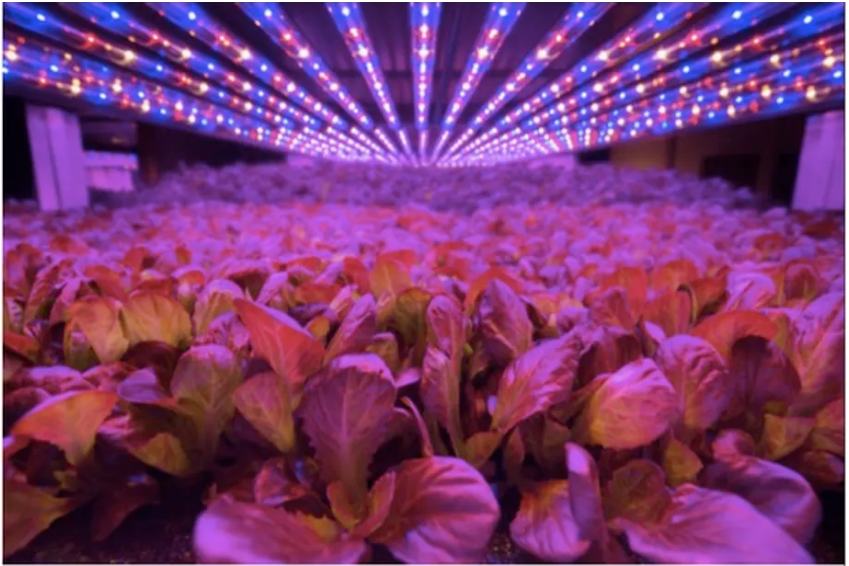
Speaking at the ULI Fall Meeting in Dallas last week, David Rosenberg, CEO of AeroFarms, spoke about the company’s technological approach to growing crops, which involves a team of engineers, data scientists, and biologists. The high-tech private agriculture company, which opened a 69,000-square-foot farm in a converted steel factory in Newark, New Jersey, earlier this year, grows greens using aquaponics: plants are raised in beds without soil, sun, or pesticides, counting on LED lights and a rigorously monitored system of pumps and HVAC units to grow. It currently counts Goldman Sachs and Prudential Financial as investors, has raised more than $70 million, and plans to open 25 farms over the next five years.
Developed over a decade, the company’s proprietary technologies, which utilizes automation and data analysis, produces results with just a fraction of the space used by traditional growing, and can constantly turn over new crops, regardless of the weather. The company is also betting that mushrooming urban populations, a desire to eat local, and worries about foodborne illness will make its system more and more attractive to consumers and investors. Executives also believe they have the necessary technological head start to be an industry leader.
“Many businesses in this space are going to go out of business,” says Rosenberg. “I’d say 90 percent in the next three years. There’s real complexity to our business that we’ve focused on. We have more than 100 people working for us, and most of them are electrical engineers, structural engineers, lighting engineers, biologists, and microbiologists.”
Since lighting and energy are the biggest cost for AeroFarms’s unconventional growing system, recent advances in LED tech have made the company’s crops of kale, arugula, and lettuce more cost-efficient. The company, which claims it offers 75 times higher productivity per square foot than the conventional model and 95 percent water, foresees even more gains as technology improves and costs drop.
That also means expansion, and as AeroFarms and other companies in the industry master the technology, it offers a new use for industrial and warehouse real estate. Right now, AeroFarms is seeking out sites with proximity to produce distribution hubs, looking for cheap land and warehouse space, as well as cheap energy; offsetting the cost of electricity with reduced transportation costs is are the core of the company’s sustainability pitch. AeroFarms is mainly concentrating on the northeast, and looking at a space in Buffalo, New York, due to nearby hyrdro-electric power. They’re also finalizing a deal for a space out west as well.
While the technology may not work for more energy-dense crops such as corn and potatoes, as it stands now, it offers a model for leafy greens that may help feed our expanding cities (just look at the concurrent rise in rooftop farming).
As AeroFarms looks to refine its next-generation take on agricultural technology, it also offers a new take on commercial real estate, combining a farm and warehouse in one large, urban facility. It just may give older industrial sites a chance for a greener future.
“We can deliver anything the plant wants, when it wants it, how it wants it and where it wants it,” Rosenberg told The New York Times.
Garden Fresh Farms - Indoor Aquaponic, All-Natural Produce From Harvest To Store In 24 Hours
Introducing Garden Fresh Farms: The farming technology company on a mission to change the way the world is fed
Garden Fresh Farms - Indoor Aquaponic, all-natural produce from harvest to store in 24 Hours
MENAFN Press - 29/10/2016
(MENAFN Press) Garden Fresh Farms - Indoor Aquaponic, all-natural produce from harvest to store in 24 Hours iCrowdNewswire - Oct 28, 2016 Garden Fresh FarmsIndoor Aquaponic, all-natural produce from harvest to store in 24 Hours
Introduce Garden Fresh Farms: the farming technology company on a mission to change the way the world is fed.
GFF is already an approved vendor for Whole Foods, J & J Distributing, Bon Appétit, Kowalski'sand H Brooks. With more partnerships with major distributors in the works, GFF will soon be the provider of choice for every major retailer who wants to deliver fresh produce to its customers.
Sustainability: Solving the Density & Energy Puzzle
Sustainability isn";t just a buzzword: it";s a call to action. With so much at stake, the obvious place to start transforming our planet is our food supply. That starts at the farm, where the vast majority of our food source problems begin.
The average traditional outdoor farm can produce just two lettuce crops per season, taking 60 to 80 days to produce each crop.That";s wildly inefficient.
If we";re going to change the way the world is fed, it starts with reducing the energy required to produce foods in the first place.
According to a University of California Extension study, it takes 19 gallons of water to grow a single head of lettuce in the irrigated fields of California. Given the drought crisis California is experiencing, that method of growing just isn";t sustainable.
Because 70 percent of our country";s produce comes from California, America";s food security is at risk. If we";re going to change the way the world is fed, it starts with reducing the energy and water required to produce foods in the first place.At GFF, that";s just what we did.
The Garden Fresh Farms Value Proposition
Garden Fresh Farms decentralizes growing, so fresh food gets to your local grocer within24 hours ofharvest. High-value leafy greens, herbs and micro-greens are harvested each morning, packaged and sent to the distributor the same day in most cases.
The GFF model is at least four times denser than current models, meaning we can grow an astounding amount of good in a very small space.
In the GFF model, light fixtures are placed just inches away from plants during the growing cycle. That subtle change allows us to optimize the light used by each plant.
In traditional models, every foot of distance between a plant and the light source means a 75 percent drop in the value of that light to the growth of the plant.
Because our model uses light sources so close to the plant, we substantially reduce the energy output required to grow each plant.
All of our farms can be hydroponic, aquaponic or a hybrid of the two.
Aquaponic farms use the aquaponic component as a source of all-natural fertilizer. Water is recycled from the fish tanks to the plants and back to the fish tanks.
The aquaponic method produces a closed loop, eco-friendly system that reduces water consumption by over 95 percent compared to a typical dirt farm.
With the Garden Fresh Farms model in place, a two-week-old seedling can be harvested in just 35 days.
Once harvesting begins, crops can be harvested 5 days a week, 52 weeks a year. Each grow simply moves down the overhead conveyer system, and is harvested daily.
Using that system, our one-acre warehouse can produce as much leafy green lettuce plants as a 100-acre dirt farm.
The Garden Fresh Farms model gives entire communities access to healthy food. We";re going to revitalize American farming and commerce, one community at a time.
As we transition to a greener form of capitalism, those that lead the sustainability charge aren";t just delivering a greener future: they";re delivering a more viable profit model.
The GFF model is environmentally holistic, taking into account the four main areas of sustainability:
When we revolutionized the food industry, the food industry took notice.
Target Corp is ready for in-store testing, and Wal-Mart is ready to order when we have the capacity.
Minnesota Cup 2013 FinalistReceived Energy and Clean Tech Division AwardFinalist in 2013 Midwest Regional Clean Tech Open CompetitionWon Sustainability Award by near unanimous voteWon National CleanTech Open Global Forum (won the National Sustainability award by unanimous vote and won the People";s Choice Award)Honored by Progress Minnesota, Eureka AwardGreen Products award from St. Paul Sustainable City
GFF is already affecting change at the local level. We";re selling our product through major distributors and are currently in local area grocery stores like Whole Foods, Mississippi Market Co-op and Kowalski";s.
We";re scheduled to start supplying Target stores, and we";re in conversations with Walmart to build a 10-unit farm in Mankato, MN, near their own produce distribution center.
We";re supplying restaurants and corporate dining through Bon Appétit to clients like Best Buy and St. Olaf Colleges. We";re also selling direct to consumers through a CSA subscription service.
The response to GFF has been tremendous - in fact, we";re having trouble keeping up with demand!
But we";re not about to let up.
We are working toward guaranteed contracts with major distributors where we can provide a huge advantage over remote long-distance suppliers with a steady supply of fresh produce at stable prices with reduced costs of transportation and spoilage.
Dave is a veteran of corporate America, and has started 10 businesses, sold several and is still active in several. He started Garden Fresh Farms to solve an empty warehouse problem, after his research on sustainable indoor systems yielded virtually nothing. He's an equipment inventor, patent-holder, manufacturer, and operations officer.
DJ worked up the retail ladder to Divisional Manager at Target. In 1997, he left Target to join Dave.
Peter has more than 42 years of experience in the agricultural commodities business. He started, expanded and later sold a commodity brokerage business. He's currently the Vice Chairman of No Time for Poverty.
Bryan has a degree from the U of M in Biology, cell genetics and chemistry. He is a co-inventor of the patented equipment.
Jeff started a thriving retail business with several locations in multi states. After successfully selling the business he set up a marketing and consulting business. Jeff";s asset is working with big box companies.
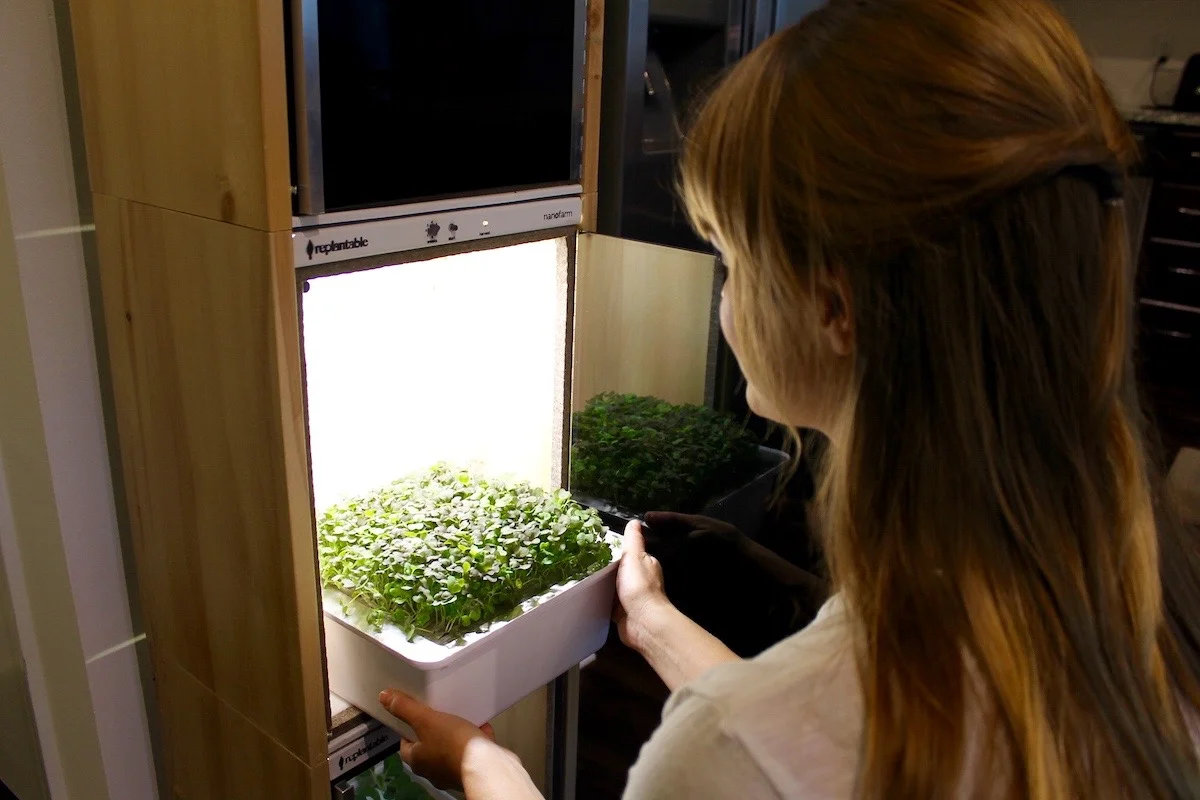
Size Isn’t Everything. Here’s a Farm That Fits in Your Kitchen
It's like a microwave that grows food!
Image courtesy of Replantable
You’ve got a microwave, a toaster oven, and a myriad of other kitchen appliances, none of which actually grow food. That could change thanks to a Georgia-based startup Replantable. They've created Nanofarm, an almost completely automated system that grows vegetables and herbs in a unit small enough to fit on your kitchen counter.
The key to Nanofarm, which is smaller than a mini-fridge, are its patent-pending plant pads, which are made out of multiple layers of fabric and paper. The pads contain the seeds and the same kinds of plant nutrients used in traditional hydroponics—elements like nitrogen, phosphorus, and potassium—that are culled from sustainable sources like compost tea and aquaculture waste. The pads sit on top of a water-filled reservoir.
The Nanofarm only has two knobs: a dial to control the grow cycle and a start button. Theoretically making it more straight-forward to grow your own vegetables than defrost leftovers in a microwave.
To start a grow cycle, just turn the dial labeled “weeks” to the number indicated on the plant pad and then push start. The “harvest” light turns on when your plants are grown. You then have about two weeks to pick your veggies or herbs. The used pads are biodegradable and can be composted. The company offers a variety of vegetables, like romaine lettuce, radishes and kale; and herbs like basil, thyme, and cilantro.
One Nanofarm can produce around 12 ounces of romaine lettuce or four ounces of basil (about five and a half packs of what you would find at the grocery store). The growing space is comparable to a good-sized windowsill planter, but the produce only takes between two to four weeks to grow thanks to the daylight spectrum LED lights that provide as much light as a California summer day, but consume less than a dollar of electricity per month, according to the company. The smoked glass front of the Nanofarm keeps the light from being annoyingly bright on the outside of the device.
The estimated retail price of the Nanofarm is $400, but you can pre-order one on the company’s website for $350. The plant pads are $8 each or $5 if you buy five or more at a time.
But it may be a while before you can get one for your own kitchen. While the company has created beta versions of the Nanofarm, the product won’t be available to consumers until late next year. Ruwan Subasinghe, the company’s co-founder, tells Modern Farmer they are currently getting samples of the parts that go into the Nanofarm and once approved, they can move into prototyping units for mass production, then onto actual production.
Dirt-Free Farming: Will Hydroponics (Finally) Take Off?
The Amazing New Way To Grow Tomatoes: In Tomato Waste
The Ultimate Ikea Hack: A Hydroponic Farm
The FarmBot Genesis Brings Precision Agriculture To Your Own Backyard
A Hydroponic Rooftop Farm Grows in the Bronx
The company just finished a Kickstarter campaign that raised about $61,000, $11,000 more than their goal. Subasinghe says they were “quite surprised” by the support they received—and not just financially. He says they got a ton of messages from people who enthusiastically believe in what they were doing. The Kickstarter contributors get the first mass-produced models that are tentatively set to be shipped next October. It will be a few more months after that when the general public will be able to get one.
Subasinghe and his business partner, Alex Weiss, met when they were attending Georgia Tech, in Atlanta, where they were working on projects involving hydroponics and issues of food waste. They realized that the produce you get at grocery stores tends to have travelled thousands of miles to reach the store’s shelves, which leaves only a small window of time before the produce goes bad, leading to food waste. They joined forces with the idea of combatting food waste and last year started Replantables following their involvement in a startup accelerator through the school. “We saw the potential for hydroponics to allow people to grow their own food at home,” says Subasinghe.
The initial prototype was just a souped up hydroponics system made out of PVC pipes with running water, filters and pumps that needed to be cleaned by the user, according to Subasinghe. They quickly realized that consumers wanted something simpler and easier to use. By the time they were done with the beta version, it was almost completely automatic and no longer resembled a typical hydroponic system since they’d ditched the pump, liquid nutrients, and inert growing medium.
“We hope that by providing technology that allows people to easily grow their own food while using fewer resources, we’re allowing the future of food to be more earth-conscious.” says Subasinghe.
Trials See Cucumbers Gain From LED Lighting
Recent trials of supplemental LED lighting in cucumber glasshouses show they can increase both productivity and sustainability
Trials see cucumbers gain from LED lighting
28 October 2016, , Be the first to comment
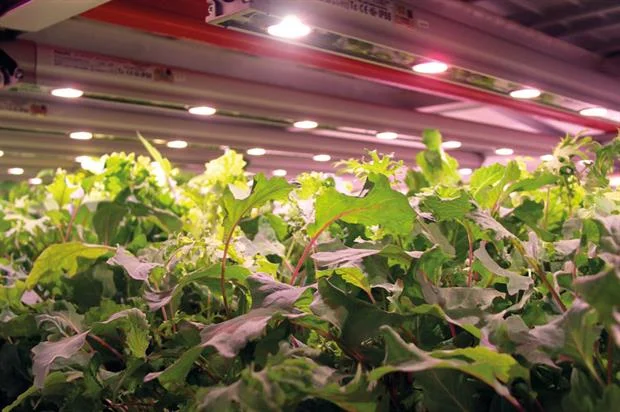
Recent trials of supplemental LED lighting in cucumber glasshouses show they can increase both productivity and sustainability, Philips Horticulture high-wire crops specialist Piet Hein van Baar told the Cucumber & Pepper Growers Day.
Trials show how LED lighting in cucumber crops boosts productivity and sustainability
One trial compared growing midi cucumbers on a high-wire format in Poland under three lighting regimes: high-pressure sodium (HPS) toplighting and LED interlighting; both LED topand interlighting; and only HPS toplighting, each in a 60 sq m compartment at 3.14 plants per square metre.
These were first planted in December 2014. Over the four months of the trial, the all-LED plot yielded 43.1kg of fruit, compared to 40.6kg for the hybrid format and 34.7kg for the HPS-only control - indicating an uplift of 24 per cent for the all-LED format.
A further crop begun in December 2015 then tested the proposal that higher planting densities, hence higher yields, would be possible under LED lighting. Indeed at 3.66 plants per square metre, the all-LED format yielded 54.3kg in four months, and the hybrid 47.5kg, while at the lower density the yield under HPS also improved to 39.6kg, but this still left the all-LED system 37 per cent ahead.
"With 100 per cent LED the fruit development is also faster while the water use is nearly 14 per cent lower," Van Baar added. "But adding LED interlight to an existing HPS system can also give you more grams per mol of light."
A separate trial at a Dutch commercial grower in a glasshouse too low for overhead lighting assessed what benefits if any are brought by double LED interlighting booms between high-wire long cucumber aisles.
"With 18 hours of lighting there was significantly more production," said Van Barr, adding that this had the side-effect of raising temperature over much of the trial period. The interlighting appeared to promote earlier production, gave fewer signs of Mycosphaerella infection and yielded fruit with five-to-seven days longer shelf life.
Trials are also ongoing to ascertain the value of LED lighting in pepper production, he said. "Interlighting appears to strengthen the pepper plant and boost production by seven-to-10 per cent, but it takes two months for the crop to grow high enough to fully benefit." LED toplighting remains another area for further work, he added. "It should make winter pepper production possible - you can't do it with just interlighting."
He estimated that around two per cent of the Netherlands' glasshouse area now uses some form of LED lighting, but pointed out: "You need a specialist to work out the most efficient light distribution for your crop."
CGA technical officer Derek Hargreaves noted: "HPS is effective but not profitable - not due to the lighting, but to the price of cucumbers."
LED lighting further complicates the already complex interactions of factors governing the behaviour of pests, beneficial insects and the growing environment, Stockbridge Technology Centre (STC) director of entomology and sustainable agriculture Dr David George told the conference. These include visual, chemical and physical cues, he said. "Plants alter their chemistry in response to pests, to limit damage and attract biocontrol agents, and the nature of this response can be affected by the type of light."
Enclosed LED systems such as the LED4Crops facility at STC "require back-to-basics thinking" to optimise pest monitoring, choice of beneficial insects and pollination, he said. "Supplemental lighting in glasshouses and polytunnels could present similar opportunities and challenges."
His STC colleague Dr Phillip Davis, who manages LED4Crops, explained the growing understanding of individual crops' lighting needs. "Light colour influences leaf pigmentation and morphology," he said. "Flowering is inhibited by red light but promoted by far-red light. Under blue light you can get lettuces that are almost black, and so high in anthocyanins. Blue also helps to open stomata, though there is a trade-off between biomass and quality. Plants are very sensitive to UV-B light as it's very damaging."
With all this in mind "we can start to design a lighting regime that gives you the kind of plant you want, including by supplementing sunlight in a glasshouse", he said. "Selecting light spectra can improve quality and efficiency, and plants will benefit from different spectra at different stages of growth."
He added: "We are hoping to look next at the interaction of light and pathogens - but informally we seem to be enhancing plant immunity with LEDs."
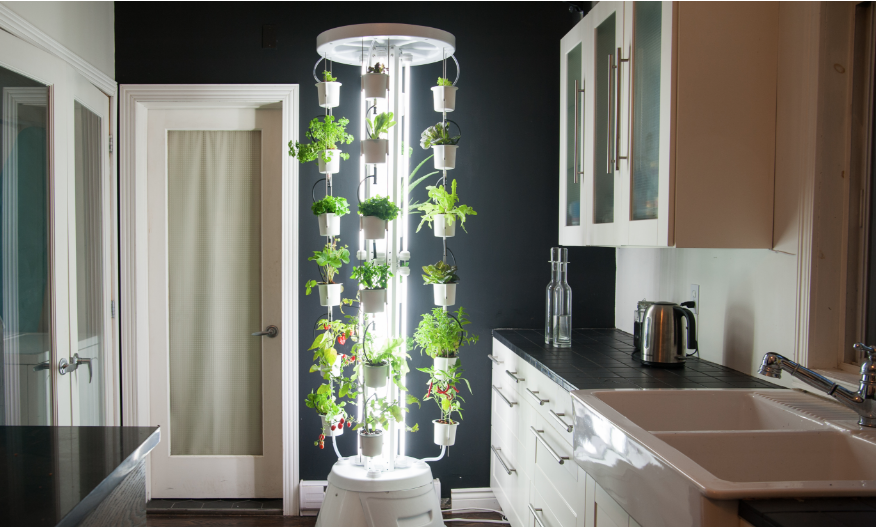
Indoor Gardening Made Easy: The NutriTower!
The NutriTower is a vertical hydroponic system specifically designed for indoor use
I’ve always dreamed of having my own indoor garden so that I can be self-sufficient during winter, but I live in a tiny apartment and have no room for a hydroponic system… Or so I thought! Thanks to the NutriTower, this dream of mine is now possible!
The NutriTower
The NutriTower is a vertical hydroponic system specifically designed for indoor use. It is the first system to use the patent-pending vertical lighting design. This technology allows you to grow more food than ever before without taking up valuable floor space! In just under 2 square feet of floor space, with up to 48 pots, it’s the most efficient method of growing food on the market.
How Does It Work?
The NutriTower is a vertical hydroponic system that is simple, elegant and efficient. The patent-pending vertical lighting design and the gravity fed nutrient delivery system make this the most effective way of growing food in your home year round.
- Strong custom extruded aluminium frame
- The only system with vertical lighting
- Energy efficient high output bulbs
- Standard 24 pot layout is highly customizable
- Pots are easily removed for maintenance
- Gravity does most of the work
- Large reservoir means less maintenance
- Quiet pump runs only a few minutes each hour
- Individual timers so you’re in control
- Small footprint allows it to be placed anywhere
The NutriTower is designed to be flexible to its users needs. You can customize your systems to be more oriented toward leafy greens or fruits and vegetables or a mix! Because it is a hydroponic system, there is no messy soil to deal with.
My friends from the Valhalla Movement who have personally seen and interacted with the system have loved it so much they will use it in their own greenhouse inspired earthship! If you are still not convinced why this system is awesome, click here to learn 8 reasons why the food revolution might happen in your kitchen!
Want This Technology?
Visit NutriTower!
The therapeutic benefits of having living plants around you has been proven again and again. Not only will you have fresh organic food, you will be saving the world from food miles (distance food travels from producer to consumer). With this new addition to your home you will be sure to have some interesting conversations as friends visit to see 5 (or more) different veggies growing in your kitchen!
This Farm Uses Only Sun and Seawater To Grow Food
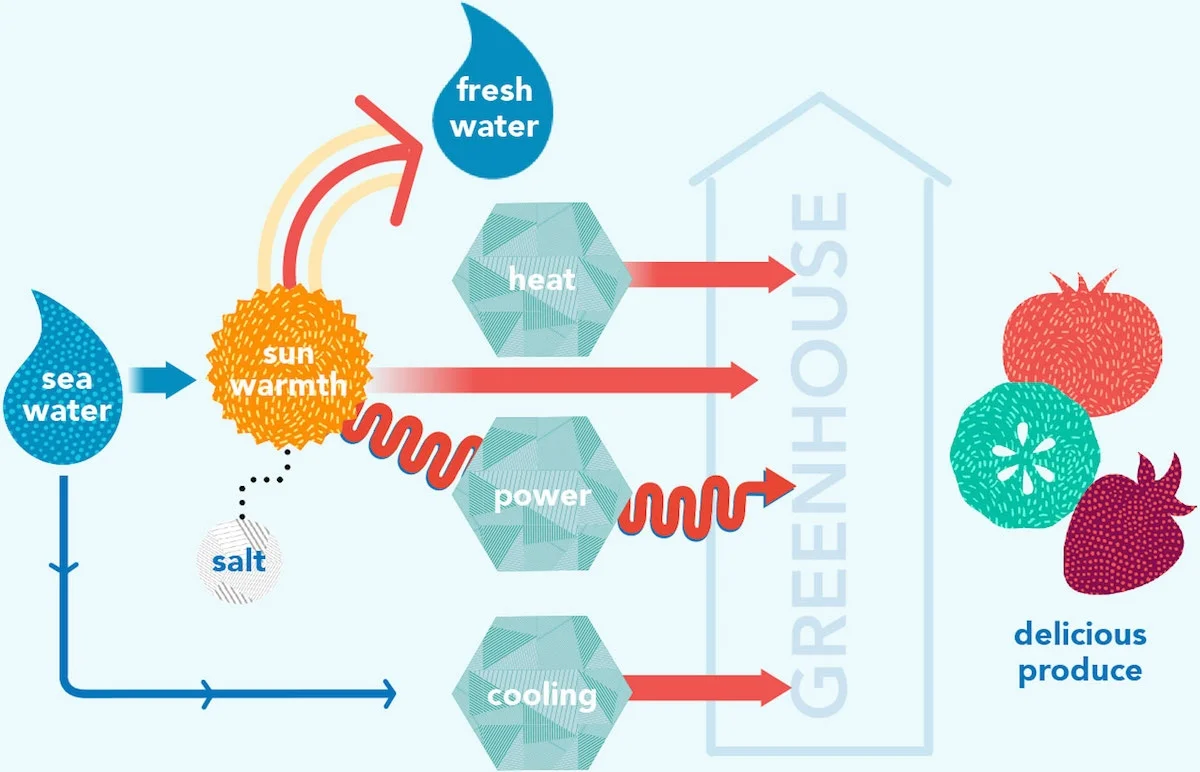
Sundrops Farms in Australia uses solar power to convert seawater into usable water for crops, which are grown in coconut husks instead of soil
In the arid desert of coastal South Australia, a new indoor farm is using the two most available resources, that also happen to be free—sun and seawater—to grow tomatoes. Lots and lots of tomatoes.
Sundrop Farms, located near Port Augusta in South Australia, is the first commercial agricultural system of its kind: It doesn’t use groundwater, soil, pesticides, or fossil fuels to grow crops. The project has been a six-year odyssey that began with a pilot greenhouse in 2010, followed by the construction of a nearly 50-acre facility in 2014 that, as of earlier this month, is now fully up and running with a projected capacity of 18,000 tons of tomatoes —the crop the company is focused on at this facility—a year, according to Sundrop.
Here’s how the company explains it: Seawater is pumped from Spencer Gulf, located about a mile and a half away from the facility, where it’s desalinated through a solar powered thermal unit. “Sustainably sourced” fertilizers and micronutrients are added to the water (they won’t give details regarding their nutrient mix), which is then used to hydrate the tomato plants, which are grown in coconut husks instead of soil (a renewable resource), which also aids in root growth due to their natural hormones. According to Philipp Saumweber, Sundrop Farms CEO, the they don’t have to use pesticides the they pump seawater through the facility’s air filters, which kills insect pests due to the high salt content in the water-saturated air.
The farm’s solar power is generated by 23,000 mirrors that reflect sunlight to a more than 375-foot high receiver tower. On a sunny day, it can produce up to 39 megawatts of electricity, which is more than enough to power the desalination system and the rest of the facility’s power needs. Excess thermal heat and water are kept in storage facilities on the farm to use when needed, according to Saumweber. That said, the facility remains on the electrical grid as a back up for 10 to 15 percent of its power needs when weather makes it difficult to rely solely on solar power.
The company spent about $200 million on the project, with $100 million coming from the global investment firm KKR, a larger outlay than a typical hydroponic greenhouse system, which can run about $1 million an acre. But, according to Saumweber, who spoke to New Scientist, the seawater system will pay off in the long run since conventional greenhouses are more expensive to run on an annual basis since the rely on the power grid, which is powered by fossil fuels.
The price tag isn’t stopping the company from building another farm in Australia, one in Portugal, which was recently completed, and one in Tennessee, which broke ground this year. While not all of them may use seawater or a solar tower, they will all have some “sustainable resource angle,” according to an Australian Broadcasting Corporation interview with Reinier Wolterbeek, the chief technology officer for Sundrop Farms. When Modern Farmer asked Saumweber whether he could be more specific, he answered that he couldn’t “at this stage,” and added “that we will always use sustainable inputs to dramatically reduce our reliance on finite natural resources.”
The company partnered with a large Australian grocery retailer, Coles, with whom they have a ten-year contract. Tomatoes from their pilot program, which started before the larger facility came online, are already on grocery store shelves.
Not everyone feels the system makes economic or environmental sense, at least in regard to the project in Australia. Paul Kristiansen, a professor at the University of New England, Australia, told New Scientist, that since there wasn’t a problem growing tomatoes in other parts of Australia, the need to grow tomatoes in a desert was a “bit like crushing a garlic clove with a sledgehammer.”
Environmentalists have taken issue with desalination due to the amount of energy it takes to produce potable water, and the problem of the disposal of the highly concentrated salt brine that’s dumped back into the ocean, which can be too salty for marine life to inhabit.
Sundrop Farms’ technology answers the energy question with its use of solar power. As to concerns about impacts on marine life, Saumweber says their system doesn’t result in water with high levels of salinity. According to Saumweber, cooled seawater from the greenhouse cooling system is mixed with warm elevated salinity seawater in a large lined storage tank for discharge back to the ocean.
“The large size and surface area of the storage and the mixing of warm and cool streams results in a seawater that is only slightly more concentrated and at a similar temperature to the ocean,” he tells Modern Farmer in an email. “The minor increases in salinity at the discharge location as approved by the Environmental Protection Authority.”
In the face of the high loss of groundwater worldwide and other problems associated with climate change, Sundrop Farms’ technology may prove to be helpful in combating these issues as we try to figure out how to provide enough food to feed the world’s growing population, estimated to be 9.6 billion people by the year 2050.
Making Urban Ag Happen in LA – A Gathering of Thinkers & Leaders
The Larta Institute’s mission is “to energize the transformation of technology ideas into solutions that elevate economic opportunities and make lives better for people around the world.”
Making Urban Ag Happen in LA – A Gathering of Thinkers & Leaders
OCTOBER 27, 2016JIM PANTALEO 0
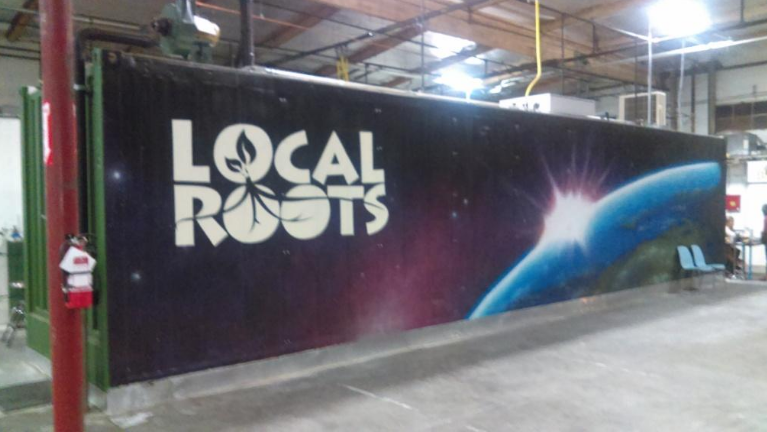
I recently had the opportunity to attend an event in Los Angeles hosted by urban farm start-up, Local Roots Farms. It was sponsored by the Larta Institute, Indoor Ag Con and Autogrow Systems.
The Larta Institute’s mission is “to energize the transformation of technology ideas into solutions that elevate economic opportunities and make lives better for people around the world.” And digging deeper, the Larta Institute’s Global Ag Innovation Network (GAIN) is a national forum of thinkers and leaders in the agriculture innovation community that utilizes the network to stimulate the creation and implementation of solutions to pressing challenges across current food and agriculture value chains.
With over 100 of those “thinkers and leaders” gathered on a balmy October evening at Local Roots Farms, the Larta Institute is certainly capturing the essence of their mission. On this night, Dr. Claire Kinlaw, Larta’s Director of Agriculture Practice, moderated a panel of indoor agriculture experts which included: Nicola Kerslake of the well-known industry-gatherer, Indoor Ag Con and investment adviser from Newbean Capital; Kelley Nicholson of Autogrow Systems; and Local Roots’ co-founder, Eric Ellestad. Together they fielded questions from the audience which crossed a number of spectrums in the indoor Ag world, including everything from the safety of the plastic used in manufacturing NFT’s (nutrient film techniques) to grow plants in to inquiries from those seeking funding for their Ag start-ups.
Among the notable crowd was Henry Gordon-Smith (see the Association for Vertical Farming andAGRITECTURE), and a student contingent from Cal Poly Pomona’s School of Agriculture, led by Department of Plant Science professor, Eileen Cullen.
Claire Fox, Executive Director of LA’s Food Policy Council detailed their mission of acting as “a collective impact initiative working to build a Good Food system for all Los Angeles residents — where food is healthy, affordable, fair and sustainable.”
Claire Kinlaw relayed her pleasure and excitement at the larger-than-expected turnout, “This is about community justice – people want to know where their food comes from.”
Nicola Kerslake was even more vocal. “This is an awesome event with Larta getting it right in terms of the roles of government and economic development.”
Kelley Nicholson from Autogrow Systems noted, “It is exciting to see all the passionate people exploring Urban Ag… for years I have been supporting indoor farmers and it was great to get everyone together to share their experiences and expertise. Working together, we will make Urban Ag in Los Angeles a real possibility!”
Eric Ellestad was energized by the “inspiring, diverse and robust crowd” and is “excited that Local Roots Farms is an integral part of the movement” bringing indoor agriculture to Los Angeles and beyond.
Local Roots Farms, in particular, holds a special spot in my heart, and I owe a literary shout-out to their COO, Matt Vail, as he was the very first person to allow me into their initial container for a tour back in late 2014. I remember meeting Matt at the KISS (rock band) restaurant, Rock & Brews in Redondo Beach (his choice) for lunch. I immediately sensed not only was this a smart dude, but that he was going to make a real difference in the world of precision agriculture and indoor farming. The container was housed in an industrial lot around the corner from SpaceX in Hawthorne and my pupils dilated upon entering the inner sanctum of butter lettuce bathed in pink LED lights. Indeed, time has proven me right in that Local Roots Farms has not only grown in employees and containers but they are also supplying produce to the likes of Tender Greens, SpaceX and Mendocino Farms, to name but a few of their marquee customers.
The key themes of this night were about community justice, bringing passionate people together for a shared cause, elevating economic opportunities and making the world a better place. In the view of many, myself included, this is what it’s all about. For this, you’ve got to love LA.
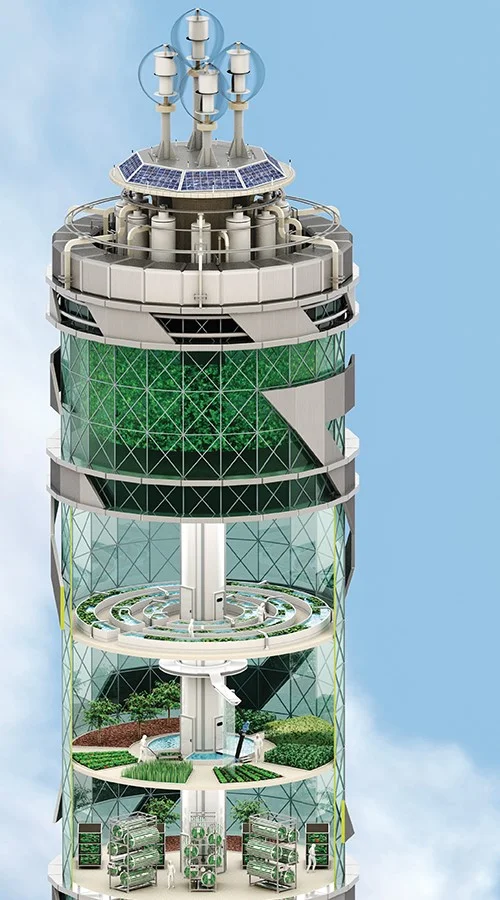
Growing Up…Vertical Farming
Dickson Despommier, a professor at Columbia University, talks vertical farming
Vertical farming–as the name suggests–refers to cultivating crops in multi-story greenhouses. These vertical farms are fitted with modern technology (hydroponics, aeroponics and aquaponics) and enable crops to be grown in the center of urban areas. Being a closed-loop agricultural system, it's the cleanest industry you can imagine, filtering dirty air and rain water during the process.
The concept of vertical farming has been around since the 1980s–when we started to realize a change was necessary–but didn’t evolve into a viable solution until the late 1990s, thanks to technical advances.
However, today we can no longer avoid the need to find new solutions. One example are wine growing regions which can be used as a barometer to measure climate change as grapes require such a specific regime of humidity and temperature to grow. In fact, according to wineologists, in 50 years wine growers in Bordeaux will no longer be able to grow grapes in the region. We can see in many regions that optimal wine growing conditions are moving north in the northern hemisphere and south in the southern hemisphere–for example, ideal climatic conditions for growing the Pinot Noir grape are shifting steadily north from the Napa Valley, towards northern California and even into Oregon.
These changes are also having a tangible impact on corn, wheat, barley, rice and other cash crops. As our populations expand we will need to start growing crops in new regions that don’t necessarily have the correct soil types. Vertical farming provides the opportunity to bypass these regional environmental hurdles by creating prime exterior conditions indoors.
Benefits of vertical farming
- Year-round crop production – there are no seasons in a vertical farm, so any crop that can be grown indoors can be produced year-round, locally
- Requires very little water – water is scarce in many locations but water used in vertical farming is recycled in a closed loop cycle which means availability and waste of resources is not a problem
- Employment opportunities – vertical farms are located in the city and therefore provide employment, in a pleasant environment for urban dwellers
- No soil contamination – with no agricultural run-off, need for fertilizers or heavy metal contamination, vertical farming eliminates the usual pitfalls associated with outdoor traditional farming
- Repurposes old buildings – warehouses equipped with the right infrastructure make the ideal vertical farm, negating the need to destroy old buildings
Encouragingly, an increasing number of big companies are now getting on board with vertical farming and developing the idea at a corporate level, including Toshiba, Panasonic and Goldman Sachs–who are funding a large vertical farm in Newark, New Jersey. A clear demonstration that vertical farming is a viable and efficient way of growing food for urban populations and industry will have a core role in making this happen.
Vertical farms are also beginning to harness the power of natural energy sources. For example, the power of geothermal energy is being harnessed in places like Italy, USA, Iceland, New Zealand and Japan. Huge opportunities also exist in places like Australia where the climate is favorable and solar energy could be used. There will be a whole host of alternative energy solutions to generate electricity for these farms, meaning the more we invest in thinking about how to do things ecologically, the more economical the process of vertical farming will become.
Vertical farming presents a huge investment opportunity, and as you would expect, the concept is now gaining extensive global interest thanks to the possibility of creating inexpensive, healthy and locally produced food.
For example, we only need to look to China which has employed US company, Green Sense Farms, to develop 20 vertical farms across major cities in the country.
Farms of the Future
Solar powered irrigation system
SunCulture is providing solar-powered irrigation systems for farmers in Kenya, enabling them to grow additional fresh fruits and vegetables at less cost. The system–delivering water directly to crop roots–provides yield gains of up to 300 percent and 80 percent water savings.1In areas of low and unpredictable rainfall, this system is proving invaluable and ensuring farmers can avoid high fuel costs, negating the need for diesel-powered generators.
Drones for crop management
Start-up PrecisionHawk has created a lightweight drone to gather high-resolution aerial data enabling the agriculture industry to “optimize area usage and increase land use efficiency”. The system–integrating drones and software–provides information on “the status and health of crops and soil”, enabling maximum crop yield. Going one step further, the drone can also identify areas at risk of drought, detect disease (in plants and animals) and estimate growing time for crops. A highly useful tool for drought affected regions.
Dairy hubs
A dairy hub refers to community dairy “development programs” which have been launched successfully in Bangladesh and Pakistan and are currently being piloted in East Africa and India. Linking smallholder farmers to dairy processors, this model enables cost cutting, higher incomes, healthier livestock as well as access to proper infrastructure. With milk being an important source of energy,
vitamins and minerals, it also increases the availability of a long term supply of safe, affordable and local milk in these regions.
CONTRIBUTORS
Dickson Despommier Microbiologist and Ecologist
As an Emeritus Professor of Microbiology and Public Health at Columbia University, Despommier conducted laboratory research for 27 years, which he left in order to focus on globally relevant projects, such as parasitism and its impact on societies living in the tropics. In “Growing Up…Vertical Farming”, IN spoke with Despommier about vertical farming, and its critical role in achieving agricultural s
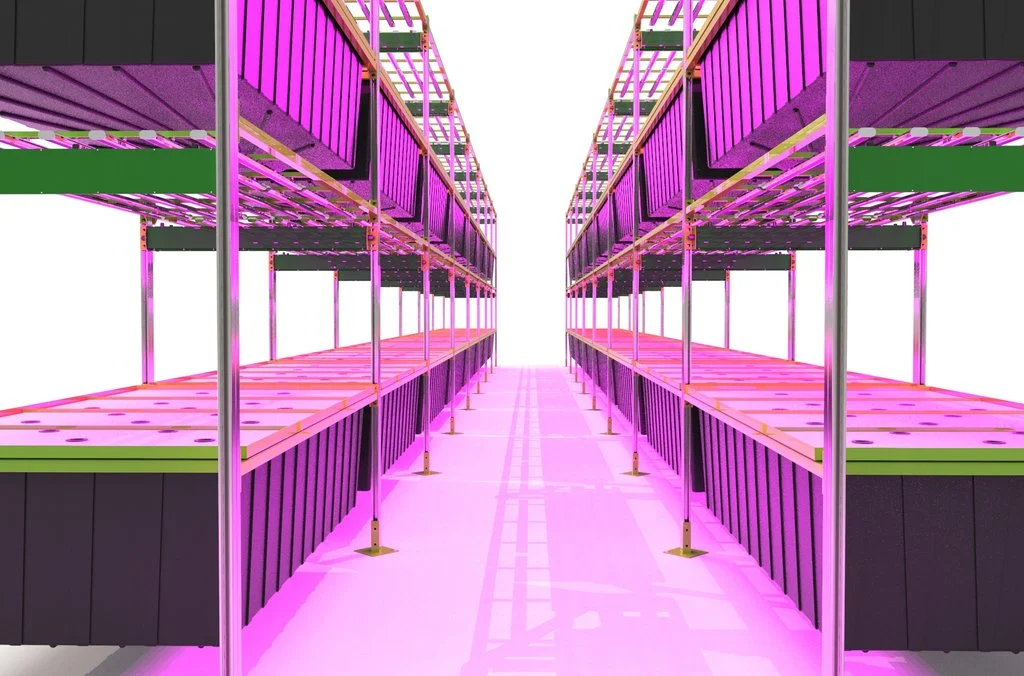
Indoor Harvest (INQD): Aims to Provide Innovative Equipment Solutions To The Burgeoning Indoor Farming Market
In an effort to address sustainability and environmental issues, indoor farming is positioned to revolutionize agriculture
Indoor Harvest (INQD): Aims to Provide Innovative Equipment Solutions to the Burgeoning Indoor Farming Market
Destiny A. Lopez Follow | Wednesday, 26 October 2016 12:10 (EST)
In an effort to address sustainability and environmental issues, indoor farming is positioned to revolutionize agriculture. According to The Institute, vertical farming has already started to display impressive benefits over traditional farming methods. “Out in a field it could take 45 days to harvest leafy greens; indoors, with optimization techniques, the same greens can grow in as little as 12 days,” The Institute reported in May 2016. “And because indoor farming can continue year-round, it can be up to 75 times as productive as traditional methods.” Indoor Harvest (INQD), an art design-build engineering firm, aims to meet the needs of this burgeoning sector with innovative equipment solutions.
A Houston-based company, Indoor Harvest is a full service firm specializing in equipment design, development, marketing, and direct-selling of commercial grade aeroponics fixtures, vertical farm fixtures and supporting systems for the urban agriculture and building integrated agriculture sectors. Its product offering fall into one of the following categories:
- Leafy Greens/Herbs
- Medicinal Plant/Research/Biomanufacturing
- HVAC/Production Retrofits
Within its Microgreens/Leafy Greens/Herbs category, the company’s Modular Vertical Farm Framing System aims to eliminate complicated, cumbersome and time consuming step ups. Thanks to its modular design, the product allows for expansion.
Within the past 30 days, the company has seen some interesting movement in the market.
Moreover, in an interview with CashiInbis, Chad Sykes, CEO of Indoor Harvest, provided insight into the company’s goal to reduce the high costs associated with cultivation operations. “Indoor Harvest’s technology can dramatically reduce the cost of goods,” Sykes told Cashinbis in 2015. “You can see almost a 70% reduction in the cost of goods for a number of cultivars; It reduces fertilizer use by about 60%; It can reduce water usage by about 90-98%; And it also speeds vegetative growth by about 15-20%. Most of these guys are using rock wool or coco as their growing medium and with aeroponics, there is no growing medium at all needed. You also eliminate the cost of the rock wool, the coco, and the labor associated with disposing of it. “
Along with its current efforts to separate its cannabis and produce operations, the company has a number of strategic developments in progress that potentially strengthen its position for operational and financial growth. “we executed two construction related contracts in July valued at approximately $11.5 million,” said Chad Sykes, CEO and founder of Indoor Harvest. “We will continue to maintain previous guidance and expect that by year's end we will reach positive cash flow and move towards profitability by mid-year 2017.”
The investment community looks forward to future developments from the company.
To learn more about Indoor Harvest, visit www.indoorharvest.com