

Welcome to iGrow News, Your Source for the World of Indoor Vertical Farming
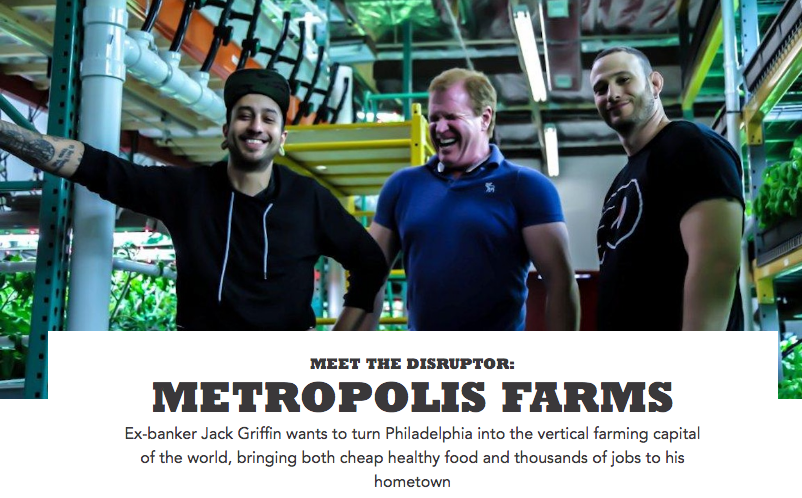
Ex-Banker Jack Griffin Wants To Turn Philadelphia Into The Vertical Farming Capital of The World
Griffin says that he’s “sitting on at least $10 million” in potential contracts for his vertical farming system, and that he’s drawn interest from investors as far away as Moscow
OCT. 26, 2016
If you’re a wide-eyed urbanist, you may have seen the online mockups of towering Jetson-esque pod-farms drafted up as a template for vertical farming, possessing as much space as skyscrapers, with mighty oaks exploding toward the sun 500 feet from the ground. A darling notion, but that ain’t what’s happening, at least not yet: Metropolis Farms, Philly’s only vertical farming outfit, sits in a low, unassuming building in South Philly, not far from Tony Luke’s or IKEA.
But it could be the seed of something huge.
“We’re looking to completely change the system,” says Jack Griffin. Griffin is the president of Metropolis Farms. As it stands, Metropolis is one of only a handful of vertical farms in the U.S., and the first certified-vegan vertical farming outfit in the country.
Griffin, a former merchant banker originally from Philadelphia, says that he has been obsessed with the concept of vertical farming for years, ever since turning down a vertical farming outfit for a loan several years ago. He opened Metropolis Farms after two years of planning, research and development last February. Although his outfit currently employs fewer than 10 people, he plans to grow his staff to around 100 by the end of 2017 with coming business expansions. Griffin says that he’s already turning a profit in his vertical farming business, but that’s nearly beside the point: The man has big plans for the future of the exploding industry.
Griffin sees Philadelphia not only as the home base for Metropolis Farms, but as its international hub: R&D will be conducted in Philadelphia; people will come from around the world to train as vertical farmers here; nearly the entirety of the manufacturing will be done in Philadelphia.
Farmers around the world are utilizing new techniques to grow larger crops in more challenging environments than in the past. Israeli farmers have pioneered growing crops from the desert; California farmers are looking to the ancients for ways to solve their water woes; community farming in U.S. cities has exploded in recent years. With good reason: Our population is growing at a massive clip, with an estimated 10 billion people due to be on the planet by 2050. Keeping all of us fed is going to be one of our biggest challenges—especially when arable land is being gobbled up by drought and desertification, and climate change is having an increasingly brutal effect on U.S. crops. And cities, which people are gravitating toward at a nearly unprecedented rate, lack virtually any agricultural infrastructure.
In response, Metropolis is attempting to pioneer modular vertical farming apparati, to be manufactured in Philadelphia. Griffin says that one of his modular vertical farming towers would cost somewhere between $16,000 and $17,000, and that a full array of 30 would cost around $500,000. Compare that to, say, the Aerofarms indoor farming project in Newark, N.J., the premier vertical farming installation on the east coast, which cost $30 million to build.
Griffin says that he’s “sitting on at least $10 million” in potential contracts for his vertical farming system, and that he’s drawn interest from investors as far away as Moscow.
That’s because vertical farming, if done right, is a no-brainer of a civic investment. The process requires considerably less energy than traditional farming. There is no heavy equipment involved; no backhoe or tractor fleet is needed. The most dramatic up-front cost is the lighting and rigging.
Vertical farms are indoors, which means farmers can create perfect growing conditions, letting them grow crops all year, and harvest at a faster rate than traditional farms. A properly sterile environment is also immune to bugs and diseases that plague traditional crops, so there’s no need for pesticides and germicides.
What’s more: Locally sourcing your food means significantly lower transportation costs. Transportation costs are a main driver behind the high price of produce, and the length of the transportation process can severely diminish a product’s shelf life. If the number of high-volume vertical farms increased dramatically in cities, it would obviate the need to cart produce in from far and wide; hypothetically, you could U-Haul the crop from South Philly to the Trader Joe’s in Center City (or Whole Foods, which Metropolis Farms currently supplies).
“Instead of being a customer, we have to become our own supplier,” says Griffin of Philadelphia. “That way, we can keep our money moving within our own city.”
Investors are clamoring to get in on all that vertical action, with the market for vertical farming expected to expand to roughly $3.9 billion by 2020. That’s a lot of green for a lot of green.
So vertical farming may yet save the world and make a bonzer profit. But what can it do for Philly, the poorest big city in the country? The U.S. Department of Agriculture estimates that 11 percent of households in Philadelphia are food insecure; according to the Hunger Coalition, one in four people in Philadelphia is at risk for hunger. “The problem is food access,” says Griffin.
Griffin says that one of his modular vertical farming towers would cost somewhere between $16,000 and $17,000, and that a full array of 30 would cost around $500,000. Compare that to, say, the Aerofarms indoor farming project in Newark, N.J., the premier vertical farming installation on the east coast, which cost $30 million to build.
Metropolis Farms has a plan to battle malnutrition and hunger in a novel way, even before vertical farming becomes commonplace. Griffin has set up a nonprofit, called Grandma’s—a name that he got from a friend—and says he is in the process of negotiating with SEPTA to donate two busses. The buses are going to be converted into “mobile markets” for vegan meals, and deployed into low-income areas—including his old neighborhood in North Philly. “We’re going to develop low-cost, highly-nutritious—but they also have to be really tasty—meals. No one wants to survive on McDonald’s hamburgers, but when that’s all that’s around, that’s all you buy,” he says.
Grandma’s will accept SNAP benefits, and Griffin’s goal is for the meals to cost less than your average fast food meal. He says that he’s already talking with “top chefs” in Philly about the project. But that’s only the short-term play to share the profits of the vertical farming revolution with Philly.
Metropolis Farms wants to keep vertical farming development in Philly. Griffin sees Philadelphia not only as the home base for Metropolis Farms, but as its international hub: If Griffin gets his wish, R&D will be conducted in Philadelphia, assisted by the biggest brains from Penn, Villanova, and Drexel; people will come from around the world to train as vertical farmers in Philadelphia; nearly the entirety of the manufacturing of Metropolis Farms’ modular vertical farming product will be done in Philadelphia.
Ultimately, Griffin hopes, Philadelphia will be able to maintain a self-sustaining, local agricultural system and be able to supply low-income citizens with high-quality, low price fruits and vegetables as a result.
That’s still a ways off. For now, Griffin says the focus is on making vertical farming profitable and available to investors, as well as improving the product.
“We’re making it so that maybe, in the future, some kid will be able to develop those skyscrapers with oak trees shooting out of them,” he says.
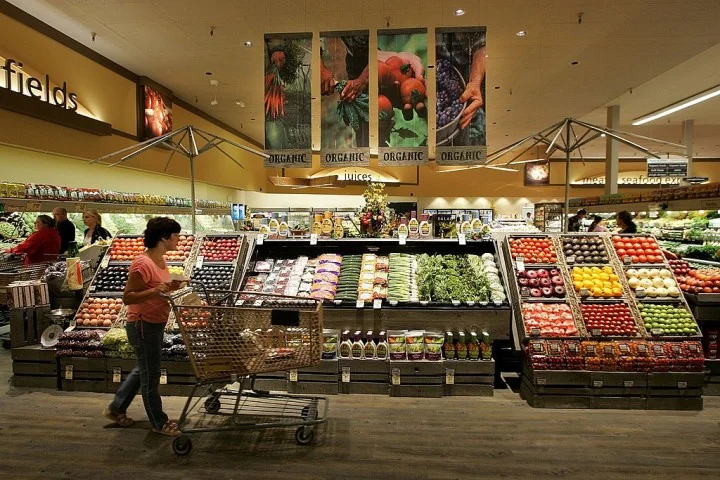
Eco-Friendly Shopping: Target to Build Indoor Vertical Farms Inside Its Stores
The demand for locally grown produce is increasing, and Target is just about to give consumers what they want
The demand for locally grown produce is increasing, and Target is just about to give consumers what they want.
Target, one of the biggest retailers in the country, is planning to install vertical farms that would grow fresh vegetables inside its stores. The company will start a series of trials in the spring of 2017, and if successful, Target's stores will start using these vertical gardens.
"Down the road, it's something where potentially part of our food supply that we have on our shelves is stuff that we've grown ourselves," Casey Carl, chief strategy and innovation officer at Target, told Business Insider.
Read: This New Home Appliance Could Grow Local Food in Your Own Kitchen
The plan is part of the Food + Future CoLab initiative, which is a collaboration with design company Ideo and the Massachusetts Institute of Technology (MIT) Media Lab launched in January of this year. One of CoLab's research focuses is vertical farming, and according to the company, the technology for the vertical farms will be tested in some Target stores to observe how customers will respond to it.
During the trials next year, customers could either harvest their own produce from the store's vertical farms or watch a staff member pick the vegetables to stock on the shelves.
Vertical farming is an agricultural technique that involves growing plants indoors under climatized conditions. This type of farming method is expected to grow because of the demand from urban populations, Forbes reports. Aside from using less amount of water, the vertical farms take up less space and are more accessible to consumers. The method also avoids the use of pesticides and is less affected by weather risks.
Read: This Greenhouse Could Grow Food in the Desert With Just Seawater, Sunlight
While vertical farming is commonly used to grow leafy greens, CoLab researchers are finding a way to use it to grow other crops as well. The stores' vertical farms will be filled with green leafy vegetables, but researchers are also working to stock potatoes, beetroot, and zucchini as well.
"Because it's MIT, they have access to some of these seed banks around the world so we're playing with ancient varietals of different things, like tomatoes that haven't been grown in over a century, different kinds of peppers, things like that, just to see if it's possible," Greg Shewmaker, one of Target's entrepreneurs-in-residence, said in the same statement.
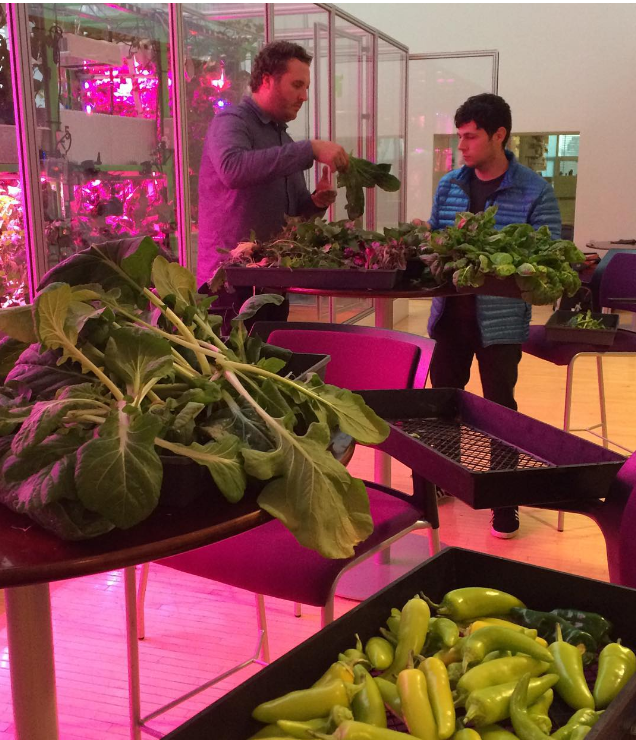
In-Store Vertical Farms Coming to One of Nation's Largest Retailers
From Philadelphia's skyscrapers to the Windy City, vertical farms are sprouting in some of the most unlikely spaces. Soon, you might be able to pluck fresh, vertically grown greens right from your local Target.
From Philadelphia's skyscrapers to the Windy City, vertical farms are sprouting in some of the most unlikely spaces. Soon, you might be able to pluck fresh, vertically grown greens right from your local Target.
According to Business Insider, the big box store is kicking off its vertical farming pilot project in a handful of U.S. stores in spring 2017. If the trials are successful, Target stores across the U.S. will likely start selling vertically-grown leafy greens with the possibility of in-house grown potatoes, beetroot, zucchini, peppers and even rare tomatoes down the line.
The ambitious project is part Target's Food + Future CoLab, a collaboration with MIT's Media Lab and international design firm IDEO, to explore urban farming, food transparency, supply chain issues and health.
"People like to say things like, 'the best strawberries come from Mexico.' But really, the best strawberries come from the climate in Mexico that creates expressions like sweetness and color that we like," said Caleb Harper, director of the Open Agriculture initiative at MIT's Media Lab. "We think there is tremendous opportunity to democratize climate through control-environment agriculture and we look forward to kicking off this work with Target."
In the video below, Harper gives a tour of his "Food Computer" that creates the perfect climate to grow food.
EcoWatch has mentioned previously how vertical farms are an ideal food security solution, especially with Earth's rapidly changing climate and growing population. Produce is usually grown indoors with less water and without pesticides. In some of these indoor farms, produce is grown under LED lights that can mimic outdoor growing conditions and help accelerate plant growth. For swelling cities, vertical gardens help meet the demand for healthy food all year round, and usually with less food-miles to get from farm to plate.
"Down the road, it's something where potentially part of our food supply that we have on our shelves is stuff that we've grown ourselves," Casey Carl, Target's chief strategy and innovation officer, told Business Insider.
As Forbes reported, many industry insiders are exited about Target's new vertical farming initiative.
“Vertical farming is genius," Jasmine Glasheen, publishing editor of Off-Price Retailing Magazine commented on a RetailWire BrainTrust article. “Vertical farms are more resistant to climate changes and storms. Plus, the holistic aesthetic of an organic vertical farm will allow Target to compete for natural foods customers."
“I like the idea," added Paula Rosenblum, managing partner at RSR Research. “Even better, if they structurally could support it, would be growing this stuff on the roofs of the stores."
However, others have commented that this project might be too difficult and expensive to pull off.
"This is not a new idea," said Mel Kleiman, president of Humetrics. "Fiesta Supermarket built a store in Houston more than 30 years ago with a vertical garden. It looked great, got a lot of attention and cost a lot of money. Five years after they opened that store, the garden was gone."
"Good for marketing and PR, but the scalability, execution and ultimately the ROI (return on investment) may prove to be a significant challenge," Peter Sobotta, founder and CEO of Return Logic, wrote. "That said, I like the concept and it is a step in a good direction."
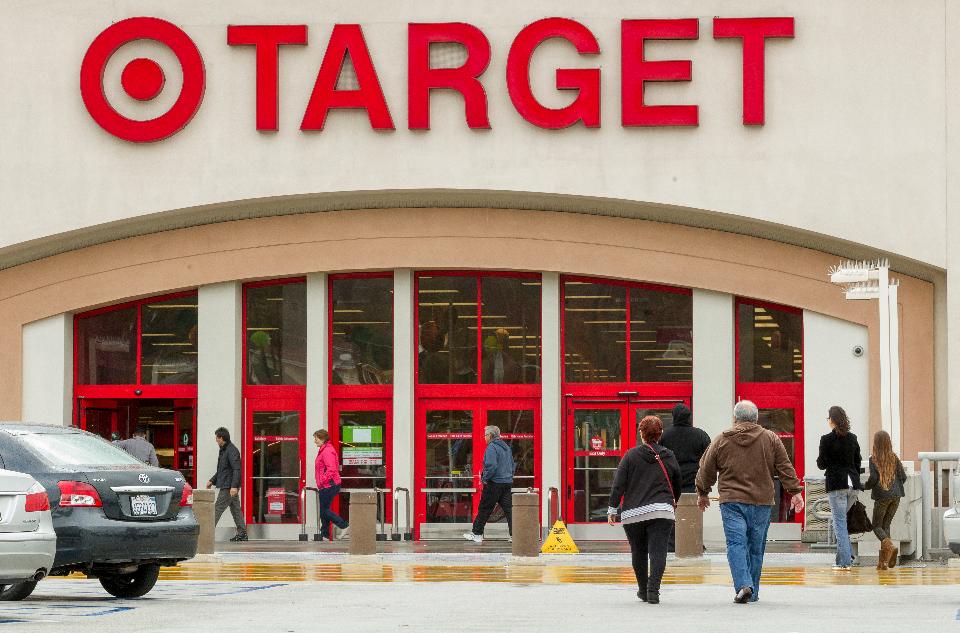
Will Target's In-Store Farms Be Sustainable?
Target is looking to shorten the distance from farm to plate with a planned test of vertical farms, an agricultural technique that involves growing plants and vegetables indoors in climatized conditions
Tom Ryan, Contributor
Target is looking to shorten the distance from farm to plate with a planned test of vertical farms, an agricultural technique that involves growing plants and vegetables indoors in climatized conditions.
The initiative, to take place within select U.S. stores, is part of ongoing research and development being pursued by Target’s Food + Future CoLab, a collaboration with the MIT Media Lab and Ideo launched last November that has been exploring urban farming, food transparency and food innovation.
According to Business Insider, tests of the vertical farms could begin in spring 2017. If the trials succeed, Target’s stores will likely be filled with leafy greens, the most common stock for vertical farming at present. Potatoes, beetroot and zucchini could potentially be made available as well. MIT could give Target access to ancient seeds for rare tomatoes or peppers.
“Down the road, it’s something where potentially part of our food supply that we have on our shelves is stuff that we’ve grown ourselves,” Casey Carl, Target’s chief strategy and innovation officer, told Business Insider.
Vertical farming is expected to see a growth spurt in part because food cultivated by farms is being challenged by rapidly increasing urban populations. Besides using less water, taking up less space and being closer to the consumer than traditional farming, vertical farming also addresses demands for healthy food without pesticides and avoids weather risks.
Community College Hort Professor Prepares Students to Work in Indoor Greenhouses of the Future
When it comes to Controlled Environment Agriculture [CEA], Valerie Loew wants the U.S. to catch up with Europe and China before it’s too late
October 17, 2016 | Trish Popovitch
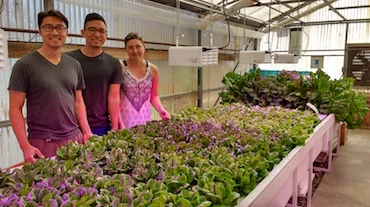
Students in Professor Valerie Loew’s Horticulture class at Fullerton College in Orange County, CA. Photo courtesy of Fullerton College.
When it comes to Controlled Environment Agriculture [CEA], Valerie Loew wants the U.S. to catch up with Europe and China before it’s too late.
“The rest of the world is so far ahead of us, because they are so limited with their own resources,” says Loew, who is professor and horticulture department head at Fullerton College in Southern California. “They are taking advantage of this technology way before us because we have sunshine and we have water; but we really don’t. Between Europe and China, the amount of greenhouses they have is just off the charts. We need to start catching up.”
Loew began her horticultural career as a book smart botanist with a penchant for plant science, who founded her own 20-acre nursery business before teaching and working for the USDA. Observing the hydroponic imports coming into the United States and the limitations of the federal inspection process, Loew became an advocate for organic, locally produced food that used water and space as efficiently as possible. Her goal as a teacher and head of the hort department at Fullerton College is to provide her students with the practical knowledge and skills to work in a commercial greenhouse.
To facilitate their entry into the Controlled Environment Agriculture field, this fall Loew offered students a new hybrid course, HORT 255, on aquaponics and hydroponics.
The course, which is co-taught with former NASA biotech expert Dr Roger Kern, provides Loew’s students with the hands on technical and scientific knowledge needed to manage a closed loop system.
“Students get to learn a lot about the different nutrients, what’s limiting, what we can actually supplement and get to grow even faster and have products turn around even quicker,” says Loew.
The class is funded by an innovation grant awarded to Loew for her S.T.E.M. based aquaponics curriculum. The course requires that students utilize technology to find solutions to lighting, climate, water and nutrient waste issues.
Tight budgets and a 30-year-old greenhouse to work with ensure Loew’s class learns both the good and bad of a greenhouse based vocation.
The greenhouse in question measures 30 x 40 feet and houses both the aquaponics and hydroponic equipment. There are two deep water culture tanks together with Mozambique tilapia on one side, and several deep water culture troughs for the hydroponics portion of the course occupy the remainder of the space in the greenhouse. Using S.T.E.M.-based research Loew and her students have fixed some of the light and humidity issues in the greenhouse. Now Loew wants to investigate ways to capture moisture in the air and feed it back into the system, and experiment with ways to reduce or recycle the drained waste.
The 16 week class has proved very popular with 30 students in a class that should have maxed out at 25. Because of its popularity, the ‘fall semester only’ course will be offered again this coming spring and is expected to continue as a year-round addition to the department’s schedule.
Because of the nature of the community college system in California, Loew’s course curriculum is available within the community college database. This means any professor in the system can access and replicate Loew’s work in their own department on their own campus. The community college is the bridge between the world of theory and the world of work. For Loew, focusing on the practical is the most logical way to help her students successfully transition between the two.
“I’m looking for them to be the mechanics with common sense that can run these complicated systems with really predictable outcomes. It’s a two year program. I want them to be as hands on as possible. …That’s what I want them to learn about: common sense stuff,” says Loew. “This isn’t just theory this is the reality of working in an indoor vertical greenhouse. Not all my students are going to go on to a four year program. I want them to be job ready.”
Vertical Farming Venture Proposed Near Davenport Riverfront
An unconventional, innovative farming venture is looking to sprout along the Davenport riverfront.
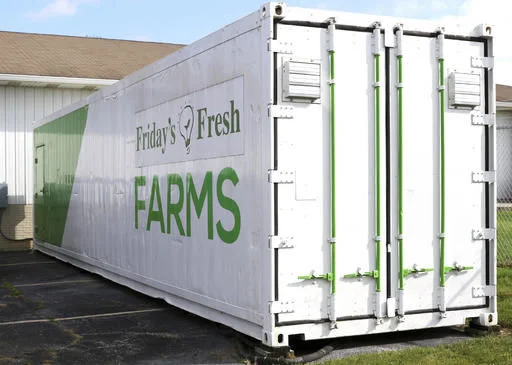
Friday’s Fresh Market has begun preliminary discussions with the Davenport Levee Commission about the possibility of bringing a hydroponic, vertical farming operation in a 40-foot, insulated shipping container to Freight House property.
“We’re in the business of sustainable agriculture and doing what we can with the technology that we use to take unsalvageable land and buildings and basically convert them into grow facilities,” local farm owner and manufacturing consultant Andrew Freitag said.
Freitag said the 40-foot shipping container is just one of the models his company uses to promote sustainable farming practices.
The riverfront venture would actually not be the first of its kind in Davenport.
Freitag has operated another grow operation in the 2900 block of Hickory Grove Road for the past year and a half and supplies fresh crops to the Quad-Cities Food Hub in Davenport, Hy-Vee, Hemispheres Bistro in Bettendorf and Crow Valley Golf Club, to name a few.
“Our initiative is to help supplement a health food source and reduce carbon footprint,” Freitag said. “We’re trying to implement these efficient methods and go away from traditional farming, which leads to soil erosion and water loss.”
Freitag said the shipping container model utilizes an LED lighting system and uses 90 percent less water and 50 percent less nutrients than traditional farming methods.
It can grow an acre and a half of food each month in 320 square feet of space, which equates to more than 30,000 pounds of food in a year.
Although he primarily produces leafy greens and microgreens, Freitag said he rotates through about 125 items year round to give his customers more variety.
Freitag said it made sense to bring the venture to the Freight House property on River Drive where it could be a year-round source for the Food Hub and farmers market.
“We’re actually ramping up our production as the other farmers are dwindling off,” Freitag said.
With the idea of having the venture near the farmers market and Food Hub, Freitag said he was open to how the levee commission would want to design the outside of the container to tie into those themes.
Freitag’s proposal has piqued the interest of Levee Commission, but executive director Steve Ahrens said there are a lot of details, such as location and rental price, yet to be worked out before the idea could come to fruition.
“There’s lots of approvals yet to come, so this just a preliminary discussion,” Ahrens said.
Commissioner Bill Ashton cautioned against getting too far into discussions without checking with other regulatory bodies in the event there were factors that could torpedo the venture.
Although many questions remain, the commission has elected to gather more information and move forward in the discussion process to see if Freitag’s idea can become a reality.
“I just think the whole idea of something so innovative and to showcase it down at the farmers market would really speak to the innovation of the city for taking on something like that,” commissioner Shelley Chambers said.

Dining Hall Officials Serve University-Grown Lettuce
Posted: Wednesday, October 19, 2016 5:25 pm | Updated: 9:02 pm, Wed Oct 19, 2016.
Ethan Owen | 0 comments
Five hundred heads of lettuce per week are being grown on campus by Chartwells to be served in the dining halls.
The lettuce is grown in a Freight Farm container, a product of the Boston-based company Freight Farms, is located near the Agricultural, Food and Life Sciences building and the Northwest Quad.
The model of the farm on campus is known as the Leafy Green Machine and can grow lettuce, herbs, and other leafy items such as chard and kale, according to the Freight Farms website.
The size of the container is 40 feet long, 8 feet wide and 9.5 feet tall. It also houses a vertical hydroponic growing system, meaning the produce is grown without soil and is climate controlled, according to the Freight Farms website.
Ashley Meek, the campus dietician for Chartwells, and Merrisa Jennings, a Chartwells student intern, helped orchestrate the project to bring Freight Farms to the UofA.
The project began in May and is a part of Chartwells’ efforts to be more transparent in where the food that is served comes from, Meek said.
The farm will typically provide 500 heads of lettuce per week that are grown without the use of pesticides, Meek said.
Unlike the experimental garden on the Arkansas Union rooftop in the spring, the farm’s climate-controlled environment protects the plants from wind damage, pests and the heat of the sun, Meek said.
A lack of pests eating away at the produce creates beautiful heads of lettuce, Jennings said.
Jennings, a senior biological engineering major, was brought on as an intern to help address the sustainability side of the project and said that the farm helps campus look more sustainable.
The farm uses 10 gallons of water and 80 kilowatt-hours of electricity per day, according to the Freight Farm website.
They want to see more student involvement with the Freight Farm and that it provides opportunities for business, marketing and communications students, Meek said.
Chartwells would like to get another Freight Farm, Meek said.
The container cost $97,000 and will be paid off in about 4.5 to five years, Meek said.
The 2016 premium Leafy Green Machine costs $85,000 plus an estimated $13,000 per year operating cost, according to the Freight Farm website.
Reception to the farm and its product has been positive amongst students and faculty, Meek said.
Meek said that she gets asked for tours of the farm at least five times a week, but because the farm is a controlled environment, those who ask for tours are turned away for food safety reasons.
Brandon Conrad, a freshman who eats at Brough dining hall, said that he was not aware that lettuce served was grown on campus.
“I think it’s pretty cool,” Conrad said. “I thought it was grown somewhere else.”
How Two IIT Scientists Are Using Food Waste To Revolutionize Indoor Farming
Two scientists at Illinois Institute of Technology may have solved one of the biggest inefficiencies in aquaponic farming -- the abundant use of energy that it requires...
10/18/16 @10:28am in Tech
Two scientists at Illinois Institute of Technology may have solved one of the biggest inefficiencies in aquaponic farming -- the abundant use of energy that it requires.
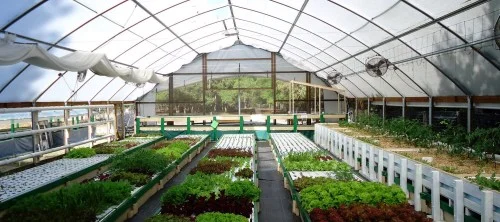
Elena Timofeeva, a research professor in chemistry, and John Katsoudas, a senior research associate in physics, have developed a system that uses organic food waste -- rather than electricity -- to generate a mobile, containerized aquaponics farm that will bring locally produced food to food-poor areas while also cutting down on the pollution that contributes to global warming. The team was recently selected as a semi-finalist in the 2016 Cleantech Open Accelerator Program, which identifies promising early-stage clean technology companies and provides them with six months of educational and mentoring support. Now, they're working with Cleantech adviser on market research, business strategy and fundraising, and they plan to have the full-scale prototype finished in the next 18 months.
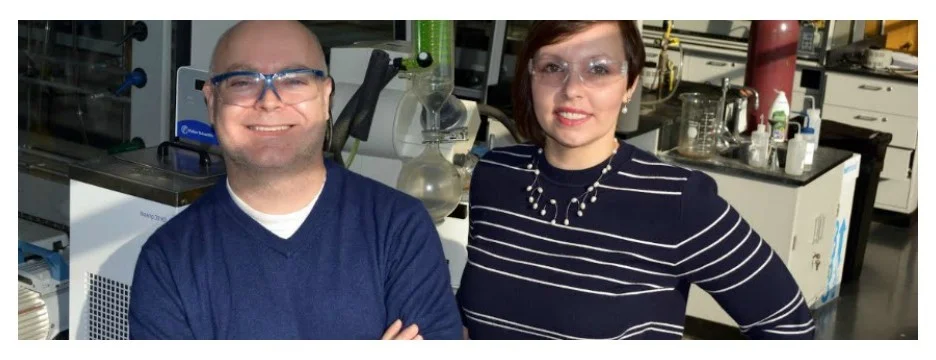
The two explained that in a traditional aquaponics farm, the fish in the tank produce waste that is converted into a natural fertilizer for the plants. In turn, the plants keep the water clean for the fish. It's a system that requires about 80 percent less water than traditional farming, Katsoudas said.
However, it's not a perfect system. There are at least two popular methods of aquaponics farming -- completely enclosed units where artificial light is brought in to do year-round growing or operating one within a greenhouse. In both cases, energy is consumed for the electricity, heating or cooling of the enclosed environment.
"[Aquaponic farming] has really started to take off now in the modern age because of the stresses being put on the environment. From increased farming to increased population density, it’s been identified [that] the production model for food needs to change," Katsoudas said. "The problems with aquaponics ... is that they consume a lot of energy. What AquaGrow Technology does is [identify] a way to bring in bio-digestion."
Biodigestion is where food waste, which comes from outside sources like cafeterias, food processing plants, food banks or anywhere else organic waste is generated and destined for landfills, comes into play, Katsoudas said.
"[Food waste] is introduced into the biodigester through an external chute and then over the period of about 21 days it's converted into methane," he later explained in an email to Chicago Inno. "We then pipe that methane into an electric generator and produce electricity and CO2. The electricity is what we use to power the aquaponics systems, i.e. the grow lights, heaters, pumps, air conditioners, control systems, life support for the fish, etc. The byproduct of generating electricity using methane is CO2."
Simply put, the aquaponics farm that Timofeeva and Katsoundas have developed replaces electricity with organic food waste as the energy source for the lights and other technologies that support the system.
The other key difference to their system is the size, according to Timofeeva. The container will come to a total size of 10 feet wide, 10 feet deep and 45 feet tall.
"[The size] also enables smaller players -- like individual families, individual churches, individual communities -- to get into this farming locally," she said. "If it’s a huge farm, you need a large investment to get involved in this. Having a containerized farm that can be located in small plots of land would enable local farming and engaging pops in farming as well."
They estimated that the cost of such a unit would come to about $150k, and it would produce an annual profit of $40-$80k, depending on the plant or crop harvested.
"The investment [an individual family] would make would pay back in 2-3 years," Timofeeva said. "They can locally produce food and make money off of it ... It works really well economically … by minimizing operational expenses on site."
Katsoudas also said that the mobility of these containers would prove especially useful in communities after national disasters where there is no access to food, or in underserved urban communities
"We have to believe that when there’s a good investment made, there will be resources available to make it," he said. "When you look at the nature of the grants coming out, there is a whole new movement of grant money that's coming to bear for social impact."
He explained that there is a direct correlation between the level of crime in an urban area, and the amount of nutritional food in that area.
"You look at the dollars that society spends on police forces and incarceration ... If you were able to bring the crime down but supplying a nutritional value, an asset to the local community, those are dollars better spent.," he said, explaining that after obtaining grants, ministries, congregations and social organizations would likely be the first adopters of their aquaponics farm.
"I think that’s a good investment," he said. "I do believe there are organizations and people that will see that."
Target to Add Vertical Farming to Some Locations
“Food is a big part of our current portfolio today at Target—it does $20 billion of business for us”
MINNEAPOLIS, MN – Target is about to shake up the retail realm with its latest plan to put a focus on fresh produce and tap on in consumer penchant for fruits and vegetables. Target will be installing vertical farms in some of its locations.
“Food is a big part of our current portfolio today at Target—it does $20 billion of business for us,” continued Casey Carl, Target’s Chief Strategy and Innovation Officer to Business Insider. “We need to be able to see more effectively around corners in terms of where is the overall food and agriculture industries going domestically and globally.”
Target’s new focus on fresh will reportedly help the retailer gauge just how consumers want their produce, and how engaged they want to be with their food. Target’s Food + Future CoLab allows the company to do just that; shape the future of food, and deliver on the needs of consumers.
The Food + Future CoLab team announced at the White House that food grown from its in-store garden would be on sale starting in the spring, according to Business Insider. The initial in-store trials could also potentially see consumers picking their own produce from the Target farms.
“Down the road, it’s something where potentially part of our food supply that we have on our shelves is stuff that we’ve grown ourselves,” continued Carl.
The Food + Future CoLab was launched by the retailer in January in collaboration with Idea and the MIT Media Lab. This new research partnership is also allowing Target to pursue even further innovations, like taking vertical farming to new metaphorical heights.
“Because it's MIT, they have access to some of these seed banks around the world,” Greg Shewmaker, Entrepeneur-In-Residence, Food + Future CoLab, stated. “So we're playing with ancient varietals of different things, like tomatoes that haven’t been grown in over a century, different kinds of peppers, things like that, just to see if it's possible.”
The Target farms will use artificial lights and hydroponics to grow its produce. Daily Meal elaborated that while Target’s vertical farms will initially focus on leafy greens, the retailer is exploring growing potatos, beetroot, and zucchini for its next varieties.
As Target and its Food + Future CoLab move towards this new retail strategy, AndNowUKnow will continue to update you in the latest developments and its impact on the buy-side sector.
The Potential of Urban Agriculture Innovations in the City, from Hydroponics to Aquaponics
How large a role will local food demand play with respect to the growth of indoor and controlled environment urban farming ventures?
The Potential of Urban Agriculture Innovations in the City, from Hydroponics to Aquaponics
October 18, 2016/in aquaponics, Local Food, Sustainable Agriculture Conference, Urban Agriculture /by Robert Puro
How large a role will local food demand play with respect to the growth of indoor and controlled environment urban farming ventures? What are the costs involved in starting a small scale commercial hydroponic/aquaponics farm? What are the opportunities (community and economic) for high-tech controlled environment growing in urban environments such as Orange County? What tools or assets would give an entrepreneur the best chance for success in launching a vertical farming venture in the city?
To learn the answer to these questions, and more, you won’t want to miss the ‘The Potential of Controlled Environment Agriculture in the City’ panel at the upcoming Grow Local OC: Future of Local Food Systems slated for Nov. 10 at California State University, Fullerton. The following expert speakers will address the challenges and opportunities present in employing innovative agricultural growing systems in cities:
Erik Cutter is Managing Director of Alegría Fresh, an urban farming company engaged in promoting and deploying zero waste regenerative food and energy solutions using hybrid soils and integrated technologies. In 2009, Mr. Cutter founded EnviroIngenuity with a group of forward-thinking professionals to take advantage of the growing demand for more efficient, cost effective sustainable energy solutions, employing solar PV, hi-efficiency LED lighting, green building and zero waste food production systems. More than 35 years of travel throughout the US, Mexico, South America, Africa, French Polynesia, the Peruvian Amazon, Australia and New Zealand gave Mr. Cutter expert insight into the unique investment opportunities that exist in each region, focusing on sustainable living models and the increasing availability of super foods as a major new market opportunity.
Chris Higgins is General Manager of Hort Americas, LLC (HortAmericas.com) a wholesale supply company focused on all aspects of the horticultural industries. He is also owner ofUrbanAgNews.com (eMagazine) and a founding partner of the Foundation for the Development of Controlled Environment Agriculture. With over 15 years of experience, Chris is dedicated to the commercial horticulture industry and is inspired by the current opportunities for continued innovation in the field of controlled environment agriculture. Chris is a leader in providing technical assistance to businesses, including commercial greenhouse operations, state-of-the-art hydroponic vegetable facilities, vertical farms, and tissue culture laboratories. In his role as General Manager at Hort Americas he works with seed companies, manufacturers, growers and universities regarding the development of projects, new products and ultimately the creation of brands. Chris’ role includes everything from sales and marketing to technical support and general management/owner responsibilities.
Ed Horton is the President and CEO of Urban Produce. Ed brings over 25 years of experience from the technology industry to Urban Produce. His vision of automation is what drives Urban Produce to become more efficient. With God and his family by his side he is excited to move Urban Produce forward to provide urban cities nationwide with fresh locally grown produce 365 days a year. Ed enjoys golfing and walking the harbor with his wife on the weekends.
Chef Adam Navidi – In a county named for its former abundance of orange groves, chef and farmer Adam Navidi is on the forefront of redefining local food and agriculture through his restaurant, farm, and catering business. Navidi is executive chef of Oceans & Earth restaurant in Yorba Linda, runs Chef Adam Navidi Catering and operates Future Foods Farms in Brea, an organic aquaponic farm that comprises 25 acres and several greenhouses. Navidi’s journey toward aquaponics began when he was at the pinnacle of his catering business, serving multi-course meals to discerning diners in Orange County. Their high standards for food matched his own. “My clients wanted the best produce they could get,” he says. “They didn’t want lettuce that came in a box.” So after experimenting with growing lettuce in his backyard, he ventured into hydroponics. Later, he learned of aquaponics. Now, aquaponics is one of the primary ways Navidi grows food. As part of this system he raises Tilapia, which is served at his restaurant and by his catering enterprise.
Nate Storey is the CEO at Bright Agrotech, a company that seeks to create access to real food for all people through small farmer empowerment. By focusing on equipping and educating local growers with vertical farming technology and high quality online education, Nate and the Bright Agrotech team are helping to build a distributed, transparent food economy. He completed his PhD at the University of Wyoming in Agronomy, and lives in Laramie with his wife and children.
Register here: http://growlocaloc.eventbrite.com
From A Closet To Five Acres: How Motorleaf Aims To Boost Indoor Growing
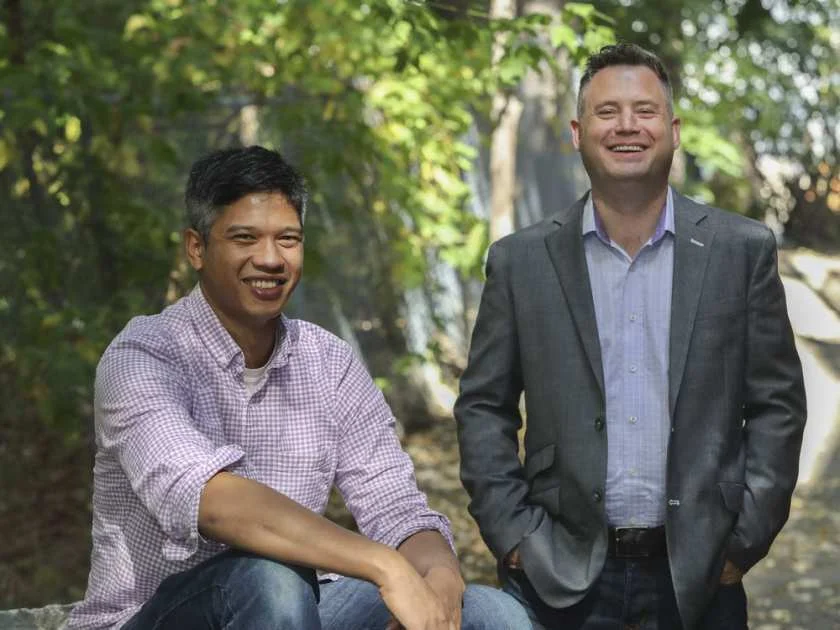
A year ago, Alastair Monk and Ramen Dutta had a seedling of an idea: If you can automate a home, why not a greenhouse?
A year ago, Alastair Monk and Ramen Dutta had a seedling of an idea: If you can automate a home, why not a greenhouse?
The two entrepreneurs and residents of Sutton, in Quebec’s Eastern Townships, were not professional farmers by any stretch of the imagination — but they were hobby growers in the middle of Quebec’s breadbasket.
Dutta, an agricultural engineer, programmer and tinkerer, put together his first prototype of the connected greenhouse’s central nervous system last November. He called it the HUB, short for “huge, ugly box.”
Fast forward to today, and Monk and Dutta’s company, Motorleaf — a name inspired by British rock ‘n’ roll band Motörhead — is filling orders, meeting with major company bigwigs and is closing in on a $1 million seed investment round.
“A year ago, our objective was to see if what we had built should and could be made available to other indoor growers,” says Monk. “Since then our ambition has grown significantly, mostly in part because of our participation in the FounderFuel accelerator program.”
Motorleaf’s founders participated in last spring’s cohort of the FounderFuel accelerator, a boot camp of sorts to help technology startups speed up the process of forming profitable companies.
In Motorleaf’s case, it happened at a breakneck pace.
Dutta’s original HUB was meant to be one piece of hardware to rule the greenhouse. But during the accelerator program, the design was revised and separated into four parts to create a modular, scalable approach.
Monk likes to boast that Motorleaf’s network can now be scaled for growing spaces as tiny as a closet, up to five acres. The pitch has clearly worked: Monk says he’s got thousands of dollars of sales lined up already.
The HUB is now called “the heart” — a piece of hardware that communicates with other elements of Motorleaf’s product suite, forming a wireless mesh network. The network, in turn, can monitor and control a couple dozen growing factors, including pH level, nutrients, humidity, temperature, lighting and reservoir water level.
Growers can then use a desktop or mobile app to remotely monitor and control growing conditions. Meanwhile, artificial intelligence and machine learning components baked into the process can learn from the plants, self-correcting to eventually optimize a perfect nutrient and atmospheric cocktail for each crop.
“The idea is not to replace people, but to take the guessing out of growing and prevent mistakes from happening,” Monk says.
Motorleaf’s solution may be ripe for the marijuana biz; certainly, growing weed is often an indoor activity across surface areas that would be well-served by what Motorleaf makes.
Monk shrugs that idea off. He says there are plenty of legitimate businesses, particularly in the technology sector and urban-farming movement, that are seeking his company’s services.
“Our goal is to be the default operating system for indoor growers around the world,” he says.
Over the summer, Motorleaf installed its system in a tomato-growing display case inside an upstate New York Price Chopper grocery store. Now it’s working with the same company, Vermont Hydroponic Produce, on a series of installations in Sutton and in New England that will allow students to grow food inside their schools.
“The Motorleaf system is a great tool for the kids to get involved in the actual processes of the growing method,” says Jeff Jones of Vermont Hydroponic, a subsidiary of Upper Valley Produce Group.
Jones backs up Motorleaf’s claims that it offers a unique product to relatively small-scale growers.
“When we were looking for automation, we went through three different small companies that provided aspects of what Motorleaf provides, and we were disappointed with all of them,” he says.
Although Motorleaf is still a small operation — currently with four employees, it’s looking to add another dozen staff with its seed money — it’s been making some big moves.
With little funding and exposure to date, the startup has received inbound inquiries from potential customers in 20 countries since July, and has letters of intent to purchase from growers from the Canadian Arctic to South America.
At this point, the company is focused on responding to demand by stepping up production. Monk says manufacturing will soon move from an in-house environment to a Canadian manufacturing facility. New and prospective partnerships with established greenhouse-automation companies, tech giants and other startups, have propelled the company forward, as well.
“All of their prospective customers know that it’s more efficient to grow year-round in a controlled environment than to roll the dice with changing weather patterns and unpredictable factors that are out of their control,” Monk says.
Agriculture must transform to feed a hotter, more crowded planet, UN says on World Food Day
To bolster food security in a changing climate, countries must address food and agriculture in their climate action plans – Secretary-General Ban Ki-moon - Agriculture must transform to feed a hotter, more crowded planet, UN says on World Food Day
Agriculture must transform to feed a hotter, more crowded planet, UN says on World Food Day
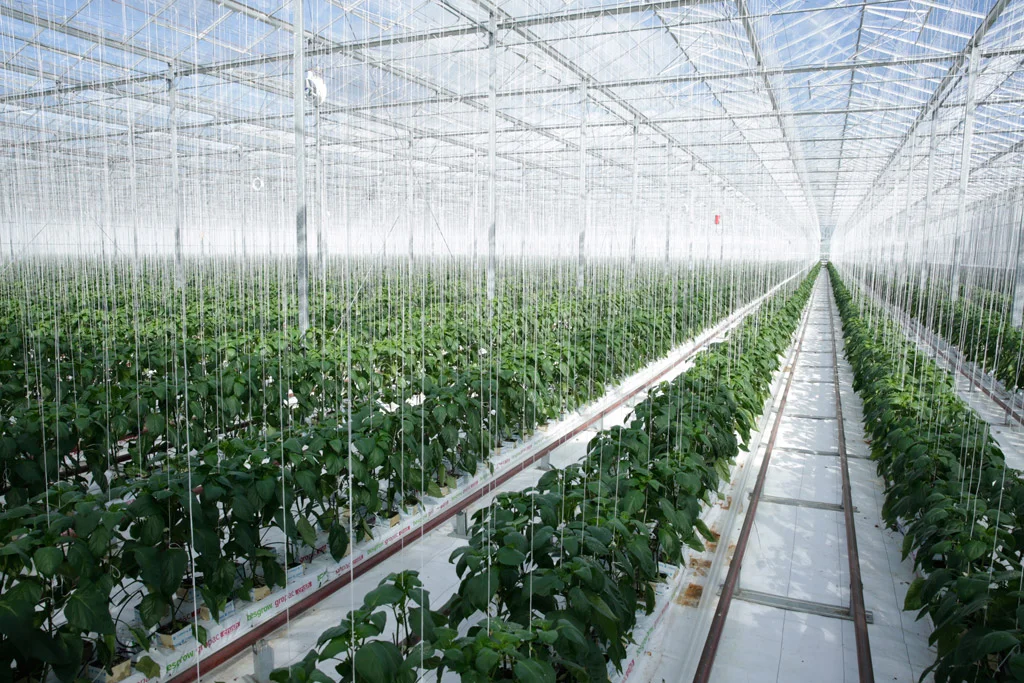
Geothermal energy is converted into electricity and used to heat the Gourmet Mokai glasshouse in New Zealand which grows tomatoes and peppers. UN Photo/Evan Schneider
16 October 2016 – To mark World Food Day 2016, the United Nations is highlighting the close links between climate change, sustainable agriculture, and food and nutrition security, with the message: “The climate is changing. Food and agriculture must, too.”
“As the global population expands, we will need to satisfy an increasing demand for food,” said Secretary-General Ban Ki-moon in his message commemorating the Day.
“Yet, around the world, record-breaking temperatures, rising sea levels and more frequent and severe droughts and floods caused by climate change are already affecting ecosystems, agriculture and society's ability to produce the food we need,” he added.
Mr. Ban pointed out that the most vulnerable people are world's poorest, 70 per cent of whom depend on subsistence farming, fishing or pastoralism for income and food.
“Without concerted action, millions more people could fall into poverty and hunger, threatening to reverse hard-won gains and placing in jeopardy our ability to achieve the Sustainable Development Goals (SDGs),” he emphasized.
To bolster food security in a changing climate, countries must address food and agriculture in their climate action plans – Secretary-General Ban Ki-moon
According to the UN chief, agriculture and food systems must become more resilient, productive, inclusive and sustainable.
“To bolster food security in a changing climate,” he continued “countries must address food and agriculture in their climate action plans and invest more in rural development.”
The Secretary-General explained that targeted investments in those sectors would build resilience and increase the incomes and productivity of small farmers – lifting millions from poverty. “They will help to reduce greenhouse-gas emissions and safeguard the health and well-being of ecosystems and all people who depend on them, underscored Mr. Ban.
Next month, the historic Paris Agreement on climate change will enter into force – providing a much-needed boost to global efforts to reduce global greenhouse-gas emissions, limit temperature rise and promote climate-compatible sustainable agriculture.
“On this World Food Day, I urge all Governments and their partners to take a holistic, collaborative and integrated approach to climate change, food security and equitable social and economic development,” stressed Mr. Ban.
“The well-being of this generation and those to come depends on the actions we take now. Only by working in partnership will we achieve a world of zero hunger and free from poverty, where all people can live in peace, prosperity and dignity,” he concluded.
Food security and nutrition top international agenda
Food is the most basic human right” said Food and Agricultural Organization (FAO) Director-General José Graziano da Silva at a dedicated special event Friday in Rome, “yet nearly 800 million people still suffer from hunger in the world.”
He noted that without food security and adequate nutrition for all, sustainable development simply could not be achieved, which is why the 2030 Agenda called for the eradication of hunger and all forms of malnutrition, as well as the promotion of sustainable agriculture.
“But these objectives are clearly at risk, as climate change advances,” he continued. “Droughts and floods are more frequent and intense. We have seen first-hand their terrible impacts in the past months, as El Niño hit Africa, Asia and other parts such as the Dry Corridor of Central America. We have also just witnessed the extensive damage caused by Hurricane Matthew in Haiti,” he added.
Echoing the Secretary-General, the top FAO official, natural disasters and extreme weather events are more likely to happen – and yet more difficult to predict, with the poorest suffering most.
“The vast majority of them are small holders and family farmers that live in rural areas of developing countries,” elaborated Mr. da Silva. “They are the least equipped to deal with the threats. Even under normal circumstances, these people barely manage to survive,” he added.
Mr. Griaziano da Silva revealed that FAO would propose to its Council Session next December the establishment of a new Department on Climate Change. He also shared news that FAO had been accredited to the Green Climate Fund.
“We cannot allow the impacts of climate change to overshadow our vision of a world free of hunger and malnutrition, where food and agriculture contribute to improving the living standards of all, especially the poorest,” he concluded. “No one can be left behind."
'Climate change is not waiting. Neither can we'
Speaking at the event, Italian Prime Minister Matteo Renzi linked the fight against hunger to politics. "Italy maintains that the fight for food security is, at this point in history, a question of politics with a capital 'P'," he said in an FAO COP22, said the talks would be "action-oriented" and geared towards implementing the Paris Agreement with a “special emphasis on adaptation, primarily for countries of the South and for small island States."
In a special message read out at the event, Pope Francis linked the impact of climate change to people migrating from rural areas of developing countries. "The most recent data tell us that the numbers of 'climate refugees' are growing, swelling the ranks of the excluded and forgotten, who are being marginalized from the great human family," the pontiff said.
For her part, Executive Director of the World Food Ertharin Cousin Programme (WFP) said that climate change was already stretching the international humanitarian system financially and operationally, “so moving beyond disaster relief to managing risk is an urgent task for all of us. Climate change is not waiting, neither can we."
UN Special Envoy on El Niño and Climate, Macharia Kamau, spoke about building stronger solidarity and better partnerships while Kanayo F. Nwanze, President of the International Fund for Agricultural Development (IFAD) stressed the need to bolster rural smallholder producers against the impacts of climate change.
Target Plans to Have In-Store Vertical Farms
Target announced that the company would be adding vertical farms to some of its stores to grow produce indoors
“We sell extremely local produce at Target! No, really! We mean it.”
Target is boldly going where no major retailer has ever gone before by installing a giant farm in the middle of its store. Target’s Food + Future CoLab team announced recently at the White House that it would be installing vertical farms in select store locations, so that fresh fruits and vegetables could be grown in acclimatized conditions and sold directly in the store. Food from the in-store gardens will be on sale starting spring 2017.
The farm will make use of artificial lights and hydroponics to assure proper growing techniques.
“Down the road, it’s something where potentially part of our food supply that we have on our shelves is stuff that we’ve grown ourselves,” Casey Carl, Target’s chief strategy and innovation officer, told Business Insider.
After installing the technology in a few test locations, Target will be able to gage “how involved customers actually want to be with their food,” Business Insider reported.
At first, Target’s farms will be filled with leafy greens, which are easiest to grow vertically. Potatoes, beetroot, and zucchini will be made available in the future.
SEE MORE FARMING NEWS
- This Vertical Farm Skyscraper May Change Our Cities Forever
- The World’s Largest Vertical Farm and More Amazing Exhibits at This Year’s World’s Fair
- The World’s Largest Indoor Vertical Farm Is Being Built in Newark, New Jersey
- Could Drones Be the Future of Farming?
- Biodynamics: Not Just a Way of Farming, But a Way of Life
Target To Test Vertical Farms In Stores
Target is looking to shorten the distance from farm to plate with a planned test of vertical farms
FRIDAY, 10/14/2016
Target To Test Vertical Farms In Stores
Oct 14, 2016
by Tom Ryan
Target is looking to shorten the distance from farm to plate with a planned test of vertical farms, an agricultural technique that involves growing plants and vegetables indoors in climatized conditions.
The initiative, to take place within select U.S. stores, is part of ongoing research and development being pursued by Target’s Food + Future CoLab, a collaboration with the MIT Media Lab and Ideo launched last November that has been exploring urban farming, food transparency and food innovation.
According to Business Insider, tests of the vertical farms could begin in spring 2017. If the trials succeed, Target’s stores will likely be filled with growing leafy greens, the most common stock for vertical farming at present. Potatoes, beetroot and zucchini could potentially be made available as well. MIT could give Target access to ancient seeds for rare tomatoes or peppers.
“Down the road, it’s something where potentially part of our food supply that we have on our shelves is stuff that we’ve grown ourselves,” Casey Carl, Target’s chief strategy and innovation officer, told Business Insider.
Making use of artificial lights, vertical farming is expected to see a growth spurt in part because food cultivated by farms is being challenged by rapidly increasing urban populations. Besides using less water, taking up less space and being closer to the consumer than traditional farming, vertical farming also addresses demands for healthy food without pesticides and avoids weather risks.
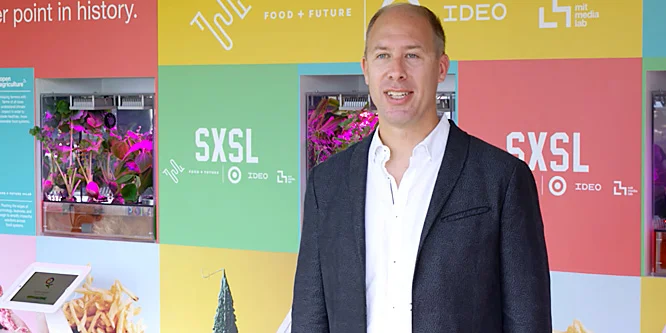
On Oct. 3, key members of Target’s Food + Future CoLab team showed off the project at the South by South Lawn (SXSL) festival at the White House. The technologies showcased included the team’s Open Agriculture lab inside the MIT Media Lab that’s exploring vertical farming and ways climate and other factors affect food production.
“Open Agriculture is about creating more farmers,” said Caleb Harper, principal scientist at the MIT Media Lab. “About two percent of us in the U.S. are farmers today, and the average age is 58, so what’s the next generation look like? They’re gonna be coders, hackers, makers.”
Why Cities Are the Future for Farming
Self-described nerd farmer Caleb Harper wants you to join his league of high-tech growers
Urban Explorer
Opinion: Why Cities Are the Future for Farming
Self-described nerd farmer Caleb Harper wants you to join his league of high-tech growers.
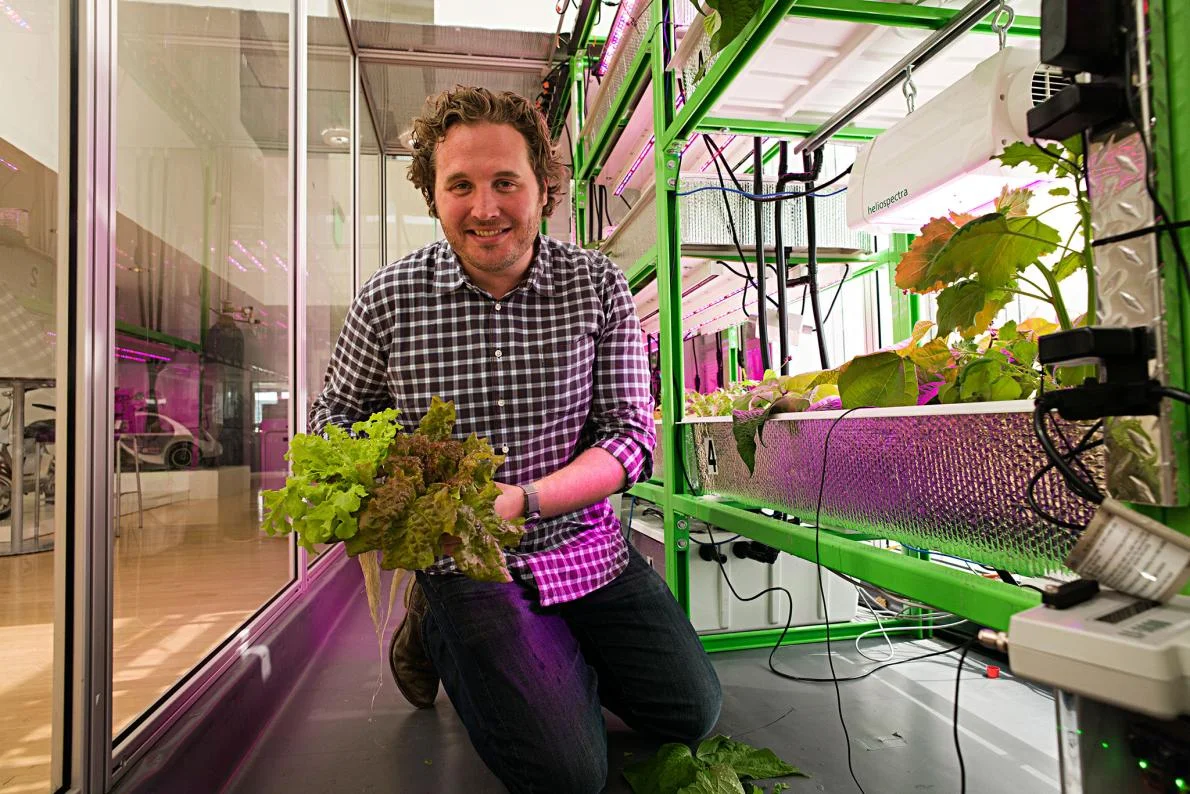
National Geographic Emerging Explorer Caleb Harper holds lettuce grown at the MIT Media Lab, where he operates a climate-controlled “digital farm” using aeroponics, a network of sensors, and LED lighting.
By Caleb Harper
PUBLISHED October 14, 2016
The landscape of our food future appears bleak, if not apocalyptic.
Humanity’s impact on the environment has become undeniable and will continue to manifest itself in ways already familiar to us, except on a grander scale. In a warmer world, heavier floods, more intense droughts, and unpredictable, violent, and increasingly frequent storms could become a new normal.
Little wonder that the theme for this year's World Food Day, which happens on Sunday, is “Climate is changing. Food and agriculture must too.” The need for an agricultural sea change was also tackled at the recent South by South Lawn, President Obama’s festival of art, ideas, and action (inspired by the innovative drive of Austin’s SXSW), where I was honored to present.
As our global agricultural system buckles under its own weight, we’re losing our farmers and we’re not creating more. In the U.S. alone, only 2 percent of the population is involved in farming, with 60 percent of our farmers above the age of 58. We’re also experiencing a dramatic move away from rural areas, our traditional growing centers. The UN estimates that by 2050, 6.5 billion people will be living in cities, nearly double what it is today.
Those of us at the helm of agricultural innovation simply must tack into these winds of change—and I see the tremendous potential of the city as a sustainable solution. After all, the domestication of plants gave rise to the first human settlements—our original cities were literally rooted in agriculture. Since then, city life has parted ways with it entirely, as urbanites have become almost completely disconnected from their food sources. But the reintegration of farming into the city is beginning to close the circle. Urban farming could not only feed future generations, but also create appealing clean-tech jobs for the waves of new “immigrants” that cities across the world will see in coming years.
Food Computers: Are These Devices the Future of Agriculture?
Harper takes us on a tour of his lab, which he envisions could be adapted for individual home use, shipping container-size for cafeterias and restaurants, and warehouses of “food data centers” capable of industrial-scale production.
Detractors of urban farming often scramble to point out that the production potential of urban farms is so minimal as to be insignificant. From where I’m standing, this is a dangerously shortsighted perspective. There are two major roles for urban agriculture: yes, the actual production of food intended to feed large numbers, but also the cumulative social benefit of cultivating what we eat. While I anticipate that eventually high-tech urban farming will account for at least 30 to 40 percent of an individual’s diet, the invaluable “product” of human-centered endeavors like farm stands and school and urban gardens lies in weaving communities together and building a foundation for food education.
Of course, we can’t expect a community garden to have the same production capacity as a conventional, massive monoculture farm or—wait for it—a multitiered, digitally integrated vertical farm. That doesn’t mean the community garden has no true value; the amount of calories it yields shouldn’t be the sole metric of its worth.
Instead, we need a renewed appreciation of the myriad benefits of growing food in the city. They range from the healing effect on veterans tending to patches in community gardens, witnessing the transformation of their plants, to the physical benefits of getting a student outside in a school garden while seeing the lessons of the classroom come to life in a burgeoning vegetable.
During World War II, victory gardens were planted both in private residences and public parks to boost morale as much as food supply. That tradition continues in the work of modern pioneers like Ron Finley, the “gangsta gardener” of Los Angeles, who similarly empowers communities by planting beautiful, defiant gardens in abandoned lots, traffic medians, and along curbs, and Will Allen, the founder of a Milwaukee non-profit center for urban agriculture training—teaching people to grow food in neighborhoods that are essentially food deserts dominated by drive-thrus.
Harper inspects a developing chocolate bell pepper. His team creates specific conditions—he calls them climate recipes—to produce plants with unique qualities of color, size, texture, taste, and nutrient density. A pepper grown in his Massachusetts lab could have the features of one grown in, say, Central America.
At the same time, technological leaps in urban agriculture are attracting bright, science-minded youth in droves and paving the path for high-volume production in cities. We’re seeing vertical farms—controlled environment agriculture—get smarter and larger. These aren’t necessarily new methods, but we are reaching a point at which they are becoming more energy efficient and cost effective. At the most cutting edge are “agri-culturing” companies like Modern Meadow and Perfect Day, culturing meat from mammalian cells and fermenting milk from yeast, moving meat and dairy production into cities.
At the MIT Media Lab, where I run the Open Agriculture Initiative, we’re developing digital farming through what we call “the food computer.” Along with aeroponic technology, we use a network of sensors to monitor a plant’s water, nutrient, and carbon needs and deliver optimal light wavelengths—not just for photosynthesis but to change flavor. This allows us to recreate climates that yield, for example, the sweetest strawberries.
Our entire endeavor is open source. We’re now piloting it outside the lab in Boston schools, and we see a near future where farmers can build their own food computers, using instructional videos and schematics already available online, and larger-scale units for restaurants, cafeterias, and industrial production—all in the city. By bringing agriculture home, we’ll have access to fresher, more nutritious food and potentially reduce spoilage and waste.
Our ultimate #nerdfarmer goal is to develop a database of climate “recipes”— for example, the ingredients for mimicking the Mexican climate that produces those sweet strawberries. We hope to pair that database with assembly kits for “personal” food computers that will be increasingly accessible, with the goal of creating and networking a billion farmers by providing access to the tools and the data required to both grow their own food and generate even more data to share—a sort of global “climate democracy” to see us through a world in flux.
Yet even at our post at the high-tech end of the spectrum, we share a common goal with even the smallest, most traditional city garden—to serve our community by creating a new lexicon of food values for the future.
The Future of Vertical Farming In 5 Inspiring Examples
Recent studies show that the human population will reach 11 billion by 2100, putting strain on: farming, health, living conditions and sustainability.
October 12, 2016
Recent studies show that the human population will reach 11 billion by 2100, putting strain on: farming, health, living conditions and sustainability.
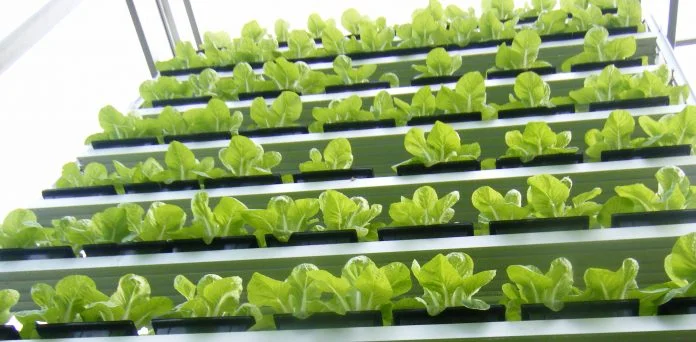
On 11 July 1987 there were five billion people on earth inspiring the UN Development Program to launch a special day in 1989 to highlight overpopulation.
Cities are now expanding, decreasing the countryside and farmland. This has led to innovative approaches such as vertical farming to deal with land shortage.
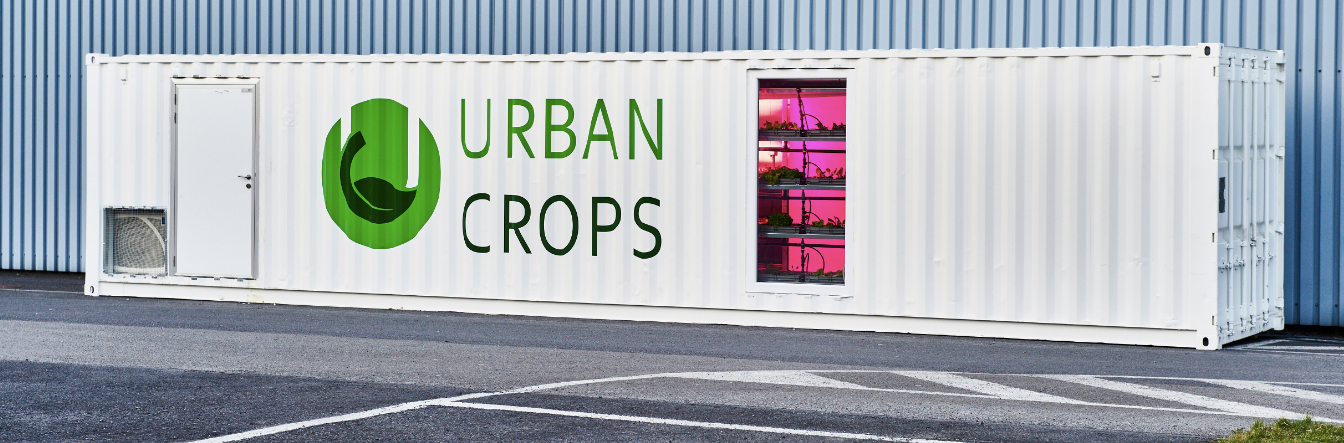
#1 Urban Crops: Belgian Company Specialising in Indoor Growing Systems
Photo Credit: Urban Crops
Inspired by the US and Asia’s growing investment in robotized plant factories with artificial lighting (PEAL), Belgian-based Urban Crops began creating a huge automated plant factory inside a climate chamber.
With 30 towers, a production of 126,000 crops per day is maintained. The crops use RFID technology in the crates where robots can pick the crates from a conveyor belt and understand in what state the crops are in, handling them accordingly.
They have three concepts: the large Plan Factory, Farm Flex and Farm Pro. The two latter examples are smaller in scale and focus on efficient food production, particularly in urban areas.
#2 Plantagon Agritechture and Sweco Architects
Plantagon Agritechture and Sweco Architects have a project called ‘World Food Building’ in Linköping, Sweden, which is a16 stories tall “plantscraper.”
Specialising in Urban Agriculture and Industrial Vertical Farming, Plantagon has developed a vertical space-efficient greenhouse for cities, delivering locally grown organic food directly to the consumer.
The company hopes to make headway in the Asian market:
”Asia is the main market for our solutions. In a dense city environment access to land is extremely low and the price is extremely high. This is something that is especially true in Singapore, but also in other mega-cites around Asia.”
#3 Elon Musk Building Vertical Farms in Brooklyn, New York
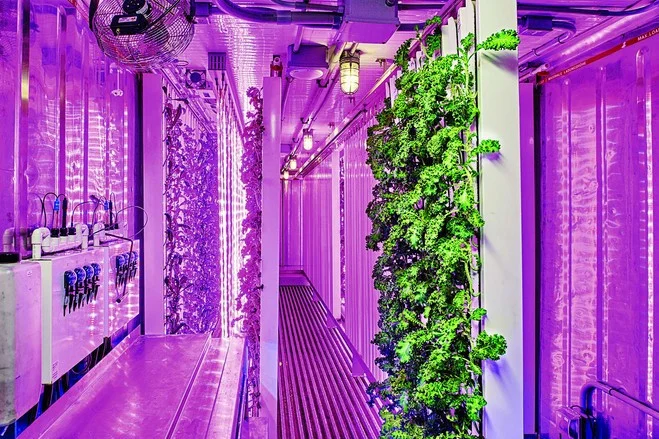
Elon Musk and Tobia Peggs launched Square Roots, a vertical urban farm using shipping containers to invest in young farmers and sustainability.
The farms will include greens and herbs for young entrepreneurs to “get hands-on experience running a vertical farming business,” said Peggs.
Using technology from vertical farming startups Freight Farms and ZipGrow, Square Roots plans to use LED lights and water growth rather than soil.
#4 Aerofarms: World’s Largest Vertical Farm in Newark, New Jersey
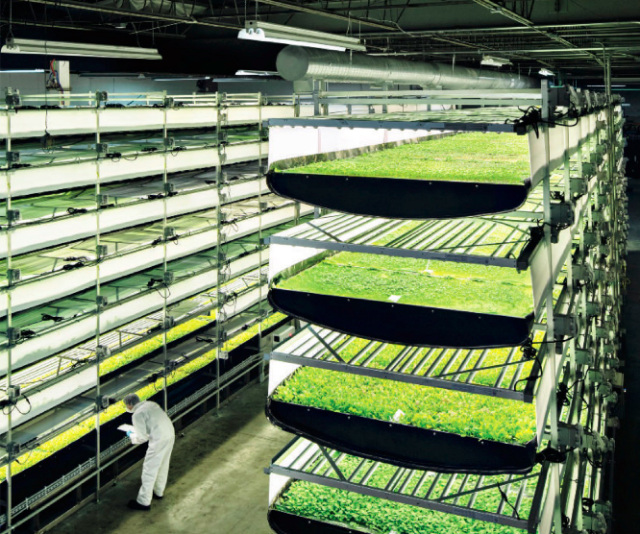
Photo Credit: AeroFarms
Photo Credit: AeroFarms
The largest vertical farm is Aerofarms, a 14,164 square meter facility in Newark, New Jersey, run by Aerofarms. The farm has the potential to produce 2 million pounds of lettuce every year, without soil or natural sunlight.
By using LED lights, this ensures consistent growth in the 69,000 square foot warehouse.
In November Aerofarms will partner with Farmigo, the organic wholesaler to sell greens in grocery stores within New York.
#5 Sky Greens, Singapore
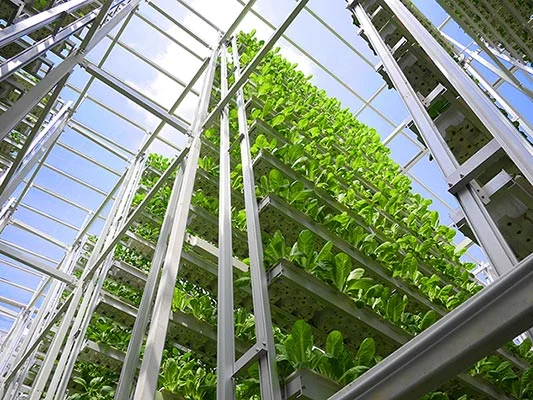
Photo Credit: Sky Greens
Sky Greens is a vertical farm three stories high in a greenhouse that produces five to 10 times more per unit area compared to normal farms. The greenhouse and low-carbon hydraulic system grows lettuces and cabbages year-round.
Their mission is to provide improved agricultural solutions with minimal impact on land, water and energy resources, help cities with food supply security and to promote low carbon footprint agriculture into urban living.
Do you think vertical farming is a long-term solution to land shortage, or is the rate of over-population putting strain on all types of farming?
Underground Farms and Lab Grown Meat: Can Science Feed Us If the Climate Fails?
What’s the world to do?
By Sami Grover
Published: October 11, 2016
From cutting usable coffee farming land in half by 2050 to crippling droughts becoming ever more commonplace, no discussion of global climate change is complete without warnings of impending doom, the collapse of civilization and an inevitable rise in the price of coffee.
Given that the world is almost certainly on course to blow through 1.5 degree global warming target agreed to at the Paris climate talks, we have good reason to worry. As rainfall patterns change, as droughts and extreme storms increase, and as growing regions shift, both small-scale and industrial farmers will find that the crops and growing methods they’ve relied on for years may no longer be effective under different growing conditions.
So what’s the world to do?
Already, many farmers are doing interesting and innovative work to adapt to the changing climate. Whether it’s breeding new, drought tolerant crops or using satellite technology to enhance precision irrigation, there’s a lot of potential for innovation within our existing food and farming infrastructure. Some innovations — like the use of cover crops and compost to add organic matter to the soil — may even help slow the march of climate change in the first place, sequestering significant amounts of carbon underground while improving soil fertility and water retention.
But innovating within the existing paradigm can only take us so far. Other farmers, scientists and entrepreneurs are looking at reinventing the farm entirely, using cutting edge technology to partially or even completely separate farming and food production from a reliance on an increasingly unstable climate.
Greens growing on floating beds in an experimental aquaponics farm in a project called The Plant in Chicagoon June 21, 2012. Urban farming is being taken to new heights in this abandoned Chicago pork processing plant where environmentalists hope to get off the grid using the waste from one crop to feed and power another.
Indoor farming, for example, was once thought of as the sole preserve of illegal grow rooms out West. Increasingly, however, urban growers are raising edible crops under artificial light, often using soilless hydroponic or aeroponic techniques.
Growing Underground, for example, is an underground farm located 33 meters below the streets of Clapham, London in an old, disused bomb shelter. Using LED lighting and hydroponics in a pesticide free environment, the start up offers salad greens and herbs to local restaurants and retailers. As the marketing copy on their website suggests, there are multiple climate benefits, including reduced vulnerability to unpredictable weather and the potential for cutting greenhouse gas emissions too:
“Thanks to a controlled environment, each tiny leaf tastes as amazing as the last. Our greens are unaffected by the weather and seasonal changes, and thanks to our prime location, we reduce the need to import crops and drastically reduce the food miles for retailers and consumers.”
Of course, growing salad greens indoors is one thing, but what about animal protein? Absent of the world turning vegan, there is likely to still be demand for meat and dairy for some time to come. And given that many modern-day “ethical” consumers are not keen on indoor factory farming conditions, one could envision a conflict between animal rights and climate resilience.
Futurists and animal rights activists have long heralded the dawn of lab grown or synthetic meat. In 2013, a team of Dutch scientists even unveiled a lab grown burger and invited a lucky few to taste it. There was only one problem: It cost $330,000 to produce. Prices are likely to come down, however, and the Washington Post recently reported that synthetic meat may be hitting the supermarket shelves within the next few years.
Lab-grown meat and underground farms are by no means the only ways we may feed ourselves in a changing climate. From aquaponics (a virtuous circle of fish farming and hydroponics) to climate resilient GMOs, we can expect to see new and innovative models emerging as our weather patterns shift.
As we usher in these new ways of growing, of course, we’ll need to keep an eye out for potential negative consequences too. Are GMOs safe? (It depends on who you ask.) Will lab grown meat be palatable to consumers? (Well, a lot of people eat at McDonalds now…) Won’t indoor farms be incredibly inefficient? (Innovation in LED lighting has greatly reduced the energy footprint of indoor growing. Thanks Colorado!) And perhaps most importantly, if rich countries can feed themselves with fancy new technology, how do we make sure that cash poor regions — whose populations have done least to contribute to climate change — are not left behind to starve.
None of these innovations reduce the need to fight global climate change in the first place. Still, given all the doom and gloom headlines about our impending societal collapse, it’s encouraging to see that new solutions are emerging. The farm of the future may look very different from the past. But at least we’ll still be able to eat.
Sami Grover is a writer, and creative director at The Change Creation, a brand creation agency that works with entities who make the world better, fairer or truer. Clients include Larry’s Beans, Burt's Bees, Canaan Fair Trade and Jada Pinkett Smith/Overbrook Entertainment.

The Age of Vertical Farming Is Officially Upon Us
Agricultural evolution as opposed to a revolution?
FARMING EVOLUTION
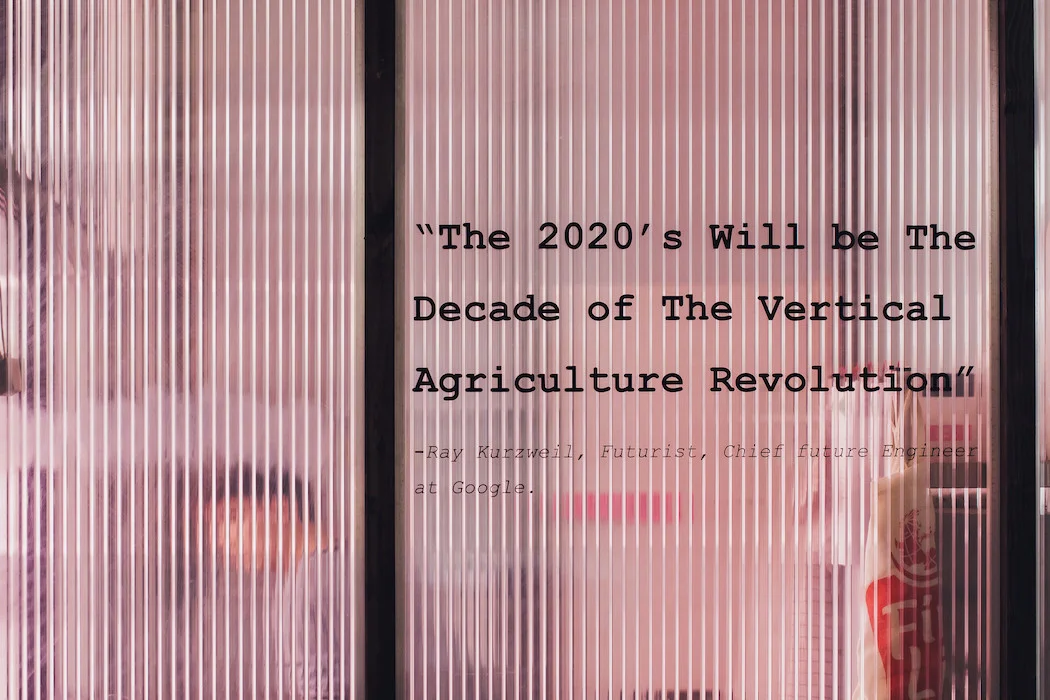
The world population is currently ballooning, and the problem is only expected to get worse as the decades go by. With the world population expected to be 11 billion by 2100, how are we going to feed more of these hungry mouths?
Part of the answer will definitely be changing the way we grow our food. And a new trend is expected to assist on that front—vertical farming.
Vertical farming doesn’t promise to radically change the way we farm, only make it more efficient, productive, and take up less space. An example is Urban Crops, a new startup that grows plants using a mixture of indoor farming techniques and hydroponics. Their facility is in Waregem, in eastern Belgium. Here, plants grow under a purple light delivered by LED lamps. The light is a mixture of blue and red lamps that seems to create the optimal conditions for growth.
Those plants are fed with a hydroponic system that delivers water laced with special minerals and nutrients.
The whole system can turn a 50 square meter space (540 square feet) into 500 square meters of usable farm space. Their 30 square meter (323 square feet) facility is able to produce 220 lettuce plants every day, using only 5% of the water needed in traditional farming.
GROWING TREND
But Urban Crops is not alone in this farming revolution. More and more companies are investing in facilities that try to do the same thing.
The biggest facility right now is a 14,164 square meter (3.5 acre) facility in Newark, New Jersey, run by Aerofarms. This facility can produce up to 2 million pounds of fresh, leafy greens a year, and is equivalent to 139,931 square meters (13,000 acres) of actual farmland.
A Swedish project wants to top even that. Plantagon Agritechture and Sweco Architects have revealed a project called the Plantagon World Food Building in Linköping, Sweden. That is a “plantscraper” 16 stories tall.
Meanwhile, Target has revealed a partnership with MIT to bring vertical farming techniques to stores. The partnership wants in-store vertical farms, that will make supermarket-bought produce fresher and, possibly, healthier.
Vertical Farmers Take Over In Belgium
“We are just trying to imitate nature. It’s not as futuristic as it might sound”
Vertical farmers take over in Belgium
posted October 10, 2016 at 10:45 pm by AFP
By Marine Laouchez
WAREGEM, Belgium―As cities expand, eating up swathes of countryside in the process, agricultural pioneers are finding new ways to grow the fresh produce we need, in containers, empty buildings and any other spare space they can find to create new vertical farms.
“We are just trying to imitate nature. It’s not as futuristic as it might sound,” insists a smiling Maarten Vandecruys, the youthful founder of Urban Crops, a new Belgian company specializing in indoor growing systems with the help of LED (light emitting diodes) lamps.
Behind him, in a spooky, futuristic purple halo of light, stand rows of shelves dedicated to horticulture. It is a closed environment with no natural light.
The purple glow is the result of red and blue lamps and is believed to provide the optimal growing conditions.
Vandecruys prides himself on the completely automated agro-system he has set up in Waregem, in eastern Belgium.
At the Urban Crops lab, a conveyor belt circulates containers of germinated plants which are placed in a special substrate, using no earth to reduce the risks of disease linked to animal-life and other external factors.
The containers are introduced to a closed room, the walls of which are lined with shelves.
Under the artificial light the plants develop in a controlled environment, fed through a hydroponic system―water laced with the ideal mix of mineral salts and essential nutrients.
No pesticides are required in this much more sterile environment and, as the LED lamps don’t heat up, they can be placed close to the plants, allowing for tight layers of plants.
Evolution not revolution
According to Vandecruys the future of vertical farming is to expand to an industrial scale.
“It’s just an evolution,” not an agro-industrial revolution, he says, a natural progression from fields to greenhouses, then from greenhouses to vertical farms.
With his system, a 50 square-meter space (540 square feet) can be transformed into 500 square meters of usable “land.” And the plants grow two to three times faster than outdoors, further increasing yields.
In the Urban Crops laboratory, up to 220 mature lettuce plants are produced each day in a 30-square-meter room using just five percent of the water required in traditional agriculture.
However for Samuel Colasse, a teacher and researcher at the Carah agronomic research center in Hainaut, eastern Belgium, the concept of urban farming is “currently not very convincing” in countries like France and Belgium where the distances between the fields and the towns “aren’t enormous.”
But in a highly urban environment like New York “there are projects which work pretty well,” he says.
And in hostile climatic conditions, or in some military or refugee camp situations such “somewhat futuristic” ideas could be envisioned, Colasse adds.
His own laboratory has produced everything from bananas to rhododendrons.
Endless uses
For Urban Crops the uses of its vertical farming technology are virtually boundless.
The company can foresee its products being used in pharmaceutical labs to produce plants with medicinal qualities, in supermarkets which could sell their own hyper-fresh produce―and at the same time cut out the transport costs―or in isolated communities in Scandinavia and elsewhere.
For now its clients have more modest ambitions.
A top restaurant, for example, wants to experiment with the flavor, texture, size and color of its ingredients through subtle changes to the light, temperature and nutrients during the growing process.
Urban Foods claims to have produced a type of salad rocket the taste of which “explodes” at the back of the throat.
And for the domestic oddesses, or gods, there are individual shelving and lighting set ups to grow-your-own herbs or cherry tomatoes.

Japan's 'agri-tech' Farming Revolution
Business analysts forecast the “agri-tech” market is primed for extensive growth internationally over the decades ahead.
By Allan Croft
TECHNOLOGY OCT. 10, 2016 - 06:41AM JST
TOKYO —
Japan’s high-tech agricultural businesses are to gather at the Agri World trade fair held in Tokyo this week (Oct 12-14) to showcase the industries next generation of technologies such as plant factories, robotic automation and IT systems, claimed as advancing the “fourth industrial revolution” into the sector.
Business analysts forecast the “agri-tech” market is primed for extensive growth internationally over the decades ahead. As global population is expected to reach 9 billion by 2050, food needs would require a doubling of agricultural production, state U.N. World Food Programme experts.
Offering technological solutions, “agri-tech” businesses are marketing a wide variety of products and services for meeting industry demands, to generally increase productivity, lower costs, use less resources such as energy, water and pesticides, and improve produce quality and availability.
There is also a strong demand for labor saving and assistive agricultural equipment driven by a different demographic trend, that of ageing agricultural farmers, whereby according to U.N. figures, in developed countries the average age is 60, and where in Japan it has risen to 67.
Overall Japan has a shrinking agricultural sector, demonstrated by government data showing the number of full-time farmers at 1.7 million in 2014, declining from 2.2 million a decade earlier. Workforce and skills shortages are compounded by the lack of young people becoming farmers. Also, due to the increasing rate of farmers retiring, the overall amount of uncultivated farmland within Japan has doubled over the past two decades, increasing to 420,000 hectares in 2015.
Japan’s reliance on food imports is a further factor of concern, currently estimated at 60%, prompting recent government targets for boosting domestic production to 55% by 2050. Agricultural production at present is valued at around 1 trillion yen of which the government aims to increase to 10 trillion yen by 2020, raising food self-sufficiency as a major agricultural policy.
Another government initiative is 4 billion yen budgeted over the year through March for promoting farming automation technology in order to raise crop yields and make-up for workforce deficits. Specifically, the financial subsidy supports the development of 20 robot types, such as devices which separate over-ripe fruits during harvesting, to enable large reductions in manual farm labor.
As physical activities bring more difficulties for a greater number of aging farmers, technological innovations to assist with and replace workers performing agricultural tasks is an urgent priority.
Japanese tech companies are heavily investing in agricultural technology as a big opportunity for profits in both domestic and global markets such as India and the APAC countries, attracting small scale start-ups to big corporations such as Mitsubishi, Fujitsu, and Panasonic, to name but a few.
There is also a trend for farmland in Japan to be cultivated by “business farmers” and “agribusiness,” at around 50% today, leading to 80% by 2025, according to government estimates.
As an indicator of growth potential in the “agri-tech” sector, the global market for agricultural robots is projected to reach $73.9 billion by 2024, up from $3 billion in 2015, predicted by Tractica, a market intelligence firm. Driverless tractors are trended to gain the highest revenue at $30.7 billion by 2024, with agricultural drones comprising the most amount of units shipped.
The applications of farming technologies are wide ranging and often interconnect. A typical farm scenario could involve a driverless tractor in a rice paddy field utilising a global positioning system, both synchronised to automate cultivation and fertilization after monitoring the soil conditions.
For work that is harder to be automated, wearable robotics put on like a backpack have been designed to assist harvesting and carrying produce, more so for elderly and female farmers.
As well as automating work, high-tech farming technologies provide accurate information which farmers can use to make decisions managing crops. For example, a combination of high resolution drone images, historical weather data from geo-satellites and sensors in the field would generate real-time alerts on mobile devices to inform farmers when to reduce a mandarin orchards water supply, so the trees absorb less water from the soil, therefore increasing sugar levels of the fruits.
The valuable experience and techniques of veteran farmers could also be more accessible to newer farmers via the web, such as learning resources about harvesting times with databases and photos.
Many news items about “agri-tech” businesses have featured in both the Japanese and international media, with reports of indoor “vertical farms” and automated greenhouses gaining the most coverage. There is often a focus on robotic automation, also the use of IT systems and sensors to measure and control growing processes, evidently enhancing work efficiencies, crop yields and produce quality.
For example, GRA Inc is a medium-size Japanese business with an automated indoor greenhouse facility producing strawberries, providing a reliable quality and increased supply all year round.
The company joins conventional farming expertise and technological innovation, employing local farmers as advisors and management, founded by a former IT administrator turned agriculturalist.
Based in Miyagi Prefecture, the business started a few months after the Tōhoku disaster. In an area famous for its strawberries, thousands of greenhouses were destroyed and damaged ensuing huge losses for farmers. The business has therefore helped to modernise and revitalise regional trade.
Such stories show the real potential for young tech-savvy farmers to work alongside older, more experienced farmers, toward overcoming the challenges confronting Japan’s agricultural industry.
Allan Croft is a freelance writer focusing on the latest science, tech and green news in Japan and Asia.