


Welcome to iGrow News, Your Source for the World of Indoor Vertical Farming

Vertical Farming's Best Kept Secret?
A visit to PlantLab:
Vertical Farming's Best Kept Secret?
Stacked layers with leafy greens in fully controlled units; some call it the future of farming. While opinions are divided if all that fancy lettuce will indeed solve world hunger, at PlantLab they are convinced that controlled environment agriculture can introduce groundshaking revolutions to our food system. But how viable is this relatively new industry? And what does a patent have to do with it? Highest time to figure out and pay a visit to PlantLab ourselves.
PlantLab’s indoor growing activities cover a range of various horticultural and agricultural sectors. Partnerships and joint ventures link PlantLab, still fully privately owned, to top international players in agribusiness, breeding, large scale horticultural production and propagating as well as industry leaders in food ingredients, flavours, fragrances and cosmetics.
“Controlled indoor growing changes the way how we approach our food system and enables providing consumers fresh food with distinct taste and nutrient profiles, produced in a complete circular and sustainable system”, according to PlantLab’s Marcel Kers when he welcomed us at their headquarters in ‘s-Hertogenbosch.
“By tweaking the right parameters, crops can be made nutrient dense and become a medicine for example”, adds colleague Ard Reijtenbagh. “We partner with companies from various industries to explore such opportunities and jointly develop and run integrated production solutions with a financially sound business case and a concrete go-to-market strategy. This varies from consumer ready products such as lettuces and herbs to young planting material for growers; and also various crops for specific natural active ingredients for the food industry as well as improved breeding processes.”
HortiDaily was invited to take a look inside their 20,000 square meters facility to witness the PlantLab approach first hand. Here, more than 5,000 square meters of advanced indoor growing facility is currently utilized to develop 'Plant Paradise®’ recipes. The remainder area is used for technology development, production of various crops and there is still space for further expansion.
It is obvious we have entered a facility where it is about more than only R&D and growing leafy greens and were amazed to see so many dedicated indoor vertical farming technologies and production. Without any doubt PlantLab operates one of the largest, if not the largest, most advanced commercial R&D vertical farming facility that we have ever visited.
The PlantLab philosophy is to only introduce its solution with a clear proof of concept from a technology, production and marketing point of view with a sound financial business case. PlantLab says that they are currently the only organization in its sector to guarantee quality and production.
To achieve this, the company works in multi-disciplinary teams with disciplines such as technology, plant science, production, business analysts, supply chain and market experts. This approach in combination with the expertise of its external partners leads to complete new ways of working and products.
The reason that PlantLab and its successes have remained unknown to the broader public? The numerous partnerships and non-disclosure agreements that the company is involved with. "We are working on so many great things and it is often a pity that we can not share it with the outside world. However, we get a lot of satisfaction from our work in the partnerships. To be part of this evolution is very rewarding." Kers said.
Accompanied by large investments, the entire PlantLab team performed dedicated research and development to create what they call 'Plant Paradise’.
"Taking into account the smallest details, we discovered that a fully closed environment enabled maximization of the plant performance by influencing more factors than just temperature and humidity. We need to control more than 80 variables in most cases. It creates new opportunities as a whole, and not just in terms of higher yields or quality."
The method is described by Kers as modifying the complete environment where the plant is growing in. From changing the light spectra to influencing the root zone temperature and humidity at canopy level. "The combination of influencing these parameters in a controlled environment to enhance or influence crop growth is what is covered by our patent”.
And that patent is where PlantLab made headlines with, when the European Patent Office denied the opposition against the PlantLab patent on their method of controlled environment agriculture, which means it remains valid. "Unfortunately the patent has become, for some people, a too loaded topic. We can totally understand that it caused a stir, just like with any patent related to food production. The fact however is that we are open to work together with any company that likes to take advantage of our knowledge and methods", Marcel Kers said. “We do not want this to stop different initiatives around controlled environment growing in the world, on the contrary. All parties can contact us for a licence agreement.” Marcel Kers added.
Kers was eager to explain the background behind their technology and why they filed a patent on it in a period when, according to PlantLab, nobody else was investigating the same opportunities. “We just wanted to protect our investments and hard work that we started in 2005. We have been actively investigating controlled indoor growing methods for more than a decade. Everyone was still convinced that it was not even possible. Nonetheless, we continued our research on the possibilities of fully closed cultivation with the use of new technology such as LEDs. We believed in it more than anyone else at that time.
We are not here to argue or bully the vertical farming and controlled environment agriculture industry, we are here to take the whole industry to the next level".
And that next level is definitely approached at the company's headquarters in ’s-Hertogenbosch. The group invested millions to transform 20,000 square meters of vacant factory and warehouse space into an indoor production unit in combination with an indoor growing research & development centre, which aesthetics could have passed for the biggest Apple store on earth.
Apple or ASML?
"That’s quit the comparison! We have many elements in our business model like ASML in which we enable our partnerships with our solutions, but we have grown over the past years towards a model with a ready go-to-market strategy with consumer products, such as fresh vegetables.” Reijtenbagh commented.
He said that PlantLab always had the vision to develop stand alone closed growing systems that could be applied anywhere in the world and contribute to the challenges of feeding a growing world population. From research, development, production to a consumer ready product; companies that partner with them are offered a solid solution that does what it needs to do; growing a crop with a consistent amount of maximized beneficial properties. "It is our aim to develop indoor cultivation to its fullest and create new opportunities and new profitable business models. Not just in terms of growing leafy greens or other vegetables, but moreover in a broader scope. Think about nutraceuticals, pharmaceuticals, flavours, fragrances, cosmetics and aromas. By innovating in indoor farming we can enhance the development of new production technologies to create unique products that contribute to the environment, health and welfare. Basically, we have grown from a company providing the “next generation of growing” to a situation where it is about “the next generation of food”! When developing new technologies it is so important to interact with your market and the consumer”, according to Reijtenbagh.
Reaching out to consumers?
“Yes, growing crops without daylight in a fully closed environment is no longer a hip trend, but here to stay. We are so convinced of the beneficial properties of the product we produce and that it is the most sustainable way of production; but how to make the consumer familiar and trusted with the product and how it is being produced? This is always a challenge with new technologies.” Reijtenbagh said. “Just showing the purple light in the growing rooms will not work. Consumer panels help us, to test our products. And we also measure the content of our products. In the coming months we will be starting a large-scale program in which we reach out to consumers. We will not do this on our own, but in combination with other companies, universities and experts. We expect a lot of this. In a couple of months we hope to tell you more”.
PlantLab and its partners continue their investments. The group is currently expanding its facilities in ‘s-Hertogenbosch as well as implementing projects on a few spots in the world. Earlier, it opened an office in California to develop and support the North American market. "We have room to double our floor space in ‘s-Hertogenbosch. This illustrates the potential behind our approach", according to Kers. "We did not jump on the indoor farming market too hastily, but wanted to go to market with a proven integrated solution and substantiated decisions. That approach, which started with the first small scale trials in 2005 is still standing. Our playground might be larger, but we still start every experiment with a single plant before we increase scale. This resulted in a successful formula for our partnerships. Before our partnerships invest in a system, it is guaranteed that it works, meets the expectations and that it is commercially and financially feasible. This is exactly where we try to make the difference".
World’s First Solar Powered Indoor Vertical Farm Comes To Philadelphia
World’s First Solar Powered Indoor Vertical Farm Comes To Philadelphia
October 3rd, 2017 by Steve Hanley
It’s always sunny in Philadelphia, according to the title of a popular television show. If so, it’s the perfect place for the world’s first solar powered indoor vertical farm.
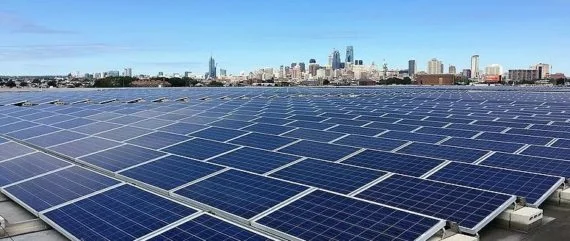
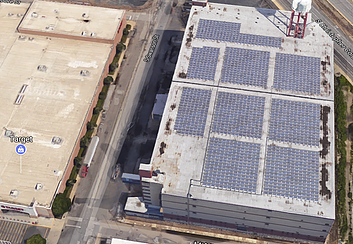
Metropolis Farms has constructed a 500 kilowatt solar array made up of 2003 solar panels on the roof of a building in The City of Brotherly Love. On the fourth floor, it is constructing a vertical farm that will be powered entirely by electricity coming from the roof. It plans to grow the equivalent of 660 outdoor acres worth of crops in less than 100,000 sq feet. “The panels are already installed and turned on, now we’re building out the farm. The first crops will be planted in November,” the company says.
Before Metropolis Farms took over the space, the only things growing on the fourth floor were pigeons. But soon, crops of fresh tomatoes, strawberries, lettuce, herbs, and broccoli will flourish there for the benefit of the citizens of Philadelphia and environs. “We feel this inherently demonstrates the wonder of this new industry we’re helping create, the industry of indoor farming.”
The company goes on to say,
“To this point, the city of Philadelphia has only ~8 acres of urban farming, mainly because there’s no available land for growing crops traditionally. By bringing the growing process indoors, in line with our mission of social responsibility, we are revitalizing abandoned spaces and are using them for local food production. We are empowering a new generation of farmers to grow food for cities, in cities.
“This technology democratizes the ability to grow local food in any community, regardless of location or climate. We’re doing this because local food is just better. Local food is more nutritious than food that’s packed in a truck and travels for weeks, it tastes better, and growing food in the communities where it’s eaten helps stimulate the local economy.”
Detractors of indoor farming point out the high cost of powering all the lights and circulation pumps needed, but Metropolis Farms thinks its rooftop solar array will answer the critics.
“The truth is, like any technology, indoor farming is constantly improving upon itself. We have gained efficiencies through innovative lighting (not LEDs), BTU management systems, and other means to dramatically reduce the amount of energy our farms are using.
“And we are on the cusp of a breakthrough in a technology that will reduce our energy usage even further. We hope to demonstrate this new technological advancement at this year’s Indoor Ag-Con, hosted for the first time in Philadelphia. We are pushing the envelope by attempting to build a zero-carbon farm. Through water recapture techniques, renewable energy production, advanced energy systems, and most importantly by farming locally, we are on the right track.”
Another benefit of vertical gardening is a dramatic decrease in the amount of pesticidesneeded to grow fresh food. Not only will the crops not be covered in chemicals, neither will the environment surrounding the vertical garden. That’s a huge benefit that should not be discounted. “We hope others will follow our lead and start building farms of the future, so communities everywhere can benefit from having a quality local food source that grows crops responsibly,” say the leaders of Metropolis Farms.

Schurz Food Science Lab | Episode 01
Schurz Food Science Lab | Episode 01
September 28, 2017
Nick Greens was a co-founder of the first Food Science Lab at Schurz High School. Recently, Nick was invited back to help integrate some donated grow systems and help kick off "Year Three" of the program. Here is an inside look at Nick and the team preparing for Fall semester 2017.

Food For Thought: Bringing Farms Into Canadian Universities
Food For Thought: Bringing Farms Into Canadian Universities
Having a farm at McMaster can do even more to build our personal capacity to address climate change in way that does not build cynicism, but rather creates community and shows that we can make a difference while having fun.
By Adam Chiaravalle
Published September 28, 2017
Something quite remarkable is happening at Universities from coast to coast across Canada. This something is urban farms. I was inspired when I read the following from a 2011 Maclean's article:
This past September [2011], New Brunswick's Mount Allison University held an event unprecedented in its 172-year-long history: a you-pick potato harvest. For the first five Saturdays of the new school year, students and Sackville residents were able to pick Russet and Superior potatoes from a boggy, 9.7-hectare [24 acre] farm in the heart of the campus. The rest of the spud harvest - a yield of 30,000 pounds - was transformed, to the delight of many ravenous undergrads, into fresh, hand-cut french fries and mashed potatoes in the kitchen at Jennings Hall.
Can you imagine being a Mount Allison student going to school and eating food that you helped grow on your own campus? It does not stop there, as the University of British Columbia has a 24 hectare (59 acre) farm on their campus. The University of Toronto has a 60 hectare farm off-campus an hour away in the Niagara escarpment. Dalhousie University has a 1 hectare farm. Concordia University has a one-half hectare farm on their campus.
The purpose of these farms is to act as living laboratories for students to understand how to grow nutritious food that works with the planet.
Teaching students how to provide themselves with nutritious food and how to do it in a sustainable way is some of tremendous importance. This is because two existential problems in the world today are human health and climate change.
These two issues are not only intrinsically interconnected, but also healthy eating and climate change can both be learned about on a farm. Learning about two of the most sever issues on our planet certainty seems like they would be worth learning about.
The word farm may be too big of a concept for some people, but the severity of climate change commands for us to take bold and ambitious actions. A farm helps with climate change because it allows for us to tangibly interact with our planet and for us to attain a true understanding of what sustainable living entails.
Getting people to have sustainable consciousness is vital, as 2017 is the 30th anniversary of the term 'Sustainable Development' that was coined for the 1987 Bruntland Commission Report [PDF], and the planet's condition has only gotten worse since 1987.
Having said that, we need to understand that climate change is not some future concept that we will have to address, rather it is dangerously unfolding right now.
Farming at McMaster
Even though McMaster University in Hamilton does not have an urban farm, there is a groundswell for local food among students, faculty and staff.
McMaster garden
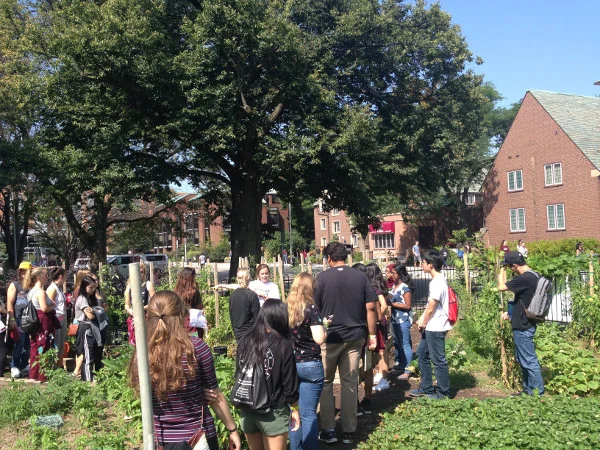
The incredibly progressive thinking Director of Grounds, Carlos Figueira, created a garden for Dr. Chad Harvey and me to test the appetite McMaster students have to grow their own food. We ran six garden-based cooking classes through the Student Wellness Centre's Food for Thought program that is funded generously by Alumni House's Mac 10 program.
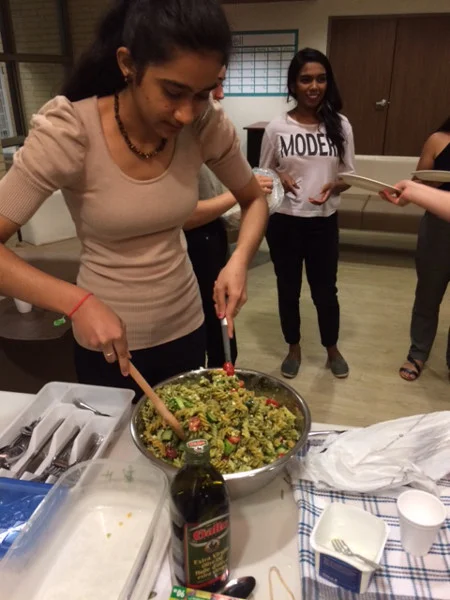
Students preparing meals in the Food for Thought program
Two questions were answered this summer: McMaster is proactive in creating a sustainable food system in order to be a place of learning, and the students want to see more of this.
In addition to this, I have talked to many faculty and staff members at McMaster and they are all supportive of a large sustainable food system at the university that goes beyond the two current community gardens that McMaster has.
Is it time for a McMaster Urban Farm? In April 2016, one McMaster professor asked, "Question for @McMasterU community in the wake of #BIBCclimate week: why don't we have a Mac farm for student food & education?"
A farm is not just for us to grow food, but it is for us to be connected to our food system and for us to understand the impacts it has.
Industrial agriculture is responsible for the health of food being at an all-time low, as four out of the six biggest killers in the United States are related to the food we eat.
Also, industrial agriculture has eroded natural lands to such a point that 27 percent of natural land in North America is now farmland and the type of agriculture of that is practiced is monoculture systems, which are the grave for bio-diversity.
Ontarians should have chills running down our spines when we hear that there are 2,337 species in Ontario that are either endangered or vulnerable and of special concern. Without Biodiversity, ecosystems cannot run and thus the health of the planet is seriously diminished.
Growing Food More Sustainably
The saddest thing here is that agriculture does not have to be practiced in this way, as we can do it differently. Dr. Chad Harvey and I are trying to bring permaculture farm to McMaster.
Permaculture is an agricultural design system that mimics a natural ecosystem to produce food while restoring nature. The benefit of permaculture is that biodiversity and the production of food can co-exist. This is an example of true sustainability because it is tending to the needs of humans and nature.
Before we can talk about any farm or physical project being constructed, we must understand that the land is not ours, but rather it belongs to Indigenous people. If we are to progress in a dignified human way, we would be much improved if we adopted the Indigenous perspective of land in the sense that is no one owns it but rather we all act as stewards of the land.
McMaster has gotten a step closer to respecting and honouring Indigenous people by acknowledging that it is located on the traditional territories of the Mississauga and Haudenosaunee nations.
The next step for McMaster to continue respecting Indigenous people is to have a farm that grows Indigenous plants so that we can begin to learn more about Indigenous perspectives and culture.
Battle of the Eggplants
Additionally, if we are going to talk about how growing our own food has the ability to enact change, we should also talk about the joy of cooking, because this is something I think we have been forgotten as the waves of restaurants continue to open in Hamilton.
The Battle of the Eggplant can remind us about the fun of cooking, as this competition saw two of McMaster's very own square-off.
In one corner we had Dr. Ameil Joseph, a professor from the school of social work, and in the other corner we had Taryn Aarssen, an outreach assistant from the student wellness centre.
Both competitors were given eggplants from the garden behind the Biology Greenhouse and they were to cook a meal with this ingredient. The rules were simple: the best-tasting dish would be chosen as the winner.
Dr. Joseph is one of the most gastronomically inclined professors on campus. Taryn, on the other hand, has never found an ingredient that she could not turn into a tasty treat.
Dr. Joseph began his dish by sautéing the eggplant in a screaming hot skillet until they reached a juicy golden brown. My heart simultaneously melted a little as I watched the spectacle. Then Dr. Joseph drew upon his nuanced worldview and added garlic soya sauce over the eggplant. This brought the taste of Asian into the dish.
The result of this worldly combination of flavours was like experiencing a perfectly choreographed opera song, as the sweet eggplant was contrasted brilliantly with the nutty, salty, rich soya sauce. The loveliness of this dish was that it was a three-ingredient wonder: Dr. Joseph let the eggplant do all the talking.
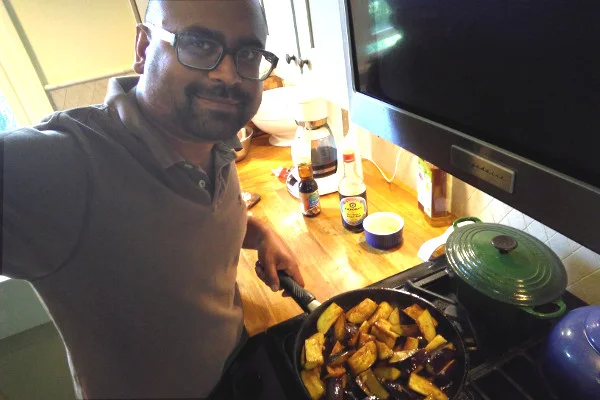
Dr. Ameil Joseph showing off his sauteed eggplant
Taryn started her dish by slicing the eggplant so thinly that it only had one side and then she placed it on top of a sauced pizza dough. Then she added fresh mozzarella and purple basil. Then time and space stood still for a few moments, because instead of simply cooking the pizza in a generic oven, she cooked it in a wood-burning oven!
The result was one for the ages as the crisp and perfectly-charred pizza was as gorgeous as it was delicious. The toppings on the pizza were kissed with a lick of flame that made the flavours take on another life form.
The creamy fresh mozzarella cheese with the zesty tomato sauce was the perfect place for the tender sweet eggplant to call home and then the symphony of flavours were topped off with a floral aroma of purple basil.
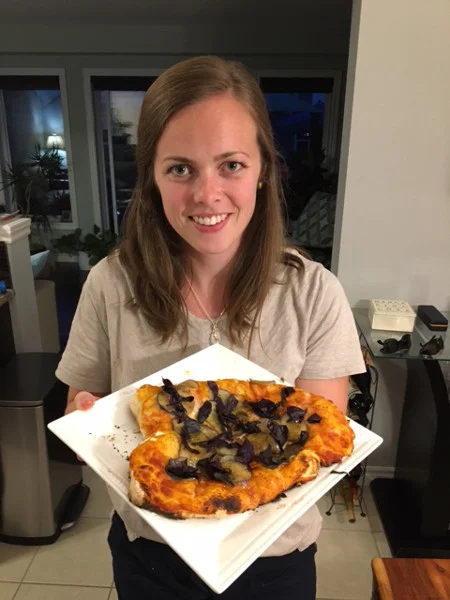
Taryn Aarssen showing off her eggplant pizza
Both dishes tasted of summer and they were great in their own unique ways, but I would give the victory to Taryn. It was difficult work tasting both dishes and deciding on a winner, but somebody has got to do it. The pizza beat the garlic soya sauce eggplant because the crisp of the pizza crust with creamy center could quite literally defeat any force in the world. Perhaps if everyone in the world ate this pizza everyday there would be peace on earth.
Cooking Connects Us
Some of you may think that my explanation on the battle of the eggplants was too much of a dramatic embellishment. However, we need to remember that cooking with each other not only connects us with one another, but it binds us to the best bit of life and is an expression that our common desire to eat is a social act.
Witnessing strangers cooking, laughing, learning and sharing food with one another is seeing humans at their very best. This is what the Food for Thought cooking classes are all about and I am so happy to see students building relationships and find meaning in the mundane act of food that many of us take for granted.
We can use this fun and familiar context of cooking to take climate change head-on because it spins this systemic problem of antagonistic drudgery into a more hopeful context where relationships are built, and where climate change is viewed as an opportunity to create change and achieve fulfillment.
Having a farm at McMaster can do even more to build our personal capacity to address climate change in way that does not build cynicism, but rather creates community and shows that we can make a difference while having fun.
Growing food is something we can all do to improve our health and the health of the planet that provides so much for us, it is a very empowering opportunity, all we need to do is start and we will be surprised to see many great people already out there making change happen!
Adam Chiaravalle is a McMaster University student looking for opportunities to create change in the world.
Data Analysis, Tech And Fish Waste Make Urban Farms Viable
Data Analysis, Tech And Fish Waste Make Urban Farms Viable
Brexit boosts business in ex-bomb shelter that controls plants’ every growth variable
Nothing lost: Kate Hofman, chief executive of GrowUp, surrounded by produce nurtured by fish waste
09-25-17 | by Jennifer Thompson
The rows of plants under pinkish lights, tended inside a Dutch warehouse by white-coated workers, bring to mind more a sci-fi film set than a farm. Indeed, the start-up behind the scheme, PlantLab, prefers to describe itself as a “development company” rather than an agricultural business.
Urban farming itself is not new — people have always grown produce or raised livestock in towns and cities, from necessity, as a hobby or to reduce food miles. Now, however, city agriculturalists are harnessing technologies such as light-emitting diode (LED) bulbs, 3D printers and data analysis to speed up growth and create farms virtually anywhere.
In London, in a former bomb shelter underneath Clapham Common, for example, Growing Underground cultivates leafy greens, such as watercress, rocket and coriander.
Built to shelter up to 8,000 people during the second world war, its tunnels now house rows of plants. “It was all [done using] standard agricultural equipment, save for LEDs,” says Steve Dring, co-founder of Growing Underground. LEDs provide the right level of light and heat in an energy efficient manner.
Affordability has proved a big factor for spurring innovation. PlantLab grew out of an older traditional horticultural company, growing greens and soft fruits under glass and greenhouses but was officially launched in 2010 as LED lighting became more affordable. Growing Underground also works on a fast turnround, with a series of ‘mini harvests’.
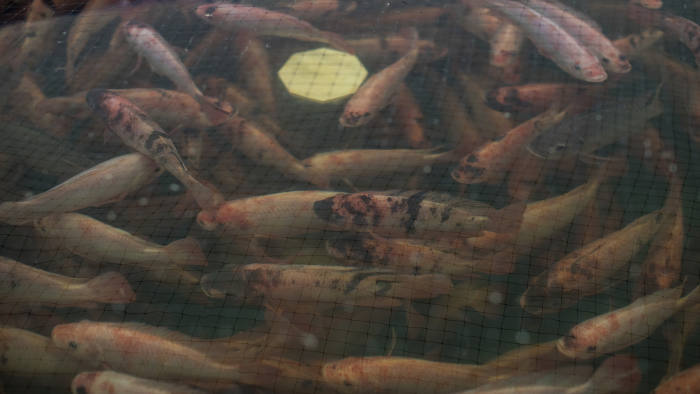
Tanks of tilapia fish at GrowUp's aquaponics project provide nutrients for plants © Charlie Bibby/FT
Seeds spend three days in a dark, warm and humid environment to fool them into thinking they are surrounded by soil. They then grow for six to 12 days under the light before being harvested for the capital’s restaurants and more recently the London food stores of Marks and Spencer.
A few miles from Clapham, Kate Hofman and her team at GrowUp are also revamping existing equipment and concepts for an ambitious aquaponics project.
Having taken a sabbatical from her career as a management consultant to undertake a masters degree in environmental technology and business, Ms Hofman and co-founder Tom Webster wanted to create an economically viable and environmentally friendly food production system.
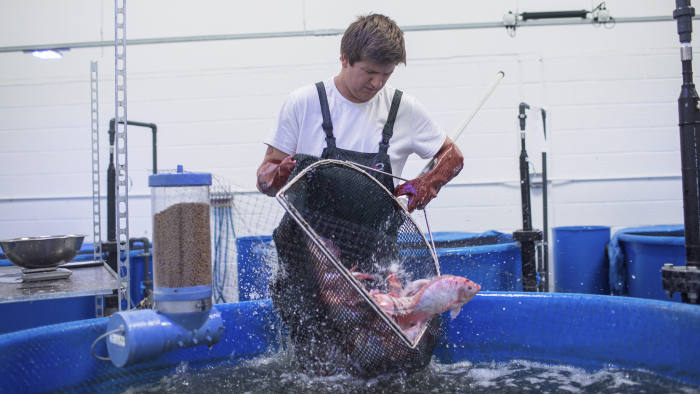
Tilapia fish at GrowUp's aquaponics project are reared with a smart monitoring system © Charlie Bibby/FT
The concept of aquaponics, which combines raising fish with growing plants for a mutually beneficial exchange of nutrients, has been around for thousands of years. Technology, however, is bringing a new precision to the process.
GrowUp, established in 2013, operates from a warehouse in east London housing 12 tanks each holding 3,000 litres of water and up to 400 tilapia fish. The waste of the fish nurtures plants growing above — including kale, watercress, and basil — while the plants filter the water, and a smart monitoring system gives complete control over elements such as humidity and temperature.
The impetus from the start was to create something that could succeed as a business.
“We’ve focused on how do you take that technology and make it commercial,” says Ms Hofman. “We were both interested in how hydroponics could be used to grow food commercially. The reality is most of our food production across the world happens on an industrial scale.” GrowUp is currently looking for a location for a second farm, expected to have around ten times the capacity of the original site. This would allow them to begin supplying supermarkets. Ms Hofman says the prospect of Brexit following the UK’s vote last year to leave the EU, has increased interest in the concept of localising food production and technology-driven farming projects have made some inroads into supply chains.
“It was quite obvious there were mathematical patterns in plant growth.” ARD REIJTENBAGH, CHIEF PARTNERSHIP OFFICER AT PLANTLAB
Advances in data analysis are also making these kinds of farms more productive. “It was quite obvious there were mathematical patterns in plant growth,” says Ard Reijtenbagh, chief partnership officer at PlantLab.
Increasing interest in data collection prompted PlantLab’s founders to consider the optimum circumstances in which to grow plants.
They designed and supply so-called ‘plant production units’, as well as software and growing recipes, where growing conditions are tightly controlled: more than 80 potential variables, across the light spectrum, and including humidity and even the movement of air can be altered. The control is so thorough that they can determine the level of iron or zinc in plants.
The combination of technology and farming can also have other benefits.
Nerve Centre, an arts centre in Northern Ireland, runs a ‘digital farm’ project to teach students with learning difficulties entrepreneurship and digital skills.
Students construct aquaponics systems using laser cutters and 3D printers and supply the produce to restaurants. They have just taken delivery of 100 juvenile carp, which may fetch between £60 and £70 each once they are fully grown in two years. John Peto, the centre’s director of education, says: “Some [students] have no interest in growing food but they’re really interested in using computers.” He also expects the cultivation of fish to have a therapeutic effect.

LOKAL is a Prototype of a Salad Bar Whose Ingredients Are Grown Indoors, Locally and Vertically, Using a Hydroponic Farming System
Thanks to hydroponics, microgreens can grow up to three times faster than in fields, using 90 percent less water. This method produces much less spoilage and can be done locally, making it much more sustainable when powered by renewable energy sources.
LOKAL is a Prototype of a Salad Bar Whose Ingredients Are Grown Indoors, Locally and Vertically, Using a Hydroponic Farming System
Linked by Michael Levenston
Photographer: Rory Gardiner and Nicklas Ingemann
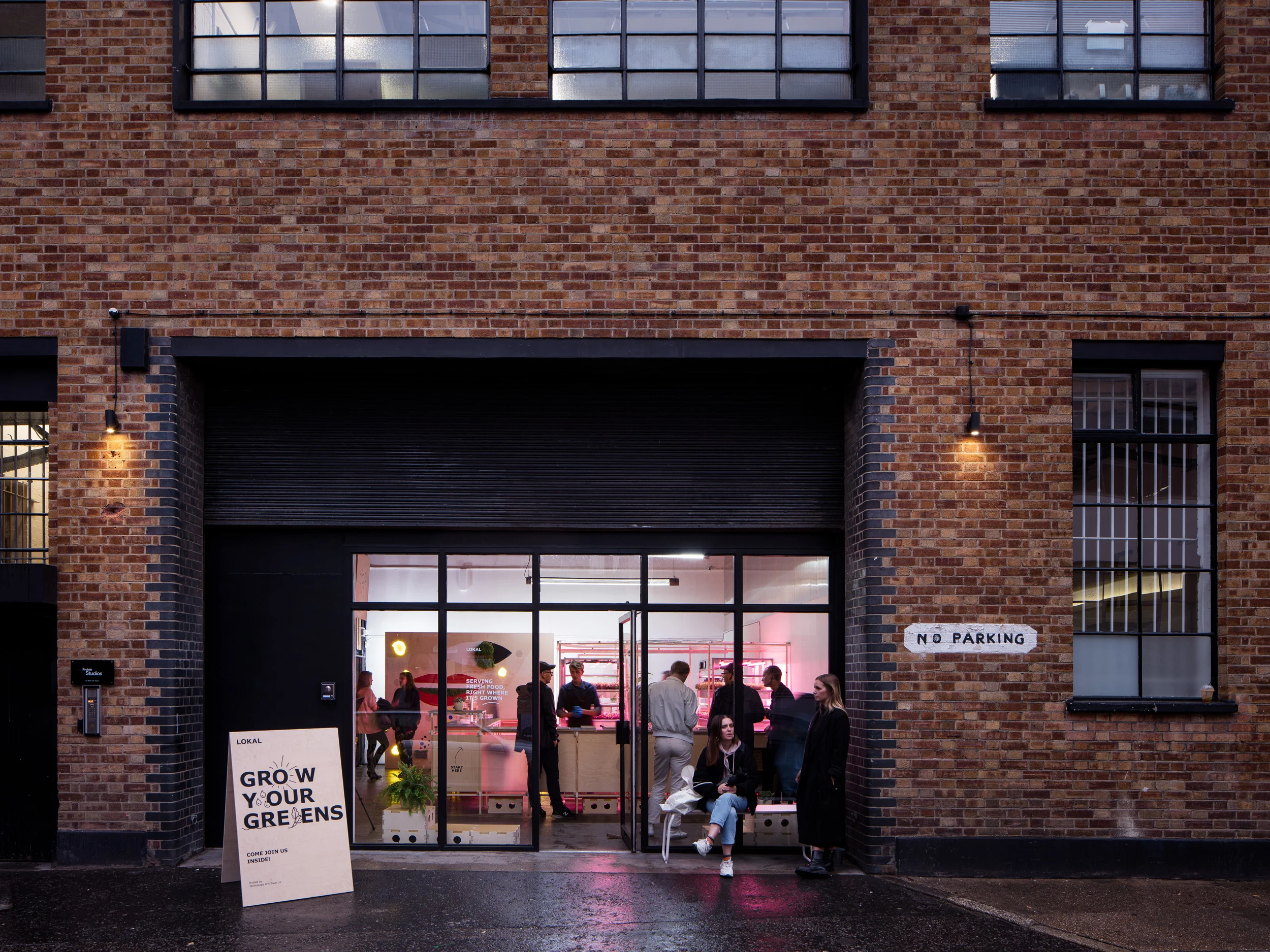
SPACE10—IKEA’s external future-living lab—popped up in Shoreditch during last week’s London Design Festival.
By Simon Caspersen
SPACE 10
Director of Communications
Sept 2017
We used the occasion to test a new food concept, we’ve been working on, called LOKAL. It is not fully ready to be implemented in the IKEA business of today, but was received so positively by local Londoners, that we are exploring further.
LOKAL is a prototype of a salad bar whose ingredients are grown indoors, locally and vertically, using a hydroponic farming system, which was on public display throughout the week.
Two thousand salads
The purpose of the prototype was to test how Londoners felt about food grown hydroponically and, more importantly, whether they liked the taste of the microgreens.
SPACE10’s chef-in-residence Simon Perez and his team served more than 2,000 complimentary salads over the course of six days in London. Visitors had a choice of three dishes, each of which came with a salad dressing made with spirulina, a kind of microalgae.
SPACE10 surveyed 100 people about the salads—and the responses were even more positive than expected: 90 people said their salad was “delicious”—the highest possible verdict. Just one person didn’t like it.
Many of the comments received from people also lent strong support to the LOKAL concept:
“Why can’t this be everywhere?”
“A brilliant concept.”
“I love it—make it happen!”
“Really exciting concept—I love it!”
“It’s inspiring to see work being done and people attempting to change the food and restaurant industry.”
“Help me do this at home.”
The perfect spring day, every day
Hydroponic farming allows microgreens to be grown without soil, using nutrient-enriched water, LED lights and computerised automation—ensuring the plants can enjoy a perfect spring day, every day.

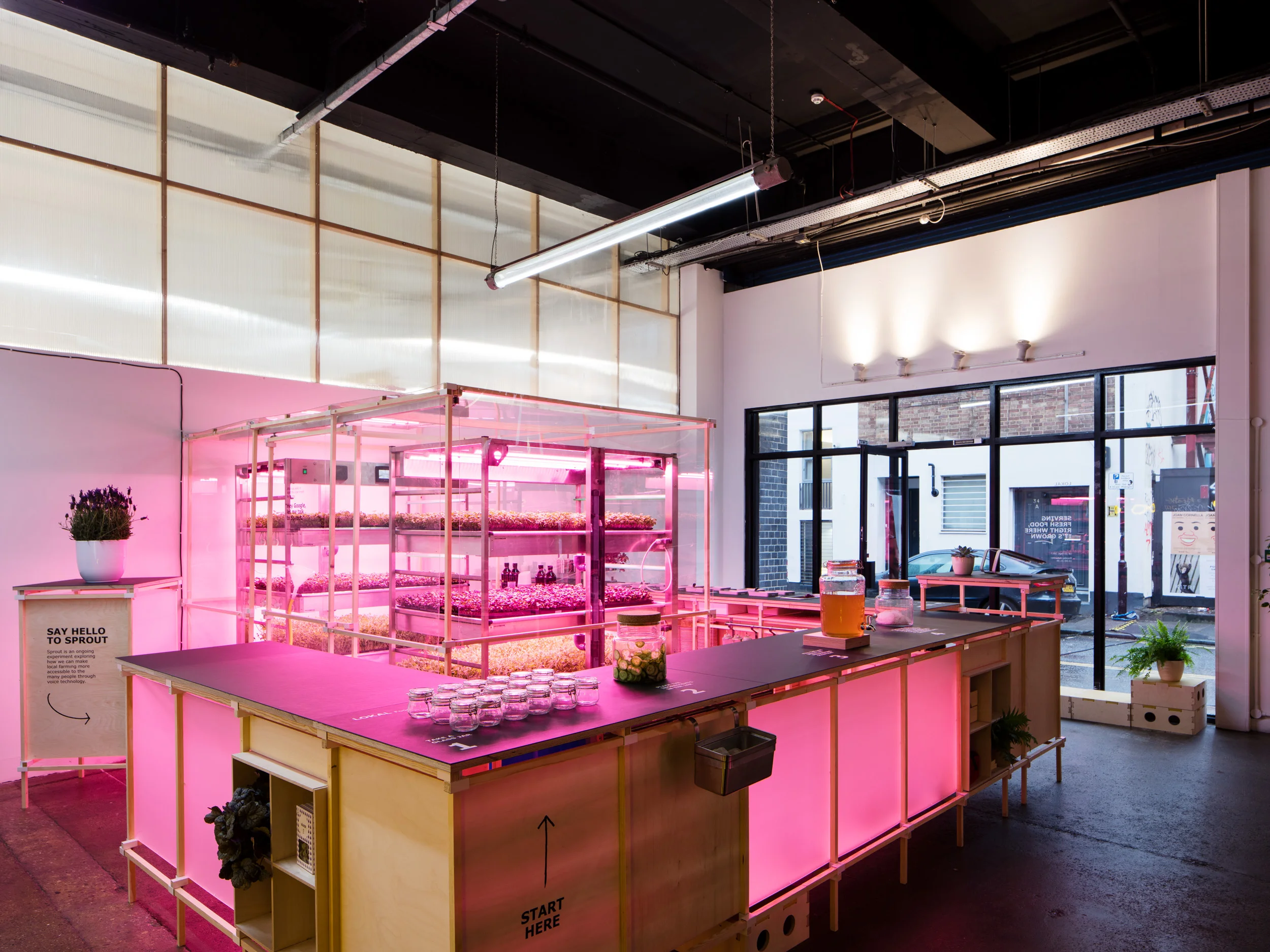
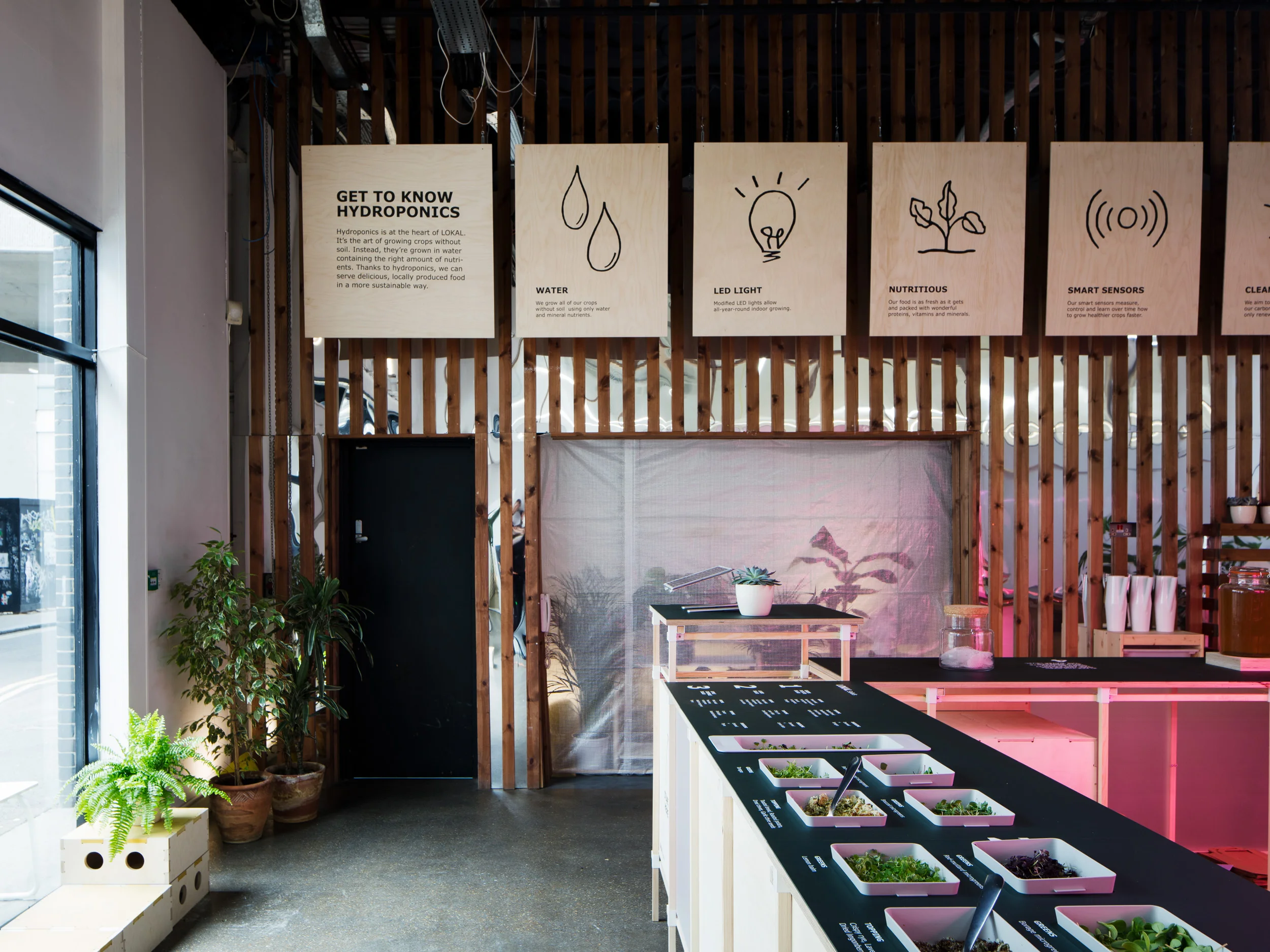
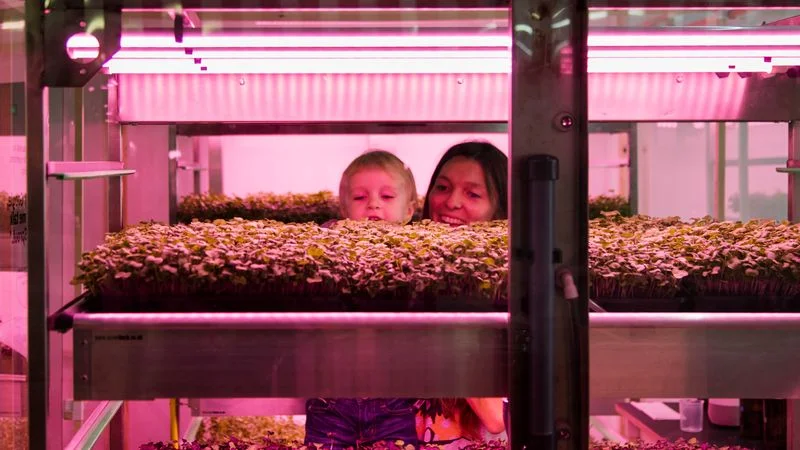
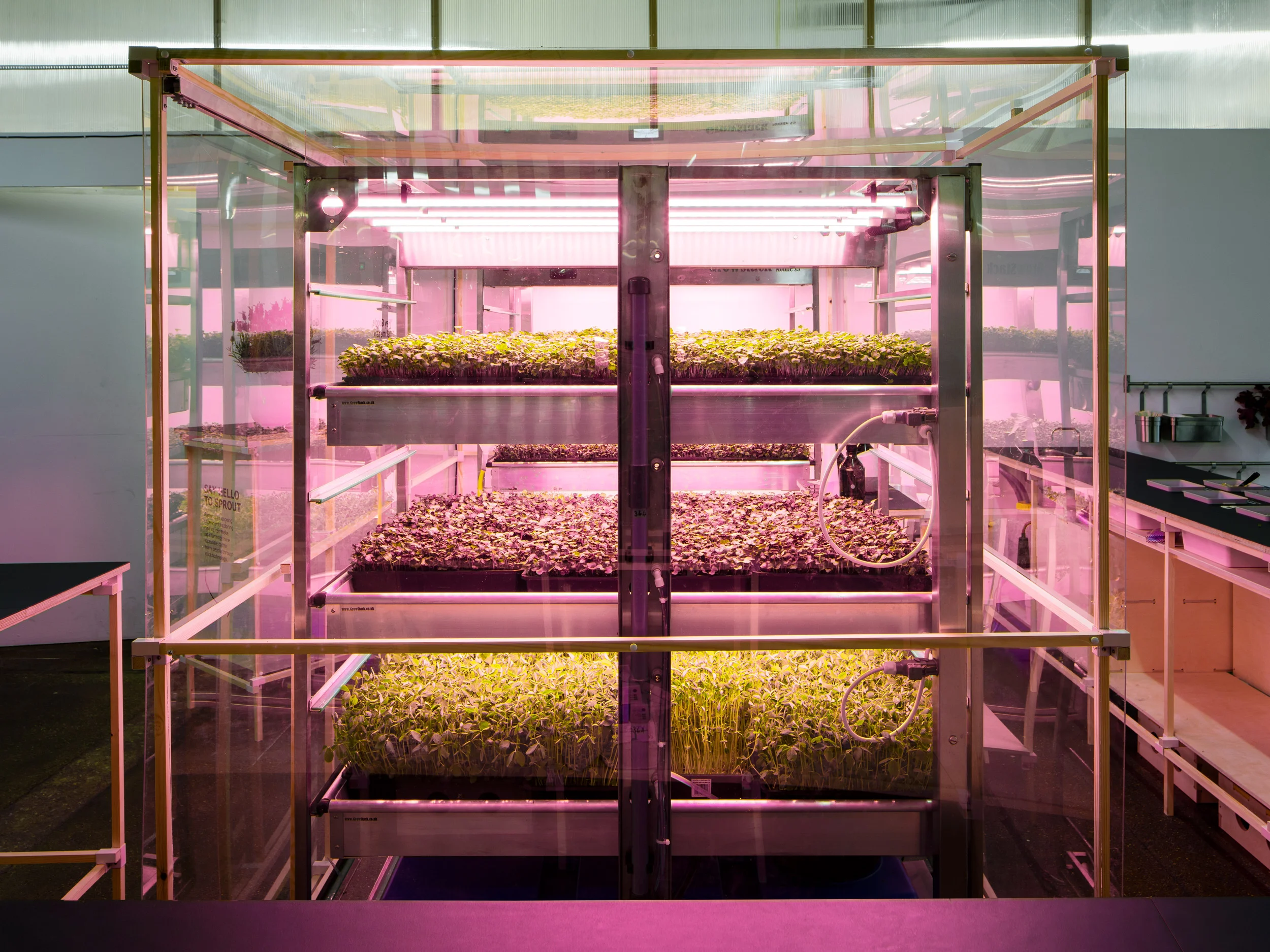
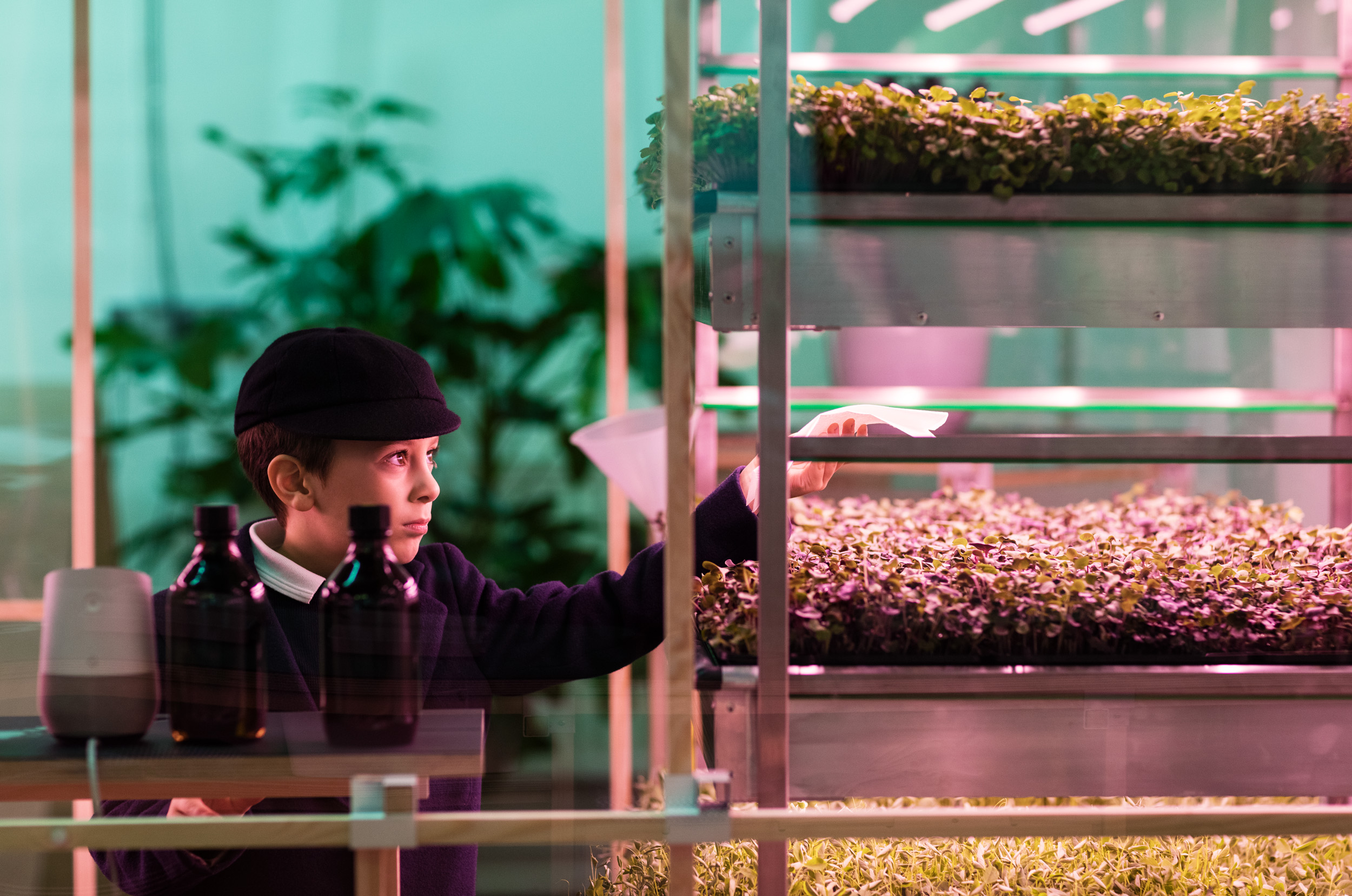
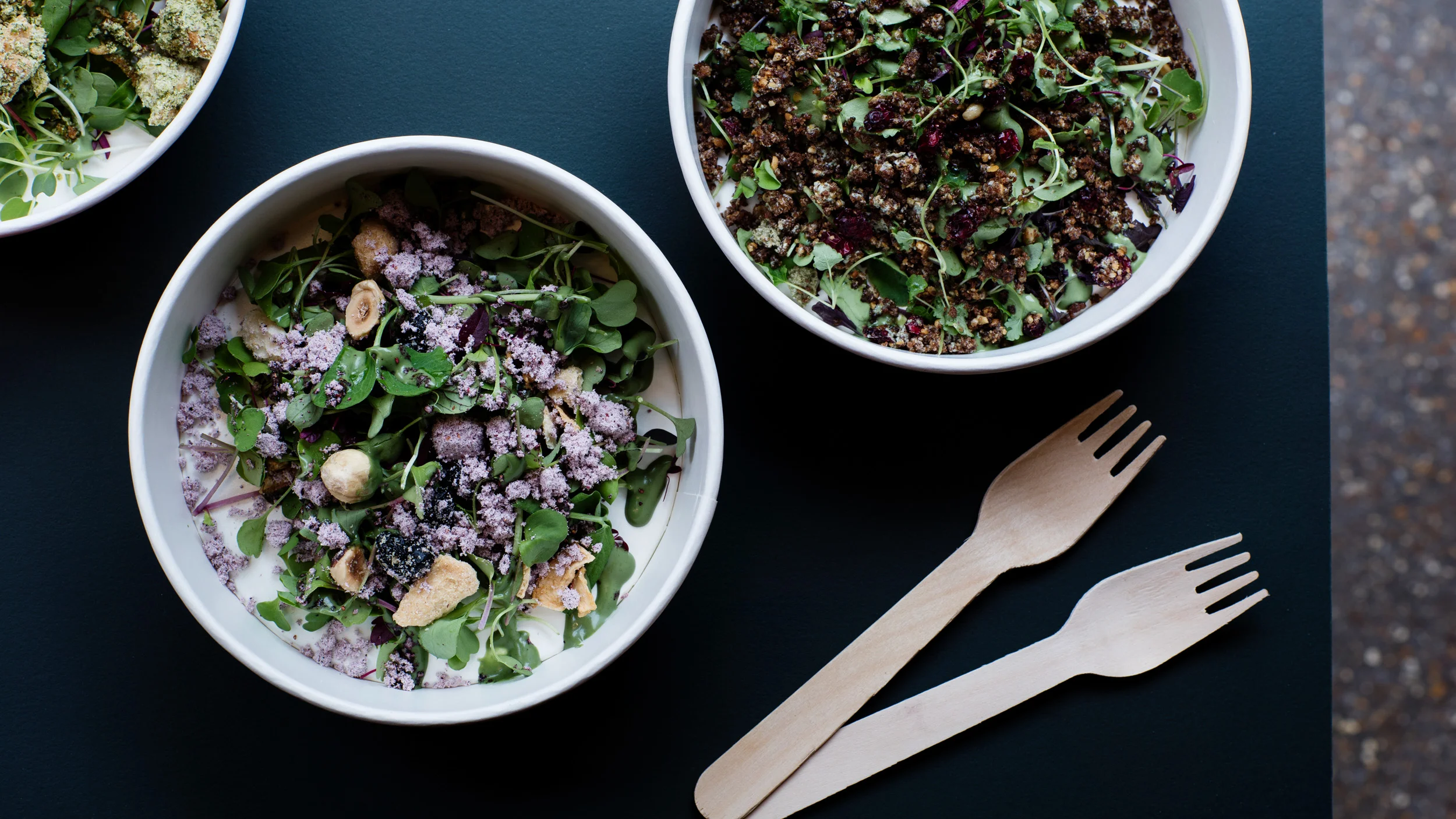
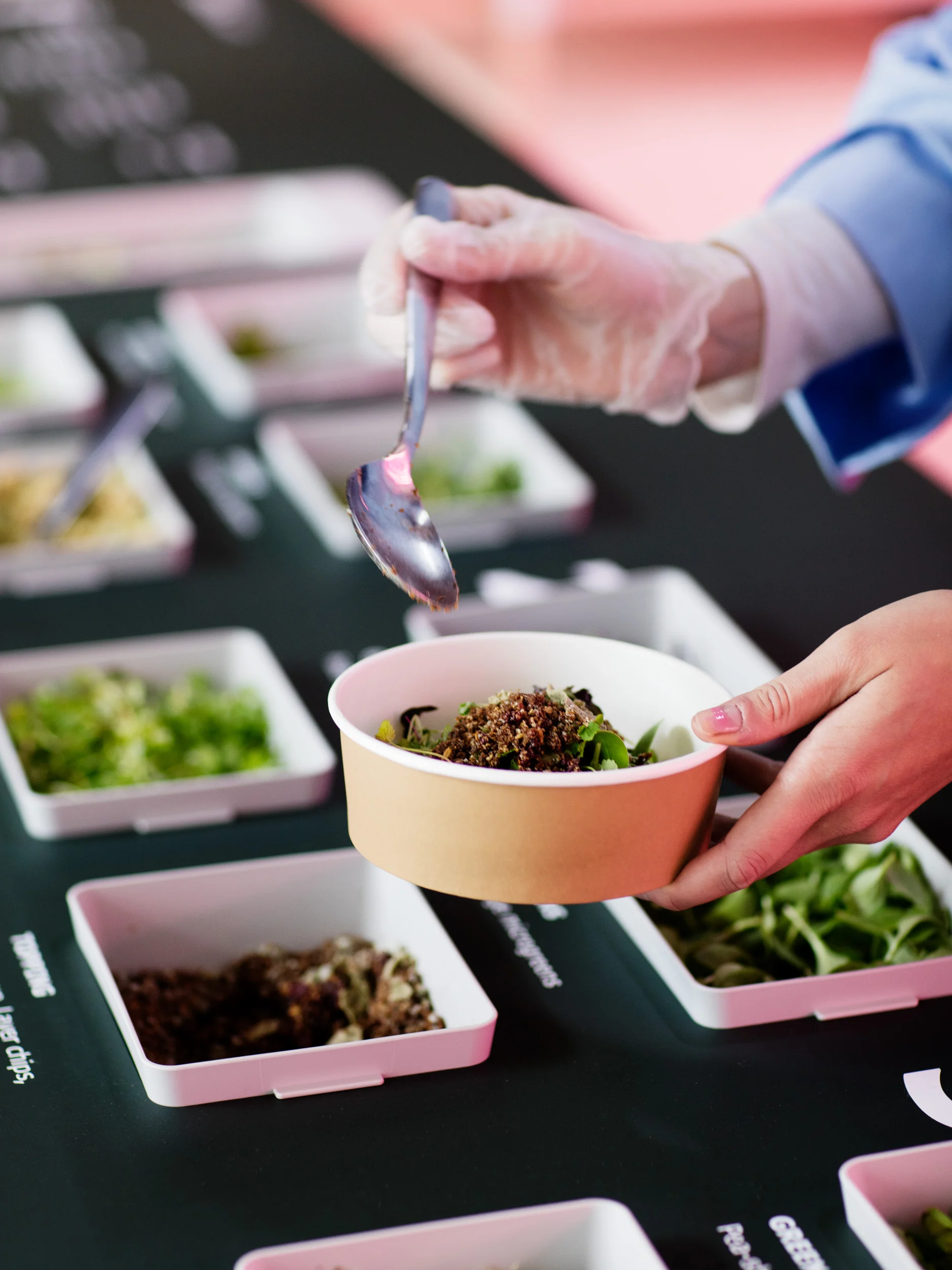
Thanks to hydroponics, microgreens can grow up to three times faster than in fields, using 90 percent less water. This method produces much less spoilage and can be done locally, making it much more sustainable when powered by renewable energy sources.
Fresh approach to food
Having trialled its LOKAL prototype in London, SPACE10 will next introduce sensors and machine learning, and connect the data from the microgreens with Google Home. That will enable people to “talk” to the greens and understand their growing conditions and nutrient needs.

First Aeroponic Farm At Paris Hotel Yields Harvest

Vertical urban farm at Mercure Paris Boulogne Hotel
First Aeroponic Farm At Paris Hotel Yields Harvest
BY HOTEL BUSINESS ON SEPTEMBER 25, 2017
PARIS—The Mercure Paris Boulogne Hotel houses a vertical urban farm spanning more than 3,767 sq. ft. on its rooftop. The harvest from this first trial season has helped provide the hotel with supplies, and has made it possible to distribute baskets of fruit and vegetables to locals in the neighborhood. On average, the restaurant uses a quarter of what is produced with the rest being sold in baskets, according to the brand.
The hotel’s vegetables, red berries, salad leaves and herbs are picked every morning for lunch and dinner, ensuring the maximum freshness of the produce sourced from a completely local food network. Seasonal produce as well as rare varieties of strawberries and heirloom tomatoes is given priority, according to the brand.
Caroline Ebran, head of sustainable development projects at AccorInvest, explains, “Through this project, AccorHotels is confirming its commitment to positive hospitality and to making progress in relation to its target of having 1,000 vegetable gardens by 2020. For AccorInvest, which is behind this project, the aim is to play a key role in shaping the city of tomorrow by enhancing the environmental value of our buildings and developing the local supply chain for both our guests and the locals living close to our hotels.”
The urban farm was installed and is being operated by Agripolis, a start-up specializing in aeroponic urban farming. Without resorting to chemical fertilizers or pesticides, this soilless growing method means that plants can be watered and given nutrients within a closed circuit and, as a result, use 10 times less water than in conventional farming, according to the brand. The system developed by Agripolis includes 216 PVC columns that are suspended from a bamboo structure, and can be set up on standard rooftops with limited load-bearing strength.
This project is part of AccorHotels’ Planet 21 sustainable development program, whose two priorities by 2020 are to offer healthy and sustainable produce while simultaneously eliminating food waste, and secondly to commit to the energy transition of its buildings.

Underground Air-Raid Shelter Feeding London Restaurants
Underground Air-Raid Shelter Feeding London Restaurants
An old World War II shelter in Clapham, which could protect up to 8,000 people from Nazi German bombs, consists of two large tunnels that were intended to one day become an extension of the London Underground
LONDON, Sept 28, 2017 — Under an anonymous back street in south London lies a vast underground air-raid shelter that has been turned into a pioneering urban farm supplying supermarkets and restaurants in the capital.
The World War II shelter in Clapham, which could protect up to 8,000 people from Nazi German bombs, consists of two large tunnels that were intended to one day become an extension of the London Underground.
That never happened and the shelter lay abandoned for 70 years until two entrepreneurs, Steven Dring and Richard Ballard, decided to grow broccoli, coriander, fennel and a host of other vegetables as so-called micro leaves, also known as micro herbs, grown from seedlings but harvested early when the first leaves form.
“We need to create these new fertile spaces” to meet increased demand from a growing global population, Dring told AFP on a visit to the “Growing Underground” site — some 33 metres below the road.
Staff wear protective clothing and there is a strong smell of vegetables and humidity in the shelter.
The vegetables are grown with hydroponics, using nutrient solutions in a water solvent instead of soil.
The technique can also be used to grow a wide range of produce including tomatoes and baby peppers, Dring said.
Day and night
The only other ingredient required is light.
The tunnels have no natural light and are illuminated with pink LEDs, giving them a futuristic look.
The intensity of the light changes to imitate daylight, but with one major difference — the lights are dimmed during the day and shine brightest at night, as electricity is cheapest then.
“We predominantly grow micro herbs, which are standard herbs, from different seeds.
The site of an underground air-raid shelter which has been turned into the urban farm project, ‘Growing Underground’ is pictured in Clapham, south London. – PHOTOS: AFP
“But what we do is we grow them to a very small stage, before the first true leaves start to come out,” Dring said.
Under an anonymous back street in south London lies a vast underground air-raid shelter that has been turned into a pioneering urban farm supplying supermarkets and restaurants in the capital
The micro herb broccoli takes between three and five days to grow before being packaged up in the shelter and sent off.
Fans enthuse about the intensity of the flavours of the produce.
Vegetables in this underground farm in London are grown with hydroponics, using nutrient solutions in a water solvent instead of soil
Customers include Marks and Spencer which offers the produce in some of its supermarkets, several stalls at London’s Borough Market and many restaurants — helped by the patronage of celebrity chef Michel Roux Jr of Le Gavroche.
‘Quality, flavour’
Dring and Ballard latched onto the concept of vertical farming — producing food in vertically stacked layers — which was developed by US biologist Dickson Despommier in his 2010 book The Vertical Farm: Feeding the World in the 21st Century.
The operation takes up some 200 metres of the 1,000 metres available in the air-raid shelter tunnel, half for growing while the other half is used for packaging.
Their request to use the air-raid shelter in Clapham was eagerly taken up by the owners of the space, London’s public transport company.
This type of farming is “100 times cheaper” than setting up an urban farm on the surface, Dring said.
Their customers say they are happy with the result.
“I think the story is fantastic,” said Charlie Curtis, an agronomist at Marks and Spencer supermarket chain.
'Growing Underground' urban farm customers include Marks and Spencer, stalls at London's Borough Market and many restaurants—helped by the patronage of celebrity chef Michel Roux Jr. of Le Gavroche
“I think we all love to think that our food is grown locally to us but I think also the product sells itself. The quality is fantastic and the flavour is like something I’ve never had before,” she said.
No unpredictable weather
Experts say vertical and urban farming could be ways not only of facing up to population growth but also growing urbanisation worldwide as well as climate change.
Nottingham University’s Centre for Urban Agriculture said on its website that urban farms create jobs, reduce transport costs and pollution as well as offering an “opportunity to develop technologies”.
The “Growing Underground” project sends its data on humidity, temperature and plant growth to Cambridge University to try and improve efficiency.
“What these guys are doing is modelling for us which one is the optimum environment for each product,” Dring said.
Every day is the same in the underground farm and there are no seasons, or unpredictable British weather.
“We have a lot more control than usual growers... When in the winter days it’s cold under the glass, it will take you 25 days to grow red mustard. It will always take us 10 days to grow red mustard,” Dring said.
He added: “There’s nothing that stands as a major challenge, apart from building a farm underneath London.” — AFP
Vertical Farming: A Big Leap Towards Sustainable Farming
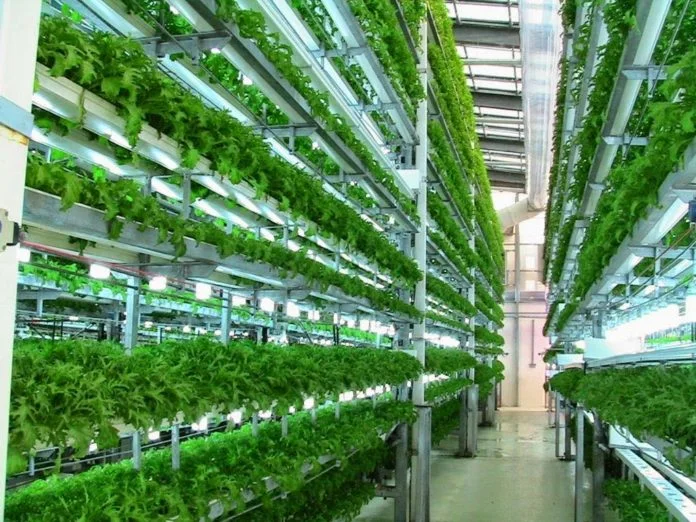
Modern day vertical farming includes controlled environment agriculture technology i.e. CEA technology. All other environmental factors can be controlled using this technique. Techniques such as augmentation of sunlight by artificial lightning and by metal reflectors are also used for producing a similar greenhouse-like effect.
Vertical Farming: A Big Leap Towards Sustainable Farming
26/9/2017
Vertical farming is the technique of producing food in stacked layers or on vertically inclined surfaces which comprises of new automated farms. It requires less natural dependency and helps in reducing the dependency and cost of skilled labourers, weather conditions, soil fertility or high water usage.
Modern day vertical farming includes controlled environment agriculture technology i.e. CEA technology. All other environmental factors can be controlled using this technique. Techniques such as augmentation of sunlight by artificial lightning and by metal reflectors are also used for producing a similar greenhouse-like effect.
Vertical farms is a pesticide-free technique which requires much less input than traditional farming methods and gives much more output.
Farms embedded with this technique uses artificial lighting systems that facilitate enhanced photosynthesis. LEDs are placed near plants to impart specific wavelengths of lights for more photosynthesis. This enhances productivity.
‘Aeroponic mist’ is another technique used which helps in supplying the proper amount of oxygen and other soil nutrients. This makes the nature of growth more robust. Some of the major advantages of this farming techniques are as follows
Reliable harvest: No existence of the term ‘seasonal crops’. Irrespective of sunlight, pests or extreme temperature, these farms can easily meet the demand of contractors anytime.
Minimum overheads – Nearly 30% profitability can be obtained through this growing technique.
Low energy usage – Use of computerized LEDs by giving proper wavelength reduces energy to a great extent. Low labour costs – Fully automated technique so no skilled labours are required.
Low water usage – Controlled transpiration technique are used. It requires only 10% of the water usage of traditional technique. Reduced washing and processing – No pests control required. Reduces the cost of damage washing.
Reduced transportation costs – Can be established in any location. This reduces the cost of transportation and usage.
Increased growing area – Enables cost effective farming and provides nearly 8 times more productivity. Maximum crop yield – Irrespective of other geographic factors this technique gives maximum yield.
A wide range of crops – Growth of crop are maintained by an intensive database which enables them to grow a wide range of crops such as Baby spinach, Baby rocket, Basil, Tatsoi, Leaf lettuce.
Fully integrated technology – All environmental factors are closely monitored and are maintained in an optimal range.
Optimum air quality
Optimum nutrient and mineral quality
Optimum water quality
Optimum light quality
All these technologies used leads to a dramatic shift in plant growth rates and their yields.
Vanilla The Next Hydroponic Cash Crop?
Extreme weather events like Enawo are becoming increasingly common, especially if hurricane season in the United States was any indicator this year. Yet, vertical farms, which can be situated in more mellow outdoor climates while dialing in the perfect conditions for indoor growing, might be uniquely positioned to produce these crops in spite of those weather events.
Vanilla The Next Hydroponic Cash Crop?
Posted on September 25, 2017
The best vertical farming crops are high value, difficult to grow crops that have a strong local market. Have recent events and their ongoing impact created a new contender for the top spot?
- The market
- The need
- How to grow hydroponically

We’ve covered niche spice crops for hydroponics, as well as rare plants before, but we’ve never looked at this issue in light of current events. ThisMarch, Cyclone Enawo, the strongest tropical storm to hit Madagascar since 2004, tore through the country, killing more than 80 people and doing millions of dollars in damage to one of the country’s premier exports: vanilla.
In 2015, Madagascar was estimated to have produced 3,914 tonnes out of a global total of 8,294 tonnes, projected U.N. data showed.
As a result of the cyclone, global vanilla prices have jumped 300%, cresting $600/kg – and it was already the world’s second most expensive price after saffron.
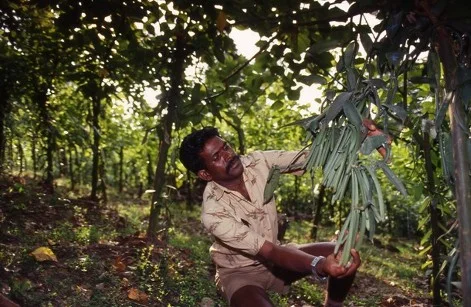
Extreme weather events like Enawo are becoming increasingly common, especially if hurricane season in the United States was any indicator this year. Yet, vertical farms, which can be situated in more mellow outdoor climates while dialing in the perfect conditions for indoor growing, might be uniquely positioned to produce these crops in spite of those weather events.
So, is there an opportunity for vertical farmers and hydroponic growers to step in?
Growing Vanilla Hydroponically
Vanilla is a member of the orchid family (Orchidaceae) and much of the knowledge for growing those is applicable here. It can be grown hydroponically with the right media – inert, sterilized, coarse, free draining – such asexpanded clay, pumice, etc. It needs less nutrients than other vegetable crops though there isn’t a real consensus about what ppms/EC is best. I’ve seen recommendations for EC .5.
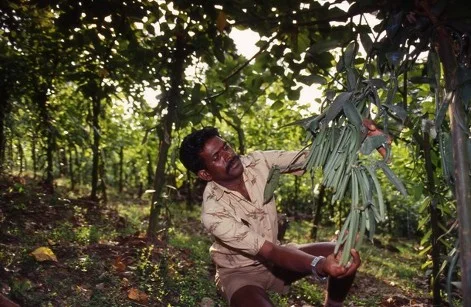
Among the challenges of growing vanilla hydroponically (besides the lack of good information), vanilla is a climbing plant climbing plant, so you will need to provide supports for the aerial roots to attach to. It is also reliant on hand pollination if you aren’t growing in its natural habitat, an extremely labor intensive practice.
Finally, it’s a long term investment as you won’t even start seeing the plants reduce until their third year of growth:

Yield info taken from this outdoor cultivation guide
Take a look at the video below to get a glance inside a an existing vanilla farm and the amount of hand labor farming this crop takes (hand pollination! *buzzers won’t work).
So now that we have an idea of what growing vanilla looks like, let’s take a look at some instructions from a popular online growing forum:
“Here’s Vanilla 101. Aside from being trees, coffee and cacao are pretty ” easy ” to grow.
I start vanilla as a 2 foot vine cutting tied onto a 6 foot bamboo tripod tucked into a 1 gallon nursery pot filled with orchid bark/peat/perlite media in bright shade ( 1500 – 3000 fc ) . If going from a bare vine cutting, trim 1-2 leaves off the lower end and insert into media past the last trim point. ( No need for rooting compound. )
Depending on your humidity, mist the entire vine ( up to ) a few times daily with water for a month or so. ( In the 80s with an RH at 90% here, I mist once a day. ) Mist with a weak nutrient solution every week. The media should be kept very lightly moist. ( I just let the overspray from misting the vine take care of it. ) The cutting will put out roots into the media and you should see new leaf growth in a few weeks. If you have a growing tip ( uncut end ) on your cutting, it will start to grow out. Otherwise, the plant will initiate a new tip. This causes the vine section above that point ( usually the last before the end of the cutting ) to dry out and drop off, allowing the new tip to begin growing out. Startling but normal.
The orchid starts in media but predominantly uses the aerial roots to feed as it matures. A 300 ft long, 3/4″ diameter vine can grow out of a 3 gallon pot full of moist pine bark. Aeroponic / nutrient misting systems are essentially how commercial orchid nurseries grow millions of plants per acre and work quite well for vanilla. An ebb flow tank is likely to be too wet for the media bound roots and does not readily address the majority of the plant’s root system.
At about 3 years, the vine is capable of flowering. If it does, vanilla pod production requires hand pollination within a 6-8 hour window of the flower opening ( and they only open once ) .
If pollination is successful, the pod will fully form in about 2 months. It takes another 6 – 9 months to cure/age the pod to produce those chemicals we associate with vanilla. The orchid typically lives about 15 years.”
Conclusion
While hard to grow, vanilla is a highly profitable crop with some of the key characteristics that make it valuable for vertical farming cultivation. If more people experiment with this type of cultivation, it’s fair to assume that knowledge will increase and costs will come down, making it even more competitive.
Like saffron, because of the high labor costs, it is unlikely that cultivation of this crop will move primarily to the countries that are leading the way in vertical farming any time soon.
However, as changing weather patterns affect agriculture around the world, the adaptability of vertical farming may prove beneficial for continuing to produce vanilla and other expensive plants.

Gardening Grows Big Profits
Gardening Grows Big Profits
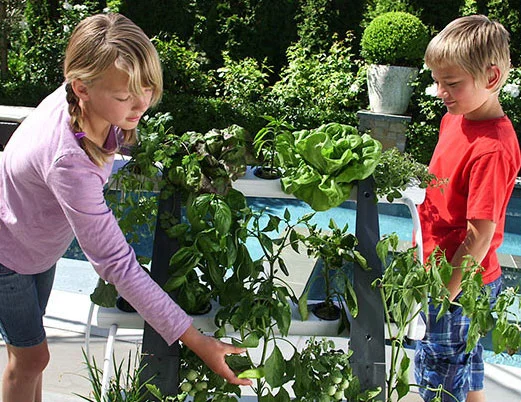
Instant Garden helps children discover the fun of home gardening, and allows anyone to grow food, herbs and flowers in a small space, virtually anywhere.
Baseball may be the nation’s pastime, but gardening is making bank. The $36.9 billion dollar gardening industry is growing steadily, led by millennials and the desire for fresh, home-grown food, according to this year’s National Gardening Survey.
An estimated 90 million households participated in do-it-yourself lawn and gardening activities last year – inside and outdoors. That’s about 75-percent of all U.S. households.
Gardening can take place virtually anywhere: From urban environments with rooftop gardens, to vacant lots, to balconies, to backyards.
Companies such as Instant Garden are servicing this growing market. Instant Garden recently introduced the world’s first hydroponic, portable system to grow plants, flowers, herbs, fruits and vegetables at home – without dirt.
With Instant Garden’s patented hydroponic technology, people can garden indoors or virtually anywhere. The small, portable unit sits comfortably on a balcony, patio, or indoors near a window, and automatically provides water and nutrients to plants so that anyone can grow healthy food, beautiful flowers, or fresh herbs, quickly and easily.
However, not everyone is green with passion for this pastime. Some say that urban gardens take away land that could be used to help provide affordable housing. For instance, a new law was passed in San Francisco: The city became the first in the country to offer a financial incentive for urban farming. Owners of empty lots could save thousands of dollars a year in property taxes in exchange for allowing their land to be used for agriculture for five years or more.
But talk to tech workers, low-income families, or housing lawyers, and they’ll all agree on this much: There aren’t enough affordable places to live, and as a result, the city’s renters are pinched more than at any time in living memory.
In fairness, we hardly believe that giving tax breaks to owners of vacant lots if they allow urban farming on the land, is really an issue. It’s more of a red herring. The fact is, that land was vacant for a reason, and of the owner’s thought there was a better and higher use for the land, they would be developing it, assuming financing was available.
Research shows that urban farms reduce violence
There’s been a growing body of research that suggests that urban farming and greening not only strengthen community bonds but also reduce violence. In 2000, Philadelphia had 54,000 vacant lots, and so the Pennsylvania Horticultural Society reclaimed 4,400 of them, mowing lands, providing upkeep, planting trees and gardens, and erecting three-foot-high fences that served no purpose other than as a kind of statement that this land now belonged to someone.
The greening of these parcels (just 8 percent of the vacant land in the city) had an unexpected effect: Over the course of 10 years, it reduced shootings in the areas surrounding these renewed lots. Part of it was practical: The vacant lots had previously been hiding places for guns. But as Charles Branas, an epidemiologist at the University of Pennsylvania who released a study on the project late last year, says, “People just became more in touch with their neighbors. People felt more connected to each other.”
Calls from neighbors complaining of nuisance crimes—acts like loitering or public urination or excessive noise—went up significantly in the immediate vicinity of the newly greened land.
At first, Branas worried the land had attracted ne’er-do-wells, but what he came to realize is that it had emboldened neighbors to call the police for minor disturbances, something they hadn’t done in the past. The Centers for Disease Control and Prevention has begun to look at gardening as a tool for violence prevention.
At the Community Christian Alternative Academy, a charter school on the city’s West Side, students have been gunned down in neighborhood incidents. Principal Myra Sampson says they’re in a constant state of agitation. “A bump in the hallway can lead to a major flare-up,” she said. “It’s almost like, ‘The only thing I have is myself and my image.’”
To help combat violence she built a garden just north of their building, a place that now draws people from throughout the community, young and old, a place to share lunch or just congregate. Neighbors feel such ownership over the garden that Sampson has never seen the need to erect a fence.
The school’s also experimenting with aquaponics, and she says that the communal aspect of growing food and raising tilapia and perch has gotten students more invested in each other and in their neighborhood, so much so that she’s asked the city—which has embraced urban farming as a community development tool—to turn over 10 vacant lots to the school so that it might convert them into gardens and orchards.
Millennials Want Green Thumbs
According to the survey, the highest spending was among Baby Boomers, married households, those with annual incomes of more than $75,000 and college graduates – but the most important market force was 18- to 34-year-olds. Five million of the six million “new” gardening households were Millennials.

Leafy Green Machine Growing Garden-Fresh Veggies At CHS
Leafy Green Machine Growing Garden-Fresh Veggies At CHS
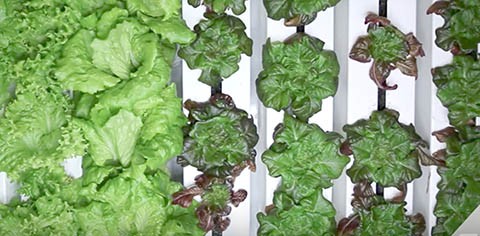
Vegetables grow in verticle towers, maximizing space in the growing unit.
9/27/2017
Indoor facility first in state at public school
By ETHAN SHOREY, Valley Breeze Managing Editor
CUMBERLAND – A modified shipping container capable of producing a football field’s worth of vegetables every seven weeks now stands outside the kitchen door at Cumberland High School.
The Leafy Green Machine, as it’s called, will bring fresh vegetables to the plates of students at CHS and across the school district, making Cumberland the first public school district in Rhode Island to boast such a facility, according to those who will run it.
Shauna Spillane, food service director for local provider Sodexo, said the hydroponic growing facility is essentially like a “smart home” for food, a “really awesome” facility that keeps vegetables in ideal growing conditions at all times. When it gets too hot in the growing container, the LED lights shut off and the AC comes on. Only the amount of light needed for photosynthesis is used. Air quality is constantly monitored and controlled.
The money to purchase the grow box from Boston-based Freight Farms came out of the food service budget.
Sodexo will manage the growing and picking of vegetables for daily use, but students will be invited to participate in the process. CHS administrators eventually hope to have an agriculture pathway at the school, teaching students about sustainable growing and horticulture.
The Leafy Green Machine, or LGM, allows a variety of crops to be grown regardless of weather conditions, providing students with year-round access to local and fresh produce. Vegetables are grown in vertical rows, requiring minimal water and electricity to flourish. Water drips from overhead spouts onto strips, going down vertical columns to give vegetables exactly the amount that they need. The water then falls into a trough, where it is pumped out.
Gina Rodriguez, food service manager for Sodexo, said employees have typically struggled a bit to put fresh vegetables on the table all winter. Last year was particularly bad, as vegetables often had to be thrown out because they didn’t last, she said.
With the LGM, workers will “pick today for tomorrow,” said Rodriguez. Vegetables typically start losing nutrients the moment they’re picked, she said. The difference will be noticeable in the vegetables picked from the LGM, as they’ll taste better, be a brighter green, and provide more nutrition for students. Because the container is insulated and climate-controlled (about 65 degrees), the entire system uses just five gallons of water a week.
Sodexo currently uses about 200 pounds of leafy greens, mostly for salads, across all schools in Cumberland, including at Blackstone Valley Prep charter school, said Rodriguez. The vegetables harvested from the LGM will be used to supplement the supply.
The entire plant-to-harvest process takes about seven weeks, meaning it can be done several times in a year.
Optimized to grow lettuce, herbs or greens such as kale or Swiss chard, the LGM will initially grow kale and Romaine lettuce at CHS. Spillane said adding something like basil changes the dynamics inside the LGM, because growing the herb calls for slightly different conditions.
The Farmhand App makes farming easier by monitoring, controlling and tracking the indoor farm remotely. Rolling racks allow workers to move the plants for easier access.
Though the LGM is a rarity at public high schools, a number of colleges in New England, including Clark University in Worcester, Mass., have them.
Over the course of a year, the 320-square-foot LGM can grow the same amount of food as about 2 acres of land. Freight Farms, which produces the LGM, promotes its product as a way to grow food in almost any condition all around the world.
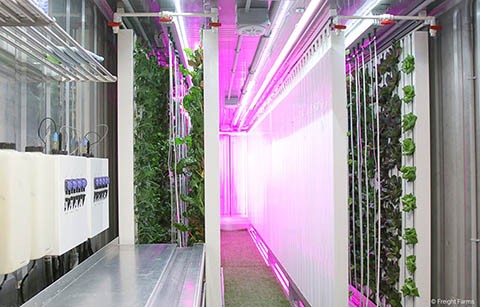
The inside of a Leafy Green Machine shows the full operation of vertical gardens, bathed in LED light.

Shauna Spillane, left, and Gina Rodriguez, of Sodexo Food Service, show off the new Green Leafy Machine outside the door of the kitchen at Cumberland High School. The former storage container will be used to grow vegetables for the school’s food service. (Breeze photo by Ethan Shorey)
Did You See AeroFarms On ABC's The Chew?
Did You See AeroFarms On ABC's The Chew?

Click here to watch AeroFarms, the sustainable farming company behind Dream Greens, on The Chew!
The Dream Team is incredibly proud of the positive impact that our indoor farming company, AeroFarms, is having on our community.
Did you know that our local baby greens also grow in the student dining hall of Philip's Academy Charter School in Newark, NJ? Philip's Academy students have been growing, harvesting and enjoying fresh, hyper-local baby greens for the past seven years from their AeroFarms school farm.
Last week, we had the privilege of hosting the incredible Chef Mario Batali at Philip's Academy Charter School, who shared our story on ABC's The Chew! If you missed it, you can watch the full episode here.
Chef Mario also cooked up a healthy, wholesome arugula penne pasta dish with the Philip's Academy students, using our freshly-harvested peppery arugula. You can make it too - check out the full recipe here on our blog! And don't forget about our recipe section on DreamGreens.com for more flavorful, healthy dishes.

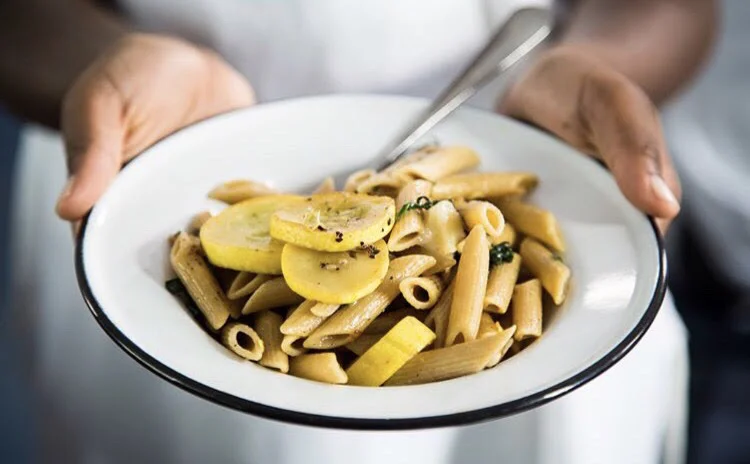
“I’ve got news for you, the future is delicious and it is now!” - Chef Mario Batali

Urban Farming Startup Raises $1.5m To Curb Singapore’s Reliance On Imported Food
Urban Farming Startup Raises $1.5m To Curb Singapore’s Reliance On Imported Food
- Terence Lee
Sep 26, 2017
L to R: Praise Phuan, head of sales and marketing at Packet Greens, Melvyn Yeo, director of Trirec. Image credit: Trirec.
Packet Greens, a Singapore-based startup which couples hydroponics technology with automation to make urban farming more efficient, has raised US$1.5 million in funding from government-related venture capital firm SPRING SEEDS Capital and cleantech-focused fund Trirec.
The company employs vertical farming – racks of crops stacked on top of one another – to improve land-use efficiency. It delivers precise dosages of nutrients and water to crops to minimize wastage. The plants are bathed in LED lights in a tightly controlled environment, eliminating the use of pesticides.
It currently grows 51 types of crops in a 167 square-meter farm – slightly larger than the roomiest three-bedroom apartments in Singapore. It claims to be able to grow five times the crops on the same amount of land compared to traditional farms, and in half the time.
It is aiming to further lower its costs. “Down the road, Packet Greens’ ambitions is to ultimately be able to sell its produce at a price that can be competitive to the wholesale price,” says Trirec co-founder Melvyn Yeo. “Packet Green’s pricing strategy is currently pegged at retail-minus.”
That means it charges wholesalers a certain percentage less than retail price.
“While our operations are not sized at scale for the cost to compete against the traditional imported produce – since Packet Green is still a start-up – our experience has shown us that we are able to achieve a viable costing down strategy.”
Packet Greens tells Tech in Asia that its revenue is forecasted to exceed US$74,000 this year, triple of 2016.
The startup sells its crops directly to consumers online. It also supplies them to restaurants, hotels, and online retailers. It plans to expand locally for three to five years before looking abroad.
Trirec is an investor in Sunseap, a major clean energy solutions provider in Singapore that is valued at US$221 million.
Singapore imports 90 percent of its food, according to a 2015/2016 annual report by the Agri-Food & Veterinary Authority of Singapore. It aims to reduce the country’s reliance on imports and has designed a number of schemes to achieve it.
Converted from Singapore dollors. US$1 = S$1.35.

Are Vegetable Flats The Future?
Are Vegetable Flats The Future?
The most densely populated island in the world is Macau. In the Chinese state, 600,000 people are packed together on 30 km2, making the population density practically 20,000/km2. That figure is much lower in the Netherlands. On average, 500 people live on a square kilometre here. In Dronten, in the centre of the Noordoostpolder, that number is even lower. Inhabitants there have to share their square with just 121 people. Yet the Staay Food Group chose to not build a 3,000 m2 greenhouse, but a much more expensive vertical farm of 900 m2. What inspired them to do that? And is vertical farming becoming more popular globally?
The world population is increasing, we’re all moving to cities, and we attach more and more value to high-quality food, grown safely. The trends cannot be ignored and all indicate the same: a growing demand for vegetables, grown at or near to the place of consumption. But how should that be realised? After all, space in cities is limited. Vertical cultivation systems are seen as the solution increasingly often. By working in a controlled environment and on multiple layers, an enormous amount of food can be produced on a small surface. A minimum amount of water and fertiliser is used. Moreover, the cultivation is clean, the chance of contamination is small, and little knowledge is necessary to run farms like these: computers calculate and adjust the cultivation. And, perhaps most importantly, there’s complete control over climate and light. The crops are grown without outside influences and contaminations, and the production area is sterile.
Japanese nurseries
A number of large, vertical farms have been set up in Japan in recent years. The company Mirai was one of the first. After the earthquake and tsunami of 2011, they saw an increase in demand for safe food, while supply was low. They decided to open a vertical farm in the stricken area. “We wanted to support the region, and to show we can grow food anywhere in the world,” the entrepreneurs said. Since 2013, they’ve grown lettuce on an area of 2,300 m2. Thanks to the 15 floors they work on and the time it takes the lettuce to grow (30 days, compared to 50-60 in the open air), 10,000 heads of lettuce leave the farm now every day. They are sent to restaurants, small retailers and smaller selling places. By now they also have a branch in Hong Kong and two smaller projects in Mongolia: in the south of the Gobi Desert and one in Ulanbataar.
Container cultivations for regional sales
Vertical farms have also been founded outside of Japan. In the United States, numerous projects, or rather small projects, have been started. Entrepreneurs, who don’t have their origin in the fresh produce or horticultural sector, but who did spot a hole in the market, are starting the local production of vegetables. They choose small greenhouses in which they grow lettuce in chutes, or they start growing in containers using LED lighting.
By now, an entire industry has come into existence here as well. Various parties supply ready-made cultivation containers. One of the best known buyers of these is Kimbal Musk, brother of Paypal and Tesla founder Elon Musk. Kimbal purchased as many as 20 cultivation containers, and blogs about the importance of growing near, and being in contact with, the final user. In 2016, his Leafy Green Machine was placed in a residential care home in Deventer. That way, growing leafy vegetables also has a social function.
The container cultivations are completely different projects than the vertical farms that have been producing vegetables on a larger scale for two years now. The 12 metres of growing surface of Leafy Green Machine is not in any way related to the project started in an old steel company in Newark last year. Nursery AeroFarms has a surface of 0.6 hectares, and is 9 metres high. Because of that, food can be grown on as many as 12 floors. The company grows more than 200 types of vegetables: kale, bok choi, watercress, aragula, and so on. The company harvests and sends their ‘Dream Greens’ brand products to important foodservice companies such as The Compass Group, ShopRite, WholeFoods and FreshDirect daily, and they employ about 120 people.
Expensive and energy-intensive?
Is this the future of cultivating? Will we all eat food grown in cultivation factories soon? “How can a vertical farm solve the problem of world hunger? Can we feed the world with just green leafy vegetables and culinary herbs?” These questions were asked in Venlo in June, during the Vertical Farming Congress. The participants don’t really see it that way, either. For vertical farming, sales are an important part of the company. “You must have your objective in mind when starting a vertical farm,” says Jan Westra from Priva. “Are you starting a farm in the city from a social standpoint, or is it the wish of the government to give a new boost to existing buildings? Or do you want to grow food in an inaccessible location such as the South Pole? You can grow practically anywhere with vertical farming, but there’s a great number of factors that decide whether you’ll make a profit or not: from utility costs to marketing.” Dutch horticultural suppliers agree with that. Due to all of the techniques necessary, vertical farming is quite an investment. But precisely that investment offers major opportunities, Marc Kreuger explains. He is in charge of innovations for Here, There & Everywhere, supplier of vertical farming. “Because you have control of everything, and the entire cultivation can be predicted in advance, you also know the exact price per kilo needed,” he says. According to his calculations, growing tomatoes, cucumbers and bell pepper is commercially interesting.
Addition to greenhouses
Dutch company Certhon also invested in growing vegetables in a cultivation system devoid of natural daylight. This summer, they harvested their first bell peppers from their growing cell Plantyfood. Certhon is originally a greenhouse builder. “We focus on the customer and on ensuring they get a profitable system,” Manager Hein van der Sande explains. “We look for the best cultivation method per region. Sometimes that’s a greenhouse and sometimes it’s a system without daylight. It depends on the circumstances.” Moreover, he has also noticed many similarities between the two. “Looking at technical set up of a greenhouse, with three screens and climate computers, the step to containers isn’t all that large. The difference is between glass versus sandwich panels. It’s true sunshine is free, but in certain conditions it can also be an enemy, in the Middle East, for example. You then have to make decisions and calculations and look at the customer’s wishes.”
The company is also the main contractor for the vertical farm Fresh-Care Convenience in Dronten. Lettuce is grown in the climate rooms on nine layers. “It is the largest in Europe, but it’s still just a test set-up,” Rien Panneman said during the royal visit in June. “But if it does as is expected, we’ll definitely expand on this method of growing food, both regionally and internationally. At first we’ll have a capacity of 6,000-7,000 kilos per week, but we already have a weekly demand of 120,000 kilos. Early 2018 we’ll decide whether to expand the cultivation or not. And other regional cultivation companies can join us in that.”
Staay Food Group used the vertical farm mostly to become independent of the Southern European cultivation. “We currently get our lettuce from Southern Europe during part of the year. Disadvantages of this are the changeable climate and the long transportation distances. When we get lettuce from our own vertical farms, it’ll be fresher, no pesticides will have been used, and quality will be stabler. Furthermore, the cultivation is sustainable, the use of water can be reduced ten times. And we can plan much better. When we plant on day 1, we can harvest on day 30. The first heads of lollo bionda, lollo rosso, rocket and frisée lettuce will therefore be marketed this year.”
Publication date: 9/26/2017
Grand Rapids Micro-Farm Turns Shipping Container Into Year-Round Crop Bonanza
Grand Rapids Micro-Farm Turns Shipping Container Into Year-Round Crop Bonanza
By STATESIDE STAFF • September 25, 2017
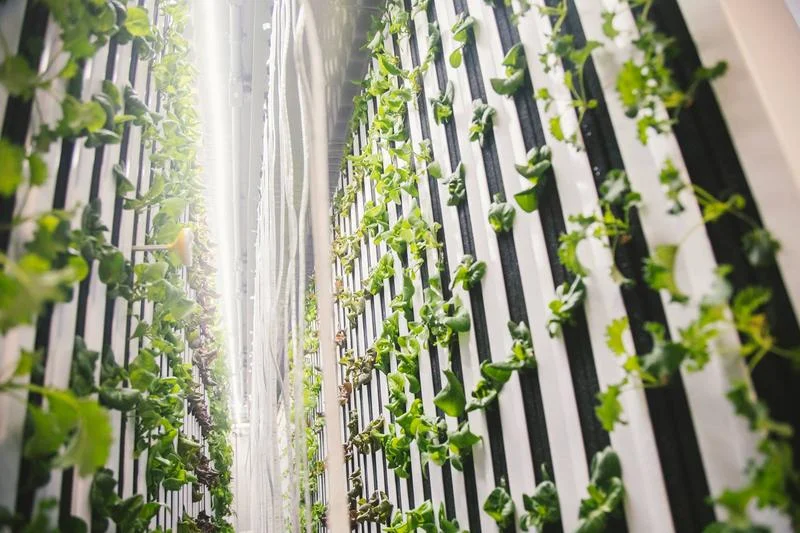
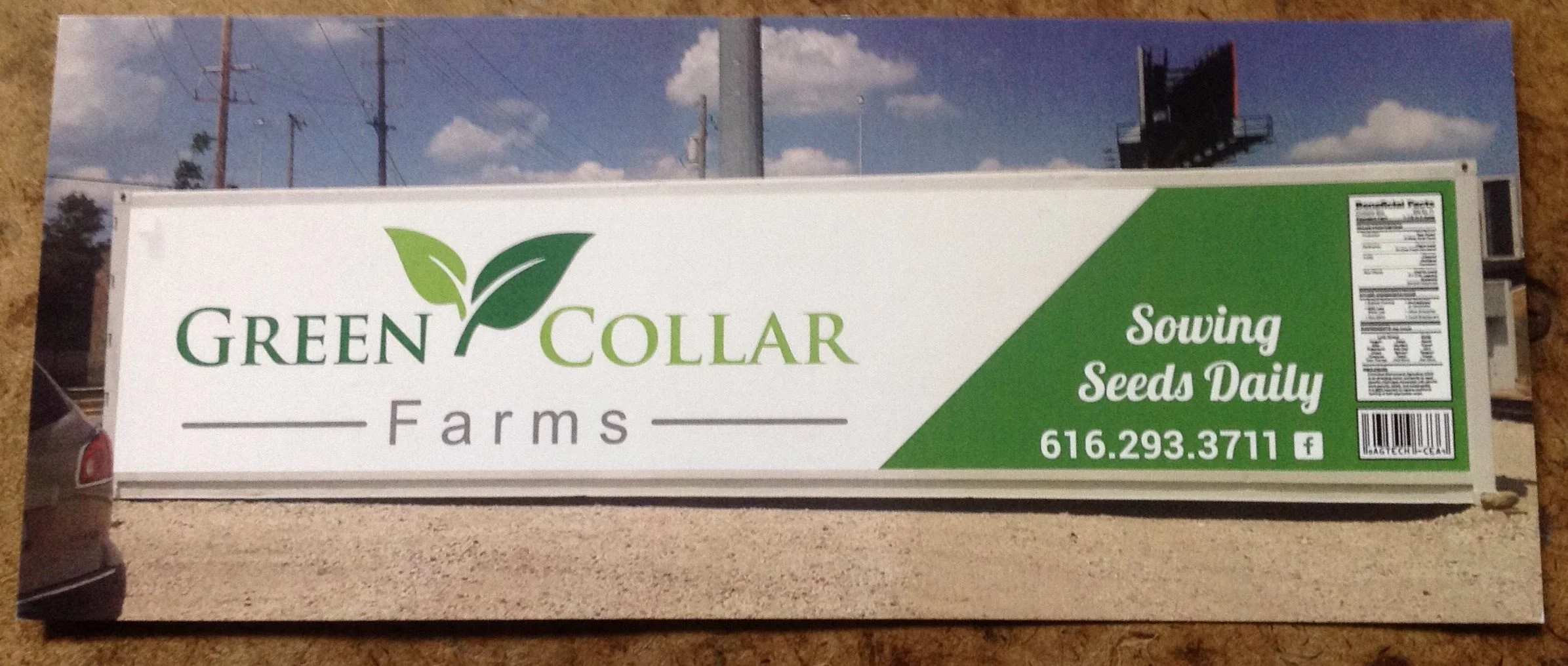
Crops grow in the Green Collar Farms, a converted shipping container.
BRIAN HARRIS / FACEBOOK
Since mankind first began growing crops, the farmer's enemies have been drought, wind, wild temperature swings: curve balls served up by Mother Nature.
Brian Harris is turning out an array of green produce, protected from the elements, in a converted freight container that sits near downtown Grand Rapids.
He calls this a “hydroponic vertical micro-farm,” officially named Green Collar Farms.
A friend tipped Harris off to a wave of urban farming in Florida. He started by assembling a variety of containers and spaces in order to grow crops.
Currently, Harris’s farm is located in a freight converter. “It’s literally an oceangoing, refrigerated shipping container,” said Harris. “This one was built in 2004 and retired I think last year. It’s an insulated 40-foot by eight-foot by nine-foot box that just happens to hold almost two acres of crop.”
The container is growing cold crops right now, including a number of leafy greens.
Hydroponics is promising for farmers. Its reliance on recycling allows the farmer to be conservative with water. “We use about ten percent of what a typical soil farm would use,” said Harris. Growth can occur year-round, since the farm is wholly contained in an insulated space. That means that crop cycles can continue without waiting for the warmer months.
Nutrition studies indicate little difference from field-grown crops and hydroponics, said Harris, and hydroponics may prove to be better for consumers. Since field crops often have to consume their own energies, like sugar, they end up being more bitter and chewy. In hydroponic farms, nutrients simply come to the plants, so the crops don’t have to build roots.
Harris sees a bright future for a hydroponics franchise: “You could place these containers throughout an urban area where they would serve the local restaurants,” said Harris. He’s looking to expand his farm into a warehouse. “A 10,000-square-foot facility would produce 65-70 acres of crops, every seven weeks.”
Fresh Produce Grows Big Results For Akron Startup
Vigeo Gardens, which grows its crops in an indoor, highly controlled, chemical-free environment in downtown Akron and delivers its products fresh to area restaurants, grocery stores and food distributors, had about $23,000 in sales the first year. In year two, sales were $250,000, and they are on pace to be at least $750,000 in 2017, said Vincent Peterson, the company's chief executive officer.
September 24, 2017
Fresh Produce Grows Big Results For Akron Startup
By BETH THOMAS HERTZ
Photo by Shane Wynn for Crain's
Vigeo Gardens principals, from left, Vincent Peterson, Mark Preston and Jacob Craine stand in front of some o the company’s hydroponic growing racks. The pinkish hue in the room comes from the red and blue lightbulbs used for growing.
A downtown Akron company that was started in late 2014 by two young men who wanted to be part of the restaurant industry without giving up all of their nights and weekends has seen explosive growth in the demand for its fresh-grown basil, lettuce and microgreens.
Vigeo Gardens, which grows its crops in an indoor, highly controlled, chemical-free environment in downtown Akron and delivers its products fresh to area restaurants, grocery stores and food distributors, had about $23,000 in sales the first year. In year two, sales were $250,000, and they are on pace to be at least $750,000 in 2017, said Vincent Peterson, the company's chief executive officer.
"We believe the facility could yield $2 million to $3 million in sales once it is fully operational," said Jacob Craine, chief marketing officer.
The huge growth is the result of matching good science with innovative ideas and hard work. Craine said he, Peterson and Mark Preston, chief operating officer, routinely put in 80 to 100 hours a week.
This journey all started when Craine, 26, and Peterson, 25, friends since kindergarten, grew their first crop of microgreens in Craine's basement in 2014.
"Everyone thought we were crazy, but we had been working in the restaurant industry for a number of years and really enjoyed it, and wanted to find a way that we could stay in the industry without working the off-schedule from the rest of the world that most people in the restaurant industry do," Craine explained.
Their initial idea was to develop a line of microgreens for people who were in particular need of the high-nutrient boost they provide, such as chemotherapy patients.
"But we quickly found out that it takes a lot to get into the hospital market, so we switched gears for the moment and have been focusing on the culinary industry, which is something that we knew," he said.
Initially, they called the company Plantscription, but changed it to Vigeo Gardens in 2015. Vigeo means to thrive in Latin, not just survive, Craine pointed out.
"That's kind of the motto of our company," he said.
To get out of Craine's basement, the pair moved into the Akron Global Business Accelerator, where they connected with Preston, 27, who has an aerospace engineering degree from Ohio State University and experience in the hydroponics industry. His skills helped create their first vertical "rack," a platform on which they grow their crops, in a 1,000-square-foot space.
The trio was then able to raise funding from a private investor and add five more racks, but they were still uncertain if their idea was scalable. Clearly it was, though, as six months later, in August 2016, they moved to even larger space — 6,000 square feet on the third floor of the accelerator that now holds 37 racks. This was funded through the same private investor as well as a bank loan. Craine estimates that the two steps represent a combined investment of about $400,000.
Just over a year later, this expansion is now in the "finishing touches" phase. Most racks are operational, and the few remaining dormant ones are being activated as needed to meet demand.
Today, the company has six full-time employees and several part-time workers, mostly farming jobs and one sales position, in addition to the three partners.
Products
Craine said that the primary thing that sets Vigeo's products apart is that the company sells their basil and eight types of lettuce "live." They are harvested in the morning and delivered to customers with the root structures still intact the same day.
"It's as fresh as you can get," he said.
They also grow about 20 types of microgreens.
He said such freshness is hard to obtain from other sources.
"When you go to the grocery store and you buy lettuce that's been packaged and shipped here from California, it's at least a week to two weeks old," he explained.
Equally appealing to customers is the lack of chemicals on the crops, which is possible because they grow indoors.
"We don't do any spraying. Everything we grow is non-GMO," he said.
Another big advantage of being inside is that the company is able to produce the same consistency year-round, he said.
The lack of the climate variables brings productivity advantages, too. By maximizing the efficiencies of their growing system, such as using custom LED lights designed by Preston and making their own nutrient solutions and strictly controlling the relative humidity of the room, they have been able to effectively cut three weeks off the growing cycle of basil and two weeks off the growth cycle of lettuce.
This lets them produce a few extra cycles a year and provides them with four to five harvests per week.
"We have been in business for two-and-a-half years, but we have had as many crop cycles as farmers that have been in business for 10 to 20 years," Craine said.
Vigeo's client list includes about 35 to 40 restaurants in Northeast Ohio, including Dante Boccuzzi Akron, where Craine previously worked, and Jonathon Sawyer's Trentina and Greenhouse Tavern, as well as several in Columbus.
The company also sells to several major distributors, such as US Foods and Sirna & Sons, plus to all of the Mustard Seed stores, and 26 of the Heinen's stores, including the four in Chicago.
Vigeo also began a pilot program with Giant Eagle this month, with the goal of moving into all of the grocer's Market District stores in the area.
Boccuzzi said he thinks there was a real need for a company like Vigeo in this area. He previously purchased such produce from an out-of-state company, but is happier with the greater freshness the local company can provide for his several area restaurants.
"They produce a good quality, consistent product that lasts a long time since they are so close," he said.
He said he is glad to support his former employee, Craine, and finds Vigeo is willing to work with him on his product needs.
"They are young people who work very hard," he said. "I appreciate that today."
Craine said Vigeo's future growth plans include a desire to refurbish old factories such as the one that houses the Akron accelerator into high-efficiency vertical farms. It also may build a greenhouse here to grow products that aren't amenable to the indoor facility, such as tomatoes and peppers.
It also wants to apply its technology to growing medical marijuana in a facility in Akron through another corporate entity it has created, Vita Est, LLC. That facility this month received a conditional use permit from Akron City Council that will allow it to proceed if the state grants it a license.
"We believe our knowledge base on controlled agriculture is transferable to the production of high-quality medical marijuana," Peterson said.
Craine stressed that the companies would be completely separate, but the trio declined to comment further on the plans.

Ikea Is Bringing A Pop-Up Vertical Farm To London
According to Wikipedia: ‘Vertical farming is the practice of producing food and medicine in vertically stacked layers, vertically inclined surfaces and/or integrated in other structures (such as in a skyscraper, used warehouse, or shipping container).
Ikea Is Bringing A Pop-Up Vertical Farm To London
Lisa Bowman for Metro.co.uk | Wednesday 20 Sep 2017 5:01 pm
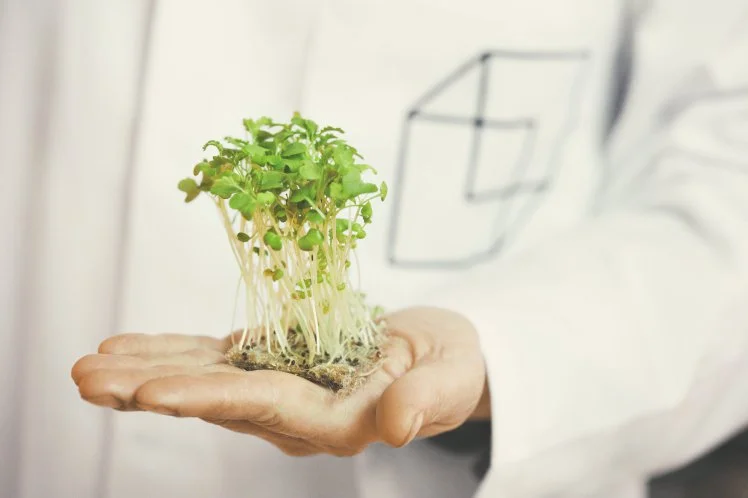
(Credit: SPACE10/Cover Images)
If you’re into the future of food, then everyone’s favourite Swedish furniture lords have a treat for you.
Ikea are bringing a pop-up vertical farm to Shoreditch, as part of the London Design Festival.
Researchers from the SPACE10 lab at the Lokal pop-up want to show the general public that delicious, fresh food can be grown right in your home, using a hydroponics farming system.
It’s basically soil-less farming – crops are grown indoors using artificial lights and computerised automation that grows food optimised for freshness, nutrients, and taste.
They say it makes food production smarter and more efficient as their system can grow vegetables three times faster than traditional methods, with 90% less water, less waste, and without the need for soil and sunlight in a much more space-efficient footprint.
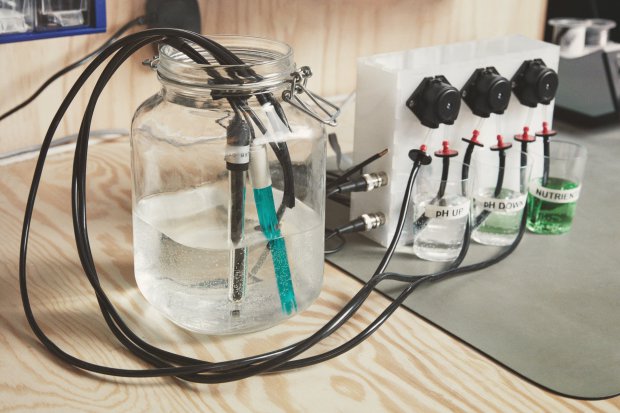
The indoor system has computerised automation (Credit: SPACE10/Cover Images)
So how does it work?
Modified LED lights allow for year-round indoor growing and smart sensors allow for machine learning so that healthier food can be grown faster while the data is fed into Google Home.
Essentially, you can ask your plants how they’re doing, and they can let you know.
The creators hope it will help kids and adults learn more about sustainable food, and they also promise that the system will be run solely on renewable energy in the future.
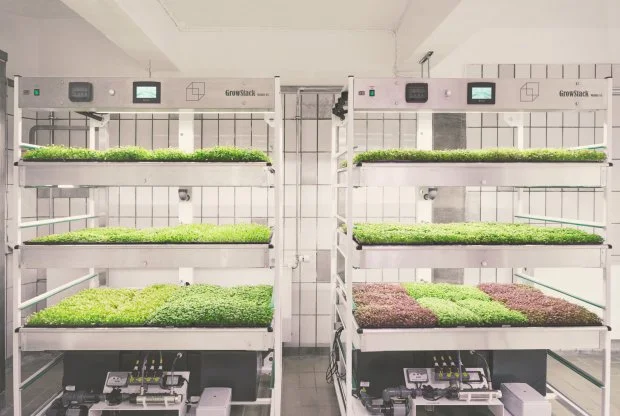
The vertical farming system (Credit: SPACE10/Cover Images)
What is vertical farming?
According to Wikipedia: ‘Vertical farming is the practice of producing food and medicine in vertically stacked layers, vertically inclined surfaces and/or integrated in other structures (such as in a skyscraper, used warehouse, or shipping container).
‘The modern ideas of vertical farming use indoor farming techniques and controlled-environment agriculture (CEA) technology, where all environmental factors can be controlled.
‘These facilities utilise artificial control of light, environmental control (humidity, temperature, gases…) and fertigation.
‘Some vertical farms use techniques similar to greenhouses, where natural sunlight can be augmented with artificial lighting and metal reflectors.’
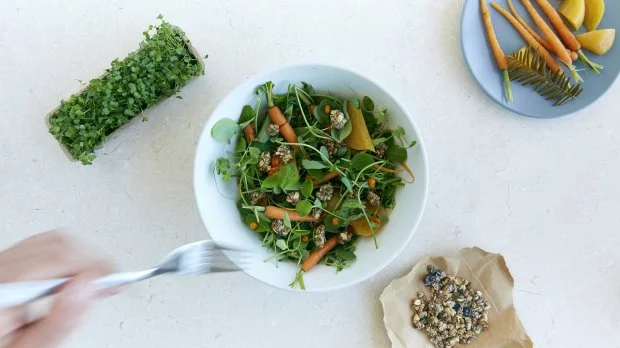
The pop-up features a futuristic salad bar that provides meals of hydroponic microgreens, topped with delicious locally sourced ingredients.
There will also be ‘Grow Your Greens’ workshops for kids to learn how to grow their own take-away plant hydroponically, until it turns into a delicious green.
‘Food Preservation’ workshops will teach visitors how to use fermentation to preserve food and minimise waste.
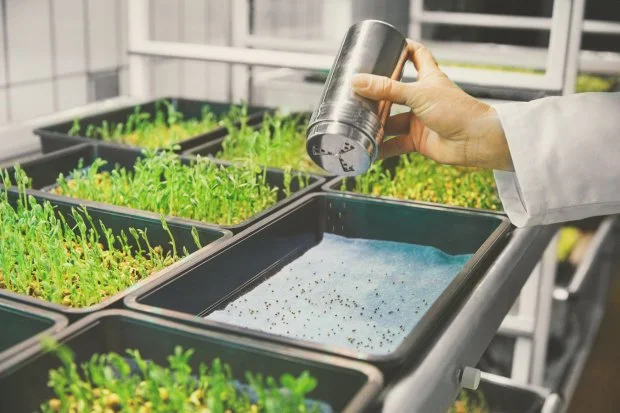
Growing food at the vertical farm (Credit: SPACE10/Cover Images)
The farm is located at 31 New Inn Yard, London EC2A 3EY.
It’s open between 10am – 9.30pm until September 23.
Find out more here.
Go eat some futuristic food, people!

How Can New York Meet the Challenges of Urban Agriculture?
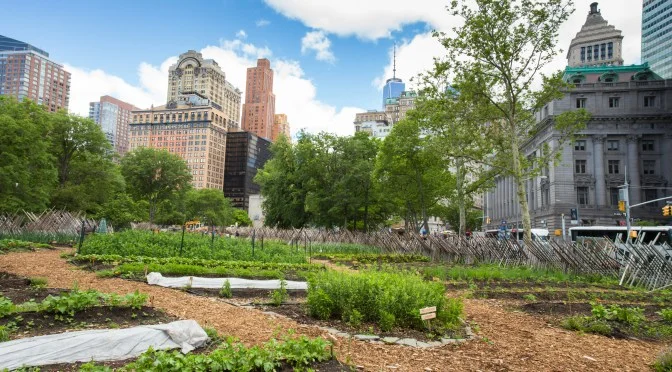
How Can New York Meet the Challenges of Urban Agriculture?
SEPTEMBER 21, 2017 LOUISA BURWOOD-TAYLOR
On the final day of AgTech Week in New York City, a panel of local experts got together to think about how the city can embrace, promote and foster urban agriculture.
New York is one of the leading cities in the US for urban agriculture, with a plethora of initiatives from hobby community gardens to commercial rooftop farms to high-tech indoor vertical farms. But there is still a long way to go until the city provides wannabe urban growers with the support they need to make locally grown produce a permanent and significant part of the city’s food supply.
Before the panel commenced, Henry Gordon-Smith, a celebrity in New York’s urban agriculture scene and founder of consultancy and content businesses Agritecture and Blue Planet Consulting (now Agritecture Consulting), set the scene by offering some insights into how other cities in the world make a success of their urban agriculture initiatives.
In Cuba, for example, 3.2 tonnes of organic food was grown in urban farms in 2002. Individuals are incentivized economically to grow food, but there are also rules around what they can grow in each location, depending on what else is being grown nearby to ensure diversity in the food supply.
Japan’s weekend farming program brings families out of the city and into the surrounding countryside to help grow food, connecting them with the source of their food and providing them some often needed respite from city life. There are also programs to get their help at indoor grow operations too.
And in Canada, urban farmer Curtis Stone has borrowed or rented unused land to produce food at scale, making the most of untapped resources in the city, and rules around vacant real estate lots.
“How can we have our own brand and approach to urban agriculture in New York City?” he asked the audience.
What are the main challenges for urban agriculture in New York and what can the city do to alleviate them
1. Access to Land and Space
This can be a real inhibitor at the early days of a project, but also when the operator wants to scale, moving from 1,000 sq ft to 10,000 sq ft is very difficult, said Gordon-Smith.
The difficulties mainly lie in permitting and the delays inherent in the system. There is also lack of available information about the availability of space for urban farms.
Gordon-Smith and Tatiana Pawlowski, a law clerk at Braverman Greenspan and expert in zoning laws, blamed permitting challenges to a lack of understanding in the department of buildings about urban agriculture. “The department does not know how to handle an application for an urban farm. The zoning code itself is very hard to read and it’s very long. It hasn’t been updated since 1962 and the phrase urban agriculture doesn’t exist! There is some brief talk about raised truck beds and community gardens, but the law is very silent on what exactly can and can’t be done.”
Gordon-Smith added: “There is a lot of interpretation of code needed before permits can be awarded, but for operations, timing is critical to get investment as investors won’t support a project if you can’t secure a space.”
There is also a lack of concrete, and available data and information about where vacant spaces might be and how they’re utilized, or not.
“People might not know that technically farming is allowed in commercial and industrial districts,” Pawlowski said.
What Can NYC Do?
Create a well-organized, centralized place for all data and information about finding and securing space in New York that’s readily accessible.
“Modernize and organize the information available so it’s readily accessible for urban farmers, particularly small-scale scale community residents,” said Tatiana.
None of the panelists suggested this outright, but it sounds like the city could do with updating its zoning laws too!
Rafael Espinal, council member for Bushwick and East New York, agreed that urban farming initiatives were struggling to get seed funding they need because investors are afraid to invest in a city which has “not yet taken a leading role in recognizing the work that’s being done in this area.” He added that he has introduced a bill to “force the city to sit down and take a year to figure out what challenges we’re seeing for urban agriculture in terms of zoning or incentives as the city must get engaged at that level.”
2. Access to Basic Talent
Finding entry level talent, with some training in food safety and other relevant skills, is very challenging, according to all the panel members. It also represents a significant portion of an urban operation’s cost base.
What Can NYC Do?
Gordon Smith suggested that the city could develop a training program to help develop a diverse skillset among potential workers to strengthen the urban ag industry, but that there might need to be a financial incentive attached to it, particularly as labor is one of the leading operational costs of urban farming.
Alex Highstein, corporate development at AeroFarms, which is based in New Jersey, said New Jersey has some initiatives like this. “We work with the New Jersey Economic Development Authority. They have a program called Grow NJ which gives us tax incentives for hiring, and we’re also working with the city of Newark to source labor from fantastic places like the veterans program, and the re-entry program. They help train them, particularly where there are big gaps in knowledge such as around food safety.”
3. Lack of Awareness About Benefits of Local Food
Governments do not put local food first, which limits the ability to promote urban agriculture among the population to bring new talent and expertise to the sector.
Highstein agreed that people in New York “often lack a connection to what they’re eating; if we could spread the idea that this food was grown the next street over, those people would value their food more.”
What Can NYC Do?
Work with industry, incubators, and farms to spread those ideas around the importance and value of locally grown food.
“We need more carrot to get groups involved and excited about promoting urban agriculture to help it accelerate,” said Gordon-Smith.
4. Energy Costs and Carbon Footprint
There is a certain amount of resistance to indoor farming from some quarters of the city, namely around the high use of electricity to light and heat indoor farming facilities, and therefore the potential for added pollution. Developments in LED lighting are aiming to increase efficiency, but it’s a significant cost-base, economically and carbon emissions-wise.
Council member Espinal said: “We get lots of emails from people who are against expanding urban ag as they say it will require more power and create more plumes. There is not enough green energy produced, pushing reactors to create more power to feed indoor farm lighting.”
What Can NYC Do?
“We need to continue pushing for ’80×50′, which is a New York pledge to reduce greenhouse gas emissions by 80% by 2050,” said Espinal. “But to do this the city needs to change the grids to accept solar and wind energy.”
Highstein also suggested incorporating hydroelectrical energy.
Panelists argued that protesters also need to be better educated about the environmental benefits of urban agriculture, something the local government could help with.
“People forget about the benefits of outdoor rooftop farming and the amazing effect it has on mitigating the heat island effect, where black tar rooftops create heat, requiring more energy to cool buildings down,” said Pawlowski. A green roof can bring temperatures down by a couple of degrees, which is significant, and not only fits with the 80×50 plan but is also good for air quality.”
Harrison Hillier, hydroponics manager at Teens For Food Justice said that just looking at energy consumption was only part of the broader picture, pointing to the food security indoor operations can bring in the face of natural disasters, and the reduction in the use of harmful chemicals and pollutants causing negative ecological impacts across the country.

Food Pioneers Regenerate Cities
Urban Organics opened the doors of its first aquaponics farm, built inside an old Minnesota brewery, in 2014. The venture was backed by global water firm Pentair, which fitted out the Hamm’s Brewery site with an innovative water filtration system and industry leading reuse technologies
Food Pioneers Regenerate Cities
Staff reporter | 15th September 2017
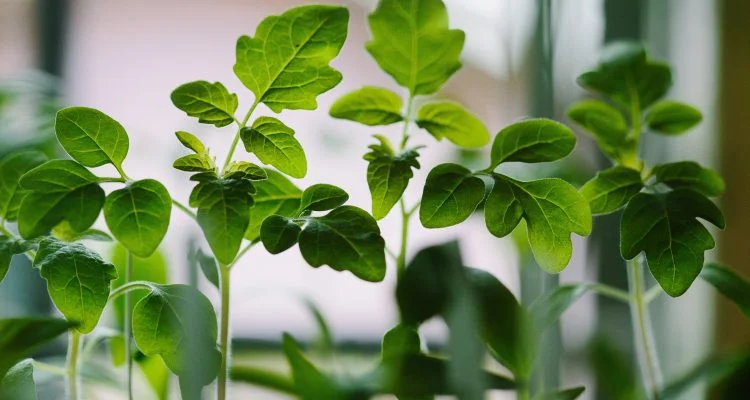
An urban food pioneer is transforming abandoned buildings in Minnesota into breeding grounds for sustainable fish and organic greens.
Urban Organics opened the doors of its first aquaponics farm, built inside an old Minnesota brewery, in 2014. The venture was backed by global water firm Pentair, which fitted out the Hamm’s Brewery site with an innovative water filtration system and industry leading reuse technologies. And the pair have built on that relationship with the regeneration of Minnesota’s Schmidt brewery, which will be able to supply ‘275,000 lbs. of fresh fish and 475,000 lbs. of produce per year to the surrounding region’ this year. The ‘USDA-certified-organic farm’ extends Urban Organics reach as it begins to expand a business with tech that could have a global impact.
“We started this venture as social entrepreneurs who wanted to figure out how to bring a reliable source of healthy foods into areas that had to rely on food transported in from far away,” explained Dave Haider, co-founder of Urban Organics. “It turned out that our wild idea also made a lot of sense to a community hungry for organic, sustainably-raised food, and to other innovators around the world who had been asking the same questions we were. By collaborating with Pentair, we’re able to contribute beyond our immediate region—we’re able to test and perfect the technologies that will make a global impact advancing the field of large-scale commercial aquaponics.”
Farming in the city is a growing trend. By 2022 it is estimated the vertical farming market will be worth more than $6 billion. And America is leading the way. Aero Farms is making progress with its vision to combat the ‘global food crisis with technology’. While an urban food accelerator in the heart of New York, Square Roots, led by entrepreneur Kimbal Musk, is helping innovators take forward their ideas for developing indoor farming businesses – inside shipping containers located in Brooklyn.