

Welcome to iGrow News, Your Source for the World of Indoor Vertical Farming

Are Indoor Farms The Next Step In The Evolution of Agriculture?
You’ve probably heard of farm-to-table, or even farm-to-fork, agricultural movements that emphasize the connection between producers and consumers. But what about factory farm-to-table?
Are Indoor Farms The Next Step In The Evolution of Agriculture?
SPECIAL TO THE JAPAN TIMES
MAR 10, 2017
You’ve probably heard of farm-to-table, or even farm-to-fork, agricultural movements that emphasize the connection between producers and consumers. But what about factory farm-to-table?
Spread, a giant factory farm that grows lettuce in Kameoka, Kyoto Prefecture, is just one of more than 200 “plant factories” in Japan capable of harvesting 20,000 heads of lettuce every day. Their lettuce, which includes frilly and pleated varieties, is grown in a totally sterile environment: There’s no soil or sunlight, no wind nor rain.
The rich, dark-brown soil in which produce has traditionally been grown is utterly alien inside the factory. Instead, the lettuce is grown hydroponically, in a nutrient-rich gelatinous substance. The vegetables grow in vertically stacked trays under LED lights timed to come on during the day and switch off at night.
The lettuce Spread grows in Kameoka — which takes about 40 days from planting to harvest — is packed into bags and shipped to over 2,000 supermarkets across the country. The product also makes it into airline meals, although the company wouldn’t reveal which ones.
At a time when Asian countries are scrambling to deal with the surges and declines in population as well as the effects of climate change, factory farming is a burgeoning business. In Japan, for example, the number of farmers has dropped from a high of over 7 million in the 1970s to under 2 million, and today the average age of Japanese farmers is 67.
Spread, however, is about as far from the pastoral image of a vegetable farm you can imagine. While the facility, and even the concept, sounds futuristic, Spread has been growing lettuce in these conditions since 2006 at its Kameoka base.
This year, it will open another plant factory at Kansai Science City, on the borders of Kyoto, Nara and Osaka prefectures. Between the two factories the company will be able to produce 50,000 heads of lettuce each day.
What makes the new facility different is the level of automation: tasks such as raising seedlings, replanting and harvesting will be done by machines and guided by artificial intelligence, a move that will cut labor costs by 50 percent and boost profitability. In 2016, Spread was awarded a gold medal at the Edison Awards in recognition of its role in agricultural innovation.
On a recent tour of Spread’s facility in Kameoka participants viewed the lettuce through an observation window, while factory manager Naohiro Oiwa communicated via telephone with a worker dressed head to toe in white protective clothing. “When our products first appeared in supermarkets, plant factory-grown vegetables weren’t yet recognized by many people. Our sales staff had a very hard time selling them to retail stores,” Oiwa said.
People wanted to know if vegetables grown without sunlight are safe to eat, he added. Spread has since assuaged some of those anxieties by emphasizing the safety of its growing environment and the quality of its crops.
It also helps that Spread can compete on cost: a bag of its lettuce sells for ¥198, a price the firm can maintain. Field-grown lettuce, by contrast, is subject to the vagaries of the weather, and therefore to fluctuations in price.
So-called vertical farms, such as Spread’s facility in Kameoka, are also able to use water in an extremely efficient way. The company would not disclose, however, how much it spends on something that is essentially free to conventional farmers, sunlight, or, in Spread’s case, LED lighting.
Spread spokeswoman Minako Ando said that the firm’s operations received a boost in the aftermath of the nuclear disaster in Fukushima Prefecture following the Great East Japan Earthquake, which struck six years ago today. Amid widespread fears that traditionally grown produce could contain radioactive fallout, factory farming, which is mostly done indoors, suddenly looked like a safer option.
It’s important to remember that, while Spread is at the vanguard of technological developments in farming, the history of agriculture has always been characterized by innovation in its tools.
Spread doesn’t see its role as replacing farmers; it seeks to complement and support the agricultural industry as a whole, Oiwa said.
Along the way to profitability — Spread started operating in the black in 2013 — it has developed several patents and is now in talks with partners around the world to set up similar ventures.
With the know-how it has gathered from growing lettuce, Oiwa said, Spread could start mass-producing other vegetables, such as tomatoes, in giant plant factories in the years to come.
Michael Blodgett, an organic kale farmer in Wazuka, a picturesque tea-producing town in southern Kyoto Prefecture, echoes the notion that, when it comes to farming, innovation is nothing new. “From that viewpoint, new and sustainable techniques for growing healthy vegetables are certainly welcome,” Blodgett said.
He noted, however, that the type of farming he and his neighbors practice engenders a sense of community. Advice is solicited from older farmers, and at harvest time neighbors share what they bring in from the fields.
“There is something special about planting seeds in the ground, taking care of the plants by weeding, watering, and love,” Blodgett added.
In the near future it will increasingly be the charge of robots and AI systems to plant, weed, water and harvest the food that ends up on our table. Where exactly that leaves the farmers, or the land itself, remains to be seen.

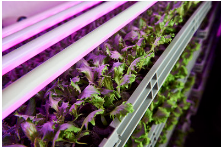
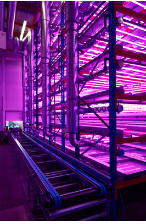
Food factory: At Spread's facility in Kameoka, Kyoto Prefecture, lettuce is grown hydroponically using timed doses of LED light. | J.J. O'DONOGHUE
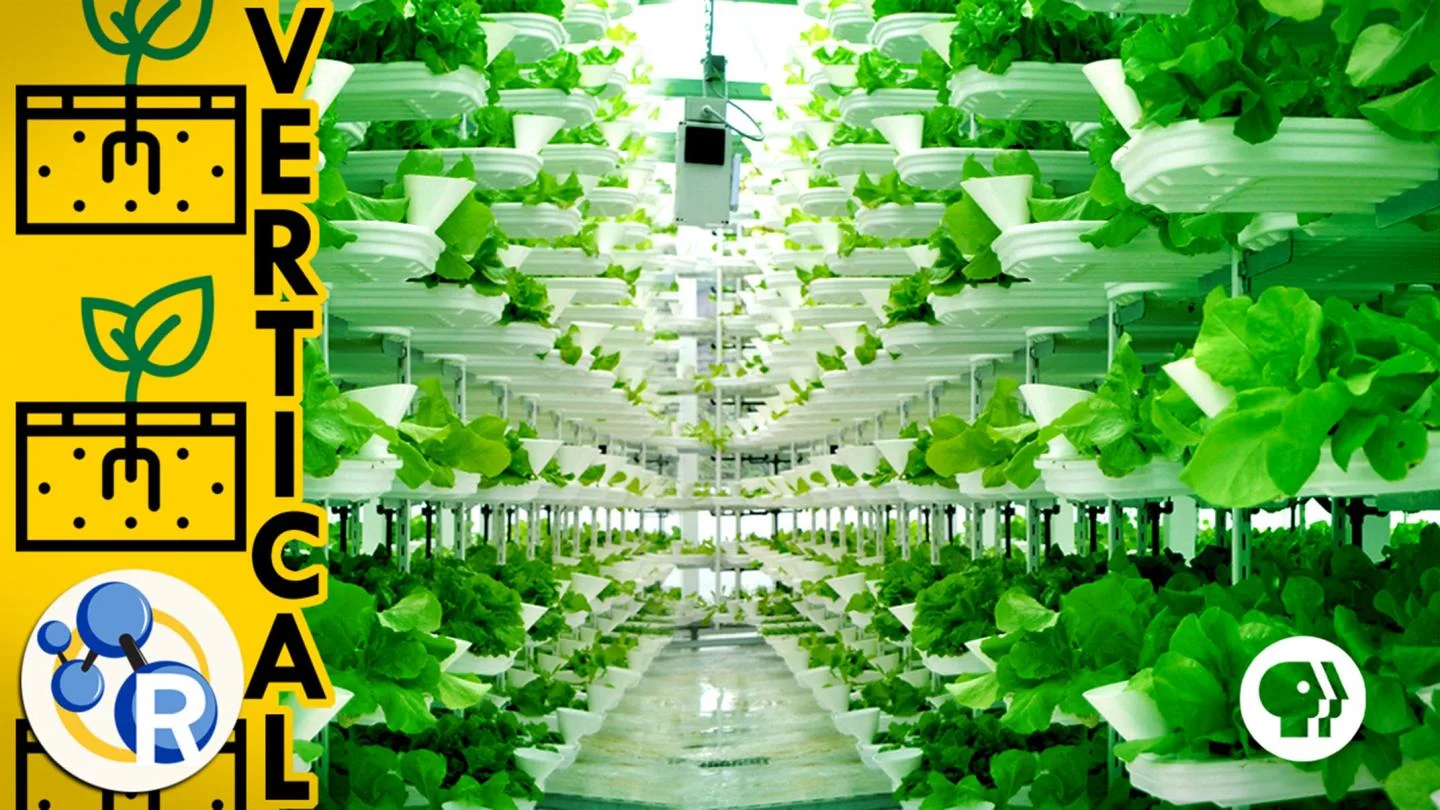
The Farm of The Future? (Video)
The Farm of The Future? (Video)
AMERICAN CHEMICAL SOCIETY
WASHINGTON, Feb. 28, 2017 -- There's a new trend in agriculture called vertical farming. As humans learned to farm, we arranged plants outside in horizontal fields, and invented irrigation and fertilizer to grow bumper crops. But with modern technology and farmers' cleverness, we can now stack those fields vertically, just as we stacked housing to make apartment buildings. Moving plants indoors has many benefits: Plants are not at the mercy of weather, less wilderness is cleared for farmland, and it's easier to control the runoff of fertilizer and pesticides. But the choice of lighting can make or break the cost of a vertical farm and affect how long it might take for urban agriculture to blossom. Watch the latest Reactions video here: https://youtu.be/rEw-VfFkUik.

Growing In Vertical Farms Around The World With Philips LED Systems
Following on from partnering with the Staay Food Group to build Europe’s first large-scale commercial vertical farming specifically supplying retail, city farm project manager for Philips Lighting, Roel Janssen, takes PBUK through the “growing recipes” behind the LED systems and examines the needs of different vertical farming markets around the world
10 March 2017
Growing In Vertical Farms Around The World With Philips LED Systems
Following on from partnering with the Staay Food Group to build Europe’s first large-scale commercial vertical farming specifically supplying retail, city farm project manager for Philips Lighting, Roel Janssen, takes PBUK through the “growing recipes” behind the LED systems and examines the needs of different vertical farming markets around the world.
The outdoor temperature in the remote regions of Saskatoon, Saskatchewan Canada have recently been around the minus 30 degree mark - but inside its high-tech greenhouse herb growers Ecobain Gardens is witnessing dramatic changes in its crops as well as big energy-saving impacts, following the Philips LED system installation.
By upgrading the fluorescent lighting previously used in the facility to LED, Philips Lighting is helping the vertical farming pioneer to produce at commercial scale, accelerate growing cycles and grow healthier, more consistent plants, while saving up to CAN $30,000 per year.
From less than 1,400 square feet, the facility produces approximately 18,000 pounds (8,164 kilos) of produce each year through farming methods which use up to 98% less water, no pesticides and now the latest LED technology.
“Saskatoon is really in the middle of nowhere with extremely low temperatures, so for Ecobain CEO Brian Bain, the key was to supply basil and other produce throughout the whole year, even while it was well below zero degrees outside,” Janssen tells PBUK.
“The big advantage now for his operation is year-round supply which is premium quality, has uniformity, looks the same and tastes the same, and has the same nutrient content.
“At Ecobain, growing cycles are now considerably shorter and they are producing commercial scales of produce like basil, where now more than 10,000 plants are produced a week.”
A value-added aspect of Philips LED from a growers point of view is the low heat output which produces a healthier, more consistent plant growth by reducing the heat stress on the plant canopy and root zone as well as providing uniform lighting.
Light Recipes
“When a plant is growing it uses red and blue lights most optimally and if you start trialling LED lights it’s fairly difficult to see what is the best combination of red and blue. We’ve been active in the LED lighting industry for horticulture for the past 9 to 10 years looking at that specific combination of colours that are what we call ‘light recipes’ and they can be optimised for a specific crop or sub-optimised for a range of crops or leafy greens,” adds Janssen.
“If you look specifically at growing without daylight, there are three main advantages for growers; the first is reliability because it's a controlled production cycle so that when everything functions in the right way - the climate, the carbon dioxide, irrigation, the right seeds, the right lighting - it’s always the same production cycle.
“There is no pressure from disease or pests and it’s basically always summer inside. And because you grow in a controlled environment it’s always free from pests so you don’t need any pesticides to get rid of the disease compared with outside where you cannot control the environment and are exposed to the risks of disease and pests.”
The second advantage, Janssen, explains is quality; because of the uniformity a controlled environment under LED offers, plants can be optimised for taste, colour and nutrient content with more than 90% less water because its easier to recycle resources when growing indoors.
The Third Plus Point - And It’s A Big One - Is Yield.
“Yields can vary depending on the light levels and the varieties that you use, but for example, in open field production if you talk about head lettuce, you would go to 15 to 20 kilograms per square metre of growing area per year to, in the most advanced high-tech greenhouse, 60 to 65 kilograms. And if you grow without daylight, you could grow above 100 kilograms per square metre per year.
“That’s growing square meters so if you do that in ten layers, you could go for one square metre of floor space and get 1,000 kilograms of production.”
Ecobain Gardens has partnered with Star Produce to distribute its produce throughout Canada to retailers like Loblaws, Federated Co-op, Safeway and Sobeys, as well as other local grocery stores.
The differences in vertical farming around the world
The Ecobain Gardens project is about locally-produced crops being grown year-round in an area not ordinarily associated with growing herbs and microgreens.
Part of Janssen’s job is to travel the world investigating the specific growing recipes for a myriad of vertical farming growers who want to tap into the potential of LED. He’s the man behind the Eindhoven-based GrowWise Research Centre facility - where R&D teams work in eight “climate cells” researching how to optimise crops further and streamline light recipes.
Since GrowWise first opened in July 2015, Janssen explains how he has witnessed quite a big shift in the interest from industry.
“At first, there were a lot of entrepreneurs wanting to do something within horticulture. They didn’t necessarily have a horticulture background or sufficient knowledge to build a greenhouse, but they saw indoor controlled environments as a an opportunity and if the technology functions in the way it should do, anyone can be a grower.
“But you still need horticulture knowledge and green fingers because if something in the system doesn’t function, you really need someone who can steer the product in the right way.
“What you see in North America and Canada, which are big markets for us, is that most of the lettuce, leafy greens and salad that is produced comes from California. The produce is in a truck for five days before it reach cities like Chicago and Saskatoon in this case, and it’s not as fresh as if you would harvest it on demand and then straight away give it to the consumer. That’s a big advantage when you’re in a remote area.”
In contrast, the indoor vertical farms of the US and Europe, are known as “plant factories” in China and Japan, where the focus is more about food safety and getting access to fresh produce in massively populated urban areas like Singapore and Tokyo.
“In Asia they typically talk about “plant factories” and like the controlled conditions and the safety aspects. That’s basically the idea; they want to push food safety and accessibility.
“Whereas in the US it's more about being local, in Asia the focus is on food safety and accessibility to food is really important.
“We had a lot of customers in Japan with a lot of operational indoor farms.”
Over the last two years, Philips Lighting has seen increasing interest, not just from growers supplying the market, but from retailers and food processors.
Last month during Fruit Logistica, Philips Lighting and the Staay Food Group announced Europe’s first large-scale vertical farm will be built in Dronten, the Netherlands, to serve supermarkets with fresh-cut lettuce grown using LED horticultural lighting.
The indoor vertical farm will have more than 3,000 squared metres of growing space to produce its pesticide-free lettuce - something that appeals to retailers who need to provide high quality bagged or loose lettuce with zero contamination issues.
“When we first met the owner of Staay he wanted to tap into the possibilities of growing in an indoor farm and we started discussing it. Eventually he decided to build a farm and his key reason was that so he could grow locally in the facility where he also uses his pre-cuts salad.
“The level of MRLs on the leaves is really low which is a big added value for them going forward with stricter rules from retail and of course there are no bugs.
“If we play with our grow recipes, we can also extend the shelf life of lettuce, get more dry matter into the lettuce, get it crispier; it’s exactly the same process as growing outside but it’s controlled so if we know what triggers red colouration in a plant for example, we can use a specific light recipe to trigger that colouration and get a nicer colour or trigger dry matter so the shelf life is extended.”
Once the facility is complete, the Staay Food Group can do everything under one roof; grow, pack, process with very low risk of contamination from the pesticide-free lettuce.
UK Loves “Home-Grown”
Janssen explains, UK-based growers like to market produce as “home-grown”, something that particularly resonates with the British market. But why do vertical farms tend to focus on salad crops, microgreens and herbs?
“In the UK we also see that it’s a real added value to have UK-grown products and there are companies growing other crops apart from lettuce and herbs such as Flavour Fresh which grows tomatoes year round using our LED solutions.
“Typically a leafy green is produced within three to five weeks and cucumbers after a few weeks already started giving fruits. We’re also investigating growing fruiting crops but because of the speed or the short crop cycles, at least at this point in time, the main focus is on leafy greens because they offer the biggest opportunities.
“We managed to grow strawberries in our GrowWise facility, but the difficulty of growing completely without daylight is that it’s better to have fast rotating crops with really high yields that you can improve because the economics around it are much more interesting.”
Taking the case of strawberries, Janssen, explains the challenges associated with growing this kind of fruit.
“If you put the seed into a substrate and the strawberry needs two months before it starts fruiting, during those two months you need to put on your lights and climate system, whereas with lettuce, leafy greens and short cucumbers, they’re really fast in how they rotate.
“We’re not saying that we can feed the masses with this but it is a market where there is added value to be found. In Asia it’s mostly about food safety and availability, in the US it’s mostly about the local movement and pesticide-free production, but in Europe it’s for processed optimisation.
“Growers in Europe are triggered by retail to look into this technology and they are stepping into the business. We expect this to grow when Staay is operational later this year because I think they will set the standard in the level of contamination you can have on a leaf which is very close to zero at that point.”
- See more at: http://www.producebusinessuk.com/insight/insight-stories/2017/03/10/growing-in-vertical-farms-around-the-world-with-philips-led-systems#sthash.s0Y5YKCx.dpuf

Indoor Farming Takes Root At U of T Mississauga
At University of Toronto Mississauga, a plastic tower sprouts produce including curly starbor kale, buttercrunch and collard greens
Indoor Farming Takes Root At U of T Mississauga
At University of Toronto Mississauga, a plastic tower sprouts produce including curly starbor kale, buttercrunch and collard greens.
Rising almost six feet off the ground and illuminated by high output fluorescent bulbs, the indoor farm wall grows plants hydroponically – with nutrient solution, instead of soil. The water nourishes the roots, collects in a gutter and then recirculates back to a nutrient tank that feeds back into the hydroponic system.
The farm wall was the idea of Master of Science in Sustainability Management (MScSM) students Conner Tidd and Kevin Jakiela who partnered with Modular Farms Co., which specializes in vertical farming systems, to create distribution channels and services.
“You can grow pretty much anything,” Jakiela says. “Here, we’ve already grown three different types of lettuce, Genovese basil, joi choi, peppermint and parsley.”
From seed to harvest, it takes about four weeks to grow leafy greens and herbs.
“If you stagger it correctly, you can harvest it almost every day,” Tidd adds.
The wall costs just under $25 a month in electricity.
The seedlings, nestled in plugs made of peat moss, begin in a tray and are placed under a humidity dome where they germinate and are fed different levels of nutrients and pH. After a couple of weeks, they're ready to be transplanted into the tower.
Wicking strips help water find the path of least resistance by controlling the water flow and taking the water directly to the seedling roots.
“It’s a white cloth that you open up, put the plug in, then you close it like a sandwich, and put it into the tower,” Jakiela says.
Although the produce the farm wall yields is not organic-certified yet, the students' startup company, Just Vertical, uses organic-based practices, foregoing herbicides and pesticides.
“When you’re outside, you’re exposed to pests and fungi,” Tidd says. “Unless you’re using herbicides and pesticides, it’s going to be a problem especially when you’re growing strawberries and tomatoes.”
“With Just Vertical, Kevin and Conner have a great product in place, and manufacturing is lined up so now the initial focus will be on market validation,” says Sam Dumcum, the programs, strategic relationships and innovation lead at ICUBE, U of T Mississauga's incubator that provides startup support to new ventures at any stage.
Dumcum says that by focusing on market research during the next phase of their startup, Just Vertical will be able to have a solid base with which to advertise and sell their product but also to appeal to investors.
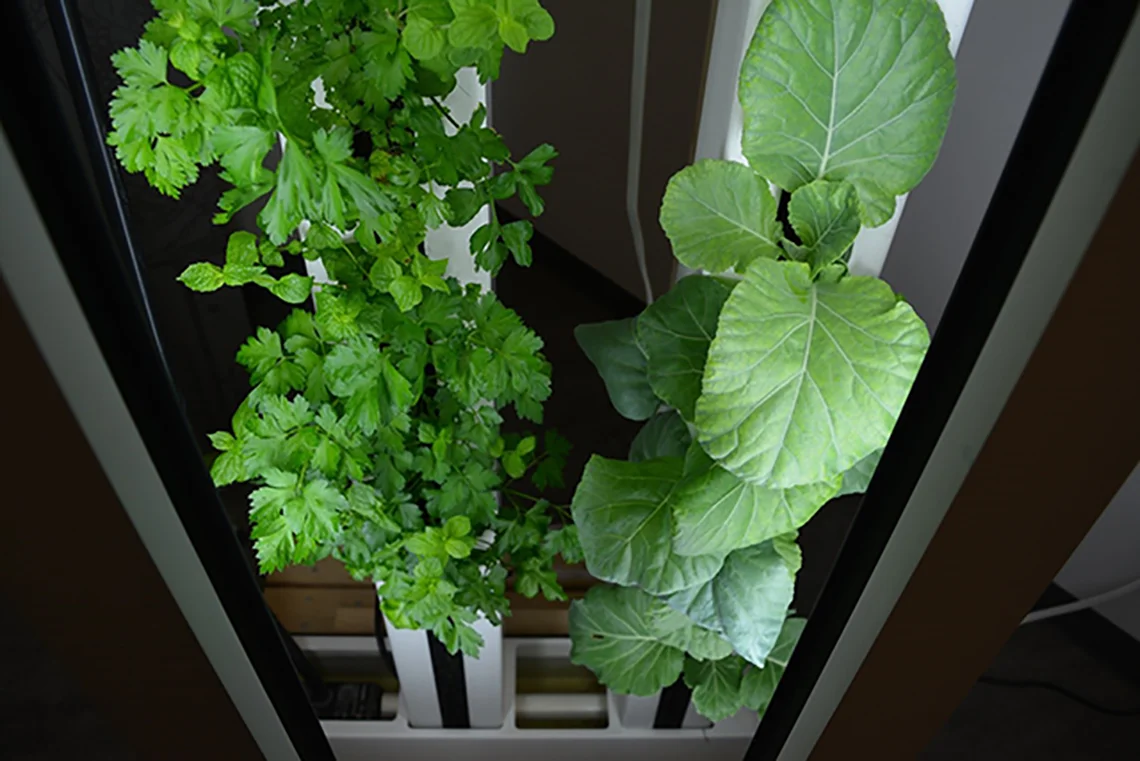
Student startup, Just Vertical, is growing an indoor farm wall hydroponically at U of T Mississauga – with nutrient solution, instead of soil (photo by Sarah Jane Silva)

Why Large-Scale Indoor Farms Will Be Crucial to Feed Our Fast Growing Cities
Why Large-Scale Indoor Farms Will Be Crucial to Feed Our Fast Growing Cities
SEB EGERTON-READ · MARCH 9, 2017
Technological innovations are enabling a new way of producing food transforming indoor environments into places where fruits and vegetables can be grown without soil, close to the city, with an extremely short supply chain, fully independent of weather fluctuations, while reducing demand on water and chemicals. One of the pioneers of the approach, New Jersey based Bowery, describe it as ‘post-organic’ farming, and momentum is growing behind the idea that a sizeable percentage of some of the fruits and vegetables of the future could be grown using this technique.
On the current path, the world population’s caloric demand will increase by 70%, while crop demand for human consumption and animal feed is expectedl rise by 100%. Meeting these needs with existing agricultural practices will require large areas of additional land, and will increase pressure on the earth’s soil, which has gradually been degraded losing a significant percentage of its nutritional capacity over the last 100-150 years. Meanwhile, the effects of climate change, realised through extreme weather patterns, threaten to negatively impact crop yields and disrupt food supply chains.
Urban agriculture in the form of aquaponics, where fish farming is combined with the growth of vegetables and a self-maintaining system is established has a long history, but the data monitoring and ability to control internal conditions provided by new technologies has enabled the further evolution of hydroponics.
Hydroponic farming involves growing produce in multi-storey warehouses without soil. Seeds are planted in a soil substitute and grown in nutrient-rich water, where water is recirculated, and temperature, salinity and humidity are monitored and controlled to maximise the yield. The method has a number of economic, environmental and social advantages. Here’s a pretty good initial list taken from SystemIQ’s Achieving Growth Within report:
- 90-95% reduction in water demand
- Fertilizer use reduced by 70%
- Use of herbicides and pesticides eliminated
- Food waste at the production stage minimized
- Growing space maximized
- Ability to grow throughout the year
- Shorter supply chain results in lower transport costs and related emissions
Reportedly 100+ times more productive on its land compared against traditional farming, Bowery is one of the most advanced movers in the sector. They’re far from alone, Japan’s Spread declared their initial plant profitable in 2013 and now have plans to open an automated plant that could increase their yield to 51,000 lettuce heads per day, and we’ve previously told the story of AeroFarms, another New Jersey based firm.
It’s also a highly efficient technique in terms of resource use. For example, only 5% of the fertilizer used on large fields is actually consumed by people, according to the Ellen MacArthur Foundation’s Growth Withinresearch, the rest of the nutritional value is waste across the value chain.
The new model doesn’t come without criticisms. Growing without soil means that there is little opportunity for regeneration or the development of an ecosystem that ‘feeds itself’, rather the method allows for the development of a large number of linear and separate processes in an ultra-efficient way.
Furthermore, there will always be concerns about the nature of the chemicals needed to grow plants in these conditions, and the types of seeds used. For their part, Bowery take pride in sourcing, “from partners who spend nearly a decade developing the ideal seed, rather than relying on GMOs”. When Circulate asked him about some of the potential trepidations, CEO Irving Fain was quick to highlight that the story of indoor farming is a healthy one, both for crops and people:
“Bowery grows its produce under LED lights that mimic the spectrum of the sun. By monitoring the growing process 24/7 and capturing data at each step, we give our crops exactly what they need and nothing more. Because we control the entire growing process from seed to store, our produce is the purest available – food you can truly feel good about eating”.
For Irving, who is already planning Bowery’s second farm, scale is the next challenge, “we plan to continue to build additional farms, keeping them all close to the point of consumption to deliver products at the height of freshness and flavor, and we hope to serve more cities throughout the country”.
Up front investment costs are a potential barrier, but there’s also an increasingly strong business case associated with indoor farming. Besides the growing number of innovators establishing businesses, SystemIQ’s research estimated that €45 billion of total investment between now and 2025 could create an economic reward across Europe of €50 billion by 2030 with key benefits including the freeing up of land space and reduced reliance upon fertilisers and pesticides.
Pair the potential economic opportunity with the demands expected by a fast-growing global population, and it’s easy to imagine a future where at least part of the food supplied to the world’s largest cities comes from indoor farms located inside the city limits.
West Coast Supply Issues Prompt More Demand At Indoor Farms
West Coast Supply Issues Prompt More Demand At Indoor Farms
By Ashley Nickle March 09, 2017 | 2:23 pm EST
Indoor farms are seeing increased demand as weather-related production issues in Arizona and California have affected the supply of leafy greens.
Rain has interrupted planting and harvesting in California throughout the season, and the Yuma, Ariz., deal is expected to finish earlier than previously thought after mildew proved to be a major problem.
With West Coast supplies tight, several indoor farms have reported increased interest from buyers.
New York, N.Y.-based BrightFarms, which has greenhouses in Illinois, Virginia and Pennsylvania, has seen retail orders rise in recent weeks.
“It has been impacting most of our customers pretty significantly and their availability on items like spinach and arugula and other baby greens items as well,” said Abby Prior, vice president of business development for BrightFarms.
“Because our crop cycles are relatively short, we have a lot of flexibility to be able to adapt on planting cycles relatively quickly,” Prior said. “That is really a daily and weekly process with our retailer partners, looking at their forecasted demand, and we can adapt our planting pretty much daily based on their needs.”
Prior said the company will likely be providing higher amounts of product at least through March as crops transition from Yuma to California.
Milan Kluko, CEO at New Buffalo, Mich.-based Green Spirit Farms, said his company has seen an uptick in interest in the last month due to the Western production problems. Green Spirit can only increase capacity at its New Buffalo location — it also has a farm in Detroit — about 20% due to space constraints, but it has been ramping up production as much as it can.
One of the large supermarkets with which Green Spirit works is ordering double what it did a few weeks ago, Kluko said.
Robert Colangelo, CEO of Portage, Ind.-based Green Sense Farms, said the company has been shifting production to meet higher demand. Green Sense grows micro greens, baby greens, herbs and lettuces but will produce about 30% more lettuce and less of other items to address customer needs.
Benjamin Kant, CEO of Chicago-based Metropolitan Farms, said it is hard to tell whether his company’s current strong demand is a direct result of the West Coast production issues because the company just completed its first full year in operation.
However, Kant said he has heard complaints about higher prices and lower quality of West Coast product.
Marc Oshima, chief marketing officer at Newark, N.J.-based AeroFarms, said demand has “absolutely” increased lately but noted overall interest has been high for a while.
“It’s not just recently,” Oshima said. “These are ongoing issues that have troubled the industry.”
All five of the indoor farms interviewed for this article have recently expanded or are expanding.
“The more we (as a country) see challenges in sourcing all of our produce from a relatively small area on the West Coast, farms like ours and companies like BrightFarms will continue to grow and will continue to gain relevance in the produce industry,” Prior said, “and we’re glad to be able to fill the gaps at times like these where retailers are struggling.”

Students Give Schurz Food Science Lab a Green Thumbs Up
Students Give Schurz Food Science Lab a Green Thumbs Up
Erica Gunderson | March 9, 2017 4:46 pm
Hydroponics farms are hot in Chicago, with new farms sprouting up all over the city. But finding experienced hydroponics workers can be tough, so a local chef decided it was time for Chicago to grow its own. His program in a Northwest Side high school offers students the chance to get their hands dirty – and wet – growing greens in a working hydroponics farm.
We visited Carl Schurz High School, where the seeds are being planted for the next generation of urban farmers.
TRANSCRIPT
Brandis Friedman: It all starts with a seed.
Every few days, students in Schurz High School’s Food Science Lab spread thousands of tiny arugula seeds across damp paper towels and slip them under grow lights. After another few days, the sprouts become a crop of microgreens, which are delicately harvested and brought to the Schurz cafeteria to be mixed into lunchtime salads.
Jaime GuerreroJaime Guerrero, Schurz Food Science Lab: The students right now love the idea of having fresh basil in their salads. They love the idea of microgreens because they add much flavor and diversity to what they’re already eating. And whether they realize it or not, they're adding so much nutrition to what their diets are, to what they eat in the cafeteria.
Friedman: Produce doesn’t get more local than that, and that’s exactly the way the Food Science Lab’s founder Jaime Guerrero likes it. The chef and marketing executive’s idea for a high school urban farming program started as a way to prove a restaurant concept.
Guerrero: The idea came from an urban farm restaurant concept that I had in my head. Through my alderman and other supporters in the community, Arts Alive, we came up with the idea of a proof of concept that would be within the area and we connected with Schurz high school.
Friedman: The farm began with two hydroponic grow towers in an old shop classroom. Guerrero recruited students to volunteer as his first farmers. Two years later, he says it’s the students who drive the program.
Guerrero: The input of the kids has been very essential. The products that we have evolved here were a combination of things that work in these environments and with these systems and what we’ve tried, but also the tastes of these students. Our plans were to integrate it further into the departments and the school itself. This year we’re integrated into three departments: environmental science, botany and engineering.
Friedman: Yields from the Food Lab are often large enough to allow the program to donate herbs and microgreens to a nearby food pantry. And like any farm, increasing yields is a constant focus –whether it’s by adjusting light or fertilizer, testing different grow media or developing a prototype for a rotating growing system. For senior Nathaniel Dejesus, working in the Food Lab has allowed him to apply some of the problem-solving techniques he’s learned in his pre-engineering classes.
Nathaniel DejesusNathaniel Dejesus, Schurz senior: We thought of a triangle system that would have different layers. It would be a mist system, it would have LEDs under the trays, so you can access it easier. There'll be a pipe coming through the middle so it can all recycle back to the reservoir.
Friedman: Elsewhere in the lab, senior Veronica Burgo is growing tomato plants in the Food Computer, an agriculture technology platform developed by MIT to determine and share optimal growing conditions.
Veronica Burgo, Schurz senior: There were some astronauts that went out into space and took some tomato seeds and they were kind enough to let us use two packs of their seeds. We have four samples in here at the current moment, and we're trying to compare them against what we have in some of our other systems, like our lettuce systems to see if anything changed within the genetics of the plant.
Friedman: Veronica draws a direct line between her work in the Food Lab and her future career ambitions.
Veronica BurgoBurgo: I’m aspiring to be a biochemist and a lot of what we do here is chemistry and biology, so I would love to be a part of an urban farming group in college.
Friedman: For now, the Food Lab is being kept alive by donations and small grants, but funding continues to be a challenge. That’s why Guerrero hopes to fold other disciplines, like business management and marketing, into the curriculum so that Food Lab students can sell their product to the community and put the profits back into the program.
Guerrero: What we tell these kids every day is come in here, learn, experience what we have and at least be a little inspired to learn about it. If we get you to be interested to do something, to be a farmer, an engineer, even better. I think that this program can be great in this community as we build it up, but also anywhere in the country.


Vertical Farming
It is now a well-known and recognized fact that our societies are becoming increasingly urbanised. It is also well established that our population as a whole is growing rapidly, expected to peak at around nine billion by 2050
Vertical Farming
09/03/17
Mark Horler of the Association for Vertical Farming sets out the role urban agriculture could play in smart cities of the future
It is now a well-known and recognized fact that our societies are becoming increasingly urbanized. It is also well established that our population as a whole is growing rapidly, expected to peak at around nine billion by 2050. In the light of these facts, it is becoming ever clearer that our current linear economic model is not sustainable. The take, make and waste model cannot continue to be the foundation of our economy, if we are to have and live in resilient and sustainable societies.
What is needed instead is a circular economy, whereby resources are reused, repaired and recycled. It follows from this that we would design products and systems to be durable, rather than disposable. This simple-seeming shift in priorities would have a profound effect on the whole way that our production systems operate, and therefore an equal knock-on effect on society as a whole. Finally, this would result in an enormously positive reduction in the harm we cause to the ecosystems upon which we in turn depend.
How does this pertain to the production of food?
The existing agricultural model has, since the so-called ‘green revolution’, achieved enormous gains in productivity. But those gains have come at a substantial cost to ecosystems and the services they provide us. With 70% of all available fresh water now used to irrigate crops, much of that is lost to evaporation and surface run off. This latter leads to a second problem in that the pesticides and fertilisers we use also run off in that water, causing untold damage to the environment around them and even getting into drinking water supplies, from which they must be removed.
Moreover, those pesticides and fertilizers are derived from natural sources, which must be mined, alongside all of the consequences that entail. To then allow those precious resources to be wasted as run-off makes little sense from either an environmental or economic perspective. Once all that food is grown, it must be transported to market. This utilizes yet more resources, particularly fossil fuels. The advent of globalized food systems means that enormous amounts of these resources are now used to transport food products.
We also have waste. Much of this happens during the transportation and storage phase, but it is also present in the supermarkets that stock the food and at the level of consumers in their homes. In the end, around one-third of all the food we produce is wasted.
The defining principles behind vertical farming
Vertical farming was established to help address these challenges via a series of simple premises. The first and defining principle is that the food should be grown as close as possible to where the people who will consume it live. This means that, instead of only growing in rural areas, we should, wherever possible, also grow in urban and peri-urban areas. Doing so removes, at a stroke, the majority of problems associated with transport. It also substantially reduces wastage. However, land is expensive in urban areas, so conventional farming in cities is simply not realistic economically. As with all urban developments, then, the guiding principle is to go upwards rather than outwards. Thus vertical farming came to be.
The second principle is that growing the food should use as few resources as possible. It follows that not only is a minimal degree of input necessary but that those inputs should be recycled and reused wherever possible. From this came controlled-environment agriculture. Many vertical farms now operate this way, in an entirely enclosed environment, with artificial lights specially designed for maximum benefit to plants, and with controlled heating and ventilation systems. These vertical farms also use soil-less growing systems such as hydroponics and aeroponics, the result being a water use reduction of between 75% and 95%. Pesticides are entirely unnecessary in such a system, and what small amounts of nutrients are required can be dissolved into the water, which is recirculated around the system.
This leads to the final principle, which is that waste outputs should be eliminated wherever possible and limited to the greatest possible extent where they are unavoidable. From these three principles then, a complete, circular, closed-loop system has been derived. This is vertical farming.
The Association for Vertical Farming
The Association for Vertical Farming (AVF) was set up to lead the vertical farming movement to facilitate healthy food, green jobs, environmental protection and climate change resilience by fostering the sustainable growth and development of the movement through education and collaboration. To achieve this, the AVF has focused on four key areas: education and awareness, industry standardisation, sustainability and the circular economy, and policy advocacy.
In turn, this has led the structuring of the association into seven divisions: education; research; standardization and certification; events, policy and advocacy; press and communications; and finance and business models. These divisions are then subdivided into project groups. Each PG is designed to address a specific challenge within the vertical farming world, with divisions therefore acting as communities of PGs, united by a common purpose.
Pursuing our four key areas via this structure has yielded a variety of interesting and exciting projects. We hold events of our own such as the yearly AVF summit, and we frequently partner with other major events to promote the cutting-edge world of vertical farming. We have an education programme in which, by collaborating with major education institutions, we will help to train the next generation of urban vertical farmers. We have a specially designed, first-of-its-kind sustainability certification scheme for vertical farming in development, which will allow the industry, governments and wider society to see exactly how sustainable vertical farming truly is.
Of course, the association, as the name suggests, is primarily made up of its members and, as a result, all of these efforts are dependent upon their support and engagement. We are very fortunate to work in an exceptionally forward-looking movement, where our members do indeed support, engage and collaborate with us in everything we do. Those numerous members, not incidentally, also represent an important counterpoint to those who would argue that vertical farming is not economically viable.
As in any young industry, the failure rate of start-ups was initially high, but the market is now expanding rapidly and, with the support of the AVF, is becoming more stable, with fewer barriers to entry.
Accommodating vertical farming within EU policy
This brings us to what the EU can do to help. One of the greatest barriers to the development of the industry, both in Europe and worldwide, has been the difficulty of placing vertical farming within existing categorisations. As a result, it has been hard for governments and planners at all levels to recognise it as a legitimate agricultural and business sector. Because vertical farming is agriculture, but takes place within a building in an urban environment, currently accepted classifications do not adequately cover all areas of the business. Put another way, vertical farming overlaps several categories.
In Europe especially, most agricultural and agri-tech policy is made at the EU level, for example via the Common Agricultural Policy (CAP), and then filters down to the various levels below. As such, it is imperative for the development of this industry in Europe that the EU recognises the unique nature of vertical farming and designs policy to accommodate it. From this would follow EU support for what is a true circular economy food system and industry, in line with its own stated goals of promoting those same objectives, of protecting our natural world, and of increasing human wellbeing via a sustainable and resilient economy. More practical support would also include clear financial incentives and grants to incentivise growth.
Vertical farming is a nascent industry and, if the EU wishes not only to keep up with the rest of the world, but to lead the way, such support is going to be crucial in achieving that goal.
Mark Horler
The Association for Vertical Farming
This article first appeared in issue 21 of Pan European Networks: Government, which is now available here.

Military-Grade Tech to Monitor Eggplants Rather Than Explosives
Military-Grade Tech to Monitor Eggplants Rather Than Explosives
by: Gwen Ackerman
March 9, 2017, 12:00 AM CST
Israel army know-how used to build robot for hydroponic farming
Founders hope tech will be used in outer space to grow food
On a rooftop in the Jewish-Arab Tel Aviv neighborhood of Jaffa, a former military technologist and an ex-journalist sit in a transparent bio-dome where their robot is busy learning how to grow food.
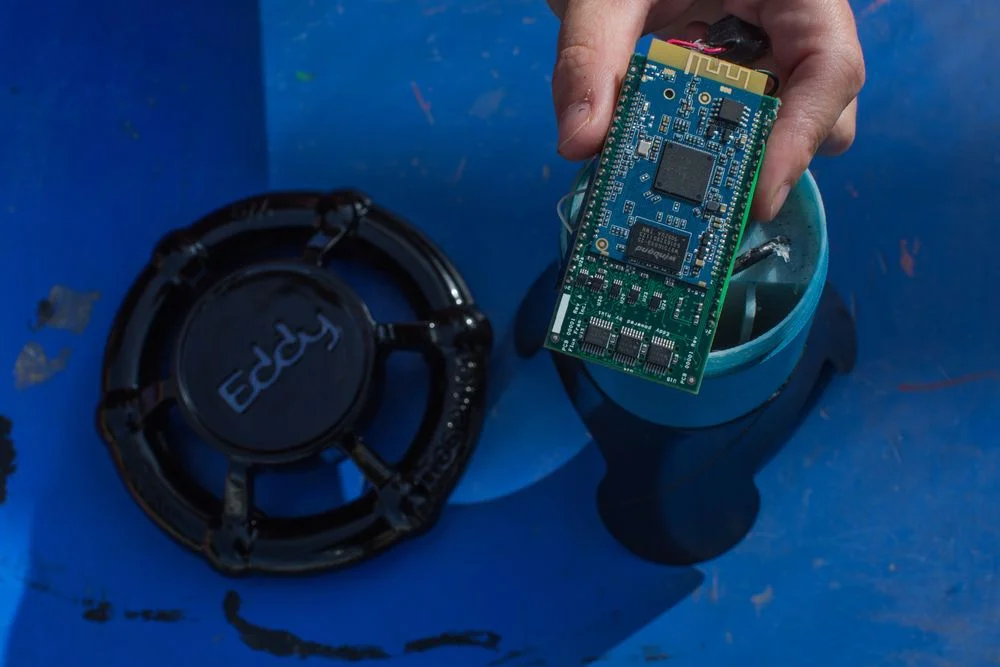
Flux IoT’s Eddy, a robot measuring less than a foot tall and resembling a life buoy, is built with military-grade sensors and armed with image-processing technology.
Its inventors intend it to become the industry standard for commercial and amateur indoor farmers who want to grow pesticide-free, water-efficient crops via hydroponics -- a method of growing plants without soil. Eddy sits in the growing reservoir, and users can stay updated on their crops’ progress via a mobile app, where information gleaned from fellow farmers can help them know when to change the lighting or add nutrients.
Currently closing a $2 million seed funding to start manufacturing, Flux is planning another financing round of as much as $8 million later this year, its size dependent on how many robots sell on crowdfunding platform Indiegogo Inc., said Chief Executive Officer Blake Burris. It’s also growing its U.S. team, primarily based in Colorado, while research and development will remain in Israel. The Israeli team is led by co-founder and Chief Technology Officer Amichai Yifrach, who previously built nano sniffers to detect explosives and image processing tools to protect U.S. troops at checkpoints in Afghanistan and Iraq.
“In the army you build perimeter security using imaging processes and webcams that can see things the human eye can’t,” said Flux VP of marketing and co-founder Karin Kloosterman, a former journalist. “With that technology Eddy can look at a plant and detect nutrient deficiency and tell you what it is. Right now you have to be a trained agronomist to know.”
Zirra.com Ltd., an Israeli startup that uses artificial intelligence and machine learning to analyze the private tech market, says Flux’s offering “poses significant disruption in their relevant space,” but that the price of the robot could be a “showstopper.”
Burris says they plan to sell Eddy for $179, and expect to sell anywhere between 10,000 to 25,000 robots this year. Rival SmartBee Controllers, which provides water content sensors, sells starter systems starting at $2,500. A water content sensor alone costs between $350 and $400.
Green Shoots
Hydroponic farming is growing in importance as government agencies such as the U.S. Department of Agriculture reflect on the potential impact of industrial or conventional farming, including soil productivity decline, pollution and depletion of natural resources such as water.
According to global market research firm IBISWorld, the U.S. hydroponic industry alone will reach $856.8 million by 2021, from $821 million in 2016 and the number of businesses will jump from 2,347 to more than 3,000. Flux sees home gardeners as a target market, and in the U.S. 42 million households grow food at home, according to The National Gardening Association.
Scotts Miracle-Grow Co., the world’s largest seller of lawn and garden products, bought an Arizona-based company in October to boost its hydroponics offering. New Zealand-based Bluelab, a global supplier of testing and control equipment for hydroponics, gives basic readings that are linked to a computer and is also working on a mobile app. One of the big markets for hydroponic equipment are cannabis growers.
Flux will assemble the first few thousand robots in Israel, and if demand expands as expected, manufacturing will move to China shortly thereafter.
The intersect in hydroponics is also spreading between worlds. Elon Musk has plans for a Martian colony, NASA is trying hydroponics out in space, and the European Space Agency is cooperating with the Space Farm Collective led by a Netherlands Border Labs team on ways to grow food on planets other than Earth. Thieme Hennis, head of the Space Farm Collective, is testing out Eddy to see how it might help a citizen science project called Watch Me Grow, aimed at finding plants that will grow best in space, and improve ways even the public can grow their own food on Earth.
“Eddy has to prove itself on a larger scale, but something like this is necessary and offers an interface for non-professional and professional growers alike to understand and ‘talk’ with plants,” said Hennis.
Urban Vertical Farming Helps, Inspires, Grows The Green Wave
Urban Vertical Farming Helps, Inspires, Grows The Green Wave
By Eliza Grace | Thursday, March 9
Last week, I went to catch up with an old friend who graduated from Duke last spring. Dr. Spencer Ware, a major in Environmental Science, found his new job by researching urban gardens in the greater Raleigh/Durham area. He stumbled across a small but productive operation called Sweet Peas Urban Gardens. This haven, created by Tami Purdue, takes up an average size plot in the middle of a residential area that features a greenhouse, outdoor garden and a Crop Box. You may not recognize the term "Crop Box," as the concept is quite new. Sweet Peas is home to the fifth one ever created!
The Idea of the Crop Box originated when a few people realized how many empty shipping containers there were laying around. These large metal boxes take up space without a purpose. The solution proposed by Crop Box was to make these spaces into small vertical urban farms. From the ideas conception in 2012, the first model took two years to perfect. As of now, a fully-functioning, fully green Crop Box would cost you about $75,000. Purdue pointed out that the high cost is due to the 50 LED lights that Sweet Peas purchased to grow each layer of produce. LED lights are four times the price of fluorescents, but in the long run save electricity costs that would be needed to ventilate the heat produced by cheaper fluorescents.
The entire container comfortably hosts four layers of a variety of soil-free growing plots. The Crop Box could also feature soil, but Sweet Greens uses a hydroponic system instead, because, why use an unnecessary resource? Their soil-free (hydroponic) growing system uses only decomposable materials which are later composted, and so little water that Sweet Peas water bill went up only four to six dollars per month once the Crop Box was up and running.
The early adaptors of this new system have so-far found that the way to make the fastest profits is through growing micro-greens. Micro-greens have a growing cycle of only 10-14 days. They are packed with flavor, nutrients(up to 40 time higher levels of vital nutrients than their mature counterparts) and are part of a growing market. This means produce can be churned out in a quick and efficient manner. The system is also made more cost-effective and sustainable by thriving without the need of any chemical fertilizer inputs. The more difficult part has been finding the market to sell to.
Sweet Peas made their mark by starting at the local farmers market in Raleigh. Until recently, micro-greens have gone underutilized and under cultivated in the kitchen. However, with a growing trend towards eating healthy and local, people have started to recognize micro greens as a perfect garnish with lots of different flavors. Sweet Peas alone harvests a large variety. When I visited, Purdue and Spencer showed me varieties of wheatgrass, radish, broccoli, kale, cilantro and much more than was all soon to be harvested. The whole operation was diverse, concise and beautifully efficient in producing delicious organic micro-greens.
While the whole operation requires a large investment to get started, Sweet Peas Urban Garden made its money back in just two years. This includes the time it took to get Sweet Peas recognized as a supplier to the area. After spending time at the farmers market, local chefs caught on to the Sweet Peas mission and fell in love. These gourmet, farm-to-table chefs are the backbone of the micro-green business, a small but budding market in the N.C. triangle.
While the Crop Box also takes work to maintain, Purdue has found a lot of free help, and new friends, through using the website WWOOF (Worldwide Opportunities on Organic Farms), which lists farms worldwide where people are welcome to live for free in exchange for farm work. In addition to this money-saving tactic, Sweet Greens makes local deliveries by bicycle. Both of these methods are not only good for business, but good for the health and spirit of those running the business.
Because of the success Sweet Greens has seen, Purdue is considering investing in a second Crop Box. There is a possible deal in the works with Whole Foods that could launch their operation to a much larger scale, and even without Whole Foods the demand has still been continuously growing.
While a growing desire for fresh local foods exists, many urban areas continue to lack initiative. When exceptional people such as Purdue of Sweet Peas decide to take action and start a project, people notice. No matter how small the operation, a new trend can be created through a growing appetite and awareness for local, organic food. Every individual with any size plot of land has the power to grow their own food, and Sweet Peas is a larger symbol of that. If this small shipping container can be turned into a profitable farming project in two years, we should all spend more time thinking about the future possibilities of urban and vertical farming. People from around the world have traveled to Raleigh to see Sweet Peas Urban Farm and it’s Crop Box initiative. If their little box can serve as a model for the rest of the world, then no effort is too small to help innovate new models to feed an ever-growing population.
Many Thanks To Dr. Spencer Ware and Tami Purdue for welcoming me on their farm and talking to me about the project!
Eliza Grace is a Trinity junior. Her column, "the green wave" runs on alternate Thursdays.

2nd International Congress on Controlled Environment Agriculture
2nd International Congress on Controlled Environment Agriculture
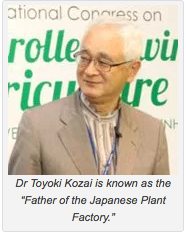
Dr Toyoki Kozai is known as the “Father of the Japanese Plant Factory.”
The 2nd International Congress on Controlled Environment Agriculture (ICCEA 2017) will take place in the Republic of Panama, at the Hotel El Panama, between 17 -19 May 2017. The Congress offers an opportunity to learn from the most innovative minds in the industry. Speakers will focus on the skills and knowledge needed to finance, design and operate a successful and innovative farm operation, albeit an indoor vertical farm, greenhouses or a combination of a protected and controlled environment.
The event will focus on the six main areas of controlled environment agriculture (CEA) management:
- Environment
- Nutrient Solutions
- Growing Systems
- Light
- Water
- Energy
This year’s Keynote Speaker is Dr Toyoki Kozai from Chiba University in Japan. Currently, Dr Kozai is leading Research and Development of Controlled Environment Agriculture with a primary focus on Vertical Farms (Plant Factories) for commercial food production. Dr Kozai is a Professor Emeritus and an Endowed Chair at the Center for Environment, Health and Filed Sciences at Chiba University.
Since 2010, Dr Kozai has been working as the Chief-Director of the Japan Plant Factory (Vertical Farm) Association, a non-profit organization for the advancement of the industry.
This second event of its kind, the ICCEA 2017 will continue to be the place to engage, learn and apply the foundations of controlled environment agriculture (CEA) for greenhouse and vertical farm owners and operators.
ICCEA2017 will focus on:
- Understanding technology used in producing greenhouse and vertically farmed produce
- Understanding nutrients used in hydroponics
- Learning the latest research available on controlled environment crops
- How LED Grow Lights impact photosynthesis and plant growth
- Learning new production techniques
- Managing your CEA business
- Automation and robotics
- Integrated Pest Management strategies
- and more!
The event is expected to attract over 600 attendees and over 40 exhibitors specialized in agriculture, indoor farms, greenhouse and Ag Tech in the Americas and around the world.
For a detailed program outline, exhibitor information and delegate registration, visit: ww.icceapanama.org Ω

Urban Crops Announces Corporate Name Change to Urban Crop Solutions
March 9th, 2017 11:16
Urban Crops Announces Corporate Name Change to Urban Crop Solutions
As of today Urban Crops will change its name to Urban Crop Solutions, highlighting the core of the company being a global turnkey solution provider in automated plant growth infrastructure and plant growth recipes. In alignment with the adoption of the new name Urban Crop Solutions has also launched a new website: urbancropsolutions.com.
“We are very excited about the introduction of our new company name and believe that the name Urban Crop Solutions allows us to better represent our business model, being an independent turnkey vertical farming solution provider with an extensive after sales model”, explains Maarten Vandecruys, co-founder and managing director of Urban Crop Solutions. “Being categorized as a solution provider better aligns with our philosophy and core values of delivering reliable and qualitative products and services” adds Frederic Bulcaen, co-founder and chairman of Urban Crop Solutions. “All our products and installations are engineered and manufactured to be industry-proof.”
We are very excited about the introduction of our new company name and believe that the name Urban Crop Solutions allows us to better represent our business model, being an independent turnkey vertical farming solution provider with an extensive after sales model.
Maarten Vandecruys, co-founder and managing director
Urban Crop Solutions with headquarters in Beveren-Leie (Waregem, Belgium), in the middle of the Western European vegetable industry and surrounded by international well-reputed machine building companies, develops since 2014 tailored plant growth installations. These systems are turnkey, robotized and able to be integrated in existing production facilities or food processing units. Urban Crop Solutions also has its own range of standard growth container products. Being a total solution provider Urban Crop Solutions can also supply seeds, substrates and nutrients for clients that have limited or no knowledge or experience with farming. Currently the company has a growing list of more than 180 varieties of crops that can be grown in closed environment vertical farms and that have been validated. These plant recipes (ranging from leafy greens, vegetables, medicinal plants to flowers) are developed specifically for indoor farming applications and sometimes exclusively for clients by its team of plant scientists. Urban Crop Solutions has started activities in Miami (Florida, US) in 2016 and expects to have an own subsidiary in Japan in Q2 2017.
Growing crops in a climate controlled multi-layer environment with own developed LED lights achieves shorter growth cycles, higher water efficiency, flexible but guaranteed harvests and safe and healthy crops (no pesticides or herbicides needed). The grow infrastructure can be installed in new buildings, as well as in existing (industrial) buildings or unused spaces. Above all, it gives the clients the possibility to grow, harvest and consume locally, every day and in any chosen quantity.
Facebook: www.facebook.com/urbancropsolutions
Twitter: www.twitter.com/U_C_Solutions
LinkedIn: bit.ly/UrbanCropSolutionsLinkedIn
YouTube: bit.ly/UrbanCropSolutionsYouTube


Indoor Farming Takes Root At U of T Mississauga
Indoor Farming Takes Root At U of T Mississauga
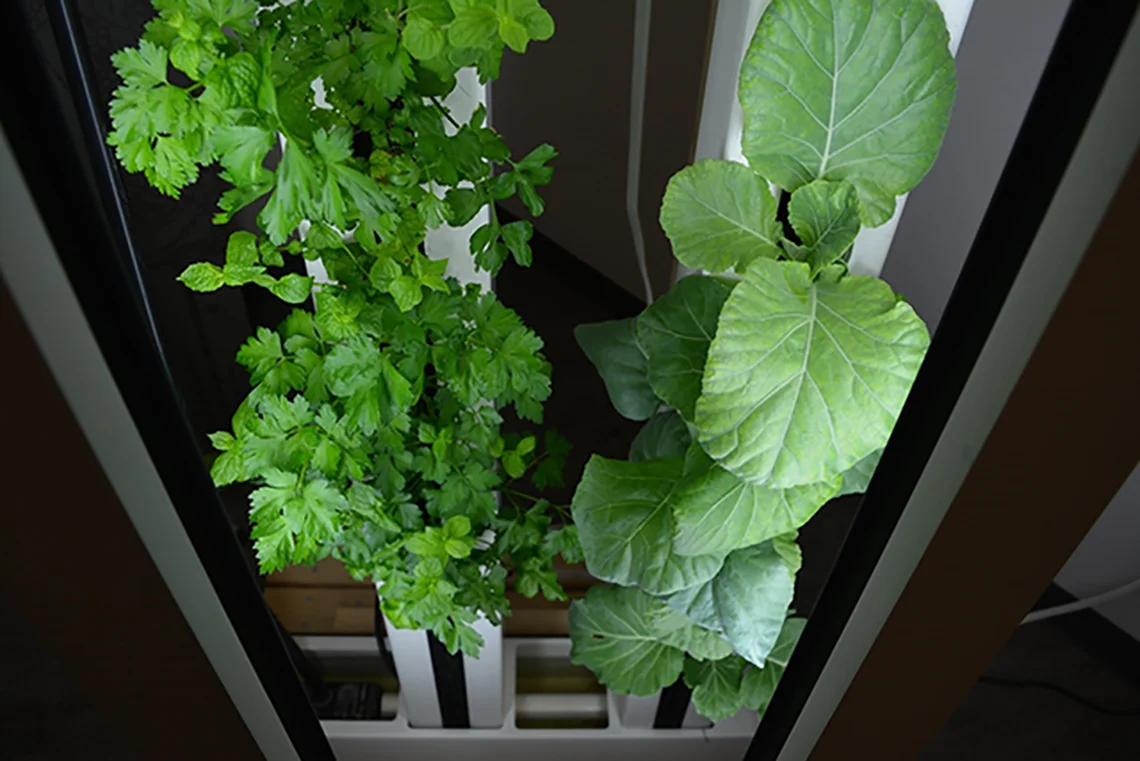
Student startup, Just Vertical, is growing an indoor farm wall hydroponically at U of T Mississauga – with nutrient solution, instead of soil
At University of Toronto Mississauga, a plastic tower sprouts produce including curly starbor kale, buttercrunch and collard greens.
Rising almost six feet off the ground and illuminated by high output fluorescent bulbs, the indoor farm wall grows plants hydroponically – with nutrient solution, instead of soil. The water nourishes the roots, collects in a gutter and then recirculates back to a nutrient tank that feeds back into the hydroponic system.
The farm wall was the idea of Master of Science in Sustainability Management (MScSM) students Conner Tidd and Kevin Jakiela who partnered with Modular Farms Co., which specializes in vertical farming systems, to create distribution channels and services.
“You can grow pretty much anything,” Jakiela says. “Here, we’ve already grown three different types of lettuce, Genovese basil, joi choi, peppermint and parsley.”
From seed to harvest, it takes about four weeks to grow leafy greens and herbs.
“If you stagger it correctly, you can harvest it almost every day,” Tidd adds.
The wall costs just under $25 a month in electricity.
The seedlings, nestled in plugs made of peat moss, begin in a tray and are placed under a humidity dome where they germinate and are fed different levels of nutrients and pH. After a couple of weeks, they're ready to be transplanted into the tower.
Wicking strips help water find the path of least resistance by controlling the water flow and taking the water directly to the seedling roots.
“It’s a white cloth that you open up, put the plug in, then you close it like a sandwich, and put it into the tower,” Jakiela says.
Although the produce the farm wall yields is not organic-certified yet, the students' startup company, Just Vertical, uses organic-based practices, foregoing herbicides and pesticides.
“When you’re outside, you’re exposed to pests and fungi,” Tidd says. “Unless you’re using herbicides and pesticides, it’s going to be a problem especially when you’re growing strawberries and tomatoes.”
“With Just Vertical, Kevin and Conner have a great product in place, and manufacturing is lined up so now the initial focus will be on market validation,” says Sam Dumcum, the programs, strategic relationships and innovation lead at ICUBE, U of T Mississauga's incubator that provides startup support to new ventures at any stage.
Dumcum says that by focusing on market research during the next phase of their startup, Just Vertical will be able to have a solid base with which to advertise and sell their product but also to appeal to investors.

Harnessing Local Food Production
Harnessing Local Food Production
By Drs. Robert & Sonia Vogl
Contributors
In our efforts to promote sustainable living we have used several approaches: offering classes on gardening and hoop house construction at IREA Headquarters; workshops and booths related to organic gardening; sales of organic produce from local producers; hydroponics and fish farming at the Renewable Energy and Sustainable Lifestyle Fair; and building a demonstration solar greenhouse which we later donated to the Oregon High School agricultural program with modifications gained from our experiences with it.
We initiated a prairie project on the roof of the building occupied by Freedom Field at the Rock River Water Reclamation Campus in Rockford. We called attention to the hydroponics project at Auburn High School developed by Tim Bratina, who took his students on field trips to Chicago and Milwaukee to stimulate their interest in developing a small scale project at the high school. Bratina advocated the utilized of empty factory facilities in Rockford to house what amounts to vertical farms. We were involved in a series of meetings with YouthBuild In Rockford exploring the potential of utilizing their facilities as a site for what would be considered a vertical farm.
Sadly, none of these efforts succeeding in stimulating the utilization of available space as a site for an indoor organic farm in Rockford.
While gardening programs operate in communities in the area, an outstanding one has operated for several years in the DeKalb Schools under the leadership of Dan Kenny. He has agreed to make a presentation at this year’s IREA Fair, providing insights into the nature of his program and its future directions. His is an excellent model of what can happen in a community under effective leadership.
Vertical farming is another sustainability option to investigate. Although it is a relatively new, growing industry, it was suggested as long ago as 1909. Plants are raised indoors in layers, avoiding the extremes of weather. It generally uses hydroponics, the technique used by Bratina’s students. Vegetables are grown in nutrient rich waters and often include fish growing operations as well. Some use aeroponics, growing plants with only misting roots. Being indoors, LED grow lights are used to replace sunlight. Although it is an efficient use of resources, artificial light, heat and power are needed.
Recently some large-scale indoor gardening operations raising produce on a year-round basis and marketing through local supermarkets have been established in Chicago and Rochelle.
Mighty Vine in Rochelle grows tomatoes in a greenhouse operation and markets them through regional supermarkets. Bright Farms, also in Rochelle, offers a broader range of greens. Both of these operations are backed by outside interests and provide their produce on a year-round basis.
Chicago’s The Plant has been in operation for several years. It combines aquaculture, produce production, a brewery and an algae bioreactor. They are installing a biogas operation to reduce electricity costs. When it opened, the 90,000 square foot facility was the largest in the world. It is expected to produce one million pounds of organic greens including lettuce, spinach, basil and mint annually. It also expects to provide hundreds of jobs.
Although these farms are growing, Farmed Here in Bedford Park, formed in 2013 and billed as “the world’s largest indoor vertical farm,” closed its growing operations this year. It is, however, still producing food products.
Vertical farms are seen as an integral component in providing some of the food needs of urban populations and jobs for the communities. Such installations are expected to expand rapidly in urban centers around the world in response to the ravages of climate change, ongoing population growth and the desire to consume cleaner organic foods.
Drs. Robert and Sonia Vogl are the President and Vice President of the Illinois Renewable Energy Association.
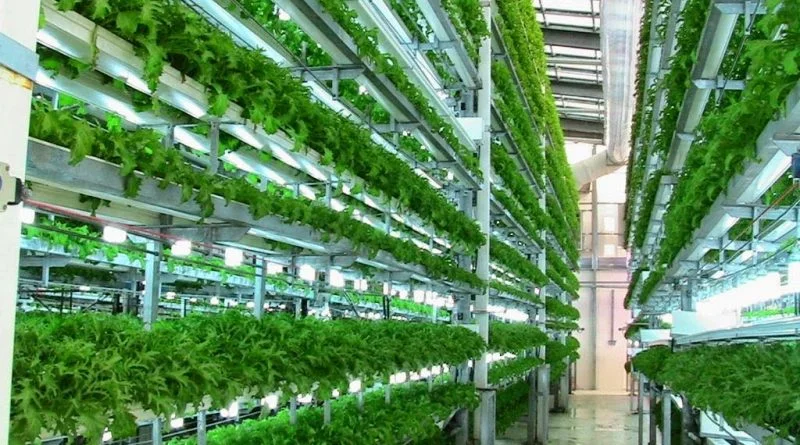
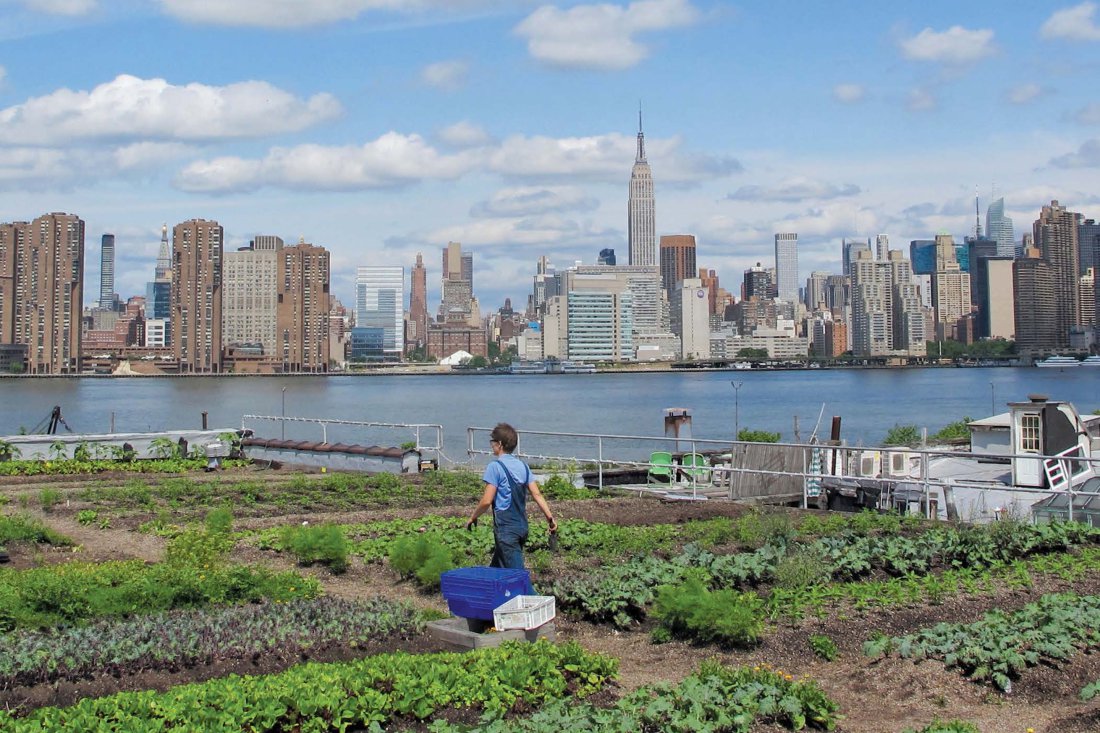
The Rooftop Growing Guide: How To Transform Your Rooftop Into A Garden Or Farm
The Rooftop Growing Guide: How To Transform Your Rooftop Into A Garden Or Farm
Tapping into the expanding market for rooftop farming and green roofs, this is the first stylish, easy-to-use book for urban gardeners interested in utilizing their roof space for growing food.
As more people experiment with growing their own food in urban and suburban areas, farms and edible gardens are popping up on rooftops across the country. But there can be challenges, as rooftop spaces have their own unique set of rules for soil maintenance, watering, crop management, installation, and more. Author Annie Novak cofounded America’s first fully landscaped green roof farm, and her expertise shines in The Rooftop Growing Guide, the first book for a general audience on how to make an edible rooftop garden thrive. Novak has visited and interviewed rooftop farmers and gardeners across the country, so her advice works no matter where you live. With sample crop plans, case studies from around the country, and notes on harvesting, fertilizing, and more, The Rooftop Growing Guide provides inspiration and practical advice for a new generation of urban farmers and gardeners.
The Rooftop Growing Guide was photographed by Naima Green and Jackie Snow (unless otherwise noted) with Lucas Foglia; illustrations by Annie Novakand Lauren Heanes.
For a full list of experts and sites profiled in this richly researched book, please look under Resources.

UMass Hydro To Grow Fresh Produce For Students Year Round
UMass Hydro To Grow Fresh Produce For Students Year Round
Posted by Callie Hansson on March 8, 2017 · Leave a Comment
Christina Yacono/Collegian
If you look out of the campus-side windows in Franklin Dining Commons after the sun has gone down, you can see a mix of white, blue and magenta lights illuminating the inside of the Clark Hall Greenhouse.
These lights mark the home of the UMass Hydroponics Farm Plan, where Dana Lucas, a junior sustainable food and farming major, and Evan Chakrin, a nontraditional student majoring in sustainable horticulture, have been working throughout the winter growing fresh leafy greens.
Back in December, the duo received a $5,000 grant from the Stockbridge School of Agriculture to grow produce year-round on an on-campus hydroponic farm. Hydroponics, a method of farming with water and nutrients in place of soil, allows for a continual harvesting cycle.
Along with limited pesticide use and saving 90 percent more water than a traditional farm, the farm will produce approximately 70 heads of lettuce a week, every week of the year. Lucas and Chakrin emphasize the importance of this perpetual cycle in meeting the University’s sustainability efforts.
On the University of Massachusetts website, it states, “The University recognizes its responsibility to be a leader in sustainable development and education for the community, state and nation.”
“I don’t know how we can say our food is sustainable at UMass if it’s only grown 10 weeks of the year in New England,” Lucas said.
The location allows UMass Hydro to get their greens across campus by either walking, biking or driving short distances, leaving almost no carbon footprint.
“I think this is something that really excites me and Evan because we really see a demand for fresh, local food and this is a way to actually fulfill it,” Lucas said.
Although the farm’s production capacity cannot currently meet the needs of the dining halls, Lucas and Chakrin are looking into alternative options to get their greens on the plates of students.
“We’re kind of just centering on student businesses right now because they’re smaller and they’re run by our friends, so we can easily get into the market,” Lucas said.
Their first official account is with Greeno Sub Shop in Central Residential Area.
Last week, Greeno’s hosted a special where UMass Hydro’s microgreens were free to add to any menu item.
In a statement posted to their Facebook page, they stated, “One of the goals of our mission statement is to source locally whenever possible, with UMass Hydro right down the hill, this is almost as fresh as it can get.”
Chakrin and Lucas are currently working on getting their greens served at other on-campus eateries.
In addition to adding more accounts, there is a strong focus on getting other students interested in the emerging field of hydroponics.
“We can use this as a teaching facility for students. The techniques we’re using are used in multi-acre industrial greenhouses for lettuce, so we could scale right up potentially,” Chakrin said.
The two are hoping to work UMass Hydro into the curriculum in Stockbridge, allowing students to work hands-on with the systems while also earning credits.
“Maybe we can do a one credit, half semester thing or something,” said Chakrin.
“There has been some discussion about having an accredited course for next fall where we can teach what I’m assuming are mostly going to be Stockbridge students, but we’re open to anybody and everyone who’s interested in getting involved with hydroponics,” Lucas said.
The grant covered the cost of seeds, equipment and other miscellaneous items like scissors, but the responsibility of building the farm fell entirely on Lucas and Chakrin.
“It felt really cool that we were given this much responsibility I feel like, to just buy the stuff and then build it,” Lucas said.
Chakrin noted how one of the biggest obstacles faced in getting the project off the ground was finding an available space on campus.
“Initially we were just asking for a 10-by-10 closet somewhere, then our professor was like ‘Do you think this greenhouse will work?’ and we were like ‘Of course!’” Chakrin said.
“He kind of posed it as a bummer that we weren’t going to be in a closet and we were like ‘No, no, no that’s fine!’” Lucas said, laughing.
“Without the space, none of it would be possible, so being allowed to use this space is just huge and we’re so lucky to have that,” Chakrin said.
Out of the entire space granted to UMass Hydro, only a portion of it is currently being used.
In order to make use of the underutilized space, Chakrin and Lucas are hoping the future of UMass Hydro involves more funding.
“We want to see Dutch buckets and a vertical system in here so we can show students the breadth of what you can do with hydroponics,” Lucas said.
Visitors are encouraged to stop by at the Clark Hall Greenhouse on Tuesdays between 3 p.m. and 7 p.m.
Callie Hansson can be reached at chansson@umass.edu.


Valoya Launches "Heavy-Duty" Tube LED for Vertical Farms
Valoya Launches "Heavy-Duty" Tube LED for Vertical Farms
8 March 2017, by Gavin McEwan, Be the first to comment
Finnish specialist lighting manufacturer Valoya has extended its L range of LED tube lights for vertical farms.
With a 40W power consumption, the 18.m-long L40 tube is described by its manufacturer as a heavy duty fixture.
It has the same dimensions of standardised T8 tubes meaning it can be retrofitted into existing structures.
The fully enclosed L-Series has low power consumption, cool running temperature and maintenance-free lifetime of at least 50,000 hours.
They are dust-proof and can withstand submerging in water to a depth of 1m. They are available with all of Valoya's proven wide light spectra.
Current users include London's Growing Underground where Valoya's L-Series lights are used to cultivate a range of leafy greens and herbs.
- Read more on LED Lighting Systems
Local Roots Hits The Road To SXSW With World’s First Traveling Indoor Farm
Local Roots Hits The Road To SXSW With World’s First Traveling Indoor Farm
Launch of National Tour Features Newest Methods in High Tech Agriculture Production
March 08, 2017 12:11 PM Eastern Standard Time
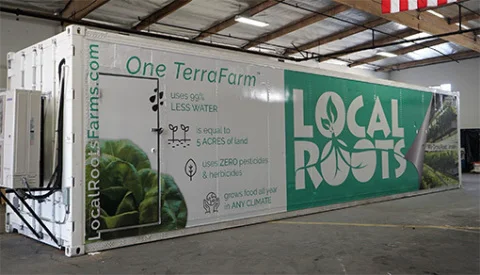
LOS ANGELES--(BUSINESS WIRE)--Local Roots Farms will debut the world’s first traveling indoor farm at SXSW, March 11-15, 2017. Built inside a 40’ shipping container, the mobile farm uses a proprietary form of hydroponic technology to grow leafy greens equal to five acres of land, 365 days a year, with up to 99% less water than conventional agriculture and is pesticide and herbicide free. The farm departed from the Local Roots headquarters in Los Angeles today to set up residency at the SXSW Festival in Austin, Texas.
@LocalRootsFarms to debut world’s first traveling indoor farm at SXSW! Follow our #lettuceadventures at #sxsw2017
Tweet this
Centrally located in the main SXSW exhibition hall (Booths #2011-2015), festival-goers will have an opportunity to tour inside the high tech farm. The tour focuses on the Local Roots proprietary approach to indoor farming, including the design and engineering of their modular indoor farms- see video. Capitalizing on both traditional farming methods and scientific breakthroughs at NASA, the Local Roots traveling farm features the newest methods of agricultural production.
“There is nothing like experiencing the farm firsthand,” says Local Roots VP of Business Development Brandon Martin. “We’re excited to make this unique experience available to the public with the launch of our cross-country tour. The interactive experience is truly unique and provides a profound understanding of the impact this technology will have on the future of farming.”
During the SXSW Festival, Local Roots Founder and CEO Eric Ellestad will speak on the Funding the Future of Food Tech panel on March 12. Local Roots will also be on display at the Food and Tech Innovation Spotlight on March 11. The program will explore the practical applications for this new form of growing food, including urban development and the creation of a more sustainable food system.
SXSW is the first of a series of road trips, with plans for the traveling farm to make quarterly tours throughout 2017. Additional dates and cities will be announced in May 2017. The farm will be used as an educational tool to inspire consumers about agriculture science & technology with stops at schools, corporate campuses, restaurants, and festivals throughout the U.S.
About Local Roots Farms
Local Roots designs, builds, deploys, and operates controlled-environment farms that yield the highest quality, locally-grown produce using breakthrough technologies. These farms, called TerraFarms, grow with up to 99% less water, 365 days a year, without pesticides or herbicides. Headquartered in Los Angeles, CA, Local Roots is a portfolio company of the Los Angeles Cleantech Incubator (LACI). The Local Roots R&D team, comprised of plant science, botany, agronomy, design and engineering specialists, utilizes a vast body of data to grow better-tasting and nutrient-rich produce with guaranteed harvests and yields. Visit http://www.localrootsfarms.com and follow our #lettuceadventures on Twitter, Facebook and Instagram.
Contacts
Local Roots Farms
Allison Towle, 310-779-6993
Director of Corporate Development
a.towle@localrootsfarms.com
or
LACI
Laurie Peters, 818-635-4101
Communications Director
lpeters@laci.org
Program Educating and Uplifting East Oakland Kids
Program Educating and Uplifting East Oakland Kids
By Shelby Pope MARCH 7, 2017
It started with a lemon tree. Kelly Carlisle didn’t grow up gardening. She didn’t have a windowsill herb garden. She knew about farming, of course, but in her mind there was a disconnect: food just sort of showed up at the grocery store. She worked a corporate job, wearing fancy clothes and heels to work. But she had gotten laid off during the recession, and one day a few years ago, she ended up at a Bay Area nursery with her daughter. They bought a lemon tree, and as it slowly started to flourish, so did Carlisle’s interest in gardening.
Around the same time the, she found herself reading more and more articles about Oakland, where she spent her childhood: about its status as one of the country’s most dangerous cities, the high rate of teen prostitution and dismal school dropout statistics. She wanted to do something that combined a concrete way to help Oakland’s kids with her newfound love of gardening. So in 2010, she started Acta Non Verba: Youth Urban Farm Project (ANV), a nonprofit that introduces low-income East Oakland children to the joys of gardening while contributing financially to their future. Local children farm a small plot at Tassafaronga Recreation Center and sell the produce through farmers markets and a CSA. All the proceeds go into individual savings accounts for each child, earmarked for their education. There’s also an eight week summer camp, camping and field trips, and community farm days. Since their founding, they’ve served over three thousand local kids.
“For generations, our communities have been told that farming is not for us,” Carlisle said. “When we talk to our kids about what a farmer looks like and where farmers live, it’s very abstract. Nobody knows a farmer, it’s all what they’ve seen on TV. There are no 4-H clubs in the flatlands.”
The financial aspect of the program was inspired by San Francisco’s San Francisco Kindergarten to College Program, where every kindergartner entering a public school is given a savings account with $50, with incentives for families that regularly contribute. (Research has shown that children are more likely to attend college if there’s money set aside for it).
But the money is just part of the way Acta Non Verba (Latin phrase meaning: actions not words) prepares children for the future. Most of the kids Carlisle works with want to be athletes, musicians, actresses–or cops, so they can carry a gun. The program allows them to explore the sprawling agricultural industry, to show them a field and a future that could be theirs.
“If you’re not into getting dirty, not into planting and harvesting, there’s all these other things that you can do,” Carlisle said. “There’s being a soil scientist, being an entomologist, pest management. That, to me, is as important as STEM.”
It hasn’t been easy. Like Carlisle, many of the kids have grown up disconnected to where their food comes from. And in East Oakland, where most kids grow up with acute food insecurity (most qualify for reduced lunch), an emphasis on pesticide-free local produce can seem precious or irrelevant. Once, the garden yielded a bumper crop of collard greens. Carlisle offered some to a woman in the neighborhood. The woman was suspicious, unbelieving that the park’s small garden could actually yield something and that Carlisle had grown it.
The greens were safe, Carlisle said. She had farmed them herself. “She’s like ‘Why would you call yourself that? No girl, we’re not farmers, you’re a gardener,’” Carlisle remembered. “I was offended, but it’s something to think about; trying not to sound superior. The farm-to-table movement doesn’t always feel like it applies to folks in my community. But to grow culturally relevant produce like collard greens and mustard greens, the community is starting to come around and see that, like with me, food is grown, it doesn’t just show up at the grocery store miraculously.”
To help share her message, Carlisle involves parents, both as volunteers and paid positions so the children’s healthy eating education is reinforced at home. She also makes it fun: she talks about a local boy named Jordan, who’s always thrilled to share his new knowledge about plant biology, or a pair of sisters whose eyes light up when it’s time to sing camp songs.
Thing could be easier, Carlisle acknowledges. She’d like to be able to afford more employees. She’d like there to be a grocery store near the farm, a nice one emphasizing healthy options. She’d like to only focus on food issues. But the more time she spends in East Oakland, the more she’s forced to confront other issues, like the area’s high rates of child asthma, or the giant crematorium that’s slated to be built near her farm. But Carlisle, who served in the Navy and whose parents also started their own nonprofit–“Service is probably ingrained in my DNA,” she said–isn’t going to give up anytime soon.
“One thing that we don’t think about in these high tech days is that we’re all here because somebody cultivated and worked with land,” she said.
“Even every single culture has some kind of agriculture going on. For me, farming is not only something that soothes my soul and makes me feel like I’ve accomplished something in a day, it’s also a connection to something bigger than myself, to a community and something innate: trying to improve my community through hard work and cultivation of land.”
AUTHOR: SHELBY POPE
Shelby Pope is a freelance writer living and eating her way through the East Bay. She’s written about food, art and science for publications including the Smithsonian, Lucky Peach, and the Washington Post's pet blog. When she’s not taste testing sourdough bread to find the Bay Area’s best loaf, you can find her on Twitter @shelbylpope or at shelbypope.com
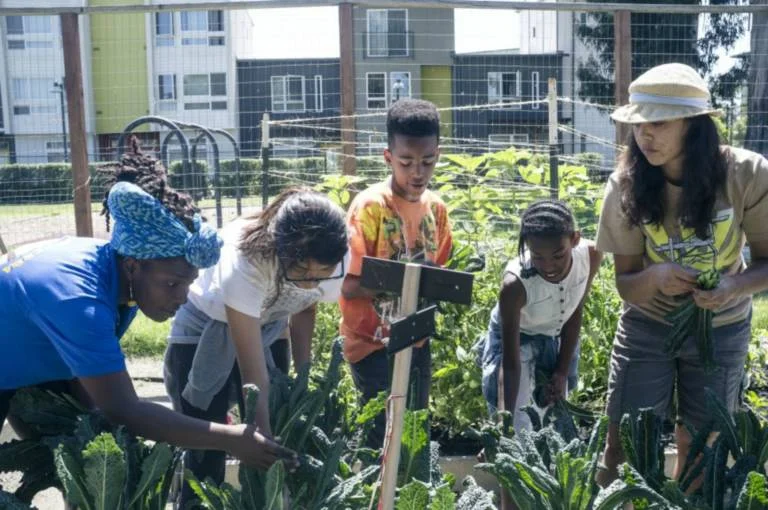
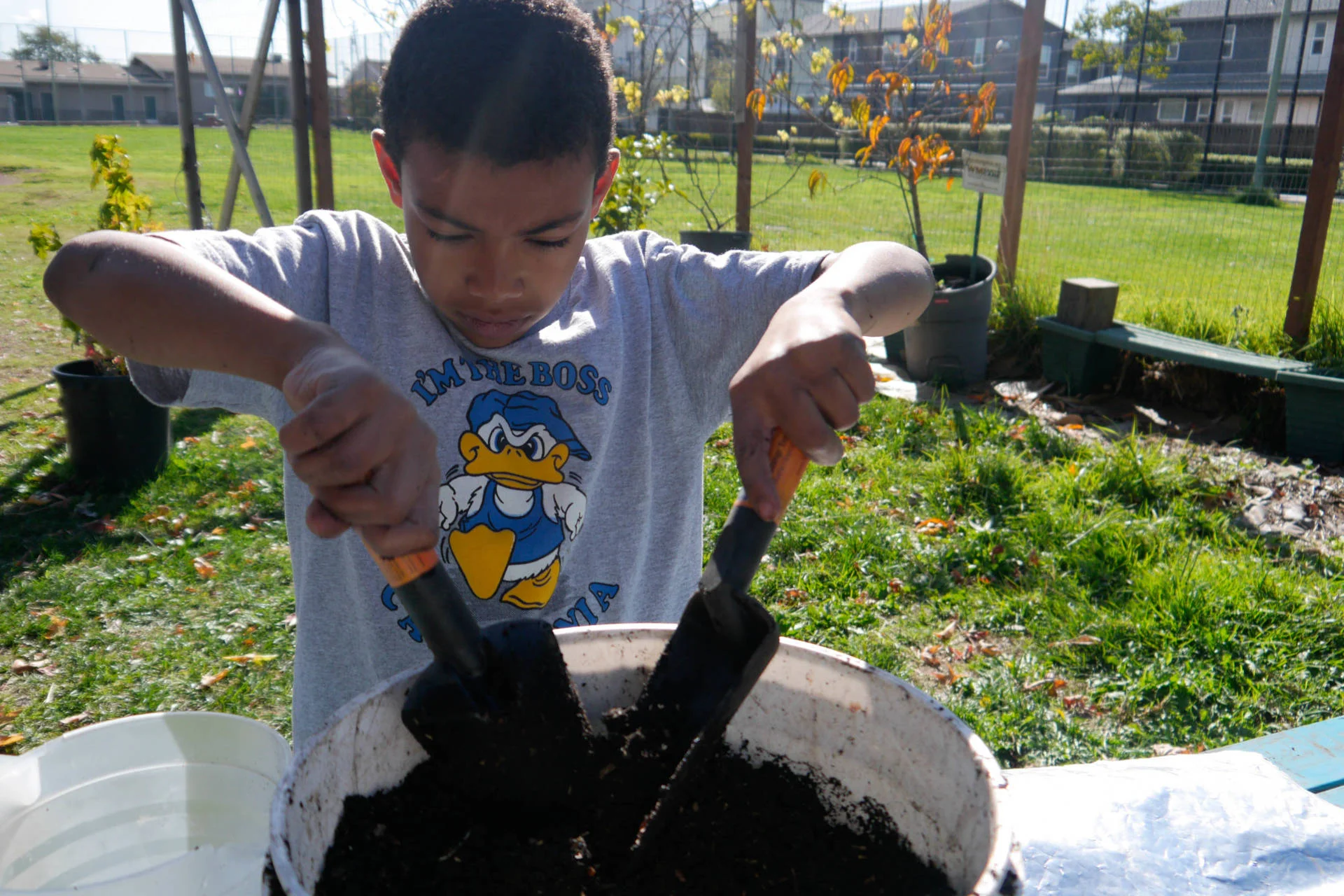

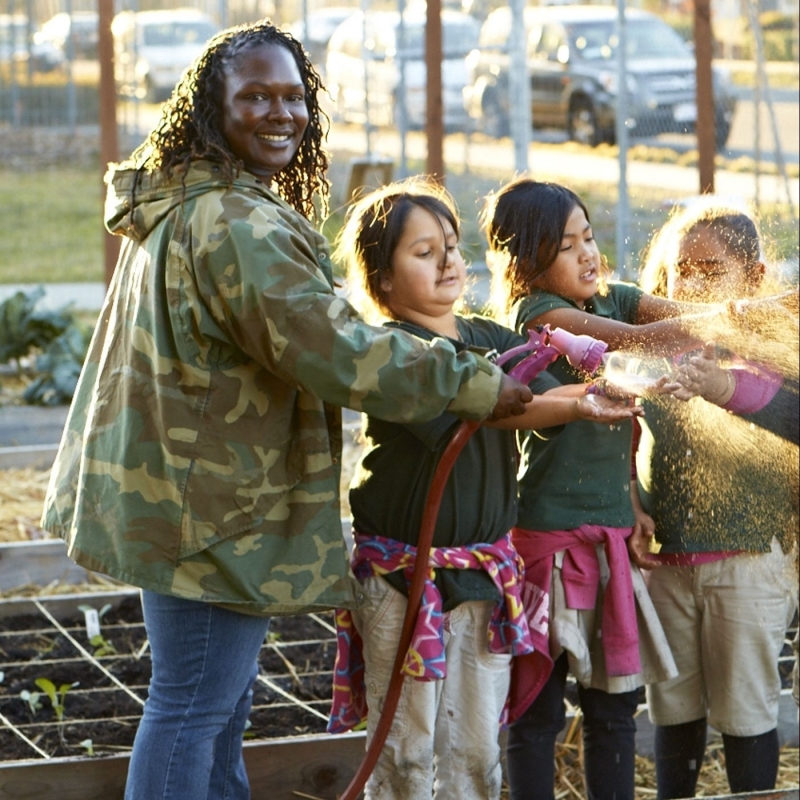
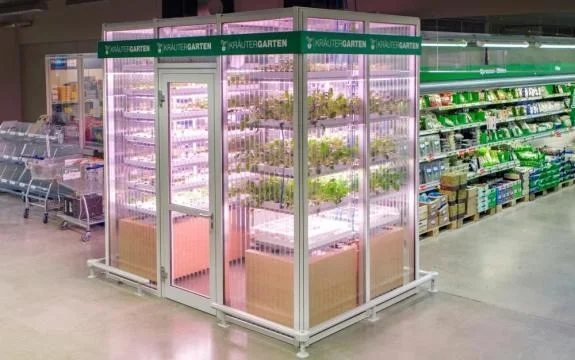
Are Urban Farms The Wave Of The Future?
Are Urban Farms The Wave Of The Future?
7 March 2017
The farm of the future may not be the traditional kind with crops planted in vast fields and serviced by tractors and subject to the vagaries of weather and soil quality. According to Buzzfeed, the farm of the future will be in warehouses in the middle of the city, with crops #Growing in nutrient baths and temperature, light, and even the atmosphere tightly controlled.
Right now these urban farms are producing trendy salad greens such as arugula and kale favored by fashionable foodies. The product is more expensive currently than naturally grown produce, but the potential for significant cost savings are apparent as the urban farms scale up.
The urban farms are far more productive than the rural kind. The growing season is year-round, 24/7. The warehouses where the food is being produced are near enough to restaurants and supermarkets so as to keep transportation costs low. The urban farms require less water than the natural, rural kind, a consideration where clean water has become scarce in certain parts of the world.
One of the factors that are holding back the proliferation of these facilities is high startup costs. Some existing agricultural factories, as some people have called them, have failed for various reasons. Nevertheless, some entrepreneurs are planning to expand the crops being grown, to cucumbers, peppers, and various berries.
The technology for these types of farms will certainly be adapted as people begin to settle other planets. No one is going to plant crops on the moon or Mars (at least until terraforming takes hold on the Red Planet.) But a dedicated agriculture facility would provide all the needs for future space settlers
The question also arises, what to call these new factory grown food. It cannot, at least according to current law, be called “organic” despite the fact that the method uses no pesticides. Call it “post-organic.” The crops are generally not genetically modified because the environment is altered to suit the plants and not the other way around.
Are these type of vertical farms the wave of the future? Very likely, sooner rather than later, a lot of food we eat will be grown indoors, with LED lights rather than the sun.